
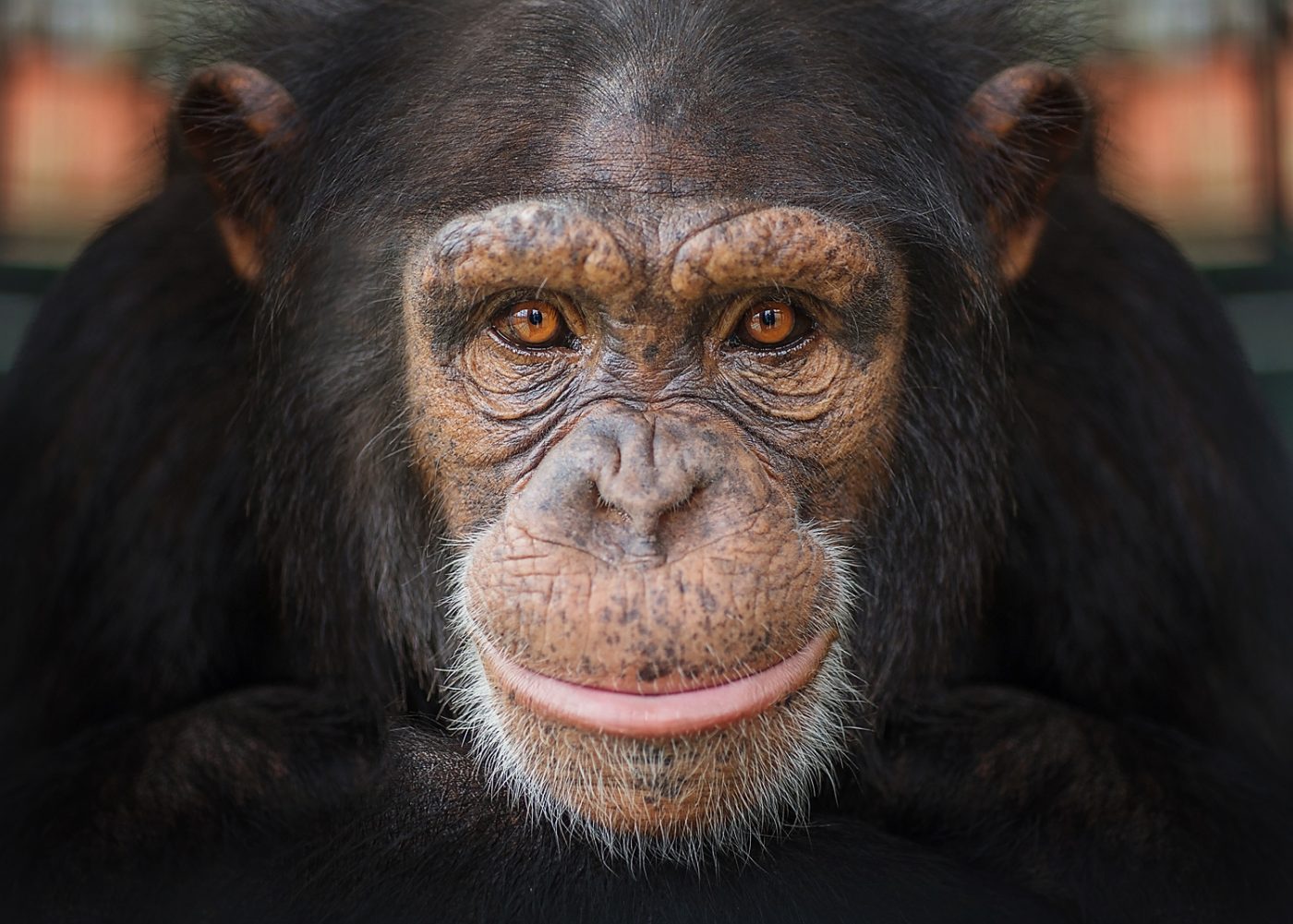
From lemurs to orangutans, tarsiers to gorillas, primates are captivating and sometimes unnervingly similar to us. So it’s not surprising that this group of more than 500 species receives a great deal of research and conservation attention. 60% of primates 🦍🦧🐒🐵 are threatened by #extinction 🙊🙈😿 Without direct action, the number of endangered #primates willContinue reading “Primates are facing an impending extinction crisis – but we know very little about what will actually protect them”
Tag Archives: Boycott4wildlife
Procter & Gamble
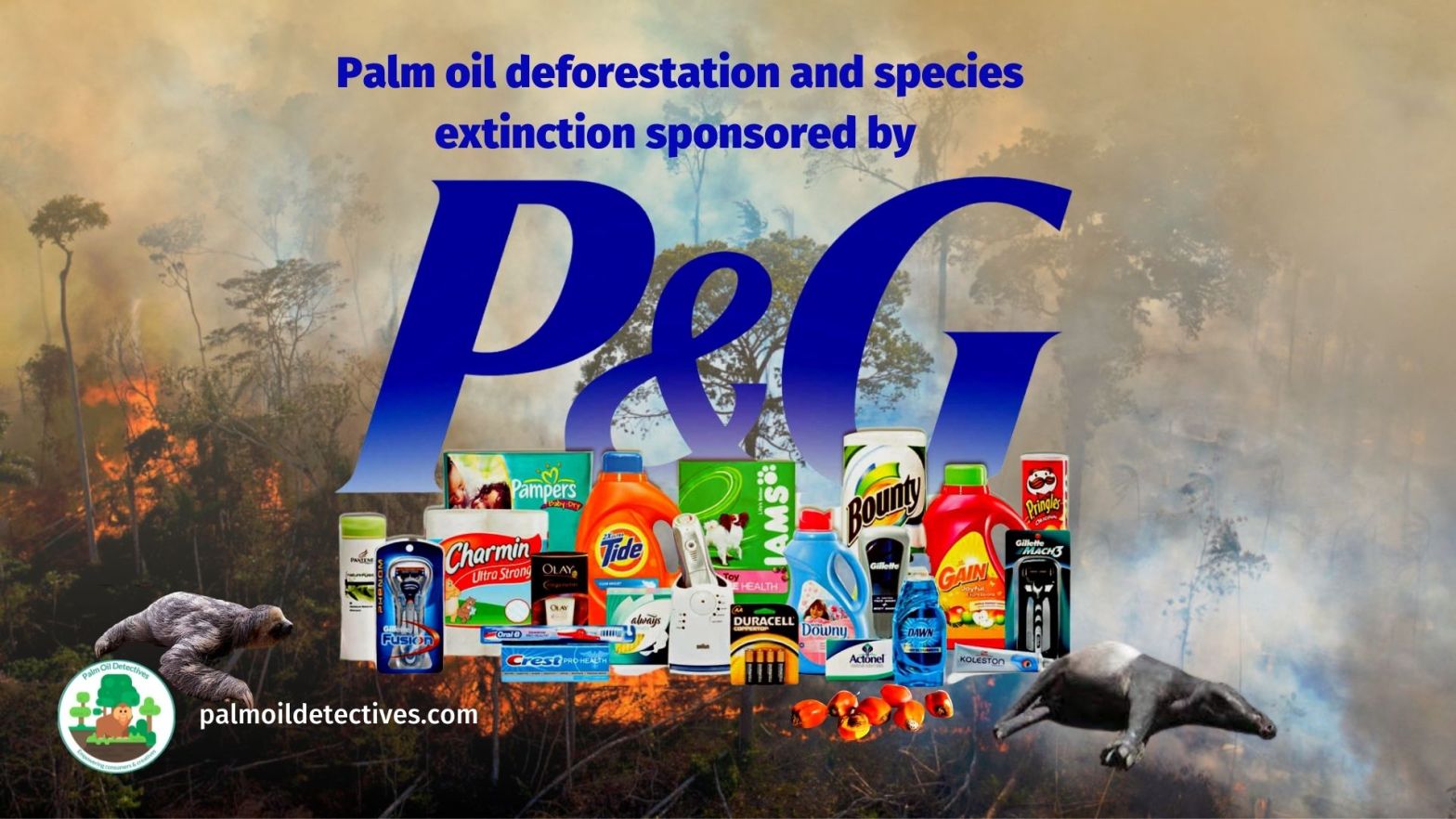
Despite decades of promises to end deforestation for palm oil Procter & Gamble or (P&G as they are also known) have continued sourcing palm oil that causes ecocide, indigenous landgrabbing, and the habitat destruction of the rarest animals on earth. All of these animals are on a knife-edge of survival. It is for this reason,Continue reading “Procter & Gamble”
Ecocide: why establishing a new international crime would be a step towards interspecies justice
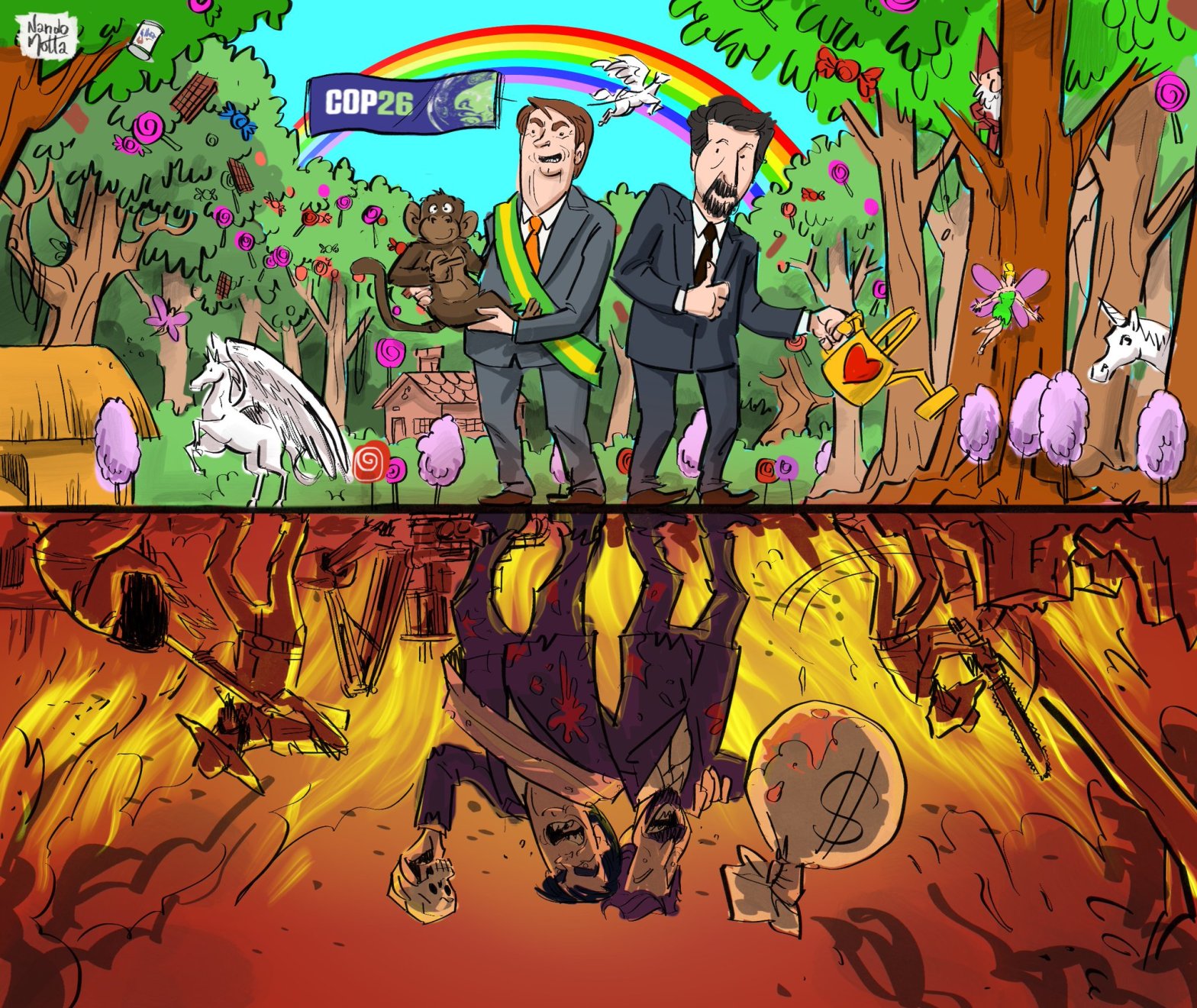
A movement of activists and legal scholars is seeking to make “ecocide” an international crime within the jurisdiction of the International Criminal Court (ICC). The Stop Ecocide Foundation has put together a prestigious international panel of experts that has just proposed a new definition of the term. Protect all animals and go #Vegan #BoycottPalmOil #Boycott4Wildlife
Up to 90% of Cargill, Wilmar, Musim Mas’ Palm Oil Linked To Deforestation
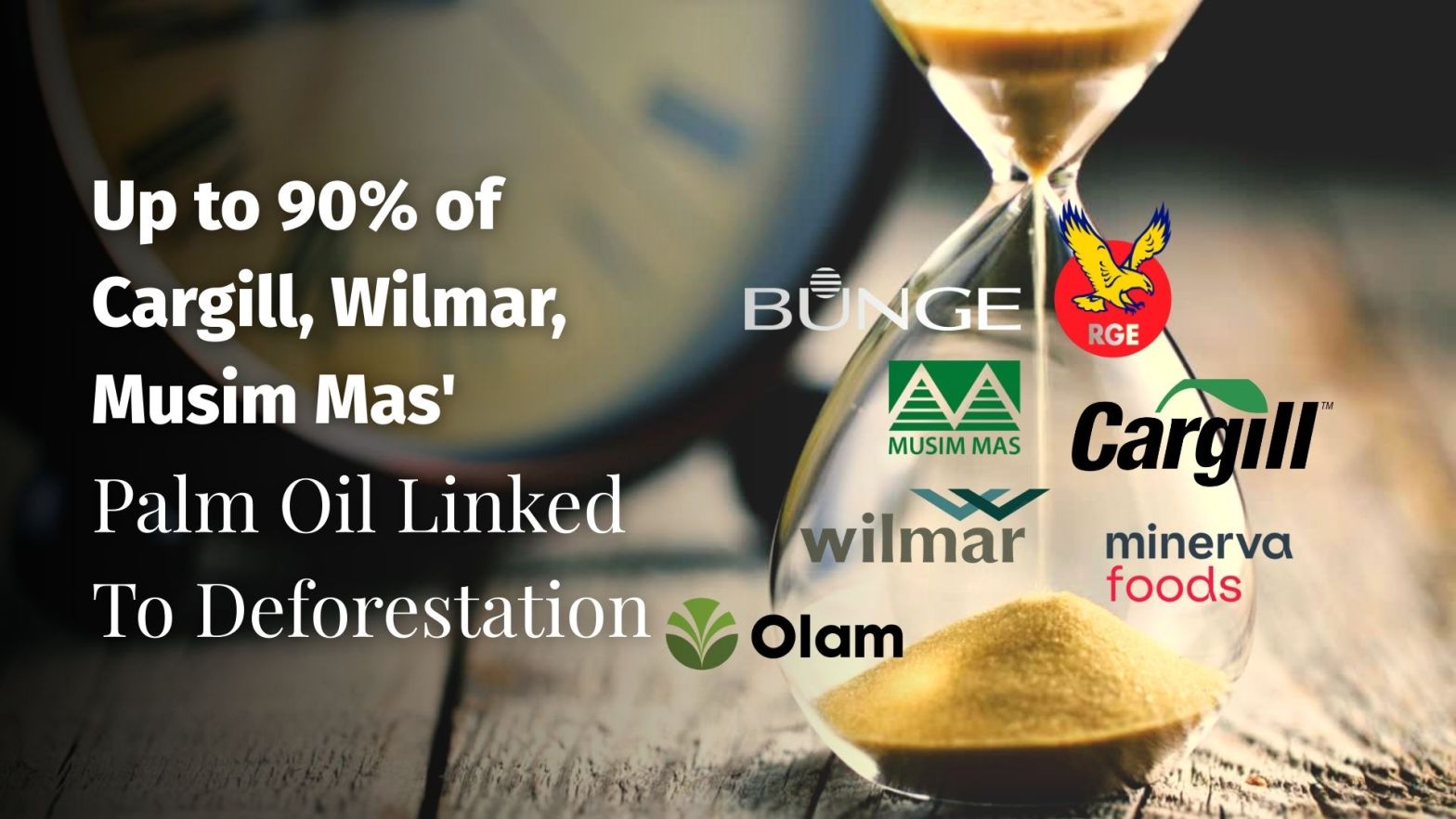
Research finds that between 15-90% of palm oil processed by global palm oil traders: #Cargill, #MusimMas and #Wilmar is unable to be adequately traced. This is due to opaque indirect sourcing and is linked to deforestation. Palm oil deforestation is sending thousands of rare, #endangered species of #animals and #plants towards #extinction and leads to the violent displacement of indigenous peoples. The loss of carbon sinks from deforestation plays a significant role in global warming and the climate emergency. Take action every time you shop and #BoycottPalmOil #Boycott4Wildlife
The mimics among us — birds pirate songs for personal profit
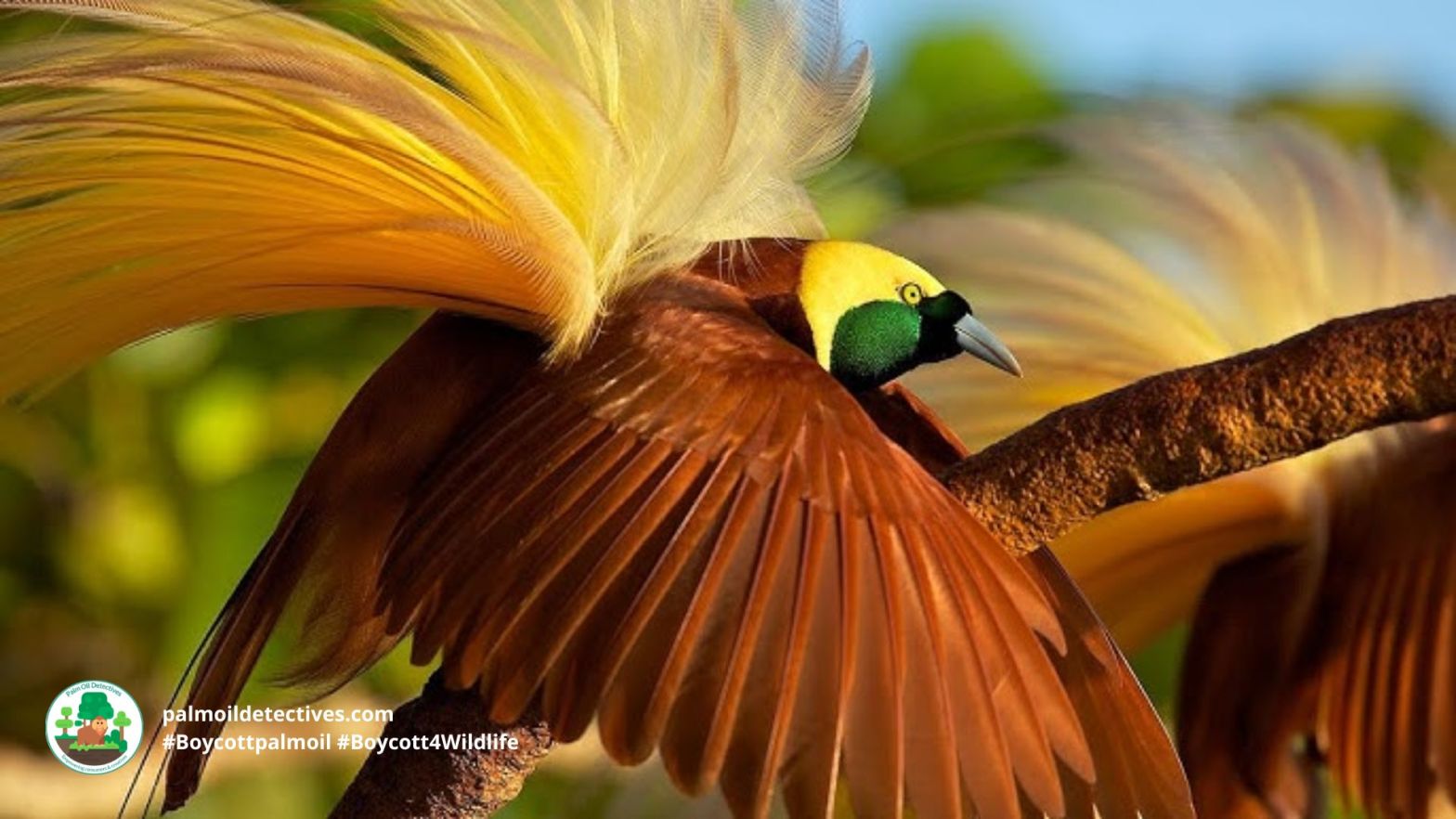
From Roman classics to British tabloids, humans have long celebrated the curious and remarkable ability of #birds and other #animals to imitate the sounds of humans and other animals. A recent surge of research is revealing how and why birds use vocal mimicry to further their own interests. Far from being merely a biological curiosity,Continue reading “The mimics among us — birds pirate songs for personal profit”
A fascinating history of warrior turtles: from ancient myths, warships and teenage mutants
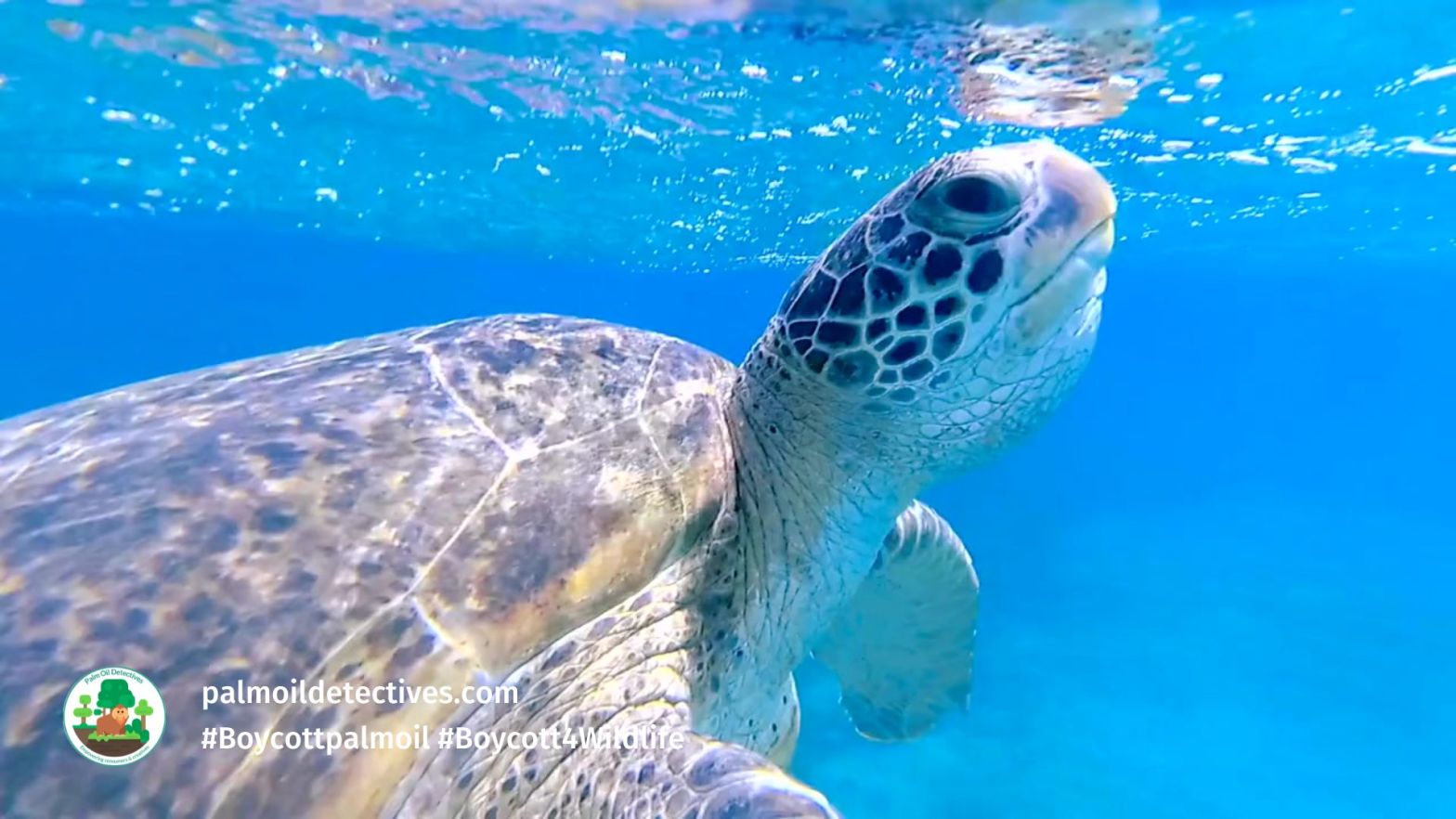
Ask anyone the identity of the world’s most famed turtles, and the answer is likely to be those legendary heroes in a half-shell, the Teenage Mutant Ninjas. Since first appearing in comic book form in 1984, the pizza-eating, nunchuk-wielding characters have shown the world the tougher side of turtles. Help them to survive every time you shop and Boycott Seafood, #BoycottPalmOil #Boycott4Wildlife
Deforestation Allows for Deadly Viruses to Jump Species
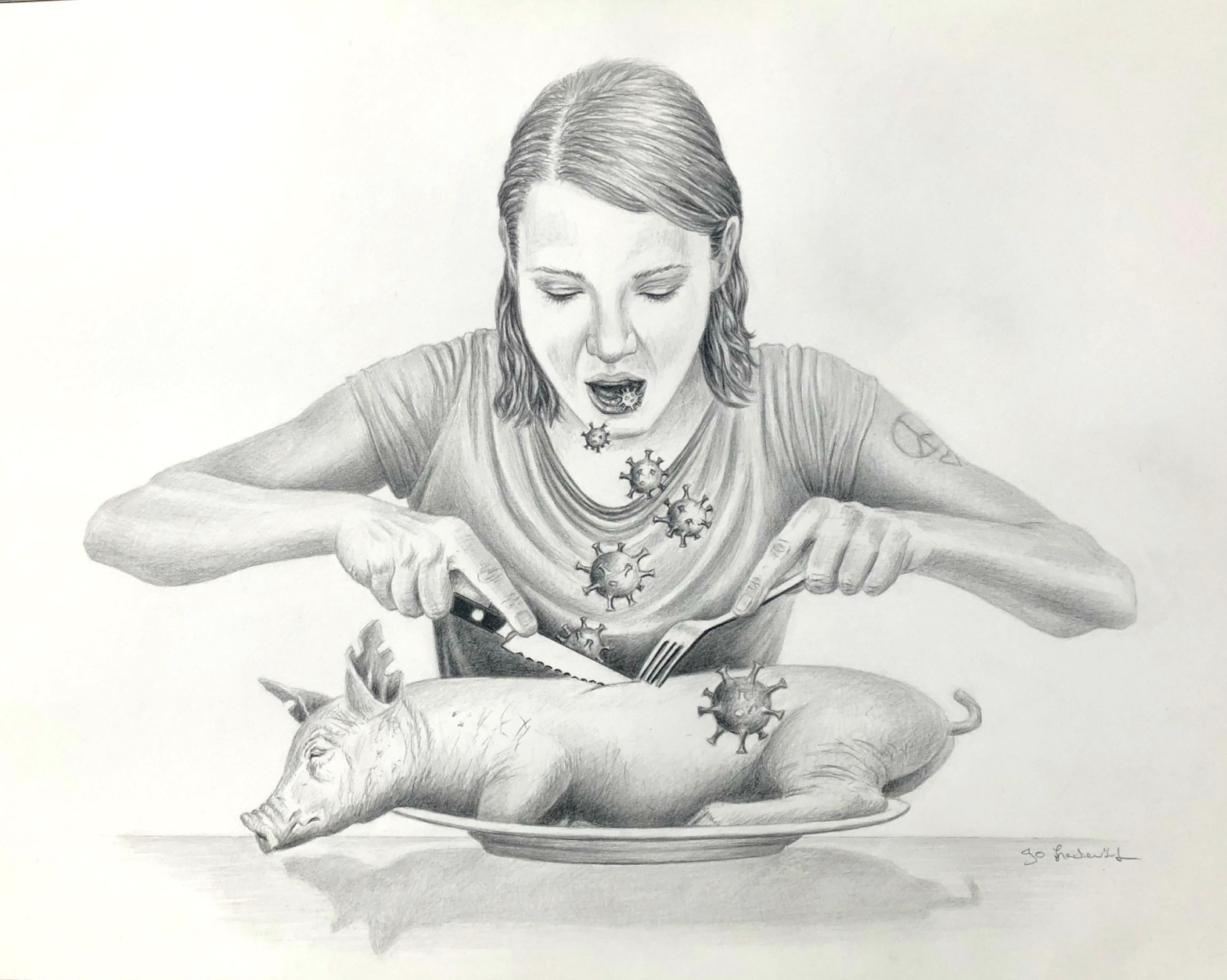
Many pandemics originate from wildlife that jumps from animal to human. These leaps often happen at the edges of the world’s tropical forests, where #deforestation is increasingly bringing people into contact with animals’ natural habitats. Yellow fever, #malaria, Venezuelan equine encephalitis, #Ebola – all of these pathogens have spilled over from one species to another at the margins of forests. This has many scientists concerned. The next pandemic is likely to originate from either the rainforest, meat or dairy agriculture where humans have most contact with animals.
More protein and good for the planet: 9 reasons we should be eating microalgae
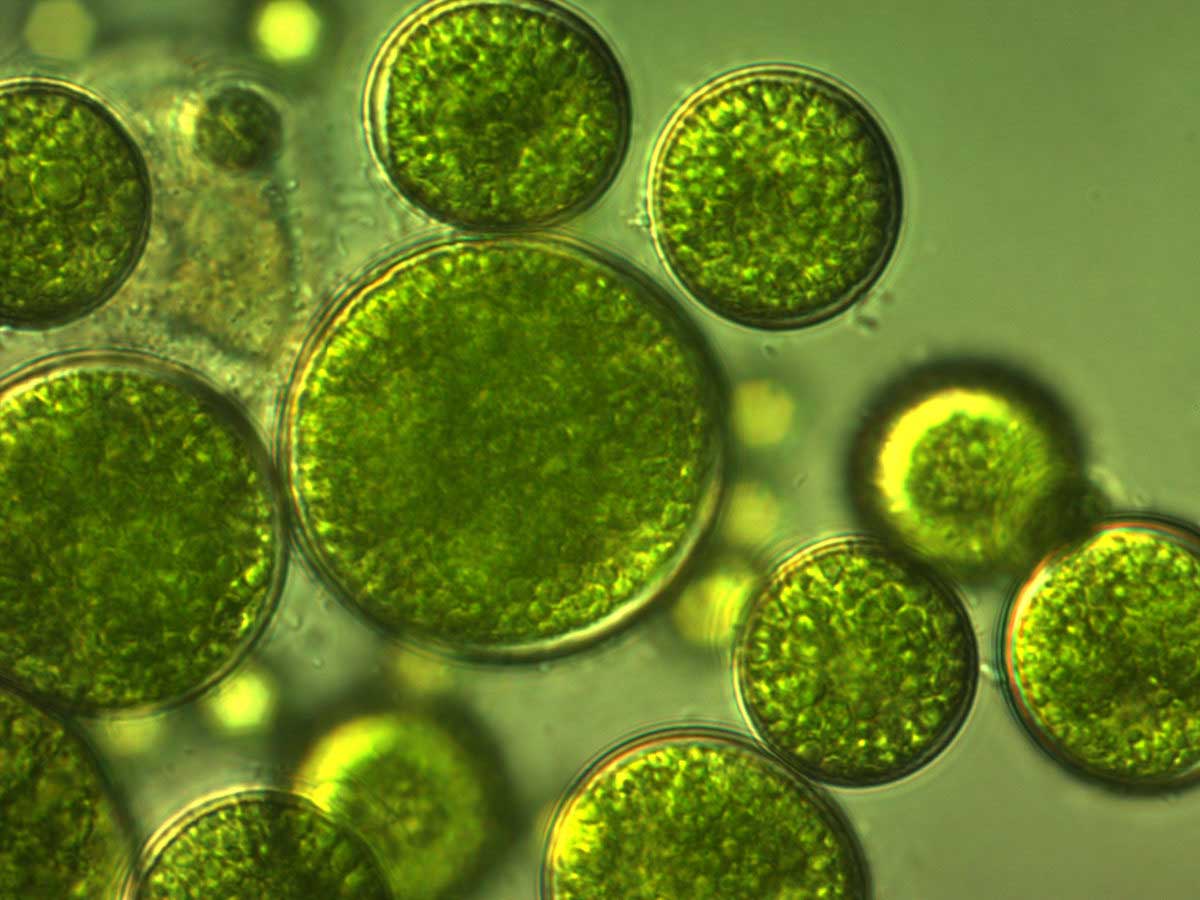
As the climate change advances and deforestation continues at pace, the land we use for growing energy-intensive crops such as wheat corn, soy and palm oil is becoming less productive. We need to find ways to feed the earth’s growing population that isn’t so burdensome on the environment. One potential solution is to cultivate microalgaeContinue reading “More protein and good for the planet: 9 reasons we should be eating microalgae”
Conservation activists suing Indonesian zoo could inspire global action on endangered species trade
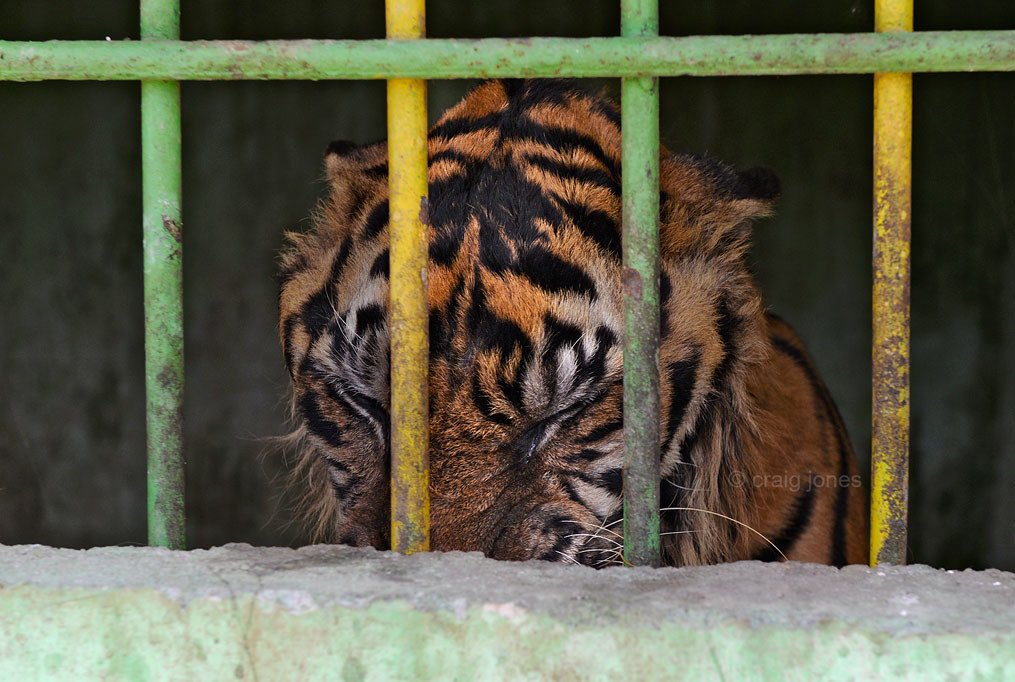
A lawsuit against a Sumatran zoo for illegally exhibiting threatened species like orangutans could inspire global action against the illegal wildlife trade
Bonobo mothers meddle in their sons’ sex lives – making them three times more likely to father children
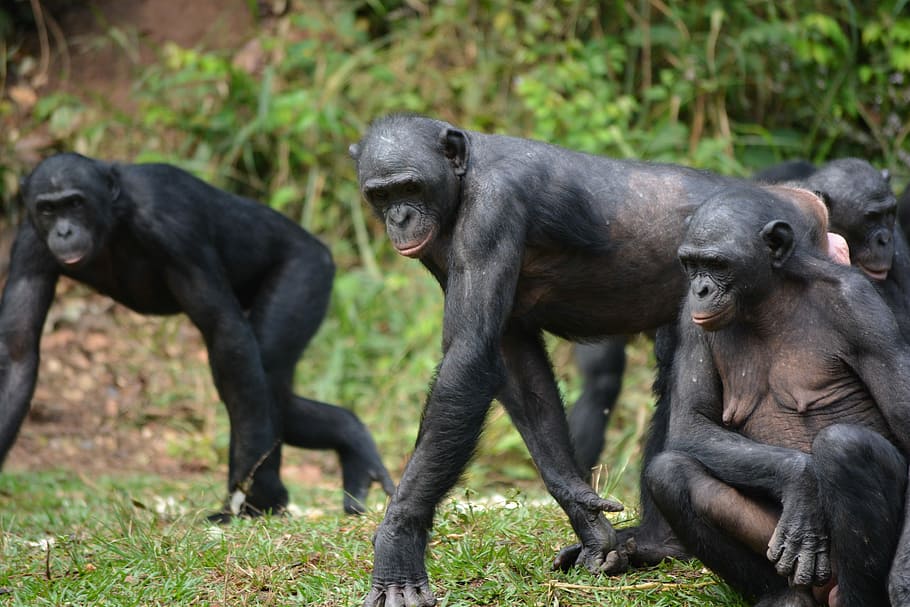
New research shows that for #bonobos, sex really is often a family affair. What’s more, rather than being an embarrassing hindrance, motherly presence greatly benefits bonobo sons during the deed.
Along with #chimpanzees (Pan troglodytes), bonobos (Pan paniscus) are our closest living relatives. Restricted to a 500,000 km² thickly-forested zone of the #Congo Basin, these endangered great apes were only formally discovered in 1928, which until 2017 made them the most recently-described living great ape species.
Operating in female-led social systems, bonobos are capable of showing a wide range of what were long held as human-specific feelings and emotions, such as sensitivity, patience, compassion, kindness, empathy and altruism. Help them to survive every time you shop #BoycottPalmOil #Boycott4Wildlife
Almost 90% of the world’s animal species will lose some habitat to agriculture by 2050
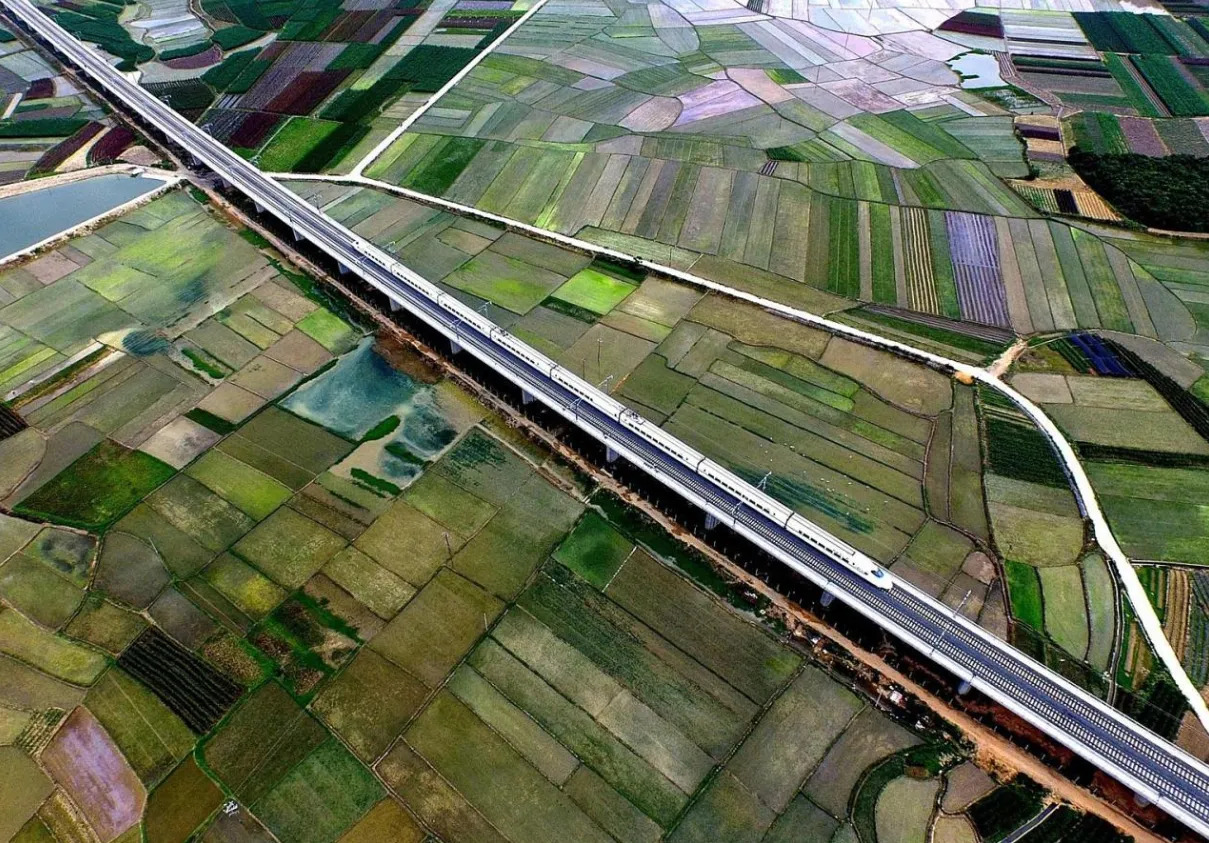
Scientists know that #biodiversity is declining across much of the world although less universally and dramatically than we feared. We also know that things are likely to get worse in the future, with a combination of #deforestation, #climatechange and overexploitation set to drive species and habitats ever closer to #extinction. Help them every time you shop and be #vegan #BoycottPalmOil #Boycott4Wildlife
Do chimpanzees and orangutans really have midlife crises?

Many people know that chimpanzees and orangutans have personalities, feel emotions and are “almost human”. However a recent paper has found that great apes also have a mid-life slump or a “midlife crisis”. Great apes (chimpanzees, bonobos, gorillas and orangutans) are just as socially, politically and cognitively complex as we are. Our “hairy” great ape relatives are like us in every respect. Help them to survive when you shop and be #Vegan #BoycottPalmOil #Boycott4Wildlife
Deforestation Raises Temperatures Up To 4.5℃

Forests directly cool the planet, like natural evaporative air conditioners. So what happens when you cut them down? In tropical countries such as #Indonesia, #Brazil and the #Congo, rapid #deforestation may have accounted for up to 75% of the observed surface #climatechange and warming between 1950 and 2010. Our new research took a closer look at this phenomenon.
Boycotts A Great Weapon to Fight Ecocidal Corporates
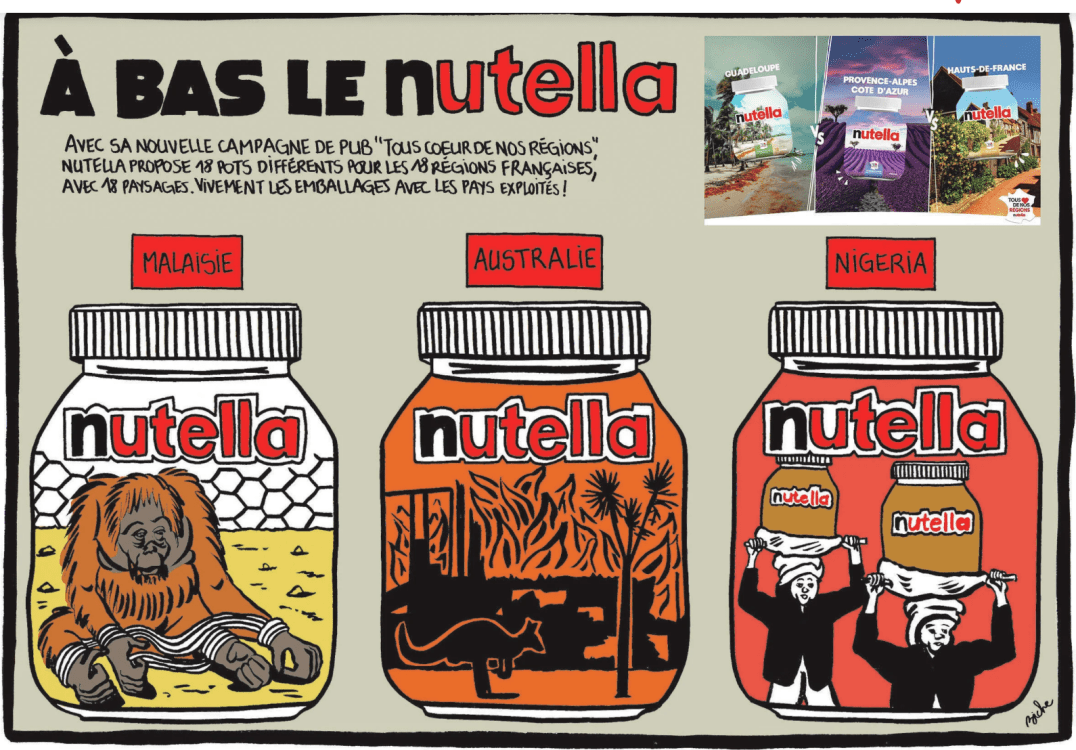
Boycotts against corrupt commodities like palm oil and meat are effective because they hit where it hurts, corporate giants’ profit margins and reputations
Bonobos Can Inspire More Peaceful Democracies
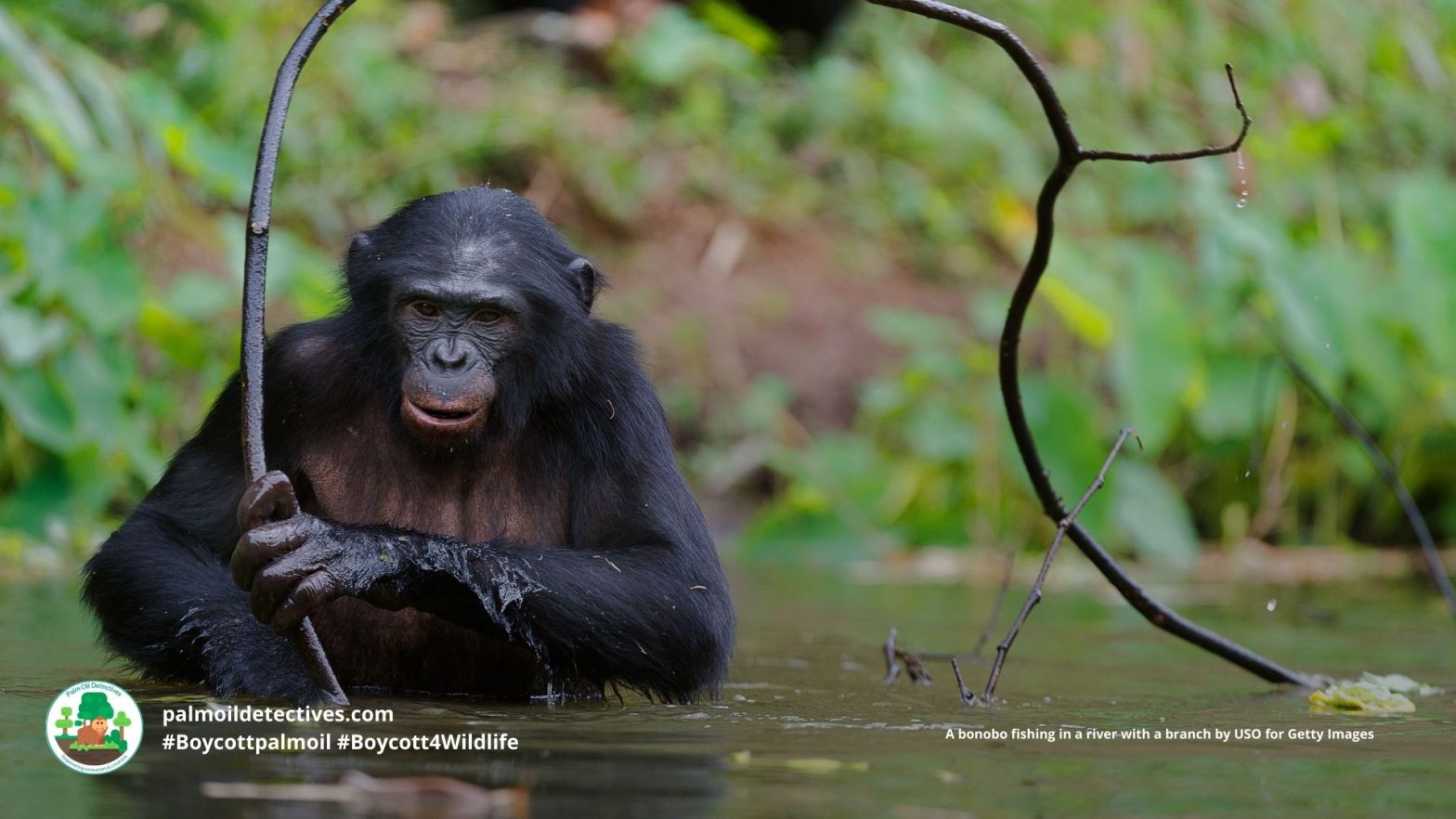
Bonobos can inspire a more peaceful democracy. Primatologists explain the fascinating lives of these mostly peaceful primates. Boycott palm oil when you shop!
Organised Crime: A Top Driver of Global Deforestation
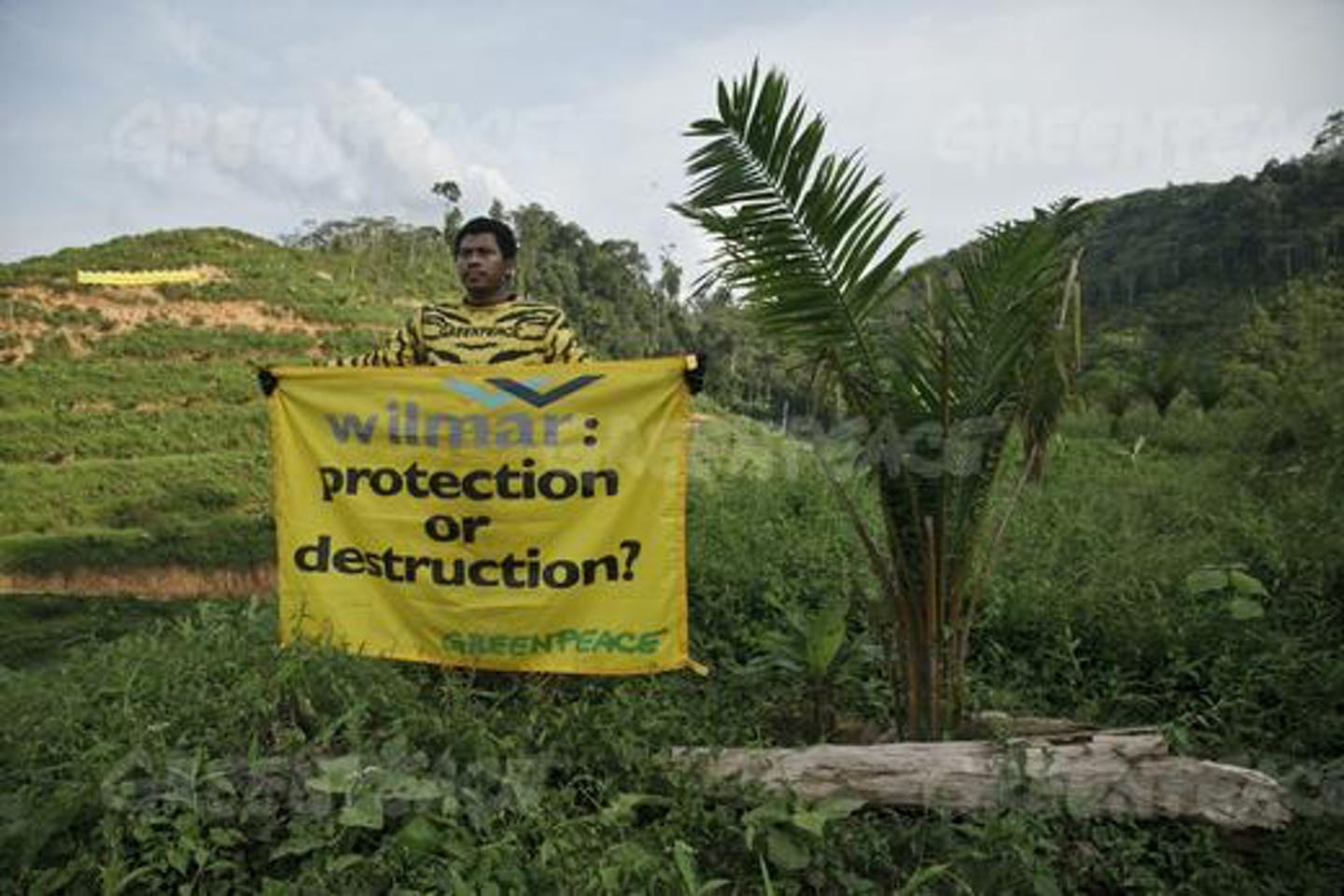
Every year the world loses an estimated 25 million acres (10 million hectares) of forest, an area larger than the state of Indiana. Nearly all of it is in the tropics. Tropical #forests store enormous quantities of carbon and are home to at least two-thirds of the world’s living species, so #deforestation has disastrous consequences for #climatechange and conservation. Trees absorb carbon dioxide as they grow, slowing its buildup in the atmosphere – but when they are burned or logged, they release their stored carbon, fueling further warming. Tropical forest loss generates nearly 50% more greenhouse gases than does the global transportation sector. Take action to help rainforests and #BoycottPalmOil #Boycott4Wildlife
Research: Small room for compromise between oil palm cultivation and primate conservation in Africa
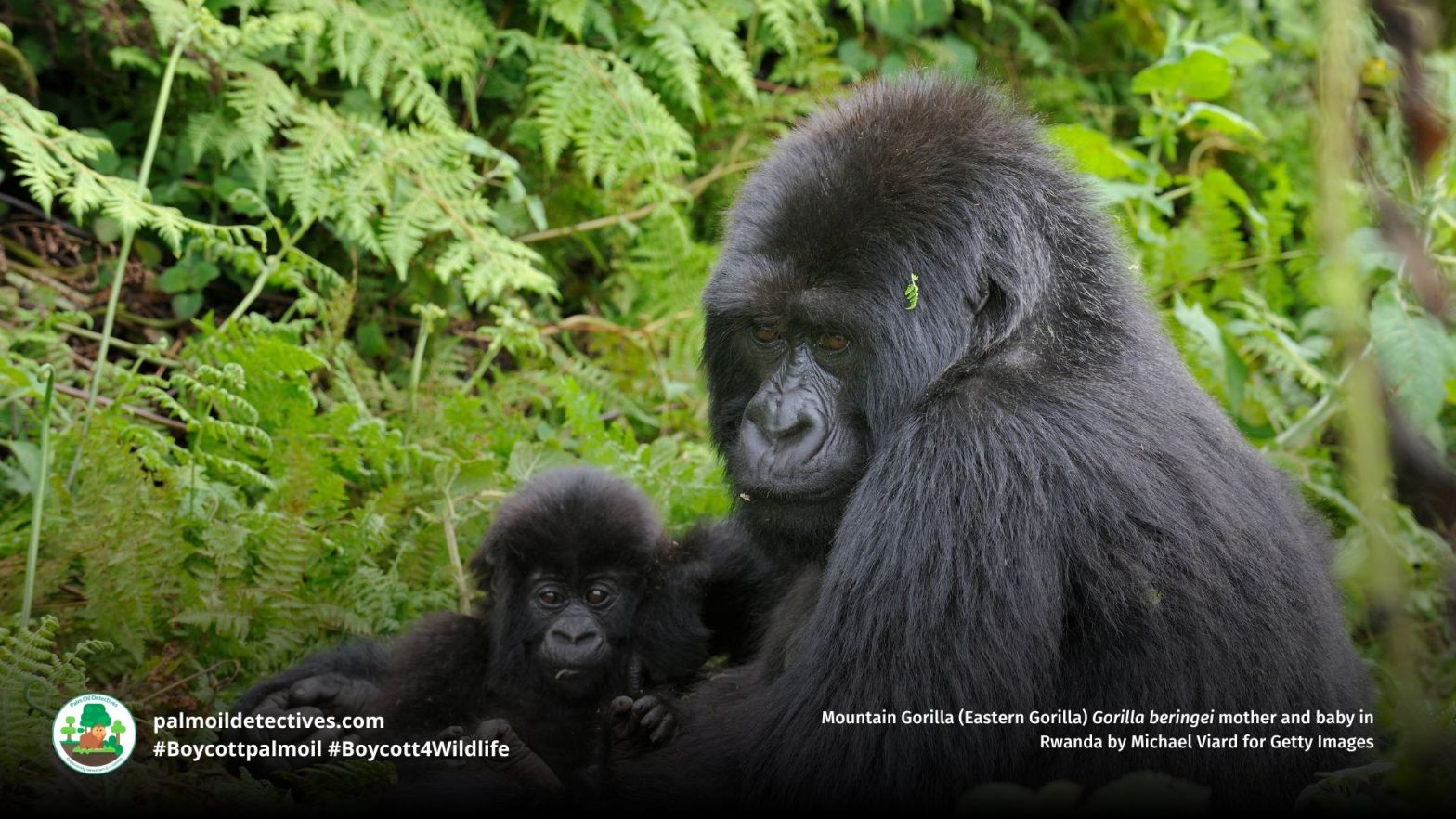
Research shows that future palm oil expansion is a major threat to Africa’s tropical forests and their rich primate biodiversity, Fight back boycott palm oil!
Humans and Bonobos Share Contagious Yawn Behaviour
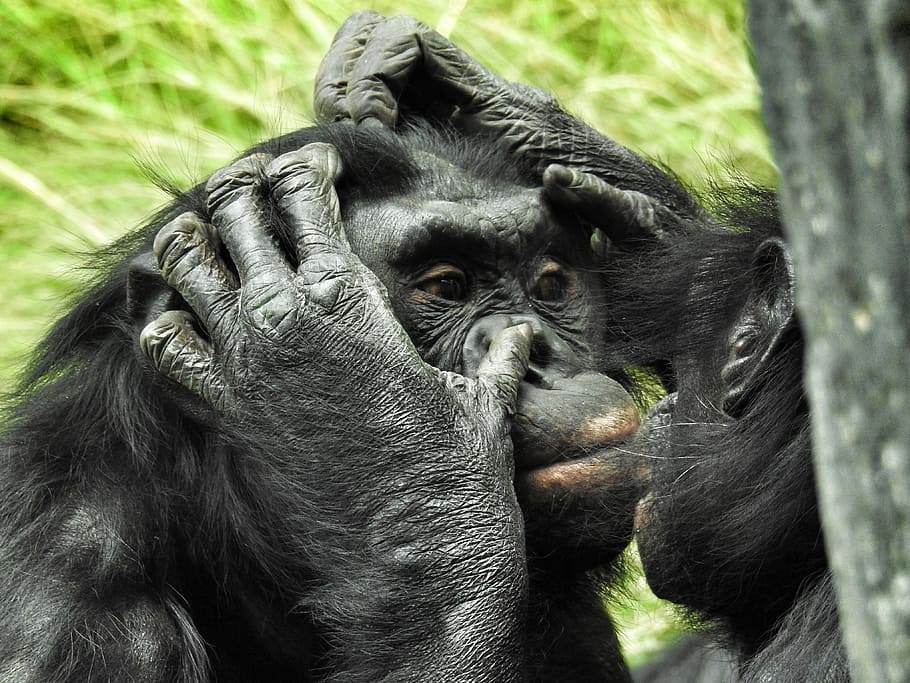
Most of us have experienced the overwhelming urge to yawn in response to another person yawning – but we’re not the only species to do this. Research published in PeerJ shows that bonobos – our closest evolutionary cousins – also experience “yawn contagion”. Similarly to how yawning occurs in human beings, the effects of yawn contagion in bonobos is influenced by the quality of relationships shared between individuals.
The tendency for humans to mirror the behaviours and emotions of another – sometimes referred to as “emotional contagion” – is also thought to reflect our heightened capacity for empathy. Help all non-human primates to survive extinction and be #Vegan #BoycottPalmOil #Boycott4Wildlife.
Research: Zoonotic Disease Outbreaks Linked to Forest Cover and Palm Oil Expansion
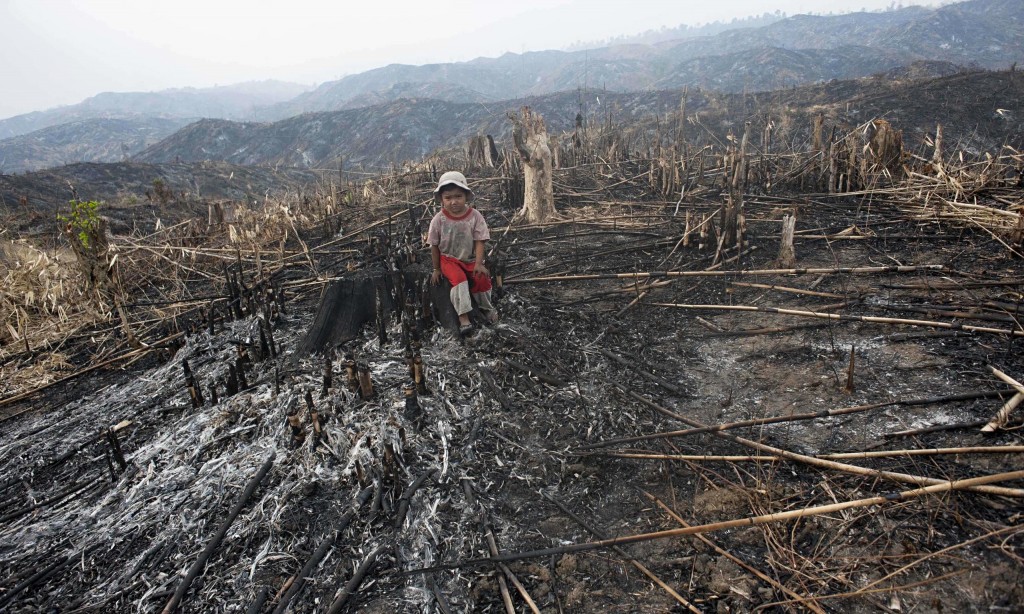
#Research finds that #deforestation is a major cause of #biodiversity loss with a negative impact on human health. Outbreaks of vector-borne #zoonotic #diseases are associated with increases in areas of #palmoil plantations.
African Forest Elephants’s Movements Depend on Their Personalities
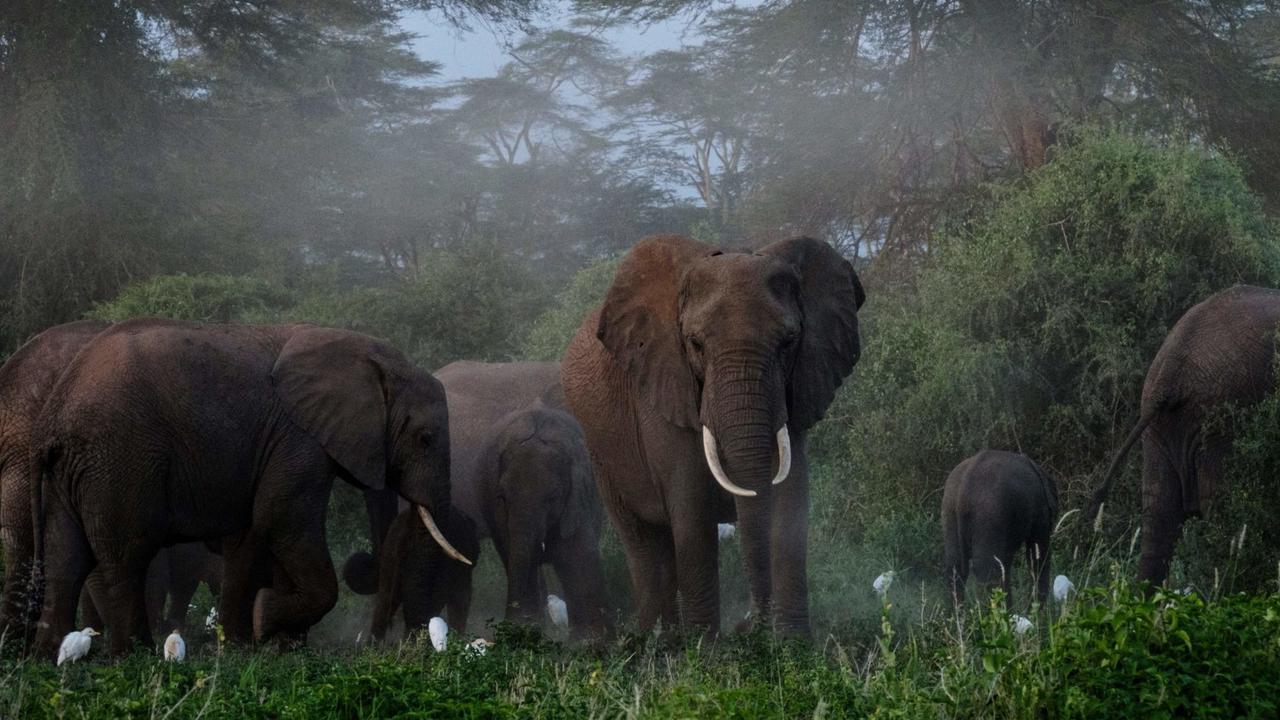
African forest #elephants roam the dense rainforests of West and Central Africa where they subsist largely on a diet of fruit. They shape forests by dispersing fruit and seeds, browsing, and creating an extensive trail network. But because it’s difficult to track animals in thick forest, little is known about the movements of the AfricanContinue reading “African Forest Elephants’s Movements Depend on Their Personalities”
In the Atlantic Forest, the lowland tapir is at risk of extinction
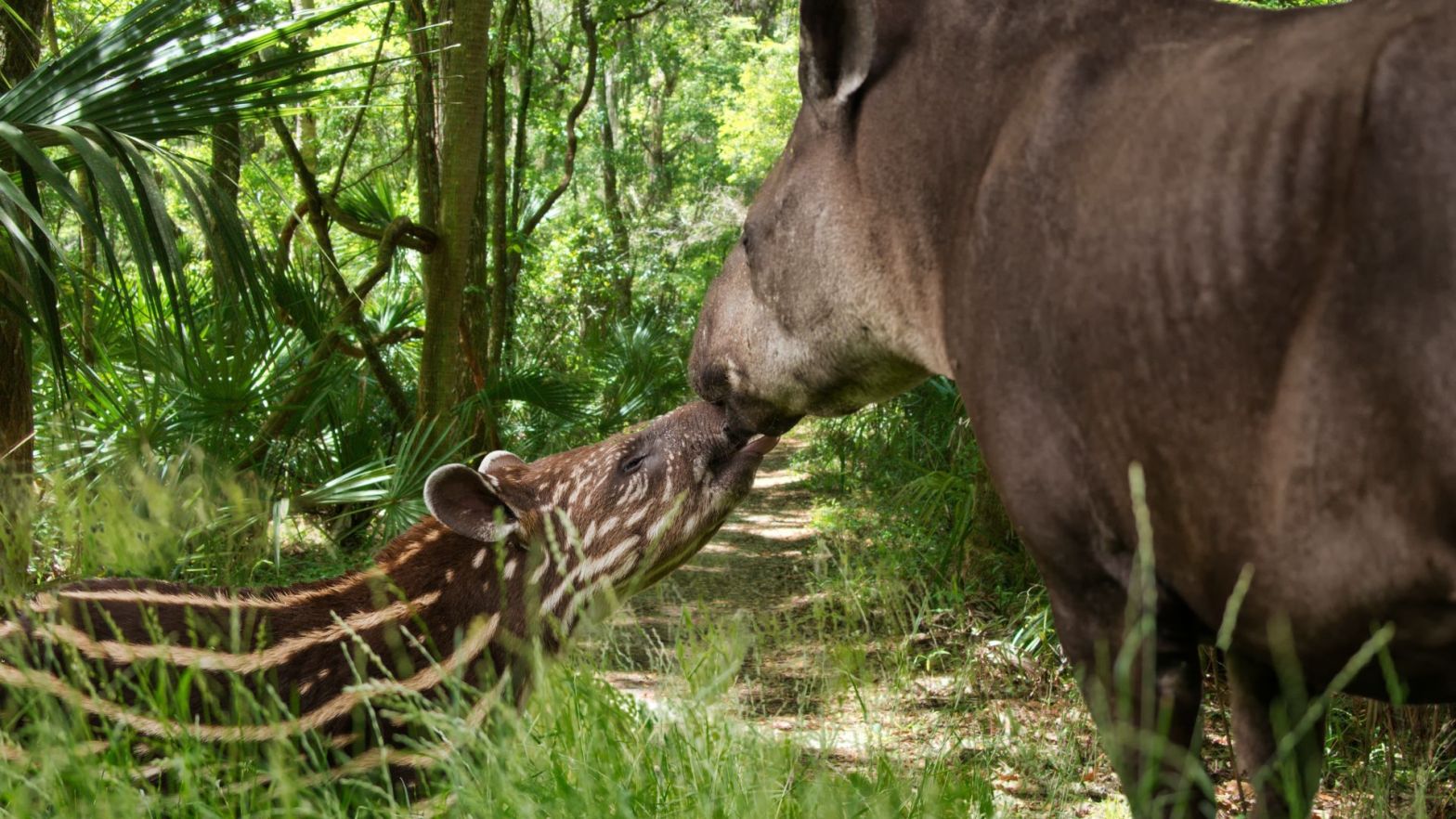
Lowland tapir populations in the Atlantic Forest in South America are at risk of almost complete disappearance, scientists have estimated. Weighing up to 250 kg, the animal can adapt to most habitats in South America—but its populations continue to decline across their range. Take action for these beautiful irreplaceable animals every time you shop, be #vegan for forests, farmed animals and wild animals and #BoycottPalmOil #Boycott4Wildlife
How do we stop the world’s ecosystems from going into a death spiral? A #SteadyState Economy
What is a Steady State Economy? A Steady State Economy is a mildly fluctuating economy that does not exceed ecological and planetary limits. A Steady State Economy is not an alternative economic ideology that is centred on endless GDP growth. It is neither capitalism nor communism. Economic growth, with all of its downsides, is clearlyContinue reading “How do we stop the world’s ecosystems from going into a death spiral? A #SteadyState Economy”
Divide and Intimidate: The Playbook of Palm Oil Landgrabs
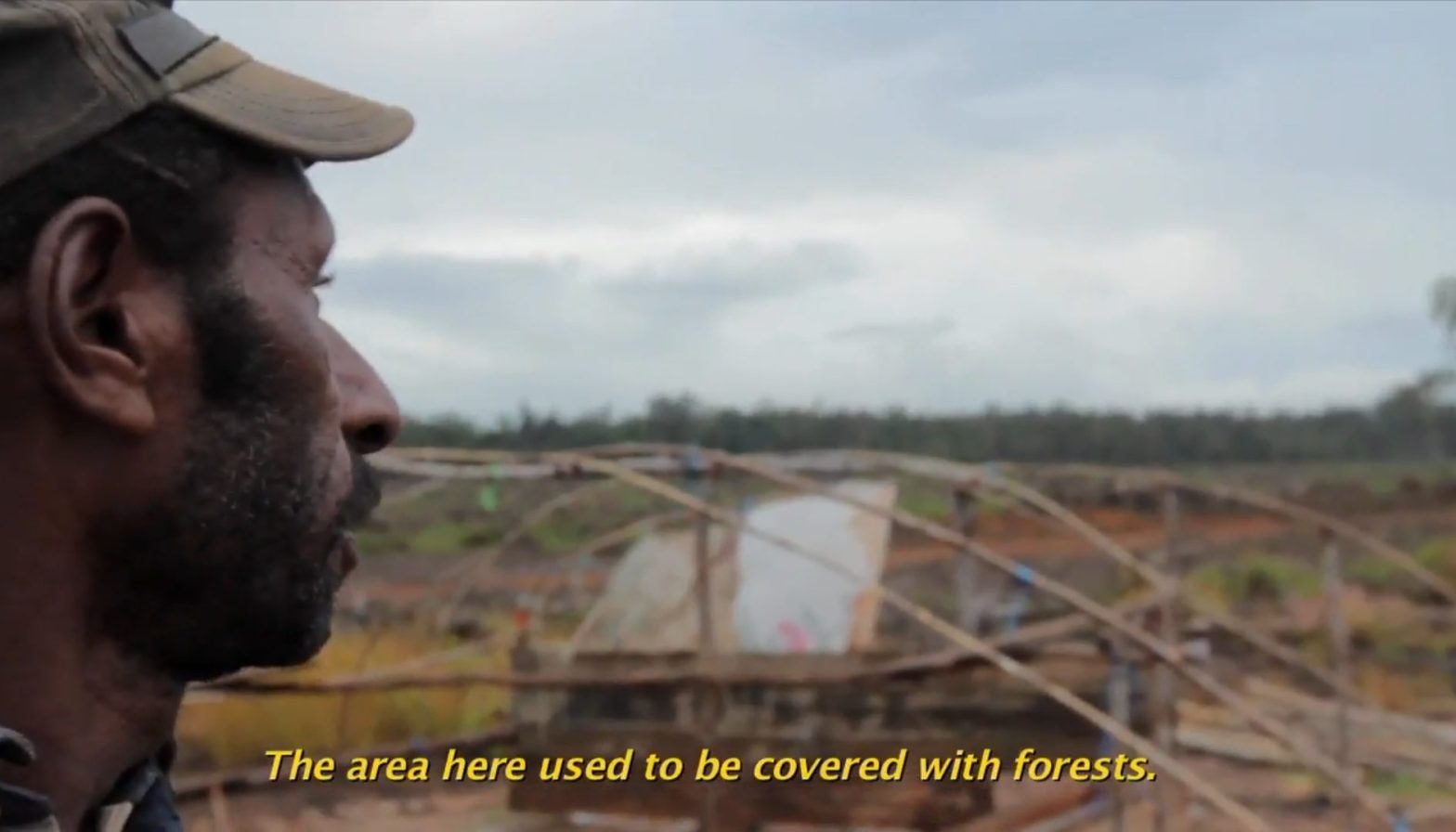
The insidious playbook of palm oil companies “Promise, Divide, Intimidate and Coerce” reveals the 12 corrupt tactics used to grab community land in Africa
Artist and Indigenous Rights Advocate Barbara Crane Navarro
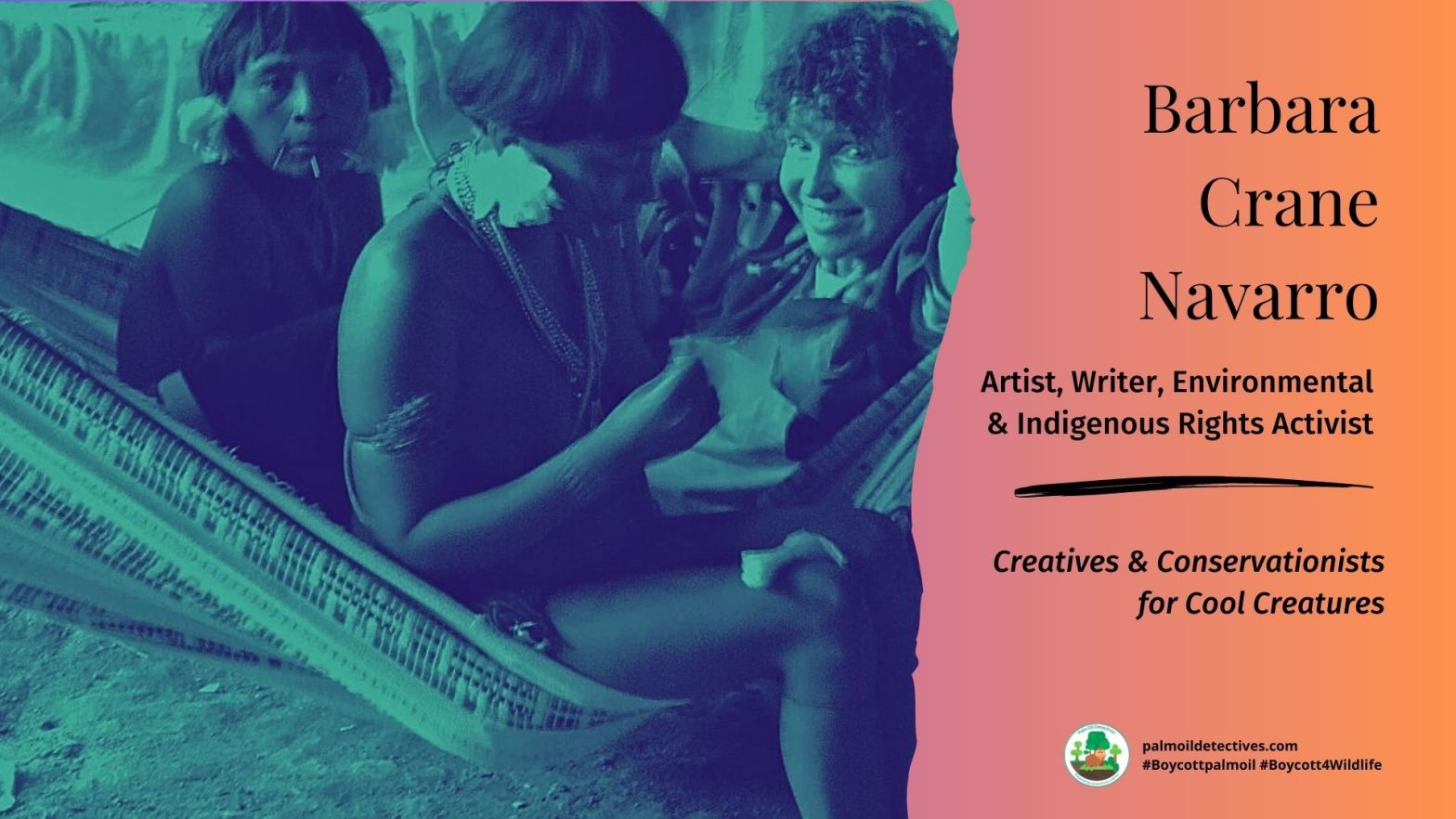
Artist Barbara Crane Navarro merges art and activism to defend the Amazon and Yanomami from destructive gold mining. Support #BoycottGold4Yanomami.
The Amazonian Royal Flycatcher: A flurry of feathers

The Amazonian Royal Flycatcher is a member of a family of birds called the tyrant flycatchers, which occur throughout North and South America. This is the biggest family of birds in the world, with more than 400 species. As the name implies, the majority of tyrant flycatchers are entirely insectivorous (though they do not necessarily specialise in flies), while the ‘tyrant’ part comes from the noisy, aggressively territorial behaviour of some species in the group. Help them to survive every time you shop and #BoycottPalmOil #Boycott4Wildlife.
Meet Chimbu, the blue-eyed, bear-eared tree kangaroo
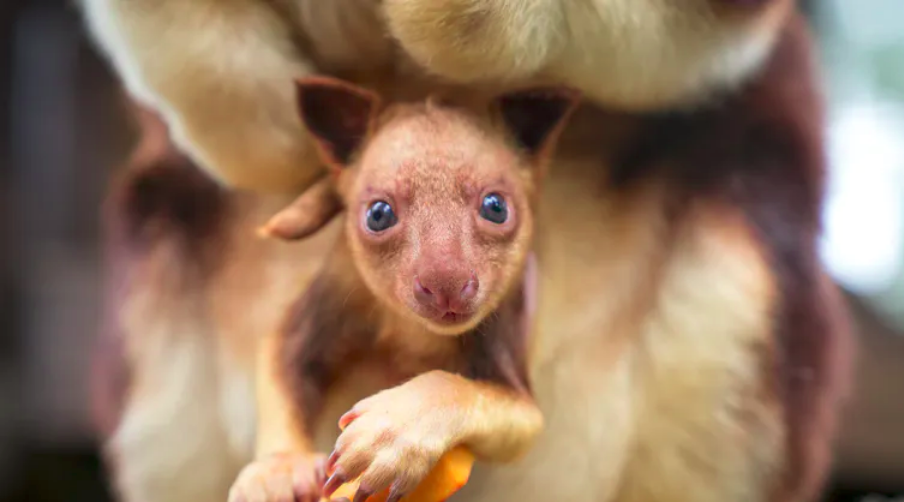
Tree kangaroos are so unusual that when Europeans first encountered them in Australia in 1872, back on the continent they were sceptical if they were real! Who would believe a #kangaroo could climb a tree? The Goodfellow’s tree kangaroo is an endangered species of the genus dendrolagus living in the Central Cordillera mountain ranges ofContinue reading “Meet Chimbu, the blue-eyed, bear-eared tree kangaroo”
Knobbed Hornbill Rhyticeros cassidix
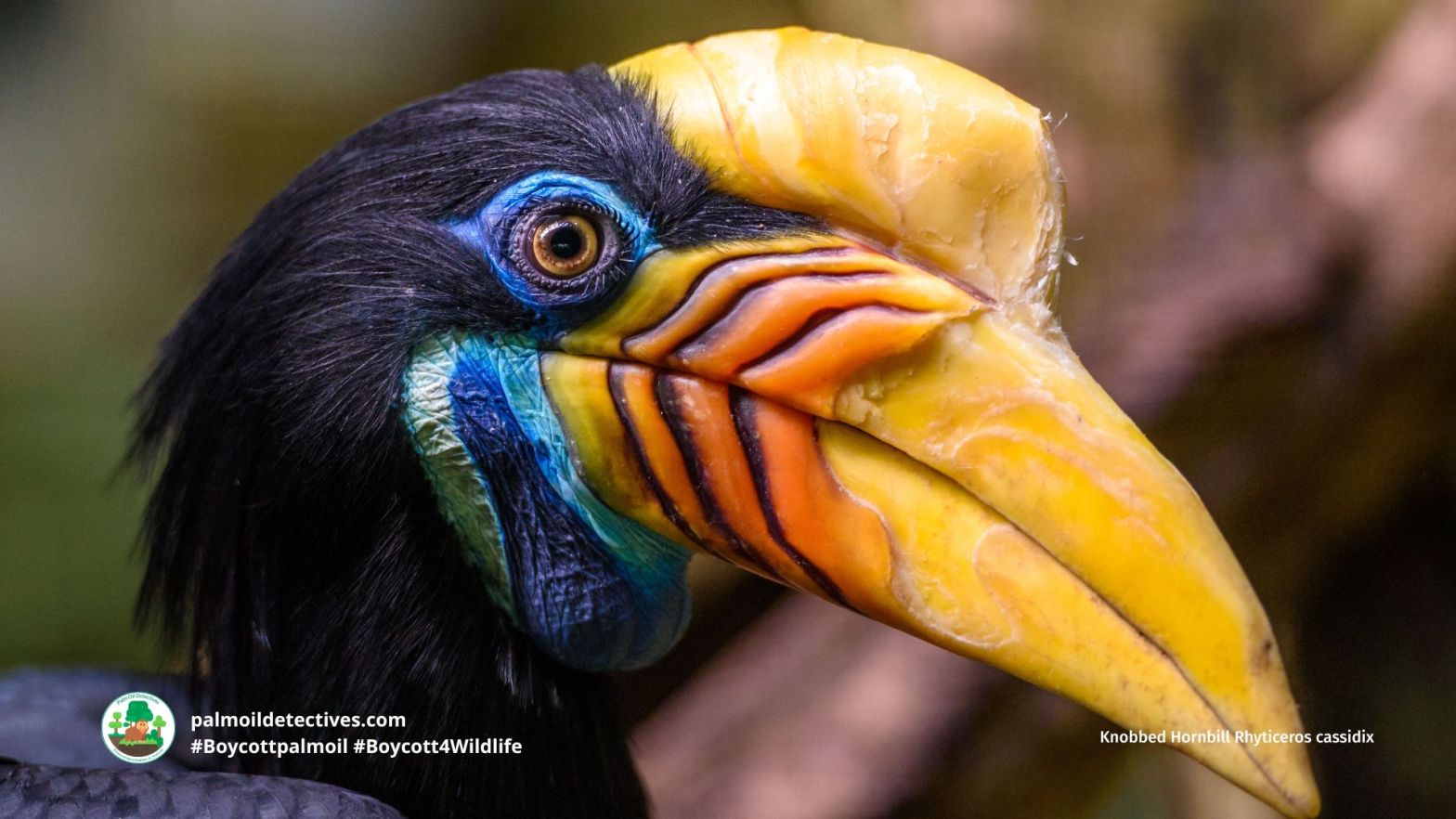
Knobbed Hornbills are important seed dispersers in Indonesia. Known for their unique social nature, save this striking bird, when you shop boycott palm oil!
Greenwashing Tactic 10: Gaslighting, Harassment, Stalking and Threats
Gaslighting, harassing or stalking vocal critics of a brand, commodity or industry certification in order to silence these critics – this is greenwashing!
Ecuadorian White-fronted Capuchin Cebus aequatorialis
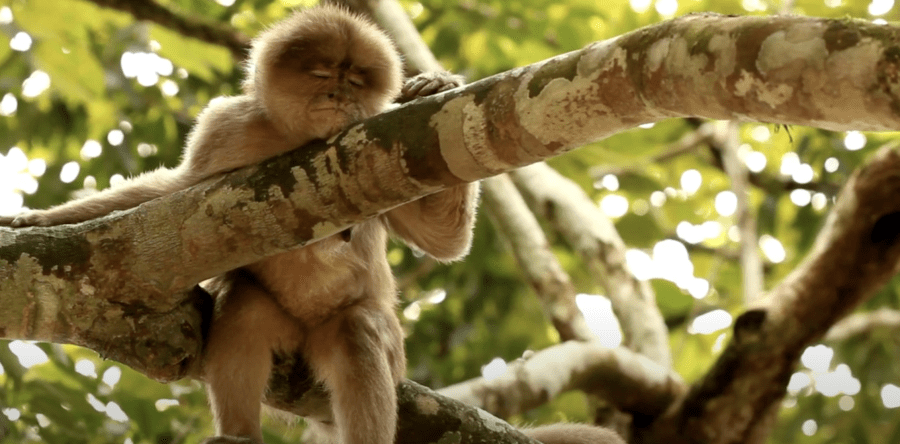
Ecuadorian White-fronted Capuchins face habitat loss to palm oil, hunting, and mining. Less than 10,000 remain. Support forest defenders. #BoycottPalmOil
Ten Tactics of ‘Sustainable’ Palm Oil Greenwashing
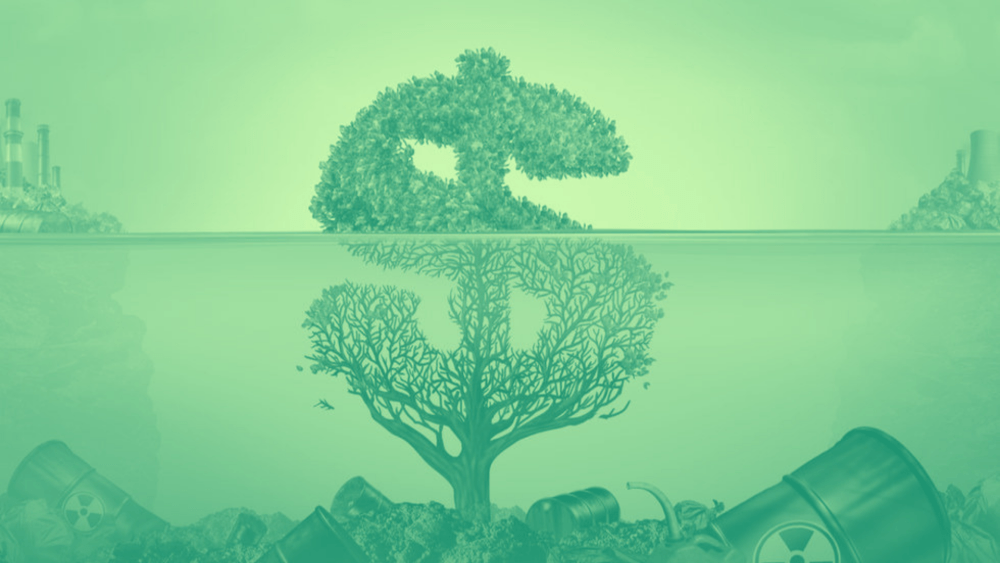
Learn ten marketing and PR tactics used for “sustainble” palm oil greenwashing to justify endless growth by the palm oil industry. Boycott palm oil now!
 Palm Oil Detectives