
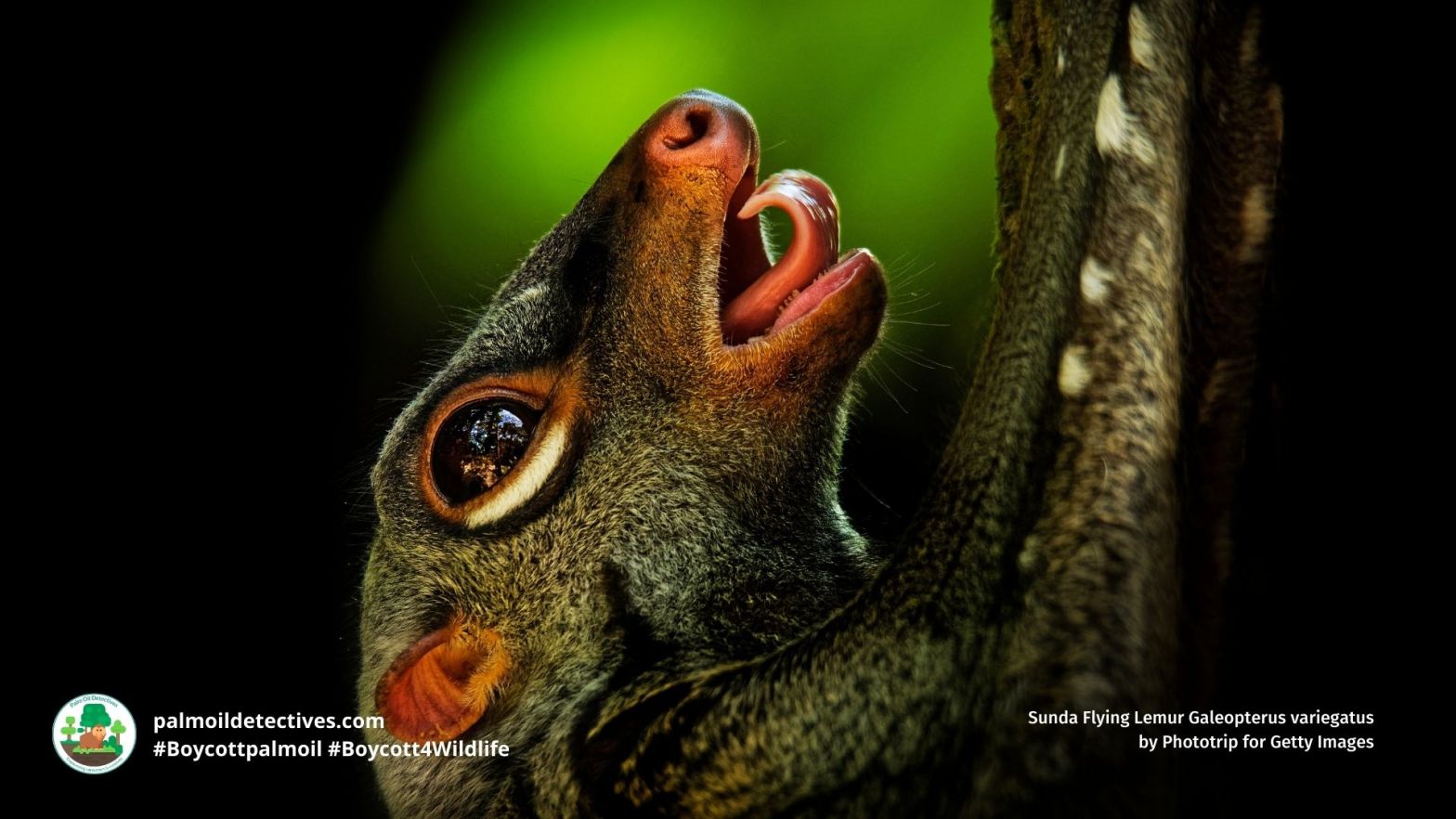
Sunda flying lemurs AKA Malayan colugos rely on ancient forests to survive, despite being skilful gliders, palm oil is a major threat, boycott palm oil!
Tag Archives: Brunei
Sunda Clouded Leopard Neofelis diardi
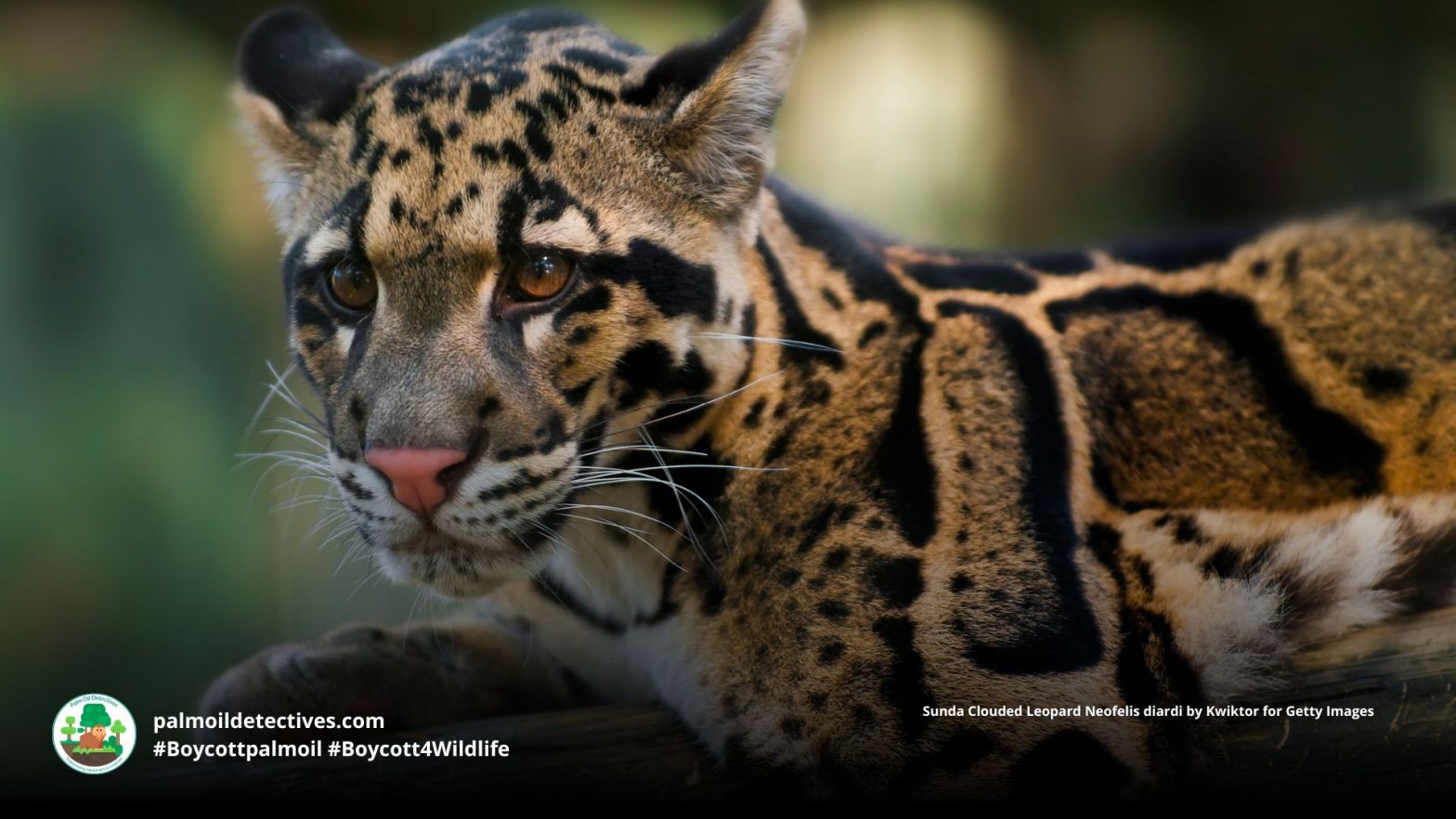
Gliding through the rainforest canopy like a phantom predator, the Sunda Clouded Leopard moves with unmatched grace, making them one of the least understood big cats in the world. Their spectacularly patterned coat, the longest canines relative to skull size of any feline, and astonishing agility in trees set these big cats apart as a truly unique species. Yet, despite these remarkable adaptations, these mysterious carnivores are now rapidly vanishing from the wild due to human-related threats.
Massive infrastructure projects, industrial-scale palm oil plantations, and poaching for the illegal wildlife trade have decimated their populations. Once thought to be a subspecies of the mainland clouded leopard, genetic studies in 2006 confirmed that they are a distinct species, found only in Borneo and Sumatra. Today, they are among the most threatened felines in the world, teetering on the edge of an uncertain future. Take action for them every time you shop and #BoycottPalmOil #Boycott4Wildlife
Tufted Ground Squirrel Rheithrosciurus macrotis
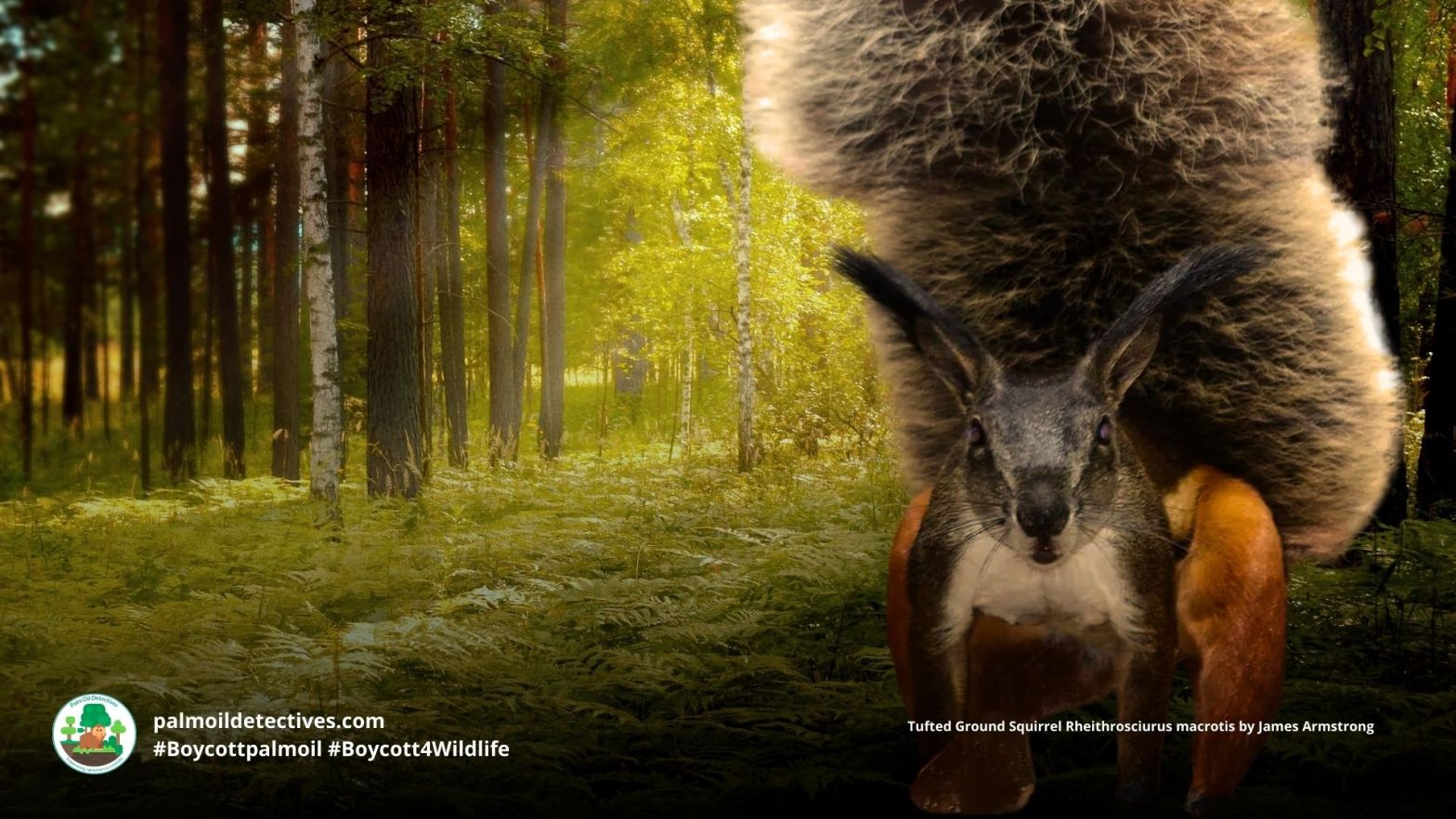
The tufted ground squirrel, or groove-toothed squirrel, is a striking nut-cracking rodent native to the island of Borneo. Sporting a voluminous, club-shaped tail, the tufted ground squirrel carries the largest tail-to-body size ratio of any mammal. Scientists believe the tail could serve to confuse predators or attract mates. They are listed as Vulnerable on the IUCN Red List and are threatened by deforestation, hunting, and forest conversion to palm oil. To protect these charismatic creatures, make sure you #BoycottPalmOil and #Boycott4Wildlife in the supermarket!
Protected: Private Advocate’s Page
There is no excerpt because this is a protected post.
Wallace’s Flying Frog Rhacophorus nigropalmatus

The elusive and visually stunning Wallace’s Flying #Frog are known for their mysterious nature and their ability to take flight and glide through the air like dancers. They reveal themselves only during breeding aggregations when they descend from the trees.
Recent surveys in various regions, including the Matang Range in #Sarawak, #Malaysia, and the Endau-Rompin in West Malaysia, have documented the presence of this species. However, their overall population faces a concerning decline due to the ongoing loss of habitat for #palmoil #deforestation. Urgent conservation efforts are critical to reverse this trend and to ensure the survival of this intriguing species in their natural environment. Help this frog to survive every time you shop, make sure that you #Boycottpalmoil #Boycott4Wildlife in the supermarket!
Sunda Pangolin Manis javanica
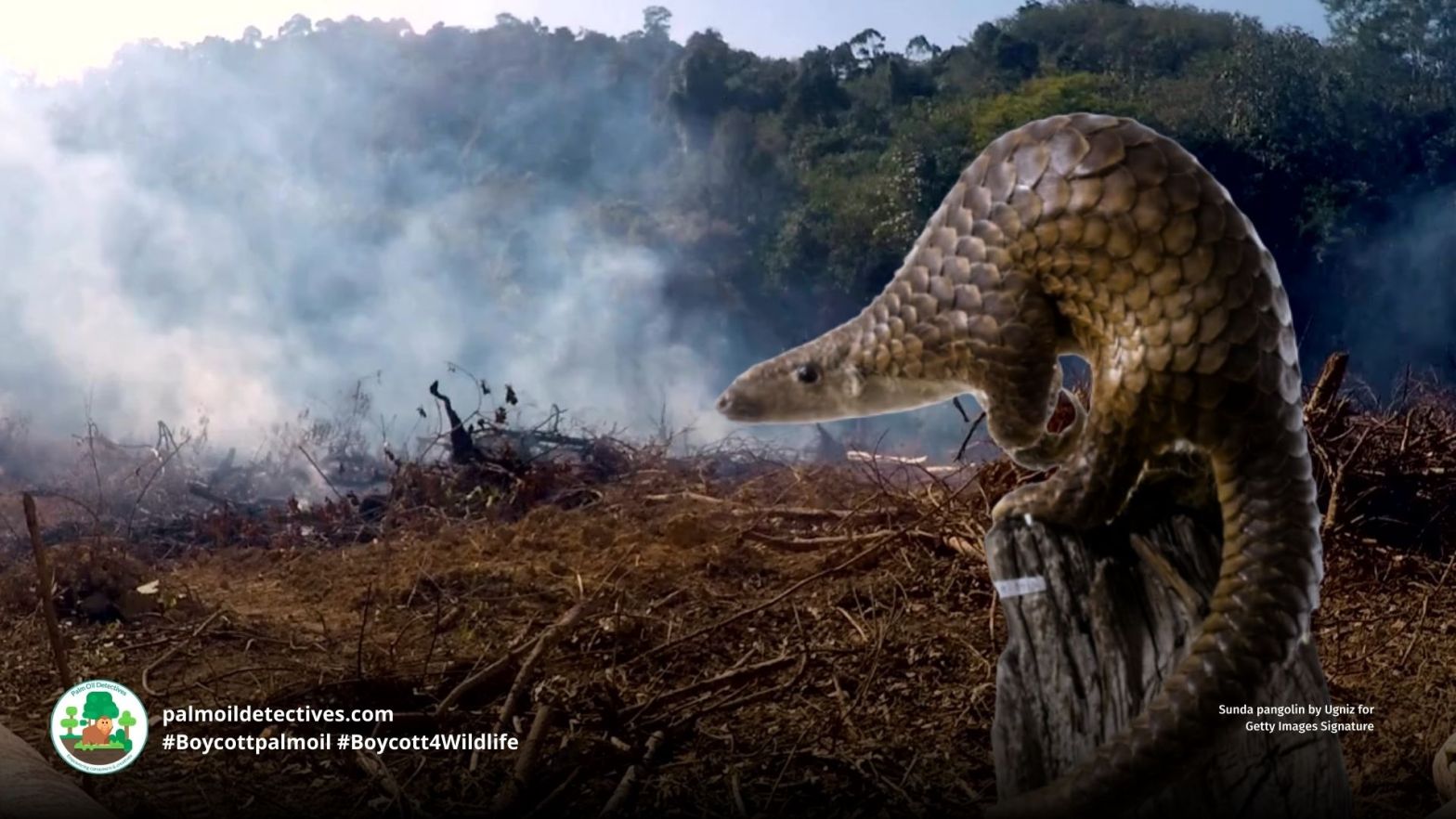
Sunda pangolins AKA Javan pangolins are capable swimmers and curl protective balls, palm oil and hunting exploitation are major threats, boycott palm oil!
Helmeted Hornbill Rhinoplax vigil

Helmeted #Hornbills are spectacular, large and intelligent #birds native to SE Asia, known for their substantial helmet-like structure on their head called a casque made of ivory. This hefty head accounts for 11% of their 3kg body weight. They are found on the Malay Peninsula: #Sumatra, #Borneo, #Myanmar and #Thailand. They are #criticallyendangered. Their main threats are illegal hunting and wildlife trade for their ivory casques along with palm oil and timber deforestation. Help them each time you shop and #Boycottpalmoil #Boycott4Wildlife
Marbled Cat Pardofelis marmorata
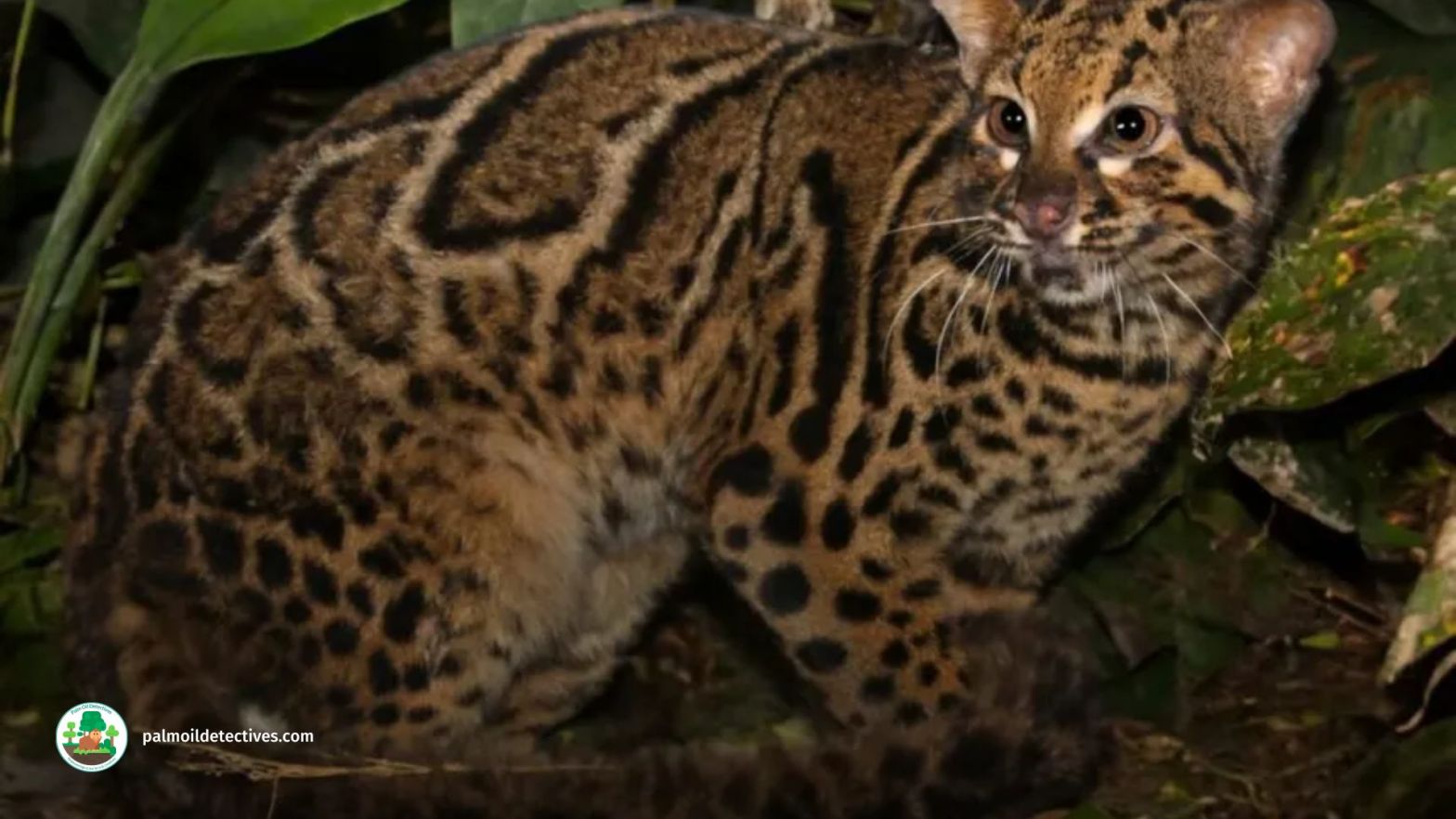
Marbled Cat Pardofelis marmorata IUCN Status: Near Threatened Location: India, Nepal, Bhutan, Bangladesh, Myanmar, Thailand, Laos, Vietnam, Cambodia, Malaysia, Indonesia (Sumatra, Borneo), China (Yunnan, Guangxi, Tibet), Brunei The marbled cat is a small #wildcat that can be found in the eastern part of the Himalayas and southern Asia. They are related to the Asian GoldenContinue reading “Marbled Cat Pardofelis marmorata”
Bearded Pig Sus barbatus
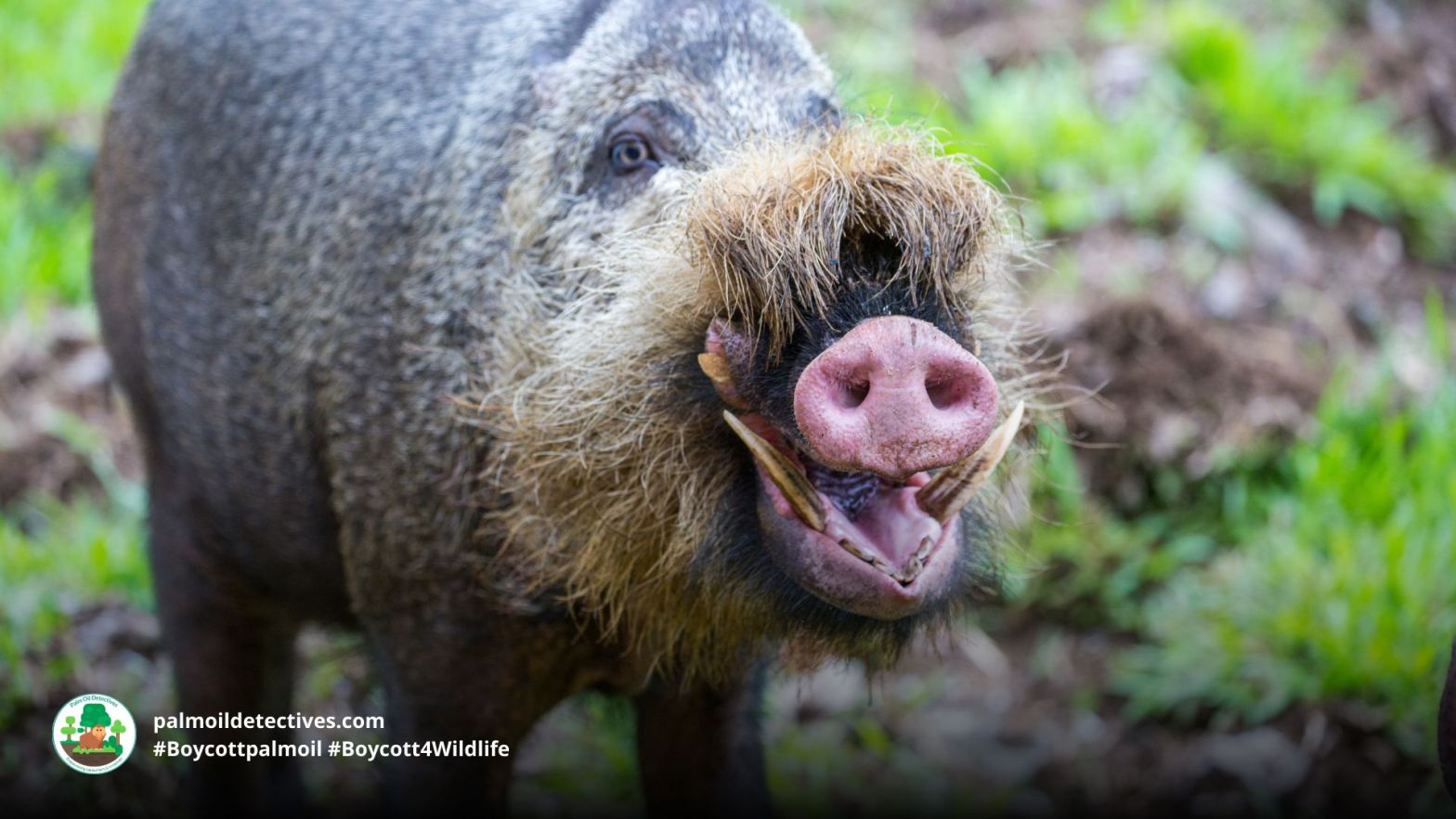
Bearded Pigs have hair which grows along their lower jaws that resembles a beard – giving them their distinctive whiskery appearance and their name. The Bearded Pig is an integral part of Southeast Asia’s tropical ecosystems, known for their unique appearance and critical role as seed dipersers in forest health. They are the only pig species known to migrate, moving in synchrony with fruiting seasons. However, they face mounting threats from habitat loss for palm oil and timber, along with illegal hunting, and disease. Help them to survive and use your wallet as a weapon in the supermarket #BoycottPalmOil #Boycott4Wildlife
Northern Gray Gibbon Hylobates funereus
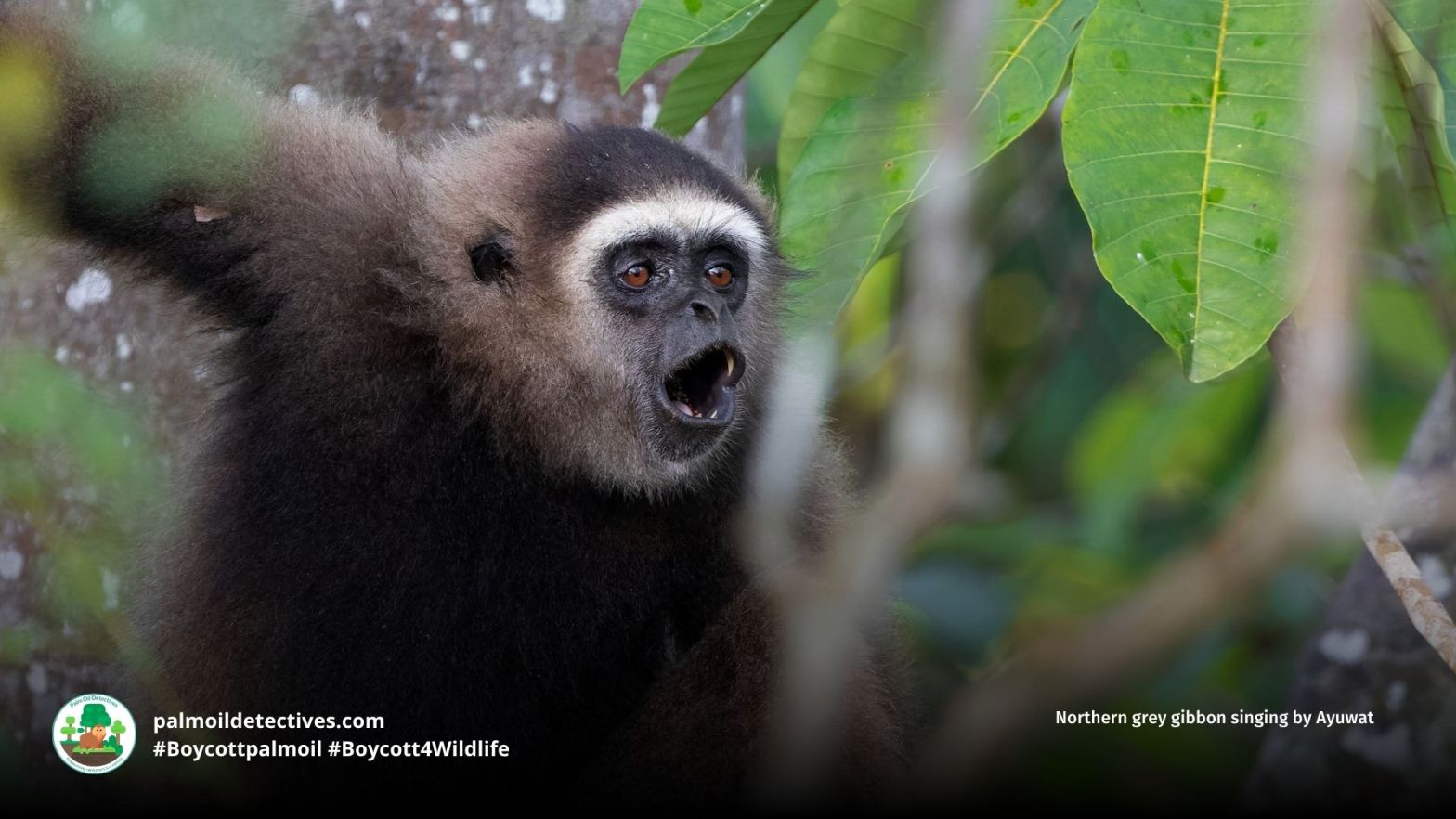
Save the sublime song and energetic lives of the Northern grey gibbons in Borneo when you boycott palm oil and boycott4wildlife in the supermarket!
Wrinkled Hornbill Rhabdotorrhinus corrugatus
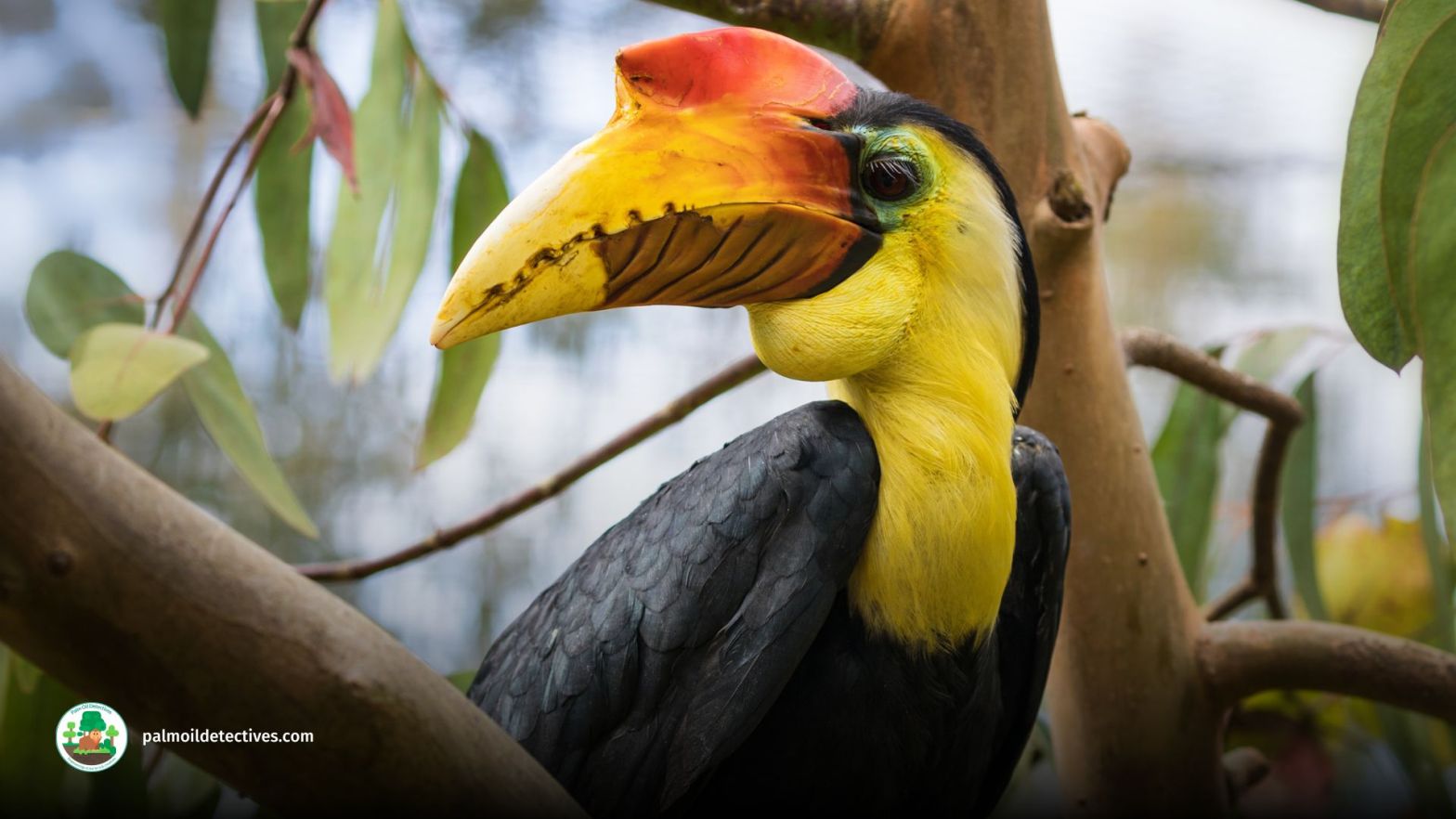
Discover the fascinating world of the Wrinkled Hornbill. These ancient and magnificent birds thriving in lush primary evergreen and swamp forests up to 1,000 meters above sea level. Unfortunately, their habitat faces threats from forest fires and the conversion of lowland forests into large-scale palm oil and rubber plantations, along with small-scale agriculture. These majestic creatures rely on large trees for nesting, putting them at risk due to logging. But we can help! By boycotting palm oil and adopting a #vegan lifestyle, we can protect the Wrinkled Hornbills and their precious home. Let’s come together and make a positive impact for wildlife preservation. 🌳🐦💚 #Boycottpalmoil #Boycott4Wildlife
Storm’s Stork Ciconia stormi
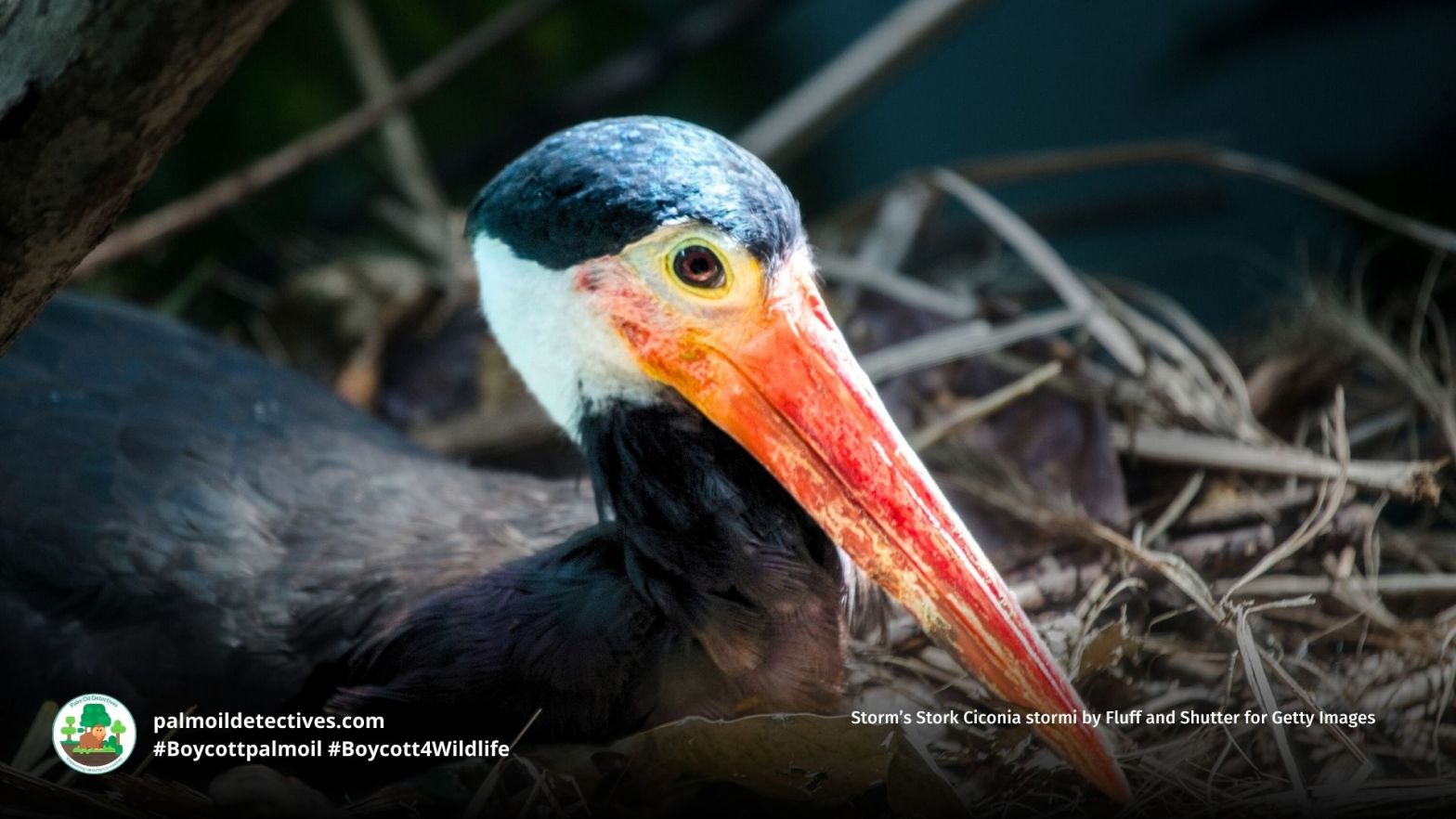
Storm’s Stork Ciconia stormi is the rarest and most elusive stork in Asia, palm oil is a threat boycott palm oil for them!
Vordermann’s Flying Squirrel Petinomys vordermanni
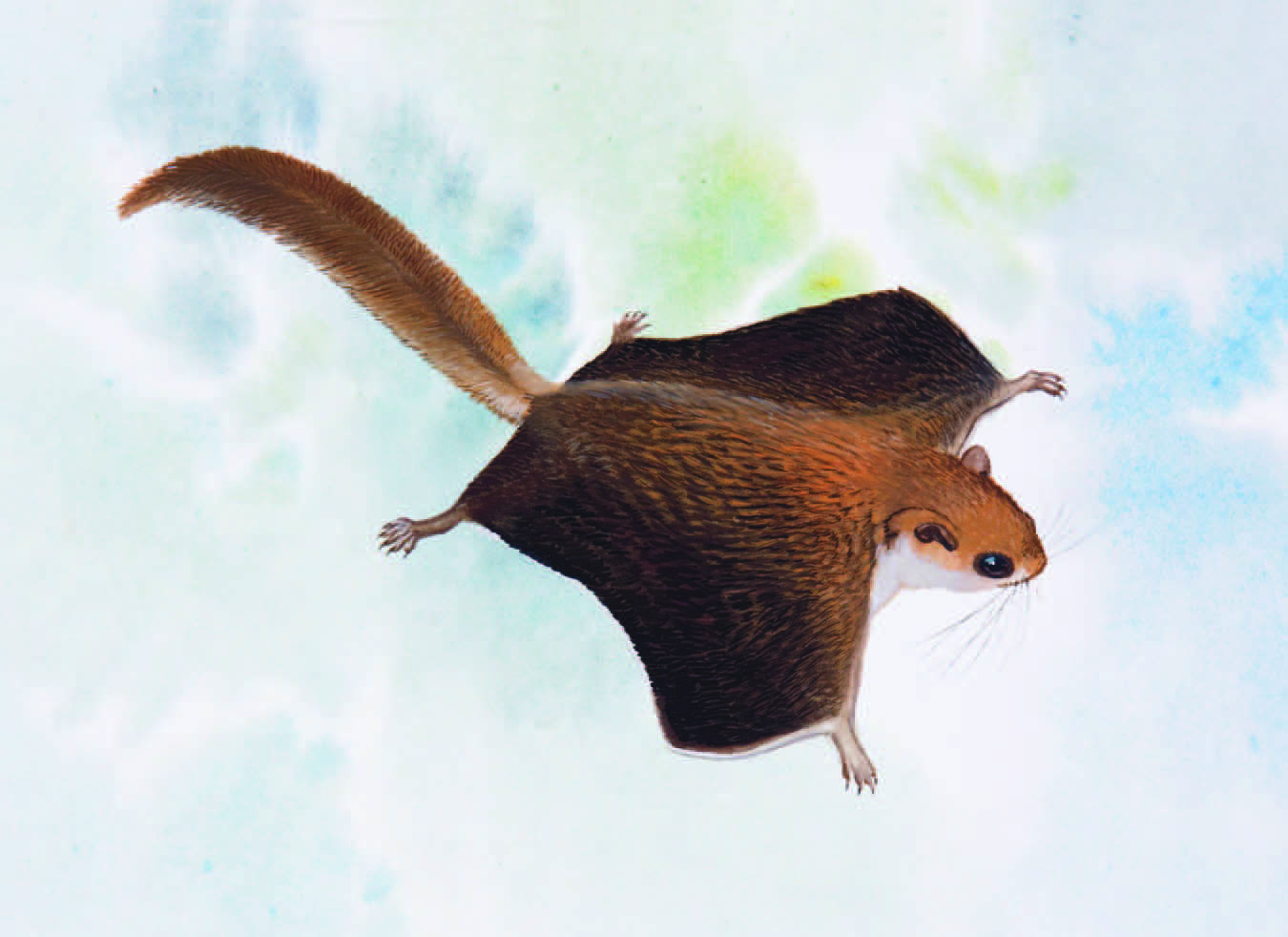
In #Borneo’s twilight, the Vordermann’s flying #squirrel emerges from her nest, resplendent with orange cheeks and black-ringed eyes. This small, #nocturnal #mammal is a master of the rainforest canopy. They use an ingenious membrane called a patagium to effortlessly glide between trees. A flying squirrel’s world is one of constant motion and quiet vigilance. Don’t let this world disappear! The forests that sustain them are vanishing at an alarming rate. Palm oil-driven deforestation, logging, and land conversion are tearing through their habitat, leaving only fragmented forest. Use your wallet as a weapon and #BoycottPalmOil #Boycott4Wildlife.
Smoky Flying Squirrel Pteromyscus pulverulentus
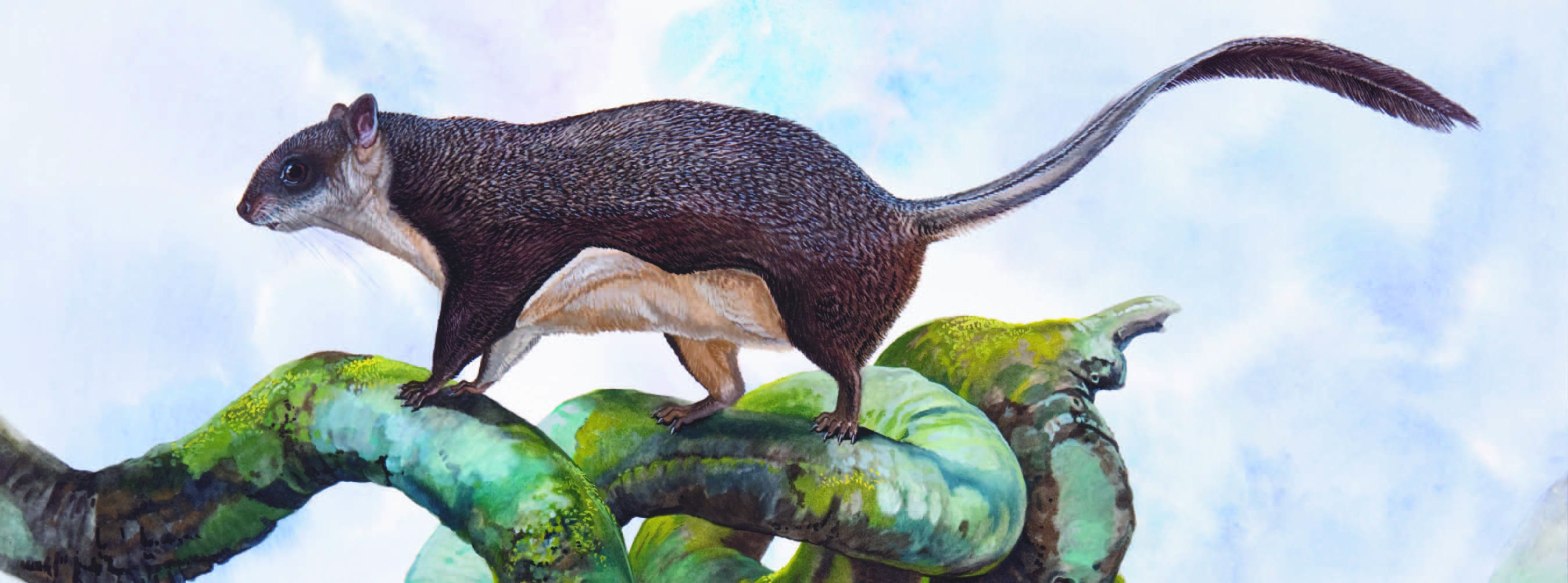
The Smoky Flying Squirrel (Pteromyscus pulverulentus) is a rare and elusive creature silently and gracefully gliding between the towering canopies of Southeast Asia’s rainforests. With their smoky-grey fur, expansive gliding membrane, and bushy tail, these squirrels are perfectly adapted to a dynamic life on the move in the treetops.
Classified as Endangered by the IUCN, their populations are dwindling and at a critical all time low due to habitat destruction from timber logging, palm oil plantations, and agricultural expansion. This fleet footed nocturnal marvel symbolises the fragile ecosystems of Southeast Asia. Protect them by boycotting palm oil and fighting deforestation. #BoycottPalmOil #Boycott4Wildlife
Southeast Asian Box Turtle Cuora amboinensis
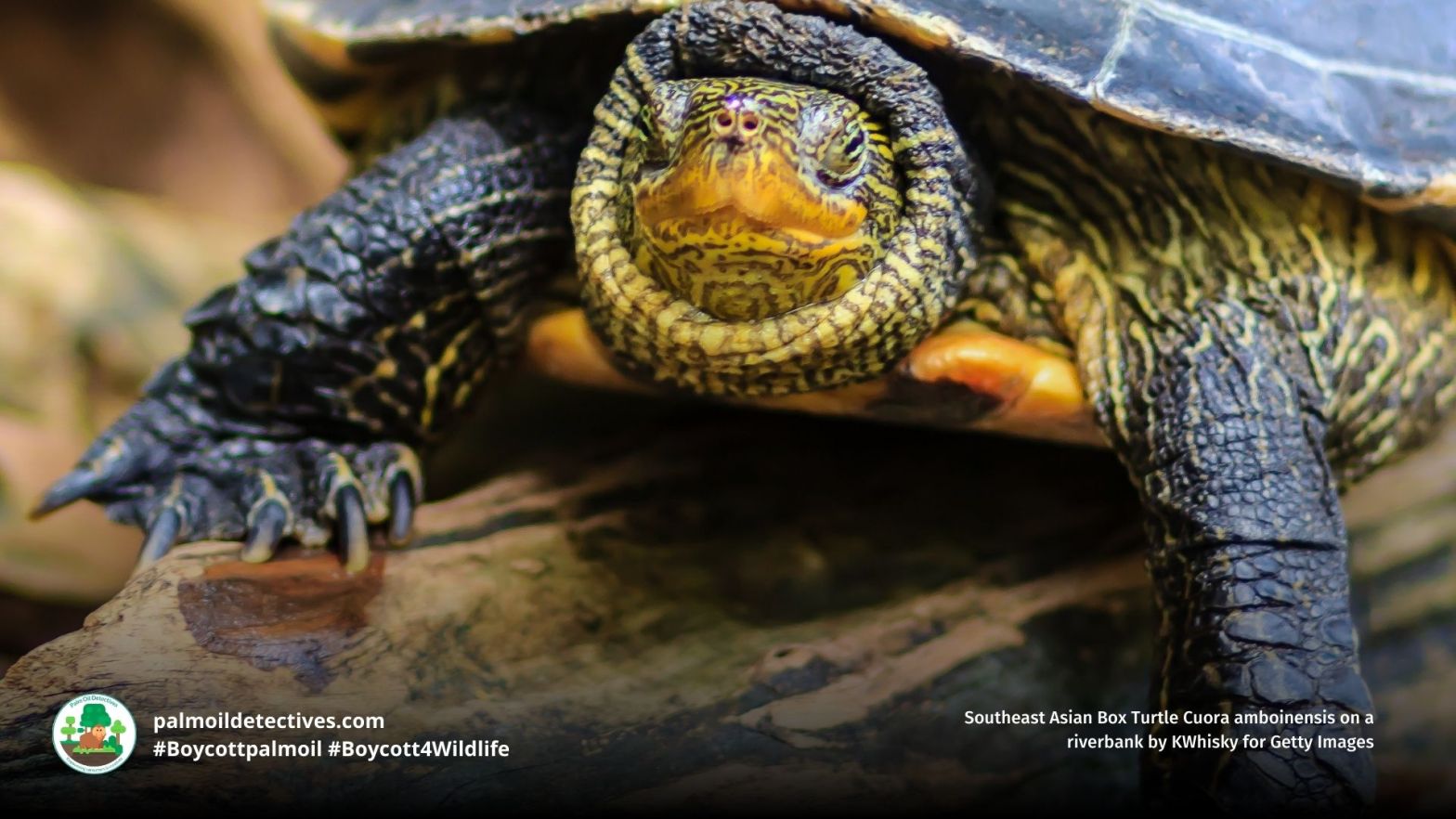
The Southeast Asian Box #Turtle Cuora amboinensis, also known as the Amboina Box Turtle, Malayan Box Turtle, or Indonesian Box Turtle, is a freshwater #reptile species found across much of Southeast Asia. This species is under severe pressure due to overexploitation for food, traditional medicine, and the #pettrade, particularly in Australia, #China, Europe, and the United States. Their semi-aquatic nature allows them to thrive in swamps, rice paddies, and slow-moving rivers, but habitat destruction from #palmoil plantations, #timber and wetland drainage threatens their survival. Their population is rapidly declining due to these threats, making urgent protections necessary. Resist destruction and fight for their survival every time you shop – #BoycottPalmOil #Boycott4Wildlife.
Proboscis Monkey Nasalis larvatus
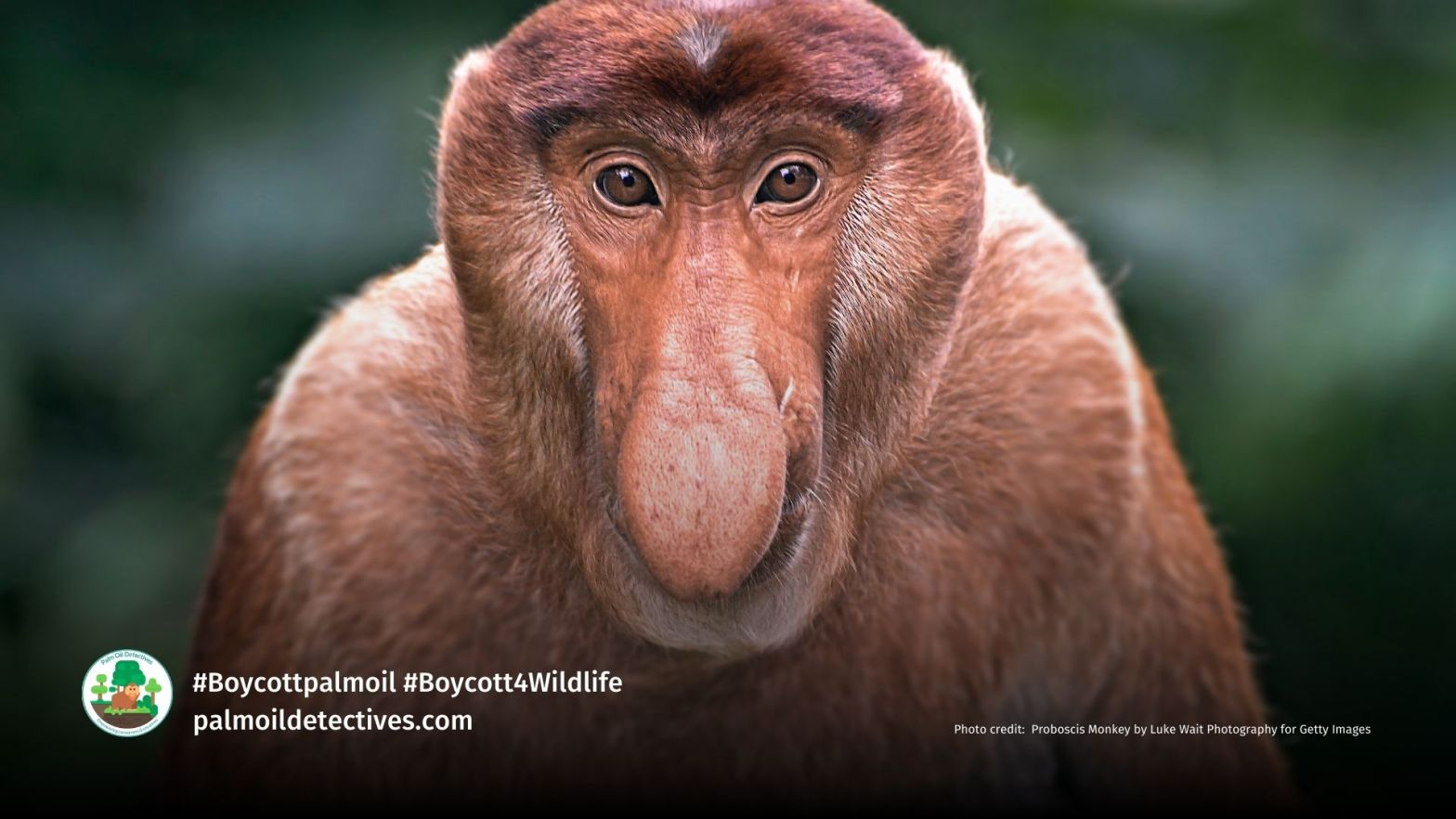
Proboscis Monkeys are known for their large noses and pot bellies. These arboreal monkeys of Borneo are great swimmers, help them when you boycott palm oil
Straw-headed Bulbul Pycnonotus zeylanicus
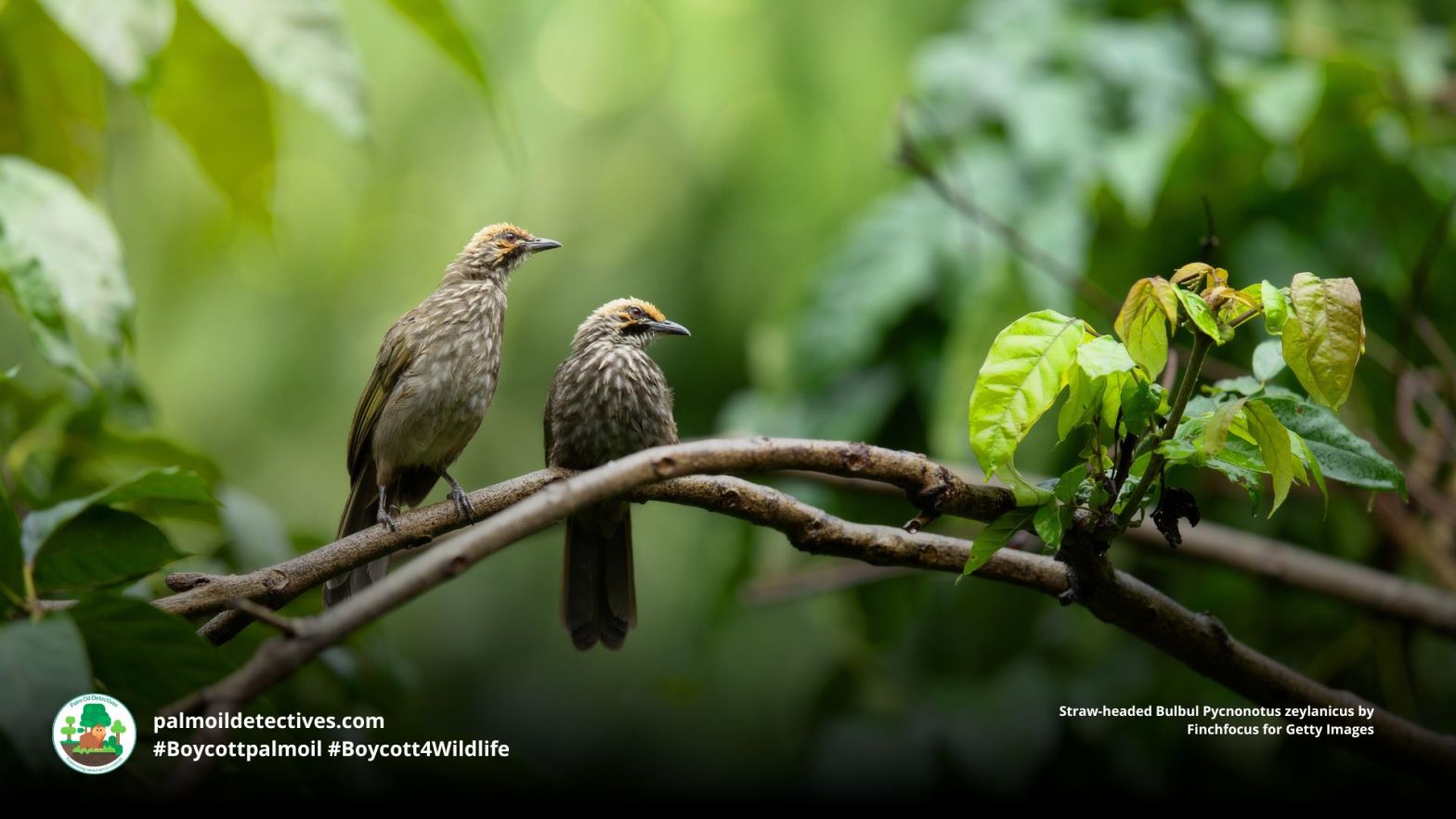
The Straw-headed Bulbul is a striking bright yellow bird known for their vibrant song, often described as one of the most melodious in the bird world. Their powerful calls echo through Southeast Asia’s lowland forests, but these sounds are becoming increasingly rare. They are critically endangered due to illegal trapping for the cage-bird trade and habitat loss driven by deforestation, including the expansion of palm oil plantations.
Protecting the Straw-headed Bulbul is vital to preserving their unique contribution to the soundscapes of their natural habitats. Fight for their survival by boycotting products linked to deforestation. Use your wallet as a weapon. #BoycottPalmOil #Boycott4Wildlife
Bornean Banded Langur Presbytis chrysomelas
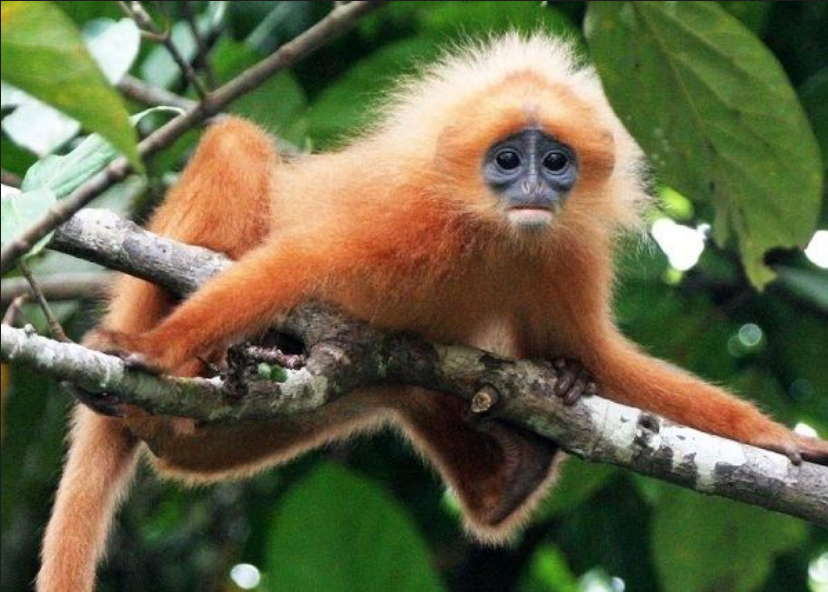
The Bornean banded langur, known for its striking black and white coat, is one of Southeast Asia’s most elusive and endangered primates. These langurs inhabit the fragmented lowland forests and peat swamps of Borneo, relying on dense foliage for their survival.
The population of Bornean banded langurs is rapidly declining due to habitat destruction for palm oil plantations, illegal logging, and hunting. As their habitat continues to shrink, these shy and rarely seen primates face an uncertain future. Use your wallet as a weapon—boycott palm oil and join the fight for their survival. #BoycottPalmOil #Boycott4Wildlife
Painted Terrapin Batagur borneoensis
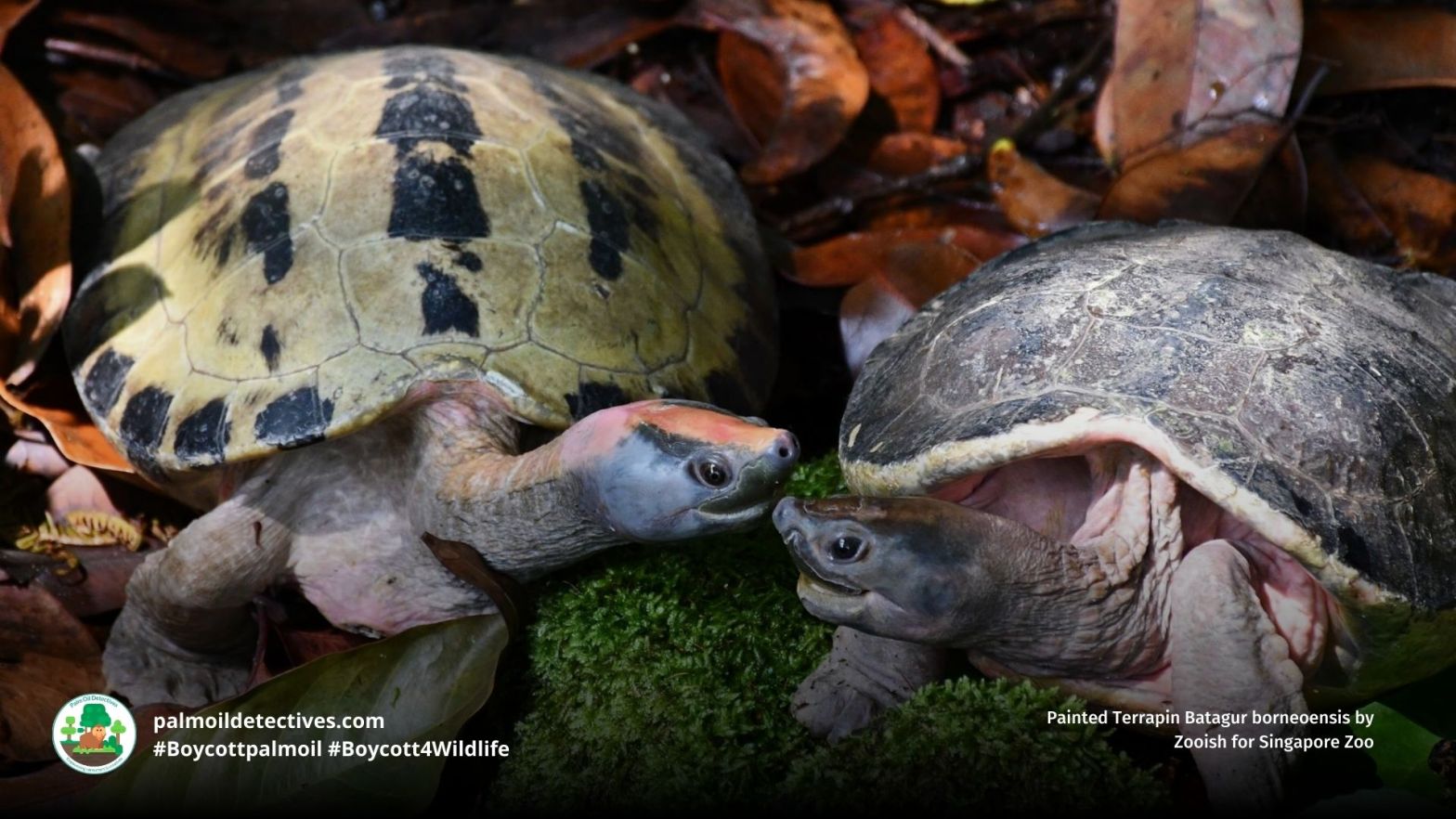
The painted terrapin, or painted river terrapin (Batagur borneoensis), is one of the most beautiful and critically endangered freshwater turtles in the world. Known for the vibrant markings displayed by males during breeding seasons, these terrapins are an integral part of Southeast Asia’s mangrove and river ecosystems.
However, their populations are rapidly declining due to habitat destruction, including deforestation for palm oil plantations, sand mining, and coastal development. With fewer than 1,000 mature individuals left in the wild, immediate action is critical to ensure their survival. Protect these majestic reptiles—boycott palm oil and support conservation efforts. #BoycottPalmOil #Boycott4Wildlife
Otter Civet Cynogale bennettii
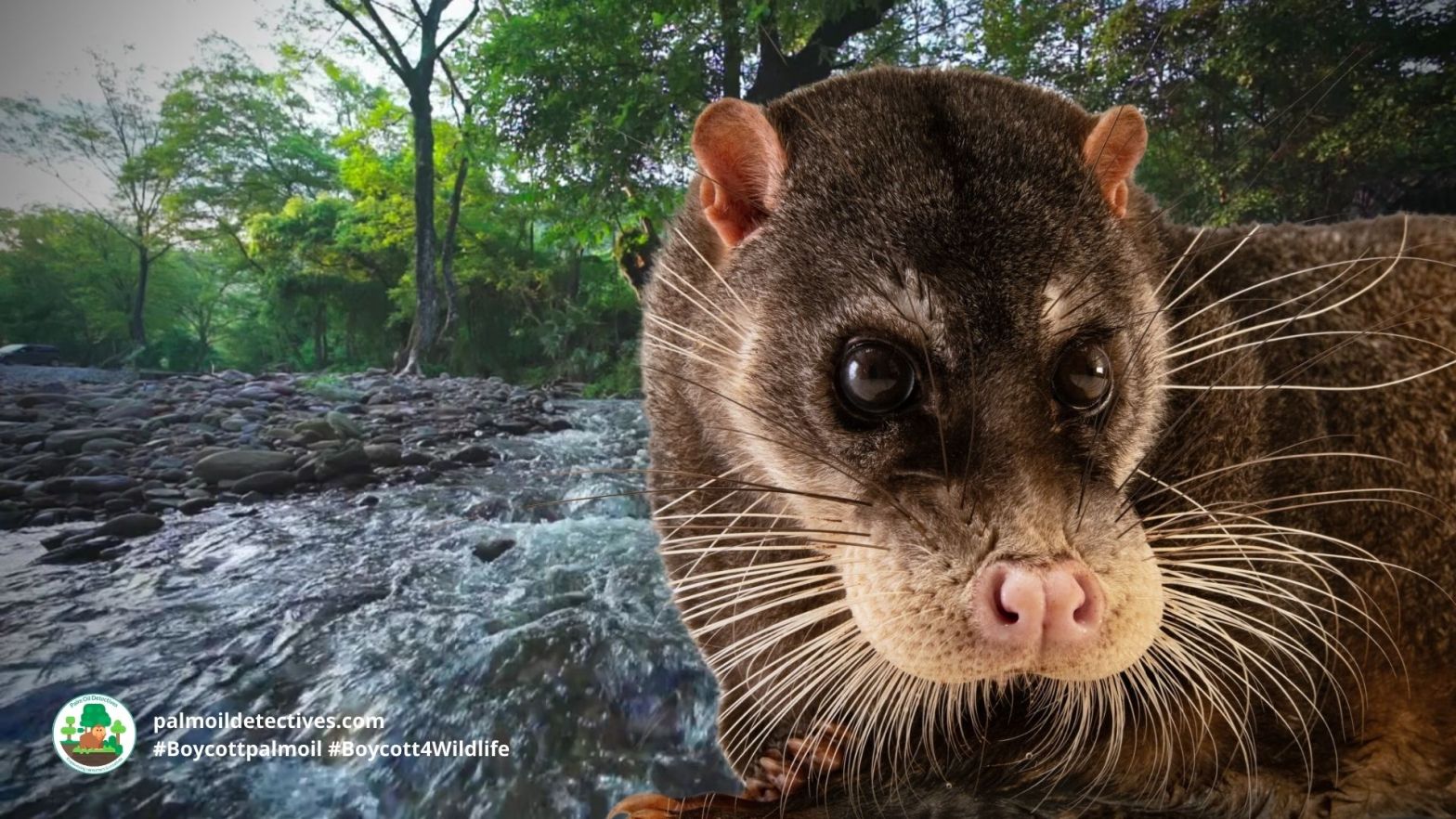
The beautiful and elusive Otter Civet lives primarily in peatland forests and riverine swamps. Their prominent snouts and long whiskers give them keen sensory understanding of their environment. They face serious ongoing threat to their survival in Borneo and are rapidly disappearing due to palm oil deforestation and gold mining pollution run-off into rivers. Help them to survive when you #BoycottPalmOil #Boycott4Wildlife.
 Palm Oil Detectives