

Frill-necked lizard AKA frilled dragons are endangered in southern Papua New Guinea and Indonesian-occupied West Papua due to palm oil ecocide, take action!
Tag Archives: reptiles
Beyond Cute: All Animals Can Become Social Media Sensations

In the age of cutesy #mammal sensations like pygmy hippo #MooDeng the chubby, pink-cheeked pygmy #hippo baby – many people believe that social media shares are correlated to cuteness. They are wrong, according to a recent study, more obscure and unusual animals like #insects, #amphibians, #reptiles and #insects can enjoy a generous portion of the social media limelight. Help them every time you shop and #BoycottPalmOil #Boycott4Wildlife
Protected: Private Advocate’s Page
There is no excerpt because this is a protected post.
Solomon Islands skink Corucia zebrata
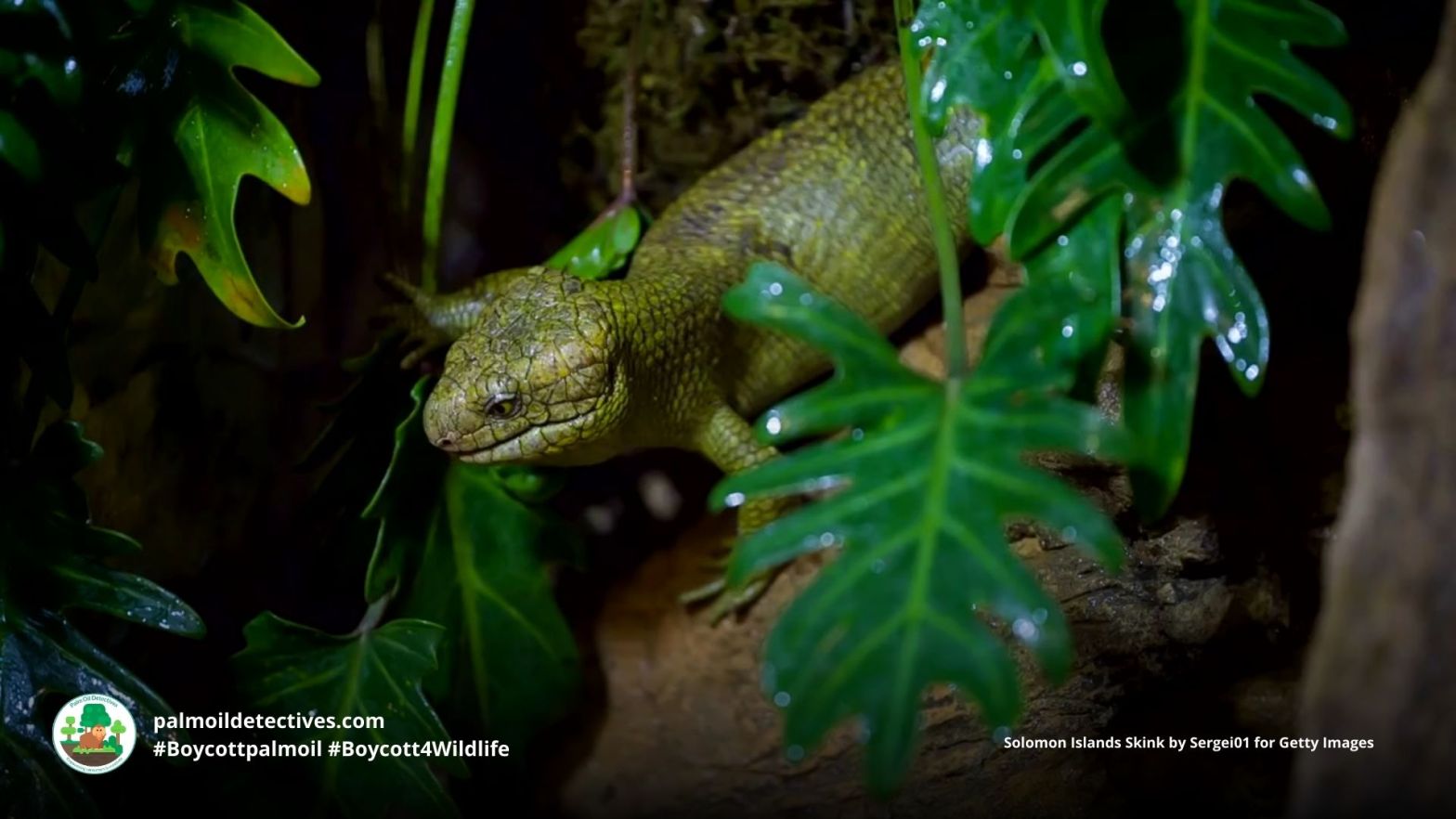
Imagine a creature straight out of a fantastical computer game – this could be the Solomon Islands skink Corucia zebrata , also affectionately known as the monkey-tailed skink. Their silhouette dances between shadows of the jungle in the Solomon Islands archipelago, to the north east of Australia. They are the largest species of skink alive and boast a long, slender body poised elegantly on short, yet robust legs. Their head forms a perfect triangle, housing small, beady and curious looking eyes. This magnificent reptile is now classified as Near Threatened due to rainforest destruction of their home for palm oil, timber and mining. Help them to survive every time you shop – #Boycottpalmoil #Boycott4Wildlife
Amphibians Glow in Ways People Can’t See
Many animals have a colourful, yet largely hidden, trait. Marine creatures like #fish and corals can glow blue, green or red under certain types of light. So can land animals like penguins and #parrots. But until now, experts knew of only one salamander and a few #frogs that could glow. No longer. Among #amphibians, this ability to glow now appears fairly common — even if you can’t see it. Research has found that most amphibians glow as well – even if it’s not visible to human eyes. Protect amphibians and reptiles every time you shop and #Boycottpalmoil #Boycott4Wildlife
Reptiles Facing Extinction: How to Help
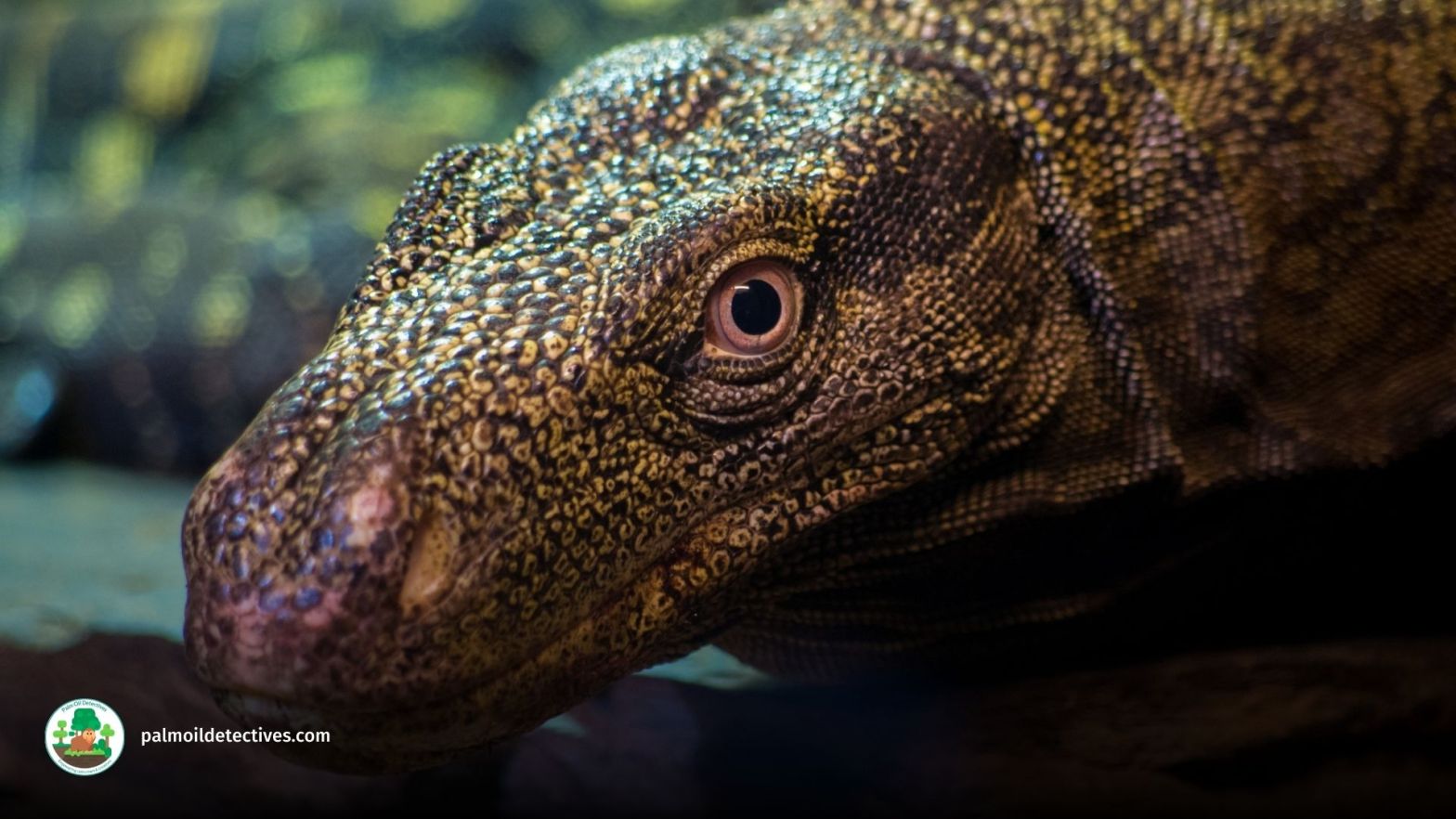
#Reptiles are fascinating creatures who are sadly feared, misunderstood and persecuted by humans. It is high time that we stand up for #lizards, #snakes, #terrapins, #crocodiles, caimans, #turtles and more.
Many of these fascinating creatures are feared by humans and inhabit hard-to-traverse places such as swamps. Compared with birds, amphibians and mammals, there is little data available on the distribution, population size and extinction risk of reptiles. This has meant that wildlife conservationists have largely helped reptiles indirectly in the past by meeting the needs of other animals (for food and habitat for example) living in similar places. Here’s how we stand up for them #Boycottpalmoil #Boycott4Wildlife
A fascinating history of warrior turtles: from ancient myths, warships and teenage mutants
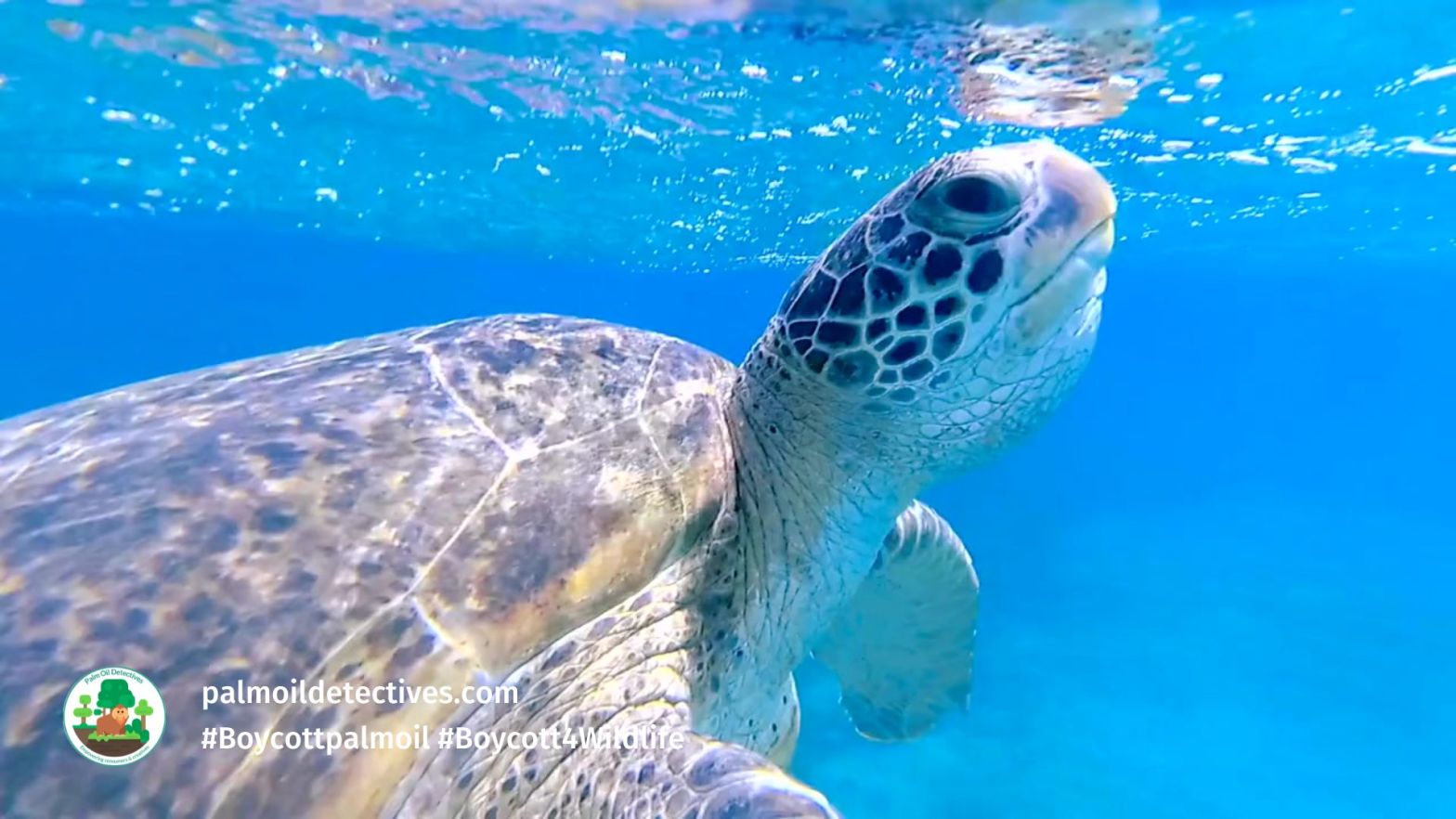
Ask anyone the identity of the world’s most famed turtles, and the answer is likely to be those legendary heroes in a half-shell, the Teenage Mutant Ninjas. Since first appearing in comic book form in 1984, the pizza-eating, nunchuk-wielding characters have shown the world the tougher side of turtles. Help them to survive every time you shop and Boycott Seafood, #BoycottPalmOil #Boycott4Wildlife
One-fifth of reptiles heading towards extinction
Almost one-fifth of the world’s reptiles are currently threatened with extinction.A recent study assessed 1500 species for extinction risks. From the 19% found to be in danger, 12% were classified as Critically Endangered, 41% as Endangered and 47% Vulnerable. Three of the species listed as being Critically Endangered are believed to be possibly extinct. ThisContinue reading “One-fifth of reptiles heading towards extinction”
Four-horned Chameleon Trioceros quadricornis
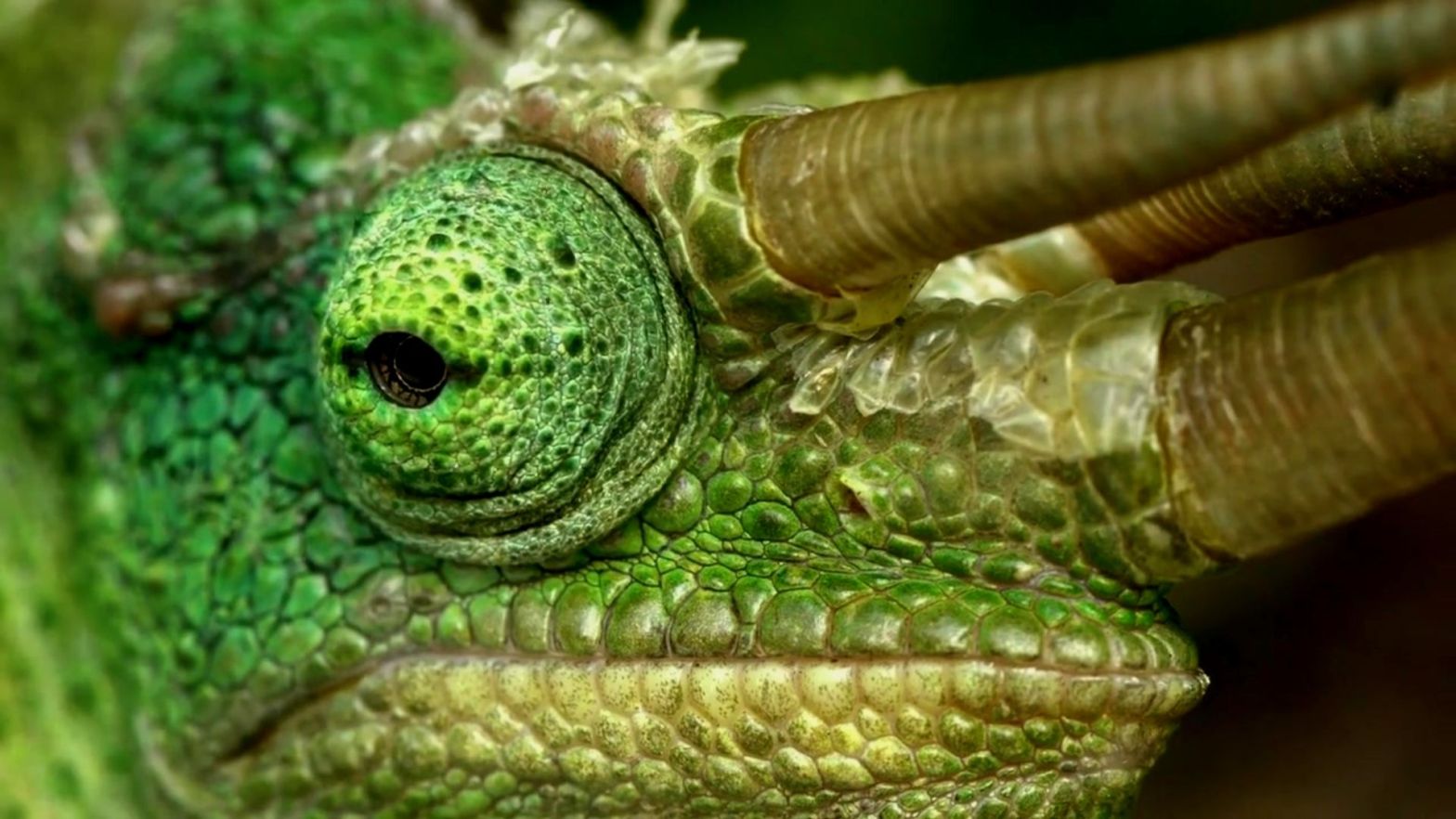
Protect the Four-Horned Chameleons, native to Cameroon’s rainforests, these extraordinary reptiles are now listed as Vulnerable, boycott palm oil for them!
Hoge’s Side-necked Turtle Mesoclemmys hogei
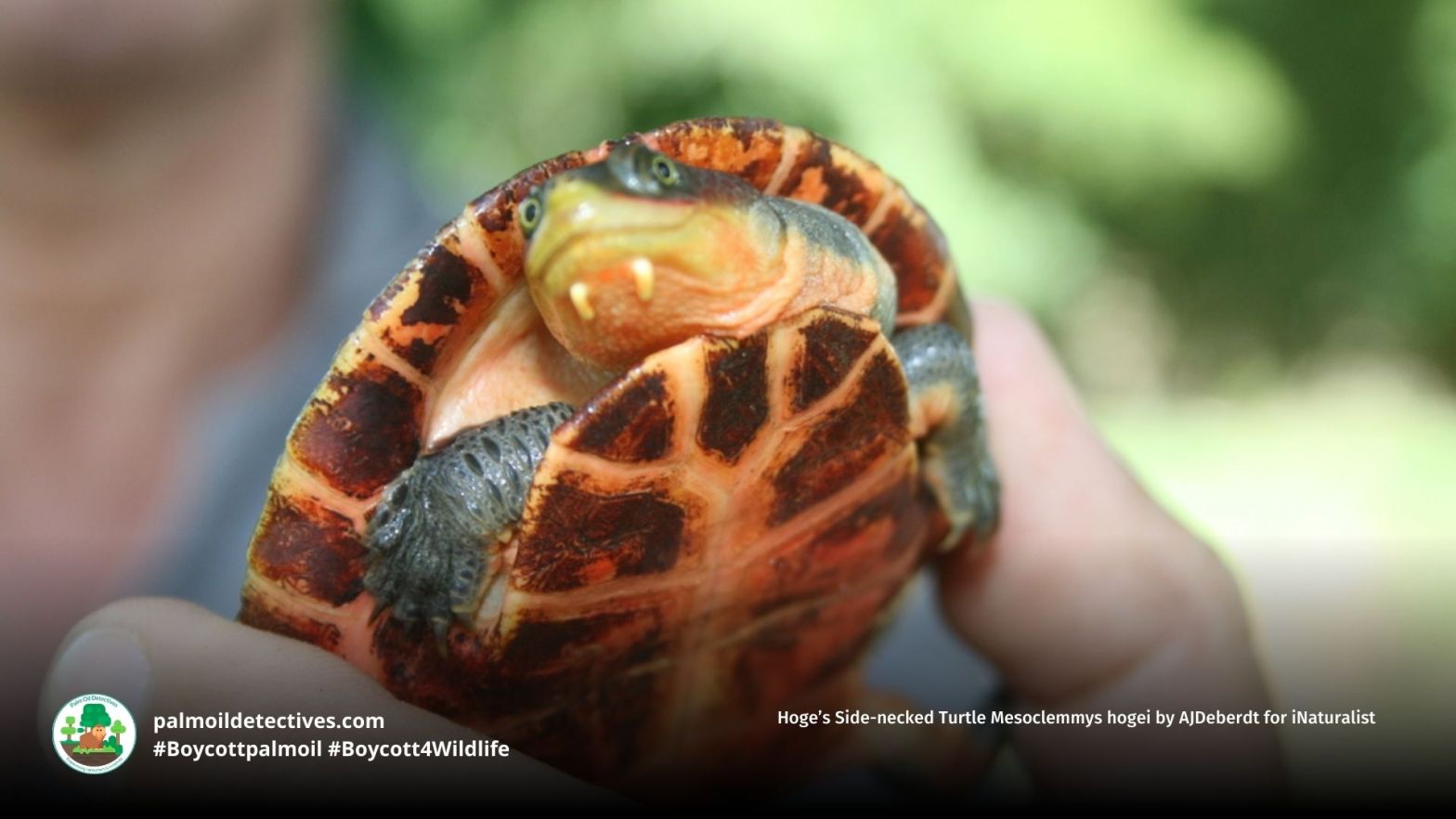
The Hoge’s Side-necked Turtle Ranacephala hogei—also known as Hoge’s Toadhead Turtle—is one of #Brazil’s rarest and most endangered reptiles. Having diverged from other turtles some 80 million years ago, they are evolutionary survivors now on the brink. With fewer than 2,000 individuals thought to remain, their populations have plummeted due to #palmoil #soy and #meat #deforestation, damming, water pollution, and incidental deaths in fisheries. Once feared lost from parts of their range, new research using citizen science and extensive fieldwork has rediscovered them in previously unknown areas, sparking renewed hope. But the threats remain. Help them every time you shop and #BoycottPalmOil #Boycott4Wildlife, be #Vegan and #BoycottMeat
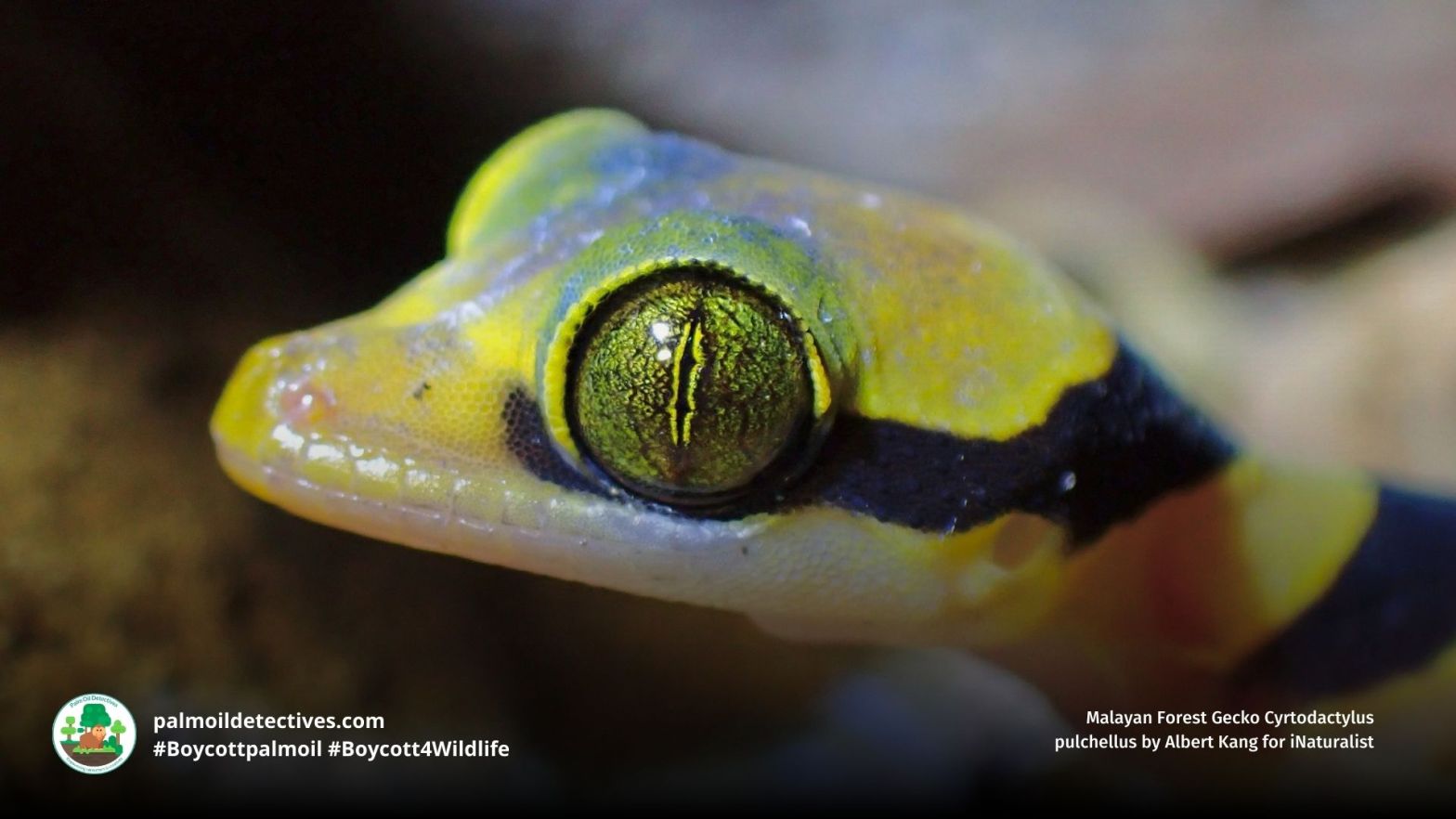
Malayan Forest Gecko Cyrtodactylus pulchellus
The Malayan Forest Gecko, a rare reptile endemic to Peninsular Malaysia’s dense rainforests, is in grave danger due to deforestation for palm oil plantations
Africa: Species Endangered by Palm Oil Deforestation
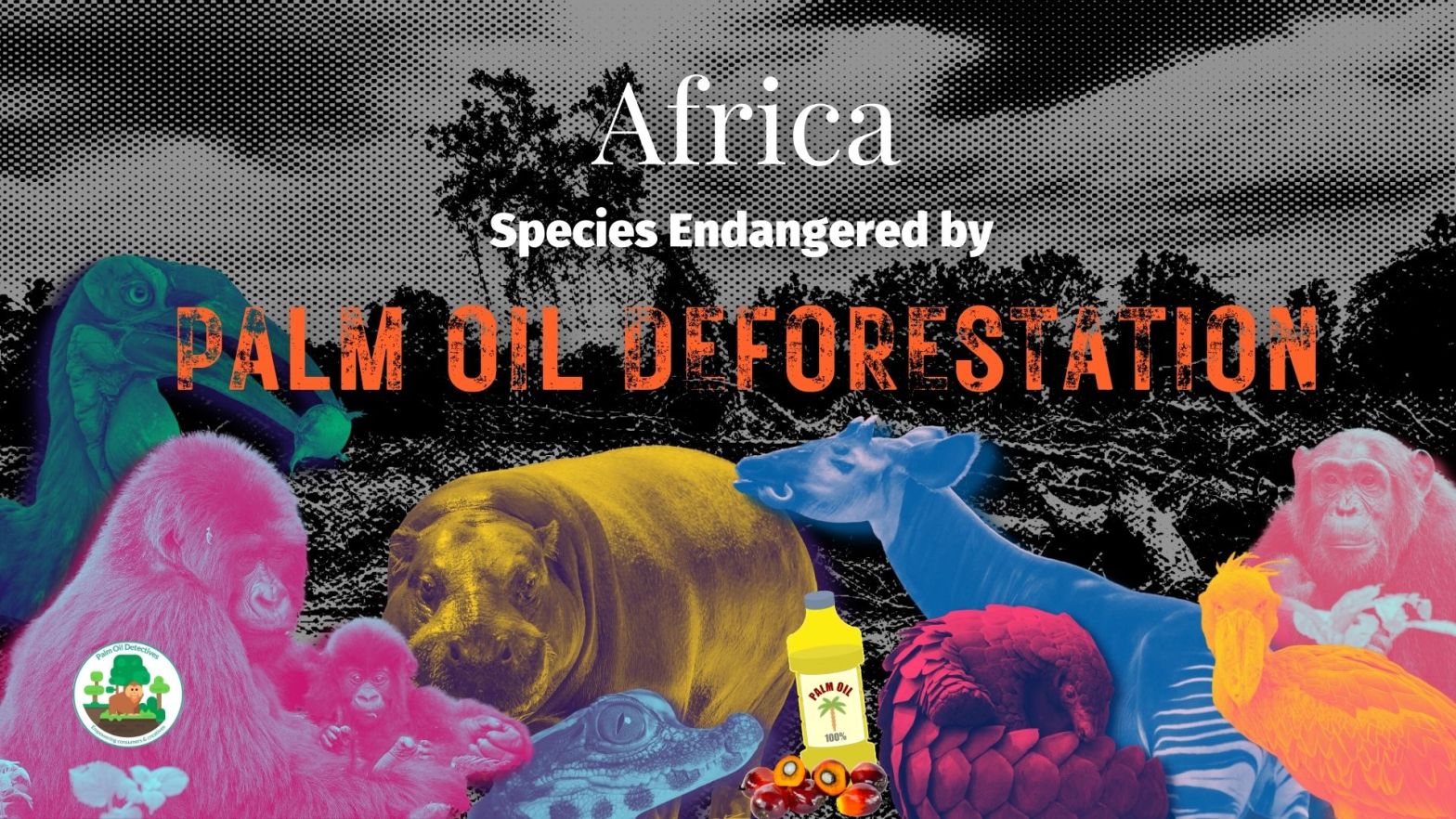
Explore the biodiversity of Africa and discover how palm oil deforestation impacts wildlife. Learn how you can help. #BoycottPalmOil #Boycott4Wildlife
 Palm Oil Detectives