
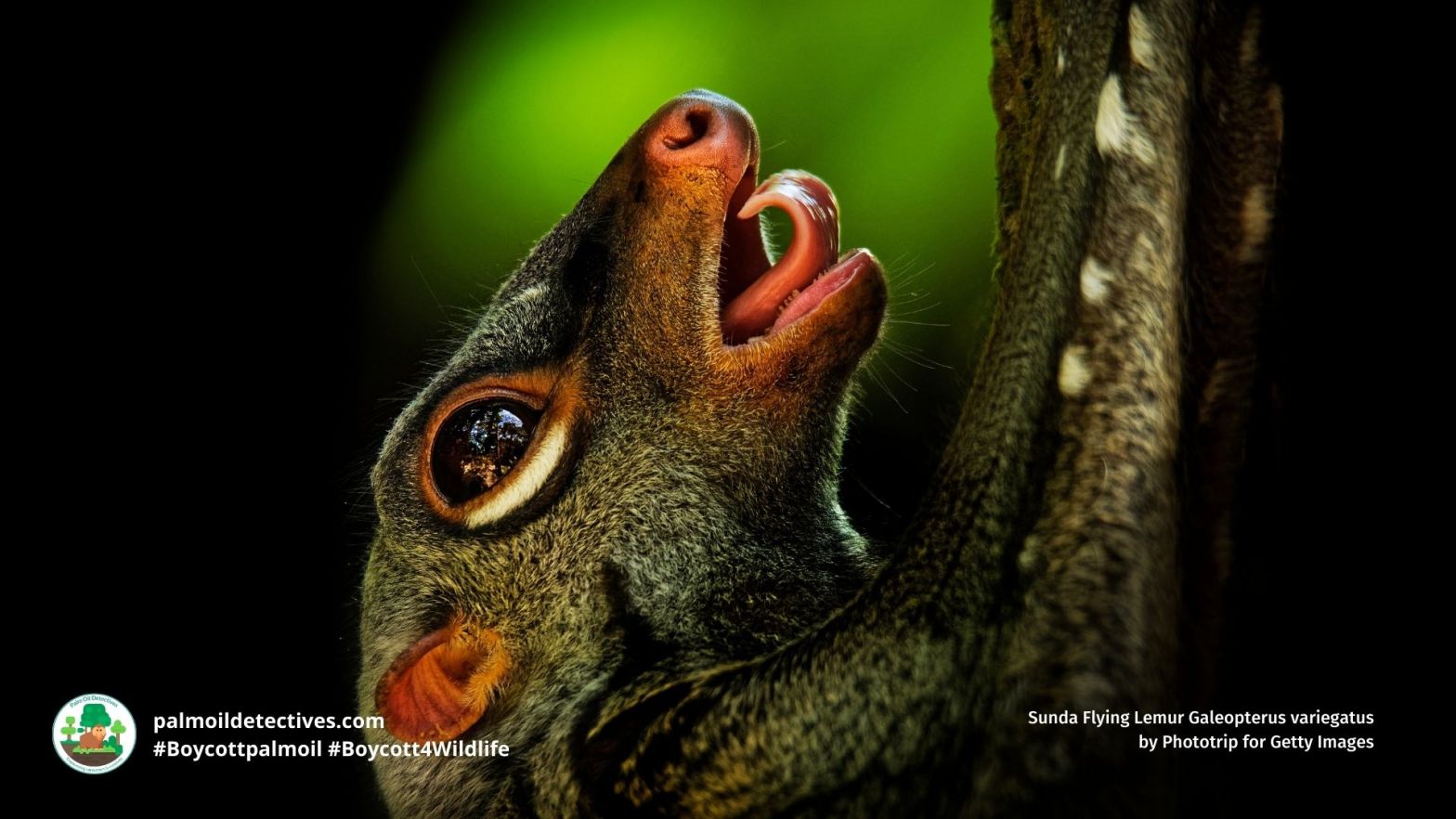
Sunda flying lemurs AKA Malayan colugos rely on ancient forests to survive, despite being skilful gliders, palm oil is a major threat, boycott palm oil!
Tag Archives: Kalimantan
Sunda Clouded Leopard Neofelis diardi
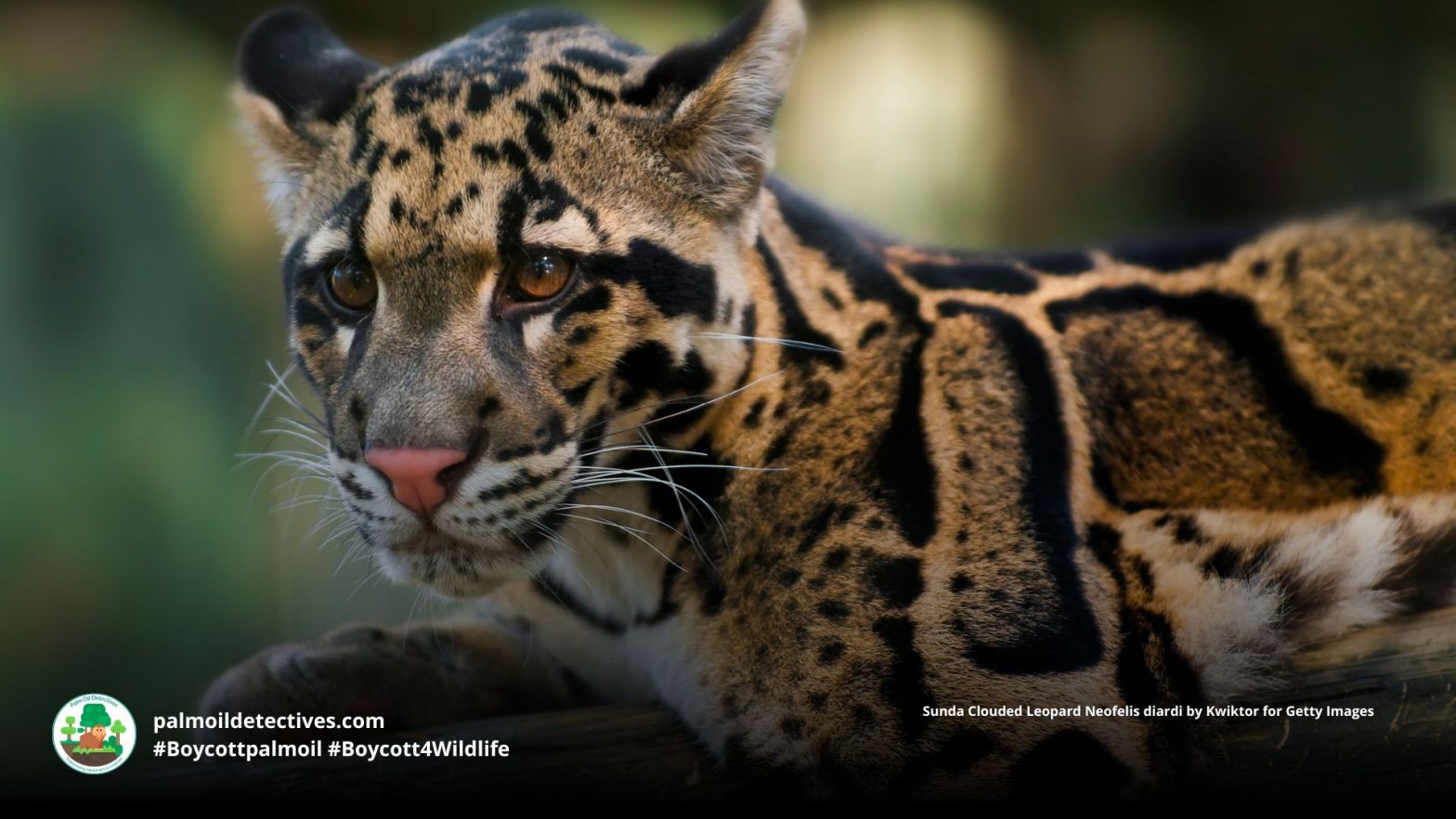
Gliding through the rainforest canopy like a phantom predator, the Sunda Clouded Leopard moves with unmatched grace, making them one of the least understood big cats in the world. Their spectacularly patterned coat, the longest canines relative to skull size of any feline, and astonishing agility in trees set these big cats apart as a truly unique species. Yet, despite these remarkable adaptations, these mysterious carnivores are now rapidly vanishing from the wild due to human-related threats.
Massive infrastructure projects, industrial-scale palm oil plantations, and poaching for the illegal wildlife trade have decimated their populations. Once thought to be a subspecies of the mainland clouded leopard, genetic studies in 2006 confirmed that they are a distinct species, found only in Borneo and Sumatra. Today, they are among the most threatened felines in the world, teetering on the edge of an uncertain future. Take action for them every time you shop and #BoycottPalmOil #Boycott4Wildlife
Protected: Private Advocate’s Page
There is no excerpt because this is a protected post.
Dayak Indigenous Ethnographer Dr Setia Budhi
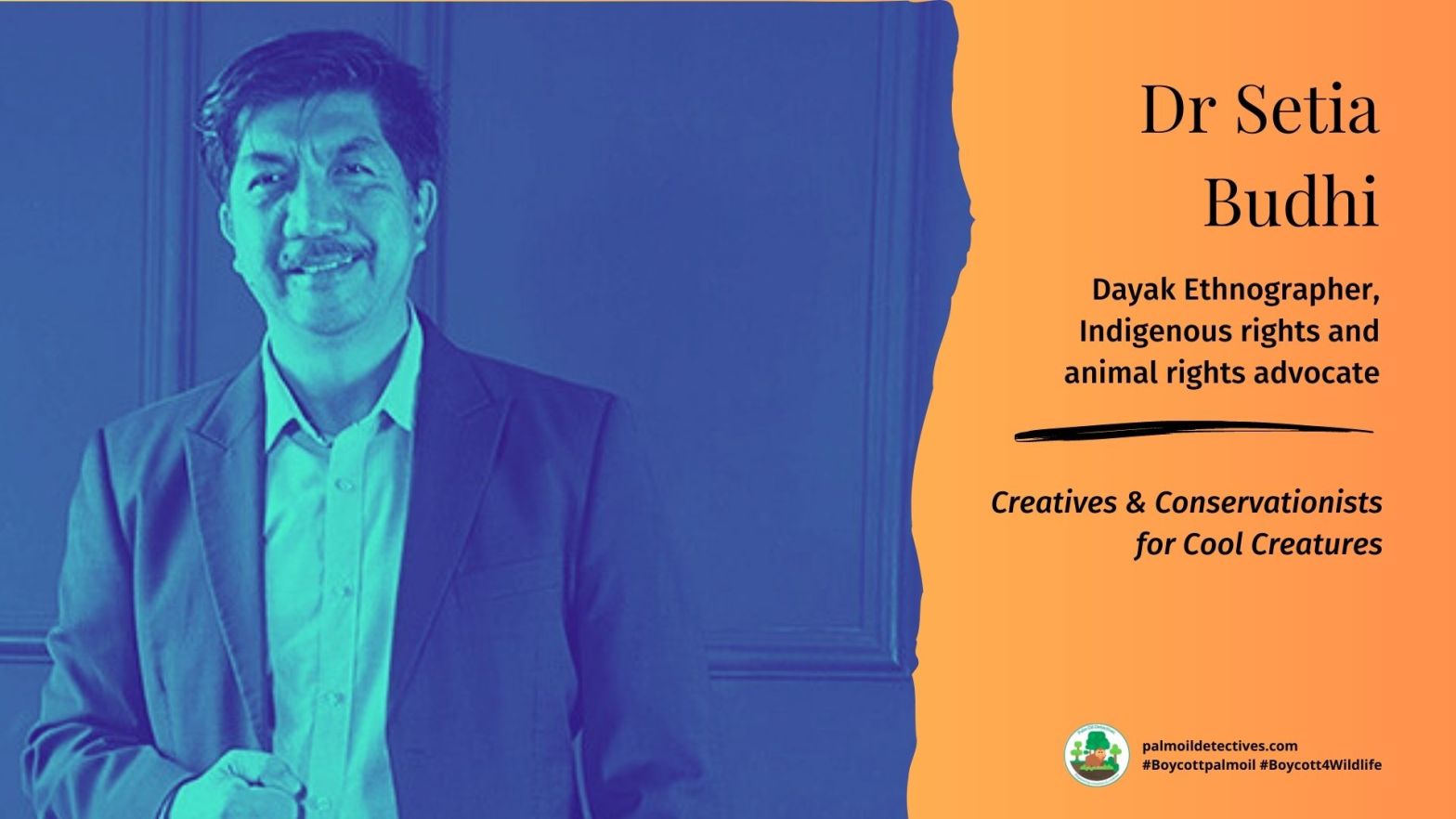
Dr Setia Budhi is a senior lecturer in Anthropology and Sociology at Universitas Lambung Mangkurat. He is an indigenous advocate, forest conservationist and a research specialist in Dayak ethnography in South, Central and East Kalimantan. He completed his PhD in 2010 at UKM Malaysia under the supervision of Prof. Awang Hasmadi Awang Moeis and Prof. Aishah Bt Mohamed. He now serves as Head of the Sociology Department and a member of the Indonesian Anthropology Association of South Kalimantan-Indonesia.
His research relates to the Dayak people and impact of socio-cultural changes, exploitation of natural resources and modernisation on their lives. In particular, he investigates how the depletion of the forest affects the availability of food sources for Indigenous Dayak peoples.
Bornean White-bearded Gibbon Hylobates albibarbis
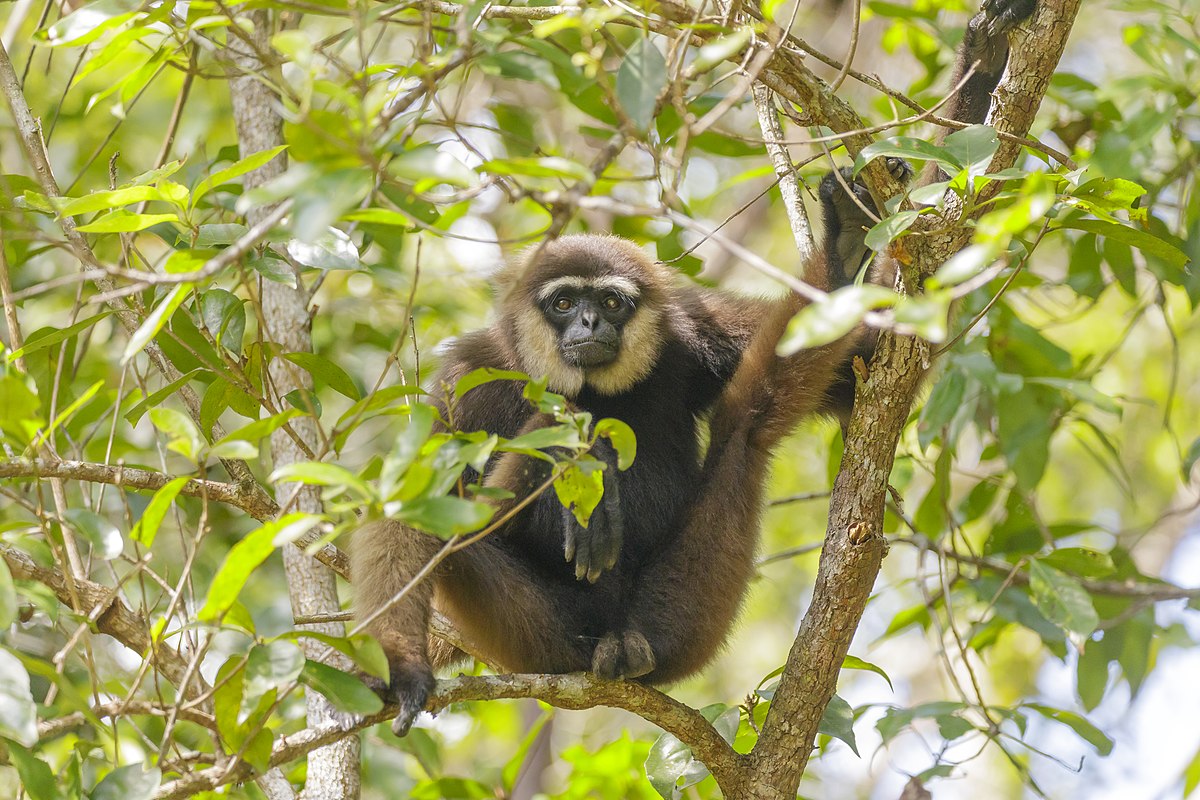
Bornean White-bearded Gibbon Hylobates albibarbis Endangered Indonesia (Kalimantan) The Bornean White-bearded Gibbon belongs to the genus Hylobates. The word Hylobates means ‘Forest Walker’ in Greek. The gibbons in this genus are known for the white circle of fur around their faces. They are known to communicate in species-specific song when defining territory or attracting mates.Continue reading “Bornean White-bearded Gibbon Hylobates albibarbis”
Müller’s gibbon Hylobates muelleri
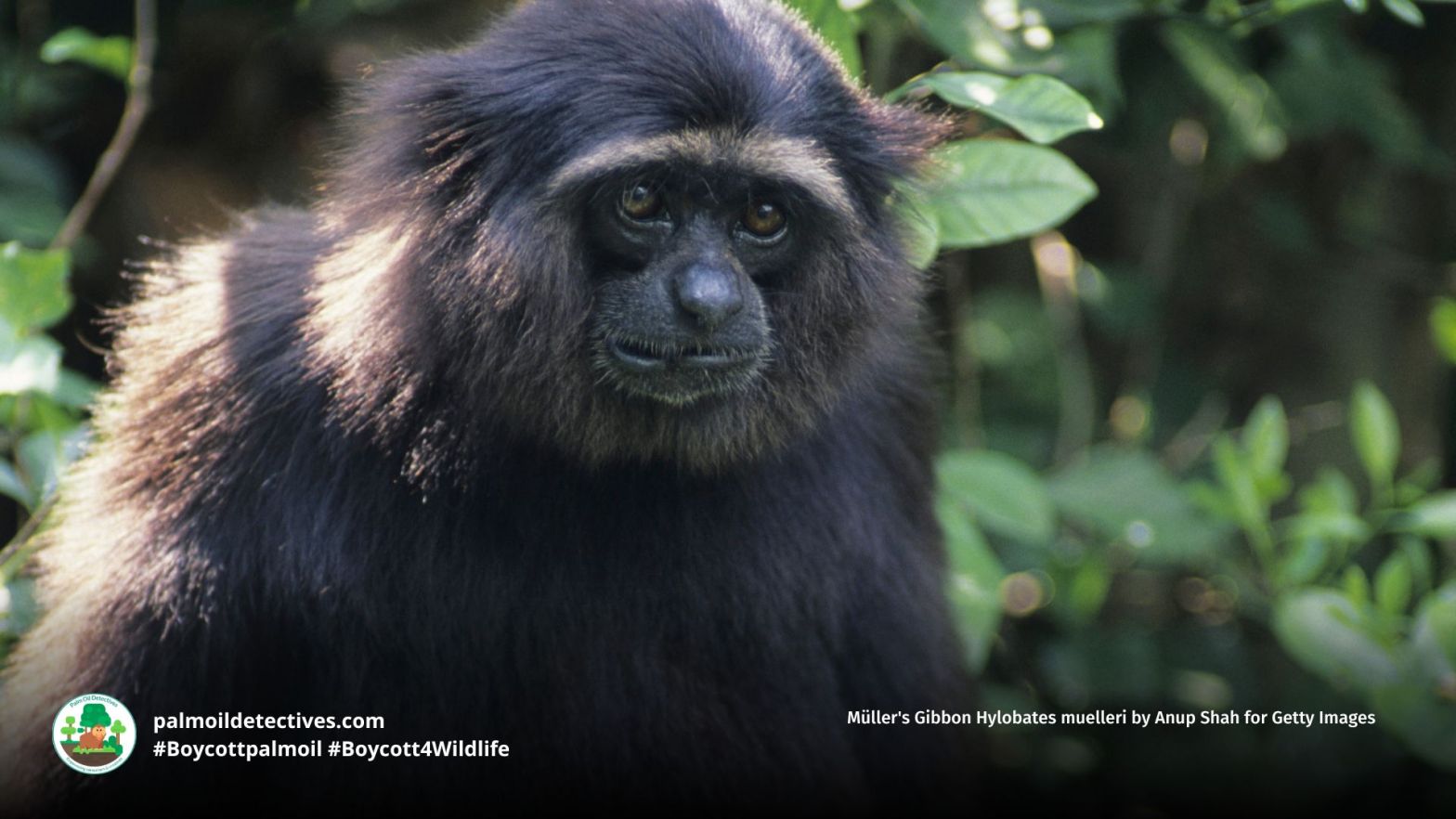
The Bornean Gibbon Hylobates muelleri, also known as Müller’s #gibbon or the Southern Grey Gibbon, is a master of the treetops and a celebrated forest singer. Their haunting duets echo across the rainforest canopy, keeping family bonds strong and warning intruders away. But these calls are growing rarer. The Müller’s gibbon is listed as #Endangered due to relentless forest loss caused by logging, #palmoil expansion, #fire, and #hunting. Their future depends on the survival of Borneo’s rainforests. Take action and use your wallet as a weapon! #BoycottPalmOil #Boycott4Wildlife be #Vegan and #BoycottMeat
Abbott’s Gray Gibbon Hylobates abbotti

Abbott’s Gray Gibbon Hylobates abbotti Endangered Indonesia (Kalimantan); Malaysia (Sarawak) The Abbott’s Gray Gibbon belongs to the genus Hylobates. The word Hylobates means ‘Forest Walker’ in Greek. The gibbons in this genus are known for the white circle of fur around their faces. They are known to communicate in species-specific song when defining territory orContinue reading “Abbott’s Gray Gibbon Hylobates abbotti”
Northern Gray Gibbon Hylobates funereus
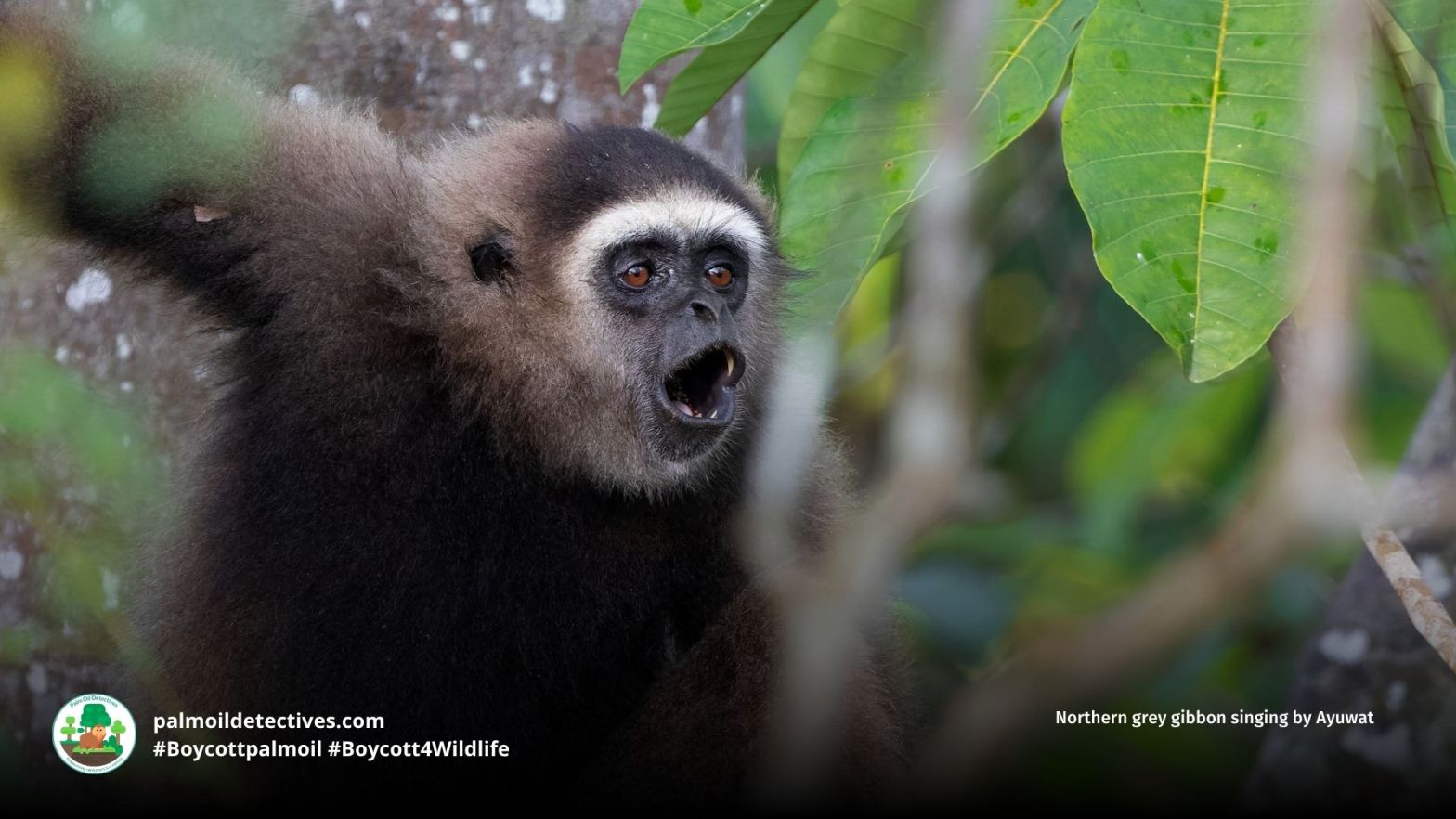
Save the sublime song and energetic lives of the Northern grey gibbons in Borneo when you boycott palm oil and boycott4wildlife in the supermarket!
Storm’s Stork Ciconia stormi
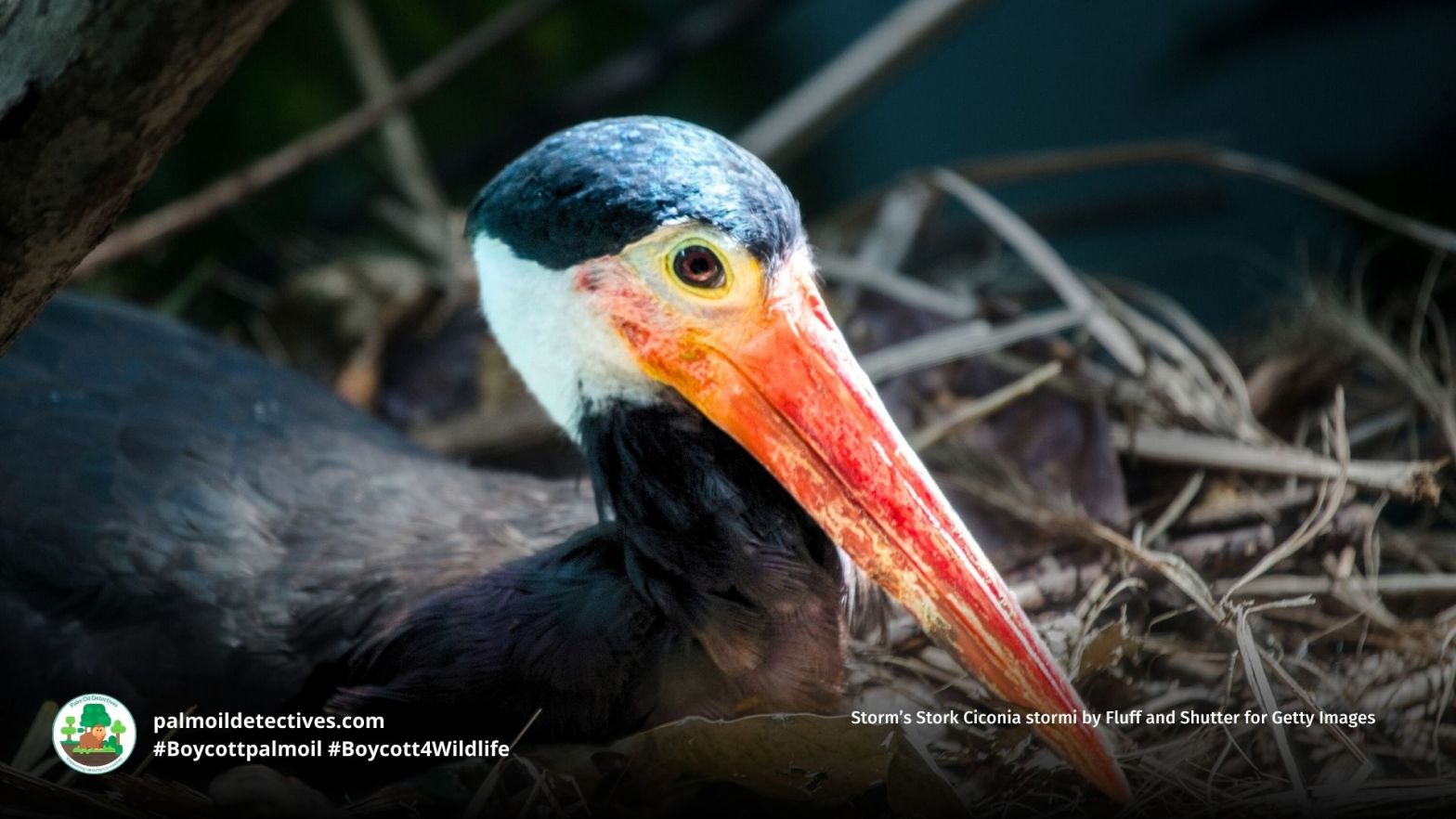
Storm’s Stork Ciconia stormi is the rarest and most elusive stork in Asia, palm oil is a threat boycott palm oil for them!
Bornean Peacock-pheasant Polyplectron schleiermacheri
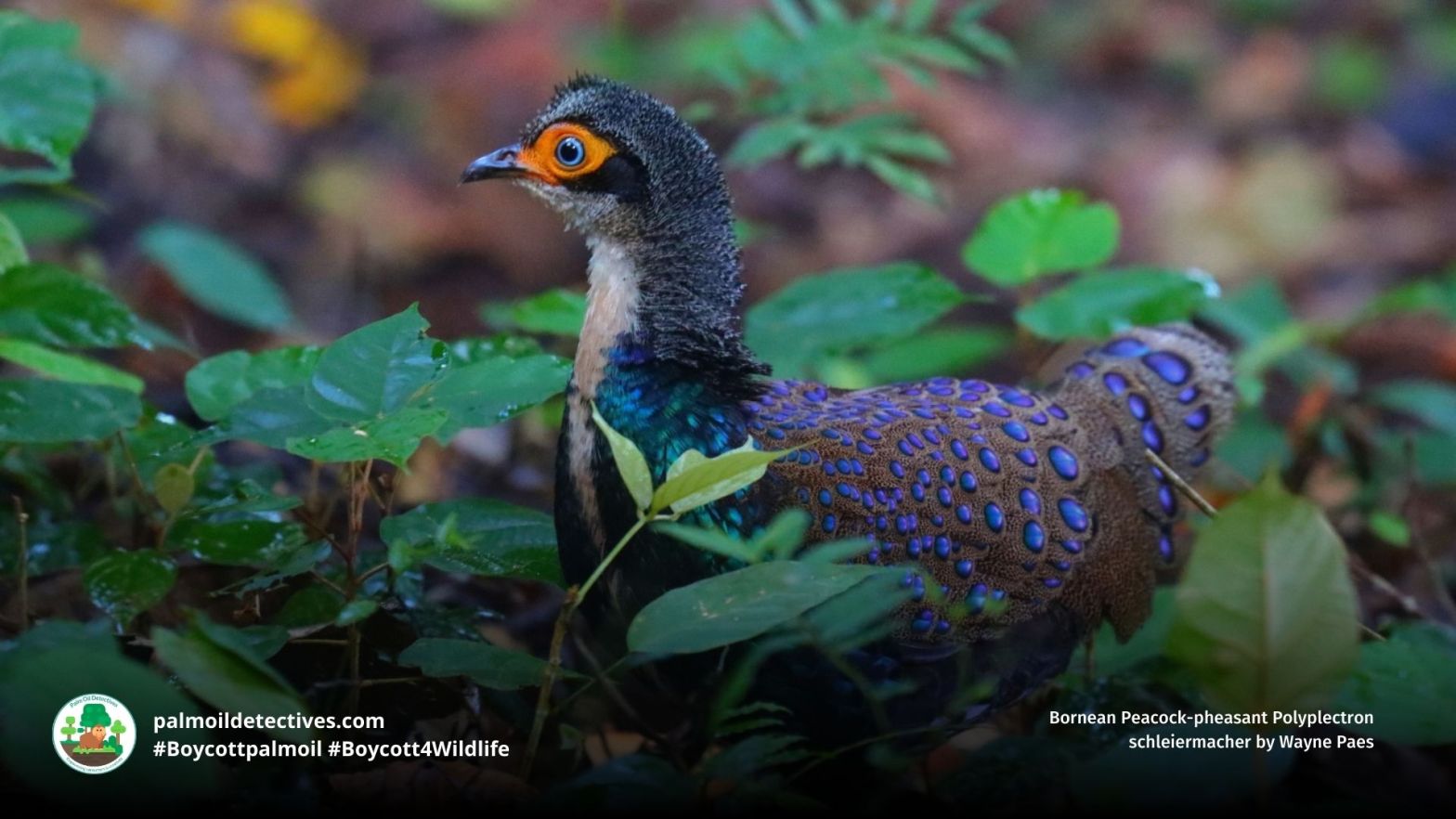
Protect Borneo’s elusive Peacock-Pheasant. These rare birds, known for their iridescent plumage, face a grave threat from out-of-control palm oil plantations
Smoky Flying Squirrel Pteromyscus pulverulentus
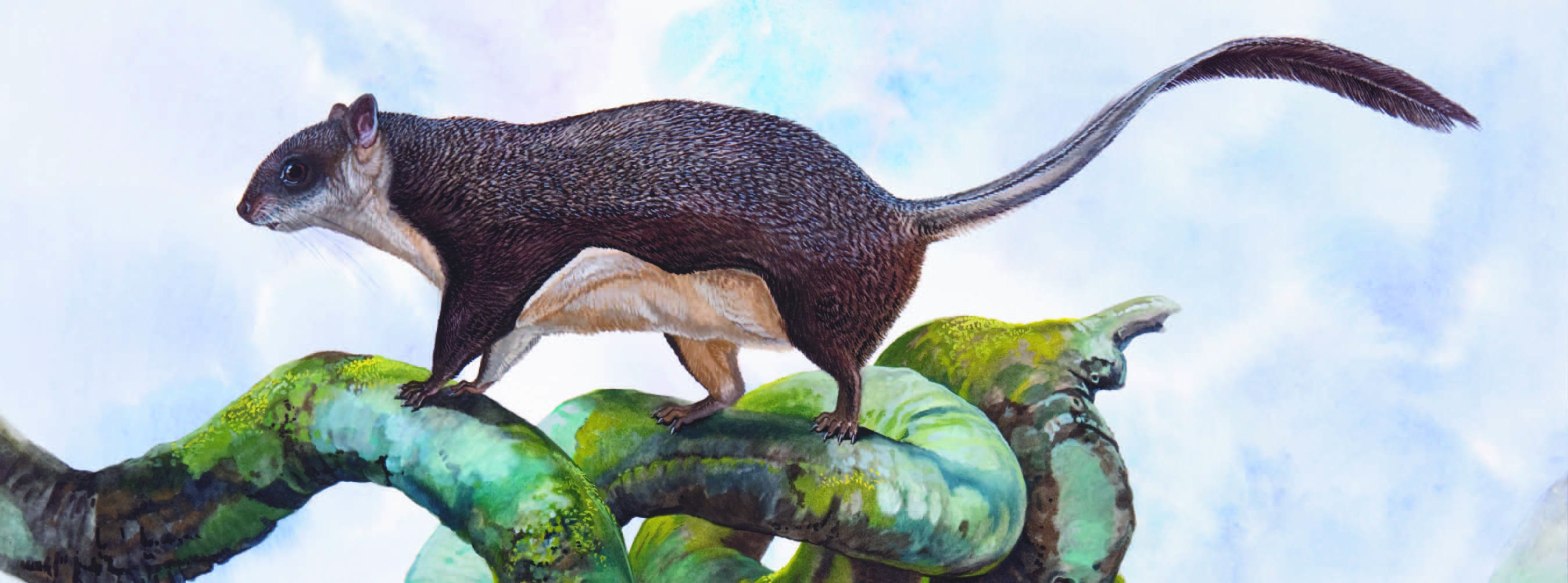
The Smoky Flying Squirrel (Pteromyscus pulverulentus) is a rare and elusive creature silently and gracefully gliding between the towering canopies of Southeast Asia’s rainforests. With their smoky-grey fur, expansive gliding membrane, and bushy tail, these squirrels are perfectly adapted to a dynamic life on the move in the treetops.
Classified as Endangered by the IUCN, their populations are dwindling and at a critical all time low due to habitat destruction from timber logging, palm oil plantations, and agricultural expansion. This fleet footed nocturnal marvel symbolises the fragile ecosystems of Southeast Asia. Protect them by boycotting palm oil and fighting deforestation. #BoycottPalmOil #Boycott4Wildlife
Sabah Grizzled Langur Presbytis sabana
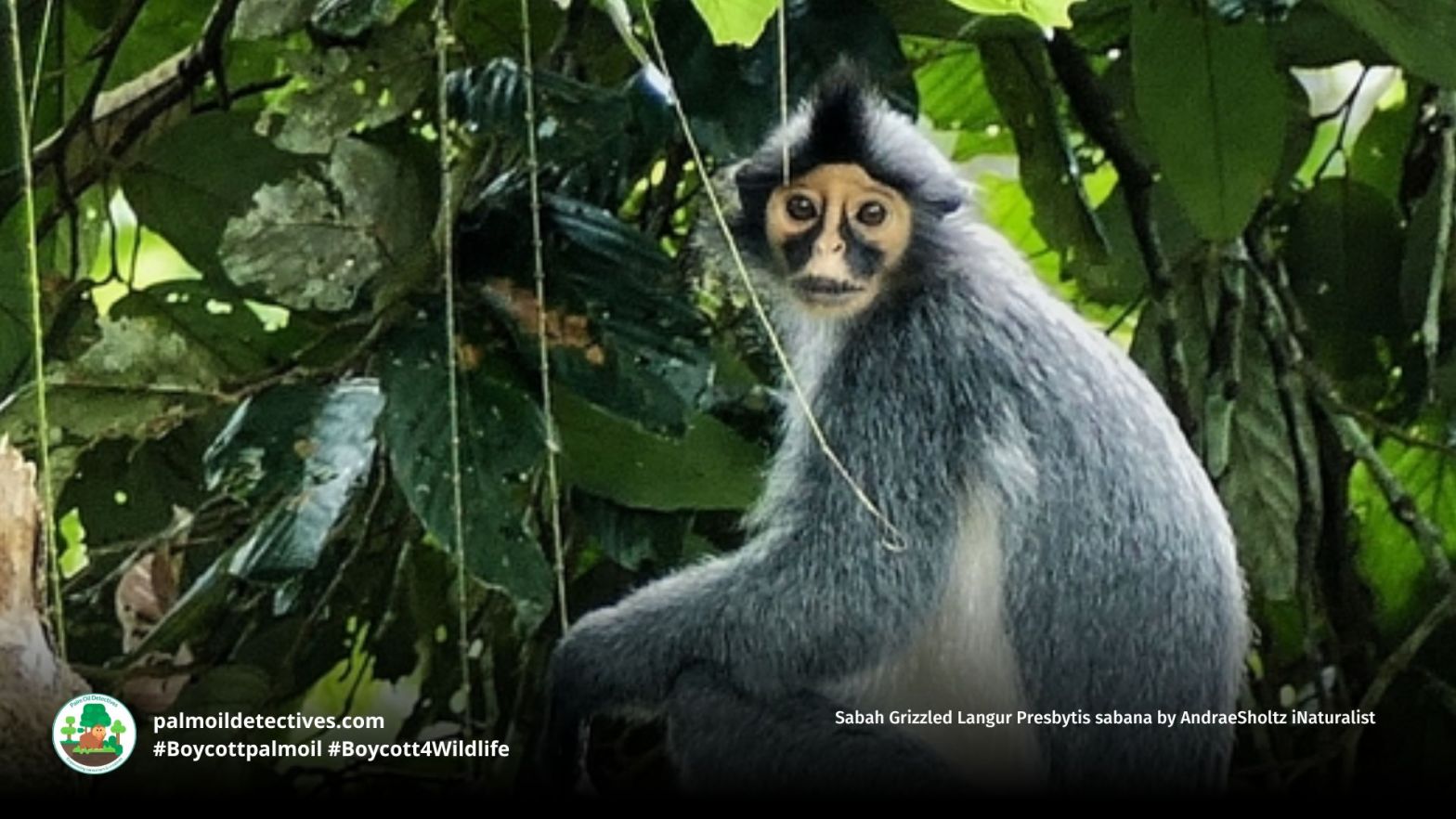
Save Sabah Grizzled Langurs AKA Crested Grizzled Langurs from palm oil! They’re endangered and urgent action is needed to prevent their extinction – boycott!
Proboscis Monkey Nasalis larvatus
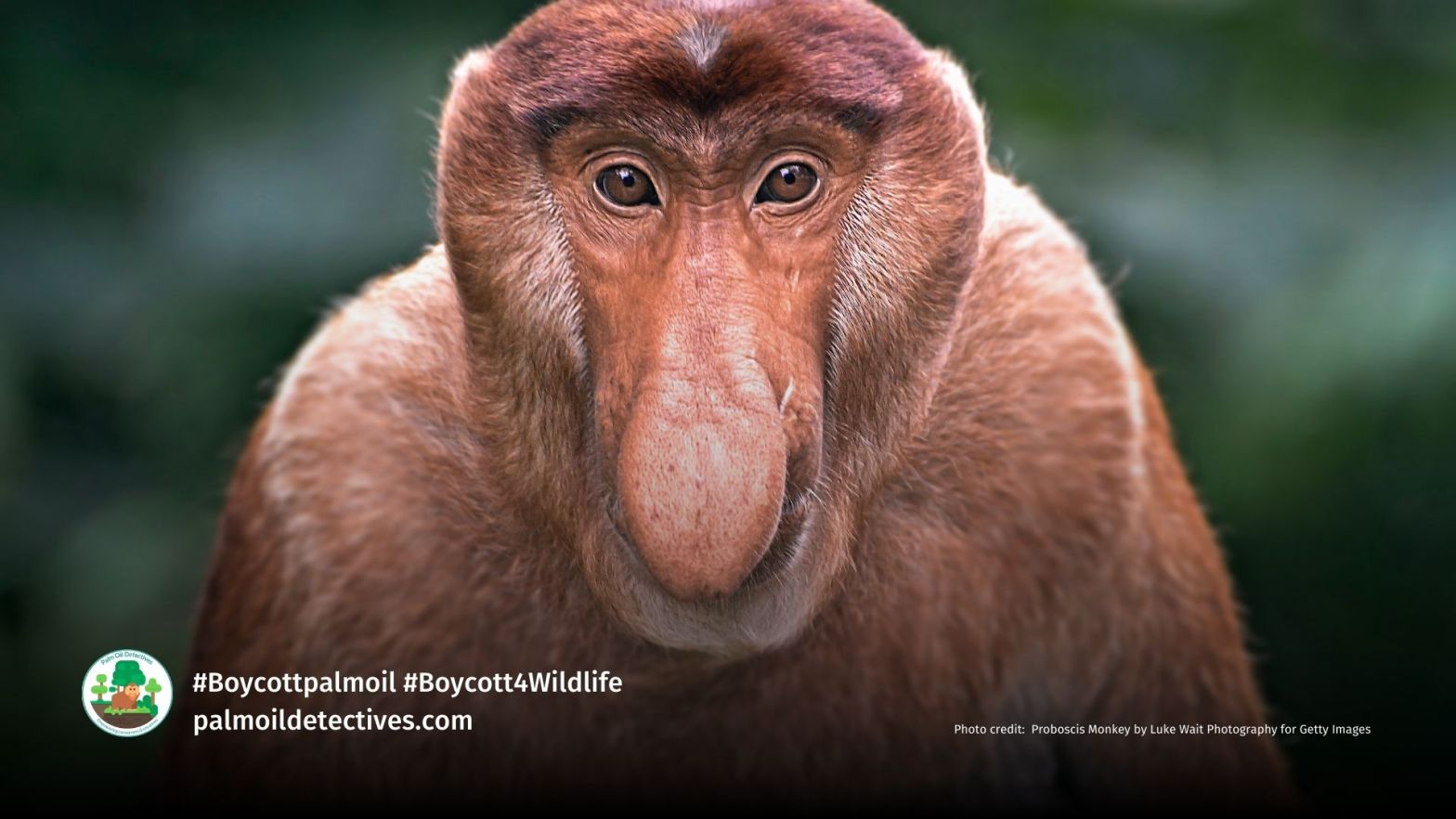
Proboscis Monkeys are known for their large noses and pot bellies. These arboreal monkeys of Borneo are great swimmers, help them when you boycott palm oil
Bornean Banded Langur Presbytis chrysomelas
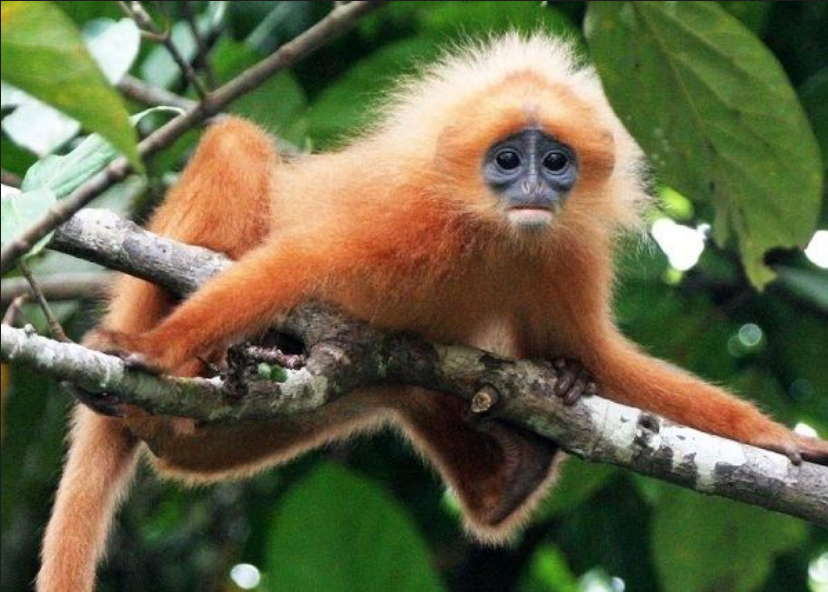
The Bornean banded langur, known for its striking black and white coat, is one of Southeast Asia’s most elusive and endangered primates. These langurs inhabit the fragmented lowland forests and peat swamps of Borneo, relying on dense foliage for their survival.
The population of Bornean banded langurs is rapidly declining due to habitat destruction for palm oil plantations, illegal logging, and hunting. As their habitat continues to shrink, these shy and rarely seen primates face an uncertain future. Use your wallet as a weapon—boycott palm oil and join the fight for their survival. #BoycottPalmOil #Boycott4Wildlife
Painted Terrapin Batagur borneoensis
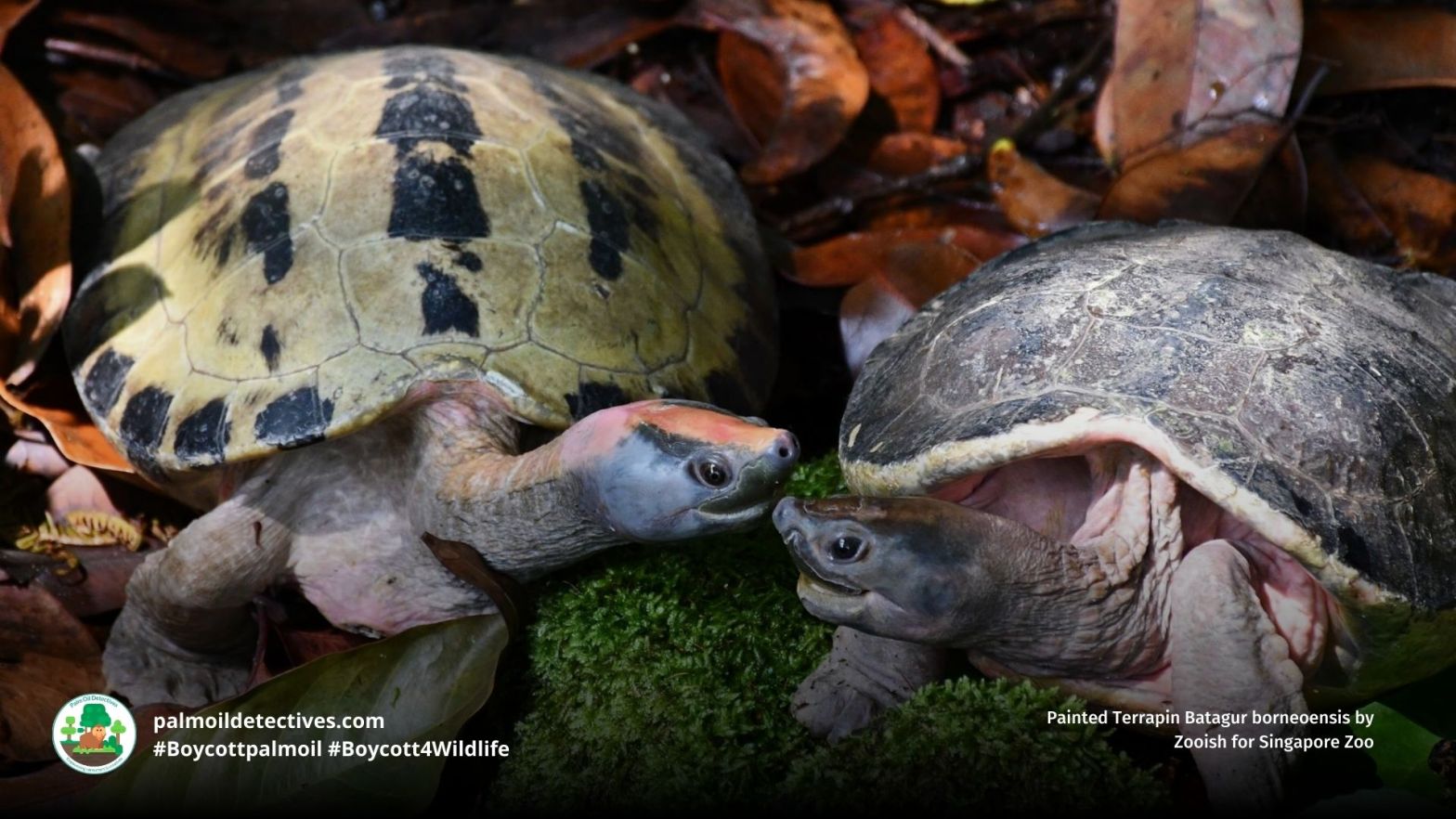
The painted terrapin, or painted river terrapin (Batagur borneoensis), is one of the most beautiful and critically endangered freshwater turtles in the world. Known for the vibrant markings displayed by males during breeding seasons, these terrapins are an integral part of Southeast Asia’s mangrove and river ecosystems.
However, their populations are rapidly declining due to habitat destruction, including deforestation for palm oil plantations, sand mining, and coastal development. With fewer than 1,000 mature individuals left in the wild, immediate action is critical to ensure their survival. Protect these majestic reptiles—boycott palm oil and support conservation efforts. #BoycottPalmOil #Boycott4Wildlife
 Palm Oil Detectives