
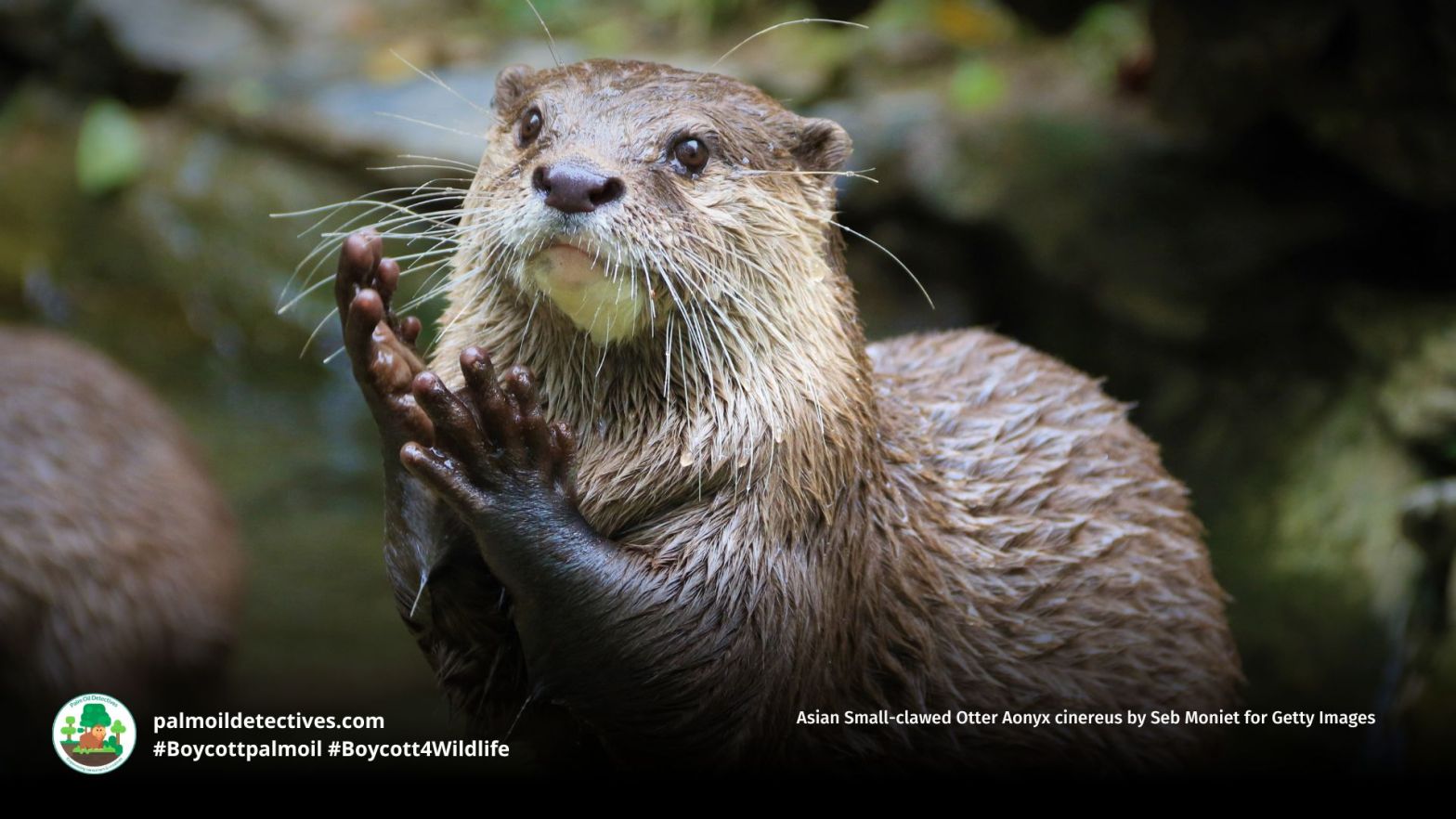
Asian Small-clawed Otters are the world’s smallest otter species and are Vulnerable from palm oil tea and coffee deforestation. Protect them, boycott palm oil!
Tag Archives: Myanmar
Sunda Flying Lemur Galeopterus variegatus
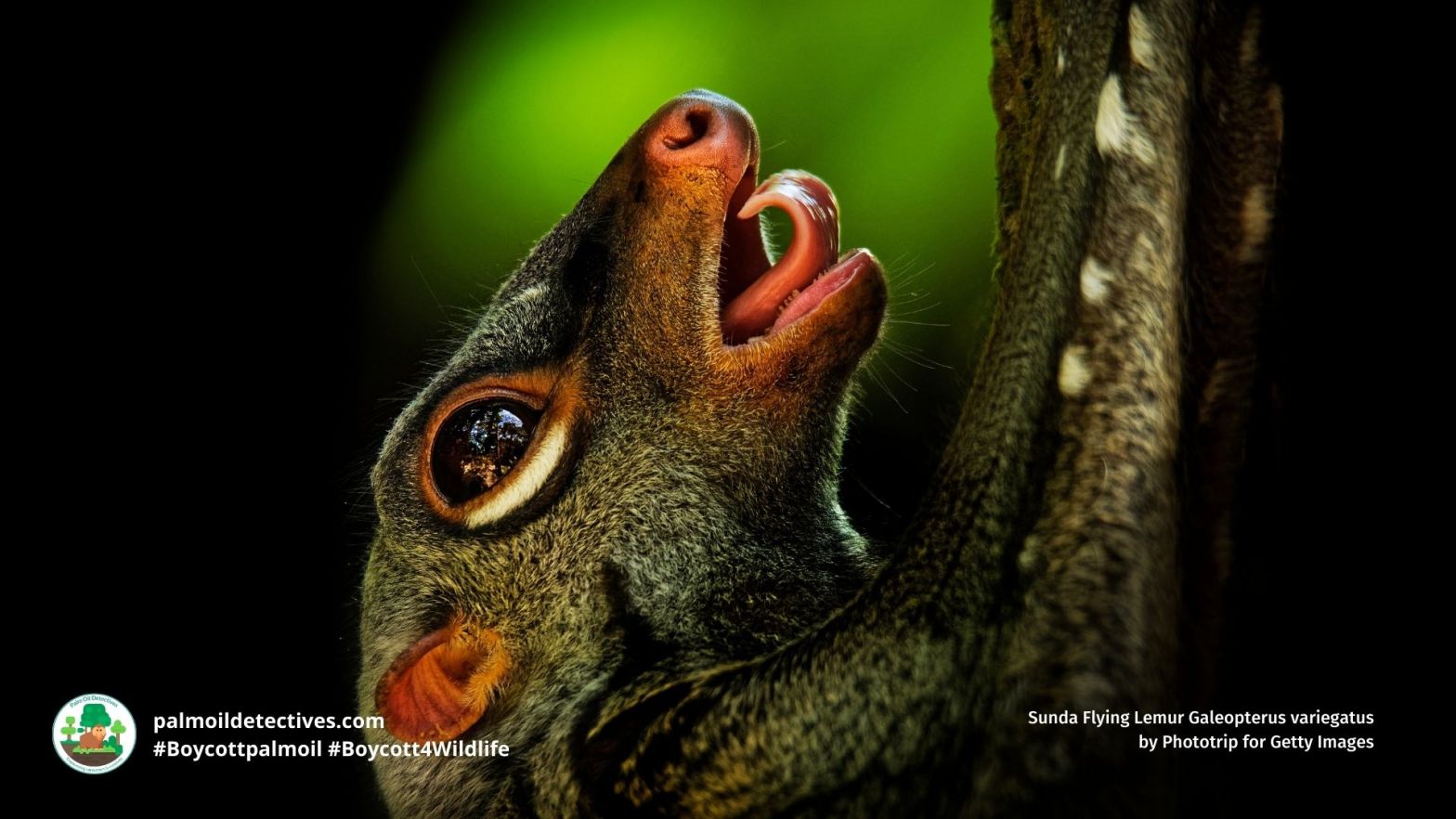
Sunda flying lemurs AKA Malayan colugos rely on ancient forests to survive, despite being skilful gliders, palm oil is a major threat, boycott palm oil!
Capped Langur Trachypithecus pileatus
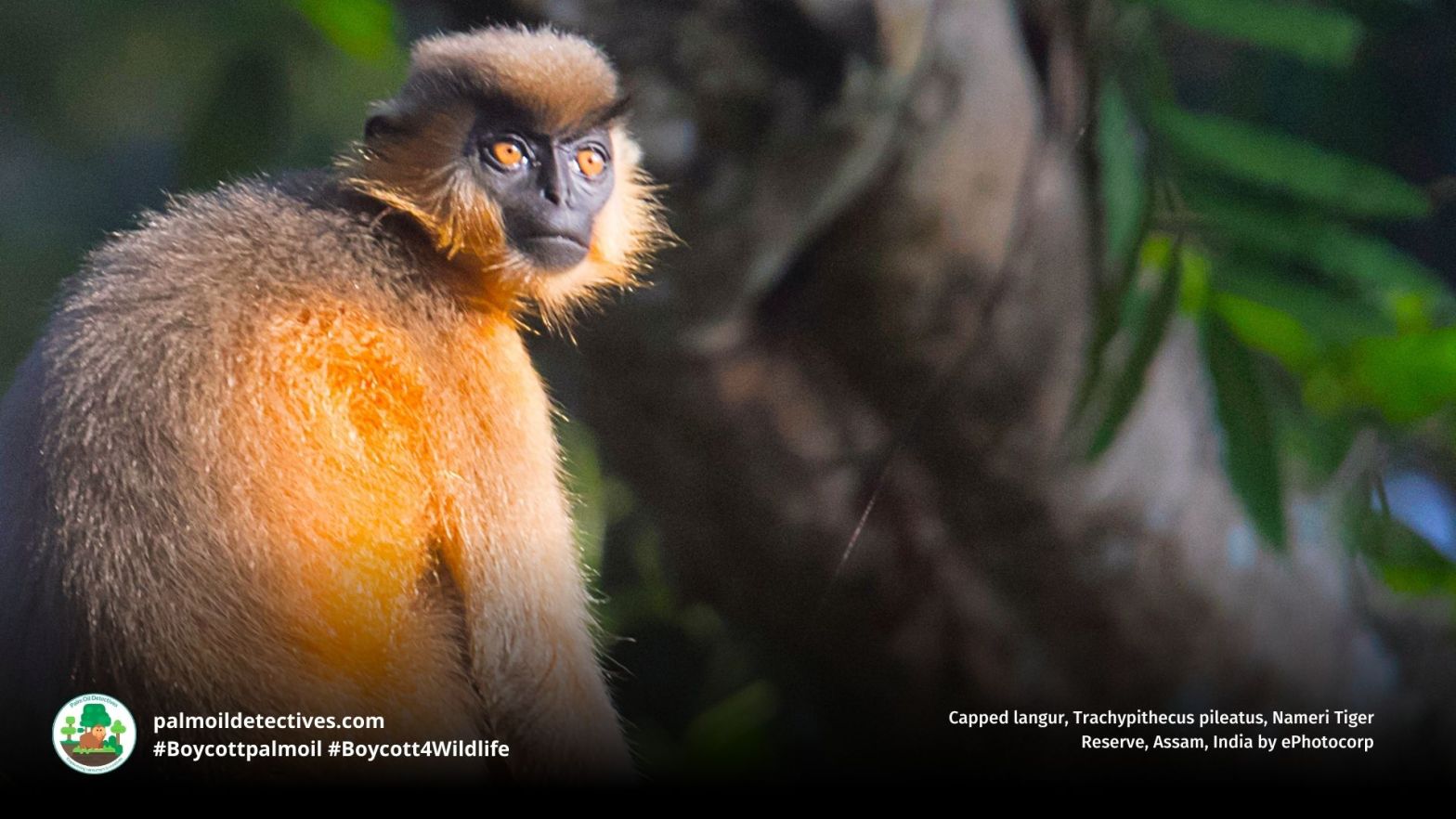
Capped langurs are found in India Bhutan Bangladesh and Myanmar, they are vulnerable from palm oil and other forms of deforestation. Take action for them!
Malayan Flying Fox Pteropus vampyrus
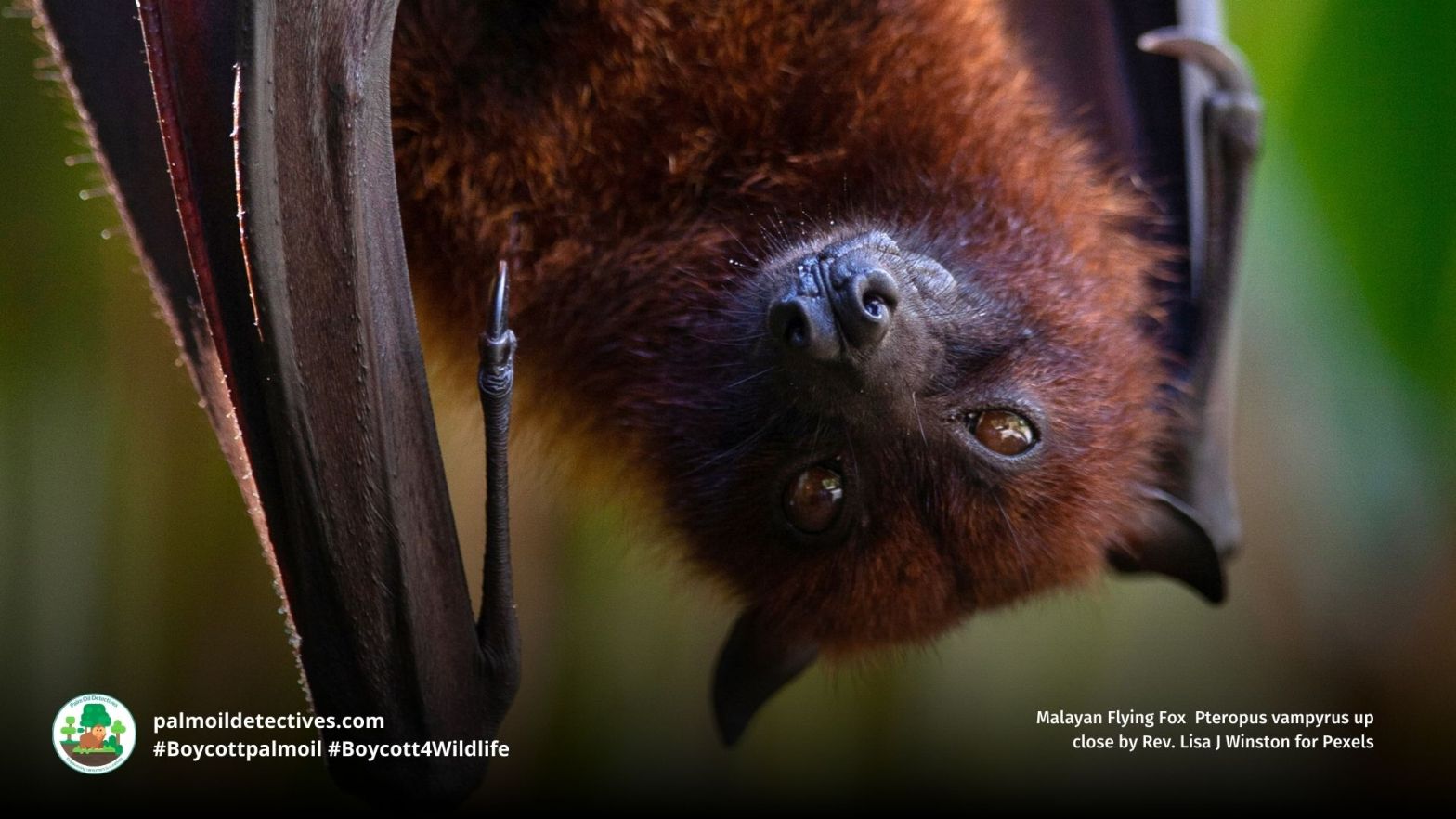
The Malayan Flying Fox, known also as the Large Flying Fox, Giant Fruit Bat, or Kalong, is an ethereal creature of the tropical Asian night. With wingspans reaching 1.7 metres, they are the largest bats in the world and glide silently through the darkness, a graceful presence in South East Asia’s moonlit forests. Their foxy almond shaped eyes and expressive faces are framed by glossy black fur and golden and russet collars, lend them a warm and mythical aura, while their immense wings are awe-inspiring to see in flight.
These nocturnal giants are the architects of tropical forests, scattering seeds and pollinating flowers as they journey across vast landscapes. Yet, despite their importance to ecosystems, they are under siege—hunted mercilessly and displaced by forests that vanish due to palm oil. Their story is a call to action: protect the guardians of the night before it is too late. #BoycottPalmOil #Boycott4Wildlife
Phayre’s Leaf Monkey Trachypithecus phayrei
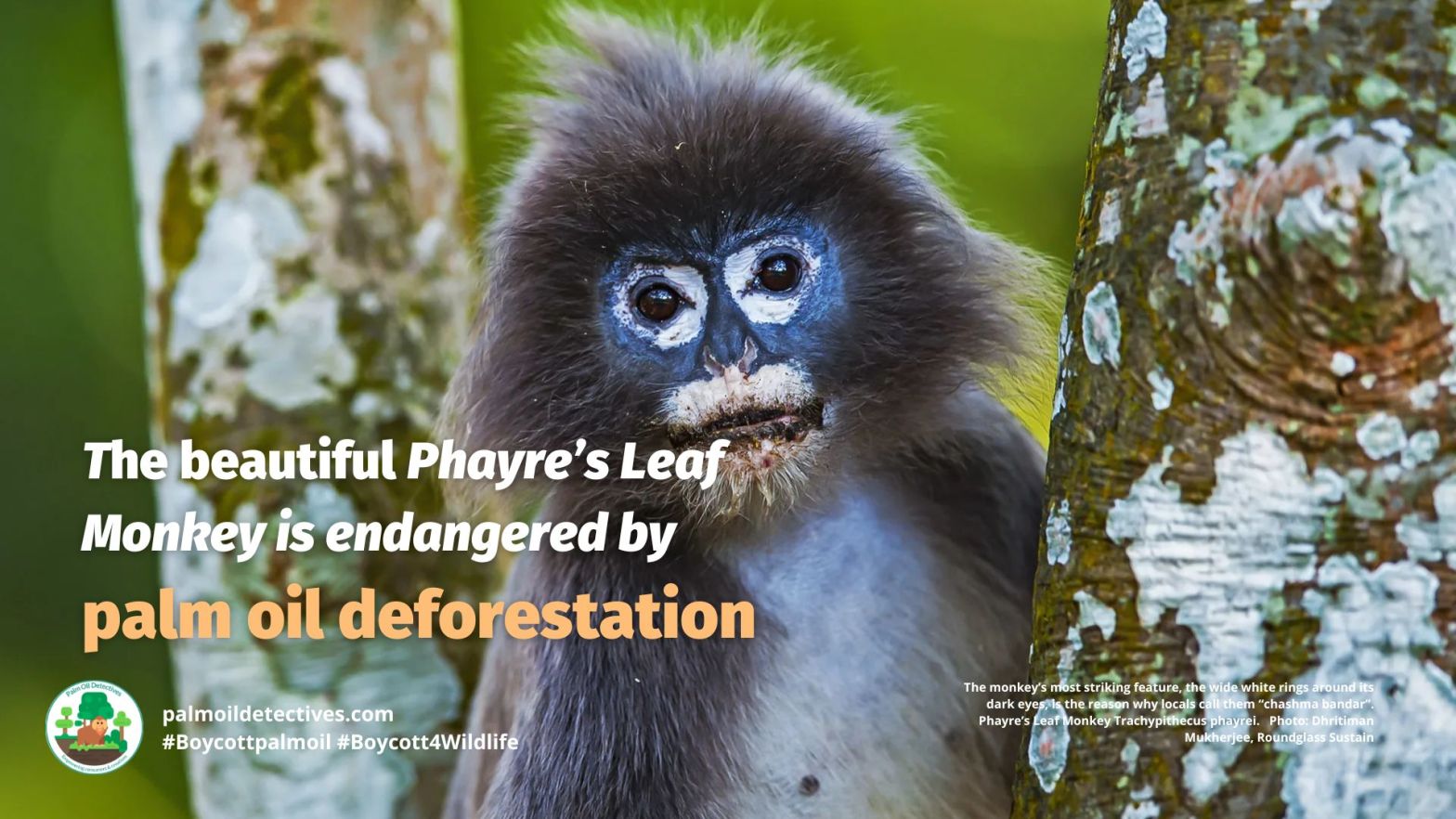
Phayre’s leaf monkey, also known as Phayre’s langur, are remarkable Old World monkeys distinguished by large, white-rimmed eyes that lend them a “spectacled” appearance. Known locally as ‘Chasma bandor’ they live mostly in the lush forests of India, Bangladesh and Myanmar. Major threats to their survival include habitat destruction from palm oil and rubber plantations, illegal hunting for traditional medicine, and habitat encroachment depleting their natural food sources. An emerging threat is interbreeding with other threatened monkey species. Join the fight to protect this unique species: #BoycottPalmOil #Boycott4Wildlife in the supermarket! If you care about animals, consider going #Vegan to protect their habitat and lives.
Protected: Private Advocate’s Page
There is no excerpt because this is a protected post.
Irrawaddy Dolphin Orcaella brevirostris
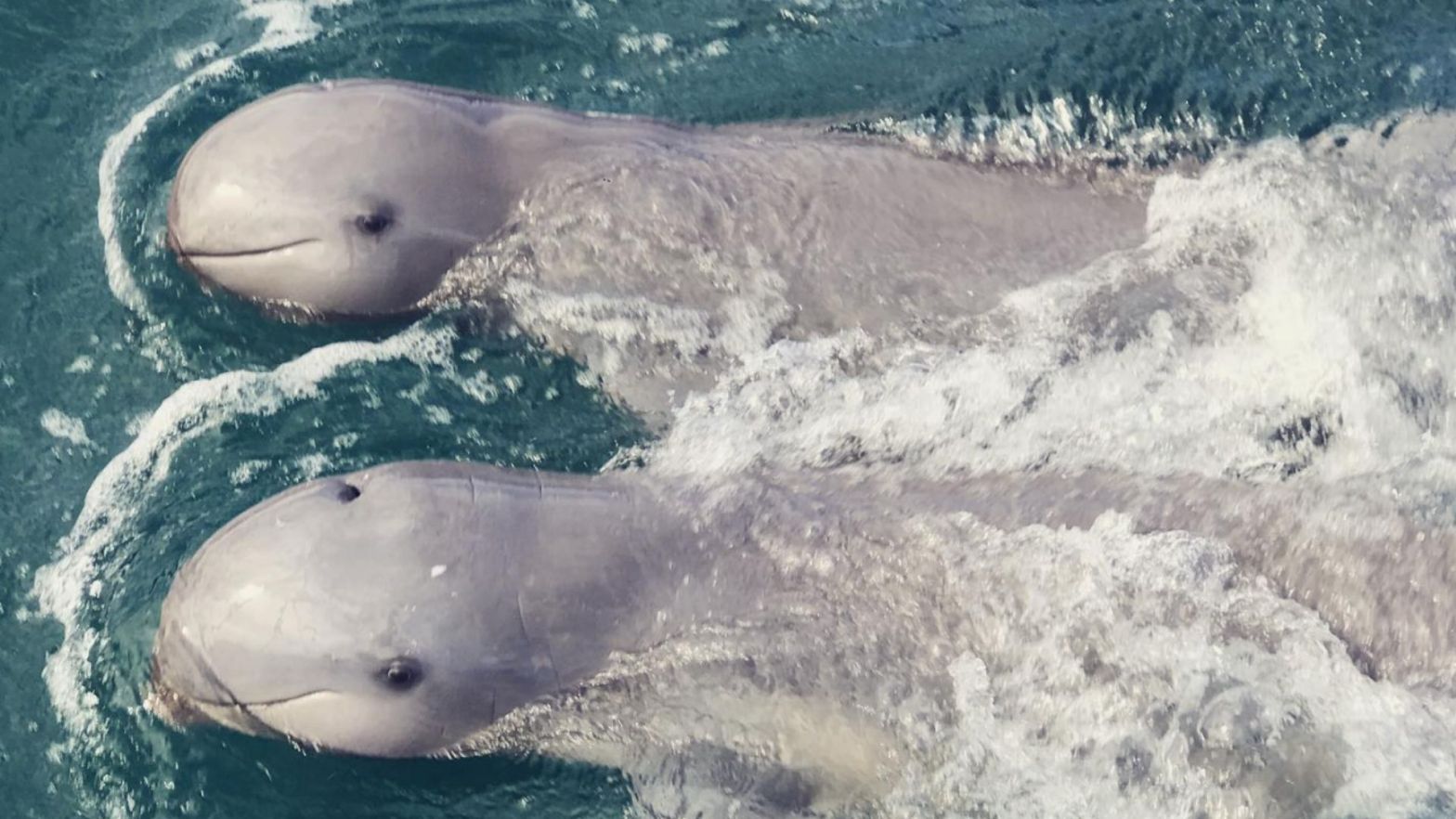
Intelligent and social Irrawaddy dolphins, also known as the Mahakam River dolphins or Ayeyarwady river #dolphins have endearing faces. Only 90 to 300 are estimated to be left living in the wild. Their rounded and expressive looking noses liken them to a baby beluga whale or the Snubfin dolphin of Australia. These shy #cetaceans are found in coastal and freshwater habitats across #SoutheastAsia, they live in small groups. Tragically, Irrawaddy dolphins face many human threats, from entanglement in fishing gear to dam construction. Palm oil deforestation, and #pesticide run-off in rivers is another major threat to their survival.
Protecting the Irrawaddy dolphin is paramount. As a keystone species, they maintain biodiversity in their fragile home. These beautiful animals are classified as endangered on IUCN Red list but are critically endangered in some ecosystems. Fight for their survival when you boycott palm oil and go vegan. Support the Boycott4Wildlife movement by using the hashtags #BoycottPalmOil and #Boycott4Wildlife on social media!
Wallace’s Flying Frog Rhacophorus nigropalmatus

The elusive and visually stunning Wallace’s Flying #Frog are known for their mysterious nature and their ability to take flight and glide through the air like dancers. They reveal themselves only during breeding aggregations when they descend from the trees.
Recent surveys in various regions, including the Matang Range in #Sarawak, #Malaysia, and the Endau-Rompin in West Malaysia, have documented the presence of this species. However, their overall population faces a concerning decline due to the ongoing loss of habitat for #palmoil #deforestation. Urgent conservation efforts are critical to reverse this trend and to ensure the survival of this intriguing species in their natural environment. Help this frog to survive every time you shop, make sure that you #Boycottpalmoil #Boycott4Wildlife in the supermarket!
Nicobar pigeon Caloenas nicobarica
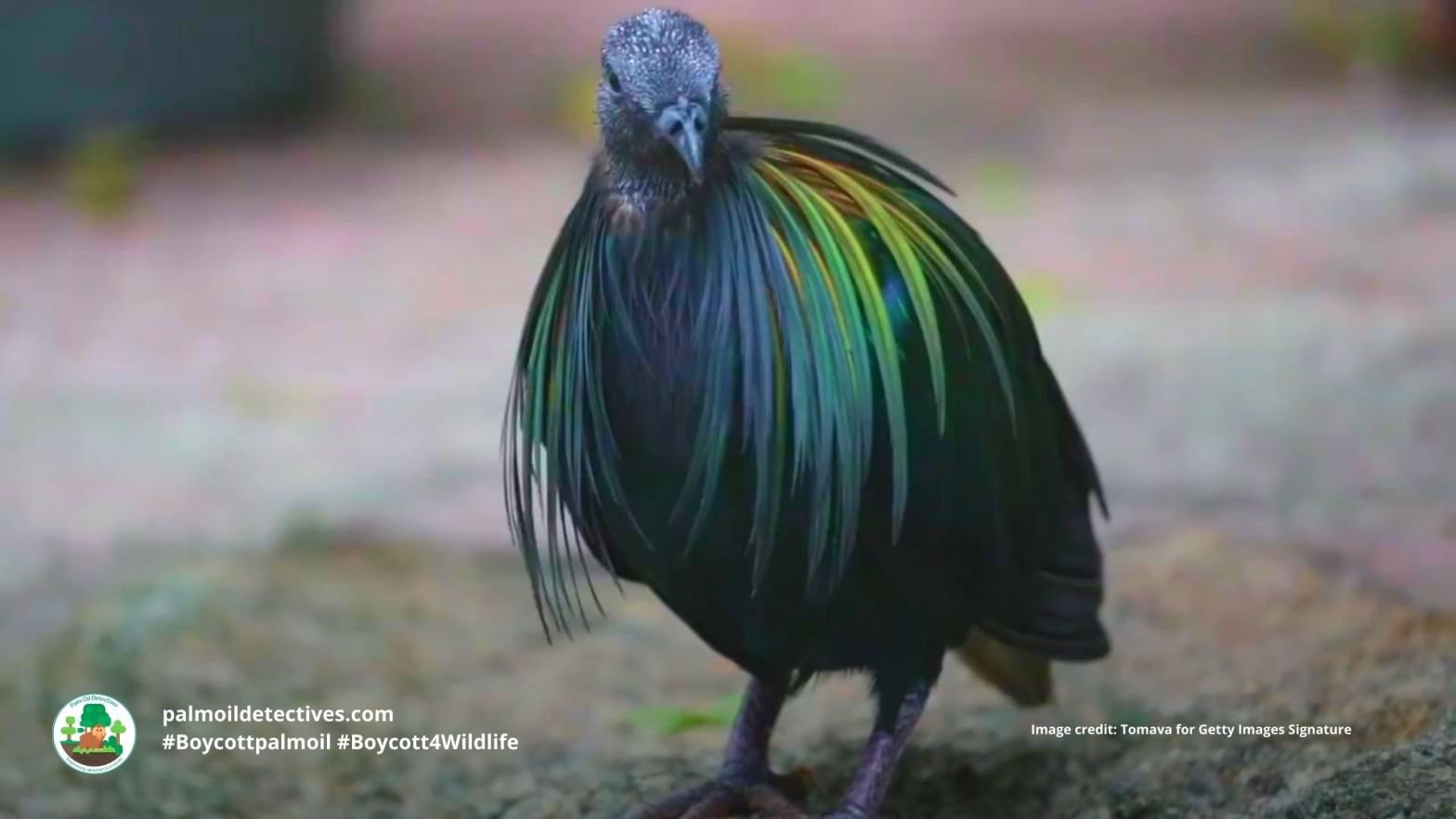
The Nicobar pigeon is the largest pigeon in the world and the closest living relative to the extinct dodo bird. They are famous for their gorgeous iridescent feathers. When threatened they make a pig-like grunt and are known for the strange way that they drink – by dunking their heads into water and sucking it up instead of sipping as other birds do. They are Near Threatened from palm oil deforestation on the Nicobar and Andaman Islands in #India along with hunting and the pet trade. Help their survival and #Boycottpalmoil #Boycott4Wildlife in the supermarket.
Banded Surili (Raffles Banded Langur) Presbytis femoralis
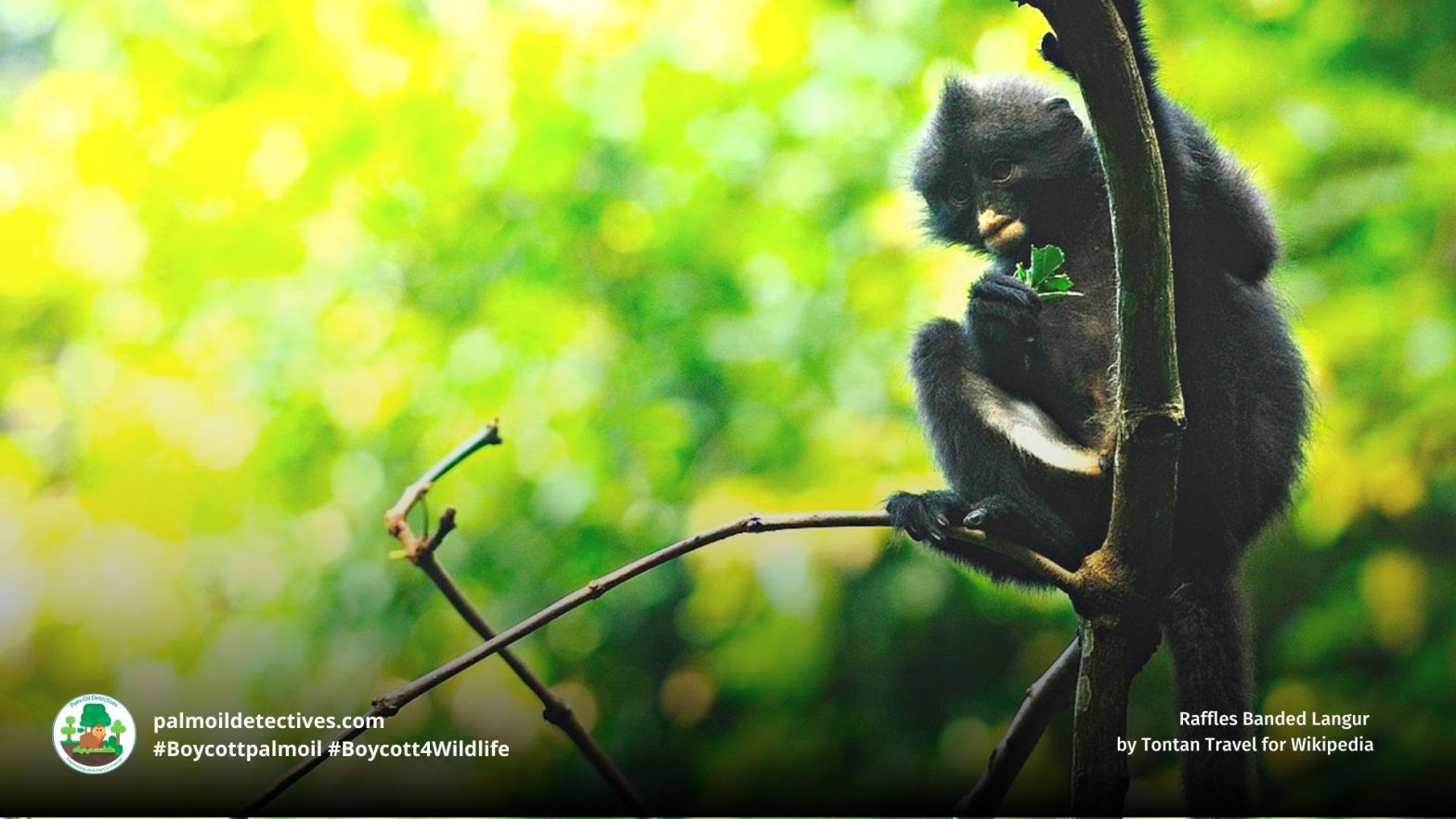
A curious and intelligent small monkey species, Raffles’ Banded Langurs are also known by their other common names: Banded Leaf Monkey or Banded Surili. Endemic to the southern Malay Peninsula and Singapore, this critically endangered monkey is now found in only a few fragmented pockets of primary and secondary forest, swamps, mangroves, and rubber plantations. Once widespread across Indonesia, Malaysia, Myanmar, Singapore, and Thailand, the banded surili’s population has plummeted—fewer than 60 individuals survive in Malaysia, with Singapore’s last wild group clinging to existence in the Central Catchment Nature Reserve. Palm oil deforestation and habitat destruction continue to erase their world. Help them survive and #BoycottPalmOil and #Boycott4Wildlife every time you shop.
Dhole Canis Cuon alpinus
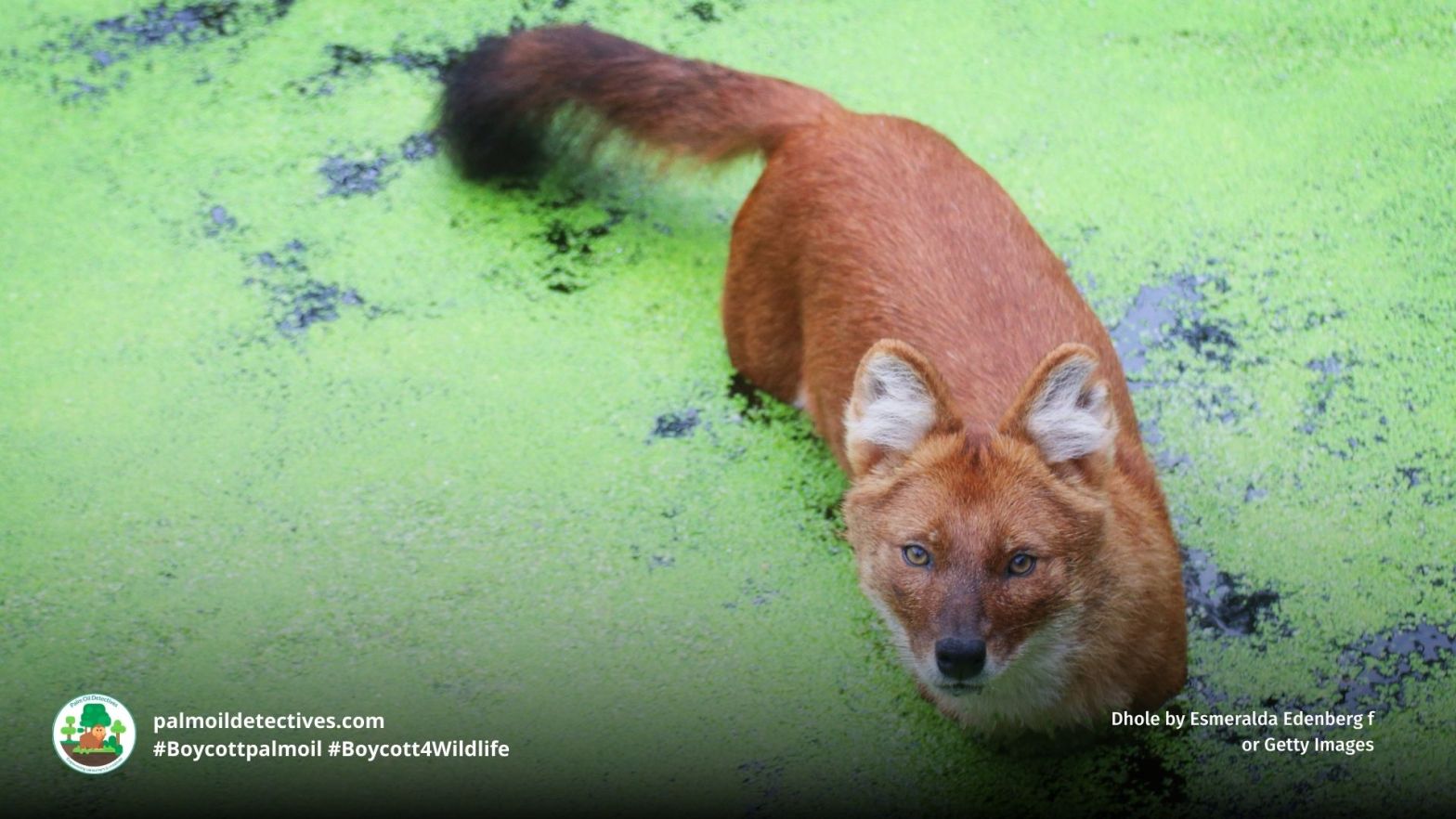
Fiercely protective, elusive and beautiful #Dholes are an ancient species of #wilddog that diverged from other dog species millions of years ago living in #Bangladesh, #Cambodia, #China, #India, #Indonesia, #Laos, #Myanmar, #Nepal and #Thailand. Dholes are also known as Asiatic Wild Dogs, Indian Wild Dogs, Red #Wolves and Mountain Wolves. Once found across the Russian Steppe, China, the Middle East and northern Asia their range has been fractured and reduced dramatically by human-related pressures and threats. Ongoing major threats are #deforestation for #meat and #palmoil along with human persecution. They are now classified as Endangered on IUCN Red List. Help them to survive, every time you shop #BoycottPalmOil #Boycott4Wildlife
Fishing Cat Prionailurus viverrinus
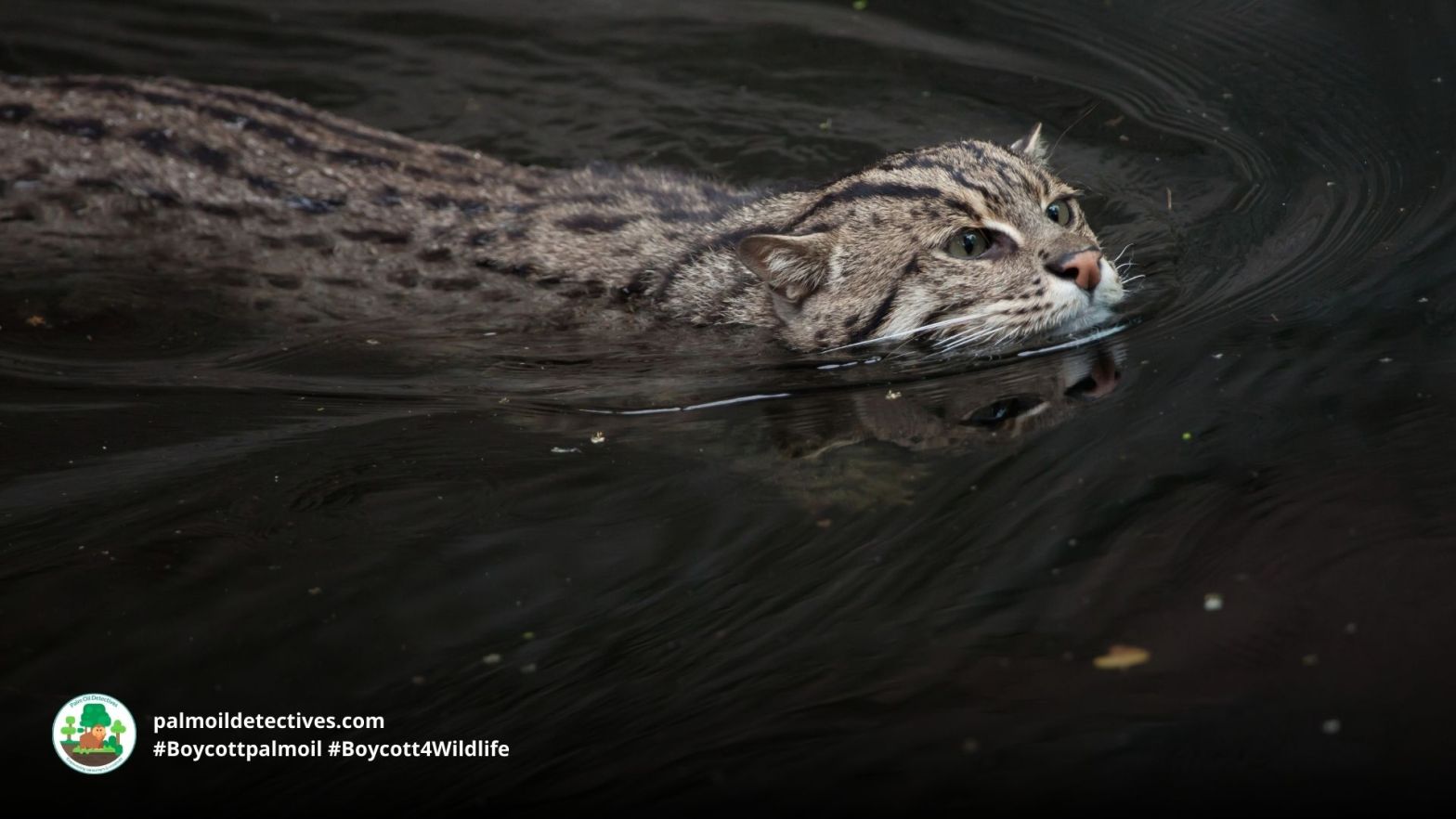
Although they look cute and cuddly, the Fishing #Cat Prionailurus viverrinus has a feisty, firecracker temper. This small to medium sized wild cat can become defensive if approached in the wild. They are around twice the size of a domestic cat and typically weigh around 5-16 kg and have stocky short legs and a short tail.
Their faces are round with elongated noses that gives them a civet-like appearance, which is why their scientific name is viverrine. They are agile and fast hunters and can reach fast speeds in pursuit of prey. They have an average lifespan of approximately 12 years. Ongoing threats include palm oil deforestation, and in Indonesia it is uncertain if their population have remained alive intact due to widespread deforestation and hunting pressures. Help these plucky little #wildcats when you shop and #BoycottPalmOil #Boycott4Wildlife
Helmeted Hornbill Rhinoplax vigil

Helmeted #Hornbills are spectacular, large and intelligent #birds native to SE Asia, known for their substantial helmet-like structure on their head called a casque made of ivory. This hefty head accounts for 11% of their 3kg body weight. They are found on the Malay Peninsula: #Sumatra, #Borneo, #Myanmar and #Thailand. They are #criticallyendangered. Their main threats are illegal hunting and wildlife trade for their ivory casques along with palm oil and timber deforestation. Help them each time you shop and #Boycottpalmoil #Boycott4Wildlife
Binturong Arctictis binturong
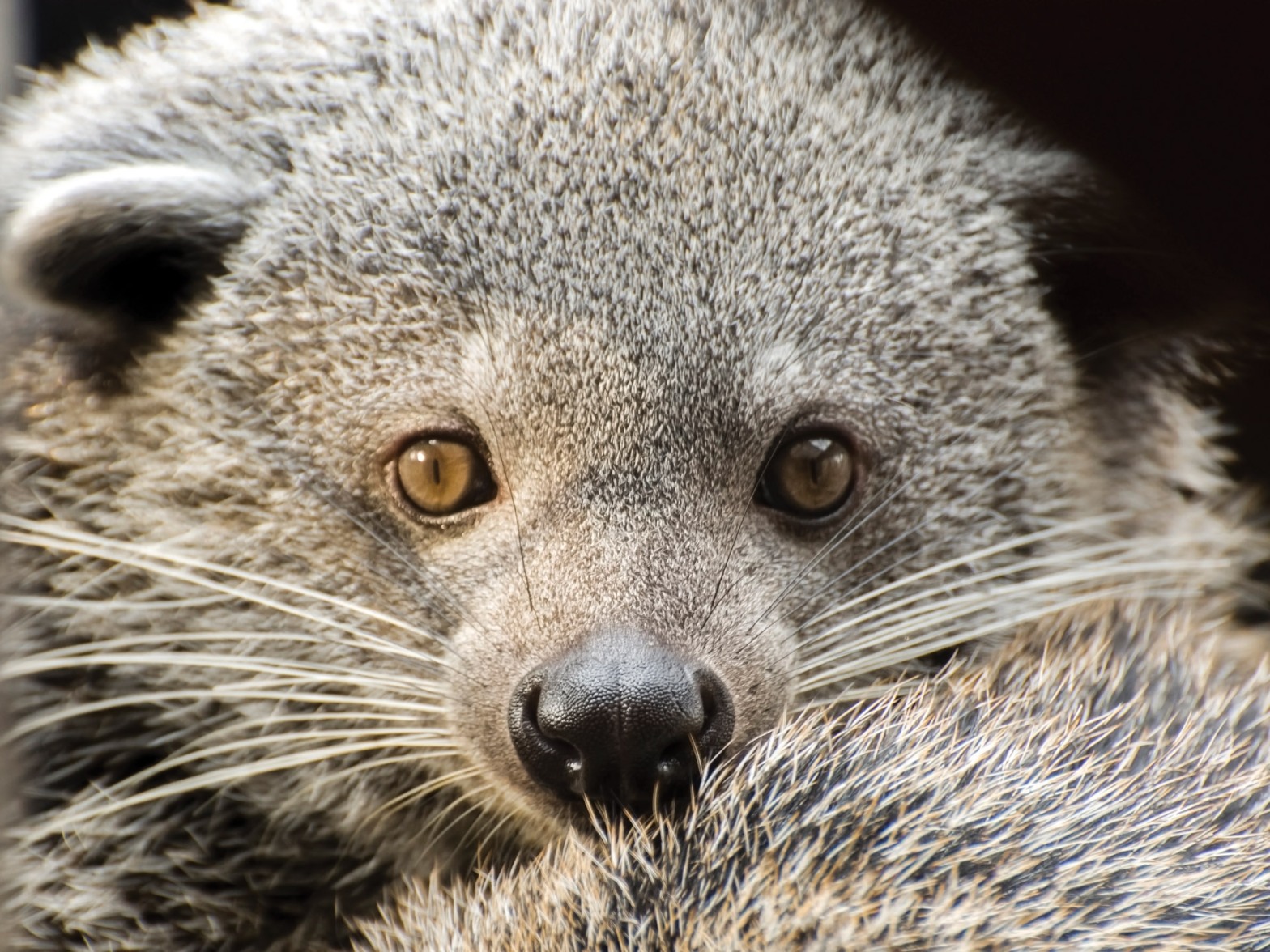
You may smell a Binturong in the forest before you see them. They give off the aroma of buttered popcorn or cheesy crisps due to the a compound in their urine they use to attract mates. The binturong, Arctictis binturong, is a fascinating and rare mammal who roam the dense rainforests of Southeast Asia. Often called the “bearcat” due to their looks, binturongs are neither bears nor cats, but are more closely related to ferrets. With their prehensile tail, thick wiry fur, and a popcorn-like scent, these unique and irreplacible creatures play vital roles as seed dispersers, particularly for strangler figs (Ficus spp.), making them keystone species in their ecosystem.
Despite their ecological significance, the binturong is now classed as Vulnerable. Populations have plummeted due to habitat destruction, particularly for palm oil deforestation; along with illegal hunting, exploitation for the coffee market and the illegal bushmeat and pet trade. Protecting the majestic binturong requires urgent action to safeguard their rainforest home. Fight for them every time you use your wallet! #BoycottPalmOil #Boycott4Wildlife
Dusky Langur Trachypithecus obscurus
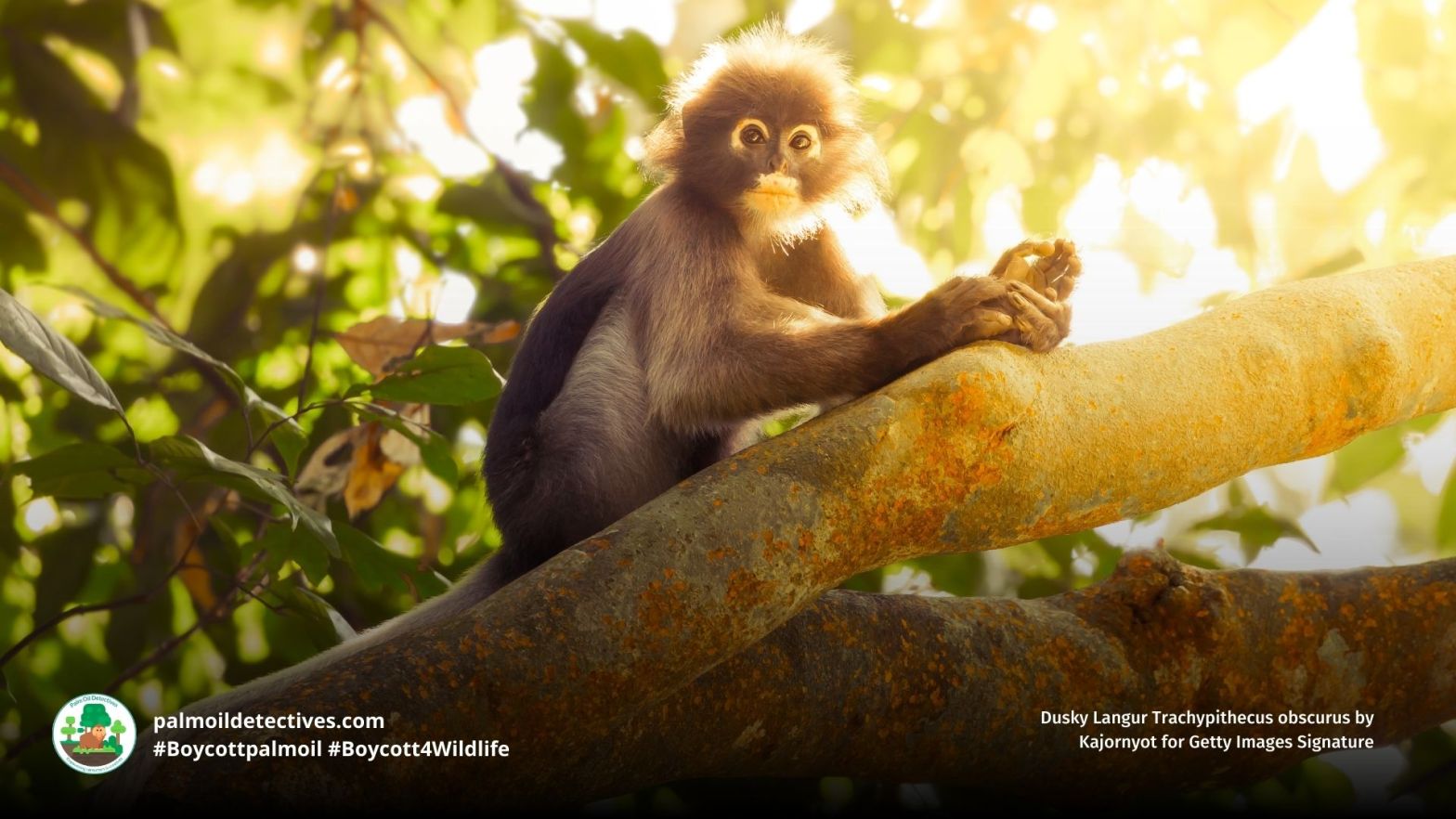
The dusky langur, also known as the spectacled langur or dusky leaf monkey, is one of Southeast Asia’s most charismatic primates. Living in #Thailand, #Myanmar and #Malaysia they have vivid white eye patches that resemble spectacles and a fluffy dark-grey coat, they cut an unmistakable figure against the rustling emerald canopy of the rainforest. These intelligent and agile #monkeys play a crucial role in their ecosystems by dispersing seeds, keeping forests healthy and thriving. Yet, deforestation for agriculture—particularly #palmoil, rubber, and durian plantations—alongside hunting and illegal #wildlifetrade, is pushing them closer to extinction. Without urgent intervention, the forests they call home will be razed, and their populations will continue to plummet. Use your voice to protect them—fight for their survival and #BoycottPalmOil #Boycott4Wildlife every time you shop
Eastern Hoolock Gibbon Hoolock leuconedys
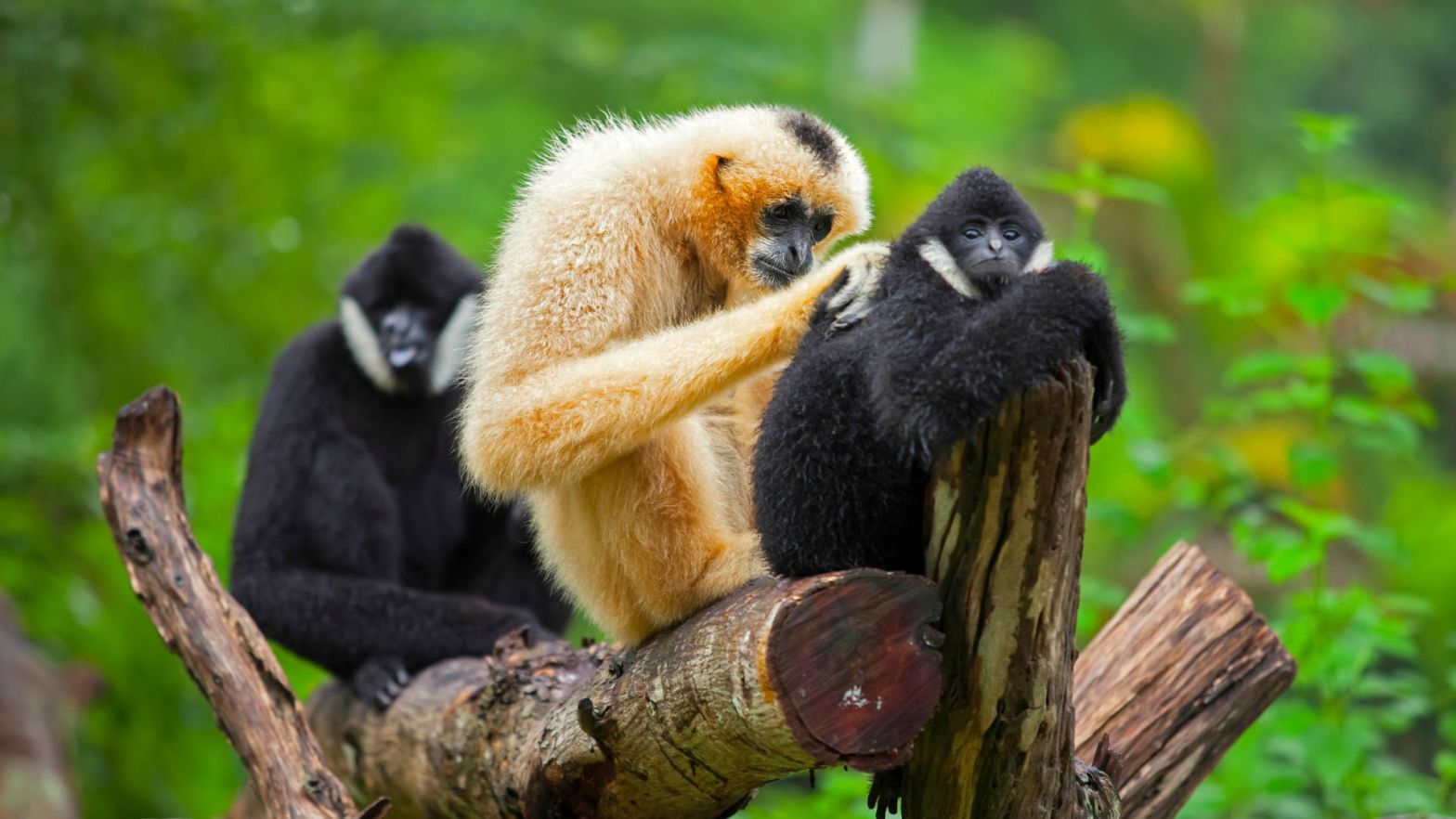
Eastern Hoolock Gibbon Hoolock leuconedys Vulnerable Extant (resident): Myanmar Presence Uncertain: India The Hoolock Gibbons are three species located in South Central Asia. They are the second largest of the gibbons after the Siamang. They have rings around their eyes and mouths giving them a mask-like appearance. Like other gibbon species they call to eachContinue reading “Eastern Hoolock Gibbon Hoolock leuconedys”
Western Hoolock Gibbon Hoolock hoolock
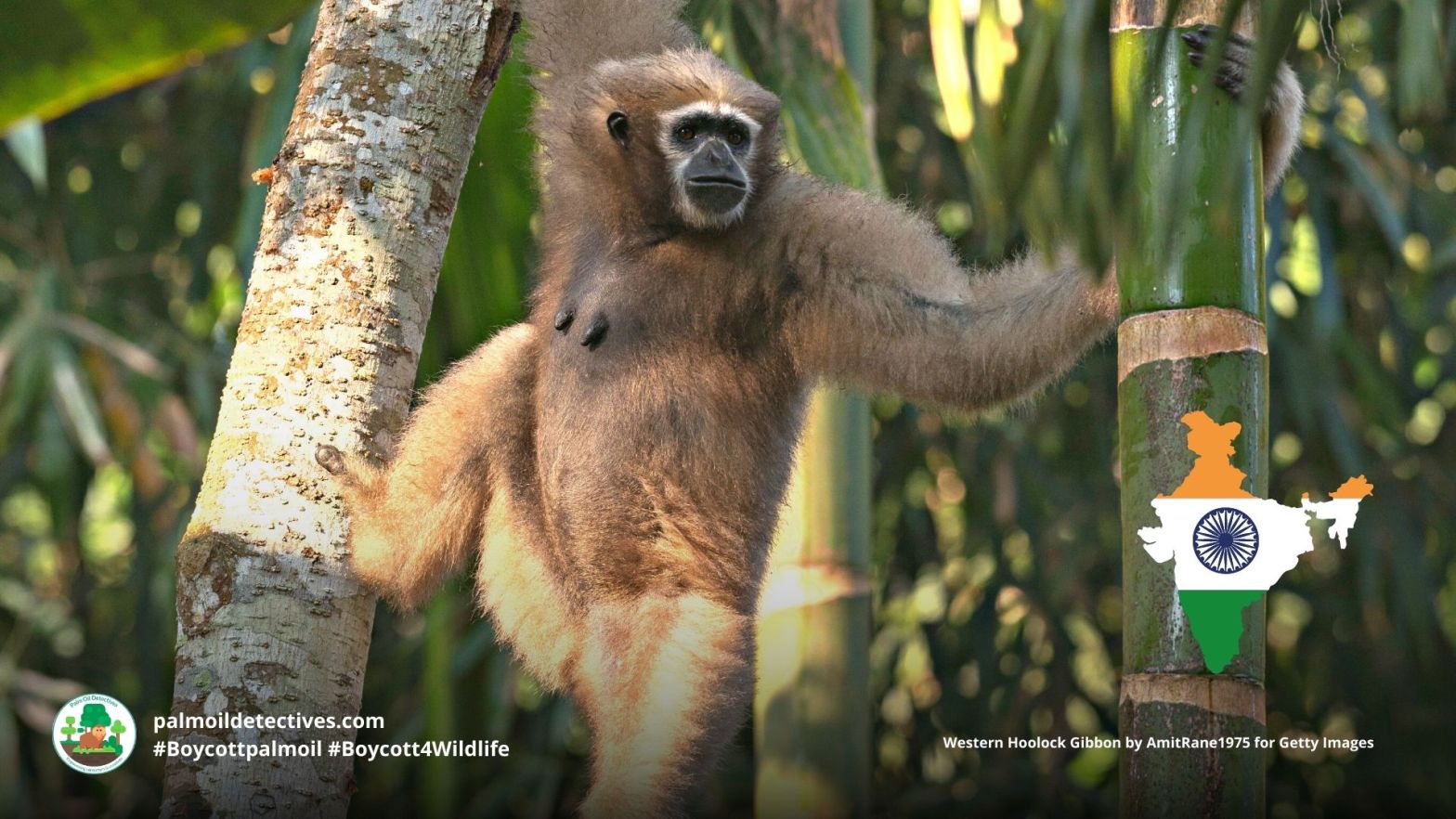
Energetic and social Western Hoolock Gibbons live in India, Bangladesh and Myanmar. Known for their close-knit families and melodious singing, they are endangered from palm oil deforestation, timber deforestation, human persecution and illegal poaching. Help them every time you shop by boycotting palm oil in the supermarket. #Boycottpalmoil #Boycott4Wildlife
Skywalker Hoolock Gibbon Hoolock tianxing
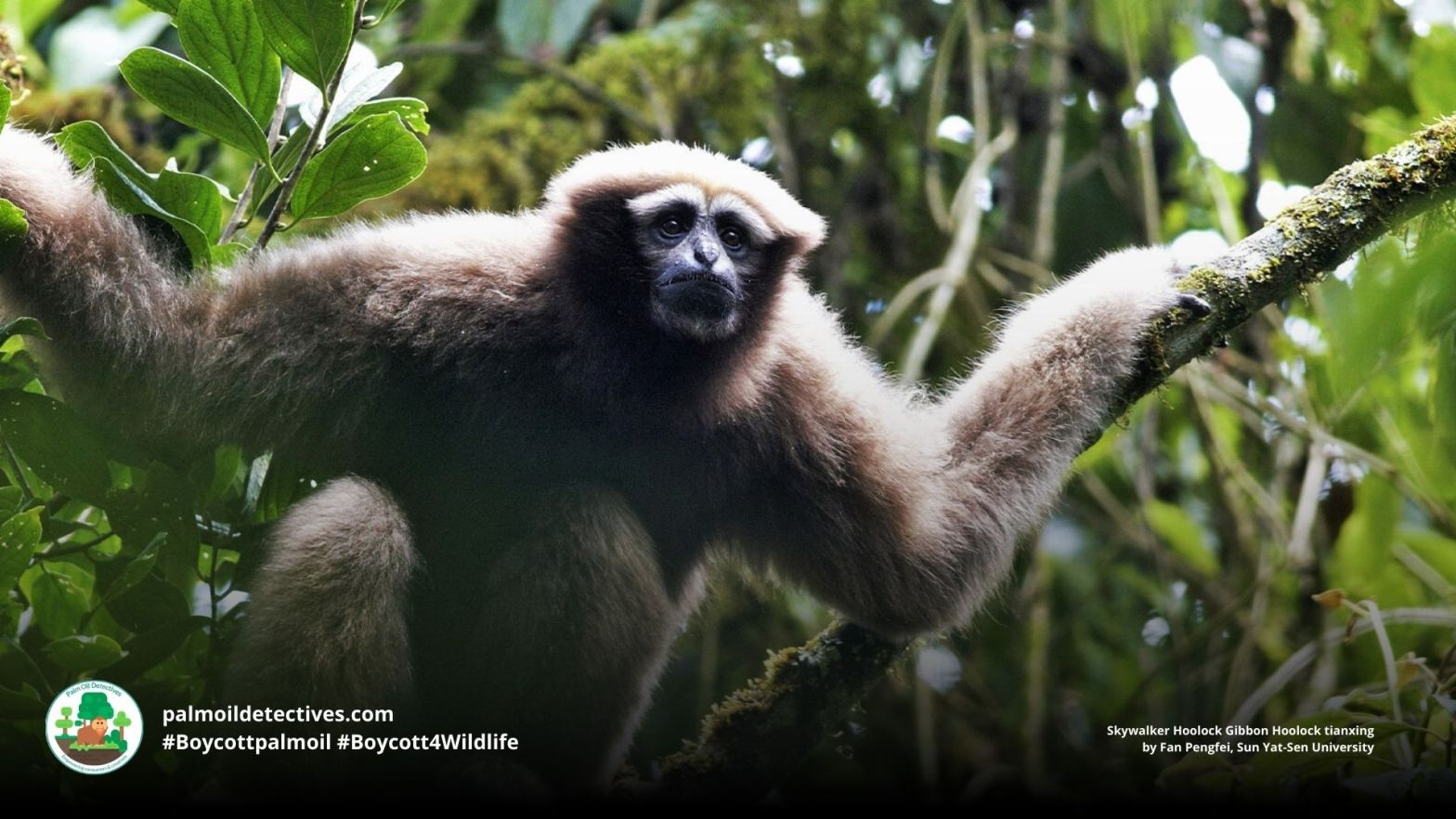
Rare Skywalker Hoolock Gibbons are Endangered primates in Myanmar and China’s forests. Described in 2017, help them survive when you shop boycott4wildlife!
Masked Finfoot Heliopais personatus
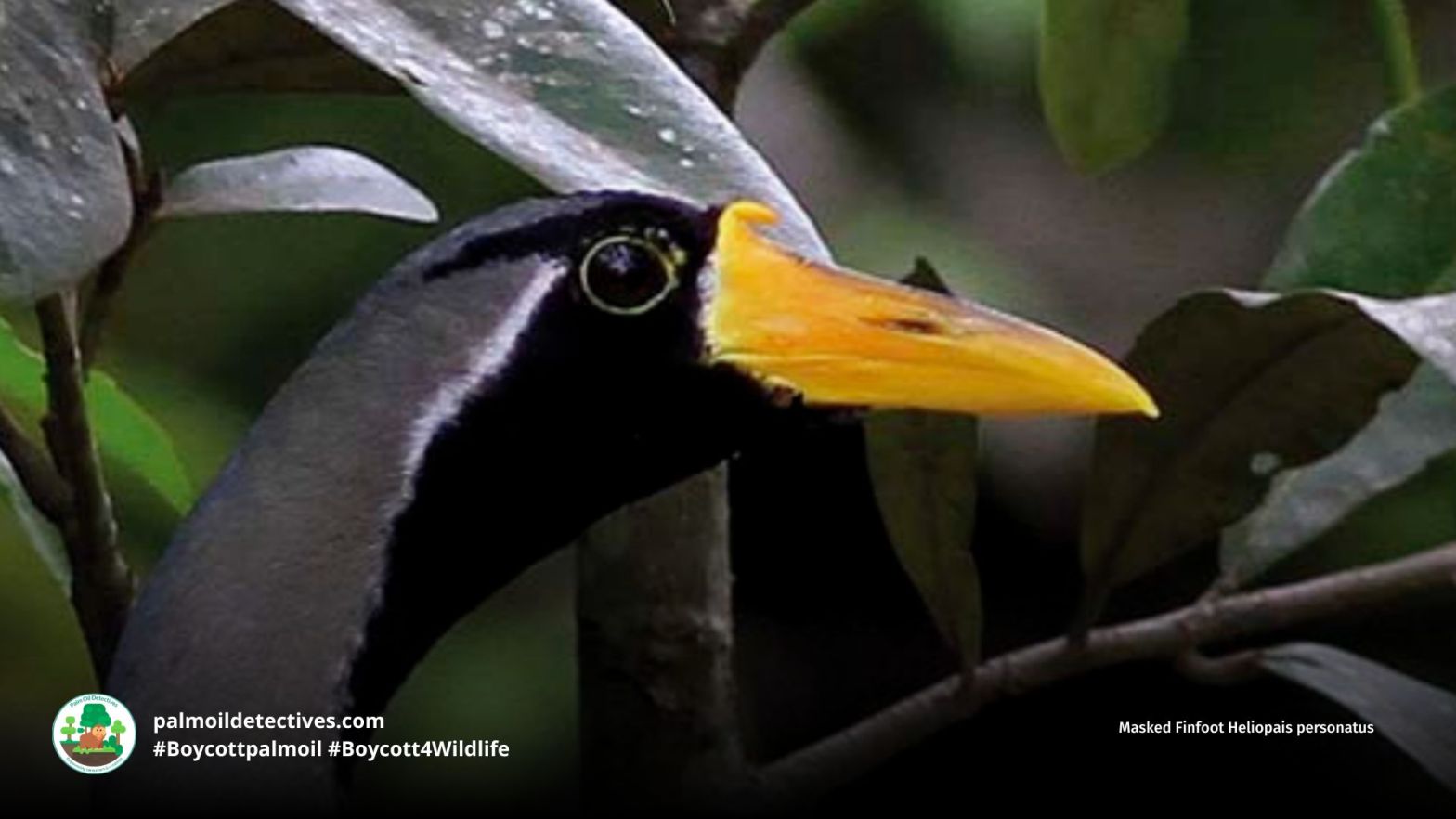
The Masked Finfoot is vanishing before our eyes. These rare and secretive waterbirds are in freefall due to palm oil expansion and habitat destruction.
Vordermann’s Flying Squirrel Petinomys vordermanni
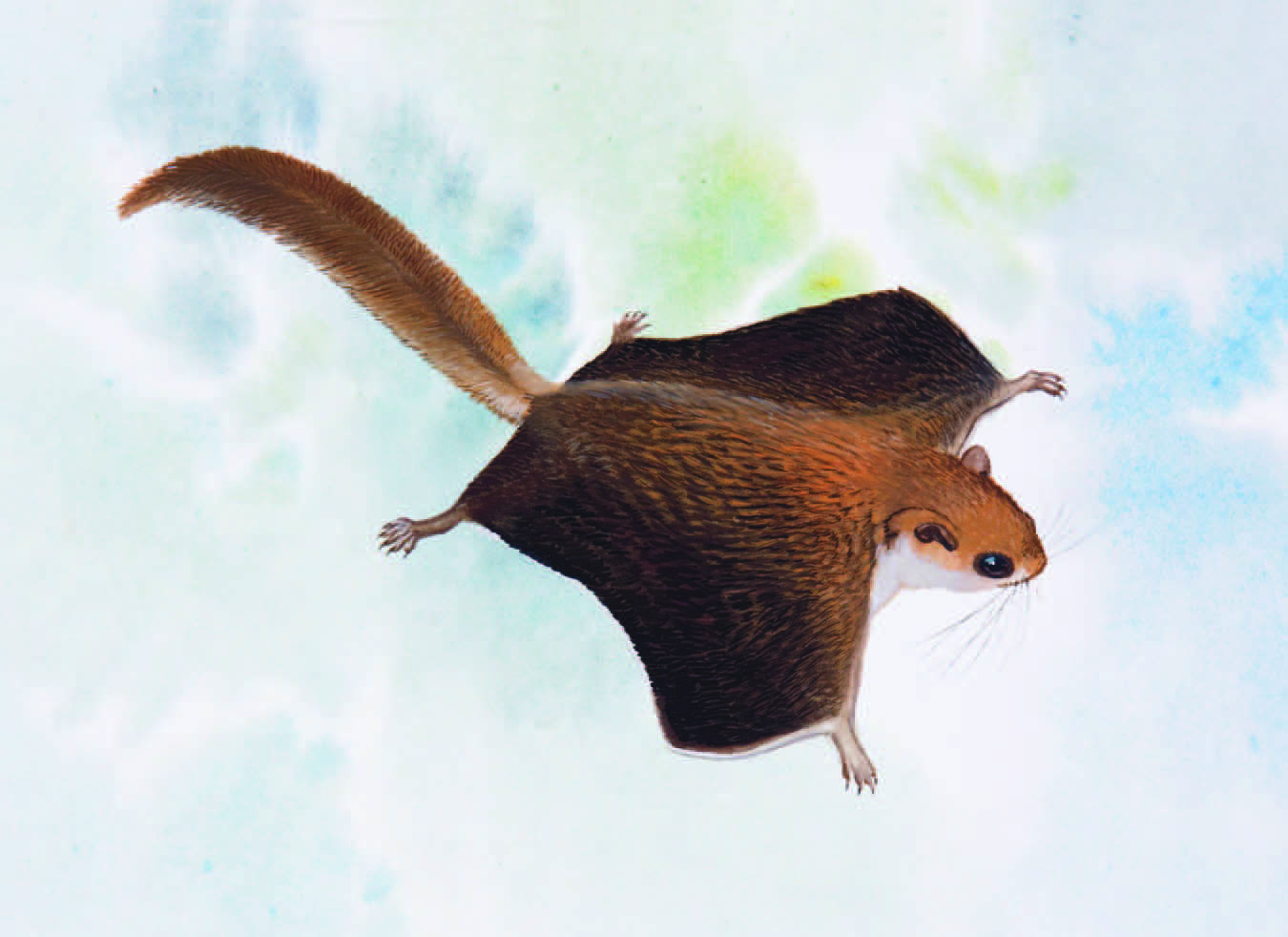
In #Borneo’s twilight, the Vordermann’s flying #squirrel emerges from her nest, resplendent with orange cheeks and black-ringed eyes. This small, #nocturnal #mammal is a master of the rainforest canopy. They use an ingenious membrane called a patagium to effortlessly glide between trees. A flying squirrel’s world is one of constant motion and quiet vigilance. Don’t let this world disappear! The forests that sustain them are vanishing at an alarming rate. Palm oil-driven deforestation, logging, and land conversion are tearing through their habitat, leaving only fragmented forest. Use your wallet as a weapon and #BoycottPalmOil #Boycott4Wildlife.
Southeast Asian Box Turtle Cuora amboinensis
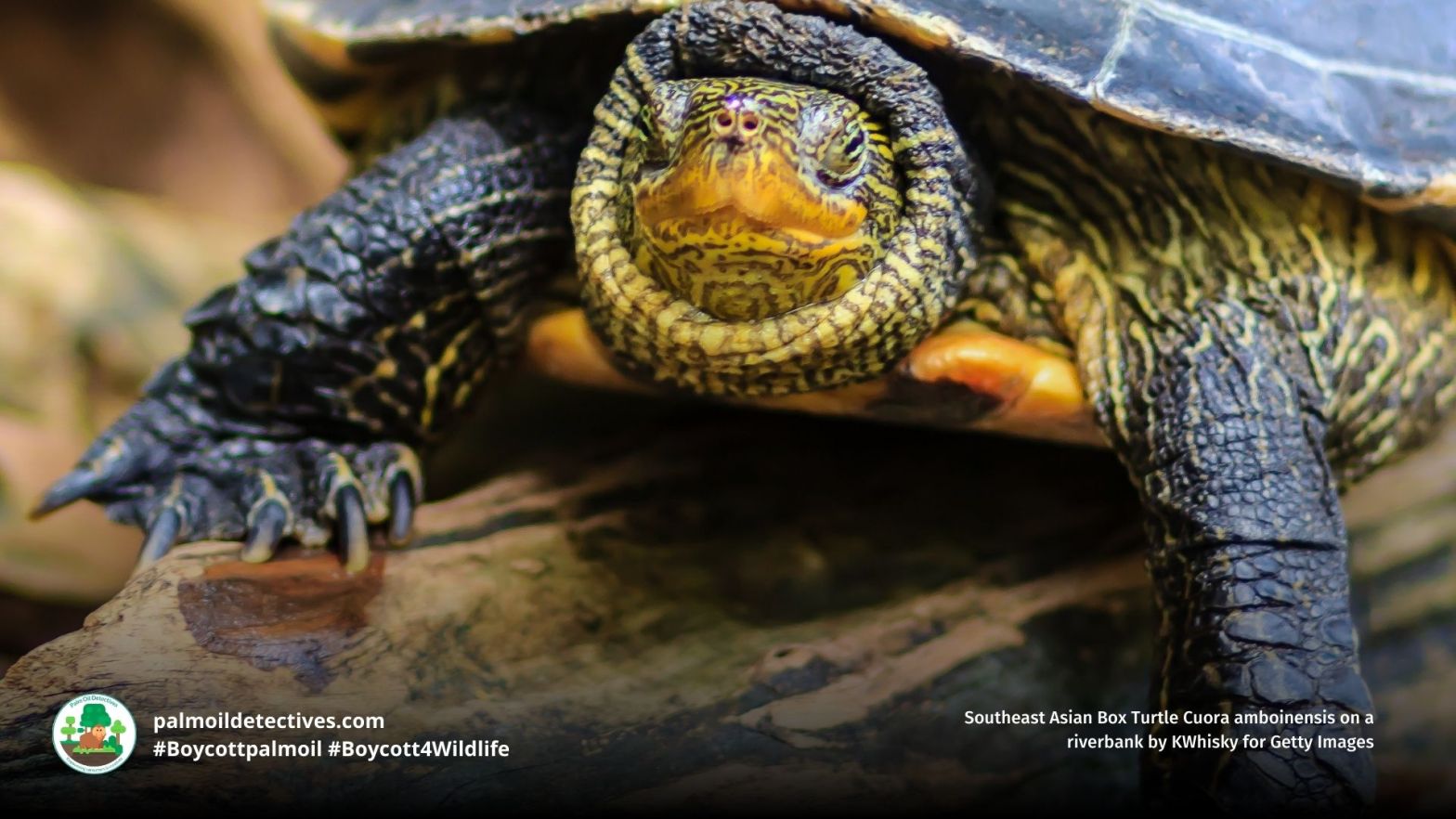
The Southeast Asian Box #Turtle Cuora amboinensis, also known as the Amboina Box Turtle, Malayan Box Turtle, or Indonesian Box Turtle, is a freshwater #reptile species found across much of Southeast Asia. This species is under severe pressure due to overexploitation for food, traditional medicine, and the #pettrade, particularly in Australia, #China, Europe, and the United States. Their semi-aquatic nature allows them to thrive in swamps, rice paddies, and slow-moving rivers, but habitat destruction from #palmoil plantations, #timber and wetland drainage threatens their survival. Their population is rapidly declining due to these threats, making urgent protections necessary. Resist destruction and fight for their survival every time you shop – #BoycottPalmOil #Boycott4Wildlife.
Malayan Tapir Tapirus indicus
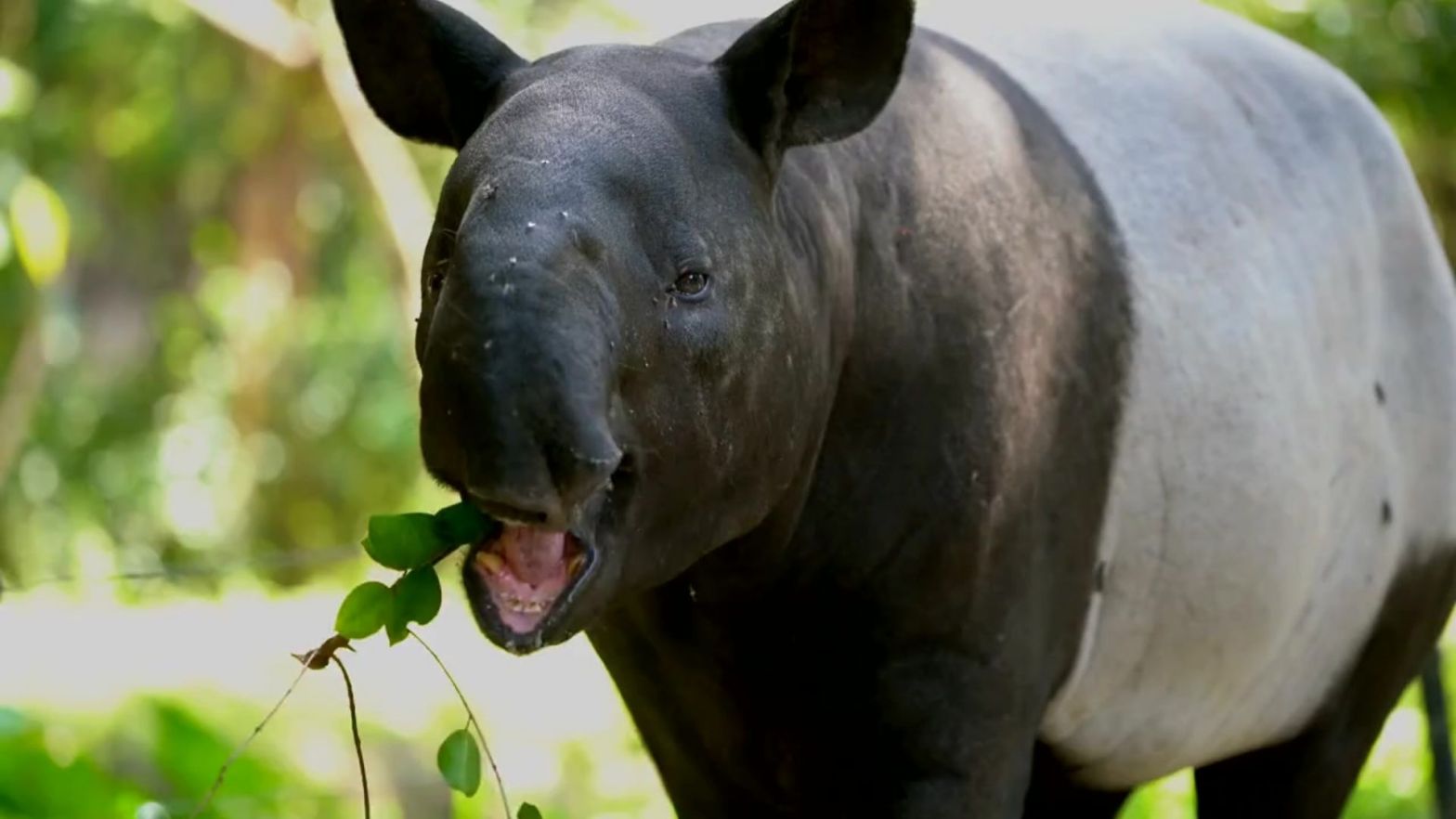
The endangered Malay Tapir faces habitat loss from palm oil plantations, road kills, and snares. Less than 2,500 remain. Support #BoycottPalmOil to save them.
Popa langur Trachypithecus popa
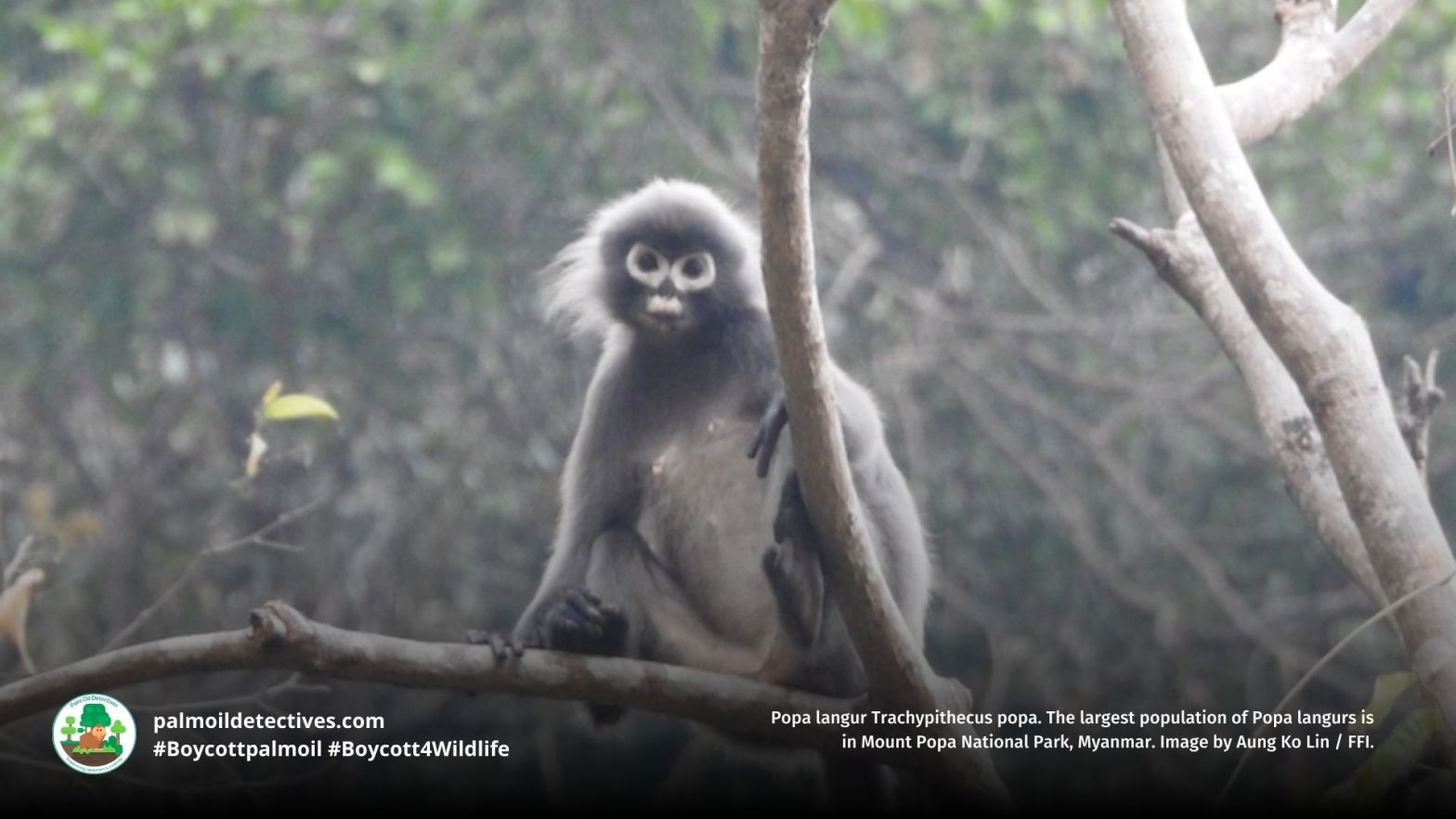
The Popa langur Trachypithecus popa is the most endangered langur species in the world. Discovered in 2020, they are immediately considered critically endangered. These primates are known for their striking lilac-grey fur, expressive white-ringed eyes, and long tails. Named after Mount Popa, an extinct volcano in central Myanmar, they are a living testament to the region’s rich biodiversity.
Sadly, fewer than 300 individuals are still alive in the wild. Habitat destruction caused by palm oil deforestation, logging, and infrastructure development has pushed this species to the brink of extinction.
Protect their future by supporting indigenous-led conservation efforts, boycotting palm oil, and sharing their story. #BoycottPalmOil #Boycott4Wildlife
Asian Giant Tortoise Manouria emys
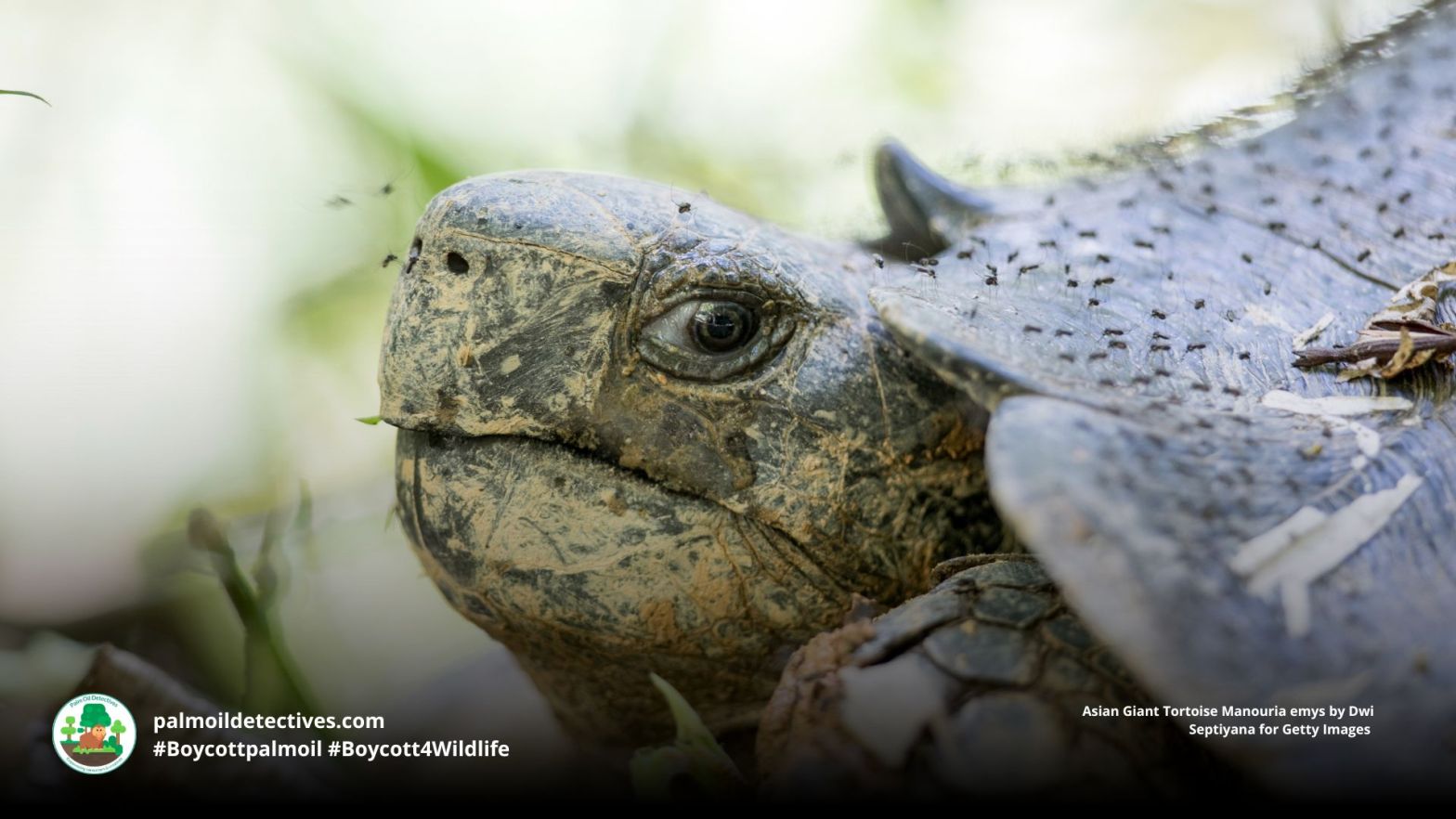
Asia’s largest tortoise is rapidly declining. The Asian Giant Tortoise is threatened by palm oil deforestation and illegal hunting. Take action for them!
Straw-headed Bulbul Pycnonotus zeylanicus
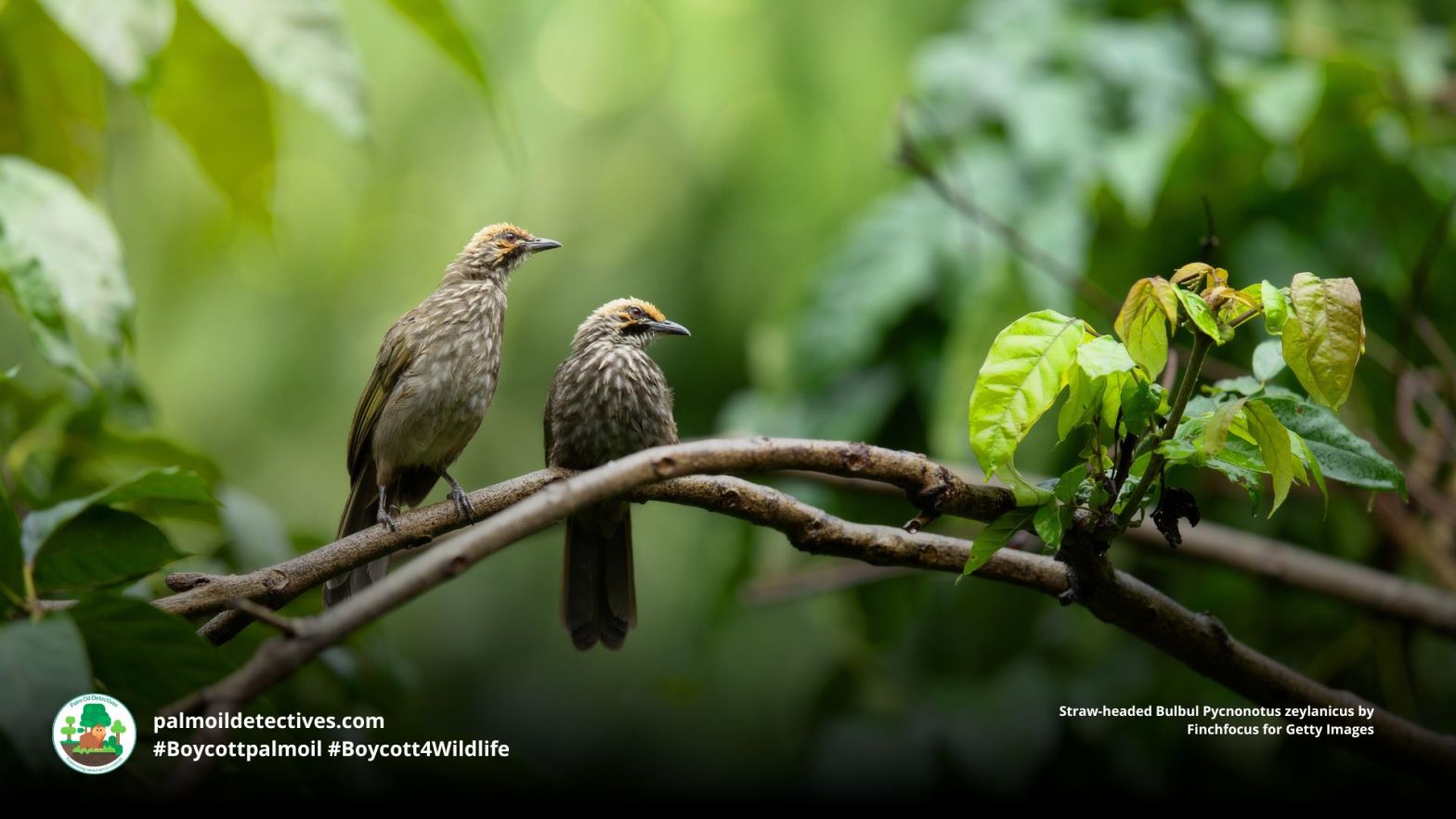
The Straw-headed Bulbul is a striking bright yellow bird known for their vibrant song, often described as one of the most melodious in the bird world. Their powerful calls echo through Southeast Asia’s lowland forests, but these sounds are becoming increasingly rare. They are critically endangered due to illegal trapping for the cage-bird trade and habitat loss driven by deforestation, including the expansion of palm oil plantations.
Protecting the Straw-headed Bulbul is vital to preserving their unique contribution to the soundscapes of their natural habitats. Fight for their survival by boycotting products linked to deforestation. Use your wallet as a weapon. #BoycottPalmOil #Boycott4Wildlife
 Palm Oil Detectives