
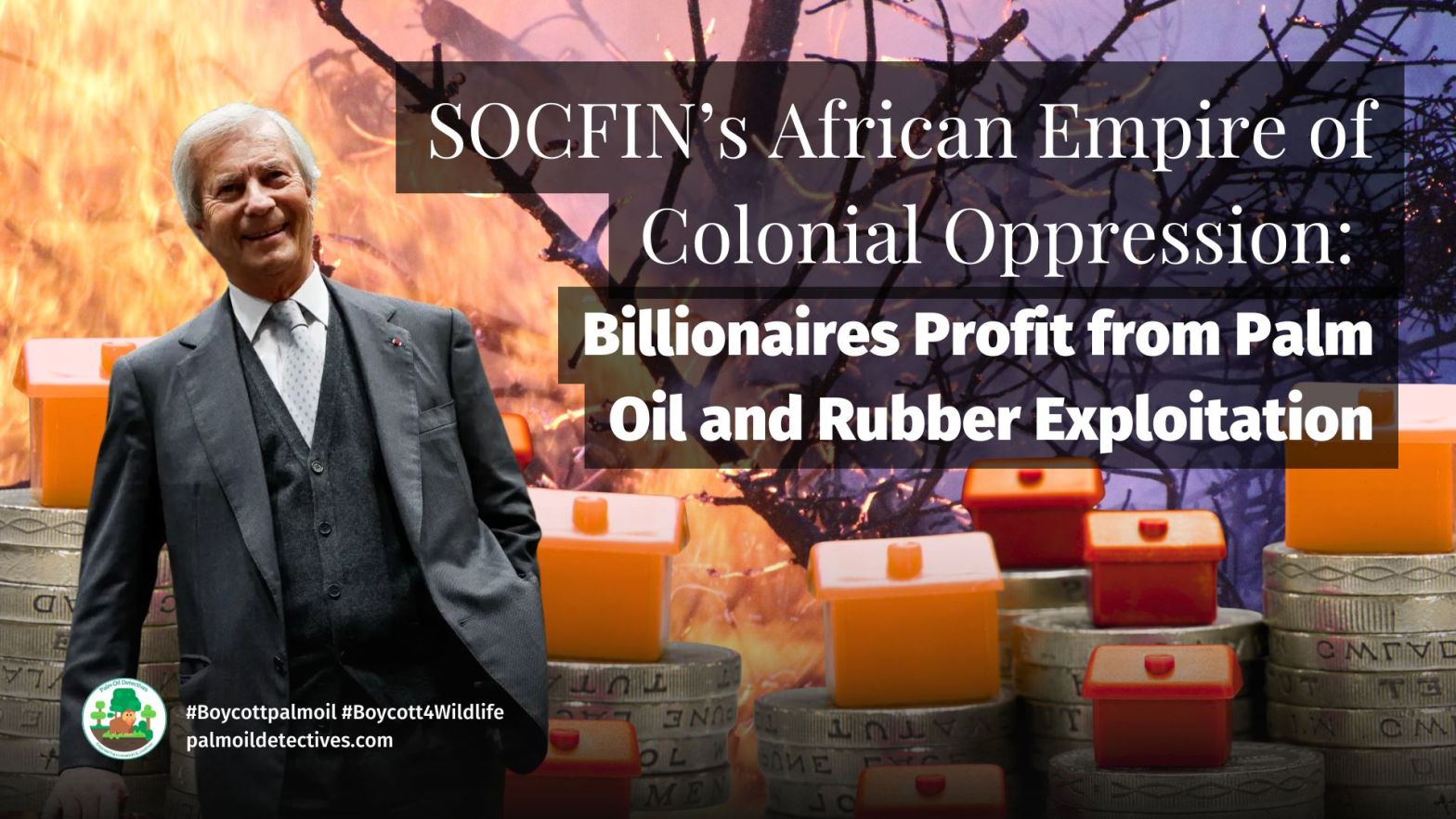
Investigation by Bloomberg exposes that despite being RSPO members, #SOCFIN plantations in #WestAfrica are the epicentre of #humanrights abuses, sexual coercion, environmental destruction, and #landgrabbing. Operating in #Liberia, #Ghana, #Nigeria, and beyond, SOCFIN’s #rubber and #palmoil plantations continue historical colonial legacies of exploitation. Despite widespread evidence of abuse and deforestation, SOCFIN and its partners benefit from weak sustainability certifications such as #FSC and #RSPO. Europe and the US buy products directly linked to these violations, greenwashing the destruction in the process. Indigenous communities and workers are actively resisting this huge injustice —They seek proper redress in the form of stricter #EUDR regulations and better protections of their health, livelihoods and families. Consumers can boycott palm oil and rubber in solidarity. #BoycottPalmOil #Boycott4Wildlife
Tag Archives: Liberia
Protected: Private Advocate’s Page
There is no excerpt because this is a protected post.
African Golden Cat Caracal aurata
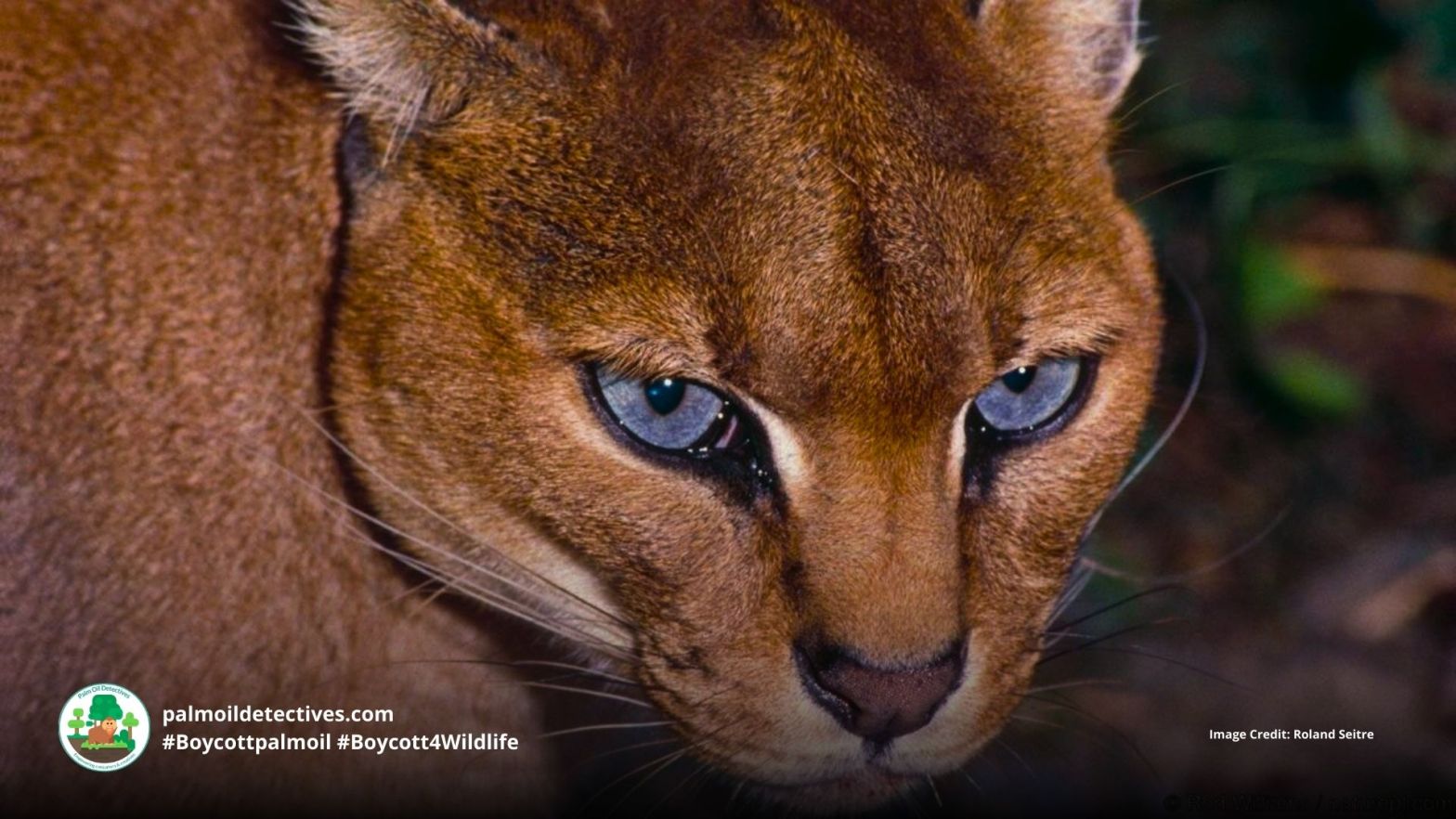
The African golden cat’s striking coat varies from radiant red to elegant gray. They are a symbol of wild grace in the African jungle. This feline enchants a cacophony of sounds, from gentle meows to assertive growls. They are classified as Vulnerable and their population is expected to reduce by 30% as a direct result of palm oil deforestation in their forest home (IUCN Red List). Fight to protect these magnificent animals and their home every day! #BoycottPalmOil and #Boycott4Wildlife in the supermarket!
Campbell’s Mona Monkey Cercopithecus campbelli
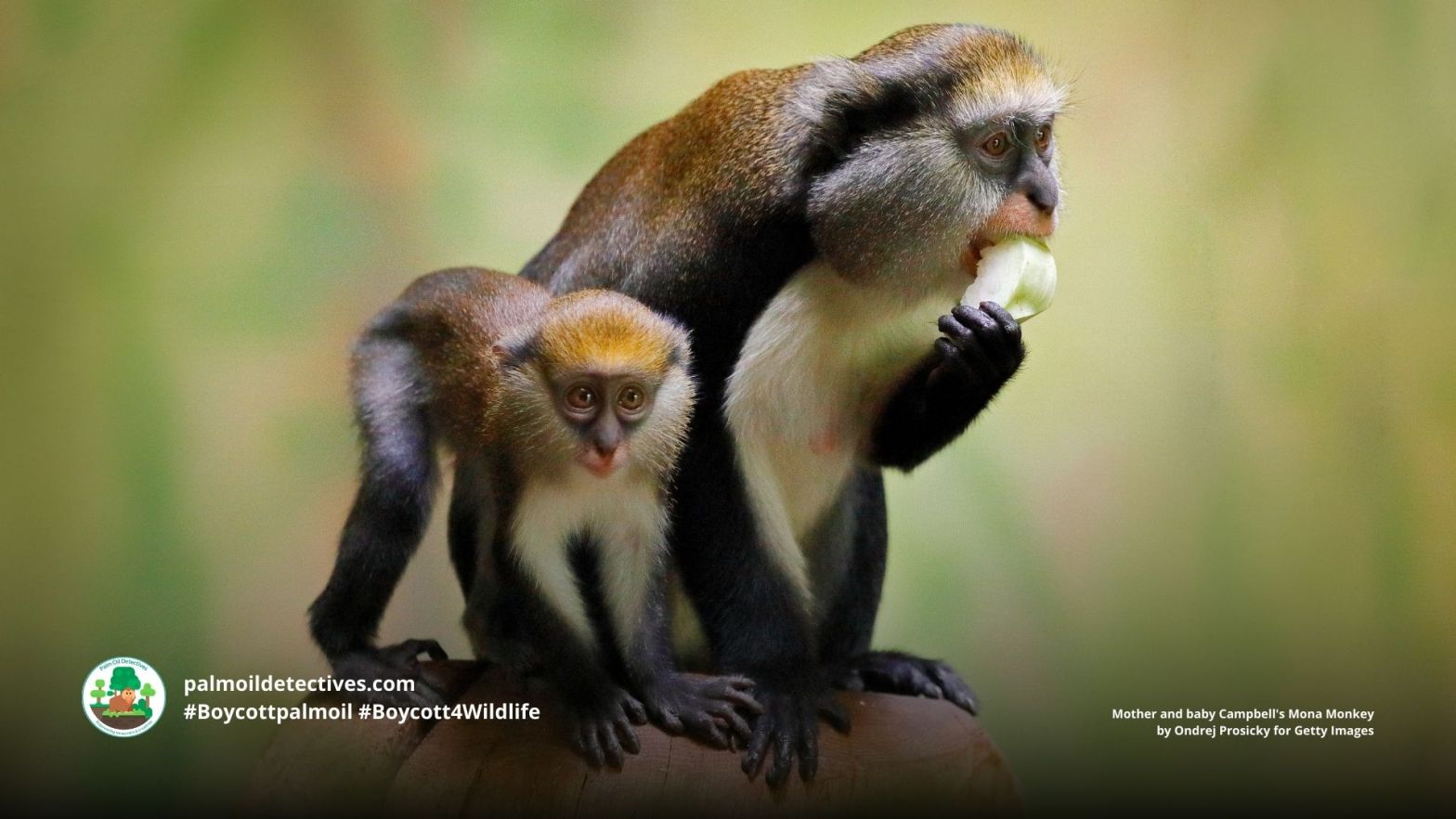
Inquisitive and highly social Campbell’s Mona Monkeys are known for their intense hazel eyes and bright yellow brows. They use their large puffy cheeks to store food while they climb to the top of tree canopies to eat it. Males will engage in a dawn and dusk symphony of calling along with other species in a coordinated ritual. They are Near Threatened due to hunting and extensive forest loss throughout their range in West Africa for palm oil, coffee, cocoa and mining. Help them every time you shop by using your wallet as a weapon – #Boycottpalmoil #Boycott4Wildlife
African Manatee Trichechus senegalensis
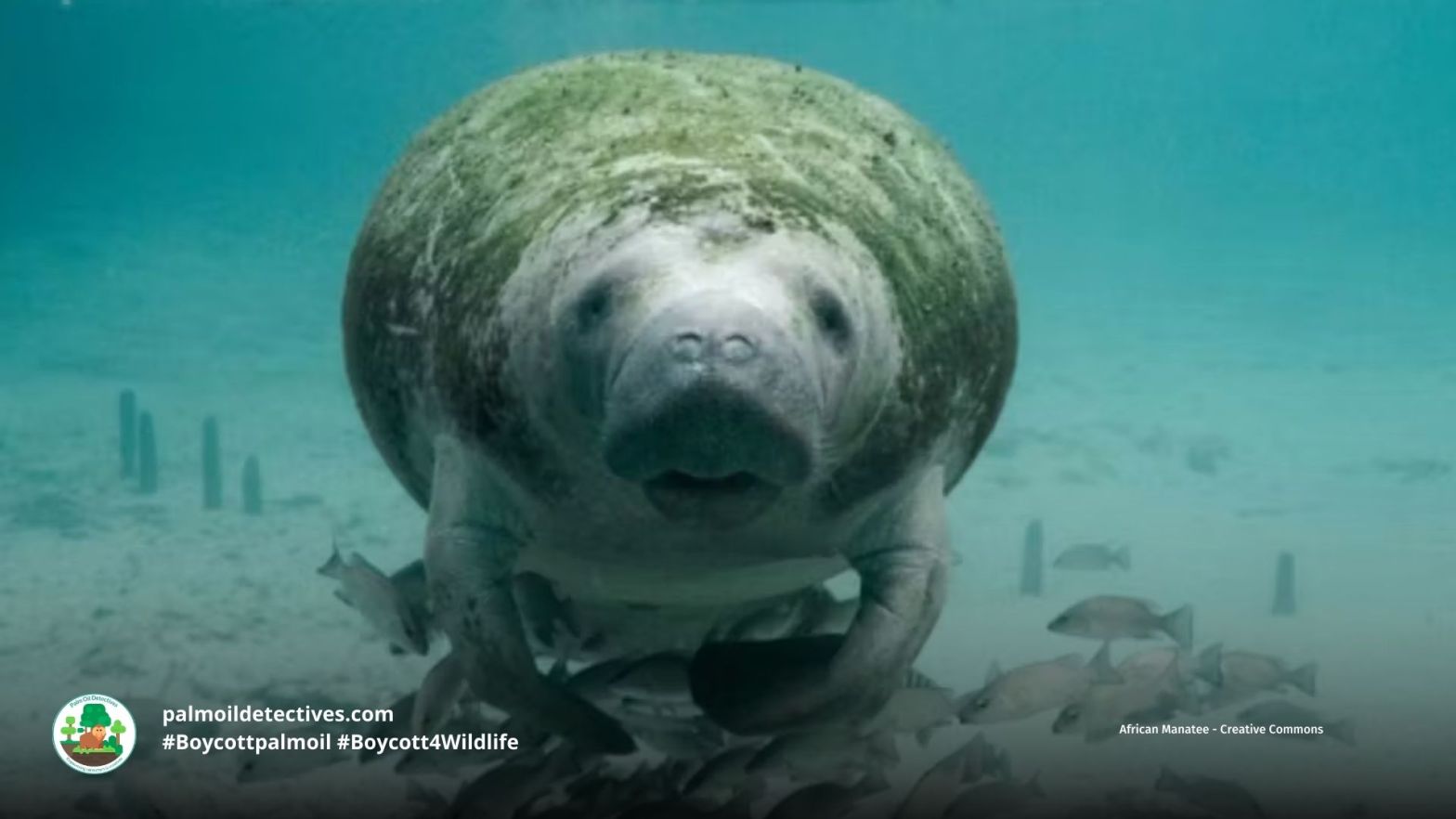
In the folklore of West Africa, there’s a fascinating character called Maame Water, believed to be a goddess of the sea, she symbolises wealth and beauty. Maame Water is none other than the African Manatee!
The Serer people of Senegal, the Gambia, and Mauritania hold the African Manatee in high regard, considering them sacred and a guardian of the secrets of the future according to their creation myth. This precious species is vulnerable from palm oil deforestation, hunting and pollution. They perform an essential service to mangrove ecosystems by keeping them healthy. Help them survive and #Boycottpalmoil #Boycott4Wildlife every time you shop!
Yellow-casqued Hornbill Ceratogymna elata
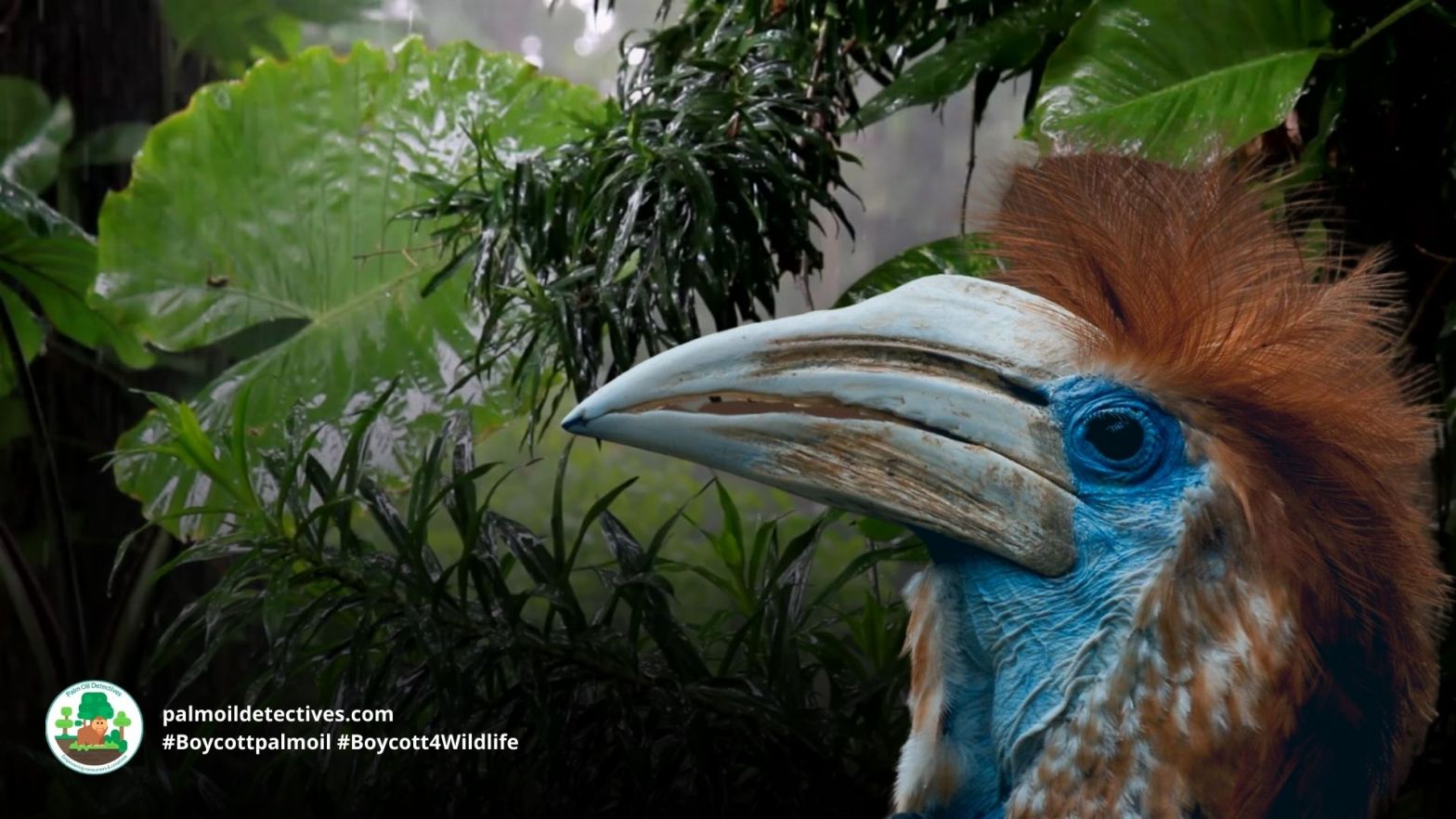
The yellow-casqued hornbill is one of the most remarkable hornbills in the world and one of the largest birds in the rainforests of West Africa weighing up to two kilos. Sporting a shock of russet coloured feathers and a striking blue coloured face, they prefer to live high up in the rainforest canopy in Côte d’Ivoire, #Ghana, #Liberia, Mali and #SierraLeone. Their main threat is hunting and human persecution and they are possibly extinction now in some countries. Recent mass deforestation for #mining, #palmoil, #cocoa and #meat is also a threat and they are now classified as #vulnerable. Help them every time you shop and be #vegan, #Boycottpalmoil, #Boycott4Wildlife
African Dwarf Crocodile Osteolaemus tetraspis

African Dwarf #Crocodiles are timid #nocturnal animals and solitary hunters. They predate mainly on small animals in rivers or nearby to the riverbank. They are also known as the Broad-Snouted Crocodile or the Bony Crocodile are the smallest extant species of crocodile in the world and are typically around 1.5 metres in length. They face persecution by humans and other animals and spend most of their daylight hours resting in burrows they make along riverbanks in #WestAfrica and Central Africa. They are vulnerable from #timber #palmoil #soy #meat #deforestation and hunting. Help them survive and be #vegan, #Boycottpalmoil #Boycott4Wildlife
Butterfly Viper Bitis nasicornis
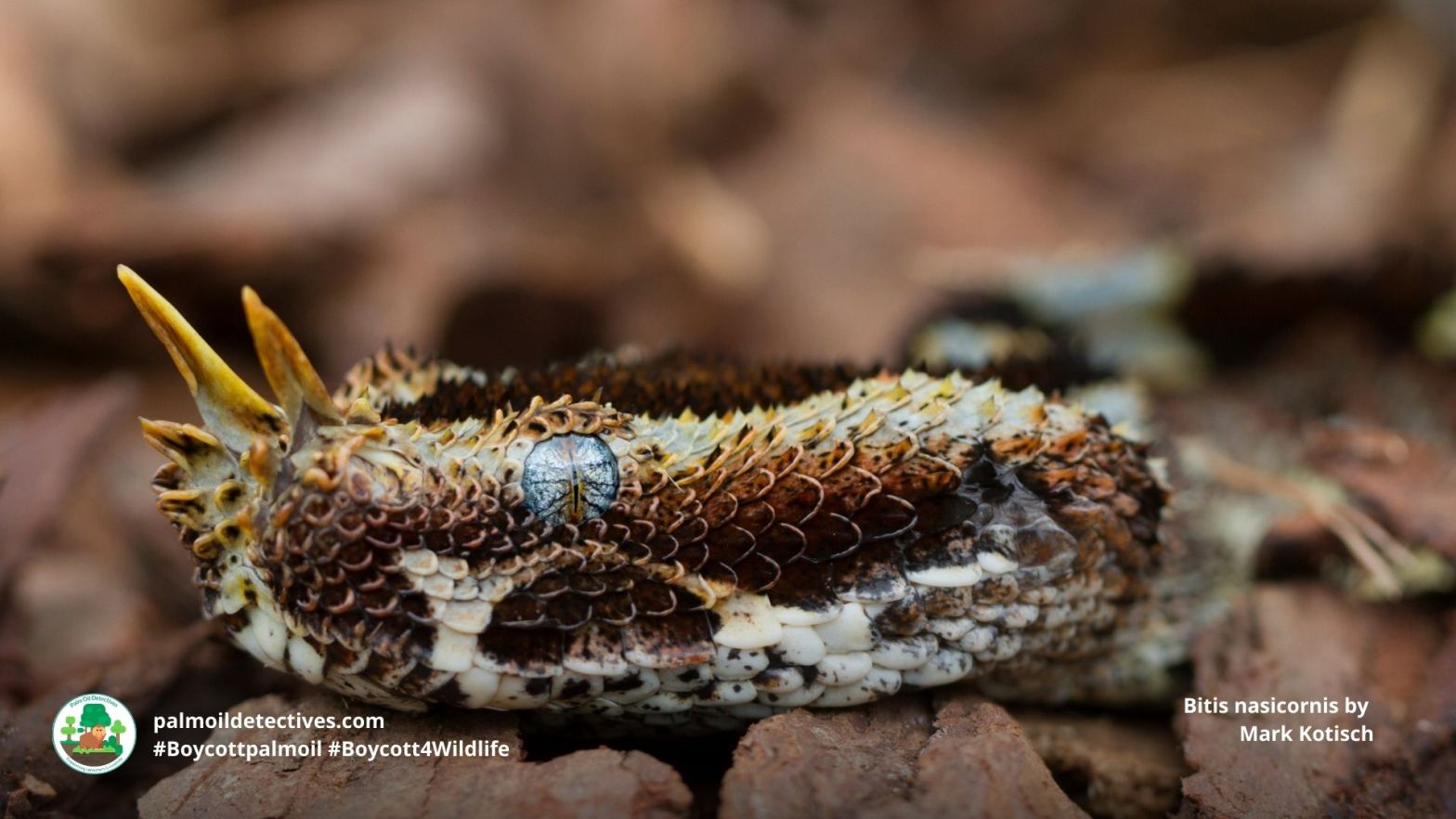
Although they possess one of the most potent venoms of all #snakes in #Africa, Butterfly Vipers are surprisingly placid and won’t attack unless provoked or threatened. They are known by several common names: Rhinoceros viper, River Jack, the Rhinoceros horned viper and the Horned puff adder. These remarkable serpents are appreciated for their vividly coloured markings that keep them camouflaged on the forest floor. Help them to survive when you shop and #BoycottPalmOil #Boycott4Wildlife.
African Palm Civet Nandinia binotata

African palm civets were once common seed dispersers. Now they face pressure from palm oil-driven deforestation, mining, and hunting for bushmeat – boycott!
Chimpanzee Pan troglodytes
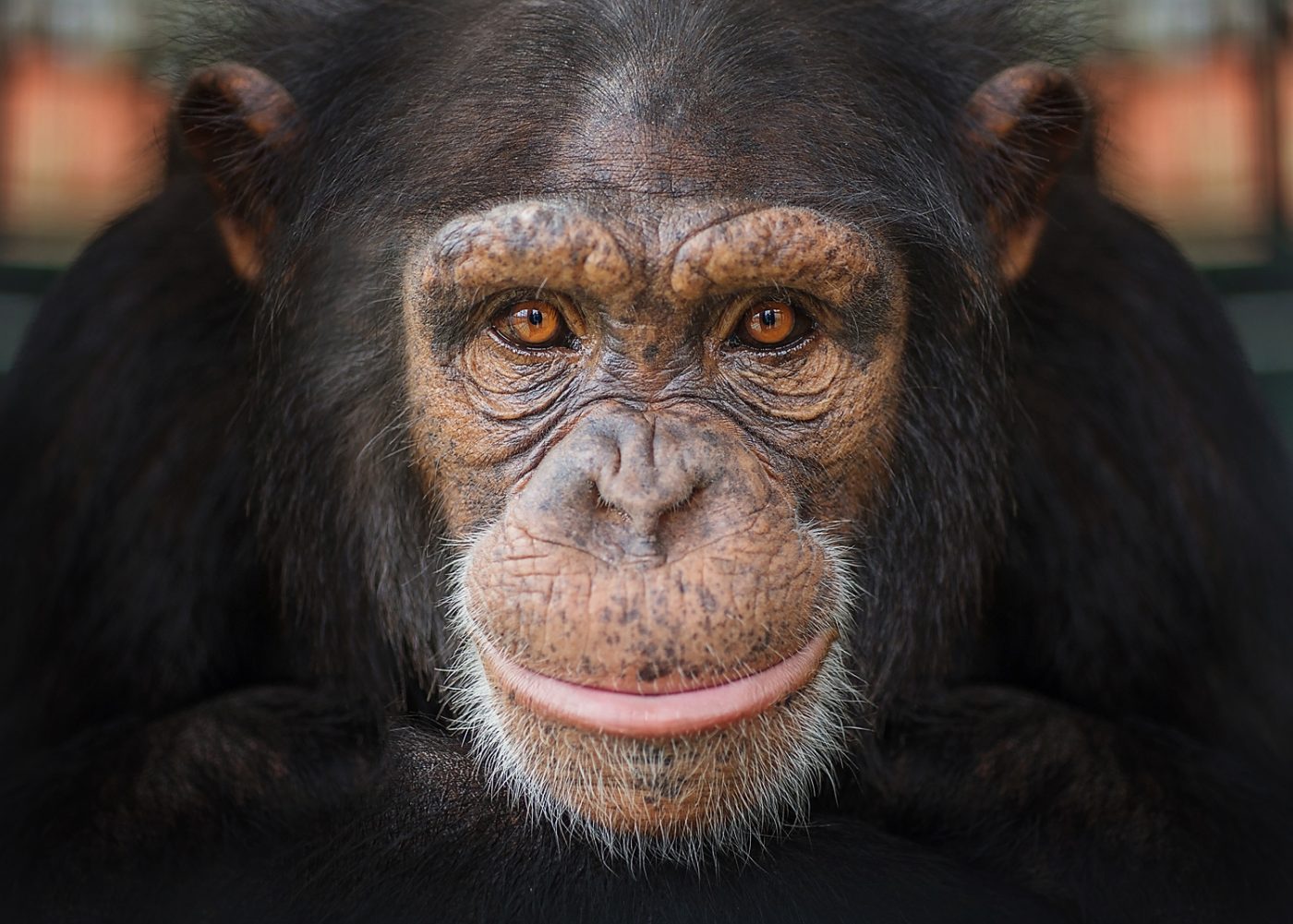
Chimpanzees (Pan troglodytes) are one of humanity’s closest living relatives and the most widespread of all great apes, with a vast historical range stretching across 21 African countries. Despite this, they are now classified as Endangered by the IUCN Red List due to catastrophic declines of more than 50% over a 75-year period, from 1975 to a projected 2050. These losses are driven by a lethal cocktail of threats: rampant poaching, habitat destruction for palm oil and logging, industrial mining, disease outbreaks like Ebola, and illegal trafficking. Subspecies such as P. t. ellioti have been reduced to only a few thousand individuals, while the once widespread P. t. verus is now Critically Endangered. Protecting them means dismantling the extractive industries that are ripping Africa’s forests apart such as the meat industry and palm oil industry. Help them when you #BoycottPalmOil #Boycott4Wildlife and be #Vegan #BoycottMeat
Western Red Colobus Piliocolobus badius
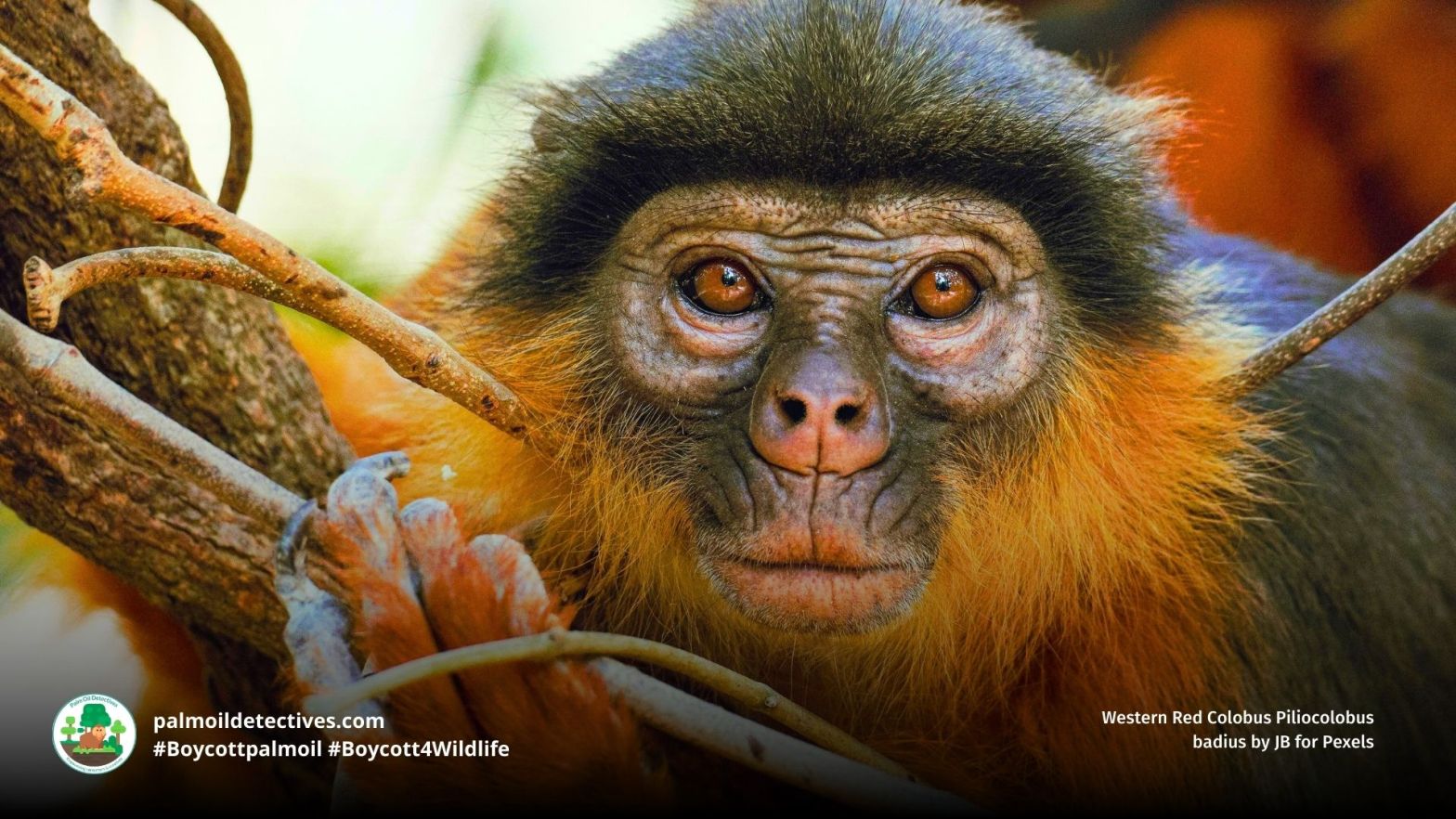
The Western Red Colobus Piliocolobus badius is one of West Africa’s most #endangered #primates, facing an escalating crisis of habitat loss and overhunting. Once abundant in mature forests across the region, they have been driven to the brink of #extinction by rampant deforestation for charcoal, palm oil and mining and the increasing demand for #bushmeat. Widespread clearing of forests for industrial #palmoil plantations, #mining, and #timber has fragmented their habitat, isolating populations and making them more vulnerable to #poaching. Without urgent intervention, their future remains uncertain. Help them every time you shop and be #vegan #BoycottPalmOil #Boycott4Wildlife
Timneh Parrot Psittacus timneh
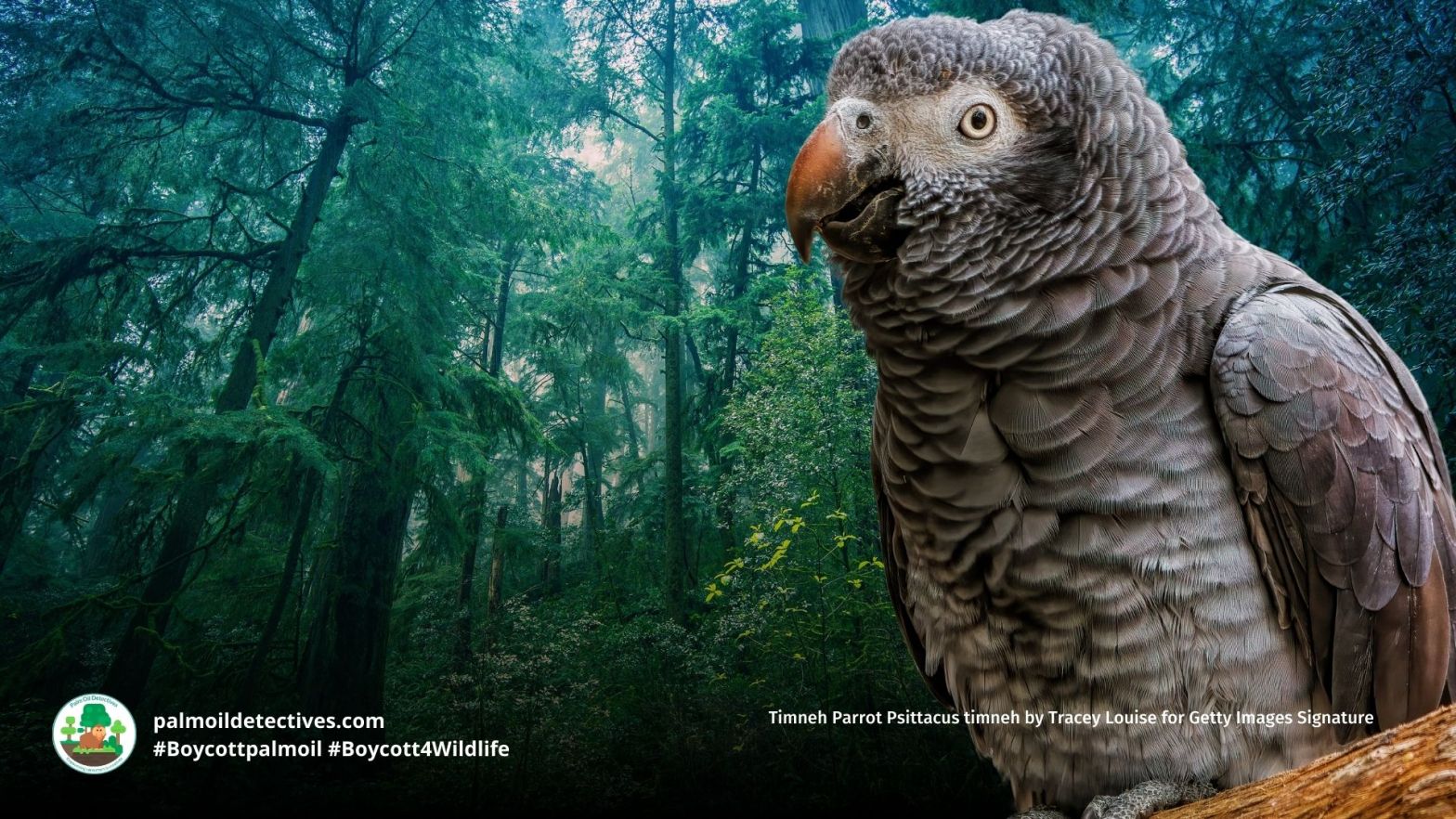
The Timneh Parrot, a smaller and darker cousin of the African Grey Parrot, captivates with their intelligence, vibrant personalities, and ability to mimic speech. However, their beauty and charm have contributed to their decline. The illegal pet trade is depleting wild populations, with poachers raiding nests to meet global demand. Meanwhile, habitat destruction driven by out-of-control palm oil plantations, meat agriculture, and crops like cocoa, coffee, and tobacco is eroding their forest homes.
Research shows that the parrot trade, facilitated by social media, has expanded into new regions like Algeria, where demand for exotic pets continues to fuel poaching. The population declines are staggering—studies in Cameroon show local reductions of up to 99% over 14 years due to trapping and habitat loss. Protecting these parrots requires ending the demand for wild-caught birds and halting deforestation in West Africa. Take action today: #BoycottPalmOil #BoycottMeat #Boycott4Wildlife.
Pygmy Hippopotamus Choeropsis liberiensis
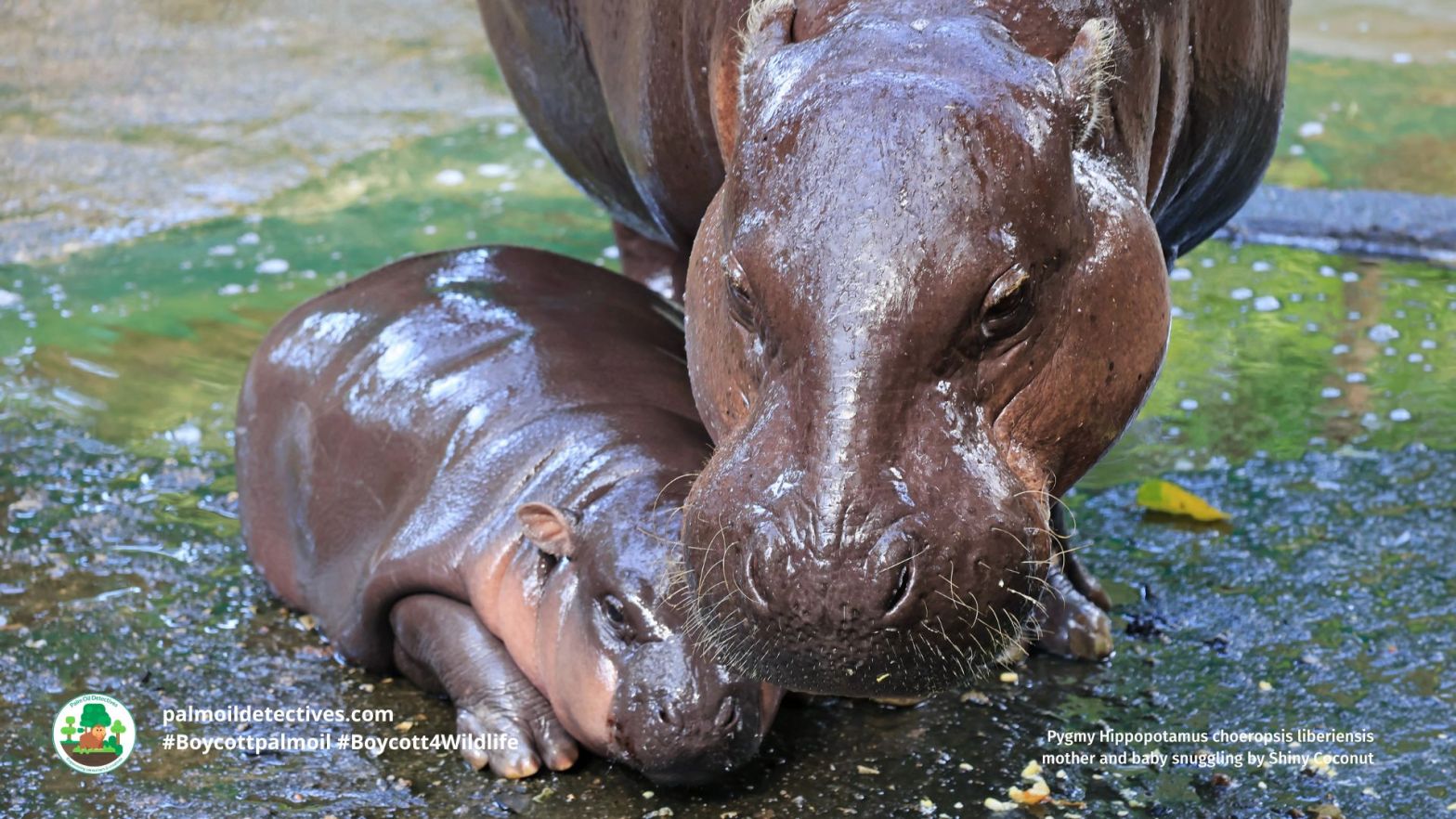
The rare and secretive Pygmy Hippopotamus clings to survival as their forest habitat is destroyed for palm oil and meat, help them when you boycott palm oil!
Africa’s Palm Oil Boom Threatens Forests, People, Animals
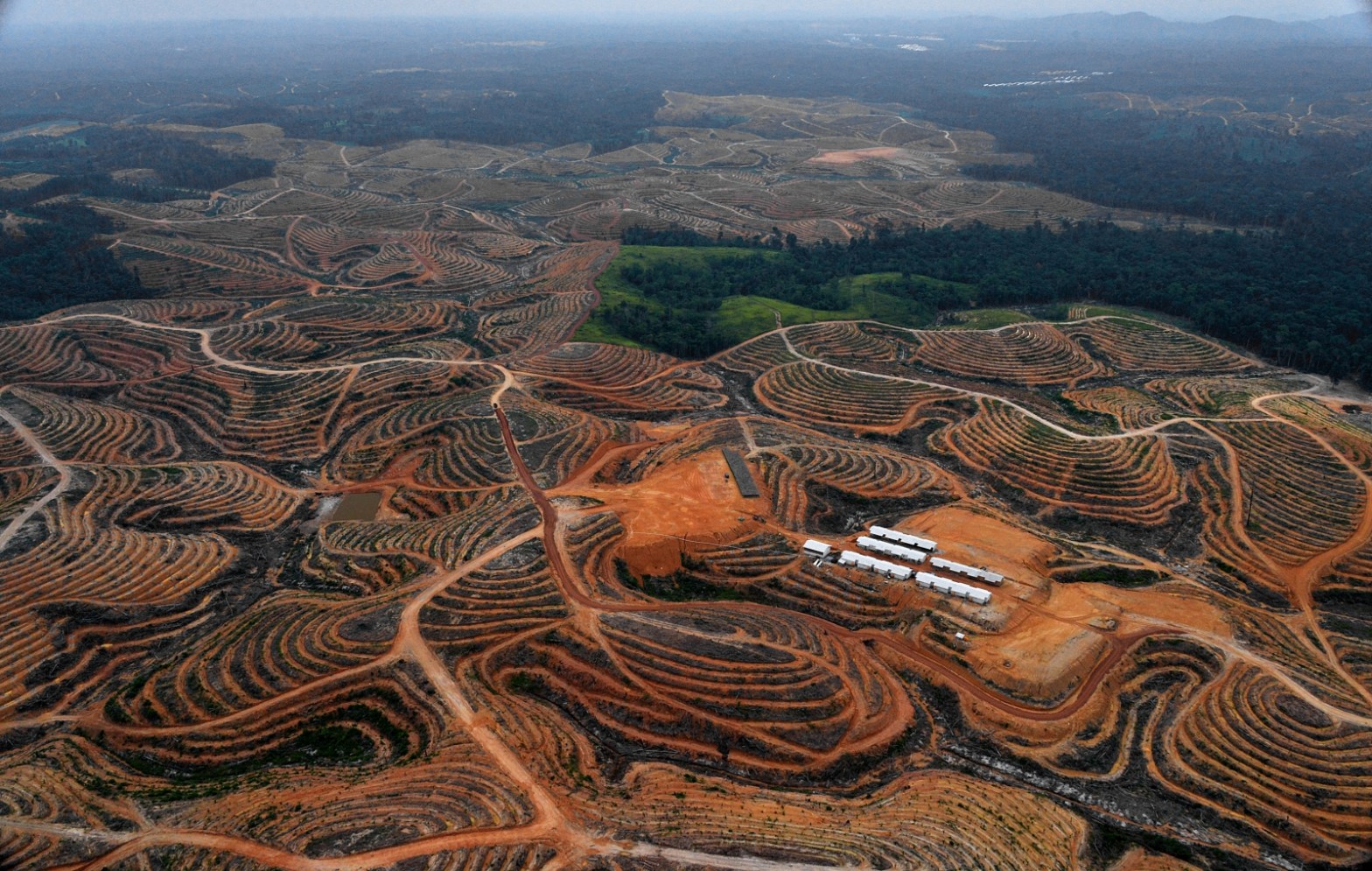
A estimated 3mil ha of community-owned rainforests in Africa are at risk from palm oil expansion, stronger protection is urgently needed for people, animals.
Africa: Species Endangered by Palm Oil Deforestation
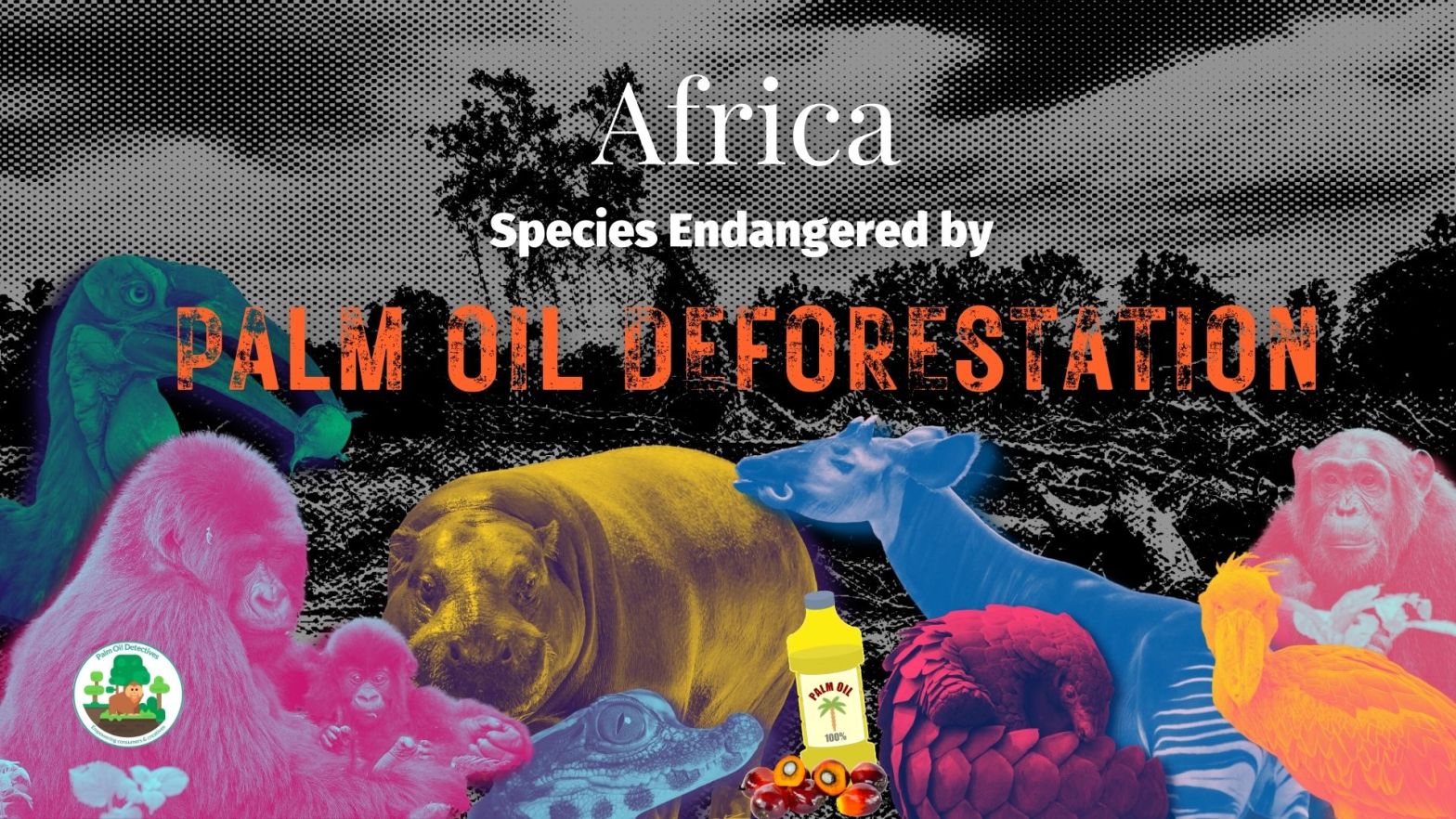
Explore the biodiversity of Africa and discover how palm oil deforestation impacts wildlife. Learn how you can help. #BoycottPalmOil #Boycott4Wildlife
Mount Nimba Reed Frog Hyperolius nimbae
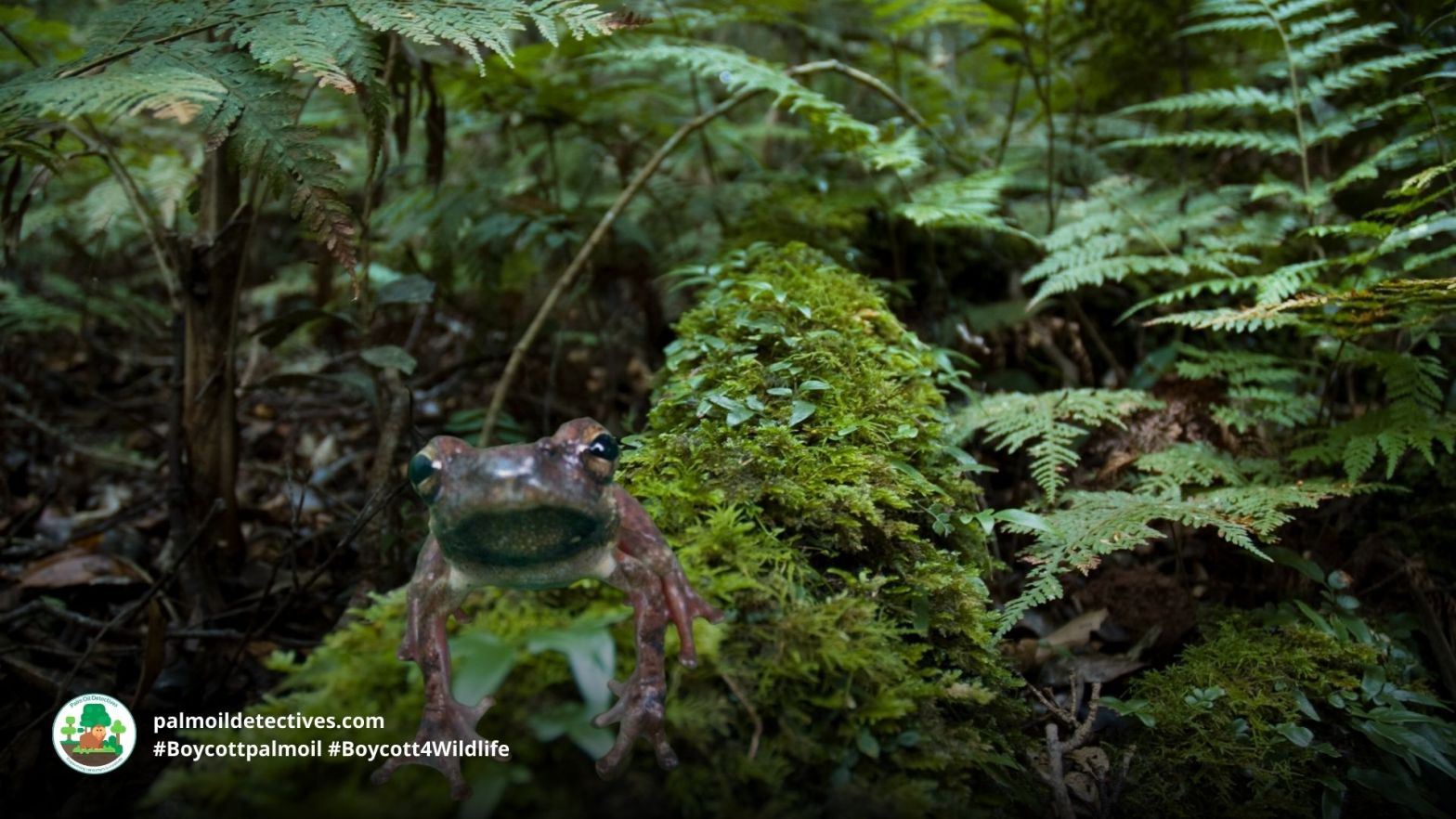
Fragile Mount Nimba Reed Frogs 🐸💚 hang on to life in Côte d’Ivoire 🇨🇮 Africa. Seldom seen and often forgotten, they’re endangered due to palmoil meat agriculture. Serving as both predator and prey, Mount Nimba Reed Frogs are integral to the local ecology of Mount Nimba. Take action and advocate for indigenous-led conservation initiatives that prioritise the biodiversity protection. Fight for their survival when you shop and #BoycottMeat #BoycottPalmOil #Boycott4Wildlife
White-bellied Pangolin Phataginus tricuspis
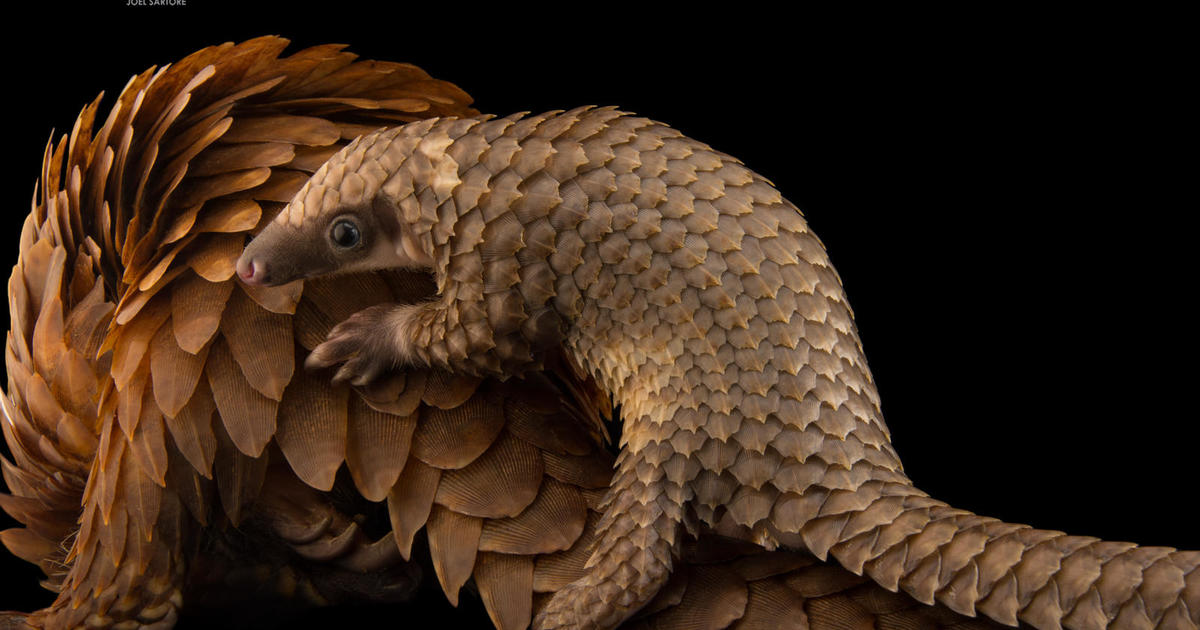
The White-bellied Pangolin also commonly known as the Tree Pangolin are fascinating creatures akin to giant pest controllers, estimated to consume around 70 million insects per year. #Pangolins don’t have teeth, rather they have scales lining their stomachs which aid them in the digestion of food that is swallowed whole. Baby pangolins often ride on their mother’s backs and and are known as pango pups. They are able to use their tails to support their body weight and can walk upright on their hind legs.
They are often captured and killed for the illegal #poaching trade in abandoned palm oil plantations in their native homelands in #WestAfrica. Now classified as #Endangered by the IUCN, White-bellied Pangolins face a terrifying future. The dual threats of industrial-scale trafficking and rampant #deforestation for agriculture—especially #palmoil plantations—are pushing them towards extinction Help them every time you shop and #Boycottpalmoil #Boycott4Wildlife
 Palm Oil Detectives