
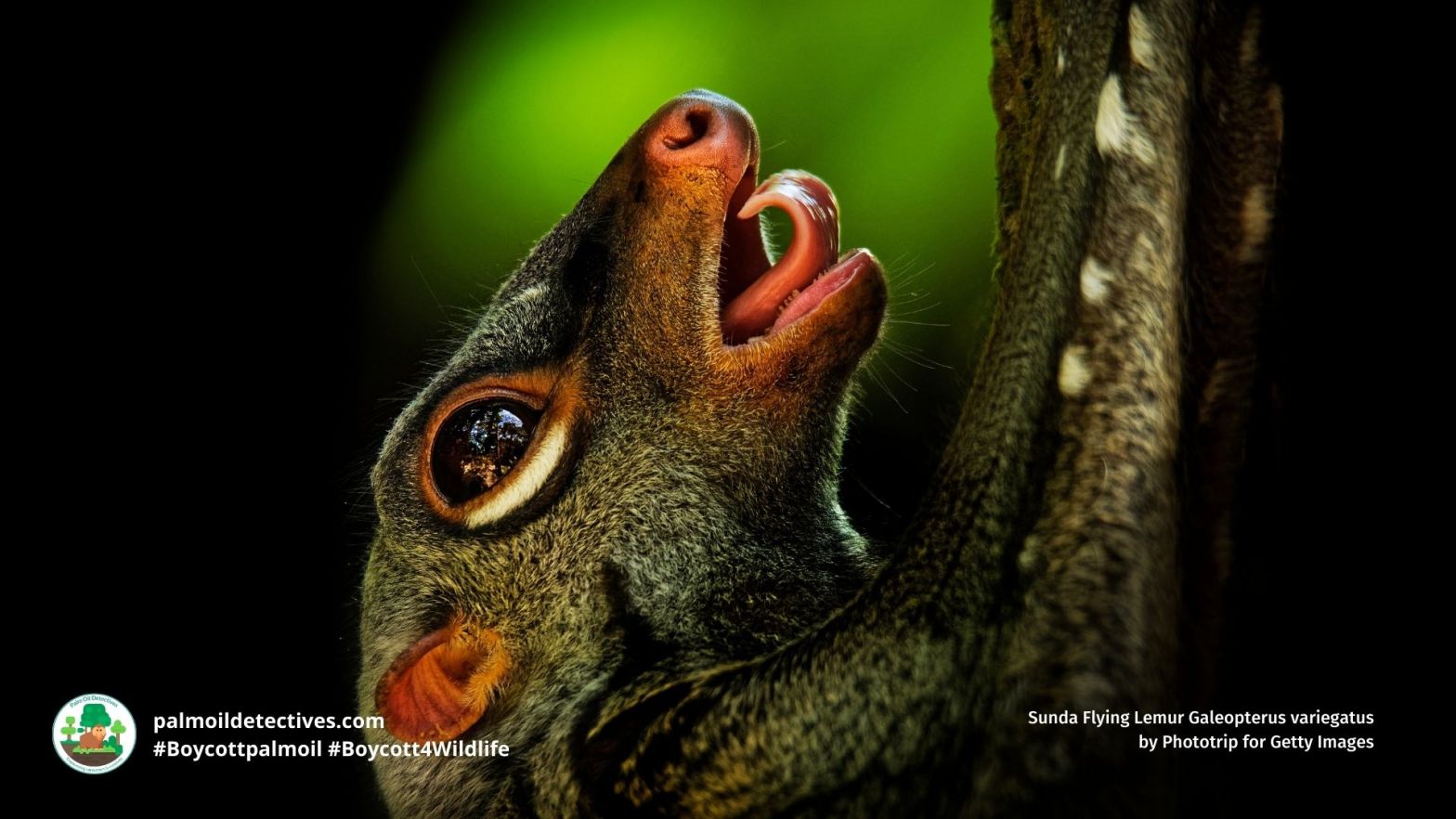
Sunda flying lemurs AKA Malayan colugos rely on ancient forests to survive, despite being skilful gliders, palm oil is a major threat, boycott palm oil!
Tag Archives: Malaysia
The Indigenous Malaysian concept of ‘Badi’: respecting the land and wildlife
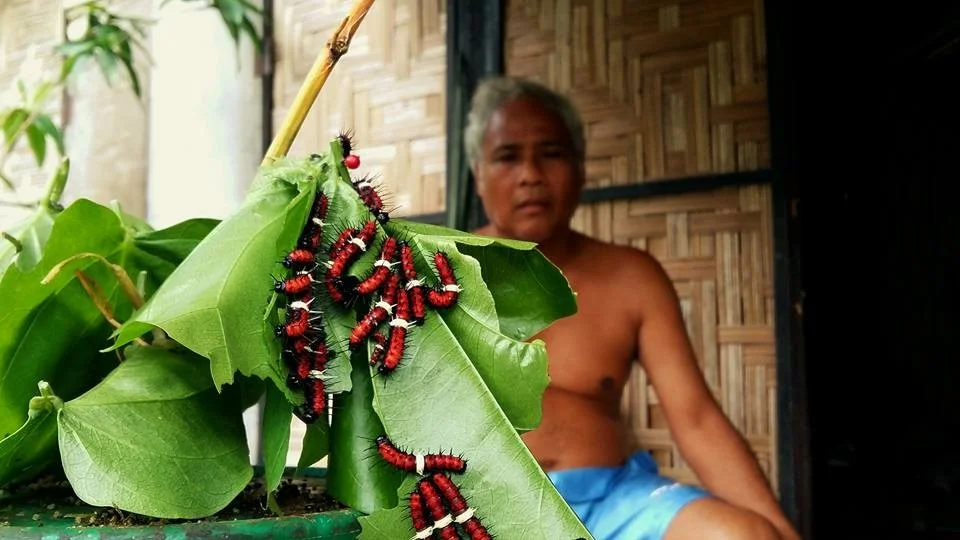
The Indigenous Semai #indigenous people of #Malaysia can teach us a lot about how to protect people, planet and biodiversity. The Indigenous concept of #badi is not superstition or taboo, it’s about respecting the land, environment and #wildlife in order to avoid negative ecosystem impacts. #Boycottpalmoil #Boycott4Wildlife
Malayan Flying Fox Pteropus vampyrus
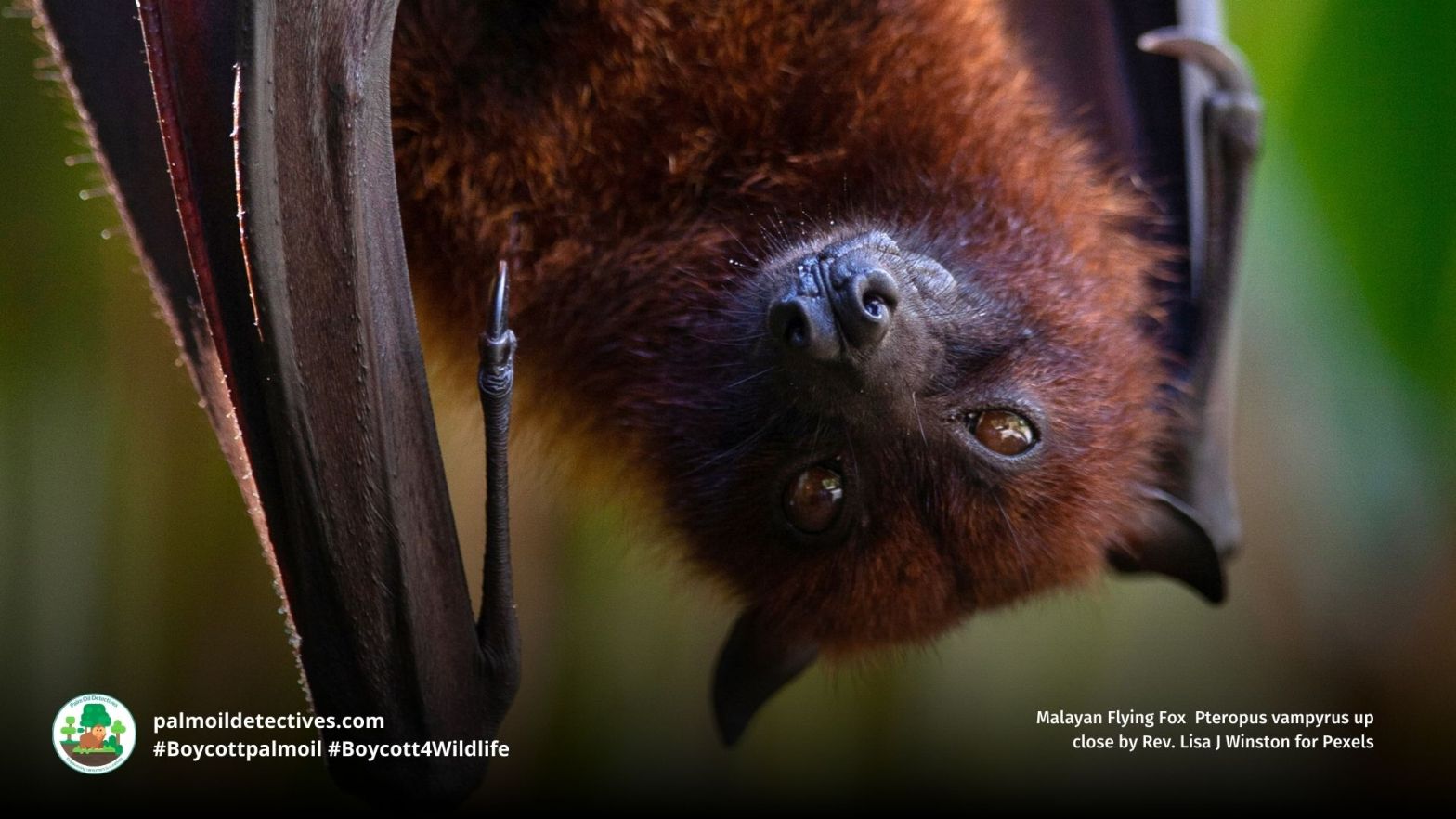
The Malayan Flying Fox, known also as the Large Flying Fox, Giant Fruit Bat, or Kalong, is an ethereal creature of the tropical Asian night. With wingspans reaching 1.7 metres, they are the largest bats in the world and glide silently through the darkness, a graceful presence in South East Asia’s moonlit forests. Their foxy almond shaped eyes and expressive faces are framed by glossy black fur and golden and russet collars, lend them a warm and mythical aura, while their immense wings are awe-inspiring to see in flight.
These nocturnal giants are the architects of tropical forests, scattering seeds and pollinating flowers as they journey across vast landscapes. Yet, despite their importance to ecosystems, they are under siege—hunted mercilessly and displaced by forests that vanish due to palm oil. Their story is a call to action: protect the guardians of the night before it is too late. #BoycottPalmOil #Boycott4Wildlife
Borneo Forest Dragon Gonocephalus bornensis
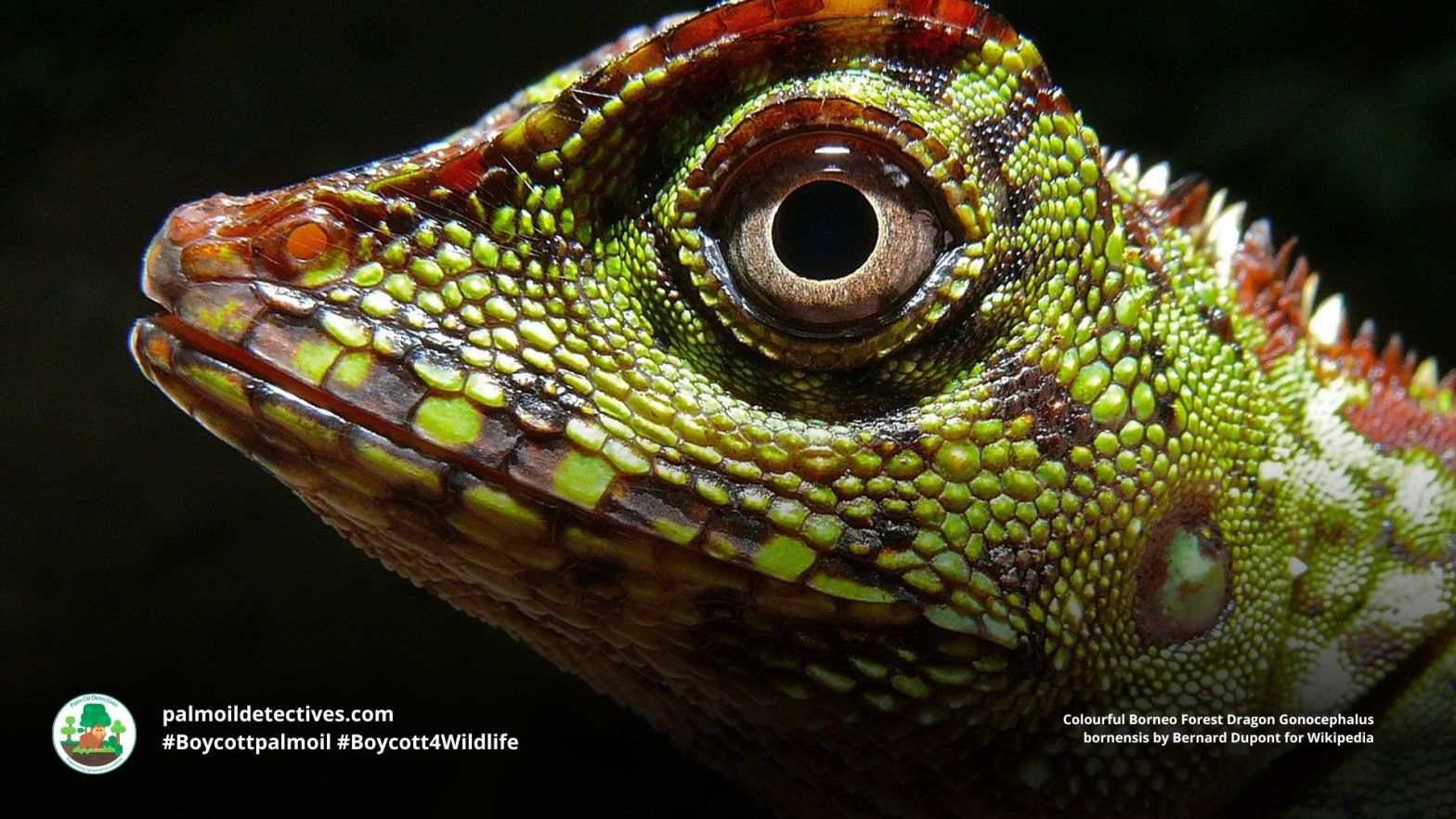
The #Borneo Forest Dragon, also known as the Borneo Anglehead #Lizard is a vividly coloured lizard native to Borneo. This arboreal #reptile is known for their prominent crest and beautifully camouflaged body, allowing them to blend seamlessly into their rainforest surroundings. Found primarily in undisturbed and secondary rainforests, the Borneo Forest Dragon thrives in humid environments, often near streams.
Although the latest assessment by IUCN Red List revealed that they are ‘least concern’, the plans to move the capital of Indonesia to Kalimantan is concerning to conservationists and animal lovers alike. Rampant habitat loss from #palmoil and #timber #deforestation on the island of Borneo posses a grave threat. Protect these striking animals and their rainforest home when you #BoycottPalmOil #Boycott4Wildlife!
Demystifying the Strange Beauty of the Proboscis Monkey’s Large Nose
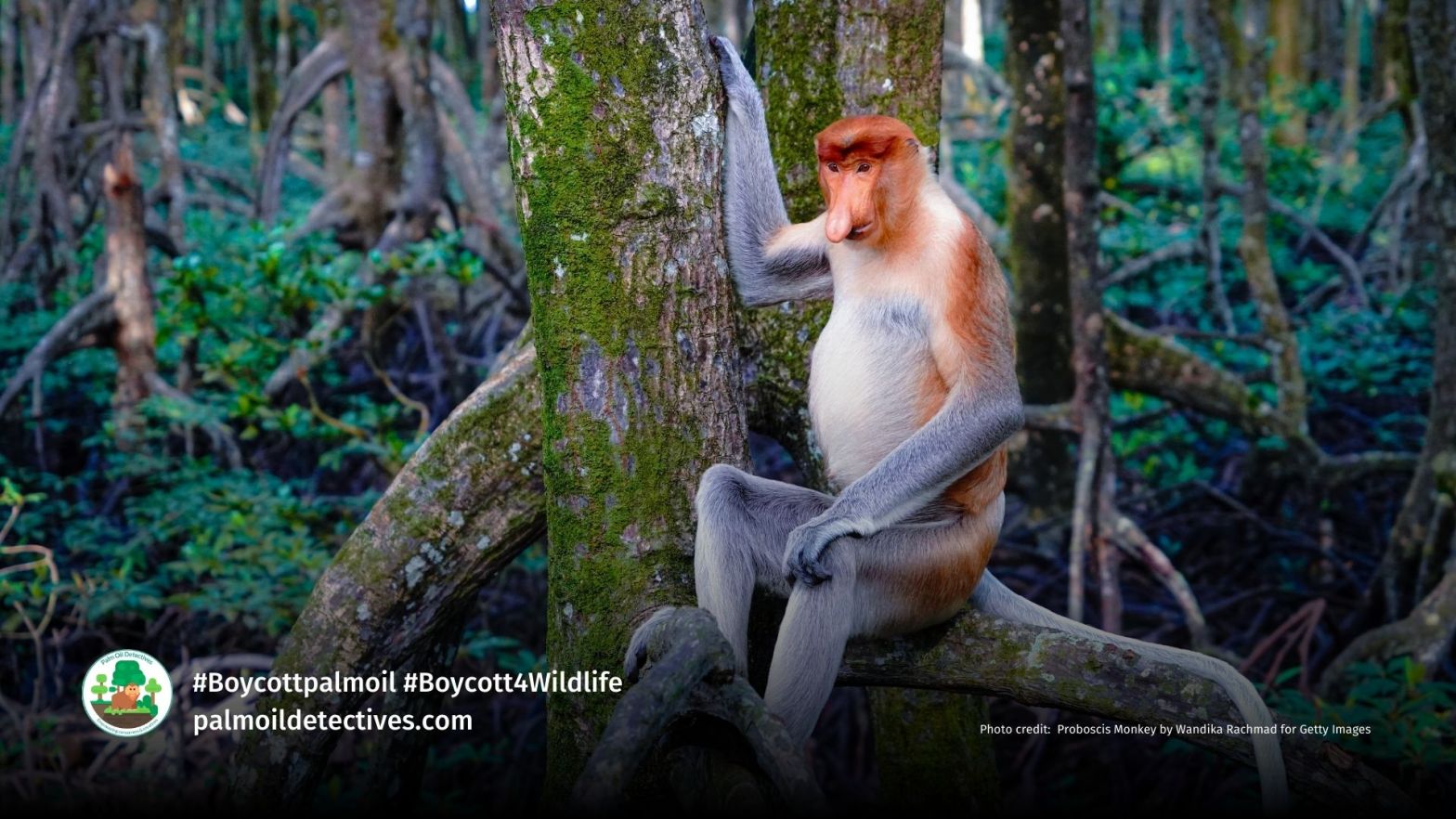
Of all the #monkey species around the world, one stands out with its large, bizarre nose. In male proboscis monkeys, their bulbous noses will often hang past their mouths.
But why did they evolve such a strange feature? Are they a visual sign of health and status to potential female mates, and to other males? Or did they evolve to help the monkeys make honks and other loud sounds? New groundbreaking #research has much to reveal about the mysterious large nose of the Proboscis Monkey!
Sunda Clouded Leopard Neofelis diardi
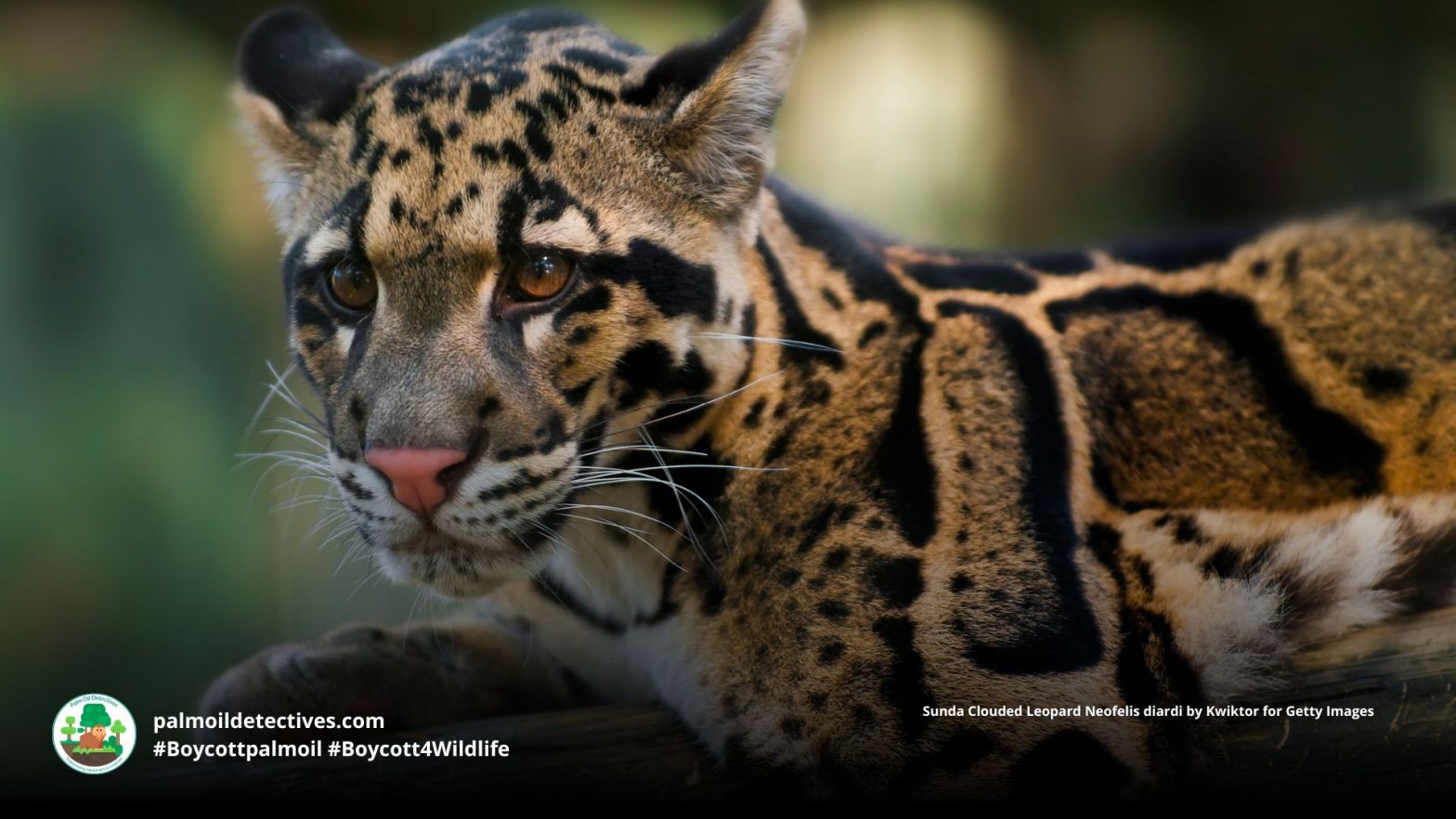
Gliding through the rainforest canopy like a phantom predator, the Sunda Clouded Leopard moves with unmatched grace, making them one of the least understood big cats in the world. Their spectacularly patterned coat, the longest canines relative to skull size of any feline, and astonishing agility in trees set these big cats apart as a truly unique species. Yet, despite these remarkable adaptations, these mysterious carnivores are now rapidly vanishing from the wild due to human-related threats.
Massive infrastructure projects, industrial-scale palm oil plantations, and poaching for the illegal wildlife trade have decimated their populations. Once thought to be a subspecies of the mainland clouded leopard, genetic studies in 2006 confirmed that they are a distinct species, found only in Borneo and Sumatra. Today, they are among the most threatened felines in the world, teetering on the edge of an uncertain future. Take action for them every time you shop and #BoycottPalmOil #Boycott4Wildlife
The Great Malaysian Timber and Palm Oil Swindle

Investigation reveals alarming deforestation in Malaysia’s Pahang caused by a large, poorly-managed palm oil plantation puts tigers at risk! Boycott Palm Oil!
Tufted Ground Squirrel Rheithrosciurus macrotis
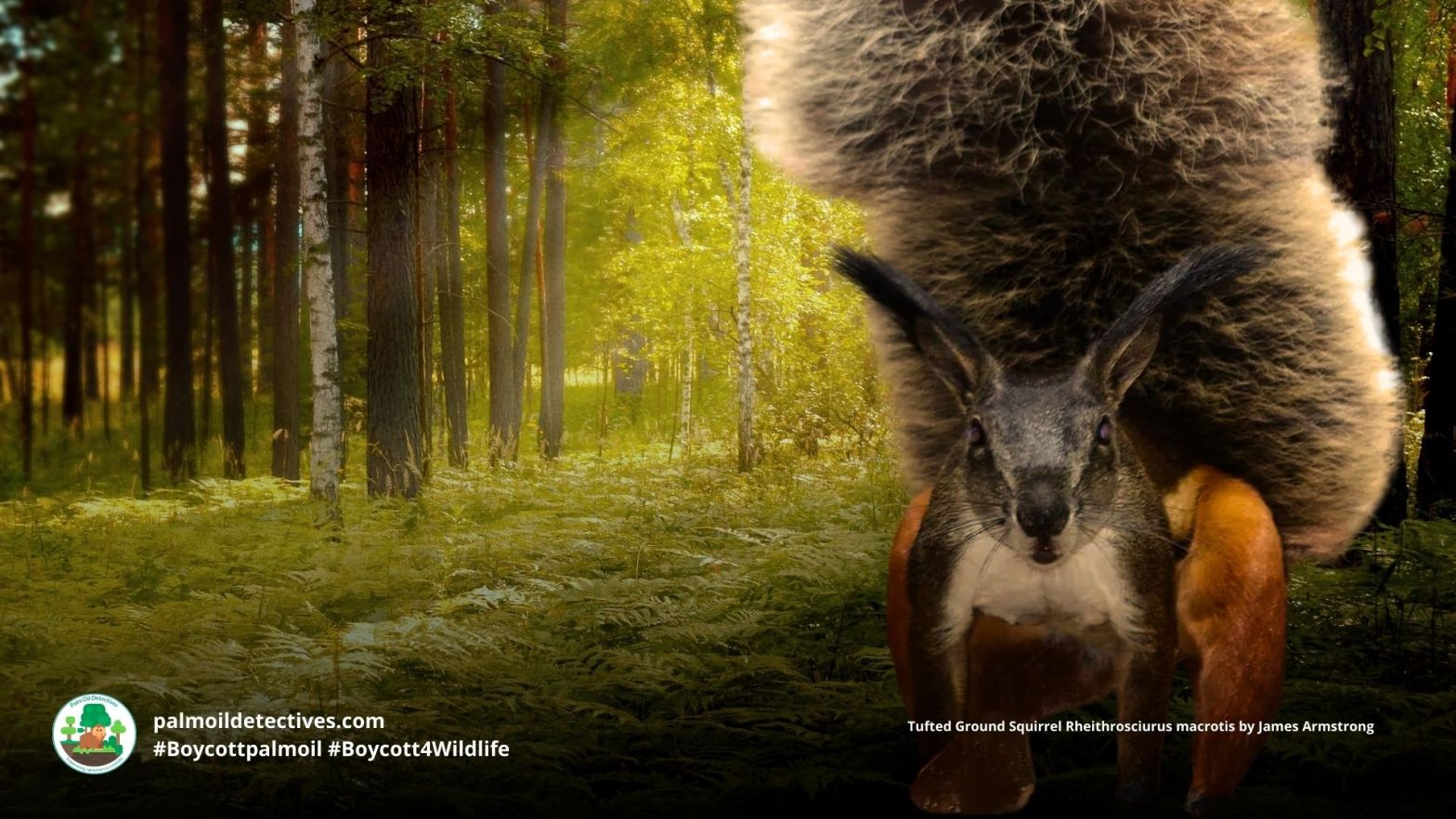
The tufted ground squirrel, or groove-toothed squirrel, is a striking nut-cracking rodent native to the island of Borneo. Sporting a voluminous, club-shaped tail, the tufted ground squirrel carries the largest tail-to-body size ratio of any mammal. Scientists believe the tail could serve to confuse predators or attract mates. They are listed as Vulnerable on the IUCN Red List and are threatened by deforestation, hunting, and forest conversion to palm oil. To protect these charismatic creatures, make sure you #BoycottPalmOil and #Boycott4Wildlife in the supermarket!
Lax Laws in Indonesia Turn Blind Eye To Animal Trafficking
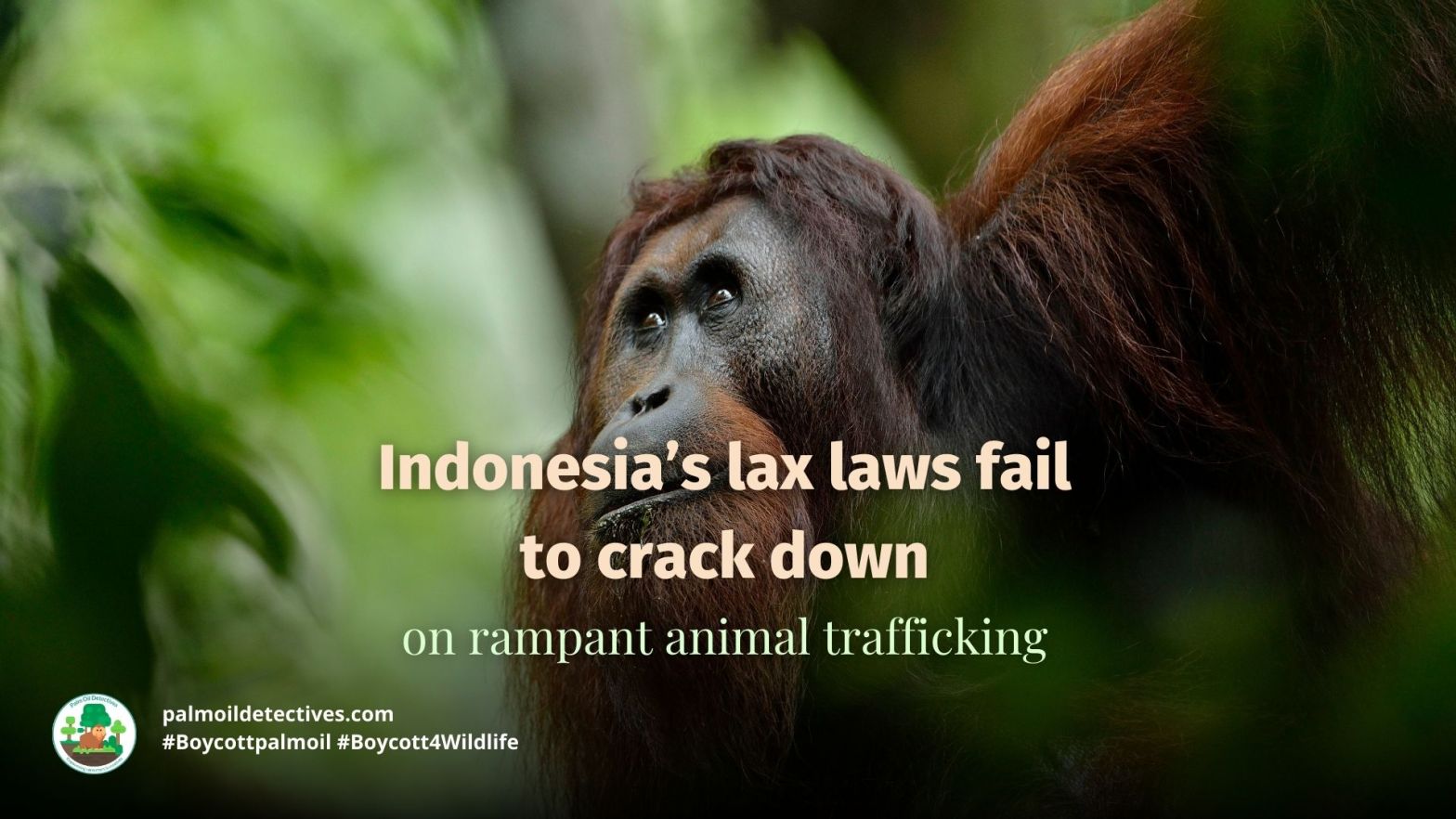
When Indonesian prosecutors went after the leader of an illegal wildlife syndicate operating near the Malacca Strait, they relied on the country’s then relatively new 2019 Quarantine Act to seek a prison sentence.
After being connected to the illegal smuggling of four lion cubs, a leopard, and 58 species of Indian Star tortoises from Malaysia to Indonesia, Irawan Shia received a four-year prison sentence and fine of IDR 1 billion (USD$65,468). If the fine is not paid, the replacement is three months imprisonment.
The sentence was the biggest ever handed out, but falls far short of what it could have been had Indonesia brought its laws in line with global conventions.
Protected: Private Advocate’s Page
There is no excerpt because this is a protected post.
Sambar deer Rusa unicolor
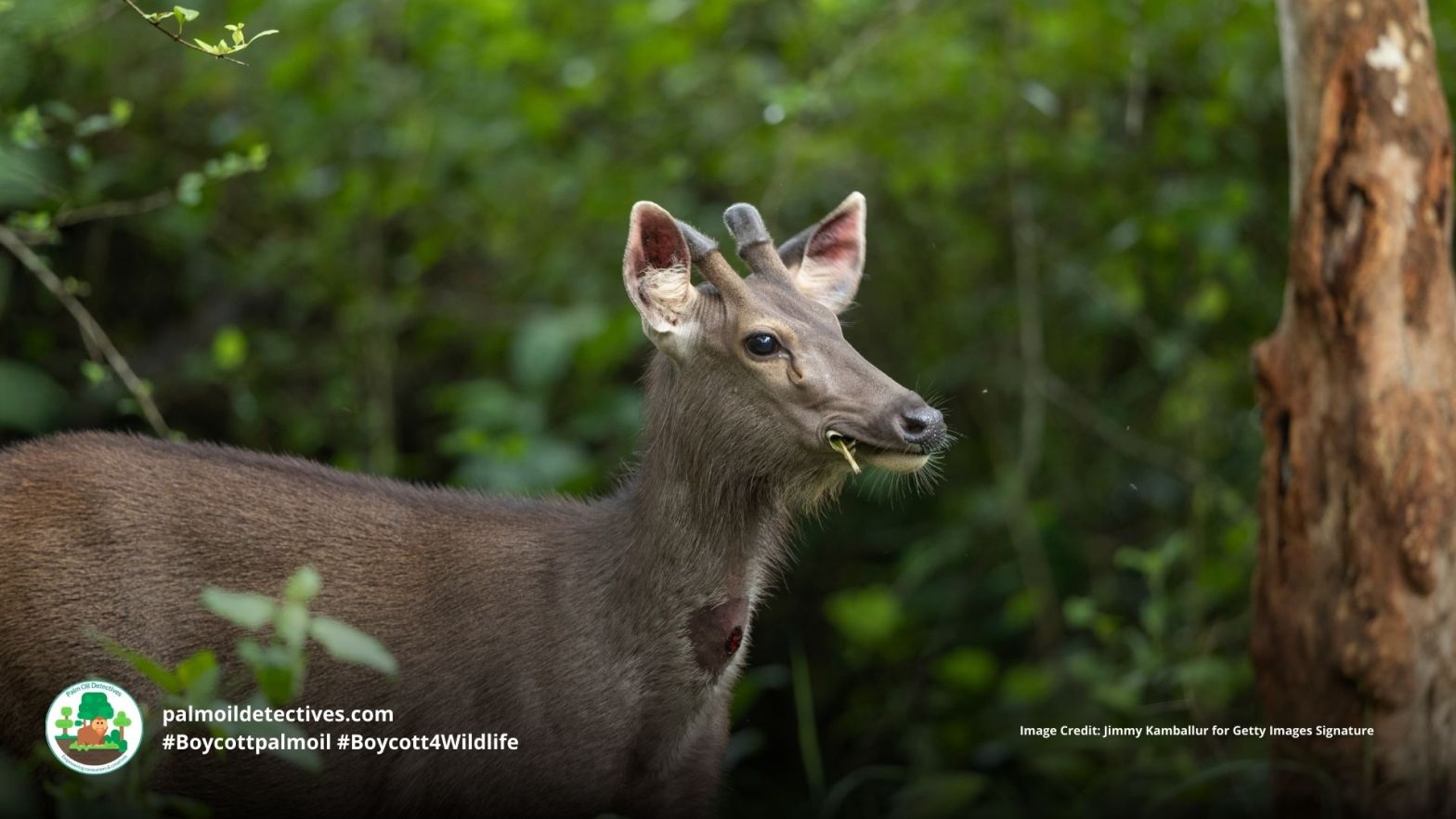
The majestic Sambar deer, cloaked in hues ranging from light brown to dark gray, are distinguished by their rugged antlers and uniquely long tails. Adorned with a coat of coarse hair and marked by a distinctive, blood-red glandular spot on their throats, these deer embody the beauty of the wild. Their adaptability is evident in their alert behavior, silent movements, and the gradual development of their unique spots. Perfectly designed for grazing, these deer use their antlers and feet deftly in defense, relying on their acute senses of hearing and smell to evade predators. To protect these splendid deer and their habitats from the impacts of deforestation and agricultural expansion, especially for palm oil, join the movement: #BoycottPalmOil and #Boycott4Wildlife to aid in their survival.
Wallace’s Flying Frog Rhacophorus nigropalmatus

The elusive and visually stunning Wallace’s Flying #Frog are known for their mysterious nature and their ability to take flight and glide through the air like dancers. They reveal themselves only during breeding aggregations when they descend from the trees.
Recent surveys in various regions, including the Matang Range in #Sarawak, #Malaysia, and the Endau-Rompin in West Malaysia, have documented the presence of this species. However, their overall population faces a concerning decline due to the ongoing loss of habitat for #palmoil #deforestation. Urgent conservation efforts are critical to reverse this trend and to ensure the survival of this intriguing species in their natural environment. Help this frog to survive every time you shop, make sure that you #Boycottpalmoil #Boycott4Wildlife in the supermarket!
Air Pollution from Palm Oil: A Human Rights Issue

Forest-fire haze from Indonesian palm oil deforestation is a crisis! Learn how toxic air pollution is a human rights issue affecting all of Southeast Asia
Palm Oil Increases Deaths of Baby Macaques
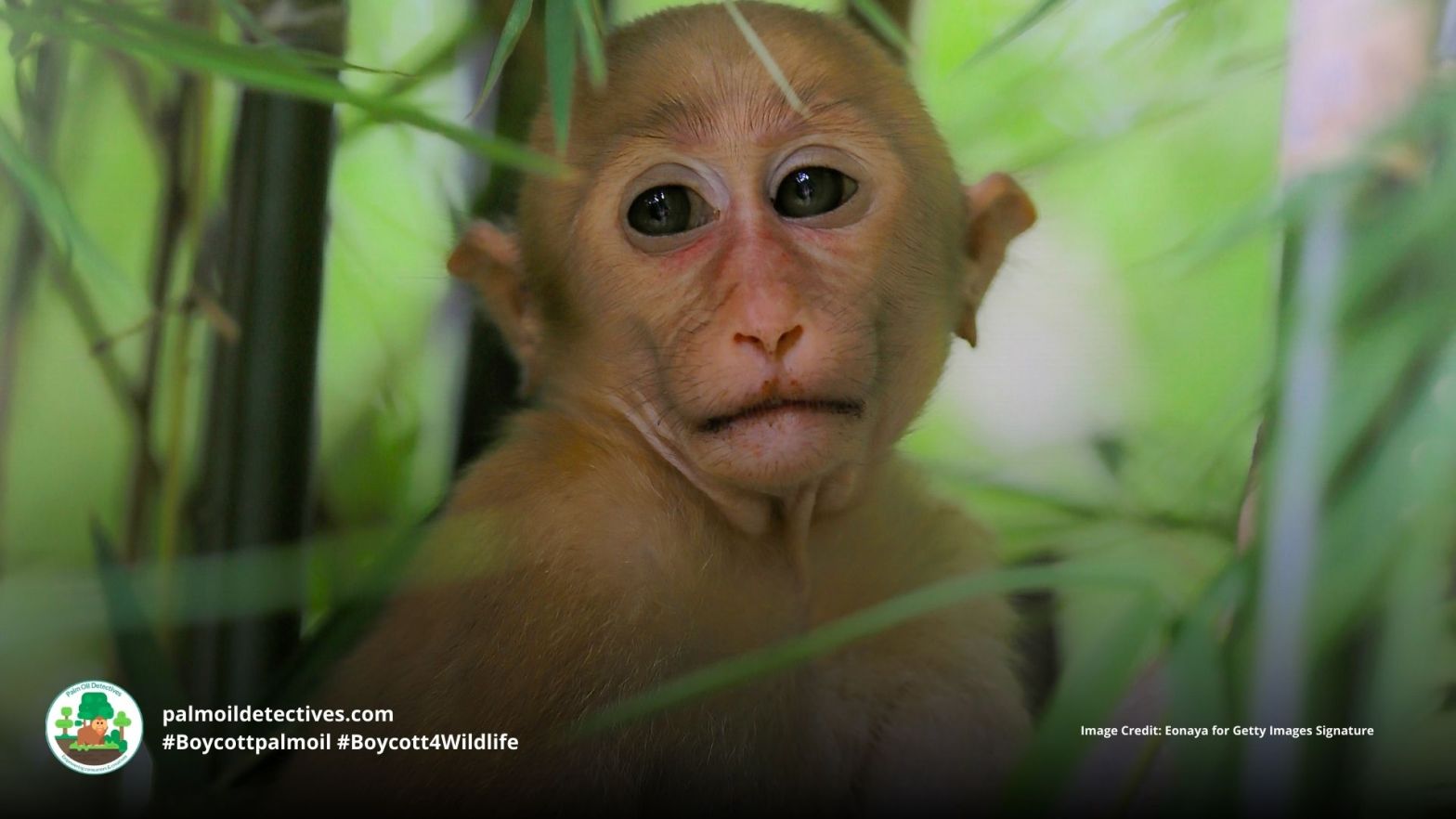
In Peninsular Malaysia, a new study published in Cell Biology by a team led by Dr Anna Holzner of German Centre for Integrative Biodiversity Research (iDiv) Halle-Jena-Leipzig has found that infant mortality rates among wild southern pig-tailed macaques are alarmingly high due to frequent visits to oil palm plantations.
These plantations expose the infants to increased risks from predators, human encounters, and harmful agricultural chemicals, potentially affecting the development and survival of infant macaques. The study, conducted in collaboration of international researchers, observed that prolonged exposure to these plantations during infancy triples the likelihood of death.
The study suggests that pesticides used in agriculture could cross the placental barrier or be transmitted through breastmilk, impacting fetal development and health. This significant research underlines the urgent need for eco-friendly agricultural practices to protect wildlife and human communities near plantations. Take action and join the movement to #Boycottpalmoil and #Boycott4Wildlife every time you shop!
Nicobar pigeon Caloenas nicobarica
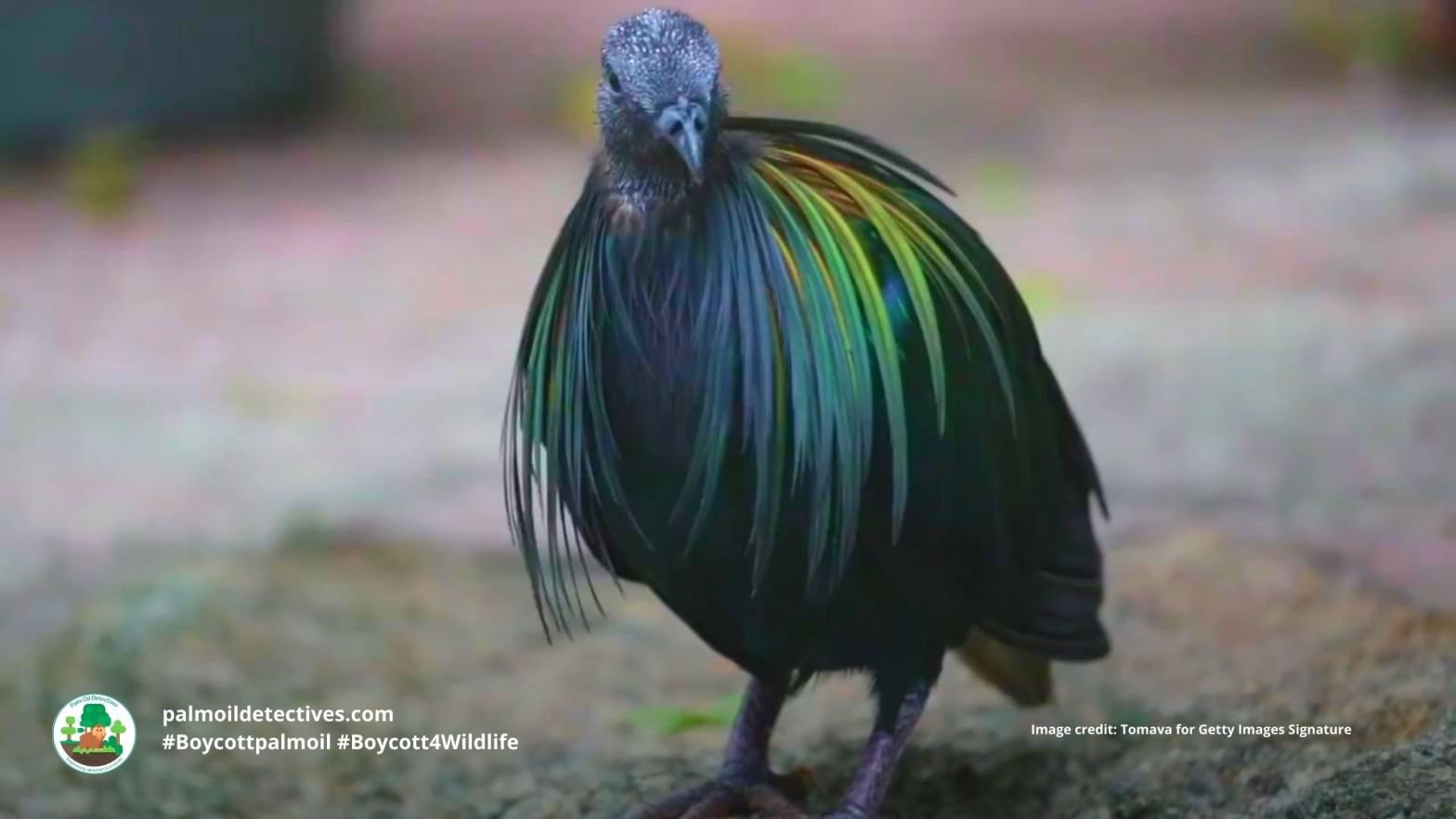
The Nicobar pigeon is the largest pigeon in the world and the closest living relative to the extinct dodo bird. They are famous for their gorgeous iridescent feathers. When threatened they make a pig-like grunt and are known for the strange way that they drink – by dunking their heads into water and sucking it up instead of sipping as other birds do. They are Near Threatened from palm oil deforestation on the Nicobar and Andaman Islands in #India along with hunting and the pet trade. Help their survival and #Boycottpalmoil #Boycott4Wildlife in the supermarket.
Sunda Pangolin Manis javanica
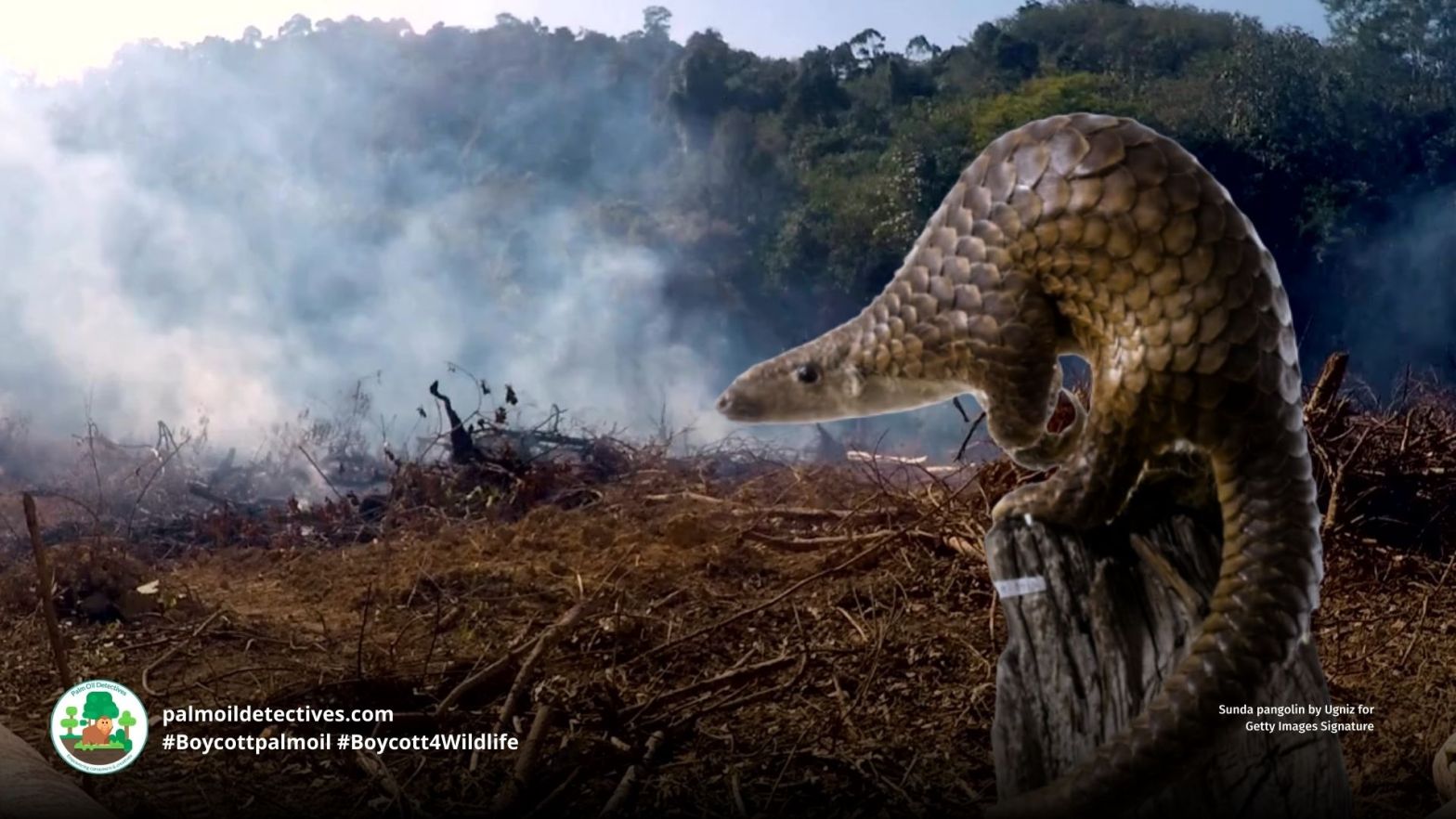
Sunda pangolins AKA Javan pangolins are capable swimmers and curl protective balls, palm oil and hunting exploitation are major threats, boycott palm oil!
Banded Surili (Raffles Banded Langur) Presbytis femoralis
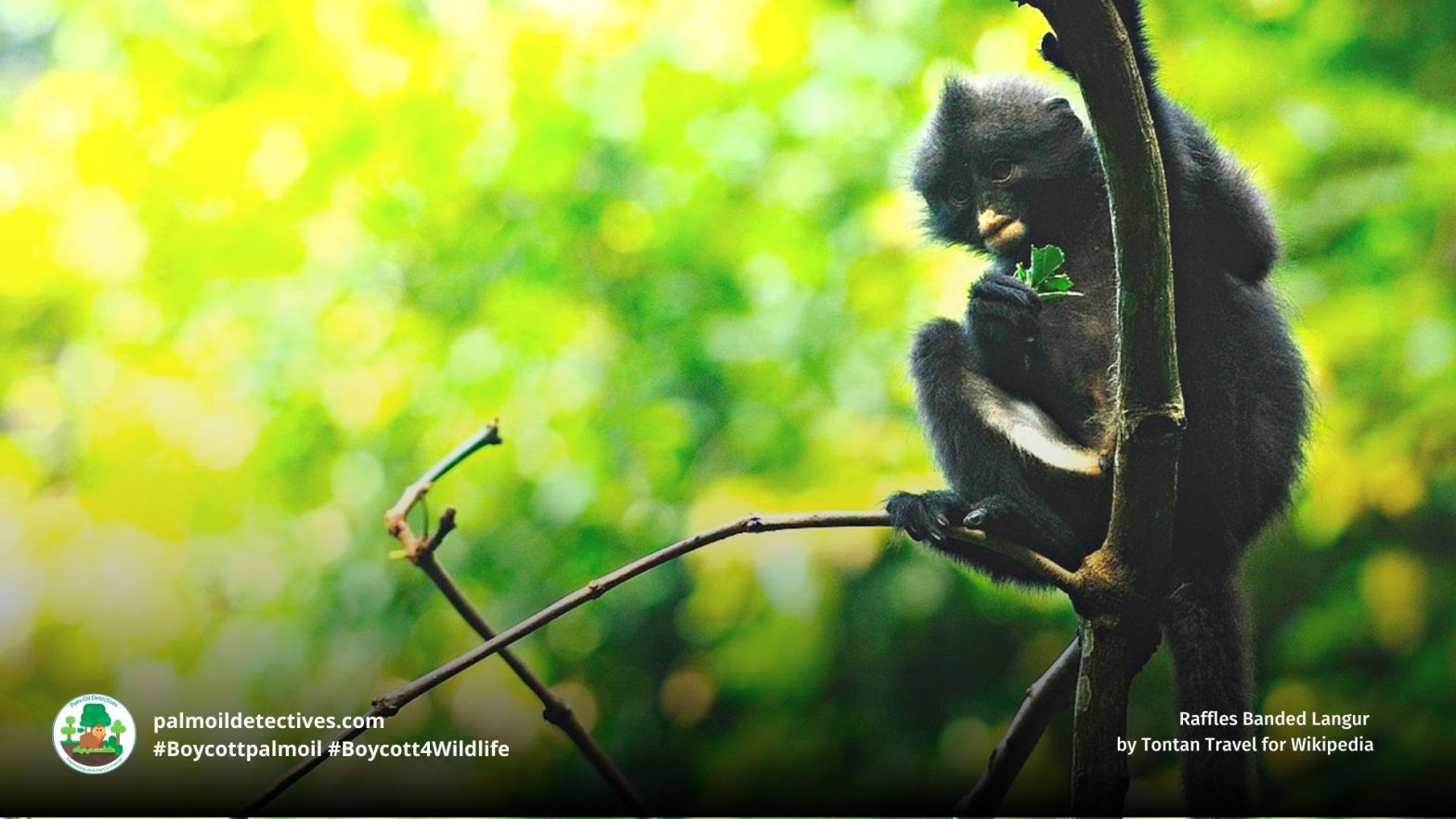
A curious and intelligent small monkey species, Raffles’ Banded Langurs are also known by their other common names: Banded Leaf Monkey or Banded Surili. Endemic to the southern Malay Peninsula and Singapore, this critically endangered monkey is now found in only a few fragmented pockets of primary and secondary forest, swamps, mangroves, and rubber plantations. Once widespread across Indonesia, Malaysia, Myanmar, Singapore, and Thailand, the banded surili’s population has plummeted—fewer than 60 individuals survive in Malaysia, with Singapore’s last wild group clinging to existence in the Central Catchment Nature Reserve. Palm oil deforestation and habitat destruction continue to erase their world. Help them survive and #BoycottPalmOil and #Boycott4Wildlife every time you shop.
The CUT Campaign and its partners ask MP Kemi Badenoch to keep UK tariffs palm oil to prevent ecocide
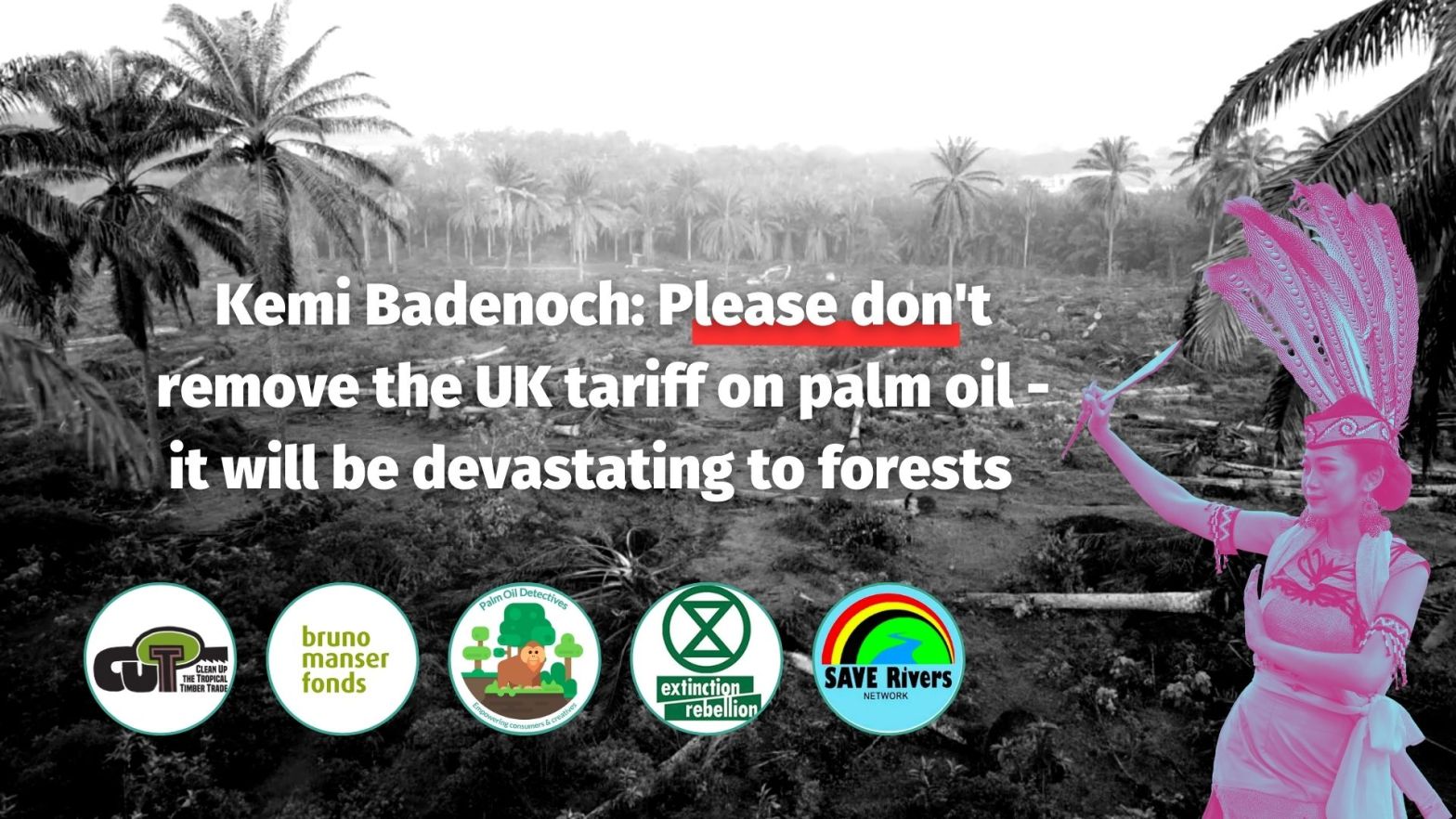
Last month UK Tory MP Kemi Badenoch announced that a new UK trade deal would cut tariffs on palm oil imports from 12% to zero.
This move will likely grease the way towards the UK importing palm oil deforestation and human rights abuses from Malaysia and Indonesia into the UK.
Environmental groups: CUT Campaign, Palm Oil Detectives, Bruno Manser Fond, Save Rivers, Extinction Rebellion and many others strongly object to this decision by the UK government. Read on below to watch the video, sign the petition and join the #Boycottpalmoil #Boycott4Wildlife movement to take action against palm oil greed and ecocide.
Dhole Canis Cuon alpinus
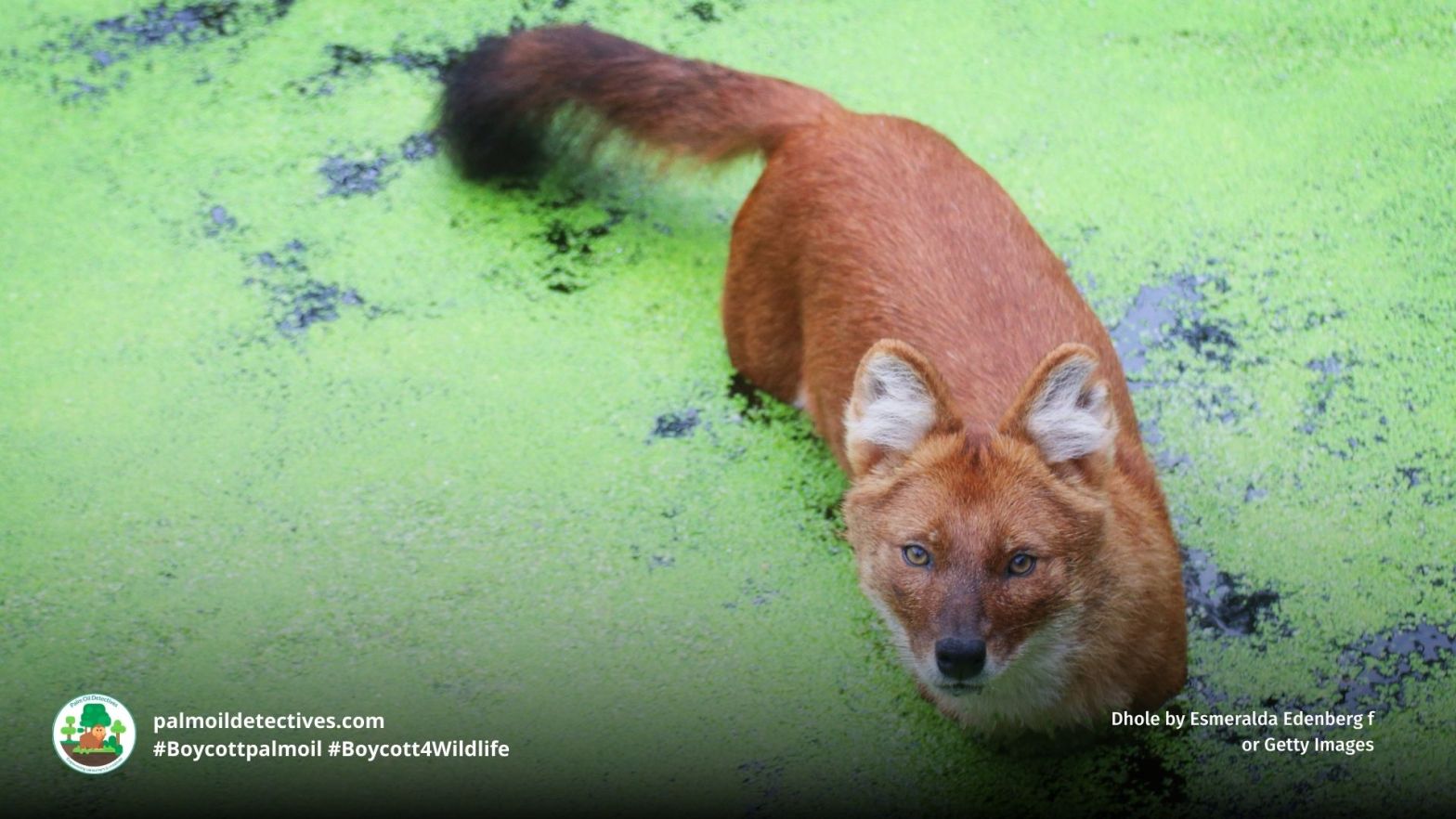
Fiercely protective, elusive and beautiful #Dholes are an ancient species of #wilddog that diverged from other dog species millions of years ago living in #Bangladesh, #Cambodia, #China, #India, #Indonesia, #Laos, #Myanmar, #Nepal and #Thailand. Dholes are also known as Asiatic Wild Dogs, Indian Wild Dogs, Red #Wolves and Mountain Wolves. Once found across the Russian Steppe, China, the Middle East and northern Asia their range has been fractured and reduced dramatically by human-related pressures and threats. Ongoing major threats are #deforestation for #meat and #palmoil along with human persecution. They are now classified as Endangered on IUCN Red List. Help them to survive, every time you shop #BoycottPalmOil #Boycott4Wildlife
Palm Oil: A Recipe for Disaster in India

Given the widespread destruction of rainforests and native biodiversity caused by oil palm plantations in Southeast Asia, environmental experts and politicians are warning that the move to promote palm oil cultivation in India’s northeastern States and in the Andaman and Nicobar Islands could be disastrous, writes Priscilla Jerbaraj in The Hindu.
Helmeted Hornbill Rhinoplax vigil

Helmeted #Hornbills are spectacular, large and intelligent #birds native to SE Asia, known for their substantial helmet-like structure on their head called a casque made of ivory. This hefty head accounts for 11% of their 3kg body weight. They are found on the Malay Peninsula: #Sumatra, #Borneo, #Myanmar and #Thailand. They are #criticallyendangered. Their main threats are illegal hunting and wildlife trade for their ivory casques along with palm oil and timber deforestation. Help them each time you shop and #Boycottpalmoil #Boycott4Wildlife
Mel Lumby: Dedicated Devotee to Borneo’s Living Beings
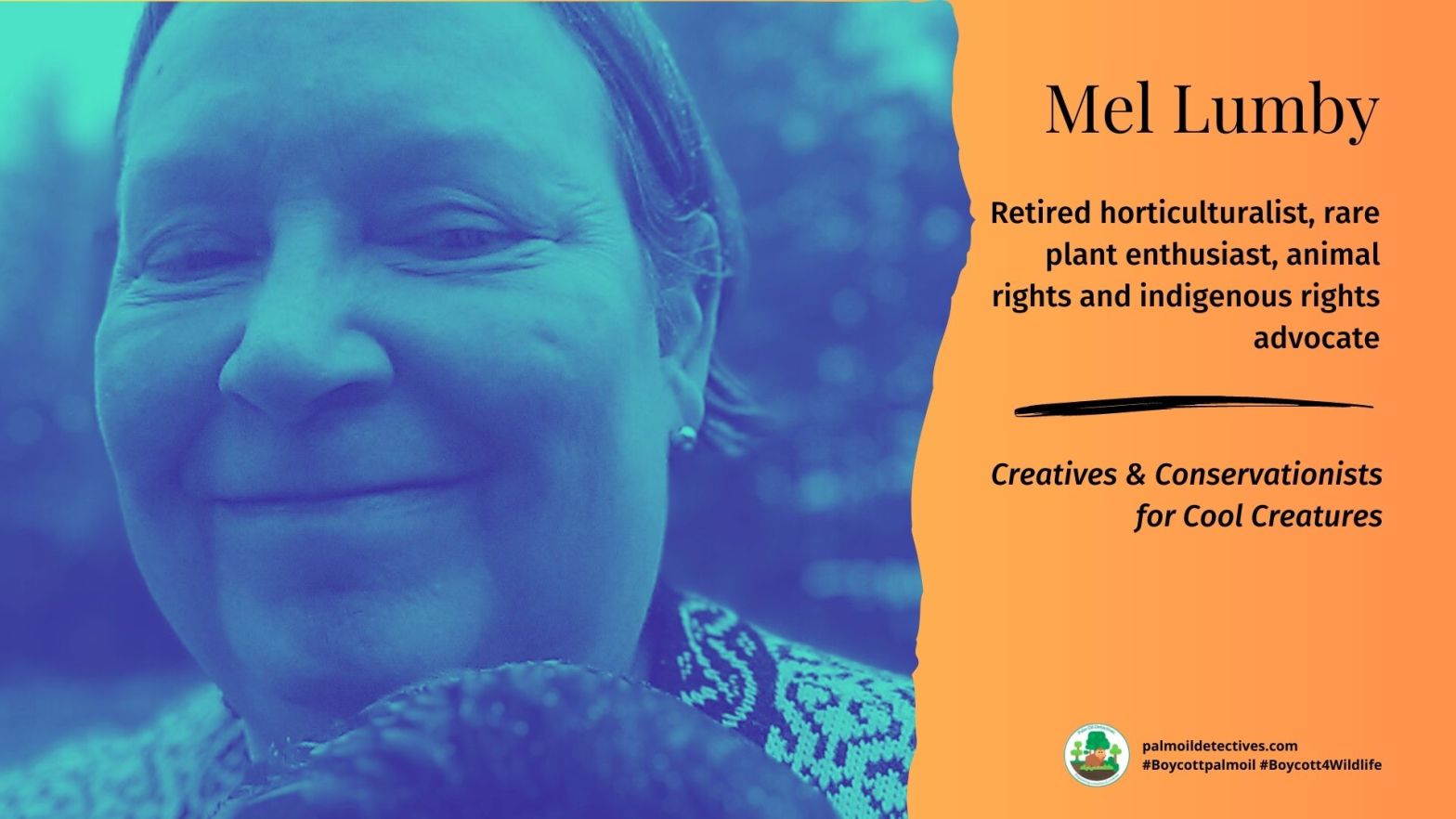
Undiscovered Begonia species in Borneo risk extinction from palm oil bulldozers. Join horticulturist Mel Lumby’s fight to save them. #Boycottpalmoil
Celebrate #WorldRhinoDay by leaving the forests alone and #Boycottpalmoil in the supermarket to save Rhinos
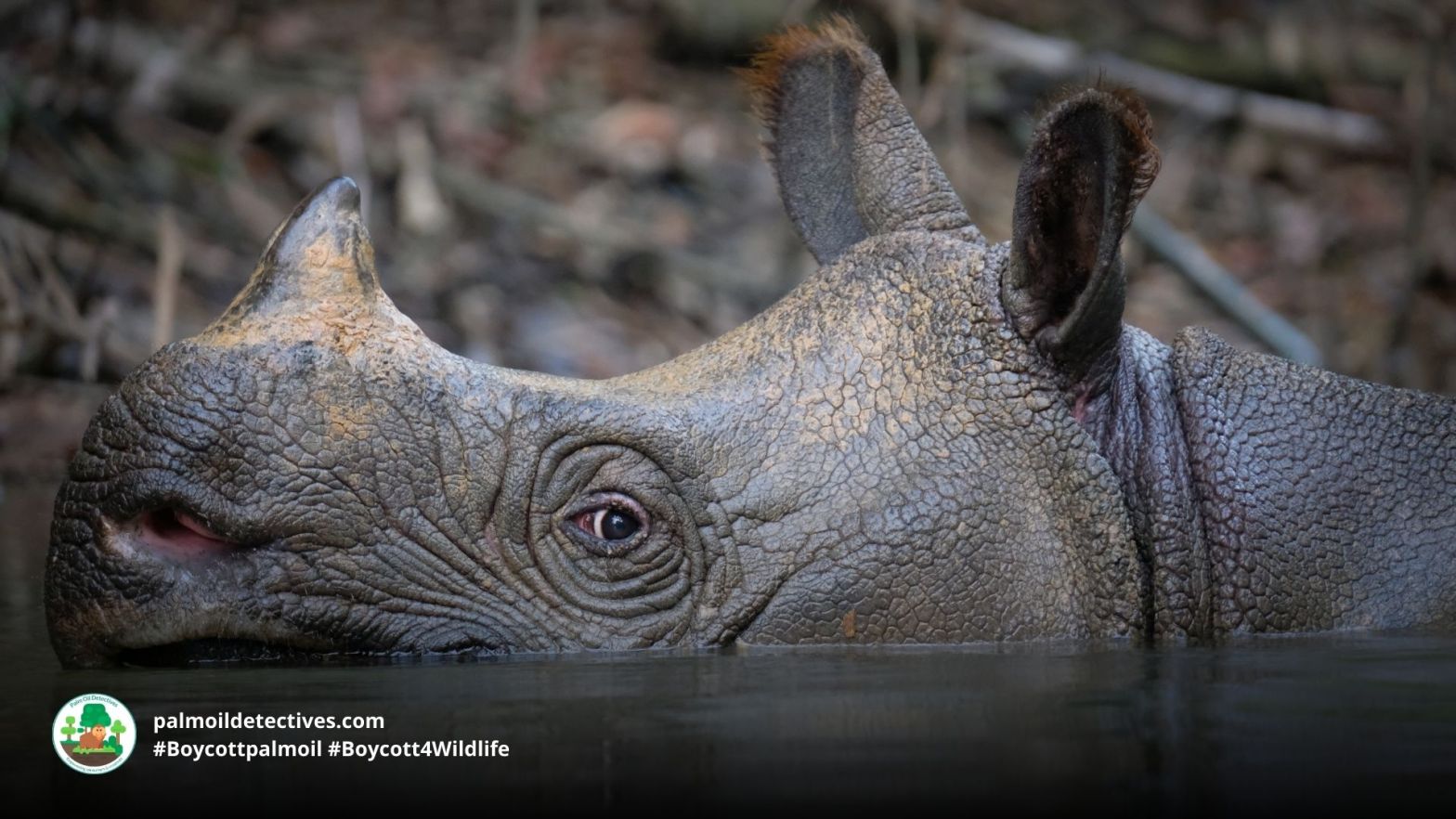
Indonesia is home to two of the world’s five rhinoceros species. Both the Javan rhino Rhinoceros sondaicus and the Sumatran rhino Dicerorhinus sumatrensis still exist today, uniquely only in the country. In India’s north east, the Indian Rhino hangs on to survival. Yet their existence has become increasingly fragile due to the unrelenting growth of palm oil in both of these countries.
#WorldRhinoDay is 22nd Sept. But every day should be World Rhino Day as three of the five species of rhino may go extinct as a result of #palmoil #deforestation and illegal poaching. Fight for them each time you shop and be #vegan and #Boycottpalmoil #Boycott4Wildlife.
A ‘mystery monkey’ in Borneo may be a rare hybrid between a Proboscis Monkey and Silvery Lutung

A new study has found that fragmentation of forests in Malaysian Borneo due to palm oil and mining has pressured two species of monkey (the Proboscis Monkey and Silvered Leaf Monkey/Silvery Lutung) to mate causing an unusual hybrid offspring. This has scientists worried as it indicates the animals are under stress
Certification Schemes Fail to Stop Palm Oil Deforestation

71 rights groups warn that certification schemes like RSPO and FSC fail to stop deforestation and abuses. Learn why they are called tools of greenwashing.
PepsiCo
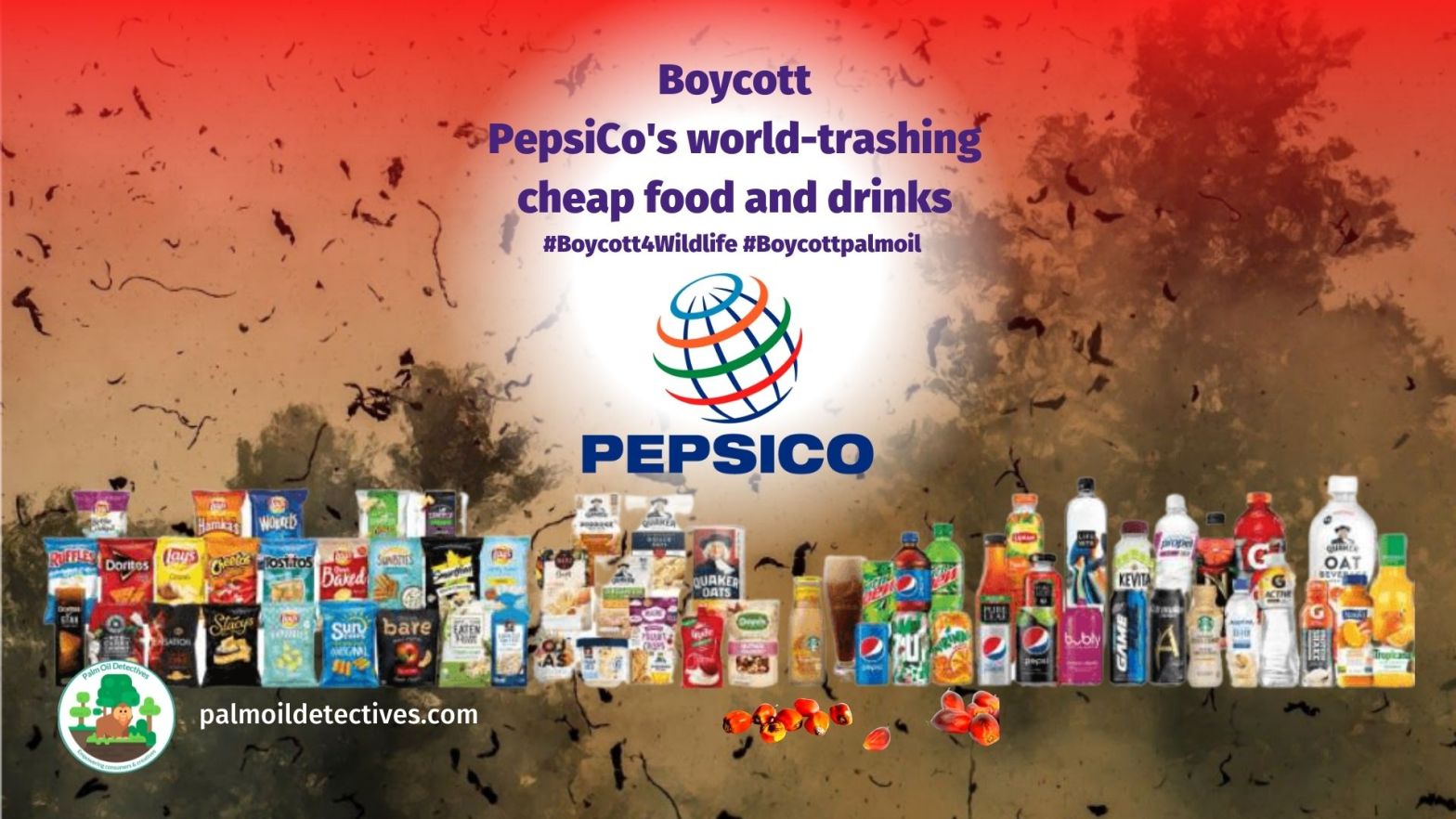
Despite decades of promises to end deforestation for palm oil PepsiCo (owner of crisp brands Frito-Lay, Cheetos and Doritos along with hundreds of other snack food brands) have continued sourcing palm oil that strongly linked to ecocide, indigenous landgrabbing, and the habitat destruction of the rarest animals on earth. All of these animals are onContinue reading “PepsiCo”
Procter & Gamble
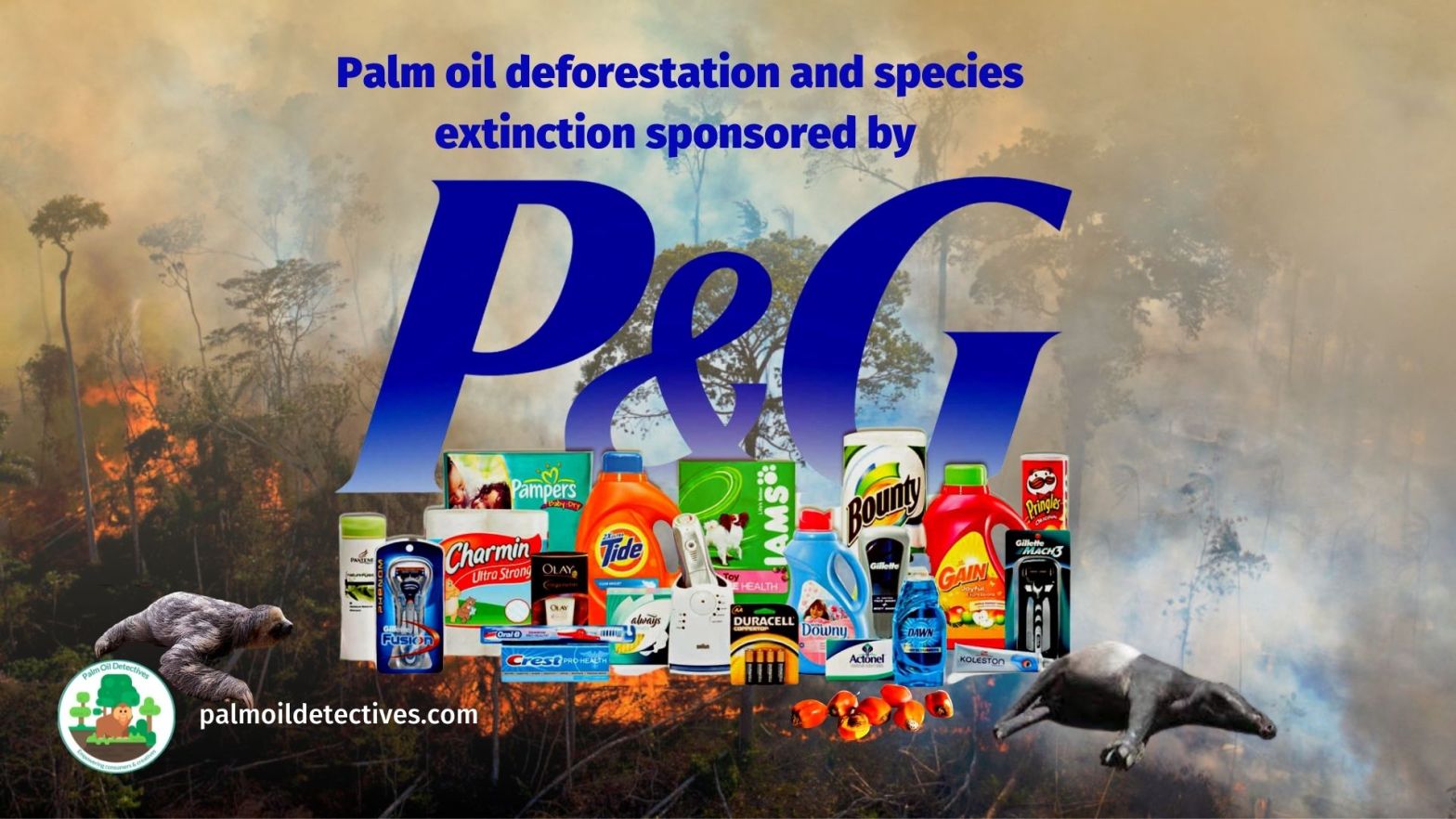
Despite decades of promises to end deforestation for palm oil Procter & Gamble or (P&G as they are also known) have continued sourcing palm oil that causes ecocide, indigenous landgrabbing, and the habitat destruction of the rarest animals on earth. All of these animals are on a knife-edge of survival. It is for this reason,Continue reading “Procter & Gamble”
Zoologist and TV Presenter Dr George McGavin
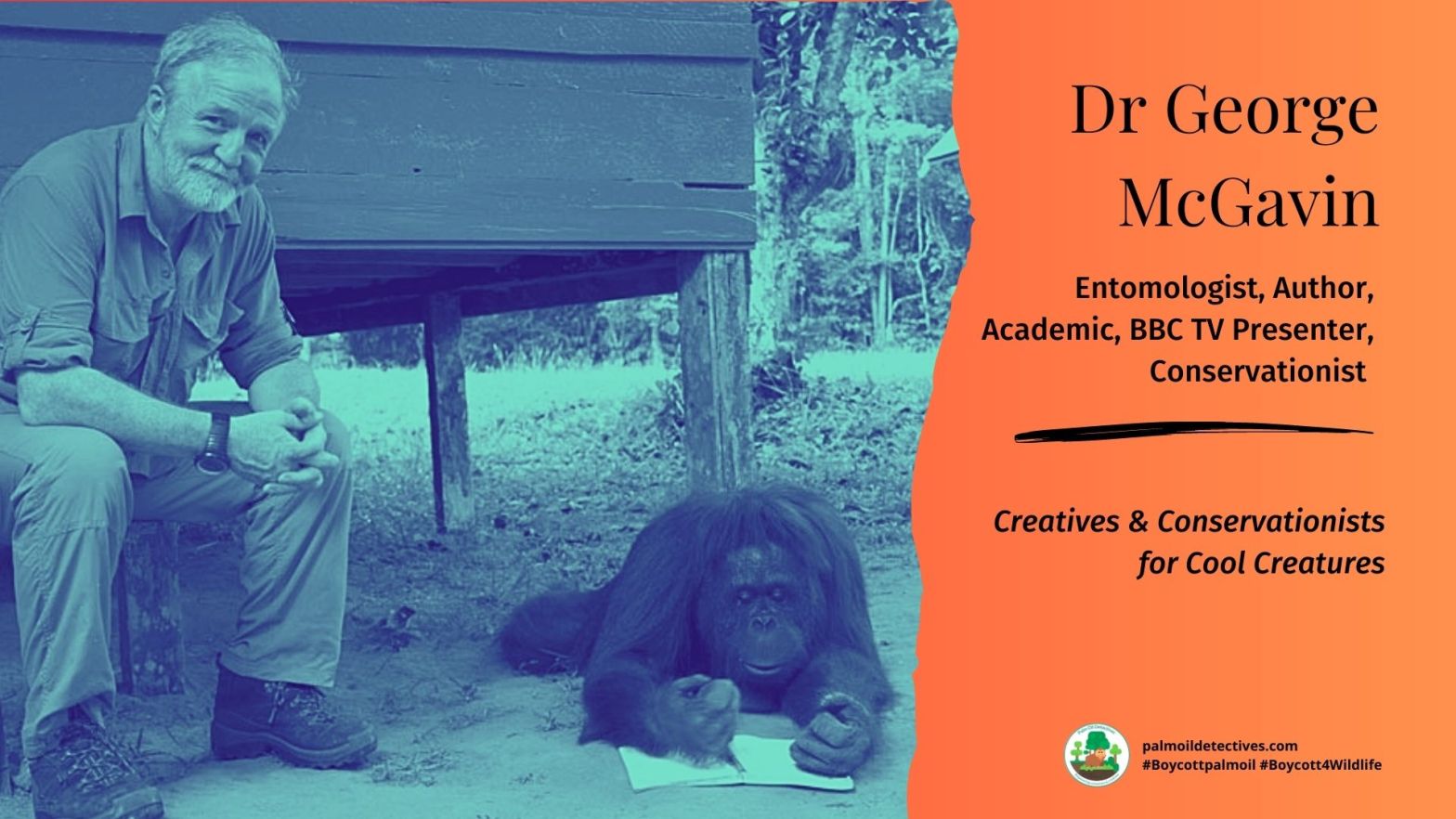
Dr George McGavin FLS FRGS Hon. FSB Hon. FRES studied Zoology at Edinburgh University, followed by a PhD in entomology at Imperial College and the Natural History Museum in London. After 25 years as an academic at Oxford University he became an award-winning television presenter. George is an Honorary Research Associate of the Oxford University Museum of Natural History and an Honorary Principal Research Fellow at Imperial College. George is also a Fellow of the Linnean Society and the Royal Geographical Society, an Honorary Fellow of the Royal Society of Biology and an Honorary Life Fellow of the Royal Entomological Society. As well as his many TV documentaries, George has written numerous books on insects and other animals. In 2019 he became the President of the Dorset Wildlife Trust.
Binturong Arctictis binturong
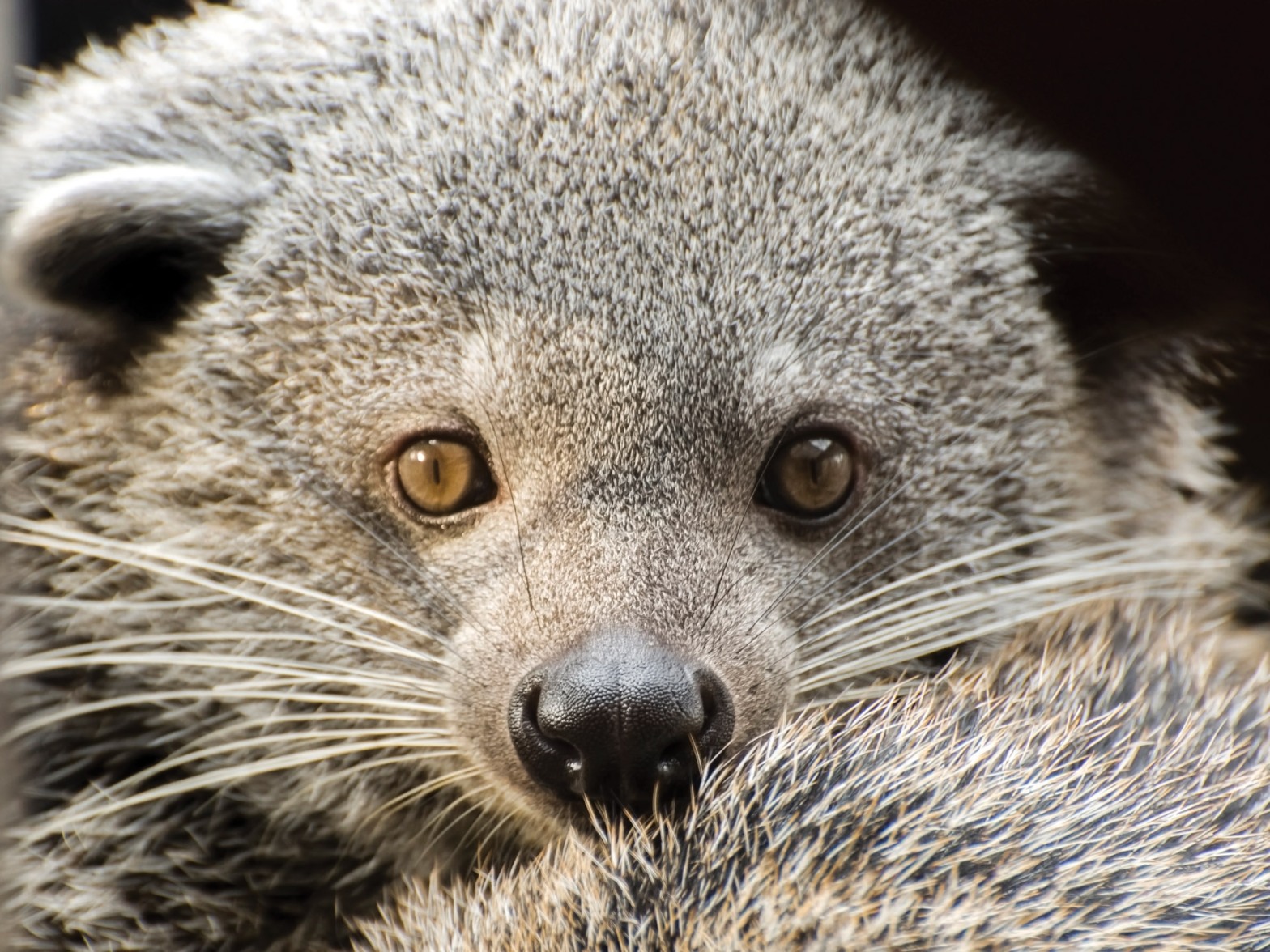
You may smell a Binturong in the forest before you see them. They give off the aroma of buttered popcorn or cheesy crisps due to the a compound in their urine they use to attract mates. The binturong, Arctictis binturong, is a fascinating and rare mammal who roam the dense rainforests of Southeast Asia. Often called the “bearcat” due to their looks, binturongs are neither bears nor cats, but are more closely related to ferrets. With their prehensile tail, thick wiry fur, and a popcorn-like scent, these unique and irreplacible creatures play vital roles as seed dispersers, particularly for strangler figs (Ficus spp.), making them keystone species in their ecosystem.
Despite their ecological significance, the binturong is now classed as Vulnerable. Populations have plummeted due to habitat destruction, particularly for palm oil deforestation; along with illegal hunting, exploitation for the coffee market and the illegal bushmeat and pet trade. Protecting the majestic binturong requires urgent action to safeguard their rainforest home. Fight for them every time you use your wallet! #BoycottPalmOil #Boycott4Wildlife
Dusky Langur Trachypithecus obscurus
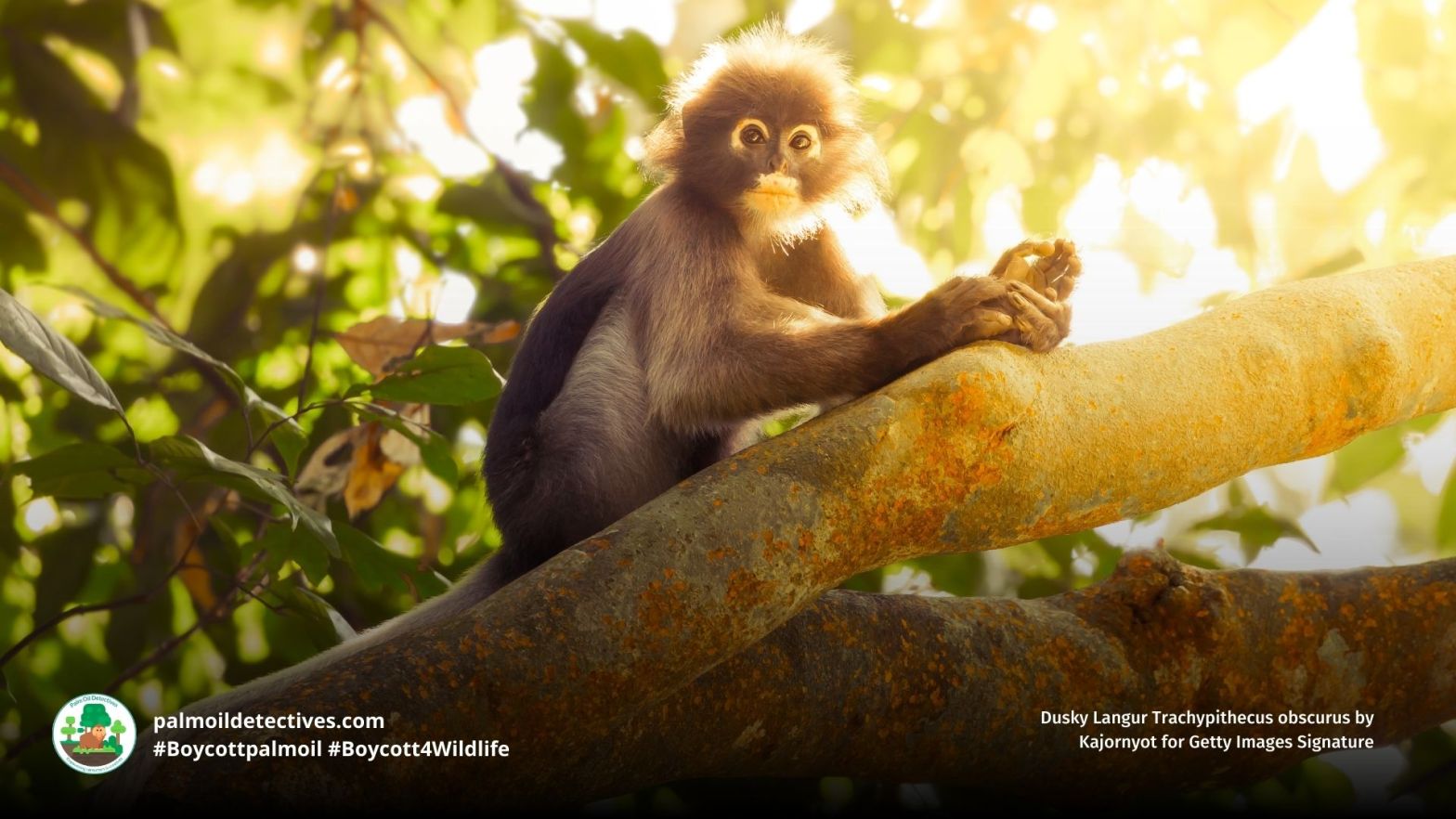
The dusky langur, also known as the spectacled langur or dusky leaf monkey, is one of Southeast Asia’s most charismatic primates. Living in #Thailand, #Myanmar and #Malaysia they have vivid white eye patches that resemble spectacles and a fluffy dark-grey coat, they cut an unmistakable figure against the rustling emerald canopy of the rainforest. These intelligent and agile #monkeys play a crucial role in their ecosystems by dispersing seeds, keeping forests healthy and thriving. Yet, deforestation for agriculture—particularly #palmoil, rubber, and durian plantations—alongside hunting and illegal #wildlifetrade, is pushing them closer to extinction. Without urgent intervention, the forests they call home will be razed, and their populations will continue to plummet. Use your voice to protect them—fight for their survival and #BoycottPalmOil #Boycott4Wildlife every time you shop
 Palm Oil Detectives