
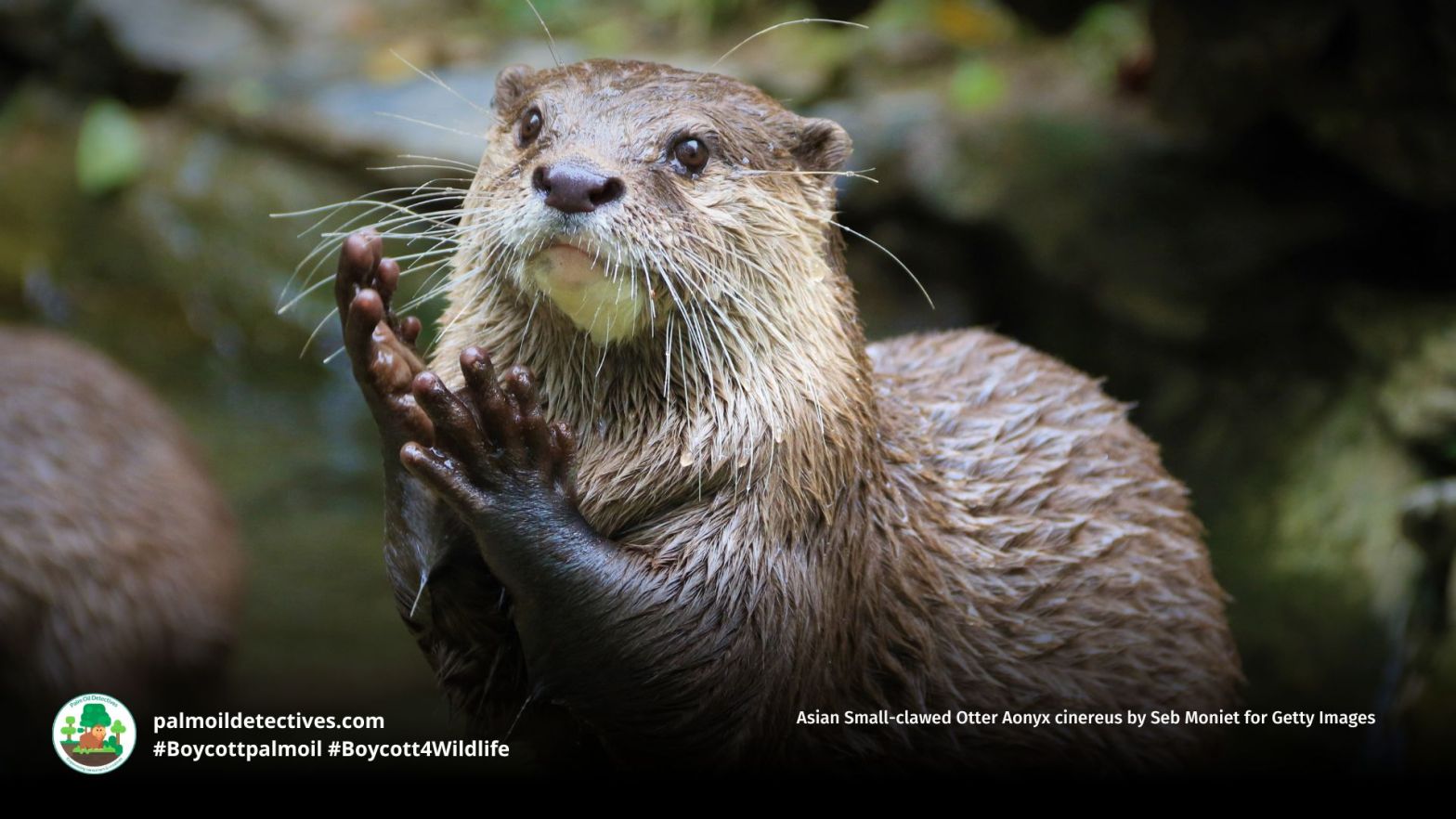
Asian Small-clawed Otters are the world’s smallest otter species and are Vulnerable from palm oil tea and coffee deforestation. Protect them, boycott palm oil!
Tag Archives: Vietnam
Sunda Flying Lemur Galeopterus variegatus
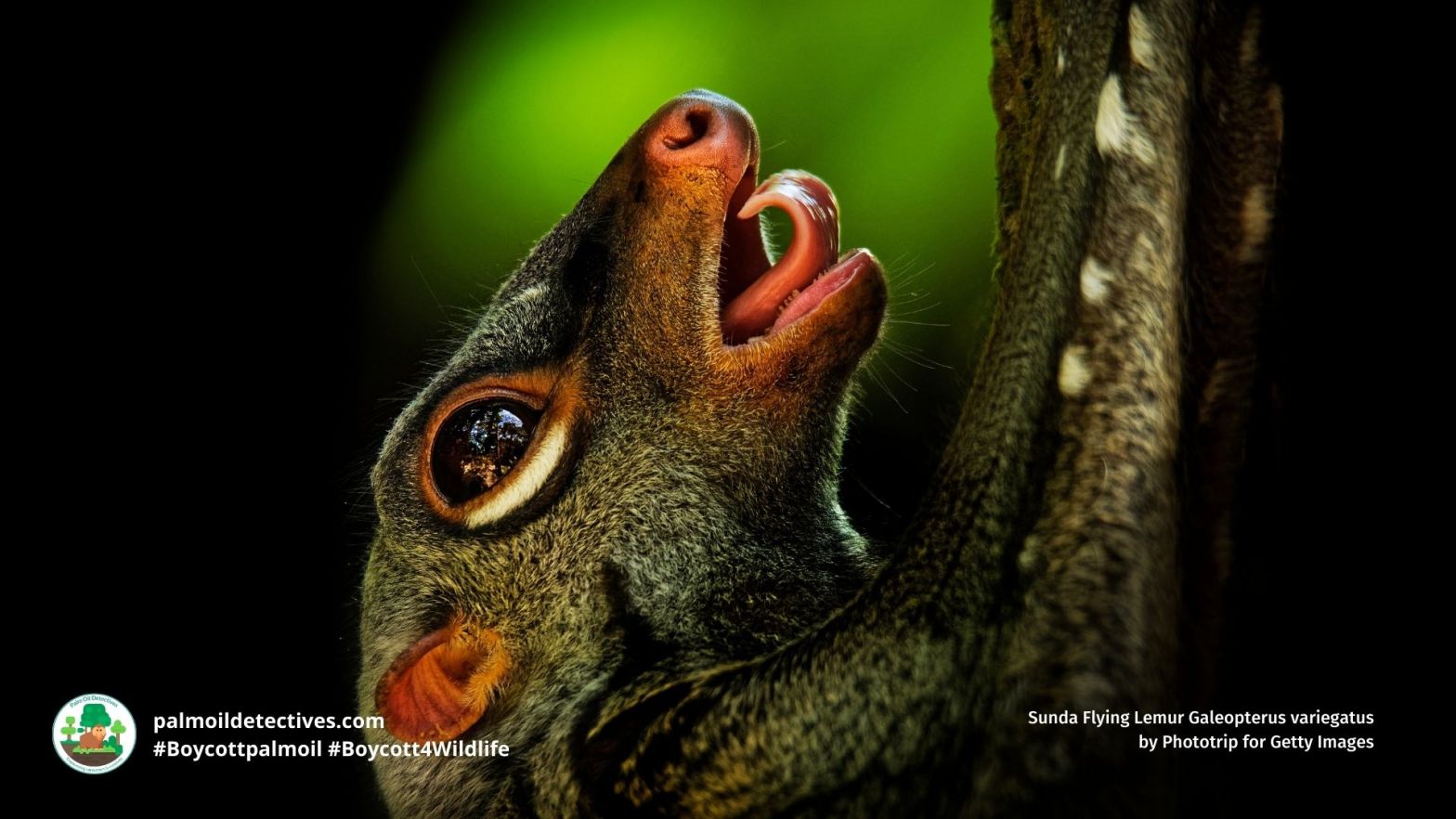
Sunda flying lemurs AKA Malayan colugos rely on ancient forests to survive, despite being skilful gliders, palm oil is a major threat, boycott palm oil!
Saola Pseudoryx nghetinhensis
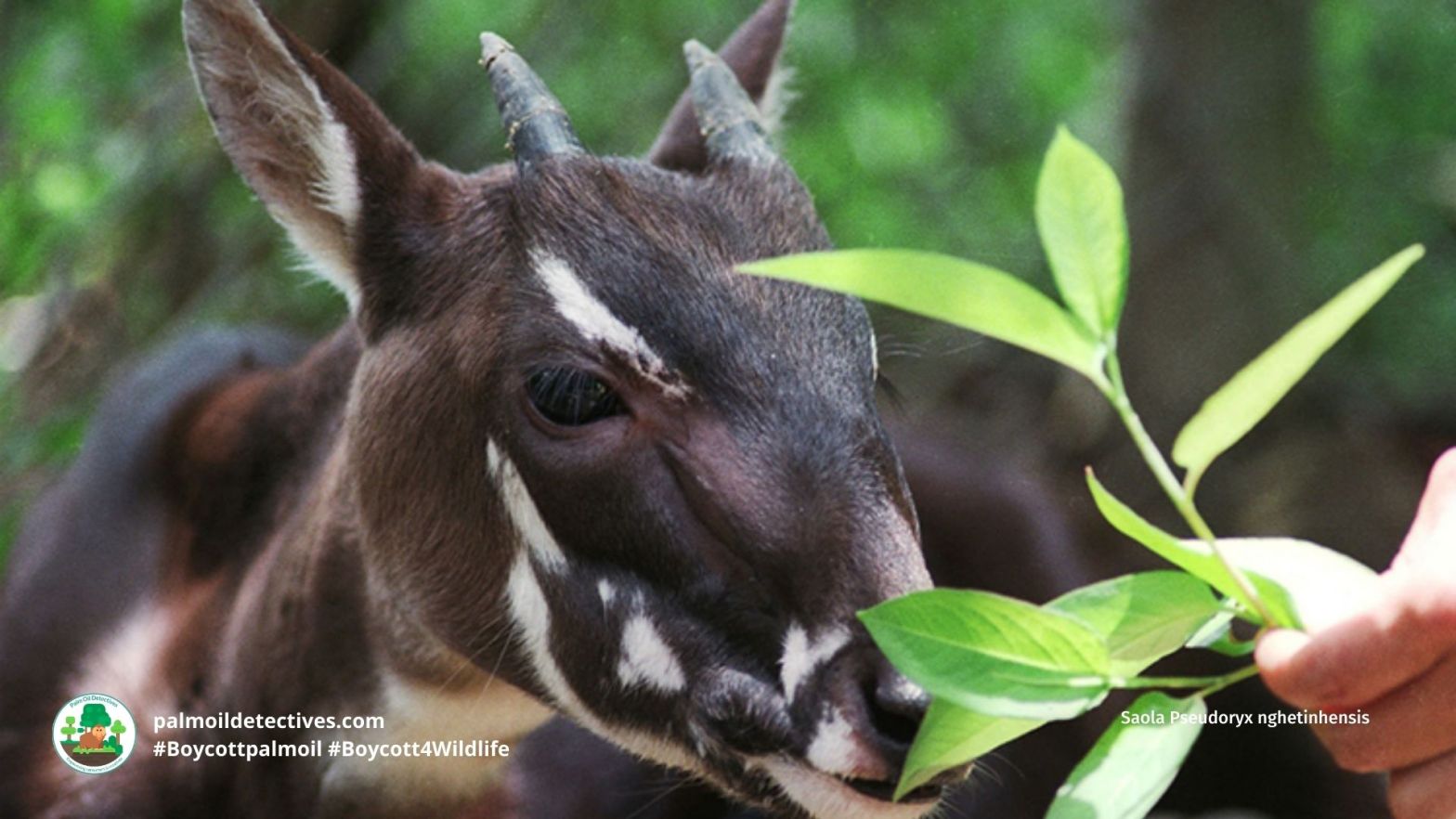
Saolas are rare and considered Southeast Asia’s ‘unicorns’, this Critically Endangered antelope is facing imminent extinction due to hunting and deforestation
Malayan Flying Fox Pteropus vampyrus
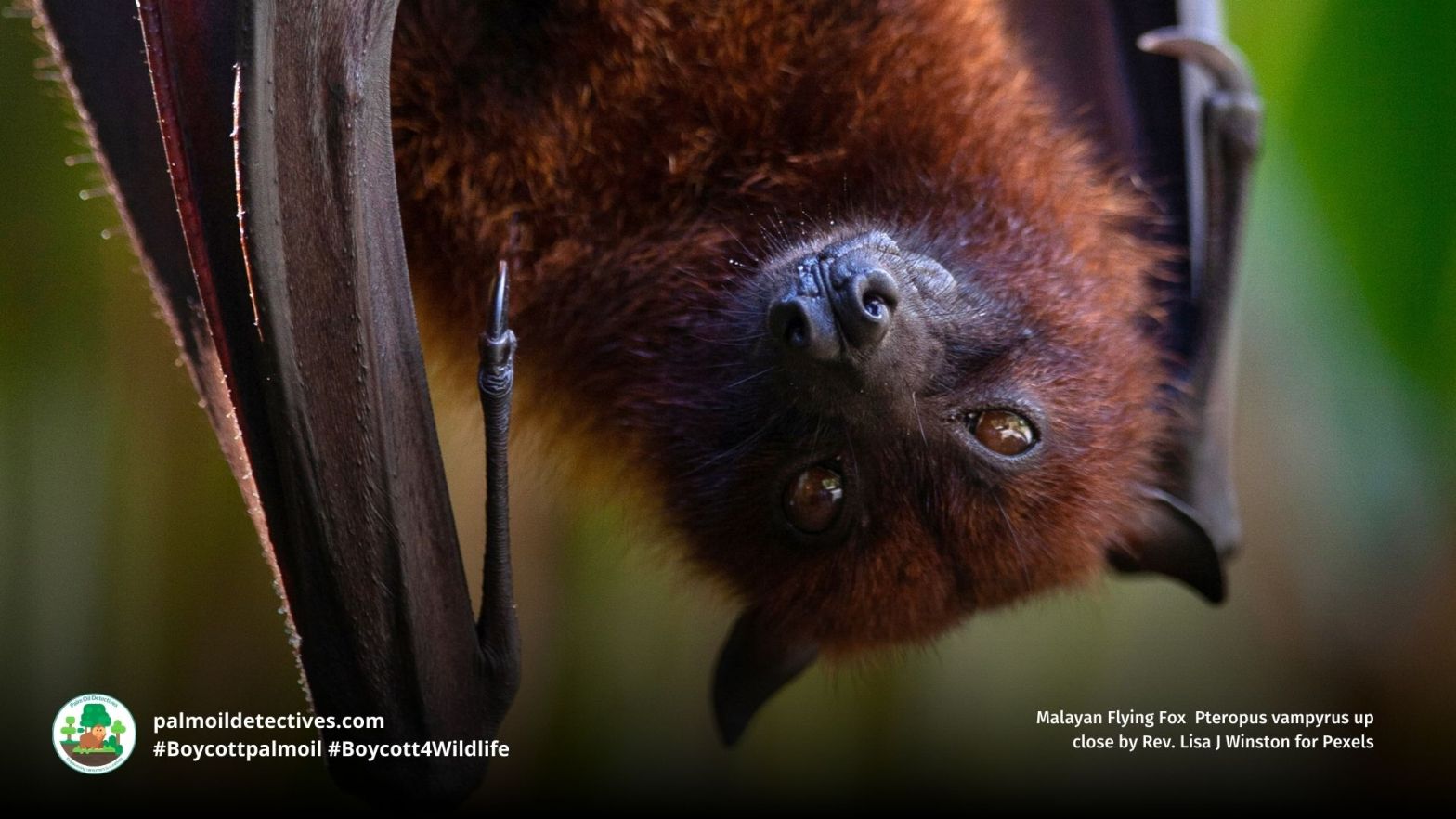
The Malayan Flying Fox, known also as the Large Flying Fox, Giant Fruit Bat, or Kalong, is an ethereal creature of the tropical Asian night. With wingspans reaching 1.7 metres, they are the largest bats in the world and glide silently through the darkness, a graceful presence in South East Asia’s moonlit forests. Their foxy almond shaped eyes and expressive faces are framed by glossy black fur and golden and russet collars, lend them a warm and mythical aura, while their immense wings are awe-inspiring to see in flight.
These nocturnal giants are the architects of tropical forests, scattering seeds and pollinating flowers as they journey across vast landscapes. Yet, despite their importance to ecosystems, they are under siege—hunted mercilessly and displaced by forests that vanish due to palm oil. Their story is a call to action: protect the guardians of the night before it is too late. #BoycottPalmOil #Boycott4Wildlife
Five New Hedgehog Species Found in Southeast Asia

Scientists discover five new species of soft-furred hedgehogs in Southeast Asia, highlighting the need for conservation. Support #Boycottpalmoil
Protected: Private Advocate’s Page
There is no excerpt because this is a protected post.
Sambar deer Rusa unicolor
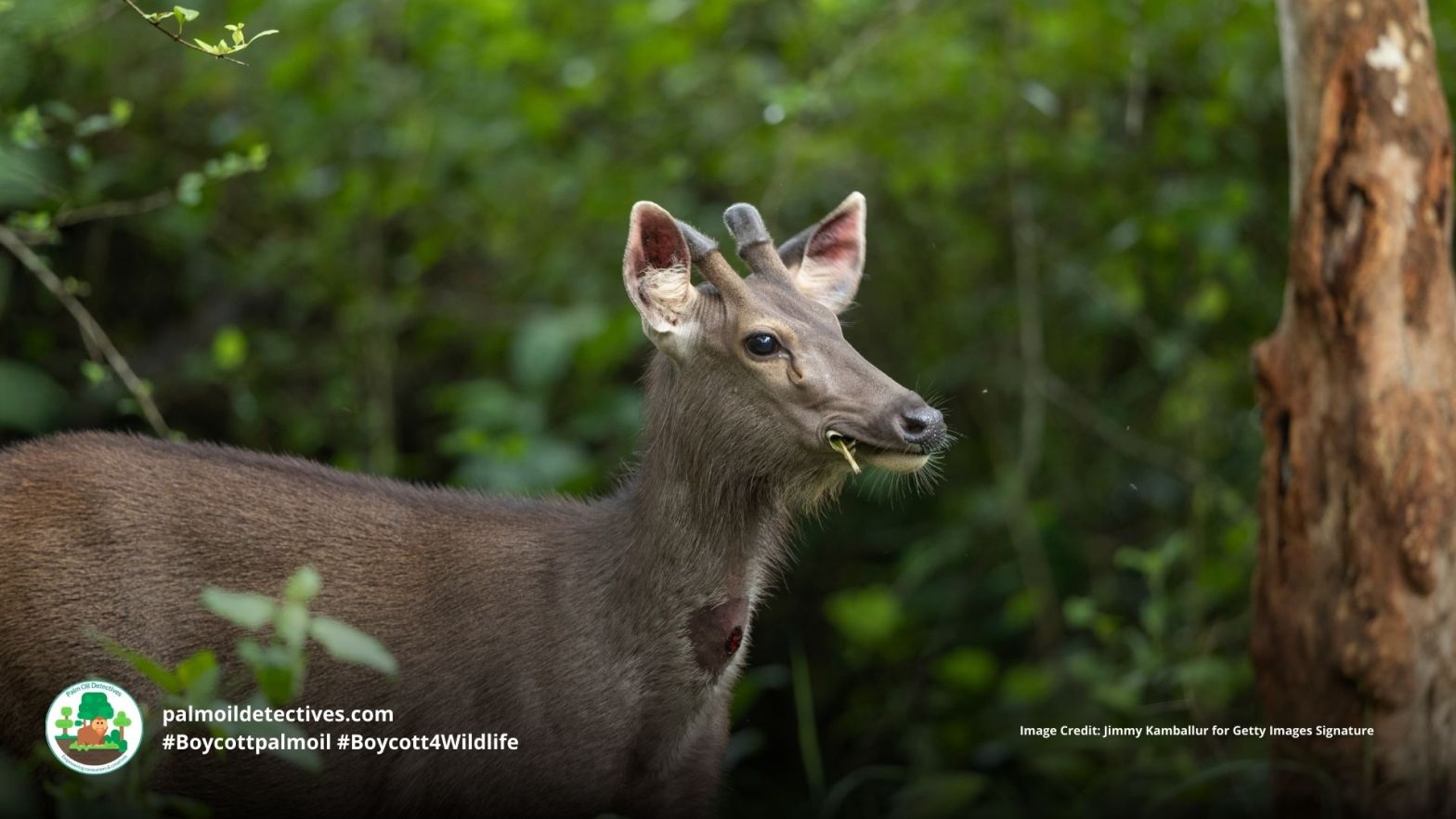
The majestic Sambar deer, cloaked in hues ranging from light brown to dark gray, are distinguished by their rugged antlers and uniquely long tails. Adorned with a coat of coarse hair and marked by a distinctive, blood-red glandular spot on their throats, these deer embody the beauty of the wild. Their adaptability is evident in their alert behavior, silent movements, and the gradual development of their unique spots. Perfectly designed for grazing, these deer use their antlers and feet deftly in defense, relying on their acute senses of hearing and smell to evade predators. To protect these splendid deer and their habitats from the impacts of deforestation and agricultural expansion, especially for palm oil, join the movement: #BoycottPalmOil and #Boycott4Wildlife to aid in their survival.
Green Dragontail Lamproptera meges

Green Dragontails could arguably be called the most exquisite and beautiful butterflies alive.
They flutter through sunlit patches of leaves near to streams and rivers in Indonesia, Malaysia, Thailand, Myanmar, the Philippines, and northeastern India.
They are mostly black and white with a bright turquoise or light green band running roughly parallel to their abdomens.
Their forewings feature a stunning glass-like transparent triangle known as a hyaline. Their tail features a star-like galaxy pattern that glints in sunlight.
It has been over a decade since they were last surveyed, their range overlaps significantly with areas already cleared for palm oil. Help their survival and use your wallet as a weapon! #Boycottpalmoil #Boycott4Wildlife
Nicobar pigeon Caloenas nicobarica
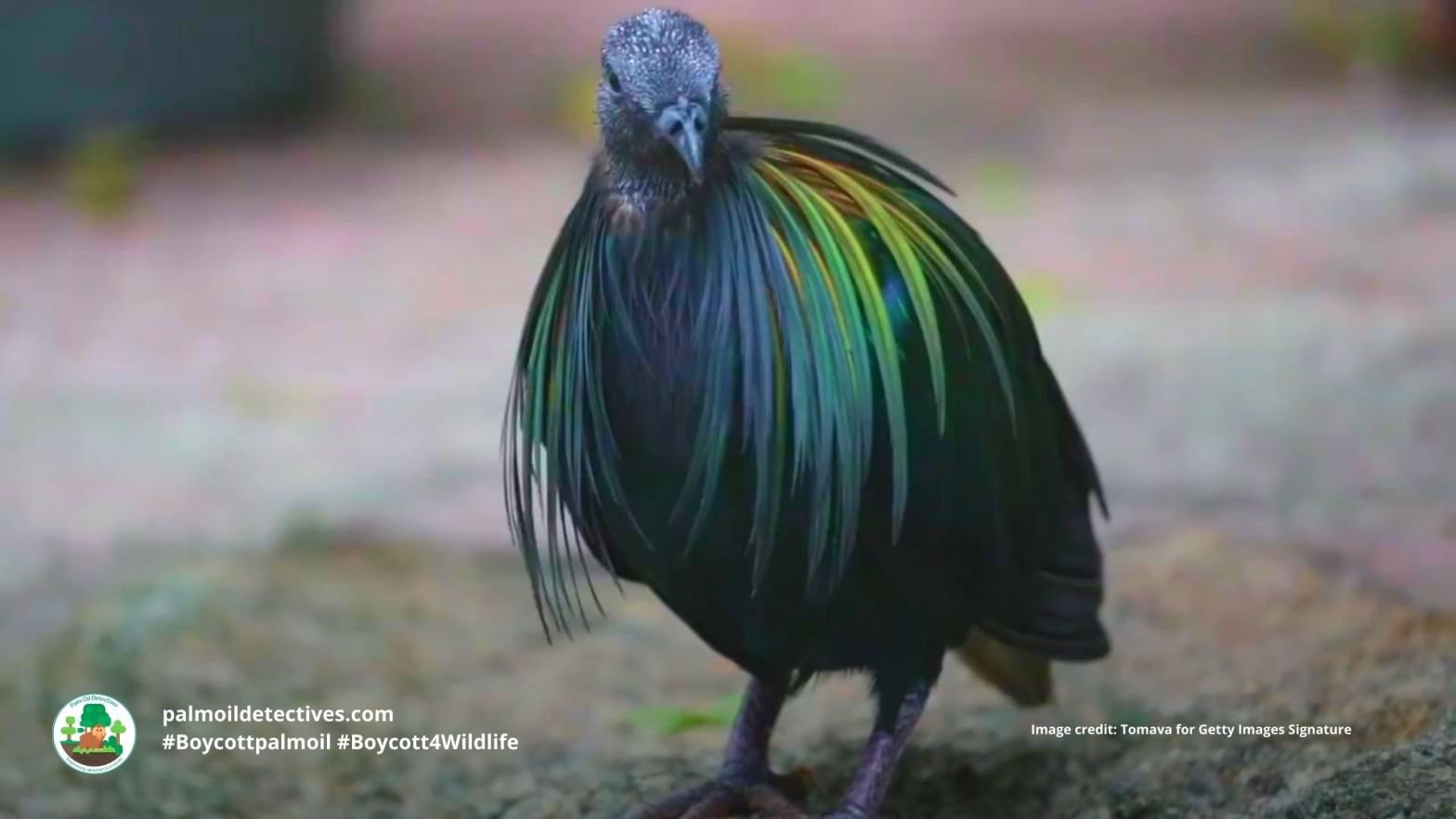
The Nicobar pigeon is the largest pigeon in the world and the closest living relative to the extinct dodo bird. They are famous for their gorgeous iridescent feathers. When threatened they make a pig-like grunt and are known for the strange way that they drink – by dunking their heads into water and sucking it up instead of sipping as other birds do. They are Near Threatened from palm oil deforestation on the Nicobar and Andaman Islands in #India along with hunting and the pet trade. Help their survival and #Boycottpalmoil #Boycott4Wildlife in the supermarket.
Sunda Pangolin Manis javanica
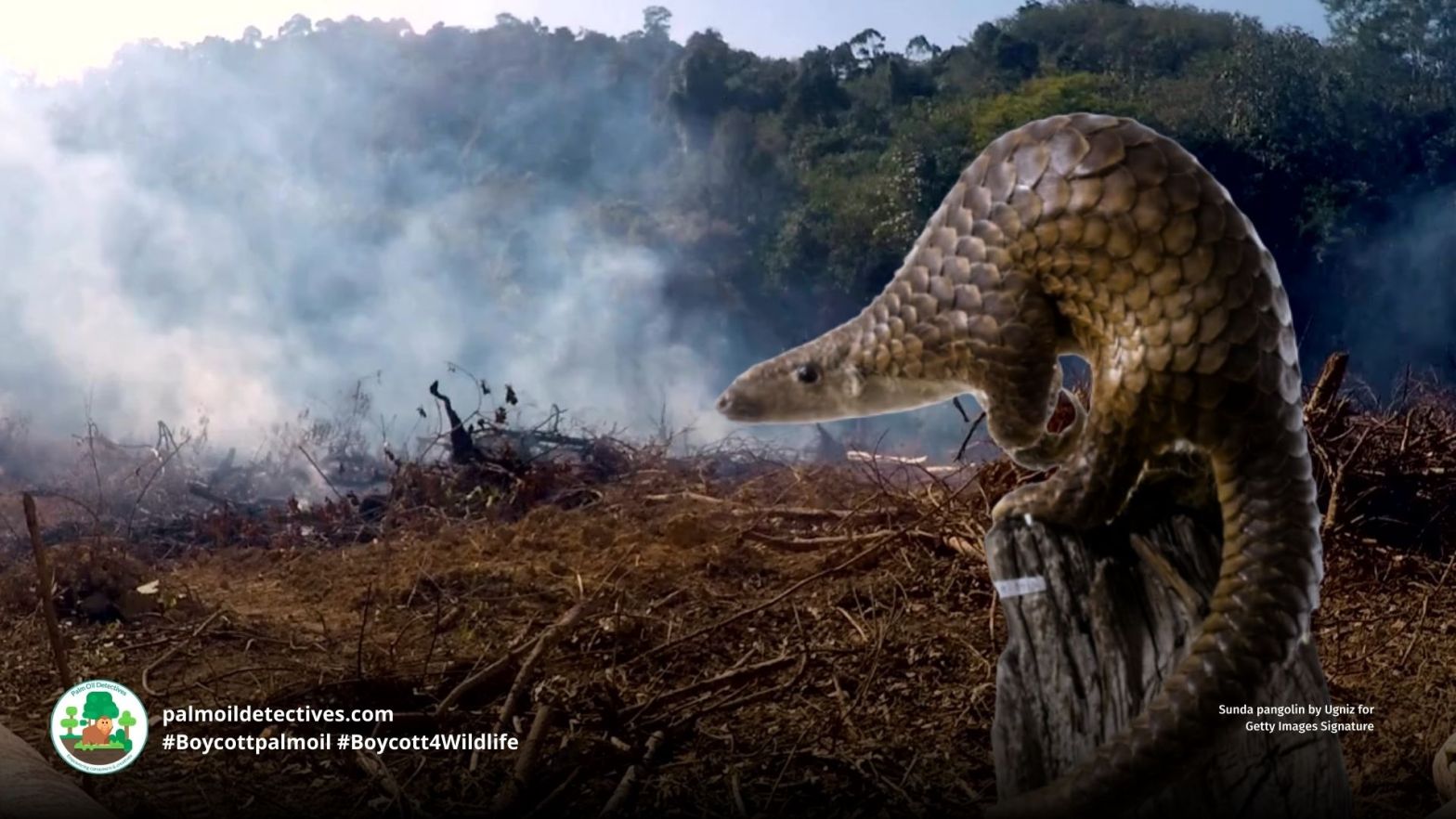
Sunda pangolins AKA Javan pangolins are capable swimmers and curl protective balls, palm oil and hunting exploitation are major threats, boycott palm oil!
Fishing Cat Prionailurus viverrinus
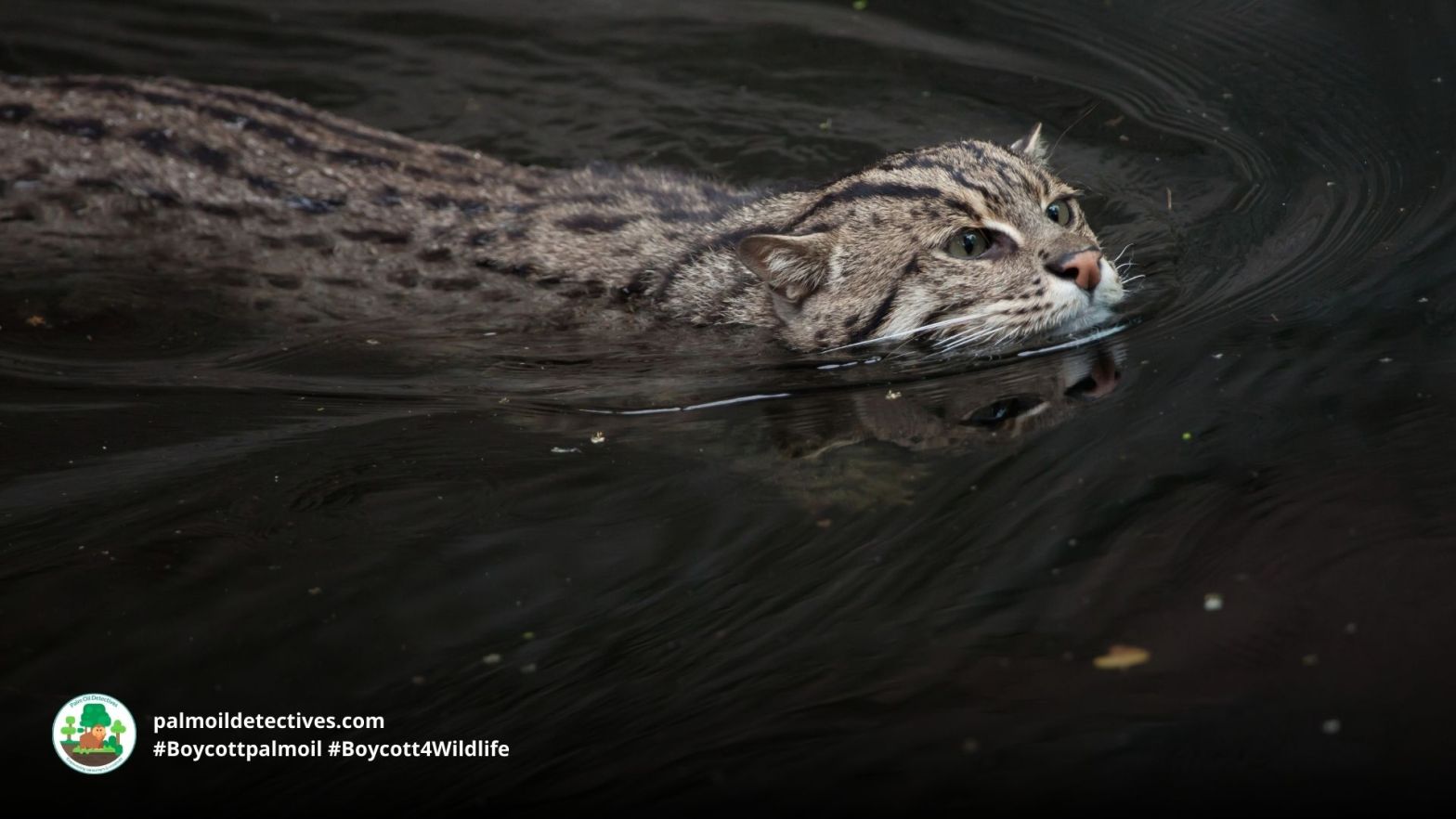
Although they look cute and cuddly, the Fishing #Cat Prionailurus viverrinus has a feisty, firecracker temper. This small to medium sized wild cat can become defensive if approached in the wild. They are around twice the size of a domestic cat and typically weigh around 5-16 kg and have stocky short legs and a short tail.
Their faces are round with elongated noses that gives them a civet-like appearance, which is why their scientific name is viverrine. They are agile and fast hunters and can reach fast speeds in pursuit of prey. They have an average lifespan of approximately 12 years. Ongoing threats include palm oil deforestation, and in Indonesia it is uncertain if their population have remained alive intact due to widespread deforestation and hunting pressures. Help these plucky little #wildcats when you shop and #BoycottPalmOil #Boycott4Wildlife
Binturong Arctictis binturong
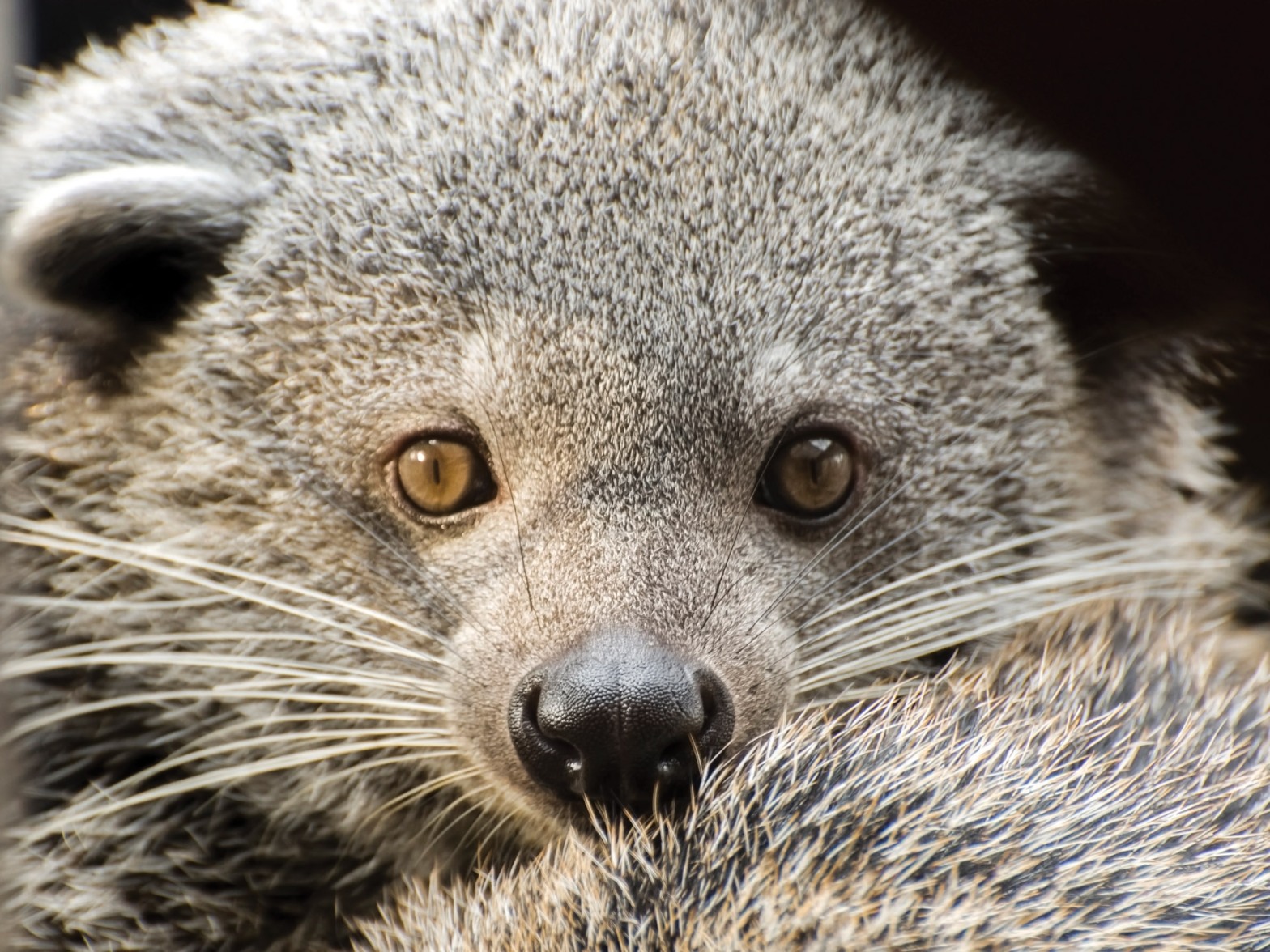
You may smell a Binturong in the forest before you see them. They give off the aroma of buttered popcorn or cheesy crisps due to the a compound in their urine they use to attract mates. The binturong, Arctictis binturong, is a fascinating and rare mammal who roam the dense rainforests of Southeast Asia. Often called the “bearcat” due to their looks, binturongs are neither bears nor cats, but are more closely related to ferrets. With their prehensile tail, thick wiry fur, and a popcorn-like scent, these unique and irreplacible creatures play vital roles as seed dispersers, particularly for strangler figs (Ficus spp.), making them keystone species in their ecosystem.
Despite their ecological significance, the binturong is now classed as Vulnerable. Populations have plummeted due to habitat destruction, particularly for palm oil deforestation; along with illegal hunting, exploitation for the coffee market and the illegal bushmeat and pet trade. Protecting the majestic binturong requires urgent action to safeguard their rainforest home. Fight for them every time you use your wallet! #BoycottPalmOil #Boycott4Wildlife
King Cobra Ophiophagus hannah
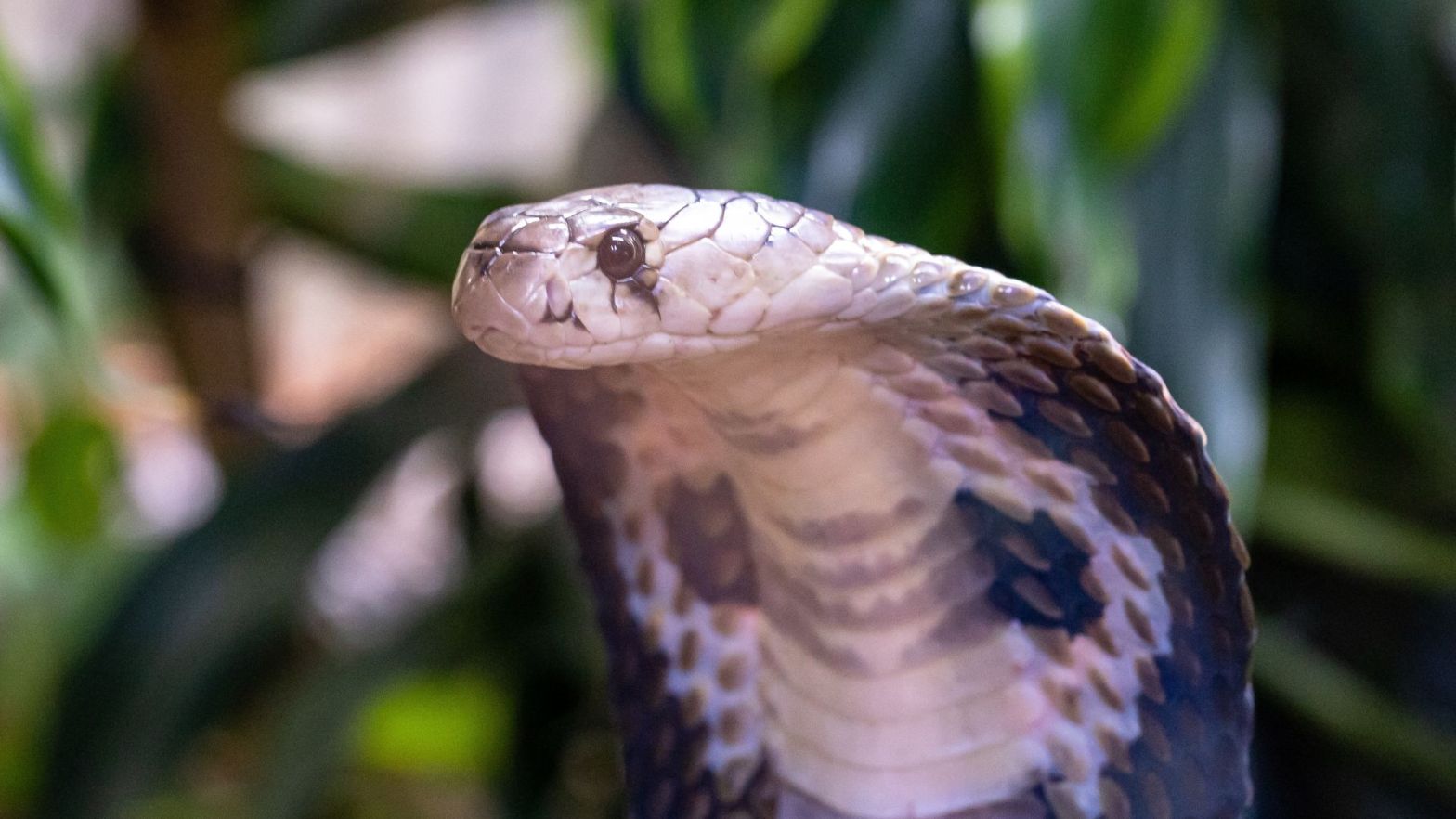
Known as the serpentine king of the jungle in South East Asia, and inspiration for the villain Kaa in the Jungle Book, the King Cobra lives in many different environments, including pristine forests, degraded forests, mangroves, swamps and woodlands of #Thailand, #Cambodia, #Malaysia, #Laos, #Vietnam, #Bangladesh and #India. Their main threat is human-wildlife conflict and ongoing persecution. Palm oil deforestation and other agricultural expansion is also a big threat throughout their range. The world’s largest venomous #snake has a neurotoxic bite powerful enough to kill twenty people or an adult elephant. Sadly, these majestic creatures are persecuted for this reason and do not have adequate protection. Help them every time you shop and #Boycottpalmoil #Boycott4Wildlife
Bengal Slow Loris Nycticebus bengalensis

The Bengal Slow Loris’s are wide-eyed beauties that are arboreal and nocturnal and live in tropical evergreen rainforest, semi-evergreen forest, and mixed deciduous forest. They are the largest loris species and feed predominantly on plant sap. They are now endangered in Malaysia and other parts of South East Asia, their primary threats are illegal capture for the pet trade and #palmoil #deforestation throughout their range. Help them every time you shop and #Boycottpalmoil #Boycott4Wildlife
Tonkin Black Crested Gibbon Nomascus concolor ssp. concolor
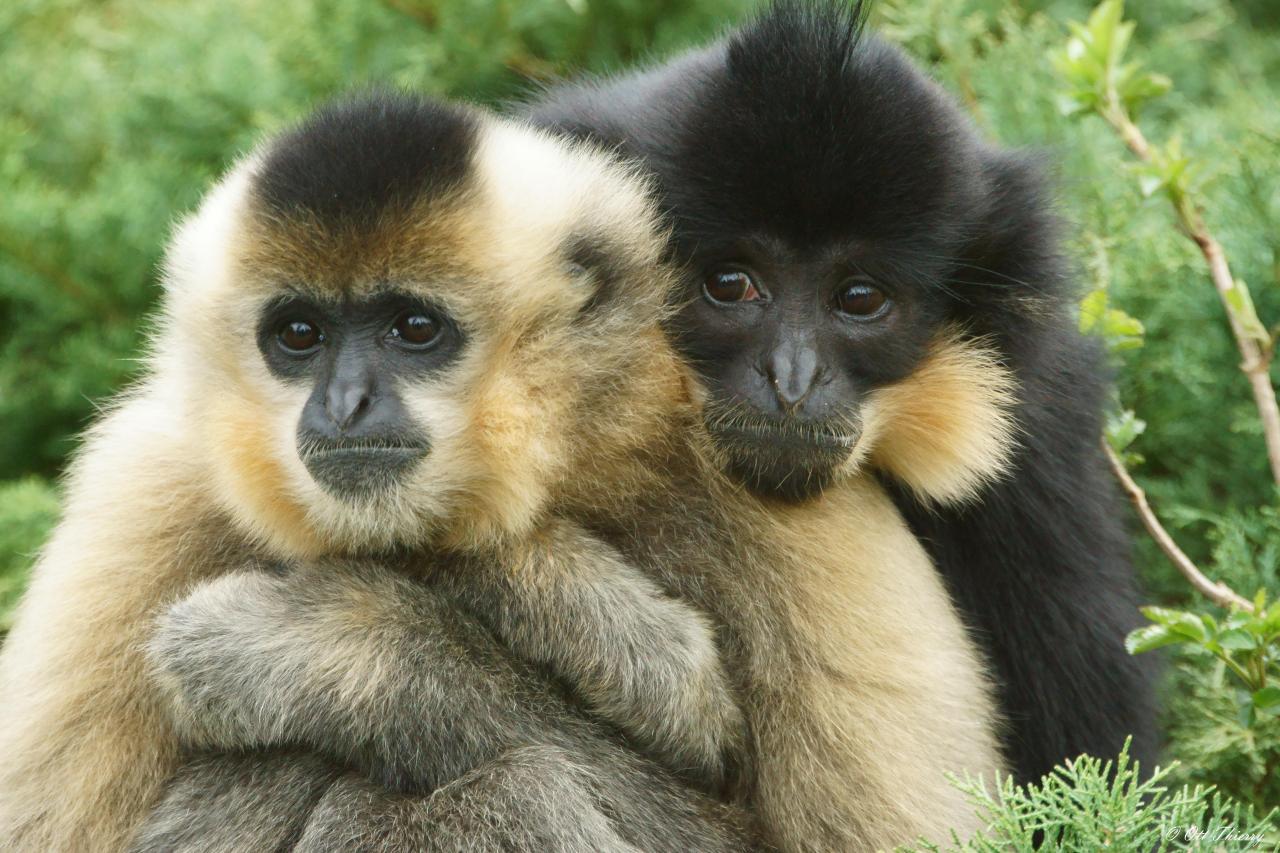
The Tonkin Black Crested #Gibbon of the genus Nomascus are also known as the Indochinese black-crested gibbon. They are critically endangered #primates native to the misty mountain forests of northern #Vietnam, southern #China, and parts of #Laos. These highly intelligent and social #primates are famous for their morning duets, with pairs singing in species specific harmony to reinforce familial bonds and mark their territory. Research has shown that different populations have unique vocal accents, much like human dialects, making their songs distinct across their range. Despite their unique and sparkling vocal range, they are tragically on the edge of extinction. Only around 300 individuals are left in the wild, their survival is threatened by deforestation for palm oil, coffee, and rubber plantations, along with hunting for the illegal pet trade and traditional medicine. Help them to survive every time you shop boycott palm oil and call-out the exotic pet trade! #BoycottPalmOil #Boycott4Wildlife
Lar Gibbon Hylobates lar
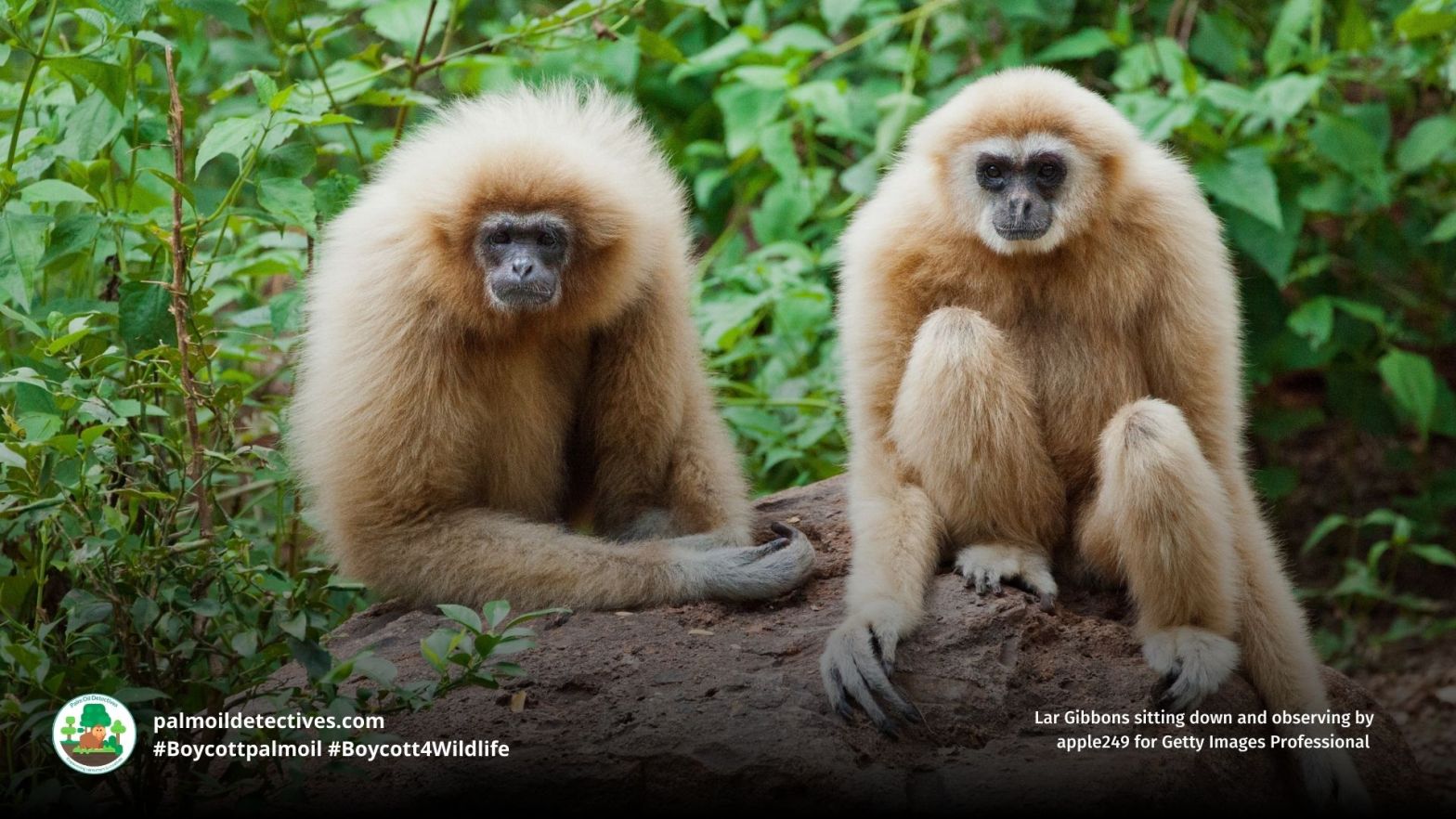
Gibbons, often called “lesser apes,” are no less than awesome! The Lar Gibbon Hylobates lar, also known as the white-handed gibbon, is a charismatic and acrobatic primate renowned for their incredible agility and melodic songs that echo through the rainforests of Southeast Asia. With their striking black or sandy-coloured fur and distinctive white markings on their hands and face, Lar Gibbons are both captivating and vital to their ecosystems.
These gibbons are Endangered according to the IUCN Red List, facing rapid population declines due to habitat loss, poaching, and the illegal wildlife trade. Protecting these extraordinary primates means addressing deforestation, logging, and other threats head-on. Fight for their survival every time you shop. Use your wallet as a weapon, demand palm oil free and #BoycottPalmOil #Boycott4Wildlife.
Masked Finfoot Heliopais personatus
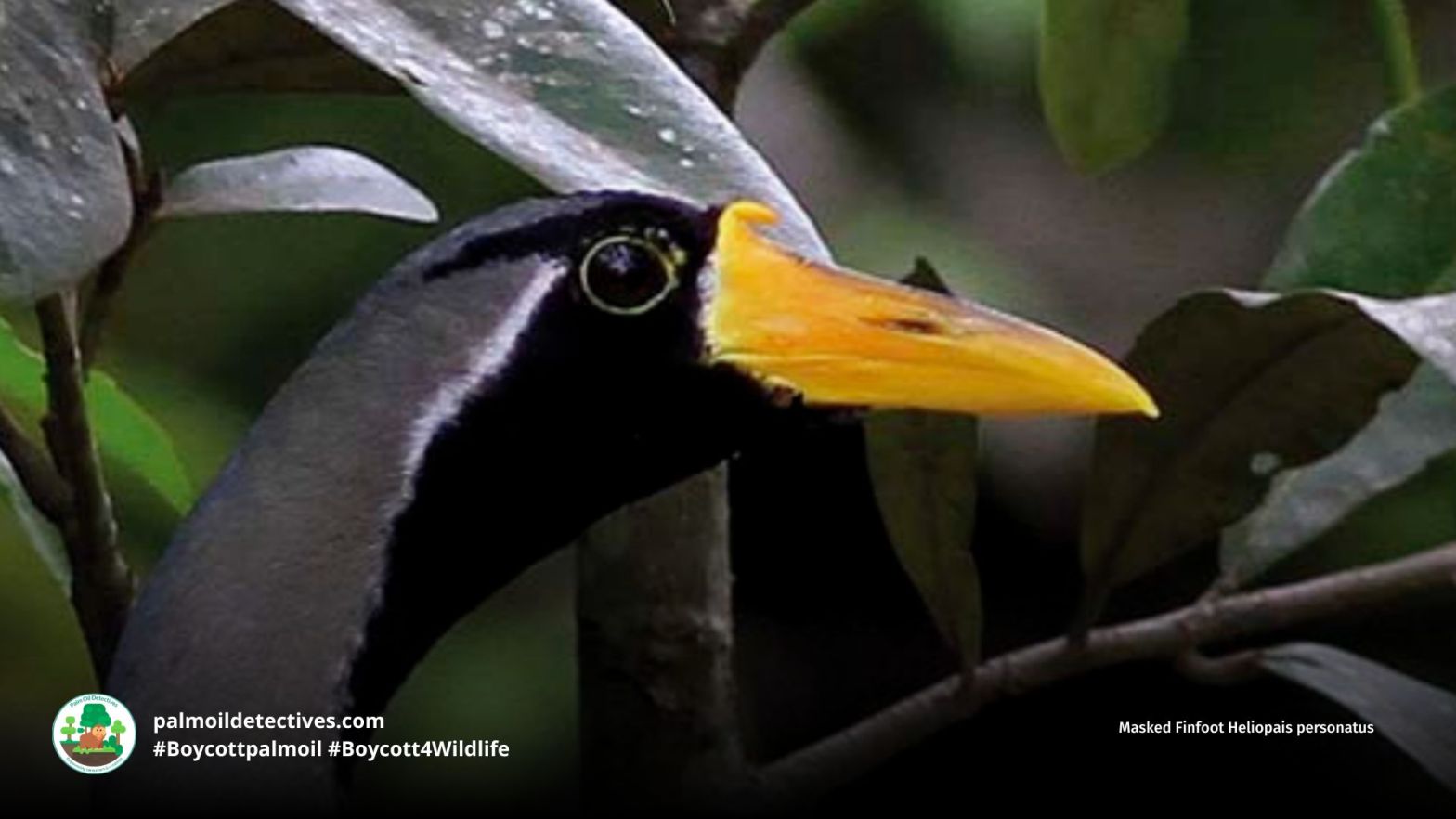
The Masked Finfoot is vanishing before our eyes. These rare and secretive waterbirds are in freefall due to palm oil expansion and habitat destruction.
Southeast Asian Box Turtle Cuora amboinensis
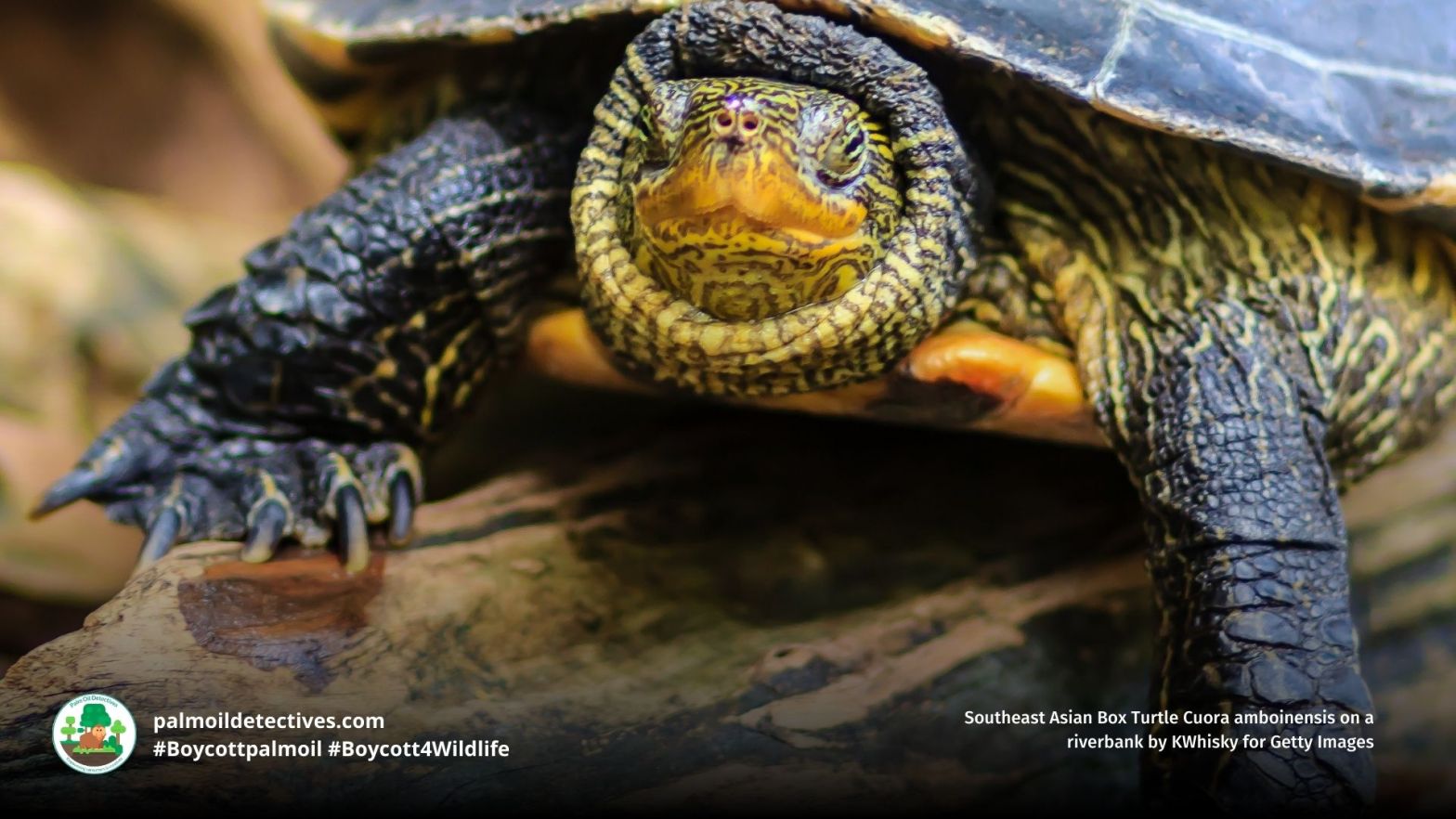
The Southeast Asian Box #Turtle Cuora amboinensis, also known as the Amboina Box Turtle, Malayan Box Turtle, or Indonesian Box Turtle, is a freshwater #reptile species found across much of Southeast Asia. This species is under severe pressure due to overexploitation for food, traditional medicine, and the #pettrade, particularly in Australia, #China, Europe, and the United States. Their semi-aquatic nature allows them to thrive in swamps, rice paddies, and slow-moving rivers, but habitat destruction from #palmoil plantations, #timber and wetland drainage threatens their survival. Their population is rapidly declining due to these threats, making urgent protections necessary. Resist destruction and fight for their survival every time you shop – #BoycottPalmOil #Boycott4Wildlife.
Malayan Tapir Tapirus indicus
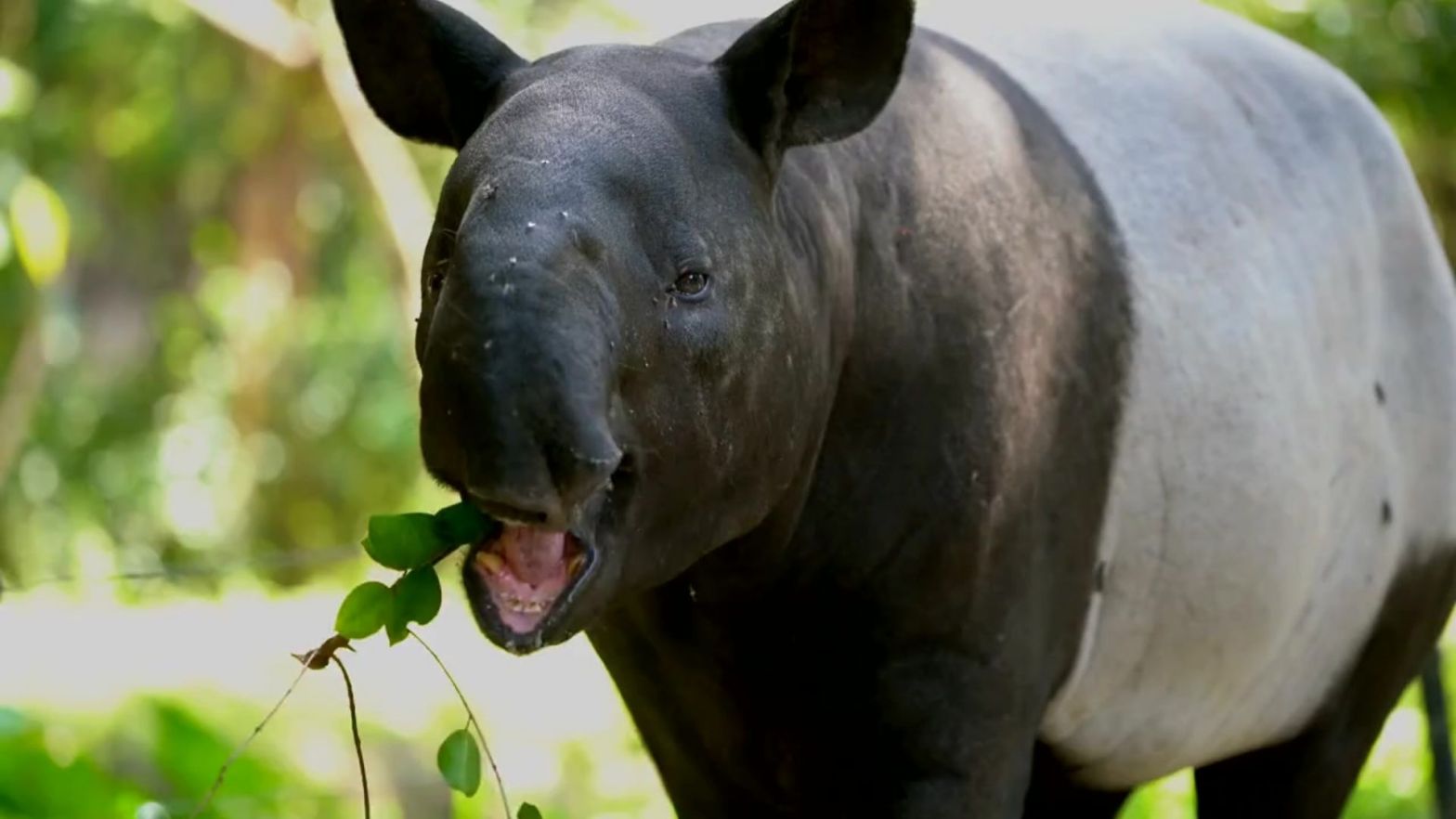
The endangered Malay Tapir faces habitat loss from palm oil plantations, road kills, and snares. Less than 2,500 remain. Support #BoycottPalmOil to save them.
Red-cheeked Gibbon Nomascus gabriellae

Like other gibbons, Red-cheeked Gibbons are arboreal and diurnal, with singing bouts averaging 12 minutes and lower calling frequencies in the wet season (Rawson 2004, Kenyon 2007). The species displays a monogamous social structure of adult pair and offspring. Average group size is estimated at 3-5 individuals. Females emigrate near, in and around their natal territories, but males emigrate farther and wider. Female give birth to single offspring at 17-22 month intervals. Nomascus gabriellae is considered Endangeredb ased on a suspected population reduction of 50% or more due to hunting for food, live capture for the pet trade, and the loss of suitable habitat.
Southern White-cheeked Gibbon Nomascus siki
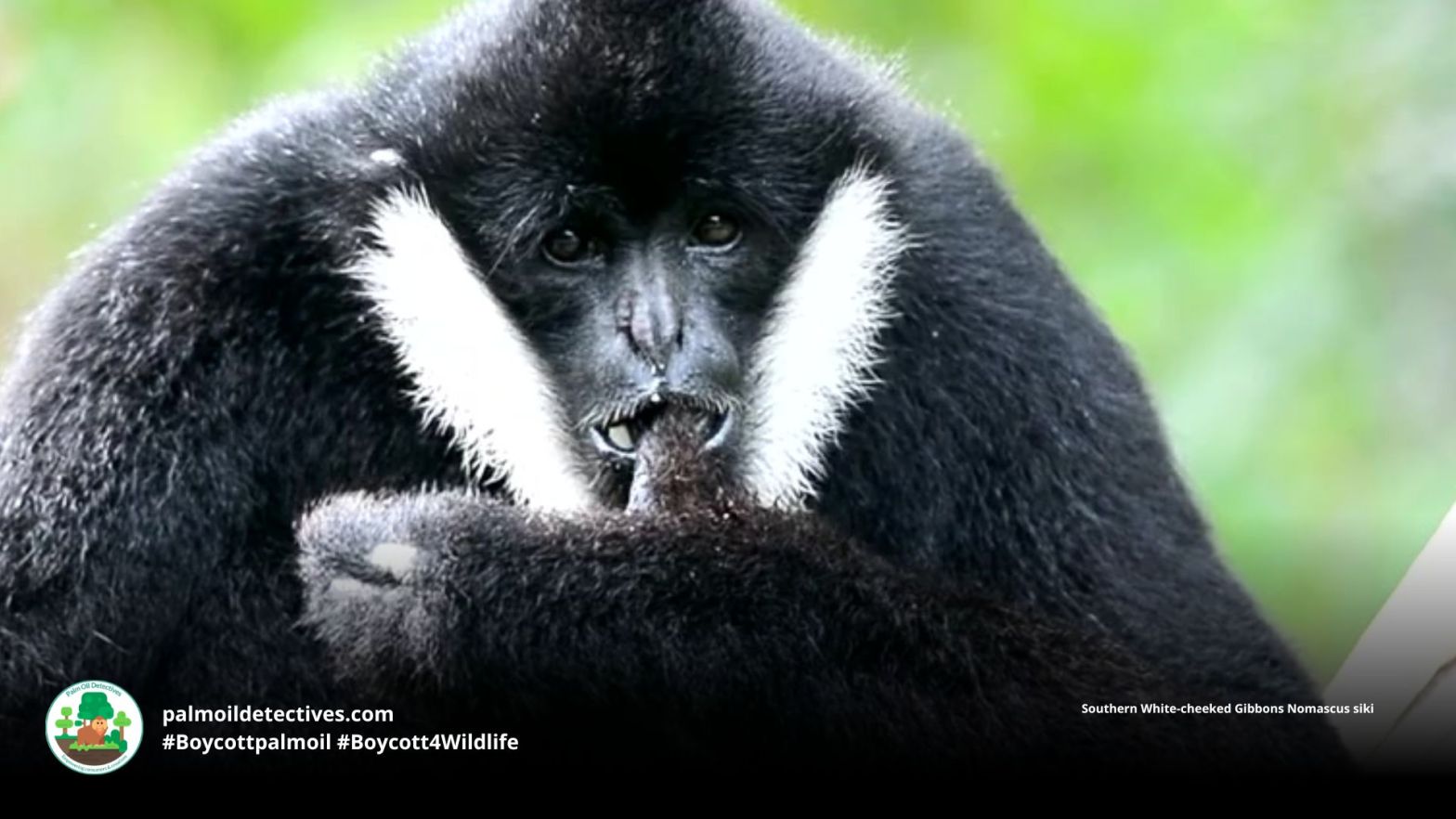
Southern White-cheeked Gibbons are melodic primates of Laos and Vietnan under threat by rubber plantations facing 80% population loss. Fight for them!
Northern Yellow-cheeked Crested Gibbon Nomascus annamensis
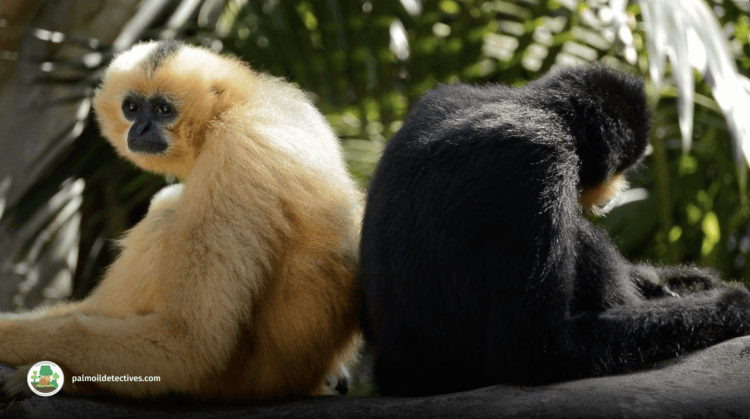
Northern Yellow-cheeked Crested Gibbons are Endangered in Cambodia Laos and Vietnam. They face extinction from deforestation, take action for their survival!
Northern White-cheeked Gibbon Nomascus leucogenys

Northern White-cheeked Gibbons are Critically Endangered in Vietnam, Laos due to hunting, pet trade, and palm oil deforestation. Take action, boycott palm oil!
Cao-vit Gibbon Nomascus nasutus
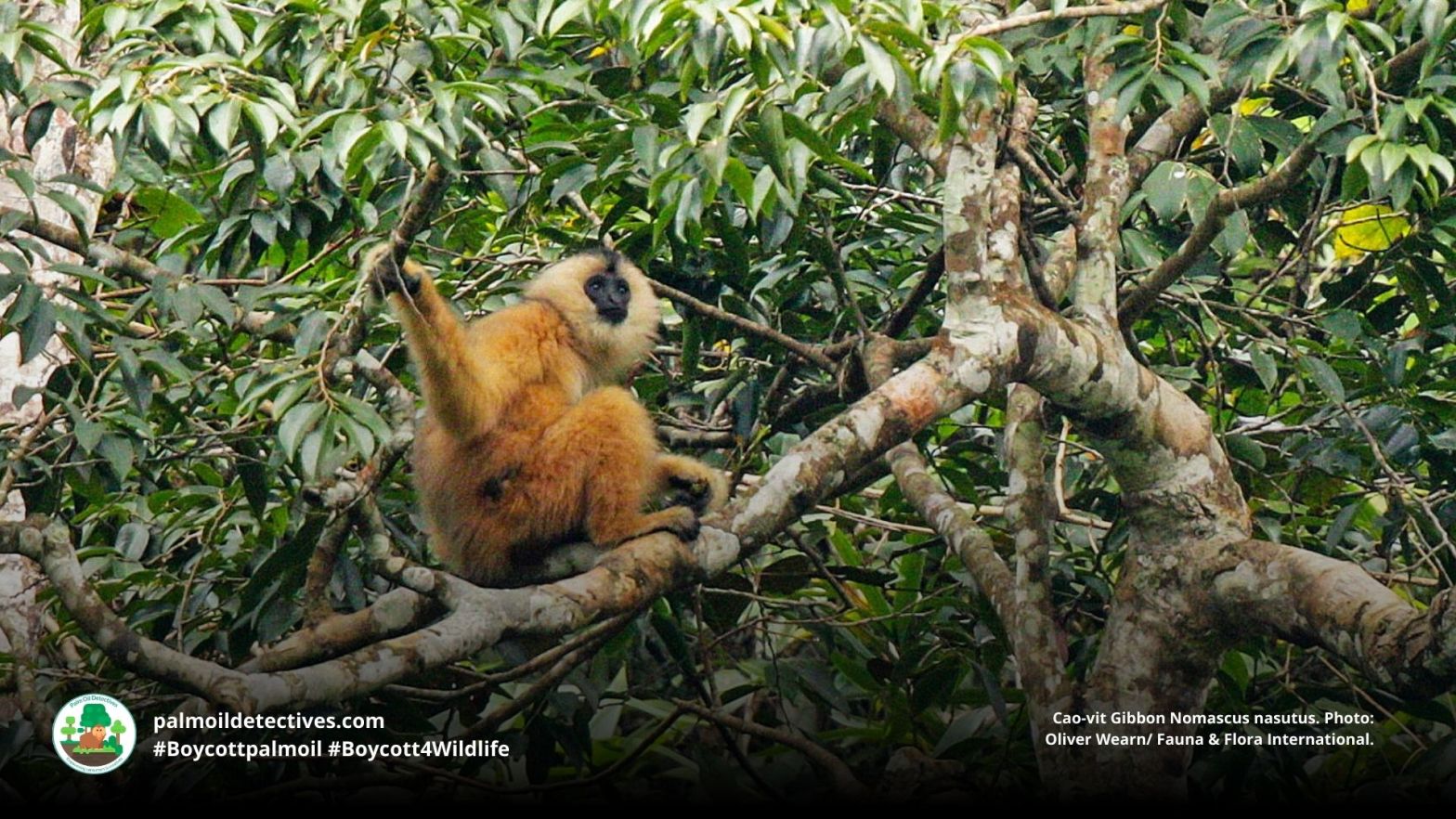
The Cao-vit gibbon, one of the world’s rarest primates, captivates the imagination with their melodic “cow-veet” calls, which echo like rainforest birdsongs. Research has found that they sing in regional accents to each other and form breeding pairs.
Arguably the world’s rarest gibbon they live in one forest patch straddling the Vietnam–China border. These critically endangered primates face myriad threats, including habitat destruction for timber and meat agriculture, inbreeding, and climate change. Immediate, concerted conservation action is essential to save these extraordinary gibbons from extinction.
Support indigenous-led conservation efforts to protect their habitat. Fight for their survival every time you shop. Use your wallet as a weapon and #BoycottMeat and be #Vegan #Boycott4Wildlife.
Black Crested Gibbon Nomascus concolor
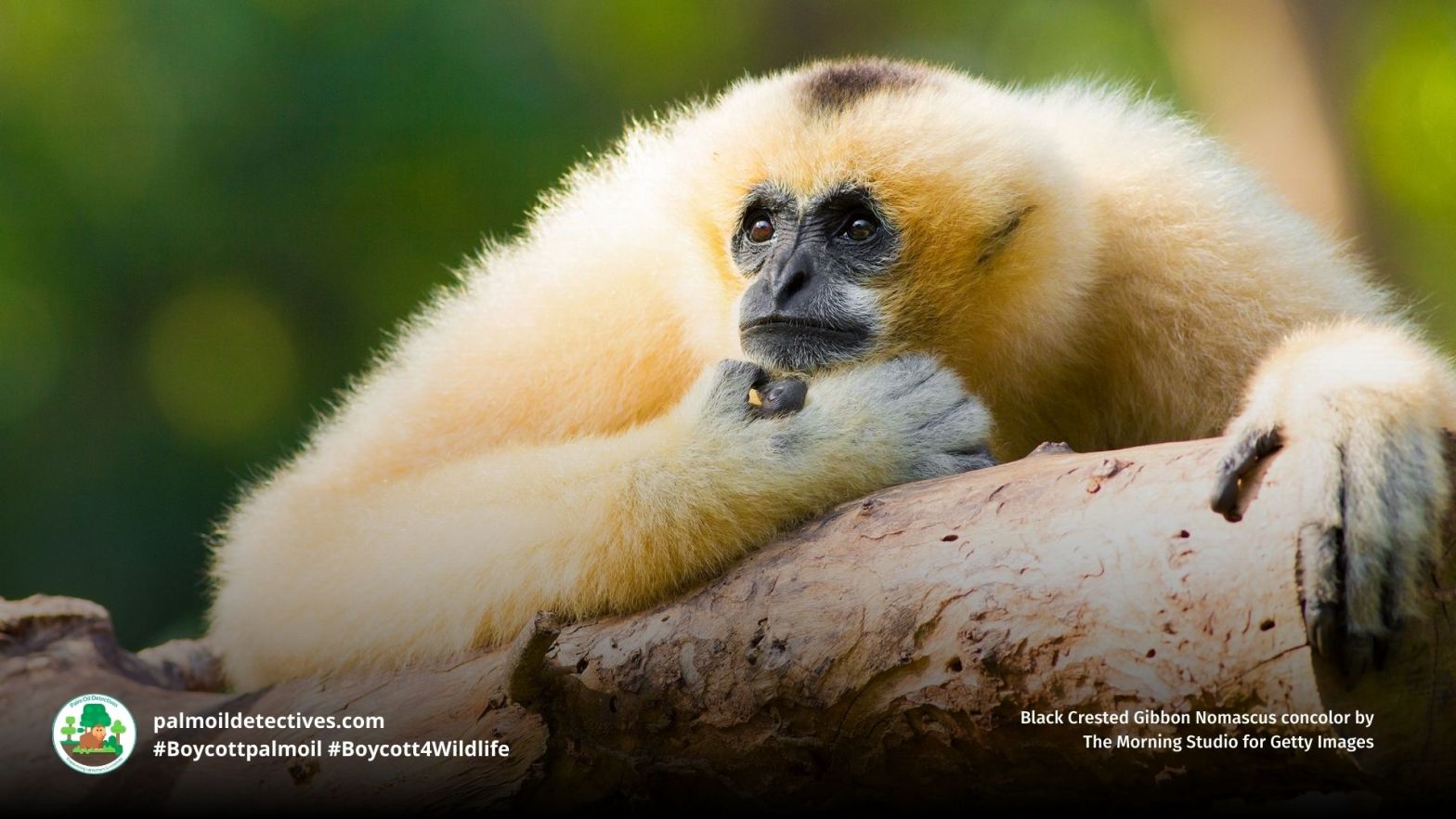
The Black-Crested Gibbon of the genus Nomascus is a truly enchanting primate, renowned for their melodic morning duets that echo through the forests of southern China, Vietnam, and Laos. What makes these calls even more remarkable is their regional variation—these gibbons sing with distinct “accents,” unique to their local populations. These complex songs not only strengthen bonds between mates but also serve as territorial markers, ensuring harmony within their fragmented forest homes.
Despite their beauty and ecological importance, Black-Crested Gibbons are at risk of extinction. Habitat destruction for agriculture, and logging, coupled with hunting for the bushmeat trade and the illegal pet trade, is rapidly shrinking their population. Protecting their future is vital for the health of their ecosystems. Take action now: Boycott the illegal wildlife trade, be #vegan and #Boycott4Wildlife.
Red-shanked Douc Langur Pygathrix nemaeus
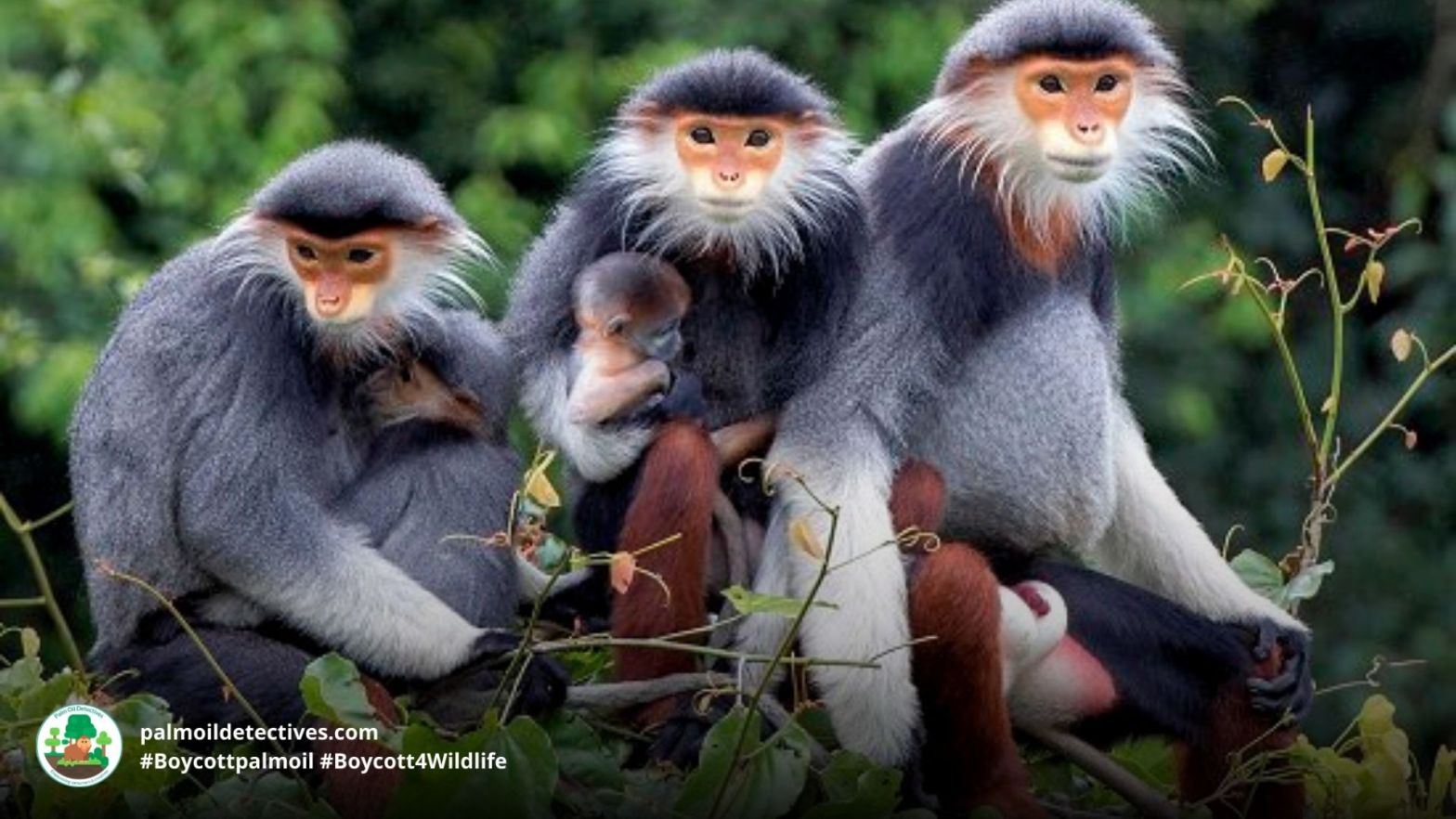
If you have never seen the Red-shanked Douc Langur, you are in for a real treat.
These vividly coloured creatures have a fairytale quality. They thrive in lush forests, from lowlands to mountainous regions, and even limestone habitats. However, they are facing imminent threats to their existence – hunting and palm oil deforestation.
By boycotting palm oil and embracing a vegan lifestyle, you’re not just helping them, but also our planet. The palm oil industry and meat industry directly and indirectly causes tropical deforestation, destroying the homes of countless animals, including the Red-shanked Douc Langur.
Every time you shop use your wallet as a weapon and #Boycottpalmoil, be #vegan and #Boycott4Wildlife
Elongated Tortoise Indotestudo elongata
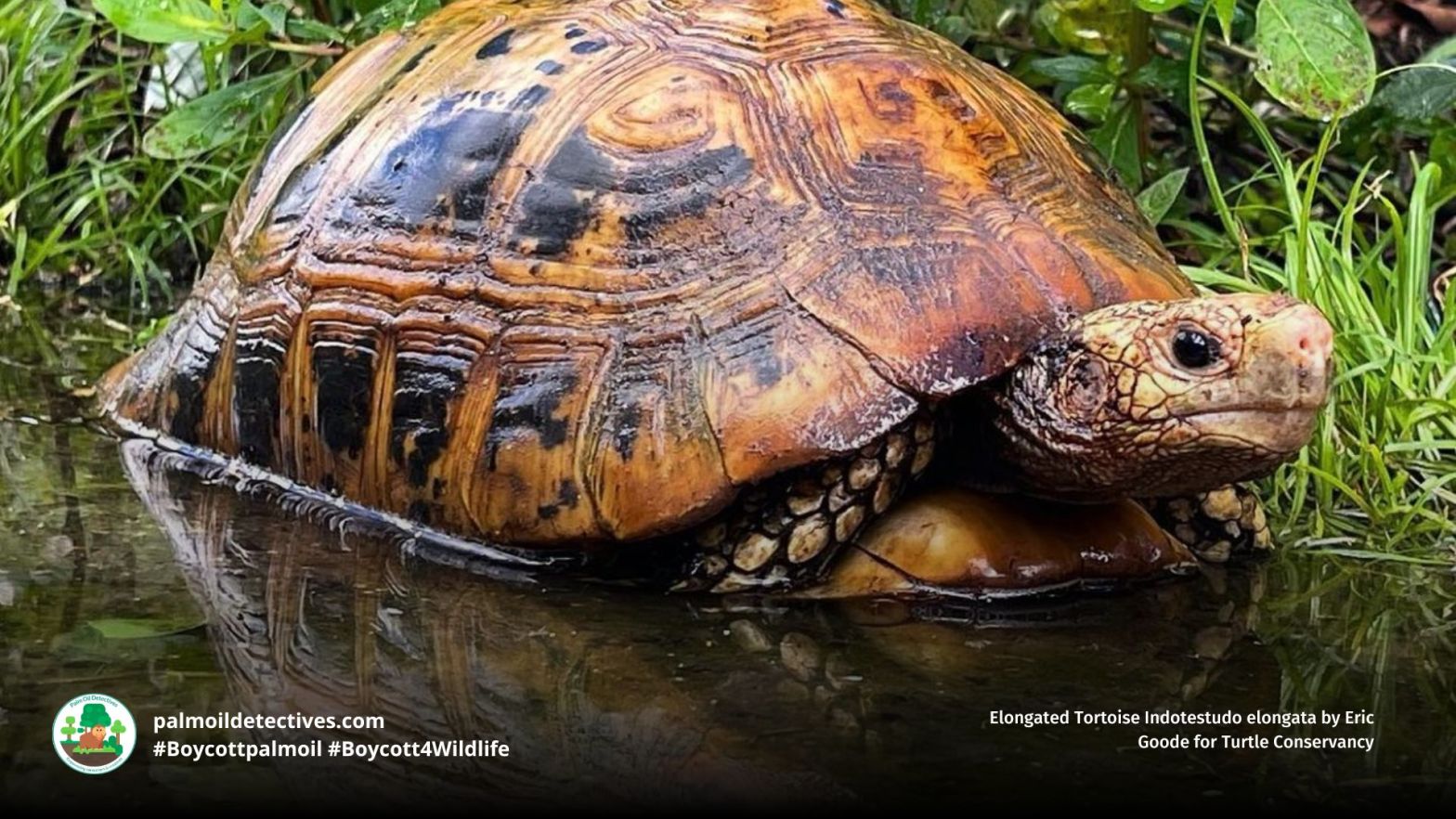
The elongated tortoise Indotestudo elongata is a Critically Endangered species native to South and Southeast Asia. They are renowned for their uniquely patterned and elongated shells and have vital roles as seed dispersers in tropical forests. However, their numbers have declined alarmingly due to palm oil deforestation, hunting, and the illegal wildlife trade.
Fewer than 20,000 mature individuals are estimated to remain in fragmented populations across their range, with significant declines reported in most countries. Deforestation for agriculture, including palm oil plantations and urbanisation has devastated their habitats, while poaching continues unabated. Fight for them every time you shop and boycott palm oil! #BoycottPalmOil #Boycott4Wildlife
Sun Bear Helarctos malayanus
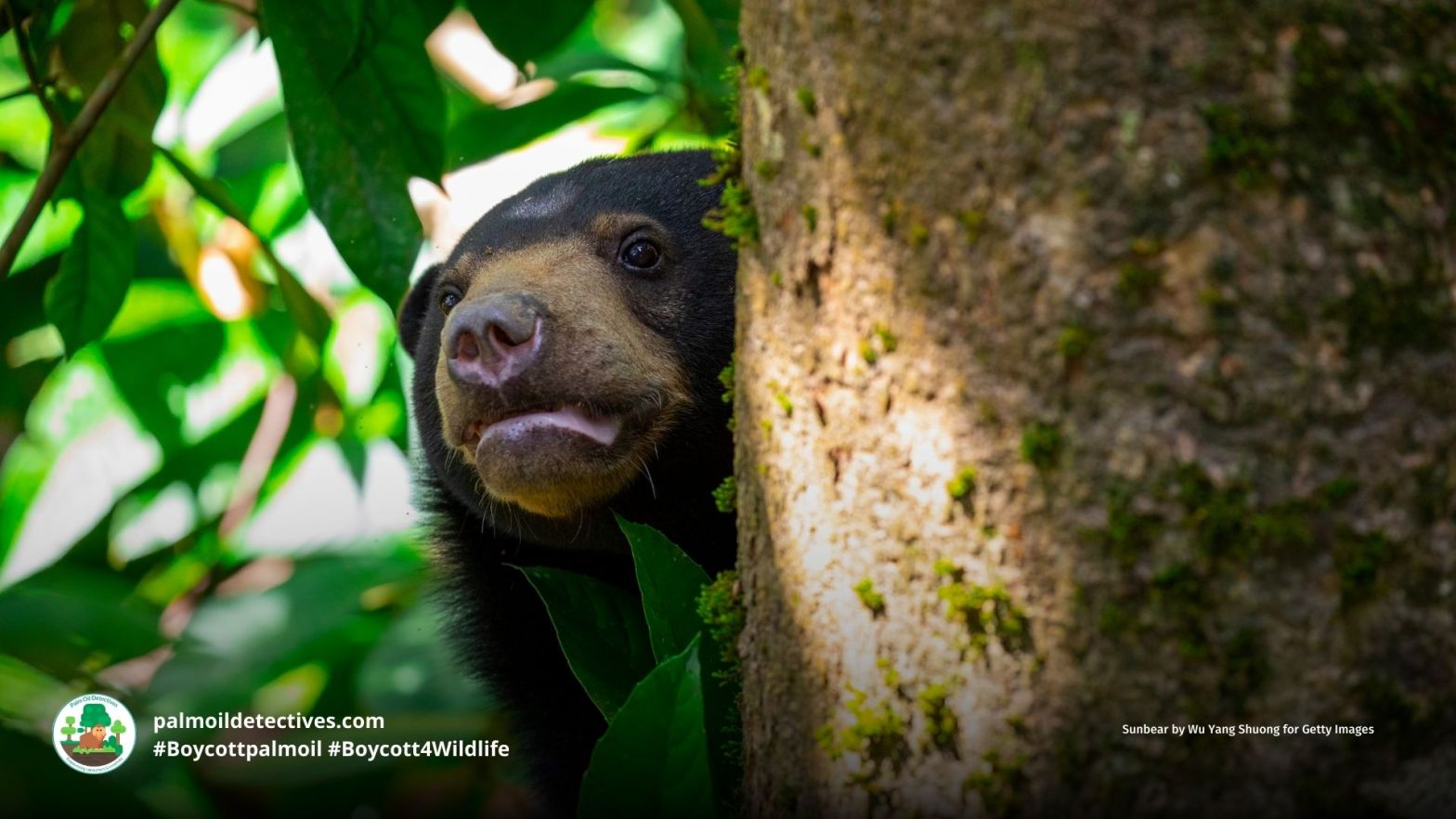
Sun bears are playful and energetic small bear species from South East Asia who are increasingly becoming marginalised by deforestation and trade for their body parts.
With their glistening golden crescent chest markings, these bears embody uniqueness and bold beauty. Despite their tenacity palm oil and timber deforestation is an unmatched threat to their survival. They are now vulnerable from this and other threats and have lost 50-80% of their range. Help to protect them and #Boycottpalmoil #Boycott4Wildlife in the supermarket!
Hairy-nosed Otter Lutra sumatrana
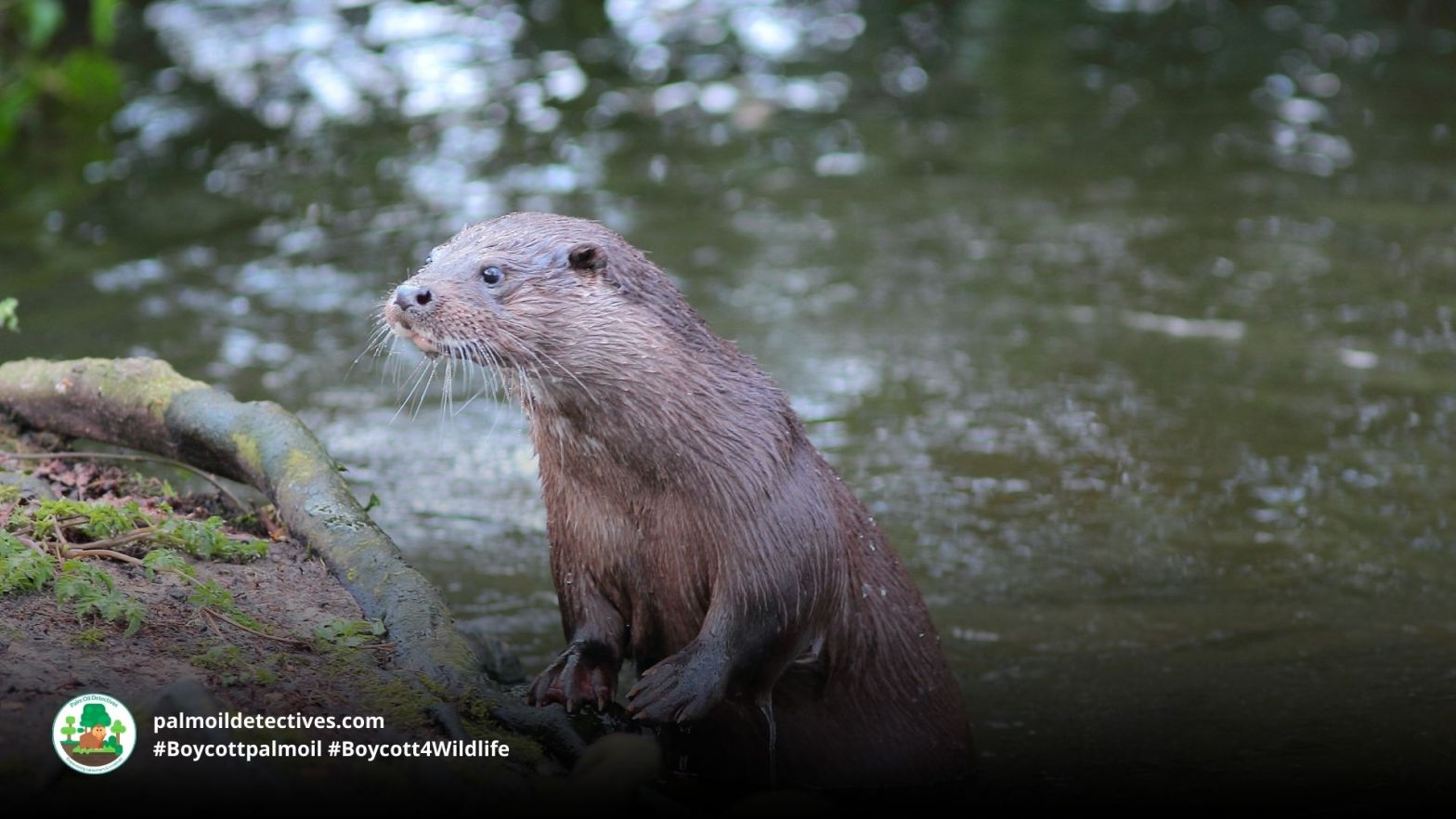
The Hairy-nosed Otter is one of the world’s rarest and least understood otter species, native to Southeast Asia. Distinguished by the unique fur covering its rhinarium (nose), this elusive mammal inhabits freshwater and coastal ecosystems, including mangroves and peat swamp forests. Now extinct in India and Myanmar, their numbers are dropping in other countries. They are severely under threat from habitat destruction for palm oil and illegal hunting. Hairy-nosed Otter have no known conservation projects in place to protect them. We urge you to boycott products linked to deforestation like palm oil and meat. Use your wallet as a weapon to fight for their survival each time you shop #BoycottPalmOil #Boycott4Wildlife!
Asia: Species Endangered by Palm Oil Deforestation
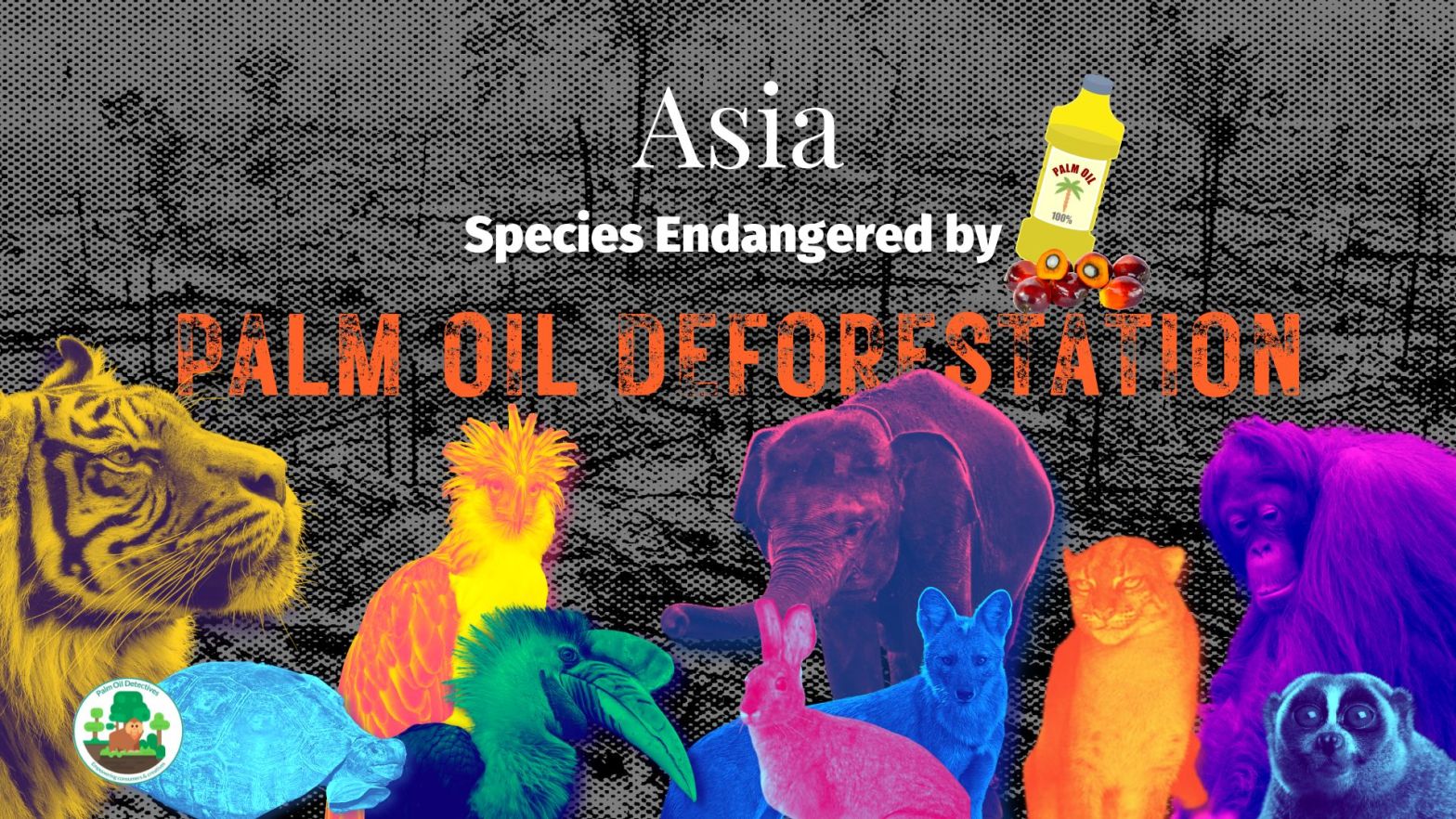
Discover the diverse wildlife of Asia and the devastating effects of palm oil deforestation. Learn how to protect these species and #BoycottPalmOil. #Boycott4Wildlife
 Palm Oil Detectives