
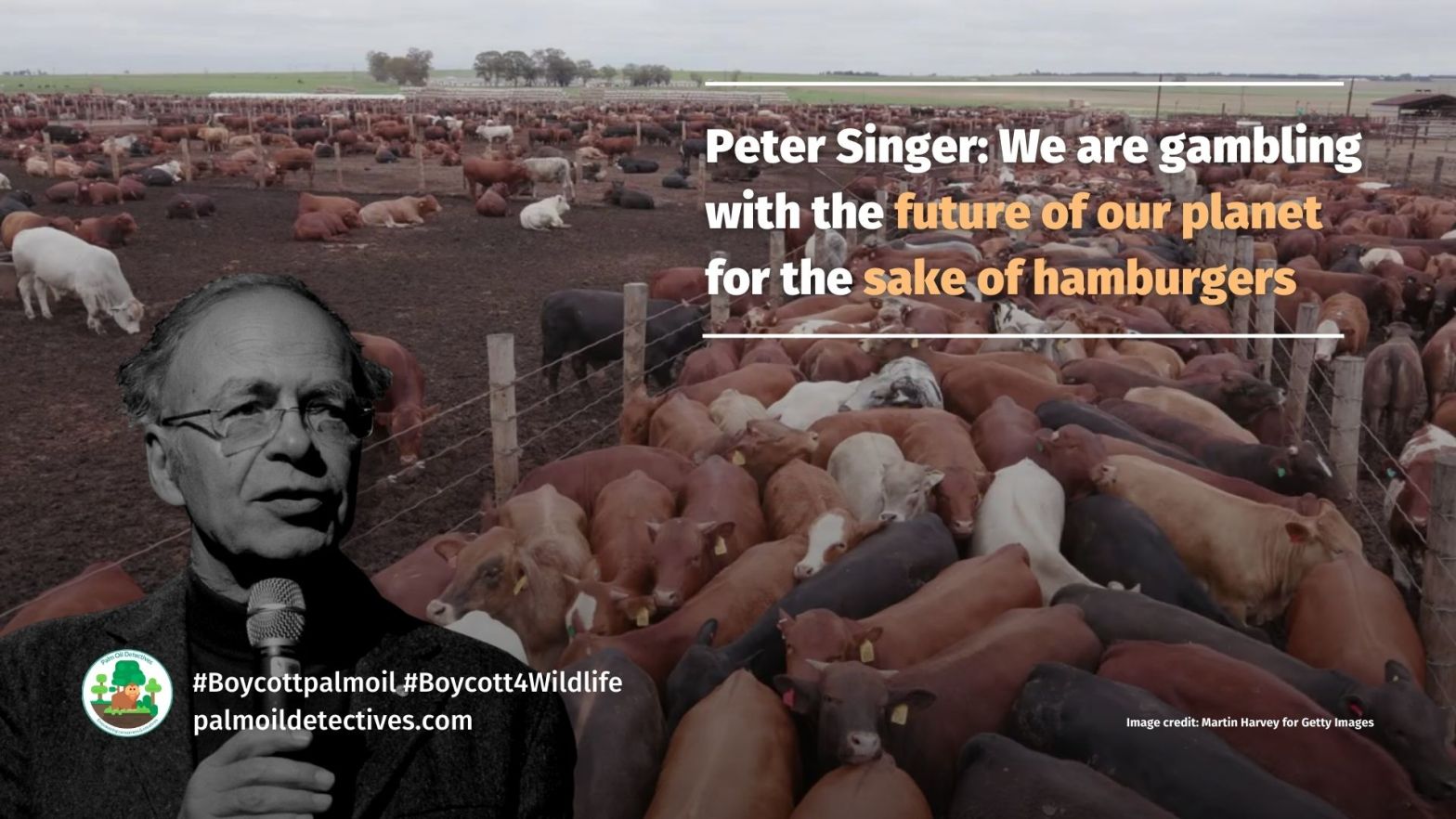
Ethicist Peter Singer warn our consumption of meat and dairy risks the planet’s future driving climate change, food security and animal extinction. Be vegan!
Category Archives: News
African Forest Elephants Help Fight Climate Change
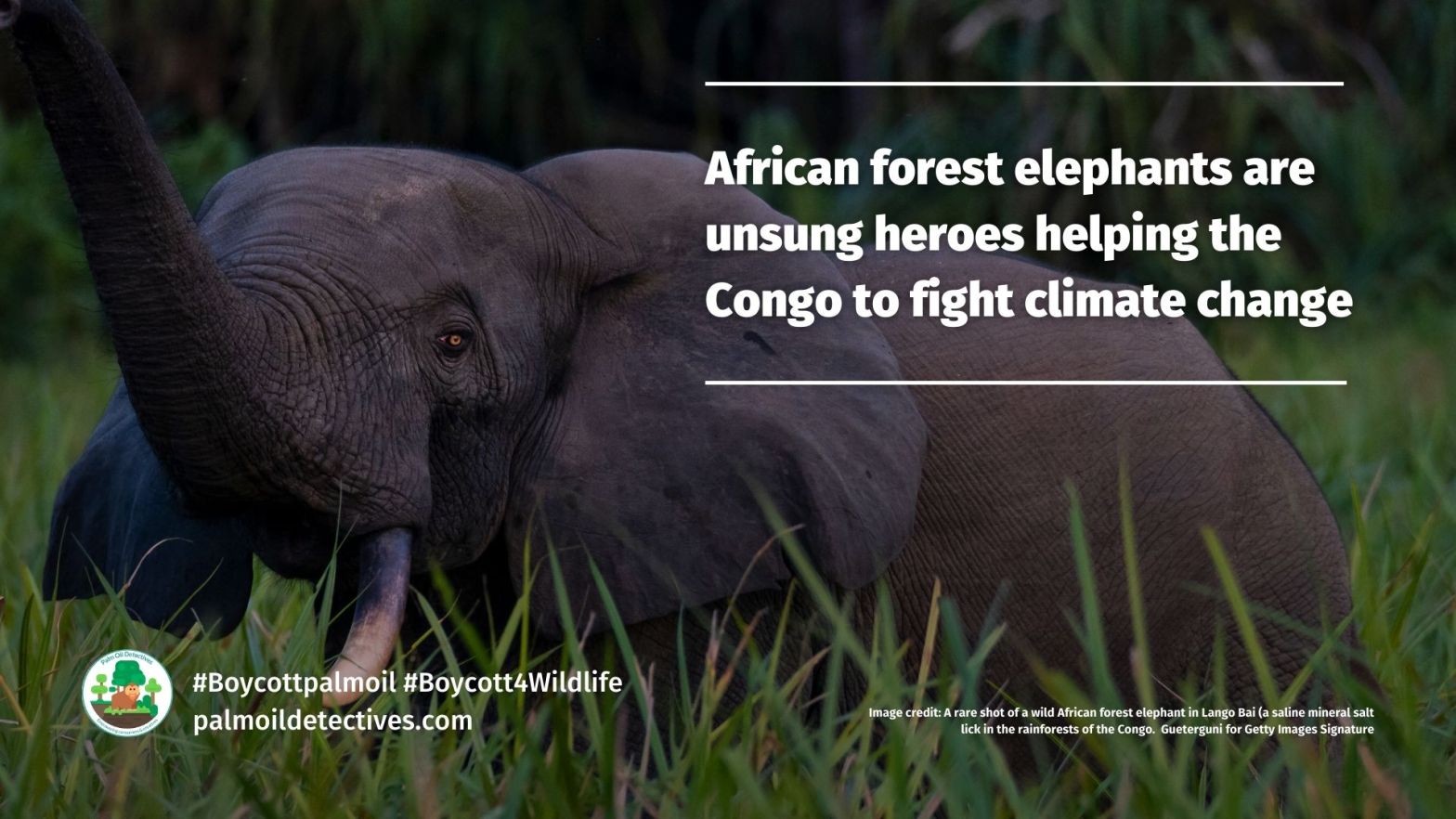
Discover the awe-inspiring role of African forest elephants in the Congo Basin—nature’s master gardeners who literally shape the world around them! These gentle giants roam through muddy, mineral-rich paradises called baïs, fostering the growth of carbon-absorbing trees that make our planet healthier. By tending to these unique landscapes, they are the unsung heroes in the fight against climate change. Want to ensure these ecological architects keep doing their vital work? Join the movement to protect their habitat—say no to palm oil and adopt a vegan lifestyle! 🐘🌳#BoycottPalmOil #BeVegan #Boycott4Wildlife
Strange Species Could Vanish Before Discovery

Scientists have described around 1.5 million species on Earth – but how many are still out there to be discovered? This is one of the most heated debates in biology. Discounting microbes, plausible estimates range from about half a million to more than 50 million species of unknown animals, plants and fungi.
Our present knowledge is just scratching the surface. Evolution has had billions of years to create biologically active compounds that can combat human diseases, generate genetic diversity that could save our food crops from disastrous pathogens, and spawn ecological innovations that can inspire marvellous new inventions. Help the rarest and most cryptic animals, plants and fungi to survive when you #BoycottPalmOil adopt a #vegan lifestyle and #Boycott4Wildlife
Sulawesi Babirusa Babyrousa celebensis
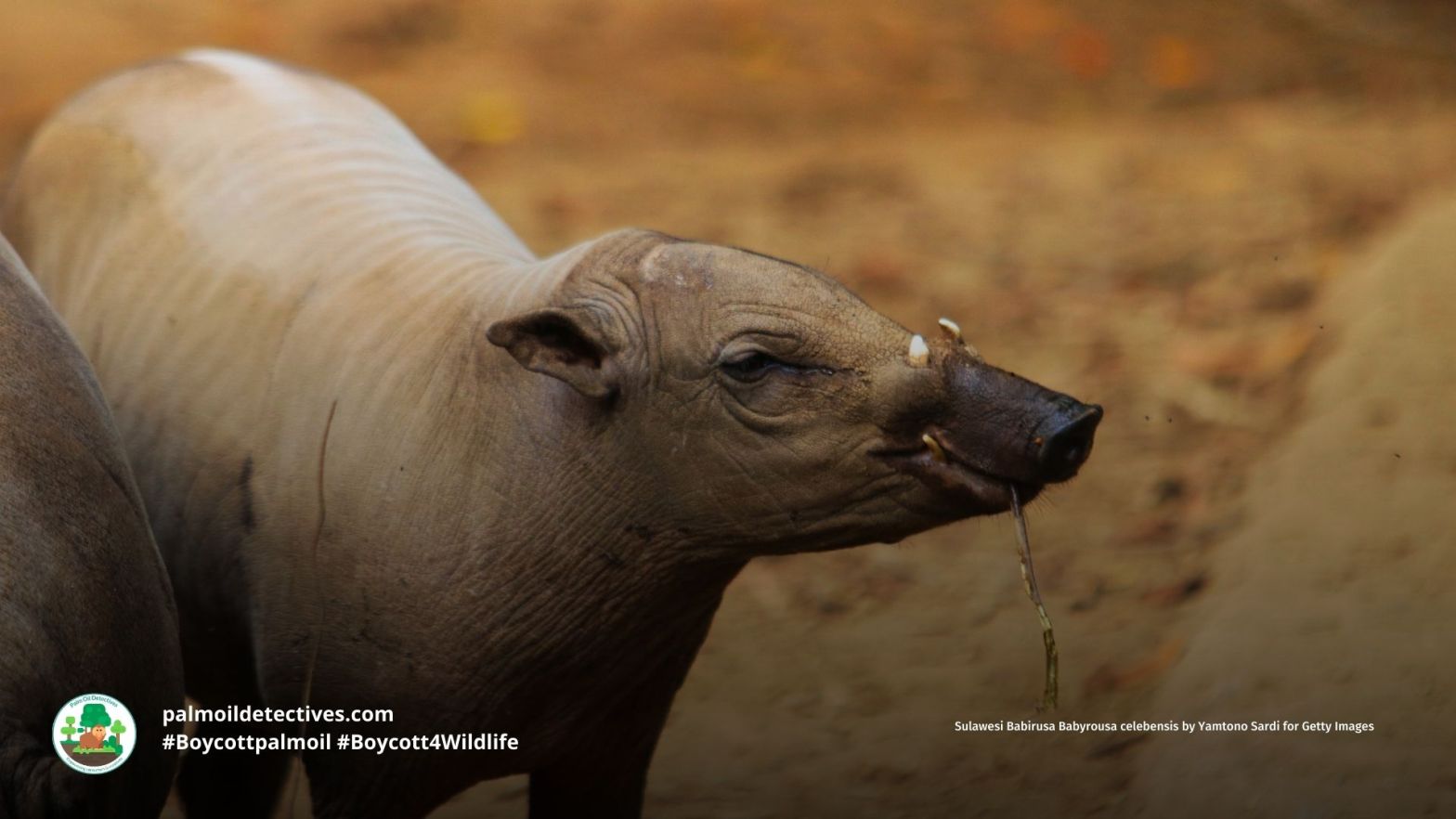
The Sulawesi Babirusa also known as the North Sulawesi Babirusa are wild pigs are found on Sulawesi Island along with nearby islands Lembeh, Buton, and Muna in #Indonesia.
They have a mottled grey-and-brown skin that helps them blend into their forested habitat. One remarkable feature of babirusas is their large tusks. They have two pairs of elongated canine teeth that curve upward and backward towards their heads.
For males, their upper canines grow so long that they protrude through holes in the flesh on the top of their snouts. Sadly, these unique creatures are threatened by deforestation caused by the palm oil and timber industries along with hunting and mining. You can help by making conscious choices. Consider going vegan to support the movement against palm oil, and join the call to boycott palm oil and protect wildlife with the hashtags #Vegan, #Boycottpalmoil, and #Boycott4Wildlife. Together, we can make a difference for the Sulawesi Babirusa and their habitat.
Alta Floresta titi monkey Plecturocebus grovesi

The enchanting Groves Titi Monkey, also referred to as the Alta Floresta titi #monkey or Mato Grosso titi monkey went from being completely unknown to being one of the most critically endangered #primates in #SouthAmerica and the world. They made a remarkable entry into the spotlight only recently in 2016 when they were classified by scientists. They belong to the Eastern Amazonian clade of the red-bellied titi monkey (P. moloch) group and are known for their vividly coloured fur and rowdy rainforest vocalisations. They face multiple anthropogenic threats in #Brazil including hunting, #goldmining, #palmoil, #meat and #soy #deforestation and hydroelectric #dams. Help them to survive each time you shop, be #vegan and #Boycottpalmoil #Boycott4Wildlife
Cutting Ultra-Processed Foods Could Save Lives

Recently, the CEO of breakfast giant Kelloggs Gary Pilnick promoted the benefits eating breakfast cereal for dinner as a way for people to cope with the increased cost of living and food:
“Cereal for dinner is something that is probably more on trend now, and we would expect [it] to continue as that consumer is under pressure,” Pilnick told CNBC about his stable of ultra-processed foods like Fruity Loops, Special K, and Frosted Flakes. He takes home a 4 million USD salary each year.
Many research studies released in the past decade have shown a clear link between the consumption of ultra-processed foods: [high sugar and high fat convenience foods, sugary breakfast cereals, processed baked goods and biscuits] with all of the biggest diseases that kill the most people: ischaemic heart disease, stroke, diabetes, obesity, dementia and many cancers.
Palm oil is a saturated fat that is present in many ultra-processed foods. Multiple studies including one by the World Health Organisation have linked palm oil consumption to increased mortality from heart disease and stroke. The UK’s National Health Service, Columbia Irving Medical Centre and others warn people against consuming palm oil due to its serious health risks.
Bougainville Monkey-faced Bat Pteralopex anceps
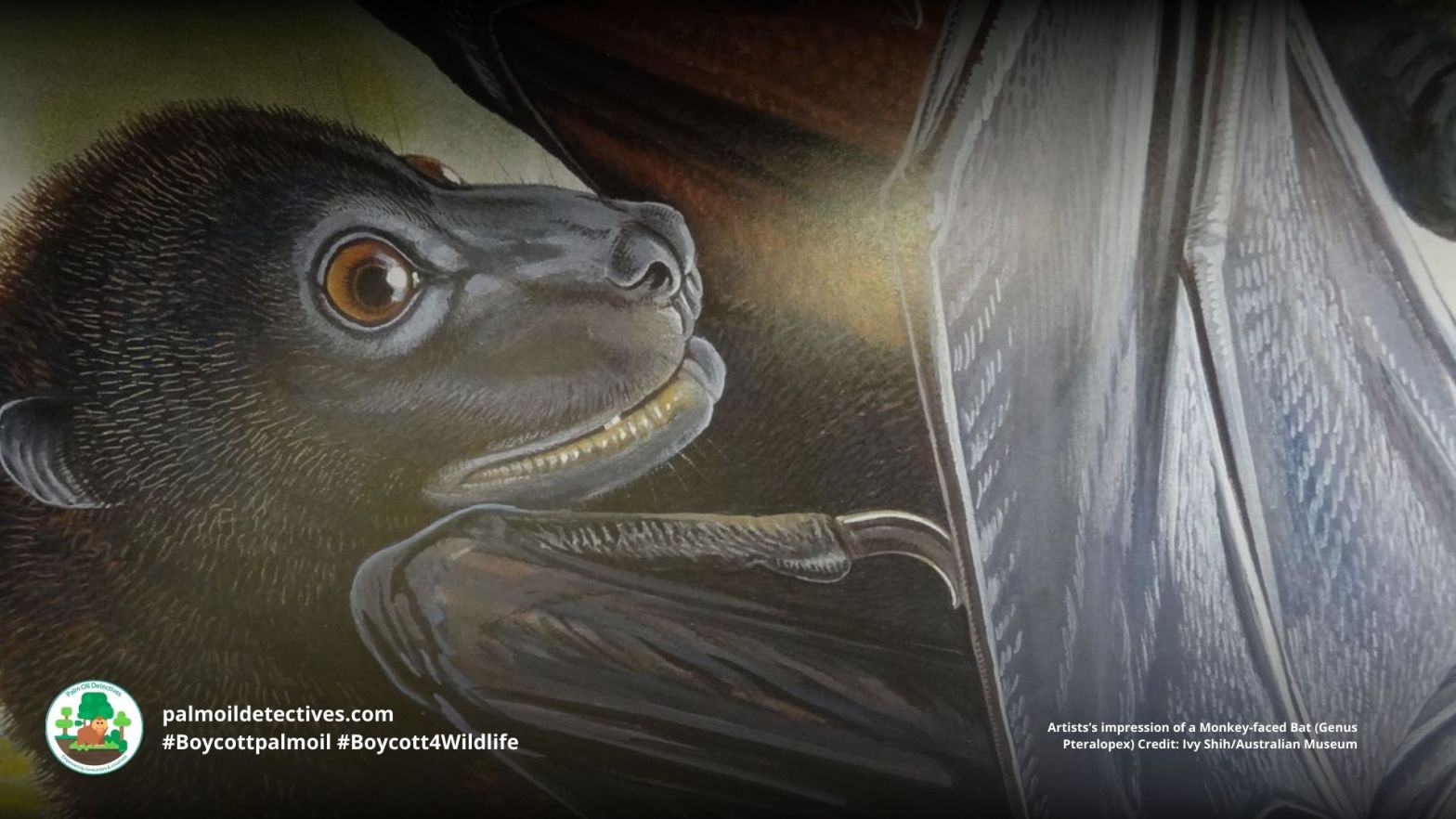
In the verdant, high-altitude forests of Bougainville Island, Papua New Guinea, and Choiseul Island, Solomon Islands, lives an intriguing creature—the Bougainville Monkey-faced bat or, as some call them, the Bougainville Flying Monkey. These bats are the titans of their family, boasting arm spans stretching impressively between 14.1 to 16 cm. They are endangered, mostly from palm oil and mining deforestation and hunting. Help them to survive every time you shop and #Boycottpalmoil #Boycott4Wildlife
PalmWatch: A Tool to Hold Palm Oil Greenwashers to Account
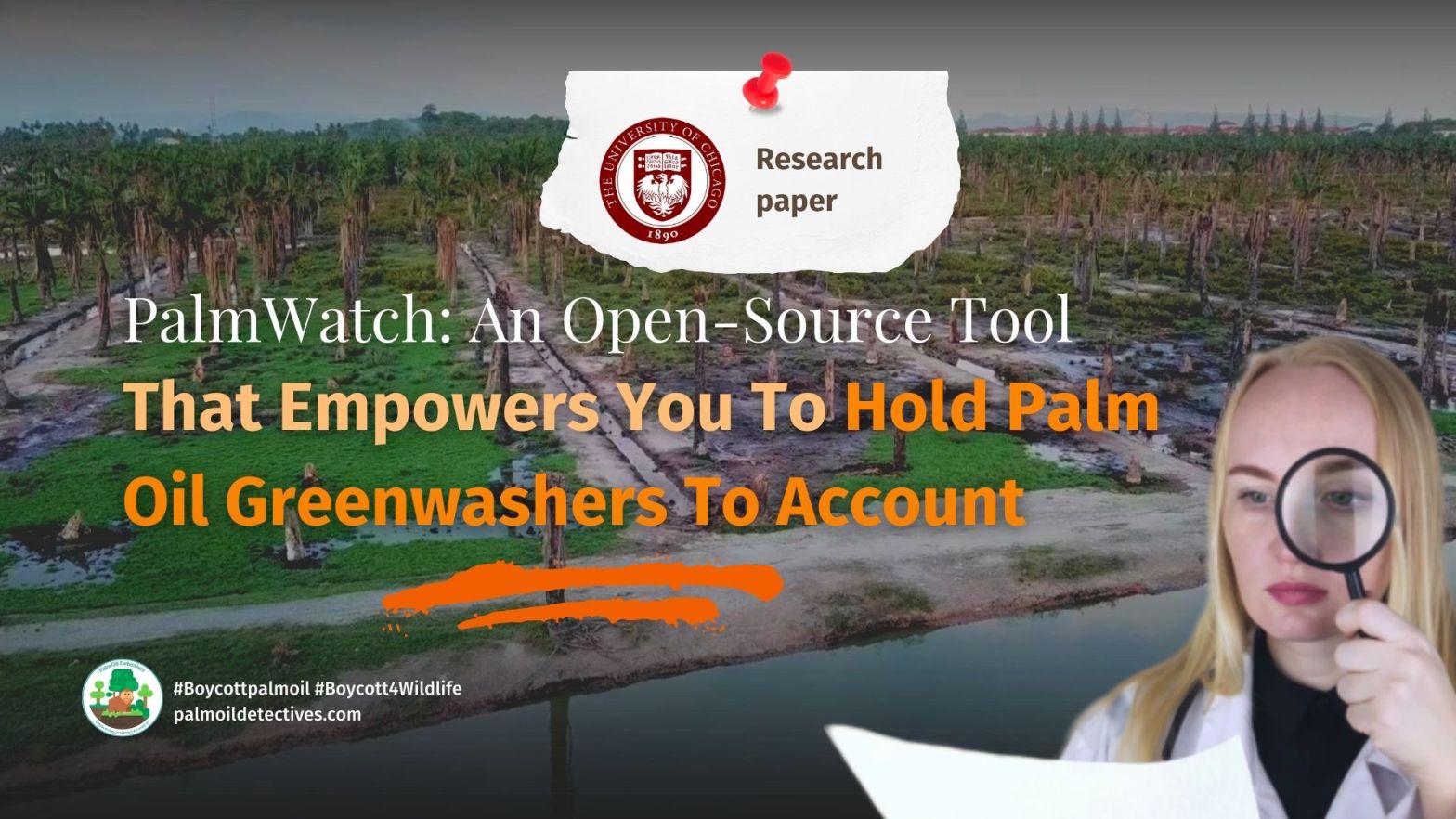
A groundbreaking open-source tool by the University of Chicago called PalmWatch, shines a light on the darkest parts of the palm oil industry.
PalmWatch is a free web-based tool that reveals links between major multinational brands using supposedly “sustainable” palm oil, and palm oil supply chain. This means that concerned consumers, animal rights advocates and human rights advocates can clearly see the toll of palm oil ecocide in their daily supermarket purchases.
Covering hundreds of thousands of kilometres, PalmWatch gives everyone open-source, free and unprecedented access to what “sustainable” palm oil really looks like.
More than simply a tool, PalmWatch is a clarion call to consumers to look carefully at their purchases. And where possible, to boycott brands causing the ecological crisis of tropical deforestation.
Help animals and indigenous peoples and #BoycottPalmOil #Boycott4Wildlife every time you shop!
Apes Enjoy Joking and Teasing Each Other
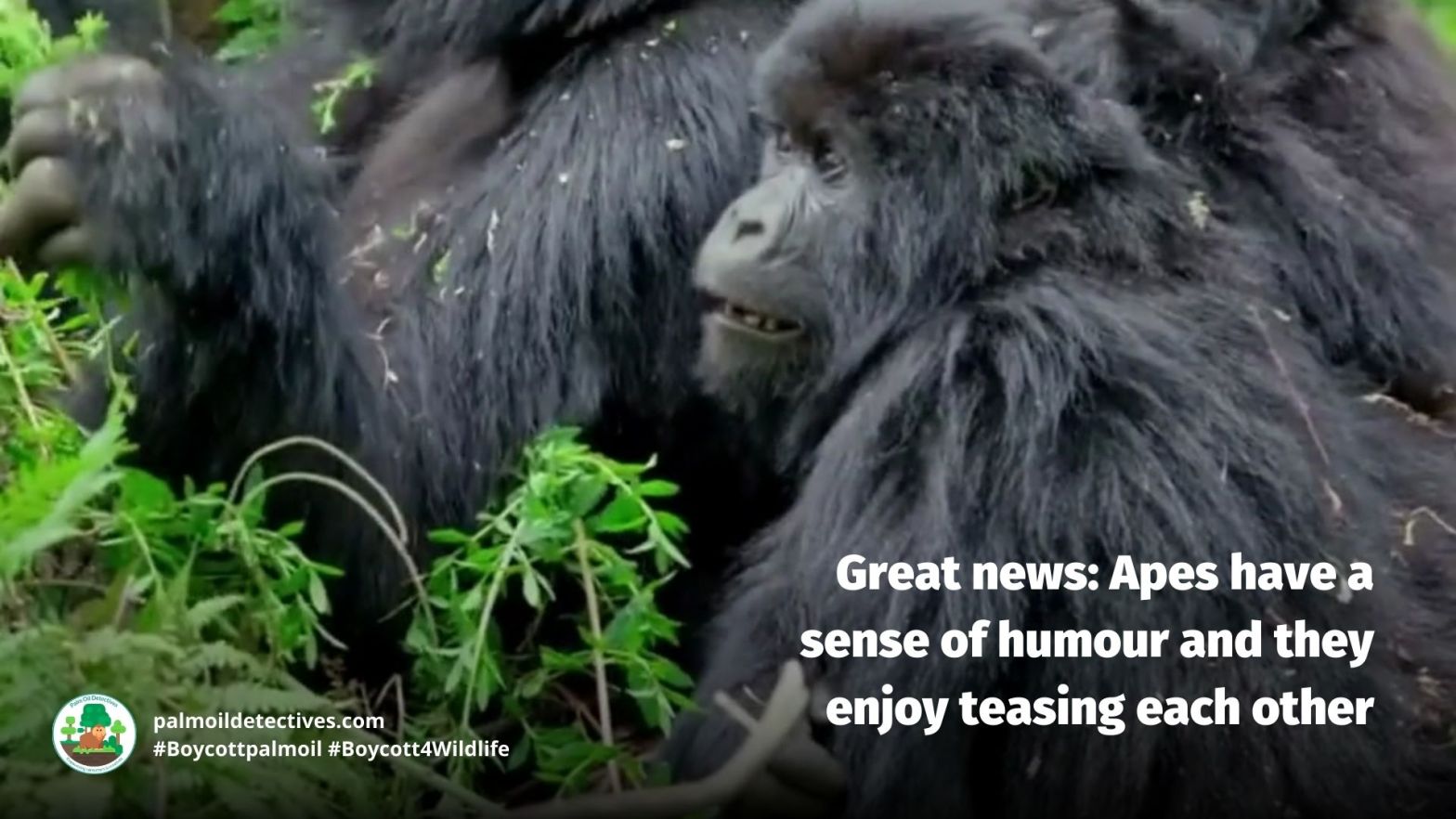
New research finds that it’s not only human babies who love to playfully tease each other. Researchers reasoned that since language is not required for this behaviour, similar kinds of playful teasing might be present in non-human animals such as chimpanzees, bonobos, gorillas and orangutans. Now cognitive biologists and primatologists have documented playful teasing in four species of great apes. Like joking behaviour in humans, ape teasing is provocative, persistent, and includes elements of surprise and play. Because all four great ape species used playful teasing, it is likely that the prerequisites for humour evolved in the human lineage at least 13 million years ago.
Buy Palm Oil Free Chocolate This Easter

Palm oil is linked to death, ecocide, deforestation and destruction. So this Easter, make sure you look out for palm oil free brands and actively avoid dirty palm oil.
Jerdon’s Courser Rhinoptilus bitorquatus
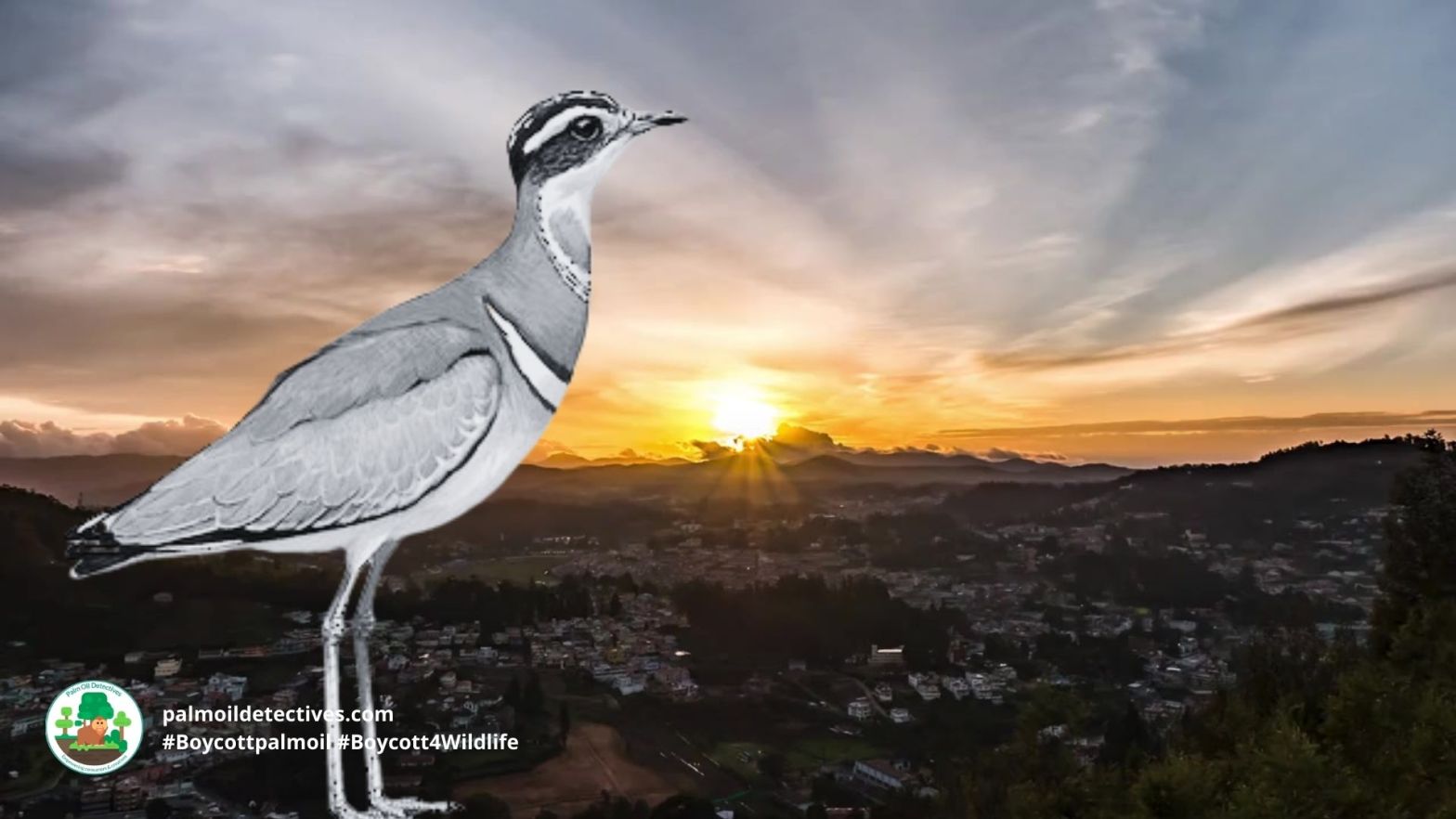
The Jerdon’s Courser is a rare and captivating nocturnal #songbird belonging to the pratincole and courser family Glareolidae. These #birds are endemic to #India in the Eastern Ghats region of Andhra Pradesh. Currently they are only known to live in the Sri Lankamalleswara Wildlife Sanctuary, where they reside in sparse scrub forest with patches of bare ground and are threatened by #palmoil #deforestation, help them to survive and #Boycottpalmoil #Boycott4Wildlife
Air Pollution from Palm Oil: A Human Rights Issue

Forest-fire haze from Indonesian palm oil deforestation is a crisis! Learn how toxic air pollution is a human rights issue affecting all of Southeast Asia
Colombian Red Howler Monkey Alouatta seniculus
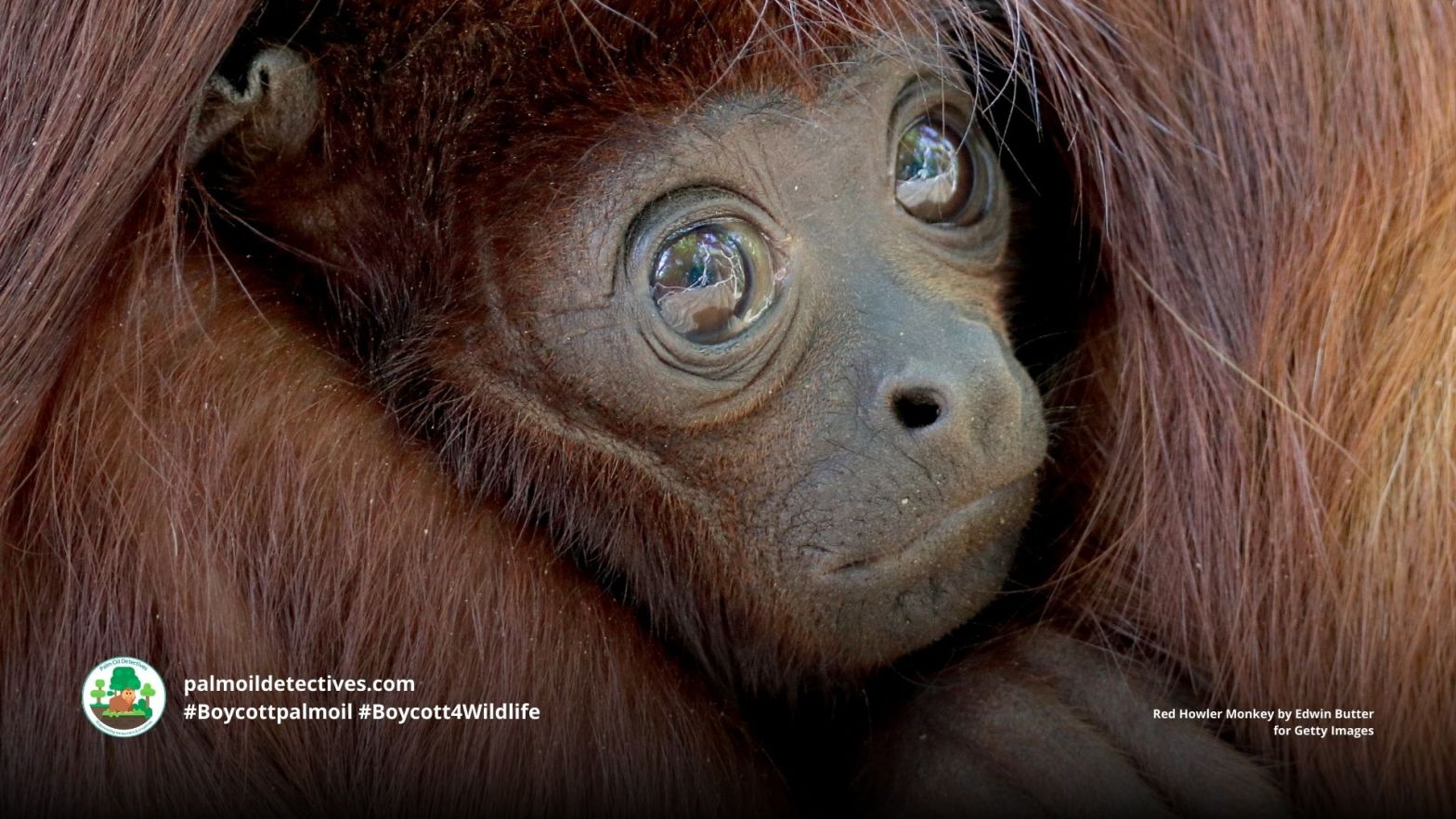
Red howlers are the largest of the howler monkey species. They have dense and vividly coloured fur that ranges from brown to dark red, with gold or bright orange undersides – the colour can vary based on their age and habitat. Their bare, dark faces contrast with the surrounding fur. They have stunning and characterful faces with stubby noses, wide jaws, and thick beards. These beautiful #monkeys face multiple threats including palm oil, soy and meat deforestation, the construction of #hydroelectric dams, #hunting and human persecution. Help them to survive each time you shop, #BoycottGold #Boycottpalmoil #Boycott4Wildlife
Palm Oil Increases Deaths of Baby Macaques
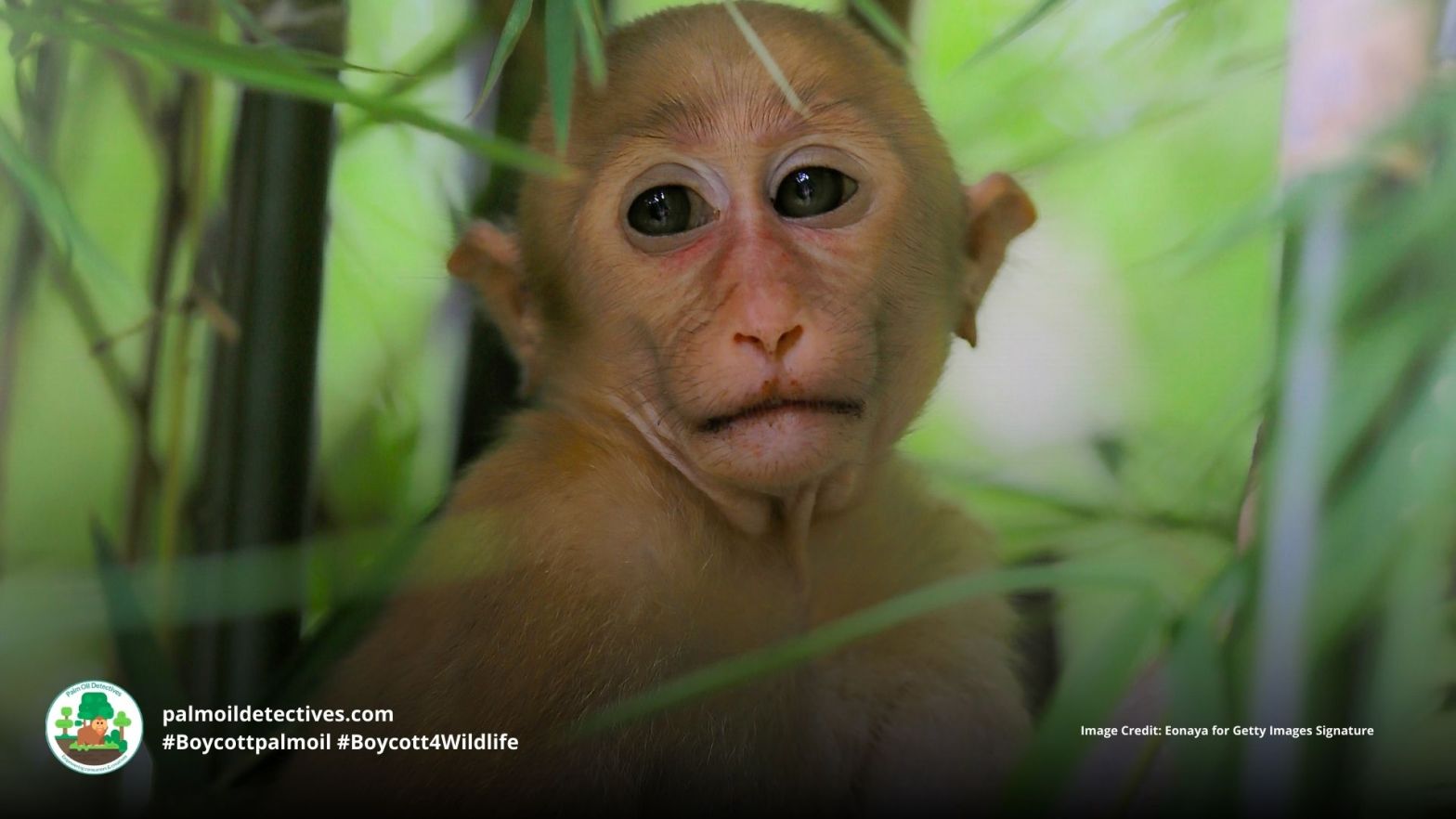
In Peninsular Malaysia, a new study published in Cell Biology by a team led by Dr Anna Holzner of German Centre for Integrative Biodiversity Research (iDiv) Halle-Jena-Leipzig has found that infant mortality rates among wild southern pig-tailed macaques are alarmingly high due to frequent visits to oil palm plantations.
These plantations expose the infants to increased risks from predators, human encounters, and harmful agricultural chemicals, potentially affecting the development and survival of infant macaques. The study, conducted in collaboration of international researchers, observed that prolonged exposure to these plantations during infancy triples the likelihood of death.
The study suggests that pesticides used in agriculture could cross the placental barrier or be transmitted through breastmilk, impacting fetal development and health. This significant research underlines the urgent need for eco-friendly agricultural practices to protect wildlife and human communities near plantations. Take action and join the movement to #Boycottpalmoil and #Boycott4Wildlife every time you shop!
Sulu Hornbill Anthracoceros montani
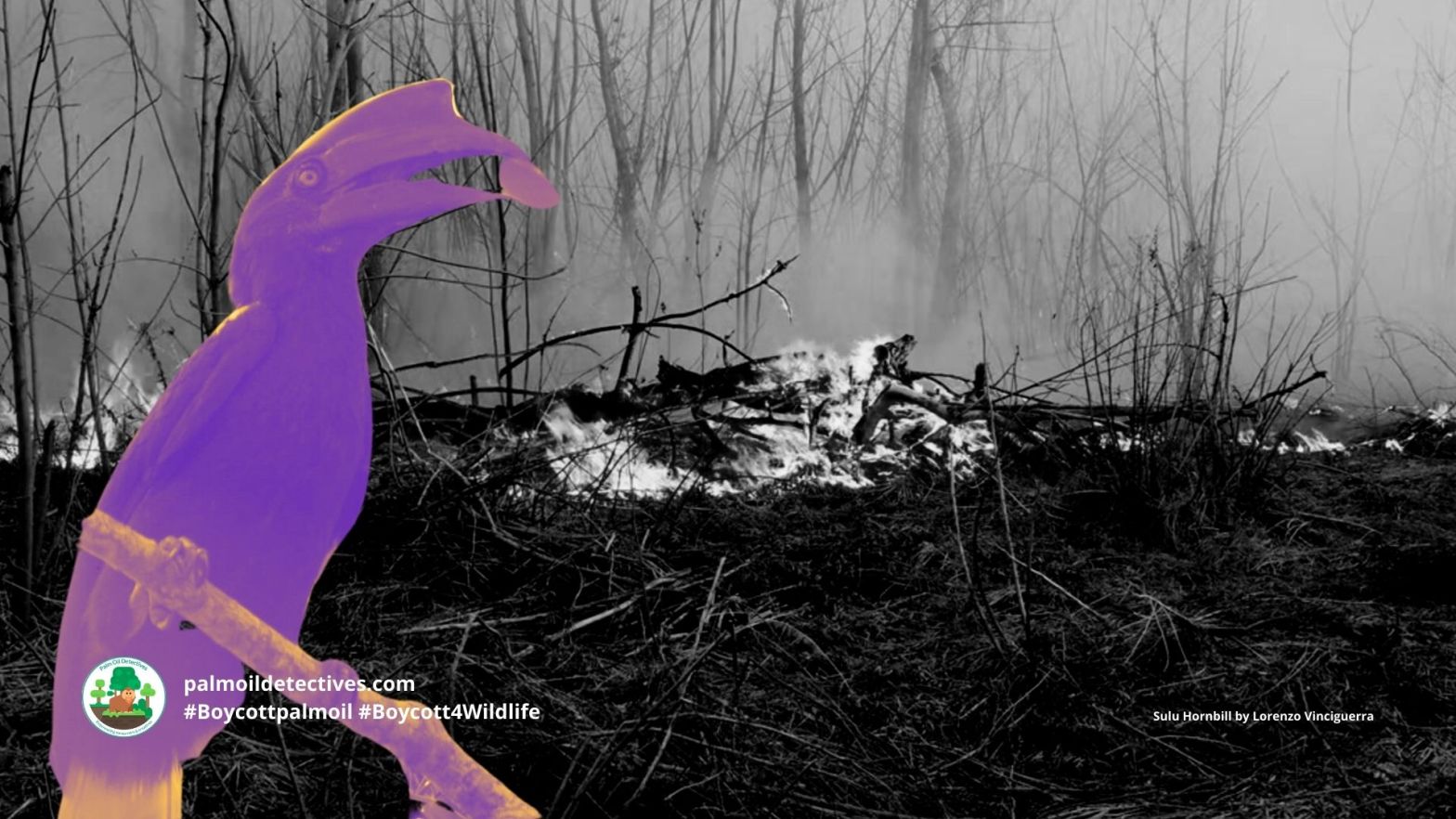
The Sulu Hornbill is one of the rarest birds in the world. They are large and almost entirely black except for a white tail, with a thick black bill, a black casque, and black skin around the eye. Males have pale eyes, females have brown eyes and a smaller casque. These striking birds are native to the Sulu Islands, possibly now only found on Tawi-Tawi due to hunting and palm oil deforestation throughout their range. In 2018 there was only a few dozen left. Help their survival and #Boycottpalmoil #Boycott4Wildlife
UK Pressuring Forests For Palm Oil and Beef
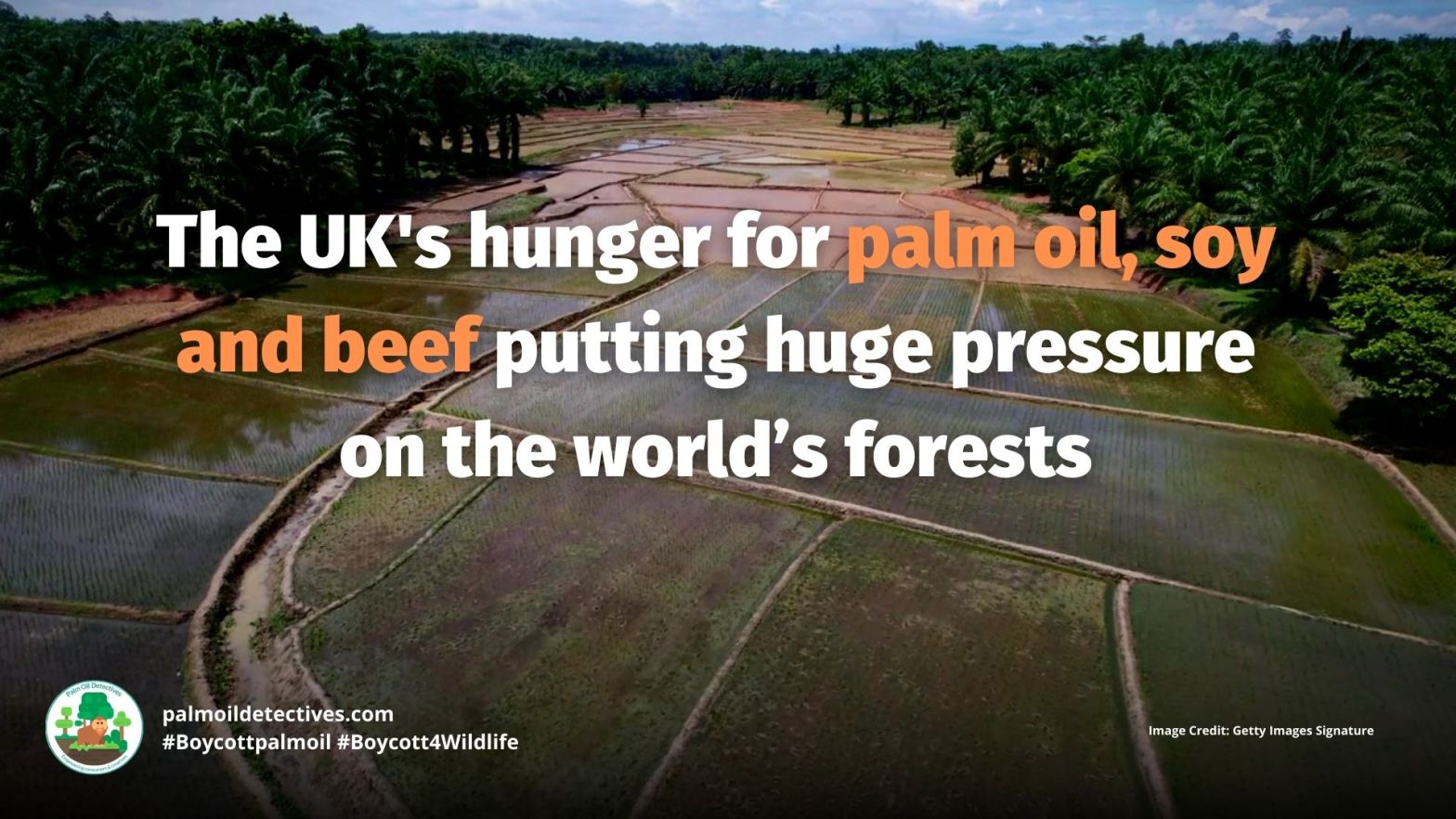
Urgent call to action! 🌍 #UK’s heavy use of #palmoil #soy & #beef fuels global #deforestation. Demand stricter regulations & transparency. Make every purchase count and #Boycottmeat #BoycottPalmOil #Boycott4Wildlife, learn more: https://wp.me/pcFhgU-78V
Campbell’s Mona Monkey Cercopithecus campbelli
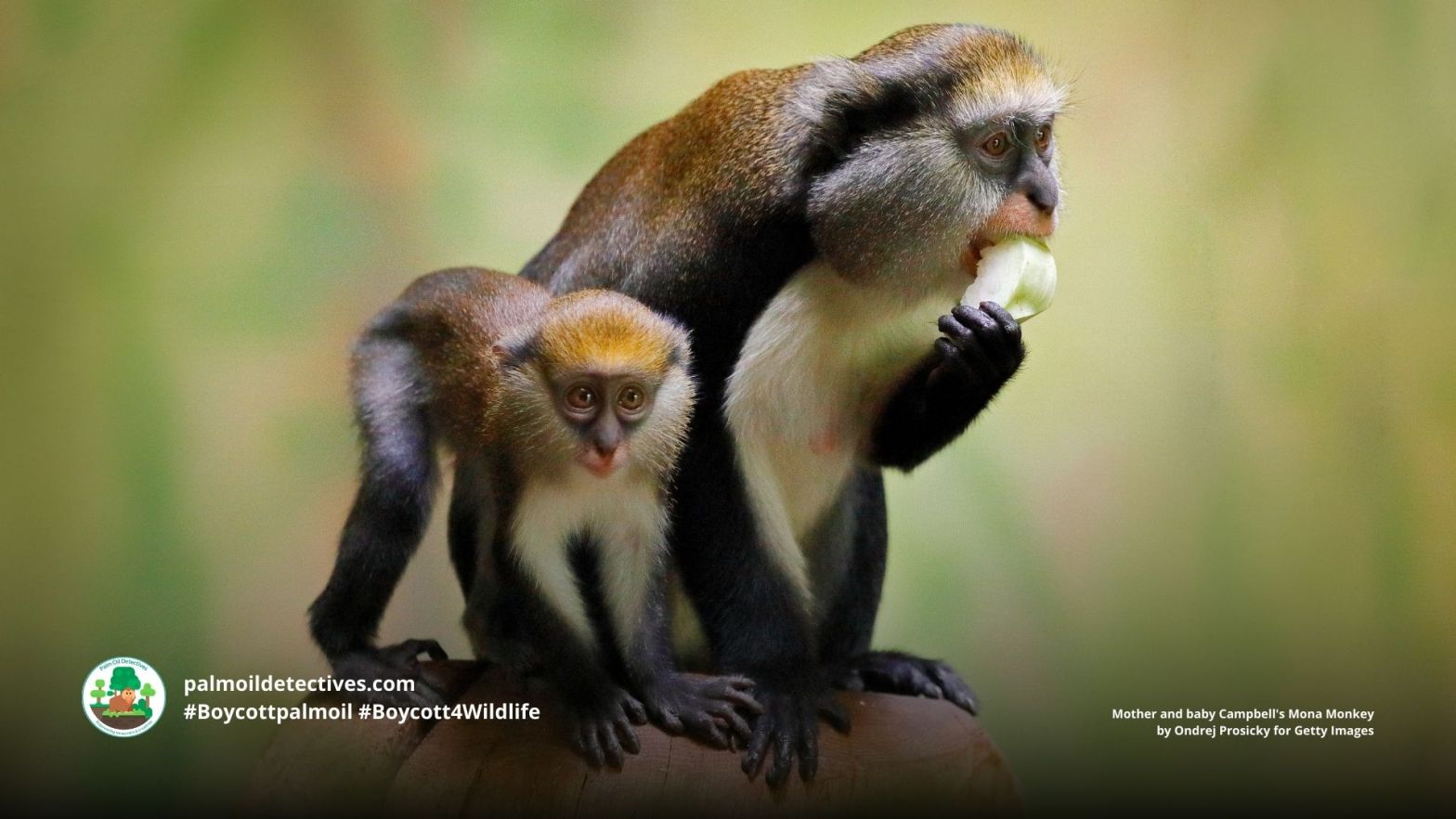
Inquisitive and highly social Campbell’s Mona Monkeys are known for their intense hazel eyes and bright yellow brows. They use their large puffy cheeks to store food while they climb to the top of tree canopies to eat it. Males will engage in a dawn and dusk symphony of calling along with other species in a coordinated ritual. They are Near Threatened due to hunting and extensive forest loss throughout their range in West Africa for palm oil, coffee, cocoa and mining. Help them every time you shop by using your wallet as a weapon – #Boycottpalmoil #Boycott4Wildlife
Food Without Agriculture

Researchers argue food can be made without destroying rainforests, using alternative energy sources like microbes, yeast and CO2, saving animals and emissions
Green Dragontail Lamproptera meges

Green Dragontails could arguably be called the most exquisite and beautiful butterflies alive.
They flutter through sunlit patches of leaves near to streams and rivers in Indonesia, Malaysia, Thailand, Myanmar, the Philippines, and northeastern India.
They are mostly black and white with a bright turquoise or light green band running roughly parallel to their abdomens.
Their forewings feature a stunning glass-like transparent triangle known as a hyaline. Their tail features a star-like galaxy pattern that glints in sunlight.
It has been over a decade since they were last surveyed, their range overlaps significantly with areas already cleared for palm oil. Help their survival and use your wallet as a weapon! #Boycottpalmoil #Boycott4Wildlife
Green Lie of “Sustainable” Aviation Biofuel

“Sustainable” Aviation Fuel (SAF) is a biofuel alternative to using fossil fuels for powering planes and cars. SAF is being aggressively marketed by multiple industries as a greener alternative to burning fossil fuels in cars and airplanes.
However, SAF is produced from food crops such as rapeseed, palm oil, soy and sugar cane. This requires vast swathes of land to grow. This also means mass deforestation of land that is rich in biodiversity, putting at risk already threatened animals and plants and indigenous peoples all over the world. Emissions from palm oil-derived biodiesel are three times higher than fossil fuel diesel. According to Transport & Environment EU food-based biodiesel leads to around 80% higher emissions than the fossil fuel diesel that it replaces. Read on to find out how you can take action.
Palm Oil Deforestation and Disease-Carrying Mosquitoes
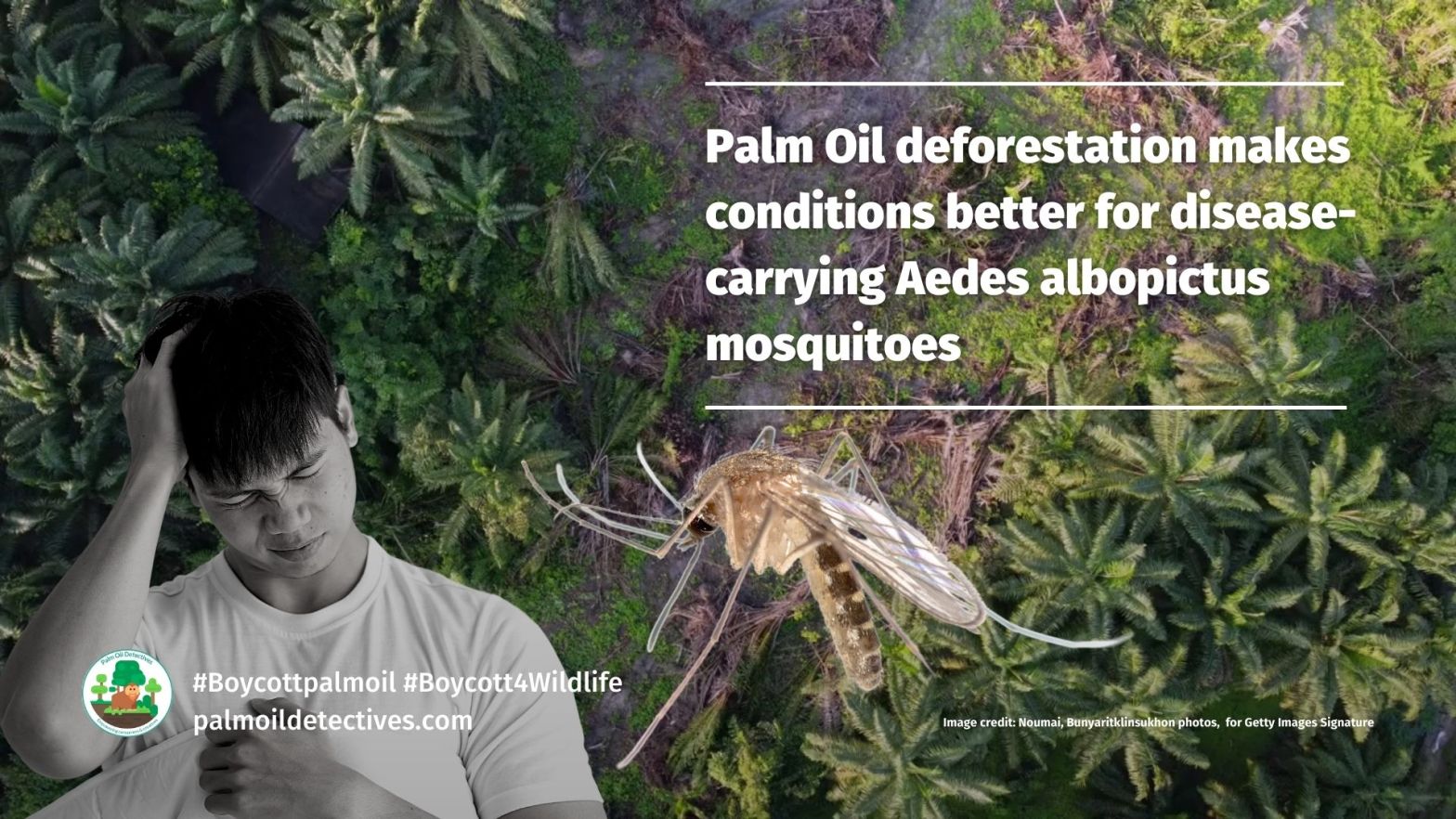
A 2023 study published in Nature has found that cutting down rainforest to grow palm oil makes it easier for certain disease-carrying bugs like Aedes albopictus mosquitoes to thrive.
The study looks at how these changes in land use affect the local weather and environment, which in turn makes it easier for the mosquitoes to complete their life cycle.
Specifically, turning forests into palm oil plantations can increase the chances of these mosquitoes growing by about 11%, which drops to around 5% as the palm oil plants mature. This could lead to more frequent outbreaks of diseases carried by these mosquitoes.
Aedes albopictus is known to transmit pathogens and viruses, such as the Yellow Fever, Dengue Fever, Chikungunya fever and Usutu virus.
The study suggests careful policy-making and planning is urgently needed to assess how we use land, balancing the need for palm oil farming.
There are strong inherent risks to public health from palm oil agriculture and vector-borne diseases. #Boycottpalmoil
Nicobar pigeon Caloenas nicobarica
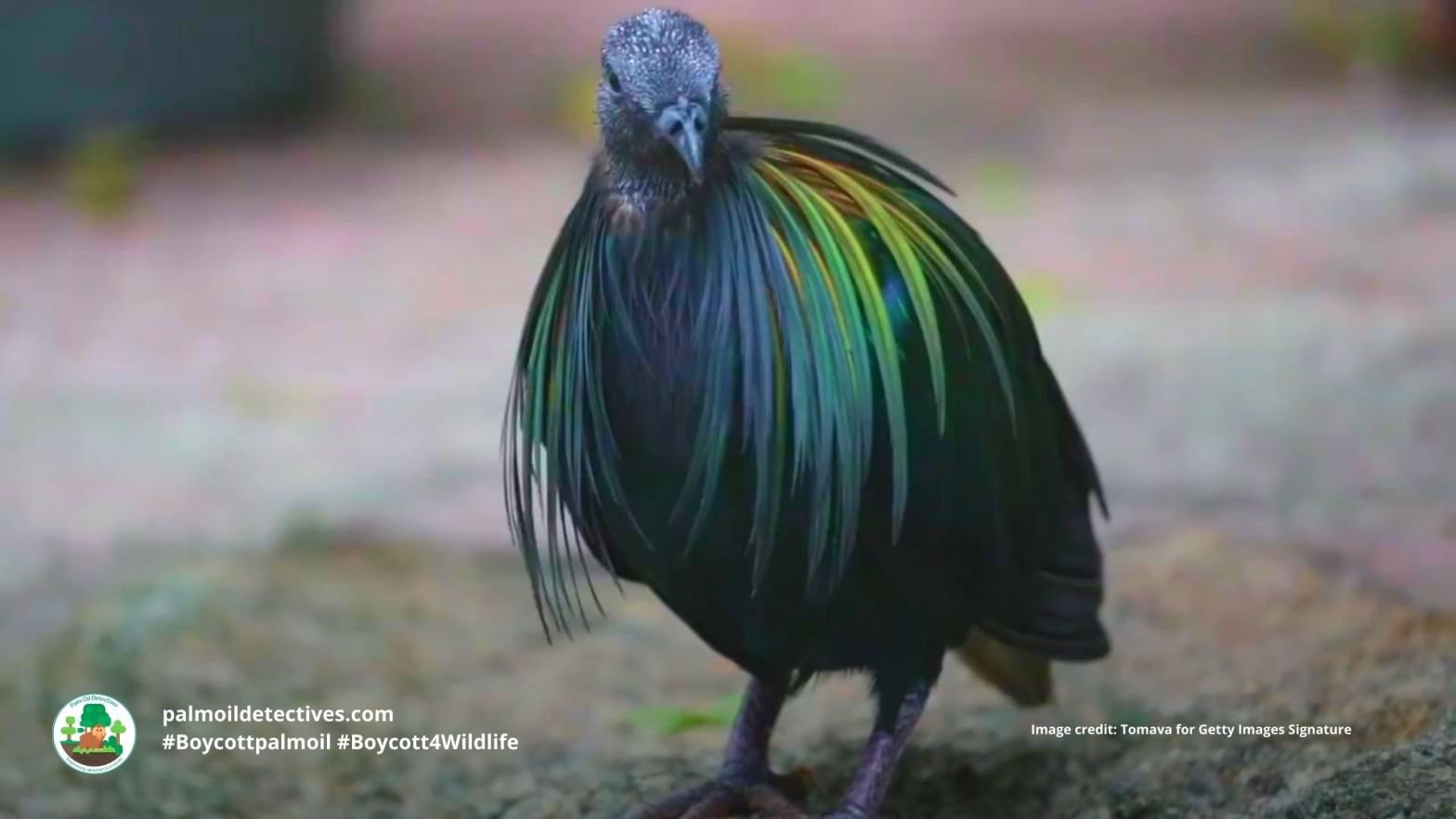
The Nicobar pigeon is the largest pigeon in the world and the closest living relative to the extinct dodo bird. They are famous for their gorgeous iridescent feathers. When threatened they make a pig-like grunt and are known for the strange way that they drink – by dunking their heads into water and sucking it up instead of sipping as other birds do. They are Near Threatened from palm oil deforestation on the Nicobar and Andaman Islands in #India along with hunting and the pet trade. Help their survival and #Boycottpalmoil #Boycott4Wildlife in the supermarket.
Mandrill Mandrillus sphinx
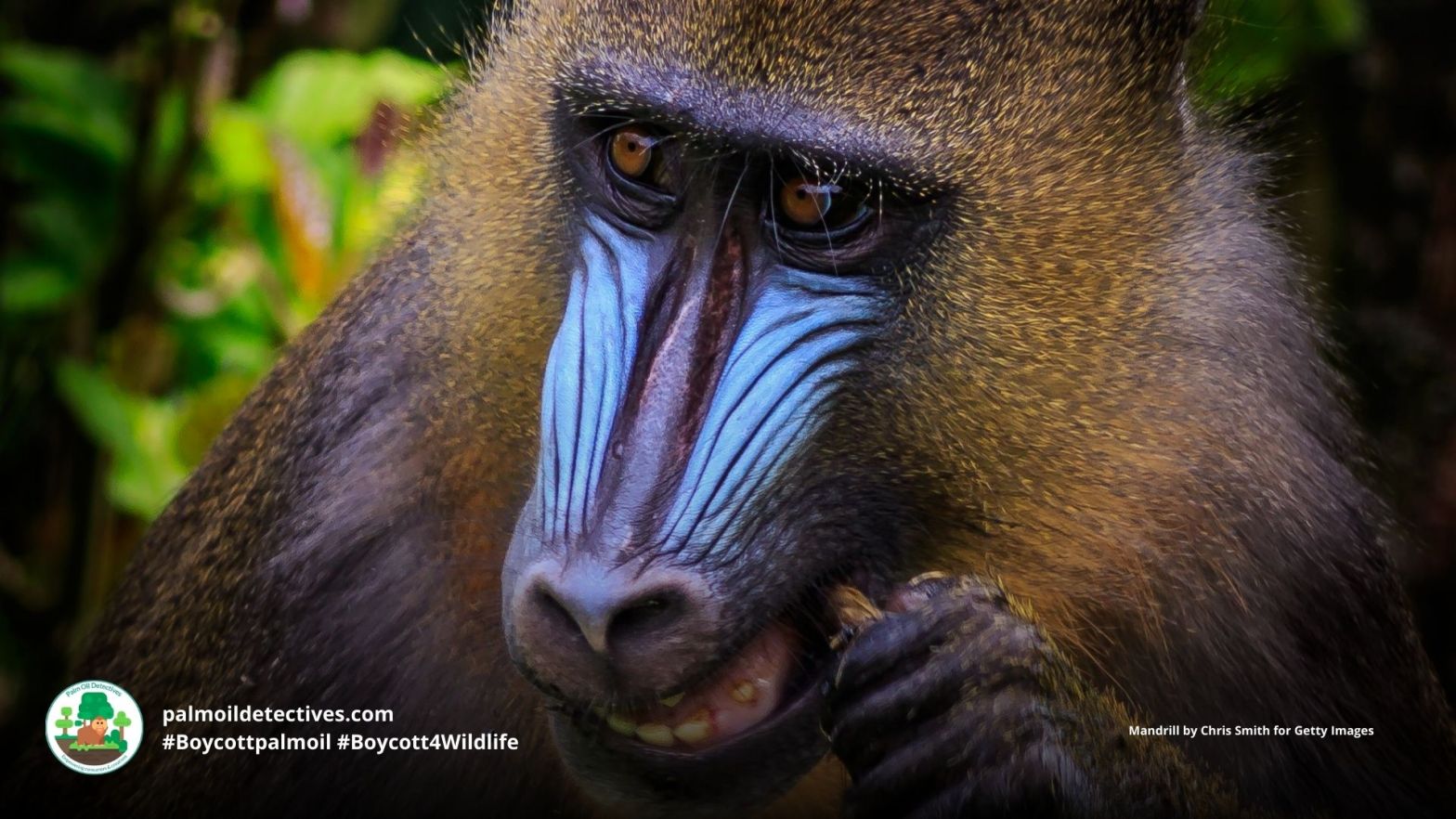
Magnificent #mandrills are undoubtedly one of the world’s most photogenic monkeys – famous for their brightly coloured and expressive appearance. Their bright blue rumps and vivid red, yellow and pink faces become even more deeply colourful when they’re excited. Males use their extra long canines for self-defence, but exposing their teeth can also be a sign of friendliness. Mandrills are important seed dispersers and a critical part of keeping the ecosystem in balance. These beautiful monkeys are vulnerable from palm oil, meat and cocoa deforestation and intensive poaching. Help their survival and #Boycottpalmoil #Boycott4Wildlife
Vegan Palm Oil Free Christmas Recipes

Boycott palm oil this Christmas 🎅🎄 with 10 yummy, #palmoilfree and #Vegan #recipes 🦧🦏🐘🐒🐍 and your #health 🥦🍆 #Boycottpalmoil #Boycott4Wildlife
Indigenous Farming: Science, Not Superstition
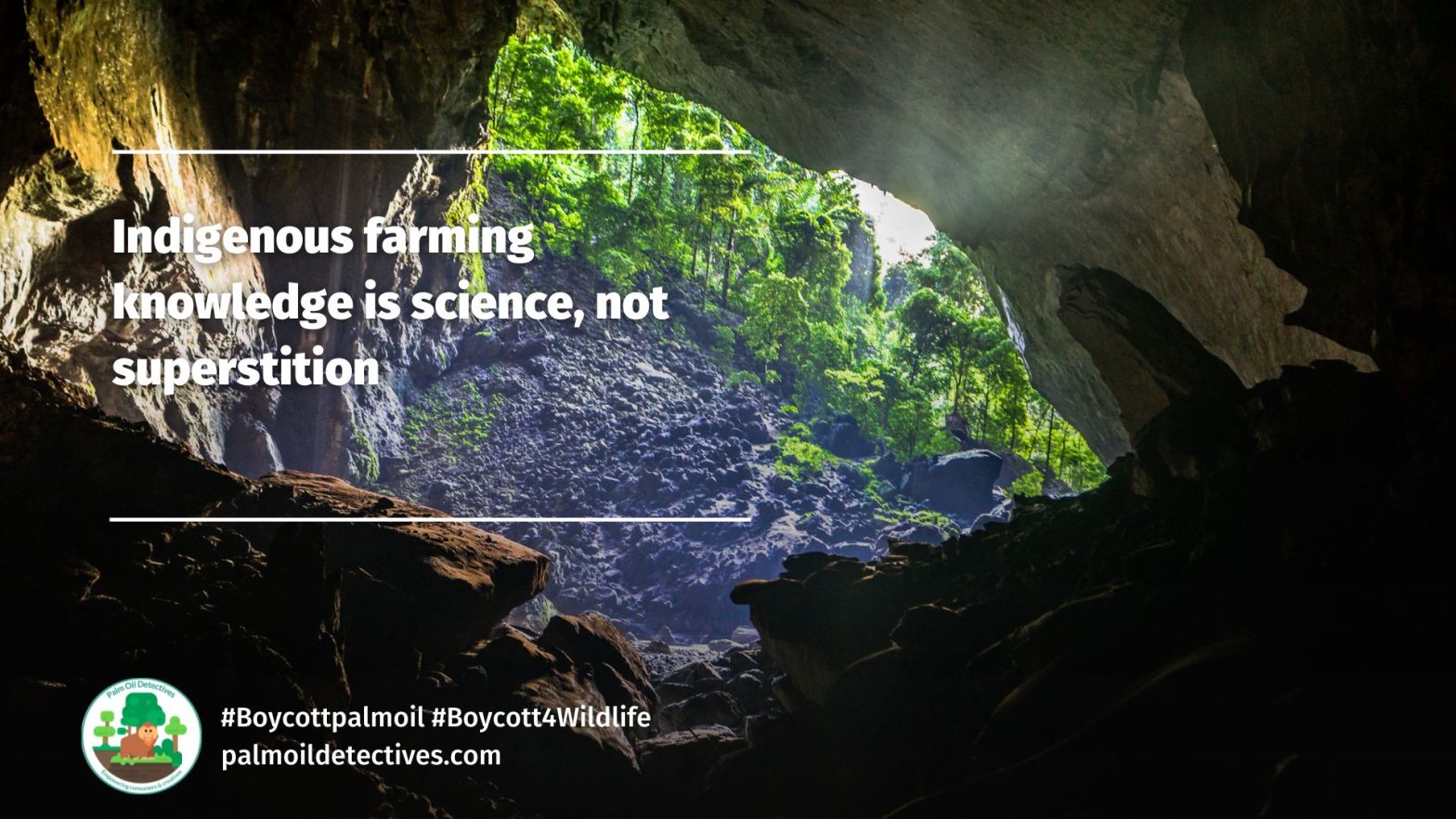
What does it mean when you encounter snakes slithering along paths or find a bird nest with eggs? For Indigenous peoples in Malaysia, these are tell-tale signs passed down by their ancestors discouraging them from using the land. Instead, they must protect the area from unscrupulous developments.
Margay Leopardus wiedii
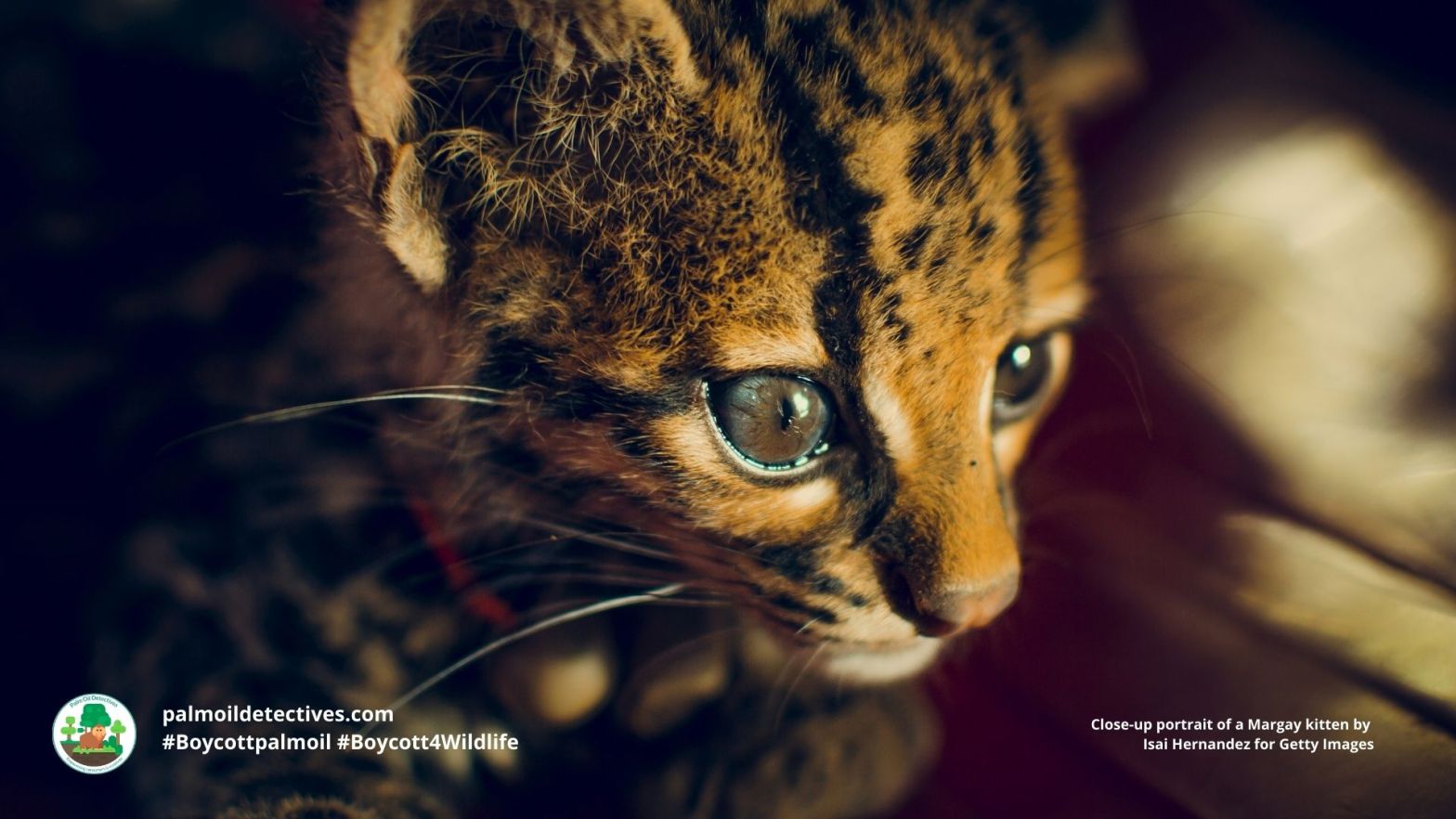
Graceful, athletic and beautiful feline of the Amazon jungle, margays are small wild cats endemic to South and Central America. Every margay has a unique spotted pattern on their coat. They depend heavily on the rainforest canopy for hunting small mammals, reptiles and amphibians and are thought to mimic the call of the pied tamarin in order to hunt for them. Deforestation for #palmoil, soy and meat along with illegal poaching are devastating to them. Help them every time you shop and be #vegan, #Boycottpalmoil #Boycott4Wildlife
Rethinking Climate and Extinction Crises
Capturing people’s attention about the #climate and #extinction crises is a challenge. Causes mostly move slowly, without the flashy drama that can focus our minds in the midst of 24-hour news cycles and social media distractions. The Netflix film Don’t Look Up cleverly captures humans’ inability to come together to counter such a common existential threat. To change this, we must develop a “slow memory” that can help us care about and act on slow change. Help to fight against extinction when you shop and #Boycottpalmoil #Boycott4Wildlife
Philippine Sailfin Lizard Hydrosaurus pustulatus

Stunning bright coloured Philippine sailfin lizards are becoming more and more rare from palm oil deforestation across their range in #WestPapua #Philippines and eastern #Indonesia. They are also threatened by hunting and the pet trade. Males turn a dark violet colour during mating season and flare their extravagant sail-like fins to announce their mating prowess. They have a third eye on the top of their head which enables them to sense sunlight. Help them survive and #Boycottpalmoil #Boycott4Wildlife
Reptiles Facing Extinction: How to Help
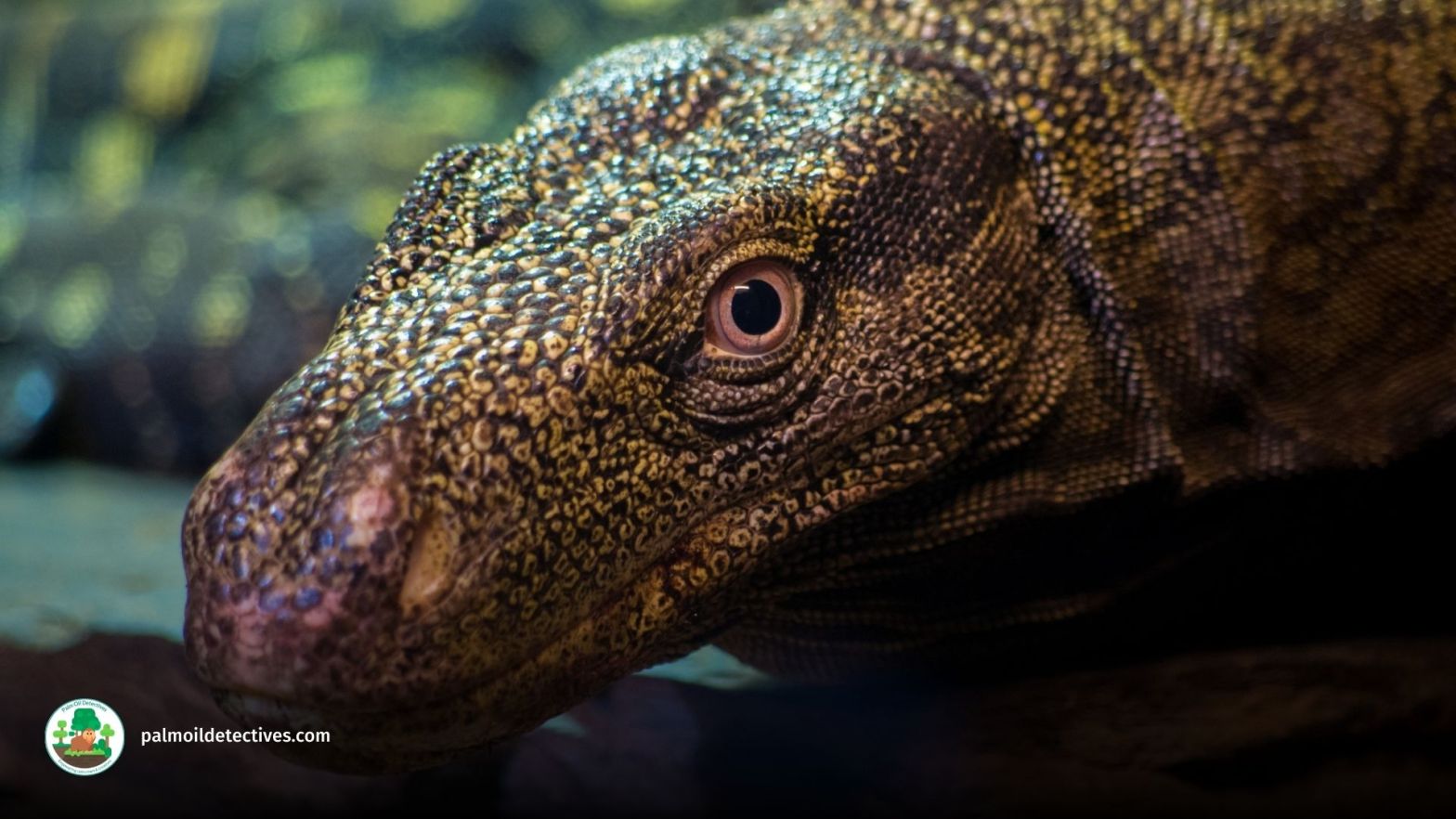
#Reptiles are fascinating creatures who are sadly feared, misunderstood and persecuted by humans. It is high time that we stand up for #lizards, #snakes, #terrapins, #crocodiles, caimans, #turtles and more.
Many of these fascinating creatures are feared by humans and inhabit hard-to-traverse places such as swamps. Compared with birds, amphibians and mammals, there is little data available on the distribution, population size and extinction risk of reptiles. This has meant that wildlife conservationists have largely helped reptiles indirectly in the past by meeting the needs of other animals (for food and habitat for example) living in similar places. Here’s how we stand up for them #Boycottpalmoil #Boycott4Wildlife
Goliath Frog Conraua goliath
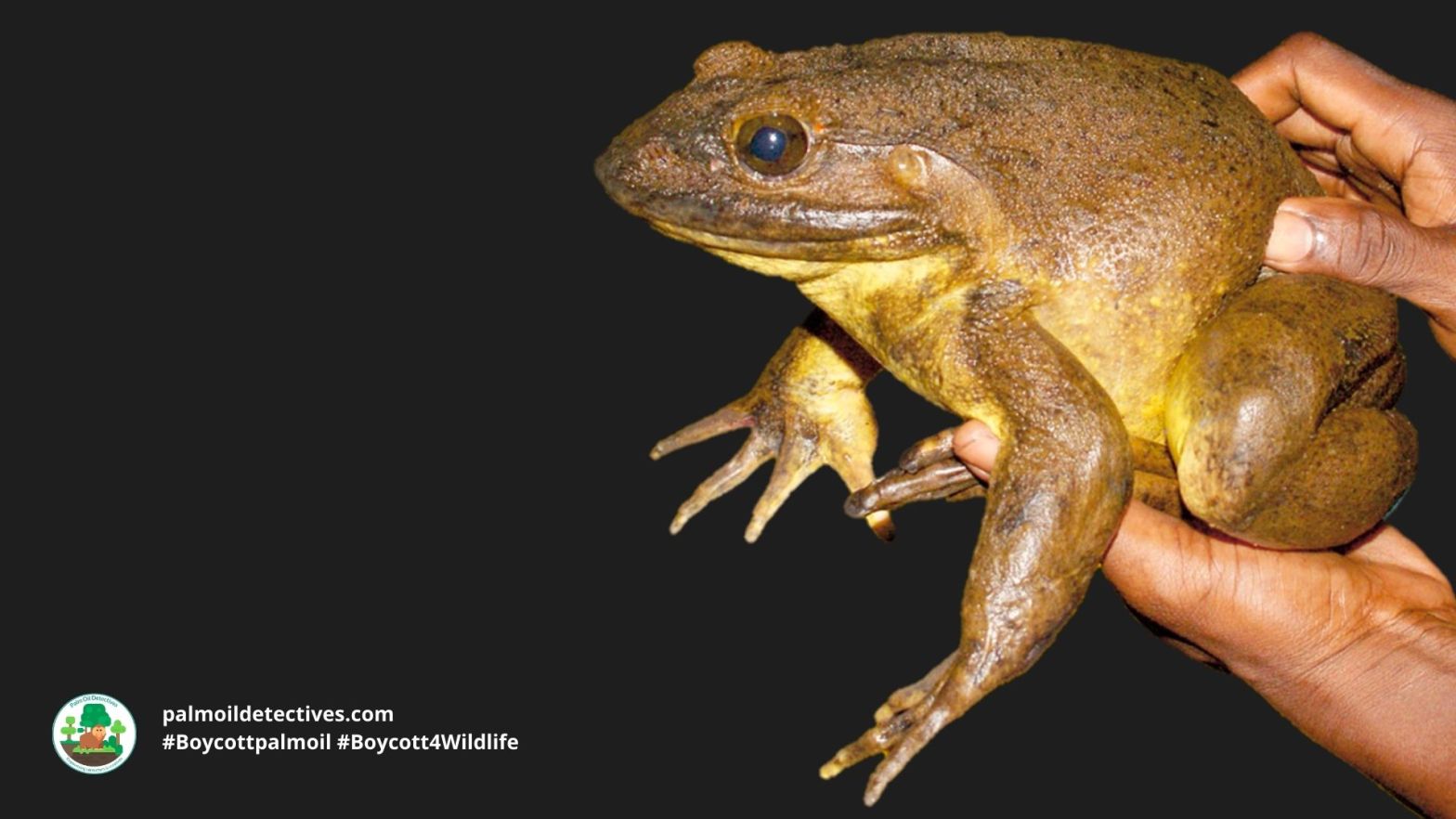
Goliath #Frogs are the largest frog in the world and can grow as large as a domestic cat. These muscle-bound #amphibians lift heavy rocks to build nests and protect their young. They face extinction from #palmoil #deforestation and human persecution including hunting.
Their nesting and reproduction is hugely dependent upon access to clean, fast-flowing rivers – for this reason the encroachment of industrial scale palm oil, cocoa and timber deforestation and p0llution and #pesticides of rivers are direct threats to the existence of the goliath #frog. Help them every time you shop in the supermarket and #Boycottpalmoil #Boycott4Wildlife
 Palm Oil Detectives