
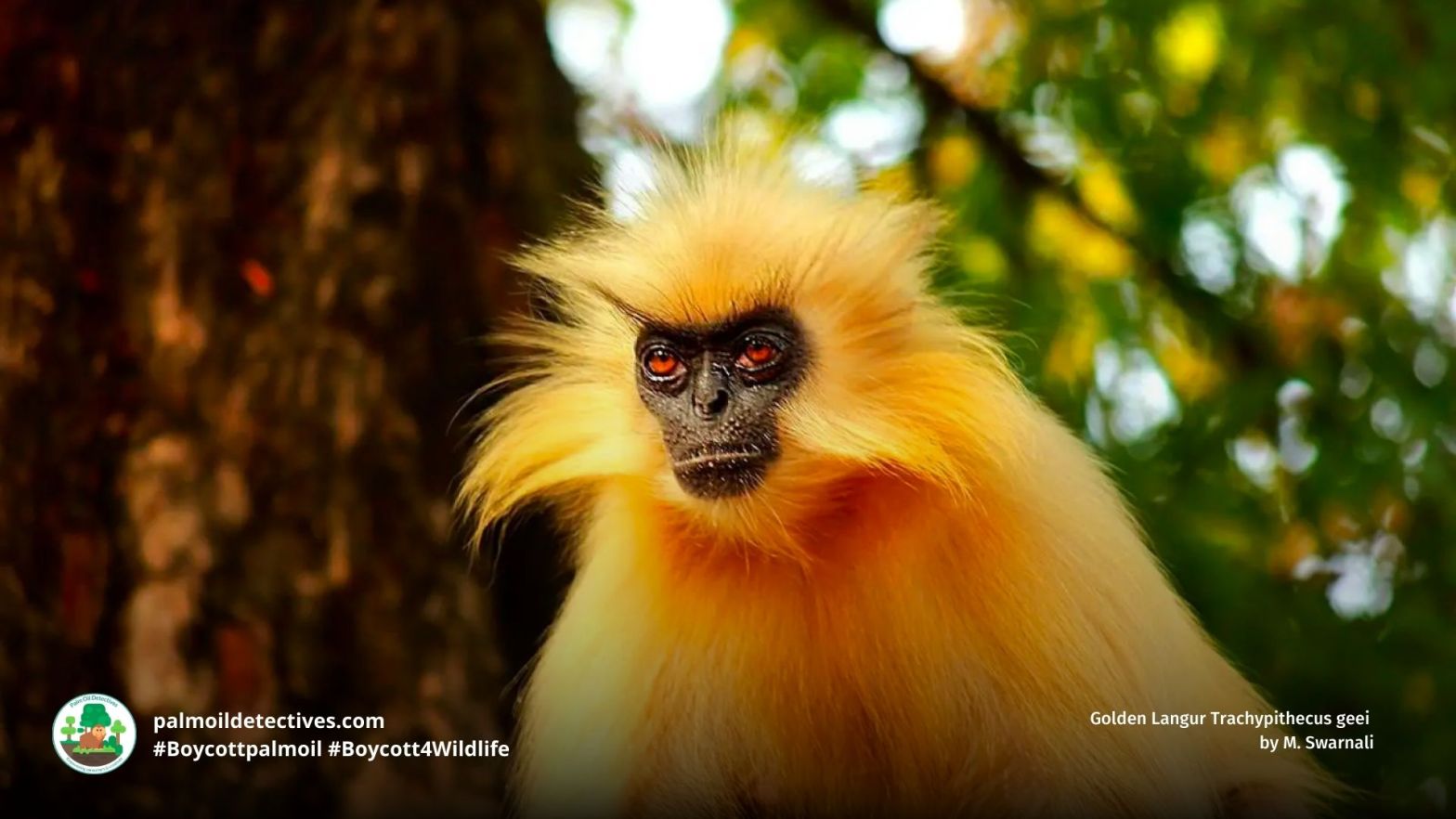
The regal, striking looking Golden #langurs Trachypithecus geei is also known by the common names Gee’s Golden #langur. They are the most endangered primate species in #India and are considered to be sacred to many Himalayan peoples. Once widespread, they are now only found in a handful of fragmented forests straddling India and Bhutan. They are classified as endangered due to #palmoil, #meat and #timber #deforestation and hunting. Golden langurs are known for their expressive eyes and grumpy expressions. This has made them the subject of global fascination and online memes. Help them every time you shop and be #vegan, #Boycottpalmoil and #Boycott4Wildlife
Tag Archives: Boycott4wildlife
Oligarchs weaken Indonesia’s fight against corruption
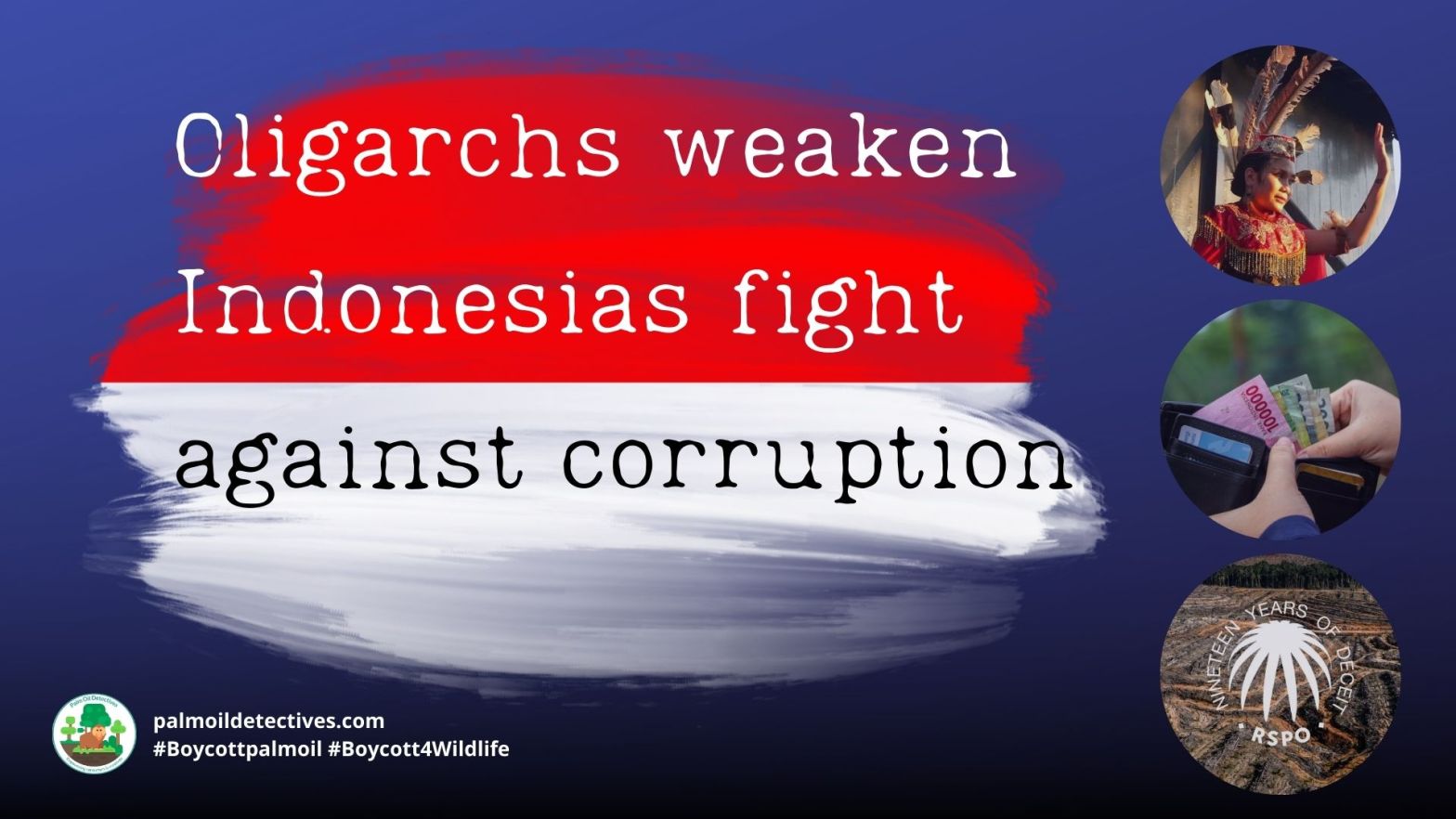
The system is failing. #Indonesia’s own parliament, backed by big business interests, has succeeded in weakening the very system set up to fight corruption. Resist the corruption! #FightGreenwashing #Boycottpalmoil 🌴🩸⛔️ #Boycott4Wildlife
Uncovering The Glasswing Butterfly’s See-through Wings

Most butterflies sport colourful, eye-catching wings. But some species flit about using mostly transparent wings. Researchers have now uncovered the tricks that one of these — the glasswing butterfly (Greta oto) — uses to hide in plain sight. The tricks of their transparency include sparse, spindly scales and a waxy coated membrane. Many thousands of insect species are threatened by large-scale deforestation for agriculture and especially pesticides. Help them to survive and #BoycottPesticides #BoycottPalmOil!
Pygmy Hog Porcula salvania
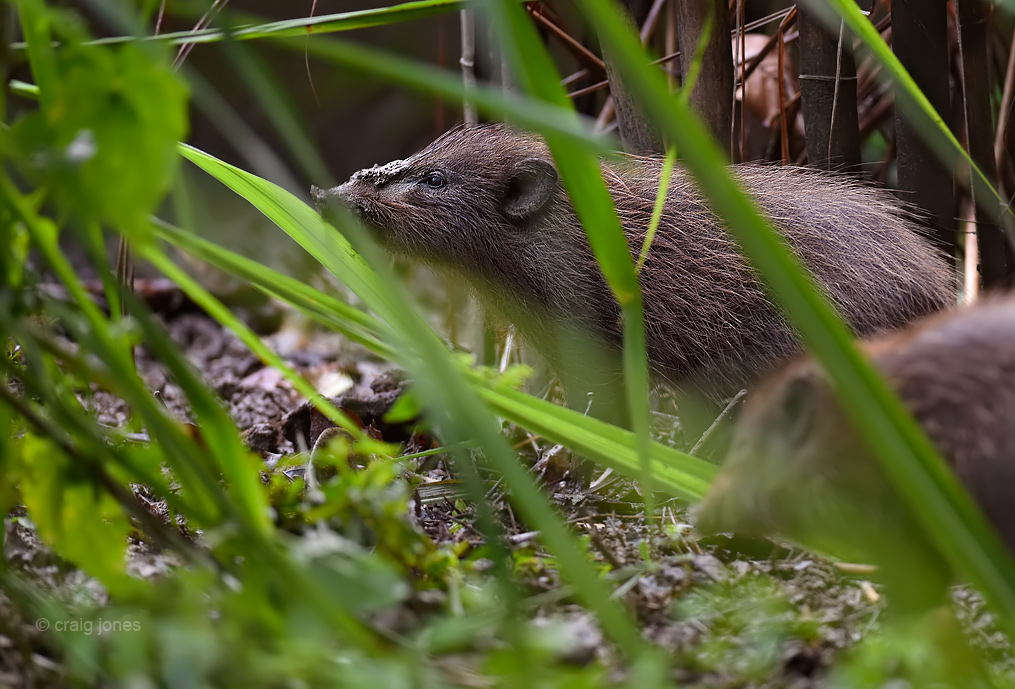
Pygmy hogs are only found in the lush and dense grasslands of Manas National Park, a small protected region in the shadows of the Himalayan mountains. These shy tiny wild pigs are the smallest pigs in the world and also the most endangered, threatened by habitat loss for palm oil and meat agriculture. Help them to survive each time you shop and #BeVegan #Boycottpalmoil and #Boycott4Wildlife
India’s Palm Oil Goals Raise Extinction Fears

A corporate monopoly for control over land and resources for palm oil must be dismantled immediately to give humanity, animals and our natural world a fighting chance for survival and to reverse the climate crisis. In Asia, many indigenous peoples are now joining forces and rising up to resist this corruption and ecocide.
White-Nosed Saki Chiropotes albinasus
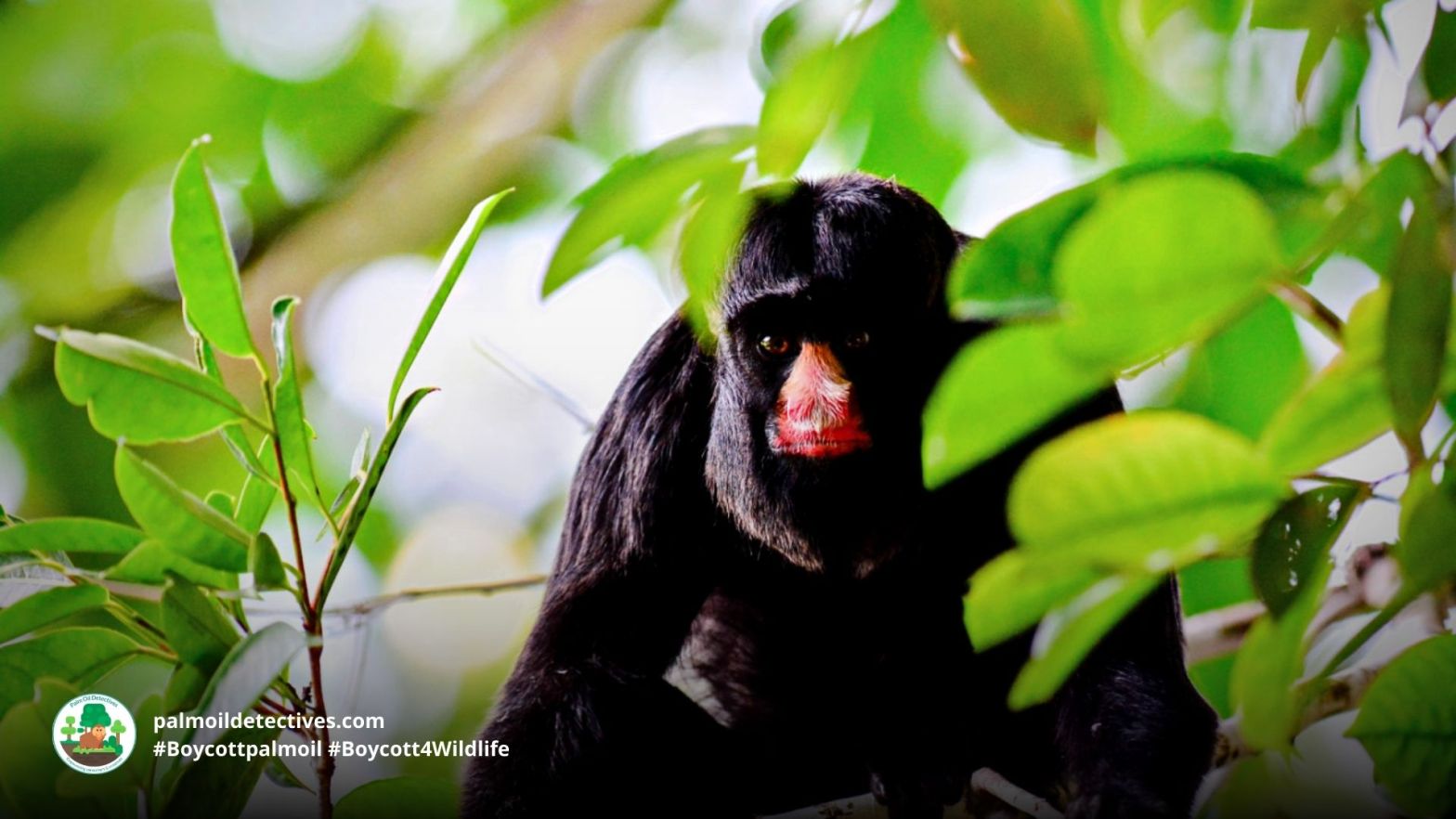
Curious, social and beautiful White-Nosed Sakis are striking and unusual looking #primates. This vulnerable primate is instantly recognisable by their long, silky black fur, reddish-pink noses, and distinctive hair tufts crowning their heads. The white-Nosed Saki’s range spans the shaded forests south-west of the Dos Marmelos river, where they are vulnerable from human-related threats including #palmoil, #soy and #meat #deforestation, #goldmining and human persecution. They deserve us to fight for their survival. Help them every time you shop and be #Vegan #BoycottPalmOil and #Boycott4Wildlife
Nicobar Islands Port and Palm Oil: Threatens Giant Turtles
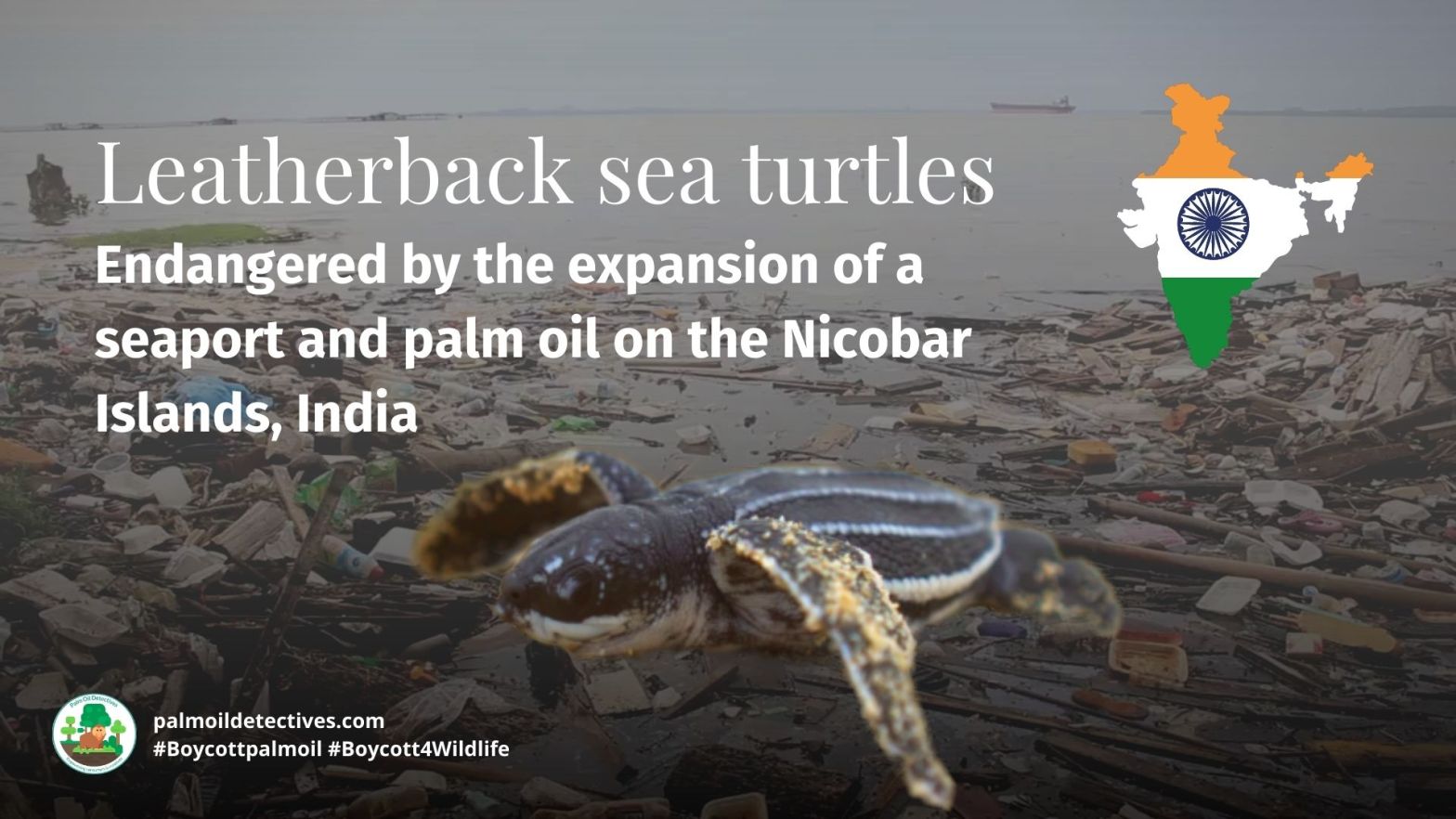
On Great Nicobar Island in the most southerly part of India, big plans are in motion to transform the island into a shipping hub and destroy its native ecosystems including mangroves, reef systems and forests, putting the already endangered leatherback sea turtle (along with 1000’s of other species) perilously close to extinction. Around one million trees are set to be felled to make way for palm oil and other monoculture crops on the islands, writes PhD Candidate Divya Narain for The Conversation. Read on after to discover how to help these beautiful animals.
Indonesia’s Misinformation Favours Obedience, Not Truth

Indonesia’s online space is polluted by fake news. The government’s media literacy program promotes its own interests and greenwashing, boycott palm oil!
Southern Ground-hornbill Bucorvus leadbeateri
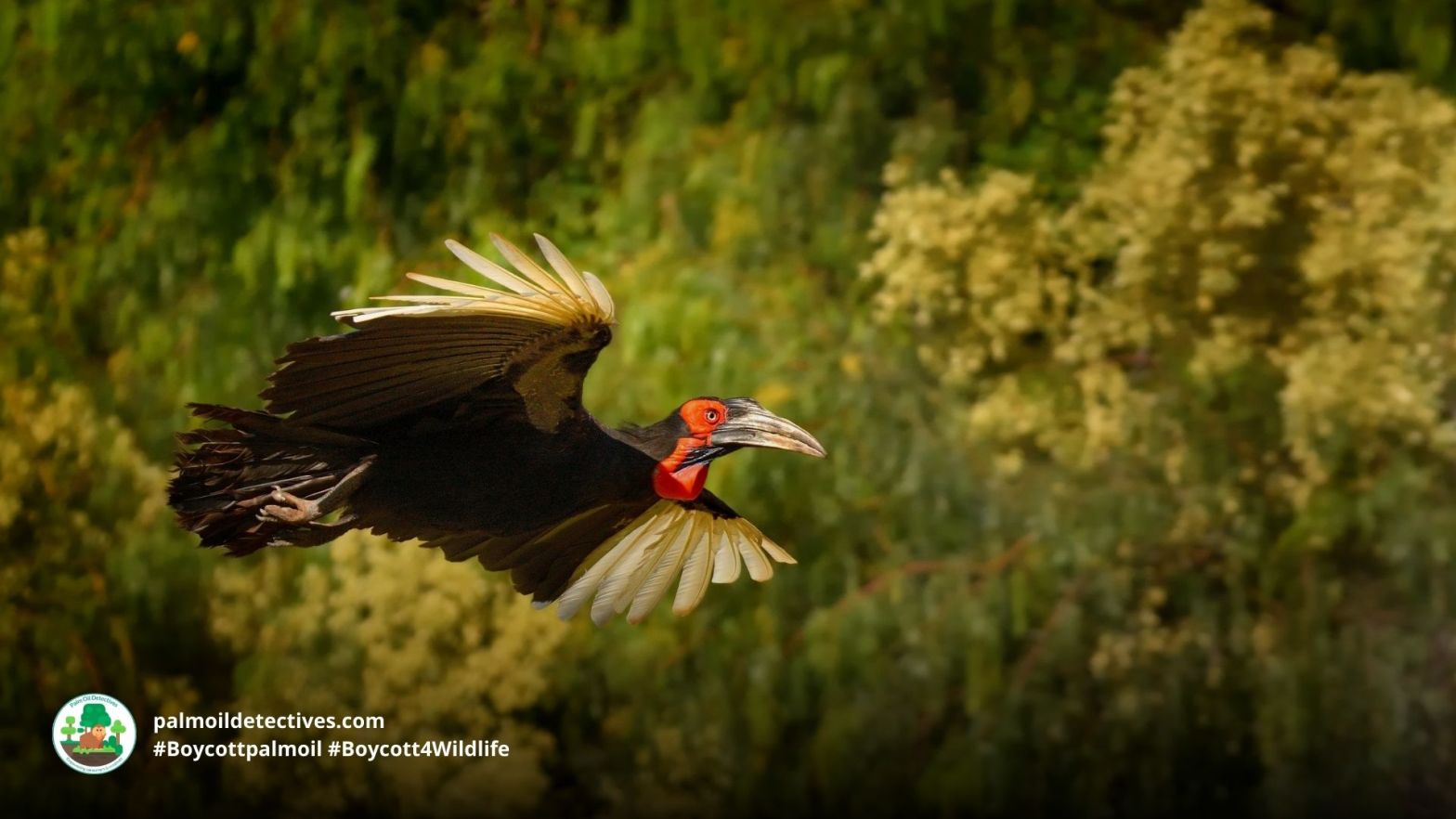
Territorial and highly social, Southern Ground #Hornbills collectively raise their young in groups – a process of parental guidance that can take up to two years – the longest of any #bird species known. They are considered to be a culturally important species to many indigenous peoples and are known as rain birds or thunder birds for their folklore association with bringing rain and ending drought. Help them to survive every time you shop and #BoycottPalmOil #Boycott4Wildlife
Sumatran elephants: Surrounded by palm oil and nobody knows how many are left alive!
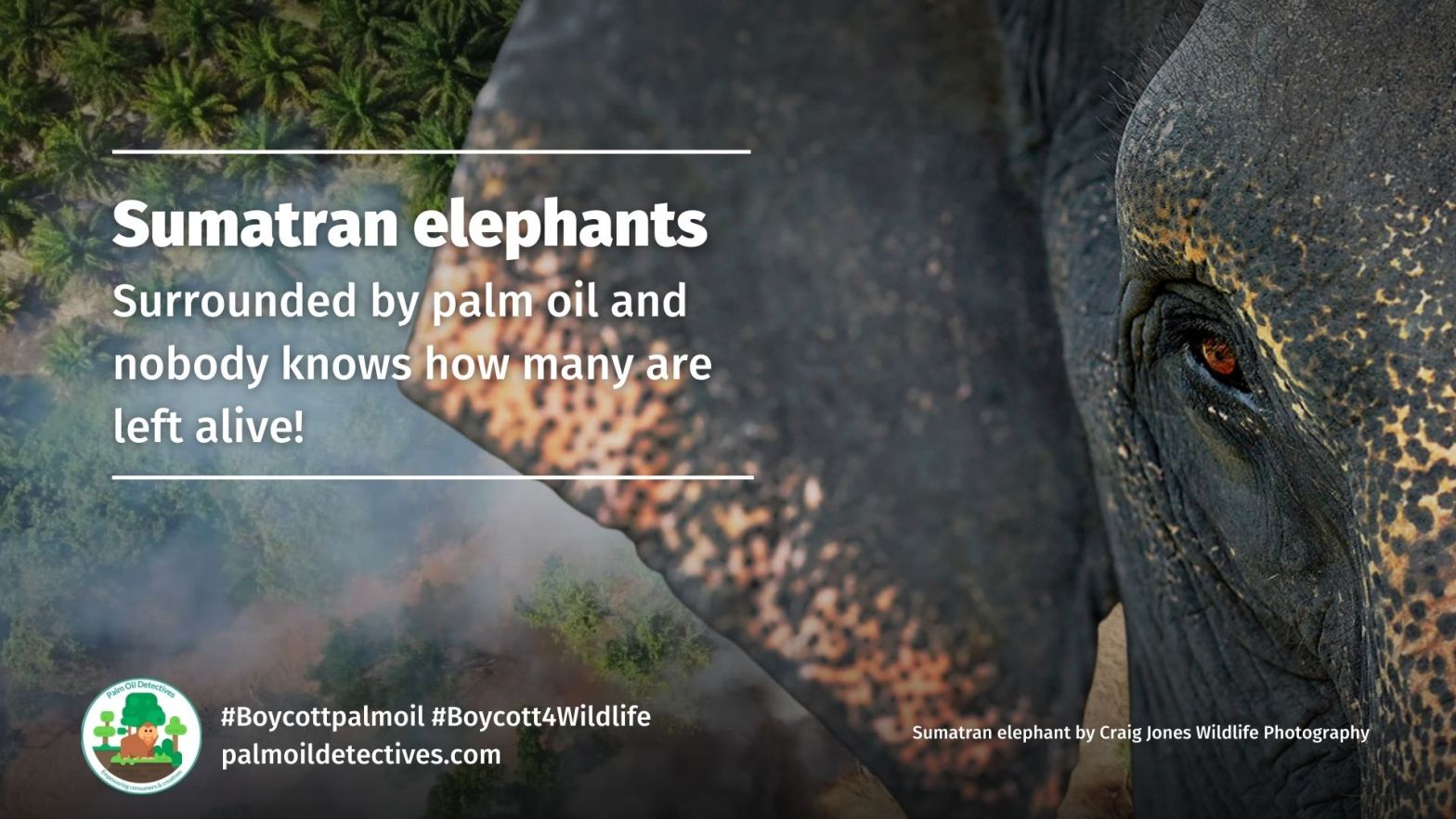
Sumatran elephants in Indonesia’s North Aceh district are being increasingly encircled by shrinking patches of forest. Their home is being destroyed primarily for oil palm plantations.
Ongoing attempts of scientists to take a measure of their population have been hampered and oppressed by the Indonesian government, which has also attempted to prevent media coverage of the issue. Help these irreplacable beings every time you shop, #BoycottPalmOil #Boycott4Wildlife
Palm Oil: A Recipe for Disaster in India

Given the widespread destruction of rainforests and native biodiversity caused by oil palm plantations in Southeast Asia, environmental experts and politicians are warning that the move to promote palm oil cultivation in India’s northeastern States and in the Andaman and Nicobar Islands could be disastrous, writes Priscilla Jerbaraj in The Hindu.
Amazon River Dolphin Inia geoffrensis
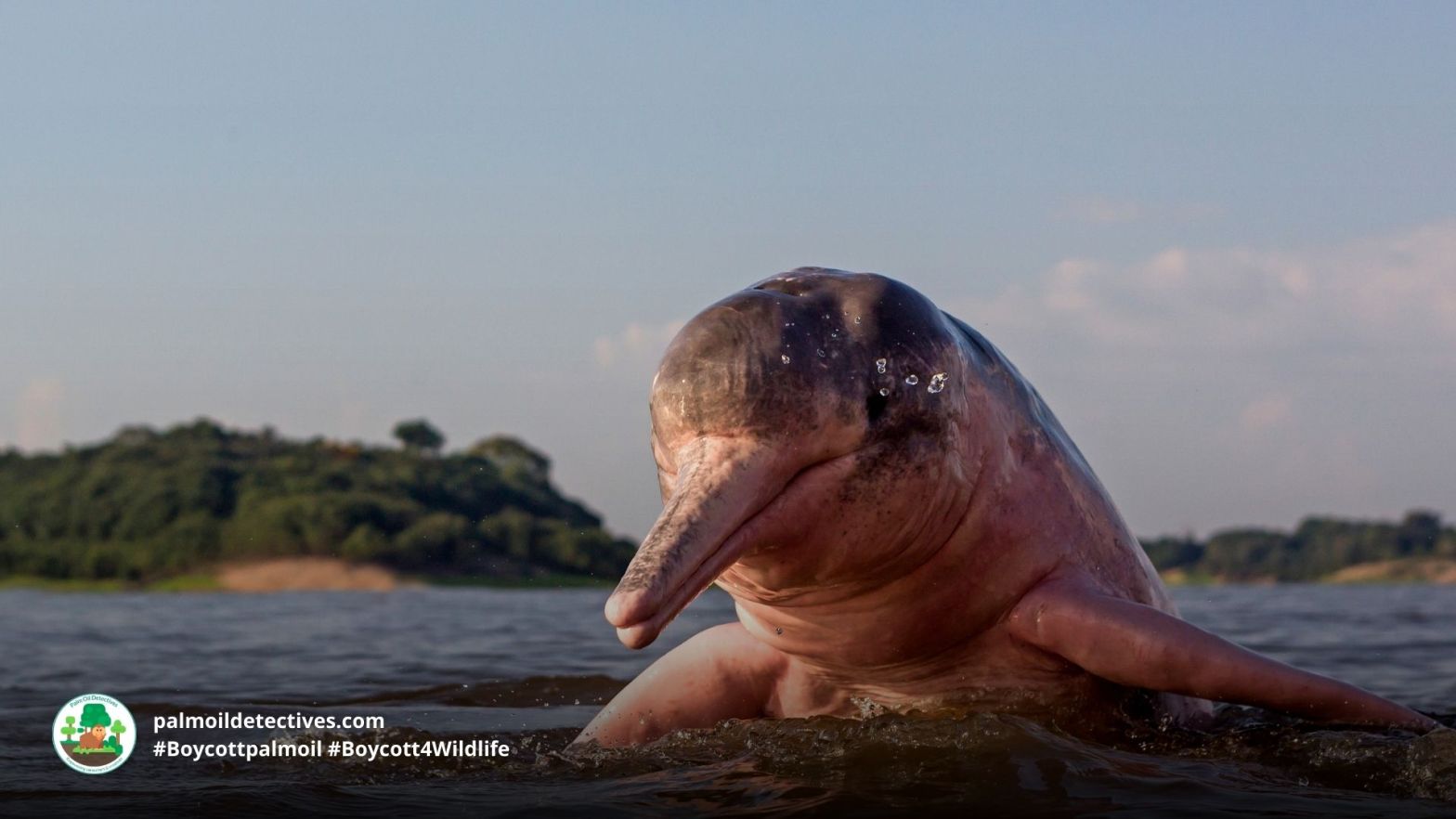
The Amazon River dolphins, also known as the Boto Dolphins or Amazon Pink River Dolphins are playful, curious and intelligent mammals, the largest river dolphin species in the world. Known for their stunning pink coloured skin they are endangered due to human-related threats like #palmoil, #meat and #soy #deforestation, #gold #mining and #pollution. Help them survive each time you shop and use your wallet as a weapon. Be #vegan, #Boycottpalmoil and #Boycott4Wildlife
Indonesia’s misinformation army ready for war in 2023

In 2023, Indonesia’s government is set to ratchet up greenwashing and propaganda on social media, fuelled by a well-resourced misinformation machine.
But the biggest propagator of disinformation seems not to be political renegades, but the Widodo administration. Fuelled by a well-resourced propaganda machine, the government is ready to fight dirty to win over public opinion.
Story via 360Info.org.
Written by By Ika Idris, Monash University Indonesia, Laeeq Khan, Ohio University, and Nuurrianti Jalli, Northern State University in Tangerang. January 16 2023 for 360Info.org. Dr Ika Idris is an associate professor at Public Policy & Management, Monash University Indonesia. Her works focus on government communication, misinformation, and the internet’s impacts on society. Republished here with a Creative Commons Licence.
#Boycottpalmoil #Boycott4Wildlife
African Dwarf Crocodile Osteolaemus tetraspis

African Dwarf #Crocodiles are timid #nocturnal animals and solitary hunters. They predate mainly on small animals in rivers or nearby to the riverbank. They are also known as the Broad-Snouted Crocodile or the Bony Crocodile are the smallest extant species of crocodile in the world and are typically around 1.5 metres in length. They face persecution by humans and other animals and spend most of their daylight hours resting in burrows they make along riverbanks in #WestAfrica and Central Africa. They are vulnerable from #timber #palmoil #soy #meat #deforestation and hunting. Help them survive and be #vegan, #Boycottpalmoil #Boycott4Wildlife
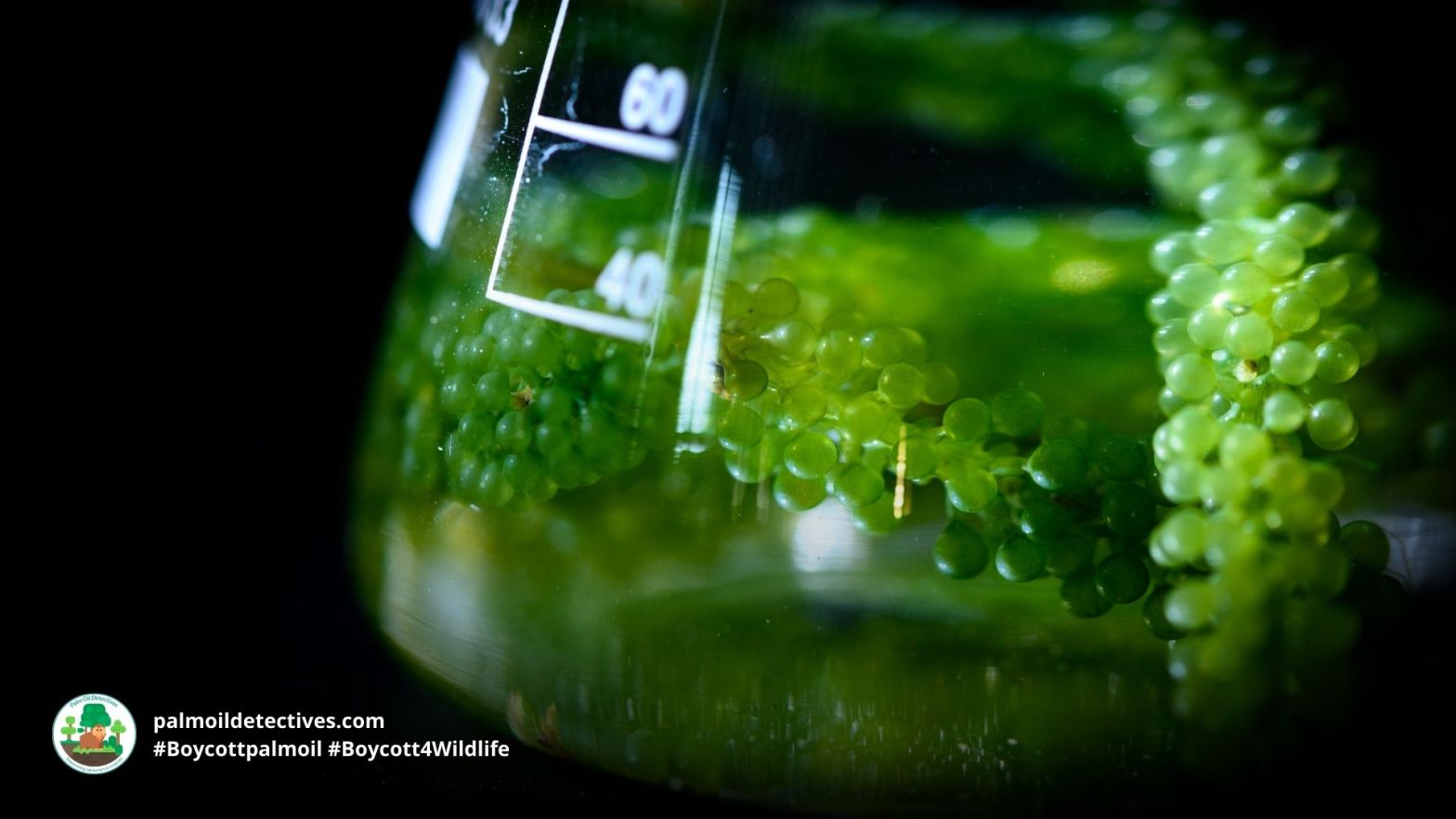
Humble Algae: The Solution to Palm Oil Ecocide

Consumers, businesses and researchers have shown growing interest in microalgae in recent years. Use of Arthrospira platensis (spirulina) as a food supplement is one example. Others include how microalgae can be used as crop support tools, bioplastics or biofuels. Take action for your health and be #vegan and #BoycottPalmOil #Boycott4Wildlife
New Guinea Singing Dog Canis hallstromi

Thought for decades to be extinct in the wild, the New Guinea singing #dog populations hang on to survival in the remote mountains and forests of New Guinea. These #wilddogs were last spotted in 2017 near the Grasberg gold and copper mine in #WestPapua. Little known and still not well understood by researchers, they announce themselves with a haunting overlapping howling between individual dogs that is unlike other forms of canid howling.
Elusive and likely now critically endangered, #NewGuinea Singing Dogs are rapidly disappearing and have no formal protection or conservation in place. Help them survive and fight against #palmoil #deforestation in #WestPapua, #Boycottpalmoil #Boycott4Wildlife
Butterfly Viper Bitis nasicornis
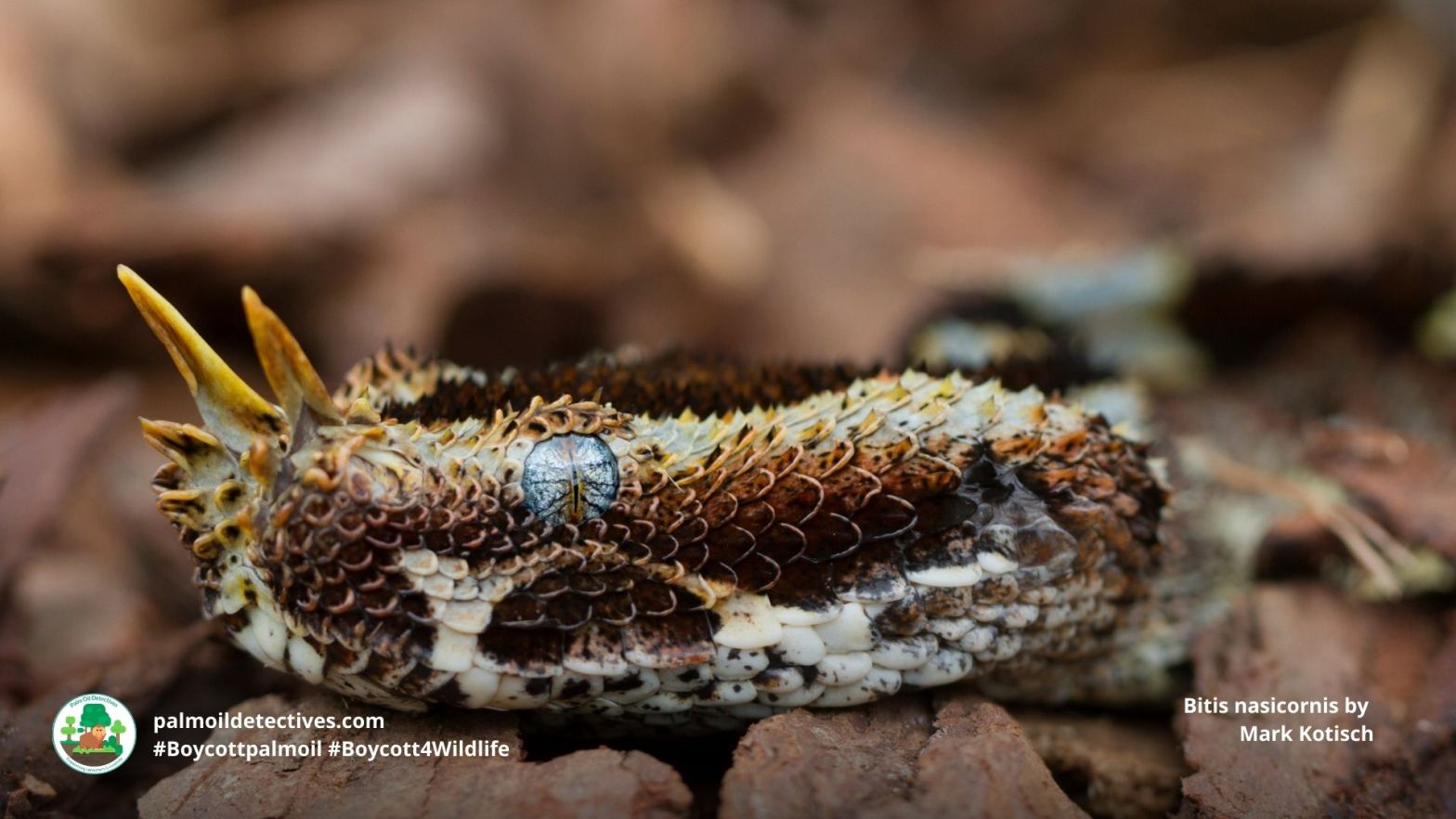
Although they possess one of the most potent venoms of all #snakes in #Africa, Butterfly Vipers are surprisingly placid and won’t attack unless provoked or threatened. They are known by several common names: Rhinoceros viper, River Jack, the Rhinoceros horned viper and the Horned puff adder. These remarkable serpents are appreciated for their vividly coloured markings that keep them camouflaged on the forest floor. Help them to survive when you shop and #BoycottPalmOil #Boycott4Wildlife.
Palm Oil Free Christmas
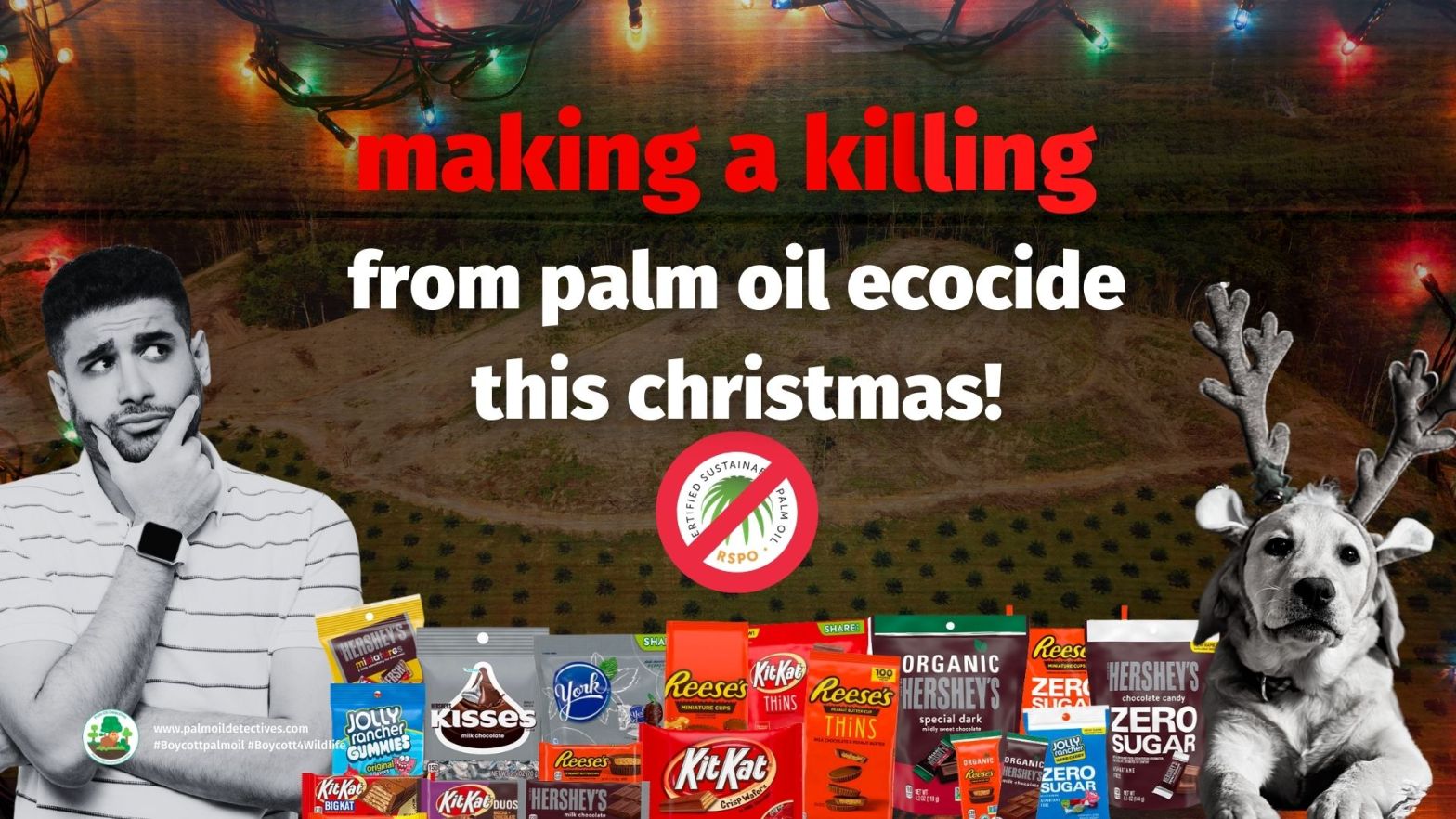
Enjoy the festive season and be reassured that your #Christmas feast is not contributing to #palmoil related rainforest destruction, #humanrights abuses, #extinction and #slavery. Take the fight for animal rights and indigenous rights to your plate this Christmas. Learn how to fill your belly and enjoy yourself without destroying the earth for palm oil below. Use your wallet as a weapon and #BoycottPalmOil #Boycott4Wildlife
Roundtable on Sustainable Palm Oil: 19 years is enough
For nearly two decades now, the RSPO has failed in its mission to make the industrial palm oil sector “sustainable”. Instead, it has been used by the palm oil industry to greenwash environmental destruction, labour and human rights abuses and land grabbing.
Bangka Slow Loris Nycticebus bancanus

Shy and elusive tiny #primates, Bangka Slow Lorises were last reported from the wild in 1937. If the Bangka Slow Loris is still alive then the burning of their habitat and conversion to agriculture (especially palm oil plantations) is their greatest threat.
These diminuitive and sweet-faced primates are critically endangered due to #palmoil #deforestation and the illegal pet trade. Just 20% of their rainforest remains on Bangka island, #Indonesia. Help them every time you shop, be #vegan #Boycottpalmoil #Boycott4Wildlife
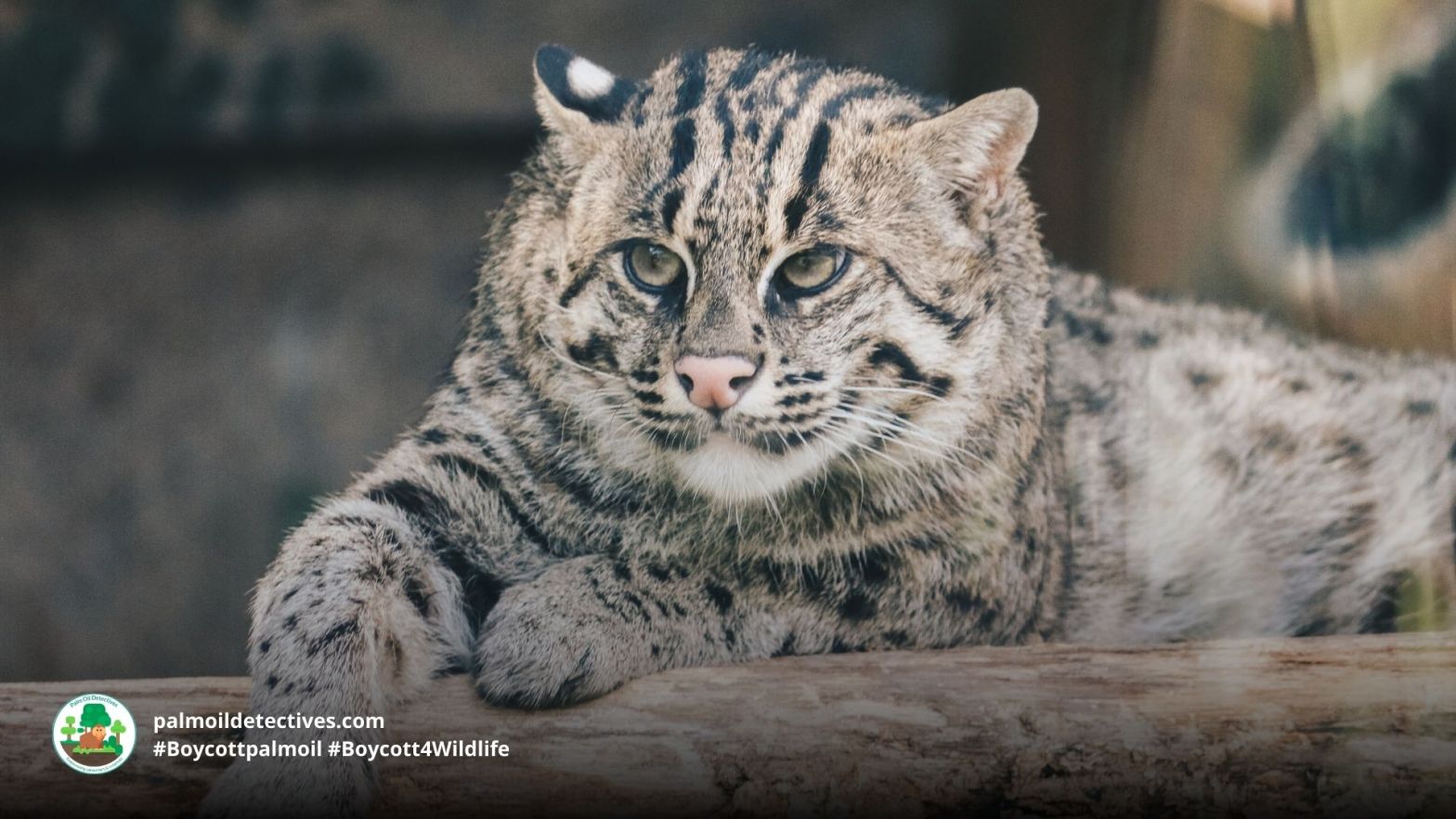
Fishing Cat Prionailurus viverrinus
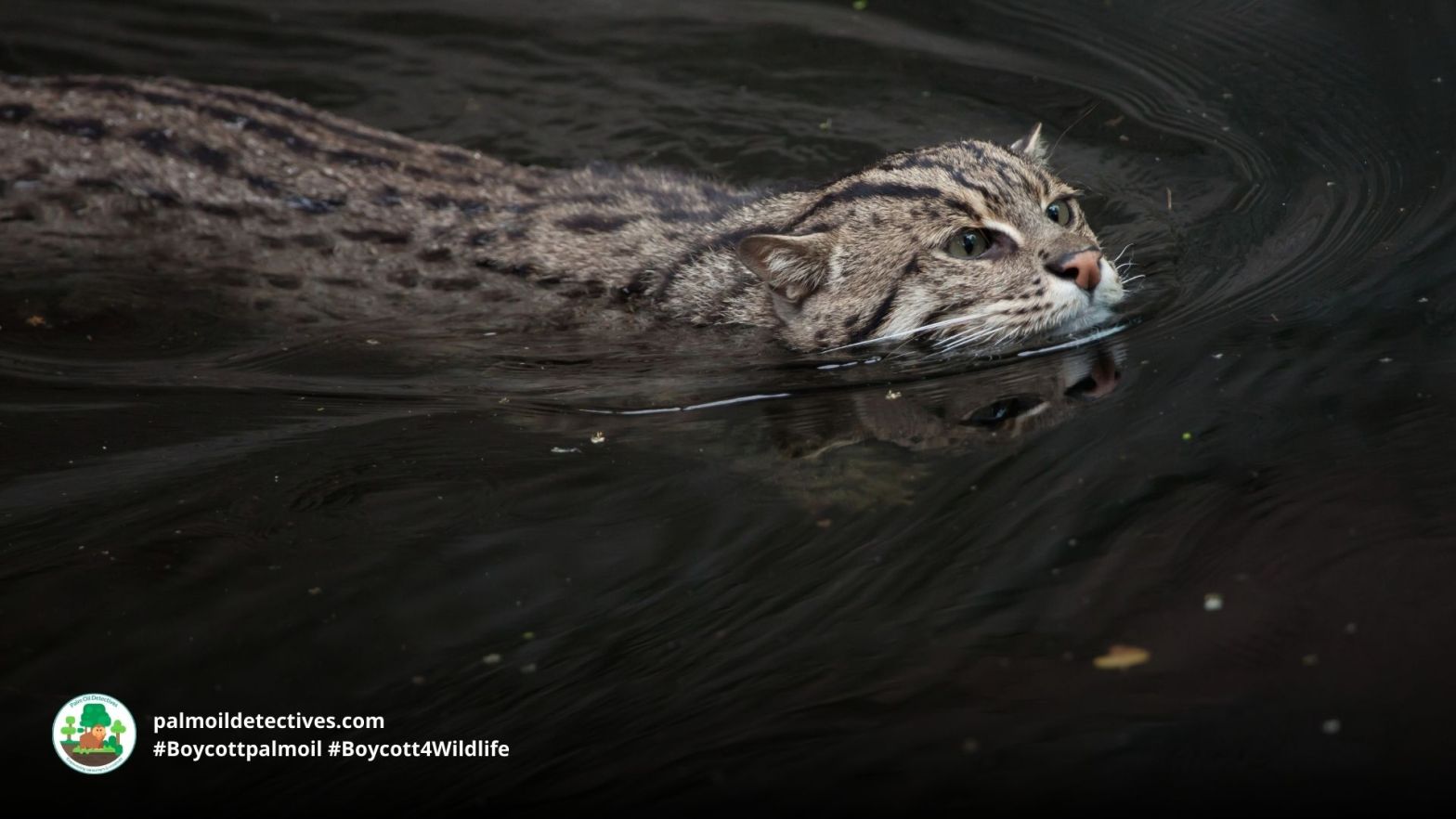
Although they look cute and cuddly, the Fishing #Cat Prionailurus viverrinus has a feisty, firecracker temper. This small to medium sized wild cat can become defensive if approached in the wild. They are around twice the size of a domestic cat and typically weigh around 5-16 kg and have stocky short legs and a short tail.
Their faces are round with elongated noses that gives them a civet-like appearance, which is why their scientific name is viverrine. They are agile and fast hunters and can reach fast speeds in pursuit of prey. They have an average lifespan of approximately 12 years. Ongoing threats include palm oil deforestation, and in Indonesia it is uncertain if their population have remained alive intact due to widespread deforestation and hunting pressures. Help these plucky little #wildcats when you shop and #BoycottPalmOil #Boycott4Wildlife
Amazon Palm Oil: Top Brands Source from Amazon Destroyers

Expose the truth about brands like Nestlé, PepsiCo, and Unilever sourcing “sustainable” palm oil from Brazil linked to violence, abuses and fraud. Shame!
Helmeted Hornbill Rhinoplax vigil

Helmeted #Hornbills are spectacular, large and intelligent #birds native to SE Asia, known for their substantial helmet-like structure on their head called a casque made of ivory. This hefty head accounts for 11% of their 3kg body weight. They are found on the Malay Peninsula: #Sumatra, #Borneo, #Myanmar and #Thailand. They are #criticallyendangered. Their main threats are illegal hunting and wildlife trade for their ivory casques along with palm oil and timber deforestation. Help them each time you shop and #Boycottpalmoil #Boycott4Wildlife
Spoiled Fruit: Land-grabbing, violence and slavery for “sustainable” palm oil
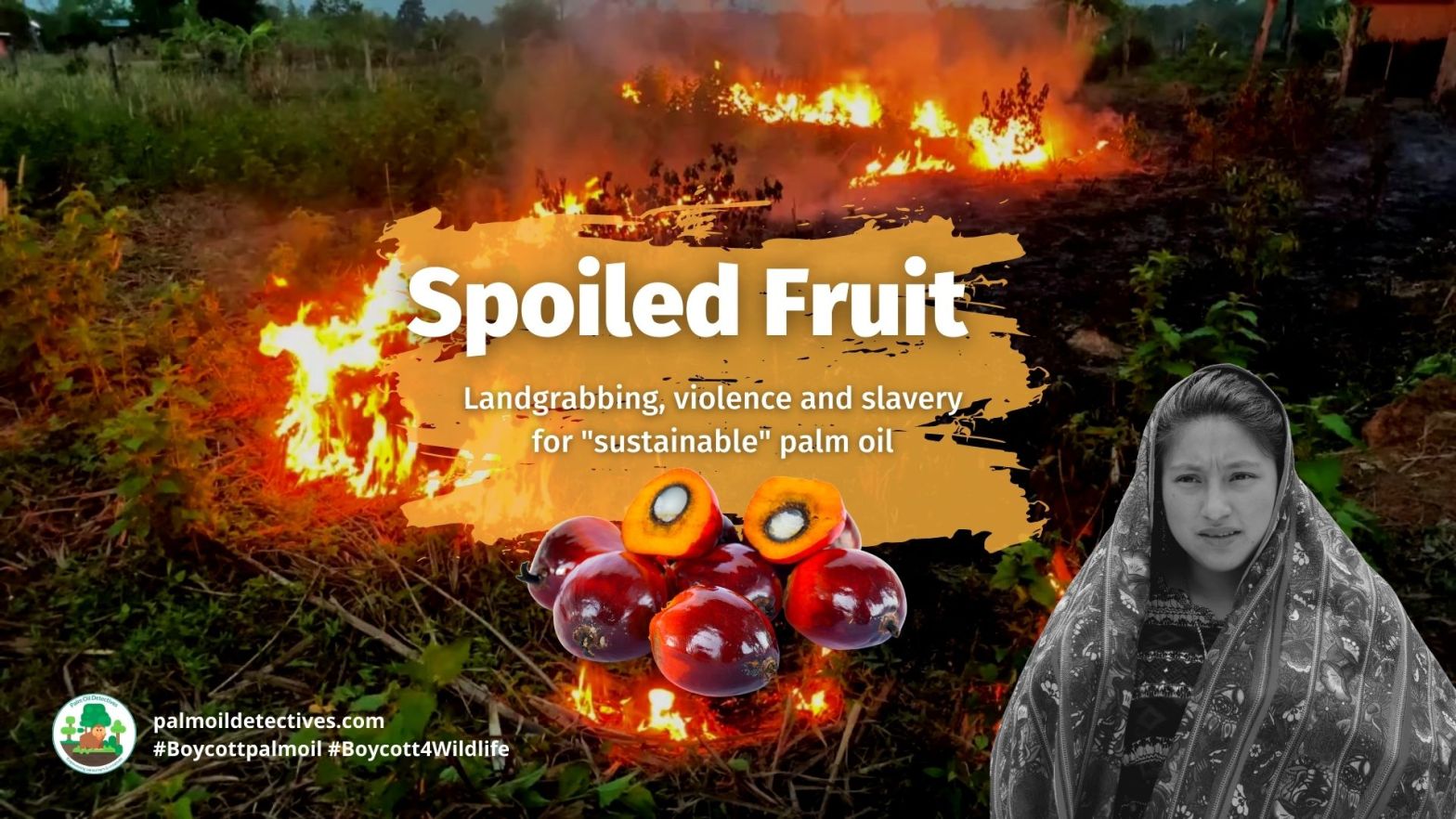
C4ADS analysis shows that the food conglomerates that feed millions—including giants such as Nestlé, Cargill, Adani Wilmar, IOI, Olenex and more —continue to enable forced labor through their indiscriminate import of tainted palm oil associated with slavery, indigenous land-grabbing, deforestation and human misery in the developing world.
Do humans really need other species?
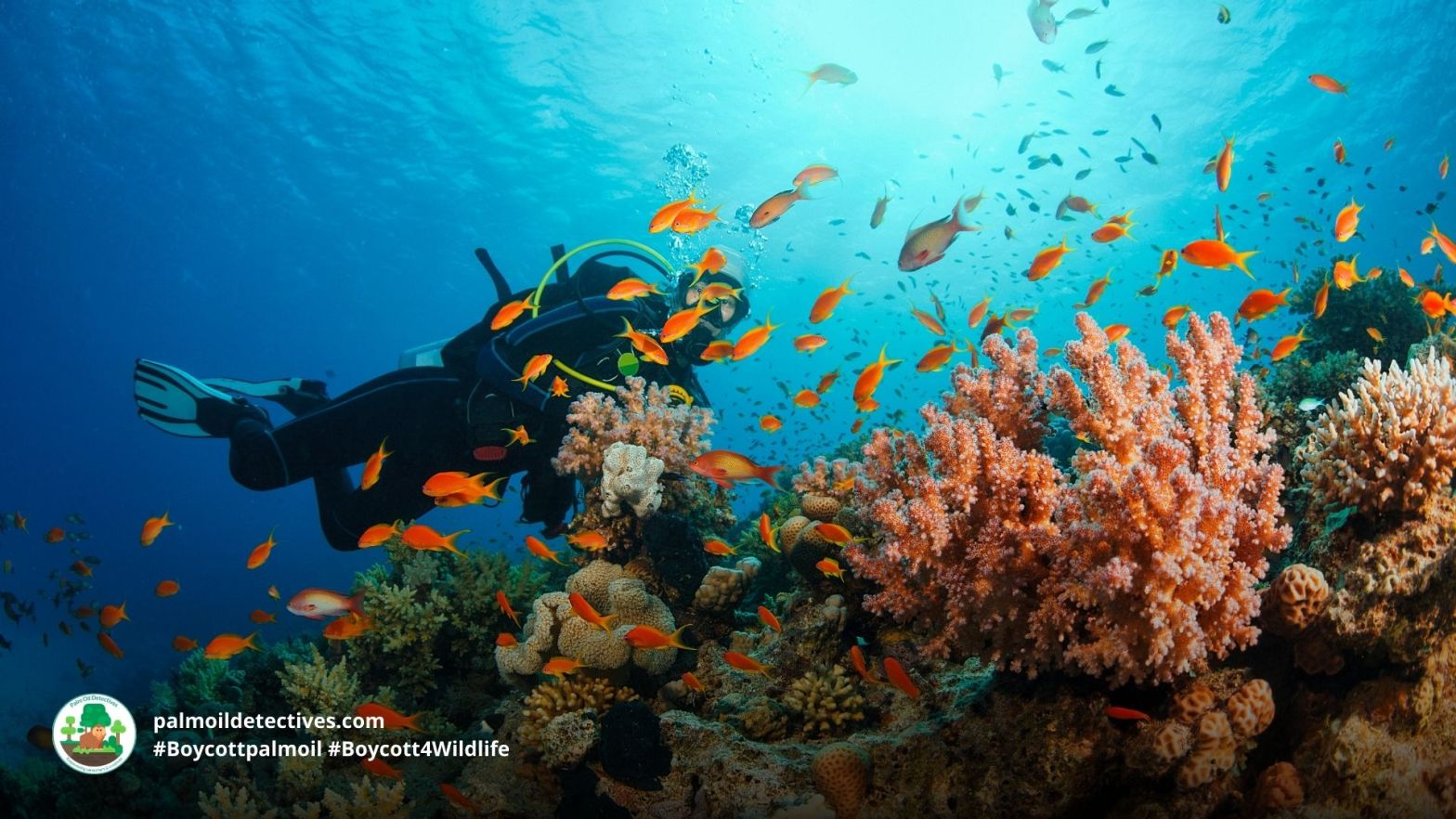
Do humans need other #species? Yes! millions of organisms are needed to keep #ecosystems in balance and ensure everyone can survive. Most importantly, #research shows other species make us happy! Be 🐱🐷🐎🐕🐠 #Vegan for the animals 🍅🥦 #BoycottPalmOil #Boycott4Wildlife
Land-grabbing for palm oil and the climate crisis
Corporate monopolies drive land grabbing for palm oil, worsening the climate crisis. Indigenous peoples in Asia resist. Join the fight. #BoycottPalmOil
Thousands more species at risk of extinction than currently recorded, suggests new study
New research suggests the #extinction crisis may be even worse than we thought. More than half of species that have so far evaded any official conservation assessment are threatened with extinction. Some species that are not yet classified and are “data deficient” make up around 17% of the nearly 150,000 species currently assessed. according to predictions by researchers from the Norwegian University of Science and Technology. Help them to survive! #BoycottPalmOil #Boycott4Wildlife
African Palm Civet Nandinia binotata

African palm civets were once common seed dispersers. Now they face pressure from palm oil-driven deforestation, mining, and hunting for bushmeat – boycott!
Palm oil substitutes can offer beleaguered rainforests a fighting chance
Palm oil is a versatile substance used in a wide range of products from foods to cosmetics. The trouble with it is that the cultivation of oil palm trees has caused massive enviromental harm, especially in Malaysia and Indonesia, which together account for 85% of palm oil production in the world.
But scientists from Nanyang Technological University in Singapore and the University of Malaya in Malaysia say they have an answer as to how we can wean ourselves off palm oil.
Buffy-tufted-ear Marmoset Callithrix aurita

Buffy-tufted-ear Marmosets are enchanting monkeys living in a tiny, isolated region of Brazil’s Atlantic Forest. Fight for them and boycott palm oil!
 Palm Oil Detectives