
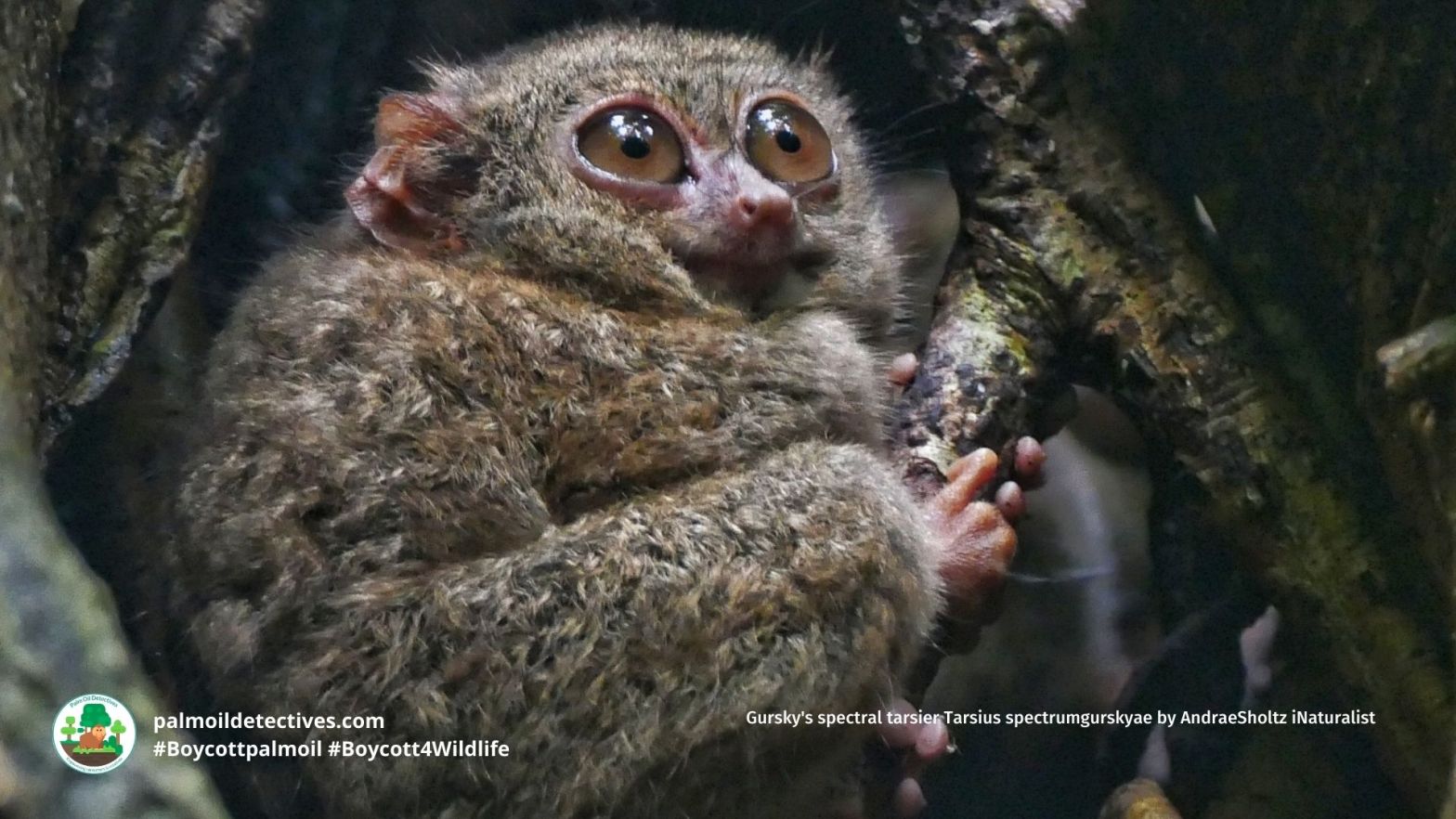
Gursky’s spectral tarsiers AKA Wusing of North Sulawesi are vulnerable due to palm oil and timber deforestation. Take action for them and boycott palm oil!
Tag Archives: pettrade
Blue-streaked Lory Eos reticulata

Brilliantly coloured and full of energy, the Blue-streaked Lory (Eos reticulata) is a striking and unique #parrot living in the forests of the Banda Sea Islands, #Indonesia. Their scarlet plumage is decorated with iridescent blue streaks, creating a dazzling and electrifying colours both when they’re at rest and in flight. With a sharp, hooked beak adapted for nectar-feeding, these #birds flit from flower to flower, playing a vital role in rainforest #pollination.
Despite their adaptability, habitat destruction and the pet trade threaten their survival. These birds have been heavily trapped for the illegal bird trade, with over 3,000 individuals captured annually in the 1980s. Although they remain relatively common in their range, continued #deforestation and capture for the caged #pettrade and bird market may be pushing them towards decline. If these mesmerising lories are to have a future in the wild, their habitat must be protected, and the demand for keeping them as pets must end. #BoycottPalmOil #Boycott4Wildlife
Blonde Capuchin Sapajus flavius

Only rediscovered in 2006, Blonde Capuchins are highly intelligent critically endangered primates of Brazil threatened by palm oil and meat deforestation
Tanimbar Eclectus Parrot Eclectus riedeli
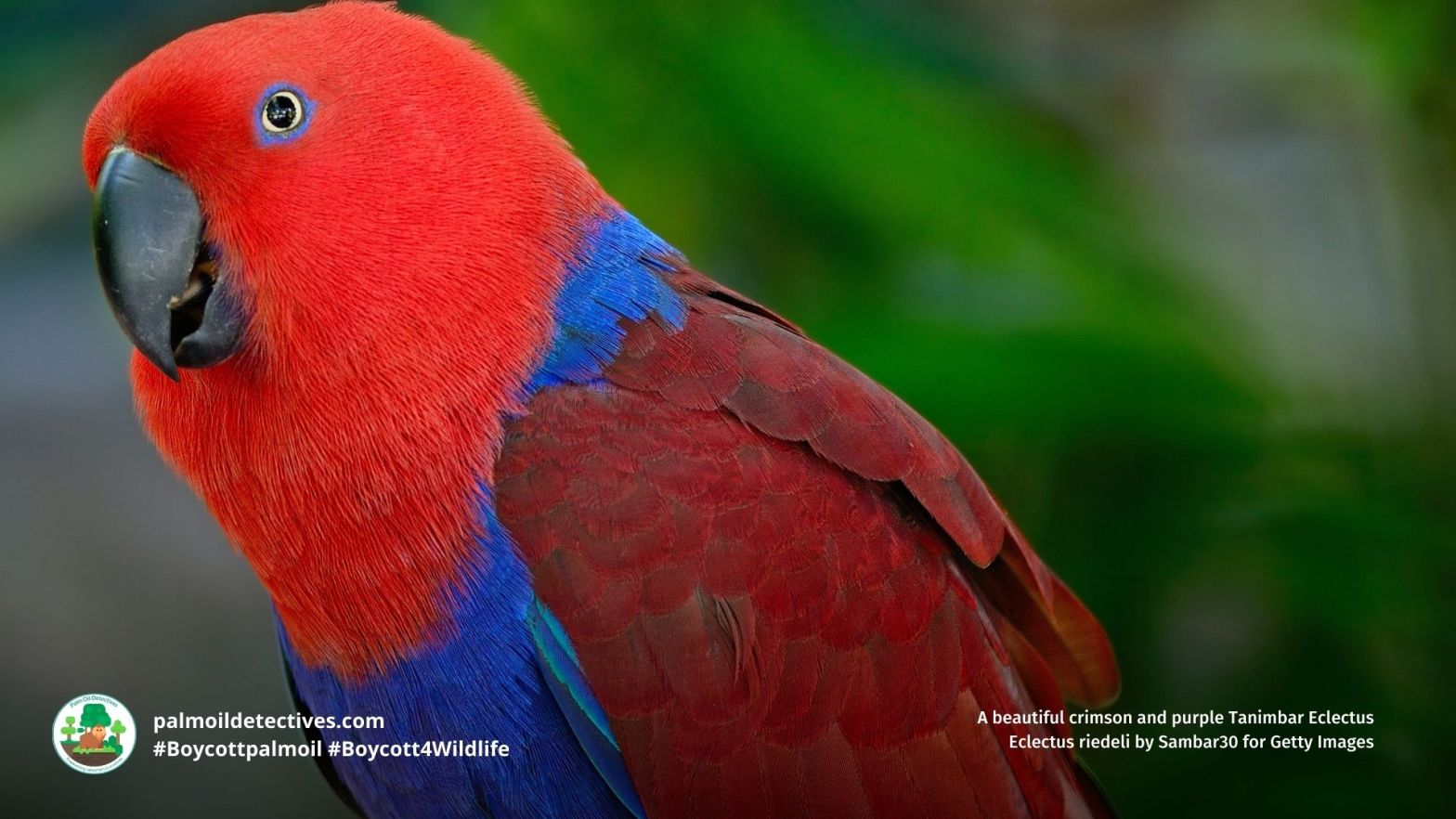
The Tanimbar Eclectus Parrot Eclectus riedeli also known as the Eclectus Parrot or Tanimbar Eclectus is a rare and striking #parrot found only on the #Tanimbar Islands of Indonesian occupied #WestPapua. Males display a brilliant emerald green plumage, while females are adorned in deep crimson and cobalt blue feathers, making them one of the most visually stunning #parrots in the world. These parrots face growing threats from habitat destruction, the pet trade, and climate change.
Forests are disappearing due to timber logging and #palmoil monoculture, while #poaching for the illegal #pettrade continues to remove individuals from the wild, disrupting their populations. #Climatechange also poses an increasing risk, with rising temperatures, storms, and unpredictable weather patterns affecting their habitat and food sources. The best way to protect these parrots is to keep them in the wild, not in cages. Use your wallet as a weapon in the supermarket and choose #PalmOilFree #BoycottPalmOil #Boycott4Wildlife.
Protected: Private Advocate’s Page
There is no excerpt because this is a protected post.
Quince Monitor (Banggai Island Monitor) Varanus melinus
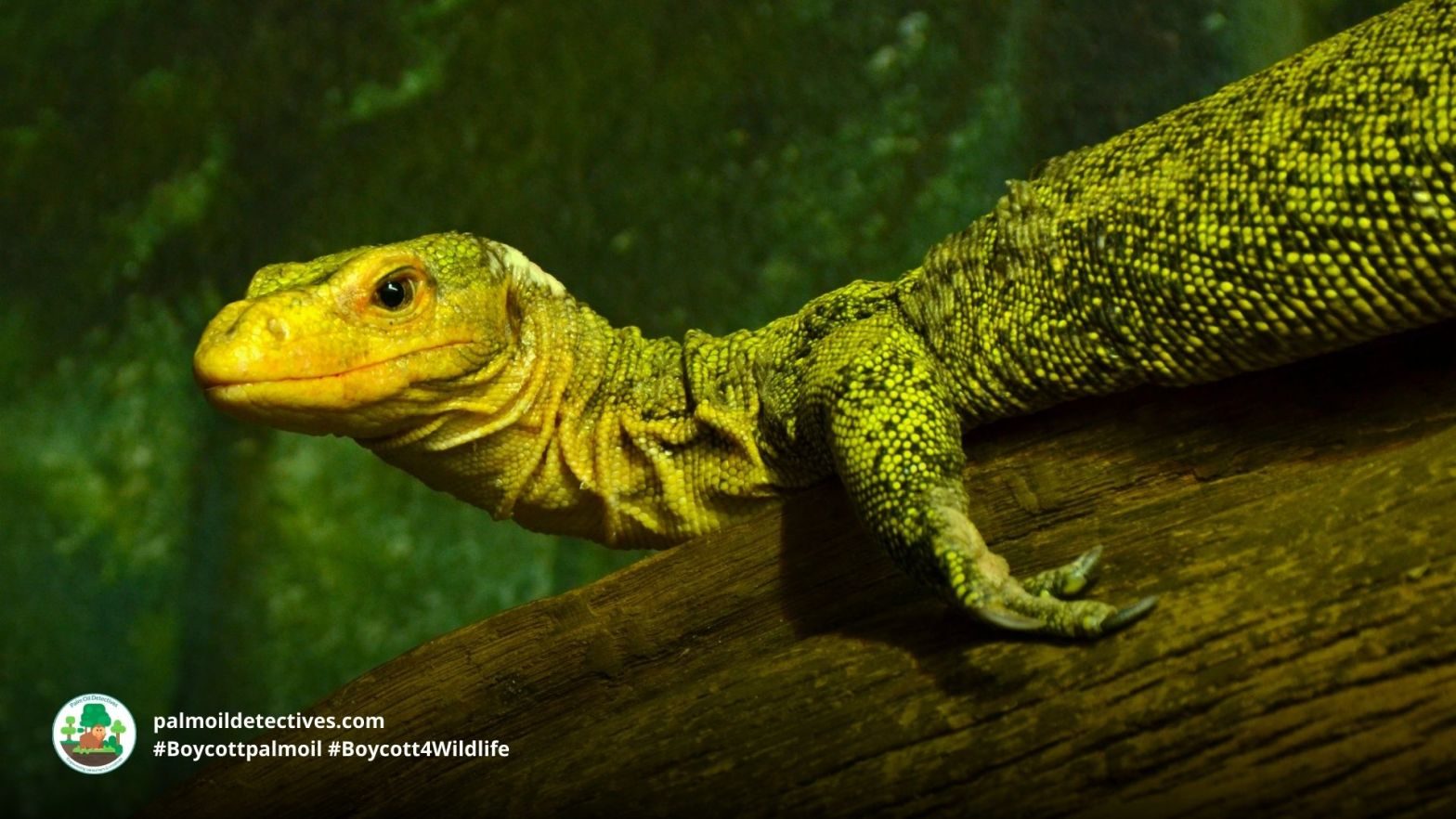
The Quince Monitor Varanus melinus get their name from the spectacular bright yellow of their skin. This is a rare and elusive species of #monitor #lizard that lives in only one location in #Indonesia – the #Maluku Islands. Their muscular, wide stance and ancient dragon-like looks make them fascinating to behold. They are endangered primarily from #palmoil #deforestation throughout their range along with collection for the illegal #pettrade. They have no known protections in place. Help them every time you shop and #BoycottPalmOil #Boycott4Wildlife in the supermarket and don’t buy these lizards as exotic pets as this is sending them extinct!
Ecuadorian White-fronted Capuchin Cebus aequatorialis
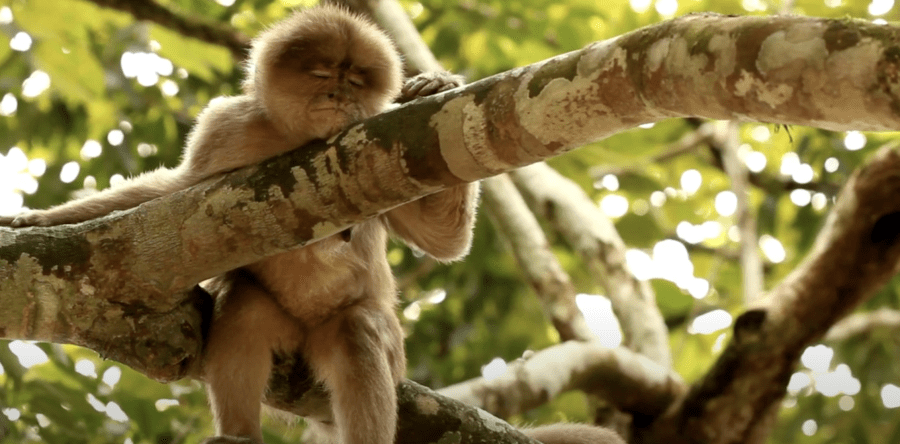
Ecuadorian White-fronted Capuchins face habitat loss to palm oil, hunting, and mining. Less than 10,000 remain. Support forest defenders. #BoycottPalmOil
Sulawesi Hornbill Rhabdotorrhinus exarhatus
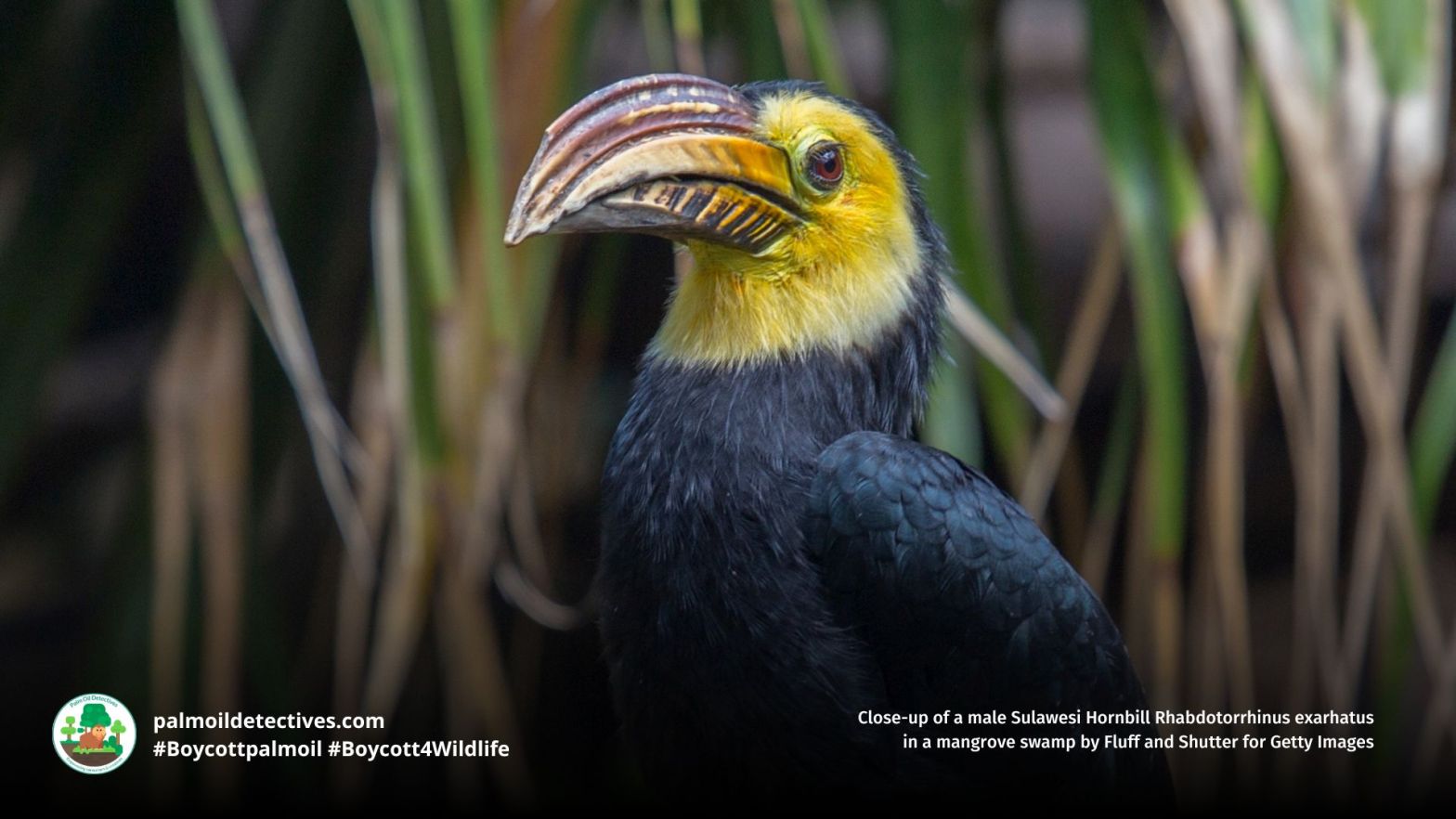
The Sulawesi hornbill (Rhabdotorrhinus exarhatus) is a striking and large yellow and black bird endemic to Sulawesi, Indonesia. Known for their unique vocalisations and social nature, including communal shared breeding practices, these medium-sized hornbills are integral to the rainforest ecosystem, acting as crucial seed dispersers for many important tree species.
Sadly, the Sulawesi hornbill is classified as Vulnerable due to habitat destruction from logging, agriculture, and palm oil plantations, as well as poaching for the illegal pet trade. Protecting their remaining rainforest habitats is essential to ensuring their survival. Fight for their survival every time you shop. #BoycottPalmOil #Boycott4Wildlife
Crested Capuchin Sapajus robustus
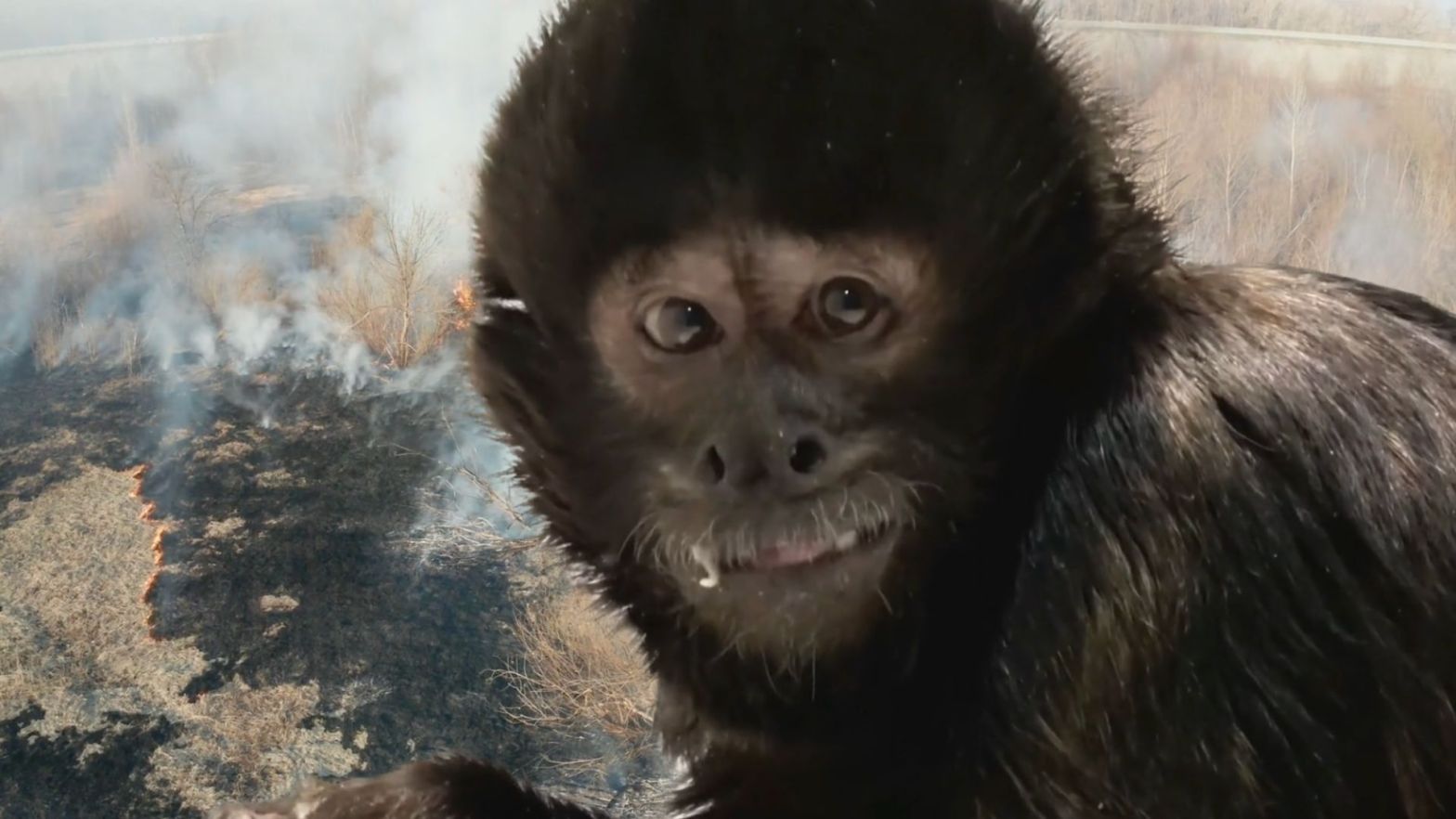
Crested Capuchins are one of Brazil’s most endangered primates. A few thousand remain, facing extinction due to palm oil, mining, soy. Take action for them!
Saker Falcon Falco cherrug
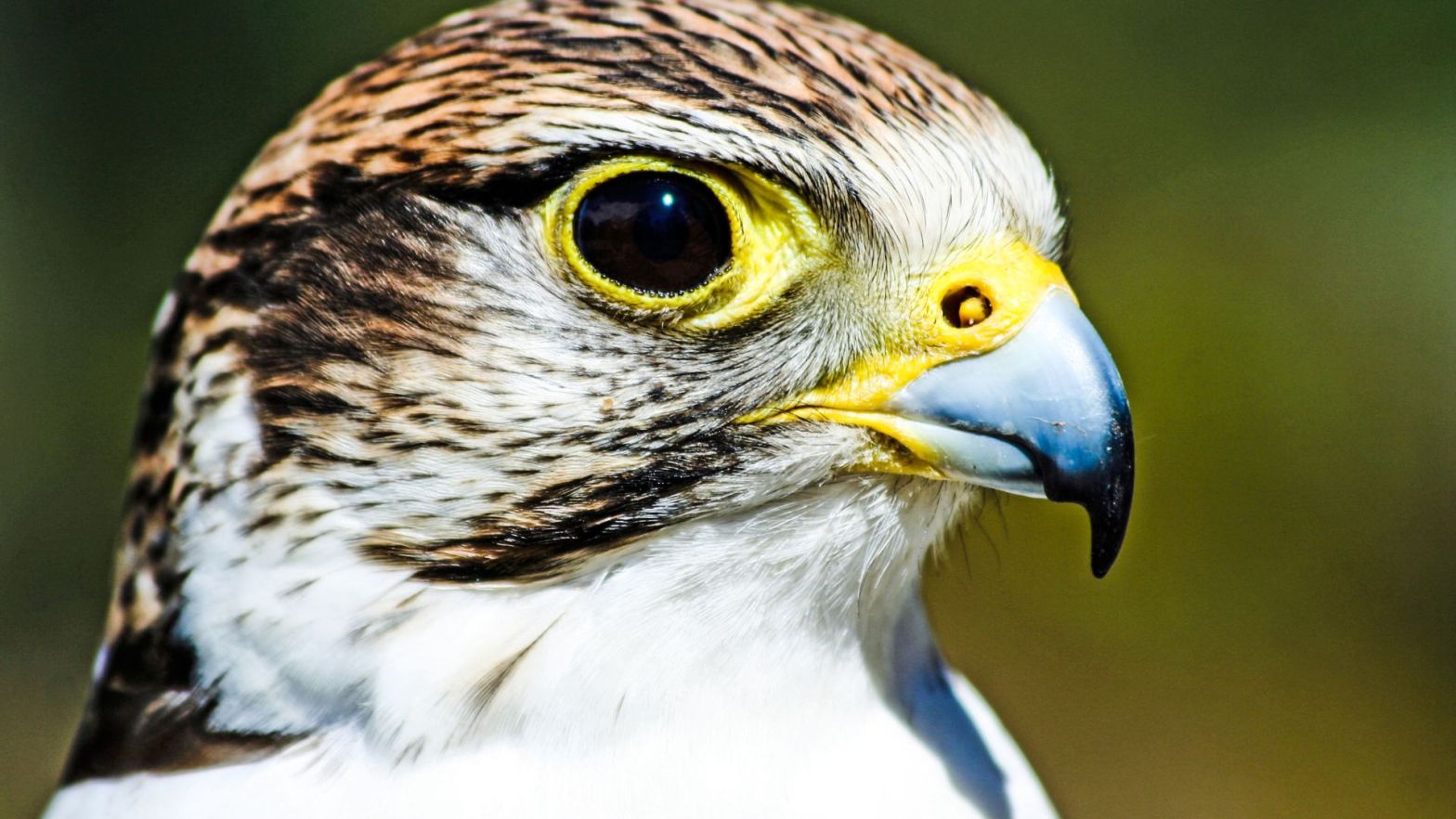
Saker #Falcons are majestic and powerful birds of prey that have a wide range throughout much of Southern Europe, the Middle East and parts of Africa. Their plumage ranges from chocolate brown in colour to a pale sandy with brown bars or streaks and can be snow white and off-white.
This species has been uplisted to Endangered because a revised population trend analysis indicates that they may be undergoing a very rapid decline. This negative trend is a result of a range of anthropogenic factors including electrocution on power lines, unsustainable capture for the falconry and #pettrade, as well as habitat degradation throughout all three continents but especially in Africa. Help them every time you shop and #Boycott4Wildlife
Harlequin Poison Frog Oophaga histrionica
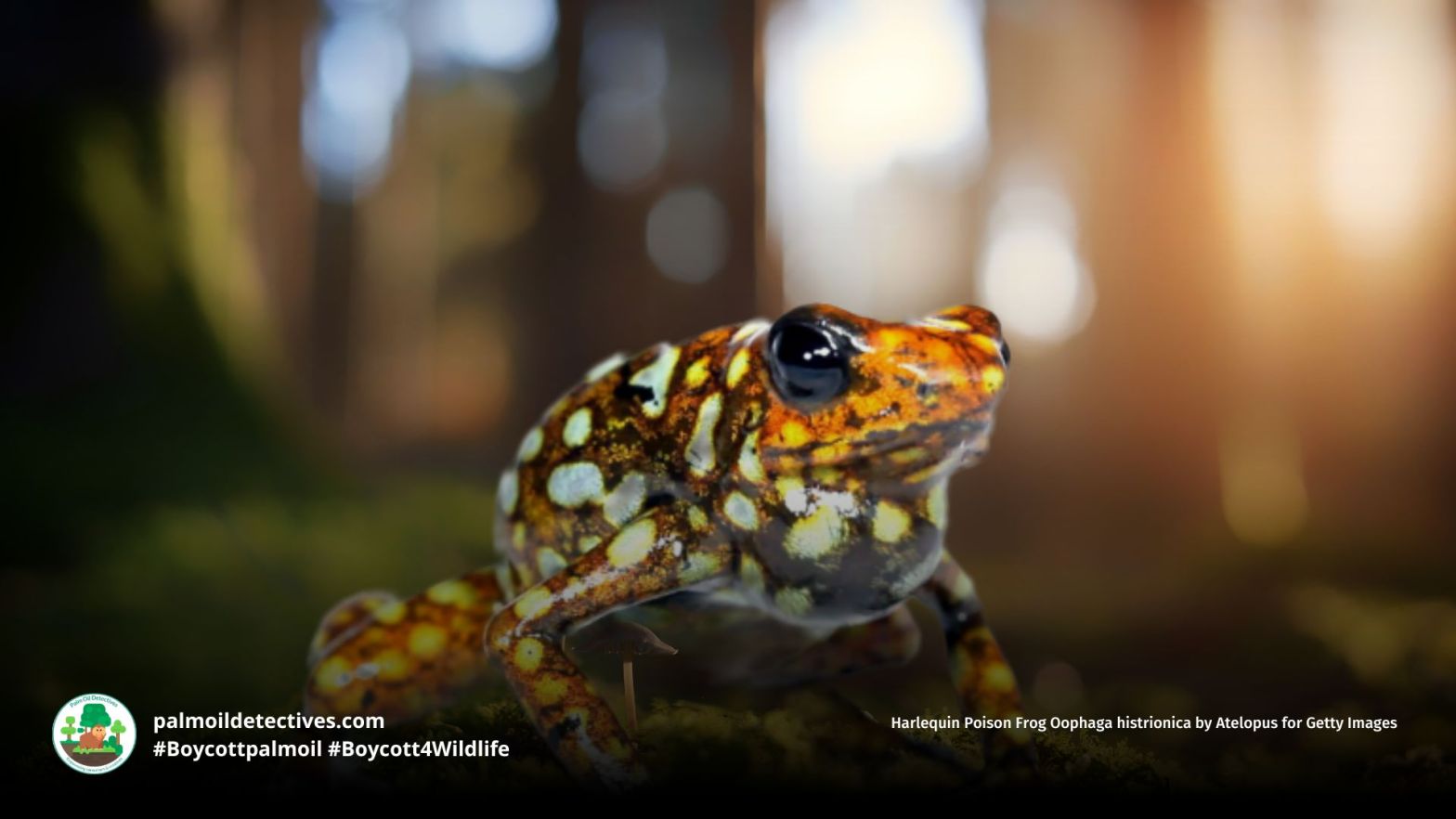
Chocó rainforests, the harlequin poison frog is as deadly as it is beautiful. Cloaked in hypnotic shades of orange, yellow, green and black, this tiny amphibian is a master of chemical warfare—their skin is infused with powerful alkaloid toxins that can paralyse or kill predators. But despite their formidable defences, they are completely helpless against human destruction.
Once thriving in the dense, misty forests of western Colombia, this critically endangered frog is now on the brink of extinction. Illegal mining, rampant deforestation for palm oil plantations, and the relentless wildlife trade have devastated their fragile rainforest home. The same vibrant colours that warn predators away have made them a prime target for smugglers supplying the exotic pet trade.
This extraordinary species is a vital part of its ecosystem, controlling insect populations and contributing to the rainforest’s delicate balance. But unless urgent action is taken, the harlequin poison frog could vanish forever.
Protect their rainforest home. Say no to palm oil, reject the illegal pet trade, and demand stronger protections for Colombia’s amphibians. #BoycottPalmOil #Boycott4Wildlife
Black-faced Lion Tamarin Leontopithecus caissara
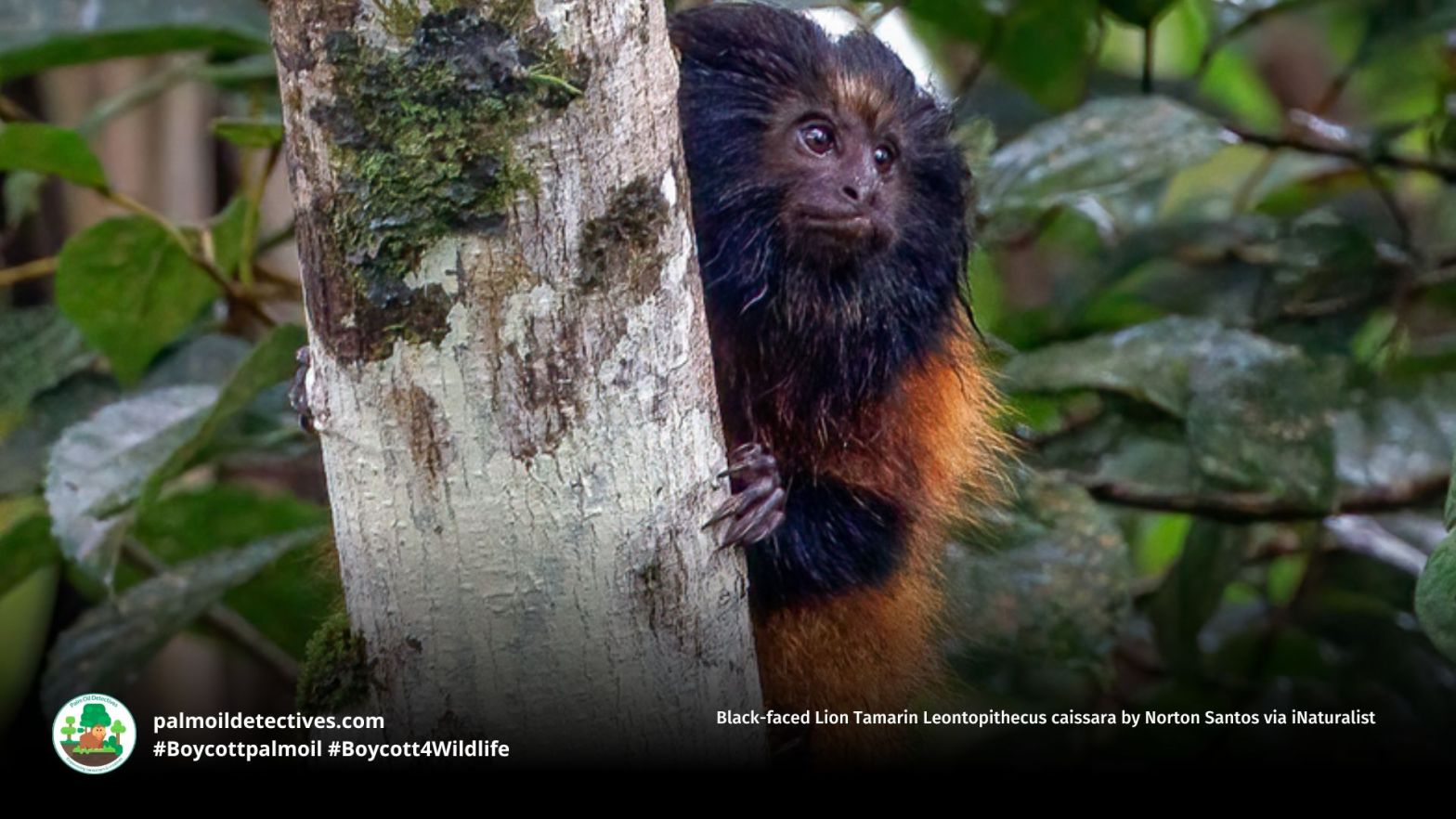
The black-faced lion #tamarin Leontopithecus caissara, also known as the Superagüi lion tamarin, is listed as Critically Endangered on the IUCN Red List. With a total population of fewer than 400 individuals and a fragmented, low-lying coastal habitat of #Brazil, this species is on the edge of extinction. Threats include logging, the illegal #pettrade, palm oil, #soy and #meat deforestation and urban expansion. Conservation efforts have begun, but there is still enormous work to do to protect these irreplaceable #primates. Protect this rare and charismatic #primate by taking urgent action. #BoycottPalmOil #Boycott4Wildlife #Vegan
African grey parrots help each other in times of need
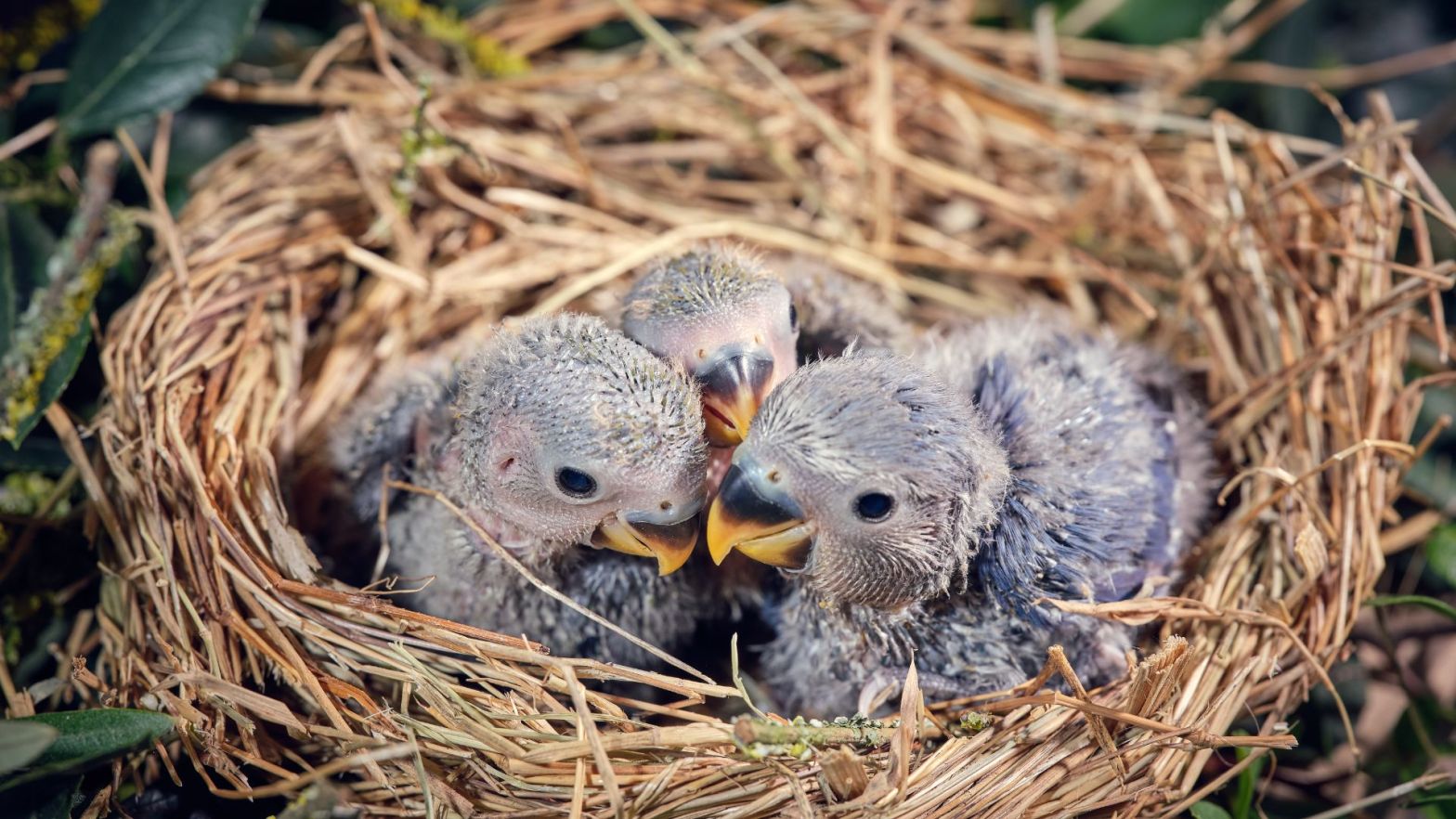
Corvids – birds such as ravens, crows, and magpies – and parrots are considered to be special among birds, as they have unusually large and densely packed brains. They show many cognitive capacities that are linked to an advanced understanding of their surroundings. This has earned them the name “feathered apes”. A recent study has found that it’s not only crows and ravens who help one another – grey parrots do as well.
Timneh Parrot Psittacus timneh
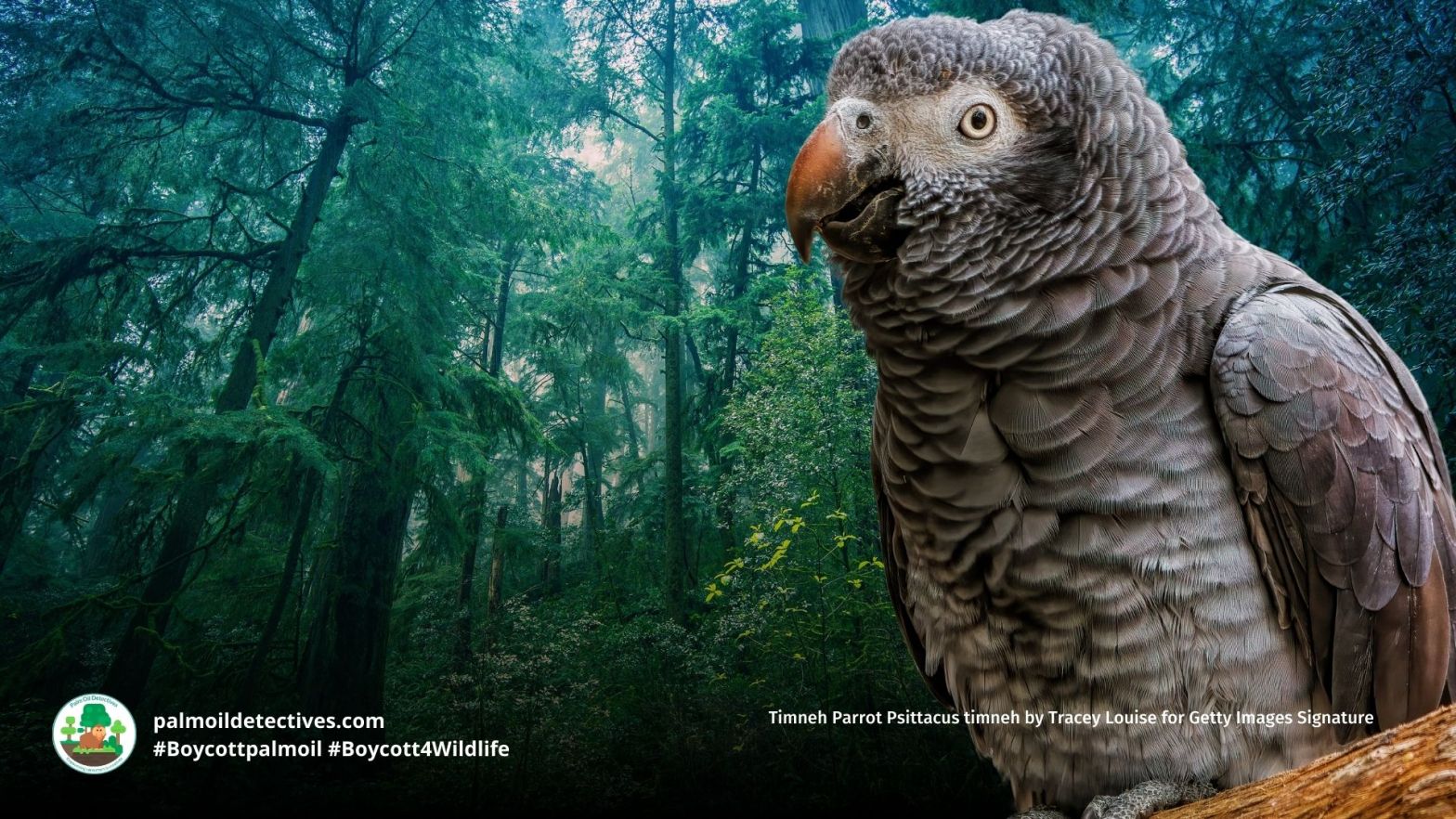
The Timneh Parrot, a smaller and darker cousin of the African Grey Parrot, captivates with their intelligence, vibrant personalities, and ability to mimic speech. However, their beauty and charm have contributed to their decline. The illegal pet trade is depleting wild populations, with poachers raiding nests to meet global demand. Meanwhile, habitat destruction driven by out-of-control palm oil plantations, meat agriculture, and crops like cocoa, coffee, and tobacco is eroding their forest homes.
Research shows that the parrot trade, facilitated by social media, has expanded into new regions like Algeria, where demand for exotic pets continues to fuel poaching. The population declines are staggering—studies in Cameroon show local reductions of up to 99% over 14 years due to trapping and habitat loss. Protecting these parrots requires ending the demand for wild-caught birds and halting deforestation in West Africa. Take action today: #BoycottPalmOil #BoycottMeat #Boycott4Wildlife.
Spectral Tarsier Tarsius tarsier
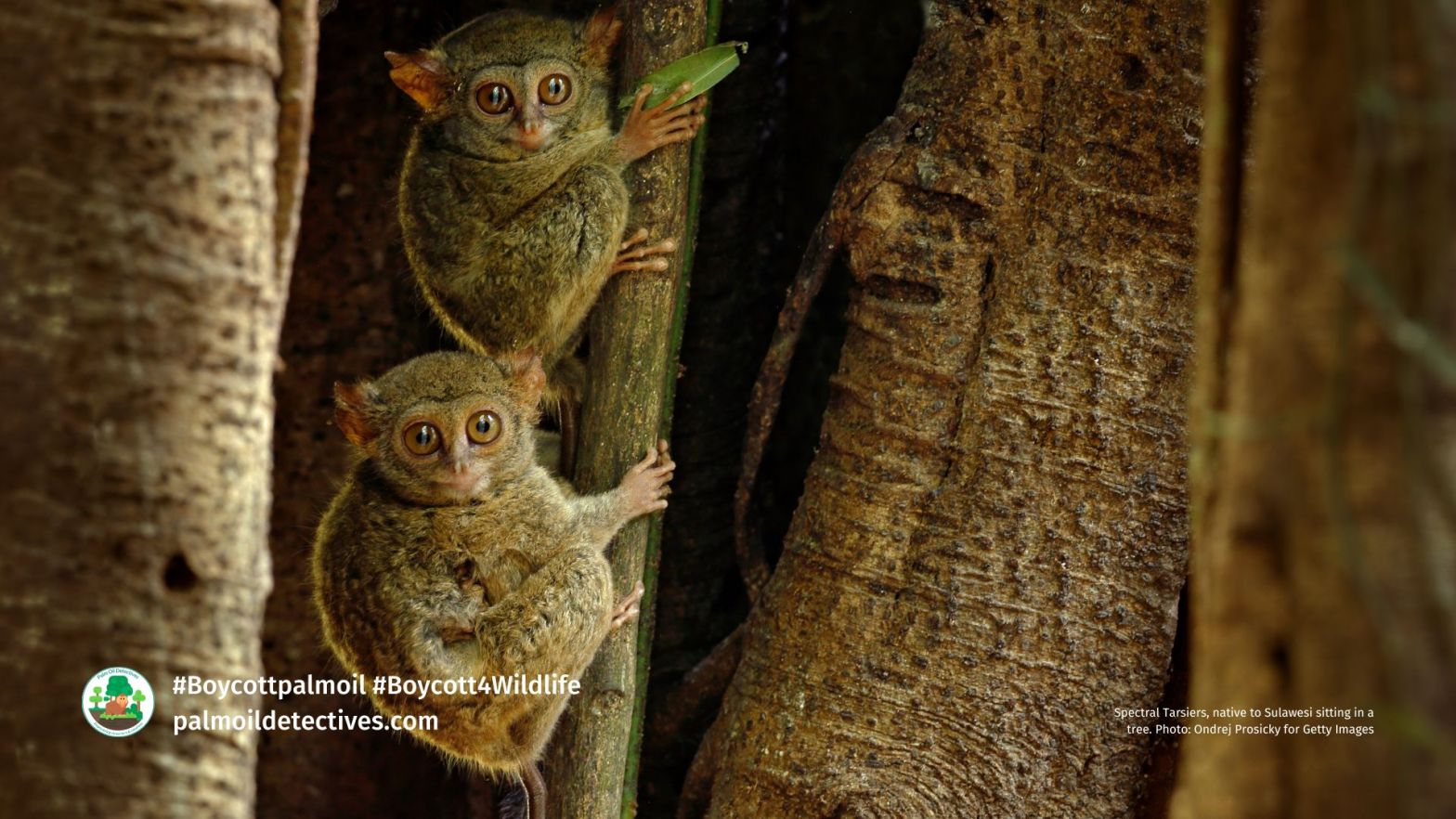
The Spectral Tarsier Tarsius tarsier is one of the smallest and most endearing #primates in the world. With the largest eye-to-body ratio of any #mammal, this wide-eyed, nocturnal #insectivore is found only in #Sulawesi and nearby Indonesian islands. Although they show some tolerance to human-altered landscapes, they are listed as #Vulnerable by the Red List due to rampant #deforestation for #palmoil and #timber agriculture, limestone #mining, #pesticide use and agricultural #pollution and the illegal pet trade. These elusive primates are declining fast. Use your wallet as a weapon: always choose products that are 100% palm oil-free and never support the exotic pet trade.#BoycottPalmOil #Boycott4Wildlife #Vegan
Northern Gray Gibbon Hylobates funereus
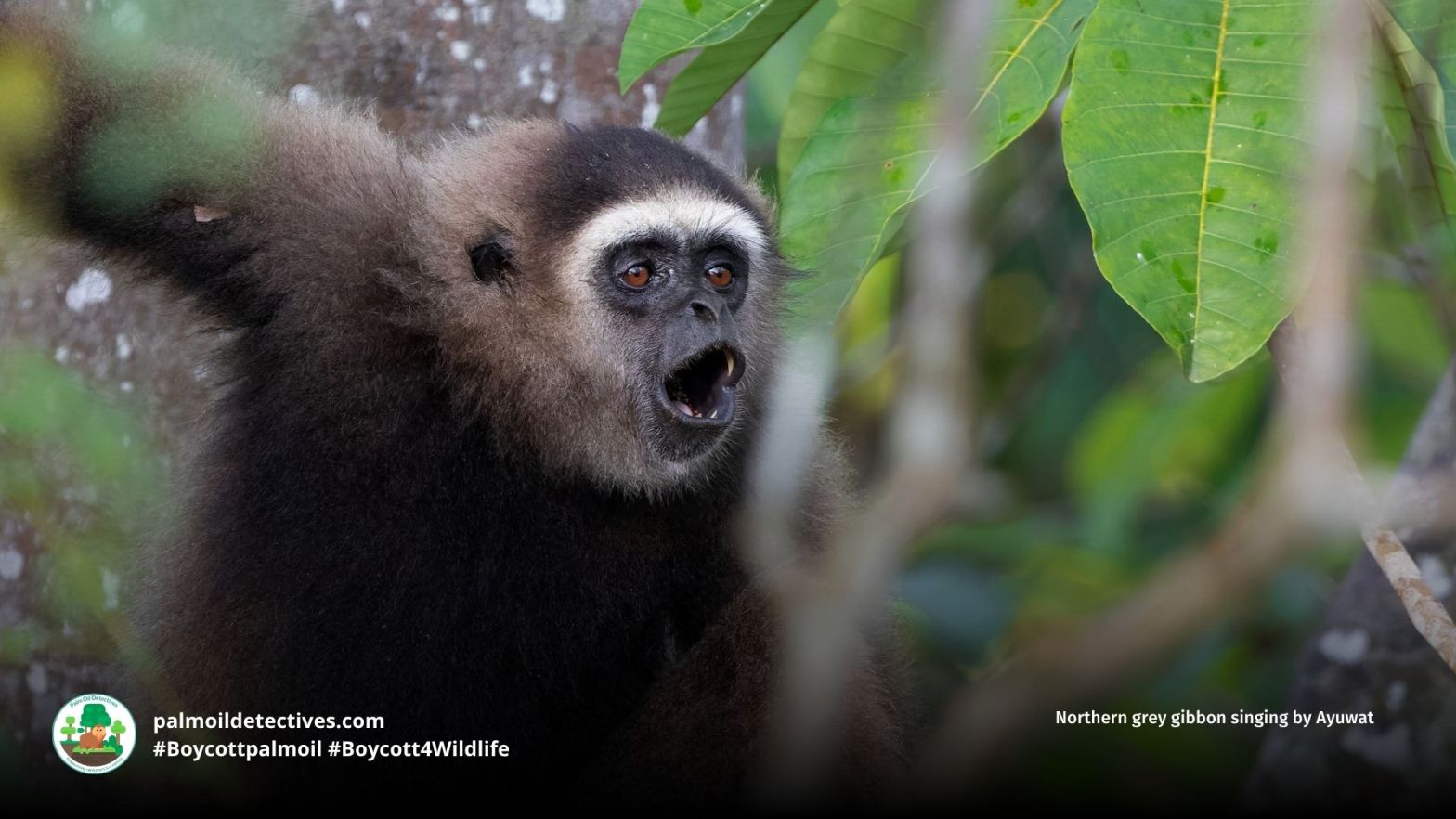
Save the sublime song and energetic lives of the Northern grey gibbons in Borneo when you boycott palm oil and boycott4wildlife in the supermarket!
Bornean Peacock-pheasant Polyplectron schleiermacheri
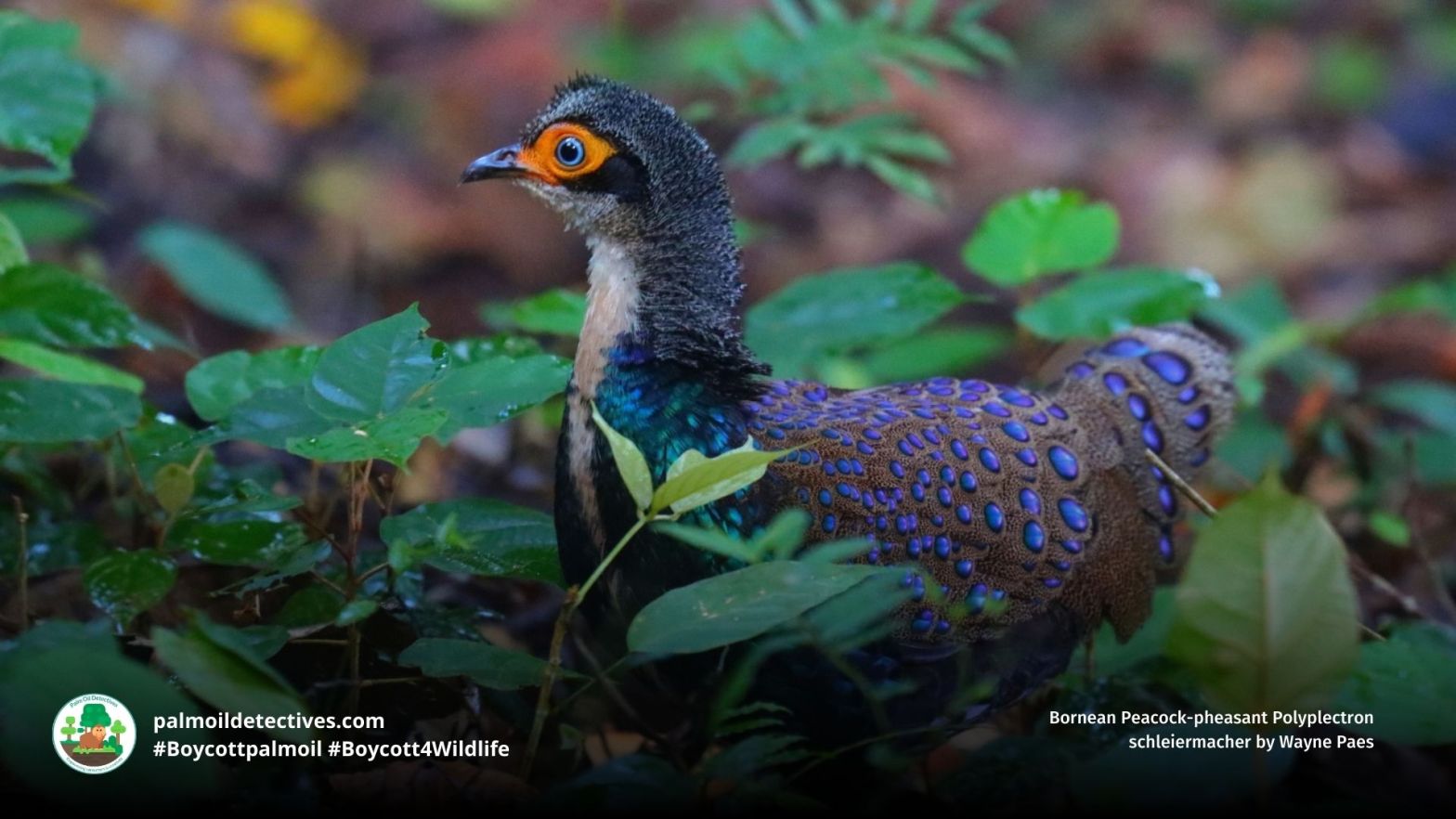
Protect Borneo’s elusive Peacock-Pheasant. These rare birds, known for their iridescent plumage, face a grave threat from out-of-control palm oil plantations
Southeast Asian Box Turtle Cuora amboinensis
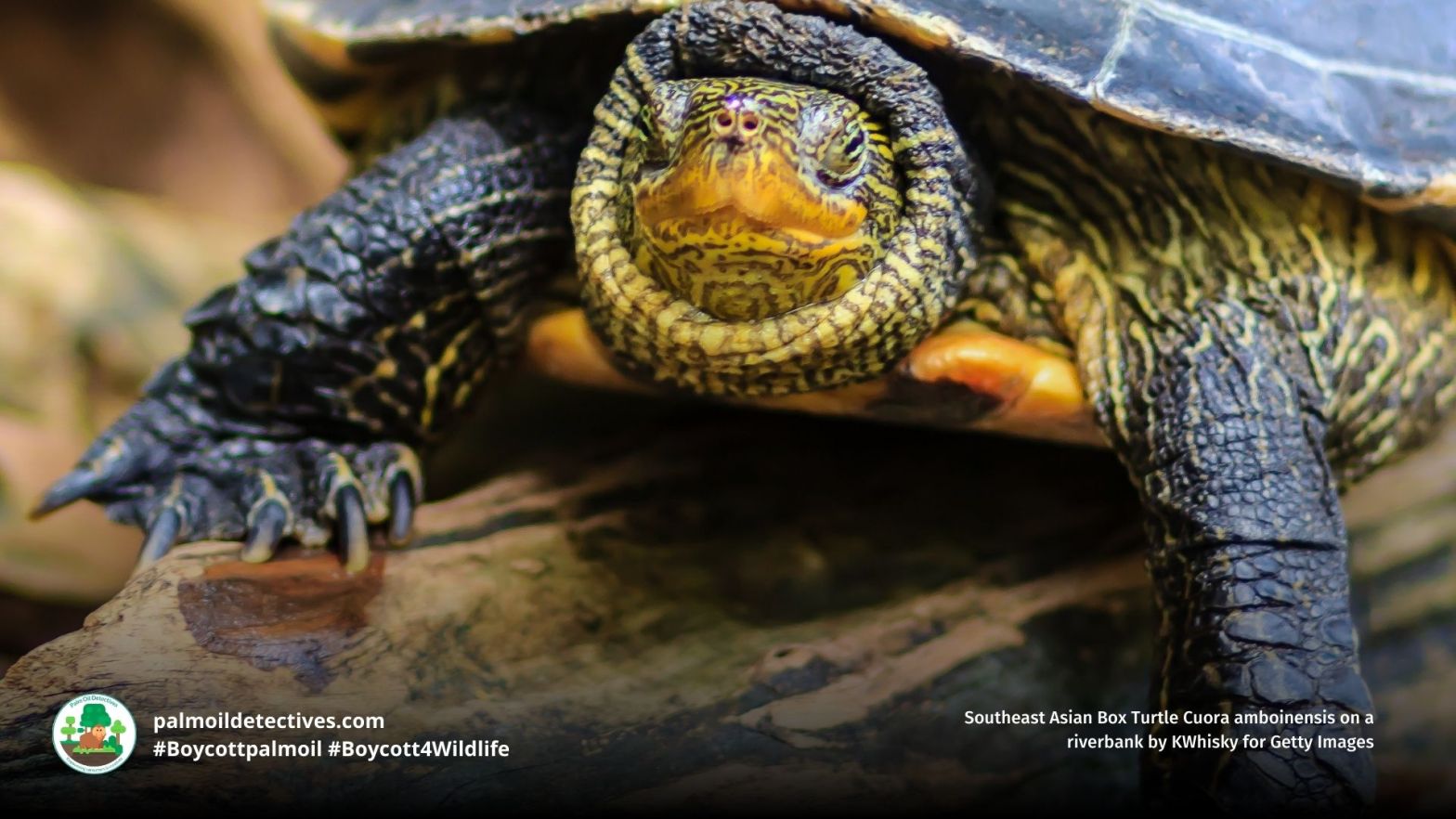
The Southeast Asian Box #Turtle Cuora amboinensis, also known as the Amboina Box Turtle, Malayan Box Turtle, or Indonesian Box Turtle, is a freshwater #reptile species found across much of Southeast Asia. This species is under severe pressure due to overexploitation for food, traditional medicine, and the #pettrade, particularly in Australia, #China, Europe, and the United States. Their semi-aquatic nature allows them to thrive in swamps, rice paddies, and slow-moving rivers, but habitat destruction from #palmoil plantations, #timber and wetland drainage threatens their survival. Their population is rapidly declining due to these threats, making urgent protections necessary. Resist destruction and fight for their survival every time you shop – #BoycottPalmOil #Boycott4Wildlife.
Blue-eyed Spotted Cuscus Spilocuscus wilsoni
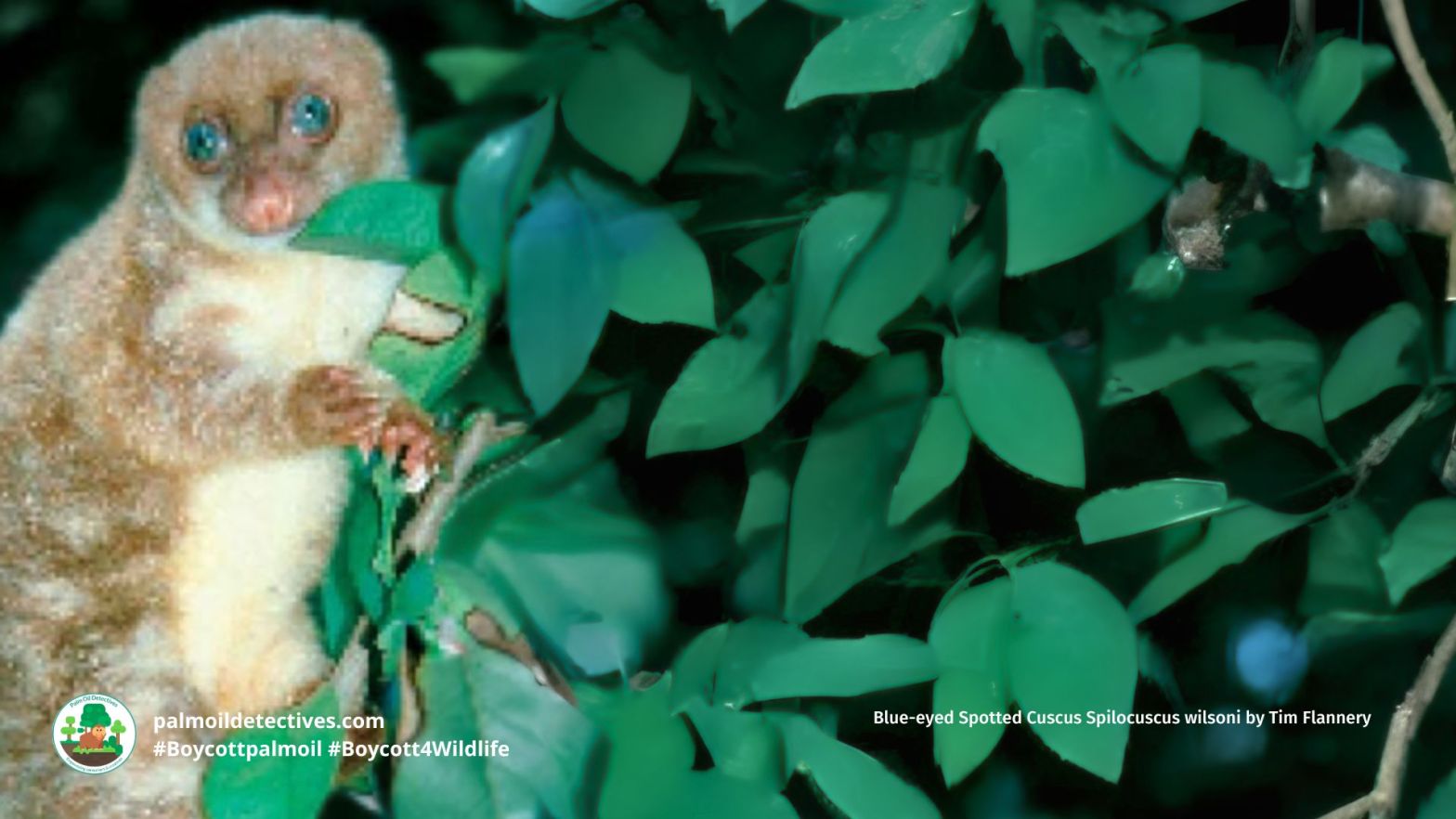
Critically Endangered Blue-eyed Spotted Cuscus lives in lowland rainforests of West Papua. Palm oil deforestation is a serious threat. Boycott palm oil!
Straw-headed Bulbul Pycnonotus zeylanicus
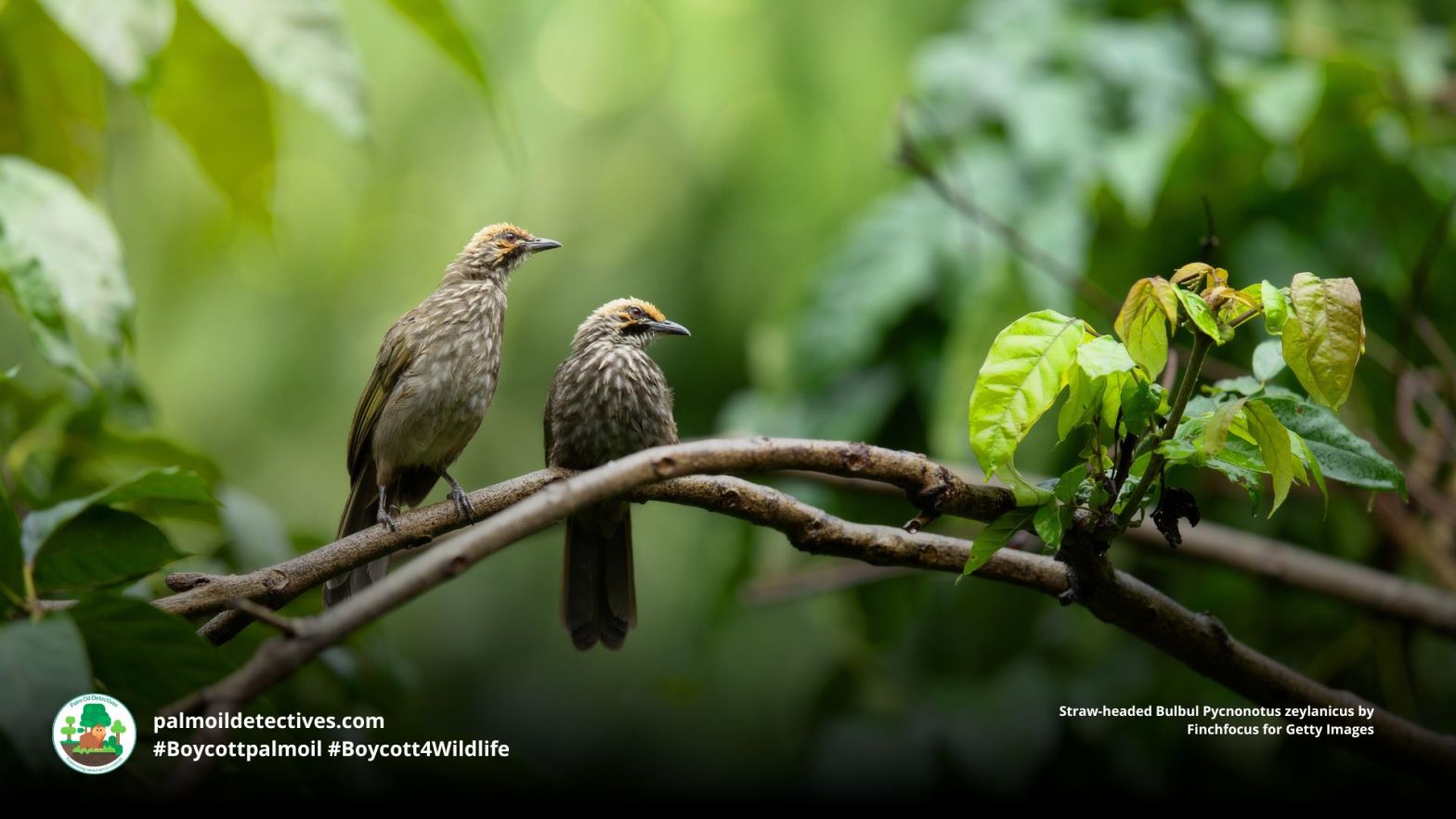
The Straw-headed Bulbul is a striking bright yellow bird known for their vibrant song, often described as one of the most melodious in the bird world. Their powerful calls echo through Southeast Asia’s lowland forests, but these sounds are becoming increasingly rare. They are critically endangered due to illegal trapping for the cage-bird trade and habitat loss driven by deforestation, including the expansion of palm oil plantations.
Protecting the Straw-headed Bulbul is vital to preserving their unique contribution to the soundscapes of their natural habitats. Fight for their survival by boycotting products linked to deforestation. Use your wallet as a weapon. #BoycottPalmOil #Boycott4Wildlife
Blue-backed Parrot Tanygnathus everetti

The Blue-backed #Parrot, also known as Müller’s Parrot or Burbridge’s Parrot, is a striking yet elusive #bird native to the #Philippines. Their shimmering blue and green plumage allows them to blend seamlessly into the forest canopy, making sightings of this rare species increasingly difficult. Despite once being common, the relentless destruction of their rainforest home and rampant #poaching for the #pettrade have pushed this parrot to the brink. They are now classified as #Endangered, they face ongoing population declines, with some local populations feared to be extinct. Without urgent conservation efforts, this vibrant parrot may vanish forever. Help them every time you shop and #BoycottPalmOil #Boycott4Wildlife
Sumatran Mesia Leiothrix laurinae
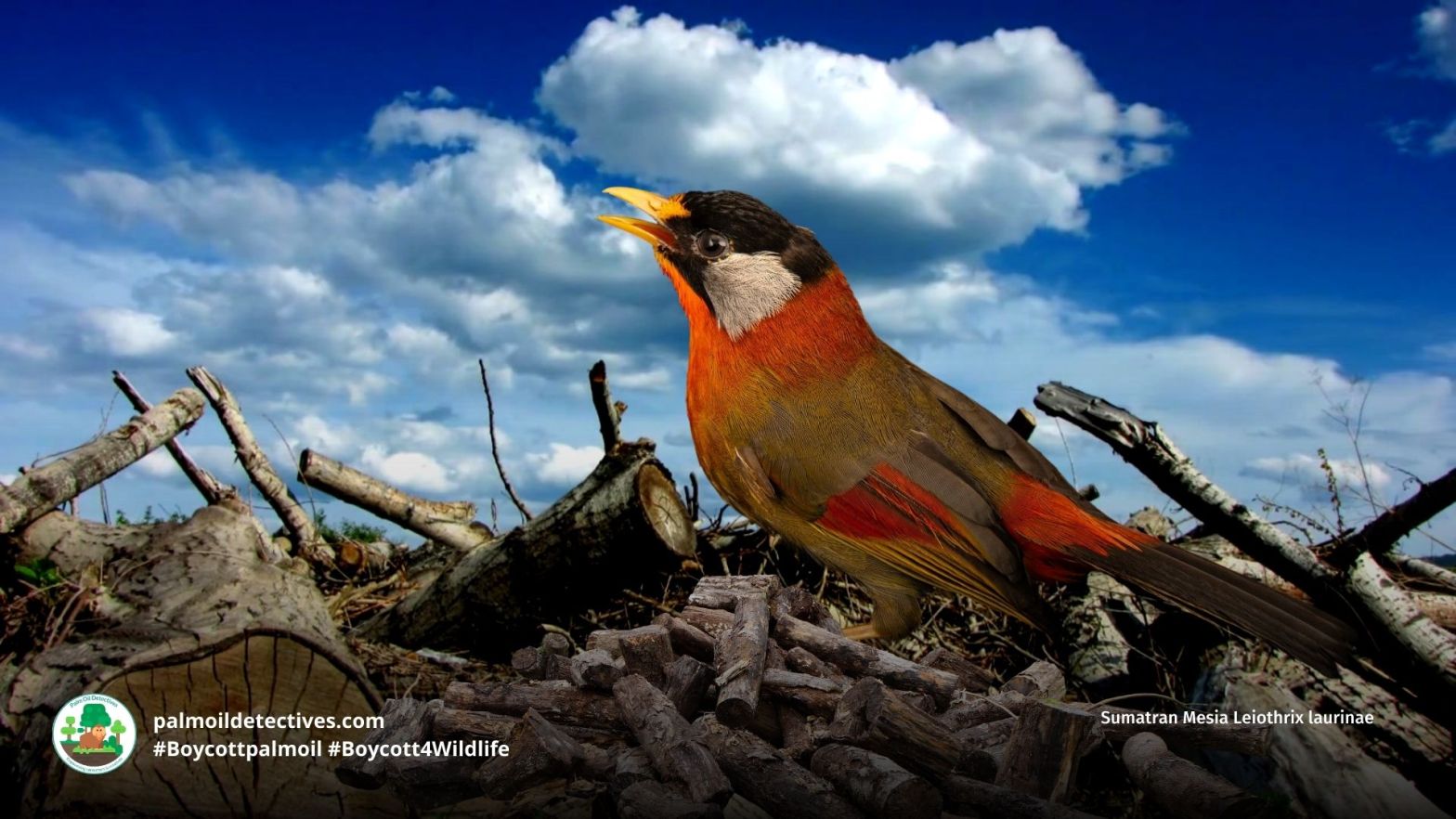
The Sumatran Mesia, also known as Leiothrix laurinae, is an exquisite song #bird endemic to the misty montane forests of #Sumatra, #Indonesia. With their striking plumage of yellow, red, and black and their enchanting, melodious calls, they are an integral part of Sumatra’s rich avian #biodiversity. This species, however, is rapidly declining due to extensive habitat destruction for #palmoil and the devastating illegal songbird #pettrade, which sees thousands of individuals snatched from the wild each year. If these birds are to survive, urgent action is needed to protect their forests and end their capture for the caged bird industry. Use your voice to demand change, campaign against the illegal wildlife trade and #BoycottPalmOil #Boycott4Wildlife every time you shop!
 Palm Oil Detectives