
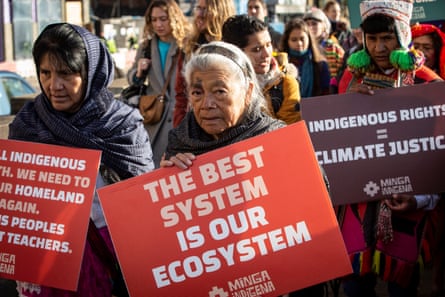
The rapid expansion of oil palm plantations across #SouthAmerica is causing significant environmental, economic and social problems. This growth is leading to #deforestation, #landgrabbing displacement of #indigenous and farming communities, and increased militarised and police #violence, particularly affecting Indigenous and Afro-descendant populations. Despite the global demand for #palmoil, the consequences of its production on peasant communities in South and Central America are raising serious questions about its viability and #humanrights rigour.
Tag Archives: SouthAmerica
Andean condor Vultur gryphus

The Andean condor Vultur gryphus is one of the largest flying #birds in the world, with a wingspan of up to 3.3 metres and a body weight of up to 15 kilograms. These amazing birds are able to soar for up to five hours and cruise for over 100 kilometres using wind currents, not flapping. They are primarily scavengers, feeding on carrion from large carcasses such as deer, cattle, and marine mammals. With a striking black plumage and distinct white ruff around their necks, they are iconic symbols of the #Andes mountains. Despite their impressive size and strength, Andean #condors are classified as #Vulnerable from human-related threats including habitat loss for #palmoil, #soy and #meat #deforestation. Farmers persecute these beautiful birds putting poison into animal carcasses. Their slow reproductive rate makes their survival even more challenging. These birds are critical for ecosystems, disposing carrion. Thus they prevent the spread of diseases. Help them to survive by simply changing your diet and buying habits. #BoycottMeat and be #vegan #Boycott4Wildlife
Brazilian three-banded armadillo Tolypeutes tricinctus

The Brazilian three-banded #armadillo Tolypeutes tricinctus, known as “tatu-bola” in Portuguese, is a rare and unique species native to #Brazil. With the ability to roll into a near-impenetrable ball, this endearing behaviour has made them an icon of conservation efforts. They are found in the dry forests and savannahs of Brazil, particularly in the #Cerrado and Caatinga biomes. These fascinating armoured creatures are Vulnerable on the IUCN Red List due to agricultural expansion for #palmoil, #soy and #meat. Fragmentation of their ecosystem is ongoing for infrastructure projects and #goldmining. With their population in sharp decline, efforts to protect their habitats are essential for their survival. Help them every time you shop and adopt a #vegan diet, and #BoycottPalmOil #BoycottGold #Boycott4Wildlife on social media!
Orange-breasted Falcon Falco deiroleucus

Help protect the Orange-breasted Falcon, vibrant birds of prey facing significant threats from palm oil, gold mining, and soy deforestation, boycott palm oil!
Violence for Palm Oil Against Peasant Communities in Honduras Meets Resistance
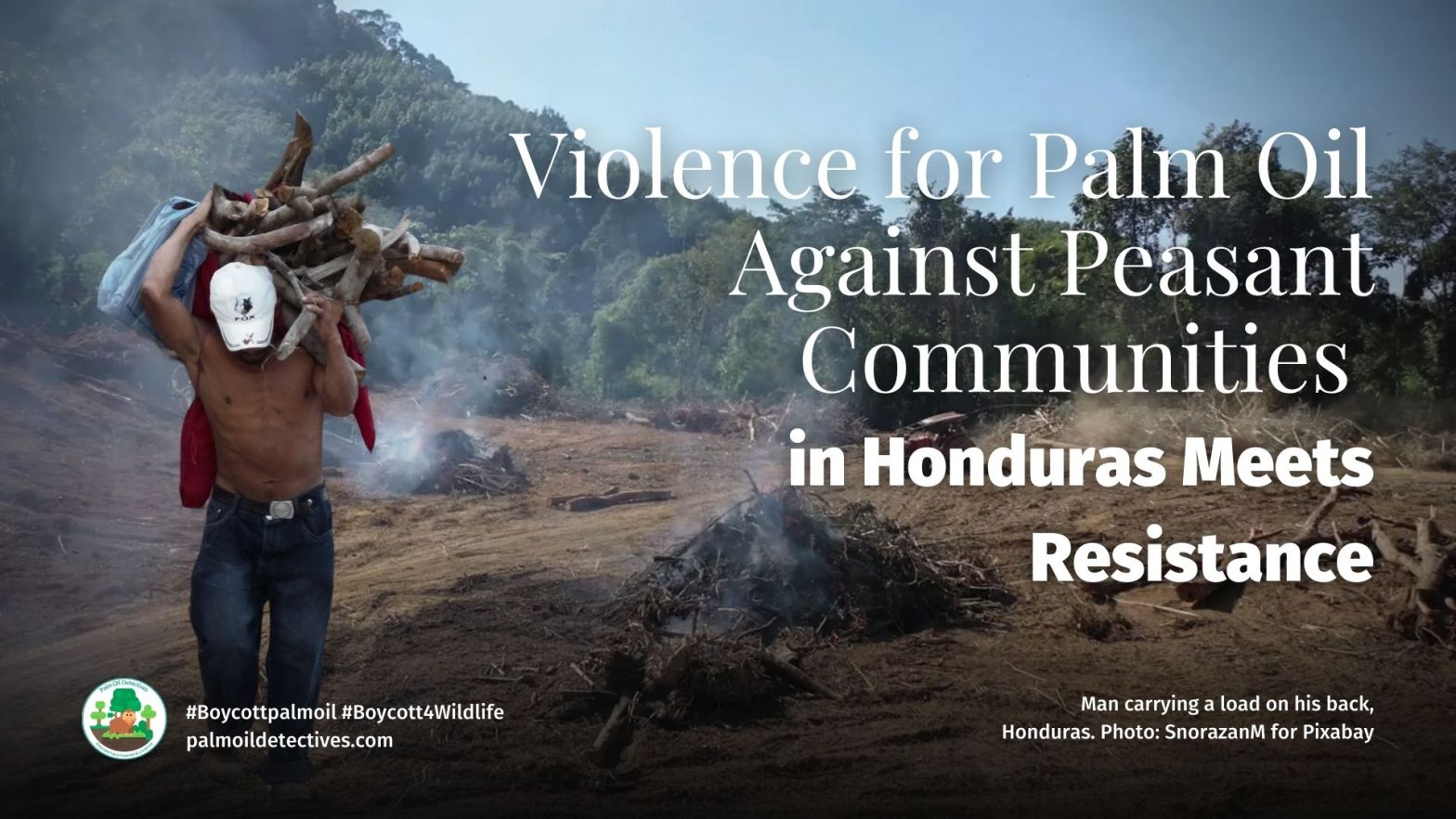
In the Aguán Valley of northern Honduras, peasant communities reclaiming ancestral lands face increasing violence and intimidation from armed groups linked to organised crime. The Dinant Corporation, a prominent palm oil producer, is accused of land theft and involvement in the murders of local activists. International organisations have condemned these human rights abuses, with a coalition of 33 organisations calling for a boycott of Dinant and for multinational companies: Pepsi, ADM, Cargill and Nestle to immediately cease business with Dinant. Despite governmental promises to address the conflict, concrete actions remain absent. You can resist for them in solidarity by boycotting their products in the supermarket! #BoycottPalmOil #LandRights #IndigenousRights #HumanRights
Glaucous Macaw Anodorhynchus glaucus
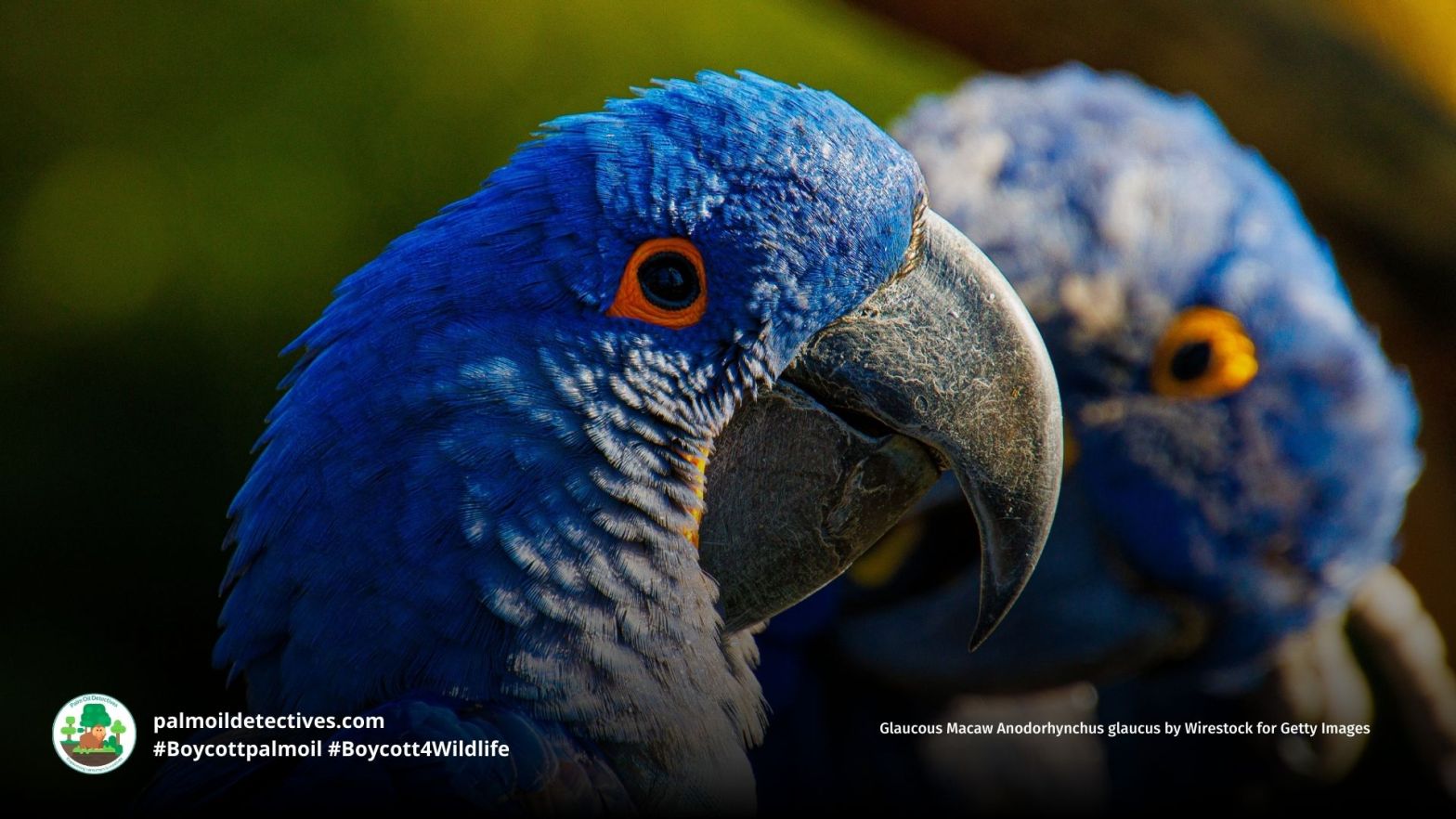
The Glaucous #Macaw stands out not only for their vibrant coloration but also for their vocalisations, which led to its Guaraní name “guaa-obi.” As part of a larger group of neotropical macaws, they are closely related to the Lear’s macaw (A. leari) and the hyacinth macaw (A. hyacinthinus). Although often confused with similar species, the Glaucous Macaw is a unique denizen of South America’s gallery forests and palm savannahs.
Use your wallet as a weapon and help the Glaucous Macaw and other rare #birds. They face many threats to their survival including forest destruction for meat, palm oil, soy and gold. Join the movement to #BoycottPalmOil #BoycottGold and #Boycott4Wildlife. Together we can empower people we know to make conscious supermarket decisions for wildlife survival.
Deadly Harvest: How Demand for Palm Oil Fuels Corruption in Honduras

Latin America is the fastest-growing producer of palm oil, but at what price for the environment and its defenders? Park rangers in Honduras tell harrowing tales of daily threats to their lives and real dangers they face in the long-term fight for protect Honduran rainforests, indigenous peoples and animals from annihilation #BoycottPalmOil #Boycott4Wildlife
Maned Wolf Chrysocyon brachyurus
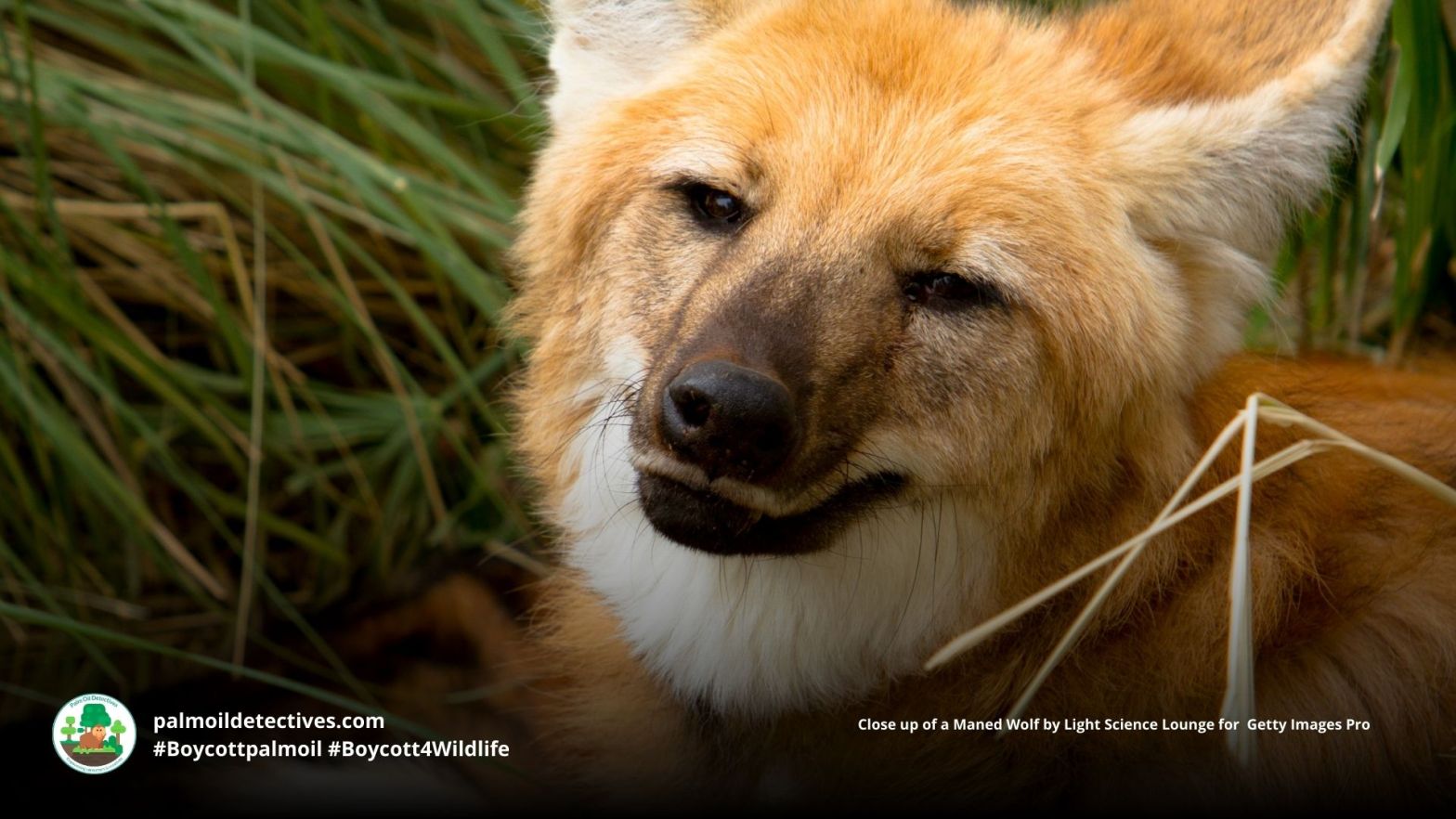
Maned Wolves are captivating “foxes on stilts” roaming South America’s grasslands, but their survival is threatened by habitat loss and human conflict.
Protected: Private Advocate’s Page
There is no excerpt because this is a protected post.
How We End Gold Mining’s Ecocide For Good

Gold mining’s environmental destruction is unparalleled. Learn how a circular economy using only recycled gold can end this ecocide and its human rights toll.
Andean Mountain Cat Leopardus jacobita
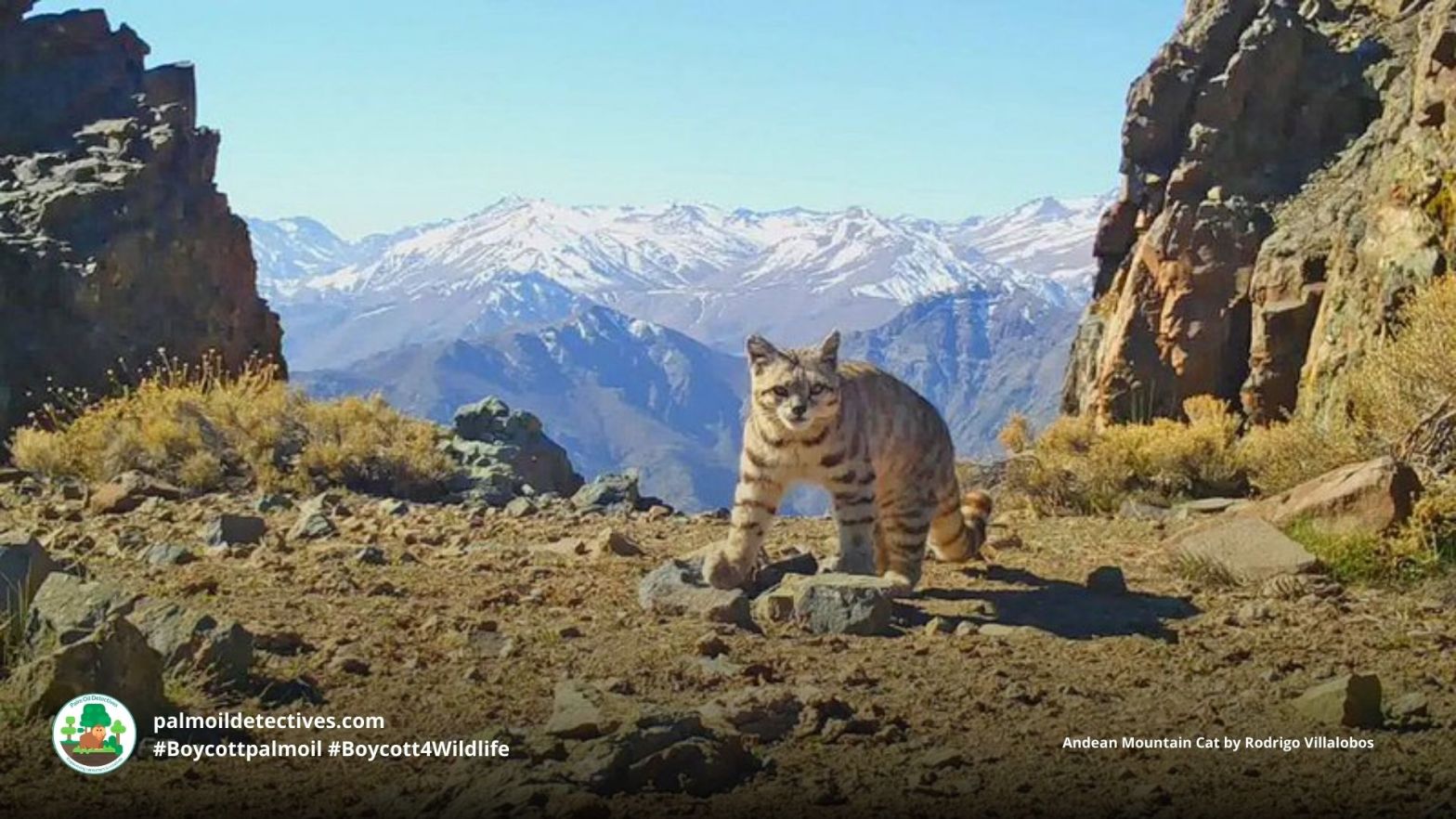
Known affectionately as ‘huana titi’ or ‘the cat from dry places’ by locals, the Andean mountain cat captivates with their mystery and elegance. This cat boasts an exceptional sense of hearing, attributed to their well-developed eardrums. These allow them to detect prey with precision. They skillfully use their long tail, which makes up 70% of their body length, for balance during the swift and unpredictable chases of their prey.
Unlike their larger feline counterparts, Andean mountain cats cannot roar due to the close and hardened structure of the bones in their throats, opting instead for mewls, growls, and screams. Remarkably, they can purr continuously, breathing in and out, showcasing a unique aspect of their vocal repertoire. Together we can protect these magnificent cats and their precious rainforest world. Use your wallet as a weapon and #BoycottMeat, #BoycottPalmOil, and #Boycott4Wildlife every time you shop!
Bush Dog Speothos venaticus
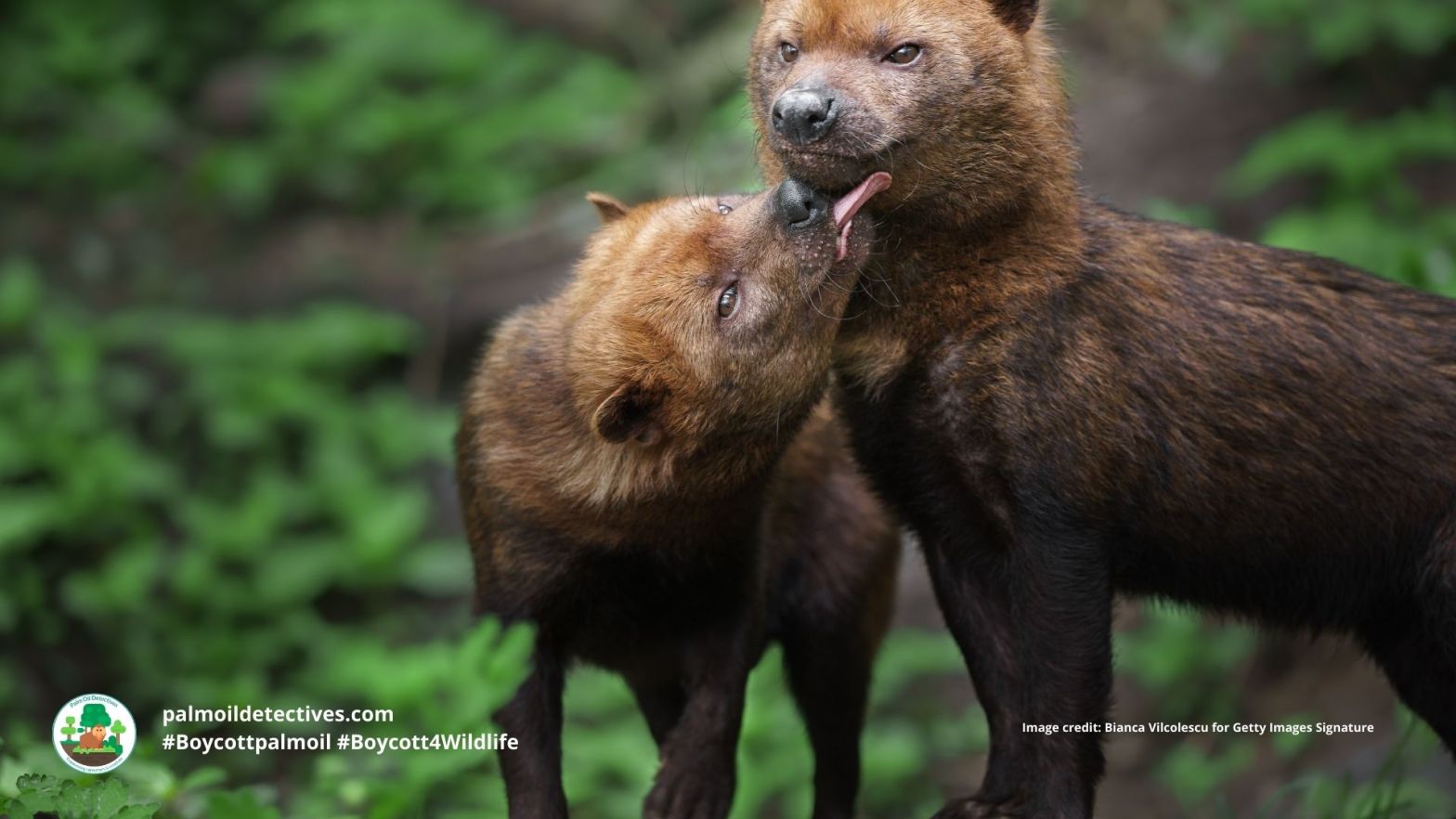
The enigmatic Bush dog was once believed to be extinct, however they have now emerged from the shadows. These elusive canids show remarkable teamwork and intelligence with strategic hunting tactics. They divide into land and water based groups when pursuing elusive prey like the paca. Despite their shy nature, Bush dogs break their silence with peculiar calls, a vocal repertoire that serves as a means of communication and warning within the pack. Adorned in reddish hues, they bear the nickname ‘zorro,’ reminiscent of a fox, while their distinctive vinegar-like scent has earned them the moniker ‘vinegar dog’.
They are classified as Near Threatened due to their range disappearing for cattle grazing, palm oil, soy, eucalytpus and other monoculture crops. Not enough is known yet about their lives to assess the damage. Fight for them every time you shop and be #vegan #Boycottpalmoil #Boycott4Wildlife.
Marsh Deer Blastocerus dichotomus
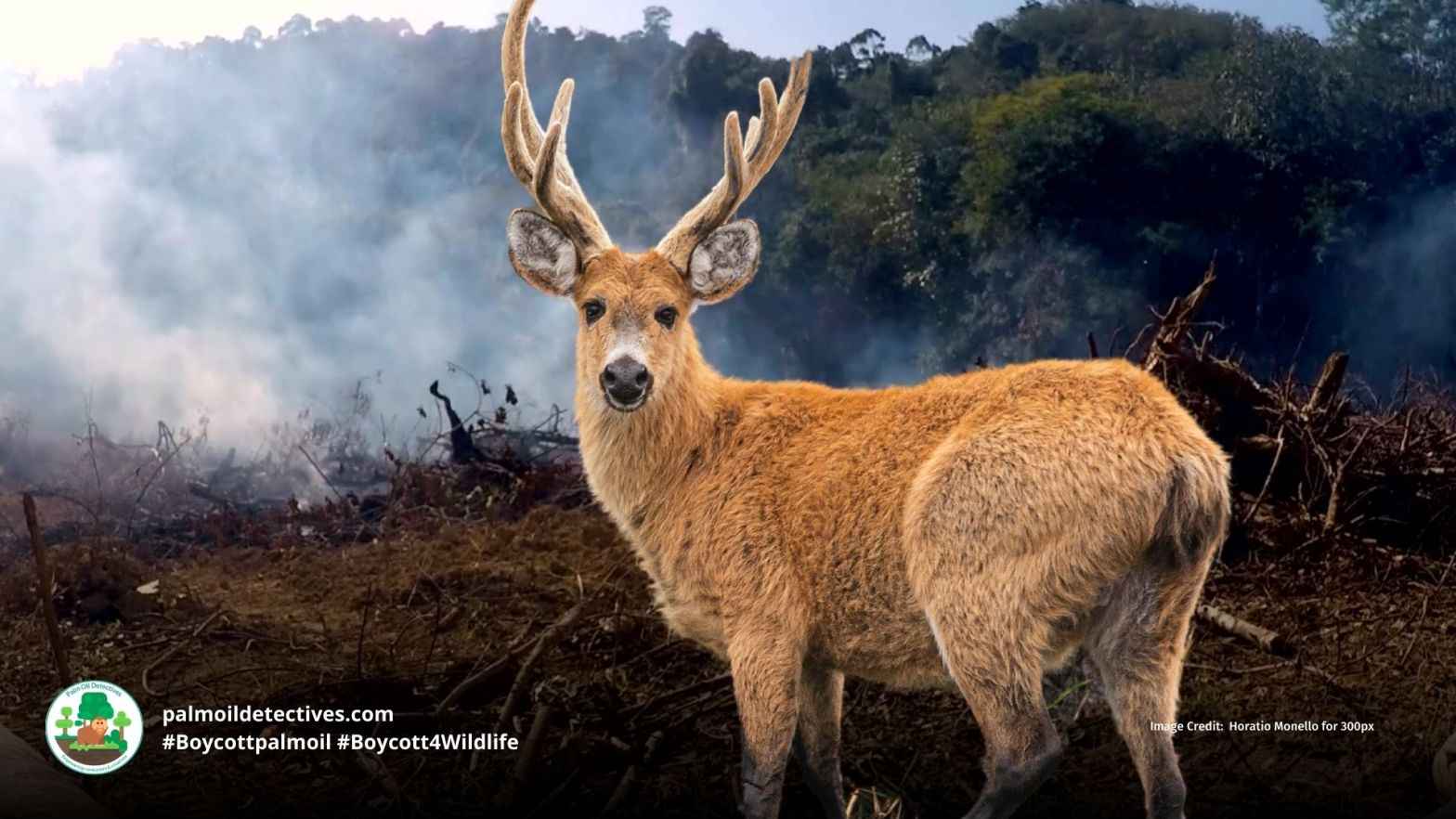
The Marsh deer are South America’s largest deer species, uniquely adapted to wetland life with their web-like hooves and preference for aquatic plants. They are prey animals for jaguars and pumas.
These majestic creatures, once widespread, are now confined to isolated pockets. Their main threat is habitat loss and fragmentation due to palm oil, soy and meat deforestation along with hydroelectric dams and gold mining.
Even as researchers strive to understand their complex and obscure social and mating behaviours, time is running out for these unique creatures. Use your wallet as a weapon and protect the Marsh deer #BoycottPalmOil #BoycottGold4Yanomami #Boycott4Wildlife.
Alta Floresta titi monkey Plecturocebus grovesi

The enchanting Groves Titi Monkey, also referred to as the Alta Floresta titi #monkey or Mato Grosso titi monkey went from being completely unknown to being one of the most critically endangered #primates in #SouthAmerica and the world. They made a remarkable entry into the spotlight only recently in 2016 when they were classified by scientists. They belong to the Eastern Amazonian clade of the red-bellied titi monkey (P. moloch) group and are known for their vividly coloured fur and rowdy rainforest vocalisations. They face multiple anthropogenic threats in #Brazil including hunting, #goldmining, #palmoil, #meat and #soy #deforestation and hydroelectric #dams. Help them to survive each time you shop, be #vegan and #Boycottpalmoil #Boycott4Wildlife
Margay Leopardus wiedii
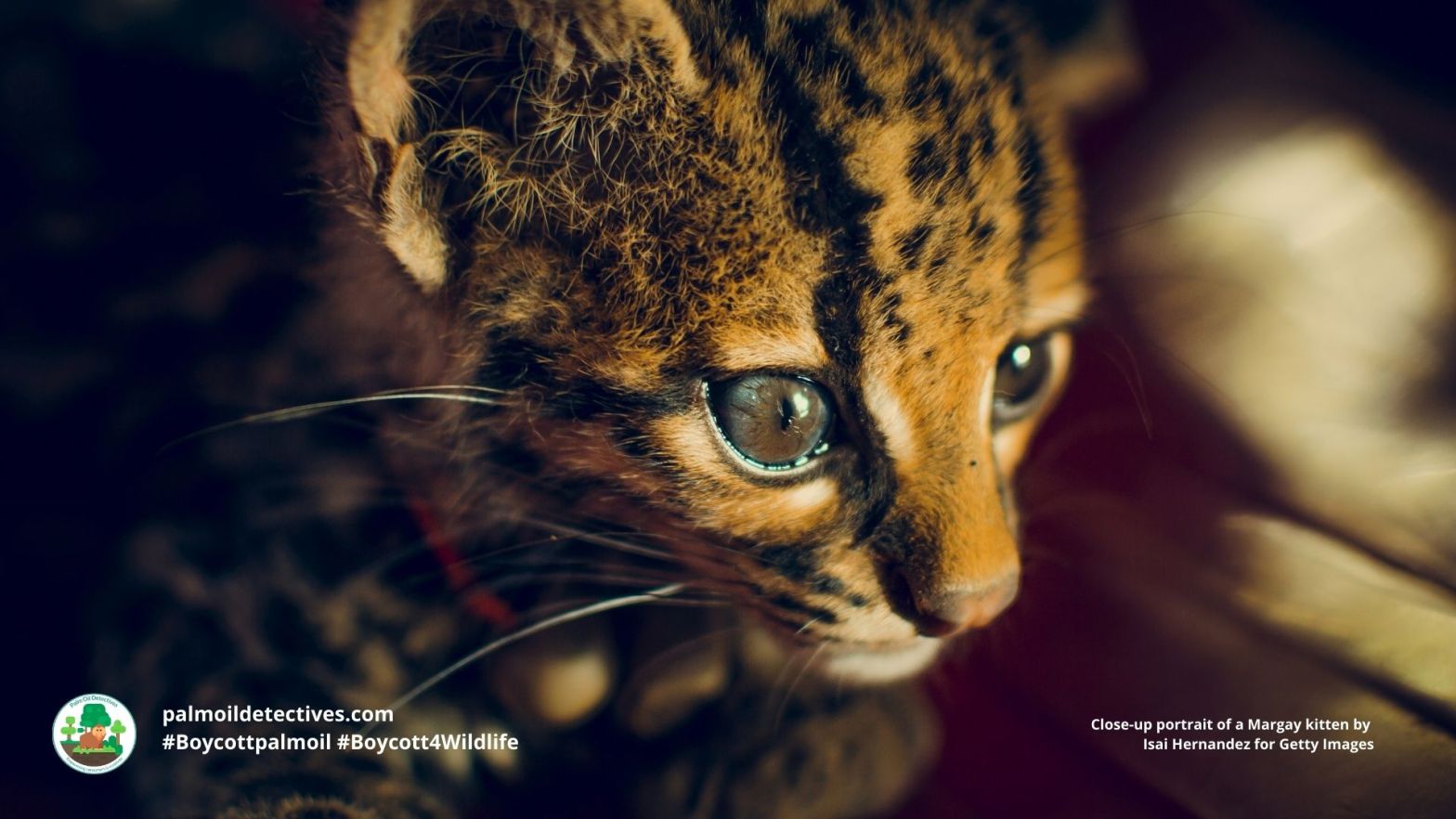
Graceful, athletic and beautiful feline of the Amazon jungle, margays are small wild cats endemic to South and Central America. Every margay has a unique spotted pattern on their coat. They depend heavily on the rainforest canopy for hunting small mammals, reptiles and amphibians and are thought to mimic the call of the pied tamarin in order to hunt for them. Deforestation for #palmoil, soy and meat along with illegal poaching are devastating to them. Help them every time you shop and be #vegan, #Boycottpalmoil #Boycott4Wildlife
Uncovering The Glasswing Butterfly’s See-through Wings

Most butterflies sport colourful, eye-catching wings. But some species flit about using mostly transparent wings. Researchers have now uncovered the tricks that one of these — the glasswing butterfly (Greta oto) — uses to hide in plain sight. The tricks of their transparency include sparse, spindly scales and a waxy coated membrane. Many thousands of insect species are threatened by large-scale deforestation for agriculture and especially pesticides. Help them to survive and #BoycottPesticides #BoycottPalmOil!
Spectacled Bear Tremarctos ornatus
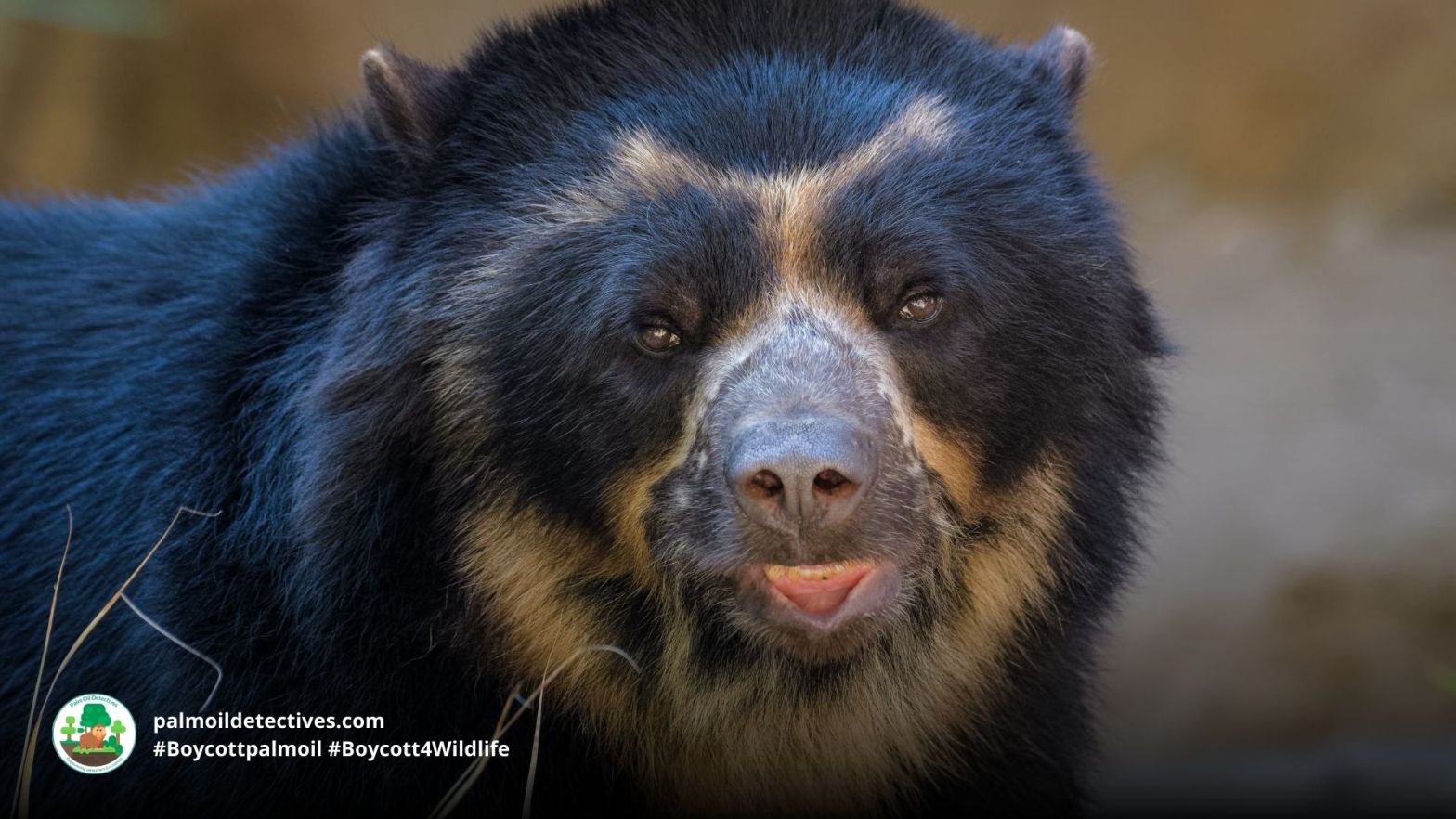
Spectacled #bears are known as the ‘peaceful and gentle bear’. They are the only bear living in the tropics of South America. Like many other animals in tropical ecosystems they are #endangered. They get their name from their eye-catching markings around their eyes, face and neck that resemble spectacles. Each bear has unique markings like a fingerprint and some bears don’t have them at all.
They are found throughout the thin line of Peruvian rainforest and their range stretches across several countries: Bolivia, Ecuador, Peru, Venezuela and Colombia. Their main threats are habitat loss to #gold #mining, timber, #meat, #palmoil and #soy as well as #hunting. Protect them each time you shop by being #boycotting meat, be #vegan #boycottpalmoil #Boycott4Wildlife
Giant Otter Pteronura brasiliensis
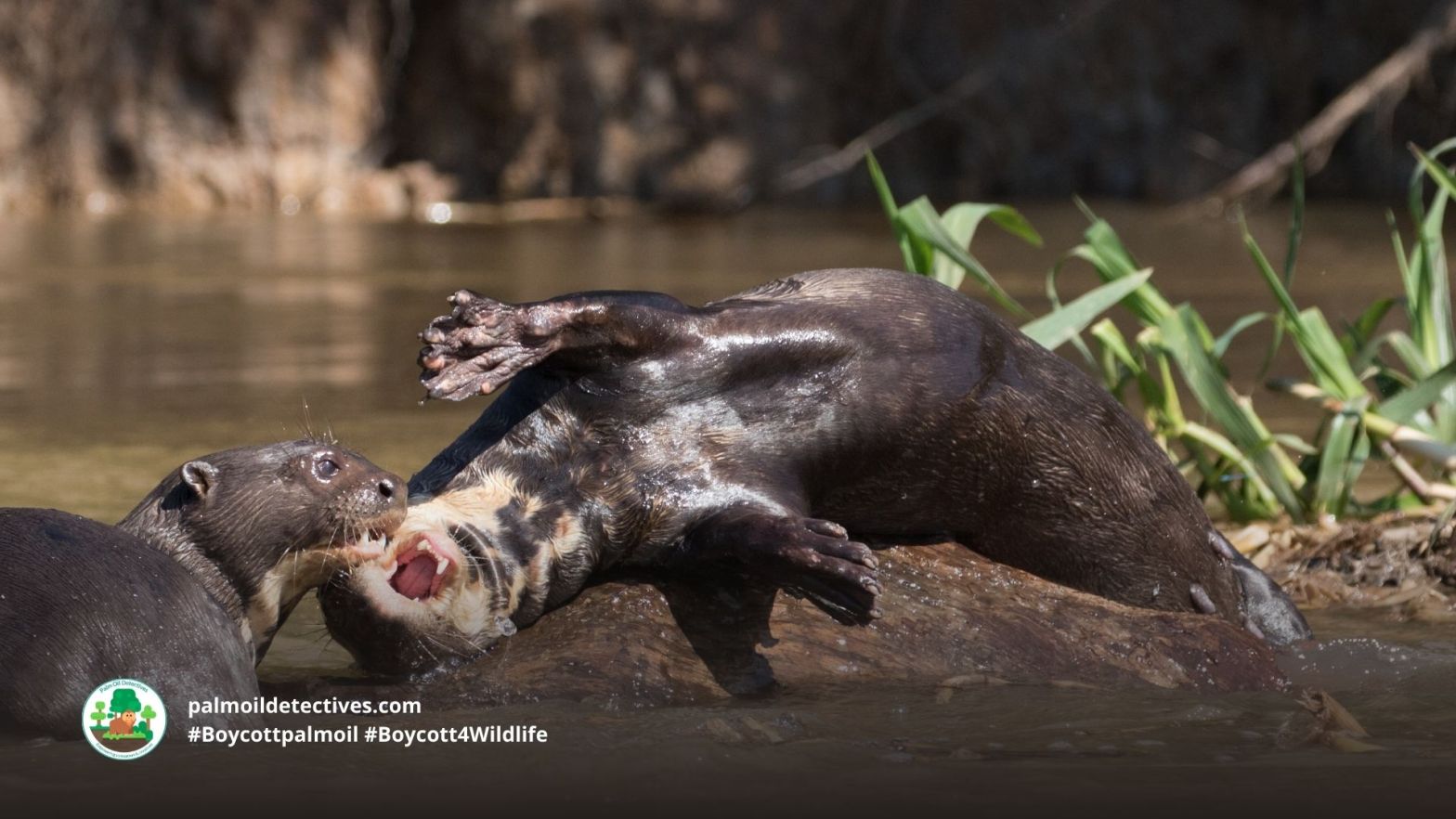
The agile and graceful tumbling Olympians of the Amazonian rivers, Giant #Otters are able to swim 100 metres in less than 30 seconds. They are also known as the Lobo de Rio (the River wolf), Los Lobos del Rio (Wolves of the River) and Ariranha. They are most active in the mornings and evenings and take a siesta during the hottest parts of the day. Known for their striking size and the chorus of whistles and barks echoing through flooded forests, giant otters are social, vocal, and deeply bonded to their family groups. But the rivers they call home are under siege. The most significant threats to giant otters are anthropogenic pressures of deforestation for palm oil, soy and meat, pollution from mining and climate change. They are also illegally hunted and traded for their pelts or killed in retribution by fishermen. Help them and be #vegan, use your wallet as a weapon and #BoycottPalmOil #Boycott4Wildlife.
Jaguar Panthera onca
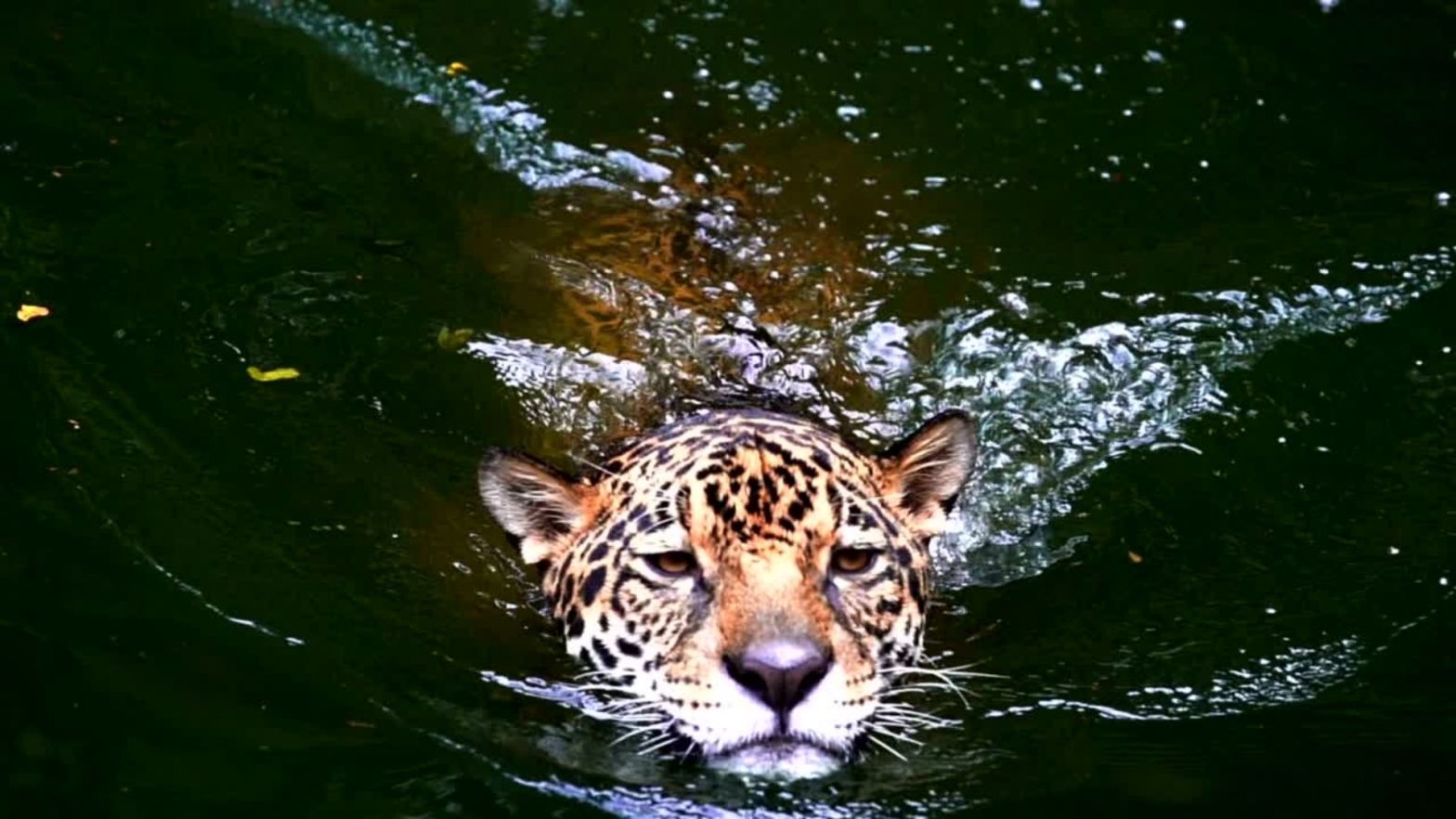
Jaguars, currently deemed Near Threatened, face a substantial habitat reduction of up to 25% in just over two decades. This decline stems from rampant deforestation for palm oil, soy, and meat, as well as illegal poaching for trophies and body parts. These magnificent creatures also suffer from conflicts arising due to livestock depredation and competition with human hunters for food. Aggravating the issue, Latin America’s widespread agricultural industries, like soy, palm oil, and cattle ranching, mainly serve foreign markets rather than local needs. Let’s step up and use our wallets as a weapons! Be #vegan #Boycottpalmoil #Boycott4Wildlife.
Procter & Gamble
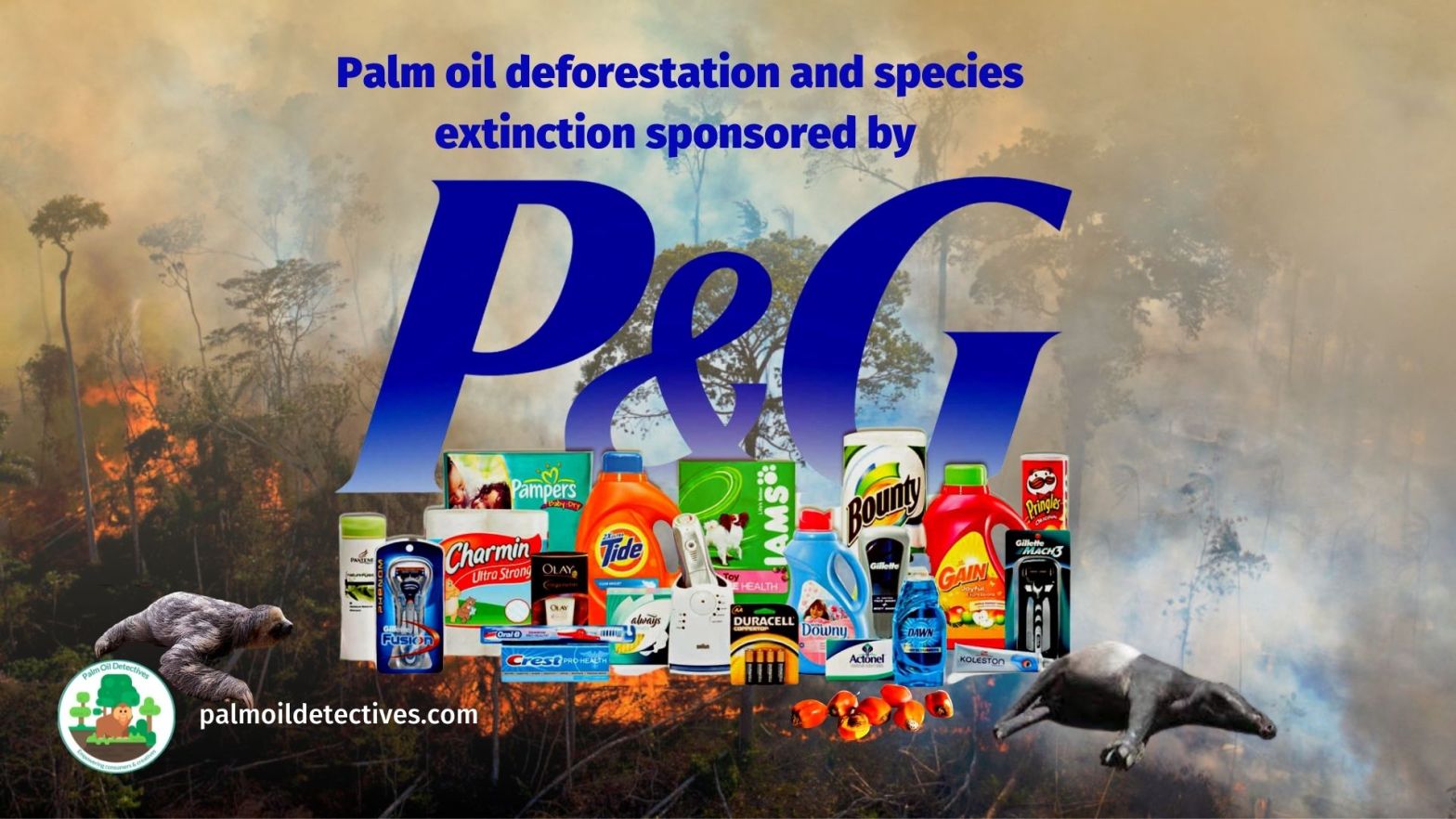
Despite decades of promises to end deforestation for palm oil Procter & Gamble or (P&G as they are also known) have continued sourcing palm oil that causes ecocide, indigenous landgrabbing, and the habitat destruction of the rarest animals on earth. All of these animals are on a knife-edge of survival. It is for this reason,Continue reading “Procter & Gamble”
Organised Crime: A Top Driver of Global Deforestation
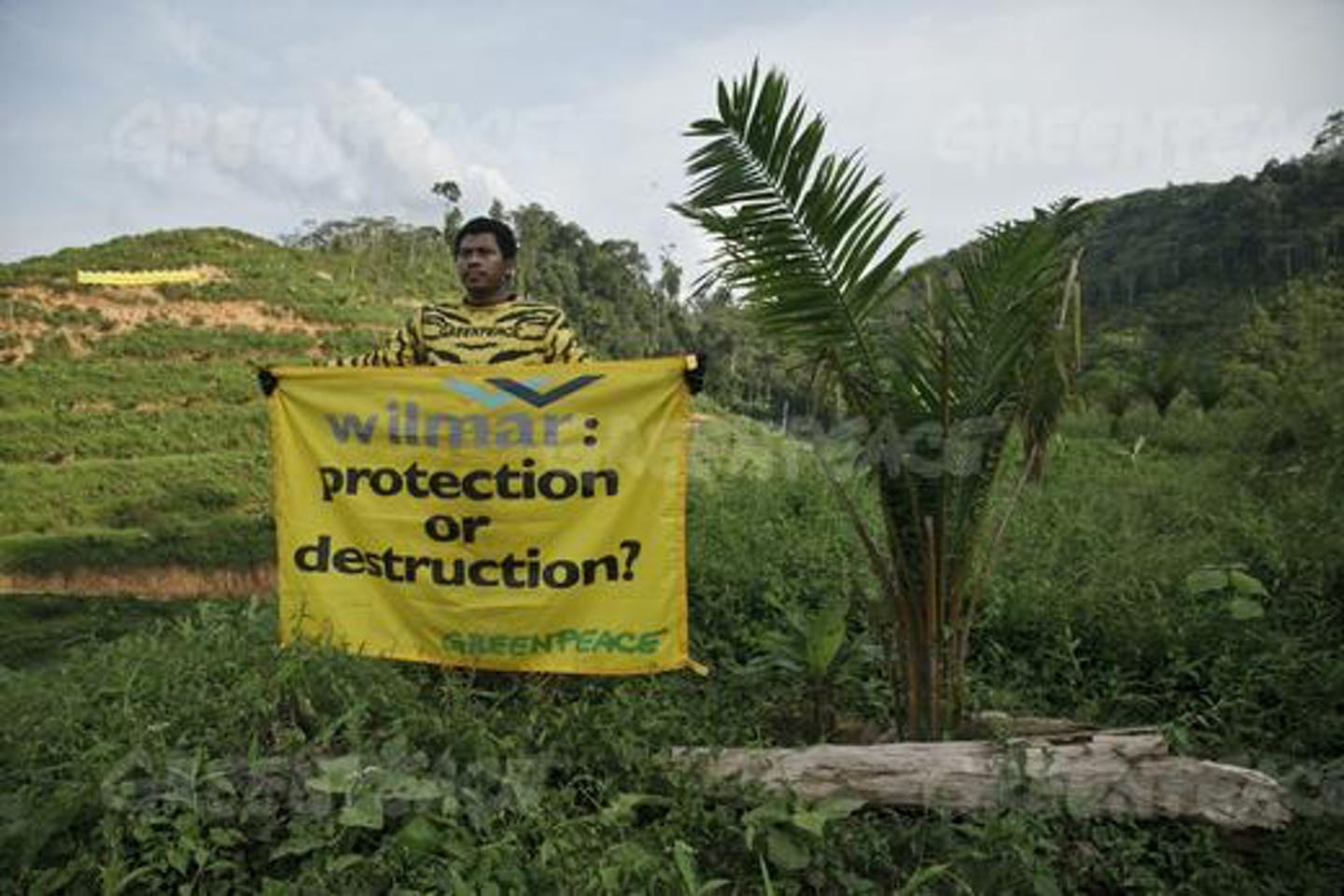
Every year the world loses an estimated 25 million acres (10 million hectares) of forest, an area larger than the state of Indiana. Nearly all of it is in the tropics. Tropical #forests store enormous quantities of carbon and are home to at least two-thirds of the world’s living species, so #deforestation has disastrous consequences for #climatechange and conservation. Trees absorb carbon dioxide as they grow, slowing its buildup in the atmosphere – but when they are burned or logged, they release their stored carbon, fueling further warming. Tropical forest loss generates nearly 50% more greenhouse gases than does the global transportation sector. Take action to help rainforests and #BoycottPalmOil #Boycott4Wildlife
In the Atlantic Forest, the lowland tapir is at risk of extinction
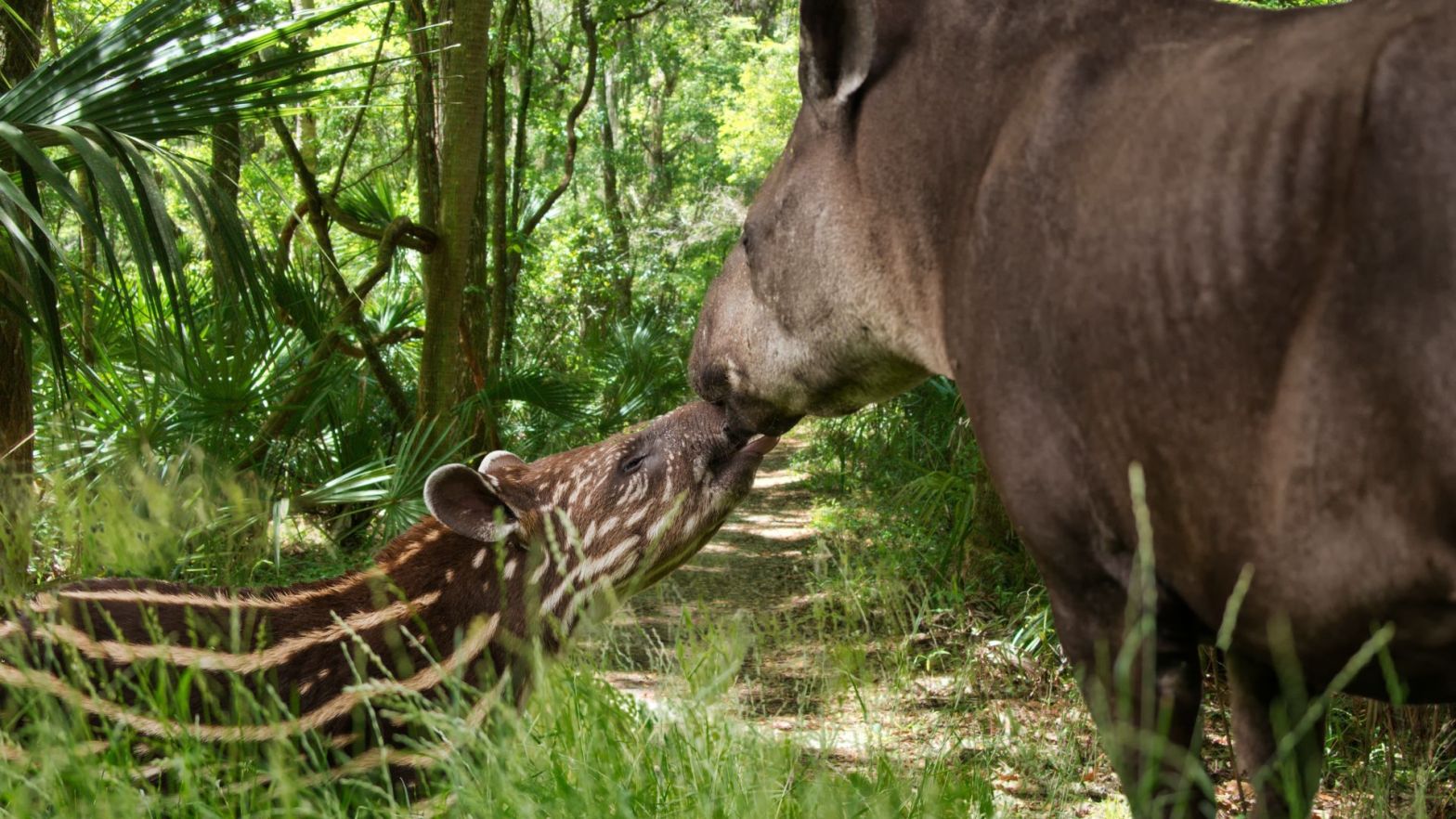
Lowland tapir populations in the Atlantic Forest in South America are at risk of almost complete disappearance, scientists have estimated. Weighing up to 250 kg, the animal can adapt to most habitats in South America—but its populations continue to decline across their range. Take action for these beautiful irreplaceable animals every time you shop, be #vegan for forests, farmed animals and wild animals and #BoycottPalmOil #Boycott4Wildlife
Ecuadorian White-fronted Capuchin Cebus aequatorialis
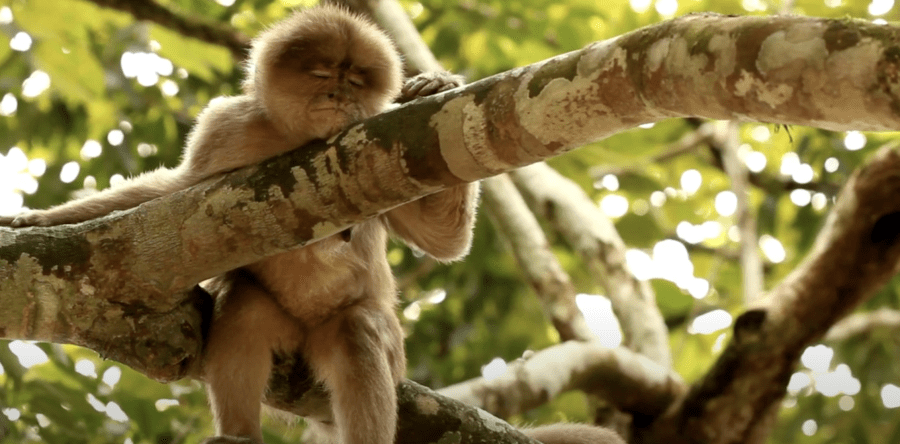
Ecuadorian White-fronted Capuchins face habitat loss to palm oil, hunting, and mining. Less than 10,000 remain. Support forest defenders. #BoycottPalmOil
Santa Marta White-fronted Capuchin Cebus malitiosus
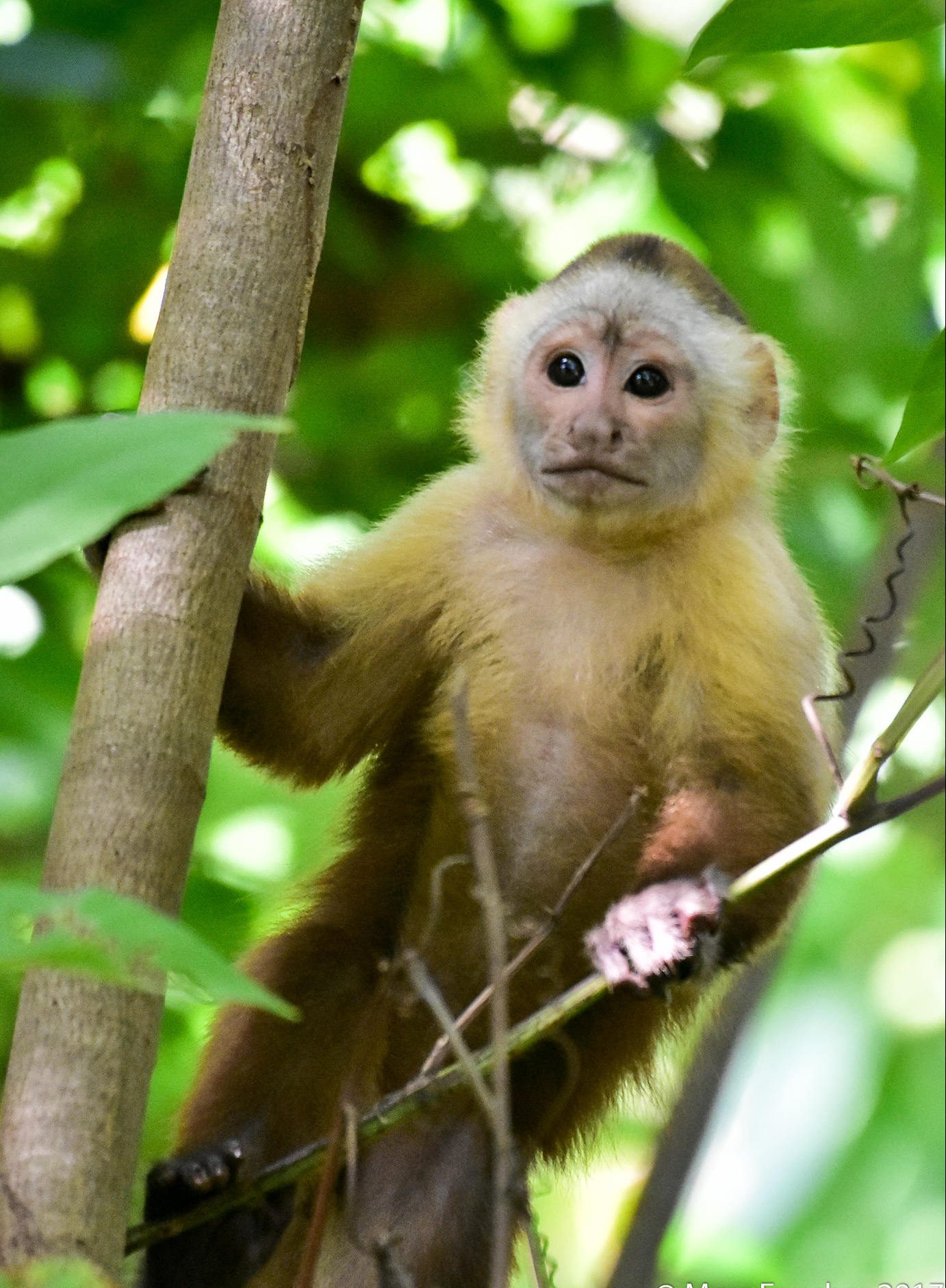
Santa Marta White Fronted Capuchins are Colombian primates threatened by severe habitat loss from cattle ranching and palm oil. Boycott palm oil and meat!
Pygmy Marmoset Cebuella niveiventris and Cebuella pygmaea

The petite pygmy #marmoset, the world’s tiniest true #monkey, boasts a mix of brownish-gold, grey, and tawny fur. These little wonders, weighing just around 100 grams, communicate uniquely using chemical, vocal, and visual cues to ensure group safety and harmony. Although these #marmosets prefer river-edge forests and can adapt to secondary forests, their homes are under serious threat. Rampant #deforestation for #meat, #goldmining, and #palmoil cultivation are eroding their habitats, pushing the subspecies Cebuella niveiventris towards a “Vulnerable” status. The situation is dire, with an estimated 30% reduction in their population in just 18 years. Protect these delicate creatures and their home – use your wallet as a weapon, be #vegan, #BoycottPalmOil, and #Boycott4Wildlife.🌳🐒
Black Bearded Saki Chiropotes satanas
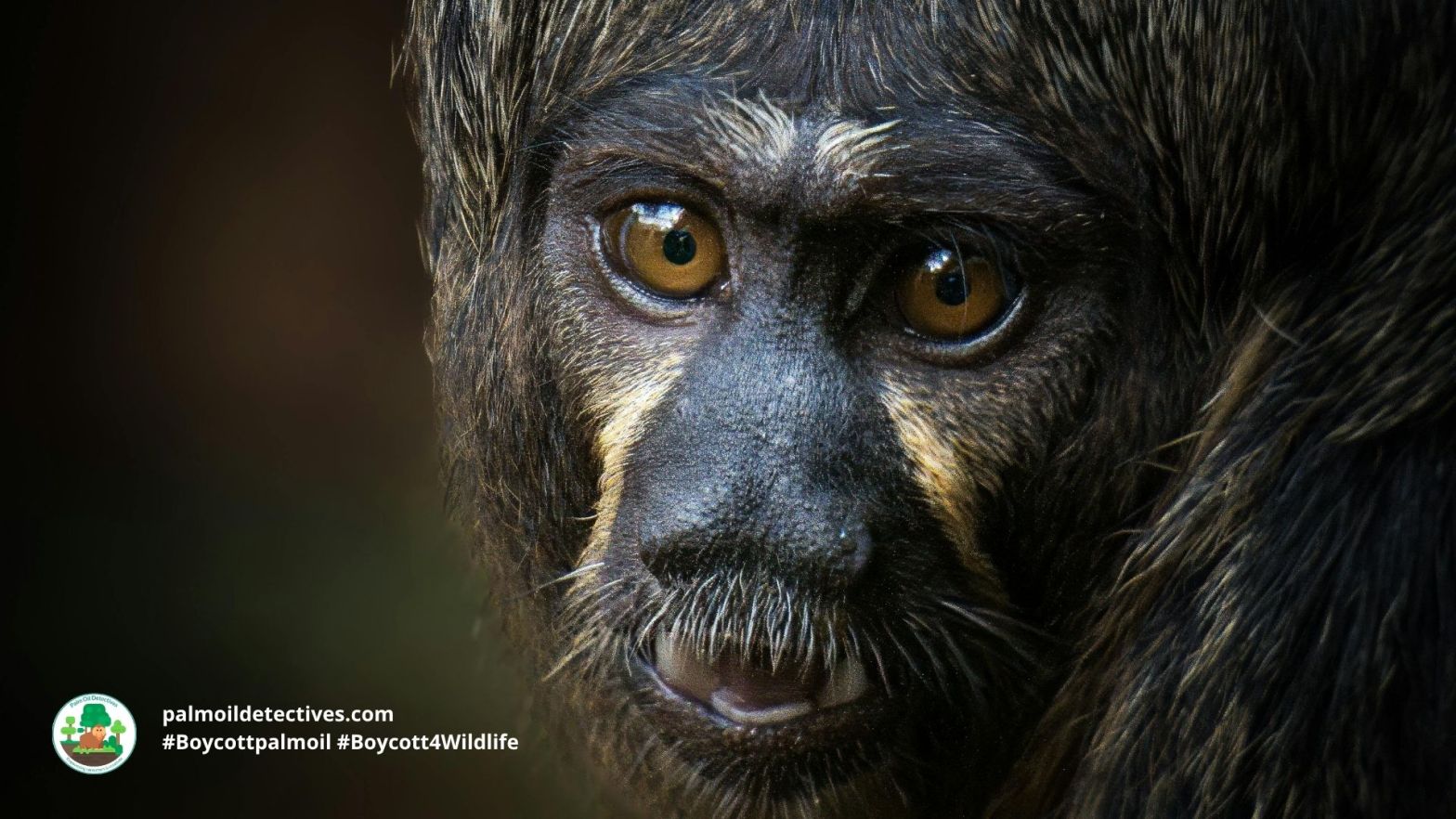
Beneath the towering canopy of the Amazon’s north-eastern forests, the black bearded saki moves with quiet purpose, their distinctive shaggy beard and robust body a testament to their resilience in a world under siege. The air is thick with the scent of damp earth and the distant calls of unseen creatures, but the forest is changing—#roads, #dams, and #agriculture are carving scars across the landscape, fragmenting the saki’s ancestral home. The black bearded saki’s survival is threatened by relentless deforestation and hunting, their fate bound to the fate of the forest—fight for their survival every time you shop #BoycottPalmOil #Boycott4Wildlife.
Northern Tiger Cat (Oncilla) Leopardus tigrinus
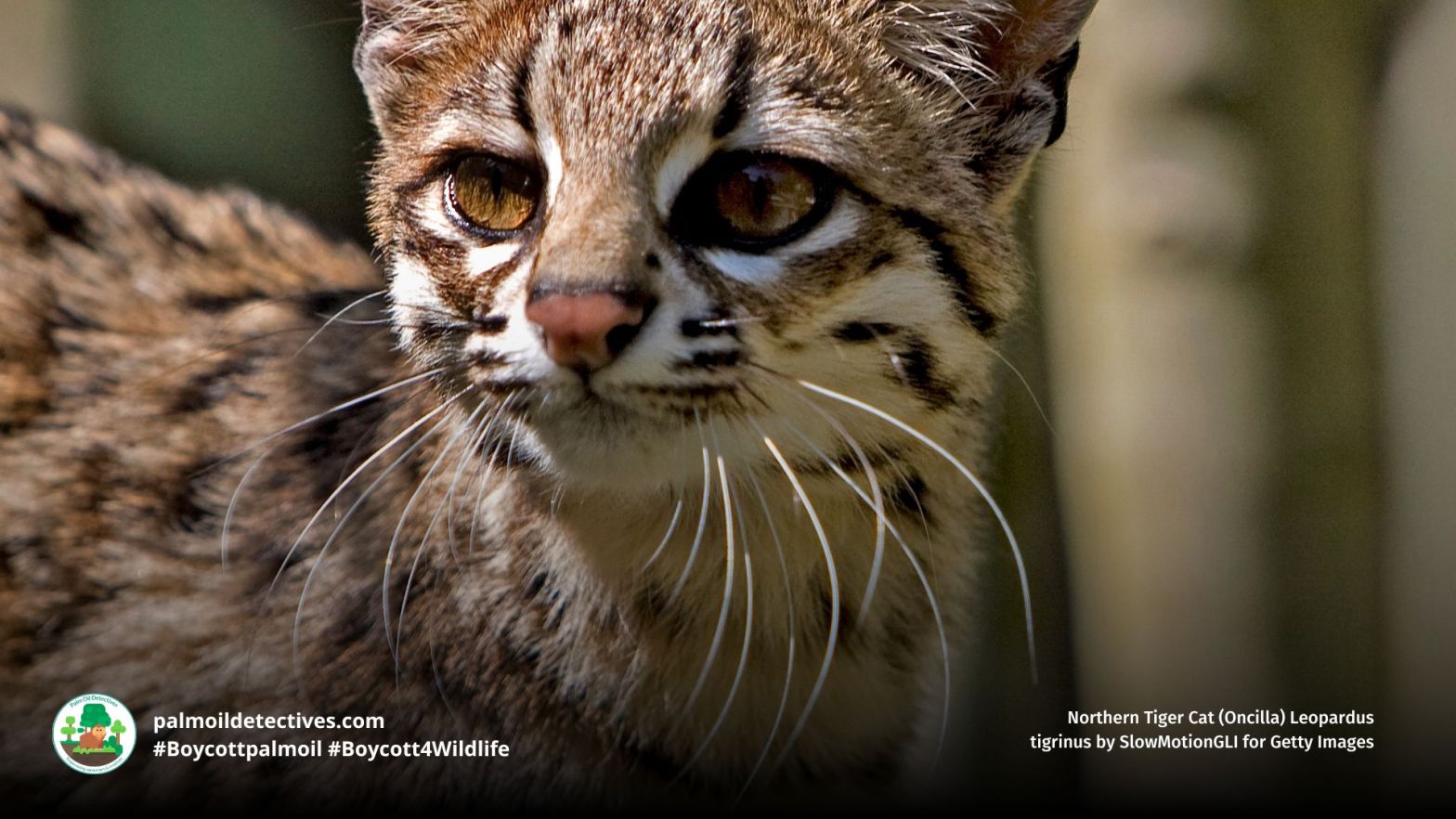
The northern tiger cat, also known as the oncilla (Leopardus tigrinus), is a captivating small wild cat native to Central and South America. Distinguished by their striking, leopard-like coat marked with dark rosettes and a sleek, agile body, this elusive feline is a master of stealth and survival in the dense forests and grasslands they inhabit.
The northern tiger cat is a tiny predator, weighing only 1.5–3 kg, yet they play a significant role in maintaining ecological balance as a keystone predator. These solitary creatures, though mostly ground-dwelling, are adept climbers. They communicate through purring as kittens and have a unique “gurgle” as adults. Their habitats range from the semi-arid Caatinga to the Andean cloud forests. Tragically, this species is classified as Vulnerable, with populations declining due to habitat destruction for palm oil, soy, meat and mining, poaching, and habitat fragmentation. Indigenous-led conservation efforts are vital to protect their remaining habitats. #BoycottPalmOil #Boycott4Wildlife
Yellow-tailed Woolly Monkey Lagothrix flavicauda

Yellow-tailed Woolly Monkeys are social and active during daylight hours, living in groups with a dominant male, mature males and females, and young monkeys. They communicate through vocalizations like a loud, barking call. Endemic to the Peruvian Andes, they thrive in montane rainforests and cloud forests. They face an existential threat from habitat loss due to palm oil, soy and meat deforestation. Let’s unite to protect these precious creatures by boycotting palm oil, adopting a vegan lifestyle, and raising awareness for them. Together, we can protect the Peruvian Yellow-tailed Woolly Monkeys and their habitat. 🌳🐒💚 #BoycottPalmOil #Boycott4Wildlife
Baird’s Tapir Tapirus bairdii
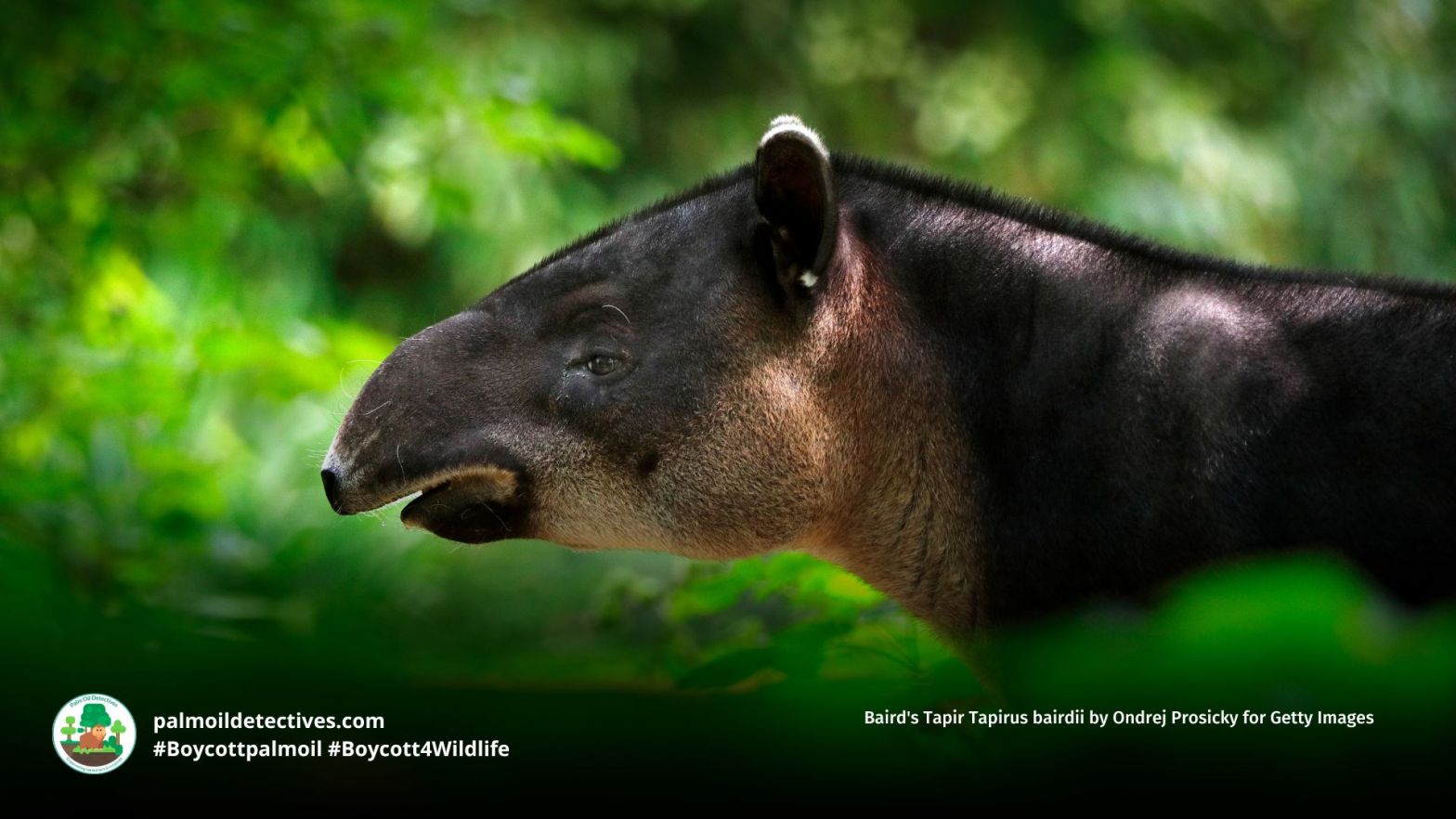
Baird’s tapirs may look like they are relatives of elephants, but they’re actually closer kin to horses, donkeys, zebras, and rhinoceroses. Also known as the Central American tapir, they are the largest land mammals in Central America and a living relic of an ancient lineage.
Their robust, stocky bodies and distinctive trunk-like snout make them unique among mammals. However, they are now Endangered, with fewer than 5,000 individuals left in the wild.
Tragically, palm oil, soy and meat deforestation, hunting, and human encroachment are driving this species toward extinction. Protecting their habitats is critical to ensuring their survival. Use your wallet as a weapon—boycott palm oil and support conservation initiatives. #BoycottPalmOil #Boycott4Wildlife
Ariel Toucan Ramphastos ariel
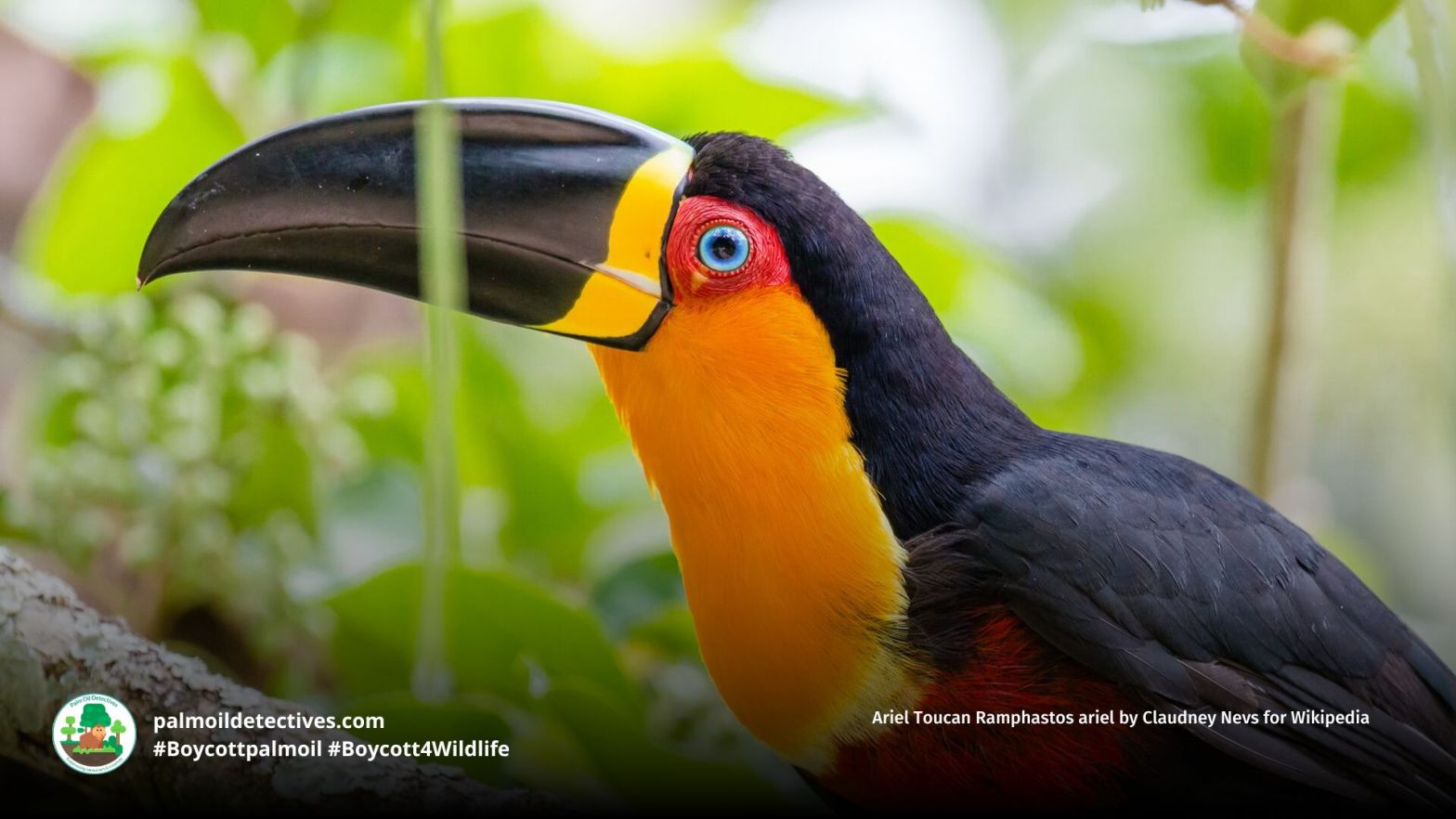
Ariel Toucans are vibrant and charismatic birds of South America under threat from palm oil, soy, meat and gold mining deforestation. Take action for them!
 Palm Oil Detectives