Nature’s Hidden Wealth: Conservation’s Opportunity

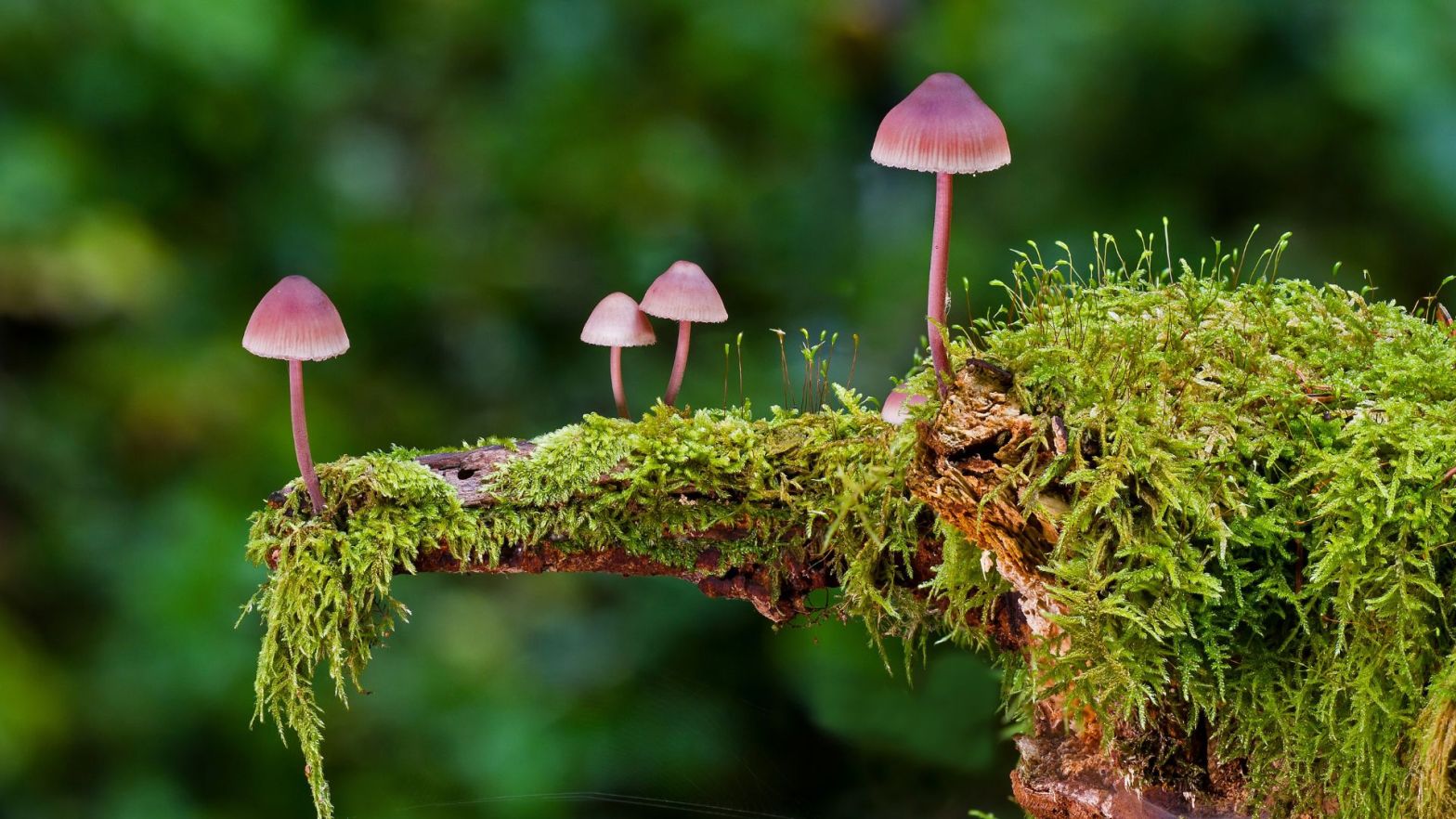
Animals and plants constitute a very small part of our native biodiversity (roughly 5%). The vast majority – fungi, bacteria and the enormous diversity of other microscopic organisms, including invertebrates – is a massive, largely unexplored economic resource.

The best known examples of commercial uses for biodiversity are the thousands of drugs secreted by bacteria and fungi. But others are examples of what is known as “bio-inspiration” and “bio-mimicry”, where wild species provide the blueprints for products. The combination of nature and biotechnology can offer us all a tentative reason to hope for the future.

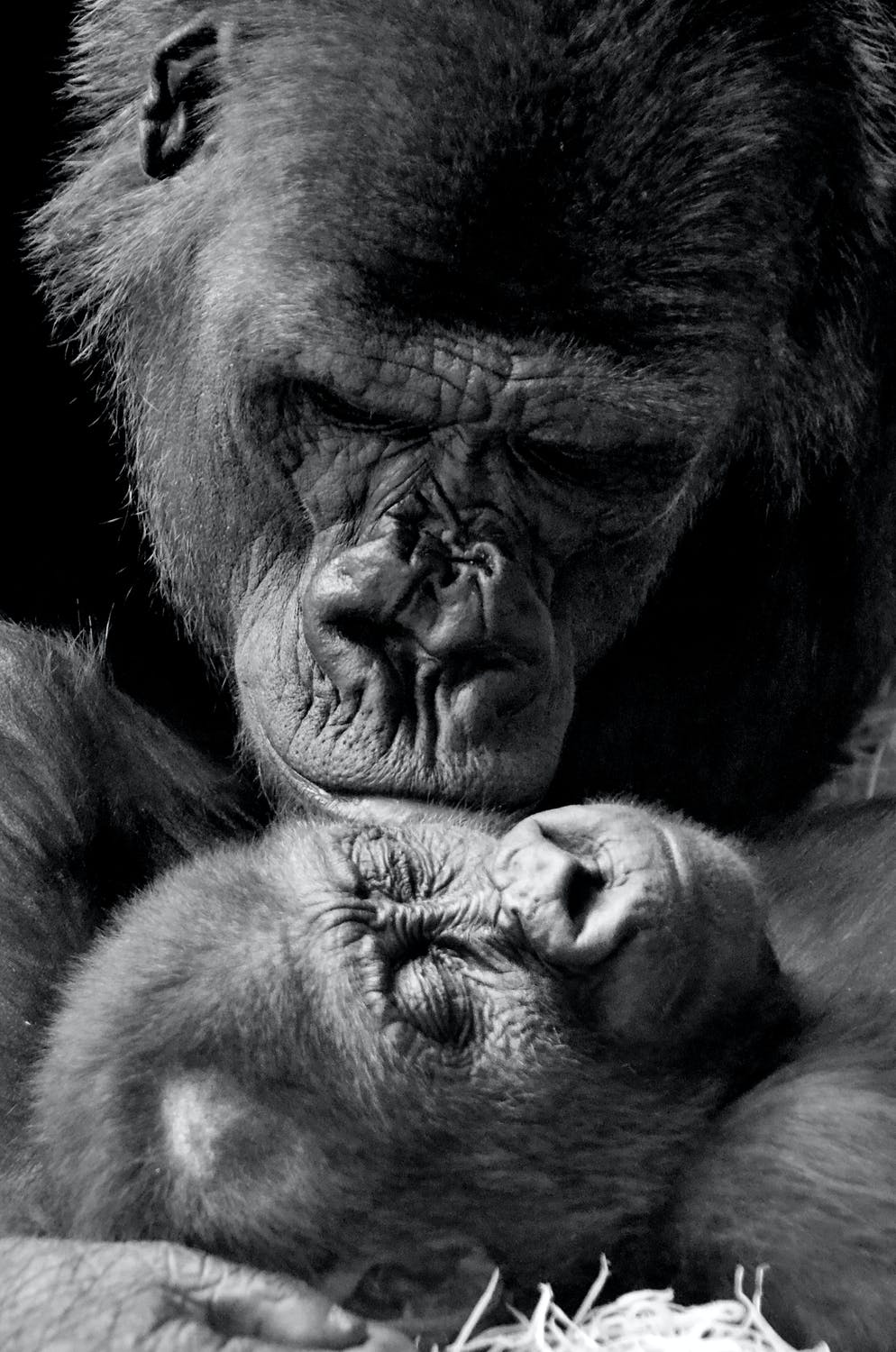
Monkey minds: what we can learn from primate personality

Did you know our primate cousins exhibit similar personality profiles to humans? Explore fascinating evolutionary research on primate social behaviour

Humans force wild animals into tight spots, or send them far from home

The COVID pandemic has shown us that disruptions to the way we move around, complete daily activities and interact with each other can shatter our wellbeing. This doesn’t apply only to humans. Wildlife across the globe find themselves in this situation every day, irrespective of a global pandemic. Our latest research published today in NatureContinue reading “Humans force wild animals into tight spots, or send them far from home”

The Coronavirus Crisis: How has Lockdown Impacted Nature?

I think we can all agree that 2020 has been a very strange year. Thanks to coronavirus, modern life as we know it has been put on hold. International borders have been shut, governments have ordered businesses to close their doors, and most families have been under lockdown. For anyone wondering where this infectious virusContinue reading “The Coronavirus Crisis: How has Lockdown Impacted Nature?”

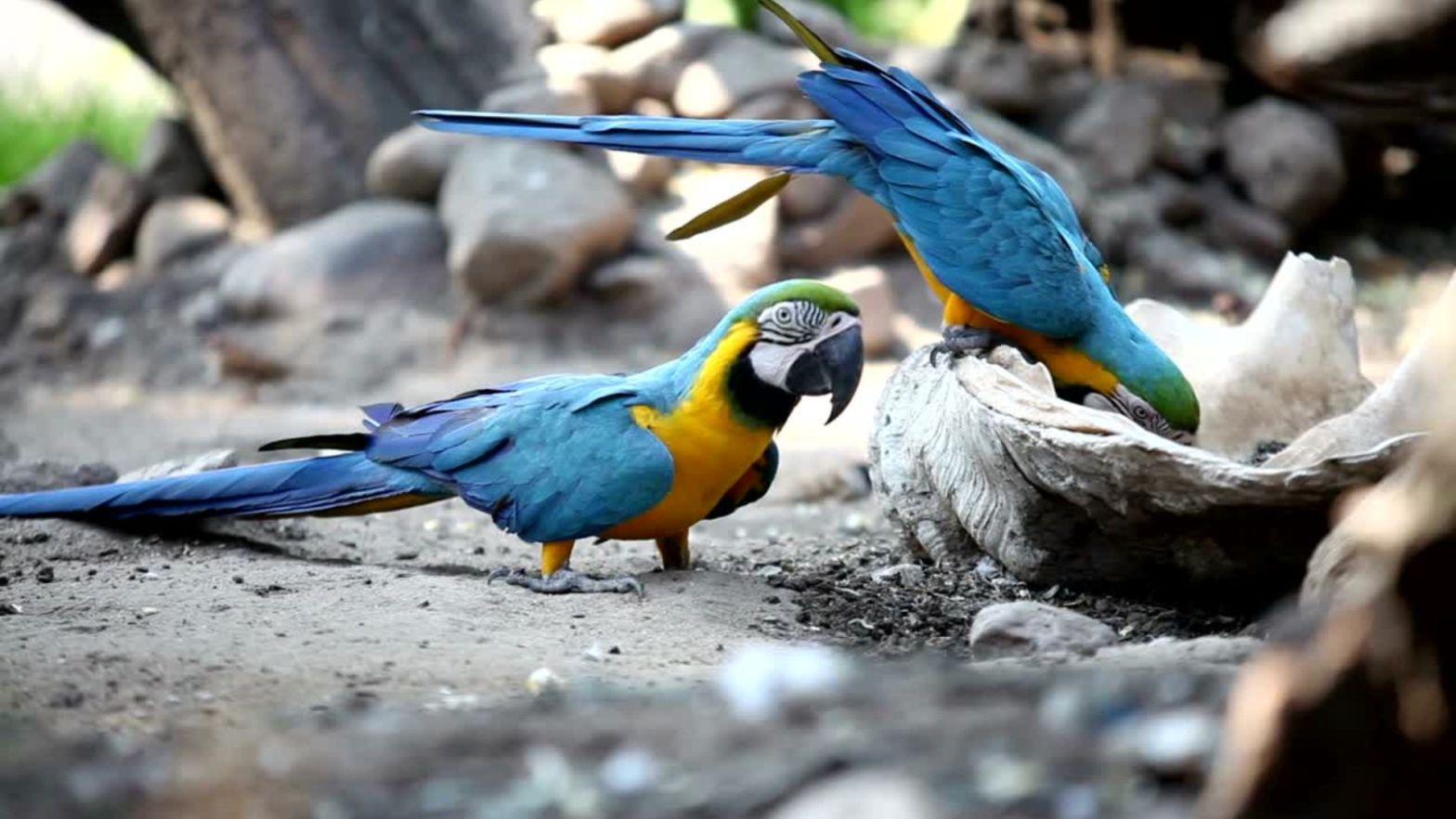
Rainbow Cliffs: Why Parrots in the Amazon Eat Clay

Our world holds a whole host of glorious natural spectacles, from great starling murmurations to the ethereal display of coral reef spawning. But none is more thrilling than catching a glimpse of a majestic #macaw.

Screeching their way through the #Amazon rainforest, leaving scattered fruit, broken branches, and a considerable quantity of parrot poop in their wake, #parrots are simply animals like no other. But high in the treetops, flying far above the dense, dark foliage below, how can you ensure that you see their bright colours? A safe bet is to find a clay lick.

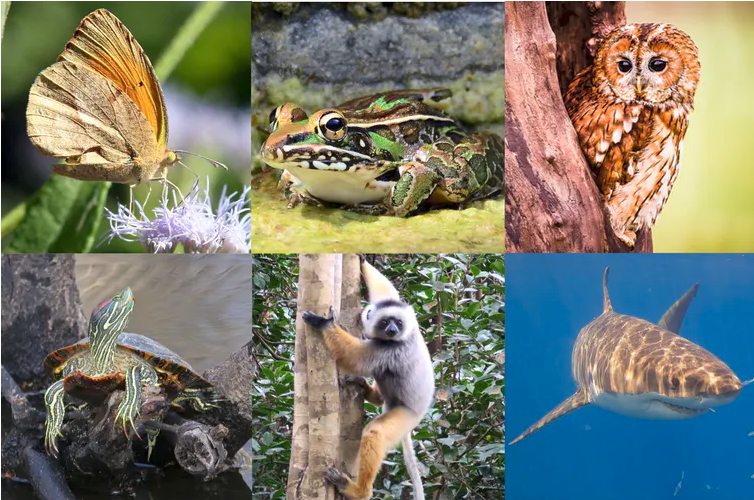
Mass extinction: what is it and are we in one now?

For more than 3.5 billion years, living organisms have thrived, multiplied and diversified to occupy every ecosystem on Earth. The flip side to this explosion of new species is that species extinctions have also always been part of the evolutionary life cycle.

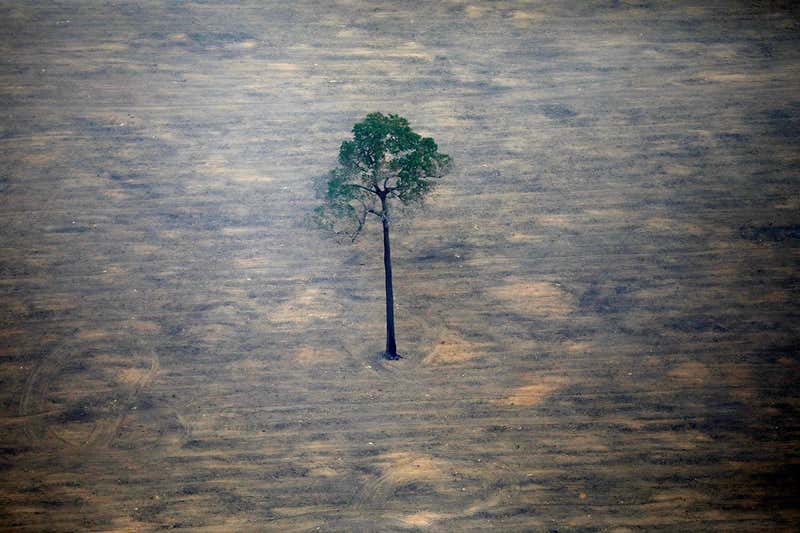
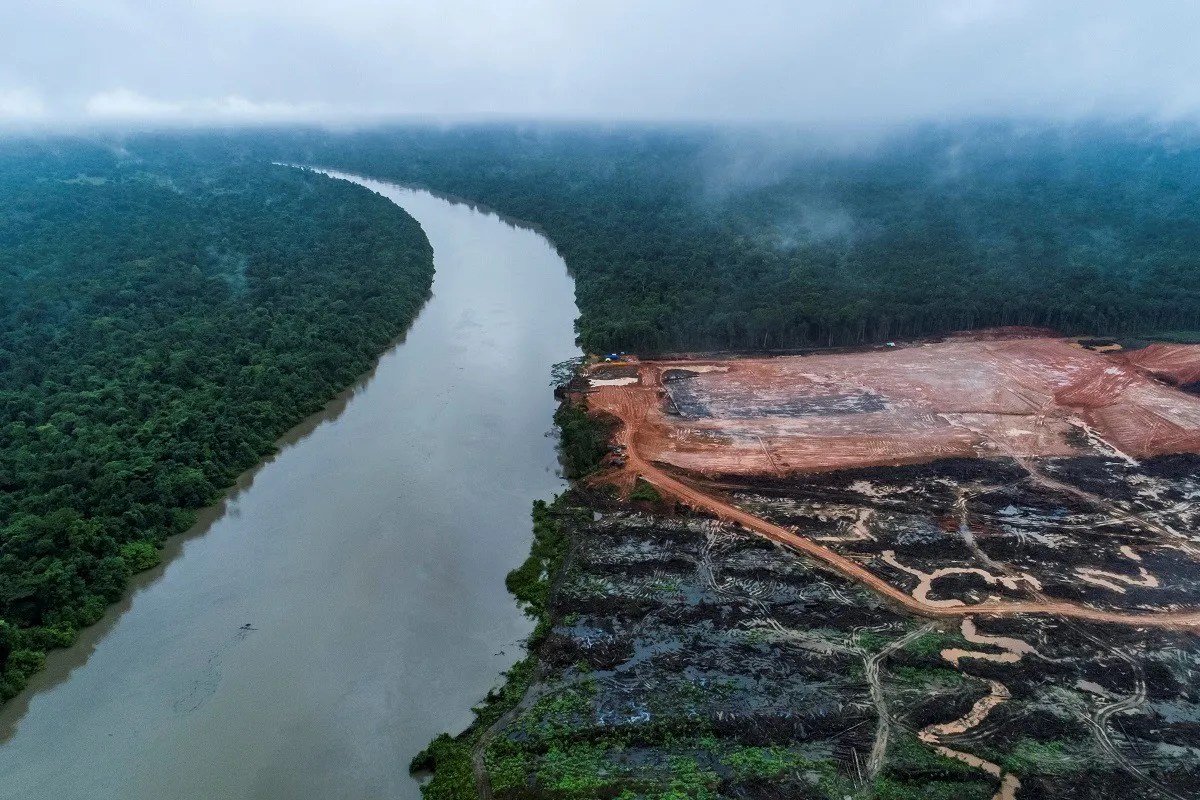
A mass extinction is usually defined as a loss of about three quarters of all species in existence across the entire Earth over a “short” geological period of time. Given the vast amount of time since life first evolved on the planet, “short” is defined as anything less than 2.8 million years. Right now loss of species on earth is being driven by a mix of direct and indirect human activities, such as the destruction and fragmentation of habitats, direct exploitation like fishing and hunting, chemical pollution, invasive species, and human-caused global warming. Help species survive #BoycottPalmOil be #Vegan and #Boycott4Wildlife

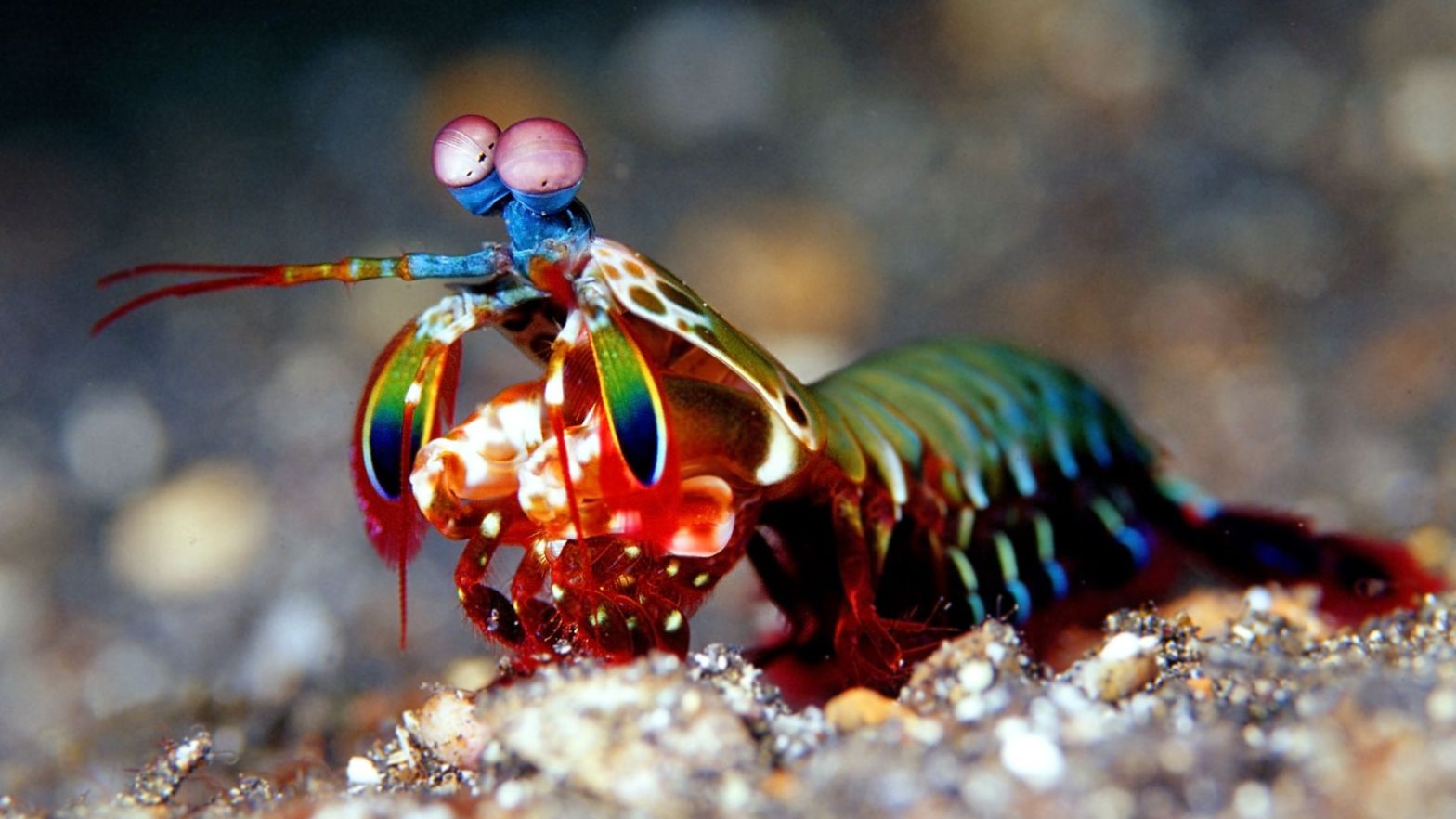
Inside the colourful world of animal vision

Want to hear something trippy? Unlike other aspects of an object such as its size or mass, colour is not an inherent property. Perceiving colour is a function of an organism’s sensory system. In other words, colour is a construct of the mind. But whose minds? Aside from the human experiences of colour, other-than-human eyes perceive colour in radically different ways.

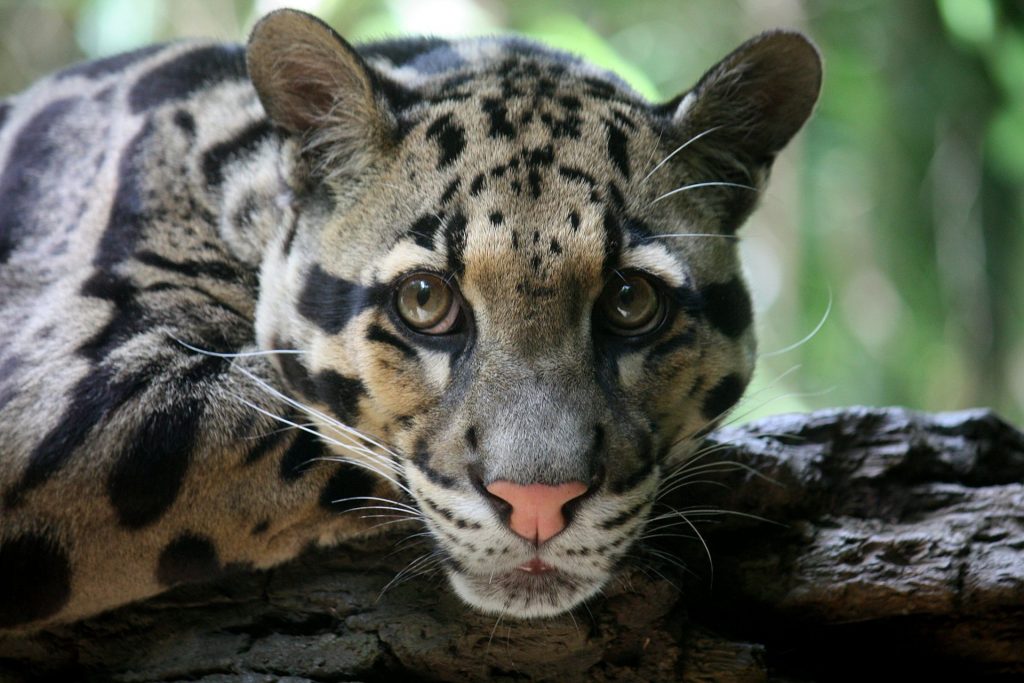
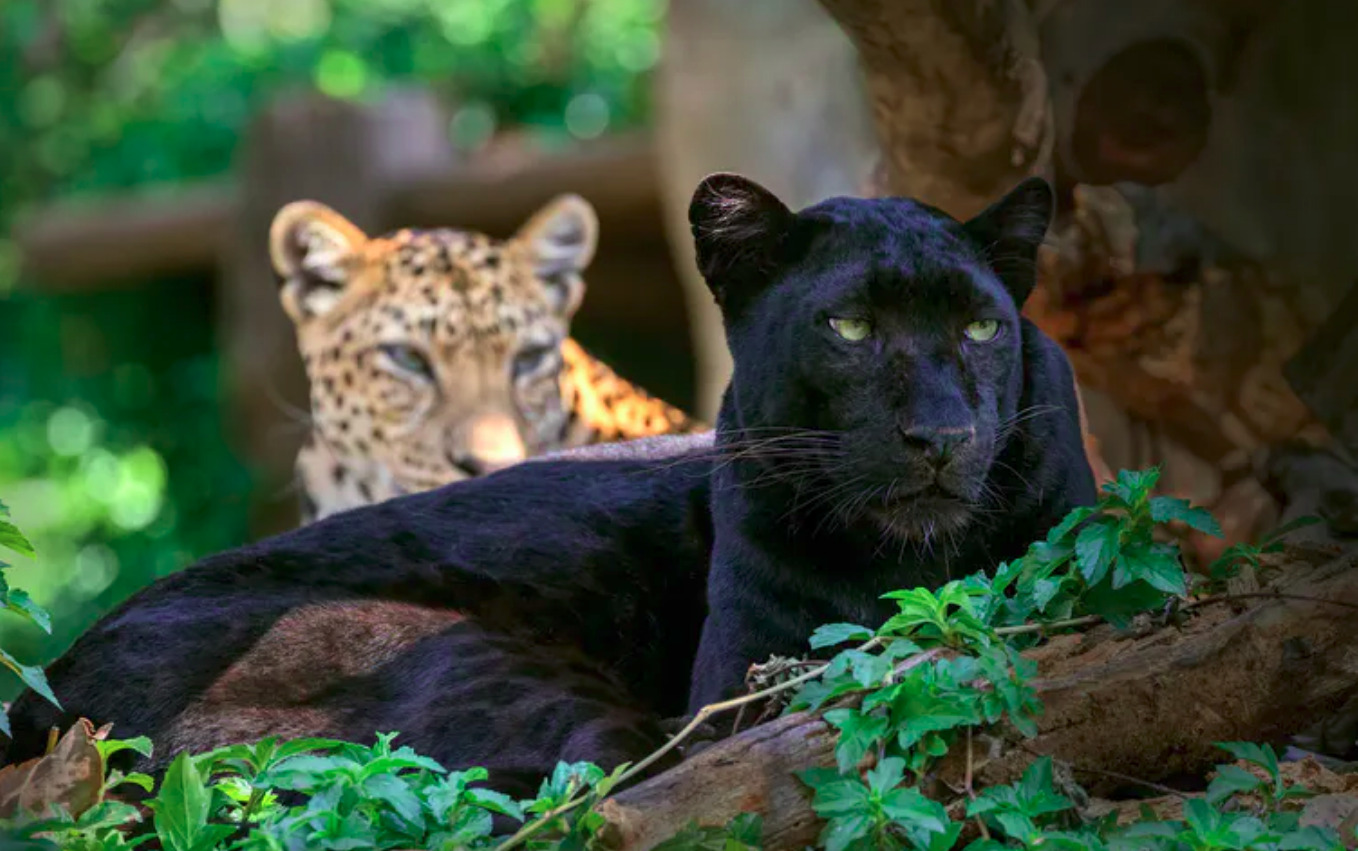
The Stealth and Beauty of the Clouded Leopard

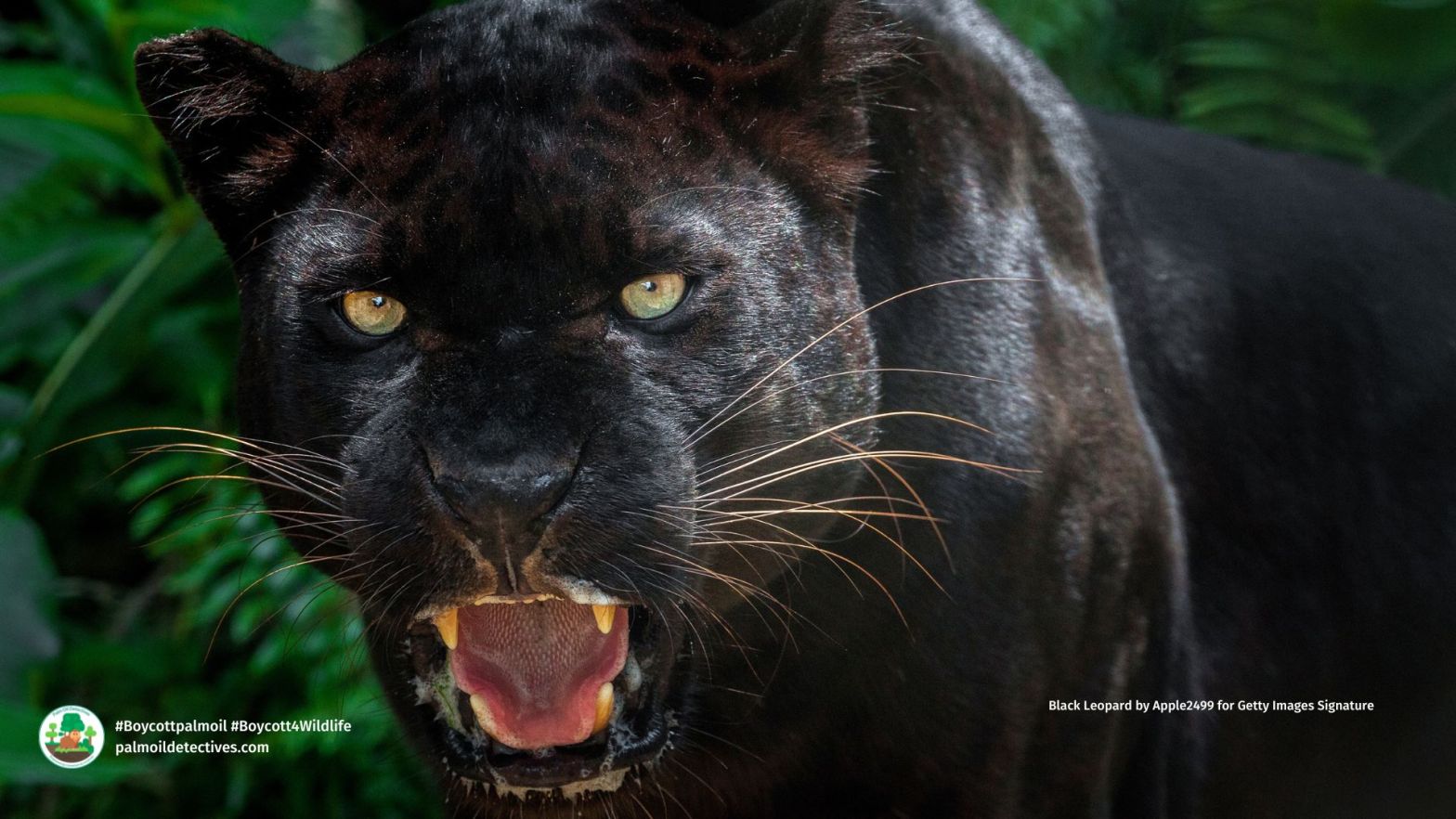
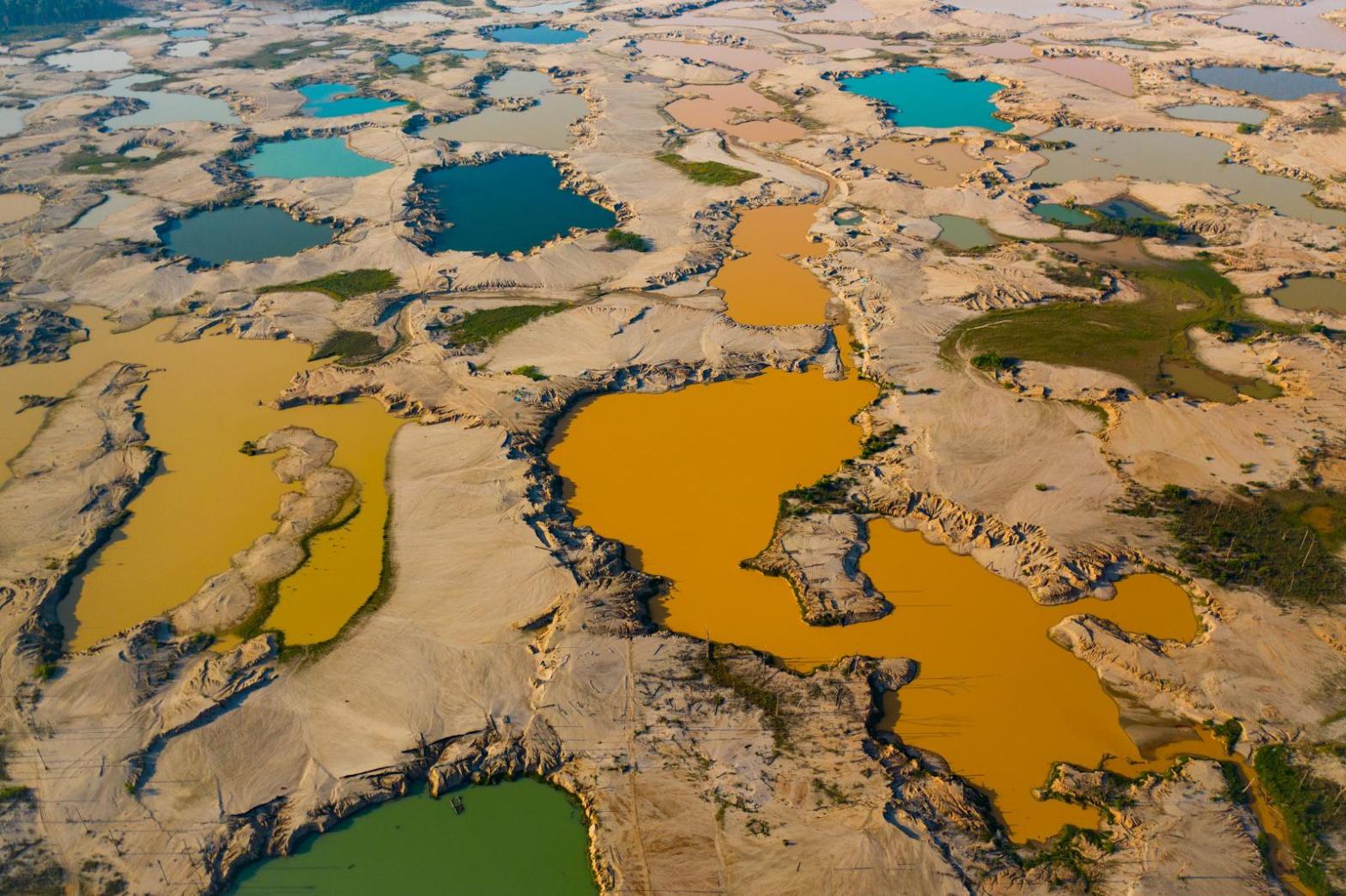
Beautiful and unique Clouded Leopards are #endangered by #palmoil, #meat #mining #deforestation and human persecution across their range. Help them every time you shop and be #vegan, #Boycottpalmoil and #Boycott4wildlife

Every Living Organism Has a Way of Communicating

Every living organism has a way of communicating. We may not be able to understand each other’s language. But its there and communication get passed from one organism to another. How do forests speak to us? If you have ever been into the woods and feel different ways nature talks to us. From the windContinue reading “Every Living Organism Has a Way of Communicating”

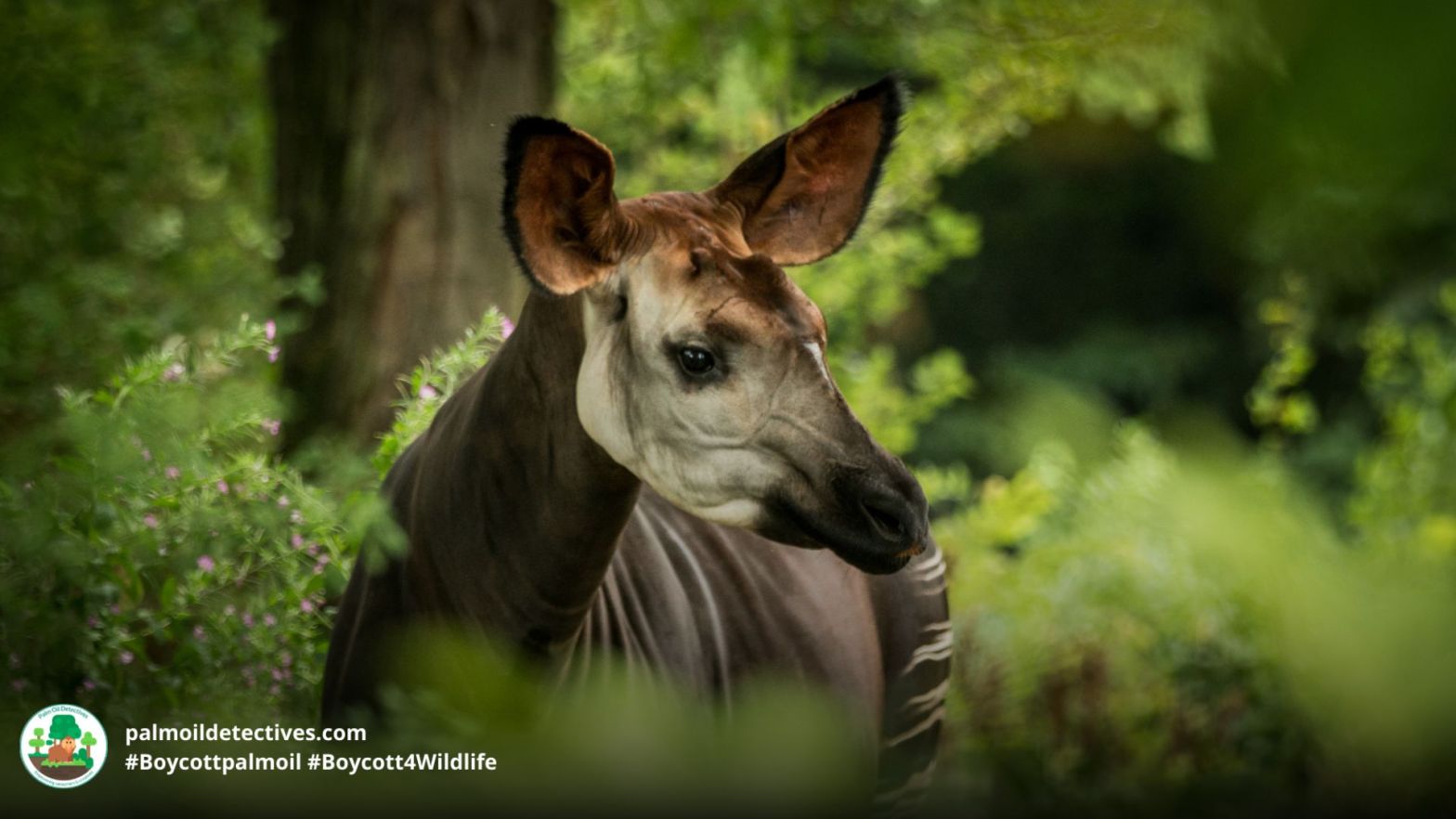
Okapi: African Unicorns

Deep in the heart of Africa, in the dense tropical rainforests of the Democratic Republic of the Congo (DRC), there lurks a very curious creature. With long legs and predominantly dark brown coat of short fur, Okapi look, at first glance, a bit like a horse. But a second look will reveal a somewhat deer-like face atop a relatively long, flexible neck, and, most strikingly, horizontal white stripes on its upper legs and rump. Help them to survive every time you shop #BoycottPalmOil #Boycott4Wildlife and be #Vegan.

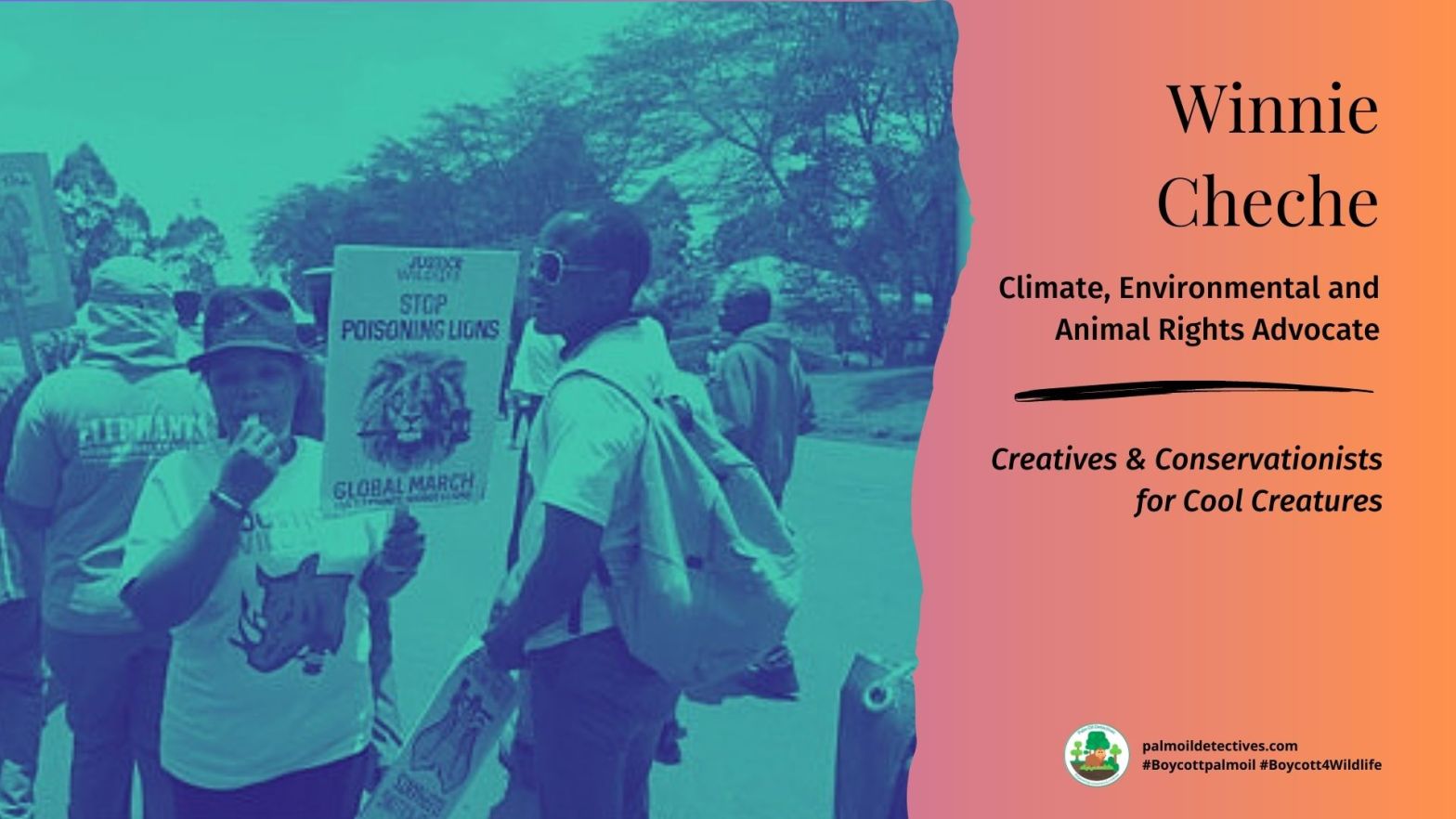
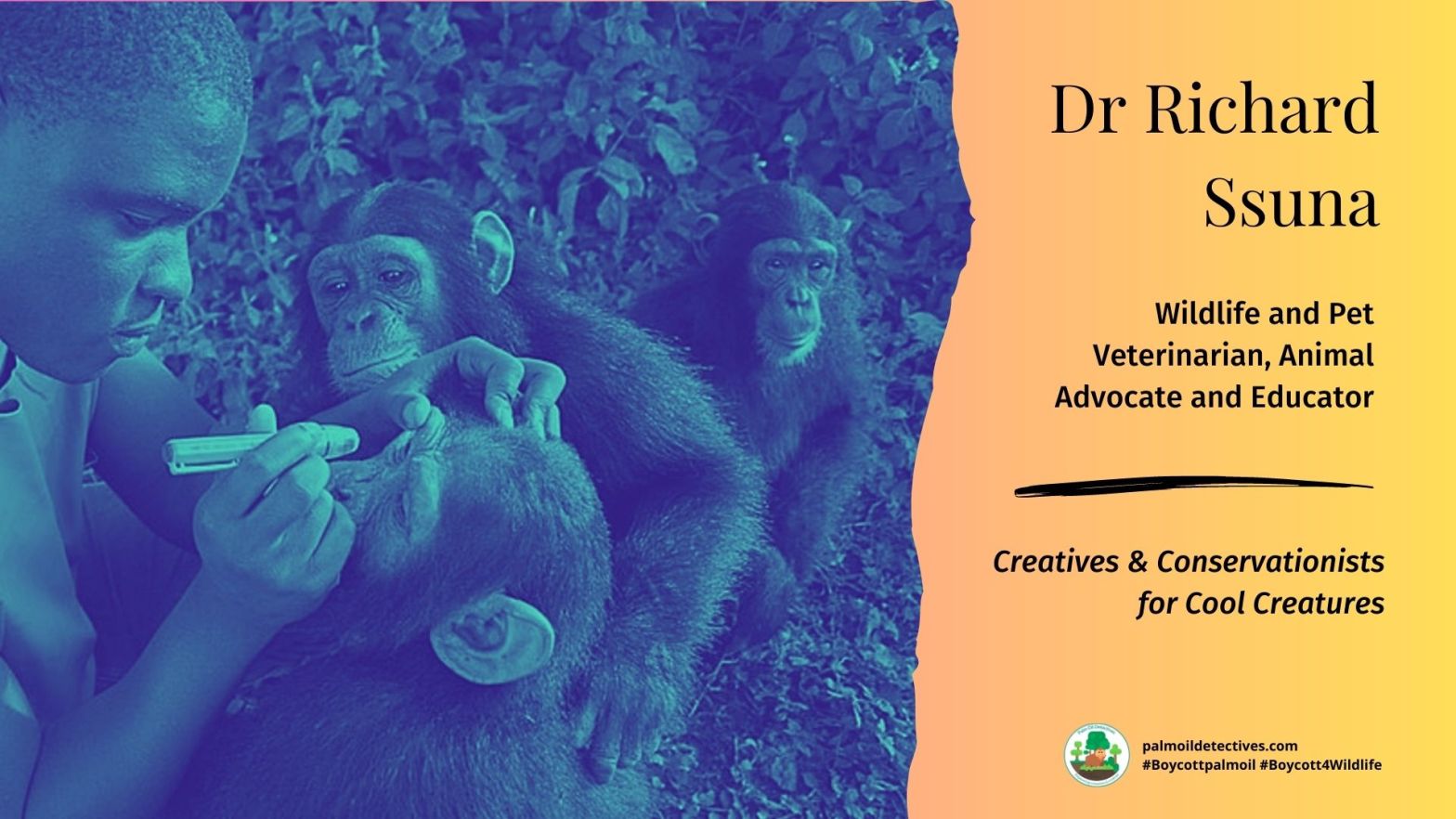
Wildlife and Environmental Advocate Winnie Cheche

I love wildlife and I am ready to do whatever I can to ensure that future generation get to see animals. Poaching and conservation area encroachment continue to be a threat to wildlife existence, and something needed to be done. Knowledge is power and a good start to ensure things change. Extinction is already taking them away, and humans contribute to that. Helping them know how they play that part will help stop the reaction. If you want to get involved in conservation, look at the many ways that humans are driven crazy out of our greed and selfishness. Then work to find fixes and solutions for that. We can allow our humanity and compassion to guide us towards advocating for the right thing for animals and for the natural world.

Gibbon song may be music to the ears of human language students

#Gibbons and humans have more in common than might immediately seem apparent. Among many behavioural traits shared by our two species is singing. Not just that – the songs of gibbons have the potential to teach us about the origin of our own human capacities. Many are threatened by #palmoil #deforestation 🌳✨ #Boycottpalmoil #Boycott4Wildlife 🎶Continue reading “Gibbon song may be music to the ears of human language students”
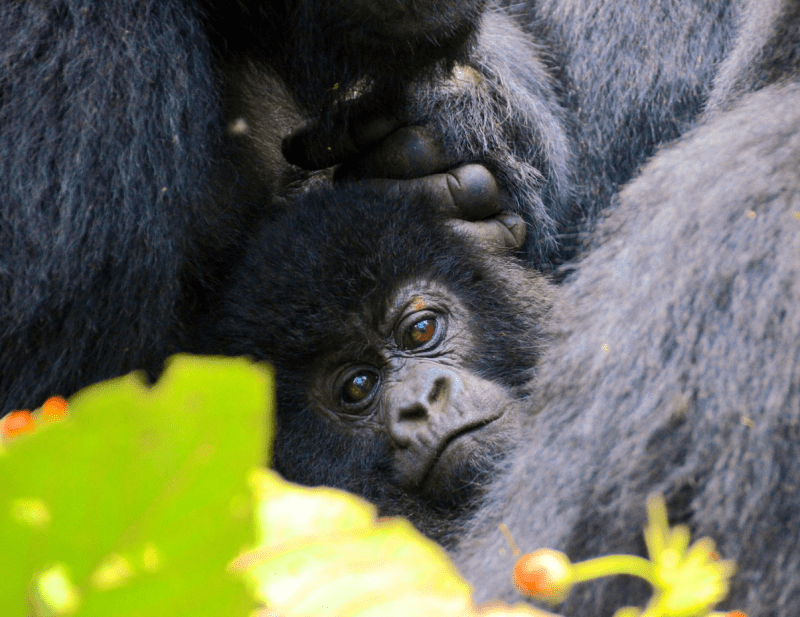
Africa’s Palm Oil Boom Threatens Forests, People, Animals

A estimated 3mil ha of community-owned rainforests in Africa are at risk from palm oil expansion, stronger protection is urgently needed for people, animals.

How our food choices cut into forests and put us closer to viruses

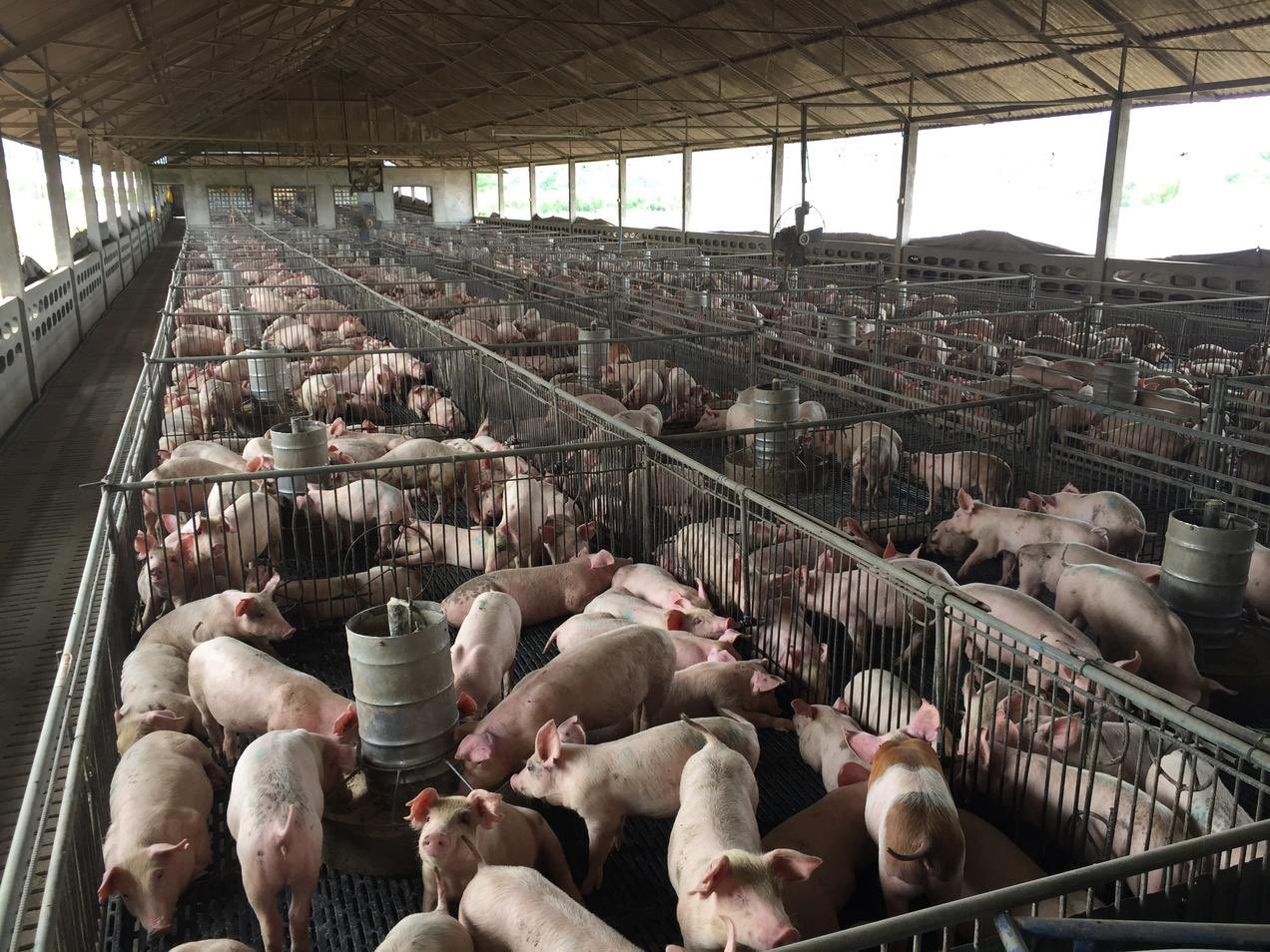
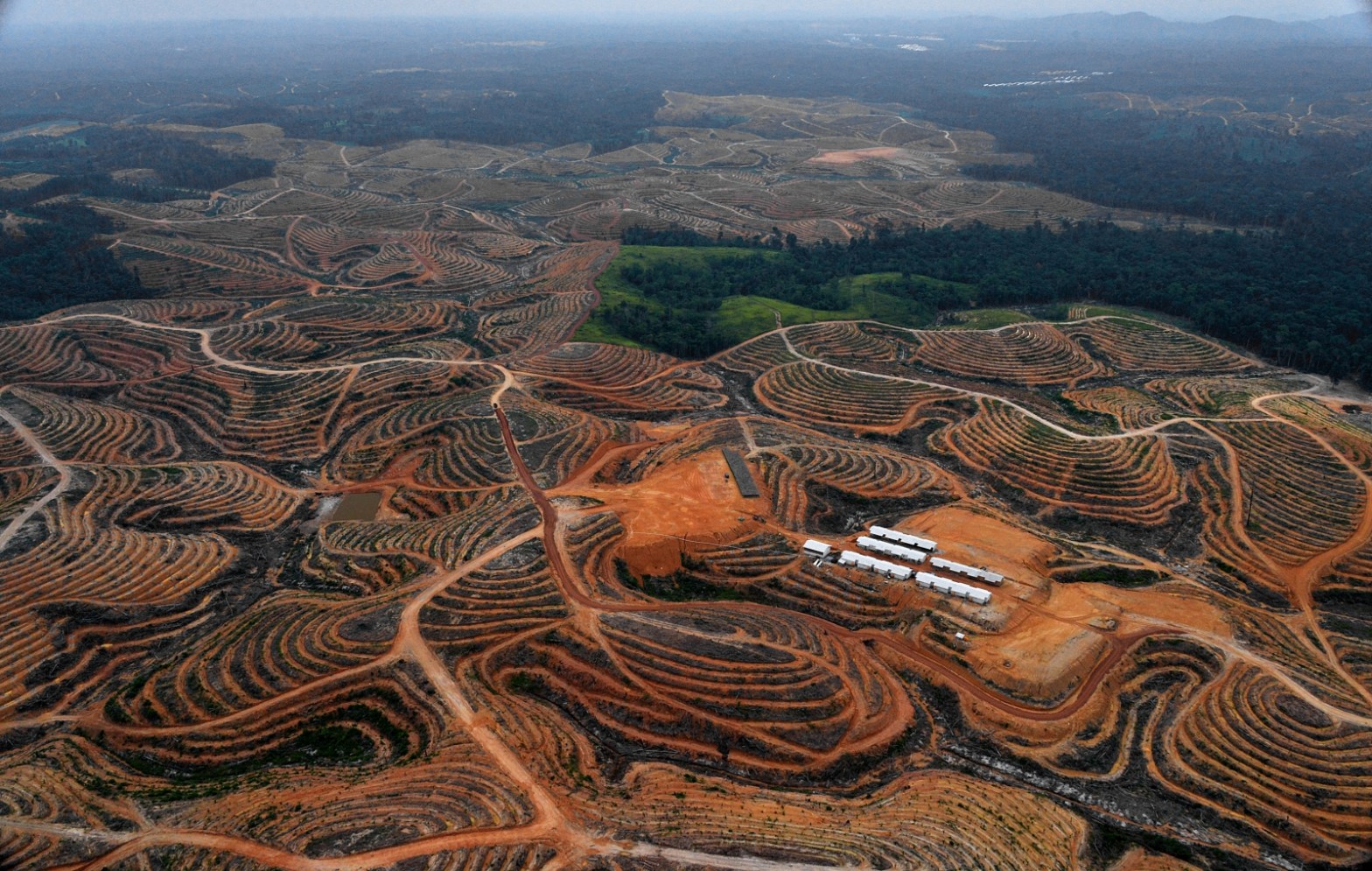
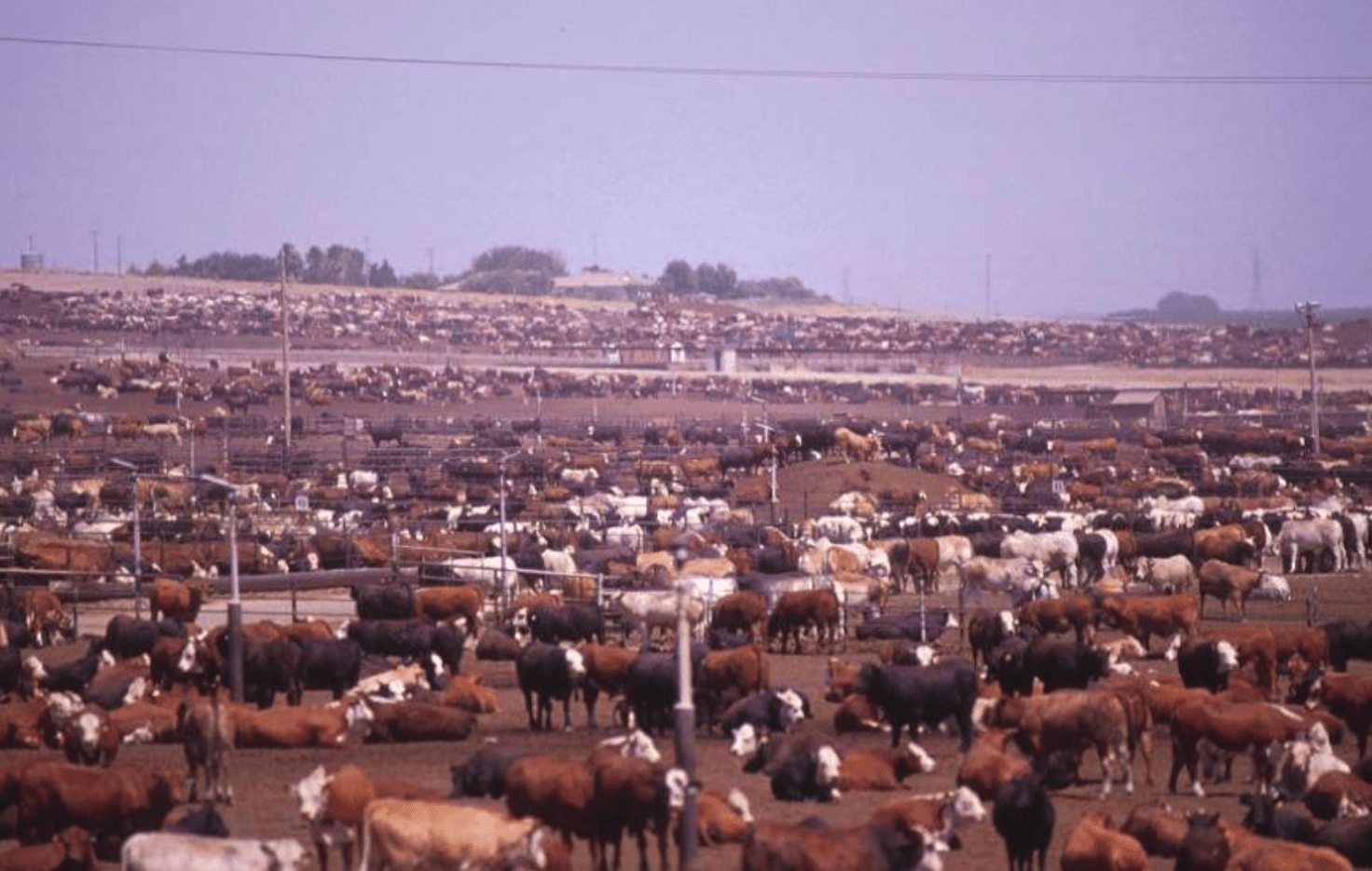
As the global population has doubled to 7.8 billion in about 50 years, industrial agriculture has increased the output from fields and farms to feed humanity. One of the negative outcomes of this transformation has been the extreme simplification of ecological systems, with complex multi-functional landscapes converted to vast swaths of monocultures that lack the complexity of biodiversity found in tropical rainforests. Industrial agriculture is the biggest threat to rare wild animals and rare wild plants in the world. Fight back and resist extinction every time you shop – be #Vegan and #BoycottPalmOil #Boycott4Wildlife
Palm Oil Free Haircare

Keep your hair looking beautiful without contributing to tropical deforestation with rainforest-destroying palm oil. If you are ever in doubt look for the prefixes: LAUR, STEAR, GYLC and PALM in the ingredients list on packaging – this is most likely palm oil. Another tip is to shop for locally produced shampoos and conditioners.

Palm Oil Free Cooking Oil, Margarine and Spreads

Are you an avid lover of #Nutella and other spreadable butters and #margarines? Consider that many popular brands come tarnished with dirty #palmoil. Why is palm oil dirty? It has destroyed millions of hectares of rainforests all over the world. Firstly in SE Asia and increasingly now in Africa, South and Central America as well as India. Wild animals and indigenous peoples suffer the most. Here’s a helpful guide so that you can AVOID the major supermarket brands and still enjoy your hit of nut butter and chocolate spread WITHOUT Nutella.

By choosing locally produced cooking oils such as olive, sesame or peanut oil and by making your own foods instead of buying convenience foods you’re doing your health and the animals a favour. If you are ever in doubt look for the prefixes: LAUR, STEAR, GYLC and PALM in the ingredients list on packaging – this is most likely palm oil. Take action and buy #PalmOilFree #Vegan and #BoycottPalmOil #Boycott4Wildlife
Palm Oil Free Makeup, Cosmetics and Perfume

Here are some palm oil free makeup, cosmetics and perfume brands that do not use rainforest-destroying palm oil. If you are ever in doubt look for the prefixes: LAUR, STEAR, GYLC and PALM in the ingredients list on packaging – this is most likely palm oil. Another tip is to shop for locally produced products instead of mass-produced cosmetics, beauty and makeup brands. Beauty should never come at the cost of rainforest animals and indigenous peoples. Go #PalmOilFree and #BoycottPalmOil #Boycott4Wildlife

Papua New Guinea & West Papua: Species Endangered by Palm Oil Deforestation

As the rainforest habitats are destroyed in Indonesia, Indonesian and Chinese oil palm processing companies are switching focus towards Papua New Guinea, Africa and South America to keep up with demand for palm oil.

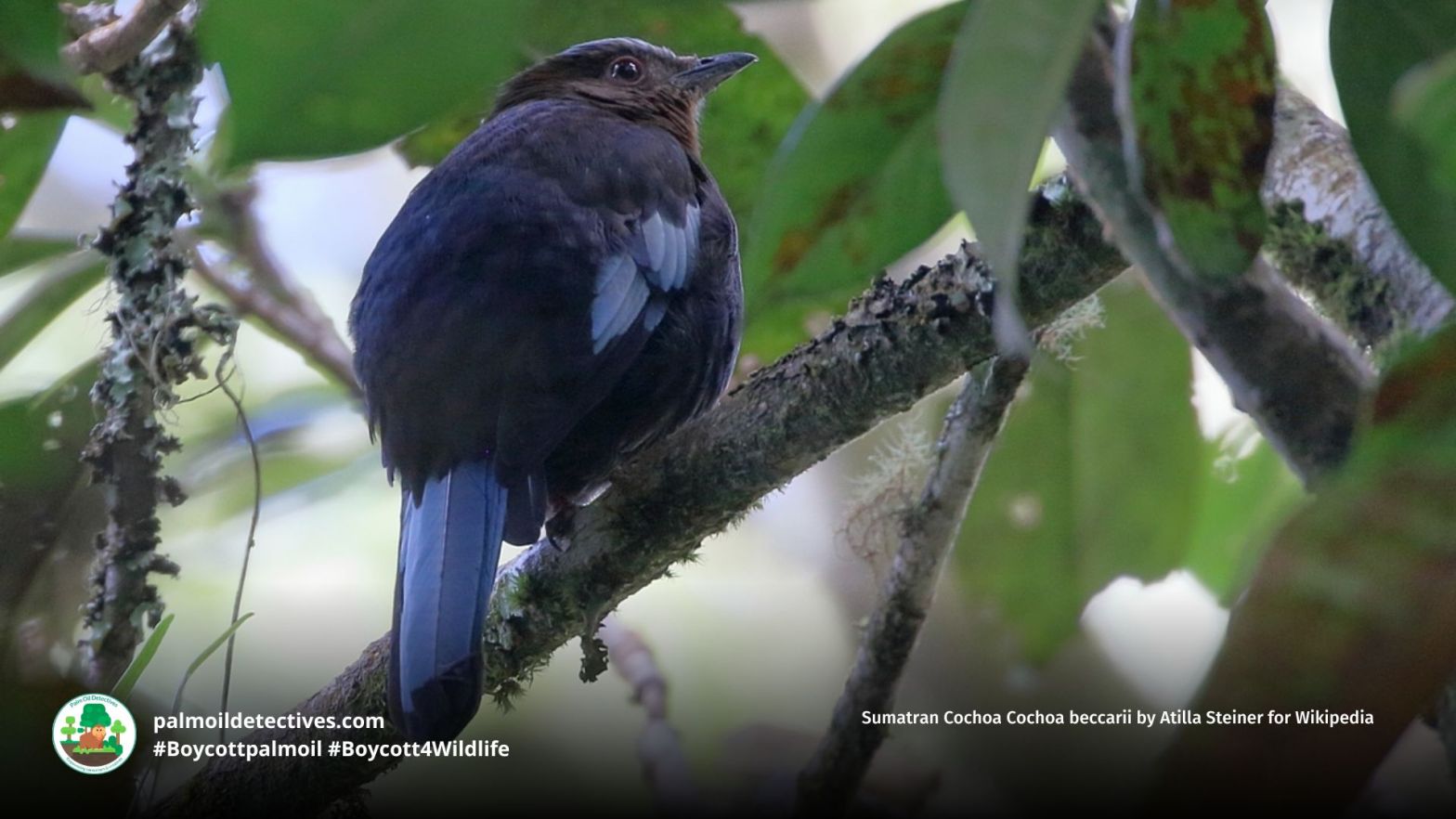
Sumatran Cochoa Cochoa beccarii

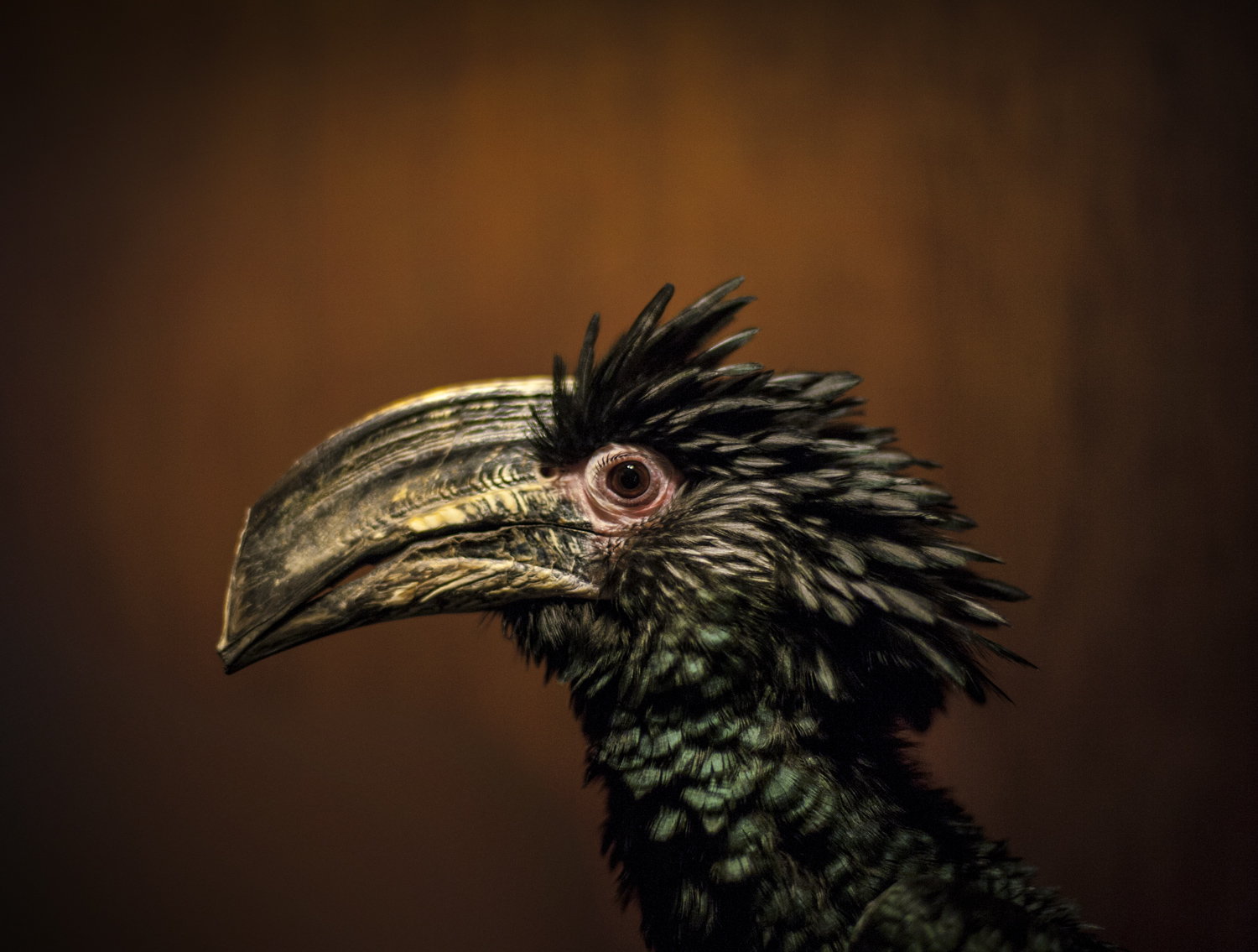
The Sumatran Cochoa Cochoa beccarii is a rare and secretive forest-dwelling #songbird found only in the highland rainforests of #Sumatra #Indonesia. With their shimmering electric blue and smoky black plumage and elusive behaviour, this species of songbird moves in a melodic symphony of song through the middle and upper canopy, often remaining hidden from view. Although currently listed as #Vulnerable, the species is experiencing a slow but steady decline caused by #deforestation and trapping for the illegal bird trade. As demand for exotic songbirds grows, especially online, the Sumatran Cochoa faces a very real risk of disappearing from the wild. Use your wallet as a weapon. Say no to palm oil and never support the illegal wildlife trafficking and illegal songbird trade. Campaign against wildlife trafficking and #BoycottPalmOil #Boycott4Wildlife #Vegan
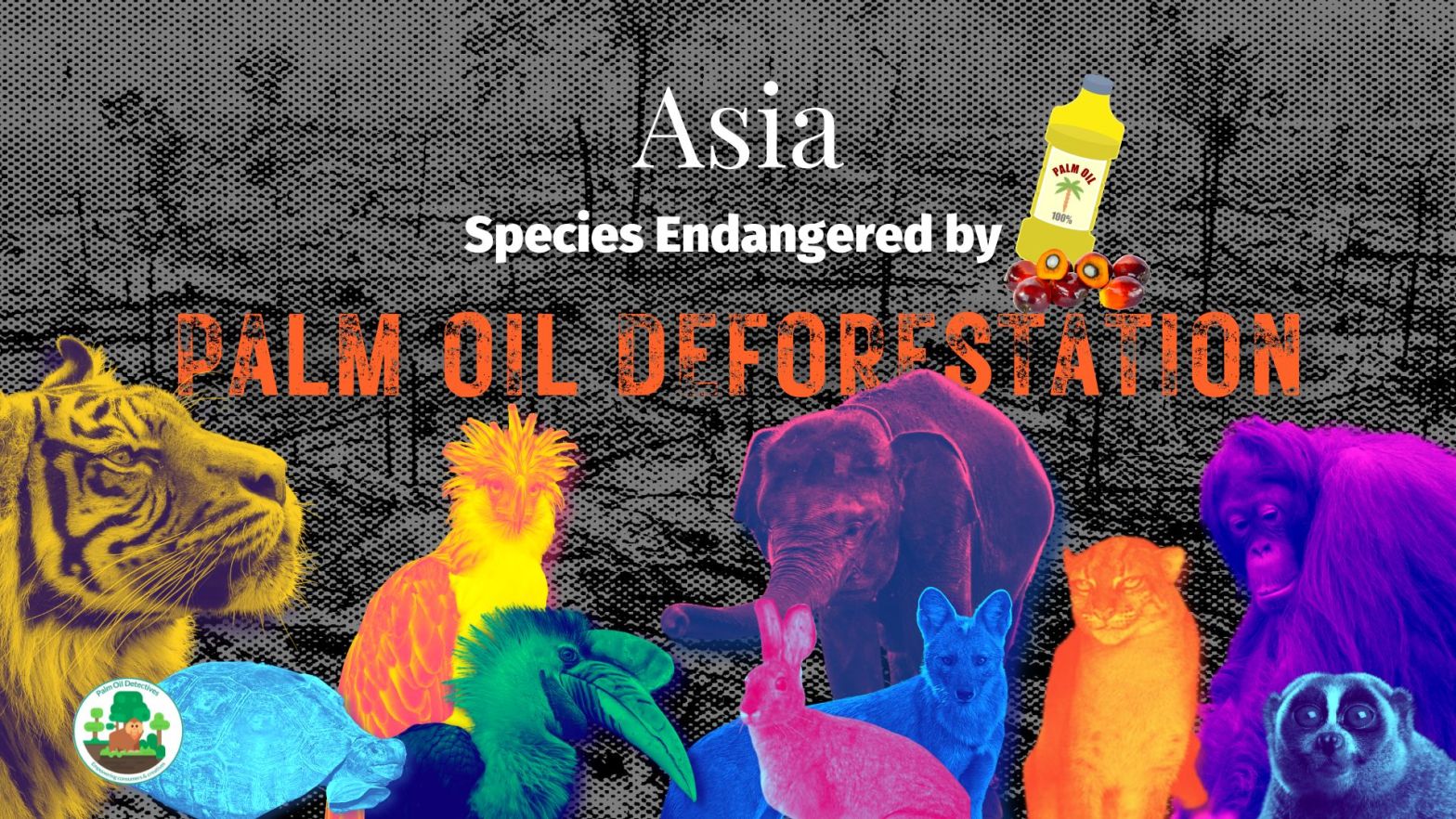
Asia: Species Endangered by Palm Oil Deforestation

Discover the diverse wildlife of Asia and the devastating effects of palm oil deforestation. Learn how to protect these species and #BoycottPalmOil. #Boycott4Wildlife
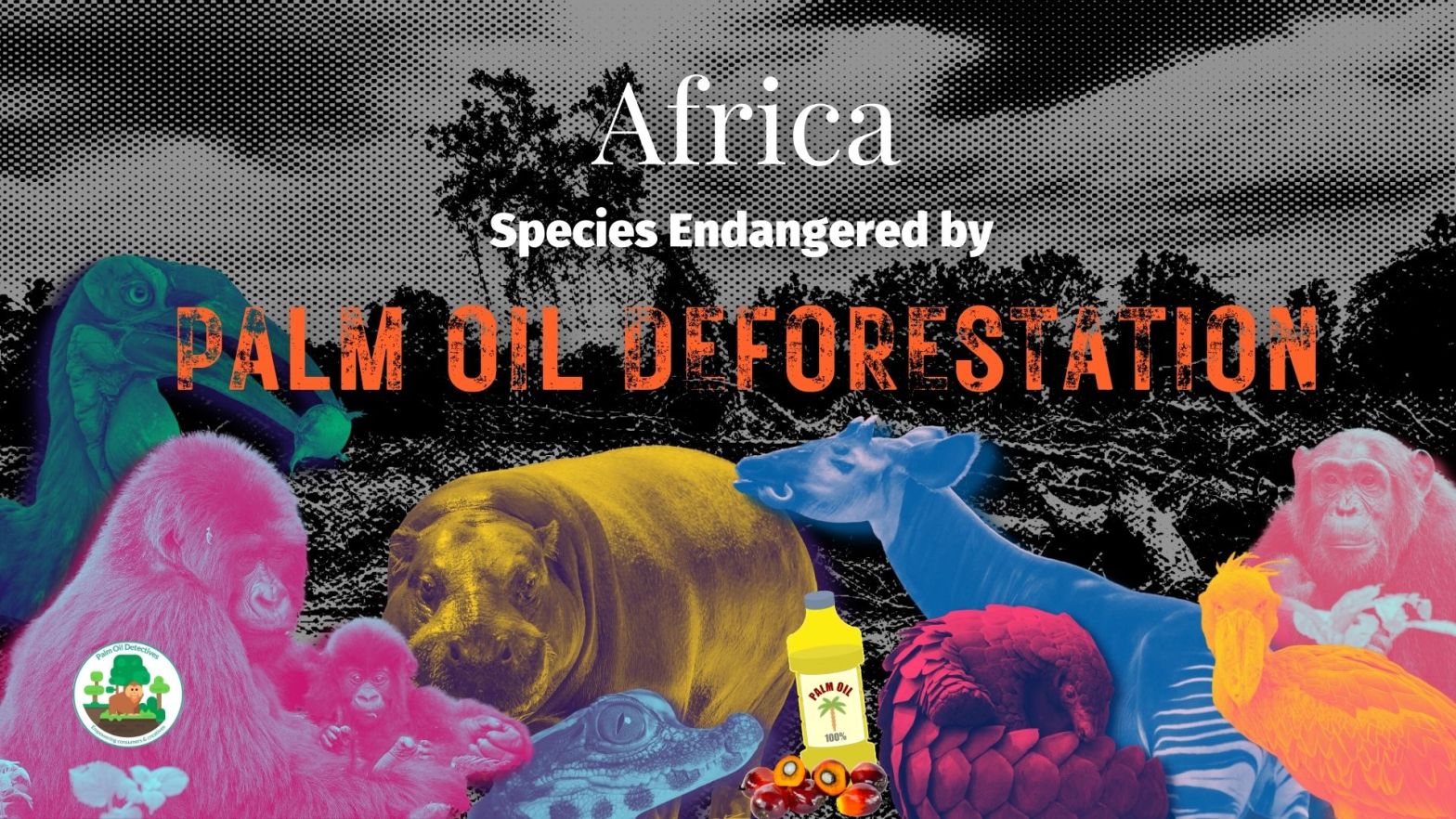
Africa: Species Endangered by Palm Oil Deforestation

Explore the biodiversity of Africa and discover how palm oil deforestation impacts wildlife. Learn how you can help. #BoycottPalmOil #Boycott4Wildlife