
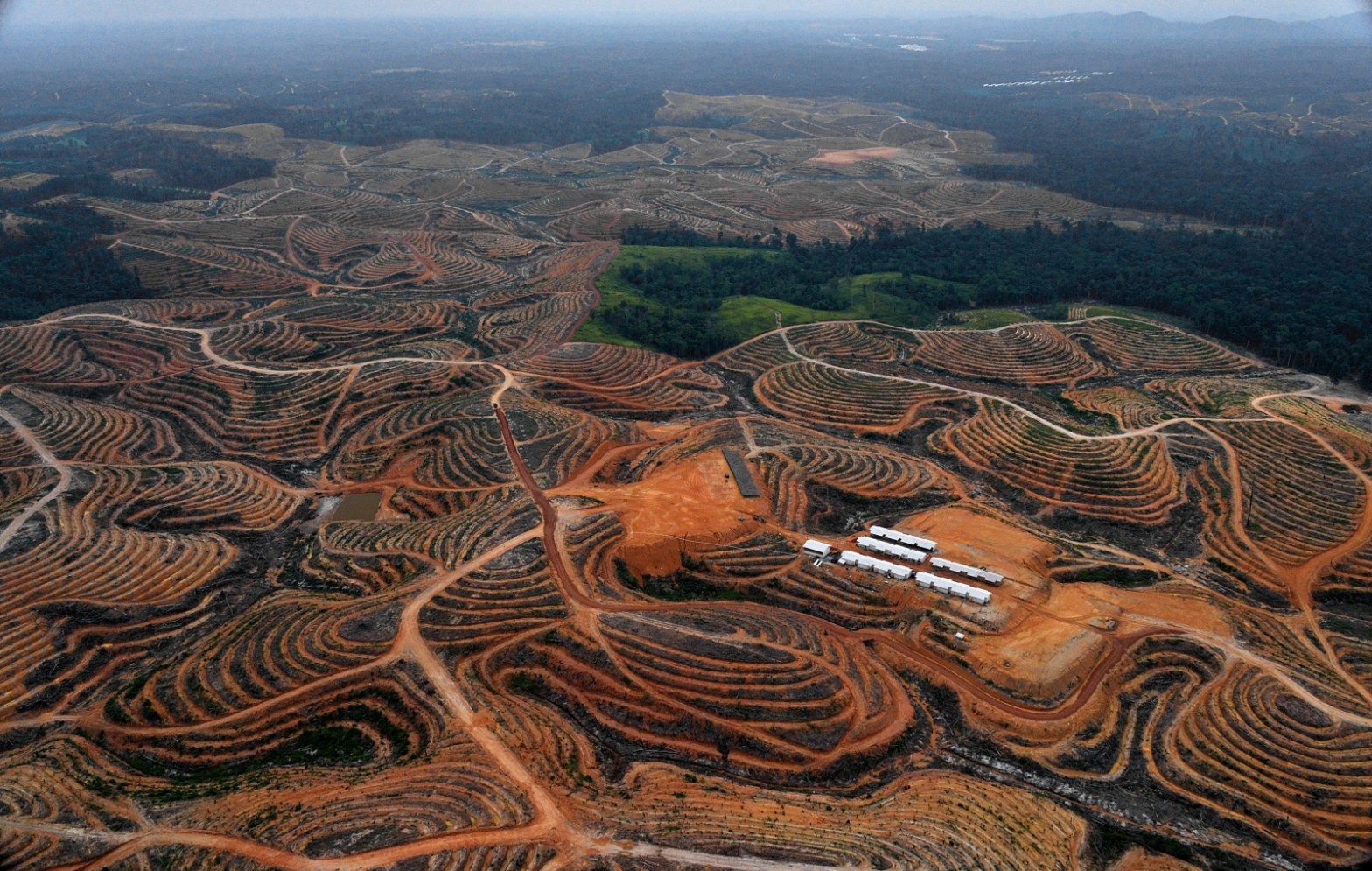
Lately, you may have heard someone say that we have reached a “tipping point.” Recently, we have witnessed dramatic shifts in our social and economic states of being. Our ability to understand and act thoughtfully around this single concept could determine the fate of life on Earth. Help reverse the upheavals and tipping points every time you shop #Boycott4Wildlife
Tag Archives: ecocide
Golden-headed Lion Tamarin Leontopithecus chrysomelas

The Golden-Maned Lion Tamarin faces a battle for survival, with threats from habitat loss, particularly due to palm oil deforestation, the illegal pet trade, predation, disease, and climate change. These majestic creatures, with their striking golden manes and vibrant personalities, are teetering on the brink due to the relentless destruction of their home. But there’s hope, and it starts with us. By choosing to #BoycottPalmOil, supporting the #Boycott4Wildlife movement, and embracing a #Vegan lifestyle, we can make a profound impact. Together, we have the power to safeguard the forests, preserve the planet’s biodiversity, and ensure the survival of the Golden-Maned Lion Tamarin.
PZ Cussons
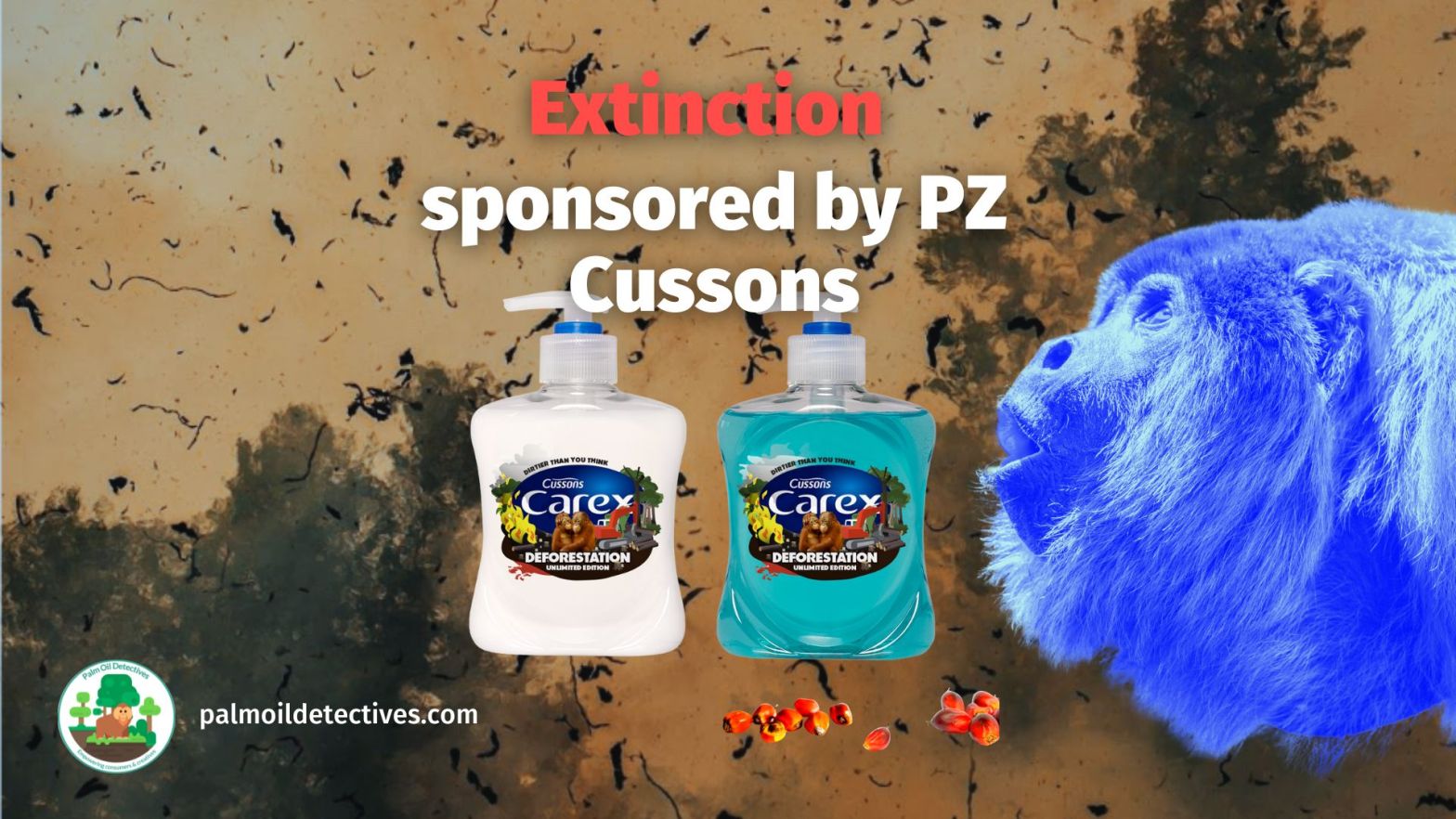
PZ Cussons is a British-owned global retail giant. They own well-known supermarket brands in personal care, cleaning, household goods and toiletries categories, such as Imperial Leather, Morning Fresh, Carex, Radiant laundry powder and more. (See below for full list)
Savvy consumers have been pressuring PZ Cussons to cease using deforestation palm oil. Yet they have failed on this.
Danone
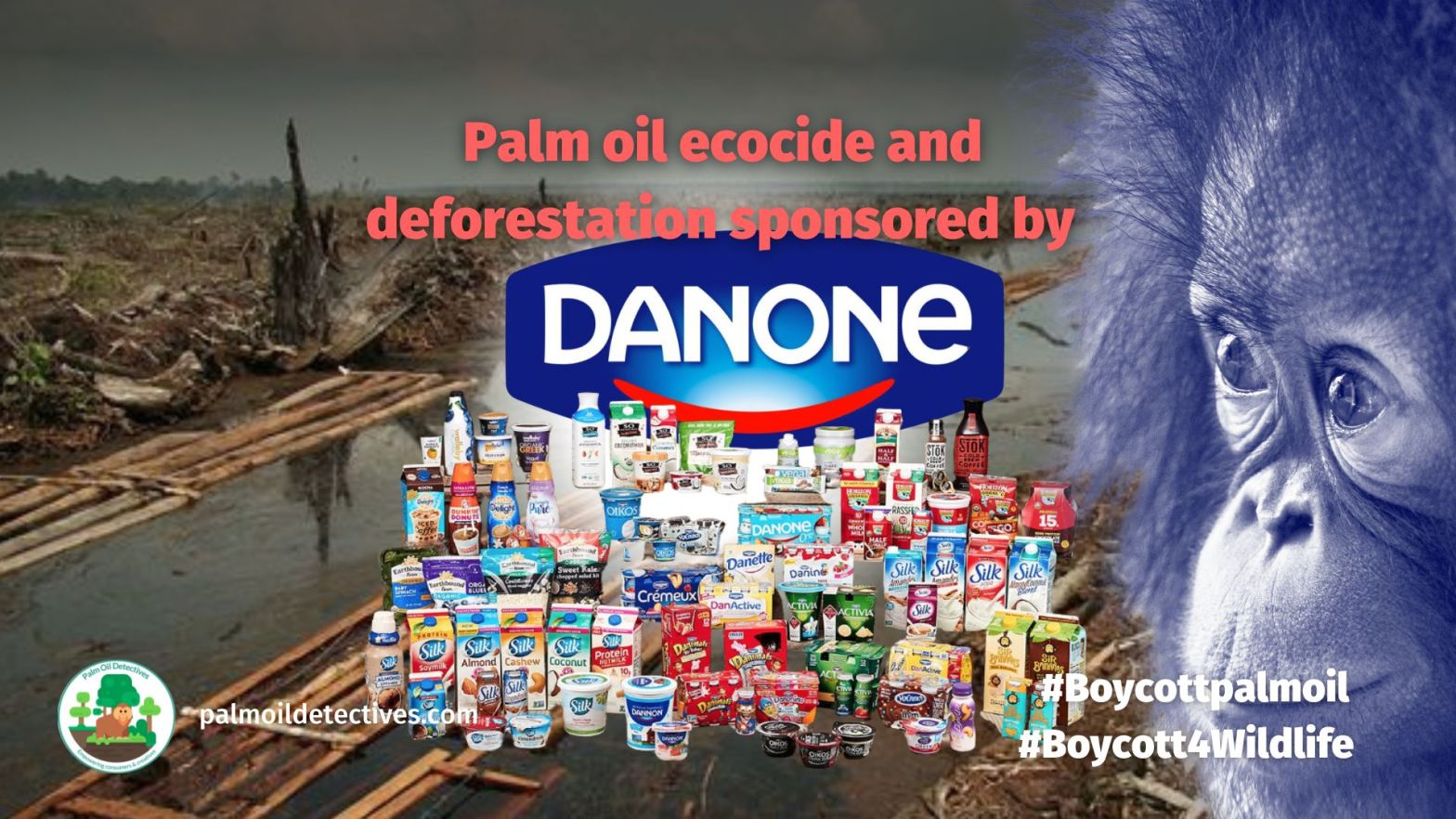
Savvy consumers have been pressuring French Dairy multinational Danone for decades to cease using deforestation palm oil. Yet they actually haven’t stopped this. From their website: ‘Danone is committed to eliminating deforestation from its supply chain by end of 2020, and to the principles of no deforestation, no development on peat, and no exploitation ofContinue reading “Danone”
South America: Species Endangered by Palm Oil Deforestation
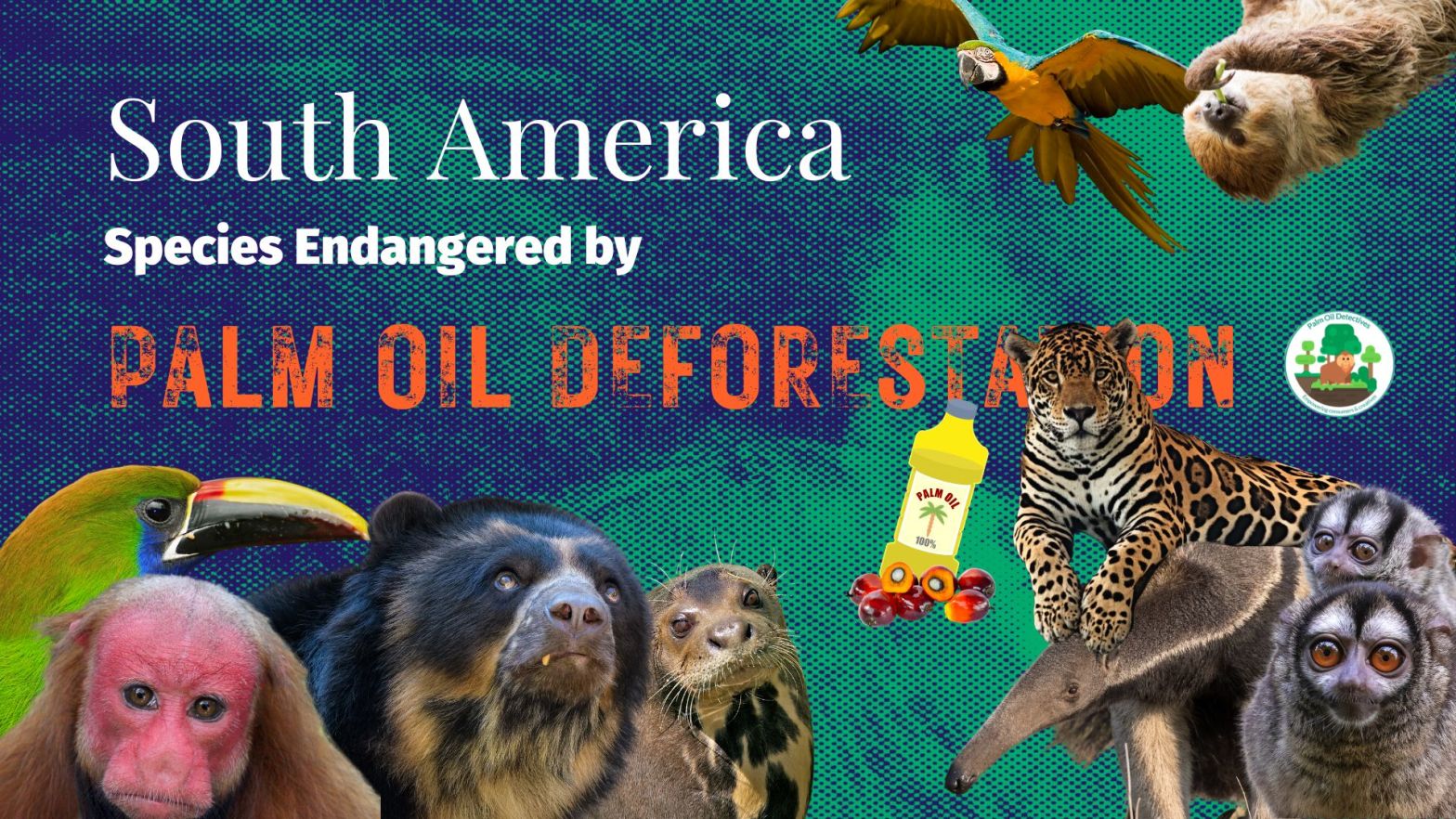
As the lush equatorial rainforests of South East Asia are exhausted, increasingly focus is being placed on parts of Central and South America. Oil Palm is a growing commodity there and is found in Colombia, Brazil, Ecuador, Guatemala and Mexico. Help the rare and beautiful animals of South and Central America to survive the scourge of palm oil and #Boycottpalmoil #Boycott4Wildlife in the supermarket. Learn more
Palm Oil Deforestation Threatens Sulawesi’s Macaques

Illegal logging and palm oil destroying rainforests of Sulawesi endangering the island’s critically endangered Sulawesi black-crested macaques. Fight back!
Palm Oil Free Ice-cream and Frozen Desserts

Here are some palm oil free icecream brands that do not use rainforest-destroying palm oil. If you are ever in doubt look for the prefixes: LAUR, STEAR, GYLC and PALM in the ingredients list on packaging – this is most likely palm oil. Another tip is to shop for locally produced ice cream instead of mass-produced brands.
Palm Oil Free Soap

Here are some palm oil free soaps that do not contain rainforest-destroying palm oil. If you are ever in doubt look for the prefixes: LAUR, STEAR, GYLC and PALM in the ingredients list on packaging – this is most likely palm oil. Another tip is to shop for locally produced soaps instead of mass-produced soap.
Palm Oil Free Skincare products

Here are some palm oil free skincare and beauty products that do not contain rainforest-destroying palm oil. If you are ever in doubt look for the prefixes: LAUR, STEAR, GYLC and PALM in the ingredients list on packaging – this is most likely palm oil. Another tip is to shop for locally produced products instead of mass-produced skincare or beauty brands. How much of your #skincare 🫧🧼😶🌫️ routine contains #palmoil? If you brands like #Aveeno Johnson and Johnson and #Olay you’re lathering #ecocide onto your face. Instead go #PalmOilFree 💡 and #BoycottPalmOil #Boycott4Wildlife 🌴🪔🩸🤢🔥🚫
Palm Oil Free Breakfast Cereals

It might seem like #palmoilfree #cereals and #breakfast foods are hard to come by. However when you get back to basics with #wholefoods and you poach, bake or fry them, you can create wonderful breakfast dishes that are also super healthy. Look for oats, pearl barley, rye, quinoa and use your favourite plant-based milk, fresh or dried fruit and nuts and you can make a far superior breakfast cereal. Here are some palm oil free cereals for those who want to actively boycott and buycott alternatives. Help wild tropical animals, the environment and indigenous peoples #BoycottPalmOil #Boycott4Wildlife
Brands Using Deforestation Palm Oil
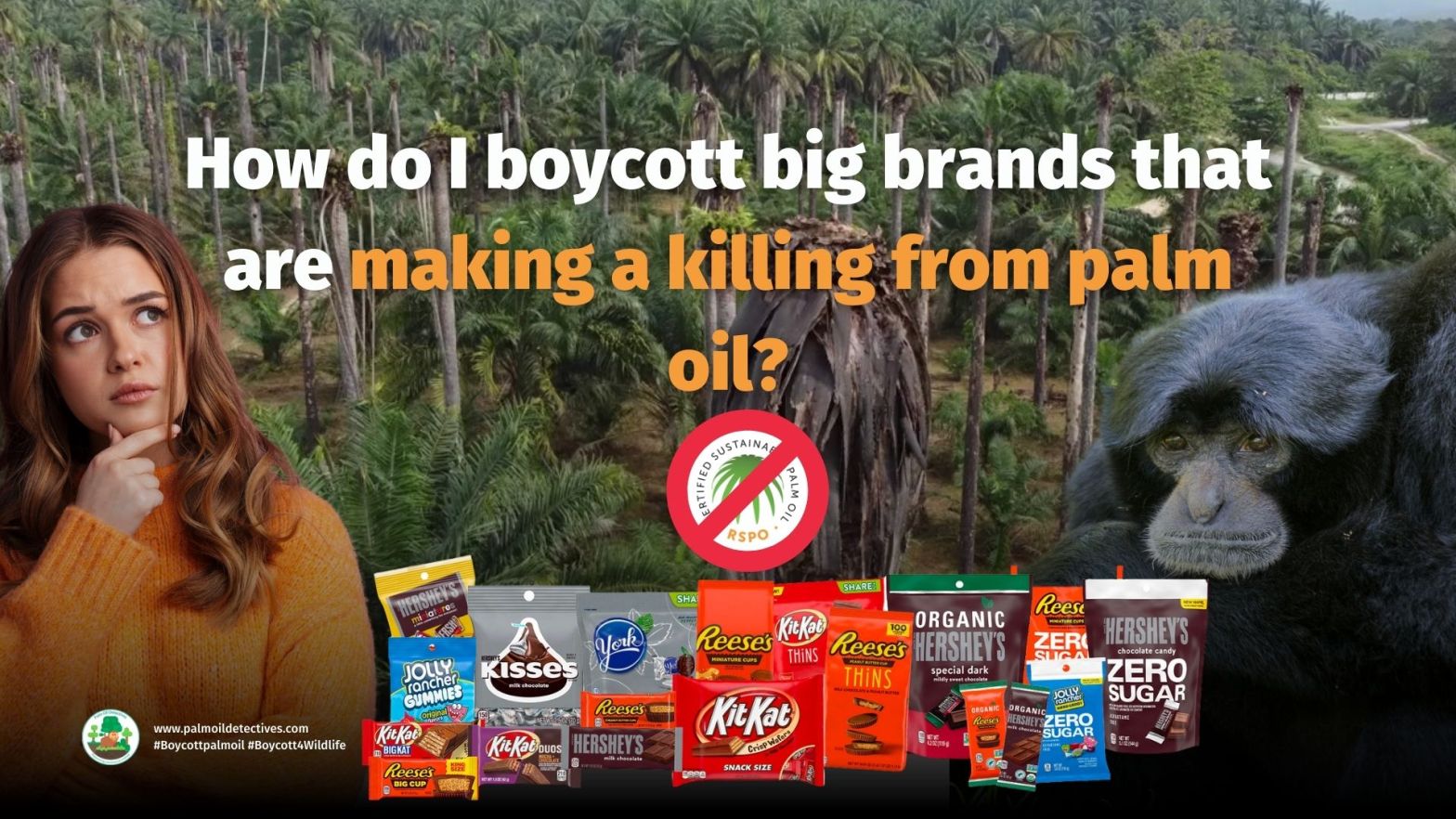
These brands have products that contain palm oil sourced from mills that are responsible for the destruction of precious habitats of endangered species. Just in 2020 alone, these brands (along with many others) contributed to the destruction of 38,000ha of rainforest in Indonesia, SE Asia and Papua New Guinea. Therefore, these brands are directly involved in the extinction of species.
Kelloggs/Kellanova
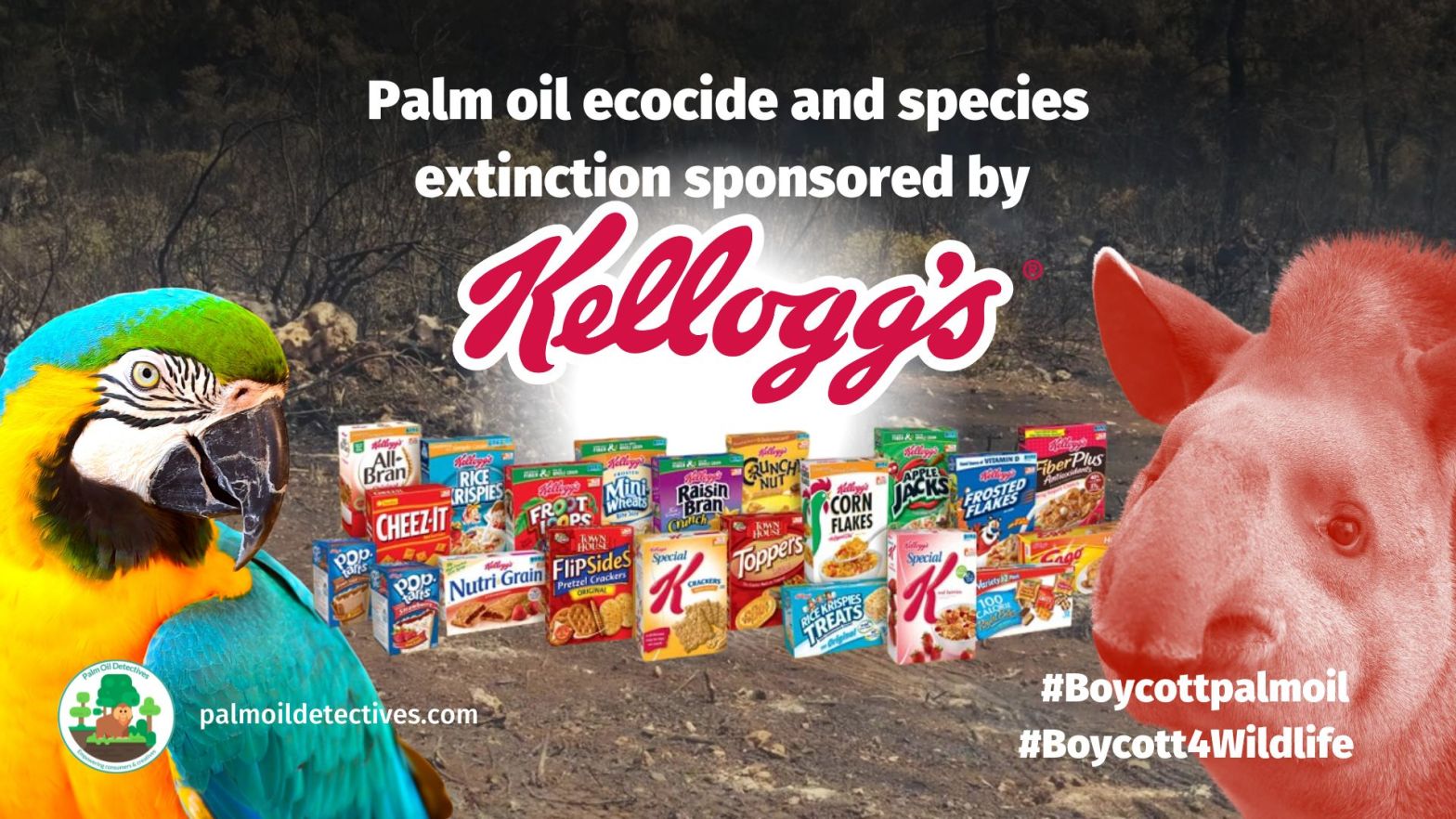
In late 2023, Kelloggs became Kellanova for their US arm. Savvy consumers have been pressuring Kelloggs for decades to cease using deforestation palm oil. Yet they actually haven’t stopped this. From their website: ‘All of the palm oil that is used in our products is sourced from a combination of the Roundtable of Sustainable PalmContinue reading “Kelloggs/Kellanova”
L’Oreal
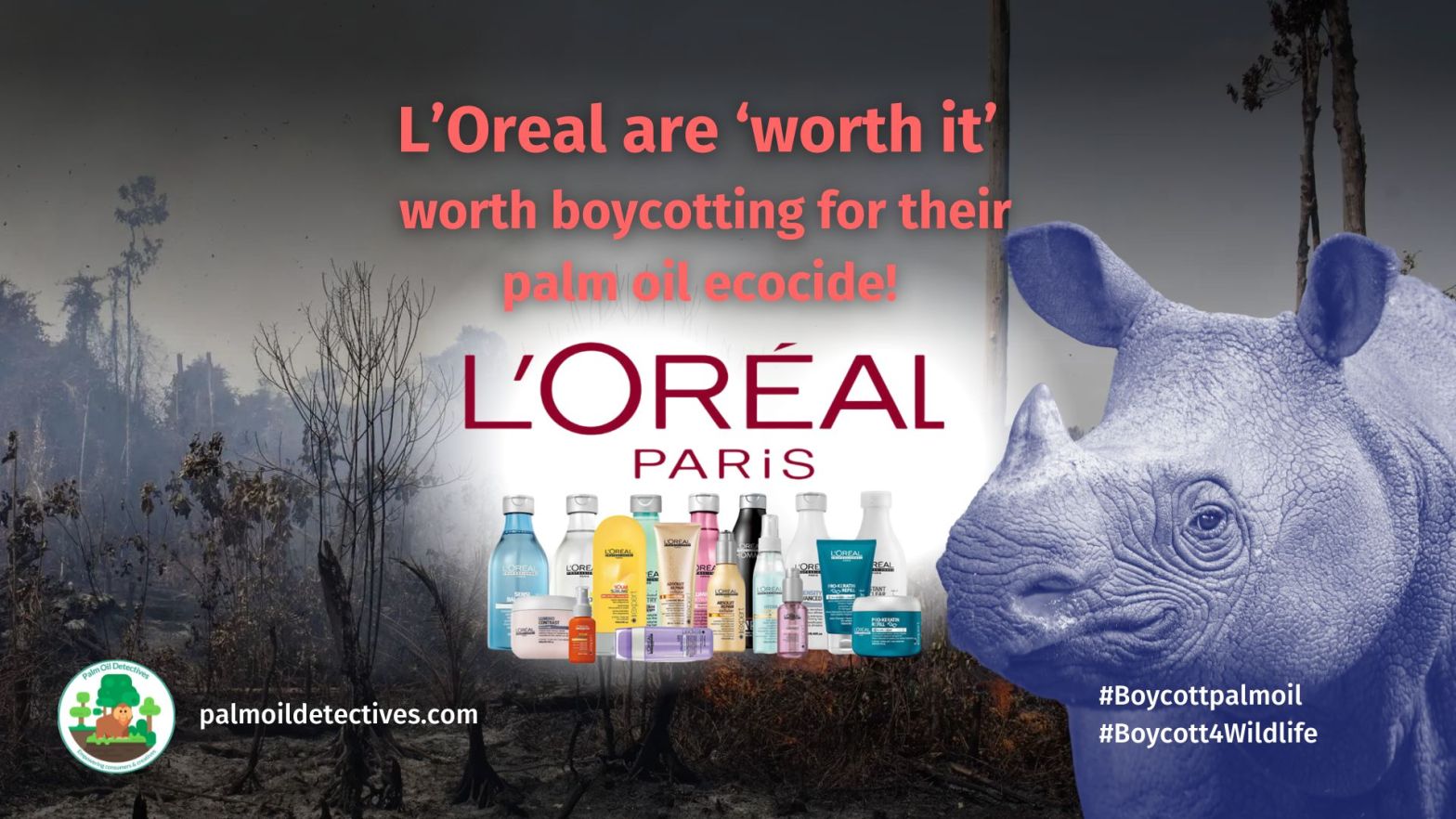
‘Our goal is by 2020 to have none of our products linked to deforestation.’ L’Oreal’s website statement on palm oil This target has been and gone. Still, enormous environmental and social damage continues to be caused by L’Oreal and its palm oil. Despite being an RSPO member, L’Oreal continues to be involved in human rightsContinue reading “L’Oreal”
Colgate-Palmolive
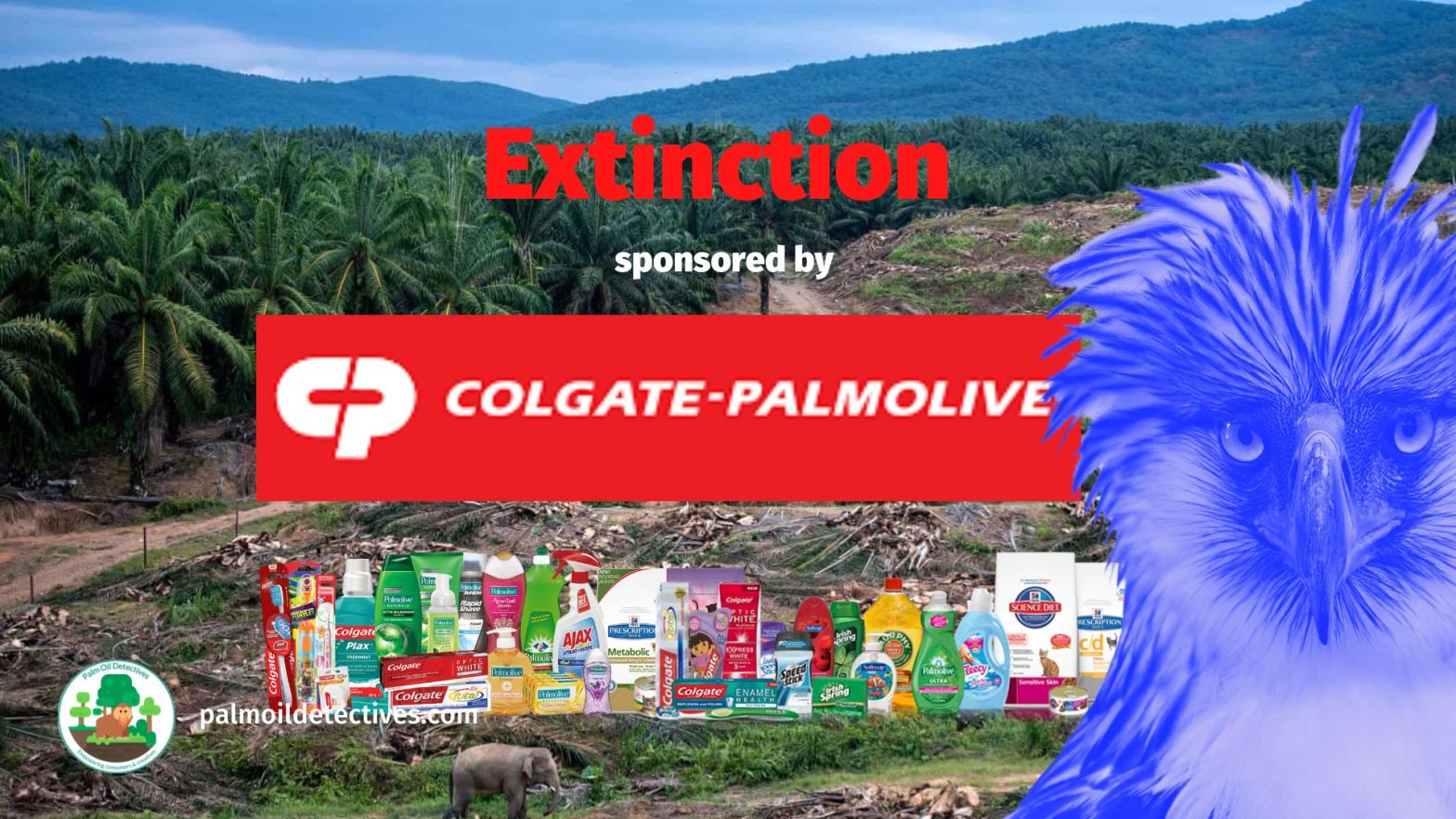
Despite global retail giant Colgate-Palmolive forming a coalition with other brands in 2020, virtue-signalling that they will stop all deforestation, they continue to do this – destroying rainforest and releasing mega-tonnes of carbon into the atmosphere, and killing hundreds of endangered species. Once these animals are gone – they are gone for good. Learn how you can boycott Colgate-Palmolive.
Spectral Tarsier Tarsius tarsier
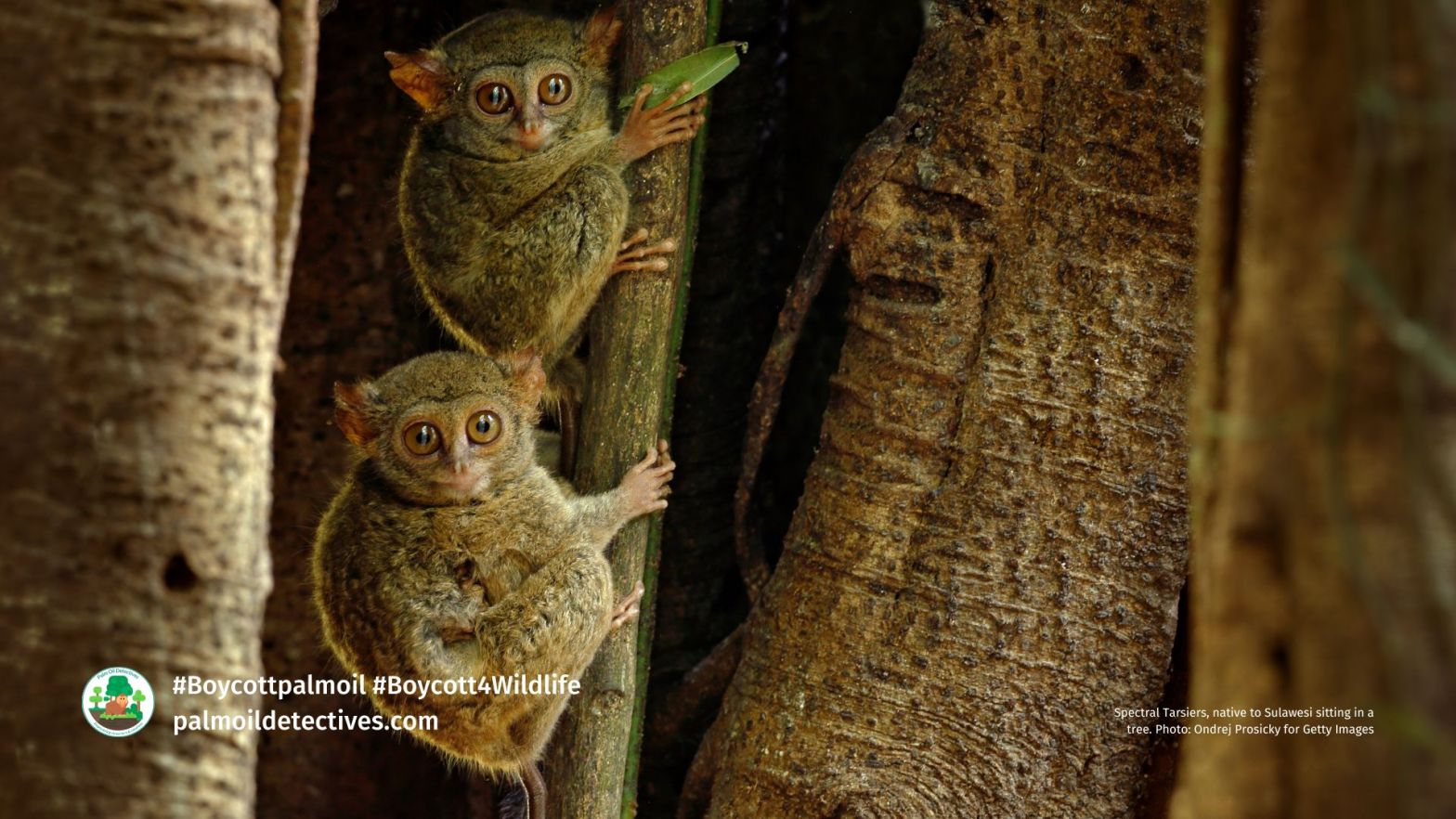
The Spectral Tarsier Tarsius tarsier is one of the smallest and most endearing #primates in the world. With the largest eye-to-body ratio of any #mammal, this wide-eyed, nocturnal #insectivore is found only in #Sulawesi and nearby Indonesian islands. Although they show some tolerance to human-altered landscapes, they are listed as #Vulnerable by the Red List due to rampant #deforestation for #palmoil and #timber agriculture, limestone #mining, #pesticide use and agricultural #pollution and the illegal pet trade. These elusive primates are declining fast. Use your wallet as a weapon: always choose products that are 100% palm oil-free and never support the exotic pet trade.#BoycottPalmOil #Boycott4Wildlife #Vegan
Research: Palm Oil Deforestation and its connection to RSPO members/supermarket brands

Discover the truth about palm oil from experts’ reports. Research shows RSPO members still cause deforestation and human rights abuses, despite greenwashing!
Northern Gray Gibbon Hylobates funereus
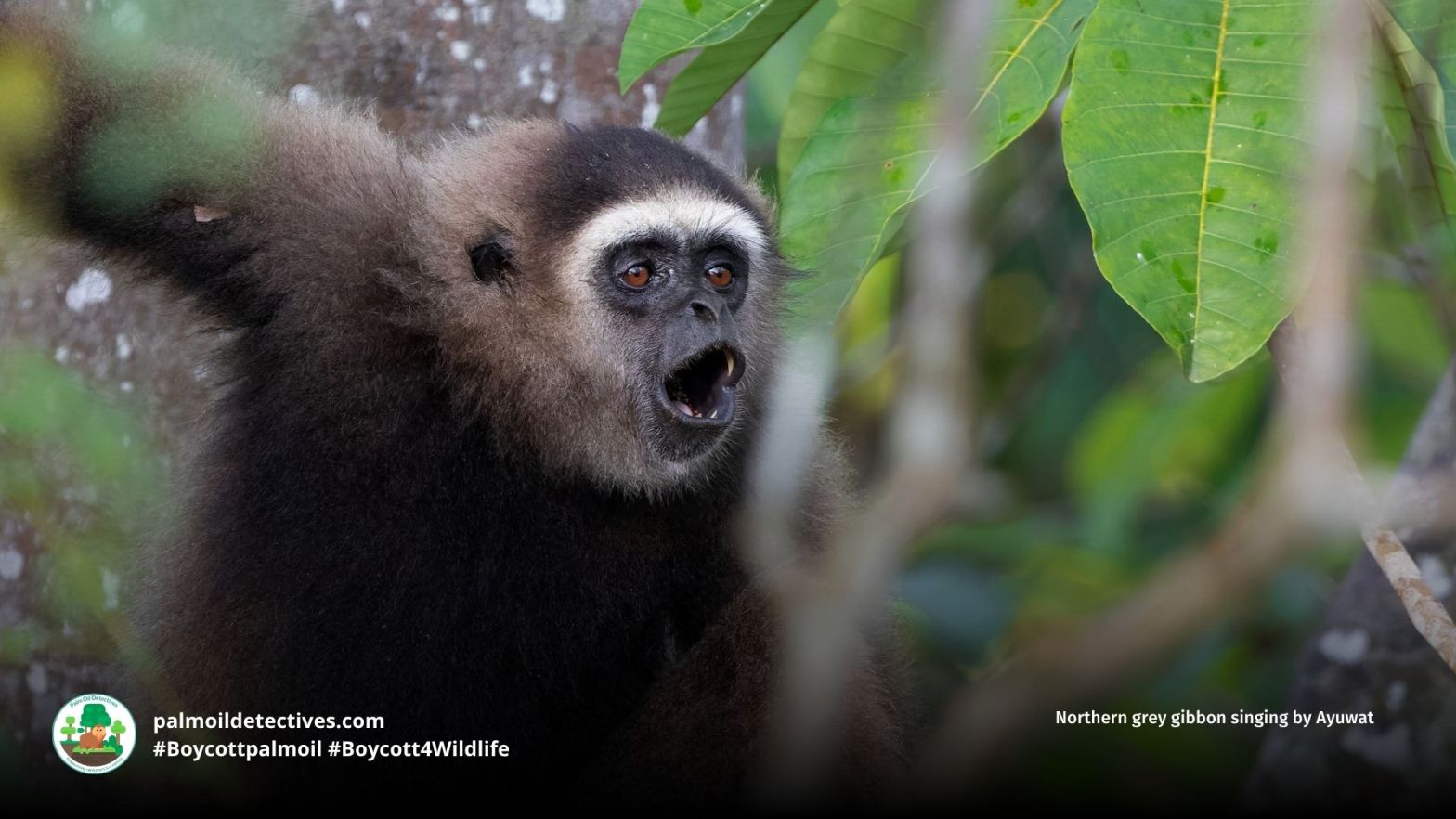
Save the sublime song and energetic lives of the Northern grey gibbons in Borneo when you boycott palm oil and boycott4wildlife in the supermarket!
Malayan Tapir Tapirus indicus
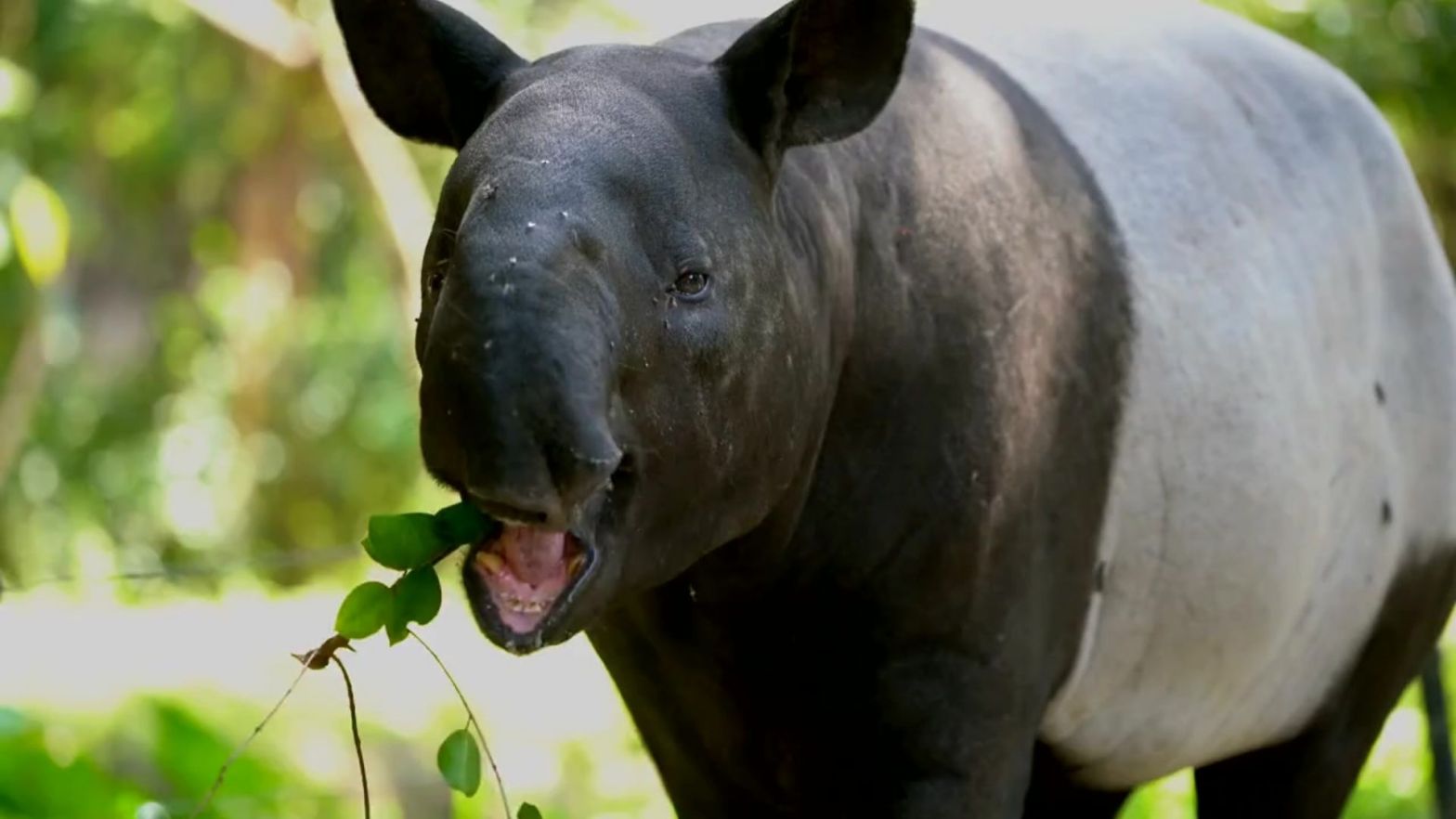
The endangered Malay Tapir faces habitat loss from palm oil plantations, road kills, and snares. Less than 2,500 remain. Support #BoycottPalmOil to save them.
Woodlark Cuscus Phalanger lullulae
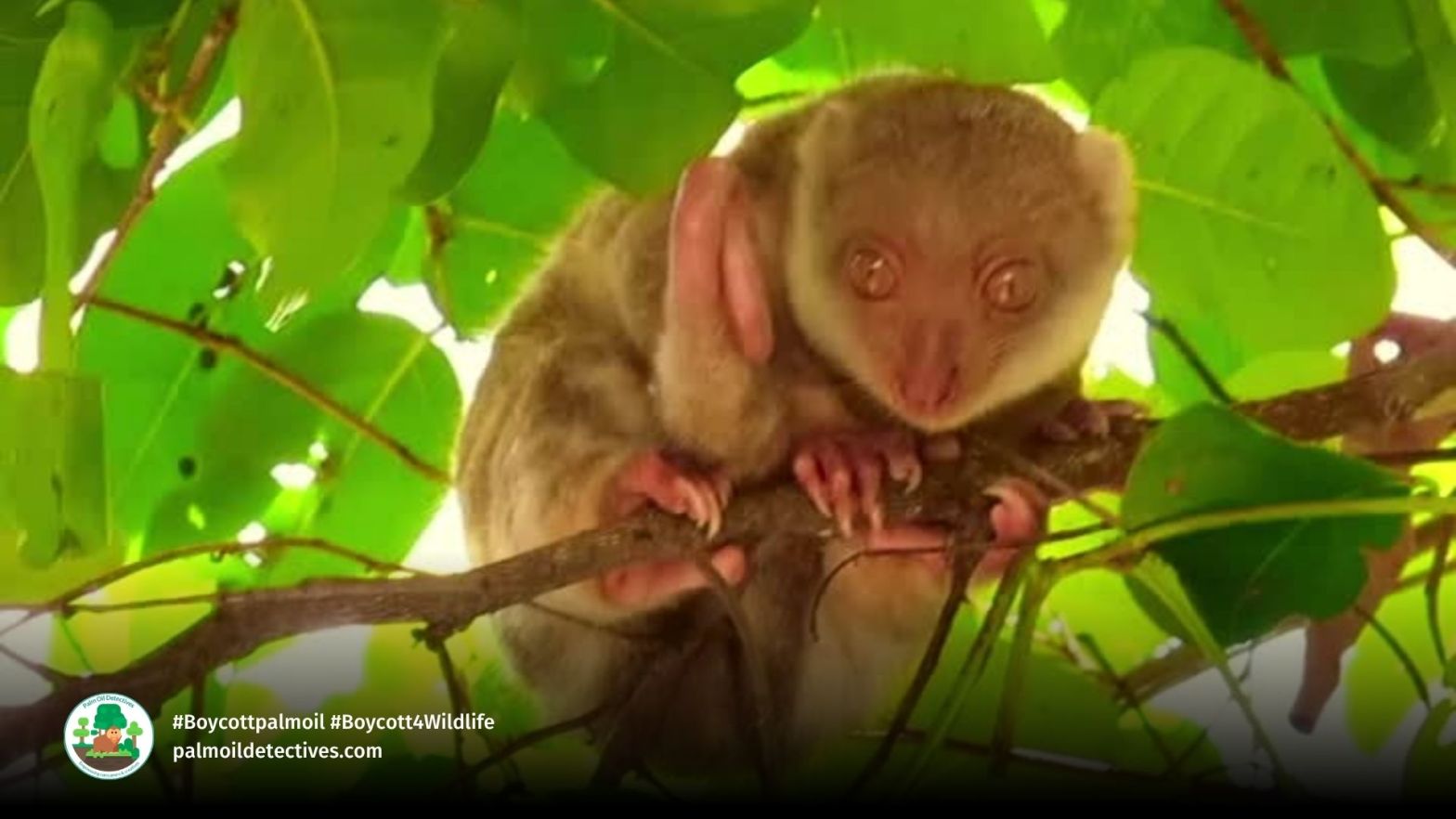
The Woodlark #Cuscus is a nocturnal marsupial found nowhere else but the forests of Woodlark, Madau, and Alcester islands. By day, the Woodlark Cuscus curls into tree hollows or buries themselves in tangles of epiphytes; by night, they move silently through the canopy, their marbled fur blending with the shifting shadows. The Woodlark Cuscus faces imminent extinction as palm oil plantations, logging, and gold mining threaten to erase the last forests of their island home. With all individual cuscuses known from less than 1,300 km² and new clearances looming, the Woodlark Cuscus’s world is shrinking fast. Stand with indigenous Melanesian sovereignty and safeguard these islands. Use your wallet as a weapon and #BoycottPalmOil #Boycott4Wildlife.
Sulawesi Crested Black Macaque Macaca nigra
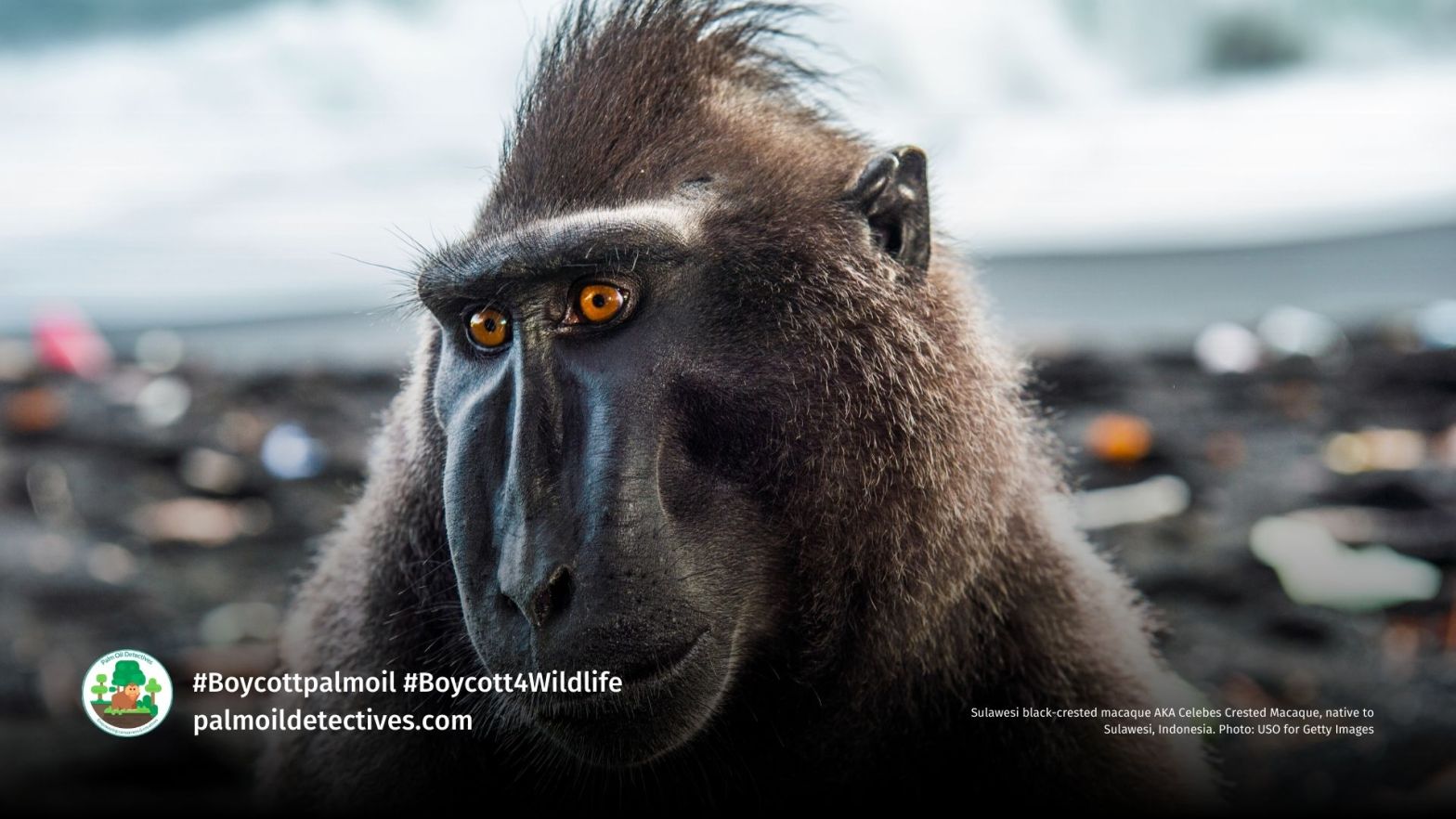
Lively, intelligent and social Sulawesi Crested Black Macaques live in large groups and are attentive and caring to those in their troupe. Also known as the Celebes Crested Macaque, the Sulawesi Crested Black Macaque Macaca nigra are Critically Endangered and face high risk of extinction due to palm oil and timber deforestation across the island of Sulawesi, along with illegal hunting for the bushmeat trade. You can help them every time you shop when you #Boycottpalmoil #Boycott4Wildlife
Vogelkop Tree Kangaroo Dendrolagus ursinus
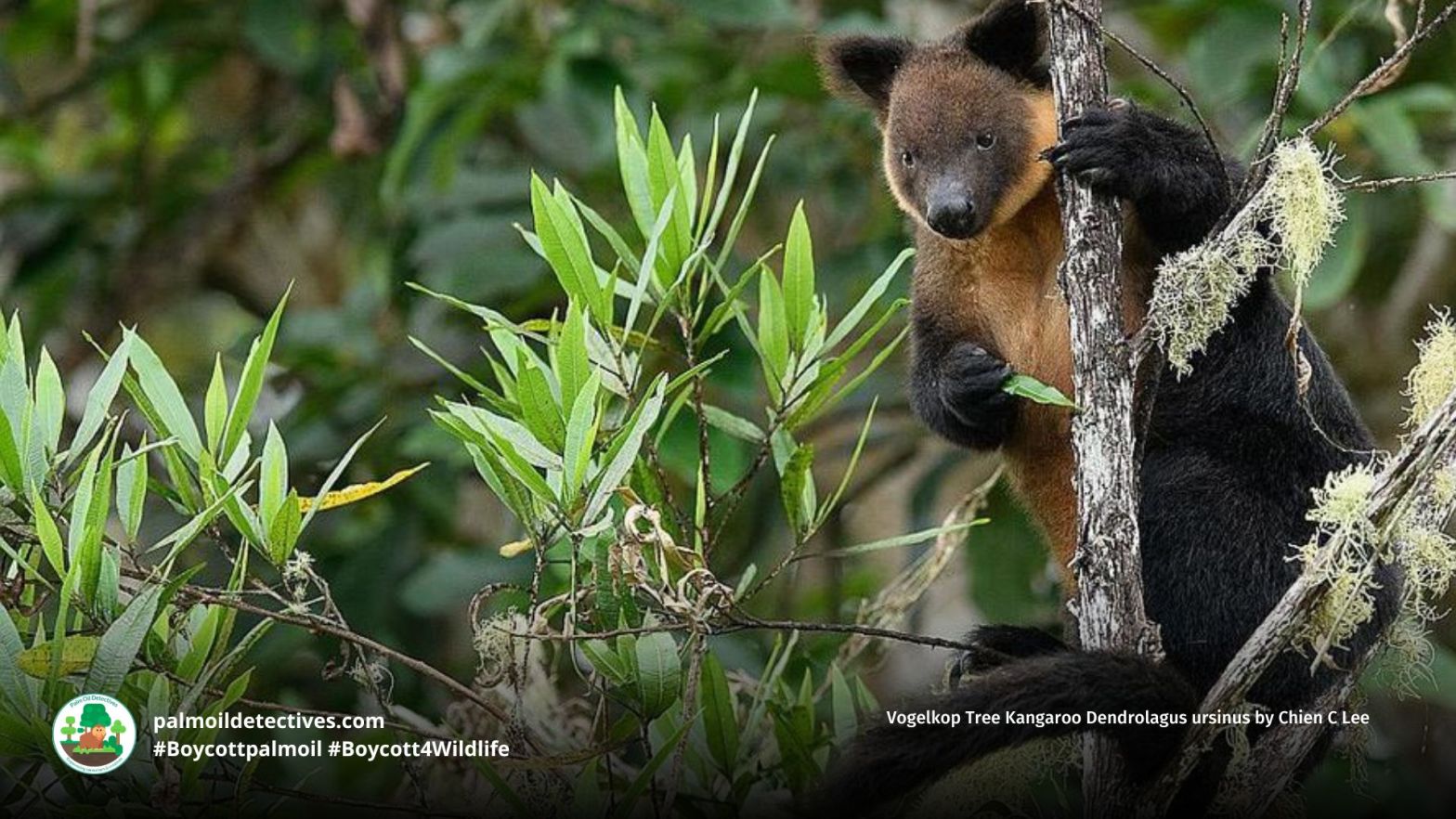
Protect stunning marsupials Vogelkop Tree Kangaroo Dendrolagus ursinus and boycott palm oil! They live in the Vogelkop and Fakfak Peninsulas of West Papua.
Papua New Guinea & West Papua: Species Endangered by Palm Oil Deforestation

As the rainforest habitats are destroyed in Indonesia, Indonesian and Chinese oil palm processing companies are switching focus towards Papua New Guinea, Africa and South America to keep up with demand for palm oil.
Murud Black Slender Toad Ansonia vidua
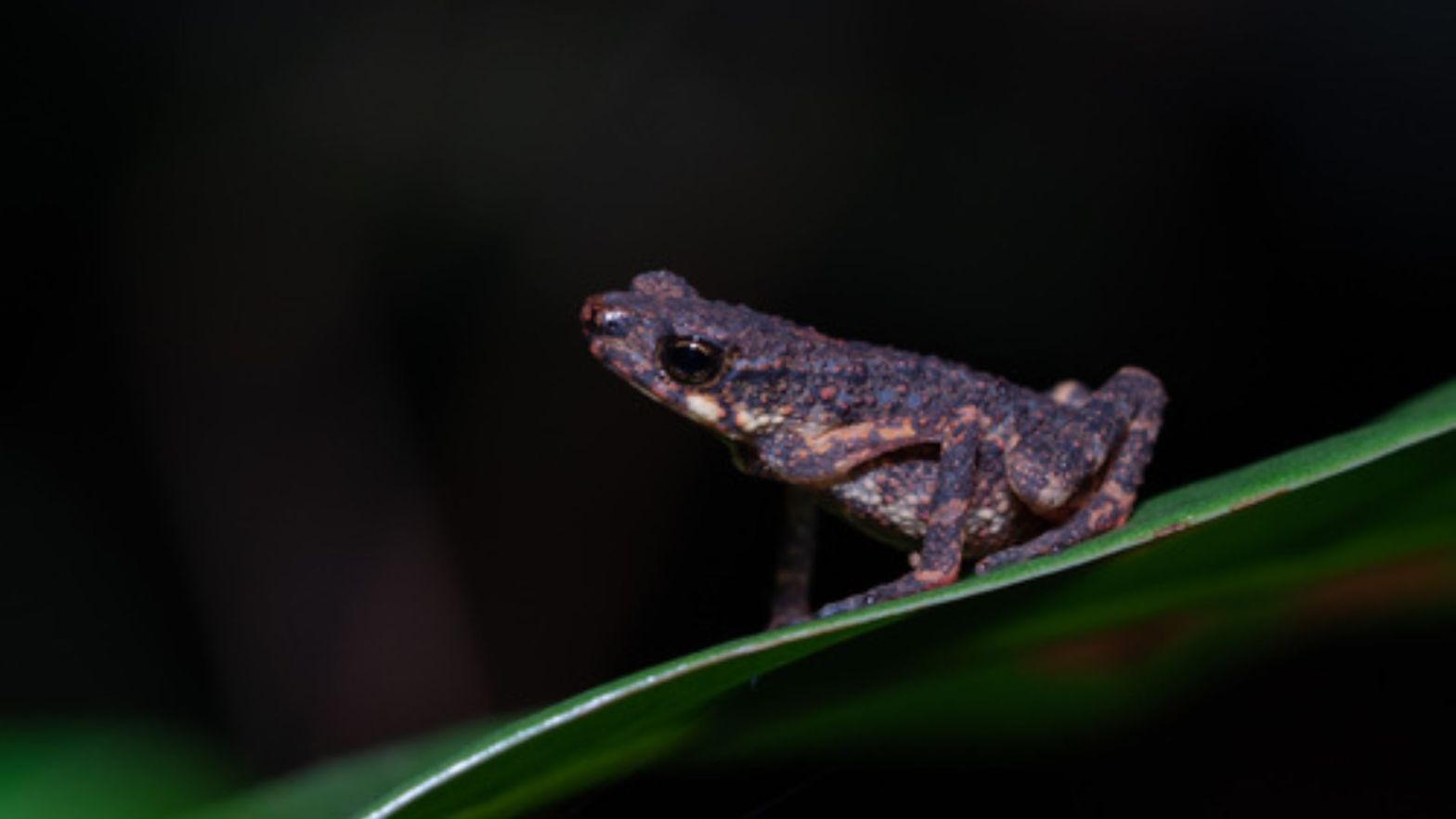
The Murud Black Slender Toad is an enigmatic amphibian, perfectly camouflaged among the rocks and vegetation of Borneo’s high-altitude forests. Known only from the remote Mount Murud region, their sleek black body and delicate frame make them one of the most unique species of their kind. These toads are specialists, thriving near fast-flowing streams where they feed and reproduce.
Despite their ecological significance, they face mounting pressures from habitat destruction. Logging, agricultural expansion, and rising temperatures are pushing them closer to extinction. Fight to save them by boycotting palm oil and supporting indigenous-led conservation. #BoycottPalmOil #Boycott4Wildlife.
Malaysian Giant Turtle Orlitia borneensis
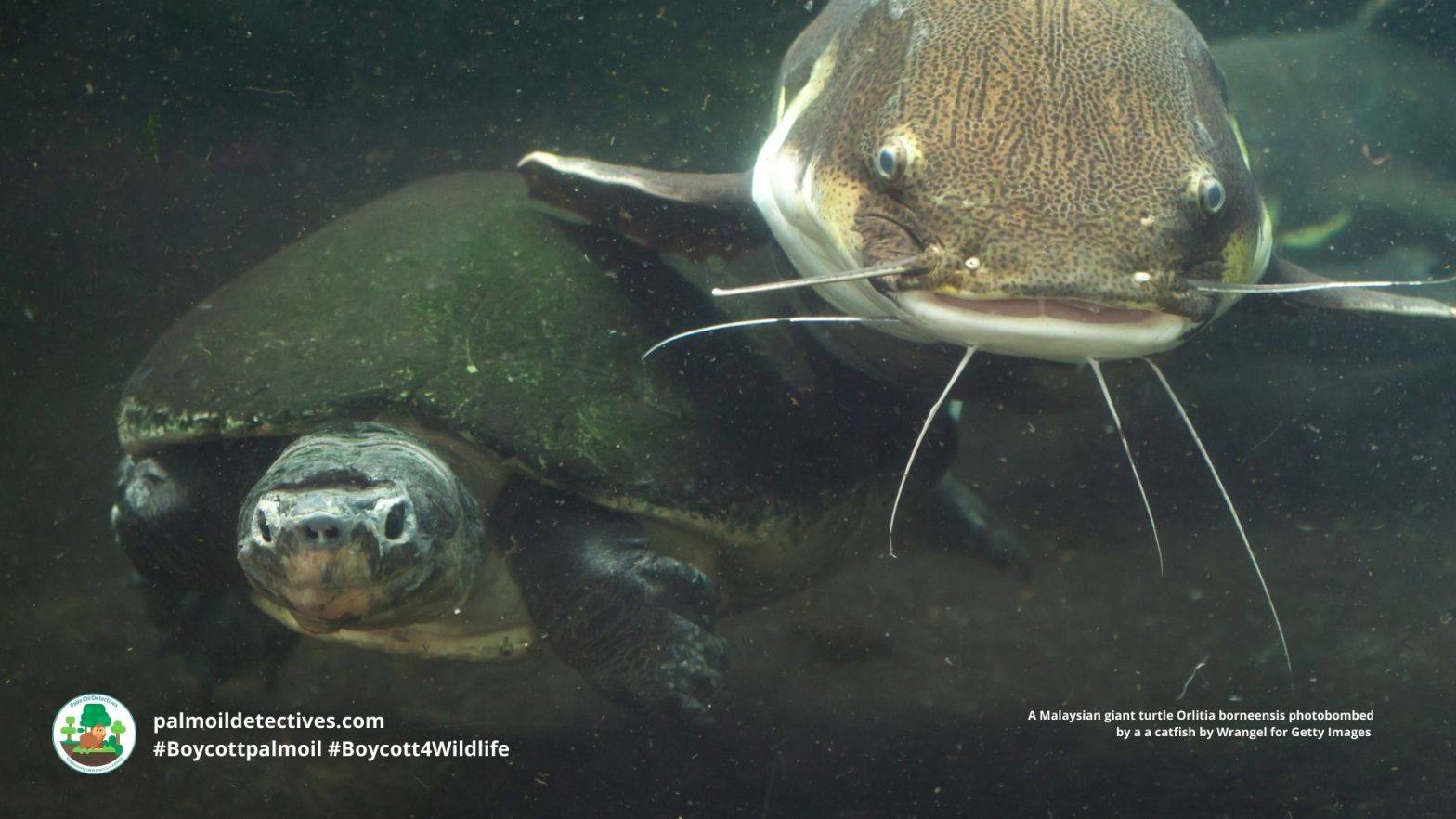
The Malaysian giant turtle, or Bornean river turtle, is Southeast Asia’s largest freshwater turtle. These gentle aquatic giants are critically important for maintaining the balance of their fragile river ecosystems. Their significant size and unique adaptations make them a marvel of evolution, yet they are on the brink of extinction.
Habitat loss driven by palm oil plantations, deforestation, and illegal trade has caused their population to plummet. Protect these critically endangered turtles by using your wallet as a weapon. Boycott palm oil and fight for their survival. #BoycottPalmOil #Boycott4Wildlife
Yellow-handed Mitered Langur Presbytis melalophos

Yellow-handed Mitered Langur Presbytis melalophos Endangered The vividly colourful and cheeky yellow-handed mitered langur Presbytis melalophos are native to Sumatra, Indonesia. They are severely threatened by deforestation and logging due to the palm oil, mining and timber industries. Agricultural expansion for palm oil plantations has caused massive habitat loss and fragmentation throughout their range, whileContinue reading “Yellow-handed Mitered Langur Presbytis melalophos”
Mainland Serow Capricornis sumatraensis
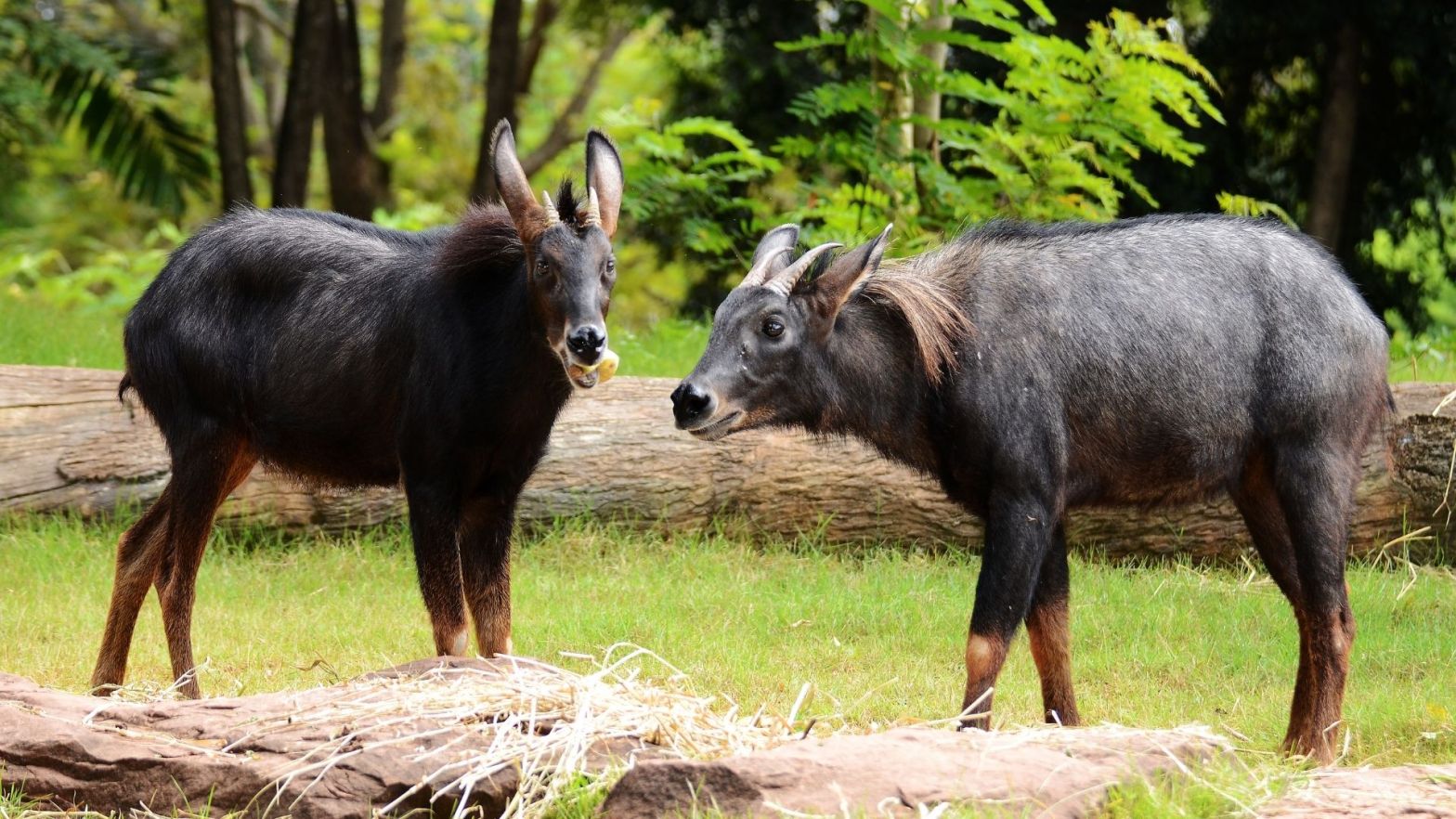
The Mainland serow, a reclusive wild goat-antelope, is a remarkable yet poorly understood resident of Southeast Asia’s rugged terrains. This enigmatic animal, with their coarse black coat and sharply curving horns, has earned a mythical status in local folklore due to their elusiveness and adaptability to steep, rocky landscapes.
However, the Mainland serow like many other ungulates is facing a precarious future. Habitat destruction from palm oil plantations, logging, and agricultural expansion has drastically reduced their numbers, leaving their population fragmented and declining. Protect these remarkable creatures and their fragile home—boycott palm oil and fight for their survival. #BoycottPalmOil #Boycott4Wildlife
Sumatran Ground-cuckoo Carpococcyx viridis
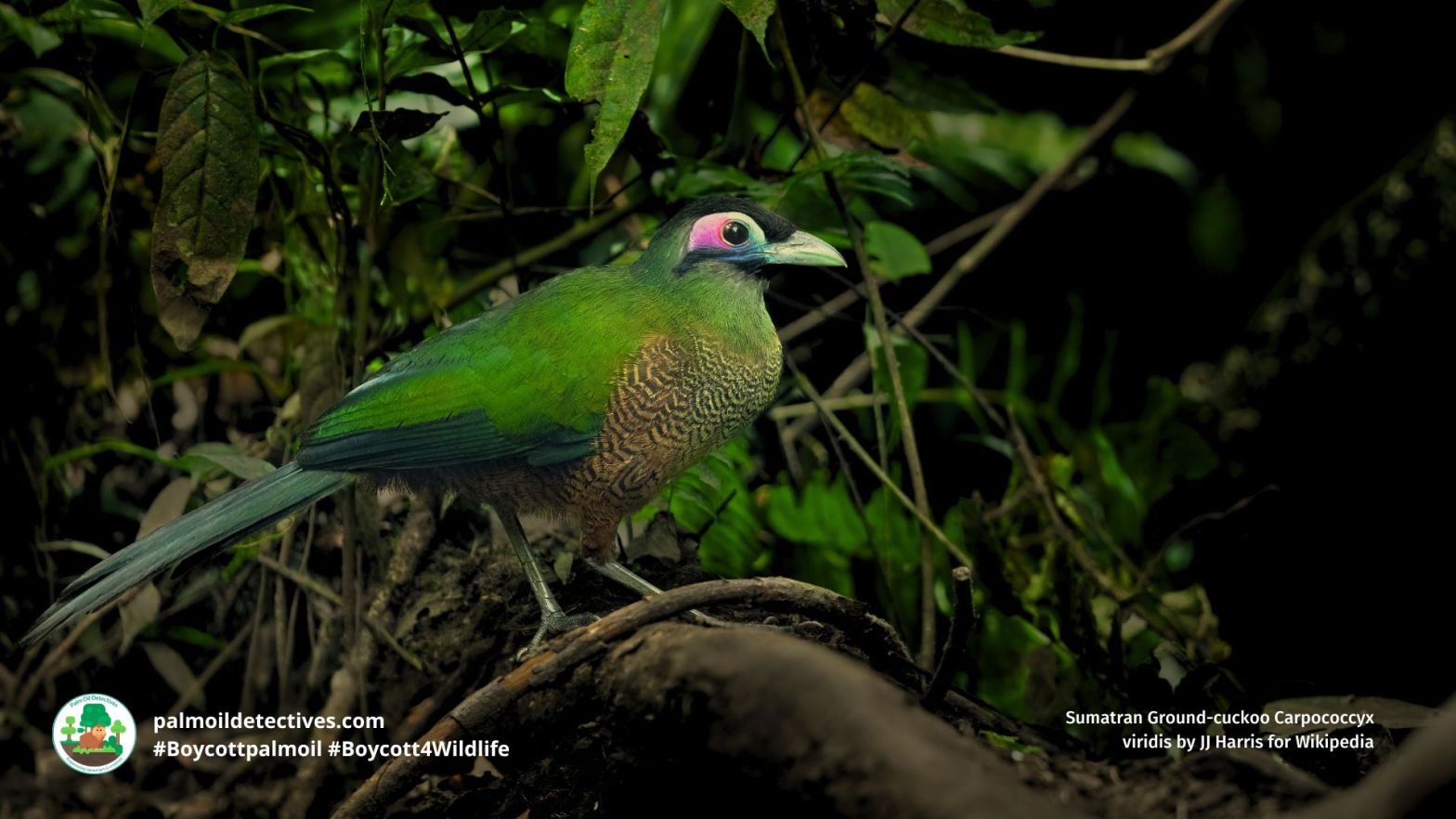
The Sumatran Ground Cuckoo, a reclusive bird endemic to Sumatra’s dense forests who captivate with their distinctive iridescent plumage. They lived peacefully in the rainforest until its decimation over the past several decades for palm oil took its toll on populations – they are now critically endangered. Fewer than 250 mature individuals remain, and their population is declining. Immediate conservation efforts are critical. These stunning birds symbolise the fragile and rich biodiversity of Sumatra’s montane rainforests. Take action and use your wallet as a weapon every time you shop, #BoycottPalmOil #Boycott4Wildlife
Sumatran Slow Loris Nycticebus hilleri
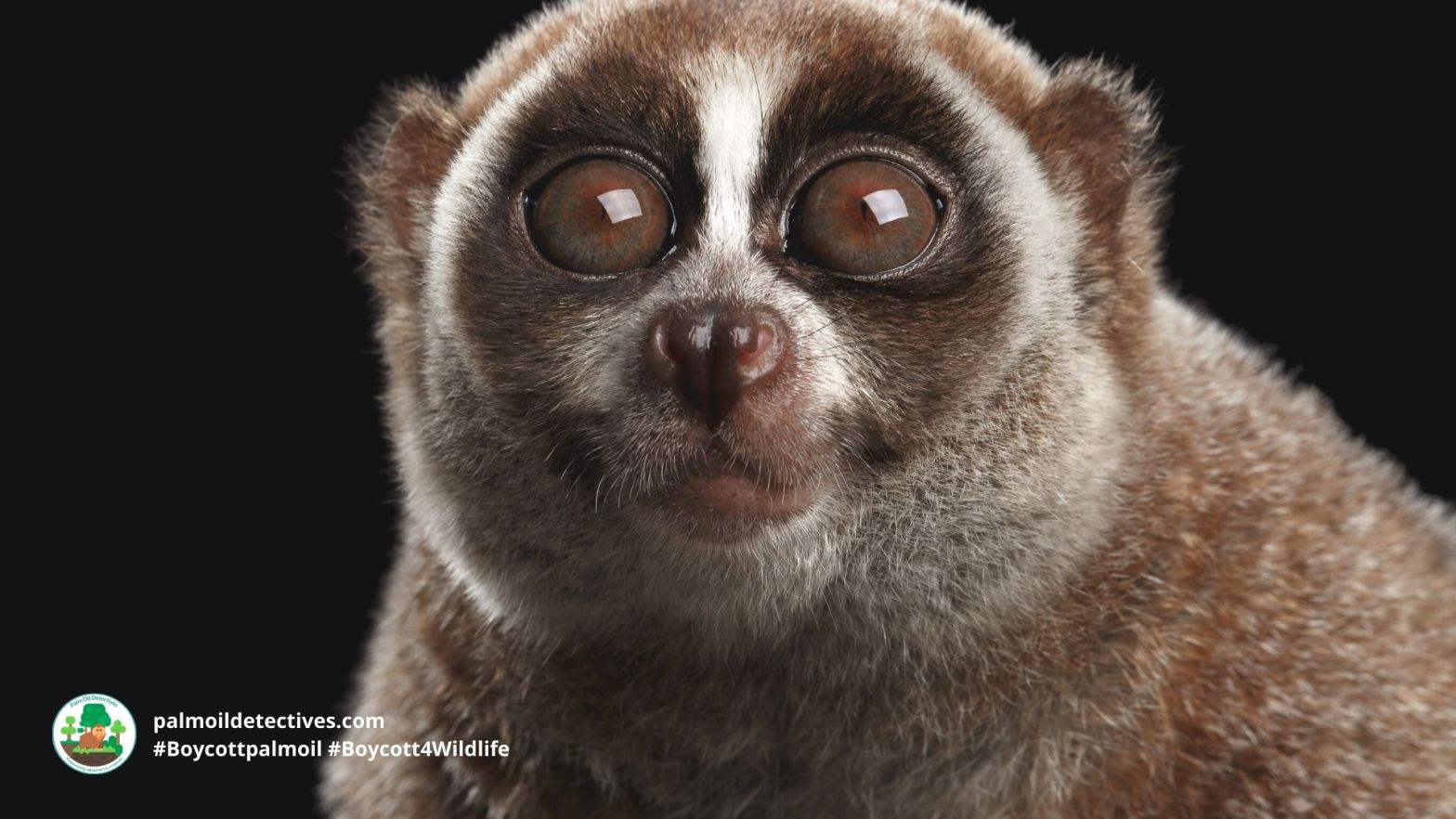
The Sumatran slow loris is a shy and placid smll primate endemic to the lush rainforests of Sumatra. They are famous for their large, expressive eyes, deliberate movements and tiny hands. This elusive creature possesses a unique trait among primates; despite their endearing and sweet appearance, they have a toxic bite.
This nocturnal tree-dwelling wonder faces significant threats from palm oil and mining deforestation and illegal wildlife trade in Sumatra. To protect the Sumatran slow loris take action and use your wallet as a weapon to fight for their survival each time you shop. #BoycottPalmOil #Boycott4Wildlife.
Tapanuli Orangutan Pongo tapanuliensis
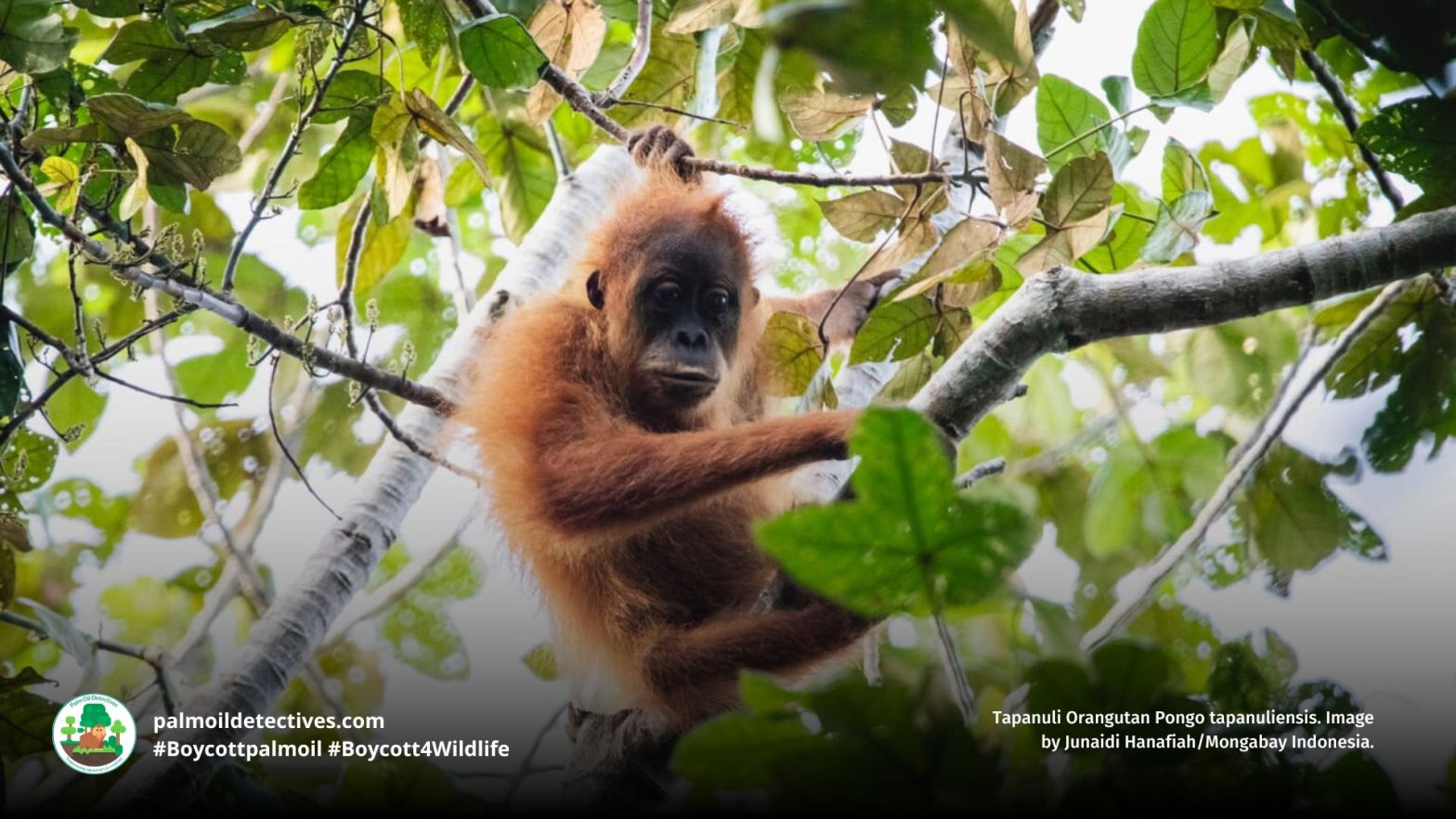
Act now and save the Tapanuli Orangutan – boycott palm oil! Fewer than 800 individual animals remain alive due to palm oil and timber deforestation.
Africa: Species Endangered by Palm Oil Deforestation
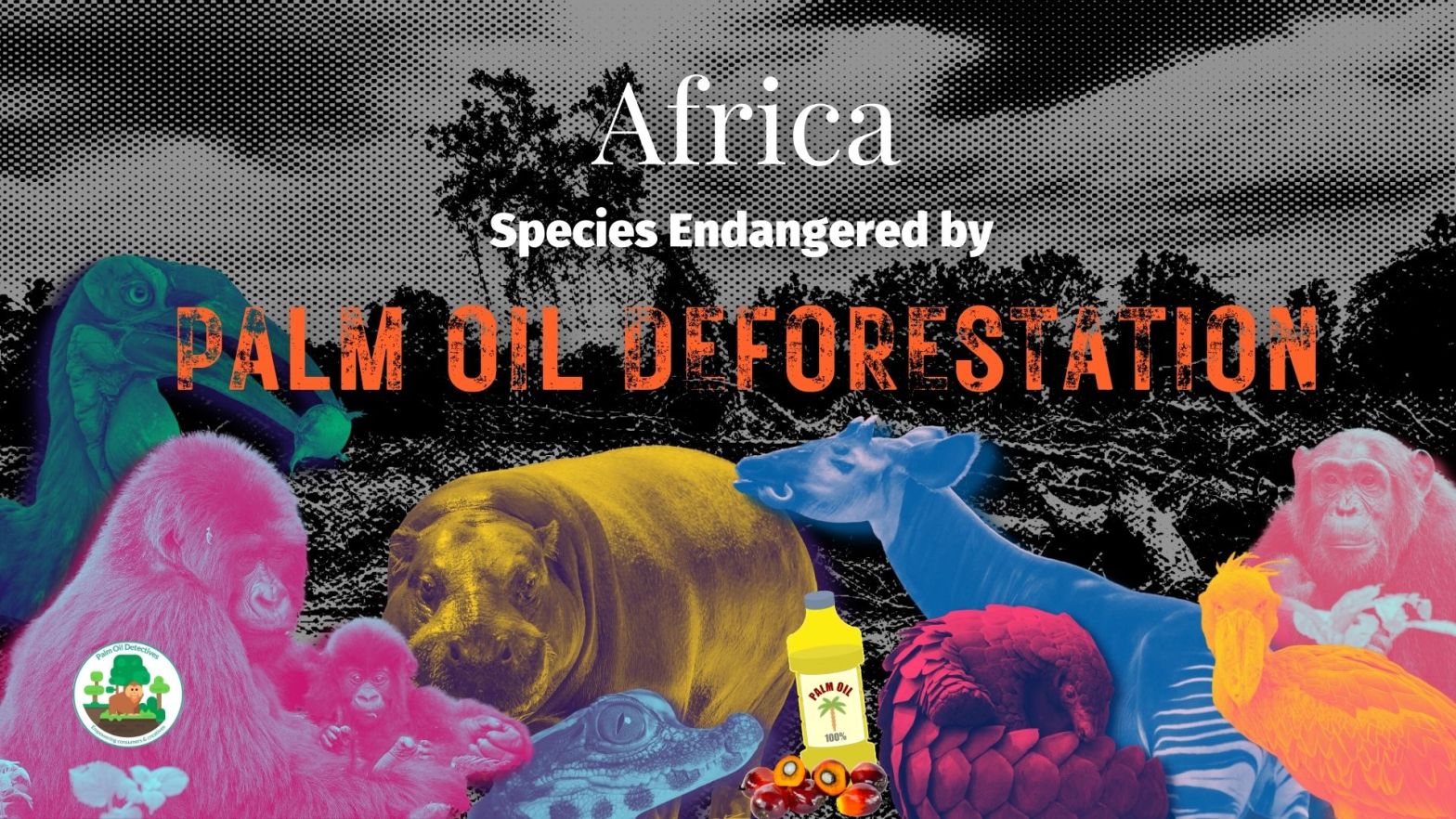
Explore the biodiversity of Africa and discover how palm oil deforestation impacts wildlife. Learn how you can help. #BoycottPalmOil #Boycott4Wildlife
 Palm Oil Detectives