
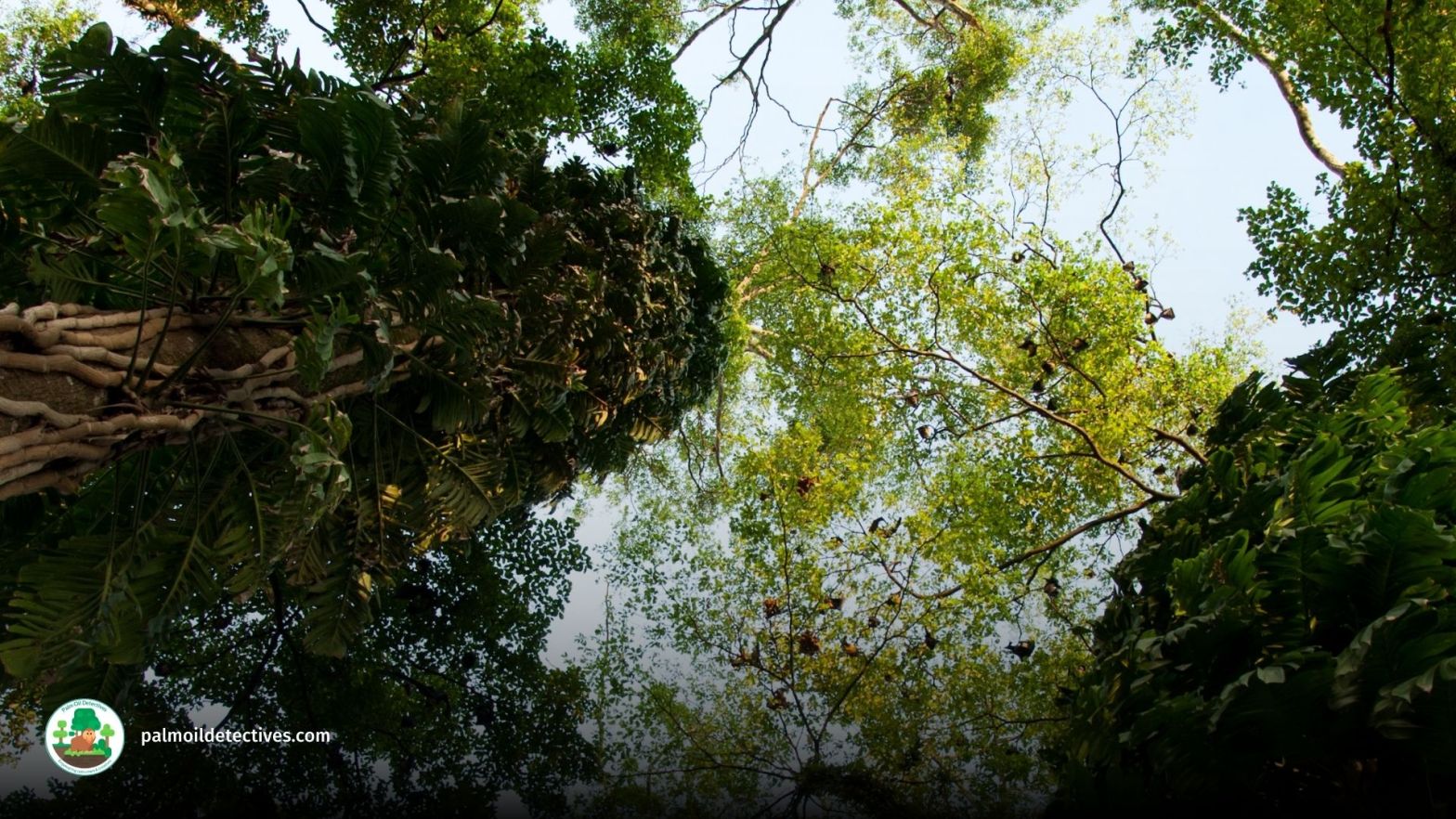
Tropical forests matter to each and every one of us. They suck colossal quantities of carbon out of the atmosphere, providing a crucial brake on the rate of climate change. Yet a statistical model in this study has estimated that by 2030 the African forests’ capacity to remove carbon will decrease by 14%, while Amazonian forests may stop removing carbon dioxide altogether by 2035. What can you do? Use our wallet as a weapon and #Boycottpalmoil #Boycottmeat #Boycott4Wildlife
Tag Archives: BoycottMeat
How the humble mushroom could save forests and fight climate change

The conversion of forests to agricultural land is happening at a mind-boggling speed. Between 2015 and 2020, the rate of deforestation was estimated at around 10 million hectares every year. From a climate and carbon point of view, we know that cutting down trees at this scale is devastating. But the impacts run deeper: 75% of the world’s accessible fresh water arises from forested watersheds. Want an easy way to fight #climatechange and #deforestation? Stop #eating meat and #dairy and eat #mushrooms 🍄🥦🍅🍌 fruit and veg instead! #Boycottmeat and be #vegan #Boycott4Wildlife
Golden Langur Trachypithecus geei
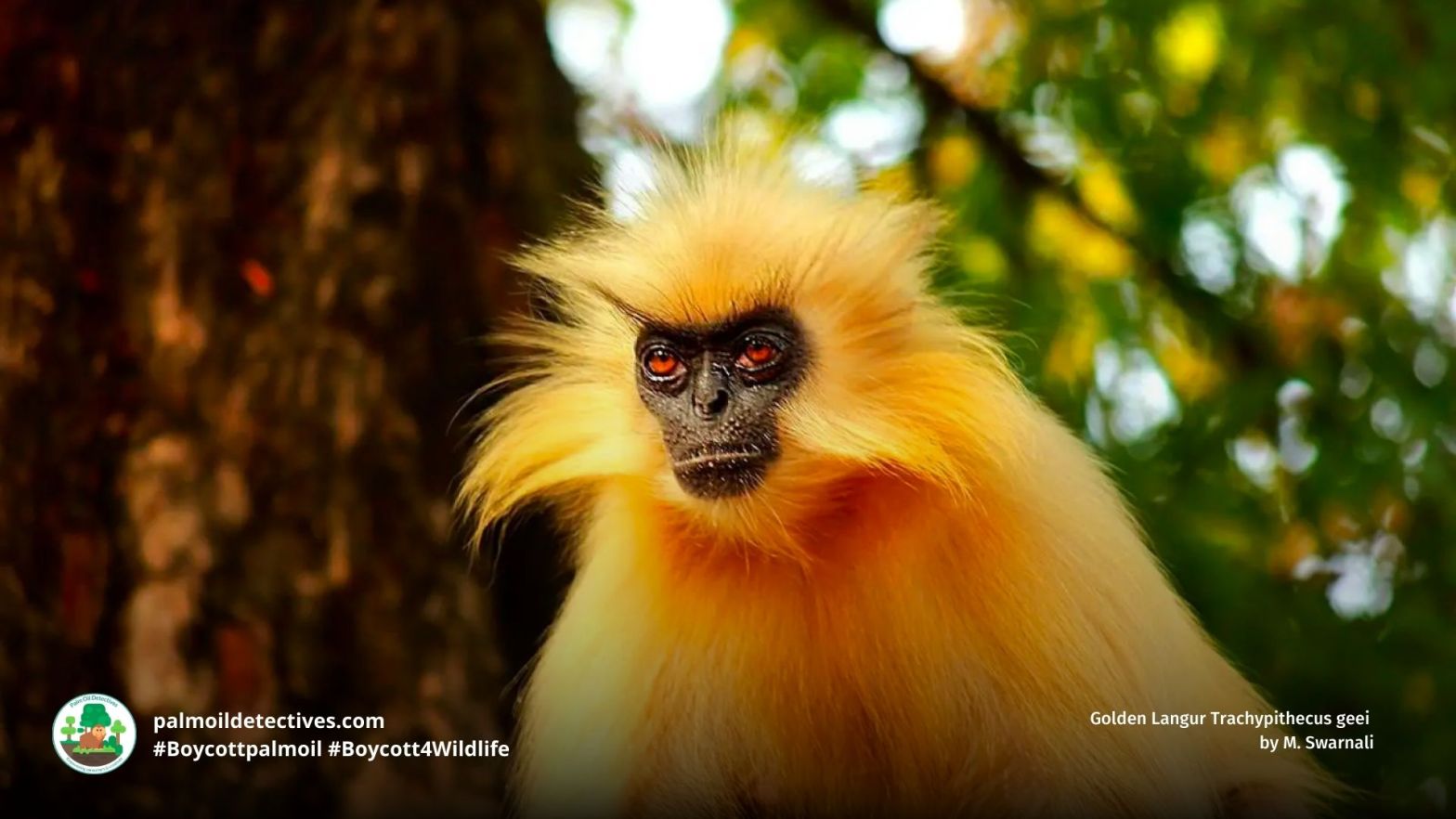
The regal, striking looking Golden #langurs Trachypithecus geei is also known by the common names Gee’s Golden #langur. They are the most endangered primate species in #India and are considered to be sacred to many Himalayan peoples. Once widespread, they are now only found in a handful of fragmented forests straddling India and Bhutan. They are classified as endangered due to #palmoil, #meat and #timber #deforestation and hunting. Golden langurs are known for their expressive eyes and grumpy expressions. This has made them the subject of global fascination and online memes. Help them every time you shop and be #vegan, #Boycottpalmoil and #Boycott4Wildlife
Kaapori Capuchin Cebus kaapori
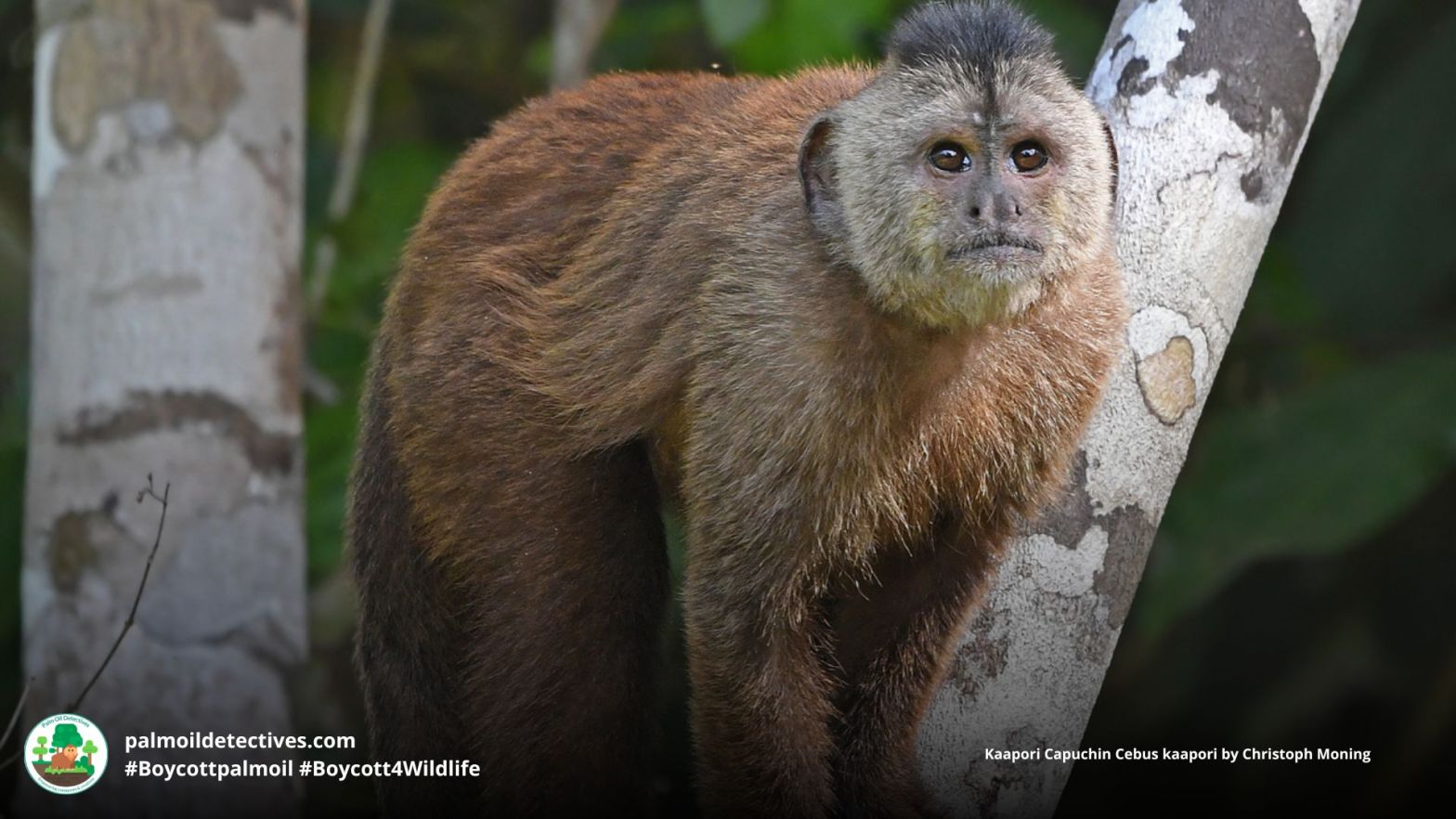
The Kaapori capuchin is a delightful, tenacious and intelligent small monkey species of #Brazil on a knife-edge of survival – they are critically endangered. In 2017 their population had been decimated by 80% due to deforestation for agriculture including soy, cattle grazing and palm oil. They are forgotten animals with no formal protections in place. Fight for them every time you shop and be #vegan #Boycottpalmoil #Boycott4Wildlife
Giant Otter Pteronura brasiliensis
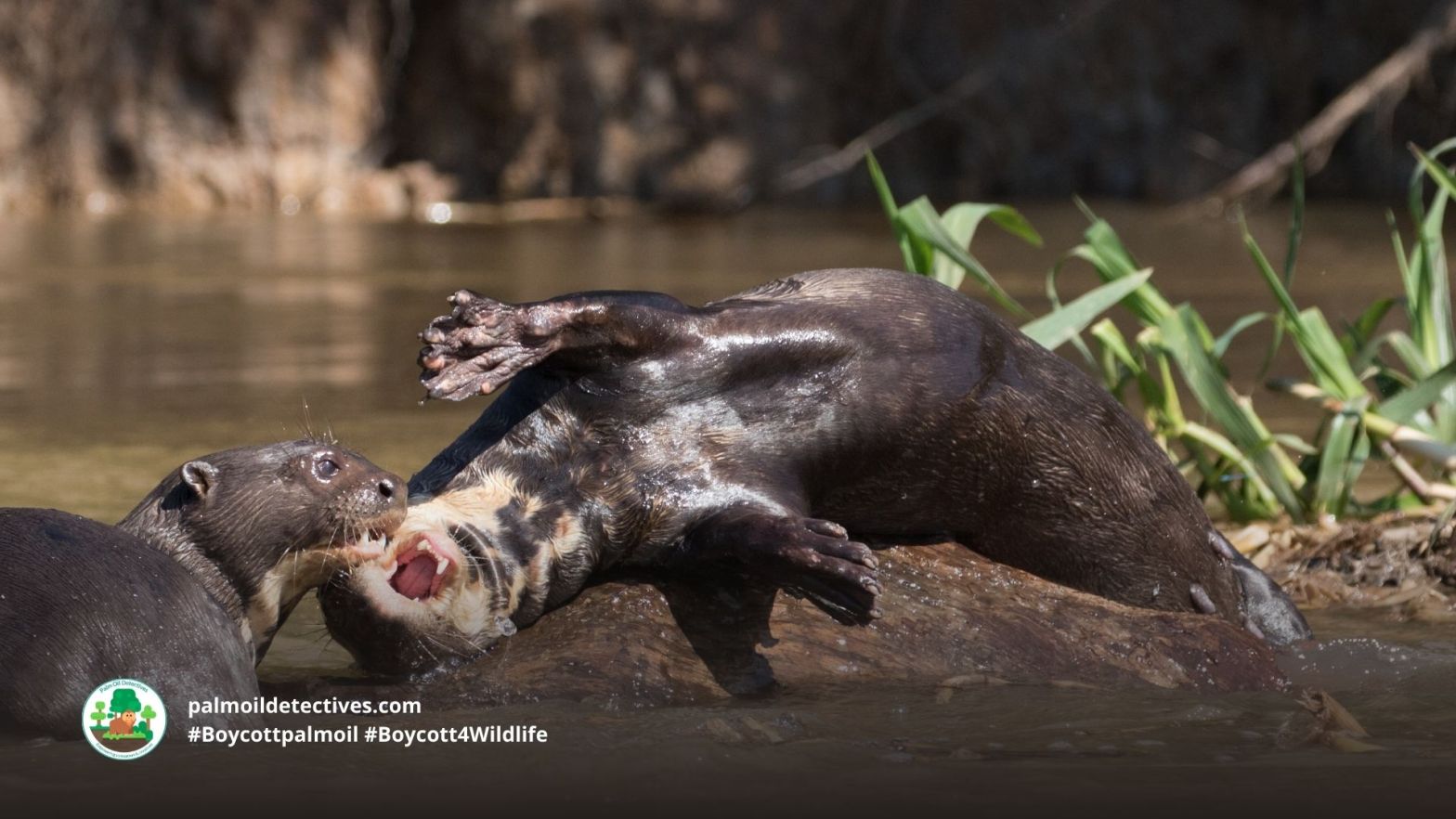
The agile and graceful tumbling Olympians of the Amazonian rivers, Giant #Otters are able to swim 100 metres in less than 30 seconds. They are also known as the Lobo de Rio (the River wolf), Los Lobos del Rio (Wolves of the River) and Ariranha. They are most active in the mornings and evenings and take a siesta during the hottest parts of the day. Known for their striking size and the chorus of whistles and barks echoing through flooded forests, giant otters are social, vocal, and deeply bonded to their family groups. But the rivers they call home are under siege. The most significant threats to giant otters are anthropogenic pressures of deforestation for palm oil, soy and meat, pollution from mining and climate change. They are also illegally hunted and traded for their pelts or killed in retribution by fishermen. Help them and be #vegan, use your wallet as a weapon and #BoycottPalmOil #Boycott4Wildlife.
Hippopotamus Hippopotamus amphibius
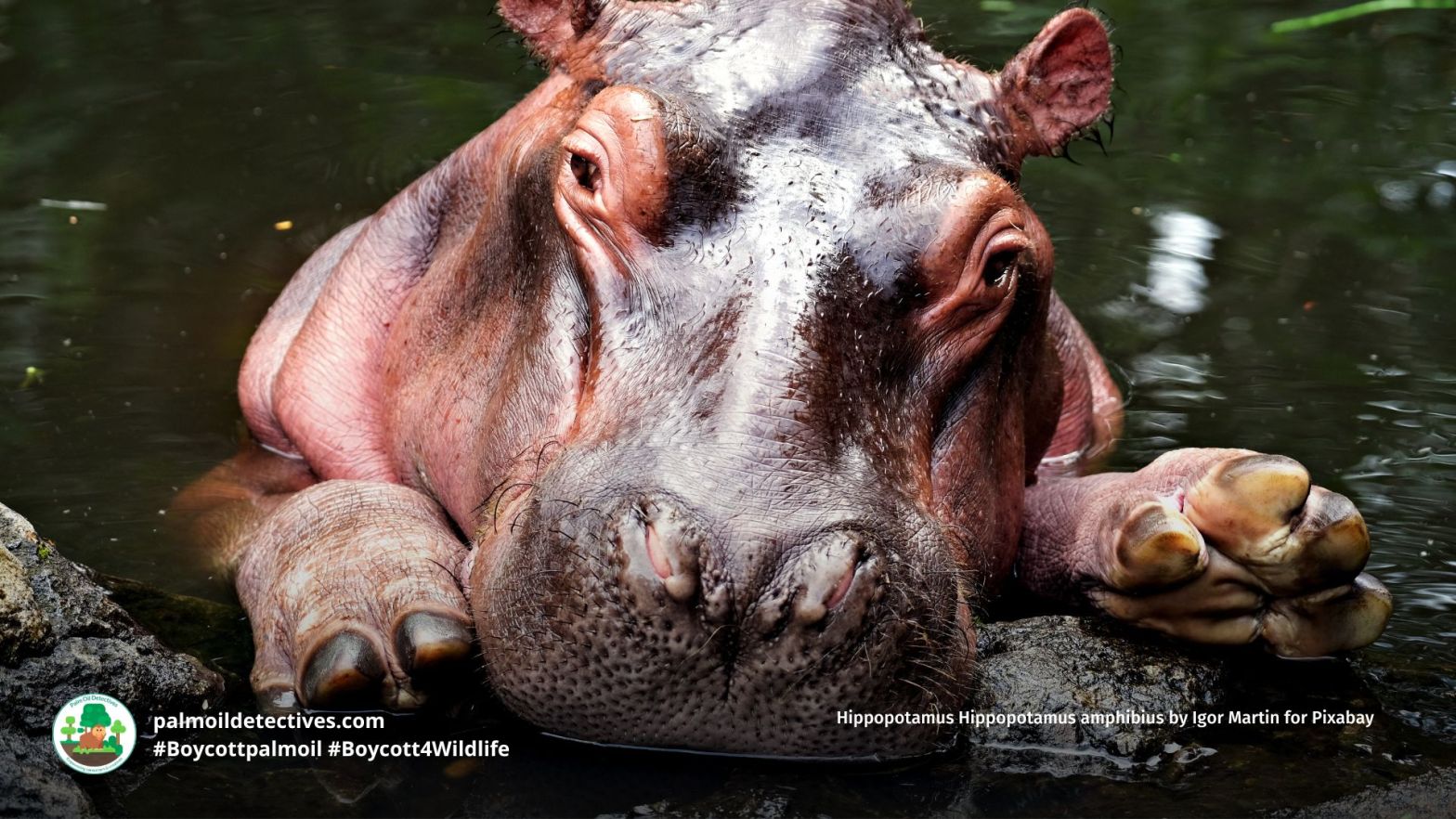
The Common Hippopotamus, or Hippo, is a powerful and enduring symbol of Africa’s rivers and wetlands. Once common throughout all of Africa and the revered subjects of African folklore —their populations are now in peril. Hippo numbers plummeted in the 1990s and early 2000s due to unregulated #hunting and land conversion for #palmoil #cocoa and #tobacco #agriculture and human settlement. Although some strongholds remain in East and Southern Africa, many populations are in decline across #WestAfrica and Central Africa. Hippos are now listed as #Vulnerable on the Red List, with threats from freshwater habitat loss, illegal hunting for meat and ivory, and increasing conflicts with people. Use your voice and your wallet to push for stronger protections for Hippos and their riverine homes. #BoycottPalmOil #Boycott4Wildlife
Ecuadorian White-fronted Capuchin Cebus aequatorialis
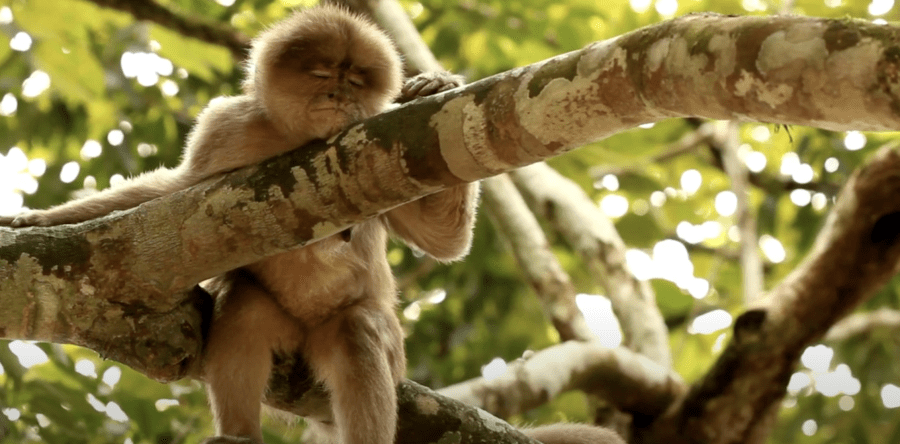
Ecuadorian White-fronted Capuchins face habitat loss to palm oil, hunting, and mining. Less than 10,000 remain. Support forest defenders. #BoycottPalmOil
Pygmy Marmoset Cebuella niveiventris and Cebuella pygmaea

The petite pygmy #marmoset, the world’s tiniest true #monkey, boasts a mix of brownish-gold, grey, and tawny fur. These little wonders, weighing just around 100 grams, communicate uniquely using chemical, vocal, and visual cues to ensure group safety and harmony. Although these #marmosets prefer river-edge forests and can adapt to secondary forests, their homes are under serious threat. Rampant #deforestation for #meat, #goldmining, and #palmoil cultivation are eroding their habitats, pushing the subspecies Cebuella niveiventris towards a “Vulnerable” status. The situation is dire, with an estimated 30% reduction in their population in just 18 years. Protect these delicate creatures and their home – use your wallet as a weapon, be #vegan, #BoycottPalmOil, and #Boycott4Wildlife.🌳🐒
Giant Anteater Myrmecophaga tridactyla

Giant Anteaters have a striking and unforgettable appearance. They are covered in wiry, grey and brown fur with a distinctive black and white stripe running along their bodies. Their elongated snouts and long, sticky tongues are perfectly adapted for feeding on ants and termites. With their bushy tails and long, curved claws, they are supremely strange looking creatures, making them captivating to behold.
The Giant Anteater is classed as Vulnerable due to widespread deforestation and #palmoil, soy, meat, sugarcane and gold mining across their range. They are often victims to frequent deliberate and accidentally lit fires in the Amazon. These gentle creatures are becoming increasingly rare. But there’s a lot of actions you can take. Make sure you #Boycottpalmoil #BoycottGold #Boycottmeat and #Boycott4Wildlife to help them every time you shop.
Research: Boycotts Are Worthwhile and Effective

Despite sustained and vigorous attempts by corporates and industry certification schemes like RSPO, MSC and FSC to downplay the impact and effectiveness of consumer boycotts, it turns out that boycotts are impactful and drive social change. They force profit-first and greedy corporations to change their ways and do better. They also create a tangible sense of empowerment and agency for consumer-citizens who want to participate in civil society in a meaningful way in improving the world, both as individuals and in collective groups.
Black Bearded Saki Chiropotes satanas
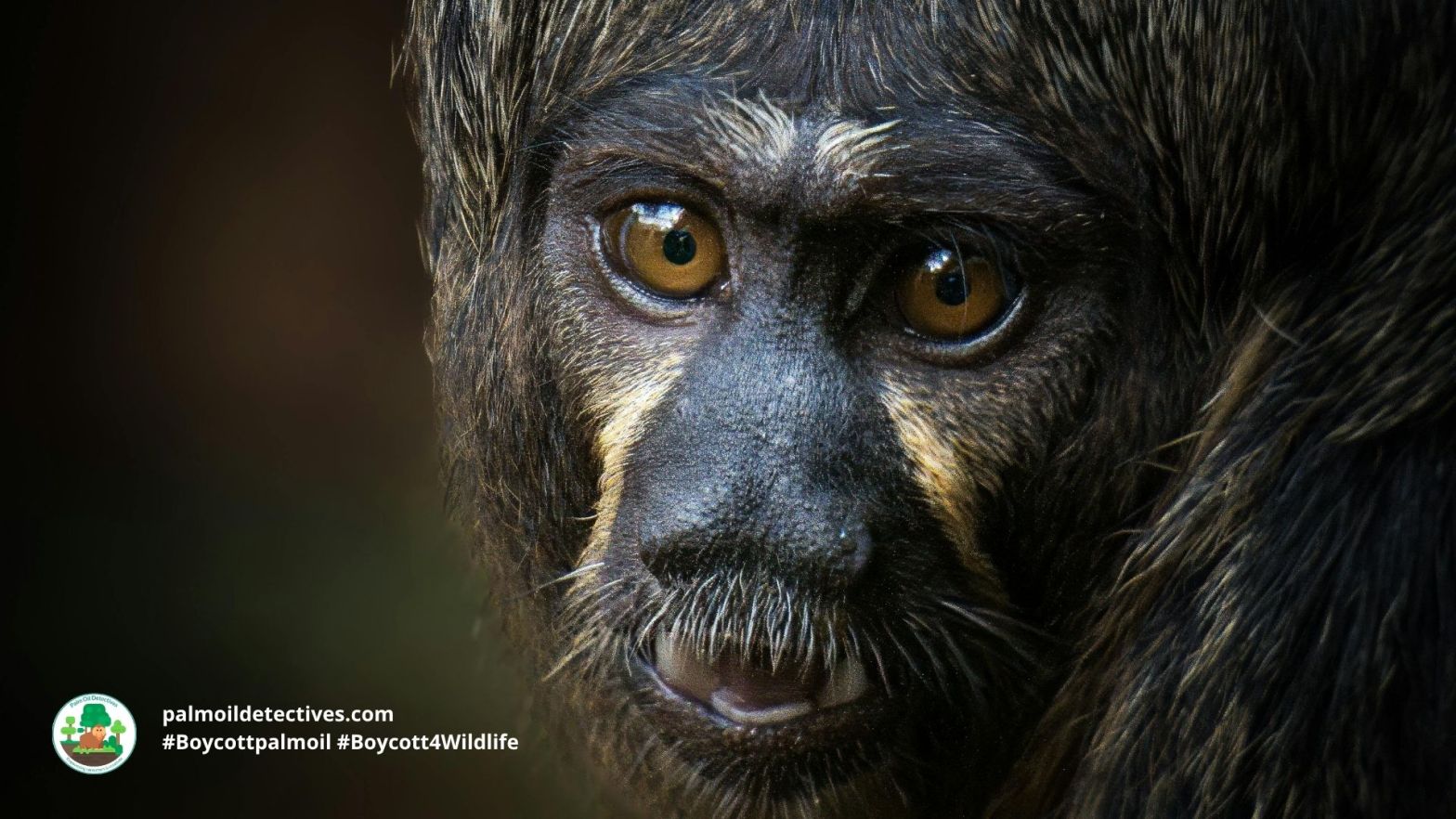
Beneath the towering canopy of the Amazon’s north-eastern forests, the black bearded saki moves with quiet purpose, their distinctive shaggy beard and robust body a testament to their resilience in a world under siege. The air is thick with the scent of damp earth and the distant calls of unseen creatures, but the forest is changing—#roads, #dams, and #agriculture are carving scars across the landscape, fragmenting the saki’s ancestral home. The black bearded saki’s survival is threatened by relentless deforestation and hunting, their fate bound to the fate of the forest—fight for their survival every time you shop #BoycottPalmOil #Boycott4Wildlife.
Demand for meat is driving deforestation in Brazil – changing the soy industry could stop it
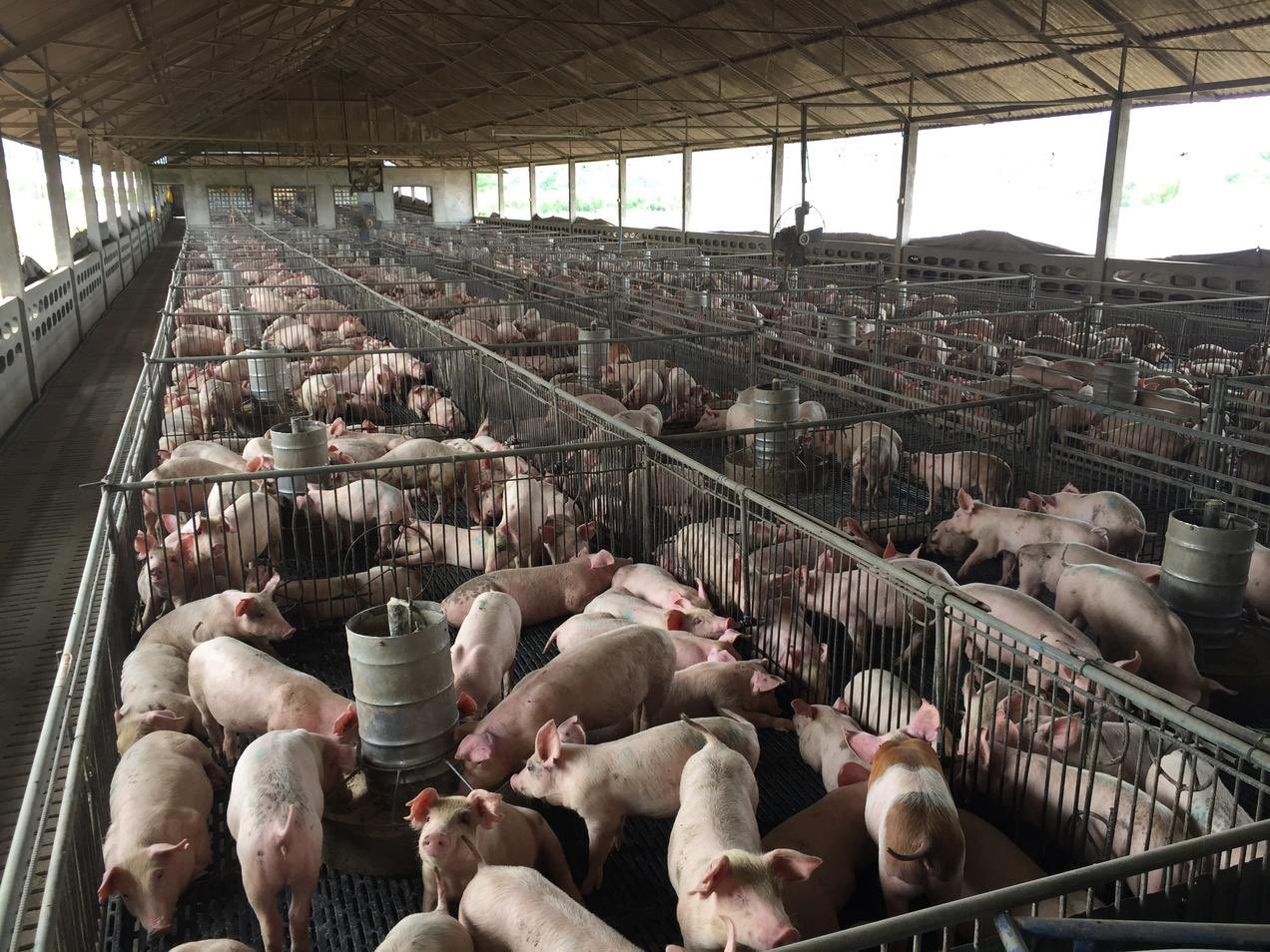
For many people, soy as a commodity has a pretty innocuous reputation thanks to its association with vegan food and meat alternatives. However don’t be fooled – crops of this pale legume are behind much of Brazil’s epidemic of deforestation. Much more #soy is fed to farm animals that people eat than is used in vegan food. Since 2000, #Brazil has doubled its total area of soy plantation to 36 million hectares and become the world’s largest producer. This expansion has erased vast swathes of forest and other habitats in some of the country’s most biodiverse regions. Soy, along with palm oil and meat deforestation are the biggest land-hungry commodities in South America and threaten the world’s largest rainforest biosphere. Help fight against this ecocide every time you shop, be #vegan #BoycottPalmOil #Boycott4Wildlife
Forgotten Animals of Secretly Destroyed Forests
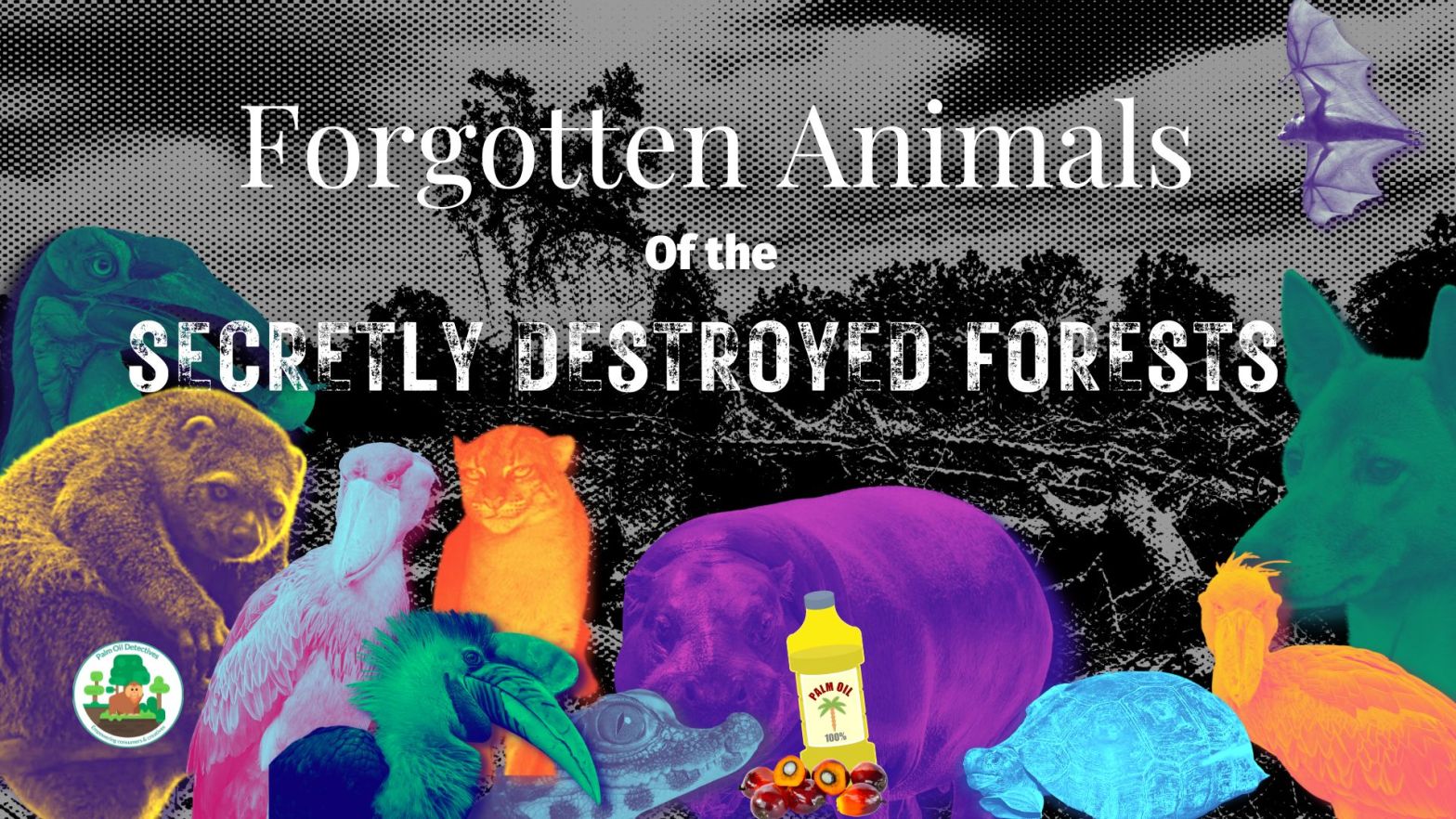
Don’t let the forests go silent! 1000’s of forgotten animals are nearing extinction due to palm oil deforestation. Take action and boycott palm oil today!
Golden Monkey Cercopithecus mitis kandti
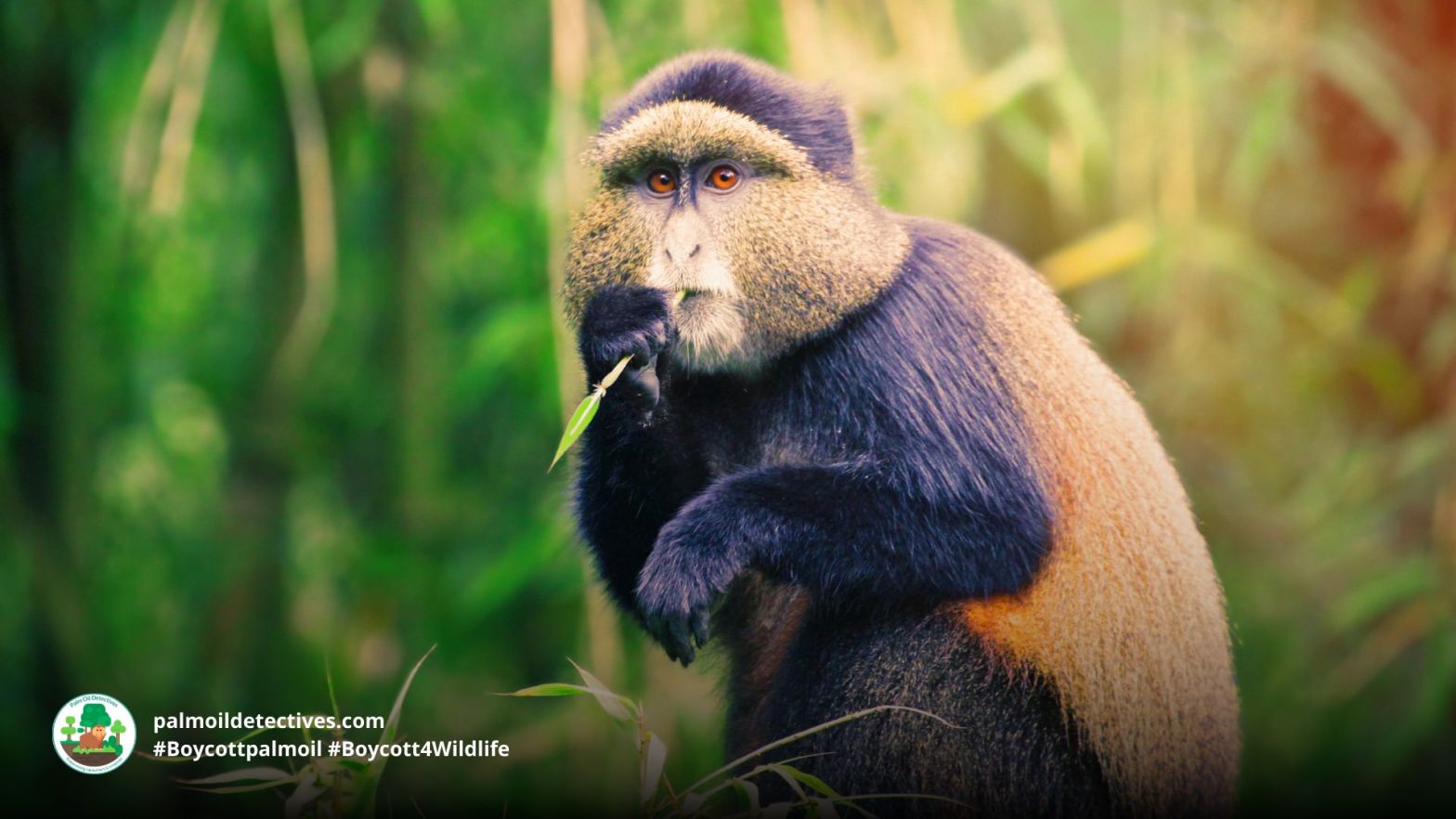
In the mist-laden bamboo forests of the Virunga massif, the golden monkey Cercopithecus mitis kandti darts through dappled sunlight and the tree canopy. This endangered primate is found only in the high-altitude forests of the Albertine Rift, nestled deeply in volcanic mountains. They are found in four national parks: Mgahinga, in south-west Uganda; Volcanoes, in north-west #Rwanda; and Virunga and Kahuzi-Biéga, in the eastern Democratic Republic of #Congo. Like many other animals in the region they are protected and yet human threats including #mining #hunting and #agriculture continue to come dangerously close. Help these sweet-faced and severely threatened #primates every time you shop #BoycottPalmOil #Boycott4Wildlife
Varied White-fronted Capuchin Cebus versicolor
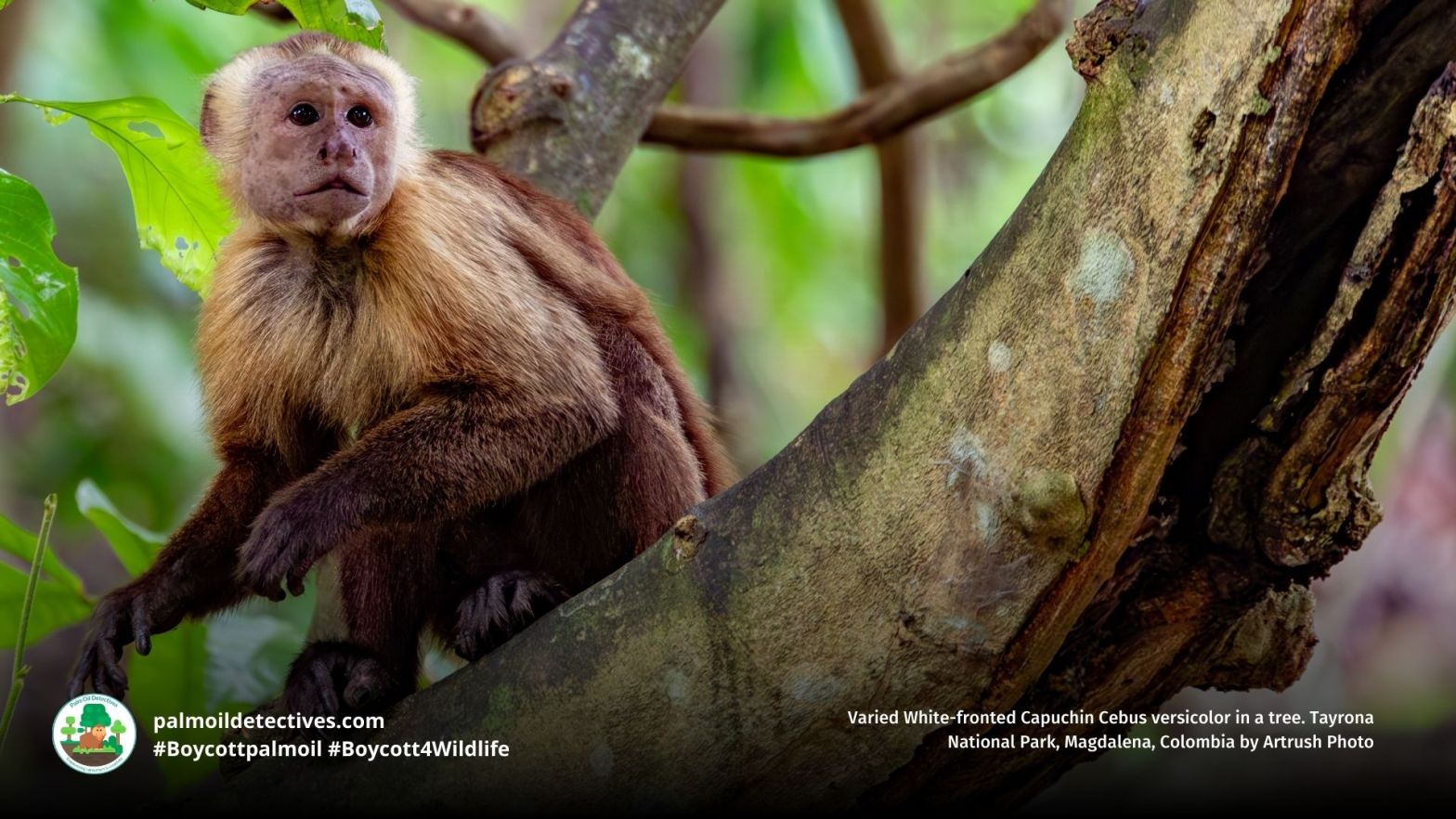
The Varied White-Fronted Capuchin Cebus versicolor is an intelligent, tenacious and resourceful small primate endemic to the forests of Colombia. With their pale white faces, reddish-gold coats, they are both striking in appearance and crucial to their ecosystems. These capuchins play an essential role in seed dispersal, ensuring the health and regeneration of their forest homes.
Tragically, their populations are declining due to deforestation, hunting, and the illegal wildlife trade. Protecting these forests is critical to their survival. Support indigenous-led conservation, adopt a vegan lifestyle and #BoycottPalmOil and #Boycott4Wildlife to take meaningful action for these incredible primates.
Drill Mandrillus leucophaeus

The Drill is one of the most visually arresting, emotionally complex, and endangered #monkeys on Earth. Endemic to a narrow slice of rainforest in #Nigeria, #Cameroon, and Bioko Island, these intelligent primates have lost over 50% of their population in just three decades. They face a terrifying gauntlet of threats: #palmoil plantations, #hunting for the #bushmeat trade, #timber logging, and a tidal wave of new #infrastructure creation. Though rarely seen, Drills are capable of extraordinary behaviour—forming multi-species foraging alliances, mourning their dead, and navigating their crumbling world with grace and resilience. Only a few thousand of these precious #primates remain alive. Take action every time you shop, be #Vegan and #BoycottPalmOil #Boycott4Wildlife
Four-horned Chameleon Trioceros quadricornis
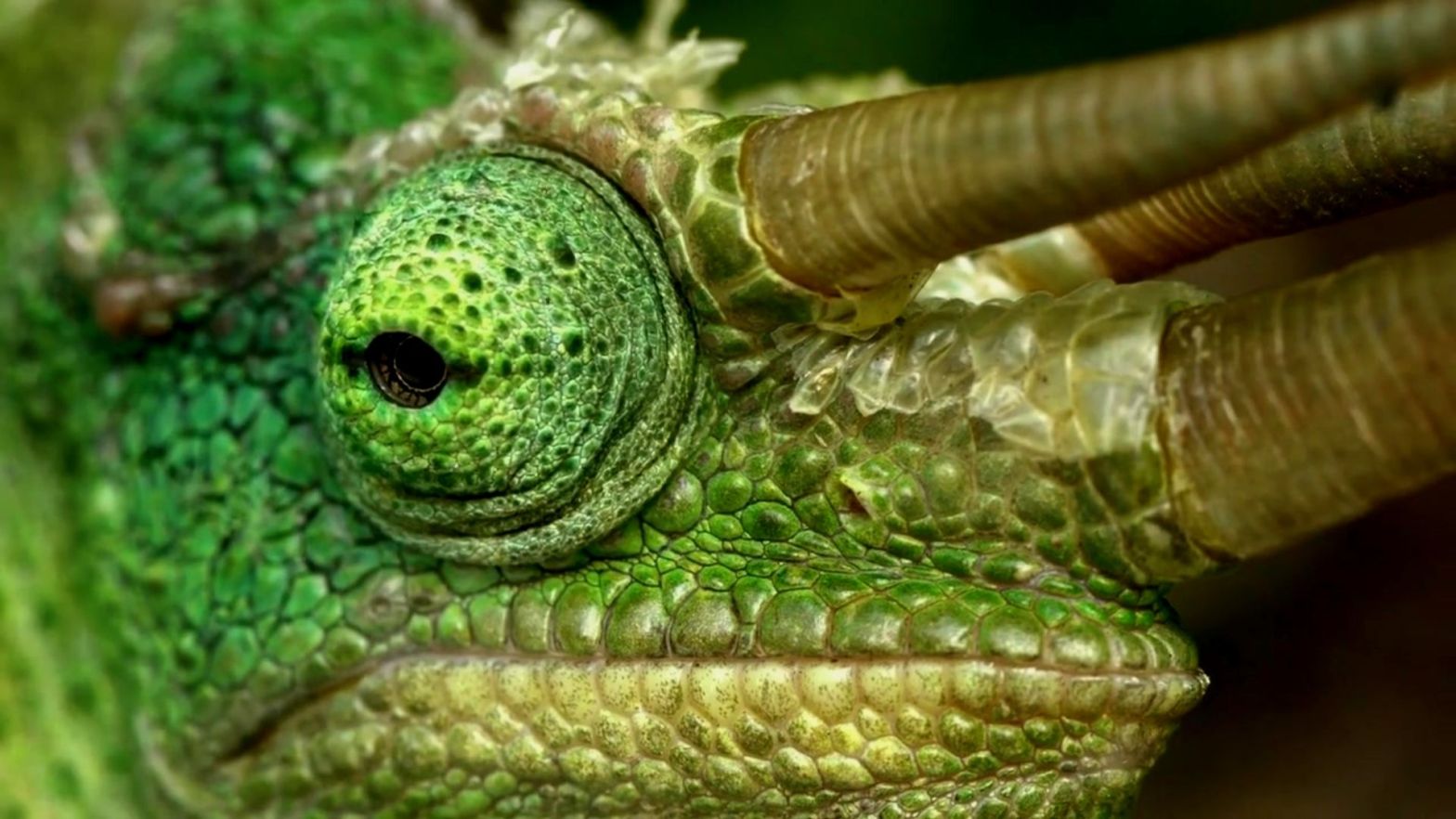
Protect the Four-Horned Chameleons, native to Cameroon’s rainforests, these extraordinary reptiles are now listed as Vulnerable, boycott palm oil for them!
Tana River Mangabey Cercocebus galeritus
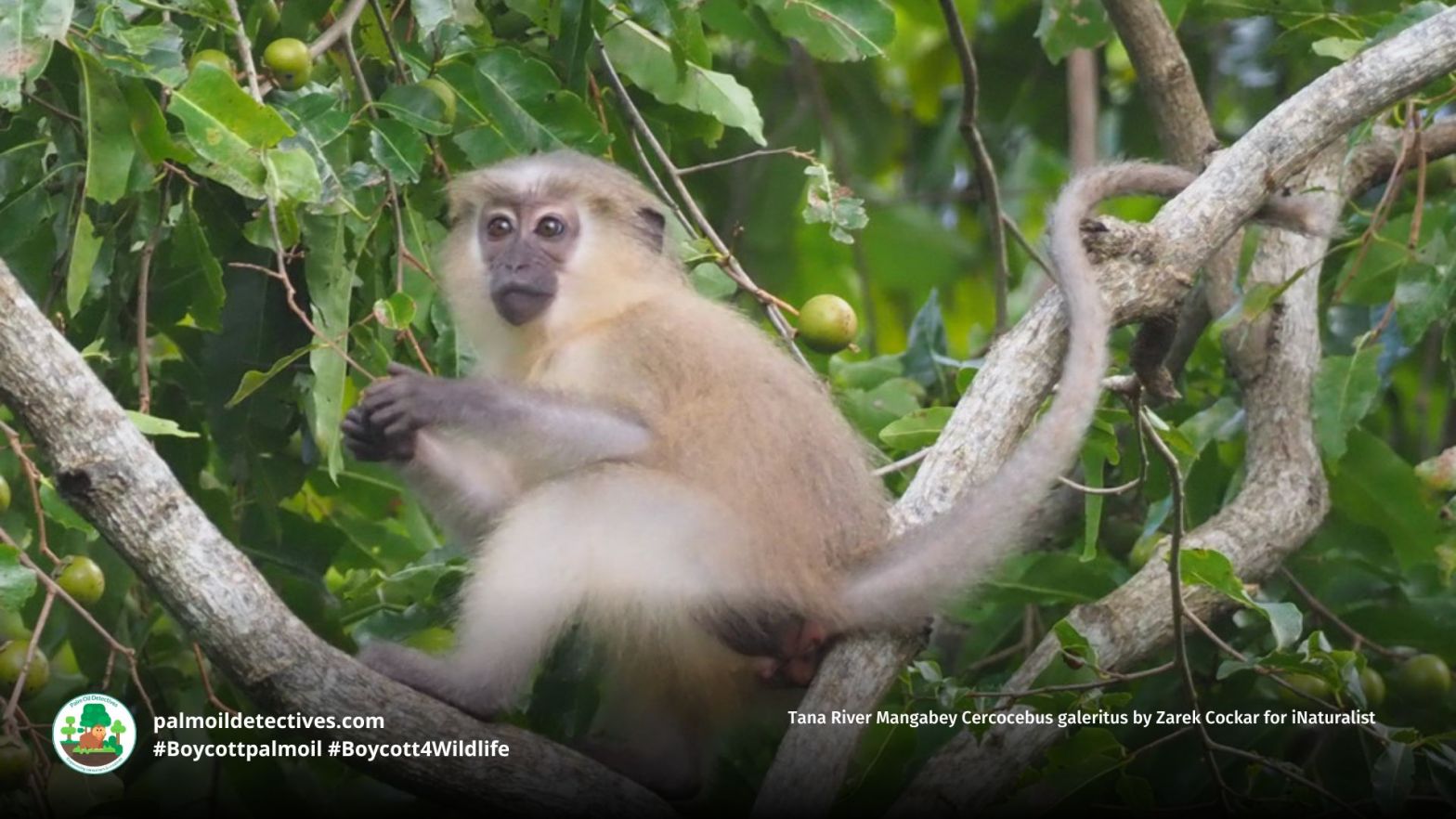
The Tana River Mangabey Cercocebus galeritus is a long-faced and slender old world monkey of #Kenya listed as Critically Endangered due to ongoing habitat destruction, dam construction, logging, and the degradation of floodplain forest ecosystems. Once protected by the Tana River #Primate Reserve, these #monkeys despite being key seed dispersers in their ecosystem are now more vulnerable than ever after the legal de-gazetting of their habitat. With only around 1,000 individuals remaining, this highly social and adaptable primate faces a devastating future unless urgent action is taken. Use your wallet as a weapon to end the destruction of their home. #BoycottPalmOil #Boycott4Wildlife #Vegan #BoycottMeat
Orinoco Crocodile Crocodylus intermedius
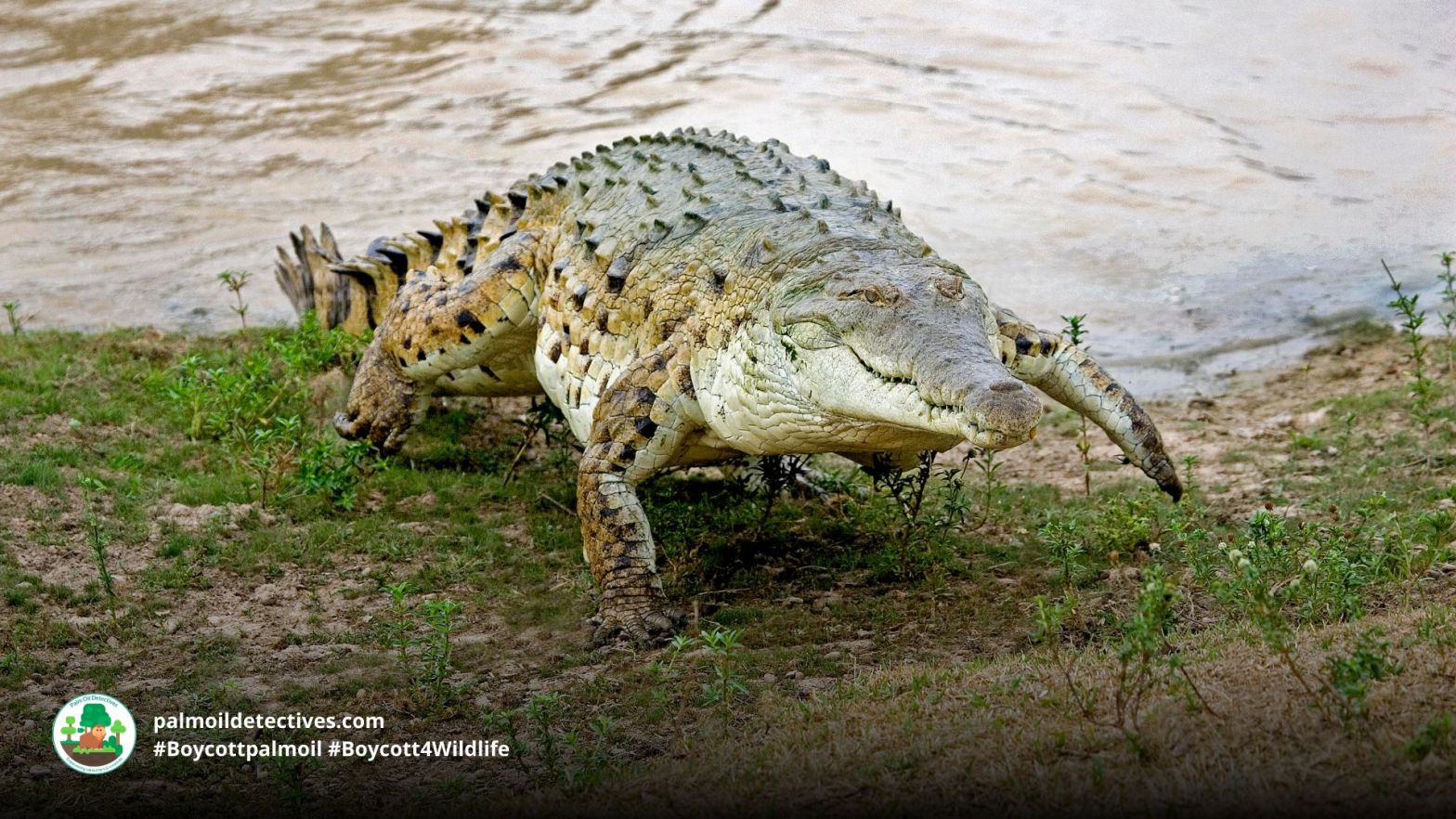
Endemic to the Orinoco River Basin in #Colombia and #Venezuela, the majestic Orinoco Crocodile is one of the rarest and most threatened reptiles on Earth. These intelligent, powerful apex predators once ruled vast waterways across northern South America, but today, their numbers have plummeted by more than 80% due to hunting, habitat loss, pollution, and deforestation. They are now restricted to tiny, fragmented populations across fewer than 34 rivers. #Goldmining and #palmoil #pollution pose a massive risk, imperiling these magnificent crocodiles. Urgent conservation efforts are essential to safeguard the Orinoco Crocodile from the brink of extinction. Boycott #palmoil, #soy, and #beef products contributing to deforestation. #BoycottGold4Yanomami Reject crocodile skin and be #vegan, and #BoycottPalmOil #Boycott4Wildlife
Black-faced Lion Tamarin Leontopithecus caissara
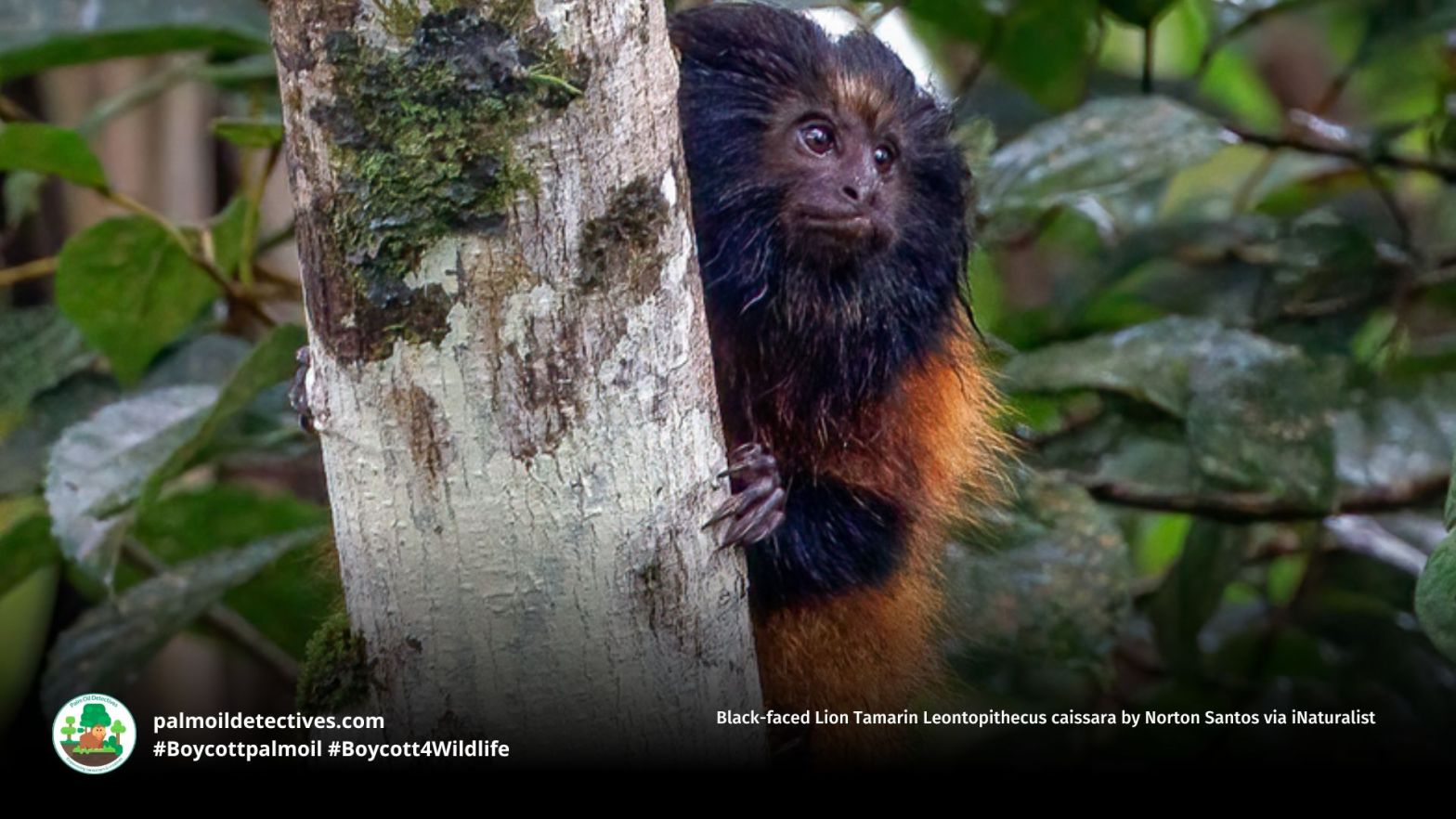
The black-faced lion #tamarin Leontopithecus caissara, also known as the Superagüi lion tamarin, is listed as Critically Endangered on the IUCN Red List. With a total population of fewer than 400 individuals and a fragmented, low-lying coastal habitat of #Brazil, this species is on the edge of extinction. Threats include logging, the illegal #pettrade, palm oil, #soy and #meat deforestation and urban expansion. Conservation efforts have begun, but there is still enormous work to do to protect these irreplaceable #primates. Protect this rare and charismatic #primate by taking urgent action. #BoycottPalmOil #Boycott4Wildlife #Vegan
Chimpanzee Pan troglodytes
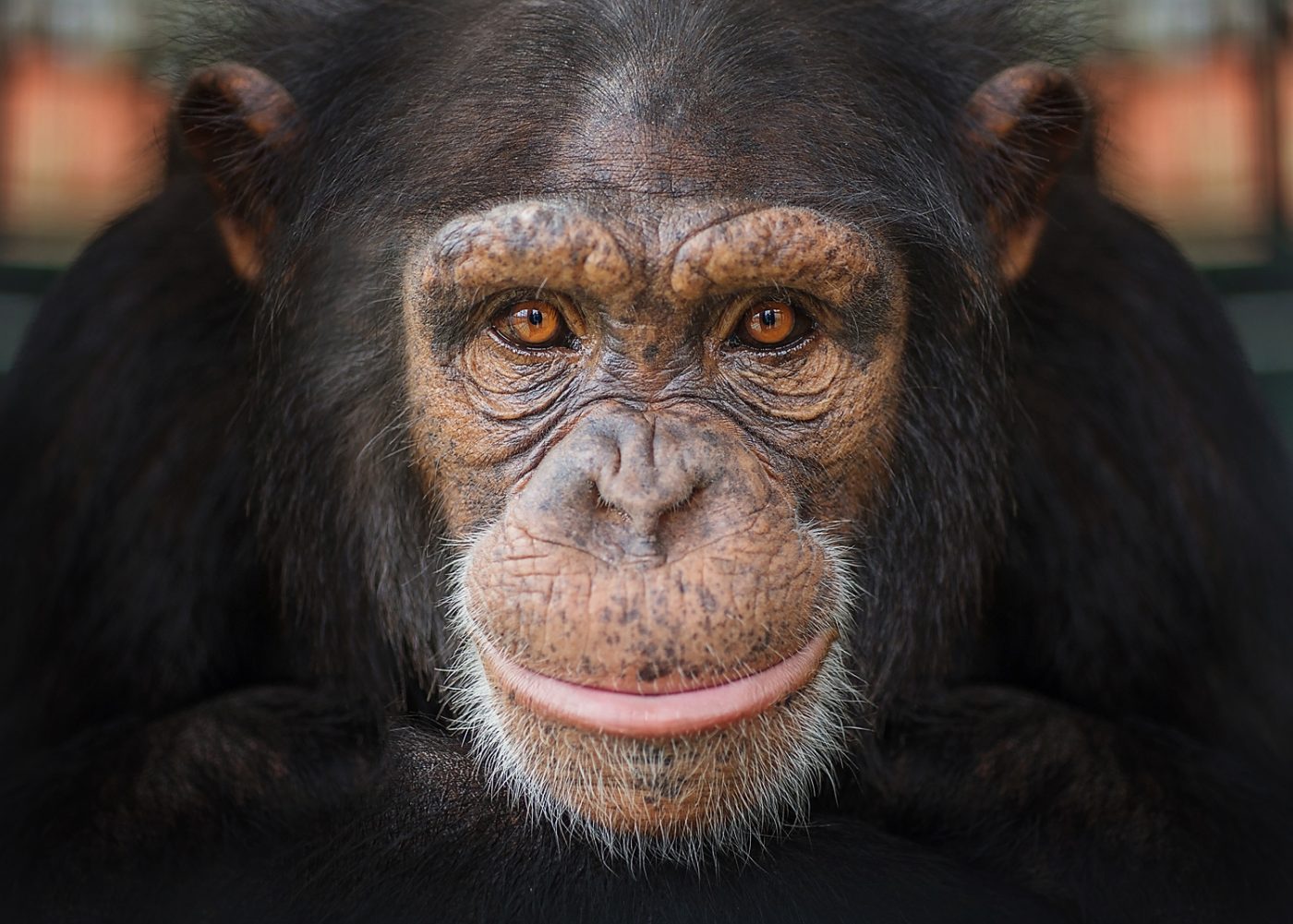
Chimpanzees (Pan troglodytes) are one of humanity’s closest living relatives and the most widespread of all great apes, with a vast historical range stretching across 21 African countries. Despite this, they are now classified as Endangered by the IUCN Red List due to catastrophic declines of more than 50% over a 75-year period, from 1975 to a projected 2050. These losses are driven by a lethal cocktail of threats: rampant poaching, habitat destruction for palm oil and logging, industrial mining, disease outbreaks like Ebola, and illegal trafficking. Subspecies such as P. t. ellioti have been reduced to only a few thousand individuals, while the once widespread P. t. verus is now Critically Endangered. Protecting them means dismantling the extractive industries that are ripping Africa’s forests apart such as the meat industry and palm oil industry. Help them when you #BoycottPalmOil #Boycott4Wildlife and be #Vegan #BoycottMeat
Hoge’s Side-necked Turtle Mesoclemmys hogei
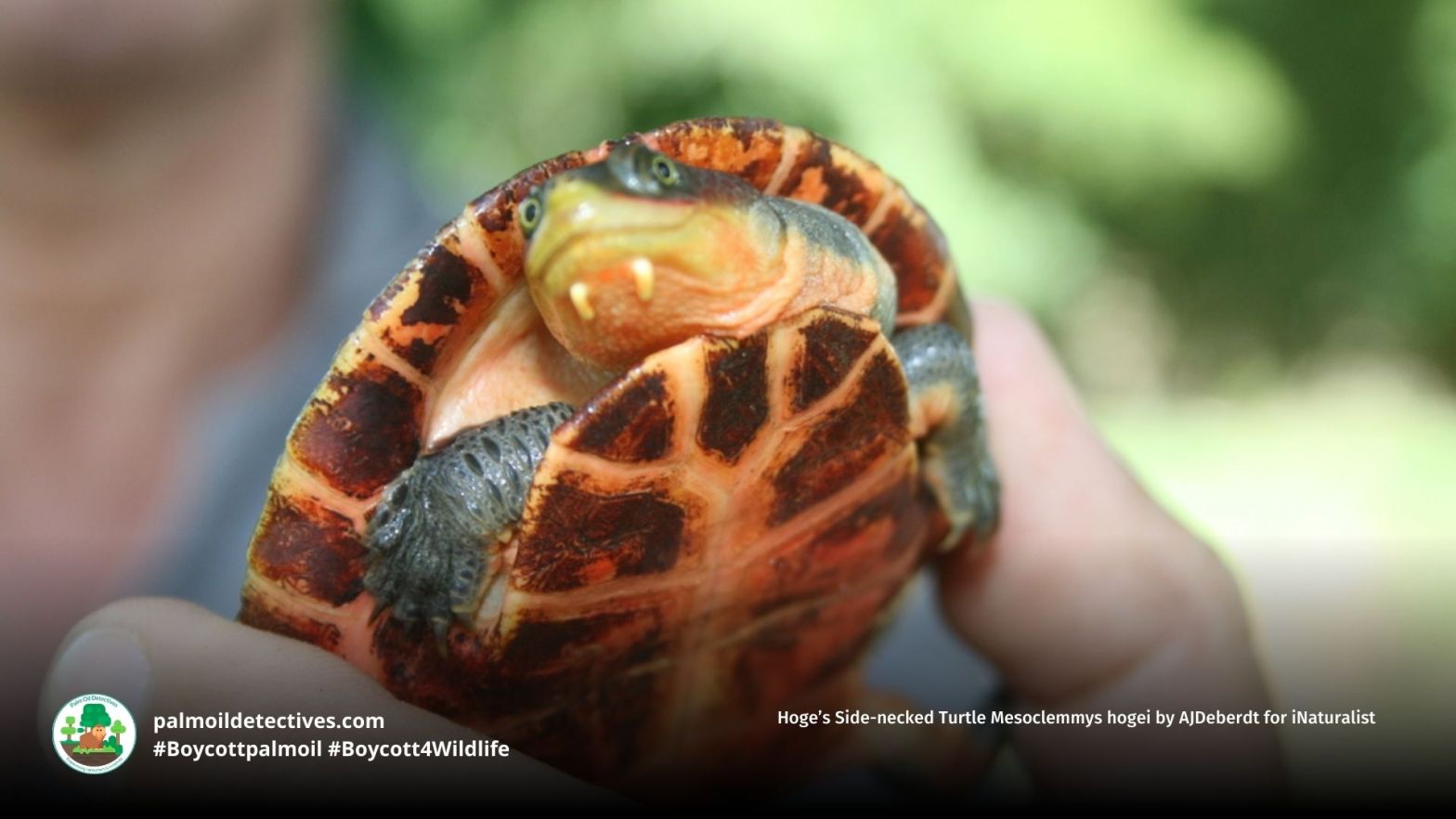
The Hoge’s Side-necked Turtle Ranacephala hogei—also known as Hoge’s Toadhead Turtle—is one of #Brazil’s rarest and most endangered reptiles. Having diverged from other turtles some 80 million years ago, they are evolutionary survivors now on the brink. With fewer than 2,000 individuals thought to remain, their populations have plummeted due to #palmoil #soy and #meat #deforestation, damming, water pollution, and incidental deaths in fisheries. Once feared lost from parts of their range, new research using citizen science and extensive fieldwork has rediscovered them in previously unknown areas, sparking renewed hope. But the threats remain. Help them every time you shop and #BoycottPalmOil #Boycott4Wildlife, be #Vegan and #BoycottMeat
Pernambuco Pygmy-owl Glaucidium mooreorum
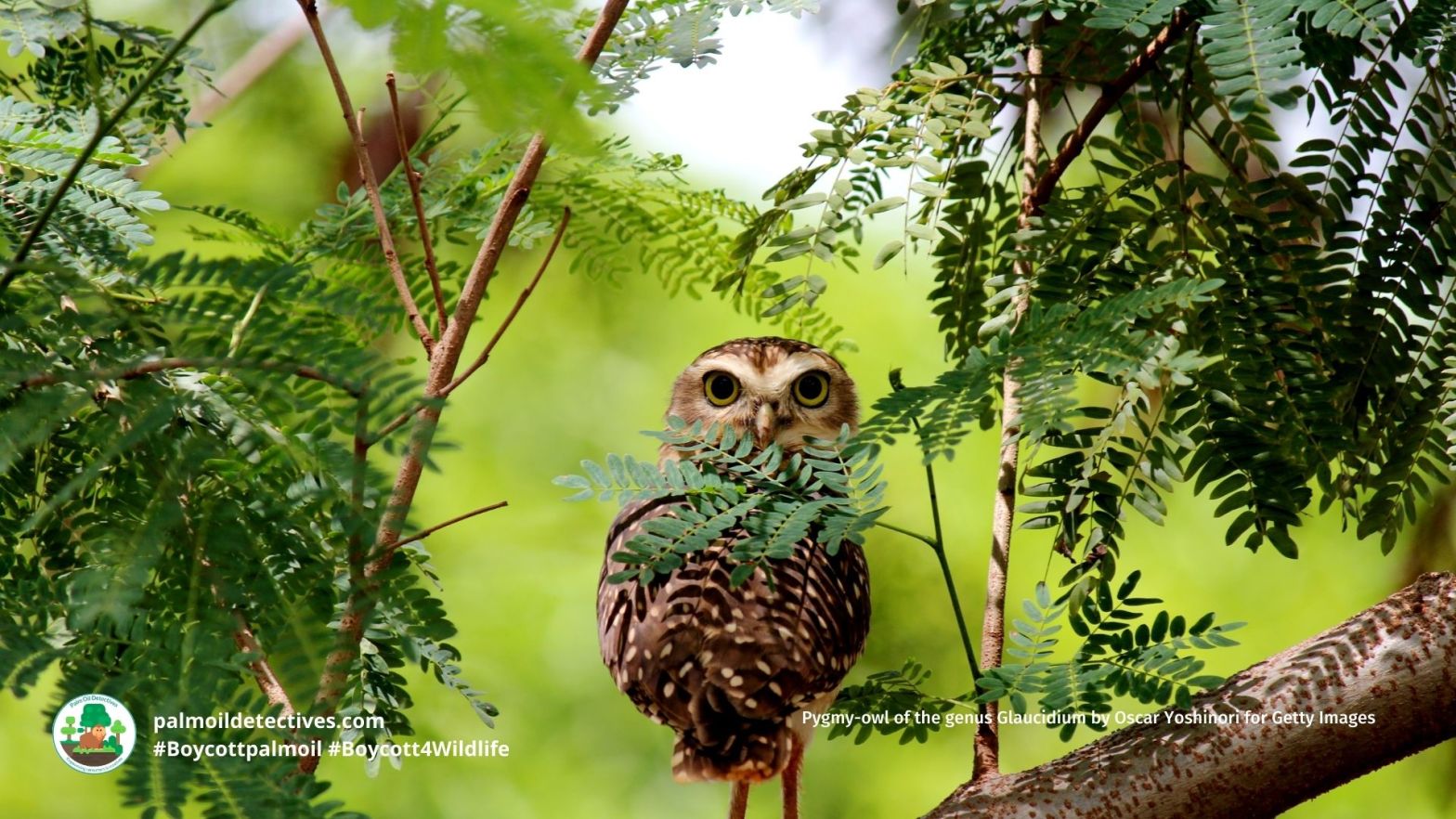
The Pernambuco Pygmy Owl Glaucidium mooreorum is among the rarest birds on Earth, known from just two museum specimens and a few recorded vocalisations. Officially described in 2002, this tiny owl is no larger than 13 cm and is likely the rarest bird in the world. They have not been sighted since 2001, and may already be extinct. Rampant #deforestation for sugarcane plantations, #palmoil, #soy and #meat and ongoing habitat destruction have decimated their native range. If this species still survives, fewer than 50 adults remain. The continued decimation of #Brazil’s Atlantic Forest leaves no margin for error. Act now to protect what remains. Help them every time you shop and #BoycottPalmOil #Boycott4Wildlife #Vegan #BoycottMeat
Caquetá Tití Monkey Plecturocebus caquetensis
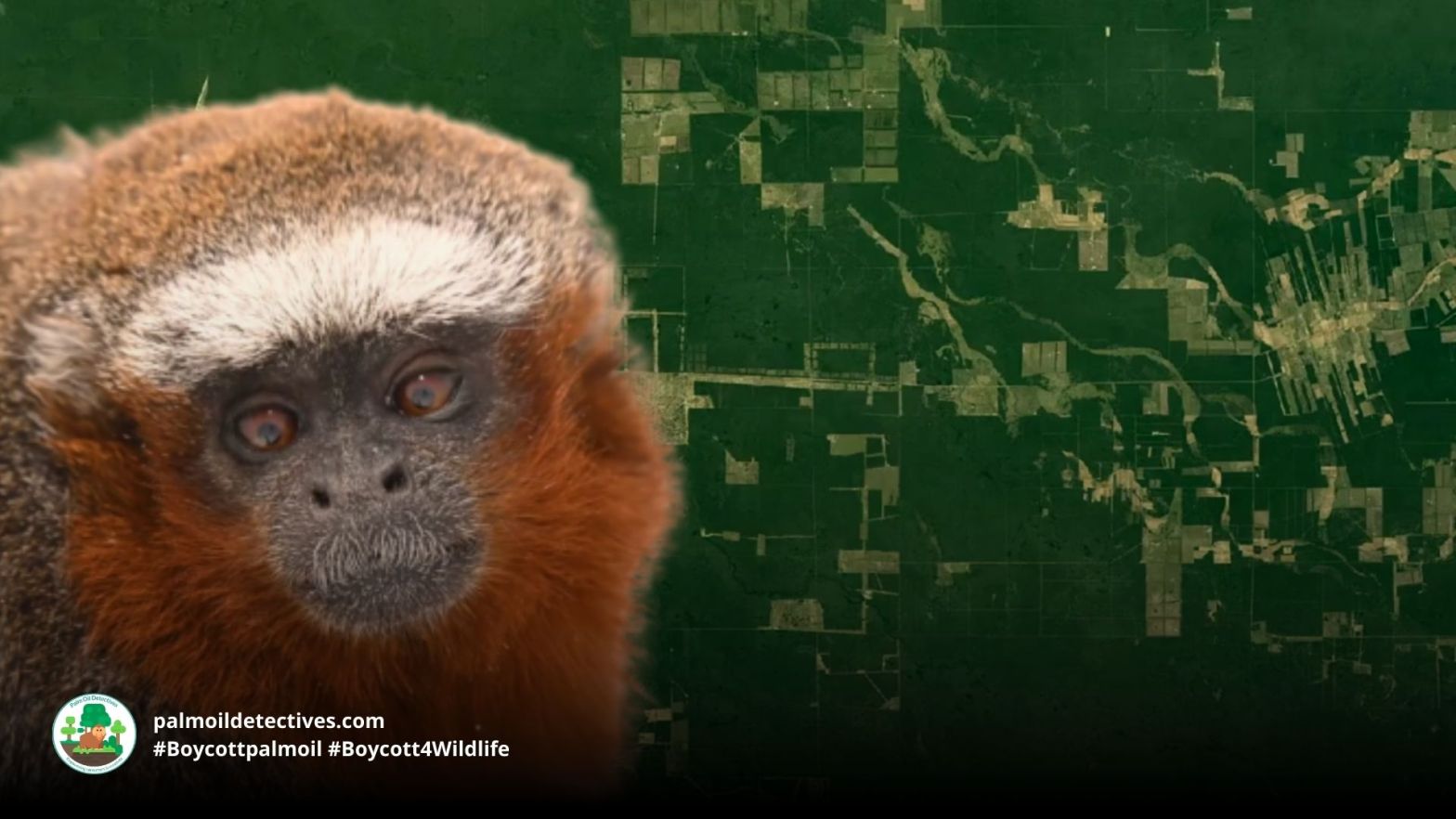
Caquetá Titi Monkeys have a distinctive song and they purr like a kitten they form monogamous partnerships. Discovered relatively recently in 2010, these beautiful and fascinating monkeys are now critically endangered due to the massive deforestation that is occurring in Colombia for palm oil and other commodities. It is believed that fewer than 100 individuals Caquetá Titi Monkeys are left in the wild and fewer than 50 mature individuals. The habitat of the Caquetá Titi Monkeys is in an advanced state of fragmentation caused by extensive cattle ranching and illegal crop cultivation. Fight for them and resist greed and greenwashing when you be #vegan #BoycottMeat #Boycott4Wildlife
Blue-billed Curassow Crax alberti
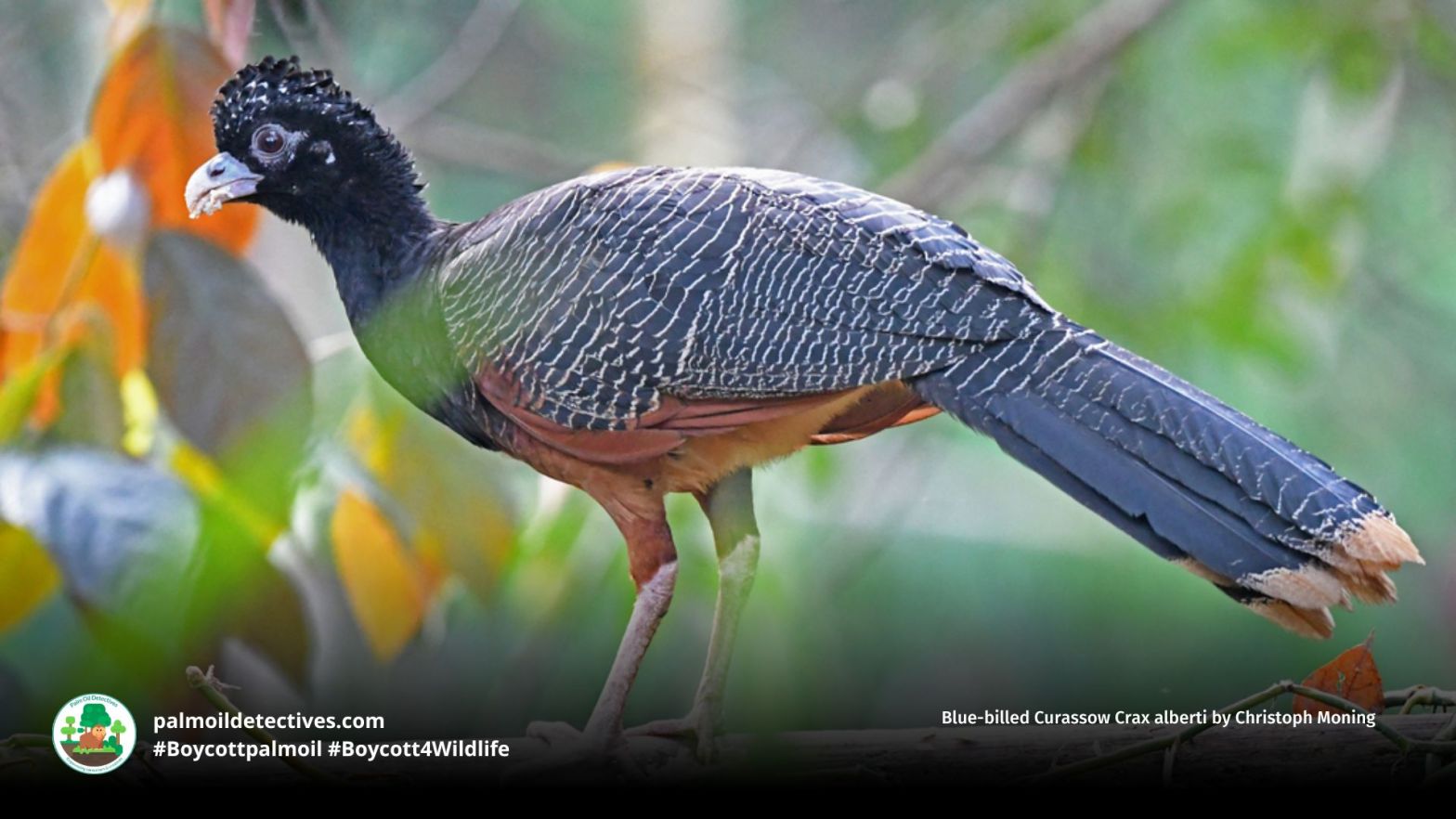
Help save Colombia’s Blue-billed Curassow, a critically endangered bird facing extinction from habitat loss due to palm oil and coca plantations!
Timneh Parrot Psittacus timneh
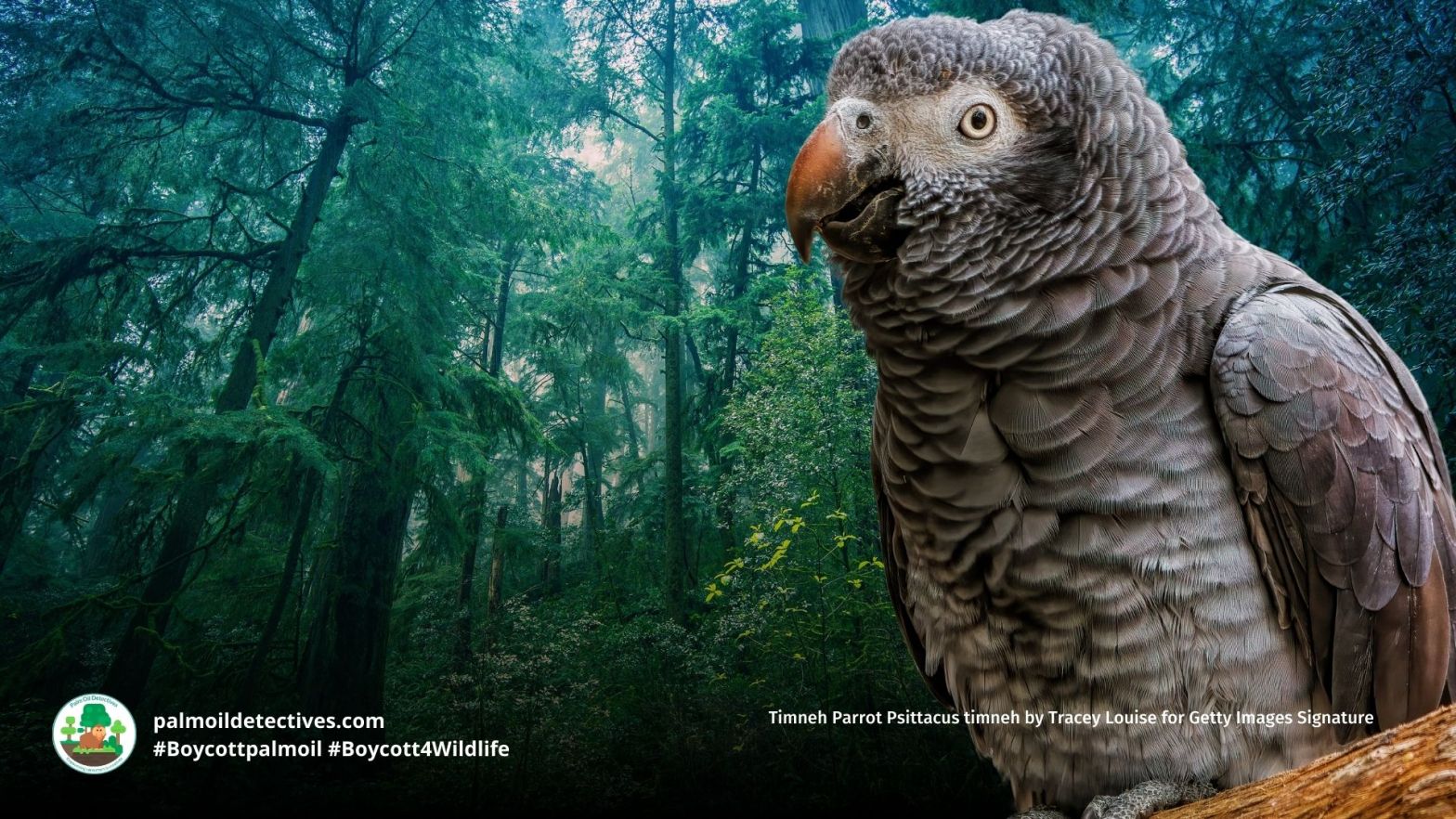
The Timneh Parrot, a smaller and darker cousin of the African Grey Parrot, captivates with their intelligence, vibrant personalities, and ability to mimic speech. However, their beauty and charm have contributed to their decline. The illegal pet trade is depleting wild populations, with poachers raiding nests to meet global demand. Meanwhile, habitat destruction driven by out-of-control palm oil plantations, meat agriculture, and crops like cocoa, coffee, and tobacco is eroding their forest homes.
Research shows that the parrot trade, facilitated by social media, has expanded into new regions like Algeria, where demand for exotic pets continues to fuel poaching. The population declines are staggering—studies in Cameroon show local reductions of up to 99% over 14 years due to trapping and habitat loss. Protecting these parrots requires ending the demand for wild-caught birds and halting deforestation in West Africa. Take action today: #BoycottPalmOil #BoycottMeat #Boycott4Wildlife.
White-thighed Colobus Colobus vellerosus
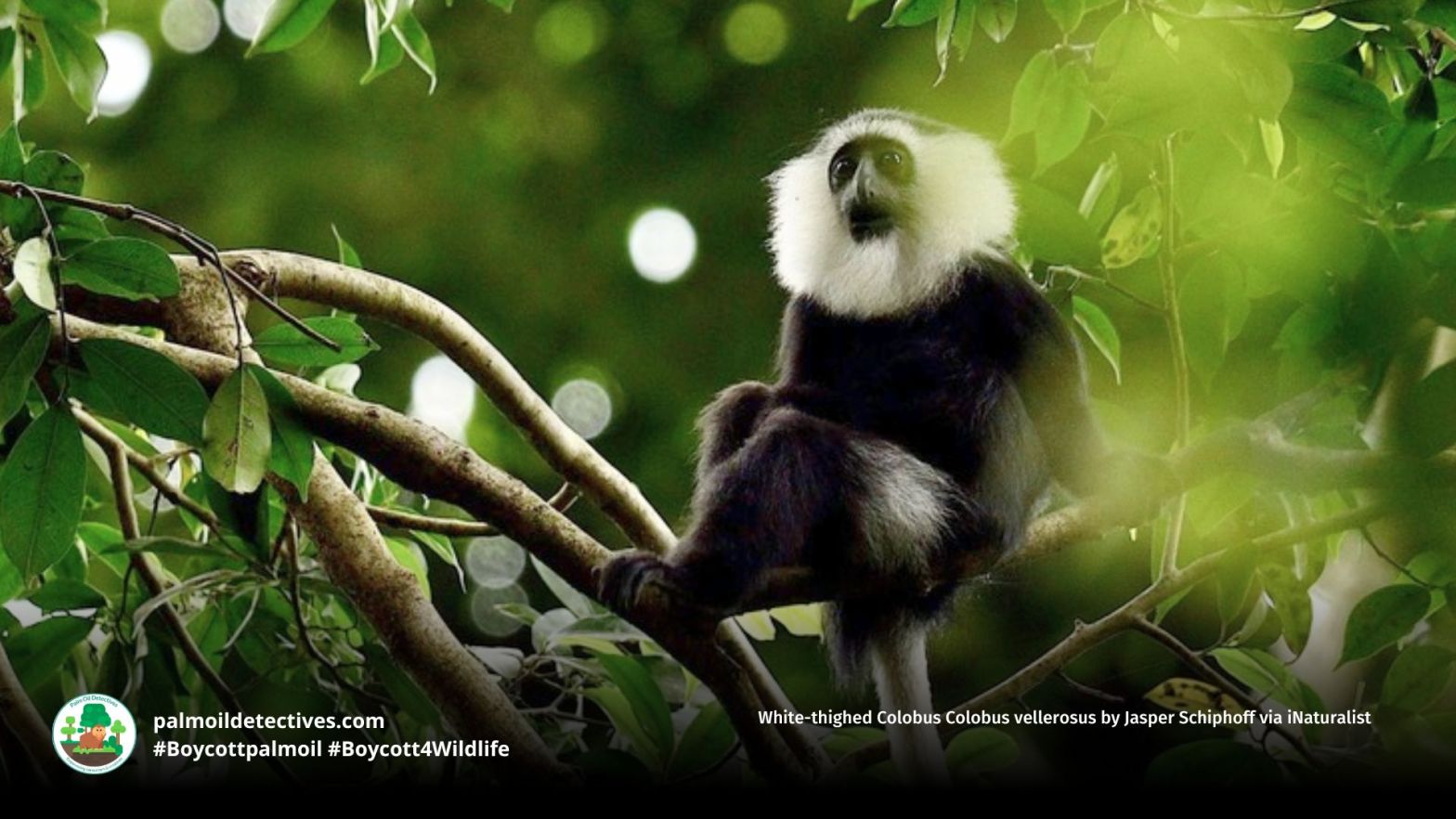
The White-thighed Colobus (Colobus vellerosus), also known as the Ursine Colobus or Geoffroy’s Black-and-White Colobus, is a striking primate of West Africa and is currently listed as Critically Endangered on the IUCN Red List. Their numbers have plummeted by over 80% in just three generations due to rampant deforestation driven by logging, agriculture, and expanding palm oil plantations. Intense bushmeat hunting and weakening traditional taboos have further accelerated their decline. With fewer than 1,500 individuals thought to remain in the wild, urgent action is needed to save them. Use your wallet as a weapon—boycott products that contain palm oil and support ethical, indigenous-led conservation. BoycottPalmOil #Boycott4Wildlife #Vegan #BoycottMeat
Roloway Monkey Cercopithecus roloway
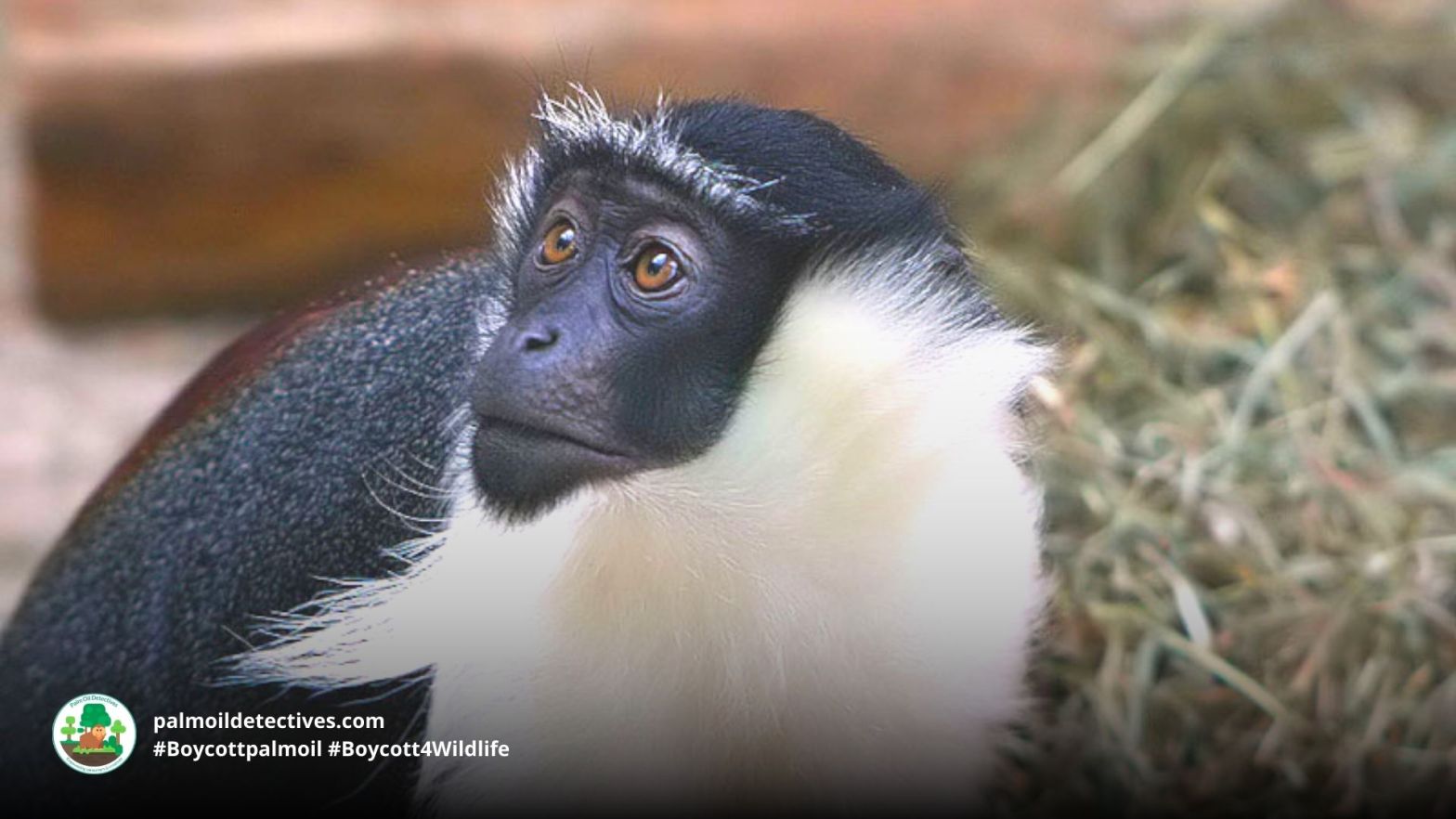
The Roloway Monkey is one of West Africa’s rarest primates, instantly recognisable by their elegant white beard and striking brow band. Once common in the lush rainforests of Ghana and Côte d’Ivoire, the Roloway Monkey now survives only in isolated pockets of old-growth forest. The Roloway Monkey’s world is shrinking rapidly—palm oil, cocoa, and logging companies clear the last ancient trees, while hunters target the Roloway Monkey for bushmeat. The air is thick with the scent of damp earth and the distant echo of chainsaws. With fewer than 2,000 Roloway Monkeys left, their future hangs by a thread. Stand with indigenous communities defending the last forests. Use your wallet as a weapon. #BoycottPalmOil #Boycott4Wildlife #Vegan
Spectral Tarsier Tarsius tarsier
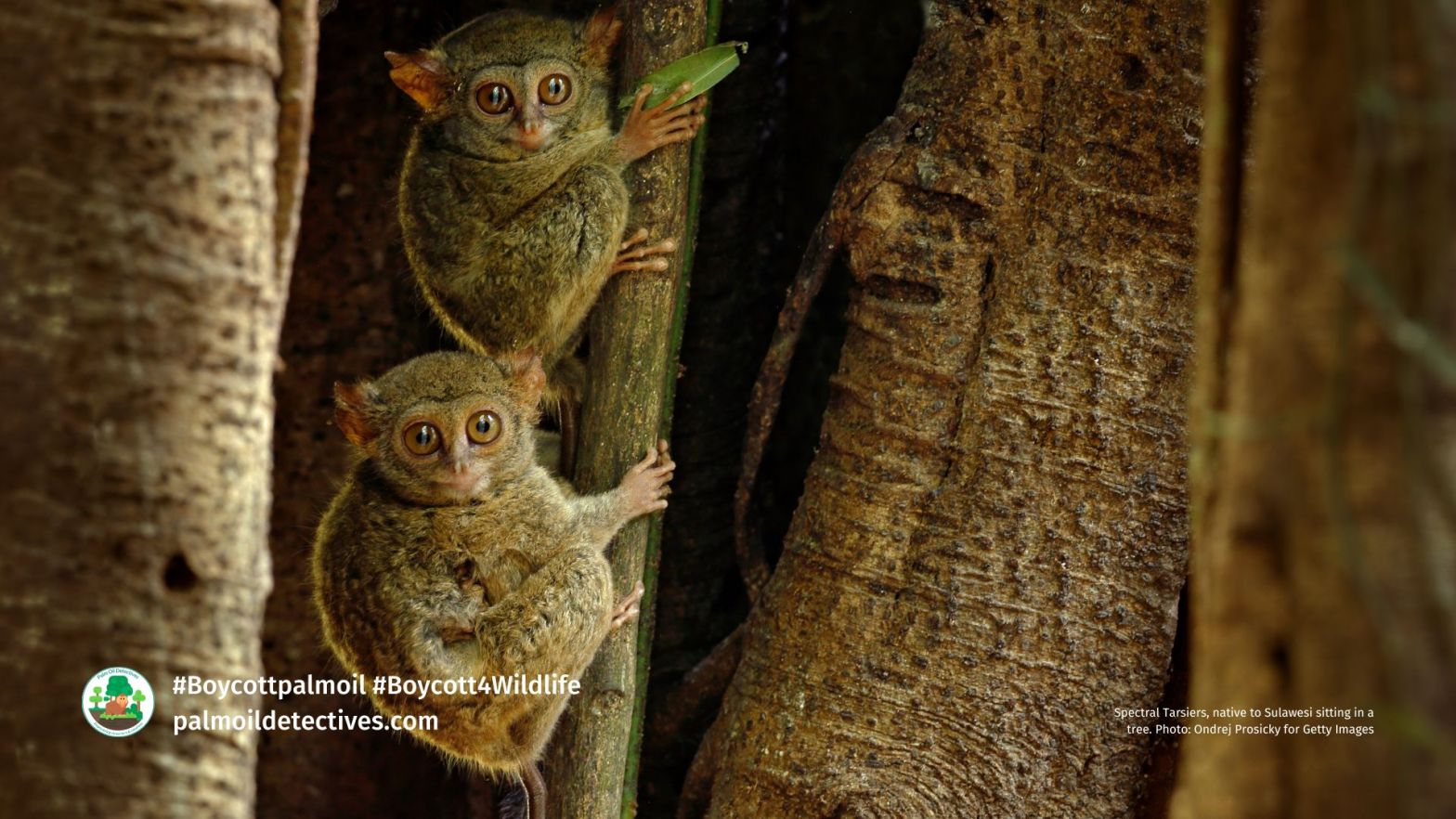
The Spectral Tarsier Tarsius tarsier is one of the smallest and most endearing #primates in the world. With the largest eye-to-body ratio of any #mammal, this wide-eyed, nocturnal #insectivore is found only in #Sulawesi and nearby Indonesian islands. Although they show some tolerance to human-altered landscapes, they are listed as #Vulnerable by the Red List due to rampant #deforestation for #palmoil and #timber agriculture, limestone #mining, #pesticide use and agricultural #pollution and the illegal pet trade. These elusive primates are declining fast. Use your wallet as a weapon: always choose products that are 100% palm oil-free and never support the exotic pet trade.#BoycottPalmOil #Boycott4Wildlife #Vegan
Müller’s gibbon Hylobates muelleri
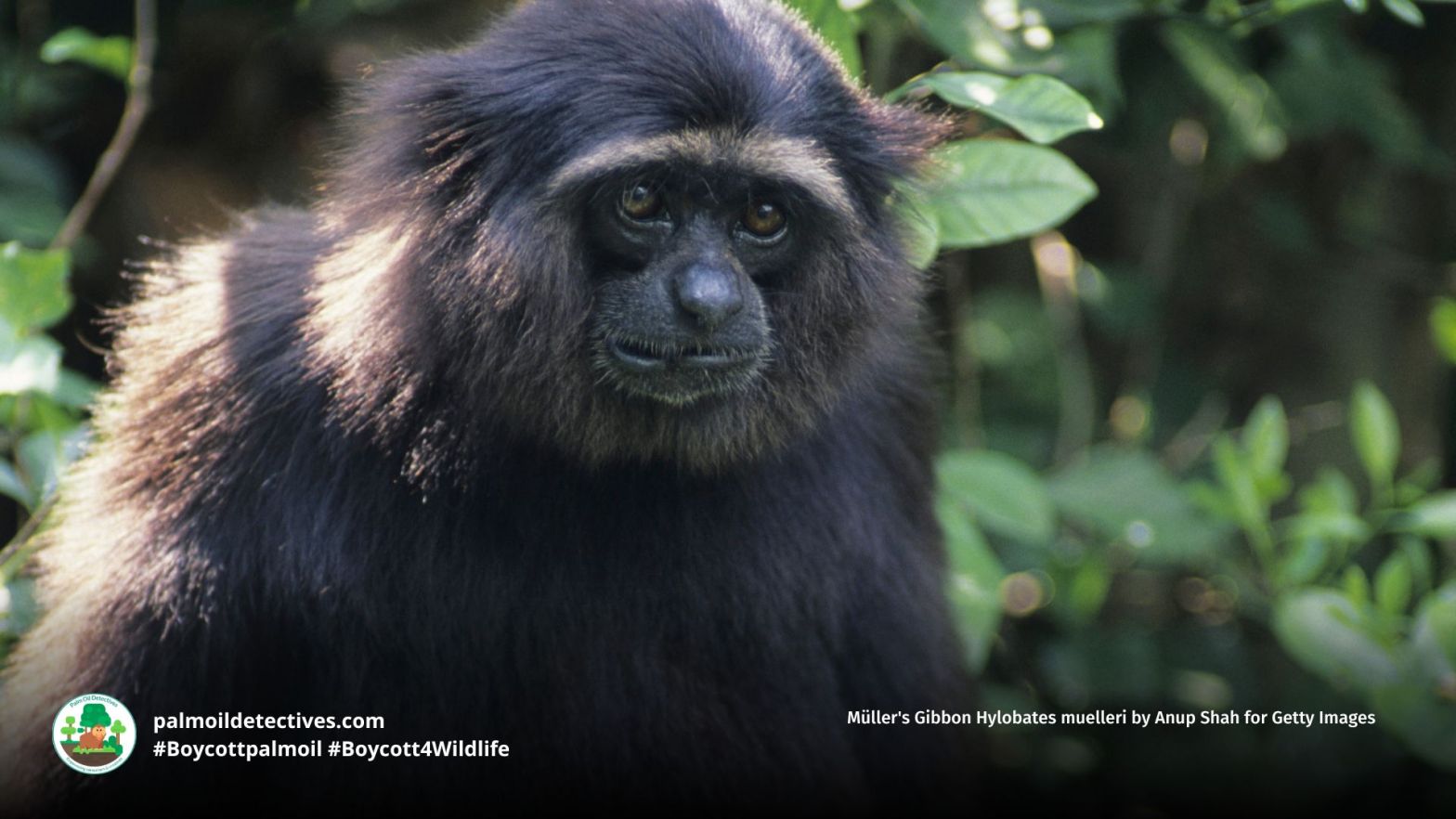
The Bornean Gibbon Hylobates muelleri, also known as Müller’s #gibbon or the Southern Grey Gibbon, is a master of the treetops and a celebrated forest singer. Their haunting duets echo across the rainforest canopy, keeping family bonds strong and warning intruders away. But these calls are growing rarer. The Müller’s gibbon is listed as #Endangered due to relentless forest loss caused by logging, #palmoil expansion, #fire, and #hunting. Their future depends on the survival of Borneo’s rainforests. Take action and use your wallet as a weapon! #BoycottPalmOil #Boycott4Wildlife be #Vegan and #BoycottMeat
 Palm Oil Detectives