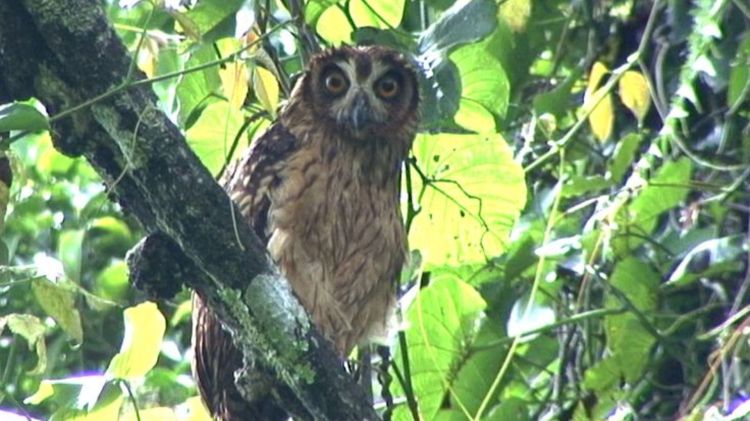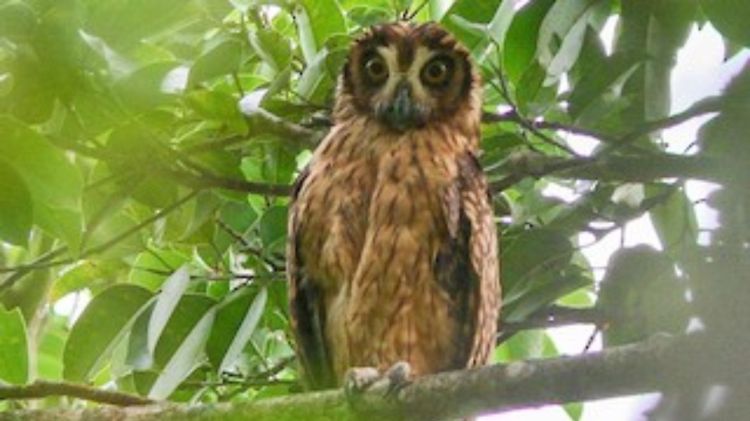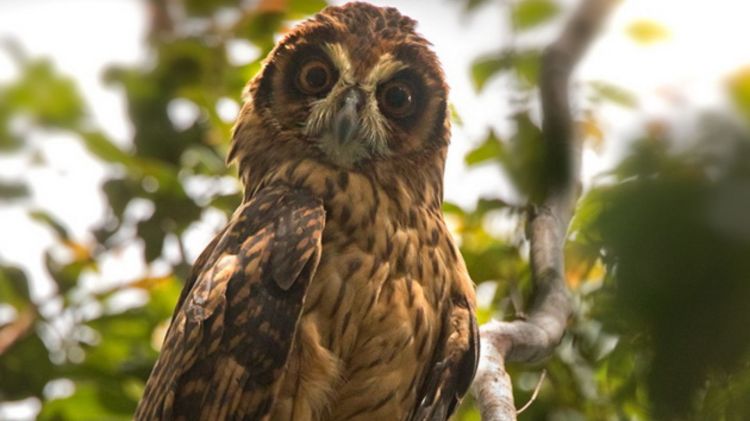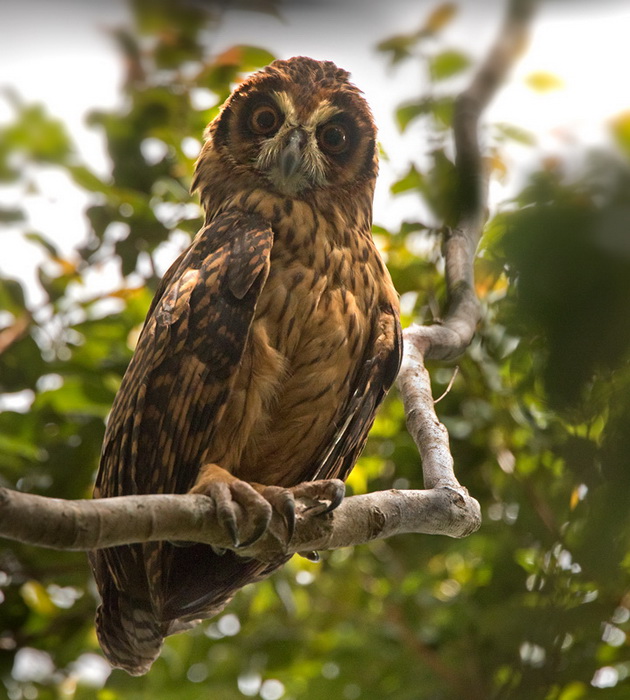
Bougainville Moustached Kingfisher Actenoides bougainvillei

Bougainville Moustached Kingfisher Actenoides bougainvillei

Endangered

Location: Endemic to Bougainville Island and nearby islets in Papua New Guinea

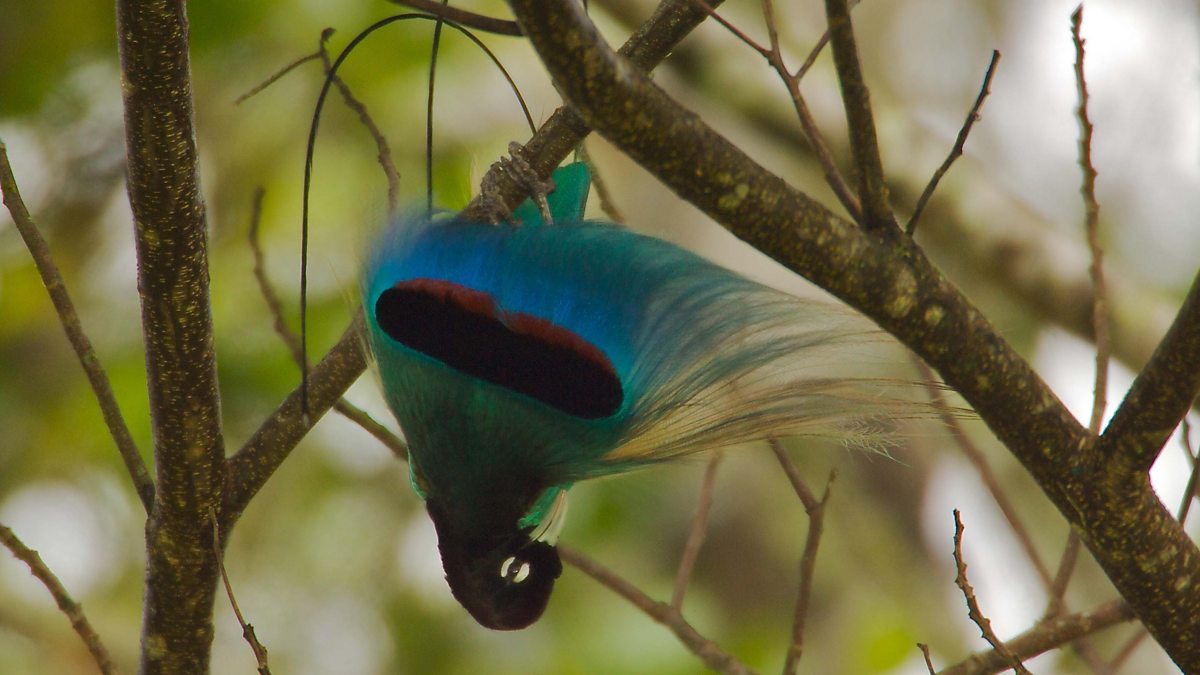
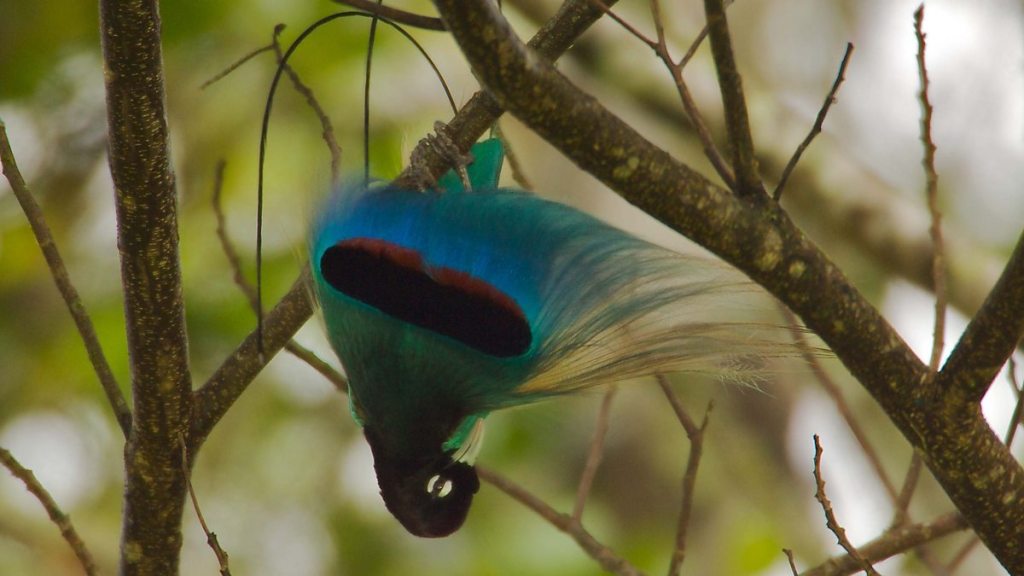
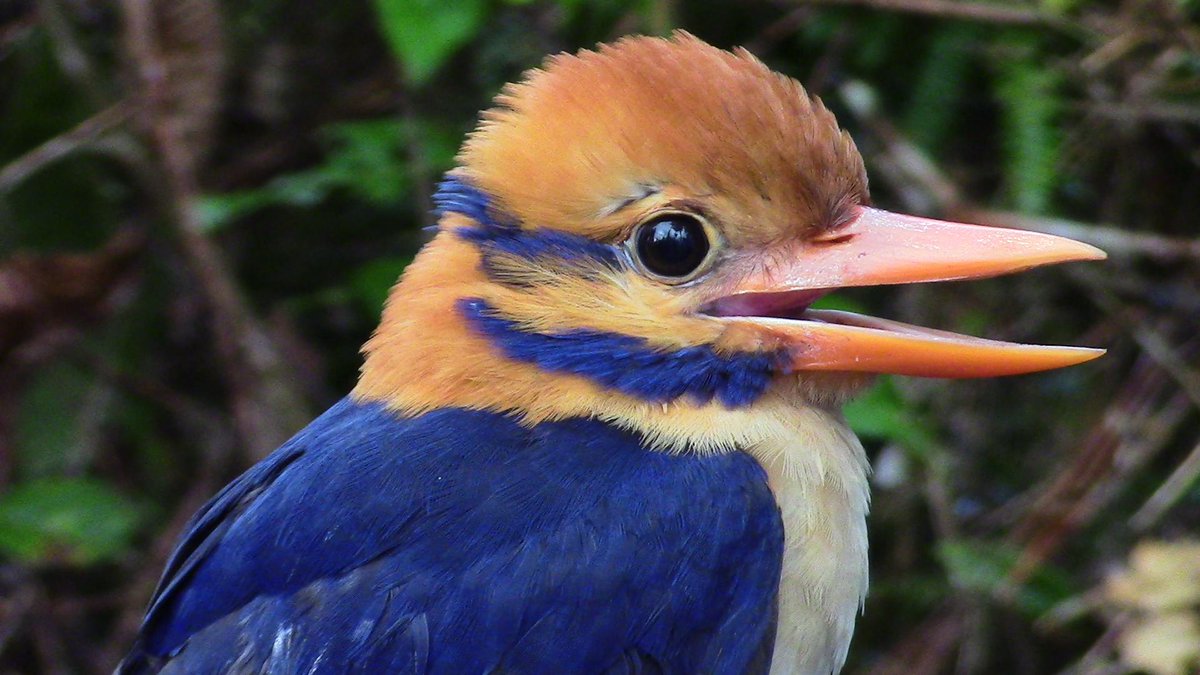
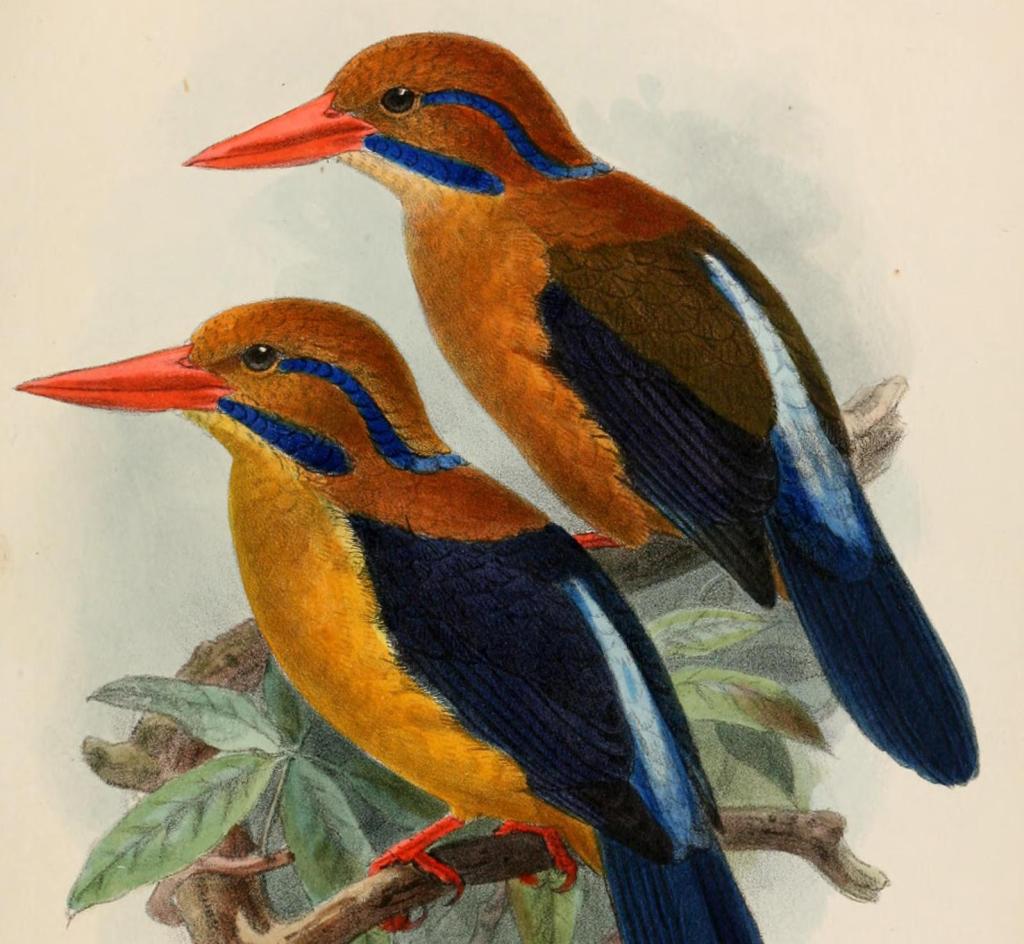
The Bougainville moustached kingfisher (Actenoides bougainvillei) is a striking and enigmatic bird found exclusively on Bougainville Island, Papua New Guinea. With their vibrant blue and orange plumage, handsome black moustached stripe, and striking beak, these birds are icons of the island’s biodiversity.

This species is classified as Endangered by the IUCN, with fewer than 2,500 mature individuals estimated to remain. Their population continues to decline due to habitat loss from logging, palm oil agriculture, and Indonesian colonial settlement. Fight for their survival by boycotting palm oil and supporting Papuan indigenous sovereignty.

The cheeky colourful Bougainville Moustached Kingfisher 🦜🇵🇬 lives in and , endangered by . Boycott the brands destroying their home @palmoildetect https://palmoildetectives.com/2021/01/31/bougainville-moustached-kingfisher-actenoides-bougainvillei/

Currently, the species’ montane forest habitat is above the altitude usually affected by logging or clearance for subsistence gardens.

IUCN Red List
Bougainville Moustached Kingfisher by J. G. Keulemans print from 1905.

Appearance and Behaviour

The Bougainville moustached kingfisher is a medium-sized bird, measuring approximately 31 cm in length and weighing around 170–190 grams. Males are distinguished by their vibrant blue upperparts, orange underparts, and a striking black moustachial stripe extending from the base of the bill. Females are duller, with greenish plumage replacing the vibrant blue.

These kingfishers are secretive and solitary, typically perching in dense forest understories. They use their long, robust beak to hunt insects, small reptiles, and occasionally small birds. Their flight is swift but typically short, as they prefer moving between perches within their forest habitats.

Threats

IUCN Status: Endangered

Habitat Loss: Logging for timber and palm oil agriculture has led to significant deforestation on Bougainville Island, fragmenting the kingfisher’s already restricted range. Shifting agriculture practices further reduce the availability of suitable primary forest habitats.

Hunting and Trapping: Though not targeted specifically, these birds are sometimes caught in traps set for other animals, adding pressure to their declining population.

Climate Change: Changing weather patterns due to climate change may alter their habitat, reducing the availability of food sources and nesting sites.

Introduced pests: The Bougainville Moustached Kingfisher is potentially threatened by introduced rats and cats which are common even at high altitudes (Leary 1991).

Geographic Range

The Bougainville moustached kingfisher is endemic to Bougainville Island in Papua New Guinea and some adjacent islets. They are restricted to undisturbed lowland and montane forests, preferring primary forests between elevations of 300 and 1,000 metres.

Due to logging and habitat fragmentation, their range is shrinking, and they are increasingly confined to smaller, isolated forest patches.

Diet

These kingfishers are primarily carnivorous, feeding on a diet of insects, small reptiles, and amphibians. They have also been observed preying on small birds. Using their sharp beak, they perch silently before darting to capture their prey.

As habitat loss continues to diminish prey availability, their specialised diet places them at even greater risk.

Reproduction and Mating

Very little is known about the breeding habits of the Bougainville moustached kingfisher. Like other kingfishers, they are believed to nest in tree cavities or burrow into earthen banks. Clutch sizes are likely small, with only 2–3 eggs per season.

Habitat loss and fragmentation further reduce the availability of suitable nesting sites, making successful reproduction increasingly challenging.

Take Action!

The Bougainville moustached kingfisher is a symbol of the unique biodiversity of Bougainville Island. Protecting their forest habitat is vital for their survival. Support conservation efforts, boycott palm oil, and advocate for stronger protections against deforestation. Share their story to raise awareness of their plight.

Further Information

BirdLife International. 2016. Actenoides bougainvillei. The IUCN Red List of Threatened Species 2016: e.T22726874A94934210. https://dx.doi.org/10.2305/IUCN.UK.2016-3.RLTS.T22726874A94934210.en. Downloaded on 31 January 2021.

BirdLife International. (2022). Bougainville Moustached Kingfisher. The IUCN Red List of Threatened Species.

Birds of the World. (2022). Bougainville Moustached Kingfisher. Birds of the World.

eBird. (2022). Bougainville Moustached Kingfisher. eBird.

ICUN endangered logo

Support the conservation of this species

Tenkile Conservation Alliance


Contribute to palm oil detectives - black rhino in profile

How can I help the ?


Take Action in Five Ways

1. Join the on social media and subscribe to stay in the loop: Share posts from this website to your own network on Twitter, Mastadon, Instagram, Facebook and Youtube using the hashtags .

Join 3,176 other subscribers

2. Contribute stories: Academics, conservationists, scientists, indigenous rights advocates and animal rights advocates working to expose the corruption of the palm oil industry or to save animals can contribute stories to the website.

3. Supermarket sleuthing: Next time you’re in the supermarket, take photos of products containing palm oil. Share these to social media along with the hashtags to call out the greenwashing and ecocide of the brands who use palm oil. You can also take photos of palm oil free products and congratulate brands when they go palm oil free.

4. Take to the streets: Get in touch with Palm Oil Detectives to find out more.

5. Donate: Make a one-off or monthly donation to Palm Oil Detectives as a way of saying thank you and to help pay for ongoing running costs of the website and social media campaigns. Donate here

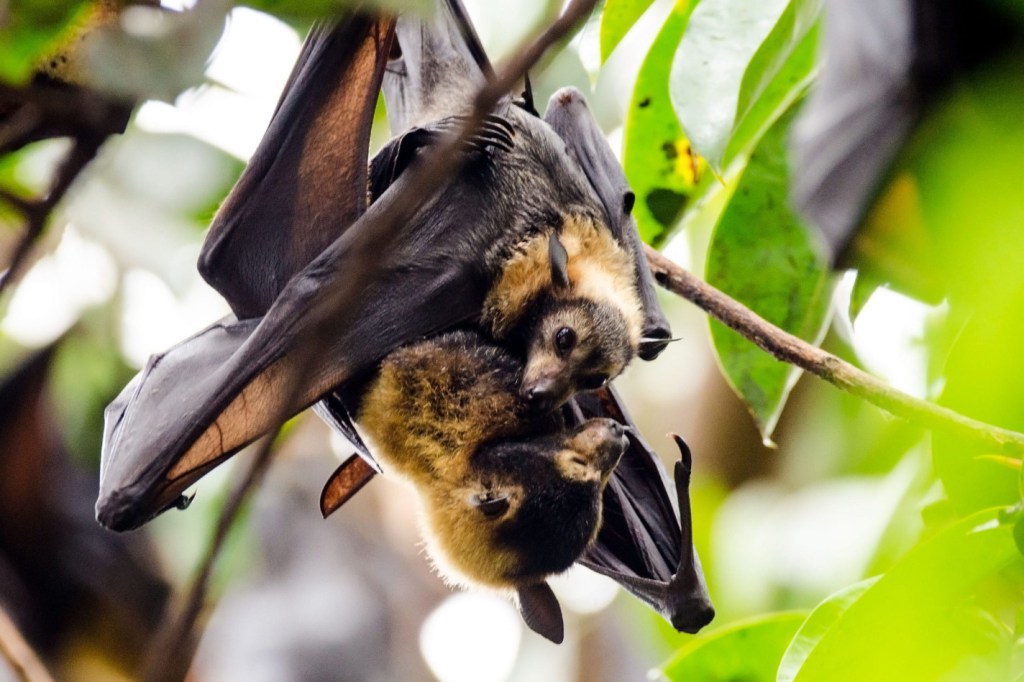
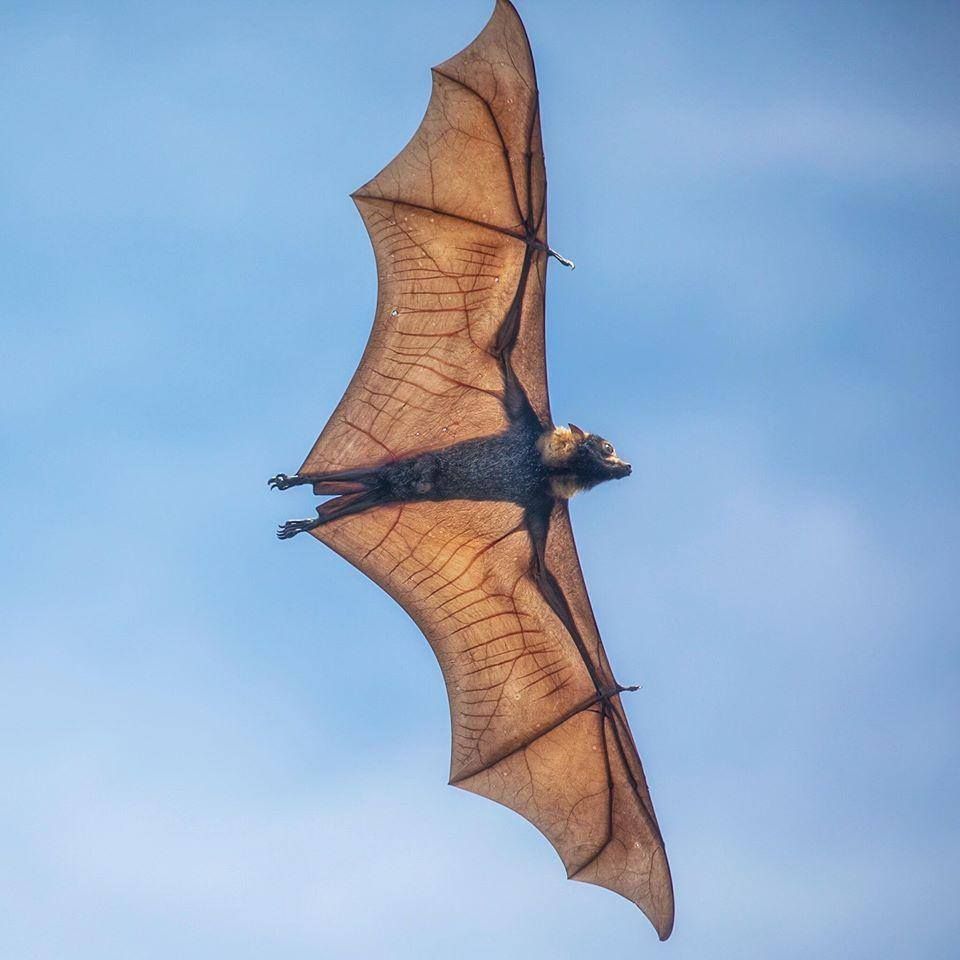
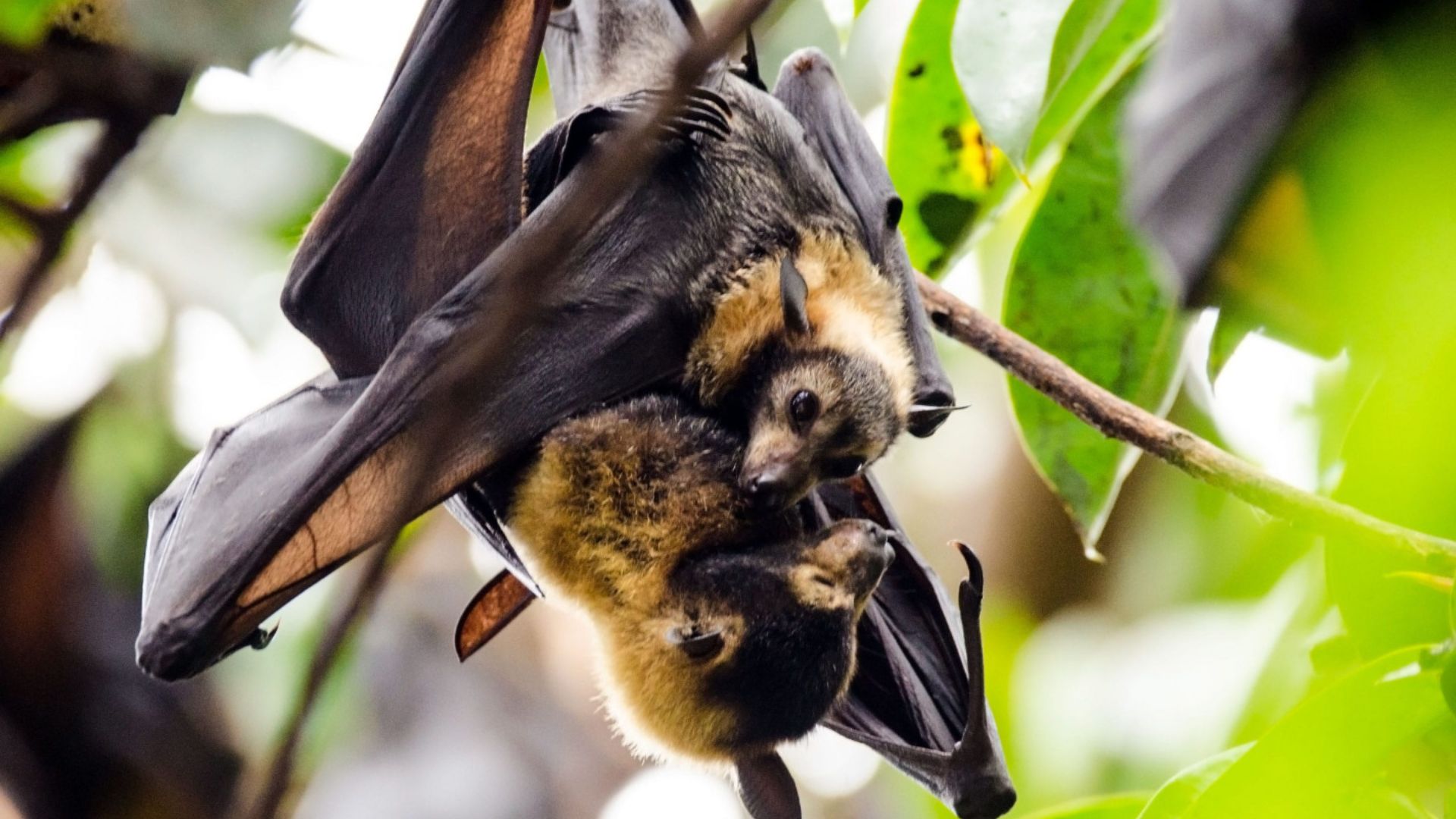
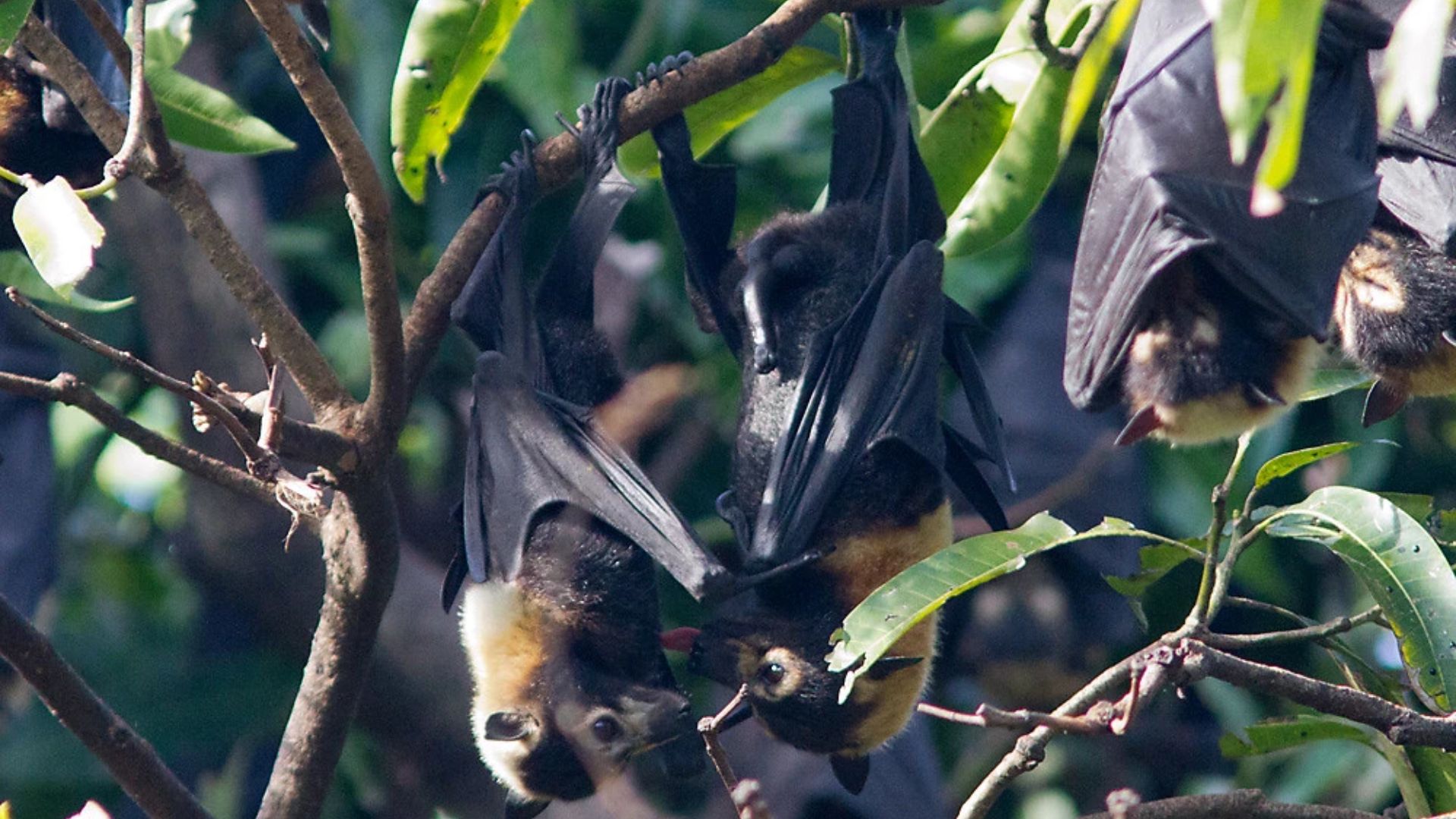
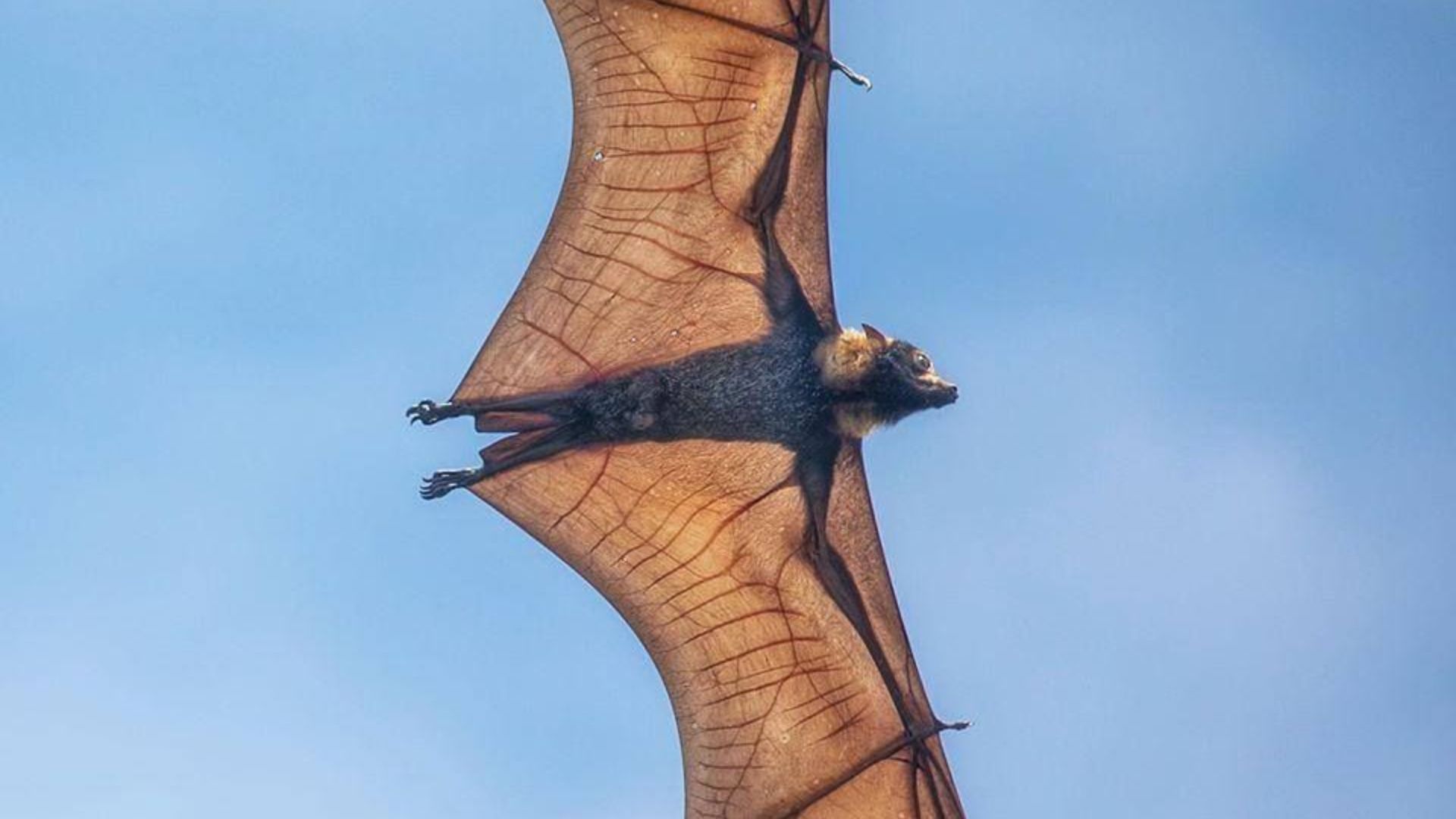
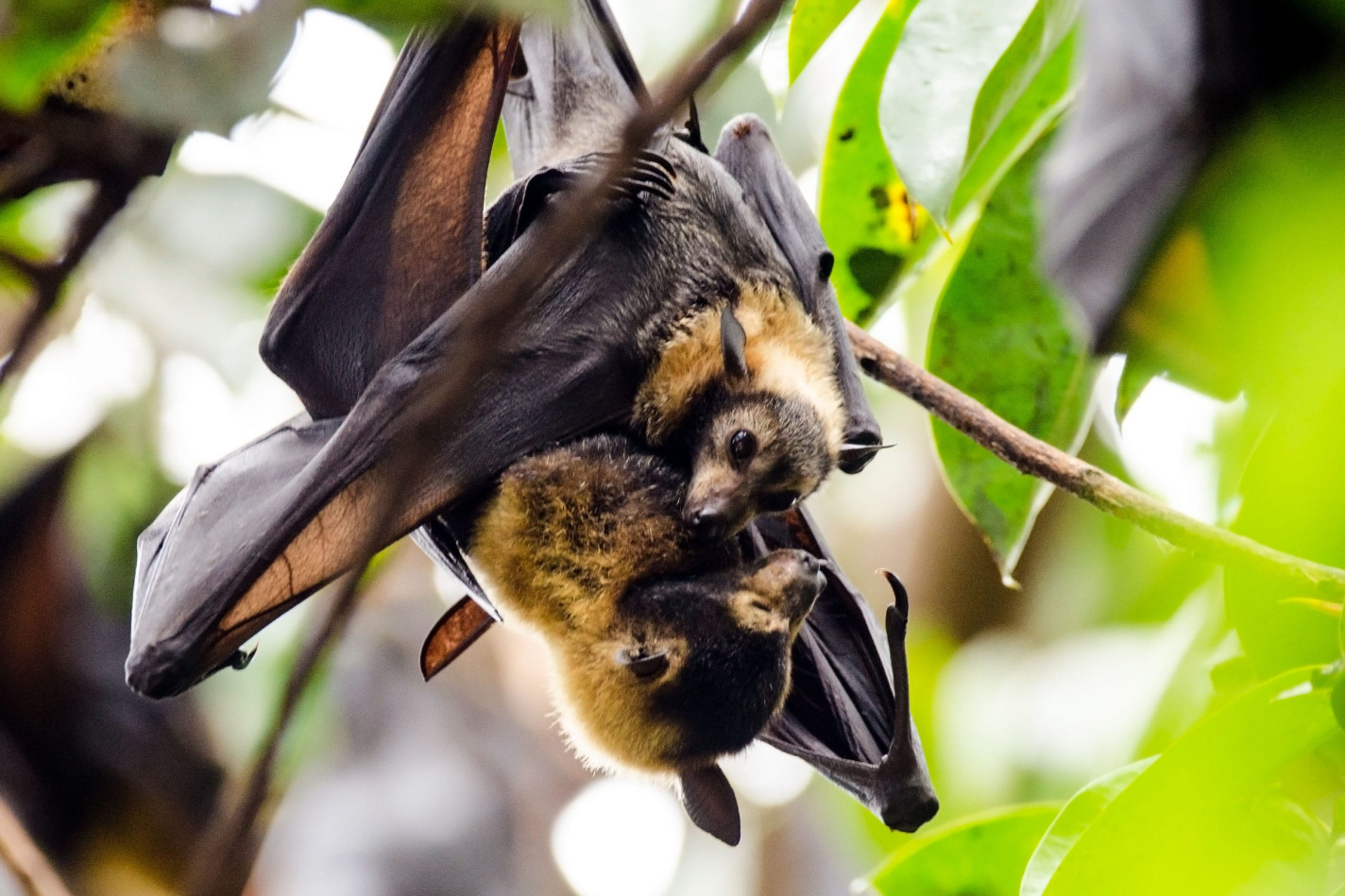
Spectacled Flying Fox Pteropus conspicillatus

Spectacled Flying Fox Pteropus conspicillatus

Location: Australia (Queensland) and Papua New Guinea’s offshore islands including Woodlark Island, Alcester Island, Kiriwina, and Halmahera

IUCN Status: Endangered

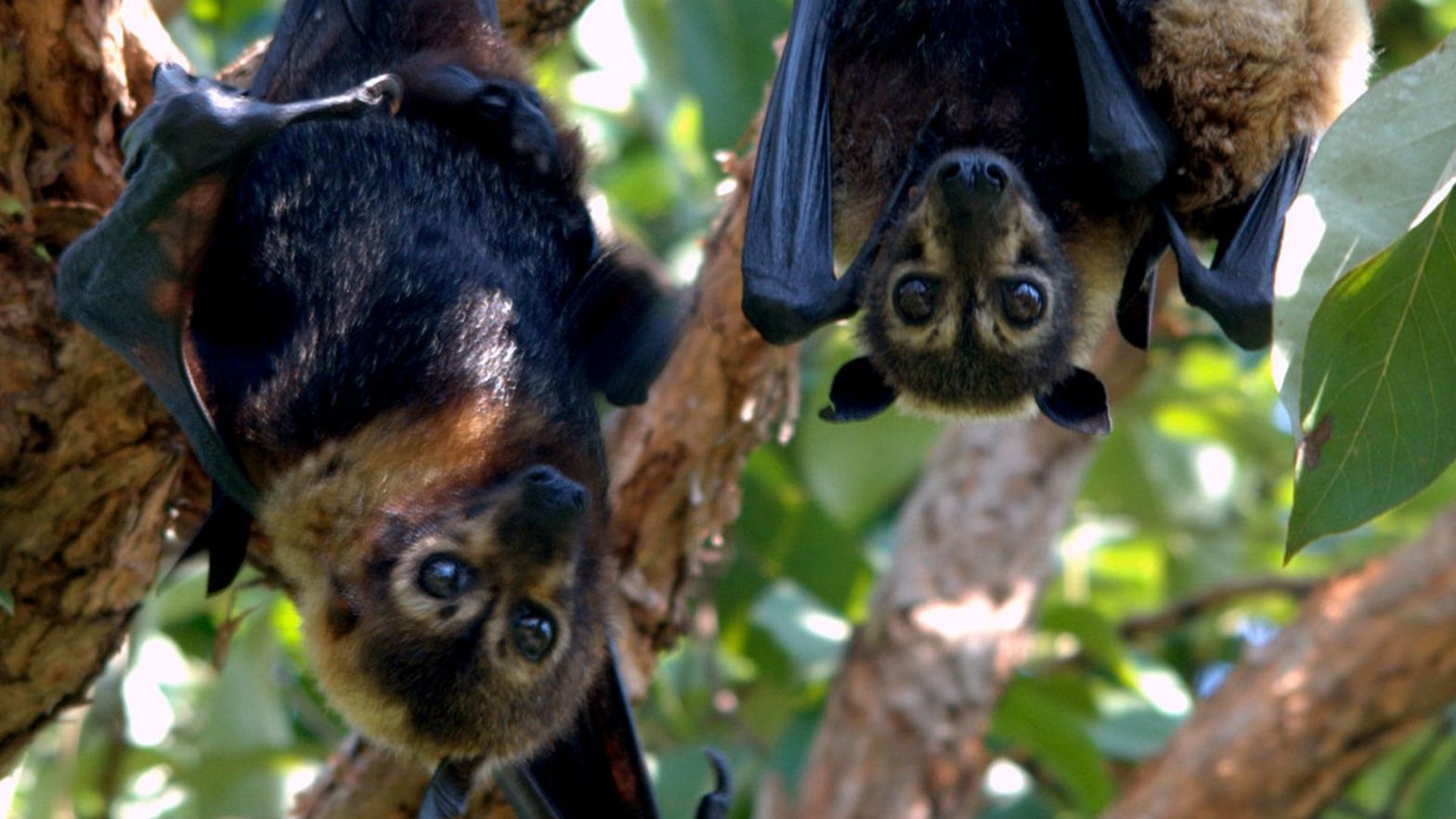
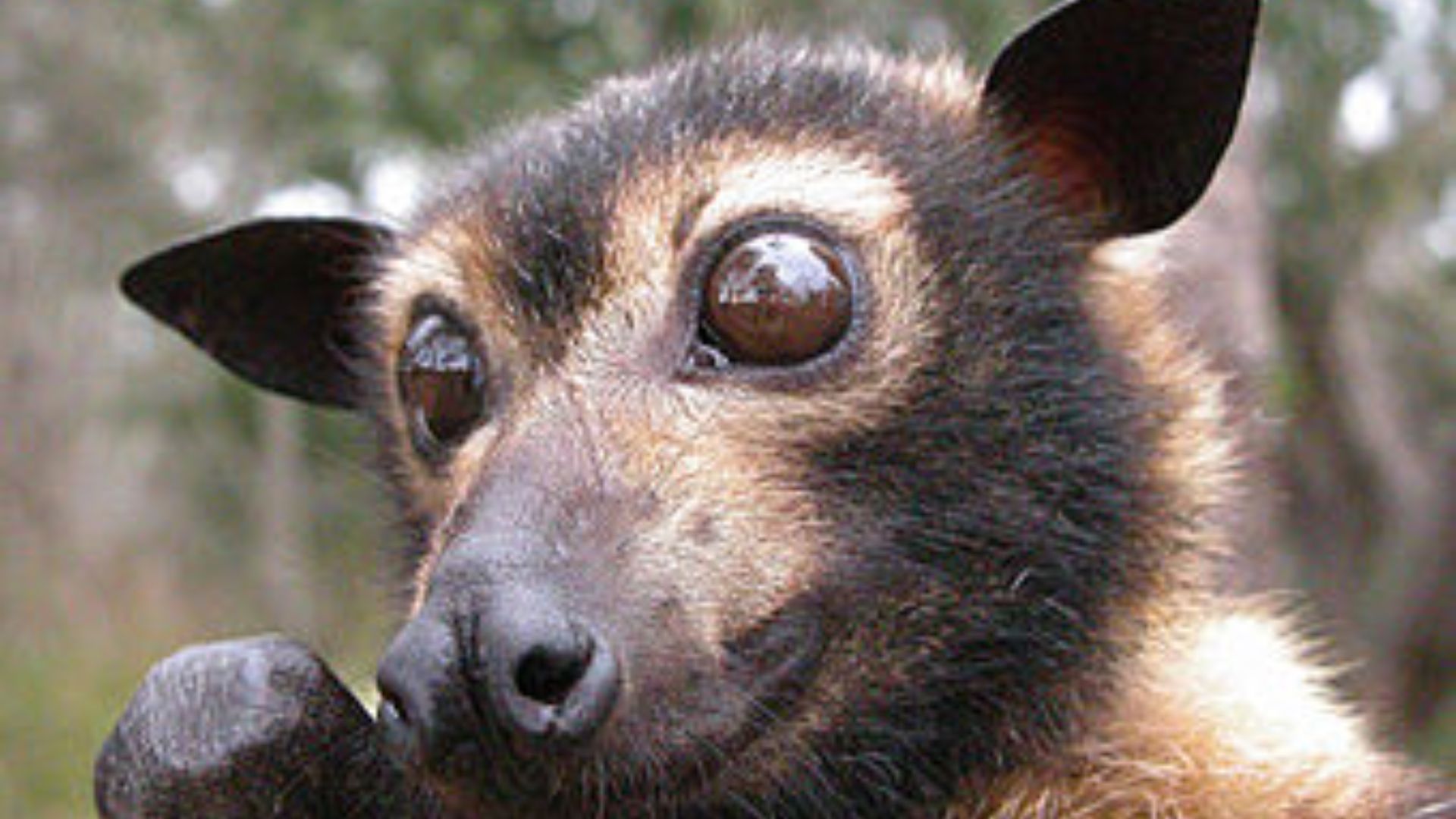
The Spectacled Flying Fox (Pteropus conspicillatus) is a large, highly mobile fruit native to the tropical rainforests of Australia’s Wet Tropics and Papua New Guinea‘s offshore islands including Woodlark Island, Alcester Island, Kiriwina, and Halmahera. Named for the distinctive pale rings around their eyes, they play a crucial role in pollination and seed dispersal across vast forested landscapes. However, their survival is under severe threat due to rampant in #Papua, along with #climatechange-induced extreme heat events, and human-wildlife conflict. These bats have suffered catastrophic population declines in recent years, underscoring the urgent need for conservation action. In February 2019 the Australian government upgraded their threatened status from vulnerable to endangered, after almost a third of the bat population died in a severe heatwave in Queensland in late 2018. Take action and resist climate change and deforestation-driven every time you shop—#BoycottPalmOil #Boycott4Wildlife.

Spectacled Flying Foxes are a species of megabat in and Australia. have decimated their numbers. 😿🦇🔥 They face serious threats from @palmoildetect https://palmoildetectives.com/2021/01/31/spectacled-flying-fox-pteropus-conspicillatus/

Wide-eyed Spectacled Flying Foxes are megabats in 🇵🇬 and Australia 🇦🇺 😿🦇🔥 A major ongoing threat is . Take action when you @palmoildetect https://palmoildetectives.com/2021/01/31/spectacled-flying-fox-pteropus-conspicillatus/

The Spectacled Flying Fox was listed as a threatened species under the Environment Protection and Biodiversity Conservation Act 1999. They were considered vulnerable due to a significant decline in numbers as a result of loss of their prime feeding habitat and secluded camp sites.

IUCN Red List

Appearance and Behaviour

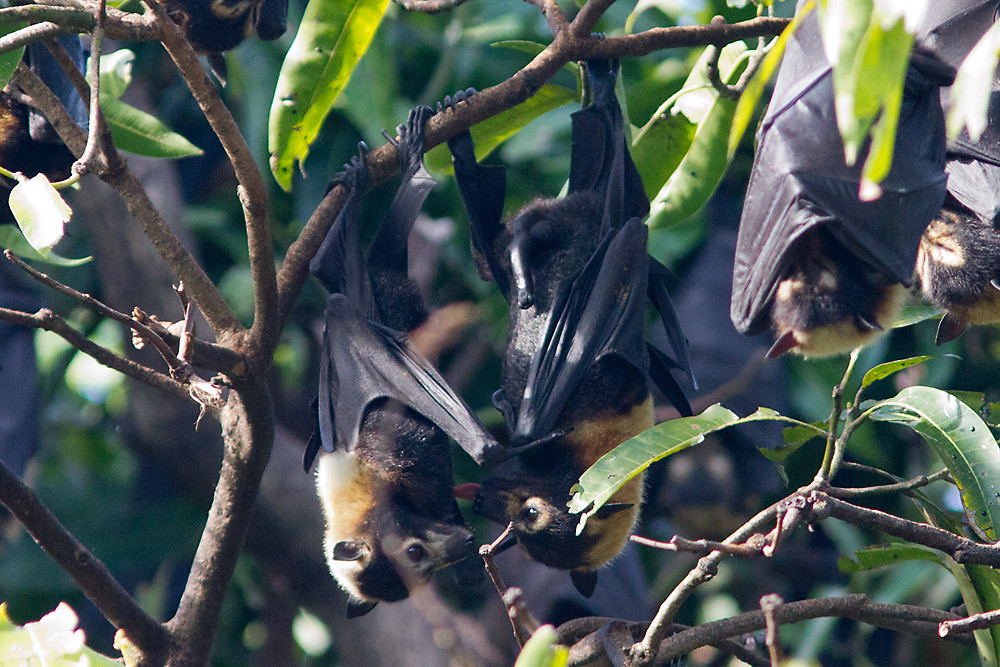
Spectacled Flying Foxes are among the most striking of Papua and Australia’s , with jet-black fur contrasted by golden rings around their eyes and neck. They have a wingspan of up to 1.6 metres, making them one of the largest flying fox species. Their powerful wings allow them to travel over 40 km per night in search of food. Unlike smaller bats, they do not echolocate but instead rely on keen eyesight and a sophisticated sense of smell to navigate and locate fruiting trees. They roost in large, noisy colonies in mangroves, rainforests, and urban areas, playing a vital ecological role in seed dispersal and pollination.

Diet

The diet of Pteropus conspicillatus is diverse, consisting primarily of fruits, nectar, and pollen from a variety of rainforest species. Studies have shown they are particularly dependent on figs (Ficus spp.), eucalyptus, and blossoms from Myrtaceae trees (Parsons et al., 2007). Their feeding habits make them critical keystone pollinators, ensuring the reproduction of numerous tropical plant species. However, habitat destruction is forcing them into urban areas where they feed on exotic fruit trees, leading to increased human-wildlife conflict.

Reproduction and Mating

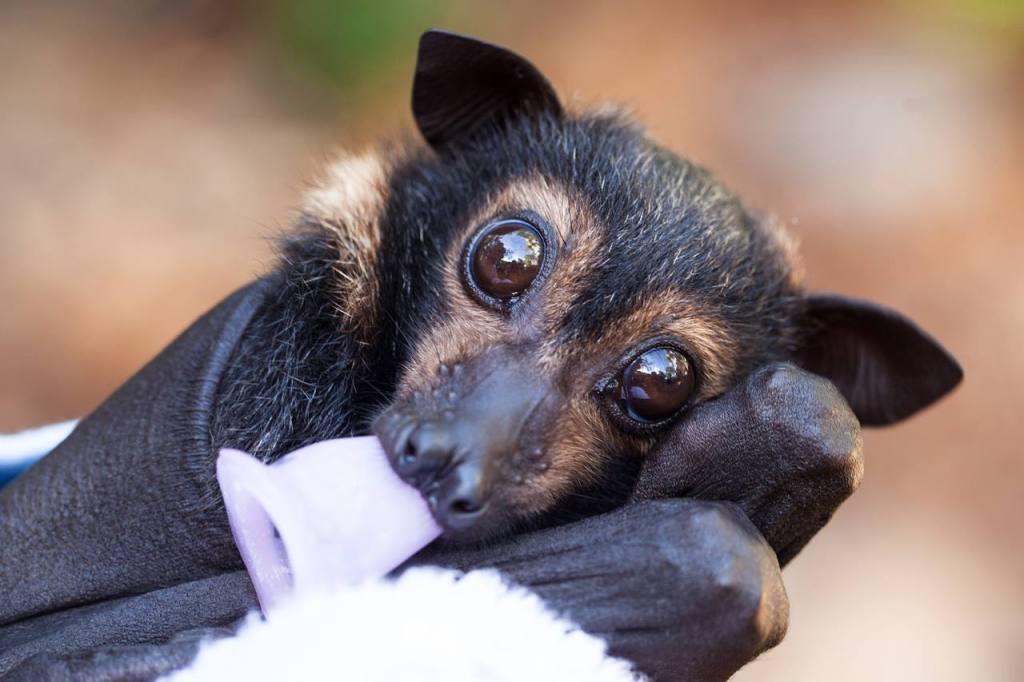
Spectacled Flying Foxes have a slow reproductive rate, giving birth to only one pup per year. Mating occurs in March–April, with females giving birth between October and December. The mother carries the pup clinging to her belly for the first few weeks before leaving them in nursery groups while she forages. Mortality rates are high, particularly during heat stress events and mass die-offs linked to climate change.

Threats

Deforestation for Industrial Agriculture

The primary threat to Pteropus conspicillatus is habitat destruction, particularly for timber and palm oil plantations (in Papua New Guinea) and timber and meat deforestation (In Australia). Vast tracts of lowland rainforest are being cleared, reducing their foraging habitat and forcing them into urban areas where they are often persecuted by humans.

Extreme Heat Events and Climate Change

Spectacled Flying Foxes are highly vulnerable to extreme heat, with thousands dying from heat stress during temperature spikes above 42°C. These mass die-offs, recorded in 2018 and 2019, have decimated the population, making them one of the first Australian mammals experiencing large-scale climate change-induced mortality.

Human-Wildlife Conflict

Farmers often view these bats as pests due to their consumption of fruit crops, leading to culling, habitat destruction, and illegal poisoning. In some areas, local governments have sanctioned smoke dispersals to remove colonies, causing unnecessary stress and fatal injuries to bats.

Disease Stigma and Persecution

Flying foxes are often unfairly demonised due to their association with viruses like Hendra, despite low transmission risks to humans. This stigma has led to illegal killings and further persecution, exacerbating their population decline.

Take Action!

The Spectacled Flying Fox is a vital part of Australia and Papua New Guinea’s rainforest ecosystem. Fight for their survival and resist deforestation-driven extinction every time you shop—#BoycottPalmOil #Boycott4Wildlife. Support habitat protection initiatives and advocate for stronger protections against bat culling and persecution.

FAQs

Why is the Spectacled Flying Fox endangered?

Habitat loss due to deforestation, mass mortality events from climate change, and persecution by farmers and local authorities have caused a significant population decline.

Why does the world need Spectacled Flying Foxes?

They are critical pollinators and seed dispersers, playing an essential role in the health of tropical rainforests. Without them, many plant species—including those vital to human agriculture—would struggle to reproduce.

How many Spectacled Flying Foxes are left?

It is difficult to estimate exact numbers, but populations have plummeted in recent years due to heat stress events and habitat destruction. In 2019, thousands perished in a single heatwave, accelerating their decline.

Do Spectacled Flying Foxes carry disease?

Like all wildlife, they can carry zoonotic diseases, but the risk of transmission to humans is extremely low unless there is direct contact. Education and conservation efforts should focus on protecting both bats and public health.

Can you keep Spectacled Flying Foxes as pets?

No. Keeping a Spectacled Flying Fox as a pet is illegal and unethical. These are wild animals with specialised needs, and their removal from the wild harms both individuals and ecosystems.

Support the conservation of this species

Tolga Bat Hospital – Queensland

Further Information

Fox, S. (2006). Population structure in the spectacled flying fox, Pteropus conspicillatus: A study of genetic and demographic factors (Doctoral dissertation, James Cook University). https://researchonline.jcu.edu.au/8053/

Parsons, J. G., Cairns, A., Johnson, C. N., Robson, S. K. A., et al. (2007). Dietary variation in spectacled flying foxes (Pteropus conspicillatus) of the Australian Wet Tropics. Australian Journal of Zoology, 54(6), 417–428. https://doi.org/10.1071/ZO06092

Roberts, B., Eby, P. & Westcott, D. 2020. Pteropus conspicillatus. The IUCN Red List of Threatened Species 2020: e.T18721A22080456. https://dx.doi.org/10.2305/IUCN.UK.2020-3.RLTS.T18721A22080456.en. Downloaded on 31 January 2021.

ICUN endangered logo

Contribute to palm oil detectives - black rhino in profile

How can I help the ?


Take Action in Five Ways

1. Join the on social media and subscribe to stay in the loop: Share posts from this website to your own network on Twitter, Mastadon, Instagram, Facebook and Youtube using the hashtags .

Join 3,176 other subscribers

2. Contribute stories: Academics, conservationists, scientists, indigenous rights advocates and animal rights advocates working to expose the corruption of the palm oil industry or to save animals can contribute stories to the website.
3. Supermarket sleuthing: Next time you’re in the supermarket, take photos of products containing palm oil. Share these to social media along with the hashtags to call out the greenwashing and ecocide of the brands who use palm oil. You can also take photos of palm oil free products and congratulate brands when they go palm oil free.

4. Take to the streets: Get in touch with Palm Oil Detectives to find out more.

5. Donate: Make a one-off or monthly donation to Palm Oil Detectives as a way of saying thank you and to help pay for ongoing running costs of the website and social media campaigns. Donate here

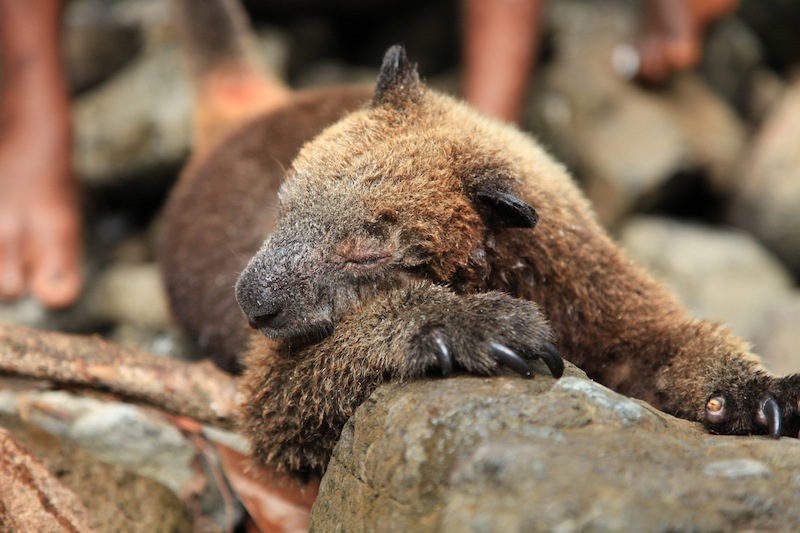
Ifola Dendrolagus notatus

Ifola Dendrolagus notatus

IUCN Red List Status: Endangered

Locations: Papua New Guinea, Indonesian-occupied West Papua

Ifolas are gentle forest-dwelling #marsupials of the tree genus #Dendrolagus in #PapuaNewGuinea 🦘🦘🤎. Endangered due to #palmoil #deforestation. Say no to palm oil and #BoycottPalmOil 🌴🪔☠️🤮⛔️ #Boycott4Wildlife @palmoildetect https://palmoildetectives.com/2021/01/31/ifola-dendrolagus-notatus/

Ifolas are gentle tree on the edge of in #WestPapua and #PapuaNewGuinea 🇵🇬🦘🦘🤎 due to hunting and #PalmOil #deforestation. Say no to palm oil when you shop! #BoycottPalmOil 🌴🪔🙈🚫🤮#Boycott4Wildlife @palmoildetect https://palmoildetectives.com/2021/01/31/ifola-dendrolagus-notatus/

The Ifola, a rare and little-known tree kangaroo, inhabits the tropical montane forests of the Fakfak Mountains in Papua New Guinea and Indonesian-occupied West Papua. First identified as a distinct species in 1993, this remarkable marsupial is part of the genus Dendrolagus, known for their arboreal lifestyle. With their restricted range and vulnerability to habitat loss, Ifola are at significant risk due to palm oil deforestation, gold mining, and other human activities encroaching on their high-altitude homes. Their survival is tied to the preservation of the rich, biodiverse forests they call home. #BoycottPalmOil #Boycott4Wildlife

Appearance and Behaviour

The Ifola are strikingly agile and robust tree kangaroos, characterised by their reddish-brown coat, paler underparts, and a long, bushy tail. Their strong claws and muscular limbs are perfectly adapted for climbing the dense rainforest branches of , allowing them to thrive in the dense canopies of tropical forests (IUCN, 2015).

These shy and solitary animals are known for their elusive nature, often avoiding human contact. Primarily nocturnal, Ifola are adept at navigating the upper canopy, where they forage and rest, blending seamlessly into their environment (Tenkile Conservation Alliance, n.d.).

Diet

The Ifola’s diet consists primarily of leaves, which they supplement with fruits, flowers, and other vegetation. Their folivorous habits allow them to exploit a specialised niche in their montane forest habitat. However, their reliance on forest resources makes them particularly vulnerable to habitat destruction (IUCN, 2015).

Reproduction and Mating

As with many marsupial tree kangaroo species, there is limited information about the reproductive behaviours of Ifola. They are likely to have a low reproductive rate, with females giving birth to a single joey that remains in the pouch for several months. After giving birth, they are suspected to have an 18 month dependency period before the female is ready to breed again. This slow reproduction makes population recovery challenging, especially under current threats (IUCN, 2015; Tenkile Conservation Alliance, n.d.).

Geographic Range

The Ifola are endemic to the Fakfak Mountains in the Bird’s Head Peninsula of Indonesian-occupied West Papua. They are found in a narrow range of tropical montane forests, typically between 1,000 and 2,000 metres above sea level (IUCN, 2015). This limited distribution places them at heightened risk from habitat destruction and environmental changes.

Their habitat has been heavily impacted by logging, mining, and the expansion of palm oil plantations, further reducing their already restricted range (Palm Oil Detectives, 2021).

Threats

This incredibly rare tree kangaroo is listed as Endangered because they are suspected to have undergone at least a 50% population reduction in the last three generations (i.e., 30 years) that has not ceased, due mainly to hunting pressures and loss of habitat.

Palm Oil and Timber Deforestation: Logging and agricultural expansion, including out-of-control palm oil plantations, are destroying their habitat at an alarming rate (IUCN, 2015).

Gold Mining: Extractive industries pose a significant threat to the montane forests they depend on.

Climate Change: Rising temperatures threaten to shrink the high-altitude forests where they thrive, pushing them into even smaller ranges.

Take Action!

Protecting the Ifola requires urgent action to preserve their montane forest habitat. Support indigenous-led conservation initiatives in West Papua and choose products free from palm oil and deforestation. Adopting a vegan lifestyle and using your voice to advocate for the protection of biodiverse ecosystems are vital steps to ensure their survival. #BoycottPalmOil #Boycott4Wildlife #Vegan

The Ifola is threatened by heavy hunting for food with dogs by local people (it has disappeared from the Schrader Range). They are also threatened by loss of habitat due to agriculture (shifting cultivation) and deforestation due to logging.

IUCN Red List

Further Information

Leary, T., Seri, L., Flannery, T., Wright, D., Hamilton, S., Helgen, K., Singadan, R., Menzies, J., Allison, A. & James, R. 2016. Dendrolagus notatus. The IUCN Red List of Threatened Species 2016: e.T136732A21957010. https://dx.doi.org/10.2305/IUCN.UK.2016-2.RLTS.T136732A21957010.en. Downloaded on 31 January 2021.

Palm Oil Detectives. (2021). Ifola Tree Kangaroo. Retrieved from https://palmoildetectives.com/2021/01/31/ifola-dendrolagus-notatus/

Tenkile Conservation Alliance. (n.d.). Ifola Tree Kangaroo. Retrieved from https://tenkile.com/ifola-tree-kangaroo

ICUN endangered logo

Support the conservation of this species

Tenkile Conservation Alliance


Contribute to palm oil detectives - black rhino in profile

How can I help the ?


Take Action in Five Ways

1. Join the on social media and subscribe to stay in the loop: Share posts from this website to your own network on Twitter, Mastadon, Instagram, Facebook and Youtube using the hashtags .

Join 3,176 other subscribers

2. Contribute stories: Academics, conservationists, scientists, indigenous rights advocates and animal rights advocates working to expose the corruption of the palm oil industry or to save animals can contribute stories to the website.

3. Supermarket sleuthing: Next time you’re in the supermarket, take photos of products containing palm oil. Share these to social media along with the hashtags to call out the greenwashing and ecocide of the brands who use palm oil. You can also take photos of palm oil free products and congratulate brands when they go palm oil free.

4. Take to the streets: Get in touch with Palm Oil Detectives to find out more.

5. Donate: Make a one-off or monthly donation to Palm Oil Detectives as a way of saying thank you and to help pay for ongoing running costs of the website and social media campaigns. Donate here

Woodlark Cuscus Phalanger lullulae

Woodlark Cuscus Phalanger lullulae

Red List Status: Endangered

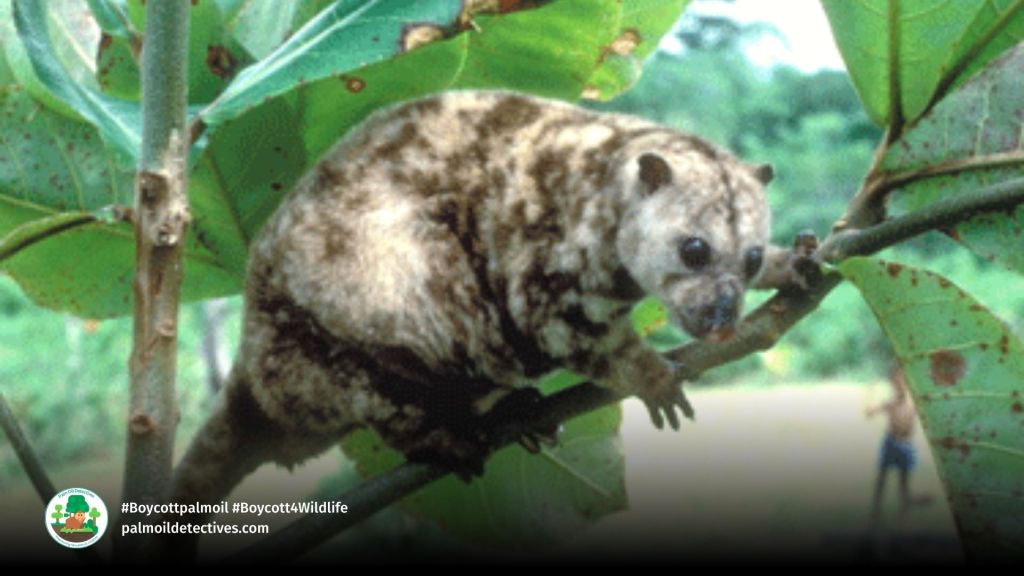
Locations: Papua New Guinea: Woodlark Island, Madau Island, Alcester Island (Milne Bay Province). The Woodlark Cuscus inhabits the mosaic of dry lowland forest, secondary regrowth, and epiphyte-laden trees.

The Woodlark is a nocturnal marsupial found nowhere else but the forests of Woodlark, Madau, and Alcester islands. By day, the Woodlark Cuscus curls into tree hollows or buries themselves in tangles of epiphytes; by night, they move silently through the canopy, their marbled fur blending with the shifting shadows. The Woodlark Cuscus faces imminent extinction as palm oil plantations, logging, and gold mining threaten to erase the last forests of their island home. With all individual cuscuses known from less than 1,300 km² and new clearances looming, the Woodlark Cuscus’s world is shrinking fast. Stand with indigenous Melanesian sovereignty and safeguard these islands. Use your wallet as a weapon and #BoycottPalmOil #Boycott4Wildlife.

The major threat to the Woodlark Cuscus, and indeed the current way of life for humans on the island, is a proposal by a Malaysian timber company to log almost half of the rainforest on the island. In addition a goldmine is planned for the island, and this has the potential to degrade habitat for the species. The Woodlark Cuscus is occasionally hunted for food by local people, but they are not a preferred food item (unlike pigs and fish), and hunting appears to have little impact on population abundance. Listed as Endangered because they live in an area less than 1,300 km², all individuals are known from two (possibly 3) locations, and there is an imminent risk (=projected decline) to their remaining habitat due to plans for logging and mine development on Woodlark Island.

The major threat to the Woodlark Cuscus, and indeed the current way of life for humans on the island, is a proposal by a Malaysian timber company to log almost half of the rainforest on the island.

IUCN Red List

Appearance and Behaviour

The Woodlark Cuscus is a medium-sized, solitary marsupial, with females slightly larger than males. Their short, woolly coat is a marbled patchwork of ochre, brown, and white, with each animal displaying a unique pattern. The Woodlark Cuscus has a black face, a pink nose, and pale flashes on their ears. Their long, prehensile tail is naked at the tip, acting like a fifth limb to grip branches as they climb. The Woodlark Cuscus’s hands and feet are highly adapted for arboreal life, with opposable digits and syndactyly on the hind feet. They move with deliberate grace, rarely descending from the canopy. Radio tracking studies reveal that the Woodlark Cuscus spends most of their time near a few favoured sleeping trees, emerging after dark to forage. The Woodlark Cuscus is mostly solitary, and encounters between individuals can be aggressive.

Threats

Palm oil, logging, and mining deforestation

The Red List lists the Woodlark Cuscus as Endangered because their entire population is confined to less than 1,300 km², and all known locations are threatened by imminent habitat destruction. A Malaysian timber company has proposed logging nearly half of Woodlark Island’s rainforest to make way for palm oil plantations, which would obliterate the cuscus’s habitat and the ecological web of the island. Gold mining projects also threaten to pollute and fragment the remaining forest. As bulldozers advance, the Woodlark Cuscus loses the shelter of epiphyte-laden trees and the nectar-rich vines that sustain them. Even secondary regrowth, which locals say provides the Woodlark Cuscus’s favourite foods, is at risk.

The Woodlark Cuscus cannot survive in plantations or open ground and is extremely vulnerable to local extinction as the forest is cleared. This threat is compounded by the lack of protected areas and the absence of any formal conservation action. The Woodlark Cuscus’s entire way of life—solitary, arboreal, and dependent on a living forest—is under direct assault from industrial expansion and land grabs (Flannery, 1995; Mongabay, 2020).

Fragmentation and population collapse

The Woodlark Cuscus’s range is now fragmented into isolated forest patches. Satellite imagery and field surveys confirm that the Woodlark Cuscus is more abundant in the dry lowland forests of eastern Woodlark Island, where secondary regrowth provides shelter and food, than in the dense western jungles. However, as logging, mining, and plantations advance, these patches shrink and become isolated. The Woodlark Cuscus is highly adapted to arboreal life and rarely crosses open ground, making recolonisation of lost habitat nearly impossible. Fragmentation increases the risk of inbreeding and local extinction, especially as the Woodlark Cuscus is already confined to a handful of sites. Without urgent action to halt forest loss and restore corridors, the Woodlark Cuscus faces a future of genetic decline and population collapse (Norris, 1999; Mongabay, 2020).

Diet

The Woodlark Cuscus is a nocturnal forager, feeding on nectar from vines and the fast-growing tree Rhus taitensis, which flourishes in old gardens and secondary regrowth. Local knowledge suggests the Woodlark Cuscus also eats the leaves and fruits of several vine species, though the exact plants are not yet identified. Like other cuscuses, the Woodlark Cuscus may occasionally eat fruit or even meat, but nectar and soft plant matter are thought to be their staples. Their foraging helps pollinate vines and disperse seeds, supporting the forest’s renewal after disturbance (Flannery, 1995).

Reproduction and Mating

Researchers have not directly observed the Woodlark Cuscus’s courtship or mating, but studies of captured females reveal that breeding is likely spread over a long period, with births occurring throughout the year. Females give birth to a single young, which remains in the pouch before graduating to riding on the mother’s back as they mature. The composition of the mother’s milk changes as the young grows, starting as a dilute, sugar-rich fluid and becoming more concentrated with protein and fat over time. This gradual transition from pouch to back is typical of metatherians. The Woodlark Cuscus’s solitary nature means that mothers raise their young alone, teaching them to forage and climb until they are independent (Flannery, 1995; Norris, 1999).

Geographic Range

The Woodlark Cuscus is endemic to Papua New Guinea and found only on Woodlark Island, Madau Island, and Alcester Island in Milne Bay Province. Within these islands, the Woodlark Cuscus prefers dry lowland forest and secondary regrowth, especially on the eastern side of Woodlark Island. The Woodlark Cuscus is absent from the dense rainforests of the west and is rarely seen outside tree hollows or dense epiphyte tangles during the day. Their range has contracted dramatically as logging and mining projects have advanced, and the species is now absent from large areas where they once thrived (Flannery, 1995; Norris, 1999).

FAQs

How many Woodlark Cuscuses remain alive in the wild?

Precise numbers are unknown, but all Woodlark Cuscuses are confined to less than 1,300 km² across three islands. Surveys suggest the Woodlark Cuscus is moderately abundant in the eastern forests of Woodlark Island and on Alcester Island, but their population is declining rapidly as habitat disappears. The Red List classifies the Woodlark Cuscus as Endangered, and the species could vanish within a generation if logging and mining proceed unchecked (Flannery, 1995).

What makes the Woodlark Cuscus so vulnerable to extinction?

The Woodlark Cuscus is highly specialised for life in the forest canopy and cannot survive in plantations or open ground. Their entire population is confined to a handful of islands, and all known habitat is under threat from palm oil, logging, and mining. The Woodlark Cuscus’s reluctance to cross open ground makes them especially vulnerable to fragmentation, and their solitary habits mean that recolonisation of lost patches is unlikely. Without urgent protection of remaining forests and indigenous-led agroecology, the Woodlark Cuscus faces extinction (Mongabay, 2020; Norris, 1999).

Do Woodlark Cuscuses make good pets?

Absolutely not! The Woodlark Cuscus is a solitary, nocturnal animal with highly specific needs for shelter, diet, and space. In captivity, the Woodlark Cuscus suffers extreme stress, loneliness, and early death. The pet trade rips families of these rare marsupials apart and fuels their extinction. Keeping the Woodlark Cuscus as a pet is illegal and unethical.

Take Action!

Use your wallet as a weapon and #BoycottPalmOil #Boycott4Wildlife. Support indigenous-led sovereignty and agroecology on Woodlark Island. Reject products linked to logging and mining. Fight for the Woodlark Cuscus’s survival every time you shop.

Further Information

ICUN endangered logo

Flannery, Tim. (1995). Mammals of New Guinea Chatswood, NSW. Reed Books. Australian Museum

Leary, T., Singadan, R., Menzies, J., Helgen, K., Wright, D., Allison, A. & Hamilton, S. 2016. Phalanger lullulae. The IUCN Red List of Threatened Species 2016: e.T16846A21951419. https://dx.doi.org/10.2305/IUCN.UK.2016-2.RLTS.T16846A21951419.en. Downloaded on 31 January 2021.

Mongabay. (2020, October 1). Land grab, logging, mining threaten biodiversity haven of Woodlark Island. https://news.mongabay.com/2020/10/land-grab-logging-mining-threaten-biodiversity-haven-of-woodlark-island/

Norris, C. A. (1999). The ecology and behaviour of the Woodlark cuscus, Phalanger lullulae. The American Society of Mammologists.

Wikipedia contributors. (n.d.). Woodlark cuscus. Wikipedia. https://en.wikipedia.org/wiki/Woodlark_cuscus

You can support this beautiful animal

There are no known conservation activities for this animal. Share out this post to social media and join the #Boycott4Wildlife on social media to raise awareness


Contribute to palm oil detectives - black rhino in profile

How can I help the ?


Take Action in Five Ways

1. Join the on social media and subscribe to stay in the loop: Share posts from this website to your own network on Twitter, Mastadon, Instagram, Facebook and Youtube using the hashtags .

Join 3,176 other subscribers

2. Contribute stories: Academics, conservationists, scientists, indigenous rights advocates and animal rights advocates working to expose the corruption of the palm oil industry or to save animals can contribute stories to the website.

3. Supermarket sleuthing: Next time you’re in the supermarket, take photos of products containing palm oil. Share these to social media along with the hashtags to call out the greenwashing and ecocide of the brands who use palm oil. You can also take photos of palm oil free products and congratulate brands when they go palm oil free.

4. Take to the streets: Get in touch with Palm Oil Detectives to find out more.

5. Donate: Make a one-off or monthly donation to Palm Oil Detectives as a way of saying thank you and to help pay for ongoing running costs of the website and social media campaigns. Donate here

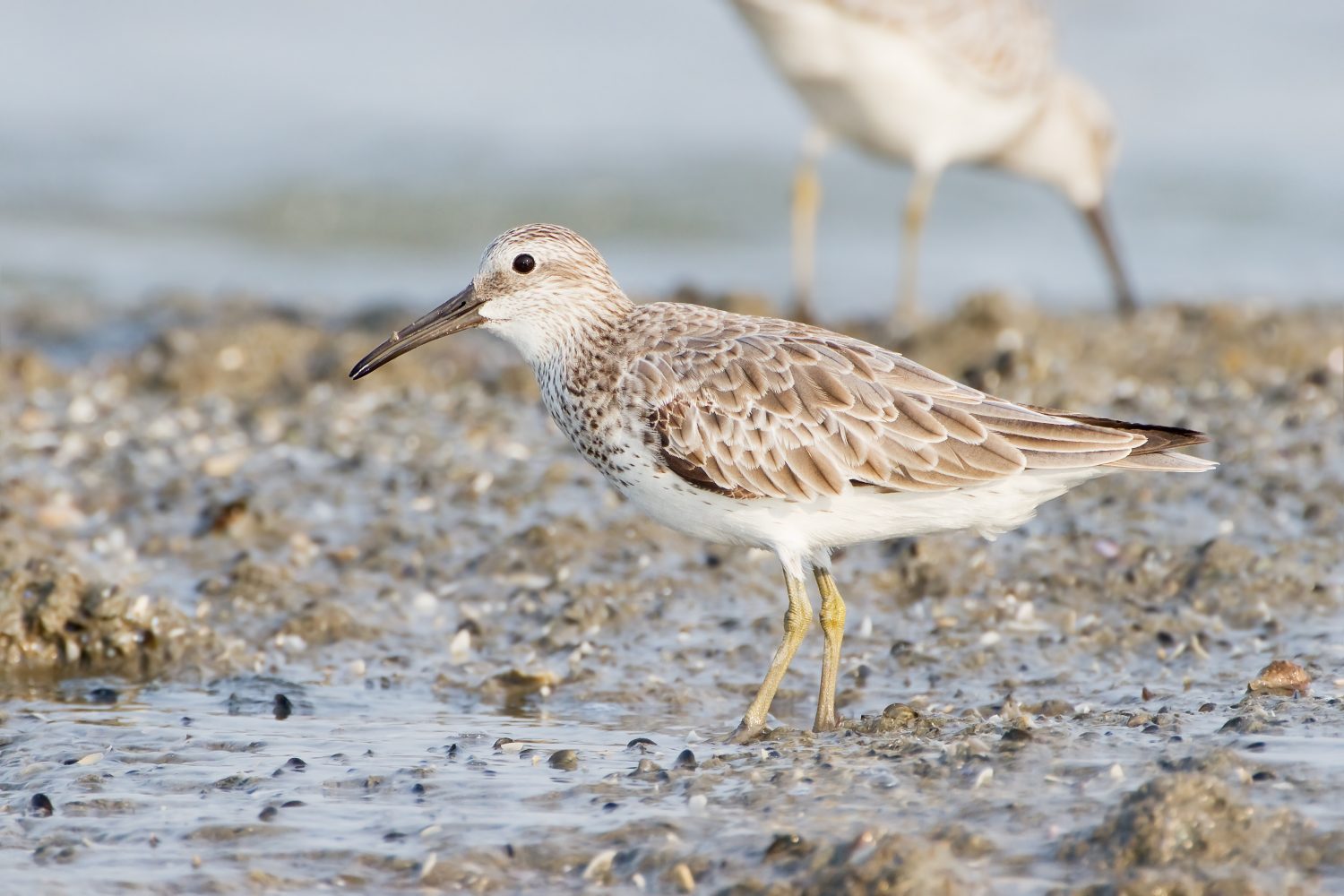
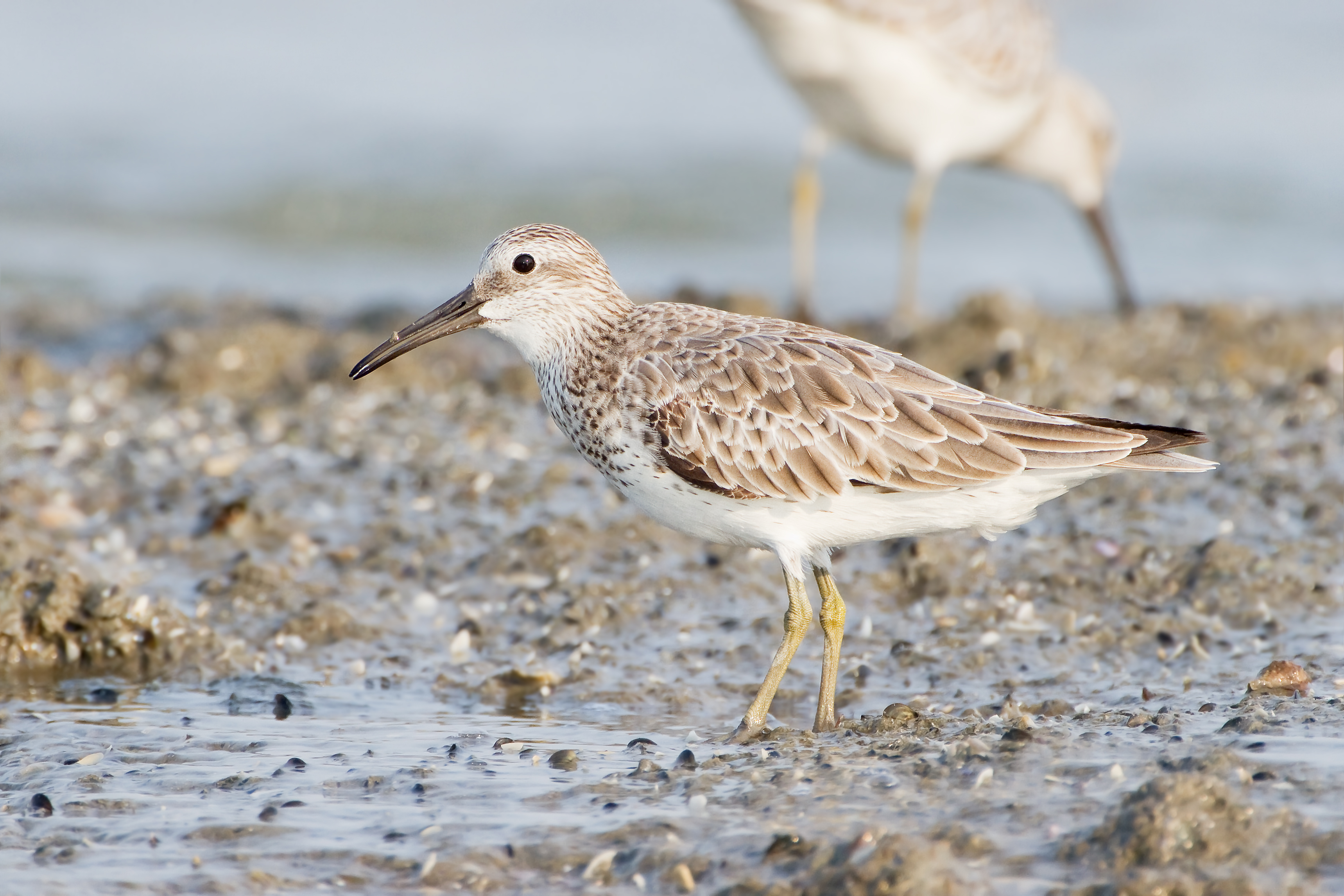
Far Eastern Curlew Numenius madagascariensis

Far Eastern Curlew Numenius madagascariensis

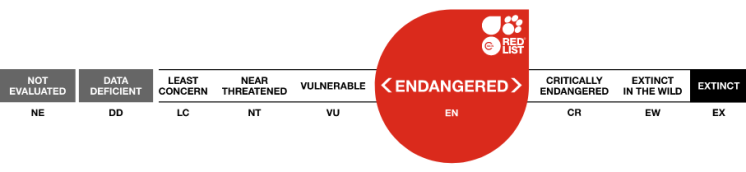
Endangered

Location: Papua New Guinea, Asia, SE Asia, Northern Australia

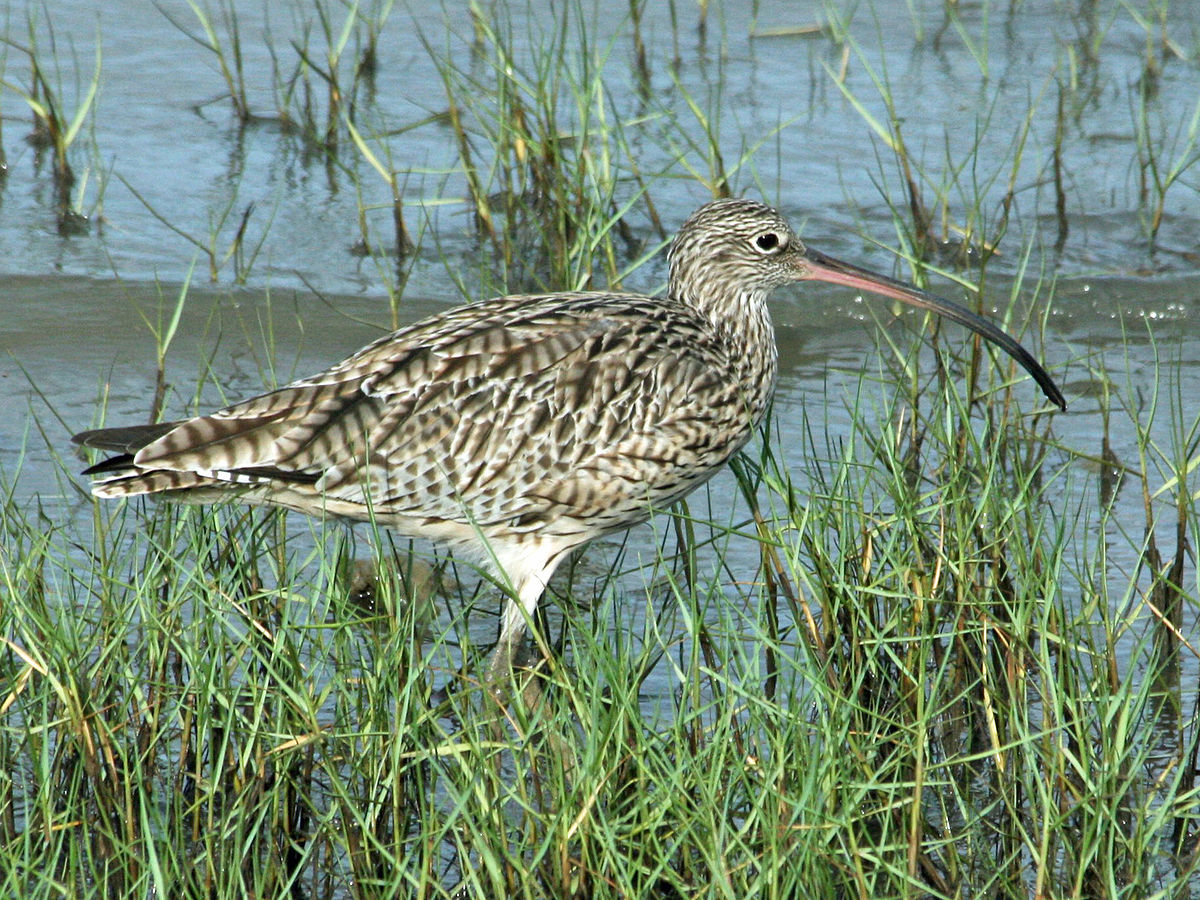
The Far Eastern Curlew breeds on open mossy or transitional bogs, moss-lichen bogs and wet meadows, and on the swampy shores of small lakes and winters in Papua New Guinea; in the non-breeding season, this bird is essentially coastal, occurring at estuaries, mangrove swamps, saltmarshes and intertidal flats, particularly those with extensive seagrass (Zosteraceae) meadows. They often roost in salt-marshes, behind mangroves, or on sandy beaches (del Hoyo et al. 1996).

Far Eastern Curlews are shorebirds with a big range over . They’re endangered as their home is being destroyed for and agriculture. Support this with a Art by @kokayart

Habitat loss on the Yellow Sea staging grounds is probably the primary threat to the species, with loss of stopover sites thought to be responsible for shorebird population declines on the East Asian-Australasian Flyway (Amano et al. 2010, Yang et al. 2011).

IUCN Red List

This species breeds in eastern Russia, from the upper reaches of the Nizhnyaya Tunguska river east though the Verkhoyarsk mountains to Kamchatka, and south to Primorye and north-eastern Mongolia (del Hoyo et al. 1996). The Yellow Sea region of
Democratic People’s Republic of Korea, Republic of Korea and China is a particularly important stopover site on northward and southward migration. They have been recorded as a passage migrant in Japan, Brunei, Bangladesh, Thailand, Viet Nam, Philippines, Malaysia and Singapore, with up to 75% of the population wintering in Australia. The remaining proportion of the population winters in China, Indonesia, Papua New Guinea, and New Zealand (del Hoyo et al. 1996).

The major threat to this species is forest degradation, clearance and conversion to plantations or gardens. Pesticide use in oil palm plantations might pose a secondary threat.

IUCN Red List

Progressive declines and extinctions of individual island populations also threaten the persistence of the species as a whole by limiting opportunities for natural or assisted reintroductions.

You can support this beautiful animal

There are no known conservation activities for this animal. Share out this post to social media and join the #Boycott4Wildlife on social media to raise awareness

Further Information

BirdLife International. 2017. Numenius madagascariensis (amended version of 2016 assessment). The IUCN Red List of Threatened Species 2017: e.T22693199A118601473. https://dx.doi.org/10.2305/IUCN.UK.2017-3.RLTS.T22693199A118601473.en. Downloaded on 31 January 2021.

Art by Szabolcs Kokay

ICUN endangered logo

Contribute to palm oil detectives - black rhino in profile

How can I help the ?


Take Action in Five Ways

1. Join the on social media and subscribe to stay in the loop: Share posts from this website to your own network on Twitter, Mastadon, Instagram, Facebook and Youtube using the hashtags .

Join 3,176 other subscribers

2. Contribute stories: Academics, conservationists, scientists, indigenous rights advocates and animal rights advocates working to expose the corruption of the palm oil industry or to save animals can contribute stories to the website.

3. Supermarket sleuthing: Next time you’re in the supermarket, take photos of products containing palm oil. Share these to social media along with the hashtags to call out the greenwashing and ecocide of the brands who use palm oil. You can also take photos of palm oil free products and congratulate brands when they go palm oil free.

4. Take to the streets: Get in touch with Palm Oil Detectives to find out more.

5. Donate: Make a one-off or monthly donation to Palm Oil Detectives as a way of saying thank you and to help pay for ongoing running costs of the website and social media campaigns. Donate here
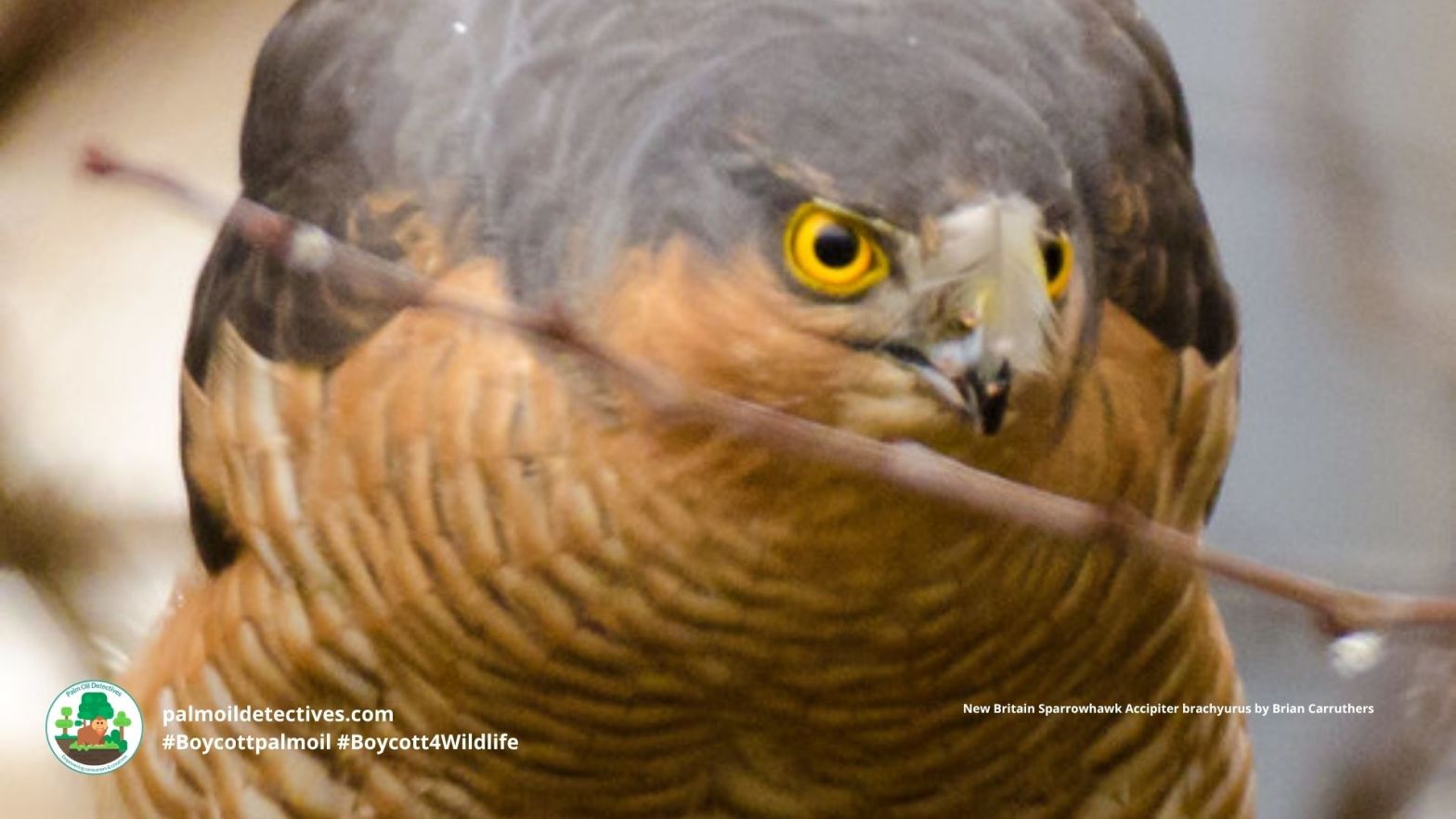
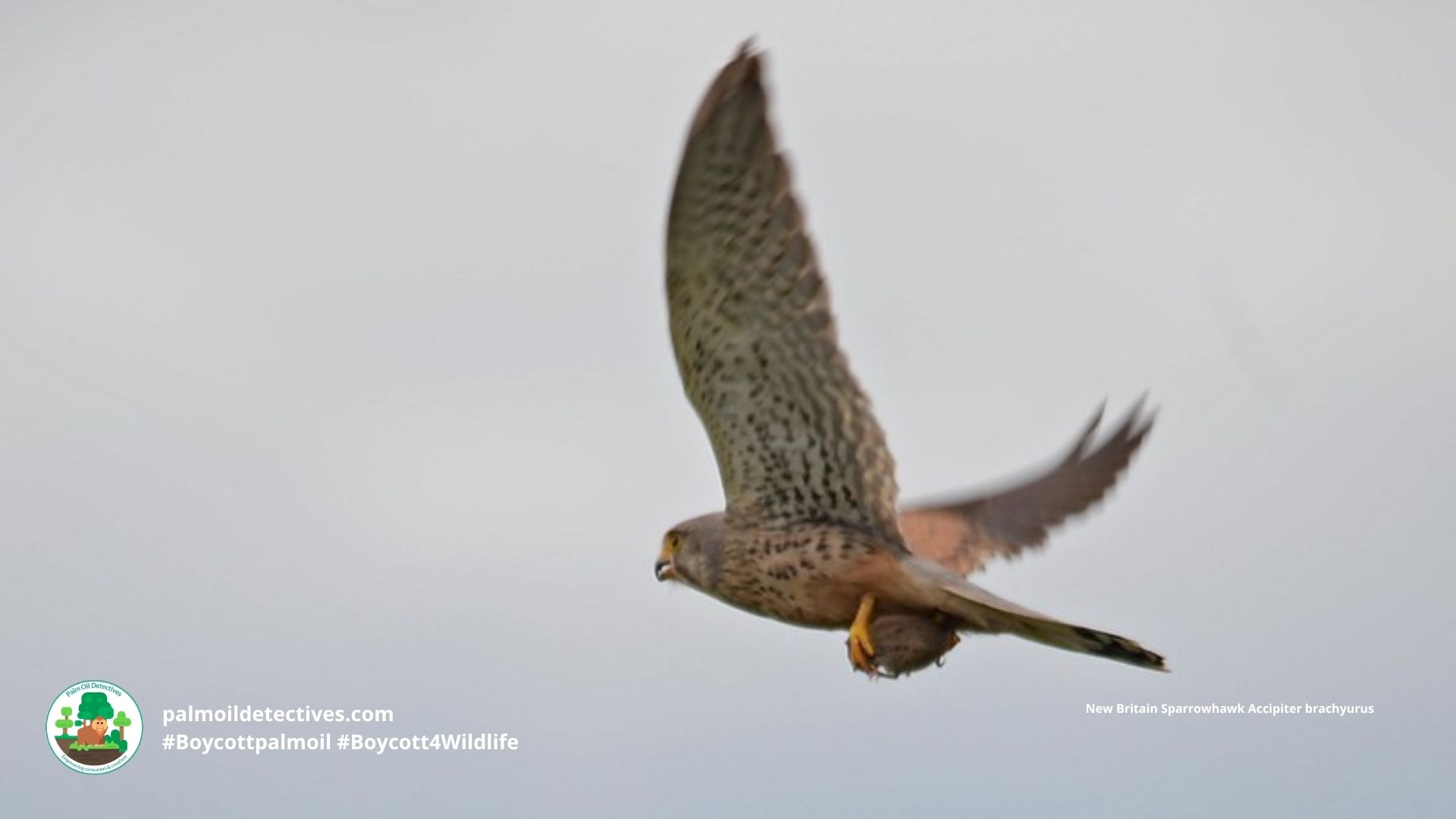
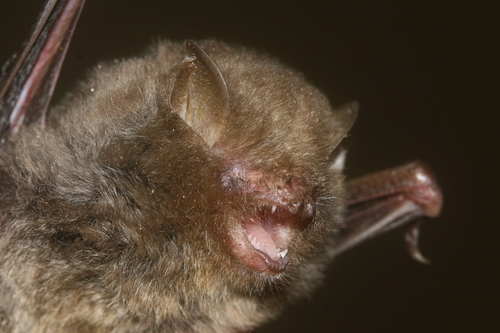
Louisiade Woolly Bat Kerivoula agnella

Louisiade Woolly Bat Kerivoula agnell

IUCN Red List Status: Endangered

Location: The Louisiade Woolly Bat is endemic to Papua New Guinea, specifically to the islands of the Louisiade Archipelago, including Sudest (Vanatinai) and Tagula.

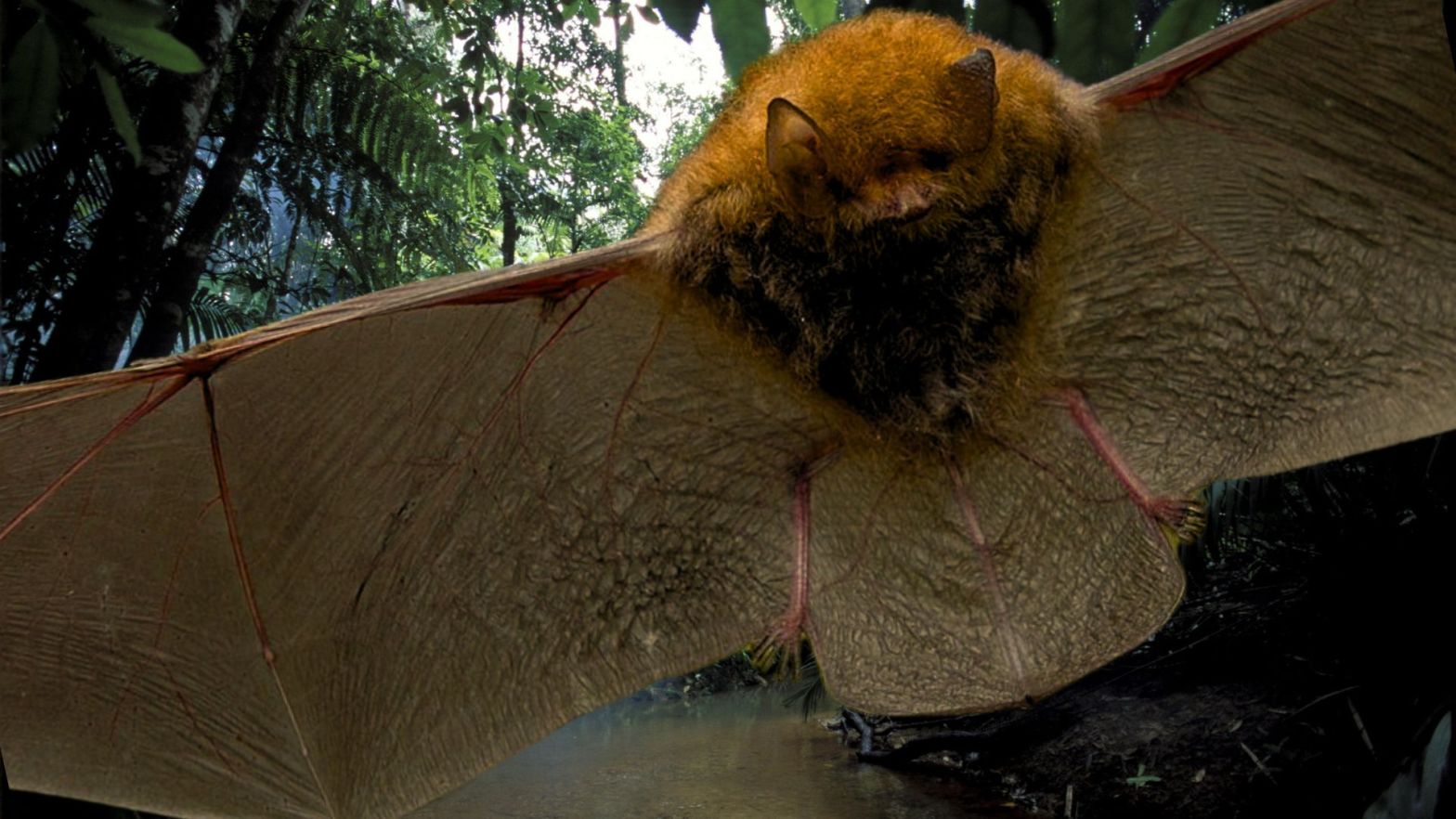
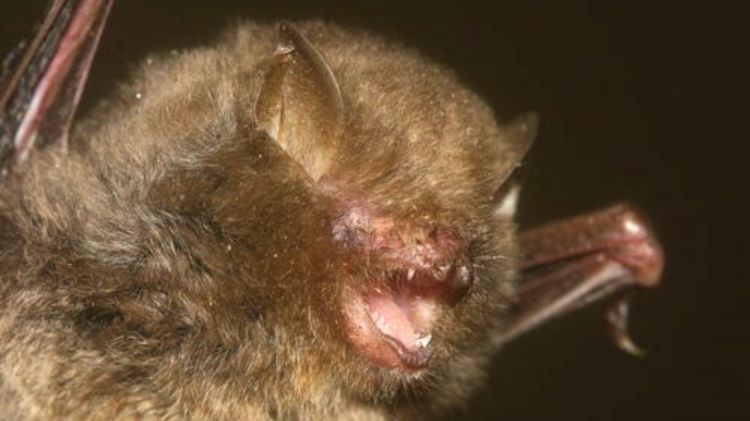
Also known as St. Aignan’s Trumpet-Eared Bat, the Louisiade Woolly Bat is a rare and enigmatic species. Recognised for their soft, wool-like fur and distinct trumpet-shaped ears, these bats are essential to their ecosystems as insect controllers and forest health indicators.

However, their survival is increasingly threatened and they are now listed as endangered on IUCN Red List. Habitat destruction from logging, agriculture, and development is fragmenting their limited range. Without conservation efforts, this delicate species may face extinction. Protect their habitat and biodiversity: .

The delicate and tiny Louisiade Wooly 🦇🖤with trumpet-like 👂🎺ears is in 🇵🇬 from and . Help save this forgotten species when you 🌴💀🔥🚫 @palmoildetect https://wp.me/pcFhgU-sV

The major threat to this species is forest degradation, clearance and conversion to plantations or gardens. Pesticide use in oil palm plantations might pose a secondary threat.

IUCN Red List

Progressive declines and extinctions of individual island populations also threaten the persistence of the species as a whole by limiting opportunities for natural or assisted reintroductions.

Louisiade Woolly Bat Kerivoula agnella

Appearance and Behaviour

The Louisiade Woolly Bat, also called St. Aignan’s Trumpet-Eared Bat, is a small, delicately built bat with a body length of 4–5 cm and a wingspan of about 25 cm. Their dense, woolly fur varies from pale grey-brown to golden, providing excellent camouflage in their forest environment. Their namesake trumpet-shaped ears are highly sensitive, aiding in echolocation to navigate and hunt insects.

This nocturnal species is active in dense forest canopies, using their remarkable agility to hunt small, flying insects. During the day, they roost in tree hollows, beneath bark, or in dense foliage, relying on their cryptic colouring to remain hidden from predators.

Threats

The Louisiade Woolly Bat (Kerivoula agnella) faces mounting threats from habitat destruction, pesticide use, and human activities across their limited island range.

Deforestation for palm oil and timber

Throughout the Louisiade Archipelago, forest degradation and clearance for palm oil agriculture is the most pressing threat. On Fergusson Island, forests below 200 metres have been degraded over generations by subsistence farming and frequent fires, while logging concessions cover nearly half the island, further shrinking the bat’s habitat. Woodlark Island has seen similar impacts, with large areas cleared for palm oil and mining, leaving fragmented patches of secondary forest. On Misima Island, former gold mining operations and increasing human activity have significantly degraded forest cover, while Sudest Island remains a rare stronghold with relatively intact forests at higher elevations.

Pesticide and run-off pollution from palm oil plantations

The increasing use of pesticides and herbicides across these islands is a huge threat to the Louisiade Woolly Bat. These chemicals may harm insect populations, their primary food source, while also potentially poisoning the bats directly. As agriculture expands, the reliance on these harmful chemicals continues to rise, further jeopardising the species.

Climate Change

Rising temperatures and altered rainfall patterns threaten the forest ecosystems these bats depend on. Changes in insect populations caused by climate change could further jeopardise their food sources.

Small and Isolated Population

With populations confined to small, isolated islands, the Louisiade Woolly Bat is at high risk of extinction. Habitat fragmentation caused by logging and palm oil agriculture limits their ability to move between areas, reduces genetic diversity, and increases the likelihood of localised population collapses.

Diet

The Louisiade Woolly Bat is insectivorous, preying on moths, beetles, flies, and other small, flying insects. They use echolocation to hunt within dense forest canopies and near water sources where insects are abundant.

Reproduction and Mating

Although specific details about the Louisiade Woolly Bat’s reproduction are unknown, it is likely that they follow similar patterns to other bats in the Kerivoula genus. Females likely give birth to a single pup each year, which remains dependent on the mother for several weeks until they can forage independently.

Geographic Range

This bat is endemic to Papua New Guinea’s Louisiade Archipelago, specifically on Sudest (Vanatinai) and Tagula islands. They are closely associated with lowland forests, where they rely on intact, undisturbed habitats for roosting and hunting.

FAQ

What are some interesting facts about woolly bats?

Woolly bats, such as the Louisiade Woolly Bat, are named for their dense, wool-like fur, which helps them blend into their forest surroundings. They are among the most agile bat species, able to navigate dense canopies with precision.

Where are woolly bats found?

Woolly bats are typically found in tropical and subtropical forests across Southeast Asia and the Pacific. The Louisiade Woolly Bat is restricted to the islands of Sudest and Tagula in the Louisiade Archipelago of Papua New Guinea.

Are woolly bats carnivores?

Woolly bats are insectivorous, feeding exclusively on small, flying insects such as moths, flies, and beetles.

Take Action!

The Louisiade Woolly Bat is a delicate, rare species whose survival depends on protecting Papua New Guinea’s forest ecosystems. Stand against habitat destruction caused by logging and agriculture: #BoycottPalmOil #Boycott4Wildlife.

You can support this beautiful animal

There are no known conservation activities for this animal. Share out this post to social media and join the #Boycott4Wildlife on social media to raise awareness

Further Information

Aplin, K. & Armstrong, K.D. 2020. Kerivoula agnella. The IUCN Red List of Threatened Species 2020: e.T10968A21975540. https://dx.doi.org/10.2305/IUCN.UK.2020-3.RLTS.T10968A21975540.en. Downloaded on 31 January 2021.

Funakoshi, K., Fukui, D., Yamamoto, T., & Mizuno, M. (2015). Ecology and monogamous system of the painted woolly bat (Kerivoula picta) in Khon Kaen, Thailand. Mammal Study, 40(4), 207–216. https://doi.org/10.3106/041.040.0402

IgoTerra. (n.d.). Kerivoula agnella. Retrieved from https://igoterra.com/taxon/view/35788/Kerivoula-agnella

Wikipedia. (n.d.). St. Aignan’s Trumpet-Eared Bat. Retrieved from https://en.wikipedia.org/wiki/St._Aignan%27s_trumpet-eared_bat

ICUN endangered logo

Contribute to palm oil detectives - black rhino in profile

How can I help the ?


Take Action in Five Ways

1. Join the on social media and subscribe to stay in the loop: Share posts from this website to your own network on Twitter, Mastadon, Instagram, Facebook and Youtube using the hashtags .

Join 3,176 other subscribers

2. Contribute stories: Academics, conservationists, scientists, indigenous rights advocates and animal rights advocates working to expose the corruption of the palm oil industry or to save animals can contribute stories to the website.

3. Supermarket sleuthing: Next time you’re in the supermarket, take photos of products containing palm oil. Share these to social media along with the hashtags to call out the greenwashing and ecocide of the brands who use palm oil. You can also take photos of palm oil free products and congratulate brands when they go palm oil free.

4. Take to the streets: Get in touch with Palm Oil Detectives to find out more.

5. Donate: Make a one-off or monthly donation to Palm Oil Detectives as a way of saying thank you and to help pay for ongoing running costs of the website and social media campaigns. Donate here
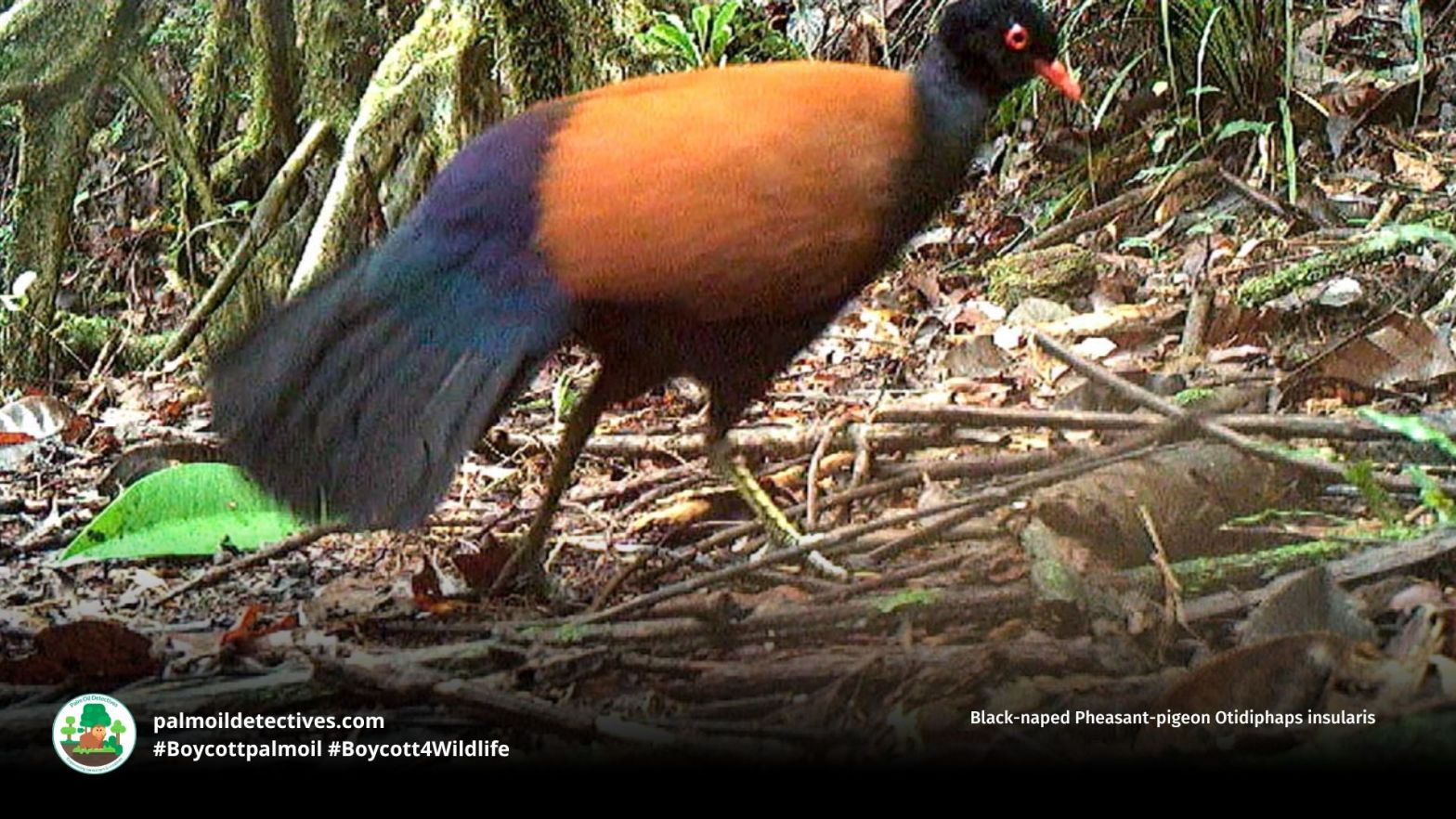
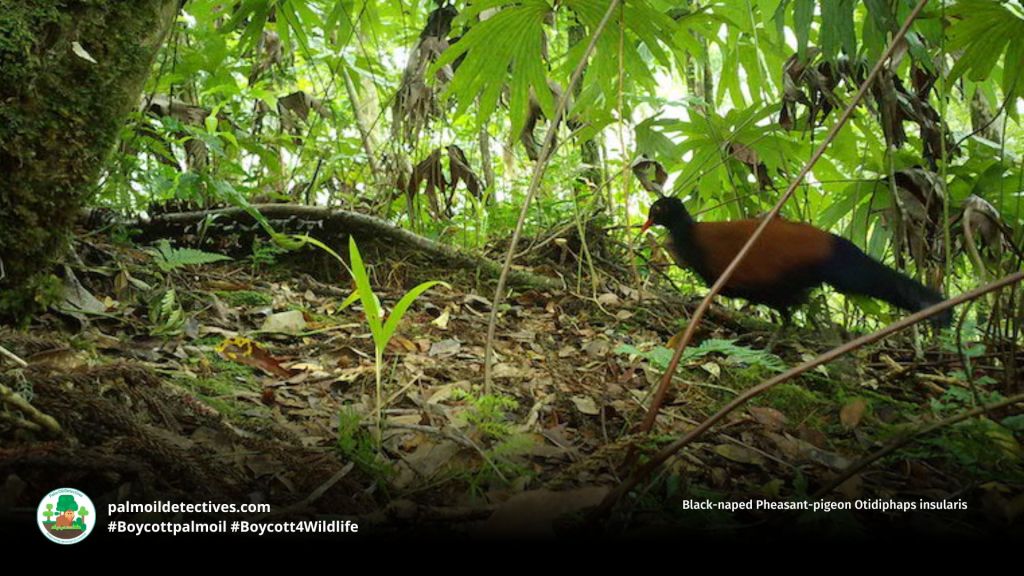
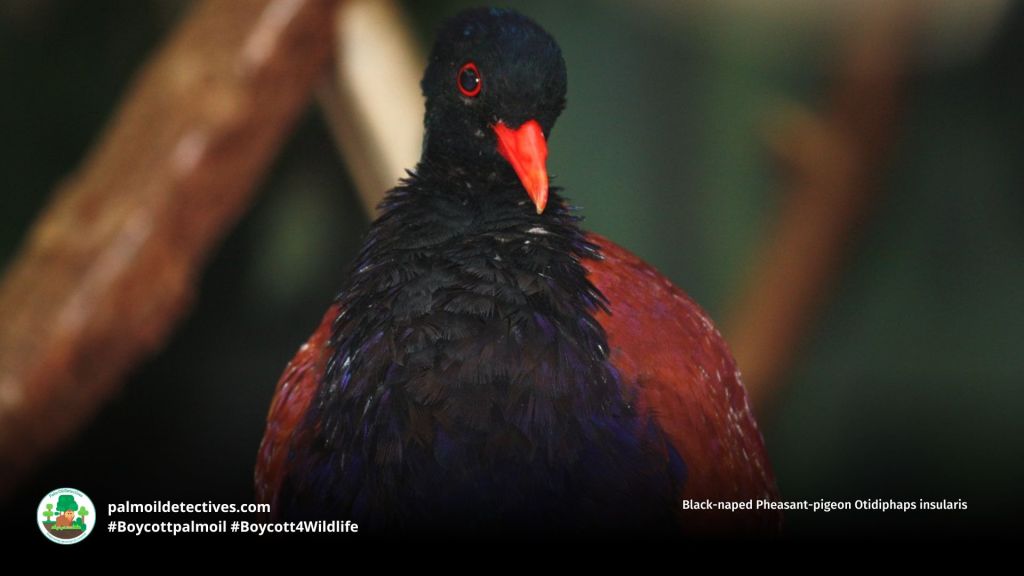
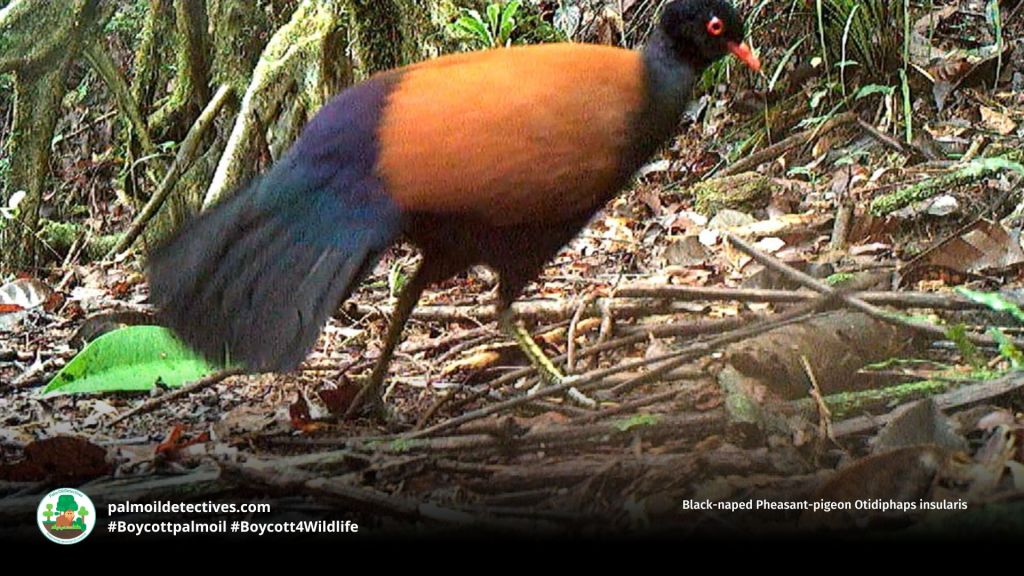
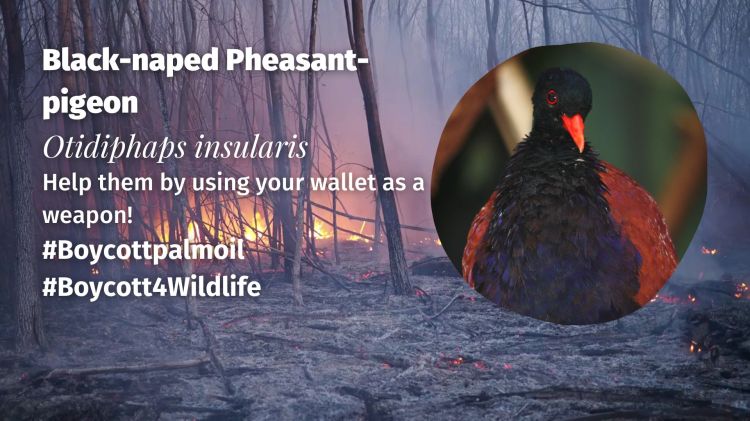
Black-naped Pheasant-pigeon Otidiphaps insularis

Black-naped Pheasant-pigeon Otidiphaps insularis

Red List Status: Critically Endangered

Location: Papua New Guinea

Region: Endemic to Fergusson Island in the D’Entrecasteaux Archipelago

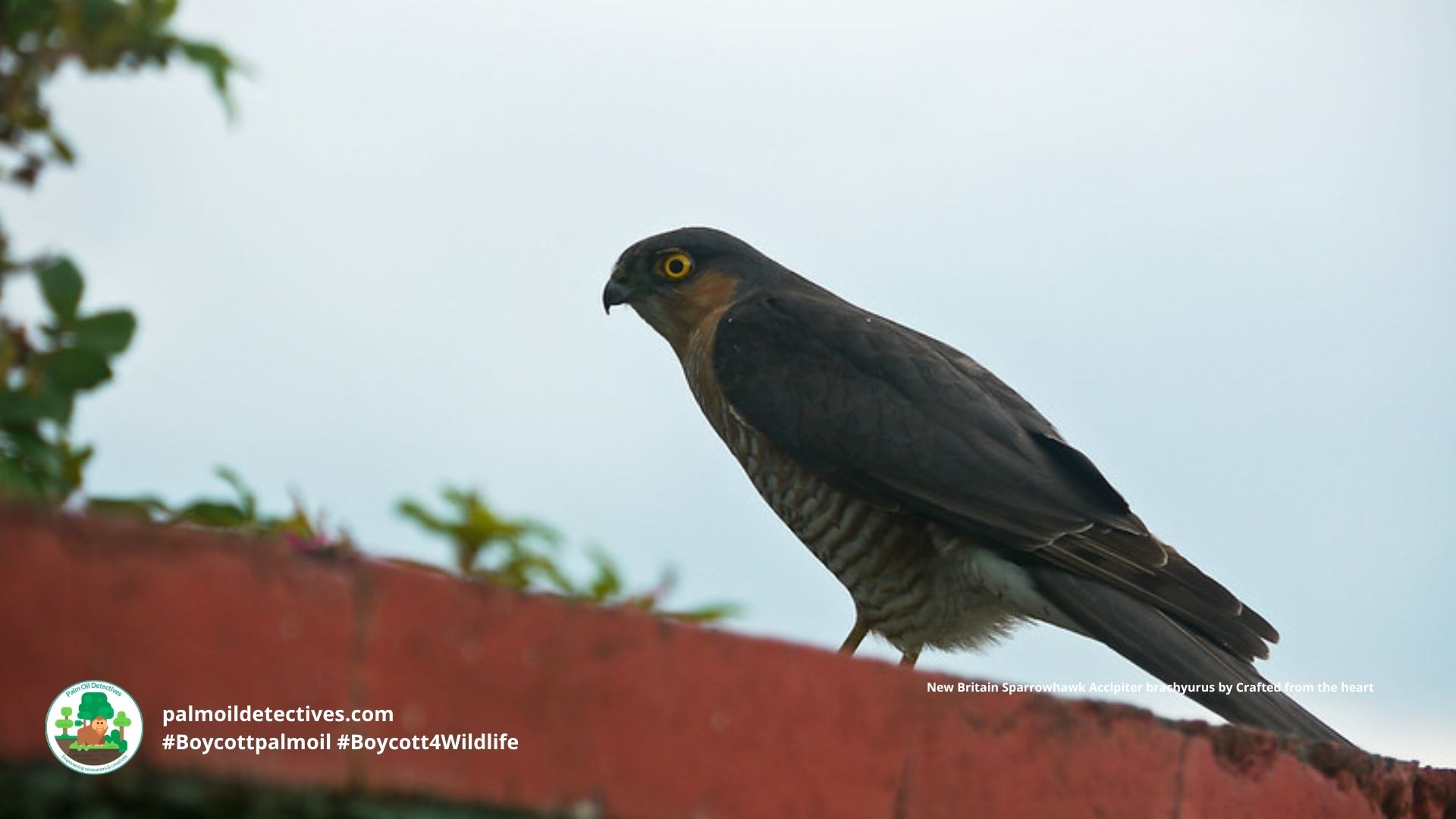
Once thought to be extinct since its last sighting in 1882, the elusive Black-naped Pheasant-Pigeon was rediscovered in 2022 thanks to the collaboration of researchers and local communities. This large, ground-dwelling pigeon is now listed as Critically Endangered, with fewer than 250 mature individuals believed to remain. It lives exclusively in the hill and montane rainforests of Fergusson Island, which are under increasing pressure from logging, subsistence agriculture, and introduced predators such as rats, pigs, and potentially domestic cats. The species is also hunted by locals for food. Protecting this remarkable bird and its habitat is urgent. Use your voice and your wallet to help save them. #BoycottPalmOil #Boycott4Wildlife and be

Thought but dramatically rediscovered in 2022 Black-naped Pheasant-pigeons are 🐦 A threat is in 🇵🇬 Help them when you shop 🌴🩸☠️⛔️ @palmoildetect https://palmoildetectives.com/2021/01/31/black-naped-pheasant-pigeon-otidiphaps-insularis/

Known locally as ‘Auwo’, Black-naped Pheasant-pigeons 🪿🐦 are . A big threat is in 🇵🇬 Fight back against their ! 🌴🩸☠️🧐🚫 @palmoildetect https://palmoildetectives.com/2021/01/31/black-naped-pheasant-pigeon-otidiphaps-insularis/

Appearance and Behaviour

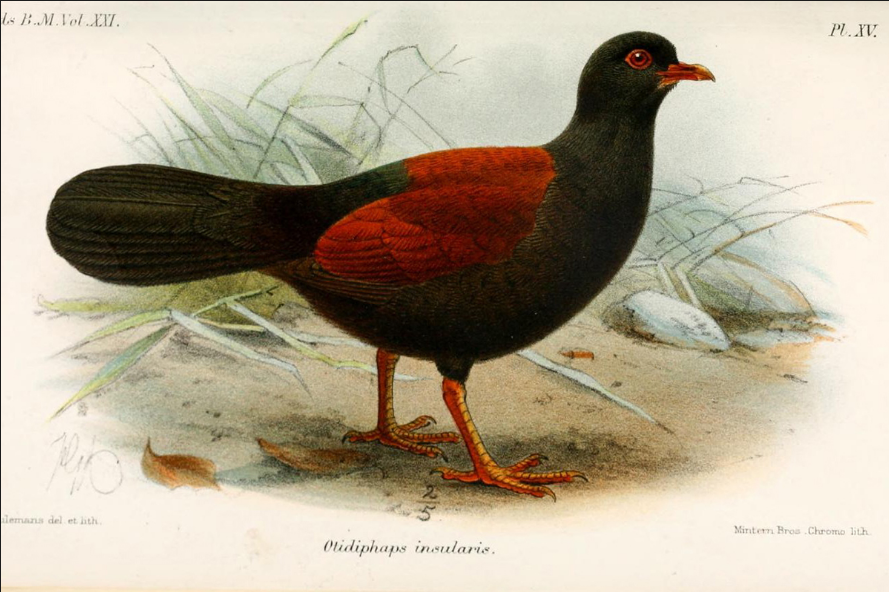
Also known locally as “Auwo”, the Black-naped Pheasant-Pigeon resembles a glossy pheasant in body shape, with a flattened tail and long legs adapted to a ground-dwelling lifestyle. Their plumage is a mix of iridescent green, bronze, and black, with a distinctive black nape from which they get their name. These shy birds move quietly through the undergrowth, foraging for seeds and fallen fruit. Unlike arboreal pigeons, they spend nearly all their time on the forest floor.

They are highly elusive and have only recently been captured on camera traps in remote highland forests. The behaviour of these illusive pheasant-pigeons is still not well studied, but they are presumed to be solitary or occur in low densities, making them extremely difficult to detect.

Diet

Black-naped Pheasant-Pigeons forage for fallen fruit and seeds on the forest floor. Their diet includes a wide variety of native fruiting plants, contributing to seed dispersal across fragmented montane habitats. While they can tolerate some disturbance, they disappear from forests where hunting is prevalent.

Reproduction and Mating

Little is known about their breeding behaviour of these birds, but like other Otidiphaps species, they are believed to nest on the ground. Recent local accounts suggest that active nests have been discovered in dense forest understories. Ground nesting makes them especially vulnerable to predation by invasive rats and pigs. Pheasant-pigeons lay one or two eggs, which are incubated on the forest floor under dense cover.

Geographic Range

The Black-naped Pheasant-Pigeon is endemic to Fergusson Island, part of the D’Entrecasteaux Archipelago of Papua New Guinea. Their known range includes the steep, rugged slopes of Mt Kilkerran and surrounding highland rainforest above 1,000 metres. No populations are known outside this single island. Despite recent rediscovery, the species is feared to be extremely rare and severely fragmented.

Threats

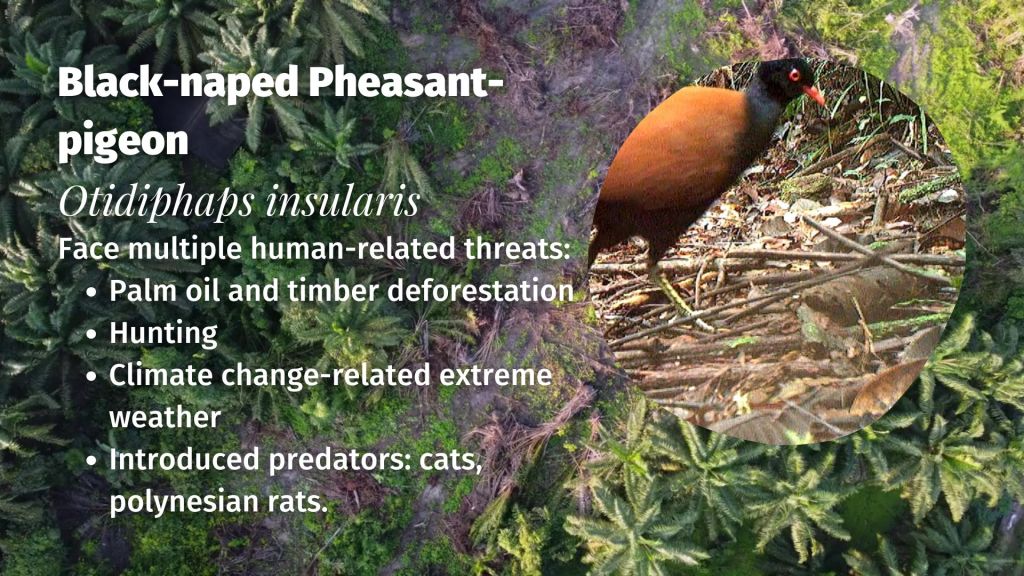
Black-naped Pheasant-pigeon Otidiphaps insularis threats

Logging of primary forest

Timber logging continues in central and eastern Fergusson Island, especially in the East Fergusson Timber Rights Purchase area, which resumed operations in 2012. Industrial logging threatens the bird’s entire remaining habitat (Gregg et al., 2020).

Hunting pressures

The species was historically hunted by local communities, but following the bird’s rediscovery in 2021 and increased awareness of their rarity, Indigenous peoples on Fergusson Island are beginning to recognise its cultural and ecological importance. There is now hope that local knowledge and stewardship will empower communities to take a leading role in protecting the species.

Introduced predators

Including Polynesian Rats (Rattus exulans) and pigs, are already established and may prey on ground nests. Cats and Black Rats (Rattus rattus) may already be present and pose a serious threat if widespread (Atkinson & Atkinson, 2000; Dutson, pers. comm. 2021). Shipping and trade introduce high risk invasive species being transported to the island via large cargo vessels, increasing the threat of ecological disruption.

Climate change-related extreme weather

This alters rainfall patterns and temperatures which further threaten the already-fragile montane ecosystems of Fergusson Island.

Take Action!

The rediscovery of the Black-naped Pheasant-Pigeon is a once-in-a-lifetime opportunity to save a species from extinction. We must support local communities and indigenous-led conservation on Fergusson Island to protect this bird’s remaining habitat. Reject palm oil and logging products that drive deforestation. Choose vegan, animal-free alternatives and raise your voice for wildlife. #BoycottPalmOil #Boycott4Wildlife

FAQs

Do Black-naped Pheasant-Pigeons make good pets?

Absolutely not. Keeping these Critically Endangered birds as pets is illegal and contributes directly to their extinction. Every individual removed from the wild represents a significant loss for a species with fewer than 250 mature individuals left. Indigenous communities are working hard to protect their native wildlife – we must support their efforts by opposing wildlife trafficking and the exotic pet trade.

How many Black-naped Pheasant-Pigeons are left?

Estimates suggest there are fewer than 250 mature individuals left in the wild, based on limited sightings and habitat assessments (Gregg et al., 2020). Their range is restricted to Fergusson Island and even there they occur in extremely low densities.

Why are Black-naped Pheasant-Pigeons endangered?

Their habitat is shrinking due to logging and agriculture, and they are also hunted by local communities. Introduced predators like pigs and rats eat their eggs, and cats may be an additional future threat (Gregg et al., 2020; del Hoyo et al., 2020).

Where exactly do Black-naped Pheasant-Pigeons live?

They are found only on Fergusson Island, part of the D’Entrecasteaux Archipelago of Papua New Guinea, mostly in montane forest habitats above 1,000 metres near Mt Kilkerran.

How were Black-naped Pheasant-Pigeons rediscovered?

After 140 years, the species was rediscovered in 2022 through a month-long expedition using camera traps and the guidance of local hunters who knew the bird’s calls and habits. The effort was part of the Search for Lost Birds program led by Re:wild, BirdLife International, and the American Bird Conservancy (Kimbrough, 2022).

Palm Oil Detectives
Palm Oil Detectives

Empowering creatives and consumers

595 posts
24 followers
Black-naped Pheasant-pigeon Otidiphaps insularis boycott palm oil

Further Information

ICUN endangered logo

Audubon. (2022, November 17). ‘Like Finding a Unicorn’: Researchers Rediscover the Black-Naped Pheasant-Pigeon. Audubon Magazine. https://www.audubon.org/news/like-finding-unicorn-researchers-rediscover-black-naped-pheasant-pigeon-bird

BirdLife International. 2016. Otidiphaps insularis. The IUCN Red List of Threatened Species 2016: e.T22726273A94916466. https://dx.doi.org/10.2305/IUCN.UK.2016-3.RLTS.T22726273A94916466.en. Downloaded on 31 January 2021.

Kimbrough, L. (2022, November 21). In PNG, researchers find a large pigeon lost to science for 140 years. Mongabay. https://news.mongabay.com/2022/11/in-png-researchers-find-a-large-pigeon-lost-to-science-for-140-years/

Sci.News Staff. (2022, November 21). Ornithologists capture first-ever photos, video of long-lost ground-dwelling pigeon. Sci.News. Retrieved March 25, 2025, from https://www.sci.news/biology/otidiphaps-insularis-11411.html

Zoological Society of London. (n.d.). Black-naped pheasant-pigeon (Otidiphaps insularis). EDGE of Existence. Retrieved March 25, 2025, from https://www.edgeofexistence.org/species/black-naped-pheasant-pigeon/

Support the conservation of this species

Tenkile Conservation Alliance


Contribute to palm oil detectives - black rhino in profile

How can I help the ?


Take Action in Five Ways

1. Join the on social media and subscribe to stay in the loop: Share posts from this website to your own network on Twitter, Mastadon, Instagram, Facebook and Youtube using the hashtags .

Join 3,176 other subscribers

2. Contribute stories: Academics, conservationists, scientists, indigenous rights advocates and animal rights advocates working to expose the corruption of the palm oil industry or to save animals can contribute stories to the website.

3. Supermarket sleuthing: Next time you’re in the supermarket, take photos of products containing palm oil. Share these to social media along with the hashtags to call out the greenwashing and ecocide of the brands who use palm oil. You can also take photos of palm oil free products and congratulate brands when they go palm oil free.

4. Take to the streets: Get in touch with Palm Oil Detectives to find out more.

5. Donate: Make a one-off or monthly donation to Palm Oil Detectives as a way of saying thank you and to help pay for ongoing running costs of the website and social media campaigns. Donate here
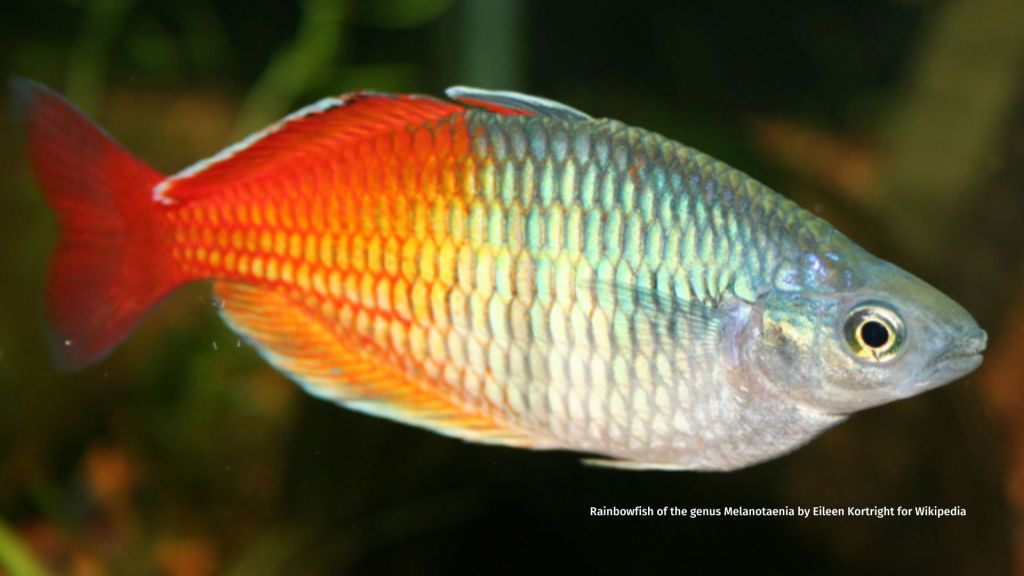
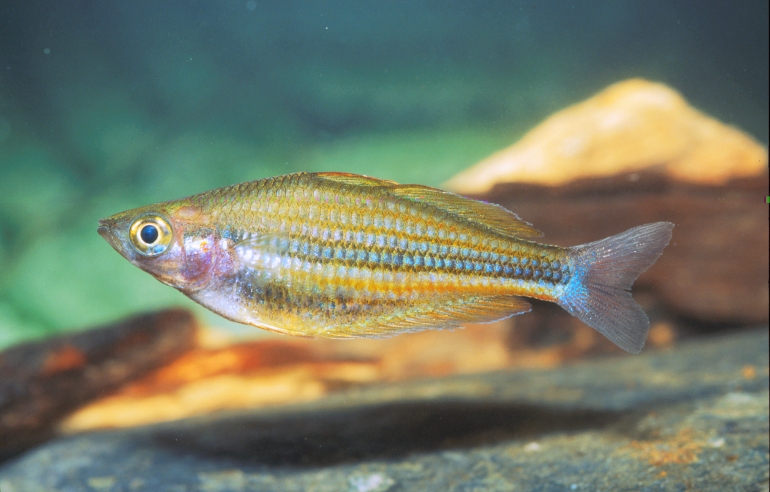
Forest Rainbowfish Melanotaenia sylvatica

Forest Rainbowfish Melanotaenia sylvatica

IUCN Red List Status: Endangered

Location: The Forest Rainbowfish is endemic to the Upper Lakekamu Basin in south-eastern Papua New Guinea, at elevations between 35 and 120 metres. This area lies approximately 190 km north-west of Port Moresby.

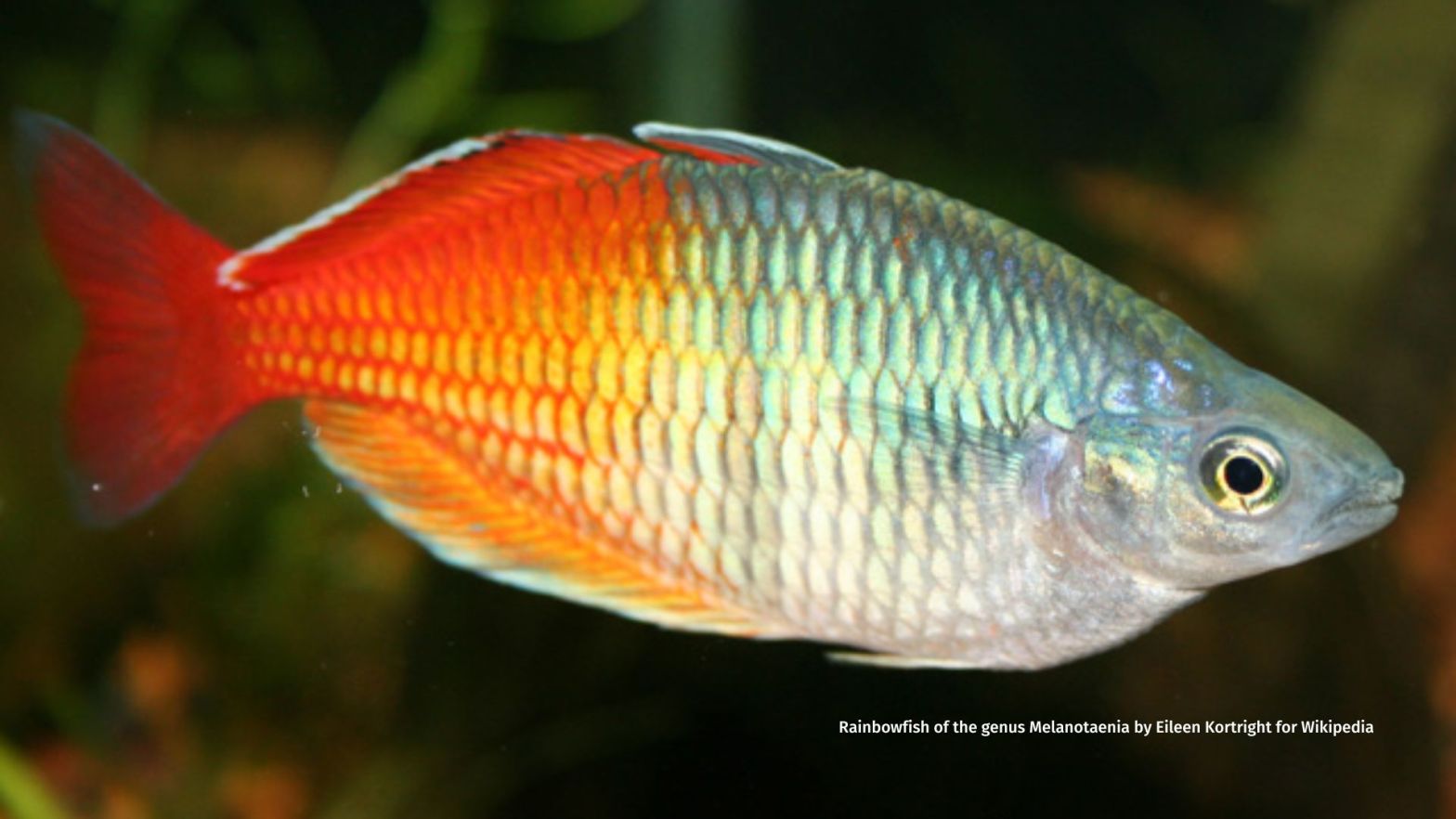
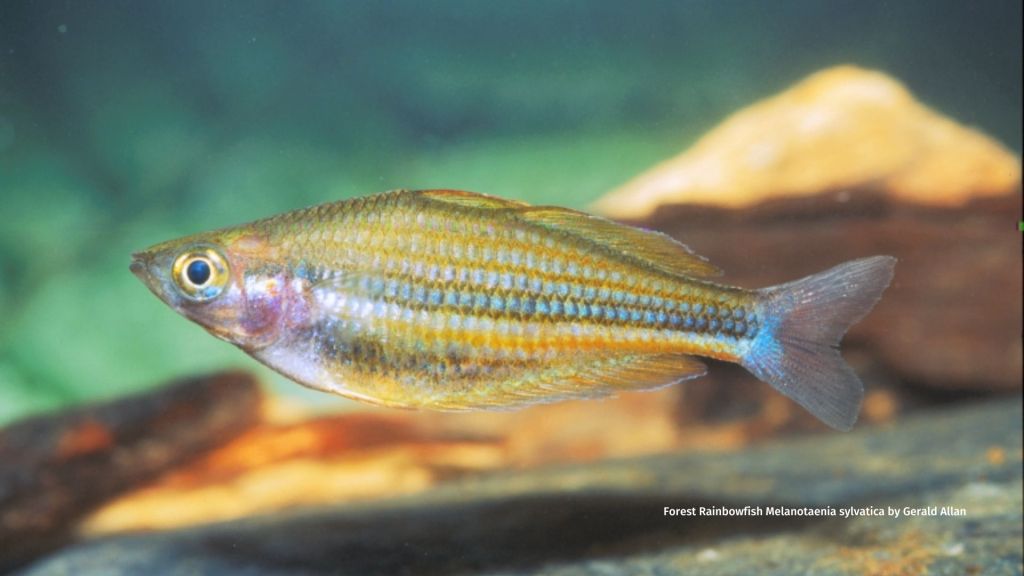
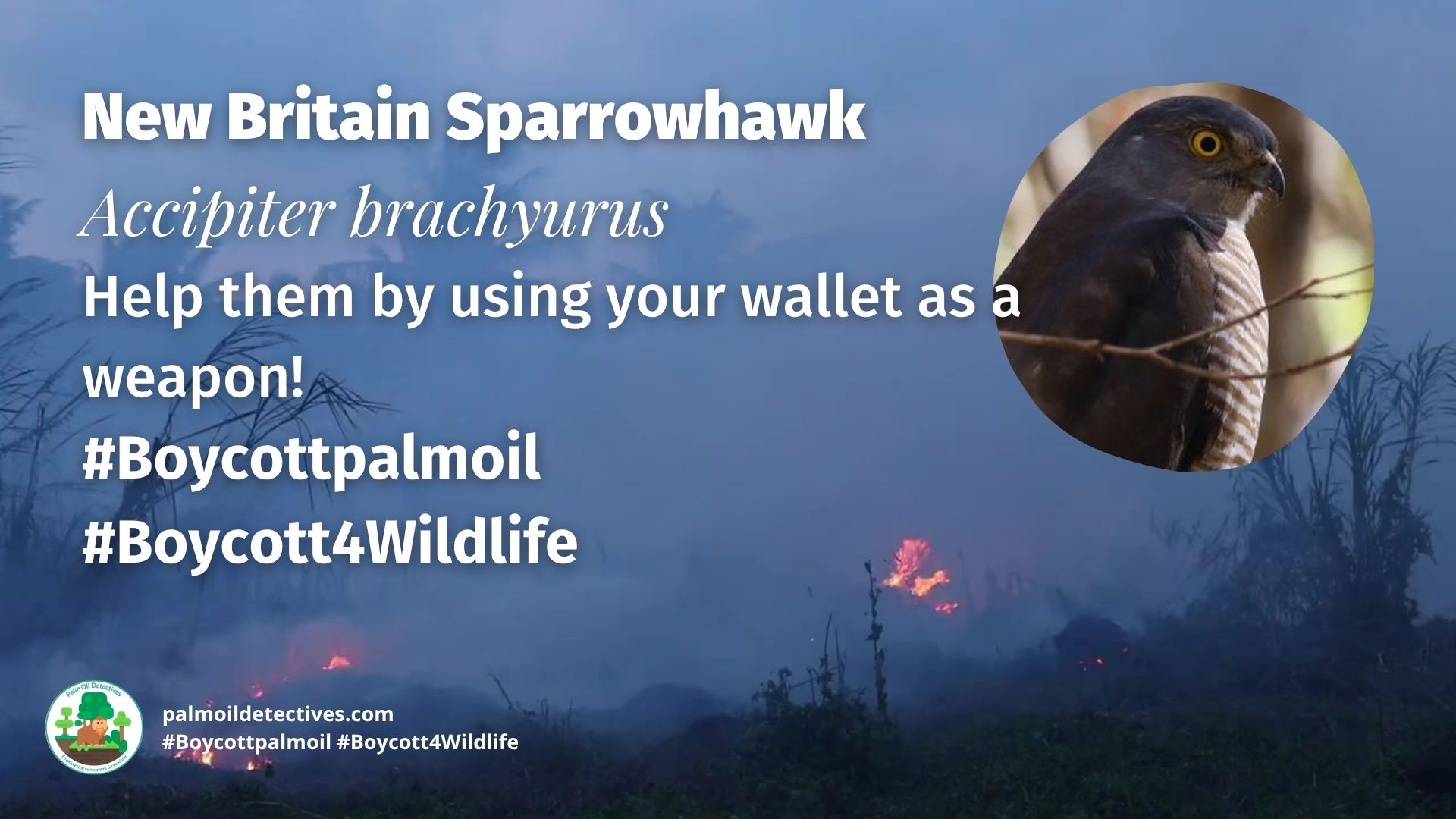
The Forest Rainbowfish is a radiant freshwater species found only in the remote streams of Papua New Guinea’s Upper Lakekamu Basin. With their shimmering, iridescent scales, these fish bring flashes of colour to their rainforest habitat. However, their survival is under severe threat from deforestation for timber logging, out-of-control palm oil plantations, and agricultural encroachment.

The degradation of these pristine streams is pushing the Forest Rainbowfish toward extinction. Protecting their habitat is crucial for their survival and the preservation of Papua New Guinea’s unique biodiversity. Use your voice to demand action: #BoycottPalmOil #Boycott4Wildlife.

Here’s a stunning 🐠🐟🌈 in ’s forest 🇵🇬. Forest Rainbowfish are due to as a result of plantations. Help them survive and 🌴☠️⛔️#Boycott4Wildlife @palmoildetect https://palmoildetectives.com/2021/01/31/forest-rainbowfish-melanotaenia-sylvatica/

This species of fish is threatened by commercial logging and oil palm plantations in the region (A. Mungkaje and U. Kolkolo pers. comm. 2019). Oil palm plantations are primarily found in the coastal plain and so logging is likely to be the more signficant threat.

IUCN Red List

Appearance and Behaviour

The Forest Rainbowfish is a medium-sized fish, reaching lengths of 8–10 cm. Their body is elongated and slightly compressed, covered in scales that reflect a spectrum of colours, giving them a rainbow-like sheen in sunlight. Males are particularly vivid, displaying more intense colours and larger, more ornate dorsal and anal fins compared to females.

These fish are diurnal, schooling actively in clear, fast-flowing streams. Their iridescence allows them to blend with their shimmering aquatic surroundings, offering some protection from predators.

Threats

Palm Oil Deforestation

Logging, the expansion of out-of-control palm oil plantations, and agricultural activities are rapidly destroying the rainforest streams that the Forest Rainbowfish relies on. These activities increase sedimentation, degrade water quality, and fragment their already limited range.

Gold Mining and Water Pollution Run-Off:

Gold mining operations in Papua New Guinea contribute to heavy metal contamination and other pollutants, which seep into waterways, further jeopardising the delicate ecosystem of the Upper Lakekamu Basin.

Climate Change:

Rising temperatures and changes in rainfall patterns due to climate change threaten the flow and quality of the streams where this species thrives. These changes can make their habitats uninhabitable.

Diet

The Forest Rainbowfish is an omnivorous species. Their diet consists primarily of small aquatic invertebrates, algae, and detritus. By feeding on these resources, they help maintain the ecological balance of their environment, controlling insect populations and recycling nutrients in the ecosystem.

Reproduction and Mating

Forest Rainbowfish are oviparous, with females laying adhesive eggs on submerged vegetation or rocky substrates. Males court females with vibrant displays, spreading their fins and flashing their colours to attract a mate.

The eggs hatch within a week, and the fry are free-swimming soon after. Juveniles grow rapidly, feeding on tiny planktonic organisms. The presence of clean, undisturbed streams is essential for their reproductive success, making habitat degradation a critical threat.

Geographic Range

The Forest Rainbowfish is restricted to the Upper Lakekamu Basin in south-eastern Papua New Guinea. Their range spans elevations of 35 to 120 metres and is approximately 190 km north-west of Port Moresby. These fish inhabit clear, fast-flowing streams surrounded by dense lowland rainforest. As deforestation and human activity encroach on this region, their range becomes increasingly fragmented and vulnerable.

The Forest Rainbow fish lives in small, 1-3 m wide, clear, slow-flowing creeks in closed-canopy rainforest on relatively flat terrain. These typically have a mud or gravel bottom littered with leaves and log debris. The maximum size of this species is at least 5.5 cm SL (Allen 1997, G.R. Allen pers. comm. 2019).

FAQ

What is the Forest Rainbowfish?

The Forest Rainbowfish (Melanotaenia sylvatica) is an endangered freshwater fish found only in Papua New Guinea’s Upper Lakekamu Basin. Known for their iridescent scales, they are a striking example of the unique biodiversity of the region.

Why is the Forest Rainbowfish endangered?

Habitat loss from logging, out-of-control palm oil plantations, agricultural expansion, and pollution are the primary threats. Climate change and water contamination from mining activities further exacerbate their decline.

What do Forest Rainbowfish eat?

They are omnivores, feeding on aquatic insects, algae, and organic detritus. Their feeding habits contribute to the health of their ecosystem by regulating insect populations and recycling nutrients.

Can Forest Rainbowfish be kept in aquariums?

While some rainbowfish are popular in the aquarium trade, wild-caught Forest Rainbowfish should never be kept as pets. Capturing them contributes to population declines. It is far better to support habitat conservation efforts to protect them in the wild.

Take Action!

The Forest Rainbowfish’s survival depends on preserving Papua New Guinea’s pristine rainforests. Fight for their future by boycotting palm oil, supporting conservation efforts, and demanding sustainable forestry practices. Every action matters: #BoycottPalmOil #Boycott4Wildlife.

Further Information

Allen, G.R. 2020. Melanotaenia sylvatica. The IUCN Red List of Threatened Species 2020: e.T161111293A161111315. https://dx.doi.org/10.2305/IUCN.UK.2020-3.RLTS.T161111293A161111315.en. Downloaded on 31 January 2021.

Allen, G. R. (1997). Melanotaenia sylvatica, a new species of rainbowfish (Melanotaeniidae) from Irian Jaya, Indonesia. Retrieved from Regenbogenfische.com

ICUN endangered logo

Support the conservation of this species

Tenkile Conservation Alliance


Contribute to palm oil detectives - black rhino in profile

How can I help the ?


Take Action in Five Ways

1. Join the on social media and subscribe to stay in the loop: Share posts from this website to your own network on Twitter, Mastadon, Instagram, Facebook and Youtube using the hashtags .

Join 3,176 other subscribers

2. Contribute stories: Academics, conservationists, scientists, indigenous rights advocates and animal rights advocates working to expose the corruption of the palm oil industry or to save animals can contribute stories to the website.

3. Supermarket sleuthing: Next time you’re in the supermarket, take photos of products containing palm oil. Share these to social media along with the hashtags to call out the greenwashing and ecocide of the brands who use palm oil. You can also take photos of palm oil free products and congratulate brands when they go palm oil free.

4. Take to the streets: Get in touch with Palm Oil Detectives to find out more.

5. Donate: Make a one-off or monthly donation to Palm Oil Detectives as a way of saying thank you and to help pay for ongoing running costs of the website and social media campaigns. Donate here
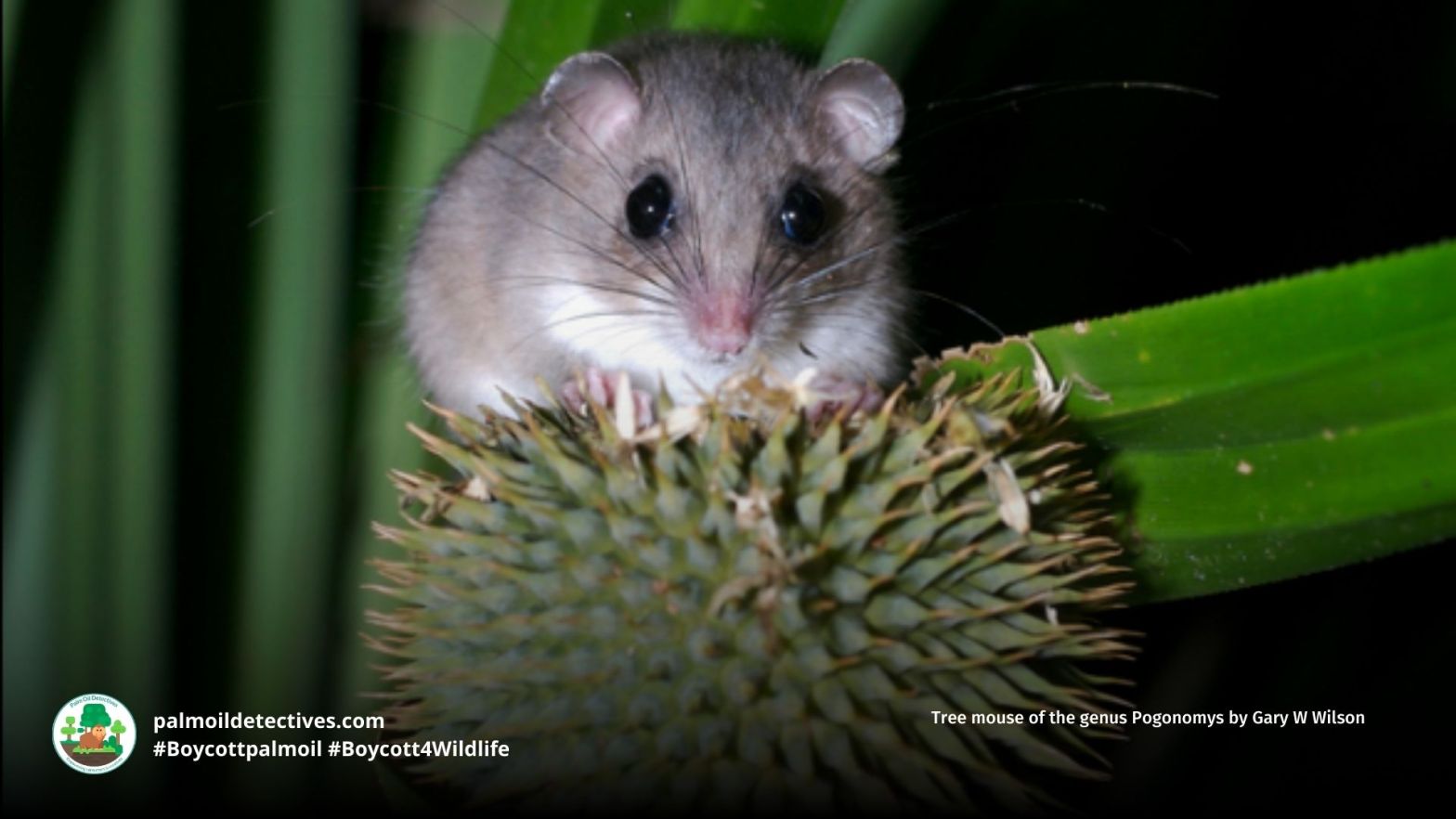
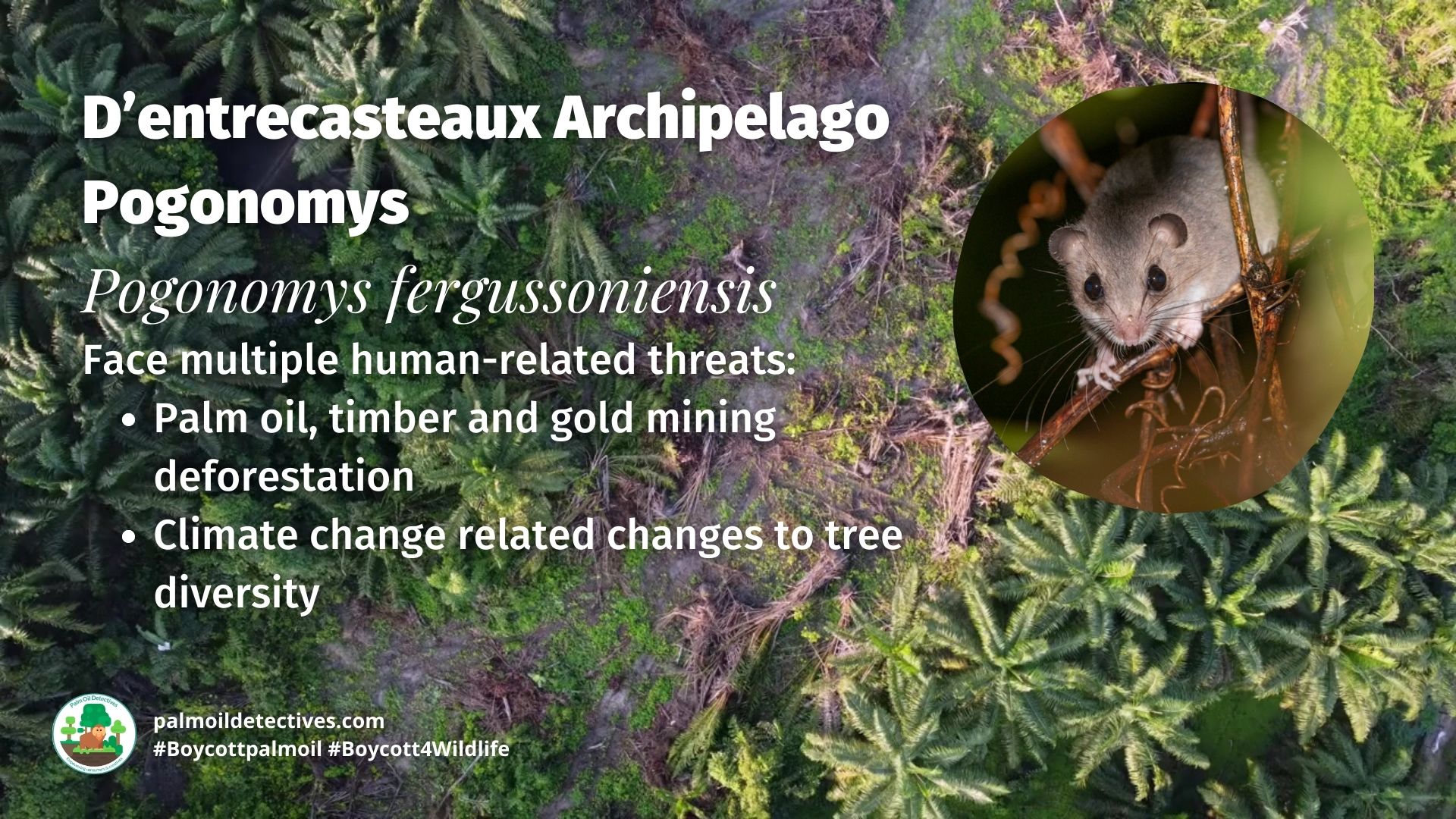
D’entrecasteaux Archipelago Pogonomys Pogonomys fergussoniensis

D’entrecasteaux Archipelago Pogonomys Pogonomys fergussoniensis

IUCN Red List Status: Endangered

Location: Papua New Guinea’s D’Entrecasteaux Archipelago.

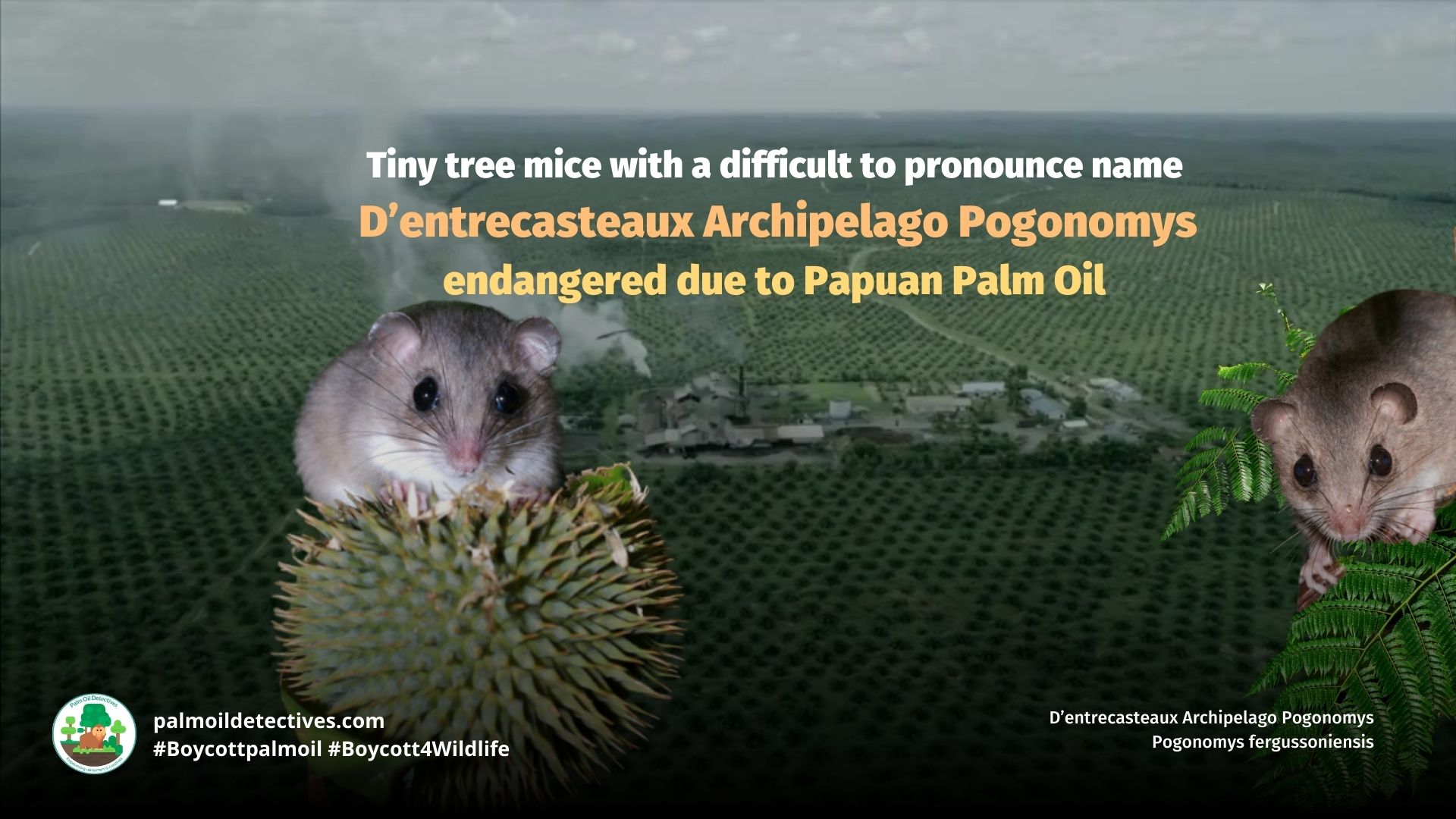
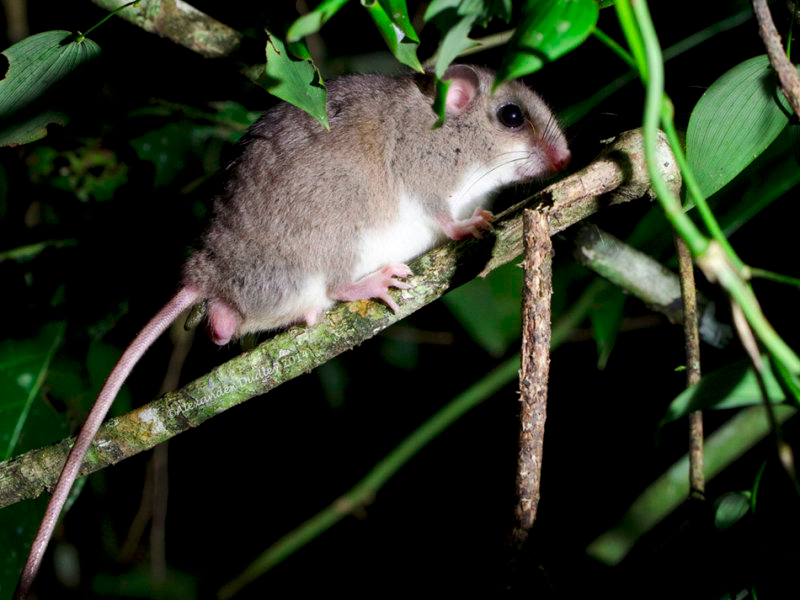
The D’Entrecasteaux Archipelago Pogonomys has possibly one of the most unpronounceable names in the world and is also one of the least known rodents in the world. also known as the Fergusson Island tree mouse, is an arboreal rodent endemic to Fergusson Island in Papua New Guinea’s D’Entrecasteaux Archipelago. This small, nocturnal rodent species depends on intact montane forests, making them highly vulnerable to habitat destruction caused by out-of-control palm oil plantations, logging, and agricultural expansion. Urgent conservation action is needed to protect this precious and obscure mouse species from extinction. #BoycottPalmOil #Boycott4Wildlife

This diminutive and cute tree 🩷🐀🌳has a difficult name: D’Entrecasteaux Archipelago Pogonomys. They’re in due to and . Help them survive and @palmoildetect https://palmoildetectives.com/2021/01/31/dentrecasteaux-archipelago-pogonomys-pogonomys-fergussoniensis/

Appearance and Behaviour

The D’Entrecasteaux Archipelago Pogonomys is a small, tree-dwelling rodent with soft, dense fur that ranges from brown to reddish-brown, helping them blend into their forest environment. Their underparts are lighter in colour, and their prehensile tail is a critical adaptation for climbing and balancing in the canopy (IUCN, 2016).

Nocturnal and arboreal, these rodents are elusive and rarely observed. They spend their time foraging in the treetops, relying on their agility to navigate their forested habitat (iNaturalist, n.d.; IUCN, 2016).

Diet

This species primarily consumes fruits, seeds, and plant material, relying heavily on the biodiversity of montane forests. Their specialised diet ties them directly to the health of their ecosystem, and habitat degradation poses a significant threat to their food sources (IUCN, 2016; iNaturalist, n.d.).

Reproduction and Mating

There is limited information about the reproduction of the D’Entrecasteaux Archipelago Pogonomys. Like other species in the Pogonomys genus, they are likely to have small litters. Understanding their reproductive patterns is critical for developing effective conservation strategies (IUCN, 2016).

Geographic Range

This species is restricted to Fergusson Island in Papua New Guinea, where they inhabit montane forests between 1,200 and 1,800 metres above sea level. Their extremely limited range makes them particularly vulnerable to habitat loss for palm oil, timber and gold mining (IUCN, 2016).

Threats

D’entrecasteaux Archipelago Pogonomys Pogonomys fergussoniensis threats

Forest clearance is a serious problem for this species. The islands are being converted to grassland (perhaps entirely) through subsistence farming. This species is assessed as Endangered because of their extent of occurrence (EOO) is approximately 4,922 km², all individuals occur in fewer than six locations, there is continuing decline in the extent and quality of its habitat through deforestation, and the population size is presumed to be decreasing as a result of habitat loss. The species does appear to be tolerant of some disturbance, but this needs to be confirmed.

IUcN Red LIST

Palm oil and timber logging: Deforestation for out-of-control palm oil plantations, agriculture, and timber logging is destroying their montane forest habitat at an alarming rate (IUCN, 2016).

Climate Change: Rising temperatures could further reduce the availability of suitable montane habitats, forcing these small tree-dwelling rodents into even smaller ranges.

Conservation Neglect: As a lesser-known species, they receive minimal attention in conservation efforts, further jeopardising their survival.

Take Action!

Safeguarding the D’Entrecasteaux Archipelago Pogonomys requires immediate action to preserve their fragile forest habitat. Boycotting products containing palm oil, supporting indigenous-led conservation, and advocating for biodiversity protection are essential steps to ensure their survival. Every effort matters. #BoycottPalmOil #Boycott4Wildlife #Vegan

Further Information

Wright, D & Leary, T. 2016. Pogonomys fergussoniensis. The IUCN Red List of Threatened Species 2016: e.T136763A22431006. https://dx.doi.org/10.2305/IUCN.UK.2016-2.RLTS.T136763A22431006.en. Downloaded on 31 January 2021.

iNaturalist. (n.d.). Pogonomys fergussoniensis. Retrieved from https://uk.inaturalist.org/taxa/74934-Pogonomys-fergussoniensis

Wikipedia. (n.d.). D’Entrecasteaux Archipelago Pogonomys. Retrieved from https://en.wikipedia.org/wiki/D%27Entrecasteaux_Archipelago_pogonomys

ICUN endangered logo

Support the conservation of this species

Tenkile Conservation Alliance


Contribute to palm oil detectives - black rhino in profile

How can I help the ?


Take Action in Five Ways

1. Join the on social media and subscribe to stay in the loop: Share posts from this website to your own network on Twitter, Mastadon, Instagram, Facebook and Youtube using the hashtags .

Join 3,176 other subscribers

2. Contribute stories: Academics, conservationists, scientists, indigenous rights advocates and animal rights advocates working to expose the corruption of the palm oil industry or to save animals can contribute stories to the website.

3. Supermarket sleuthing: Next time you’re in the supermarket, take photos of products containing palm oil. Share these to social media along with the hashtags to call out the greenwashing and ecocide of the brands who use palm oil. You can also take photos of palm oil free products and congratulate brands when they go palm oil free.

4. Take to the streets: Get in touch with Palm Oil Detectives to find out more.

5. Donate: Make a one-off or monthly donation to Palm Oil Detectives as a way of saying thank you and to help pay for ongoing running costs of the website and social media campaigns. Donate here
David’s Echymipera Echymipera davidi

David’s Echymipera Echymipera davidi

IUCN Status: Endangered

Location: Kiriwina Island, Trobriand Islands, Papua New Guinea

David’s Echymipera (Echymipera davidi) is an extremely rare, little-known endemic to Kiriwina Island in the Trobriand Islands of #PapuaNewGuinea. With a range of just 280 km², this elusive is at significant risk due to habitat loss and human encroachment. Like other bandicoots, they are crucial for ecosystem health, aerating the soil as they dig for food. However, their survival is threatened by the pressures of , habitat destruction, and . Without immediate conservation efforts, this species faces an uncertain future. Help this animal by raising awareness #Boycott4Wildlife

The David’s Echymipera is a tiny cute forest floor dwelling scurrying through ’s forests eating . by and hunting, help them when you @palmoildetect https://wp.me/pcFhgU-sE

Appearance and Behaviour

David’s Echymipera is small and stout, with a compact, rounded body covered in dense, coarse fur, typically in brown or reddish-brown hues that blend perfectly with the forest floor. They have a long, pointed snout, which they use to sniff out insects, roots, and tubers hidden beneath the soil. Their sharp claws and powerful forelimbs make them expert diggers, aerating the forest floor as they forage.

These marsupials are primarily nocturnal, emerging under the cover of darkness to search for food. Unlike some other marsupials, they are solitary and secretive, avoiding contact with others outside of breeding. Their keen sense of smell and hearing help them detect both food and potential predators in their dense forest habitat.

David's Echymipera Echymipera davidi

Threats

Habitat Loss and Human Encroachment

David’s Echymipera is a marsupial restricted to Kiriwina Island, Papua New Guinea a small landmass with increasing human activity. Deforestation for agriculture, combined with land clearing for settlements, has significantly reduced the available habitat for this already vulnerable species.

Hunting and Predation

The species is hunted by local communities, further decreasing their numbers. While traditional hunting has existed for centuries, population pressures and habitat loss have made the species more vulnerable to decline. Additionally, introduced predators such as dogs and cats may also pose a serious risk.

David's Echymipera Echymipera davidi

Small Population Size

As an island endemic species, David’s Echymipera has a naturally small population. This makes them especially vulnerable to environmental changes, disease outbreaks, and genetic bottlenecks, reducing their ability to adapt to new threats.

Diet

Like other bandicoots, David’s Echymipera is an omnivore, feeding on a wide range of foods. They use their long snouts and sharp claws to dig up earthworms, insects, roots, fungi, and tubers. This constant foraging plays a crucial role in aerating the soil and dispersing fungal spores, making them an essential part of the island’s ecosystem.

Reproduction and Mating

Little is known about the breeding habits of David’s Echymipera, but they likely follow the pattern of other bandicoots. Most species of Echymipera have short gestation periods, with females giving birth to one to three young at a time. These tiny, underdeveloped newborns crawl into the mother’s backward-facing pouch, where they continue to grow for several weeks before emerging.

Females may be capable of multiple reproductive cycles per year, helping the population recover if conditions are suitable. However, the increasing threats to their habitat make successful reproduction more difficult.

David's Echymipera Echymipera davidi

Geographic Range

David’s Echymipera is endemic to Kiriwina Island, part of the Trobriand Islands in Papua New Guinea. Kiriwina is low-lying, with a maximum elevation of 100 metres above sea level, making it highly vulnerable to habitat disturbances and climate change impacts. While there is speculation that they may exist on nearby islands, no confirmed records exist outside of Kiriwina.

FAQ

Why is David’s Echymipera endangered?

David’s Echymipera is Endangered due to its restricted range, habitat destruction, hunting, and small population size. As an island species, it is especially vulnerable to environmental changes and human impact.

Does David’s Echymipera have any predators?

Yes, while its natural predators are unknown, introduced species like feral cats and dogs pose a major threat, alongside human hunting for food.

Can David’s Echymipera survive in disturbed habitats?

There is no evidence that this species can adapt to disturbed environments. Unlike some other bandicoots, which can persist in secondary forests or agricultural areas, David’s Echymipera is only found in intact natural habitats, making conservation efforts critical.

David's Echymipera Echymipera davidi

Take Action!

The survival of David’s Echymipera depends on urgent conservation efforts. You can help by:

Supporting conservation groups working to protect Papua New Guinea’s unique wildlife.

Raising awareness about the threats posed by deforestation and hunting.

Demanding stronger protections for endemic species on Kiriwina and the Trobriand Islands.

Boycotting palm oil and industrial agriculture that drive deforestation worldwide.

Use your voice to make a difference.

Support the conservation of this species

This animal has no protections in place. Read about other forgotten species here. Create art to support this forgotten animal or raise awareness about them by sharing this post and using the #Boycott4Wildlife hashtags on social media. Also you can boycott palm oil in the supermarket.

Further Information

ICUN endangered logo

GBIF. (2024). Echymipera davidi—David’s Echymipera. Global Biodiversity Information Facility. https://www.gbif.org/species/2435327

Flannery, T. (1995). Mammals of New Guinea (2nd ed.). Cornell University Press.

Leary, T., Wright, D., Hamilton, S., Singadan, R., Menzies, J., Bonaccorso, F., Helgen, K. & Seri, L. 2016. Echymipera davidi. The IUCN Red List of Threatened Species 2016: e.T7017A21966774. https://dx.doi.org/10.2305/IUCN.UK.2016-2.RLTS.T7017A21966774.en. Downloaded on 31 January 2021.

Wikipedia. (n.d). David’s Echymipera. Retrieved from https://en.wikipedia.org/wiki/David%27s_echymipera

Wildlife SNPits. (2016, May 17). Bandicoots: The Little Marsupial Diggers. Retrieved from https://wildlifesnpits.wordpress.com/2016/05/17/bandicoots-the-little-marsupial-diggers/

Support the conservation of this species

Tenkile Conservation Alliance


Contribute to palm oil detectives - black rhino in profile

How can I help the ?


Take Action in Five Ways

1. Join the on social media and subscribe to stay in the loop: Share posts from this website to your own network on Twitter, Mastadon, Instagram, Facebook and Youtube using the hashtags .

Join 3,176 other subscribers

2. Contribute stories: Academics, conservationists, scientists, indigenous rights advocates and animal rights advocates working to expose the corruption of the palm oil industry or to save animals can contribute stories to the website.

3. Supermarket sleuthing: Next time you’re in the supermarket, take photos of products containing palm oil. Share these to social media along with the hashtags to call out the greenwashing and ecocide of the brands who use palm oil. You can also take photos of palm oil free products and congratulate brands when they go palm oil free.

4. Take to the streets: Get in touch with Palm Oil Detectives to find out more.

5. Donate: Make a one-off or monthly donation to Palm Oil Detectives as a way of saying thank you and to help pay for ongoing running costs of the website and social media campaigns. Donate here
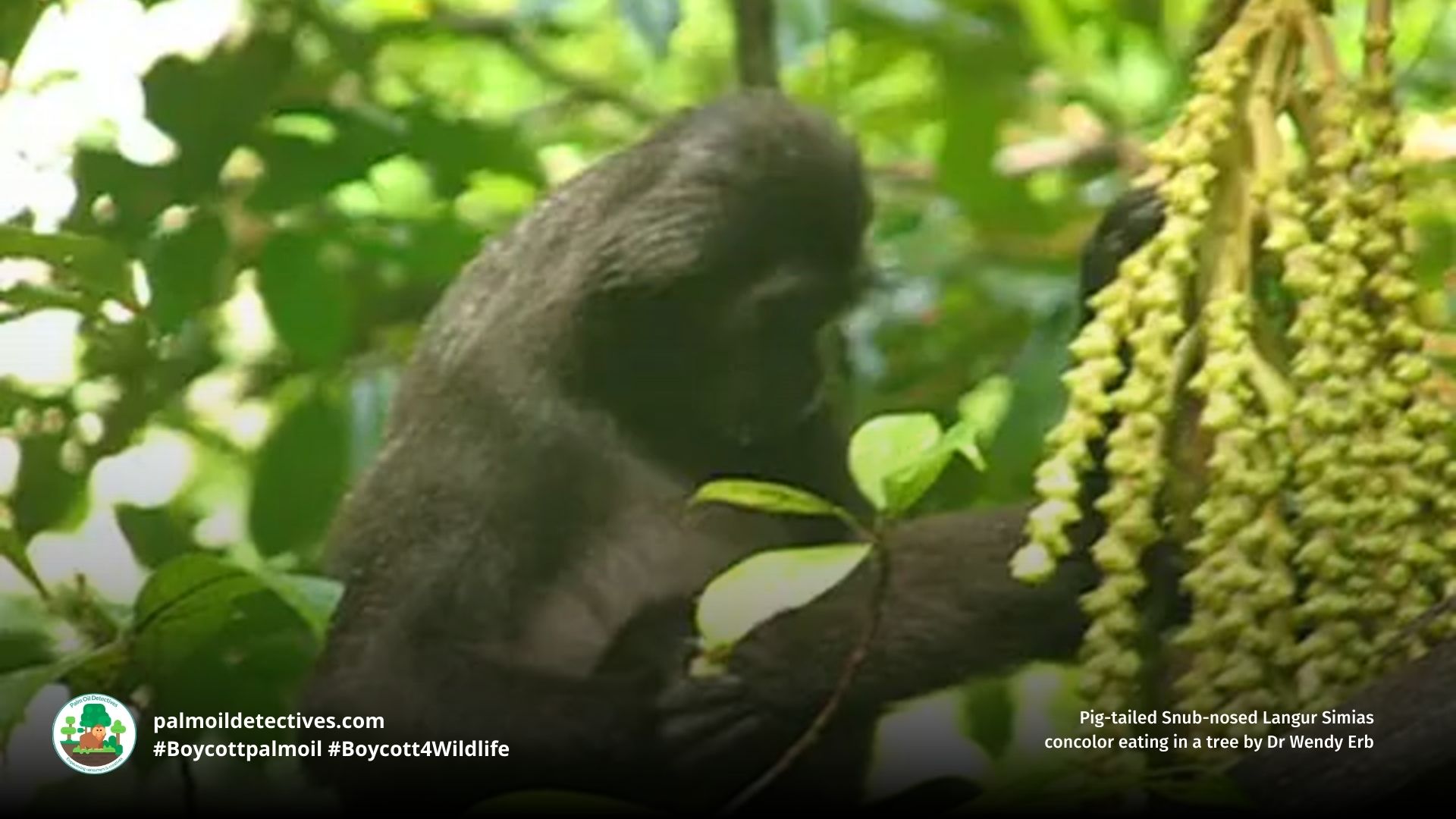
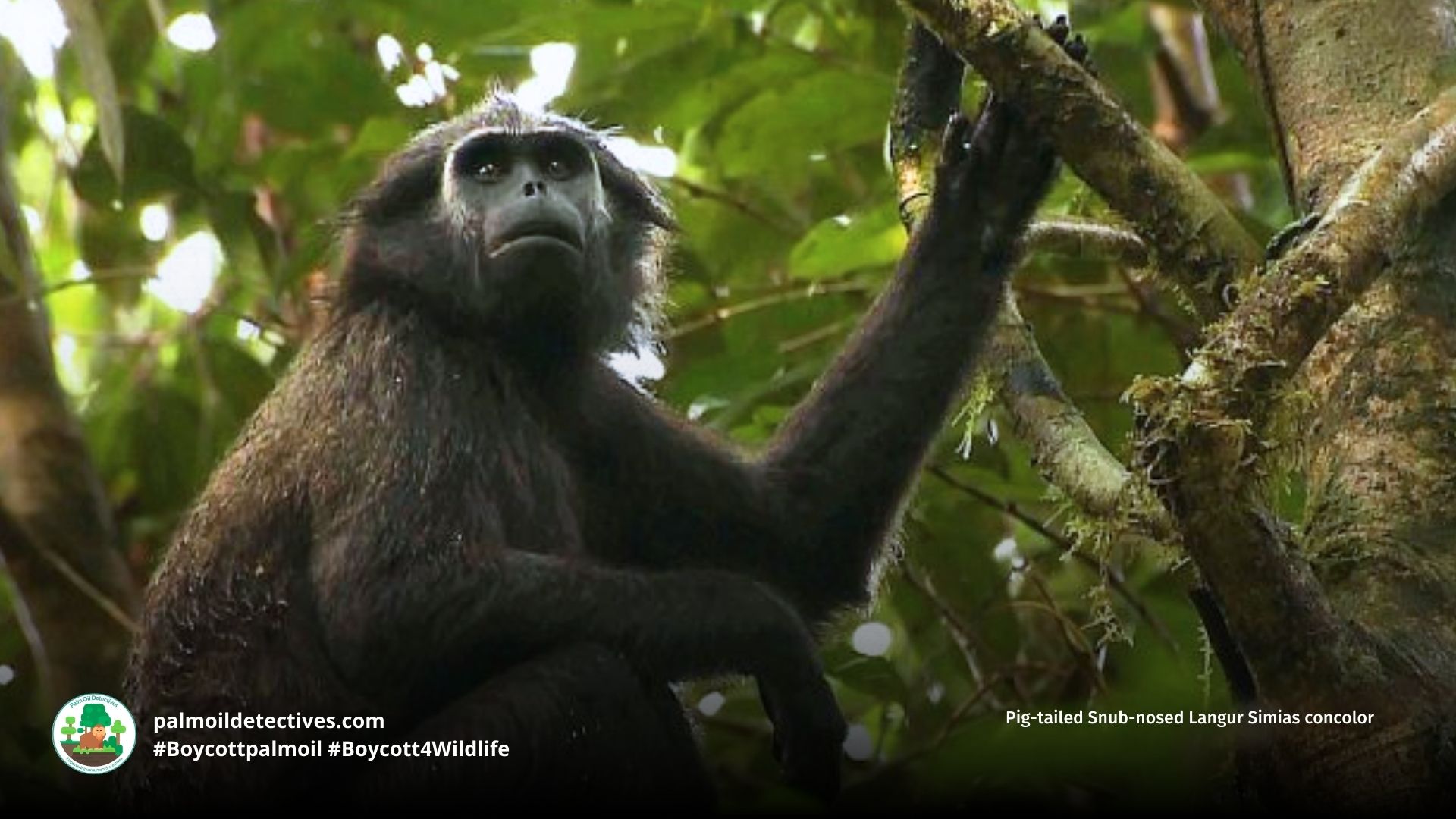
Pig-tailed Snub-nosed Langur Simias concolor

Pig-tailed Snub-nosed Langur Simias concolor

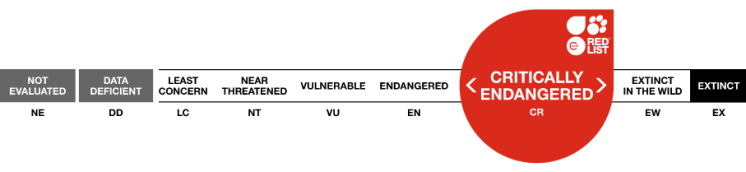
IUCN Red List Status: Critically Endangered

Location: This rare primate is endemic to the Mentawai Islands off the west coast of Sumatra, Indonesia. They are found on Siberut, Sipora, and North and South Pagai, where they inhabit lowland and hill forests in these isolated and fragile ecosystems.

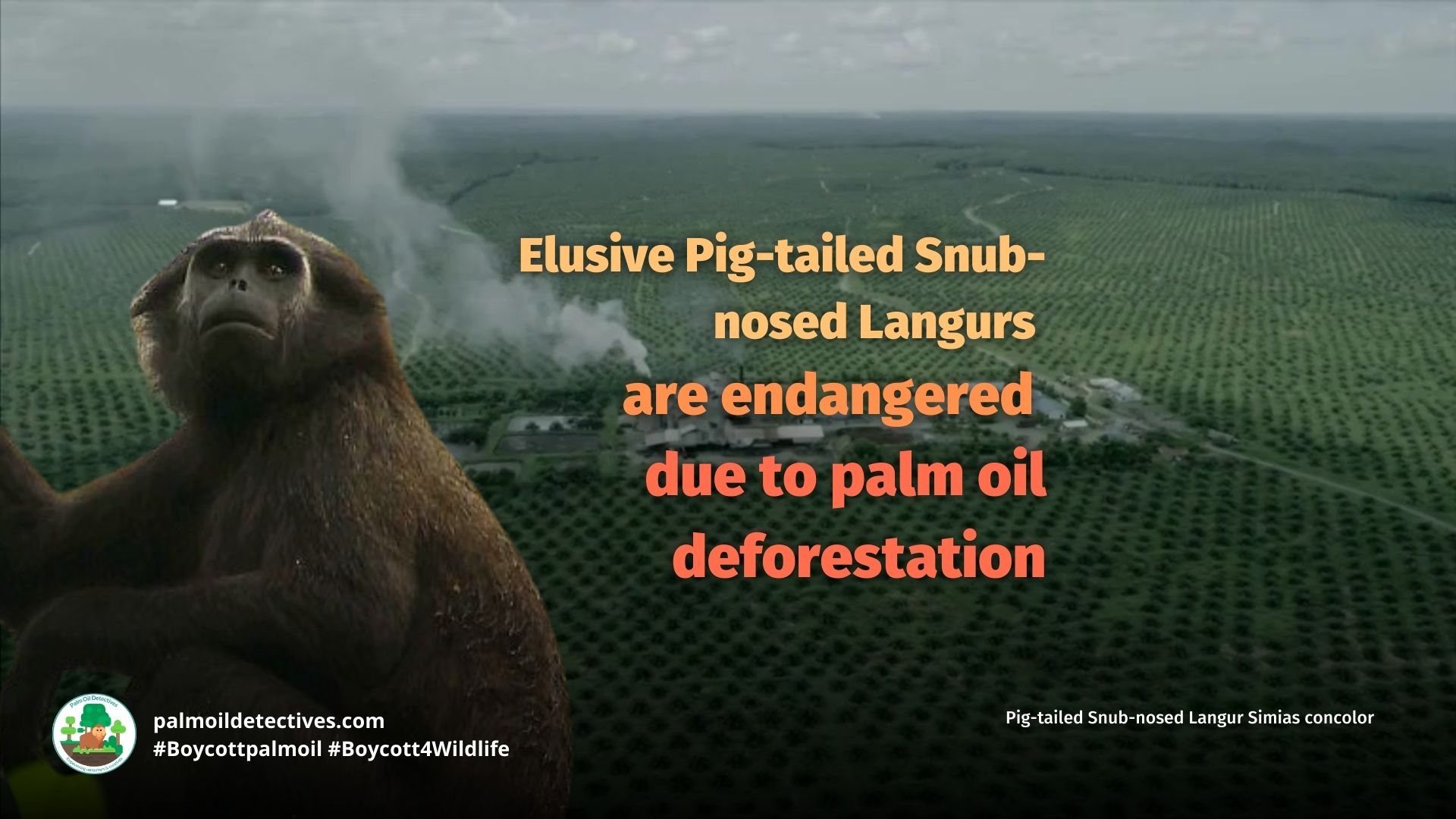
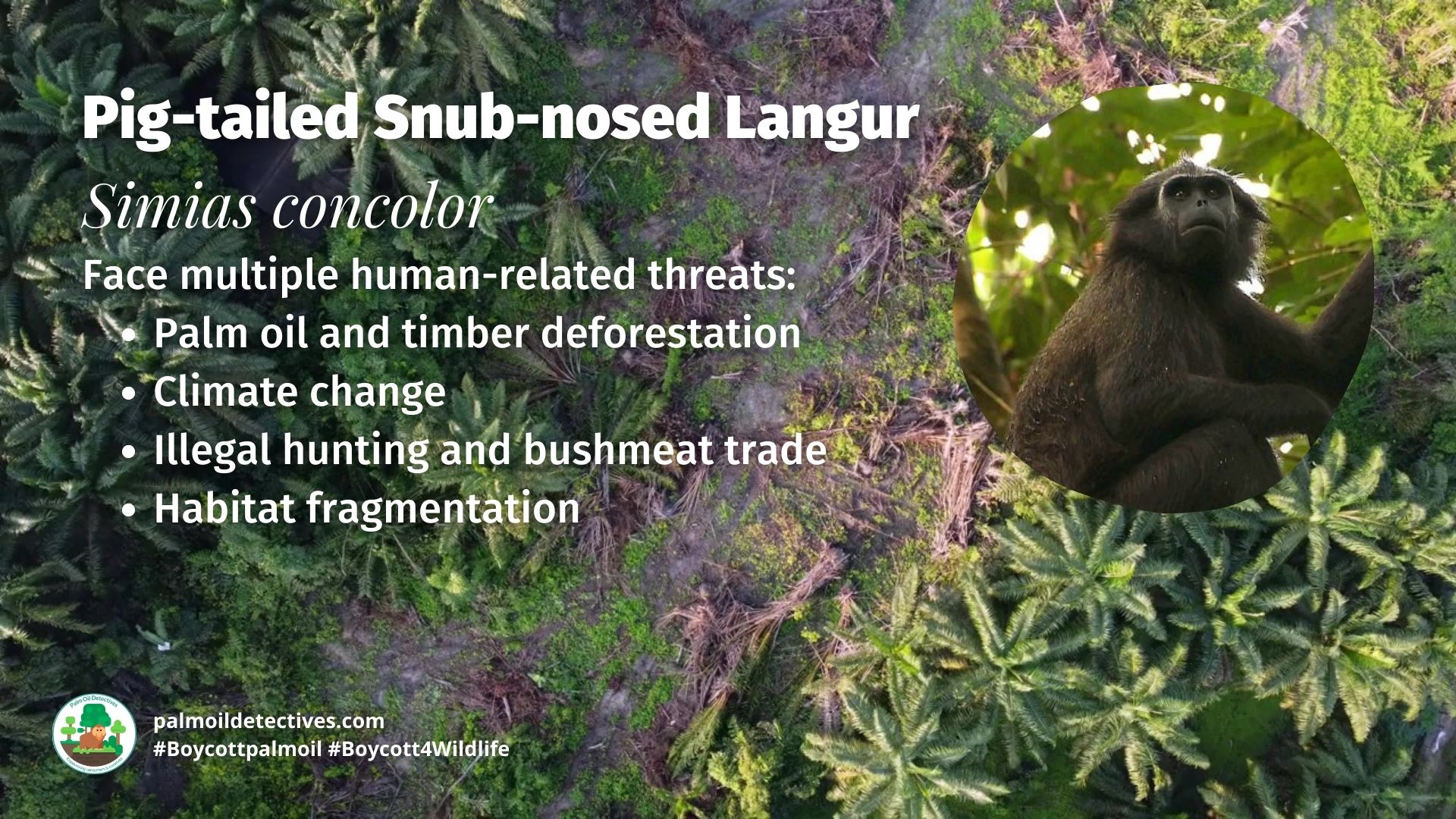
The Pig-tailed Snub-nosed Langur, also known as the Pig-tailed Langur, is one of the most distinctive and endangered monkeys in the world. These ultra rare and critically endangered small primates are known for their short, upturned noses and unique pig-like tails. Pig-tailed Snub-nosed Langurs are critically endangered due to palm oil and timber deforestation, hunting, and habitat fragmentation in their tiny island homes of Siberut, Sipora, and North and South Pagai, Indonesia. Immediate conservation action is necessary to protect the remaining population and their delicate ecosystem from disappearing forever. Fight for them every time you shop and #BoycottPalmOil #Boycott4Wildlife

Forgotten 🙊🐒 Pig-tailed Snub-nosed is now critically endangered on tiny islands near 🇮🇩 from and hunting pressures. Help them survive 🌴☠️⛔️ @palmoildetect https://palmoildetectives.com/2021/01/31/pig-tailed-snub-nosed-langur-simias-concolor/

Pig-tailed Snub-nosed have a cute upturned nose and a pig-like tail. They’re critically by and hunting in 🇮🇩🐒 Resist their ! 🌴☠️⛔️ @palmoildetect https://palmoildetectives.com/2021/01/31/pig-tailed-snub-nosed-langur-simias-concolor/

Appearance and Behaviour

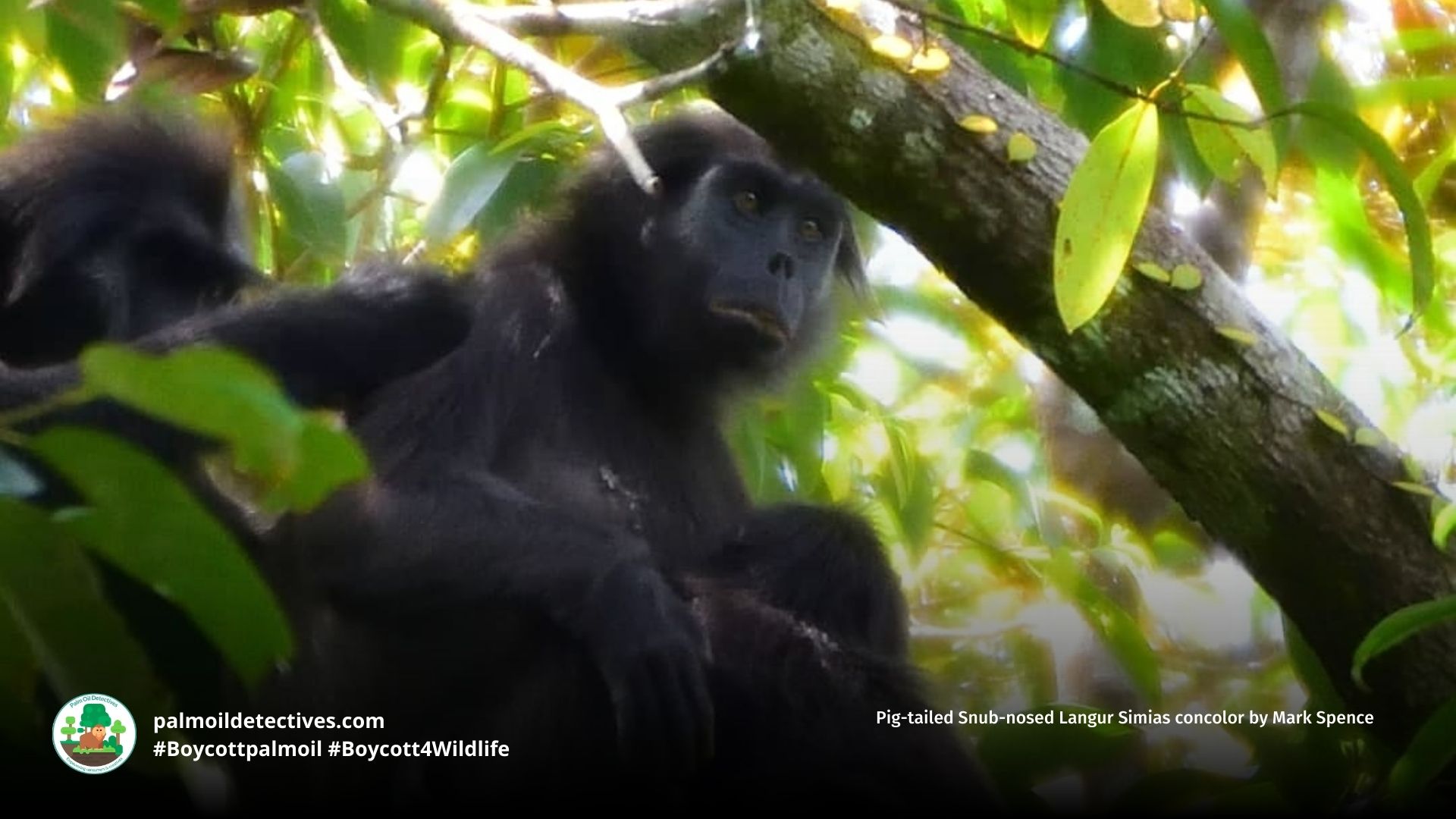
The Pig-tailed Snub-nosed Langur is a medium-sized primate with a striking appearance. Their dense, greyish-brown fur contrasts with lighter underparts, and their small, upturned nose gives them a unique and endearing look. Their short, thick tail, resembling that of a pig, is another defining feature (IUCN, 2020).

These langurs are diurnal and arboreal, spending most of their time in the forest canopy. They live in social groups of up to 20 individuals, where they engage in complex communication and social bonding. Their dynamic foraging strategies allow them to adapt to the heterogeneous environments of the Mentawai Islands.

This species is listed as Critically Endangered because a population decline of 80-90% over the last 36 years (three generations) is estimated due to heavy hunting pressure and extensive habitat loss (especially on southern islands but quite significant throughout species range). The Pig-tailed Snub-nosed Langur is threatened mainly by heavy hunting and commercial logging (Whittaker 2006, Quinten et al. 2014).

IUCN Red List

Diet

The Pig-tailed Snub-nosed Langur is primarily folivorous, feeding on a variety of leaves, but they also consume fruits, seeds, and flowers when available. This specialised diet ties them closely to their forest environment, making them highly vulnerable to habitat destruction and fragmentation (IUCN, 2020).

Reproduction and Mating

As with many langurs, this species is believed to have a low reproductive rate. Females give birth to a single infant after a long gestation period, and young langurs are raised with the support of the social group. This cooperative behaviour is vital for ensuring the survival of the next generation in their challenging environment.

Geographic Range

The Pig-tailed Snub-nosed Langur is restricted to the Mentawai Islands, including Siberut, Sipora, and North and South Pagai. These islands are home to diverse but fragile ecosystems, where this species relies on primary and secondary forests for survival. Their limited geographic range makes them highly vulnerable to localised threats (IUCN, 2020).

Threats

They are also threatened by the conversion of rainforest into oil palm plantations, as well as forest clearing and product extraction by local people. Sometimes, animals are taken for the pet trade (Whittaker 2006).

IUCN Red LIST
  • Palm oil and timber deforestation: The rapid expansion of out-of-control palm oil plantations, logging, and agricultural activities has resulted in the widespread destruction of the Mentawai Islands’ forests.
  • Illegal hunting for bushmeat: The langur is heavily hunted for bushmeat, a significant threat in local communities.
  • Habitat Fragmentation: Infrastructure development and forest clearing have fragmented their habitats, isolating populations and reducing genetic diversity.

Take Action!

Protecting the Pig-tailed Snub-nosed Langur requires urgent conservation measures to halt deforestation and hunting. By boycotting products containing palm oil, supporting indigenous-led conservation initiatives, and advocating for forest preservation, you can help safeguard this critically endangered primate.


Conservation

Conservation efforts for these critically endangered small primates is underway. Read more about Asian Species Action Partnership (ASAP) in Indonesia.

Further Information

iucn-rating-critically-endangered

Quinten, M, Setiawan, A., Cheyne, S., Traeholt, C. & Whittaker, D. 2020. Simias concolor. The IUCN Red List of Threatened Species 2020: e.T20229A17953422. https://dx.doi.org/10.2305/IUCN.UK.2020-2.RLTS.T20229A17953422.en. Downloaded on 31 January 2021.

Zhao, L., et al. (2024). Dynamic foraging strategy adaptation to heterogeneous environments contributes to social aggregation in snub-nosed monkeys. Zoological Research, 45(1), 39–54. https://doi.org/10.24272/j.issn.2095-8137.2023.047

Wikipedia. (n.d.). Pig-tailed Langur. Retrieved from https://en.wikipedia.org/wiki/Pig-tailed_langur

GBIF. (n.d.). Simias concolor. Retrieved from https://www.gbif.org/species/4267130


Contribute to palm oil detectives - black rhino in profile

How can I help the ?


Take Action in Five Ways

1. Join the on social media and subscribe to stay in the loop: Share posts from this website to your own network on Twitter, Mastadon, Instagram, Facebook and Youtube using the hashtags .

Join 3,176 other subscribers

2. Contribute stories: Academics, conservationists, scientists, indigenous rights advocates and animal rights advocates working to expose the corruption of the palm oil industry or to save animals can contribute stories to the website.

3. Supermarket sleuthing: Next time you’re in the supermarket, take photos of products containing palm oil. Share these to social media along with the hashtags to call out the greenwashing and ecocide of the brands who use palm oil. You can also take photos of palm oil free products and congratulate brands when they go palm oil free.

4. Take to the streets: Get in touch with Palm Oil Detectives to find out more.

5. Donate: Make a one-off or monthly donation to Palm Oil Detectives as a way of saying thank you and to help pay for ongoing running costs of the website and social media campaigns. Donate here

Cotton-headed Tamarin Saguinus oedipus

Cotton-headed Tamarin Saguinus oedipus

Red List Status: Critically Endangered

Locations: Colombia (regions of Atlántico, Bolívar, Sucre, and Córdoba)

Known for the characterful head crests giving adults a plucky and “punk” look, the Cotton Top , also known as the Cotton-headed Tamarin is a diminuitive living in the humid forests in the south to dry deciduous forest in the north of . They are now critically endangered and face multiple serious threats from capture for primate experiments, to the illegal pet trade and deforestation for palm oil, soy, meat deforestation and the cultivation of ilicit coca. Help these spritely and remarkable tiny primates to survive, every time you shop be and

Cotton-headed 🐒🙈🤎 are plucky from rainforests of 🇨🇴 They are critically endangered from and . Help them and 🌴🪔🧐🙊⛔️ be and @palmoildetect https://palmoildetectives.com/2021/01/31/cotton-headed-tamarin-saguinus-oedipus/

The habitat of the Cotton-top Tamarin Saguinus oedipus is used for large-scale agricultural production (i.e. cattle) and farming, logging, oil palm plantations, and hydroelectric projects that fragment the cotton-top tamarin’s natural range.

Appearance and Behaviour

Cotton-top tamarins are instantly recognisable by their exuberant white crest, a tuft of hair that rises above their expressive faces like a crown. Their bodies, measuring 21 to 26 centimetres with tails stretching an additional 33 to 41 centimetres, are agile and light, weighing about 430 grams. Their fur is soft and textured, with shades of brown and cream blending seamlessly into the dappled forest light. These tamarins are highly social, living in close-knit groups of three to nine individuals. They communicate with a rich repertoire of sounds—chirps, trills, and whistles that echo through the trees as they forage and play. Their movements are quick and precise, a dance of curiosity and cooperation as they navigate the treetops, their family bonds strong and their emotional lives complex.

Threats

Palm oil and meat agriculture deforestation

The forests that cotton-top tamarins call home are vanishing at an alarming rate, stripped bare by the relentless expansion of palm oil plantations and cattle ranching. Where once there were towering trees and tangled vines, there are now rows of oil palms and open pastures. The bulldozers leave scars across the landscape, and the air is thick with the scent of burning wood and earth. For the cotton-top tamarin, each hectare lost is another fragment of their world torn away, another family group isolated and vulnerable.

Illegal pet trade and hunting

The illegal pet trade is a cruel and persistent threat. Infants are snatched from their mothers, their families torn apart, and their lives reduced to cages and loneliness. Hunting for bushmeat also takes its toll, disrupting social groups and undermining the resilience of wild populations. The silence that follows a gunshot is deafening, a reminder of the fragility of life in the forest.

Climate change and habitat fragmentation

Changing rainfall patterns and rising temperatures as a result of climate change are altering the delicate balance of the forest. Trees fruit at unpredictable times, and rivers run dry or flood unpredictably. Fragmented habitats isolate tamarin groups, reducing genetic diversity and making them more susceptible to disease and other pressures.

Diet

Cotton-top tamarins are omnivorous, their diet a vibrant reflection of the forest’s abundance. They feast on fruits, flowers, and nectar, their nimble fingers plucking delicacies from the branches. They also hunt small animal prey—frogs, snails, lizards, spiders, and insects—adding protein to their meals. In the rhythm of the forest, cotton-top tamarins play a vital role as seed dispersers, their foraging helping to regenerate the woodland and sustain the ecosystem. Their feeding is a lively affair, full of movement and interaction, as they share the bounty of the forest with their family.

Reproduction and Mating

Breeding is a cooperative affair among cotton-top tamarins. Dominant females typically give birth to one to three offspring, most often twins, after a gestation period of about 180 days. The entire group shares responsibility for caring for the young, with fathers, siblings, and other relatives all playing a role. This cooperative system strengthens social bonds and increases the chances of survival for each infant. The forest is alive with the sounds of young tamarins learning to climb and forage, their mothers guiding them through the treetops. In captivity, cotton-top tamarins can live up to 20 years, but in the wild, their lives are shaped by the challenges of a changing world.

Geographic Range

Cotton-top tamarins are found only in northwest Colombia, in the departments of Atlántico, Bolívar, Sucre, and Córdoba. Their historical range has contracted dramatically, the forests they once roamed now reduced to scattered patches. The landscape is a patchwork of green and brown, the remnants of their habitat clinging to life amid the encroachment of agriculture and urban development. The sounds of the forest—birdsong, rustling leaves, and the calls of tamarins—are a reminder of what is at stake.

FAQs

How many cotton-top tamarins are left in the wild?

Recent estimates suggest that the wild population of cotton-top tamarins numbered around 6,946 individuals in 2012, with this figure likely to have declined further as deforestation continues to fragment their habitat. The actual number may be lower, as many forest patches are now isolated and vulnerable to further loss. The cotton-top tamarin’s future is uncertain, and urgent action is needed to protect their remaining strongholds.

What is the lifespan of a cotton-top tamarin?

In the wild, cotton-top tamarins typically live shorter lives due to predation, disease, and the pressures of a changing environment. In captivity, where they are protected from many of these threats, they can live up to 20 years. Their longevity is closely tied to the health of their habitat and the stability of their social groups, both of which are under threat in the wild.

What are the main threats to the cotton-top tamarin’s survival?

The primary threats to the cotton-top tamarin are deforestation for palm oil and meat agriculture, the illegal pet trade, hunting, and habitat fragmentation. Climate change and pollution further stress their already vulnerable populations. Each of these threats is driven by human activity, and each can be addressed through collective action and advocacy.

Do cotton-top tamarins make good pets?

Cotton-top tamarins absolutely do not make good pets! They suffer extreme stress, loneliness, and early death in captivity. The illegal pet trade rips families apart and fuels extinction. Their complex social and emotional needs cannot be met in a domestic setting, and keeping them as pets is both cruel and illegal.

Take Action!

Use your wallet as a weapon and #BoycottPalmOil #Boycott4Wildlife. Support indigenous-led conservation and agroecology to safeguard the forests that cotton-top tamarins call home. Reject the illegal pet trade and advocate for the protection of all wildlife. Every choice you make can help fight for their survival.

Conservation

Conservation efforts for these critically endangered small primates is underway. Read more about Proyecto Tití in Colombia.

iucn-rating-critically-endangered

Rodríguez, V., Defler, T.R., Guzman-Caro, D., Link, A., Mittermeier, R.A., Palacios, E. & Stevenson, P.R. 2020. Saguinus oedipus. The IUCN Red List of Threatened Species 2020: e.T19823A115573819. https://dx.doi.org/10.2305/IUCN.UK.2020-2.RLTS.T19823A115573819.en. Downloaded on 31 January 2021.

Wikipedia

Masilkova, M., Weiss, A., Šlipogor, V., & Konečná, M. (2020). Comparative assessment of behaviorally derived personality structures in golden-handed tamarins (Saguinus midas), cotton-top tamarins (Saguinus oedipus), and common marmosets (Callithrix jacchus). Journal of Comparative Psychology, 134(4), 453–466. https://doi.org/10.1037/com0000226

Savage, A., et al. (2016). An assessment of the population of cotton-top tamarins (Saguinus oedipus) and their habitat in Colombia. PLOS ONE, 11(12), e0168324. https://journals.plos.org/plosone/article?id=10.1371/journal.pone.0168324


Contribute to palm oil detectives - black rhino in profile

How can I help the ?


Take Action in Five Ways

1. Join the on social media and subscribe to stay in the loop: Share posts from this website to your own network on Twitter, Mastadon, Instagram, Facebook and Youtube using the hashtags .

Join 3,176 other subscribers

2. Contribute stories: Academics, conservationists, scientists, indigenous rights advocates and animal rights advocates working to expose the corruption of the palm oil industry or to save animals can contribute stories to the website.

3. Supermarket sleuthing: Next time you’re in the supermarket, take photos of products containing palm oil. Share these to social media along with the hashtags to call out the greenwashing and ecocide of the brands who use palm oil. You can also take photos of palm oil free products and congratulate brands when they go palm oil free.

4. Take to the streets: Get in touch with Palm Oil Detectives to find out more.

5. Donate: Make a one-off or monthly donation to Palm Oil Detectives as a way of saying thank you and to help pay for ongoing running costs of the website and social media campaigns. Donate here
Red-cheeked Gibbon Nomascus gabriellae

Red-cheeked Gibbon Nomascus gabriellae

Endangered

Location: Cambodia, Laos, Vietnam

Like other gibbons, Red-cheeked Gibbons are arboreal and diurnal, with singing bouts averaging 12 minutes and lower calling frequencies in the wet season (Rawson 2004, Kenyon 2007). The species displays a monogamous social structure of adult pair and offspring. Average group size is estimated at 3-5 individuals. Females emigrate near, in and around their natal territories, but males emigrate farther and wider. Female give birth to single offspring at 17-22 month intervals. Nomascus gabriellae is considered Endangeredb ased on a suspected population reduction of 50% or more due to hunting for food, live capture for the pet trade, and the loss of suitable habitat.

Beautiful and endangered Red-cheeked 🙉🐒🐵 are devoted partners and known for their melodic cacophony in 🇱🇦 🇻🇳 . They face many threats. Help to survive when you @palmoildetect https://wp.me/pcFhgU-rK

These gibbons belong to genus Nomascus. They are known to communicate in species-specific song when defining territory or attracting mates. They sing in regional accents to each other and form monogamous breeding pairs. Males and females have different coloured fur.

Numerous conservation efforts of these rarest of small primates are ongoing. Sponsor a gibbon at a rescue centre here.

Threats to the Red-cheeked Gibbon

  • Hunting for the pet trade
    • Capture of young gibbons by killing the mother
    • Capture for zoos and private collections
    • Females and infants held as pets in hotels and private areas
  • Habitat loss and degradation
    • Planned or unplanned forest conversion
    • Developmental activities such as infrastructure development
    • Encroachment and illegal logging
    • Economic land concession designation in Cambodia
  • Small and fragmented population
    • Reduced genetic diversity and increased vulnerability
  • Trade and possession
    • At least 24-26 gibbons traded in southern provinces of Viet Nam
    • 32 out of 41 cases of gibbon possession reported in southern provinces (2005-2009)
  • Timber logging and palm oil deforestation
    • A contributor to habitat loss in both Viet Nam and Cambodia
  • Forest cover loss
    • Viet Nam has lost 16% of its forest cover since the turn of the century
    • Projected loss of up to 60% of forests in Viet Nam by 2045 if current rates continue
    • Cambodia has lost 25% of its forest cover since the turn of the century
    • Projected loss of up to 70% of forests in Cambodia by 2045 if current rates continue
Red-cheeked Gibbon Nomascus gabriellae

Further Information

ICUN endangered logo

Endangered Primate Rescue Centre

Rawson, B.M., Hoang, M.D., Roos, C., Van, N.T. & Nguyen, M.H. 2020. Nomascus gabriellae. The IUCN Red List of Threatened Species 2020: e.T128073282A17968950. https://dx.doi.org/10.2305/IUCN.UK.2020-2.RLTS.T128073282A17968950.en. Downloaded on 29 January 2021.


Contribute to palm oil detectives - black rhino in profile

How can I help the ?


Take Action in Five Ways

1. Join the on social media and subscribe to stay in the loop: Share posts from this website to your own network on Twitter, Mastadon, Instagram, Facebook and Youtube using the hashtags .

Join 3,176 other subscribers

2. Contribute stories: Academics, conservationists, scientists, indigenous rights advocates and animal rights advocates working to expose the corruption of the palm oil industry or to save animals can contribute stories to the website.

3. Supermarket sleuthing: Next time you’re in the supermarket, take photos of products containing palm oil. Share these to social media along with the hashtags to call out the greenwashing and ecocide of the brands who use palm oil. You can also take photos of palm oil free products and congratulate brands when they go palm oil free.

4. Take to the streets: Get in touch with Palm Oil Detectives to find out more.

5. Donate: Make a one-off or monthly donation to Palm Oil Detectives as a way of saying thank you and to help pay for ongoing running costs of the website and social media campaigns. Donate here

Southern White-cheeked Gibbon Nomascus siki

Southern White-cheeked Gibbon Nomascus siki

Red List Status: Critically Endangered

Location: Central Laos (east of Mekong River), Central Vietnam (Ha Tinh, Quang Binh, Quang Tri Provinces)

In the misty canopies of Southeast Asian forests, where ancient trees reach towards clouded peaks and dawn breaks with haunting melodies, Southern White-cheeked Gibbons swing through their rapidly shrinking world.

Southern White-cheeked stand among Southeast Asia’s most melodic , their haunting territorial songs echoing through evergreen forests at dawn. These remarkable apes face an 80% population decline over three generations as plantations, agricultural expansion, and devastate their homeland. has lost 15% of its forest cover in just 15 years and could lose another 45% by 2050, while faces similar destruction. With fewer than 425 groups remaining in fragmented patches, these singing teeter on ’s edge.

Appearance and Behaviour

Southern White-cheeked Gibbons display striking sexual dimorphism that transforms with age. Juveniles begin life as light brown infants, turning black after weaning. Adult males remain jet black with distinctive white patches framing their mouths, while females develop rich brown colouring with delicate white facial edging. Their long, powerful arms span up to 1.5 metres, perfectly adapted for their brachiating lifestyle.

These gibbons begin each day with spectacular duet songs that can be heard up to 2 kilometres away. Mated pairs sing together to defend territories and strengthen bonds, their regional accents distinguishing different populations. Southern White-cheeked Gibbons are strictly arboreal, spending their entire lives in the canopy where they move with breathtaking grace and speed.

Diet

Southern White-cheeked Gibbons are primarily frugivorous, spending 33% of their day feeding on diverse forest fruits that ripen throughout the year. They supplement their diet with tender leaves, young shoots, and flowers, occasionally capturing small prey like lizards or Finlayson’s squirrels. These gibbons provide a critical ecosystem service by being seed dispersers, carrying viable seeds in their digestive systems across vast territories before depositing them in new locations through their faeces. Their feeding activities help regenerate forest biodiversity across their 37.9-hectare home ranges.

Reproduction and Mating

Southern White-cheeked Gibbons form monogamous pairs that mate for life, raising their young together in tight family units. Females typically give birth to their first offspring between seven and eight years of age. Because raising young is extremely demanding, both parents share childcare duties, and mothers wait until their current offspring becomes relatively independent before having another infant. Families consist of two parents, a juvenile, and an infant at any given time. Young gibbons leave their parents’ territory once they reach maturity between three and six years of age.

Geographic Range

Southern White-cheeked Gibbons inhabit a restricted range in central Laos east of the Mekong River and central Vietnam’s mountainous provinces. Their historical distribution extended from the Nam Theun and Rao Nay rivers in the north to the Banghiang and Thach Han rivers in the south.

In Vietnam, populations are heavily fragmented and scattered, while in Laos populations of gibbons remain larger. Key populations survive in protected areas including Phong Nha-Ke Bang National Park and Nakai-Nam Theun National Protected Area.

Threats

Southern White-cheeked Gibbons Nomascus siki threats

Timber, rubber and palm oil deforestation

Agricultural expansion converts primary forests into farmland and human settlements, destroying the tall broadleaf evergreen forests Southern White-cheeked Gibbons require for survival. Logging operations target luxury timber species, selectively removing the largest trees that provide crucial fruiting resources and nesting sites.

Rubber cultivation destroys the fruiting trees that sustain gibbon populations while fragmenting territories below viable thresholds for family groups. The conversion process typically involves clear-cutting entire forest sections, eliminating decades of ecological relationships in mere weeks. In Cambodia’s Virachey National Park, large areas have been cleared for rubber production in recent years, particularly along the eastern borders where gibbons once thrived.

Infrastructure development and roads

Infrastructure development opens previously inaccessible areas to human exploitation, bringing roads, settlements, and hunting pressure into formerly secure habitats. The fragmentation creates isolated forest patches too small to support viable gibbon populations, leading to local extinctions across their range. Agricultural conversion eliminates the continuous canopy connections these strictly arboreal primates need for movement and foraging.

Hunting and wildlife trade

Traditional medicine practitioners highly value Southern White-cheeked Gibbons for their body parts. Opportunistic hunting with firearms targets gibbons alongside other wildlife, often killing entire family groups when hunters encounter them.

The illegal pet trade tears infant gibbons from their families, condemning them to lives of isolation and psychological trauma in captivity. Local communities hunt gibbons for bushmeat, viewing them as readily available protein sources. Gun ownership and hunting access have increased significantly with infrastructure development, bringing previously secure populations within reach of hunters. The small group sizes and territorial nature of gibbon families make them particularly vulnerable to hunting pressure.

Take Action!

Use your wallet as a weapon and #BoycottPalmOil #Boycott4Wildlife every time you shop. Adopt a vegan lifestyle protecting both wild and farmed animals from agricultural expansion. Support indigenous-led protection recognising traditional forest guardianship. Refuse products containing rubber from deforested areas and demand supply chain transparency.

FAQs

What sounds do Southern White-cheeked Gibbons make?

Southern White-cheeked Gibbons are renowned for their spectacular dawn songs that can be heard up to 2 kilometres away through dense forest. Mated pairs perform elaborate duets combining whoops, hoots, and melodic phrases that last 15-30 minutes each morning. These territorial songs serve to defend their home ranges and strengthen pair bonds between mates. Each population has developed regional accents, with slight variations in song structure distinguishing different gibbon communities across their range. Males typically begin the duet with deep hooting calls, while females add higher-pitched, more complex phrases that create hauntingly beautiful harmonies echoing through the forest canopy.

How high can Southern White-cheeked Gibbons swing?

Southern White-cheeked Gibbons are masterful brachiators, swinging through forest canopies 15-50 metres above the ground using their extremely long arms and powerful shoulder joints. They travel at speeds reaching 55 kilometres per hour through the canopy. Their incredible agility allows them to navigate dense forest canopies with extraordinary precision.

How long do Southern White-cheeked Gibbons live?

Southern White-cheeked Gibbons can live 35-40 years. Young gibbons remain with their parents for 3-6 years, learning essential survival skills including territorial singing, foraging techniques, and canopy navigation.

Are Southern White-cheeked Gibbons dangerous to humans?

These gentle apes are primarily frugivorous and spend their time high in forest canopies, far from human activity. Their territorial behaviour is directed only towards other gibbon groups, not humans, and consists of vocal displays rather than physical aggression.

Do Southern White-cheeked Gibbons make good pets?

It is deeply cruel to keep these wild apes as pets. Southern White-cheeked Gibbons suffer extreme psychological trauma, loneliness, and early death in captivity. The illegal pet trade rips infant gibbons from their families, causing severe trauma while removing potential breeding individuals from critically endangered populations.

Captive Southern White-cheeked Gibbons often develop depression and aggression as they attempt to cope with social isolation and environmental deprivation. Legal ownership is prohibited under CITES Appendix I and national laws in both Vietnam and Laos.

Why do Southern White-cheeked Gibbons sing?

Southern White-cheeked Gibbons sing elaborate duets to defend their territories, strengthen pair bonds, and communicate with neighbouring families across the forest landscape. These dawn songs serve as acoustic boundaries, informing other gibbon groups about occupied territories and preventing potentially dangerous physical confrontations. Mated pairs coordinate their duets to demonstrate their strong partnership and reproductive fitness to potential rivals. The songs also help family members locate each other in dense forest canopies and may serve to teach young gibbons proper vocal techniques essential for establishing their own territories. Regional variations in song structure function like dialects, allowing gibbons to identify members of their local population versus strangers from distant areas.

Southern White-cheeked Gibbons Nomascus siki boycott palm oil

Further Information

iucn-rating-critically-endangered

Can, D. N., Trai, L. T., Ninh, L. V., Hieu, T. D., Nghia, H. V., Mai, T. T., & Tu, L. N. (2020). The status of southern white-cheeked gibbon (Nomascus siki) in Truong Son key biodiversity areaVietnam Journal of Biotechnology, 42(1), 31-42.

Endangered Primate Rescue Centre

Nguyen, M.H., Coudrat, C.N.Z., Roos, C., Rawson, B.M. & Duckworth, J.W. 2020. Nomascus siki. The IUCN Red List of Threatened Species 2020: e.T39896A17968765. https://dx.doi.org/10.2305/IUCN.UK.2020-2.RLTS.T39896A17968765.en. Downloaded on 28 January 2021.

Southern white-cheeked gibbon (Nomascus siki) in Nakai-Nam Theun National Protected Area, Lao PDRConservation and Science Report, Northeast Primate Conservancy.


Contribute to palm oil detectives - black rhino in profile

How can I help the ?


Take Action in Five Ways

1. Join the on social media and subscribe to stay in the loop: Share posts from this website to your own network on Twitter, Mastadon, Instagram, Facebook and Youtube using the hashtags .

Join 3,176 other subscribers

2. Contribute stories: Academics, conservationists, scientists, indigenous rights advocates and animal rights advocates working to expose the corruption of the palm oil industry or to save animals can contribute stories to the website.

3. Supermarket sleuthing: Next time you’re in the supermarket, take photos of products containing palm oil. Share these to social media along with the hashtags to call out the greenwashing and ecocide of the brands who use palm oil. You can also take photos of palm oil free products and congratulate brands when they go palm oil free.

4. Take to the streets: Get in touch with Palm Oil Detectives to find out more.

5. Donate: Make a one-off or monthly donation to Palm Oil Detectives as a way of saying thank you and to help pay for ongoing running costs of the website and social media campaigns. Donate here
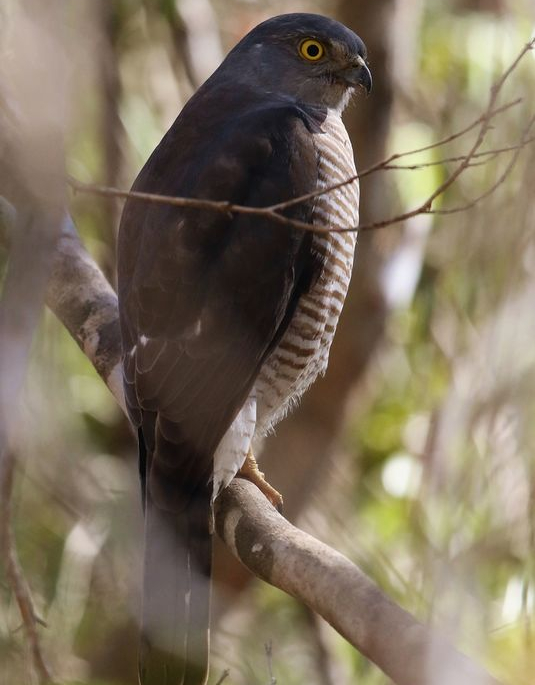
Northern Yellow-cheeked Crested Gibbon Nomascus annamensis

Northern Yellow-cheeked Crested Gibbon Nomascus annamensis

Endangered

Location: Cambodia, Laos, Vietnam

The Northern Yellow-cheeked Crested Gibbon lives in broadleaf evergreen and semi-evergreen forests, at elevations of between 100-1,200 m asl. These gibbons are frugivorous but also consumes significant proportions of leaves, young shoots and flowers. They are also known to feed on Finlayson’s Squirrel (single record by an adult female) and lizards. Food sharing has been observed (Geissmann 1995, Duc et al. 2016).

Northern Yellow-cheeked Crested Gibbons sing in local accents to attract mates and form monogamous pairs and close families. Endangered in by for Join the brand

Listed as Endangered based on a suspected population reduction of at least 50% over the past 45 years (three generations), primarily due to logging, agricultural encroachment, and hunting, and a suspected continuing decline over at least 15 years (one generation) into the future. In Cambodia’s Virachey National Park, large areas have been cleared for rubber plantations in recent years, particularly on its eastern side, and the area is also subjected to illegal logging for luxury timber.

These gibbons belong to genus Nomascus. They are known to communicate in species-specific song when defining territory or attracting mates. They sing in regional accents to each other and form monogamous breeding pairs. Males and females have different coloured fur.

Numerous conservation efforts of these rarest of small primates are ongoing. Sponsor a gibbon at a rescue centre here.

Further Information

ICUN endangered logo

Endangered Primate Rescue Centre

Rawson, B.M., Hoang, M.D., Roos, C., Van, N.T. & Nguyen, M.H. 2020. Nomascus gabriellae. The IUCN Red List of Threatened Species 2020: e.T128073282A17968950. https://dx.doi.org/10.2305/IUCN.UK.2020-2.RLTS.T128073282A17968950.en. Downloaded on 28 January 2021.


Contribute to palm oil detectives - black rhino in profile

How can I help the ?


Take Action in Five Ways

1. Join the on social media and subscribe to stay in the loop: Share posts from this website to your own network on Twitter, Mastadon, Instagram, Facebook and Youtube using the hashtags .

Join 3,176 other subscribers

2. Contribute stories: Academics, conservationists, scientists, indigenous rights advocates and animal rights advocates working to expose the corruption of the palm oil industry or to save animals can contribute stories to the website.

3. Supermarket sleuthing: Next time you’re in the supermarket, take photos of products containing palm oil. Share these to social media along with the hashtags to call out the greenwashing and ecocide of the brands who use palm oil. You can also take photos of palm oil free products and congratulate brands when they go palm oil free.

4. Take to the streets: Get in touch with Palm Oil Detectives to find out more.

5. Donate: Make a one-off or monthly donation to Palm Oil Detectives as a way of saying thank you and to help pay for ongoing running costs of the website and social media campaigns. Donate here

Northern White-cheeked Gibbon Nomascus leucogenys

Northern White-cheeked Gibbon Nomascus leucogenys

Critically Endangered

Location: N.W. Vietnam, N.W Laos

Northern White-cheeked Gibbon is critically endangered on @IUCNredlist in and due to hunting, pet trade and for . Save this species by making art and joining the

The Northern White-cheeked Gibbon is considered Critically Endangered based upon the combined effects of habitat loss, hunting and live capture for the pet trade. The last population in China apparently disappeared several years prior to this species’ last assessment. In Laos and Vietnam, hunting and live capture continue and will likely do so over the long-term.

IUCN Red List

The Northern White-cheeked Gibbon is a diurnal, arboreal and territorial species of gibbon found in tall primary and degraded evergreen and semi-evergreen forest. In northwestern Vietnam and northern Lao PDR, the animals live in a subtropical climate with a short and not very cold winter without frost (Tien 1983).

In Vietnam, the species is found from 200 m to well over 1,000 m asl, with the highest record coming from Pu Mat NP from a listening post positioned at 1,500 m asl (Rawson et al. 2011), however, individuals are now found mostly above 700 m due to lowland deforestation (Rawson et al. 2011). In Lao PDR, gibbons are found from the Mekong plains up to at least 1,650 m in Nam Et-Phou Loei NPA (Duckworth et al. 1995, Duckworth 2008).

Northern White-cheeked Gibbon Nomascus leucogenys

These gibbons belong to genus Nomascus. They are known to communicate in species-specific song when defining territory or attracting mates. They sing in regional accents to each other and form monogamous breeding pairs. Males and females have different coloured fur.

Numerous conservation efforts of these rarest of small primates are ongoing. Sponsor a gibbon at a rescue centre here.

Further Information

iucn-rating-critically-endangered

Rawson, B.M., Nguyen, M.H., Coudrat, C.N.Z., Roos, C., Jiang, X. & Duckworth, J.W. 2020. Nomascus leucogenys (errata version published in 2020). The IUCN Red List of Threatened Species 2020: e.T39895A180816530. https://dx.doi.org/10.2305/IUCN.UK.2020-2.RLTS.T39895A180816530.en. Downloaded on 28 January 2021.


Contribute to palm oil detectives - black rhino in profile

How can I help the ?


Take Action in Five Ways

1. Join the on social media and subscribe to stay in the loop: Share posts from this website to your own network on Twitter, Mastadon, Instagram, Facebook and Youtube using the hashtags .

Join 3,176 other subscribers

2. Contribute stories: Academics, conservationists, scientists, indigenous rights advocates and animal rights advocates working to expose the corruption of the palm oil industry or to save animals can contribute stories to the website.

3. Supermarket sleuthing: Next time you’re in the supermarket, take photos of products containing palm oil. Share these to social media along with the hashtags to call out the greenwashing and ecocide of the brands who use palm oil. You can also take photos of palm oil free products and congratulate brands when they go palm oil free.

4. Take to the streets: Get in touch with Palm Oil Detectives to find out more.

5. Donate: Make a one-off or monthly donation to Palm Oil Detectives as a way of saying thank you and to help pay for ongoing running costs of the website and social media campaigns. Donate here

Cao-vit Gibbon Nomascus nasutus

Cao-vit Gibbon Nomascus nasutus

Status: Critically Endangered

Locations: Cao Vit Gibbon Conservation Area, Vietnam, and Bangliang Nature Reserve, China

Location: China, Vietnam

In 2024, Cao-vit were revised from 110 to 74 individuals 😿 The world’s most is on the edge of 🙊 Meat agriculture is a main threat. Help them and 🥩⛔️ be 🍆🥦and @palmoildetect https://palmoildetectives.com/2021/01/29/cao-vit-gibbon-nomascus-nasutus/

The Cao-vit melodic “cow-veet” calls 🐒🐵🎶 echo in the jungles of 🇻🇳 Only 75 are left alive. Threats include and meat Fight for them and be 🫛🍆 @palmoildetect https://palmoildetectives.com/2021/01/29/cao-vit-gibbon-nomascus-nasutus/

The Cao-vit gibbon, one of the world’s rarest primates, captivates the imagination with their melodic “cow-veet” calls, which echo like rainforest birdsongs. Research has found that they sing in regional accents to each other and form breeding pairs.

Arguably the world’s rarest gibbon they live in one forest patch straddling the Vietnam–China border. These critically endangered primates face myriad threats, including habitat destruction for timber and meat agriculture, inbreeding, and climate change. Immediate, concerted conservation action is essential to save these extraordinary gibbons from extinction.

Support indigenous-led conservation efforts to protect their habitat. Fight for their survival every time you shop. Use your wallet as a weapon and #BoycottMeat and be #Vegan #Boycott4Wildlife.

Appearance and Behaviour

Cao-vit gibbons are medium-sized arboreal primates distinguished by their sexual dimorphism. Males are cloaked in striking black fur with silvery cheeks, while females are a warm honey-gold with black faces. Both sexes have elongated limbs and agile hands, perfectly adapted for their graceful brachiation through the treetops.

The social lives of these gregarious gibbons are rich and complex, as they live in small family groups led by a dominant male and female. Bonds are reinforced through daily duets, where pairs sing in harmony to announce their presence and maintain territory. The gibbons’ vocalisations are essential not just for social cohesion but also for monitoring efforts, as researchers use these “vocal fingerprints” to identify individuals in the wild.

Threats

IUCN Status: Critically Endangered

The Cao-vit gibbon’s survival is imperilled by numerous threats:

Habitat Destruction: The gibbon’s remaining forest is under relentless pressure from logging, wood harvesting, and cultivation for livestock grazing.

Hunting and Trapping: While direct hunting has decreased, accidental snaring poses a significant threat.

Inbreeding Risks: The isolated population of just 74 individuals faces genetic bottlenecks, increasing their vulnerability to diseases and reducing reproductive success.

Climate Change: Rising temperatures and shifting rainfall patterns disrupt food availability and habitat stability.

A recent study highlights the extensive logging and cultivation occurring within the Cao Vit Gibbon Conservation Area, exacerbating habitat fragmentation (IUCN, 2020).

Diet

The Cao-vit gibbons primarily feed on young leaves, fruits, and flowers, preferring species like Ficus and Pterocarya. Seasonal shifts dictate their dietary habits, as they consume more leaves during periods when fruit availability declines. A study on their food preferences emphasised the importance of preserving diverse tree species to sustain their year-round needs.

Reproduction and Mating

These monogamous small primates form long-term pair bonds, with females giving birth to a single offspring after a gestation period of approximately seven months. Parental care is shared, with males often playing an active role in protecting and nurturing their young. Juveniles remain with their family groups for several years before dispersing to form new pairs.

Geographic Range

The entire global population of Cao-vit gibbons resides within the Cao Vit Gibbon Conservation Area in Vietnam and the Bangliang Nature Reserve in China. This transboundary habitat consists of limestone karst forests, characterised by steep, rocky terrain and sparse vegetation. Once widespread, their range has been reduced to this single, isolated patch due to widespread deforestation.

FAQ

What is the Cao-vit gibbon?

The Cao-vit gibbon (Nomascus nasutus) is a critically endangered primate, second only to the Hainan gibbon in terms of rarity. Known for their distinctive calls, which resemble birdsongs, these gibbons are a flagship species for the conservation of Southeast Asia’s unique limestone karst forests.

Where does the Cao-vit gibbon live?

Cao-vit gibbons inhabit a single forest patch on the Vietnam–China border, specifically within the Cao Vit Gibbon Conservation Area and Bangliang Nature Reserve. Their habitat consists of limestone karst forests, a challenging and rugged terrain that offers refuge but limits their range.

What are the threats to the Cao-vit gibbon?

The gibbons face a host of threats, including habitat destruction from logging, wood harvesting, and meat agricultural expansion. Inbreeding within their small population further reduces their genetic diversity, while climate change alters the availability of their food resources. Hunting, though reduced, remains a risk, particularly from accidental trapping.

How is the Cao-vit gibbon being conserved?

Conservation and protection initiatives focus on habitat restoration, regular patrolling by rangers, and sustainable livelihood programs for local communities. Education campaigns raise awareness about their plight, while innovative monitoring techniques, such as “vocal fingerprinting,” help researchers track population changes.

What is the population size of the Cao-vit gibbon?

Recent surveys estimate just 74 individuals remain in the wild, a stark decline from earlier estimates of 110-120. This small, isolated population highlights the urgency of conservation efforts to ensure their survival.

How are the gibbons monitored?

Due to their inaccessible habitat, researchers use advanced acoustic techniques to monitor the gibbons. “Vocal fingerprinting” involves recording and analysing their unique calls to identify individuals and track their movements.

Take Action!

Support indigenous-led conservation and fight for the survival of the Cao-vit gibbon. Use your wallet as a weapon and #BoycottMeat and be #vegan #Boycott4Wildlife.

Further Information

iucn-rating-critically-endangered

Defler, T. R., García-Gutiérrez, J., Stevenson, P. R., Guzmán-Caro, D., & Palacios, E. (2020). Nomascus nasutus. The IUCN Red List of Threatened Species 2020: e.T41642A17969578. https://dx.doi.org/10.2305/IUCN.UK.2020-3.RLTS.T41642A17969578.en

Fan, P., Scott, M. B., Fei, H., & Ma, C. (2012). Locomotion behaviour of Cao Vit gibbon (Nomascus nasutus) living in karst forest in Bangliang Nature Reserve, Guangxi, China. Integrative Zoology, 7(4), 482–490. https://doi.org/10.1111/j.1749-4877.2012.00300.x

Fauna & Flora International. (n.d.). Cao-vit gibbons. Retrieved from https://www.fauna-flora.org/species/cao-vit-gibbons/

Nairn, C. (2024, March 27). Smaller population estimate underscores urgency of saving Cao-vit gibbon. Mongabay News. Retrieved from https://news.mongabay.com/2024/03/smaller-population-estimate-underscores-urgency-of-saving-cao-vit-gibbon/

Rawson, B.M., Roos, C., Nguyen, M.H., Bleisch, W., Geissmann, T. & Fan, P.F. 2020. Nomascus nasutus. The IUCN Red List of Threatened Species 2020: e.T41642A17969578. https://dx.doi.org/10.2305/IUCN.UK.2020-2.RLTS.T41642A17969578.en. Downloaded on 28 January 2021.

SOS Conservation. (n.d.). Transboundary conservation of the critically endangered Cao-vit gibbon. Retrieved from https://iucnsos.org/projects/transboundary-conservation-of-the-critically-endangered-cao-vit-gibbon/


Contribute to palm oil detectives - black rhino in profile

How can I help the ?


Take Action in Five Ways

1. Join the on social media and subscribe to stay in the loop: Share posts from this website to your own network on Twitter, Mastadon, Instagram, Facebook and Youtube using the hashtags .

Join 3,176 other subscribers

2. Contribute stories: Academics, conservationists, scientists, indigenous rights advocates and animal rights advocates working to expose the corruption of the palm oil industry or to save animals can contribute stories to the website.

3. Supermarket sleuthing: Next time you’re in the supermarket, take photos of products containing palm oil. Share these to social media along with the hashtags to call out the greenwashing and ecocide of the brands who use palm oil. You can also take photos of palm oil free products and congratulate brands when they go palm oil free.

4. Take to the streets: Get in touch with Palm Oil Detectives to find out more.

5. Donate: Make a one-off or monthly donation to Palm Oil Detectives as a way of saying thank you and to help pay for ongoing running costs of the website and social media campaigns. Donate here
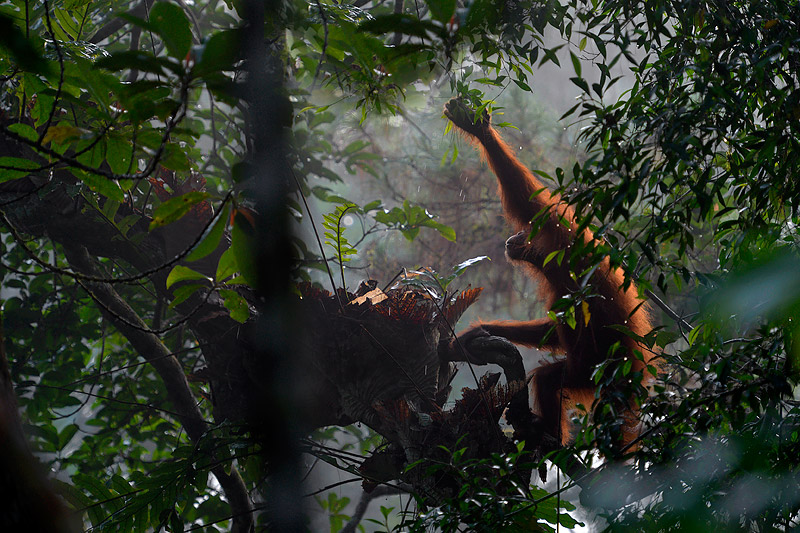
Black Crested Gibbon Nomascus concolor

Black Crested Gibbon Nomascus concolor

IUCN Red List Status: Endangered

Location: Black-Crested Gibbons are found in the montane and tropical forests of southern China, northern Vietnam, and northern Laos, primarily at elevations between 200 and 2,800 metres.

The Black-Crested Gibbon of the genus Nomascus is a truly enchanting primate, renowned for their melodic morning duets that echo through the forests of southern China, Vietnam, and Laos. What makes these calls even more remarkable is their regional variation—these gibbons sing with distinct “accents,” unique to their local populations. These complex songs not only strengthen bonds between mates but also serve as territorial markers, ensuring harmony within their fragmented forest homes.

Despite their beauty and ecological importance, Black-Crested Gibbons are at risk of extinction. Habitat destruction for agriculture, and logging, coupled with hunting for the bushmeat trade and the illegal pet trade, is rapidly shrinking their population. Protecting their future is vital for the health of their ecosystems. Take action now: Boycott the illegal wildlife trade, be #vegan and #Boycott4Wildlife.

Black-Crested communities are very close 😻🩷🐒🐵 They sing to each other in regional accents 🔊🎶 they recognise. and hunting are a major threat along with in 🇻🇳 help them when u @palmoildetect https://palmoildetectives.com/2021/01/29/black-crested-gibbon-nomascus-concolor/

Family-minded with a long-limbed and a vivacious energy ✨🎇 Black-crested 🐒🐵are in 🇨🇳and 🇻🇳 due to and the bushmeat trade along with . Help them survive 🌴☠️🚫 @palmoildetect https://palmoildetectives.com/2021/01/29/black-crested-gibbon-nomascus-concolor/

Appearance and Behaviour

Black-Crested Gibbons are medium-sized primates with long limbs and powerful shoulders, perfectly adapted for their signature brachiation—swinging gracefully through the forest canopy. Males are jet-black with a tufted crest, while females display golden-yellow fur with dark facial masks. These striking differences make them one of the most visually distinctive gibbon species.

However, it is their haunting morning duets that set them apart. These songs are intricate, with each pair singing in perfect harmony, their voices weaving complex patterns to reaffirm bonds and mark territory. Fascinatingly, research shows that these songs vary between regions, akin to local dialects or accents, showcasing a cultural aspect of their communication rarely observed in non-human species (Wired, 2011). These accents reflect the gibbons’ unique adaptation to their environment, deepening the mystery and wonder of their lives.

Threats

The Black-Crested Gibbon (Nomascus concolor) is endangered, with populations across their range severely impacted by a combination of habitat destruction and hunting.

Agricultural expansion for logging and palm oil

Throughout their range, local forest use practices such as selective logging and agricultural encroachment are key drivers of habitat degradation. These activities fragment the gibbons’ forest homes, making it increasingly difficult for populations to thrive and maintain genetic diversity (Geissmann et al., 2000; Jiang et al., 2006; Wei et al., 2017).

Illegal hunting and bushmeat trade

Hunting is one of the most pervasive threats to these gibbons. In Lao PDR, despite the existence of local taboos against hunting gibbons in some areas, these animals are still captured and killed for subsistence, the illegal pet trade, and traditional medicine (Geissmann, 2007; Rawson et al., 2011). Poachers often target adult gibbons, devastating family groups and leaving juveniles traumatised and vulnerable.

Infrastructure development

Infrastructure projects like Road No. 3 in Lao PDR, funded by the Asian Development Bank, have worsened habitat fragmentation and made once-remote areas more accessible to hunters (Fan et al., 2009a; Peng-Fei et al., 2013). This road has cut through critical forest areas, placing even protected populations at risk.

Forest fires, hydropower construction, climate change

In Vietnam, gibbons are threatened by a combination of human activities, including habitat destruction from agriculture, logging, and settlement. Hunting pressure remains high in some areas, further decimating populations. Additionally, environmental factors such as forest fires and hydropower construction disrupt their already shrinking habitats (Rawson et al., 2011).

Diet

The Black-Crested Gibbon primarily feeds on fruit, making them crucial seed dispersers in their ecosystems. They also consume leaves, flowers, and insects when fruit is scarce, helping to maintain the balance and biodiversity of their forest habitat.

Reproduction and Mating

These gibbons form monogamous pairs that bond for life, raising their offspring together in close-knit family groups. Females give birth to a single infant every 2–3 years after a gestation period of about 7 months. The infant clings to their mother for the first year, learning essential survival skills before becoming independent.

Habitat destruction and the scarcity of mature trees suitable for nesting are significant barriers to successful reproduction.

Geographic Range

The Black-Crested Gibbon is native to southern China (Yunnan Province), northern Vietnam, and northern Laos. They inhabit elevations ranging from 200 to 2,800 metres, favouring dense, undisturbed forests. Deforestation has severely reduced their range, confining populations to isolated patches of forest.

FAQ

What is the Black-Crested Gibbon?

The Black-Crested Gibbon (Nomascus concolor) is an endangered primate native to the forests of southern China, Vietnam, and Laos. Known for their beautiful morning duets and striking fur patterns, they are essential to their ecosystems as seed dispersers.

Why are Black-Crested Gibbons endangered?

Habitat destruction for logging, palm oil plantations, and agriculture is a secondary threat. Hunting for bushmeat and the illegal pet trade is a primary threat and has also decimated populations, with poachers often killing adults to capture infants.

Do Black-Crested Gibbons really sing with accents?

Yes! Black-Crested Gibbons sing in unique regional accents, with their songs varying between populations. These duets strengthen pair bonds, mark territory, and reflect the cultural richness of their communication.

Are Black-Crested Gibbons good pets?

Keeping Black-Crested Gibbons as pets is an incredibly selfish and cruel act that directly contributes to their extinction. Poachers kill adults to capture infants, destroying families and traumatising whole populations. If you care about these animals, you must instead boycott the trade in exotic pets and support their protection in the wild.

Take Action!

The Black-Crested Gibbon is an irreplaceable part of their forest ecosystem, but they are at risk of vanishing forever. Refuse to support products linked to deforestation, speak out against the exotic pet trade, and advocate for conservation efforts. Every action counts: #BoycottPalmOil #Boycott4Wildlife.

Support conservation for this beautiful animal

Kadoorie Farm and Botanic Garden in Hong Kong

Further Information

iucn-rating-critically-endangered

Orkin, J. D., He, K., Hu, N. Q., Guan, Z. H., Huang, B., Yang, C., Fan, P. F., & Jiang, X. (2025). Landscape and conservation genetics of western black crested gibbons (Nomascus concolor) in China. American Journal of Primatology, 87(1), e23662. https://doi.org/10.1002/ajp.23662

Pengfei, F., Nguyen, M.H., Phiaphalath, P., Roos, C., Coudrat, C.N.Z. & Rawson, B.M. 2020. Nomascus concolor. The IUCN Red List of Threatened Species 2020: e.T39775A17968556. https://dx.doi.org/10.2305/IUCN.UK.2020-2.RLTS.T39775A17968556.en. Downloaded on 28 January 2021.

Sun, G. Z., Huang, B., Guan, Z. H., Geissmann, T., & Jiang, X. L. (2010). Individuality in male songs of wild black crested gibbons (Nomascus concolor). American Journal of Primatology, 73(5), 431–439. https://doi.org/10.1002/ajp.20917

Wired. (2011). Gibbons sing with accents. Retrieved from https://www.wired.com/2011/02/gibbon-singing-accent/


Contribute to palm oil detectives - black rhino in profile

How can I help the ?


Take Action in Five Ways

1. Join the on social media and subscribe to stay in the loop: Share posts from this website to your own network on Twitter, Mastadon, Instagram, Facebook and Youtube using the hashtags .

Join 3,176 other subscribers

2. Contribute stories: Academics, conservationists, scientists, indigenous rights advocates and animal rights advocates working to expose the corruption of the palm oil industry or to save animals can contribute stories to the website.

3. Supermarket sleuthing: Next time you’re in the supermarket, take photos of products containing palm oil. Share these to social media along with the hashtags to call out the greenwashing and ecocide of the brands who use palm oil. You can also take photos of palm oil free products and congratulate brands when they go palm oil free.

4. Take to the streets: Get in touch with Palm Oil Detectives to find out more.

5. Donate: Make a one-off or monthly donation to Palm Oil Detectives as a way of saying thank you and to help pay for ongoing running costs of the website and social media campaigns. Donate here

Hainan Gibbon Nomascus hainanus

Hainan Gibbon Nomascus hainanus

Critically Endangered

Location: China.

These small apes belong to genus Nomascus which are found in Vietnam, Laos, Cambodia and southern China. The Hainan Gibbon is known to live in a restricted area of less than 100 km2 in southern China. They are known to communicate in species-specific song when defining territory or attracting mates. They sing in regional accents to each other and they form polygamous relationships.

The Hainan Gibbon is critically endangered in due to and . You can help them by joining the on brands destroying ! Find out more

The Hainan Gibbon lives in montane rainforest, at altitudes ranging from 650 to 1,200 m (Chan et al. 2005), although specimens were collected at lower elevations prior to the complete clearance of lowland forest on Hainan. It is diurnal, arboreal, and mostly frugivorous. The Hainan Gibbon is listed as Critically Endangered because of an observed decline of at least 80% over the past 45 years (three generations), primarily due to hunting and habitat loss (Mootnick et al. 2012, Turvey et al. 2015); its extent of occurrence is less than 100 km2 (Bryant et al. 2016)

Support the conservation of this beautiful animal

Kadoorie Farm & Botanical Garden

Further Information

iucn-rating-critically-endangered

Geissmann, T. & Bleisch, W. 2020. Nomascus hainanus. The IUCN Red List of Threatened Species 2020: e.T41643A17969392. https://dx.doi.org/10.2305/IUCN.UK.2020-2.RLTS.T41643A17969392.en. Downloaded on 28 January 2021.


Contribute to palm oil detectives - black rhino in profile

How can I help the ?


Take Action in Five Ways

1. Join the on social media and subscribe to stay in the loop: Share posts from this website to your own network on Twitter, Mastadon, Instagram, Facebook and Youtube using the hashtags .

Join 3,176 other subscribers

2. Contribute stories: Academics, conservationists, scientists, indigenous rights advocates and animal rights advocates working to expose the corruption of the palm oil industry or to save animals can contribute stories to the website.

3. Supermarket sleuthing: Next time you’re in the supermarket, take photos of products containing palm oil. Share these to social media along with the hashtags to call out the greenwashing and ecocide of the brands who use palm oil. You can also take photos of palm oil free products and congratulate brands when they go palm oil free.

4. Take to the streets: Get in touch with Palm Oil Detectives to find out more.

5. Donate: Make a one-off or monthly donation to Palm Oil Detectives as a way of saying thank you and to help pay for ongoing running costs of the website and social media campaigns. Donate here

Okapi Okapia johnstoni

Okapi Okapia johnstoni

Endangered

Location: The Democratic Republic of Congo


The mysterious and enchanting Okapi, also known as the forest giraffe, roams the dense rainforests of the Democratic Republic of Congo. With a large expressive eyes and ears, velvety dark brown coat adorned with striking white stripes and large – they captivate the imagination! These solitary creatures have a remarkable prehensile tongue for foraging and grooming. Okapi mothers use inaudible sounds to communicate with their young. Sadly these remarkable creatures are endangered and face severe threats from palm oil, mining and tobacco deforestation, hunting and human conflict. You can help protect them by making mindful palm oil free supermarket choices. and to safeguard these beautiful animals.


DYK mothers use sounds humans can’t hear to communicate? Sadly, these enchanting creatures are in due to armed conflict and . Safeguard their future when you https://palmoildetectives.com/2021/01/29/okapi-okapia-johnstoni/

Deep in the is a curious creature a bit like a horse or a giraffe. The is to the Congo what the Panda is to China. and threaten their survival @palmoildetect https://palmoildetectives.com/2021/01/29/okapi-okapia-johnstoni/

Appearance and Behaviour

The Okapi Okapia johnstoni dwells deep in the forests of the Democratic Republic of Congo. They are also known as the ‘forest giraffe’, due to their striking appearance with a velvety dark brown to reddish-brown coat, contrasting sharply with their white horizontal stripes and rings on their legs and ankles.

Their unique colouration serves them well as a camouflage in the dappled sunlight of their forest home. Okapi have a long neck and large, flexible ears, which help them detect predators. Okapis are solitary and elusive animals, mostly active during the day (diurnal), and known for their gentle, placid and quiet nature.

One of the most distinctive features of Okapis are their long, prehensile tongue, which can be over 30 centimeters (12 inches) long. This tongue is used to strip leaves from branches, to groom their fur, and even clean their eyes and ears.

Okapi mothers also use inaudible, low-frequency sounds to communicate with their young, a fascinating adaptation that helps keep their calves safe from predators. Additionally, okapis have scent glands on their feet that leave a sticky substance on the ground, marking their territory.

Geographic Range and Habitat

Okapi are endemic to the dense rainforests of the Democratic Republic of Congo (DRC), primarily within the Ituri Forest. They prefer dense, moist forests where they can forage for abundant vegetation and use the leafy forest canopy as a cover from predators, mainly leopards.

Threats

  • Habitat loss due to gold and diamond mining, tobacco and palm oil deforestation
  • Hunting and poaching for bushmeat.
  • Political instability and armed conflict throughout their range.
  • Mining and illegal logging activities.

Take action every time you shop and use your wallet as a weapon. When you shop learn how to find palm oil free alternatives to major brands and to help Okapi and 1000’s of other rainforest species.

Okapi Okapia johnston

Diet

The okapi is an herbivore, feeding on a diverse diet of leaves, buds, grasses, ferns, fruits, and fungi. They use their long tongue to reach high branches and select the most nutritious parts of plants.

Mating and Reproduction

Okapis are solitary creatures except during mating. The mating season can vary, but females typically give birth to a single calf after a gestation period of around 14-16 months. Calves are hidden in dense vegetation to protect them from predators and are nursed for up to six months.

Support the conservation of this beautiful creature

Save Our Species

Okapi Conservation

Further Information

ICUN endangered logo

Mallon, D., Kümpel, N., Quinn, A., Shurter, S., Lukas, J., Hart, J.A., Mapilanga, J., Beyers, R. & Maisels, F. 2015. Okapia johnstoni. The IUCN Red List of Threatened Species 2015: e.T15188A51140517. https://dx.doi.org/10.2305/IUCN.UK.2015-4.RLTS.T15188A51140517.en. Downloaded on 28 January 2021.


Contribute to palm oil detectives - black rhino in profile

How can I help the ?


Take Action in Five Ways

1. Join the on social media and subscribe to stay in the loop: Share posts from this website to your own network on Twitter, Mastadon, Instagram, Facebook and Youtube using the hashtags .

Join 3,176 other subscribers

2. Contribute stories: Academics, conservationists, scientists, indigenous rights advocates and animal rights advocates working to expose the corruption of the palm oil industry or to save animals can contribute stories to the website.

3. Supermarket sleuthing: Next time you’re in the supermarket, take photos of products containing palm oil. Share these to social media along with the hashtags to call out the greenwashing and ecocide of the brands who use palm oil. You can also take photos of palm oil free products and congratulate brands when they go palm oil free.

4. Take to the streets: Get in touch with Palm Oil Detectives to find out more.

5. Donate: Make a one-off or monthly donation to Palm Oil Detectives as a way of saying thank you and to help pay for ongoing running costs of the website and social media campaigns. Donate here
Sulawesi Crested Black Macaque Macaca nigra

Sulawesi Crested Black Macaque Macaca nigra

Endangered

Location: Sulawesi, Indonesia.

Lively, intelligent and social Sulawesi Crested Black Macaques live in large groups and are attentive and caring to those in their troupe. Also known as the Celebes Crested Macaque, the Sulawesi Crested Black Macaque Macaca nigra are Critically Endangered and face high risk of extinction due to palm oil and timber deforestation across the island of Sulawesi, along with illegal hunting for the bushmeat trade. You can help them every time you shop when you

The expressive and ancient Crested Black is tragically critically endangered in due to and . Help them survive @palmoildetect.bsky.social 🐵🐒🤎 https://palmoildetectives.com/2021/01/29/sulawesi-crested-black-macaque-macaca-nigra/

The Celebes Black Macaque possess jet-black fur, striking red eyes, and a regal crest of hair. They are gregarious and highly social preferring to live in communities of dozens of monkeys. They are known locally as “yaki” or “wolai,” and their number have declined by over 80% in under 40 years due to ubiquitous threats of habitat loss and fragmentation, but also from the bushmeat trade.

Threats

Tragically their meat is considered by local people to be a delicacy with the majority of hunting for ceremonial food rather than subsistence. Wildlife consumption is a popular tradition which has grown in parallel to human population expansion and is thus identified as the primary threat to the species’ survival. Another grave threat is palm oil and timber deforestation on the island of Sulawesi.

Behaviour

Black Crested Macaques are otherwise known as ‘social butterflies’ who live together in vibrant troops of 25 to 75 individuals, mostly within the Tangkoko Nature Reserve. Here, they are safeguarded from illegal hunting and poaching, although their existence is increasingly fragmented outside of the park.

They are adept tree climbers and alternate between the forest floor and the treetops, foraging, playing, and grooming each other. As night falls, they retreat to the safety of the trees to sleep. Their primary habitat is the tropical lowland and upland rainforests.

Sulawesi Crested Black Macaque Macaca nigra

Diet

Sulawesi Black Crested Macaques primarily eats fruits, which make up 70% of their diet. They also consume leaves, buds, seeds, fungi, birds and their eggs, insects such as caterpillars, and occasionally small lizards or frogs. They are skilled foragers, feeding both on the ground and in the trees.

Mating and Reproduction

The Celebes crested macaque has a promiscuous mating system, with both males and females having multiple partners. Females signal their readiness to mate with bright red buttocks. After a gestation period of about 174 days, females give birth to a single infant and nurse them for around one year. These macaques have an estimated life expectancy of 15-20 years in the wild.

Take Action

You have the power to make a difference. Each choice you shop, choose palm oil free and for these beautiful monkeys and other wild animals.


Further Information

iucn-rating-critically-endangered

Lee, R., Riley, E., Sangermano, F., Cannon, C. & Shekelle, M. 2020. Macaca nigra. The IUCN Red List of Threatened Species 2020: e.T12556A17950422. https://dx.doi.org/10.2305/IUCN.UK.2020-3.RLTS.T12556A17950422.en. Downloaded on 28 January 2021.


Contribute to palm oil detectives - black rhino in profile

How can I help the ?


Take Action in Five Ways

1. Join the on social media and subscribe to stay in the loop: Share posts from this website to your own network on Twitter, Mastadon, Instagram, Facebook and Youtube using the hashtags .

Join 3,176 other subscribers

2. Contribute stories: Academics, conservationists, scientists, indigenous rights advocates and animal rights advocates working to expose the corruption of the palm oil industry or to save animals can contribute stories to the website.

3. Supermarket sleuthing: Next time you’re in the supermarket, take photos of products containing palm oil. Share these to social media along with the hashtags to call out the greenwashing and ecocide of the brands who use palm oil. You can also take photos of palm oil free products and congratulate brands when they go palm oil free.

4. Take to the streets: Get in touch with Palm Oil Detectives to find out more.

5. Donate: Make a one-off or monthly donation to Palm Oil Detectives as a way of saying thank you and to help pay for ongoing running costs of the website and social media campaigns. Donate here
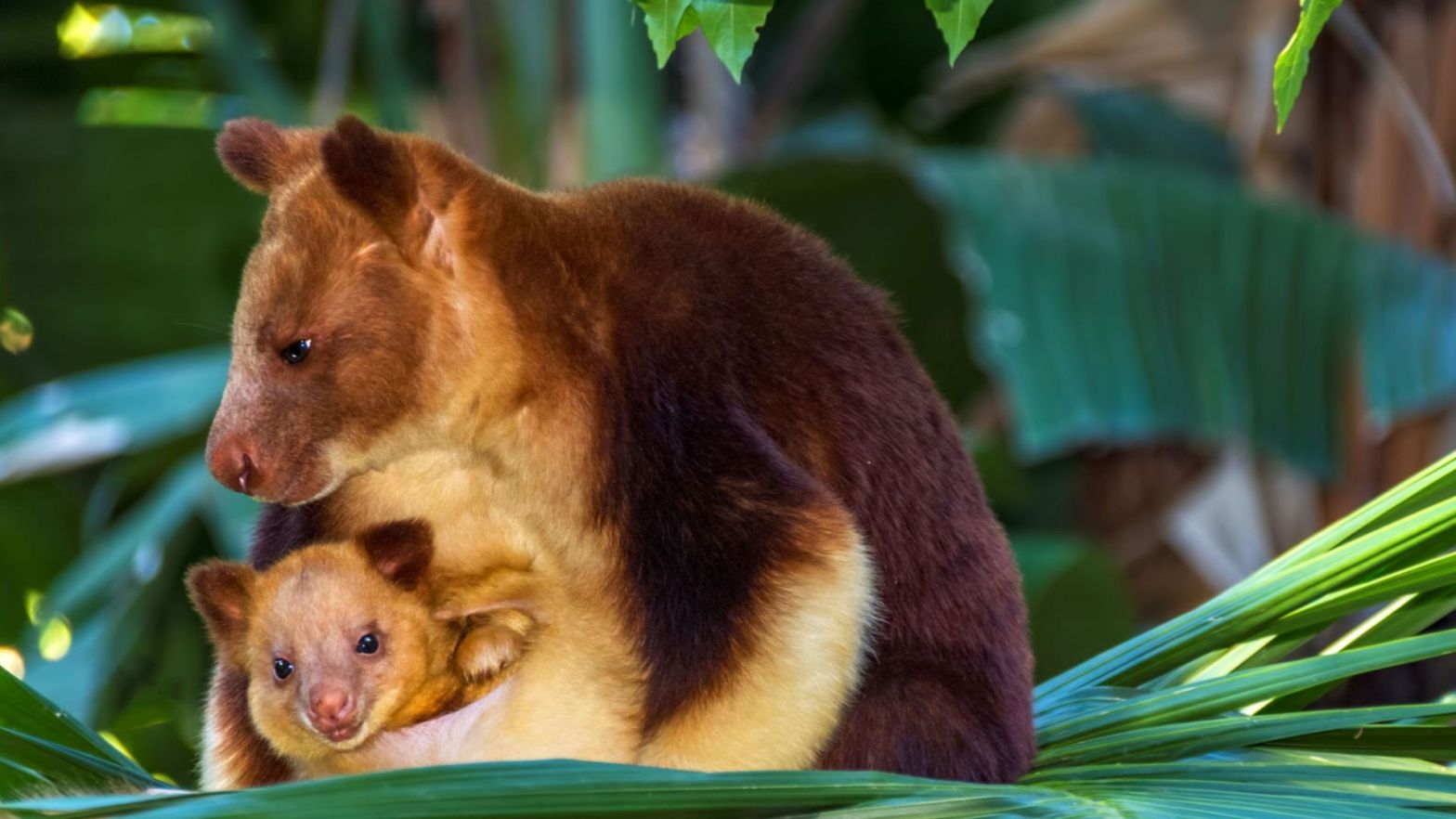
Palm Oil Problem #1 Vague Product Labelling

drinks and convenience foods
Palm oil is contained in around 60% of food items, cleaning products and toiletries. It is obscured by changing the ingredient name.

There is no legislation to stop this vague product labelling of palm oil

Despite the lobbying and activism of various environmental groups and those concerned with consumer rights, palm oil remains labelled in a vague unclear way. It’s hidden in plain sight, an ingredient in everything from ice-cream to lipstick, biscuits to toothpaste.

Part of the mission of this website is to educate people on the products that A. contain palm oil and B. decipher whether or not this palm oil is from a sustainable source.

When it’s not clearly labelled as you can identify it on product packaging with these ingredient prefixes:STEAR, GLYC, PALM, LAUR. That’s all you need to remember 💚 to

Here is how the palm oil lobby AKA Orangutan Land Trust justify obscuring the simple name ‘palm oil’ on the label

Leaving aside the fact that many parts of the world have different food labelling laws.

I guess what this greenwashing lobbyist is saying is that consumers should know all of the 400 names? What a load of bullshit.

Palm oil’s many names

Other names for palm oil

Here’s an abbreviated list of other names for palm oil

To help you navigate these confusing waters and avoid unwittingly voting for rainforest destruction with your dollars, here is a partial list of other names for palm oil-derived ingredients:*

  • PKO – Palm Kernel Oil
  • PKO fractionations: Palm Kernel Stearin (PKs); Palm Kernel Olein (PKOo)
  • PHPKO – Partially hydrogenated Palm Oil
  • FP(K)O – Fractionated Palm Oil
  • OPKO – Organic Palm Kernel Oil
  • Palmitate – Vitamin A or Asorbyl Palmitate (NOTE: Vitamin A Palmitate is a very common ingredient in breakfast cereals and we have confirmed 100% of the samples we’ve investigated to be derived from palm oil)
  • Palmate
  • Sodium Laureth Sulphate (Can also be from coconut)
  • Sodium Lauryl Sulphates (can also be from ricinus oil)
  • Sodium dodecyl Sulphate (SDS or NaDS)
  • Elaeis Guineensis
  • Glyceryl Stearate
  • Stearic Acid
  • Chemicals which contain palm oil
  • Steareth -2
  • Steareth -20
  • Sodium Lauryl Sulphate
  • Sodium lauryl sulfoacetate (coconut and/or palm)
  • Hydrated palm glycerides
  • Sodium isostearoyl lactylaye (derived from vegetable stearic acid)
  • Cetyl palmitate and octyl palmitate (names with palmitate at the end are usually derived from palm oil, but as in the case of Vitamin A Palmitate, very rarely a company will use a different vegetable oil)

Here’s the full list for your reference

It’s a disgusting indictment on democracy when something as simple as ingredients on the products we consume cannot be standarised and simplified at consumers’ request. The entire world’s forests are at stake! Skip to the end to sign the most recent petitions to standardise palm oil on product labels in Australia and New Zealand.

1,2-OCLanediol

1,2-Octyleneglycol

2-Ethyl Hexyl Stearate

100 Cetyl/stearyl ether

304

 α-hydroxy-N-stearoylphytosphingosine

acetylated glycol stearate

Acetylated monoglycerides

Acetic and fatty acid esters of glycerol (472a/E472a)

Acrylated Palm Oil

APO

Acrylates/Palmeth-25

AHCOHOL 0810 (Octyl Decyl Alcohol)

AHCOHOL 0898 (Octyl Alcohol)

AHCOHOL 1098 (Decyl Alcohol)

AHCOHOL 1216 (Lauryl/Myristyl Alcohol)

AHCOHOL 1299 (Lauryl Alcohol)

AHCOHOL 1498 (Myristyl Alcohol NF)

AHCOHOL 1618 (Cetyl Stearyl/Cetearyl Alcohol)

AHCOHOL 1698 (Cetyl Alcohol NF)

AHCOHOL 1898 (Stearyl Alcohol NF)

AHCOHOL® Fatty Alcohols

Alkyl alcohol Aluminium stearate

Alkyl polyglucoside

Aluminium, calcium, sodium, magnesium salts of fatty acids (470/E470a; E470b)

Aluminum dimyristate

Aluminum Isostearates

Aluminium myristate

Aluminium palmitate

Aluminium stearate

Ammonium laureth sulphate

Ammonium lauryl sulphate

Anionic & Non Anionic Surfactants (too generic an ingredient, need more info on)

Arachamide mea

Ascorbyl palmitate

Ascorbyl palmitate (304)

Ascorbyl stearate

Azelaic acid

Behenic acid 85% (C22)

Behentrimonium methosulphate

BTMS

beta Carotene

Biodiesal

Butyl myristate

Butyl stearate

Butyl Stearate IPM (Isopropyl Myristate)

C16

C17

C18

CAB

Calcium lactylate

Calcium oleyl lactylate

Calcium myristate

Calcium stearate

Calcium stearoyl lactylate (482/E482)

CAPB

CAPB-KG30

CAPB-KG45 
Capric Acid (C10)

Capric triglyceride

Capryl Glucoside

Caprylamine

Caprylic acid

Caprylic acid (C8))

Caprylic triglyceride

Caprylic/capric acid (C810)

Caprylic-capric triglycerides

Caprylic-capric-stearic triglyceride

Capryloyl glycine

Caprylyl glycol

Carboxylic acid

Carboxymethyl cellulose (CMC) (can come from PKC cellulose)

CDE

CDE K85

CDE K90

CDE-K85

CDE-K90

Ceteareth (2-100)

Cetearyl alcohol

Cetearyl ethylhexanote

Cetearyl glucoside

Cetearyl isononanoate

Cetearyl olivate

Ceteth-20

Ceteth-24

Cetyltrimethylammonium bromide (CTAB)

CTAB

Cetyltrimethylammonium chloride (CTAC)

CTAC

Cetrimonium bromide

Cetrimonium chloride

Cetostearyl alcohol

Cetyl acetate

Cetyl alcohol

Cetyl ethylhexanoate

Cetyl hydroxyethylcellulose

Cetyl lactate

Cetyl myristate

Cetyl octanoate

Cetyl palmitate

Cetyl ricinoleate

Cetyl-PG Hydroxyethyl Palmitamide

Cetyl/stearyl ether

Citric and fatty acid esters of glycerol (472c/E472c)

Citris seed extract

CMEA

CME-K85

CME-K95

Coco – Caprylate

Coco – polyglucose

Cocoyl sarcosine

Coco – DEA

Coco – Glucoside

Coco Alkyl Betaine

Coco MEA

Cocoa butter equivalent (CBE)

Cocoa butter substitute (CBS)

Cocoamidopropyl Amine Oxide

Cocodiethanolamide

Cocomide – DEA

cocomide – MEA

Cocomidopropyl – Betaine

Cocomonoethanolamide

Coconut Fatty Acid

Decal – Glucosde

Decyl Myristate

Decyl oleate

Diacetyltartaric and fatty acid esters of glycerol (472e/E472e)

Dicaprylyl Ether

dicocoyl ethyl hydroxyethylmonium methosulfate

Dicocoyl Pentaerythrityl Distearyl Citrate

Dilinoleic acid

Disodium laureth sulfosuccinate

Disodium lauryl sulfosuccinate

Distilled Fatty Acids

Distilled Monoglyceride Palm

Distilled Palm Kernel (DPK)

Dried Yeast

EBS – Ethylene Bis Stearamide

EBS Beads

EBS SF

EBS SP

Elaeis guineensis oil

Emulsifier 422

Emulsifier 430

Emulsifier 431

Emulsifier 432

Emulsifier 433

Emulsifier 434

Emulsifier 436

Emulsifier 470

Emulsifier 470a

Emulsifier 470b

Emulsifier 471

Emulsifier 471a

Emulsifier 471b

Emulsifier 471c

Emulsifier 471d

Emulsifier 472e

Emulsifier 473

Emulsifier 474

Emulsifier 475

Emulsifier 476

Emulsifier 477

Emulsifier 478

Emulsifier 481

Emulsifier 482

Emulsifier 483

Emulsifier 484

Emulsifier 485

Emulsifier 493

Emulsifier 494

Emulsifier 495

Epoxidized palm oil (uv cured coatings)

Emulsifying wax

Ethoxylated glycerol monooleate

Ethoxylated lauryl alcohol

Ethoxylated monoglycerides 

Ethoxylated Sorbitan monostearate (SMS)

Ethoxylated Sorbitan Mono-stearate (STS)

Ethoxylated palm oil

Ethyl lauroyl arginate (243)

Ethylene glycol monostearate

Ethylhexyl hydroxystearate

Ethylhexyl myristate

Ethylhexyl palmitate

Ethylhexyl stearate

Ethylhexylglycerin

Ethylene glycol diesters

Ethylene glycol esters

Ethylene glycol monoesters

Ethylene glycol monostearate

Ethyhexylglycerin

Ethyhexyl hydroxystearate

Ethylhexyl myristate
Ethylhexyl palminate
Ethylhexyl stearate

Fatty Acid Diethanolamides

Fatty Acid Monoethanolamides

Fatty Acids

Fatty Alcohol Alkoxylate

Fatty Alcohol Ethoxylate

Fatty alcohol sulphates

Fatty isethionate

Fractionated Palm Methyl Esters

Glycerin

Glycerin or glycerol (442)

Glycerine

Glyceryl cocoate

Glyceryl esters

Glycerol di-myristate

Glyceryl distearate

Glyceryl laurate

glyceryl monococoate

Glyceryl monostearate

Glyceryl myristate

Glyceryl oleate

Glyceryl polymethacrylate

Glyceryl rosinate

Glyceryl stearate

Glyceryl stearate SE

Glyceryl tripalmitate

Glycol distearate

Glycol stearate

Grapefruit seed extract

Guineesis (palm)

Hexadecylic

Hexyl laurate

Hexyldecanol

Humectant 422

Hydrogenated palm glycerides

IPO (Isopropyl Oleate)

Isopropyl Acetate

Isopropyl isostearate

Isoamyl laurate

Isobutyl myristate

Isocetyl alcohol

Isocetyl myristate

Isodecyl oleate

Isopropyl esters

Isopropyl isostearate

Isopropyl myristate

Isopropyl palmitate

Isopropyl titanium triisostearate

Isostearamide DEA

Isostearate DEA

Isostearic acid

Isostearyl alcohol

Isostearyl isostearate

Isostearyl myristate

Isostearyl neopentanoate

Isotridecyl myristate

Lactic and fatty acid esters of glycerol (472b/E472b)

Lactylated Monoglycerides

Lauramide DEA

Lauramide MEA

Lauramine oxide

Laureth

Laureth-1, 

Laureth-2

Laureth-3

Laureth-5

Laureth-6

Laureth-7

Laureth-8

Laureth-9

Laureth-10

Laureth-11

Laureth-12

Laureth-13

Laureth-14

Laureth-15

Laureth-16

Laureth-20

Laureth-21

Laureth-25

Laureth-30

Laureth-38

Laureth-40

Laureth-50

Lauric acid

Lauric Acid (C12)

Lauroyl sarcosine

Lauryl Alcohol Ethoxylates (2, 3 & 4 Mole)

Lauryl betaine

Lauryl dimonium hydrolysed collagen​

Lauryl glucoside

Lauryl lactate

Laurel myristate

Lauryl pyrrolidone

Lauryl sarcosine

Lecithin

Lecithin isopropyl palm oil

Linoleic acid

Magnesium myristate

Magnesium stearate

Metallic stearates

Methyl laurate (1214)

Methyl myristate

Methyl laurate stearate (1218)

Methyl oleate (1898)

Methyl palmitate-stearate (1618)

(Methyl palmitate-stearate – DPK)

Mixed tartaric, acetic and fatty acid esters of glycerol (472f/E472f)

Mono-and-di-glycerides of fatty acids (471/E471)

Mono glycerides of fatty acids
Monoglyceride citrate 
Monopalmitate
Myreth 3 myristate​

Myristate

Myristic acid

Myristic Acid (C14))

Myristic Cetrimonium Chloride Acid

Myristoyl

Myristyl alcohol

Myristyl myristate

Myristoyl Sarcosine
Myristoyl Sarcosinate
Myristyl alcohol
Myristyl myristate
n- Butyl esters

n-Octane-1,2-diol

N-stearoyl phytosphingosine

N-stearoyl sphinganine

Octandiol

Octan-1,2-diol

Octyl palmitate

Octyl stearate

Octyldodecyl myristate

Octyldodecyl stearoyl stearate

Oleamide MIPA

Oleic acid

Oleic Acid FGK

Oleyl betaine

Oleyl myristate

Oleoyl sarcsine

Olivem 1000

Olive – emulse

Oliv-wax LQC

PALMESTER fatty esters

Palm fruit oil

Palmitoleic acid

Palm Kernel Acid
Palm kernel cake

Palm Kernel Diethanolamide

Palm Kernel Fatty Acid

Palm Kernel Monoethanolamide

Palm kernel oil

Palm Methyl Esters

Palm oil

Palm olein

Palm stearine

Palm Sterine (PS)

Palmate

Palmitamidopropyl betaine​

Palmitamidopropyltrimonium chloride

Palmitate

Palmitic acid

Palmitic Acid (C16)

Palmitoyl acid

Palmitoyl alcohol

Palm oleic acid

Palmitoyl myristyl serinate

Palmitoyl oligopeptide

Palmitoyl oxostearamide

Palmitoyl tetrapeptide-3

Palm Methyl Ester 
PBS Base
Palmfonate
Palmosalt

PEG-2 cetyl/stearyl ether

PEG – 7

PEG-100 stearate

PEG-12 Carnauba

PEG-15 stearyl ether

PEG-150 distearate

PEG-2 oleamine

PEG-20 stearate

PEG-4 laurate

PEG-40 stearate

PEG-8 distearate

PEG-8 stearate

PEG-80 sorbitan laurate

Pentaerythritol tetra caprai/caprylate
Pentaerythrityl tetracaprylate/tetracaprate

Pentaerythrityl tetraisostearate

Peptide complex

PG dicaprylate/caprate 
PK oleic acid

PK DEA

PK MEA

Planta-Cleanse

PME 1214 (Methyl Laurate Myristate)

PME 1218 (Methyl Laurate Stearate)

PME 1298 (Methyl Laurate) PME 1618

PME 1618 (Methyl Palmitate Oleate)

PME 1698 (Methyl Palmitate)

PME 1898 (Methyl Oleate – PK)

POFA (palm oil fuel ash)

Polyethylene glycol

Polyethylene (40) stearate (431)

Polyglycerate-60

Polyglycerol esters of fatty acids (475/E475)

Polyglycerol esters of interesterified ricinoleic acid (476/E476)

Polyglycerol-2 oleyl ether

Polyglyceryl-3 dilisostearate

Polyglyceryl-4 isostearate

Polyglyceryl-4 laurate

Polyglyceryl-4 oleyl ether

Polyoxyethylene

Polyoxyethylene Glycol (PEG-7)

Polysorbate 60

polyoxyethylene (20)

sorbitan monostearate (435/E435)

Polysorbate 65

polyoxyethylene (20)

sorbitan tristearate (436/E436)

Polysorbate 80

polyoxyethylene (20)

sorbitan monoolate (433/E433)

Polysorbate-20

Polysorbate-40

Polysorbate-60

Polysorbate-65

Polysorbate-80

Polysorbate-85

POME palm oil mill effluent

Potassium Cetyl Phosphate

Potassium Palmitate

Potassium myristate

Potassium stearate

PPG-15 stearate ether

PPG-4 Laureth-5

Propylene glycol monoester
Propylene glycol myristate

Propylene glycol

Propylene glycol esters of fatty acids (477/E477)

Propylene glycol laurate

Propylene glycol stearate

Retinyl palmitate

Rubber Grade Stearic Acid

Saponified elaeis guineensis

Sleareth

SLES

SLS

Sodium cetearyl sulphate

Sodium Coco Sulphate

sodium cocoyl glycinate 
​Sodium cocoyl isethionate

Sodium Dodecyl Sulphate (SDS or NaDS)

Sodium Isostearoyl Lactylaye

Sodium lactylate

Sodium laurate

Sodium laurel

Sodium laureth sulfate

Sodium laureth sulphate

Sodium laureth-13 carboxylate

Sodium lauroamphoacetate

Sodium lauroyl glutamate

Sodium lauroyl lactylate

Sodium lauryl

Sodium lauryl ether sulphate (SLES)

Sodium lauryl sulfate

Sodium lauryl sulfoacetate

Sodium lauryl sulphate

Sodium lauroyl sarcosinate

Sodium myristate

sodium oleyl lactylate

Sodium Methyl Cocoyl Taurate

Sodium stearoyl lactylate

Sodium palm kernelate

Sodium palm kerneloyl isethionate

Sodium palmate

Sodium palmitate

Sodium stearate

Sodium stearoyl fumarate

Sodium Stearoyl glutamate

Sodium stearoyl lactylate

sodium stearoyl lactylate (481/E481)

Solubiliser PS20
Sorbitan Caprylate
Sorbitan Cocoate
Sorbitan diisostearate 
Sorbitan Distearate​ 
​Sorbitan ester

Sorbitan isotearate

Sorbitan laurate

Sorbitan monoglyceride

Sorbitan monolaurate
Sorbitan monopalmitate

Sorbitan monostearate (491)

Sorbitan palmitate

Sorbitan sesquioleate

Sorbitan trioleate

Sorbitan tristearate

Sorbitan tristearate (492)

Sorbitan triglyceride

stearalkonium bentonite

Stearalkonium chloride

Stearalkonium hectorite

Stearamide MEA

Stearamidopropyl dimethylamine

Stearamine Oxide

Steareth – 2

Steareth – 7

Steareth – 10

Steareth – 11

Steareth – 13

Steareth – 14

Steareth – 15

Steareth – 16

Steareth – 20

Steareth – 21

Steareth – 25

Steareth – 27

Steareth – 30

Steareth – 40

Steareth – 50

Steareth – 100

Stearic Acid (C18)& (570)

Stearic acid (vegetable oil)

Stearic Acid 50 NF Powder

Stearic Acid 55% 65%, 70%, 90%

Stearic acid or fatty acid (570)

Stearic hydrazide

Stearone

Stearoxytrimethylsilane

Stearoyl sarcosine

Stearyl acetate

Stearyl alcohol

Stearyl alcohol NF

Stearyl caprylate,

Stearyl citrate

Stearyl dimethicone

Stearyl glycyrrhetinate

Stearyl heptanoate

Stearyl Octanoate

Stearyl Stearate

Stearyl tartarate

Stearyltrimethylammonium Chloride​​

Stearoyl lactic acid

Stearyldimethyl amine

Steartrimonium chloride
Succinylated monoglycerides

Sucrose esters of fatty acids (473/E473)

sucrose distearate

sucrose oleate

sucrose tristearate

Shea butter (extended)

Sucrose stearate

Sulphonated Methyl Esters​

Synthetic beeswax

Taxanomic

TEA-lauryl sulphate

TEA-stearate

Temest 2 EHC (Ethylhexyl Cocoate)

Temest 2 EHP (Ethylhexyl Palmitate)

Temest 2 EHS (Ethylhexyl Stearate)

Temest 810 (Caprylic/Capric Triglyceride)

Temest 99 (Isononyl Isononanonate)

Temest ALB (C12 15 Alkyl Benzoate)

Temest CTE (Cetearyl Ethylhexanoate)

Temest CTN (Cetearyl Isononanoate)

Temest DO (Decyl Oleate)

Tetradecylocadecyl myristate

Tetrasodium glutamate diacetate

Tocopheryl linoleate

Triacetin

Triacetin (1518)

Tribehenin

Tricaprylin

Tridecyl myristate

Triisopropanolamine

Triple Pressed Stearic Acid

Tristearin

Veg Emulse

Vegetable Emulsifier

Vegetable glycerine

Vegetable gum (466)

vegetable mono diglycerides

vegetable oil

Vit A

Zinc myristate

Zinc stearate

Mandatory palm oil labelling

Currently, the EU and the UK mandates that all products must clearly label palm oil on their products. It wasn’t that hard, and it resulted in greater consumer choice so that consumers could support and save the animals they love, rather than harming them. Let’s demand the same in Australia and New Zealand now!

A victory for common sense and the consumers’ rights to know.


Contribute to palm oil detectives - black rhino in profile

How can I help the ?


Take Action in Five Ways

1. Join the on social media and subscribe to stay in the loop: Share posts from this website to your own network on Twitter, Mastadon, Instagram, Facebook and Youtube using the hashtags .

Join 3,176 other subscribers

2. Contribute stories: Academics, conservationists, scientists, indigenous rights advocates and animal rights advocates working to expose the corruption of the palm oil industry or to save animals can contribute stories to the website.

3. Supermarket sleuthing: Next time you’re in the supermarket, take photos of products containing palm oil. Share these to social media along with the hashtags to call out the greenwashing and ecocide of the brands who use palm oil. You can also take photos of palm oil free products and congratulate brands when they go palm oil free.

4. Take to the streets: Get in touch with Palm Oil Detectives to find out more.

5. Donate: Make a one-off or monthly donation to Palm Oil Detectives as a way of saying thank you and to help pay for ongoing running costs of the website and social media campaigns. Donate here

Goodfellow’s Tree Kangaroo Dendrolagus goodfellowi

Goodfellow’s Tree Kangaroo Dendrolagus goodfellowi

Endangered

Locations: Endemic to the tropical forests of Papua New Guinea

Goodfellow’s tree kangaroo Dendrolagus goodfellowi is an enchanting and rare marsupial that lives high in the treetops of Papua New Guinea’s lush rainforests. With rich, chestnut-brown fur streaked with golden bands and a strikingly long, ringed tail, they are a visual marvel. Known for their acrobatic prowess, these tree kangaroos can leap an astounding 9 metres between branches, embodying both elegance and athleticism.

Goodfellow’s tree kangaroos are not only skilled climbers but also exhibit playful and cheeky behaviour, sometimes observed curiously watching humans from their lofty perches. Sadly, their charm and ecological importance are overshadowed by their precarious status. Classified as Endangered, their numbers are dwindling due to palm oil-driven deforestation, habitat fragmentation, and hunting. Supporting indigenous-led conservation efforts is vital to safeguarding their future. Use your wallet as a weapon: #BoycottPalmOil #Boycott4Wildlife

Goodfellow’s Tree Kangaroos are cheeky tree-dwelling 🦘🩷 endangered in 🇵🇬 by and . Support their survival by saying NO to @palmoildetect.bsky.social https://palmoildetectives.com/2021/01/26/goodfellows-tree-kangaroo-dendrolagus-goodfellowi/

Goodfellow’s Tree Kangaroos 🦘🧡 can leap 9 metres, descend 18 metres to the ground without injury. These bouncy of 🇵🇬 deserve safety from ! 🌴⛔️ @palmoildetect https://palmoildetectives.com/2021/01/26/goodfellows-tree-kangaroo-dendrolagus-goodfellowi/

Appearance and Behaviour

Goodfellow’s tree kangaroos are enchanting and curious medium-sized marsupials, weighing between 7–13 kg and measuring up to 70 cm in body length, with an additional 70 cm for their tail. Their vibrant reddish-brown fur and golden back stripes make them stand out against the verdant rainforest foliage of Papua New Guinea. Their strong limbs and curved claws are perfectly adapted for climbing trees, while their long tail aids in balance.

Unlike their terrestrial kangaroo cousins, these arboreal kangaroos are physiologically adapted to move with ease through the treetops. They are able to leap up to nine metres between branches and are able to comfortably descend 18 metres from tree canopy to ground without injury. They are generally solitary, with minimal social interaction outside of mating. Tree kangaroos are known for their slow and deliberate movements while climbing and foraging. This is a marked contrast to the rapid leaping gait of other related ground-dwelling kangaroos in Australia.

Threats

IUCN Status: Endangered

Goodfellow's Tree Kangaroo Dendrolagus goodfellowi threats

Palm oil and timber deforestation

Deforestation for palm oil plantations, logging, and agriculture has destroyed large portions of Goodfellow’s tree kangaroo habitats. The fragmentation of rainforests isolates populations, making them more vulnerable to genetic bottlenecks and predators.

Hunting and the illegal bushmeat trade:

Tree kangaroos are often hunted for their meat and fur by local communities. In some areas, they are considered a traditional delicacy, which adds pressure to their declining populations.

Climate Change:

Shifting weather patterns and rising temperatures due to climate change disrupt the delicate balance of their rainforest ecosystems, affecting food availability and habitat quality.

Small Population Size:

Population estimates suggest fewer than 2,500 mature individuals remain in the wild, making recovery efforts increasingly urgent.

Geographic Range

Goodfellow’s tree kangaroos are found exclusively in the lowland and montane rainforests of Papua New Guinea, particularly in the southern and central regions. They thrive in dense forests, where the canopy provides food, shelter, and protection from predators. However, their range is rapidly shrinking due to deforestation and human encroachment.

Diet

Goodfellow’s tree kangaroos are herbivorous, primarily feeding on leaves, fruits, flowers, and occasionally mosses. They have specialised adaptations for digesting tough plant material, including a multi-chambered stomach similar to that of a cow. Their diet also plays a role in forest regeneration, as they disperse seeds through their droppings.

Reproduction and Mating

Females give birth to a single joey after a gestation period of approximately 32 days. The tiny, underdeveloped joey crawls into the mother’s pouch, where it nurses and continues to develop for up to 10 months. Once they leaves the pouch, the young kangaroo stays with its mother for another year before becoming independent. Tree kangaroos have a low reproductive rate, which limits population recovery.

Take Action!

Protecting Goodfellow’s tree kangaroos requires urgent action. Support indigenous sovereignty and conservation initiatives, boycott palm oil, and advocate for stronger habitat protections. Together, we can safeguard their future.

FAQ

How many Goodfellow’s tree kangaroos remain alive in the wild?

Fewer than 2,500 mature individuals remain in the wild, making Goodfellow’s tree kangaroos one of the most endangered marsupial species. Habitat destruction, hunting, and climate change are the primary factors driving their decline. Conservation efforts are critical to ensuring their survival, particularly through protecting their rainforest habitats.

Where is the Goodfellow’s tree kangaroo found?

Goodfellow’s tree kangaroos are endemic to Papua New Guinea, where they inhabit the lowland and montane rainforests of the southern and central regions. These arboreal marsupials thrive in dense tropical forests, relying on the canopy for food, shelter, and protection. However, their range is shrinking due to deforestation and human encroachment.

What do Goodfellow’s tree kangaroos eat?

Goodfellow’s tree kangaroos are herbivorous, with a diet consisting of leaves, fruits, flowers, and mosses. They play an important ecological role as seed dispersers, contributing to the regeneration of their rainforest habitats. Their specialised digestive system allows them to extract nutrients from tough plant materials.

What is the behaviour of the Goodfellow’s tree kangaroo?

Goodfellow’s tree kangaroos are solitary and arboreal, spending most of their time in the treetops. They move slowly and deliberately, using their strong limbs and curved claws to climb and leap between branches. Unlike their terrestrial kangaroo relatives, they are not fast hoppers but are adept at navigating the dense canopy.

How far can a Goodfellow’s tree kangaroo leap?

Goodfellow’s tree kangaroos are remarkably agile for their size and arboreal lifestyle. These unique marsupials can leap impressive distances of up to 9 metres between tree branches. This ability allows them to move effortlessly through the dense canopies of Papua New Guinea’s rainforests, navigating their environment in search of food and avoiding predators.

Their strong hind legs, which are adapted for powerful thrusts, and their long, muscular tails, which provide balance and stability during mid-air manoeuvres, contribute to this extraordinary leaping ability. Additionally, they can descend from heights of up to 18 metres to the ground without injury, showcasing their exceptional physical adaptations to life in the trees.

What makes Goodfellow’s tree kangaroos unique?

Goodfellow’s tree kangaroos are unique for their incredible leaping abilities, arboreal lifestyle and striking appearance. Their reddish-brown fur with golden stripes, long tails, and strong climbing abilities set them apart from ground-dwelling kangaroos. They are also known for their solitary nature and deliberate movements, which contrast with the rapid hopping of their terrestrial cousins.

Further Information

ICUN endangered logo

Australian Reptile Park. (n.d.). Goodfellow’s Tree Kangaroo. Australian Reptile Park.

Birds of the World. (n.d.). Tree Kangaroo Behaviour. San Diego Zoo Global.

Leary, T., Seri, L., Wright, D., Hamilton, S., Helgen, K., Singadan, R., Menzies, J., Allison, A., James, R., Dickman, C., Aplin, K., Flannery, T., Martin, R. & Salas, L. 2016. Dendrolagus goodfellowi. The IUCN Red List of Threatened Species 2016: e.T6429A21957524. https://dx.doi.org/10.2305/IUCN.UK.2016-2.RLTS.T6429A21957524.en. Downloaded on 26 January 2021.

Tenkile Conservation Alliance. (n.d.). Goodfellow’s Tree Kangaroo. Tenkile Conservation Alliance.

Wikipedia contributors. (n.d.). Goodfellow’s Tree Kangaroo. Wikipedia.

You can support the conservation of this animal:

Tenkile Conservation Alliance


Contribute to palm oil detectives - black rhino in profile

How can I help the ?


Take Action in Five Ways

1. Join the on social media and subscribe to stay in the loop: Share posts from this website to your own network on Twitter, Mastadon, Instagram, Facebook and Youtube using the hashtags .

Join 3,176 other subscribers

2. Contribute stories: Academics, conservationists, scientists, indigenous rights advocates and animal rights advocates working to expose the corruption of the palm oil industry or to save animals can contribute stories to the website.

3. Supermarket sleuthing: Next time you’re in the supermarket, take photos of products containing palm oil. Share these to social media along with the hashtags to call out the greenwashing and ecocide of the brands who use palm oil. You can also take photos of palm oil free products and congratulate brands when they go palm oil free.

4. Take to the streets: Get in touch with Palm Oil Detectives to find out more.

5. Donate: Make a one-off or monthly donation to Palm Oil Detectives as a way of saying thank you and to help pay for ongoing running costs of the website and social media campaigns. Donate here
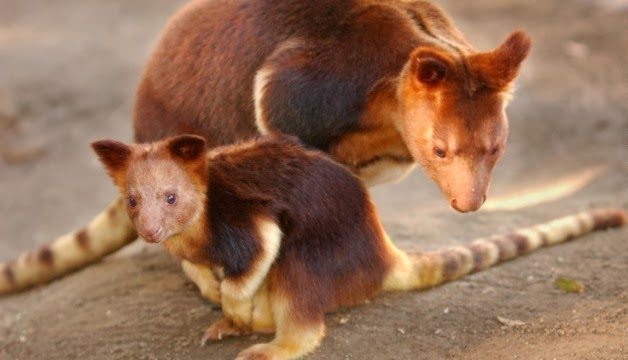
Huon Tree Kangaroo Dendrolagus matschiei

Huon Tree Kangaroo Dendrolagus matschiei

Endangered

Locations: Papua New Guinea (Huon Peninsula and adjacent areas)

Adorable creatures with a teddy-like face and simian looking tail, Huon Tree Kangaroos live in Papua New Guinea. They are classified as endangered due to ongoing destruction of their natural rainforest home for and #mining throughout their range. There are estimated to be <2,500 individual kangaroos left alive. Help them every time you shop and #Boycottpalmoil #Boycott4Wildlife

Huon Tree Kangaroo 🦘🩷 have a cute teddy-like 🧸 face and a monkey-like tail. In and they are endangered by and . Support them every time you @palmoildetect https://palmoildetectives.com/2021/01/26/huon-tree-kangaroo-dendrolagus-matschiei/

The Huon tree kangaroo Dendrolagus matschiei, also known as Matschie’s tree kangaroo, is an extraordinary and rare marsupial found in the montane and lowland rainforests of Papua New Guinea’s Huon Peninsula. Distinguished by their thick, reddish-brown fur and golden limbs, these arboreal kangaroos are remarkably adept climbers, leaping between trees with impressive agility. Tragically, their population is in rapid decline, threatened by habitat destruction for mining, hunting, and the expansion of agricultural practices for palm oil across their range. It is vital to support immediate conservation efforts and indigenous-led conservation initiatives. Use your wallet as a weapon, and #BoycottPalmOil #Boycott4Wildlife!

Appearance and Behaviour

The Huon tree kangaroo AKA Matschie’s tree kangaroo is a medium-sized marsupial of the genus Dendrolagus, weighing between 7–14 kilograms, with a body length of approximately 55–70 centimetres and a tail of equal length. Their vibrant reddish-brown coat, golden limbs, and pale belly make them easily distinguishable among tree kangaroo species. Their broad feet, strong claws, and muscular limbs allow them to climb effortlessly, while their long tails provide balance during leaps of up to 9 metres between tree branches.

Unlike terrestrial kangaroos, Huon tree kangaroos are primarily arboreal, spending most of their time in the dense rainforest canopy. Their movement is slow and deliberate, making them less conspicuous to predators. Known for their solitary and territorial behaviour, these tree kangaroos are most active during the morning and evening hours, exhibiting unique climbing techniques that differ greatly from their ground-dwelling relatives.

Threats

Listed as Endangered because the number of mature individuals is expected to be less than 2,500 based on their naturally low population density and small extent of occurrence (restricted to high elevations), there is a continuing population decline due to hunting pressures and habitat loss, and all individuals are contained within a single subpopulation.

IUCN REd LIST

Endangered on the IUCN Red List, the Huon tree kangaroo faces severe population declines, primarily due to:

  • Deforestation and Habitat Loss: Logging and agricultural expansion, particularly for coffee have caused significant habitat fragmentation (IUCN, 2016).
  • Hunting Pressure: They are hunted for their meat. Hunting has intensified as roads expand into previously remote areas (Ziegler et al., 2013).
  • Climate Change: Rising temperatures and changes in rainfall patterns as a result of climate change are reducing the availability of suitable montane habitat, forcing populations into increasingly fragmented and isolated areas (Naughton-Treves et al., 2003).
  • Palm Oil Plantations: The encroachment of palm oil plantations in Papua New Guinea exacerbates deforestation, putting additional strain on already limited habitats (The Revelator, 2023).

Without coordinated conservation action, including protecting critical habitat and working with indigenous communities, the Huon tree kangaroo’s future remains precarious.

Diet

The Huon tree kangaroo is a folivore, consuming primarily leaves, but their diet also includes fruits, flowers, and bark. In addition to forest foliage, they are known to forage in gardens and cultivated areas, further increasing human-wildlife conflict (Smith et al., 2015). Their slow metabolism is well-adapted to digesting tough, fibrous plant material, making them vital contributors to their ecosystems through seed dispersal.

Reproduction and Mating

Matschie’s tree kangaroos have a long gestation period for marsupials, lasting around 44 days. The female typically gives birth to one joey, which remains in her pouch for approximately 10 months before venturing out (Tenkile Conservation Alliance, 2023). Juveniles stay with their mothers for up to two years, learning survival skills and foraging techniques. Breeding is non-seasonal, with females capable of reproducing every one to two years under optimal conditions.

Geographic Range

The Huon tree kangaroo is endemic to Papua New Guinea’s Huon Peninsula, primarily found in montane rainforests between 1,000 and 3,000 metres above sea level. They are also reported in lower altitudes where forest cover remains intact. Their home ranges can vary widely; recent studies indicate females maintain smaller, overlapping territories compared to males, which have broader and more isolated ranges (Smith et al., 2015).

FAQs

How many Matschie’s tree kangaroos are left?

Fewer than 2,500 mature individuals of Matschie’s tree kangaroos remain in the wild, according to the IUCN (2016). Habitat loss for timber and palm oil and hunting are the primary drivers of their decline. Recent surveys have highlighted their fragmented distribution, making coordinated conservation across different forest patches crucial for their survival (Ziegler et al., 2013).

What is the rarest tree-kangaroo?

The Huon tree kangaroo are among the rarest tree kangaroos, along with exceedingly rare Wondiwoi tree kangaroo Dendrolagus mayri. The Huon tree kangaroo is unique to Papua New Guinea’s Huon Peninsula, with their survival largely dependent on preserving this biodiverse yet increasingly threatened habitat (Tenkile Conservation Alliance, 2023).

How big are Matschie’s tree kangaroos?

Adult Matschie’s tree kangaroos weigh between 7–14 kilograms, with a body length of 55–70 centimetres and an equally long tail. Their robust build and powerful limbs are adaptations for climbing and leaping across tree canopies (Smith et al., 2015).

What does a Matschie’s tree kangaroo eat?

These tree kangaroos primarily consume leaves but supplement their diet with fruits, flowers, and bark. As opportunistic feeders, they forage on a wide range of plant species, contributing significantly to seed dispersal in their forest habitats (Naughton-Treves et al., 2003).

Take Action!

Use your wallet as a weapon! Fight for the survival of Matschie’s tree kangaroos every time you shop by boycotting palm oil and supporting indigenous-led conservation efforts.

Further Information

ICUN endangered logo

iNaturalist. (n.d.). Dendrolagus matschiei (Matschie’s Tree Kangaroo). Retrieved from https://www.inaturalist.org/taxa/42901-Dendrolagus-matschiei

International Elephant and Lion Conservation. (n.d.). Buerger & Matschie Tree Kangaroos. Retrieved from https://ielc.libguides.com/sdzg/factsheets/buerger-matschie-treekangaroos

Smith, R., & Naughton-Treves, L. (2015). Matschie’s Tree Kangaroo Ecology and Conservation. Retrieved from https://pmc.ncbi.nlm.nih.gov/articles/PMC3958396/

Tenkile Conservation Alliance. (2023). Tree Kangaroos: Conservation Efforts. Retrieved from https://tenkile.com/tree-kangaroos/

The Revelator. (2023). Species Spotlight: Tree Kangaroo. Retrieved from https://therevelator.org/species-spotlight-tree-kangaroo/

Ziegler, T. (2013). Home ranges of female Huon tree kangaroos (Dendrolagus matschiei) at Wasaunon, Huon Peninsula, Papua New Guinea. Retrieved from https://www.researchgate.net/figure/Home-ranges-of-female-Huon-tree-kangaroos-D-matschiei-at-Wasaunon-Huon-Peninsula_fig2_260915660

Ziembicki, M. & Porolak, G. 2016. Dendrolagus matschiei. The IUCN Red List of Threatened Species 2016: e.T6433A21956650. https://dx.doi.org/10.2305/IUCN.UK.2016-2.RLTS.T6433A21956650.en. Downloaded on 26 January 2021.

You can support the conservation of this animal:

Tenkile Conservation Alliance


Contribute to palm oil detectives - black rhino in profile

How can I help the ?


Take Action in Five Ways

1. Join the on social media and subscribe to stay in the loop: Share posts from this website to your own network on Twitter, Mastadon, Instagram, Facebook and Youtube using the hashtags .

Join 3,176 other subscribers

2. Contribute stories: Academics, conservationists, scientists, indigenous rights advocates and animal rights advocates working to expose the corruption of the palm oil industry or to save animals can contribute stories to the website.

3. Supermarket sleuthing: Next time you’re in the supermarket, take photos of products containing palm oil. Share these to social media along with the hashtags to call out the greenwashing and ecocide of the brands who use palm oil. You can also take photos of palm oil free products and congratulate brands when they go palm oil free.

4. Take to the streets: Get in touch with Palm Oil Detectives to find out more.

5. Donate: Make a one-off or monthly donation to Palm Oil Detectives as a way of saying thank you and to help pay for ongoing running costs of the website and social media campaigns. Donate here

Arfak Ringtail Pseudochirulus schlegeli

Arfak Ringtail Pseudochirulus schlegeli

Red List Status: Vulnerable

Location: Indonesia (Papua Province – Arfak Mountains, Vogelkop Peninsula)

The Arfak Ringtail is restricted to the cool cloud forests of the Arfak Mountains in West Papua, ranging from 750 to 1,900 metres above sea level.

The Arfak Ringtail Pseudochirulus schlegeli is a wide-eyed and bushy tailed living in the remote Arfak Mountains and cloud forests of #WestPapua. Although little is known of these tree-dwelling , much can be gleaned from related in Australasia. These cryptic and fluffy arboreal beauties are found in the mossy, cloud-wrapped forests of the Vogelkop Peninsula’s Arfak Mountains. Listed as , the species faces mounting pressure from for and and by local communities. With fewer than five known locations and less than 20,000 km² of suitable habitat, this highland could disappear quietly without urgent action. Protect forests, say no to palm oil, and stand up against wildlife exploitation #BoycottPalmOil #Boycott4Wildlife

Adorable wide-eyed 👀 and bushy tailed 🐀😻🩶 Arfak Ringtails are from and in . Protect them when you shop and 🌴🩸🚜☠️⛔️ @palmoildetect https://palmoildetectives.com/2021/01/26/arfak-ringtail-pseudochirulus-schlegeli/

Cute of ’s rainforests, Arfak Ringtails are surrounded by and dead lands. Papuan land was never ceded or destroyed by peoples! Protect animals and people of ! @palmoildetect https://palmoildetectives.com/2021/01/26/arfak-ringtail-pseudochirulus-schlegeli/

Appearance and Behaviour

With their wide, watchful eyes and soft fawn coloured fur, the Arfak Ringtail is one of the most endearing mammals of the New Guinean highlands. This species has a round, compact body covered in velvety greyish-brown fur. Their underbellies are pale, with soft pinkish paws finished with sharp claws ideal for clinging to the tree canopy. Their fine and pointed snout and whiskers are sensitive to movement in the forest. Their ears are rounded and translucent and equally as sensitive to sonic disturbances. Like many other possums in Australia and New Guinea, the Arfak Ringtails large and prominent eyes help them to navigate by night and protect themselves against danger.

The Arfak Ringtail uses their prehensile tail to deftly navigate moss-draped branches high in the rainforest canopy. Almost nothing is known about the species’ social life, but like other ringtails, the species likely lives a secretive, arboreal existence, emerging at night to forage among the foliage.

Diet

Although never directly observed in the wild, the Arfak Ringtail likely follows a diet similar to other Pseudochirulus possums, feeding primarily on leaves, fruits, flowers, and possibly mosses or fungi. This folivorous diet is supported by a specialised digestive system capable of fermenting tough plant fibres.

Reproduction and Mating

While the breeding biology of the Arfak Ringtail remains a mystery due to their elusive nature and lack of field studies, scientists can infer some details by looking at closely related marsupials such as Australia’s ringtail possums (Pseudocheirus peregrinus) and other members of the Pseudochirulus genus.

Like other marsupials, the Arfak Ringtail likely gives birth to highly underdeveloped young after a short gestation period, possibly around 14 days. These tiny, pink, jellybean-sized joeys crawl unassisted into the mother’s pouch, where they latch onto a teat and continue developing in safety. The pouch phase may last two to three months, after which the young gradually begin to venture outside the pouch and are carried on the mother’s back as they continue to nurse and grow.

Breeding is likely seasonal in response to food availability, as observed in many rainforest marsupials. In Australian ringtail possums, females typically raise one to two young per year, with some species having more frequent breeding cycles depending on habitat conditions. Alloparental care – in which older siblings or group members help care for the young – has been documented in related species and may also occur in the Arfak Ringtail.

The young are weaned several months after pouch emergence and reach independence after about 6–9 months. Juvenile dispersal is thought to reduce inbreeding and help maintain genetic diversity. Like their Australian relatives, the Arfak Ringtail possum likely nests in leafy tree hollows or creates dreys (ball-shaped nests of woven leaves and twigs) high in the canopy to raise their young.

Geographic Range

The Arfak Ringtail is a marsupial possum endemic to the Arfak Mountains on the Vogelkop Peninsula in West Papua. The species occurs between 750 and 1,900 metres above sea level in montane rainforest habitats. Fewer than 10 individuals have ever been recorded, but researchers believe the species may be more widespread within the Arfaks, concealed by the region’s steep, remote terrain.

Threats

Arfak Ringtail Pseudochirulus schlegeli threats

The Arfak Ringtail is a rare and little-known species is restricted to the Arfak mountains in the Vogelkop Peninsula in West Papua Province on the island of New Guinea. This ringtail is known from a handful of localities, but there is reason to believe that this species occurs throughout the Arfaks. This species is listed as Vulnerable because its extent of occurrence is less than 20,000 km2, it occurs at less than five locations, and it is experiencing continuing decline in habitat due to human encroachment, and in the number of mature individuals due to hunting. It is threatened by hunting for food by local people, and also by conversion of suitable forest habitat to cultivated land.

• Habitat destruction for palm oil and timber

Widespread clearing of highland forest for cultivation of palm oil, coffee and other commodities is rapidly eroding the Arfak Ringtail’s habitat. Although the species shows some tolerance for human presence, deforestation disrupts canopy connectivity, limiting access to food and shelter.

• Hunting by local communities

The species is hunted for bushmeat by communities in the Arfak Mountains. Due to the animal’s rarity and small range, even minimal hunting pressure can cause significant population declines, especially when combined with habitat fragmentation.

• Small population size and lack of knowledge

Almost nothing is known about the Arfak Ringtail’s ecology, population size, or behaviour. Without urgent studies, conservation efforts remain speculative, and the species could decline unnoticed. The absence of data delays protection and leaves this secretive marsupial vulnerable to extinction.

Take Action!

Support indigenous-led protection of New Guinea’s montane rainforests. Boycott palm oil and other industries driving deforestation. Never support bushmeat trade or hunting of wild mammals. Demand protection for New Guinea’s endemic species. #BoycottPalmOil #Boycott4Wildlife #Vegan #BoycottMeat

FAQs

How many Arfak Ringtails are left in the wild?

No population estimate currently exists. Fewer than 10 individuals have ever been documented, but researchers believe the species may be more widespread across the Arfak Mountains. Ongoing deforestation and hunting, however, are likely causing a continued decline in numbers (IUCN, 2021).

Where do Arfak Ringtails live?

The species is only found in the Arfak Mountains of the Vogelkop Peninsula in Papua Province, Indonesia. They live in montane cloud forests at elevations between 750 and 1,900 metres above sea level.

What is the main threat to the Arfak Ringtail?

Habitat loss due to industrial palm oil agriculture and logging is the biggest threat, followed closely by hunting. Despite some protection within a national park, ongoing deforestation and lack of data on their ecology hinder effective conservation.

Do Arfak Ringtails make good pets?

Absolutely not. Arfak Ringtails are wild, tree-dwelling marsupials with complex dietary and environmental needs. Capturing them for the illegal pet trade is an incredibly selfish act that contributes to their extinction. If you care about these rare forest dwellers, never support the illegal wildlife trade and advocate against the exploitation of wild animals.

Arfak Ringtail Pseudochirulus schlegeli boycott palm oil

Further Information

IUCN Rating vulnerable

Tenkile Conservation Alliance

Helgen, K., Dickman, C. & Salas, L. 2016. Pseudochirulus schlegeli. The IUCN Red List of Threatened Species 2016: e.T40641A21962129. https://dx.doi.org/10.2305/IUCN.UK.2016-2.RLTS.T40641A21962129.en. Downloaded on 26 January 2021.

Wikipedia contributors. (n.d.). Pseudochirulus schlegeli. Wikipedia. Retrieved March 25, 2025, from https://en.wikipedia.org/wiki/Pseudochirulus_schlegeli

Ziegler, A. C. (n.d.). Evolution of New Guinea’s marsupial fauna in response to a forested environment. In The biology of marsupials (pp. 117–138). Springer. https://doi.org/10.1007/978-1-349-02721-7_7


Contribute to palm oil detectives - black rhino in profile

How can I help the ?


Take Action in Five Ways

1. Join the on social media and subscribe to stay in the loop: Share posts from this website to your own network on Twitter, Mastadon, Instagram, Facebook and Youtube using the hashtags .

Join 3,176 other subscribers

2. Contribute stories: Academics, conservationists, scientists, indigenous rights advocates and animal rights advocates working to expose the corruption of the palm oil industry or to save animals can contribute stories to the website.

3. Supermarket sleuthing: Next time you’re in the supermarket, take photos of products containing palm oil. Share these to social media along with the hashtags to call out the greenwashing and ecocide of the brands who use palm oil. You can also take photos of palm oil free products and congratulate brands when they go palm oil free.

4. Take to the streets: Get in touch with Palm Oil Detectives to find out more.

5. Donate: Make a one-off or monthly donation to Palm Oil Detectives as a way of saying thank you and to help pay for ongoing running costs of the website and social media campaigns. Donate here

Bear Cuscus Ailurops ursinus

Bear Cuscus Ailurops ursinus

Vulnerable

Location: West Papua

The Bear Cuscus also known as the Sulawesi bear cuscus is an unusual and charming marsupial, named for their thick, dark, bear-like fur. Found only on the island of Sulawesi and nearby islands, this slow-moving, arboreal creature spends much of their day resting in the tropical rainforests of Indonesia. The Sulawesi bear cuscus uses their elongated claws and prehensile tail to navigate the canopy, feeding on a diet of leaves, flowers, and unripe fruit. Sadly, palm oil deforestation and hunting pose serious threats to this species, resulting in a significant decline in their population. Protecting the Sulawesi bear cuscus is essential to preserving the biodiversity of Indonesia’s rainforests. Say no to palm oil and industrial agriculture every time you shop, and use the hashtags and on social media to vocally oppose the greenwashing of “sustainable” palm oil.

Bear Cuscus’ 🐻🩷 are found on 🇮🇩 they are vulnerable due to 🌴🪔☠️🧐⛔️ and . Support this beautiful animal with your weekly shop @palmoildetect https://palmoildetectives.com/2021/01/26/bear-cuscus-ailurops-ursinus/

Tubby and sparkly-eyed tree-dwellers, Bear Cuscus from face imminent threats from and . Fight for their survival in the supermarket @palmoildetect https://palmoildetectives.com/2021/01/26/bear-cuscus-ailurops-ursinus/

Fast Facts

  • Known for their intriguing appearance that is likened to a cross between a wombat, possum and bear, these tree dwelling mammals feed on the young leaves of up to 31 different species of plants.
  • They spend around 63% of their time resting, allowing them to digest their fibrous diet.
  • These animals are known for their distinctive behaviour of wrapping their tail around a branch when approached.

Appearance

The Sulawesi bear cuscus is a medium-sized #marsupial with thick, dark fur resembling that of a fuzzy tree-dwelling bear, which is how they earned their name. They grow to be about 61 cm (24 inches) in length, with a tail nearly as long as their body, and weigh between 7-10 kg (15-22 lbs). This arboreal species is equipped with elongated claws and a strong, prehensile tail, which helps them climb and hang from branches as they move slowly through the treetops. Diurnal and often seen in pairs, Sulawesi bear cuscuses are primarily folivorous, feeding on young leaves from a variety of plant species. They spend most of their day resting to aid in digestion, much like other leaf-eating marsupials.

Threats

Deforestation for palm oil plantations and agriculture: The conversion of Sulawesi’s tropical rainforests into palm oil plantations and other agricultural developments is a major threat to the Sulawesi bear cuscus. As their forest habitat is cleared, these animals lose the trees they depend on for food and shelter. The destruction of forests fragments their habitat, isolating populations and making them more vulnerable to extinction.

Logging and forest degradation: Large-scale logging operations in Sulawesi contribute significantly to the loss of habitat for the bear cuscus. These activities not only remove the trees that provide food and shelter but also degrade the overall forest environment. The impact of logging is especially severe in lowland rainforests, where this species is most commonly found.

Hunting and the pet trade: Sulawesi bear cuscuses are hunted by local people for their thick fur and meat. Additionally, they are captured for the pet trade, further reducing their already declining population. Hunting pressures have caused significant population declines in protected areas such as the Tangkoko-DuaSudara Nature Reserve, highlighting the urgent need for stronger conservation measures.

Palm oil deforestation and pollution: Runoff from palm oil plantations introduces harmful chemicals into the forest ecosystem, affecting the health of the Sulawesi bear cuscus and other species. These pollutants can degrade water and soil quality, leading to a decline in the health of the overall habitat and threatening the survival of this vulnerable marsupial.

Conservation efforts for the Sulawesi bear cuscus are critical to ensuring their survival. The species is listed as #vulnerable on the IUCN Red List due to ongoing population declines caused by deforestation, hunting, and the pet trade. Conservation initiatives include habitat protection, anti-poaching measures, and raising awareness about the importance of preserving Sulawesi’s unique biodiversity. Local and international conservation organisations, such as the Rainforest Alliance, are working to protect the species by educating farmers on sustainable practices that benefit both the environment and the wildlife that depend on it.

Diet

Sulawesi bear cuscuses are #herbivores, primarily feeding on leaves, flowers, buds, and unripe fruit. They prefer young leaves, which provide more nutrients than older foliage. Due to the low nutrient content of their diet, they spend a significant portion of their day resting to aid in digestion.

Geographic Range

The Sulawesi bear cuscus is endemic to the island of Sulawesi and surrounding islands in Indonesia. They inhabit tropical lowland moist forests at elevations of up to 600 metres (2,000 feet). This species prefers undisturbed forest habitats and is rarely found in disturbed areas, such as gardens or plantations. They are most commonly seen in the upper canopy of the rainforest, where they spend their days resting and feeding.

Mating & Reproduction

Like other marsupials, female Sulawesi bear give birth to relatively underdeveloped offspring, which then continue to develop in their mother’s pouch for about eight months. After this period, the young are sufficiently developed to survive outside the pouch but remain dependent on their mothers for some time.

Further Information

IUCN Rating vulnerable

Tenkile Conservation Alliance

Wikipedia contributors. (2024). Sulawesi bear cuscus. In Wikipedia, The Free Encyclopedia. Retrieved from https://en.wikipedia.org/wiki/Sulawesi_bear_cuscus

IUCN Red List of Threatened Species. (2024). Ailurops ursinus. Retrieved from https://www.iucnredlist.org/species/40637/21949654

Dwiyahreni, A. A., Kinnaird, M. F., O’Brien, T. G., Supriatna, J., & Andayani, N. (1999). Diet and activity of the bear cuscus, Ailurops ursinus, in North Sulawesi, Indonesia. Journal of Mammalogy, 80(3), 905-912. Retrieved from https://academic.oup.com/jmammal/article/80/3/905/993712


Contribute to palm oil detectives - black rhino in profile

How can I help the ?


Take Action in Five Ways

1. Join the on social media and subscribe to stay in the loop: Share posts from this website to your own network on Twitter, Mastadon, Instagram, Facebook and Youtube using the hashtags .

Join 3,176 other subscribers

2. Contribute stories: Academics, conservationists, scientists, indigenous rights advocates and animal rights advocates working to expose the corruption of the palm oil industry or to save animals can contribute stories to the website.

3. Supermarket sleuthing: Next time you’re in the supermarket, take photos of products containing palm oil. Share these to social media along with the hashtags to call out the greenwashing and ecocide of the brands who use palm oil. You can also take photos of palm oil free products and congratulate brands when they go palm oil free.

4. Take to the streets: Get in touch with Palm Oil Detectives to find out more.

5. Donate: Make a one-off or monthly donation to Palm Oil Detectives as a way of saying thank you and to help pay for ongoing running costs of the website and social media campaigns. Donate here

Vogelkop Tree Kangaroo Dendrolagus ursinus

Vogelkop Tree Kangaroo Dendrolagus ursinus

IUCN Red List Status: Vulnerable

Location: Vogelkop and Fakfak Peninsulas, West Papua

This species is found only in the remote montane rainforests of the Vogelkop (Doberai) and Fakfak Peninsulas in Indonesian-occupied West Papua, at elevations ranging from sea level to 2,500 metres.

The Vogelkop Dendrolagus ursinus, also known as the Ursine or Black Tree , is one of the least known and most elusive tree kangaroos in the world. Endemic to the Vogelkop and Fakfak Peninsulas of West Papua, this striking marsupial is cloaked in jet-black fur, with pale cheeks, tufted ears, and a white-tipped tail. They live alone in the misty mountain forests. Yet even in the densest forest, lowland logging roads are growing, they are under threat from and relentless forest clearance for agriculture and . Take action to protect these rapidly vanishing forest dwellers when you , be and

Vogelkop Tree 🦘😻 with their strong limbs, wooly fur and expressive faces are ancient guardians of the in . Help them to survive against and 🌴🪔🚜🔥⛔️#Boycott4Wildlife @palmoildetect https://palmoildetectives.com/2021/01/26/vogelkop-tree-kangaroo-dendrolagus-ursinus/

Elusive Vogelkop Tree 🦘🫶 can leap several metres through trees in . Help these . They face grave threat from . Fight for them 🌴🩸🧐🚫 @palmoildetect https://palmoildetectives.com/2021/01/26/vogelkop-tree-kangaroo-dendrolagus-ursinus/

Appearance and Behaviour

With their glossy black upper coat, pale underbelly, reddish or white cheeks, and soft white throat patch, Vogelkop Tree Kangaroos appear like ethereal guardians of the rainforest. Their long, tufted ears and thick fur are well-suited to the cool montane climate, while their strong limbs and curved claws make them agile climbers. The fur whorls on their shoulders may even help channel rainwater off their heads. Weighing up to 8 kg, they are larger than most tree-dwelling marsupials, yet they move with stealth and grace through the forest canopy. They are nocturnal and solitary, coming down to the ground only rarely to move between trees.

Diet

Very little is known about their natural diet, but captive individuals have been observed eating leaves, bark, and twigs from mulberry trees, figs, and breadfruit (Antocarpus) species. Like other members of the Dendrolagus genus, they are folivores and frugivores, likely foraging across a wide area to find seasonal fruits and foliage in the upper canopy.

Reproduction and Mating

As with most tree kangaroos, reproduction is poorly documented. It is thought that breeding can occur year-round. After a gestation of around 30 days, the tiny newborn crawls into the mother’s pouch to attach to a nipple, developing there for around 300 days. The lack of data on reproduction in this species makes it difficult to assess how quickly populations can recover from declines.

Geographic Range

Dendrolagus ursinus is confined to the Vogelkop (Doberai) and Fakfak Peninsulas in the far northwest of Indonesian-occupied West Papua. Their range is limited to high-altitude montane forests between 1,000 and 2,500 metres, although some sources note sightings as low as sea level. Once more widespread, their habitat has been fragmented by palm oil agriculture and hunting. The total range is estimated to be no more than 30,000 square kilometres, much of which remains unexplored.

Threats

Very little is known about the biology, ecology, and behaviour of D. ursinus, making conservation efforts challenging. The lack of detailed population studies, genetic analysis, and ecological monitoring prevents targeted protection strategies. This information vacuum has left the species largely ignored in regional conservation planning.

Vogelkop Tree Kangaroo Dendrolagus ursinus threats

• Hunting by local communities for food

Hunting remains a significant pressure on Dendrolagus ursinus. Despite their remote, mountainous habitat, they are still actively targeted by some communities for bushmeat. As the species is solitary and slow-moving on the ground, they are vulnerable to hunters, especially in areas where hunting traditions persist or where economic hardship has increased reliance on wild animals for protein.

• Habitat loss due to forest clearance for palm oil agriculture

Much of the Vogelkop and Fakfak regions are undergoing rapid transformation, as forests are cleared to create farmland for crops and livestock. Shifting cultivation and permanent clearing for cash crops reduce available habitat and fragment populations. This not only restricts the tree kangaroo’s range but also increases encounters with humans, raising the risk of hunting.

• Palm oil expansion and timber logging

Although industrial-scale plantations are less established in the highlands, out-of-control palm oil operations are expanding in West Papua. Lowland deforestation pushes communities and agriculture further upslope into montane forests—the last refuges of species like the Vogelkop Tree Kangaroo. Logging, both legal and illegal, further degrades these habitats and opens access routes for hunters and poachers.

• Historical disappearance from more densely populated areas

The species has already vanished from parts of the Arfak Mountains, where growing human populations and increased land conversion have left little viable forest. This historical range contraction is an ominous sign, showing how even highland refuges are no longer safe. Without urgent intervention, similar disappearances could occur elsewhere in their remaining range.

Take Action!

Help protect the Vogelkop Tree Kangaroo by refusing to buy products made with palm oil, advocating for forest protection in West Papua, and supporting indigenous-led agroecology initiatives. Demand an end to deforestation driven by agriculture and logging. Speak up for Vogelkop Tree Kangaroos of the cloud forests and #BoycottPalmOil #Boycott4Wildlife #BoycottMeat

FAQs

How many Vogelkop Tree Kangaroos are left?

No formal population estimates exist, but the IUCN notes a suspected 30% population decline over the past three generations (roughly 30 years) due to hunting and habitat loss. The species now survives mostly in mountainous areas, having disappeared from the lowlands.

Are they the same as the Black Tree Kangaroo?

Yes. Dendrolagus ursinus is also known as the Black Tree Kangaroo, Ursine Tree Kangaroo, or Vogelkop Tree Kangaroo. These names refer to the same species, which is distinguished by their dark fur and limited range in northwestern New Guinea.

What makes Vogelkop Tree Kangaroos different from other tree kangaroos?

Genetic studies reveal that Dendrolagus ursinus represents one of five distinct evolutionary lineages within New Guinea’s tree kangaroos. Their thick black coat, tufted ears, and unique geographic isolation make them one of the most distinctive—and mysterious—members of the Dendrolagus genus (Eldridge et al., 2018).

Is it true Vogelkop Tree Kangaroos live in protected areas?

Some of their range may overlap with remote protected forests, but enforcement is minimal. Without community-led efforts to protect habitat and reduce hunting pressure, even these areas may not be enough to ensure the species’ survival.

Vogelkop Tree Kangaroo Dendrolagus ursinus boycott palm oil

Further Information

IUCN Rating vulnerable

Eldridge, M. D. B., Potter, S., Helgen, K. M., Sinaga, M. H., Aplin, K. P., Flannery, T. F., & Johnson, R. N. (2018). Phylogenetic analysis of the tree-kangaroos (Dendrolagus) reveals multiple divergent lineages within New Guinea. Molecular Phylogenetics and Evolution, 127, 589–599. https://doi.org/10.1016/j.ympev.2018.05.030

Leary, T., Seri, L., Wright, D., Hamilton, S., Helgen, K., Singadan, R., Menzies, J., Allison, A., James, R., Dickman, C., Aplin, K., Salas, L., Flannery, T. & Bonaccorso, F. 2016. Dendrolagus ursinus. The IUCN Red List of Threatened Species 2016: e.T6434A21956516. https://dx.doi.org/10.2305/IUCN.UK.2016-2.RLTS.T6434A21956516.en. Downloaded on 26 January 2021.

Flannery, T., Martin, R., & Szalay, A. (1996). Tree Kangaroos: A Curious Natural History. Reed Books.

Tenkile Conservation Alliance. (2024). Vogelkop Tree Kangaroo. Retrieved March 22, 2025, from https://tenkile.com/vogelkop-tree-kangaroo/

Wikipedia contributors. (n.d.). Ursine tree-kangaroo. In Wikipedia, The Free Encyclopedia. Retrieved March 22, 2025, from https://en.wikipedia.org/wiki/Ursine_tree-kangaroo

You can support the conservation of this animal:

Tenkile Conservation Alliance


Contribute to palm oil detectives - black rhino in profile

How can I help the ?


Take Action in Five Ways

1. Join the on social media and subscribe to stay in the loop: Share posts from this website to your own network on Twitter, Mastadon, Instagram, Facebook and Youtube using the hashtags .

Join 3,176 other subscribers

2. Contribute stories: Academics, conservationists, scientists, indigenous rights advocates and animal rights advocates working to expose the corruption of the palm oil industry or to save animals can contribute stories to the website.

3. Supermarket sleuthing: Next time you’re in the supermarket, take photos of products containing palm oil. Share these to social media along with the hashtags to call out the greenwashing and ecocide of the brands who use palm oil. You can also take photos of palm oil free products and congratulate brands when they go palm oil free.

4. Take to the streets: Get in touch with Palm Oil Detectives to find out more.

5. Donate: Make a one-off or monthly donation to Palm Oil Detectives as a way of saying thank you and to help pay for ongoing running costs of the website and social media campaigns. Donate here

Talaud Bear Cuscus Ailurops melanotis

Talaud Bear Cuscus Ailurops melanotis

Location: Indonesia (Salibabu, Nusa, Bukide, and possibly Sangihe Island)

IUCN Status: Critically Endangered

High in the canopies of #Indonesia’s remote northern islands of Salibabu, Nusa, Bukide, and Sangihe, the Talaud Bear #Cuscus Ailurops melanotis moves at a pace so slow they barely disturbs the leaves. With their round, woolly bodies, sleepy expressions, and a temperament as relaxed as a sloth, these tree-dwelling marsupials have long been a mystery to science. Relentless #hunting for along with and have rendered these gentle marsupials and they are nearing . Conservationists are working alongside local communities to change perceptions of the species, replacing hunting traditions with protection efforts. You can take action every time you shop and shop #BoycottPalmOil #Boycott4Wildlife.

The Talaud Bear Cuscus 🐻🇮🇩 is a critically endangered from island , rapidly vanishing from 🌴🔥⛔️ Fight back! for their survival @palmoildetect.bsky.social https://palmoildetectives.com/2021/01/26/talaud-bear-cuscus/

Appearance and Behaviour

With their thick, plush fur, rotund bodies, and black-tipped ears, Talaud Bear Cuscuses resemble cuddly tree-dwelling teddy bears. Their prehensile tails, nearly as long as their bodies, act as an extra limb, allowing them to grip branches as they navigate the high forest canopy. Talaud Bear Cuscuses are slow-moving and deliberately and slowly clamber from branch to branch. When threatened, they employ a surprisingly effective survival trick— they freeze in place as a camouflage and pull leaves around themselves, disappearing into the foliage.

Despite their calm and gentle nature, centuries of hunting pressure have made them even more elusive, with some individuals rarely venturing into areas frequented by humans.

Diet

True to their lazy nature, Talaud Bear Cuscuses spend their days munching on leaves, fruit, and flowers from the treetops. They prefer nutrient-rich foliage, making them essential for forest regeneration and , as they help prune overgrown vegetation and disperse seeds. Interestingly, they also control invasive plant species, such as Merremia peltata, a vine that strangles native trees and disrupts local ecosystems.

Reproduction and Mating

Little is known about their breeding behaviour, but like other cuscuses, they likely give birth to one or two young per year, which develop in the mother’s pouch. Due to their low reproductive rate, their populations struggle to recover from hunting losses.

Threats

Hunting for bushmeat

The biggest threat to Talaud Bear Cuscuses is hunting, particularly on Salibabu Island, where they are a traditional delicacy. Their meat is used in “tola-tola”, a practice where spicy cuscus meat is consumed with alcohol. This has driven them to the brink of extinction. However in recent years, educational efforts have reversed this cultural practise and in its place, a stronger focus on protection of these precious beings.

Palm oil and timber deforestation

Their forest homes are rapidly vanishing due to logging, palm oil agriculture, and human settlement expansion. Many areas once filled with dense canopy have been cleared for farmland, reducing their already tiny habitat range.

Fragmentation and population decline

Surveys indicate a steep decline in their population, with recent fieldwork showing they are now found in fewer areas than before. As their habitat shrinks and hunting pressure persists, their survival is in serious jeopardy.

Take Action!

The Talaud Bear Cuscus is on the verge of extinction, but you can help! Support organisations that protect their last remaining forests, and demand stronger protections against hunting. Resist extinction and fight for their survival every time you shop—#BoycottPalmOil #Boycott4Wildlife.

FAQs

Why is the Talaud Bear Cuscus critically endangered?

The Talaud Bear Cuscus is classified as critically endangered primarily because they are heavily hunted for #bushmeat, and their forests are being rapidly destroyed. With such a tiny habitat range, even small population losses are catastrophic.

Where does the Talaud Bear Cuscus live?

They are found only on Salibabu, Nusa, Bukide, and possibly Sangihe Island in northern Indonesia. Their forest homes are disappearing for palm oil and timber, placing them at extreme risk.

Can the Talaud Bear Cuscus be saved?

Yes! Conservation programs are working to stop hunting and protect their forests. Some villages have already banned cuscus hunting, and efforts are expanding.

Do they really just sit in trees all day?

Yes! Talaud Bear Cuscuses are slow-moving, spending most of their time resting, eating, or clinging to branches. Their sluggish nature makes them easy targets for hunters, but it also means they are perfectly adapted to treetop life.

What can I do to help?

Support community-led conservation efforts, donate to organisations fighting deforestation, and most importantly, boycott palm oil. Use your wallet as a weapon in the supermarket—#BoycottPalmOil #Boycott4Wildlife.

Further Information

iucn-rating-critically-endangered

Flannery, T. & Helgen, K. 2016. Ailurops melanotis. The IUCN Red List of Threatened Species 2016: e.T136218A21949526. https://dx.doi.org/10.2305/IUCN.UK.2016-2.RLTS.T136218A21949526.en. Downloaded on 26 January 2021.

Mowbray, S. (2022, June 22). To win island-wide conservation, Indonesia’s Talaud bear cuscus needs to win hearts. Mongabay News. https://news.mongabay.com/2022/06/to-win-island-wide-conservation-indonesias-talaud-bear-cuscus-needs-to-win-hearts/

Repi, T., Masy’ud, B., Mustari, A. H., & Prasetyo, L. B. (2020). Population density, geographical distribution and habitat of Talaud bear cuscus (Ailurops melanotis Thomas, 1898). Biodiversitas, 21(12), 5621-5631. https://doi.org/10.13057/biodiv/d211207

Shepherd, C. R., Sy, E. Y., Janssen, J., & Morgan, J. (2018). Protection from exploitation needed for the endemic Sulawesi Bear Cuscus Ailurops ursinus in Indonesia. Journal of Indonesian Natural History, 6(2), 30-35. Retrieved from http://jinh.fmipa.unand.ac.id/index.php/jinh/article/view/128


Contribute to palm oil detectives - black rhino in profile

How can I help the ?


Take Action in Five Ways

1. Join the on social media and subscribe to stay in the loop: Share posts from this website to your own network on Twitter, Mastadon, Instagram, Facebook and Youtube using the hashtags .

Join 3,176 other subscribers

2. Contribute stories: Academics, conservationists, scientists, indigenous rights advocates and animal rights advocates working to expose the corruption of the palm oil industry or to save animals can contribute stories to the website.

3. Supermarket sleuthing: Next time you’re in the supermarket, take photos of products containing palm oil. Share these to social media along with the hashtags to call out the greenwashing and ecocide of the brands who use palm oil. You can also take photos of palm oil free products and congratulate brands when they go palm oil free.

4. Take to the streets: Get in touch with Palm Oil Detectives to find out more.

5. Donate: Make a one-off or monthly donation to Palm Oil Detectives as a way of saying thank you and to help pay for ongoing running costs of the website and social media campaigns. Donate here
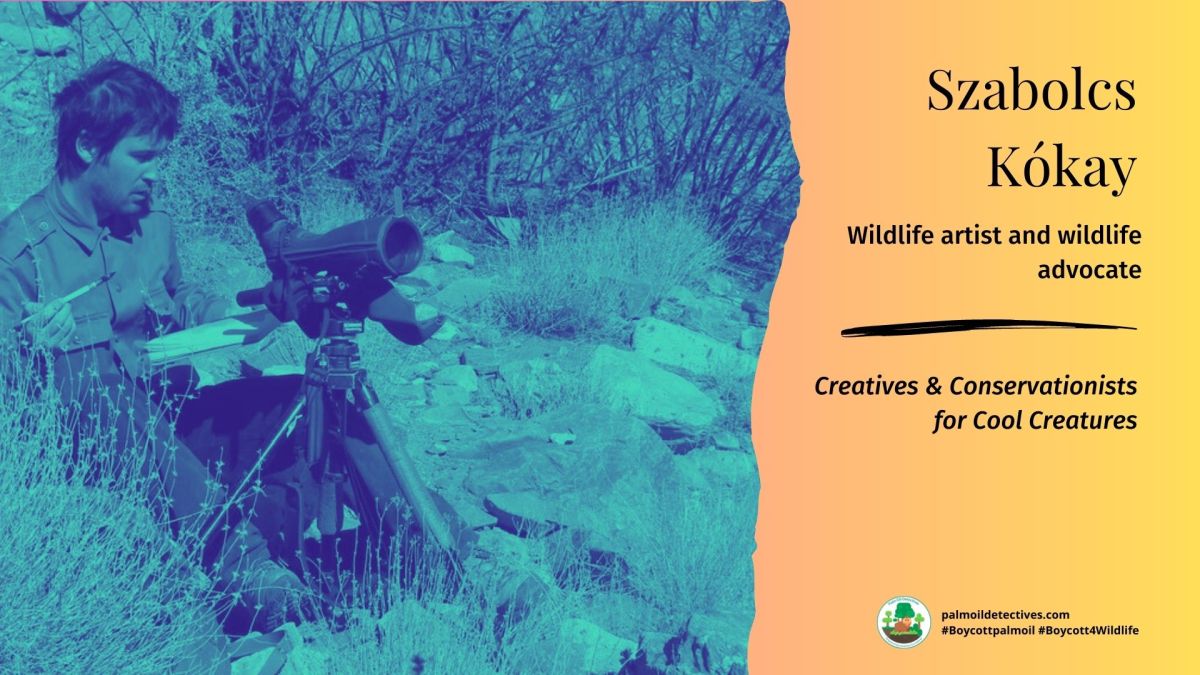
Dingiso Dendrolagus mbaiso

Dingiso Dendrolagus mbaiso

IUCN Red List Status: Endangered

Location: West Papua (Illegally occupied by Indonesia)

Known affectionately as the ‘Panda tree kangaroo’ for their black and white faces, dingisos are one of the rarest and most charismatic species of tree kangaroos, living only in the remote cloud forests of the Sudirman Range in Indonesian-occupied . While revered by the Moni people who consider them sacred and taboo to hunt, populations have still plummeted by over 50% due to , road construction, habitat clearing, and the expansion of industrial agriculture particularly . is now driving further habitat loss at high altitudes. Help these mysterious and gentle tree kangaroos every time you shop, use your wallet as a weapon and

With the adorable face of a 🧸 and the agile body of a 🦘 the is a tree kangaroo of . They’re from Fight for them and 🌴🩸🔥☠️🧐⛔️ @palmoildetect https://palmoildetectives.com/2021/01/26/dingiso-dendrolagus-mbaiso/

Appearance and Behaviour

The Dingiso is utterly unlike any other tree kangaroo of the genus #Dendrolagus. Their thick black fur is broken only by a white belly, chest, and face—a dramatic contrast that earned them the nickname “the panda kangaroo.” With round ears, a bear-like snout, and deep, expressive eyes, they appear almost cartoonish in their gentleness. Their long limbs and powerful claws are suited for climbing, but unlike most of their relatives, Dingiso are primarily terrestrial, walking upright or hopping on the forest floor like a wallaby.

Their bodies are compact and stocky, helping them navigate the mossy boulders and alpine thickets of their high-elevation home. Dingiso are described as exceptionally docile and calm, often sitting motionless for long periods. Local Moni people say they are “quiet watchers of the forest” and consider seeing one a spiritual experience (Flannery, Boeadi & Szalay, 1995).

Diet

Dingisos feed on a variety of sub-alpine vegetation. The diet of this elusive tree kangaroo includes ferns, leaves, mosses, fruit, bark, and shoots. Their slow metabolism and nutrient-poor diet make them particularly vulnerable to habitat loss, as they rely on the specific plants found in the high-altitude cloud forests above 2,700 metres (Beehler et al., 2021). Foraging is typically done alone or in small family units, and Dingiso tend to favour quiet, undisturbed slopes.

Reproduction and Mating

Like other tree kangaroos, Dingiso exhibit low reproductive output, a major challenge for conservation. Females give birth to a single tiny joey, which climbs into the pouch and remains there for months. Delayed implantation (embryonic diapause) allows the female to pause gestation until environmental conditions are favourable.

Little is known about Dingiso courtship or group dynamics, but like most macropods, they are believed to live semi-solitary or in loose male-dominated groups. Young Dingiso are vulnerable not only to natural predators but increasingly to dogs and human hunters.

Geographic Range

The Dingiso lives only on the slopes of the Sudirman Range in Papua Province, Indonesia, in the Tembagapura and Kwiyawagi mountains. They occupy sub-alpine mossy forest at elevations between 2,700 and 3,500 metres. The tree kangaroos’ total range is extremely restricted, and many populations are completely isolated by rugged terrain or roads. Lorentz National Park and surrounding highlands are among their last strongholds (Flannery et al., 1995; Pattiselanno et al., 2021).

Threats

Subsistence and Commercial Hunting

Despite spiritual taboos that protect Dingiso in some areas, particularly among the Moni people, hunting still occurs—especially where traditional beliefs have weakened or among outsiders. Hunters sometimes kill Dingiso opportunistically for food, and with increasing access to remote areas via roads, more populations are being exposed to this pressure (Beehler et al., 2021).

Habitat Loss from Logging and Palm Oil Expansion

In the lower altitudes of their range, industrial logging and forest conversion have begun to erode the edges of Dingiso habitat. Expansion of palm oil plantations and other monocultures is a rising threat in nearby valleys and foothills. Once cleared, these forests are unlikely to regenerate, cutting off migration corridors and isolating subpopulations (Pattiselanno et al., 2021).

Climate Change and Altitudinal Range Contraction

As global temperatures rise due to climate change, the cool, moist cloud forests that Dingiso depend on are shrinking. Warming allows for the upward expansion of agriculture and invasive species, while cloud cover retreats to higher elevations. Eventually, Dingiso may have nowhere higher to go, becoming climate refugees on isolated mountaintops (Beehler et al., 2021).

Road Construction and Mining Development

The Trans-Papua Highway and mining activities in the Sudirman Range are driving deforestation and fragmenting Dingiso territory. Roads not only open up new forest for development but bring in settlers, dogs, and hunters to previously inaccessible areas. These changes threaten the remaining integrity of their alpine habitat (Flannery et al., 1995).

Take Action!

Dingisos are not just rare— their survival depends not only on international protection, but on listening to and empowering the Moni people who have safeguarded them for generations. Reject palm oil, industrial logging, and the relentless spread of roads into untouched mountains. Elevate indigenous-led conservation. Protect what is sacred.

FAQS

How many Dingiso are left in the wild?

Precise population numbers of these tree kangaroos are unknown, but the Dingiso is considered extremely rare, with numbers likely in the low thousands or even hundreds. Ongoing declines are driven by hunting, habitat loss, and climate change, with some subpopulations possibly already extirpated (Beehler et al., 2021).

Why is the Dingiso considered sacred?

Among the Moni people of West Papua, the Dingiso is protected by strict spiritual taboos. Members of specific descent groups are forbidden to hunt, eat, or harm them. The Dingiso is believed to be an ancestral spirit or forest guardian, and its presence is regarded as a good omen (Flannery et al., 1995).

What makes the Dingiso different from other tree kangaroos?

Unlike its tree-dwelling cousins, the Dingiso is almost entirely terrestrial, living at high elevations where mossy ground cover and rocky outcrops dominate. Its panda-like black and white colouring, stocky build, and ground-dwelling habits make it utterly unique among the genus Dendrolagus.

Is climate change affecting Dingiso habitat?

Yes. As temperatures rise, Dingiso habitat is being pushed higher up the mountains. This “escalator to extinction” effect is reducing the size of their available habitat, with no higher ground to retreat to. Changing rainfall and cloud cover patterns are also altering the composition of their mossy forest homes (Beehler et al., 2021).

Further Information

ICUN endangered logo

Beehler, B. M., Kemp, N., & Shearman, P. L. (2021). Threats to New Guinea’s Tree Kangaroos. In Tree Kangaroos: Science and Conservation (pp. 43–48). Academic Press. https://doi.org/10.1016/B978-0-12-814675-0.00008-7

Flannery, T. F., Boeadi, & Szalay, A. L. (1995). A new tree-kangaroo (Dendrolagus) from Irian Jaya, Indonesia, with notes on ethnography and evolution. Mammalia, 59(1), 65–84. https://doi.org/10.1515/mamm.1995.59.1.65

Leary, T., Seri, L., Wright, D., Hamilton, S., Helgen, K., Singadan, R., Menzies, J., Allison, A., James, R., Dickman, C., Aplin, K., Flannery, T., Martin, R. & Salas, L. 2016. Dendrolagus mbaiso. The IUCN Red List of Threatened Species 2016: e.T6437A21956108. https://dx.doi.org/10.2305/IUCN.UK.2016-2.RLTS.T6437A21956108.en. Downloaded on 26 January 2021.

Pattiselanno, F., Koibur, J. F., & Arobaya, A. Y. S. (2021). Status of Tree Kangaroo Science and Conservation in Indonesian New Guinea. In Biodiversity of the World: Conservation from Genes to Landscapes (pp. 237–246). https://doi.org/10.1016/B978-0-12-814675-0.00019-1

Prasetyo, B., Utami, S., & Wahyuni, N. S. (2024). Tree Kangaroos (Dendrolagus sp.) of Papua: Characteristics and Conservation. E3S Web of Conferences, 483, 01006. https://doi.org/10.1051/e3sconf/202448301006

Tenkile Conservation Alliance


Contribute to palm oil detectives - black rhino in profile

How can I help the ?


Take Action in Five Ways

1. Join the on social media and subscribe to stay in the loop: Share posts from this website to your own network on Twitter, Mastadon, Instagram, Facebook and Youtube using the hashtags .

Join 3,176 other subscribers

2. Contribute stories: Academics, conservationists, scientists, indigenous rights advocates and animal rights advocates working to expose the corruption of the palm oil industry or to save animals can contribute stories to the website.

3. Supermarket sleuthing: Next time you’re in the supermarket, take photos of products containing palm oil. Share these to social media along with the hashtags to call out the greenwashing and ecocide of the brands who use palm oil. You can also take photos of palm oil free products and congratulate brands when they go palm oil free.

4. Take to the streets: Get in touch with Palm Oil Detectives to find out more.

5. Donate: Make a one-off or monthly donation to Palm Oil Detectives as a way of saying thank you and to help pay for ongoing running costs of the website and social media campaigns. Donate here

Blue-eyed Spotted Cuscus Spilocuscus wilsoni

Blue-eyed Spotted Cuscus Spilocuscus wilsoni

IUCN Red List Status: Critically Endangered

Location: Indonesia – Biak Island, Supiori Island, Numfor Island (Cenderawasih Bay, Indonesian-occupied West Papua)

The blue-eyed spotted Spilocuscus wilsoni, also known as the Biak spotted cuscus lives in the lowland tropical rainforests on remote and rugged islands in Cenderawasih Bay: Biak Island, Supiori Island, Numfor Island (Cenderawasih Bay, Indonesian-occupied ). These sweet-natured icy-blue eyed are Critically Endangered due to a range of threats. They face ongoing population collapse, driven by and , , and capture for the illegal exotic . Most sightings today are of captive individuals, with wild populations potentially already extirpated from much of their historic range. Time is rapidly running out to save these the last remaining Spilocuscus wilsoni individuals. Use your wallet as a weapon in the supermarket and always choose products that are 100% .#BoycottPalmOil and adopt a lifestyle.

With icy-blue eyes, fluffy fur and gentle demeanour, Blue-eyed Spotted are treasures of now critically due to and rampant hunting. Help them survive when you 🌴🩸❌#Boycott4Wildlife https://palmoildetectives.com/2021/01/26/blue-eyed-spotted-cuscus-spilocuscus-wilsoni/

Living on Biak and Supiori islands , Blue-Eyed Spotted are critically endangered😿 The islands are being destroyed for and other . Take action for when you shop 🌴🚜💀🔥⛔️ https://palmoildetectives.com/2021/01/26/blue-eyed-spotted-cuscus-spilocuscus-wilsoni/

Appearance and Behaviour

The blue-eyed spotted cuscus is a mesmerising animal, distinguished by its striking pale blue eyes—an extremely rare trait among marsupials. They have a marbled coat patterned in shades of brown, grey, white, and cream, which varies by age and sex. Males typically exhibit more prominent blotches and spots, while juvenile females may appear spotless and pale yellow or creamy. This species lives high in the rainforest canopy, moving slowly and cautiously among the branches. As a member of the genus Spilocuscus, they are shy, solitary, and largely nocturnal, relying on camouflage and stillness to evade predators.

Diet

Like other spotted cuscus species, the blue-eyed spotted cuscus feeds on a variety of plant matter. Their diet includes leaves, fruits, flowers, and possibly bark. Foraging mostly takes place at night, using their strong limbs and prehensile tail to navigate the treetops in search of food.

Reproduction and Mating

Little is known about the breeding behaviour of the blue-eyed spotted cuscus due to their rarity in the wild. As marsupials, females likely give birth to underdeveloped young that complete their development in a pouch. It is presumed that, like related species, they raise one to two offspring at a time, and may breed seasonally depending on food availability.

Geographic Range

This cuscus species is endemic to the islands of Biak and Supiori in Cenderawasih Bay, with a few individuals reported from Numfor Island, where they may have been introduced as pets. Once more widespread, they are now rarely encountered outside of captivity. The rugged terrain of Supiori has helped protect some of their habitat, but populations on Biak have been decimated by deforestation and human encroachment.
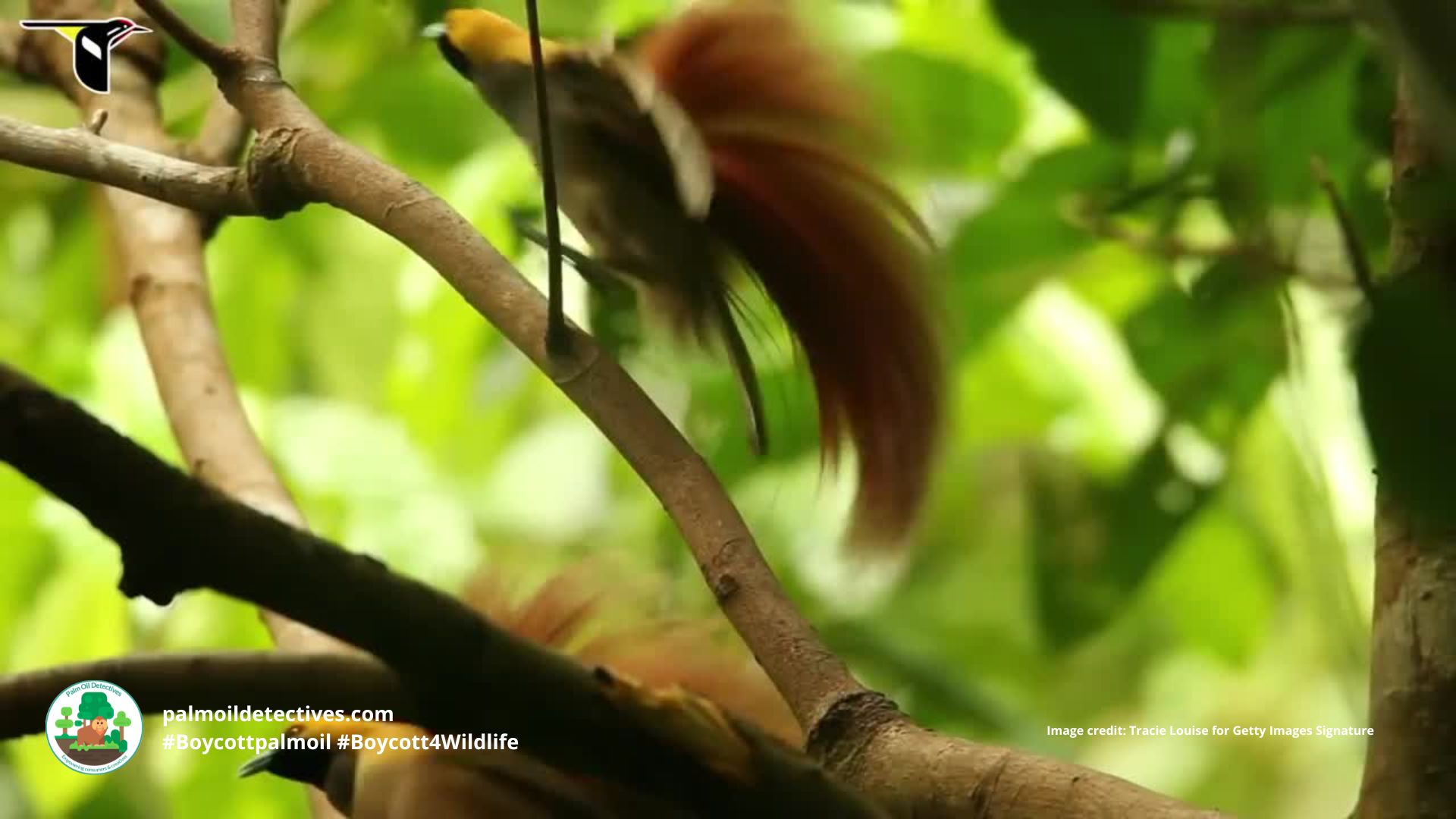
Threats

Blue-eyed Spotted Cuscus Spilocuscus wilsoni threats

The Blue-eyed Spotted Cuscus is listed as Critically Endangered because of a continuing drastic population decline, inferred to be more than 80% from the rate and extent of habitat loss in the last 10 years due to massive deforestation on Biak-Supiori and from levels of exploitation. This species is threatened by rapid, ongoing deforestation of suitable habitat, and by hunting for food and collection as a pets by local people.

  • Deforestation: Rapid loss of lowland tropical rainforest on Biak and Supiori for palm oil agriculture and development
  • Palm oil expansion: Destruction of forest for palm oil plantations threatens remaining habitat
  • Hunting: Locals hunt cuscuses for meat
  • Illegal pet trade: Capturing and selling them as exotic pets is a major threat
  • Lack of enforcement: No targeted conservation programs exist for this species

Take Action!

The blue-eyed spotted cuscus could vanish forever without intervention. Support indigenous-led conservation in West Papua and pressure companies and governments to stop fuelling habitat destruction. Always choose palm oil-free products, and never support the exotic pet trade. Speak up, share their story, and push for their protection. #BoycottPalmOil #Boycott4Wildlife

FAQs

How many blue-eyed spotted cuscuses are left?

There are no exact population estimates, but the IUCN (2021) infers a population decline of over 80% in the last decade, with wild individuals now rarely seen. Most sightings are of pets or museum specimens, and recent field surveys have failed to find any wild individuals on Biak (IUCN, 2021).
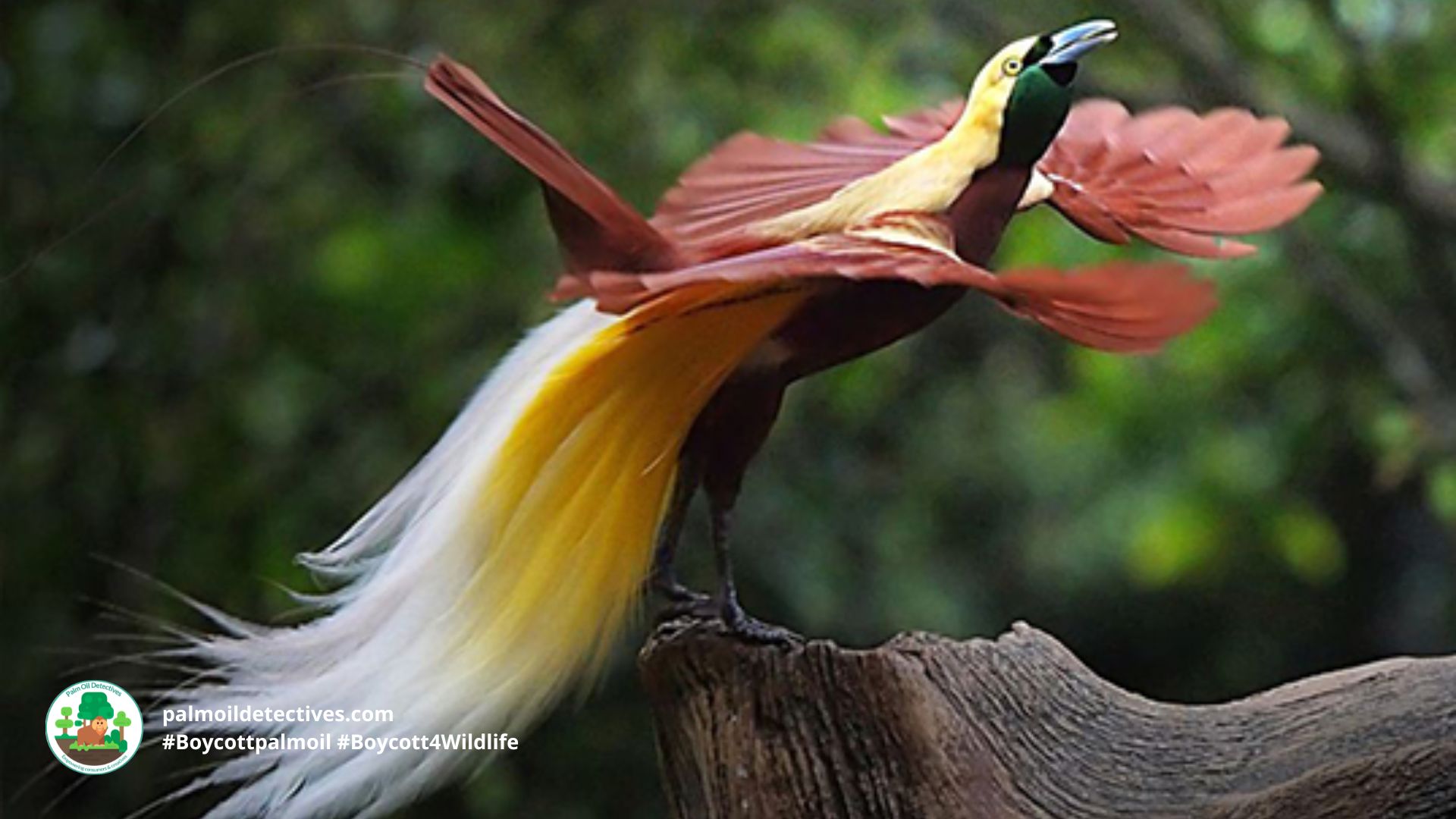
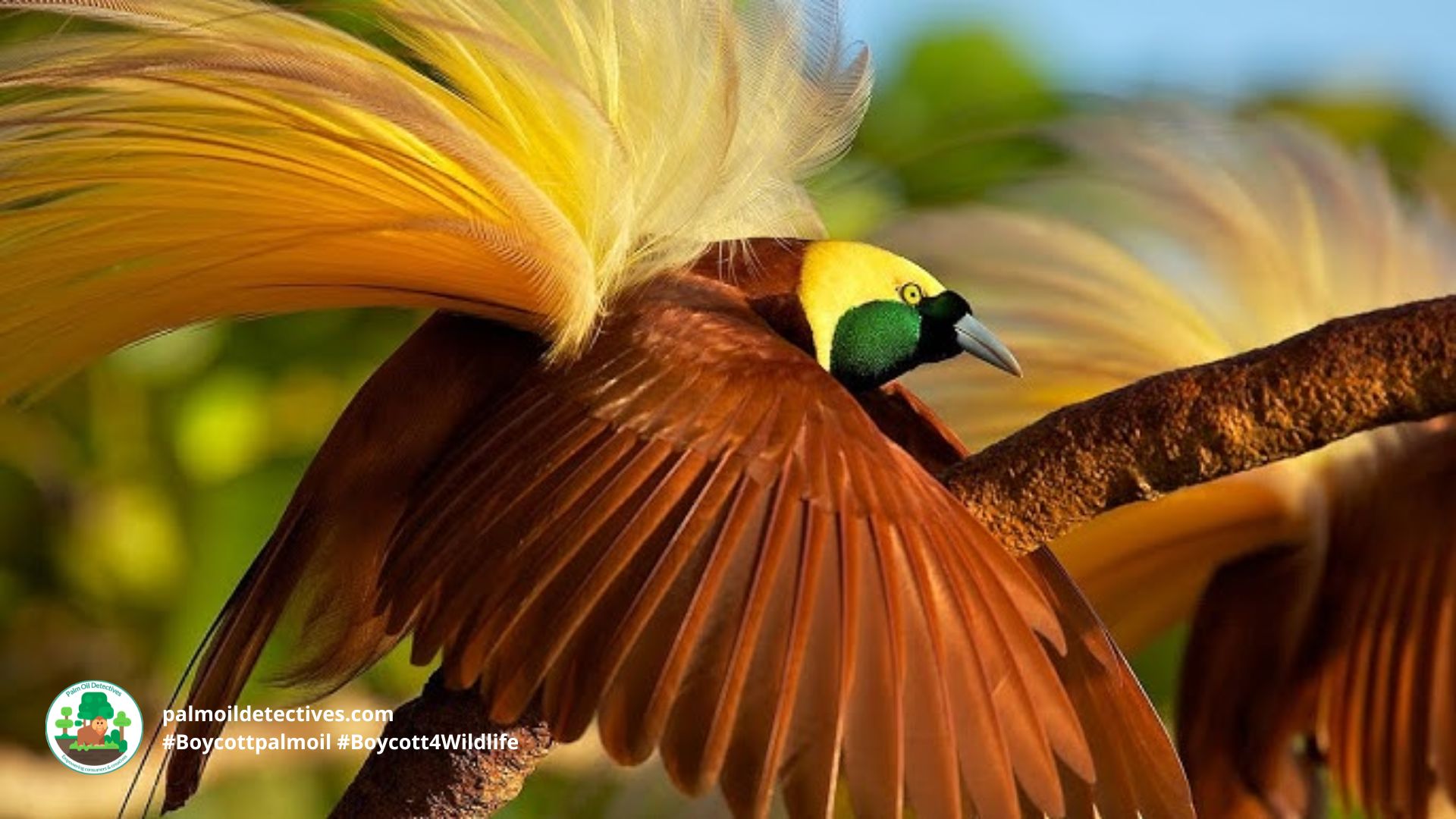
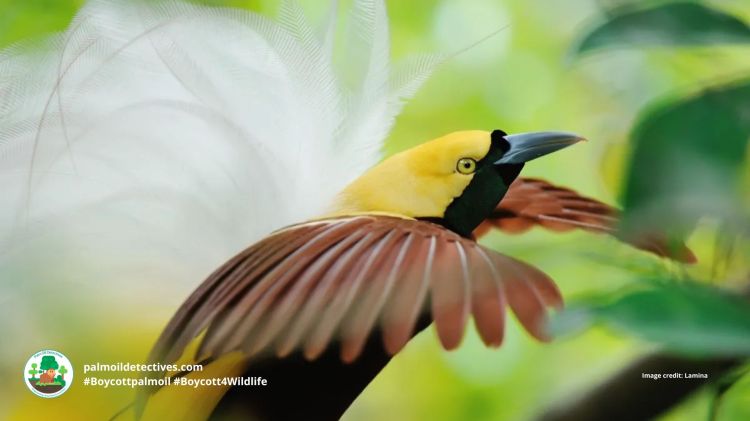
How long do blue-eyed spotted cuscuses live?

Lifespan data for this species is lacking. However, similar species of cuscus in captivity can live 10–15 years, though wild lifespans are likely shorter due to threats from hunting and habitat loss.

Are blue-eyed spotted cuscuses endangered because of palm oil?

Yes. Palm oil deforestation is a major driver of habitat loss in their range. The rapid clearing of lowland rainforest on Biak and Supiori has destroyed much of their habitat. This, combined with hunting and the pet trade, has pushed them to the brink (IUCN, 2021).

Do blue-eyed spotted cuscuses make good pets?

No. Keeping blue-eyed spotted cuscuses as pets is cruel and contributes directly to their extinction. These gentle, tree-dwelling marsupials belong in the rainforest. Many animals in the pet trade are stolen from the wild, causing immense suffering and breaking apart family groups. If you truly care about them, never support the exotic pet trade and advocate against it.

What are the conservation challenges for this species?

The blue-eyed spotted cuscus suffers from neglect in conservation priorities. There are no species-specific conservation efforts, and only a small portion of its range is protected. Further studies into their distribution and natural history are urgently needed to inform protection strategies (Yohanita et al., 2023).
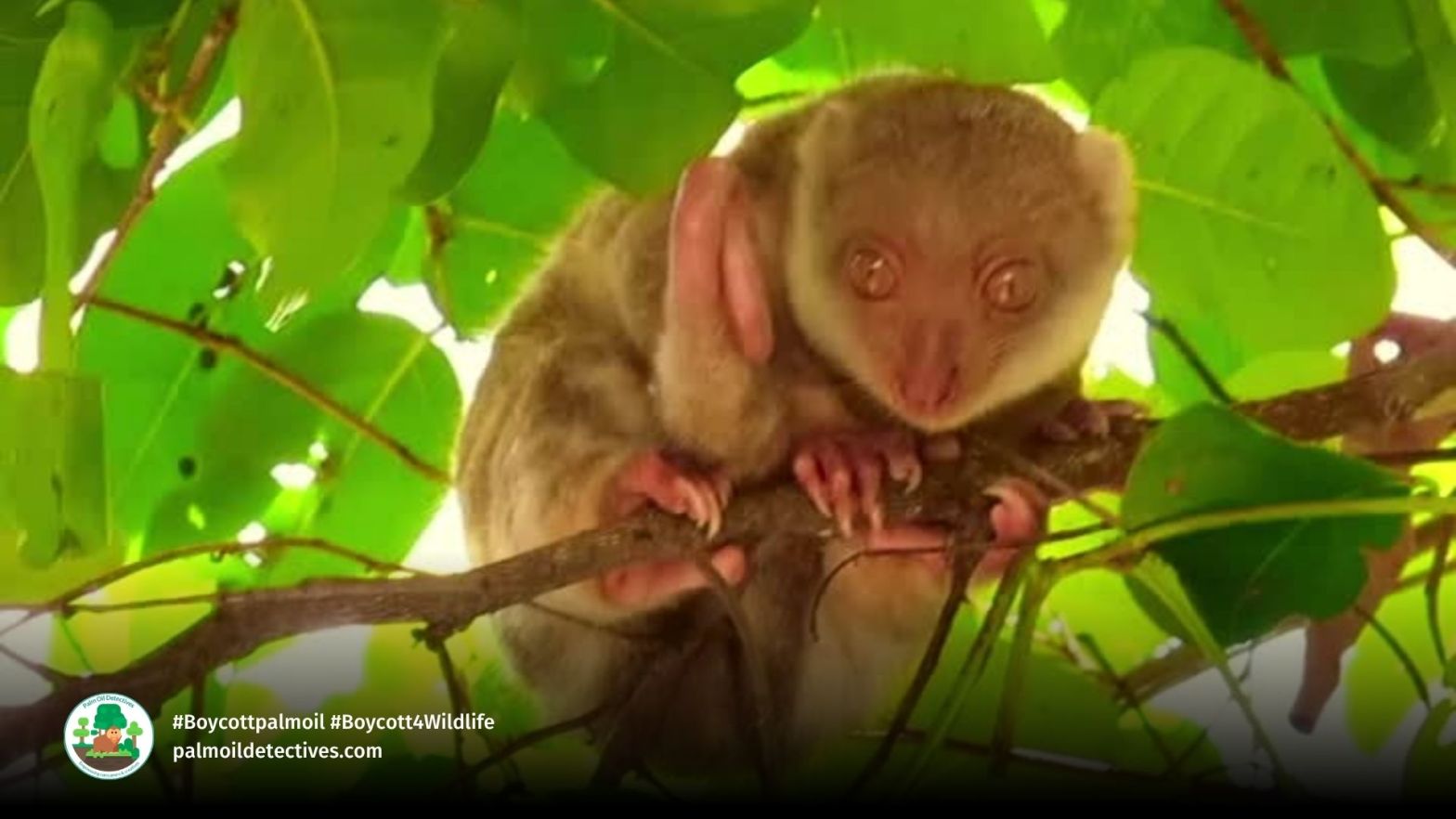
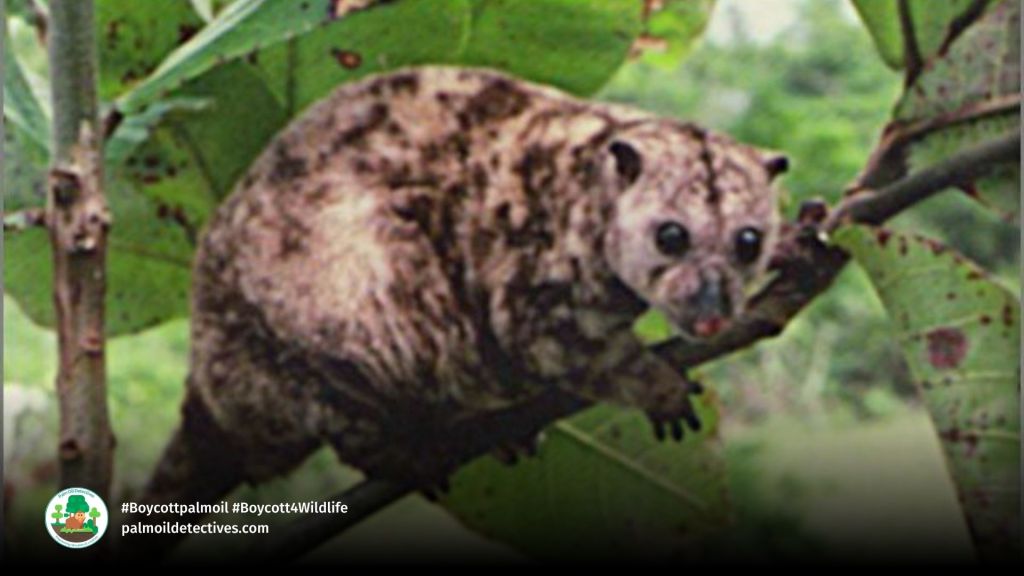
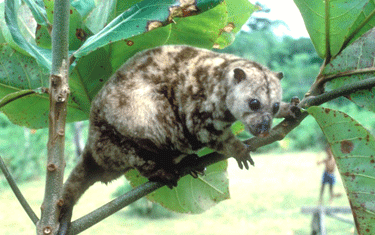
Blue-eyed Spotted Cuscus Spilocuscus wilsoni boycott palm oil

Further Information

iucn-rating-critically-endangered

Aplin, K. & Helgen, K. 2016. Spilocuscus wilsoni. The IUCN Red List of Threatened Species 2016: e.T136443A21950078. https://dx.doi.org/10.2305/IUCN.UK.2016-2.RLTS.T136443A21950078.en. Downloaded on 26 January 2021.

Wikipedia contributors. (n.d.). Blue-eyed spotted cuscus. Wikipedia. Retrieved 18 April 2025, from https://en.wikipedia.org/wiki/Blue-eyed_spotted_cuscus

Yohanita, A. M., Widayati, K. A., Atmowidi, T., Imai, H., & Suryobroto, B. (2023). New localities and sexual dichromatism in Blue-green eyed Spotted Cuscus Spilocuscus wilsoni from Biak Island, Indonesia. Journal of Threatened Taxa, 15(9), 23836–23842. https://doi.org/10.11609/jott.8179.15.9.23836-23842


Contribute to palm oil detectives - black rhino in profile

How can I help the ?


Take Action in Five Ways

1. Join the on social media and subscribe to stay in the loop: Share posts from this website to your own network on Twitter, Mastadon, Instagram, Facebook and Youtube using the hashtags .

Join 3,176 other subscribers

2. Contribute stories: Academics, conservationists, scientists, indigenous rights advocates and animal rights advocates working to expose the corruption of the palm oil industry or to save animals can contribute stories to the website.

3. Supermarket sleuthing: Next time you’re in the supermarket, take photos of products containing palm oil. Share these to social media along with the hashtags to call out the greenwashing and ecocide of the brands who use palm oil. You can also take photos of palm oil free products and congratulate brands when they go palm oil free.

4. Take to the streets: Get in touch with Palm Oil Detectives to find out more.

5. Donate: Make a one-off or monthly donation to Palm Oil Detectives as a way of saying thank you and to help pay for ongoing running costs of the website and social media campaigns. Donate here