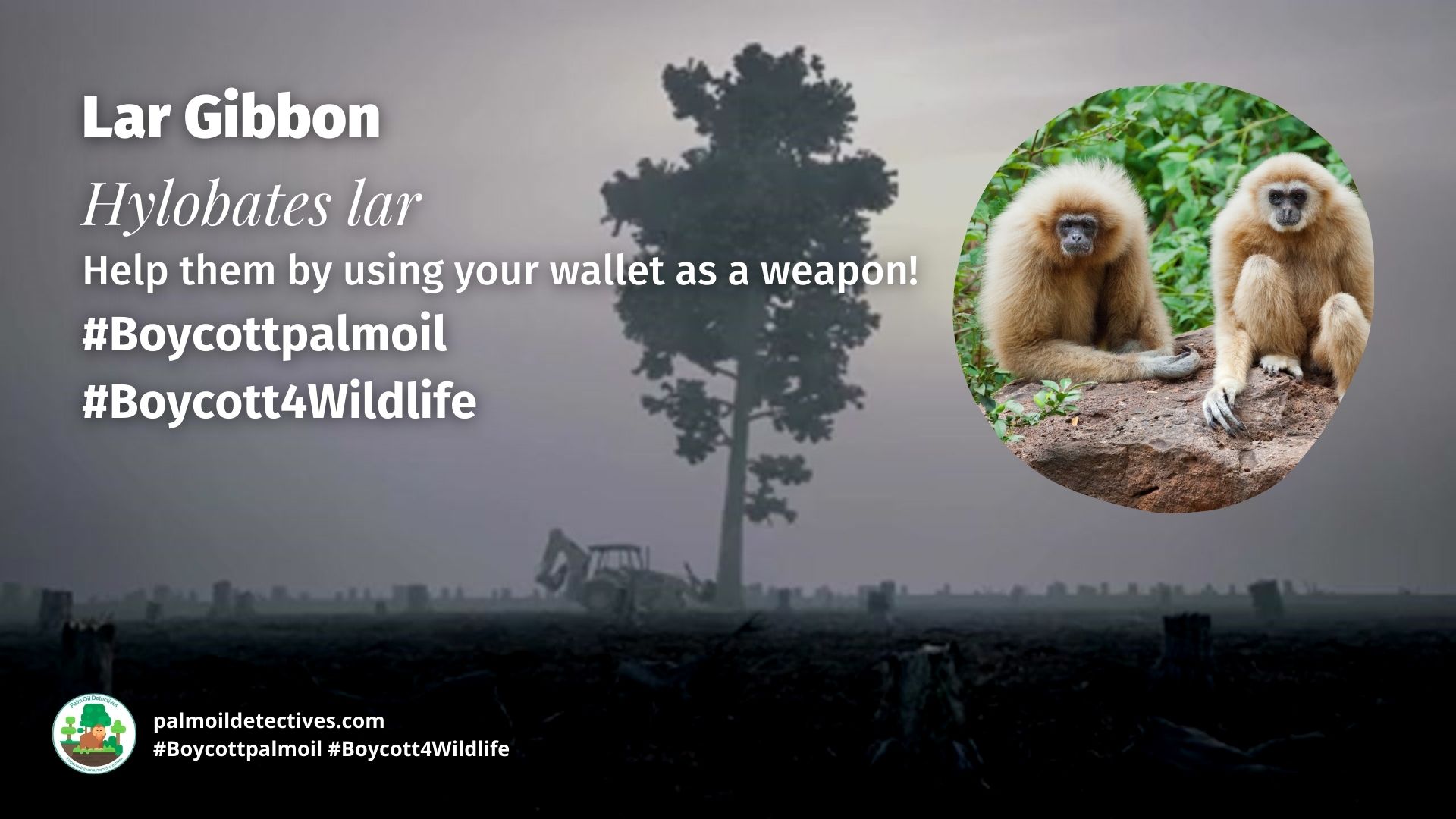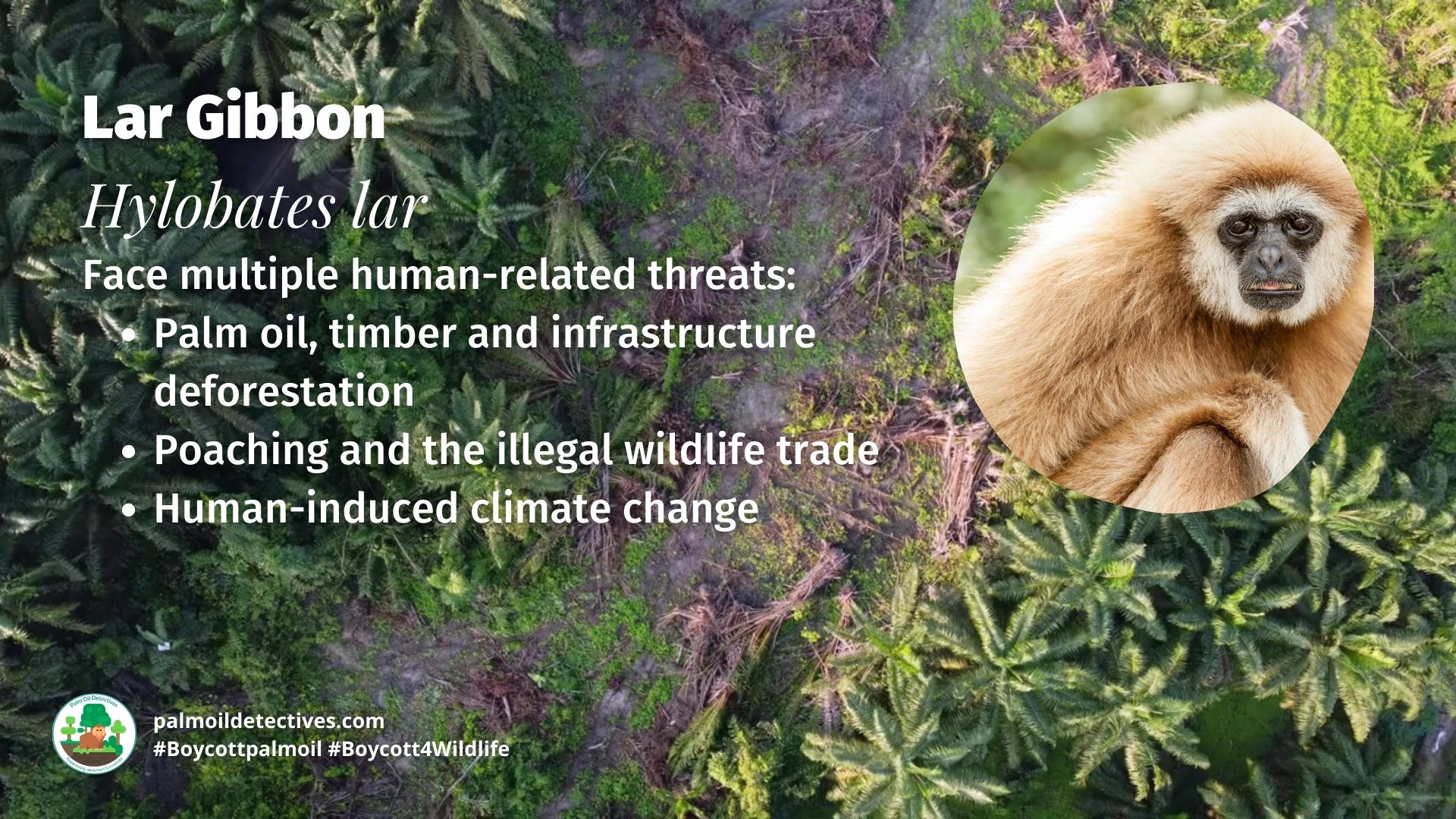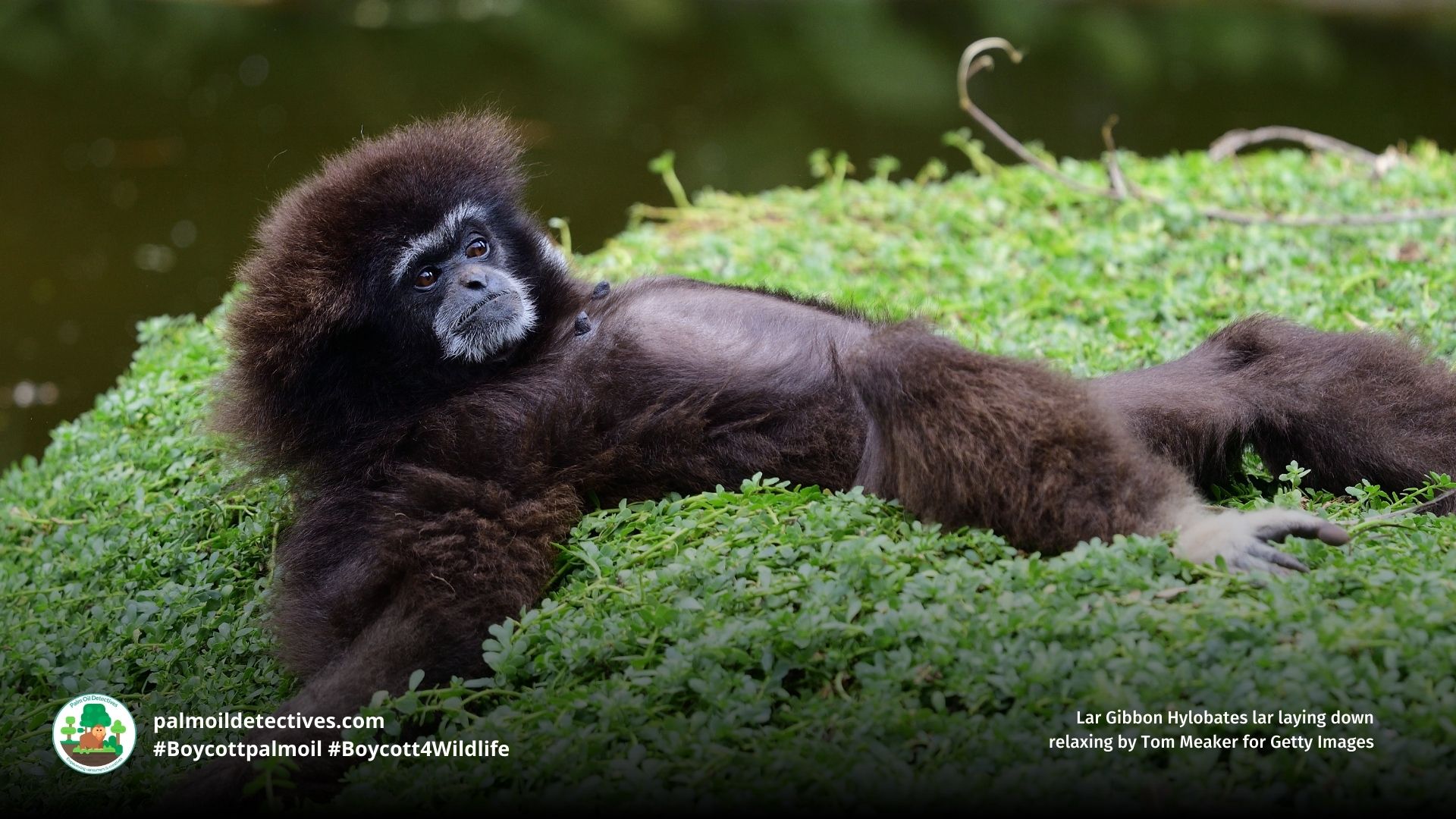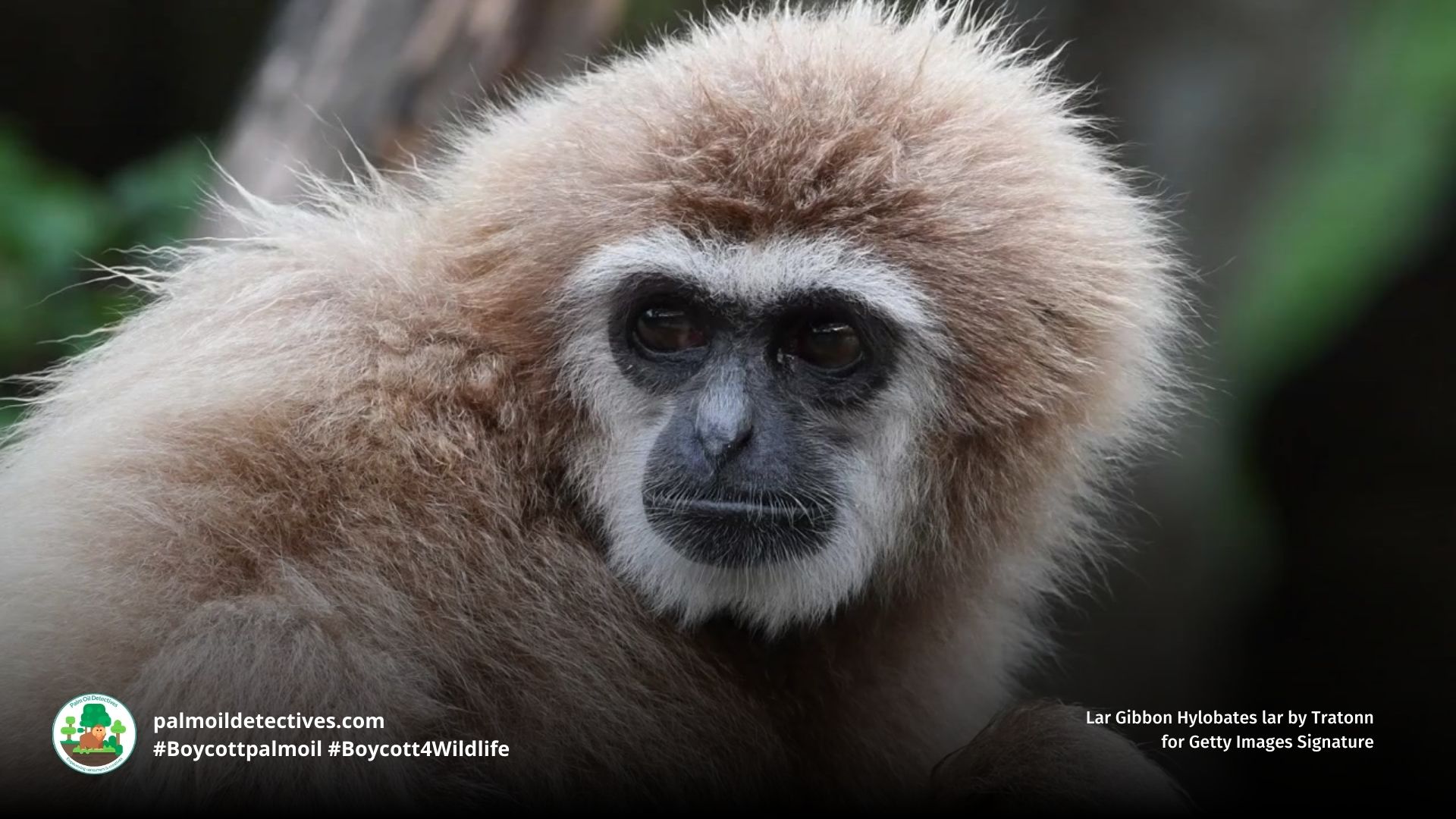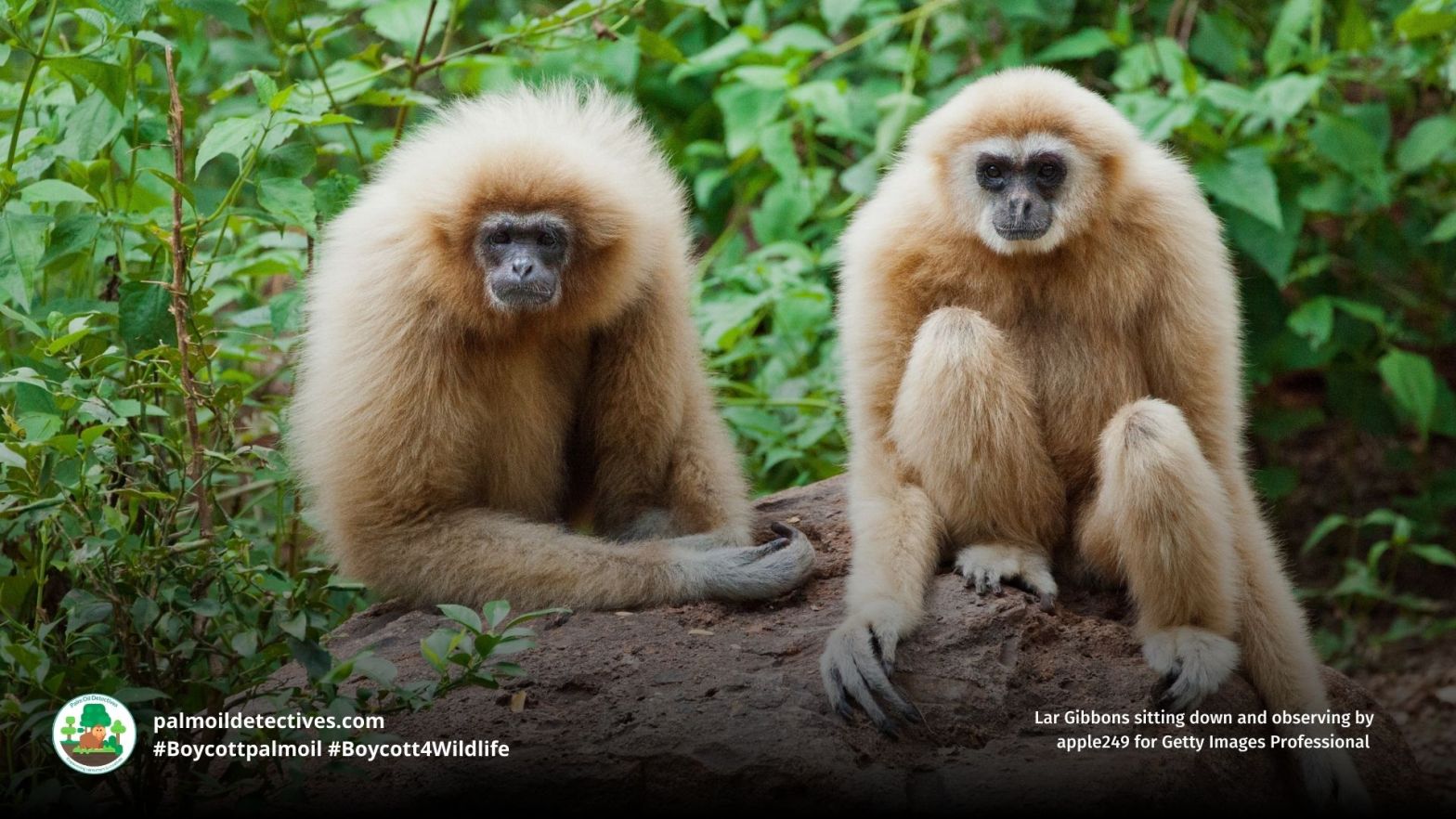
Lar Gibbon Hylobates lar

Lar Gibbon Hylobates lar

Endangered

Location: Found across the rainforests of Southeast Asia, including parts of Thailand, Malaysia, Indonesia, Myanmar, and Laos.

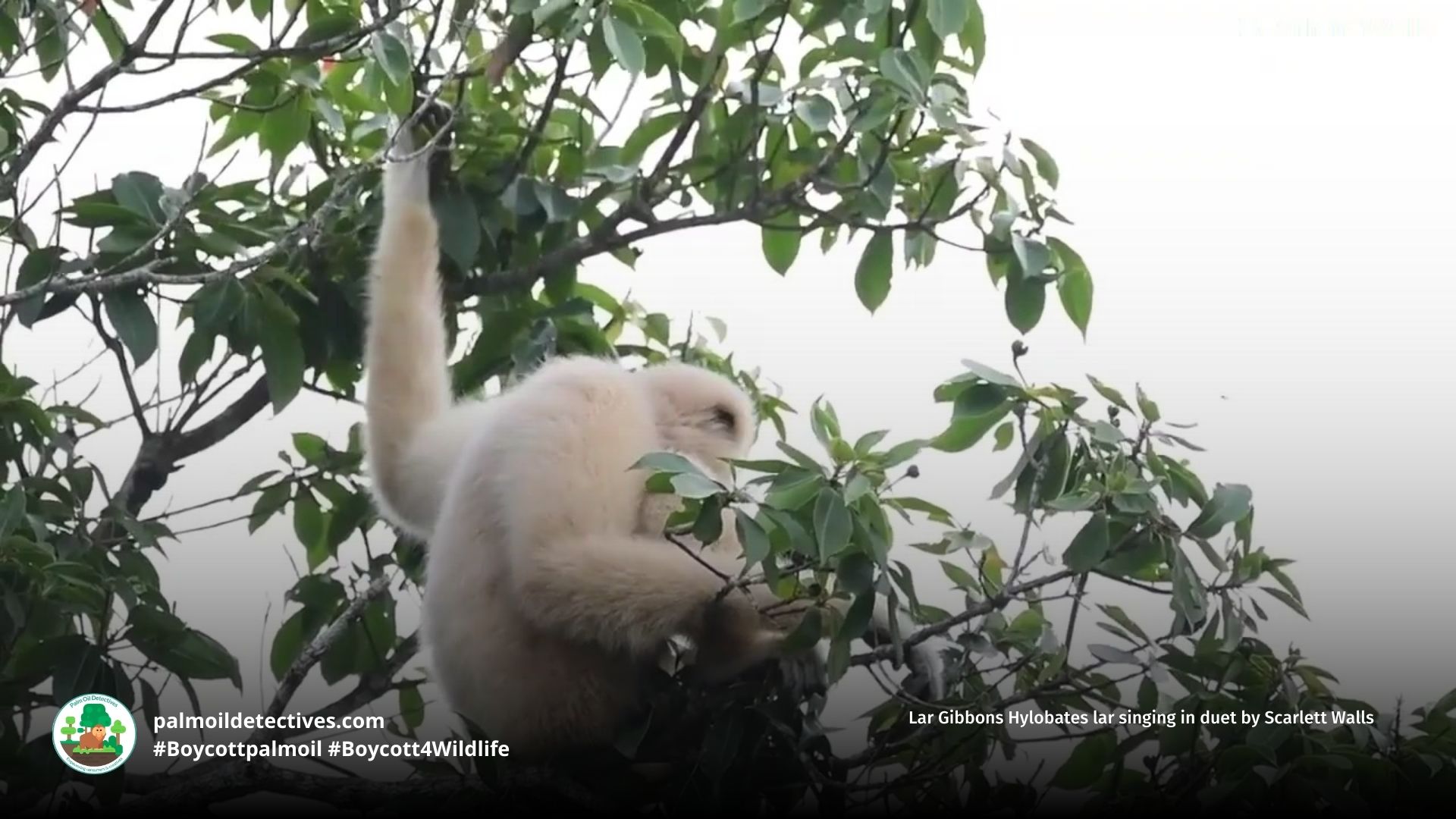
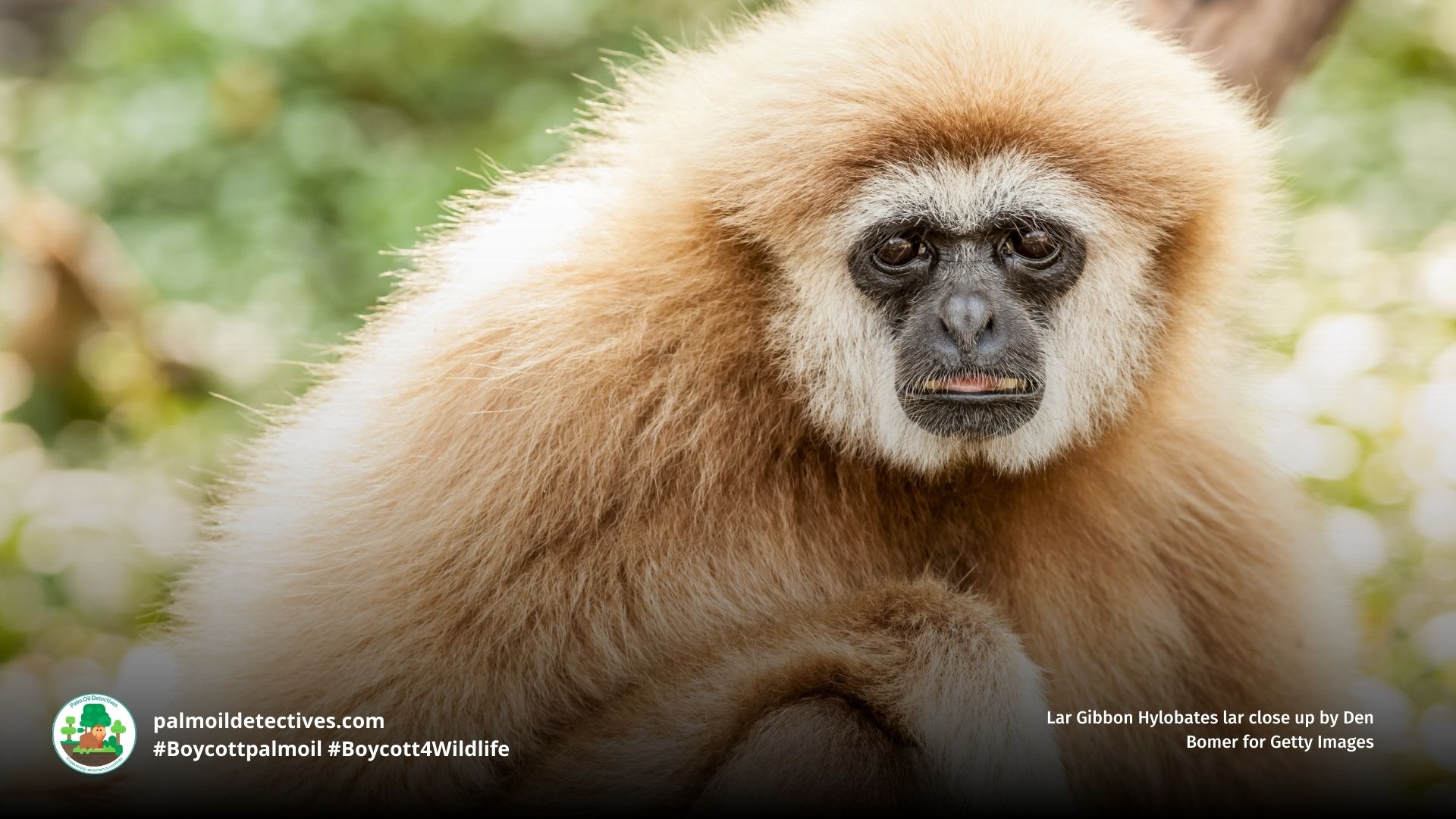
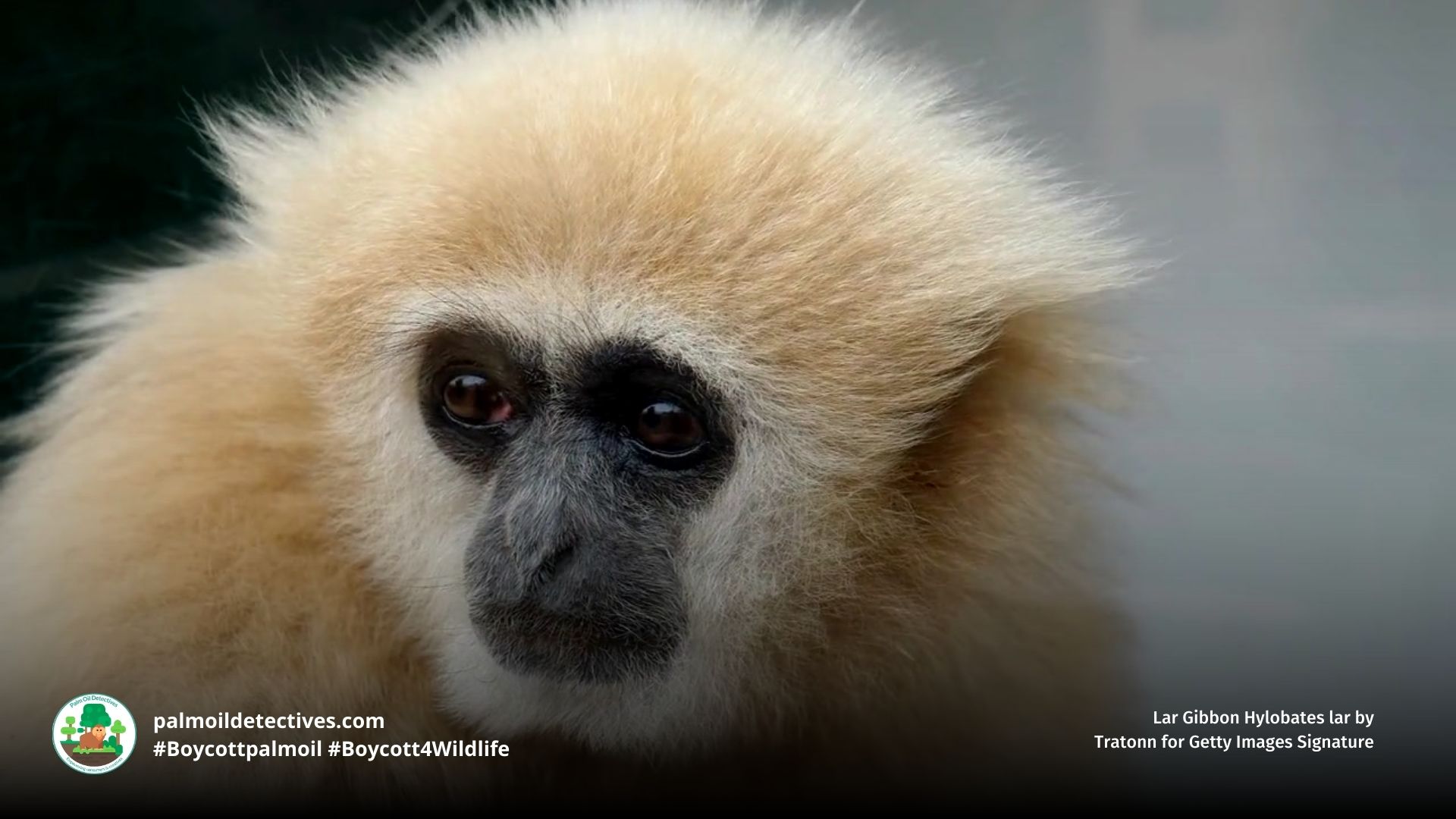
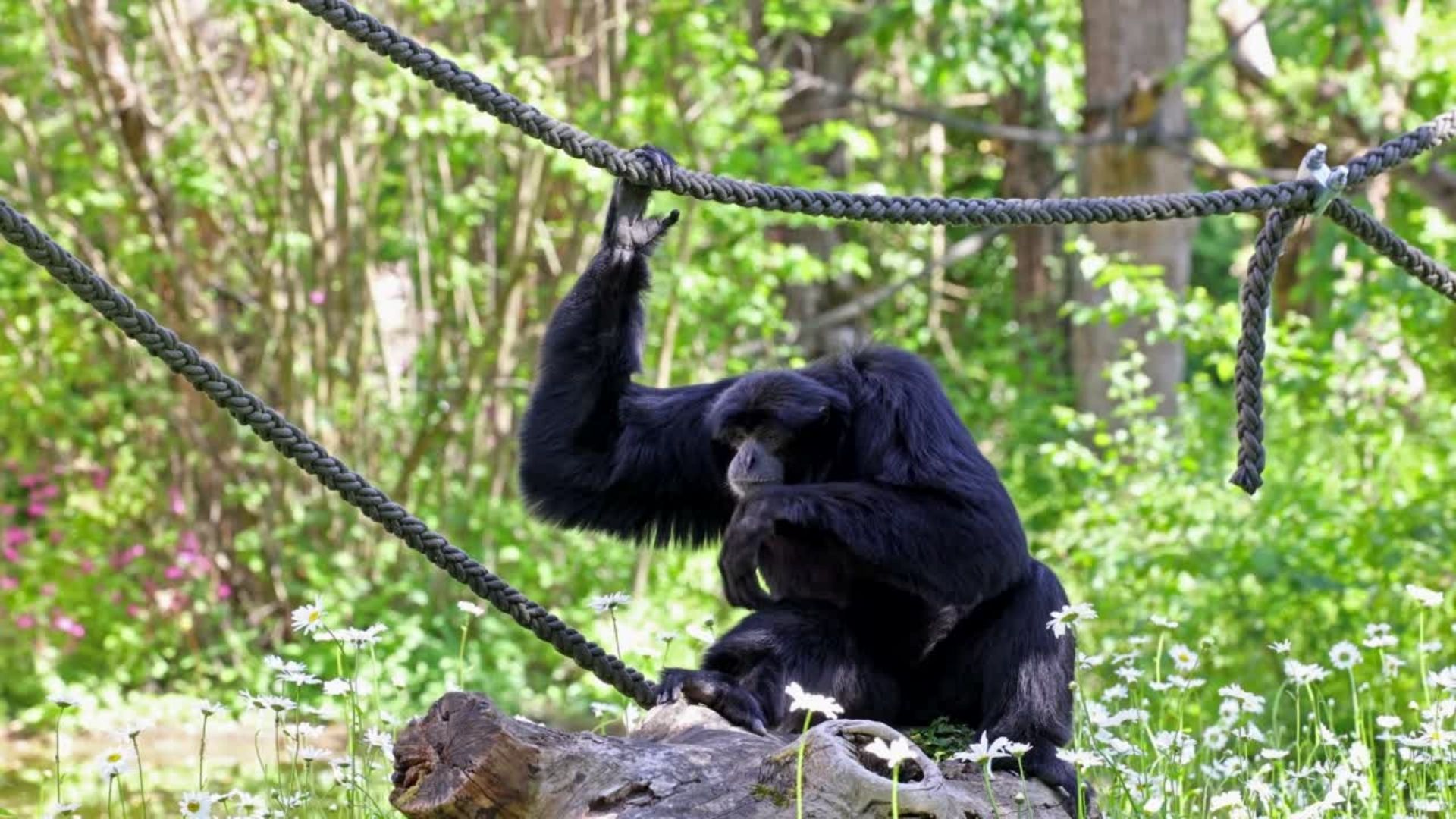
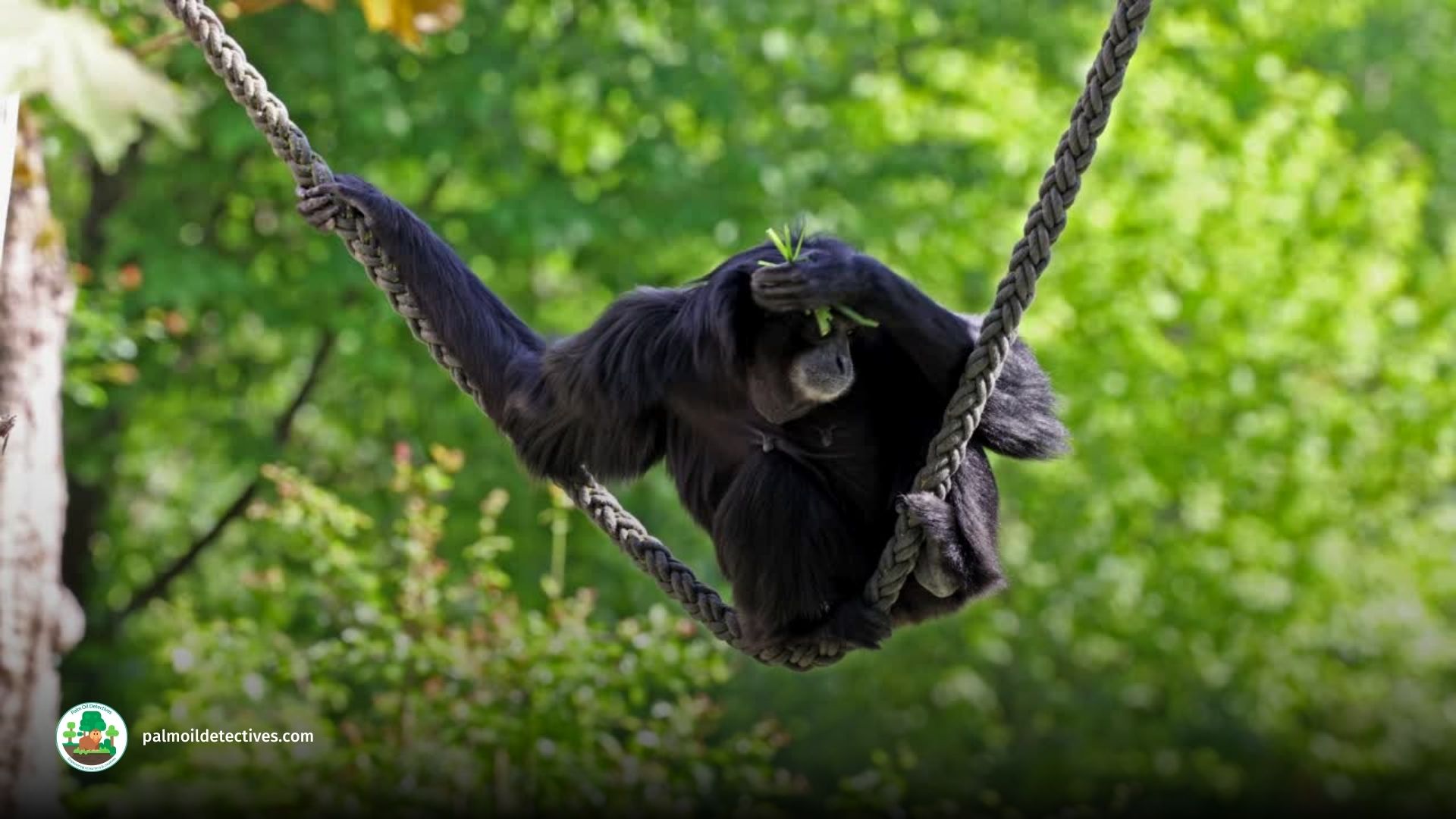
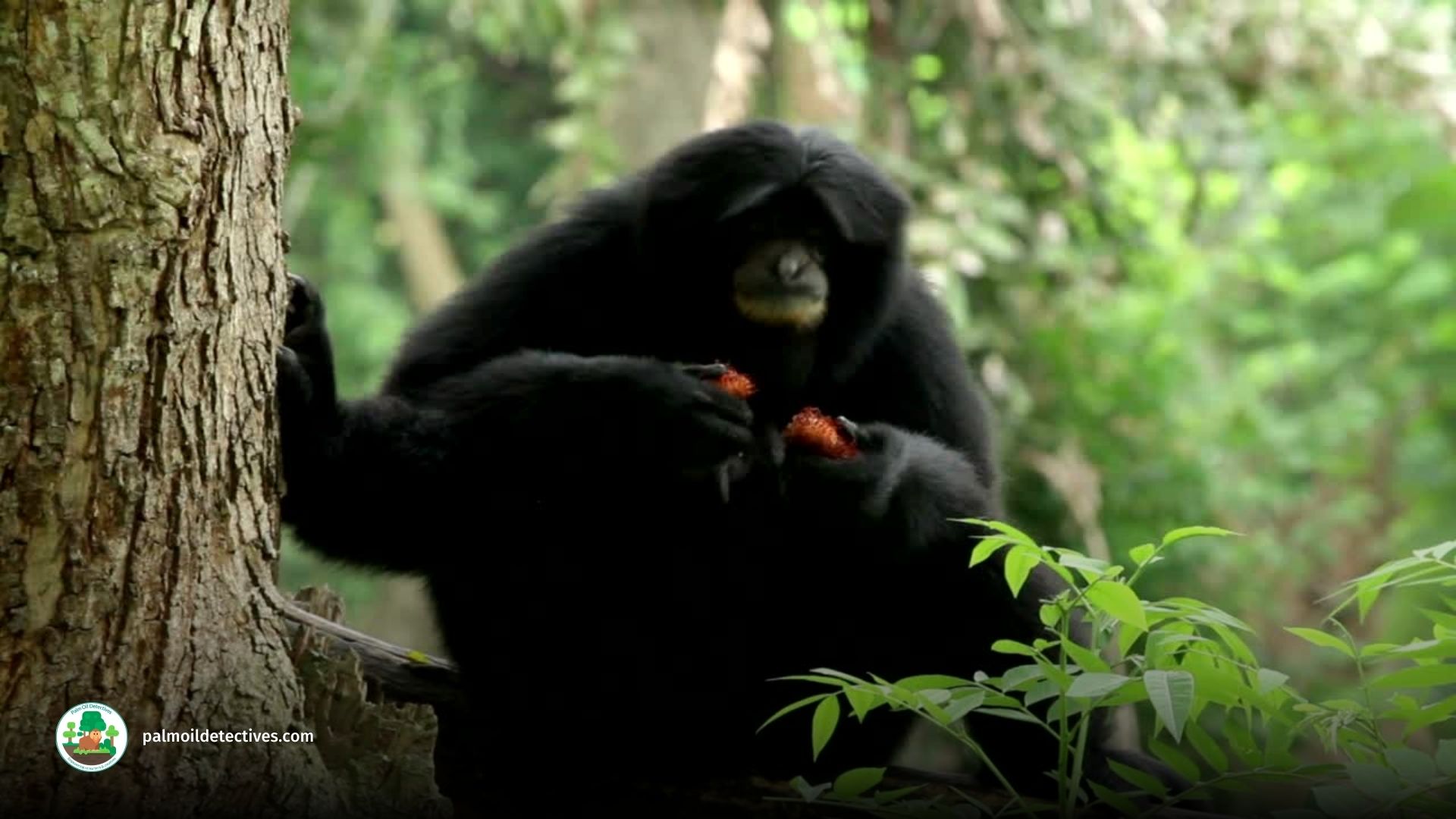
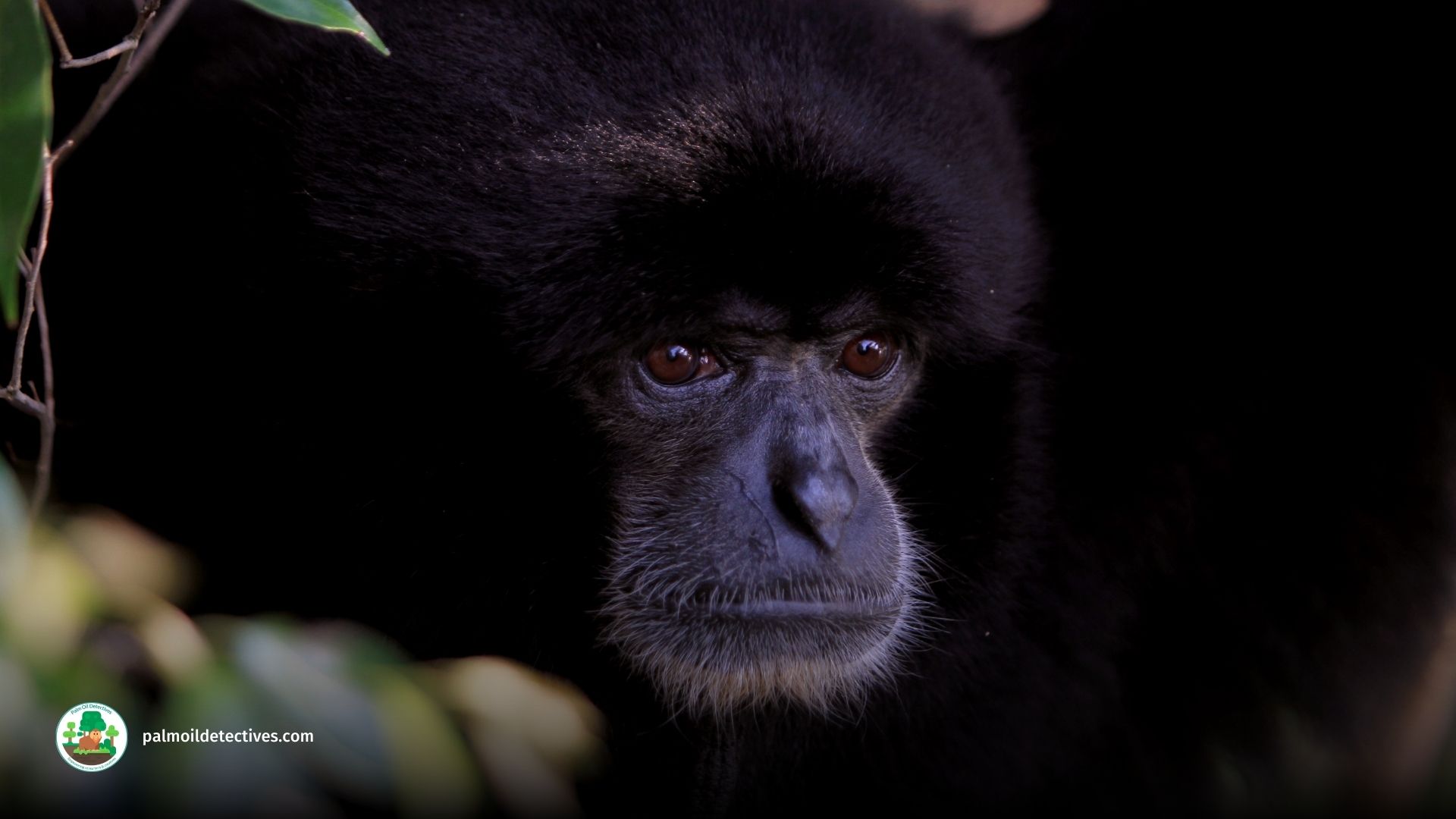
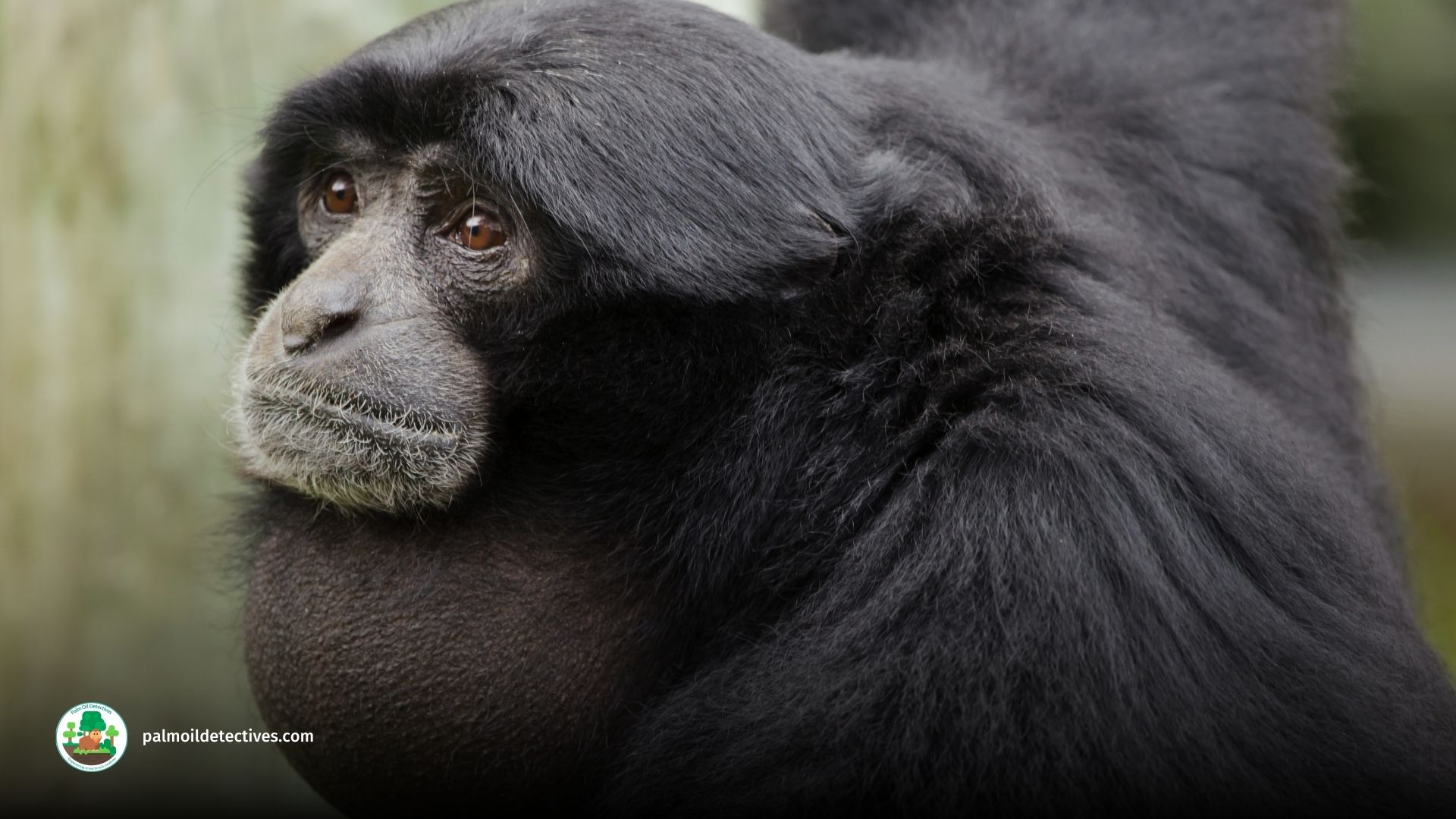
Gibbons, often called “lesser apes,” are no less than awesome! The Lar Gibbon Hylobates lar, also known as the white-handed gibbon, is a charismatic and acrobatic primate renowned for their incredible agility and melodic songs that echo through the rainforests of Southeast Asia. With their striking black or sandy-coloured fur and distinctive white markings on their hands and face, Lar Gibbons are both captivating and vital to their ecosystems.

These gibbons are Endangered according to the IUCN Red List, facing rapid population declines due to habitat loss, poaching, and the illegal wildlife trade. Protecting these extraordinary primates means addressing deforestation, logging, and other threats head-on. Fight for their survival every time you shop. Use your wallet as a weapon, demand palm oil free and #BoycottPalmOil #Boycott4Wildlife.

The Lar Gibbon is one of the most outgoing and gregarious of the species 🩷🤟🐵🐒 Endangered in SE from complex threats incl. , you can help them, every time you shop @palmoildetect https://palmoildetectives.com/2021/02/05/lar-gibbon-hylobates-lar/

The true “party animals” of the jungle 🥳🪅🎉🐒🐵, Lar Gibbons are always up to something cheeky. They face serious threats from in South East Asia. Take action for them when you @palmoildetect https://palmoildetectives.com/2021/02/05/lar-gibbon-hylobates-lar/

Ongoing localized forest loss due to shifting agriculture and commercial plantations of palm oil poses a threat.

IUCN Red List

Appearance and Behaviour

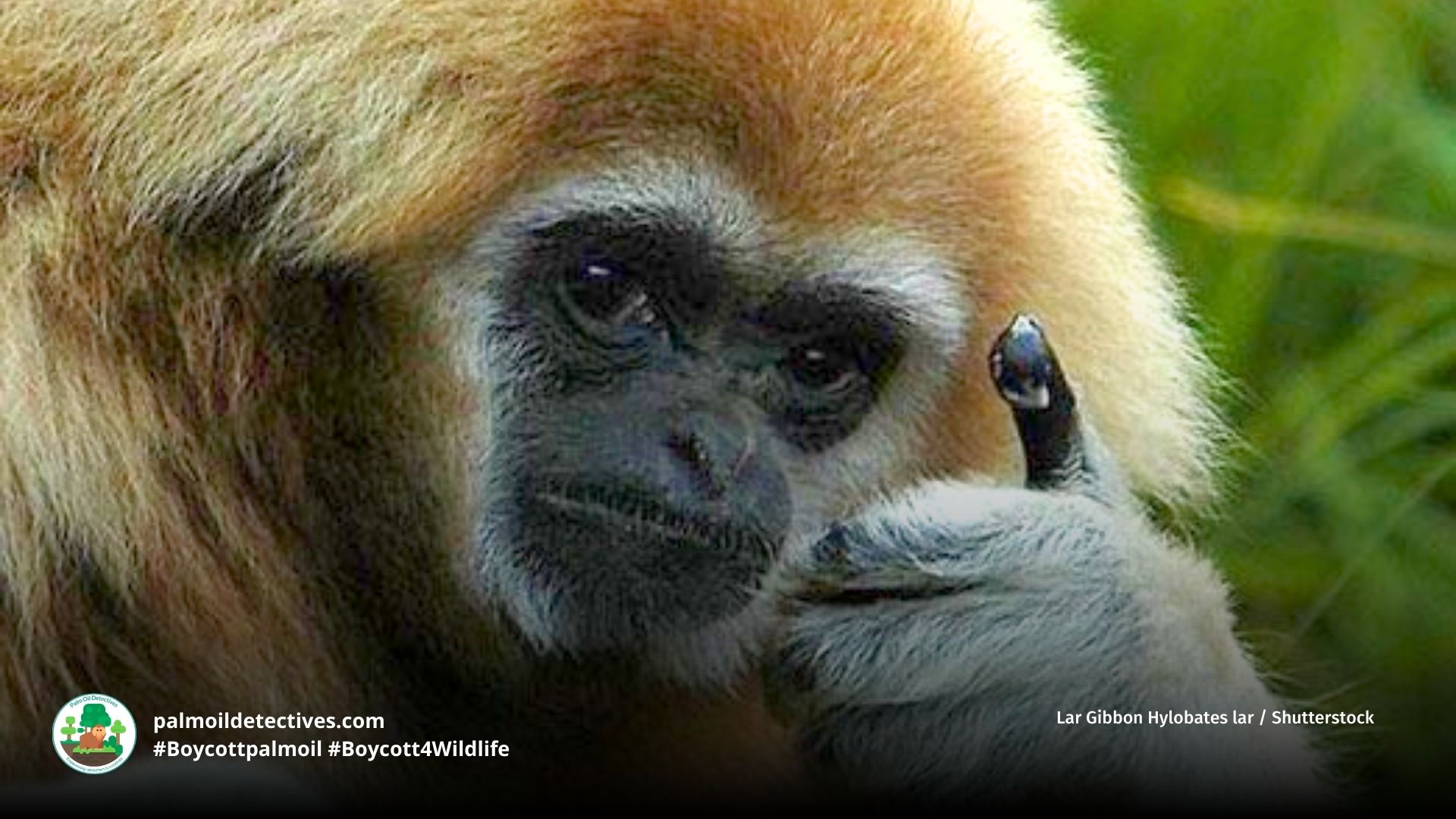
Lar Gibbons are medium-sized primates, with adults weighing between 4–7 kilograms and measuring about 45–64 centimetres in height. They have dense fur ranging from black to sandy brown, with white fur encircling their faces and adorning their hands and feet. These markings give them their “white-handed” nickname.

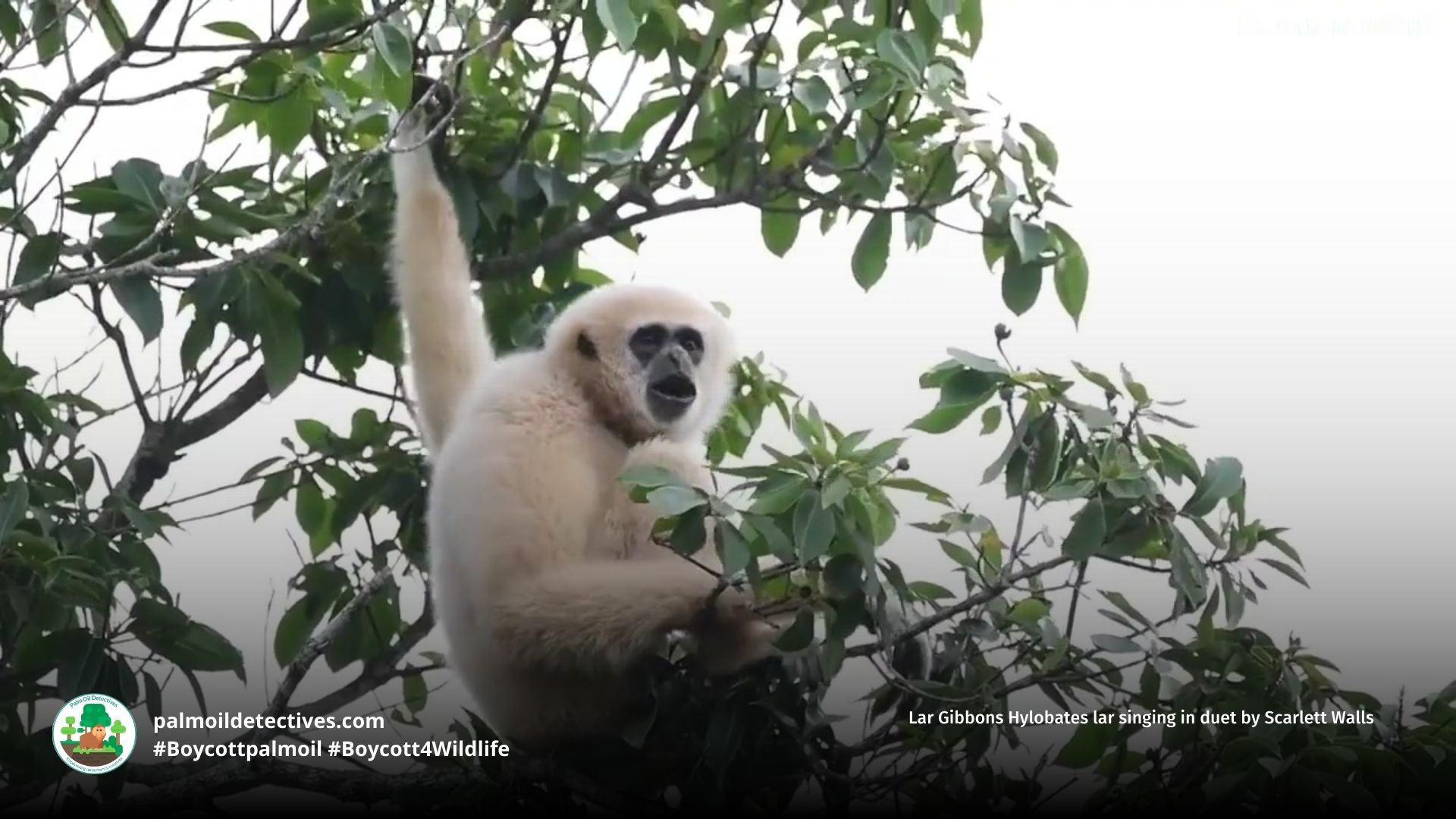
Famous for their brachiation, Lar Gibbons swing effortlessly from branch to branch using their long arms, achieving speeds of up to 56 km/h and covering distances of up to 15 metres in a single leap. Their territorial calls are a hallmark of their behaviour, with males and females performing duet songs to communicate boundaries and strengthen pair bonds. These calls have been shown to exhibit structural complexity, akin to a form of primate “language” (Sci-News, 2015).
Threats

IUCN Status: Endangered

Habitat Loss for palm oil, timber and infrastructure:

Lar Gibbons face extensive habitat destruction due to logging, palm oil plantations, agriculture, and infrastructure development. Forest fragmentation isolates populations, making genetic exchange and survival more challenging (IUCN Red List, 2021).

Ongoing forest loss due to shifting agriculture and commercial plantations of palm oil poses a threat. On northern Sumatra, most of the lowland forests have been logged out and the threat of Ladia Galaskar, a network to link the west and east coasts of Aceh province, means that much of the remaining forest is at risk.

Poaching and illegal wildlife trade:

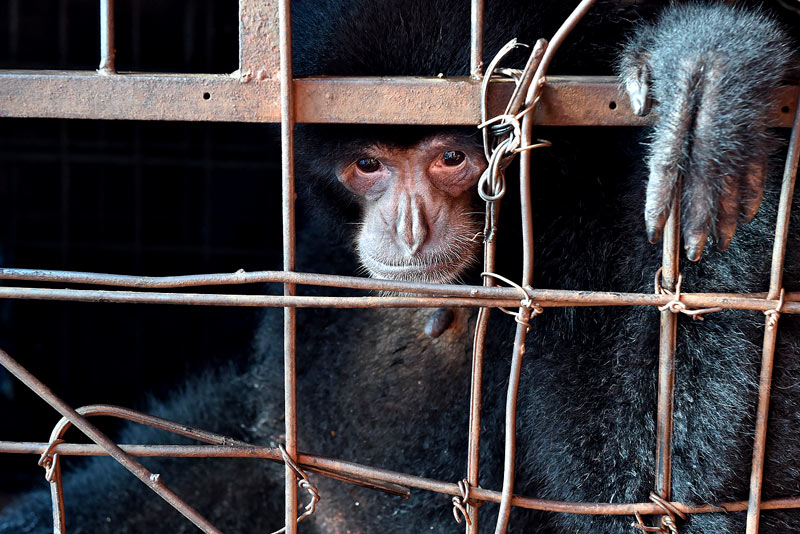
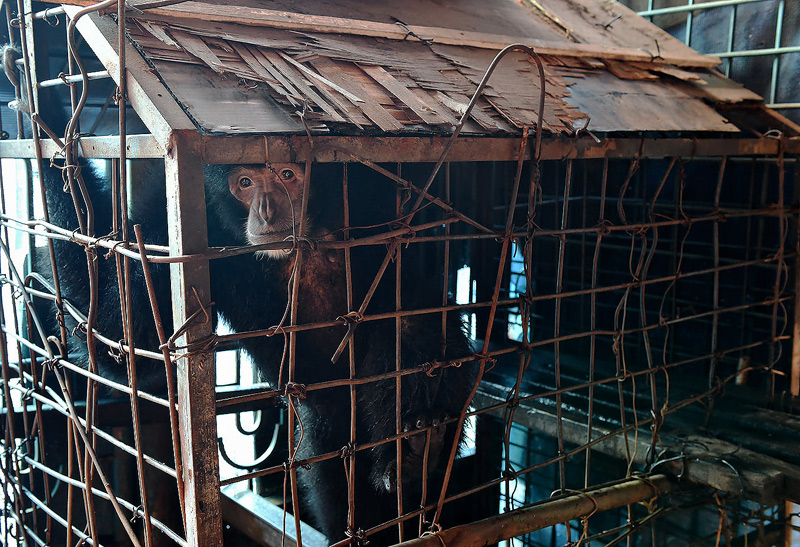
These gibbons are often hunted for bushmeat or captured for the exotic pet trade. Their charismatic nature makes them a target for illegal wildlife markets, with many young gibbons taken after hunters kill their mothers (Barelli et al., 2008).

Human-induced climate change:

Human-induced climate change is shifting rainfall patterns and rising temperatures. This is a threat to their rainforest habitats, further diminishing food sources and shelter for these gibbons.

Diet

Lar Gibbons are primarily frugivorous, feeding on a variety of fruits, supplemented by leaves, flowers, and insects. Their feeding habits play a crucial role in seed dispersal, contributing to forest regeneration. Seasonal variations in fruit availability influence their foraging behaviours and movement patterns.

Reproduction and Mating

Lar Gibbons are monogamous primates that form lifelong pair bonds. Breeding occurs year-round, with females giving birth to a single infant after a gestation period of about seven months. Young gibbons stay with their parents for up to eight years, learning essential survival skills before becoming independent.

Parental care is evenly shared, with both males and females playing active roles in protecting and teaching their offspring.

Geographic Range

The Lar Gibbon inhabits the rainforests of Southeast Asia, including Thailand, Myanmar, Malaysia, Indonesia, and Laos. They prefer dense, undisturbed primary forests but can sometimes be found in degraded habitats if food is available. However, their range is shrinking rapidly due to deforestation and habitat fragmentation.

FAQ

What are some interesting facts about the Lar Gibbon?

Lar Gibbons are masters of the treetops, using their long arms for brachiation, a form of swinging locomotion that allows them to travel efficiently through the forest canopy. They are one of the fastest arboreal mammals, capable of reaching speeds of 56 km/h. Their calls are not just territorial but have been likened to a form of “song” that contains unique structural patterns (Sci-News, 2015).

Why are Hylobates lar endangered species?

Lar Gibbons are endangered due to extensive habitat loss from logging, palm oil plantations, and agricultural expansion. Poaching for the illegal pet trade and hunting also significantly impact their populations. With forests disappearing at alarming rates, their survival depends on urgent conservation action (IUCN Red List, 2021).

Are Lar Gibbons aggressive?

Lar Gibbons are generally non-aggressive and shy towards humans. However, they can display territorial aggression within their own species. These confrontations are usually vocal and rarely involve physical altercations. Their vocalisations play a crucial role in asserting territorial boundaries (Barelli et al., 2008).

What are some facts about gibbons?

Gibbons, often called “lesser apes,” are no less than awesome! They are highly intelligent primates with complex social behaviours. They are known for their long arms and acrobatic abilities, allowing them to navigate forest canopies efficiently. Gibbons are unique among primates for their vocal duets, which are used to maintain pair bonds and communicate with neighbouring groups (PubMed, 2015).

Take Action!

The Lar Gibbon is a symbol of Southeast Asia’s fragile ecosystems, and their survival depends on the preservation of their rainforest homes. Join the fight against deforestation, support indigenous-led conservation, and boycott palm oil to protect their future. #BoycottPalmOil #Boycott4Wildlife

Support the conservation of this species

Numerous conservation efforts of these rarest of small primates are ongoing. Sponsor a gibbon at a rescue centre here.

Endangered Primate Rescue Centre

Further Information
ICUN endangered logo

Barelli, C., Boesch, C., Heistermann, M., & Reichard, U. H. (2008). Female white-handed gibbons (Hylobates lar) lead group movements and have priority of access to food resources. Behaviour, 145(5), 641–665.

Brockelman, W & Geissmann, T. 2020. Hylobates lar. The IUCN Red List of Threatened Species 2020: e.T10548A17967253. https://dx.doi.org/10.2305/IUCN.UK.2020-2.RLTS.T10548A17967253.en. Downloaded on 05 February 2021.


News Staff. (2015, April 10). Scientists decode ‘language’ of Lar Gibbons. Sci-News. Retrieved from https://www.sci.news/biology/science-language-lar-gibbons-02683.html


Terleph, T. A., Malaivijitnond, S., & Reichard, U. H. (2015). Lar gibbon (Hylobates lar) great call reveals individual caller identity. American Journal of Primatology, 77(7), 811–821. https://doi.org/10.1002/ajp.22406


Contribute to palm oil detectives - black rhino in profile

How can I help the ?


Take Action in Five Ways

1. Join the on social media and subscribe to stay in the loop: Share posts from this website to your own network on Twitter, Mastadon, Instagram, Facebook and Youtube using the hashtags .

Join 3,176 other subscribers

2. Contribute stories: Academics, conservationists, scientists, indigenous rights advocates and animal rights advocates working to expose the corruption of the palm oil industry or to save animals can contribute stories to the website.


3. Supermarket sleuthing: Next time you’re in the supermarket, take photos of products containing palm oil. Share these to social media along with the hashtags to call out the greenwashing and ecocide of the brands who use palm oil. You can also take photos of palm oil free products and congratulate brands when they go palm oil free.

4. Take to the streets: Get in touch with Palm Oil Detectives to find out more.

5. Donate: Make a one-off or monthly donation to Palm Oil Detectives as a way of saying thank you and to help pay for ongoing running costs of the website and social media campaigns. Donate here

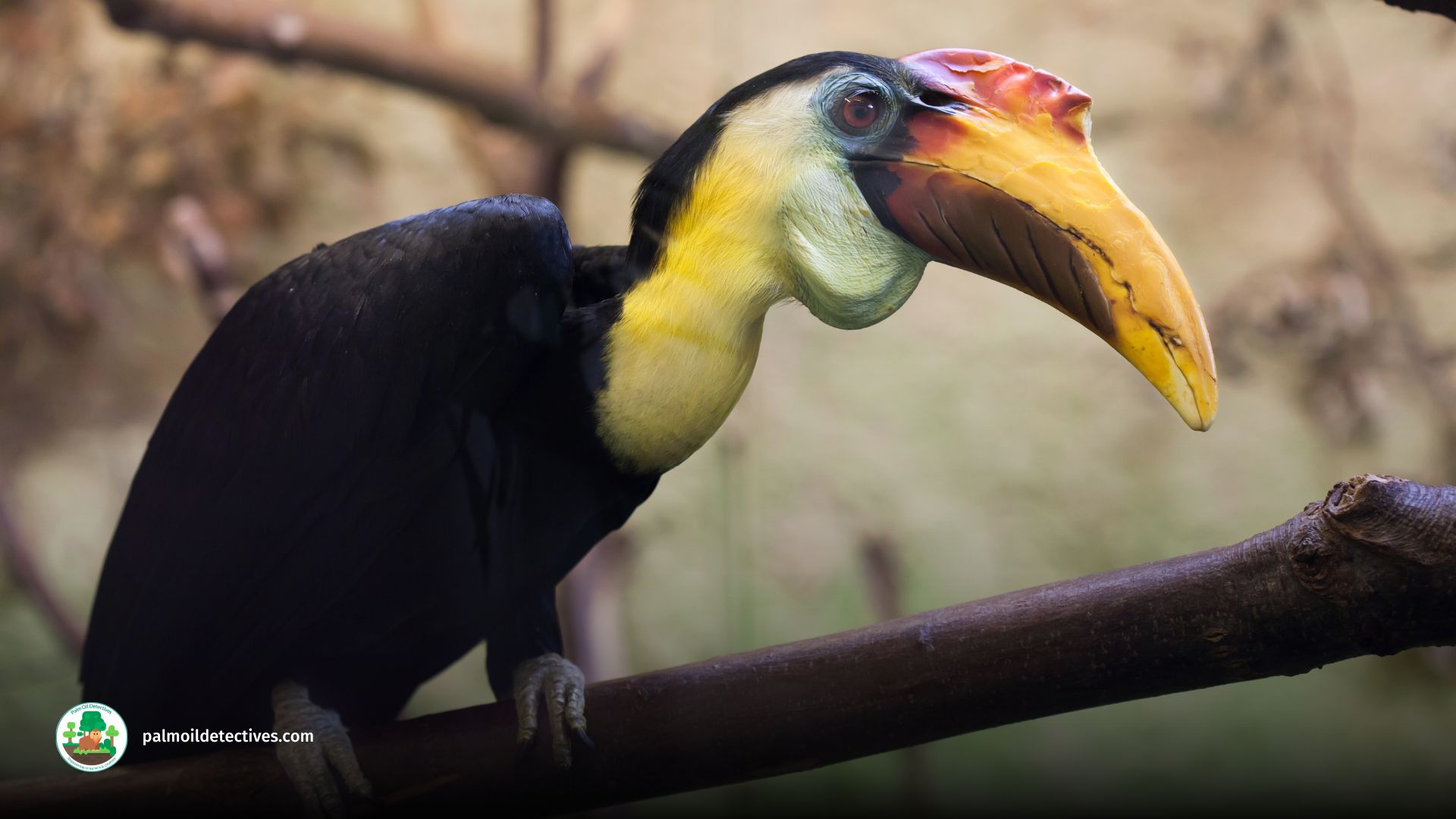
Wrinkled Hornbill Rhabdotorrhinus corrugatus

Wrinkled Hornbill Rhabdotorrhinus corrugatus

IUCN Status: Endangered

Extant Locations: Indonesia (Sumatra, Kalimantan), Malaysia (Peninsular Malaysia, Borneo), Brunei, Thailand (southern regions)

Now extinct: Singapore

The Wrinkled Rhabdotorrhinus corrugatus, also known as the Corrugated Hornbill, is a striking rainforest from , , Peninsular , and . They are famous for their glossy black plumage, massive wrinkled casque, and vibrant orange-yellow beak. Males boast bright yellow throats, while females display striking blue patches, making them one of the most vividly colourful hornbills in of Southeast Asia. As crucial seed dispersers, they shape tropical forests by spreading the seeds of fig trees and other large fruiting species. However, their numbers are plummeting due to rampant deforestation for timber, paper, and industrial palm oil plantations, alongside illegal and the illegal wildlife trade. A 2023 study in Central Sarawak (Mohd-Azlan et al.) revealed that even selectively logged forests are failing to support hornbill populations, highlighting the urgent need for action. These birds rely on mature fig trees and vast, uninterrupted canopy cover, but their habitat is being decimated at an alarming rate. Without immediate conservation efforts, their populations will continue to collapse. Fight for their survival every time you shop—boycott palm oil, tropical timber, and wildlife trafficking. Support indigenous-led conservation. #BoycottPalmOil #Boycott4Wildlife.

Magnificent 🦜💚 couples nest in ancient trees, females stay put while males bring food for chicks. Hornbills need old to survive, is a huge threat! Resist and 🌴⛔️ @palmoildetect https://palmoildetectives.com/2021/02/05/wrinkled-hornbill-rhabdotorrhinus-corrugatus/

Wrinkled Hornbills 🦜💚🧐have a colourful casque that looks great on them but is sought after by 🤢🤮 Ancient keepers of rainforests in and , is a threat. 🌴☠️🚫 https://palmoildetectives.com/2021/02/05/wrinkled-hornbill-rhabdotorrhinus-corrugatus/

Appearance and Behaviour

These medium-sized hornbills measure 70–80 cm in length and weigh between 1.2–1.5 kg. Their most defining feature is their wrinkled casque, a hollow structure atop their beak, which is larger in males than in females. Males have a bright yellow throat pouch, while females display a striking blue pouch. Their glossy black plumage contrasts with their vivid red-orange bills, creating a spectacular visual in the rainforest canopy. Their calls echo through the treetops, a mix of harsh cackles and deep honks that signal their presence and territorial claims.

These birds are highly social and monogamous, forming lifelong bonds. They are strong fliers, moving in pairs or small groups as they traverse vast forest landscapes in search of fruit. When alarmed, they emit a sharp, rasping croak, warning others of potential threats.

Diet

Wrinkled Hornbills are primarily frugivorous, feeding on a diverse range of rainforest fruits, including figs (Ficus spp.), rambutans, and nutmeg. They also consume small animals, such as insects, lizards, and even small birds, supplementing their diet with protein when necessary.

Their role as seed dispersers is crucial—many rainforest trees rely on these hornbills to carry their seeds across vast distances, ensuring the survival of the ecosystem.

Reproduction and Mating

These birds follow a strict nesting ritual, where the female is sealed inside a tree cavity using mud and regurgitated food. She remains inside for two to three months, incubating one to two eggs and relying entirely on the male to provide food. The chicks hatch blind and helpless, and the male continues to deliver fruit through a narrow opening in the sealed nest until they are ready to emerge.

This unique breeding strategy makes them highly vulnerable—if their nesting tree is cut down, the entire family perishes.

Geographic Range

Historically, Wrinkled Hornbills were found throughout Thailand, Malaysia, Indonesia, and Brunei, but they are now largely restricted to isolated forest patches in Sumatra, Borneo, and Peninsular Malaysia. Habitat loss has caused severe population fragmentation, and local extinctions have been recorded in several areas.

Threats

This species shows strong avoidance of degraded or secondary forests and is reliant on lowland forest (D. L. Yong and S. Mahood in litt. 2018), which is particularly threatened by land conversion for large-scale plantations of oil palm and rubber, as well as clearance for small-scale agriculture.

IUCN Red list

Palm oil and timber deforestation and habitat fragmentation

The primary driver of decline is the large-scale clearance of tropical rainforests for palm oil plantations, logging, and agricultural monocultures. Wrinkled Hornbills require large, undisturbed tracts of forest to thrive, particularly for nesting in old-growth trees. However, Mohd-Azlan et al. (2023) found that hornbill diversity and abundance drop significantly in selectively logged production forests, indicating that even non-clear-cut logging has detrimental effects on populations. Forest fragmentation isolates small groups of Wrinkled Hornbills, reducing breeding success and genetic diversity.

Logging and nesting site loss

Wrinkled Hornbills rely on massive, centuries-old trees for nesting. Large dipterocarp trees with natural cavities are particularly important, yet selective logging disproportionately removes these trees, causing catastrophic declines in nesting availability (Mohd-Azlan et al., 2023). Even where some forest cover remains, the loss of suitable breeding sites disrupts reproductive success and forces hornbills into suboptimal, degraded areas.

Hunting and illegal wildlife trade

Wrinkled Hornbills are targeted by poachers for their casque, meat, and body parts, particularly in parts of Southeast Asia where traditional medicine and ornamental trade drive illegal hunting. Though not as heavily poached as the Helmeted Hornbill (Rhinoplax vigil), Wrinkled Hornbills are still captured for the illegal pet trade. The disruption of breeding pairs due to hunting has devastating consequences, as hornbills form long-term monogamous pairs and rely on cooperative care for their chicks.

Climate change induced extreme weather

The intensifying impacts of climate change, including unpredictable rainfall patterns, prolonged droughts, and stronger storms, pose an additional threat to Wrinkled Hornbills. These birds are sensitive to fluctuations in fruit availability, and prolonged dry seasons have been shown to reduce breeding success in related hornbill species. Rising temperatures and extreme weather events may also degrade their remaining forest habitats, exacerbating existing threats.

Agricultural expansion and palm oil plantations

Palm oil expansion remains one of the greatest threats to Wrinkled Hornbills. The conversion of diverse rainforests into uniform oil palm monocultures eliminates critical foraging grounds and disrupts seasonal food availability. Oil palm plantations do not support the diverse fruiting trees hornbills depend on, leading to starvation and displacement. To protect this species, urgent action is needed to halt deforestation and promote indigenous-led conservation efforts that preserve primary forests.

FAQs

How many Wrinkled Hornbills are left in the wild?

Their population is rapidly declining, with estimates placing their numbers at fewer than 10,000 mature individuals. The main drivers of this decline are deforestation, poaching, and the illegal pet trade.

Why are Wrinkled Hornbills endangered?

Massive deforestation for palm oil, illegal logging, and hunting have wiped out large portions of their habitat. They are also highly sensitive to human disturbances, making them particularly vulnerable to extinction.

Would a Wrinkled Hornbill make a good pet?

Absolutely not! Wrinkled Hornbills are wild birds that require vast rainforests to thrive. Capturing them for the pet trade is illegal and contributes to their extinction. Many of these majestic birds are stolen from their nests, leading to high mortality rates among both the chicks and their parents along with enormous trauma to whole families of birds. If you love these birds, instead you must advocate for their protection and call-out the illegal trading of these birds online!

Where do Wrinkled Hornbills live?

Wrinkled Hornbills are native to Thailand, Malaysia, Sumatra, and Borneo, where they inhabit dense lowland rainforests. They are typically found in primary forests below 300 metres in elevation, though they may venture higher in some areas. These hornbills rely on mature trees with large natural cavities for nesting, making them especially vulnerable to deforestation. Logging and agricultural expansion, particularly for palm oil plantations, have caused significant habitat loss, pushing these birds into smaller, fragmented patches of remaining rainforest.

What do Wrinkled Hornbills eat?

Wrinkled Hornbills primarily feed on fruit, particularly figs, which make up a large part of their diet. As frugivores, they play an essential role in their ecosystem by dispersing seeds that help regenerate forests. However, they also supplement their diet with insects, frogs, lizards, and small vertebrates, especially when fruit is scarce. Using their powerful, curved beaks, they pluck fruit directly from trees or snatch prey from bark and leaves. The loss of diverse fruiting trees due to deforestation severely impacts their ability to find food, putting additional pressure on already declining populations.

How do Wrinkled Hornbills drink?

Unlike many other bird species, Wrinkled Hornbills do not drink water directly. Instead, they obtain all their hydration from the fruit they consume, which contains high moisture content. This adaptation allows them to remain in the canopy without descending to the ground, reducing their risk of predation. Their reliance on fruit for hydration further underscores the importance of protecting diverse rainforest ecosystems, as habitat destruction and monoculture plantations deprive them of this crucial resource.

How do Wrinkled Hornbills communicate?

Wrinkled Hornbills are highly vocal birds, producing deep, resonant calls to communicate through the dense rainforest. Their most common vocalisations include a harsh “kak-kak” or a deep “row-wow” sound, which helps them maintain contact with their mates, warn off intruders, or signal the presence of predators. Their large casque, the wrinkled structure on top of their beak, may help amplify these calls, allowing them to travel over long distances. In addition to vocalisations, they use bill-clattering, posturing, and aerial displays to communicate, particularly during courtship or territorial disputes. These vocal abilities are essential, as Wrinkled Hornbills form monogamous pairs that remain bonded for life and rely on constant communication.

How do Wrinkled Hornbills breed?

Wrinkled Hornbills are monogamous, forming lifelong bonds with their mates. Their breeding process is highly specialised, with the female sealing herself inside a tree cavity to protect her eggs. She uses a mixture of mud, fruit pulp, and droppings to create a barrier, leaving only a small opening through which the male delivers food. Inside the nest, she lays up to two eggs and incubates them for around three months, relying entirely on the male for sustenance. Once the chicks hatch, the female breaks out of the sealed nest to help care for them. Both parents take turns feeding their young until they are strong enough to leave the nest and forage independently. This unique nesting behaviour makes Wrinkled Hornbills particularly dependent on old-growth trees, as the loss of suitable nesting sites due to deforestation severely impacts their ability to reproduce.

How does palm oil threaten Wrinkled Hornbills?

The palm oil industry is responsible for rampant deforestation, destroying their habitat at an alarming rate. Wrinkled hornills rely on ancient trees for nesting sites. Thus the clearing forests for palm oil plantations wipes out nesting sites, leaving them vulnerable to hunters, and eliminates the fruiting trees they rely on for food. Support indigenous-led conservation and always #BoycottPalmOil in the supermarket

What can be done to save Wrinkled Hornbills?

Protecting their habitat is key. You can help by:

• Refuse to buy products containing palm oil and actively boycott palm oil.

• Supporting indigenous communities who have protected rainforests for thousands of years.

• Advocating for stronger legal protections to stop deforestation and illegal trade. Call out and report illegal trading of these birds on social media.

• Raising awareness about their plight on social media using .

Take Action!

The future of the Wrinkled Hornbill depends on urgent action. Stop supporting industries that destroy their habitat, boycott palm oil, and demand stronger protections for these remarkable birds. every time you shop!

Support the conservation of this species

This species has no known conservation projects in place for their protection. Help them and .

Palm Oil Detectives
Palm Oil Detectives

Empowering creatives and consumers

595 posts
24 followers

Further Information

ICUN endangered logo

Birds of the World. (n.d.). Wrinkled Hornbill (Rhabdotorrhinus corrugatus). Retrieved from Birds of the World

BirdLife International. 2018. Rhabdotorrhinus corrugatus. The IUCN Red List of Threatened Species 2018: e.T22682514A132244524. https://dx.doi.org/10.2305/IUCN.UK.2018-2.RLTS.T22682514A132244524.en. Downloaded on 05 February 2021.

Mohd-Azlan, J., Philovenny, P., Maiwald, M. J., Chas, N. B. J., Robert, L. A., & Noske, R. A. (2023). Diversity and relative abundance of hornbills in selectively-logged production forests in Central Sarawak, Malaysian Borneo. Kukila, 24, 1–15. Retrieved from Research Gate

Reko Forest. (n.d.). Wildlife of RER: The Wrinkled Hornbill. Retrieved from Reko Forest


Contribute to palm oil detectives - black rhino in profile

How can I help the ?


Take Action in Five Ways

1. Join the on social media and subscribe to stay in the loop: Share posts from this website to your own network on Twitter, Mastadon, Instagram, Facebook and Youtube using the hashtags .

Join 3,176 other subscribers

2. Contribute stories: Academics, conservationists, scientists, indigenous rights advocates and animal rights advocates working to expose the corruption of the palm oil industry or to save animals can contribute stories to the website.

3. Supermarket sleuthing: Next time you’re in the supermarket, take photos of products containing palm oil. Share these to social media along with the hashtags to call out the greenwashing and ecocide of the brands who use palm oil. You can also take photos of palm oil free products and congratulate brands when they go palm oil free.

4. Take to the streets: Get in touch with Palm Oil Detectives to find out more.

5. Donate: Make a one-off or monthly donation to Palm Oil Detectives as a way of saying thank you and to help pay for ongoing running costs of the website and social media campaigns. Donate here

Storm’s Stork Ciconia stormi

Storm’s Stork Ciconia stormi

IUCN Red List Status: Endangered

Location: Malaysia, Indonesia, Thailand, Brunei

Found in lowland riverine and peat swamp forests of , , Peninsular , and southern . Core strongholds include the floodplains of Sabah and peat swamps of .

Storm’s Stork Ciconia stormi is the rarest and most elusive in Asia, and one of the world’s most threatened. Currently listed as by the IUCN Red List, with fewer than 500 individuals remaining in the wild, their continued survival hangs by a thread in and . These elegant, black-and-white once ranged widely across the Sundaic region. Today, their numbers are spiralling due to large-scale for plantations, logging, and infrastructure projects like dams and roads that slice through their forest home.

Peat swamp #forests—critical for nesting and foraging—are rapidly disappearing. But you can help turn the tide. Use your wallet as a weapon to protect these remarkable birds. Choose products that are 100% and support indigenous-led conservation. #BoycottPalmOil #Boycott4Wildlife

Storm’s have bright red and yellow faces and live in 🇲🇾 and 🇮🇩. They’re due to 🌴🔥 and hunting 🏹 Fight for them when you 🌴🧐⛔️ @palmoildetect https://palmoildetectives.com/2021/02/05/storms-stork-ciconia-stormi/

Raising two chicks per year, monogamous Storm’s of 🇹🇭 🇲🇾 and 🇮🇩are due to for and . Resist for them when you shop 🌴🩸🚜🔥🚫 @palmoildetect https://palmoildetectives.com/2021/02/05/storms-stork-ciconia-stormi/

Appearance and Behaviour

With their sleek black plumage, brilliant white undertail, and arresting red facial skin encircled by a yellow eye ring, Storm’s Storks are unmistakeable once seen—if seen at all. Adults stand at 75–91 cm tall, their red legs often stained white from perching high in the canopy. They are silent outside the breeding season but may utter soft whistling or a frog-like call at the nest.

Unlike many storks, they are shy and solitary, rarely seen in groups. They glide high above the forest on thermals, and are often seen alone or in pairs near quiet, muddy riverbanks. Nesting high in tall trees, often overhanging rivers, they raise just two chicks a year with intense parental care and secrecy.

Diet

Storm’s Stork feeds primarily on small fish, frogs, worms, aquatic insect larvae and sometimes crustaceans and grasshoppers. They stalk quietly along shaded forest streams and oxbow lakes, moving slowly and deliberately. Parents regurgitate these prey items into the nest for their young, with foraging usually taking place 2–3 km away from their nesting site.

Reproduction and Mating

Monogamous pairs construct large twig nests high in the canopy, often reusing the same nest over several years. Nesting takes place in primary forest close to rivers, with clutches of two eggs and chicks fledging after approximately 90 days. Breeding displays include aerial flips and ground-based mutual bowing. Both parents take turns incubating the eggs and feeding the chicks, although the female tends to remain longer at the nest.

Geographic Range

Storm’s Stork occurs at extremely low densities across Borneo (Malaysia, Brunei, Indonesia), Sumatra, Peninsular Malaysia, and southern Thailand. Borneo is its core range, especially in Kalimantan and Sabah, where it persists in lowland peat swamps and riverine forests. Once present across the Greater Sundas, it is now extinct or nearly so in Thailand and Myanmar. In Sumatra, populations remain on the Kampar Peninsula, Way Kambas, and Siberut. In Peninsular Malaysia, only small relict populations exist, mostly within Taman Negara.

Threats

Storm’s Stork Ciconia stormi threats

Ciconia stormi is native to the swamp and plains-level forests of the Greater Sundas, where it occurs at a very low density and nowhere is numerous. Over the past three generations (31 years: 1992–2023), it is suspected of having declined rapidly (40–60%) in response to industrial removal of its habitat for agro-industry plantations, particularly oil-palm and rubber. Its global population size is uncertain, but probably numbers 300–1,750 mature individuals; with ongoing habitat loss compounded by forest fires which may increase with frequency in response to climate change, this species is considered to be a high risk of extinction in the near-term. Accordingly, it is listed as Endangered.

IUCN Red list

Widespread deforestation for palm oil and rubber plantations has destroyed much of the lowland forest habitat that Storm’s Stork depends on.

Peat swamp forests, their stronghold in Borneo, are being drained, logged and set alight, especially during El Niño years.

Logging roads fragment the forest and degrade rivers through erosion and sedimentation, reducing aquatic prey.

Forest fires intensify due to human activities, especially in drained peatlands, further eliminating habitat and nesting sites.

Hydropower projects, like the Chiew Larn Dam in Thailand, have flooded large tracts of prime habitat.

Hunting still occurs, though not the primary driver of decline. These sensitive birds abandon nests if disturbed.

Captive trade was a minor historic threat; however, tamed birds in zoos are unlikely to be rewilded successfully.

Climate change and habitat fragmentation create uncertain future conditions, especially for isolated populations on Sumatra and the Malay Peninsula.

Take Action!

Storm’s Stork is a symbol of everything we stand to lose through the reckless destruction of rainforests. You have power to stop this.

Use your wallet as a weapon and boycott palm oil. Refuse to buy from companies that drive deforestation. Support indigenous-led agroecology. Speak out against the destruction of Southeast Asia’s peat swamp forests. Take action every time you shop and #BoycottPalmOil #Boycott4Wildlife, be #Vegan!

FAQs

How many Storm’s Storks are left in the wild?

Estimates suggest only 260–500 individuals remain globally. Around 240–1,600 mature individual birds may persist in Borneo, especially in Kalimantan. Sumatra’s population may be as low as 50–100 mature birds, while Peninsular Malaysia and Thailand hold fewer than 10 pairs each (BirdLife International, 2021; Martin et al., 2024).

How long do Storm’s Storks live?

Although exact data is scarce, storks in the genus Ciconia are long-lived, with some individuals living more than 20 years in the wild. Their slow reproductive rate and long lifespan make population recovery difficult after sharp declines (Danielsen et al., 1997; BirdLife International, 2021).

Why is palm oil so destructive for Storm’s Stork?

Palm oil expansion targets the very peat swamp and lowland forests Storm’s Stork calls home. These habitats are easy to access and commercially valuable, making them first to be logged, drained, and cleared. The result is mass habitat loss, water pollution, fire risk, and collapsing food chains that leave the storks with nowhere to nest or feed (Miettinen et al., 2011; Harrison et al., 2016).

Are Storm’s Storks affected by hunting or the pet trade?

They are hunted opportunistically by forest dwellers and poachers, especially as access increases through roads. However, hunting is not the main cause of their decline. The pet trade spiked in the late 1980s, but today, habitat loss remains the overwhelming threat (BirdLife International, 2021; Martin et al., 2024).

Support the conservation of this species

Reko Forest

Storm’s Stork Ciconia stormi boycott palm oil

Further Information

ICUN endangered logo

BirdLife International. 2023. Ciconia stormiThe IUCN Red List of Threatened Species 2023: e.T22697685A224541343. https://dx.doi.org/10.2305/IUCN.UK.2023-1.RLTS.T22697685A224541343.en. Accessed on 23 March 2025.

BirdLife International. (2021). Ciconia stormi. The IUCN Red List of Threatened Species 2021: e.T22697655A194974787. https://dx.doi.org/10.2305/IUCN.UK.2021-3.RLTS.T22697655A194974787.en

Martin, B., Staniewicz, A., Darmansyah, S., & Karo, I. (2024). Records of the Endangered Storm’s Stork Ciconia stormi in East Kutai, East Kalimantan, Indonesia, and notes on its conservation in Borneo. ResearchGate. https://www.researchgate.net/publication/381294067

Wikipedia contributors. (n.d.). Storm’s stork. Wikipedia. Retrieved March 22, 2025, from https://en.wikipedia.org/wiki/Storm%27s_stork


Contribute to palm oil detectives - black rhino in profile

How can I help the ?


Take Action in Five Ways

1. Join the on social media and subscribe to stay in the loop: Share posts from this website to your own network on Twitter, Mastadon, Instagram, Facebook and Youtube using the hashtags .

Join 3,176 other subscribers

2. Contribute stories: Academics, conservationists, scientists, indigenous rights advocates and animal rights advocates working to expose the corruption of the palm oil industry or to save animals can contribute stories to the website.

3. Supermarket sleuthing: Next time you’re in the supermarket, take photos of products containing palm oil. Share these to social media along with the hashtags to call out the greenwashing and ecocide of the brands who use palm oil. You can also take photos of palm oil free products and congratulate brands when they go palm oil free.

4. Take to the streets: Get in touch with Palm Oil Detectives to find out more.

5. Donate: Make a one-off or monthly donation to Palm Oil Detectives as a way of saying thank you and to help pay for ongoing running costs of the website and social media campaigns. Donate here

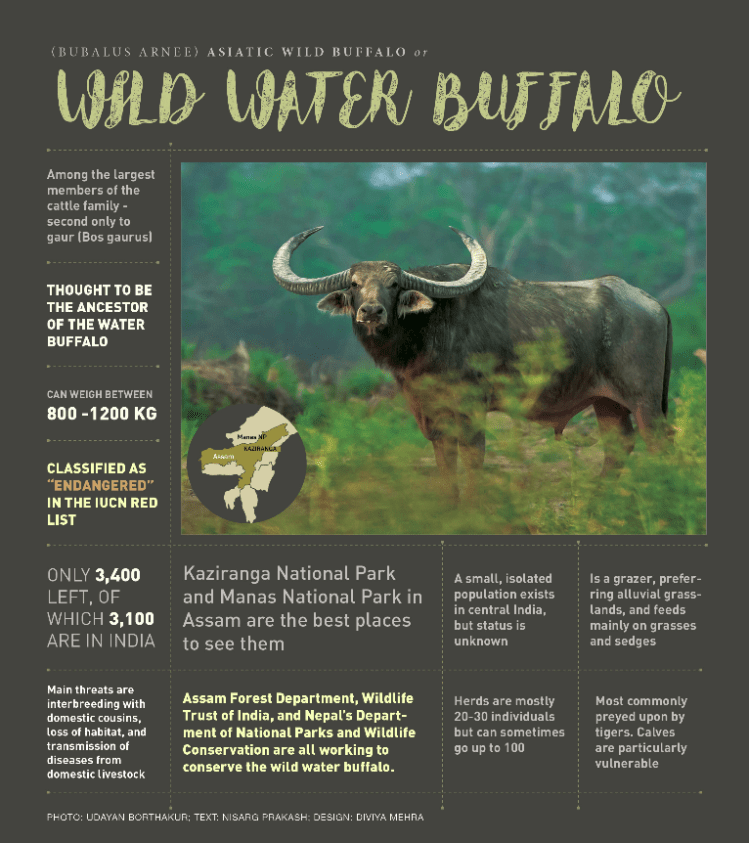
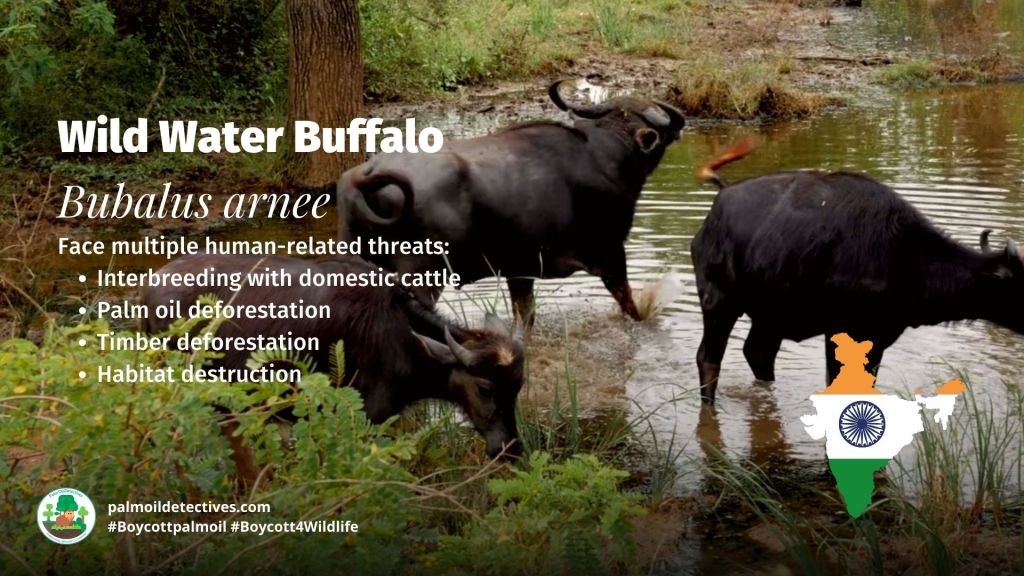
Wild Water Buffalo Bubalus arnee

Wild Water Buffalo Bubalus arnee

IUCN Red List Status: Endangered

Location: India, Nepal, Bhutan, Thailand, Cambodia, Myanmar.
Wild Water Buffaloes survive mainly in Kaziranga and Manas National Parks (Assam), Udanti Wildlife Sanctuary (Chhattisgarh), Koshi Tappu Wildlife Reserve (Nepal), with reintroduction potential identified in Kanha National Park (Madhya Pradesh).

Massive, muscular, and critically under threat, the Wild Water Buffalo Bubalus arnee is the endangered ancestor of all domestic buffalo breeds. Once roaming vast swathes of South and Southeast Asia, fewer than 4,000 individual buffaloes remain today, scattered across shrinking habitats in India, Nepal, Cambodia, and a handful of neighbouring nations. Their decline is driven by interbreeding with domestic buffalo species, habitat destruction from farming and palm oil plantations, hunting, and disease transmission from livestock. This ancient grazer of flooded grasslands and braided rivers is vanishing before our eyes. Speak out for them and support indigenous-led efforts to restore their ecosystems.

Wild Buffaloes like most other large herbivores, require large spaces with adequate food and water supply to survive which is negatively impacted by fragmentation and degradation of forest and grassland areas.

IUCN Red List

Appearance and Behaviour

Towering and formidable, Wild Water Buffaloes are among the largest bovines on Earth. Mature bulls can weigh up to 1,200 kg, with sweeping, crescent-shaped horns that curve outward and back, often spanning more than two metres. Their coats are slate-grey to black, and their muscular frames are well adapted for traversing muddy, floodplain environments.

They are deeply dependent on water and spend much of their time wallowing in rivers, oxbow lakes, or self-made mud holes to cool down and protect themselves from insects. These highly social animals form matriarchal herds of 10 to 20 individuals, with bachelor groups and solitary bulls more common in less disturbed areas. Their movements follow seasonal changes in water availability, and they show remarkable loyalty to traditional trails, using the same routes for generations.

Diet

Wild Water Buffaloes are primarily grazers and feed on tall grasses such as Cynodon dactylon, Themeda quadrivalvis, and Coix species. They are also known to consume sedges like Cyperus corymbosus, herbs, bark, and crop plants including rice, jute, and sugarcane, which brings them into conflict with nearby human communities. They have also shown an ability to tolerate brackish water, giving them access to areas other species cannot utilise.

Reproduction and Mating

Wild Water Buffaloes are seasonal breeders, with most mating occurring in October and November. Gestation lasts 10 to 11 months, and females usually give birth to one calf per year. Sexual maturity is reached around 18 months for males and three years for females. Their reproductive system is polygynous, with dominant bulls mating with multiple females. In the wild, they can live up to 25 years, although most do not reach this age due to threats from humans and habitat disruption.

Geographic Range

Wild Water Buffaloes were once distributed widely across South and Southeast Asia, but today, they persist in only about 5% of their historical range. Approximately 90% of the global population is now confined to India, with two genetically distinct and geographically isolated populations—one in the northeast (Assam) and another in central India (Chhattisgarh). The central Indian population is extremely fragile, with just a handful of individuals, and is in urgent need of conservation action to prevent its extinction (Bora et al., 2024).

In Nepal, the species is now restricted to the Koshi Tappu Wildlife Reserve, with a population of around 400 individuals. This reserve provides a mosaic of seasonally flooded grasslands and wetlands, offering suitable but limited habitat. Camera-trap studies confirm that Wild Water Buffaloes are increasingly clustered in the reserve’s southwestern zone, preferring low-lying grasslands with limited human interference (Bhattarai et al., 2023). The species is now extinct in Laos, Viet Nam, and Bangladesh, and its presence in Cambodia, Myanmar, and Thailand is uncertain or highly fragmented.

Wild Water Buffalo RoundGlass Sustain
Wild Water Buffalo via RoundGlass Sustain

Threats

Loss of Range and Isolation

A staggering 95% contraction in their historical distribution has left Wild Water Buffaloes clinging to survival in fragmented pockets. The central Indian population, in particular, is critically isolated and no longer viable without direct human intervention. Habitat modelling shows that suitable grassland habitats still exist, such as in Kanha National Park, but these remain unoccupied due to historical extirpation and lack of reintroduction efforts (Bora et al., 2024).

Hybridisation with Domestic Buffalo

Hybridisation remains a top threat to genetic purity. In Koshi Tappu, the proximity of domestic buffalo to wild herds—though minimal—still raises concerns about genetic introgression. Reproductive behaviour studies show that wild males may attempt to mate with nearby domestic females, undermining long-term conservation unless such risks are actively mitigated (Bhattarai et al., 2023).

Human Encroachment and Agricultural Expansion

Human encroachment and agricultural expansion continue to erode the grasslands needed by Bubalus arnee. In central India, overgrazing by livestock, road development, and conversion of alluvial plains to farmland have nearly eliminated their habitat. Even in protected areas like Koshi Tappu, disturbances such as flooding, roadkill, and poaching have impacted population stability and reproductive output (Bhattarai et al., 2023).

Low Reproductive Success and Skewed Sex Ratios

Research in Nepal has shown that although the population of Bubalus arnee has grown modestly in recent years, it is limited by low recruitment. Male-biased mortality—particularly from poaching and environmental threats—has disrupted natural sex ratios and herd structures, reducing breeding success and calf survival rates (Bhattarai et al., 2023). This creates an urgent need for better protection during calving seasons and enhanced anti-poaching patrols.

Historical and Cultural Significance of Wild Water Buffaloes

Wild Water Buffaloes have played a central role in the development of civilisations across Asia for over 6,000 years. In the Indus Valley Civilisation, they were traded with Mesopotamia, and a scribe’s seal from that time depicts the sacrifice of a buffalo. In India, the Hindu god of death, Yama, is depicted riding a water buffalo, and in some Shaktism festivals, a male buffalo is still ritually sacrificed.

In Chinese culture, the water buffalo is associated with a peaceful, contemplative lifestyle, symbolising hard work and serenity. In Vietnam and Thailand, buffalo feature prominently in folklore and agricultural festivals, including water buffalo fighting events that date back centuries. In the Philippines, the carabao—a swamp-type domestic buffalo—has become a national symbol, reflecting its role in farming and cultural heritage. The Minangkabau of West Sumatra even derive their name and architectural style from a legendary buffalo battle used to resist imperial rule.

Take Action!

The Wild Water Buffalo is more than a relic of the past—it is a living icon of Asia’s ancient riverine ecosystems. Protecting this species means defending wetlands, grasslands, and the cultures that have coexisted with these powerful animals for millennia.

Reject palm oil, demand indigenous-led agroecology, and help stop the extinction of one of the world’s last true wild bovines.

FAQs

How many Wild Water Buffaloes remain?

Estimates suggest fewer than 4,000 individuals survive globally, with around 90% located in India. Nepal’s population in Koshi Tappu Wildlife Reserve was recently estimated at around 405 animals (Subedi et al., 2023).

What’s the difference between Wild and Domestic Water Buffaloes?

Wild Water Buffaloes are larger, have broader heads, and possess distinct, sweeping horns. They are genetically distinct and more suited to wild floodplain habitats. Most domestic buffalo breeds descend from them, but hybridisation is rapidly blurring the line.

Why is species hybridisation a serious threat to Wild Water Buffaloes?

Hybridisation permanently alters the wild gene pool. It dilutes adaptive traits and may lead to the loss of behaviours or features essential for survival in the wild. Once the species is hybridised, it cannot be restored to its original form.

Do Wild Water Buffaloes make good pets?

Absolutely not. Keeping them as pets contributes directly to their extinction. These are powerful, wild animals who suffer greatly in captivity, and their removal from the wild disrupts natural herds and genetics.

How does palm oil deforestation affect Wild Water Buffaloes?

Floodplain and riverine habitats are increasingly cleared for palm oil plantations, especially in Southeast Asia. This destroys critical wallowing sites and pushes buffaloes into contact with domestic animals and humans, leading to conflict, disease, and death

You can support this beautiful animal

There are no known conservation activities for this animal. Share out this post to social media and join the #Boycott4Wildlife on social media to raise awareness

Further Information

ICUN endangered logo

Bora, J. K., Vardhan, V., Vijh, R. K., Deshmukh, A. V., Srinivas, Y., Mungi, N. A., Goswami, S., Jhala, H., Chauhan, J. S., et al. (2024). Evaluating the potential for reintroducing the endangered Wild Water Buffalo (Bubalus arnee) in Kanha National Park, central India. Restoration Ecology, 32(1), e14079. https://doi.org/10.1111/rec.14079

Bhattarai, R. K., Joshi, R., Gautam, J., Kandel, B., & Singh, B. (2023). Reproductive behavior of Bubalus arnee (Kerr, 1792) (Mammalia: Artiodactyla: Bovidae) in Koshi Tappu Wildlife Reserve and Chitwan National Park, Nepal. International Journal of Zoology, 2023, Article ID 6305614. https://doi.org/10.1155/2023/6305614

Heinen, J. T., & Kandel, R. (2006). Threats to a small population: A census and conservation recommendations for Wild Buffalo Bubalus arnee in Nepal. Oryx, 40(3), 324–330. https://doi.org/10.1017/S0030605306000755

Kaul, R., Williams, A.C., rithe, k., Steinmetz, R. & Mishra, R. 2019. Bubalus arnee. The IUCN Red List of Threatened Species 2019: e.T3129A46364616. https://dx.doi.org/10.2305/IUCN.UK.2019-1.RLTS.T3129A46364616.en. Downloaded on 05 February 2021.

Subedi, A., Joshi, R., Ghimire, S., Bhatta, S., & Pokhrel, K. (2023). Exploring habitat suitability for Bubalus arnee and its interplay with domestic cattle within Koshi Tappu Wildlife Reserve. Journal of Animal Diversity, 5(3), 55–71. https://doi.org/10.61186/JAD.2023.5.3.6

Wikipedia contributors. (n.d.). Water buffalo. Wikipedia. Retrieved 17 May 2025, from https://en.wikipedia.org/wiki/Water_buffalo

Round Glass Sustain

Wild Water Buffalo Bubalus arnee

Contribute to palm oil detectives - black rhino in profile

How can I help the ?


Take Action in Five Ways

1. Join the on social media and subscribe to stay in the loop: Share posts from this website to your own network on Twitter, Mastadon, Instagram, Facebook and Youtube using the hashtags .

Join 3,176 other subscribers

2. Contribute stories: Academics, conservationists, scientists, indigenous rights advocates and animal rights advocates working to expose the corruption of the palm oil industry or to save animals can contribute stories to the website.

3. Supermarket sleuthing: Next time you’re in the supermarket, take photos of products containing palm oil. Share these to social media along with the hashtags to call out the greenwashing and ecocide of the brands who use palm oil. You can also take photos of palm oil free products and congratulate brands when they go palm oil free.

4. Take to the streets: Get in touch with Palm Oil Detectives to find out more.

5. Donate: Make a one-off or monthly donation to Palm Oil Detectives as a way of saying thank you and to help pay for ongoing running costs of the website and social media campaigns. Donate here

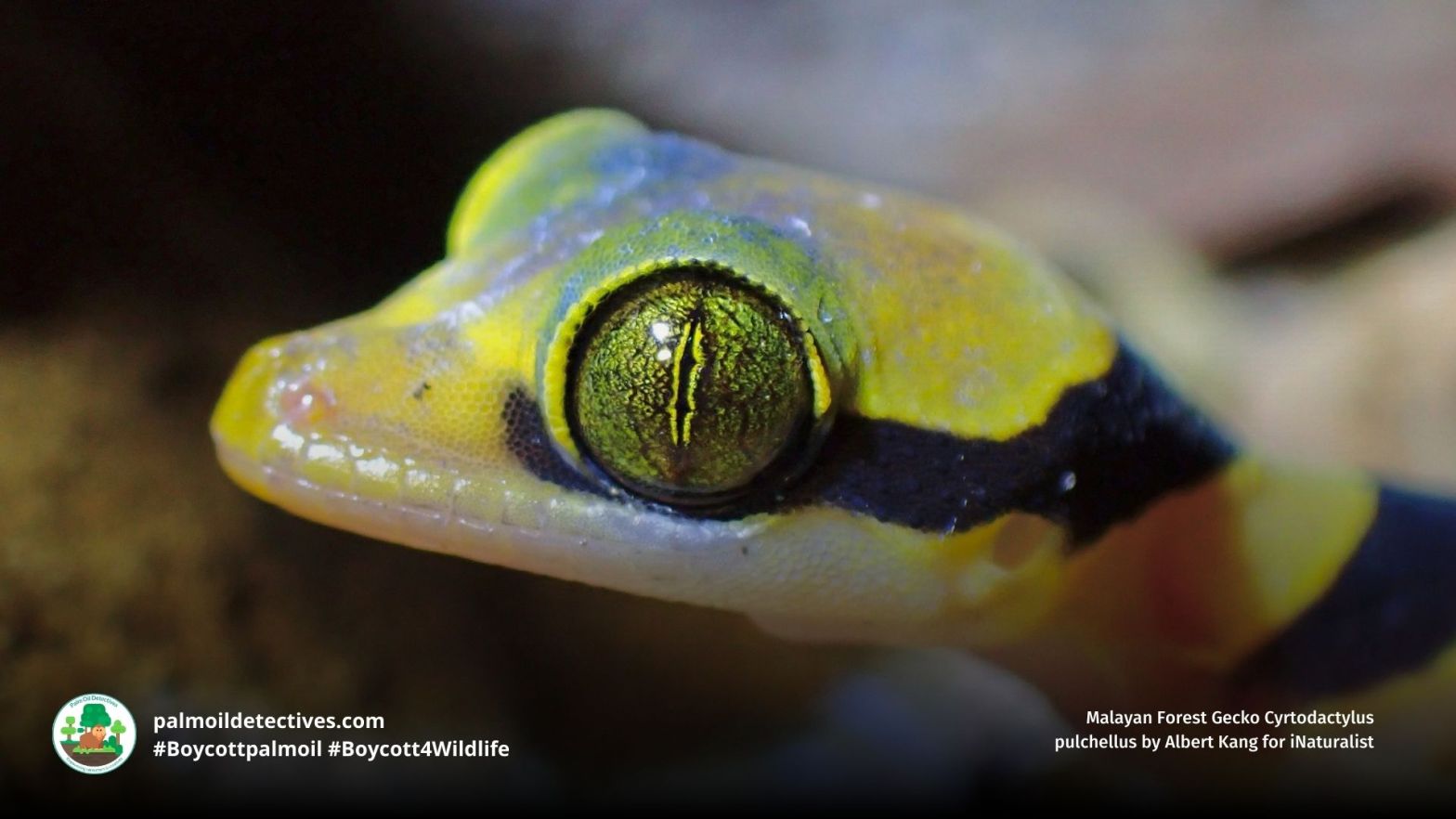
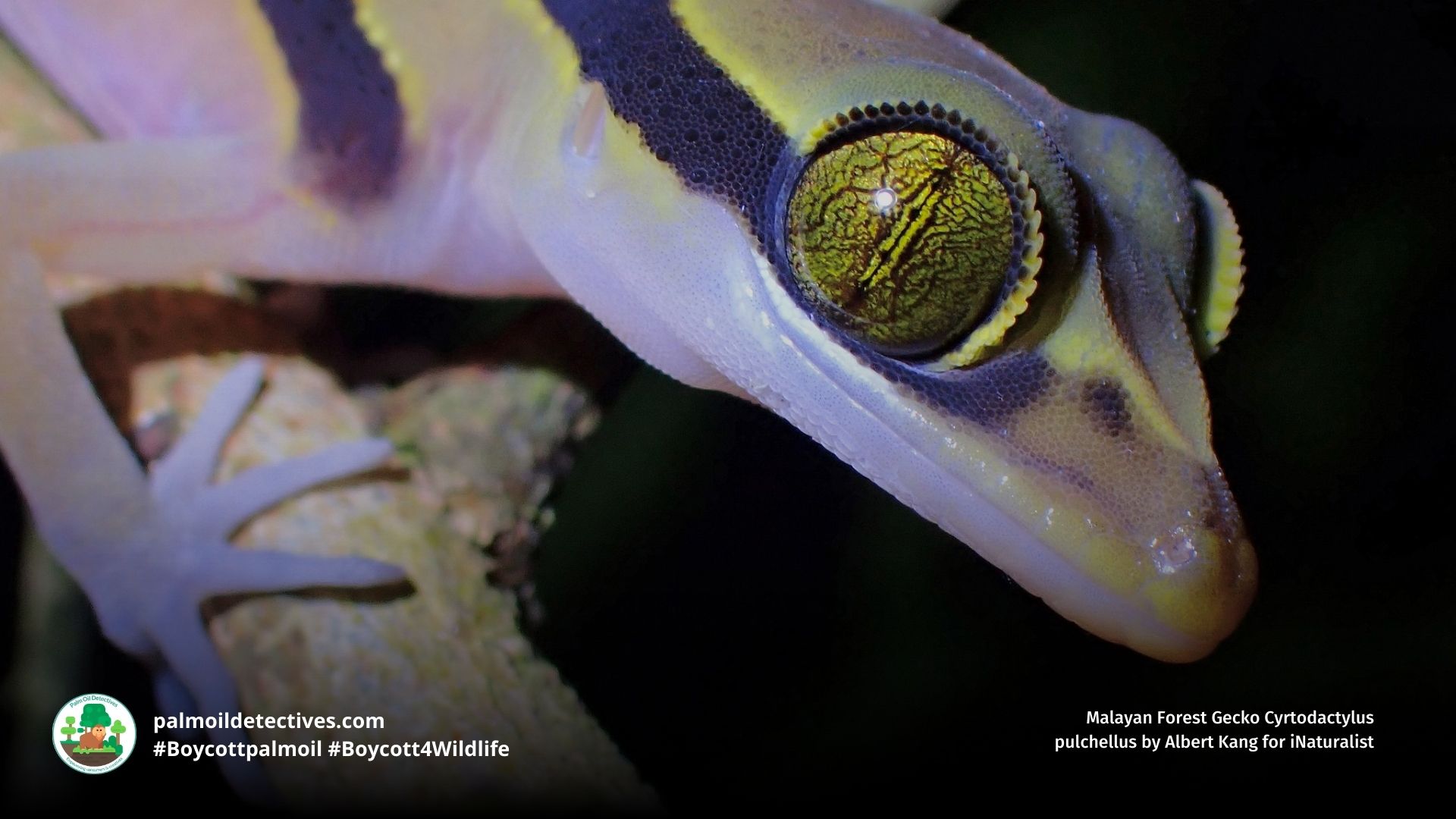
Malayan Forest Gecko Cyrtodactylus pulchellus

Malayan Forest Gecko Cyrtodactylus pulchellus

IUCN Status: Endangered

Locations: Malaysia (Peninsular Malaysia, including Penang Island)

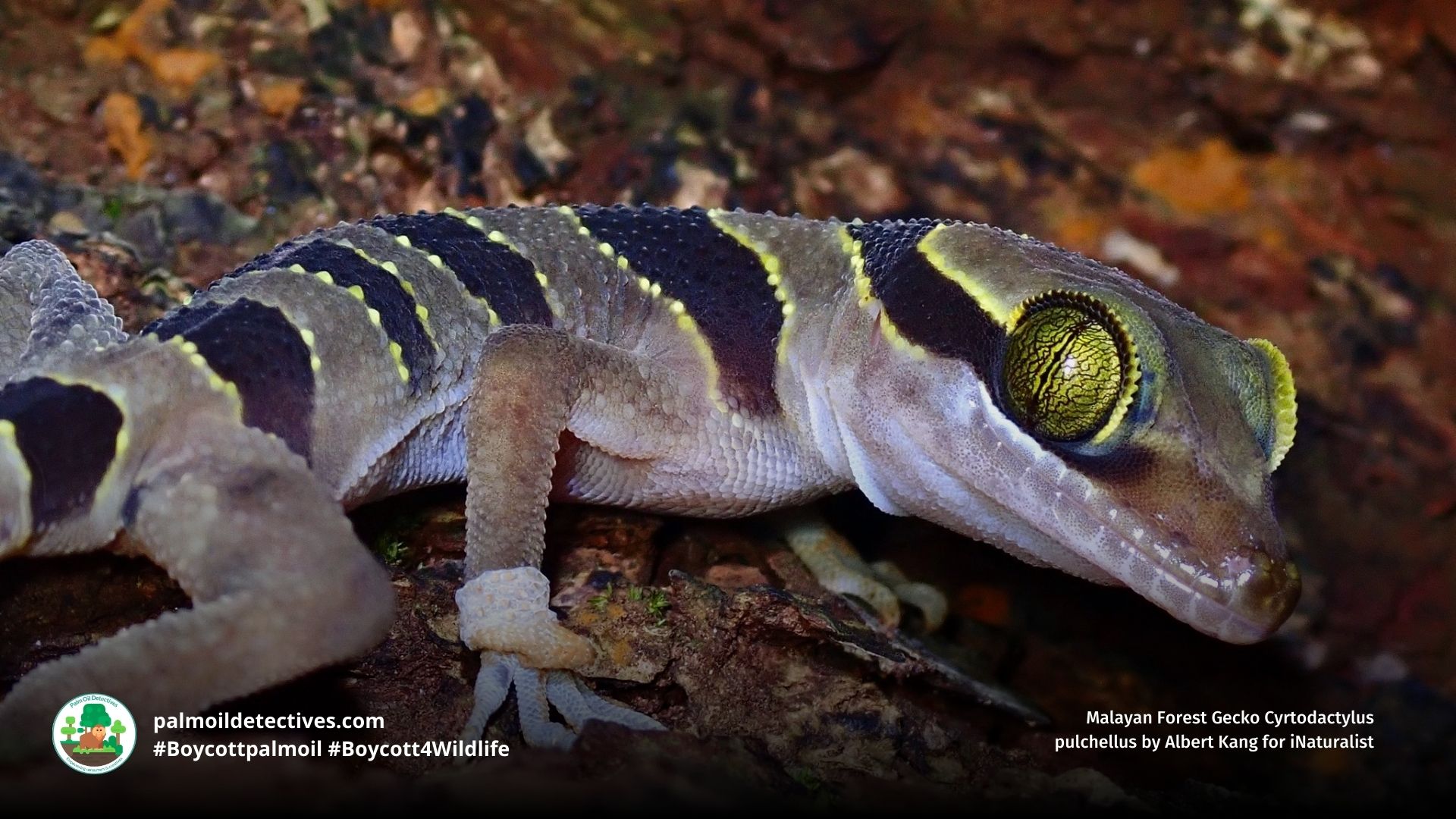
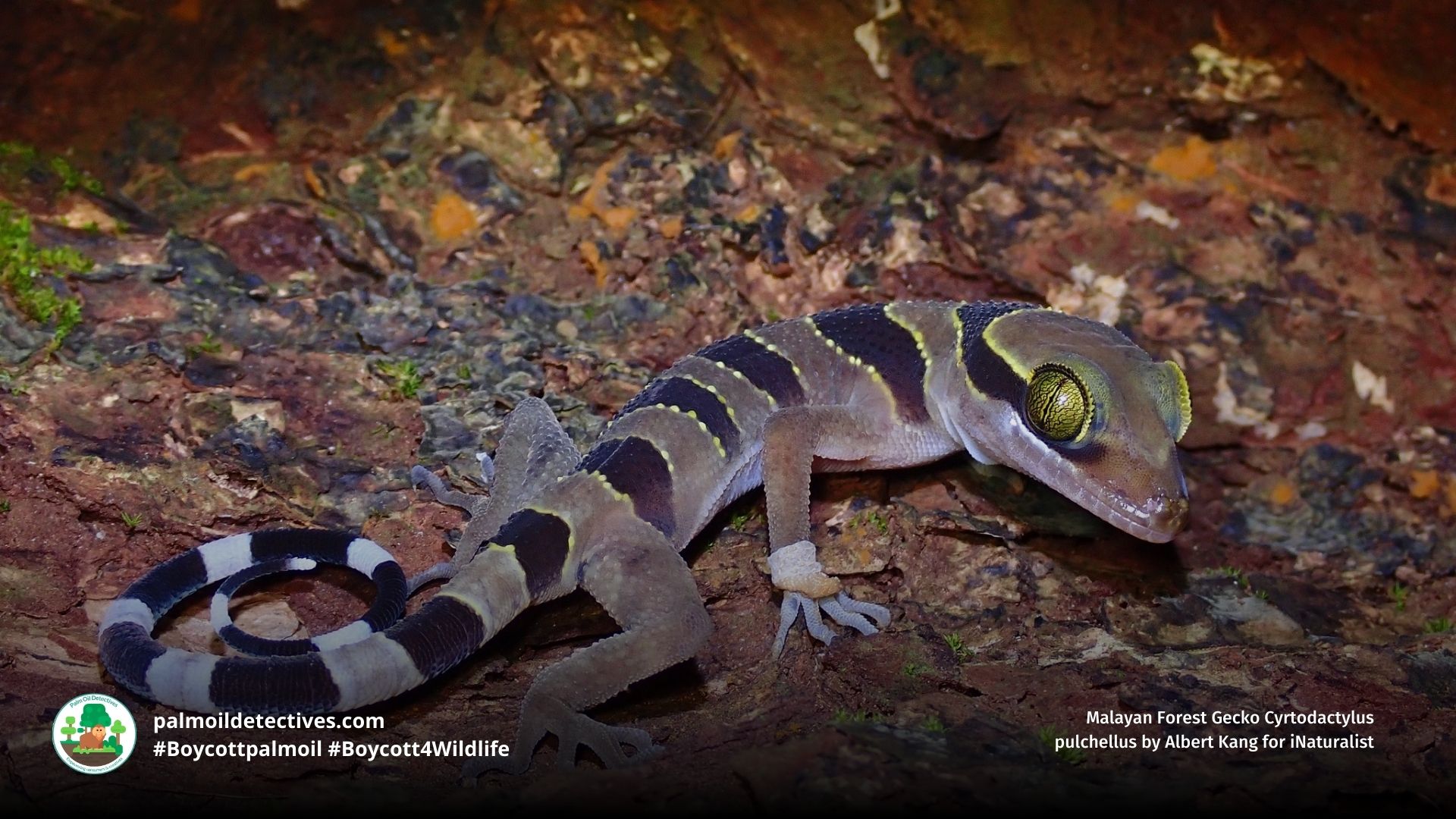
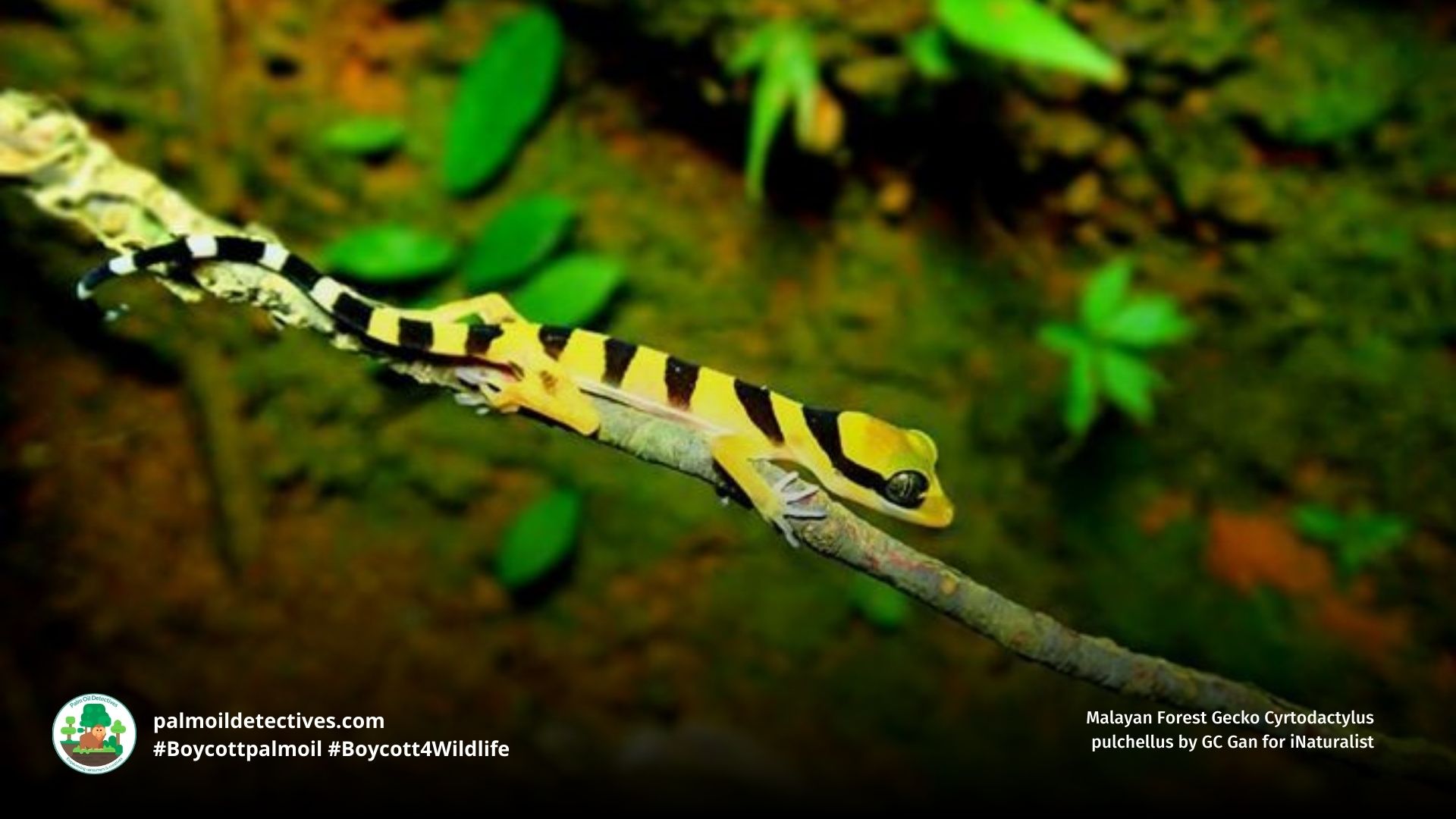
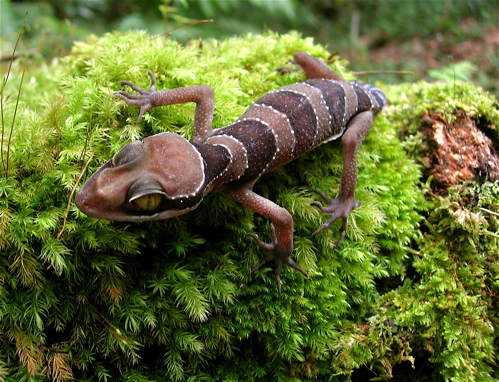
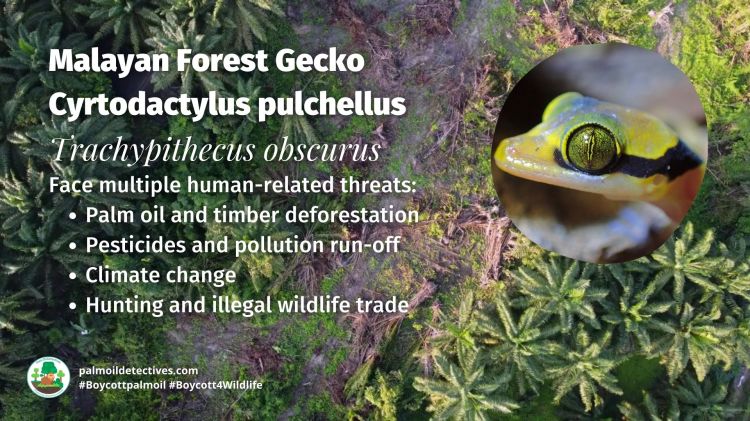
The Malayan Forest Cyrtodactylus pulchellus, also known as the Pulchella Bent-toed Gecko, is a rare and highly specialised #reptile endemic to the dense rainforests of Peninsular . They thrive in the cool, humid understory, relying on pristine environments to survive. However, their future is in grave danger. Widespread deforestation for agriculture, including #palmoil plantations, logging, and urban expansion, is tearing apart their habitat. As they vanish from the forests, so too does a crucial link in Malaysia’s delicate ecosystem. Every time you shop, use your wallet as a weapon #BoycottPalmOil #Boycott4Wildlife.

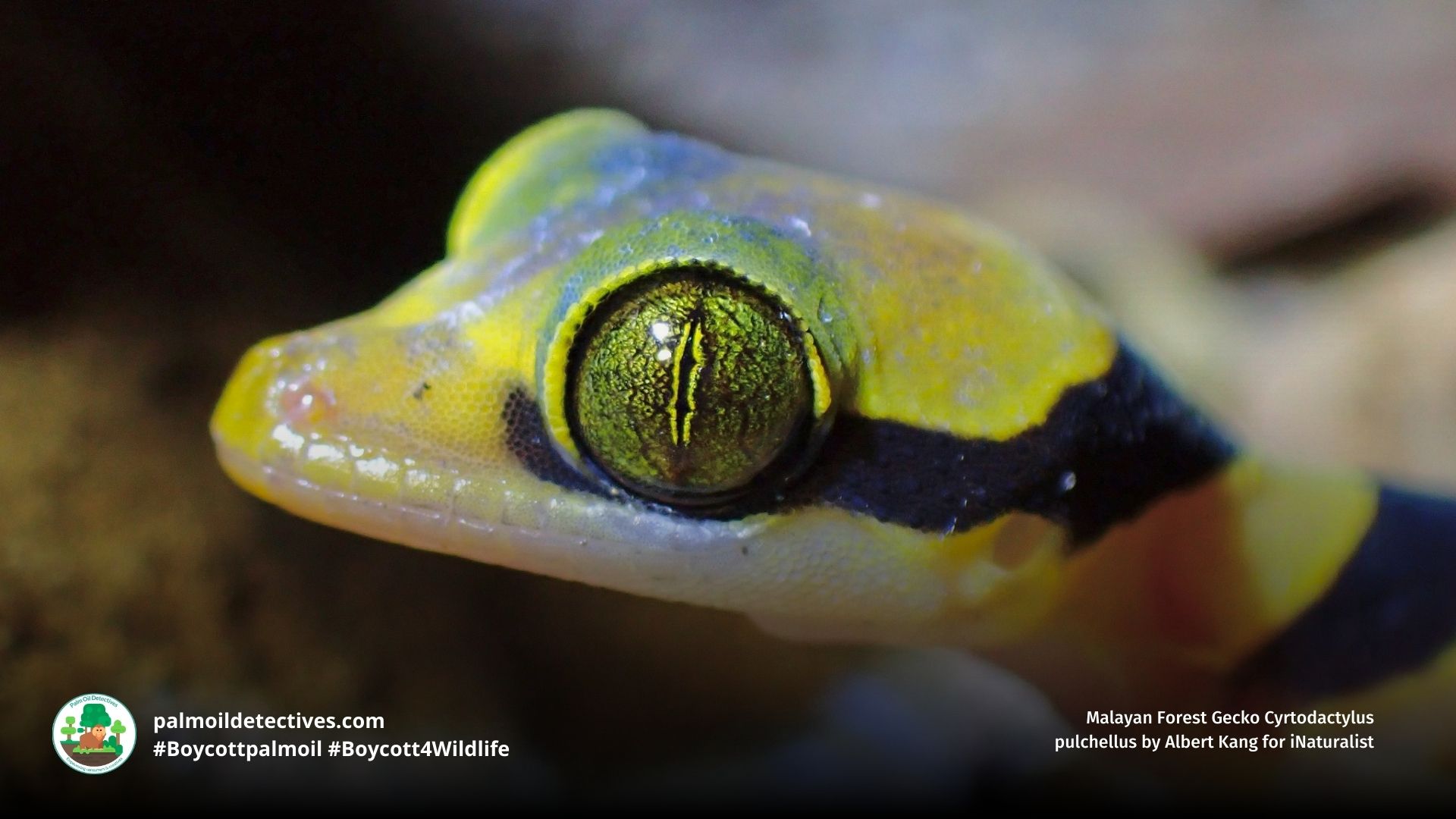
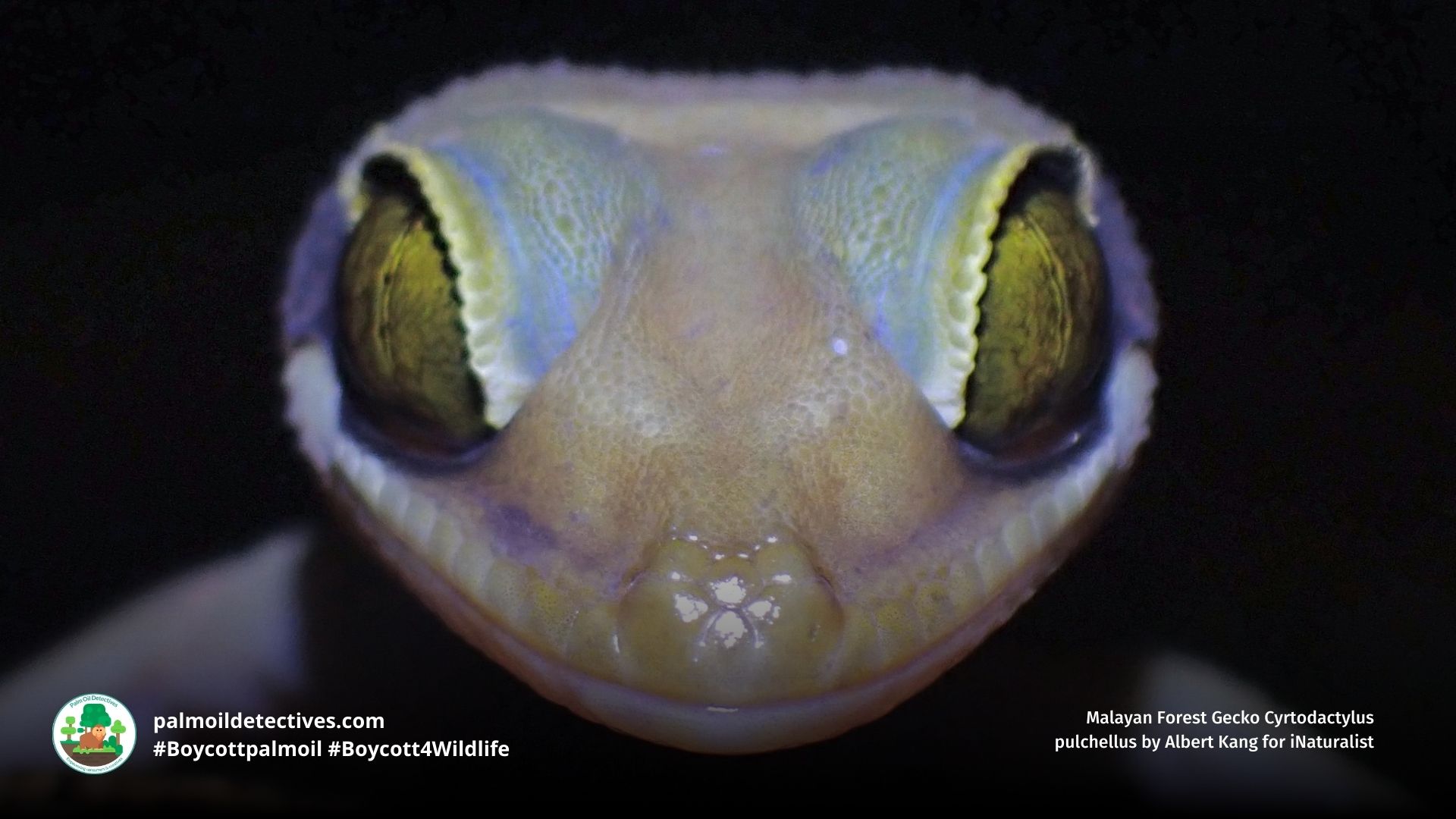
With glassy skin in vivid colours and large alien-like eyes, Malayan Forest look striking 🦎😻 These long for peace in the understory of ’s . Help them survive and 🌴🧐⛔️#Boycott4Wildlife @palmoildetect https://palmoildetectives.com/2021/02/05/malayan-forest-gecko-cyrtodactylus-pulchellus/

When threatened Malayan Forest shed their tails to escape predators 🦎 They’re by the illegal trade and in 🇲🇾 Campaign for their survival 🌴💀⛔️🙊 @palmoildetect https://palmoildetectives.com/2021/02/05/malayan-forest-gecko-cyrtodactylus-pulchellus/

Appearance and Behaviour

This nocturnal gecko is a vision of elegance, with an elongated body cloaked in intricate patterns of earthy browns and blacks. Their skin is smooth, almost glassy in texture, with delicate markings that shift under dim moonlight. Their striking, vertical-pupilled eyes glow a deep amber, allowing them to hunt efficiently in darkness. Unlike many other geckos, they lack the sticky toe pads that enable climbing on glass; instead, they rely on sheer muscle control and strong curved claws to scale tree trunks and rocky outcrops. When threatened, they can detach their tails in a last-ditch escape effort, leaving behind a writhing distraction while they disappear into the undergrowth.

Threats

Malayan Forest Gecko Cyrtodactylus pulchellus threats

Continued collection of the Malaysian Forest Gecko for the pet trade poses a threat to their survival, as does continued hill side development for housing and agriculture on this heavily-developed island (L. Grismer and E. Quah pers. comm. 2017).

IUCN Red list
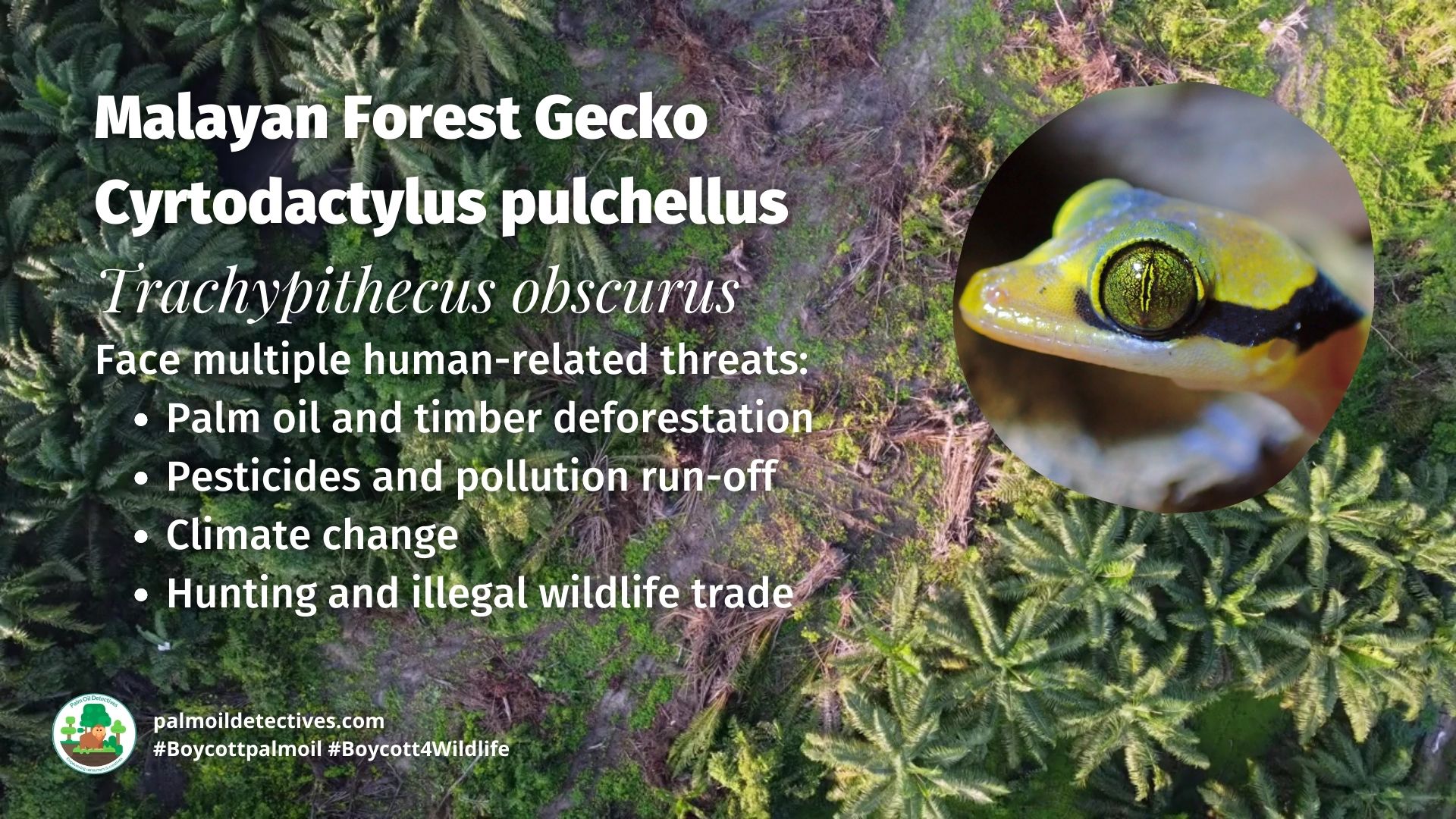
  • Palm Oil Deforestation and Habitat Destruction: Malaysia’s rainforests are rapidly disappearing under the pressure of industrial agriculture, including vast oil palm and durian plantations. Logging for timber and urban expansion have left their populations fragmented, forcing them into smaller, less suitable habitats.
  • Agricultural Encroachment and Pesticide Use: The spread of monoculture crops such as rubber and fruit plantations leads to pesticide contamination, which devastates insect populations and, in turn, threatens insectivorous species like the Malayan Forest Gecko.
  • Illegal Wildlife and Pet Trade: Although not as widely targeted as other reptiles, some Cyrtodactylus species are captured for the exotic pet trade, which can decimate local populations. It is important to not participate in collecting these animals as pets in the wild so that their species survives.
  • Climate Change: Increasing temperatures and altered rainfall patterns disrupt their microhabitats, making it harder for them to find shelter and food.

Diet

The Malayan Forest Gecko is a voracious insectivore, feeding on moths, crickets, beetles, spiders, and other small invertebrates. These lizards rely on ambush tactics, using their sharp vision to track movement before striking with lightning speed. Their diet plays an essential role in maintaining insect populations in their ecosystems.

Reproduction and Mating

Little is known about their exact breeding patterns, but like most Cyrtodactylus species, they are oviparous, laying small clutches of eggs in hidden crevices, under leaf litter, or within tree hollows. The humid rainforest climate helps incubate their eggs, which hatch after several weeks into fully formed miniature replicas of the adults.

Geographic Range

Endemic to Peninsular Malaysia, including Penang Island, this gecko has an extremely limited and fragmented range. They are mostly found in primary rainforests and undisturbed hill slopes, avoiding urban and agricultural areas.

FAQs

Why is the Malayan Forest Gecko endangered?

Their primary threat is habitat loss due to deforestation for agriculture, particularly palm oil, timber and durian plantations. Fragmentation of their habitat isolates populations, making survival increasingly difficult. Climate change and the illegal pet trade are also contributing to their decline.

Do Malayan Forest Geckos make good pets?

Absolutely not. Keeping wild-caught geckos as pets is harmful and unethical for the long term survival of this species. Many reptiles in the pet trade are illegally captured, leading to population declines and immense suffering. If you truly care about these geckos, actively campaign against their capture and protect their rainforest homes instead.

How can I help protect them?

• Boycott products containing palm oil, which drives deforestation.

• Support organisations working to protect Malaysia’s forests.

• Avoid keeping exotic pets and educate others about the dangers of wildlife trafficking.

• Demand stronger environmental protections from governments and corporations.

Take Action!

Use your purchasing power to protect rainforest species like the Malayan Forest Gecko. Every time you shop, choose ethical products and say no to deforestation—#BoycottPalmOil #Boycott4Wildlife.

Further Information

Grismer, L. L., Wood, P. L., Jr., Le, M. D., Quah, E. S. H., & Grismer, J. L. (2020). Evolution of habitat preference in 243 species of Bent-toed geckos (Genus Cyrtodactylus Gray, 1827) with a discussion of karst habitat conservation. Ecology and Evolution, 10(24), 13717–13730. https://doi.org/10.1002/ece3.6961

Grismer, L. L., Wood, P. L. Jr., Quah, E., & Anuar, S. (2012). A phylogeny and taxonomy of the Thai-Malay Peninsula bent-toed geckos of the Cyrtodactylus pulchellus complex (Squamata: Gekkonidae): Combined morphological and molecular analyses with descriptions of seven new species. Zootaxa, 3520(1), 1–55. https://doi.org/10.11646/zootaxa.3520.1.1

Kathriner, A., Bauer, A. M., O’Shea, M., & Sanchez, C. (2014). Hiding in plain sight: A new species of bent-toed gecko (Squamata: Gekkonidae: Cyrtodactylus) from West Timor, collected by Malcolm Smith in 1924. Zootaxa, 3900(4), 555–568. https://doi.org/10.11646/zootaxa.3900.4.6

Quah, E. & Grismer, L. 2018. Cyrtodactylus pulchellus. The IUCN Red List of Threatened Species 2018: e.T101949746A101949754. https://dx.doi.org/10.2305/IUCN.UK.2018-2.RLTS.T101949746A101949754.en. Downloaded on 05 February 2021.

Wikipedia contributors. (n.d.). Malayan forest gecko. Wikipedia, retrieved from https://en.wikipedia.org/wiki/Malayan_forest_gecko

Support the conservation of this species

This animal has no protections in place. Read about other forgotten species here. Create art to support this forgotten animal or raise awareness about them by sharing this post and using the #Boycott4Wildlife hashtags on social media. Also you can boycott palm oil in the supermarket.

Further Information

ICUN endangered logo

Contribute to palm oil detectives - black rhino in profile

How can I help the ?


Take Action in Five Ways

1. Join the on social media and subscribe to stay in the loop: Share posts from this website to your own network on Twitter, Mastadon, Instagram, Facebook and Youtube using the hashtags .

Join 3,176 other subscribers

2. Contribute stories: Academics, conservationists, scientists, indigenous rights advocates and animal rights advocates working to expose the corruption of the palm oil industry or to save animals can contribute stories to the website.

3. Supermarket sleuthing: Next time you’re in the supermarket, take photos of products containing palm oil. Share these to social media along with the hashtags to call out the greenwashing and ecocide of the brands who use palm oil. You can also take photos of palm oil free products and congratulate brands when they go palm oil free.

4. Take to the streets: Get in touch with Palm Oil Detectives to find out more.

5. Donate: Make a one-off or monthly donation to Palm Oil Detectives as a way of saying thank you and to help pay for ongoing running costs of the website and social media campaigns. Donate here
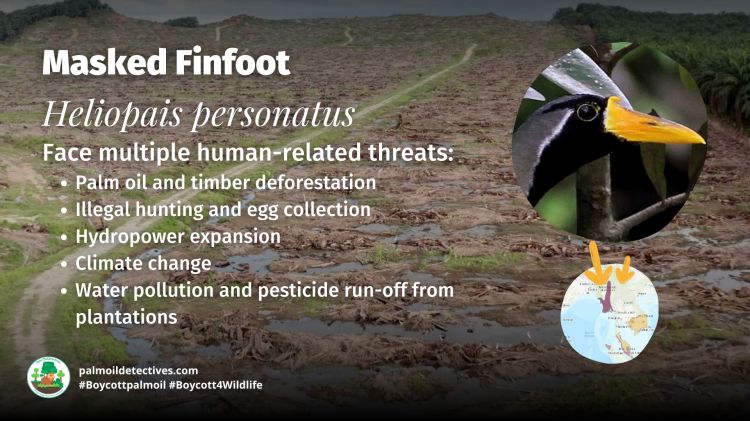
Masked Finfoot Heliopais personatus

Masked Finfoot Heliopais personatus

IUCN Status: Critically Endangered

Location: Bangladesh, Cambodia, Myanmar, Thailand, Laos, Vietnam, Malaysia, Indonesia (Now extinct), India (now extinct)

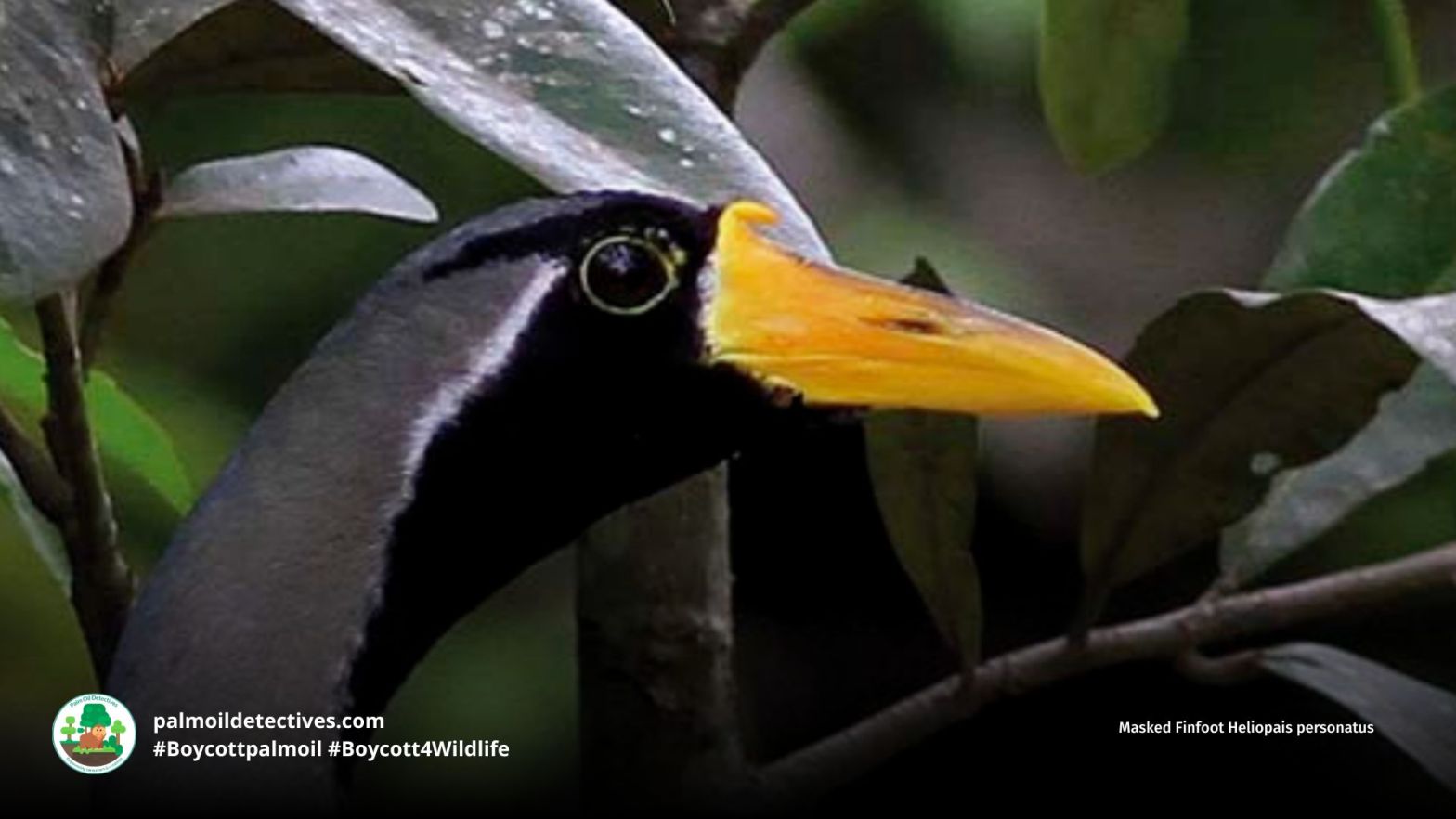
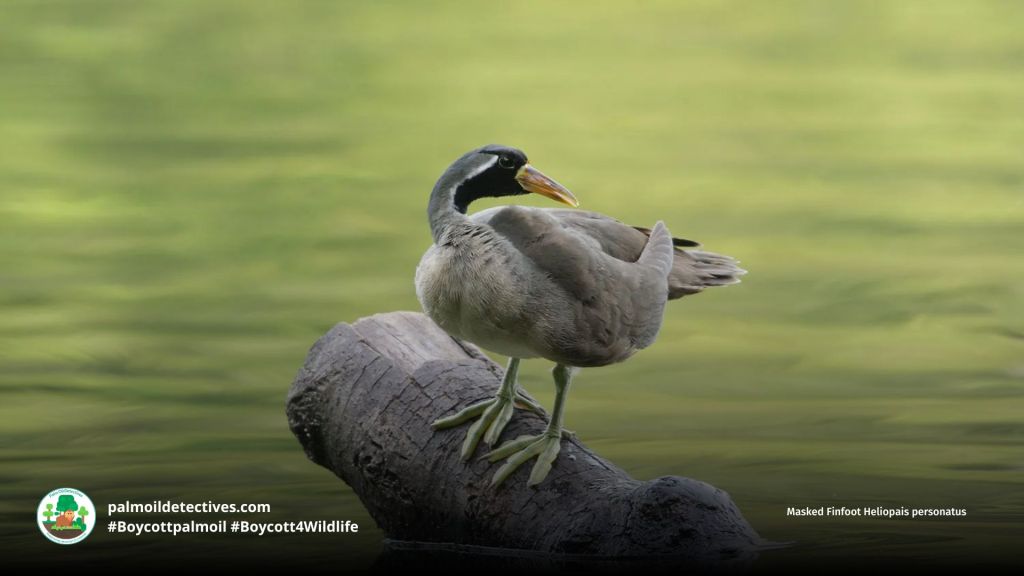
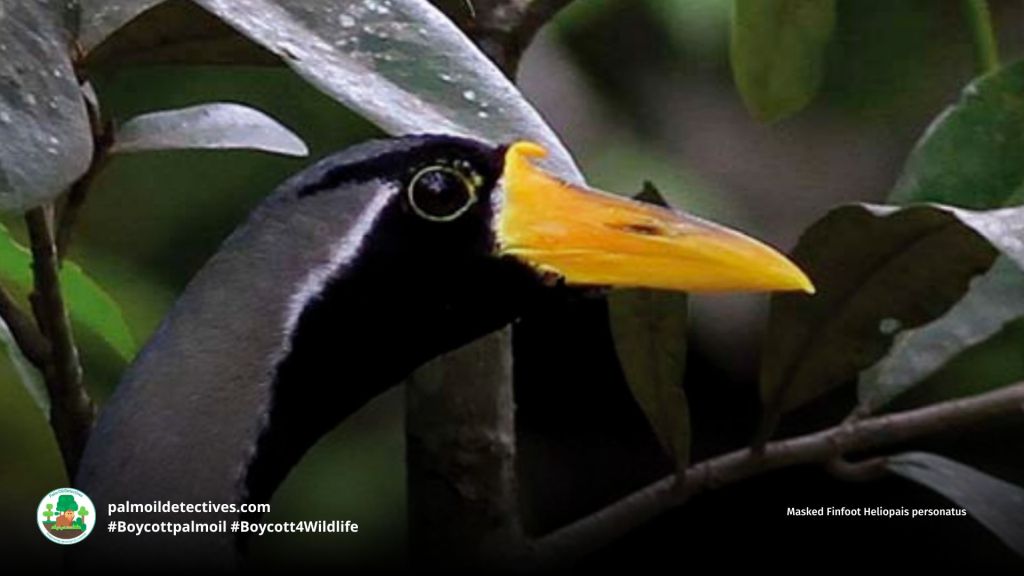
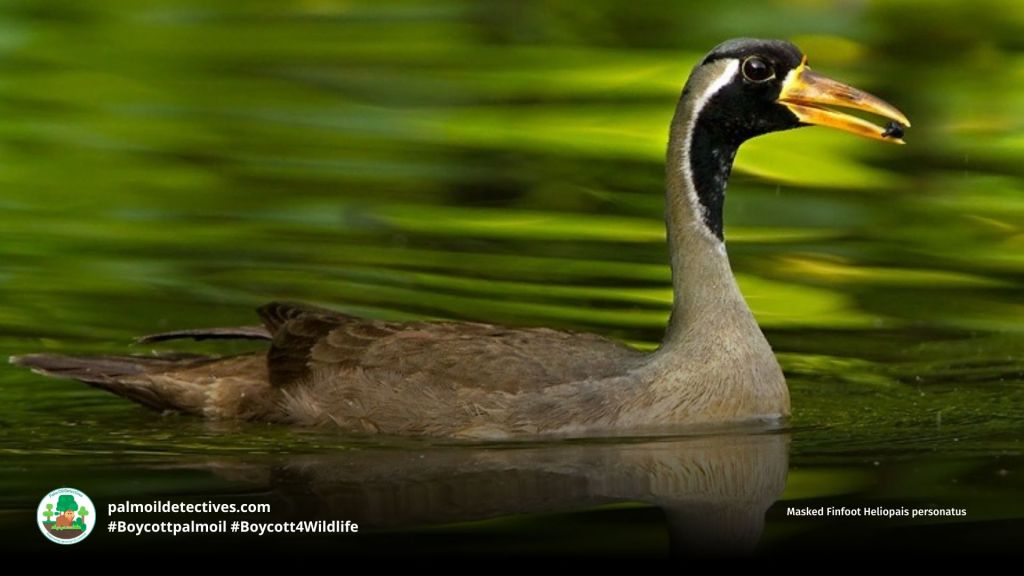
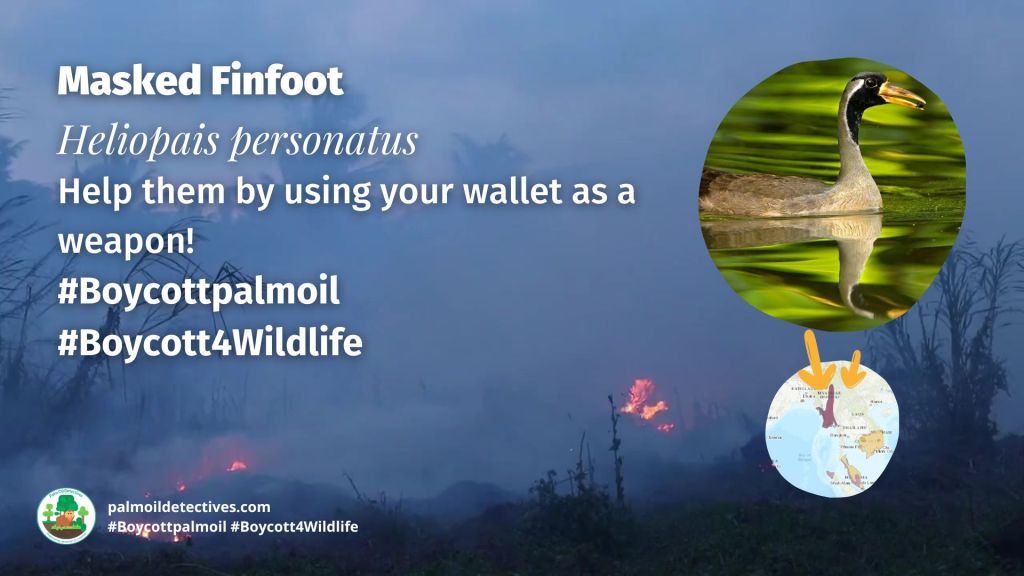
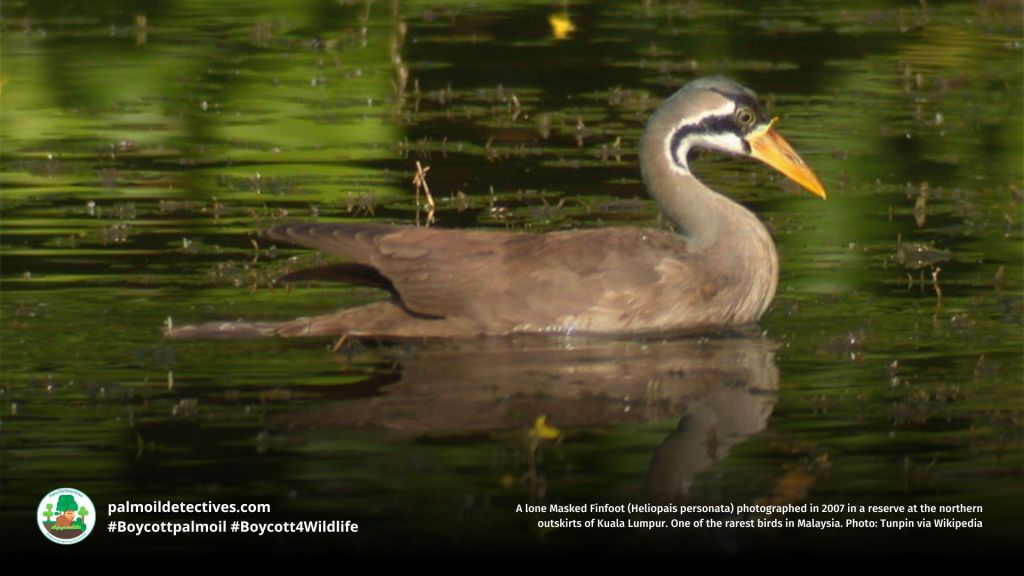
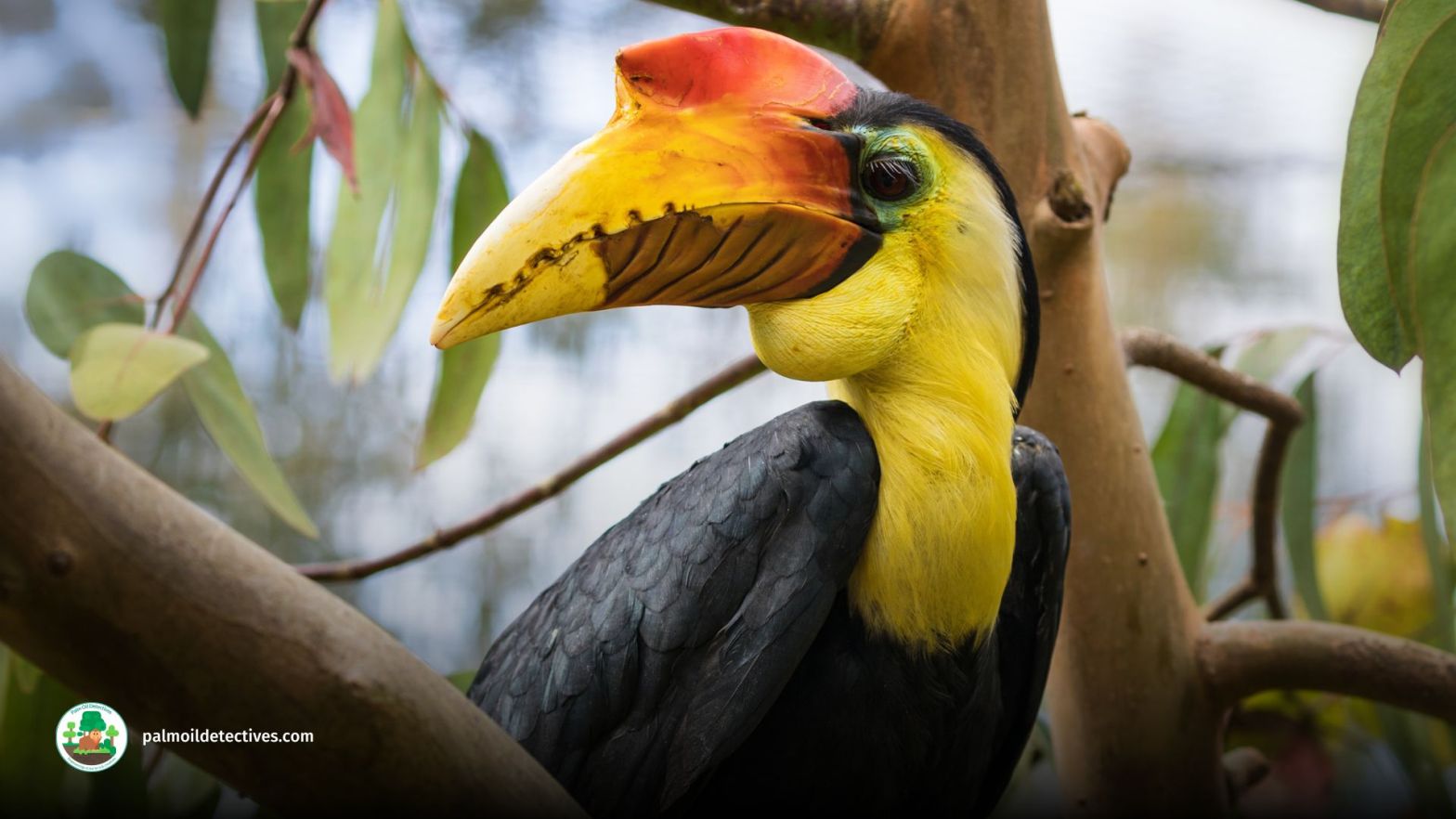
The masked finfoot is vanishing before our eyes. Once widespread across South and , fewer than 300 individuals remain alive. Their numbers are in freefall due to habitat destruction, rampant palm oil expansion, hydropower projects, and human disturbance (Chowdhury et al., 2020). These rare and secretive , with their striking black masks and vivid green lobed feet, are slipping towards .

These were once found in the dense, shadowy mangroves and riverine forests from to , their final strongholds are in Bangladesh and . Even there, unchecked deforestation and wetland clearance threaten their survival. Conservationists warn that without urgent intervention, this species could become Asia’s next avian extinction.

Protecting the masked finfoot means protecting their vanishing wetland homes. Boycott palm oil, support wetland conservation, and demand stronger protections for Southeast Asia’s last riverine forests. Help them every time you shop and #BoycottPalmOil #Boycott4Wildlife

Already in 🇲🇾 🇮🇳 🇮🇩 the Masked Finfoot is a unique 🪿🩷 with unusual feet. is a major threat. Help them when you 🌴🪔☠️🤢🔥🧐🙊⛔️ @palmoildetect https://palmoildetectives.com/2021/02/05/masked-finfoot-heliopais-personatus

Appearance and Behaviour

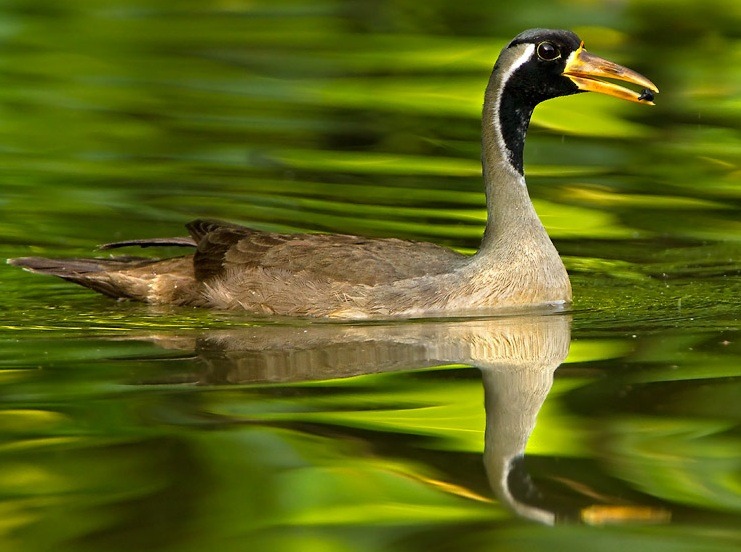
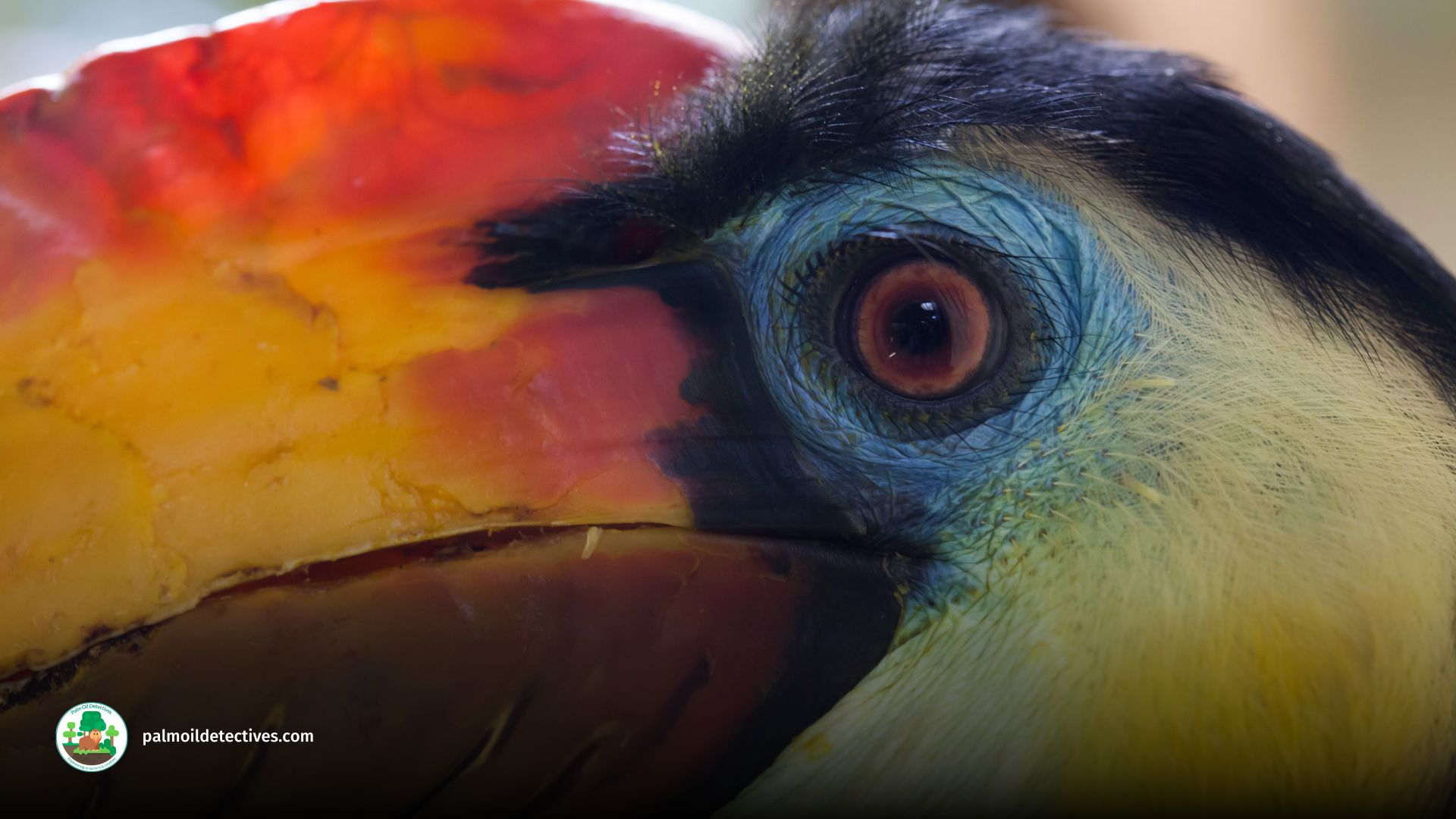
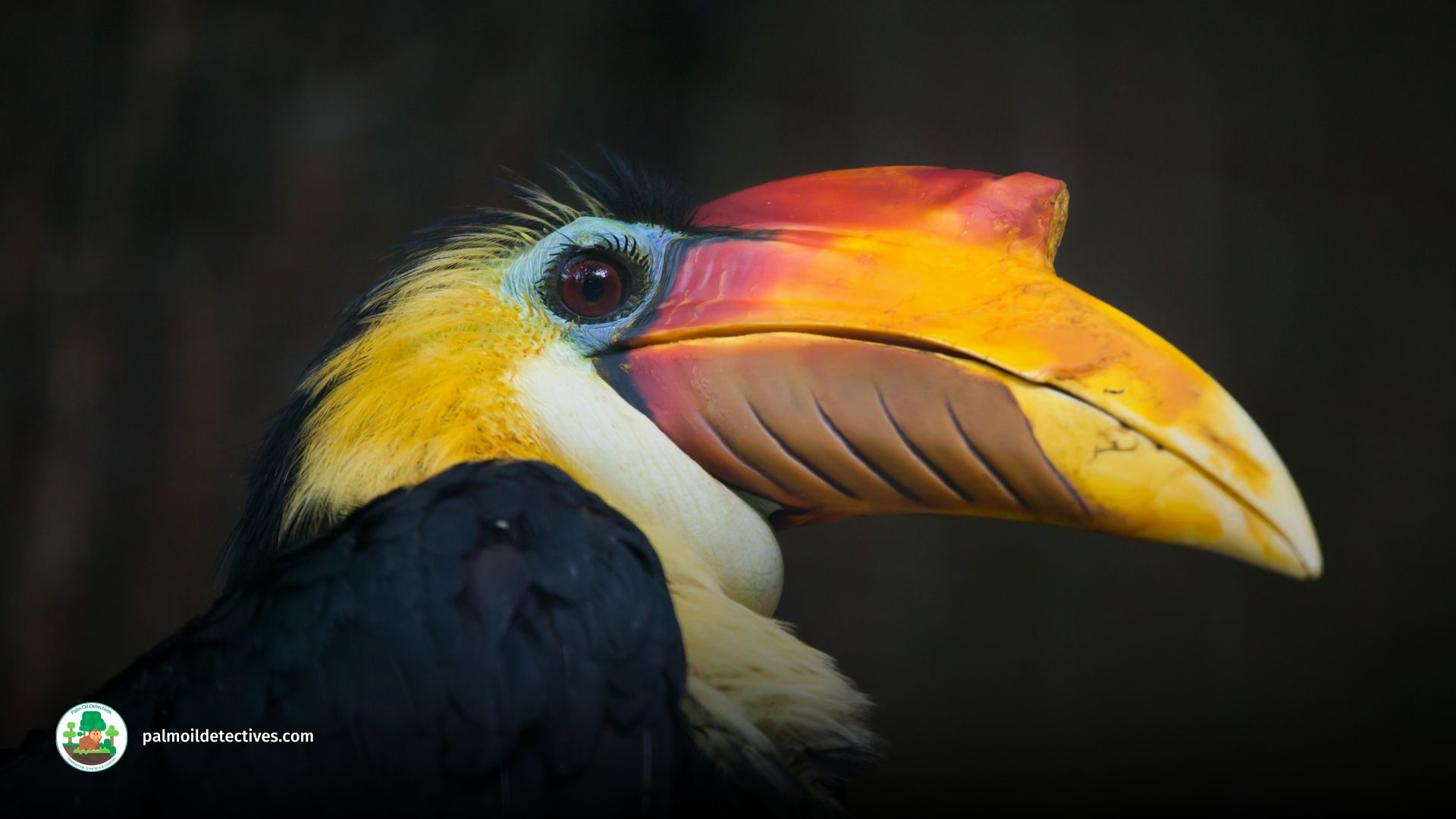
The masked finfoot is a medium-sized aquatic bird with a long, elegant neck, vivid green lobed feet, and a sharp, pointed beak. Their dramatic black facial mask is offset by a white eyering and lateral stripe along the neck. Their back and wings are deep chestnut brown, contrasting with a pale underbelly. Males have an entirely black chin, while females have a distinctive white chin patch.

This species moves through the water with effortless grace, gliding silently through dense mangroves and forested waterways. Unlike grebes and ducks, they are not strictly aquatic—often foraging along riverbanks for fish, crustaceans, and insects. Their lobed feet, highly adapted for both swimming and gripping wetland vegetation, allow them to navigate both water and land with ease.

Geographic Range

The main threat is the destruction and increased levels of disturbance to rivers in lowland riverine forest, driven by agricultural clearance and logging operations and increased traffic on waterways.

IUCN Red list

The masked finfoot once thrived across South and Southeast Asia, from northeast India to Indonesia. Today, their range has collapsed. The most recent global population estimate suggests only 108 to 304 individuals remain (Chowdhury et al., 2020), with confirmed breeding populations only in Bangladesh and Cambodia. Once-regular sightings in Malaysia and Thailand have all but disappeared.

Myanmar may still hold small, unrecorded populations, but large-scale deforestation and wetland destruction mean that their future there is uncertain. The species has already been wiped out from large parts of its former range. Without urgent conservation action, they may soon disappear entirely.

Diet

The masked finfoot is an opportunistic feeder, preying on a variety of aquatic and terrestrial species. Their diet consists of freshwater shrimp, large beetles, small fish, dragonfly larvae, molluscs, and amphibians. They forage both in the water and along riverbanks, gleaning insects from overhanging vegetation or catching prey just below the surface. Their lobed feet allow them to navigate both aquatic and terrestrial environments with ease.

Reproduction and Mating

Little is known about the breeding biology of the masked finfoot due to their elusive nature. Their breeding season appears to coincide with the rainy season, from June to September in Bangladesh. They construct nests low above the water, using small sticks and reeds to form a platform. Clutch sizes range from three to seven eggs, and chicks hatch covered in dark grey down with a distinctive white spot on the tip of the beak. The young leave the nest shortly after hatching, though they remain dependent on their parents for food and protection.

Threats

Masked Finfoot Heliopais personatus threats

Kalimantan lost nearly 25% of its evergreen forest during 1985-1997. The impact of the major fires of 1997-1998 was patchy, with many small alluvial areas escaping damage(Fredriksson and Nijman 2004). However, such fires appear to be increasing in frequency and severity. In central Kalimantan, most remaining lowland forest is granted to logging concessions, with a negligible area currently afforded any protected status. The species was recorded in trade by TRAFFIC in 1998 when six birds were taken out of Kalimantan to Singapore(Shepherd 2000).

IUCN REd LIST

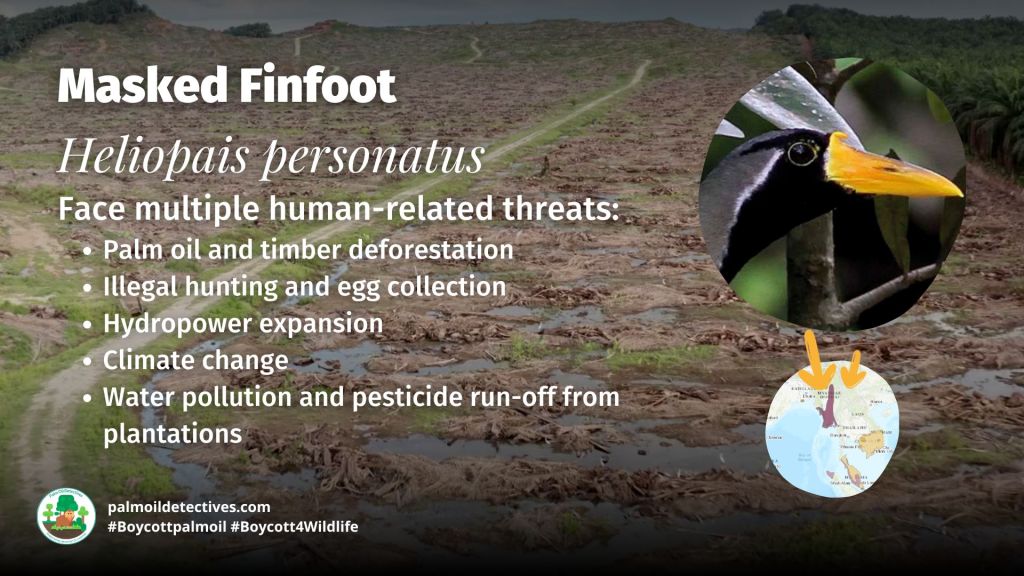
The masked finfoot faces multiple threats that have driven them to the brink of extinction.

Habitat Destruction and Palm Oil Plantations

• Lowland riverine forests are being cleared for palm oil plantations, rice fields, and other agricultural developments.

Mangroves and wetland habitats are being drained and converted, destroying key breeding and foraging sites.

Habitat loss is the most significant driver of the masked finfoot’s decline. Without intact, undisturbed wetlands, their populations will continue to plummet.

Hydropower and Waterway Disruptions

• The construction of dams and hydropower projects alters water flow, reduces fish populations, and floods nesting sites.

Increased boat traffic disturbs the birds and leads to habitat fragmentation.

Dams and river modifications disrupt the delicate ecosystems masked finfoots depend on, cutting them off from food sources and safe nesting sites.

Illegal Hunting and Egg Collection

• Although not a primary target for hunters, masked finfoots are occasionally hunted for food or captured opportunistically.

• Fishermen have reported taking eggs or chicks when they encounter nests.

With such a small population left, even occasional hunting and egg collection could have devastating consequences.

Climate Change and Rising Sea Levels

• Increased saltwater intrusion into wetland habitats threatens nesting trees and freshwater food sources.

• More frequent tropical storms and cyclones destroy nests and disrupt breeding seasons.

The Sundarbans population is particularly vulnerable, as climate change intensifies the frequency of severe weather events.

Pollution and Fishing Practices

• Oil spills, industrial pollution, and pesticide runoff poison water sources.

• The birds are at risk of entanglement in fishing nets, particularly in the Sundarbans.

Pollution and bycatch threaten not only the masked finfoot but many other wetland species that rely on clean rivers and estuaries.

Take Action!

The masked finfoot is on the edge of extinction. Choose 100% palm oil-free products, support wetland restoration, and demand stronger legal protections for their remaining habitats. Every decision you make as a consumer can help safeguard the future of this critically endangered species. #BoycottPalmOil #Boycott4Wildlife

FAQs

How many masked finfoots are left?

The global population is estimated to be between 108 and 304 individuals, far lower than the 600–1,700 estimate in 2009 (Chowdhury et al., 2020). With such a sharp decline, immediate conservation efforts are needed to prevent their extinction.

Where do masked finfoots live?

Historically, they were found across South and Southeast Asia. Today, breeding populations are confirmed only in Bangladesh and Cambodia. Myanmar may still have small, unrecorded populations, but the species has likely been extirpated from Malaysia and Thailand.

Why is the masked finfoot endangered?

Habitat destruction, palm oil plantations, hydropower development, hunting, and climate change are the biggest threats. Wetland clearance and deforestation have left them with almost nowhere to breed and forage.

How can we save the masked finfoot?

Boycotting palm oil, supporting wetland conservation projects, and advocating for stronger environmental protections are critical steps. Protected areas must be established, and existing habitats must be restored.

What do masked finfoots eat?

Their diet includes freshwater shrimp, insects, fish, and crustaceans. They hunt both in the water and along the riverbanks, using their lobed feet to navigate different environments.

Further Information

ICUN endangered logo

BirdLife International. 2016. Heliopais personatus. The IUCN Red List of Threatened Species 2016: e.T22692181A93340327. https://dx.doi.org/10.2305/IUCN.UK.2016-3.RLTS.T22692181A93340327.en. Downloaded on 05 February 2021.

Chowdhury, S. U., Yong, D. L., Round, P. D., Mahood, S., Tizard, R., & Eames, J. C. (2020). The status and distribution of the masked finfoot Heliopais personatus—Asia’s next avian extinction? Forktail, 36, 16–24. https://www.researchgate.net/publication/349094908_The_status_and_distribution_of_the_Masked_Finfoot_Heliopais_personatus-Asia’s_next_avian_extinction

Wikipedia contributors. (n.d). Masked finfoot. Wikipedia, The Free Encyclopedia. Retrieved March 13, 2025, from https://en.wikipedia.org/wiki/Masked_finfoot

Support the conservation of this species

This animal has no protections in place. Read about other forgotten species here. Create art to support this forgotten animal or raise awareness about them by sharing this post and using the #Boycott4Wildlife hashtags on social media. Also you can boycott palm oil in the supermarket.


Contribute to palm oil detectives - black rhino in profile

How can I help the ?


Take Action in Five Ways

1. Join the on social media and subscribe to stay in the loop: Share posts from this website to your own network on Twitter, Mastadon, Instagram, Facebook and Youtube using the hashtags .

Join 3,176 other subscribers

2. Contribute stories: Academics, conservationists, scientists, indigenous rights advocates and animal rights advocates working to expose the corruption of the palm oil industry or to save animals can contribute stories to the website.

3. Supermarket sleuthing: Next time you’re in the supermarket, take photos of products containing palm oil. Share these to social media along with the hashtags to call out the greenwashing and ecocide of the brands who use palm oil. You can also take photos of palm oil free products and congratulate brands when they go palm oil free.

4. Take to the streets: Get in touch with Palm Oil Detectives to find out more.

5. Donate: Make a one-off or monthly donation to Palm Oil Detectives as a way of saying thank you and to help pay for ongoing running costs of the website and social media campaigns. Donate here
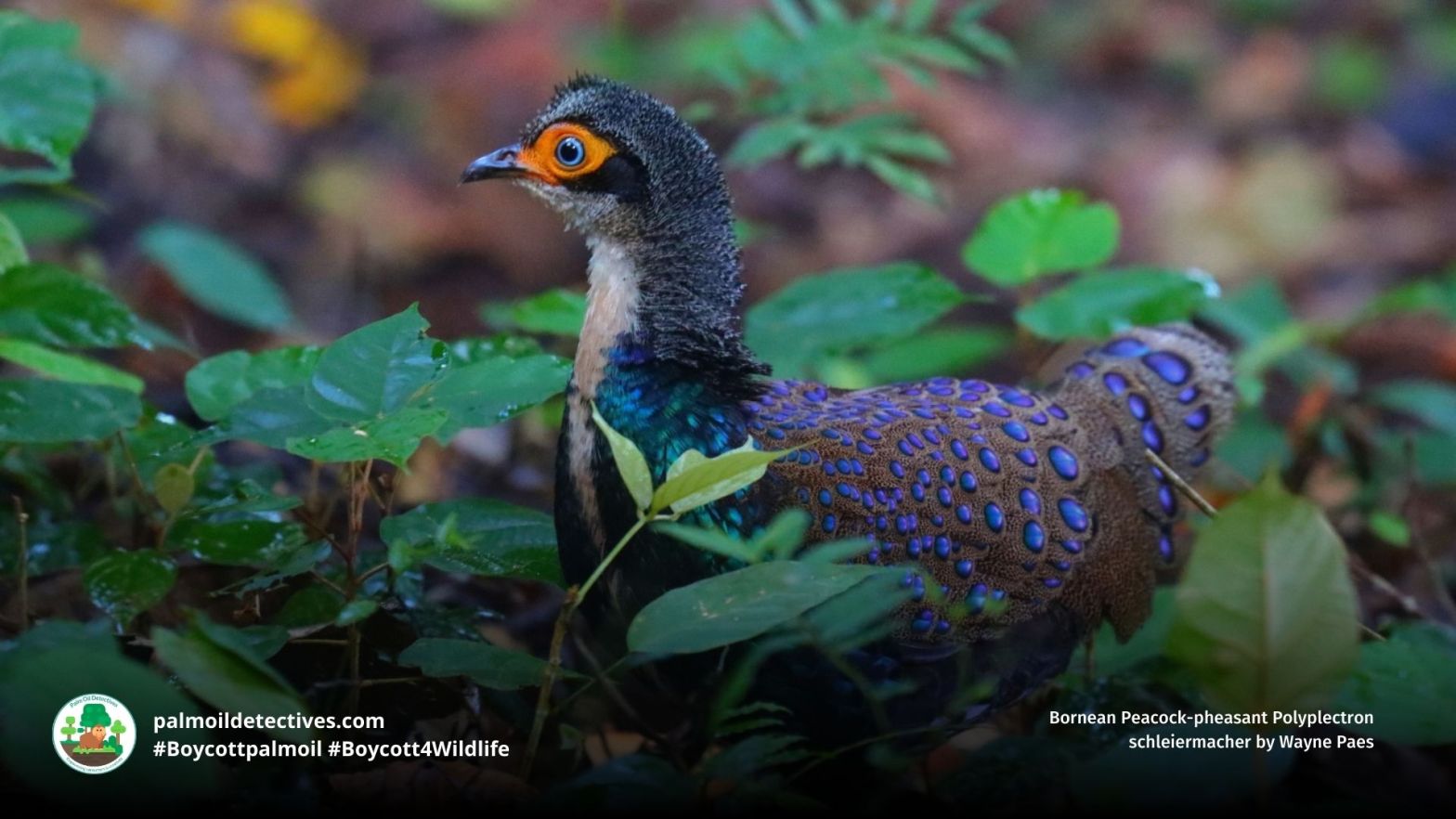
Bornean Peacock-pheasant Polyplectron schleiermacheri

Bornean Peacock-pheasant Polyplectron schleiermacheri

IUCN Status: Endangered

Location: Endemic to the island of Borneo, specifically in Central Kalimantan, Indonesia, with potential populations in Sarawak and Sabah, Malaysia.

Bornean are famous for their purple, emerald 💜💚🦜 feathers and secretive natures. Living in and , is a major threat. Help these ! 🌴⛔️ @palmoildetect https://wp.me/pcFhgU-wV

In central Kalimantan, habitat loss, degradation and fragmentation as a result of large-scale commercial logging (deliberately targeting all remaining stands of valuable timber including those inside protected areas), widespread clearance for plantations of rubber and oil-palm, and hunting with snares, are the main threats.

IUCN Red list

The Bornean Peacock-Pheasant is a rare and elusive found only in #Borneo’s tropical rainforests in and Malaysia. They are known for their intricate iridescent plumage and secretive nature. This species faces a grave threat from out-of-control plantations, timber logging, the illegal and habitat destruction. has wiped out vast areas of their habitat, pushing this bird toward . Without urgent conservation action, the Bornean Peacock-Pheasant may soon vanish forever. Take action everytime you shop and to help protect this species.

Appearance and Behaviour

This species is a small, ground-dwelling bird with an extraordinary pattern of shimmering blue-green ‘eye-spots’ across its wings and tail. Males perform elaborate courtship displays, fanning their tails to attract mates. Their dark brown plumage, speckled with emerald and sapphire hues, allows them to blend into the dense forest undergrowth.

Naturally shy, these birds spend most of their time hidden in thick vegetation, foraging on the forest floor for food. They are largely solitary or found in pairs, relying on camouflage and silence to avoid predators. They are known for their soft calls but can produce loud alarm calls when threatened.

Threats

Palm Oil and Rubber Plantation Deforestation

The uncontrolled expansion of palm oil and rubber plantations is the primary driver of this species’ decline. Between 1985 and 1997, nearly 25% of Borneo’s evergreen forest was lost. Lowland dipterocarp forests, the Bornean Peacock-Pheasant’s primary habitat, are among the most heavily logged ecosystems in the world. As multinational corporations destroy rainforests to make way for palm oil and timber plantations, these birds are left with nowhere to live, breed, or find food.

Illegal Logging and Habitat Fragmentation

Almost all remaining lowland forests in Central Kalimantan have been allocated as logging concessions, meaning that even the last viable populations of the Bornean Peacock-Pheasant are at risk. Habitat fragmentation isolates populations, making survival even more difficult.

Hunting and Illegal Wildlife Trade

Despite their rarity, Bornean Peacock-Pheasants have been documented in the illegal pet trade. In 1998, TRAFFIC recorded at least six individuals being smuggled to Singapore for sale. As deforestation forces them into smaller, more exposed areas, they become easier targets for poachers.

Climate Change and Increasing Wildfires

Massive fires in Borneo, worsened by climate change and deforestation, continue to destroy critical habitat. The devastating 1997–1998 fires wiped out large portions of the species’ range, and these fires have only increased in frequency and severity since then.

Diet

Bornean Peacock-Pheasants are omnivorous, feeding on insects, seeds, fallen fruits, and small invertebrates. They forage by scratching through leaf litter, searching for hidden insects and worms. They depend on dense rainforest undergrowth, which is disappearing due to palm oil plantations and logging.

Reproduction and Mating

Little is known about their breeding ecology, but like other peacock-pheasants, they are believed to be monogamous. Males perform intricate displays, fanning out their eye-spotted tails while calling softly to attract a mate. Nesting likely occurs in dense undergrowth, with the female incubating a small clutch of one to two eggs.

Geographic Range

The Bornean Peacock-Pheasant is found only on the island of Borneo, particularly in Central Kalimantan (Indonesia), with unconfirmed sightings in Sarawak and Sabah (Malaysia). Its range is highly fragmented, with populations struggling to survive as habitat destruction accelerates.

FAQ

What is the rarest peacock-pheasant?

The Bornean Peacock-Pheasant is considered one of the rarest and most elusive birds in Borneo. Due to their small population size and habitat loss, sightings of this species are extremely rare.

Are peacock-pheasants loud?

Peacock-pheasants are generally quiet birds, relying on their camouflage to stay hidden. However, they can produce loud alarm calls when startled or threatened.

What is the meaning of peacock-pheasant?

The name “peacock-pheasant” comes from the male’s tail feathers, which are adorned with iridescent eye-spots similar to those of true peacocks. These tail feathers are used in elaborate courtship displays.

Do Bornean Peacock-Pheasants Make Good Pets?

No, Bornean Peacock-Pheasants (Polyplectron schleiermacheri) should never be kept as pets. These birds are wild, highly sensitive, and critically dependent on their rainforest habitat for survival. Capturing them for the pet trade contributes directly to their population decline, pushing them closer to extinction.

Unlike domesticated birds, Bornean Peacock-Pheasants have complex social structures, specialised diets, and require vast, undisturbed forest territories. Removing them from the wild causes immense stress, often leading to premature death. Many individuals die in transit or in captivity due to improper care, lack of appropriate food, or extreme distress.

Furthermore, the illegal pet trade is a serious conservation threat, often linked to habitat destruction, deforestation for palm oil, and poaching. The 1998 TRAFFIC report documented these birds being smuggled out of Kalimantan into the international market, highlighting the grim reality of wildlife trafficking (Shepherd, 2000).

If you care about Bornean Peacock-Pheasants, the best way to help is by boycotting palm oil, opposing wildlife trafficking, and supporting conservation efforts to protect their natural rainforest habitat. Every purchase you make is a vote for or against the destruction of their home. Use your wallet as a weapon and .

Take Action!

The Bornean Peacock-Pheasant is on the brink of extinction due to habitat destruction driven by the palm oil industry. Every time you shop, you have the power to make a difference. Use your wallet as a weapon and #BoycottPalmOil #Boycott4Wildlife to protect Borneo’s last remaining forests. Without urgent action, this species may disappear forever. Support indigenous-led conservation and advocate for the protection of Borneo’s rainforests before it’s too late.

Bornean Peacock-pheasant Polyplectron schleiermacheri

Support the conservation of this species

This animal has no protections in place. Read about other forgotten species here. Create art to support this forgotten animal or raise awareness about them by sharing this post and using the #Boycott4Wildlife hashtags on social media. Also you can boycott palm oil in the supermarket.

Further Information

ICUN endangered logo

BirdLife International. 2016. Polyplectron schleiermacheri. The IUCN Red List of Threatened Species 2016: e.T22679393A84694321. https://dx.doi.org/10.2305/IUCN.UK.2016-3.RLTS.T22679393A84694321.en. Downloaded on 05 February 2021.

Chng et. al (2000). TRAFFIC report on the trade of Bornean Peacock-Pheasants in Southeast Asia. TRAFFIC Southeast Asia. https://www.traffic.org/site/assets/files/2466/market_for_extinction_jakarta.pdf

Corder, J., & Davison, G. (2021). Captive breeding challenges posed by Malaysian and Bornean Peacock-Pheasants (Polyplectron malacense and P. schleiermacheri). Zoo Biology, 40(4), 346-351. https://doi.org/10.1002/zoo.21600

Wikipedia contributors. (n.d.). Bornean peacock-pheasant. Wikipedia, The Free Encyclopedia. Retrieved 7 February 2025, from https://en.wikipedia.org/wiki/Bornean_peacock-pheasant


Contribute to palm oil detectives - black rhino in profile

How can I help the ?


Take Action in Five Ways

1. Join the on social media and subscribe to stay in the loop: Share posts from this website to your own network on Twitter, Mastadon, Instagram, Facebook and Youtube using the hashtags .

Join 3,176 other subscribers

2. Contribute stories: Academics, conservationists, scientists, indigenous rights advocates and animal rights advocates working to expose the corruption of the palm oil industry or to save animals can contribute stories to the website.

3. Supermarket sleuthing: Next time you’re in the supermarket, take photos of products containing palm oil. Share these to social media along with the hashtags to call out the greenwashing and ecocide of the brands who use palm oil. You can also take photos of palm oil free products and congratulate brands when they go palm oil free.

4. Take to the streets: Get in touch with Palm Oil Detectives to find out more.

5. Donate: Make a one-off or monthly donation to Palm Oil Detectives as a way of saying thank you and to help pay for ongoing running costs of the website and social media campaigns. Donate here
Siamang Symphalangus syndactylus

Siamang Symphalangus syndactylus

Endangered

Indonesia, Thailand, Sumatra

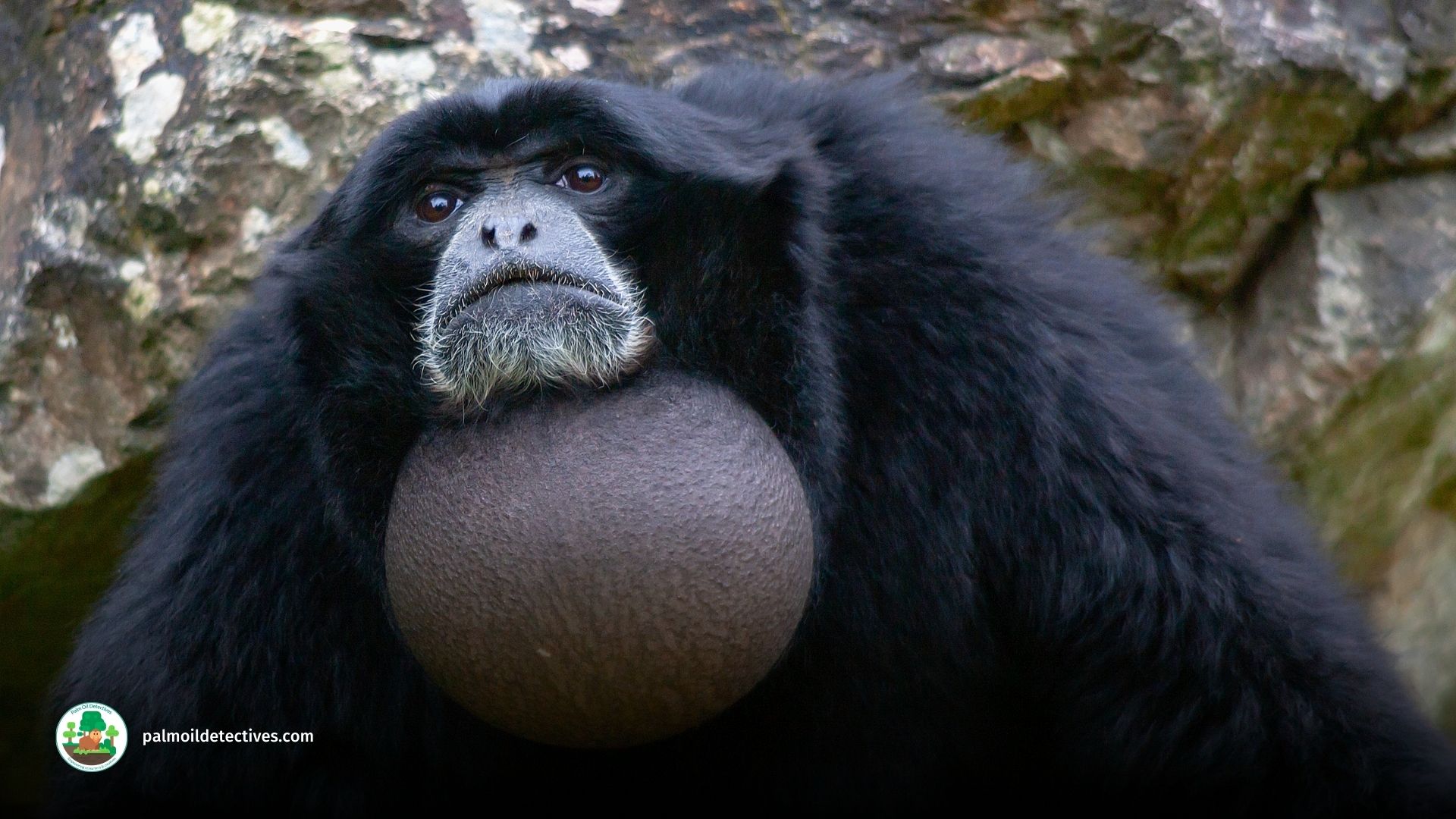
The siamang is the largest and most vocal of all gibbons, known for their spectacular morning calls that resonate across the forests of Sumatra and Peninsular Malaysia. Their complex vocalisations, amplified by a throat sac, serve as a hallmark of their species and a testament to their social bonds.

Despite their ecological importance as seed dispersers and their striking behaviours, siamangs face serious threats from deforestation, palm oil plantations, and illegal pet trade. With forest habitats shrinking rapidly, their populations continue to decline. Fight for their survival by boycotting palm oil and supporting conservation efforts. #BoycottPalmOil #Boycott4Wildlife

Appearance and Behaviour

The siamang is a large, arboreal primate, weighing between 10 to 15 kg and reaching up to 90 cm in height. Their jet-black fur contrasts with their bare faces and hands, and they are easily distinguished by the large throat sac that inflates dramatically during their vocalisations. This sac can expand to the size of a grapefruit, amplifying their calls to carry over several kilometres.

Siamangs are highly social and monogamous, typically forming small family groups consisting of a mated pair and their offspring. Their complex duet calls, often performed at dawn, reinforce pair bonds and establish territory. Their long arms and powerful shoulders make them exceptional brachiators, swinging effortlessly between tree branches.

Their intelligence has been a subject of fascination; recent research suggests siamangs demonstrate advanced cognitive abilities, including problem-solving and tool use (Gibbons et al., 2023).

Geographic Range

Siamangs are native to the tropical forests of Sumatra and Peninsular Malaysia, preferring lowland and hill forests up to 2000 metres in elevation in some areas of Kerinci Seblat National Park, Sumatra, Indonesia. They are most commonly found in primary and secondary forests, where they rely on continuous canopy cover for brachiation. Palm oil deforestation has confined them to protected areas such as Gunung Leuser National Park in Sumatra and Taman Negara National Park in Malaysia (IUCN, 2020). However, the species future in both Malaysia and Indonesia is uncertain. oil palm expansion has been identified as one of the main causes of deforestation in Peninsular Malaysia (Miyamoto et al. 2014). Also, as in Sumatra, rates of forest loss have accelerated over the last several years and are likely to range between 70-100% within the range of siamangs.

Diet

Siamangs are primarily frugivorous, with fruits making up around 60% of their diet. They also consume young leaves, flowers, and insects when fruit availability is low. By consuming fruits and dispersing seeds throughout the forest, they play a crucial role in maintaining biodiversity and promoting forest regeneration (Yusuf et al., 2022).

Reproduction and Mating

Siamangs are monogamous, forming lifelong bonds with their partners. After a gestation period of approximately seven months, females give birth to a single infant. Both parents are actively involved in raising their young, with males frequently carrying infants during their first year.

Young siamangs remain with their family group for up to seven years before dispersing to establish their own territories. The slow reproductive cycle, combined with low birth rates, makes their populations particularly vulnerable to decline (NePrimate Conservancy, 2024).

Threats

This species is threatened by forest conversion, mining, road construction, human encroachment and opportunistic poaching for pet trade and human consumption on Sumatra, with these threats often extending to populations in national parks and protected forests.

IUCN Red List

The siamang is classified as Endangered by the IUCN, with populations continuing to decline across their range. Conservation efforts include habitat restoration, anti-poaching patrols, and public awareness campaigns to reduce demand for palm oil and exotic pets. Protected areas such as Gunung Leuser National Park and Taman Negara are critical to their survival. Yet they are no guarantee for protection and so-called “sustainable” palm oil companies regularly and illegally expand into protected areas.

IUCN Status: Endangered

  • Palm oil and timber deforestation: Extensive deforestation for palm oil plantations, logging, and agriculture has destroyed vast swathes of their habitat, forcing siamangs into increasingly fragmented forests.
  • Habitat Fragmentation: The loss of continuous canopy cover limits their ability to travel, forage, and maintain genetic diversity, further isolating populations.
  • Illegal Pet Trade: Infant siamangs are often captured for the illegal pet trade, typically involving the killing of their mothers.
  • Climate Change: Altered rainfall patterns and rising temperatures threaten the fruiting cycles of trees they depend on for food.
  • Population Decline: It is estimated that their population has declined by over 50% in the past four decades.

Organisations like the Gibbon Conservation Alliance work tirelessly to study and protect siamangs, advocating for stronger wildlife laws and community-led conservation initiatives. However, long-term survival requires a collective effort to address habitat destruction and curb illegal activities.

Take Action!

Protect siamangs every time you shop by boycotting palm oil. Share their story and demand stronger wildlife protections. Use your influence to make a difference. #BoycottPalmOil #Boycott4Wildlife

Between 1985 and 2007 on Sumatra, over 40% of the conceivable habitat for this species was lost to fires, logging, road development and conversion to agriculture or plantations (Laumonier et al. 2010). The forests, where they remain, are extremely fragmented (Margono et al. 2012).

IUCN Red List
Siamang Symphalangus syndactylus - Asia GIF

Siamangs have no protection or conservation in place in Sumatra…

This endangered primate faces an uncertain future, most are kept as pets and very little is done to inforce the law to protect them. The outcome to this is they are kept in shocking conditions as pets in Sumatra. This female is 8 years old and has been kept in this same cage for that whole period. I gained access through a friend, this is what I witnessed. Sad thing is there are no NGO’s to help these and the other primates caught and thrown into the pet trade. There is nowhere for them to go when rescued apart from the zoo. While taking this I had to act like a tourist who was interested in Siamangs otherwise I wouldn’t have gained access to this unseen hell. Part of me wishes I hadn’t seen such torment.

Craig Jones – Wildlife Photo Journalist, Conservationist

Photos and videos: Craig Jones – Wildlife Photo Journalist, Conservationist


Support the conservation of this species

This animal has no protections in place. Read about other forgotten species here. Create art to support this forgotten animal or raise awareness about them by sharing this post and using the #Boycott4Wildlife hashtags on social media. Also you can boycott palm oil in the supermarket.

Further Information

ICUN endangered logo

Craig Jones Wildlife Photography – Sumatra Behind the Scenes

Britannica. (2024). Siamang.

Ecology Asia. (2024). Siamang (Symphalangus syndactylus).

Gibbons, J. et al. (2023). Preliminary assessment of siamang cognition using digital cognition testing software and touchscreen technology.

NePrimate Conservancy. (2024). Siamang (Symphalangus syndactylus).

Nijman, V., Geissmann, T., Traeholt, C., Roos, C. & Nowak, M.G. 2020. Symphalangus syndactylus. The IUCN Red List of Threatened Species 2020: e.T39779A17967873. https://dx.doi.org/10.2305/IUCN.UK.2020-2.RLTS.T39779A17967873.en. Downloaded on 05 February 2021.

Yusuf, E., et al. (2022). Role of siamang (Symphalangus syndactylus) as seed dispersal agent in a Sumatran lowland tropical forest.


Contribute to palm oil detectives - black rhino in profile

How can I help the ?


Take Action in Five Ways

1. Join the on social media and subscribe to stay in the loop: Share posts from this website to your own network on Twitter, Mastadon, Instagram, Facebook and Youtube using the hashtags .

Join 3,176 other subscribers

2. Contribute stories: Academics, conservationists, scientists, indigenous rights advocates and animal rights advocates working to expose the corruption of the palm oil industry or to save animals can contribute stories to the website.

3. Supermarket sleuthing: Next time you’re in the supermarket, take photos of products containing palm oil. Share these to social media along with the hashtags to call out the greenwashing and ecocide of the brands who use palm oil. You can also take photos of palm oil free products and congratulate brands when they go palm oil free.

4. Take to the streets: Get in touch with Palm Oil Detectives to find out more.

5. Donate: Make a one-off or monthly donation to Palm Oil Detectives as a way of saying thank you and to help pay for ongoing running costs of the website and social media campaigns. Donate here
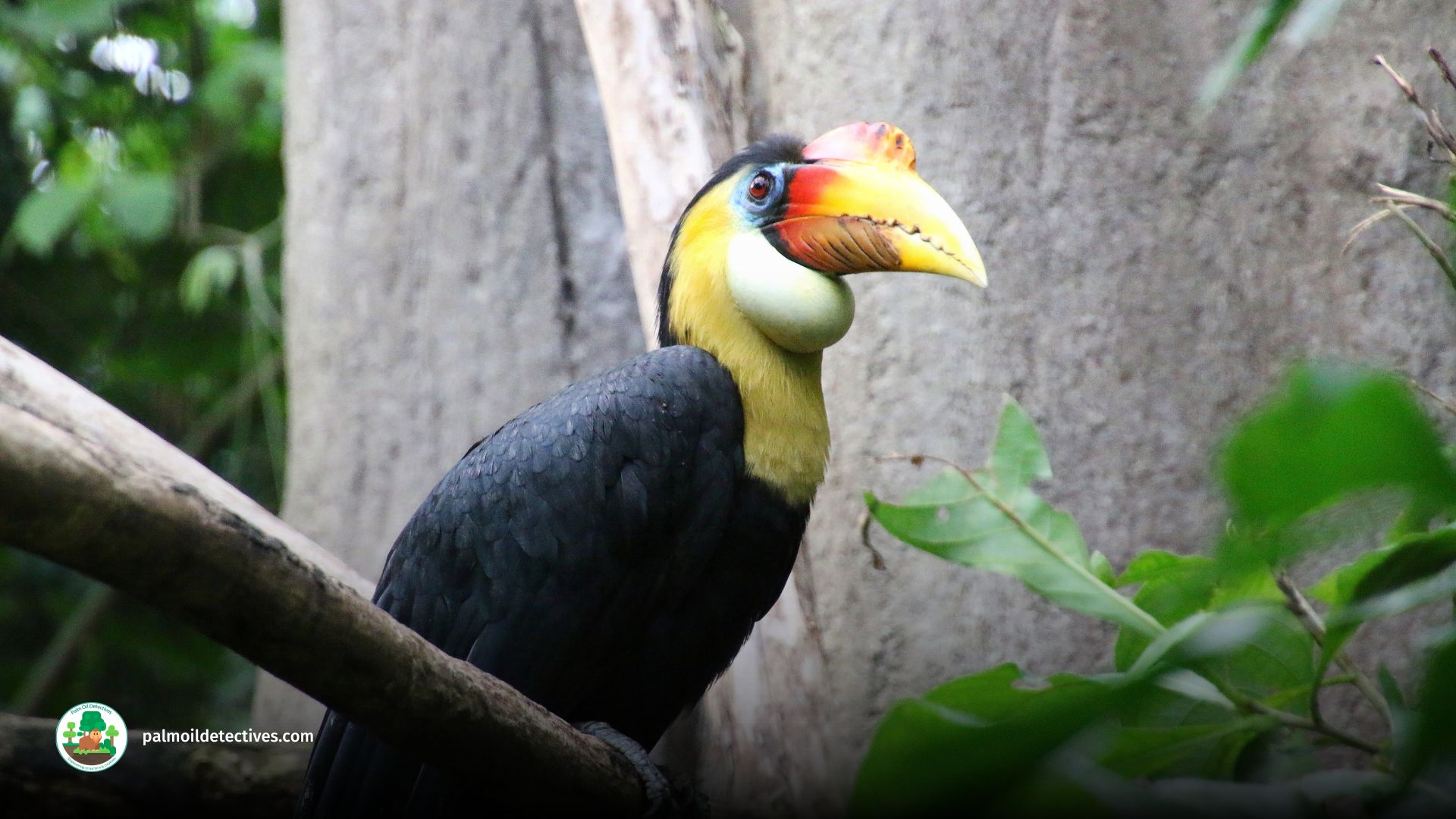
Sipora Flying Squirrel Hylopetes sipora

Sipora Flying Squirrel Hylopetes sipora

Red List Status: Endangered

Locations: Indonesia (Sipora Island, Mentawai Islands, Sumatra)

On the small, forested island of in the Mentawai the Sipora flying Hylopetes sipora drifts silently between ancient trees. This rare squirrel is found nowhere else on earth. At night, the Sipora flying squirrel emerges from the hollows of towering trees, their large eyes scanning the dim canopy. With a sudden leap, they unfold their patagium—a membrane stretching from wrist to ankle—and glide effortlessly through the air, landing on a distant branch with barely a sound. The forests of Sipora are being cleared for , charcoal and , leaving the Sipora flying squirrel with fewer places to hide. Use your wallet as a weapon and .

Appearance and Behaviour

The Sipora flying squirrel is a small, elusive rodent, their bodies are covered in soft, dense fur, typically a mottled brown or grey that blends with the shadows of the forest. Adults measure around 15 to 20 centimetres in body length, with tails nearly as long, and weigh between 50 and 100 grams. Their most striking feature is their patagiums, a broad skin flaps that help them to glide up to 50 metres between trees. This adaptation enables them to escape predators and travel efficiently through the tree canopy. The Sipora flying squirrel is strictly nocturnal, spending their days hidden in tree hollows and emerging at night to forage. Their large, dark eyes and sensitive whiskers help them navigate the dim forest, while their quiet, whistling calls and rustling movements mark their presence. They are solitary by nature, though they may share roosting sites during the day.

Threats

The habitat of the Sipora Flying Squirrel is being deforested for timber, firewood and conversion to agricultural land.

IUCN Red list

Timber and palm oil deforestation

The Sipora flying squirrel is classified as Endangered on the Red List, with the primary threat being the loss of their forest habitat. Sipora Island, covering just 845 square kilometres, is under increasing pressure from logging and palm oil deforestation. Forests are being stripped bare, replaced by fields and settlements, leaving only isolated fragments where the Sipora flying squirrel can survive.

Population fragmentation

Logging operations further fragment the remaining forest habitat of the Sipora flying squirrel. Roads and clearings cut through the forest, severing the vital connections that squirrels rely on for movement and foraging. Fragmentation isolates populations, reducing genetic diversity and increasing vulnerability to disease and environmental change.

Diet

Little is known about the diet of the Sipora flying squirrel, but like other flying squirrels, they are likely omnivorous, feeding on a variety of plant materials, including fruits, seeds, and leaves, as well as insects and other small invertebrates. Their foraging is a quiet, nocturnal activity, carried out in the safety of the canopy. The rhythm of their feeding is woven into the life of the forest, as they play a vital role in seed dispersal and the regeneration of their ecosystem. The availability of food is closely tied to the health of the forest, and the loss of habitat threatens their ability to find enough to eat.

Reproduction and Mating

Little is known about the reproductive habits of the Sipora flying squirrel, but related gliding squirrel species typically have one or two litters per year, with one to three young per litter. Females give birth in tree hollows or nests lined with leaves, and the young are cared for until they are able to glide and forage on their own. The mother is the primary caregiver, nursing and protecting her offspring as they grow. The family unit is tight-knit, with strong bonds between mother and young, but the pressures of habitat loss make survival increasingly difficult across generations.

Geographic Range

The Sipora flying squirrel is endemic to Sipora Island in the Mentawai archipelago, off the west coast of Sumatra, Indonesia. Their range is limited to the forests of this single island, which covers just 845 square kilometres. The natural home range of the Sipora flying squirrel is unknown, but it is likely to be small, given the limited area of suitable habitat. Their historical range has contracted dramatically due to deforestation and human encroachment, and they are now restricted to the few remaining patches of forest on the island.

FAQs

How many Sipora flying squirrels are left?

The exact population size of the Sipora flying squirrel is unknown, but their numbers are believed to be declining due to ongoing habitat loss and fragmentation. The species is listed as Endangered on the Red List, and their survival is threatened by the continued destruction of their forest home. The small size of Sipora Island and the rapid pace of deforestation make the Sipora flying squirrel particularly vulnerable to extinction.

What are the characteristics of the Sipora flying squirrel?

The Sipora flying squirrel is a small, nocturnal rodent with soft, dense fur and a long, bushy tail. They measure around 15 to 20 centimetres in body length and weigh between 50 and 100 grams. Their most distinctive feature is the patagium, a flap of skin that allows them to glide between trees. The Sipora flying squirrel is strictly arboreal, spending their days in tree hollows and emerging at night to forage. They are solitary by nature, though they may share roosting sites during the day.

Where does the Sipora flying squirrel live?

The Sipora flying squirrel is found only on Sipora Island, part of the Mentawai archipelago off the west coast of Sumatra, Indonesia. They inhabit subtropical or tropical dry forests, where they rely on the dense canopy for shelter and food. Their world is limited to this single island, and their survival is closely tied to the health of its forests.

What are the threats to the survival of the Sipora flying squirrel?

The main threats to the survival of the Sipora flying squirrel are habitat loss and fragmentation caused by logging, firewood collection, and agricultural expansion. The forests of Sipora Island are being cleared at an alarming rate, leaving only isolated patches where the squirrel can survive. Fragmentation isolates populations, reducing genetic diversity and increasing vulnerability to disease and environmental change. The disappearance of the Sipora flying squirrel’s forest home is the greatest threat to their existence.

Does the Sipora flying squirrel make a good pet?

The Sipora flying squirrel does not make a good pet. Captivity causes extreme stress, loneliness, and early death for these highly specialised forest animals. The pet trade rips families apart and fuels extinction, as animals are stolen from their natural habitat and forced into unnatural, impoverished conditions. Protecting the Sipora flying squirrel means rejecting the illegal pet trade and supporting their right to live wild and free in their forest home.

Take Action!

Use your wallet as a weapon and #BoycottPalmOil #Boycott4Wildlife. Support indigenous-led conservation and agroecology. Reject products linked to deforestation, mining, and the illegal wildlife trade. Adopt a lifestyle and to protect wild and farmed animals alike. Every choice matters—stand with the Sipora flying squirrel and defend the forests of Sipora Island.

Support the conservation of this species

This animal has no protections in place. Read about other forgotten species here. Create art to support this forgotten animal or raise awareness about them by sharing this post and using the #Boycott4Wildlife hashtags on social media. Also you can boycott palm oil in the supermarket.

Further Information

ICUN endangered logo

Lee, B. 2016. Hylopetes sipora. The IUCN Red List of Threatened Species 2016: e.T10606A22243951. https://dx.doi.org/10.2305/IUCN.UK.2016-2.RLTS.T10606A22243951.en. Downloaded on 05 February 2021.

Gliding Mammals of the world

Wikipedia. (n.d.). Sipora flying squirrel. https://en.wikipedia.org/wiki/Sipora_flying_squirrel

Caption: This beautiful painting is by My YM


Contribute to palm oil detectives - black rhino in profile

How can I help the ?


Take Action in Five Ways

1. Join the on social media and subscribe to stay in the loop: Share posts from this website to your own network on Twitter, Mastadon, Instagram, Facebook and Youtube using the hashtags .

Join 3,176 other subscribers

2. Contribute stories: Academics, conservationists, scientists, indigenous rights advocates and animal rights advocates working to expose the corruption of the palm oil industry or to save animals can contribute stories to the website.

3. Supermarket sleuthing: Next time you’re in the supermarket, take photos of products containing palm oil. Share these to social media along with the hashtags to call out the greenwashing and ecocide of the brands who use palm oil. You can also take photos of palm oil free products and congratulate brands when they go palm oil free.

4. Take to the streets: Get in touch with Palm Oil Detectives to find out more.

5. Donate: Make a one-off or monthly donation to Palm Oil Detectives as a way of saying thank you and to help pay for ongoing running costs of the website and social media campaigns. Donate here
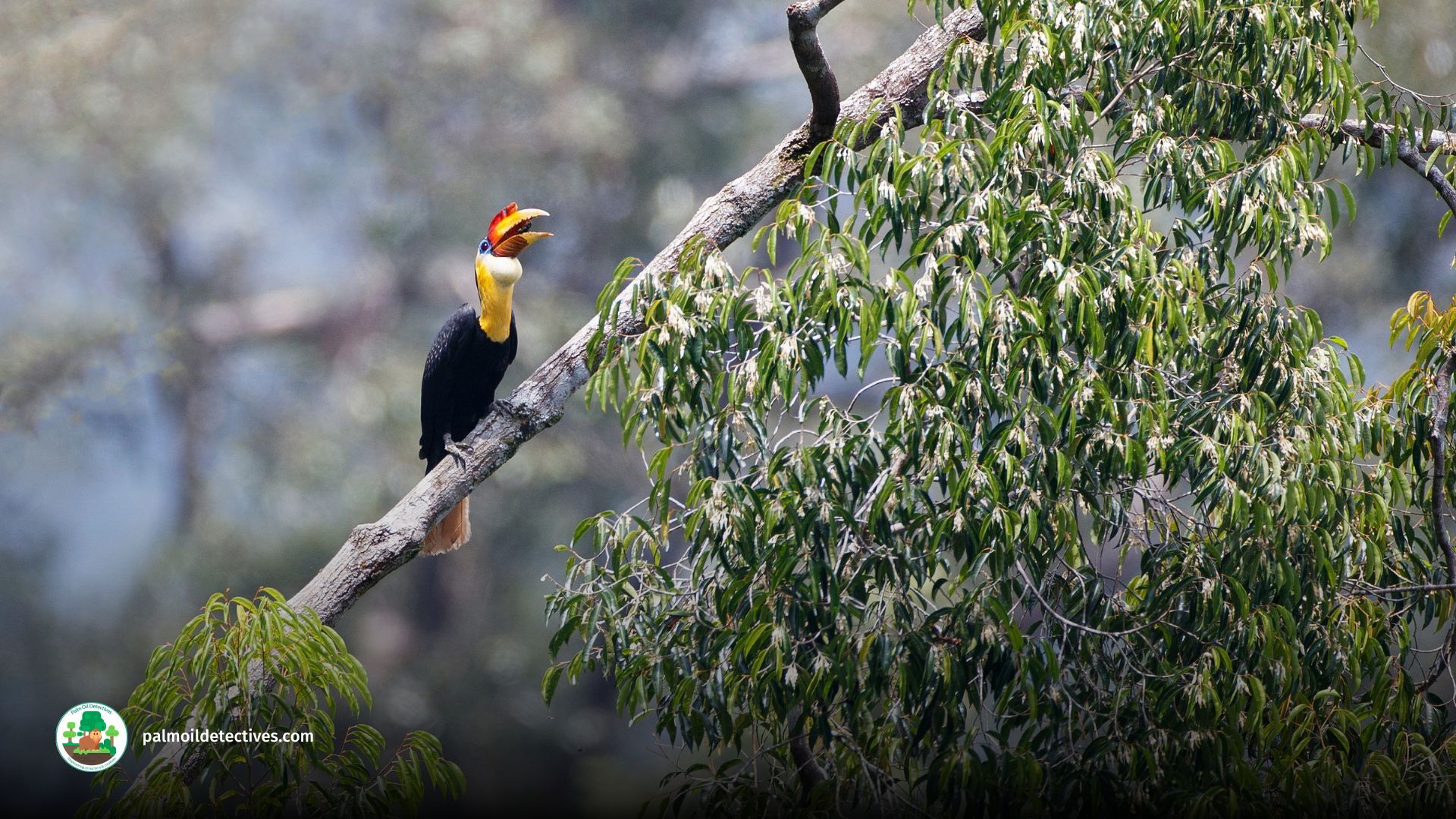
Siberut Flying Squirrel Petinomys lugens

Siberut Flying Squirrel Petinomys lugens

Red List Status: Vulnerable (Red List)

Locations: Mentawai Archipelago, Indonesia: Siberut, Sipora, and North Pagai islands. The Siberut Flying Squirrel is found only on these three islands off the west coast of Sumatra, gliding through the last remnants of subtropical and tropical dry forest.

The Siberut Flying Squirrel is one of the world’s most elusive gliders, found only in the Archipelago’s humid forests. At dusk, the Siberut Flying Squirrel launches from high branches, spreading their soft, square-shaped patagium to drift silently between ancient trees. The air is thick with the scent of damp earth and moss, and the only sound is the faint rustle of leaves as the Siberut Flying lands. Their world is shrinking fast—logging and plantations are destroying the last forests on , , and North Pagai. No conservation actions protect the Siberut Flying Squirrel. Stand with indigenous communities and use your wallet as a weapon.

Appearance and Behaviour

The Siberut Flying Squirrel is a small, nocturnal mammal with a body length of around 20–25 cm and a bushy tail nearly as long as their body. Their fur is dense and soft, with a muted brown colour that blends into the bark and shadows of the forest. The Siberut Flying Squirrel’s most remarkable feature is their gliding membrane, or patagium, which stretches from wrist to ankle and allows them to glide up to 50 metres between trees. Their large, dark eyes are adapted for night vision, and their long whiskers help them navigate in the dark. The Siberut Flying Squirrel is a silent, agile climber, using their tail as a rudder to steer and brake mid-glide. Unlike other squirrels, the Siberut Flying Squirrel rarely descends to the ground, spending almost all their life in the canopy.

Threats

The Mentawai Islands in which this species occurs are severely threatened by legal and illegal logging, conversion of commercial oil palm plantations, and product extraction by local people (Whittaker 2006).

IUCN Red list

Palm oil and logging deforestation

The Red List classifies the Siberut Flying Squirrel as Vulnerable due to rapid habitat loss across their tiny range. Logging and palm oil expansion are the main threats, destroying the last patches of forest on Siberut, Sipora, and North Pagai. Bulldozers clear ancient trees for plantations, leaving only small fragments of forest for the Siberut Flying Squirrel to survive. Even protected areas are under threat, and the Siberut Flying Squirrel has no legal protection or conservation actions in place. As the forest disappears, the Siberut Flying Squirrel faces an uncertain future, with nowhere left to glide (Clayton & Kennerley, 2016).

Habitat fragmentation and population collapse

Forest loss has split the Siberut Flying Squirrel’s habitat into isolated fragments. The Siberut Flying Squirrel is now found only in a few remaining patches, and populations are declining as trees fall and corridors vanish. Fragmentation increases the risk of inbreeding and local extinction, especially as the Siberut Flying Squirrel cannot easily cross open ground. Without urgent action, the Siberut Flying Squirrel may disappear from entire islands (Clayton & Kennerley, 2016).

Diet

The Siberut Flying Squirrel feeds on a variety of seeds, fruits, leaves, and possibly insects, foraging at night among the highest branches. Their sharp teeth crack open tough seeds, and their sensitive nose helps them locate ripe fruit in the darkness. The Siberut Flying Squirrel’s diet may shift with the seasons, depending on what the shrinking forest can provide (Palm Oil Detectives, 2021).

Reproduction and Mating

Little is known about the Siberut Flying Squirrel’s reproduction. Like other flying squirrels, they likely nest in tree hollows or dense foliage, raising one or two young at a time. The Siberut Flying Squirrel’s young are born helpless and depend on their mother for warmth and protection until they can glide and forage on their own. The Siberut Flying Squirrel’s secretive habits and shrinking population make it difficult for researchers to study their breeding in the wild (Clayton & Kennerley, 2016).

Geographic Range

The Siberut Flying Squirrel is endemic to the Mentawai Archipelago, Indonesia, and is found only on Siberut, Sipora, and North Pagai islands. Their range is limited to subtropical and tropical dry forests, which are rapidly disappearing due to logging and palm oil expansion. The Siberut Flying Squirrel’s habitat is now highly fragmented, and their populations are declining on all three islands (Clayton & Kennerley, 2016).

FAQs

How does the Siberut Flying Squirrel glide?

The Siberut Flying Squirrel uses a furry membrane called a patagium, stretching from their wrists to ankles, to glide between trees. They leap from high branches, spread their limbs, and steer with small movements of their legs and tail. The Siberut Flying Squirrel can glide up to 50 metres in a single leap, using their tail as a rudder to control direction and speed. This adaptation allows the Siberut Flying Squirrel to move efficiently through the canopy without descending to the ground, where they would be vulnerable to predators (Palm Oil Detectives, 2021).

Why is the Siberut Flying Squirrel threatened by palm oil?

Palm oil plantations are replacing the Siberut Flying Squirrel’s natural forest habitat. As forests are cleared for palm oil, the Siberut Flying Squirrel loses the trees they need for gliding, nesting, and feeding. The Siberut Flying Squirrel cannot survive in monoculture plantations and is forced into ever-smaller fragments of forest. Without urgent action to protect and restore their habitat, the Siberut Flying Squirrel faces extinction (Clayton & Kennerley, 2016).

Take Action!

Use your wallet as a weapon and #BoycottPalmOil #Boycott4Wildlife. Support indigenous-led conservation and agroecology in the Mentawai Islands. Fight for the Siberut Flying Squirrel’s survival every time you shop.

Support the conservation of this species

This animal has no protections in place. Read about other forgotten species here. Create art to support this forgotten animal or raise awareness about them by sharing this post and using the #Boycott4Wildlife hashtags on social media. Also you can boycott palm oil in the supermarket.

Further Information

IUCN Rating vulnerable

Clayton, E. & Kennerley, R. 2016. Petinomys lugens. The IUCN Red List of Threatened Species 2016: e.T16737A22242011. https://dx.doi.org/10.2305/IUCN.UK.2016-2.RLTS.T16737A22242011.en. Downloaded on 04 February 2021.

Gliding Mammals of the world

Wikipedia contributors. (n.d.). Siberut flying squirrel. Wikipedia. https://en.wikipedia.org/wiki/Siberut_flying_squirrel

Wilson, D. E., Lacher, T. E. Jr., & Mittermeier, R. A. (2016). Sciuridae, Handbook of the Mammals of the World – Volume 6 Lagomorphs and Rodents I. Lynx Edicions. https://doi.org/10.5281/zenodo.6818840

Caption: This beautiful painting is by My YM


Contribute to palm oil detectives - black rhino in profile

How can I help the ?


Take Action in Five Ways

1. Join the on social media and subscribe to stay in the loop: Share posts from this website to your own network on Twitter, Mastadon, Instagram, Facebook and Youtube using the hashtags .

Join 3,176 other subscribers

2. Contribute stories: Academics, conservationists, scientists, indigenous rights advocates and animal rights advocates working to expose the corruption of the palm oil industry or to save animals can contribute stories to the website.

3. Supermarket sleuthing: Next time you’re in the supermarket, take photos of products containing palm oil. Share these to social media along with the hashtags to call out the greenwashing and ecocide of the brands who use palm oil. You can also take photos of palm oil free products and congratulate brands when they go palm oil free.

4. Take to the streets: Get in touch with Palm Oil Detectives to find out more.

5. Donate: Make a one-off or monthly donation to Palm Oil Detectives as a way of saying thank you and to help pay for ongoing running costs of the website and social media campaigns. Donate here
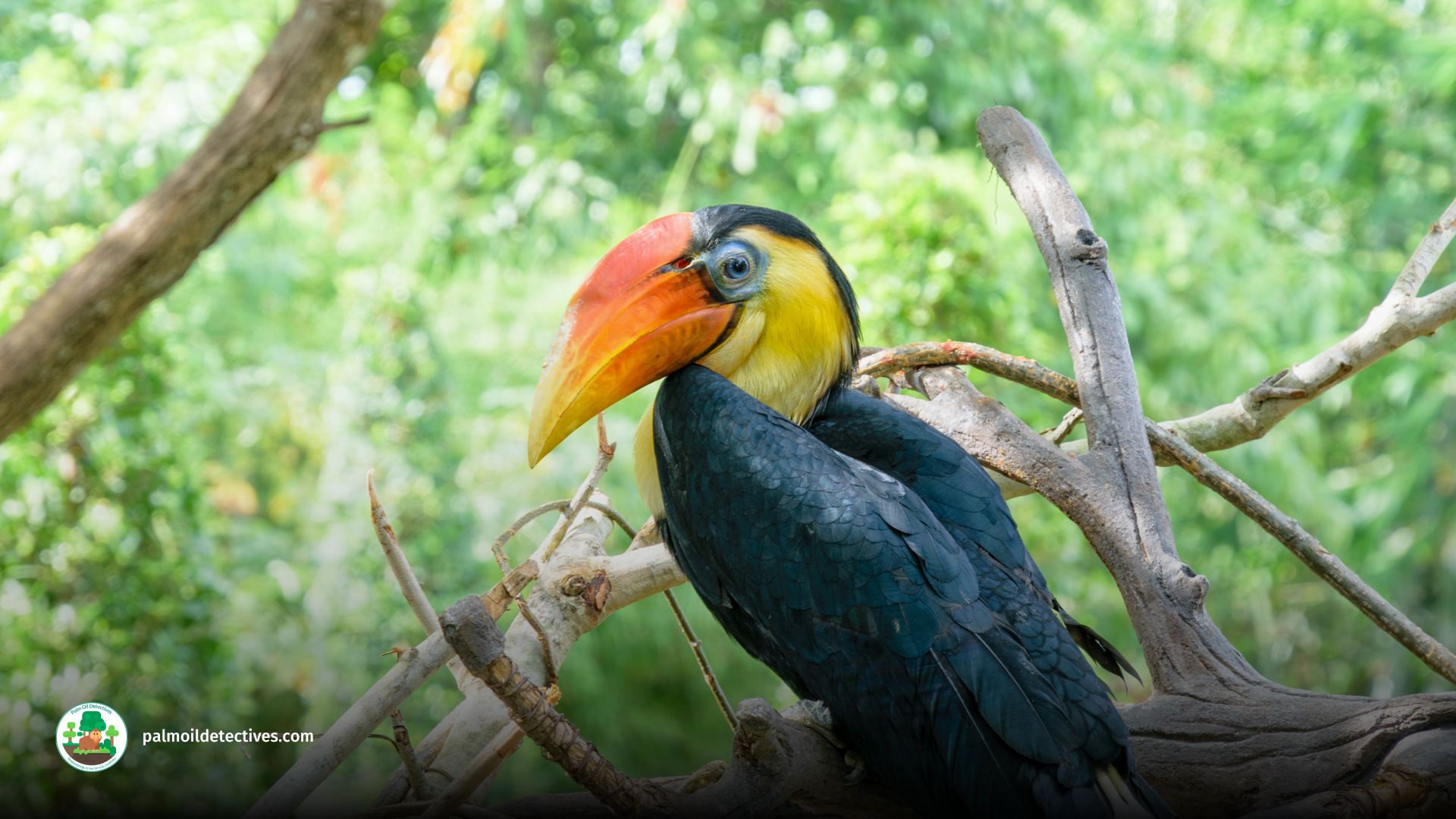
Woolly Flying Squirrel Eupetaurus cinereus

Woolly Flying Squirrel Eupetaurus cinereus

IUCN Status: Endangered

Location: Pakistan, India, Bhutan

The Western Woolly Flying Eupetaurus cinereus is one of the world’s largest and least understood gliding mammals. Once thought extinct for nearly 70 years, they were rediscovered in the remote mountainous forests of northern and in 1994. This remarkable species inhabits high-altitude cliffs and coniferous forests, where they glide with effortless grace between trees despite their large size. However, their survival is under severe threat from habitat destruction, , and human persecution. Help them by sharing out this campaign and calling out exploitative industries, it’s the

The fluffy and rare Woolly Flying 🦦🌳 glides 100s of metres in forests of 🇵🇰 and 🇮🇳They’re by and human persecution 😿 Help them to survive and industries destroying their home https://palmoildetectives.com/2021/02/05/woolly-flying-squirrel-eupetaurus-cinereus/

This squirrel is threatened by forest loss due to logging and agricultural conversion.This species is threatened by habitat loss due to large-scale clear-cutting of forests (Zahler and Woods 1997). It is also threatened to a lesser extent by expansion of agriculture, small-scale logging, infrastructure development, and human settlements (Molur et al. 2005).

IUCN Red list

A Phantom of the High Himalayas

For decades, the Western Woolly Flying Squirrel was little more than a legend—known only from a handful of 19th-century specimens. Weighing up to 2.5 kg and measuring over a metre in total length, they are among the largest gliding mammals. Their long, thick fur gives them a distinctively woolly appearance, helping them withstand the harsh conditions of their mountain habitat.

Their ability to glide is no less impressive than smaller flying squirrels, despite their size. These elusive creatures live in some of the world’s most inaccessible terrain, high in the Himalayas, where they navigate steep cliffs and deep valleys. But despite their extraordinary adaptations, human activity is pushing them towards extinction.

every time you shop.

Appearance and Behaviour

Western Woolly Flying Squirrels are covered in dense, greyish fur that gives them a shaggy, woolly look—unlike their recently discovered relatives, which have a more reddish-brown coat. Their long, bushy tails provide stability in flight, while their large, gliding membranes stretch between their limbs, allowing them to soar effortlessly through their rugged forest home.

They are highly specialised for life at extreme altitudes, found in conifer forests and rocky outcrops above 3,500 metres. Unlike many other flying squirrels, they have powerful jaw muscles and high-crowned teeth, adaptations that allow them to feed on tough conifer needles.

Diet

Unlike other flying squirrels that rely on nuts and fruits, the Western Woolly Flying Squirrel primarily feeds on pine needles. Their unique dental structure enables them to consume this fibrous diet, which is otherwise difficult to digest. They also contribute to the formation of shilajit—a resin-like substance prized in traditional medicine—through the accumulation of their faeces, urine, and shed hair in rocky crevices over centuries.

Reproduction and Mating

Little is known about the breeding habits of the Western Woolly Flying Squirrel. Their remote and inaccessible habitat makes long-term observation nearly impossible. However, like other flying squirrels, they likely give birth to small litters of offspring, raising their young in cliffside nests or tree hollows. Further research is needed to understand their reproductive behaviour and population dynamics.

Geographic Range

Once thought to be extinct, the Western Woolly Flying Squirrel was rediscovered in the 1990s in northern Pakistan, specifically in the Gilgit-Baltistan region, including Chitral, Astor, and Skardu. They have since been recorded in the Upper Neelum Valley of Azad Jammu and Kashmir, as well as in Uttarakhand, India, and Jigme Dorji National Park in Bhutan. The species’ preference for steep, forested cliffs makes their range extremely fragmented and vulnerable to disturbance.

Woolly Flying Squirrel Eupetaurus cinereus

Threats

Deforestation – Large-scale logging operations are rapidly destroying their coniferous forest habitat.

Human expansionAgricultural expansion, infrastructure projects, and human settlements are encroaching on their high-altitude forests.

Habitat fragmentation – Roads and development projects disrupt their ability to glide between trees and find suitable nesting sites.

Hunting and poaching – Although not commonly targeted, they may be hunted for their fur or as a perceived pest.

Take Action!

Protecting the Western Woolly Flying Squirrel requires urgent action to preserve their high-altitude forest habitat. You can help by:

• Avoiding products linked to deforestation, including palm oil and unsustainable timber.

• Supporting conservation efforts focused on protecting the Himalayan ecosystem.

• Raising awareness about the importance of preserving one of the world’s rarest flying squirrels.

FAQs

How many Western Woolly Flying Squirrels are left in the wild?

Their exact population size is unknown due to their remote habitat and elusive nature, but their numbers are believed to be declining due to habitat loss.

How long do Western Woolly Flying Squirrels live?

There is no confirmed data on their lifespan in the wild, but other large flying squirrels live around 10–15 years.

Are Western Woolly Flying Squirrels good pets?

No. These animals are highly specialised for life in extreme mountain environments and would not survive in captivity. Additionally, removing them from the wild would further endanger their fragile populations.

How far can they glide?

Though not well documented, similar-sized flying squirrels can glide over 100 metres. Their adaptations suggest they are capable of covering long distances between trees and cliffs.

Why are they so rare?

They live in one of the most remote and inaccessible regions in the world. Their preference for steep cliffs and high-altitude forests makes them extremely difficult to find and study.

Support the conservation of this species

This animal has no protections in place. Read about other forgotten species here. Create art to support this forgotten animal or raise awareness about them by sharing this post and using the #Boycott4Wildlife hashtags on social media. Also you can boycott palm oil in the supermarket.

Further Information

ICUN endangered logo

Gliding Mammals of the world

Jackson, S. M., et al. (2021). Across the great divide: revision of the genus Eupetaurus (Sciuridae: Pteromyini), the woolly flying squirrels of the Himalayan region, with the description of two new species. Zoological Journal of the Linnean Society. https://doi.org/10.1093/zoolinnean/zlab018

Zahler, P. 2010. Eupetaurus cinereus. The IUCN Red List of Threatened Species 2010: e.T8269A12904144. https://dx.doi.org/10.2305/IUCN.UK.2010-2.RLTS.T8269A12904144.en. Downloaded on 04 February 2021.

Caption: This beautiful painting is by My YM


Contribute to palm oil detectives - black rhino in profile

How can I help the ?


Take Action in Five Ways

1. Join the on social media and subscribe to stay in the loop: Share posts from this website to your own network on Twitter, Mastadon, Instagram, Facebook and Youtube using the hashtags .

Join 3,176 other subscribers

2. Contribute stories: Academics, conservationists, scientists, indigenous rights advocates and animal rights advocates working to expose the corruption of the palm oil industry or to save animals can contribute stories to the website.

3. Supermarket sleuthing: Next time you’re in the supermarket, take photos of products containing palm oil. Share these to social media along with the hashtags to call out the greenwashing and ecocide of the brands who use palm oil. You can also take photos of palm oil free products and congratulate brands when they go palm oil free.

4. Take to the streets: Get in touch with Palm Oil Detectives to find out more.

5. Donate: Make a one-off or monthly donation to Palm Oil Detectives as a way of saying thank you and to help pay for ongoing running costs of the website and social media campaigns. Donate here

Mentawi Flying Squirrel Iomys sipora

Mentawi Flying Squirrel Iomys sipora

IUCN Status: Endangered

Location: Indonesia (Mentawai Islands: Sipura and North Pagai)

The Flying #Squirrel (Iomys sipora), endemic to the remote Mentawai Islands of Indonesia, is a rare and elusive species that glides effortlessly through the dense tropical canopy. Unlike their more widespread relatives, these unique flying squirrels are confined to just two islands, and North Pagai, where they depend entirely on the survival of lowland primary forests. With velvety fur, large nocturnal eyes, and a patagium—an outstretched skin membrane allowing them to glide between trees—these squirrels are adapted to a life above the ground. However, relentless deforestation for palm oil plantations, logging, and agriculture has devastated their habitat, putting them at serious risk of extinction. Despite repeated surveys, including a 1991 study by the National Museum of , sightings of Iomys sipora are alarmingly rare, raising fears that their population may be critically low—or even lost. With no conservation measures in place, urgent action is needed to prevent their disappearance. Boycott -linked products and support indigenous-led conservation. #BoycottPalmOil #Boycott4Wildlife.

Gliding between trees in 🇮🇩with effortless grace, the Mentawi Flying 🦦is a sight to behold. They need to survive. is a threat, make sure you 🌴🪔💀🤮🧐🙊⛔️ @palmoildetect https://palmoildetectives.com/2021/02/05/mentawi-flying-squirrel-iomys-sipora/

This squirrel is threatened by forest loss due to logging and agricultural conversion.

IUCN Red list

Appearance and Behaviour

The world’s gliding mammals are an extraordinary group of animals that have the ability to glide from tree to tree with seemingly effortless grace. There are more than 60 species of gliding mammals including the flying squirrels from Europe and North America, the scaly-tailed flying squirrels from central Africa and the gliding possums of Australia and New Guinea.

The Mentawi Flying Squirrel is a striking and little-documented species with dense, velvety fur ranging from reddish-brown to deep grey. Their large, round eyes are adapted for night vision, enabling them to forage under the cover of darkness. A defining feature of this species is its patagium— a thin membrane of skin stretching between its limbs—that allows them to glide through the air with remarkable agility. This natural adaptation enables them to travel between trees without descending to the forest floor, avoiding predators while seeking food. Despite their impressive gliding ability, their dependence on intact rainforest means they struggle to survive in fragmented landscapes, making habitat loss a critical threat.

Threats

The Mentawi Flying Squirrel lives in primary forests up to 500 m. Habitat loss on the two islands represents a major threat to this lowland species.

Palm Oil Deforestation and Habitat Destruction

The Mentawai Islands are experiencing rapid deforestation, with lowland primary forests being cleared for palm oil plantations, logging, and agriculture. Iomys sipora relies entirely on undisturbed rainforest, and the loss of old-growth trees has significantly reduced available nesting sites and food sources. Once widespread, they are now found in just two fragmented locations, and their numbers are declining.

Illegal Wildlife Trade Extirpation

A 1991 survey failed to locate any individuals, raising concerns that populations may already be critically low or locally extinct. Habitat degradation and fragmentation mean that surviving populations are likely small and isolated, making recovery efforts increasingly difficult.

Agricultural Expansion and Infrastructure

Beyond palm oil, the Mentawai Islands face destruction from logging, rubber plantations, and road development, which further degrade the remaining habitat. Unlike more adaptable rodents, these flying squirrels cannot survive in secondary forests, making primary forest loss particularly devastating.

Climate Change and Extreme Weather Patterns

Climate change is altering rainfall patterns and increasing temperatures, which could further threaten this species’ delicate forest ecosystem. Rising temperatures may also affect fruiting seasons, reducing their food supply and further impacting their already struggling population.

Diet

Like other flying squirrels, Iomys sipora is primarily herbivorous, feeding on a mix of fruits, seeds, leaves, and flowers. Their diet plays a vital role in seed dispersal, helping regenerate their native rainforest. They rely on old-growth trees, which provide an abundance of food sources, but as these trees are felled, their dietary options become severely limited.

Reproduction and Mating

Due to the extreme rarity of Iomys sipora, very little is known about their reproductive habits. However, they are presumed to be solitary nesters, using tree hollows to raise their young. Like other flying squirrels, females likely give birth to one or two pups per litter, which remain dependent on their mothers until they develop the ability to glide and forage independently. The loss of old-growth trees also removes critical nesting sites, impacting their reproductive success and ability to recover from population losses.

Geographic Range

The Mentawi Flying Squirrel is restricted to two islands in Indonesia:

• Sipura Island

• North Pagai Island

Both islands are part of the Mentawai Archipelago, located off the coast of Sumatra. Their habitat is limited to lowland tropical primary forests below 500 metres above sea level, an ecosystem rapidly disappearing due to human activity.

FAQs

Why is the Mentawi Flying Squirrel endangered?

This species is classified as endangered due to its highly restricted range and ongoing deforestation. Logging, palm oil plantations, and habitat destruction have driven it to the brink, with no known conservation measures in place to protect its remaining populations.

Do Mentawi Flying Squirrels make good pets?

No. The illegal pet trade has devastating effects on wildlife, and keeping a Mentawi Flying Squirrel as a pet would contribute to their decline. These animals are highly specialised and cannot survive in captivity, often dying due to stress or inadequate care. Removing individuals from the wild further destabilises already fragile populations. If you care about their survival, support habitat protection and never purchase exotic pets.

How does palm oil impact the Mentawi Flying Squirrel?

Palm oil plantations are a primary driver of deforestation in Indonesia, replacing biodiverse rainforests with monoculture wastelands that provide no habitat for native species. These plantations have destroyed much of the Mentawai Islands’ primary forest, leaving little space for this already endangered species. Boycotting palm oil products is a direct way to protect their habitat.

How can we protect the Mentawi Flying Squirrel?

The most important conservation efforts include:

• Protecting remaining old-growth forests on the Mentawai Islands.

• Supporting indigenous-led conservation efforts, which are crucial for preserving biodiversity.

• Boycotting palm oil and timber products linked to deforestation.

• Encouraging reforestation projects in degraded areas to restore lost habitat.

Support the conservation of this species

This animal has no protections in place. Read about other forgotten species here. Create art to support this forgotten animal or raise awareness about them by sharing this post and using the #Boycott4Wildlife hashtags on social media. Also you can boycott palm oil in the supermarket.

Further Information

ICUN endangered logo

Gliding Mammals of the world

Lee, B. 2016. Iomys sipora (errata version published in 2017). The IUCN Red List of Threatened Species 2016: e.T10846A115099877. https://dx.doi.org/10.2305/IUCN.UK.2016-3.RLTS.T10846A22249119.en. Downloaded on 04 February 2021.

Ruedas, L., Duckworth, J. W., Lee, B., & Tizard, R. J. (2008). Iomys sipora. The IUCN Red List of Threatened Species. Retrieved from https://pmc.ncbi.nlm.nih.gov/articles/PMC8317177/.

Wikipedia. (2024). Mentawi Flying Squirrel. Retrieved from https://en.wikipedia.org/wiki/Mentawi_flying_squirrel.

Caption: This beautiful painting is by My YM


Contribute to palm oil detectives - black rhino in profile

How can I help the ?


Take Action in Five Ways

1. Join the on social media and subscribe to stay in the loop: Share posts from this website to your own network on Twitter, Mastadon, Instagram, Facebook and Youtube using the hashtags .

Join 3,176 other subscribers

2. Contribute stories: Academics, conservationists, scientists, indigenous rights advocates and animal rights advocates working to expose the corruption of the palm oil industry or to save animals can contribute stories to the website.

3. Supermarket sleuthing: Next time you’re in the supermarket, take photos of products containing palm oil. Share these to social media along with the hashtags to call out the greenwashing and ecocide of the brands who use palm oil. You can also take photos of palm oil free products and congratulate brands when they go palm oil free.

4. Take to the streets: Get in touch with Palm Oil Detectives to find out more.

5. Donate: Make a one-off or monthly donation to Palm Oil Detectives as a way of saying thank you and to help pay for ongoing running costs of the website and social media campaigns. Donate here
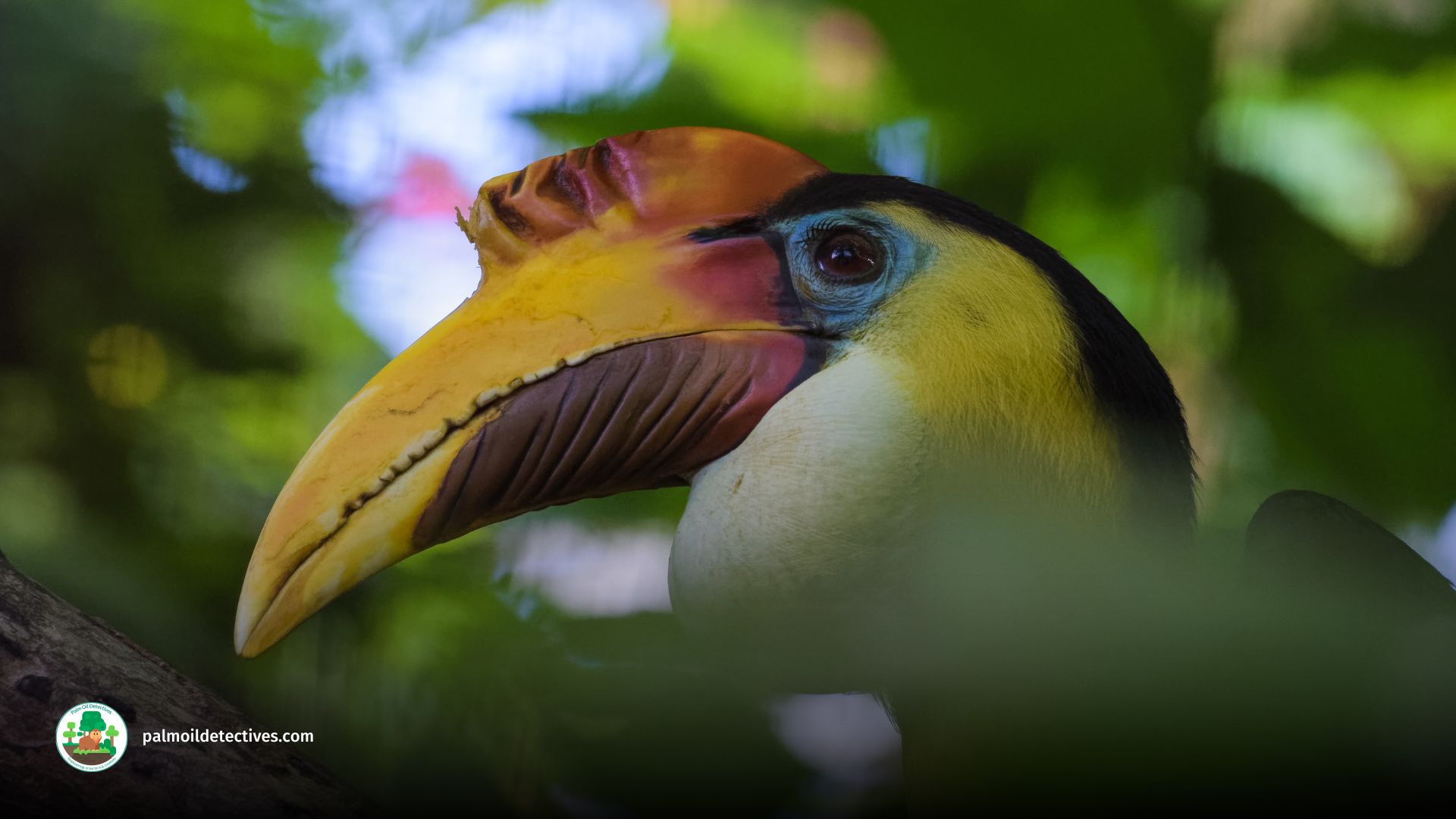
Vordermann’s Flying Squirrel Petinomys vordermanni

Vordermann’s Flying Squirrel Petinomys vordermanni

Red List Status: Vulnerable

Locations: Malaysia (Peninsular Malaysia), Indonesia (Borneo, Belitung Island, Riau Islands), Myanmar (southern regions), Brunei

In ’s twilight, the Vordermann’s flying emerges from her nest, resplendent with orange cheeks and black-ringed eyes. This small, is a master of the rainforest canopy. They use an ingenious membrane called a patagium to effortlessly glide between trees. A flying squirrel’s world is one of constant motion and quiet vigilance. Don’t let this world disappear! The forests that sustain them are vanishing at an alarming rate. Palm oil-driven deforestation, logging, and land conversion are tearing through their habitat, leaving only fragmented forest. Use your wallet as a weapon and .

Appearance and Behaviour

Vordermann’s flying squirrel is one of the smallest flying squirrels, with a head and body length of 92–120 millimetres and a tail of equal length, weighing between 22 and 52 grams. Their fur is a striking mix of black with rusty tips, and their underparts are a soft, rusty white. Each eye is ringed with black, and their orange cheeks and tufts of whiskers beneath the ears give them a distinctive, expressive face. The squirrel’s patagium—a skin flap between the limbs is like an airborne sail. Meanwhile their flattened bushy tail is akin to an airborne rudder helping them with precise movements through the air.

Vordermann’s flying squirrel is strictly nocturnal and arboreal, spending their days hidden in tree holes and emerging at night to forage and glide. They are agile climbers, using their sharp claws and keen senses to navigate the dense canopy. Their glides are silent and graceful, covering distances of several metres between trees. The squirrel’s world is one of constant movement and quiet communication, with little known about their social structure or vocalisations. Their nests are typically found 0.3 to 6 metres above the ground, often in partially cut primary forest, secondary forest, or forest bordering swamps.

Threats

This squirrel is threatened by forest loss due to logging and agricultural conversion.

IUCN Red list

Palm oil and other industrial agriculture

Vordermann’s flying squirrel is classified as Vulnerable on the Red List, with habitat loss the primary threat to their survival. Across Malaysia, Borneo, and Sumatra, forests are being cleared for palm oil plantations and agricultural expansion. These industrial-scale operations strip away the dense, multi-layered vegetation that the squirrel depends on for food and shelter. The once-continuous canopy is reduced to isolated patches, forcing squirrels into ever-smaller territories and increasing competition for resources.

Roads, infrastructure and timber logging

Logging operations further fragment the remaining forest habitat of Vordermann’s flying squirrel. Roads and clearings cut through the forest, severing the connections that squirrels rely on for movement and foraging. Fragmentation isolates populations, reducing genetic diversity and increasing vulnerability to disease and environmental change. In many areas, only small, isolated groups of squirrels remain, cut off from neighbouring populations by expanses of cleared land.

Hunting and illegal pet trade

While hunting and the illegal pet trade are not explicitly cited as major threats for Vordermann’s flying squirrel in current literature, the broader context of wildlife exploitation in Southeast Asia raises concerns. Any increase in human activity and access to remote forests could put additional pressure on this already vulnerable species.

Climate change and pollution

Climate change adds further pressure, altering rainfall patterns and the availability of food. The squirrel’s world is becoming hotter, drier, and less predictable, with the forests they depend on shrinking year by year. Extreme weather events, such as floods and droughts, can destroy habitat and isolate populations even further. Pollution from mining and agriculture can poison rivers and soil, further degrading the squirrel’s environment.

Diet

Vordermann’s flying squirrel is omnivorous, feeding on a variety of plant materials, including fruits, seeds, leaves, and bark, as well as insects and other small invertebrates. Their foraging is a quiet, nocturnal activity, carried out in the safety of the canopy. The rhythm of their feeding is woven into the life of the forest, as they play a vital role in seed dispersal and the regeneration of their ecosystem. The availability of food is closely tied to the health of the forest, and the loss of habitat threatens their ability to find enough to eat.

Reproduction and Mating

Vordermann’s flying squirrel is monogamous, with each female mating with a single male. Breeding occurs seasonally, typically in the spring months of February and March, and can extend into April. Females give birth to one to three young per litter, usually in tree holes. The gestation period and time to weaning are not well documented, but in similar species, mothers provide food and milk for several weeks until the young are able to forage on their own. Cooperative breeding may occur, with other group members assisting in the care of the young, but the exact social structure of Vordermann’s flying squirrel remains poorly understood.

Geographic Range

Vordermann’s flying squirrel is found in the lowland rainforests of southern Myanmar, Peninsular Malaysia, Borneo, and the Indonesian islands of Belitung and Riau. Their habitat includes primary and secondary forests, orchards, rubber plantations, and forests bordering swamps. The squirrel’s historical range has contracted due to deforestation and human encroachment, and they are now restricted to the few remaining patches of suitable habitat. The sounds of Vordermann’s flying squirrel—rustling leaves and silent glides—are now heard in fewer and fewer places.

FAQs

How many Vordermann’s flying squirrels are left?

There are no precise population estimates for Vordermann’s flying squirrel, but their numbers are believed to be declining due to ongoing habitat loss and fragmentation. The species is listed as Vulnerable on the Red List, with a suspected population decline of more than 30% over three generations. The squirrel’s survival is threatened by the continued destruction of their forest home.

What are the characteristics of Vordermann’s flying squirrel?

Vordermann’s flying squirrel is one of the smallest flying squirrels, with a head and body length of 92–120 millimetres and a weight of 22–52 grams. They have striking black fur with rusty tips, a white underside, and distinctive orange cheeks with black rings around their eyes. Their flattened, bushy tail and patagium allow them to glide silently through the forest canopy. Vordermann’s flying squirrel is strictly nocturnal and arboreal, spending their days in tree holes and emerging at night to forage.

Where does the Vordermann’s flying squirrel live?

Vordermann’s flying squirrel is found in the lowland rainforests of southern Myanmar, Peninsular Malaysia, Borneo, and the Indonesian islands of Belitung and Riau. They inhabit primary and secondary forests, orchards, rubber plantations, and forests bordering swamps. Their historical range has contracted due to deforestation and human encroachment, and they are now restricted to the few remaining patches of suitable habitat.

What are the threats to the survival of the Vordermann’s flying squirrel?

The main threats to the survival of Vordermann’s flying squirrel are habitat loss and fragmentation caused by palm oil-driven deforestation, logging, and agricultural expansion. The forests of Malaysia, Borneo, and Sumatra are being cleared at an alarming rate, leaving only isolated patches where the squirrel can survive. Fragmentation isolates populations, reducing genetic diversity and increasing vulnerability to disease and environmental change. Climate change and pollution add further pressure, altering the availability of food and shelter.

Do Vordermann’s flying squirrels make a good pets?

Vordermann’s flying squirrels most definitely do not make good pets. Captivity causes extreme stress, loneliness, and early death for these highly specialised forest animals. The illegal pet trade rips families apart and fuels extinction, as animals are stolen from their natural habitat and forced into unnatural, impoverished conditions. Protecting Vordermann’s flying squirrel means rejecting the illegal pet trade and supporting their right to live wild and free in their forest home.

Take Action!

Use your wallet as a weapon and #BoycottPalmOil #Boycott4Wildlife. Support indigenous-led conservation and agroecology. Reject products linked to deforestation, mining, and the illegal wildlife trade. Adopt a #vegan lifestyle and to protect wild and farmed animals alike. Every choice matters—stand with Vordermann’s flying squirrel and defend the forests of Southeast Asia.

Support the conservation of this species

This animal has no protections in place. Read about other forgotten species here. Create art to support this forgotten animal or raise awareness about them by sharing this post and using the #Boycott4Wildlife hashtags on social media. Also you can boycott palm oil in the supermarket.

Further Information

IUCN Rating vulnerable

Clayton, E. 2016. Petinomys vordermanni (errata version published in 2017). The IUCN Red List of Threatened Species 2016: e.T16740A115139026. https://dx.doi.org/10.2305/IUCN.UK.2016-3.RLTS.T16740A22241246.en. Downloaded on 04 February 2021.

Gliding Mammals of the world

Wikipedia. (n.d.). Vordermann’s flying squirrel. https://en.wikipedia.org/wiki/Vordermann%27s_flying_squirrel

Wilson, D. E., Lacher, T. E., & Mittermeier, R. A. (2016). Sciuridae, Handbook of the Mammals of the World – Volume 6 Lagomorphs and Rodents I. Lynx Edicions. https://doi.org/10.5281/zenodo.6840226

Caption: This beautiful painting is by My YM


Contribute to palm oil detectives - black rhino in profile

How can I help the ?


Take Action in Five Ways

1. Join the on social media and subscribe to stay in the loop: Share posts from this website to your own network on Twitter, Mastadon, Instagram, Facebook and Youtube using the hashtags .

Join 3,176 other subscribers

2. Contribute stories: Academics, conservationists, scientists, indigenous rights advocates and animal rights advocates working to expose the corruption of the palm oil industry or to save animals can contribute stories to the website.

3. Supermarket sleuthing: Next time you’re in the supermarket, take photos of products containing palm oil. Share these to social media along with the hashtags to call out the greenwashing and ecocide of the brands who use palm oil. You can also take photos of palm oil free products and congratulate brands when they go palm oil free.

4. Take to the streets: Get in touch with Palm Oil Detectives to find out more.

5. Donate: Make a one-off or monthly donation to Palm Oil Detectives as a way of saying thank you and to help pay for ongoing running costs of the website and social media campaigns. Donate here

Northern Glider Petaurus abidi

Northern Glider Petaurus abidi

IUCN Status: Critically Endangered

Location: Papua New Guinea – Torricelli Mountains

Northern Gliders are rare gliding 🪂🧐🩷 critically endangered in . Support them and because many supermarket brands are sending them for dirty @palmoildetect.bsky.social https://palmoildetectives.com/2021/02/05/northern-glider-petaurus-abidi-2/

The Northern Glider is a Critically Endangered species of gliding found only in the Torricelli Mountains of . First described in 1981, they remain one of the rarest and least studied members of the Petauridae family. Their population is in steep decline due to deforestation, habitat destruction for #palmoil, and for . With an estimated range of less than 100 square kilometres, the Northern Glider is at extreme risk of unless urgent conservation efforts are made to protect their habitat. Take action and resist for this species every time you shop and go #BoycottPalmOil #Boycott4Wildlife in the supermarket.

Appearance and Behaviour

The Northern Glider is a medium-sized gliding mammal and a marsupial with soft, silky fur. Their upper body is grey, with a paler underside and a distinctive dark stripe that runs from their head down their back to the base of their tail. They weigh between 228 and 332 grams and have shorter ears and smaller claws than some of their close relatives. These gliders are nocturnal and arboreal, using the skin flaps between their limbs to glide between trees as they search for food.

Gliding mammals of Papua include:

Diet

Very little is known about their diet, but they are believed to feed on vines, epiphytic ferns, and leaves from various tropical plants. Like other gliders, they likely play an important role in their ecosystem by aiding seed dispersal.

Reproduction and Mating

Research on the breeding habits of these flying squirrels is limited, but they are presumed to give birth to one or two young at a time, similar to other members of their genus. Further study is needed to understand their reproductive cycles and population trends.

Geographic Range

The Northern Glider is known only from Mount Somoro, and adjacent areas, in the Torricelli Mountains of north-western Papua New Guinea. This species has been found in primary, mid-montane tropical moist forests. They are known from rural gardens close to forest (Flannery 1995).

The Northern Glider is a part of a unique range of gliding mammals. Northern Gliders are endemic to the Torricelli Mountains in northwestern Papua New Guinea. Their total range is estimated to be less than 100 square kilometres, making them highly vulnerable to habitat destruction and fragmentation.

Threats

The Northern Glider is threatened by heavy deforestation due to human encroachment (i.e., conversion to gardens), and by hunting for meat by local people.

IUCN Red list
  • Palm oil and Timber Deforestation: Large swathes of their habitat are being cleared for palm oil and timber agriculture and human settlements.
  • Hunting: They are hunted for food by local communities, putting additional pressure on their already declining population.
  • Habitat Fragmentation: Forest clearing has led to isolated populations, reducing their chances of long-term survival.

Take Action

Protecting forests is critical to ensuring the Northern Glider has a future in the wild. Support conservation efforts and call for stronger protections against palm oil deforestation in Papua New Guinea. Resist and fight for their survival each time you shop #BoycottPalmOil #Boycott4Wildlife.


Support the conservation of this species

This animal has no protections in place. Read about other forgotten species here. Create art to support this forgotten animal or raise awareness about them by sharing this post and using the #Boycott4Wildlife hashtags on social media. Also you can boycott palm oil in the supermarket.

Further Information

iucn-rating-critically-endangered

Leary, T., Wright, D., Hamilton, S., Singadan, R., Menzies, J., Bonaccorso, F., Salas, L., Dickman, C. & Helgen, K. 2016. Petaurus abidi. The IUCN Red List of Threatened Species 2016: e.T16726A21959298. https://dx.doi.org/10.2305/IUCN.UK.2016-2.RLTS.T16726A21959298.en. Downloaded on 04 February 2021.

Ziegler, A. C. (1981). Petaurus abidi, a new species of glider (Marsupialia: Petauridae) from Papua New Guinea. Australian Mammalogy, 4(2), 81–88. https://doi.org/10.1071/AM81002

Gliding Mammals of the world

Caption: This beautiful painting is by My YM


Contribute to palm oil detectives - black rhino in profile

How can I help the ?


Take Action in Five Ways

1. Join the on social media and subscribe to stay in the loop: Share posts from this website to your own network on Twitter, Mastadon, Instagram, Facebook and Youtube using the hashtags .

Join 3,176 other subscribers

2. Contribute stories: Academics, conservationists, scientists, indigenous rights advocates and animal rights advocates working to expose the corruption of the palm oil industry or to save animals can contribute stories to the website.

3. Supermarket sleuthing: Next time you’re in the supermarket, take photos of products containing palm oil. Share these to social media along with the hashtags to call out the greenwashing and ecocide of the brands who use palm oil. You can also take photos of palm oil free products and congratulate brands when they go palm oil free.

4. Take to the streets: Get in touch with Palm Oil Detectives to find out more.

5. Donate: Make a one-off or monthly donation to Palm Oil Detectives as a way of saying thank you and to help pay for ongoing running costs of the website and social media campaigns. Donate here

Smoky Flying Squirrel Pteromyscus pulverulentus

Smoky Flying Squirrel Pteromyscus pulverulentus

Endangered

Location: Found in tropical forests across Peninsular Malaysia, Borneo, Sumatra, and southern Thailand.

The Smoky Flying Squirrel Pteromyscus pulverulentus is a rare and elusive creature silently and gracefully gliding between the towering canopies of Southeast Asia’s rainforests. With their smoky-grey fur, expansive gliding membrane, and bushy tail, these squirrels are perfectly adapted to a dynamic life on the move in the treetops.

Classified as Endangered by the IUCN, their populations are dwindling and at a critical all time low due to habitat destruction from timber logging, palm oil plantations, and agricultural expansion. This fleet footed nocturnal marvel symbolises the fragile ecosystems of Southeast Asia. Protect them by boycotting palm oil and fighting deforestation.

Smoky Flying glide elegantly through 🇮🇩 🇲🇾 🇹🇭 forests 😍🌳 and expansion is a main threat. Support this beautiful animal when you 🌴🤮🙊🚫 @palmoildetect https://palmoildetectives.com/2021/02/05/smoky-flying-squirrel-pteromyscus-pulverulentus/

With big eyes 👀and a special gliding flap called a patagium, Smoky Flying glide easily in S.E 🌳 Sadly, and are threats. Fight back and 🌴☠️🔥⛔️ @palmoildetect https://palmoildetectives.com/2021/02/05/smoky-flying-squirrel-pteromyscus-pulverulentus/

This species is likely to be affected by habitat degradation from palm oil plantations because of their low elevational range.

IUCN RED LIST

Appearance and Behaviour

The Smoky Flying Squirrel is a small, arboreal mammal with a head-body length of approximately 20 cm and a tail length of around 18–20 cm. Their distinctive smoky-grey fur and lighter underbelly provide excellent camouflage in the forest canopy. Their large, round eyes are well-adapted for nocturnal activity, allowing them to forage under the cover of darkness.

Equipped with a gliding membrane, known as the patagium, they can glide distances of up to 60 metres between trees. They are shy, nocturnal creatures, emerging at night to feed and moving silently through the treetops to avoid predators.

Threats

IUCN Status: Endangered

Habitat loss from palm oil and timber

The primary threat to the Smoky Flying Squirrel is the rapid loss of Southeast Asia’s lowland and montane forests. Deforestation for logging, palm oil plantations, and agricultural land continues to fragment their habitat, isolating populations and reducing genetic diversity.

Climate Change:

Climate change-driven altered rainfall patterns and increasing temperatures threaten the delicate balance of their forest ecosystems, reducing food availability and increasing competition with other arboreal species.

Hunting and the illegal wildlife trade:

While not a primary target, these squirrels are occasionally captured and sold as exotic pets or consumed as bushmeat in some areas.

Pollution run-off from palm oil plantations

Agricultural run-off and pollution in rivers is another emerging threat to these squirrels.

Diet

The Smoky Flying Squirrel’s diet consists primarily of fruits, seeds, and leaves, with occasional foraging on tree bark. Their nocturnal feeding habits help them avoid competition with diurnal species. Seasonal changes in fruiting patterns influence their diet, forcing them to adapt to varying food availability.

Reproduction and Mating

Very little is known about the reproductive habits of the Smoky Flying Squirrel. Peak breeding occurs between April to June but this species does breed throughout the year, producing one or two young. As with other flying squirrels, they are believed to nest in tree hollows or dense vegetation. Nest holes were recorded which were three to four metres above the ground in trees. Females have an average pregnancy rate of 9% over a three-year period. Young squirrels rely heavily on their parents during the initial months, learning gliding and foraging skills essential for survival in the forest canopy.

Geographic Range

These remarkable airborne squirrels prefer primary tropical rainforests below 300 metres above sea level in Peninsular Malaysia, Borneo, Sumatra, and southern Thailand. Their populations are closely tied to undisturbed forests, and they are rarely observed in degraded or fragmented habitats. While historical records mention sightings in Vietnam, these are unconfirmed.

FAQ

What is the Smoky Flying Squirrel’s conservation status?

The Smoky Flying Squirrel is classified as Endangered on the IUCN Red List. Habitat destruction is the primary reason for their decline, with populations decreasing across their range.

How far can Smoky Flying Squirrels glide?

Using their patagium, Smoky Flying Squirrels can glide distances of up to 60 metres, enabling them to move between trees efficiently and evade predators in the canopy.

Where do Smoky Flying Squirrels live?

These squirrels are found in tropical forests across Peninsular Malaysia, Sumatra, Borneo, and southern Thailand. They prefer undisturbed primary forests but can sometimes be found in secondary forests with dense tree cover.

What do Smoky Flying Squirrels eat?

Their diet mainly consists of fruits, seeds, and leaves, but they also forage on tree bark. Seasonal fruiting cycles significantly impact their feeding habits, making intact forests essential for their survival.

What are the main threats to Smoky Flying Squirrels?

Pollution of waterways from oil palm run offs was also identified as a key threatening factor by Lim and Das (1999) in Malaysia. 

IUCN Red list

Habitat loss due to deforestation for palm oil plantations, agricultural expansion, pollution run-off from palm oil plantations and logging are the biggest threat to Smoky Flying Squirrels. Climate change and occasional hunting are also contributing to their decline.

Take Action!

The Smoky Flying Squirrel is critically important animal in Southeast Asia’s rainforest ecosystems, playing a role in seed dispersal and maintaining forest health. Protect their habitat by advocating for indigenous-led conservation efforts and boycotting products linked to deforestation. Use your wallet as a weapon and #BoycottPalmOil #Boycott4Wildlife.

Support the conservation of this species

This animal has no protections in place. Read about other forgotten species here. Create art to support this forgotten animal or raise awareness about them by sharing this post and using the #Boycott4Wildlife hashtags on social media. Also you can boycott palm oil in the supermarket.

Further Information

ICUN endangered logo

Clayton, E. 2016. Pteromyscus pulverulentus. The IUCN Red List of Threatened Species 2016: e.T18703A22245307. https://dx.doi.org/10.2305/IUCN.UK.2016-2.RLTS.T18703A22245307.en. Downloaded on 04 February 2021.

Clayton, E. (2016). Pteromyscus pulverulentus. The IUCN Red List of Threatened Species 2016: e.T18703A22245307. https://dx.doi.org/10.2305/IUCN.UK.2016-2.RLTS.T18703A22245307.en

GBIF. (n.d.). Pteromyscus pulverulentus. https://www.gbif.org/species/2437227

Mongabay. (2021). In the Borneo canopy: Life thrives in surprising ways, camera-trap study shows. https://news.mongabay.com/2021/08/in-the-borneo-canopy-life-thrives-in-surprising-ways-camera-trap-study-shows/

Myym. (n.d.). Smoky Flying Squirrel. https://www.myym.ru/species/58.html

Plazi. (n.d.). Smoky Flying Squirrel (Pteromyscus pulverulentus). http://treatment.plazi.org/id/FFA16D59D9EF7276878E085F792C3608/3

Thai National Parks. (n.d.). Smoky Flying Squirrel. https://www.thainationalparks.com/species/smoky-flying-squirrel

Caption: This beautiful painting is by My YM


Contribute to palm oil detectives - black rhino in profile

How can I help the ?


Take Action in Five Ways

1. Join the on social media and subscribe to stay in the loop: Share posts from this website to your own network on Twitter, Mastadon, Instagram, Facebook and Youtube using the hashtags .

Join 3,176 other subscribers

2. Contribute stories: Academics, conservationists, scientists, indigenous rights advocates and animal rights advocates working to expose the corruption of the palm oil industry or to save animals can contribute stories to the website.

3. Supermarket sleuthing: Next time you’re in the supermarket, take photos of products containing palm oil. Share these to social media along with the hashtags to call out the greenwashing and ecocide of the brands who use palm oil. You can also take photos of palm oil free products and congratulate brands when they go palm oil free.

4. Take to the streets: Get in touch with Palm Oil Detectives to find out more.

5. Donate: Make a one-off or monthly donation to Palm Oil Detectives as a way of saying thank you and to help pay for ongoing running costs of the website and social media campaigns. Donate here

Southeast Asian Box Turtle Cuora amboinensis

Southeast Asian Box Turtle Cuora amboinensis

IUCN Status: Endangered

The Southeast Asian Box Cuora amboinensis, also known as the Amboina Box Turtle, Malayan Box Turtle, or Indonesian Box Turtle, is a freshwater species found across much of Southeast Asia. This species is under severe pressure due to overexploitation for food, traditional medicine, and the , particularly in Australia, , Europe, and the United States. Their semi-aquatic nature allows them to thrive in swamps, rice paddies, and slow-moving rivers, but habitat destruction from #palmoil plantations, and wetland drainage threatens their survival. Their population is rapidly declining due to these threats, making urgent protections necessary. Resist destruction and fight for their survival every time you shop – #BoycottPalmOil #Boycott4Wildlife.

The Southeast Asian Box 🐢💚🫶 is rare and disappearing , they’re due to deforestation in 🇮🇳 🇮🇩 and the trade. Fight for them and 🌴🤮🔥🧐⛔️ @palmoildetect https://palmoildetectives.com/2021/02/05/southeast-asian-box-turtle-cuora-amboinensis/

Location: The Southeast Asian Box Turtle is native to Southeast Asia. It is found across Indonesia, Malaysia, Thailand, Vietnam, Cambodia, Laos, Myanmar, the Philippines, Brunei, and parts of India and Bangladesh.

Appearance and Behaviour

The Southeast Asian Box Turtle Cuora amboinensis, also known as the Amboina Box Turtle, Malayan Box Turtle, Indonesian Box Turtle, and Burmese Box Turtle, has a domed, olive-brown to black carapace (shell) with a yellow plastron (underside), often featuring dark markings. Unlike most turtles, they have a fully hinged plastron, allowing them to close their shell completely for protection against predators. Their large, dark eyes and distinctive yellow streaks on the head and neck give them a striking appearance.

In Malaysia the turtle was considered common in the 1990s, however, numbers have since reduced and they are considered Vulnerable (Schoppe 2008). Population density (including immature individuals) in an oil palm plantation in Sabak Bernam was 0.82 individuals/ha (Schoppe 2008).

IUCN

These turtles are slow-moving and spend much of their time hiding in vegetation or submerged in shallow water. Although they are primarily aquatic, they can move between water and land with ease. They are known for their ability to remain still for long periods, using their natural camouflage to avoid predators.

Threats

The Southeast Asian Box Turtle faces multiple threats, primarily from human exploitation and habitat destruction:

Pollution of waterways from oil palm run offs was also identified as a key threatening factor by Lim and Das (1999) in Malaysia. 

IUCN Red list

Illegal Wildlife Trade

This species is one of the most heavily trafficked turtles in the world, exported in huge numbers to China for food and traditional medicine, as well as to international pet markets such as Australia and the USA.

Palm oil and timber deforestation

Wetlands, swamps, and slow-moving rivers are being destroyed to make way for palm oil plantations, agriculture, and urban development.

Pollution and Climate Change

Water pollution from industrial agriculture, including palm oil plantations, is poisoning their habitats, while climate change-induced flooding and droughts disrupt their ecosystems.

If urgent action is not taken, the Southeast Asian Box Turtle may disappear from the wild within a few decades.

Diet

Cuora amboinensis is an opportunistic omnivore, feeding on a wide range of plants, fruits, fungi, and animal matter. Studies have shown that their diet varies by age, with juveniles consuming more animal-based foods like insects and worms, while adults rely more on aquatic plants and fruits.

Research indicates that these turtles play a crucial role in seed dispersal, moving seeds between wetland and forest ecosystems. In a study conducted in Indonesia, seeds passed through their digestive system over 2–9 days, allowing for dispersal across distances of 70–313 metres. Some seeds even germinated better after being eaten by these turtles, making them vital for maintaining healthy wetland forests. However, their populations are in decline due to overharvesting and habitat destruction.

Reproduction and Mating

Southeast Asian Box Turtles reach sexual maturity at around 5–7 years of age. Mating occurs in shallow water, with males using their long tails and distinctive throat vibrations to court females. After successful mating, females lay clutches of 1–5 eggs in sandy soil or leaf litter, often near water sources. The incubation period lasts between 65 and 90 days, depending on temperature and humidity.

Unlike many turtle species, the hatchlings emerge fully independent, with no parental care. Their small size and soft shells make them highly vulnerable to predators, but those that survive can live for over 30 years in the wild.

FAQs

Southeast Asian Box Turtle Cuora amboinensis close up threats

Do Southeast Asian Box Turtles make good pets?

Keeping a Southeast Asian Box Turtle as a pet is strongly discouraged. These turtles are wild animals, not pets, and their populations are rapidly declining due to the cruel and unsustainable pet trade. Thousands are taken from their natural habitat each year and shipped to markets, where they suffer stress, malnutrition, and death. Many die before even reaching buyers due to the horrific conditions they are kept in. If you truly care about this species, you must never buy one and instead support conservation efforts to protect them in the wild.

How big do Southeast Asian Box Turtles get?

They typically grow to 20–25 cm (8–10 inches) in length, with females being slightly larger than males.

What is the lifespan of a Southeast Asian Box Turtle?

In the wild, these turtles can live 30–50 years, but most individuals caught for the pet trade die prematurely due to stress, dehydration, and poor care.

What do Southeast Asian Box Turtles eat?

They are omnivores, eating a mix of fruits, seeds, aquatic plants, insects, small amphibians, and carrion. They also play a vital role in seed dispersal, making them an important species for wetland ecosystems.

How can I help protect Southeast Asian Box Turtles?

• Never buy them as pets – the pet trade is driving them toward extinction.

• Boycott products linked to deforestation, especially palm oil, which is wiping out their wetland habitats.

• Raise awareness and educate others about the threats they face.

• Report illegal wildlife trade if you see these turtles being sold.

Resist and fight for their survival every time you shop – .

Take Action!

Use your wallet as a weapon in the supermarket and #BoycottPalmOil #Boycott4Wildlife. Every purchase you make has the power to support or destroy the natural world. By choosing products that are 100% palm oil-free, you help protect wetland habitats and ensure these turtles have a future.

Help with conservation of this creature

Turtle Conservation Fund

Further Information

ICUN endangered logo

Cota, M., Hoang, H., Horne, B.D., Kusrini, M.D., McCormack, T., Platt, K., Schoppe, S. & Shepherd, C. 2020. Cuora amboinensis. The IUCN Red List of Threatened Species 2020: e.T5958A3078812. https://dx.doi.org/10.2305/IUCN.UK.2020-2.RLTS.T5958A3078812.en. Downloaded on 04 February 2021.

Karraker, N. E., Kusrini, M. D., Atutubo, J. R., Healey, R. M., & Yusratul, A. (2020). Non‐marine turtle plays important functional roles in Indonesian ecosystems. Ecology and Evolution, 10(18), 9613–9623. https://doi.org/10.1002/ece3.6487

Turtle Survival Alliance. (2020). Species Spotlight: Southeast Asian Box Turtle (Cuora amboinensis). Retrieved from https://turtlesurvival.org/species-spotlight-southeast-asian-box-turtle/

Wikipedia contributors. (n.d.). Southeast Asian box turtle. Wikipedia, The Free Encyclopedia. Retrieved [insert date], from https://en.wikipedia.org/wiki/Southeast_Asian_box_turtle.


Contribute to palm oil detectives - black rhino in profile

How can I help the ?


Take Action in Five Ways

1. Join the on social media and subscribe to stay in the loop: Share posts from this website to your own network on Twitter, Mastadon, Instagram, Facebook and Youtube using the hashtags .

Join 3,176 other subscribers

2. Contribute stories: Academics, conservationists, scientists, indigenous rights advocates and animal rights advocates working to expose the corruption of the palm oil industry or to save animals can contribute stories to the website.

3. Supermarket sleuthing: Next time you’re in the supermarket, take photos of products containing palm oil. Share these to social media along with the hashtags to call out the greenwashing and ecocide of the brands who use palm oil. You can also take photos of palm oil free products and congratulate brands when they go palm oil free.

4. Take to the streets: Get in touch with Palm Oil Detectives to find out more.

5. Donate: Make a one-off or monthly donation to Palm Oil Detectives as a way of saying thank you and to help pay for ongoing running costs of the website and social media campaigns. Donate here
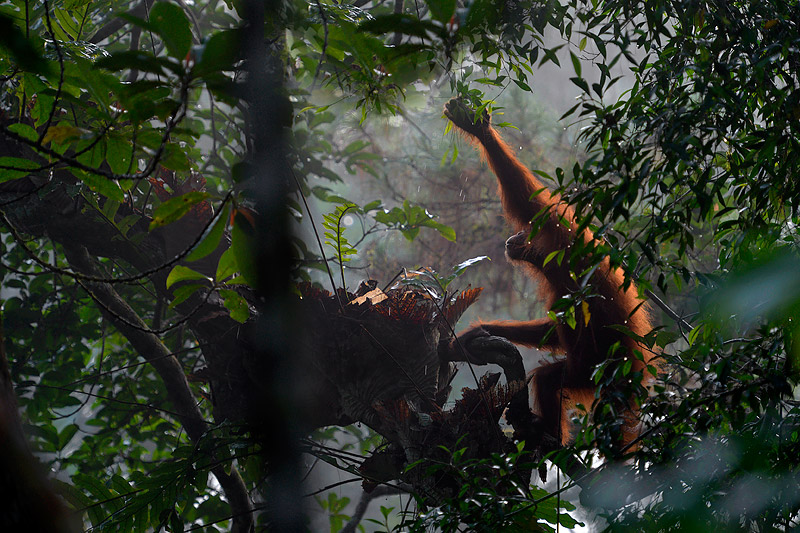
Bornean Ferret Badger Melogale everetti

Bornean Ferret Badger Melogale everetti

IUCN Red List Status: Endangered

Location: The Bornean Ferret Badger is endemic to the island of Borneo, specifically in the montane forests of northern Borneo. Key confirmed locations include Gunung Alab, Mount Kinabalu, and the Crocker Range in Sabah and Sarawak, Malaysia.

The Bornean Ferret Badger is an enigmatic nocturnal omnivore, known for their dependence on intact montane forests. Due to habitat destruction, primarily caused by deforestation for out-of-control palm oil plantations and agriculture in Malaysia, they are classified as endangered. These threats pose grave risk to these elusive creatures.
As omnivores and foragers, Bornean Ferret Badgers play a crucial role in their ecosystems. Their diet helps regulate pest populations, while their foraging aerates soil, promoting forest health. By consuming fruit, they may also aid in seed dispersal, contributing to the regeneration of their montane forest habitats. Immediate research and conservation action are needed to secure their future. Help their survival and use your wallet as a weapon when you shop, #BoycottPalmOil #Boycott4Wildlife

Bornean Ferret 🦡 are normally never seen. One of the least studied is also one of the most . Mainly from . Help them survive when you 🌴🪔💩🤮⛔️ @palmoildetect https://palmoildetectives.com/2021/02/05/bornean-ferret-badger-melogale-everetti/

Bornean Ferret become aggressive when cornered and release a potent scent. Known as ‘Biul Slentek’ they’re by in . Help them survive when you 🌴🪔💩🤮⛔️ @palmoildetect https://palmoildetectives.com/2021/02/05/bornean-ferret-badger-melogale-everetti/

Appearance and Behaviour

• Known locally in Malay as “Biul Slentek,” these badgers of the mustelid family are culturally significant in the regions where they are found.

• Despite their small size, they exhibit fierce defensive behaviours, including releasing a skunk-like odour and displaying bold colouration to deter predators.

• Their nocturnal and elusive nature makes them one of the most challenging species to study in Southeast Asia.

Bornean Ferret Badger Melogale everetti

The Bornean Ferret Badger is a mammal of the mustelid family, covered in fur that ranges from grey-brown to dark black, with a lighter underside. A bold facial “mask” of white or yellow stripes gives them a distinct, ferret-like appearance, and a dorsal stripe runs from the top of their head to their shoulders, varying in colour from white to red. Their small size—measuring 33–44 centimetres in body length, with a bushy tail of 15–23 centimetres—makes them agile and adept at navigating dense forests.

These badgers are nocturnal and primarily ground-dwelling, but they are also capable climbers, thanks to partial webbing between their toes and ridges on their footpads. Their strong claws allow them to dig efficiently, though they often repurpose burrows dug by other animals rather than digging their own.

When provoked or cornered, the Bornean Ferret Badger displays fierce defensive behaviours. They emit a pungent odour from their scent glands, similar to skunks, to deter predators. Additionally, their bold facial markings and dorsal stripe act as warning colouration, signalling potential danger to would-be threats.

Diet

The Bornean Ferret Badger is omnivorous, with a diet that includes insects, earthworms, small invertebrates, and fruits. They forage on the forest floor, sifting through leaf litter to locate food, demonstrating their adaptability to their montane ecosystem (IUCN, 2015; Wong et al., 2011).

Reproduction and Mating

Bornean Ferret Badgers exhibit year-round reproduction, with females capable of breeding at any time. The gestation period lasts 57 to 80 days, and litters typically consist of 1 to 5 young, born in May or June. The young are weaned and cared for in burrows for 2 to 3 months before becoming independent.

Interestingly, males undergo an annual period of reproductive dormancy from September to December, during which they cease sperm production. This adaptation may be linked to seasonal changes in resource availability in their montane habitats.

Geographic Range

Although their habitat associations are too poorly known to be sure that the recent widespread habitat change in their range poses an imminent threat, the ongoing paucity of incidental records (such as road-kills) in converted habitats suggests that the species is threatened by the ongoing land-cover transformations.

iucn RED lIST

This species is restricted to northern Borneo, including regions in Sabah and Sarawak, Malaysia. It inhabits montane and submontane forests at elevations above 1,000 metres, with confirmed sightings at Gunung Alab and the Crocker Range. Their reliance on intact forest ecosystems makes them highly vulnerable to habitat loss (Wong et al., 2011; IUCN, 2015).

Threats

Bornean Ferret Badger Melogale everetti threats.
  • Palm Oil and Timber Deforestation: The expansion of out-of-control palm oil plantations, logging, and slash-and-burn agriculture continues to destroy montane forest habitats. Roads cutting through Kinabalu National Park and Crocker Range National Park exacerbate habitat fragmentation, isolating populations and limiting their movements.
  • Climate Change: Rising temperatures and shifting weather patterns due to climate change force high-altitude specialists like the Bornean Ferret Badger further upslope. With limited elevation to escape to, they are at increased risk of habitat loss and extinction.
  • Natural Disasters: Concentrated in a small geographic range, the species is vulnerable to natural disasters such as typhoons and monsoons. Epidemics also pose a serious threat to their survival due to the limited separation between populations.
  • Human Encroachment: Encroachment on the edges of protected areas has led to habitat degradation. Illegal land clearing and the conversion of surrounding forest into agricultural fields further reduce the species’ already small habitat.

FAQs

What are ferret badgers?

Ferret badgers are small mammals belonging to the genus Melogale in the Mustelidae family, which also includes weasels, otters, badgers, and wolverines. These animals have a unique appearance that combines features of ferrets and badgers, with elongated bodies, short legs, and bushy tails. Their fur is typically dark brown or black with lighter underparts, and many species display striking facial markings or dorsal stripes. Unlike their larger badger relatives, ferret badgers are more agile and adapted to climbing and burrowing. They are nocturnal and secretive, with behaviours and adaptations that make them difficult to observe in the wild. Currently, six species are recognised, including the Bornean Ferret Badger (Melogale everetti), which is one of the least-studied species in this genus.

Are Bornean ferret badgers endangered?

Yes, the Bornean Ferret Badger is classified as Endangered on the IUCN Red List under criteria B1ab(ii,iii,v), primarily due to habitat destruction and fragmentation (IUCN, 2015).

How big are Bornean ferret badgers?

They are small omnivores, measuring 35–40 centimetres in body length, with a tail length of 15–20 centimetres, and weighing between 1 and 2 kilograms (Wong et al., 2011).

Where do ferret badgers live?

Bornean Ferret Badgers lives in montane and submontane forests in northern Borneo, particularly in Sabah and Sarawak, at elevations above 1,000 metres. Dense vegetation and intact forest ecosystems are critical for their survival (IUCN, 2015).

Ferret badgers are native to Asia and are found in countries such as China, Nepal, Indonesia, and Malaysia. They inhabit a variety of habitats, including mixed evergreen forests, montane forests, open woodlands, and pastures. Some species, like the Bornean Ferret Badger, are restricted to specific regions and high-altitude environments, such as the montane forests of northern Borneo. These adaptable animals often prefer forested areas with dense undergrowth but can also survive in scrubland or agricultural fields when their natural habitats are disturbed. However, their preference for cooler, elevated regions and intact forests makes them particularly vulnerable to deforestation and habitat fragmentation.

What do ferret badgers eat?

The Bornean Ferret Badger’s diet includes insects, earthworms, fruits, and small invertebrates. They forage on the forest floor, using their acute sense of smell to locate food (Wong et al., 2011).

Ferret badgers in general are omnivorous and highly adaptable in their diet, which typically includes insects, worms, amphibians, fruits, and small vertebrates. They are opportunistic feeders, foraging both on the ground and, in some cases, climbing trees to access food. This diverse diet plays an important ecological role, as they help control pest populations by consuming insects and aerate the soil through their digging. Additionally, their consumption of fruit may contribute to seed dispersal, supporting forest regeneration. The Bornean Ferret Badger’s diet aligns with this general pattern, including invertebrates and carrion, which further highlights their role as a valuable member of their ecosystem.

How do ferret badgers defend themselves?

Ferret badgers have a unique and effective defence mechanism to ward off predators: they emit a foul-smelling secretion from their anal glands. This pungent odour, similar to that of a skunk, is released when the animal feels threatened or cornered. In addition to this chemical defence, ferret badgers rely on their bold facial markings and dorsal stripes, which serve as a visual warning to potential predators. The Bornean Ferret Badger, in particular, exhibits this behaviour and is known for fiercely defending itself when provoked. These adaptations, combined with their secretive nature and nocturnal habits, help ferret badgers evade predation in the wild.

How do ferret badgers move around?

Ferret badgers are nocturnal animals, spending their nights foraging and their days resting in dens or burrows. They are not territorial and move from one resting spot to the next, rarely establishing permanent residences. Instead of digging their own burrows, they often use pre-existing burrows created by other animals. Their broad feet, strong claws, and partially webbed toes enable them to climb and dig efficiently, allowing them to navigate both forest floors and low tree branches. This combination of behaviours and adaptations makes them highly versatile in their movements, whether on the ground or in the canopy.

How do ferret badgers reproduce?

Female ferret badgers typically give birth to a litter of up to three young in late spring or early summer, often in May or June. The gestation period ranges from 57 to 80 days. At birth, the young are blind but already well-furred, with colour patterns resembling those of adults. They remain in burrows for about two to three months under the care of their mother, who provides food and protection until they are capable of foraging independently. The breeding habits of male ferret badgers are notable for their seasonal reproductive dormancy, during which they cease sperm production from September to December. This reproductive strategy may help align breeding with optimal environmental conditions, ensuring the survival of the next generation.

What are the threats to ferret badgers?

Ferret badgers face numerous threats, the most significant being habitat loss and fragmentation caused by deforestation, agricultural expansion, and infrastructure development. As forests are cleared for palm oil plantations, logging, and urbanisation, ferret badgers lose the dense undergrowth and connected habitats they rely on for shelter and foraging. Climate change poses an additional threat, especially for high-altitude species like the Bornean Ferret Badger, which cannot move further upslope to escape rising temperatures. Slash-and-burn agriculture and human encroachment into protected areas further exacerbate these challenges. These threats, combined with their naturally low population densities and restricted ranges, make ferret badgers particularly vulnerable to decline.

Take Action!

The survival of the Bornean Ferret Badger depends on preserving their montane forest habitat. Support conservation efforts by boycotting products containing palm oil, advocating for forest protection, and raising awareness about the importance of biodiversity. Every action counts. #BoycottPalmOil #Boycott4Wildlife #Vegan

Further Information

ICUN endangered logo

Wikipedia. (n.d.). Bornean Ferret Badger. Retrieved from https://en.wikipedia.org/wiki/Bornean_ferret_badger

Wilting, A., Duckworth, J.W., Hearn, A. & Ross, J. 2015. Melogale everetti. The IUCN Red List of Threatened Species 2015: e.T13110A45199541. https://dx.doi.org/10.2305/IUCN.UK.2015-4.RLTS.T13110A45199541.en. Downloaded on 04 February 2021.

Wong, A., Mohamed, N. S., Tuh, F. Y. Y., & Wilting, A. (2011). A record of the little-known Bornean Ferret Badger (Melogale everetti) at Gunung Alab, Sabah, Malaysia. Small Carnivore Conservation, 33, 55–60. Retrieved from: https://www.researchgate.net/publication/291505770_A_record_of_the_little-known_Bornean_Ferret_Badger_Melogale_everetti_at_Gunung_Alab_Sabah_Malaysia

You can support this beautiful animal

There are no known conservation activities for this animal. Share out this post to social media and join the #Boycott4Wildlife on social media to raise awareness


Contribute to palm oil detectives - black rhino in profile

How can I help the ?


Take Action in Five Ways

1. Join the on social media and subscribe to stay in the loop: Share posts from this website to your own network on Twitter, Mastadon, Instagram, Facebook and Youtube using the hashtags .

Join 3,176 other subscribers

2. Contribute stories: Academics, conservationists, scientists, indigenous rights advocates and animal rights advocates working to expose the corruption of the palm oil industry or to save animals can contribute stories to the website.

3. Supermarket sleuthing: Next time you’re in the supermarket, take photos of products containing palm oil. Share these to social media along with the hashtags to call out the greenwashing and ecocide of the brands who use palm oil. You can also take photos of palm oil free products and congratulate brands when they go palm oil free.

4. Take to the streets: Get in touch with Palm Oil Detectives to find out more.

5. Donate: Make a one-off or monthly donation to Palm Oil Detectives as a way of saying thank you and to help pay for ongoing running costs of the website and social media campaigns. Donate here

Malayan Tapir Tapirus indicus

Malayan Tapir Tapirus indicus

IUCN Red List Status: Endangered

Locations: Thailand, Myanmar, Peninsular Malaysia, Sumatra (Indonesia)

Found in tropical lowland and montane forests of Sumatra and the Malay Peninsula, with isolated populations in western Thailand and the Thai-Myanmar border region.

The Malay Tapir is listed as Endangered due to a severe and ongoing population decline of over 50% in the past 36 years. This is driven primarily by deforestation from palm oil expansion, fragmentation of habitat, road kills, and accidental deaths in illegal snares. Their forest homes are being rapidly replaced by palm oil monoculture plantations, especially in Sumatra and Malaysia, leaving fewer than 2,500 mature individuals in the wild. Despite being important seed dispersers in their ecosystem they face a dire future, particularly in Sumatra where remaining tapir populations are critically low and fragmented. Use your wallet as a weapon—#BoycottPalmOil and demand forest protection to stop the extinction of these elusive and important forest dwellers. #Boycott4Wildlife

Population declines are estimated to have been greater than 50% in the past three generations (36 years) driven primarily by large scale conversion of tapir habitat to palm oil plantations and other human dominated land-use. The main reason for declines in the past is habitat conversion, with large tracts land being converted into palm oil plantations. However, increasingly as other large ‘prey” species decline in the area hunters are beginning to look towards tapir as a food source.

iucn RED lIST

Appearance and Behaviour


The Malay Tapir, also known as the Asian Tapir, is instantly recognisable due to their striking black-and-white colouring—black at the front and back with a pale saddle across the midsection, a form of disruptive camouflage in low-light forest. They are the largest of the tapir species and the only one found in Asia. Solitary and nocturnal, Malay Tapirs are shy browsers that patrol large territories, communicating through high-pitched whistles and squeals. Recent studies have revealed they have individually distinct vocalisations, likely used for identification and social interactions in dense forest (Walb et al., 2021).

Diet


Malay Tapirs are generalist herbivores, browsing on more than 380 species of plants. They prefer young shoots, leaves, fruits, and twigs, often breaking branches to access foliage. Though not considered strong seed dispersers due to seed chewing, their selective feeding plays an important ecological role in maintaining forest structure.

Reproduction and Mating


Breeding is non-seasonal, with females giving birth to a single calf after an 11–13 month gestation. Calves are born with brown and white striped coats, providing excellent camouflage. They stay with their mother for up to two years. In captivity, a rare case of twin births has been documented, suggesting the potential for delayed implantation.

Geographic Range

Malay Tapirs are distributed in three main regions:

  • Sumatra, Indonesia: Southern and central regions, with highly fragmented and declining populations.
  • Peninsular Malaysia and Southern Thailand: This region supports the largest and most stable population, though southern forest fragments are facing increasing isolation.
  • Thailand–Myanmar border: Populations here are small and fragmented, primarily surviving in transboundary protected areas such as the Western Forest Complex and Taninthayi Range. The species is presumed extinct in Cambodia, Laos, and Vietnam.

Threats

Palm oil deforestation

The conversion of lowland tropical rainforest into palm oil plantations remains the single largest threat to Malay Tapirs. Their preferred habitat—dense, moist forests—is being cleared at an alarming rate, particularly in Sumatra and Peninsular Malaysia. This habitat destruction not only reduces the available range but also isolates populations into small, disconnected forest fragments. These plantations also increase human-wildlife conflict and create ecological dead zones that offer no viable resources for tapirs to survive.

Habitat fragmentation and road kills

As forests are dissected by roads and settlements, Malay Tapirs are forced to cross dangerous terrain in search of food or mates. This leads to a growing number of road-related mortalities. In Malaysia alone, more than 50 displaced tapirs were recorded from 2011–2013, with a third of them killed by vehicles. These roads also hinder genetic flow between populations, worsening inbreeding risks and reducing overall population viability.

Illegal snaring and accidental trapping

Tapirs are often the unintended victims of wire snares set for other species. These traps are indiscriminate and deadly, frequently causing injuries or deaths. In Sumatra, tapirs have been killed or maimed by these snares, often set by local hunters targeting wild boar or deer. Although not the primary target, tapirs are especially vulnerable due to their large size and solitary movements through the forest.

Increased hunting pressure

While Malay Tapirs are traditionally not hunted in most of their range due to cultural taboos or lack of desirability as bushmeat, this is beginning to change. As populations of more desirable prey like deer decline, hunters are starting to target tapirs out of desperation. In some areas, such as Sumatra, tapir meat has been sold in local markets. There are also concerns that declining rhino populations may prompt poachers to kill tapirs and sell their body parts as ‘placebo rhino’.

Live capture and illegal wildlife trade

In Indonesia, the capture of tapirs for private collections and zoos was once common, with reports of dozens of animals passing through institutions like Pekanbaru Zoo since the 1990s. Although this trade has diminished in recent years, likely due to increased awareness and regulations, any resurgence in live capture—whether for display or illegal sale—would place enormous pressure on already fragile wild populations.

Inbreeding and isolation in small subpopulations

Many of the remaining tapir populations are isolated in small forest patches, especially in southern Peninsular Malaysia and parts of Thailand. Subpopulations often contain fewer than 15 individuals, far below the viable threshold for long-term survival. Without corridors or human-managed gene flow, these populations suffer from inbreeding, reduced fertility, and increased risk of extinction due to random events or disease.

Loss of salt lick access

Salt licks are vital for tapirs to supplement their mineral intake, especially in areas with a plant-based diet low in sodium. However, the loss of access to natural salt licks due to forest clearance, road construction, and plantation expansion has a direct impact on their health and social behaviours. In Malaysia’s Belum-Temengor Forest Complex, research shows tapirs rely heavily on these mineral sources, often revisiting them every few weeks. The loss of salt licks fragments their home ranges and reduces fitness.

Unprotected habitat in Myanmar

In Myanmar, where only around 5% of the land is protected, much of the tapir’s habitat lies outside conservation zones and is increasingly targeted for rubber and palm oil expansion. Civil unrest and land tenure disputes further complicate conservation efforts, limiting access for researchers and increasing the likelihood of habitat destruction. Even where tapirs are present, the lack of formal protection makes long-term survival uncertain.

FAQs

How many Malay Tapirs are left in the wild?

Current estimates suggest fewer than 2,500 mature individuals remain globally, with some subpopulations containing as few as 10–15 individuals (IUCN, 2017). Populations in Sumatra are estimated at fewer than 500 individuals and continue to decline due to deforestation and snaring.

What is the average lifespan of Malayan Tapirs?

In the wild, Malay Tapirs may live around 25–30 years. In captivity, they can exceed this range under veterinary care, though stress-related illnesses are common.

Are Malay Tapirs hunted?

Although not traditionally consumed in Malaysia or Thailand, tapirs are sometimes hunted for meat or mistaken for other animals. In some areas, displaced tapirs are also killed in retaliation after wandering into plantations or villages. Live trade for zoos and illegal private collections was once common, particularly in Indonesia, but this appears to have declined in recent years.

?Do Malay Tapirs make good pets?

Absolutely not. Keeping a Malay Tapir as a pet is incredibly cruel and illegal. These solitary forest dwellers are endangered and belong in their natural habitat – deep in the rainforest. Capturing or trading them for private ownership contributes directly to their extinction and causes immense suffering.

Why are salt licks important to Malayan Tapirs?

Recent studies have shown that Malay Tapirs frequently visit salt licks to supplement their diet with essential minerals. These areas may also serve social functions, where male and female tapirs overlap and interact (Tawa et al., 2021).

Take Action!

Further Information

ICUN endangered logo

Pinondang, I. M. R., Deere, N. J., Voigt, M., Ardiantiono, Subagyo, A., Moßbrucker, A., … Struebig, M. J. (2024). Safeguarding Asian tapir habitat in Sumatra, Indonesia. Oryx58(4), 451–461. doi:10.1017/S0030605323001576

Tawa, Y., Mohd Sah, S. A., & Kohshima, S. (2021). Salt-lick use by wild Malayan tapirs (Tapirus indicus): Behaviour and social interactions at salt licks. European Journal of Wildlife Research, 67, 91. https://doi.org/10.1007/s10344-021-01536-9

Traeholt, C., Novarino, W., bin Saaban, S., Shwe, N.M., Lynam, A., Zainuddin, Z., Simpson, B. & bin Mohd, S. 2016. Tapirus indicus. The IUCN Red List of Threatened Species 2016: e.T21472A45173636. https://dx.doi.org/10.2305/IUCN.UK.2016-1.RLTS.T21472A45173636.en. Downloaded on 04 February 2021.

Walb, R., von Fersen, L., Meijer, T., & Hammerschmidt, K. (2021). Individual Differences in the Vocal Communication of Malayan Tapirs (Tapirus indicus) Considering Familiarity and Relatedness. Animals11(4), 1026. https://doi.org/10.3390/ani11041026

Malay Conservation Project


Contribute to palm oil detectives - black rhino in profile

How can I help the ?


Take Action in Five Ways

1. Join the on social media and subscribe to stay in the loop: Share posts from this website to your own network on Twitter, Mastadon, Instagram, Facebook and Youtube using the hashtags .

Join 3,176 other subscribers

2. Contribute stories: Academics, conservationists, scientists, indigenous rights advocates and animal rights advocates working to expose the corruption of the palm oil industry or to save animals can contribute stories to the website.

3. Supermarket sleuthing: Next time you’re in the supermarket, take photos of products containing palm oil. Share these to social media along with the hashtags to call out the greenwashing and ecocide of the brands who use palm oil. You can also take photos of palm oil free products and congratulate brands when they go palm oil free.

4. Take to the streets: Get in touch with Palm Oil Detectives to find out more.

5. Donate: Make a one-off or monthly donation to Palm Oil Detectives as a way of saying thank you and to help pay for ongoing running costs of the website and social media campaigns. Donate here

Seri’s Tree Kangaroo Dendrolagus stellarum

Seri’s Tree Kangaroo Dendrolagus stellarum


Red List: Vulnerable
Locations: Upper montane forests of Papua New Guinea and the highlands of West Papua—an Indigenous Melanesian region under Indonesian military occupation since the 1960s, where local people have faced decades of violence, land dispossession, and cultural erasure.

The Seri’s Tree Kangaroo is a large tree kangaroo that needs primary upper montane tropical forests. This species is threatened by heavy hunting pressure, this includes hunting with dogs (trophy jaws were still very much in evidence in 2000; T. Flannery pers. comm. 2008). The Seri’s Tree Kangaroo is hunted for food by local people. A large part of the species’ range is in uninhabited areas. Populations in the eastern parts of the range were impacted by the fires during the El Niño period in 1998-1999. Listed as Vulnerable because they have suspected to have undergone at least a 30% population reduction in the last three generations (i.e., 30 years) that has not ceased, due to hunting and destruction of habitat (i.e., impacts of El Niño).

Seri’s is one of the world’s most elusive of the genus surviving only in the remote mountains of and the contested territory of . In these highlands, Indigenous Papuans have resisted Indonesian rule for over half a century, while the forests themselves are threatened by commercial logging, palm oil, and hunting. The Seri’s Tree Kangaroo’s silvery coat and secretive habits help them blend into the forest, but not even the tallest trees can shield them from bulldozers. When you shop ensure that you BoycottPalmOil, Boycott4Wildlife to fight for their protection.

Appearance and Behaviour

Mist drapes the ancient cloud forests of Papua New Guinea and the highlands of West Papua, a region long denied self-determination and now scarred by extractive industries and military control. Here, Seri’s Tree Kangaroo moves quietly among moss and orchids, rarely glimpsed by outsiders.

Seri’s Tree Kangaroo is striking, with a dark brown coat frosted with silver, especially as they age. Youngsters have bright yellow tails that darken over time. Males reach up to 9.5 kg, females up to 6.8 kg. Their thick fur and powerful limbs are perfect for life in the cold, damp upper montane forests. Like other Dendrolagus species, Seri’s Tree Kangaroo is highly adapted for tree life, with strong forelimbs, long claws, and rough footpads for gripping branches. They are expert climbers, able to leap several metres between trees, but slow and awkward on the ground. Most sightings are of solitary animals or mothers with young, and their silvery coats blend perfectly with moss and lichen. Seri’s Tree Kangaroo is thought to be mostly nocturnal and crepuscular, emerging at dawn and dusk to feed. Their world is one of filtered light, damp air, and the hush of wind through the high mountain forest—a landscape now fractured by roads and mining extraction.

Threats

There are now logging concessions over almost 75% of the species inferred range. There has presumably been significant habitat disturbance and reduction in habitat quality as a result of logging

IUCN Red List

Deforestation and habitat loss

Seri’s Tree Kangaroo is threatened by logging and forest clearance for palm oil and other industrial agriculture, even in the high mountain forests of West Papua—land taken by force and now exploited for foreign profit. Chainsaws and bulldozers fragment their habitat, making it harder to find food and mates. As the forest shrinks, Seri’s Tree Kangaroo is forced into smaller, isolated patches, where survival becomes more difficult. Logging roads open up the mountains to hunters and poachers, increasing the risk of being killed for bushmeat. The loss of old-growth trees removes vital shelter and feeding sites, and the forest grows quieter as more animals disappear. Every year, the scars of deforestation reach higher into the mountains, leaving Seri’s Tree Kangaroo with fewer places to hide. The impact is not just physical—noise, pollution, and the presence of outsiders disrupt the delicate balance of these Indigenous lands.

Hunting and poaching

The Seri’s Tree Kangaroo now faces their greatest threat in Papua New Guinea and occupied West Papua from commercial poaching and outside exploitation, not Indigenous hunting. Logging roads and land grabs by outsiders have opened forests to hunting for profit. Indigenous Papuans have lost their land and rights that drives today’s crisis. Protecting Seri’s Tree Kangaroo means restoring Indigenous control and stopping external exploitation.

Climate change

Climate change threatens Seri’s Tree Kangaroo by altering the cool, wet conditions of their mountain home. Rising temperatures and shifting rainfall patterns may push suitable habitat even higher, shrinking their range further. Drought and extreme weather can reduce food availability and make the forest more vulnerable to fire. As the climate warms, lowland species may move into the highlands, bringing new diseases and competition. Seri’s Tree Kangaroo, already living at the edge of their range, may have nowhere left to go.

Diet

Very little is known about the diet of Seri’s Tree Kangaroo, but like other Dendrolagus species, they likely feed on leaves, fruits, flowers, bark, and possibly fungi. Tree kangaroos are known to forage in the canopy, using their strong limbs and dexterous forepaws to reach for food. Some species will also eat eggs, small birds, or insects, but plant material is thought to make up most of their diet. Their feeding helps to disperse seeds and maintain the health of the forest.

Reproduction and Mating

Breeding biology is poorly understood, but Seri’s Tree Kangaroo may breed year-round, with females giving birth to a single young each year. Like other marsupials, the tiny newborn crawls into the mother’s pouch, where it develops for several months. The young later rides on the mother’s back as they explore the trees. Extended maternal care is likely, with mothers teaching their young how to climb and find food. Longevity is unknown, but related tree kangaroos can live over a decade in the wild.

Geographic Range

Seri’s Tree Kangaroo is found only in the upper montane forests of Papua New Guinea and the highlands of West Papua—a Melanesian region that has been under Indonesian military occupation since the 1960s, following a widely condemned annexation. Their range is patchy, with populations scattered across about 30,000 square kilometres of mossy, cloud-draped forest. These highlands are remote and difficult to access, but logging, mining, and hunting are reaching even these isolated areas. The species is not found below 2,600 metres, and their habitat is shrinking as the climate warms and forests are cleared for resource extraction and plantations.

FAQs

How many Seri’s Tree Kangaroos are left in the wild?

Population numbers are unknown, but Seri’s Tree Kangaroo is considered extremely rare and declining. Their secretive habits and remote habitat in the highlands of Papua New Guinea and West Papua—where Indigenous Papuans have faced decades of occupation and violence—make surveys difficult. Sightings are infrequent, and local reports suggest numbers are falling due to habitat loss, hunting, and the opening of forests to outsiders.

How long do Seri’s Tree Kangaroos live?

Exact lifespan is unknown, but related tree kangaroos can live 10–15 years in the wild. Seri’s Tree Kangaroo may have a similar lifespan, but high mortality from hunting and habitat loss likely reduces their average age, especially in areas affected by military occupation and resource extraction.

What are the threats to Seri’s Tree Kangaroo’s survival?

Major threats include deforestation for logging and agriculture, hunting for meat, and climate change. In West Papua, the presence of Indonesian military and extractive industries accelerates habitat loss and increases the risk of poaching. Fragmented forests make it harder for Seri’s Tree Kangaroo to find food and mates, and new roads bring more outsiders into their range.

What is unique about Seri’s Tree Kangaroo’s behaviour?

Seri’s Tree Kangaroo is highly adapted to life in the canopy, with strong limbs, long claws, and a silvery coat that blends with moss and lichen. They are mostly solitary, moving quietly through the misty forest. Like other Dendrolagus species, they can leap several metres between trees and are much more agile in the canopy than on the ground.

Do Seri’s Tree Kangaroos make good pets?

No. Seri’s Tree Kangaroo suffers extreme stress and early death in captivity. The pet trade destroys wild populations and tears apart families. These rare marsupials belong in the wild, not in cages.

Take Action!

Fight for Seri’s Tree Kangaroo every time you shop. BoycottPalmOil. Boycott4Wildlife. Support Indigenous-led protection of the highland forests of Papua New Guinea and West Papua, a Melanesian land still denied self-determination.

Further Information

IUCN Rating vulnerable

Csevár, S., & Rugarli, Y. (2025). Greasing the wheels of colonialism: Palm oil industry in West Papua. Global Studies Quarterly, 5(2), https://doi.org/10.1093/isagsq/ksaf026

Flannery, T., Martin, R., & Szalay, A. (1996). Tree kangaroos: A curious natural history. Reed Books. https://www.publish.csiro.au/book/2117

Flannery, T. (1995). Mammals of New Guinea. Reed Books. https://www.publish.csiro.au/book/2116

Gerrard, D. (2024, November 22). Putting West Papua back into history. Office of Benny Wenda. https://www.bennywenda.org/2024/putting-west-papua-back-into-history/

Knobloch, B. (2021, January 12). Indonesia’s repression hasn’t broken the West Papuan freedom struggle. Jacobin. https://jacobin.com/2021/01/indonesia-west-papua-colonialism-occupation

Leary, T., Seri, L., Flannery, T., Wright, D., Hamilton, S., Helgen, K., Singadan, R., Menzies, J., Allison, A., James, R., Aplin, K., Salas, L. & Dickman, C. 2016. Dendrolagus stellarum. The IUCN Red List of Threatened Species 2016: e.T136812A21956889. https://dx.doi.org/10.2305/IUCN.UK.2016-2.RLTS.T136812A21956889.en. Downloaded on 03 February 2021.

MacLeod, J. (2021). The struggle for self-determination in West Papua (1969–present). International Center on Nonviolent Conflict. https://www.nonviolent-conflict.org/struggle-self-determination-west-papua-1969-present/

Tenkile Conservation Alliance. (2023, March 15). Seri’s Tree Kangaroo Dendrolagus stellarum. https://tenkile.com/seris-tree-kangaroo/

Wikipedia. (2024, June 13). Seri’s tree-kangaroo. In Wikipedia. https://en.wikipedia.org/wiki/Seri%27s_tree-kangaroo

You can support the conservation of this animal:

Tenkile Conservation Alliance


Contribute to palm oil detectives - black rhino in profile

How can I help the ?


Take Action in Five Ways

1. Join the on social media and subscribe to stay in the loop: Share posts from this website to your own network on Twitter, Mastadon, Instagram, Facebook and Youtube using the hashtags .

Join 3,176 other subscribers

2. Contribute stories: Academics, conservationists, scientists, indigenous rights advocates and animal rights advocates working to expose the corruption of the palm oil industry or to save animals can contribute stories to the website.

3. Supermarket sleuthing: Next time you’re in the supermarket, take photos of products containing palm oil. Share these to social media along with the hashtags to call out the greenwashing and ecocide of the brands who use palm oil. You can also take photos of palm oil free products and congratulate brands when they go palm oil free.

4. Take to the streets: Get in touch with Palm Oil Detectives to find out more.

5. Donate: Make a one-off or monthly donation to Palm Oil Detectives as a way of saying thank you and to help pay for ongoing running costs of the website and social media campaigns. Donate here
Doria’s Tree Kangaroo Dendrolagus dorianus

Doria’s Tree Kangaroo Dendrolagus dorianus

Location: Papua New Guinea (Central and Southeastern Highlands)

IUCN Status: Vulnerable

High in the misty mountain rainforests of Papua New Guinea, Doria’s Tree Kangaroo moves with deliberate agility through the dense canopy. With their thick brown fur, powerful limbs, and expressive dark eyes, these marsupials are a striking reminder of the ancient and unique wildlife of New Guinea. Unlike their terrestrial kangaroo cousins, Doria’s Tree Kangaroos have adapted to an arboreal life, leaping through tree canopies with ease and foraging among the leaves.

But their world is rapidly shrinking. Doria’s along with other tree kangaroos in the Dendrolagus genus are hunted mercilessly for bushmeat and threatened by palm oil deforestation, Gas mining and road infrastructure expansion, and land conversion, their numbers are in decline. Despite their elusiveness, they cannot escape the dangers encroaching on their rainforest home. Help them every time you shop and #BoycottPalmOil #Boycott4Wildlife

Doria’s Tree 🦘🩷 are tree-dwelling unique and endemic to 🇵🇬 endangered by 🌴 and ☕️ 🔫 Support them when you 🌴🪔☠️🙊⛔️ @palmoildetect https://palmoildetectives.com/2021/02/03/dorias-tree-kangaroo-dendrolagus-dorianus/

Appearance and Behaviour

Doria’s Tree Kangaroo is one of the largest of all tree kangaroo species, weighing between 6.5 to 14.5 kg and reaching up to 78 cm in body length, with a non-prehensile tail extending an additional 66 cm. Their thick, dense fur is a deep chocolate brown, with darker ears and lighter cream-coloured fur on their underside and tail. Their large, curved claws help them grip tree branches, giving them a bear-like appearance.

Despite their size, they are incredibly agile, able to leap between trees with precision. They are mostly solitary, with minimal interaction outside of mating and rearing young. In the wild, these agile tree kangaroos are crepuscular and nocturnal, foraging in the early morning and evening for food.

Geographic Range

Doria’s Tree Kangaroo is endemic to New Guinea, inhabiting montane rainforests between 600 and 3,650 metres in elevation. They are mainly found in southeastern Papua New Guinea, particularly in the Central and Eastern Highlands, Sandaun, and Chimbu Provinces.

These tree-dwelling kangaroos are most often seen in mossy primary forests, where the dense canopy provides cover from predators. However, their range is shrinking due to land clearing, road construction, and hunting pressure.

Diet

As a folivore, Doria’s Tree Kangaroo feeds on a variety of rainforest plants, including epiphytic ferns, leaves, buds, flowers, and fruits. They are particularly fond of Asplenium ferns, as well as native tree leaves and mosses.

Unlike terrestrial kangaroos, Doria’s Tree Kangaroos and others in the Dendrolagus genus do not graze on grass but instead rely on the rainforest understory, climbing to reach fresh foliage and descending when necessary.

Reproduction & Mating

Little is known about their exact reproductive cycle in the wild, but akin to other #marsupial mammals in the Dendrolagus genus, they are believed to breed year-round, with females giving birth to one joey per year. After a 30-day gestation period, the tiny, underdeveloped joey crawls into the mother’s pouch, where they remain for up to 10 months before venturing out.

Joeys become fully independent at around two years old, though they may stay close to their mother for some time.

Threats

Doria’s Tree Kangaroo faces a barrage of threats, many of which are driven by human activity.

  • #Hunting for #bushmeat: is the greatest threat to Doria’s Tree Kangaroo. These marsupials are heavily hunted using dogs, and as their numbers dwindle, they become even more vulnerable. Hunting is particularly intense in areas where traditional hunting practices continue unchecked. Local communities, particularly in Papua New Guinea, hunt these kangaroos using dogs, often for subsistence.
  • Palm oil, coffee and timber deforestation: Habitat destruction for commercial agriculture, particularly coffee, palm oil, and subsistence farming, are fragmenting forests and forcing these tree kangaroos into smaller, isolated pockets.
  • Infrastructure expansion: Deforestation for roads and and the expansion of liquefied natural gas (LNG) projects have decimated their range.
  • Climate Change – As temperatures rise and weather patterns shift, high-altitude specialists like Doria’s Tree Kangaroo have nowhere left to go. Climate change is expected to alter the distribution of their food sources, further threatening their survival.

Without urgent conservation efforts, including the protection of their remaining habitat and an end to industrial deforestation, Doria’s Tree Kangaroo will continue its slow march toward extinction.

There are now logging concessions over almost 75% of the species inferred range. There has presumably been significant habitat disturbance and reduction in habitat quality as a result of logging

IUCN Red List

Take Action

Doria’s Tree Kangaroo is running out of time. Their home is vanishing under the relentless march of palm oil plantations, logging, and hunting. You can make a difference by refusing to buy products containing palm oil, supporting indigenous-led conservation efforts, and raising awareness of their plight. Every time you shop, choose 100% palm oil-free products to avoid contributing to deforestation and biodiversity loss.

FAQs

How many Doria’s Tree Kangaroos are left in the wild?

There is no exact population estimate for Doria’s Tree Kangaroo, but researchers believe their numbers are declining rapidly due to hunting and habitat destruction. The species is classified as Vulnerable by the IUCN, meaning they are at significant risk of extinction if current threats continue (Leary et al., 2016). Tree kangaroos are difficult to study in the wild due to their remote habitat and elusive nature, but conservationists report that populations have become highly fragmented, with hunting pressure causing local extinctions in some areas. With increasing palm oil deforestation and infrastructure projects, their available habitat is shrinking, making long-term survival uncertain (Eldridge et al., 2018).

Are Doria’s Tree Kangaroos social animals?

Doria’s Tree Kangaroo is primarily solitary, interacting only during mating or when a mother is raising her joey. Unlike some tree kangaroo species, which form loose social groups, Doria’s Tree Kangaroo prefers to remain alone, moving quietly through the forest canopy. Studies on captive individuals suggest that tree kangaroos engage in social play when young, but adult interactions are limited (Martin, 2005). In the wild, they rely on their cryptic coloration and cautious movements to avoid predators and human hunters, making social interaction less practical for survival. However, mothers and joeys do maintain a strong bond, with joeys staying close to their mothers for up to two years before becoming fully independent (Flannery et al., 1996).

How do Doria’s Tree Kangaroos communicate?

Doria’s Tree Kangaroos use a variety of vocalisations, body language, and scent-marking to communicate. Researchers have documented at least six distinct vocal sounds, including soft chattering between mothers and joeys and deeper grunts or growls used to express alarm or territorial warnings (Eldridge et al., 2018). They also rely on scent-marking, rubbing their scent glands on tree trunks or branches to establish territories and signal their presence to others. These methods of communication are subtle compared to more social animals, but they play an essential role in navigating their environment and avoiding threats.

How high can Doria’s Tree Kangaroos jump?

Despite their large, stocky build, Doria’s Tree Kangaroos are remarkably agile, capable of leaping several metres between trees. Their powerful hind legs and sharp claws allow them to grip branches securely, while their strong, muscular forearms provide additional support when climbing (Martin, 2005). Unlike ground-dwelling kangaroos, which use their tail for balance when hopping, tree kangaroos rely more on their claws and limb strength to move through the canopy. They are also able to descend trees headfirst, a unique adaptation among macropods.

What are the main predators of Doria’s Tree Kangaroo?

Their primary predators include large pythons, raptors, and human hunters. While natural predators are a concern, humans pose the greatest threat, hunting tree kangaroos for bushmeat and using dogs to track them. As palm oil deforestation increases, tree kangaroos are forced into smaller patches of forest, making them easier targets for hunters. In some areas, habitat fragmentation has also made them more vulnerable to introduced predators such as feral dogs (Flannery, 1995).

What crops or types of agriculture are a threat to them?

Deforestation caused by palm oil, coffee plantations, and subsistence farming is a major threat to Doria’s Tree Kangaroo. These activities destroy their habitat, forcing them into isolated forest patches where food sources are scarce. Coffee and palm oil plantations, in particular, have expanded rapidly in Papua New Guinea, replacing large tracts of montane rainforest that these tree kangaroos rely on (Leary et al., 2016). The expansion of liquefied natural gas (LNG) projects and infrastructure development further compounds the issue, making it difficult for tree kangaroos to find suitable habitat.

You can support the conservation of this animal:

Tenkile Conservation Alliance

Further Information

IUCN Rating vulnerable

Leary, T., Seri, L., Flannery, T., Wright, D., Hamilton, S., Helgen, K., Singadan, R., Menzies, J., Allison, A. & James, R. 2016. Dendrolagus dorianus. The IUCN Red List of Threatened Species 2016: e.T6427A21957392. https://dx.doi.org/10.2305/IUCN.UK.2016-2.RLTS.T6427A21957392.en. Downloaded on 03 February 2021.

Tenkile Conservation Alliance. (2020). Tree Kangaroo Conservation in Papua New Guinea. Retrieved from https://tenkile.com/dorias-tree-kangaroo/

Valentine, P., Dabek, L., & Schwartz, K. R. (2021). What is a Tree Kangaroo? Evolutionary History, Adaptation to Life in the Trees, Taxonomy, Genetics, Biogeography, and Conservation Status. In Tree Kangaroos: Science and Conservation, Biodiversity of the World: Conservation from Genes to Landscapes (pp. 3-16). Elsevier. https://doi.org/10.1016/B978-0-12-814675-0.00010-5

Wikipedia contributors. (n.d.). Doria’s tree-kangaroo. Wikipedia, The Free Encyclopedia. Retrieved February 13, 2025, from https://en.wikipedia.org/wiki/Doria%27s_tree-kangaroo


Contribute to palm oil detectives - black rhino in profile

How can I help the ?


Take Action in Five Ways

1. Join the on social media and subscribe to stay in the loop: Share posts from this website to your own network on Twitter, Mastadon, Instagram, Facebook and Youtube using the hashtags .

Join 3,176 other subscribers

2. Contribute stories: Academics, conservationists, scientists, indigenous rights advocates and animal rights advocates working to expose the corruption of the palm oil industry or to save animals can contribute stories to the website.

3. Supermarket sleuthing: Next time you’re in the supermarket, take photos of products containing palm oil. Share these to social media along with the hashtags to call out the greenwashing and ecocide of the brands who use palm oil. You can also take photos of palm oil free products and congratulate brands when they go palm oil free.

4. Take to the streets: Get in touch with Palm Oil Detectives to find out more.

5. Donate: Make a one-off or monthly donation to Palm Oil Detectives as a way of saying thank you and to help pay for ongoing running costs of the website and social media campaigns. Donate here
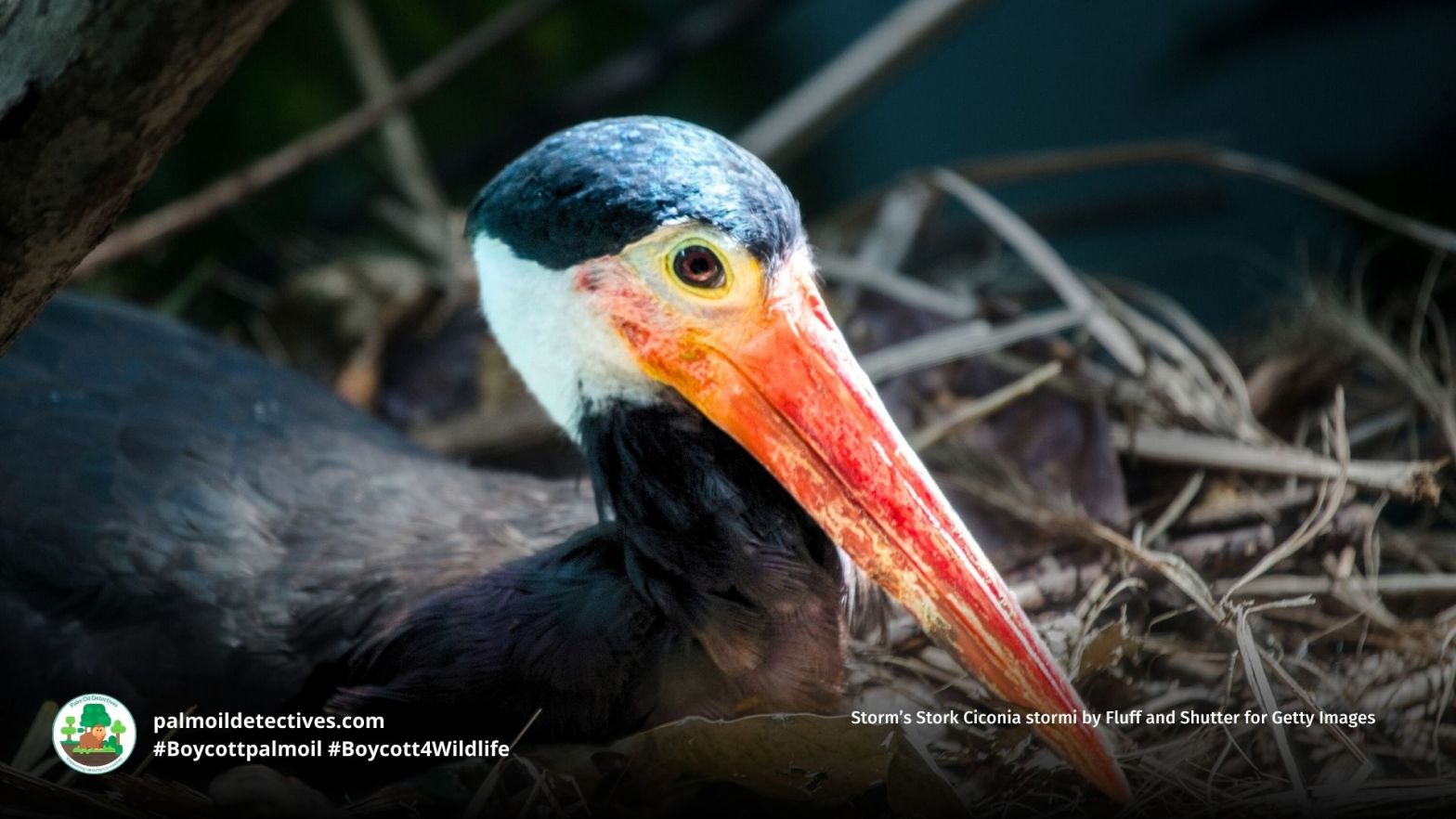
New Britain Sparrowhawk Accipiter brachyurus

New Britain Sparrowhawk Accipiter brachyurus


Red List: Vulnerable

Locations: Endemic to the islands of New Britain and New Ireland, Papua New Guinea

High in the mist-draped montane forests of New Britain and New Ireland, the New Britain Sparrowhawk drifts through the canopy. These rare raptors are guardians of the ancient forests, their presence a fleeting shadow among the mossy branches and filtered sunlight of Papua New Guinea’s wildest heights.

The New Britain Sparrowhawk is an elusive bird-of-prey, found only in the forests of New Britain and New Ireland in remote . Their survival is threatened by -driven and extensive logging, which have stripped away much of their habitat. With populations rapidly dwindling and no known conservation measures in place, this little-known raptor faces an uncertain future. Use your wallet as a weapon , .

Appearance and Behaviour

New Britain Sparrowhawks are small, slender raptors measuring 27–34 cm, with striking grey plumage, a white underbelly, and orange accents at the neck. Their large, pale yellow feet are distinctive, especially the elongated middle toe, which sets them apart from other hawks in the region. These birds move swiftly and silently through the forest, using their agility to hunt small birds and animals. New Britain Sparrowhawks are rarely seen, making their behaviour and social lives a mystery, but their presence is a sign of a healthy, undisturbed forest.

Threats

Lowland forest clearance for conversion to oil palm plantations has been intense in recent decades in both New Britain and New Ireland (Swartzendruber 1993, Stattersfield et al. 1998, Buchanan et al. 2008). On New Britain about 17.5% of habitat within this species’ altitudinal range was cleared in three generations or 15 years (Buchanan et al. 2008).

IUCN Red List

Palm oil and timber deforestation


The New Britain Sparrowhawk is highly vulnerable to habitat loss, as palm oil plantations and logging operations clear vast tracts of lowland and hill forests. New Britain alone has accounted for half of Papua New Guinea’s timber exports, leaving forests fragmented and silent. Even as the rate of forest loss has slowed in recent years, the damage is profound—over 2 percent of forest was lost and more than 5 percent degraded between 2002 and 2014. Bulldozers and chainsaws carve roads and scars through the landscape, leaving the sparrowhawk with fewer places to hunt and nest. The relentless conversion of forest to agriculture and palm oil plantations drives these birds higher into the mountains, squeezing them into ever smaller refuges. With every tree felled, the forest’s intricate web of life is torn apart, and the sparrowhawk’s future grows more precarious. The loss of old-growth trees also means fewer nesting sites and less prey, further endangering the species. Logging roads open up remote areas to further exploitation, compounding the threat. The haunting calls of the sparrowhawk are fading from the forests, a warning of the ecosystem’s unraveling.

Diet

New Britain Sparrowhawks are predators, feeding on small birds and possibly mammals or reptiles found in the dense forest canopy. Their powerful feet and sharp talons allow them to catch agile prey among the branches. The sparrowhawk’s hunting style is likely fast and precise, taking advantage of cover and surprise in the tangled forest.

Reproduction and Mating

Very little is known about the breeding of the New Britain Sparrowhawk. Like other raptors, they are believed to build nests high in the trees, raising their young in the safety of the canopy. The scarcity of sightings and the remoteness of their habitat mean that many details of their family life remain a mystery.

Geographic Range

The New Britain Sparrowhawk is found only on New Britain and New Ireland in Papua New Guinea. Most records are from montane forests between 1,200 and 1,800 metres, though some have been seen in lowland areas. Their range is shrinking as forests are cleared, and the species is now rare even in remote mountain regions.

New Britain Sparrowhawk Accipiter brachyurus

FAQs

What is the current population of the New Britain Sparrowhawk?

The population is estimated at 1,000–2,499 individuals. Numbers are declining due to ongoing habitat loss.

How long do New Britain Sparrowhawks live?

The lifespan of the New Britain Sparrowhawk is unknown, but similar raptors can live over 10 years in the wild.

What are the threats to the New Britain Sparrowhawk’s survival?

The main threats are deforestation for palm oil and logging, which destroy and fragment their forest habitat.

Are there any conservation actions for the New Britain Sparrowhawk?

No formal conservation measures are in place. Surveys and community-based protection have been proposed but not yet implemented.

What can you do to help the New Britain Sparrowhawk?

You can boycott palm oil and products driving deforestation. Support campaigns for indigenous-led forest protection and share information about this rare raptor.

Take Action!

Fight for the survival of the New Britain Sparrowhawk every time you shop. Boycott palm oil. Support indigenous-led conservation. Use your wallet as a weapon and BoycottPalmOil Boycott4Wildlife.

Further Information

BirdLife International. (2018). Accipiter brachyurus. The IUCN Red List of Threatened Species 2018: e.T22695605A131936960. https://dx.doi.org/10.2305/IUCN.UK.2018-2.RLTS.T22695605A131936960.en

Wikipedia. (2025, March 19). New Britain sparrowhawk. In Wikipedia. Retrieved June 13, 2025, from https://en.wikipedia.org/wiki/New_Britain_sparrowhawk

BirdLife International. 2018. Accipiter brachyurus. The IUCN Red List of Threatened Species 2018: e.T22695605A131936960. https://dx.doi.org/10.2305/IUCN.UK.2018-2.RLTS.T22695605A131936960.en. Downloaded on 03 February 2021.

New Britain Sparrowhawk Accipiter brachyurus threats
IUCN Rating vulnerable

Support the conservation of this species

Tenkile Conservation Alliance


Contribute to palm oil detectives - black rhino in profile

How can I help the ?


Take Action in Five Ways

1. Join the on social media and subscribe to stay in the loop: Share posts from this website to your own network on Twitter, Mastadon, Instagram, Facebook and Youtube using the hashtags .

Join 3,176 other subscribers

2. Contribute stories: Academics, conservationists, scientists, indigenous rights advocates and animal rights advocates working to expose the corruption of the palm oil industry or to save animals can contribute stories to the website.

3. Supermarket sleuthing: Next time you’re in the supermarket, take photos of products containing palm oil. Share these to social media along with the hashtags to call out the greenwashing and ecocide of the brands who use palm oil. You can also take photos of palm oil free products and congratulate brands when they go palm oil free.

4. Take to the streets: Get in touch with Palm Oil Detectives to find out more.

5. Donate: Make a one-off or monthly donation to Palm Oil Detectives as a way of saying thank you and to help pay for ongoing running costs of the website and social media campaigns. Donate here

Lowlands Tree Kangaroo Dendrolagus spadix

Lowlands Tree Kangaroo Dendrolagus spadix

IUCN Status: Vulnerable

Location: The Lowlands Tree Kangaroo is native to Papua New Guinea, found in the limestone karst forests of the Gulf and Western provinces. These dense, humid jungles are difficult to traverse, providing a natural refuge for this elusive species. However, increased human access due to roads and logging threatens their survival.

The Lowlands Tree Dendrolagus spadix is a species endemic to the forests of #PapuaNewGuinea. Unlike their ground-dwelling relatives, they are agile climbers, leaping through lush rainforest canopies with ease despite their bulky size. However, their survival is in peril due to widespread driven by plantations, logging, and expansion of , which has led to habitat destruction and increased pressures. If urgent action is not taken, this unique species faces further decline. Take action and resist for this species every time you shop and go in the supermarket.

The Lowlands 🦘🤎 is a of ’s rainforests 🌳🇵🇬 threatened by , and . Help them to survive when you shop 🌴☠️🔥🧐🙊⛔️ @palmoildetect https://palmoildetectives.com/2021/02/03/lowlands-tree-kangaroo-dendrolagus-spadix/

Despite their chunky size, Lowlands Tree 🦘 are able to leap many metres. They’re due to and in . Fight for them when you shop, go and 🌴🚫#Boycott4Wildlife @palmoildetect https://palmoildetectives.com/2021/02/03/lowlands-tree-kangaroo-dendrolagus-spadix/

Appearance & Behaviour

The Lowlands Tree Kangaroo is a striking, muscular marsupial with a dense coat of rich auburn, fading to golden hues on their belly and limbs. Unlike their ground-dwelling kangaroo relatives, they are built for life in the treetops, with stocky limbs, powerful claws, and an impressively long tail used for balance.

Watching a Lowlands Tree Kangaroo move is a surreal experience. On the ground, they amble in an almost bear-like gait, placing one foot in front of the other in a slow, deliberate waddle. Yet, when they climb, they transform into graceful acrobats, using their strong forelimbs to hoist themselves into the canopy with surprising ease. Despite their bulky build, they can leap remarkable distances between branches, navigating the dense jungle with grace.

Appearance & Behaviour

Largely solitary, these secretive tree-dwellers emerge at dusk to forage, preferring the cool, shadowy undergrowth or the safety of high branches. Their excellent camouflage and quiet nature make them incredibly difficult to spot in the wild.

Diet

The Lowlands Tree Kangaroo is a dedicated folivore, primarily feasting on a variety of leaves, fruits, flowers, and occasionally fungi. Their slow metabolism allows them to extract maximum nutrition from their fibrous diet. However, their reliance on specific plants means that large-scale deforestation can have devastating consequences, cutting off vital food sources.

Logging and land clearing for palm oil plantations pose a severe threat by destroying primary forests and forcing these marsupials into fragmented, less suitable habitats.

Reproduction & Mating

The Lowlands Tree Kangaroo has a slow reproductive rate, with females typically giving birth to a single tiny, jellybean-sized joey. This vulnerable newborn crawls into their mother’s pouch, where they remain hidden for several months. Even after emerging, the joey clings to their mother’s back for up to a year, learning essential survival skills before venturing out on their own.

This slow, careful nurturing process makes the species highly vulnerable to population declines. When individuals are lost due to hunting or habitat destruction, it takes a long time for their numbers to recover.

Threats

Deforestation & Habitat Loss

The Lowlands Tree Kangaroo’s biggest threat is habitat destruction caused by industrial logging and land clearing. A staggering 75% of their range is now covered by logging concessions, leading to habitat fragmentation and food shortages (IUCN, 2016).

Palm Oil & Infrastructure Development

The expansion of palm oil plantations is devastating for the species, as vast stretches of forest are cleared for monoculture crops. New roads built for logging and petroleum extraction have also opened up previously inaccessible regions, leading to increased human encroachment.

Hunting & Increased Human Access

Traditionally, hunting of the Lowlands Tree Kangaroo was limited due to the rugged and remote nature of their habitat. However, as roads now cut into once-inaccessible forests, hunting pressure has escalated. While local communities have long relied on the species as a food source, increased access has made hunting more widespread and unsustainable.

FAQs

Where do Lowlands Tree Kangaroos live?

The Lowlands Tree Kangaroo is native to Papua New Guinea, specifically found in the limestone karst forests of the Gulf and Western provinces. These forests are rugged and remote, providing some protection from human encroachment, though logging and road expansion are rapidly changing their habitat.

Why are Lowlands Tree Kangaroos endangered?

They are classified as Vulnerable due to habitat destruction, hunting, and increased human access to their previously isolated range. Over 75% of their habitat is now covered by logging and palm oil concessions, and road construction has led to an increase in hunting pressure. Palm oil plantations also contribute to large-scale deforestation, further reducing their numbers (IUCN, 2016).

What do Lowlands Tree Kangaroos eat?

Their diet consists mainly of leaves, fruits, flowers, and occasionally fungi. They rely on a slow metabolism to extract nutrients from fibrous plants, meaning they are particularly vulnerable to habitat destruction that removes key food sources.

Are Lowlands Tree Kangaroos social animals?

No, they are primarily solitary. Unlike ground-dwelling kangaroos, they do not form large groups. They prefer to navigate the dense rainforest canopy alone, only coming together briefly for mating.

Do they move like regular kangaroos?

In some ways they do, but in other ways they don’t. While ground-dwelling kangaroos hop over long distances on the ground, Lowlands Tree Kangaroos move in a slow, deliberate manner, placing one foot in front of the other, much like a bear. In trees, however, they are surprisingly agile, using their strong limbs to grip to tree branches and their long tails and strong legs to leap between branches. They are able to leap several metres at a time between tree canopies and can descend from trees up to 20 metres without injury.

Are Lowlands Tree Kangaroos hunted?

Yes, they are traditionally hunted by local communities for food. However, this was historically sustainable due to the remote nature of their habitat. Now, with new roads making hunting easier, populations are at risk of decline.

How does palm oil deforestation affect them?

Palm oil plantations are a major driver of deforestation in Papua New Guinea, destroying vast areas of rainforest. As the trees are cleared, Lowlands Tree Kangaroos lose their food sources and shelter, forcing them into smaller, fragmented habitats where they are more vulnerable to hunting and other threats.

How long do baby Lowlands Tree Kangaroos stay with their mothers?

Joeys stay in their mother’s pouch for several months before emerging. Even after leaving the pouch, they cling to their mother’s back and remain dependent on her for nearly a year. This slow reproductive cycle makes population recovery difficult if too many individuals are lost.

What can be done to protect them?

  • Boycott products containing palm oil, which is a major threat to their continued existence.
  • Support indigenous land rights, as traditional landowners help protect these forests.
  • • Donate to conservation groups working to protect Papua New Guinea’s forests such as Tenkile.
  • • Raise awareness by sharing information about the threats they face.

Are tree kangaroos protected by law?

While tree kangaroos are recognised as vulnerable species, weak enforcement of conservation laws in Papua New Guinea and the expansion of industrial projects continue to put them at risk. Conservation efforts must focus on habitat protection and stronger regulations against deforestation and hunting.

How can I help tree kangaroos from home?

  • Always choose products that are 100% palm oil-free to avoid contributing to deforestation and biodiversity loss.
  • Spread awareness on social media using hashtags like and .
  • Support conservation projects that work to protect Papua New Guinea’s forests and wildlife.

Take Action!

The survival of the Lowlands Tree Kangaroo depends on urgent conservation action. You can help by:

  • Boycotting palm oil products and choosing brands that do not contribute to deforestation.
  • Advocating for indigenous land rights, as traditional landowners play a key role in protecting these forests.
  • Supporting conservation organisations that fight against logging and land conversion in Papua New Guinea.
  • Raising awareness about the threats facing the Lowlands Tree Kangaroo by sharing information on social media using the hashtags

You can support the conservation of this animal:

Tenkile Conservation Alliance

There are now logging concessions over almost 75% of the species inferred range. There has presumably been significant habitat disturbance and reduction in habitat quality as a result of logging

IUCN Red List

Further Information

IUCN Rating vulnerable

Leary, T., Seri, L., Wright, D., Hamilton, S., Helgen, K., Singadan, R., Menzies, J., Allison, A., James, R., Dickman, C., Aplin, K., Salas, L., Flannery, T. & Bonaccorso, F. 2016. Dendrolagus spadix. The IUCN Red List of Threatened Species 2016: e.T6436A21956250. https://dx.doi.org/10.2305/IUCN.UK.2016-2.RLTS.T6436A21956250.en. Downloaded on 03 February 2021.

McGreevy, T. J., Dabek, L., & Husband, T. P. (2011). Tree kangaroo molecular systematics based on partial cytochrome b sequences: are Matschie’s tree kangaroo (Dendrolagus matschiei) and Goodfellow’s tree kangaroo (D. goodfellowi buergersi) sister taxa? Australian Mammalogy, 34(1), 18-28. https://doi.org/10.1071/AM10017

You can support the conservation of this animal:

Tenkile Conservation Alliance


Contribute to palm oil detectives - black rhino in profile

How can I help the ?


Take Action in Five Ways

1. Join the on social media and subscribe to stay in the loop: Share posts from this website to your own network on Twitter, Mastadon, Instagram, Facebook and Youtube using the hashtags .

Join 3,176 other subscribers

2. Contribute stories: Academics, conservationists, scientists, indigenous rights advocates and animal rights advocates working to expose the corruption of the palm oil industry or to save animals can contribute stories to the website.

3. Supermarket sleuthing: Next time you’re in the supermarket, take photos of products containing palm oil. Share these to social media along with the hashtags to call out the greenwashing and ecocide of the brands who use palm oil. You can also take photos of palm oil free products and congratulate brands when they go palm oil free.

4. Take to the streets: Get in touch with Palm Oil Detectives to find out more.

5. Donate: Make a one-off or monthly donation to Palm Oil Detectives as a way of saying thank you and to help pay for ongoing running costs of the website and social media campaigns. Donate here

Eastern Long-beaked Echidna Zaglossus bartoni

Eastern Long-beaked Echidna Zaglossus bartoni

Status: Vulnerable

Location: Endemic to the highlands of Papua New Guinea.

The Eastern long-beaked echidna Zaglossus bartoni is one of the planet’s most extraordinary mammals—a living relic from the dawn of mammalian evolution. Found only in the rugged, remote mountains of New Guinea, this remarkable creature is genetically and physically unlike any other animal alive today. Their existence bridges ancient evolutionary traits with the survival needs of modern species, representing a fascinating link to the distant past.

Tragically, these rare monotremes face the threat of extinction due to hunting and habitat loss for palm oil, timber and gold mining. Support indigenous-led conservation and fight for their survival. Use your wallet as a weapon and #BoycottPalmOil #Boycott4Wildlife.

Eastern Long-beaked are the oldest mammals on earth. They’re in 🇵🇬 due to and . Say NO to their 🌴🔥💀🙊⛔️ @palmoildetect https://palmoildetectives.com/2021/02/03/eastern-long-beaked-echidna-zaglossus-bartoni/

Eastern Long-beaked are rare egg-laying 🥚🦔 They are a prehistoric fever dream with a tube-like beak and hedgehog like spines. Help them survive in 🇵🇬 when you 🌴🪔🤮🙊🚫 @palmoildetect https://palmoildetectives.com/2021/02/03/eastern-long-beaked-echidna-zaglossus-bartoni/

Appearance and Behaviour

The Eastern long-beaked echidna looks like something out of a prehistoric dream. They weigh between 5 and 9 kilograms (10–20 pounds) and are covered in coarse fur interspersed with hedgehog-like spines that offer protection from predators. Their most distinctive feature is their elongated, tube-like beak, which is a marvel of evolutionary adaptation. Unlike most mammals, they lack teeth and a conventional jaw; instead, their beak is lined with electro-receptors, allowing them to detect the faintest electrical signals from underground prey. This unique “beak” functions as a tool for slurping up earthworms and insects, much like a child sucking up spaghetti.

These shy creatures are primarily nocturnal, spending their days hidden in burrows or dense undergrowth. A remarkable trait observed is their limb preference during digging activities, with some individuals demonstrating clear “handedness” (Limb Preferences in Monotremes, 2015).

Their gait and behaviour further highlight their primitive charm. With a shuffling, deliberate walk, they use powerful claws to dig through soil and leaf litter. Despite their armour-like exterior and prehistoric lineage, these echidnas are docile and shy, avoiding confrontation whenever possible. Each movement and adaptation offers a glimpse into a time when mammals first emerged, making them not just a species, but a living connection to the evolutionary history of life on Earth.

Threats

IUCN Status: Vulnerable

Eastern Long-beaked Echidna Zaglossus bartoni - threats

Palm oil, timber and gold mining deforestation:

The destruction of montane forests due to timber deforestation, palm oil monoculture, and gold mining has significantly reduced the Eastern long-beaked echidna’s habitat (IUCN Red List, 2021).

Hunting Pressures:

These echidnas are heavily hunted for bushmeat, even in areas where hunting them is prohibited, posing a critical threat to their survival (IUCN Red List, 2021).

Across New Guinea, more than 800 tribal cultures rely on hunting for protein, with echidnas often targeted as a prized food source (Mongabay, 2015).

Habitat Fragmentation:

Habitat fragmentation from human activities isolates populations, reducing genetic diversity and limiting their ability to adapt to environmental changes (IUCN Red List, 2021).

Limited research into their population trends complicates conservation efforts, highlighting the need for greater scientific focus on this species (Mongabay, 2015).

Diet

The Eastern long-beaked echidna is insectivorous, with a particular fondness for earthworms. They use their specialised snout and long, sticky tongue to extract prey from soil and rotting logs. This foraging behaviour is an essential part of their ecological role, as it contributes to soil aeration and nutrient cycling (Academic OUP, 2009).

Reproduction and Mating

As a monotreme, the Eastern long-beaked echidna lays eggs rather than giving birth to live young. Females lay a single leathery egg, which they incubate in a pouch for approximately 10 days. Once hatched, the puggle remains in the pouch for up to two months, feeding on milk secreted from specialised mammary glands (IUCN Red List, 2016).

Geographic Range

The Eastern long-beaked echidna is endemic to the montane forests of Papua New Guinea, thriving at elevations between 2,000 and 3,000 metres. Their range is limited to remote, forested highlands, with populations scattered across the island (AP Science Foundation, 2009).

FAQ

What is the Eastern long-beaked echidna?

The Eastern long-beaked echidna (Zaglossus bartoni) is one of the most unique mammals on Earth. As an egg-laying monotreme, they are part of an ancient lineage that has survived for millions of years. Endemic to Papua New Guinea, they are known for their elongated snout and nocturnal habits (Mongabay, 2015).

Why is the Eastern long-beaked echidna Vulnerable?

Their primary threats include habitat destruction from palm oil and timber deforestation and mining, as well as hunting for bushmeat. Despite legal protections, enforcement is weak, and their populations are in decline (IUCN Red List, 2016).

What does the Eastern long-beaked echidna eat?

Earthworms form the majority of their diet, along with other soil-dwelling invertebrates. They forage using their long snout and sticky tongue, an adaptation perfect for extracting prey from soil and decaying wood (Academic OUP, 2009).

How does the Eastern long-beaked echidna reproduce?

Females lay a single egg, incubating it in a pouch for about 10 days. Once the young hatches, it stays in the pouch for up to two months before becoming independent (IUCN Red List, 2016).

Where is the Eastern long-beaked echidna found?

They inhabit the remote montane forests of Papua New Guinea, at elevations between 2,000 and 3,000 metres. These habitats are increasingly threatened by human activities (AP Science Foundation, 2009).

Take Action!

Protect the Eastern long-beaked echidna by advocating for habitat preservation and supporting indigenous-led conservation efforts. Use your purchasing power to demand palm oil free and vegan instead! #BoycottPalmOil #Boycott4Wildlife

Support the conservation of this species

This animal has no protections in place. Read about other forgotten species here. Create art to support this forgotten animal or raise awareness about them by sharing this post and using the #Boycott4Wildlife hashtags on social media. Also you can boycott palm oil in the supermarket.

Further Information

IUCN Rating vulnerable

Giljov, A., Karenina, K., Hawkins, M. R., & Malashichev, Y. (2015). First record of limb preferences in monotremes (Zaglossus spp.). Australian Journal of Zoology, 63(5), Article ZO15043. https://doi.org/10.1071/ZO15043

Leary, T., Seri, L., Flannery, T., Wright, D., Hamilton, S., Helgen, K., Singadan, R., Menzies, J., Allison, A., James, R., Aplin, K., Salas, L. & Dickman, C. 2016. Zaglossus bartoni. The IUCN Red List of Threatened Species 2016: e.T136552A21964496. https://dx.doi.org/10.2305/IUCN.UK.2016-2.RLTS.T136552A21964496.en. Downloaded on 03 February 2021.

Mack, A. L. (2015). The Long-beaked Echidna: Can we save the earth’s oldest living mammal? Mongabay. Retrieved from https://news.mongabay.com/2015/10/the-long-beaked-echidna-can-we-save-the-earths-oldest-living-mammal/

Opiang, M. D. (2009). Home ranges, movement, and den use in long-beaked echidnas, Zaglossus bartoni, from Papua New Guinea. Journal of Mammalogy, 90(2), 340–346. https://doi.org/10.1644/08-MAMM-A-108.1

The Australia and Pacific Science Foundation. (2009). Reproductive ecology of the eastern long-beaked echidna, Zaglossus bartoni (APSF 09-1). APSF Project Report. Retrieved from http://www.apscience.org.au/apsf_09_1/

Wikipedia contributors. (2021). Eastern long-beaked echidna (Zaglossus bartoni). Wikipedia. Retrieved from https://en.wikipedia.org/wiki/Eastern_long-beaked_echidna


Contribute to palm oil detectives - black rhino in profile

How can I help the ?


Take Action in Five Ways

1. Join the on social media and subscribe to stay in the loop: Share posts from this website to your own network on Twitter, Mastadon, Instagram, Facebook and Youtube using the hashtags .

Join 3,176 other subscribers

2. Contribute stories: Academics, conservationists, scientists, indigenous rights advocates and animal rights advocates working to expose the corruption of the palm oil industry or to save animals can contribute stories to the website.

3. Supermarket sleuthing: Next time you’re in the supermarket, take photos of products containing palm oil. Share these to social media along with the hashtags to call out the greenwashing and ecocide of the brands who use palm oil. You can also take photos of palm oil free products and congratulate brands when they go palm oil free.

4. Take to the streets: Get in touch with Palm Oil Detectives to find out more.

5. Donate: Make a one-off or monthly donation to Palm Oil Detectives as a way of saying thank you and to help pay for ongoing running costs of the website and social media campaigns. Donate here

Blue Bird-of-paradise Paradisornis rudolphi

Blue Bird-of-paradise Paradisornis rudolphi

IUCN Red List: Vulnerable

Location: Papua New Guinea (Owen Stanley Range, Central Ranges, Tari Valley, Mt Sisa)

This jewel-toned forest dweller, the Blue Bird-of-Paradise Paradisornis rudolphi, is one of nature’s most visually arresting species—found only in the misty mountain ranges of Papua New Guinea. Yet their mesmerising beauty comes with a high cost. Males are hunted for their shimmering plumes, prized in traditional regalia. More insidiously, their montane rainforest habitat is vanishing due to logging, subsistence agriculture, and the relentless expansion of palm oil monoculture. Despite showing some tolerance for degraded landscapes, they rely on remaining forest patches for food, breeding, and safety. If we fail to act, their haunting calls may be silenced forever. Use your voice and your wallet to stand with them. #BoycottPalmOil #Boycott4Wildlife

Blue Birds of Paradise belong to a vibrant and unique genus 🦜🦚 living only in 🇵🇬 They are vulnerable due to and . Protect and 🌴🩸🚜🔥❌ @palmoildetect https://palmoildetectives.com/2021/02/03/blue-bird-of-paradise-paradisornis-rudolphi/

Male Blue Bird of Paradise do fancy dances, 🦚🪺✨ electric-blue feathers morph into glowing discs. Swaying like lanterns they make eerie calls that echo in the forest. They must not be silenced! 🌴🩸🚜🔥❌ @palmoildetect https://palmoildetectives.com/2021/02/03/blue-bird-of-paradise-paradisornis-rudolphi/

Appearance and Behaviour

Displaying males are unforgettable: they fan their electric-blue pectoral feathers into glowing discs, sway from branches like feathered lanterns, and produce eerie, fluting calls that echo through the canopy. Their long, streamer-like tail feathers ripple like silk, catching light as they dance to win the attention of rather drabber females.

Blue Birds-of-Paradise are mostly canopy-dwelling and favour lower montane forests between 1,100 and 2,000 metres. Males are fiercely territorial, and each individual typically maintains a home range of 5 to 100 hectares depending on forest quality and human disturbance (Pruett-Jones & Pruett-Jones, 1988; Whiteside, 1998). Their diet is mainly fruit and arthropods, which they skillfully extract from bark and epiphytes in the upper canopy.

Diet

They primarily consume fruits and insects—making them important seed dispersers in their upland forest ecosystems. Their ability to adapt to patchy, human-modified landscapes suggests some behavioural flexibility, but only if fruiting trees and sufficient canopy cover remain.

Blue Bird-of-paradise Paradisornis rudolphi

Reproduction and Mating

The breeding ritual of the Blue Bird-of-Paradise is one of nature’s most theatrical. Males invest huge energy in display courts—favourite perches within primary or semi-degraded forest—where they call and dance for days on end. A single chick is usually raised per nesting attempt, in a shallow nest positioned on low branches. Nestlings have even been recorded surviving in heavily modified garden landscapes, although predation risks in these areas are much higher (van den Bergh et al., 2013).

Geographic Range

Found only in Papua New Guinea, this bird ranges from Mt Sisa south of Tari to the Owen Stanley Range. It is highly patchy in distribution and absent from many seemingly suitable areas. Significant populations persist in Tari Valley and Ambua Lodge, though hunting and land clearance have fragmented formerly connected ranges (Beehler & Pratt, 2016).

Threats

The elevational zone is under pressure from clearance for subsistence gardens by the increasing human population.

IUCN Red List

Palm oil expansion

Montane rainforest in Papua New Guinea is rapidly being cleared for oil palm plantations, particularly in lower elevation areas adjacent to the Blue Bird-of-Paradise’s habitat. As new palm oil developments push upslope, they destroy crucial breeding and feeding habitat for this canopy-dependent species. These plantations not only reduce canopy cover but also fragment populations, making survival harder in degraded forests.

Subsistence agriculture and logging

Forest clearance for gardens and shifting cultivation by a growing rural population is a direct threat to this species. Even degraded forest remnants are under pressure, with critical microhabitats being lost every year.

Hunting for plumes

Adult males are hunted for their ornate feathers used in traditional ceremonies. Although the Fauna Act of Papua New Guinea offers legal protection, enforcement is weak, and feather collecting continues—especially around cultural festivals like Independence Day and Christmas (van den Bergh et al., 2013).

Youth poaching with slingshots

A more recent threat is the increase in nest poaching by children using slingshots. This unsustainable removal of chicks further reduces recruitment in already small populations.

Take Action!

Speak up for the Blue Bird-of-Paradise by refusing to support the industries destroying their rainforest homes. Choose 100% palm oil-free products, support indigenous land stewardship, and push for an end to illegal wildlife trade. These birds are the heartbeat of New Guinea’s mountain forests—do not let them fade into silence.

FAQs

How many Blue Birds-of-Paradise are left?

Current estimates suggest a population of 2,500 to 9,999 mature individuals. Subpopulations are small and likely fragmented, with few exceeding 1,000 birds (IUCN, 2024). Habitat loss and hunting continue to push this number downwards.

Where do Blue Birds-of-Paradise live?

This species is endemic to Papua New Guinea’s eastern Central Ranges, favouring montane forest at elevations between 1,100–2,000 metres. Important locations include Mt Sisa, Tari Valley, and the Owen Stanley range. While some tolerate degraded forest, primary canopy is crucial for breeding displays.

Are Blue Birds-of-Paradise threatened by palm oil plantations?

Yes. Although much attention has been focused on palm oil in Southeast Asia, Papua New Guinea is one of the fastest-growing producers. Palm oil deforestation is accelerating near the altitudinal ranges of Paradisornis rudolphi, particularly in fragmented upland areas where the species survives. This adds yet another pressure on their already limited and degraded habitat.

Why are Blue Birds-of-Paradise hunted?

Males are hunted for their distinctive feathers, worn in traditional dress and ceremonies. Despite legal protection under PNG’s Fauna Act, enforcement is weak, and feathers are sometimes sold to tourists. Cultural celebrations have increased demand in recent years.

Do Blue Birds-of-Paradise make good pets?

Absolutely not. These birds require specific habitat, a rich canopy, and complex social cues to survive and breed. The illegal pet trade is cruel and devastating. Taking them from the wild accelerates extinction. Instead, advocate against exotic pets and support habitat conservation.

Further Information

BirdLife International. 2016. Paradisornis rudolphi. The IUCN Red List of Threatened Species 2016: e.T22706266A94059137. https://dx.doi.org/10.2305/IUCN.UK.2016-3.RLTS.T22706266A94059137.en. Downloaded on 03 February 2021.

John P. Dumbacher, Birds of New Guinea: Distribution, Taxonomy, and SystematicsThe Condor: Ornithological Applications, Volume 120, Issue 1, 1 February 2018, Pages 245–246, https://doi.org/10.1650/CONDOR-17-226.1

IUCN Rating vulnerable

Support the conservation of this species

There are currently no conservation activities in place.

Create art to support this forgotten animal.


Contribute to palm oil detectives - black rhino in profile

How can I help the ?


Take Action in Five Ways

1. Join the on social media and subscribe to stay in the loop: Share posts from this website to your own network on Twitter, Mastadon, Instagram, Facebook and Youtube using the hashtags .

Join 3,176 other subscribers

2. Contribute stories: Academics, conservationists, scientists, indigenous rights advocates and animal rights advocates working to expose the corruption of the palm oil industry or to save animals can contribute stories to the website.

3. Supermarket sleuthing: Next time you’re in the supermarket, take photos of products containing palm oil. Share these to social media along with the hashtags to call out the greenwashing and ecocide of the brands who use palm oil. You can also take photos of palm oil free products and congratulate brands when they go palm oil free.

4. Take to the streets: Get in touch with Palm Oil Detectives to find out more.

5. Donate: Make a one-off or monthly donation to Palm Oil Detectives as a way of saying thank you and to help pay for ongoing running costs of the website and social media campaigns. Donate here

Goldie’s Bird-of-paradise Paradisaea decora

Goldie’s Bird-of-paradise Paradisaea decora

IUCN Status: Vulnerable

Location: Papua New Guinea – Fergusson Island and Normanby Island, D’Entrecasteaux Archipelago. Goldie’s Bird-of-paradise lives in the forests and foothills of the remote D’Entrecasteaux archipelago in east Papua New Guinea. It is found only on two islands – Fergusson and Normanby – and survives in small, fragmented populations.

Goldie’s Bird-of-paradise Paradisaea decora is classified as #Vulnerable by the IUCN Red List, with an estimated population of just 650 individuals split across Fergusson and Normanby Islands in Papua New Guinea. This rare and radiant #bird is under siege from logging, gold mining, nickel mining, and slash-and-burn agriculture. Though it can return to forest regenerating after 20–30 years, it cannot survive in heavily degraded or permanently cleared habitats. If these threats are not stopped, this species may vanish forever. Use your voice and your wallet to protect this luminous and irreplacable treasure of New Guinea.

The Goldie’s Bird of Paradise is a rustling rainbow 🦜🌈 They are in of from and . Fight for them and 🌴🔥👎⛔ @palmoildetect.bsky.social https://palmoildetectives.com/2021/02/03/goldies-bird-of-paradise-paradisaea-decora/

The Goldie’s of Paradise is a shimmering bird of ’s jungles putting on a rainbow performance. They’re due to and . Help them survive when you 🌴🔥👎⛔ @palmoildetect.bsky.social https://palmoildetectives.com/2021/02/03/goldies-bird-of-paradise-paradisaea-decora/

Habitat loss and degradation through commercial logging, mineral exploration and clearance for agriculture are on-going threats.

IUCN Red List

Appearance and Behaviour

The Goldie’s Bird-of-paradise is a visual marvel. The adult male glows with crimson, golden-yellow, and iridescent green plumage, complete with a pair of long flank plumes and a green sheen across the head and back. Females and juveniles are duller in colour but still show elegant markings. Males are known for their flamboyant courtship displays, hanging upside down from vines and branches while fanning out their plumes, fluttering their wings, and calling loudly. These performances are critical for sexual selection, and the species has been observed engaging in lek-like display areas.

Recent behavioural observations suggest the presence of alternative mating tactics. Footage captured in the wild showed female-plumaged birds mounting others, an extremely rare behaviour that could be indicative of sneak copulations by immature males (MacGillavry et al., 2024). This complex mating dynamic points to an elaborate social structure and possible hidden hierarchies in these secretive birds.

Exciting new findings have shown that Goldie’s Bird-of-paradise, along with other species in the Paradisaeidae family, exhibits biofluorescence – a form of plumage-based signalling visible under ultraviolet light. The bright plumage, particularly in males, includes regions that fluoresce green or yellow under UV excitation, enhancing their courtship displays (Martin et al., 2025).

Diet

The diet of Goldie’s Bird-of-paradise consists primarily of fruits, figs, and various invertebrates, including insects and their larvae. As a frugivorous species, they play a role in seed dispersal within their forest ecosystems. They forage actively in the mid to upper canopy, using their sharp beaks to probe bark, epiphytes, and foliage for hidden invertebrates. Their specialised diet ties them closely to intact rainforest habitats, where fruiting trees and insect diversity are highest.

Reproduction and Mating

Males perform intricate display rituals to attract females, often returning to the same courtship sites each season. These courtship displays are highly energetic and involve not only visual displays but vocalisations and precise body movements. Copulation occurs following female selection of a display partner. Like most birds-of-paradise, Goldie’s Bird-of-paradise is polygynous, and males do not participate in rearing offspring.

Females build nests and raise chicks alone, typically constructing small, cup-shaped nests in the canopy. Clutch size is presumed to be one or two eggs, as is common in the family, though detailed nesting data for this species remains limited.

Geographic Range

Goldie’s Bird-of-paradise is endemic to the D’Entrecasteaux Islands of Papua New Guinea. On Fergusson Island, it occurs in several locations including Maybole Mountain, Oya Tabu Mountain, and the Edagwaba Mountain range. On Normanby Island, it has been recorded in areas such as Mount Solomonai, Lonana, and inland Sewa. Its current total range comprises just over 2,300 km² across both islands, but suitable habitat is fragmented and continues to shrink.

Most individuals are concentrated in mid-elevation forests between 300 and 750 metres above sea level. Although they can tolerate some secondary regrowth, they do not persist in heavily degraded or clear-cut areas.

Threats

  • Timber Logging: Commercial logging has resumed on Fergusson Island in designated Timber Rights Purchase Areas. These operations are fragmenting the forests and displacing Goldie’s Bird-of-paradise from their mid-montane habitats (D. Mitchell in litt. 2016).
  • Gold Mining and Nickel Mining: Mineral exploration and development pose a serious threat. Nickel mining on Fergusson and gold exploration on Normanby are intruding into known habitats. Forest clearing and road construction have already disturbed critical display and nesting areas.
  • Slash-and-burn agriculture: Expansion of slash-and-burn agriculture is converting forest into gardens, especially on Normanby Island. These clearings displace birds and interrupt regrowth cycles critical to the species’ survival.
  • Small Population Size: With fewer than 650 individuals remaining, the species is highly vulnerable to stochastic events, inbreeding depression, and local extinction. Its two isolated subpopulations exacerbate these risks.

Take Action!

Goldie’s Bird-of-paradise is one of the world’s most beautiful birds – but beauty alone cannot save them. You can make a difference:

FAQs

How many Goldie’s Birds-of-paradise are left in the wild?

Recent surveys estimate fewer than 650 individuals remain, with approximately 500 on Fergusson Island and 150 on Normanby Island. This small population is fragmented and continues to decline due to logging, mining, and agricultural expansion (D. Mitchell in litt. 2008).

How do Goldie’s Birds-of-paradise reproduce?

Males perform elaborate visual and acoustic displays to attract mates. Only females build nests and raise the young. Each breeding cycle likely produces 1–2 eggs, and there is little to no male involvement in parental care. The reproductive success of the species is closely tied to the availability of undisturbed forest habitat.

What do Goldie’s Birds-of-paradise eat?

They are primarily frugivores, consuming a variety of native fruits and figs, along with arthropods for protein. Their role as seed dispersers is essential to maintaining the biodiversity of island forest ecosystems.

Are they affected by palm oil deforestation?

While the D’Entrecasteaux Islands are not yet a major palm oil hotspot, proposals for plantation development are spreading. The spread of mining, logging and palm oil could push Goldie’s Bird-of-paradise to the brink. Pre-emptive action is needed to prevent further encroachment by these extractive industries.

Support the conservation of this species

There are currently no conservation activities in place.

Create art to support this forgotten animal.

Further Information

IUCN Rating vulnerable


Affleck, S., & McGeoch, M. A. (2024). Global avian functional diversity depends on the world’s most widespread and distinct birds. Ecology Letters, 27(11), 1683–1694. https://doi.org/10.1111/ele.14552


Boersma, J., Gregg, J., Nason, D., Malesa, E., Le Breton, C., Ketaloya, S., Iova, B., & Mittermeier, J. C. (2025). An ornithological survey of Fergusson Island, D’Entrecasteaux Archipelago, Papua New Guinea, reveals new island records and noteworthy natural history observations. Bulletin of the British Ornithologists’ Club, 145(1), Article a2. https://doi.org/10.25226/bboc.v145i1.2025.a2

BirdLife International. 2016. Paradisaea decora. The IUCN Red List of Threatened Species 2016: e.T22706257A94058564. https://dx.doi.org/10.2305/IUCN.UK.2016-3.RLTS.T22706257A94058564.en. Downloaded on 03 February 2021.

MacGillavry, T., Janiczek, C., & Fusani, L. (2024). Video evidence of mountings by female-plumaged birds of paradise. Ethologyhttps://doi.org/10.1111/eth.13451

Martin, R. P., Carr, E. M., & Sparks, J. S. (2025). Does biofluorescence enhance visual signals in birds-of-paradise? Royal Society Open Science, 12 February 2025. https://doi.org/10.1098/rsos.241905

Stelbrink, B., Von Rintelen, T., Richter, K., Finstermeier, K., Frahnert, S., Cracraft, J., & Hofreiter, M. (2022). Insights into the geographical origin and phylogeographical patterns of Paradisaea birds-of-paradise. Zoological Journal of the Linnean Society, 196(4), 1394–1407. https://doi.org/10.1093/zoolinnean/zlac010


Contribute to palm oil detectives - black rhino in profile

How can I help the ?


Take Action in Five Ways

1. Join the on social media and subscribe to stay in the loop: Share posts from this website to your own network on Twitter, Mastadon, Instagram, Facebook and Youtube using the hashtags .

Join 3,176 other subscribers

2. Contribute stories: Academics, conservationists, scientists, indigenous rights advocates and animal rights advocates working to expose the corruption of the palm oil industry or to save animals can contribute stories to the website.

3. Supermarket sleuthing: Next time you’re in the supermarket, take photos of products containing palm oil. Share these to social media along with the hashtags to call out the greenwashing and ecocide of the brands who use palm oil. You can also take photos of palm oil free products and congratulate brands when they go palm oil free.

4. Take to the streets: Get in touch with Palm Oil Detectives to find out more.

5. Donate: Make a one-off or monthly donation to Palm Oil Detectives as a way of saying thank you and to help pay for ongoing running costs of the website and social media campaigns. Donate here

Imitator Goshawk Accipiter imitator

Imitator Goshawk Accipiter imitator

Red List Status: Vulnerable

Locations: Bougainville (Papua New Guinea), Choiseul and Santa Isabel (Solomon Islands)

Deep within the old-growth forests of Papua New Guinea and Solomon Islands, lives a shrewd and magnificent hunter the Imitator Goshawk Tachyspiza imitator. One of the region’s most elusive and beautiful birds of prey. With only 250-999 mature individuals estimated across three islands, this vulnerable species faces mounting pressure from palm oil and timber deforestation. Their preference for pristine interior forest makes them particularly susceptible to habitat destruction as chainsaws carve through their ancient hunting grounds. Fight for their survival every time you shop #BoycottPalmOil #Boycott4Wildlife.

Appearance and Behaviour

The Imitator Goshawk’s compact frame reflects perfect adaptation to dense forest hunting in Solomon Islands and New Guinea. Their shorter wings and tail, combined with notably longer legs, distinguish them from relatives and enable swift navigation through tangled branches. These forest phantoms move with fluid precision through the understory. These raptors lack the distinctive calls of their relatives, adding to their mysterious presence in the forest depths.

Their piercing eyes scan the forest floor and middle canopy with predatory focus, every sense attuned to subtle movements that betray prey. Unlike relatives who prefer forest edges, these raptors have evolved to claim the heart of the forest as their domain.

Diet

The secretive nature of Imitator Goshawks means their dietary preferences remain largely unknown. One remarkable observation captured them feeding on a smaller bird Chestnut-bellied Monarch Monarcha castaneiventris, demonstrating their ability to catch agile forest birds. Their longer legs suggest they may hunt from low perches, potentially targeting prey on the forest floor as well as in the canopy.

Reproduction and Mating

The breeding ecology of the Imitator Goshawk remains shrouded in mystery. Their nesting habits, courtship behaviours, and family structure have yet to be documented by researchers. This knowledge gap of birds of prey in Papua represents one of the most significant challenges in developing effective protection strategies for this vulnerable species.

Geographic Range

The Imitator Goshawk inhabits three islands across the Solomon Sea: Bougainville in Papua New Guinea, and Choiseul and Santa Isabel in the Solomon Islands. They occupy lowland forests and forest edges from sea level to at least 400 metres elevation, with possible sightings extending to 1,000 metres. Known from scattered specimens and rare sightings, the total population of 350-1,500 individuals appears to have declined on Choiseul and remains extremely rare throughout their range.

As a lowland and hill species with almost all records from old-growth forest, Imitator Goshawks are likely to be threatened by forest loss and degradation. Industrial logging continues on Choiseul and Santa Isabale (G. Dutson in litt. 2016) and logging may become a problem on Bougainville when the island opens up to development.

IUCN Red List

Threats

Timber and palm oil deforestation

Industrial timber and palm oil operations continue across Choiseul and Santa Isabel, systematically removing the old-growth forests that Imitator Goshawks require. As chainsaws bite into centuries-old trees, the complex forest structure essential for these raptors disappears. The species shows clear preference for pristine forest and is rarely found in degraded areas, making them extremely vulnerable to ongoing timber and palm oil deforestation. Future development plans for Bougainville threaten to extend this destruction to their last stronghold.

Competition from Related Species

The Imitator Goshawk possibly faces competition from the closely related Accipiter albogularis, particularly in degraded forest areas where habitat quality has declined This interspecific competition may force Imitator Goshawks into suboptimal territories.

Limited Scientific Knowledge

The poorly understood ecology of this species creates challenges for effective protection strategies. Without detailed knowledge of their breeding requirements, population dynamics, and specific habitat needs, targeted protection efforts remain difficult to implement.

Take Action!

The Imitator Goshawk’s survival hangs by a thread with around 250-999 mature individuals left alive. Protect these enigmas of the rainforest every time you shop. Use your wallet as a weapon and to reduce pressure on the forest ecosystems that these magnificent birds desperately need to survive.

FAQs

What is the current population of Imitator Goshawks?

Recent assessments estimate the global population at 250-999 mature individuals, equivalent to 350-1,500 total individuals across all three islands. This extremely small population makes the species highly vulnerable to extinction.

How long do Imitator Goshawks live?

The lifespan of Imitator Goshawks in the wild has not been documented due to limited research. We can hazard a guess from other medium-sized raptors, they likely live several years, but without detailed studies of marked individuals, their exact longevity remains unknown. Understanding their lifespan is crucial for developing effective protection strategies and assessing long-term viability of fragmented populations.

What makes Imitator Goshawks different from other goshawks?

The Imitator Goshawk’s distinctive shorter wings and tail combined with notably longer legs set them apart from related species and reflects their specialisation for hunting in dense forests. Their unique bodies mean they can manoeuvre through branches and foliage.

Further Information

BirdLife International. (2016). Accipiter imitator. The IUCN Red List of Threatened Species e.T.A. https://dx.doi.org/10.2305/IUCN.UK.2016-3.RLTS.T22695553A93515433.en

Bildstein, K. L., & Zalles, J. I. (2001). Conservation status of tropical raptors. Journal of Raptor Research, (1), 3-18. https://sora.unm.edu/sites/default/files/journals/jrr/v032n01/p00003-p00018.pdf

Griffiths, C. S., Barrowclough, G. F., Groth, J. G., & Mertz, L. A. (2007). Phylogeny, diversity, and classification of the Accipitridae based on DNA sequences of the RAG-gene. Journal of Raptor Research, (), 253-301.

Kane, S. A., Fulton, A. H., & Rosenthal, L. J. (2015). When hawks attack: animal-borne video studies of goshawk pursuit and prey-evasion strategies. Journal of Experimental Biology, (), 212-222. https://pmc.ncbi.nlm.nih.gov/articles/PMC4302165/

Lerner, H. R., & Mindell, D. P. (2005). Phylogeny of eagles, Old World vultures, and other Accipitridae based on nuclear and mitochondrial DNA. Molecular Phylogenetics and Evolution, (), 577-584.

Webb, M. (1997). Additional notes on the birds of Bougainville Island, Papua New Guinea. Muruk, 7(2), 37-56.

Support the conservation of this species

This animal has no protections in place. Read about other forgotten species here. Create art to support this forgotten animal or raise awareness about them by sharing this post and using the #Boycott4Wildlife hashtags on social media. Also you can boycott palm oil in the supermarket.

Further Information

BirdLife International. 2016. Accipiter imitator. The IUCN Red List of Threatened Species 2016: e.T22695553A93515433. https://dx.doi.org/10.2305/IUCN.UK.2016-3.RLTS.T22695553A93515433.en. Downloaded on 03 February 2021.

IUCN Rating vulnerable

Contribute to palm oil detectives - black rhino in profile

How can I help the ?


Take Action in Five Ways

1. Join the on social media and subscribe to stay in the loop: Share posts from this website to your own network on Twitter, Mastadon, Instagram, Facebook and Youtube using the hashtags .

Join 3,176 other subscribers

2. Contribute stories: Academics, conservationists, scientists, indigenous rights advocates and animal rights advocates working to expose the corruption of the palm oil industry or to save animals can contribute stories to the website.

3. Supermarket sleuthing: Next time you’re in the supermarket, take photos of products containing palm oil. Share these to social media along with the hashtags to call out the greenwashing and ecocide of the brands who use palm oil. You can also take photos of palm oil free products and congratulate brands when they go palm oil free.

4. Take to the streets: Get in touch with Palm Oil Detectives to find out more.

5. Donate: Make a one-off or monthly donation to Palm Oil Detectives as a way of saying thank you and to help pay for ongoing running costs of the website and social media campaigns. Donate here

Grizzled Tree Kangaroo Dendrolagus inustus

Grizzled Tree Kangaroo Dendrolagus inustus

IUCN Status: Vulnerable (VU)

Location: Indonesia (West Papua, islands of Japen, Waigeo, Misool, Salawati), Papua New Guinea

Where the forest rises steeply from the rivers and the mist hangs low over the green spires of the Foja Mountains and the Torricelli Range, the Grizzled Tree Kangaroo moves like a living memory. The Grizzled Tree Kangaroo Dendrolagus inustus and their ash-grey coats and quiet agile movements, are the ghostly figures of New Guinea’s dwindling rainforests. Listed as Vulnerable on the Red List, these rare tree kangaroos now stand at the edge of survival. Hunting dogs track their scent; chainsaws fell their towering homes. Palm oil is rapidly obliterating their forest home. Without urgent action, these shy, elusive creatures will vanish into the mist forever. Boycott palm oil and go for them. Protect their ancient world.

Listed as Vulnerable because of an ongoing population decline, suspected to be more than 30% over the last generation (i.e, 10 years), and projected exceed 30% over the next two generations (i.e., 20 years), due to hunting and habitat loss and degradation from expanding agricultural activities.

IUCN Red List

Appearance and Behaviour

The Grizzled Tree Kangaroo are curious and gentle marsupials who blend in with the shadowplay of the forest canopy. Their charcoal-grey fur is streaked with rusty undertones. Strong forearms grasp thick branches with ease, while broad hind legs so familiar in their terrestrial cousins — are used in Papua for climbing, not bounding on the ground. A long, bushy tail acts as a balast and balances their weight in the treetops.

Distinct among tree kangaroos, males grow larger than females, reaching up to 15 kilograms, their bodies powerful, almost bear-like. Their faces are striking: some carry a grey forehead, others have darker facial marks.

They move at first light and in the purple hush before dusk, cautious and careful, threading the canopy as generations have done before them. Little is known of their social lives — the forest keeps their secrets well.

Diet

Grizzled Tree Kangaroos are folivores, primarily feeding on a variety of leaves, fruits, and bark. Their diet includes the foliage of plants such as Schuurmansiella angustifolia, Gnetum, Tetracera, Elatostema, arums, and several species of fig trees (Ficus spp.). They select a range of edible leaves and fruits available in the rainforest canopy and occasionally descend to the ground in search of additional food sources. Their feeding habits play a role in maintaining the ecological balance of their forest habitat.

Reproduction and Mating

The Grizzled Tree Kangaroo gives birth to a single, tiny joey, barely larger than a peanut, who clambers unaided into the mother’s pouch. Here, sheltered and nurtured, the joey will remain for nine months, unseen by human eyes.

Yet much remains to be discovered about the reproduction of Grizzled Tree Kangaroos in the wild. Reports suggest that reproduction occurs once a year, with observations of females carrying young in March, June, and December. Rare instances of twins have been recorded in the wild.

Geographic Range

The Grizzled Tree Kangaroo once moved freely across the northern forests of New Guinea, from the Torricelli Range to the Vogelkop Peninsula. Today, their range is fragmented but still broad:

  • Indonesia: Vogelkop and Fakfak Peninsulas, Foja Mountains, islands of Japen, Waigeo, Misool, Salawati, possibly Batanta.
  • Papua New Guinea: Northern coast ranges as far east as Wewak.

They are found from sea level up to 1,500 metres above sea level, climbing the spine of mountains wrapped in mist. They live in both primary and degraded forests — but it is the untouched forests, dense and dripping with life, where they truly belong.

Threats

Palm oil deforestation

Large-scale clearing of forests for palm oil plantations is a major driver of habitat loss for the Grizzled Tree Kangaroo. Primary and secondary forests are converted to monocultures, removing the dense, diverse vegetation they require for food and shelter.

Gold mining

Mercury and other pollutants from illegal and small-scale gold mining operations contaminate the rivers and soil within their habitat, indirectly affecting the forest ecosystem, animals and indigenous peoples and reducing available resources.

Commercial and illegal logging activities create fragmented landscapes, isolating populations of Grizzled Tree Kangaroos and restricting their movement. Fragmentation increases their vulnerability to hunting and reduces genetic diversity.

Hunting

Hunting for bushmeat remains a significant threat throughout the species’ range. Tree kangaroos are slow-moving and often targeted by hunters, leading to population declines, especially in areas without hunting restrictions.

Illegal pet trade

Young Grizzled Tree Kangaroos are sometimes captured and sold into the illegal pet trade. Captivity causes stress and high mortality rates, and the removal of individuals further destabilises wild populations.

Climate change

Changes in rainfall patterns and temperature regimes affect the flowering and fruiting cycles of forest plants. Altered environmental conditions may impact food availability and the overall health of the habitat.

Take Action!

The Grizzled Tree Kangaroo is a survivor of a world most will never see. Protecting them means rejecting palm oil. Boycott soy-fed meat. Stand with indigenous-led conservation and agroecology. Fight the illegal pet trade. Let the canopy stay whole. Let the forest breathe. #BoycottPalmOil #Boycott4Wildlife

FAQs

What is the current population of Grizzled Tree Kangaroos?

The exact population is unknown, but their numbers are believed to be declining across their fragmented range. Reports suggest that where hunting moratoriums are in place, sightings have increased after decades of absence (Tenkile Conservation Alliance, 2024).

How long do Grizzled Tree Kangaroos live?

While no comprehensive studies exist, similar species can live 15–20 years in the wild. In captivity, where breeding success has been achieved, lifespans can be longer.

Why are Grizzled Tree Kangaroos threatened?

Palm oil plantations, hunting, illegal logging, and habitat fragmentation are stripping away their homes and severing their populations. Combined with climate change, these forces push the Grizzled Tree Kangaroo closer to extinction.

Do Grizzled Tree Kangaroos make good pets?

No. They are solitary, tree-dwelling creatures who suffer deeply in captivity. Torn from their families, trapped in cages, deprived of the forest’s vast canopy, they quickly decline. The pet trade robs them of everything they are.

Further Information

IUCN Rating vulnerable

Flannery, T. (1995). Mammals of New Guinea. Cornell University Press.

Flannery, T., Martin, R., & Szalay, A. (1996). Tree Kangaroos: A Curious Natural History. Reed Books.

Leary, T., Seri, L., Wright, D., Hamilton, S., Helgen, K., Singadan, R., Menzies, J., Allison, A., James, R., Dickman, C., Aplin, K., Flannery, T., Martin, R. & Salas, L. 2016. Dendrolagus inustus. The IUCN Red List of Threatened Species 2016: e.T6431A21957669. https://dx.doi.org/10.2305/IUCN.UK.2016-2.RLTS.T6431A21957669.en. Downloaded on 03 February 2021.

Tenkile Conservation Alliance. (2024). Grizzled Tree Kangaroo. Retrieved from https://tenkile.com/grizzled-tree-kangaroo/

Wikipedia. (n.d.). Grizzled tree-kangaroo. Retrieved June 3, 2025, from https://en.wikipedia.org/wiki/Grizzled_tree-kangaroo

Grizzled Tree Kangaroo Dendrolagus inustus - #Boycott4Wildlife

Contribute to palm oil detectives - black rhino in profile

How can I help the ?


Take Action in Five Ways

1. Join the on social media and subscribe to stay in the loop: Share posts from this website to your own network on Twitter, Mastadon, Instagram, Facebook and Youtube using the hashtags .

Join 3,176 other subscribers

2. Contribute stories: Academics, conservationists, scientists, indigenous rights advocates and animal rights advocates working to expose the corruption of the palm oil industry or to save animals can contribute stories to the website.

3. Supermarket sleuthing: Next time you’re in the supermarket, take photos of products containing palm oil. Share these to social media along with the hashtags to call out the greenwashing and ecocide of the brands who use palm oil. You can also take photos of palm oil free products and congratulate brands when they go palm oil free.

4. Take to the streets: Get in touch with Palm Oil Detectives to find out more.

5. Donate: Make a one-off or monthly donation to Palm Oil Detectives as a way of saying thank you and to help pay for ongoing running costs of the website and social media campaigns. Donate here

Blue-eyed Cockatoo Cacatua ophthalmica

Blue-eyed Cockatoo Cacatua ophthalmica

IUCN Red List Status: Vulnerable

Location: The Blue-eyed Cockatoo is endemic to New Britain, part of Papua New Guinea’s Bismarck Archipelago. They are primarily found in the island’s eastern and central regions, inhabiting lowland and hill forests up to 1,000 metres above sea level.

The Blue-eyed Cockatoo is a striking and charismatic bird, known for their vivid blue eye rings and expressive crests. These cockatoos depend on mature forests for nesting and food but face significant threats, including habitat destruction caused by out-of-control palm oil plantations, illegal hunting, and the illegal pet trade. Conservation efforts are critical to ensure the survival of this remarkable species. #BoycottPalmOil #Boycott4Wildlife

Charismatic, cheeky Blue-eyed 🕊️ have vivid blue eye rings and expressive crests. They’re in due to and the illegal trade. Help them 🌴⛔️#Boycott4Wildlife @palmoildetect https://wp.me/pcFhgU-tz

Extensive logging for and in in 🇵🇬 has made the delightful Blue-eyed cockatoo 😿 Help them to survive when you 🌴🤮💀🚫 🥇🚫 @palmoildetect https://wp.me/pcFhgU-tz

Rapid conversion of lowland forest to oil palm plantations over the last thirty years is likely to have caused a significant loss of breeding habitat to the Blue-Eyed Cockatoo. The major oil palm companies have committed to no further forest clearance but there is a risk that smaller companies will clear forest for oil palm.

IUCN Red List

Appearance and Behaviour

The Blue-eyed Cockatoo is a medium-sized parrot, measuring about 50 centimetres in length. They are easily recognised by their white plumage, bright blue eye rings, and striking yellow-tinged crests. Highly social, they are often seen in pairs or small flocks and communicate with loud, raucous calls (Birds of the World, n.d.; BirdLife International, 2021).

Active and playful, they forage for food in the forest canopy, showcasing remarkable agility as they climb and perch. Their social bonds and intelligent behaviour make them one of the most engaging cockatoo species to observe (Bird Conservation International, 2001).

Diet

The Blue-eyed Cockatoo feeds primarily on fruits, seeds, nuts, and flowers, often foraging in large, fruiting trees. They play a crucial ecological role as seed dispersers, contributing to forest regeneration. However, deforestation has significantly reduced their access to food sources, increasing their vulnerability (IUCN, 2021; Bird Conservation International, 2001).

Reproduction and Mating

Blue-eyed Cockatoos are cavity nesters, relying on large, mature trees for nesting. They lay one to two eggs per clutch, and both parents participate in incubation and rearing the chicks. Their dependence on old-growth forests highlights the critical need to conserve these habitats (Birds of the World, n.d.; Bird Conservation International, 2001).

Geographic Range

This species is restricted to New Britain in Papua New Guinea’s Bismarck Archipelago. Their range spans the island’s eastern and central regions, where they inhabit lowland and hill forests. While they primarily rely on intact forests, they have been observed in degraded habitats with sufficient canopy cover (Bird Conservation International, 2001; IUCN, 2021).

Threats

Blue-eyed Cockatoo Cacatua ophthalmica threats

Rapid conversion of lowland forest to palm oil plantations over the last thirty years is likely to have caused a significant loss of breeding habitat. The major oil palm companies have committed to no further forest clearance but there is a risk that smaller companies will clear forest for oil palm. Industrial logging continues, as does clearance for subsistence gardens by the growing local populations. About 35% of habitat thought to be suitable for this species was cleared in 30 years or three generations (Buchanan et al. 2008).

IUCN RED LIST

Palm oil and timber deforestation

The destruction of New Britain’s forests due to out-of-control palm oil plantations, logging, and agricultural activities is the primary threat to this species (IUCN, 2021).

Illegal Hunting

Local communities hunt these cockatoos for food, contributing to population declines (Bird Conservation International, 2001).

Illegal Pet Trade

Blue-eyed Cockatoos are highly sought after for the pet trade, where their beauty and intelligence make them valuable targets. Trapping for this trade further depletes their numbers (IUCN, 2021).

Climate Change

Shifting rainfall patterns and rising temperatures due to climate change threaten the delicate forest ecosystems they depend on.

Take Action!

The survival of the Blue-eyed Cockatoo depends on protecting their forest habitats and addressing illegal hunting and trapping. By boycotting products with palm oil, supporting indigenous-led conservation initiatives, and spreading awareness, you can help ensure a future for this species. Every effort matters. #BoycottPalmOil #Boycott4Wildlife #Vegan

Further Information

BirdLife International. 2021. Cacatua ophthalmica (errata version published in 2022). The IUCN Red List of Threatened Species 2021: e.T22728429A216251055. Accessed on 19 January 2025. https://www.iucnredlist.org/species/22728429/216251055

Marsden, S. J., Pilgrim, J., & Wilkinson, R. (2001). Status, abundance and habitat use of Blue-eyed Cockatoo Cacatua ophthalmica on New Britain, Papua New Guinea. Bird Conservation International, 11(3), 213–224. https://www.researchgate.net/publication/259438192

eBird. n.d. Blue-eyed Cockatoo. Retrieved from https://ebird.org/species/blecoc1

Birds of the World. n.d. Blue-eyed Cockatoo. Retrieved from https://birdsoftheworld.org/bow/species/blecoc1/cur/introduction

IUCN Rating vulnerable

Support the conservation of this species

Wildlife Reserves Singapore


Contribute to palm oil detectives - black rhino in profile

How can I help the ?


Take Action in Five Ways

1. Join the on social media and subscribe to stay in the loop: Share posts from this website to your own network on Twitter, Mastadon, Instagram, Facebook and Youtube using the hashtags .

Join 3,176 other subscribers

2. Contribute stories: Academics, conservationists, scientists, indigenous rights advocates and animal rights advocates working to expose the corruption of the palm oil industry or to save animals can contribute stories to the website.

3. Supermarket sleuthing: Next time you’re in the supermarket, take photos of products containing palm oil. Share these to social media along with the hashtags to call out the greenwashing and ecocide of the brands who use palm oil. You can also take photos of palm oil free products and congratulate brands when they go palm oil free.

4. Take to the streets: Get in touch with Palm Oil Detectives to find out more.

5. Donate: Make a one-off or monthly donation to Palm Oil Detectives as a way of saying thank you and to help pay for ongoing running costs of the website and social media campaigns. Donate here

Fearful Owl Nesasio solomonensis

Fearful Owl Nesasio solomonensis

Location: Bougainville (Papua New Guinea), Choiseul and Santa Isabel (Solomon Islands)

IUCN Status: Near Threatened

One of the least known and possibly rarest birds of prey in the world, the Fearful Nesasio solomonensis is an elusive nocturnal predator endemic to the Solomon Islands and Bougainville in Papua New Guinea. With their large size, powerful talons, and striking facial features, this species is closely related to Asio owls but has unique characteristics that set them apart. The Fearful Owl is highly dependent on intact lowland forests, making them vulnerable to habitat destruction. Palm oil deforestation and hunting pressures are putting increasing strain on their population, leading to concerns over their long-term survival. Take action and resist for this species every time you shop—go #BoycottPalmOil #Boycott4Wildlife in the supermarket.

The Fearful 🦉 of 🇵🇬 is ‘Near Threatened’ due to hunting and . Their wide-eyed intense looks gave them their name. Support these every time you shop 🌴⛔️ @palmoildetect https://palmoildetectives.com/2021/01/31/fearful-owl-nesasio-solomonensis/

Fearful Owl Nesasio solomonensis

Appearance and Behaviour

The Fearful Owl is a large, robust bird of prey with a wingspan that allows them to glide effortlessly through dense forests. They have a dark facial mask, piercing orange-yellow eyes, and powerful talons suited for catching large prey. Their plumage is a mix of rich browns and mottled patterns, providing excellent camouflage among tree canopies. This species is highly territorial and is known for their low, booming calls that echo through the forest at night.

Juvenile Fearful Owls have a strikingly different appearance, covered in long, fluffy down with barred wing feathers emerging as they mature. Despite their name, they are not known to be aggressive towards humans. Rather their name is a nod to their wide-eyed and intense appearance. Like many other birds of prey, they are solitary hunters, relying on their stealth and acute vision to ambush prey. Reports suggest that they prefer undisturbed primary forests, making them particularly susceptible to habitat destruction.

Diet

Fearful Owls primarily hunt mammals, birds, and large insects. They are known to prey on the Northern Common Cuscus (Phalanger orientalis), which is also targeted by human hunters in their range. This competition for food may be contributing to their decline. While they have been observed hunting near forest edges and clearings, they are most frequently found in dense, untouched forests where prey is abundant.

Studies suggest that their reliance on larger prey makes them highly sensitive to changes in their ecosystem. As human activity disrupts natural food chains, Fearful Owls may struggle to find adequate nutrition, further threatening their population.

Reproduction and Nesting

Little is known about the breeding habits of the Fearful Owl. However, reports suggest that they nest in large tree hollows or sometimes on epiphytes high in the canopy. Nests are often located on the edge of native gardens, indicating some level of adaptability to human-altered landscapes. The only recorded juvenile was found in 1987 after their nest tree was felled. They were taken in by a local village but were not observed calling or exhibiting any signs of distress.

Given their likely slow reproductive rate and the increasing loss of nesting trees due to deforestation, their ability to sustain stable populations is in danger.

Fearful Owl Nesasio solomonensis

Threats

  • Palm Oil Deforestation – Large-scale timber and palm oil operations have devastated lowland forests on Choiseul and Santa Isabel. Most lowland areas have either been logged or are under logging concessions.
  • Hunting – The Fearful Owl’s prey species, such as the Northern Common Cuscus (Phalanger orientalis), are heavily hunted, reducing food availability (Dutson, 2011).
  • Declining Population – Remote sensing data suggests that forest loss in the species’ range is leading to a steady decline, estimated at 10–19% over three generations. Sightings have become increasingly rare, with reports indicating fewer individuals in formerly well-populated areas (Woxvold & Novera, 2021).
Fearful Owl Nesasio solomonensis

FAQs

Where can Fearful Owls be found?

This species is only found on Bougainville in Papua New Guinea and on Choiseul and Santa Isabel in the Solomon Islands. They require large tracts of intact lowland forest to thrive.

Why are they called ‘fearful’ owl?

Despite their name, Fearful Owls are not aggressive toward humans. Their name likely stems from their intense gaze, large eyes and powerful hunting abilities.

What is threatening their survival?

The biggest threats to Fearful Owls are habitat destruction and hunting pressures. Large-scale logging has removed much of their native forest, and competition with human hunters for food is further straining their population.

Take Action!

The survival of the Fearful Owl depends on protecting their rainforest home from destruction. Use your wallet as a weapon in the supermarket—go every time you shop. Choose products that are 100% palm oil-free Subscribe to Palm Oil Detectives and spread the word, educate others, and stand against the industries that are destroying their forests. Resist and fight for their survival! #BoycottPalmOil #Boycott4Wildlife

The Fearful Owl is threatened by large-scale logging and deforestation in the lowlands, which has increased in intensity in recent years, and most of the lowlands of Choiseul and Santa Isabel have been logged or have logging concessions (Katovai et al. 2015).

IUCN Red List

Further Information

BirdLife International. 2016. Nesasio solomonensis. The IUCN Red List of Threatened Species 2016: e.T22689539A93236256. https://dx.doi.org/10.2305/IUCN.UK.2016-3.RLTS.T22689539A93236256.en. Downloaded on 31 January 2021.

Loyn, R. H., & Debus, S. (2000). Description of juvenile Fearful Owl (Nesasio solomonensis). Australian Field Ornithology, 18(7), 288-289.

IUCN Rating vulnerable

Support the conservation of this species

There are no known conservation efforts in place for this species. Make art to support this forgotten creature.


Contribute to palm oil detectives - black rhino in profile

How can I help the ?


Take Action in Five Ways

1. Join the on social media and subscribe to stay in the loop: Share posts from this website to your own network on Twitter, Mastadon, Instagram, Facebook and Youtube using the hashtags .

Join 3,176 other subscribers

2. Contribute stories: Academics, conservationists, scientists, indigenous rights advocates and animal rights advocates working to expose the corruption of the palm oil industry or to save animals can contribute stories to the website.

3. Supermarket sleuthing: Next time you’re in the supermarket, take photos of products containing palm oil. Share these to social media along with the hashtags to call out the greenwashing and ecocide of the brands who use palm oil. You can also take photos of palm oil free products and congratulate brands when they go palm oil free.

4. Take to the streets: Get in touch with Palm Oil Detectives to find out more.

5. Donate: Make a one-off or monthly donation to Palm Oil Detectives as a way of saying thank you and to help pay for ongoing running costs of the website and social media campaigns. Donate here

Great Knot Calidris tenuirostris

Great Knot Calidris tenuirostris

Endangered

Location: Papua New Guinea, Australia

The Great Knot breeds on gravelly areas covered with lichen and patches of herbs, heather (del Hoyo et al. 1996), Empetrum spp., Dryas spp. and Vaccinium spp.(Johnsgard 1981), or alternatively on areas with a continuous layer of lichen and scattered stunted larch Larix spp. or dwarf pine Pinus pumila (del Hoyo et al. 1996).

The breeding grounds of the Great Knot have been decimated by and plantations in . They are now endangered with no known conservation in place. Support them with a brand
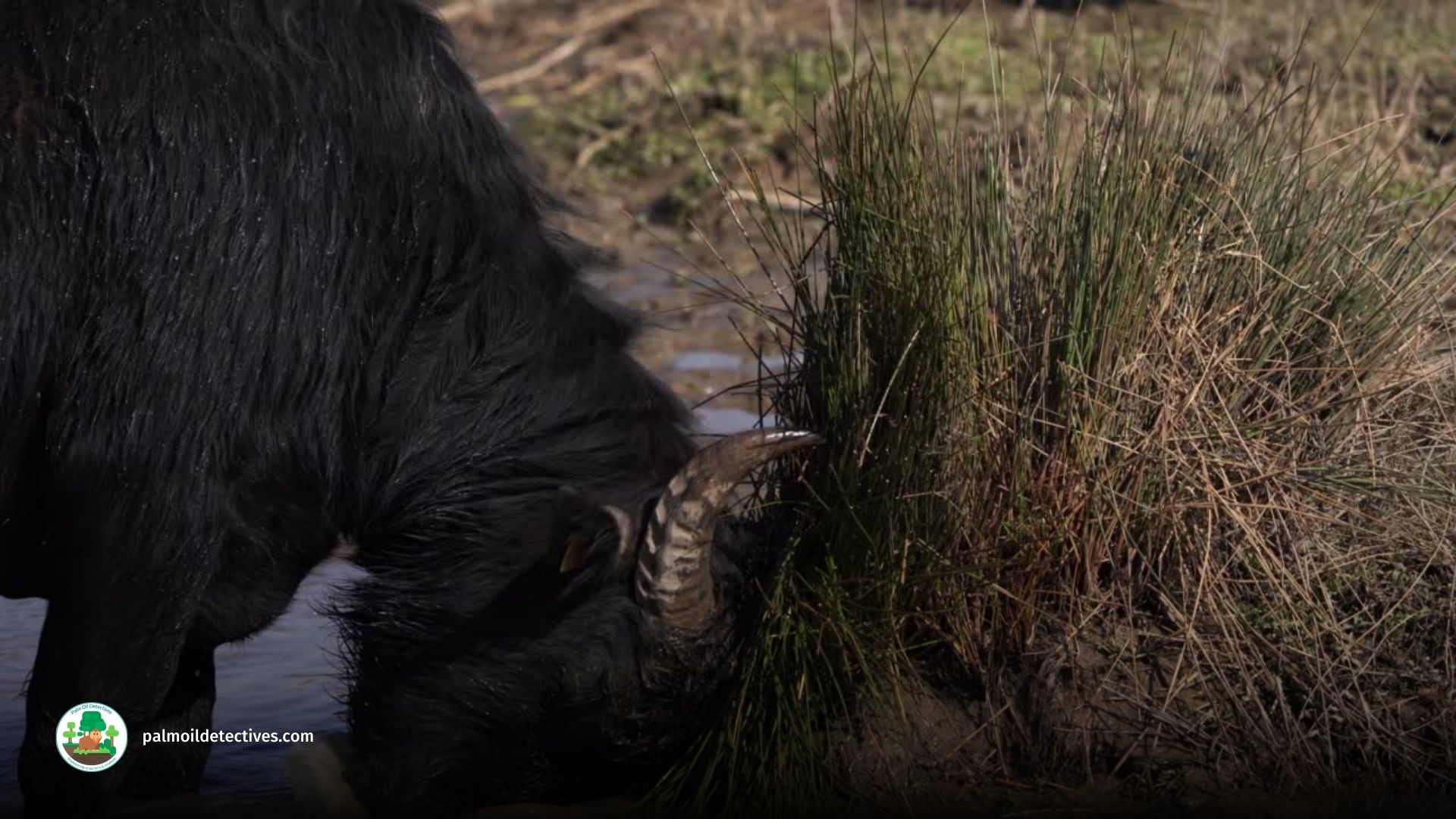
The Great Knot has been uplisted to Endangered owing to recent evidence showing a very rapid population decline caused by reclamation of non-breeding stopover grounds, and under the assumption that further proposed reclamation projects will cause additional declines in the future.
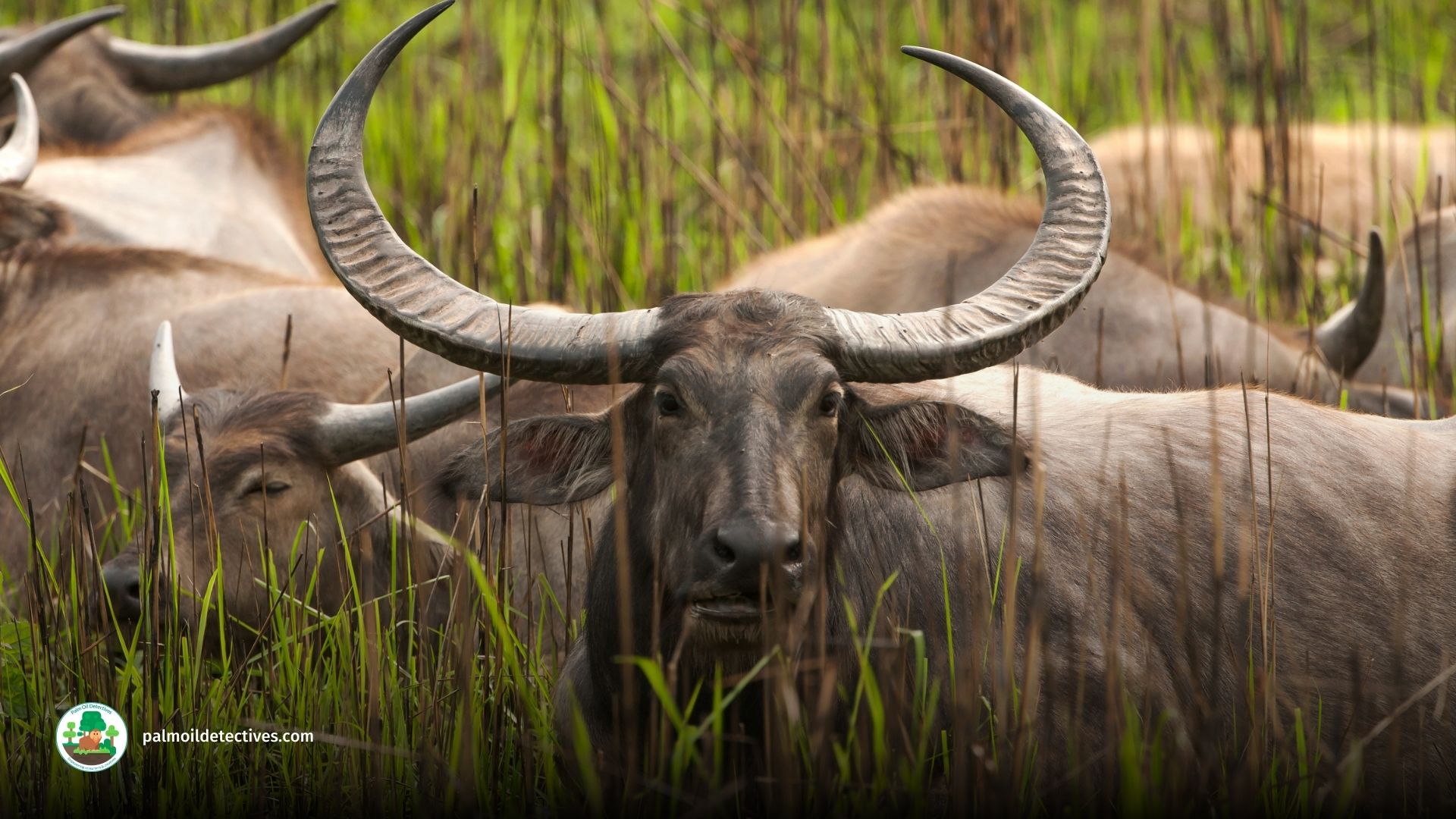
IUCN Red List

Further Information

BirdLife International. 2019. Calidris tenuirostris (amended version of 2016 assessment). The IUCN Red List of Threatened Species 2019: e.T22693359A155482913. https://dx.doi.org/10.2305/IUCN.UK.2016-3.RLTS.T22693359A155482913.en. Downloaded on 31 January 2021.

ICUN endangered logo

Support the conservation of this species

Tenkile Conservation Alliance


Contribute to palm oil detectives - black rhino in profile

How can I help the ?


Take Action in Five Ways

1. Join the on social media and subscribe to stay in the loop: Share posts from this website to your own network on Twitter, Mastadon, Instagram, Facebook and Youtube using the hashtags .
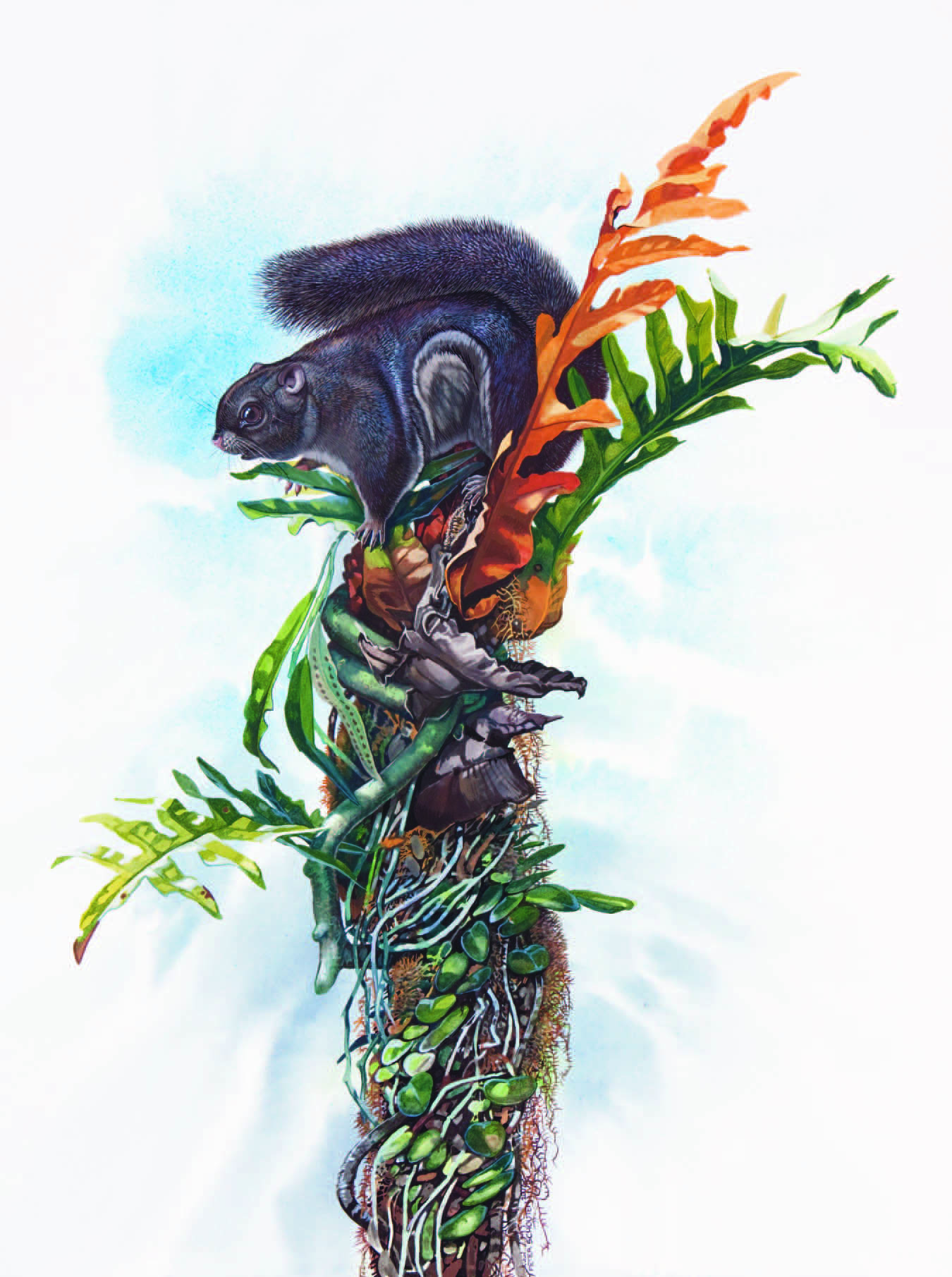
Join 3,176 other subscribers

2. Contribute stories: Academics, conservationists, scientists, indigenous rights advocates and animal rights advocates working to expose the corruption of the palm oil industry or to save animals can contribute stories to the website.

3. Supermarket sleuthing: Next time you’re in the supermarket, take photos of products containing palm oil. Share these to social media along with the hashtags to call out the greenwashing and ecocide of the brands who use palm oil. You can also take photos of palm oil free products and congratulate brands when they go palm oil free.

4. Take to the streets: Get in touch with Palm Oil Detectives to find out more.

5. Donate: Make a one-off or monthly donation to Palm Oil Detectives as a way of saying thank you and to help pay for ongoing running costs of the website and social media campaigns. Donate here