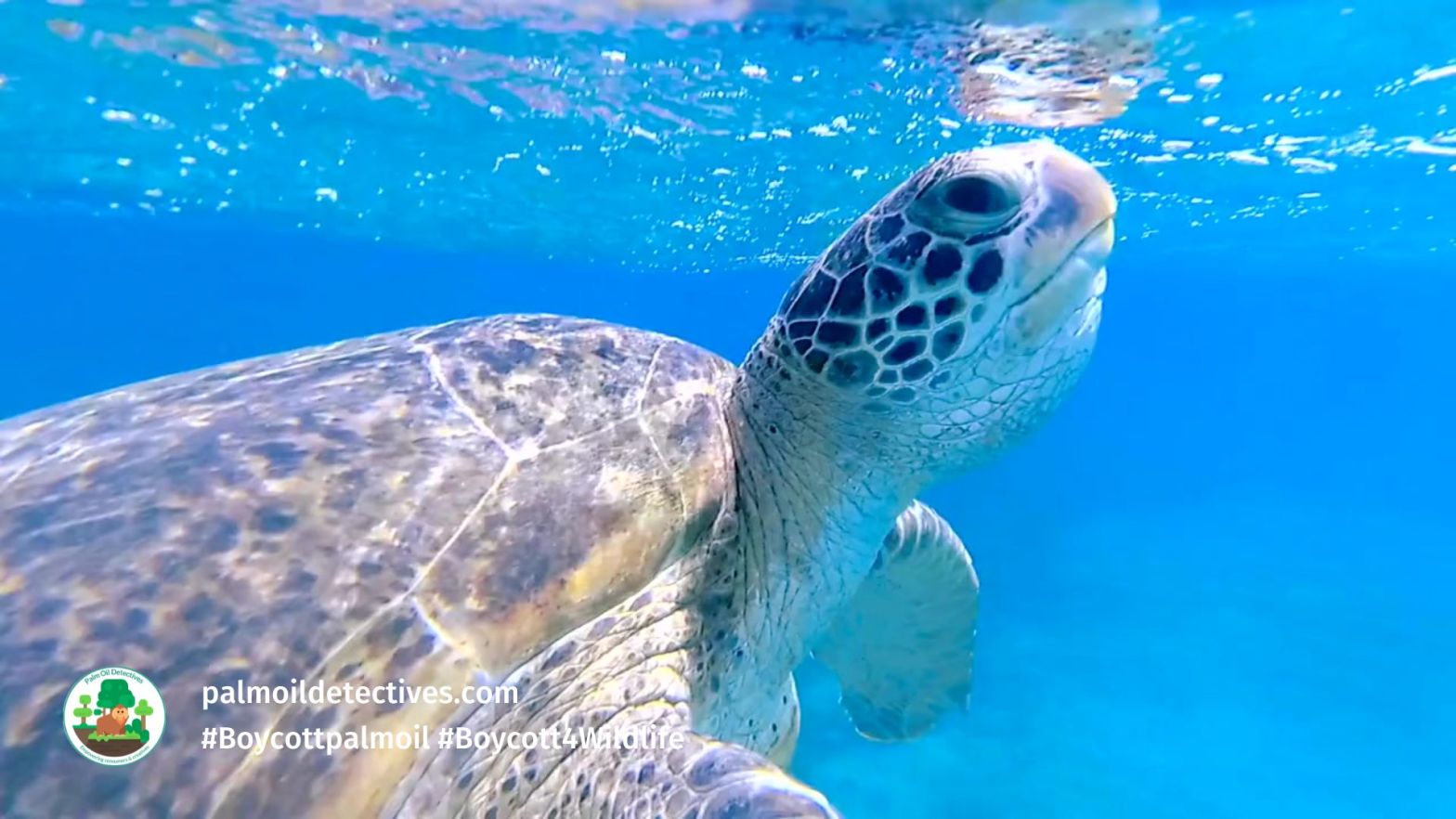
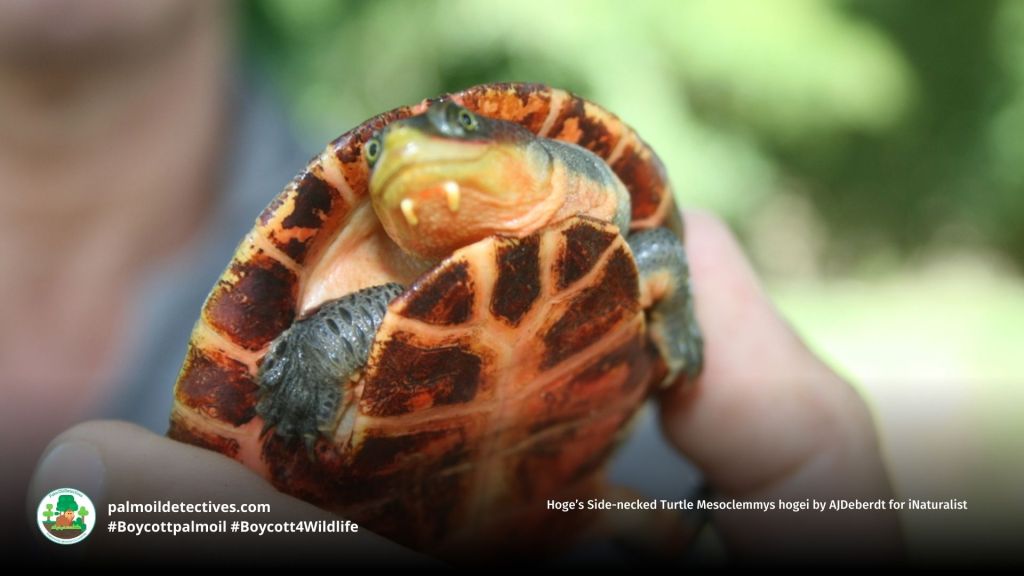
A fascinating history of warrior turtles: from ancient myths, warships and teenage mutants

Ask anyone the identity of the world’s most famed turtles, and the answer is likely to be those legendary heroes in a half-shell, the Teenage Mutant Ninjas. Since first appearing in comic book form in 1984, the pizza-eating, nunchuk-wielding characters have shown the world the tougher side of turtles. Help them to survive every time you shop and Boycott Seafood, #BoycottPalmOil #Boycott4Wildlife

#Turtles 🐢🐢have rich and #ancient symbology around the world 😻🌏 Far from being meek and mild, they’re #warriors! Symbolic of our past, present and fragile future on earth. Help them survive! #Boycottpalmoil 🌴🩸☠️⛔️ #Boycott4Wildlife @palmoildetect https://palmoildetectives.com/2022/04/24/a-fascinating-history-of-warrior-turtles-from-ancient-myths-warships-and-teenage-mutants/
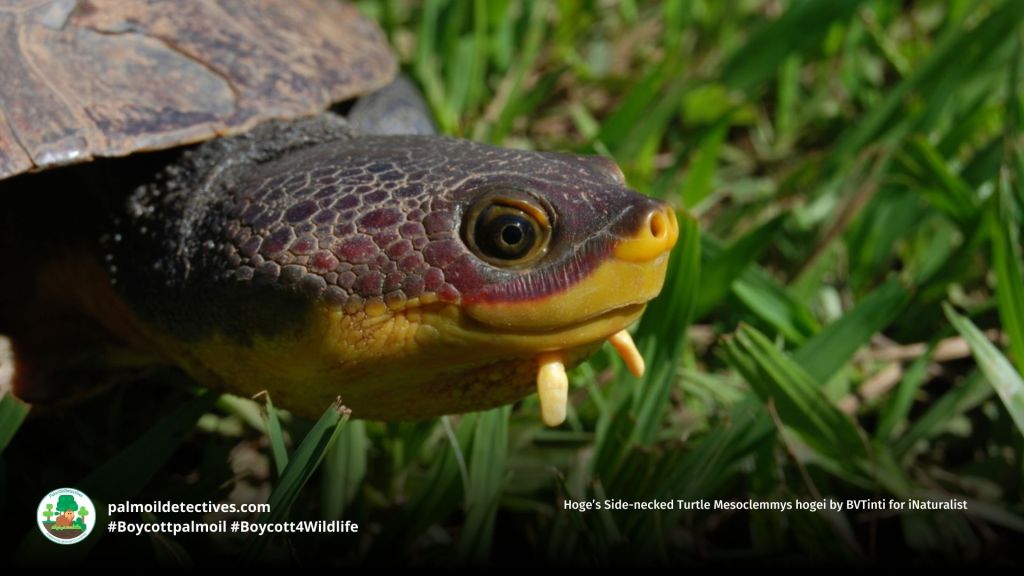
Part of the appeal of the Teenage Mutant Ninja Turtles is that, as animals, they seem to be playing against type. Turtles in the modern day are usually considered placid animals, an image exemplified by the easygoing surfer-turtle, Crush, in Finding Nemo.

To humans, the dawdling turtle is generally perceived as non-threatening. (An important exception here is made for the turtle with an accomplice. The Greek poet Aeschylus is said to have been killed by a tortoise dropped from the sky by an eagle). Indeed, the turtle’s “gentle” image may partially explain the animal’s enduring popularity with children.

Yet, as Aesop may have warned, there is more to the turtle than meets the eye, as a hungry tiger shark recently discovered when its turtle prey fought back with “aggressive, biting lunges”.

Rather than being a recent anomaly, the image of the turtle warrior is common to many ancient and modern cultures. Indeed, the first known depiction of a turtle warrior is found in ancient Mesopotamia (modern day Iraq), in some of the world’s oldest known literature.

Dexterous flippers and shells as shields

The fictional ninja turtle draws on the creature’s many remarkable biological features. The sea turtle’s flippers are useful for propelling the animal through water, but recent research has revealed the surprising dexterity of its limbs.

Turtles can use their flippers for a variety of tasks, such as rolling a scallop across the sea floor, tossing their prey into the air to stun it, or even striking the prey in a chopping action. The discovery of the turtle’s ability to “karate chop” prey made international headlines, likely due to comparisons with their comic book avatars.

The word “turtle” generally describes all animals with a bony shell and a backbone, which may locally be referred to as turtles, tortoises, or terrapins. The term “tortoise” generally describes a land-based turtle, and “terrapin” refers to more aquatic species.

There are 360 known species of turtle, including seven species of sea turtle. Turtles have survived and thrived for many millions of years, colonising every continent except Antarctica, and inhabiting every ocean but the Arctic and Antarctic.

The astonishing physical endurance of some turtle species has seen them setting records for marathon swimming, deep diving, and longevity.

The turtle’s distinctive shell provides a kind of natural body-armour. As well as shielding the animals from predators, shells also provide protection from the natural elements. Shells are a living part of the turtle, and can offer a handy store of minerals such as calcium. For some tortoises, the defensive use of the shell is accompanied by an offensive one, used for battling rivals.
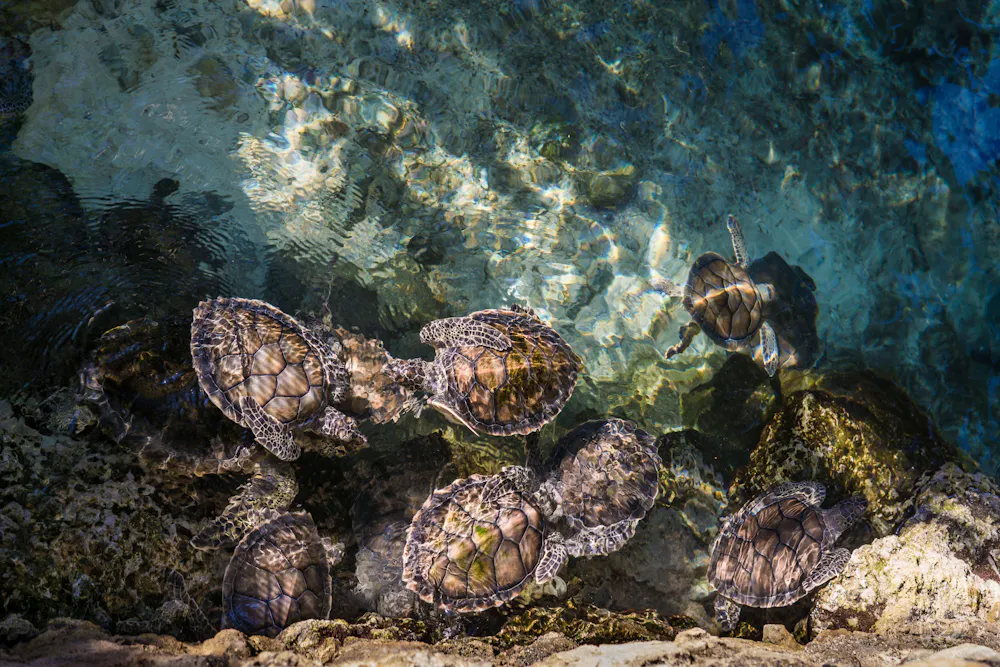
A bale of turtles in the ocean, photographed from above.
Shells are a living part of the turtle. Ricardo Braham/Unsplash

This combination of defensive and more aggressive elements in the turtle’s physiology has likely inspired the animal’s reception in human culture from the earliest time of civilisation.

An ancient attack turtle

The little-known Sumerian myth of Ninurta and the Turtle sees a warrior turtle fight against a legendary hero for the fate of the world. This Mesopotamian myth dates to early in the second millennium BCE.

The eponymous turtle in the narrative is created by the god of wisdom and fresh water, Enki, to retrieve a stolen tablet from the hero, Ninurta, and to teach him humility. The tablet holds special powers that control the path of fate for whomever holds it.
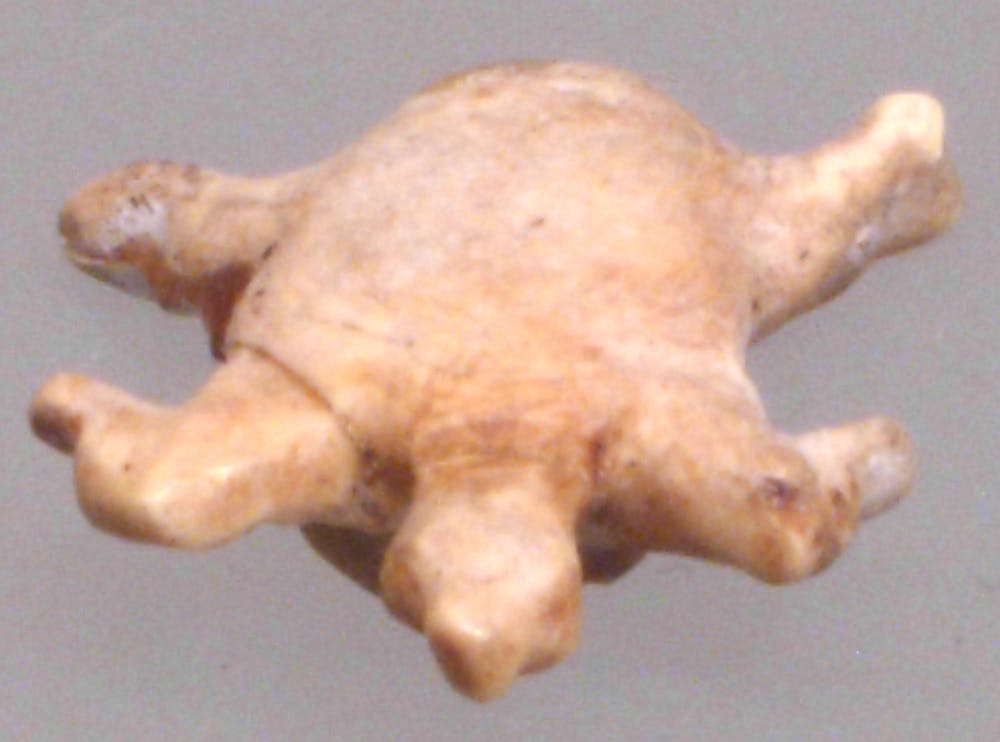
A white carving of a turtle.
A turtle amulet from Egypt made of ivory or bone, c. 2150–1950 BCE. The Metropolitan Museum of Art

In the ancient story, Ninurta is sent to recover the tablet from a mythical beast, the Anzud Bird (sometimes called the “Thunderbird”). Ninurta is successful and the grateful deities tell him to name his reward. Ninurta feels the best reward is to simply hang on to the tablet and gain control over the whole world – in the style of an ancient super-villain.

So Enki builds an attack turtle from clay, which bites at Ninurta’s ankles. While he temporarily withstands the chomping chelid, the turtle then digs a deep “evil pit”, into which Ninurta falls. The magic tablet is retrieved, the world is saved, and the turtle continues its furious attack, tearing at Ninurta with its claws.

Turtles and Egyptian magic wands

In ancient Egypt, the turtle’s ability to submerge itself beneath the water saw it given the name “the mysterious one”. Turtles were viewed as powerful animals; their images were used for warding off evil.

Images of turtles were a common feature on the wooden and bronze rods used by Egyptian magicians. Often referred to in the modern day as “magic wands”, these rods were held in the left hand of a priest or a magician as they performed magic rites.
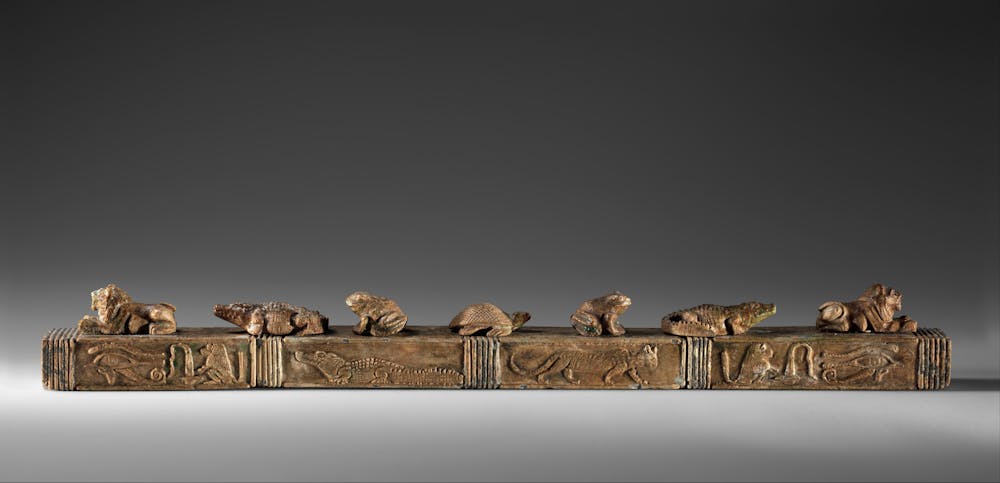
A 'magic wand' decorated with feline predators, crocodiles, toads, a turtle, wedjat eyes, and baboons with flaming torches
This Egyptian rod, c. 1878–1640 BC, is composed of four joining segments, with a turtle taking centre place. The Metropolitan Museum of Art

Images of powerful animals, such as baboons, crocodiles, and lions, and protective symbols such as the Eye of Horus, decorated the sides of the magic wand, while the figure of the turtle was attached to the top end of the rod.

Greek myth

The legendary Greek hero, Theseus, encounters a dangerous turtle on his mythical travels. Theseus is best known for entering the King of Minos’ labyrinth and slaying the monstrous Minotaur. When not wandering through island mazes, Theseus had many adventures involving other local rulers, including the bandit, Sciron.

Sciron lived high on the cliffs. When travellers passed by, he would make them kneel before him and wash his feet. Once they had crouched into a vulnerable posture, Sciron would kick the travellers into the sea, where they would be eaten by a monstrous turtle.

Theseus managed to defeat Sciron, casting him into the same sea patrolled by the giant turtle. This battle is preserved in ancient Greek art, with many works portraying the unhappy bandit’s fall from the cliffs, and the hungry turtle lurking below.

Black sculpture of a tortoise.
A bronze seal with knob in the shape of a turtle, from China c. 1st-2nd Century. The Metropolitan Museum of Art. Charlotte C. and John C. Weber Collection, Gift of Charlotte C. and John C. Weber, 1994.

In ancient China, depictions of the Taoist deity Zhenwu, whose name means “Perfected Warrior”, show the warrior with a tortoise and a snake. Zhenwu is found from the 3rd century BCE, he is considered capable of powerful magic.

The Teenage Mutant Ninja Turtles

The hidden quality of the turtle, tucked up in its shell, creates a mysterious image that makes a good fit for the “ninja” aspect of the cartoon heroes Donatello, Leonardo, Raphael, and Michelangelo. “Turtle power” is a key element of the team’s success, but their influence reaches beyond the purchase of comic books and action figures.

The popularity of the Teenage Mutant Ninja Turtles has drawn greater interest to the study and conservation of turtles and influenced herpetology. For some turtle specialists, the path to a career in the field began by following the adventures of the ninja turtle squad as children.

The Teenage Mutant Ninja Turtles (henceforth TMNT) first appeared in a comic created by Kevin Eastman and Peter Laird. It shows the four combatants fighting against their arch nemesis, the evil Shredder, and his army, the Foot (an homage to fellow superhero Daredevil’s enemy, The Hand). In the present day, the TMNT have appeared in countless incarnations, from movies to pizza cutters.

Turtles in human warfare

As well as influencing artists and storytellers, the physical qualities of turtles have provided inspiration for human combatants. In Mesoamerica, the Spanish conquistador Bernal Díaz del Castillo reported sailing along the coast of the New World in 1518 and seeing warriors holding shields made of carefully polished turtle shells.

The turtle’s physical form is referenced in the Roman battle formation, the testudo (“tortoise”), which involved aligning the soldiers’ shields to create a protective barrier.

The turtle’s shape and protective shell has also seen it used as a muse by designers of military crafts. The world’s first armoured boat, the Korean Geobukseon, was called the “Turtle Ship”. Built around 1540 CE, the ship featured cannons fired through the mouth of a dragon carved into bow, and a turtle’s tail, armed with gunports, attached to the stern of the craft.

Wood block print of a half boat half turtle contraption.
A Korean turtle ship as depicted in 1795. Wikimedia Commons, CC BY-SA

Turtles and the world’s first submarine

Another pioneering sea vessel inspired by the turtle is the world’s first submarine. The first known submersible craft with documented use in combat is the American Turtle. This vessel was created by David Bushnell in 1775, for use in the American Revolutionary War.

On September 6 1776, American Turtle was deployed to covertly draw close to the British Navy anchored in New York Harbour, to affix mines to the fleet’s flagship. After several attempts, the mission was aborted, and the Turtle floated away downstream.
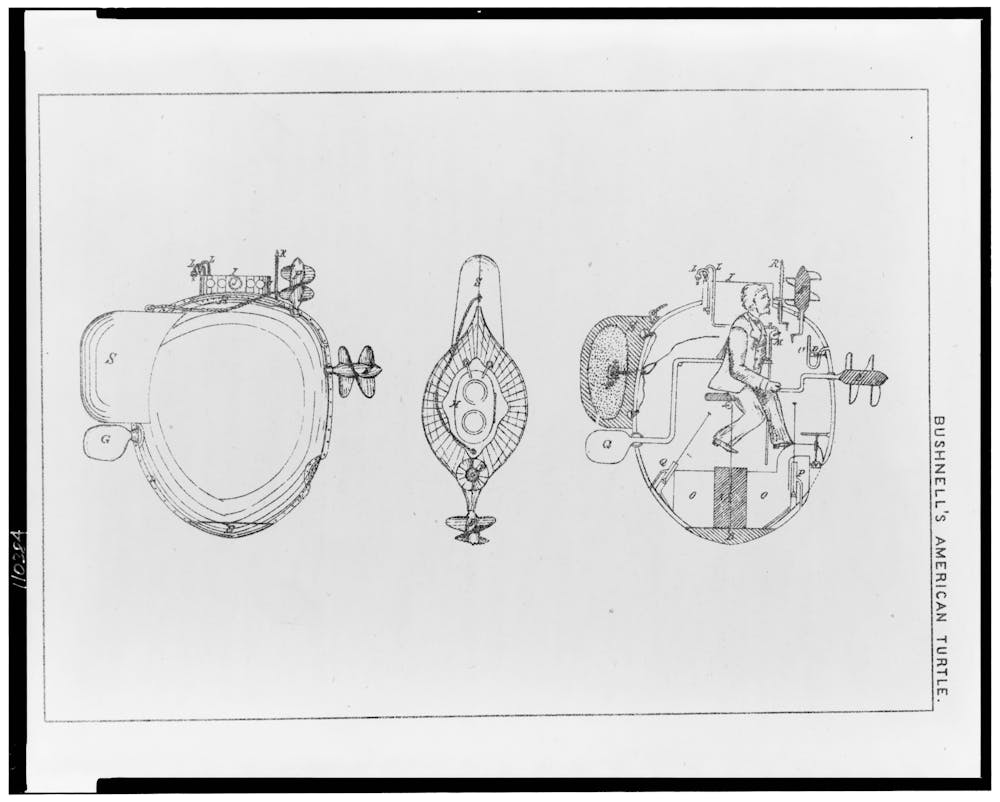
The submarine drawn from the front, top, and cross-section, with a man inside.
The American Turtle was a a one-man submarine, designed to attach bombs to British warships during the American revolutionary war. Library of Congress

The Turtle’s maiden combat mission was also her last, but the craft left a lasting impression on maritime history and the war’s participants. In a letter to Thomas Jefferson dated to 26 September 1785 — shortly before becoming the first president of the United States — George Washington described the turtle-like submarine as “an effort of genius”.

Turtles in Australian naval history

Turtles and submarines were successfully paired in Australian naval history. In 1996, the Defence Science and Technology Organisation developed an underwater, remote-controlled vehicle “Wayamba”. The vehicle’s name comes from the First Nations name for “sea turtle”.

Like the American turtle, the Wayamba is connected to underwater mines — but while the American turtle attempted to deploy mines, the Wayamba works to detect them.

Flippered gardeners of the sea

Given the turtle’s long-lasting cultural symbolism, it is perhaps not surprising to see the creature’s modern-day identification as a kind of ecowarrior among animals. The turtle’s charisma has been harnessed in campaigns to draw public awareness to important conservation issues, such as the impact of plastic and noise pollution in the ocean.
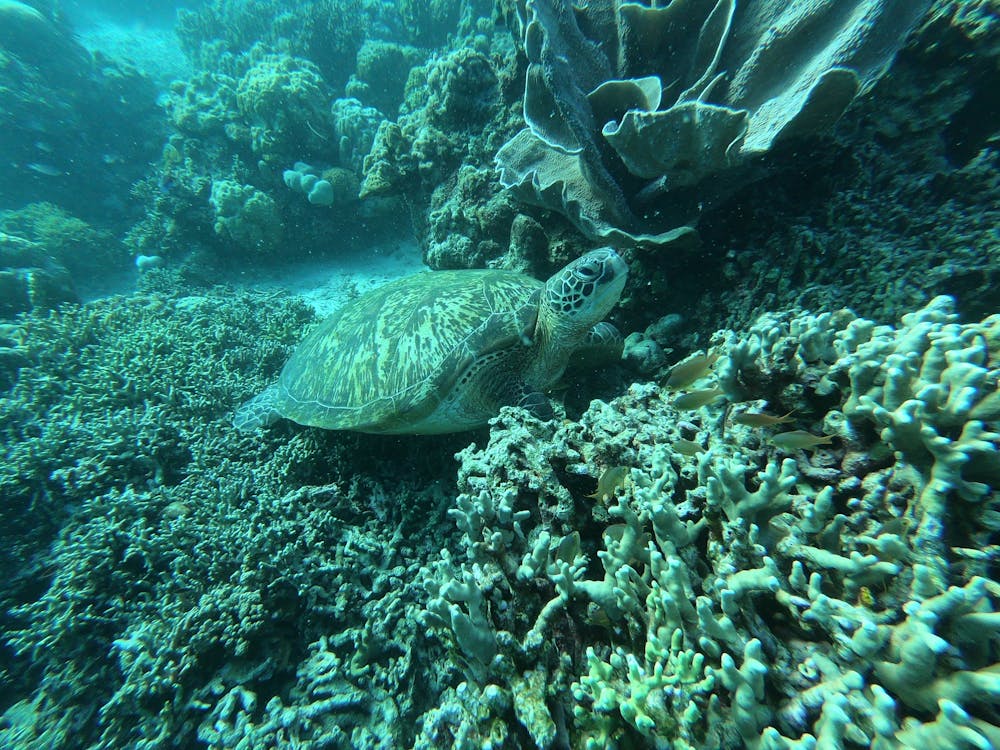
A green turtle blends into the green of the reef.
Turtles help maintain healthy reefs — the gardeners of the sea. Vladislav S/Unsplash

For over a hundred million years, turtles have played a crucial part in maintaining healthy marine ecosystems, through transporting nutrients from oceans to beach systems. Research has shown that by grazing on sea-grass and sponges, turtles maintain healthy reefs — like flippered gardeners of the sea.

Turtles have much at stake in the current climate crisis: they are among the most threatened groups of animals in the world.

A landmark 2018 study showed turtles were more threatened than birds, fish, mammals, and even the much besieged amphibians.
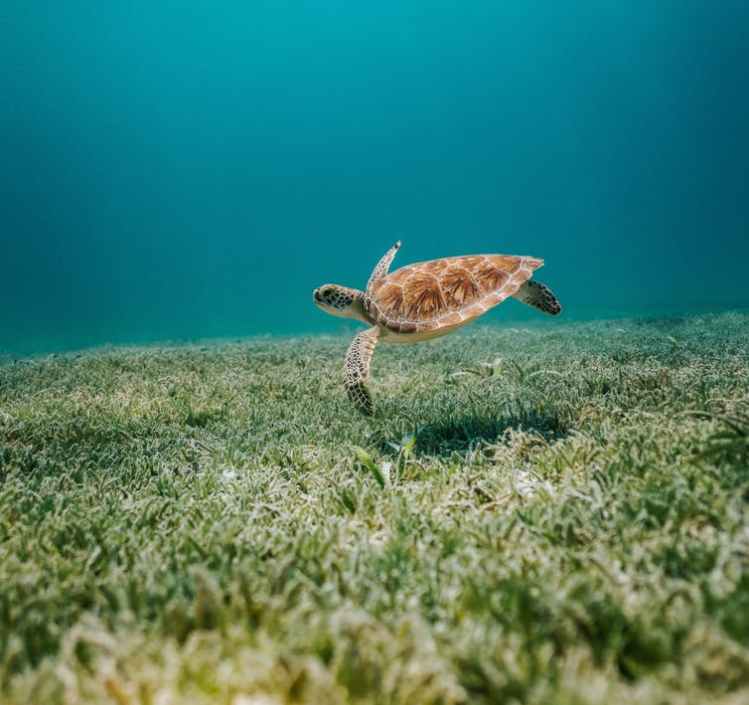
A fascinating history of warrior turtles: from ancient myths, warships and teenage mutants

The turtle is a fascinating animal whose famous lethargy belies an efficient and enduring creature, admirably adapted to its environment.

By building greater awareness of the cultural and environmental significance of turtles from prehistory to popular culture, we may help these remarkable animals to move (very slowly) towards a more secure and sustainable future.

Louise Pryke, Honorary Research Associate and Lecturer, University of Sydney

This article is republished from The Conversation under a Creative Commons license. Read the original article.

Boycott the brands causing deforestation for palm oil, soy and meat by joining the #Boycott4Wildlife


Small version - Palm OIl Detectives Banner Header

Deforestation Allows for Deadly Viruses to Jump Species

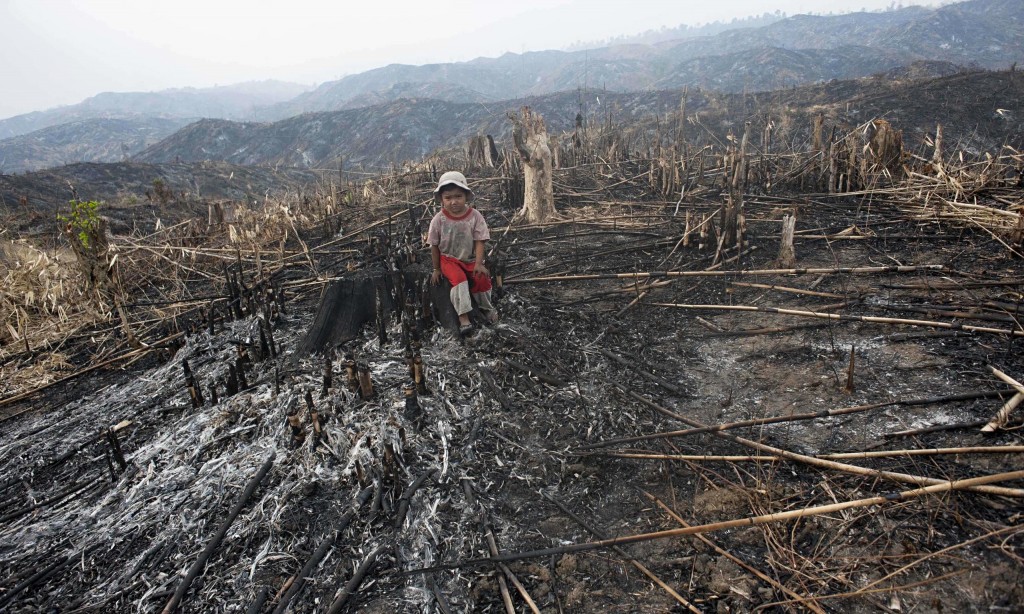
Many pandemics originate from wildlife that jumps from animal to human. These leaps often happen at the edges of the world’s tropical forests, where #deforestation is increasingly bringing people into contact with animals’ natural habitats. Yellow fever, #malaria, Venezuelan equine encephalitis, #Ebola – all of these pathogens have spilled over from one species to another at the margins of forests. This has many scientists concerned. The next pandemic is likely to originate from either the rainforest, meat or dairy agriculture where humans have most contact with animals.

As doctors and biologists specializing in infectious diseases, we have studied these and other zoonoses as they spread in Africa, Asia and the Americas. We found that deforestation has been a common theme.

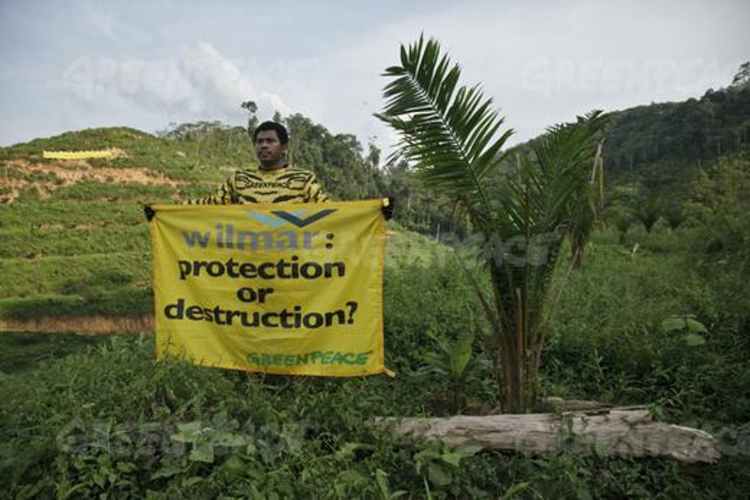
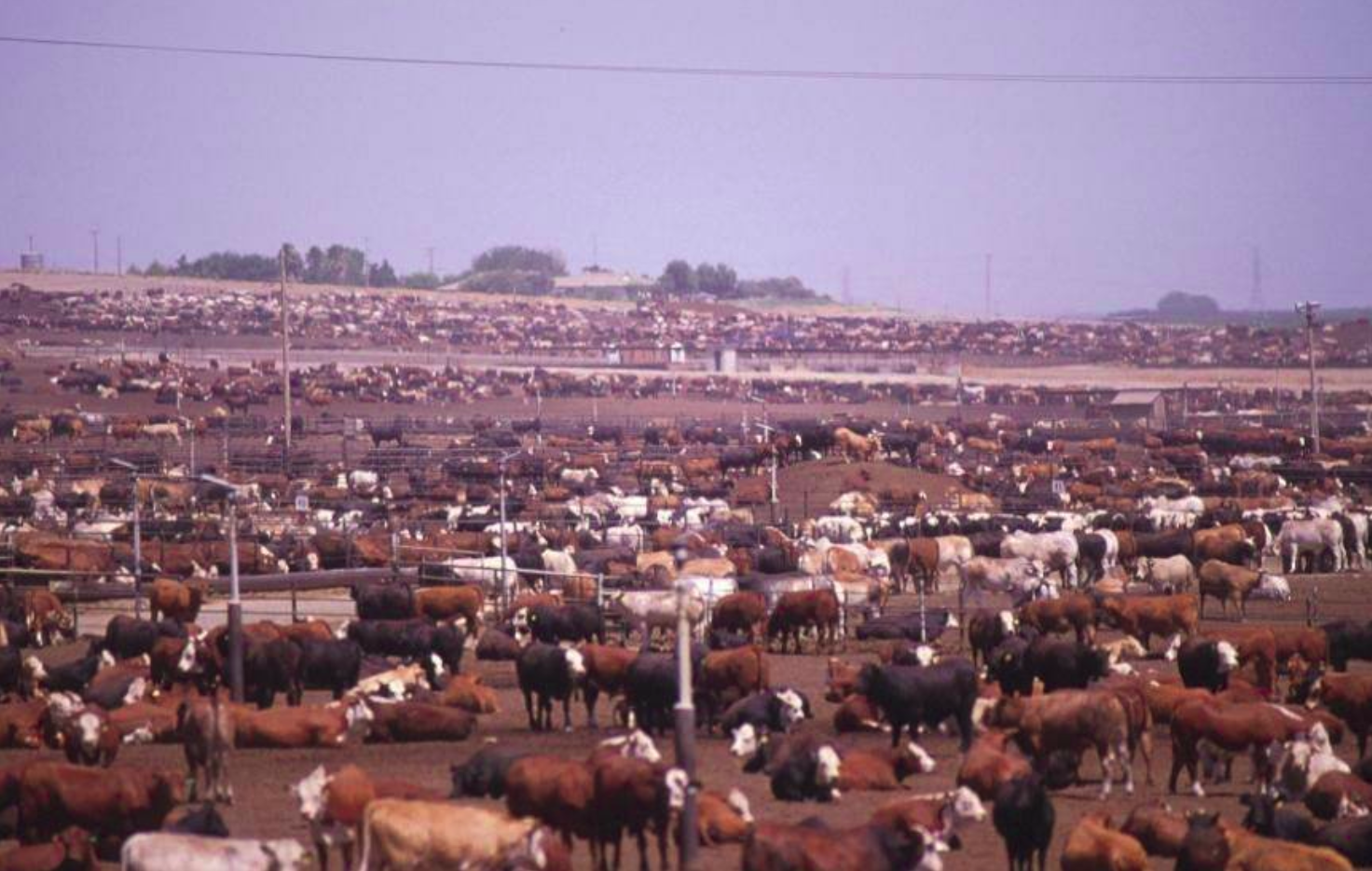
More than half of the world’s tropical deforestation is driven by four commodities: beef, soy, palm oil and wood products. They replace mature, biodiverse tropical forests with monocrop fields and pastures. As the forest is degraded piecemeal, animals still living in isolated fragments of natural vegetation struggle to exist. When human settlements encroach on these forests, human-wildlife contact can increase, and new opportunistic animals may also migrate in.

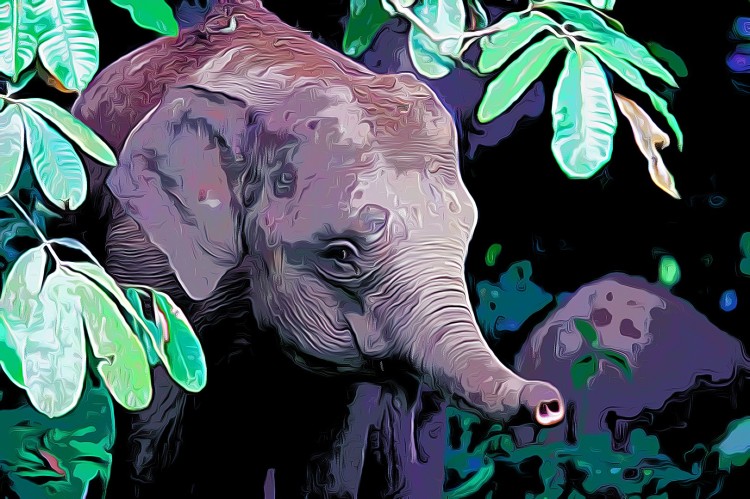
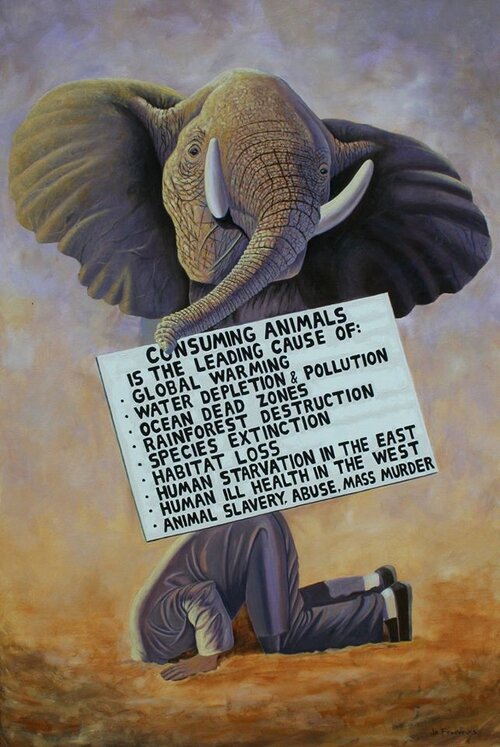
Elephant in the Room by Jo Frederiks

The resulting disease spread shows the interconnectedness of natural habitats, the animals that dwell within it, and humans.

Yellow fever: Monkeys, humans and hungry mosquitoes

Yellow fever, a viral infection transmitted by mosquitoes, famously halted progress on the Panama Canal in the 1900s and shaped the history of Atlantic coast cities from Philadelphia to Rio de Janeiro. Although a yellow fever vaccine has been available since the 1930s, the disease continues to afflict 200,000 people a year, a third of whom die, mostly in West Africa.

The virus that causes it lives in primates and is spread by mosquitoes that tend to dwell high in the canopy where these primates live.

In the early 1990s, a yellow fever outbreak was reported for the first time in the Kerio Valley in Kenya, where deforestation had fragmented the forest. Between 2016 and 2018, South America saw its largest number of yellow fever cases in decades, resulting in around 2,000 cases, and hundreds of deaths. The impact was severe in the extremely vulnerable Atlantic forest of Brazil – a biodiversity hotspot that has shrunk to 7% of its original forest cover.

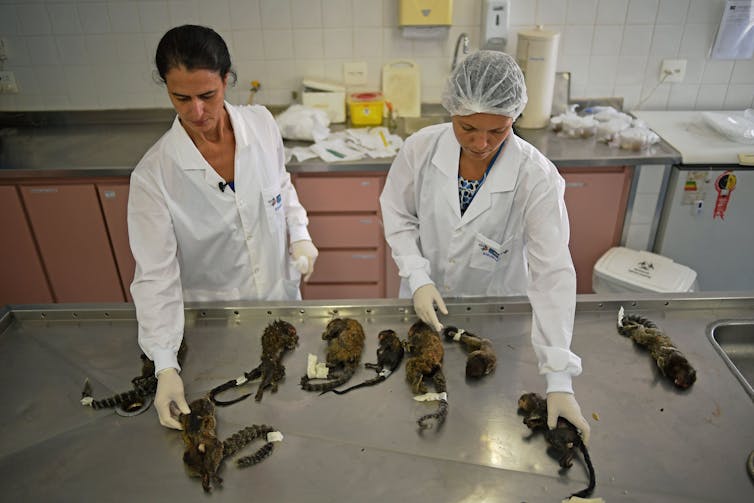
Veterinarians inspect monkeys found dead in Brazil, where primates are suspected of spreading yellow fever. Carl de Souza/AFP via Getty Images

Shrinking habitat has been shown to concentrate howler monkeys – one of the main South American yellow fever hosts. A study on primate density in Kenya further demonstrated that forest fragmentation led a greater density of primates, which in turn led to pathogens becoming more prevalent.

Deforestation resulted in patches of forest that both concentrated the primate hosts and favored the mosquitoes that could transmit the virus to humans.

Malaria: Humans can also infect wildlife

Just as wildlife pathogens can jump to humans, humans can cross-infect wildlife.

Falciparum malaria kills hundreds of thousands of people yearly, especially in Africa. But in the Atlantic tropical forest of Brazil, we have also found a surprisingly high rate of Plasmodium falciparum (the malaria parasite responsible for severe malaria) circulating in the absence of humans. That raises the possibility that this parasite may be infecting new world monkeys. Elsewhere in the Amazon, monkey species have become naturally infected. In both cases, deforestation could have facilitated cross-infection.

We and other scientists have extensively documented the associations between deforestation and malaria in the Amazon, showing how the malaria-carrying mosquitoes and human malaria cases are strongly linked to deforested habitat.

Children in Ethiopia read under mosquito netting, used to protect people from mosquitoes that transmit malaria. Louise Gubb/Corbis via Getty Images

Another type of malaria, Plasmodium knowlesi, known to circulate among monkeys, became a concern to human health over a decade ago in Southeast Asia. Several studies have shown that areas sustaining higher rates of forest loss also had higher rates of human infections, and that the mosquito vectors and monkey hosts spanned a wide range of habitats including disturbed forest.

Venezuelan equine encephalitis: Rodents move in

Venezuelan equine encephalitis is another mosquito-borne virus that is estimated to cause tens to hundreds of thousands of humans to develop febrile illnesses every year. Severe infections can lead to encephalitis and even death.

In the Darien province of Panama, we found that two rodent species had particularly high rates of infection with Venezuelan equine encephalitis virus, leading us to suspect that these species may be the wildlife hosts.

One of the species, Tome’s spiny rat, has also been implicated in other studies. The other, the short-tailed cane mouse, is also involved in the transmission of zoonotic diseases such as hantavirus and possibly Madariaga virus, an emergent encephalitis virus.

People have a cognitive dissonance when it comes to eating animals, given the health risks of zoonosis and pandemics

Elephant in the Room by Jo Frederiks

While Tome’s spiny rat is widely found in tropical forests in the Americas, it readily occupies regrowth and forest fragments. The short-tailed cane mouse prefers habitat on the edge of forests and abutting cattle pastures.

As deforestation in this region progresses, these two rodents can occupy forest fragments, cattle pastures and the regrowth that arises when fields lie fallow. Mosquitoes also occupy these areas and can bring the virus to humans and livestock.

Ebola: Disease at the forest’s edge

Vector-borne diseases are not the only zoonoses sensitive to deforestation. Ebola was first described in 1976, but outbreaks have become more common. The 2014-2016 outbreak killed more than 11,000 people in West Africa and drew attention to diseases that can spread from wildlife to humans.

The natural transmission cycle of the Ebola virus remains elusive. Bats have been implicated, with possible additional ground-dwelling animals maintaining “silent” transmission between human outbreaks.

Bats, sometimes eaten as food, have been suspected of spreading Ebola. Tyler Hicks/Getty Images

While the exact nature of transmission is not yet known, several studies have shown that deforestation and forest fragmentation were associated with outbreaks between 2004 and 2014. In addition to possibly concentrating Ebola wildlife hosts, fragmentation may serve as a corridor for pathogen-carrying animals to spread the virus over large areas, and it may increase human contact with these animals along the forest edge.

What about the coronavirus?

While the origin of the SARS-CoV-2 outbreak hasn’t been proven, a genetically similar virus has been detected in intermediate horseshoe bats and Sunda pangolins.

The range of the Sunda pangolin – which is critically endangered – overlaps with the intermediate horseshoe bat in the forests of Southeast Asia, where it lives in mature tree hollows. As forest habitat shrinks, could pangolins also experience increased density and susceptibility to pathogens?

In fact, in small urban forest fragments in Malaysia, the Sunda pangolin was detected even though overall mammal diversity was much lower than a comparison tract of contiguous forest. This shows that this animal is able to persist in fragmented forests where it could increase contact with humans or other animals that can harbor potentially zoonotic viruses, such as bats. The Sunda pangolin is poached for its meat, skin and scales and imported illegally from Malaysia and Vietnam into China. A wet market in Wuhan that sells such animals has been suspected as a source of the current pandemic.

Preventing zoonotic spillover

There is still a lot that we don’t know about how viruses jump from wildlife to humans and what might drive that contact.

Forest fragments and their associated landscapes encompassing forest edge, agricultural fields and pastures have been a repeated theme in tropical zoonoses. While many species disappear as forests are cleared, others have been able to adapt. Those that adapt may become more concentrated, increasing the rate of infections.

Given the evidence, it is clear humans need to balance the production of food, forest commodities and other goods with the protection of tropical forests. Conservation of wildlife may keep their pathogens in check, preventing zoonotic spillover, and ultimately benefiting humans, too.

Amy Y. Vittor, Assistant Professor of Medicine, University of Florida; Gabriel Zorello Laporta, Professor of biology and infectious diseases, Faculdade de Medicina do ABC, and Maria Anice Mureb Sallum, Professor of Epidemiology, Universidade de São Paulo

Boycott the brands causing deforestation for palm oil, soy and meat by joining the #Boycott4Wildlife
Small version - Palm OIl Detectives Banner Header

More protein and good for the planet: 9 reasons we should be eating microalgae

As the climate change advances and deforestation continues at pace, the land we use for growing energy-intensive crops such as wheat corn, soy and palm oil is becoming less productive. We need to find ways to feed the earth’s growing population that isn’t so burdensome on the environment.

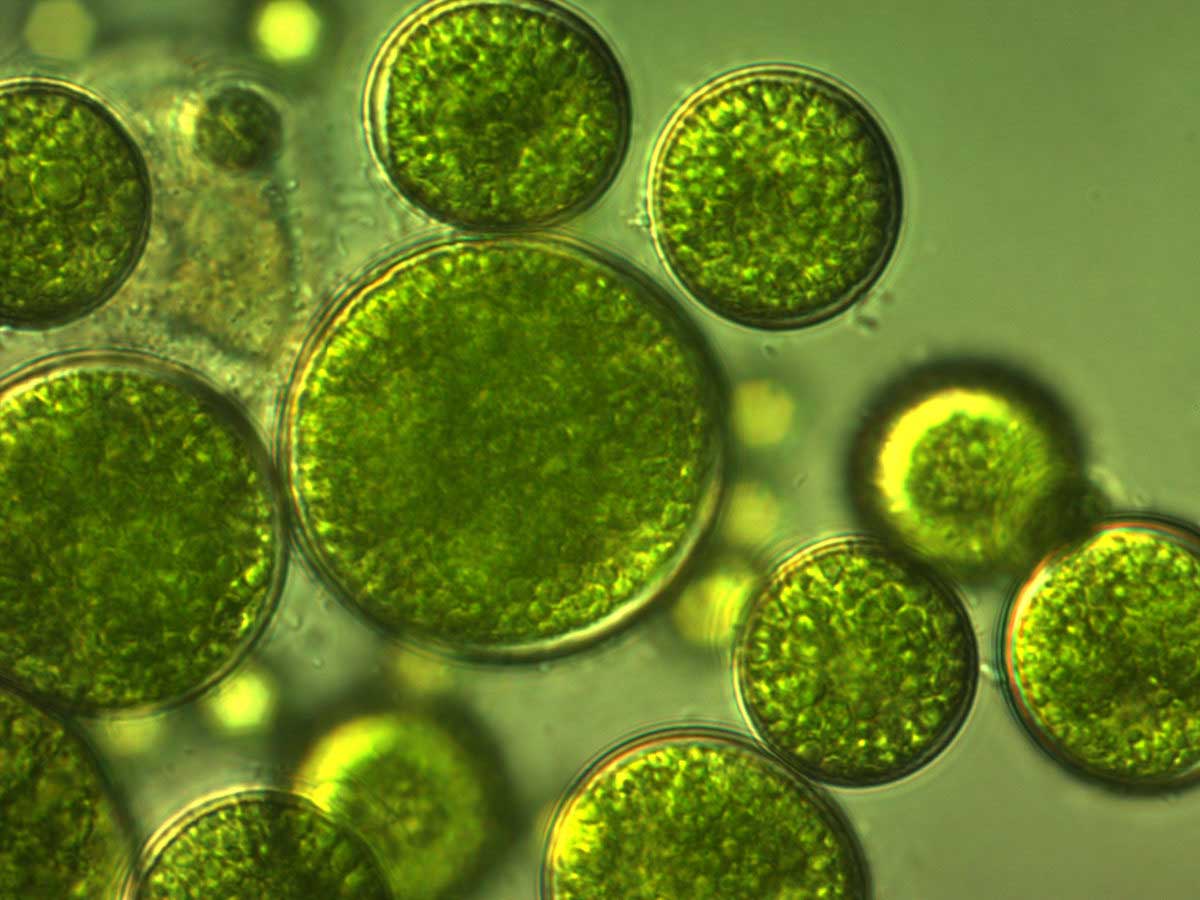
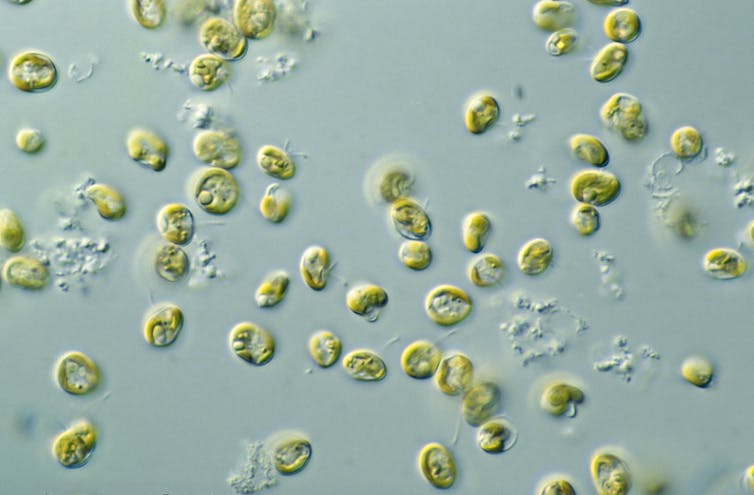
One potential solution is to cultivate microalgae – microscopic aquatic organisms that are packed with nutrients. Microalgae are single-celled organisms that look like tiny pills and taste a bit like grass.

They are relatively easy to cultivate and have several advantages over animal and plant protein.

1. Less environmental impact

Algae don’t require pesticides to sustain their productivity. Algae can also be grown in wastewaters (water that has been used in the home or in some industrial process), taking up nutrients and other dissolved substances into their biomass. This results in fewer contaminants being released into the environment and less pollution in our waterways.

CSIRO

2. It can be grown year-round

High growth and reproduction rates mean microalgae can double their biomass in as little as one to three days, depending on the time of the year. While their growth rate is slower in winter, they are not limited to a growing season, such as plants, or a long maturation period, such as animals.

This means microalgae produce more biomass on a given area of land per year, than animals or plants.

High growth rates also mean frequent harvesting. This makes microalgal cultures more resilient to sudden or extreme weather events, where production losses may be only several days of growth rather than the entire annual crop.

More protein and good for the planet: 9 reasons we should be eating microalgae

3. It has more protein

Algae produce more protein than plant-based foods, including soybean and pulse legumes. While algae produce 3.5-13 tonnes of protein per hectare per year, soybean and pulse legumes produce 0.5-1.8 tonnes of protein per hectare per year.

The higher growth rate of microalgae and ability to produce their own food from the sun, means microalgal protein yields are more than 100 times greater than animal-based proteins, including beef, eggs and dairy (0.01 – 0.23 tonnes per hectare per year).

Microalgal protein yields are much greater than animal-based proteins such as eggs, beef and dairy. Dave Hunt/AAP

4. Farms can be built anywhere

Algae production systems don’t require arable land. They comprise either open ponds or closed vessels with a light source, known as photobioreactors. The systems can be built almost anywhere, including non-productive land or in the sea.

Open ponds are shallow (between 10 and 50 cm deep), and the algae culture is gently circulated by a paddlewheel. Closed photobioreactors consist of an array of tubes or flat panels, through which algae is circulated. Both types of production systems can be modified to suit the environment.

5. It doesn’t require fresh water

Thousands of marine and estuarine microalgal species grow best in seawater rather than freshwater. This would reduce our reliance on fresh water for food production.

Widespread adoption of microalgae as a food source would reduce pressure on freshwater systems. Dean Lewin/AAP

6. It’s nutritious

Algae have long been recognised for their nutritional properties, forming a vital food source in human diets since as early as 14,000 BC. Over the last few decades, microalgae have been used in vitamin supplements and health food products, including protein bars and powders, green smoothies and Omega-3 capsules.

Microalgae contain proteins, fats, carbohydrates and other nutritional components that have wide potential application in the food industry. For example, algae have a broad array of amino acids that support human growth and development; some are comparable with the levels in egg, soy and wheat protein.

To date, microalgae have successfully been incorporated into a range of edible products to increase their nutritional value, including yoghurts, biscuits, bread and pasta. Manufacturers have been able to swap plant for algal-protein by simply introducing it as a powder into production streams.

Apart from adding nutrients, microalgae have other properties that facilitate their incorporation into foods, including emulsifying, foaming, gelation, and absorption of fat and water.

Using microalgae in emulsions allows for a decrease in the percentage of oil, showing promise for their potential use in low-fat products. When added to desserts as colouring agents, the cell structure in microalgae protects pigments from thermal degradation during processing, enabling foods to maintain their vibrancy.

7. It’s cruelty-free

Algae can be harvested by sedimentation, flotation or filtration, with not an abattoir or live exporter in sight.

Microalgae as a food source would reduce demand for meat from livestock. TREVOR COLLENS/AAP

8. It can be used in sustainable products

Microalgae are increasingly being used as sustainable components of other products, including cosmetics, nutraceuticals, industrial enzymes and bioplastics, and as a biofuel to replace fossil fuels in niche markets.

Many microalgae have high levels of palmitic acid. This acid is also the principal component of palm oil – a widely used oil in food production which drives mass deforestation and loss of animal habitat. Replacing palm oil with microalgae would reduce reliance on this unsustainable industry.

9. An opportunity for developing regions

The low-tech, basic infrastructure needed for microalgal farming could provide economic opportunities for developing regions. For example, research has shown a number of African nations have suitable land, labor and climatic conditions to grow microalgae as a source of bioenergy.

Where to now?

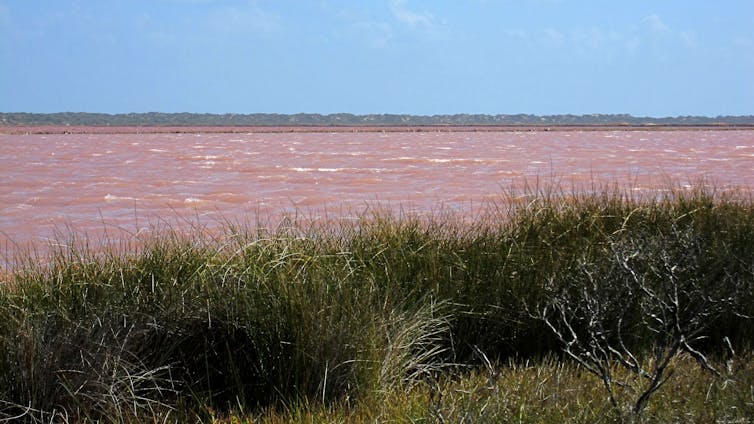
Microalgae are being produced commercially in Australia, including at Hutt Lagoon in Western Australia, the world’s largest microalgae production plant. There, the alga Dunaliella salina is grown to produce beta-carotene, a food pigment and source of vitamin A.

Microalgae is commercially produced at Hutt Lagoon in Western Australia. Wikimedia Commons

Elsewhere in Australia, microalgae is grown to produce Spirulina, which is marketed as a health food. Researchers are developing the use of microalgae further, including as a feed supplement for beef cattle.

But the current range of microalgae products grown in Australia is limited. The nation has a suitable climate and the technology; now it needs growers and manufacturers.

Government support is required to enable the agricultural and manufacturing sectors to create algae-based products – current stimulus spending provides such an opportunity. This would not only create new jobs, but enable Australian businesses to become more resilient into the future.

Martina Doblin, Senior Research Fellow, Plant Functional Biology & Climate Change, University of Technology Sydney; Donna Sutherland, Research Fellow, University of Technology Sydney, and Peter Ralph, University of Technology Sydney

This article is republished from The Conversation under a Creative Commons license. Read the original article.

Learn about other Reasons to Hope

Something went wrong. Please refresh the page and/or try again.

Conservation activists suing Indonesian zoo could inspire global action on endangered species trade

In a court in rural #Indonesia, an environmental group recently filed a lawsuit of global importance. Their case is against a zoo in North #Sumatra that it’s alleged illegally exhibited threatened species, including Komodo dragons and critically endangered Sumatran #orangutans. The illegal wildlife trade is a multibillion-dollar industry that threatens species globally, from #elephants to orchids. Plants, animals and fungi are harvested from the wild and sold to customers around the world as attractions in zoos, as pets, for food, as souvenirs or as medicine. Help animals and #BoycottWildlifeTrade #Boycott4Wildlife

People caught trafficking wildlife are typically tried in criminal law cases, in which courts impose fines or prison sentences that punish the responsible parties in order to deter would-be criminals. But in this recent case, rather than seek punishment against the Indonesian zoo, the activists brought a civil lawsuit ordering the zoo to remedy the harm it allegedly caused by exhibiting these species illegally.

In the press release announcing the lawsuit, the North Sumatra Chapter of the Indonesian Forum for the Environment (Walhi Sumut) and Medan Legal Aid Institute said they were suing to cover the costs of care for one Sumatran orangutan confiscated from the zoo, and to fund monitoring of orangutan habitat to aid the recovery of their wild population. The resulting bill exceeds US$70,000 (£49,438). The typical criminal sanction for wildlife crime in Indonesia is around US$3,500.

An orangutan pokes its arm through the bars of a large cage.
One of the orangutans in the zoo before it was confiscated in 2019. Walhi North Sumatra, Author provided

The activists are also asking the zoo to publicly apologise and to create educational exhibits that explain how the illegal trade and use of wildlife harms nature and society. Surprisingly, these types of legal strategies that aim to repair harm – rather than punish perpetrators – have been largely overlooked by conservationists in many countries. The Indonesian zoo lawsuit could demonstrate the value of a new legal approach for protecting threatened wildlife.

Komodo dragons were illegally exhibited at the zoo. Anna Kucherova/Shutterstock

Historical precedents

The zoo lawsuit parallels landmark pollution cases, such as the Exxon Valdez and Deepwater Horizon oil spills, where the responsible parties (in these cases, oil companies) were sued by government agencies and citizens and required to clean up pollution, compensate victims and restore affected habitats. It is also similar to innovative climate change lawsuits that have argued for the world’s largest oil and gas companies to pay for building protective sea walls, and other measures which help mitigate the effects of global warming.

Similar legal approaches haven’t been a major part of enforcing conservation laws. But through our work in Conservation Litigation – a project led by conservationists and lawyers – colleagues and I are working to bring such lawsuits against offenders globally.

Many countries already have laws that would allow these lawsuits, including in biodiversity hotspots such as Mexico, Democratic Republic of Congo and Indonesia. The 1992 UN Rio Convention called on states to “develop national law[s] regarding liability compensation for the victims of pollution and other environmental damage”. Although laws that oblige offenders to remedy environmental harm have been established already, the Indonesian zoo case is unique as one of the first times such a law has been applied to address wildlife crime. https://player.vimeo.com/video/510514912

The case could serve to influence public views and policies around biodiversity. This has been an important benefit of litigation in other areas, such as in cases against tobacco companies and opioid manufacturers.

Over the years, these lawsuits have secured compensation for healthcare costs, public admissions of guilt from executives and corrective adversiting to clarify earlier misinformation. These cases have not only benefited individual victims, but helped shift attitudes and reform public health policies and company practices.

The zoo lawsuit could achieve something similar by holding the zoo liable for downstream harms caused by its involvement in the illegal wildlife trade. By requesting public apologies and support for educational programmes, the lawsuit would not only seek to remedy harm to individual animals and species, but to help shape public perceptions and policy.

It’s also significant that this case is being brought by a non-governmental organisation (NGO). Governments can bring criminal cases against offenders, while the NGOs cannot. But in many countries, citizens and civil society groups are permitted to launch civil lawsuits in response to environmental harm, expanding the potential for public conservation action.

These types of lawsuits are often hindered by difficulties paying lawyers, corruption in legal systems and the intimidation of activists. With more than one million species potentially facing extinction, it’s important to recognise and support these rare cases which are testing new ways to protect the planet’s most threatened forms of life.

Jacob Phelps, Senior Lecturer in Conservation Governance, Lancaster University

This article is republished from The Conversation under a Creative Commons license. Read the original article.

How can I help the #Boycott4Wildlife?

1. Join the #Boycott4Wildlife: Share posts from this website to your own network on Twitter, Instagram and Facebook using the hashtags #Boycottpalmoil #Boycott4Wildlife.

2. Contribute stories: Academics, conservationists, scientists, indigenous rights advocates and animal rights advocates working to expose the corruption of the palm oil industry or to save animals can contribute stories to the website.

3. Supermarket sleuthing: Next time you’re in the supermarket, take photos of products containing palm oil. Share these to social media along with the hashtags to call out the greenwashing and ecocide of the brands who use palm oil. You can also take photos of palm oil free products and congratulate brands when they go palm oil free.

4. Take to the streets: Get in touch with Palm Oil Detectives to find out more.

5. Donate: Make a one-off or monthly donation to Palm Oil Detectives as a way of saying thank you or to help pay for ongoing running costs.

Join 3,176 other subscribers

Share palm oil free purchases online and shame companies still using dirty palm oil!

Don’t forget to tag in #BoycottPalmOil #Boycott4Wildlife to get shared

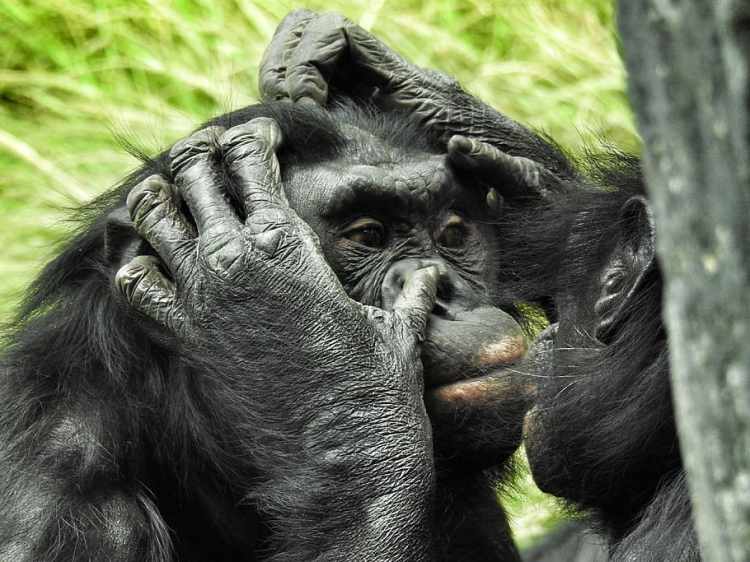
Bonobo mothers meddle in their sons’ sex lives – making them three times more likely to father children

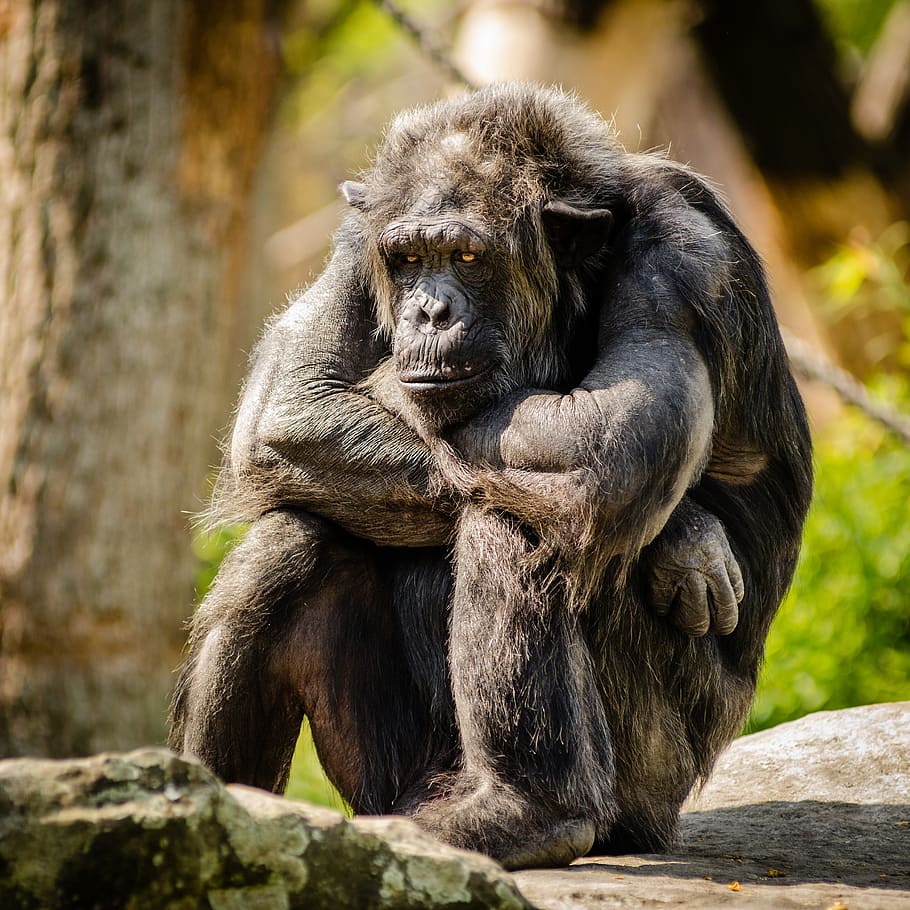
New research shows that for #bonobos, sex really is often a family affair. What’s more, rather than being an embarrassing hindrance, motherly presence greatly benefits bonobo sons during the deed.

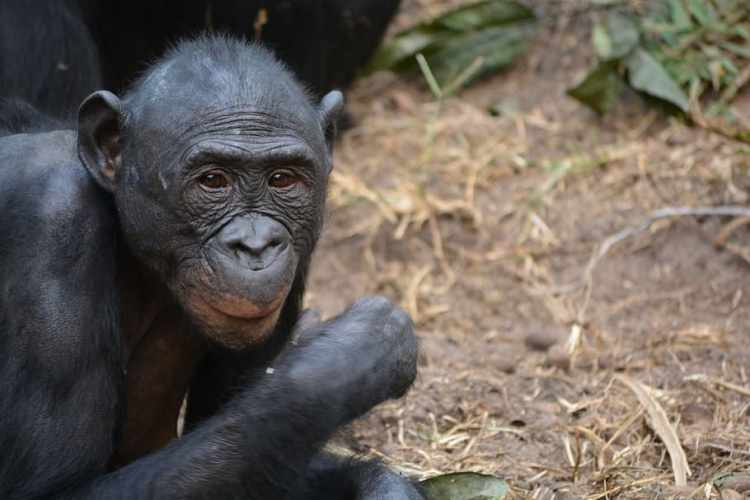
Along with #chimpanzees (Pan troglodytes), bonobos (Pan paniscus) are our closest living relatives. Restricted to a 500,000 km² thickly-forested zone of the #Congo Basin, these endangered great apes were only formally discovered in 1928, which until 2017 made them the most recently-described living great ape species.

Operating in female-led social systems, bonobos are capable of showing a wide range of what were long held as human-specific feelings and emotions, such as sensitivity, patience, compassion, kindness, empathy and altruism. Help them to survive every time you shop #BoycottPalmOil #Boycott4Wildlife

Bonobo

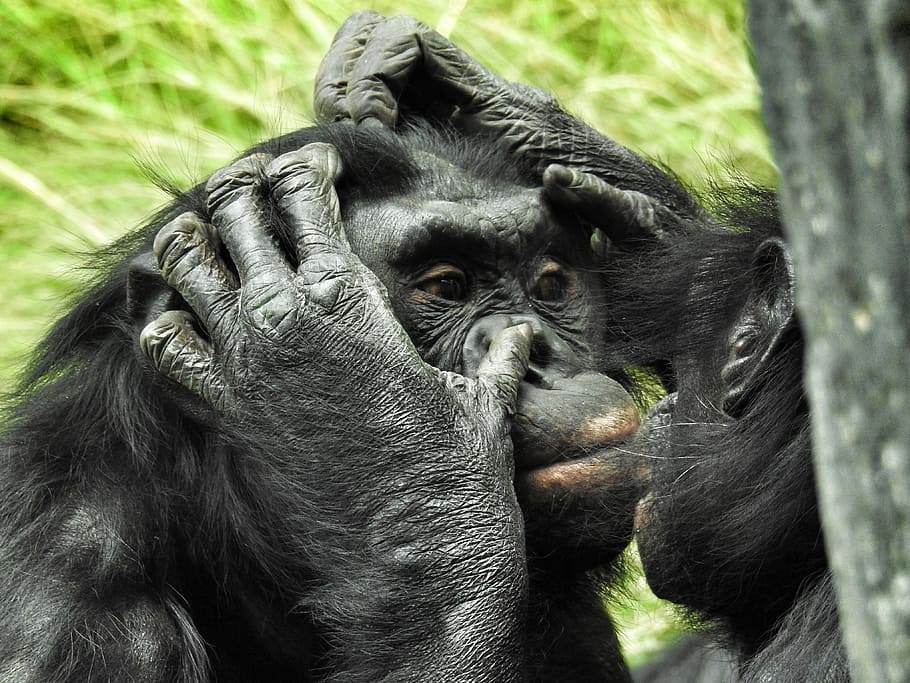
They’re also perhaps the most promiscuous non-human species on the planet. While chimpanzee sex is tied closely to reproduction, up to 75% of bonobo sexual behaviour is purely for pleasure. From saucy greetings and social bonding to conflict resolution and post-conflict make-up sex, sex serves hugely important functions in most aspects of bonobo social behaviour. Even the mere discovery of a new food source or feeding ground is enough to spark a wave of communal sexual activity.

It seems that the number of reasons for a bonobo to have sex is surpassed only by the number of forms in which they do it. Indiscriminate of sex and age, the only combination strictly off limits in bonobo society is between a mother and her mature son.

In addition to standard penetrative encounters, they frequently engage in manual genital massage and oral sex. These positionally creative apes are also the only animal (other than us) to practice tongue-on-tongue kissing or face-to-face penetrative sex. The prominence of bonobos’ sexual behaviour in social life has led researchers to brand bonobos as the “make-love-not-war apes”.

Meddling mothers

Bonobo mother and baby

Bonobo mothers, however, seem to make a war out of seeing their sons successfully make love. They’ve frequently been observed to form coalitions with their sons to help them acquire and maintain high dominance rank, protect their sons’ mating attempts from interference by other males and even interfere in the mating attempts of other, unrelated males.

The new research, published in Current Biology, shows that these strategies pay off. Males who had a mother present in their social group engaging in these behaviours were about three times more likely to produce offspring than males whose mothers were no longer part of the group.

Mothers of successful bonobo fathers were present more than twice as frequently during conception than in chimpanzees, a species in which males are socially dominant, and in which maternal presence provided no benefit to sons. Thus, it appears that the dominance of females in bonobo social systems allows mothers to exert behavioural influence to boost the sexual fitness of their sons.

This elevated female social power doesn’t just let bonobo mums get involved in their families’ sex lives, but is likely responsible for a host of peaceful and progressive traits rarely seen in the mammal world. Females practice sex even when not ovulating, male-male competition is much reduced, and the species is remarkably tolerant to bonobos from outside of their social group. Perhaps us humans ought to take note of how positively society can change when females are in positions of influence. It’s probably better if we keep our sex lives parent-free, though.

Ben Garrod, Professor of Evolutionary Biology and Science Engagement, University of East Anglia

This article is republished from The Conversation under a Creative Commons license. Read the original article.

How can I help the #Boycott4Wildlife?

1. Join the #Boycott4Wildlife: Share posts from this website to your own network on Twitter, Instagram and Facebook using the hashtags #Boycottpalmoil #Boycott4Wildlife.

2. Contribute stories: Academics, conservationists, scientists, indigenous rights advocates and animal rights advocates working to expose the corruption of the palm oil industry or to save animals can contribute stories to the website.

3. Supermarket sleuthing: Next time you’re in the supermarket, take photos of products containing palm oil. Share these to social media along with the hashtags to call out the greenwashing and ecocide of the brands who use palm oil. You can also take photos of palm oil free products and congratulate brands when they go palm oil free.

4. Take to the streets: Get in touch with Palm Oil Detectives to find out more.

5. Donate: Make a one-off or monthly donation to Palm Oil Detectives as a way of saying thank you or to help pay for ongoing running costs.

Join 3,176 other subscribers

Share palm oil free purchases online and shame companies still using dirty palm oil!

Don’t forget to tag in #BoycottPalmOil #Boycott4Wildlife to get shared

Almost 90% of the world’s animal species will lose some habitat to agriculture by 2050

Scientists know that #biodiversity is declining across much of the world although less universally and dramatically than we feared. We also know that things are likely to get worse in the future, with a combination of #deforestation, #climatechange and overexploitation set to drive species and habitats ever closer to #extinction. Help them every time you shop and be #vegan #BoycottPalmOil #Boycott4Wildlife

What we don’t know, is what to do about this. Partly this is because conservation is woefully underfunded. But it’s also because the underlying causes of biodiversity declines are getting stronger and stronger every year. Climate change rightly gets a huge amount of coverage, but for biodiversity, the biggest threat actually comes from the destruction of natural habitats to make way for agriculture. And as global populations grow, and people become wealthier and consume more, that need for new agricultural land is just going to increase, resulting in at least 2 million sq km of new farmland by 2050, and maybe as much as 10 million.

Ensuring that this coming wave of agricultural expansion doesn’t lead to widespread biodiversity losses is going to require a big increase in “conventional” conservation approaches (protected areas and the like), but it is probably going to require something more too. These existing approaches are similar to performing heart surgery: very effective for the targeted species and habitats, but also not feasible for every species.

Something went wrong. Please refresh the page and/or try again.

Instead, we need to tackle the underlying causes, or conservation is not going to be able to cope. What we set out to do in a study just published in Nature Sustainability is to work out exactly which landscapes and species are likely to be the most threatened by agriculture in the future, and which specific changes to the food system give us the best chance of safeguarding wild biodiversity in different parts of the world.

Biodiversity under business-as-usual

Madagascar is a hotspot for biodiversity – and deforestation. Dudarev Mikhail / shutterstock

To do this, we developed a method to forecast where agricultural land is likely to expand at very fine spatial scales (1.5km x 1.5km). We then overlaid these forecasts with habitat maps for almost 20,000 species of amphibians, birds and mammals, and observations of whether each species can exist in agricultural land. This allowed us to calculate the proportion of habitat each species would lose from 2010 to 2050.

World map with lots of shading in Africa, some in South America.
Projected changes in total habitat (mean habitat loss in a cell multiplied by the number of species present) caused by agriculture expansion by 2050. Note the concentrations in East and West Africa. Williams & Clark et al 2020

Overall, we projected that almost 88% of species will lose habitat, with 1,280 losing over a quarter of their remaining habitat.

By looking at the impact on individual species in this way, and at such a fine spatial scale, we were able to identify specific regions, and even species, that are likely to be in serious need of conservation support in the coming decades.

Losses are likely to be particularly bad in Sub-saharan Africa, especially in the Rift Valley and equatorial West Africa, but there will also be serious declines in Latin America – particularly in the Atlantic Rainforest – and South-East Asia.

The fingernail-sized pumpkin toadlet is only found in Brazil’s Atlantic rainforest, and could lose almost all its remaining habitat to agricultural expansion. Pedro Bernardo/Shutterstock

Importantly, many of the species projected to lose a lot of habitat are not currently threatened, and so conservationists may not be concerned about them. We think this kind of species and location-specific forecasting is going to be increasingly important if we are to proactively work to prevent biodiversity losses.

Proactive changes to help save biodiversity

OK, so far so bleak. Fortunately, there are some things we could do to alleviate this habitat loss, including: raise yields, eat healthier plant based diets, reduce food waste, or even a take a global approach to land-use planning, which could direct food production away from the most at-risk regions. In our study, we found that a combination of all four actions could avoid the vast majority of habitat loss seen under business-as-usual. Doing so, however, will require concerted efforts from governments, companies, NGOs, and individual people.

Our approach allowed us to tease apart which approaches are likely to have the biggest impacts in different parts of the world. In Sub-Saharan Africa, for example, our results suggest increasing yields is one of the biggest single things you can do to save biodiversity. It means you can produce the food you need from much smaller areas, and so massively reduce habitat clearance.

Palm oil creates ecological wastelands and species extinction

In contrast, yield increases will do very little in North America, where yields are already close to their maximum. Shifting to healthier diets, however, could have a massive impact in North America, reducing demand for animal products, and therefore demand for new agricultural land. Again, this contrasts with Sub-Saharan Africa, where healthier diets may actually involve increased consumption of both calories and animal products, and therefore will not bring great biodiversity benefits.

Saving biodiversity while feeding 10 billion

Importantly, we only looked at the impact of agricultural expansion on biodiversity. Other threats facing wild nature include climate change, pollution, habitat destruction for other reasons, or overharvesting resources like fish or valuable tropical hardwoods. Still, biodiversity is likely to decline massively, and conventional conservation is unlikely to be able to cope.

Nonetheless, our research at least provides some hope. With swift, ambitious and coordinated action, we can indeed provide a healthy and secure diet for the world’s population without further major loss of habitats. Many of these actions should be priorities anyway, at every level from individual actions to international policy. Healthier diets to combat perhaps the greatest public health crisis in the world; wasting less food; increasing agricultural yields to improve food security; these are all hugely important goals in their own right.

David Williams, Lecturer in Sustainability and the Environment, University of Leeds and Michael Clark, Postdoctoral Researcher, Oxford Martin Programme on the Future of Food, University of Oxford

This article is republished from The Conversation under a Creative Commons license. Read the original article.

How can I help the #Boycott4Wildlife?

1. Join the #Boycott4Wildlife: Share posts from this website to your own network on Twitter, Instagram and Facebook using the hashtags #Boycottpalmoil #Boycott4Wildlife.

2. Contribute stories: Academics, conservationists, scientists, indigenous rights advocates and animal rights advocates working to expose the corruption of the palm oil industry or to save animals can contribute stories to the website.

3. Supermarket sleuthing: Next time you’re in the supermarket, take photos of products containing palm oil. Share these to social media along with the hashtags to call out the greenwashing and ecocide of the brands who use palm oil. You can also take photos of palm oil free products and congratulate brands when they go palm oil free.

4. Take to the streets: Get in touch with Palm Oil Detectives to find out more.

5. Donate: Make a one-off or monthly donation to Palm Oil Detectives as a way of saying thank you or to help pay for ongoing running costs.

Join 3,176 other subscribers

Share palm oil free purchases online and shame companies still using dirty palm oil!

Don’t forget to tag in #BoycottPalmOil #Boycott4Wildlife to get shared

Do chimpanzees and orangutans really have midlife crises?

Many people know that chimpanzees and orangutans have personalities, feel emotions and are “almost human”. However a recent paper has found that great apes also have a mid-life slump or a “midlife crisis”. Great apes (chimpanzees, bonobos, gorillas and orangutans) are just as socially, politically and cognitively complex as we are. Our “hairy” great ape relatives are like us in every respect. Help them to survive when you shop and be #Vegan #BoycottPalmOil #Boycott4Wildlife

Great apes feel and demonstrate fear, affection, laughter and compassion. They are also capable of gang-like killing and “warfare” between neighbouring communities, rape, “battering” females, infanticide and cannibalism.

Genome sequence projects have established the close genetic relationship between “naked” and “hairy” great apes. Cognitive studies show that chimpanzees are capable of deception and have the ability to remember past events and imagine or plan for future events (mental time travel).

But popular culture suggests that there is at least one developmental or lifestyle phenomenon unique to humans; namely, the “midlife crisis”.

What is a midlife crisis?

In affluent societies, there is a popular belief that as soon as men reach their mid-forties, they suddenly take up high-risk activities or buy a showy red sports car or powerful motorbike.

This time of apparent stress, confusion, dissatisfaction with life and display of “crazy” behaviour is popularly known as the “midlife crisis”.

In reality, around the world, irrespective of culture or wealth, both men and women seem to experience a midlife “slump” in happiness or well-being. This may be reflected in poor mental or physical health.

By middle age, wild apes are often exhausted or maimed (or dead)

Typically, studies of this phenomenon are conducted by economists or psychologists, but the approaches they take and questions they address may be different. Economic research may compare happiness of younger, middle aged and older adults, who fall into similar socio-economic categories (such as income, marital status, health). This provides a “snapshot” in time. Their findings tend to support the existence of a “U-curve” when age is plotted against happiness, with younger and older people feeling more positive or happy.

Psychologists, on the other hand, prefer longitudinal studies of people over their lifetime to look for changes in “subjective wellbeing”.

How do you measure an ape’s happiness?

Measuring happiness or wellbeing is typically done by asking participants to fill out a questionnaire or self-report inventory, which rates their feelings or experiences.

Over the last two decades, researchers have been adapting the human questionnaires and rating scales for use with our closest “hairy” relatives: chimpanzees, bonobos, gorillas and orangutans. They want to see whether personality and subjective wellbeing can be reliably measured in other species.

Not surprisingly, “hairy” apes also show individual differences in personality and subjective wellbeing or happiness. These can be reliably measured if a person who has known the “hairy” ape for a long time (generally more than two years) and very well (say, if they’re a zoo keeper or caregiver) rates the individual.

Why are we surprised that our ape relatives have midlife “issues”?

To ensure coverage in the popular press, good science communicators pick catchy titles. These authors did exactly this by including the words “midlife crisis”, “great apes” and “human well-being”. However, “midlife crisis” is an emotive phrase that may not accurately reflect the findings.

The research team included renowned psychologists/primatologists/geneticists and an economist. Following the data analysis used by economists for this type of research, the “U-curve” with its slump in well-being was evident for the 500+ chimpanzees and orangutans included in the analysis. The “hairy” apes were all housed in captive institutions (zoos, research centres and a sanctuary) in Japan, the United States, Canada, Singapore and Australia. The chimpanzees and orangutans ranged in age from less than 1 year old to 56 years old.

Humans tend to show a slump in well-being at about 45-50 years of age. For chimpanzees it was at 27-28 years of age and for orangutans about 35 years of age. Since this slump exists in chimpanzees and orangutans and isn’t unique to humans, the authors suggest evolutionary or biological explanations must be considered. The slump does not appear to be due to socio-economic or lifestyle factors.

Sadly, the authors missed the opportunity to mention that chimpanzees and orangutans are endangered in the wild and may not reach middle age, yet alone old age. In captivity, they may indeed live beyond the age of 50 with veterinarians and caregivers to attend to their needs and no threats from their only predators – humans.

A moment of thought (Gorilla mother and daughter) by Dalida Innes

However, these findings suggest that zoos and other captive institutions must be proactive in seeking ways to improve welfare for great apes showing a slump in well-being. They need to be vigilant as individuals approach their 30s. These practical welfare implications were also not mentioned by the authors.

In the wild, by middle age many chimpanzees and orangutans have witnessed the destruction of their forests and death of family members to poachers for food or illegal animal trade. Every day is a struggle for survival, and by middle age wild great apes may be physically exhausted or maimed. They do not have the benefit of relaxing and reflecting on their happiness. They certainly do not have the option of buying a sports car or seeking their lost youth.

Carla Litchfield, Lecturer, School of Psychology, Social Work and Social Policy, University of South Australia

This article is republished from The Conversation under a Creative Commons license. Read the original article.


Take Action in Five Ways

1. Join the #Boycott4Wildlife on social media and subscribe to stay in the loop: Share posts from this website to your own network on Twitter, Mastadon, Instagram, Facebook and Youtube using the hashtags #Boycottpalmoil #Boycott4Wildlife.

Join 3,176 other subscribers

2. Contribute stories: Academics, conservationists, scientists, indigenous rights advocates and animal rights advocates working to expose the corruption of the palm oil industry or to save animals can contribute stories to the website.

3. Supermarket sleuthing: Next time you’re in the supermarket, take photos of products containing palm oil. Share these to social media along with the hashtags to call out the greenwashing and ecocide of the brands who use palm oil. You can also take photos of palm oil free products and congratulate brands when they go palm oil free.

4. Take to the streets: Get in touch with Palm Oil Detectives to find out more.

5. Donate: Make a one-off or monthly donation to Palm Oil Detectives as a way of saying thank you and to help pay for ongoing running costs of the website and social media campaigns. Donate here

Deforestation Raises Temperatures Up To 4.5℃

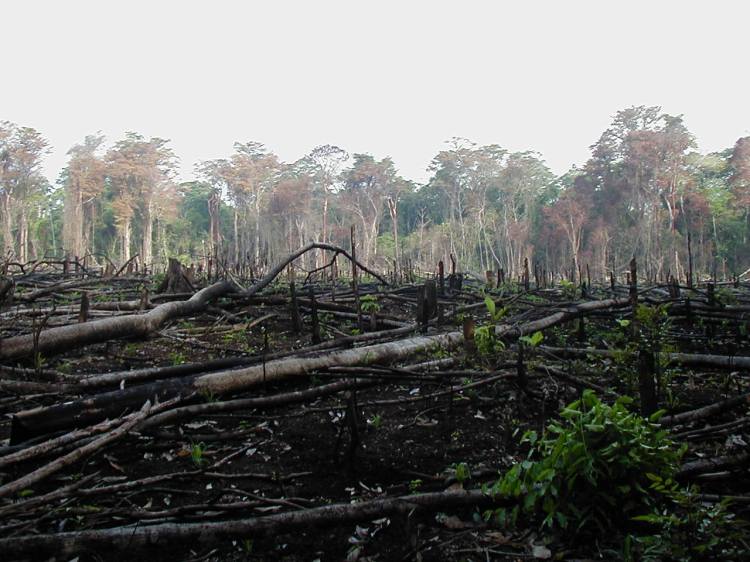
Forests directly cool the planet, like natural evaporative air conditioners. So what happens when you cut them down? In tropical countries such as #Indonesia, #Brazil and the #Congo, rapid #deforestation may have accounted for up to 75% of the observed surface #climatechange and warming between 1950 and 2010. Our new research took a closer look at this phenomenon.

Using satellite data over Indonesia, Malaysia and Papua New Guinea, we found deforestation can heat a local area by as much as 4.5℃, and can even raise temperatures in undisturbed forests up to 6km away.

More than 40% of the world’s population live in the tropics and, under climate change, rising heat and humidity could push them into lethal conditions. Keeping forests intact is vital to protect those who live in and around them as the planet warms.

Deforestation hot spots

Deforestation in Borneo, Shutterstock

At the recent climate change summit in Glasgow, world leaders representing 85% of Earth’s remaining forests committed to ending, and reversing, deforestation by 2030.

This is a crucial measure in our fight to stop the planet warming beyond the internationally agreed limit of 1.5℃, because forests store vast amounts of carbon. Deforestation releases this carbon – approximately 5.2 billion tonnes of carbon dioxide per year – back into the atmosphere. This accounts for nearly 10% of the global emissions from 2009-2016.

Deforestation is particularly prevalent in Southeast Asia. We calculate that between 2000 and 2019, Indonesia lost 17% of its forested area (26.8 million hectares of land), and Malaysia 28% of its forest cover (8.12 million hectares). Others in the region, such as Papua New Guinea, are considered “deforestation hot spots”, as they’re at high risk of losing their forest cover in the coming decade.

Forests in this region are cut down for a variety of reasons, including for expanding palm oil and timber plantations, logging, mining and small-scale farms. And these new types of land uses produce different spatial patterns of forest loss, which we can see and measure using satellites.

What we found

We already know forests cool the climate directly, and losing forest causes local temperatures to rise. But we wanted to learn whether the different patterns of forest loss influenced how much temperatures increased by, and how far warming spread from the deforested site into neighbouring, unchanged areas.

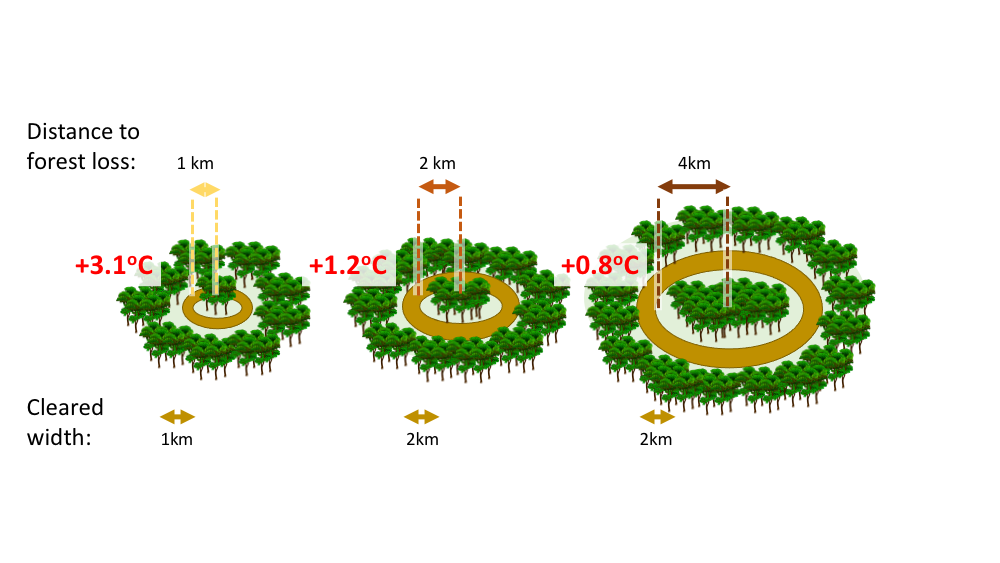
To find out, we used satellite images that measure the temperature of the land surface. As the illustration below shows, we measured this by averaging forest loss in rings of different widths and radius, and looking at the average temperature change of the forest inside the ring.

Illustration of how temperature changes due to forest loss.
How forest clearing near an unchanged area causes temperatures to rise.

For example, if you consider a circle of forest that’s 4km wide, and there’s a completely deforested, 2km-wide ring around it, the inner circle would warm on average by 1.2℃.

The closer the forest loss, the higher the warming. If the ring was 1-2km away, the circle would warm by 3.1℃, while at 4-6km away, it’s 0.75℃.

These might not sound like big increases in temperature, but global studies show for each 1℃ increase in temperature, yields of major crops would decline by around 3-7%. Retaining forest within 1km of agricultural land in Southeast Asia could therefore avoid crop losses of 10-20%.

These estimates are conservative, because we only measured the effect of forest loss on average yearly temperatures. But another important factor is that higher average temperatures usually create higher temperature extremes, like those during heatwaves. And those really high temperatures in heatwaves are what put people and crops at most risk.

Of course, forests aren’t normally cut down in rings. This analysis was designed to exclude other causes of temperature change, putting the effect of non-local forest loss in focus.

Why is this happening?

Forests cool the land because trees draw water from the soil to their leaves, where it then evaporates. The energy needed to evaporate the water comes from sunshine and heat in the air, the same reason you feel colder when you get out of a pool with water on your skin.

A single tree in a tropical forest can cause local surface cooling equivalent to 70 kilowatt hours for every 100 litres of water used from the soil — as much cooling as two household air conditioners.

Forests are particularly good at cooling the land because their canopies have large surface area, which can evaporate a lot of water. When forests in tropical regions are cut down, this evaporative cooling stops, and the land surface warms up.

This is not news to the people of Borneo. In 2018, researchers surveyed people in 477 villages, and found they’re well aware nearby forest loss has caused them to live with hotter temperatures. When asked why forests were important to their health and the health of their families, the ability for trees to regulate temperature was the most frequent response.

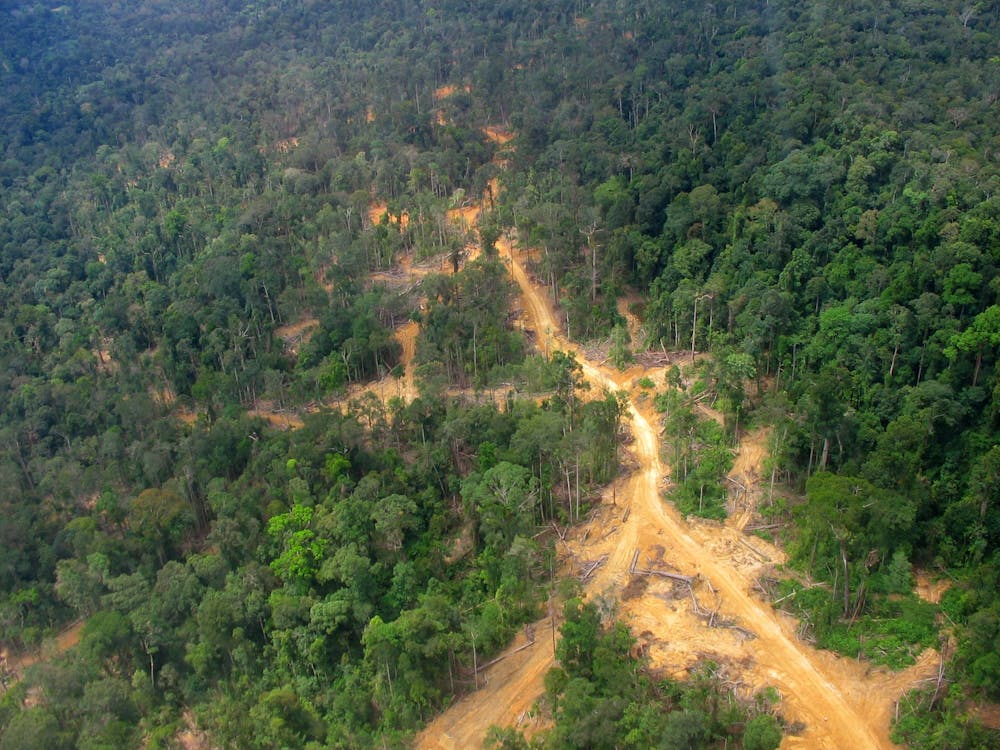
Logging road
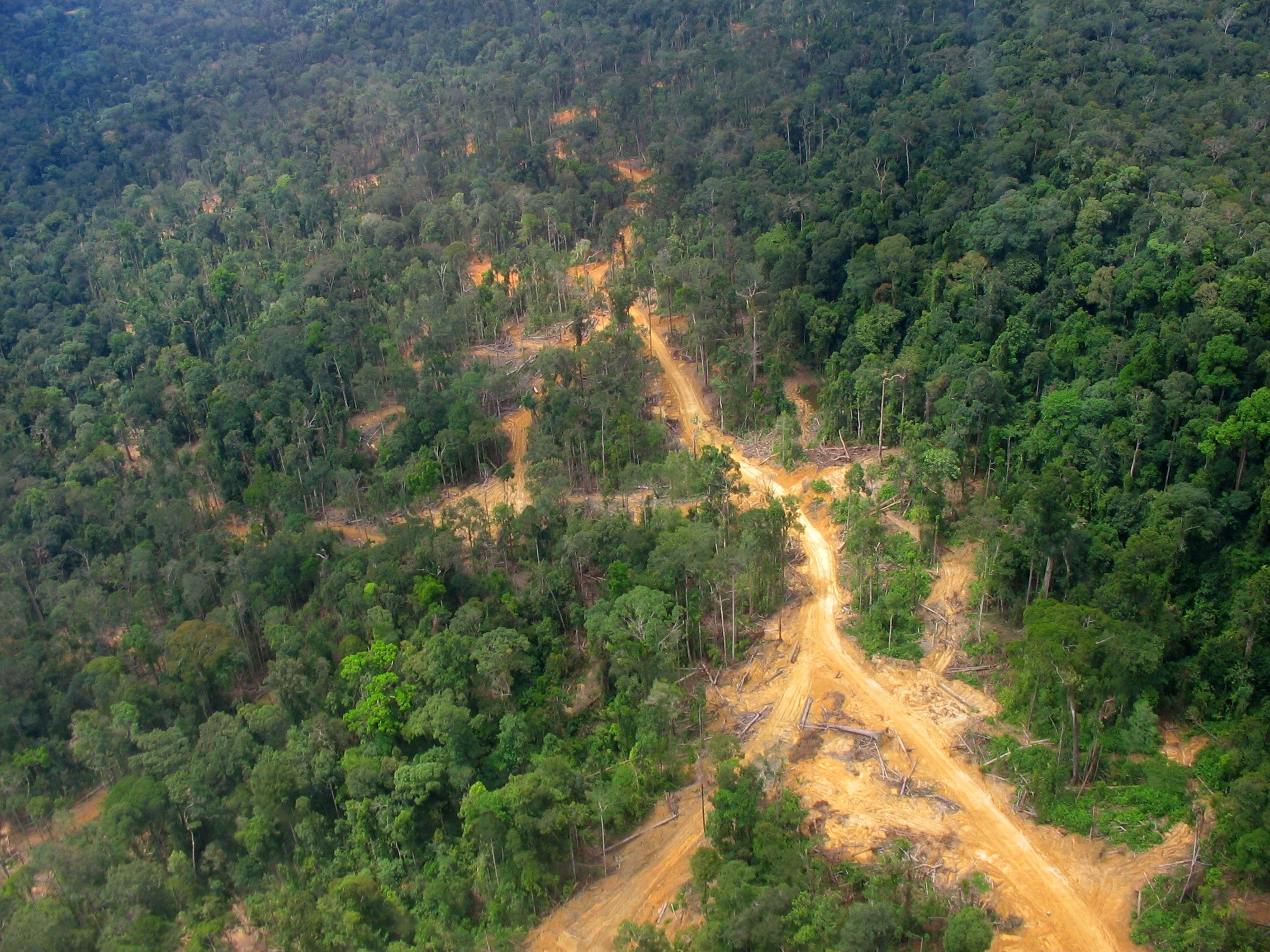
A logging road in East Kalimantan, Bornea: logged forest on the left, virgin/primary forest on the right. Aidenvironment, 2005/Wikimedia Commons, CC BY-SA

A climate change double whammy

In many parts of the world, including the tropics and Australia, expanding farmland is a major reason for cutting down forest. But given hotter temperatures also reduce the productivity of farms, conserving forests might prove a better strategy for food security and for the livelihoods of farmers.

If forests must be removed, there may be ways to avoid the worst possible temperature increases. For example, we found that keeping at least 10% of forest cover helped reduce the associated warming by an average of 0.2℃.

Similarly, temperatures did not increase as much when the area of forest loss was smaller. This means if deforestation occurs in smaller, discontinuous blocks rather than uniformly, then the temperature impacts will be less severe.

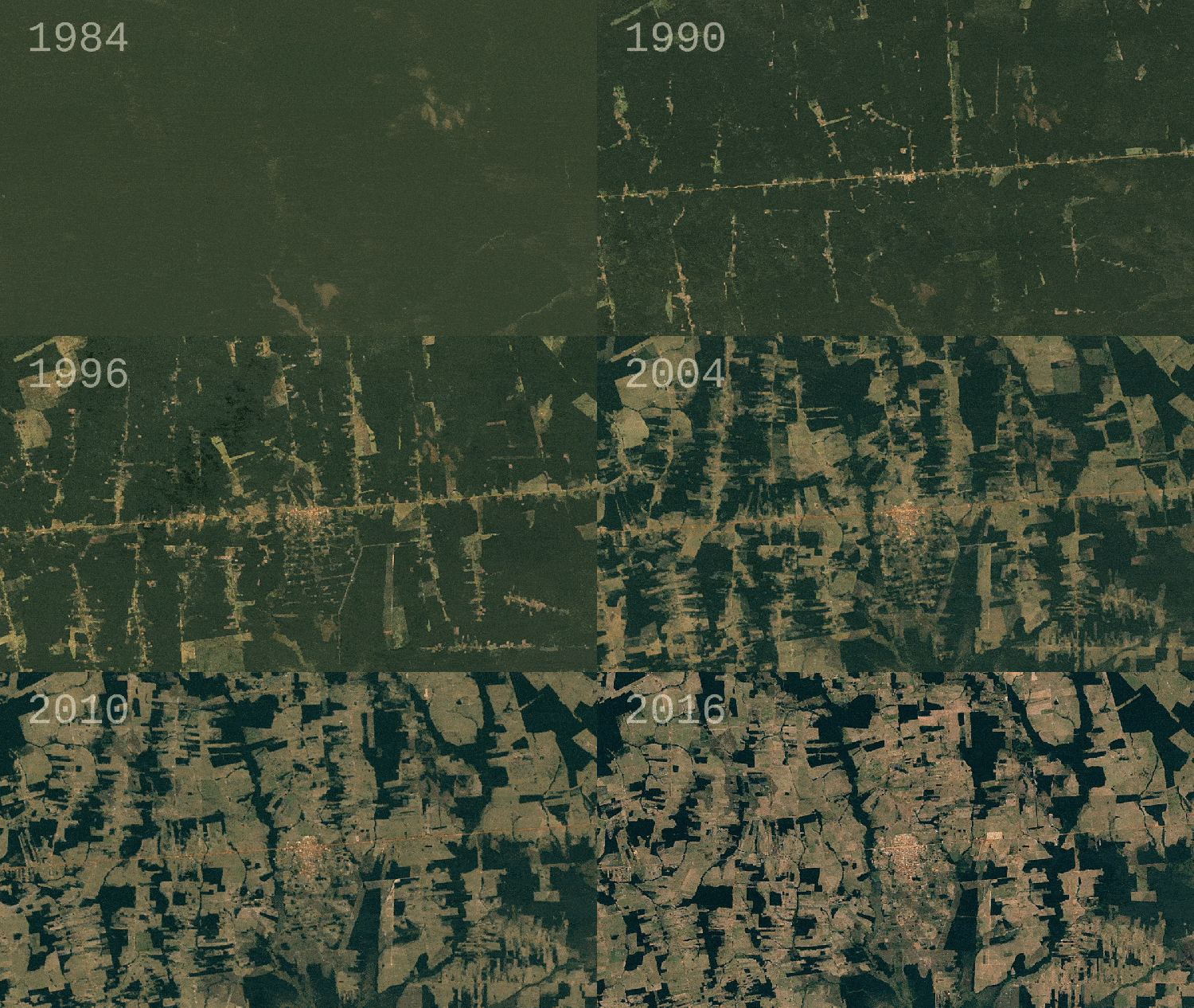
amazon-deforestation

To help share these findings, we’ve built a web mapping tool that lets users explore the effects of different patterns and areas of forest loss on local temperatures in maritime South East Asia. It helps show why protecting forests in the tropics offers a climate change double whammy – lowering carbon dioxide emissions and local temperatures together.

Sally Thompson, Associate professor, The University of Western Australia; Débora Corrêa, Research fellow, The University of Western Australia; John Duncan, Research fellow, The University of Western Australia, and Octavia Crompton, Postdoctoral researcher, Pratt School of Engineering, Duke University

This article is republished from The Conversation under a Creative Commons license. Read the original article.

Boycott the brands causing deforestation for palm oil, soy and meat by joining the #Boycott4Wildlife
Small version - Palm OIl Detectives Banner Header

Boycotts A Great Weapon to Fight Ecocidal Corporates

Bill Laurance, James Cook University

Campaigns and boycotts get the attention of large corporations, because they hit them where it hurts: their reputation and market share.

In October 2000, I was driving through downtown Boise, Idaho, and nearly careered off the road. Just in front of me was a giant inflatable Godzilla-like dinosaur, well over 30m tall. It was towering over the headquarters of Boise Cascade, one of North America’s biggest wood products corporations. For years, the firm had been tangling with environmental groups who blamed the company’s logging practices for declines in the extent of old-growth forests across the globe.

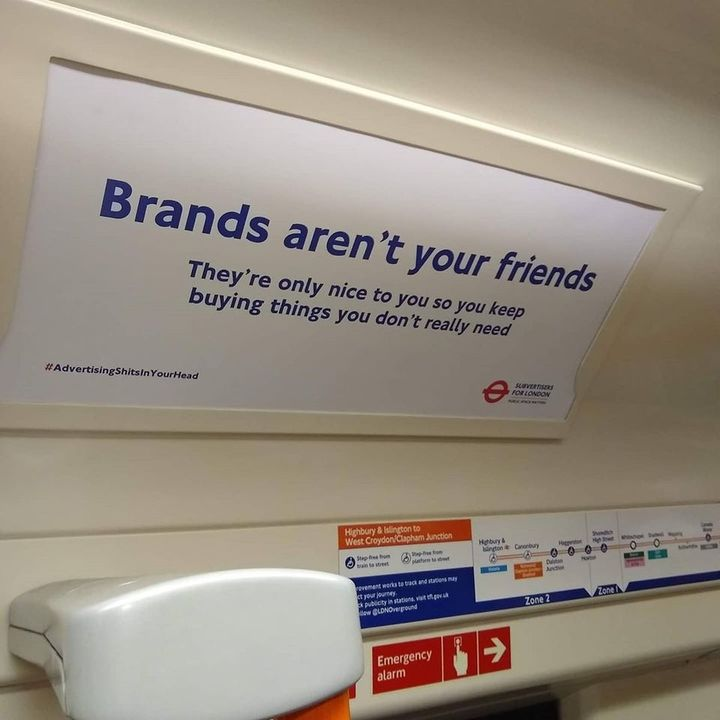
Brands aren't your friends- Subverting London
Brands aren’t your friends- Subverting London

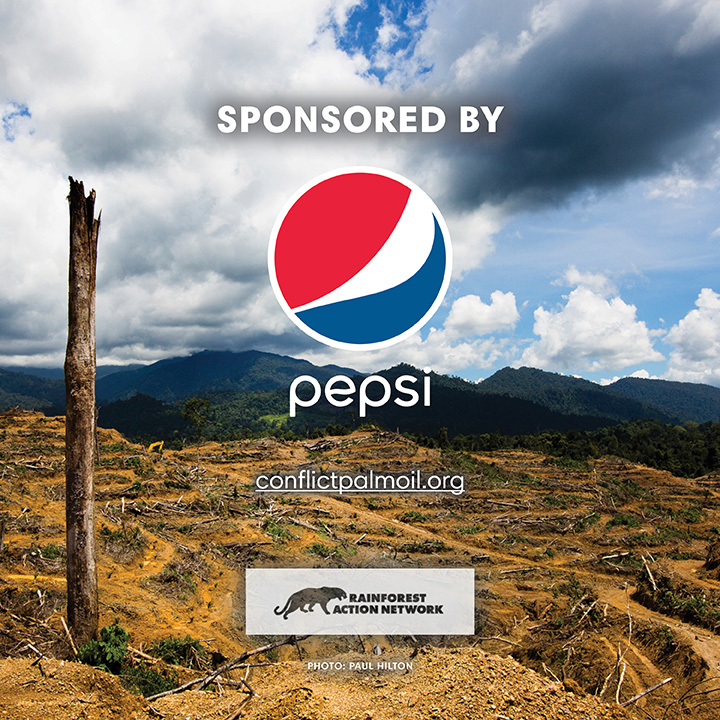
The huge inflatable reptile was the inspired idea of the Rainforest Action Network, who used it to label Boise Cascade a dinosaur of the timber industry. The blow-up dinosaur was headline news across the United States and the label stuck. Although Boise Cascade tried to deny it was yielding to environmental pressure, it ultimately agreed to phase out all of its old-growth wood products.

Environmental campaigns such as this one have become an increasingly important arrow in the quiver of conservation groups, for a very good reason. The world has become hyper-corporatised and globalised, with the result that, as I reported in 2008, deforestation is now substantially driven by major industries rather than by the exploits of poor people trying to make a living off the land.

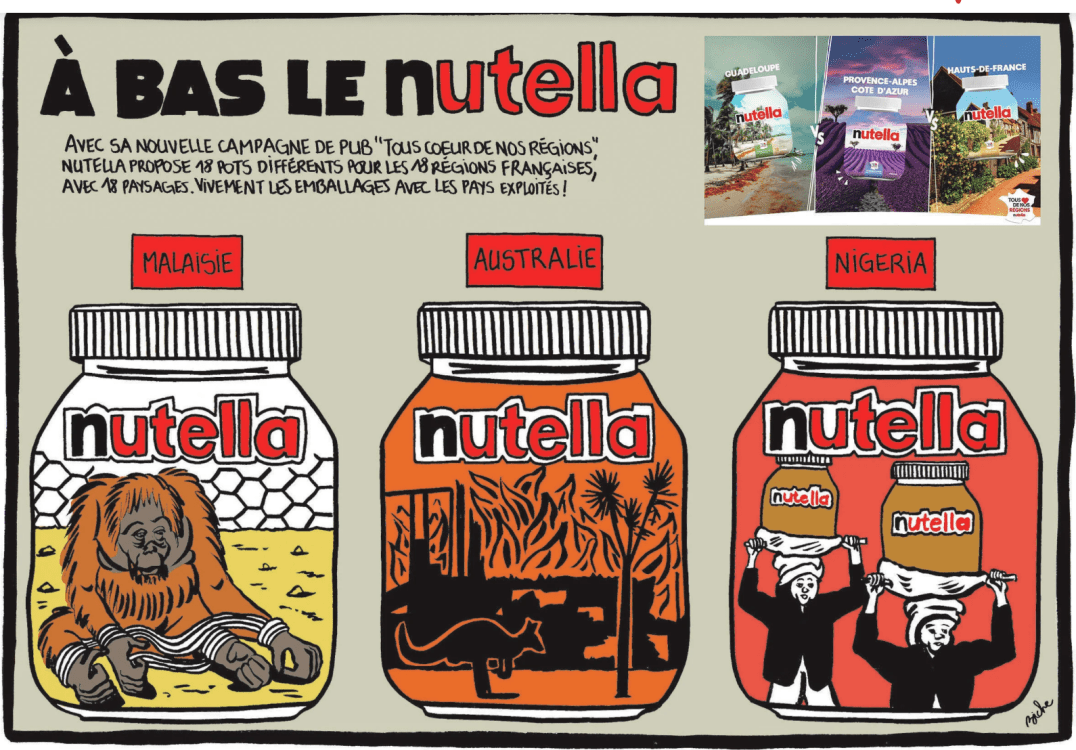
Ferrero and Nutella responsible for palm oil deforestation despite supposedly using “sustainable” palm oil. Image: Charlie Hebdo

Last-ditch tactics

Boycotts are typically a last resort. The Rainforest Action Network tried for years to nudge, cajole and finally pressure Boise Cascade to phase out old-growth products, without success. Its gentler tactics worked fine with other big corporations such as Home Depot and Lowe’s, but it took a gigantic dinosaur to get Boise Cascade’s attention.

Globally, some of the most impressive environmental achievements have come via boycotts, or at least the threat of them. Just in the past year, four of the world’s biggest forest-destroying corporations have announced new “no deforestation” policies in response to such environmental pressures.

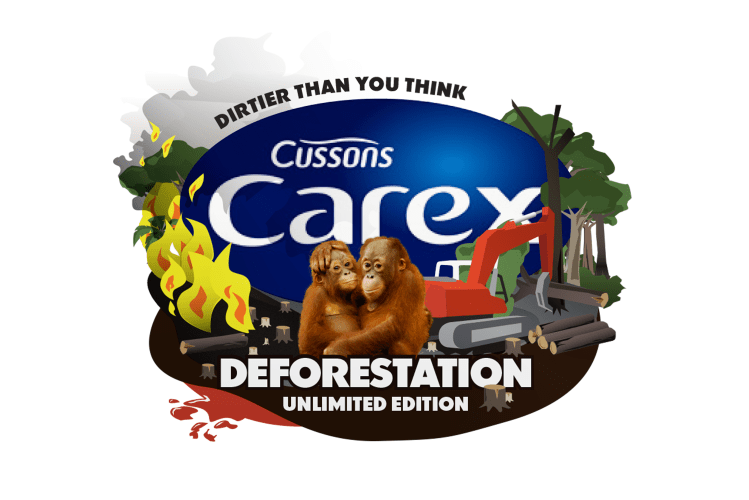
PZ Cussons - Carex responsible for palm oil deforestation despite supposedly using "sustainable" palm oil. Image: Greenpeace
PZ Cussons – Carex responsible for palm oil deforestation despite supposedly using “sustainable” palm oil. Image: Greenpeace

Among the worst of these was Asia Pulp & Paper, whose reputation had become so synonymous with rainforest destruction that the retailers selling its products began fleeing in droves. Today, the corporation has ostensibly turned over a new leaf and even thanked Greenpeace – one of its most persistent critics – for helping it to see the light.

Across the globe, boycotts have helped to rein in predatory behaviour by timber, oil palm, soy, seafood and other corporations. They have led to impressive environmental benefits.

Banning boycotts?

But now, the power of boycotts might be on the brink of being reined in, after the federal government floated the idea of banning organised boycotts of companies on environmental grounds.

The move has sparked apoplexy among free-speech advocates, and came as a surprise even to observers whose expectations had already been lowered by the Commonwealth’s plan to devolve environmental powers to the states and territories.

The Boycott4Wildlife is a boycott on brands directly involved in tropical deforestation (and therefore animal extinction)

Deforestation-linked heat kills 28,000 people annually boycott palm oil

Parliamentary agriculture secretary Richard Colbeck said the move would be aimed at “dishonest campaigns”, singling out the campaign against furniture retailer Harvey Norman, which activists accuse of logging native forests.

“They can say what they like, they can campaign about what they like, they can have a point of view, but they should not be able to run a specific business-focused or market-focused campaign, and they should not be able to say things that are not true,” Colbeck told Guardian Australia.

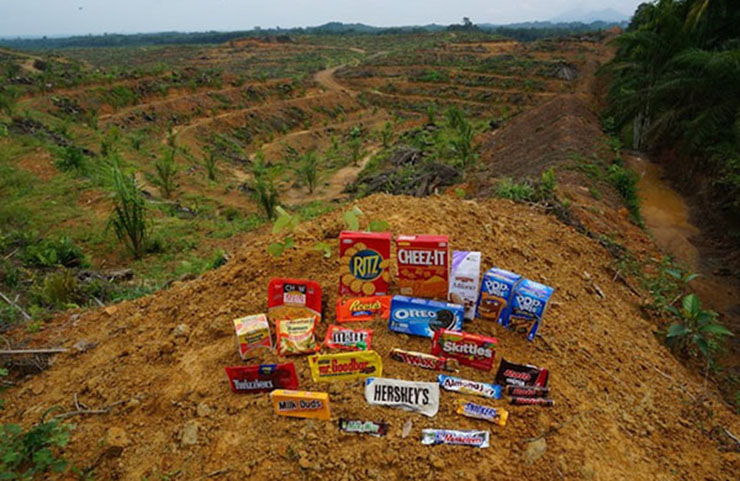
Hersheys is responsible for palm oil deforestation despite supposedly using "sustainable" palm oil.
Hersheys is responsible for palm oil deforestation despite supposedly using “sustainable” palm oil.

At odds with free speech

Predictably, environmental groups are unimpressed. Reece Turner, a forests campaigner with Greenpeace-Australia, told me:

This policy is at odds with the Liberal party’s professed commitment to uninhibited free speech. The Coalition is going to remarkable extremes to protect big industry from campaigns that are essentially focused on greater transparency of business practices. These campaigns are designed to inform consumer choices – something the Liberal party should be supporting.

One of the more notable aspects of the proposed ban is that it could directly conflict with the Coalition’s stated environmental priorities – one of which is a desire to slow global rainforest destruction as a means to combat global warming.

Of all the environmental actions undertaken to date, boycotts have probably had the greatest direct benefit for rainforests.

As an aside, the Coalition government has recently struggled to find a consistent line on both environmentalism and free speech. Straight after taking office it scuttled the Climate Commission, and is currently fighting to repeal a raft of other carbon policies. Yet it has also announced that Australia will use this year’s Brisbane G20 summit as a “catalyst” to help China, India, Europe and the United States to cut their carbon emissions.

At this early stage, it’s difficult to say whether or not the proposed ban on environmental boycotts will solidify into firm Coalition policy or merely fade away, its proponents having realised this could be too polarising an idea. Let’s hope for the latter. This is a scheme that deserves to go the way of the dinosaurs.

Bill Laurance, Distinguished Research Professor and Australian Laureate, James Cook University

This article is republished from The Conversation under a Creative Commons license. Read the original article.

How can I help the #Boycott4Wildlife?

1. Join the #Boycott4Wildlife: Share posts from this website to your own network on Twitter, Instagram and Facebook using the hashtags #Boycottpalmoil #Boycott4Wildlife.

2. Contribute stories: Academics, conservationists, scientists, indigenous rights advocates and animal rights advocates working to expose the corruption of the palm oil industry or to save animals can contribute stories to the website.

3. Supermarket sleuthing: Next time you’re in the supermarket, take photos of products containing palm oil. Share these to social media along with the hashtags to call out the greenwashing and ecocide of the brands who use palm oil. You can also take photos of palm oil free products and congratulate brands when they go palm oil free.

4. Take to the streets: Get in touch with Palm Oil Detectives to find out more.

5. Donate: Make a one-off or monthly donation to Palm Oil Detectives as a way of saying thank you or to help pay for ongoing running costs.

Join 3,176 other subscribers

Share palm oil free purchases online and shame companies still using dirty palm oil!

Don’t forget to tag in #BoycottPalmOil #Boycott4Wildlife to get shared

Bonobos Can Inspire More Peaceful Democracies

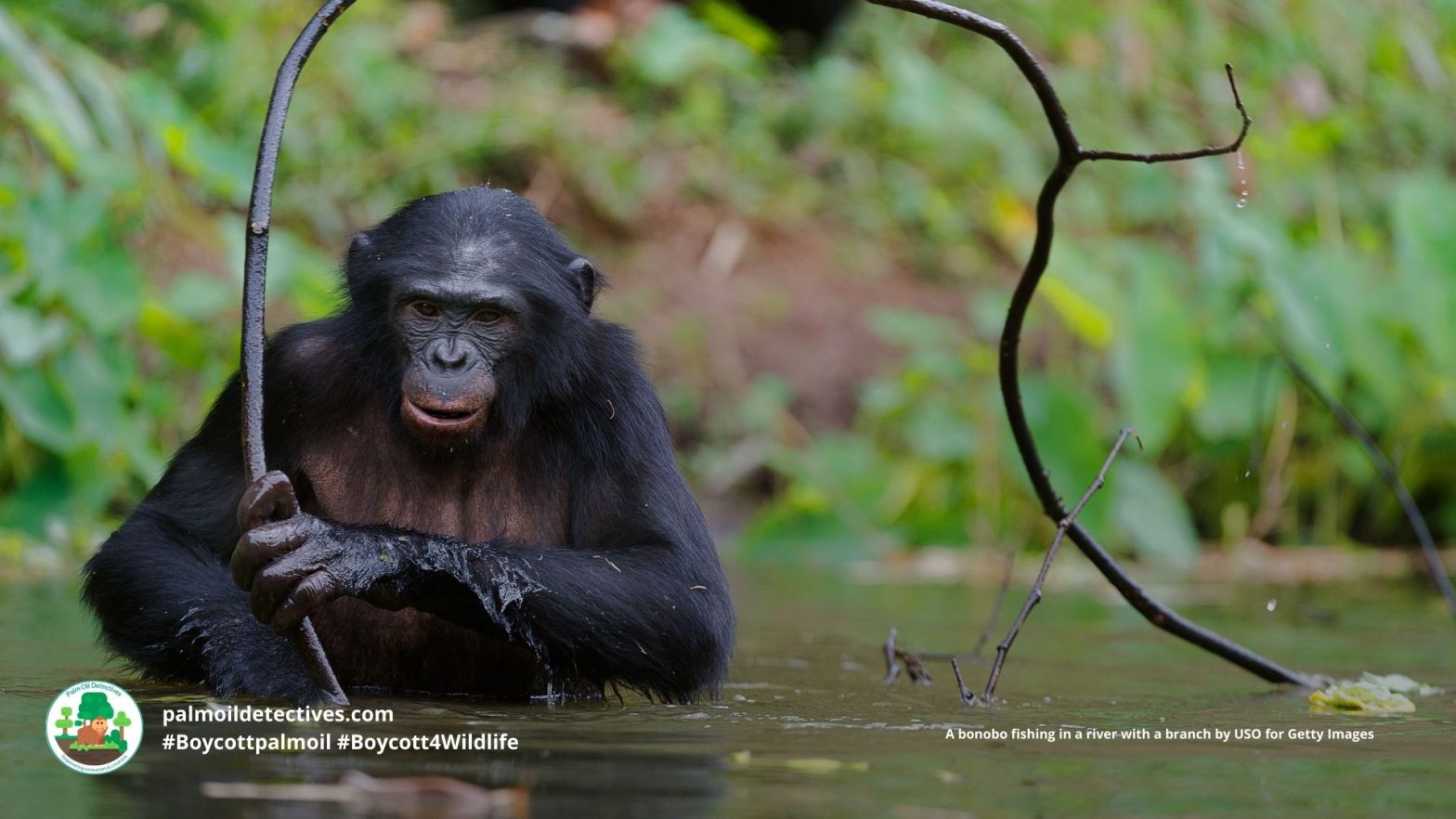
#Bonobos, sometimes called the “forgotten #ape” due to their recent discovery and small numbers, titillate the democrat’s imagination. Before the 1970s, certain primatologists thought bonobos were strange #chimpanzees because females govern in this primate society.Frans de Waal, the primatologist and popular writer, has done much to explain the fascinating lives of these “peace-loving #apes” and how they are changing the story of human evolution. Bonobos are unique among apes for how they settle day-to-day conflicts. Personalities and social standing are evident in their society. Squabbles are frequent within or between groups. Bonobos defuse the potentially violent tension in these conflicts through quick bursts of sex, mutual grooming, hugs and kisses, and mimicking the sounds each other makes. Help these remarkable intelligent beings survive when you #BoycottPalmOil #Boycott4Wildlife

We can see reflections of ourselves – the good, the bad and the ugly – in bonobos, and in other apes too.

The trick is to use intimate, gentle, genuine techniques to find common ground with one’s opponent. It’s the bonobos’ way to say “it’s alright” and to repair any emotional sores from the dispute. It doesn’t always happen this way, especially between rival groups, but violence is the exception to the rule.

Inspirations

We value peace today, so the discovery of the bonobo gives us hope that Homo sapiens aren’t naturally sadistic terrors kept in check only by the power of authority or the divine, the fear of the afterlife.

Bonobo mother and baby

Gorillas, another close relative, offer inspiration too. While a very large male protects most small groups, he’s more bodyguard than despot. Gorillas reach decisions through co-operation between the sexes.

Baboons also offer a counter view to our supposed nasty and brutish inner nature. In a troop of hamadryas or olive baboons you’d soon be able to spot the stronger individuals. And you might assume they simply call the shots: only they don’t.

Baboons have a more delicate form of collective decision-making. This involves sitting in the right place and waiting to see where a majority develops. In this way, more than a few individuals share leadership.

Now we come to chimpanzees, the species that has been most influential in how we picture the earliest human behaviour. They are patriarchal, hierarchical, constantly scheming to get ahead in rank and sometimes shockingly violent. Yet, if the times are good (food’s abundant), they can be consensual, mellow and peaceful.

Like the bonobos, chimps try to repair emotional damage after a fight because the group has to work or else everyone’s survival is at risk.

Dr George McGavin joking with a bonobo while filming Monkey Planet for the BBC
Zoologist Dr George McGavin joking with a bonobo while filming Monkey Planet for the BBC

That said, bonobos, gorillas, baboons and chimpanzees aren’t a reflection of our past. As Frans de Waal and science journalist Virginia Morell observe, these species have been evolving alongside us since we all split from our common ancestor. Looking at them isn’t the same as looking back.

However, we can relate to the behaviours in these species – we can see ourselves in them. Perhaps, we wonder, we’ve always had the capacity for peace and violence; we’ve always lived in the political spectrum between violent autocracy and peaceful democracy.

Our species is certainly trying to strengthen the latter now. Perhaps the bonobos, or the other apes, can help us do better by inspiring us to think differently.

Imagine if we could stop being violent to one another. The violence that democrats living in democracies commit online or in person, often in public among strangers, limits if not wastes our capacity to be peaceful in our everyday lives.

Let’s say a fight starts over a parking space. You saw it first, had your blinker on to “claim it”, when that omfg no-you-didn’t creature of a moron steals it. I’ve reason to believe that, when slighted in this way, most of us want to punch this stranger in the face or trash their car.

Trying to find common ground with them then and there seems bizarre. Stranger still is to entertain the thought that maybe you and the spot-thief might then give each other a hug or a smooch, mount each other for a while, run your fingers through one another’s hair and say: “You know what, it’s all right, have a nice day”.

I play to the absurd here because I’m not arguing that we should try to perfectly replicate the way bonobos avoid violence. Echoing a point that Laurence Whitehead once made, we shouldn’t confuse inspiration with replication.

We should rather try to draw inspiration from the bonobos to enrich our own practices, to enhance today’s human democracies. We might do equally well to dream about rhesus monkeys and their aversion to inequality, or spider monkeys and their patient if not wondrously just lives.

These primates place emphasis on avoiding violence and inequality because peace keeps them working together. It helps them survive.

And that’s important for us: peace and social cohesion are the legs our democracies strive to stand on.

The opposite, violence and social division, beckons to the Beetlejuice of regimes: benevolent authoritarianism, that hated but necessary stabiliser of states when times are bad.

It’s crucial to remember that avoiding violence builds trust and confidence in the group and between groups. It’s what the bonobos do so well. Yet in our societies we’re still struggling to use words and care instead of fists, guns, mines and bombs.

Political theorist John Keane once alluded: the future if not quality of democracy depends on our ability to exchange violence for peace. For the sake of our democracies, we need to be able to make this exchange, from those everyday moments in the carpark to those times in the lives of nations when diplomacy gives way to conflict.

Lessons

It’s not simply the normative visions of a democracy changed that the examples of non-human life offer. We can learn from the down-to-earth, concrete and special techniques that non-humans use to make decisions.

The process of evolution creates replicating systems – ones that work. It happens simply through the genes that survive millions of years of trial and error. As a result, the lives of many non-humans may offer more than a few masterclasses in social success.

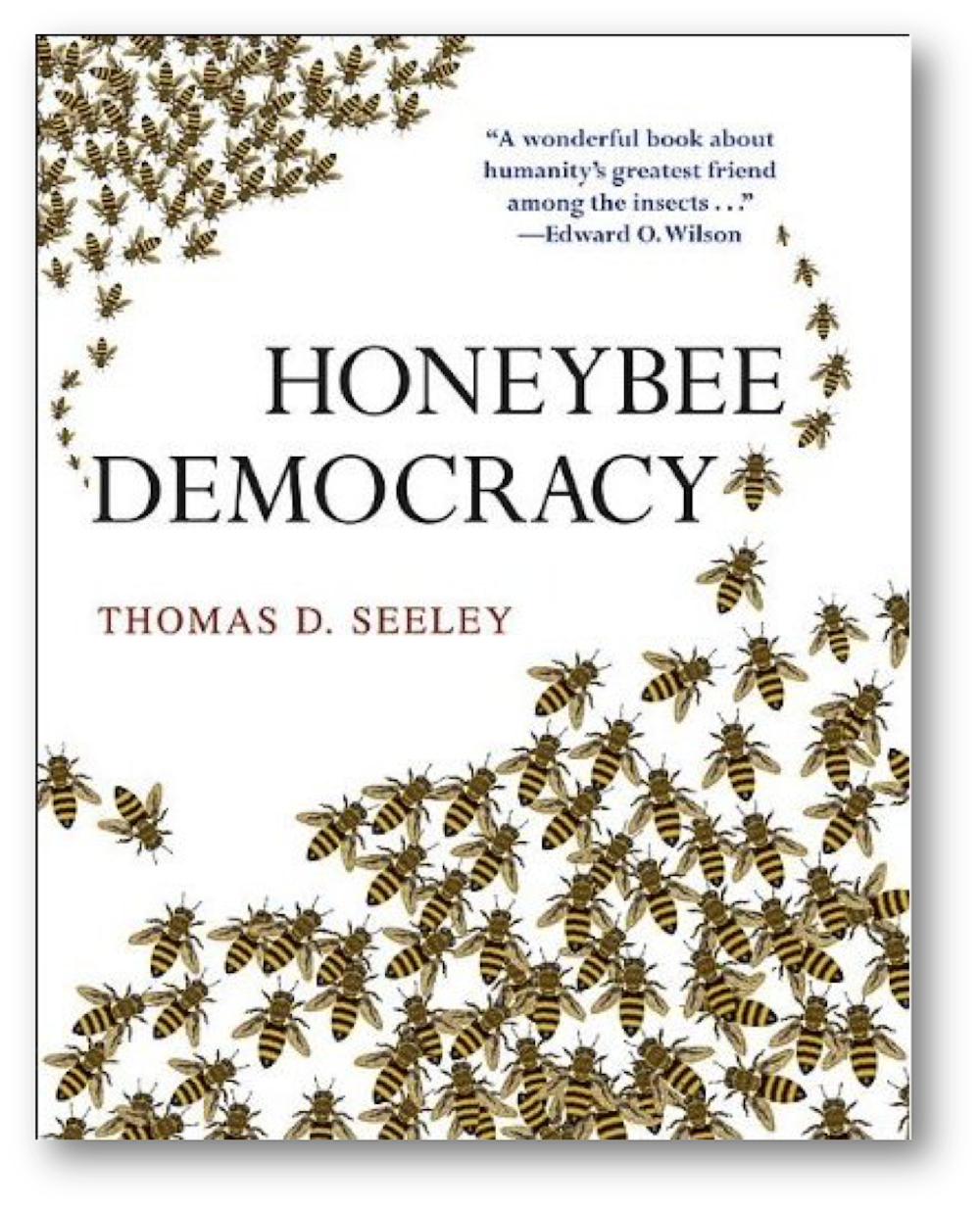
In Honeybee Democracy, Thomas Seeley explains how bees decide as a group on the best site for a new hive. Princeton University Press

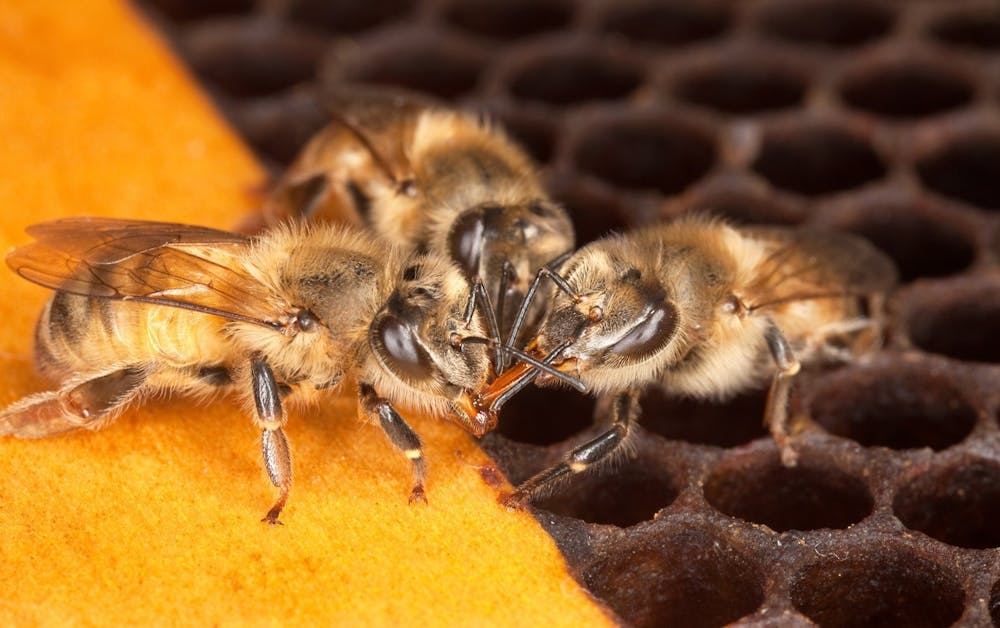
Take the European honeybee, for example. In his book, Honeybee Democracy, Thomas Seeley explains how bees make the life-or-death decision on where to build their next hive.

Once a hive reaches capacity – no room is left for making more bees or honey – the existing queen and most of the bees move out. They must start a new hive.

It’s down to the oldest forager bees, which usually account for 3% to 5% of the worker bees (talk about representation), to get more than half their family – potentially upwards of 30,000 individuals – out of the hive. Once this massive swarm is out, the elder bees direct it to cluster somewhere around the queen until they find a suitable site for the new hive.

At this point, the 1000 or so elder bees, who’ve swapped from food foragers to house scouts, travel several kilometres in all directions. They’re looking for that perfect site.

Bees are choosy. The hive site must satisfy several criteria. These include the location and diameter of the entrance (it’s important no rain can get in and that there is only one entrance); whether it faces the sun (this keeps the hive warmer in winter); the height above the ground (the higher the better to deter predators); if it’s in a tree (trees are preferred); and the available space. If it’s too big, the bees will freeze in winter. Too small, and they won’t have enough food to last through the cold months.

Choosing the wrong hive site might mean the human equivalent of a small town dying.

Honeybees evolved decision-making techniques because so much is riding on the decision elder bees make on behalf of the whole. Seeley thinks we should be studying and learning from these techniques.

Christian List and Thomas Seeley believe studying how honeybees make decisions together can help us make better decisions. flickr/US Department of Agriculture, CC BY-NC

When a scout bee returns to the swarm after finding a site that ticks all the boxes she lets the freak out in her waggle dance. Her dance tells other scout bees she’s on to something good.

However, rather than accepting the force of her presentation (charisma you might say), each scout flies off to the site that got the scout dancing with excitement to independently verify her claim.

If it really is the promised land, each scout returns to replicate the dance of the first. If not, the scouts will see who else is dancing, independently verify their claim, and potentially follow their dance.

Once around 70% of the scouts are broadcasting the same site, the other scouts stop advertising alternatives and join the majority.

So the decision’s made. It’s time to rouse the 30,000 into the air and for the scouts to direct the swarm to the agreed site.

The independent verification bees use to make high-quality decisions speaks directly to the problems we face in democratic assemblies. The ability of charismatic speech to sway others without proving the evidence in the speaker’s argument, the entrenchment of factions around shared values and not evidence, the capitulation of younger or less knowledgeable individuals confronted by older experts, and so on, all point to our difficulties in using evidence-based decision-making. https://www.youtube.com/embed/JnnjY823e-w?wmode=transparent&start=0 Tom Seeley explains how swarming honeybees choose a new home.

Obviously we’re not bees. We’re value-laden and sometimes irrational primates with our own host of problems specific to our species.

Even if we perfectly executed the bees’ independent verification technique, a person could very well say: “No, regardless of the evidence I’ve just verified which is contrary to my original position, I will maintain that wind mills sour cow’s milk, or that my kids don’t need vaccinating, or that climate change isn’t a threat.”

In fact, majority decision-making is, out of all the available democratic decision-making systems, the least preferable for many of us. People like reaching consensus and they like proportionality because it’s fair. And a lot of the decisions assemblies make aren’t questions of life or death, so we don’t really feel like there’s that much at stake.

That said, seeking to learn from bees, and to reflect on what they do so well and what we don’t do that well, generates space for tinkering with the “how”. It creates an opportunity to alter our democratic procedures for the better. We could do this, for example, by establishing a standard practice of independent verification – one that works for us – before an assembly makes a decision.

“Enrolling in nature’s masterclasses”, provided free to us by evolution, doesn’t put our human democracies to question. Rather, it gives us the chance to strengthen them, refine them, make them better.

Analogies

Lastly, by drawing comparisons between non-human and human life we can make analogies about democracy’s issues.

Look, for instance, to the parasites found in nature. There are blood-suckers of blood-suckers (a midge that drinks the blood from a mosquito that just drank it from you), wasps that inject their eggs into other insects, body-snatching fungi, mind-altering protozoans and murderously dishonest amoebas. They might remind democrats of the perils of individuals who manipulate and use democracy for their own ends.

The strangleweed, Cuscuta pentagona, is a parasitic plant. From the moment its seed has sprouted, the seedling “feels” around for a different plant. It’s going to live off this plant.

Once in range, the strangleweed takes a gentle hold of its victim and pierces the host’s stem with a haustorium (effectively a pointy green syringe). It does this not only to drink the host’s sugars but also to swap genetic information (RNA) with it.

Researchers think that C. pentagona reads the host’s genetic information to gain an understanding of its victim’s condition. But the strangleweed also sends its own genetic information to the host, like a Trojan horse designed to keep the victim from realising it’s being used.

Remind you of anyone? The parasitic Cuscuta pentagona, or strangleweed (light green), in action. Phys.org

Since at least the times of usurious monarchs or the entrenchment of transnational capital, democrats have made the point about parasitic elites.

The transnational capitalist class roam this world looking for the best hosts to do their business with. They find their way past barriers to take information from sovereign states, send reassurances to them, and then begin the process of extracting wealth from them to maintain their status as this world’s first global oligarchs.

I think here in particular of the dealings between mining companies and small cash-poor states. Like the strangleweed’s initial wandering tentacle, the company sends its agents to find where it can get a grip on the host.

The company uses charm offensives, lobbyists and sometimes bribes to transfuse information between it and the host. The two become a hybridised one. The company releases public relations information to keep the host satiated if not to massage it into accepting that the company is here to stay – that is, until the sugars run out.

The relationship between a multinational company and a sovereign state can be, like the relationship between the strangleweed and its victim, asymmetrical. On both sides of the analogy the parasite lives at the expense of the host, which is left almost powerless to defend itself.

Now, we should recognise that this baldly polemical interpretation of multinational companies and their governors doesn’t mean they’re no different from a parasitic plant, nor do they function for the same reason as the strangleweed, whose aim is reproduction.

What we get from this analogy is, instead, a reflection from reality’s broken mirror. Looking at the strangleweed and then to the transnational capitalist class creates a snapshot perception, an imperfect but still handy image, for the democrat to use.

Extinction, the death of possibilities

As writer Elizabeth Kolbert says in her own way: with each extinction of a non-human species we see ourselves further ruined.

Earth is home to at least one million species, and likely more. Many species make collective decisions, solve problems together and survive as a group. Losing a living species to extinction also means, from a selfishly human perspective, losing a potential opportunity to improve today’s democracies by the inspirations, lessons and analogies that only the evolution of other life forms can impart to us.

Non-humans evolved their own techniques and behaviours – which we can make sense of using words from the vocabulary of democracy – because they work for them. It’s 100% pragmatic. Nature’s tool chest, you might say.

Admittedly, these tools may not be fit for our purposes. After all, we aren’t bonobos, bees or parasitic plants. But it’s also fair to say that we’d be rash not to try to find help in them, especially if enriching our democratic practices in this way could help solve some of the problems confronting us.

Here we can say that our destruction of non-humans is destroying a part of ourselves, of our democracies’ hope of reaching their fuller potential. Perhaps, out of respect for their existence and our own, it’s time to include non-humans in that all-too-human affair we call democracy.


Jean-Paul Gagnon, Assistant Professor in Politics, University of Canberra. This article is republished from The Conversation under a Creative Commons license. Read the original article.

The World’s Most Loved Cup: A Social, Ethical & Environmental History of Coffee by Aviary Doert

Aviary Doert holds a Bachelor’s of Science in Biology and they have worked for a decade in medical and laboratory science. They are an amateur conservation scientist, with experience in field work and research.  They are hoping to positively impact the environment and planet through education and increasing awareness of the consequences of people’s purchases and actions. 

A Social, #Ethical Environmental #History of #Coffee by Aviary Doert/@SnowRiver66 who demystifies the origins and impact of the world’s most loved cup of liquid motivation #Boycott4Wildlife

Facts and history of coffee

  • ‘Coffea’ is the genus name for the flowering, perennial, evergreens in the family Rubiaceae. ‘Coffea’ species are native to tropical and southern Africa and tropical Asia.
  • The coffee plant was first said to have been discovered in Ethiopia (known then as Abyssinia). Coffee then made its way north, across the red sea into Yemen in the 15th Century.
  • The major port used was in the city of “Mocha” – hence the term’s current association with coffee.
  • Coffee cultivation and trade flourished on the Arabian Peninsula, and by the 15th century coffee was being grown in the Yemeni district of Arabia.
  • By the 16th century it was known in Persia, Egypt, Syria, and Turkey. Then coffee spread East into India and Indonesia, and West into Italy (in 1570) and the rest of Europe.
  • It wasn’t until 1822 that coffee production started to boom in Brazil, and in 1852 the country became the largest producer of coffee and has remained such to this day. Hawaii (not part of America until 1959) was introduced to coffee in 1817 when coffee seedlings were brought by the Brazilians. In 1825, the first official coffee orchard was born, starting Kona’s legacy in the industry.
The World's Most Loved Cup: A Social, Ethical & Environmental History of Coffee by Aviary Doert

The Plant

Coffee is a plant in the Family Rubiaceae and Genus Coffea and grows from seed – the coffee bean. These plants range from small shrubs to up to 8 metres tall depending on the species and cultivar. Of all 100 species of the genus Coffea, only a few are commercially used. Coffea arabica and C. canephora (of which the main variety is Robusta), supply almost all of the world’s cofee consumption.

Arabica

Arabica makes up around 70% of all coffee consumption. The species is a 3-4 metre tall bush with dark-green oval leaves and fruits (or cherries) that take around 7 to 9 months to mature. Arabica are able to self-pollinate and are considered more mild, flavourful and aromatic brew than Robusta, and have a lower caffeine content.

Getty Images

Robusta

Robusta makes up the remaining 30% of the world’s coffee production. The tree can grows to 10 metres tall and its fruits take around 11 months to mature. Robusta is hardier than Arabica and can flourish in hotter, harsher conditions. Western and Central Africa, Southeast Asia, and Brazil are major producers of Robusta coffee. This coffee is cheaper to produce and has twice the caffeine content of Arabica, which makes Robusta the bean of choice for inexpensive commercial coffee brands. You will recognise its flavour as being the stronger, more bitter brew than Arabica.


Which countries drink the most coffee?

The world’s 10 top coffee importing countries by dollar value in 2020 (listed below as US dollars):

  • The EU imports around 40% of the world’s coffee beans
  • The United States is the world’s second-largest importer of coffee beans.
  1. United States: US$5.7 billion (18.3% of total coffee imports)
  2. Germany: $3.5 billion (11.4%)
  3. France: $2.9 billion (9.3%)
  4. Italy: $1.5 billion (4.8%)
  5. Canada: $1.21 billion (3.9%)
  6. Netherlands: $1.19 billion (3.8%)
  7. Japan: $1.18 billion (3.8%)
  8. Belgium: $1.13 billion (3.6%)
  9. Spain: $1.01 billion (3.3%)
  10. United Kingdom: $1 billion (3.2%)

The world’s most caffeinated people

10 biggest coffee drinking countries in pounds/kilograms per capita (person) per year in 2020:
Finland – 12.02kg (26.5 lbs)
Norway – 9.89kg (21.8 lbs)
Iceland – 8.98kg (19.8 lbs)
Denmark – 8.70kg (19.18 lbs)
Netherlands – 8.39kg (18.5 lbs)
Sweden – 8.16kg (18 lbs)
Switzerland – 7.89kg (17.4 lbs)
Belgium – 6.76kg (14.9 lbs)
Luxembourg – 6.35kg (14 lbs)
Canada – 6.21kg (13.7 lbs)

The demand for coffee continues to increase. Marking this popular drink the second most traded commodity in the world. Diagram by Bamse, 2007. CC BY-SA 3.0

Where is coffee grown?

More than 70 countries produce coffee, but the majority of global output – 74.3% – comes from just the top five producers: Brazil, Vietnam, Colombia, Indonesia, and Ethiopia.

Statistical data from 2020:

  1. Brazil – 3,804,000 metric tonnes (produces a third of the world’s coffee)
  2. Vietnam – 1,740,000 metric tonnes
  3. Colombia – 858,000 metric tonnes
  4. Indonesia – 720,000 metric tonnes
  5. Ethiopia – 438,000 metric tonnes
  6. Honduras – 366,000 metric tonnes
  7. India – 342,000 metric tonnes
  8. Uganda – 336,000 metric tonnes
  9. Mexico – 240,000 metric tonnes
  10. Peru – 228,000 metric tonnes

Deforestation

Global forest loss is a huge problem around the world. An estimated 15 billion trees are cut down every year.

Nearly all – 95% – of this deforestation occurs in the tropics. 14% of deforestation is driven by consumers in the world’s richest countries – importing beef, vegetable oils, cocoa, coffee and paper that has been produced on deforested land. In 2019, 12.2 million hectares of tropical forests were lost.

Although the precise area is debated, each day at least 80,000 acres (32,300 ha) of forest disappear from Earth. At least another 80,000 acres (32,300 ha) of forest are degraded.

Forest loss in the Amazon jungle: the lungs of the planet

Tropical forests presently cover about 1.84 billion hectares or about 12% of Earth’s land surface (3.6% of Earth’s surface).

The Amazon rainforest over time

Why are forests lost?

  • Commodity-driven deforestation: The long-term, permanent conversion of forests to other land uses, typically agriculture (including coffee plantations, oil palm and cattle ranching), mining, or energy infrastructure.
  • Urbanisation: The long-term, permanent conversion of forests to towns, cities, roads and infrastructure.
  • Shifting agriculture: Small to mid-scale conversion of forest for farming, that is later abandoned so that forests regrow.
  • Forestry production: for timber, paper and pulp.
  • Wildfires: Short term disturbances to forests that are likely to regrow.


95% of the world’s deforestation occurs in the tropics

In Latin America and Southeast Asia in particular, commodity-driven deforestation – mainly the clearance of forests to grow crops and pasture for beef production – accounts for almost two-thirds of forest loss.

Coffee deforestation

The equatorial area between the Tropic of Capricorn and the Tropic of Cancer is ideal for growing coffee and is known as the “coffee bean belt”. All coffee-growing countries are very rich with biodiversity (rare and endemic plant and animal species).

amazon-deforestation

Globally, coffee production increased by 24% between 2010 and 2018

This equates to around 2 million metric tons that is primarily destined for developed nations such as the UK (3%), the USA (16%), and the EU (44%). Asia is also a growing market. The demand for coffee is expected to grow between 50%-163% by 2050.

Coffee plantations, especially those using the sun-grown mass production method, have caused massive deforestation.

2.5 million acres of forest in Central America alone have been cleared so far for coffee plantations. Brazil has been the world’s largest producer of coffee for the last 150 years.

Over two million hectares of Brazilian land are currently dedicated to coffee, producing an average of 43 million bags of coffee a year.

In Vietnam, coffee is a growing industry The coffee growing area of Vietnam is at least 600,000 hectares. According to data from Global Forest Watch, Indonesia lost 9.75 million hectares of primary forest between 2002 and 2020. In 2016, a record 929,000 hectares of forest disappeared; by 2020, the annual loss decreased to 270,000 hectares.

Seven out of ten coffee-producing countries have some of the world’s highest rates of primary forest loss

This is occuring in tropical countries: Brazil, Indonesia, Peru, Colombia, India, Mexico and Vietnam.

Coffee plantations cause massive deforestation as the world’s demand for it has increased exponentially over the past few decades. 37 of the 50 countries in the world with the highest deforestation rates are also coffee producers.

Aside from coffee tropical countries clear forests and habitats for soy (for cow feed), cattle ranching, palm oil & coconut oil plantations and mining, to name a few.

Coffee deforestation and species loss


Tropical rainforests are incredibly rich ecosystems that play a fundamental role in the basic functioning of the planet.

  • Around 50% of the world’s terrestrial species live in rainforests: Our planet is losing untold numbers of species to extinction, the vast majority of which have never been documented by science.
  • Rainforests maintain the climate: By regulating atmospheric gases and stabilizing rainfall, protect against desertification, and provide numerous other ecological functions.

Species richness is lower in most coffee agroecosystems than in natural forests

Many research studies of mammals, insects and birds have shown these species are greatly reduced on coffee plantations. There are three kinds of coffee cultivation practices:

  • Fully rustic coffee: where coffee plants are grown interspersed with forest trees and understory – has the least impact non biodiversity.
  • Shade-grown monoculture: is a slightly more intensive technique, farming larger densities of coffee plants underneath the forest canopy. This impacts biodiversity more than rustic coffee.
  • Sun-grown coffee: Involves the clearance of the forest, removing epiphytic plants from the coffee trees, and applying chemical fertilizers. This has the greatest negative impact on biodiversity.
Coffee agroforestry types: shade-grown versus sun-grown coffee. Source: Root Capital https://rootcapital.org/shade-grown-coffee-whats-the-big-deal/

Across studies, mammal, bird and insect biodiversity declined in coffee plantations. The richness of migratory and foraging bird species was less affected by coffee production than that of resident, canopy and understory bird species. Loss of species also depended greatly on habitat specialisation and functional traits.

Endangered species impacted by coffee production in South America

The Scarlet Tanager, Gray Catbird, Eastern Wood Pewee, Wood Thrush Canada Warbler, Cerulean Warbler, Olive-sided Flycatcher and the near-threatened Golden-winged Warbler. These bird species are being affected by loss of both breeding and wintering grounds.

Research specifically on other species affected by coffee plantations, such as mammals, is less available. One can extrapolate and hypothesize, however, that the loss and degradation of habitat affects all species living there.

Coffee: Agriculture and Animal Exploitation

Certain coffee trends are associated with animal exploitation. This stems from the practice of feeding coffee beans to certain animals and then using the excreted beans for consumption.

“Civet coffee” or Kopi luwak

This involves the Asian palm civet, a small mammal found in the jungles of Asia. The Indonesian coffee is produced by feeding coffee beans to the civet and using the excreted beans. Producers claim the civet’s digestion process improves the beans’ flavor. It is the most expensive coffee in the world, selling for hundreds of dollars per pound. A single cup can cost up to US$80.00.

Asian Palm Civets – Wild and Caged

The popularity of so-called “civet coffee” has led to intensive farming of the animals, who are confined in cages and force-fed the beans.

Large-spotted Civet Viverra megaspila

Sign the petition to end civet coffee farming

sk the Indonesian government to place regulations on the treatment of wild Asian palm civets and ban the inhumane production of civet coffee!

The very popular and expensive Indonesian civet coffee is still being produced despite proof of inhumane conditions.

In order to harvest the coffee, farmers feed seeds of coffee berries to imprisoned Asian palm civets, a beautiful wild cat-like mammal, and gather the seeds again from their excrement. The civets are captured from the wild, torn from their families, held in tiny, sometimes dark, cages, and are often force-fed the berries. There are currently no regulations in place on how to treat these animals, and farmers will often feed them to death with no concern for their health or living conditions.

Demand that the Indonesian government acknowledge this catastrophe and vow to end the cruel production of civet coffee!

It has been documented that many of the civets in the coffee industry have no access to clean drinking water, no ability to interact with other civets, and live in urine- and feces-soaked cages. Many are forced to stand, sleep, and sit on wire floors, which causes sores and abrasions. Some civets also exhibit signs of zoochosis, “a neurotic condition among stressed animals in captivity. The signs include constant spinning, pacing and bobbing their heads.”

Black Ivory Coffee: Elephant exploitation for coffee

A similar process is used in the nascent practice of feeding coffee beans to elephants. Sadly, it’s being carried out at a “sanctuary” in Thailand, where around 30 elephants consume beans from nearby plantations. Branded as Black Ivory Coffee, this expensive brew (about US$50 per serving) doesn’t yet have the popularity of civet coffee, and producers argue the animals are in no way harmed, but it points to a disturbing trend in animal exploitation.

African Forest Elephant Loxodonta cyclotis

Coffee: Human Rights and Labour Abuses

As with many other industries in the developing world, there are rampant human rights abuses associated with coffee cultivation and production.

The coffee business is tied to a long history of colonialism and slavery.

Human rights abuses on a palm oil plantation

Low Wages, Abusive Conditions and Child Slavery

Many times farmers and workers in the coffee industry are paid poverty wages, with the profits going to those higher up in the corporate hierarchy.

Coffee farmers typically earn only 7–10% of the retail price of coffee, while in Brazil, workers earn less than 2% of the retail price. To earn enough to survive, many parents pull their children from school to work on the coffee plantations. Child slavery is widespread in coffee cultivation. When the price of coffee rises, the incentive for struggling families to withdraw their children from school and send them to work increases; at the same time, a fall in coffee prices increases poverty in regions that depend on the crop, which can also prevent children from attending school.

Conditions on the farms are quite different from what is promised. Few of the lodgings had running water and in some cases, there were not even any beds or toilets. In their testimonies, workers describe conditions as like ‘living in a corral’, with poor sanitation, in precarious structures that were not enough to meet even the most basic needs for dignified survival.

A cycle of poverty

Since higher levels of education are tied to higher income over the long term, and children from poor families are those most likely to be sent to work rather than school, child labor maintains a cycle of poverty over generations.

A study in Brazil found that child labour rates were approximately 37% higher, and school enrollment 3% lower, than average in regions where coffee is produced.

Children as young as six years old often work eight to 10 hours a day and are exposed to the many health and safety hazards of coffee harvesting and processing, from dangerous levels of sun exposure and injuries, to poisoning from contact with agrochemicals.

‘Slave labour on coffee farms denounced at the OECD’, Connectas Human Rights

During the coffee-harvesting season in Honduras, up to 40% of the workers are children. Children, and women, are hired as temporary workers and are therefore paid even less than adult male workers. In Kenya, for instance, these “casual” workers often only make about $12.00 a month. Even though there are family farms where children might participate in light labor for part of the day, regulations against child labor do exist in coffee-producing countries, but economic pressures make authorities in these regions reluctant to enforce the law.

“We went hungry, because they didn’t pay and they didn’t register us either. So we were stuck there. If those people hadn’t got us out we would have stayed there for ages.”

‘Slave labour on coffee farms denounced at the OECD’, Connectas Human Rights

Exposure to pesticides, pollution and chemicals

Additionally, in areas with sun-grown coffee, more chemical fertilisers, agricultural chemicals, and fungicides are required. Given the levels of poverty in the areas where coffee is grown, workers are often unable to afford protective equipment that would limit their exposure; in other cases, they simply choose not to use it or are not aware that it is necessary. Many workers complain of difficulty breathing, skin rashes, and birth defects.

Indentured slavery


Many coffee workers are effectively enslaved through debt peonage, which is forced labor to repay debts. Landed elite in coffee-producing regions own large plantations where a permanent workforce is employed.

The workers are forced to buy from a plantation shop for their everyday needs that has over-inflated prices. Since they earn less than minimum wage, they become indebted to their employers. It is common for families who are part of the permanent labor force on a plantation to work and live there for generations, in order to pay back debts for renting their homes, land or health costs. In Brazil, hundreds of workers are rescued from slave-like conditions annually.

Coffee brands and slave labour for coffee

In 2016, two of the world’s largest coffee companies (accounting for 39% of the global coffee market), Nestlé and Jacobs Douwe Egberts, acknowledged that slave labor is a risk in their Brazilian supply of coffee. Nestlé admitted they purchase coffee from two plantations with known forced labor and they cannot “fully guarantee that it has completely removed forced labour practices or human rights abuses” from their supply chain.

nestle logo

Coffee: Environmental Certifications

There are a number of coffee certification schemes that encourage environmental farming practices and inform consumers about which companies and brands follow these practices.

Often the concept is very good. However the real life implementation and enforcement of the standard is severely lacking.

Research finds that certification schemes are merely greenwashing tools – they do not improve equity outcomes or prevent deforestation

It should be noted that many NGOs that work to analyse certification schemes such as Greenpeace, ECCHR Berlin and the Environmental Investigation Agency have found that certification standards are overall insufficient, weak and merely a consumer marketing tool rather than a tool for ameliorating human rights abuses or stopping deforestation.

Eco-labels and certifications for agricultural crops have yet to halt land use change. Sparse and uneven market uptake only partially explain this outcome. Loopholes in certification standards and enforcement mechanisms also play a role.

Do eco-labels prevent deforestation? Lessons from non-state market driven governance in the soy, palm oil, and cocoa sectors., (2018) van der Ven, H., Rothacker, C. & Cashore, B. Glob. Environ. Change 52, 141–151.

We find that, while sustainability standards can help improve the sustainability of production processes in certain situations, they are insufficient to ensure food system sustainability at scale, nor do they advance equity objectives in agrifood supply chains.

Sustainability standards in global agrifood supply chains., (2021) Meemken, EM., Barrett, C.B., Michelson, H.C. et al. Nat Food. https://doi.org/10.1038/s43016-021-00360-3

Instead of guaranteeing that deforestation and other harms are excluded from supply chains, certification with inadequate governance, standards and/or enforcement enables destructive businesses to continue operating as usual.

More broadly, by improving the image of forest and ecosystem risk commodities and so stimulating demand, certification risks actually increasing the harm caused by the expansion of commodity production.

Instead of being an effective forest protection tool, certification schemes thus end up greenwashing products linked to deforestation, ecosystem destruction and rights abuses.

Destruction Certified, Greenpeace 2021.

Smithsonian Bird-Friendly

Developed by ecologists at the Smithsonian Migratory Bird Center; has the strictest habitat requirements of any coffee certification.


Goals

  • Preserve critical habitat for birds and wildlife.
  • Fight climate change.
  • Protect biodiversity.
  • Support farmers committed to conserving bird and wildlife habitat by farming sustainably.

Overview

  • 100% organic: no use of chemical pesticides.
  • Shade-grown coffee
  • requires much of the natural forest canopy to remain intact through a combination of foliage cover, tree heights and overall biodiversity that protects high quality habitat for birds and other wildlife.
  • Must maintain at least 15% of the native vegetation or a minimum canopy cover of 40% measured before pruning and during the rainy season when foliage is denser, and a minimum of 12 native species as shade in the coffee plantations, as well as comply with several infrastructural and management requirements.
  • Certification requires 100% of product to meet standards (other certifications allow a portion of non-certified product or permit product dilution).
  • Producers can earn more for their crops due to the gourmet market price premiums, and the timber and fruit trees on shade coffee farms provide farmers with additional income.
  • Farms are certified by third-party inspectors using criteria established by the Smithsonian Migratory Bird Center. The Center states that the criteria are based on years of research and are scientifically proven to provide bird habitat second only to undisturbed forest.
  • farms must submit to re-certification every three years – roasters pay a small fee to be able to use the seal on their products.
  • There are currently at least 5,100 Bird Friendly farmers in 11 countries growing 34 million pounds of coffee annually.

Problems

While the Bird-Friendly seal has farmers’ and community rights written into its overall goals, it is unclear if there are any defined and enforceable standards.

Deforestation in the Democratic Republic of Congo. Photo: Wikipedia.

Fair Trade


Goals

  • To guarantee that workers are paid living wages and have safe working conditions.
  • To improve the lives of farmers and smallholders in developing countries who frequently lack alternative sources of income by promoting positive and long-term change through trade-based relationships that build self-sufficiency.

Overview

  • Fair Trade pays producers an above-market “fair trade” price provided they meet specific labor, environmental, and production standards.
  • The standard encompasses a wide variety of agricultural and handcrafted goods, including baskets, clothing, cotton, home and kitchen decor, jewellery, rice, soap, tea, toys, and wine.
  • Fair Trade handcrafts have been sold since 1946. The first agricultural product to be certified fair trade, coffee, was in 1988.
  • In 2021, FT worked with than 975,000 farmers and workers in 62 countries across Africa, Asia, Oceania, Latin America, and the Caribbean.

Standards

  • Fair Trade requires producing organisations to comply with a set of minimum standards designed to support the sustainable development of small-scale producers and agricultural workers in the poorest countries in the world.
  • These standards detail member farm size, electoral processes and democratic organization, contractual transparency and reporting, environmental standards etc.
  • Fair Trade members buy products directly from producers and provide advance payment or pre-harvest financing. Unlike many commercial importers who often wait 60-90 days before paying producers, FTF members ensure pre-payment so that producers have sufficient funds to cover raw materials and basic needs during production.
  • Fair Trade members also provide technical assistance and support such as market information, organizational development and training in financial management.
  • Unlike conventional importers, FTF members establish long term relationships with their producers and help them adapt production to changing trends.
  • Workers benefit from 100+ protections and quality of life assurances and receive regular training around health, safety and quality assurance.

Problems

The higher consumer price for Fair Trade coffee does not result in increased wages for farmers.

The quality of Fair Trade coffee is uneven.

Cost of Fair Trade certification: This costs coffee growers approximately $0.03 per pound of coffee. This doesn’t sound like much, but in some years it is greater than any smallholder/farmer profit from the sale of the coffee.

Fair trade certification does not bring economic benefits and equity to labourers and their children: A Harvard University study found the modest benefits generated from Fair Trade to be concentrated among the most skilled coffee growers. They find no positive impact on coffee laborers, no positive impact on children’s education, and negative impacts on the education of unskilled coffee workers’ children.

Poorer countries are not able to mobilise certification: Relatively little Fair Trade coffee originates from the poorest countries, like Ethiopia, and Tanzania.

Higher price for Fair Trade does not translate to higher quality coffee: This risks turning consumers away from FT produce, and further impeding its reach to mass markets, where it can truly make an important change to consumer habits.

Higher cost for Fair Trade means a lack of consumer access: The price premium on Fair Trade may make it prohibitively expensive for lower-income households to afford. This means that Fair Trade does not reach the mass market and instead remains as a token marketing gesture that helps to alleviate the guilt of middle class consumers.

Fair Trade engages with companies that are unethical:

Much like with the RSPO for palm oil, the Fair Trade certification does not guarantee that producer organizations will be able to sell all their certified goods under agreed conditions. There is a lack of transparency.

One primary factor is that it is large cooperatives that control the Fair Trade premium, rather than the farmers themselves. This means that rather than cutting out the middle man, and offering farmers a more direct compensation for their work, Fair Trade still facilitates a level of bureaucracy that supports an uneven distribution of revenue.

Rainforest Alliance


Goals

  • Wildlife protection
  • Climate-smart agriculture
  • Fair treatment and good working conditions for workers

Overview

  • Not required to be organic, but must implement the integrated pest management procedures, which have chemical pesticides only as a last resort and used in targeted, conscious methods.
  • Promotes best practices for protecting standing forests, preventing the expansion of cropland into forests; fostering the health of trees, soils, and waterways; and protecting native forests.
  • Promote responsible land management methods that increase carbon storage while avoiding deforestation.
  • The 2020 programme prohibits deforestation and destruction of natural ecosystems such as wetlands and peatlands and sets 2014 as the baseline year for the conversion of natural ecosystem.
  • Advances the rights of rural people.
  • Certified farms and supply chain actors must have a system to evaluate and address child labour, forced labour, discrimination and workplace violence and harassment.
  • Products do not have to contain 100% of ingredients meeting the standards in order to use the seal. **For the 2020 seal, all products – except herbal teas and palm oil – must contain at least 90% of the certified ingredient. Herbal teas must contain at least 40% of the certified ingredient(s) and palm oil products must contain at least 30% certified palm oil. Products that contain between 30 and 90 percent certified content can bear the seal with a qualifying statement that discloses the percentage of certified content.
  • Farms are audited every 3 years.

Problems

A weak due diligence approach: With the newest 2020 criteria, Rainforest Alliance takes a ‘due diligence’ rather than prohibition approach. This approach means that absolutely nothing will be outlawed under the new criteria. Even a company found to use violence against forced laborers could continue to bear the logo if it had the right processes in place.

A “due diligence” approach has had success in specific cases. For example, it has helped address the problem of child labour in the cocoa industry, which is almost entirely made up of smallholders.

However now Rainforest Alliance is using this approach to address four of the most difficult areas – child labour, forced labour, discrimination and (sexual) harassment – without providing any evidence for its success in addressing the last three of these issues. Red lines can still be maintained even if a due diligence framework is adopted, but the RA have not explained why they have shunned this option even as a last resort.

Price volatility: failure to protect workers and farms from the volatility of prices on international markets. While Rainforest Alliance says that it is considering the issue, it has no plans to address the problem of price volatility through its certification.

2020 Weak Deforestation criteria: The new certification contains some requirements to protect forest areas, yet, it has no definition of what ‘forest’ means, without which the criteria are largely unenforceable.

It also conflates ‘forests’ and ‘other natural ecosystems’ in several of the new criteria, which is vague.

2020 workers rights criteria: These requirements are weaker or more vague than previous requirements. Including those on overtime, payment in kind, maternity leave, and preference for organic fertilisers

2020 child labor criteria: RA’s definition of child labour allows work from 14 years of age and light work from 12 years where these ages are set by the country’s national laws. It therefore sets a lower standard than the International Labour Organization’s (ILO’s), which only allows these ages where developing country exemptions apply.

Vital information missing: including how RA intends to enforce its standards, how it will determine timeframes for improvement criteria, what the rules will be about the use of its logo on products, or how it plans to conduct audits.

Recommendation: Cut coffee consumption as much as possible

Coffee production has detrimental impacts on forests, habitats, species biodiversity, greenhouse gas emissions and laborers.

Increasing demand for the product is fueling all of these crises. In order to alleviate this pressure, there must be an immense decrease in demand for coffee worldwide.

Consumers should choose to not purchase or to severely decrease their purchases of coffee and coffee-derived products.

If a person does want to purchase some coffee, it would seem most environmental and ethical to find a company that deals only with small-scale farmers, with whom they have a personal relationship, and avoid the huge, international corporations.

After investigation, it appears that the Smithsonian Bird-Friendly certification does a good job of protecting native forest and wildlife; however, it does not appear too guarantee workers’ rights. Consumers should also look for the FairTrade or similar certification that covers fair wages and labor practices.

It must be said, however, that neither certification is perfect. The best option would be to avoid coffee products entirely, as a consumer can never be 100% certain about the practices that took place along the entire production line.

How you can help

The Counterpunch: Consumer Solutions To Fight Extinction

Although the world is highly complex, every person can make a difference. That previous sentence almost sounds like a cliche right? Really it’s not. If every person on the planet made a few simple lifestyle changes, it would result in less demand on land and resources and soften the impact of deforestation on endangered species.…

Research: Boycotts Are Worthwhile and Effective

Despite sustained and vigorous attempts by corporates and industry certification schemes like RSPO, MSC and FSC to downplay the impact and effectiveness of consumer boycotts, it turns out that boycotts are impactful and drive social change. They force profit-first and greedy corporations to change their ways and do better. They also create a tangible sense…

Why join the #Boycott4Wildlife?

According to a 2021 survey by Nestle of 1001 people, 17% of millennial shoppers (25-45 years old) completely avoid palm oil in the supermarket. 25% said that they actively check to see if products contain palmoil. As a generation, we now have the opportunity to push our local communities and our children away from harmful…

Greenwashing Tactic #4: Fake Labels

Claiming a brand or commodity is green based on unreliable, ineffective endorsements or eco-labels such as the RSPO, Forest Stewardship Council (FSC) or FairTrade coffee and cocoa. Greenwashing: Fake Labels and fake certifications Ecolabels are designed to reassure consumers that they are purchasing green or sustainable products. In reality the environmental standards are no better…

References

  1. Integrated Taxonomic Information System. Retrieved from: https://www.itis.gov/servlet/SingleRpt/SingleRpt?search_topic=TSN&search_value=35189#null
  2. Vanzile, J. (2021, Aug 17) How to Grow and Care For Coffee Plant. The Spruce. Retrieved from: https://www.thespruce.com/grow-coffee-plants-1902614
  3. The Roaster Coffee Company (2020, May 11) Coffee 101: What Does a Coffee Plant Look Like? Retrieved from: https://theroasterie.com/blogs/news/coffee-101-what-does-a-coffee-plant-look-like
  4. Coffee Research Institute (2006) Arabica and Robusta Coffee Plant. Retrieved from: http://www.coffeeresearch.org/agriculture/coffeeplant.htm
  5. Institute for Scientific Health and information on Coffee. (2021) Where Coffee Grows. Retrieved from: https://www.coffeeandhealth.org/all-about-coffee/where-coffee-grows/
  6. Specialty Coffee Association of America. A Botanist’s Guide to Specialty Coffee. Retrieved from: http://scaa.org/index.php?goto=&page=resources&d=a-botanists-guide-to-specialty-coffee
  7. Myhrvold, N. (2021, Nov 16) Coffee. Britannica. Retrieved from: https://www.britannica.com/topic/coffee
  8. National Coffee Association of U.S.A., Inc. The History of Coffee. Retrieved from: https://www.ncausa.org/about-coffee/history-of-coffee
  9. Durovic , J. History Of Coffee: Where Did Coffee Originate And How Was It Discovered? Retrieved from: https://www.homegrounds.co/history-of-coffee/
  10. Bernard, K. (2020, Aug 6) The Top Coffee-Consuming Countries. Society. Retrieved from: https://www.worldatlas.com/articles/top-10-coffee-consuming-nations.html
  11. World Population Review. Coffee Consumption by Country 2021. Retrieved from: https://worldpopulationreview.com/country-rankings/coffee-consumption-by-country
  12. Workman, D. (2021, June) Coffee Imports by Country. Retrieved from: https://www.worldstopexports.com/coffee-imports-by-country/
  13. Statistica. Leading coffee importing countries worldwide in 2019. Retrieved from: https://www.statista.com/statistics/1096400/main-import-countries-for-coffee-worldwide/
  14. United States Department of Agriculture – Foreign Agricultural Service (2021, Dec) Coffee: World Markets and Trade. Retrieved from: https://apps.fas.usda.gov/psdonline/circulars/coffee.pdf
  15. Coffee production by exporting countries (PDF). International Coffee Organization. February 2021. https://www.ico.org/prices/po-production.pdf
  16. Deshmukh, A. (2021, Oct 1) The World’s Top Coffee Producing Countries. Visual Capitalist. Retrieved from: https://www.visualcapitalist.com/worlds-top-coffee-producing-countries/
  17. United States Department of Agriculture. “Coffee: World Markets and Trade., https://downloads.usda.library.cornell.edu/usda-esmis/files/m900nt40f/sq87c919h/8w32rm91m/coffee.pdf.” Accessed Dec. 20, 2021.
  18. Shalene Jha, Christopher M. Bacon, Stacy M. Philpott, V. Ernesto Méndez, Peter Läderach, Robert A. Rice, Shade Coffee: Update on a Disappearing Refuge for Biodiversity, BioScience, Volume 64, Issue 5, May 2014, Pages 416–428, https://doi.org/10.1093/biosci/biu038
  19. Retrieved from: https://www.huffpost.com/entry/sustainable-coffee_n_5175192
  20. Satran, J. (2014, Apr 29) The Coffee Industry Is Worse Than Ever For The Environment. Retrieved from: https://news.climate.columbia.edu/2019/03/12/shade-grown-coffee-sustainable/
  21. International Research Institute for Climate and Society. (2019, Mar 12) Shade-Grown Coffee Helps Ecosystems and Farmers. Columbia Climate School. Retrieved from: https://nationalzoo.si.edu/migratory-birds/ecological-benefits-shade-grown-coffee
  22. The University of Texas at Austin. (2014, Apr 16) Shade Grown Coffee Shrinking as a Proportion of Global Coffee Production. UT News. Retrieved from: https://news.utexas.edu/2014/04/16/global-production-of-shade-grown-coffee-shrinking/
  23. Person, L. (2008). Ethics and Environment in the Coffee Sector – Linking CSR to the Consumer’s Power in the Context of Sustainable Development.
  24. Food Empowerment Project. (2021) BITTER BREW: THE STIRRING REALITY OF COFFEE. Retrieved from: https://foodispower.org/our-food-choices/coffee/
  25. Scott, M. (2015, June 19) Climate & Coffee. Retrieved from: https://www.climate.gov/news-features/climate-and/climate-coffee
  26. Coffee Chemistry. (2016, Mar 19) Growing Conditions for Coffee. Retrieved from: https://www.coffeechemistry.com/growing-conditions-for-coffee
  27. Bibium. What is the coffee bean belt? Retrieved from: https://bibium.co.uk/bean-belt-infographic/
  28. The Ohio State University. (2015, Nov) COFFEE – FROM SHRUB TO MUG! Retrieved from: https://u.osu.edu/ryanrichardscoffeecommoditychain/sample-page/
  29. Blacksell, G. (2011, Oct 4) How green is your coffee? Retrieved from: https://www.theguardian.com/environment/2011/oct/04/green-coffee
  30. Treanor, N.B. and Saunders, J. TACKLING (ILLEGAL) DEFORESTATION IN COFFEE SUPPLY CHAINS: WHAT IMPACT CAN DEMAND-SIDE REGULATIONS HAVE? Retrieved from: https://www.forest-trends.org/wp-content/uploads/2021/02/10-things-to-know-about-coffee-production.pdf
  31. BBC (2021, Nov 15) Brazil: Amazon sees worst deforestation levels in 15 years. Retrieved from: https://www.bbc.com/news/world-latin-america-59341770
  32. Summers, C. (2014, Jan 25) How Vietnam became a coffee giant. Retrieved from: https://www.bbc.com/news/magazine-25811724
  33. International Coffee Organization. (2019, Mar 4) Country Coffee Profile: Vietnam. Retrieved from: http://www.ico.org/documents/cy2018-19/icc-124-9e-profile-vietnam.pdf
  34. Global Forest Watch. Retrieved from: https://onetreeplanted.org/pages/global-forest-watch?utm_source=google-search&utm_medium=pdmr&utm_campaign={campaign}&utm_term=global%20forest&gclid=CjwKCAiAiKuOBhBQEiwAId_sKzNT7CEGudV5sOUk9Yx6IWdS9YH03y3qpRdp9POuyluR_UrQvROmiRoCI2gQAvD_BwE
  35. Dutch Green Business (2021, Mar 14) Countries With the Highest Deforestation Rates in the World. Retrieved from: https://www.dgb.earth/blog/countries-highest-deforestation-rates
  36. World Resources Institute. Sustaining Forests for People and Planet. Retrieved from: https://www.wri.org/forests
  37. FAO and UNEP. 2020. The State of the World’s Forests 2020. Forests, biodiversity and people. Rome.
  38. Ritchie, H. and Roser, M. (2021). “Forests and Deforestation”. Published online at OurWorldInData.org. Retrieved from: https://ourworldindata.org/forests-and-deforestation
  39. Hosonuma, N., Herold, M., De Sy, V., De Fries, R. S., Brockhaus, M., Verchot, L., … & Romijn, E. (2012). An assessment of deforestation and forest degradation drivers in developing countries. Environmental Research Letters, 7(4), 044009.
  40. Crowther, T. W., Glick, H. B., Covey, K. R., Bettigole, C., Maynard, D. S., Thomas, S. M., … & Tuanmu, M. N. (2015). Mapping tree density at a global scale. Nature, 525(7568), 201-205.
  41. Pendrill, F., Persson, U. M., Godar, J., & Kastner, T. (2019). Deforestation displaced: trade in forest-risk commodities and the prospects for a global forest transition. Environmental Research Letters, 14(5), 055003.
  42. BBC Reality Check Team. (2021, Nov 19) Deforestation: Which countries are still cutting down trees? Retrieved from: https://www.bbc.com/news/59136545
  43. Butler, R.A. (2019 Apr 1) Deforestation. Retrieved from: https://rainforests.mongabay.com/08-deforestation.html
  44. Philpott, S.M.; Arendt, W.J.; Armbrecht, I.; Bichier, P.; Diestch, T.V.; Gordon, C.; Greenberg, R.; Perfecto, I.; Reynoso-Santos, R.; Soto-Pinto, L.; Tejeda-Cruz, C.; Williams-Linera, G.; Valenzuela, J.; Zolotoff, J.M. 2008. Biodiversity loss in Latin America coffee landscapes: review of the evidence on ants, birds, and trees. Conservation Biology. 22(5):1093-1105. https://repository.si.edu/bitstream/handle/10088/7979/1ACEABF2-5CEC-4140-BB60-8DEA504ED8B0.pdf?sequence=1&isAllowed=y
  45. Wertheimer, C. (2019, Apr 29) How can coffee plantations be more bird-friendly? National Geographic. Retrieved from: https://www.nationalgeographic.com/animals/article/shade-trees-coffee-plantations-effect-bird-biodiversity
  46. Valerie E. Peters, Tomás A. Carlo, Marco A. R. Mello, Robert A. Rice, Doug W. Tallamy, S. Amanda Caudill, Theodore H. Fleming, Using Plant–Animal Interactions to Inform Tree Selection in Tree-Based Agroecosystems for Enhanced Biodiversity, BioScience, Volume 66, Issue 12, December 2016, Pages 1046–1056, https://doi.org/10.1093/biosci/biw140
  47. Tscharntke,T.; Milder, J.C.; Schroth, G.; Clough, Y.; DeClerck, F.; Waldron, A.; Rice, RR.; Ghazoul, J. (2014). Conserving Biodiversity Through Certification of Tropical Agroforestry Crops at Local and Landscape Scales. Society for Conservation Biology – Conservation Letters. Vol 8, Issue 1. https://conbio.onlinelibrary.wiley.com/doi/10.1111/conl.12110
  48. Smithsonian’s National Zoo & Conservation Biology Institute. (2021) Meet the Birds Supported by Bird Friendly Coffee Farms. Retrieved from: https://nationalzoo.si.edu/migratory-birds/meet-birds-supported-bird-friendly-coffee-farms
  49. The Cornell Lab of Ornithology. (2021) Golden-winged Warbler: Conservation Strategy and Resources. Retrieved from: https://www.birds.cornell.edu/home/golden-winged-warbler-conservation-strategy-and-resources/
  50. Nelson, B. (2018, January 25). The World’s Most Expensive Coffee Is Actually Made with Animal Poop | Reader’s Digest. Retrieved from: https://www.rd.com/food/fun/expensive-coffee-animal-poop/ (2/2/18)
  51. Bale, R. (2016, April 29). The Disturbing Secret Behind the World’s Most Expensive Coffee. https://news.nationalgeographic.com/2016/04/160429-kopi-luwak-captive-civet-coffee-Indonesia/ (2/2/18)
  52. Lynn, G., Rogers, C., “Civet cat coffee’s animal cruelty secrets,” BBC News, September 13, 2013. Retrieved from: http://www.bbc.com/news/uk-england-london-24034029 (2/2/18)
  53. Associated Press, “Coffee from an elephant’s gut fills a $50 cup,” USA Today, December 7, 2012. Retrieved from: https://www.usatoday.com/story/tech/sciencefair/2012/12/07/coffee-elephants-dung/1753385/ (2/2/18)
  54. Majendie, Adam. “World’s Priciest Coffee is Hand-Picked from Elephant Dung,” Bloomberg, January 26, 2017. https://www.bloomberg.com/news/photo-essays/2017-01-27/world-s-priciest-coffee-is-hand-picked-from-elephant-dung ( 5/14/18)
  55. Butler, R.A. (2020, Aug 14) RAINFOREST INFORMATION. Retrieved from: https://rainforests.mongabay.com/
  56. Butler, R.A. (2019, April 1) Consequences of Deforestation. chttps://rainforests.mongabay.com/09-consequences-of-deforestation.html
  57. United States Environmental Protection Agency. (2021, Oct 26) Global Greenhouse Gas Emissions Data. Retrieved from: https://www.epa.gov/ghgemissions/global-greenhouse-gas-emissions-data
  58. Rainforest Alliance. (2018, Aug 12) What is the Relationship Between Deforestation And Climate Change? Retrieved from: https://www.rainforest-alliance.org/insights/what-is-the-relationship-between-deforestation-and-climate-change/
  59. Union of Concerned Scientists. (2021, Nov 10) Tropical Deforestation and Global Warming. Retrieved from: https://www.ucsusa.org/resources/tropical-deforestation-and-global-warming
  60. Rice, R. (2003). Coffee Production in a Time of Crisis: Social and Environmental Connections. SAIS Review XXIII(1). 221-245. http://cftn.ca/sites/default/files/AcademicLiterature/coffee%20production.pdf
  61. No Child for Sale. (2016, April). http://nochildforsale.ca/wp-content/uploads/2016/04/Coffee_Infographic.pdf
  62. Nestlé admits slave labour risk on Brazil coffee plantations. The Guardian. (2016, March 2). https://www.theguardian.com/global-development/2016/mar/02/nestle-admits-slave-labour-risk-on-brazil-coffee-plantations
  63. Kruger, D. I. (2007). Coffee Production Effects on Child Labor and Schooling in Rural Brazil. Journal of Development Economics, 82(2), 448-463.
  64. Smithsonian’s National Zoo & Conservation biology Institute. About Bird Friendly Coffee. Retrieved from: https://nationalzoo.si.edu/migratory-birds/about-bird-friendly-coffee
  65. Smithsonian’s National Zoo & Conservation biology Institute. Bird Friendly Farm Criteria. Retrieved from: https://nationalzoo.si.edu/migratory-birds/bird-friendly-farm-criteria
  66. Rainforest Alliance. (2020, Oct 28) What Does “Rainforest Alliance Certified” Mean? Retrieved from: https://www.rainforest-alliance.org/insights/what-does-rainforest-alliance-certified-mean/
  67. Rainforest Alliance. (2021, Jan 28) 2020 Sustainable Agriculture Standard: Farm Requirements. Retrieved from: https://www.rainforest-alliance.org/resource-item/2020-sustainable-agriculture-standard-farm-requirements/
  68. Rainforest Alliance. 2020 Certification Program. Retrieved from: https://www.rainforest-alliance.org/tag/2020-certification-program/
  69. Carlile, C. (2019, Apr 29) Questions about Rainforest Alliance. Retrieved from: https://www.ethicalconsumer.org/food-drink/questions-about-rainforest-alliance
  70. GreenPeace International. (2021, March 10) Destruction: Certified. Retrieved from: https://www.greenpeace.org/international/publication/46812/destruction-certified/
  71. Lindgren, K. (2013, March 16) Rainforest Alliance Is Not Fair Trade. Retrieved from: https://fairworldproject.org/rainforest-alliance-is-not-fair-trade/
  72. GrrlScientist. (2021, March 6) Bird-Friendly Coffees Really Are For The Birds. Retrieved from: https://www.forbes.com/sites/grrlscientist/2021/03/06/bird-friendly-coffees-really-are-for-the-birds/?sh=30e41d086663
  73. Allen, J. Is Your Coffee Bird Friendly? Retrieved from: https://www.sierraclub.org/atlantic/iroquois/your-coffee-bird-friendly
  74. Craves, J. (2019, Feb 19) The true cost of coffee. Retrieved from: https://www.birdwatchingdaily.com/news/conservation/the-true-cost-of-coffee/
  75. Nemo, L. (2021, March 24) What The Shade-Grown Label Means on Your Coffee. Retrieved from: https://www.discovermagazine.com/environment/what-the-shade-grown-label-means-on-your-coffee
  76. González-Prieto, A. 2018. Conservation of Nearctic Neotropical migrants: the coffee connection revisited. Avian Conservation and Ecology 13(1):19.
    https://doi.org/10.5751/ACE-01223-130119


Take Action in Five Ways

1. Join the #Boycott4Wildlife on social media and subscribe to stay in the loop: Share posts from this website to your own network on Twitter, Mastadon, Instagram, Facebook and Youtube using the hashtags #Boycottpalmoil #Boycott4Wildlife.

Join 3,176 other subscribers

2. Contribute stories: Academics, conservationists, scientists, indigenous rights advocates and animal rights advocates working to expose the corruption of the palm oil industry or to save animals can contribute stories to the website.

3. Supermarket sleuthing: Next time you’re in the supermarket, take photos of products containing palm oil. Share these to social media along with the hashtags to call out the greenwashing and ecocide of the brands who use palm oil. You can also take photos of palm oil free products and congratulate brands when they go palm oil free.

4. Take to the streets: Get in touch with Palm Oil Detectives to find out more.

5. Donate: Make a one-off or monthly donation to Palm Oil Detectives as a way of saying thank you and to help pay for ongoing running costs of the website and social media campaigns. Donate here

Organised Crime: A Top Driver of Global Deforestation

Every year the world loses an estimated 25 million acres (10 million hectares) of forest, an area larger than the state of Indiana. Nearly all of it is in the tropics. Tropical #forests store enormous quantities of carbon and are home to at least two-thirds of the world’s living species, so #deforestation has disastrous consequences for #climatechange and conservation. Trees absorb carbon dioxide as they grow, slowing its buildup in the atmosphere – but when they are burned or logged, they release their stored carbon, fueling further warming. Tropical forest loss generates nearly 50% more greenhouse gases than does the global transportation sector. Take action to help rainforests and #BoycottPalmOil #Boycott4Wildlife

Four commodities cause most #deforestation: #beef #palmoil #soy #wood / #paper products. Causing the loss of 5 mill ha each year. Organised #crime is another invisible key driver. Take action! #BoycottPalmOil #Boycott4Wildlife @palmoildetect https://palmoildetectives.com/2022/02/06/organized-crime-is-a-top-driver-of-global-deforestation-along-with-beef-soy-palm-oil-and-wood-products/

At the 2021 U.N. conference on climate change in Glasgow, more than 100 world leaders pledged on Nov. 1 to halt deforestation by 2030. In the Declaration on Forests and Land Use, countries outlined their strategy, which focuses on supporting trade and development policies that promote sustainable production and consumption. Governments and private companies have pledged over US$19.2 billion to support these efforts.

4 consumer goods are the main cause of #deforestation: #beef #palmoil #soy #wood and #paper products. Causing the loss of 5million ha each year. Organised crime is another invisible key driver. #SouthAmerica via @txst #Boycott4Wildlife

From my research on social and environmental issues in Latin America, I know that four consumer goods are responsible for the majority of global deforestation: beef, soy, palm oil, and wood pulp and paper products. Together these commodities are responsible for the loss of nearly 12 million acres (5 million hectares) annually. There’s also a fifth, less publicized key driver: organized crime, including illegal drug trafficking.

Fires burn off forest cover and natural grasses to create cattle pasture in the Maya forest in Guatemala. Jennifer Devine, CC BY-ND

The dominant role of beef

Among major products that promote deforestation, beef is in a class by itself. Beef production is now estimated to be the biggest driver of deforestation worldwide, accounting for 41% of global forest losses. In the Amazon alone, cattle ranching accounts for 80% of deforestation. From 2000 to 2011, beef production emitted nearly 200 times more greenhouse gases than soy, and 60 times more than oil palm in tropical countries with high deforestation rates.

Beef is produced in many countries, but it mainly drives forest losses in Latin America. On the savannas of sub-Saharan Africa and the plains of the U.S. Midwest, cattle graze without directly contributing to deforestation.

However, beef production in these regions indirectly contributes to deforestation by increasing demand for soy-based feed. Cattle production worldwide also drives climate change because cattle emit methane, a potent greenhouse gas. https://www.youtube.com/embed/TcJUSMiKQyY?wmode=transparent&start=0 Under President Jair Bolsonaro, deforestation in the Brazilian Amazon – mainly for beef and soy production – has accelerated.

Soy and palm oil: Ubiquitous ingredients

Together, soy and palm oil drive nearly 10% of deforestation annually – almost 2.5 million acres (1 million hectares).

Clearing land for palm oil plantations fuels large-scale rainforest destruction in Indonesia and Malaysia, where most of the world’s palm oil is produced, destroying habitat for endangered and threatened species such as orangutans, elephants and tigers. More recently, palm oil production has expanded to other parts of Asia, Central and South America and Central and West Africa.

Palm oil is the most commonly produced, consumed and traded vegetable oil. Some 60% of the 66 million tons produced globally every year is used to produce energy in the form of biofuel, power and heat. About 40% is used for food, animal feed and chemical products. Palm oil is an ingredient in half of all products found at the supermarket, including margarine, shampoos, frozen pizza and detergents.

Soy production has doubled globally in the past 20 years. Nearly 80% of global soy is fed to cows, chickens, pigs and farmed fish. This demand reflects the tripling of global meat production over the past 50 years.

The remaining soy is largely used to produce vegetable oil and biodiesel. Humans directly consume just 6% in the form of tofu, soy milk, edamame and tempeh.

The United States and Brazil produce nearly 70% of the world’s annual 350 million-ton soy crop. Brazil has rapidly caught up to U.S. production in the past 30 years, with disastrous consequences for tropical forests in the Amazon.

Wood products

Wood products are responsible for about 5% of annual global deforestation, or about 1.2 million acres (500,000 hectares) yearly. Wood is widely used for home construction and furniture, and also as a pulp source for paper and fabric. And in low-income nations and rural areas, it’s an important fuel source for heating and cooking.

The three largest paper-producing countries are the U.S., Canada and China, but tropical countries have also become important pulp and paper sources. Timber plantations account for a growing share of tropical wood products, but there’s disagreement about whether this approach is more sustainable than logging natural forests. In Indonesia between 2001 and 2016, more forests were cleared to create wood product plantations than for palm oil production.

Illegal deforestation and organized crime

Making the supply chains for these four commodities more sustainable is an important strategy for reducing deforestation. But another industry plays an important role, especially in tropical forests: organized crime. Large, lucrative industries offer opportunities to move and launder money; as a result, in many parts of the world, deforestation is driven by the drug trade.

Greenwashing stock image -Deforestation by Sean Weston https://seanweston.co.uk
Deforestation by Sean Weston https://seanweston.co.uk

In South America and Central America, drug trafficking organizations are the vanguard of deforestation. Drug traffickers are illegally logging forests in the Amazon and hiding cocaine in timber shipments to Europe. In my research, I have analyzed how traffickers illegally log and raise cattle in protected areas in Central America to launder money and claim drug smuggling territory. Other scholars estimate that 30% to 60% of deforestation in the region is “narco-deforestation.”

Legal and illegal activities also interweave along the commodity chains for palm oil and soy. Forest Trends, a U.S. nonprofit that promotes market-based approaches to forest conservation, estimates that nearly half of deforestation for commercial products like cattle, soy, palm oil and wood products is illegal. According to the group’s analysis, exports tied to illegal deforestation are worth US$61 billion annually and are responsible for 25% of total global tropical deforestation.

Not all large-scale illegal deforestation is linked to drug trafficking organizations. But it is almost always tied to organized crime that depends upon corruption to operate.

Promoting sustainable production and consumption are critical to halting deforestation worldwide. But in my view, national and industry leaders also have to root organized crime and illicit markets out of these commodity chains. Until they do, global pledges to halt deforestation will have limited effect.

Jennifer Devine, Associate Professor of Geography and Environmental Studies, Texas State University

This article is republished from The Conversation under a Creative Commons license. Read the original article.

Boycott the brands causing deforestation for palm oil, soy and meat by joining the #Boycott4Wildlife
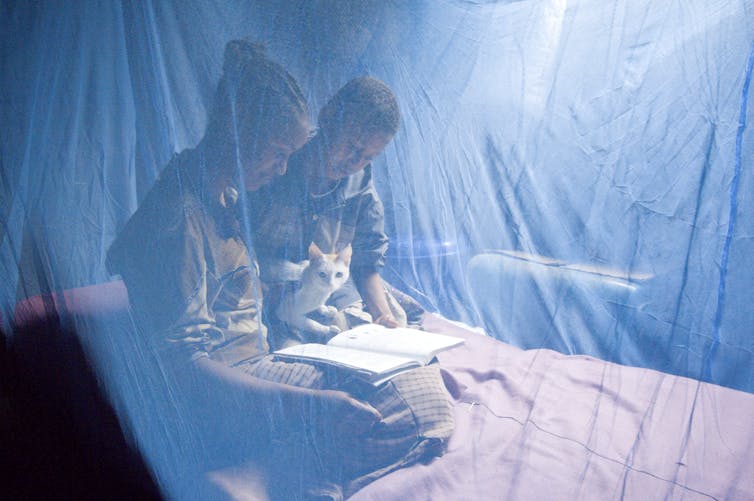
Small version - Palm OIl Detectives Banner Header

Research: Small room for compromise between oil palm cultivation and primate conservation in Africa

Research by the Joint Research Centre of the European Commission found that although oil palm cultivation represents an important source of income for many tropical countries, its future expansion is a primary threat to tropical forests and biodiversity.

#Research: Along with the dramatic effects of #palmoil cultivation on #biodiversity in #Asia, reconciling a large-scale #oilpalm growth in #Africa with #primate #conservation will be a great challenge #Boycottpalmoil 🌴⛔️#Boycott4Wildlife @palmoildetect https://palmoildetectives.com/2022/02/03/research-small-room-for-compromise-between-oil-palm-cultivation-and-primate-conservation-in-africa/

In this context, and especially in regions where industrial palm oil production is still emerging, identifying “areas of compromise,” that is, areas with high productivity and low biodiversity importance, could be a unique opportunity to reconcile conservation and economic growth. The team applied this approach to Africa, by combining data on oil palm suitability with primate distribution, diversity, and vulnerability.

“We found that such areas of compromise are very rare throughout the continent (0.13 Mha), and that large-scale expansion of oil palm cultivation in Africa will have unavoidable, negative effects on primates.”

Small room for compromise between oil palm cultivation and primate conservation in Africa (2018) Giovanni Strona, Simon D. Stringer, Ghislain Vieilledent, et. al. Proceedings of the National Academy of Sciences Aug 2018, 115 (35) 8811-8816; DOI: 10.1073/pnas.1804775115

“Despite growing awareness about its detrimental effects on tropical biodiversity, land conversion to palm oil continues to increase rapidly as a consequence of global demand, profitability, and the income opportunity it offers to producing countries.”

Small room for compromise between oil palm cultivation and primate conservation in Africa (2018) Giovanni Strona, Simon D. Stringer, Ghislain Vieilledent, et. al. Proceedings of the National Academy of Sciences Aug 2018, 115 (35) 8811-8816; DOI: 10.1073/pnas.1804775115

Although most industrial oil palm plantations are located in Southeast Asia, it is argued that much of their future expansion will occur in Africa. The team assessed how this could affect the continent’s primates by combining information on oil palm suitability and current land use with primate distribution, diversity, and vulnerability.

They also quantified the potential impact of large-scale oil palm cultivation on primates in terms of range loss under different expansion scenarios taking into account future demand, oil palm suitability, human accessibility, carbon stock, and primate vulnerability.

Mountain Gorilla mum and baby

They found a high overlap between areas of high oil palm suitability and areas of high conservation priority for primates. Overall, we found only a few small areas where oil palm could be cultivated in Africa with a low impact on primates (3.3 Mha, including all areas suitable for oil palm).

“These results warn that, consistent with the dramatic effects of palm oil cultivation on biodiversity in Southeast Asia, reconciling a large-scale development of oil palm in Africa with primate conservation will be a great challenge.”

Small room for compromise between oil palm cultivation and primate conservation in Africa (2018) Giovanni Strona, Simon D. Stringer, Ghislain Vieilledent, et. al. Proceedings of the National Academy of Sciences Aug 2018, 115 (35) 8811-8816; DOI: 10.1073/pnas.1804775115

Small room for compromise between oil palm cultivation and primate conservation in Africa (2018) Giovanni Strona, Simon D. Stringer, Ghislain Vieilledent, et. al. Proceedings of the National Academy of Sciences Aug 2018, 115 (35) 8811-8816; DOI: 10.1073/pnas.1804775115

Primatologist Dr Cleve Hicks warns about how palm oil is poised destroy primate populations in Africa and why he believes the #Boycottpalmoil #Boycott4Wildlife is the answer

Boycott the brands causing deforestation for palm oil, soy and meat by joining the #Boycott4Wildlife
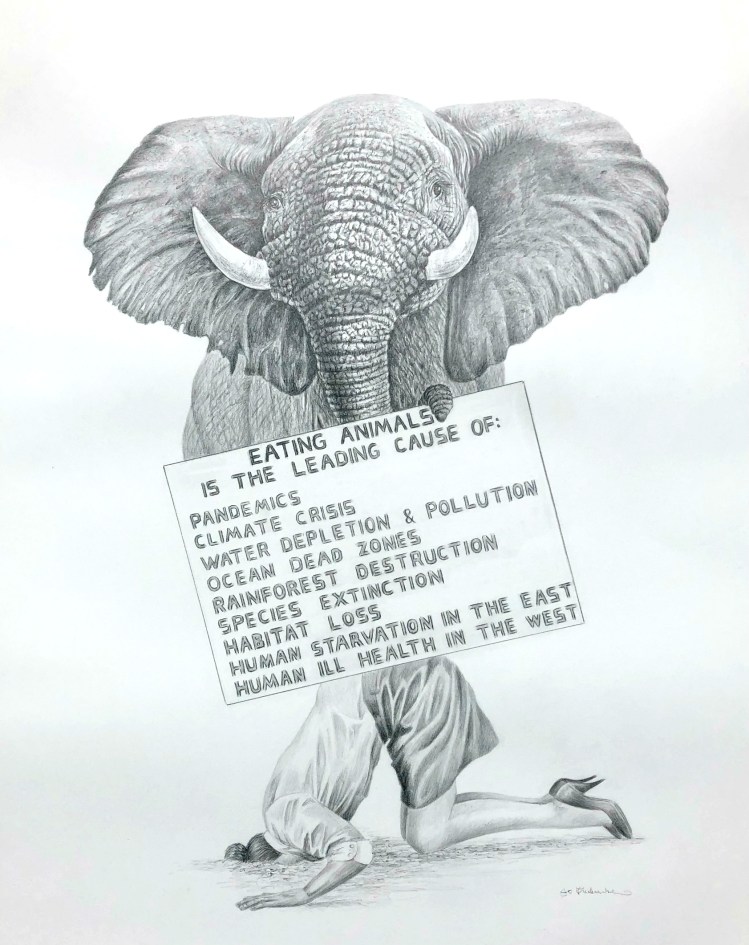
Small version - Palm OIl Detectives Banner Header

Humans and Bonobos Share Contagious Yawn Behaviour

Most of us have experienced the overwhelming urge to yawn in response to another person yawning – but we’re not the only species to do this. Research published in PeerJ shows that bonobos – our closest evolutionary cousins – also experience “yawn contagion”. Similarly to how yawning occurs in human beings, the effects of yawn contagion in bonobos is influenced by the quality of relationships shared between individuals.

The tendency for humans to mirror the behaviours and emotions of another – sometimes referred to as “emotional contagion” – is also thought to reflect our heightened capacity for empathy. Help all non-human primates to survive extinction and be #Vegan #BoycottPalmOil #Boycott4Wildlife.

Contagious yawns show social ties in humans and bonobos Image: PxFuel

This research challenges the view that emotional contagion is more pronounced in humans than in other species. It suggests that variation in empathy between humans and bonobos is influenced by the quality of relationships shared by individuals – but experts warn we must be careful to avoid anthropomorphising.

In the first cross-species study of its kind, Elisabetta Palagi, Ivan Norscia and Elisa Demuru from the Natural History Museum at the University of Pisa used levels of “yawn contagion” as a tool for measuring differences in empathy between humans and bonobos over a five-year period.

The ability of an individual to perceive and feel others’ emotions is hard to quantify, which has made measuring empathy in an objective way difficult.

“Empathy is extremely difficult to study,” said Dr Palagi. “The only possibility was to explore the most basal layer of empathy – emotional contagion – and ‘yawn contagion’ is a good candidate to measure emotional contagion.”

Yawn contagion doesn’t only occur in humans. Kevin Jaacko/Flickr, CC BY-NC

In humans and bonobos, the researchers compared levels of “yawn contagion” in weakly-bonded individuals with those occurring in strongly-bonded individuals, revealing important similarities and differences between the two species.

The strength of emotional bonding between individuals was found to be important in stimulating an empathic response only in close friends or kin, with strongly-bonded humans exhibiting a greater level of emotional contagion than strongly-bonded bonobos. A similar level of “yawn contagion” occurred between humans and bonobos in weakly-bonded subjects, reflecting shared empathic foundations between the two species.

Bonobo mother and baby

“We found that the two species differed in the level and latency of yawn response only when the subjects involved were good friends,” said Dr Palagi. “When the two subjects did not share a particular bonding the two species showed a strong similarity in the frequency of yawn contagion, thus suggesting that both species react in a very similar way to emotional contagion solicitation.”

According to Dr Palagi, monitoring bonobos was a lot easier than monitoring human subjects, as the “yawn contagion” effect is easily disturbed in humans if subjects are conscious of it. Because of this, all people involved in the study were unaware of being observed.

“We calculated how many times each perceived a yawn spontaneously emitted by a another individual and counted how many times he or she responded to that yawn,” she said.

A window into our social past

A yawning Pygmy Marmoset

Pygmy Marmoset Cebuella niveiventris and Cebuella pygmaea

Mark Elgar, professor of evolutionary biology at the University of Melbourne, said the cross-species approach of the study produced some interesting results.

But he said we should exercise caution in attributing “yawn contagion” to empathic behaviour, since the evolutionary function of yawning behaviour itself remains a mystery.

“My nagging concern is that we don’t really understand why yawn contagion exists, especially since it can be triggered by at least two ‘emotive’ states – boredom and embarrassment – and one physiological state – tiredness,” Professor Elgar said. “What is the evolutionary significance of yawning?”

Darren Curnoe, associate professor in human evolution from the University of New South Wales, said the research helps us to better understand the “gap” between humans and other species – what it is that makes us unique.

Contagious yawns show social ties in humans and bonobos Image: PxFuel

“This fascinating research demonstrates at once how similar, and yet, how different we are to our chimpanzee and bonobo cousins,” he said.

He said the study also sheds light on the origin of human social behaviour.

“The desire to yawn, when we see it in others, is a reflection of our emotional connection to them and our brain sharing what they do,” he said. “It’s a result of our strong empathy with people whom we share strong bonds, we can’t help but imitate them. It has a very deep evolutionary origin back to our ape ancestors from millions of years ago.

“What’s unique though about our human form of emotional empathy is its intensity – we show a deeper form of empathy and bonding than chimpanzees or bonobos do. This is something that changed during our evolution and must reflect a difference in the way our ancestors behaved and organised themselves socially compared to chimps and bonobos.”

Penny Orbell, Editor, The Conversation

This article is republished from The Conversation under a Creative Commons license. Read the original article.


Take Action in Five Ways

1. Join the #Boycott4Wildlife on social media and subscribe to stay in the loop: Share posts from this website to your own network on Twitter, Mastadon, Instagram, Facebook and Youtube using the hashtags #Boycottpalmoil #Boycott4Wildlife.

Join 3,176 other subscribers

2. Contribute stories: Academics, conservationists, scientists, indigenous rights advocates and animal rights advocates working to expose the corruption of the palm oil industry or to save animals can contribute stories to the website.

3. Supermarket sleuthing: Next time you’re in the supermarket, take photos of products containing palm oil. Share these to social media along with the hashtags to call out the greenwashing and ecocide of the brands who use palm oil. You can also take photos of palm oil free products and congratulate brands when they go palm oil free.

4. Take to the streets: Get in touch with Palm Oil Detectives to find out more.

5. Donate: Make a one-off or monthly donation to Palm Oil Detectives as a way of saying thank you and to help pay for ongoing running costs of the website and social media campaigns. Donate here

Research: Zoonotic Disease Outbreaks Linked to Forest Cover and Palm Oil Expansion

#Research finds that #deforestation is a major cause of #biodiversity loss with a negative impact on human health. Outbreaks of vector-borne #zoonotic #diseases are associated with increases in areas of #palmoil plantations.

A major 2021 study in Frontiers in Veterinary Science examined whether global scale loss and gain of forest cover and the rise of oil palm plantations can promote outbreaks of vector-borne and zoonotic diseases.

The study took into account the human population growth and found that increases in outbreaks of zoonotic and vector-borne diseases from 1990 to 2016 were linked to deforestation, mostly in tropical countries, and with reforestation, mostly in temperate countries.

The study also found that outbreaks of vector-borne diseases were associated with the increase in areas of palm oil plantations.

The study gives new support for a link between palm oil deforestation and outbreaks of zoonotic and vector-borne diseases as well as evidences that reforestation and plantations may also contribute to epidemics of infectious diseases.

The results are discussed in light of the importance of forests for biodiversity, livelihoods and human health and the need to urgently build an international governance framework to ensure the preservation of forests and the ecosystem services they provide, including the regulation of diseases.

The team from Montpellier University also provide recommendations to scientists, public health officers and policymakers who should reconcile the need to preserve biodiversity while taking into account the health risks posed by lack or mismanagement of forests.


Morand Serge, Lajaunie Claire (2021) Outbreaks of Vector-Borne and Zoonotic Diseases Are Associated With Changes in Forest Cover and Oil Palm Expansion at Global Scale, Frontiers in Veterinary Science, Vol. 8, https://www.frontiersin.org/article/10.3389/fvets.2021.661063. DOI=10.3389/fvets.2021.661063


Boycott the brands causing deforestation for palm oil, soy and meat by joining the #Boycott4Wildlife
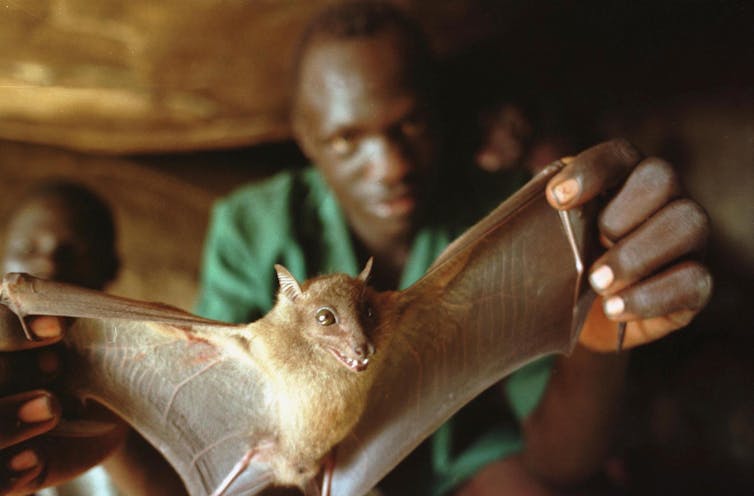
Small version - Palm OIl Detectives Banner Header

African Forest Elephants’s Movements Depend on Their Personalities


African forest #elephants roam the dense rainforests of West and Central Africa where they subsist largely on a diet of fruit. They shape forests by dispersing fruit and seeds, browsing, and creating an extensive trail network.

But because it’s difficult to track animals in thick forest, little is known about the movements of the African forest #elephant. This is troubling as #poaching of forest elephants for their #ivory as well as habitat fragmentation have decimated their populations over the past two decades. Their numbers have reduced from 700,000 to fewer than 150,000. Help them to survive #BoycottPalmOil #Boycott4Wildlife

On top of this, climate change might be reducing the availability of fruit in the forest, potentially leading to elephant famine.

Knowing how they move can help us to better protect them. Gabon, holds 50% of Africa’s remaining forest elephants. In 2017, the Gabon Parks Agency initiated an elephant GPS collaring programme to improve the understanding of forest elephant movements and guide their management.

We supported the Gabon Parks Agency’s collaring programme, providing scientific advice on study design, analysing data, and reporting on elephant movements.

Over six missions in four years, Dr Pete Morkel and his field team from the Gabon Parks Agency darted and affixed satellite collars on over 96 forest elephants. This happened in and around seven national parks.

We used this dataset of forest elephant movements – the largest ever assembled – to assess the factors influencing elephant movement behaviour.

Specifically, we asked the questions: to what extent do characteristics – like sex, habitat quality and human activity – determine the distance they move, their home range size, their exploratory behaviour, and their daily activity.

We found that all of these characteristics affected elephant behaviour. We also found that individual elephants consistently moved in different ways from each other. This told us that they have personalities.

These insights can provide clues into how elephants can be better managed to conserve their populations and to reduce conflict with humans, particularly crop raiding by elephants.

Drivers of elephant movement

We found that, on average, elephants moved nearly 2500 km a year.

In terms of intrinsic characteristics, sex was a key driver of elephant movement behaviour.

Male African Forest Elephants generally had larger home ranges and were slightly more active at night than females. They also spent less time in exploratory movements, these are long, persistent movements to new locations.

Food availability didn’t seem to affect movement behaviour. It might be that the rainforest habitat provided ample forage for elephants. However, we suspected that our measure of vegetation density was too coarse and didn’t capture availability of important diet items, like fruit and bark.

Water was key to elephant movements. Forest elephants, like savanna elephants, can lose up to 10% of the water in their bodies in a single hot day. We saw that forest elephants didn’t stray too far from water sources, such as rivers. During high rainfall, elephants moved longer distances and made more directed, exploratory movements.

Elephants also altered their movement behaviour in response to human activity. In areas of higher human disturbance, elephants moved less, had smaller home ranges, were less active during the day, and exhibited fewer exploratory movements. Like animals worldwide, elephants shortened their movements to avoid human-modified landscapes.

While environmental and human drivers explained some of the variation in elephant movements, much of the variation was explained by the individual identity of the elephant.

Exploring further, we found elephant personalities to vary between “idlers” to “explorers”. We identified individual differences in the relationships between movement behaviours, consistent with the concept of “behavioural syndromes”. In other words, an elephant that moved farther in a month also tended to have a larger home range and exhibited more exploratory behaviour.

Some forest elephants liked to explore, and others liked to stay put a bit more. And within these, there was enormous individual variation.

Forest elephant conservation

Our study offers some answers for elephant management, but also highlights complicating challenges.

For instance, the design of protected areas and habitat corridors must recognise that elephants may be reluctant to use habitat too far from perennial water sources or do so only in the wet season.

Unsurprisingly, elephant habitat should be protected from human disturbance, although further investigation into the types of human activities that most affect elephants is still necessary.

Variation in individual elephant behaviour – their personality – might complicate the development of general strategies for conservation if elephants respond in different ways to management.

Then again, it also accentuates the importance of conserving such a wide-ranging, intelligent and socially-complex species.

John Poulsen, Associate Professor of Tropical Ecology, Duke University and Christopher Beirne, Postdoctoral Researcher, University of British Columbia

This article is republished from The Conversation under a Creative Commons license. Read the original article.

Contribute to my Ko-Fi

Did you enjoy visiting this website?

Contribute to my kofi

Palm Oil Detectives is 100% self-funded

Palm Oil Detectives is completely self-funded by its creator. All hosting and website fees and investigations into brands are self-funded by the creator of this online movement. If you like what I am doing, you and would like me to help meet costs, please send Palm Oil Detectives a thanks on Ko-Fi.

In the Atlantic Forest, the lowland tapir is at risk of extinction

Lowland tapir populations in the Atlantic Forest in South America are at risk of almost complete disappearance, scientists have estimated. Weighing up to 250 kg, the animal can adapt to most habitats in South America—but its populations continue to decline across their range. Take action for these beautiful irreplaceable animals every time you shop, be #vegan for forests, farmed animals and wild animals and #BoycottPalmOil #Boycott4Wildlife

Today, its survival is seriously threatened: it can be found in just 1.78% of its original distributional range in the Atlantic Forest biome, which covers parts of Brazil, Argentina and Paraguay. The main long-term threat to its well-being is population isolation, as hunting and highways keep populations away from each other.

Urgent measures need to be taken to connect isolated populations and ensure the long-term conservation of tapirs, warn the authors of a new study on the distribution and conservation status of lowland tapirs in the South American Atlantic Forest, published in the open-access journal Neotropical Biology and Conservation

The research was done by Kevin Flesher, PhD, researcher at the Biodiversity Study Center, Michelin Ecological Reserve, Bahia, and Patrícia Medici, PhD, coordinator of the Lowland Tapir Conservation Initiative, a project developed by the Institute for Ecological Research in Brazil, and chair of the Tapir Specialist Group at the Species Survival Commission in the International Union for Conservation of Nature.

 “Of the 48 tapir populations identified during the study, between 31.3% and 68.8% are demographically unviable (low number of individuals), and between 70.8% and 93.8% of the populations are genetically unviable (low gene flow). Only 3-14 populations are still viable in the long run when both criteria are considered. The evidence suggests that with the appropriate conservation actions, the lowland tapir could be broadly distributed throughout the Atlantic Forest,” says Kevin Flesher. 

“Tapirs have low reproductive potential, including a long reproductive cycle with the birth of just one young after a gestation period of 13-14 months and intervals of up to three years between births. Our populational simulations clearly show how, in the case of small populations, even the loss of a single individual per year can result in rapid extinction of an entire local population,” adds Medici. 

Kevin Flesher dedicated 15 years to visiting 93 reserves in the Atlantic Forest, talking to people and analyzing 217 datasets, before he compiled the necessary data to design conservation actions that can ensure the survival of tapirs in the area. 

Primary forests, a habitat for the lowland tapir by Ken Flesher

The states of São Paulo and Paraná in Brazil have the largest number of remaining populations: 14 and 10, respectively. The two largest populations are in Misiones, Argentina, and in the neighboring Iguaçu and Turvo reserves, in Paraná and Rio Grande do Sul, Brazil.

“As far as our knowledge goes, there is no evidence of movement of tapirs between these populations,” points out Medici.

Tapirs adapt well to the secondary forest habitats that dominate the Atlantic Forest biome

The distance between population fragments, however, is not what is stopping them.

“The central problem is the multiple threats they face while crossing the habitat,” explains Flesher. Highways are one major obstacle that limits the access of tapirs to forests with adequate habitat. “For example, the heavy traffic on highway BR-101 (which cuts the Brazilian Atlantic Forest from North to South) is a death trap to wildlife. Tapirs often die when attempting to cross it,” explains Medici. 

The construction of highways and expansion of traffic in and around natural areas is a serious threat to large tapir populations that might otherwise have the chance to thrive, like those in Misiones, Argentina, and Serra do Mar, Brazil. 

“Roadkill is a significant cause of death in six of the eight reservations in which highways cross tapir populations, and the expansion of the roadway grid in the country threatens to cause population fragmentation in at least four populations,” points out Flesher. This is why finding ways to allow tapirs to cross highways safely is an urgent conservation priority.

Lowland Tapir by Alexander Blanco

The results of the study, however, give cause for “cautious optimism” for the future of tapirs in the area: after decades of dedicated conservation efforts, the situation is starting to improve. 

“Despite these continuing challenges for tapir conservation, most populations appear to be stable or increasing and the conservation outlook for the species is better than several decades ago, when the first efforts to protect the species began,” Kevin Flesher concludes.

Original source:

Flesher KM, Medici EP (2022) The distribution and conservation status of Tapirus terrestris in the South American Atlantic Forest. Neotropical Biology and Conservation 17(1): 1-19. https://doi.org/10.3897/neotropical.17.e71867

How can I help the #Boycott4Wildlife?

1. Join the #Boycott4Wildlife: Share posts from this website to your own network on Twitter, Instagram and Facebook using the hashtags #Boycottpalmoil #Boycott4Wildlife.

2. Contribute stories: Academics, conservationists, scientists, indigenous rights advocates and animal rights advocates working to expose the corruption of the palm oil industry or to save animals can contribute stories to the website.

3. Supermarket sleuthing: Next time you’re in the supermarket, take photos of products containing palm oil. Share these to social media along with the hashtags to call out the greenwashing and ecocide of the brands who use palm oil. You can also take photos of palm oil free products and congratulate brands when they go palm oil free.

4. Take to the streets: Get in touch with Palm Oil Detectives to find out more.

5. Donate: Make a one-off or monthly donation to Palm Oil Detectives as a way of saying thank you or to help pay for ongoing running costs.

Join 3,176 other subscribers

Share palm oil free purchases online and shame companies still using dirty palm oil!

Don’t forget to tag in #BoycottPalmOil #Boycott4Wildlife to get shared

How do we stop the world’s ecosystems from going into a death spiral? A #SteadyState Economy

Greenwashing stock image - pollution and climate change

Steady State Economics:

An Interview with Martin Tye

Australasian Regional Representative, Centre for Advancement of Steady State Economics (CASSE)


What is a Steady State Economy?

A Steady State Economy is a mildly fluctuating economy that does not exceed ecological and planetary limits.

A Steady State Economy is not an alternative economic ideology that is centred on endless GDP growth. It is neither capitalism nor communism.

Economic growth, with all of its downsides, is clearly unsustainable in the 21st century.  Long-term recession is no panacea either.  A steady state economy is the sustainable alternative to perpetual economic growth.

Economic growth was never a magic bullet; it is simply an increase in the production and consumption of goods and services–it can’t possibly lead to a sustainable outcome.  In contrast, the steady state economy provides the means for present and future generations to achieve a high quality of life. 

In this interview, Palm Oil Detectives speaks with Martin Tye, a representative of the Center for the Advancement of the Steady State Economy (CASSE) in Regional Australia. Martin studies ecological economics and history and passionate about improving the quality of life for current and future generations and restoring wildlife.

The Center for the Advancement of the Steady State Economy (CASSE) was formed in 2003 by conservation biologist, author, speaker and media commentator Brian Czech.

How do we stop the world’s ecosystems from going into a death spiral? A #SteadyState Economy. An interview with @SteadyStateEcon’s Australasian leader @MartinRev21


“Somehow, we have come to think the whole purpose of the economy is to grow, yet growth is not a goal or purpose. The pursuit of endless growth is suicidal.”

David Suzuki

The goal of Steady State Economics is to substitute the model of endless GDP growth with a stable and mildly fluctuating economy

The term often refers to a national economy, but ‘Steady State’ economics also be applied to a local, regional, or global economy.

An economy can reach a steady state after a period of growth or after a period of downsizing or degrowth.

#SteadyState Economics calls for everyone to demand a shift from a model of endless GDP growth towards a mildly fluctuating economy that exists in harmony with animals and ecosystems @steadystateecon @martinrev21 #Boycott4Wildlife

Economic growth A.K.A. GDP growth encourages wasteful overconsumption and #ecocide. Be a part of the solution, push for a #SteadyState economy and #Boycott4Wildlife the global brands destroying the world @steadystateecon @martinrev21

In a #SteadyState economy people would choose to consume materials responsibly, conserving, economising, and recycling where appropriate. This movement is aligned to the #Boycott4Wildlife find out more @steadystateecon @martinrev21
A steady state economy may not exceed ecological limits

Photos: Craig Jones Wildlife Photography

A steady state economy entails a population growth and per capita consumption that is stabilised and balanced.

GDP is a solid indicator of economic activity and environmental impact – not well-being. All else equal, the steady state economy is indicated by stabilised, or mildly fluctuating GDP.

Gross Domestic Product (GDP) is not a good indicator of well-being

Economic growth, otherwise known as GDP growth, encourages wasteful overconsumption

In a steady state economy, people consume enough to meet their needs and lead meaningful, joyful lives without undermining the life-support systems of the planet

With a Steady State economy, conspicuous consumption becomes a thing of the past

People choose to consume energy and materials responsibly, conserving, economising, and recycling where appropriate.

Inhumans of Late Stage Capitalism - Shop Dont Stop - Endless Consumerism stock photo

Citizens (yes citizens, not consumers) recognise that the culture of materialism as a bankrupt ideology and a poor path to happiness.

People forget about trying to accumulate evermore stuff, instead focusing on more worthwhile pursuits.

Personal and societal decisions about how much to consume take into account sustainability principles and the needs of future generations.

amazon-deforestation

If the world continues on its current trajectory, in 20 years what will happen doesn’t bear thinking about. Things will get very ugly!

Industrial scale food agriculture is a necessary support to growing economies- all part and parcel of the package, in particular their demand for growing populations (consumers- who need to be fed, so they can buy).

A growing economy consumes natural resources and produces wastes. This results in biodiversity loss, air and water pollution, climate destabilisation, and other major environmental threats.

GDP growth metrics fails to consider the ecological impacts of production, or recognise ecological limits to growth. So ecological pressures continue unabated.

Photos: Craig Jones Wildlife Photography

What would steady state global agriculture look like?

Just as a growth economy tends to impart industrial characteristics to its agricultural systems, a steady state economy tends to impart sustainable characteristics to its agricultural systems.

~ Agriculture in a Steady State Economy

A fixed quantity of food

Such an economy requires a fixed quantity of food. There is no need for constantly increasing the amount of food produced, and there is a calming effect on the landscape – not as much land needs to be in crop-production mode.

Low throughput of energy and materials

In addition to stable population and consumption, a steady state economy features stable and relatively low throughput of energy and materials, a characteristic that applies to the agricultural sector.

Decentralised and local

The best way to achieve sustainable throughput in agricultural systems is to decentralize. Inputs, especially fossil fuel inputs, can be reduced by shifting to local systems of production, distribution and consumption. Agriculture in a Steady State Economy

If the world adopts Steady State model now, in 20 years significant improvements will be visible in the world

Guided by a dashboard of ecological, social and economic progress indicators (GPI’s) we will have begun to re-shape the world.

Ecosystems would have started their recovery, economies would be progressing towards a restructured smaller local and sustainable scale.

As resource pressures ease, so too will international and regional tensions

People will see improved life satisfaction as “well-being” replaces “growth” as a goal.

In this version of the future, the world would be a much happier and positive place than it is today. In this state, human achievement and potential will be maximised.

The Steady State economics model offers goals like sustainability and fairness with the least amount of impingement on individual freedoms.

Greenwashing stock image - Cargill - Animal Utopia by Hartmut Kiewurt https://hartmutkiewert.de/werk/animal-utopia/
Cargill – Animal Utopia by Hartmut Kiewurt https://hartmutkiewert.de/werk/animal-utopia/

A steady state economy has four basic principles:

1. Maintain the health of ecosystems and the life-support services they provide.

2. Extract renewable resources like fish and timber at a rate no faster than they can be regenerated.

3. Consume non-renewable resources like fossil fuels and minerals at a rate no faster than they can be replaced by the discovery of renewable substitutes.

4. Deposit wastes in the environment at a rate no faster than they can be safely assimilated.

The Steady Stater Podcast

To explain the concepts of the Steady State Economy, CASSE created a podcast in 2021.

A steady state: The only kind of economy that’s sustainable in the long term

It is an economy that meets people’s needs without undermining the life-support services of the planet.

This will paint a more realistic picture of the state of things, better inform policy and guide the changes they need to make.

The strongest move policy-makers can make is to adopt new performance indicators to replace GDP

People need to understand that “economic growth” is propping up short sighted economic parasites

Cop26 deforestation
Cop26 deforestation

We see resistance to change in the fossil fuel lobby, the palm oil lobby, meat agriculture, property developers, retail chains etc. Before universally smoking was frowned upon, we saw resistance from the tobacco industry. Before this, slave holders also resisted change.

Martin Tye

Photos: Craig Jones Wildlife Photography

People power is needed to change the system. The steady state economic model provides the only real solution

Research: Boycotts Are Worthwhile and Effective

Despite sustained and vigorous attempts by corporates and industry certification schemes like RSPO, MSC and FSC to downplay the impact and effectiveness of consumer boycotts, it turns out that boycotts are impactful and drive social change. They force profit-first and greedy corporations to change their ways and do better. They also create a tangible sense…

As physical resources are limited, people satisfying their needs by means of a modest use of resources are obviously less likely to be at each other’s throats than people depending upon a high rate of use. Equally, people who live in highly self-sufficient local communities are less likely to get involved in large-scale violence than people whose existence depends on world-wide systems of trade. ~ Buddhist Economics By E. F. Schumacher

Activists can take individual action and collective action to effect change

A good example of a collective of researchers, economists, conservationists and activists pushing for change is CASSE: The Centre for Advancement of Steady State Economics.

Good examples of grass-roots, bottom-up collectives include: the #Boycott4Wildlife, Extinction Rebellion, Fridays for Future and the Vegan Land Movement.

Follow the Steady State Economy on Twitter

@Martinrev21

@SteadyState

Photos: Craig Jones Wildlife Photography

Photography, Art: Craig Jones, PxFuel. CASSE, Pixabay

Words: Martin Tye, CASSE.

Pledge your support to the Steady State Economy

Further reading

Czech, B., and H. Daly. 2004. The steady state economy: what it is, entails, and connotes. Wildlife Society Bulletin 32(2):598-605.

Czech, B. 2019. The trophic theory of money: principles, corollaries, and policy implications. Journal and Proceedings of the Royal Society of New South Wales 152(1):66-81.

Czech, B. 2006. Steady state economy. Encyclopedia of Earth. Eds. Tom Tietenberg et al., National Council for Science and the Environment, Washington, DC.

Czech, B. 2009. Ecological economics, in Encyclopaedia of Life Support Systems. Developed under the auspices of UNESCO-EOLSS Publishers, Oxford, UK (copy compliments of UNESCO).

Czech, B. 2009. The self-sufficient services fallacy. Frontiers in Ecology and the Environment 7(5):240-241.

Czech, B. 2008. Prospects for reconciling the conflict between economic growth and biodiversity conservation with technological progress. Conservation Biology 22(6):1389-1398.

Hardin, Garrett. 1968. “Tragedy of the Commons.Science, volume 162, pages 1243-1248.

Mill, John Stuart. 1848. “Of the Stationary State,” Book IV, Chapter VI in Principles of Political Economy: With Some of Their Applications to Social Philosophy, J.W. Parker, London, England.

Schumacher, E.F. 1966. “Buddhist Economics” in Guy Wint (ed.), Asia: A Handbook, Anthony Blond Ltd., London, U.K.

Divide and Intimidate: The Playbook of Palm Oil Landgrabs

The booklet “Promise, Divide, Intimidate and Coerce: 12 tactics palm oil companies use to grab community land” was created by World Rainforest Movement, GRAIN and an Alliance of community and local organisations united against industrial oil palm plantations in West and Central Africa, including RADD, SEFE, Synaparcam of Cameroon, Muyissi Environnement of Gabon and ERA/Community Forest Watch of Nigeria. Resist every time you shop in solidarity of #Indigenous peoples and #BoycottPalmOil


The guide describes the main tactics used by these corporations to take over community land. The aim is to support communities who want to strengthen their resistance and better prepare themselves to stop corporations from establishing industrial oil palm plantations on their lands.


Oil palm plantation companies use very similar tactics wherever they operate to try and take over the land of communities. Knowing that they can count on high-level politicians and state authorities for support, the companies routinely make promises they do not intend to keep, try to silence and marginalise opposition to their plans and divide communities. 


Where necessary, they coerce, intimidate, harass and even have opponents to their activities killed. Villagers, especially in remote places, often think such violence, intimidation and land grabbing is only happening to them.

Community representatives may initially believe the plantation company’s promises because they are unaware of community experiences elsewhere. 

Questions to ask

1 Who is behind the company?

2 Who is funding the company and its expansion plans?

3 Who will the company sell its palm oil to?

4 Palm oil companies are not charities.


The reality, however, is that violence – and in particular sexual violence against women– is an inseparable part of the industrial plantation model and that the tactics companies use to take community land have been fine-tuned through decades of experience around the world. 


Global Witness October 2021 Report: Violence and death for palm oil connected to household supermarket brands (RSPO members)

“One palm oil firm, Rimbunan Hijau, [Papua New Guinea] negligently ignored repeated and avoidable worker deaths and injuries on palm oil plantations, with at least 11 workers and the child of one worker losing their lives over an eight-year period.

Papua New Guinea -landgrabbing for palm oil

“Tainted palm oil from Papua New Guinea plantations was sold to household name brands, all of them RSPO members including Kellogg’s, Nestlé, Colgate, Danone, Hershey’s and PZ Cussons and Reckitt Benckiser”

The true price of palm oil: How global finance funds deforestation, violence and human rights abuses in Papua New Guinea – Global Witness, 2021


This booklet describes the main tactics companies use to get their hands on community land. It considers questions such as: 

  • How do companies trick communities into agreeing to give them control over their land? 
  • Why are empty promises made by the company about generating local employment or health and education facilities so effective in convincing communities to allow them onto their land? 
  • What can communities do to stop the theft of their land, and the destruction of the local water springs, creeks, rivers, forests and other places that are affected by the plantations? 
  • What can communities do in situations where the company has already taken their land? 
  • And, why do projects promoted by some companies and governments in which peasant farmers grow oil palm under contract for the company result in debt and poverty for participating farmers?

Strengthen community resistance to landgrabbing

This booklet is not a step-by-step manual that, if followed, will stop a company from setting up a plantation on community land. The objective of this booklet is to support communities who want to strengthen their resistance and better prepare themselves to stop corporations from setting up industrial oil palm plantations on their land. If a community is aware of community experiences elsewhere, it can more easily recognise company tactics. A community can then discuss different responses early on, so that when one way of resisting the company’s plans fails, the community can persevere and try a different way, while being prepared for new tactics that the company might use.


We hope these descriptions of company tactics will inspire others to plan, prepare, and keep their communities united and to build alliances with neighbouring communities and regional or international networks. The booklet is a work in progress. We welcome feedback and suggestions for change.
GRAIN and WRM

Companies come prepared to take over the land: communities must prepare to resist

The importance of a community speaking with one voice.Tactics that companies use to obtain access to community land

Tactic 1 Secure approval and support from high-level government officials

Tactic 2 Secure support from local elites and people trusted by the community

Tactic 3 Co-opt or pressure chiefs into making community land available for the company’s plantations

Tactic 4 Promise employment, improved roads, schools, health facilities

Tactic 5 Organise community meetings to create the appearance of community consent

Tactic 6 Silence local opponents of the plantation project

Tactic 7 Exclude and marginalise women |The violence against women that companies never talk about

Tactic 8 Forge signatures, falsify documents and withhold copies from villagers

Tactic 9 Use fraudulent land certificates and land surveys to take control of community land

Tactic 10 Promise improved food security but create food insecurity

Tactic 11 Promote smallholder contracts as an opportunity to ‘get rich planting industrial oil palms’

Tactic 12 Use partnerships with conservation NGOs and ‘Sustainable Palm Oil’ labelsto create a ‘green’ image | RSPO-certified conflict palm oil

Artist and Indigenous Rights Advocate Barbara Crane Navarro

The Dolphin and the gold miners' boat at twilight, from my children's book series- Amazon Rainforest Magic, the adventures of Meromi, a Yanomami girl

Barbara Crane Navarro: In Her Own Words

Artist, Writer, Environmental & Indigenous Rights Activist


Bio: Barbara Crane Navarro


Barbara Crane Navarro is a French-American artist, writer, Indigenous and animal activist who lives near Paris. From 1968 to 1973 she studied at Rhode Island School of Design, then she went on to study at the San Francisco Art Institute in San Francisco, California, for a BFA.

Her work over many decades has been informed and inspired by time spent with indigenous communities. She took various study trips devoted to the exploration of techniques and natural pigments of different indigenous communities including the Dogon of Mali, West Africa, and the Yanomami communities in Venezuela and Brazil.

Over many years, during the winters, she studied the techniques of traditional Bogolan painting. Hand woven fabric is dyed with boiled bark from the Wolo tree or crushed leaves from other trees, then painted with mud from the Niger river which oxidizes in contact with the dye. Through the Dogon and the Yanomami, her interest in the multiplicity of techniques and supports for aesthetic expression influenced her artistic practice.

Her voyages to the Amazon Rainforest have informed several series of paintings created while living among the Yanomami. The support used is roughly woven canvas prepared with acrylic medium then textured with a mixture of sand from the river bank and lava. This supple canvas is then rolled and transported on expeditions into the forest. These are then painted using a mixture of acrylic colors and Achiote and Genipap, the vegetal pigments used by the Yanomami for their ritual body paintings and on practical and shamanic implements. Barbara is deeply concerned about the ongoing devastation of the Amazon Rainforest and this has inspired many of her films, installation projects and children’s books.

Palm Oil Detectives is honoured to interview to Barbara Crane Navarro about her fascinating work, indigenous activism, the devastation of deforestation and land-grabbing from gold mining on the Indigenous Yanomami people

Behind the insatiable appetite for buying #gold is a dark secret of money laundering, illegal #mining, #ecocide, sex #slavery and human misery for the #Yanomami people of #Venezuela & #Brazil. @BarbaraNavarro #BoycottGold4Yanomami

Read more: Illegal gold mining and the Yanomami’s fight for their land

‘Illegal mining in the Amazon hits record high amid Indigenous protests’, Jeff Tollerson, Nature 2021.

FinCEN Files investigations into the gold trade from around the world. Kyra Guerny, International Consortium of Investigative Journalists, 2020.

Five Golden Rings and an Environmental Dilemma, Wake Forest University, 2018.

Gold mining leaves deforested Amazon land barren for years, find scientists’ The Conversation, July 1, 2020.

Mercury: Chasing the Quicksilver by InfoAmazonia

‘Pictures from outer space reveal the extent of illegal gold mining in Peru’, The Conversation, May 7, 2021.

‘Sex trafficking ‘staggering’ in illegal Latin American gold mines: researchers’, Reuters, 2016.

Yanomami: Povos Indigenas Brasil

Yanomami, Wikipedia

Help Barbara’s movement to #BoycottGold4Yanomami

1. By regularly sharing out these tweets below…

2. By following the #BoycottGold4Yanomami hashtag on Twitter and share out other people’s tweets

“I wrote Rainforest Magic, children’s stories about Yanomami children Namowë and Meromi to honour the Yanomami families I love and to raise awareness of the disappearing Amazon” #BoycottGold4Yanomami @BarbaraNavarro

It’s important that consumers know – every item we buy affects the lives of people and animals. #Gold #mining and #palmoil directly impacts Indigenous peoples. #Boycottpalmoil #BoycottGold4Yanomami #Boycott4Wildlife @BarbaraNavarro

#Yanomami children as young as 12 are forced into prostitution for illegal miners that take over their rainforest home for gold mining. Fight back against this with your wallet and refuse to buy gold! #BoycottGold4Yanomami @BarbaraNavarro

Top Brazil gold exporter leaves a trail of criminal probes and illegal mines! Please #Boycott4Wildlife #BoycottGold4Yanomami! @ScarpullaA @barbaranavarro https://news.mongabay.com/2021/11/top-brazil-gold-exporter-leaves-a-trail-of-criminal-probes-and-illegal-mines/ via @Mongabay

L’amico a sorpresa del ragazzo Yanomami nella giungla!  #BoycottGold4Yanomami #Boycott4Wildlife @ScarpullaA @barbaranavarro https://barbara-navarro.com/2021/12/24/ital-dec-24-lamico-a-sorpresa-del-ragazzo-yanomami-nella-giungla/

Amigo surpresa do menino Yanomami na selva!  #BoycottGold4Yanomami #Boycott4Wildlife @barbaranavarro @ScarpullaA https://barbara-navarro.com/2021/12/23/amigo-surpresa-do-menino-yanomami-na-selva/

The Art of #Greenwashing by Luxury Merchants of the Death #BoycottGold4Yanomami #Boycott4Wildlife @barbaranavarro @ScarpullaA https://barbara-navarro.com/2020/12/07/the-art-of-greenwashing-by-the-luxury-merchants-of-the-death-of-nature-and-indigenous-peoples-in-their-own-words-the-people-of-gold-and/

#Indigenous knowledge could be the answer to stopping #Climate Change! #ClimateEmergency @ScarpullaA @barbaranavarro #Boycott4Wildlife and #BoycottGold4Yanomami and save the forests, animals and indigenous peoples of South America! https://barbara-navarro.com/2021/12/25/indigenous-knowledge-could-be-the-answer-to-climate-change-the-st-andrews-economist/

Amigo surpresa do menino Yanomami na selva!  Boicote todos os produtos resultantes do desmatamento; ouro, óleo de palma, carne, soja, madeiras exóticas, pedras preciosas #BoycottGold4Yanomami #Boycottpalmoil #Boycott4Wildlife @BarbaraNavarro @ScarpullaA https://barbara-navarro.com/2021/12/23/amigo-surpresa-do-menino-yanomami-na-selva/

@Cartier Foundation uses #greenwashing “art” to sell their business model as eco-friendly. This is #greenwashing! #Yanomami people and #animals are dying for #gold! @BarbaraNavarro @ScarpullaA #BoycottGold4Yanomami #Boycott4Wildlife https://barbara-navarro.com/2020/10/11/the-cartier-foundation-epitomizes-the-insidious-practice-of-using-an-art-foundation-to-seduce-the-public-into-believing-that-its-merchandise-and-business-model-is-actually-the-opposite-of-its-true/

My Exhibition “Pas de Cartier: Yanomami and Trees” Gold mining by @Cartier @Bulgariofficial and COVID-19 are killing the #Yanomami people. This is why we #BoycottGold4Yanomami @BarbaraNavarro @ScarpullaA https://barbara-navarro.com/2020/08/04/exhibition-pas-de-cartier-yanomami-and-trees-gold-mining-and-gold-luxury-items-covid-19-propagated-by-gold-miners/

“When you cut down the trees, you assault the spirits of our ancestors. When you dig for minerals you impale the heart of the Earth” Cacique Raoni Metuktire Illegal gold mining is why we #BoycottGold4Yanomami #Boycott4Wildlife @BarbaraNavarro @ScarpullaA https://barbara-navarro.com/2020/06/27/gold-fever-covid-19-and-the-genocide-of-the-yanomami-update/

“In the Venezuelan and Brazilian Amazon, I witnessed the destruction of nature from deforestation and gold mining worsen as I returned year after year”

Barbara Crane Navarro

Yanomami people by Pedro Fanega is licensed under CC BY 2.0

The Yanomami communities I spent time with were very worried about this situation and the shamans worked to fight against it, but this has been in vain so far.


Since my birth, I was always an artist and spent my childhood drawing and painting


I want to understand why people in indigenous societies spend so much time and effort creating art and with such an incredible variety of supports and substances.

“Since 2005, I’ve created a performance and film project: Fire Sculpture, to bring urgent attention to rainforest destruction. And to protest against the continuing destruction of the Yanomami’s territory. I’ve publicly set fire to my totemic sculptures. These burning sculptures symbolise the degradation of nature and the annihilation of indigenous cultures that depend on the forest for their survival.”

~ Barbara Crane Navarro

Fire Sculpture by Barbara Crane Navarro

The idea of burning the sculptures was to make a symbolic point about how Yanomami and other indigenous communities are endangered by our consumerism which creates chaos and destruction where they live, in their ancestral home.


I wrote Amazon Rainforest Magic, two stories of Yanomami children Namowë, a Yanomami boy and Meromi, a Yanomami girl in honour of the families I know and love


Several of the Yanomami children and their families I know well are among the characters in the two books of the series.

I self-published my books with CreateSpace years ago which was subsequently bought by Amazon’s KDP. Now my books are only available on Amazon or here at my gallery near Paris, where my artwork is also available.

The two books are available from Barbara Crane Navarro’s Amazon page in English, Spanish and French.

“Amazon Rainforest Magic” presents a world that at first might seem whimsical, where people, animals, and plants joke, conspire, and argue with each other. The serious point is that humans are no more important than any of the other creatures – all are mutually dependent, some are just more aware of it than others. 

The plants and the animals, each with special knowledge, accompany the hero, Namowë, as he embarks on a life-saving quest for a cure for his ailing youngest sister. When he embarks on this exciting journey through the jungle, he has already taken a big step toward maturity.

Behind the charming artwork and story is a clear message that we humans are not separate from our environment and that to put ourselves above nature is arbitrary and ultimately counter-productive.

Review by John L. Pope
Illustration by Barbara Crane Navarro from her book “Amazon Rainforest Magic – The adventures of Meromi, a Yanomami girl

All of the various indigenous communities along the rivers in the Amazon are very alarmed at the acceleration of the devastation of the forests.


“I discovered that much of the Yanomami’s art is about venerating nature and the spirits of the forests, sky, water and the animals.”

~ Barbara Crane-Navarro

Tundra project/Nature Morte

The repercussions of the 2019 fires in the Amazon and Arctic regions continue to impact forests, water, the atmosphere and indigenous communities. This art is an artistic dialogue between two territories and two geomorphologies. Each have a planetary resonance.

It’s important consumers know that every shopping choice we make has repercussions on the lives of people in other parts of the world

I try to eat only local and in-season vegetables grown nearby. What I grow myself I keep as jam and conserve to eat in the winter months.


Many different indigenous communities in the nine countries of the Amazon region are devastated by gold mining with its resulting deforestation, violence against indigenous peoples, mercury poisoning and Covid-19 propagated by gold miners.


Amazonian gold mine
Amazonian gold mine

Merchants of Gold, Greed and Genocide

Hunger for Gold in the Global North is fuelling a living hell in the Global South

Image: 'lllegal gold that undermines forests and lives in the Amazon' by Igarapé Institute Boycott Gold

Here are 13 reasons why you should #BoycottGold4Yanomami

Image: ‘llegal gold that undermines forests and lives in the Amazon’ by Igarapé Institute

Behind the insatiable appetite for #gold is a dark secret of money laundering, illegal #mining, environmental damage and human misery. #BoycottGold4Yanomami @BarbaraNavarro

1. Gold mining = greenwashing of crime and corruption

2. Even the world’s biggest gold-importing nations don’t properly monitor the origins of their gold

3. Laundering crimes using gold is easy

4. Gold is a legal version of cocaine

5. Gold mining causes massive deforestation

6. Indigenous people have no rights

7. Brazil’s racist President, Bolsonaro allows land-grabbing to continue

8. Indigenous women and children are forced into sex slavery

9. Violence and murder in gold mining is common

10. Mercury kills ecosystems, people and animals

11. Ecosystems rarely recover from the damage – they are dead

12. Jewellery and electronics companies and criminals are the only ones who benefit from gold

13. Over a million children are forced to work in gold mines

How can I help?

Forests and rivers are a spiritual and practical necessity for Indigenous people

However their access to food and water is removed by palm oil and soy plantations, cattle grazing and gold mining, which contaminates the water and kills the fish. Forest wildfires are happening in the Amazon due to degraded and destroyed forests and rivers.

Dirty Gold War: A documentary about gold mining

The gold industry is overflowing with corruption:

If there’s a crackdown in Peru, you just smuggle the gold across the border to Chile. Or if there’s a crackdown all across Latin America, then you can simply sell your gold through the Emirates, where there are very few controls. It’s a very difficult industry to completely eliminate the opportunities for money laundering, because it’s so global and you can just keep shifting your business.

‘‘Dirty Gold’ chases ‘three amigos’ from Miami to Peru and beyond’:
International Consortium of Investigative Journalists

Nobody needs to use gold jewelry or watches to decorate themselves. There are so many less destructive and non-destructive options. Small elements of gold are in phones and other electronic items. We should replace them as seldom as possible.

Barbara Crane Navarro

We all need to boycott palm oil, soy, meat, exotic wood, gold and any other product of deforestation.

The #Boycott4Wildlife movement has the same goals as the #BoycottGold4Yanomami movement

Indigenous peoples know that their well-being depends on healthy forests and ecosystems. They see the evidence of that truth around them every day.

Mining incursions in the Amazon jungle.
The Dolphin and the gold miners’ boat at twilight, from my children’s book series- Amazon Rainforest Magic, the adventures of Meromi, a Yanomami girl

The future well-being of people in the West will be determined by how soon we realise that we must respect nature and not take more than we need, just as indigenous peoples do.

“If we continue to treat nature as a commodity, all the living world, including us, will suffer”

~ Barbara Crane Navarro

Every effort, even the smallest effort, is important

I can’t predict the outcome, but I believe that we have to fight every day in order to mitigate the damage we’re doing.

Did you know that #gold #mining #palmoil and cattle grazing is destroying the last great swathes of the Amazon jungle? This land belongs to #Indigenous people! So #BoycottGold4Yanomami and #Boycottpalmoil @BarbaraNavarro

“I was born in 1950 and we are no longer living in the world that I knew when I was young”

I was 20 when humans began using more resources every year than the earth could replenish.

~ Barbara Crane Navarro

Why you should stop buying new clothes

“It has been heart wrenching to witness the decline of nature
and to grieve for what has disappeared.”

Barbara Crane Navarro

[Before] The pristine Amazon rainforest. [After] Absolute devastation following gold mining in the Yanomami territory at the border of Venezuela and Brazil.

There are many rainforest animals that I love that make the Amazon rainforest absolutely enchanting. The monkeys, pink river dolphins, giant river otters, capybaras, tapirs, macaws and so many birds and butterflies are some of my favourites.

Here are a few of the 1000’s of animals disappearing forever due to out-of-control extractive mining, palm oil and meat deforestation in the Amazon jungle

If you want to make a difference to the lives of Indigenous people in the Amazon, there are some NGOs to avoid, and others that are really making a difference…

Some NGOS such as Survival claim to be helping indigenous people are great pretenders. They spread awareness but don’t offer practical on the ground support for people like the Yanomami.

These NGOS that allegedly work for Indigenous Rights simply lobby to governments to recognise indigenous land rights. They write and talk about issues affecting Indigenous peoples without having any real, tangible impact.


I donate as often as possible to a Brazilian NGO, APIB: The Articulation of Indigenous Peoples of Brazil.


 NGO, APIB: The Articulation of Indigenous Peoples of Brazil.

APIB on the other hand are taking the Brazilian government to court! They have an emergency campaign now concerning gold mining, deforestation and Covid.

Please donate to APIB:

With the funds they will take the Brazilian government to court for this disgraceful ecocide and genocide!

Photography, Art: Barbara Crane Navarro, PxFuel, Creative Commons, Wikipedia, Greenpeace, Sean Weston, Igarapé Institute.

Words: Barbara Crane Navarro

I welcome you to connect with me, you can find me here on Twitter @BarbaraNavarro

#BoycottGold4Yanomami

Buy vintage jewellery instead

Image: ‘llegal gold that undermines forests and lives in the Amazon’ by Igarapé Institute

13 Reasons To Boycott Gold for Yanomami

Hunger for Gold in the Global North is fueling a living hell in the Global South. Here are 13 reasons to #BoycottGold4Yanomami. Take action every time you shop! Say no to gold and #BoycottGold!

Hunger for #gold in the Global North is fueling a living hell for #Indigenous people in the Global South. Here’s reasons why you should #BoycottGold4Yanomami #Yanomami #SayNoToGold @barbaranavarro 🥇🧐🔥☠️🚫@palmoildetect https://palmoildetectives.com/2021/12/07/here-are-13-reasons-why-you-should-boycottgold4yanomami/

Behind the insatiable appetite for #gold is a dark secret of money laundering, illegal #mining, environmental #ecocide and human misery. Make sure you #BoycottGold4Yanomami when you shop! 🥇☠️🔥🚜🧐❌#Boycott4Wildlife @BarbaraNavarro @palmoildetect https://palmoildetectives.com/2021/12/07/here-are-13-reasons-why-you-should-boycottgold4yanomami/

1. Gold mining = greenwashing of crime and corruption

2. Even the world’s biggest gold-importing nations don’t properly monitor the origins of their gold

3. Laundering crimes using gold is easy

4. Gold is a legal version of cocaine

5. Gold mining causes massive deforestation

6. Indigenous people have no rights

7. Brazil’s racist President, Bolsonaro allows land-grabbing to continue

8. Indigenous women and children are forced into sex slavery

9. Violence and murder in gold mining is common

10. Mercury kills ecosystems, people and animals

11. Ecosystems rarely recover from the damage – they are dead

12. Jewellery and electronics companies and criminals are the only ones who benefit from gold

13. Over a million children are forced to work in gold mines

How can I help?

10 Tactics of Sustainable Palm Oil Greenwashing Tactic 1 No Proof

1. Gold mining = greenwashing of crime and corruption

Image: Shutterstock


Just like in every other extractive industry in the developing world, palm oil, fossil fuels, gold mining goes hand-in-hand with greenwashing


2. Even the world’s biggest gold-importing nations don’t properly monitor the origins of their gold

Image: ‘llegal gold that undermines forests and lives in the Amazon’ by Igarapé Institute


Switzerland, one of the world’s biggest gold-buying nations has weak and pathetic policies for monitoring the origin of gold


The message is loud and clear: the current system to prevent the importation and refining in Switzerland of illegal gold has been found lacking. The country’s financial watchdog reports that Customs data is not sufficiently transparent to differentiate between mined gold, bank gold and recycled gold, all of which are imported under the same code (HS 710812). This absence of identification means bars of dubious origin can easily slip through the net. The report also pinpoints inadequate legislation, compounded by underwhelming penalties: at worst, a CHF 2,000 fine.

Switzerland bottom of the class for gold due diligence’, Christophe Roulet, FHH Journal

3. Laundering crimes using gold is easy

Image: ‘llegal gold that undermines forests and lives in the Amazon’ by Igarapé Institute


Corruption and laundering gold is simple and easy


Since there is no way to measure whether any given land could feasibly produce the reported amount of gold, illegal miners can co-opt owners of illegal permits to ‘wash’ gold for a fee – estimated by the public prosecutor’s office at 10% of the value of the gold transaction

‘Procedural Limitations of Monitoring and Tracking the Illegal Mining Process in the Brazilian Amazon’ (2021)

In 2020, banks flagged $514.9bn suspicious transactions involving gold companies.


FinCEN Files investigations into the gold trade from around the world. Kyra Guerny, International Consortium of Investigative Journalists, 2020.

If there’s a crackdown in Peru, you just smuggle the gold across the border to Chile. Or if there’s a crackdown all across Latin America, then you can simply sell your gold through the Emirates, where there are very few controls. It’s a very difficult industry to completely eliminate the opportunities for money laundering, because it’s so global and you can just keep shifting your business.

‘‘Dirty Gold’ chases ‘three amigos’ from Miami to Peru and beyond’:
International Consortium of Investigative Journalists

Image: ‘llegal gold that undermines forests and lives in the Amazon’ by Igarapé Institute

Image: ‘llegal gold that undermines forests and lives in the Amazon’ by Igarapé Institute


For drug cartels in South America: Gold is just like a legitimate, legal version of cocaine


“Criminal groups make so much more money from gold than from cocaine, and it’s so much easier

Ivan Díaz Corzo, a former member of Colombia’s anti-criminal-mining task force. ‘How drug lords make billions smuggling gold to Miami for your jewelry and phones‘. Miami Herald, 2018.

Drug-cartel associates posing as precious-metals traders buy and mine gold in Latin America. Cocaine profits are their seed money. They sell the metal through front companies — hiding its criminal taint — to refineries in the United States and other major gold-buying nations like Switzerland and the United Arab Emirates.

Once the deal is made, the cocaine kingpins have successfully turned their dirty gold into clean cash. To the outside world, they’re not drug dealers anymore; they’re gold traders. That’s money laundering.

‘How drug lords make billions smuggling gold to Miami for your jewelry and phones‘. Miami Herald, 2018.

5. Gold mining causes massive deforestation


Mining in Indigenous territories of the Amazon is responsible for 23% of deforestation, up from 4% in 2017


“Over the past decade, illegal mining incursions — mostly small-scale gold extraction operations — have increased fivefold on Indigenous lands and threefold in other protected areas of Brazil”

‘Illegal mining in the Amazon hits record high amid Indigenous protests’, Jeff Tollerson, Nature 2021.

“The Amazon Rainforest does not burn by itself. Behind every fire that is lit is corporate greed, like agribusiness. And behind them are the largest banks and corporations in the world. They are the ones who profit from this destruction. They profit from every centimeter of land invaded, from every tree cut and burned. In the flames, they see money.”

Sônia Guajajara, executive director of the Association of Brazil’s Indigenous Peoples (APIB).

6. Indigenous Yanomami have no rights to their land

Image: ‘llegal gold that undermines forests and lives in the Amazon’ by Igarapé Institute


Venezuela’s illegitimate Maduro regime has rolled back Indigenous rights to stop Yanomami from protesting against gold mining


Venezuela’s constitution recognises its indigenous populations, yet their rights are trampled by the illegitimate Maduro criminal regime. The land is also occupied by armed Colombian groups and others working for the Maduro regime, which seeks to profit from selling the illegally mined minerals.

‘Under Maduro regime, indigenous people suffer’, Noelani Kirschner, Share America, 2020.

Illustration from “Amazon Rainforest Magic – The adventures of Namowë, a Yanomami boy

7. Brazil’s racist President, Bolsonaro allows land-grabbing from indigenous people

Image: Transparency International


Far Right president Jair Bolsonaro’s racist policies in Brazil call for an increase in gold mining, palm oil and cattle grazing and the ‘integration’ of Indigenous people


More than 15% of the national territory is demarcated as indigenous land and quilombolas. Less than a million people live in these truly isolated places in Brazil, exploited and manipulated by NGOs. Let’s together integrate these citizens and value all Brazilians.

Jair Bolsonaro
Sônia Bone Guajajara - Wikipedia

“We are experiencing an emergency to defend indigenous lives and our territories. We need the world to know this, and to do its part. Indigenous land: not an inch less. Indigenous blood: not a single drop more.”

Sônia Guajajara, executive director of the Association of Brazil’s Indigenous Peoples (APIB).

8. Indigenous women and children are forced into sex slavery


Sex trafficking is common by women and children, as indigenous people’s traditional means of survival on the land is taken from them


The scale of sex trafficking and paedophilia around illegal gold mines in parts of Latin America is staggering. Thousands of people working there fall prey to labor exploitation by organised crime groups, simply because they have to survive. Girls as young as 12 working in the brothels and bars around illegal gold mines.

Sex trafficking ‘staggering’ in illegal Latin American gold mines: researchers’ By Anastasia Moloney, Thomson Reuters Foundation, 2016.

Mining regions in the rainforest have become epicenters of human trafficking, disease and environmental destruction, according to government officials and human rights investigators. Miners are forced into slavery. Prostitutes set up camps near the miners, fueling the spread of sexually transmitted infections. One human rights group found that 2,000 sex workers, 60 percent of them children, were employed in a single mining area in Peru. Meanwhile, strip mining and the indiscriminate use of mercury to ferret out gold are turning swaths of the world’s most biodiverse ecosystems into a nightmarish moonscape. In 2016, Peru declared a temporary state of emergency over widespread mercury poisoning in Madre de Dios, a jungle province rife with illegal mining. Nearly four in five adults in the area’s capital city tested positive for dangerous levels of mercury…”

Barbara Navarro

9. Violence and murder in gold mining is common


Gold miners are controlled by fear of having their fingers cut off or of being executed


The illegitimate Maduro regime both controls the illegal gold mining and turns a blind eye to environmental and human rights abuses. Human Rights Watch report collected testimonials from Venezuelan gold miners. The report revealed that miners are kept under tight control by syndicates of armed criminals, such as the guerilla organisation FARC, also known as the Revolutionary Armed Forces of Colombia, and the ELN, also known as the National Liberation Army. If miners or other members of the public are caught stealing they have their fingers publicly cut off or are killed.

‘Venezuela: Violent Abuses in Illegal Gold Mines’, Human Rights Watch, 2020.

10. Mercury used in gold mining kills ecosystems, people and animals


Deadly mercury is used to extract gold out of the sludge. This poisons and kills everything in its path


Firstly, water cannons blast away river banks. After this, toxic mercury is used by miners to extract gold from the sediment. After the process, the dumping of mercury contaminates the soil and seeps into the air and water. This permanently destroys the water table, dispersing mercury 100’s of miles away, contaminating fishing stocks, animals and humans. Both people and animals in gold mining regions have high levels of mercury present in their bodies, leading to chronic illnesses and problems with brain function.

‘The New Gold Rush’, Wake Forest University, 2018.

Infographic: Illegal Gold Mining Chain Peru by Insight Crime

11. Ecosystems rarely recover from the damage – they are dead

“Gold mining significantly limits the regrowth of Amazonian forests, and greatly reduces their ability to accumulate carbon. Recovery rates on abandoned mining pits and tailing ponds were among the lowest ever recorded for tropical forests, compared to recovery from agriculture and pasture.”

Gold mining leaves deforested Amazon land barren for years, find scientists’ The Conversation, July 1, 2020.
A typical mining site. Even five years after the mine has closed, there is still barely any vegetation. Michelle Kalamandeen, Author provided
Image: 'lllegal gold that undermines forests and lives in the Amazon' by Igarapé Institute Boycott Gold

12. Jewellery and electronics companies and criminals are the only ones who benefit from gold

Image: ‘lllegal gold that undermines forests and lives in the Amazon’ by Igarapé Institute


Venezuelan gold from Yanomami territories is laundered and ends up in global brands of jewellery and electronics


An investigation of mercury trafficking networks in the Amazon reveals how Venezuelan gold is laundered into legitimate supply chains and could end up in products made by the world’s biggest corporations.

Image: ‘lllegal gold that undermines forests and lives in the Amazon’ by Igarapé Institute

The tainted gold leaves the refineries in glittering bars stamped with their logos, and is sold to international corporations that incorporate the precious metal in our phones, computers, cars, and other technologies.

Mercury: Chasing the Quicksilver by InfoAmazonia

13. More than a million children work in gold mining around the world

Image: Survival

There are more than 1 million children working in goldmines around the world. Some of this gold ends up in our mobile telephones. This is the conclusion of the study conducted by SOMO Centre for Research in recent months, which was commissioned by Stop Child Labour.

Every year, the electronics industry uses 279,000 kg of gold with a value of more than 10 billion euros. Making it the third largest buyer of gold after the jewellery industry and the financial sector. Even though nearly all electronics companies state that they do not accept child labour, they are almost doing nothing to actively eradicate child labour in goldmines.

Gold, Child Labour and Electronics

How can I help?

Image: ‘lllegal gold that undermines forests and lives in the Amazon’ by Igarapé Institute


Here’s some actions you can take every day to stop the corruption, destruction and human rights abuses associated with gold mining.


1. Raise your voice online for the Yanomami using the hashtag #BoycottGold4Yanomami

Share this article along with many articles by Indigenous Activist Barbara Crane Navarro about this issue on social media using the hashtag #BoycottGold4Yanomami

Yanomami children with achiote face paint reading the Rainforest Magic book Vol. 1 by Barbara Crane Navarro

Image: Barbara Crane Navarro

2. Stop buying gold jewellery and investing in gold

Put your money where your mouth is and don’t support this corrupt and evil industry.

Amazonian gold mine

3. Buy vintage second-hand gold jewellery – don’t buy new gold

This makes a unique and special gift for the one you love. It also does not require more mining to get the gold jewellery. This is the ONLY form of sustainable gold jewellery.

Image: 'lllegal gold that undermines forests and lives in the Amazon' by Igarapé Institute Boycott Gold

Image: ‘lllegal gold that undermines forests and lives in the Amazon’ by Igarapé Institute

4. Don’t fall for the luxury advertising of jewellery brands like Chopard, Tiffany&Co, Cartier, Bvlgari etc.

Don’t be a sucker for luxury. Remember the reality of what gold and diamond mining is doing to the natural world and to Indigenous people.

Image: ‘lllegal gold that undermines forests and lives in the Amazon’ by Igarapé Institute

5. Fix and repair old mobile phones and laptops rather than buying new ones containing gold

This can be hard with the planned obsolescence of a lot of technology (in other words the short lifespan). However all we can do is do our best. Also you can pressure tech brands to make their goods more long-lasting and repairable and cite this as a critical reason why their industry is corrupt, greedy and needs to change.

Image: ‘lllegal gold that undermines forests and lives in the Amazon’ by Igarapé Institute

6. Support Indigenous Rights NGOs that actually stop landgrabbing in the Amazon, Africa and elsewhere like Articulation of Indigenous Peoples of Brazil (APIB)

APIB recently successfully took the Brazilian government and Bolsonaro to court for ecocide and deforestation. Avoid supporting NGO’s that do very little other than virtue-signalling, like Survival.

APIB logo

6. Follow Barbara Crane Navarro on Twitter and WordPress

She has spent decades fighting for the Yanomami people.

Images: Barbara Crane Navarro

The Amazonian Royal Flycatcher: A flurry of feathers

The Amazonian Royal Flycatcher is a member of a family of birds called the tyrant flycatchers, which occur throughout North and South America. This is the biggest family of birds in the world, with more than 400 species. As the name implies, the majority of tyrant flycatchers are entirely insectivorous (though they do not necessarily specialise in flies), while the ‘tyrant’ part comes from the noisy, aggressively territorial behaviour of some species in the group. Help them to survive every time you shop and #BoycottPalmOil #Boycott4Wildlife.

This particular member of the tyrant flycatcher family is known as the Amazonian royal flycatcher. The most identifiable feature of this bird species is that incredible fan of feathers on its head. Both sexes possess them: the male’s, as seen above, typically has fiery orange-red feathers, while the female’s are usually yellow.

Most of the time, though, Amazonian royal flycatchers keeps their crest flat on their heads. When concealed like this, the flycatcher looks like an ordinary brown little bird. Only when it is displaying or behaving aggressively – such as when it is handled by humans – does the bird’s crown unfurl, revealing that spectacular semi-circle of elongated feathers. The effect is enhanced even more when the flycatcher sways its head and slowly opens and closes its bill to reveal a bright orange mouth.

New investigation in the Amazon documents impact of palm oil plantations on Indigenous communities Mongabay Newscast

Palm oil plantations look likely to become a new cause of deforestation and pollution across the Amazon: though companies say their supply chains are green and sustainable, critics in Brazil–including scientists & federal prosecutors–cite deforestation, chemical pollution, and human rights violations.   Mongabay's Rio-based editor Karla Mendes investigated one such project in Para State and joins us to discuss the findings of her new report, Déjà vu as palm oil industry brings deforestation, pollution to Amazon.   Beside the health toll of chemical sprays on Indigenous people whose land it encroaches, Mendes studied satellite imagery to disprove claims that the company only plants on land that's already been deforested.   Also joining the show are a scientist who's documented contamination of water sources and related health impacts, Sandra Damiani from the University of Brasília, plus a federal prosecutor in the Amazon region, Felício Pontes Júnior, who is trying to hold palm oil companies accountable for polluting Indigenous communities.     Palm oil is used in a huge array of consumer goods sold in most countries–from snacks to ice cream & shampoo—and is a main cause of rainforest loss in Africa and Southeast Asia. Now, the industry sees the Amazon as prime new ground.    Episode artwork: Fresh palm oil fruit, West Kalimantan, Indonesia. Photo courtesy of Nanang Sujana for CIFOR. Please invite your friends to subscribe to the Mongabay Newscast wherever they get podcasts, or download our free app in the Apple App Store or in the Google Store to have access to our latest episodes at your fingertips. If you enjoy the Newscast, please visit http://www.patreon.com/mongabay to pledge a dollar or more to keep the show growing, Mongabay is a nonproft media outlet and all support helps! Supporting at the $10/month level now delivers access to Insider Content at Mongabay.com, too, please visit the link above for details. See all our latest news from nature's frontline at Mongabay's homepage: news.mongabay.com or find us on Facebook, Twitter, and Instagram by searching for @mongabay. Feedback is always welcome: submissions@mongabay.com.
Contribute to palm oil detectives - black rhino in profile

How can I help the #Boycott4Wildlife?


Take Action in Five Ways

1. Join the #Boycott4Wildlife on social media and subscribe to stay in the loop: Share posts from this website to your own network on Twitter, Mastadon, Instagram, Facebook and Youtube using the hashtags #Boycottpalmoil #Boycott4Wildlife.
Join 3,176 other subscribers

2. Contribute stories: Academics, conservationists, scientists, indigenous rights advocates and animal rights advocates working to expose the corruption of the palm oil industry or to save animals can contribute stories to the website.

3. Supermarket sleuthing: Next time you’re in the supermarket, take photos of products containing palm oil. Share these to social media along with the hashtags to call out the greenwashing and ecocide of the brands who use palm oil. You can also take photos of palm oil free products and congratulate brands when they go palm oil free.

4. Take to the streets: Get in touch with Palm Oil Detectives to find out more.

5. Donate: Make a one-off or monthly donation to Palm Oil Detectives as a way of saying thank you and to help pay for ongoing running costs of the website and social media campaigns. Donate here

Meet Chimbu, the blue-eyed, bear-eared tree kangaroo

Tree kangaroos are so unusual that when Europeans first encountered them in Australia in 1872, back on the continent they were sceptical if they were real! Who would believe a #kangaroo could climb a tree?

The Goodfellow’s tree kangaroo is an endangered species of the genus dendrolagus living in the Central Cordillera mountain ranges of Papua New Guinea. Help them to survive every time you shop and be #Vegan #BoycottPalmOil #Boycott4wildlife

A climbing kangaroo? That’s roo-diculous!

Europeans in New Guinea first described tree kangaroos in 1828. While there have been plenty of disagreements about who is related to whom, we now know there are 14 distinct species.

Early explorers considered the very idea of a climbing roo ridiculous, but these animals are specially adapted to life in the trees. They likely all evolved from a terrestrial ancestor earlier in the Pliocene, 5.3 million to 2.5 million years ago.

Tree kangaroos look like marsupial bears, but can climb trees like monkeys. Healesville Sanctuary, Author provided

Tree kangaroos have much longer forelimbs than their ground-dwelling cousins and their claws are much larger and strongly curved. This provides much stronger grip when climbing trees and gripping smaller branches.

They still have large strong hind limbs, but their feet are shorter, broader and have a long curved claw on each toe.

The pad of the hindfoot is single, large and with prominent grooves, all of which enhance the animal’s grip when climbing and walking in the canopy. The tails of tree kangaroos aren’t capable of grasping things like a monkey’s, but they’re long and often held out behind the animal for balance.

But perhaps one of the most obvious differences between tree kangaroos and their terrestrial cousins is their adorably small bear-like ears.

Threatened with extinction

Two species of tree kangaroos are found in the forests of northeast Australia and 12 species in the jungles of New Guinea. All species of tree kangaroos are threatened with extinction in New Guinea, although much about these animals is unknown.

The current population size is unknown, but this species of tree kangaroo is thought to be declining in the wild. Healesville Sanctuary, Author provided

Traditionally hunted for food, hassled by dogs and threatened by the destruction of their forest habitat, the soft thud of tree roo feet among the trees is falling silent.

But conservation work in their natural habitat and through a globally managed tree kangaroo captive breeding program is helping not only the species, but the people who live alongside them.

Baby Chimbu – a new hope

Chimbu was born in Victoria, but is really an international fellow. His mother Mani came from the National Zoo and Aquarium in Canberra, and his father Bagam arriving from Kreffeld Zoo in Germany.

Baby Chimbu brings hope to a species nearing extinction. Healesville Sanctuary, Author provided

Mani and Bagam were paired based on the recommendation of scientists and managers who maintain a studbook of Goodfellow’s tree kangaroos around the world.

These gorgeous animals are generally chocolate brown on the back, shading to pale brown or cream on the face and belly, and often with a single or double narrow pale stripe down the back.

Their beautiful striped tails are one of their most noticeable features. And while the current population size is unknown, this tree kangaroo is thought to be declining due to hunting for food, local trading for cultural purposes, and habitat destruction through local deforestation and shifting cultivation.

Chimbu ventured out of his mum’s pouch to sample some tasty salad. Healesville Sanctuary, Author provided
An international network of captive tree kangaroos helps conserve this species. Healesville Sanctuary, Author provided

Although the Goodfellow’s tree kangaroos are officially endangered, we don’t know much about them in the wild. Right now, the Wildlife Conservation Society is working out how many are in the wild and where, so scientists can develop a detailed conservation program.

Written by Marissa Parrott, Reproductive Biologist, Wildlife Conservation & Science, Zoos Victoria, and Honorary Research Associate, BioSciences, The University of Melbourne. This article is republished from The Conversation under a Creative Commons license. Read the original article.

Read about other endangered tree kangaroos from Papua New Guinea on Palm Oil Detectives

These animals face threats including palm oil and coffee deforestation and hunting. Never fear – there are ways you can help.

Contribute to palm oil detectives - black rhino in profile

How can I help the #Boycott4Wildlife?


Take Action in Five Ways

1. Join the #Boycott4Wildlife on social media and subscribe to stay in the loop: Share posts from this website to your own network on Twitter, Mastadon, Instagram, Facebook and Youtube using the hashtags #Boycottpalmoil #Boycott4Wildlife.
Join 3,176 other subscribers

2. Contribute stories: Academics, conservationists, scientists, indigenous rights advocates and animal rights advocates working to expose the corruption of the palm oil industry or to save animals can contribute stories to the website.

3. Supermarket sleuthing: Next time you’re in the supermarket, take photos of products containing palm oil. Share these to social media along with the hashtags to call out the greenwashing and ecocide of the brands who use palm oil. You can also take photos of palm oil free products and congratulate brands when they go palm oil free.

4. Take to the streets: Get in touch with Palm Oil Detectives to find out more.

5. Donate: Make a one-off or monthly donation to Palm Oil Detectives as a way of saying thank you and to help pay for ongoing running costs of the website and social media campaigns. Donate here

Knobbed Hornbill Rhyticeros cassidix

Knobbed Hornbill Rhyticeros cassidix

IUCN Red List Status: Vulnerable

Location: Indonesia (Sulawesi, Lembeh, Togian Islands, Muna, Butung) This vibrant, charismatic species is found only on the island of Sulawesi and its offshore islands in Indonesia. It inhabits lowland and montane rainforest ecosystems up to 1,800 metres above sea level, especially thriving in evergreen and tall primary forests.

Introduction

The Knobbed #Hornbills Rhyticeros cassidix announce themselves in gorgeous swirls of colourful feathers and beaks. They are currently listed as Vulnerable on the IUCN Red List in #Sulawesi #Indonesia due to rapidly accelerating #palmoil and #timber #deforestation, #hunting, and habitat degradation across Sulawesi. Despite being relatively common in some areas, this iconic #hornbill is suffering from extensive loss of lowland forest, fires, gold #mining concessions, and encroachment from palm oil plantations. As a seed-dispersing frugivore with unique breeding requirements, their survival is intrinsically linked to the preservation of large, undisturbed forest tracts. Their dramatic decline underscores the urgent need to halt industrial land use in Sulawesi’s remaining rainforest. Use your power as a consumer to #BoycottPalmOil #Boycott4Wildlife every time you shop.

Appearance and Behaviour

Strikingly adorned with a large casque and vivid red-orange bill, the Knobbed Hornbill is unmistakable. Males have a prominent casque or ‘knob’ atop their bill and an unfeathered blue throat, while females sport an all-black plumage with a pale blue throat and lack the enlarged casque. Their broad wings and swooping flight pattern make them a spectacular sight to behold against the dense forest canopy.

These hornbills are highly vocal, using deep guttural calls to communicate across the forest. Pairs form long-term monogamous bonds and are typically seen together or in small family groups. Knobbed Hornbills are known for their territoriality and their habit of chasing off other birds and primates at fruiting trees, underlining their dominance within the rainforest canopy. Their daily routine includes long flights to feeding sites, often crossing fragmented landscapes to reach fruiting trees.

Diet

Primarily frugivorous, Knobbed Hornbills play a vital role in seed dispersal across Sulawesi’s ecosystems. They are particularly reliant on fig trees (Ficus spp.), which are a keystone food source for many tropical species. In addition to figs, they consume a wide variety of fruits, and are known to supplement their diet with insects, small reptiles, bird eggs, and even nestlings. Their foraging involves both perching and in-flight plucking of fruit, often from the upper canopy.

Their dependence on large-fruiting trees ties them ecologically to primary rainforest, making them especially vulnerable to habitat disturbance and deforestation. The decline of fig populations through forest clearing and degradation directly threatens their long-term food security.

Reproduction and Mating

Knobbed Hornbills nest in natural tree cavities high in the forest canopy, typically between 13 and 53 metres above ground level. Breeding depends on the availability of very large, old-growth trees—many of which are targeted for logging. The female seals herself inside the nest cavity with mud and regurgitated food, leaving only a small slit through which the male passes food during the entire incubation and chick-rearing period.

This remarkable nesting behaviour, while effective in predator avoidance, renders the female and chick completely reliant on the male’s continued presence and food provisioning. Any disturbance or death of the male during this time is likely to result in nest failure. Following hatching, the female remains sealed for several more weeks before emerging with the young chick.

Geographic Range

This species is endemic to Sulawesi and nearby islands including Lembeh, Togian, Muna and Butung in Indonesia. Historically widespread across Sulawesi’s forests, the Knobbed Hornbill is now increasingly confined to fragmented tracts of habitat due to extensive logging and agricultural conversion.

Although still described as locally common in less-disturbed areas, population declines of these hornbills have been recorded across its entire range. Many protected areas are poorly enforced, and forests in lowland Sulawesi have experienced staggering losses. Between 1985 and 1997, 89% of lowland forests were lost, and forest loss has only accelerated since then (FWI/GFW, 2002; Holmes, 2002).

Threats

Recent analysis has suggested that the Knobbed Hornbill may be declining at a rate approaching 40% over three generations based on recent and ongoing rates of habitat loss on Sulawesi (D. Holmes in litt. 1999, Kinnaird and O’Brien 2007).

IUCN red list

Palm Oil Deforestation

Sulawesi’s forests have been devastated by large-scale agricultural expansion, especially for oil palm and rice fields. Between 1997–2001 alone, forest loss accelerated to 36.1% per decade, wiping out vital hornbill habitat (Kinnaird & O’Brien, 2007). The hornbill’s strong dependency on large trees for nesting makes them acutely vulnerable to such losses.

Commercial Logging and Mining

Knobbed Hornbill Rhyticeros cassidix threats

Logging, both legal and illegal, has fragmented their habitat, making nesting success increasingly difficult. Additionally, gold mining operations in regions like Buton have destroyed critical tracts of primary forest, adding chemical and noise pollution to the ecosystem (Hamzah et al., 2023).

Fire and Climate Impacts

Severe fires, such as those in 1997, have reduced breeding success in subsequent years by decimating fig-bearing trees and altering microclimates within the forest (del Hoyo et al., 2001). Increasing climate instability will likely worsen fire frequency and intensity in coming decades.

Illegal Hunting for Bushmeat and their Casques

Hornbills are hunted for bushmeat and their casques are sometimes sold as ornaments. Although technically protected, enforcement is weak and hunting continues even within protected forests, especially near roads and settlements (Winarni & Jones, 2011).

Take Action!

Protecting the Knobbed Hornbill means safeguarding Sulawesi’s last remaining primary forests. You can help:

  • Boycott palm oil and use your wallet as a weapon every time you shop.
  • Support indigenous-led conservation on Sulawesi that focuses on protecting forest corridors and nesting trees.
  • Pressure governments and companies to halt destructive mining and logging activities in Sulawesi.
  • Make sure you don’t purchase goods made from hornbill and campaign against the deeply cruel illegal wildlife trade.
  • Advocate for hornbill-safe agroecology and forest-friendly livelihoods in Indonesia.

FAQs

How many Knobbed Hornbills are left in the wild?

While no definitive census exists, the population is believed to be rapidly declining across Sulawesi, with many formerly common areas now devoid of breeding pairs. Fragmentation has isolated populations and reduced breeding success due to lack of nesting trees (Winarni & Jones, 2011).

How long do Knobbed Hornbills live?

In the wild, hornbills can live up to 30 years, with some individuals in captivity recorded beyond that. However, successful reproduction in the wild depends on stable territory, availability of fig trees, and access to nesting sites—conditions that are increasingly rare in Sulawesi’s degraded forests (Kinnaird & O’Brien, 2005).

Why are hornbills important to the rainforest?

Knobbed Hornbills are critical seed dispersers. Their diet of large fruits like figs means they spread the seeds of keystone species far and wide. Without hornbills, seed dispersal and rainforest regeneration slows, threatening the entire ecosystem (Kitamura et al., 2011).

What role does palm oil play in their decline?

Palm oil plantations are one of the biggest drivers of forest loss in Sulawesi. These monocultures replace biodiverse ecosystems with sterile landscapes, eliminating food sources, nesting trees, and pushing hornbills toward extinction. Avoiding palm oil is essential to saving this species.

Knobbed Hornbill Rhyticeros cassidix boycott palm oil

You can support this beautiful animal

There are no known conservation activities for this animal. Share out this post to social media and join the #BoycottPalmOil #Boycott4Wildlife on social media to raise awareness

Further Information

IUCN Rating vulnerable

BirdLife International. 2017. Rhyticeros cassidix (amended version of 2016 assessment). The IUCN Red List of Threatened Species 2017: e.T22682525A117182222. https://dx.doi.org/10.2305/IUCN.UK.2017-3.RLTS.T22682525A117182222.en. Downloaded on 08 June 2021.

Hamzah, A. S., Nasri, N., & Ardiansyah, A. (2023). Status, diversity, and feeding guilds of avifauna in the mining area. IOP Conference Series: Earth and Environmental Science, 1277, 012036. https://doi.org/10.1088/1755-1315/1277/1/012036

Martin, T. E., & Blackburn, G. A. (2010). Impacts of tropical forest disturbance upon avifauna on a small island with high endemism: implications for conservation. Conservation and Society, 8(2), 127–139. https://doi.org/10.4103/0972-4923.68914

Viseshakul, N., Charoennitikul, W., Kitamura, S., Kemp, A., Thong-aree, S., Surapunpitak, Y., Poonswad, P., & Ponglikitmongkol, M. (2011). A phylogeny of frugivorous hornbills linked to the evolution of Indian plants within Asian rainforests. Journal of Evolutionary Biology, 24(7), 1533–1545. https://doi.org/10.1111/j.1420-9101.2011.02285.x

Winarni, N. L., & Jones, M. (2011). Effect of anthropogenic disturbance on the abundance and habitat occupancy of two endemic hornbill species in Buton Island, Sulawesi. Bird Conservation International, 21(1), 28–36. https://doi.org/10.1017/S0959270911000141


Contribute to palm oil detectives - black rhino in profile

How can I help the #Boycott4Wildlife?


Take Action in Five Ways

1. Join the #Boycott4Wildlife on social media and subscribe to stay in the loop: Share posts from this website to your own network on Twitter, Mastadon, Instagram, Facebook and Youtube using the hashtags #Boycottpalmoil #Boycott4Wildlife.
Join 3,176 other subscribers

2. Contribute stories: Academics, conservationists, scientists, indigenous rights advocates and animal rights advocates working to expose the corruption of the palm oil industry or to save animals can contribute stories to the website.

3. Supermarket sleuthing: Next time you’re in the supermarket, take photos of products containing palm oil. Share these to social media along with the hashtags to call out the greenwashing and ecocide of the brands who use palm oil. You can also take photos of palm oil free products and congratulate brands when they go palm oil free.

4. Take to the streets: Get in touch with Palm Oil Detectives to find out more.

5. Donate: Make a one-off or monthly donation to Palm Oil Detectives as a way of saying thank you and to help pay for ongoing running costs of the website and social media campaigns. Donate here

Greenwashing Tactic 10: Gaslighting, Harassment, Stalking and Threats

Greenwashing’s most insidious and darkest form is the attempt to discredit, humiliate, harass, abuse and stalk individuals in order to silence individuals and stop them from sharing research and reports with others about corporate corruption, greenwashing and ecocide.


Jump to section


Targets of Abuse

Abusive, Gaslighting and Greenwashing Pro Palm Oil Lobbyists on Twitter


Greenwashing by Gaslighting

Examples of Gaslighting


Greenwashing by Discrediting Critics


Who are the Pro Palm Oil Lobbyists?

Bart W Van Assen – Lead Auditor Trainer for the RSPO

Fraudulent Auditing of RSPO members

Stalking and harassment

Michelle Desilets

Jane Griffiths


Example: Greenwashing with lies, abuse, discrediting whistleblowers


Explore the Series


Further Reading: Greenwashing & Deceptive Marketing


Say thanks for this guide by donating to my Ko-Fi


Targets of Greenwashing by Gaslighting, Abuse, Stalking and Harassment


Stock image - online harassment and stalking

Targets of this kind of greenwashing could be researchers, conservationists, activists, investigative journalists, whistle-blowers, concerned consumers or brands (both big and small) who have taken a stand against palm oil and refuse to use it in their products.

Anybody who delves too deeply into the inconsistencies, misinformation and corruption in the palm oil industry is a target for this.

This form of greenwashing is not isolated to the palm oil lobby, many other industries apply these dark tactics to cool down criticism online about the environmental damage and ecocide caused by fossil fuels, meat, dairy, timber and extractive open-cut mining.

Targets for this form of greenwashing:

Harassment and abuse has the ability to intimidate and scare some individuals into silence and stop them participating in online conversations or from asking too many questions.

Abusive, gaslighting and greenwashing Pro Palm Oil Lobbyists on Twitter:

It is recommend to block all of these people to make your Twitter experience more enjoyable with less palm oil greenwashing, abuse, harassment and hate in your life

Bart Van Assen is the most vile and abusive troll of all. He has harassed me and stalked me in two successive workplaces and has been banned several times from Mastadon and Twitter for harassment and abuse. You can also find him doing the same to other people on Instagram

Main lobbyists/trolls

Bart W Van Assen: (who juggles multiple accounts to disguise himself: @Apes4Forests and @eachtreematters and @vliegerholland.

Michelle Desilets: @Orangutans and @Orangulandtrust

Jane Griffiths: @griffjane and @newquaySSPO

Lone Droscher Nielson: orangutanland (appears to be a dummy account being run by Michelle Desilets).


Other trolls and fake sock puppet accounts

Anak Sawit: @AnakSawitOrg

Anti genocide: @wakyIIsr

BuleMewak: @Bulemewak

Dupito Simamora: @SimamoraDupito

Earthkeeper22: @Earthkeeper22 parrots the exact same messages as Orangutan Land Trust despite being shown loads of evidence that it is a lie.

Francisca: @sisca_gd

FMN Global: @FMNglobal

Kevin Butler: @kiwibutts

Hypocrite Buster: @hypocrisykiller

Joern Haese: @JoernHaese (pro-Russia troll, apologist for the palm oil industry)

Li May Fun: @LiMayFun

Like I Care: @lik3icar3

Maruli Gultom: @Maruligultom

Najis Keji: @najiskeji

No_Gaslighting: @Ngaslighting

Pax Deorum: @PaxDeorum2 (abusive troll pushing a pro-Russia agenda)

Penny McGregor: @penmcgregor (Disgusting abusive troll who is an apologist for the immensely destructive HS2 project in the UK)

Petani Sawit: @PalmSawit

Peter Ashford: @kaffiene_nz (abusive troll pushing a pro New Zealand dairy/pro palm oil agenda)

ProEqual: @PR03QUAL

Rainforest: @Rainfor60967488

Ray Whitley: @RayWhitley13 (Fake vegan/lobbyist who does not advocate for animals on Twitter but instead simply foments divisiveness and hate on Twitter)

Robert Hii: @HiiRobert

Shite Buster: @Justice4Abo

Via Vallen: @ViaVallenia

Viki: @ImaWereViki

Greenwashing by Gaslighting

Gaslighting is a powerful tool for greenwashing and psychological manipulation. The gaslighter sows seeds of doubt in online conversations from questioning and doubtful researchers and consumers.

A gaslighter will tell individuals that they are wrong and misinformed about the corruption, deforestation, human rights abuses of brands and certification schemes.

That they know far less about an issue than so-called ‘experts’. However, on closer examination, these ‘experts’ are a series of researchers, Zoos or conservation NGOs that are paid by the industry. They produce positive research or ambiguous and inconclusive research that supports their spurious claims of green sustainability.

Examples of gaslighting

Greenwashing by Discrediting Critics

Discrediting people (especially researchers) who produce evidence of corruption, deforestation, and human rights abuses associated with so-called ‘sustainable’ palm oil.


Targets of this form of harassment: researchers, whistleblowers, journalists, activists. Any person (particularly a public figure) who takes a clear and strong stance palm oil, who calls out the corruption of the RSPO and advocates for a palm oil boycott will receive online abuse.

Below: Serial online abuser and greenwasher Michelle Desilets of Orangutan Land Trust cuts and pastes the same response underneath of all tweets calling for a palm oil boycott to attempt to discredit the #Boycottpalmoil #Boycott4Wildlife movement.
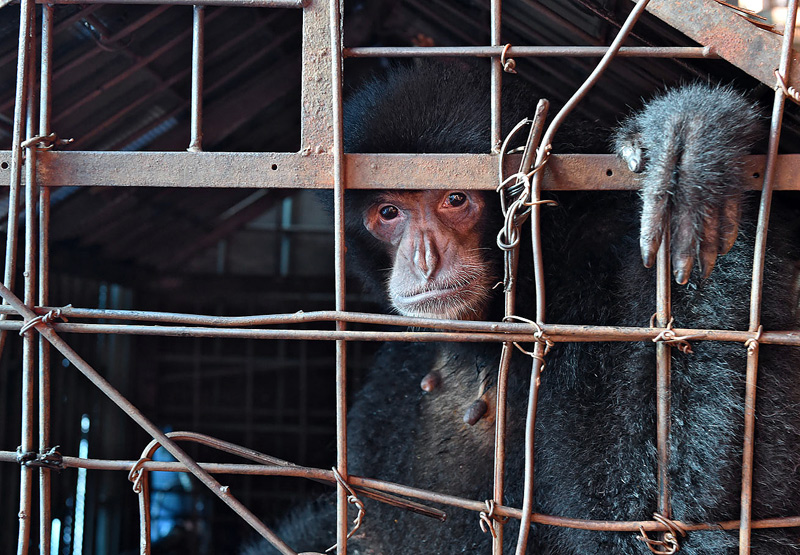

Pictured: Serial online abuser and greenwasher Michelle Desilets of Orangutan Land Trust cuts and pastes the same response underneath of all tweets calling for a palm oil boycott to attempt to discredit the evidence I've gathered about the RSPO's corruption.
Pictured: Serial online abuser and greenwasher Michelle Desilets of Orangutan Land Trust cuts and pastes the same response underneath of all tweets calling for a palm oil boycott to attempt to discredit the evidence I’ve gathered about the RSPO’s corruption.

Other targets of greenwashing by discrediting on social media:

  • Dr Roberto Gatti: Lead author of peer-reviewed research showing that “sustainable” palm oil is not sustainable.
  • Aurora Sustainability Group: A group of researchers who produced peer-reviewed research showing that “sustainable” palm oil is not sustainable.
  • Dr Setia Budhi: Dayak ethnographer who refuses to be cowed or silenced about the immense corruption and indigenous landgrabbing associated with “sustainable” RSPO plantations in Borneo. Read interview and update.
  • Craig Jones: Independent photographer who visited an RSPO “sustainable” palm oil plantation in Sumatra (PT Sisirau) and witnessed a mother and baby being rescued from a location of total ecocide – an area illegally destroyed for palm oil – yet “sustainable”. Read this story and the report about the biodiversity of PT Sisirau.
  • Isabella Guerrini de Clare: Author of peer-reviewed research showing that “sustainable” palm oil is not sustainable.
  • Neue Zurcher Zeitung: Media outlet in Germany that published OSINT satellite data showing incontrovertible and clear evidence of destruction of protected rainforests and within RSPO palm oil plantations.
  • Dr Klaus Riede
  • Dr Birute Galdikas – the most respected orangutan researcher in the world, who has spent 50 years of her life in the field helping orangutans. She has for decades been a vocal critic against the palm oil industry. One of the few researchers who is brave enough to stand up to large corporations and the RSPO.
  • Paul Fraser of Meridian Foods
  • and me.

Evidence produced from dozens of different sources over two decades shows the RSPO to be a greenwashing lie that has been a complete failure across all of its own sustainability standards.

Examples of this form of harassment

Who are the Pro Palm Oil Lobbyists?

harassing, abusing, stalking, discrediting and gaslighting whistleblowers of corruption, greenwashing and ecocide in the RSPO?


Orangutan Land Trust is known by critics of the industry and whistle-blowers of ‘sustainable’ palm oil corruption as the Palm Oil Lies Trust


This charity’s three ‘volunteers’ Bart W Van Assen, Michelle Desilets and Jane Griffiths are responsible for most of the misinformation and greenwashing about the sustainable palm oil on social media.

They confuse unaware consumers and harass critics calling them trolls, sustainability deniers, psychopaths, morons and conspiracy theorists – they behave very professionally. For nearly 20 years they have greenwashed the RSPO’s atrocious record on deforestation, human rights violations and illegal land-grabbing.

Bart Van Assen

Former auditor trainer for the RSPO and FSC, Bart Van Assen juggles various account names on Twitter before getting them banned for abusing people.

Bart has had 3 accounts banned from Twitter: @thewicorman @wildingrocks @bartwvanassen for harassment, abuse and stalking people. As a result of this behaviour, he has also had several police cases opened against him. He even talks in detail about how he stalked palm oil corruption whistleblower @ExposeLies2 on his website: Wilding Rocks. He has abused and harassed countless other people.

He currently uses: @palmoiltruther, @Apes4Forests @Forests4Apes @BartWVanAssen @eachtreematters @vliegerholland on Twitter. In the past, Bart has trained people to undertake audits in order to verify that palm oil plantations adhere to RSPO certified sustainable standards. The RSPO’s audits have been independently verified by different organisations to be fraudulent.

Bart now harasses on Mastadon using this handle: https://mastodon.green/@wildlingrocks

Bart’s now permanently suspended account on Twitter with the same name

A tweet from Bart Van Assen, former lead auditor for the RSPO and HCV admitting that the main goal of the RSPO, FSC and other certification initiatives is not to prevent deforestation. (Bart has formerly used @palmoiltruther on Twitter but now changes between @Forest4Apes or @Apes4Forests depending on times when he attempts to conceal his identity).

He now has a start-up: Kayon. He is asking people to pay him money to keep trees standing in rainforests scheduled for destruction for palm oil. He calls this ‘pirating a tree’

Bart Van Assen AKA @palmoiltruther and 3 other banned Twitter accounts @wildingrocks @thewicorman @bartwvanassen, banned for abuse and harassment of people exposing corruption of RSPO so-called 'sustainable' palm oil

Bart Van Assen: Former RSPO and FSC Auditor and vile troll on Twitter and Mastadon

Bart Van Assen: Lead Auditor Trainer for the RSPO

and full time greenwasher and online abuser of any person who declares that they want to boycott palm oil

RSPO Auditor Trainer - Bart Van Assen

EIA, Global Witness, Human Rights Watch, Sum of Us, Associated Press, Neue Zurcher Zeitung, Channel 4, The Guardian, Yale Environment 360 and ITV, World Health Organisation (WHO) and International Consortium of Investigative Journalists (ICIJ) have consistently produced reports showing that RSPO members continue with human rights abuses, deforestation and illegal land-grabbing and furthermore – that fraudulent auditing is the key reason for this failure of these palm oil companies adhere to the RSPO’s standards.

Fraudulent auditing in the RSPO

Many of these reports cite extremely poor auditing is a major reason for the failure of the RSPO. In other words, the auditing process is not, nor has ever been robust enough to prevent human rights abuses, deforestation and illegal indigenous land-grabbing from taking place.

Environmental Investigation Agency (EIA)


“Non-adherence to the RSPO’s standards is systemic and widespread, and has led to ongoing land conflicts, labour abuses and destruction of forests.

“As the world approaches 2020 targets to halt deforestation, the RSPO needs to rapidly implement radical solutions to restore its credibility. We question whether the RSPO is willing and able to rectify its systemic failures – ultimately, voluntary certification is too limited by its voluntary nature.”

Who Watches the Watchmen Part 2: The continuing incompetence of the RSPO’s assurance systems (2019)


Changing Markets Foundation

Greenpeace Logo

“While RSPO is often referred to as the best scheme in the sector, it has several shortcomings; most notably it has not prevented human rights violations and it does not require GHG emissions reductions.”

— The False Promise of Certification (2018)

Greenpeace


Greenpeace Logo

“Implementation of [the RSPO’s] standards is often weak, with serious audit failures being reported, many members failing to meet the full range of membership requirements and grievances slow to be addressed.”

Destruction Certified by Greenpeace (2021)


Environmental Investigation Agency (EIA)


EIA logo

“Without assurance mechanisms that properly function, the RSPO has little credibility and its claims are hollow.

“RSPO companies have continued to be beset
by assurance issues in 2020. Associated Press notably reported on labour violations in Malaysia, including by RSPO members. These allegations included forced labour, the abuse of women and child labour, among others.”

Burning Questions – Credibility of sustainable palm oil still illusive – Environmental Investigation Agency (2021)

A 2019 World Health Organisation (WHO) report into the palm oil industry and RSPO finds extensive greenwashing of palm oil deforestation and the murder of endangered animals (i.e. biodiversity loss)

WHO Bulletin on Palm Oil: Deforestation and Extinction
WHO Bulletin on Palm Oil: Air Pollution and Health

RSPO’s annual conference 2019: a focus on faulty audits

It was also acknowledged that the taskforce did not have the capacity to handle the responsibilities that it had set itself, and that besides training, a new model where the work was outsourced might be needed.

In ending the session, the panelists identified the most important things that would kickstart better assurance, namely: obtaining feedback to improve the assurance system, formulating better social policy, improved communications, rigour in meeting deadlines, and maintaining credible audits.

RT Report 2019


Read more

Kirby, David (2015) Sustainable Palm Oil? Who Knows, Thanks to Derelict Auditors, Take Part

Lang, Chris & REDD Monitor (2015) Sustainable palm oil? RSPO’s greenwashing and fraudulent audits exposed. Ecologist: Informed by Nature.

Vit, Jonathan (2015) Greenwashing? RSPO audits rife with ‘mistakes and fraud,’ report finds. Mongabay.


Michelle Desilets

Executive Director of Orangutan Land Trust Michelle Desilets manages both the @orangutans and @orangulandtrust accounts on Twitter.

  • Bart Van Assen AKA Wilding Rocks AKA The Wicorman AKA PalmOilTruther harassing people and getting banned from Twitter
  • Michelle Desilets threatening and harassing people
  • Michelle Desilets threatening and harassing people

Jane Griffiths

@griffjane and @NewQuaySSPO

Jane is a ‘volunteer’ for Orangutan Land Trust, rarely does she openly harass or abuse people, however she does jump to most conversations about palm oil and gaslights and generates doubt. She casts doubt by citing the partnership of the World Association of Zoos and Aquariums (WAZA) and the RSPO and an approval of the RSPO from David Attenborough in the form of a handwritten letter.

Example: Greenwashing with lies, abuse, discrediting whistleblowers

Craig Jones, one of the most respected photojournalists in Britain recorded a mother and baby close to death on an RSPO palm oil plantation – PT Sisirau in 2012

He was later told that he needed to hold off on releasing the photos of this hellish scene until after the RSPO conference.

He recalls it here


Bart and Michelle claim that Craig was lying about this, that PT Sisirau was not an RSPO member palm oil plantation. The problem with that accusation is that there is public evidence from the RSPO’s own website which shows that this is a blatant lie.


A complaint was made to the RSPO by Helen Buckland, personal friend of Michelle Desilets and Director of OrangutanSOS. She attempted to prevent Craig from publishing the deeply horrific images until after the RSPO conference that year. The RSPO took a full year to send investigators to the plantation to examine the situation. The complaint, meeting minutes and report is below.

Michelle Desilets who conducts greenwashing for the RSPO in her ‘volunteer’ role for Orangutan Land Trust is also on the Complaints Panel for the RSPO. She investigates complaints of human rights and labour abuses, illegal land-grabbing, ecocide and illegal deforestation on RSPO palm oil plantations. She was part of the decision-making on PT Sisirau, so her tweets are a blatant lie that has been caught out.

A letter advising of the cancellation of PT Sisrau's RSPO membership following the incident of illegal deforestation and orangutan harm, documented by Craig Jones.
A letter advising of the cancellation of PT Sisrau’s RSPO membership following the incident of illegal deforestation and orangutan harm, documented by Craig Jones.
Complaints Panel Meeting Minutes Michelle Desilets - PT Sisirau
Meeting minutes from a Complaints Panel for the RSPO – which features Michelle Desilets on the panel.
PT Sisirau's compliance to the RSPO's Sustainable Palm Oil Principles

Despite the presence of some threatened species, the area has an impoverished animal community. It is useful to look at the families that are missing. There were no tracks of: scavenging viverrids, arboreal squirrels and tupaiids and tragulids. All these would be expected in scrub and agricultural areas.

There were no overflying ardeids and other water birds from the nearby coastal wetland areas. No overflying hornbills from the adjacent from the nearby protected forests. In the scrub and secondary areas there were no drongos, flowerpeckers, starlings, flycatchers and babblers living off the local insects and fruit. There was a single cuckoo calling and no calls from barbets. And despite being a palm growing area, there were no parrots and no aerial feeding swifts.

The area within the project site and beyond in the Gunung Leuser Ecosystem area was extensively disturbed and clearance removed most of the low mobility, forest dependent species in the project site and beyond.

PT Sisirau’s compliance to the RSPO’s Sustainable Palm Oil Principles
10 Tactics of Sustainable Palm Oil Greenwashing - Summary

Explore the series

Join the #Boycott4Wildlife #Boycottpalmoil and fight deforestation and greenwashing by using your wallet as a weapon!
Further reading on palm oil ecocide, greenwashing and deceptive marketing

  1. A Brief History of Consumer Culture, Dr. Kerryn Higgs, The MIT Press Reader. https://thereader.mitpress.mit.edu/a-brief-history-of-consumer-culture/
  2. A Deluge of Double-Speak (2017), Jason Bagley. Truth in Advertising. https://truthinadvertising.org/blog/a-deluge-of-doublespeak/
  3. Aggarwal, P. (2011). Greenwashing: The darker side of CSR. Indian Journal of Applied Research, 4(3), 61-66. https://www.worldwidejournals.com/indian-journal-of-applied-research-(IJAR)/article/greenwashing-the-darker-side-of-csr/MzMxMQ==/?is=1
  4. Anti-Corporate Activism and Collusion: The Contentious Politics of Palm Oil Expansion in Indonesia, (2022). Ward Berenschot, et. al., Geoforum, Volume 131, 2022, https://doi.org/10.1016/j.geoforum.2022.03.002
  5. Armour, C. (2021). Green Clean. Company Director Magazine. https://www.aicd.com.au/regulatory-compliance/regulations/investigation/green-clean.html
  6. Balanced Growth (2020), In: Leal Filho W., Azul A.M., Brandli L., özuyar P.G., Wall T. (eds) Responsible Consumption and Production. Encyclopedia of the UN Sustainable Development Goals. Springer, Cham
  7. Berenschot, W., Hospes, O., & Afrizal, A. (2023). Unequal access to justice: An evaluation of RSPO’s capacity to resolve palm oil conflicts in Indonesia. Agriculture and Human Values, 40, 291-304. https://doi.org/10.1007/s10460-022-10360-z
  8. Carlson, K. M., Heilmayr, R., Gibbs, H. K., Noojipady, P., et al. (2018). Effect of oil palm sustainability certification on deforestation and fire in Indonesia. PNAS, 115(1), 121-126. https://doi.org/10.1073/pnas.1704728114
  9. Cazzolla Gatti, R., Liang, J., Velichevskaya, A., & Zhou, M. (2018). Sustainable palm oil may not be so sustainable. Science of The Total Environment, 652, 48-51. https://pubmed.ncbi.nlm.nih.gov/30359800/
  10. Changing Times Media. (2019). Roundtable on Sustainable Palm Oil is ‘greenwashing’ labelled products, environmental investigation agency says. Changing Times Media. https://changingtimes.media/2019/11/03/roundtable-on-sustainable-palm-oil-is-greenwashing-labelled-products-environmental-protection-agency-says/
  11. Client Earth: The Greenwashing Files. https://www.clientearth.org/projects/the-greenwashing-files/
  12. Commodifying sustainability: Development, nature and politics in the palm oil industry (2019). World Development, Volume 121, September 2019, Pages 218-228. https://ideas.repec.org/a/eee/wdevel/v121y2019icp218-228.html
  13. Contrasting communications of sustainability science in the media coverage of palm oil agriculture on tropical peatlands in Indonesia, Malaysia and Singapore (2020). Liu, F. H. M., Ganesan, V., Smith, T. E. L. Environmental Science & Policy, 114. https://www.researchgate.net/publication/343772443_Contrasting_communications_of_sustainability_science_in_the_media_coverage_of_palm_oil_agriculture_on_tropical_peatlands_in_Indonesia_Malaysia_and_Singapore
  14. Cosimo, L. H. E., Masiero, M., Mammadova, A., & Pettenella, D. (2024). Voluntary sustainability standards to cope with the new European Union regulation on deforestation-free products: A gap analysis. Forest Policy and Economics, 164, 103235. https://doi.org/10.1016/j.forpol.2024.103235
  15. Dalton, J. (2018). No such thing as sustainable palm oil – ‘certified’ can destroy even more wildlife, say scientists. The Independent. https://www.independent.co.uk/climate-change/news/palm-oil-sustainable-certified-plantations-orangutans-indonesia-southeast-asia-greenwashing-purdue-a8674681.html
  16. Davis, S. J., Alexander, K., Moreno-Cruz, J., et al. (2023). Food without agriculture. Nature Sustainability. https://www.nature.com/articles/s41893-023-01241-2
  17. EIA International. (2022). Will palm oil watchdog rid itself of deforestation or continue to pretend its products are sustainable? EIA International. https://eia-international.org/news/will-palm-oil-watchdog-rid-itself-of-deforestation-or-continue-to-pretend-its-products-are-sustainable/
  18. Environmental Investigation Agency. (2019). Palm oil watchdog’s sustainability guarantee is still a destructive con. EIA International. https://eia-international.org/news/palm-oil-watchdogs-sustainability-guarantee-is-still-a-destructive-con/
  19. Federal Trade Commission. (n.d.). Green Guides. https://www.ftc.gov/news-events/topics/truth-advertising/green-guides
  20. Fifteen environmental NGOs demand that sustainable palm oil watchdog does its job (2019). Rainforest Action Network. https://www.ran.org/press-releases/fifteen-environmental-ngos-demand-that-sustainable-palm-oil-watchdog-does-its-job/
  1. Friends of the Earth International. (2018). RSPO: 14 years of failure to eliminate violence and destruction from the industrial palm oil sector. Friends of the Earth International. https://www.foei.org/rspo-14-years-of-failure-to-eliminate-violence-and-destruction-from-the-industrial-palm-oil-sector/
  2. Lang, Chris and REDD Monitor. Sustainable palm oil? RSPO’s greenwashing and fraudulent audits exposed. The Ecologist. https://theecologist.org/2015/nov/19/sustainable-palm-oil-rspos-greenwashing-and-fraudulent-audits-exposed
  3. Gatti, L., Pizzetti, M., & Seele, P. (2021). Green lies and their effect on intention to invest. Journal of Business Research, 127, 376-387. https://doi.org/10.1016/j.jbusres.2021.01.028
  4. Global Witness. (2023). Amazon palm: Ecocide and human rights abuses. Global Witness. https://www.globalwitness.org/en/campaigns/environmental-activists/amazon-palm/
  5. Global Witness. (2021). The True Price of Palm Oil. Global Witness. https://www.globalwitness.org/en/campaigns/forests/true-price-palm-oil/
  6. Grain. (2021). Ten reasons why certification should not be promoted in the EU anti-deforestation regulation. Grain. https://grain.org/en/article/6856-ten-reasons-why-certification-should-not-be-promoted-in-the-eu-anti-deforestation-regulation
  7. Green Clean (2021). Armour, C. Company Director Magazine.
  8. Green marketing and the Australian Consumer Law (2011). Australian Competition and Consumer Commission. https://www.accc.gov.au/system/files/Green%20marketing%20and%20the%20ACL.pdf
  9. Greenwash and spin: palm oil lobby targets its critics (2011). Helan, A. Ecologist: Informed by Nature. https://theecologist.org/2011/jul/08/greenwash-and-spin-palm-oil-lobby-targets-its-critics
  10. Greenwashing: definition and examples. Selectra https://climate.selectra.com/en/environment/greenwashing#:~:text=Greenwashing%20is%20the%20practice%20of,its%20activities%20pollute%20the%20environment.
  11. Greenwashing of the Palm Oil Industry (2007). Mongabay. https://news.mongabay.com/2007/11/greenwashing-the-palm-oil-industry/
  12. Group Challenges Rainforest Alliance Earth-Friendly Seal of Approval (2015). Truth in Advertising. https://www.truthinadvertising.org/group-challenges-rainforest-alliance-earth-friendly-seal-of-approval
  13. Helan, A. (2011). Greenwash and spin: palm oil lobby targets its critics. Ecologist: Informed by Nature. https://theecologist.org/2011/feb/15/greenwash-and-spin-palm-oil-lobby-targets-its-critics
  14. Hewlett Packard. (2021). What is Greenwashing and How to Tell Which Companies are Truly Environmentally Responsible. Hewlett Packard. https://www.hp.com/us-en/shop/tech-takes/what-is-greenwashing-environmentally-responsible-companies
  15. Holzner, A., Rameli, N. I. A. M., Ruppert, N., & Widdig, A. (2024). Agricultural habitat use affects infant survivorship in an endangered macaque species. Current Biology. https://pubmed.ncbi.nlm.nih.gov/38194972/
  16. How Cause-washing Deceives Consumers (2021). Truth in Advertising. https://truthinadvertising.org/resource/how-causewashing-deceives-consumers/
  17. International Labour Organization. (2020). Forced labor in the palm oil industry. ILO. https://www.ilo.org/topics/forced-labour-modern-slavery-and-human-trafficking
  18. Jauernig, J., Uhl, M., & Valentinov, V. (2021). The ethics of corporate hypocrisy: An experimental approach. Futures, 129, 102757. https://doi.org/10.1016/j.futures.2021.102757
  19. Kirby, D. (2015). Sustainable Palm Oil? Who Knows, Thanks to Derelict Auditors. Take Part. https://www.yahoo.com/news/sustainable-palm-oil-knows-thanks-derelict-auditors-200643980.html
  20. Li, T. M., & Semedi, P. (2021). Plantation life: Corporate occupation in Indonesia’s oil palm zone. Duke University Press. https://www.dukeupress.edu/plantation-life
  21. Liu, F. H. M., Ganesan, V., & Smith, T. E. L. (2020). Contrasting communications of sustainability science in the media coverage of palm oil agriculture on tropical peatlands in Indonesia, Malaysia, and Singapore. Environmental Science & Policy, 114. https://www.researchgate.net/publication/343772443_Contrasting_communications_of_sustainability_science_in_the_media_coverage_of_palm_oil_agriculture_on_tropical_peatlands_in_Indonesia_Malaysia_and_Singapore
  1. Meemken, E. M., Barrett, C. B., Michelson, H. C., et al. (2021). Sustainability standards in global agrifood supply chains. Nature Food. https://doi.org/10.1038/s43016-021-00299-2
  2. Miles, T. (2019). Study in WHO journal likens palm oil lobbying to tobacco and alcohol industries. Reuters. https://www.reuters.com/article/idUSKCN1P21ZR/
  3. Nygaard, A. (2023). Is sustainable certification’s ability to combat greenwashing trustworthy? Frontiers in Sustainability, 4, Article 1188069. https://doi.org/10.3389/frsus.2023.1188069
  4. Oppong-Tawiah D, Webster J. Corporate Sustainability Communication as ‘Fake News’: Firms’ Greenwashing on Twitter. Sustainability. 2023; 15(8):6683. https://www.mdpi.com/2071-1050/15/8/6683
  5. Pabon, J. (2024). The great greenwashing: How brands, governments, and influencers are lying to you. Anansi International. https://www.vitalsource.com/products/the-great-greenwashing-john-pabon-v9781487012878
  6. Podnar, K., & Golob, U. (2024). Brands and activism: Ecosystem and paradoxes. Journal of Brand Management, 31, 95–107. https://link.springer.com/article/10.1057/s41262-024-00355-y
  7. Rainforest Action Network. (2019). Fifteen environmental NGOs demand that sustainable palm oil watchdog does its job. RAN. https://www.ran.org/press-releases/fifteen-environmental-ngos-demand-that-sustainable-palm-oil-watchdog-does-its-job/
  8. Renner, A., Zellweger, C., & Skinner, B. (2021). ‘Is there such a thing as sustainable palm oil? Satellite images show protected rainforest on fire’. Neue Zürcher Zeitung. https://www.nzz.ch/english/palm-oil-boom-threatens-protected-rainforest-in-indonesia-ld.1625490
  9. Saager, E. S., Iwamura, T., Jucker, T., & Murray, K. A. (2023). Deforestation for oil palm increases microclimate suitability for the development of the disease vector Aedes albopictus. Scientific Reports, 13(1), 9514. https://www.nature.com/articles/s41598-023-35452-6
  10. Southey, F. (2021). What do Millennials think of palm oil? Nestlé investigates. Food Navigator. https://www.foodnavigator.com/Article/2021/08/12/What-do-Millennials-think-of-palm-oil-Nestle-investigates
  11. Transparency International. (2023). Transparency international report: Corruption and corporate capture in Indonesia’s top 50 palm oil companies. Transparency International. https://palmoildetectives.com/2023/05/14/transparency-international-report-corruption-and-corporate-capture-in-indonesias-top-50-palm-oil-companies/
  12. Truth in Advertising. (2022). Companies accused of greenwashing. https://truthinadvertising.org/articles/companies-accused-greenwashing/
  13. Truth in Advertising. (n.d.). How causewashing deceives consumers. https://truthinadvertising.org/resource/how-causewashing-deceives-consumers/
  14. Tybout, A. M., & Calkins, T. (Eds.). (2019). Kellogg on Branding in a Hyper-Connected World. Kellogg School of Management, Northwestern University. https://www.wiley.com/en-au/Kellogg+on+Branding+in+a+Hyper-Connected+World-p-9781119533184
  15. Wicke, J. (2019). Sustainable palm oil or certified dispossession? NGOs within scalar struggles over the RSPO private governance standard. Bioeconomy & Inequalities: Working Paper No. 8. https://www.bioinequalities.uni-jena.de/sozbemedia/WorkingPaper8.pdf
  16. World Health Organisation. (2019). The palm oil industry and noncommunicable diseases. World Health Organisation Bulletin, 97, 118-128. https://pubmed.ncbi.nlm.nih.gov/30728618/
  17. World Rainforest Movement. (2021, November 22). Why the RSPO facilitates land grabs for palm oil. https://wrm.org.uy/articles-from-the-wrm-bulletin/section1/why-the-rspo-facilitates-land-grabs-for-palm-oil/
  18. Zuckerman, J. (2021). The Time Has Come to Rein In the Global Scourge of Palm Oil. Yale Environment 360, Yale School of Environment. https://e360.yale.edu/features/the-time-has-come-to-rein-in-the-global-scourge-of-palm-oil

Contribute to my Ko-Fi

Did you enjoy visiting this website?

Contribute to my kofi

Palm Oil Detectives is 100% self-funded

Palm Oil Detectives is completely self-funded by its creator. All hosting and website fees and investigations into brands are self-funded by the creator of this online movement. If you like what I am doing, you and would like me to help meet costs, please send Palm Oil Detectives a thanks on Ko-Fi.

Ecuadorian White-fronted Capuchin Cebus aequatorialis

Ecuadorian White-fronted Capuchin Cebus aequatorialis

Red List status: Critically Endangered

Locations: Western lowland Ecuador (Esmeraldas, Manabí, Guayas, Los Ríos, Santa Elena provinces) and extreme north-west Peru (Tumbes, Piura). The Ecuadorian White-fronted Capuchin survives in fragments of coastal dry forest and humid foothill woodland.

The Ecuadorian White-fronted Capuchin is a clever, social monkey, once a common sight in Ecuador’s lush coastal forests. Today, their world is shattered—over 90% of their habitat has vanished to palm oil, cattle, and soy. Chainsaws, fire, and bulldozers have left only scattered islands of green. Farmers shoot capuchins for raiding crops, hunters snatch infants for the illegal pet trade, and #mining operations poison the streams where they once drank. Now, fewer than ten thousand remain. Stand with indigenous communities defending the last forests. Use your wallet as a weapon. #BoycottPalmOil #Boycott4Wildlife #Vegan
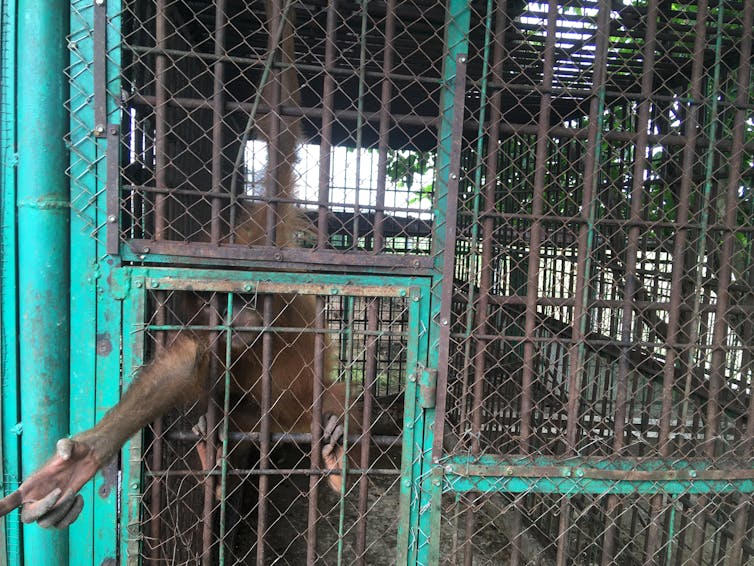
Appearance and Behaviour

The Ecuadorian White-fronted #Capuchin is a medium sized monkey with light brown back and white underside, giving this species its alternative name of Ecuadorian White-fronted Capuchin. This species is very similar to other species of white-fronted capuchin, and was only classified as a separate species in 2013.

The Ecuadorian White-fronted Capuchin is a medium-sized primate, measuring 35–50 cm with a tail of equal length and weighing 2–4 kg. Their fur is warm brown above and creamy white on the face, chest, and inner limbs. Dark, expressive eyes scan for danger while nimble fingers probe bark crevices for insects. Troops of up to twenty individuals move through the canopy, led by experienced females who choose the day’s path. At dawn, males bark in chorus, warning rivals and claiming feeding rights. These capuchins are quick learners, using sticks to dig for insects and stones to crack open nuts. They are deeply social, grooming each other and forming strong family bonds.

Threats

The Ecuardorian White-fronted Capuchin is affected by deforestation and hunting for bushmeat and the pet trade. Forests in the western lowlands of Ecuador have been severely reduced in the past half-century (Dodson and Gentry 1991, Sierra 2013, Gonzalez-Jaramillo 2016). Where habitat loss has fragmented forests, Cebus aequatorialis forages in plantations of corn (maize), bananas, plantain and cacao, and is persecuted and hunted by farmers for this reason.

IUCN red list

Palm oil, timber, meat, and soy deforestation

The Ecuadorian White-fronted Capuchin is classified as Critically Endangered due to catastrophic habitat loss, with over 90% of their original forest destroyed since the 1970s. Palm oil plantations, cattle ranching, and soy fields have replaced ancient trees and dense canopies with monocultures that offer no food or shelter. Logging companies and ranchers burn the understory, while new roads slice through the last forest fragments, leaving capuchins trapped in shrinking islands.

Hunting, bushmeat, and illegal pet trade

When the forest is destroyed this exposes the capuchins to predatory birds, domestic dogs, and hunters. Farmers shoot Ecuadorian White-fronted Capuchins when they raid crops. Hunters target adults for bushmeat and capture infants for sale in local markets and border towns. The pet trade is especially brutal: infants are torn from mothers, who are often killed. Most captured juveniles die from stress, dehydration, and malnutrition before sale. Removing even a few breeding females from a small population can collapse an entire troop. Weak enforcement and low penalties mean illegal hunting and trade continue, even in protected areas. The trauma of captivity and the loss of family bonds cause extreme suffering and early death for capuchins in the illegal pet trade (Cervera et al., 2018; Guerrero-Casado et al., 2020).

Hunting, bushmeat, and illegal pet tradeMining, pollution, and fire

Mining operations in Esmeraldas and Manabí dump toxic sediment and chemicals into rivers and streams, killing the aquatic insects and crabs capuchins need for protein. Open-pit mines destroy entire watersheds, leaving behind barren land where forest once stood. Mining roads allow illegal loggers and hunters deeper access, accelerating destruction. Fires set for pasture or mining often escape, burning fruit trees and destroying nesting sites. Pesticides and herbicides sprayed on crops poison insects and contaminate streams, further reducing food sources for capuchins. The cumulative impact of mining, fire, and pollution leaves the remaining habitat degraded and dangerous for the Ecuadorian White-fronted Capuchin (González-Jaramillo et al., 2016; Sierra, 2013).

Fragmentation and population collapse

Many forest fragments are now too small to support a troop year-round. Deforestation continues even inside protected areas, with satellite data showing ongoing annual losses. Isolated groups face genetic bottlenecks and inbreeding, further threatening survival (Dodson & Gentry, 1991; González-Jaramillo et al., 2016; Sierra, 2013).

Field surveys at 83 forest fragments found capuchins at only 13 sites, many with encounter rates below one animal per kilometre walked. Camera traps in Pacoche and Punta Gorda record fewer than two capuchins per thousand trap-days. The population is now so small and scattered that inbreeding, disease, and local extinction are constant risks. Suitable habitat in Peru is confined to just 611 km² inside two reserves, both threatened by illegal logging and fire. Even a small increase in adult deaths could push the species beyond recovery (Guerrero-Casado et al., 2020; Jack & Campos, 2012).

Diet

Ecuadorian White-fronted Capuchins are omnivores, feasting on figs, guavas, palm nuts, beetles, spiders, and small lizards. They dig into rotten logs and leaf litter with agile hands, and wade into streams to catch freshwater crabs. When wild fruit is scarce, they raid maize, banana, and cacao plantations, bringing them into conflict with farmers (Campos & Jack, 2013). Ecuadorian White-fronted Capuchins are the prey animals of large raptors, small cat carnivores such as margays and snakes.

Reproduction and Mating

Females give birth every two to three years after a gestation of about 160 days. A single infant clings to their mother’s back for five months and nurses for up to a year. Youngsters practise tool use and foraging skills by eight months, watched by older siblings and aunts. Males leave their birth troop at four to five years, while females often stay and form the core of the group. In undisturbed forest, capuchins can live for 25 years or more, but hunting and habitat stress cut most lives short (Campos & Jack, 2013).

Geographic Range

The Ecuadorian White-fronted Capuchin once ranged from the Guayllabamba–Esmeraldas river system in Ecuador south to Tumbes and Piura in Peru. Today, they survive in a handful of protected areas and private reserves: Cerro Blanco, Mache-Chindul, Chongón-Colonche, Jama-Coaque, Pacoche, and the Noroeste Biosphere Reserve. Their range has shrunk by more than 90%, and the remaining fragments are separated by farmland and pasture (Guerrero-Casado et al., 2020; Jack & Campos, 2012).

FAQs

How many Ecuadorian White-fronted Capuchins remain in the wild?

Population estimates suggest fewer than ten thousand Ecuadorian White-fronted Capuchins remain, with some sources placing the number below five thousand. Habitat suitability modelling once projected a carrying capacity of 12,500 individuals if all remaining forest fragments were occupied at median density, but field surveys show many of these areas are now empty. The population has declined by more than 80% over the last three generations, meeting IUCN criteria for Critically Endangered status. Camera trap studies in protected areas record encounter rates of less than one capuchin per 1,000 trap-days, indicating extremely low population densities (Campos & Jack, 2013; Cervera et al., 2018).

Why is the Ecuadorian White-fronted Capuchin classed as Critically Endangered?

The Ecuadorian White-fronted Capuchin has lost over 90% of their original forest habitat to palm oil, cattle, and soy. Ongoing hunting and the illegal pet trade further reduce numbers. Even inside reserves, illegal logging, mining, and fires persist, preventing population recovery. The combination of these threats meets the Red List criteria for Critically Endangered. The species is at risk of extinction within a generation unless urgent action is taken (Dodson & Gentry, 1991; Sierra, 2013).

Do Ecuadorian White-fronted Capuchins make good pets?

No. Captive capuchins develop bone disease, dental problems, and severe stress. The pet trade drives hunters to kill mothers and seize infants, accelerating extinction. Keeping these monkeys as pets is illegal and causes immense suffering. The pet trade is immensely cruel, rips families of monkeys apart and fuels extinction (Cervera et al., 2018).

Take Action!

Use your wallet as a weapon and #BoycottPalmOil #Boycott4Wildlife. Support indigenous-led conservation and agroecology. Adopt a #vegan lifestyle and #BoycottMeat to protect wild and farmed animals alike.

You can support this beautiful animal

There are no known conservation activities for this animal. Share out this post to social media and join the #BoycottPalmOil #Boycott4Wildlife on social media to raise awareness
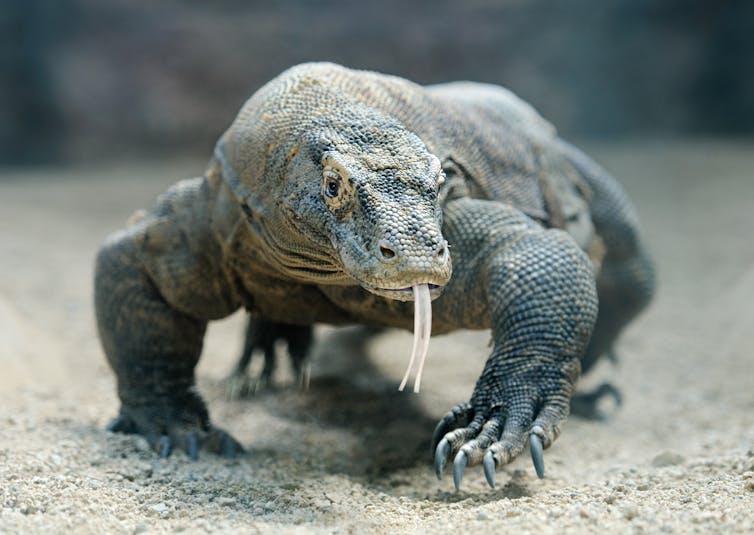
Further Information

Donate to help orphaned capuchins at Merazonia

iucn-rating-critically-endangered

Campos, F. A., & Jack, K. M. (2013). A potential distribution model and conservation plan for the critically endangered Ecuadorian capuchin, Cebus albifrons aequatorialis. International Journal of Primatology, 34(5), 899–916. https://doi.org/10.1007/s10764-013-9704-x

Guerrero-Casado, J., Vega Guarderas, Z., & Cabrera, J. (2020). New records of the critically endangered Ecuadorian white-fronted capuchin (Cebus aequatorialis) in western Ecuador. Neotropical Primates, 26(1), 1–5. https://pubmed.ncbi.nlm.nih.gov/31915955/

Jack, K. M., & Campos, F. A. (2012). Distribution, abundance, and spatial ecology of the critically endangered Ecuadorian capuchin (Cebus albifrons aequatorialis). Tropical Conservation Science, 5(2), 173–191. https://doi.org/10.1177/194008291200500207

Moscoso, P., de la Torre, S., Cornejo, F.M., Mittermeier, R.A., Lynch, J.W. & Heymann, E.W. 2021. Cebus aequatorialis (amended version of 2020 assessment). The IUCN Red List of Threatened Species 2021: e.T4081A191702052. https://dx.doi.org/10.2305/IUCN.UK.2021-1.RLTS.T4081A191702052.en. Downloaded on 06 June 2021.

Sierra, R. (2013). Patrones y factores de deforestación en el Ecuador continental, 1990–2010: Y un acercamiento a los próximos 10 años. Conservación Internacional Ecuador and Forest Trends. https://www.forest-trends.org/publications/patrones-y-factores-de-deforestacion-en-el-ecuador-continental-1990-2010/

New investigation in the Amazon documents impact of palm oil plantations on Indigenous communities Mongabay Newscast

Palm oil plantations look likely to become a new cause of deforestation and pollution across the Amazon: though companies say their supply chains are green and sustainable, critics in Brazil–including scientists & federal prosecutors–cite deforestation, chemical pollution, and human rights violations.   Mongabay's Rio-based editor Karla Mendes investigated one such project in Para State and joins us to discuss the findings of her new report, Déjà vu as palm oil industry brings deforestation, pollution to Amazon.   Beside the health toll of chemical sprays on Indigenous people whose land it encroaches, Mendes studied satellite imagery to disprove claims that the company only plants on land that's already been deforested.   Also joining the show are a scientist who's documented contamination of water sources and related health impacts, Sandra Damiani from the University of Brasília, plus a federal prosecutor in the Amazon region, Felício Pontes Júnior, who is trying to hold palm oil companies accountable for polluting Indigenous communities.     Palm oil is used in a huge array of consumer goods sold in most countries–from snacks to ice cream & shampoo—and is a main cause of rainforest loss in Africa and Southeast Asia. Now, the industry sees the Amazon as prime new ground.    Episode artwork: Fresh palm oil fruit, West Kalimantan, Indonesia. Photo courtesy of Nanang Sujana for CIFOR. Please invite your friends to subscribe to the Mongabay Newscast wherever they get podcasts, or download our free app in the Apple App Store or in the Google Store to have access to our latest episodes at your fingertips. If you enjoy the Newscast, please visit http://www.patreon.com/mongabay to pledge a dollar or more to keep the show growing, Mongabay is a nonproft media outlet and all support helps! Supporting at the $10/month level now delivers access to Insider Content at Mongabay.com, too, please visit the link above for details. See all our latest news from nature's frontline at Mongabay's homepage: news.mongabay.com or find us on Facebook, Twitter, and Instagram by searching for @mongabay. Feedback is always welcome: submissions@mongabay.com.

Contribute to palm oil detectives - black rhino in profile

How can I help the #Boycott4Wildlife?


Take Action in Five Ways

1. Join the #Boycott4Wildlife on social media and subscribe to stay in the loop: Share posts from this website to your own network on Twitter, Mastadon, Instagram, Facebook and Youtube using the hashtags #Boycottpalmoil #Boycott4Wildlife.
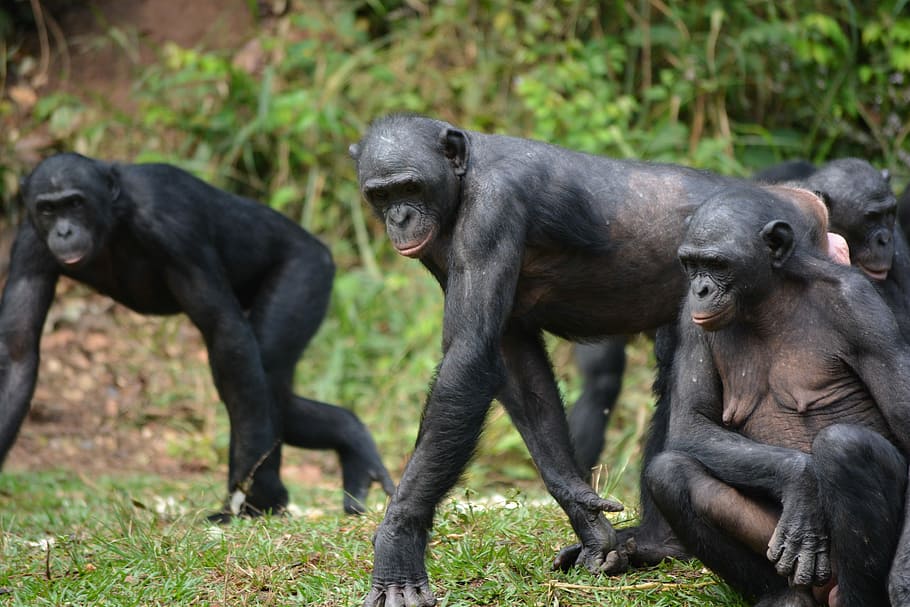
Join 3,176 other subscribers

2. Contribute stories: Academics, conservationists, scientists, indigenous rights advocates and animal rights advocates working to expose the corruption of the palm oil industry or to save animals can contribute stories to the website.

3. Supermarket sleuthing: Next time you’re in the supermarket, take photos of products containing palm oil. Share these to social media along with the hashtags to call out the greenwashing and ecocide of the brands who use palm oil. You can also take photos of palm oil free products and congratulate brands when they go palm oil free.

4. Take to the streets: Get in touch with Palm Oil Detectives to find out more.

5. Donate: Make a one-off or monthly donation to Palm Oil Detectives as a way of saying thank you and to help pay for ongoing running costs of the website and social media campaigns. Donate here

Ten Tactics of ‘Sustainable’ Palm Oil Greenwashing

What is greenwashing?

At the end of the 20th century, environmental problems began to arise from unchecked capitalist growth. Out of-control global corporates needed strong storytelling and PR to support their continued exponential growth.

The marketing and PR tactics employed to justify the continued growth of these brands and products despite their destruction, is known as:

Greenwashing


There has never been a more urgent time for consumers to wake up to the devastation wrought by global supermarket brands for palm oil


Here’s 10 different ways #consumers are deceived by so-called ‘sustainable’ #palmoil which is a multi-billion $ lie. #Fightgreenwashing with your wallet! #deforestation #extinction #Boycottpalmoil

Here is a ten-part series abt #greenwashing by ‘sustainable’ #palmoil lobbyists, certified #palmoil is a greenwashing lie according to @greenpeaceUK @EIA_News @foeint @sumofus @mightyearth @NZZ @AP #Boycottpalmoil

Jump to section


1. Greenwashing with Hidden Trade-Off

2. Greenwashing with No Proof

3. Greenwashing with Vagueness

4. Greenwashing with Fake Labels

5. Greenwashing with Irrelevance & Deflection

6. Greenwashing by Lesser of Two Evils

7. Greenwashing by Lying

8. Greenwashing with Design & Words

9. Greenwashing with Partnerships, Sponsorships & Research Funding

10. Greenwashing by Gaslighting, Stalking, Harassment & Attempting to Discredit Critics


Explore the Series

Further Reading on Palm oil Greenwashing and Deceptive Marketing

Send in examples to me

Say thanks for this guide by donating to my Ko-Fi


1. Greenwashing with a Hidden Trade Off


Claiming a brand or commodity is ‘green’ using a narrow definition or series of characteristics


For example, when a brand talks about satellite monitoring to stop palm oil deforestation, however deforestation continues to take place or perhaps even accelerate in spite of this, that’s ‘Hidden Trade-Off’


Share this insight on Twitter…

Greenwashing Tactic #1: Hidden Trade Off: Claiming a brand or commodity is ‘green’ using a narrow definition or set of characteristics. #Boycott4Wildlife #Boycottpalmoil #FightGreenwashing


2. Greenwashing with No Proof


Claiming a brand or commodity is ‘green’ without any supporting evidence


Making baseless claims is one of the easiest greenwashing tactics. For example when an advertisement claims that a product has several environmental benefits, but the company can’t back up these claims with any scientific data or evidence.


Share this insight on Twitter…

Greenwashing Tactic #2: No Proof: Claiming a #brand or #commodity is sustainable without any evidence. We’ve had enough of #greenwashing lies to sell so-called ‘sustainable’ #palmoil #Boycottpalmoil #FightGreenwashing #Boycott4Wildlife
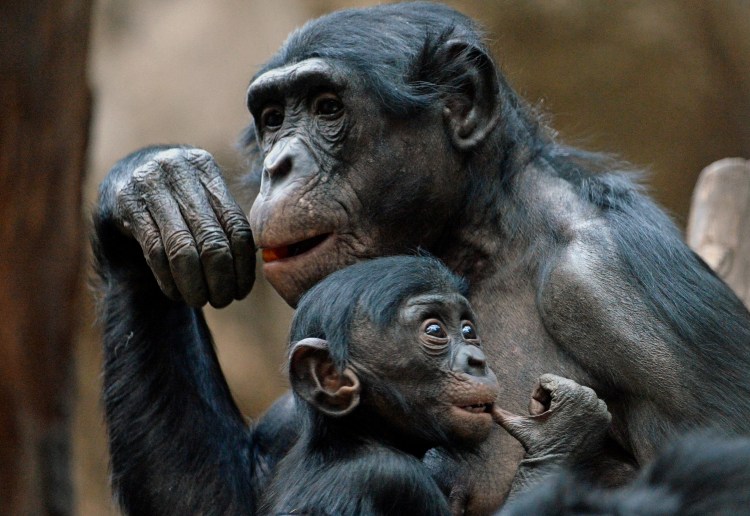

3. Greenwashing with Vagueness


Claiming a brand or commodity is ‘green’ or ‘sustainable’ based on broad generalisations, unclear language or vague statements


For example having vague requirements for certification schemes like the RSPO that are easily manipulated or where loopholes or vagueness in certification standards can be exploited by RSPO members.

10 Tactics of Sustainable Palm Oil Greenwashing - Tactic 3 Vagueness
10 Tactics of Sustainable Palm Oil Greenwashing – Tactic 3 Vagueness

Share this insight on Twitter…

Greenwashing Tactic #3: Vagueness: Claiming a brand or commodity is green by using vague generalisations or by having vague guiding principles which are subject to #corruption. We #Boycott4Wildlife #Boycottpalmoil #FightGreenwashing
4. Greenwashing with Fake Labels


Claiming a brand or commodity is green based on unreliable, ineffective endorsements or eco-labels such as the RSPO, Forest Stewardship Council (FSC) or FairTrade coffee and cocoa.


Most certifications and eco-labels add a ‘green sheen’ to brands. Yet according to Greenpeace – even the most respected certifications in the world rarely have a positive environmental and social impact.

Share this insight on Twitter…

Greenwashing Tactic #4: Fake Labels: Claiming a brand or commodity is green by using fake certifications such as @RSPOtweets that do not stop #deforestation #landgrabbing. We #Boycottpalmoil #Boycott4Wildlife #FightGreenwashing

5. Greenwashing with Irrelevance & Deflection


Claiming a brand, commodity or industry is green based on irrelevant information


A common greenwashing tactic is to shift the conversation towards a an irrelevant issue that deflects from the environmental issue at hand.

For example, palm oil lobbyists steer online conversations away from criticising ‘sustainable’ palm oil or calling for a boycott of palm oil, towards other topics that are irrelevant.

10 Tactics of Sustainable Palm Oil Greenwashing - Tactic 5 Irrelevance deflecti on
10 Tactics of Sustainable Palm Oil Greenwashing – Tactic 5 Irrelevance deflecti on

Share this insight on Twitter…

#Greenwashing Tactic #5: Irrelevance and Deflection: A common greenwashing tactic is to shift the conversation away from criticising sustainable #palmoil towards an irrelevant topic. #FightGreenwashing #Boycott4Wildlife #Boycottpalmoil

6. Greenwashing by Lesser of Two Evils


Claiming that brand, commodity or industry is greener than others in the same category in order to excuse ecocide, deforestation, human rights and animal rights abuses


For example, the main justification for using palm oil over other oil crops by palm oil lobbyists is: “Palm oil uses less land than other oil crops. Therefore, even though this crop is causing indigenous land-grabbing, ecocide, deforestation, fires, species extinction and causing air and water pollution – it’s still better than other oils”

10 Tactics of Sustainable Palm Oil Greenwashing - Tactic 6 Lesser of Two Evils
10 Tactics of Sustainable Palm Oil Greenwashing – Tactic 6 Lesser of Two Evils

Share this insight on Twitter…

#Greenwashing Tactic #6: Lesser of Two Evils: Claiming a commodity or industry is #greener than others in the same category, to excuse #ecocide #humanrights #animalrights abuses #Boycott4Wildlife #Boycottpalmoil #FightGreenwashing

7. Greenwashing by Lying


Telling outright lies over and over to consumers, or skillfully omitting the truth in statements, until the lies are believed as truth


Brands and food agriculture lobbyists generate blatant lies that appear in advertising or on social media. The lie could be falsifying support from respected authorities or individuals on environmental issues. The lie could also be a turn of phrase which ‘massages the truth’ for consumers.

‘Deforestation by fire is prohibited for RSPO members’

Yet in reality, deforestation is allowed to continue by palm oil traders, manufacturers within that certification scheme.

10 Tactics of Sustainable Palm Oil Greenwashing - Tactic 7 Lying
10 Tactics of Sustainable Palm Oil Greenwashing – Tactic 7 Lying

Share this insight on Twitter…

#Greenwashing Tactic #7 Lying: Telling outright lies over again to #consumers until they are believed as truth. This is commonly done by #palmoil lobbyists and global food companies #Boycott4Wildlife #Boycottpalmoil #FightGreenwashing
8. Greenwashing with Design & Words


Using design principles and greenwashing language in order to trigger emotional and unconscious responses in consumers


Some examples of greenwashing design include:

  • Hand-drawn typography and fonts.
  • Pastel colours or blue and green hues.
  • Hand-drawn or vintage and nostalgic animals and children illustrations in packaging and advertising design that bring to mind children’s books.
  • Happy, uplifting and nostalgic music.
  • Visual storytelling involving nature.
10 Tactics of Sustainable Palm Oil Greenwashing - Tactic 8 Design and Words
10 Tactics of Sustainable Palm Oil Greenwashing – Tactic 8 Design and Words

Share this insight on Twitter…

Greenwashing Tactic #8: #Design and #Words: Using subliminal design principles and #greenwashing #language to convey ‘greenness’ to #consumers. We #Boycott4Wildlife #Boycottpalmoil #FightGreenwashing

9. Greenwashing with Partnerships, Sponsorships & Research Funding


Using corporate partnerships, sponsorships and research funding to give a commodity, an industry, certification scheme or supermarket brand a ‘greener’ reputation


Global supermarket brands that are members of the RSPO provide sponsorship money to Zoos, city councils in the UK and small businesses in order to push the lie of sustainable palm oil to school children and unaware consumers.

Corporate partnerships, sponsorships and research funding are easy ways to gain legitimacy and win consumer trust.

10 Tactics of Sustainable Palm Oil Greenwashing - Tactic 9 Partnerships Sponsorships
10 Tactics of Sustainable Palm Oil Greenwashing – Tactic 9 Partnerships Sponsorships

Share this insight on Twitter…

#Greenwashing Tactic #9: Using #corporate #partnerships, #sponsorships and #research #funding to give a #commodity, #industry or
a #brand a ‘greener’ reputation. #Boycottpalmoil #FightGreenwashing #Boycott4Wildlife

10. Greenwashing by Gaslighting, Harassment, Stalking and Attempting to Discredit Critics


Attempting to humiliate, gaslight, discredit, harass and stalk any vocal critics of a brand, commodity or industry certification in order to scare individuals into silence.


Greenwashing’s most insidious and darkest form is the attempt to discredit, humiliate, harass, abuse and stalk individuals in order to stop them from sharing information with others about corporate corruption.

Targets of this kind of greenwashing could be researchers, conservationists, activists, investigative journalists, whistle-blowers or concerned and aware consumers who delve too deeply into issues, such as corruption in the palm oil industry.

10 Tactics of Sustainable Palm Oil Greenwashing - Tactic 10 Gaslighting Abuse
10 Tactics of Sustainable Palm Oil Greenwashing – Tactic 10 Gaslighting Abuse

Share this insight on Twitter…

#Greenwashing Tactic #10: #Gaslighting #harassment #stalking attempting to discredit critics of an industry, certification scheme or commodity. We #Boycott4Wildlife #Boycottpalmoil #FightGreenwashing
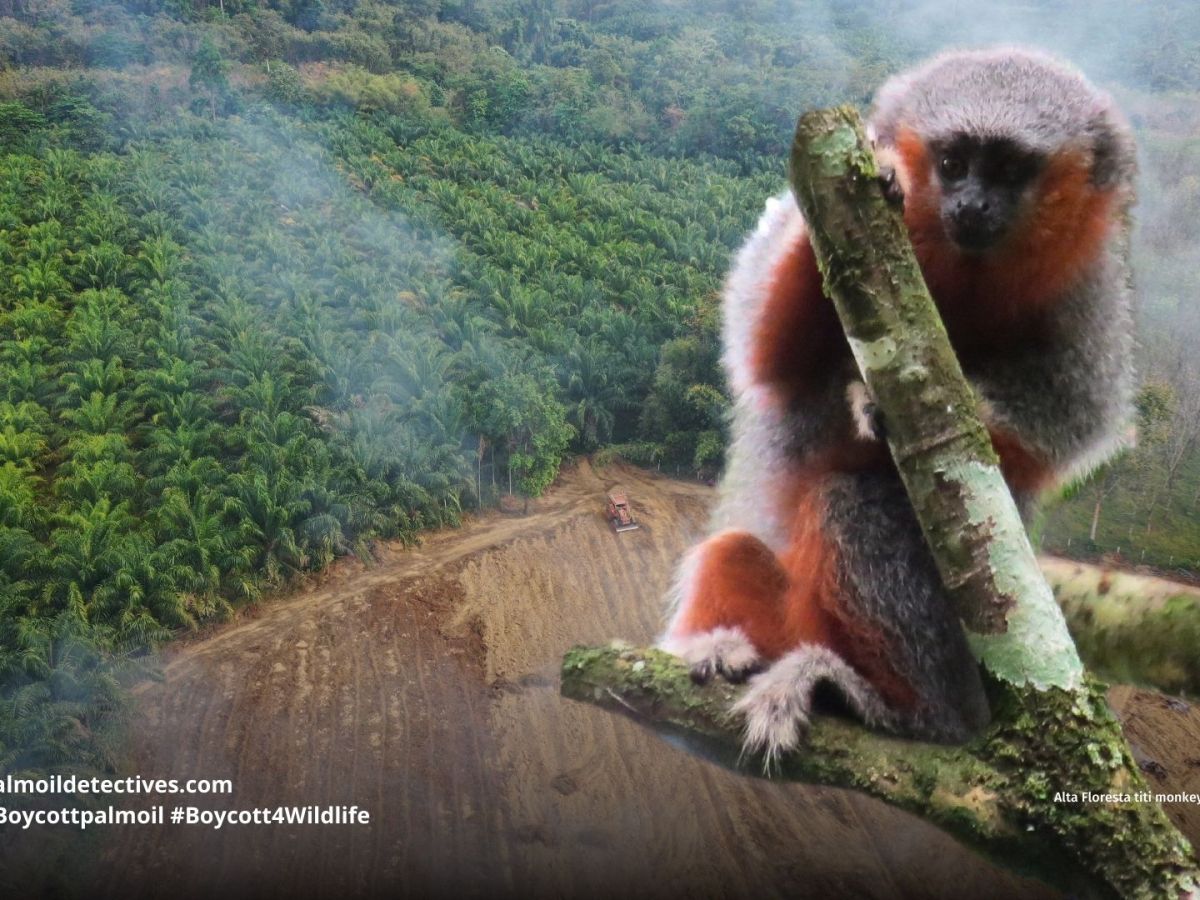
10 Tactics of Sustainable Palm Oil Greenwashing - Summary

Explore the series


#Fightgreenwashing in the products and brands you buy!


We concerned consumers of the #Boycott4Wildlife movement says NO to the bloated, toxic industrial complex that underlies all of our consumer goods.

#Boycott4Wildlife #Boycottpalmoil #FightGreenwashing
Further reading on palm oil ecocide, greenwashing and deceptive marketing
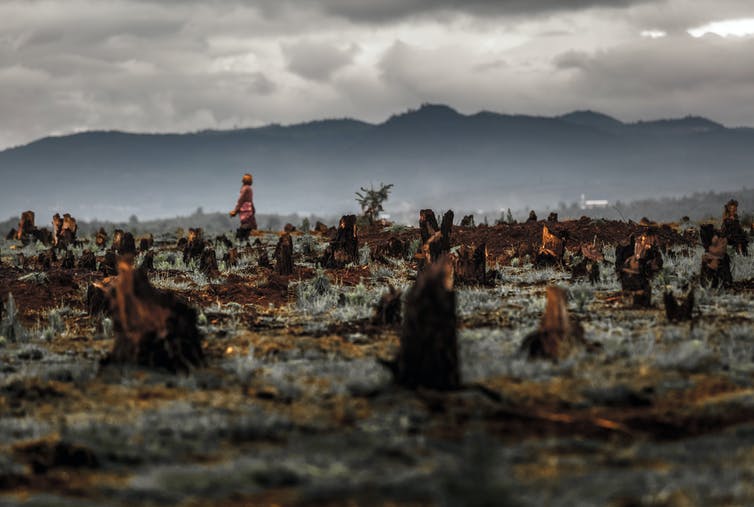
  1. A Brief History of Consumer Culture, Dr. Kerryn Higgs, The MIT Press Reader. https://thereader.mitpress.mit.edu/a-brief-history-of-consumer-culture/
  2. A Deluge of Double-Speak (2017), Jason Bagley. Truth in Advertising. https://truthinadvertising.org/blog/a-deluge-of-doublespeak/
  3. Aggarwal, P. (2011). Greenwashing: The darker side of CSR. Indian Journal of Applied Research, 4(3), 61-66. https://www.worldwidejournals.com/indian-journal-of-applied-research-(IJAR)/article/greenwashing-the-darker-side-of-csr/MzMxMQ==/?is=1
  4. Anti-Corporate Activism and Collusion: The Contentious Politics of Palm Oil Expansion in Indonesia, (2022). Ward Berenschot, et. al., Geoforum, Volume 131, 2022, https://doi.org/10.1016/j.geoforum.2022.03.002
  5. Armour, C. (2021). Green Clean. Company Director Magazine. https://www.aicd.com.au/regulatory-compliance/regulations/investigation/green-clean.html
  6. Balanced Growth (2020), In: Leal Filho W., Azul A.M., Brandli L., özuyar P.G., Wall T. (eds) Responsible Consumption and Production. Encyclopedia of the UN Sustainable Development Goals. Springer, Cham
  7. Berenschot, W., Hospes, O., & Afrizal, A. (2023). Unequal access to justice: An evaluation of RSPO’s capacity to resolve palm oil conflicts in Indonesia. Agriculture and Human Values, 40, 291-304. https://doi.org/10.1007/s10460-022-10360-z
  8. Carlson, K. M., Heilmayr, R., Gibbs, H. K., Noojipady, P., et al. (2018). Effect of oil palm sustainability certification on deforestation and fire in Indonesia. PNAS, 115(1), 121-126. https://doi.org/10.1073/pnas.1704728114
  9. Cazzolla Gatti, R., Liang, J., Velichevskaya, A., & Zhou, M. (2018). Sustainable palm oil may not be so sustainable. Science of The Total Environment, 652, 48-51. https://pubmed.ncbi.nlm.nih.gov/30359800/
  10. Changing Times Media. (2019). Roundtable on Sustainable Palm Oil is ‘greenwashing’ labelled products, environmental investigation agency says. Changing Times Media. https://changingtimes.media/2019/11/03/roundtable-on-sustainable-palm-oil-is-greenwashing-labelled-products-environmental-protection-agency-says/
  11. Client Earth: The Greenwashing Files. https://www.clientearth.org/projects/the-greenwashing-files/
  12. Commodifying sustainability: Development, nature and politics in the palm oil industry (2019). World Development, Volume 121, September 2019, Pages 218-228. https://ideas.repec.org/a/eee/wdevel/v121y2019icp218-228.html
  13. Contrasting communications of sustainability science in the media coverage of palm oil agriculture on tropical peatlands in Indonesia, Malaysia and Singapore (2020). Liu, F. H. M., Ganesan, V., Smith, T. E. L. Environmental Science & Policy, 114. https://www.researchgate.net/publication/343772443_Contrasting_communications_of_sustainability_science_in_the_media_coverage_of_palm_oil_agriculture_on_tropical_peatlands_in_Indonesia_Malaysia_and_Singapore
  14. Cosimo, L. H. E., Masiero, M., Mammadova, A., & Pettenella, D. (2024). Voluntary sustainability standards to cope with the new European Union regulation on deforestation-free products: A gap analysis. Forest Policy and Economics, 164, 103235. https://doi.org/10.1016/j.forpol.2024.103235
  15. Dalton, J. (2018). No such thing as sustainable palm oil – ‘certified’ can destroy even more wildlife, say scientists. The Independent. https://www.independent.co.uk/climate-change/news/palm-oil-sustainable-certified-plantations-orangutans-indonesia-southeast-asia-greenwashing-purdue-a8674681.html
  16. Davis, S. J., Alexander, K., Moreno-Cruz, J., et al. (2023). Food without agriculture. Nature Sustainability. https://www.nature.com/articles/s41893-023-01241-2
  17. EIA International. (2022). Will palm oil watchdog rid itself of deforestation or continue to pretend its products are sustainable? EIA International. https://eia-international.org/news/will-palm-oil-watchdog-rid-itself-of-deforestation-or-continue-to-pretend-its-products-are-sustainable/
  18. Environmental Investigation Agency. (2019). Palm oil watchdog’s sustainability guarantee is still a destructive con. EIA International. https://eia-international.org/news/palm-oil-watchdogs-sustainability-guarantee-is-still-a-destructive-con/
  19. Federal Trade Commission. (n.d.). Green Guides. https://www.ftc.gov/news-events/topics/truth-advertising/green-guides
  20. Fifteen environmental NGOs demand that sustainable palm oil watchdog does its job (2019). Rainforest Action Network. https://www.ran.org/press-releases/fifteen-environmental-ngos-demand-that-sustainable-palm-oil-watchdog-does-its-job/
  1. Friends of the Earth International. (2018). RSPO: 14 years of failure to eliminate violence and destruction from the industrial palm oil sector. Friends of the Earth International. https://www.foei.org/rspo-14-years-of-failure-to-eliminate-violence-and-destruction-from-the-industrial-palm-oil-sector/
  2. Lang, Chris and REDD Monitor. Sustainable palm oil? RSPO’s greenwashing and fraudulent audits exposed. The Ecologist. https://theecologist.org/2015/nov/19/sustainable-palm-oil-rspos-greenwashing-and-fraudulent-audits-exposed
  3. Gatti, L., Pizzetti, M., & Seele, P. (2021). Green lies and their effect on intention to invest. Journal of Business Research, 127, 376-387. https://doi.org/10.1016/j.jbusres.2021.01.028
  4. Global Witness. (2023). Amazon palm: Ecocide and human rights abuses. Global Witness. https://www.globalwitness.org/en/campaigns/environmental-activists/amazon-palm/
  5. Global Witness. (2021). The True Price of Palm Oil. Global Witness. https://www.globalwitness.org/en/campaigns/forests/true-price-palm-oil/
  6. Grain. (2021). Ten reasons why certification should not be promoted in the EU anti-deforestation regulation. Grain. https://grain.org/en/article/6856-ten-reasons-why-certification-should-not-be-promoted-in-the-eu-anti-deforestation-regulation
  7. Green Clean (2021). Armour, C. Company Director Magazine.
  8. Green marketing and the Australian Consumer Law (2011). Australian Competition and Consumer Commission. https://www.accc.gov.au/system/files/Green%20marketing%20and%20the%20ACL.pdf
  9. Greenwash and spin: palm oil lobby targets its critics (2011). Helan, A. Ecologist: Informed by Nature. https://theecologist.org/2011/jul/08/greenwash-and-spin-palm-oil-lobby-targets-its-critics
  10. Greenwashing: definition and examples. Selectra https://climate.selectra.com/en/environment/greenwashing#:~:text=Greenwashing%20is%20the%20practice%20of,its%20activities%20pollute%20the%20environment.
  11. Greenwashing of the Palm Oil Industry (2007). Mongabay. https://news.mongabay.com/2007/11/greenwashing-the-palm-oil-industry/
  12. Group Challenges Rainforest Alliance Earth-Friendly Seal of Approval (2015). Truth in Advertising. https://www.truthinadvertising.org/group-challenges-rainforest-alliance-earth-friendly-seal-of-approval
  13. Helan, A. (2011). Greenwash and spin: palm oil lobby targets its critics. Ecologist: Informed by Nature. https://theecologist.org/2011/feb/15/greenwash-and-spin-palm-oil-lobby-targets-its-critics
  14. Hewlett Packard. (2021). What is Greenwashing and How to Tell Which Companies are Truly Environmentally Responsible. Hewlett Packard. https://www.hp.com/us-en/shop/tech-takes/what-is-greenwashing-environmentally-responsible-companies
  15. Holzner, A., Rameli, N. I. A. M., Ruppert, N., & Widdig, A. (2024). Agricultural habitat use affects infant survivorship in an endangered macaque species. Current Biology. https://pubmed.ncbi.nlm.nih.gov/38194972/
  16. How Cause-washing Deceives Consumers (2021). Truth in Advertising. https://truthinadvertising.org/resource/how-causewashing-deceives-consumers/
  17. International Labour Organization. (2020). Forced labor in the palm oil industry. ILO. https://www.ilo.org/topics/forced-labour-modern-slavery-and-human-trafficking
  18. Jauernig, J., Uhl, M., & Valentinov, V. (2021). The ethics of corporate hypocrisy: An experimental approach. Futures, 129, 102757. https://doi.org/10.1016/j.futures.2021.102757
  19. Kirby, D. (2015). Sustainable Palm Oil? Who Knows, Thanks to Derelict Auditors. Take Part. https://www.yahoo.com/news/sustainable-palm-oil-knows-thanks-derelict-auditors-200643980.html
  20. Li, T. M., & Semedi, P. (2021). Plantation life: Corporate occupation in Indonesia’s oil palm zone. Duke University Press. https://www.dukeupress.edu/plantation-life
  21. Liu, F. H. M., Ganesan, V., & Smith, T. E. L. (2020). Contrasting communications of sustainability science in the media coverage of palm oil agriculture on tropical peatlands in Indonesia, Malaysia, and Singapore. Environmental Science & Policy, 114. https://www.researchgate.net/publication/343772443_Contrasting_communications_of_sustainability_science_in_the_media_coverage_of_palm_oil_agriculture_on_tropical_peatlands_in_Indonesia_Malaysia_and_Singapore
  1. Meemken, E. M., Barrett, C. B., Michelson, H. C., et al. (2021). Sustainability standards in global agrifood supply chains. Nature Food. https://doi.org/10.1038/s43016-021-00299-2
  2. Miles, T. (2019). Study in WHO journal likens palm oil lobbying to tobacco and alcohol industries. Reuters. https://www.reuters.com/article/idUSKCN1P21ZR/
  3. Nygaard, A. (2023). Is sustainable certification’s ability to combat greenwashing trustworthy? Frontiers in Sustainability, 4, Article 1188069. https://doi.org/10.3389/frsus.2023.1188069
  4. Oppong-Tawiah D, Webster J. Corporate Sustainability Communication as ‘Fake News’: Firms’ Greenwashing on Twitter. Sustainability. 2023; 15(8):6683. https://www.mdpi.com/2071-1050/15/8/6683
  5. Pabon, J. (2024). The great greenwashing: How brands, governments, and influencers are lying to you. Anansi International. https://www.vitalsource.com/products/the-great-greenwashing-john-pabon-v9781487012878
  6. Podnar, K., & Golob, U. (2024). Brands and activism: Ecosystem and paradoxes. Journal of Brand Management, 31, 95–107. https://link.springer.com/article/10.1057/s41262-024-00355-y
  7. Rainforest Action Network. (2019). Fifteen environmental NGOs demand that sustainable palm oil watchdog does its job. RAN. https://www.ran.org/press-releases/fifteen-environmental-ngos-demand-that-sustainable-palm-oil-watchdog-does-its-job/
  8. Renner, A., Zellweger, C., & Skinner, B. (2021). ‘Is there such a thing as sustainable palm oil? Satellite images show protected rainforest on fire’. Neue Zürcher Zeitung. https://www.nzz.ch/english/palm-oil-boom-threatens-protected-rainforest-in-indonesia-ld.1625490
  9. Saager, E. S., Iwamura, T., Jucker, T., & Murray, K. A. (2023). Deforestation for oil palm increases microclimate suitability for the development of the disease vector Aedes albopictus. Scientific Reports, 13(1), 9514. https://www.nature.com/articles/s41598-023-35452-6
  10. Southey, F. (2021). What do Millennials think of palm oil? Nestlé investigates. Food Navigator. https://www.foodnavigator.com/Article/2021/08/12/What-do-Millennials-think-of-palm-oil-Nestle-investigates
  11. Transparency International. (2023). Transparency international report: Corruption and corporate capture in Indonesia’s top 50 palm oil companies. Transparency International. https://palmoildetectives.com/2023/05/14/transparency-international-report-corruption-and-corporate-capture-in-indonesias-top-50-palm-oil-companies/
  12. Truth in Advertising. (2022). Companies accused of greenwashing. https://truthinadvertising.org/articles/companies-accused-greenwashing/
  13. Truth in Advertising. (n.d.). How causewashing deceives consumers. https://truthinadvertising.org/resource/how-causewashing-deceives-consumers/
  14. Tybout, A. M., & Calkins, T. (Eds.). (2019). Kellogg on Branding in a Hyper-Connected World. Kellogg School of Management, Northwestern University. https://www.wiley.com/en-au/Kellogg+on+Branding+in+a+Hyper-Connected+World-p-9781119533184
  15. Wicke, J. (2019). Sustainable palm oil or certified dispossession? NGOs within scalar struggles over the RSPO private governance standard. Bioeconomy & Inequalities: Working Paper No. 8. https://www.bioinequalities.uni-jena.de/sozbemedia/WorkingPaper8.pdf
  16. World Health Organisation. (2019). The palm oil industry and noncommunicable diseases. World Health Organisation Bulletin, 97, 118-128. https://pubmed.ncbi.nlm.nih.gov/30728618/
  17. World Rainforest Movement. (2021, November 22). Why the RSPO facilitates land grabs for palm oil. https://wrm.org.uy/articles-from-the-wrm-bulletin/section1/why-the-rspo-facilitates-land-grabs-for-palm-oil/
  18. Zuckerman, J. (2021). The Time Has Come to Rein In the Global Scourge of Palm Oil. Yale Environment 360, Yale School of Environment. https://e360.yale.edu/features/the-time-has-come-to-rein-in-the-global-scourge-of-palm-oil

Have you come across greenwashing like this online or in person?

Send me a message below…

← Back

Message Sent

Contribute to my Ko-Fi

Did you enjoy visiting this website?

Contribute to my kofi

Palm Oil Detectives is 100% self-funded

Palm Oil Detectives is completely self-funded by its creator. All hosting and website fees and investigations into brands are self-funded by the creator of this online movement. If you like what I am doing, you and would like me to help meet costs, please send Palm Oil Detectives a thanks on Ko-Fi.

Greenwashing Tactic #1: Hidden Trade Off


When a brand makes token changes while continuing with deforestation, ecocide or human rights abuses in another part of their business – this is ‘Hidden Trade Off’


Hidden Trade-Off

When a brand makes token changes while continuing with deforestation, ecocide or human rights abuses in another part of their business – this is ‘Hidden Trade Off’

For example, Nestle talks up satellite monitoring to stop palm oil deforestation. Yet their deforestation continues to accelerate in spite of this – this is ‘Hidden Trade-Off”


Share this insight on Twitter…

#Greenwashing Tactic #1: Hidden Trade Off: When a brand makes token changes while continuing #ecocide in another part of their business – this is ‘Hidden Trade Off’ #greenwashing #Boycott4Wildlife #Boycottpalmoil


Examples of Hidden Trade off

Nestle


In 2019, a satellite monitoring system for stopping deforestation was adopted by Nestle, PZ Cussons and others.

They are RSPO members with ‘No Deforestation’ policies in place. In 2021, deforestation continues.


Greenwashing

Reality

Reality

“Nestlé pledged to ensure the palm oil it uses would be sourced in an environmentally friendly and socially responsible manner within ten years. It has not succeeded – despite the very long time it gave itself. While the Swiss-based multinational is pacifying consumers with PR promises, its business with cheap palm oil from obscure sources is booming. The price for this is being paid by people and nature in tropical countries. Rainforest Rescue therefore recommends consumers avoiding products that contain palm oil.

Fact check: Nestlé palm oil is not sustainable. Rainforest Rescue 2020.

Nestle, Danone, PZ Cussons, Colgate-Palmolive, Kelloggs


Nestle, PZ Cussons, Danone, Colgate-Palmolive, Kelloggs sell family-friendly products to consumers.

At the same time, they purchase palm oil linked to violence, and the deaths of palm oil workers in Papua New Guinea including children. This palm oil finds its way into our homes.


Greenwashing

Reality

Reality

“One palm oil firm, Rimbunan Hijau, [Papua New Guinea] negligently ignored repeated and avoidable worker deaths and injuries on palm oil plantations, with at least 11 workers and the child of one worker losing their lives over an eight-year period.

“Tainted palm oil from Papua New Guinea plantations was sold to household name brands including Kellogg’s, Nestlé, Colgate, Danone, Hershey’s and PZ Cussons and Reckitt Benckiser”

The true price of palm oil
How global finance funds deforestation, violence and human rights abuses in Papua New Guinea – Global Witness, 2021

L’Oreal, Avon, Unilever, Johnson&Johnson


Global beauty brands virtue-signal and greenwash about how they promote gender equality or care about people in the developing world. Yet at the same time, the palm oil they source is harvested by women and children who experience sexual violence, rape and slavery working on palm oil plantations.


Greenwashing

Reality

Reality

Women on plantations often face sexual abuse, ranging from verbal harassment and threats to rape, and victims rarely speak out. When they do, companies often don’t take action or police charges are either dropped or not filed because it comes down to the accuser’s word against the man’s.

Palm oil was found in the supply chains of some of the biggest names in the $530 billion beauty business, including L’Oréal, Unilever, Procter & Gamble, Avon and Johnson & Johnson. A wide range of abuses also were linked to mills and plantations that have been certified by the Roundtable on Sustainable Palm Oil (RSPO).

AP investigation: Female palm oil workers face abuse, no pay, 2020.

Olam


Olam is a cocoa and palm oil processing company and an RSPO member. They hand out low-interest loans to workers on their plantations.

At the same time, they are being investigated for child labour and slave labour in Ghana


Greenwashing

Reality

RSPO


The RSPO create a fund for smallholder palm oil farmer’s children. At the same time they are involved in child slavery on their palm oil plantations


Greenwashing

Reality

10 Tactics of Sustainable Palm Oil Greenwashing - Summary

Explore the series

Join the #Boycott4Wildlife and fight palm oil greenwashing by using your wallet as a weapon!
Further reading on palm oil ecocide, greenwashing and deceptive marketing

  1. A Brief History of Consumer Culture, Dr. Kerryn Higgs, The MIT Press Reader. https://thereader.mitpress.mit.edu/a-brief-history-of-consumer-culture/
  2. A Deluge of Double-Speak (2017), Jason Bagley. Truth in Advertising. https://truthinadvertising.org/blog/a-deluge-of-doublespeak/
  3. Aggarwal, P. (2011). Greenwashing: The darker side of CSR. Indian Journal of Applied Research, 4(3), 61-66. https://www.worldwidejournals.com/indian-journal-of-applied-research-(IJAR)/article/greenwashing-the-darker-side-of-csr/MzMxMQ==/?is=1
  4. Anti-Corporate Activism and Collusion: The Contentious Politics of Palm Oil Expansion in Indonesia, (2022). Ward Berenschot, et. al., Geoforum, Volume 131, 2022, https://doi.org/10.1016/j.geoforum.2022.03.002
  5. Armour, C. (2021). Green Clean. Company Director Magazine. https://www.aicd.com.au/regulatory-compliance/regulations/investigation/green-clean.html
  6. Balanced Growth (2020), In: Leal Filho W., Azul A.M., Brandli L., özuyar P.G., Wall T. (eds) Responsible Consumption and Production. Encyclopedia of the UN Sustainable Development Goals. Springer, Cham
  7. Berenschot, W., Hospes, O., & Afrizal, A. (2023). Unequal access to justice: An evaluation of RSPO’s capacity to resolve palm oil conflicts in Indonesia. Agriculture and Human Values, 40, 291-304. https://doi.org/10.1007/s10460-022-10360-z
  8. Carlson, K. M., Heilmayr, R., Gibbs, H. K., Noojipady, P., et al. (2018). Effect of oil palm sustainability certification on deforestation and fire in Indonesia. PNAS, 115(1), 121-126. https://doi.org/10.1073/pnas.1704728114
  9. Cazzolla Gatti, R., Liang, J., Velichevskaya, A., & Zhou, M. (2018). Sustainable palm oil may not be so sustainable. Science of The Total Environment, 652, 48-51. https://pubmed.ncbi.nlm.nih.gov/30359800/
  10. Changing Times Media. (2019). Roundtable on Sustainable Palm Oil is ‘greenwashing’ labelled products, environmental investigation agency says. Changing Times Media. https://changingtimes.media/2019/11/03/roundtable-on-sustainable-palm-oil-is-greenwashing-labelled-products-environmental-protection-agency-says/
  11. Client Earth: The Greenwashing Files. https://www.clientearth.org/projects/the-greenwashing-files/
  12. Commodifying sustainability: Development, nature and politics in the palm oil industry (2019). World Development, Volume 121, September 2019, Pages 218-228. https://ideas.repec.org/a/eee/wdevel/v121y2019icp218-228.html
  13. Contrasting communications of sustainability science in the media coverage of palm oil agriculture on tropical peatlands in Indonesia, Malaysia and Singapore (2020). Liu, F. H. M., Ganesan, V., Smith, T. E. L. Environmental Science & Policy, 114. https://www.researchgate.net/publication/343772443_Contrasting_communications_of_sustainability_science_in_the_media_coverage_of_palm_oil_agriculture_on_tropical_peatlands_in_Indonesia_Malaysia_and_Singapore
  14. Cosimo, L. H. E., Masiero, M., Mammadova, A., & Pettenella, D. (2024). Voluntary sustainability standards to cope with the new European Union regulation on deforestation-free products: A gap analysis. Forest Policy and Economics, 164, 103235. https://doi.org/10.1016/j.forpol.2024.103235
  15. Dalton, J. (2018). No such thing as sustainable palm oil – ‘certified’ can destroy even more wildlife, say scientists. The Independent. https://www.independent.co.uk/climate-change/news/palm-oil-sustainable-certified-plantations-orangutans-indonesia-southeast-asia-greenwashing-purdue-a8674681.html
  16. Davis, S. J., Alexander, K., Moreno-Cruz, J., et al. (2023). Food without agriculture. Nature Sustainability. https://www.nature.com/articles/s41893-023-01241-2
  17. EIA International. (2022). Will palm oil watchdog rid itself of deforestation or continue to pretend its products are sustainable? EIA International. https://eia-international.org/news/will-palm-oil-watchdog-rid-itself-of-deforestation-or-continue-to-pretend-its-products-are-sustainable/
  18. Environmental Investigation Agency. (2019). Palm oil watchdog’s sustainability guarantee is still a destructive con. EIA International. https://eia-international.org/news/palm-oil-watchdogs-sustainability-guarantee-is-still-a-destructive-con/
  19. Federal Trade Commission. (n.d.). Green Guides. https://www.ftc.gov/news-events/topics/truth-advertising/green-guides
  20. Fifteen environmental NGOs demand that sustainable palm oil watchdog does its job (2019). Rainforest Action Network. https://www.ran.org/press-releases/fifteen-environmental-ngos-demand-that-sustainable-palm-oil-watchdog-does-its-job/
  1. Friends of the Earth International. (2018). RSPO: 14 years of failure to eliminate violence and destruction from the industrial palm oil sector. Friends of the Earth International. https://www.foei.org/rspo-14-years-of-failure-to-eliminate-violence-and-destruction-from-the-industrial-palm-oil-sector/
  2. Lang, Chris and REDD Monitor. Sustainable palm oil? RSPO’s greenwashing and fraudulent audits exposed. The Ecologist. https://theecologist.org/2015/nov/19/sustainable-palm-oil-rspos-greenwashing-and-fraudulent-audits-exposed
  3. Gatti, L., Pizzetti, M., & Seele, P. (2021). Green lies and their effect on intention to invest. Journal of Business Research, 127, 376-387. https://doi.org/10.1016/j.jbusres.2021.01.028
  4. Global Witness. (2023). Amazon palm: Ecocide and human rights abuses. Global Witness. https://www.globalwitness.org/en/campaigns/environmental-activists/amazon-palm/
  5. Global Witness. (2021). The True Price of Palm Oil. Global Witness. https://www.globalwitness.org/en/campaigns/forests/true-price-palm-oil/
  6. Grain. (2021). Ten reasons why certification should not be promoted in the EU anti-deforestation regulation. Grain. https://grain.org/en/article/6856-ten-reasons-why-certification-should-not-be-promoted-in-the-eu-anti-deforestation-regulation
  7. Green Clean (2021). Armour, C. Company Director Magazine.
  8. Green marketing and the Australian Consumer Law (2011). Australian Competition and Consumer Commission. https://www.accc.gov.au/system/files/Green%20marketing%20and%20the%20ACL.pdf
  9. Greenwash and spin: palm oil lobby targets its critics (2011). Helan, A. Ecologist: Informed by Nature. https://theecologist.org/2011/jul/08/greenwash-and-spin-palm-oil-lobby-targets-its-critics
  10. Greenwashing: definition and examples. Selectra https://climate.selectra.com/en/environment/greenwashing#:~:text=Greenwashing%20is%20the%20practice%20of,its%20activities%20pollute%20the%20environment.
  11. Greenwashing of the Palm Oil Industry (2007). Mongabay. https://news.mongabay.com/2007/11/greenwashing-the-palm-oil-industry/
  12. Group Challenges Rainforest Alliance Earth-Friendly Seal of Approval (2015). Truth in Advertising. https://www.truthinadvertising.org/group-challenges-rainforest-alliance-earth-friendly-seal-of-approval
  13. Helan, A. (2011). Greenwash and spin: palm oil lobby targets its critics. Ecologist: Informed by Nature. https://theecologist.org/2011/feb/15/greenwash-and-spin-palm-oil-lobby-targets-its-critics
  14. Hewlett Packard. (2021). What is Greenwashing and How to Tell Which Companies are Truly Environmentally Responsible. Hewlett Packard. https://www.hp.com/us-en/shop/tech-takes/what-is-greenwashing-environmentally-responsible-companies
  15. Holzner, A., Rameli, N. I. A. M., Ruppert, N., & Widdig, A. (2024). Agricultural habitat use affects infant survivorship in an endangered macaque species. Current Biology. https://pubmed.ncbi.nlm.nih.gov/38194972/
  16. How Cause-washing Deceives Consumers (2021). Truth in Advertising. https://truthinadvertising.org/resource/how-causewashing-deceives-consumers/
  17. International Labour Organization. (2020). Forced labor in the palm oil industry. ILO. https://www.ilo.org/topics/forced-labour-modern-slavery-and-human-trafficking
  18. Jauernig, J., Uhl, M., & Valentinov, V. (2021). The ethics of corporate hypocrisy: An experimental approach. Futures, 129, 102757. https://doi.org/10.1016/j.futures.2021.102757
  19. Kirby, D. (2015). Sustainable Palm Oil? Who Knows, Thanks to Derelict Auditors. Take Part. https://www.yahoo.com/news/sustainable-palm-oil-knows-thanks-derelict-auditors-200643980.html
  20. Li, T. M., & Semedi, P. (2021). Plantation life: Corporate occupation in Indonesia’s oil palm zone. Duke University Press. https://www.dukeupress.edu/plantation-life
  21. Liu, F. H. M., Ganesan, V., & Smith, T. E. L. (2020). Contrasting communications of sustainability science in the media coverage of palm oil agriculture on tropical peatlands in Indonesia, Malaysia, and Singapore. Environmental Science & Policy, 114. https://www.researchgate.net/publication/343772443_Contrasting_communications_of_sustainability_science_in_the_media_coverage_of_palm_oil_agriculture_on_tropical_peatlands_in_Indonesia_Malaysia_and_Singapore
  1. Meemken, E. M., Barrett, C. B., Michelson, H. C., et al. (2021). Sustainability standards in global agrifood supply chains. Nature Food. https://doi.org/10.1038/s43016-021-00299-2
  2. Miles, T. (2019). Study in WHO journal likens palm oil lobbying to tobacco and alcohol industries. Reuters. https://www.reuters.com/article/idUSKCN1P21ZR/
  3. Nygaard, A. (2023). Is sustainable certification’s ability to combat greenwashing trustworthy? Frontiers in Sustainability, 4, Article 1188069. https://doi.org/10.3389/frsus.2023.1188069
  4. Oppong-Tawiah D, Webster J. Corporate Sustainability Communication as ‘Fake News’: Firms’ Greenwashing on Twitter. Sustainability. 2023; 15(8):6683. https://www.mdpi.com/2071-1050/15/8/6683
  5. Pabon, J. (2024). The great greenwashing: How brands, governments, and influencers are lying to you. Anansi International. https://www.vitalsource.com/products/the-great-greenwashing-john-pabon-v9781487012878
  6. Podnar, K., & Golob, U. (2024). Brands and activism: Ecosystem and paradoxes. Journal of Brand Management, 31, 95–107. https://link.springer.com/article/10.1057/s41262-024-00355-y
  7. Rainforest Action Network. (2019). Fifteen environmental NGOs demand that sustainable palm oil watchdog does its job. RAN. https://www.ran.org/press-releases/fifteen-environmental-ngos-demand-that-sustainable-palm-oil-watchdog-does-its-job/
  8. Renner, A., Zellweger, C., & Skinner, B. (2021). ‘Is there such a thing as sustainable palm oil? Satellite images show protected rainforest on fire’. Neue Zürcher Zeitung. https://www.nzz.ch/english/palm-oil-boom-threatens-protected-rainforest-in-indonesia-ld.1625490
  9. Saager, E. S., Iwamura, T., Jucker, T., & Murray, K. A. (2023). Deforestation for oil palm increases microclimate suitability for the development of the disease vector Aedes albopictus. Scientific Reports, 13(1), 9514. https://www.nature.com/articles/s41598-023-35452-6
  10. Southey, F. (2021). What do Millennials think of palm oil? Nestlé investigates. Food Navigator. https://www.foodnavigator.com/Article/2021/08/12/What-do-Millennials-think-of-palm-oil-Nestle-investigates
  11. Transparency International. (2023). Transparency international report: Corruption and corporate capture in Indonesia’s top 50 palm oil companies. Transparency International. https://palmoildetectives.com/2023/05/14/transparency-international-report-corruption-and-corporate-capture-in-indonesias-top-50-palm-oil-companies/
  12. Truth in Advertising. (2022). Companies accused of greenwashing. https://truthinadvertising.org/articles/companies-accused-greenwashing/
  13. Truth in Advertising. (n.d.). How causewashing deceives consumers. https://truthinadvertising.org/resource/how-causewashing-deceives-consumers/
  14. Tybout, A. M., & Calkins, T. (Eds.). (2019). Kellogg on Branding in a Hyper-Connected World. Kellogg School of Management, Northwestern University. https://www.wiley.com/en-au/Kellogg+on+Branding+in+a+Hyper-Connected+World-p-9781119533184
  15. Wicke, J. (2019). Sustainable palm oil or certified dispossession? NGOs within scalar struggles over the RSPO private governance standard. Bioeconomy & Inequalities: Working Paper No. 8. https://www.bioinequalities.uni-jena.de/sozbemedia/WorkingPaper8.pdf
  16. World Health Organisation. (2019). The palm oil industry and noncommunicable diseases. World Health Organisation Bulletin, 97, 118-128. https://pubmed.ncbi.nlm.nih.gov/30728618/
  17. World Rainforest Movement. (2021, November 22). Why the RSPO facilitates land grabs for palm oil. https://wrm.org.uy/articles-from-the-wrm-bulletin/section1/why-the-rspo-facilitates-land-grabs-for-palm-oil/
  18. Zuckerman, J. (2021). The Time Has Come to Rein In the Global Scourge of Palm Oil. Yale Environment 360, Yale School of Environment. https://e360.yale.edu/features/the-time-has-come-to-rein-in-the-global-scourge-of-palm-oil

Greenwashing Tactic #2: No Proof


Claiming a brand or commodity is green without any supporting evidence


No Proof

Making baseless claims is one of the easiest greenwashing tactics. For example when an advertisement claims that a product has several environmental benefits, but the company can’t back up these claims with any scientific data or evidence.


Share this insight on Twitter…

Greenwashing Tactic #2: No Proof: Claiming a #brand or #commodity is sustainable without any evidence. We’ve had enough of #greenwashing lies to sell so-called ‘sustainable’ #palmoil #Boycottpalmoil #Boycott4Wildlife


The RSPO promises to deliver this with their certification:

1. Improves the livelihoods of small holder farmers

2. Stops illegal indigenous land-grabbing and human rights abuses

3. Stops deforestation

They sell the idea of ‘sustainable’ palm oil to consumers so that they will continue to buy it from brands using it.


10 Tactics of Sustainable Palm Oil Greenwashing Tactic 2 No Proof

Greenwashing with No Proof

The reassurances of certified sustainable palm oil are based on promises, not real world outcomes.

Consumers are offered the reassuring lie of sustainable palm oil with little proof or evidence that it actually works.

The Roundtable for Sustainable Palm Oil (RSPO) ads

Each of these claims by the Roundtable of Sustainable Palm Oil (RSPO) are not supported by OSINT and peer-reviewed research, by investigative reports from journalists or environmental and human rights NGOs. These are examples of ‘Greenwashing with No Proof’.

Malaysian Palm Oil Council: ‘Tree of Life’ ad

In this TVC, the Malaysian Palm Oil Council called the destructive crop ‘The Tree of Life that helps our planet to breathe, and gives a home to hundreds of species of flora and fauna’.

Much to the council’s embarrassment, the TV advertisement, along with the amended version from the following year were both banned by the British Advertising Standards Authority because they were deemed misleading.

Read more: Greenwash and spin: palm oil lobby targets its critics, The Ecologist.

Reality:

The sustainability standards of the RSPO haven’t managed to stop deforestation, human rights abuses, violence, illegal indigenous land-grabbing and endangered species protection.

Deforestation in West Papua

RSPO: 14 years of failure to eliminate violence and destruction from the industrial palm oil sector

Friends of the Earth and 100 other human rights and environmental NGOS co-signed this letter in 2018

Letter

During its 14 years of existence, RSPO – the Roundtable on Sustainable Palm Oil – has failed to live up to its claim of “transforming” the industrial palm oil production sector into a so-called “sustainable” one. In reality, the RSPO has been used by the palm oil industry to greenwash corporate destruction and human rights abuses, while it continues to expand business, forest destruction and profits.

RSPO presents itself to the public with the slogan “transforming the markets to make sustainable palm oil the norm”. Palm oil has become the cheapest vegetable oil available on the global market, making it a popular choice among the group that dominates RSPO membership, big palm oil buyers.

They will do everything to secure a steady flow of cheap palm oil. They also know that the key to the corporate success story of producing “cheap” palm oil is a particular model of industrial production, with ever-increasing efficiency and productivity which in turn is achieved by:

  1. Planting on a large-scale and in monoculture, frequently through conversion of tropical biodiverse forests
  2. Using “high yielding” seedlings that demand large amounts of agrotoxics and abundant water.
  3. Squeezing cheap labour out of the smallest possible work force, employed in precarious conditions so that company costs are cut to a minimum
  4. Making significant up-front money from the tropical timber extracted from concessions, which is then used to finance plantation development or increase corporate profits.
  5. Grabbing land violently from local communities or by means of other arrangements with governments (including favourable tax regimes) to access land at the lowest possible cost.

Those living on the fertile land that the corporations choose to apply their industrial palm oil production model, pay a very high price.

Violence is intrinsic to this model:

  • violence and repression when communities resist the corporate take over of their land because they know that once their land is turned into monoculture oil palm plantations, their livelihoods will be destroyed, their land and forests invaded. In countless cases, deforestation caused by the expansion of this industry, has displaced communities or destroyed community livelihoods where
  • companies violate customary rights and take control of community land;
  • sexual violence and harassment against women in and around the plantations which often stays invisible because women find themselves without possibilities to demand that the perpetrators be prosecuted;
  • Child labour and precarious working conditions that go hand-in-hand with violation of workers’ rights;
  • working conditions can even be so bad as to amount to contemporary forms of slavery. This exploitative model of work grants companies more economic profits while allowing palm oil to remain a cheap product. That is why, neither them or their shareholders do anything to stop it.
  • exposure of workers, entire communities and forests, rivers, water springs, agricultural land and soils to the excessive application of agrotoxics;
  • depriving communities surrounded by industrial oil palm plantations of their food sovereignty when industrial oil palm plantations occupy land that communities need to grow food crops.

RSPO’s proclaimed vision of transforming the industrial oil palm sector is doomed to fail because the Roundtable’s certification principles promote this structural violent and destructive model.

The RSPO also fails to address the industry’s reliance on exclusive control of large and contingent areas of fertile land, as well as the industry’s growth paradigm which demands a continued expansion of corporate control over community land and violent land grabs.

None of RPSO’s eight certification principles suggests transforming this industry reliance on exclusive control over vast areas of land or the growth paradigm inherent to the model.


Industrial use of vegetable oils has doubled in the past 15 years, with palm oil being the cheapest. This massive increase of palm oil use in part explains the current expansion of industrial oil palm plantations, especially in Africa and Latin America, from the year 2000 onward, in addition to the existing vast plantations areas in Malaysia and Indonesia that also continue expanding.


On the ground, countless examples show that industrial oil palm plantations continue to be synonymous to violence and destruction for communities and forests. Communities’ experiences in the new industrial oil palm plantation frontiers, such as Gabon, Nigeria, Cameroon, Liberia, Sierra Leone, Peru, Honduras, Brazil, Colombia, Ecuador, are similar to past and ongoing community experiences in Indonesia and Malaysia.

RSPO creates a smokescreen that makes this violence invisible for consumers and financiers. Governments often fail to take regulatory action to stop the expansion of plantations and increasing demand of palm oil; they rely on RSPO to deliver an apparently sustainable flow of palm oil.

For example, in its public propaganda, RSPO claims it supports more than 100,000 small holders. But the profit from palm oil production is still disproportionally appropriated by the oil palm companies: in 2016, 88% of all certified palm oil came from corporate plantations and 99,6% of the production is corporate-controlled.


RSPO also claims that the principle of Free, Prior and Informed Consent (FPIC) is key among its own Principles and Criteria. The right to FPIC implies, among others, that if a community denies the establishment of this monoculture in its territory, operations cannot be carried out. Reality shows us, however, that despite this, many projects go ahead.

Concessions are often guaranteed long before the company reaches out to the affected communities. Under these circumstances, to say that FPIC is central to RSPO is bluntly false and disrespectful.

RSPO also argues that where conflicts with the plantation companies arise, communities can always use its complaint mechanism. However, the mechanism is complex and it rarely solves the problems that communities face and want to resolve.

This becomes particularly apparent in relation to land legacy conflicts where the mechanism is biased against communities. It allows companies to continue exploiting community land until courts have come to a decision. This approach encourages companies to sit out such conflicts and count on court proceedings dragging on, often over decades.


Another argument used by RSPO is that industrial oil palm plantations have lifted millions of people out of poverty. That claim is certainly questionable, even more so considering that there is also an important number of people who have been displaced over the past decades to make space for plantations.

Indigenous communities have in fact lost their fertile land, forests and rivers to oil palm plantations, adversely affecting their food, culture and local economies.


The RSPO promise of “transformation” has turned into a powerful greenwashing tool for corporations in the palm oil industry. RSPO grants this industry, which remains responsible for violent land grabbing, environmental destruction, pollution through excessive use of agrotoxics and destruction of peasant and indigenous livelihoods, a “sustainable” image.

What’s more, RSPO membership seems to suffice for investors and companies to be able to claim that they are “responsible” actors. This greenwash is particularly stunning, since being a member does not guarantee much change on the ground. Only recently, a company became RSPO member after it was found to deforest over 27.000 hectares of rainforest in Papua, Indonesia.


Certification is structurally dependent on the very same policies and regulation that have given rise to the host of environmental devastation and community land rights violations associated with oil palm plantations. These systemic governance issues are part of the destructive economic model, and embedded in state power.

For this reason, voluntary certification schemes cannot provide adequate protection for forests, community rights, food sovereignty and guarantee sustainability. Governments and financiers need to take responsibility to stop the destructive palm oil expansion that violates the rights of local communities and Indigenous Peoples.

As immediate steps, governments need to:

  • Put in place a moratorium on palm oil plantations expansion and use that as a breathing space to fix the policy frameworks;
  • Drastically reduce demand for palm oil: stop using food for fuel;
  • Strengthen and respect the rights of local communities and Indigenous Peoples to amongst others, self-determination and territorial control.
  • Promote agro-ecology and community control of their forests, which strengthens local incomes, livelihoods and food sovereignty, instead of advancing industrial agro-businesses.

Signatures

  • Aalamaram-NGOAcción Ecológica, Ecuador
  • ActionAid, France
  • AGAPAN
    Amics arbres
  • Arbres amics
  • Amis de la Terre France
  • ARAARBA (Asociación para la Recuperación del Bosque Autóctono)
  • Asociación Conservacionista YISKI, Costa Rica
    Asociación Gaia El Salvador
  • Association Congo Actif, Paris
  • Association Les Gens du Partage, Carrières-sous-Poissy
  • Association pour le développement des aires protégées, Swizterland
  • BASE IS
  • Bézu St Eloi
  • Boxberg OT Uhyst
  • Bread for all
  • Bruno Manser Fund
  • CADDECAE, Ecuador
  • Campaign to STOP GE Trees
  • CAP, Center for Advocacy Practices
  • Centar za životnu sredinu/ Friends of the Earth Bosnia and Herzegovina
  • CESTA – FOE El Salvador
  • CETRI – Centre tricontinental
  • Climate Change Kenya
  • Coalición de Tendencia Clasista. (CTC-VZLA)
  • Colectivo de Investigación y Acompañmiento Comunitario
  • Collectif pour la défense des terres malgaches – TANY, Madagascar
  • Community Forest Watch, Nigeria
  • Consumers Association of Penang
  • Corporate Europe Observatory
  • Cuttington University
  • Down to Earth Consult
  • El Campello
  • Environmental Resources Management and Social Issue Centre (ERMSIC) Cameroon
  • Environmental Rights Action/Friends of the Earth Nigeria
  • FASE ES , Brazil
  • Fédération romande des consommateurs
  • FENEV, (Femmes Environnement nature Entrepreneuriat Vert).
  • Focus on the Global South
  • Forum Ökologie & Papier, Germany
  • Friends of the Earth Ghana
  • Friends of the Earth International
  • GE Free NZ, New Zealand
  • Global Alliance against REDD
  • Global Justice Ecology Project
  • Global Info
  • Gobierno Territorial Autónomo de la Nación Wampís , Peru
  • GRAIN
  • Green Development Advocates (GDA)
  • CameroonGreystones, Ireland
  • Groupe International de Travail pour les Peuples Autochtones
    Grupo ETC
  • Grupo Guayubira, Uruguay
  • Instituto Mexicano de Gobernanza Medioambiental AC Instituto Mexicano de Gobernanza Medioambiental AC
  • Integrated Program for the Development of the Pygmy People (PIDP), DRC
  • Justica Ambiental
  • Justicia Paz e Integridad de la Creacion. Costa Rica
  • Kempityari
  • Latin Ambiente, http://www.latinambiente.org
  • Les gens du partage
  • LOYOLA SCHOOL OF THEOLOGY, MANILA
  • Maderas del Pueblo del Sureste, AC
  • Maiouri nature, Guyane
  • Mangrove Action Project
  • Milieudefensie – Friends of the Earth Netherlands
  • Movimento Amigos da Rua Gonçalo de Carvalho
  • Muyissi Environnement, Gabon
  • Nature-d-congo de la République du Congo
  • New Wind Association from Finland
  • NOAH-Friends of the Earth Denmark
  • Oakland Institute
  • OFRANEH, Honduras
  • Ole Siosiomaga Society Incorporated (OLSSI)
  • ONG OCEAN : Organisation Congolaise des Ecologistes et Amis de la Nature et sommes basés en RD Congo.
  • OPIROMA, Brazil
  • Otros Mundos A.C./Amigos de la Tierra México
  • Paramo Guerrrero Zipaquira
  • PROYECTO GRAN SIMIO (GAP/PGS-España)
  • Quercus – ANCN, Portugal
  • Radd (Reseau des Acteurs du Développement Durable) , Cameroon
  • Rainforest Foundation UK
  • Rainforest Relief
  • ReAct – Alliances Transnationales
  • RECOMA – Red latinoamericana contra los monocultivos de árboles
  • Red de Coordinacion en Biodiversidad , Çosta Rica
  • REFEB-Cote d’Ivoire
  • Rettet den Regenwald, Germany
  • ROBIN WOOD
  • Sahabat Alam Malaysia (Friends of the Earth Malaysia)
  • Salva la Selva
  • School of Democratic Economics, Indonesia
  • Serendipalm Company Limited
  • Sherpa , The Netherlands
  • SYNAPARCAM, Cameroon
  • The Corner House, UK
    Towards Equitable Sustainable Holistic Development
  • TRAFFED KIVU ,RD. CONGOUNIÓN UNIVERSAL DESARROLLO SOLIDARIO
    University of Sussex, UK
  • UTB ColombiaWatch Indonesia!
  • WESSA
    World Rainforest Movement
  • Youth Volunteers for the Environment Ghana

“Environmental damage and social injustice were reasons why the global palm oil certification, the Roundtable on Sustainable Palm Oil (RSPO) was established. In practice, requirements for oil palm certifications are easily violated. Lots of things are problematic. Often location permits are issued by the central and local governments and they neglect important social responsibilities to indigenous peoples.

— Dr Setia Budhi, Dayak Ethnographer

Research shows that RSPO certified sustainable palm oil does not:

  • Improve farmer livelihoods.
  • Provide protection for endangered species.
  • Prevent deforestation and fires.

We find that, while sustainability standards can help improve the sustainability of production processes in certain situations, they are insufficient to ensure food system sustainability at scale, nor do they advance equity objectives in agrifood supply chains.

Meemken, EM., Barrett, C.B., Michelson, H.C. et al. Sustainability standards in global agrifood supply chains. Nat Food (2021). https://doi.org/10.1038/s43016-021-00360-3

There was no significant difference was found between certified and non-certified plantations for any of the sustainability metrics investigated, however positive economic trends including greater fresh fruit bunch yields were revealed. To achieve intended outcomes, RSPO principles and criteria are in need of substantial improvement and rigorous enforcement.

Morgans, C. L. et al. Evaluating the effectiveness of palm oil certification in delivering multiple sustainability objectives. Environ. Res. Lett. 13, 064032 (2018).

Oil palm plantations support much fewer species than do forests and often also fewer than other tree crops. Further negative impacts include habitat fragmentation and pollution, including greenhouse gas emissions.

Brühl, Paul F. Donald, Ben Phalan, How will oil palm expansion affect biodiversity?,
Trends in Ecology & Evolution, Vol 23, 2008, https://doi.org/10.1016/j.tree.2008.06.012.

‘Is there such a thing as sustainable palm oil? Satellite images show protected rainforest on fire’

Adina Renner, Conradin Zellweger, Barnaby Skinner, (2021), Neue Zürcher Zeitung.

Adina Renner, Conradin Zellweger, Barnaby Skinner. ‘Is there such a thing as sustainable palm oil? Satellite images show protected rainforest on fire’. (May 2021) https://www.nzz.ch/english/palm-oil-boom-threatens-protected-rainforest-in-indonesia-ld.1625490
Adina Renner, Conradin Zellweger, Barnaby Skinner. ‘Is there such a thing as sustainable palm oil? Satellite images show protected rainforest on fire’. (May 2021)
10 Tactics of Sustainable Palm Oil Greenwashing - Summary

Explore the series

Join the #Boycott4Wildlife and fight deforestation, greenwashing and animal extinction by using your wallet as a weapon!

Further reading on palm oil ecocide, greenwashing and deceptive marketing

  1. A Brief History of Consumer Culture, Dr. Kerryn Higgs, The MIT Press Reader. https://thereader.mitpress.mit.edu/a-brief-history-of-consumer-culture/
  2. A Deluge of Double-Speak (2017), Jason Bagley. Truth in Advertising. https://truthinadvertising.org/blog/a-deluge-of-doublespeak/
  3. Aggarwal, P. (2011). Greenwashing: The darker side of CSR. Indian Journal of Applied Research, 4(3), 61-66. https://www.worldwidejournals.com/indian-journal-of-applied-research-(IJAR)/article/greenwashing-the-darker-side-of-csr/MzMxMQ==/?is=1
  4. Anti-Corporate Activism and Collusion: The Contentious Politics of Palm Oil Expansion in Indonesia, (2022). Ward Berenschot, et. al., Geoforum, Volume 131, 2022, https://doi.org/10.1016/j.geoforum.2022.03.002
  5. Armour, C. (2021). Green Clean. Company Director Magazine. https://www.aicd.com.au/regulatory-compliance/regulations/investigation/green-clean.html
  6. Balanced Growth (2020), In: Leal Filho W., Azul A.M., Brandli L., özuyar P.G., Wall T. (eds) Responsible Consumption and Production. Encyclopedia of the UN Sustainable Development Goals. Springer, Cham
  7. Berenschot, W., Hospes, O., & Afrizal, A. (2023). Unequal access to justice: An evaluation of RSPO’s capacity to resolve palm oil conflicts in Indonesia. Agriculture and Human Values, 40, 291-304. https://doi.org/10.1007/s10460-022-10360-z
  8. Carlson, K. M., Heilmayr, R., Gibbs, H. K., Noojipady, P., et al. (2018). Effect of oil palm sustainability certification on deforestation and fire in Indonesia. PNAS, 115(1), 121-126. https://doi.org/10.1073/pnas.1704728114
  9. Cazzolla Gatti, R., Liang, J., Velichevskaya, A., & Zhou, M. (2018). Sustainable palm oil may not be so sustainable. Science of The Total Environment, 652, 48-51. https://pubmed.ncbi.nlm.nih.gov/30359800/
  10. Changing Times Media. (2019). Roundtable on Sustainable Palm Oil is ‘greenwashing’ labelled products, environmental investigation agency says. Changing Times Media. https://changingtimes.media/2019/11/03/roundtable-on-sustainable-palm-oil-is-greenwashing-labelled-products-environmental-protection-agency-says/
  11. Client Earth: The Greenwashing Files. https://www.clientearth.org/projects/the-greenwashing-files/
  12. Commodifying sustainability: Development, nature and politics in the palm oil industry (2019). World Development, Volume 121, September 2019, Pages 218-228. https://ideas.repec.org/a/eee/wdevel/v121y2019icp218-228.html
  13. Contrasting communications of sustainability science in the media coverage of palm oil agriculture on tropical peatlands in Indonesia, Malaysia and Singapore (2020). Liu, F. H. M., Ganesan, V., Smith, T. E. L. Environmental Science & Policy, 114. https://www.researchgate.net/publication/343772443_Contrasting_communications_of_sustainability_science_in_the_media_coverage_of_palm_oil_agriculture_on_tropical_peatlands_in_Indonesia_Malaysia_and_Singapore
  14. Cosimo, L. H. E., Masiero, M., Mammadova, A., & Pettenella, D. (2024). Voluntary sustainability standards to cope with the new European Union regulation on deforestation-free products: A gap analysis. Forest Policy and Economics, 164, 103235. https://doi.org/10.1016/j.forpol.2024.103235
  15. Dalton, J. (2018). No such thing as sustainable palm oil – ‘certified’ can destroy even more wildlife, say scientists. The Independent. https://www.independent.co.uk/climate-change/news/palm-oil-sustainable-certified-plantations-orangutans-indonesia-southeast-asia-greenwashing-purdue-a8674681.html
  16. Davis, S. J., Alexander, K., Moreno-Cruz, J., et al. (2023). Food without agriculture. Nature Sustainability. https://www.nature.com/articles/s41893-023-01241-2
  17. EIA International. (2022). Will palm oil watchdog rid itself of deforestation or continue to pretend its products are sustainable? EIA International. https://eia-international.org/news/will-palm-oil-watchdog-rid-itself-of-deforestation-or-continue-to-pretend-its-products-are-sustainable/
  18. Environmental Investigation Agency. (2019). Palm oil watchdog’s sustainability guarantee is still a destructive con. EIA International. https://eia-international.org/news/palm-oil-watchdogs-sustainability-guarantee-is-still-a-destructive-con/
  19. Federal Trade Commission. (n.d.). Green Guides. https://www.ftc.gov/news-events/topics/truth-advertising/green-guides
  20. Fifteen environmental NGOs demand that sustainable palm oil watchdog does its job (2019). Rainforest Action Network. https://www.ran.org/press-releases/fifteen-environmental-ngos-demand-that-sustainable-palm-oil-watchdog-does-its-job/
  1. Friends of the Earth International. (2018). RSPO: 14 years of failure to eliminate violence and destruction from the industrial palm oil sector. Friends of the Earth International. https://www.foei.org/rspo-14-years-of-failure-to-eliminate-violence-and-destruction-from-the-industrial-palm-oil-sector/
  2. Lang, Chris and REDD Monitor. Sustainable palm oil? RSPO’s greenwashing and fraudulent audits exposed. The Ecologist. https://theecologist.org/2015/nov/19/sustainable-palm-oil-rspos-greenwashing-and-fraudulent-audits-exposed
  3. Gatti, L., Pizzetti, M., & Seele, P. (2021). Green lies and their effect on intention to invest. Journal of Business Research, 127, 376-387. https://doi.org/10.1016/j.jbusres.2021.01.028
  4. Global Witness. (2023). Amazon palm: Ecocide and human rights abuses. Global Witness. https://www.globalwitness.org/en/campaigns/environmental-activists/amazon-palm/
  5. Global Witness. (2021). The True Price of Palm Oil. Global Witness. https://www.globalwitness.org/en/campaigns/forests/true-price-palm-oil/
  6. Grain. (2021). Ten reasons why certification should not be promoted in the EU anti-deforestation regulation. Grain. https://grain.org/en/article/6856-ten-reasons-why-certification-should-not-be-promoted-in-the-eu-anti-deforestation-regulation
  7. Green Clean (2021). Armour, C. Company Director Magazine.
  8. Green marketing and the Australian Consumer Law (2011). Australian Competition and Consumer Commission. https://www.accc.gov.au/system/files/Green%20marketing%20and%20the%20ACL.pdf
  9. Greenwash and spin: palm oil lobby targets its critics (2011). Helan, A. Ecologist: Informed by Nature. https://theecologist.org/2011/jul/08/greenwash-and-spin-palm-oil-lobby-targets-its-critics
  10. Greenwashing: definition and examples. Selectra https://climate.selectra.com/en/environment/greenwashing#:~:text=Greenwashing%20is%20the%20practice%20of,its%20activities%20pollute%20the%20environment.
  11. Greenwashing of the Palm Oil Industry (2007). Mongabay. https://news.mongabay.com/2007/11/greenwashing-the-palm-oil-industry/
  12. Group Challenges Rainforest Alliance Earth-Friendly Seal of Approval (2015). Truth in Advertising. https://www.truthinadvertising.org/group-challenges-rainforest-alliance-earth-friendly-seal-of-approval
  13. Helan, A. (2011). Greenwash and spin: palm oil lobby targets its critics. Ecologist: Informed by Nature. https://theecologist.org/2011/feb/15/greenwash-and-spin-palm-oil-lobby-targets-its-critics
  14. Hewlett Packard. (2021). What is Greenwashing and How to Tell Which Companies are Truly Environmentally Responsible. Hewlett Packard. https://www.hp.com/us-en/shop/tech-takes/what-is-greenwashing-environmentally-responsible-companies
  15. Holzner, A., Rameli, N. I. A. M., Ruppert, N., & Widdig, A. (2024). Agricultural habitat use affects infant survivorship in an endangered macaque species. Current Biology. https://pubmed.ncbi.nlm.nih.gov/38194972/
  16. How Cause-washing Deceives Consumers (2021). Truth in Advertising. https://truthinadvertising.org/resource/how-causewashing-deceives-consumers/
  17. International Labour Organization. (2020). Forced labor in the palm oil industry. ILO. https://www.ilo.org/topics/forced-labour-modern-slavery-and-human-trafficking
  18. Jauernig, J., Uhl, M., & Valentinov, V. (2021). The ethics of corporate hypocrisy: An experimental approach. Futures, 129, 102757. https://doi.org/10.1016/j.futures.2021.102757
  19. Kirby, D. (2015). Sustainable Palm Oil? Who Knows, Thanks to Derelict Auditors. Take Part. https://www.yahoo.com/news/sustainable-palm-oil-knows-thanks-derelict-auditors-200643980.html
  20. Li, T. M., & Semedi, P. (2021). Plantation life: Corporate occupation in Indonesia’s oil palm zone. Duke University Press. https://www.dukeupress.edu/plantation-life
  21. Liu, F. H. M., Ganesan, V., & Smith, T. E. L. (2020). Contrasting communications of sustainability science in the media coverage of palm oil agriculture on tropical peatlands in Indonesia, Malaysia, and Singapore. Environmental Science & Policy, 114. https://www.researchgate.net/publication/343772443_Contrasting_communications_of_sustainability_science_in_the_media_coverage_of_palm_oil_agriculture_on_tropical_peatlands_in_Indonesia_Malaysia_and_Singapore
  1. Meemken, E. M., Barrett, C. B., Michelson, H. C., et al. (2021). Sustainability standards in global agrifood supply chains. Nature Food. https://doi.org/10.1038/s43016-021-00299-2
  2. Miles, T. (2019). Study in WHO journal likens palm oil lobbying to tobacco and alcohol industries. Reuters. https://www.reuters.com/article/idUSKCN1P21ZR/
  3. Nygaard, A. (2023). Is sustainable certification’s ability to combat greenwashing trustworthy? Frontiers in Sustainability, 4, Article 1188069. https://doi.org/10.3389/frsus.2023.1188069
  4. Oppong-Tawiah D, Webster J. Corporate Sustainability Communication as ‘Fake News’: Firms’ Greenwashing on Twitter. Sustainability. 2023; 15(8):6683. https://www.mdpi.com/2071-1050/15/8/6683
  5. Pabon, J. (2024). The great greenwashing: How brands, governments, and influencers are lying to you. Anansi International. https://www.vitalsource.com/products/the-great-greenwashing-john-pabon-v9781487012878
  6. Podnar, K., & Golob, U. (2024). Brands and activism: Ecosystem and paradoxes. Journal of Brand Management, 31, 95–107. https://link.springer.com/article/10.1057/s41262-024-00355-y
  7. Rainforest Action Network. (2019). Fifteen environmental NGOs demand that sustainable palm oil watchdog does its job. RAN. https://www.ran.org/press-releases/fifteen-environmental-ngos-demand-that-sustainable-palm-oil-watchdog-does-its-job/
  8. Renner, A., Zellweger, C., & Skinner, B. (2021). ‘Is there such a thing as sustainable palm oil? Satellite images show protected rainforest on fire’. Neue Zürcher Zeitung. https://www.nzz.ch/english/palm-oil-boom-threatens-protected-rainforest-in-indonesia-ld.1625490
  9. Saager, E. S., Iwamura, T., Jucker, T., & Murray, K. A. (2023). Deforestation for oil palm increases microclimate suitability for the development of the disease vector Aedes albopictus. Scientific Reports, 13(1), 9514. https://www.nature.com/articles/s41598-023-35452-6
  10. Southey, F. (2021). What do Millennials think of palm oil? Nestlé investigates. Food Navigator. https://www.foodnavigator.com/Article/2021/08/12/What-do-Millennials-think-of-palm-oil-Nestle-investigates
  11. Transparency International. (2023). Transparency international report: Corruption and corporate capture in Indonesia’s top 50 palm oil companies. Transparency International. https://palmoildetectives.com/2023/05/14/transparency-international-report-corruption-and-corporate-capture-in-indonesias-top-50-palm-oil-companies/
  12. Truth in Advertising. (2022). Companies accused of greenwashing. https://truthinadvertising.org/articles/companies-accused-greenwashing/
  13. Truth in Advertising. (n.d.). How causewashing deceives consumers. https://truthinadvertising.org/resource/how-causewashing-deceives-consumers/
  14. Tybout, A. M., & Calkins, T. (Eds.). (2019). Kellogg on Branding in a Hyper-Connected World. Kellogg School of Management, Northwestern University. https://www.wiley.com/en-au/Kellogg+on+Branding+in+a+Hyper-Connected+World-p-9781119533184
  15. Wicke, J. (2019). Sustainable palm oil or certified dispossession? NGOs within scalar struggles over the RSPO private governance standard. Bioeconomy & Inequalities: Working Paper No. 8. https://www.bioinequalities.uni-jena.de/sozbemedia/WorkingPaper8.pdf
  16. World Health Organisation. (2019). The palm oil industry and noncommunicable diseases. World Health Organisation Bulletin, 97, 118-128. https://pubmed.ncbi.nlm.nih.gov/30728618/
  17. World Rainforest Movement. (2021, November 22). Why the RSPO facilitates land grabs for palm oil. https://wrm.org.uy/articles-from-the-wrm-bulletin/section1/why-the-rspo-facilitates-land-grabs-for-palm-oil/
  18. Zuckerman, J. (2021). The Time Has Come to Rein In the Global Scourge of Palm Oil. Yale Environment 360, Yale School of Environment. https://e360.yale.edu/features/the-time-has-come-to-rein-in-the-global-scourge-of-palm-oil

Greenwashing Tactic #4: Fake Labels


Claiming a brand or commodity is green based on unreliable, ineffective endorsements or eco-labels such as the RSPO, Forest Stewardship Council (FSC) or FairTrade coffee and cocoa.


10 Tactics of Sustainable Palm Oil Greenwashing Tactic 4 Fake Labels

Fake Labels

Most certifications and eco-lavels add a ‘green sheen’ to brands. Yet according to Greenpeace – even the most respected certifications in the world rarely have a positive environmental and social impact


Tweet this…

Greenwashing Tactic #4: Fake Labels: Claiming a brand or commodity is green by using fake certifications such as @RSPOtweets that does not stop #deforestation #landgrabbing We #Boycottpalmoil Boycott4Wildlife #FightGreenwashing


Greenwashing: Fake Labels and fake certifications

Ecolabels are designed to reassure consumers that they are purchasing green or sustainable products.

In reality the environmental standards are no better than for non-certified goods.

Examples of this form of greenwashing

Original tweet

[Tweet above by Ruben Brunsveld now deleted] https://twitter.com/RubenBrunsveld/status/1448552977665507330?s=20

Reality: Eco-labels do not:

Stop deforestation

Stop human rights abuses

Stop indigenous landgrabbing

Improve the livelihood of smallholder farmers

Improve biodiversity in tropical regions

Certification does not equal the definition of deforestation free.

Mark Engel, Chief Supply Chain Officer, Unilever. Greenpeace: Destruction Certified

In 2022 Unilever put its money where it’s mouth is. Given the failings of so-called “sustainable” palm oil, they have decided to collaborate with biotech company Genomatica on as lab-based alternative to palm oil and fossil fuel derived cleaning and cosmetic ingredients.

Read more

The Vice President of the European Parliament Heidi Hautala does not trust the RSPO’s false and weak promise of “sustainable” palm oil

She replies to my conversation on Twitter to advise of this…

Heidi Hautala, Vice-President of the European Parliament and part of the the Human Rights and Democracy panel and Eco-Management and Audit Scheme (EMAS)

“No voluntary standards or industry schemes have done the job fully [of eliminating deforestation or human rights abuses]. That is why the game-changing EU CSDDD [Corporate Sustainability Due Diligence Directive] is mandatory. Certification is a useful tool but will not liberate the company from its duty of due diligence”

~ Heidi Hautala, Vice-President of the European Parliament and part of the the Human Rights and Democracy panel and Eco-Management and Audit Scheme (EMAS)

Certification has done much to cultivate the image that ‘green’ labelled commodities are ‘sustainable’

A 2019 World Health Organisation (WHO) report into the palm oil industry finds extensive greenwashing of human rights abuses, deforestation, air pollution and human health impacts


“While RSPO is often referred to as the best scheme in the sector, it
has several shortcomings; most notably, it allows the conversion of secondary forests and the draining
of peatlands, it has not prevented human rights violations and it does not require GHG emissions
reductions.

“In light of this, we call for action to reduce demand for palm oil, such as
ditching biofuels targets, as well as channelling new plantations into non-forested areas by putting in
place a strong moratorium on palm oil expansion to forests and peatlands. Most schemes in this sector
should be abolished in light of their failures on multiple fronts.”

The False Promise of Certification (2018) Changing Markets
MSI Insight Report on Standards and Scope for Multistakeholder Initiatives (MSIs) like the RSPO

“Rather than transforming the underlying conditions or practices that lead to abuse, Multi-Stakeholder Initiatives (MSI’s) risk embedding certain business-as-usual practices and creating a misperception that they are effectively addressing human rights concerns when they are not.

MSI Insight Report on Standards and Scope for Multi-Stakeholder Initiatives (MSIs) like the RSPO

“Both Roundtable on Sustainable Palm Oil (RSPO) and Indonesian Sustainable Palm Oil (ISPO) schemes are failing to ensure that palm oil is being produced and traded legally, let alone sustainably. They cannot be relied upon by overseas consumers concerned about their role in the global chain that leads to deforestation.”

Deceased Estate: Illegal palm oil wiping out Indonesia’s national forest, Greenpeace Indonesia, Oct 2021

Instead of guaranteeing that deforestation and other harms are excluded from supply chains, certification with inadequate governance, standards and/or enforcement enables destructive businesses to continue operating as usual.

More broadly, by improving the image of forest and ecosystem risk commodities and so stimulating demand, certification risks actually increasing the harm caused by the expansion of commodity production.

Instead of being an effective forest protection tool, certification schemes thus end up greenwashing products linked to deforestation, ecosystem destruction and rights abuses.

Destruction Certified, Greenpeace 2021.

The analyses conducted in the study indicate that while certifications can help prevent greenwashing, they can also contribute to eco-opportunism. The theory of eco-opportunism warns that this can lead to free riding and greenwashing, where products are falsely advertised as sustainable but fail to meet certified standards.

Nygaard, A. (2023). Is sustainable certification’s ability to combat greenwashing trustworthy? Frontiers in Sustainability, 4, Article 1188069. https://doi.org/10.3389/frsus.2023.1188069

RSPO’s complaint procedures are lengthy and ineffective; the high incidence of substandard audits (up to 60%) indicates a lack of quality control in the system. Even if complaints are brought to the complaints mechanism, the RSPO member can decide to leave the RPSO scheme without negative con- sequences. This could disincentivize the RSPO scheme from sanctioning members over complaints in order to minimize its risk of losing members.

In some cases, the same auditors investigated complaints against companies that they had previously audited themselves. This represents a clear conflict of interest and therefore compromises the complaints mechanism.

There is also a lack of transparency in the awarding of contracts, certification processes, audit reports or the withdrawal of a contract or certification or accreditation. This lack of transparency largely shields the actors from scrutiny by civil society.

More about the lead auditor for FSC and the RSPO and technical advisor for Orangutan Land Trust: Bart Van Assen

RSPO Auditor Trainer - Bart Van Assen

Tweet from Bart Van Assen, former lead auditor for the RSPO and HCV admitting that the main goal of the RSPO, FSC and other certification initiatives is not to prevent deforestation. (Bart has formerly used @palmoiltruther on Twitter but now changes between @vliegerholland @Forest4Apes or @Apes4Forests depending on times when he attempts to conceal his identity).

Palm Oil Expansion and Conflict in Indonesia report 2021
Destruction Certified by Greenpeace 2021

“The RSPO complaints system receives and resolves few cases. Out of 64 RSPO member companies, only 17 grievances were reported and only 3 resolved”

Lack of resolution mechanisms allow palm oil conflicts to fester in Indonesia‘, Hans Nicholas Jong, Mongabay, 29 November, 2021

More about RSPO complaints panel member and Executive Director of Orangutan Land Trust: Michelle Desilets

Michelle Desilets accepts cheque for 500k from Kulim

Environmental Investigation Agency (EIA)


“Non-adherence to the RSPO’s standards is systemic and widespread, and has led to ongoing land conflicts, labour abuses and destruction of forests.

“As the world approaches 2020 targets to halt deforestation, the RSPO needs to rapidly implement radical solutions to restore its credibility. We question whether the RSPO is willing and able to rectify its systemic failures – ultimately, voluntary certification is too limited by its voluntary nature.”

Who Watches the Watchmen Part 2: The continuing incompetence of the RSPO’s assurance systems (2019)


Changing Markets Foundation

Greenpeace Logo

“While RSPO is often referred to as the best scheme in the sector, it has several shortcomings; most notably it has not prevented human rights violations and it does not require GHG emissions reductions.”

— The False Promise of Certification (2018)

Greenpeace


Greenpeace Logo

“Implementation of [the RSPO’s] standards is often weak, with serious audit failures being reported, many members failing to meet the full range of membership requirements and grievances slow to be addressed.”

Destruction Certified by Greenpeace (2021)


Environmental Investigation Agency (EIA)


EIA logo

“Without assurance mechanisms that properly function, the RSPO has little credibility and its claims are hollow.

“RSPO companies have continued to be beset
by assurance issues in 2020. Associated Press notably reported on labour violations in Malaysia, including by RSPO members. These allegations included forced labour, the abuse of women and child labour, among others.”

Burning Questions – Credibility of sustainable palm oil still illusive – Environmental Investigation Agency (2021)

A 2019 World Health Organisation (WHO) report into the palm oil industry and RSPO finds extensive greenwashing of palm oil deforestation and the murder of endangered animals (i.e. biodiversity loss)

WHO Bulletin on Palm Oil: Deforestation and Extinction
WHO Bulletin on Palm Oil: Air Pollution and Health

RSPO’s annual conference 2019: a focus on faulty audits

It was also acknowledged that the taskforce did not have the capacity to handle the responsibilities that it had set itself, and that besides training, a new model where the work was outsourced might be needed.

In ending the session, the panelists identified the most important things that would kickstart better assurance, namely: obtaining feedback to improve the assurance system, formulating better social policy, improved communications, rigour in meeting deadlines, and maintaining credible audits.

RT Report 2019
Brands using deforestation palm oil

No significant difference was found between certified and non-certified plantations for any of the sustainability metrics investigated, however positive economic trends including greater fresh fruit bunch yields were revealed. To achieve intended outcomes, RSPO principles and criteria are in need of substantial improvement and rigorous enforcement.

Evaluating the effectiveness of palm oil certification in delivering multiple sustainability objectives. (2018), Morgans, C. L. et al. Environ. Res. Lett. 13, 064032.

EIA: Burning Questions, the Credibility of Sustainable Palm Oil Still Elusive

RSPO members continue to be exposed for violations of the body’s own standard and this ongoing trend makes the RSPO’s claims of sustainability unreliable.

We identified 64 conflicts that involved RSPO member companies, of which 17 prompted communities to convey their grievances to the RSPO’s conflict resolution mechanism…We conclude that—on all counts—the conflict resolution mechanism is biased in favor of companies. The result of these biases is that the actual capacity of the RSPO’s mechanism to provide a meaningful remedy for rural communities’ grievances remains very limited. This unequal access to justice sustains conflicts between companies and communities over land.

Afrizal, A., Hospes, O., Berenschot, W. et al. Unequal access to justice: an evaluation of RSPO’s capacity to resolve palm oil conflicts in Indonesia. Agric Hum Values 40, 291–304 (2023). https://doi.org/10.1007/s10460-022-10360-z

Certification schemes too weak to uphold the European Union Deforestation Regulation

[Voluntary Sustainability Standards] fell short in providing a comprehensive prohibition of deforestation and forest degradation. They also presented variable coverage of the relevant legislation outlined in the EUDR, as well as deficiencies in their systems to assure compliance with the standards. Overall, this study indicates that VSS schemes can be incorporated as elements of due diligence systems but are insufficient to demonstrate compliance with the EUDR.


Cosimo, L. H. E., Masiero, M., Mammadova, A., & Pettenella, D. (2024). Voluntary sustainability standards to cope with the new European Union regulation on deforestation-free products: A gap analysis. Forest Policy and Economics, 164, 103235. https://doi.org/10.1016/j.forpol.2024.103235

Eco-labels and certifications for agricultural crops have yet to halt land use change. Sparse and uneven market uptake only partially explain this outcome. Loopholes in certification standards and enforcement mechanisms also play a role.

Do eco-labels prevent deforestation? Lessons from non-state market driven governance in the soy, palm oil, and cocoa sectors., (2018) van der Ven, H., Rothacker, C. & Cashore, B. Glob. Environ. Change 52, 141–151.

We find that, while sustainability standards can help improve the sustainability of production processes in certain situations, they are insufficient to ensure food system sustainability at scale, nor do they advance equity objectives in agrifood supply chains.

Sustainability standards in global agrifood supply chains., (2021) Meemken, EM., Barrett, C.B., Michelson, H.C. et al. Nat Food. https://doi.org/10.1038/s43016-021-00360-3

Big brand sustainability, while important, will not on its own resolve the problems of global environmental change. In conclusion, the article highlights the importance of a co-regulatory governance approach that includes stronger state regulations, sustained advocacy, more responsible individual consumerism, and tougher international legal constraints to go beyond the business gains from big brand sustainability to achieve more transformational, ‘absolute’ global environmental progress.

Big brand sustainability: governance prospects and environmental limits. (2012) Dauvergne, P. & Lister, J. Glob. Environ. Change 22, 36–45.

Product packaging cues are a means of communication to consumers. This study reflects on use and effectiveness of sustainability cues on packaging. The conversion of cue recognition to driving purchasing behavior is low.

Sustainability cues on packaging: the influence of recognition on purchasing behavior. (2019) Rees, W., Tremma, O. & Manning, L., J. Clean. Prod. 235, 841–85.

This article argues that the form of sustainability offered by certification schemes such as the RSPO fetishes the commodity palm oil in order to assuage critical consumer initiatives in the North. This technical-managerial solution is part of a larger project: the “post-political” climate politics regime (Swyngedouw) that attempts to “green” the status quo.

Commodifying sustainability: Development, nature and politics in the palm oil industry (2019) World Development
Volume 121, September 2019, Pages 218-228
  • The palm oil industry is neither sustainable nor a viable development model.
  • Certification represents a technical fix which neglects underlying dynamics of power, class, gender and accumulation.
  • The fetishised commodity ‘certified sustainable palm oil’ has no impact on the regional scale of expansion.
  • Working conditions in the plantations and mills entrench social inequality and poverty.

From: Commodifying sustainability: Development, nature and politics in the palm oil industry (2019) World Development
Volume 121, September 2019, Pages 218-228

10 Tactics of Sustainable Palm Oil Greenwashing - Summary

Explore the series

Join the #Boycott4Wildlife and fight deforestation and greenwashing by using your wallet as a weapon!
Further reading on palm oil ecocide, greenwashing and deceptive marketing

  1. A Brief History of Consumer Culture, Dr. Kerryn Higgs, The MIT Press Reader. https://thereader.mitpress.mit.edu/a-brief-history-of-consumer-culture/
  2. A Deluge of Double-Speak (2017), Jason Bagley. Truth in Advertising. https://truthinadvertising.org/blog/a-deluge-of-doublespeak/
  3. Aggarwal, P. (2011). Greenwashing: The darker side of CSR. Indian Journal of Applied Research, 4(3), 61-66. https://www.worldwidejournals.com/indian-journal-of-applied-research-(IJAR)/article/greenwashing-the-darker-side-of-csr/MzMxMQ==/?is=1
  4. Anti-Corporate Activism and Collusion: The Contentious Politics of Palm Oil Expansion in Indonesia, (2022). Ward Berenschot, et. al., Geoforum, Volume 131, 2022, https://doi.org/10.1016/j.geoforum.2022.03.002
  5. Armour, C. (2021). Green Clean. Company Director Magazine. https://www.aicd.com.au/regulatory-compliance/regulations/investigation/green-clean.html
  6. Balanced Growth (2020), In: Leal Filho W., Azul A.M., Brandli L., özuyar P.G., Wall T. (eds) Responsible Consumption and Production. Encyclopedia of the UN Sustainable Development Goals. Springer, Cham
  7. Berenschot, W., Hospes, O., & Afrizal, A. (2023). Unequal access to justice: An evaluation of RSPO’s capacity to resolve palm oil conflicts in Indonesia. Agriculture and Human Values, 40, 291-304. https://doi.org/10.1007/s10460-022-10360-z
  8. Carlson, K. M., Heilmayr, R., Gibbs, H. K., Noojipady, P., et al. (2018). Effect of oil palm sustainability certification on deforestation and fire in Indonesia. PNAS, 115(1), 121-126. https://doi.org/10.1073/pnas.1704728114
  9. Cazzolla Gatti, R., Liang, J., Velichevskaya, A., & Zhou, M. (2018). Sustainable palm oil may not be so sustainable. Science of The Total Environment, 652, 48-51. https://pubmed.ncbi.nlm.nih.gov/30359800/
  10. Changing Times Media. (2019). Roundtable on Sustainable Palm Oil is ‘greenwashing’ labelled products, environmental investigation agency says. Changing Times Media. https://changingtimes.media/2019/11/03/roundtable-on-sustainable-palm-oil-is-greenwashing-labelled-products-environmental-protection-agency-says/
  11. Client Earth: The Greenwashing Files. https://www.clientearth.org/projects/the-greenwashing-files/
  12. Commodifying sustainability: Development, nature and politics in the palm oil industry (2019). World Development, Volume 121, September 2019, Pages 218-228. https://ideas.repec.org/a/eee/wdevel/v121y2019icp218-228.html
  13. Contrasting communications of sustainability science in the media coverage of palm oil agriculture on tropical peatlands in Indonesia, Malaysia and Singapore (2020). Liu, F. H. M., Ganesan, V., Smith, T. E. L. Environmental Science & Policy, 114. https://www.researchgate.net/publication/343772443_Contrasting_communications_of_sustainability_science_in_the_media_coverage_of_palm_oil_agriculture_on_tropical_peatlands_in_Indonesia_Malaysia_and_Singapore
  14. Cosimo, L. H. E., Masiero, M., Mammadova, A., & Pettenella, D. (2024). Voluntary sustainability standards to cope with the new European Union regulation on deforestation-free products: A gap analysis. Forest Policy and Economics, 164, 103235. https://doi.org/10.1016/j.forpol.2024.103235
  15. Dalton, J. (2018). No such thing as sustainable palm oil – ‘certified’ can destroy even more wildlife, say scientists. The Independent. https://www.independent.co.uk/climate-change/news/palm-oil-sustainable-certified-plantations-orangutans-indonesia-southeast-asia-greenwashing-purdue-a8674681.html
  16. Davis, S. J., Alexander, K., Moreno-Cruz, J., et al. (2023). Food without agriculture. Nature Sustainability. https://www.nature.com/articles/s41893-023-01241-2
  17. EIA International. (2022). Will palm oil watchdog rid itself of deforestation or continue to pretend its products are sustainable? EIA International. https://eia-international.org/news/will-palm-oil-watchdog-rid-itself-of-deforestation-or-continue-to-pretend-its-products-are-sustainable/
  18. Environmental Investigation Agency. (2019). Palm oil watchdog’s sustainability guarantee is still a destructive con. EIA International. https://eia-international.org/news/palm-oil-watchdogs-sustainability-guarantee-is-still-a-destructive-con/
  19. Federal Trade Commission. (n.d.). Green Guides. https://www.ftc.gov/news-events/topics/truth-advertising/green-guides
  20. Fifteen environmental NGOs demand that sustainable palm oil watchdog does its job (2019). Rainforest Action Network. https://www.ran.org/press-releases/fifteen-environmental-ngos-demand-that-sustainable-palm-oil-watchdog-does-its-job/
  1. Friends of the Earth International. (2018). RSPO: 14 years of failure to eliminate violence and destruction from the industrial palm oil sector. Friends of the Earth International. https://www.foei.org/rspo-14-years-of-failure-to-eliminate-violence-and-destruction-from-the-industrial-palm-oil-sector/
  2. Lang, Chris and REDD Monitor. Sustainable palm oil? RSPO’s greenwashing and fraudulent audits exposed. The Ecologist. https://theecologist.org/2015/nov/19/sustainable-palm-oil-rspos-greenwashing-and-fraudulent-audits-exposed
  3. Gatti, L., Pizzetti, M., & Seele, P. (2021). Green lies and their effect on intention to invest. Journal of Business Research, 127, 376-387. https://doi.org/10.1016/j.jbusres.2021.01.028
  4. Global Witness. (2023). Amazon palm: Ecocide and human rights abuses. Global Witness. https://www.globalwitness.org/en/campaigns/environmental-activists/amazon-palm/
  5. Global Witness. (2021). The True Price of Palm Oil. Global Witness. https://www.globalwitness.org/en/campaigns/forests/true-price-palm-oil/
  6. Grain. (2021). Ten reasons why certification should not be promoted in the EU anti-deforestation regulation. Grain. https://grain.org/en/article/6856-ten-reasons-why-certification-should-not-be-promoted-in-the-eu-anti-deforestation-regulation
  7. Green Clean (2021). Armour, C. Company Director Magazine.
  8. Green marketing and the Australian Consumer Law (2011). Australian Competition and Consumer Commission. https://www.accc.gov.au/system/files/Green%20marketing%20and%20the%20ACL.pdf
  9. Greenwash and spin: palm oil lobby targets its critics (2011). Helan, A. Ecologist: Informed by Nature. https://theecologist.org/2011/jul/08/greenwash-and-spin-palm-oil-lobby-targets-its-critics
  10. Greenwashing: definition and examples. Selectra https://climate.selectra.com/en/environment/greenwashing#:~:text=Greenwashing%20is%20the%20practice%20of,its%20activities%20pollute%20the%20environment.
  11. Greenwashing of the Palm Oil Industry (2007). Mongabay. https://news.mongabay.com/2007/11/greenwashing-the-palm-oil-industry/
  12. Group Challenges Rainforest Alliance Earth-Friendly Seal of Approval (2015). Truth in Advertising. https://www.truthinadvertising.org/group-challenges-rainforest-alliance-earth-friendly-seal-of-approval
  13. Helan, A. (2011). Greenwash and spin: palm oil lobby targets its critics. Ecologist: Informed by Nature. https://theecologist.org/2011/feb/15/greenwash-and-spin-palm-oil-lobby-targets-its-critics
  14. Hewlett Packard. (2021). What is Greenwashing and How to Tell Which Companies are Truly Environmentally Responsible. Hewlett Packard. https://www.hp.com/us-en/shop/tech-takes/what-is-greenwashing-environmentally-responsible-companies
  15. Holzner, A., Rameli, N. I. A. M., Ruppert, N., & Widdig, A. (2024). Agricultural habitat use affects infant survivorship in an endangered macaque species. Current Biology. https://pubmed.ncbi.nlm.nih.gov/38194972/
  16. How Cause-washing Deceives Consumers (2021). Truth in Advertising. https://truthinadvertising.org/resource/how-causewashing-deceives-consumers/
  17. International Labour Organization. (2020). Forced labor in the palm oil industry. ILO. https://www.ilo.org/topics/forced-labour-modern-slavery-and-human-trafficking
  18. Jauernig, J., Uhl, M., & Valentinov, V. (2021). The ethics of corporate hypocrisy: An experimental approach. Futures, 129, 102757. https://doi.org/10.1016/j.futures.2021.102757
  19. Kirby, D. (2015). Sustainable Palm Oil? Who Knows, Thanks to Derelict Auditors. Take Part. https://www.yahoo.com/news/sustainable-palm-oil-knows-thanks-derelict-auditors-200643980.html
  20. Li, T. M., & Semedi, P. (2021). Plantation life: Corporate occupation in Indonesia’s oil palm zone. Duke University Press. https://www.dukeupress.edu/plantation-life
  21. Liu, F. H. M., Ganesan, V., & Smith, T. E. L. (2020). Contrasting communications of sustainability science in the media coverage of palm oil agriculture on tropical peatlands in Indonesia, Malaysia, and Singapore. Environmental Science & Policy, 114. https://www.researchgate.net/publication/343772443_Contrasting_communications_of_sustainability_science_in_the_media_coverage_of_palm_oil_agriculture_on_tropical_peatlands_in_Indonesia_Malaysia_and_Singapore
  1. Meemken, E. M., Barrett, C. B., Michelson, H. C., et al. (2021). Sustainability standards in global agrifood supply chains. Nature Food. https://doi.org/10.1038/s43016-021-00299-2
  2. Miles, T. (2019). Study in WHO journal likens palm oil lobbying to tobacco and alcohol industries. Reuters. https://www.reuters.com/article/idUSKCN1P21ZR/
  3. Nygaard, A. (2023). Is sustainable certification’s ability to combat greenwashing trustworthy? Frontiers in Sustainability, 4, Article 1188069. https://doi.org/10.3389/frsus.2023.1188069
  4. Oppong-Tawiah D, Webster J. Corporate Sustainability Communication as ‘Fake News’: Firms’ Greenwashing on Twitter. Sustainability. 2023; 15(8):6683. https://www.mdpi.com/2071-1050/15/8/6683
  5. Pabon, J. (2024). The great greenwashing: How brands, governments, and influencers are lying to you. Anansi International. https://www.vitalsource.com/products/the-great-greenwashing-john-pabon-v9781487012878
  6. Podnar, K., & Golob, U. (2024). Brands and activism: Ecosystem and paradoxes. Journal of Brand Management, 31, 95–107. https://link.springer.com/article/10.1057/s41262-024-00355-y
  7. Rainforest Action Network. (2019). Fifteen environmental NGOs demand that sustainable palm oil watchdog does its job. RAN. https://www.ran.org/press-releases/fifteen-environmental-ngos-demand-that-sustainable-palm-oil-watchdog-does-its-job/
  8. Renner, A., Zellweger, C., & Skinner, B. (2021). ‘Is there such a thing as sustainable palm oil? Satellite images show protected rainforest on fire’. Neue Zürcher Zeitung. https://www.nzz.ch/english/palm-oil-boom-threatens-protected-rainforest-in-indonesia-ld.1625490
  9. Saager, E. S., Iwamura, T., Jucker, T., & Murray, K. A. (2023). Deforestation for oil palm increases microclimate suitability for the development of the disease vector Aedes albopictus. Scientific Reports, 13(1), 9514. https://www.nature.com/articles/s41598-023-35452-6
  10. Southey, F. (2021). What do Millennials think of palm oil? Nestlé investigates. Food Navigator. https://www.foodnavigator.com/Article/2021/08/12/What-do-Millennials-think-of-palm-oil-Nestle-investigates
  11. Transparency International. (2023). Transparency international report: Corruption and corporate capture in Indonesia’s top 50 palm oil companies. Transparency International. https://palmoildetectives.com/2023/05/14/transparency-international-report-corruption-and-corporate-capture-in-indonesias-top-50-palm-oil-companies/
  12. Truth in Advertising. (2022). Companies accused of greenwashing. https://truthinadvertising.org/articles/companies-accused-greenwashing/
  13. Truth in Advertising. (n.d.). How causewashing deceives consumers. https://truthinadvertising.org/resource/how-causewashing-deceives-consumers/
  14. Tybout, A. M., & Calkins, T. (Eds.). (2019). Kellogg on Branding in a Hyper-Connected World. Kellogg School of Management, Northwestern University. https://www.wiley.com/en-au/Kellogg+on+Branding+in+a+Hyper-Connected+World-p-9781119533184
  15. Wicke, J. (2019). Sustainable palm oil or certified dispossession? NGOs within scalar struggles over the RSPO private governance standard. Bioeconomy & Inequalities: Working Paper No. 8. https://www.bioinequalities.uni-jena.de/sozbemedia/WorkingPaper8.pdf
  16. World Health Organisation. (2019). The palm oil industry and noncommunicable diseases. World Health Organisation Bulletin, 97, 118-128. https://pubmed.ncbi.nlm.nih.gov/30728618/
  17. World Rainforest Movement. (2021, November 22). Why the RSPO facilitates land grabs for palm oil. https://wrm.org.uy/articles-from-the-wrm-bulletin/section1/why-the-rspo-facilitates-land-grabs-for-palm-oil/
  18. Zuckerman, J. (2021). The Time Has Come to Rein In the Global Scourge of Palm Oil. Yale Environment 360, Yale School of Environment. https://e360.yale.edu/features/the-time-has-come-to-rein-in-the-global-scourge-of-palm-oil

Contribute to my Ko-Fi

Did you enjoy visiting this website?

Contribute to my kofi

Palm Oil Detectives is 100% self-funded

Palm Oil Detectives is completely self-funded by its creator. All hosting and website fees and investigations into brands are self-funded by the creator of this online movement. If you like what I am doing, you and would like me to help meet costs, please send Palm Oil Detectives a thanks on Ko-Fi.