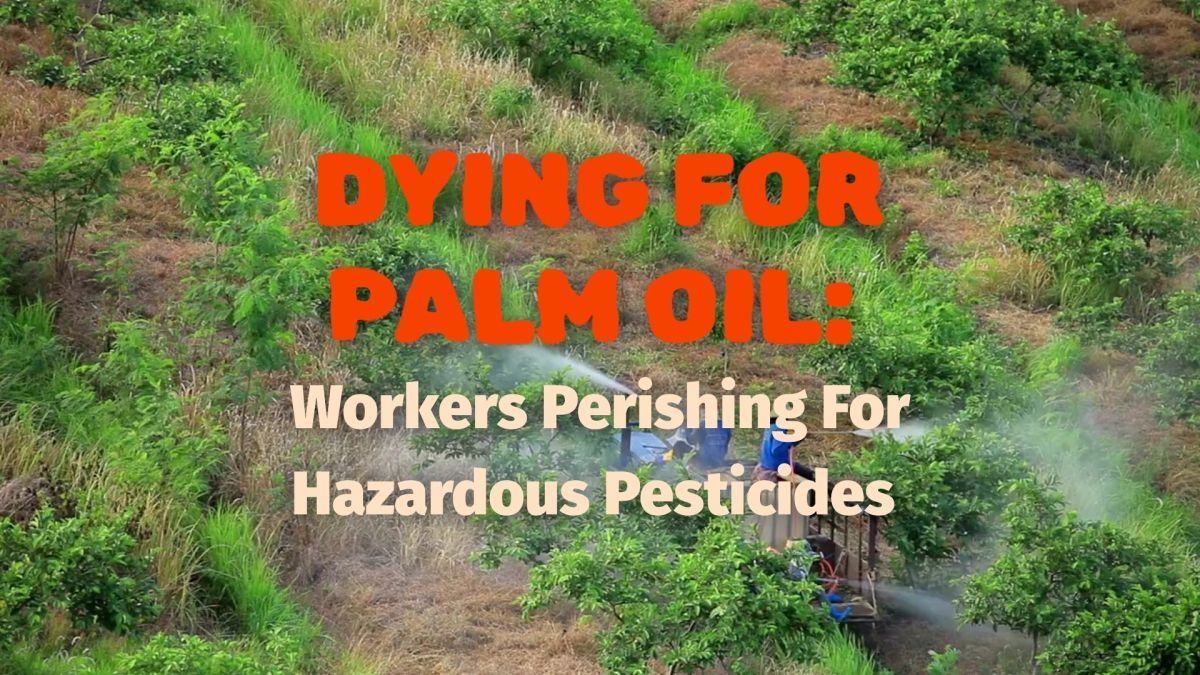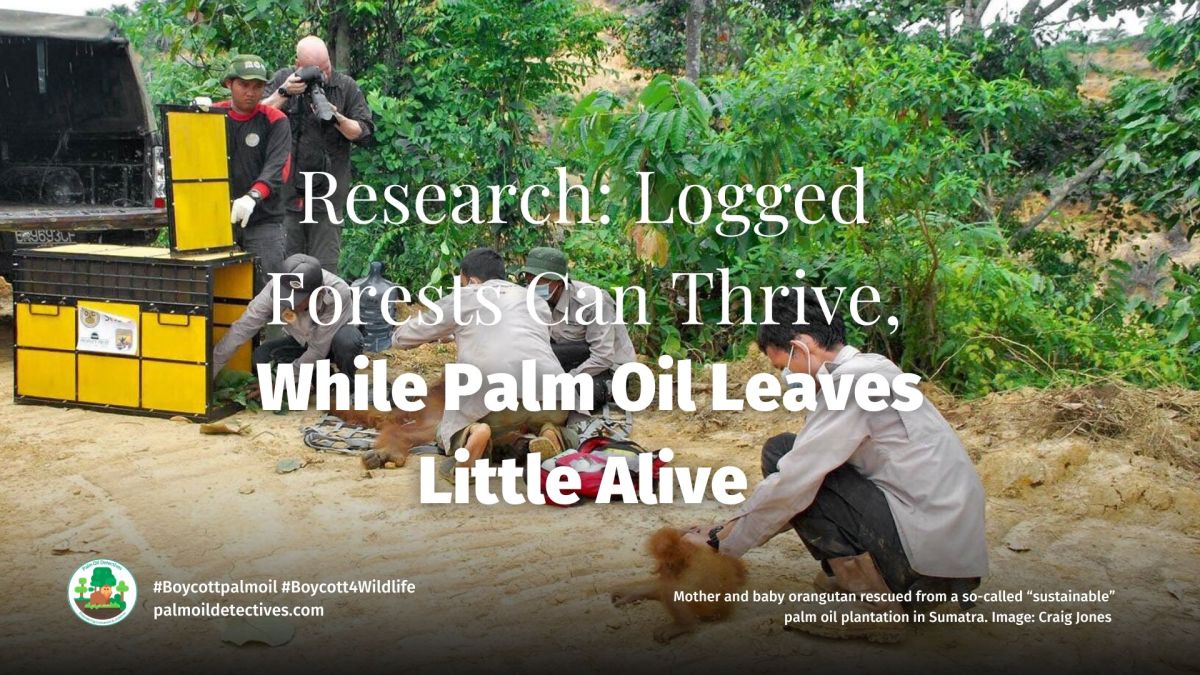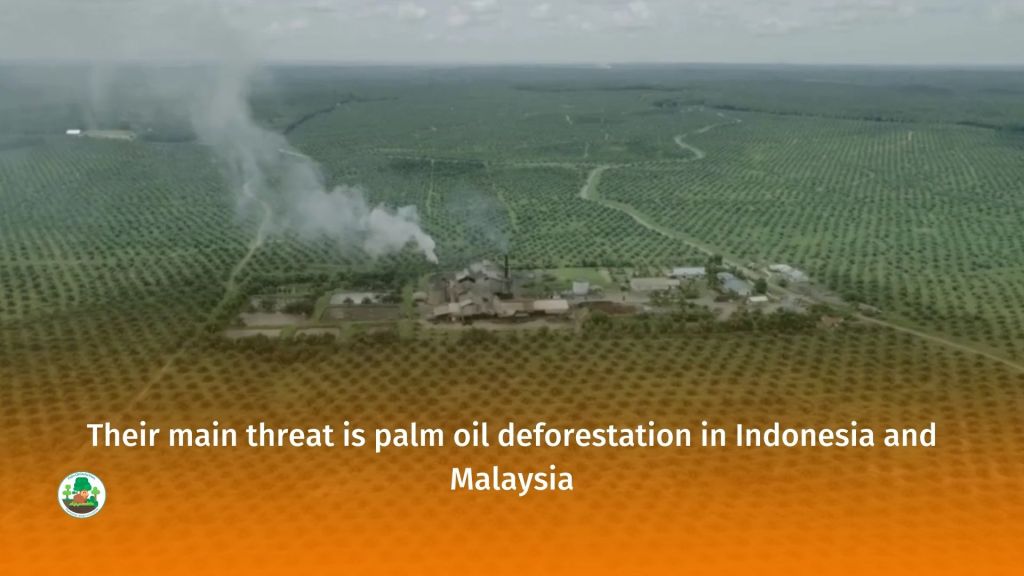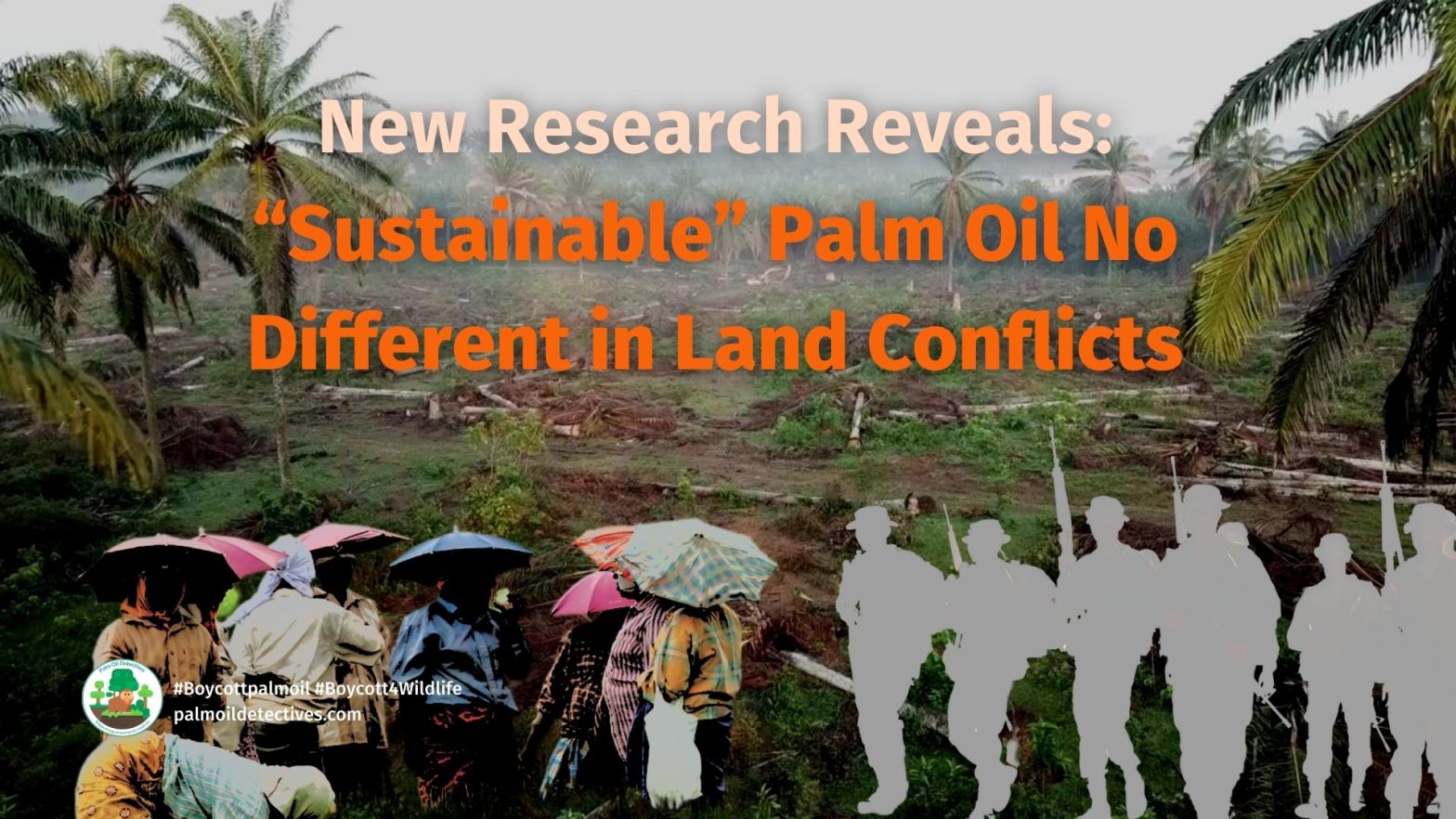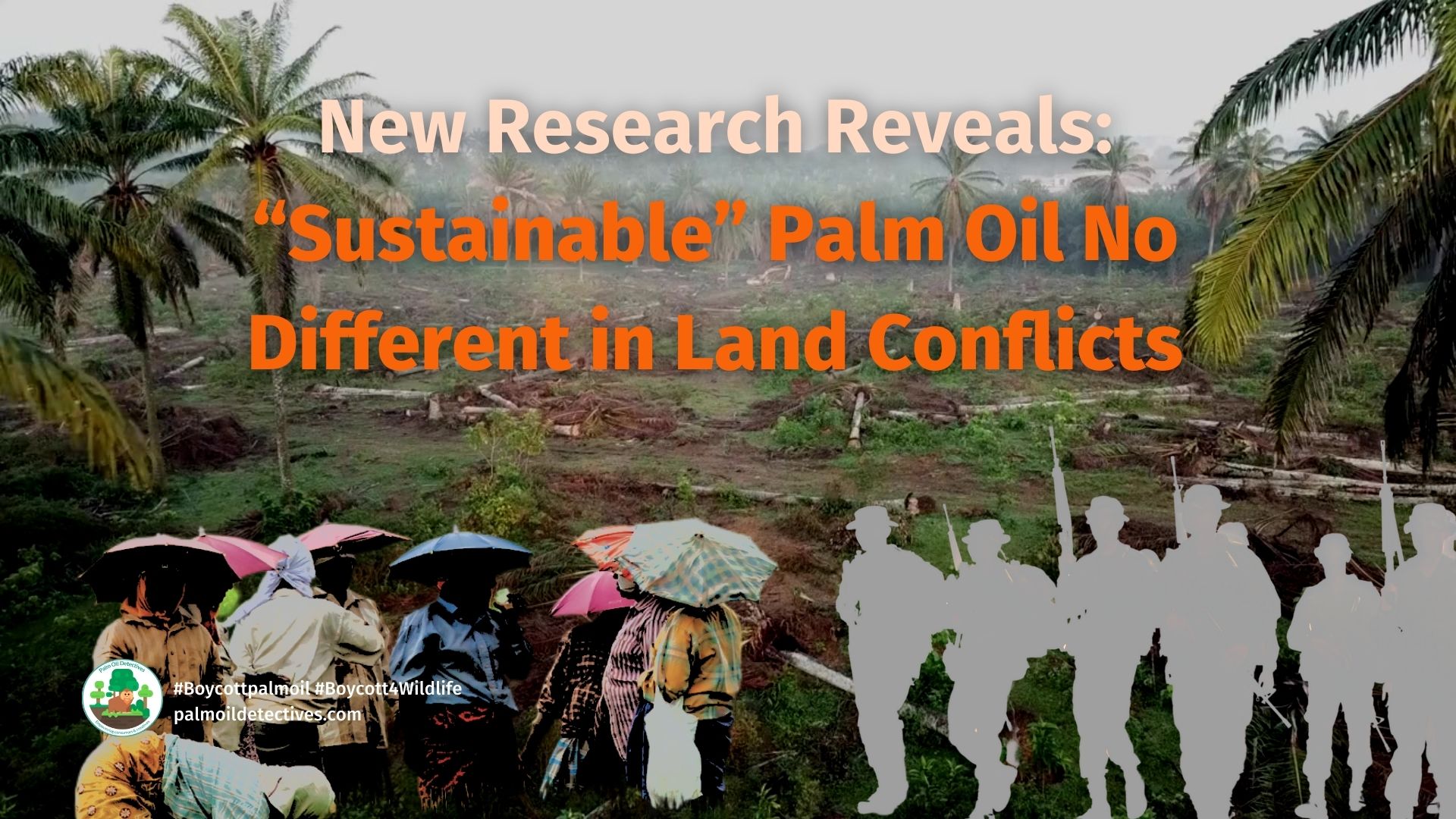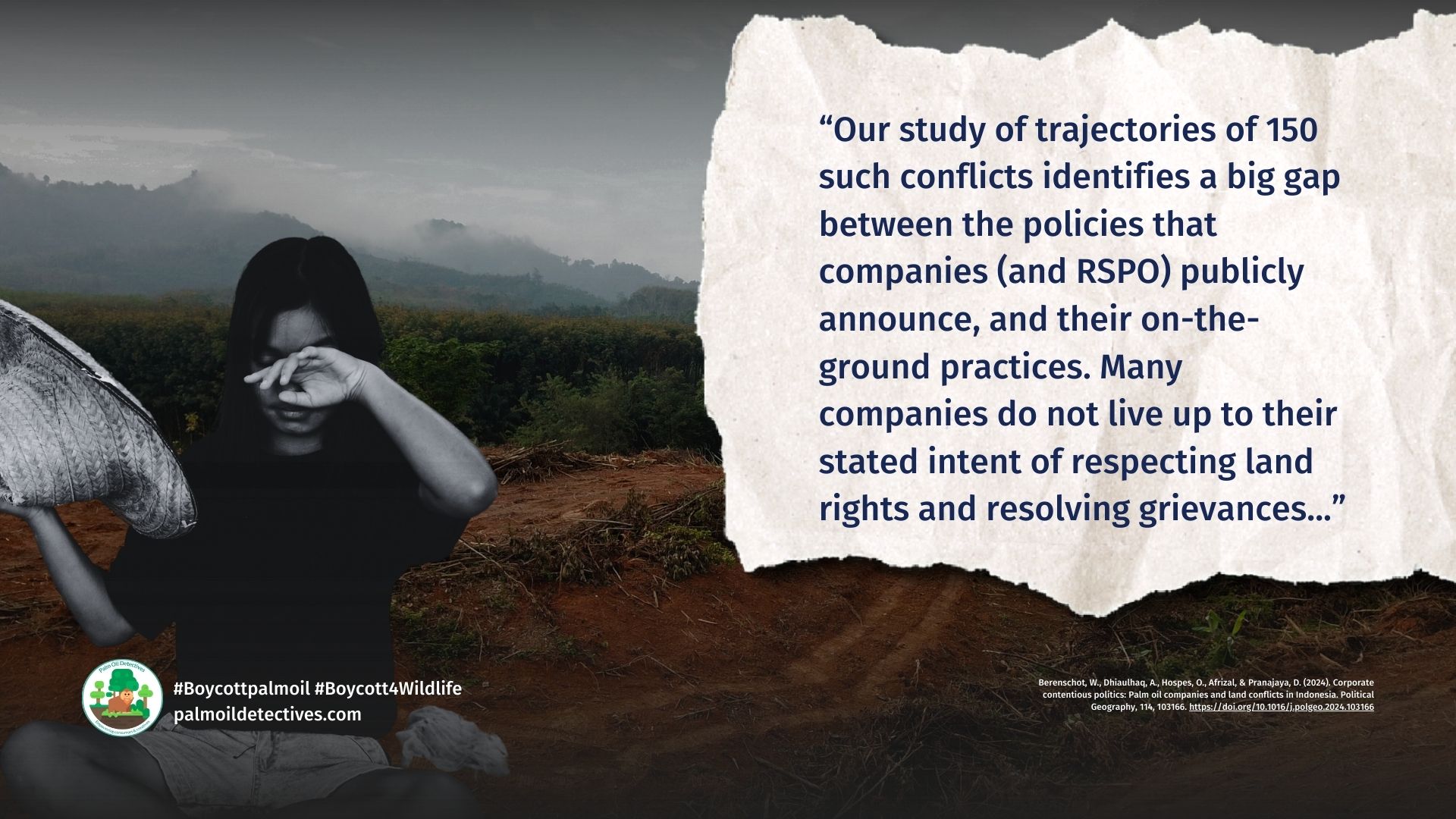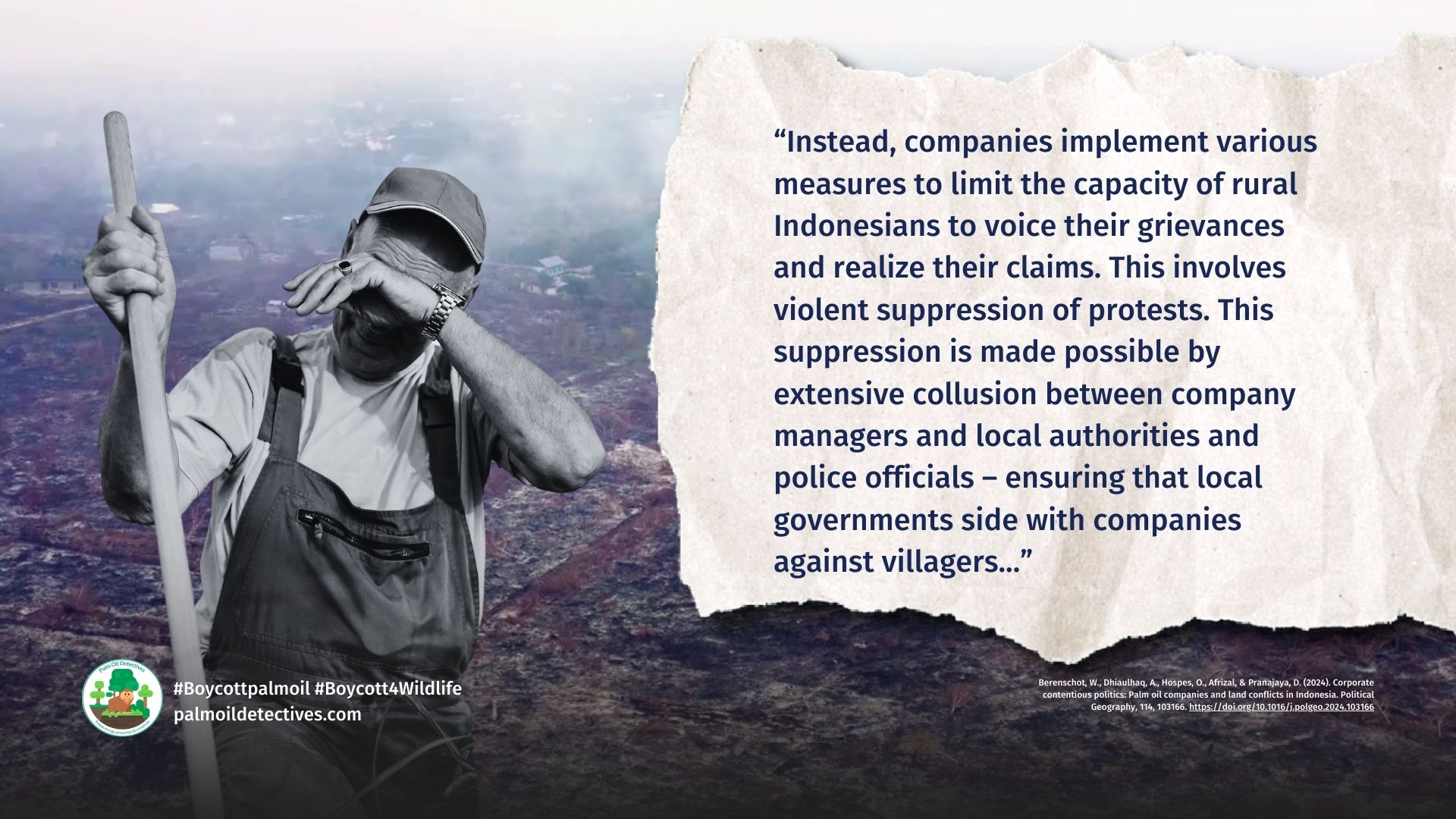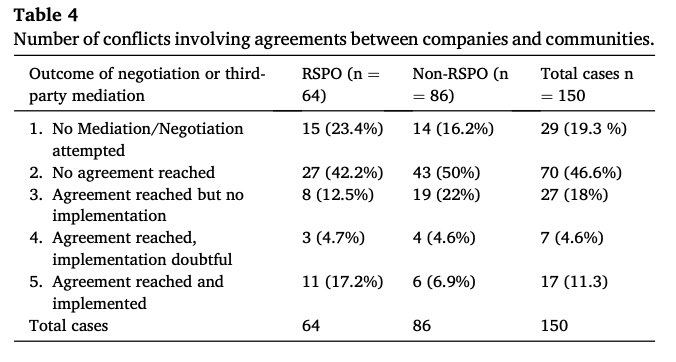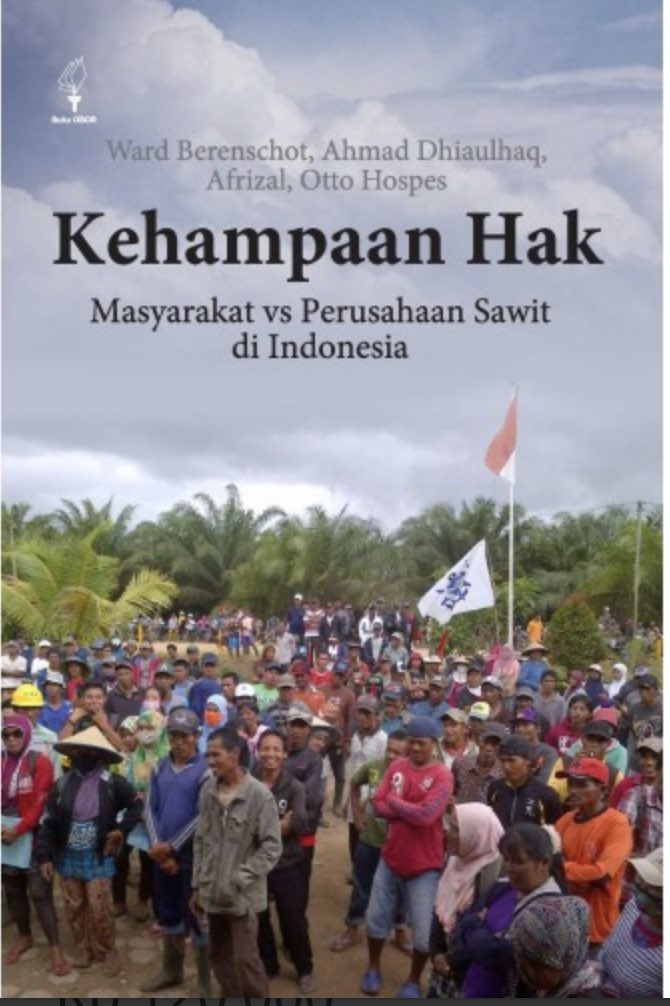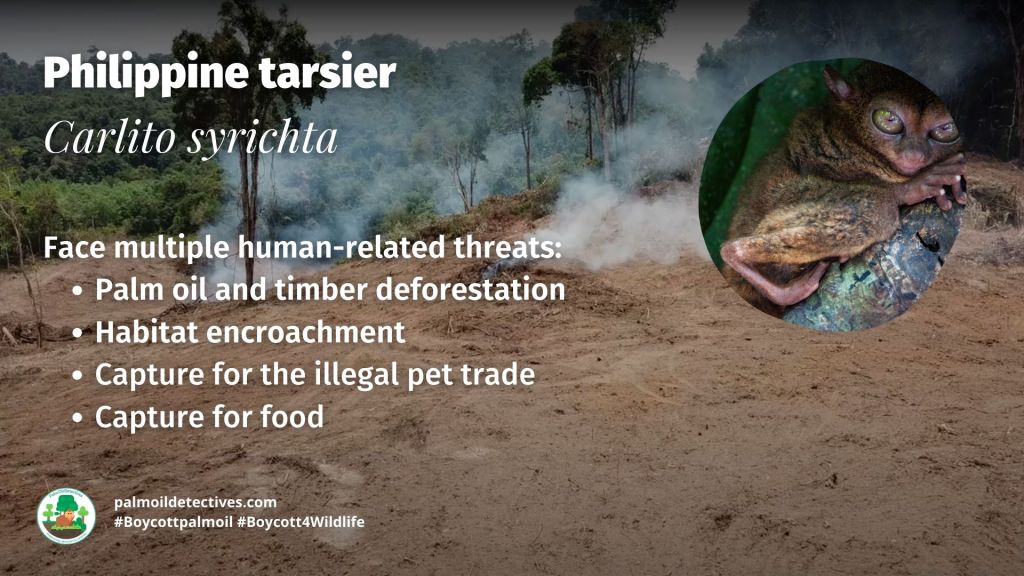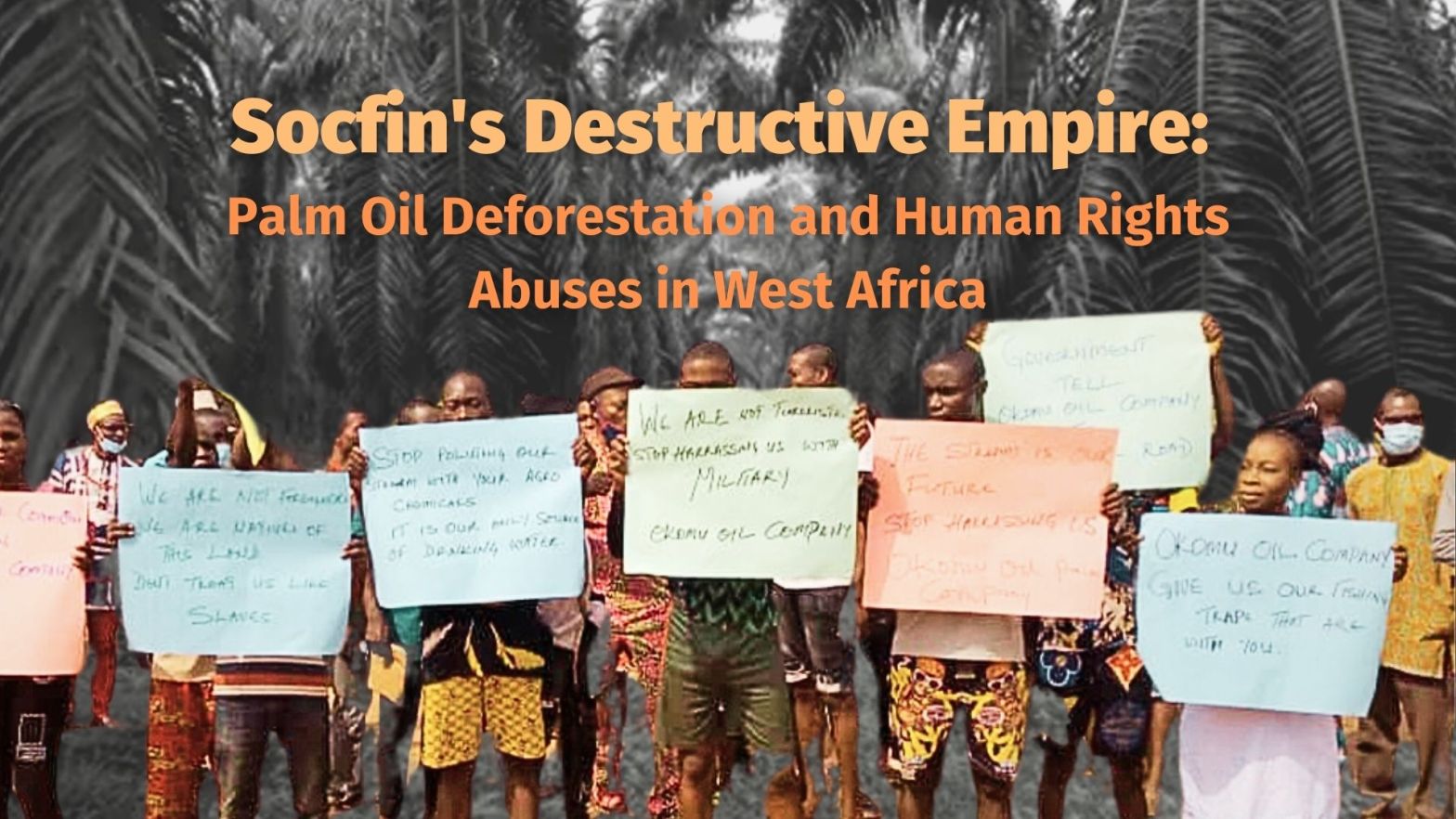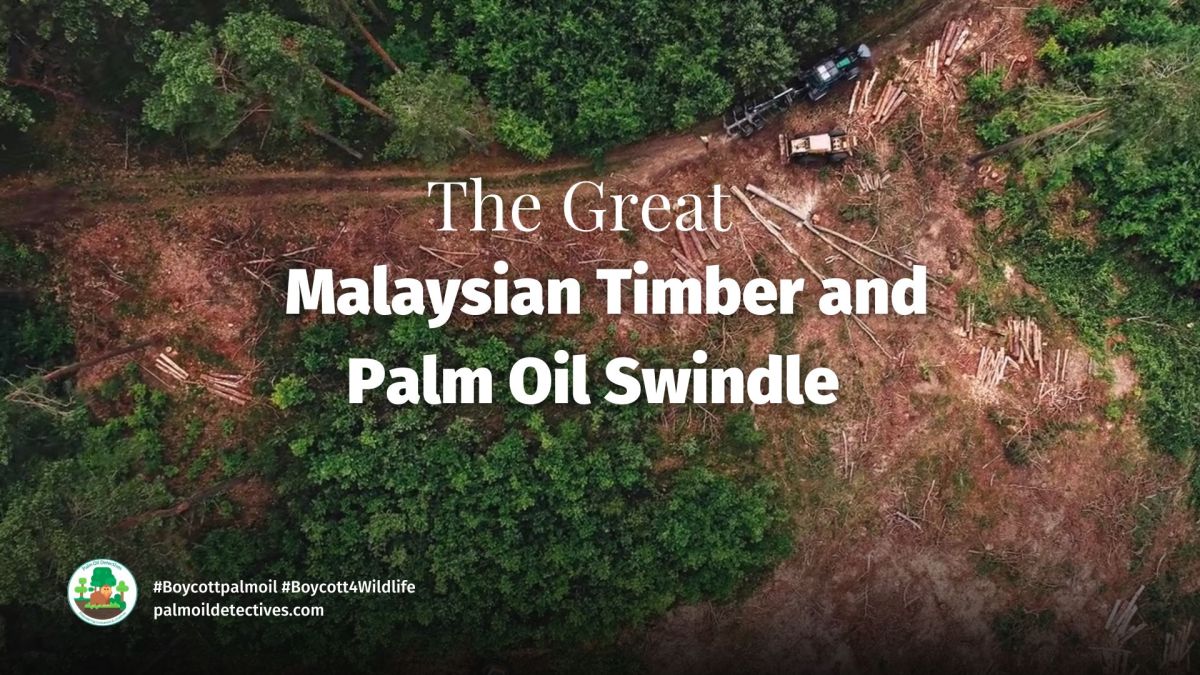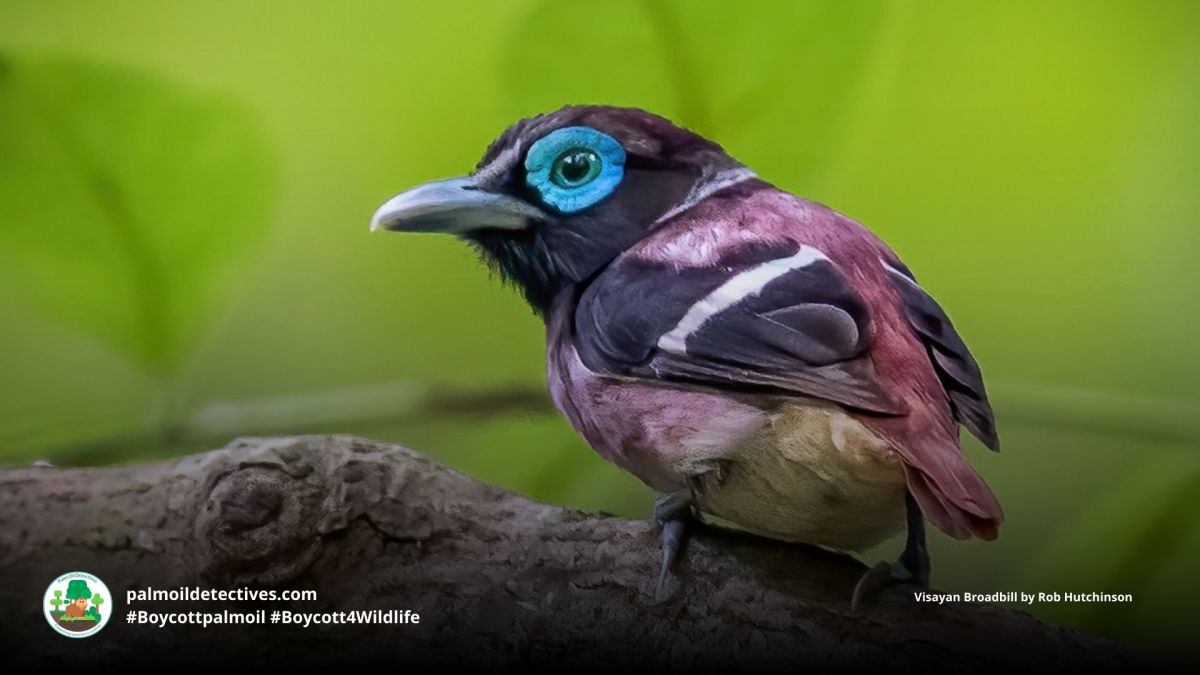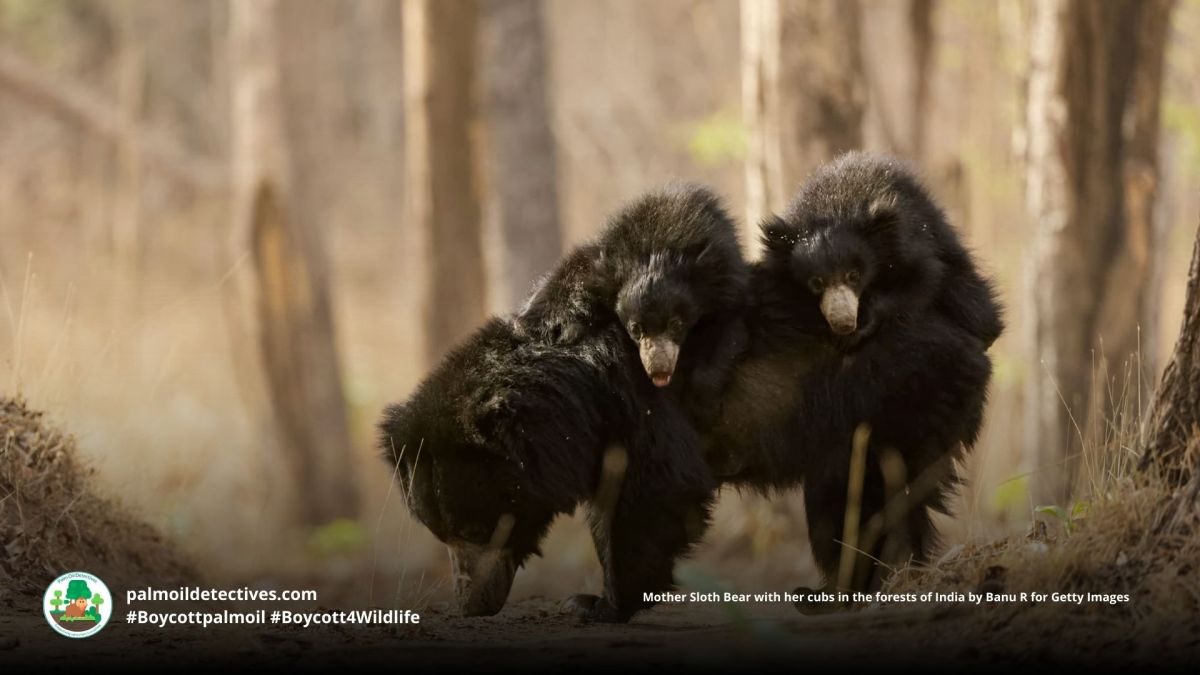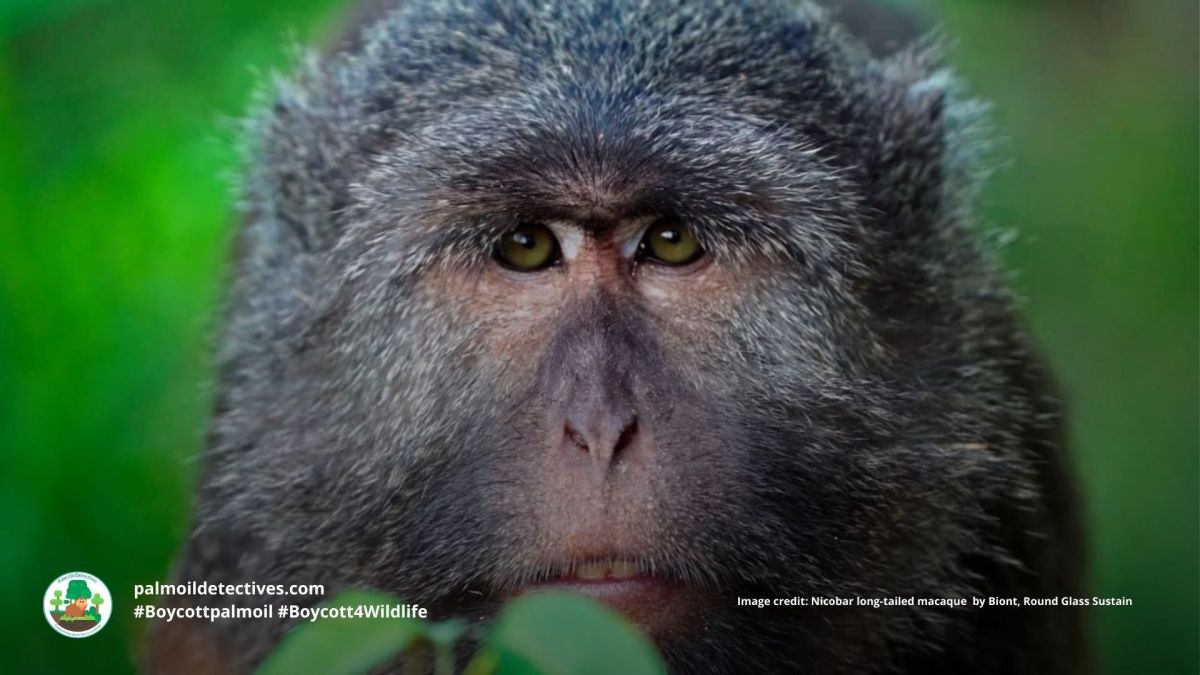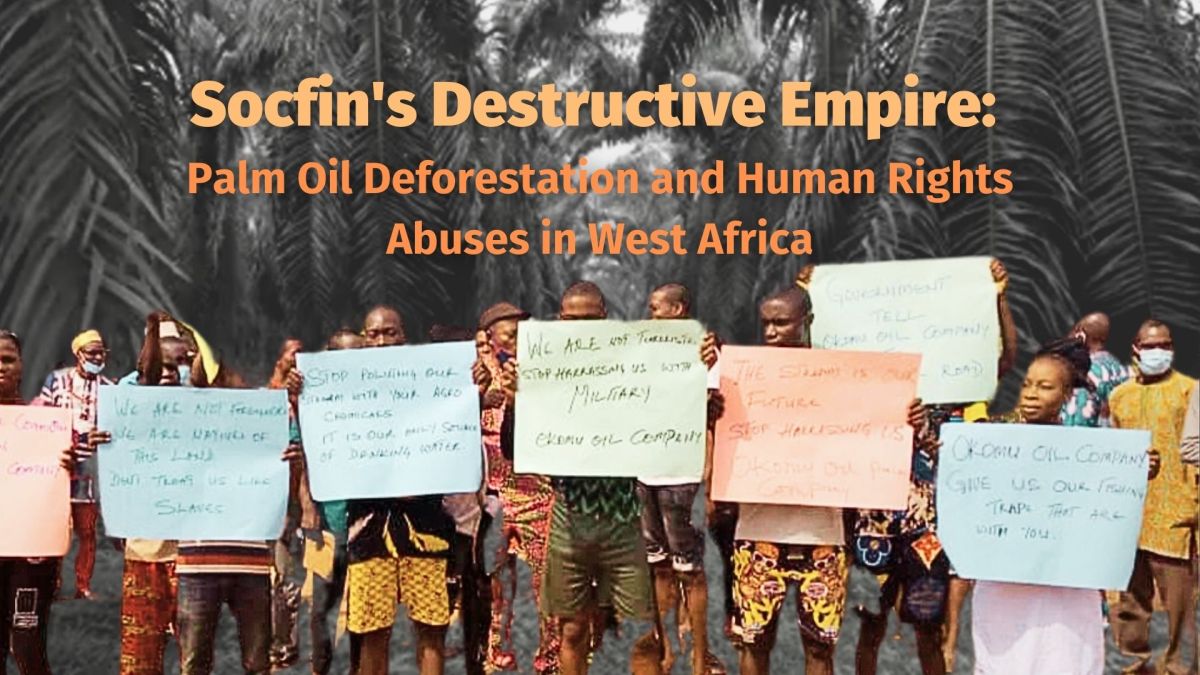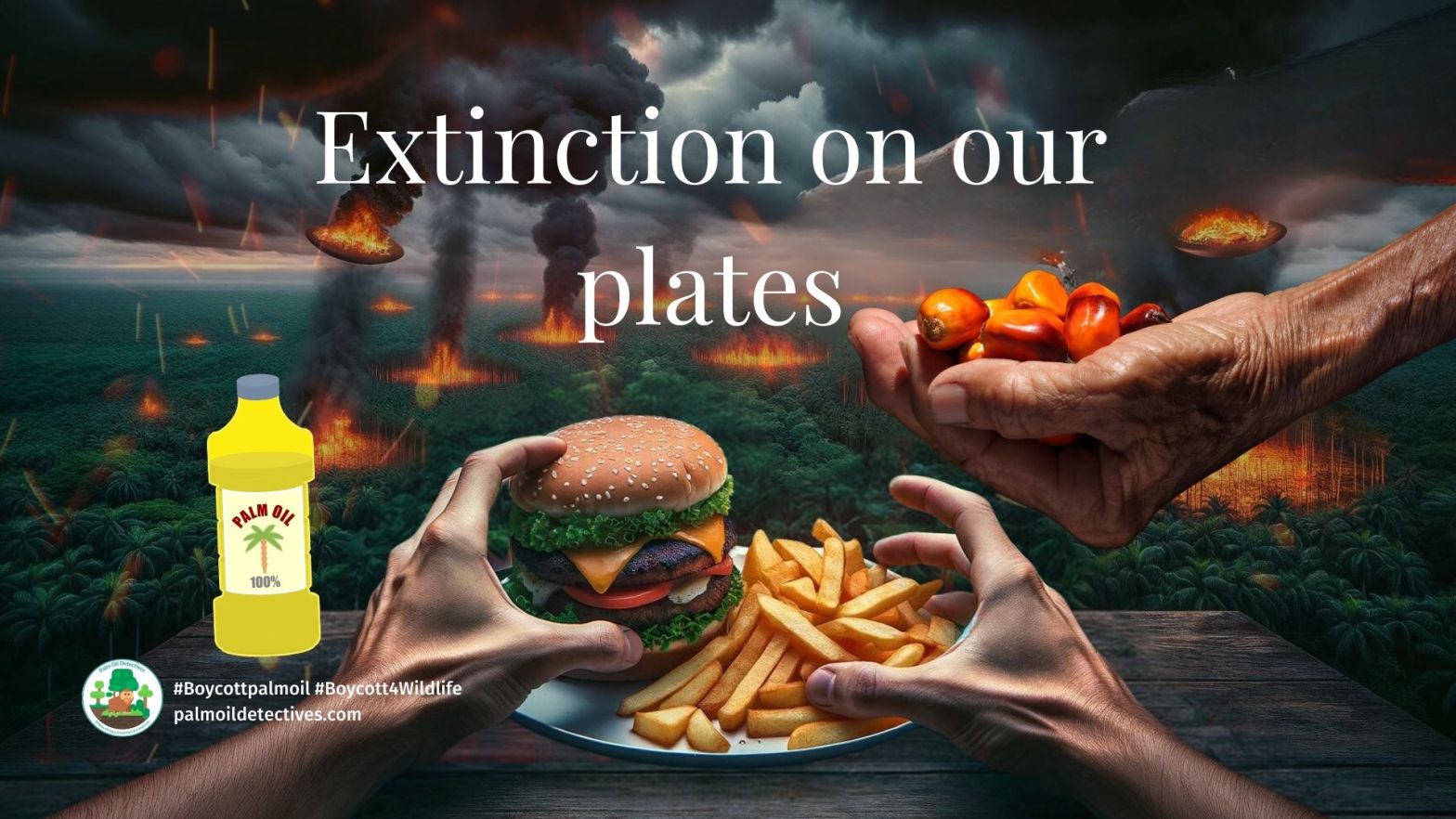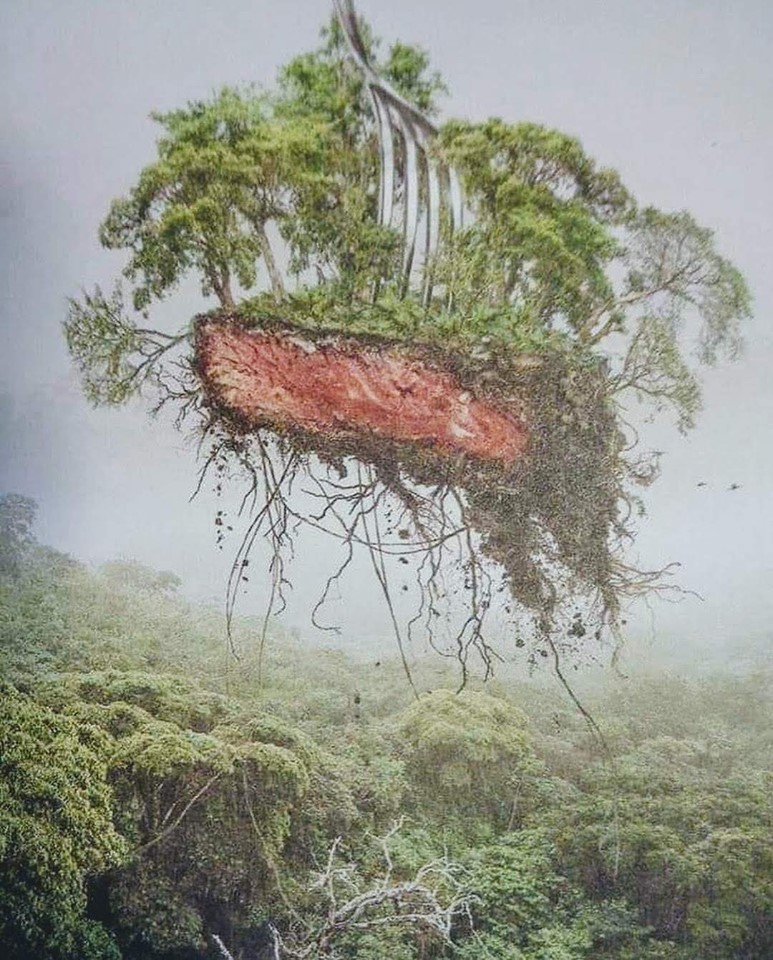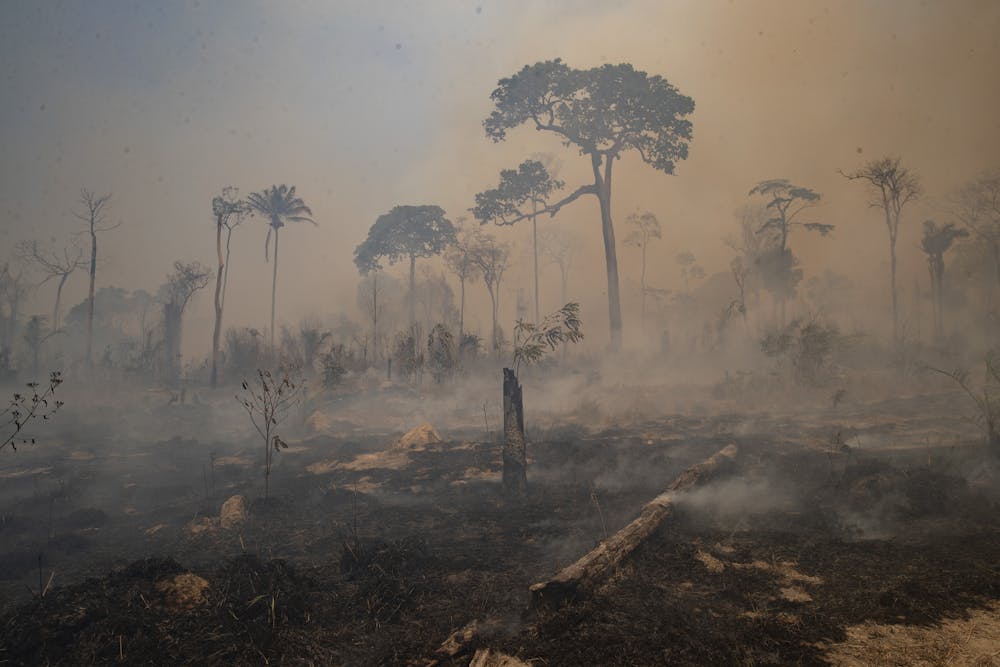
A six-month investigation reveals Socfin’s exploitation of rubber and palm oil in Ghana and Nigeria, leading to deforestation, landgrabbing and human rights abuses. SOCFIN is a palm oil company and member of the RSPO purportedly using “sustainable” palm oil. The company’s activities have caused significant environmental and social harm, including the destruction of vital rainforests and the displacement of indigenous communities. Despite its substantial profits, Socfin’s operations have left local communities impoverished and struggling financially for survival. Help them to survive each time you shop when you #Boycottpalmoil
Written by Gideon Sarpong, Elfredah Kevin-Alerechi and Audrey Travère. Writing and Editing by Gideon Sarpong. Article originally entitled ‘Socfin exploitation of rubber & palm oil linked to deforestation & human rights abuses in Ghana & Nigeria’ This report was supported by JournalismFund Europe. Originally published on IWatchAfrica. Read original.
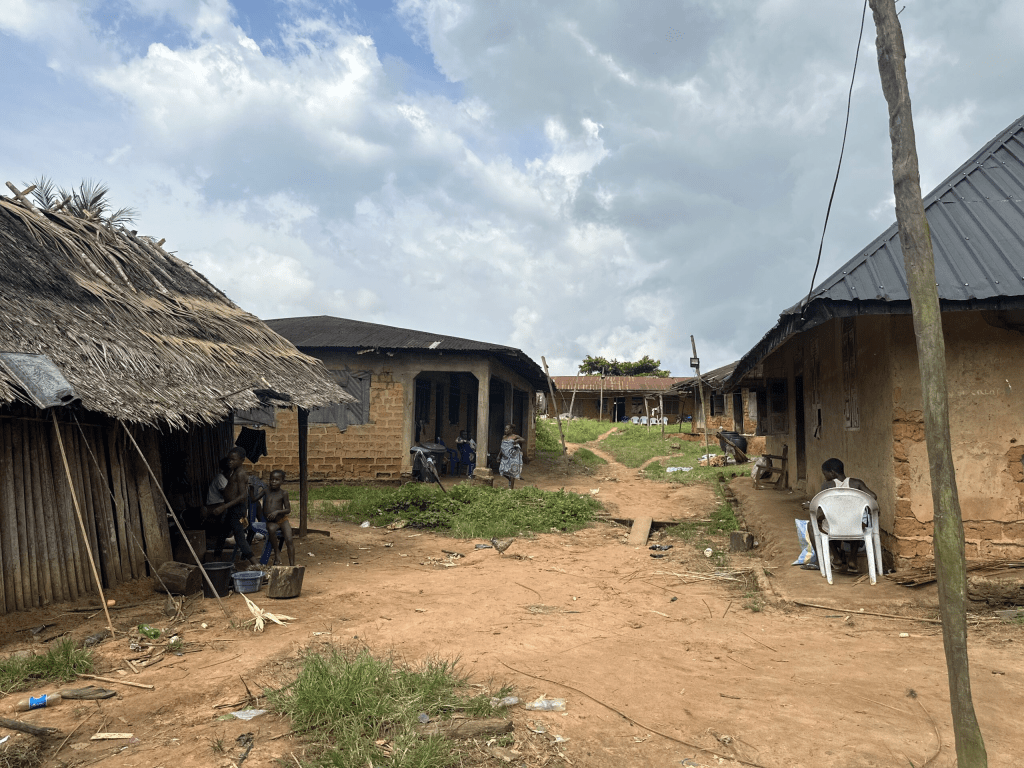
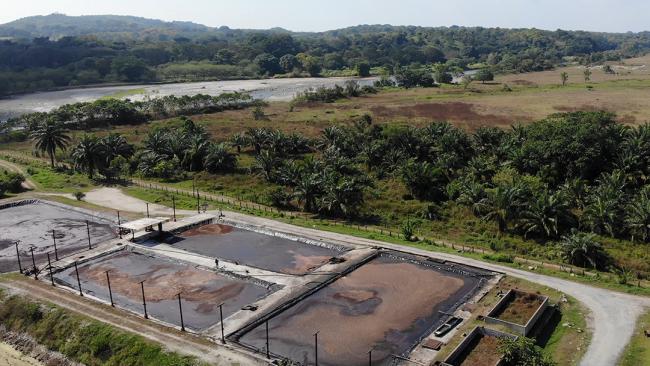
Okumu, Nigeria – Okumu Oil Palm Company, a subsidiary under the umbrella of the Socfin Group, possesses an extensive 7,335-hectare rubber plantation and a sprawling 19,062-hectare palm plantation, all nestled within the Ovia South-West local government area of Edo State.
The company’s presence in the Okumu community has become a contentious issue, notably for the indigenous people, including children who have endured displacement due to the company’s activities.
In 2021, the Socfin Group reported a remarkable profit of 80.4 million euros, its highest figure since at least 2014 due to increasing prices for palm oil and rubber. Yet, paradoxically, the Okumu community and other host communities throughout West Africa remain a stark contrast to the image of prosperity associated with Socfin’s substantial export earnings.
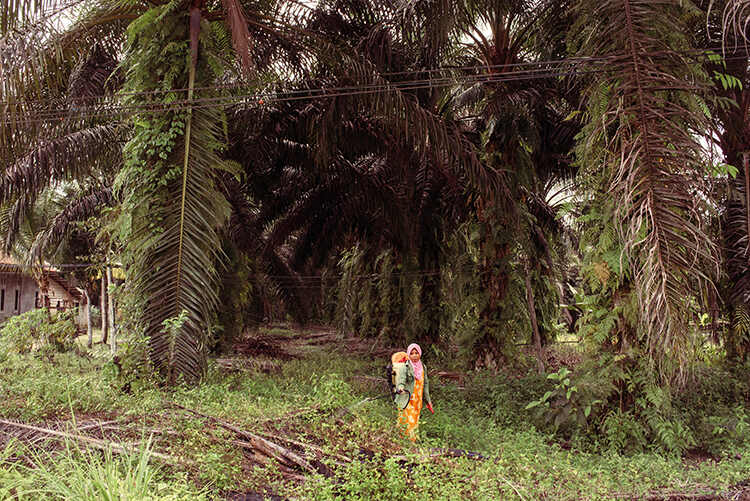
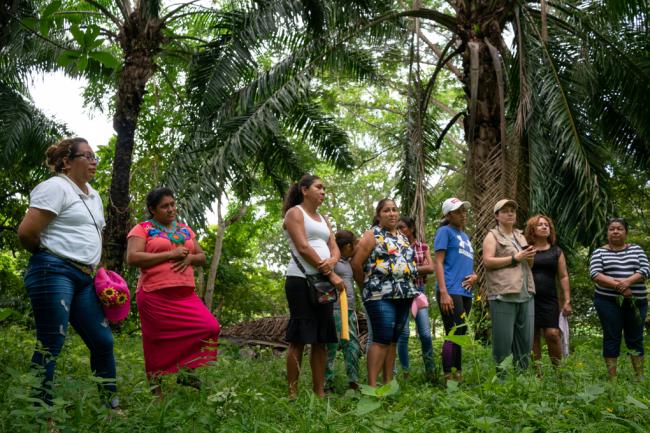
Okumu community in Nigeria, Credit: Elfredah Kevin-Alerechi, 2023
Human Rights Abuses
In a deeply distressing account of events, residents of Okumu have leveled accusations against the company for forcibly dismantling three villages within the district, namely—Lemon, Agbeda, and Oweike.
This action resulted in the displacement of hundreds of indigenous inhabitants and the grim aftermath of community farmland destruction, loss of life, and the disruption of children’s education.
For many of these people, their roots run deep within these villages, with no kin beyond the boundaries of their home. The repercussions of the company’s actions continue to haunt the affected communities, even decades after the devastation was wrought.
Today, Lemon, once a thriving community, has been reduced to a mere memory, while the residents of Oweike and Agbeda have been compelled to relocate to nearby communities, seeking refuge and new beginnings.
Upon closer examination, our investigation unveiled a disconcerting narrative: following the eviction of these three communities, the company proceeded to expand its palm and rubber plantations, acquiring a staggering 1,969 hectares of oil palm and 1,811 hectares of rubber in the process.
According to the company’s own website, these expansions represent only a fraction of their broader growth trajectory, with an astounding total of 33,112 hectares now under their purview.
The story of Austin Lemon, a mere 15 years old at the time Socfin’s presence descended upon his community, serves as a heart-wrenching testament to the trauma endured by these communities. As he watched the Luxembourger company, accompanied by security personnel, lay waste to his ancestral home, he also witnessed the pleas of his parents and fellow Lemon village residents in Okomu.
They implored the company to allow them to remain, as they had no alternative haven. Regrettably, their appeals fell on deaf ears, as Socfin’s relentless pursuit of rubber and palm resources took precedence.
His father, the founder of Lemon Village in 1969 and the namesake of the community, followed the age-old Nigerian customary law, which dictates that the first person to settle on a virgin land gains rightful ownership.
Lemon, who is now 33, recalls the profound “shock” that gripped his father, the respected leader of Lemon village within the Okumu community, upon learning that Socfin had acquired their ancestral home. In a desperate bid to secure some semblance of justice for his fellow villagers in the face of impending displacement, Lemon’s father implored the company to provide compensation for their relocation but that did not happen.
He ruefully reflects, “The Company planted their plantation without heeding to their pleas.” The consequences were catastrophic – every single house in Lemon village met its demise, and the once-thriving areas reserved for the cultivation of plantain, cassava, cocoa, and cocoyam were reduced to ruins.
Lemon’s personal account of these events is a poignant reminder of the human cost inflicted by the company’s actions. He reveals, “For a whole year, I couldn’t attend school because we were displaced and struggling to make ends meet.”
“It was the company’s actions that ultimately led to the death of my father, who had high blood pressure. He perished because the farms he once relied upon to feed his 32 children were also obliterated,” he revealed.
In a surprising turn of events, the company denied the findings presented to them.
According to Socfin’s communications team, they acquired their plantation following the de-reservation of a portion of Okomu Forest Reserve by Nigeria’s federal government, in compliance with the Edo Forestry Commission Law (1968) and its subsequent amendments, among other relevant legislation.
Nevertheless, Ajele Sunday, a spokesperson for the Okumu community, contradicts the company’s account. He asserts that the community “never received any compensation” when Socfin claimed to have procured the land from the government.
Multiple sources within the Okomu village have raised concerns, contending that the company conducted negotiations with the government without seeking or taking into consideration the community’s perspective.
This breach raises critical concerns about the treatment of indigenous communities and their rights in the context of corporate activities, shedding light on the urgency of adhering to these vital principles.
According to FPIC, Indigenous Peoples possess the right to grant or withhold consent for projects that stand to impact them or their territories.
A Tragic Fight for Freedom in Okomu Village
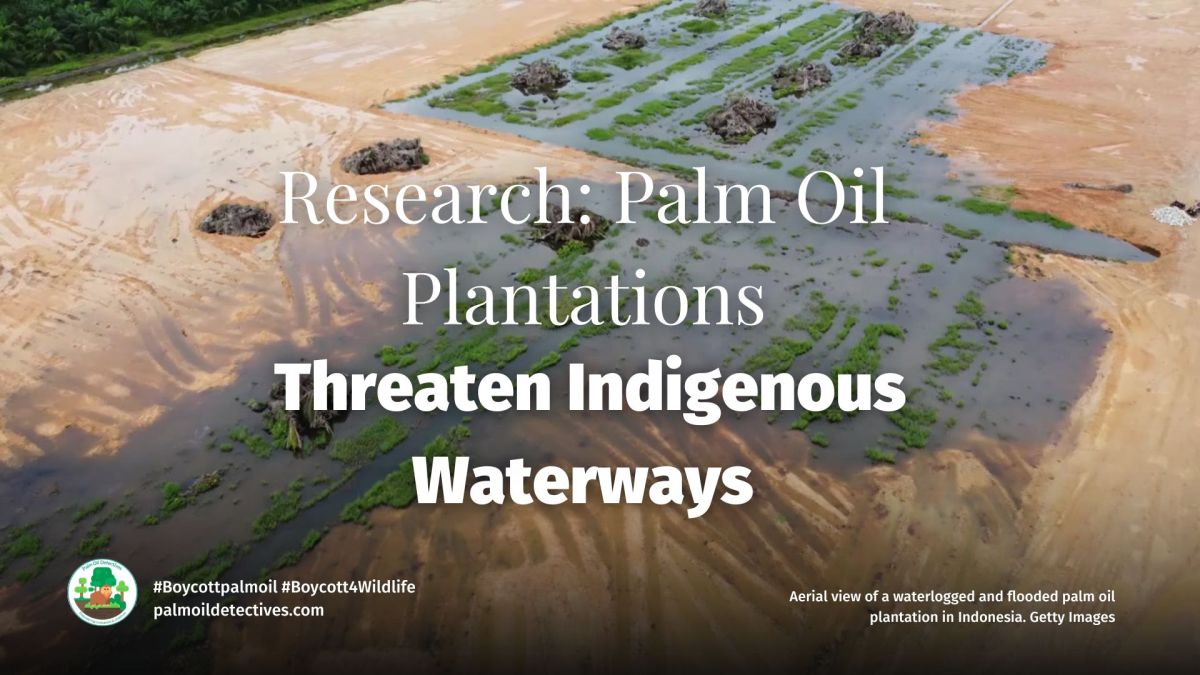
In 2022, Socfin (Okumu Oil Palm Company) took a contentious step by excavating a large trench around its plantation, effectively barricading the community, leaving residents stranded with no access to the outside world. During the rainy season, the runoff from this trench, laden with fertilizers, contaminated the Okomu River, the sole source of drinking water, and proved fatal to fish in the water. Frustrated by this environmental degradation, the residents organized a peaceful protest at the company’s entrance, demanding the closure of the trench.
The protests had spanned two days, with the first day devoted to demonstrations within the community. On the second day, the residents decided to take their grievances to the company’s gate. En route, they were intercepted by security officers determined to quell the protest.
Among the protesters, Iyabo Batu, aged 56, found herself at the forefront. On May 3, 2022, while demonstrating against the company’s closure of the sole road leading to her village, Marhiaoba, she was struck by a bullet in the knee, believed to have been fired by a Socfin security personnel.
“It was very difficult for my grandchildren to go to school because the white man blocked the road,” Iyabo Batu explained, referring to the Socfin manager. She went on to describe how the road closure, a consequence of the trench excavated by the company, led to children in the village discontinuing their schooling. This was the sole route in and out of the community, now obstructed by the company’s actions.
The peaceful protest turned tragic when security personnel attached to the company targeted Iyabo Batu, shooting her in the knee. She was swiftly transported to a clinic before being transferred to the general hospital of Igbuobazua headquarters. Her hospitalization extended beyond a month following the surgery for her gunshot wound, but she expressed her deep sadness at the fact that the company had neither covered her medical expenses nor offered their sympathy.
The company denied any involvement in the incident, insisting that no employee had shot Mrs. Batu. However, community spokesperson Sunday, among others, claimed that the company was attempting to distance itself from the actions.
Iyabo BATU at the Benin Teaching Hospital during her surgery in 2022
Iyabo Batu’s X-ray results unveiled multiple patella fractures, and she credited Environmental Rights Actions (ERA) for her survival. Rita Ukwa of ERA disclosed that they supported Batu, including arranging a city apartment for her for a year after her hospital discharge, as evidenced by her hospital discharge receipt, indicating a payment of 226,940 naira[$296] to the Benin Teaching Hospital.
The company, in responding to findings of this investigation, asserted that they were unable to comment on the allegations as no “formal complaint had been filed by the alleged complainant, either to the company or the Nigerian Police Force.” They also clarified that their security personnel “were not permitted to carry weapons, as per government regulations.”
However, multiple witnesses, both within and outside the company, contended that a company security officer was indeed responsible for the shooting of 59-year-old Iyabo Batu. A non-Okomu resident working for the company identified the officer in question as a government anti-terrorism officer. The source chose to remain anonymous out of fear, considering the potential repercussions from either the company or the police officers who delayed recording the community’s statement when Mrs. Batu was rushed to the police station.
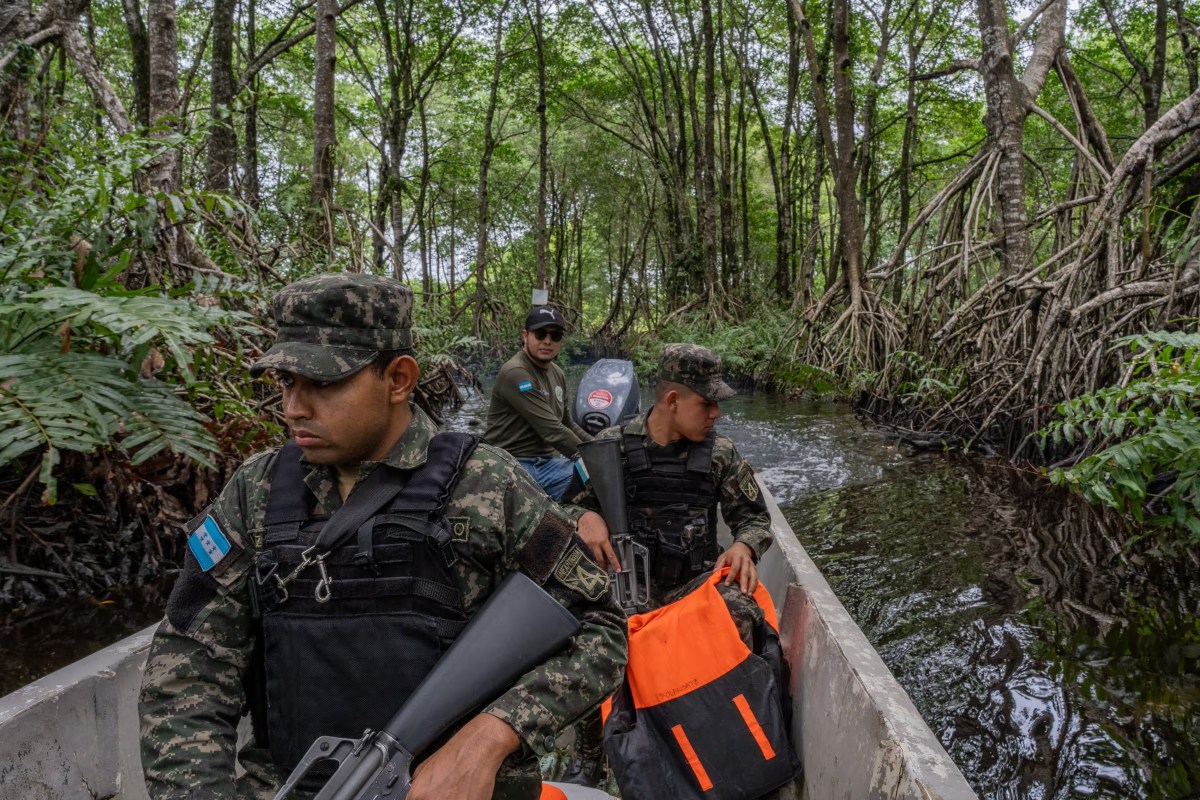
Our investigations showed that the security apparatus for Okumu Oil Palm Company comprises police, private security, and military officers, even though they are compensated by the federal government. These officers are also subject to the directives of the company, raising questions about the dynamics of power and accountability in this complex relationship.
A spokesperson for Edo State Chris Osa Nehikhare said, “the government will also monitor what is happening in Okomu to ensure no one is exploited and to make life better for the community,”
Plantation Socfin Ghana and Deforestation
Meanwhile in Ghana, the operations of Plantation Socfinaf Ghana (PSG), a subsidiary of the Socfin Group which operates rubber and oil palm plantations in Manso and Daboase in the Western Region has led to the destruction of vital rainforests.
In 2017 and 2018, PSG contracted Proforest and HS+E respectively to conduct environmental assessments at its Subri site in Daboase ahead of the construction of a palm processing mill in 2019.
Findings from this assessment showed that any large-scale operations at the Subri site would result in the “loss of biodiversity, land degradation, increase in ambient noise levels, aerial emissions and the destruction of unique endangered ecosystems and species within the catchment areas.”
Notably, the Proforest assessment emphasized the substantial environmental value of the PSG Subri site. It was found to host a substantial “carbon stock of 981,080.74 metric tons” and served as a crucial “habitat for a vulnerable population of species” in need of conservation measures. Despite these findings, PSG proceeded with the construction of the palm processing mill in in 2020 costing US$20 million.
PSG also admitted that between 2012 and 2016, over 1 089 ha of natural forests were cleared to make way for its plantations failing to heed to concerns by environmental groups.
Despite mounting concerns and inquiries into PSG’s actions, the company has remained conspicuously silent, failing to respond to our requests for information regarding their mitigation plans and the repercussions of their operations on the communities around Daboase and the environment at large.
Data from Global Forest Watch paints a distressing picture of the situation. Between 2001 and 2022, Ghana’s Western Region witnessed the loss of a staggering 536,000 hectares of tree cover. This represents a 23% decline in tree cover since the turn of the millennium, accompanied by a grim emission of 297 million metric tons of CO₂ equivalent. It’s worth noting that this region, the wettest in Ghana, plays host to PSG’s extensive plantations.
The ramifications of this ecological decline extend beyond the boundaries of forests and into the lives of the local communities. Farmers like Godwin Ofori, a 35-year-old resident of Daboase in close proximity to PSG’s plantation, have borne the brunt of these changes.
Mr. Ofori expressed his frustration with the evolving rainfall patterns, stating, “One of the biggest challenges over the last decade has been unpredictable rainfall patterns. We cannot predict the rainfall pattern nowadays, and I believe that this is partly a destruction of our forests.”
Recent study by researchers at University of Leeds has shown that African tropical forests remain critical to the fight against the climate emergency, absorbing three times more carbon each year than the UK emitted in 2019.
The direct link between the decline in critical rainforests and these erratic weather patterns underlines the adverse impact on the livelihoods and food security of those living in the vicinity.
Startling findings from Global Witness showcase the unsettling consequence of industrial rubber plantations across the expanse of West and Central Africa, witnessing the loss of nearly 52,000 hectares of ecologically rainforest since the turn of the century—equivalent to an expanse 16 times the size of Brussels.
EU, Deforestation and Rubber companies
In June 2023, the EU introduced regulations on deforested products to address the challenge of rubber and oil plantation-driven deforestation. The EU remains the biggest export destination for palm oil and rubber cultivation from West Africa. Data from the Observatory of Economic Complexity shows that the EU imported over $500 million worth of natural rubber from West Africa in 2020 alone making natural rubber the EU’s most significant import from West Africa in terms of rainforest destruction.
The effect has been the loss of critical rainforests, with a damning impact on local communities, biodiversity, and the environment. This new law has the potential to put a check on Socfin’s operations across West Africa.
Colin Robertson, a Senior Forests Investigator at Global Witness lauded EU efforts describing it as a “very promising step towards reducing European consumers’ impact on the world’s forests.”
He however cautioned that “the inclusion of rubber should mean that European tire manufacturers will have to check that the rubber plantations they buy from are sticking firmly to zero deforestation pledges.”
Based on detailed export data examined, our investigation unearthed a direct link between Société des Matières Premières Tropicales PTE and the procurement of natural rubber from Okomu Oil Palm Company over the last two years.
Société des Matières Premières Tropicales PTE functions as the sole consolidated purchaser of natural rubber for tire manufacturing giant, the Michelin Group. This revelation gives rise to profound ethical concerns, casting a shadow on the European tire manufacturing industry’s dedication to fostering sustainability.
In response to our investigation, the Michelin Group acknowledged our findings and affirmed their awareness of “historical grievances expressed by local communities” against Okomu Oil Palm Company, insisting that they have closely monitored the situation since 2015.
“In collaboration with a civil society organization, we urged Socfin to enhance its sustainable development performance, which eventually led to Socfin’s adoption of “zero deforestation” and “non-exploitation” commitments,” Michelin wrote in their response.
However, our findings expose a crucial discrepancy: Socfin’s interpretation of “zero deforestation” does not align with the industry-recognized standard known as the High Carbon Stock Approach (HCSA). Neither Socfin nor its subsidiaries across West Africa are members of the HCSA. This incongruity highlights the urgent need for greater clarity and alignment within the industry.
Greenpeace has sounded a resounding alarm, cautioning that Socfin’s steadfast resistance to adopting the industry’s zero-deforestation standard poses a significant and looming threat to the forests of West Africa, where the company’s operations are concentrated.
The future of these critical ecosystems remains at a crossroads, demanding enhanced vigilance and rigorous commitment to sustainable practices.
——
Written by Gideon Sarpong, Elfredah Kevin-Alerechi and Audrey Travère. Writing and Editing by Gideon Sarpong. Article originally entitled ‘Socfin exploitation of rubber & palm oil linked to deforestation & human rights abuses in Ghana & Nigeria’ This report was supported by JournalismFund Europe. Originally published on IWatchAfrica. Read original.
The Norwegian Government Pension Fund Global’s ethics committee has issued a damning report recommending the exclusion of Socfin’s main shareholder, the Bolloré group, due to evidence of systemic human rights abuses at Socfin’s plantations, particularly in Cameroon. The report outlines serious allegations, including violations of labour rights, widespread sexual violence, harassment of women by plantation supervisors, and deplorable working conditions where workers are often employed as day labourers without contracts, paid below the legal minimum wage, and subjected to arbitrary hiring and firing practices. The report also highlights unsanitary living conditions and a lack of social benefits for workers, painting a grim picture of exploitation and abuse across Socfin’s operations in Africa. These findings have intensified scrutiny on Socfin and the Bolloré group, pressuring them to address these human rights concerns. Read more at Delano
Read more about human rights abuses, deforestation and ecocide in the palm oil industry
After wildfires, Belize’s indigenous people rebuild stronger based on “se’ komonil”: reciprocity, solidarity, gender equity, togetherness and community.
Investigation by Bloomberg exposes that despite being RSPO members, #SOCFIN plantations in #WestAfrica are the epicentre of #humanrights abuses, sexual coercion, environmental destruction, and #landgrabbing. Operating in #Liberia, #Ghana, #Nigeria, and beyond, SOCFIN’s…
Colonial palm oil and sugarcane causing the loss of West Papuans’ cultural identity. Land grabs force communities from forests, threatening Noken weaving
An explosive report by the Environment Investigation Agency (EIA) details how Indonesia’s Fangiono family, through a wide corporate web, is linked to ongoing #deforestation, #corruption, and #indigenousrights abuses for #palmoil. Calls mount for…
Indigenous Melanesian women in West Papua fight land seizures for palm oil and sugar plantations, protecting their ancestral rights. Join #BoycottPalmOil
Something went wrong. Please refresh the page and/or try again.
Take Action in Five Ways
1. Join the #Boycott4Wildlife on social media and subscribe to stay in the loop: Share posts from this website to your own network on Twitter, Mastadon, Instagram, Facebook and Youtube using the hashtags #Boycottpalmoil#Boycott4Wildlife.
2. Contribute stories: Academics, conservationists, scientists, indigenous rights advocates and animal rights advocates working to expose the corruption of the palm oil industry or to save animals can contribute stories to the website.
3. Supermarket sleuthing: Next time you’re in the supermarket, take photos of products containing palm oil. Share these to social media along with the hashtags to call out the greenwashing and ecocide of the brands who use palm oil. You can also take photos of palm oil free products and congratulate brands when they go palm oil free.
More and more palm oil free 🦧 products in Australia 🇦🇺. Customer awareness is increasing month by month. Of course Bart Van Assen will keep pushing "sustainable" palm oil with Orangutan Land Trust. Boycott palm oil to protect wildlife! There is not planet B #boycott4wildlifepic.twitter.com/rm7chub5Rb
If possible to get Ovomaltine, please promote it among your friends. It openly advertises with 0 palm oil. No RSPO no bullshit. For me it even tasts better than nuttela. It substantiates that chocolate spread can be made delicious without filthy palm oil. pic.twitter.com/cyV5Tm3tLd
4. Take to the streets: Get in touch with Palm Oil Detectives to find out more.
5. Donate: Make a one-off or monthly donation to Palm Oil Detectives as a way of saying thank you and to help pay for ongoing running costs of the website and social media campaigns. Donate here
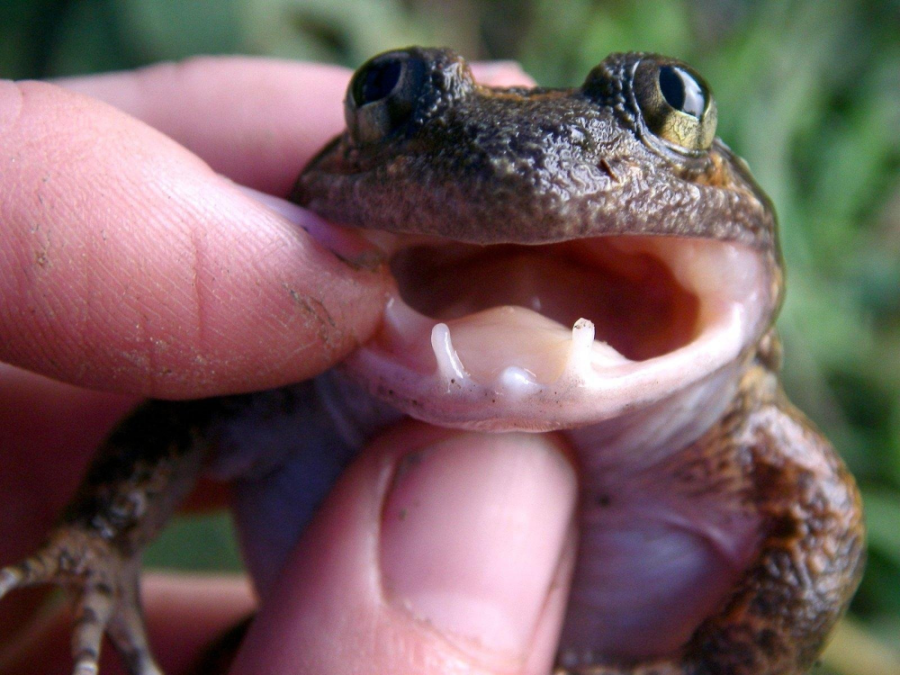
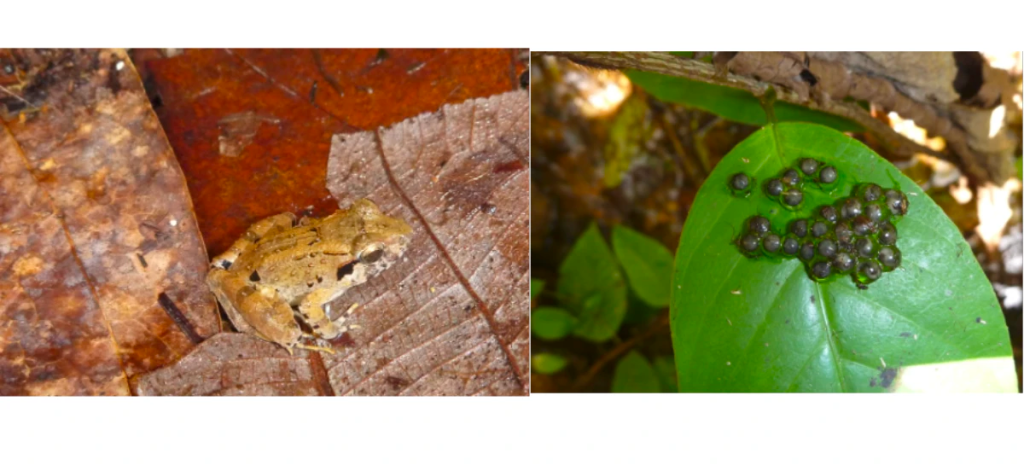
Researchers have identified a species of frog Limnonectes phyllofolia completely new to science. The tiny Indonesian amphibian is in the possession of little fangs. Researchers think that their fangs may be used to fend off would-be competitors for mating or territory. This species adopts a unique approach by laying their eggs on tree leaves. Adding to their distinct behavior, the male frogs play an active role in guarding and nurturing the nests. This discovery not only enriches our understanding of amphibian biodiversity but also highlights why it is absolutely crucial that we protect their home – rainforests in Indonesia. Help them every time you shop and #Boycottpalmoil#Boycott4Wildlife
Media release published on Science Alert, 21 December, 2023, read original. Jeffrey H. Frederick, Djoko T. Iskandar, Awal Riyanto, Amir Hamidy, Sean B. Reilly, Alexander L. Stubbs, Luke M. Bloch, Bryan Bach, Jimmy A. McGuire. A new species of terrestrially-nesting fanged frog (Anura: Dicroglossidae) from Sulawesi Island, Indonesia. PLOS ONE, 2023; 18 (12): e0292598 DOI: 10.1371/journal.pone.0292598
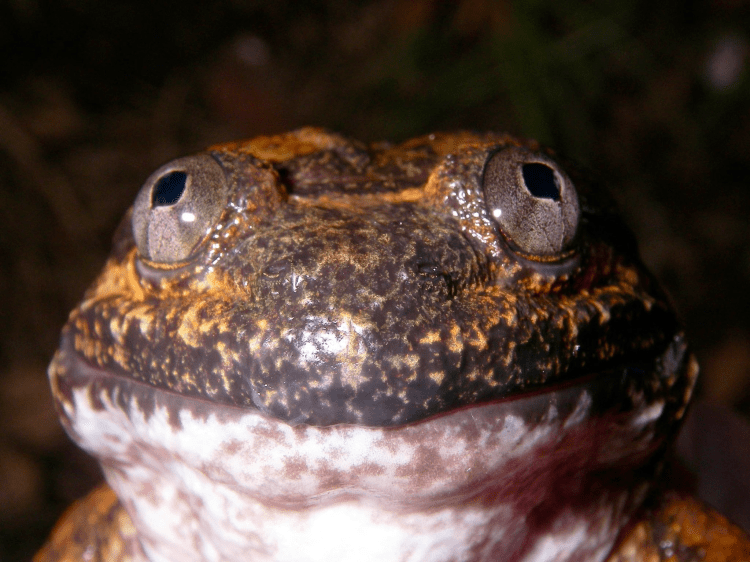
Limnonectes macrocephalus, the Luzon fanged frog
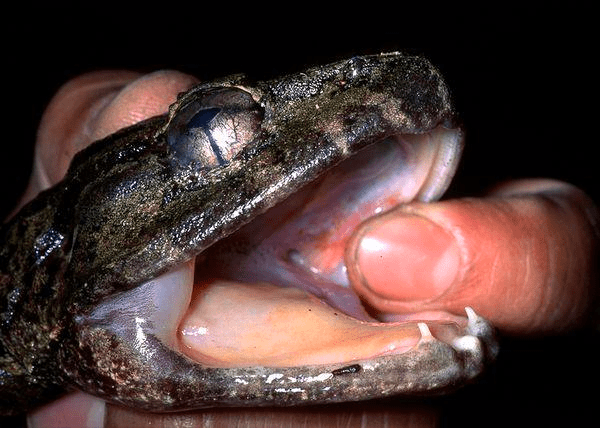
Frogs’ teeth aren’t known for being noteable or unusual. Typically frog teeth appear as tiny pinpricks on their upper jaws. However, one group of stream-dwelling frogs in Sulawesi, Indonesia have a strange adaptation: two bony “fangs” jutting out of their lower jawbone.
They use these fangs to battle with each other over territory and mates, and sometimes even to hunt tough-shelled prey like giant centipedes and crabs. In a new study, published in the journal PLOS ONE, researchers have described a new species of fanged frog: the smallest one ever discovered.
“This new species is tiny compared to other fanged frogs on the island where it was found, about the size of a quarter,” says Jeff Frederick, a postdoctoral researcher at the Field Museum in Chicago and the study’s lead author, who conducted the research as a doctoral candidate at the University of California, Berkeley. “Many frogs in this genus are giant, weighing up to two pounds. At the large end, this new species weighs about the same as a dime.”
In collaboration with the Bogor Zoology Museum, a team from the McGuire Lab at Berkeley found the frogs on Sulawesi, a rugged, mountainous island that makes up part of Indonesia. “It’s a giant island with a vast network of mountains, volcanoes, lowland rainforest, and cloud forests up in the mountains. The presence of all these different habitats mean that the magnitude of biodiversity across many plants and animals we find there is unreal — rivaling places like the Amazon,” says Frederick.
While trekking through the jungle, members of the joint US-Indonesia amphibian and reptile research team noticed something unexpected on the leaves of tree saplings and moss-covered boulders: nests of frog eggs.
Frogs are amphibians, and they lay eggs that are encapsulated by jelly, rather than a hard, protective shell. To keep their eggs from drying out, most amphibians lay their eggs in water. To the research team’s surprise, they kept spotting the terrestrial egg masses on leaves and mossy boulders several feet above the ground. Shortly after, they began to see the small, brown frogs themselves.
“Normally when we’re looking for frogs, we’re scanning the margins of stream banks or wading through streams to spot them directly in the water,” Frederick says. “After repeatedly monitoring the nests though, the team started to find attending frogs sitting on leaves hugging their little nests.” This close contact with their eggs allows the frog parents to coat the eggs with compounds that keep them moist and free from bacterial and fungal contamination.
Guarding behaviour of male frogs may be linked to them developing fangs for fighting
Closer examination of the amphibian parents revealed not only that they were tiny members of the fanged frog family, complete with barely-visible fangs, but that the frogs caring for the clutches of eggs were all male. “Male egg guarding behavior isn’t totally unknown across all frogs, but it’s rather uncommon,” says Frederick.
The world’s smallest ‘fanged’ frog found in Indonesia
Frederick and his colleagues hypothesize that the frogs’ unusual reproductive behaviors might also relate to their smaller-than-usual fangs. Some of the frogs’ relatives have bigger fangs, which help them ward off competition for spots along the river to lay their eggs in the water. Since these frogs evolved a way to lay their eggs away from the water, they may have lost the need for such big imposing fangs. (The scientific name for the new species is Limnonectes phyllofolia; phyllofolia means “leaf-nester.”)
Photos: Sean Reilly
“It’s fascinating that on every subsequent expedition to Sulawesi, we’re still discovering new and diverse reproductive modes,” says Frederick. “Our findings also underscore the importance of conserving these very special tropical habitats. Most of the animals that live in places like Sulawesi are quite unique, and habitat destruction is an ever-looming conservation issue for preserving the hyper-diversity of species we find there. Learning about animals like these frogs that are found nowhere else on Earth helps make the case for protecting these valuable ecosystems.”
Media release published on Science Alert, 21 December, 2023, read original. Jeffrey H. Frederick, Djoko T. Iskandar, Awal Riyanto, Amir Hamidy, Sean B. Reilly, Alexander L. Stubbs, Luke M. Bloch, Bryan Bach, Jimmy A. McGuire. A new species of terrestrially-nesting fanged frog (Anura: Dicroglossidae) from Sulawesi Island, Indonesia. PLOS ONE, 2023; 18 (12): e0292598 DOI: 10.1371/journal.pone.0292598
ENDS
Learn about other animals endangered by palm oil and other agriculture
A 2019 World Health Organisation (WHO) report into the palm oil industry and RSPO finds extensive greenwashing of palm oil deforestation and the murder of endangered animals (i.e. biodiversity loss)
1. Join the #Boycott4Wildlife on social media and subscribe to stay in the loop: Share posts from this website to your own network on Twitter, Mastadon, Instagram, Facebook and Youtube using the hashtags #Boycottpalmoil#Boycott4Wildlife.
2. Contribute stories: Academics, conservationists, scientists, indigenous rights advocates and animal rights advocates working to expose the corruption of the palm oil industry or to save animals can contribute stories to the website.
3. Supermarket sleuthing: Next time you’re in the supermarket, take photos of products containing palm oil. Share these to social media along with the hashtags to call out the greenwashing and ecocide of the brands who use palm oil. You can also take photos of palm oil free products and congratulate brands when they go palm oil free.
More and more palm oil free 🦧 products in Australia 🇦🇺. Customer awareness is increasing month by month. Of course Bart Van Assen will keep pushing "sustainable" palm oil with Orangutan Land Trust. Boycott palm oil to protect wildlife! There is not planet B #boycott4wildlifepic.twitter.com/rm7chub5Rb
If possible to get Ovomaltine, please promote it among your friends. It openly advertises with 0 palm oil. No RSPO no bullshit. For me it even tasts better than nuttela. It substantiates that chocolate spread can be made delicious without filthy palm oil. pic.twitter.com/cyV5Tm3tLd
4. Take to the streets: Get in touch with Palm Oil Detectives to find out more.
5. Donate: Make a one-off or monthly donation to Palm Oil Detectives as a way of saying thank you and to help pay for ongoing running costs of the website and social media campaigns. Donate here
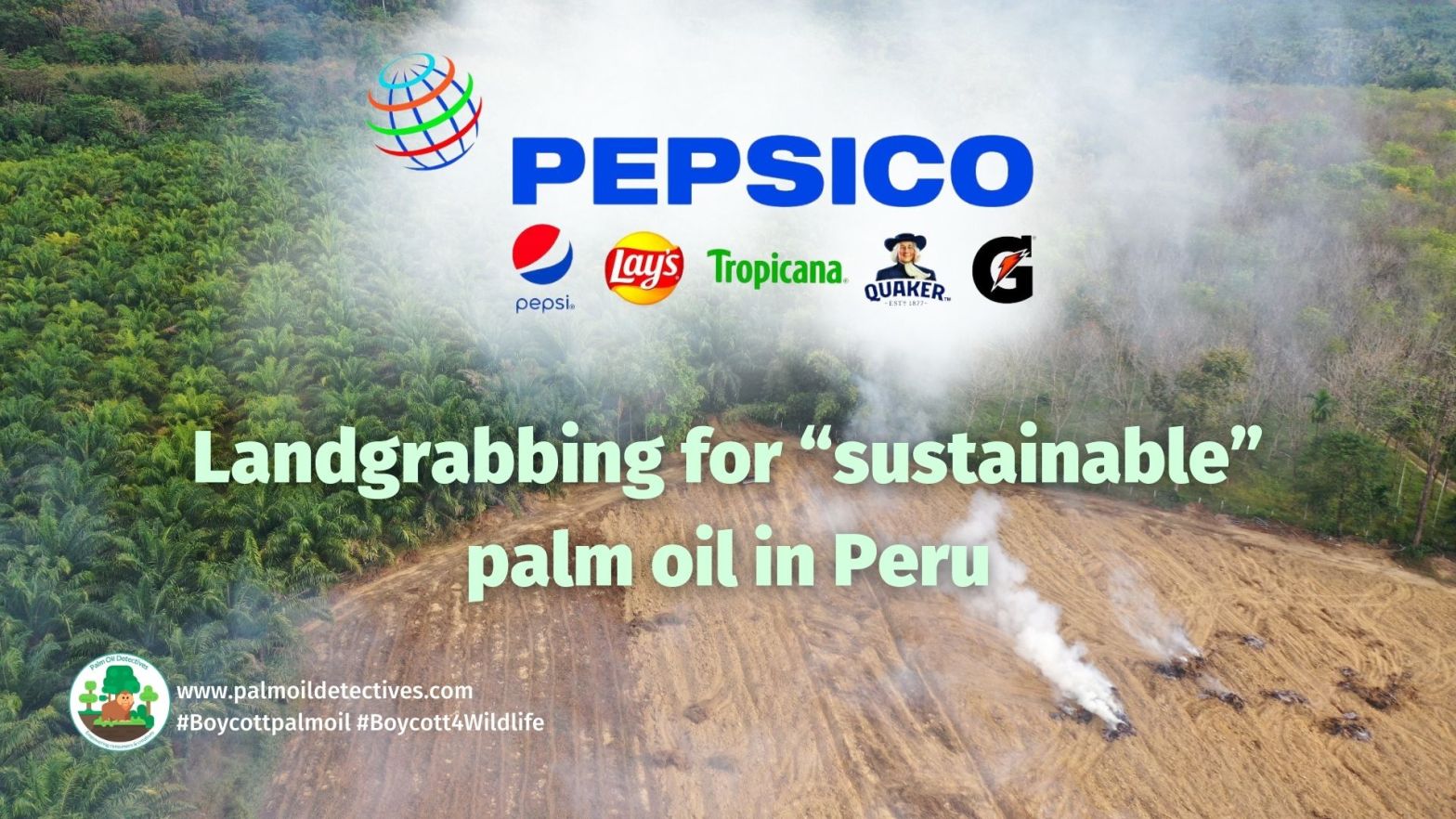
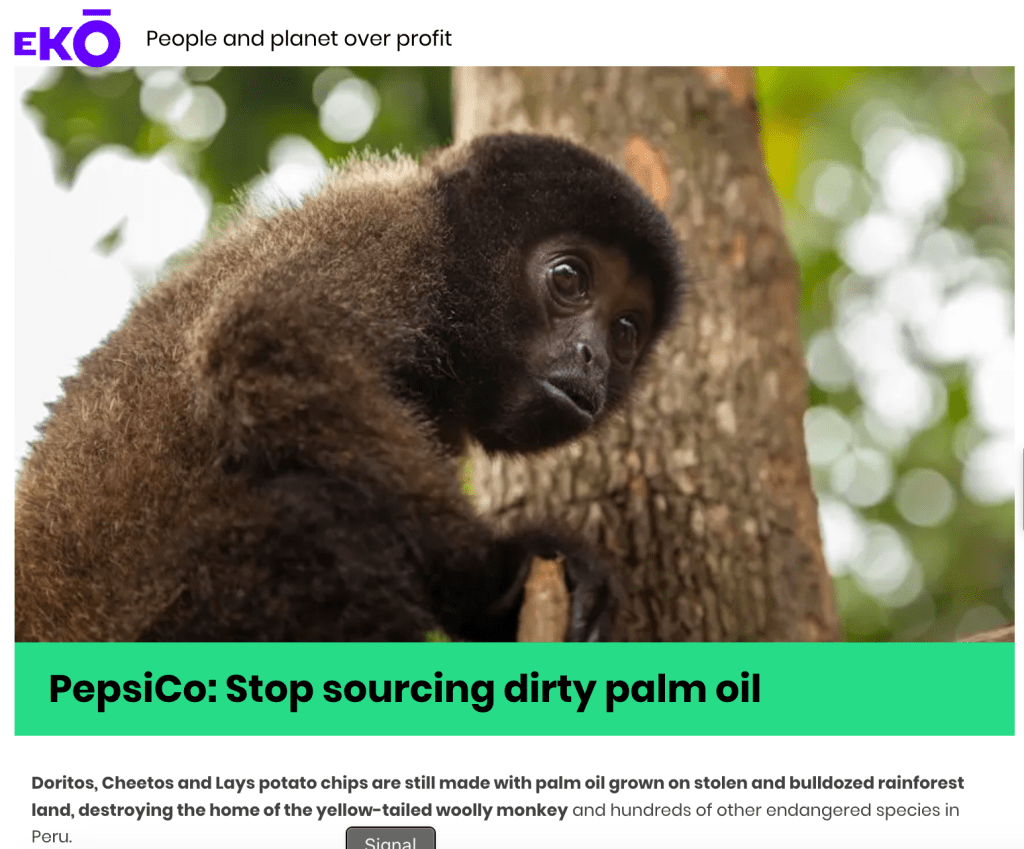
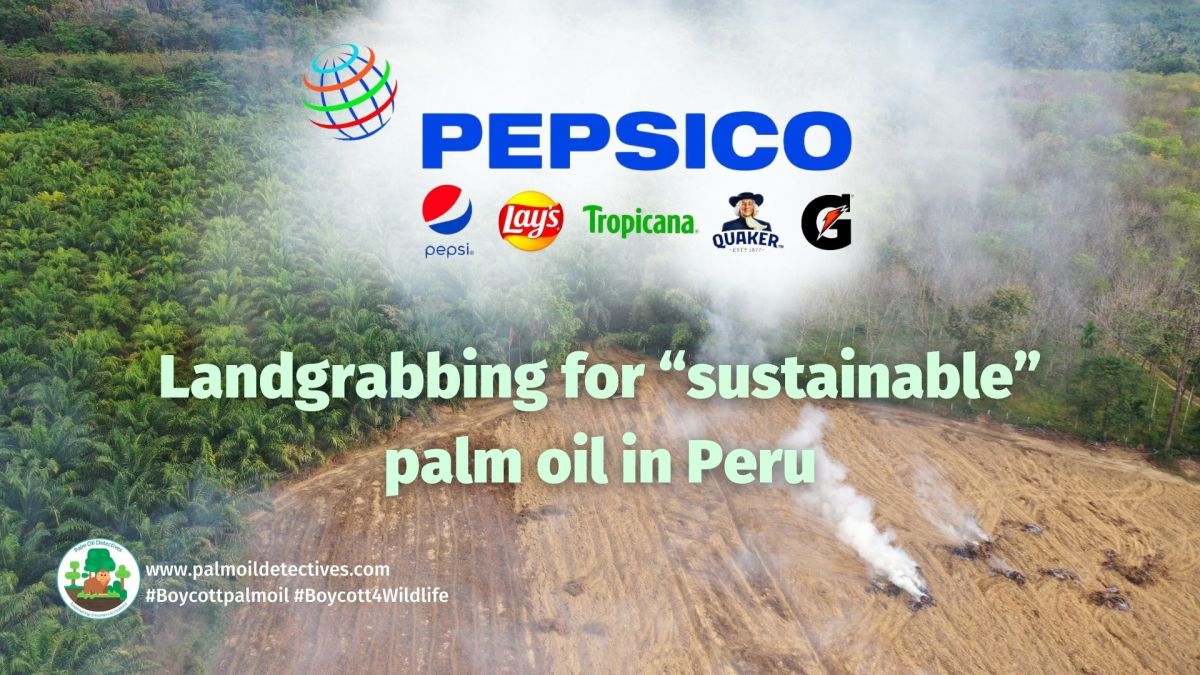
PepsiCo‘s supply chain is allegedly linked to environmental and human rights violations in Peru, involving Amazon deforestation and Indigenous land invasion. For three years, palm oil from deforested Shipibo-Konibo territory has been used in products like Gatorade, Mountain Dew, Cheetos, Doritos and more. PepsiCo sources oil from Ocho Sur, a company notorious for environmental crimes and forest loss. The palm oil industry in Peru, which doubled production in a decade, is allegedly responsible for significant illegal deforestation, violent indigenous landgrabbing, animal extinction and human rights abuses. Take action every time you shop and #Boycottpalmoil for wildlife and Indigenous people.
The article below was originally published on April 18 2024 by Ojo Público and MongaBay. Written By Elisângela Mendonça , Aramís Castro , Andrew Wasley. Photography: David Díaz, Illustration by Claudia Calderón. This investigation was produced with support from the Pulitzer Center’s Rainforest Investigations Network. Read more
Sign petition: Tell PepsiCo stop destroying rainforests for palm oil!
PepsiCo’s profit-first palm oil policy is still destroying rainforests.
Meanwhile, PepsiCo keeps on promising that it’s working towards a truly sustainable palm oil policy, making commitments to human rights and zero deforestation. But this new report leaves no doubt: this whole time, PepsiCo’s palm oil promises have been nothing but smoke and mirrors.
Peruvian palm oil linked to environmental and human rights violations ended up in the supply chain for the makers of Gatorade and Cheetos
The US food and drink giant PepsiCo has been linked through its supply chain to Amazon deforestation and the invasion of Indigenous lands in Peru, the Bureau of Investigative Journalism (TBIJ), Mongabay and Peruvian outlet Ojo Público can reveal.
For at least three years, PepsiCo’s Peruvian suppliers have been sourcing palm oil from deforested territory claimed by the Shipibo-Konibo people in Ucayali, eastern Peru.
The company, which manufactures snacks including Cheetos and Gatorade, runs a factory in Mexico that buys Peruvian palm oil after it has been processed at a Mexican refinery. That refinery buys from a Peruvian consortium, Sol de Palma, that shares storage facilities with Ocho Sur, a notorious US-funded business accused of repeated environmental and human rights violations.
The storage facilities mix the various batches of palm oil, meaning PepsiCo products likely contain Ocho Sur oil despite no longer buying directly from the company.
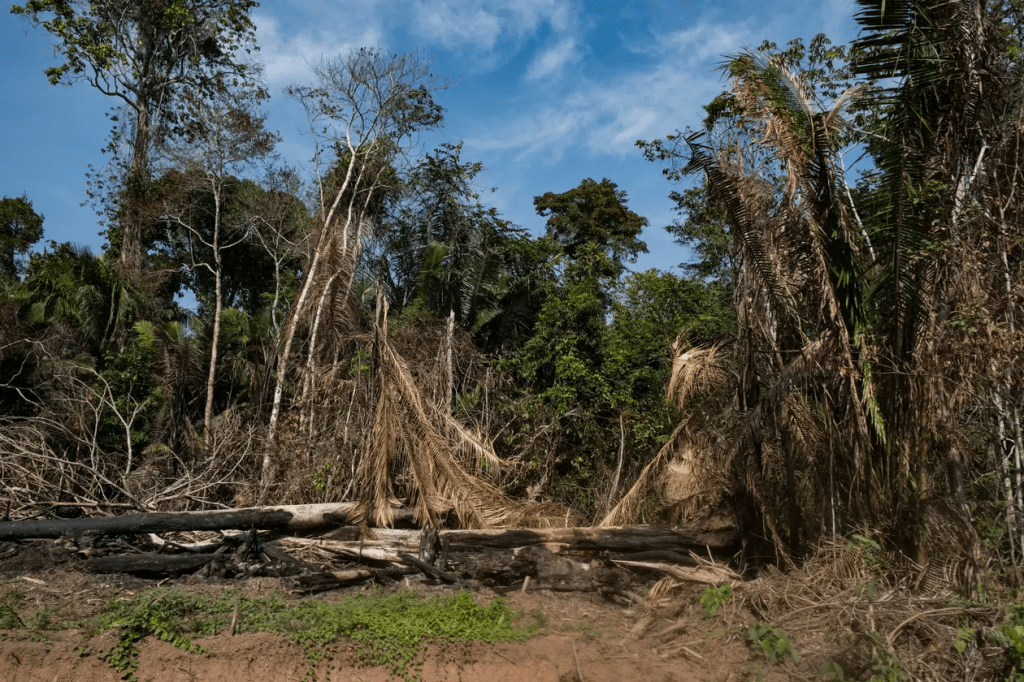
Ocho Sur is linked to 155 sq km of forest loss in the past decade – both within its own property and through its direct suppliers. While some of the forest loss took place under other companies, satellite analyses by the Center for Climate Crime Analysis (CCCA) and TBIJ show clear deforestation on Ocho Sur’s land in the past three years.
Palm oil production in Peru has more than doubled in the past decade and Ucayali, a hotspot for cultivation on the border with Brazil, now has the country’s second-highest rate of forest loss. It’s estimated that about 30% of the country’s palm plantations are on illegally deforested land. Half of the oil is sent to international markets.
Today, Ocho Sur is the second-largest palm oil company in Peru. It was created in 2016 after acquiring the assets of two other controversial companies active in the region since 2012.
“Before 2012, the deforestation rates were pretty low,” said Tom Younger, an anthropologist working with the Forest Peoples’s Programme, an NGO. The arrival of palm oil plantations, he said, “set into motion some dynamics of land invasion and deforestation”.
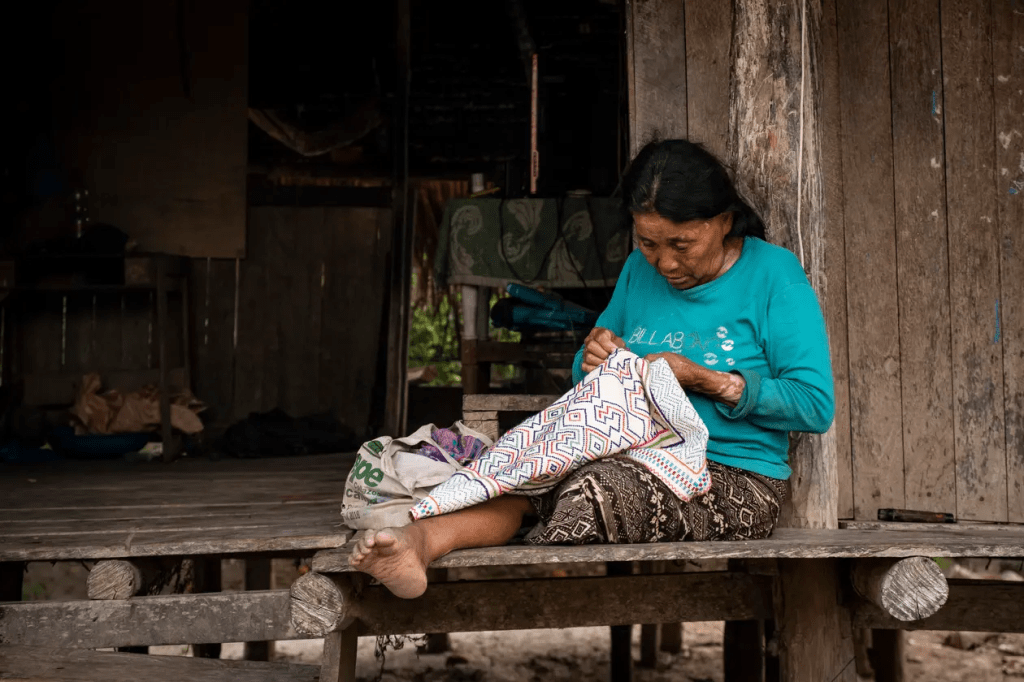
Some of the forest loss on company-run oil palm plantations occurred on land claimed by the Santa Clara de Uchunya community of Shipibo-Konibo Indigenous people. They have endured a long and often hostile battle for recognition, and only a tiny portion of the 200 sq km of land the community claims has been formally titled.
In 2020, the Inter-American Commission on Human Rights, a regional legal body, ordered the Peruvian state to protect the Santa Clara de Uchunya community against threats and land invasions.
Luisa Mori Gonzáles, president of the community’s defence front, says the arrival of the palm oil industry has affected their food supply and sown division.
“We use that territory to feed ourselves or to hunt,” she told TBIJ and Ojo-Público. “The company put it in their [other community members’] heads that they are going to have money and wealth – but that is a lie.”
Deforestation near the Santa Clara de Uchunya communityDavid Díaz/OjoPúblico
Neither Ocho Sur nor the liquidated companies whose assets it acquired had obtained the necessary environmental permit for their plantations. The Peruvian Agriculture Ministry sanctioned and fined the dissolved company Plantaciones de Ucayali in 2015 for failing to comply with an order to stop its activities. Ocho Sur eventually paid these fines in 2022, but by 2018 the companies had failed to conserve the legally required 30% of forest, the non-profit Environmental Investigation Agency (EIA) has found. It is unclear whether the majority of the deforestation took place under Plantaciones de Ucayali or Ocho Sur.
Impunity for environmental crimes such as illegal deforestation is a major problem, according to Julia Urrunaga of the EIA, which recently published a report linking Peruvian palm oil to other well-known food and cosmetics companies.
“The authorities have the responsibility of guaranteeing that what is sold has a legal origin,” said Urrunaga.“If a product is being marketed that is being grown and produced in illegally deforested areas without a production permit, that should be an illegal product.”
Experts attribute the growth of palm oil in Latin America, today the second largest producing region for the industry outside south-east Asia – and the fastest growing – in part to its weaker regulation.
Earlier this year, Peru’s Congress approved a new amendment to its forest and wildlife law, loosening requirements for deforestation in “agriculture exclusion areas” and forgiving historic offences.
Robert Heilmayr, an environmental economist teaching at the University of California Santa Barbara, told TBIJ that while private-sector commitments have brought some positive advances in transparency in countries like Indonesia, the industry’s complexity makes full traceability a challenge.
He said: “It gets a little bit hard to know exactly where the fresh fruit bunches are coming from and there’s no third-party auditing of those supply lists.”
According to CCCA’s analysis, PepsiCo manufactures at least 15 products that contain Peruvian palm oil refined in Mexico – among them Doritos, Cheetos and Gatorade. It has pledged to make 100% of its palm oil supply deforestation-free by the end of 2022 and for its operation to be net zero by 2040.
Concerns about the legal origins of palm oil have also given rise to international initiatives like the Roundtable on Sustainable Palm Oil (RSPO), the industry’s most widely used sustainability certification scheme.
The Santa Clara de Uchunya community of Shipibo-Konibo Indigenous people have only been officially granted a fraction of their claimed territory. Photo: David Díaz/OjoPúblico
Peru has ten RSPO members. Ocho Sur is not a member and only one of the companies in Sol de Palma’s consortium is.
PepsiCo said: “We take all inquiries like this seriously and have initiated an investigation through our established grievance process to assess whether any action on our part is required.” The company stressed that Ocho Sur is not a direct supplier and said it has engaged its direct suppliers to better understand their ties to Ocho Sur and ensure they take corrective actions if needed.
Ocho Sur said that it could not be held responsible for the actions of the companies whose assets it had taken over. It referred TBIJ to a document submitted to the UN in December 2023 that repeatedly states that it has no financial or legal links to one of those businesses. In the document it also strenuously denied sowing division in local communities and said that since its founding, the company had made special efforts “to forge a friendly, fruitful and mutually respectful relationship” with Indigenous and other groups. It said that it fully complies with all obligations with respect to Indigenous peoples’ rights and the environment and does not allow deforestation in its supply chain.
On the subject of environmental permits, Ocho Sur added: “The certification has been requested for a long time and [Midagri, the agriculture ministry] has failed to make a statement on the matter, granting it, as it should, or providing reasonable arguments to justify its refusal.”
Oleomex, owner of the Mexican refinery that supplies PepsiCo’s factory, said: “The oil we supply to our customer meets all sustainability standards as it is RSPO-certified oil.” However, it added that supply contracts with Ocho Sur were negotiated through a third party and that it has agreed to suspend them until the complaints raised in the investigation are resolved.
Sol de Palma did not comment.
Peruvian judges are yet to rule on whether Ocho Sur can be held responsible for past incursions into the Santa Clara de Uchunya community.
While the community awaits that ruling, Mori Gonzáles has vowed to continue protecting the territory: “We’re going to fight for as long as we can.”
The article below was originally published on April 18 2024 by OjoPúblico and MongaBay. Written By Elisângela Mendonça , Aramís Castro , Andrew Wasley. Photography: David Díaz, Illustration by Claudia Calderón. This investigation was produced with support from the Pulitzer Center’s Rainforest Investigations Network.
ENDS
Read more about human rights abuses and child slavery in the palm oil and gold mining industries
A landmark study published in Global Studies Quarterly in April 2025 has revealed that the rapid expansion of the #palmoil industry in #WestPapua is not only fuelling #deforestation, #ecocide and environmental destruction but…
Indonesian palm oil workers expose industry practices that mirror colonial exploitation: land grabbing, bad conditions, ecocide. Systemic change is needed!
Challenge a dangerous colonial myth that West Papua is an ’empty land’. This only serves the colonial domination of Indonesia not ancient tribes living there!
Although #deforestation rates in the Brazilian #Amazon have halved, this globally critical biome is still losing more than 5,000km² every year. That’s an area three times larger than Greater London. By combining satellite…
Something went wrong. Please refresh the page and/or try again.
Take Action in Five Ways
1. Join the #Boycott4Wildlife on social media and subscribe to stay in the loop: Share posts from this website to your own network on Twitter, Mastadon, Instagram, Facebook and Youtube using the hashtags #Boycottpalmoil#Boycott4Wildlife.
2. Contribute stories: Academics, conservationists, scientists, indigenous rights advocates and animal rights advocates working to expose the corruption of the palm oil industry or to save animals can contribute stories to the website.
3. Supermarket sleuthing: Next time you’re in the supermarket, take photos of products containing palm oil. Share these to social media along with the hashtags to call out the greenwashing and ecocide of the brands who use palm oil. You can also take photos of palm oil free products and congratulate brands when they go palm oil free.
4. Take to the streets: Get in touch with Palm Oil Detectives to find out more.
5. Donate: Make a one-off or monthly donation to Palm Oil Detectives as a way of saying thank you and to help pay for ongoing running costs of the website and social media campaigns. Donate here
Extant (resident): Brunei Darussalam; Indonesia (Sumatera, Kalimantan); Malaysia (Peninsular Malaysia, Sabah, Sarawak); Myanmar; Thailand
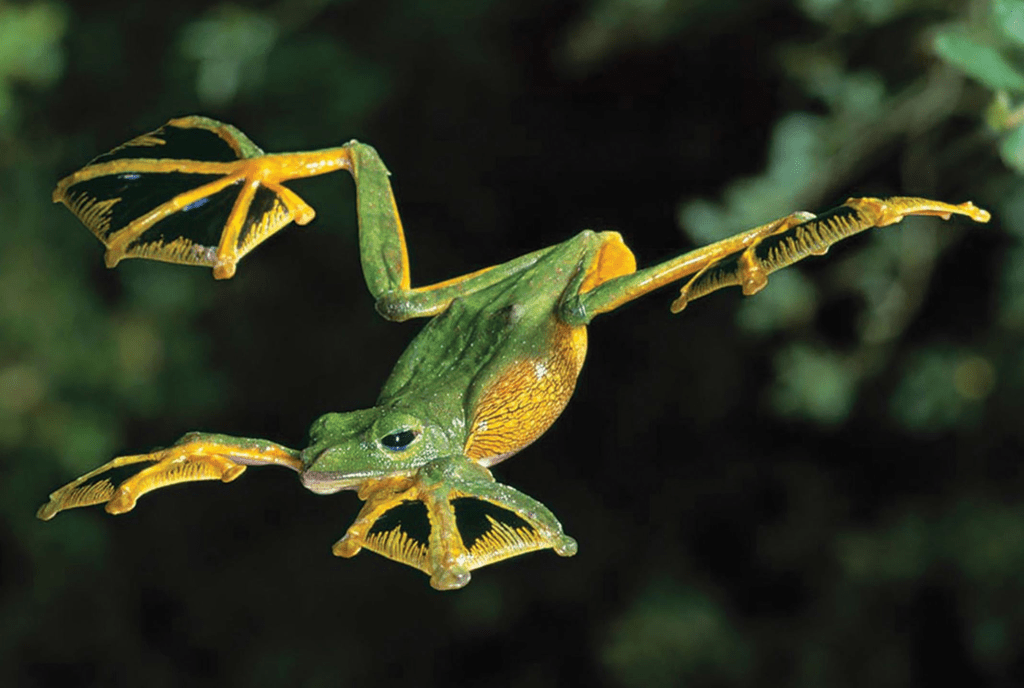
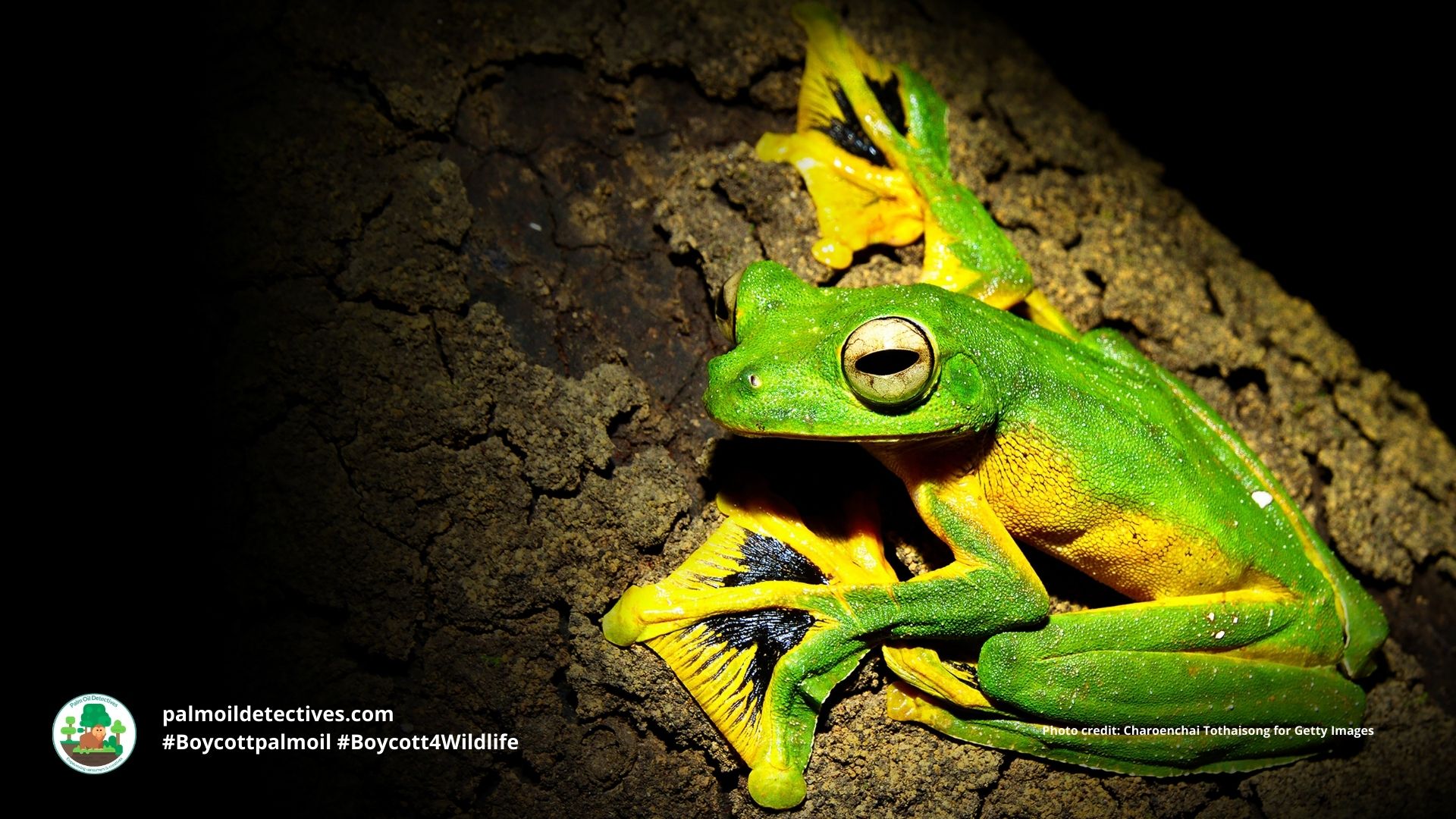
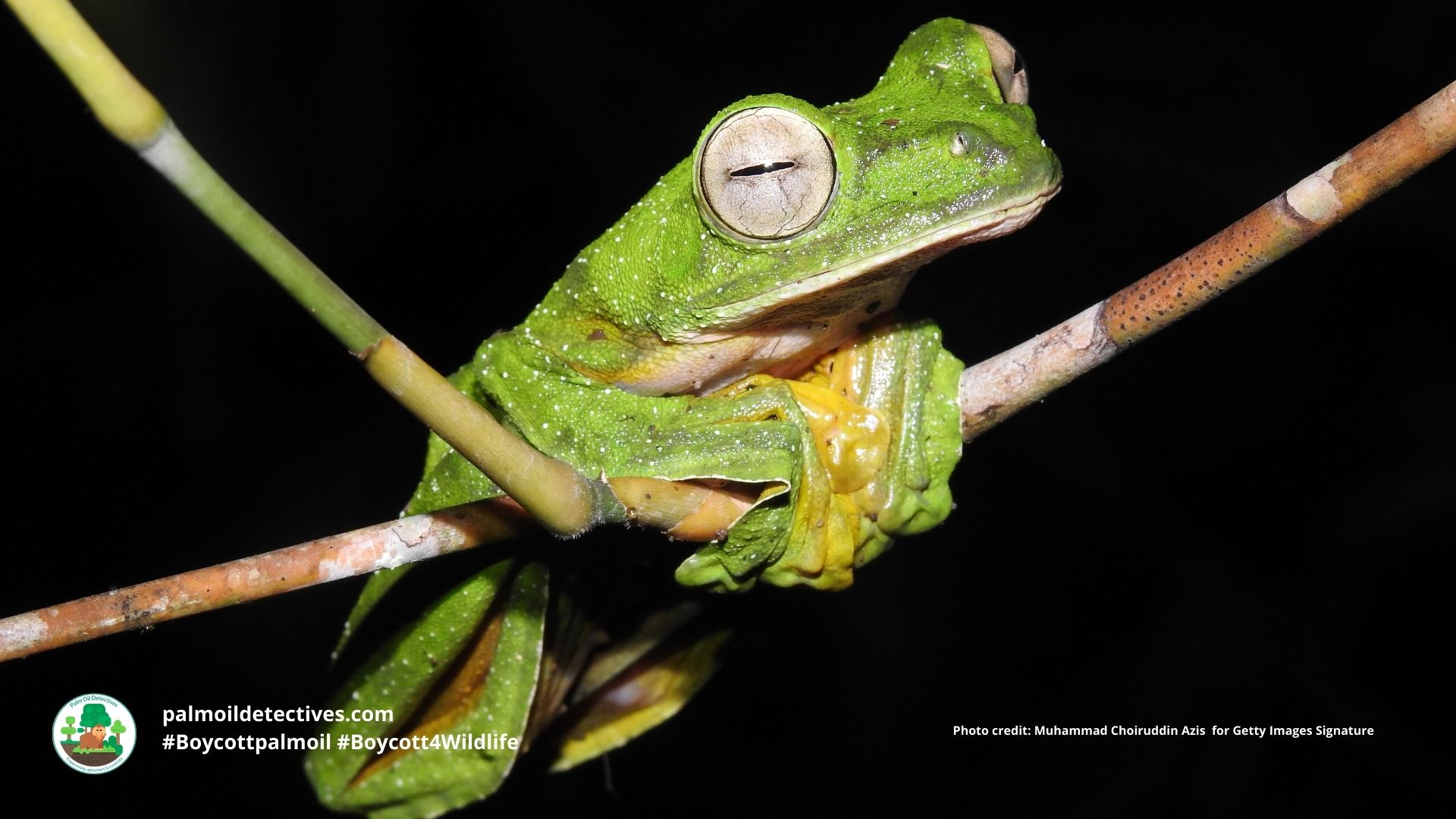
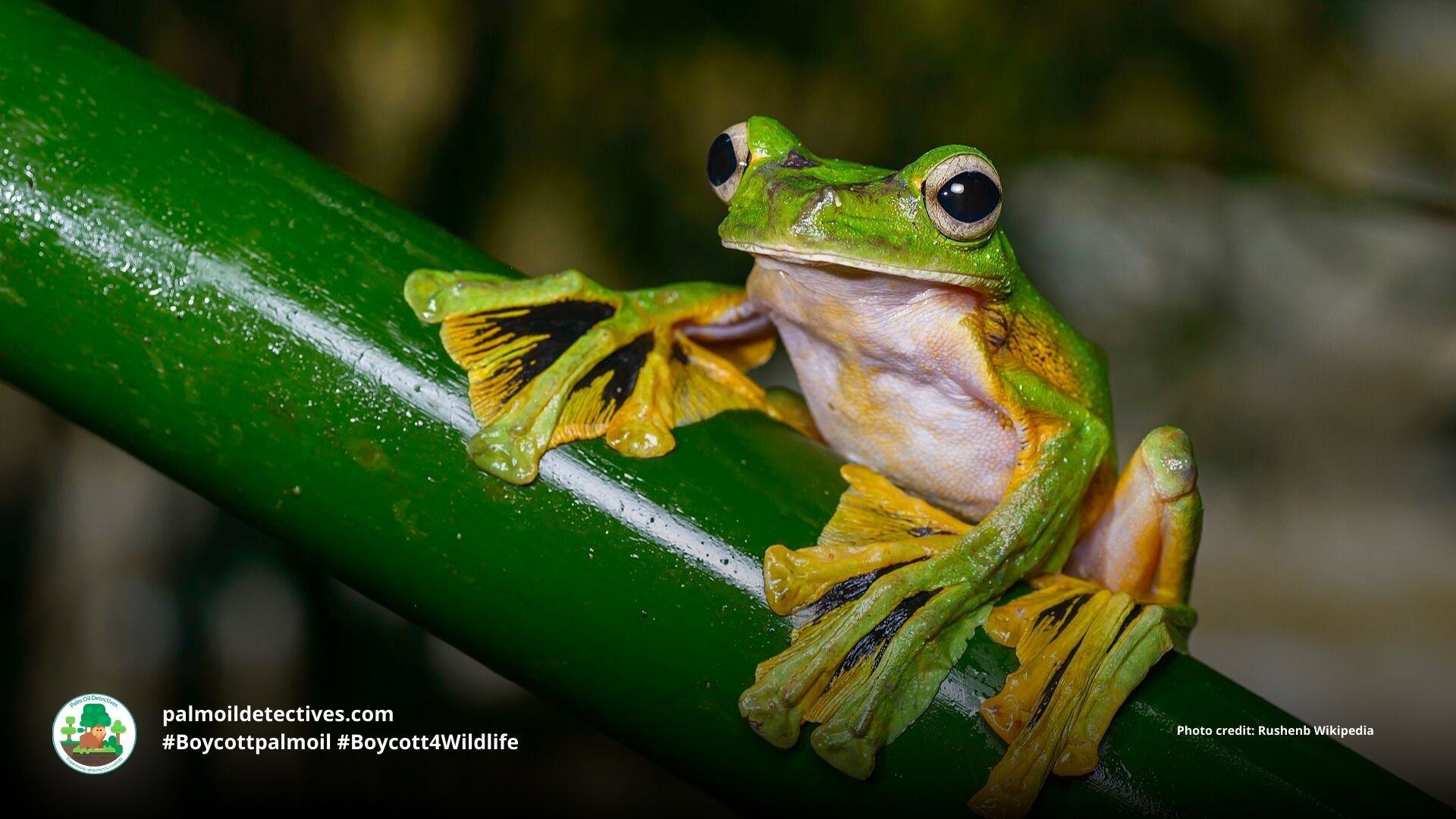
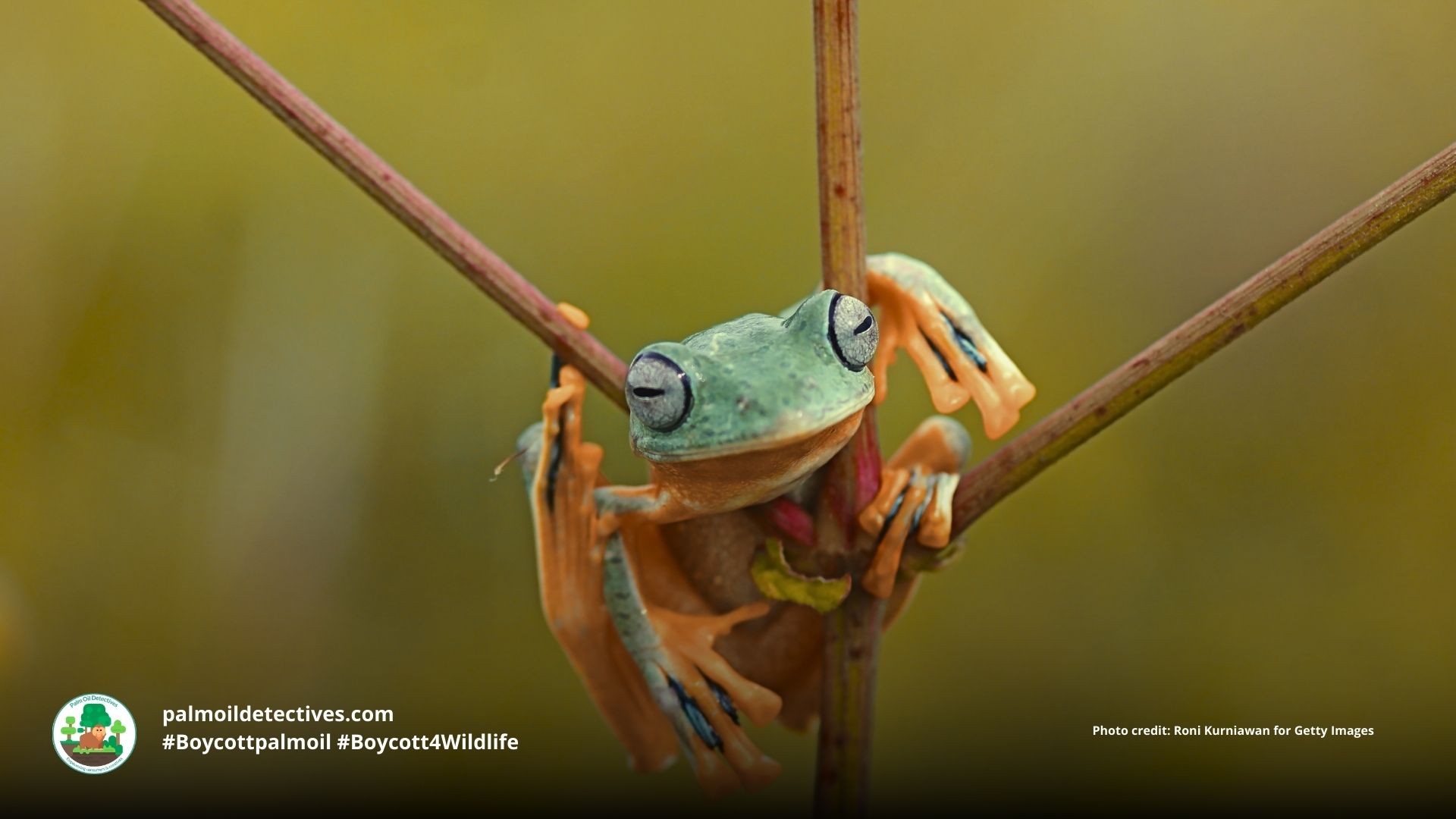
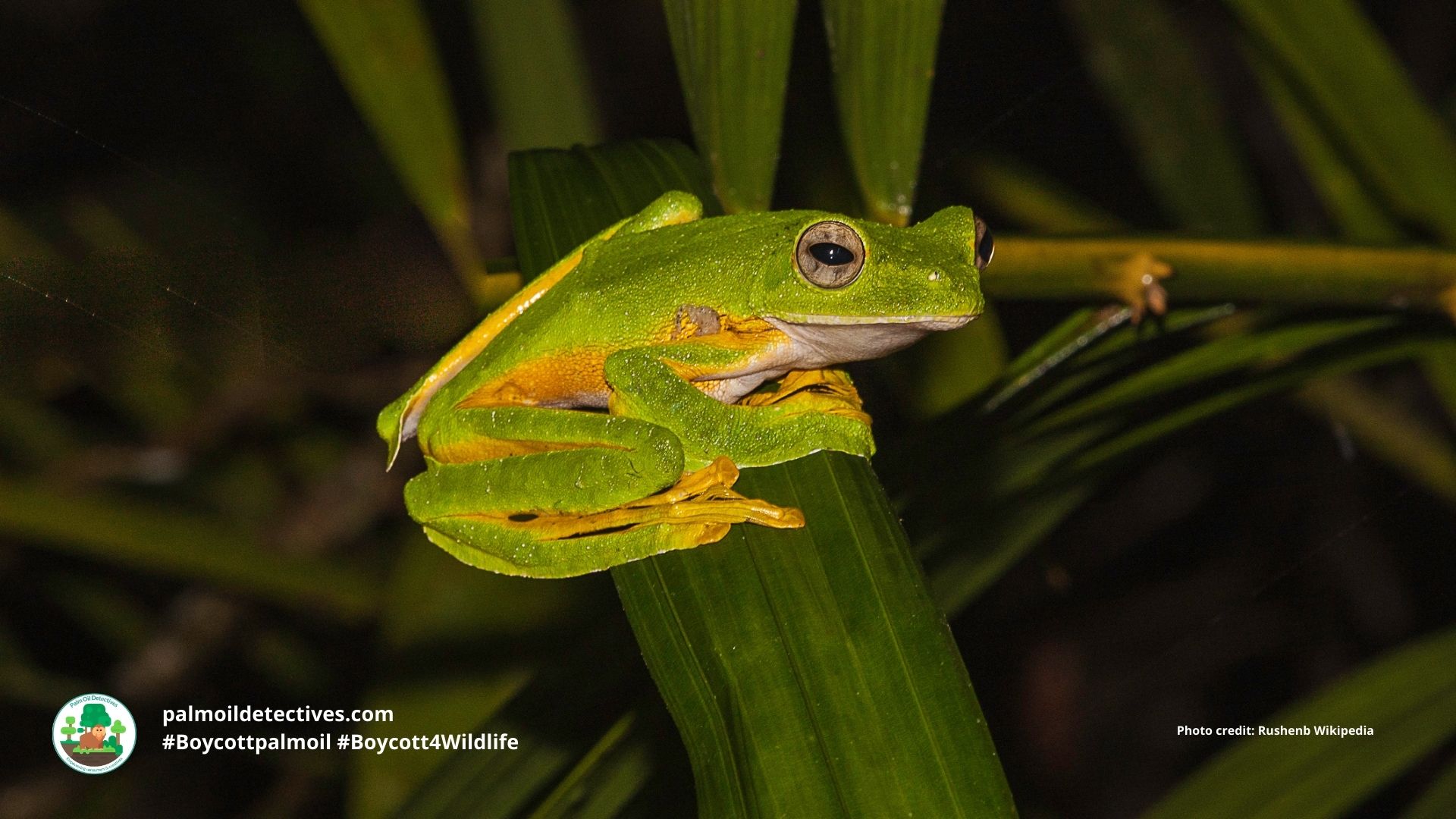
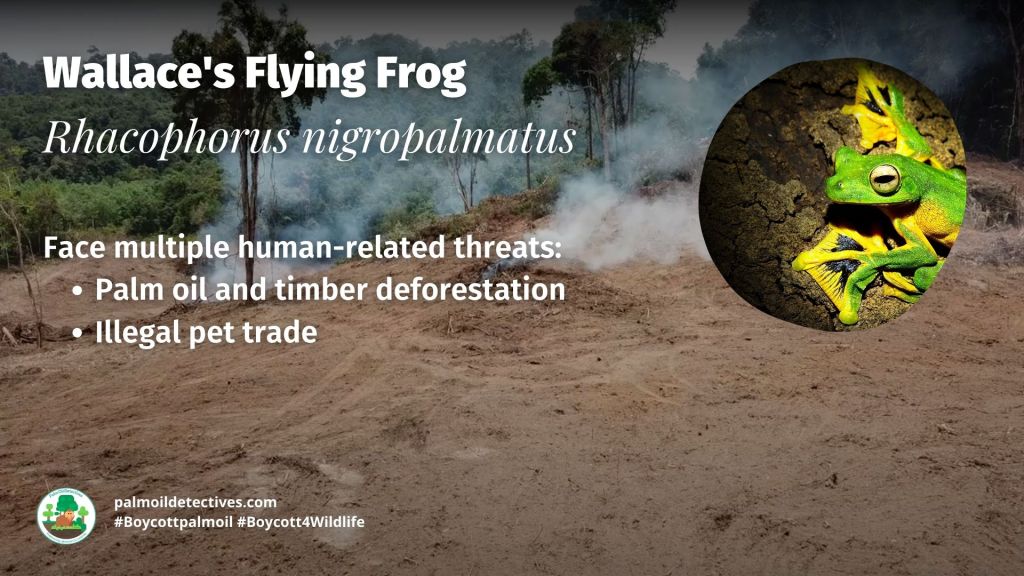
The elusive and visually stunning Wallace’s Flying #Frog are known for their mysterious nature and their ability to take flight and glide through the air like dancers. They reveal themselves only during breeding aggregations when they descend from the trees.
Recent surveys in various regions, including the Matang Range in #Sarawak, #Malaysia, and the Endau-Rompin in West Malaysia, have documented the presence of this species. However, their overall population faces a concerning decline due to the ongoing loss of habitat for #palmoil#deforestation. Urgent conservation efforts are critical to reverse this trend and to ensure the survival of this intriguing species in their natural environment. Help this frog to survive every time you shop, make sure that you #Boycottpalmoil#Boycott4Wildlife in the supermarket!
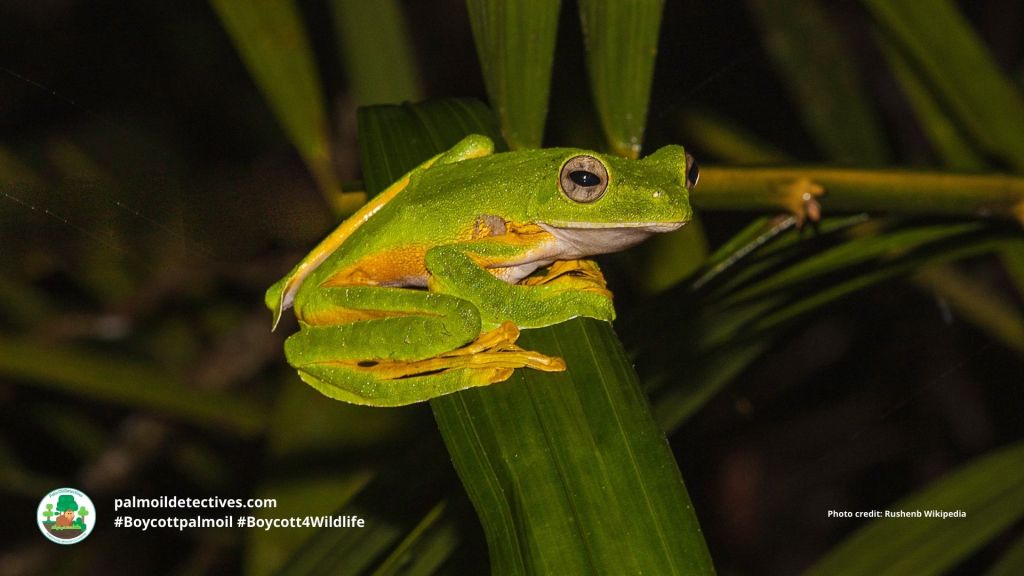
This photogenic frog captivates with vibrant colours, large size, and fascinating behaviour. They measure around 80–100 mm in body length and are one of the largest Rhacophorus species, with males being smaller than females.
They possess large eardrums and captivating horizontal-pupiled eyes. Their remarkable long limbs, webbed fingers and toes extending to the tips are fringed with skin. This forms a natural parachute allowing them to move quickly between trees and to the forest floor. With a bright shiny green back, white to pale yellow underside, and brilliant yellow accents on their toes, this species of frog is a visual delight to behold.
Wallace’s Flying Frog Rhacophorus nigropalmatus in full flight. Image: Stephen Dalton, Minden Pictures
Threats
This species of frog is classified as Least Concern and yet their number has been decreasing at a worrying rate over decades as a direct result of palm oil deforestation. They are completely reliant on a healthy rainforest habitat for survival. It is for this reason that they are included on this website.
Forest loss and degradation, particularly from the conversion of forests into agricultural land, posing a significant threat to all biodiversity in Southeast Asia
A secondary threat is small-scale pet trade, both nationally and internationally although this is deemed to be not as serious as habitat loss.
Habitat
They live mainly in tree canopies deep in dense rainforests. They make ballerina-like leaps and “flights” from tree to tree, showcasing their impressive and precise gliding agility. When threatened, Wallace Flying Frogs gracefully glide using its webbed feet and loose skin flaps. This frog’s oversized toe pads help with soft landings and tree trunk adhesion.
Diet
Known for their insectivorous diet, the Wallace’s Flying Frog have on occasion been known to eat toads and small birds. However, they face threats from tree-climbing snakes in their arboreal habitat.
Support Wallace’s Flying Frogs by going vegan and boycotting palm oil in the supermarket, it’s the #Boycott4Wildlife
Support the conservation of this species
This animal has no protections in place. Read about other forgotten species here. Create art to support this forgotten animal or raise awareness about them by sharing this post and using the #Boycottpalmoil#Boycott4Wildlife hashtags on social media. Also you can boycott palm oil in the supermarket.
1. Join the #Boycott4Wildlife on social media and subscribe to stay in the loop: Share posts from this website to your own network on Twitter, Mastadon, Instagram, Facebook and Youtube using the hashtags #Boycottpalmoil#Boycott4Wildlife.
2. Contribute stories: Academics, conservationists, scientists, indigenous rights advocates and animal rights advocates working to expose the corruption of the palm oil industry or to save animals can contribute stories to the website.

3. Supermarket sleuthing: Next time you’re in the supermarket, take photos of products containing palm oil. Share these to social media along with the hashtags to call out the greenwashing and ecocide of the brands who use palm oil. You can also take photos of palm oil free products and congratulate brands when they go palm oil free.
More and more palm oil free 🦧 products in Australia 🇦🇺. Customer awareness is increasing month by month. Of course Bart Van Assen will keep pushing "sustainable" palm oil with Orangutan Land Trust. Boycott palm oil to protect wildlife! There is not planet B #boycott4wildlifepic.twitter.com/rm7chub5Rb
If possible to get Ovomaltine, please promote it among your friends. It openly advertises with 0 palm oil. No RSPO no bullshit. For me it even tasts better than nuttela. It substantiates that chocolate spread can be made delicious without filthy palm oil. pic.twitter.com/cyV5Tm3tLd
4. Take to the streets: Get in touch with Palm Oil Detectives to find out more.
5. Donate: Make a one-off or monthly donation to Palm Oil Detectives as a way of saying thank you and to help pay for ongoing running costs of the website and social media campaigns. Donate here
A 2019 World Health Organisation (WHO) report into the palm oil industry and RSPO finds extensive greenwashing of palm oil deforestation and the murder of endangered animals (i.e. biodiversity loss)
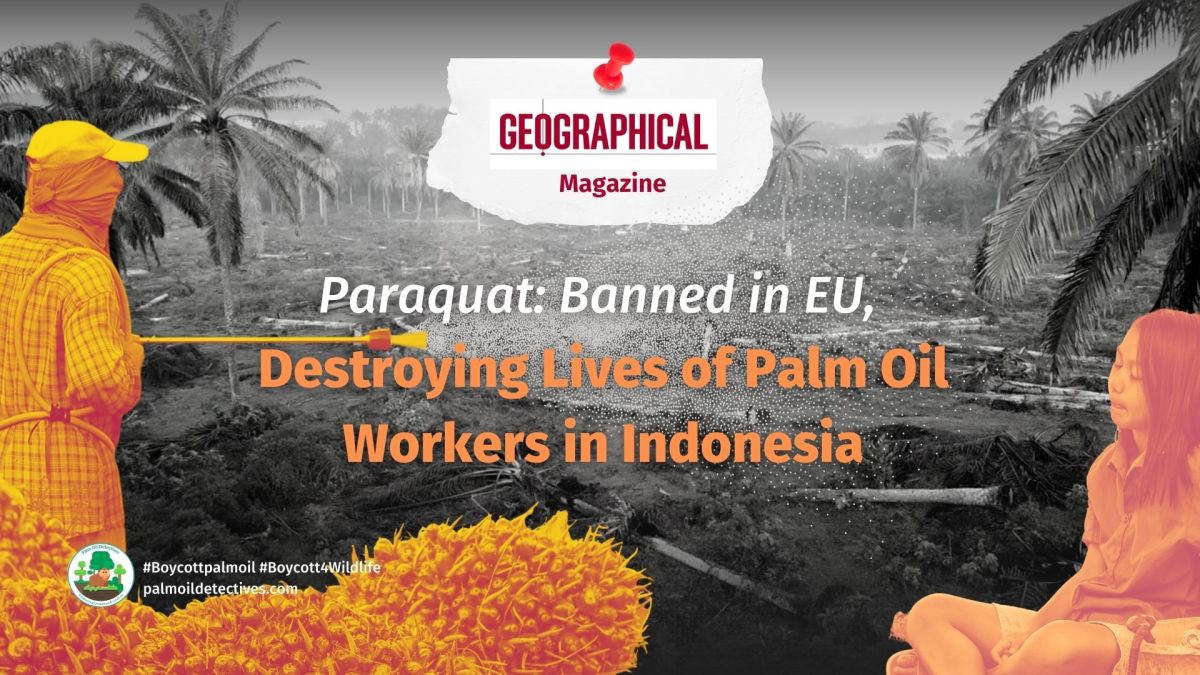
The dangerous pesticide Paraquat is banned in the EU and strictly limited in the USA, however it continues to destroy the lives of palm oil workers in Indonesia. Paraquat has severe human health impacts including respiratory problems, severe burns and skin and eye irritation. America’s Centre for Disease Control links it to Parkinson’s disease and other life-threatening illnesses. Read this story below originally published in Geographical Magazine about the lives of vulnerable palm oil workers in Indonesia. Afterwards you can learn how to take action to resist the human rights abuses and ecocide of dangerous pesticide use in palm oil agriculture. #Boycottpalmoil#Boycott4Wildlife
This article was originally published as ‘Paraquat: banned in Europe, on sale in Indonesia in Geographical Magazine on the 28th of June 2024. Written by Daniela Sala, Adi Renaldi & Budi Baskoro. Photography by Daniela Sala. Republished with permission. Read original.
A local farmer sprays the herbicide Roundup among the oil palms in the small plot of land she and her family owns. She also routinely sprays Gramoxone, without protection
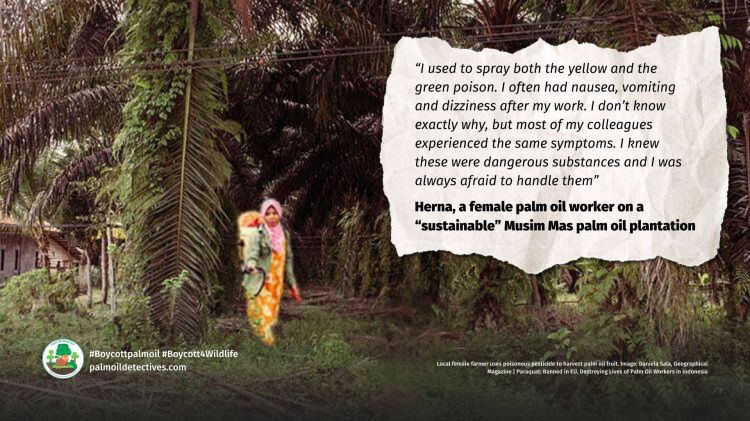
“I used to spray both the yellow and the green poison,” Herna says.
For nearly six years, from 2006 to 2011, Herna worked for the so-called ‘maintenance team’ on one of the oil palm plantations of Musim Mas, a Singapore-based multinational corporation, in Central Kalimantan, the Indonesian part of Borneo. The green poison she refers to is Gramoxone, the brand name for a highly toxic herbicide based on the organic compound paraquat. Sold by the Swiss, now Chinese-owned multinational Syngenta, paraquat has been banned in the European Union since 2007 due to concerns related to its effect on the health of workers and the environment.
‘I often had nausea, vomiting and dizziness after my work. I don’t know exactly why, but most of my colleagues experienced the same symptoms. I knew these were dangerous substances and I was always afraid to handle them,’ she says. Herna got an indication of how toxic paraquat is when one morning, while she was diluting it with water as instructed, a drop of the liquid splashed onto her hand, causing a burn that took weeks to heal.
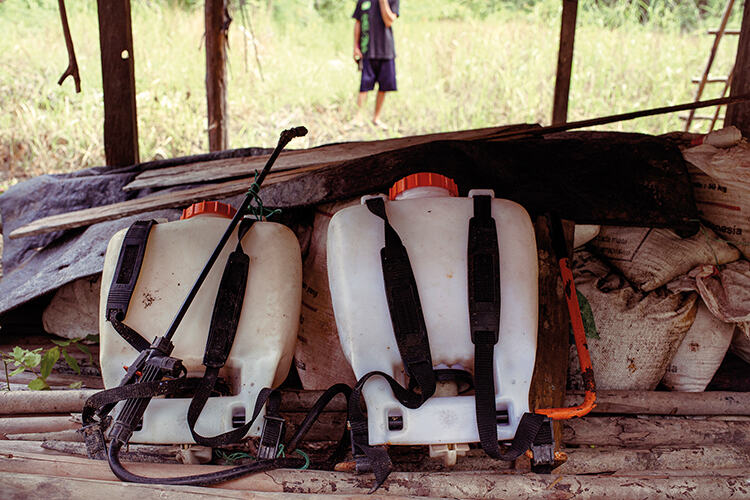
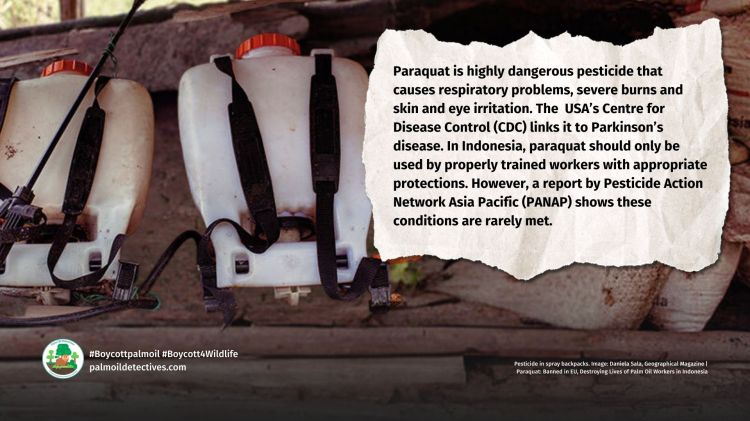
Backpacks used for paraquat spraying
Sitting cross-legged on the floor of her home in Penyang, Herna looks tired. The humid heat gives no respite, the air is heavy and the fan Herna sits next to is of little use. It’s difficult to imagine how, in these conditions, Herna and her colleagues could work an entire eight-hour shift with a heavy container (weighing some 13 kilograms) on their backs, without ever removing their masks.
Herna grew up in a small cluster of houses surrounded by rainforest. Her family relied on hunting and farming; they had a small area of land where they harvested rice and fruit. It was a simple, quiet life. In the late 1990s, however, their economic situation rapidly deteriorated with the arrival of oil palm plantations. They lost not only their land, but also access to the forest. Herna, in her early 20s, had no choice but to accept a job on one of the plantations that had so drastically altered the way of life in her village. For five years, from 7am to 3pm, she sprayed highly toxic herbicides, which prevented weeds and other plants from proliferating and allowed oil palms to grow faster and taller.
Herna endured continuous discomfort for years, sometimes so intense that she had to stay in bed for days. The plantation doctor, whom she sometimes asked for help, always told her not to worry too much, prescribing at most paracetamol or an anti-emetic.
A fisher arrives at Bikal market with his meagre catch after a night’s fishing
Eventually, Herna began to suffer a pain in the pit of her stomach, ‘like a stab wound’. The doctor speculated that it might be a symptom of a lung problem. The cause was never clarified because Herna couldn’t take further tests as they were too expensive. She decided, however, that she couldn’t take it anymore and quit her job.
Paraquat’s known direct health effects include respiratory problems, severe burns and skin and eye irritation. In the USA, it has also been linked to Parkinson’s disease. In Indonesia, paraquat should only be used by properly trained workers with appropriate protections. However, a report by PANAP (Pesticide Action Network Asia Pacific) documented how these conditions are rarely met.
Herna, who is now 48 and has six children, did her best to find another job, ‘but since the plantations are here, there is no other job,’ she says.
As she goes silent, the background noise becomes more obvious: it’s the constant traffic along the Trans Kalimantan, the highway that cuts through southern Borneo, just a few dozen metres from Herna’s home. Trucks follow one another in a constant back-and-forth. In one direction, they transport oil palm fruits to the refineries. In the opposite direction, they transport the refined oil to ports for the export market.
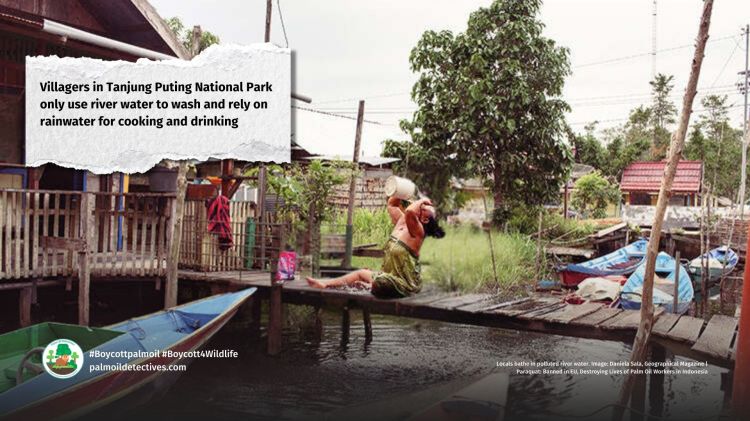
Villagers in Tanjung Puting National Park only use river water to wash and rely on rainwater for cooking and drinking
Made in Europe
Indonesia is by far the world’s largest exporter of palm oil, accounting for nearly 50 per cent of global exports in 2022, closely followed by Malaysia, with 30 per cent. The industrial uses are countless, from food and cosmetics to the production of biofuels. About ten per cent of palm oil exports from Indonesia end up in Europe.
The oil palm, a plant native to West Africa, was first introduced to Indonesia during Dutch colonialism. Over a few decades, the expansion of monocultures in the archipelago triggered the destruction of large portions of Borneo’s rainforest. Despite intense environmental campaigns in recent years, the rate of deforestation due to plantation expansion only slowed; it started to rise again in 2023.
In Indonesia, intensive palm oil production and the heavy use of paraquat and other herbicides are inextricably linked. In total, Indonesia imported pesticides worth about half a million US dollars in 2020, a market that has steadily grown over the past decade.
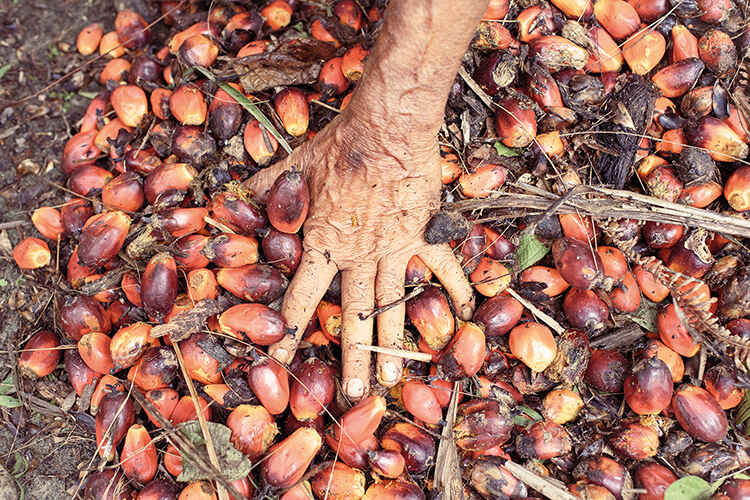
Old man’s hand and palm oil. Image: Daniela Sala
In 2019, Indonesia imported from the UK 2,300 tons of paraquat, largely manufactured by Syngenta’s Huddersfield plant. Since 2017, with ChemChina’s acquisition of Syngenta, production and exports from China have also increased, making the paraquat supply chain increasingly difficult to track.
The countries that are responsible for most of the manufacturing and export (China, Switzerland and the UK) ban paraquat domestically, as has the EU. While the EU’s internal regulations are increasingly protective of the environment, it remains the largest pesticide exporter, with EU companies investing more and more in countries in the Global South.
Environmental Disaster
In Kalimantan, the effects of palm oil monocultures and the extensive use of pesticides are unspooling before the eyes of the local communities.
A short drive from Herna’s house, just on the other side of the Trans Kalimantan highway in the village of Bangkal, most residents still have first-hand memories of life before the plantations. The village is located on the shore of the biggest lake in the region, Sembuluh Lake. Its 4,000 residents, mostly Dayaks, the indigenous peoples of Borneo, relied on farming and fishing, and they drank water from the lake. Now, they have lost their land and, in one of the wettest areas in the world, they struggle to access clean water.
It all started with huge concessions to palm oil companies. ‘It happened suddenly, without any consultation with the community,’ says Sangkai Rewa, secretary of Bangkal and leader of AMAN, the association that represents the indigenous people of Central Kalimantan. Sangkai has been connected to Bangkal for generations. His wooden house, on stilts, like all the houses in the surrounding area, sits on the edge of the village. The residents did everything they could to resist the arrival of the plantations. In the late 1990s, they managed to force the Indonesian company Agro Indomas to back down. But in 2005, their fight against another conglomerate, PT Hamparan Masawit Bangun Persada, failed, due in part to support for the company from the then local governor, Darwan Ali, as revealed by a Gecko Project investigation.
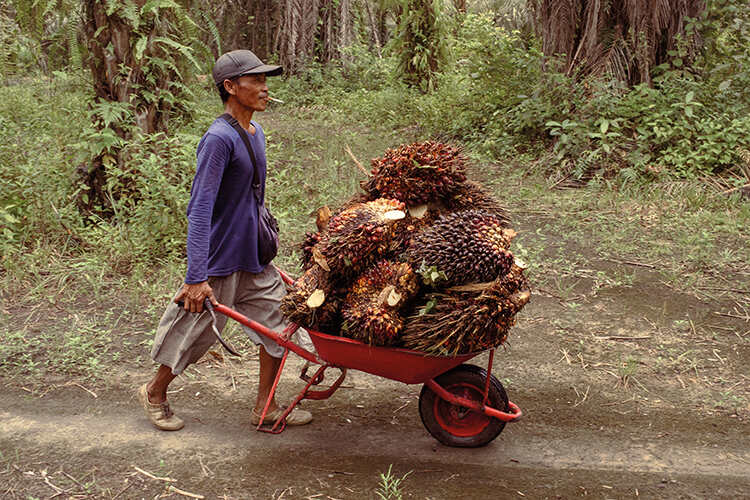
Worker carries palm oil fruits. Image: Daniela Sala
‘The people of Bangkal were forced to give up their land by threats and deception. Around us it was all forest. Look around: what is left today?’ says Sangkai. The establishment of Hamparan plantation paved the way for the arrival of more companies. Bangkal is now surrounded by a dozen plantations and refineries.
‘We saw the colour of the water changing’, says Sangkai. ‘We can not even use the water for washing: it feels itchy and you get rashes. The water is polluted, and because of that, our entire ecosystem is under threat.’
At dawn every day, a few narrowboats approach the small wooden dock next to the daily market in Bangkal. Nouredin, a 60-year-old fisherman from a nearby village, is busy untangling a few dozen small fish from his net. He spent the whole night fishing, but the catch was meagre. ‘It did not used to be like that,’ he explains while unloading his catch. ‘Fish were bigger and easier to catch. There are species that are slowly disappearing.’
Fish have become scarcer, while the fast-growing weed water hyacinth is invading the shore of Sembuluh, forcing fishermen to travel much further. Residents say that the overgrowth must be associated with fertilisers and chemicals dumped from the plantations.
The village of Bangkal on the shores of the now heavily polluted Lake Sembuluh
In 2018, the Central Kalimantan Environment Agency had the water in the lake tested. Nothing is wrong, they stated, dismissing the residents’ protests.
But not everybody agrees. ‘We openly challenged the agency’s findings,’ says Muhammad Habibi, director of the NGO Save Our Borneo. ‘We asked the agency to disclose the actual results, and to share all the relevant details: where the samples had been taken, how they had been treated, what residues they had been analysed for. But the agency simply refused to comply.’
Save Our Borneo and Ecoton, another environmental NGO, conducted some water testing in Sambas, Western Borneo, in an area geographically very similar to Lake Sembuluh and similarly affected by palm oil monoculture. The results were worrying, with levels of chloride and phosphates in the region’s river far higher than accepted norms. Habibi fears for the fate of Lake Sembuluh. ‘Our suspicion is that the local authorities have no interest in going against the palm oil industry. What if it becomes known that the ongoing ecological disaster in Lake Sembuluh is caused by the companies?’
Farmer Turned Protester
‘Palm oil means Gramoxone, Gramoxone means palm oil’, says James Watt, a farmer in Bangkal. Watt is among the few residents who still have a small piece of land left: he used to grow rubber plants, fruit and vegetables. He started life as a traditional farmer and had no interest in palm oil cultivation. But as the vast plantations came to dominate the region, he was forced to switch. Around the same time, in 2015, he was introduced to paraquat, under the label Gramoxone. ‘I needed a stronger herbicide, and I went to the shop in Sampit, the nearest city. I asked the shopkeeper for advice, and he gave me this,’ Watt says, holding out the five-litre plastic package of the substance. Paraquat became a familiar household item and can be found in most farmers’ houses in Bangkal. ‘When I have to spray it, I smoke a cigarette first, so I make sure of the wind direction,’ Watt says.
Watt has no love for palm oil. In addition to being a farmer, he’s an activist. At 54, he has spent nearly half his life fighting against the palm oil industry, trying to mediate between residents and companies, and paying the price himself.
In 2020, following a demonstration against the plantation, Watt was sentenced to ten months in prison on a charge of stealing oil palm fruit from the land that once belonged to Bangkal residents.
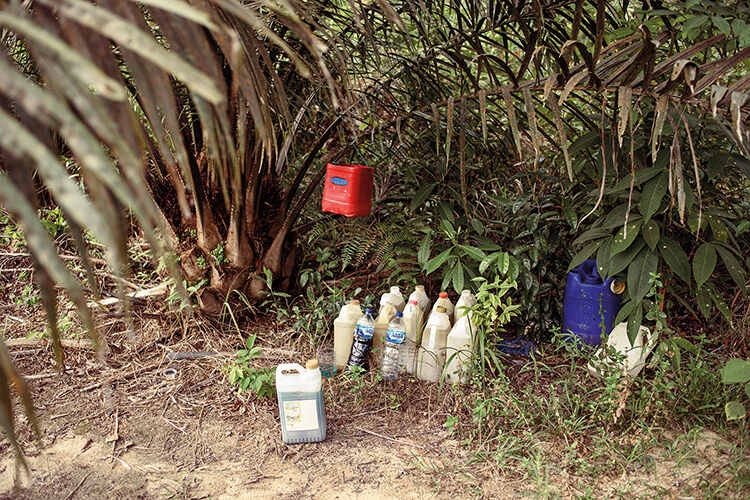
Bottles of paraquat and pesticide – Image: Daniela Sala
The last major protest against palm oil companies in Bangkla was in October 2023. Gijik, a 35-year-old man, was killed by a gunshot fired by police deployed to defend the plantation. Such cases, according to the Consortium for Agrarian Reform (KPA), an Indonesian association fighting against land grabbing, are far from isolated. Between 2015 and 2022, at least 69 people died as a result of clashes and protests against land grabbing. The clashes and deaths, again according to KPA, can’t be separated from the decision to deploy police forces always and exclusively in a repressive function, in defence of plantations.
‘I can’t understand what the government means when it says palm oil brings development and prosperity,’ says.Watt. He never asked his parents why they named him after the Scottish inventor, which is said to have started the industrial revolution. While he grasps the subtle irony, he’s proud of the name he bears.
‘For me, real prosperity was before. We were not dependent on anyone: we grew our own vegetables, rice. We went fishing and if we wanted meat, all we had to do was go hunting in the forest. Now all that is gone’.
This article was originally published as ‘Paraquat: banned in Europe, on sale in Indonesia in Geographical Magazine on the 28th of June 2024. Written by Daniela Sala, Adi Renaldi & Budi Baskoro. Photography by Daniela Sala. Republished with permission. Read original.
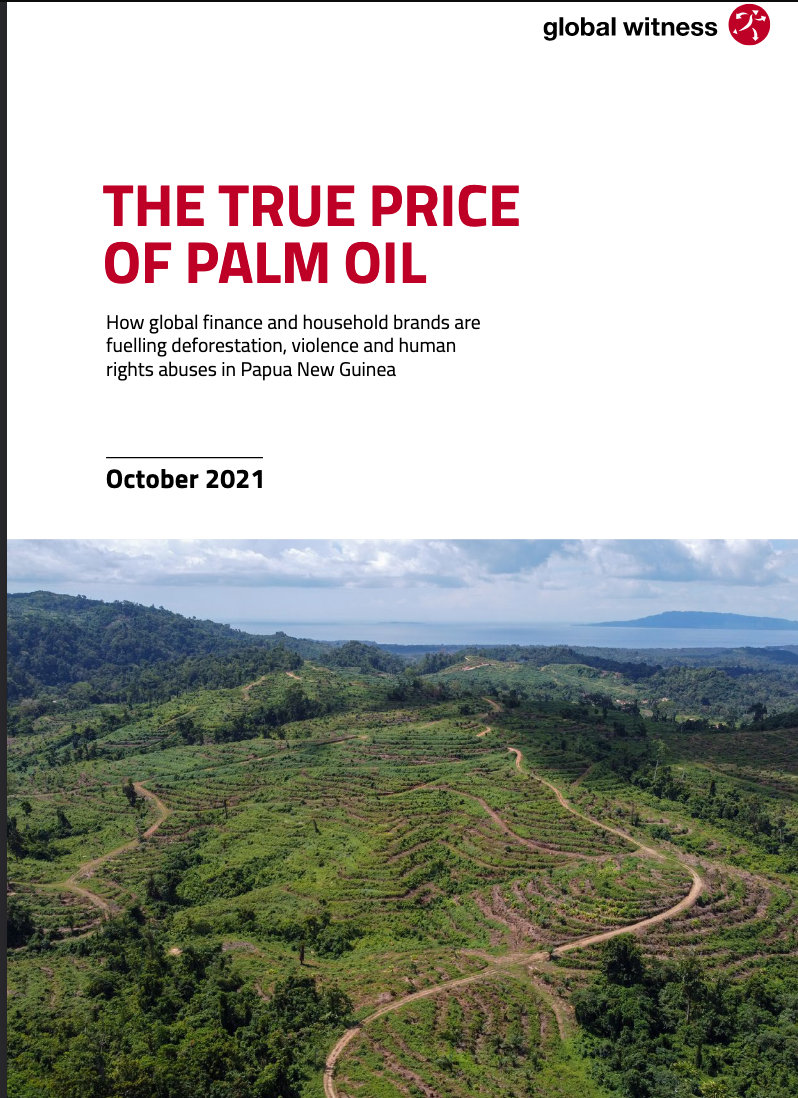
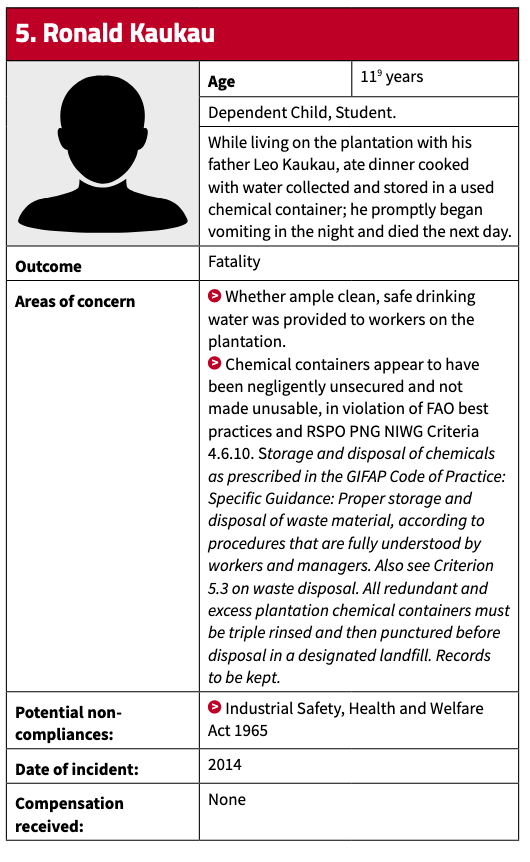
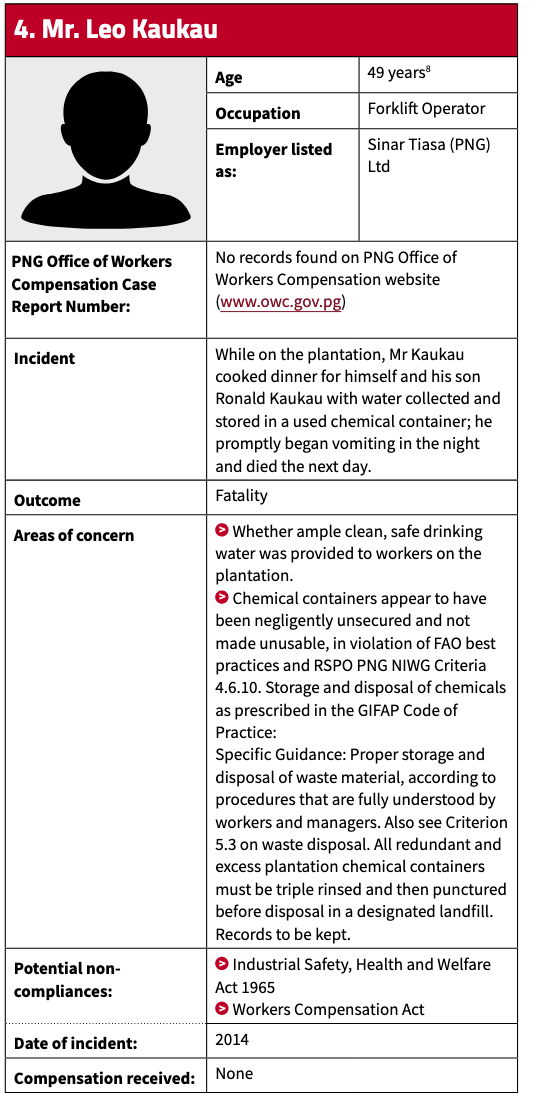
In the below 2021 report by respected non-profit Global Witness, there was a shocking revelation that a young child of a palm oil worker died as a result of consuming pesticide infused water on a “sustainable” palm oil plantation in Papua New Guinea. The firm sold to global giants like Nestle, Ferrero, Unilever, Mondelez and more, with products on the shelves and bought be consumers all over the world.
Global Witness October 2021 Report: Violence and death for palm oil connected to household supermarket brands (RSPO members)
“One palm oil firm, Rimbunan Hijau, [Papua New Guinea] negligently ignored repeated and avoidable worker deaths and injuries on palm oil plantations, with at least 11 workers and the child of one worker losing their lives over an eight-year period.
“Tainted palm oil from Papua New Guinea plantations was sold to household name brands, all of them RSPO members including Kellogg’s, Nestlé, Colgate, Danone, Hershey’s and PZ Cussons and Reckitt Benckiser”
Forest 500 report shows 150 of the world’s largest financial institutions invested nearly $9 trillion in deforestation-linked industries. Support EUDR!
Healthy rivers are essential for community wellbeing. India and Bangladesh legally recognise rivers as natural persons with rights and powers. Take action!
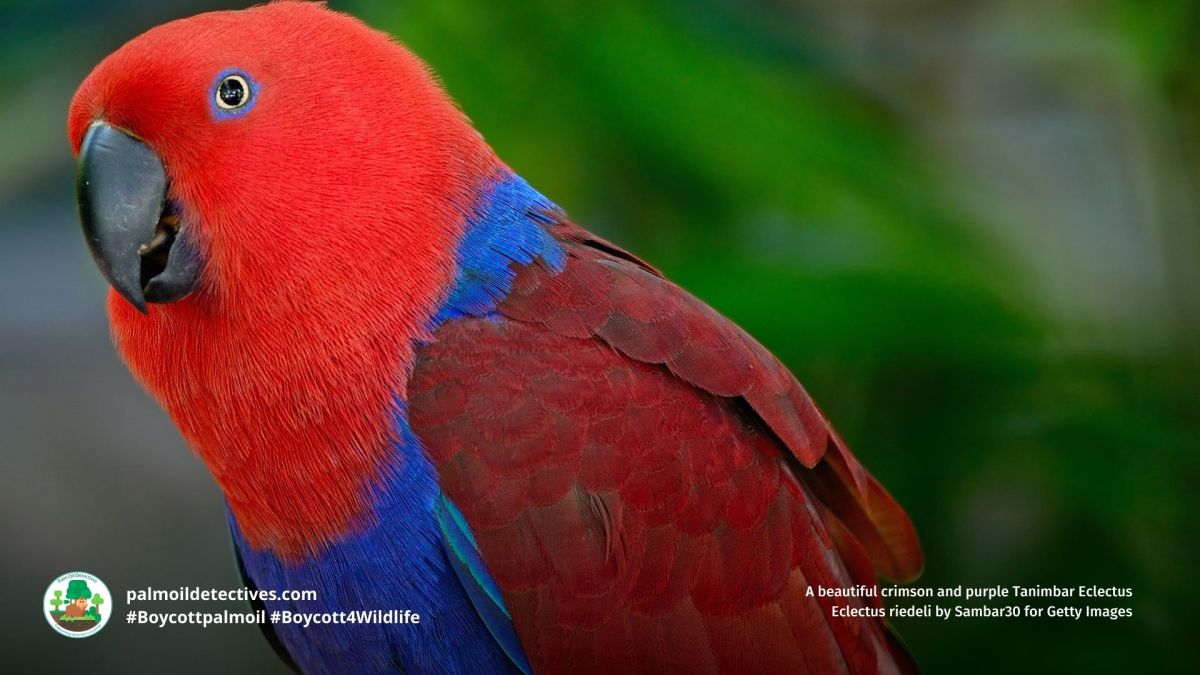
The Tanimbar Eclectus Parrot Eclectus riedeli also known as the Eclectus Parrot or Tanimbar Eclectus is a rare and striking #parrot found only on the #Tanimbar Islands of Indonesian occupied #WestPapua. Males display…
The Andean condor Vultur gryphus is one of the largest flying #birds in the world, with a wingspan of up to 3.3 metres and a body weight of up to 15 kilograms. These…
The Sumatran tiger Panthera tigris sondaica is a critically endangered big cat, with less than 600 of their species alive in the wild today. Once living in Java and Bali, they are now…
Something went wrong. Please refresh the page and/or try again.
Take Action in Five Ways
1. Join the #Boycott4Wildlife on social media and subscribe to stay in the loop: Share posts from this website to your own network on Twitter, Mastadon, Instagram, Facebook and Youtube using the hashtags #Boycottpalmoil#Boycott4Wildlife.
2. Contribute stories: Academics, conservationists, scientists, indigenous rights advocates and animal rights advocates working to expose the corruption of the palm oil industry or to save animals can contribute stories to the website.
3. Supermarket sleuthing: Next time you’re in the supermarket, take photos of products containing palm oil. Share these to social media along with the hashtags to call out the greenwashing and ecocide of the brands who use palm oil. You can also take photos of palm oil free products and congratulate brands when they go palm oil free.
More and more palm oil free 🦧 products in Australia 🇦🇺. Customer awareness is increasing month by month. Of course Bart Van Assen will keep pushing "sustainable" palm oil with Orangutan Land Trust. Boycott palm oil to protect wildlife! There is not planet B #boycott4wildlifepic.twitter.com/rm7chub5Rb
If possible to get Ovomaltine, please promote it among your friends. It openly advertises with 0 palm oil. No RSPO no bullshit. For me it even tasts better than nuttela. It substantiates that chocolate spread can be made delicious without filthy palm oil. pic.twitter.com/cyV5Tm3tLd
4. Take to the streets: Get in touch with Palm Oil Detectives to find out more.
5. Donate: Make a one-off or monthly donation to Palm Oil Detectives as a way of saying thank you and to help pay for ongoing running costs of the website and social media campaigns. Donate here
Extinction, or the disappearance of an entire species, is commonplace. Yet evidence suggests that the number of bird species going extinct, and the rate at which they are disappearing, is increasing dramatically. Conserving species at the 11th hour is difficult and expensive, the key is definitely prevention. To go hard and go early and stop species disappearing. Help rainforest animals on the verge of extinction from deforestation by changing your shopping habits. #Boycottmeat#Boycottpalmoil#Boycott4Wildlife
Extinction, or the disappearance of an entire species, is commonplace. Species have been forming, persisting and then shuffling off their mortal coil since life began on Earth. However, evidence suggests the number of species going extinct, and the rate at which they disappear, is increasing dramatically.
Our recent work suggests that the rate at which species are going extinct may be many times higher than previously estimated — at least for birds. The good news, however, is that recent conservation efforts have slowed this rate a lot.
Old rates
For decades, palaeontologists have used fossils to estimate how long different species persisted before dying out. The discovery of a new fossil species gives a minimum estimate of when the species might have first evolved. The absence of the same species later in the fossil record signifies its probable extinction.
Though the methods are woefully imprecise, researchers have estimated that the average lifetime of a vertebrate species is between one and three million years. Many species are at the lower end of this range, while a few species persist many millions of years longer. For comparison, our own species, Homo sapiens, has been around for less than 500,000 years.
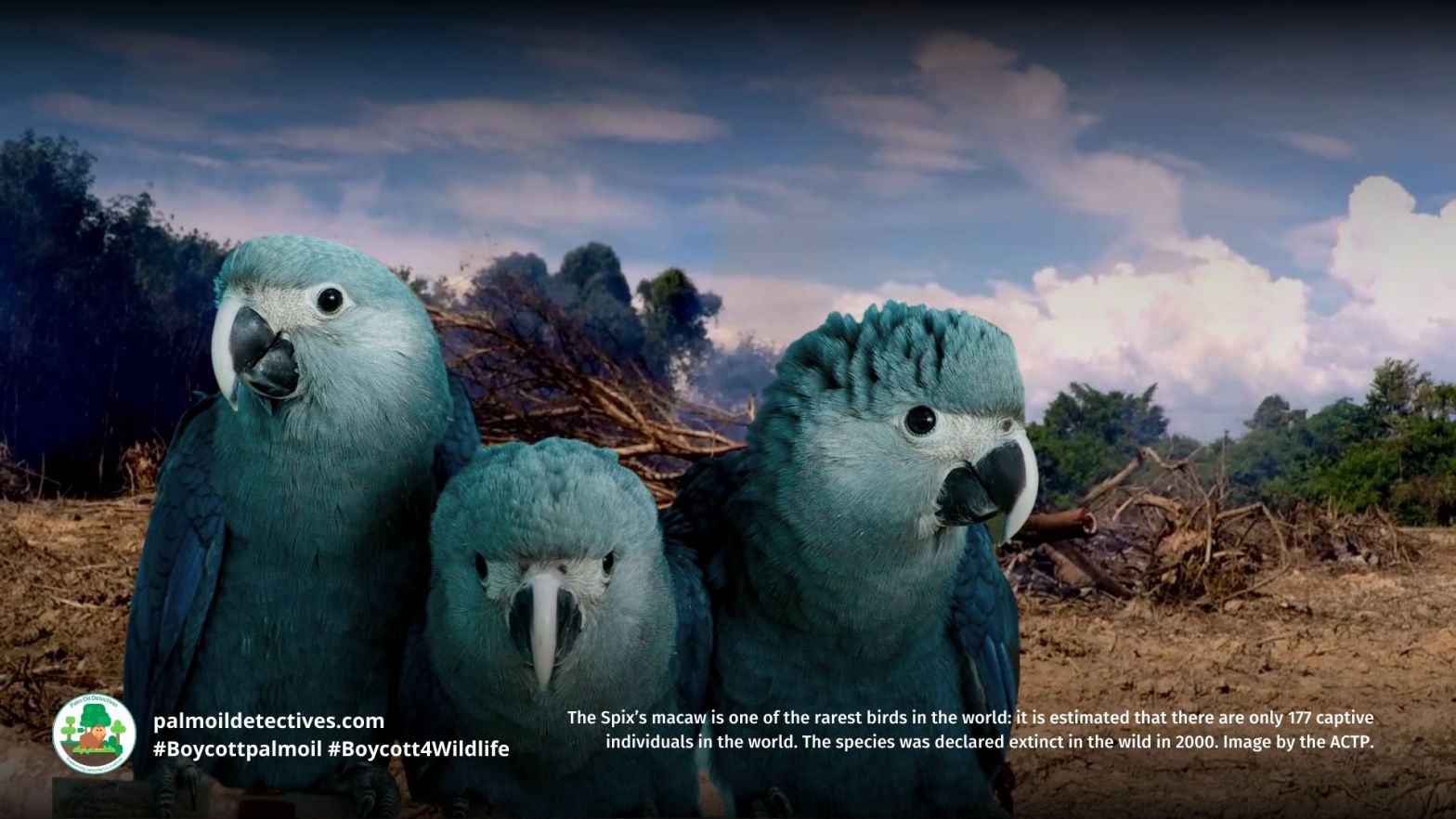
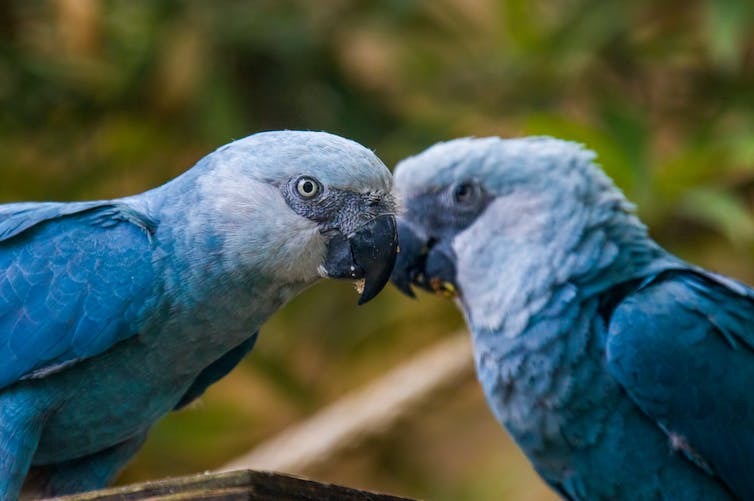
Spix’s macaw is now extinct in the wild. Conservation programs in Brazil maintain the last 70 or so individuals from this species. (Shutterstock)
Some simple math based on the average duration of fossil species predicts that only two to five bird species should have been lost since 1500. If the fossil data suggests a bird species will persist for three million years before going extinct, a species living in 1500 could be expected to survive for 30,000 years. In other words, a hundredfold drop.
This is the sort of calculation that supports the argument that we are approaching a “sixth mass extinction,” rivalling times in the past when extinction rates were orders of magnitude higher than the long-term average.
However, a high historical extinction rate based on data from the past few centuries may not be helpful. Using the historical extinction rate to predict current rates of extinction is similar to using car crash numbers for Model T Fords in the 1920s to predict deaths on the road in the 2020s. Many more cars hurtle down the road much faster today than they did 100 years ago. But in contrast to the 1920s, cars today sport airbags and other safety features.
Almost 80 per cent of historic bird extinctions were on oceanic islands like Hawaii, Madagascar and New Zealand, and often due to our unwitting importation of rats and snakes. Current threats include habitat destruction and climate change. And, akin to airbags, we are now much more interested in, and able to attempt, active conservation.
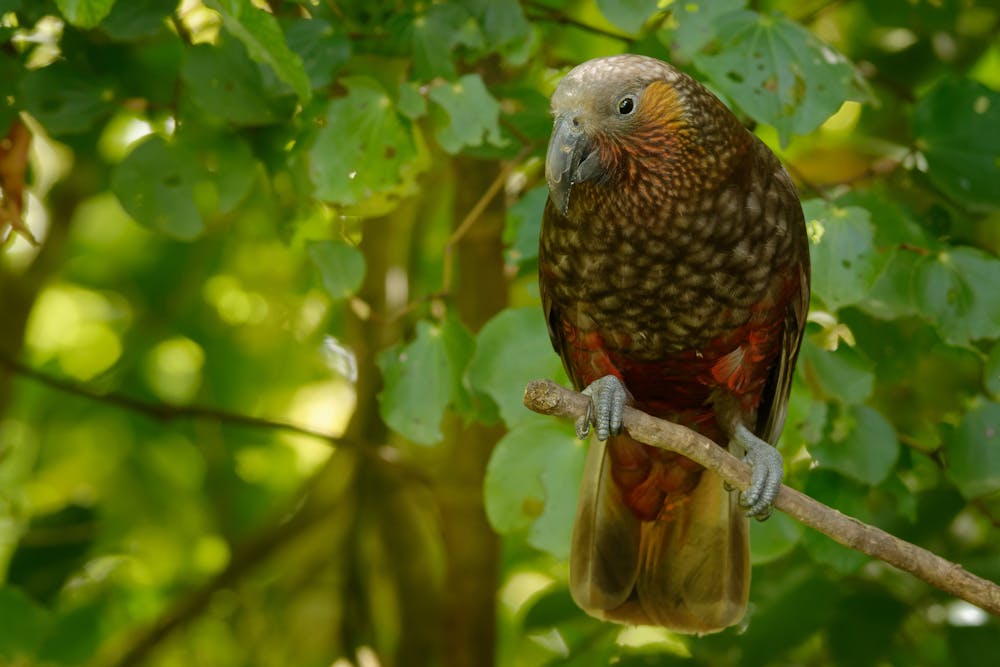
The New Zealand kaka, which is on the IUCN’s Endangered List, is threatened by non-native predators and wasps, the latter which compete with the bird for its food source. (Shutterstock)
New rates
Using the same reasoning as before, we studied the number of species that change their status. But instead of considering extinct versus living species from long ago, we considered all levels of endangerment (the entire escalator of decline that moves species closer to extinction), and more recent data. We used numbers from the International Union for the Conservation of Nature’s Red List for all 10,000 bird species from four time points.
The Red List gives each species a threat rating based on the likelihood that it is at risk of extinction. There are six ratings in total, starting with least concern (8,714 species in 2016) and moving through critically endangered (222 species) all the way to extinct in the wild (five species).
We started with the initial records from 1988 and compared them to subsequent updates taken every four to six years. My co-authors – comparative biologist Melanie Monroe and Stuart Butchart, chief scientist at BirdLife International — tallied the number of species that remained in place, rose or descended the extinction escalator decade over decade. Using those numbers, applied mathematician Folmer Bokma calculated a current average rate of extinction — the chance an average species would go extinct in any given year.
The vast majority of species moved down the endangerment escalator. That means that they are at higher risk of extinction today than they were previously. So the final average rate of extinction was high.
Based on the Red List numbers, the expected lifespan of a species living today is only about 5,000 years — this is six times worse than the historical rate and hundreds of times worse than the average extinction rate calculated using fossils.
A silver lining?
These results are surprisingly dismal, but we also found an encouraging pattern. We calculated the overall impact of conservation activity on rates of extinction by including or excluding improvements in risk status due to conservation efforts. Without conservation, our estimate of a 5,000 year future for living species would have dropped to 3,000 years.
Because of intense conservation efforts, a species designated as critically endangered in the past was twice as likely to improve in status as it was to become extinct in the wild. Likewise, from year to year, the probability of a critically endangered species to move up to the relative safety of merely endangered status was greater than the probability of an endangered species having its prospects become critical. This is hard evidence that conservation works.
But we also know that 11th-hour intervention is expensive. For instance, in British Columbia, the government recently earmarked nearly $30 million to try to protect the few remaining caribou in the province. We have known for decades that B.C. caribou have been declining, and extreme intervention, like shooting wolves from helicopters, seems, well, desperate.
Efforts to preserve B.C. caribou have included going after their predators. (Shutterstock)
And this desperation is unnecessary. If we want to conserve particular species, we need to target them early. This means we need to pay more attention to species that are not currently critically endangered.
We must identify the species that we want to keep around and that are unlikely to deal well with the world we are creating (or maybe more accurately, destroying) for them. Importantly, these species may currently be assessed as merely vulnerable, or even of least concern. We need to get them off the extinction escalator. It bears repeating: an ounce of prevention, a stitch in time.
This is an updated version of an article originally published on Jan. 16, 2020. The earlier story included an image of a hyacinth macaw (a species that is not endangered) that was misidentified as a Spix’s macaw. The original image has been updated to include an image two Spix’s macaws, which are extinct in the wild.
These species have no known conservation actions in place and are silently disappearing before we can save them. Do something about it by boycotting supermarket brands linked to tropical deforestation. Join the #Boycott4Wildlife
Something went wrong. Please refresh the page and/or try again.
Take Action in Five Ways
1. Join the #Boycott4Wildlife on social media and subscribe to stay in the loop: Share posts from this website to your own network on Twitter, Mastadon, Instagram, Facebook and Youtube using the hashtags #Boycottpalmoil#Boycott4Wildlife.
2. Contribute stories: Academics, conservationists, scientists, indigenous rights advocates and animal rights advocates working to expose the corruption of the palm oil industry or to save animals can contribute stories to the website.
3. Supermarket sleuthing: Next time you’re in the supermarket, take photos of products containing palm oil. Share these to social media along with the hashtags to call out the greenwashing and ecocide of the brands who use palm oil. You can also take photos of palm oil free products and congratulate brands when they go palm oil free.
More and more palm oil free 🦧 products in Australia 🇦🇺. Customer awareness is increasing month by month. Of course Bart Van Assen will keep pushing "sustainable" palm oil with Orangutan Land Trust. Boycott palm oil to protect wildlife! There is not planet B #boycott4wildlifepic.twitter.com/rm7chub5Rb
If possible to get Ovomaltine, please promote it among your friends. It openly advertises with 0 palm oil. No RSPO no bullshit. For me it even tasts better than nuttela. It substantiates that chocolate spread can be made delicious without filthy palm oil. pic.twitter.com/cyV5Tm3tLd
4. Take to the streets: Get in touch with Palm Oil Detectives to find out more.
5. Donate: Make a one-off or monthly donation to Palm Oil Detectives as a way of saying thank you and to help pay for ongoing running costs of the website and social media campaigns. Donate here
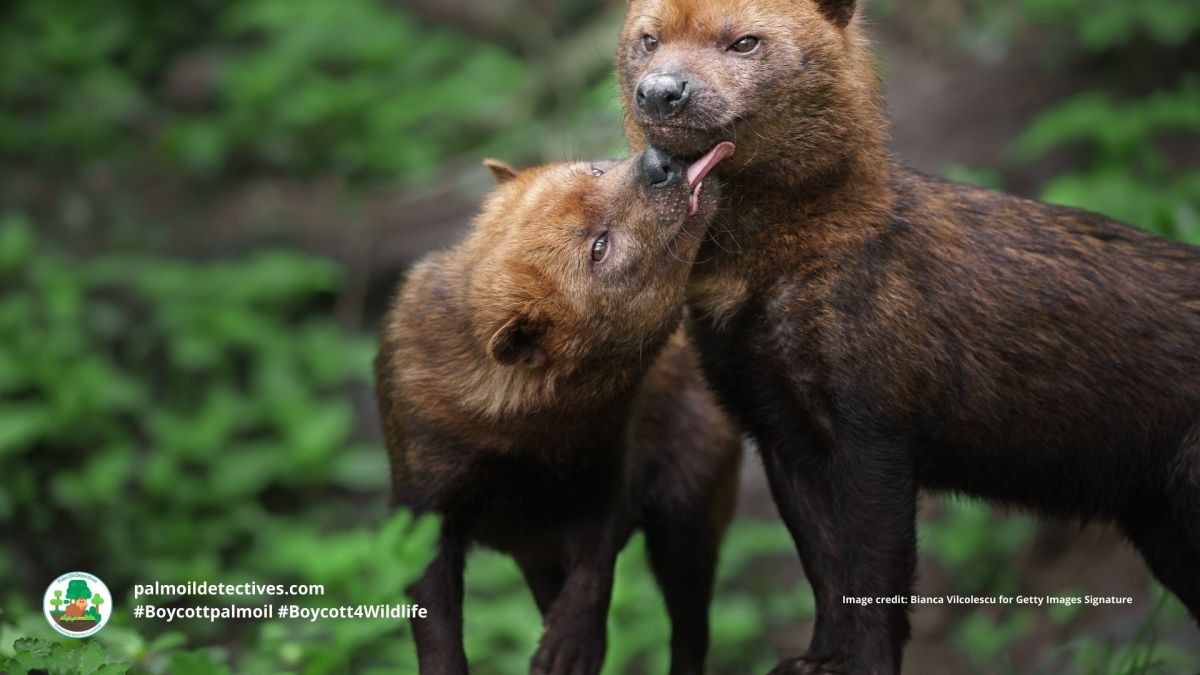
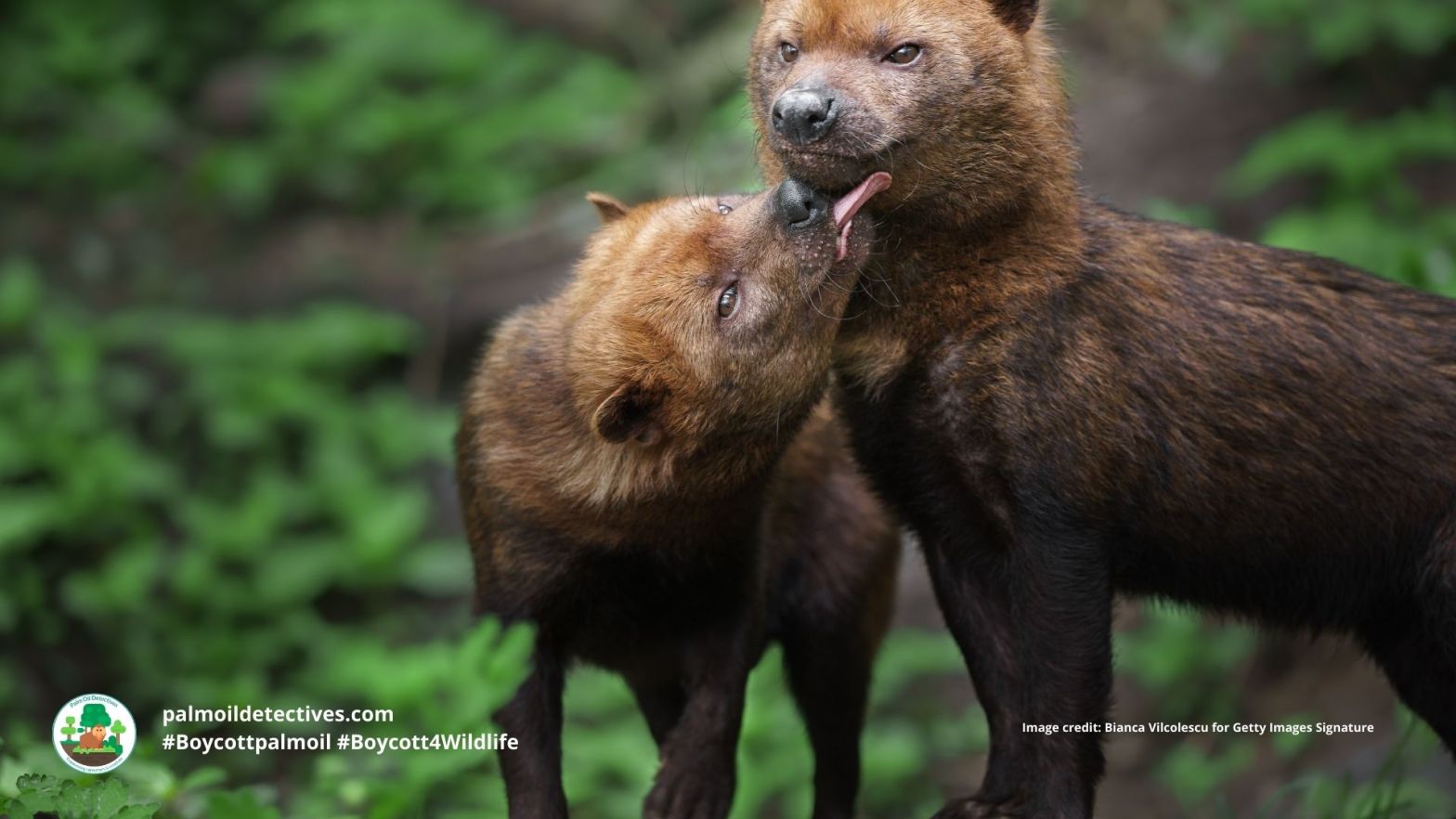
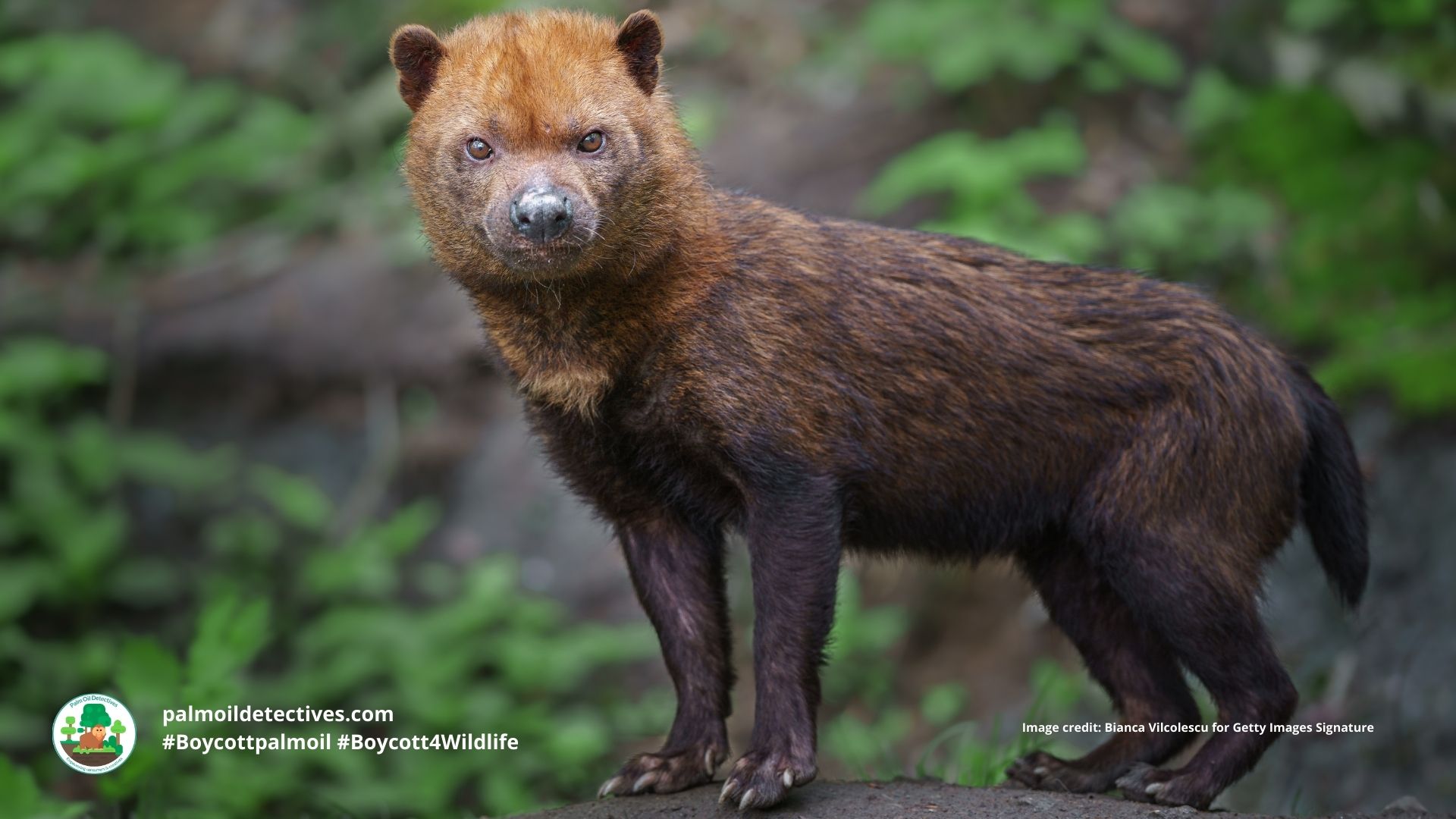
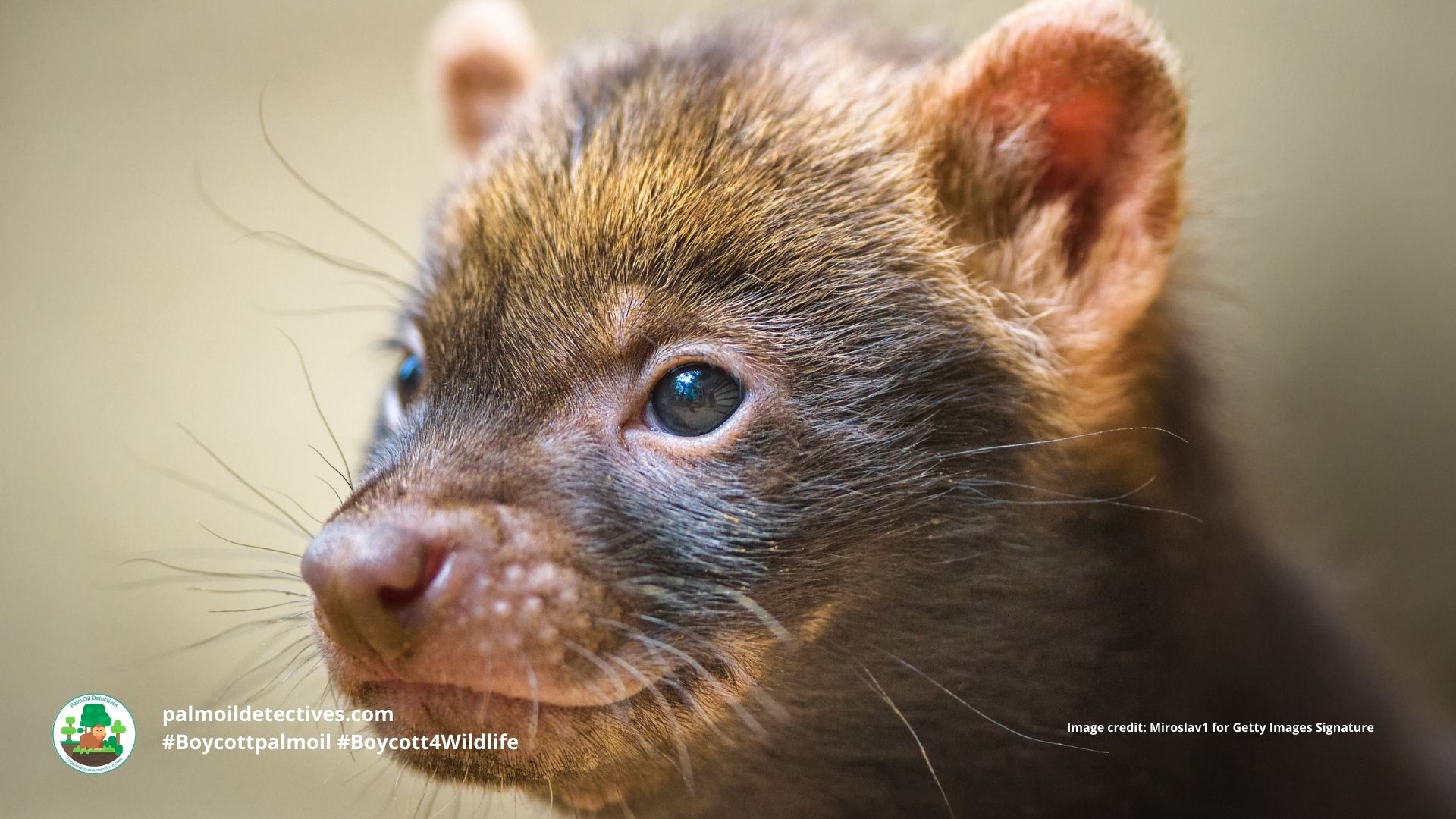
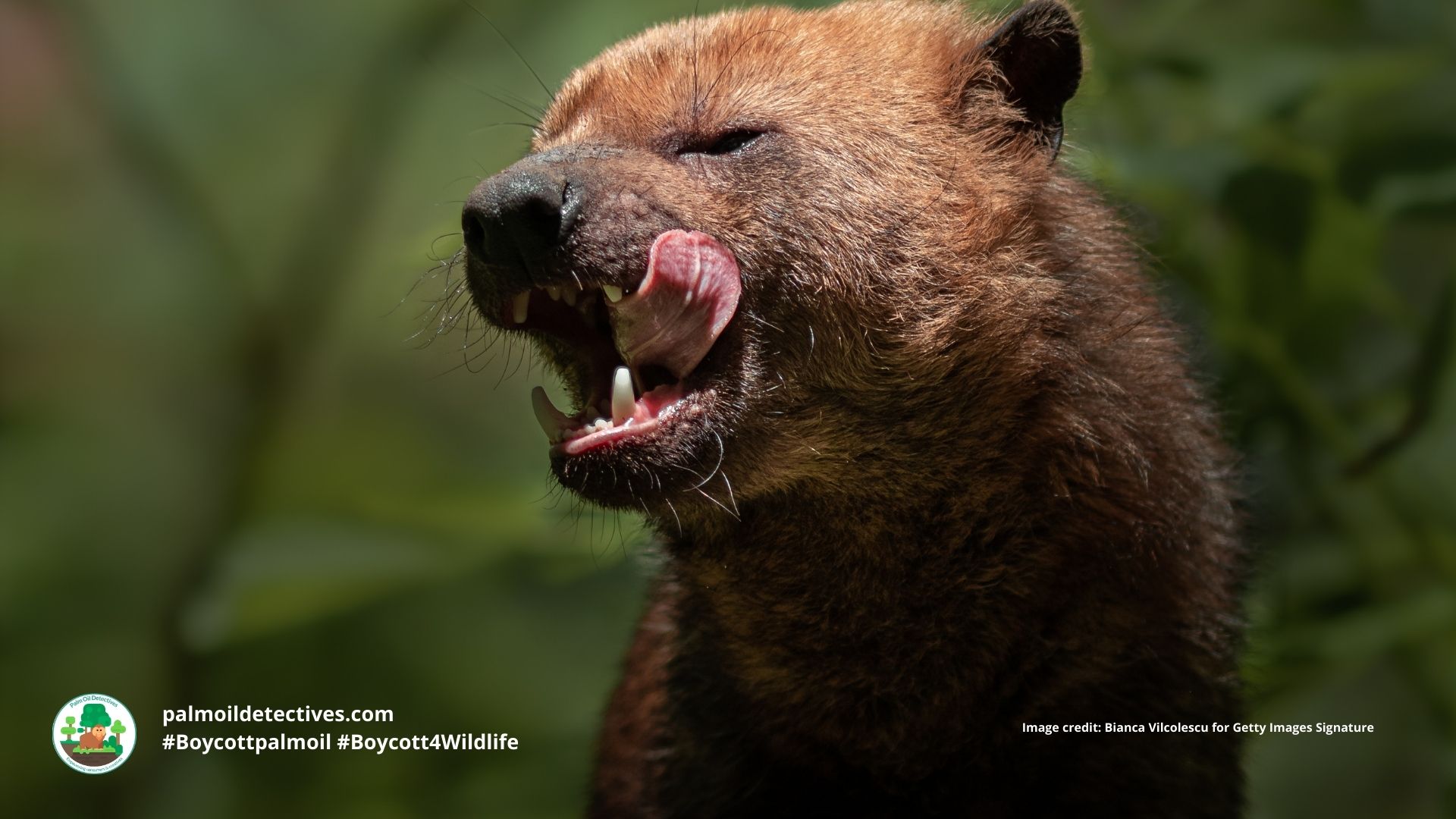
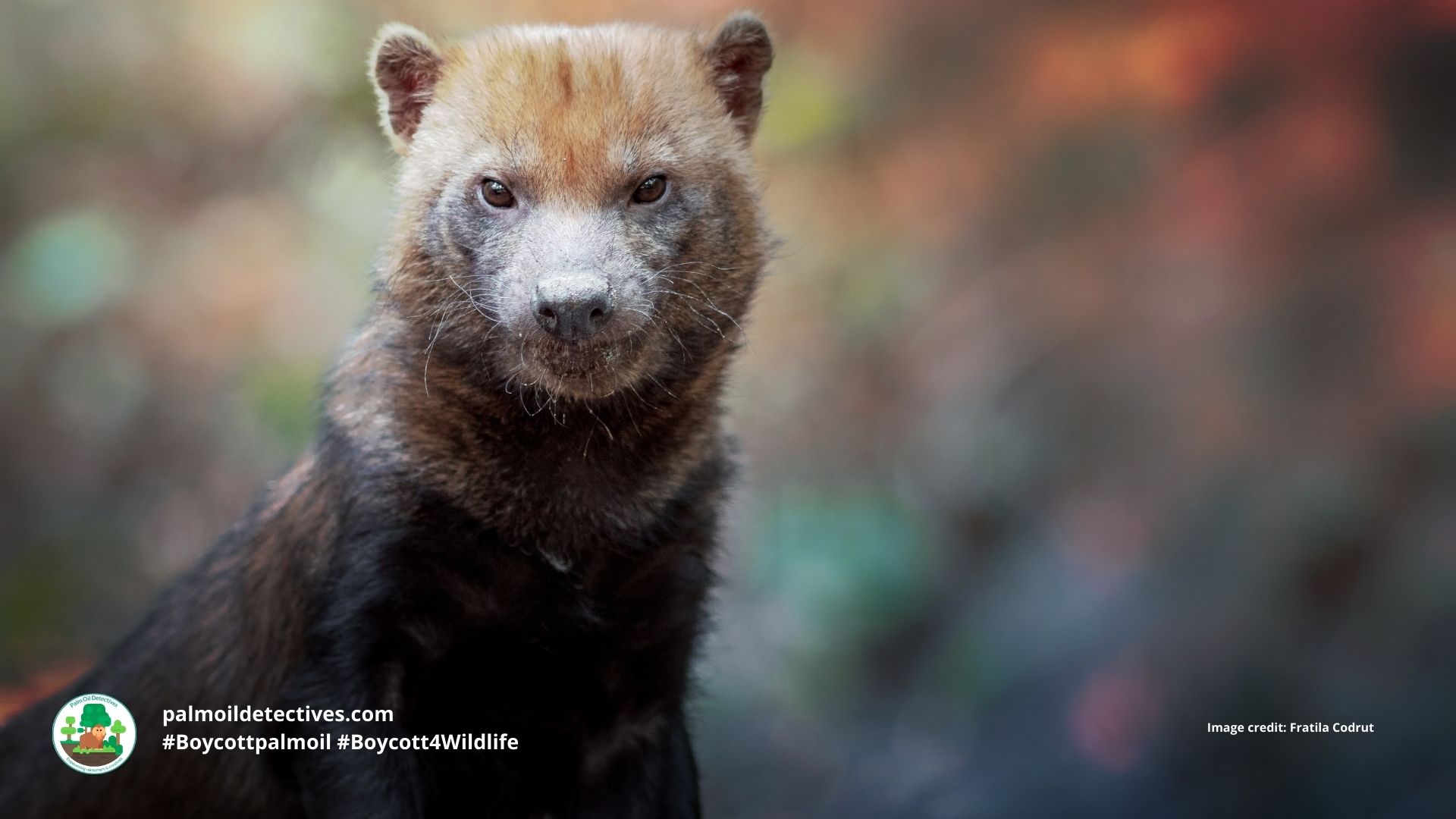
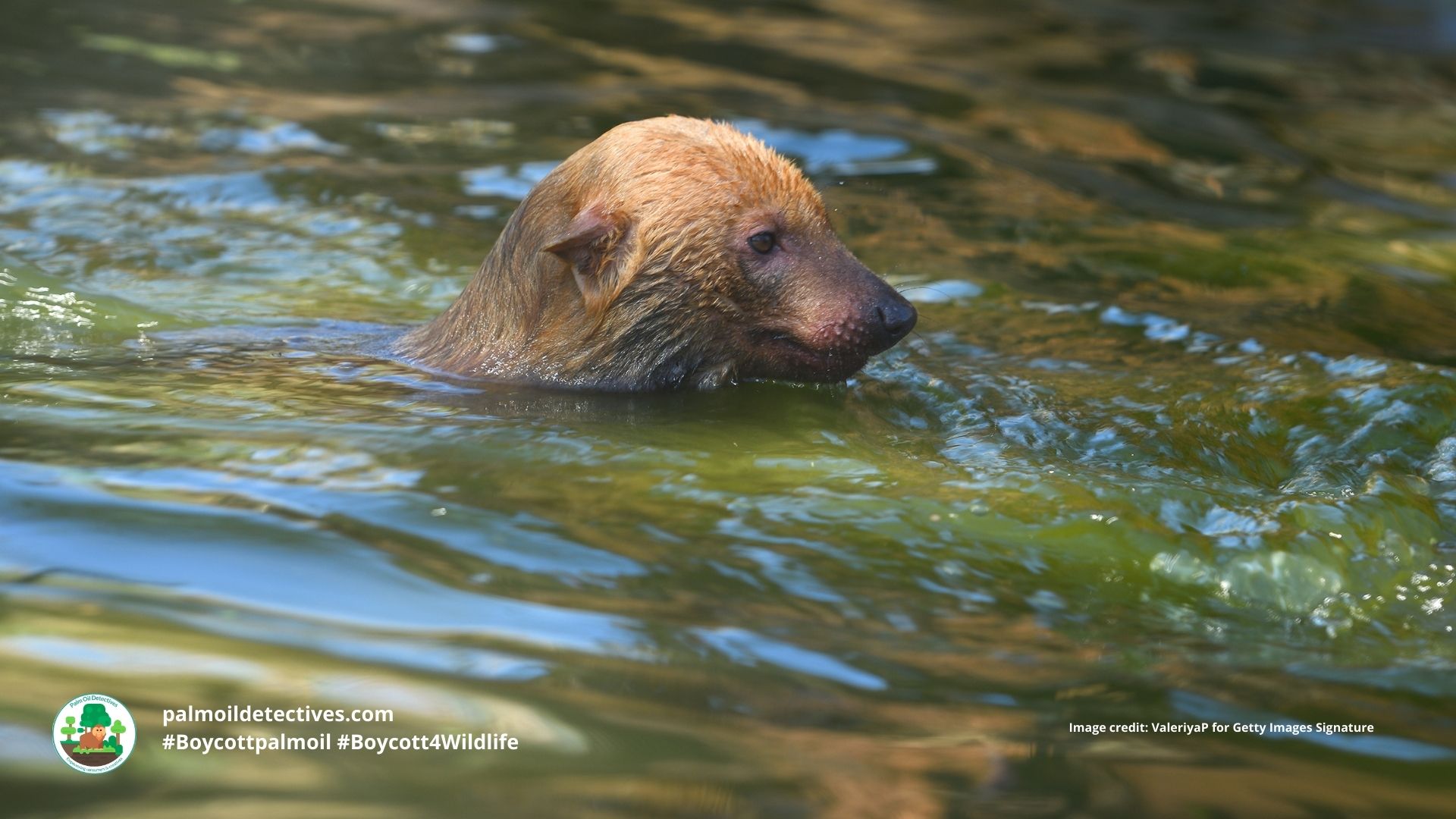
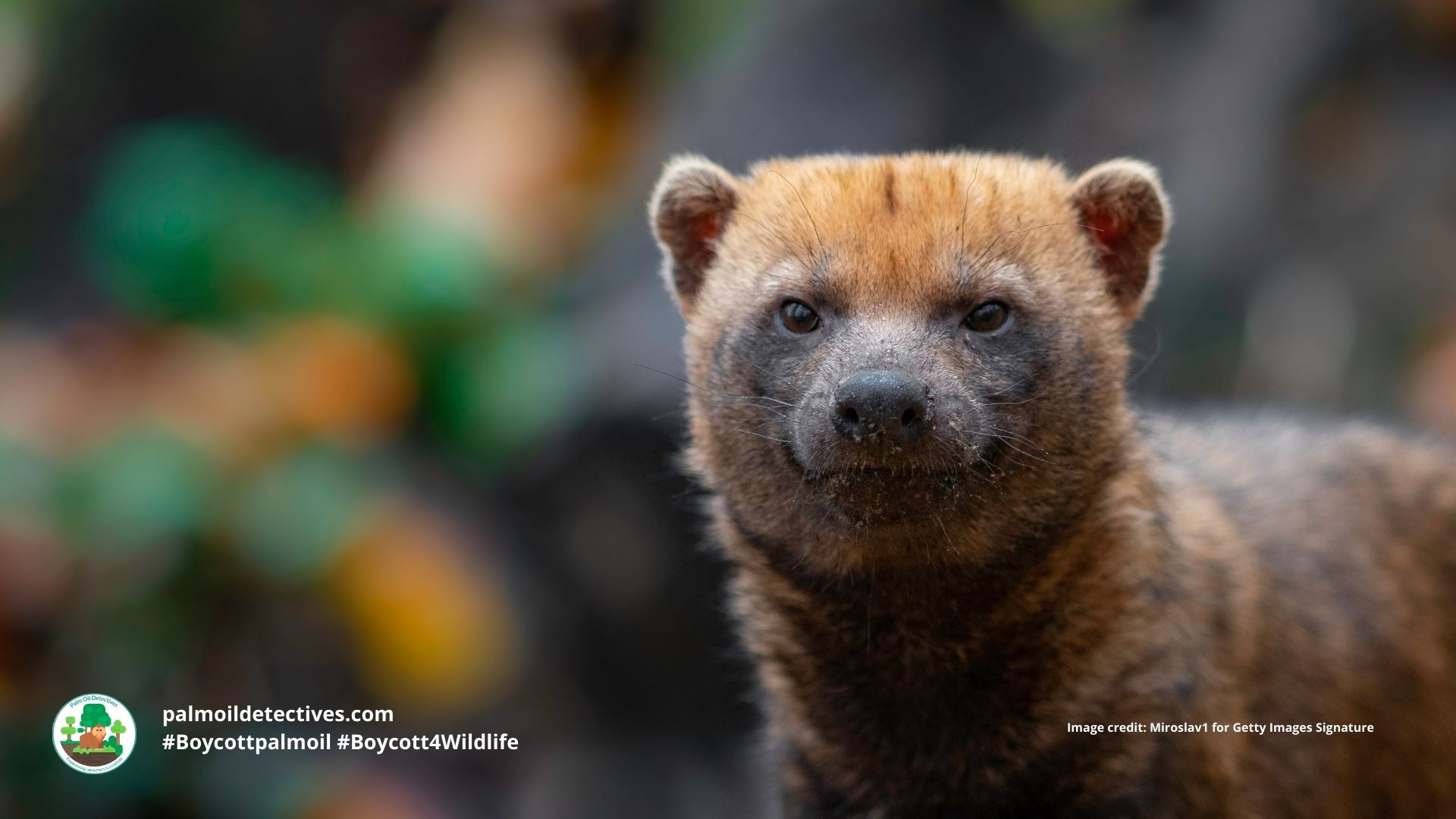
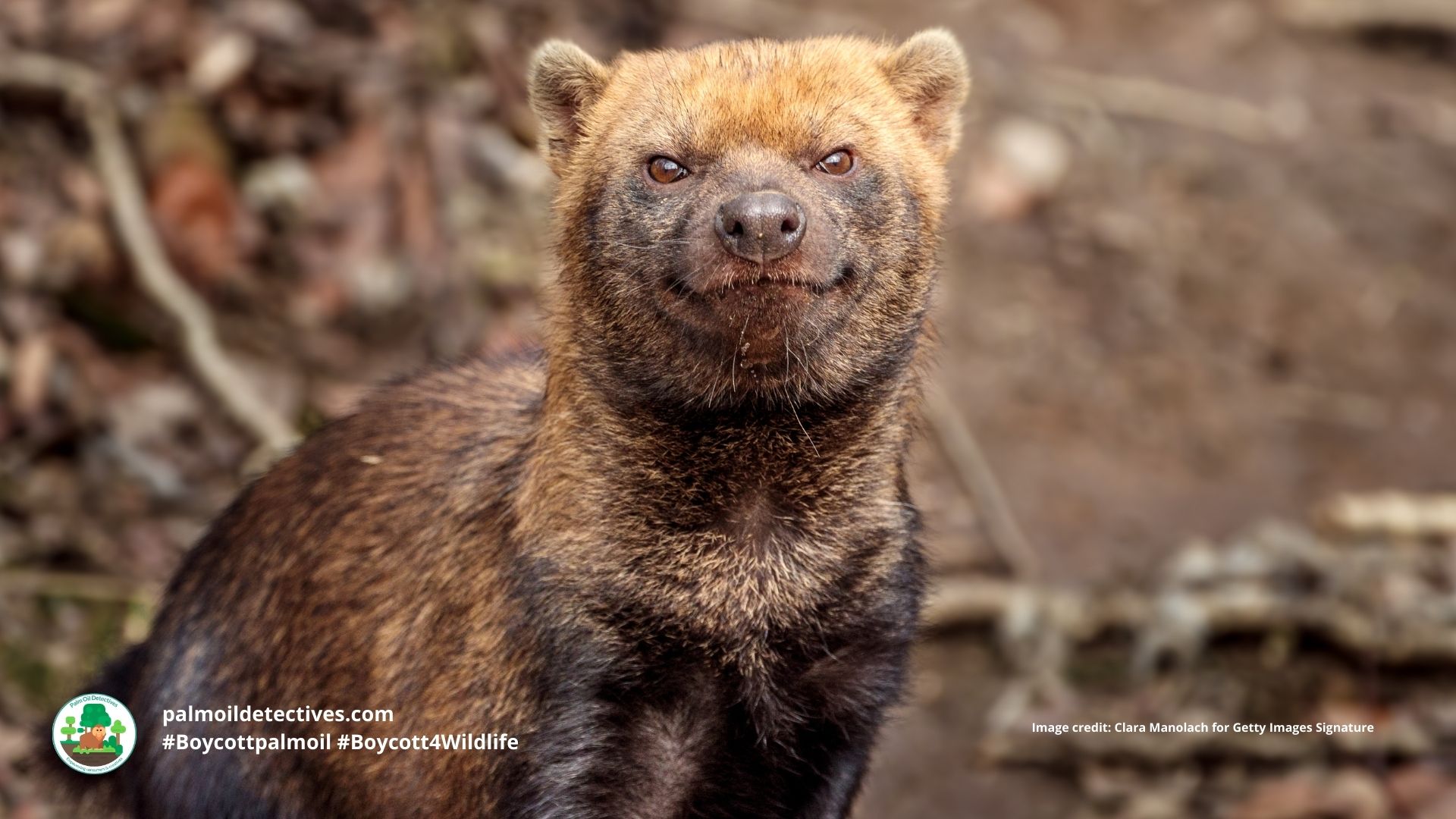
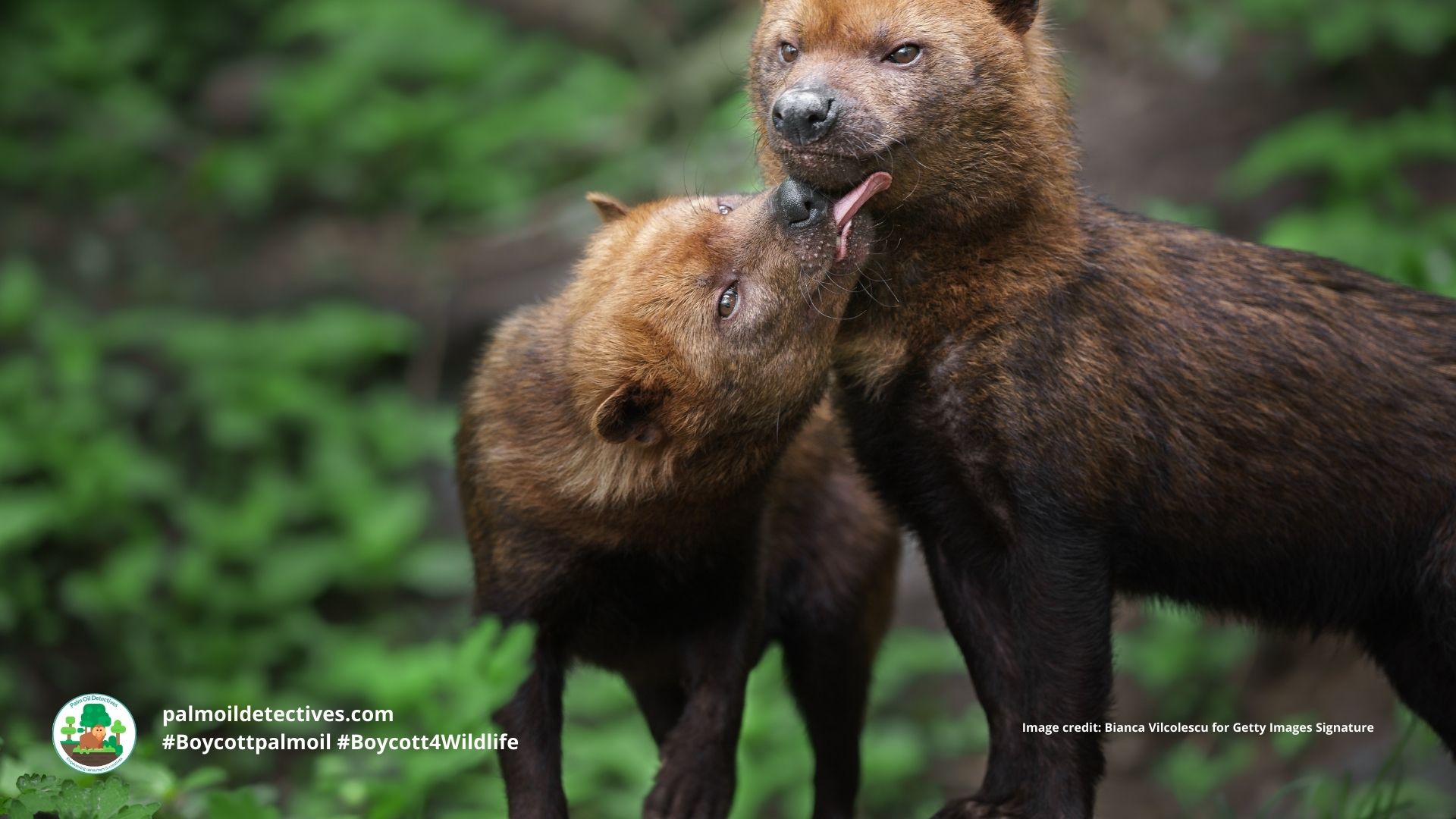
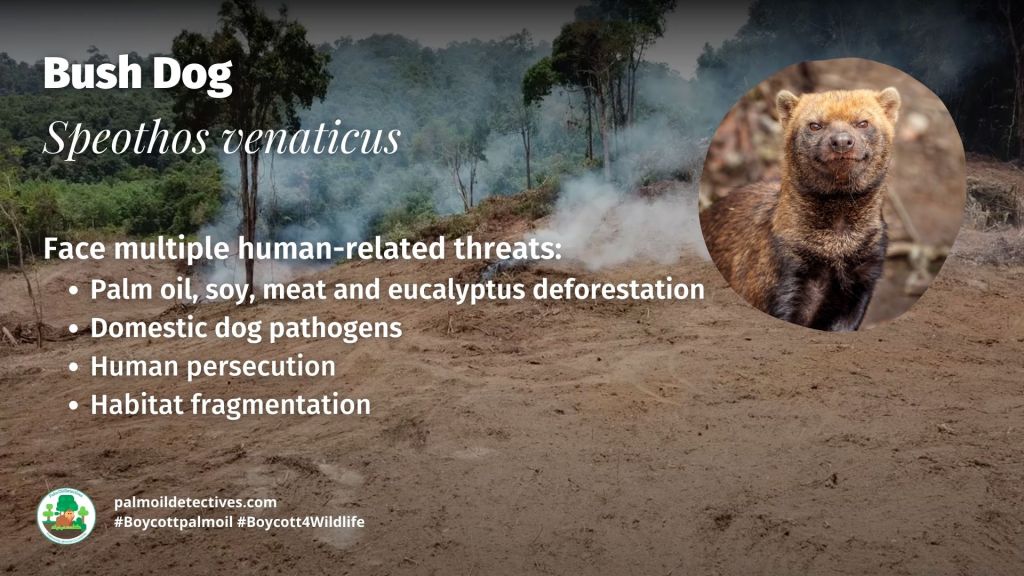
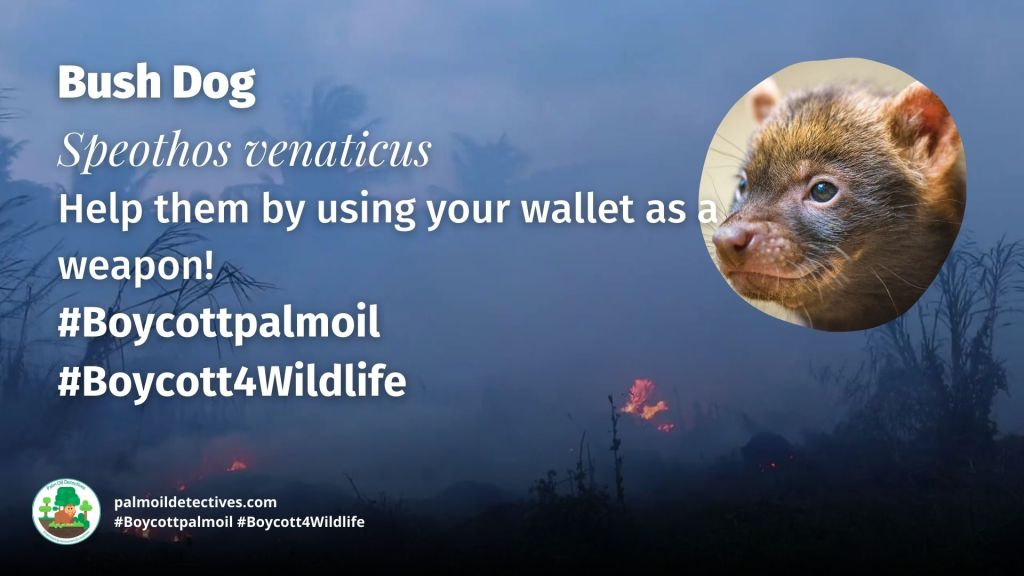
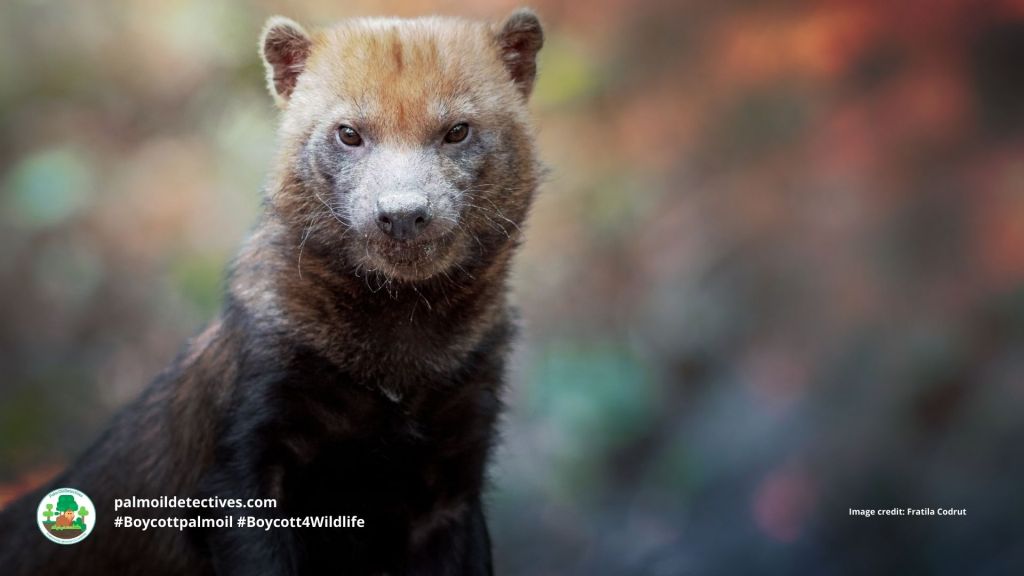
The enigmatic Bush #dog was once believed to be extinct, however they have now emerged from the shadows. These elusive canids show remarkable teamwork and intelligence with strategic hunting tactics. They divide into land and water based groups when pursuing elusive prey like the paca. Despite their shy nature, Bush #dogs break their silence with peculiar calls, a vocal repertoire that serves as a means of communication and warning within the pack. Adorned in reddish hues, they bear the nickname ‘zorro,’ reminiscent of a fox, while their distinctive vinegar-like scent has earned them the moniker ‘vinegar dog’.
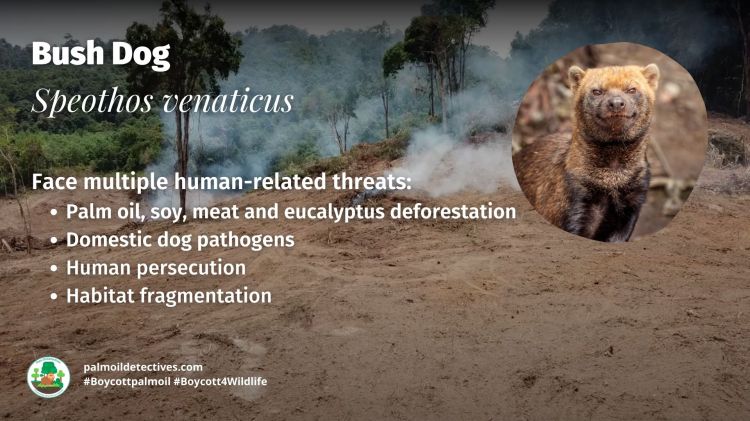
They are classified as Near Threatened due to their range disappearing for cattle grazing, palm oil, soy, eucalytpus and other monoculture crops. Not enough is known yet about their lives to assess the damage. Fight for them every time you shop and be #vegan#Boycottpalmoil#Boycott4Wildlife.
Bush Dogs have webbed toes and are known for their excellent swimming abilities. They are the ultimate carnivores and dine mainly on agoutis, armadillos, paca, small mammals, rodents and reptiles.
Adult bush dogs sport soft, long brownish-tan fur with a lighter reddish hue on their heads, necks, and backs. Their tails are bushy, and the undersides are dark, sometimes with a lighter throat patch. However, young ones have black fur all over. They are typically 57–75 cm long with a 12.5–15 cm tail and a shoulder height of 20–30 cm. These wild dogs have short legs, a short snout, and relatively small ears. Their teeth are adapted for eating meat. Females have four pairs of teats, and both males and females have large scent glands. Interestingly, bush dogs have partially webbed toes, making them excellent swimmers.
Threats
Human-related threats and habitat encroachment are the main threat to the existence of Bush Dogs. This includes massive deforestation for monocultures throughout their range including for soy, palm oil, eucalyptus and pine. This leads to a reduction in the availability of prey species. Increased interactions with domestic dogs risks the spread of pathogens from these dogs to Bush Dogs.
Habitat Threats:
Human encroachment and habitat loss due to large-scale agriculture (e.g., soybean and palm oil), land conversion to pasture, and monoculture tree plantations (e.g., eucalyptus and pine).
Prey Reduction:
Illegal poaching and predation by domestic dogs contribute to a reduction in prey abundance, impacting the Bush Dog’s survival.
Disease Risks:
Increased risk of contracting lethal diseases from domestic dogs, including mange, parvovirus, rabies, Dioctophyma renale, Amphimerus interruptus, Lagochilascaris sp., and Echinococcus vogeli. Captive animals are susceptible to various diseases, highlighting their sensitivity and the potential threat from exposure to pathogens. Proximity to human areas and interaction with hunting dogs elevate the risk of disease exposure, emphasizing the need for conservation efforts.
Habitat
Bush Dogs are habitat generalists, often found near water sources like small streams where prey densities are higher. They’ve been spotted in various lowland forested habitats, including primary and gallery forests, semi-deciduous forests, and seasonally flooded forests. These adaptable creatures have been observed in cerrado habitat, pampas edge/riparian areas, and even unique environments like caatinga, chaco, and coastal mangroves. Interestingly, they have been seen several kilometres away from forest habitats. While there’s no clear habitat preference, some evidence suggests a preference for intact savanna and forest habitats.
Diet
The Bush Dog, a fascinating carnivorous species, exhibits a diverse diet influenced by their geographical location and habitat type. In the Pantanal region of Brazil, their primary food source is the Nine-banded Armadillo, constituting a substantial portion of their diet. On the other hand, in the interior Atlantic forest in Paraguay, the diet includes Agoutis, Paca, small mammals, rodents, reptiles, and various fruits like Cecropia. Notably, the availability of fruit in their diet increases when provided in captive settings, highlighting the adaptability of their feeding habits. However, the increasing threat of palm oil, meat and soy deforestation poses a significant risk to their food sources, emphasising the urgent need for conservation efforts to protect these unique carnivores.
Mating and breeding
Bush Dogs engage in year-round mating, with oestrus lasting up to twelve days and occurring every 15 to 44 days. Similar to other canids, their mating involves a copulatory tie, where the animals are locked together. Preceding copulation, urine-marking plays a significant role in their behavior. The gestation period ranges from 65 to 83 days, typically resulting in a litter of three to six pups, although larger litters of up to 10 have been reported. Newborns are initially blind and helpless, weighing between 125 to 190 grams. Their eyes open after 14 to 19 days, and they emerge from the nativity den shortly thereafter. Weaning occurs around four weeks, and sexual maturity is reached at one year. In captivity, they can live up to 10 years
This animal has no protections in place. Read about other forgotten species here. Create art to support this forgotten animal or raise awareness about them by sharing this post and using the #Boycottpalmoil#Boycott4Wildlife hashtags on social media. Also you can boycott palm oil in the supermarket.
1. Join the #Boycott4Wildlife on social media and subscribe to stay in the loop: Share posts from this website to your own network on Twitter, Mastadon, Instagram, Facebook and Youtube using the hashtags #Boycottpalmoil#Boycott4Wildlife.
2. Contribute stories: Academics, conservationists, scientists, indigenous rights advocates and animal rights advocates working to expose the corruption of the palm oil industry or to save animals can contribute stories to the website.
3. Supermarket sleuthing: Next time you’re in the supermarket, take photos of products containing palm oil. Share these to social media along with the hashtags to call out the greenwashing and ecocide of the brands who use palm oil. You can also take photos of palm oil free products and congratulate brands when they go palm oil free.
More and more palm oil free 🦧 products in Australia 🇦🇺. Customer awareness is increasing month by month. Of course Bart Van Assen will keep pushing "sustainable" palm oil with Orangutan Land Trust. Boycott palm oil to protect wildlife! There is not planet B #boycott4wildlifepic.twitter.com/rm7chub5Rb
If possible to get Ovomaltine, please promote it among your friends. It openly advertises with 0 palm oil. No RSPO no bullshit. For me it even tasts better than nuttela. It substantiates that chocolate spread can be made delicious without filthy palm oil. pic.twitter.com/cyV5Tm3tLd
4. Take to the streets: Get in touch with Palm Oil Detectives to find out more.
5. Donate: Make a one-off or monthly donation to Palm Oil Detectives as a way of saying thank you and to help pay for ongoing running costs of the website and social media campaigns. Donate here
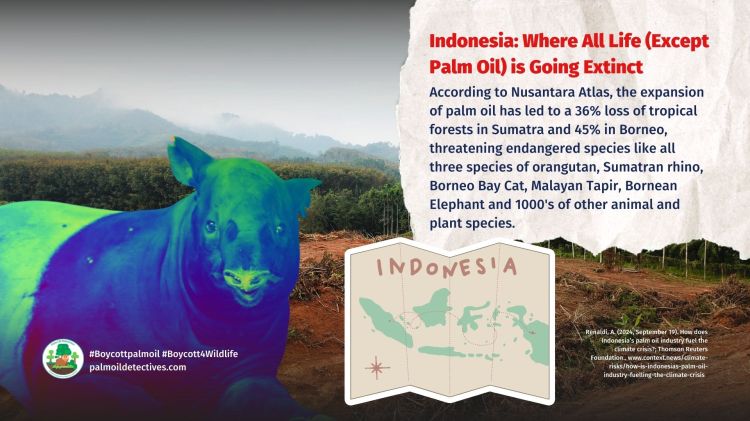
A 2019 World Health Organisation (WHO) report into the palm oil industry and RSPO finds extensive greenwashing of palm oil deforestation and the murder of endangered animals (i.e. biodiversity loss)
Encountering the Wondiwoi tree kangaroo, the world’s most endangered kangaroo, in West Papua’s lush forests is a bittersweet tale. Rediscovered in 2018 by British botanist Michael Smith, this rarest kangaroo, with soulful eyes and burnt umber fur, symbolises tranquillity amidst severe threats like palm oil deforestation and hunting. Less than 50 kangaroos remain alive, underscoring the urgent need for conservation efforts prioritising indigenous sovereignty. To help save these remarkable creatures, join the #Boycottpalmoil and #Boycott4Wildlife and take action via this website.
A Bittersweet Rediscovery of the Rarest Kangaroo Alive
In the dense, emerald heart of the Wondiwoi Mountains, in West Papua the trees echo with the haunting refrains of the vogelkop superb bird-of-paradise. Underfoot, the ground is soggy and dense with mossy herbaceous fragrances and the scuttling of an eastern long-beaked echidna as she burrows into her subterranean domain. In 2018, an extraordinary moment was captured forever on camera in 2018. High in the treetops, amidst the thick moss-covered branches, a shy Wondiwoi tree kangaroo lay in quiet repose, a symbol of sturdy, plump beauty. This creature was believed to be extinct for nearly a century. Yet a chance encounter by British amateur botanist Michael Smith in 2018 has thrust this creature back into the spotlight.
Wondiwoi tree kangaroos Dendrolagus mayri have an odd combination of kangaroo and monkey qualities. Large and soulful eyes blink from behind long eyelashes and thickly furred paddle-like arms culminate in strong sharp claws fit for grasping tree branches. Their bodies are the colour of burnt umber and terracotta and embody the tranquillity of Papua’s majestic montane forests where they blend into the painter’s palette of the jungle.
Smith’s serendipitous discovery of Wondiwoi tree kangaroos, known as the world’s rarest and most endangered kangaroo, highlights their precarious existence due to human-related threats like palm oil deforestation, rare mineral mining and hunting throughout their range.
A Journey Fuelled by Passion and Curiosity
Michael Smith is an amateur botanist from England. He spends a lot of his free time traversing remote locations like Indonesia, Pakistan and Kurdistan in the faint hope of encountering the rarest species on earth.
“I want these animals to be the poster children for seriously threatened and ancient habitats. I’m trying to get evidence of something interesting – and in terms of getting people involved and excited about conservation, it seems to be effective.”
He understands that time is of the essence to save these animals and many others from the relentless growth of palm oil deforestation.
It’s hard to know if things will change fast enough for there to be anything left. In the 1990s, Papua New Guinea was just a big forest, with a few people. Now it’s still 80% or 90% forest, but there is huge pressure from people and investors who want to make palm oil.”
The bittersweet rediscovery of the Wondiwoi tree kangaroo underscores their gravely precarious position as the rarest kangaroo in the world. Originally they were discovered in 1928 by Ernst Mayer and known only by a single specimen. Papuan non-profit Tenkile Conservation Alliance estimates that less than 50 individuals remain alive.
The Wondiwoi tree kangaroo’s habitat is under severe threat from palm oil deforestation and the extraction of rare minerals such as mica and gold. The forests of West Papua, once a haven for diverse wildlife, are being decimated in silence.
The Guardians of the Forest
The survival of the Wondiwoi tree kangaroo is intricately linked to the sovereignty, and land stewardship of the Papuan indigenous peoples. Their deep spiritual and ancestral connection to the land and its human and more-than-human inhabitants stands in stark contrast to the destructive policies of the colonialist Indonesian government. Conservation efforts must prioritise indigenous rights and knowledge, recognising that true protection of these animals lies in the hands of those who have lived in harmony with the forest for many millennia.
Tenkile Conservation Alliance have a range of programmes helping indigenous peoples to understand the importance of conserving rather than hunting tree kangaroos and providing them with ways to harvest alternative sources of food. They have developed tree kangaroo hunting moratoriums as well alongside village communities.
The Jungle Kingdom of Dendrolagus: Tree Kangaroos
The genus Dendrolagus, more enchantingly known as tree kangaroos, embody arboreal grace and irresistible chubby cuteness. These marsupials are lesser known than their iconic ground-dwelling cousins further south in Australia and possess a range of distinctive traits making them masters of the jungle canopy.
Their exceptionally long, pendulous tails act as elegant counterbalances, helping with every leap and bound. Strong forelimbs, paired with shorter and broader hind feet, provide them with superior strength and agility. Long curved claws and spongy paws enhance grip, like natural bouldering shoes, allowing them to climb and cling effortlessly to branches.
Females possess a forward-opening pouch (marsupium) containing four teats. These provide a nurturing haven for their developing young. Their teeth are adapted for shearing leaves, reveal their dietary preference for the verdant foliage of the treetops.
The almost ‘bears’ and barely there Dendrolagus genus:
Goodfellow’s Tree Kangaroo Dendrolagus goodfellowi
Ifola Dendrolagus notatus:A shy and elusive tree kangaroo with dark fur, this species is classified as Endangered, mostly from hunting and habitat loss. Learn more.
Tenkile Dendrolagus scottae: Also known as the Scott’s tree kangaroo, the tenkile is critically endangered, with fewer than 300 individuals remaining. Learn more.
The rediscovery of the Wondiwoi tree kangaroo underscores the urgent need for consumer action. Here’s how you can make a difference:
Boycott Palm Oil: Reject RSPO greenwashing and avoid products containing “sustainable” palm oil. Use your purchasing power to demand palm oil free in the supermarket. Join the #Boycottpalmoil and #Boycott4Wildlife movement on social media.
Raise Awareness:Share posts on social media and engage in supermarket sleuthing to expose brands that use palm oil. Highlight the ongoing deforestation and animal cruelty.
Support Indigenous Sovereignty: Advocate for the rights and sovereignty of Papuan indigenous peoples, recognising their crucial role in conserving rainforest habitats and as guardians of rare species.
Get Involved: Participate in local and global conservation efforts. Whether through social media activism, community education, or direct action, every effort counts.
By taking these steps, you can help ensure that the Wondiwoi tree kangaroo and other endangered species in Papua have a fighting chance to survive and thrive.
The fight to protect the Wondiwoi tree kangaroo is a testament to the resilience of nature and the enduring spirit of people all over the world who strive to safeguard it. Together, we can shine a light on the darkness of deforestation and exploitation, ensuring a brighter future for these remarkable creatures and their forest home.
A 2019 World Health Organisation (WHO) report into the palm oil industry and RSPO finds extensive greenwashing of palm oil deforestation and the murder of endangered animals (i.e. biodiversity loss)
1. Join the #Boycott4Wildlife on social media and subscribe to stay in the loop: Share posts from this website to your own network on Twitter, Mastadon, Instagram, Facebook and Youtube using the hashtags #Boycottpalmoil#Boycott4Wildlife.
2. Contribute stories: Academics, conservationists, scientists, indigenous rights advocates and animal rights advocates working to expose the corruption of the palm oil industry or to save animals can contribute stories to the website.
3. Supermarket sleuthing: Next time you’re in the supermarket, take photos of products containing palm oil. Share these to social media along with the hashtags to call out the greenwashing and ecocide of the brands who use palm oil. You can also take photos of palm oil free products and congratulate brands when they go palm oil free.
More and more palm oil free 🦧 products in Australia 🇦🇺. Customer awareness is increasing month by month. Of course Bart Van Assen will keep pushing "sustainable" palm oil with Orangutan Land Trust. Boycott palm oil to protect wildlife! There is not planet B #boycott4wildlifepic.twitter.com/rm7chub5Rb
If possible to get Ovomaltine, please promote it among your friends. It openly advertises with 0 palm oil. No RSPO no bullshit. For me it even tasts better than nuttela. It substantiates that chocolate spread can be made delicious without filthy palm oil. pic.twitter.com/cyV5Tm3tLd
4. Take to the streets: Get in touch with Palm Oil Detectives to find out more.
5. Donate: Make a one-off or monthly donation to Palm Oil Detectives as a way of saying thank you and to help pay for ongoing running costs of the website and social media campaigns. Donate here
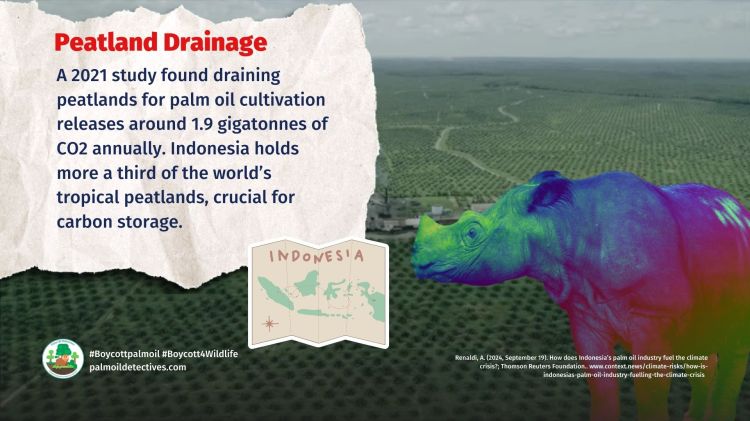
Many animals have a colourful, yet largely hidden, trait. Marine creatures like #fish and corals can glow blue, green or red under certain types of light. So can land animals like penguins and #parrots. But until now, experts knew of only one salamander and a few #frogs that could glow. No longer. Among #amphibians, this ability to glow now appears fairly common — even if you can’t see it. Research has found that most amphibians glow as well – even if it’s not visible to human eyes. Protect amphibians and reptiles every time you shop and #Boycottpalmoil#Boycott4Wildlife
The glow is produced through a process is known as fluorescence. A body absorbs shorter (higher energy) wavelengths of light. Almost immediately, it then re-emits that light, but now at longer (lower energy) wavelengths. People can’t see this glow, however, because our eyes aren’t sensitive enough to see the small amount of light given off in natural light.
Jennifer Lamb and Matthew Davis are biologists at St. Cloud State University in Minnesota. They shone blue or ultraviolet light on 32 species of amphibians. Most were salamanders and frogs. Some were adults. Others were younger. One animal was a wormlike amphibian known as a caecilian (Seh-SEEL-yun).
The researchers found some of the creatures in their natural habitats. Others came from places like the Shedd Aquarium in Chicago, Ill. (There, the pair were allowed to “come into the exhibit after dark and basically run through their exhibit,” Davis notes.)
Research shows that biofluorescence is widespread and common not only among fish amongst amphibians
To the researchers’ surprise, all the animals they tested glowed in brilliant colors. Some were green. The glow from others was more yellow. The colors glowed most strongly under blue light. Until now, scientists had seen such fluorescence only in marine turtles. The new finding suggests that this biofluorescence is widespread among amphibians.
Which parts of an animal glow differ with the species, Lamb and Davis found. Yellow spots on the eastern tiger salamander (Ambystoma tigrinum) glow green under blue light. But in the marbled salamander (A. opacum), the bones and parts of its underside light up.
The researchers didn’t test what these amphibians use to glow. But they suspect the animals rely on fluorescent proteins or the pigments in some cells. If there are multiple ways they fluoresce, that would hint that the ability to glow evolved independently in different species. If not, the ancient ancestor of modern amphibians may have passed one trait on to species that are alive today.
Fluorescence may help salamanders and frogs find one another in low light. In fact, their eyes contain cells that are especially sensitive to green or blue light.
One day, scientists might also harness the amphibians’ ability to glow. They could use special lights to search for the animals to survey their presence in the wild. That might help them see creatures that blend into their surroundings or hide in piles of leaves.
1. Join the #Boycott4Wildlife on social media and subscribe to stay in the loop: Share posts from this website to your own network on Twitter, Mastadon, Instagram, Facebook and Youtube using the hashtags #Boycottpalmoil#Boycott4Wildlife.
2. Contribute stories: Academics, conservationists, scientists, indigenous rights advocates and animal rights advocates working to expose the corruption of the palm oil industry or to save animals can contribute stories to the website.
3. Supermarket sleuthing: Next time you’re in the supermarket, take photos of products containing palm oil. Share these to social media along with the hashtags to call out the greenwashing and ecocide of the brands who use palm oil. You can also take photos of palm oil free products and congratulate brands when they go palm oil free.
More and more palm oil free 🦧 products in Australia 🇦🇺. Customer awareness is increasing month by month. Of course Bart Van Assen will keep pushing "sustainable" palm oil with Orangutan Land Trust. Boycott palm oil to protect wildlife! There is not planet B #boycott4wildlifepic.twitter.com/rm7chub5Rb
If possible to get Ovomaltine, please promote it among your friends. It openly advertises with 0 palm oil. No RSPO no bullshit. For me it even tasts better than nuttela. It substantiates that chocolate spread can be made delicious without filthy palm oil. pic.twitter.com/cyV5Tm3tLd
4. Take to the streets: Get in touch with Palm Oil Detectives to find out more.
5. Donate: Make a one-off or monthly donation to Palm Oil Detectives as a way of saying thank you and to help pay for ongoing running costs of the website and social media campaigns. Donate here
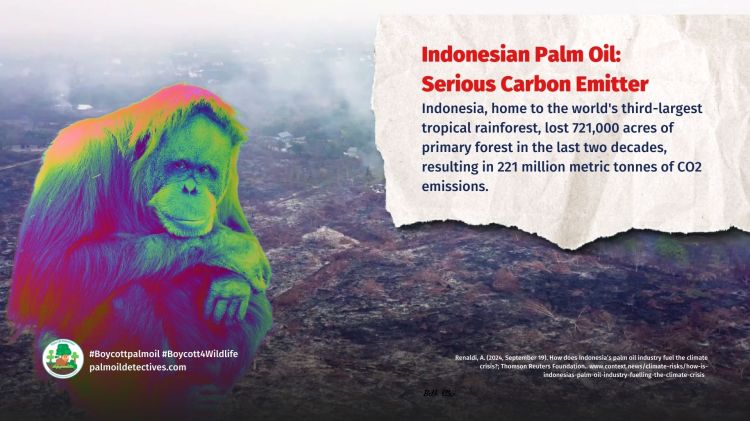
Dusky Pademelons are small marsupials with large ears, strong hind legs and a short, thick tail. They navigate the dense and mountainous forests of #NewGuinea with natural agility. Solitary by nature, these fascinating creatures disperse seeds as they roam through the forests contributing to the maintenance of a vibrant ecosystem. They are classified as vulnerable due to the threat of hunting and deforestation for mining, palm oil and timber throughout their range. Help them to survive every time you shop and #Boycottpalmoil #Boycott4Wildlife
Dusky Pademelons are small to medium-sized marsupials with a stocky and sturdy build, strong hind legs, and a short, thick tail that aids in their gait and balance. Their fur is a dusky or reddish-brown coloration and provides ample camouflage in their forest habitat.
They possess large ears, which contribute to their keen sense of hearing, helping them detect potential predators. Their characteristic marsupial pouch helps them to adapt to a rapidly changing environment, enabling them to care for their young. The pouch provides a sheltered space that ensures the survival of the young marsupials in the critical early stages of life.
Pademelons may face threats from palm oil deforestation, as this widespread issue impacts various species in their habitat. The expansion of palm oil plantations can lead to habitat loss, affecting the natural environment and the wildlife that depends on it, including pademelons. Conservation efforts are crucial to mitigate the impact of deforestation and protect the diverse species inhabiting the forests of New Guinea.
Habitat
Pademelons call the forests of southern Papua New Guinea and West Papua home. These small marsupials, also known as dusky wallabies live in the island’s lush and diverse habitat.
Diet
Pademelons are herbivores devouring plants, shoots, grass, leaves, and berries. Their simple yet nutritious diet keeps them thriving in their natural habitat.
Mating and breeding
As true marsupials, Dusky Pademelons carry their young in a pouch, joining the ranks of iconic Australian species like kangaroos and koalas. Breeding throughout the year, mothers give birth typically to a lone offspring, who is born blind and completely vulnerable. After the birth, the offspring finds refuge in their mother’s pouch, where they grow rapidly on nourishment from teats for a period of six months.
This animal has no protections in place. Read about other forgotten species here. Create art to support this forgotten animal or raise awareness about them by sharing this post and using the #Boycottpalmoil#Boycott4Wildlife hashtags on social media. Also you can boycott palm oil in the supermarket.
Further Information
Leary, T., Seri, L., Flannery, T., Wright, D., Hamilton, S., Helgen, K., Singadan, R., Menzies, J., Allison, A. & James, R. 2016. Thylogale brunii. The IUCN Red List of Threatened Species 2016: e.T21870A21958826. https://dx.doi.org/10.2305/IUCN.UK.2016-2.RLTS.T21870A21958826.en. Accessed on 27 December 2023.
1. Join the #Boycott4Wildlife on social media and subscribe to stay in the loop: Share posts from this website to your own network on Twitter, Mastadon, Instagram, Facebook and Youtube using the hashtags #Boycottpalmoil#Boycott4Wildlife.
2. Contribute stories: Academics, conservationists, scientists, indigenous rights advocates and animal rights advocates working to expose the corruption of the palm oil industry or to save animals can contribute stories to the website.
3. Supermarket sleuthing: Next time you’re in the supermarket, take photos of products containing palm oil. Share these to social media along with the hashtags to call out the greenwashing and ecocide of the brands who use palm oil. You can also take photos of palm oil free products and congratulate brands when they go palm oil free.
More and more palm oil free 🦧 products in Australia 🇦🇺. Customer awareness is increasing month by month. Of course Bart Van Assen will keep pushing "sustainable" palm oil with Orangutan Land Trust. Boycott palm oil to protect wildlife! There is not planet B #boycott4wildlifepic.twitter.com/rm7chub5Rb
If possible to get Ovomaltine, please promote it among your friends. It openly advertises with 0 palm oil. No RSPO no bullshit. For me it even tasts better than nuttela. It substantiates that chocolate spread can be made delicious without filthy palm oil. pic.twitter.com/cyV5Tm3tLd
4. Take to the streets: Get in touch with Palm Oil Detectives to find out more.
5. Donate: Make a one-off or monthly donation to Palm Oil Detectives as a way of saying thank you and to help pay for ongoing running costs of the website and social media campaigns. Donate here
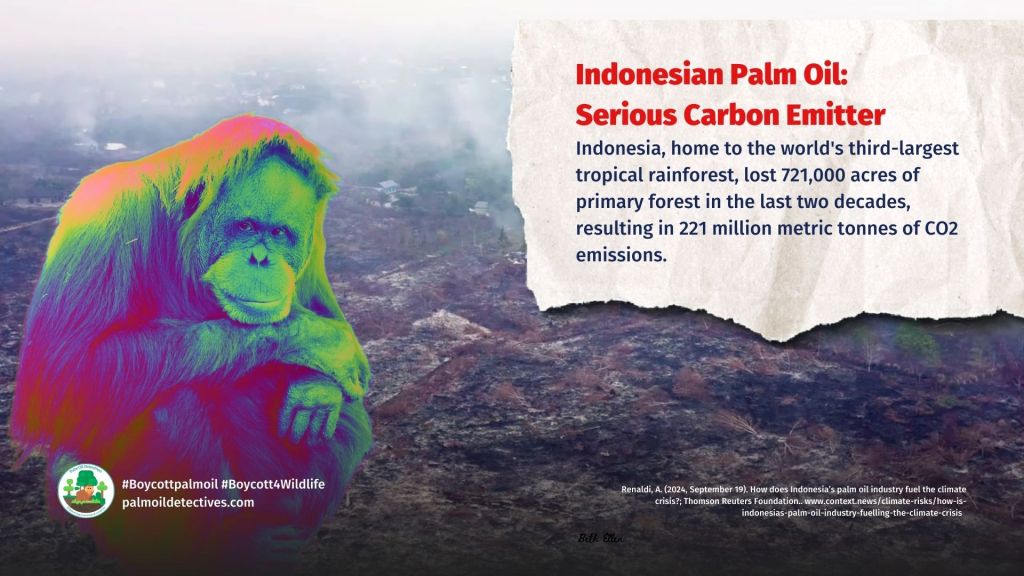
A 2019 World Health Organisation (WHO) report into the palm oil industry and RSPO finds extensive greenwashing of palm oil deforestation and the murder of endangered animals (i.e. biodiversity loss)
Situated on Mexico’s lush and biodiverse Pacific coast is La Encrucijada Biosphere Reserve – One of Mexico’s most spectacular natural treasures. Now the government and palm oil businesses are trying to sieze vast areas of land and legalise a huge area of illegally-cultivated oil palm, by reducing the size of this internationally significant environmental reserve. They are also using RSPO certification of a palm oil plantation close to the reserve in order to legitimise the expansion of palm oil in the area.
This investigation and report was written by Santiago Navarro F. is an economist, journalist, photographer, and documentary filmmaker. He is co-founder of the investigative journalism portal Avispa Midia. Along with Aldo Santiago, a documentary filmmaker and independent journalist. He is also an editor and correspondent for Avispa Midia for Connectas’s ARCO initiative and with support from the International Center for Journalists in the framework of the initiative for Investigative Journalism in the Americas.Read the original article here.
La Encrucijada Biosphere Reserve (REBIEN, Reserva de la Biosfera La Encrucijada), one of Mexico’s greatest environmental treasures, is home to an important system of wetlands, including mangroves up to 115 feet tall. These are threatened, though, by an enormous extension of monocrop oil palm plantations.
What is La Encrucijada Biosphere reserve?
La Encrucijada Biosphere Reserve is a protected area located in the southern part of the Mexican state of Chiapas. It is known for its rich biodiversity and serves as an important habitat for numerous plant and animal species.
La Encrucijada is an important nesting site for hawksbill sea turtles, which are critically endangered. These turtles are known for their beautiful shells and are threatened by habitat loss, poaching, and pollution.
The American crocodile and Morelet’s crocodile
The reserve is home to several species of crocodiles, including the American crocodile (Crocodylus acutus) and the Morelet’s crocodile (Crocodylus moreletii), both of which are considered vulnerable due to habitat degradation and hunting.
Central American River Turtle Dermatemys mawii
This freshwater turtle species is listed as critically endangered. La Encrucijada’s rivers and wetlands provide a vital habitat for this species.
The jaguar is a near-threatened species that can be found in the biosphere reserve. Habitat loss and poaching pose significant threats to their populations.
Central American Spider Monkey Ateles geoffroyi
Spider monkeys are considered vulnerable due to habitat destruction and hunting, and they can be found swinging through the trees of La Encrucijada.
Central American Tapir Tapirus bairdii
The tapir is a large herbivore and is listed as vulnerable. It inhabits the forests and wetlands of the reserve.
Baird’s tapir, a closely related species to the Central American tapir, is also found in the area and faces similar threats.
The REBIEN lies in the coastal region of Chiapas, in Mexico’s southeast. It was created by presidential decree on June 6, 1995 and is regulated by a Management Plan that was published in 2000. This states that in mangrove areas, activities “that alter the ecological equilibrium” are prohibited, except in cases of “preservation of scientific research, monitoring, education, and training, under strict regulation and supervision.”
However, over the last few decades, the ecological equilibrium in La Encrucijada has been altered. “There are more than 7,000 ha [17,300 acres] of palm planted inside the REBIEN,” said Juan Carlos Castro Hernández, current director of the REBIEN, who forms part of National Commission of Protected Areas (CONANP).
Avispa Midia requested a report and georeferencing information from the CONANP regarding oil palm plantations within La Encrucijada. The agency sent back two data sets that report the presence of producers and palm dispersed throughout the reserve.
One of the documents, titled Appendix: Southern Border, Isthmus, and Southern Pacific Region of the CONANP, with no date of publication, reports that there are at least 518 palm producers within the REBIEN.
The document’s figures are conservative, since they don’t contain a complete list of palm plantations within the reserve—satellite images can identify palm groves that aren’t included in the database.
Matilde Rincón, Mexico landscape manager at Earthworm Foundation, confirmed that they have identified 500 producers who cultivate a total of 19,030 acres (7,700 ha) of palm within La Encrucijada. Earthworm Foundation works with businesses and small producers in Chiapas to promote the sustainability of this crop. “Sixty percent of them struggle to meet government land-use standards,” Rincón said in an article by Earthworm.
The proliferation of large palm plantations has been on the CONANP’s radar since 2014. According to the agency, these groves have grown by more than 81,540 acres (33,000 ha) in the REBIEN’s area of influence—the area surrounding the reserve, which is not regulated, but is supposed to benefit from conservation efforts and is strongly ecologically linked with the park. Now the exotic plant had invaded mangrove ecosystems in the core zones.
Oil palm is so invasive that even the plantations outside of the reserve should be regulated, “because there’s even palm on the banks of the canals and the seeds can migrate, whether that be by water currents, or hypothetically, from animals,” said Castro, the director of the REBIEN.
RSPO certification of palm oil plantations in Mexico offer no reassurances that the REBIEN reserve will remain protected.
The RSPO has been criticized around the world for failing to deliver on its promises.
In 2019, the EIA stated that the RSPO still hadn’t taken significant measures to address these problems.
Between 2007 and 2012, the government of Chiapas distributed 4 million plants without supervising where they would be grown. At that time, plantations expanded in the coastal region. (Santiago Navarro F.)
Green Certification
On a tour of the Reserve, Avispa Midia found that in the middle of hundreds of palm plantings, on the banks of the San Nicolás river, lies a processing plant of the company Industrias Oleopalma. It’s the first plant the company built within the REBIEN’s area of influence, in 2000.
According to the Mexican Palmgrowers Federation (Femexpalma), processing plants must be installed as close to the plantations as possible, since the oil must be extracted within three days. There are 18 palm processing mills in Mexico, 12 of them in Chiapas. Seven of these are in La Encrucijada’s area of influence, including Oleopalma’s plant.
This company is relevant to the product’s current market because in March 2020 it became the first Mexican company to be certified sustainable by the Roundtable on Sustainable Palm Oil (RSPO), which states that its goal is to reduce the negative impacts of oil palm cultivation on the environment and communities.
RSPO certification began in Switzerland in 2004 under the leadership of the World Wildlife Fund (WWF) along with financiers like the International Finance Corporation (IFC), a member of the World Bank Group, and multinational companies that buy palm oil, such as Cargill, Nestlé, Unilever, PepsiCo, Procter & Gamble, and others.
A palm oil processing plant belonging to Zitihualt, located in Villa Comaltitlán. In 2017, the Environmental Attorney’s Office of the State of Chiapas penalized the company for operating without an environmental impact authorization. (Santiago Navarro F.)
However, the RSPO has been criticized around the world for failing to deliver on its promises. The Environmental Investigation Agency (EIA) published a report called “Burning Questions: Credibility of sustainable palm oil still illusive,” which revealed generalized fraudulent assessments by the RSPO. It also documented that abusive labor practices, forest clearing, territorial conflicts, and even human trafficking had been permitted on plantations belonging to RSPO members. In 2019, the EIA stated that the RSPO still hadn’t taken significant measures to address these problems.
Greenpeace International’s report Destruction: Certified, published in 2020, focuses in on how 30 years after product certification was implemented in supply chains, it is functioning as greenwashing for businesses.
Earthworm Foundation’s Rincón says that, at a global level, the RSPO doesn’t allow the purchase of oil that comes from protected natural areas; however, she affirms that Mexico is the exception because the cultivation and sale of palm from La Encrucijada is permitted.
Coastal Women in Rebellion and the organization Water and Life during a tour of oil palm plantations in Pijijiapan. The women have denounced environmental effects caused by monocrops. (Aldo Santiago)
The Government’s Solution: Shrink the REBIEN
The CONANP and the Ministry of the Environment and Natural Resources (SEMARNAT) attribute the problem of the spread of palm to poor control by producers, so they have looked for strategies to legalize it. In October 2015, they presented the Preliminary Supportive Study for the Modification of the Declaration of 1995 of the REBIEN, which sought to remove areas where there are crops, livestock, and fisheries from the reserve.
Both agencies wanted to reduce the size of the reserve in order to regulate oil palm, arguing that “the goal is to adapt zoning, in particular incorporating areas with well-conserved ecosystems into the core zones, and removing areas where agricultural, ranching, and fishing activities are conducted,” as the document Avispa Midia had access to states.
They sought to remove an area of 8,345 acres (3,377 ha), of which 1,841 (745 ha) belong to El Palmarcito Core Zone and 6,504 acres (2,632 ha) to La Encrucijada Core Zone. This proposal never moved forward.
In 2016, the National Human Rights Commission (CNDH) issued General Recommendation 26/2016, for addressing impacts on protected natural areas and human rights. It highlighted the degradation of the REBIEN, explaining that for several years, the reserve has faced “the use of these lands for the establishment of oil palm plantations.”
Palm fruit is transported to strategically located storage facilities like the one in Matamoros ejido in the municipality of Acapetahua, close to the REBIEN’s buffer zone. (Aldo Santiago)
That same year, instead of going after the plantations, CONANP hired the nonprofit organization Naturaleza y Redes A.C. to run a project called Strengthening African palm control strategy in the REBIEN, which only focused on the problem of seed spread. Information gathered through this project helped to eradicate and control individual oil palm trees covering 28.4 acres (11.5 ha) inside the reserve.
Poulette Hernández, co-founder of the Digna Ochoa Human Rights Center, clarified that this is no easy task. She explained that people are mistaken in thinking that palm is like any other tree that can be disposed of by being cut down and burned. REBIEN’s Castro agrees that eradicating this crop is not simple. He explained that palm trees can’t be cut down with a machete, and even doing it with a chainsaw is very complicated. What’s more, all of the brush must be removed from the site, since it can contaminate the mangroves.
Those Responsible for the Expansion
The CNDH’s General Recommendation 26/2016 states that the advance of this crop in the REBIEN is not an accident: “it has to do with a change in production promoted by the state government for several regions of Chiapas, which has led to its expansion to lands in this conservation area [La Encrucijada].”
Castro was quick to emphasize that the expansion of oil palm began long before his tenure as director of the REBIEN. He stated that it hasn’t been penalized due to the size of the reserve “and maybe because of political pressure,” although, he reiterated, he doesn’t know about the early phases, since he didn’t witness the process.
Juan Sabines, the governor of Chiapas at the time, and Manuel Velasco, then governor-elect, unveil the Zitihault palm oil processing plant in Villa Comaltitlán. July 2012.
What is known is that between 2007 and 2012, the state government promoted the crop through the Productive Conversion Program and distributed four million plants for free without overseeing where they would be planted. It received 165 million dollars for this from the International Finance Corporation. In 2011, this entity granted another loan to continue expansion of the agricultural zone for two more years.
The federal government also drove palm expansion through Agricultural Trust Funds (FIRA). By way of the Production Stimulus Incentive program, linked with Femexpalma, it proposed equipping producers with infrastructure and technology to increase productive capacity for oil palm.
This financing was earmarked primarily for small producers. However, wealthy businesspeople who have palm inside of La Encrucijada also benefited.
Support from Sembrando Vida
Palm cultivation on the Chiapas coast has gotten new momentum with the government program Sembrando Vida (Sowing Life). The directory committee of La Encrucijada said that there are oil palm producers who have “slipped through” and are growing palm within the protected natural area, even though “they know they have to stop.”
Rincón said that there are producers who are combining their palm groves with cacao as part of this government program, which purports to address rural poverty along with the country’s environmental decline. “The people in Sembrando Vida pushed an agricultural model in which cacao is grown within the palm groves, so there is a diversified crop,” said Rincón, who added that producers share a commitment to eliminate palm “at some point” if it’s in a zone where it’s prohibited within the reserve.
Palm expansion in Mexico also has the support of the Ministry of Agriculture and Rural Development (SADER).
Breaking an International Agreement
The story of the REBIEN is not unique in Mexico. Oil palm cultivation in Mexico, a study authored by Dr. Anne Cristina de la Vega-Leinert (member of Mexico vía Berlin and the University of Greifswald) and Daniel Sandoval, among others, and edited by the Center of Studies for Change in the Mexican Countryside (CECCAM), confirms that after years of palm production in the country, protected areas in Chiapas have been impacted: principally, La Encrucijada Biosphere Reserve and Palenque National Park.
The biggest problem, said Claudia Ramos Guillén, is that these policies are not going to stop, because millions of dollars are in play.
“Palm comes from an expansionist policy at the international level, primarily affecting ecosystems like that of La Encrucijada,” she said. “So, the governments end up adjusting to the demands of the international market.”
This work was completed by Santiago Navarro F. and Aldo Santiago for Avispa Midia and Connectas, in partnership with Aristegui Noticias and Pie de Página, within
This investigation and report was written by Santiago Navarro F. is an economist, journalist, photographer, and documentary filmmaker. He is co-founder of the investigative journalism portal Avispa Midia. Along with Aldo Santiago, a documentary filmmaker and independent journalist. He is also an editor and correspondent for Avispa Midia for Connectas’s ARCO initiative and with support from the International Center for Journalists in the framework of the initiative for Investigative Journalism in the Americas.Read the original article here.
ENDS
Read more about human rights abuses, ecocide and landgrabbing for so-called “sustainable” palm oil
A catastrophic storm in #Uganda’s Kalangala district left nearly 1,000 households homeless. The real culprit? Rampant #deforestation for #palmoil. Once rich in native forests that buffered storms, Kalangala is now a fragile landscape…
In the Aguán Valley of northern Honduras, peasant communities reclaiming ancestral lands face increasing violence and intimidation from armed groups linked to organised crime. The Dinant Corporation, a prominent palm oil producer, is…
Latin America is the fastest-growing producer of palm oil, but at what price for the environment and its defenders? Park rangers in Honduras tell harrowing tales of daily threats to their lives and…
Something went wrong. Please refresh the page and/or try again.
Take Action in Five Ways
1. Join the #Boycott4Wildlife on social media and subscribe to stay in the loop: Share posts from this website to your own network on Twitter, Mastadon, Instagram, Facebook and Youtube using the hashtags #Boycottpalmoil#Boycott4Wildlife.
2. Contribute stories: Academics, conservationists, scientists, indigenous rights advocates and animal rights advocates working to expose the corruption of the palm oil industry or to save animals can contribute stories to the website.
3. Supermarket sleuthing: Next time you’re in the supermarket, take photos of products containing palm oil. Share these to social media along with the hashtags to call out the greenwashing and ecocide of the brands who use palm oil. You can also take photos of palm oil free products and congratulate brands when they go palm oil free.
More and more palm oil free 🦧 products in Australia 🇦🇺. Customer awareness is increasing month by month. Of course Bart Van Assen will keep pushing "sustainable" palm oil with Orangutan Land Trust. Boycott palm oil to protect wildlife! There is not planet B #boycott4wildlifepic.twitter.com/rm7chub5Rb
If possible to get Ovomaltine, please promote it among your friends. It openly advertises with 0 palm oil. No RSPO no bullshit. For me it even tasts better than nuttela. It substantiates that chocolate spread can be made delicious without filthy palm oil. pic.twitter.com/cyV5Tm3tLd
4. Take to the streets: Get in touch with Palm Oil Detectives to find out more.
5. Donate: Make a one-off or monthly donation to Palm Oil Detectives as a way of saying thank you and to help pay for ongoing running costs of the website and social media campaigns. Donate here
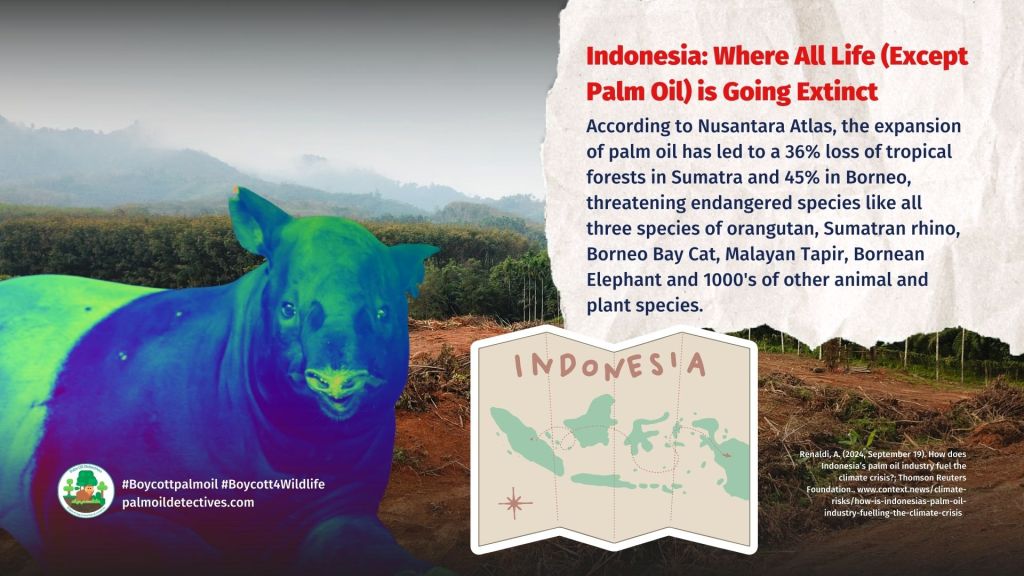
Gold mining kills indigenous peoples throughout the world like the Yanomami people of Brazil and Papuans in West Papua. The bloody, violent and greedy landgrabbing that goes on for gold forces indigenous women and children into sex slavery! Mercury poisons the water, which kills people and puts 1000’s of species closer to extinction. To help indigenous peoples to fight for their ancestral lands and help endangered animals you should #BoycottGold#BoycottGold4Yanomami
Gold mining in the Amazon devastates the Yanomami people’s ancestral land. Meanwhile, Illegal mining drives deforestation, violence, and human rights abuses. Sadly, successive governments in many South American countries, including Brazil, have failed to safeguard the rights of Indigenous peoples, turning a blind eye to the issue. A little known fact is that mercury used in gold extraction poisons ecosystems, wildlife, and people. Another horrifying fact is that indigenous women and children are often forced into sex slavery near mining sites. Major companies and criminals profit from this illegal trade, while the Yanomami suffer.
Gold mining also leads to the loss of biodiversity, disrupts traditional livelihoods, contaminates water sources, and contributes to climate change. You can help when you boycott gold and support Indigenous sovereignty. Share social media posts with the hashtags #BoycottGold and #BoycottGold4Yanomami and follow Barbara Crane Navarro to raise awareness.
Almost 25% of all land in Africa has been damaged driven by climate change and deforestation for mining palm oil and cocoa. Take action and protect forests!
The fertile lungs of our planet, the Amazon jungle faces severe drought due to El Niño, climate change, and deforestation for agriculture like palm oil, soy and meat. This along with gold mining,…
The dung beetle may eat and nest in poop, but their role in nature is anything but humble. These hardshelled scarabs live on every continent except Antarctica, recycling feces and suppressing parasites that…
Gold mining’s environmental destruction is unparalleled. Learn how a circular economy using only recycled gold can end this ecocide and its human rights toll.
Something went wrong. Please refresh the page and/or try again.
Take Action in Five Ways
1. Join the #Boycott4Wildlife on social media and subscribe to stay in the loop: Share posts from this website to your own network on Twitter, Mastadon, Instagram, Facebook and Youtube using the hashtags #Boycottpalmoil#Boycott4Wildlife.
2. Contribute stories: Academics, conservationists, scientists, indigenous rights advocates and animal rights advocates working to expose the corruption of the palm oil industry or to save animals can contribute stories to the website.
3. Supermarket sleuthing: Next time you’re in the supermarket, take photos of products containing palm oil. Share these to social media along with the hashtags to call out the greenwashing and ecocide of the brands who use palm oil. You can also take photos of palm oil free products and congratulate brands when they go palm oil free.
More and more palm oil free 🦧 products in Australia 🇦🇺. Customer awareness is increasing month by month. Of course Bart Van Assen will keep pushing "sustainable" palm oil with Orangutan Land Trust. Boycott palm oil to protect wildlife! There is not planet B #boycott4wildlifepic.twitter.com/rm7chub5Rb
If possible to get Ovomaltine, please promote it among your friends. It openly advertises with 0 palm oil. No RSPO no bullshit. For me it even tasts better than nuttela. It substantiates that chocolate spread can be made delicious without filthy palm oil. pic.twitter.com/cyV5Tm3tLd
4. Take to the streets: Get in touch with Palm Oil Detectives to find out more.
5. Donate: Make a one-off or monthly donation to Palm Oil Detectives as a way of saying thank you and to help pay for ongoing running costs of the website and social media campaigns. Donate here
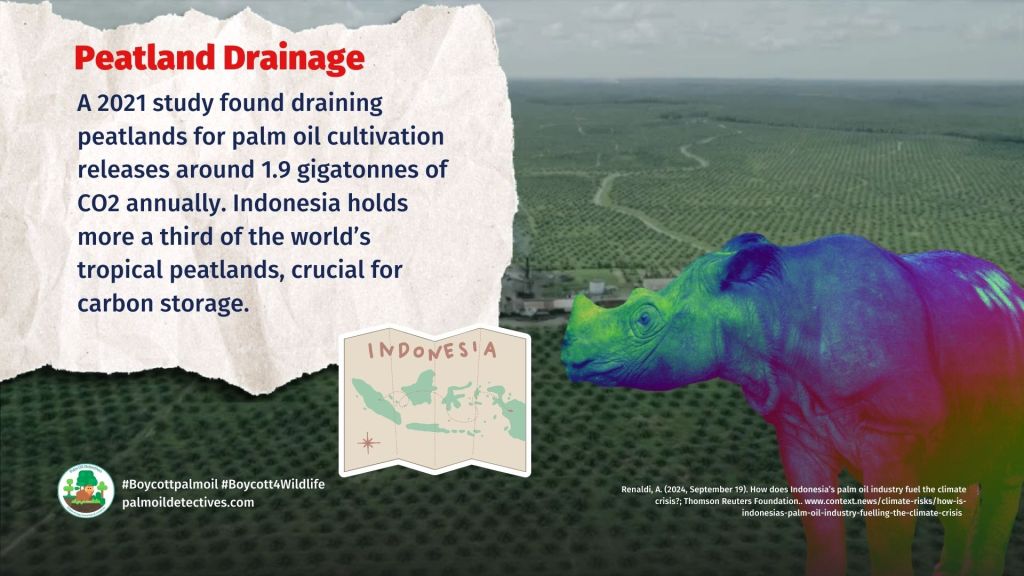
Captivating Lion-tailed macaques are known for their lion-esque, long, thin, and tufted tails. Despite their endearing appearance, this primate ranks among the most endangered macaques globally.
These majestic primates prefer the solitary life, rarely venturing from their rainforest domain, where they form tightly knit family units of up to 34 individuals. Troops are led by a dominant male who controls breeding with females. As arboreal and diurnal creatures, these macaques sleep high in the rainforest canopy, exhibiting both territorial behaviour and a sophisticated communication system that includes as many as 17 vocalisations such as ‘whoops’ to lip-smacking greetings. Lion-tailed macaques and their daily symphony in the tree tops are unique and priceless treasures of India worth cherishing.
Threats
The Lion-tailed Macaque is currently listed as Endangered, a status reflecting the critical state of their population. With fewer than 2,500 mature individuals remaining and no single subpopulation exceeding 250 mature individuals, their situation is precarious.
Projections estimate a continued decline of over 20% in their population over the next 25 years. This decline is attributed to several factors, including hunting, road kills, and the ongoing loss of their natural habitat in recent years to palm oil cultivation. This situation highlights the urgent need for conservation efforts to protect and preserve this unique and vulnerable species.
Habitat Fragmentation: The Lion-tailed Macaque’s primary threat today is the ongoing fragmentation of their habitat, mainly for palm oil and timber, with many forest fragments shrinking even further.
Historical Habitat Loss: Previously, significant habitat loss was due to timber harvesting and the creation of exotic plantations like tea, eucalyptus, and coffee.
Habitat Degradation: This is a critical concern for their conservation, particularly in Kerala, where changes in land use in private forests and plantations are problematic.
Hunting Pressures: Hunting, both for subsistence and non-subsistence purposes, poses a significant threat in certain regions. In areas like Coorg, where wet evergreen habitat is abundant, hunting for food is a major concern.
Local Trade Threats: There is a local trade for Lion-tailed Macaques as pets, and historically in Coorg, they were hunted for purported medicinal uses.
Reproductive and Ecological Challenges: Features like large interbirth periods, seasonal resource availability, and female competition for mates make this species intrinsically rare in the wild, requiring active management for their survival.
Genetic Concerns: In fragmented forests like the Anamalai Hills, Lion-tailed Macaques show less genetic diversity compared to those in contiguous forests, indicating that inbreeding and isolation in small, isolated populations could harm their long-term survival.
Habitat
The Lion-tailed macaque, native to the Western Ghats hill ranges in southwestern India, faces a precarious future. They live in altitudes of 100-1,300 m in Karnataka, Kerala, and Tamil Nadu. A region marked by severe fragmentation. The recent surge in palm oil cultivation has further imperiled their habitat in the Western Ghats region, posing a significant threat to the survival of these unique primates.
Diet
Embracing a diverse palate, Lion-tailed macaques are true omnivores, savouring a rich array of foods. While fruits are a mainstay of their diet, these resourceful animals also indulge in leaves, stems, flowers, buds, and fungi, insects, lizards, tree frogs and small mammals.
Mating and breeding
Lion-tailed macaques embrace a polygynous lifestyle – one dominant male takes the lead in mating with several females. They breed throughout the year with a peak during the wet season when food is abundant.
The gestation period lasts around six months, resulting in a single infant entirely dependent on their mother. Motherly care extends through a year of nursing. As they reach adolescence, males venture into nomadic all-male units before forming their harems, while females commonly stick to their original groups. Reproductive maturity happens at five years old for females and eight years old for males.
This animal has no protections in place. Read about other forgotten species here. Create art to support this forgotten animal or raise awareness about them by sharing this post and using the #Boycottpalmoil#Boycott4Wildlife hashtags on social media. Also you can boycott palm oil in the supermarket.
1. Join the #Boycott4Wildlife on social media and subscribe to stay in the loop: Share posts from this website to your own network on Twitter, Mastadon, Instagram, Facebook and Youtube using the hashtags #Boycottpalmoil#Boycott4Wildlife.
2. Contribute stories: Academics, conservationists, scientists, indigenous rights advocates and animal rights advocates working to expose the corruption of the palm oil industry or to save animals can contribute stories to the website.
3. Supermarket sleuthing: Next time you’re in the supermarket, take photos of products containing palm oil. Share these to social media along with the hashtags to call out the greenwashing and ecocide of the brands who use palm oil. You can also take photos of palm oil free products and congratulate brands when they go palm oil free.
More and more palm oil free 🦧 products in Australia 🇦🇺. Customer awareness is increasing month by month. Of course Bart Van Assen will keep pushing "sustainable" palm oil with Orangutan Land Trust. Boycott palm oil to protect wildlife! There is not planet B #boycott4wildlifepic.twitter.com/rm7chub5Rb
If possible to get Ovomaltine, please promote it among your friends. It openly advertises with 0 palm oil. No RSPO no bullshit. For me it even tasts better than nuttela. It substantiates that chocolate spread can be made delicious without filthy palm oil. pic.twitter.com/cyV5Tm3tLd
4. Take to the streets: Get in touch with Palm Oil Detectives to find out more.
5. Donate: Make a one-off or monthly donation to Palm Oil Detectives as a way of saying thank you and to help pay for ongoing running costs of the website and social media campaigns. Donate here
A 2019 World Health Organisation (WHO) report into the palm oil industry and RSPO finds extensive greenwashing of palm oil deforestation and the murder of endangered animals (i.e. biodiversity loss)
The contents of your fridge and dining table directly impacts the future of rare rainforest and ocean animals. That’s because industrial agriculture and aquaculture for commodities like meat, dairy, fish and palm oil is driving animals in the most biodiverse ecosystems on the planet closer towards extinction.
However, reducing the biodiversity footprint of global food consumption requires more than just consumer intervention. It requires immediate and widespread action from government policy-makers and law-makers as well, writes Ecologist Dr Quentin Read of North Carolina State University for 360info
Article written by Dr Quentin Read, data scientist and ecologist. He is currently the Southeast Area Statistician with the Agricultural Research Service (USDA-ARS) based at North Carolina State University. This article has been republished for the COP15 Biodiversity Summit. Originally published under Creative Commons by 360info™.
Land is foremost among those resources. As food is transported from farm to fork, the land used to grow the food is ‘virtually transported’ along with it. Depending on what you’re eating, one bite might have a potpourri of virtually embedded land supporting a wide diversity of wild plants and animals.
The food on our plates has a footprint. Every bite of food we consume represents the environmental impact of all the resources used to produce that food
Expanding agricultural land is pushing biodiversity past a safe limit
Wild biodiversity is under threat from the production and consumption of global food systems. Some species may already be ‘walking dead’, doomed to extinction because they no longer have a habitat large enough to avoid a population crash.
In collaboration with NASA, researchers from universities across the United States are undertaking complex geospatial statistics to closely examine these future biodiversity impacts. Similar efforts around the world are leading some governments, including the United States, to set priorities to protect land within their borders.
But more ambitious conservation efforts are urgently needed.
Latest estimates show 64 percent of land in North America would need to be conserved to safeguard biodiversity, primarily because of the ecologically intact areas of Canada and the United States. By contrast, at least 33.1 percent of Europe’s land area requires conservation. The most threatened land is concentrated in developing countries where mining and farming are economic mainstays. More than half of the most at-risk habitat is in Africa.
To preserve biodiversity we must not only work on protecting natural habitats but also on reducing the food system’s demand for land. If we’re expected, as predicted, to feed 10 billion people by 2050, all that extra food would require clearing at least 1.5 billion acres of forests, savannas and wetlands, an area nearly twice the size of India.
However, all is not lost
There are two key ways governments and individuals can reduce the land demand pressure from the food system: eating a smart plant-based diet and reducing food waste.
First, consider your diet. Animal products need large amounts of land to grow feed and pasture livestock. This includes not only meat but also dairy, eggs, and even fish, which are increasingly sourced from aquaculture farms that use land-grown feed. A smart plant-based diet is a major way to reduce land demand and biodiversity impact relative to a diet high in meat and dairy.
But not just any plant-based diet will do. Only a smart plant-based diet that avoids sourcing too much food from regions that have high levels of imperiled biodiversity will reduce impact relative to a diet high in meat and dairy.
This means reducing consumption of some of our favourite foods like avocados, chocolate, cashews, and other tropical fruits. The international food trade of products like these spreads local biodiversity impacts around the globe.
If that sounds too hard, then here’s the good news. Reducing pre-consumer and consumer food waste by 50 percent – which might be an easier change than a radical diet overhaul – has almost as much positive impact on reducing land demand in high-biodiversity areas as changing diets does. In the United States, cutting food waste in half has the potential to reduce biodiversity impacts by 18 percent.
Diet and food waste adaptations are not just up to individuals – governments must play a part
It’s important to keep in mind that both diet changes and food waste reduction are not only individual choices. Governments could implement policies that more aggressively target food waste on the farm, in the supermarket, and in the home. As a recent UN report showed, developed-world household waste is currently on the rise globally. Incentivising the production of plant-based meat alternatives would also help consumers make biodiversity-friendly choices.
There are challenging decisions to be made. We need to carefully navigate complex issues and unforeseen consequences to reduce biodiversity impacts of the food we eat. An important piece of the puzzle is helping consumers better understand how their diets and food waste behaviors influence global biodiversity. This means tough trade-offs at the personal and societal level may be needed to better balance human health, economics, and environmental sustainability.
Article written by Dr Quentin Read, data scientist and ecologist. He is currently the Southeast Area Statistician with the Agricultural Research Service (USDA-ARS) based at North Carolina State University. This article has been republished for the COP15 Biodiversity Summit. Originally published under Creative Commons by 360info™.
ENDS
Read more about human health, veganism, nutrition and why you should #Boycottpalmoil, #Boycottmeat for your own and the planet’s health
Global Witness report finds JBS, the world’s largest meat company, is directly linked to deforestation in the Amazon and Pantanal putting jaguars at risk
Pangolins get their name from the Malay ‘pengguling’ meaning rolling up. These special critically endangered animals deserve a break from savage poaching
Beef palm oil, and timber consumption in wealthy nations is driving mass deforestation and species extinction in tropical regions. EUDR is vital to stop this!
A recent #study has revealed that even in the most isolated parts of the #Amazon, bird #populations are collapsing due to #climatechange. Research published in Science Advances found that a 1°C increase in…
Something went wrong. Please refresh the page and/or try again.
Take Action in Five Ways
1. Join the #Boycott4Wildlife on social media and subscribe to stay in the loop: Share posts from this website to your own network on Twitter, Mastadon, Instagram, Facebook and Youtube using the hashtags #Boycottpalmoil#Boycott4Wildlife.
2. Contribute stories: Academics, conservationists, scientists, indigenous rights advocates and animal rights advocates working to expose the corruption of the palm oil industry or to save animals can contribute stories to the website.
3. Supermarket sleuthing: Next time you’re in the supermarket, take photos of products containing palm oil. Share these to social media along with the hashtags to call out the greenwashing and ecocide of the brands who use palm oil. You can also take photos of palm oil free products and congratulate brands when they go palm oil free.
More and more palm oil free 🦧 products in Australia 🇦🇺. Customer awareness is increasing month by month. Of course Bart Van Assen will keep pushing "sustainable" palm oil with Orangutan Land Trust. Boycott palm oil to protect wildlife! There is not planet B #boycott4wildlifepic.twitter.com/rm7chub5Rb
If possible to get Ovomaltine, please promote it among your friends. It openly advertises with 0 palm oil. No RSPO no bullshit. For me it even tasts better than nuttela. It substantiates that chocolate spread can be made delicious without filthy palm oil. pic.twitter.com/cyV5Tm3tLd
4. Take to the streets: Get in touch with Palm Oil Detectives to find out more.
5. Donate: Make a one-off or monthly donation to Palm Oil Detectives as a way of saying thank you and to help pay for ongoing running costs of the website and social media campaigns. Donate here
Discover the Magnificent Bird-of-ParadiseCicinnurus magnificus, a dazzling and theatrical bird living in New Guinea’s hills and forests. Males are known for their vibrant appearance and elaborate courtship dances. These birds are natural treasures, highlighting the sublime diversity found deep within rainforest ecosystems. Although they are listed as “Least Concern” these birds have not been monitored for a long time and rapid destruction of their rainforest home for #palmoil and #timber is a looming threat to their survival. Help them and fight back against their extinction every time you shop #Boycottpalmoil #Boycott4Wildlife
Although this animal was previously recorded on IUCN Red List as being ‘Least Concern’ 100,000’s of hectares of rainforest have since disappeared for palm oil – meaning that this classification will likely change. These birds are most likely going to be upgraded to ‘vulnerable’ or ‘endangered’ due to massive deforestation of their range and hunting pressures.
Appearance & Behaviour
A dazzling and vivid spectacle in the treetops
The Magnificent Bird-of-Paradise leads an intriguing life, predominantly solitary and active during the day. These birds skillfully navigate the forest canopy, on a constant quest for food. Their diet is a vibrant mix of ripe fruits, enhanced by an occasional feast of insects, arthropods, and other tiny creatures hidden in bark and lichens. Adding a dash of excitement to their routine, outside of breeding season, they often join eclectic foraging flocks. This avian gathering isn’t just limited to their own kind but extends to include a kaleidoscope of species, such as the dazzling sunbirds and other fruit-loving birds, creating a vivid spectacle in the treetops.
Male Characteristics
Males of the species Magnificent Bird-of-Paradise, with their average body length of 19 cm extending to 26 cm including tail, and weighing around 190 grams, are known for their vivid plumage. Their upper-parts display a rich blend of dark carmine, black, and white iridescence, while their lower backs and rumps are dark brownish-olive with a white sheen. Their tails features unique green-blue iridescent sickle-shaped rectrices. Their underside is dominated by a glossy dark green breast shield with turquoise to cobalt-blue tips. Their heads are adorned with olive-brown and reddish-brown feathers. Their striking appearance is completed with a pale grey-blue bill, dark brown eyes, and blue legs and feet.
Female Characteristics
Contrasting to the male, the female Magnificent Bird-of-Paradise, also 19 cm long but lighter at 128 grams, exhibits a more subdued colour palette. Her plumage is primarily olive-brown to reddish-brown on the upperparts and whitish buff with dark brown barring on the underparts. The female’s head is marked by a thin line of pale blue skin behind the eye, and her olive-brown chin blends into a whitish, flecked throat. Unlike the male, her tail is longer but lacks the distinctive sickle-shaped rectrices. The bill is duller and paler than the male’s, complementing her overall muted appearance.
Threats
The Magnificent Bird-of-Paradise faces significant threats that are suspected to be causing a decline in their population. The exact size of their population remains unknown, but their ecosystem in West Papua is rapidly declining due to deforestation:
Habitat Loss: Large-scale deforestation for palm oil production and timber extraction across their range significantly reduces their natural habitat.
Hunting: The species experiences high levels of hunting, adding to the pressure on their survival.
Help these animals by raising awareness of their plight and joining the #Boycottpalmoil #Boycott4Wildlife on social media and every time you shop in the supermarket.
Habitat
The Magnificent Bird-of-Paradise primarily resides in the forested mountain regions of New Guinea, often found in the upper canopy of rainforests. Interestingly, they are also known to venture into abandoned gardens in villages and smaller cities. Typically, these birds inhabit areas up to 1,780 metres in elevation, but they are most frequently observed at altitudes around 1,400 metres.
Diet
These birds like others in the Paradisaeidae family primarily feed on fruits. However, they also consume insects such as beetles and crickets.
Mating calls
The Magnificent Bird-of-Paradise communicates through a variety of calls, each serving a unique purpose. Males perform advertising songs that include a strident “ca cru cru cru,” a loud and clear “car” or “cre,” and a hoarse “caaat ca ca ca.” During courtship, they emit plaintive “churrs,” a single metallic “kyong,” and a sharp “kyerng,” along with a scolding series of “ksss-kss-ks-ks-ks-kss” sounds. Additionally, when disturbed, they produce low clucking notes. The courtship displays are further enriched with various calls, such as low, rhythmic, hard clicking or buzzing sounds. Notably, adult males can also create audible rattling or clacking sounds during flight.
Courtship dancing and display
The male Magnificent Bird-of-Paradise engages in a unique and elaborate courtship display. Perched on a sapling, he meticulously maintains his court, ensuring it remains clear of debris. When a female arrives, he performs an intricate dance, leaning backwards to a near-perpendicular position against the sapling, raising his yellow mantle cape, and showcasing his iridescent breast shield and sickle-shaped tail. This display, though seemingly comical, attracts the attention of multiple females. However, competition is fierce; if a male is close to mating, other females may intervene, disrupting the process and delaying further displays. Males prepare and fiercely defend their courts, removing leaves and debris for better visibility and to enhance their displays. These courts, often on steep slopes beneath canopy gaps, become the stage for their intricate dance involving four phases: the Back Display, Breast Display, Cape Display, and Dancing Display, each highlighting different aspects of the male’s plumage.
Breeding and parenting behaviours
In contrast to the males’ flamboyant displays, female Magnificent Birds-of-Paradise take on all parental responsibilities. They build nests in the canopy, usually in Pandanus crowns or dense foliage, using mosses, leaves, and sometimes mammal fur. The breeding season peaks between July and February, but displays may occur year-round. Females lay one or two creamy-white eggs, incubating them for about 18-19 days. Chicks fledge around 30 days after hatching, with young males sometimes lingering longer. Females reach sexual maturity at about one year, while males, requiring full adult plumage, mature between three and six years. Despite threats like habitat loss and hunting for their tail feathers, the Magnificent Bird-of-Paradise is currently classified as Least Concern, though its population is suspected to be declining.
Support the Magnificent Bird of Paradise by going vegan and boycotting palm oil in the supermarket, it’s the #Boycottpalmoil #Boycott4Wildlife
Support the conservation of this species
This animal has no protections in place. Read about other forgotten species here. Create art to support this forgotten animal or raise awareness about them by sharing this post and using the #Boycottpalmoil#Boycott4Wildlife hashtags on social media. Also you can boycott palm oil in the supermarket.
1. Join the #Boycott4Wildlife on social media and subscribe to stay in the loop: Share posts from this website to your own network on Twitter, Mastadon, Instagram, Facebook and Youtube using the hashtags #Boycottpalmoil#Boycott4Wildlife.
2. Contribute stories: Academics, conservationists, scientists, indigenous rights advocates and animal rights advocates working to expose the corruption of the palm oil industry or to save animals can contribute stories to the website.
3. Supermarket sleuthing: Next time you’re in the supermarket, take photos of products containing palm oil. Share these to social media along with the hashtags to call out the greenwashing and ecocide of the brands who use palm oil. You can also take photos of palm oil free products and congratulate brands when they go palm oil free.
More and more palm oil free 🦧 products in Australia 🇦🇺. Customer awareness is increasing month by month. Of course Bart Van Assen will keep pushing "sustainable" palm oil with Orangutan Land Trust. Boycott palm oil to protect wildlife! There is not planet B #boycott4wildlifepic.twitter.com/rm7chub5Rb
If possible to get Ovomaltine, please promote it among your friends. It openly advertises with 0 palm oil. No RSPO no bullshit. For me it even tasts better than nuttela. It substantiates that chocolate spread can be made delicious without filthy palm oil. pic.twitter.com/cyV5Tm3tLd
4. Take to the streets: Get in touch with Palm Oil Detectives to find out more.
5. Donate: Make a one-off or monthly donation to Palm Oil Detectives as a way of saying thank you and to help pay for ongoing running costs of the website and social media campaigns. Donate here
Locations: Argentina; Bolivia, Plurinational States of; Brazil; Paraguay; Peru
Extinct: Uruguay
The Marsh deer are South America’s largest deer species, uniquely adapted to wetland life with their web-like hooves and preference for aquatic plants. They are prey animals for jaguars and pumas.
Already extinct in Uruguay, these majestic creatures, once widespread, are now confined to isolated pockets of Argentina, Bolivia, Brazil, Paraguay and Peru. Their main threat is habitat loss and fragmentation due to palm oil, soy and meat deforestation along with hydroelectric dams and gold mining.
Even as researchers strive to understand their complex and obscure social and mating behaviours, time is running out for these unique creatures. Use your wallet as a weapon and protect the Marsh deer, every time you shop #BoycottPalmOil#BoycottGold4Yanomami#Boycott4Wildlife.
The Blastocerus dichotomus, more commonly known as the Marsh deer, is a fascinating species with several unique characteristics.
Largest Deer in South America: The Marsh deer is the biggest deer species on the continent, measuring up to 2 meters in length and 1.2 meters at the shoulder height.
Aquatic Adaptations: Unlike most other deer species, Marsh deer are well adapted to a life in wetlands and are good swimmers. Their hooves are even slightly webbed to help navigate through marshy areas.
Seasonal Diet: Marsh deer is primarily a herbivore that feeds on aquatic plants. However, their diet can shift between the dry and wet seasons, adapting to the availability of food.
Antler Shedding: Only male Marsh deer have antlers, and these are shed annually. These antlers can grow up to 60 cm in length and are branched, making them quite distinct.
Restricted Habitats: While they were once widespread, they are now mostly found in isolated pockets along specific river basins and protected areas, signaling the effects of habitat loss and fragmentation.
Color Changing Fawns: The young are born with a whitish coat that gradually changes to the adult coloration within their first year.
Predators: Their natural predators include jaguars and pumas, but arguably, human activities pose a far greater threat to them through habitat destruction and hunting.
Protected Areas: Some of the last strongholds for these deer are protected zones like Bahuaja-Sonene National Park in Peru and the Ibera Natural Reserve in Argentina.
Social Structure: The social structure and mating systems of Marsh deer are not well understood, making them an intriguing subject for ongoing research.
Threats: Apart from natural predators, they face significant threats from human activities such as agriculture, hydroelectric projects, and mining, putting them on the path toward endangerment if not adequately protected.
Appearance & Behaviour
Known scientifically as Blastocerus dichotomus, the Marsh deer holds the title for the largest deer species in South America. Adults can stretch up to 2 meters (around 6.6 feet) in length and stand as tall as 1.2 meters (nearly 4 feet) at the shoulder. Their appearance is striking, with large ears fringed in white, fur that ranges from red-gold to tawny brown, and notably long, dark legs. Males stand out even more with branching antlers that can extend up to 60 cm (or 23 inches).
Threats
The Marsh deer faces serious challenges to its survival, primarily from hunting and the destruction of its natural habitat. Here’s what’s contributing to the species’ decline:
Palm Oil, Soy, and Meat Deforestation: These agricultural activities are prime culprits behind the loss of vital habitat.
Hydroelectric Projects in Brazil and Argentina: Dams like those on the Tiete, Paraná, and Rio Grande rivers have significantly altered and reduced floodplain areas crucial to Marsh deer.
Cattle Ranching: This has not only diminished available habitats but has also fragmented them. Plus, the Marsh deer now has to compete with domestic livestock for limited resources.
Pollution from Gold Mining: In the Pantanal region, water pollution originating from gold mining activities poses a severe risk.
Bovine Diseases: Past incidents in Bolivia have shown that the inadvertent spread of diseases from cattle can cause reproductive issues and significant population losses among the Marsh deer.
Hunting and Competition with Livestock: Especially in areas like the Ibera Natural Reserve in Argentina, these factors can serve as additional stressors, potentially limiting the population growth of this already threatened species.
Habitat
Once rulers of wetlands across South America, Marsh deer are now reduced to mere pockets of their former range. Gone are the days when they graced the expansive landscapes of countries like Argentina, Bolivia, Peru, Brazil, Uruguay, and Paraguay. Now, they’re cornered into specific areas near rivers like the Paraná, Paraguay, Araguaia, and Guapore, not to mention a smattering of spots in the southern Amazon. Their last sanctuaries? Protected areas like Bahuaja-Sonene National Park in Peru.
Though they’ve adapted to marshes and lagoons, particularly in unique ecosystems like the Pantanal and Chaco, they’re limited to waters less than 70 cm (28 inches) deep. Even in these last refuges, they face relentless threats: from deforestation for palm oil, soy and meat agriculture, hunting and hydroelectric projects that alter their floodplain habitats.
Diet
Marsh deer are plant-eaters, focusing mainly on water-dwelling plants for nourishment. They also munch on aquatic flowers and shrubs that sprout in swampy terrains and on floating vegetation mats. Depending on whether it’s the dry or flood season, there is some variation in what they choose to eat.
Mating and breeding
The reproductive behavior of Marsh deer isn’t fully understood. Mating generally takes place during the dry season, although this can vary among different deer. After a gestation period of approximately 271 days, a single fawn is usually born between October and November, though twins are not unheard of. These fawns start off with a whitish coat that darkens as they age, typically within the first year. Weaning occurs around the 5-month mark, but young deer often stay with their mothers for more than a year. They reach reproductive age between 1 and 2 years old.
This animal has no protections in place. Read about other forgotten species here. Create art to support this forgotten animal or raise awareness about them by sharing this post and using the #Boycottpalmoil#Boycott4Wildlife hashtags on social media. Also you can boycott palm oil in the supermarket.
Further Information
Duarte, J.M.B, Varela, D., Piovezan, U., Beccaceci, M.D. & Garcia, J.E. 2016. Blastocerus dichotomus. The IUCN Red List of Threatened Species 2016: e.T2828A22160916. https://dx.doi.org/10.2305/IUCN.UK.2016-1.RLTS.T2828A22160916.en. Accessed on 03 June 2023.
1. Join the #Boycott4Wildlife on social media and subscribe to stay in the loop: Share posts from this website to your own network on Twitter, Mastadon, Instagram, Facebook and Youtube using the hashtags #Boycottpalmoil#Boycott4Wildlife.
2. Contribute stories: Academics, conservationists, scientists, indigenous rights advocates and animal rights advocates working to expose the corruption of the palm oil industry or to save animals can contribute stories to the website.
3. Supermarket sleuthing: Next time you’re in the supermarket, take photos of products containing palm oil. Share these to social media along with the hashtags to call out the greenwashing and ecocide of the brands who use palm oil. You can also take photos of palm oil free products and congratulate brands when they go palm oil free.
More and more palm oil free 🦧 products in Australia 🇦🇺. Customer awareness is increasing month by month. Of course Bart Van Assen will keep pushing "sustainable" palm oil with Orangutan Land Trust. Boycott palm oil to protect wildlife! There is not planet B #boycott4wildlifepic.twitter.com/rm7chub5Rb
If possible to get Ovomaltine, please promote it among your friends. It openly advertises with 0 palm oil. No RSPO no bullshit. For me it even tasts better than nuttela. It substantiates that chocolate spread can be made delicious without filthy palm oil. pic.twitter.com/cyV5Tm3tLd
4. Take to the streets: Get in touch with Palm Oil Detectives to find out more.
5. Donate: Make a one-off or monthly donation to Palm Oil Detectives as a way of saying thank you and to help pay for ongoing running costs of the website and social media campaigns. Donate here

Meet the Victoria crowned pigeon, the world’s largest pigeon species with royal roots and some unique quirks. Not only are they named after Queen Victoria, but they’re also close relatives to the extinct dodo. These lovebirds mate for life and share parenting duties in the most adorable ways—from dancing displays to feeding their chicks a special ‘crop milk.’ Despite their fascinating traits and tight-knit families, these majestic birds face dire threats. Their forest homes are disappearing due to palm oil and timber deforestation, and they’re being hunted. Help keep their love story alive: #BoycottPalmOil and support #Boycott4Wildlife to protect these incredible creatures.
A close cousin of the extinct dodo, regal Victoria crowned pigeons are stunning to behold.
The Victoria crowned pigeon is no ordinary bird; they are the world’s largest pigeon, named in honour of Queen Victoria and a close cousin to the extinct dodo.
Unlike most birds, both parents produce a special ‘crop milk’ to nourish their chicks. They also stand out for not having a gall bladder or oil gland.
These monogamous lovebirds have a unique courtship dance where the male rhythmically swings his head and fans his tail.
When it comes to parenting, they’re true team players, sharing duties from gathering nesting materials to raising their helpless, blind chicks. These birds are full of unique traits that make them truly one-of-a-kind in the avian world.
Victoria crowned pigeons are showstoppers with their deep blue-grey feathers. What really sets them apart is their signature white-tipped feather crest and a row of paler blue-gray feathers with maroon tips on their wings.
This bird has a deep, resonant “hoota-hoota” call and an even deeper purple-maroon chest, distinguishing them from their more common western cousins, who sport more uniform blue or gray chests.
Aside from their astonishing feathers, this bird is also a heavyweight champ. They average 73 to 75 cm in length making them the planet’s largest surviving pigeon species.
Threats
Deforestation for palm oil and timber: Victoria crowned pigeons face a major threat from logging and oil palm plantations. The clearing of rainforests also makes it easier for hunters to find them.
Hunting for Meat and Feathers: A major threat to these beautiful pigeons is hunting for their meat and pretty feathers.
Baby pigeons are hunted for food and profit: People take the baby pigeons from nests to raise them for food or to sell them. As a result they are disappearing from areas where they used to be common due to hunting.
Capture for the illegal pet trade: These pigeons are popular in zoos and safari parks in Southeast Asia, which encourages capturing them from the wild.
Take Action!
Help protect these beautiful birds by supporting the #Boycottpalmoil#Boycott4Wildlife. Stop buying products that contribute to their harm and raise awareness to save them!
Habitat
The Victoria crowned pigeon prefers lowland forests, including swampy and sago palm areas, sometimes venturing up to 600 meters. They usually forage in small groups, feasting on fallen fruit, berries, and seeds scattered on the ground. At night, they roost in trees. When it comes to family, these birds start breeding at just 15 months old and usually lay a single egg. Interestingly, they’re found only in continuous forests, avoiding fragmented ones. These birds have a pretty focused lifestyle, making them an intriguing part of their forest homes.
Diet
Victoria crowned pigeons primarily eat a plant-based diet, focusing on fallen fruits. They also munch on berries and seeds, and sometimes they’ll consume small invertebrates.
Mating and breeding
The breeding season for Victoria crowned pigeons hits its peak toward the end of the wet season and continues into the dry season. To woo a mate, the male performs a unique dance, lowering and stretching his head before swinging it up and down, all while shaking his fanned tail. While the female takes on most of the brooding duties, both parents play a role in raising their offspring. The nesting process begins with the male collecting stems, sticks, and palm leaves, which the female then uses to build a nest in a tree. There, she lays a single white egg, which is incubated for about a month. Even after the young pigeons leave the nest, they receive attentive care from both parents for an additional 13 weeks.
Support Victoria crowned pigeons by going vegan and boycotting palm oil in the supermarket, it’s the #Boycott4Wildlife
Support the conservation of this species
This animal has no protections in place. Read about other forgotten species here. Create art to support this forgotten animal or raise awareness about them by sharing this post and using the #Boycottpalmoil#Boycott4Wildlife hashtags on social media. Also you can boycott palm oil in the supermarket.
1. Join the #Boycott4Wildlife on social media and subscribe to stay in the loop: Share posts from this website to your own network on Twitter, Mastadon, Instagram, Facebook and Youtube using the hashtags #Boycottpalmoil#Boycott4Wildlife.
2. Contribute stories: Academics, conservationists, scientists, indigenous rights advocates and animal rights advocates working to expose the corruption of the palm oil industry or to save animals can contribute stories to the website.
3. Supermarket sleuthing: Next time you’re in the supermarket, take photos of products containing palm oil. Share these to social media along with the hashtags to call out the greenwashing and ecocide of the brands who use palm oil. You can also take photos of palm oil free products and congratulate brands when they go palm oil free.
4. Take to the streets: Get in touch with Palm Oil Detectives to find out more.
5. Donate: Make a one-off or monthly donation to Palm Oil Detectives as a way of saying thank you and to help pay for ongoing running costs of the website and social media campaigns. Donate here
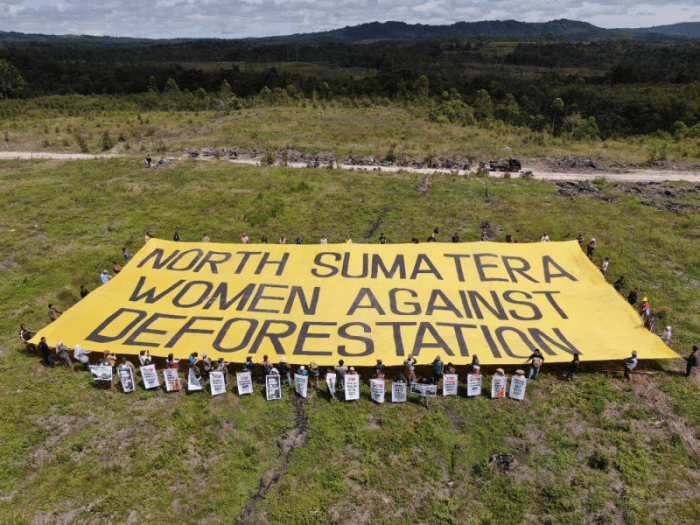
A 2019 World Health Organisation (WHO) report into the palm oil industry and RSPO finds extensive greenwashing of palm oil deforestation and the murder of endangered animals (i.e. biodiversity loss)
Renowned animal rights ethicist philosopher Peter Singer asserts that our dietary choices, particularly our consumption of meat and dairy, are jeopardising the Earth’s future. These industries contribute significantly to environmental degradation, deforestation, and greenhouse gas emissions, intensifying the impacts of climate change. By indulging in hamburgers and other meat-based products, we are not only compromising our health but also the wellbeing of our planet. For a more sustainable and compassionate future, consider boycotting meat and dairy. Choose to be vegan for the animals and to save our planet #Boycottmeat be #vegan#Boycott4Wildlife
Originally published by The Conversation June 15, 2023 and republished here under the Creative Commons Licence, read original.
I wasn’t aware of climate change until the 1980s — hardly anyone was — and even when we recognised the dire threat that burning fossil fuels posed, it took time for the role of animal production in warming the planet to be understood.
Today, though, the fact that eating plants will reduce your greenhouse gas emissions is one of the most important and influential reasons for cutting down on animal products and, for those willing to go all the way, becoming vegan.
A few years ago, eating locally — eating only food produced within a defined radius of your home — became the thing for environmentally conscious people to do, to such an extent that “locavore” became the Oxford English Dictionary’s “word of the year” for 2007.
If you enjoy getting to know and support your local farmers, of course, eating locally makes sense. But if your aim is, as many local eaters said, to reduce greenhouse gas emissions, you would do much better by thinking about what you are eating, rather than where it comes from. That’s because transport makes up only a tiny share of the greenhouse gas emissions from the production and distribution of food.
With beef, for example, transport is only 0.5% of total emissions. So if you eat local beef you will still be responsible for 99.5% of the greenhouse gas emissions your food would have caused if you had eaten beef transported a long distance. On the other hand, if you choose peas you will be responsible for only about 2% of the greenhouse gas emissions from producing a similar quantity of local beef.
And although beef is the worst food for emitting greenhouse gases, a broader study of the carbon footprints of food across the European Union showed that meat, dairy and eggs accounted for 83% of emissions, and transport for only 6%.
More generally, plant foods typically have far lower greenhouse gas emissions than any animal foods, whether we are comparing equivalent quantities of calories or of protein. Beef, for example, emits 192 times as much carbon dioxide equivalent per gram of protein as nuts, and while these are at the extremes of the protein foods, eggs, the animal food with the lowest emissions per gram of protein, still has, per gram of protein, more than twice the emissions of tofu.
Animal foods do even more poorly when compared with plant foods in terms of calories produced. Beef emits 520 times as much per calorie as nuts, and eggs, again the best-performing animal product, emit five times as much per calorie as potatoes.
Favourable as these figures are to plant foods, they leave out something that tilts the balance even more strongly against animal foods in the effort to avoid catastrophic climate change: the “carbon opportunity cost” of the vast area of land used for grazing animals and the smaller, but still very large, area used to grow crops that are then fed — wastefully, as we have seen — to confined animals.
Because we use this land for animals we eat, it cannot be used to restore native ecosystems, including forests, which would safely remove huge amounts of carbon from the atmosphere. One study has found that a shift to plant-based eating would free up so much land for this purpose that seizing the opportunity would give us a 66% probability of achieving something that most observers believe we have missed our chance of achieving: limiting warming to 1.5℃.
Another study has suggested that a rapid phaseout of animal agriculture would enable us to stabilise greenhouse gases for the next 30 years and offset more than two-thirds of all carbon dioxide emissions this century. According to the authors of this study:
The magnitude and rapidity of these potential effects should place the reduction or elimination of animal agriculture at the forefront of strategies for averting disastrous climate change.
Climate change is undoubtedly the biggest environmental issue facing us today, but it is not the only one. If we look at environmental issues more broadly, we find further reasons for preferring a plant-based diet.
The clearing and burning of the Amazon rainforest means not only the release of carbon from the trees and other vegetation into the atmosphere, but also the likely extinction of many plant and animal species that are still unrecorded.
This destruction is driven largely by the prodigious appetite of the affluent nations for meat, which makes it more profitable to clear the forest than to preserve it for the indigenous people living there, establish an ecotourism industry, protect the area’s biodiversity, or keep the carbon locked up in the forest. We are, quite literally, gambling with the future of our planet for the sake of hamburgers.
Joseph Poore, of the University of Oxford, led a study that consolidated a huge amount of environmental data on 38,700 farms and 1,600 food processors in 119 countries and covered 40 different food products. Poore summarised the upshot of all this research thus:
A vegan diet is probably the single biggest way to reduce your impact on planet Earth, not just greenhouse gases, but global acidification, eutrophication, land use and water use. It is far bigger than cutting down on your flights or buying an electric car, as these only cut greenhouse gas emissions.
Poore doesn’t see “sustainable” animal agriculture as the solution:
Really it is animal products that are responsible for so much of this. Avoiding consumption of animal products delivers far better environmental benefits than trying to purchase sustainable meat and dairy.
Those who claim to care about the wellbeing of human beings and the preservation of our climate and our environment should become vegans for those reasons alone.
Doing so would reduce greenhouse gas emissions and other forms of pollution, save water and energy, free vast tracts of land for reforestation, and eliminate the most significant incentive for clearing the Amazon and other forests.
This is an edited extract from Animal Liberation Now by Peter Singer (Penguin Random House).
#Brazil’s Atlantic Forest, one of the most biodiverse ecosystems in the world, is facing severe threats due to deforestation and habitat fragmentation. This has led to a sharp decline in primate species, including…
Act now to save Tesso Nilo Park. This vital Indonesian park has lost 78% of its primary forest, threatening the habitat of Sumatran tigers and elephants
Around 800 million people in our world go hungry each day. Yet around the globe we have enough food to go around. So why the discrepancy? Market concentration and corporate monopoly of our…
Strict global rainforest laws like #EUDR, enforcement of anti #poaching units, and a consumer boycott of #palmoil, hold the key to protecting #Sumatra’s last living #tigers.
Something went wrong. Please refresh the page and/or try again.
Take Action in Five Ways
1. Join the #Boycott4Wildlife on social media and subscribe to stay in the loop: Share posts from this website to your own network on Twitter, Mastadon, Instagram, Facebook and Youtube using the hashtags #Boycottpalmoil#Boycott4Wildlife.
2. Contribute stories: Academics, conservationists, scientists, indigenous rights advocates and animal rights advocates working to expose the corruption of the palm oil industry or to save animals can contribute stories to the website.
3. Supermarket sleuthing: Next time you’re in the supermarket, take photos of products containing palm oil. Share these to social media along with the hashtags to call out the greenwashing and ecocide of the brands who use palm oil. You can also take photos of palm oil free products and congratulate brands when they go palm oil free.
More and more palm oil free 🦧 products in Australia 🇦🇺. Customer awareness is increasing month by month. Of course Bart Van Assen will keep pushing "sustainable" palm oil with Orangutan Land Trust. Boycott palm oil to protect wildlife! There is not planet B #boycott4wildlifepic.twitter.com/rm7chub5Rb
If possible to get Ovomaltine, please promote it among your friends. It openly advertises with 0 palm oil. No RSPO no bullshit. For me it even tasts better than nuttela. It substantiates that chocolate spread can be made delicious without filthy palm oil. pic.twitter.com/cyV5Tm3tLd
4. Take to the streets: Get in touch with Palm Oil Detectives to find out more.
5. Donate: Make a one-off or monthly donation to Palm Oil Detectives as a way of saying thank you and to help pay for ongoing running costs of the website and social media campaigns. Donate here
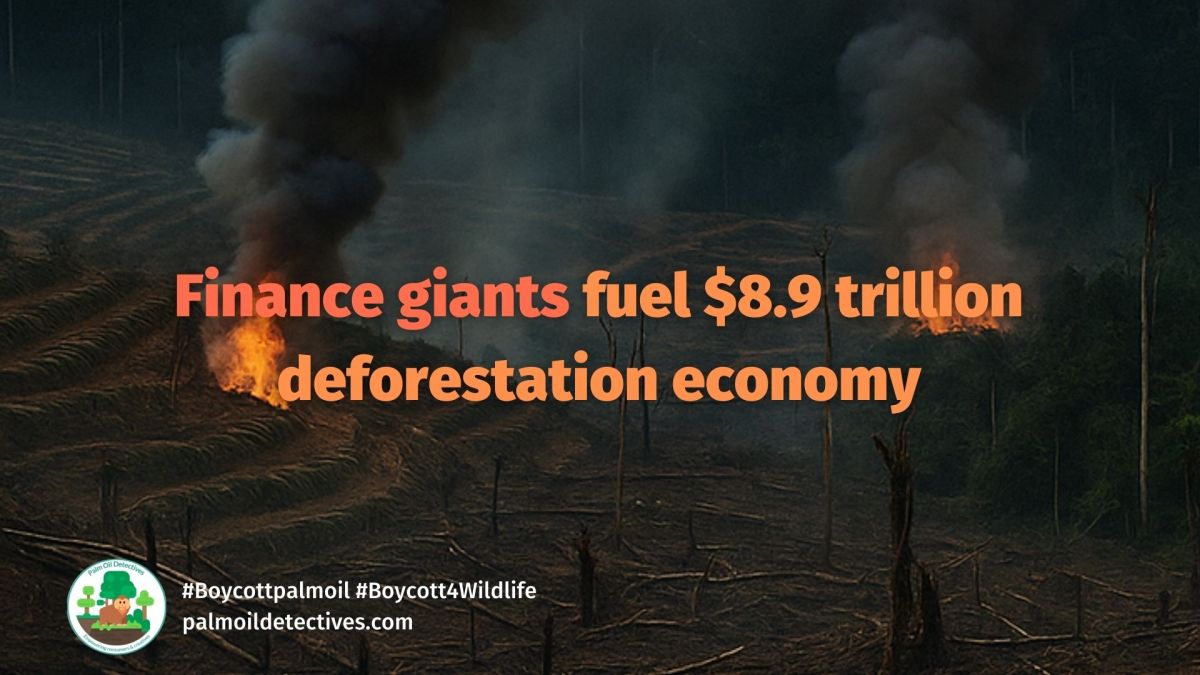
Discover the awe-inspiring role of African forest #elephants in the Congo Basin—nature’s master gardeners who literally shape the world around them! These gentle giants roam through muddy, mineral-rich paradises called baïs, fostering the growth of carbon-absorbing trees that make our planet healthier. By tending to these unique landscapes, they are the unsung heroes in the fight against climate change. Want to ensure these ecological architects keep doing their vital work? Join the movement to protect their habitat—say no to palm oil and adopt a vegan lifestyle! 🐘🌳#BoycottPalmOil #BeVegan#Boycott4Wildlife
This story was written by Leonie Joubert and originally published by Mongabay on August 15, 2023 and was republished under a Creative Commons licence.
The approach to the “village of elephants” in the Sangha Rainforest in the Central African Republic must be made in complete silence. Not even the faintest rustle of backpack on rain jacket should break the soundscape as visitors wade through the sometimes waist-deep swamp at the forest’s edge. The Indigenous Ba’aka guides must be able to listen for any signs of nearby elephants, so they can steer the visitors clear and avoid a close encounter with these giants. When a few pachyderms saunter out of the dense greenery, the Ba’aka shoo them away calmly.
The thick vegetation gives way suddenly to a baï. This is no mere watering hole. The sandy clearing stretches for half a kilometer, more than a quarter of a mile, in the otherwise unbroken canopy of the world’s second-largest tropical forest.
A handful of researchers camp out on a timber observation platform, overlooking a place that has drawn generations of elephants to its mineral- and salt-laden sand and muddy water. They document how the animals use their trunks or tusks to dig into the sand, eavesdrop on the animals’ conversations, and count the many other species that congregate here.
This is Dzanga baï, a meeting place for critically endangered African forest elephants (Loxodonta cyclotis) in the Dzanga-Sangha Complex of Protected Areas where these animals come together in huge numbers to dig for nutrients they can’t get from the otherwise abundant forests.
Baïs are unique to the Congo Basin’s forests, and new research is underway to understand the role these mineral-rich pockets play as a supplement to the elephants’ diet, how this sustains the animals’ population, and how they therefore contribute to the carbon-capture function of the forest.
Unlike the Amazon, the Congo Basin’s forests still have their original megafauna, elephants in particular. And they have these salt-rich clearings. Conservationists are beginning to understand the importance of elephants as forest gardeners here, and how their taste for certain trees and fruits has sculpted a forest that absorbs more carbon per hectare than the Amazon.
The Global Carbon Budget project estimated Africa’s total greenhouse gas emissions for 2021 at 1.45 billion metric tons. Every year, the Congo Basin’s forests soak up 1.1 billion metric tons of atmospheric carbon, storing it in trees and soil; in 2020 carbon credit prices, this service would be worth $55 billion.
Forest elephants, smaller than their better-known savanna cousins or even Asian elephants, prefer certain lower-growing, tasty trees. This picky browsing pressure creates gaps in the canopy that allow other, less palatable but carbon-dense species to reach tremendous heights. Elephants’ appetite for the fruit of these bigger trees then means they spread their seeds far and wide.
A 2019 study from the Ndoki Forest in the Republic of Congo (ROC) and LuiKotale in the Democratic Republic of Congo (DRC) estimated that if elephants were removed from these sites, the loss of their forest-shaping food preferences would reduce the forest’s carbon capture by 7%.
This finding makes a case not only to stop deforestation in the Congo Basin, but to protect the elephants too, as a way to slow climate breakdown, the study authors wrote.
Mouangi baï, a vast watering hole in the Republic of Congo’s Odzala-Kokoua National Park, is nicknamed Capitale because of the vast number of elephants drawn to its mineral-laden water, mud, and sand. Image courtesy Gwilli Gibbon/African Parks.
Salt licks for elephants, gardeners of the forest
Mouangi baï is only about 250 km (155 mi) from Dzanga baï as the crow flies, but it takes a day or two to travel by road and river to get from one to the other.
Researchers with the conservation organization African Parks and Harvard University’s Department of Organismic and Evolutionary Biology are zeroing in on Mouangi and other baïs in Odzala-Kokoua National Park in the ROC, to clarify the link between baïs, elephants and the forest’s tree species composition.
Nicknamed Capitale by the locals, Mouangi baï in Odzala draws hundreds, maybe even thousands, of elephants, according to Gwili Gibbon, research and monitoring head at African Parks, which manages the park along with the ROC government.
“Mouangi is one of our largest and most renowned baïs,” Gibbon says.
At the intersection of two rivers, Mouangi is more than 1 km (0.6 mi) across and spans 91 hectares (225 acres). It’s the largest of a dozen of Odzala’s baïs that the African Parks and Harvard research collaboration is focusing on.
Odzala-Kokoua National Park extends across 1.35 million hectares (3.34 million acres), and while it has a few thousand baïs, often occurring in clusters within the forest, this ecosystem makes up only about 0.2% of the park’s footprint. Nevertheless, these clearings may be integral to the shape of the forest itself, which is why Harvard assistant professor Andrew Davies and doctoral researcher Evan Hockridge are teaming up with African Parks to understand the importance of the salty watering holes in supporting elephant populations, which then shape the forest mosaic.
The baïs are clearly a hotspot that elephants seek out for their rare minerals in an ecosystem rooted in the nutrient-poor soils typical of the region.
“The elephants use their tusks to scrape topsoil off in specific areas, and eat the finer dust on the surface,” says Hockridge, a landscape ecologist. “They also dig large mining sites or wells, as much as a meter [3 feet] deep.”
The animals’ excavations go even deeper at times, down to where water carries the salt in a more accessible form. The need to ingest the mineral-rich dust, mud and water keeps the animals returning to these sites.
An elephant digging for salt-rich mud in the Dzanga baï in the Sangha Rainforest in the Central African Republic. Image courtesy Jan Teede.
But how the baïs formed in the first place — they’re present in the Congo Basin, but not in the Amazon — and why they remain clear of forest encroachment are still a mystery.
Hockridge says no one has tried to establish if the now-extinct megafauna of the Amazon once made similar clearings there, or if baï size correlates to the size of the animals visiting them.
“One hypothesis is that megafauna effectively create large, nutrient-rich, lick-like clearings. But it hasn’t been quantified that baïs are manufactured or maintained by megafauna,” he says.
The researchers say they hope to answer this puzzle: Do large mammals like elephants maintain and stabilize the baïs?
Anecdotes from the DRC might give the first glimpse of an answer, according to Harvard’s Davies.
“Baïs may be closing in the DRC, and it could be because the elephants are in a war zone, so they don’t have the big bulldozer effect,” he says.
The hypothesis is that if fewer elephants visit and maintain these clearings, the baïs will be swallowed up by the forest.
Gibbon’s African Parks team has set up experimental plots in the Odzala, where they’ve buried salt in the sand at a similar depth to which elephants excavate. Researchers are monitoring these sites to see if more animals will congregate around the plots, whether this impacts the vegetation cover in and around the baïs, and whether there’s a shift in the carbon-capture potential of the surrounding forests.
This study is centered in Odzala, although the researchers say they hope to expand the work into the Ndoki region of the Dzanga-Sangha Complex of Protected Areas.
Indigenous Ba’aka trackers work with researchers and tourist operators in various parks in Odzala-Kokoua National Park and the Dzanga-Sangha Complex of Protected Areas. Their knowledge of animal behaviour and forest life is essential to accessing these wildernesses. Image courtesy Jan Teede.
Baïs have a busy social scene
It isn’t just elephants that congregate at the baïs. These watering holes have a bustling social scene.
Gibbon describes the flocks of African green pigeons (Treron calvus) that gather at Capitale at dawn and dusk; buffalo and several bird species that visit during daylight hours; and the hyenas that can be heard calling after dark as the elephants mine for salt.
Wildlife refuges like these in the Congo Basin are also home to the critically endangered western lowland gorilla (Gorilla gorilla gorilla), two unusual forest and swamp-dwelling antelope — the bongo (Tragelaphus eurycerus) and sitatunga (Tragelaphus spekii) — as well as central chimpanzees (Pan troglodytes troglodytes), bonobos (Pan pansicus), and the endangered gray parrot (Psittacus erithacus).
The forests of Gabon, southern Cameroon and southern Central African Republic also have a high number of baïs, and the findings from these studies could eventually be extrapolated to give an idea of the implications for the Congo Basin more widely.
“The area that baïs’ cover is tiny, but they sustain the elephant population,” Davies says. “If our hypothesis is correct, without the baïs you’d have no elephants; without elephants there’s be no big trees with high carbon density, so carbon storage would go down.”
If the forest loses the baïs, it could lose more than just the elephants or see a change in its carbon-capturing treescape. The baïs would no longer draw the many other animals that thrive in these mineral-dense watering holes, and the tourists and environmental researchers drawn to them too.
Citation:
Berzaghi, F., Longo, M., Ciais, P., Blake, S., Bretagnolle, F., Vieira, S., … Doughty, C. E. (2019). Carbon stocks in central African forests enhanced by elephant disturbance. Nature Geoscience, 12(9), 725-729. doi:10.1038/s41561-019-0395-6
Banner image: Elephants dig for salt-rich mud in the Dzanga baï in the Sangha Rainforest in the Central African Republic. Image courtesy Jan Teede.
This story was written by Leonie Joubert and originally published by Mongabay on August 15, 2023 and was republished under a Creative Commons licence.
ENDS
Learn about other animals endangered by palm oil and other agriculture
A 2019 World Health Organisation (WHO) report into the palm oil industry and RSPO finds extensive greenwashing of palm oil deforestation and the murder of endangered animals (i.e. biodiversity loss)
1. Join the #Boycott4Wildlife on social media and subscribe to stay in the loop: Share posts from this website to your own network on Twitter, Mastadon, Instagram, Facebook and Youtube using the hashtags #Boycottpalmoil#Boycott4Wildlife.
2. Contribute stories: Academics, conservationists, scientists, indigenous rights advocates and animal rights advocates working to expose the corruption of the palm oil industry or to save animals can contribute stories to the website.
3. Supermarket sleuthing: Next time you’re in the supermarket, take photos of products containing palm oil. Share these to social media along with the hashtags to call out the greenwashing and ecocide of the brands who use palm oil. You can also take photos of palm oil free products and congratulate brands when they go palm oil free.
More and more palm oil free 🦧 products in Australia 🇦🇺. Customer awareness is increasing month by month. Of course Bart Van Assen will keep pushing "sustainable" palm oil with Orangutan Land Trust. Boycott palm oil to protect wildlife! There is not planet B #boycott4wildlifepic.twitter.com/rm7chub5Rb
If possible to get Ovomaltine, please promote it among your friends. It openly advertises with 0 palm oil. No RSPO no bullshit. For me it even tasts better than nuttela. It substantiates that chocolate spread can be made delicious without filthy palm oil. pic.twitter.com/cyV5Tm3tLd
4. Take to the streets: Get in touch with Palm Oil Detectives to find out more.
5. Donate: Make a one-off or monthly donation to Palm Oil Detectives as a way of saying thank you and to help pay for ongoing running costs of the website and social media campaigns. Donate here
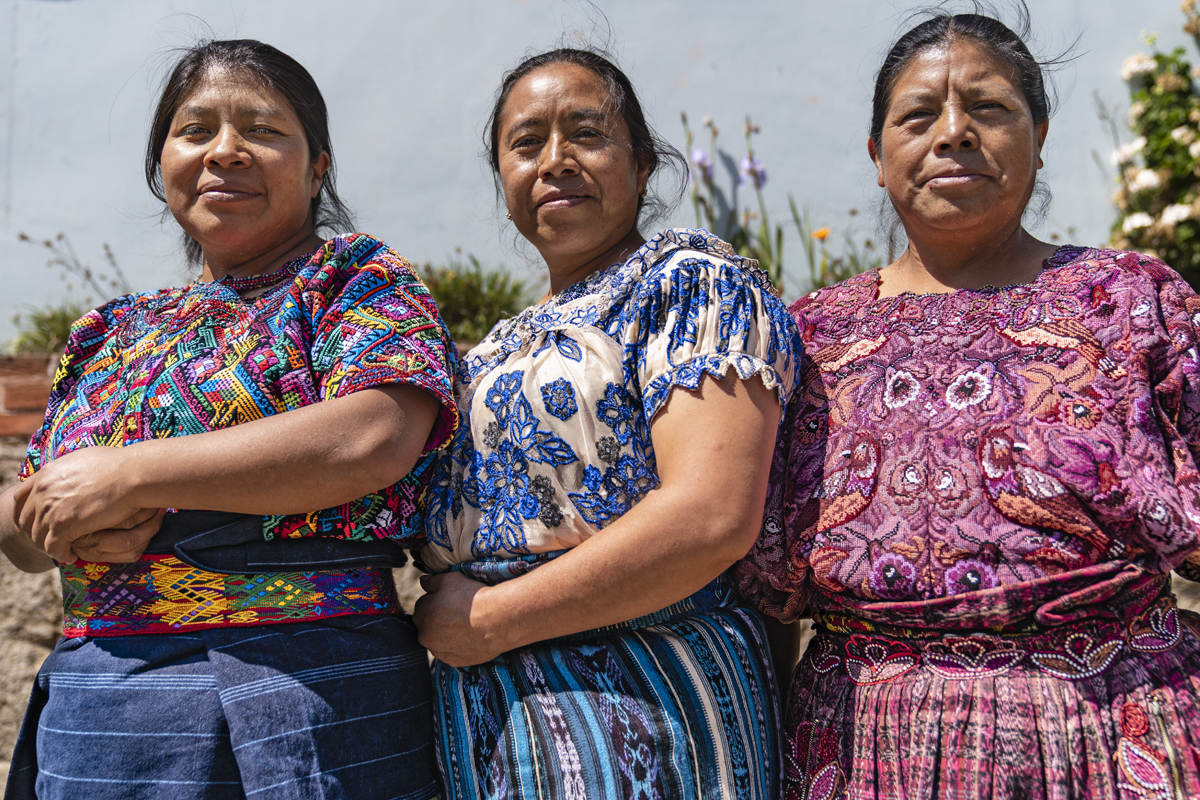
Scientists have described around 1.5 million species on Earth – but how many are still out there to be discovered? This is one of the most heated debates in biology. Discounting microbes, plausible estimates range from about half a million to more than 50 million species of unknown animals, plants and fungi.
Our present knowledge is just scratching the surface. Evolution has had billions of years to create biologically active compounds that can combat human diseases, generate genetic diversity that could save our food crops from disastrous pathogens, and spawn ecological innovations that can inspire marvellous new inventions. Help the rarest and most cryptic animals, plants and fungi to survive when you #BoycottPalmOil adopt a #vegan lifestyle and #Boycott4Wildlife
This biodiversity matters because it could be used to fight human diseases, produce new crops, and offer innovations to help solve the world’s problems.
Why is there so much uncertainty in the numbers? The biggest reason, I argue, is that a lot of biodiversity is surprisingly hard to find or identify. This has profound implications for nature conservation and for our understanding of life on Earth.
Hidden biodiversity
We find new species every day but the organisms that we’re now discovering are often more hidden and more difficult to catch than ever before.
Not surprisingly, the first species to be described scientifically were big and obvious. The earliest naturalists to visit Africa, for instance, could hardly fail to discover zebras, giraffes and elephants.
Three newly discovered species: (a) a snake-like amphibian from India; (b) the world’s tiniest lizard, and (c) the only lungless frog species. B. Scheffers et al. (2014) Trends in Ecology & Evolution
Other unknown species are notoriously difficult to capture. For example, a biologist friend of mine was visiting his mother-in-law in north Queensland when her cat strolled in with an odd-looking animal in its mouth. He wrestled the cat’s dinner away and found that it was a mammal species never before seen in Australia called the prehensile-tailed rat.
Now known to be quite common in the Wet Tropics, this tree-dwelling rat almost never enters conventional wildlife traps. We can thank my mate’s mother-in-law’s cat for the discovery.
Other poorly explored places where new species wait to be discovered include the deep sea, soils and caves. After spending some 1,100 hours digging holes in the ground, biologists stumbled over the first species of Indian caecilian, a primitive, snake-like burrowing amphibian never before seen on the subcontinent.
Caecilians are difficult to find and to know
On a far-flung beach in Alaska, a dead animal that washed ashore just last year turned out to be a completely new species of whale.
A frog species discovered in Borneo is the only frog in the world that completely lacks lungs. They live in fast-flowing streams that are so oxygen-rich that they can breathe solely through their skin.
And a newly discovered spider in Morocco has evolved to move and escape predators by somersaulting over sand dunes.
The rainforest rooftop
High on the list of places to discover new species include rainforest canopies. In the early 1980s a Smithsonian Institution ecologist, Terry Erwin, used an insecticidal fog on several trees in the Panamanian rainforest and was stunned by his findings. Most of the insects that fell to the ground were entirely new species. Based on quick calculations he estimated that there could be 30 million species of insects residing in the canopies of the world’s rainforests.
Erwin’s conclusions, as it would be expressed today, went viral. In one fell swoop he had increased estimates of global biodiversity at least tenfold. Most biologists today consider his original estimate too high, however some believe he only overestimated a little.
Rainforest canopies are one of the world’s great biological frontiers. William Laurance
Cryptic species
Beyond species that are difficult to find or catch, a lot of unknown biodiversity is staring us right in the face but we simply can’t see it. For these species, new discoveries are down to advances in molecular genetics. Around 60% of all new organisms described today are so-called “cryptic species” that are nearly indistinguishable from one another.
In recent years, for example, we’ve discovered that Africa has not just one species of elephant but two. Formerly considered different subspecies, genetic analyses reveal that they’re as dissimilar to one another as the Asian elephant is to the extinct woolly mammoth.
Genetic studies have also revealed hidden variation among Africa’s giraffes. Just last year, researchers revealed that what was once considered a single species of giraffe is actually four.
Genetic studies have revealed that one apparent species of giraffe is actually four. William Laurance
Molecular genetics is turning biology on its head in other ways. Organisms we used to think were only distantly related, such as antelopes, dolphins and whales, are practically cousins in evolutionary terms.
Epicentres of unknown species
One last reason why many species are yet to be discovered is that they only live in a small area of the world. Known as “restricted endemics”, these species are geographically concentrated in certain regions such as tropical mountains, islands, and climatically unusual environments.
Most of Earth’s restricted endemics reside in “biodiversity hotspots”, defined by having more than 1,500 locally endemic plant species and less than 30% of their original habitat remaining. Of 35 currently recognised hotspots, half are in the species-rich tropics with the remainder divided among Mediterranean, islands and other ecosystems.
The world’s 35 recognised biodiversity hotspots. Conservation International
Today, the bulk of new species are being discovered in the biodiversity hotspots. The scary thing is that our recent analyses show that more than half of all hotspots have already lost over 90% of their intact habitat.
Further, most hotspots occur in poorer nations with rapidly-growing populations and escalating social and economic challenges, creating even greater pressures on their already beleaguered ecosystems and species.
Scary implications
Taken collectively, these studies suggest that there’s an enormous wealth of biodiversity on Earth left to discover and that much of it is in danger.
Further, our present knowledge is just scratching the surface. Evolution has had billions of years to create biologically active compounds that can combat human diseases, generate genetic diversity that could save our food crops from disastrous pathogens, and spawn ecological innovations that can inspire marvellous new inventions.
What a tragedy it would be to lose this biodiversity before we have ever had the chance to discover and learn from it.
A new species of Anglerfish discovered this year in the Gulf of Mexico. This bizarre fish has bioluminescent algae in the ‘fishing pole’ above its head to attract prey. Theodore W. Pietsch, University of Washington
Here are some other ways you can help by using your wallet as a weapon and joining the #Boycott4Wildlife
Palm Oil Detectives is completely self-funded by its creator. All hosting and website fees and investigations into brands are self-funded by the creator of this online movement. If you like what I am doing, you and would like me to help meet costs, please send Palm Oil Detectives a thanks on Ko-Fi.
The Sulawesi Babirusa also known as the North Sulawesi Babirusa are wild pigs are found on Sulawesi Island along with nearby islands Lembeh, Buton, and Muna in #Indonesia.
They have a mottled grey-and-brown skin that helps them blend into their forested habitat. One remarkable feature of babirusas is their large tusks. They have two pairs of elongated canine teeth that curve upward and backward towards their heads.
For males, their upper canines grow so long that they protrude through holes in the flesh on the top of their snouts. Sadly, these unique creatures are threatened by deforestation caused by the palm oil and timber industries along with hunting and mining. You can help by making conscious choices. Consider going vegan to support the movement against palm oil, and join the call to boycott palm oil and protect wildlife with the hashtags #Vegan, #Boycottpalmoil, and #Boycott4Wildlife. Together, we can make a difference for the Sulawesi Babirusa and their habitat.
Female babirusas have shorter canines that do not protrude as much. The local name for this unique creature translates to “pig-deer,” highlighting the resemblance of the male’s tusks to the antlers of a deer.
Sulawesi Babirusas are sociable creatures, with females typically forming small family groups and males occasionally living in bachelor herds or having a solitary existence. Dominance hierarchies are established by both males and females within their respective groups.
Appearance & Behaviour
Babirusas are diurnal wild pigs, being active during the day. They engage in foraging sessions during the mornings and late afternoons, while seeking rest during the scorching midday hours. It is common to find them congregating in large numbers around wallowing areas and salt licks. Communication among babirusas involves a diverse range of vocalisations, such as grunts, moans, screeches, growling, and teeth clattering.
Threats
Palm oil deforestation: Over 75% of lowland forests on the island have been lost due to deforestation, driven by the expansion of palm oil production.
Hunting: Babirusas are hunted for food, particularly in North Sulawesi, where they are sought after for local markets.
Iron ore mining and deforestation: The potential mining of iron ore, especially in the northwestern part of the northern peninsula, poses an additional threat to babirusa habitats.
Climate change and extreme weather: The impacts of climate change and extreme weather events may exacerbate the challenges faced by babirusas, particularly in the natural dry zone of northwest central Sulawesi, leading to reduced tree cover and fruit availability.
Accidental and deliberate trapping: In coastal areas, some babirusas are unintentionally or intentionally trapped for the Bali mask-making trade, specifically for their teeth. If you go to Bali – DO NOT buy a Balinese mask for this reason!
Human population expansion: The expansion of towns, the growing number of restaurants, and the demand for non-Muslim preferences contribute to increased pressure on babirusa populations across the entire island.
Habitat
These fascinating creatures can be found in a variety of habitats throughout the region in the island of Sulawesi and nearby islands like Lembeh, Buton, and Muna in Indonesia. They primarily dwell in the underbrush of tropical forests and canebrakes, but also frequent the shores of rivers and lakes. Sulawesi babirusas have adapted to thrive in diverse environments, making use of both land and water habitats. Witness their incredible versatility as they navigate and thrive in the different landscapes of Sulawesi and its neighboring islands.
Diet
Sulawesi babirusas are versatile eaters, enjoying a wide-ranging diet including leaves, roots, fallen fruits, nuts, mushrooms, and even invertebrates. Occasionally, they demonstrate their hunting skills by preying on small mammals and birds.
Mating and breeding
North Sulawesi babirusas have the ability to reproduce all year round. When it’s time to give birth, female hogs prepare soft nests on the ground using dry vegetation. The gestation period for these remarkable creatures typically lasts for approximately 155 to 166 days. When the time comes, females give birth to 1 or 2 well-developed piglets, who quickly gain independence as they can stand on their own shortly after birth. Around 10 days old, the piglets begin to consume solid food, gradually transitioning from their mother’s milk. The weaning process takes place between 5 and 12 months of age, marking an important milestone in their development.
This animal has no protections in place. Read about other forgotten species here. Create art to support this forgotten animal or raise awareness about them by sharing this post and using the #Boycottpalmoil#Boycott4Wildlife hashtags on social media. Also you can boycott palm oil in the supermarket.
1. Join the #Boycott4Wildlife on social media and subscribe to stay in the loop: Share posts from this website to your own network on Twitter, Mastadon, Instagram, Facebook and Youtube using the hashtags #Boycottpalmoil#Boycott4Wildlife.
2. Contribute stories: Academics, conservationists, scientists, indigenous rights advocates and animal rights advocates working to expose the corruption of the palm oil industry or to save animals can contribute stories to the website.
3. Supermarket sleuthing: Next time you’re in the supermarket, take photos of products containing palm oil. Share these to social media along with the hashtags to call out the greenwashing and ecocide of the brands who use palm oil. You can also take photos of palm oil free products and congratulate brands when they go palm oil free.
More and more palm oil free 🦧 products in Australia 🇦🇺. Customer awareness is increasing month by month. Of course Bart Van Assen will keep pushing "sustainable" palm oil with Orangutan Land Trust. Boycott palm oil to protect wildlife! There is not planet B #boycott4wildlifepic.twitter.com/rm7chub5Rb
If possible to get Ovomaltine, please promote it among your friends. It openly advertises with 0 palm oil. No RSPO no bullshit. For me it even tasts better than nuttela. It substantiates that chocolate spread can be made delicious without filthy palm oil. pic.twitter.com/cyV5Tm3tLd
4. Take to the streets: Get in touch with Palm Oil Detectives to find out more.
5. Donate: Make a one-off or monthly donation to Palm Oil Detectives as a way of saying thank you and to help pay for ongoing running costs of the website and social media campaigns. Donate here
The enchanting Groves Titi Monkey, also referred to as the Alta Floresta titi #monkey or Mato Grosso titi monkey went from being completely unknown to being one of the most critically endangered #primates in #SouthAmerica and the world. They made a remarkable entry into the spotlight only recently in 2016 when they were classified by scientists. They belong to the Eastern Amazonian clade of the red-bellied titi monkey (P. moloch) group and are known for their vividly coloured fur and rowdy rainforest vocalisations. They face multiple anthropogenic threats in #Brazil including hunting, #goldmining,#palmoil, #meat and #soy#deforestation and hydroelectric #dams. Help them to survive each time you shop, be #vegan and #Boycottpalmoil #Boycott4Wildlife
This poignant report highlights the urgent need for conservation efforts to protect this unique primate species. Alongside three other Brazilian species, Alta Floresta Titi Monkey faces imminent extinction, an urgent situation that warrants immediate attention.
Species of Titi Monkey – illustration by Stephen Nash
Alta Floresta Titi Monkeys are members of the red-bellied titi monkey group in the Eastern Amazonian clade. They share a close relationship with the red-bellied titi and Vieira’s titi monkey
Weighing approximately 900 grams (two pounds), these critically endangered primates live in the Brazilian Amazon and are renowned for their harmonious duets with fellow titi monkeys.
What distinguishes them is their speckled or salt and pepper fur on their backs, a red-brown mane and chest, a black tail with a white tip, and light yellow fur on their cheeks. These distinctive characteristics make them an interesting species to observe and appreciate and they obviously need our full respect and protection.
Threats
It is an immense tragedy that a business as usual scenario of rainforest loss will see 86% of these titi monkeys’ range destroyed over the coming two decades. Their main threats are:
Habitat degradation and loss: for palm oil, soy and meat deforestation have led to a decline in populations.
A series of hydroelectric dams and mines: in the region further endangers the species.
Hunting and human persecution: This species of monkey is hunted for food.
Boubli et al. (2019) estimated a loss of 42% of habitat (forest, excluding savannas) within the species range to date, or 39% of the species’ total range (forest and savannas). Using predictive models, the species’ habitat loss over the next 24 years will amount to 50% under the “governance” scenario and to 86% under the “business as usual” scenario (Boubli et al. 2019).
Due to the ongoing process of Protected Area downgrading, downsizing, and degazettement (PADDD) in the Brazilian Amazon and the planned hydroelectric complex of dams for this region (Bernard et al. 2014, Fernandes et al. 2017, Ferreira et al. 2014, Pack et al. 2016, UHE Teles-Pires 2018), the “business as usual” scenario is considered more probable.
Based on this, we classify Plecturocebus grovesi as Critically Endangered (CR A3c), i.e.,population reduction projected, inferred or suspected to be met in thefuture [up to three titi monkey generations, i.e., 24 years (Veiga et al. 2011, Defler and García 2012)], considering a decline of greater than80% in extent of occurrence (EOO) and/or habitat quality.
Their habitat is defined by the rivers Juruena and Arinos to the west and the Rio Teles-Pires to the east. The southernmost record of their presence is approximately at 10 degrees south latitude.
It is likely that their range is limited by the transition from the Amazon forest to the Cerrado ecosystem, estimated to be around 13 degrees south. However, further studies are needed to confirm this assumption. Previously, this area was believed to be inhabited by Plecturocebus moloch, another monkey species.
Diet
Plecturocebus grovesi have a diverse diet including a variety of foods such as fruits, leaves, flowers, and insects. They enjoy ripe and juicy fruits found in their habitat, along with tender leaves and delicate flowers. Insects also make up a part of their diet, providing them with a valuable source of protein.
Support the Alta Floresta titi monkey by going vegan and boycotting palm oil in the supermarket, it’s the #Boycott4Wildlife
Support the conservation of this species
This animal has no protections in place. Read about other forgotten species here. Create art to support this forgotten animal or raise awareness about them by sharing this post and using the #Boycottpalmoil#Boycott4Wildlife hashtags on social media. Also you can boycott palm oil in the supermarket.
1. Join the #Boycott4Wildlife on social media and subscribe to stay in the loop: Share posts from this website to your own network on Twitter, Mastadon, Instagram, Facebook and Youtube using the hashtags #Boycottpalmoil#Boycott4Wildlife.
2. Contribute stories: Academics, conservationists, scientists, indigenous rights advocates and animal rights advocates working to expose the corruption of the palm oil industry or to save animals can contribute stories to the website.
3. Supermarket sleuthing: Next time you’re in the supermarket, take photos of products containing palm oil. Share these to social media along with the hashtags to call out the greenwashing and ecocide of the brands who use palm oil. You can also take photos of palm oil free products and congratulate brands when they go palm oil free.
More and more palm oil free 🦧 products in Australia 🇦🇺. Customer awareness is increasing month by month. Of course Bart Van Assen will keep pushing "sustainable" palm oil with Orangutan Land Trust. Boycott palm oil to protect wildlife! There is not planet B #boycott4wildlifepic.twitter.com/rm7chub5Rb
If possible to get Ovomaltine, please promote it among your friends. It openly advertises with 0 palm oil. No RSPO no bullshit. For me it even tasts better than nuttela. It substantiates that chocolate spread can be made delicious without filthy palm oil. pic.twitter.com/cyV5Tm3tLd
4. Take to the streets: Get in touch with Palm Oil Detectives to find out more.
5. Donate: Make a one-off or monthly donation to Palm Oil Detectives as a way of saying thank you and to help pay for ongoing running costs of the website and social media campaigns. Donate here
Recently, the CEO of breakfast giant Kelloggs Gary Pilnick promoted the benefits eating breakfast cereal for dinner as a way for people to cope with the increased cost of living and food:
“Cereal for dinner is something that is probably more on trend now, and we would expect [it] to continue as that consumer is under pressure,” Pilnick told CNBC about his stable of ultra-processed foods like Fruity Loops, Special K, and Frosted Flakes. He takes home a 4 million USD salary each year.
Many research studies released in the past decade have shown a clear link between the consumption of ultra-processed foods: [high sugar and high fat convenience foods, sugary breakfast cereals, processed baked goods and biscuits] with all of the biggest diseases that kill the most people: ischaemic heart disease, stroke, diabetes, obesity, dementia and many cancers.
The good news is, you can swap ultra-processed foods for whole foods in a way that is both healthier for you and budget-friendly. Read on to find out how.
Kellogg’s CEO has suggested that people eat their sugary, highly processed cereal for every meal. Highly processed foods are linked to early death from many diseases
What are ultra-processed foods? Ultra-processed foods are convenient, low cost, quick to prepare or ready-to-eat. They are industrial formulations that include substances (oils, fats, sugars, starch, protein isolates). These foods result from extensive physical, biological, and chemical processes that create food products that are deficient in natural nutrients. Typically, ultra-processed foods include flavourings, colourings, preservatives and emulsifiers. Read on to find out how to replace these ingredients.
Study by Florida Atlantic University finds that hundreds of novel ingredients never encountered by human physiology are now found in nearly 60 percent of the average adult’s diet and nearly 70 percent of children’s diets in the U.S. An emerging health hazard is the unprecedented consumption of these ultra-processed foods in the standard American diet. This may be the new ‘silent’ killer, as was unrecognized high blood pressure in previous decades. Physicians provide important insights in a battle where the entertainment industry, the food industry and public policy do not align with their patients’ needs.
Hundreds of novel ingredients never encountered by human physiology are now found in nearly 60 percent of the average adult’s diet and nearly 70 percent of children’s diets in the United States.
While obesity and lack of physical activity are well recognized contributors to avoidable morbidity and mortality in the U.S., another emerging hazard is the unprecedented consumption of these ultra-processed foods in the standard American diet. This may be the new “silent” killer, as was unrecognized high blood pressure in previous decades.
Physicians from Florida Atlantic University’s Schmidt College of Medicine explored this hypothesis and provide important insights to health care providers in a battle where the entertainment industry, the food industry and public policy do not align with their patients’ needs. Their findings are published in a commentary in The American Journal of Medicine.
“Those of us practicing medicine in the U.S. today find ourselves in an ignominious and unique position — we are the first cohort of health care professionals to have presided over a decline in life expectancy in 100 years,” said Dawn H. Sherling, M.D., corresponding author, associate program director for the internal medicine residency and an associate professor of medicine, FAU Schmidt College of Medicine.
“Our life expectancy is lower than other economically comparable countries. When we look at increasing rates of non-communicable diseases in less developed nations, we can see a tracking of this increase along with increasing consumption of ultra-processed foods in their diets.”
Although professional organizations such as the American College of Cardiology cautions patients to “choose minimally processed foods instead of ultra-processed foods” in their 2021 dietary guidelines, there is a caveat that “there is no commonly accepted definition for ultra-processed foods, and some healthy foods may exist within the ultra-processed food category.”
“When the components of a food are contained within a natural, whole food matrix, they are digested more slowly and more inefficiently, resulting in less calorie extraction, lower glycemic loads in general, and lower rise in triglyceride-rich lipoproteins after eating, which could result in atherosclerotic plaque,” said Allison H. Ferris, M.D., senior author, an associate professor and chair, Department of Medicine, and director of the internal medicine residency program, FAU Schmidt College of Medicine. “Therefore, even if the troublesome additives were removed from the ultra-processed food, there would still be concern for an over-consumption of these products possibly leading to obesity, diabetes and heart disease.”
The authors add that public health organizations are increasingly making use of the NOVA classification system, which divides foods into four categories — whole foods, culinary ingredients (items like butter, oil and salt), traditionally processed foods (such as bread and yogurt made with few ingredients), and ultra-processed foods — or those foods that are industrially made and use ingredients not normally found in a domestic kitchen.
According to the authors, one plausible mechanism to explain the hazards is that ultra-processed foods contain emulsifiers and other additives that the mammalian gastrointestinal tract mostly does not digest. They may act as a food source for our microbiota, and as such may be creating a dysbiotic microbiome that can, in the right host, promote disease.
“Additives, such as maltodextrin, may promote a mucous layer that is friendly to certain species of bacteria that are found in greater abundance in patients with inflammatory bowel disease,” said Sherling. “When the mucous layer is not properly maintained, the epithelial cell layer may become vulnerable to injury, as has been shown in feeding studies using carrageenan in humans and other studies in mice models, using polysorbate-80 and cellulose gum, triggering immunologic responses in the host.”
The authors add that there have been marked increases in colorectal cancer in the U.S., especially among younger adults. They opine that increased ultra-processed food consumption may be a contributor as well as to several other gastrointestinal diseases.
“Whether ultra-processed foods contribute to our currently rising rates of non-communicable disease requires direct testing in analytic studies designed a priori to do so,” said Charles H. Hennekens, M.D., FACPM, co-author, the First Sir Richard Doll Professor of Medicine and senior academic advisor, FAU Schmidt College of Medicine. “In the meantime, we believe it is incumbent upon all health care professionals to discuss the benefits of increasing consumption of whole foods and reducing consumption of ultra-processed foods with their patients.”
The authors also opine that just as the dangers of tobacco began to emerge during the middle of the prior century, decades passed before the preponderance of the evidence and the efforts of forward-thinking health officials prompted policy change to discourage the use of cigarettes. They say there is likely to be a similar path for ultra-processed foods.
“The multinational companies that produce ultra-processed foods are just as, if not more, powerful than tobacco companies were in the last century, and it is unlikely that governments will be able to move quickly on policies that will promote whole foods and discourage the consumption of ultra-processed foods,” said Sherling.
“Importantly, health care providers also should remain cognizant of the difficulties that many of our patients have in being able to afford and find healthier options, which calls for a broader public health response.”
Dawn Harris Sherling, Charles H. Hennekens, Allison H. Ferris. Newest updates to health providers on the hazards of ultra-processed foods and proposed solutions. The American Journal of Medicine, 2024; DOI: 10.1016/j.amjmed.2024.02.001
Study the American Academy of Neurology finds that people who eat the highest amounts of ultra-processed foods like soft drinks, chips and cookies may have a higher risk of developing dementia than those who eat the lowest amounts, according to a new study. Researchers also found that replacing ultra-processed foods in a person’s diet with unprocessed or minimally processed foods was associated with a lower risk. The study does not prove that ultra-processed foods cause dementia. It only shows an association.
Ultra-processed foods are high in added sugar, fat and salt, and low in protein and fiber. They include soft drinks, salty and sugary snacks, ice cream, sausage, deep-fried chicken, yogurt, canned baked beans and tomatoes, ketchup, mayonnaise, packaged guacamole and hummus, packaged breads and flavored cereals.
“Ultra-processed foods are meant to be convenient and tasty, but they diminish the quality of a person’s diet,” said study author Huiping Li, PhD, of Tianjin Medical University in China. “These foods may also contain food additives or molecules from packaging or produced during heating, all of which have been shown in other studies to have negative effects on thinking and memory skills.
Our research not only found that ultra-processed foods are associated with an increased risk of dementia, it found replacing them with healthy options may decrease dementia risk.”
For the study, researchers identified 72,083 people from the UK Biobank, a large database containing the health information of half a million people living in the United Kingdom. Participants were age 55 and older and did not have dementia at the start of the study. They were followed for an average of 10 years. By the end of the study, 518 people were diagnosed with dementia.
During the study, participants filled out at least two questionnaires about what they ate and drank the previous day. Researchers determined how much ultra-processed food people ate by calculating the grams per day and comparing it to the grams per day of other foods to create a percentage of their daily diet. They then divided participants into four equal groups from lowest percentage consumption of ultra-processed foods to highest.
On average, ultra-processed foods made up 9% of the daily diet of people in the lowest group, an average of 225 grams per day, compared to 28% for people in the highest group, or an average of 814 grams per day. One serving of items like pizza or fish sticks was equivalent to 150 grams. The main food group contributing to high ultra-processed food intake was beverages, followed by sugary products and ultra-processed dairy.
In the lowest group, 105 of the 18,021 people developed dementia, compared to 150 of the 18,021 people in the highest group.
After adjusting for age, gender, family history of dementia and heart disease and other factors that could affect risk of dementia, researchers found that for every 10% increase in daily intake of ultra-processed foods, people had a 25% higher risk of dementia.
Researchers also used study data to estimate what would happen if a person substituted 10% of ultra-processed foods with unprocessed or minimally processed foods, like fresh fruit, vegetables, legumes, milk and meat. They found that such a substitution was associated with a 19% lower risk of dementia.
“Our results also show increasing unprocessed or minimally processed foods by only 50 grams a day, which is equivalent to half an apple, a serving of corn, or a bowl of bran cereal, and simultaneously decreasing ultra-processed foods by 50 grams a day, equivalent to a chocolate bar or a serving of fish sticks, is associated with 3% decreased risk of dementia,” said Li. “It’s encouraging to know that small and manageable changes in dietmay make a difference in a person’s risk of dementia.”
Li noted that further research is needed to confirm the findings.
Maura E. Walker, PhD, of Boston University in Massachusetts, who wrote an editorial accompanying the study, said, “While nutrition research has started to focus on food processing, the challenge is categorizing such foods as unprocessed, minimally processed, processed and ultra-processed. For example, foods like soup would be classified differently if canned versus homemade. Plus, the level of processing is not always aligned with diet quality. Plant-based burgers that qualify as high quality may also be ultra-processed. As we aim to understand better the complexities of dietary intake, we must also consider that more high-quality dietary assessments may be required.”
A limitation of the study was that cases of dementia were determined by looking at hospital records and death registries rather than primary care data, so milder cases may have been overlooked. .
The study was funded by the National Natural Science Foundation of China.
Huiping Li, Shu Li, Hongxi Yang, Yuan Zhang, Shunming Zhang, Yue Ma, Yabing Hou, Xinyu Zhang, Kaijun Niu, Yan Borne, Yaogang Wang. Association of Ultraprocessed Food Consumption With Risk of Dementia A Prospective Cohort. Neurology, July 27, 2022 DOI: 10.1212/WNL.0000000000200871
Ultra-Processed Foods Significantly Increase Risk of Early Death, Global Study Reveals
A comprehensive international study has established a strong link between the consumption of ultra-processed foods (UPFs) and premature deaths. Analyzing dietary and mortality data from eight countries—Australia, Brazil, Canada, Chile, Colombia, Mexico, the United Kingdom, and the United States—the research indicates that higher UPF intake correlates with a substantial increase in all-cause mortality.
UPFs are industrial formulations typically high in added sugars, fats, and artificial additives, offering minimal nutritional value. They include items like packaged snacks, sugary beverages, and ready-to-eat meals. The study found that for every 10% increase in UPF consumption, there is a corresponding 3% rise in the risk of premature death. Notably, in 2018 alone, the United States attributed approximately 124,000 early deaths to high UPF consumption.
Lead researcher Dr. Eduardo Augusto Fernandes Nilson from the Oswaldo Cruz Foundation in Brazil emphasized the broader implications: “UPFs affect health beyond the individual impact of high content of critical nutrients because of the changes in the foods during industrial processing and the use of artificial ingredients.” The study advocates for global action, including regulatory and fiscal policies, to reduce UPF consumption and promote healthier eating habits.
The findings highlight the pressing need for public health initiatives that encourage the consumption of fresh, minimally processed foods and discourage reliance on UPFs. Such measures are crucial in combating the rising tide of diet-related health issues worldwide.
Eduardo A.F. Nilson, Felipe Mendes Delpino, Carolina Batis, Priscila Pereira Machado, Jean-Claude Moubarac, Gustavo Cediel, Camila Corvalan, Gerson Ferrari, Fernanda Rauber, Euridice Martinez-Steele, Maria Laura da Costa Louzada, Renata Bertazzi Levy, Carlos A. Monteiro, Leandro F.M. Rezende. Premature Mortality Attributable to Ultraprocessed Food Consumption in 8 Countries. American Journal of Preventive Medicine, 2025; DOI: 10.1016/j.amepre.2025.02.018
2022 Research by Florida Atlantic University finds than 70 percent of packaged foods in the U.S. are classified as ultra-processed food and represent about 60 percent of all calories consumed by Americans. A study in 10,359 adults 18 and older found those who consumed the most ultra-processed foods as compared with those who consumed the least amount had statistically significant increases in the adverse mental health symptoms of mild depression, ‘mentally unhealthy days’ and ‘anxious days.’ They also had significantly lower rates of reporting zero ‘mentally unhealthy days’ and zero ‘anxious days.’ Findings are generalizable to the entire U.S. as well as other Western countries with similar ultra-processed food intakes.
Do you love those sugary-sweet beverages, reconstituted meat products and packaged snacks? You may want to reconsider based on a new study that explored whether individuals who consume higher amounts of ultra-processed food have more adverse mental health symptoms.
Although ultra-processed foods are convenient, low cost, quick to prepare or ready-to-eat, these industrial formulations of processed food substances (oils, fats, sugars, starch, protein isolates) contain little or no whole food. They result from extensive ‘physical, biological, and chemical processes’ that create food products that are deficient in original and natural food. Ultra-processed foods typically include flavorings, colorings, emulsifiers and other cosmetic additives.
While there is some evidence regarding ultra-processed food consumption and depression, data are sparse regarding other adverse mental health symptoms including anxiety and mentally unhealthy days.
Researchers from Florida Atlantic University’s Schmidt College of Medicine and collaborators explored a nationally representative sample of the United States population to determine if individuals who consume high amounts of ultra-processed foods report significantly more adverse mental health symptoms including depression, anxiety and mentally unhealthy days.
They measured mild depression, number of mental unhealthy days and number of anxious days in 10,359 adults 18 and older from the U.S. National Health and Nutrition Examination Survey.
Results of the study, published in the journal Public Health Nutrition, showed that individuals who consumed the most ultra-processed foods as compared with those who consumed the least amount had statistically significant increases in the adverse mental health symptoms of mild depression, “mentally unhealthy days” and “anxious days.” They also had significantly lower rates of reporting zero “mentally unhealthy days” and zero “anxious days.” Findings from this study are generalizable to the entire U.S. as well as other Western countries with similar ultra-processed food intakes.
“The ultra-processing of food depletes its nutritional value and also increases the number of calories, as ultra-processed foods tend to be high in added sugar, saturated fat and salt, while low in protein, fiber, vitamins, minerals and phytochemicals,” said Eric Hecht, M.D., Ph.D., corresponding author and an affiliate associate professor in FAU’s Schmidt College of Medicine. “More than 70 percent of packaged foods in the U.S. are classified as ultra-processed food and represent about 60 percent of all calories consumed by Americans. Given the magnitude of exposure to and effects of ultra-processed food consumption, our study has significant clinical and public health implications.”
Researchers used the NOVA food classification for the study, which is a widely used system recently adopted by the Food and Agricultural Organization of the United Nations. NOVA considers the nature, extent and purpose of food processing in order to categorize foods and beverages into four groups: unprocessed or minimally processed foods, processed culinary ingredients, processed foods and ultra-processed foods.
“Data from this study add important and relevant information to a growing body of evidence concerning the adverse effects of ultra-processed consumption on mental health symptoms,” said Charles H. Hennekens, M.D., Dr.PH, co-author, the first Sir Richard Doll Professor of Medicine, and senior academic advisor, FAU Schmidt College of Medicine. “Analytic epidemiologic research is needed to test the many hypotheses formulated from these descriptive data.”
According to the National Institute of Mental Health, nearly 1 in 5 adults live with a mental illness. Mental illnesses, including depression and anxiety, are leading causes of morbidity, disability and mortality.
Co-authors of this original research are Anna Rabil, Institute of Etiological Research; Euridice Martinez Steele, Ph.D., University of Sao Paolo; Gary A. Abrams, M.D., University of South Carolina School of Medicine; Deanna Ware, M.P.H., Georgetown University Medical Center and Institute of Etiological Research; and David C. Landy, M.D., Ph.D., University of Kentucky College of Medicine.
This research was funded in part by the Bertarelli Foundation.
Eric M Hecht, Anna Rabil, Euridice Martinez Steele, Gary A Abrams, Deanna Ware, David C Landy, Charles H Hennekens. Cross-sectional examination of ultra-processed food consumption and adverse mental health symptoms. Public Health Nutrition, 2022; 1 DOI: 10.1017/S1368980022001586
2022 Research from Tufts University links men who consumed high rates of ultra-processed foods to a 29% higher risk for developing colorectal cancer than men who consumed much smaller amounts. The researchers did not find the same association in women.
For many Americans, the convenience of pre-cooked and instant meals may make it easy to overlook the less-than-ideal nutritional information, but a team led by researchers at Tufts University and Harvard University hope that will change after recently discovering a link between the high consumption of ultra-processed foods and an increased risk of colorectal cancer.
In a study published Aug. 31 in The BMJ, researchers found that men who consumed high rates of ultra-processed foods were at 29% higher risk for developing colorectal cancer — the third most diagnosed cancer in the United States — than men who consumed much smaller amounts. They did not find the same association in women.
“We started out thinking that colorectal cancer could be the cancer most impacted by diet compared to other cancer types,” said Lu Wang, the study’s lead author and a postdoctoral fellow at the Friedman School of Nutrition Science and Policy at Tufts. “Processed meats, most of which fall into the category of ultra-processed foods, are a strong risk factor for colorectal cancer. Ultra-processed foods are also high in added sugars and low in fiber, which contribute to weight gain and obesity, and obesity is an established risk factor for colorectal cancer.”
The study analyzed responses from over 200,000 participants — 159,907 women and 46,341 men — across three large prospective studies which assessed dietary intake and were conducted over more than 25 years. Each participant was provided with a food frequency questionnaire every four years and asked about the frequency of consumption of roughly 130 foods.
For the study in BMJ, participants’ intake of ultra-processed foods was then classified into quintiles, ranging in value from the lowest consumption to the highest. Those in the highest quintile were identified as being the most at risk for developing colorectal cancer. Although there was a clear link identified for men, particularly in cases of colorectal cancer in the distal colon, the study did not find an overall increased risk for women who consumed higher amounts of ultra-processed foods.
The Impacts of Ultra-Processed Foods
The analyses revealed differences in the ways that men and women consume ultra-processed foods and the prospective associated cancer risk. Out of the 206,000 participants followed for more than 25 years, the research team documented 1,294 cases of colorectal cancer among men, and 1,922 cases among women.
The team found the strongest association between colorectal cancer and ultra-processed foods among men come from the meat, poultry, or fish-based, ready-to-eat products. “These products include some processed meats like sausages, bacon, ham, and fish cakes. This is consistent with our hypothesis,” Wang said.
The team also found higher consumption of sugar-sweetened beverages, like soda, fruit-based beverages, and sugary milk-based beverages, is associated with an increased risk of colorectal cancer in men.
However, not all ultra-processed foods are equally harmful with regard to colorectal cancer risk. “We found an inverse association between ultra-processed dairy foods like yogurt and colorectal cancer risk among women,” said co-senior author Fang Fang Zhang, a cancer epidemiologist and interim chair of the Division of Nutrition Epidemiology and Data Science at the Friedman School.
Overall, there was not a link between ultra-processed food consumption and colorectal cancer risk among women. It’s possible that the composition of the ultra-processed foods consumed by women could be different than that from men.
“Foods like yogurt can potentially counteract the harmful impacts of other types of ultra-processed foods in women,” Zhang said.
Mingyang Song, co-senior author on the study and assistant professor of clinical epidemiology and nutrition at the Harvard T.H. Chan School of Public Health, added that, “Further research will need to determine whether there is a true sex difference in the associations, or if null findings in women in this study were merely due to chance or some other uncontrolled confounding factors in women that mitigated the association.”
Although ultra-processed foods are often associated with poor diet quality, there could be factors beyond the poor diet quality of ultra-processed foods that impact the risk of developing colorectal cancer.
The potential role of food additives in altering gut microbiota, promoting inflammation, and contaminants formed during food processing or migrated from food packaging may all promote cancer development, Zhang noted.
Analyzing the Data
With more than a 90% follow-up rate from each of the three studies, the research team had ample data to process and review.
“Cancer takes years or even decades to develop, and from our epidemiological studies, we have shown the potential latency effect — it takes years to see an effect for certain exposure on cancer risk,” said Song. “Because of this lengthy process, it’s important to have long-term exposure to data to better evaluate cancer risk.”
The studies included:
The Nurses’ Health Study (1986-2014): 121,700 registered female nurses between the ages of 30 and 55
The Nurses’ Health Study II (1991-2015): 116,429 female nurses between the ages of 25 and 42
The Health Professional Follow-up Study (1986-2014): 51,529 male health professionals between the ages of 40 and 75.
After an exclusionary process for past diagnoses or incomplete surveys, the researchers were left with prospective data from 159,907 women from both NHS studies and 46,341 men.
The team adjusted for potential confounding factors such as race, family history of cancer, history of endoscopy, physical activity hours per week, smoking status, total alcohol intake and total caloric intake, regular aspirin use, and menopausal status.
Zhang is aware that since the participants in these studies all worked in the healthcare field, the findings for this population may not be the same as they would be for the general population, since the participants may be more inclined to eat healthier and lean away from ultra-processed foods. The data may also be skewed because processing has changed over the past two decades.
“But we are comparing within that population those who consume higher amounts versus lower amounts,” Zhang reassured. “So those comparisons are valid.”
Changing Dietary Patterns
Wang and Zhang previously published a study that identified a trend in increased ultra-processed food consumption in U.S. children and adolescents. Both studies underscore the idea that many different groups of people may be dependent on ultra-processed foods in their daily diets.
“Much of the dependence on these foods can come down to factors like food access and convenience,” said Zhang, who is also a member of the Tufts Institute for Global Obesity Research. “Chemically processing foods can aid in extending shelf life, but many processed foods are less healthy than unprocessed alternatives. We need to make consumers aware of the risks associated with consuming unhealthy foods in quantity and make the healthier options easier to choose instead.”
Wang knows that change won’t happen overnight, and hopes that this study, among others, will contribute to changes in dietary regulations and recommendations.
“Long-term change will require a multi-step approach,” Wang added. “Researchers continue to examine how nutrition-related policies, dietary recommendations, and recipe and formula changes, coupled with other healthy lifestyle habits, can improve overall health and reduce cancer burden. It will be important for us to continue to study the link between cancer and diet, as well as the potential interventions to improve outcomes.
Research reported in this article was supported by awards from the National Institutes of Health’s National Institute on Minority Health and Health Disparities (R01MD011501), National Cancer Institute (UM1CA186107; P01CA087969; U01CA176726; U01CA167552; and R00CA215314), and a Mentored Research Scholar Grant in Applied and Clinical Research from the American Cancer Society. The content is solely the authors’ responsibility and does not necessarily represent the official views of the National Institutes of Health.
Lu Wang, Mengxi Du, Kai Wang, Neha Khandpur, Sinara Laurini Rossato, Jean-Philippe Drouin-Chartier, Euridice Martínez Steele, Edward Giovannucci, Mingyang Song, Fang Fang Zhang. Association of ultra-processed food consumption with colorectal cancer risk among men and women: results from three prospective US cohort studies. BMJ, 2022; e068921 DOI: 10.1136/bmj-2021-068921
Ultra-processed foods may be linked to increased risk of cancer
2023 research by Imperial College London finds that higher consumption of ultra-processed foods may be linked to an increased risk of developing and dying from cancer, an observational study suggests.
Higher consumption of ultra-processed foods may be linked to an increased risk of developing and dying from cancer, an Imperial College London-led observational study suggests.
Researchers from Imperial’s School of Public Health have produced the most comprehensive assessment to date of the association between ultra-processed foods and the risk of developing cancers. Ultra-processed foods are food items which have been heavily processed during their production, such as fizzy drinks, mass-produced packaged breads, many ready meals and most breakfast cereals.
Ultra-processed foods are often relatively cheap, convenient, and heavily marketed, often as healthy options. But these foods are also generally higher in salt, fat, sugar, and contain artificial additives. It is now well documented that they are linked with a range of poor health outcomes including obesity, type 2 diabetes and cardiovascular disease.
The first UK study of its kind used UK Biobank records to collect information on the diets of 200,000 middle-aged adult participants. Researchers monitored participants’ health over a 10-year period, looking at the risk of developing any cancer overall as well as the specific risk of developing 34 types of cancer. They also looked at the risk of people dying from cancer.
The study found that higher consumption of ultra-processed foods was associated with a greater risk of developing cancer overall, and specifically with ovarian and brain cancers. It was also associated with an increased risk of dying from cancer, most notably with ovarian and breast cancers.
For every 10 per cent increase in ultra-processed food in a person’s diet, there was an increased incidence of 2 per cent for cancer overall, and a 19 per cent increase for ovarian cancer specifically.
Each 10 per cent increase in ultra-processed food consumption was also associated with increased mortality for cancer overall by 6 per cent, alongside a 16 per cent increase for breast cancer and a 30 per cent increase for ovarian cancer.
These links remained after adjusting for a range of socio-economic, behavioural and dietary factors, such as smoking status, physical activity and body mass index (BMI).
The Imperial team carried out the study, which is published in eClinicalMedicine, in collaboration with researchers from the International Agency for Research on Cancer (IARC), University of São Paulo, and NOVA University Lisbon.
Previous research from the team reported the levels of consumption of ultra-processed foods in the UK, which are the highest in Europe for both adults and children. The team also found that higher consumption of ultra-processed foods was associated with a greater risk of developing obesity and type 2 diabetes in UK adults, and a greater weight gain in UK children extending from childhood to young adulthood.
Dr Eszter Vamos, lead senior author for the study, from Imperial College London’s School of Public Health, said: “This study adds to the growing evidence that ultra-processed foods are likely to negatively impact our health including our risk for cancer. Given the high levels of consumption in UK adults and children, this has important implications for future health outcomes.
“Although our study cannot prove causation, other available evidence shows that reducing ultra-processed foods in our diet could provide important health benefits. Further research is needed to confirm these findings and understand the best public health strategies to reduce the widespread presence and harms of ultra-processed foods in our diet.”
Dr Kiara Chang, first author for the study, from Imperial College London’s School of Public Health, said: “The average person in the UK consumes more than half of their daily energy intake from ultra-processed foods. This is exceptionally high and concerning as ultra-processed foods are produced with industrially derived ingredients and often use food additives to adjust colour, flavour, consistency, texture, or extend shelf life.
“Our bodies may not react the same way to these ultra-processed ingredients and additives as they do to fresh and nutritious minimally processed foods. However, ultra-processed foods are everywhere and highly marketed with cheap price and attractive packaging to promote consumption. This shows our food environment needs urgent reform to protect the population from ultra-processed foods.”
The World Health Organisation and the United Nations’ Food and Agriculture Organisation has previously recommended restricting ultra-processed foods as part of a healthy sustainable diet.
There are ongoing efforts to reduce ultra-processed food consumption around the world, with countries such as Brazil, France and Canada updating their national dietary guidelines with recommendations to limit such foods. Brazil has also banned the marketing of ultra-processed foods in schools. There are currently no similar measures to tackle ultra-processed foods in the UK.
Dr Chang added: “We need clear front of pack warning labels for ultra-processed foods to aid consumer choices, and our sugar tax should be extended to cover ultra-processed fizzy drinks, fruit-based and milk-based drinks, as well as other ultra-processed products.
“Lower income households are particularly vulnerable to these cheap and unhealthy ultra-processed foods. Minimally processed and freshly prepared meals should be subsidised to ensure everyone has access to healthy, nutritious and affordable options.”
The researchers note that their study is observational, so does not show a causal link between ultra-processed foods and cancer due to the observational nature of the research. More work is needed in this area to establish a causal link.
This study was funded by Cancer Research UK and World Cancer Research Fund.
Kiara Chang, Marc J. Gunter, Fernanda Rauber, Renata B. Levy, Inge Huybrechts, Nathalie Kliemann, Christopher Millett, Eszter P. Vamos. Ultra-processed food consumption, cancer risk and cancer mortality: a large-scale prospective analysis within the UK Biobank. eClinicalMedicine, 2023 DOI: 10.1016/j.eclinm.2023.101840
Easy ways to replace ultra processed foods with whole-foods that are budget-friendly and healthy
Choose whole fruits over snack bars: Opt for fresh or frozen fruits instead of fruit-flavoured snacks or bars. They’re packed with natural sugars and essential nutrients without the added preservatives.
Snack on nuts and seeds: Instead of reaching for chips or processed snacks, try a handful of unsalted nuts or seeds. They offer healthy fats, protein, and fibre.
Use whole grain or brown bread and pasta: Replace white bread, pasta, and rice with their whole grain counterparts. Quinoa, brown rice, and whole wheat products add more nutrients and fiber to your meals.
Sprinkle nuts and seeds over all of your meals: These add fibre, minerals and vitamins to every meal
Make Smoothies instead of buying juices: Blend your own smoothies using whole fruits, vegetables, and a base like water, milk, or yogurt. This avoids the added sugars found in many store-bought juices.
Make your own spice mixes with fresh or dried herbs: This enhance flavour without added salt or artificial seasonings.
Use fresh or frozen vegetables: Use fresh or frozen vegetables in your meals instead of canned ones, which often contain added salt and preservatives.
Make Your own sauces and dressings: Homemade sauces and dressings can be made with a few simple ingredients, allowing you to control the amount of sugar, salt and preservatives.
Bake or air-fry your food instead of buying processed snacks: Make your own baked goods or use an air fryer for a healthier twist on traditionally fried foods, reducing the need for unhealthy fats and additives.
Bulk up with beans: Incorporate beans, lentils, and chickpeas as a cost-effective, nutritious protein source to replace meat in dishes.
ENDS
Read more about human health, veganism, nutrition and why you should #Boycottpalmoil, #Boycottmeat for your own and the planet’s health
Young gorillas often suffer horrific events in their childhood: the death of their mother or father due to poachers, kidnapping and rough handling for the illegal pet trade. A study of 250 gorillas…
Although a lot of research has been published about the direct negative impact of these ultra-processed #foods on our #health, including obesity, cardiovascular diseases and diabetes, little has been said about the impacts…
In the age of cutesy #mammal sensations like pygmy hippo #MooDeng the chubby, pink-cheeked pygmy #hippo baby – many people believe that social media shares are correlated to cuteness. They are wrong, according…
Greenpeace report reveals severe failures of ecolabel RSPO certifying palm oil and FSC certifying seafood. Consumers are being greenwashed. Boycott palm oil!
Something went wrong. Please refresh the page and/or try again.
Take Action in Five Ways
1. Join the #Boycott4Wildlife on social media and subscribe to stay in the loop: Share posts from this website to your own network on Twitter, Mastadon, Instagram, Facebook and Youtube using the hashtags #Boycottpalmoil#Boycott4Wildlife.
2. Contribute stories: Academics, conservationists, scientists, indigenous rights advocates and animal rights advocates working to expose the corruption of the palm oil industry or to save animals can contribute stories to the website.
3. Supermarket sleuthing: Next time you’re in the supermarket, take photos of products containing palm oil. Share these to social media along with the hashtags to call out the greenwashing and ecocide of the brands who use palm oil. You can also take photos of palm oil free products and congratulate brands when they go palm oil free.
More and more palm oil free 🦧 products in Australia 🇦🇺. Customer awareness is increasing month by month. Of course Bart Van Assen will keep pushing "sustainable" palm oil with Orangutan Land Trust. Boycott palm oil to protect wildlife! There is not planet B #boycott4wildlifepic.twitter.com/rm7chub5Rb
If possible to get Ovomaltine, please promote it among your friends. It openly advertises with 0 palm oil. No RSPO no bullshit. For me it even tasts better than nuttela. It substantiates that chocolate spread can be made delicious without filthy palm oil. pic.twitter.com/cyV5Tm3tLd
4. Take to the streets: Get in touch with Palm Oil Detectives to find out more.
5. Donate: Make a one-off or monthly donation to Palm Oil Detectives as a way of saying thank you and to help pay for ongoing running costs of the website and social media campaigns. Donate here
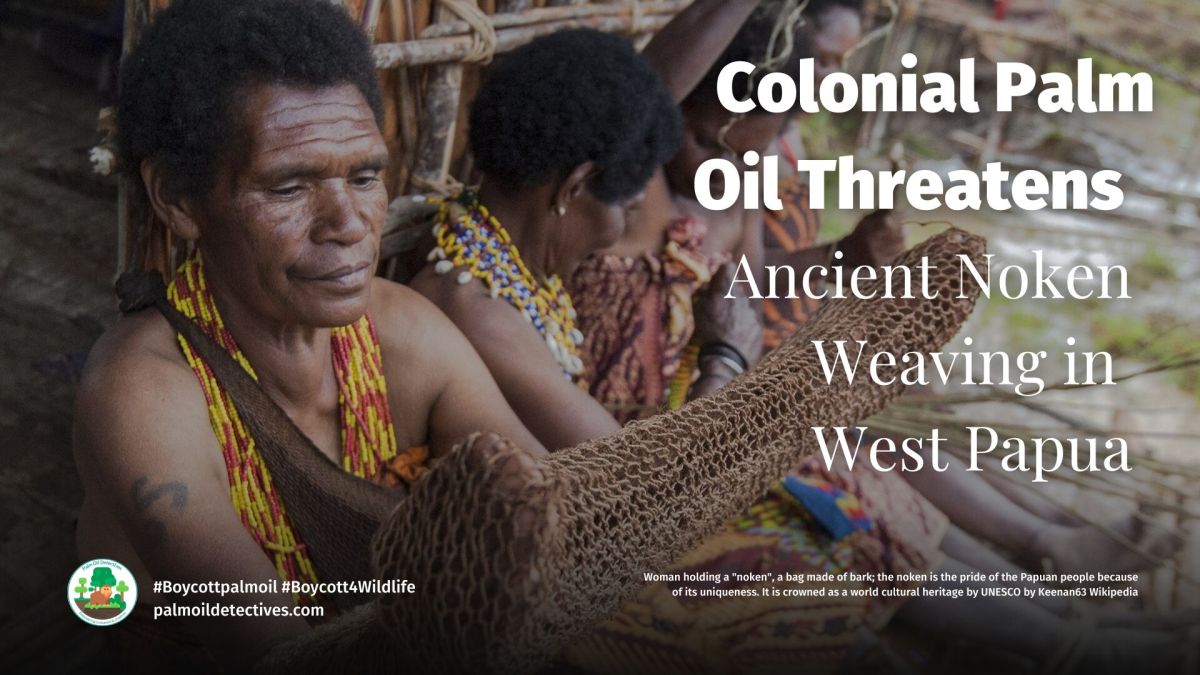
Extant (resident): Papua New Guinea; Solomon Islands
In the verdant, high-altitude forests of Bougainville Island, Papua New Guinea, and Choiseul Island, Solomon Islands, lives an intriguing creature—the Bougainville Monkey-faced bat or, as some call them, the Bougainville Flying Monkey. These bats are the titans of their family, boasting arm spans stretching impressively between 14.1 to 16 cm. They are endangered, mostly from palm oil and gold mining deforestation and hunting. Help them to survive every time you shop and #Boycottpalmoil #Boycott4Wildlife
During the night time, their captivating eyes that glow red or orange under the night sky, much like their kin.
They wear a mantle of thick, black fur that shrouds their heads and backs, whilst a contrasting splash of white or yellow graces their chests, making them a sight to behold. Unlike their relatives, the Guadalcanal Monkey-faced bats, their legs are enshrouded with a full coat of fur. During the night time, their captivating eyes that glow red or orange under the night sky, much like their kin. Tailless and intriguingly equal in size whether male or female, these bats certainly stand out in the animal kingdom.
Threats
Habitat Destruction:
Bougainville Monkey-faced bats predominantly depend on mature, upland forests.
Significant habitat destruction from agricultural activities and forest conversion.
Hunting Pressures
They are regularly hunted for bushmeat: Hunting practices often involve burning the bats’ roosting trees, thereby destroying their habitats.
Increased hunting pressure was partly due to civil tensions in Bougainville from 1987 to 2000.
Population Decline:
Bougainville Monkey-faced bats were feared extinct in 1992 due to a lack of sightings.
Tragically, their population is estimated to have declined by at least 50% from 1997-2017.
Despite suggestions for a captive breeding program in 1992 to curb population decline, no such program exists as of 2017.
Conservation Efforts:
Bougainville Monkey-faced bats are listed as an Endangered species on the IUCN Red List. Bat Conservation International included them in its worldwide priority list for conservation in 2013.
Conservation strategies involve collaborations with local communities and organisations, identifying alternative protein sources, reforestation, managing conflicts between the bats and farmers, and promoting conservation dialogue.
Habitat
Found high above sea level in cloud forests over 1,100 metres, the Bougainville Monkey-faced bat enjoys the tranquillity and freshness of higher altitudes. After vanishing from sight on Bougainville Island since 1968, they made a surprise reappearance in 2016. On Choiseul Island, though, they’ve been conspicuously absent since 2008. These bats have a penchant for mature, highland tropical forests and aren’t picky about roosting spots, be it in hollow trees or hanging off fig tree branches. There’s even talk about these bats gouging trees for sap—a unique adaptation indeed!
Diet
While the exact diet of these bats remains a mystery, the significant wear on the teeth of museum specimens provides a clue. This condition points to the possibility of them consuming hard, rough-textured fruits.
Mating and breeding
Many aspects of the biology and behaviour of this bat, like many other megabats, remain understudied due to their inaccessible habitats and their elusive, secretive natures.
Support Bougainville Monkey-faced Bat Pteralopex anceps by going vegan and boycotting palm oil in the supermarket, it’s the #Boycott4Wildlife
Support the conservation of this species
This animal has no protections in place. Read about other forgotten species here. Create art to support this forgotten animal or raise awareness about them by sharing this post and using the #Boycottpalmoil#Boycott4Wildlife hashtags on social media. Also you can boycott palm oil in the supermarket.
1. Join the #Boycott4Wildlife on social media and subscribe to stay in the loop: Share posts from this website to your own network on Twitter, Mastadon, Instagram, Facebook and Youtube using the hashtags #Boycottpalmoil#Boycott4Wildlife.
2. Contribute stories: Academics, conservationists, scientists, indigenous rights advocates and animal rights advocates working to expose the corruption of the palm oil industry or to save animals can contribute stories to the website.
3. Supermarket sleuthing: Next time you’re in the supermarket, take photos of products containing palm oil. Share these to social media along with the hashtags to call out the greenwashing and ecocide of the brands who use palm oil. You can also take photos of palm oil free products and congratulate brands when they go palm oil free.
More and more palm oil free 🦧 products in Australia 🇦🇺. Customer awareness is increasing month by month. Of course Bart Van Assen will keep pushing "sustainable" palm oil with Orangutan Land Trust. Boycott palm oil to protect wildlife! There is not planet B #boycott4wildlifepic.twitter.com/rm7chub5Rb
If possible to get Ovomaltine, please promote it among your friends. It openly advertises with 0 palm oil. No RSPO no bullshit. For me it even tasts better than nuttela. It substantiates that chocolate spread can be made delicious without filthy palm oil. pic.twitter.com/cyV5Tm3tLd
4. Take to the streets: Get in touch with Palm Oil Detectives to find out more.
5. Donate: Make a one-off or monthly donation to Palm Oil Detectives as a way of saying thank you and to help pay for ongoing running costs of the website and social media campaigns. Donate here
A 2019 World Health Organisation (WHO) report into the palm oil industry and RSPO finds extensive greenwashing of palm oil deforestation and the murder of endangered animals (i.e. biodiversity loss)
A groundbreaking open-source tool by the University of Chicago called PalmWatch, shines a light on the darkest parts of the palm oil industry.
PalmWatch is a free web-based tool that reveals links between major multinational brands using supposedly “sustainable” palm oil, and palm oil supply chain. This means that concerned consumers, animal rights advocates and human rights advocates can clearly see the toll of palm oil ecocide in their daily supermarket purchases.
Covering hundreds of thousands of kilometres, PalmWatch gives everyone open-source, free and unprecedented access to what “sustainable” palm oil really looks like.
More than simply a tool, PalmWatch is a clarion call to consumers to look carefully at their purchases. And where possible, to boycott brands causing the ecological crisis of tropical deforestation.
The media release below is provided by the University of Chicago and had the original title ‘PalmWatch, a new tool created by DSI’s 11th Hour Project team, sheds light on palm oil production across the globe’, published February 22nd, 2024. Read the original.
Palm oil is a required ingredient for a plethora of household products, from food items like packaged pastries and chips to cosmetics and soaps or even biofuels. But most palm oil is produced on mono-crop plantations, grown on huge tracts of land that were once tropical rainforests and other biodiverse ecosystems. Mapping the links between palm oil mills, multinational corporations, and future deforestation risk is a difficult data science problem to solve, but thanks to a partnership with Inclusive Development International (IDI), the DSI used novel methods to solve this problem.”
Mapping the links between palm oil mills, multinational corporations, and future deforestation risk is a difficult data science problem to solve, but the University of Chicago Data Science Institute and Inclusive Development International (IDI) have created a new tool to help fill gaps in understanding the problem.
The DSI and the IDI, with support from the 11th Hour Project, launched a new tool called PalmWatch on Feb. 22. Using rigorous data science and advanced, low-cost data visualisation methods, PalmWatch traces palm oil supplies from the ground level, where the environmental and social impacts of palm oil cultivation occur, to the consumer brands that use the oil in their products.
“This launch of the PalmWatch tool has been a long time coming,” said David Uminsky, executive director of the Data Science Institute at the University of Chicago. “This has all the hallmarks of a great data science problem.”
“I’m very excited that this dashboard will be owned by local communities and nonprofits working in the space,” said Launa Greer, a software engineer at the DSI. “Previously, investigating the effects of palm oil supply chains was a laborious process; now groups will have analytics at their fingertips.”
Connecting data sources
In an effort to increase transparency, multinational brands do currently report the palm oil mills from which they source their material. However, creating a repository that sorts and organises mills across the world requires collecting and standardising this information. And even with this information, it takes additional computational methods to understand how each mill impacts local deforestation risks.
The PalmWatch project began as part of the Data Science Clinic, an experiential project-based course where students work as data scientists under the supervision of DSI staff and faculty.
To build the tool, DSI’s 11th Hour Project, led by Open Spatial Lab technical lead Dylan Halpern, first had to scrape public disclosures from thirteen multinational consumer brands that show which mills these brands source from.
This information then had to be standardised, with the palm oil mills geolocated on a searchable map. The data scientists also had to collect information about the mills, such as which companies own and operate them, which consumer brands they are affiliated with, and their RSPO certification status (a metric measuring sustainability of palm oil production).
Collecting the information was a challenge, said Greer. “Disclosures were typically located on obscure corners of the websites and difficult to scrape for information due to wildly-varying PDF layouts,” she said. “We hope that making a clean, consolidated, and machine readable dataset of mills available to the public will accelerate similar supply-chain research efforts.”
A screenshot from the PalmWatch app. Colors represent various degrees of deforestation.
Built with future-proofing in mind
Making sure that PalmWatch would be cheap to maintain and easy to update was a vital part of the process to ensure the website will continue to be a useful investigative tool. PalmWatch was built to not require heavy computation that can add up in costs to web hosts over time.
“Ongoing funding for community-centered data science projects is not always guaranteed, so it’s important to architect software that is cheap to own in the long term,” said DSI’s Open Spatial Lab technical lead Dylan Halpern. “It’s tragic to see fantastic software engineering and community-engaged data science fade away from public view due simply to a server bill.”
Full data files are available for public download. “We realised early on that palm oil production impacts each part of the world in a unique way; we integrated a collaborative content management system so that local advocates can add critical context, news, legal briefings, and other local knowledge to PalmWatch at every level—mill, country, consumer brand, and everything in between,” said Halpern.
The development team has future plans for additional updates, including a data pipeline github, a disclosure contribution guide, and plans to offer hands-on training to social impact organisations and journalists who want to dig deeper into specific data questions.
How does PalmWatch work?
PalmWatch addresses this disconnect between palm oil end users and ground-level impacts by:
Scraping public disclosures from 13 consumer brands showing which crushing mills—where crude palm oil is extracted from palm fruit grown on plantations—these brands source from globally.
Standardising that information across the brands and geolocating more than 2,000 mills on a searchable map. Detailed mill views show which consumer brands source from each mill, what companies own and operate them, and their RSPO certification status.
Drawing a catchment boundary around each mill, which shows the approximate geographical area a mill is likely sourcing palm fruit from, based on advanced data science techniques (described in more detail in the Methodology section below) and the industry’s own fruit spoilage standards.
Overlaying 20 years of deforestation data from the University of Maryland within each mill’s catchment area. PalmWatch then assigns a past deforestation score to each mill, based on the amount of forest cleared within its catchment area, along with a future deforestation risk score, based on past deforestation patterns and the amount of forest that remains at risk. This information is then connected to the brands sourcing from each mill, and can be aggregated and filtered, allowing users to see deforestation by brand, mill owner and mill corporate group.
The media release below is provided by the University of Chicago and had the original title ‘PalmWatch, a new tool created by DSI’s 11th Hour Project team, sheds light on palm oil production across the globe’, published February 22nd, 2024. Read the original.
ENDS
Read more about deforestation and ecocide in the palm oil industry
Wealthiest people in USA and China responsible for 2/3 of global warming since 1990. Climate policies needed to target the richest people on the planet now!
Songbirds communicate with different species during nocturnal flights sharing vital info about navigation and stopover habitats. Save their fascinating world!
Peru’s alpine puna grasslands supports foraging of vulnerable Andean bears AKA Spectacled Bears. They prefer young bromeliad plants, Take action for them!
Testimony of Illegal poachers in Indonesia finds 26 of the estimated remaining 72 living Javan #Rhinos were slaughtered over the past five years. Shame!
Something went wrong. Please refresh the page and/or try again.
Take Action in Five Ways
1. Join the #Boycott4Wildlife on social media and subscribe to stay in the loop: Share posts from this website to your own network on Twitter, Mastadon, Instagram, Facebook and Youtube using the hashtags #Boycottpalmoil#Boycott4Wildlife.
2. Contribute stories: Academics, conservationists, scientists, indigenous rights advocates and animal rights advocates working to expose the corruption of the palm oil industry or to save animals can contribute stories to the website.
3. Supermarket sleuthing: Next time you’re in the supermarket, take photos of products containing palm oil. Share these to social media along with the hashtags to call out the greenwashing and ecocide of the brands who use palm oil. You can also take photos of palm oil free products and congratulate brands when they go palm oil free.
More and more palm oil free 🦧 products in Australia 🇦🇺. Customer awareness is increasing month by month. Of course Bart Van Assen will keep pushing "sustainable" palm oil with Orangutan Land Trust. Boycott palm oil to protect wildlife! There is not planet B #boycott4wildlifepic.twitter.com/rm7chub5Rb
If possible to get Ovomaltine, please promote it among your friends. It openly advertises with 0 palm oil. No RSPO no bullshit. For me it even tasts better than nuttela. It substantiates that chocolate spread can be made delicious without filthy palm oil. pic.twitter.com/cyV5Tm3tLd
4. Take to the streets: Get in touch with Palm Oil Detectives to find out more.
5. Donate: Make a one-off or monthly donation to Palm Oil Detectives as a way of saying thank you and to help pay for ongoing running costs of the website and social media campaigns. Donate here

New research finds that it’s not only human babies who love to playfully tease each other. Researchers reasoned that since language is not required for this behaviour, similar kinds of playful teasing might be present in non-human animals such as chimpanzees, bonobos, gorillas and orangutans. Now cognitive biologists and primatologists have documented playful teasing in four species of great apes. Like joking behaviour in humans, ape teasing is provocative, persistent, and includes elements of surprise and play. Because all four great ape species used playful teasing, it is likely that the prerequisites for humour evolved in the human lineage at least 13 million years ago.
Media release from Science Alert, February 13, 2024. Research: Laumer I.B., Winkler S, Rossano F, Cartmill EA. Spontaneous playful teasing in four great ape species. Proceedings of the Royal Society B, 2024 DOI: 10.1098/rspb.2023.2345
Joking is an important part of human interaction that draws on social intelligence, an ability to anticipate future actions, and an ability to recognize and appreciate the violation of others’ expectations. Teasing has much in common with joking, and playful teasing may be seen as a cognitive precursor to joking. The first forms of playful teasing in humans emerge even before babies say their first words, as early as eight months of age. The earliest forms of teasing are repetitive provocations often involving surprise. Infants tease their parents by playfully offering and withdrawing objects, violating social rules (so-called provocative non-compliance), and disrupting others’ activities.
In a study, scientists from the University of California Los Angeles, the Max Planck Institute of Animal Behavior, Indiana University, and the University of California San Diego(Isabelle Laumer, Sasha Winkler, Federico Rossano, and Erica Cartmill, respectively) report evidence of playful teasing in the four great ape species: orangutans, chimpanzees, bonobos and gorillas. “Great apes are excellent candidates for playful teasing, as they are closely related to us, engage in social play, show laughter and display relatively sophisticated understandings of others’ expectations,” says Isabelle Laumer, a post-doctoral researcher at the University of California Los Angeles and the Max Planck Institute of Animal Behavior.
The team analyzed spontaneous social interactions that appeared to be playful, mildly harassing, or provocative. During these interactions, the researchers observed the teaser’s actions, bodily movements, facial expressions, and how the targets of the teasing responded in turn. They also assessed the teaser’s intentionality by looking for evidence that the behavior was directed at a specific target, that it persisted or intensified, and that teasers waited for a response from the target.
Teasing to provoke a response
The researchers found that orangutans, chimpanzees, bonobos and gorillas all engaged in intentionally provocative behavior, frequently accompanied by characteristics of play. They identified 18 distinct teasing behaviors. Many of these behaviors appeared to be used to provoke a response, or at least to attract the target’s attention. “It was common for teasers to repeatedly wave or swing a body part or object in the middle of the target’s field of vision, hit or poke them, stare closely at their face, disrupt their movements, pull on their hair or perform other behaviors that were extremely difficult for the target to ignore,” explains UCLA and IU professor Erica Cartmill, senior author of the study.
Although playful teasing took many forms, the authors note that it differed from play in several ways. “Playful teasing in great apes is one-sided, very much coming from the teaser often throughout the entire interaction and rarely reciprocated,” explains Cartmill. “The animals also rarely use play signals like the primate ‘playface’, which is similar to what we would call a smile, or ‘hold’ gestures that signal their intent to play.”
Similarity with human behaviour
Playful teasing mainly occurred when apes were relaxed, and shared similarities with behaviours in humans. “Similar to teasing in children, ape playful teasing involves one-sided provocation, response waiting in which the teaser looks towards the target’s face directly after a teasing action, repetition, and elements of surprise,” Laumer explains.
The researchers noted that Jane Goodall and other field primatologists had mentioned similar behaviours happening in chimpanzees many years ago, but this new study was the first to systematically study playful teasing. “From an evolutionary perspective, the presence of playful teasing in all four great apes and its similarities to playful teasing and joking in human infants suggests that playful teasing and its cognitive prerequisites may have been present in our last common ancestor, at least 13 million years ago,” explains Laumer. “We hope that our study will inspire other researchers to study playful teasing in more species in order to better understand the evolution of this multi-faceted behaviour. We also hope that this study raises awareness of the similarities we share with our closest relatives and the importance of protecting these endangered animals.”
Media release from Science Alert, February 13, 2024. Research: Laumer I.B., Winkler S, Rossano F, Cartmill EA. Spontaneous playful teasing in four great ape species. Proceedings of the Royal Society B, 2024 DOI: 10.1098/rspb.2023.2345
ENDS
Learn about other animals endangered by palm oil and other agriculture
A 2019 World Health Organisation (WHO) report into the palm oil industry and RSPO finds extensive greenwashing of palm oil deforestation and the murder of endangered animals (i.e. biodiversity loss)
1. Join the #Boycott4Wildlife on social media and subscribe to stay in the loop: Share posts from this website to your own network on Twitter, Mastadon, Instagram, Facebook and Youtube using the hashtags #Boycottpalmoil#Boycott4Wildlife.
2. Contribute stories: Academics, conservationists, scientists, indigenous rights advocates and animal rights advocates working to expose the corruption of the palm oil industry or to save animals can contribute stories to the website.
3. Supermarket sleuthing: Next time you’re in the supermarket, take photos of products containing palm oil. Share these to social media along with the hashtags to call out the greenwashing and ecocide of the brands who use palm oil. You can also take photos of palm oil free products and congratulate brands when they go palm oil free.
More and more palm oil free 🦧 products in Australia 🇦🇺. Customer awareness is increasing month by month. Of course Bart Van Assen will keep pushing "sustainable" palm oil with Orangutan Land Trust. Boycott palm oil to protect wildlife! There is not planet B #boycott4wildlifepic.twitter.com/rm7chub5Rb
If possible to get Ovomaltine, please promote it among your friends. It openly advertises with 0 palm oil. No RSPO no bullshit. For me it even tasts better than nuttela. It substantiates that chocolate spread can be made delicious without filthy palm oil. pic.twitter.com/cyV5Tm3tLd
4. Take to the streets: Get in touch with Palm Oil Detectives to find out more.
5. Donate: Make a one-off or monthly donation to Palm Oil Detectives as a way of saying thank you and to help pay for ongoing running costs of the website and social media campaigns. Donate here
Easter is almost upon us and that means chocolate eggs and indulgence. Used as an emulsifier in chocolate, palm oil is what gives cheap chocolate a disgusting soapy and chalky flavour. It is preferred by mass producers because it is cheap. However its environmental and social cost is enormous.
Palm oil is linked to death, ecocide, deforestation and destruction. So this Easter, make sure you look out for palm oil free brands and actively avoid dirty palm oil. “Sustainable” palm oil is a complete lie. RSPO members promoting themselves as being eco-friendly are still causing deforestation and human rights abuses for “sustainable” palm oil.
Below you can learn more about the tactics of palm oil greenwashing regularly employed to fool consumers.
How do I know if chocolate I’m buying has palm oil in it?
Sometimes it’s deceptively difficult to find palm oil on chocolate packaging. It could be listed as one of 1,000’s different chemical names.
If you are ever in doubt look for the prefixes:
LAUR
STEAR
GYLC
PALM
in the ingredients list on packaging – this is most likely palm oil. Another tip is to shop for locally produced chocolate and vegan chocolate (if you happen to be vegan).
Which chocolate brands cause deforestation for palm oil?
In short, all of the major chocolate brands cause deforestation for palm oil. This includes (but is not limited to):
The attached report is created each year by Mighty Earth and strives to call to account chocolate (and other food) manufacturers and retailers. Make sure that you cross-reference whether or not these brands are using palm oil. Most of them do and you can read about their ongoing palm oil ecocide here.
Claiming a brand or commodity is green based on unreliable, ineffective endorsements or eco-labels such as the RSPO, Forest Stewardship Council (FSC) or FairTrade…
Greenwashing lies are falsifying support from authorities to back up claims or using spurious research data to back up the greenwashing, boycott palm oil!…
Palm oil industry not just destroying rainforests and killing orangutans: @AP investigation finds widespread labor abuses and links to leading banks, supply chains of top global brands. https://t.co/igjxL6W8wi
Our undercover investigation alleged corruption, child labour, probable tax evasion, deforestation, worker deaths & paying police to attack villagers. The product made its way into world famous brands such as Nestlé, Danone, Kellogg's, Hershey's & Colgate.https://t.co/LEPdOQenFb
For decades, investigative journalists have been exposing that illegal land grabbing from Indigenous peoples as a regular occurrence in West Papua, South and Central…
The insidious playbook of palm oil companies “Promise, Divide, Intimidate and Coerce” reveals the 12 corrupt tactics used to grab community land in Africa
#Palmoil plantations have an overall negative impact on #biodiversity, according to research released this week. The #study, published in Nature Communications, found palm oil…
Yes, but Zoos/NGOs I think are trustworthy like Chester Zoo, Cheyenne Mountain Zoo and WWF support the RSPO and sustainable palm oil?
A network of Zoos and CONservation NGOS such as Orangutan Land Trust, Orangutan SOS, Cheyenne Mountain Zoo and Chester Zoo (a full list here) are either RSPO members themselves or they are funded by RSPO members (global retailers or palm oil companies) in exchange for promoting sustainable palm oil. This is a formal commercial agreement that they have.
— Orangutan Land Trust🦧 (also on Bluesky) (@orangulandtrust) April 10, 2022
Brands listed as using “sustainable” palm oil on the Impact Score App and Cheyenne Mountain Zoo feature in a 2021 Global Witness report into death and slavery for palm oil in Papua..
Global Witness October 2021 Report: Violence and death for palm oil connected to household supermarket brands (RSPO members)
“One palm oil firm, Rimbunan Hijau, [Papua New Guinea] negligently ignored repeated and avoidable worker deaths and injuries on palm oil plantations, with at least 11 workers and the child of one worker losing their lives over an eight-year period.
“Tainted palm oil from Papua New Guinea plantations was sold to household name brands, all of them RSPO members including Kellogg’s, Nestlé, Colgate, Danone, Hershey’s and PZ Cussons and Reckitt Benckiser”
The Jerdon’s Courser is a rare and captivating nocturnal #songbird belonging to the pratincole and courser family Glareolidae. These #birds are endemic to #India in the Eastern Ghats region of Andhra Pradesh. Currently they are only known to live in the Sri Lankamalleswara Wildlife Sanctuary, where they reside in sparse scrub forest with patches of bare ground and are threatened by #palmoil#deforestation, help them to survive and #Boycottpalmoil#Boycott4Wildlife
They are most active at dusk and during the night when they call out, filling the air with a melodious series of staccato notes: Twick-too…Twick-too…Twick-too or yak-wak.. yak-wak. These captivating sounds, repeated at a rapid pace of about one per second, may be uttered 2 to 16 times, attracting the participation of fellow birds in the vicinity.
The Jerdon’s Courser sports two striking brown breast-bands, they possess an unmistakable compact form. Their bill boasts a captivating blend of yellow and black, while their crown is adorned with a dark hue. A broad buff supercilium and an enchanting orange-chestnut throat patch add to their allure. A slender white stripe gracefully adorns the top of their head. During flight, their predominantly black tail and prominent white wing bar make a stunning display. Currently, they thrive solely within the enchanting Sri Lankamalleswara Wildlife Sanctuary, finding their home in sparse scrub forests adorned with patches of bare ground.
Threats
The Jerdon’s Courser’s habitat is becoming scarcer and more fragmented. They are threatened by human disturbance in the Eastern Ghats region of India including:
Hunting: the risk of accidental and opportunistic trapping of the animal.
Infrastructure: The construction of the Telugu-Ganga Canal initially threatened suitable habitat outside Sri Lankamaleswara Wildlife Sanctuary. However, the construction was halted, and a new route was approved to avoid the remaining suitable habitat.
Despite these efforts, their remaining habitat is still under threat because of expected increased palm oil agriculture around the reserve resulting from the canal construction. Along with an increase in palm oil deforestation in this area.
Palm oil plantations at the foothills of Eastern Ghats near Srungavarapukota
Palm oil plantations at the foothills of Eastern Ghats near Srungavarapukota in Vizianagaram district by Adityamadhav83 on Wikipedia
Until their rediscovery in 1986, this #bird was believed to be #extinct and was only known from a few historical records. The credit for rediscovering them goes to Bharat Bhushan, an ornithologist from the Bombay Natural History Society, who collaborated with local trappers to capture a specimen. Prior to their rediscovery, they were thought to be a diurnal bird. They remain critically endangered due to loss of habitat. They have nocturnal habits and are presumed to be insectivorous. Being a rare bird, nothing is known yet about their behavior and nesting habits.
Habitat
Studies in this region using sand strips to detect footprints suggest that these birds prefer habitats with tall bushes, ranging from 300 to 700 per hectare in density.
These birds are extremely rare and are endemic to southern India, primarily found in southern Andhra Pradesh. Their geographical range is extremely limited, known from the Godaveri river valley near Sironcha and Bhadrachalam, as well as the Cuddapah and Anantpur areas in the Pennar River valley.
An egg, likely collected within a 100 km radius of Kolar in 1917, was positively identified as belonging to this species through DNA analysis. Initially recorded in the mid-19th century, they were considered extinct for over 80 years until their rediscovery in 1986 in Cuddapah District, Andhra Pradesh.
Diet
The diet of Jerdon’s courser primarily consists of insects. As an insectivorous species, they feed on a variety of small insects such as beetles, grasshoppers, crickets, ants, and termites. Being a nocturnal bird, they are adapted to hunt for their prey during the dark hours of the night. However, due to limited information about their behaviour and feeding habits, further research may be required to obtain a more comprehensive understanding of their diet.
Mating and breeding
Jerdon’s courser (Rhinoptilus bitorquatus) is a species with limited information available about its mating habits and reproduction. However, based on general knowledge about bird reproduction, we can make some assumptions.
Jerdon’s courser is believed to form monogamous breeding pairs, where a male and a female come together to reproduce. Courtship behaviors such as displays of plumage, vocalisations, and courtship flights may be involved in the mating process. These behaviors help to attract a mate and establish pair bonds.
Once a pair is formed, they will likely engage in nest building. The nest is usually a scrape on the ground, often located in sparse scrub forest areas with patches of bare ground. The female is typically responsible for incubating the eggs while the male may assist in providing food for the female during this period.
The clutch size, or the number of eggs laid in a nest, is not well-documented for Jerdon’s courser. However, related species within the same family generally lay one to two eggs per clutch. The incubation period is also not well-known, but it is expected to be similar to other ground-nesting birds, which ranges from a few weeks to a month.
Once the eggs hatch, both parents are likely to participate in feeding and caring for the chicks. They will bring food, usually insects, to the nest to nourish the growing chicks. The duration of parental care and the fledging period, when the chicks are capable of leaving the nest, are not specifically known for Jerdon’s courser.
It’s important to note that more research and observations are needed to gather detailed information about the mating habits and reproductive biology of Jerdon’s courser.
This animal has no protections in place. Read about other forgotten species here. Create art to support this forgotten animal or raise awareness about them by sharing this post and using the #Boycottpalmoil#Boycott4Wildlife hashtags on social media. Also you can boycott palm oil in the supermarket.
1. Join the #Boycott4Wildlife on social media and subscribe to stay in the loop: Share posts from this website to your own network on Twitter, Mastadon, Instagram, Facebook and Youtube using the hashtags #Boycottpalmoil#Boycott4Wildlife.
2. Contribute stories: Academics, conservationists, scientists, indigenous rights advocates and animal rights advocates working to expose the corruption of the palm oil industry or to save animals can contribute stories to the website.
3. Supermarket sleuthing: Next time you’re in the supermarket, take photos of products containing palm oil. Share these to social media along with the hashtags to call out the greenwashing and ecocide of the brands who use palm oil. You can also take photos of palm oil free products and congratulate brands when they go palm oil free.
More and more palm oil free 🦧 products in Australia 🇦🇺. Customer awareness is increasing month by month. Of course Bart Van Assen will keep pushing "sustainable" palm oil with Orangutan Land Trust. Boycott palm oil to protect wildlife! There is not planet B #boycott4wildlifepic.twitter.com/rm7chub5Rb
4. Take to the streets: Get in touch with Palm Oil Detectives to find out more.
5. Donate: Make a one-off or monthly donation to Palm Oil Detectives as a way of saying thank you and to help pay for ongoing running costs of the website and social media campaigns. Donate here
Forest-fire haze drifting from Indonesia to neighbouring countries every dry season has eluded efforts to curb it.
Land clearing by burning is prohibited in Indonesia and Malaysia. However, penalising foreign companies for palm oil and timber deforestation has been hampered by cronyism and corruption.
Under-explored legal avenues may provide new solutions to the decades-old problem.
Written by Cecep Aminudin, a PhD candidate in environmental law at Padjadjaran University, Indonesia. Originally published as ‘Laying down the law on air pollution’ by 360info.org and republished under Creative Commons License.
Companies – mostly oil-palm producers – have usedfire as a tool to clear forests and peatland areas for agriculture, even though Indonesia and Malaysia are well aware of the need to strictly enforce bans on the practice.
Indonesian and Malaysian laws since the 1997 haze event have not prevented local burning.
And penalising foreign companies for their actions in Indonesia and Malaysia has been hampered by cronyism and corruption, lack of awareness and education, weaknesses in the institutional framework and lack of political will.
Also, the penalties are too low to deter further pollution.
In recent years Indonesia’s environment ministry has brought more land- and forest-fire cases to court. Civil laws holding businesses accountable for the fires they cause have had some effect, according to a ministry report.
The ministry filed 21 cases between January 2015 and September 2020, and of these 10 were successful and 11 are still pending. Businesses have been ordered to pay compensation and restoration costs totalling almost US$1.38 billion.
These outcomes are related to the application of the precautionary principle in decision-making by Indonesian civil courts, as is common in environmental cases that involve scientific evidence.
According to this principle, lack of full scientific certainty shall not be used to make a decision regarding environmental protection. Indonesian courts applied the precautionary principle in the determining liable party and judging evidence even when there was scientific uncertainty.
Providing sufficient evidence in forest- and land-fire cases is often very difficult
Scientific evidence in the form of studies and expert opinion plays a crucial role in proving illegal fires have occurred, who started them, and how much environmental damage and loss they have caused.
Laboratory test reports can also be used as evidence in civil environmental-justice cases. Entirely at the judge’s discretion, these reports can be treated as expert testimony. Their relevance, which includes validity and reliability, and support from other expert testimonies, is a critical point in a judge’s decision to admit them as compelling legal evidence.
External regulation could complement and support the legal framework in each Southeast Asian country to ensure the activities of transnational companies meet environmental standards and the Association of Southeast Asian Nations (ASEAN) notion of cooperation.
Holding palm oil companies to account for air pollution under international law
A legitimate legislative framework could impose and enforce international environmental standards recognised under human rights obligations. In this way, palm oil plantation companies could be held accountable under international law for the pollution they cause elsewhere.
The victims of transboundary pollution and other environmental destruction are the people whose health will suffer, either in the short or the long term. Many countries have also suffered economic loss from direct damage and loss of economic activity.
Holding polluters accountable will not just uphold domestic laws but also demonstrate political willingness to recognise air pollution as a human rights issue.
Cecep Aminudin is a PhD candidate in environmental law at Padjadjaran University, Bandung, Indonesia. He is the Chairman of ECOTAS, a research institute on sustainability. Apart from pursuing his doctoral degree, Aminudin conducts research, delivers training and consults on environmental law. He declares no conflict of interest in relation to this article and does not receive special funds in any form.
Written by Cecep Aminudin, a PhD candidate in environmental law at Padjadjaran University, Indonesia. Originally published as ‘Laying down the law on air pollution’ by 360info.org and republished under Creative Commons License.
ENDS
A 2019 World Health Organisation (WHO) report into the palm oil industry finds extensive greenwashing of human rights abuses, deforestation, air pollution and human health impacts
Nestlé is destroying rainforests, releasing mega-tonnes of carbon into the atmosphere, and killing hundreds of endangered species. Once these animals are gone – they are gone for good. See Nestlé’s full list of…
Despite global retail giant Colgate-Palmolive forming a coalition with other brands in 2020, virtue-signalling that they will stop all deforestation, they continue to do this – destroying rainforest and releasing mega-tonnes of carbon…
In 2020, global retail giant Unilever unveiled a deforestation-free supply chain promise. By 2023 they would be deforestation free. This has been and gone and they are still causing deforestation. This brand has…
Savvy consumers have been pressuring French Dairy multinational Danone for decades to cease using deforestation palm oil. Yet they actually haven’t stopped this. From their website: ‘Danone is committed to eliminating deforestation from…
Despite decades of promises to end deforestation for palm oil PepsiCo (owner of crisp brands Frito-Lay, Cheetos and Doritos along with hundreds of other snack food brands) have continued sourcing palm oil that…
Despite decades of promises to end deforestation for palm oil Procter & Gamble or (P&G as they are also known) have continued sourcing palm oil that causes ecocide, indigenous landgrabbing, and the habitat…
In late 2023, Kelloggs became Kellanova for their US arm. Savvy consumers have been pressuring Kelloggs for decades to cease using deforestation palm oil. Yet they actually haven’t stopped this. From their website:…
Global mega-brand Johnson & Johnson have issued a position statement on palm oil in 2020. ‘At Johnson & Johnson, we are committed to doing our part to address the unsustainable rate of global…
PZ Cussons is a British-owned global retail giant. They own well-known supermarket brands in personal care, cleaning, household goods and toiletries categories, such as Imperial Leather, Morning Fresh, Carex, Radiant laundry powder and…
1. Join the #Boycott4Wildlife on social media and subscribe to stay in the loop: Share posts from this website to your own network on Twitter, Mastadon, Instagram, Facebook and Youtube using the hashtags #Boycottpalmoil#Boycott4Wildlife.
2. Contribute stories: Academics, conservationists, scientists, indigenous rights advocates and animal rights advocates working to expose the corruption of the palm oil industry or to save animals can contribute stories to the website.
3. Supermarket sleuthing: Next time you’re in the supermarket, take photos of products containing palm oil. Share these to social media along with the hashtags to call out the greenwashing and ecocide of the brands who use palm oil. You can also take photos of palm oil free products and congratulate brands when they go palm oil free.
More and more palm oil free 🦧 products in Australia 🇦🇺. Customer awareness is increasing month by month. Of course Bart Van Assen will keep pushing "sustainable" palm oil with Orangutan Land Trust. Boycott palm oil to protect wildlife! There is not planet B #boycott4wildlifepic.twitter.com/rm7chub5Rb
If possible to get Ovomaltine, please promote it among your friends. It openly advertises with 0 palm oil. No RSPO no bullshit. For me it even tasts better than nuttela. It substantiates that chocolate spread can be made delicious without filthy palm oil. pic.twitter.com/cyV5Tm3tLd
4. Take to the streets: Get in touch with Palm Oil Detectives to find out more.
5. Donate: Make a one-off or monthly donation to Palm Oil Detectives as a way of saying thank you and to help pay for ongoing running costs of the website and social media campaigns. Donate here
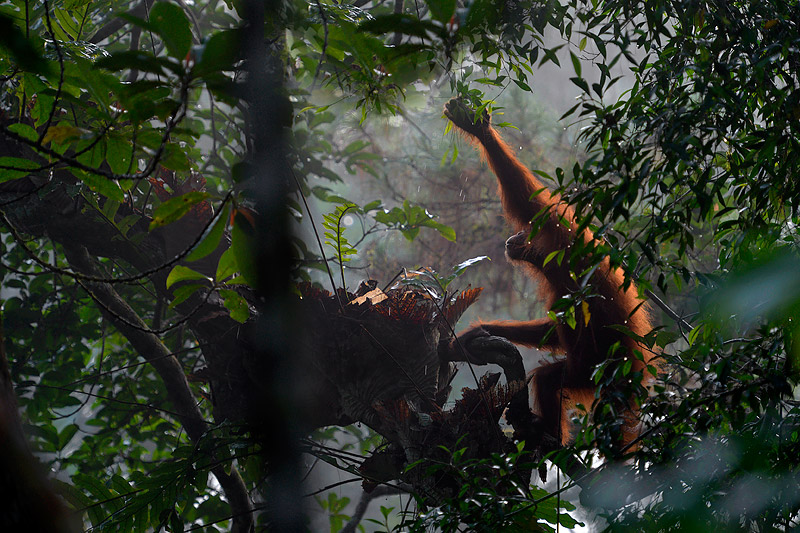
Brazil (Amazonas); Colombia; Ecuador; Peru; Trinidad and Tobago; Venezuela.
Red howlers are the largest of the howler monkey species. They have dense and vividly coloured fur that ranges from brown to dark red, with gold or bright orange undersides – the colour can vary based on their age and habitat. Their bare, dark faces contrast with the surrounding fur. They have stunning and characterful faces with stubby noses, wide jaws, and thick beards. These beautiful #monkeys face multiple threats including palm oil, soy and meat deforestation, the construction of #hydroelectric dams, #hunting and human persecution. Help them to survive each time you shop, #BoycottGold#Boycottpalmoil#Boycott4Wildlife
The Colombian or Venezuelan red howler is a type of howler monkey that lives in the western Amazon Basin of South America, across countries like Venezuela, Colombia, Ecuador,Peru, and Brazil. In 1986, the monkeys in Bolivia’s Santa Cruz were identified as a different species called the Bolivian red howler. More recently, monkeys in northeastern South America and Trinidad have been named as the Guyanan red howler. All these howler monkeys are part of a larger family called Atelidae, which is a group of New World monkeys.
Several threats are known to this species across their distribution range, including hunting, deforestation and other pressures due to human activities. Although howler monkeys are believed to easily adapt to disturbed forest, extensive deforestation has occurred throughout their range in Colombia. Recent reports from northern Peru show that A. seniculus populations are highly affected by hunting for local consumption, deforestation for agriculture, cattle ranching, logging, and hydrocarbon exploration (Aquino et al. 2016).
IUCN red list
Appearance & Behaviour
Curious and social, Red howlers live in groups with 1 to 3 males, 2 to 7 females, and varying numbers of young monkeys. Their throats appear swollen due to an enlarged hyoid bone at the base of the tongue. Males are larger than females with darker and denser beards.
Their tails are exceptionally long, with the last third being hairless underneath, which helps them grip branches better. The males in all-male groups sometimes fight in order to gain the status and take control – in order to become the alpha male.
These monkeys are known for their loud howls, which can be heard up to 5 km away, usually at dawn and before they sleep at night. This communication helps avoid territory overlap with our neighbouring troops. Red howlers are most active in the morning and prefer staying high up in trees where they can find the most leaves. They aren’t fans of rain and often make plaintive howls when it’s raining, while sitting hunched over in trees.
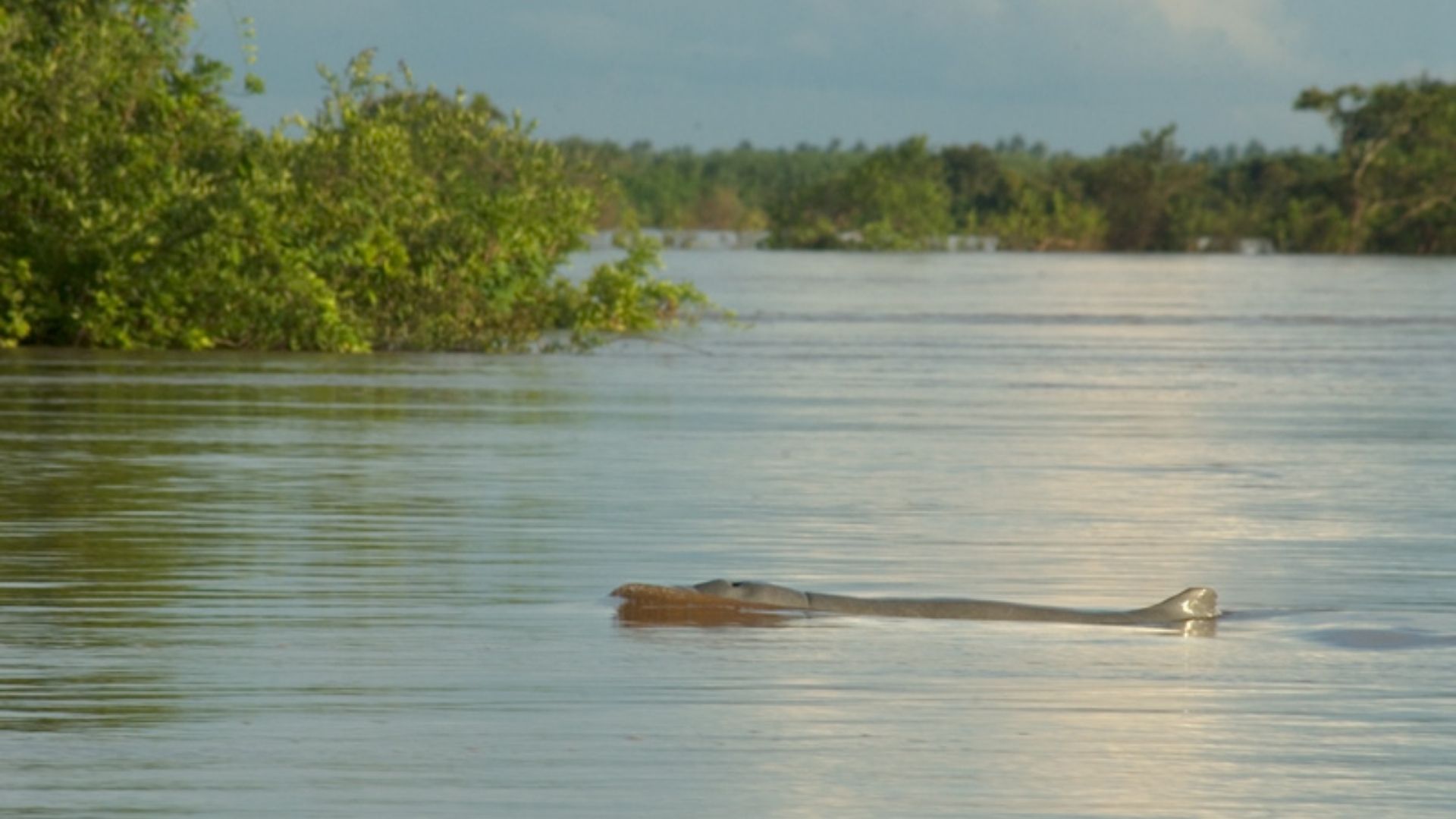
Threats
The main danger to red howlers is the loss of their home to deforesation. Also the forests that flood seasonally.
Changes like building dams and cutting down trees along rivers have dramatically reduced their habitat range. Sadly, many red howlers are killed for their unique enlarged hyoid bone, which is used as a cup in treating certain health conditions, or simply for food. They can also be captured and sold commercially.
Deforestation for hydroelectric dams: They are affected by dam construction and logging, as they live in seasonally flooded forests.
Human persecution: Red howlers are sometimes killed for their enlarged hyoid bone, which is used as a drinking vessel for treating health conditions by local people.
Hunting: They are hunted for food.
Illegal pet trade: Commercial exportation is also a threat, as they can be captured and sold.
Disease: Dengue and Yellow Fever viruses
Although this animal was previously recorded on IUCN Red List as being ‘Least Concern’ 100,000’s of hectares of rainforest have since disappeared for palm oil, soy and meat across their range. It is likely that this rating will be updated to be either ‘Near Threatened’ or ‘Vulnerable’ by IUCN Red List.
Habitat
Red howler monkeys inhabit a broad range of northwestern South American countries, including Bolivia, Brazil, Colombia, Ecuador, Guyana, French Guiana, Venezuela, Peru, Suriname, and the island of Trinidad, among others. They predominantly dwell in the canopies of tropical deciduous forests and rainforests, with a special preference for Cecropia and teak trees.
Diet
Red howler monkeys’ diet consists of flowers, leaves, and fruit, with leaves making up to 60% of their food intake. They are picky eaters, carefully avoiding leaves that are toxic or harmful. They particularly prefer young, tender leaves which are not only easier to digest but also contain more protein and sugar.
Mating and breeding
Male Red howler monkeys follow a polygynous mating system (where one male mates with multiple females). A female typically initiates courtship by sticking out her tongue at a male and if there’s no response, she moves on to another male. Mating happens all year round and after a 6 month pregnancy, a single baby is usually born. By one month old, infants can use their tail to cling to their mother and ride on her back until they are one year old.

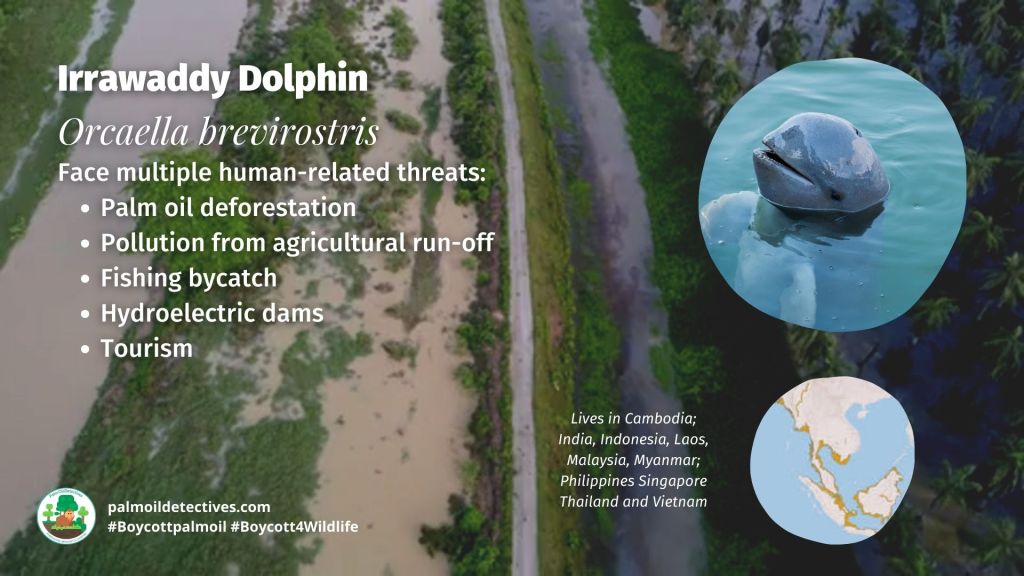
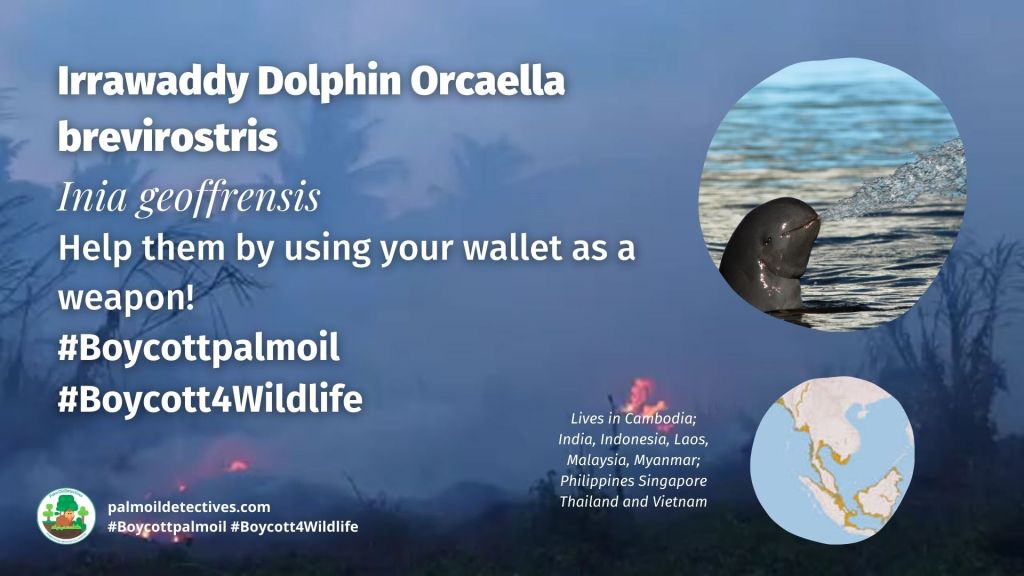
Weaning happens when the young monkeys are between 18 to 24 months old. Males often show affection to their direct offspring. Male red howlers reach sexual maturity at five years old, whereas females mature at four years old.
Violent dominance is prevalent among males
There’s intense competition among male red howler monkeys due to an unequal sex ratio. When male monkeys grow up, they’re kicked out of their birth group. These males then try to take over another group by killing their existing leader and his offspring, to eliminate any future competition. This violent takeover means that sadly – less than 25% of young monkeys survive such invasions.
This animal has no protections in place. Read about other forgotten species here. Create art to support this forgotten animal or raise awareness about them by sharing this post and using the #Boycottpalmoil#Boycott4Wildlife hashtags on social media. Also you can boycott palm oil in the supermarket.
Further Information
Link, A., Palacios, E., Cortés-Ortiz, L., Stevenson, P.R., Cornejo, F.M., Mittermeier, R.A., Shanee, S., de la Torre, S., Boubli, J.P., Guzmán-Caro, D.C., Moscoso, P., Urbani, B. & Seyjagat, J. 2021. Alouatta seniculus. The IUCN Red List of Threatened Species 2021: e.T198676562A198687134. https://dx.doi.org/10.2305/IUCN.UK.2021-2.RLTS.T198676562A198687134.en. Accessed on 23 February 2023.
Cornejo, F.M., Boubli, J.P., Alves, S.L., Bicca-Marques, J.C., Cortés-Ortiz, L., Calouro, A.M. & de Melo, F.R. 2021. Alouatta puruensis (amended version of 2020 assessment). The IUCN Red List of Threatened Species 2021: e.T136787A190430767. https://dx.doi.org/10.2305/IUCN.UK.2021-1.RLTS.T136787A190430767.en. Accessed on 26 May 2023.
1. Join the #Boycott4Wildlife on social media and subscribe to stay in the loop: Share posts from this website to your own network on Twitter, Mastadon, Instagram, Facebook and Youtube using the hashtags #Boycottpalmoil#Boycott4Wildlife.
2. Contribute stories: Academics, conservationists, scientists, indigenous rights advocates and animal rights advocates working to expose the corruption of the palm oil industry or to save animals can contribute stories to the website.
3. Supermarket sleuthing: Next time you’re in the supermarket, take photos of products containing palm oil. Share these to social media along with the hashtags to call out the greenwashing and ecocide of the brands who use palm oil. You can also take photos of palm oil free products and congratulate brands when they go palm oil free.
More and more palm oil free 🦧 products in Australia 🇦🇺. Customer awareness is increasing month by month. Of course Bart Van Assen will keep pushing "sustainable" palm oil with Orangutan Land Trust. Boycott palm oil to protect wildlife! There is not planet B #boycott4wildlifepic.twitter.com/rm7chub5Rb
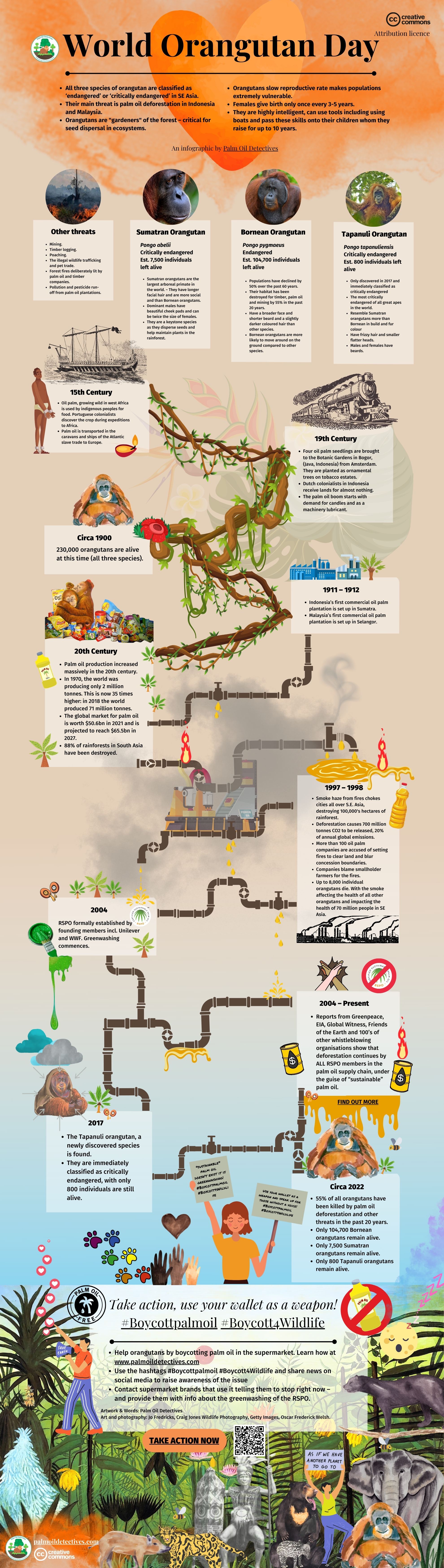
If possible to get Ovomaltine, please promote it among your friends. It openly advertises with 0 palm oil. No RSPO no bullshit. For me it even tasts better than nuttela. It substantiates that chocolate spread can be made delicious without filthy palm oil. pic.twitter.com/cyV5Tm3tLd
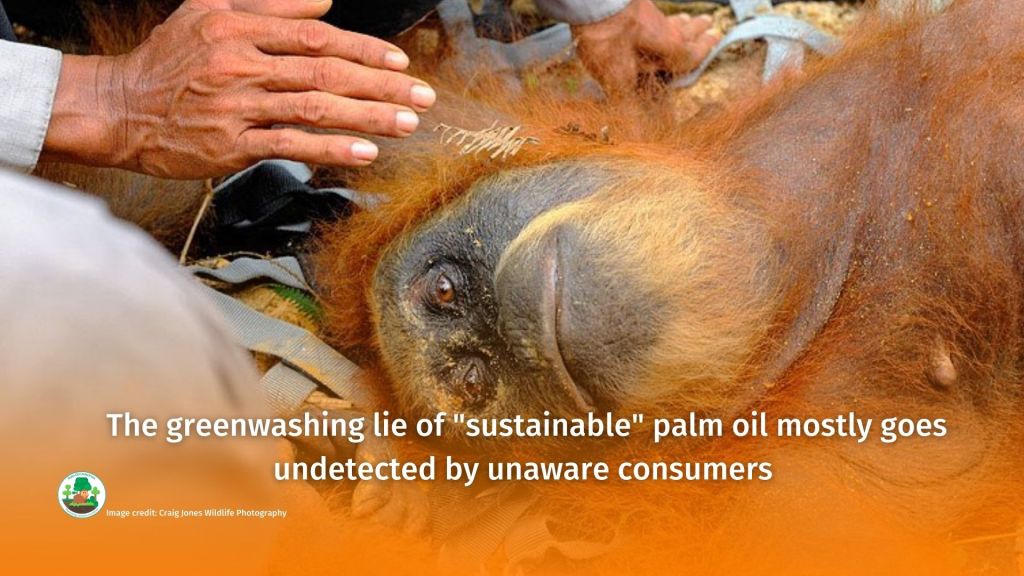
4. Take to the streets: Get in touch with Palm Oil Detectives to find out more.
5. Donate: Make a one-off or monthly donation to Palm Oil Detectives as a way of saying thank you and to help pay for ongoing running costs of the website and social media campaigns. Donate here