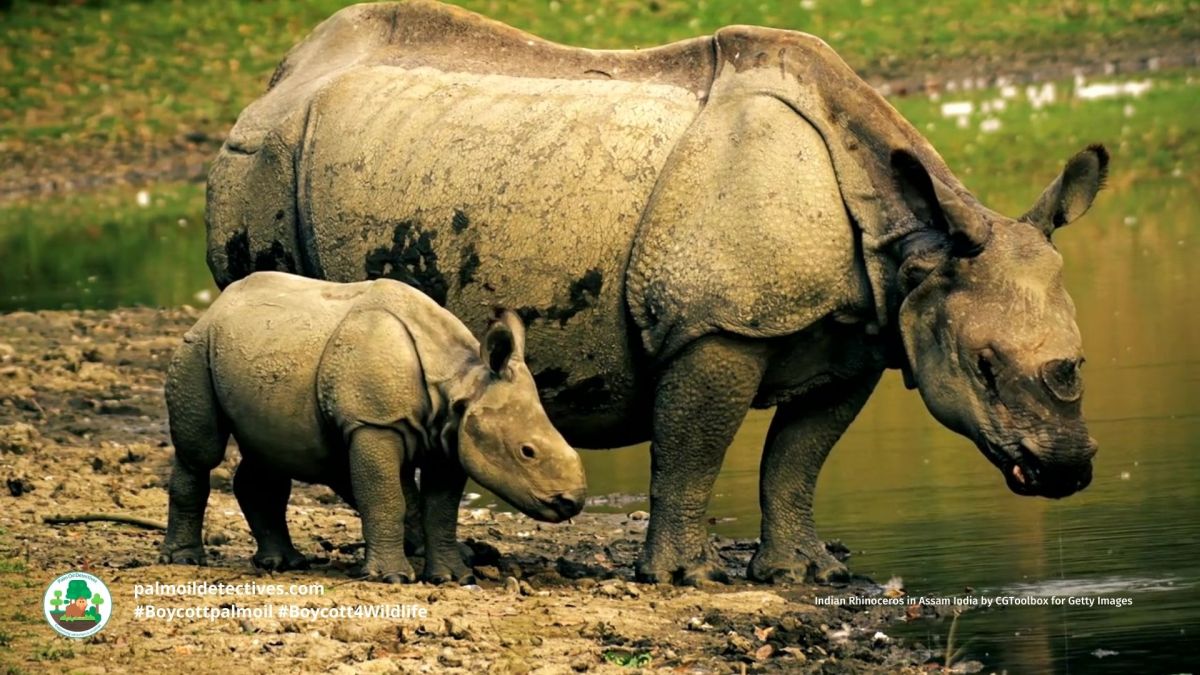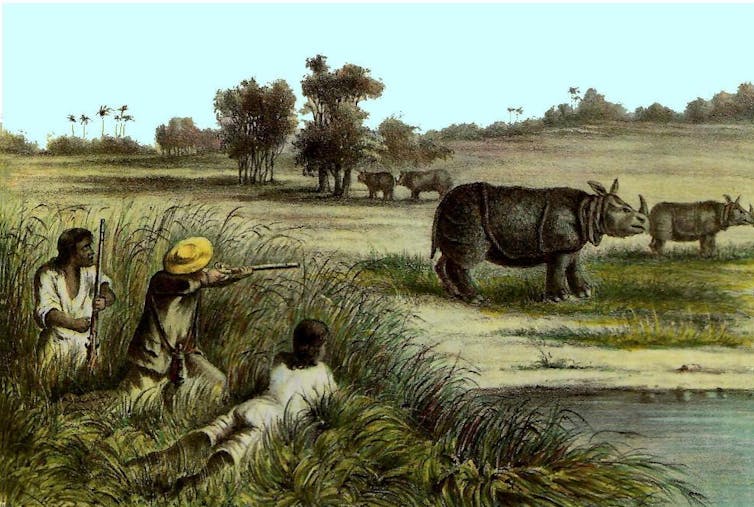
Javan Rhinos Not Safe from Poachers


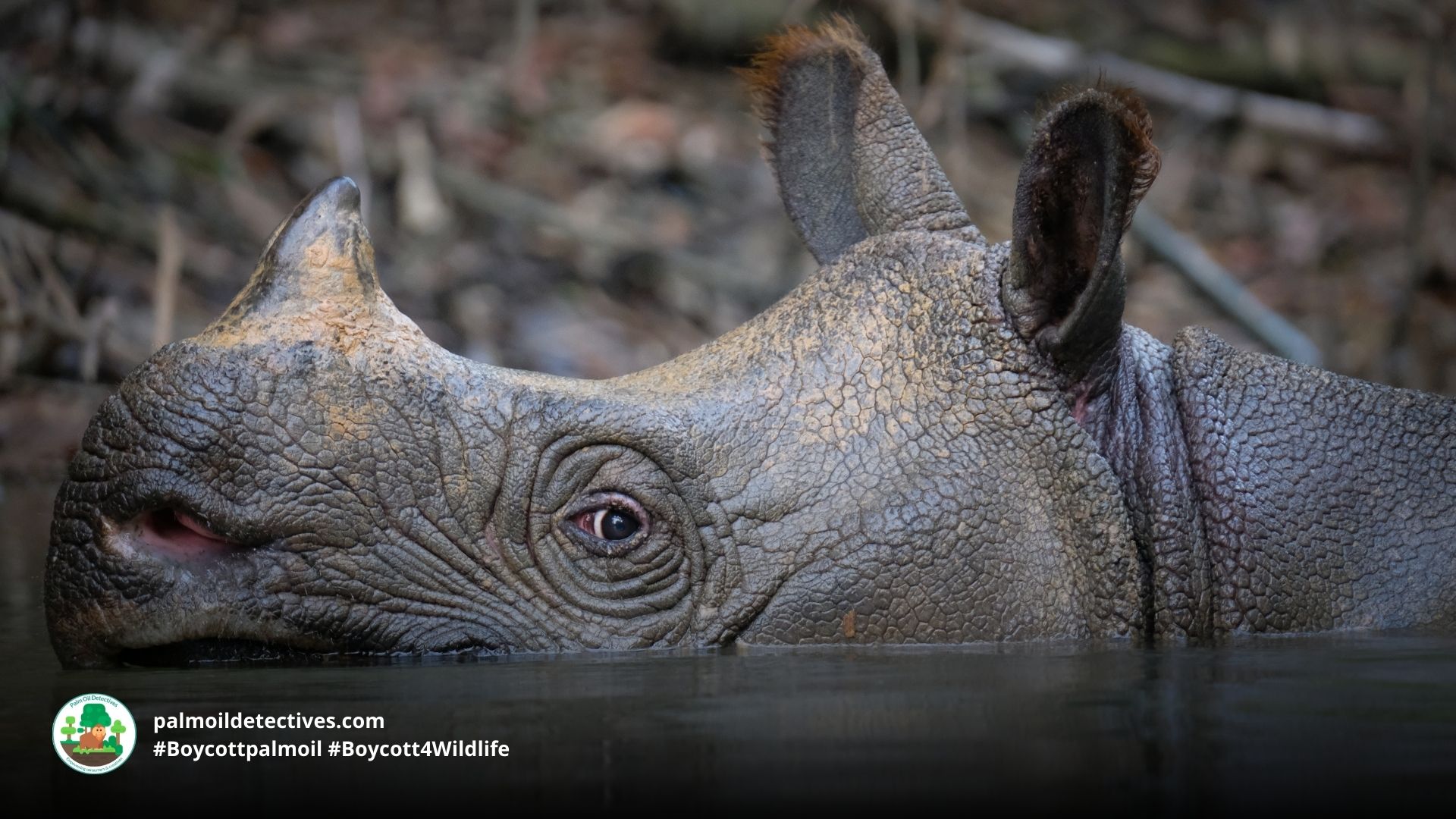
Recent testimony by arrested illegal poachers in #Indonesia finds 26 of the estimated remaining 72 living Javan #Rhinos were slaughtered for their horns over the past five years. In the so-called “protected” Ujung Kulon National Park in the western tip of the island of Java. This must spark a national emergency to protect these beings before they are gone for good! End the wildlife trade and #BoycottPalmOil #Boycott4Wildlife


Javan Rhino close up Tobias Nolan for Getty Images

I am an ecologist, and I have been lucky to work with white rhino in Africa. This work has involved capturing rhino, dehorning and moving them – methods used to try to save rhino from poachers.

Poachers target these large, plant-eating mammals for the illegal trade in rhino horn, fuelled by demand from Asia, principally China and Vietnam, where the horn is perceived as a status symbol, a cure for illness and an aphrodisiac.

Poaching is the main threat to the African rhino, but it was not considered a risk for the critically endangered Javan rhino in Asia. So rare and difficult to detect are Javan rhino, which live in dense jungle, that it was thought poachers would not be able to find them.

However, recent testimony from poachers arrested in Indonesia has indicated that 26 of the estimated maximum 72 Javan rhino have been poached by two gangs in the last five years. That is shocking news.

This revelation turns a worrying situation into an emergency – and demands increased efforts to save the Javan rhino from extinction.

How many Javan rhino are there?

Indonesian police arrested 13 members of two poaching gangs who revealed the otherwise undetected loss of rhino from Ujung Kulon National Park, the home of the world’s only remaining Javan rhino population, on the island of Java in the Indonesian archipelago.

Javan rhino were once widespread in southeast Asia. The last one outside of Indonesia was poached in Vietnam in 2010.

The actual number of rhino killed by the poaching gangs cannot be verified. It’s possible that sources within the government or conservation teams are passing information to poachers.
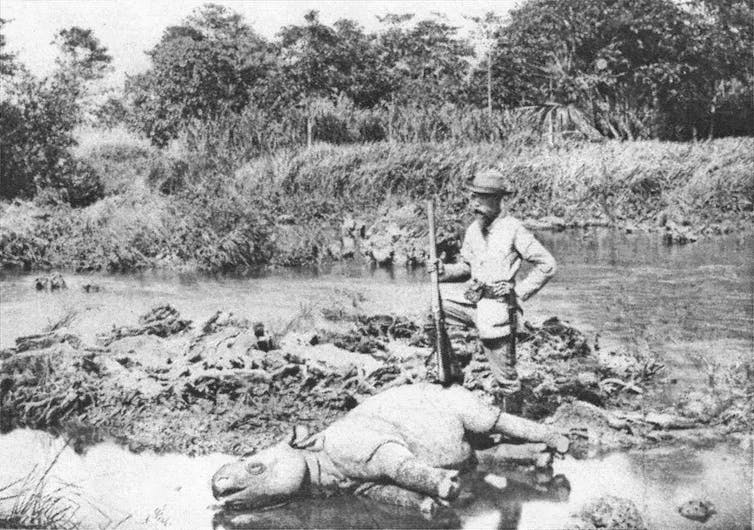
A Dutch hunter with a slain Javan rhino in Ujung Kulon, 1895. Charles te Mechelen/Rhino Resource Center

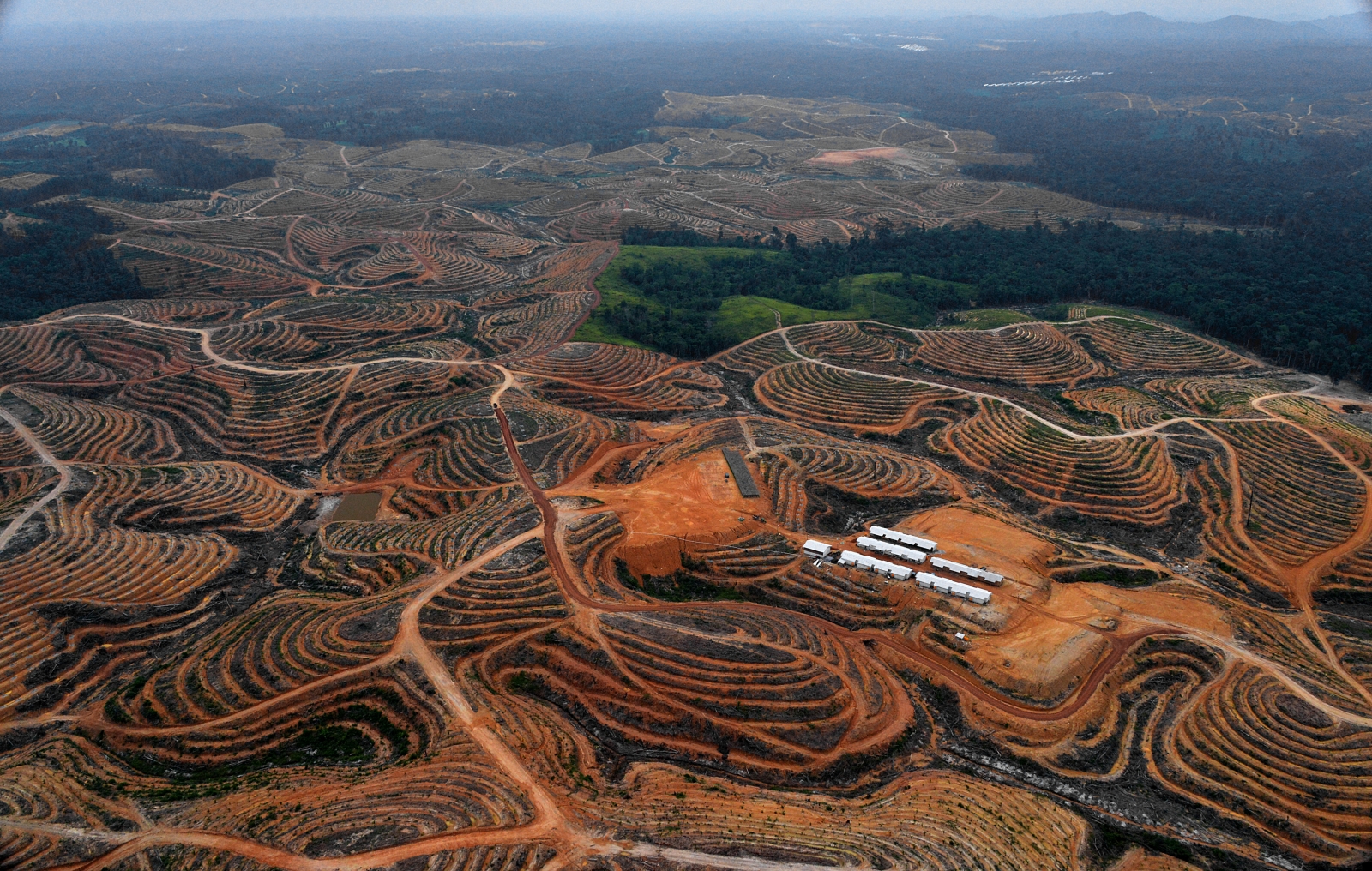
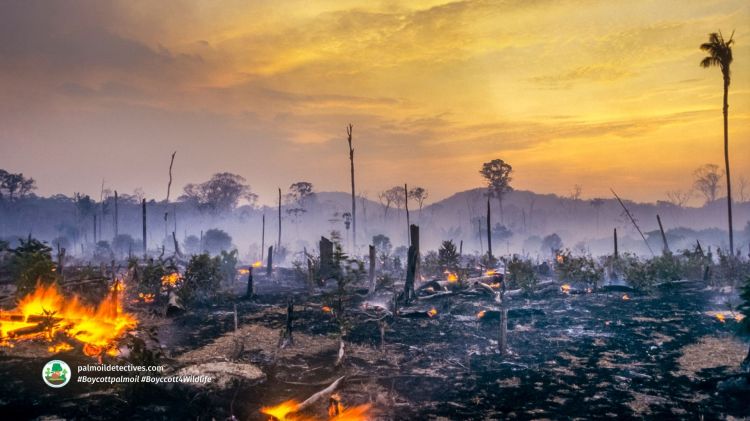
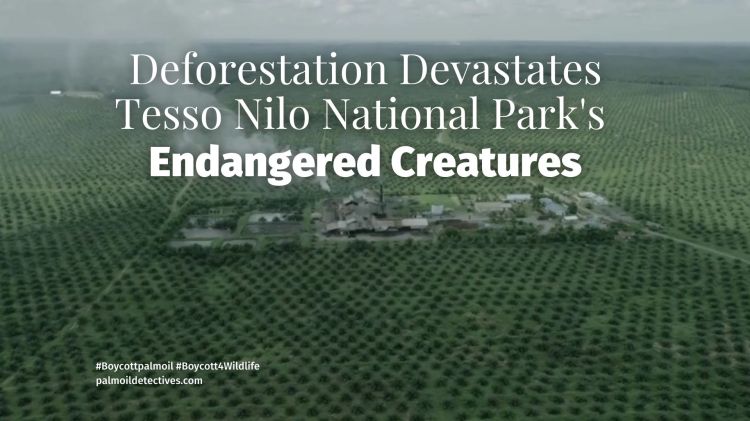
Indonesia’s forests are home to 10-15% of the planet’s plants, birds and mammals. While Indonesia harbours the greatest amount of rainforest in Asia, over 74 million hectares (three times the land area of the UK) have been lost in the past 50 years to palm oil extraction and paper mills.

Indonesia’s forest cover has fallen from 80% to less than 50% amid one of the fastest deforestation rates in the world. Pandeglang, the Javan region containing the national park, has lost nearly 10% of its rainforest since 2000.

All scientists know about the abundance of Javan rhino is gleaned from camera traps, remote cameras that are triggered to take photos by passing animals. The last government population estimate was released in 2019.

A report published in 2023 criticised this estimate because 18 of the rhino counted had not been detected by a camera trap for three years, and three of the rhino counted were known to be dead.

Saving the Javan rhino from extinction

Indonesian conservationists have focused on habitat loss as the leading threat to Javan rhino, as it deprives the species of breeding opportunities. Scattered across separate fragments of jungle, rhino are unlikely to find each other during the brief window when females are receptive to mating.

There is also evidence of inbreeding, exacerbated by there being more adult males than females. Some biologists have called for Javan rhino to be taken into captive breeding programmes.

With just 46 Javan rhino in the wild (perhaps even less), poaching could wipe out the species or reduce it to such a low number that low breeding success deals the final blow.
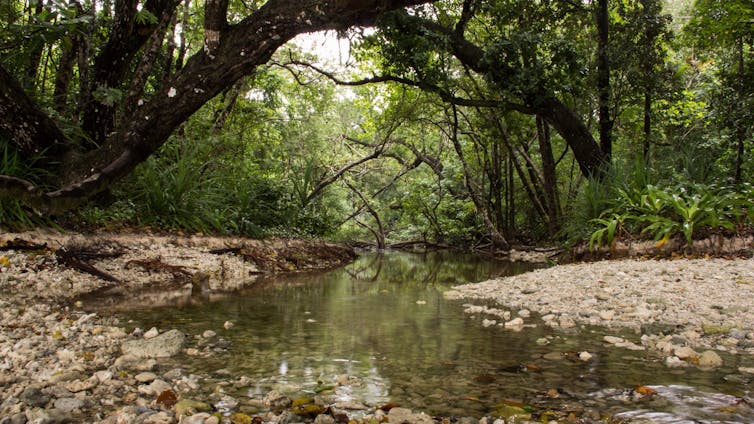
Ujung Kulon National Park is located on the western tip of Java. Achmad Soerio Hutomo/Flickr, CC BY

So, what now? It is likely that the Javan rhino cannot afford to lose any further animals to poaching, and vital that further poaching is prevented. The Indonesian government has now increased security in the national park with police and military combining forces.

Allowing forests to naturally regenerate and planting corridors of trees between jungle patches will help the remaining rhino find suitable habitat and each other. Conservationists have also called for cutting down trees in some locations to allow fresh, young trees with more accessible leaves to grow.

Research has also shown that removing an invasive palm boosts the availability of rhino food plants. Livestock must be excluded from the park too, as domestic cattle can transmit disease.

As far back as 1986, conservationists called for some rhino to be moved out of the park (perhaps to the neighbouring island of Sumatra). Splitting an already limited population is risky, but not establishing the safety net of at least one other population elsewhere is riskier still.

What if a tsunami hit the park? And the park may already be near capacity, as it is estimated to be able to support only 68 rhino.

Bringing Javan rhino into captivity and using reproductive technologies on stored eggs and sperm (techniques in development for the more common white rhino) may also need to be considered. Although, it is still possible that captive breeding may not be required: camera traps have photographed newborn Javan rhino, as well as adults, as recently as March 2024.
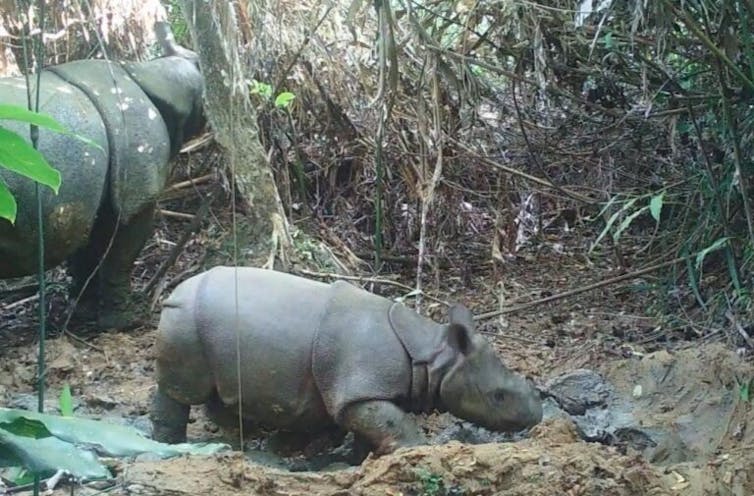
A female Javan rhino calf with its mother, photographed by a camera trap in Ujung Kulon national park. Indonesian Ministry of Environment and Forestry

Scientists don’t know much about Javan rhino biology. There have been few studies of wild rhino and only 22 have ever been kept in captivity, the last of which died more than 100 years ago. More research is needed to understand as much as possible about Javan rhino ecology and reproduction – in the wild and from museum specimens.

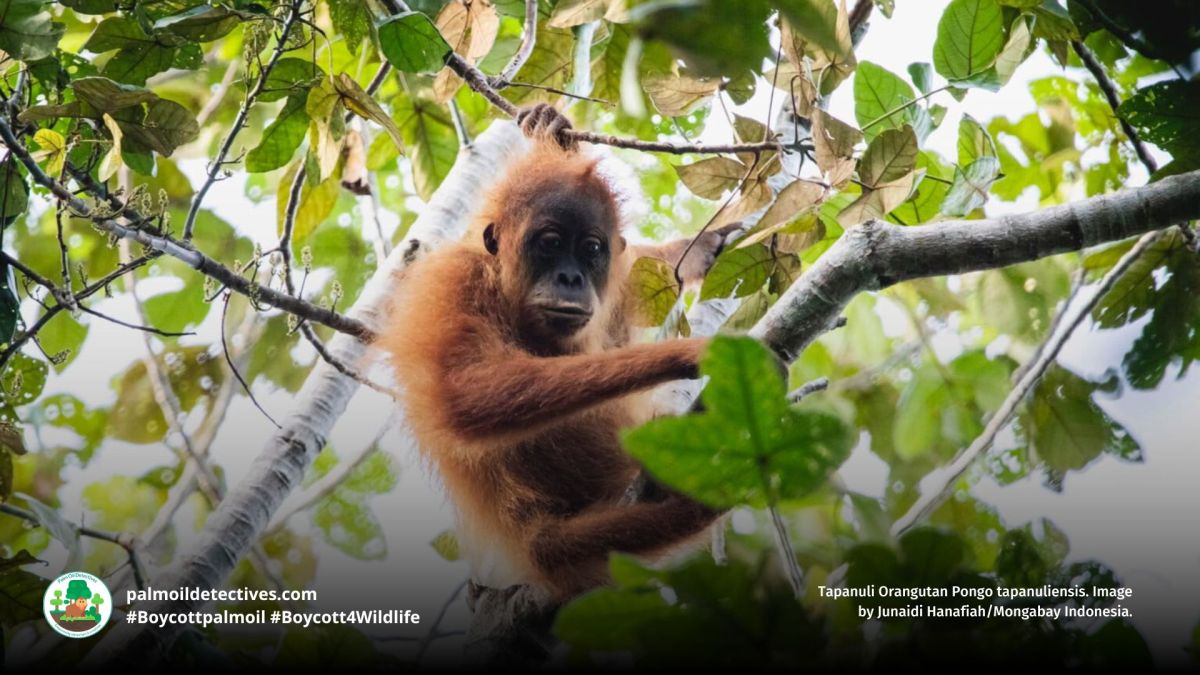
More effective habitat and wildlife conservation across Indonesia will benefit other Indonesian species, including the Sumatran tiger, Sumatran elephant, all three species of orangutan, and the Sumatran rhino (estimated population of 24-47, making it the world’s most endangered rhino).

If effective conservation action is not taken now, the remaining Javan rhino population will go the same way as that in Vietnam.

ENDS


Learn about other animals endangered by palm oil and other agriculture

Learn about “sustainable” palm oil greenwashing

A 2019 World Health Organisation (WHO) report into the palm oil industry and RSPO finds extensive greenwashing of palm oil deforestation and the murder of endangered animals (i.e. biodiversity loss)

WHO Bulletin on Palm Oil: Deforestation and Extinction
WHO Bulletin on Palm Oil: Air Pollution and Health


Take Action in Five Ways

1. Join the #Boycott4Wildlife on social media and subscribe to stay in the loop: Share posts from this website to your own network on Twitter, Mastadon, Instagram, Facebook and Youtube using the hashtags #Boycottpalmoil #Boycott4Wildlife.

Join 3,176 other subscribers

2. Contribute stories: Academics, conservationists, scientists, indigenous rights advocates and animal rights advocates working to expose the corruption of the palm oil industry or to save animals can contribute stories to the website.

3. Supermarket sleuthing: Next time you’re in the supermarket, take photos of products containing palm oil. Share these to social media along with the hashtags to call out the greenwashing and ecocide of the brands who use palm oil. You can also take photos of palm oil free products and congratulate brands when they go palm oil free.

4. Take to the streets: Get in touch with Palm Oil Detectives to find out more.

5. Donate: Make a one-off or monthly donation to Palm Oil Detectives as a way of saying thank you and to help pay for ongoing running costs of the website and social media campaigns. Donate here

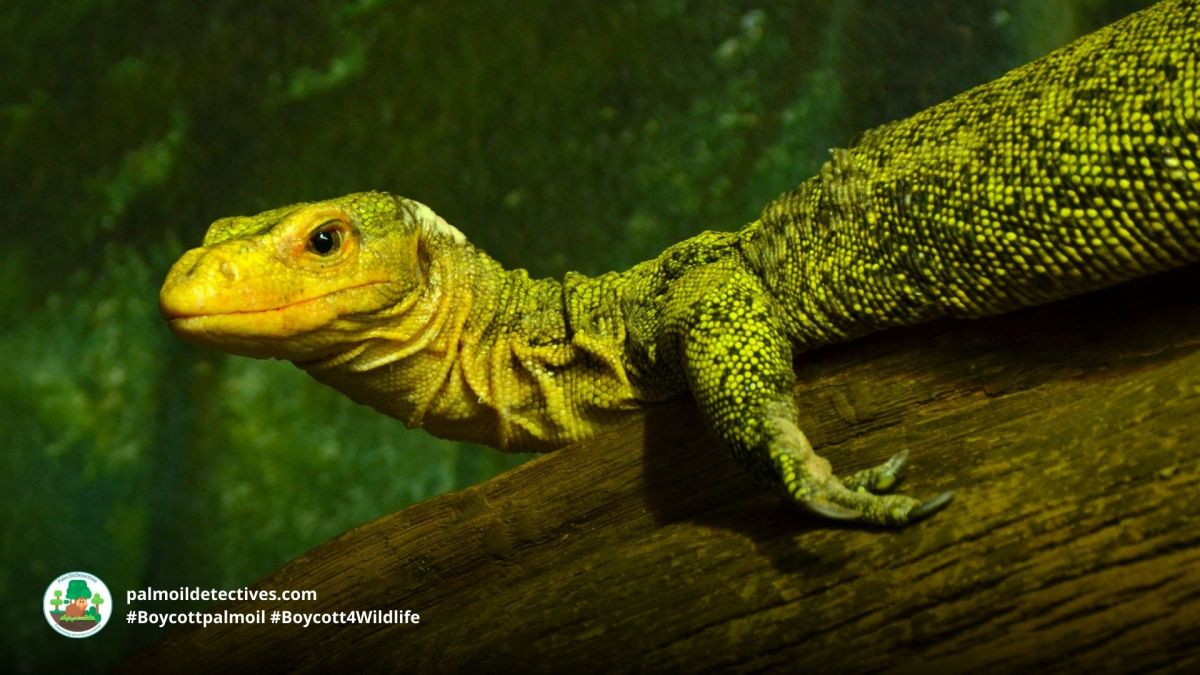
Frill-Necked Lizard Chlamydosaurus kingii

Frill-Necked Lizard Chlamydosaurus kingii

Location: Papua New Guinea, West Papua, Australia

Region: Trans-Fly ecosystem of southern Papua New Guinea and West Papua along with northern parts of Australia.

The frill-necked lizard Chlamydosaurus kingii, also known as the frilled dragons or frill-neck lizards, are famous for their impressive neck frill that fans out dramatically when they feel threatened. The Trans-Fly savannahs of southern Papua New Guinea and Indonesian-occupied West Papua, have come increasingly under threat over the past decade by climate change-related extreme weather and deforestation. Anthropogenic threats include habitat destruction for timber and palm oil, climate change-related fires, expanding agricultural zones, road and infrastructure building and capture for the exotic pet trade. In Australia, these lizards eat poisonous cane toads that are deadly once ingested. This along with large-scale bushfires pose threats to Frill-necked #Lizards. Once abundant, these striking reptiles are now losing their ecosystems. Use your wallet as a weapon for them by defending New Guinea’s forests. Choose palm oil-free products and boycott the pet trade. #BoycottPalmOil #Boycott4Wildlife

Appearance & Behaviour

With their iconic neck frill, long limbs and ability to sprint upright on two legs, frill-necked lizards are one of the most distinctive reptiles in the world. New Guinean individuals typically feature vivid yellow frills that flare outward like a sunburst when they feel threatened—often accompanied by a hiss and an open mouth to appear larger than life. Their frill can reach up to 30 cm across, supported by hyoid bones and cartilage that fan the skin out in a flash. Colouration is variable, and in New Guinea, these lizards lean towards paler hues with distinctive white markings accenting their yellow frills.

Primarily arboreal, they spend over 90% of their time in the trees. They are solitary, territorial, and highly dependent on their frill to communicate and intimidate. During the wet season, they descend closer to the ground in search of food, only to retreat to the higher canopy during the dry months when food is scarce.

Threats

Geographic Range

This species is found in northern Australia and across southern New Guinea, including both Papua New Guinea and Indonesian-occupied West Papua. In New Guinea, they inhabit the Trans-Fly savannah region—a unique landscape of seasonal woodlands and dry forests. These lizards avoid low-lying Melaleuca-dominated swamps and prefer elevated areas with well-drained soils and diverse tree species. However, their range in New Guinea is far more restricted than in Australia, making local threats far more significant to their survival.

Diet

Frill-necked lizards are insectivorous ambush predators. They rely on their sharp eyesight and camouflage to spot prey from high in the trees. Their diet consists mainly of insects like termites, cicadas, beetles, ants, and centipedes. During the dry season, termites are especially important, while the wet season sees them shifting to moth larvae. Occasionally, they will consume spiders, small rodents, and other lizards.

Mating and Reproduction

Mating occurs during the late dry and early wet seasons. Males engage in dramatic frill displays and combat to win over females. Females dig a shallow burrow where they lay 1–2 clutches of 4–20 eggs. Temperature plays a critical role in determining the sex of hatchlings—warmer nests produce more males, while cooler ones yield more females. Young frillies are independent within 10 days of hatching and can deploy their frills almost immediately.

FAQs

How many Frill-necked lizards are left in New Guinea?

There is no precise population estimate for New Guinea, but while the species is locally common in parts of Australia, their populations in the Trans-Fly region are under pressure. Their limited range, coupled with the impacts of deforestation and trade, may mean local declines are already occurring.

How long do Frill-necked lizards live in the wild?

Frill-necked lizards in the wild can live up to 6 years for males and around 4 years for females. Hatchlings grow rapidly during the wet season and reach sexual maturity by about two years of age.

Do Frill-necked lizards make good pets?

Absolutely not. These sensitive reptiles are wild animals with complex needs. They are difficult to breed in captivity, meaning many sold in pet markets are likely wild-caught, contributing directly to population declines. Keeping them as pets fuels this harmful trade and leads to suffering. If you care about frill-necked lizards, do not support the exotic pet industry.

Take Action!

Support local and indigenous-led resistance to palm oil deforestation in West Papua and Papua New Guinea. Boycott palm oil products entirely—there is no such thing as “sustainable” palm oil, all of it causes deforestation. Say no to the exotic pet trade, which is stripping these unique lizards from the wild and pushing them towards decline. #BoycottPalmOil #Boycott4Wildlife

Support Frill-Necked Lizards by going vegan and boycotting palm oil in the supermarket, it’s the #Boycott4Wildlife

Support the conservation of this species

This animal has no protections in place. Read about other forgotten species here. Create art to support this forgotten animal or raise awareness about them by sharing this post and using the #Boycottpalmoil #Boycott4Wildlife hashtags on social media. Also you can boycott palm oil in the supermarket.

Further Information

O’Shea, M., Allison, A., Tallowin, O., Wilson, S. & Melville, J. 2017. Chlamydosaurus kingiiThe IUCN Red List of Threatened Species 2017: e.T170384A21644690. https://dx.doi.org/10.2305/IUCN.UK.2017-3.RLTS.T170384A21644690.en. Accessed on 06 April 2025.

Harlow, P. S., & Shine, R. (1999). Temperature-dependent sex determination in reptiles: insights from frillneck lizards. Biological Journal of the Linnean Society, 68(3), 197–211. https://www.jstor.org/stable/3893081

Wikipedia contributors. (n.d.). Frilled lizard. Wikipedia. Retrieved 7 April 2025, from https://en.wikipedia.org/wiki/Frilled_lizard

Frill-Necked Lizard Chlamydosaurus kingi threats

Contribute to palm oil detectives - black rhino in profile

How can I help the #Boycott4Wildlife?


Take Action in Five Ways

1. Join the #Boycott4Wildlife on social media and subscribe to stay in the loop: Share posts from this website to your own network on Twitter, Mastadon, Instagram, Facebook and Youtube using the hashtags #Boycottpalmoil #Boycott4Wildlife.

Join 3,176 other subscribers

2. Contribute stories: Academics, conservationists, scientists, indigenous rights advocates and animal rights advocates working to expose the corruption of the palm oil industry or to save animals can contribute stories to the website.

3. Supermarket sleuthing: Next time you’re in the supermarket, take photos of products containing palm oil. Share these to social media along with the hashtags to call out the greenwashing and ecocide of the brands who use palm oil. You can also take photos of palm oil free products and congratulate brands when they go palm oil free.

4. Take to the streets: Get in touch with Palm Oil Detectives to find out more.

5. Donate: Make a one-off or monthly donation to Palm Oil Detectives as a way of saying thank you and to help pay for ongoing running costs of the website and social media campaigns. Donate here


Learn about other animals endangered by palm oil and other agriculture

Learn about “sustainable” palm oil greenwashing

A 2019 World Health Organisation (WHO) report into the palm oil industry and RSPO finds extensive greenwashing of palm oil deforestation and the murder of endangered animals (i.e. biodiversity loss)

WHO Bulletin on Palm Oil: Deforestation and Extinction
WHO Bulletin on Palm Oil: Air Pollution and Health

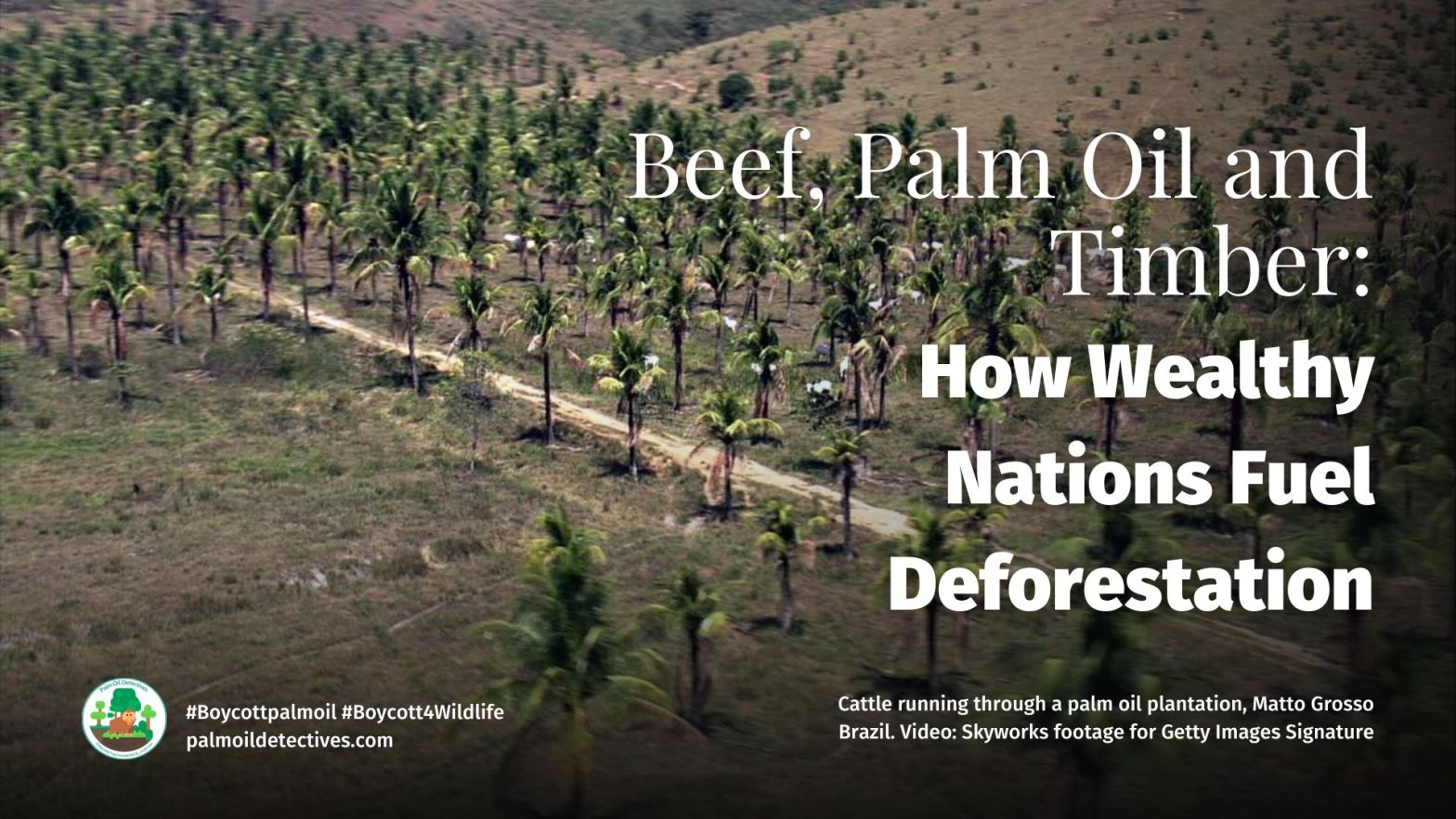
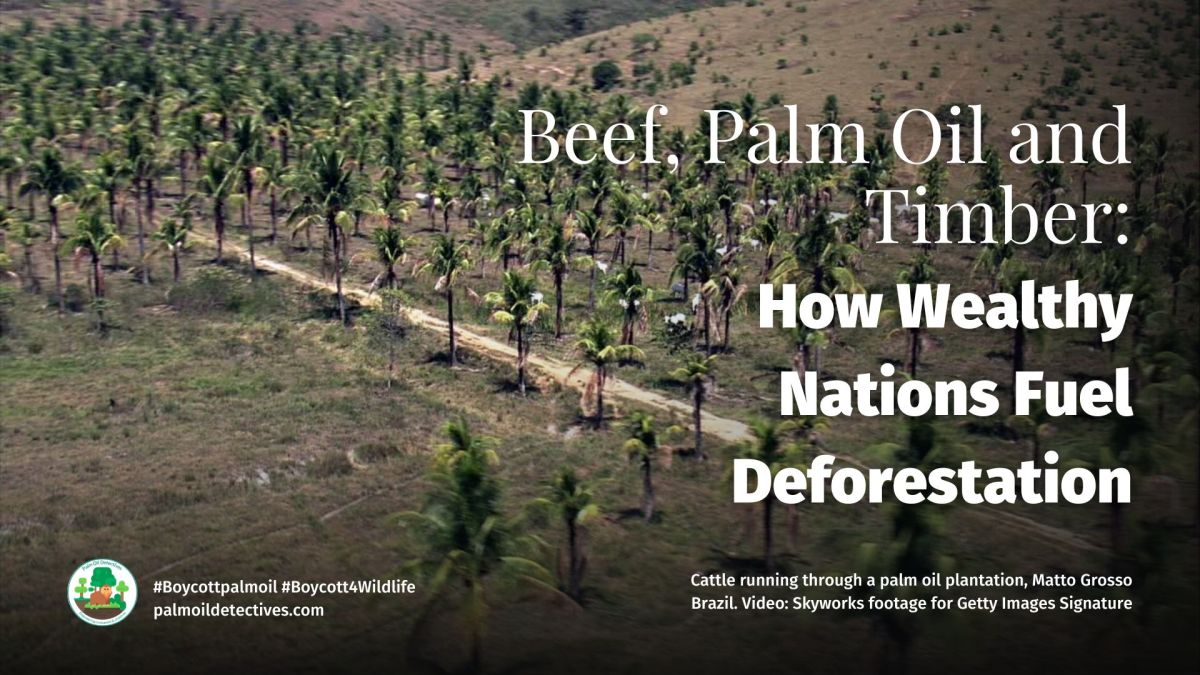
Beef, Palm Oil and Timber: How Wealthy Nations Fuel Deforestation


A major #research study reveals that demand for #beef #palmoil, and #timber in wealthy nations is driving mass deforestation and species extinction in tropical regions. Habitat destruction mainly for agriculture accounts for 90% of all tropical #deforestation. Countries like the US, UK, and Germany are main drivers of rainforest destruction in the #Amazon, #Indonesia, and #Africa, displacing indigenous communities and sending many rare species of animals towards #extinction. Advocates call for a boycott of deforestation-linked products to stop this crisis such as meat and #palmoil. Every time you shop you can resist and fight for them when you #BoycottPalmOil #Boycott4Wildlife and go #Vegan.


Channel-billed Toucan Ramphastos vitellinus


Study Confirms Wealthy Nations’ Demand for Palm Oil, Beef & Timber is Driving Global Deforestation

A major new study has revealed that the world’s richest nations are directly responsible for mass deforestation and biodiversity loss through their consumption of palm oil, beef, timber, soy, and cocoa. The research confirms that these industries are fuelling habitat destruction, species extinction, and displacement of indigenous communities.

Beef, Palm Oil and Timber_ How Wealthy Nations Fuel Deforestation (2).jpg Beef, Palm Oil and Timber_ How Wealthy Nations Fuel Deforestation

The study found that high-income countries account for 13% of global forest loss occurring beyond their own borders. The biggest culprits are:

  • Beef 🐄 – The leading cause of global deforestation, responsible for nearly 60% of all forest loss. Rainforests in the Amazon and Central America are burned and cleared to make way for cattle ranching.
  • Palm Oil 🌴 – Found in 50% of supermarket products, palm oil plantations have destroyed vast rainforests in Indonesia, Malaysia, and Africa, pushing orangutans, tigers, and hornbills to the brink of extinction.
  • Timber and Paper 📄 – Logging for furniture, construction, and paper production is wiping out old-growth forests across South America, Africa, and Southeast Asia. Many so-called “certified” or “sustainable” wood products still drive illegal deforestation.
  • Soy 🌱 – Vast areas of the Amazon and Cerrado are destroyed for soy production, most of which is used to feed animals in factory farms.
  • Cocoa 🍫 – Chocolate production is linked to widespread deforestation in West Africa, where rainforests are illegally cleared to grow cocoa.

Exporting Extinction: The True Cost of Consumption

The study warns that wealthy nations are effectively outsourcing biodiversity destruction. The US, UK, Germany, and China import massive amounts of these deforestation-linked products, making them directly responsible for the loss of critical ecosystems.

Read the full article here in The Guardian

ENDS


Learn about other animals endangered by palm oil and other agriculture

Learn about “sustainable” palm oil greenwashing

A 2019 World Health Organisation (WHO) report into the palm oil industry and RSPO finds extensive greenwashing of palm oil deforestation and the murder of endangered animals (i.e. biodiversity loss)

WHO Bulletin on Palm Oil: Deforestation and Extinction
WHO Bulletin on Palm Oil: Air Pollution and Health


Take Action in Five Ways

1. Join the #Boycott4Wildlife on social media and subscribe to stay in the loop: Share posts from this website to your own network on Twitter, Mastadon, Instagram, Facebook and Youtube using the hashtags #Boycottpalmoil #Boycott4Wildlife.

Join 3,176 other subscribers

2. Contribute stories: Academics, conservationists, scientists, indigenous rights advocates and animal rights advocates working to expose the corruption of the palm oil industry or to save animals can contribute stories to the website.

3. Supermarket sleuthing: Next time you’re in the supermarket, take photos of products containing palm oil. Share these to social media along with the hashtags to call out the greenwashing and ecocide of the brands who use palm oil. You can also take photos of palm oil free products and congratulate brands when they go palm oil free.

4. Take to the streets: Get in touch with Palm Oil Detectives to find out more.

5. Donate: Make a one-off or monthly donation to Palm Oil Detectives as a way of saying thank you and to help pay for ongoing running costs of the website and social media campaigns. Donate here

Around 25% of Africa’s Land is Damaged: This is How We Fix It!


Almost 25% of all land in Africa has been damaged. Land degradation is worrying issue across the continent of Africa. This is being driven by climate change and deforestation for extractive industries like rare mineral mining and monocultures like palm oil and cocoa. Other big drivers includes invasive species and environmental pollutants and toxins. Mlungele Nsikani is a land restoration specialist and environmental scientist. He explains how ecological restoration and agroecology is a great way to reverse land degradation so that people, plants and animals can thrive. Another powerful way to make an impact is through boycotting industries destroying the world like gold mining, palm oil and the meat industry. #BoycottPalmOil #Boycott4Wildlife


What’s driving land degradation on the continent?

Africa is one of the most degraded continents in the world. About 23% of the surface of Africa, or over 700 million hectares of land, is already degraded. Another three million hectares is being further degraded annually.

Degraded land is land that has lost some of its natural productivity through processes caused by humans. It’s estimated that up to 40% of the planet’s land is degraded.

The “big five” drivers of land degradation globally and in Africa are:

  • biological invasions, where plant species have spread outside their indigenous area and disrupted the services provided by ecosystems
  • climate change driven events, such as intense droughts and severe fires
  • extractive activities, such as mining and over-harvesting
  • habitat transformation or fragmentation, including deforestation and poor agricultural practices
  • pollutants such as sulphur dioxide, and eutrophication – where algae and other plants take over plant life.

Factors that have made the situation worse in Africa include: development demands; a high dependency on natural resources at the household level (such as the use of firewood for cooking); agricultural practices (including clearing indigenous plants to grow cash crops); weak governance; insecure land tenure; pervasive poverty; and population growth.

What is ecological restoration?

Ecological restoration is the process of assisting the recovery of an ecosystem that has been degraded, damaged or destroyed. Removing invasive plants and reintroducing indigenous species is one way to reverse damage. Ecological restoration is about helping to create conditions in which plants, animals and microorganisms can carry out the work of recovery themselves.

Assisting recovery can be as complex as altering landforms (intentionally changing aspects of the landscape), planting vegetation, changing the hydrology (water flow), and reintroducing wildlife. It can also be as simple as removing an invasive species or reintroducing a lost plant species to the land.

For example more than 8,750 plant species have found their way to South Africa. Over 785 species have made the country their permanent home on a significant scale and have had negative impacts. These include at least 14 Australian Acacia tree species which are invasive across South Africa. These cover about 554,000 hectares of the country.

They use up water resources and reduce grazing land. They also change soil microbial community structure, diversity and function. Invasive Acacia trees have established extensive woodlands that compete against native species, leaving little room for native plants and trees to grow. This costs more than R4 billion annually (about US$214 million) – the combined cost of clearing invasive species and the value of reduced ecosystem services in invaded areas.

The fynbos biome, which covers large parts of South Africa’s Western Cape province, has been the most affected. Since 1995, the publicly funded Working for Water programme has cleared invasive species, leaving ecosystems to recover naturally. The Greater Cape Town Water Fund has also funded the removal of thousands of thirsty invasive trees in mountain areas in a bid to save water and restore indigenous fynbos. This is known as passive restoration.

Planting native vegetation (often done through seed) – active restoration – has also helped the land recover. However, it has been applied at a smaller scale than passive restoration because it is more expensive. Planting native vegetation after clearing invasive species is often a more effective way to help native species recover in the restoration site, particularly if the native soil seedbanks have been depleted by the long duration of invasion.

How can people help?

Anyone can contribute to the restoration of ecosystems. The first thing is to advocate for and actively engage in the conservation of intact ecosystems. As the old adage goes, prevention is better than cure.

Ecological restoration is a great tool to tackle land degradation. But it’s not a quick fix. It’s still necessary to protect and conserve natural ecosystems.

Secondly, everyone should get involved in ecological restoration efforts, no matter how small. We can help remove invasive species or plant native species where we live. We can donate or be part of organisations that are involved in ecological restoration.

Above all, we should continue to spread the ecological restoration message and show that we are #GenerationRestoration!

The need for ecological restoration on the continent is great. Only functioning landscapes can provide affordable food, water and energy. These are the cornerstones of economic development. Ecological restoration can protect and enhance environmental assets and natural resources, provide employment, and help national development, security and social stability.

ENDS


Read more about conservation and reasons to be hopeful

Protect Nature to Avoid Future Pandemics

Research from University of Queensland and published in The Lancet: Planetary Health finds that the COVID-19 pandemic is linked to the decline of ecosystems and biodiversity, creating a cycle that could lead to…

Read more

Something went wrong. Please refresh the page and/or try again.


Take Action in Five Ways

1. Join the #Boycott4Wildlife on social media and subscribe to stay in the loop: Share posts from this website to your own network on Twitter, Mastadon, Instagram, Facebook and Youtube using the hashtags #Boycottpalmoil #Boycott4Wildlife.

Join 3,176 other subscribers

2. Contribute stories: Academics, conservationists, scientists, indigenous rights advocates and animal rights advocates working to expose the corruption of the palm oil industry or to save animals can contribute stories to the website.

3. Supermarket sleuthing: Next time you’re in the supermarket, take photos of products containing palm oil. Share these to social media along with the hashtags to call out the greenwashing and ecocide of the brands who use palm oil. You can also take photos of palm oil free products and congratulate brands when they go palm oil free.

4. Take to the streets: Get in touch with Palm Oil Detectives to find out more.

5. Donate: Make a one-off or monthly donation to Palm Oil Detectives as a way of saying thank you and to help pay for ongoing running costs of the website and social media campaigns. Donate here

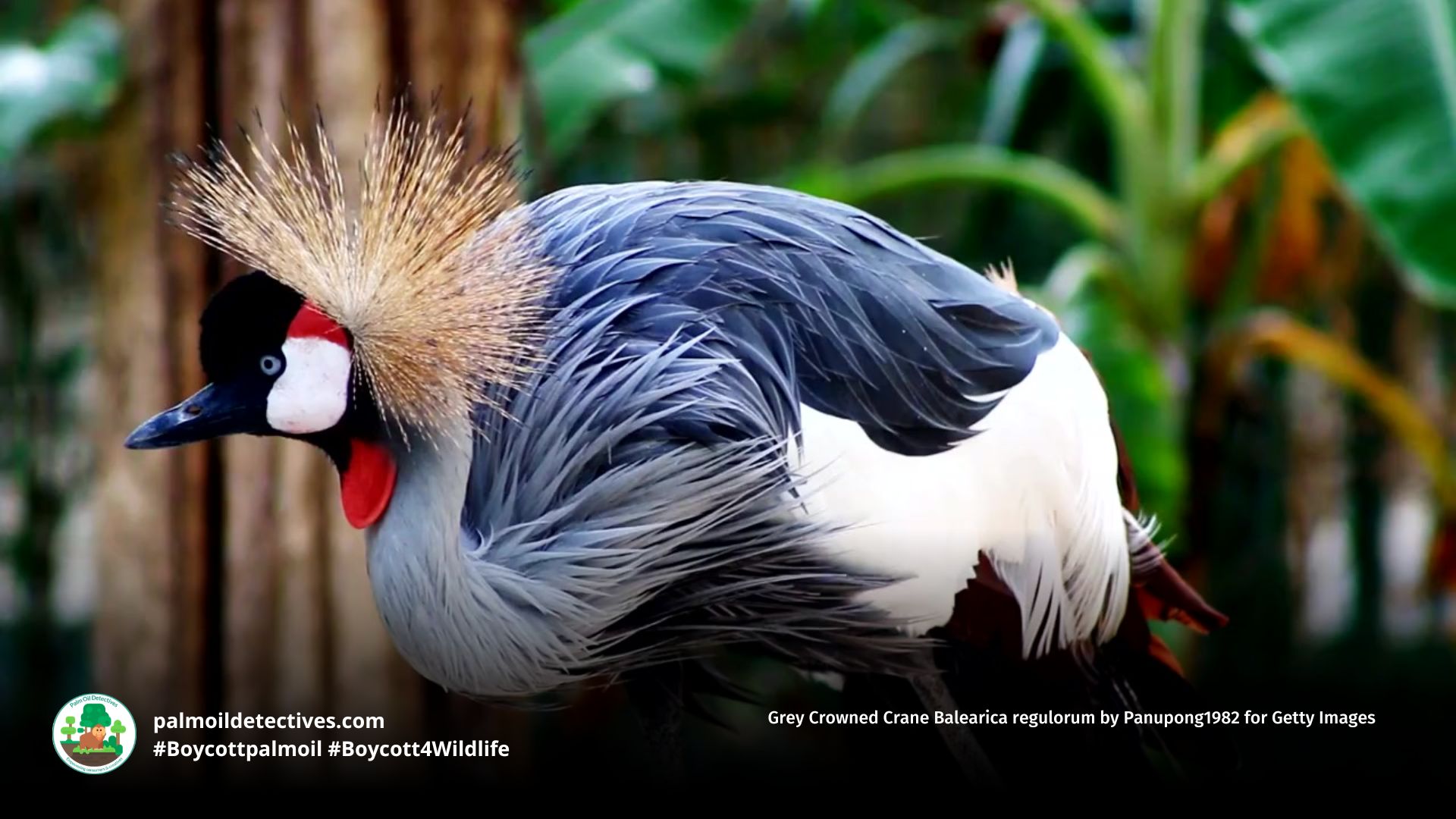
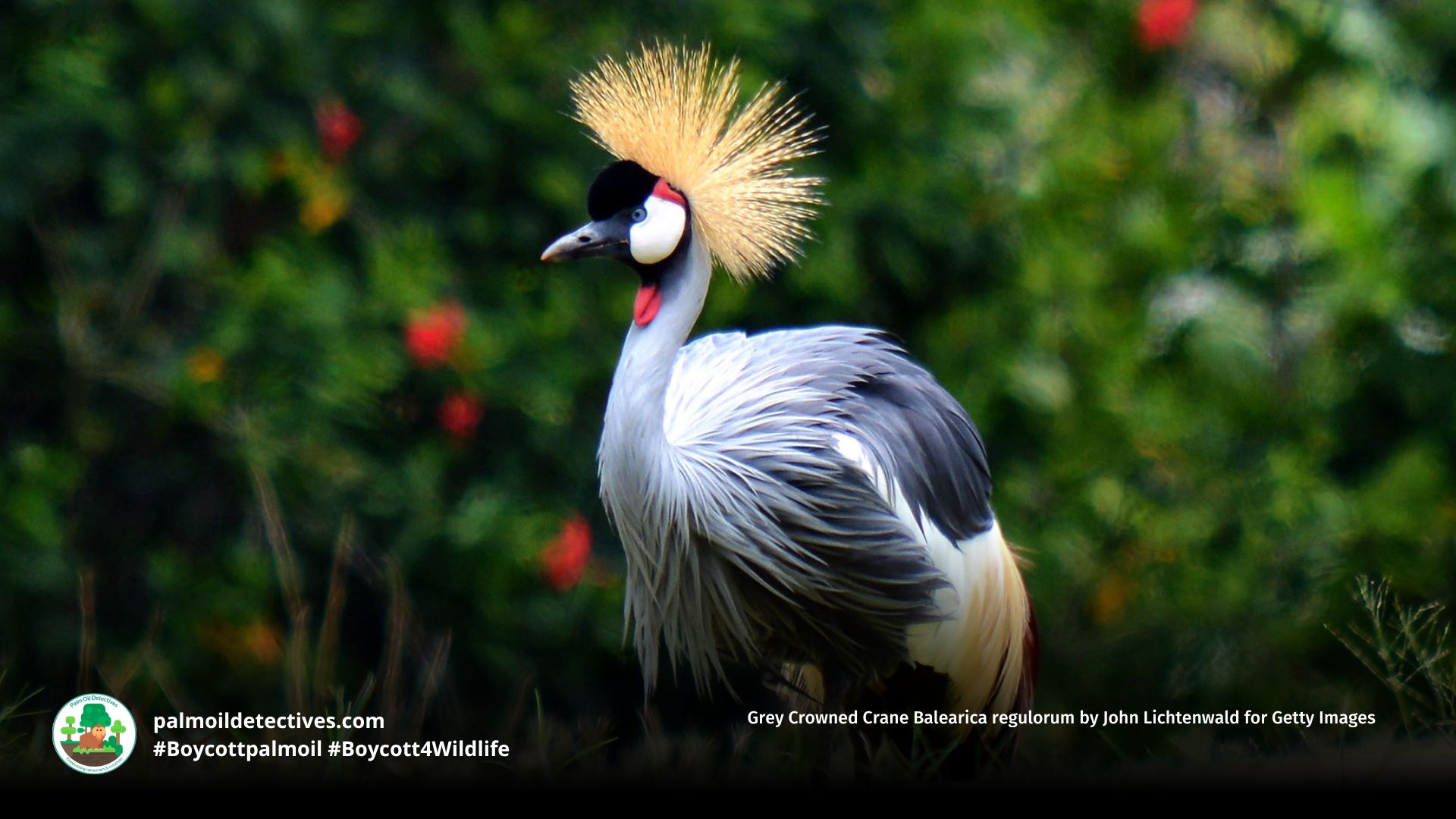
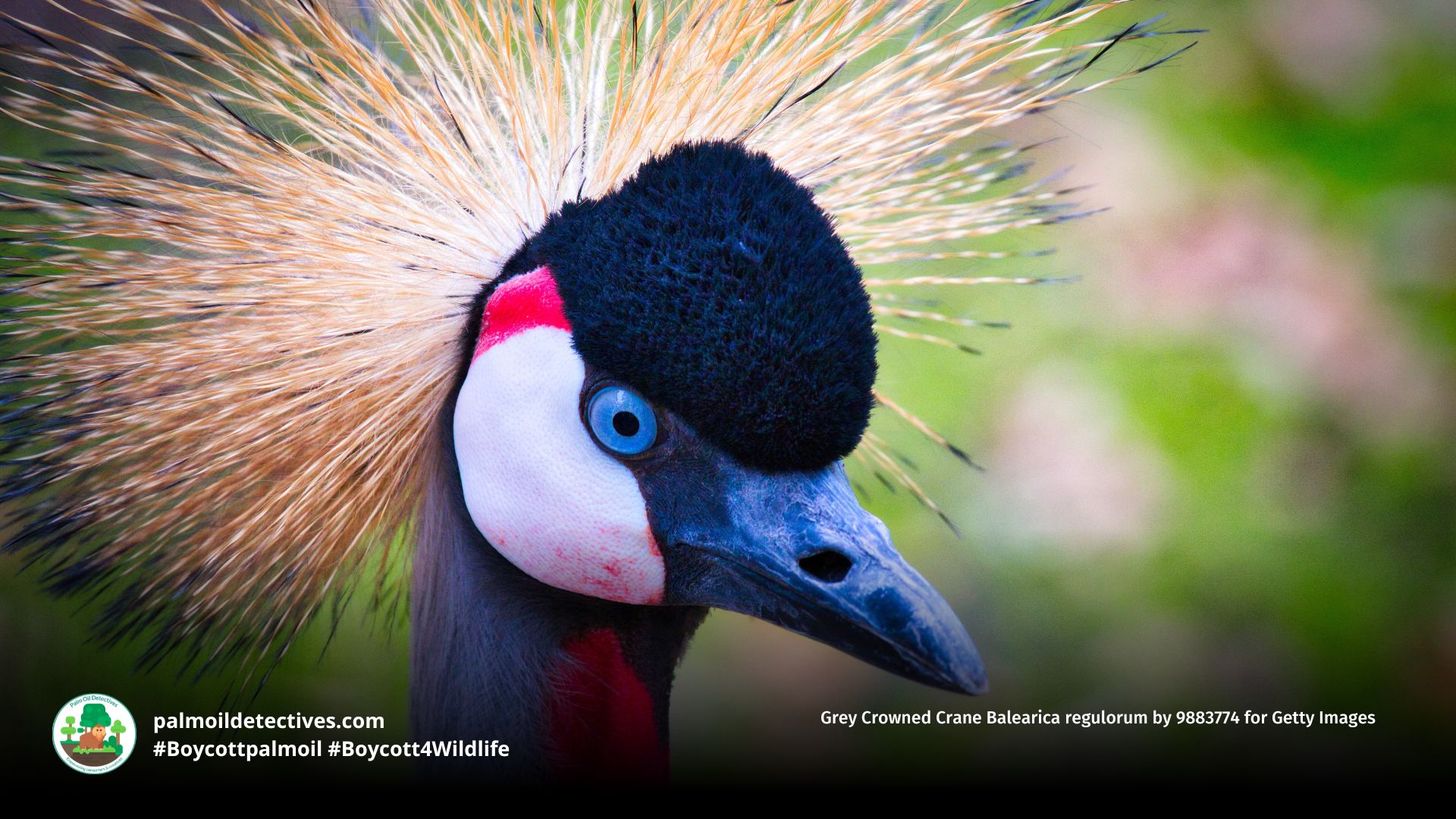
Grey Crowned Crane Balearica regulorum

Grey Crowned Crane Balearica regulorum

IUCN Status: Endangered

Location: Uganda, Kenya, Tanzania, Rwanda, Burundi, South Sudan, Democratic Republic of the Congo, Angola, Zambia, Malawi, Mozambique, Zimbabwe, Namibia, Botswana, South Africa, Eswatini, Lesotho

Found across wetlands, grasslands, and cultivated lands of eastern and southern Africa, this elegant bird is particularly emblematic in Uganda, where they feature on the national flag and coat of arms.

The Endangered Grey Crowned #Crane is one of #Africa’s most graceful, regal and recognisable #birds, adorned with a halo of golden feathers and traversing the skies and forests of #Uganda, #Tanzania, #DRC #Congo, #Namibia and more. Behind their dazzling beauty is a grim reality. Since 1985, their global population has crashed by over 59%, driven by relentless wetland destruction, tobacco, timber and cocoa agriculture, palm oil expansion, illegal egg collection, and wildlife trafficking. Once numbering over 100,000, now fewer than 25,000 mature individual birds remain alive. Urgent action is needed to save these majestic and irreplaceable birds before their calls fall silent across Africa’s skies. Help them every time you shop and #BoycottPalmOil #Boycott4Wildlife

Appearance & Behaviour

Standing a metre tall, the Grey Crowned Crane captivates with their stately grey plumage, snowy cheeks, bright red wattle and a dazzling aurora of stiff golden feathers. Their courtship rituals are equally enchanting, with pairs leaping, bowing, and calling in dazzling synchronised dances that can attract the attention of entire flocks. Their red gular sac inflates with a deep booming call, echoing through the savannah.

Unlike other crane species, Grey Crowned Cranes possess a long hind toe allowing them to roost in trees – a trait thought to be ancient among cranes. They often gather in large flocks outside of the breeding season and are known to adapt their behaviour to live increasingly close to human communities.

Threats

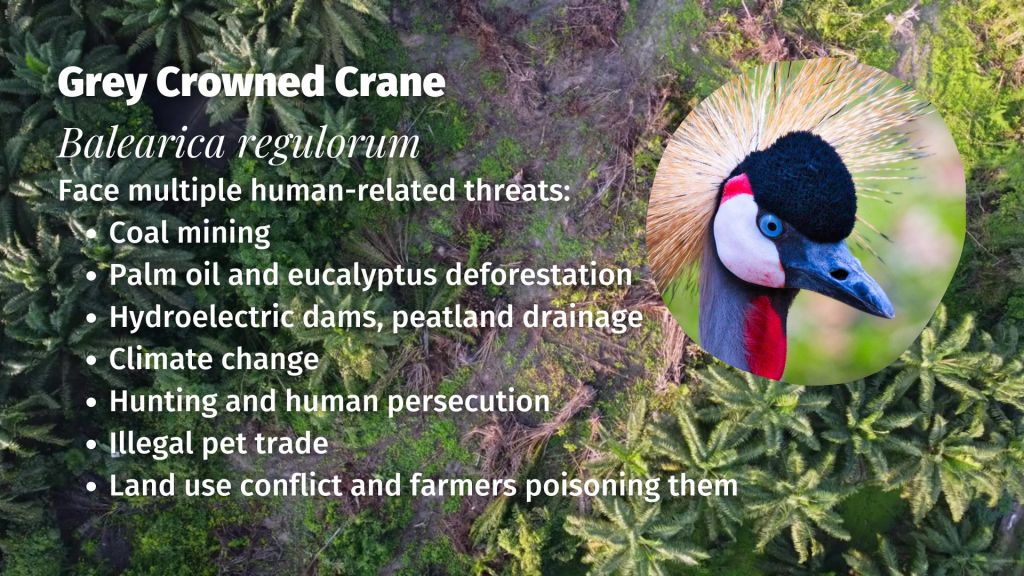
• Wetland destruction and degradation

Wetlands are vital breeding and foraging grounds for Grey Crowned Cranes. These habitats are being drained or converted for agriculture, tree plantations (particularly Eucalyptus), and dam construction. Overgrazing by livestock and increased sedimentation from deforestation also contribute to their degradation, leaving cranes with fewer safe places to breed and raise their chicks.

• Industrial palm oil and agricultural expansion

Agricultural land-use change, including the expansion of palm oil and food crop cultivation, is rapidly encroaching on Grey Crowned Crane habitat. In places like Kenya and Uganda, this leads to the fragmentation of once-continuous wetland and savannah ecosystems. The conversion of native grasslands into farmland eliminates critical feeding and nesting areas, directly impacting crane survival.

• Illegal capture for trade and egg collection

Chicks and eggs are frequently stolen from nests to be sold into the illegal pet trade or to captive facilities. This is especially common in Uganda, Tanzania, and Rwanda, where birds are trafficked domestically and exported to informal zoos or exotic collectors, particularly in the Middle East and Asia. The removal of young birds from the wild not only reduces the population but causes immense suffering and family disruption among cranes.

• Poisoning and persecution by farmers

In some areas, cranes are seen as agricultural pests due to their foraging on newly planted crops such as maize. As a result, they are deliberately poisoned or killed in retaliation. Poisoning incidents are widespread and often indiscriminate, also affecting other wildlife and entire crane flocks, with devastating consequences for local populations.

• Electrocution and collisions with power lines

As human infrastructure expands, cranes are increasingly flying into overhead power lines or being electrocuted while roosting on utility poles. This is particularly prevalent in Uganda, South Africa, and Tanzania. These deaths are preventable, but without mitigation measures like line markers or insulation, the threat will likely increase as rural electrification spreads.

• Climate change and extreme weather events

Rising temperatures and changes in rainfall patterns due to climate change across southern Africa are expected to reshape crane habitat. Droughts reduce water levels in breeding wetlands, while extreme weather events like hail or flooding can destroy nests and kill chicks. Long-term climate shifts may also affect the availability of the crops and invertebrates cranes rely on for food.

• Disturbance from human activity and land use conflicts

As human populations grow, cranes are forced to live closer to agricultural areas and settlements. This increases the likelihood of disturbance during the breeding season, leading to nest abandonment and lower chick survival. Intense land-use pressures mean that even protected areas are often not safe havens, with noise, hunting, and encroachment disrupting the cranes’ life cycle.

• Coal mining, peat extraction, hydroelectric dams

In South Africa and Rwanda, coal mining and proposed peat extraction projects threaten to destroy large areas of wetland and grassland habitat. These industries alter hydrological regimes, pollute waterways, and destroy nesting grounds. The cumulative impact of such extractive industries could irreversibly damage the remaining strongholds of the species.

• Avian influenza and disease outbreaks

A highly virulent strain of avian influenza (H5N1) has already killed dozens of Grey Crowned Cranes in South Africa. With increased human-wildlife contact and climatic stress, the risk of future outbreaks is likely to grow. Disease outbreaks can wipe out entire flocks and undermine conservation gains in areas where populations have recently stabilised.

Geographic Range

The Grey Crowned Crane is found in Angola, Botswana, Burundi, the Democratic Republic of the Congo, Eswatini, Kenya, Lesotho, Malawi, Mozambique, Namibia, Rwanda, South Africa, South Sudan, Tanzania, Uganda, Zambia, and Zimbabwe. Though widespread, the species is highly localised in wetland-dependent habitats, and their historical range is shrinking rapidly due to land-use changes and human encroachment.

Diet

Omnivorous and opportunistic, Grey Crowned Cranes forage in wetlands, fields, and grasslands. Their diet includes seeds, grass tips, grain, insects, frogs, lizards, crabs, and even snakes. They cleverly stamp their feet to flush out hidden insects and often forage alongside grazing animals, seizing disturbed prey with swift precision.

Mating and Reproduction

Breeding is timed with rainfall – during dry seasons in East Africa and wet seasons in southern regions. Pairs construct large, floating nests in tall wetland vegetation. Clutches contain 2–5 eggs, incubated by both sexes for about 30 days. Chicks are precocial, running soon after hatching and fledging between 56–100 days. In rare communal events resembling ‘weddings’, flocks may witness two young cranes pairing off to begin a new life together.

FAQs

How many Grey Crowned Cranes are left in the wild?

As of 2024, the global population is estimated between 30,200 and 36,900 individuals, equivalent to about 20,100–24,600 mature birds. This marks a catastrophic decline from over 100,000 in 1985 (Morrison, 2015; Wamiti et al., 2023). While some countries like Uganda, Rwanda, and Zambia are seeing modest population increases due to reintroductions, overall trends remain concerning.

How long do Grey Crowned Cranes live?

In the wild, Grey Crowned Cranes can live up to 22–25 years, while in captivity, they may reach 30 years or more with proper care (Archibald et al., 2020).

Why are Grey Crowned Cranes endangered?

The main drivers are habitat loss due to agriculture, deforestation, and infrastructure development, alongside illegal wildlife trade, poisoning, and disturbance from human activity. Out-of-control palm oil plantations and eucalyptus monocultures have also devastated wetland habitats across their range (Morrison & Dodman, 2019).

Do Grey Crowned Cranes make good pets?

Absolutely not. Keeping Grey Crowned Cranes as pets is cruel and contributes to their extinction. Many chicks and eggs are taken illegally from the wild, leading to population collapse and breaking up family groups. If you care about these birds, never support the exotic pet trade.

Take Action!

Boycott palm oil and products contributing to deforestation. Advocate for the protection and restoration of African wetlands. Support indigenous-led conservation and agroecology efforts that protect native grasslands and wildlife. Report illegal wildlife trade and pressure governments to enforce protective laws. #BoycottPalmOil #Boycott4Wildlife

Support the Grey Crowned Crane by going vegan and boycotting palm oil in the supermarket, it’s the #Boycott4Wildlife

Support the conservation of this species

This animal has no protections in place. Read about other forgotten species here. Create art to support this forgotten animal or raise awareness about them by sharing this post and using the #Boycottpalmoil #Boycott4Wildlife hashtags on social media. Also you can boycott palm oil in the supermarket.

Further Information

Amulike, B. B., Griffin, C. R., & Fuller, T. K. (2023). Conservation-related knowledge, interactions, and attitudes of local people toward Grey Crowned-Cranes in Tanzania. Ecology and Society, 18(2). https://doi.org/10.5751/ACE-02467-180203

BirdLife International. 2024. Balearica regulorumThe IUCN Red List of Threatened Species 2024: e.T22692046A240198049. https://dx.doi.org/10.2305/IUCN.UK.2024-2.RLTS.T22692046A240198049.en. Accessed on 02 April 2025.

Wamiti, W., & Kimani, D. K. (2020). Kenya’s first countrywide census of Grey Crowned Crane Balearica regulorum, February–March 2019. Bulletin of the African Bird Club, 27(2), 210–218. https://www.researchgate.net/publication/344680836_Kenya’s_first_countrywide_census_of_Grey_Crowned_Crane_Balearica_regulorum_February-March_2019

Wamiti, S. W. (2022). Factors Affecting Population, Nesting Habits, and Conservation of Grey Crowned Crane in Lake Ol’ Bolossat Basin, Kenya. University of Nairobi. Retrieved from https://erepository.uonbi.ac.ke/handle/11295/163228

Grey Crowned Crane Balearica regulorum boycott palm oil

Contribute to palm oil detectives - black rhino in profile

How can I help the #Boycott4Wildlife?


Take Action in Five Ways

1. Join the #Boycott4Wildlife on social media and subscribe to stay in the loop: Share posts from this website to your own network on Twitter, Mastadon, Instagram, Facebook and Youtube using the hashtags #Boycottpalmoil #Boycott4Wildlife.

Join 3,176 other subscribers

2. Contribute stories: Academics, conservationists, scientists, indigenous rights advocates and animal rights advocates working to expose the corruption of the palm oil industry or to save animals can contribute stories to the website.

3. Supermarket sleuthing: Next time you’re in the supermarket, take photos of products containing palm oil. Share these to social media along with the hashtags to call out the greenwashing and ecocide of the brands who use palm oil. You can also take photos of palm oil free products and congratulate brands when they go palm oil free.

4. Take to the streets: Get in touch with Palm Oil Detectives to find out more.

5. Donate: Make a one-off or monthly donation to Palm Oil Detectives as a way of saying thank you and to help pay for ongoing running costs of the website and social media campaigns. Donate here


Learn about other animals endangered by palm oil and other agriculture

Learn about “sustainable” palm oil greenwashing

A 2019 World Health Organisation (WHO) report into the palm oil industry and RSPO finds extensive greenwashing of palm oil deforestation and the murder of endangered animals (i.e. biodiversity loss)

WHO Bulletin on Palm Oil: Deforestation and Extinction
WHO Bulletin on Palm Oil: Air Pollution and Health

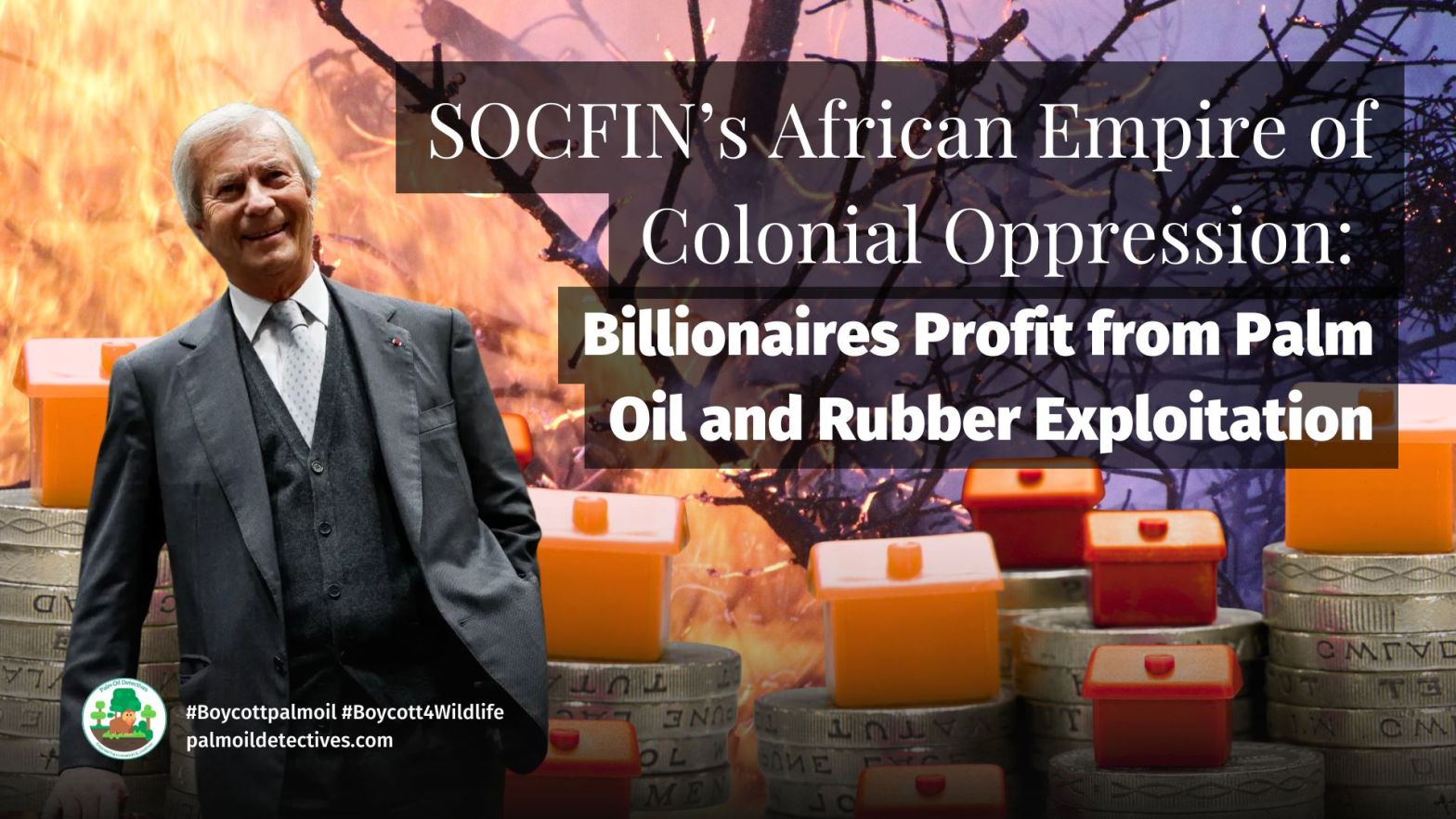
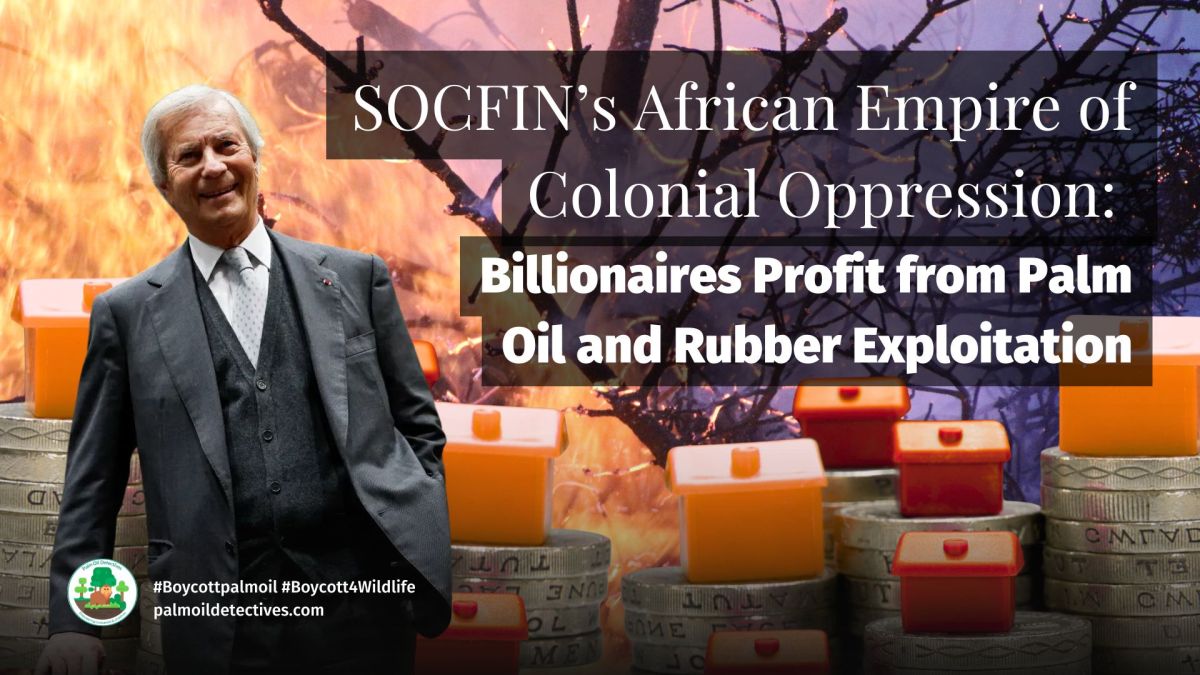
SOCFIN’s African Empire of Colonial Oppression: Billionaires Profit from Palm Oil and Rubber Exploitation

An investigation by Bloomberg exposed that despite being RSPO members, #SOCFIN plantations in #WestAfrica are the epicentre of #humanrights abuses, sexual coercion, environmental destruction, and #landgrabbing. Operating in #Liberia, #Ghana, #Nigeria, and beyond, SOCFIN’s #rubber and #palmoil plantations continue historical colonial legacies of exploitation. Despite widespread evidence of abuse and deforestation, SOCFIN and its partners benefit from weak sustainability certifications such as #FSC and #RSPO. Europe and the US buy products directly linked to these violations, greenwashing the destruction in the process. Indigenous communities and workers are actively resisting this huge injustice —They seek proper redress in the form of stricter #EUDR regulations and better protections of their health, livelihoods and families. Consumers can boycott palm oil and rubber in solidarity. #BoycottPalmOil #Boycott4Wildlife


A recent Bloomberg investigation into SOCFIN, a plantation empire co-owned by French billionaire Vincent Bolloré, reveals ongoing human rights violations, sexual exploitation, deforestation, and colonial-style land grabs across West Africa. SOCFIN, based in Luxembourg and co-owned by Bolloré, operates sprawling palm oil and rubber plantations in Liberia, Ghana, Nigeria, Cameroon, and elsewhere. The investigation uncovered systemic abuses and environmental destruction, exposing the toxic greenwashing reality behind RSPO corporate sustainability claims.

According to Bloomberg’s extensive report published in April 2025, SOCFIN plantations in Liberia and Ghana are sites of widespread sexual coercion, rape and sexual abuse.

Women workers at the Liberian Agricultural Company (LAC) plantation, one of SOCFIN’s largest operations, routinely face demands for sex from supervisors as a condition for securing daily work. Women like Rebecca (a pseudonym) describe daily harassment and abuse, forced to accept demands out of economic necessity. Contract workers earn as little as $3.50 a day and face threats of dismissal if they refuse sexual advances.

Similar accounts emerge from SOCFIN’s Salala Rubber Corporation (SRC), recently sold after violent worker protests over labour abuses, inadequate medical care, and poor housing conditions. Women workers have described supervisors openly demanding sexual favours in exchange for continued employment. Mamie, a former SRC worker, described being violently raped by her supervisor after repeatedly refusing his advances. Such experiences remain common, despite superficial anti-harassment measures like “No Sexual Harassment” signs erected by the company (Bloomberg, 2025).

SOCFIN’s operations are rooted deeply in colonial history. Established in the Belgian Congo in the late 1800s, SOCFIN expanded aggressively during colonialism, exploiting rubber and palm oil resources across Africa and Asia. Today, its co-owners, Vincent Bolloré and Belgian businessman Hubert Fabri, control vast landholdings, perpetuating neo-colonial dynamics of wealth extraction. According to an article by Tony Lawson for Shoppe Black, the plantations replicate exploitative plantation models, extracting wealth from African land and labour for European profit, reminiscent of colonial rubber plantations and antebellum slave operations like Louisiana’s Nottoway Plantation.

This neo-colonial exploitation is glaringly evident in Nigeria, where SOCFIN’s subsidiary, Okumu Oil Palm Company, operates 19,062 hectares of palm plantations and 7,335 hectares of rubber plantations. Palm Oil Detectives (2024) documented widespread displacement of local Indigenous communities due to plantation expansion. Villages such as Lemon, Agbeda, and Oweike have been forcibly dismantled, leaving hundreds homeless. The affected communities received no compensation or consultation—violating international human rights standards on Free Prior and Informed Consent (FPIC).

Austin Lemon, whose family established Lemon village in 1969, recounted witnessing his ancestral land seized by SOCFIN and converted into plantations without consent or compensation. The trauma from losing their homes, livelihoods, and ancestral heritage remains profound, with many residents still unable to recover decades later.

In Ghana, SOCFIN’s Plantations Socfin Ghana (PSG) has systematically destroyed vital rainforests, despite clear warnings from environmental assessments. PSG admitted clearing over 1,089 hectares of natural forest between 2012 and 2016. The loss of biodiversity and increased carbon emissions from these activities directly exacerbate the climate crisis, severely impacting local rainfall patterns and agricultural productivity. Farmers around PSG’s plantations suffer reduced yields, poverty, and food insecurity.

Meanwhile, the EU continues to import vast quantities of palm oil and rubber from SOCFIN, despite mounting evidence of human rights violations and deforestation. Europe’s reliance on SOCFIN’s supply chains for products such as Michelin tyres, Nestlé’s consumer goods, and numerous cosmetic brands implicates major companies in these abuses. Investigations show European tyre manufacturers purchasing rubber sourced from plantations like Liberia’s LAC and SRC, despite credible allegations of labour abuses, sexual coercion, and land theft.

SOCFIN and its partners rely heavily on weak and ineffective sustainability schemes like the Roundtable on Sustainable Palm Oil (RSPO). But investigations repeatedly reveal these certifications as ineffectual greenwashing tools. For example, SOCFIN’s Cameroon plantations—RSPO-certified—face lawsuits alleging severe environmental damage and community displacement. Water pollution tests conducted near these plantations revealed dangerous contamination levels, threatening public health (Bloomberg, 2025).

Vincent Bolloré, despite his influential position as a major shareholder and board member, consistently denies responsibility, claiming limited involvement. Yet Bolloré’s role remains central. Known for his vast media empire and conservative political influence in France, Bolloré has maintained his SOCFIN stake despite decades of documented abuses. Lawsuits brought under French duty-of-vigilance laws now challenge Bolloré directly, arguing that his oversight constitutes effective control, making him legally responsible for SOCFIN’s actions.

Public pressure is growing. In 2024, Norway’s sovereign wealth fund excluded Bolloré Group and strongly recommended divestment from Bolloré and SOCFIN, citing overwhelming evidence of abuse. Luxembourg’s stock exchange delisted SOCFIN the same year, further isolating the company. Despite these actions, European governments and multinational corporations including the RSPO continue to support SOCFIN financially, facilitating ongoing abuses in Africa.

Communities across West Africa resist despite enormous personal risk. Liberian union leader Mary Boimah was jailed after protests against SRC’s labour conditions. Nigerian community member Iyabo Batu was shot by SOCFIN-affiliated security personnel while protesting environmental contamination and blocked access to her village. Despite these risks, communities persist in their demands for justice, compensation, and the return of their lands.

SOCFIN’s stated commitments to human rights and sustainability remain hollow. Decades of documented abuses, superficial responses to audits, and persistent denial illustrate systemic failure and wilful negligence. As long as global markets reward SOCFIN’s rubber and palm oil, the cycle of violence and exploitation will continue.

The time has come to demand real accountability. Regulators and law-makers in the EU and USA must recognise their complicity in human rights abuses and ecocide in palm oil and rubber supply chains. Until this time, people and landscapes will continue to suffer from forced labour, sexual coercion, and environmental destruction. SOCFIN’s ecocide and human rights abuses—must end now.

Learn more

Bloomberg. (2025, April 17). The Rubber Barons. Retrieved from https://www.bloomberg.com/features/2025-socfin-plantations

Palm Oil Detectives. (2024, July 31). Socfin’s Destructive Empire: Palm Oil Deforestation and Human Rights Abuses in West Africa. Retrieved from https://palmoildetectives.com/2024/07/31/socfins-destructive-empire-palm-oil-deforestation-and-human-rights-abuses-in-west-africa/

Shoppe Black. (2025). Labor Abuses: Nottoway and Liberia Plantations. Retrieved from https://shoppeblack.us/labor-abuses-nottoway-and-liberia-plantations/

ENDS


Read more about human rights abuses and child slavery in the palm oil industry

Oil palm in Latin America: monoculture and violence

The rapid expansion of oil palm plantations across #SouthAmerica is causing significant environmental, economic and social problems. This growth is leading to #deforestation, #landgrabbing displacement of #indigenous and farming communities, and increased militarised…

Read more

Something went wrong. Please refresh the page and/or try again.


Take Action in Five Ways

1. Join the #Boycott4Wildlife on social media and subscribe to stay in the loop: Share posts from this website to your own network on Twitter, Mastadon, Instagram, Facebook and Youtube using the hashtags #Boycottpalmoil #Boycott4Wildlife.

Join 3,176 other subscribers

2. Contribute stories: Academics, conservationists, scientists, indigenous rights advocates and animal rights advocates working to expose the corruption of the palm oil industry or to save animals can contribute stories to the website.

3. Supermarket sleuthing: Next time you’re in the supermarket, take photos of products containing palm oil. Share these to social media along with the hashtags to call out the greenwashing and ecocide of the brands who use palm oil. You can also take photos of palm oil free products and congratulate brands when they go palm oil free.

4. Take to the streets: Get in touch with Palm Oil Detectives to find out more.

5. Donate: Make a one-off or monthly donation to Palm Oil Detectives as a way of saying thank you and to help pay for ongoing running costs of the website and social media campaigns. Donate here

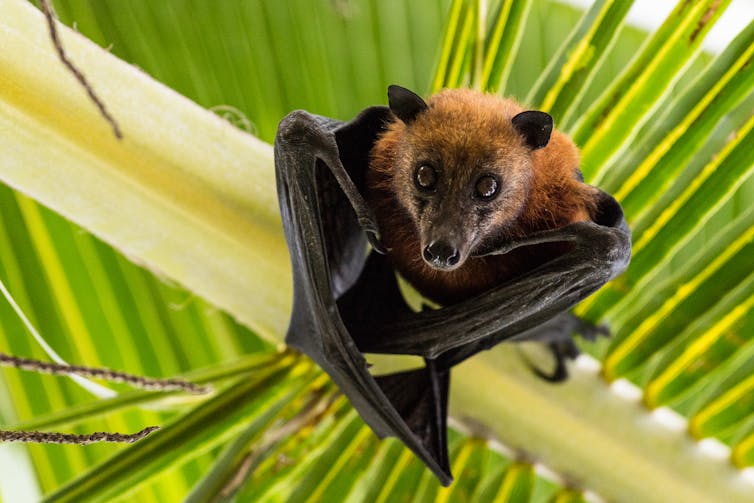
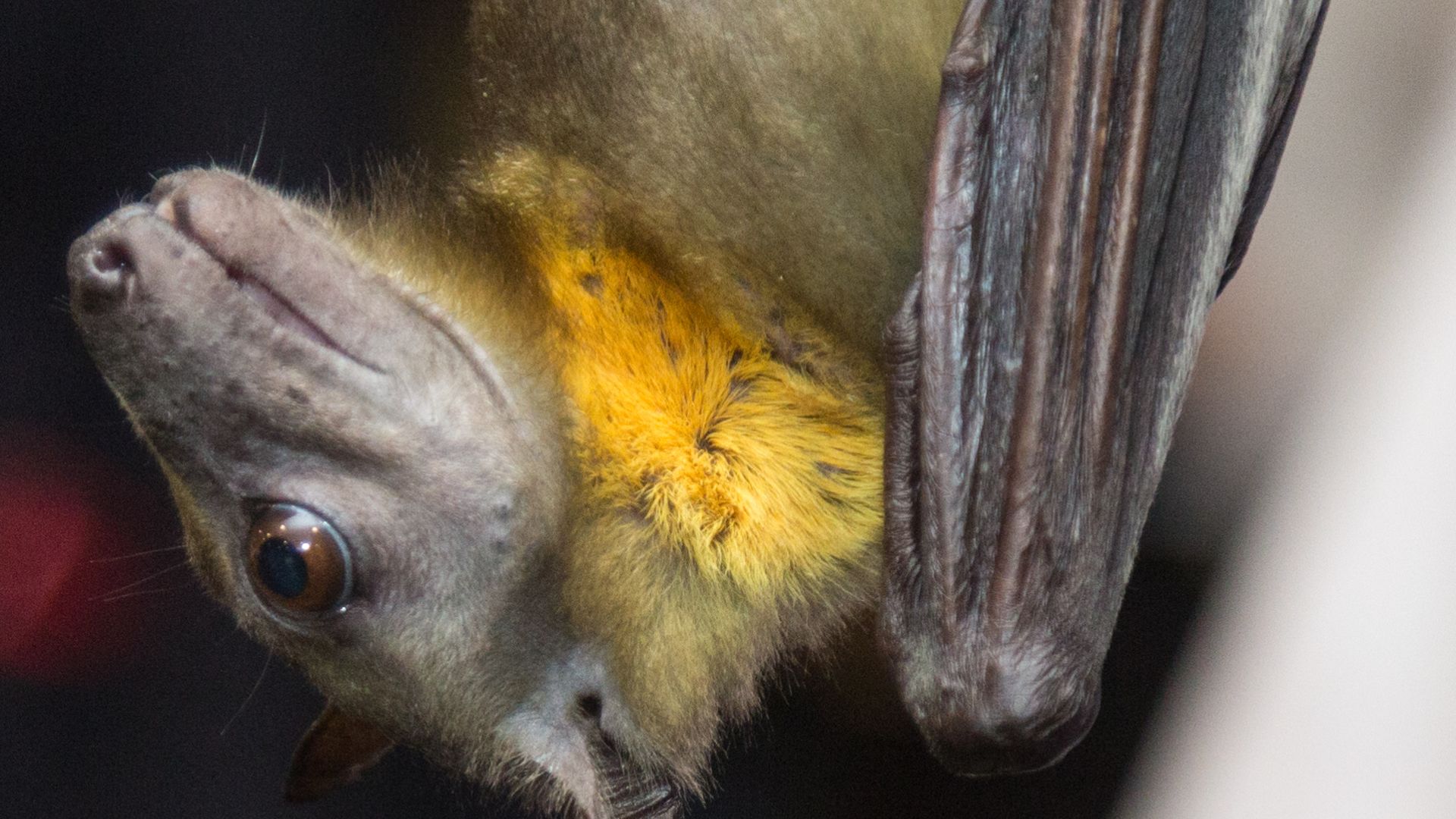
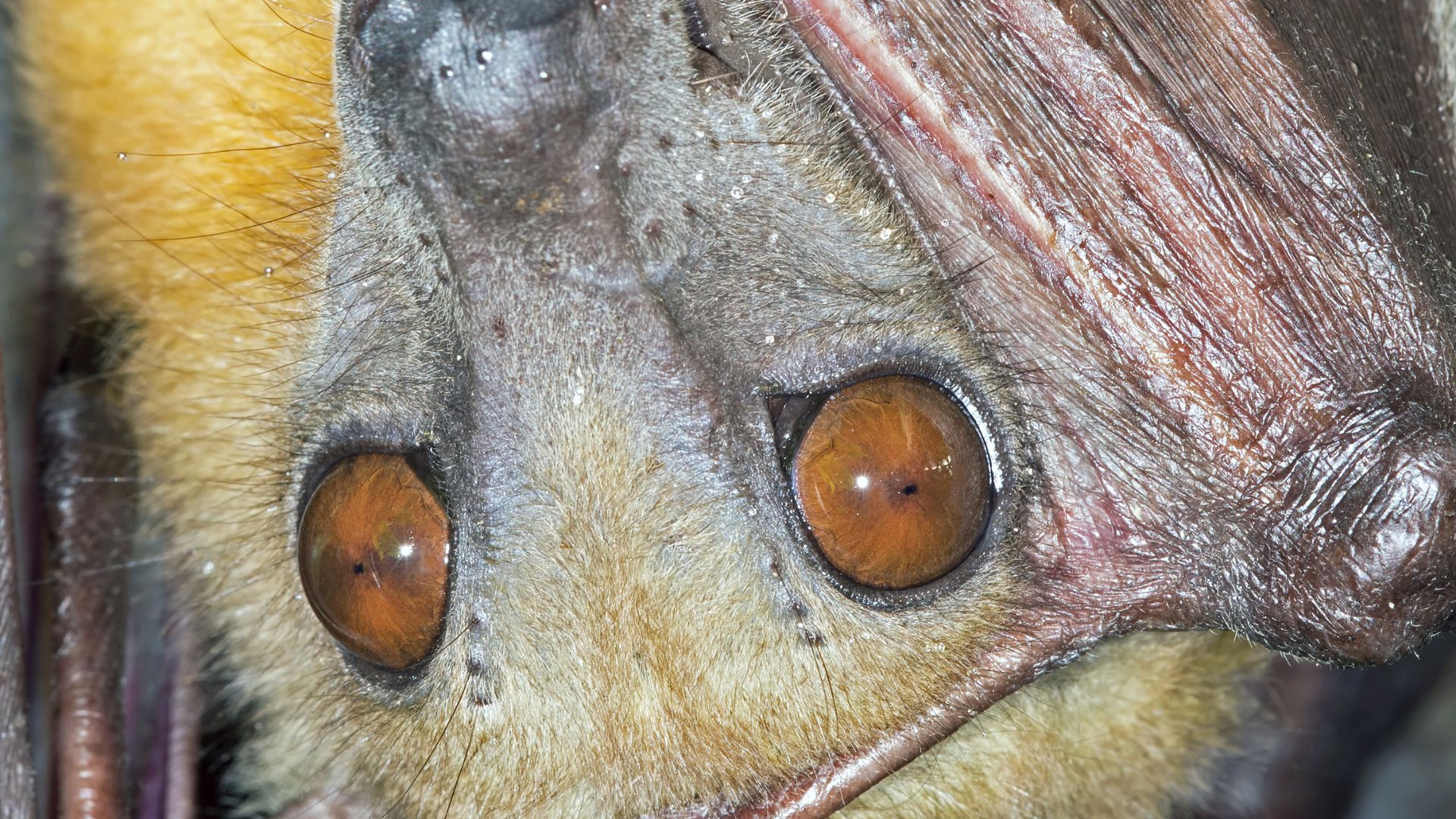
Fruit Bats: Super Seed Dispersers Growing African Forests


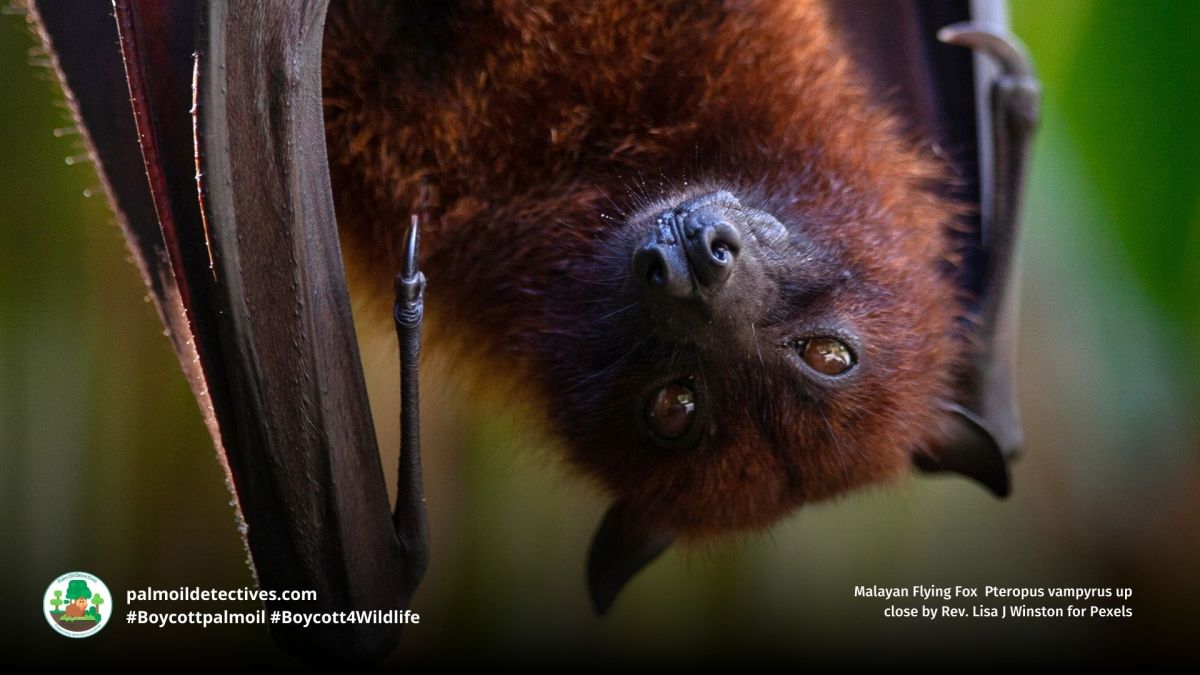
Fruit bats (also known as flying foxes) play a vital role in Africa’s forest ecosystems. These remarkable creatures act as super seed dispersers, scattering seeds over vast distances, helping to reforest deforested areas and boosting biodiversity. A single colony can disperse hundreds of thousands of seeds in one night, kickstarting the regrowth of forests. They support the regeneration of vital plants and trees, which benefit local communities by increasing soil fertility and providing fruits and timber. However, their populations are in decline due to deforestation and hunting. Help to protect these winged forest architects every time you shop – #BoycottPalmOil #Boycott4Wildlife to help save their habitats.


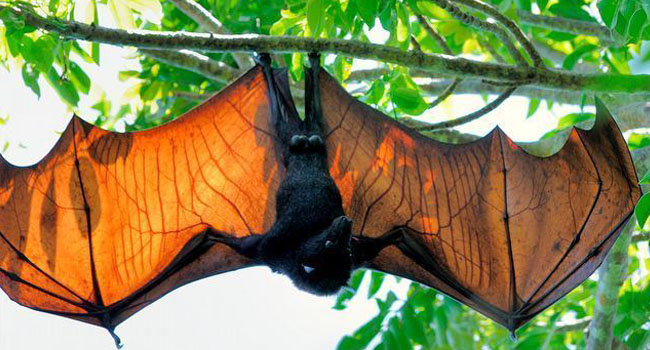
Spectacled Flying Fox Pteropus conspicillatus

Fruit bats: the winged ‘conservationists’ reforesting parts of Africa

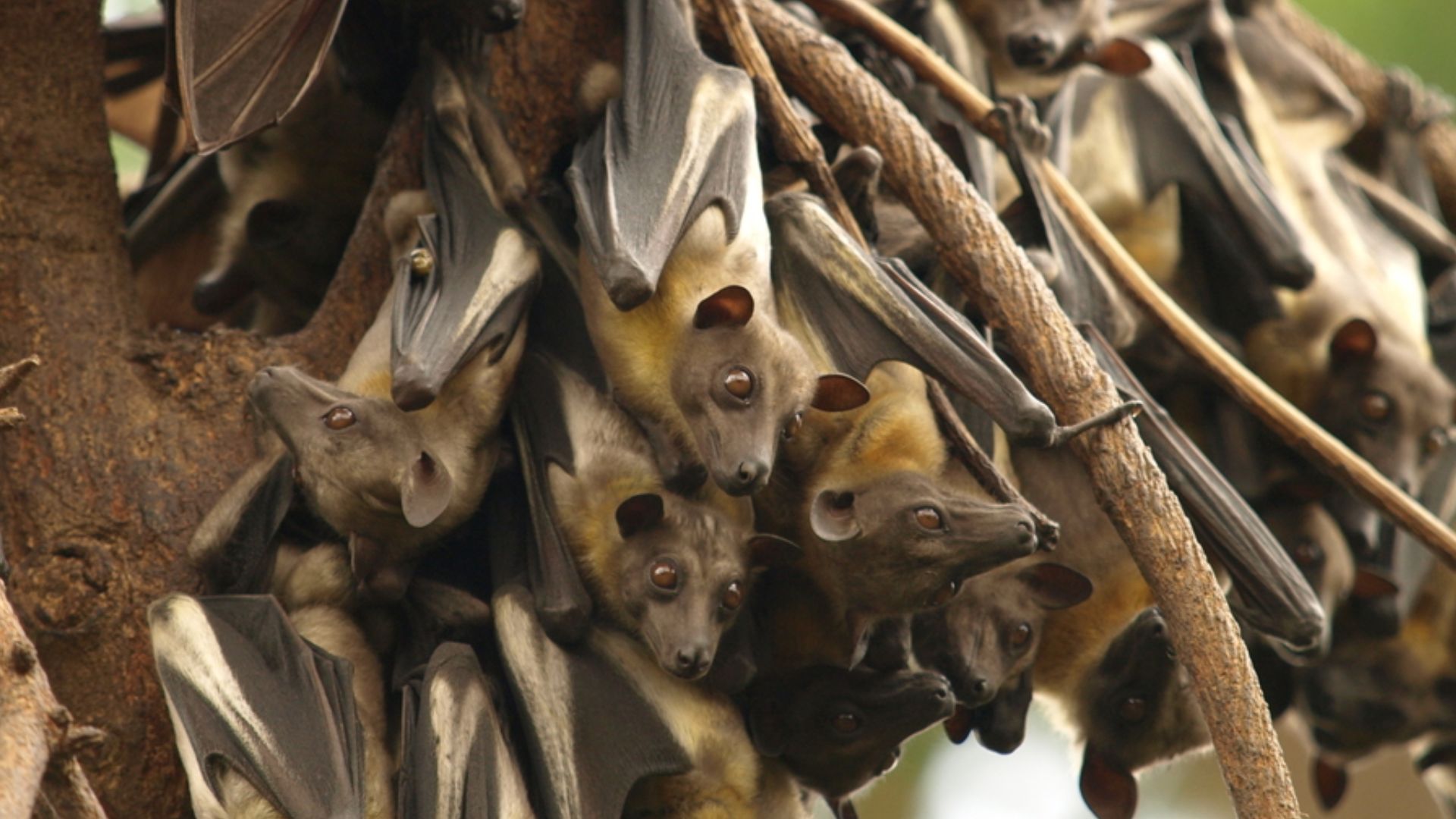
Straw-coloured fruit bats exist throughout most of the African continent. This large fruit bat is one of, if not the most numerous fruit-eating animal (called frugivores) in Africa. They live in colonies of thousands to millions of individuals.

Fruit bats sleep during the day, hanging upside down in the crowns of old trees, and become active at sunset when they set off in search of food – specifically nectar and fruit.

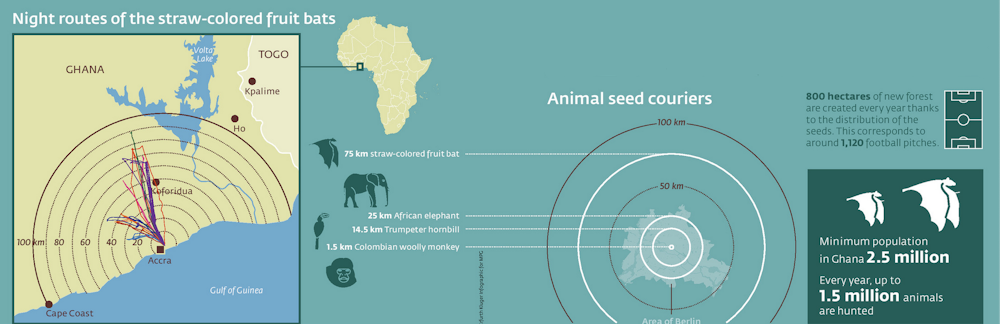
With their wingspan of up to 80cm, they are able to cover vast distances. When the colonies are very large and competition for food is stiff, they can fly up to 95km to suitable food trees and only return to their roosts the following morning. They defecate the seeds of the fruit they eat over an unusually long time period, even during flight. They can thus disperse seeds across huge areas as they go.

The seeds transported in this way can end up far from the parent plant, and in areas that are good for germination and establishment. The fact that these gigantic colonies seasonally migrate across Africa, following the rain and upcoming fruit, help disperse seeds of seasonal fruit and in places with only a few local frugivores.

The fruit bats therefore contribute to the species and genetic diversity of forests.

In 2019 we investigated the potential of these fruit bat colonies to reforest areas where trees had been lost in parts of Africa.

We tracked the movements of fruit bats in Ghana, Burkina Faso and Zambia by deploying them with small GPS loggers, which allowed us to follow their nightly movements to food trees. We also looked into how long they held food in their gut. We then applied our findings to entire colonies to see what services they provided in large numbers.

We found that, in a conservative estimate, a colony of 150,000 animals could disseminate more than 300,000 small seeds in a single night, and that a single colony of fruit bats could kickstart the regrowth of 800 hectares of forest.

Map with blue and yellow. Lines showing animal dispersal habits
Routes of bats and animal seed couriers. Author supplied © MPG

They’ve likely often done so – a study using seed traps deforested areas in Cote d’Ivoire found that 96% of dropped seeds were carried in by fruit bats.

Worryingly, fruit bats have started to disappear from forests everywhere. They are primarily at risk from hunting and persecution out of superstition, fear or simple annoyance due to the noise they make when they roost.

This would not only lead to a loss in biodiversity but have huge economic consequences as fruit bats disperse the seeds of, and likely pollinate as well, many economically valuable plants such as timber species and food producing plants.

Spreading seeds

For our study, we used GPS transmitters to track the flight paths of the bats. We also measured the time it took them to excrete the seeds after eating them. For this we took bats into captivity, fed them their natural food dyed with fluorescent dye and then filmed when which food item was excreted. These showed that the animals only excrete some of the seeds after a relatively long time, thereby facilitating their dispersal over vast distances.

We were able to calculate the potential of an entire colony to disseminate seeds over long distances and to transport them to deforested areas.

Among other things, the straw-coloured fruit bat disperses fast-growing trees that are the first to colonise open ground, so-called pioneer trees, and which are able to grow in bright sunlight, creating the right environment for rainforest tree species to establish and grow.

The profit that the regrowth of this much forest generates for the population, for example through edible fruits, increased soil fertility and timber, has been estimated using the results from a study on the cost of deforestation in Ghana under the assumption that all areas supplied with seeds by bats were allowed to reforest. Our estimate was in excess of 700,000 Euro (about US$750,000). Because the straw-coloured fruit bats migrate throughout Africa, many communities profit from their services.

Straw-coloured fruitbats: sadly in decline

Sadly, the population of straw-coloured fruits bats is in continuous decline. For example a colony we monitor in Accra, Ghana, has gone down from one million individuals over a decade ago to less than 20,000 bats in the spring of 2022.

Given that each female gives birth to a single pup each year, this is going to lead to a population collapse. Logging the large trees in which the animals live is also threatening their populations. Often we will return to a place where a thriving colony was previously observed only to find their roost trees and thus the bats, gone.

The straw-coloured fruit bats contribute to the conservation of African forests, so there is an urgent need to explain their importance to the human population. With the recent COVID-outbreak and other diseases such as Ebola, bats have moved into the focus of the press and thus local communities. While it is important to inform people about how to safely co-exist with the bats, there is currently no scientific evidence to support the rumour that straw-coloured fruit bats or any bat may have been involved in these outbreaks. The best way to ensure the health and safety of both bats and people is to simply stay away from them.

During our research, we met a local king in Kibi, a town in southern Ghana, who is leading by example. He’s placed the straw-coloured fruit bat colony that has taken up residence in his garden under his own personal protection and calls them their babies.

An NGO we collaborate with closely – the Rwanda Wildlife Corporation – does exemplary work to help mitigate the negative trend of fruit bat populations. They visit local communities, inform them about the benefits and threats the bats offer, and recruit local volunteers to contribute to counts and observations. Many of these volunteers are children, which are our best ambassadors for a future where humans and bats can live side by side.

ENDS


Learn about other animals endangered by palm oil and other agriculture

Learn about “sustainable” palm oil greenwashing

A 2019 World Health Organisation (WHO) report into the palm oil industry and RSPO finds extensive greenwashing of palm oil deforestation and the murder of endangered animals (i.e. biodiversity loss)

WHO Bulletin on Palm Oil: Deforestation and Extinction
WHO Bulletin on Palm Oil: Air Pollution and Health


Take Action in Five Ways

1. Join the #Boycott4Wildlife on social media and subscribe to stay in the loop: Share posts from this website to your own network on Twitter, Mastadon, Instagram, Facebook and Youtube using the hashtags #Boycottpalmoil #Boycott4Wildlife.

Join 3,176 other subscribers

2. Contribute stories: Academics, conservationists, scientists, indigenous rights advocates and animal rights advocates working to expose the corruption of the palm oil industry or to save animals can contribute stories to the website.

3. Supermarket sleuthing: Next time you’re in the supermarket, take photos of products containing palm oil. Share these to social media along with the hashtags to call out the greenwashing and ecocide of the brands who use palm oil. You can also take photos of palm oil free products and congratulate brands when they go palm oil free.

4. Take to the streets: Get in touch with Palm Oil Detectives to find out more.

5. Donate: Make a one-off or monthly donation to Palm Oil Detectives as a way of saying thank you and to help pay for ongoing running costs of the website and social media campaigns. Donate here

Ecuadorean Viscacha Lagidium ahuacaense

Ecuadorean Viscacha Lagidium ahuacaense

IUCN Status: Critically Endangered

Location: Ecuador’s Cerro El Ahuaca

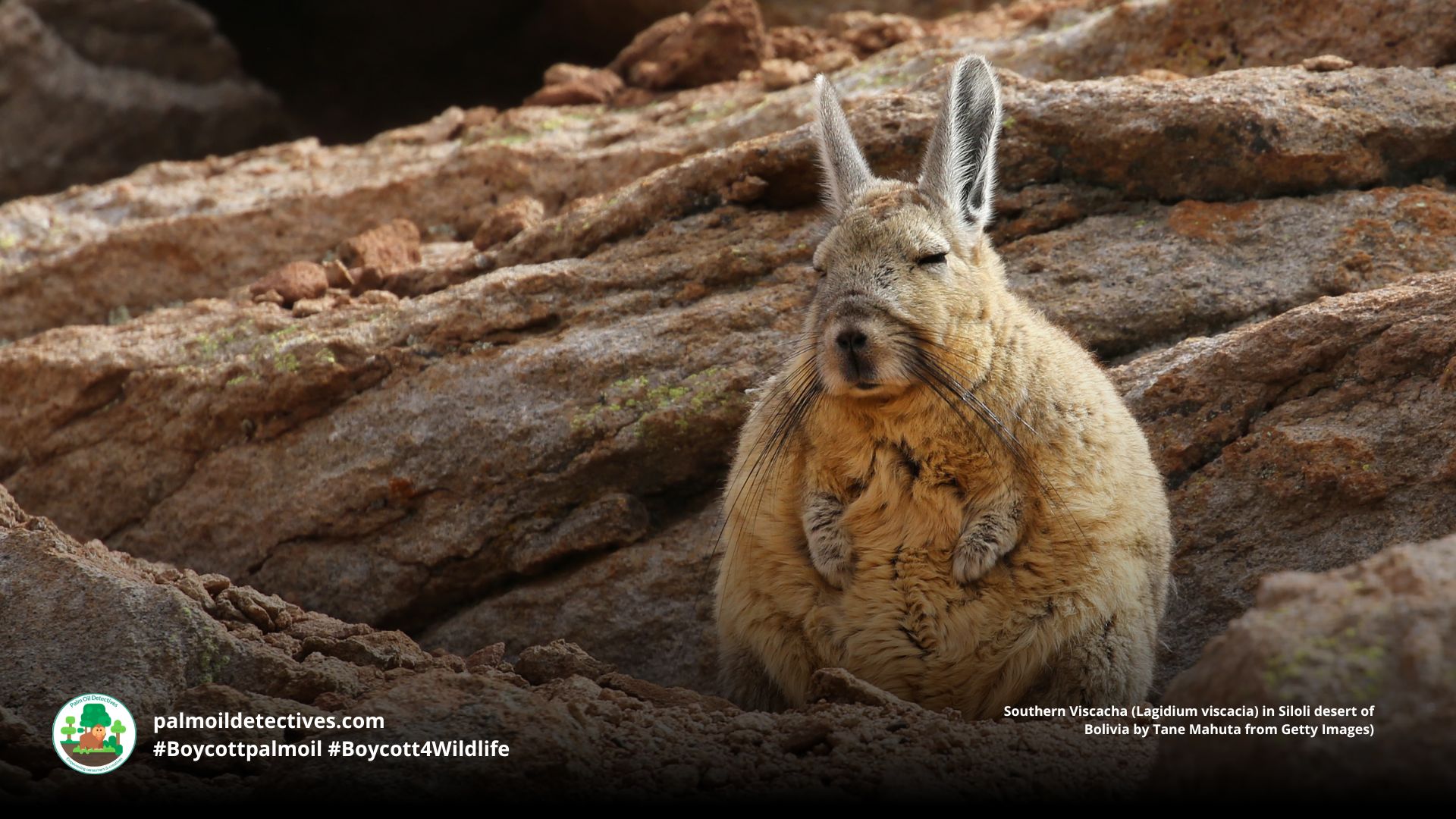
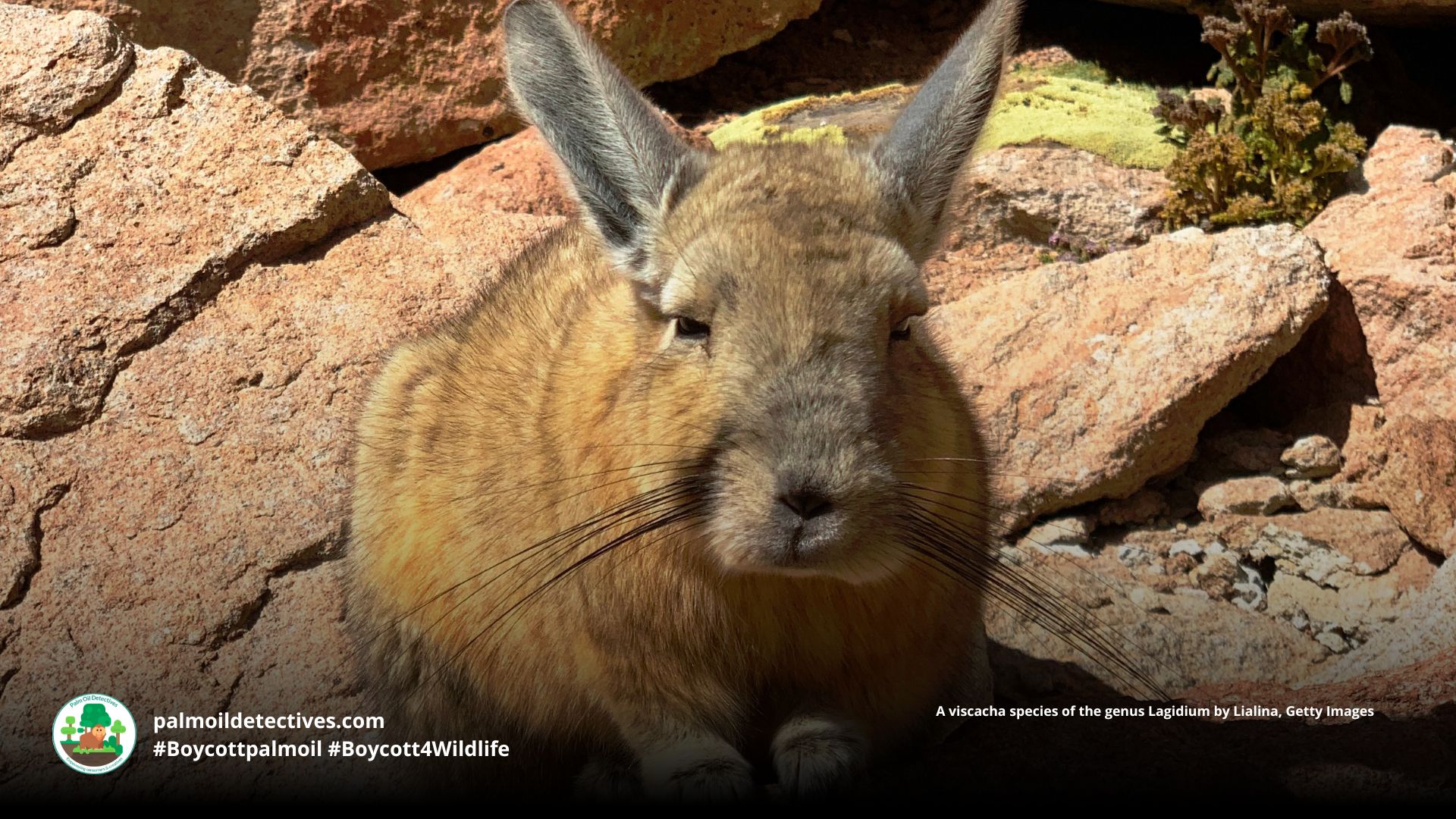
High in the remote granite outcrops of Cerro El Ahuaca, #Ecuador the Ecuadorean #Viscacha Lagidium ahuacaense is plump and fluffy #rodent sporting sage-like long whiskers. From their high perch they look down upon the world below with a permanent expression of what could interpreted as disappointment. Ecuadorean Viscachas were first spotted in 2005 and formally described in 2009, these mountain-dwelling large #rodents are the northernmost member of the Lagidium genus, marooned over 500 kilometres from their closest relatives in #Peru. Few creatures are as elusive or fascinating— tragically, only a handful of them remain alive.

Fires, #beef agriculture, and #deforestation for monoculture are carving away at their already fragile existence, pushing them ever closer to the brink of #extinction. Help them by sharing their story to social media. Join the #Boycott4Wildlife.

Appearance & Behaviour

Built for survival in one of Ecuador’s harshest landscapes, the Ecuadorean Viscacha is a sturdy and big rodent with a compact body covered in thick, grey-brown fur. Their dense, woolly fur shields them from the biting Andean winds, while their long, silvery tails provide balance as they scale sheer rock faces. Their large, dark eyes scan the terrain for danger, and their long, sensitive whiskers twitch as they pick up the faintest vibrations in the wind.

Long and distinguished whiskers provide them with sensitive and deep understanding of their environment. A black dorsal stripe runs the length of their back, this disappears into the dense coat that keeps them warm against the mountain’s chill.

Most active at dawn and dusk, their every movement is deliberate. They bound effortlessly between jagged outcrops, using their powerful hind legs to launch themselves across treacherous gaps. Unlike burrowing rodents, they take refuge in narrow rock crevices, where they remain hidden from predators.

Threats

Once secure in their isolated stronghold, the Ecuadorean Viscacha now faces a gauntlet of human-driven threats. Their already tiny population is being squeezed into an ever-smaller fragment of land, where survival is becoming increasingly precarious.

Deforestation for eucalyptus and pine monoculture plantations

For generations, wildfires have been used to clear land for agriculture and livestock grazing, but in recent decades, these fires have intensified, spreading further into the Viscacha’s habitat. Each blaze devours critical vegetation, stripping away the food sources they rely on and forcing them into ever-smaller pockets of surviving habitat.

Farmed Animal Agriculture

Grazing cattle have become an unrelenting force in the region, trampling vegetation and outcompeting the Viscacha for food. Their presence has disrupted the delicate balance of this fragile ecosystem, leaving fewer resources for native wildlife.

Climate Change-related Environmental Shifts

With their entire known population confined to a single mountain, the Ecuadorean Viscacha is especially vulnerable to even the smallest environmental shifts. Changing rainfall patterns, prolonged droughts, and temperature fluctuations could alter the availability of food and water, placing further stress on their already limited numbers.

Population Fragmentation and Isolation

Trapped within a tiny range with no known neighbouring populations, the Viscacha is cut off from potential mates and genetic diversity. Without intervention, this isolation could lead to inbreeding, weakening the species’ ability to adapt and survive.

Geographic Range

The Ecuadorean Viscacha is found only in a single location—Cerro El Ahuaca, a rugged granite mountain in southern Ecuador. They inhabit steep, rocky surfaces at elevations between 1,950 and 2,480 metres, a world of exposed rock faces and sparse vegetation. No other known populations exist, making them one of the most geographically restricted mammals on the planet.

Though their habitat once stretched further, fires and deforestation have steadily chipped away at the fringes of their territory. Today, their entire known range spans just 120 hectares—an area smaller than many urban parks—leaving them with little room to escape the pressures of a changing world.

Diet

These high-altitude specialists are herbivores, feeding primarily on native grasses, shrubs, and small herbs that cling to the mountainside. Signs of their feeding are visible throughout their habitat—freshly grazed plants and stripped vegetation mark the places where they have foraged. Their diet is shaped by scarcity, forcing them to survive on whatever plant life they can find in their isolated, rocky home. Their close relatives Mountain Viscacha of Peru are preyed upon by Andean Mountain Cats.

Mating and Reproduction

Little is known about the reproductive habits of the Ecuadorean Viscacha, but they likely follow a pattern similar to their relatives in the Lagidium genus. Mountain Viscachas generally give birth to a single offspring after a long gestation period, ensuring that each newborn has a better chance of survival in the unforgiving terrain. Born with fur and open eyes, young Viscachas are relatively well-developed, an adaptation that allows them to quickly learn the skills needed to navigate their hazardous mountain environment.

FAQs

Are Ecuadorean Viscachas related to rabbits or chinchillas?

Despite their rabbit-like appearance, Ecuadorean Viscachas belong to the Chinchillidae family, making them closer relatives of chinchillas than rabbits. Their long whiskers, dense fur, and powerful hind legs are adaptations seen in other members of this family, allowing them to thrive in rocky, high-altitude environments.

How are Ecuadorean Viscachas different from other Mountain Viscachas?

Ecuadorean Viscachas are the northernmost species of the Lagidium genus, separated by more than 500 kilometres from their closest relatives in Peru. Genetic studies show that they diverged significantly from other Mountain Viscachas, with at least 7.9% DNA sequence differences. Morphologically, they have a more compact body, a distinct black dorsal stripe, and a tail that shifts in colour from grey-brown to reddish-brown. Their isolation and unique adaptations to the Cerro El Ahuaca environment make them a distinct species.

How do Ecuadorean Viscachas survive in their rocky habitat?

Perfectly adapted to life among sheer cliffs and granite outcrops, Ecuadorean Viscachas use their powerful hind legs to leap between rocks, navigating the treacherous terrain with ease. Their thick, woolly fur provides insulation against the cold, and instead of burrowing, they take refuge in rock crevices where they remain hidden from predators.

What do Ecuadorean Viscachas eat?

These herbivores feed on native shrubs, grasses, and small herbs found in their mountainous habitat. They leave behind distinct feeding traces, such as grazed vegetation and stripped plants, which provide insight into their foraging habits. Their diet is dictated by the limited plant life available in their isolated environment.

How many Ecuadorean Viscachas are left in the wild?

The total known population is alarmingly small, possibly consisting of only a few dozen individuals confined to a 120-hectare area on Cerro El Ahuaca. No other populations have been discovered, making them one of the most critically endangered rodents in the world.

What are the biggest threats to the Ecuadorean Viscacha?

Their biggest threats include:

Habitat destruction – Uncontrolled fires and land clearing for eucalyptus and pine monoculture and cattle grazing are steadily erasing their already limited habitat.

Livestock competitionGrazing cattle trample vegetation and outcompete Viscachas for food.

Climate change – Shifting rainfall patterns and temperature fluctuations could further disrupt their delicate ecosystem.

Genetic isolation – With only a single known population, they face the risk of inbreeding, which could weaken their resilience.

Why are they only found in one place?

Ecuadorean Viscachas are highly specialised mountain dwellers, perfectly suited to the rocky terrain of Cerro El Ahuaca. They may have once had a wider range, but habitat destruction and fragmentation have left them stranded in this isolated stronghold. Unlike more adaptable rodents, they cannot easily move to new areas due to their specific habitat needs.

Are Ecuadorean Viscachas protected?

The Ecuadorean Vischaca was only recently discovered and are considered a forgotten species. However conservation efforts have begun, there is no targeted species-wide protection in place. However, local conservation initiatives have helped establish protected areas that include their habitat. Researchers continue to push for stronger conservation measures to ensure their survival.

How can I help save the Ecuadorean Viscacha?

You can make a difference by:

• Supporting conservation organisations working to protect their habitat.

• Raising awareness about the threats they face by sharing this post and joining the #Boycott4Wildlife

• Advocating for stronger environmental policies in Ecuador to prevent further deforestation and habitat loss.

Without immediate action, these rare and remarkable mountain survivors could disappear forever.

Take Action!

The Ecuadorean Viscacha is teetering on the edge of extinction, but there is still time to act. Conservationists have already taken steps to protect their habitat, securing key areas under municipal conservation agreements. However, long-term survival depends on preventing further destruction of their fragile mountain refuge.

You can help by:

• Supporting organisations working to protect Ecuador’s high-altitude ecosystems.

• Spreading awareness about the threats facing the Ecuadorean Viscacha and the urgent need for conservation.

• Demanding stronger environmental protections to prevent further habitat loss in Loja Province.

Every effort counts. Without immediate action, these extraordinary mountain survivors could disappear forever.

Support Ecuadorean Viscacha by going vegan and boycotting palm oil in the supermarket, it’s the #Boycott4Wildlife

Support the conservation of this species

This animal has no protections in place. Read about other forgotten species here. Create art to support this forgotten animal or raise awareness about them by sharing this post and using the #Boycottpalmoil #Boycott4Wildlife hashtags on social media. Also you can boycott palm oil in the supermarket.

Further Information

Nature and Culture International. (2022). Ecuadorian Viscacha Conservation Project. Retrieved from https://www.natureandculture.org/directory/ecuadorian-vizcacha-conservation-project/

Roach, N. 2016. Lagidium ahuacaenseThe IUCN Red List of Threatened Species 2016: e.T48295808A48295811. https://dx.doi.org/10.2305/IUCN.UK.2016-2.RLTS.T48295808A48295811.en. Accessed on 27 February 2025.

Werner, F. A., Ledesma, K. J., & Hidalgo B., R. (2006). Mountain vizcacha (Lagidium cf. peruanum) in Ecuador – first record of Chinchillidae from the northern Andes. Mastozoología Neotropical, 13(2), 271–274.

Wikipedia Contributors. (n.d.). Lagidium ahuacaense. Wikipedia, The Free Encyclopedia. Retrieved from https://en.wikipedia.org/wiki/Lagidium_ahuacaense

Ecuadorean Viscacha Lagidium ahuacaense

Contribute to palm oil detectives - black rhino in profile

How can I help the #Boycott4Wildlife?


Take Action in Five Ways

1. Join the #Boycott4Wildlife on social media and subscribe to stay in the loop: Share posts from this website to your own network on Twitter, Mastadon, Instagram, Facebook and Youtube using the hashtags #Boycottpalmoil #Boycott4Wildlife.

Join 3,176 other subscribers

2. Contribute stories: Academics, conservationists, scientists, indigenous rights advocates and animal rights advocates working to expose the corruption of the palm oil industry or to save animals can contribute stories to the website.

3. Supermarket sleuthing: Next time you’re in the supermarket, take photos of products containing palm oil. Share these to social media along with the hashtags to call out the greenwashing and ecocide of the brands who use palm oil. You can also take photos of palm oil free products and congratulate brands when they go palm oil free.

4. Take to the streets: Get in touch with Palm Oil Detectives to find out more.

5. Donate: Make a one-off or monthly donation to Palm Oil Detectives as a way of saying thank you and to help pay for ongoing running costs of the website and social media campaigns. Donate here


Learn about other animals endangered by palm oil and other agriculture

Learn about “sustainable” palm oil greenwashing

A 2019 World Health Organisation (WHO) report into the palm oil industry and RSPO finds extensive greenwashing of palm oil deforestation and the murder of endangered animals (i.e. biodiversity loss)

WHO Bulletin on Palm Oil: Deforestation and Extinction
WHO Bulletin on Palm Oil: Air Pollution and Health

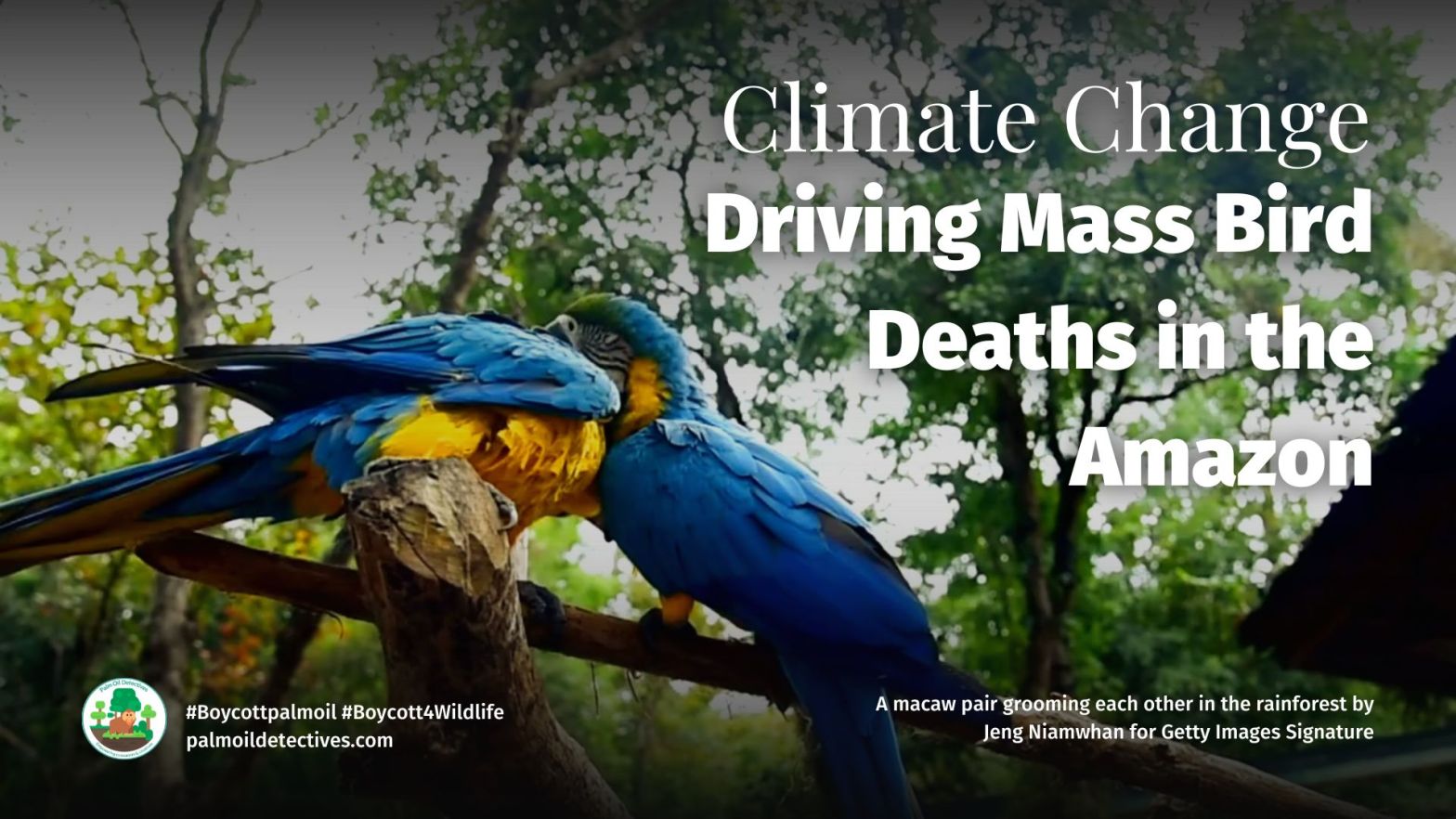
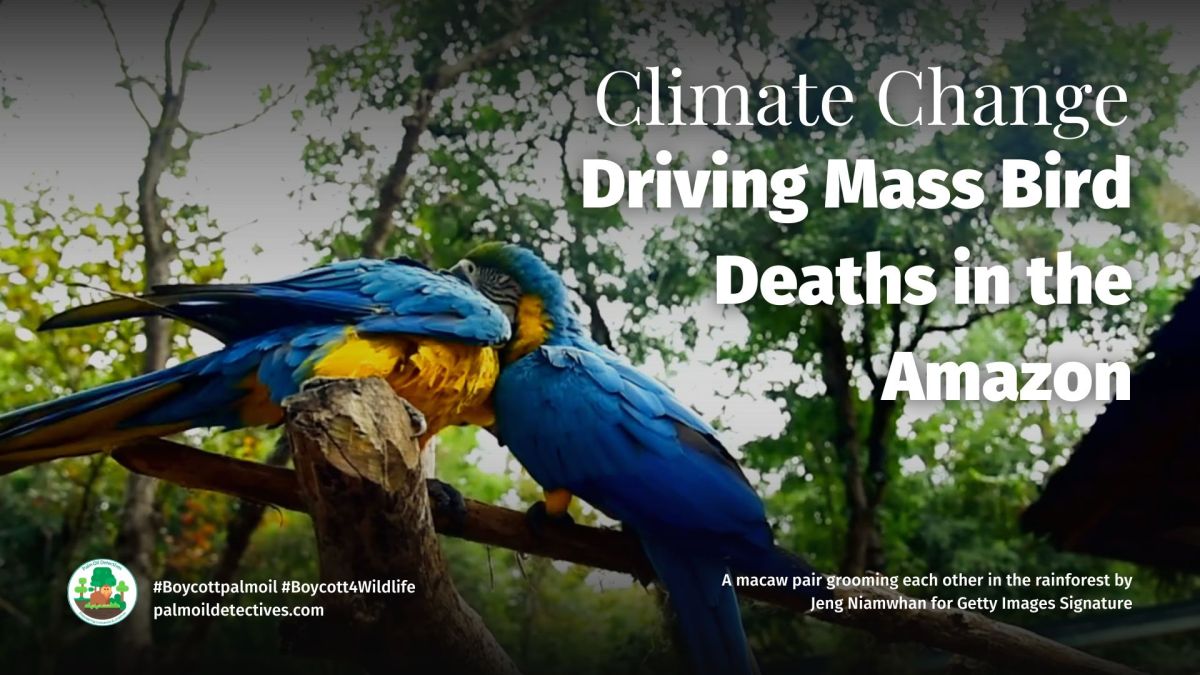
Climate Change Driving Mass Bird Deaths in the Amazon


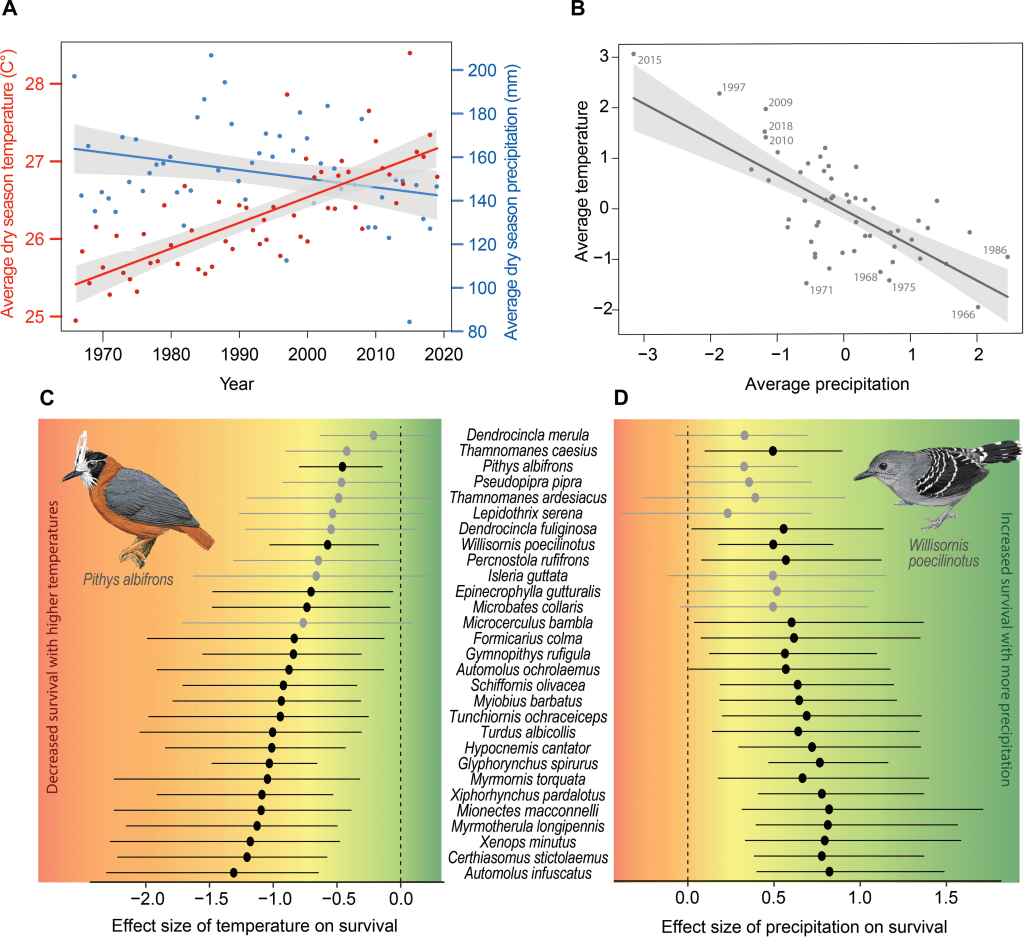
A recent #study has revealed that even in the most isolated parts of the #Amazon, bird #populations are collapsing due to #climatechange. Research published in Science Advances found that a 1°C increase in temperature led to a 63% drop in bird survivability, proving that climate change is pushing avian species towards #extinction. Avoiding deforestation-linked products like #palmoil and #meat is crucial in the fight for their survival. As is calling out corporate greenwashing, be #Vegan and #BoycottPalmOil #Boycott4Wildlife


Rare Bird Populations Suffer from Heat Stress Leading to Gradual Decline

A team of environmental scientists from the Instituto Nacional de Pesquisas da Amazônia, Michigan Technological University, and the University of Oregon examined decades of bird population data from Brazil’s Biological Dynamics of Forest Fragments Project. They found that bird numbers have steadily declined, with some species even disappearing entirely.

For years, researchers were unsure why birds were vanishing from pristine environments untouched by human development. This study provides clear evidence that climate change is making forests uninhabitable, even for species that have survived in stable, humid ecosystems for millennia.

Heat stress and climate instability

The study found that rising temperatures are disrupting forest ecosystems, creating longer dry seasons, shifting plant and animal populations, and removing essential food sources.

Bird species rely on stable seasonal cycles to build nests, lay eggs, and forage for food for their young. However, as global temperatures rise, their food sources peak too early or disappear entirely. Many chicks are now hatching into a world where food no longer exists, leading to mass starvation and long-term population collapse.

Climate change aggravates bird mortality in pristine tropical forests, Science Advances, Jared D. Wolfe et al. (2025). DOI:10.1126/sciadv.adq8086

Global implications

While this study focused on the Amazon, its findings have global implications. Bird populations in rainforests worldwide are experiencing similar declines due to climate instability, habitat destruction, and resource depletion.

Read more: Climate change aggravates bird mortality in pristine tropical forests, Science Advances, Jared D. Wolfe et al. (2025). DOI:10.1126/sciadv.adq8086

ENDS


Learn about other animals endangered by palm oil and other agriculture


Learn about “sustainable” palm oil greenwashing

A 2019 World Health Organisation (WHO) report into the palm oil industry and RSPO finds extensive greenwashing of palm oil deforestation and the murder of endangered animals (i.e. biodiversity loss)
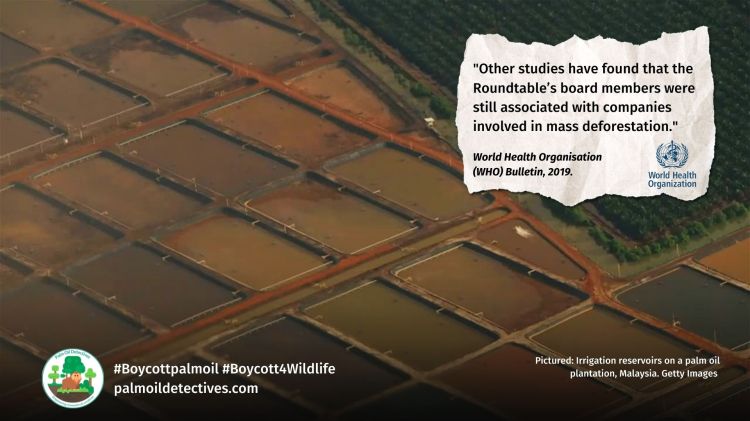
WHO Bulletin on Palm Oil: Deforestation and Extinction
WHO Bulletin on Palm Oil: Air Pollution and Health


Take Action in Five Ways

1. Join the #Boycott4Wildlife on social media and subscribe to stay in the loop: Share posts from this website to your own network on Twitter, Mastadon, Instagram, Facebook and Youtube using the hashtags #Boycottpalmoil #Boycott4Wildlife.

Join 3,176 other subscribers

2. Contribute stories: Academics, conservationists, scientists, indigenous rights advocates and animal rights advocates working to expose the corruption of the palm oil industry or to save animals can contribute stories to the website.

3. Supermarket sleuthing: Next time you’re in the supermarket, take photos of products containing palm oil. Share these to social media along with the hashtags to call out the greenwashing and ecocide of the brands who use palm oil. You can also take photos of palm oil free products and congratulate brands when they go palm oil free.

4. Take to the streets: Get in touch with Palm Oil Detectives to find out more.

5. Donate: Make a one-off or monthly donation to Palm Oil Detectives as a way of saying thank you and to help pay for ongoing running costs of the website and social media campaigns. Donate here

Declining primate numbers are threatening Brazil’s Atlantic forest


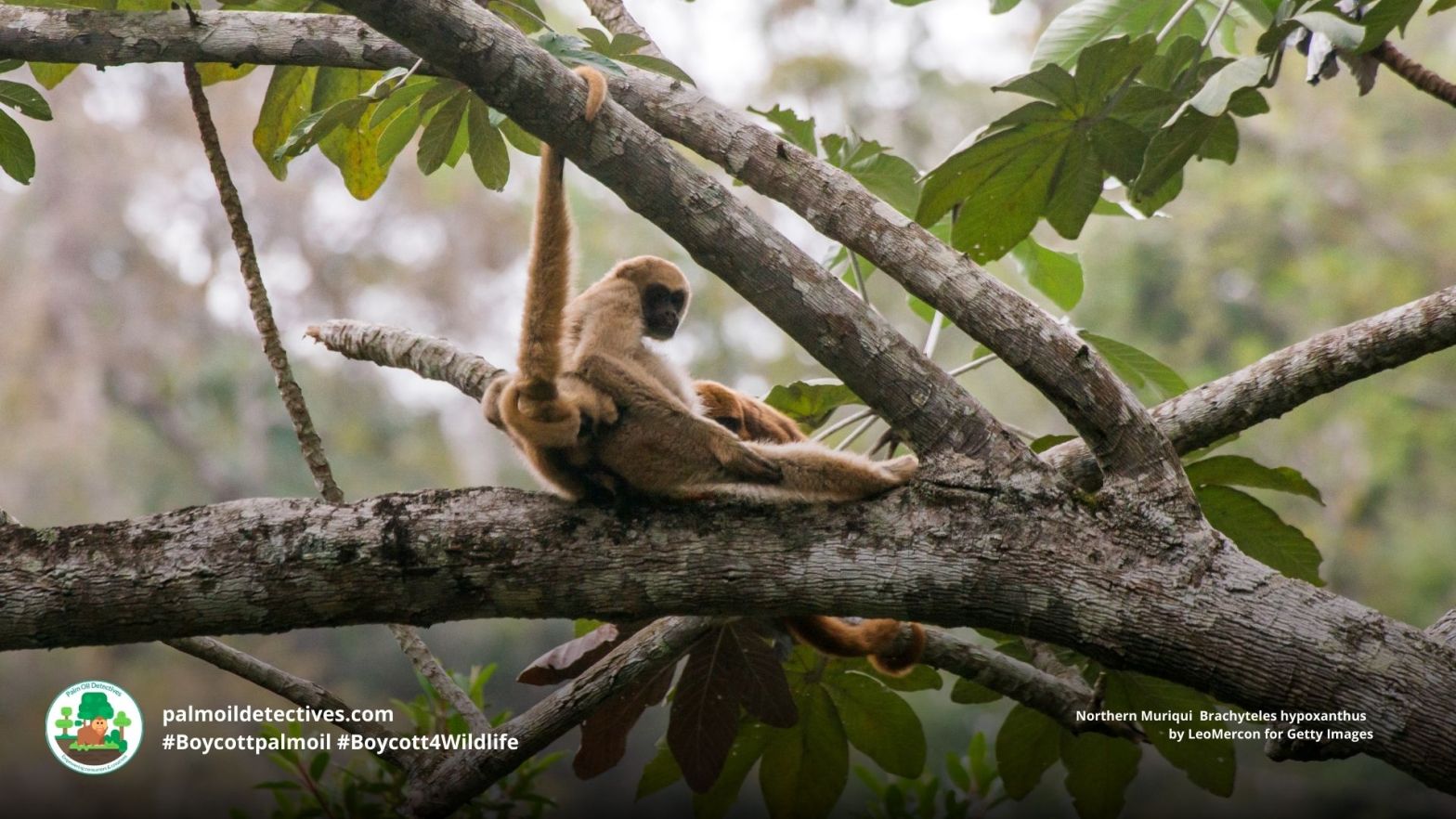
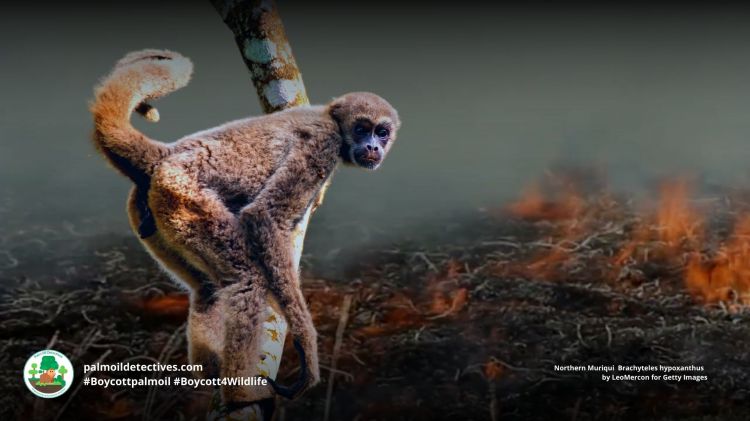
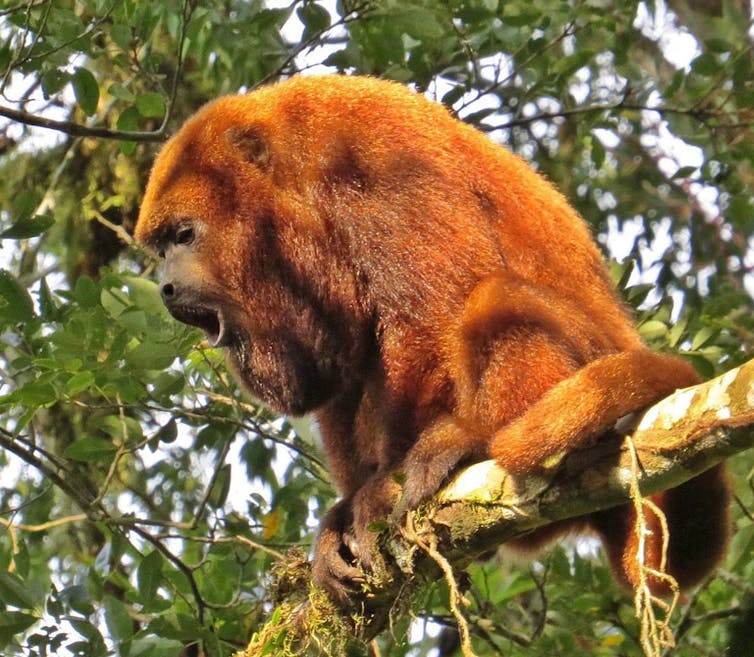
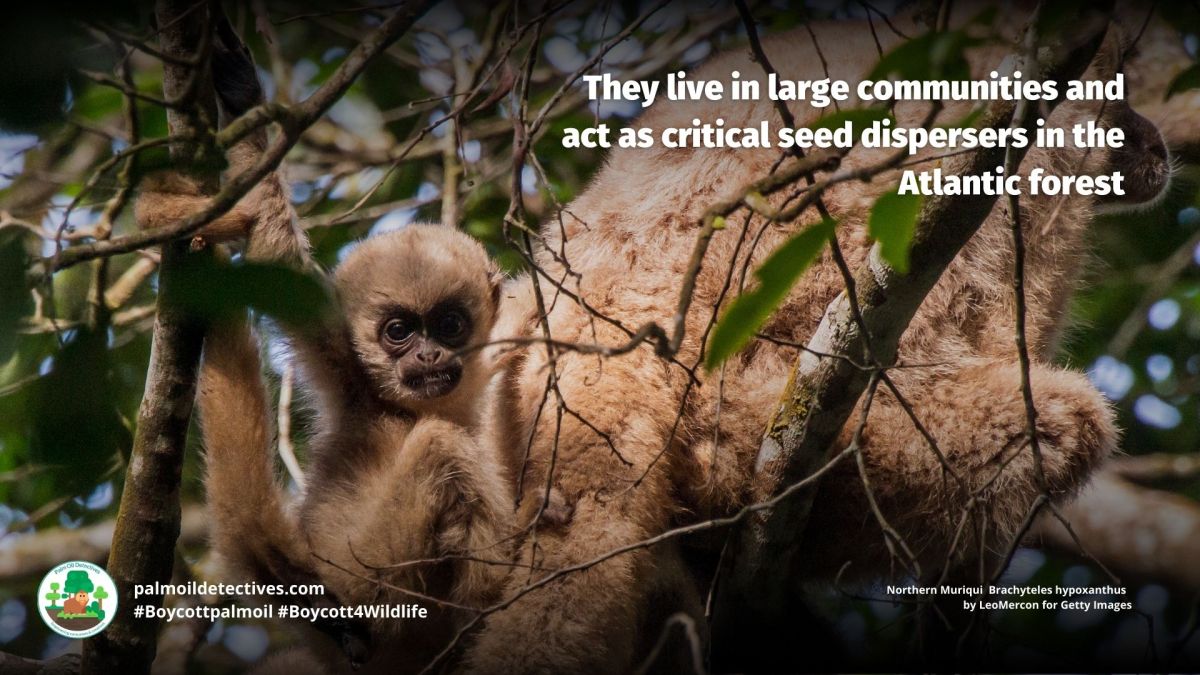
#Brazil’s Atlantic Forest, one of the most biodiverse ecosystems in the world, is facing severe threats due to deforestation and habitat fragmentation. This has led to a sharp decline in primate species, including the critically endangered southern and northern muriqui. The loss of these #primates, essential for seed dispersers in the Atlantic forest, is further destabilising the forest ecosystem. As human-driven deforestation escalates, the #extinction debt continues to rise, endangering both wildlife and the forest itself. You can take action to help their survival. Be #vegan for the animals and forests and #BoycottPalmOil #BoycottGold #Boycott4Wildlife.


Juan Carlos Guix, Universitat de Barcelona and Antoni Serra Sorribes, Universitat de Barcelona

We tend to think of debt as purely financial, but we can also reap what we sow in the natural world through what is known as extinction debt. This concept refers to changes in the past that affect a species’ survival in the future.

Ecosystems often undergo profound and dramatic changes, but their effects are not always obvious to the naked eye. These changes are increasingly caused or triggered by humans.

In many cases, affected species may not actually disappear for several decades or even centuries: individuals survive, but under ecological conditions that do not allow them to maintain genetically viable populations. This often occurs with plant and animal species that have long life cycles, such as certain tree species.

Some redwood or yew populations may therefore survive with the bare ecological minimum for long periods of time, but this does not mean that their existence is assured in the long-term future. This delayed result is the “debt” of extinction.

Such situations can occur in any ecosystem in the world, including tropical and subtropical forests. In fact, several studies have shown that biodiversity loss is accelerating on different continents, with the risk of mass extinction of species.

The primates of the Atlantic Forest

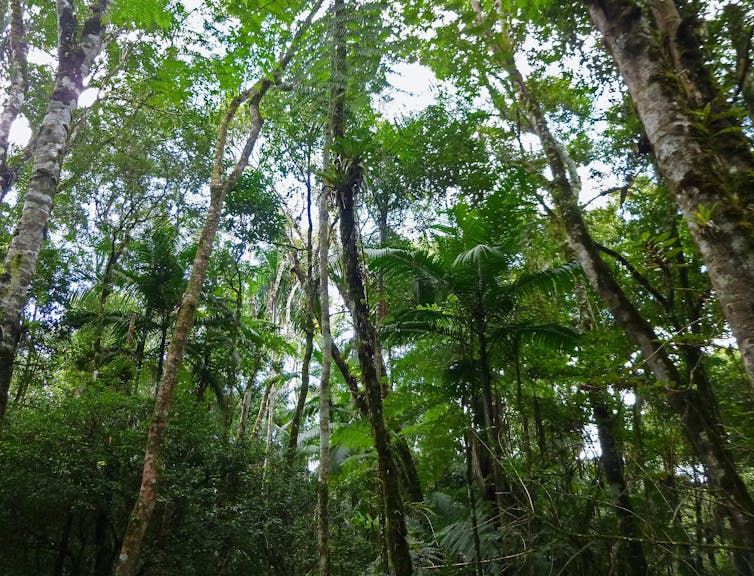
When we picture Brazil, it calls to mind the thriving Amazon rainforest, the mighty rivers of its vast basin and countless miles teeming with all manner of flora and fauna.

However, Brazil also hosts other landscapes which are just as unique as the Amazon. The Cerrado, Caatinga and the Mata Atlântica are just a few examples.

Northern Muriqui Brachyteles hypoxanthus

The Atlantic forests of South America – known as the Mata Atlântica in Brazil – are some of the richest and most diverse bioclimatic areas in the world, and are home to a large number of primate species. Many of these species are native to these forests and are in serious danger of extinction. This is the case, for example, for the southern muriqui (Brachyteles arachnoides) and the northern muriqui (Brachyteles hypoxanthus), two of the largest tree dwelling species of New World monkey.

Smaller endemic primate species such as tamarins (Leontopithecus rosalia, L. chrysopygus, L. chrysomelas and L. caissara) are also in danger of extinction. Others, such as guaribas, also known as brown howler monkeys (Alouatta guariba), which were relatively abundant until a few years ago, have been decimated by the recent outbreaks of yellow fever that have affected eastern and southern Brazil. All the primate species of the Atlantic Forest have in common the fact that they survive in isolated forest fragments of varied dimensions, surrounded by crops and pastures.

The guariba (Alouatta guariba clamitans) is a species that is characteristic of the Mata Atlântica. Renato Paiva, CC BY-NC-ND

Consequences for trees

Many of the interactions that occur between animals that feed on fruits and the plants that produce them are considered “mutualistic interactions”, a type of ecological relationship that benefits individuals belonging to two or more species. In these cases, the plants produce the fleshy, nutritious pulp of the fruits that is consumed by the animals. In return, many of their seeds are distributed in places where new plants can germinate and grow.

Human impacts often affect the interactions between animals – such as tree dwelling primates – and plants. Recently, it has been found that these impacts often result in extinction debts affecting numerous tree species.

Trees that produce seeds that are large or protected by a very tough shell rely heavily on such animals to disperse their seeds effectively through the forest. Therefore, when large primates and other herbivorous vertebrates become locally, regionally or globally extinct, the plants whose seeds they disperse are also affected.

A recent study attests to this. The research shows how deforestation, habitat fragmentation and disease have affected the primates of the Atlantic Forest in southeastern and southern Brazil, and how the ecological interactions in which they participate or used to participate have changed.

This study warns that the progressive deterioration of the interlinking mutualistic interactions between animals and the plants on which they feed is jeopardising the very survival of these forests.

Atlantic Rainforest, in the Atlantic Forest biome in Brazil. Juan Carlos Guix, CC BY-NC-ND

This threat comes on top of climate change which will, in the short term, cause forest fires to become more frequent. In the middle and long term, it will turn vast areas of forest into open savannahs little suited to the needs of tree dwelling primates. Forest fragmentation – whereby forest areas are isolated from each other and surrounded by intensive sugar cane or soybean cultivation – will only exacerbate these effects.

ENDS


Learn about other animals endangered by palm oil and other agriculture


Learn about “sustainable” palm oil greenwashing

A 2019 World Health Organisation (WHO) report into the palm oil industry and RSPO finds extensive greenwashing of palm oil deforestation and the murder of endangered animals (i.e. biodiversity loss)
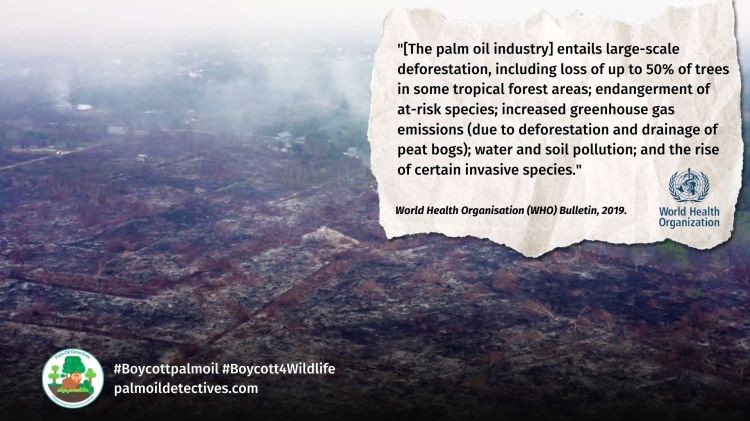
WHO Bulletin on Palm Oil: Deforestation and Extinction
WHO Bulletin on Palm Oil: Air Pollution and Health


Take Action in Five Ways

1. Join the #Boycott4Wildlife on social media and subscribe to stay in the loop: Share posts from this website to your own network on Twitter, Mastadon, Instagram, Facebook and Youtube using the hashtags #Boycottpalmoil #Boycott4Wildlife.

Join 3,176 other subscribers

2. Contribute stories: Academics, conservationists, scientists, indigenous rights advocates and animal rights advocates working to expose the corruption of the palm oil industry or to save animals can contribute stories to the website.

3. Supermarket sleuthing: Next time you’re in the supermarket, take photos of products containing palm oil. Share these to social media along with the hashtags to call out the greenwashing and ecocide of the brands who use palm oil. You can also take photos of palm oil free products and congratulate brands when they go palm oil free.

4. Take to the streets: Get in touch with Palm Oil Detectives to find out more.

5. Donate: Make a one-off or monthly donation to Palm Oil Detectives as a way of saying thank you and to help pay for ongoing running costs of the website and social media campaigns. Donate here

Southern Pudu Pudu puda

Southern Pudu Pudu puda

IUCN Status: Near Threatened

Location: Chile, Argentina

Darting around and hiding on the forest floor, the Southern Pudu, known as püdü or püdu in Mapudungun (the language of the indigenous Mapuche people), is the world’s second-smallest #deer species. Weighing just 6.4 to 13.4 kg and standing at 35 to 45 cm at the shoulder, these miniature deer are remarkably adapted to their forested environments and communicate with each other through scent. Their short, spiky antlers curve slightly backward, and their thick chestnut-brown coat provides excellent camouflage in the undergrowth.

Despite their small size, Southern Pudus are resilient #ungulates in one of the world’s most biodiverse but increasingly threatened temperate forests in #Argentina and #Chile. However, habitat destruction for eucalyptus and pine monoculture, predation by invasive species, road collisions and disease transmission from farmed animals are pushing populations to the brink. Help them by raising awareness, it’s the #Boycott4Wildlife

Appearance & Behaviour

Southern Pudus are a stocky tiny deer species with short legs, rounded ears, and large, dark eyes. Their small antlers, present only in males, measure between 5.3 and 9 cm and are shed annually. Their dense fur varies from reddish-brown to dark brown, often appearing darker in winter.

Unlike many other ungulate species, Pudus are solitary and highly secretive. They are mostly crepuscular, active mostly during dawn and dusk, and use scent-marking to communicate with other individuals. They rely on zigzagging escape routes through dense undergrowth to evade predators, making them difficult to spot in the wild.

Threats

Southern Pudu populations face multiple threats that have led to drastic declines in recent decades.

1. Habitat Loss and Deforestation

  • Widespread forest clearance: Nearly 50% of the Valdivian temperate rainforest has been destroyed since 1550, with severe deforestation in the Maule and Araucanía regions.
  • Deforestation for agriculture: Native forests are being replaced with monoculture plantations (eucalyptus, pine), cattle ranching, and agriculture, significantly reducing their available habitat.
  • Fragmentation of remaining forests: The loss of continuous forest corridors isolates populations, leading to inbreeding and reduced genetic diversity.

2. Predation and Competition with Invasive Species

Free-ranging dogs attack and kill Pudus, even inside protected areas. Invasive deer and wild boar species compete for food and damage the undergrowth that Pudus rely on for shelter.

3. Road Development and Vehicle Collisions

Increasing road networks in Chile and Argentina have led to frequent roadkill incidents, including deaths inside national parks. The planned Chiloé-Mainland bridge could expose isolated Chiloé populations to new predators and human disturbances.

4. Disease Transmission from Livestock

Livestock diseases, including pestivirus, Leptospira, and bovine tuberculosis, are increasingly affecting wild Pudu populations. The presence of cattle-related pathogens has been documented, though their full impact is still being studied.

5. Illegal Poaching and Capture for the Pet Trade

Hunting for food still occurs in some rural areas. Some Pudus are illegally captured and sold in the exotic pet trade, despite their poor survival rate in captivity.

Geographic Range

The Southern Pudu is found in the temperate rainforests of southern Chile and southwestern Argentina, primarily within the Valdivian temperate forest. This elusive deer inhabits dense forests with thick underbrush, bamboo thickets, and Nothofagus-dominated woodlands, where they can navigate the understory with ease.

Diet

Like other deer species, Southern Pudus are browsing herbivores, feeding on a wide variety of shrubs, vines, bamboo shoots, ferns, leaves, and fallen fruit. Due to their small stature, they employ clever techniques to access food, including standing on their hind legs, bending saplings, or even climbing on logs and rocks to reach foliage. They obtain much of their moisture from their diet and can survive without drinking water for extended periods.

Mating and Reproduction

Mating season occurs during the Southern Hemisphere’s autumn (April to May). Males engage in territorial scent-marking but do not form harems. The gestation period for these miniature deers lasts approximately 210 days, with fawns typically born between November and January.

At birth, fawns weigh between 700 and 1,000 grams and have white-spotted coats for camouflage. They are weaned after two months but may remain with their mother for up to a year. Sexual maturity is reached at six months for females and 8–12 months for males.

FAQs

How small is the Southern Pudu compared to other deer?

The Southern Pudu is the second-smallest deer species in the world, only slightly larger than the Northern Pudu (Pudu mephistophiles). They stand 35–45 cm tall and weigh between 6.4–13.4 kg, making them smaller than many domestic cats.

Why are Southern Pudus classified as Near Threatened?

Their rapidly declining population is mainly due to habitat destruction, hunting, vehicle collisions, and diseases from livestock.

How do they communicate?

Southern Pudus use scent-marking from facial glands and urine to establish territories. They also emit barking sounds when alarmed.

Do Southern Pudus make good pets?

Absolutely not. Keeping a Pudu as a pet is illegal and highly unethical. These deer are extremely stress-prone and rarely survive in captivity unless part of scientific conservation efforts. They are meant to roam in the forests not be captive for their lives in a domestic environment or in a Zoo. If you want to help Southern Pudus raise awareness about them by sharing this post.

How do Southern Pudus avoid predators?

Pudus rely on stealth, agility, and dense undergrowth to evade predators. When chased, they zigzag through the forest and can jump over logs and climb steep terrain.

How do Pudus adapt to deforested areas?

While they prefer native forests, some Pudus have been observed using commercial tree plantations, but only when there is a dense understory for cover.

Take Action!

  • Support conservation organisations that work to protect the Valdivian temperate forest.
  • Advocate against the pet trade – Pudus are wild animals and they belong free in the wild, not kept as pets!
  • Promote stricter regulations on free-roaming dogs in national parks.
  • Raise awareness about the threats posed by deforestation and invasive species by sharing this post to social media. Use the one-click shares at the top of this post.

The Southern Pudu may be small, but their role in the biodiversity of South American forests is crucial. Protecting them means preserving one of the last temperate rainforests on Earth.

Support Southern Pudu by going vegan and boycotting deforestation causing commodities in the supermarket, it’s the #Boycott4Wildlife

Support the conservation of this species

This animal has no protections in place. Read about other forgotten species here. Create art to support this forgotten animal or raise awareness about them by sharing this post and using the #Boycottpalmoil #Boycott4Wildlife hashtags on social media. Also you can boycott palm oil in the supermarket.

Further Information

Hidalgo-Hermoso, E., et al. (2024). High exposure to livestock pathogens in Southern Pudu (Pudu puda) from Chile. Animals, 14(4), 526. https://doi.org/10.3390/ani14040526

Silva-Rodríguez, E. A., et al. (2011). Priorities for the conservation of the Pudu (Pudu puda) in southern South America. Animal Production Science, 51(4), 375-377. https://doi.org/10.1071/AN10286

Silva-Rodríguez, E, Pastore, H. & Jiménez, J. 2016. Pudu pudaThe IUCN Red List of Threatened Species 2016: e.T18848A22164089. https://dx.doi.org/10.2305/IUCN.UK.2016-1.RLTS.T18848A22164089.en. Accessed on 26 February 2025.

Wikipedia contributors. (n.d.). Southern Pudu. Wikipedia, The Free Encyclopedia. https://en.wikipedia.org/wiki/Southern_pudu

Zúñiga, A. H., & Jiménez, J. E. (2018). Activity patterns and habitat use of Pudu deer (Pudu puda) in a mountain forest of south-central Chile. Journal of Natural History, 52(33-34), 2047-2054. https://doi.org/10.1080/00222933.2018.1510995

Southern Pudu Pudu threats

Contribute to palm oil detectives - black rhino in profile

How can I help the #Boycott4Wildlife?


Take Action in Five Ways

1. Join the #Boycott4Wildlife on social media and subscribe to stay in the loop: Share posts from this website to your own network on Twitter, Mastadon, Instagram, Facebook and Youtube using the hashtags #Boycottpalmoil #Boycott4Wildlife.

Join 3,176 other subscribers

2. Contribute stories: Academics, conservationists, scientists, indigenous rights advocates and animal rights advocates working to expose the corruption of the palm oil industry or to save animals can contribute stories to the website.

3. Supermarket sleuthing: Next time you’re in the supermarket, take photos of products containing palm oil. Share these to social media along with the hashtags to call out the greenwashing and ecocide of the brands who use palm oil. You can also take photos of palm oil free products and congratulate brands when they go palm oil free.

4. Take to the streets: Get in touch with Palm Oil Detectives to find out more.

5. Donate: Make a one-off or monthly donation to Palm Oil Detectives as a way of saying thank you and to help pay for ongoing running costs of the website and social media campaigns. Donate here


Learn about other animals endangered by palm oil and other agriculture


Learn about “sustainable” palm oil greenwashing

A 2019 World Health Organisation (WHO) report into the palm oil industry and RSPO finds extensive greenwashing of palm oil deforestation and the murder of endangered animals (i.e. biodiversity loss)
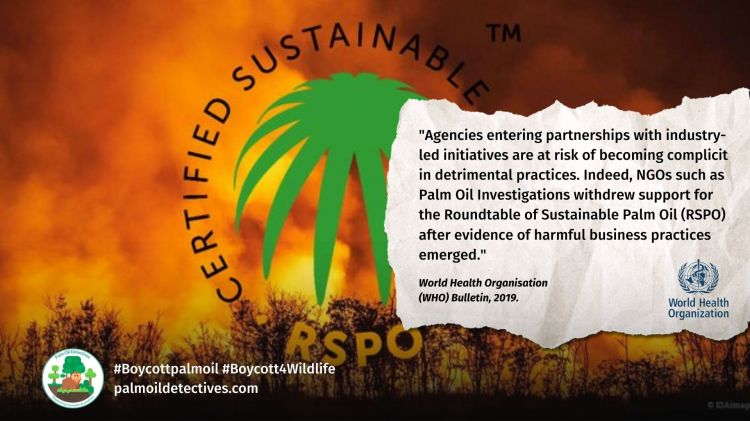
WHO Bulletin on Palm Oil: Deforestation and Extinction
WHO Bulletin on Palm Oil: Air Pollution and Health

Palm Oil Threatens Ancient Noken Weaving in West Papua


A powerful new indigenous art exhibition has highlighted the tragic loss of #WestPapua’s cultural identity due to #deforestation for #palmoil and #sugarcane monoculture plantations. A situation perpetuated by the illegal Indonesian colonisation of Melanesia. The ancient Melanesian tradition of noken weaving is under threat, as military-backed land grabs force Indigenous Muyu communities from their forests. Protect people and culture, when you shop make sure you #BoycottPalmOil #HumanRights #IndigenousRights


West Papuan doctoral candidate Veronika T. Kanem has issued a stark warning about the cultural and ecological destruction unfolding in Indonesia-occupied West Papua. As the region faces what may be the world’s largest deforestation project—two million hectares for palm oil and sugarcane—centuries-old Indigenous traditions are being pushed to the edge of existence.

Veronika T. Kanem, whose exhibition “Noken/Men: String Bags of the Muyu Tribe of Southern West Papua” opened at Auckland University, says the forced removal of her people from their forests has endangered not only biodiversity but the sacred art of noken weaving—a practice deeply embedded in the identity and social fabric of her father’s tribe, the Muyu.

Known locally as “men,” the noken is more than a string bag. Made from inner fibres of the genemo tree and other natural materials, noken symbolises a woman’s womb, a vessel of life used in ceremonies, food gathering, child-rearing, and cultural gift-giving. It holds economic, spiritual, and ancestral significance across Melanesia.

Now, industrial agriculture and military occupation threaten the entire cultural landscape. These new plantations are not only destroying forests; they are severing communities from their knowledge systems, their land, and each other.

Colonial Palm Oil Threatens Ancient Noken Weaving in West Papua (2)

Kanem’s research applies Indigenous Melanesian methodologies, using the act of noken weaving as a metaphor for knowledge, kinship, and resistance. Her work captures the lived experience of displacement and climate injustice at the intersection of colonial occupation, corporate extraction, and Indigenous resilience.

The Auckland exhibition also screened a documentary showcasing noken weaving traditions from across West Papua, including Asmat, Nabire, and Wamena. Speakers at the event, including Pacific scholars and artists, praised the project as a vital act of cultural preservation and defiance.

As Indonesia accelerates its colonial development schemes, the voices of West Papuans like Kanem are essential. Indigenous peoples must lead solutions to environmental destruction. Without indigenous justice, there can be no climate repair.

Defend West Papua’s forests and ancient indigenous cultures. Reject palm oil-driven genocide. #BoycottPalmOil #Boycott4Wildlife #HumanRights #IndigenousRights

Read more: Researcher warns over West Papuan deforestation impact on traditional noken weaving (Evening Report, 2025)

Palm Oil Is Ruining Kalangala Uganda Locals Paying the Price

ENDS


Read more about human rights abuses and child slavery in the palm oil industry

Something went wrong. Please refresh the page and/or try again.


Take Action in Five Ways

1. Join the #Boycott4Wildlife on social media and subscribe to stay in the loop: Share posts from this website to your own network on Twitter, Mastadon, Instagram, Facebook and Youtube using the hashtags #Boycottpalmoil #Boycott4Wildlife.

Join 3,176 other subscribers

2. Contribute stories: Academics, conservationists, scientists, indigenous rights advocates and animal rights advocates working to expose the corruption of the palm oil industry or to save animals can contribute stories to the website.
3. Supermarket sleuthing: Next time you’re in the supermarket, take photos of products containing palm oil. Share these to social media along with the hashtags to call out the greenwashing and ecocide of the brands who use palm oil. You can also take photos of palm oil free products and congratulate brands when they go palm oil free.

4. Take to the streets: Get in touch with Palm Oil Detectives to find out more.

5. Donate: Make a one-off or monthly donation to Palm Oil Detectives as a way of saying thank you and to help pay for ongoing running costs of the website and social media campaigns. Donate here

The Indigenous Malaysian concept of ‘Badi’: respecting the land and wildlife


The Indigenous Semai #indigenous people of #Malaysia can teach us a lot about how to protect people, planet and biodiversity. The Indigenous concept of #badi is not superstition or taboo, it’s about respecting the land, environment and #wildlife in order to avoid negative ecosystem impacts. #Boycottpalmoil #Boycott4Wildlife


“In the forest, you never know who is related to whom,” says a Semai villager.  

The Semais, one of Malaysia’s largest Indigenous groups, have a rich system of beliefs, practices and traditions connected to their ancestral lands’ ecosystem and environment. They offer a highly localised strategy for mitigating unwanted disasters such as environmental degradation, a global pandemic or the occurrence of major zoonotic diseases.

When the COVID-19 pandemic took hold, the Semai community blamed it in part on society as a whole having incurred ‘badi’. The badi was so severe it spread beyond the confines of the original offenders to the entire world. 

Badi: over-exploitation of nature and other creatures results in spiritual sickness

Semais see badi as a negative consequence of over-exploiting or disrespecting nature and other creatures, spiritually inducing sickness and bad luck. It can affect humans on an individual level but also has the potential to spread beyond the borders of a village to affect other communities or even the entire world.

Palm Oil deforestation

The vagueness around badi and its control over so many aspects of Semai life might seem perplexing to outsiders. Anthropologist Robert Dentan explained that the Semai like many Indigenous communities often engages in what is known as “ad hoc empirical testing”; a form of reflexive adaptation of the community to challenges faced whereby the definitions of taboos and customs are necessarily broad to accommodate for the unpredictability of natural phenomena. The undefinable “tragedy” that must be mitigated through avoiding badi can take on various forms and negative events are often only attributed to badi retrospectively. By reflecting on their actions and their consequences, the Semai badi is also articulated in the context of behaviours and lessons that need to be enforced among future generations. 

The Semai live in close proximity to wildlife, creating a path for zoonotic diseases or the transmission of animal pathogens to humans to occur. By evading badi, the Semai believe they can prevent contracting any animal-borne diseases, especially during hunting and gathering. 

Badi is most commonly known among Semai hunters and their wives whose responsibilities are to prepare the animals for consumption. A wide range of practices and beliefs could be attributed to badi, from the way animals are killed and the type of animals to how they are stored before consumption. For example, you should not keep two different kinds of animals near one another, and ensure animal blood does not mix, transfer, or touch human bodies while hunting and slaughtering animals. When asked the reason for these taboos around hunting and food, the Semai people would succinctly describe it as precautions taken to avoid incurring badi.

Though often phrased as ‘local food superstitions’ or ‘taboos’ by past observers, our growing engagement with Indigenous communities and understanding of their knowledge and identities have presented an alternative view. 

But this is not the same time-worn ‘ecologically noble savage’ debate which assumes an essentially a-contextual, holistic and mutually beneficial relationship between Indigenous peoples and the environment. 

The Semai, like any other communities, are subjected to the same social and ecological pressures of climate change and global warming. Just as the composition of animals in the rainforest has changed, so too has the Semai’s adaptation to the changing environment. 

The mass extinction of native wildlife and the migration of animals to escape destruction and encroachment has forced Indigenous communities to struggle with the loss of culturally significant plants and animals.

They have been exploring new ways of engaging with the existing resources. In the Ulu Geroh village in Perak, Malaysia, butterflies, which were once considered sacred to Ngku, the feared Thunder God have now been collected en masse and sold for money to buy food as the Semais can no longer hunt and sustain themselves.

However, the practices and beliefs of the Semai people still impart a valuable lesson in temperance and moderation.

“The world is changing all around us. We are entering new relationships with nature and have no idea what the implications of our actions will be. But we may have no choice in the matter, but we must approach with caution, never take more than we need or be overcome by greed as we try to understand our new place in it.”

Semai villager

ENDS


Read more about deforestation and ecocide in the palm oil industry

Something went wrong. Please refresh the page and/or try again.


Take Action in Five Ways

1. Join the #Boycott4Wildlife on social media and subscribe to stay in the loop: Share posts from this website to your own network on Twitter, Mastadon, Instagram, Facebook and Youtube using the hashtags #Boycottpalmoil #Boycott4Wildlife.

Join 3,176 other subscribers

2. Contribute stories: Academics, conservationists, scientists, indigenous rights advocates and animal rights advocates working to expose the corruption of the palm oil industry or to save animals can contribute stories to the website.
3. Supermarket sleuthing: Next time you’re in the supermarket, take photos of products containing palm oil. Share these to social media along with the hashtags to call out the greenwashing and ecocide of the brands who use palm oil. You can also take photos of palm oil free products and congratulate brands when they go palm oil free.

4. Take to the streets: Get in touch with Palm Oil Detectives to find out more.

5. Donate: Make a one-off or monthly donation to Palm Oil Detectives as a way of saying thank you and to help pay for ongoing running costs of the website and social media campaigns. Donate here

Family Ties Expose Deforestation and Rights Violations in Indonesian Palm Oil

An explosive report by the Environment Investigation Agency (EIA) details how Indonesia’s Fangiono family, through a wide corporate web, is linked to ongoing #deforestation, #corruption, and #indigenousrights abuses for #palmoil. Calls mount for governments to act immediately to strengthen the #EUDR. Consumers can act when we #BoycottPalmOil #Boycott4Wildlife #HumanRights

#News: Shady family ties underlie Fangiono family’s #palmoil empire, peppered with #deforestation, rights abuse in #Indonesia 🌴☠️🧐 Demand change! #BoycottPalmOil #Boycott4Wildlife #HumanRights @palmoildetect https://palmoildetectives.com/2025/09/17/family-ties-expose-deforestation-and-rights-violations-in-indonesian-palm-oil/

A new investigation by the Environmental Investigation Agency (EIA) UK and Kaoem Telapak exposes widespread alleged deforestation, corruption, and human rights abuses permeating Indonesia’s palm oil sector, tracing these patterns to the powerful Fangiono family and their sprawling corporate network. Despite public denials and ostensible sustainability commitments, the report finds disturbing evidence that companies linked to the family have persistently violated laws, destroyed forests, and displaced local and indigenous peoples.

Indonesia, the world’s largest palm oil producer—exporting products worth nearly $28 billion in 2024—remains a hotbed for land-grabbing and habitat loss. The report, A Family Affair, catalogues cases across Sumatra, Kalimantan, and Papua, each area inhabited by unique indigenous communities and affected by complex ecological shifts driven by industrial expansion.

Martias, the family patriarch, was convicted in 2007 for acquiring palm oil permits through corruption and bribery. Despite serving a sentence and paying fines, his relatives have increased their influence, now holding leadership positions in major groups such as First Resources, FAP Agri, and Ciliandry Anky Abadi. The report highlights a series of persistent issues, including illegal plantation expansion, continued deforestation after permit revocation, and land acquisition without proper consent.

“The Fangiono family’s activities are spread far and wide across Indonesia’s palm oil industry and all too often we find routine, flagrant violations of the law, human rights and the environment.”

Senior Forests Campaigner Siobhan Pearce (EIA)

“This report reveals a governance failure that has enabled the Fangiono family’s corporate network to engage in deforestation, legal violations and the criminalisation of indigenous peoples. As long as groups… continue to operate without oversight, accountability or legal consequences, indigenous and local communities will keep losing their land, livelihoods and fundamental rights.”

Olvy Tumbelaka, Kaoem Telapak’s Senior Campaigner.

Corporate denials have done little to resolve the controversies. Although First Resources is a member of the RSPO, renowned for its so-called “sustainability” standards, the RSPO suspended its membership for three months in August 2025 after the company failed to demonstrate transparency regarding cross-ownership and shadow companies. The case reflects the broader limitations of voluntary industry certification and the persistent use of offshore entities to shield beneficial ownership from scrutiny.

The EIA and Kaoem Telapak strongly urge authorities, companies, investors, and certification bodies to address these ongoing violations and demand accountability for persistent environmental and social harm. The findings serve as an urgent warning for policymakers, buyers, and consumers on the global risks of unchecked palm oil expansion. Learn more via EIA.

ENDS


Read more about human rights abuses and child slavery in the palm oil industry

Something went wrong. Please refresh the page and/or try again.


Take Action in Five Ways

1. Join the #Boycott4Wildlife on social media and subscribe to stay in the loop: Share posts from this website to your own network on Twitter, Mastadon, Instagram, Facebook and Youtube using the hashtags #Boycottpalmoil #Boycott4Wildlife.

Join 3,176 other subscribers

2. Contribute stories: Academics, conservationists, scientists, indigenous rights advocates and animal rights advocates working to expose the corruption of the palm oil industry or to save animals can contribute stories to the website.

3. Supermarket sleuthing: Next time you’re in the supermarket, take photos of products containing palm oil. Share these to social media along with the hashtags to call out the greenwashing and ecocide of the brands who use palm oil. You can also take photos of palm oil free products and congratulate brands when they go palm oil free.

4. Take to the streets: Get in touch with Palm Oil Detectives to find out more.

5. Donate: Make a one-off or monthly donation to Palm Oil Detectives as a way of saying thank you and to help pay for ongoing running costs of the website and social media campaigns. Donate here

Blue-streaked Lory Eos reticulata

Blue-streaked Lory Eos reticulata

Blue-streaked Lory Eos reticulata

IUCN Status: Near Threatened

Location: The Blue-streaked Lory is endemic to the Banda Sea Islands in Indonesia, primarily found on the Tanimbar Islands, including Yamdena and Larat, with possible populations on Babar. Small numbers recorded on Damar, Kai Kecil, and Kai Kesar Islands are believed to be introduced populations (BirdLife International, 2019).

Brilliantly coloured and full of energy, the Blue-streaked Lory (Eos reticulata) is a striking and unique #parrot living in the forests of the Banda Sea Islands, #Indonesia. Their scarlet plumage is decorated with iridescent blue streaks, creating a dazzling and electrifying colours both when they’re at rest and in flight. With a sharp, hooked beak adapted for nectar-feeding, these #birds flit from flower to flower, playing a vital role in rainforest #pollination.

Despite their adaptability, habitat destruction and the pet trade threaten their survival. These birds have been heavily trapped for the illegal bird trade, with over 3,000 individuals captured annually in the 1980s. Although they remain relatively common in their range, continued #deforestation and capture for the caged #pettrade and bird market may be pushing them towards decline. If these mesmerising lories are to have a future in the wild, their habitat must be protected, and the demand for keeping them as pets must end. #BoycottPalmOil #Boycott4Wildlife

Blue-streaked lorries are #Indonesia’s 🇮🇩 rare jewels. These crimson and blue #parrots 🦜🌈 are ‘Near Threatened’ by the #pet trade 🙀 and #PalmOil #Deforestation. Protect these #birds when u #Boycottpalmoil 🌴🪔⛔️ #Boycott4Wildlife @palmoildetect https://wp.me/pcFhgU-a8d

Stunning #parrots of scarlet ❤️ and electric blue 💙plumage, Blue-streaked lorries are #birds 🦜🕊️🪽 facing threats of #climatechange and #palmoil #deforestation. Help them survive! #Boycottpalmoil 🌴🪔🤮☠️❌ #Boycott4Wildlife @palmoildetect https://wp.me/pcFhgU-a8d

Appearance & Behaviour

The Blue-streaked Lory is a medium-sized #bird, reaching 31 cm in length. Their body is covered in a vivid red plumage, contrasting with iridescent blue streaks on the head and back. Their beak is bright orange, and their eyes gleam with preternatural intelligence. Their long tail feathers taper to fine points, creating an elegant silhouette at rest and in flight.

These lories have a brush-tipped tongue, specially adapted to collect nectar and pollen from flowers. They are highly social, forming loud, chattering flocks that dart through the forest canopy in search of food. When alarmed, their sharp, shrill calls echo through the trees, alerting others to danger.

Threats

Protecting these birds means stopping the pet trade and preserving their native forests.

Trapping for the illegal bird trade

Over 3,000 individuals were taken from the wild each year in the 1980s, leading to concerns about population decline (BirdLife International, 2019). While still relatively common, trapping remains a threat, with birds being exported or kept as pets in local villages.

Habitat destruction for palm oil and timber

Deforestation for palm oil agriculture, logging, and infrastructure projects continues to shrink their rainforest home. Although they can survive in secondary forests and plantations, further destruction could push them towards more rapid declines (Tracewski et al., 2016).

Climate change

Extreme temperature and rainfall changes as a result of climate change impact the availability of food for many bird species and have flow-on effects impacting other animals in their ecosystem.

Geographic Range

The Blue-streaked Lory is native to the Banda Sea Islands in Indonesia, particularly Yamdena and Larat in the Tanimbar Islands. Possible populations exist on Babar Island, but sightings on Damar, Kai Kecil, and Kai Kesar are likely due to human introduction (BirdLife International, 2019).

Diet

The Blue-streaked Lory is a nectarivore, primarily feeding on the nectar and pollen of forest flowers. Their specialised brush-tipped tongues allow them to extract nectar efficiently. In addition to flowers, they consume soft fruits, berries, and seeds.

They play a crucial role in pollination, transferring pollen between flowers as they feed, ensuring the survival of many rainforest plant species.

Mating and Reproduction

These lories form strong monogamous pairs and are highly territorial during breeding. They nest in tree hollows, often competing with other parrot species like Tanimbar Corellas (Cacatua goffiniana) and Eclectus Parrots (Eclectus roratus) for nesting sites (Haryoko et al., 2021).

During breeding, pairs work together to defend their territory, with the female laying 2–3 eggs, which she incubates while the male provides food. The chicks hatch after 24–26 days and fledge in about two months.

FAQs

What is the status of the Blue-streaked Lory?

The Blue-streaked Lory is currently classified as Near Threatened by the IUCN. While still relatively common in its range, habitat loss and illegal trapping for the pet trade continue to pose threats to their survival (BirdLife International, 2019).

Why is the Blue-streaked Lory threatened?

This species is trapped for the illegal bird trade and faces habitat destruction due to deforestation. In the 1980s, over 3,000 individuals were taken from the wild each year. Although trapping rates have declined, continued loss of forests and poaching threaten their populations.

What is the Blue-streaked Lory’s habitat?

These lories inhabit tropical rainforests, but they are adaptable and can also be found in secondary forests, plantations, and coastal woodlands. However, continued deforestation and logging threaten their remaining habitat.

What does the Blue-streaked Lory eat?

They primarily consume nectar and pollen, using their specialised brush-tipped tongues to collect food from flowers. They also eat soft fruits, berries, and seeds, playing a crucial role as pollinators in their ecosystem.

How do Blue-streaked Lories breed?

They are monogamous, forming lifelong pairs. They nest in tree cavities, often competing with other parrots for nesting space. The female lays 2–3 eggs, incubating them while the male provides food. Chicks hatch after 24–26 days and fledge in about two months.

Would the Blue-streaked Lory make a good pet?

No. Keeping a Blue-streaked Lory as a pet is deeply unethical. These birds are wild animals, not domestic pets. They are highly social, need large forests to thrive, and suffer terribly in captivity. Many parrots taken from the wild die from stress, malnutrition, or improper care. By refusing to buy or keep wild birds as pets, you help protect them from extinction.

How much does a Blue-streaked Lory cost?

The true cost of keeping a Blue-streaked Lory is the destruction of their species. While poachers may place a monetary value on them, their real worth is in their role as pollinators and as a vital part of their ecosystem. Trapping these birds drives them towards extinction. Instead of buying one, take action to protect their wild habitats and end the bird trade.

Take Action!

  • These incredible birds need your help to survive. Use your wallet as a weapon—refuse to support the wildlife trade!
  • 🚫 Never buy birds to keep in cages
  • 🌱 Support indigenous-led conservation efforts.
  • 🔥 Boycott palm oil, which is destroying their rainforest home.
  • 🌍 Adopt a #vegan lifestyle and #BoycottMeat to reduce deforestation.
  • 📢 Spread awareness about the illegal bird trade and habitat destruction.
  • Fight for their survival every time you shop. #BoycottPalmOil #Boycott4Wildlife

Support the Blue-streaked Lory by going vegan and boycotting palm oil in the supermarket, it’s the #Boycott4Wildlife

Support the conservation of this species

This animal has no protections in place. Read about other forgotten species here. Create art to support this forgotten animal or raise awareness about them by sharing this post and using the #Boycottpalmoil #Boycott4Wildlife hashtags on social media. Also you can boycott palm oil in the supermarket.

Further Information

BirdLife International. 2019. Eos reticulataThe IUCN Red List of Threatened Species 2019: e.T22684515A152066747. https://dx.doi.org/10.2305/IUCN.UK.2019-3.RLTS.T22684515A152066747.en. Accessed on 07 February 2025.

Haryoko, T., O’Hara, M., Mioduszewska, B., et al. (2021). Bird Diversity on Tanimbar Islands with Special Reference to the Tanimbar Corella. Atlantis Press. https://www.atlantis-press.com/proceedings/isplrsad-20/125957691.

Wikipedia contributors. (n.d.). Blue-streaked Lory. Wikipedia, The Free Encyclopedia. Retrieved 7 February 2025, from https://en.wikipedia.org/wiki/Blue-streaked_lory.

World Parrot Trust. (n.d.). Blue-streaked Lory (Eos reticulata). Retrieved 7 February 2025, from https://www.parrots.org/encyclopedia/blue-streaked-lory.

Blue-streaked Lory Eos reticulata threats

Contribute to palm oil detectives - black rhino in profile

How can I help the #Boycott4Wildlife?


Take Action in Five Ways

1. Join the #Boycott4Wildlife on social media and subscribe to stay in the loop: Share posts from this website to your own network on Twitter, Mastadon, Instagram, Facebook and Youtube using the hashtags #Boycottpalmoil #Boycott4Wildlife.

Join 3,176 other subscribers

2. Contribute stories: Academics, conservationists, scientists, indigenous rights advocates and animal rights advocates working to expose the corruption of the palm oil industry or to save animals can contribute stories to the website.

3. Supermarket sleuthing: Next time you’re in the supermarket, take photos of products containing palm oil. Share these to social media along with the hashtags to call out the greenwashing and ecocide of the brands who use palm oil. You can also take photos of palm oil free products and congratulate brands when they go palm oil free.

4. Take to the streets: Get in touch with Palm Oil Detectives to find out more.

5. Donate: Make a one-off or monthly donation to Palm Oil Detectives as a way of saying thank you and to help pay for ongoing running costs of the website and social media campaigns. Donate here


Learn about other animals endangered by palm oil and other agriculture


Learn about “sustainable” palm oil greenwashing

A 2019 World Health Organisation (WHO) report into the palm oil industry and RSPO finds extensive greenwashing of palm oil deforestation and the murder of endangered animals (i.e. biodiversity loss)

WHO Bulletin on Palm Oil: Deforestation and Extinction
WHO Bulletin on Palm Oil: Air Pollution and Health

West Papuan Indigenous Women Fight Land Seizures

In the colonised region of #WestPapua, Indigenous Melanesian women’s rights are being forgotten as companies and the Indonesian government seizes ancestral land for palm oil and sugar cane plantations — without owners’ consent. These women are fighting to protect customary lands for future generations. The following is a summarised version of a story published by Human Rights Watch, read the original ‘There will be nowhere left.’

“Tomorrow, when everyone has sold their dusun (customary land), where will our children and grandchildren find food? There will be nowhere left. They’ll have to go to someone else’s dusun and buy food.  That’s why I said no. I won’t let the company into my dusun. Let it remain for my children and grandchildren.”

Imelda Maa via Human Rights Watch
Imelda Maa - Papuan women will not be silenced while palm oil behemoths consume their land

Laurensia Yame is from the Indigenous community, the Awyu. She heard from women traders that workers were surveying the community’s forest for a company’s commercial use, including the hamlet where she farms.  

“My brother decided alone to work with the company and allow them into our village lands. He never discussed it with me. Instead, he worked with my father’s nephew, the only boy. But my uncle’s children don’t have land there.  That land is my father’s land; it belongs to me.”

Laurensia Yame via Human Rights Watch
Laurensia Yame - Papuan women will not be silenced while palm oil behemoths consume their land

Rikarda Maa, a Maa clan member, attended the only meeting held in Ampera village. She recalled a discussion after which several men – including her uncle and a male cousin – signed documents provided by the company. Neither the company nor village representatives read the document aloud to the meeting participants, so women who went to observe didn’t know what exactly their male relatives signed away.
She later found out that her relatives’ signatures were used by the company to represent the Maa clan’s release of its claims to the land—even though her clan never met and discussed the company’s plans.

Rikarda Maa via Human Rights Watch
Rikarda Maa - Papuan women will not be silenced while palm oil behemoths consume their land

A new investigation by Human Rights Watch finds that the world’s leading palm oil producer, Indonesia is rapidly expanding agricultural frontiers into Papua, especially the western New Guinea region. This aggressive and unrestrained expansion is driving mass deforestation and loss of Indigenous lands, as government and private companies move in—often without the consent of local women.

Customary lands known as dusun are central to the livelihoods and cultural identity of Indigenous Papuans. Women like Imelda Maa warn of the implications: “Tomorrow, when everyone has sold their dusun (customary land), where will our children and grandchildren find food? There will be nowhere left. They’ll have to go to someone else’s dusun and buy food. That’s why I said no. I won’t let the company into my dusun. Let it remain for my children and grandchildren.”

Despite Indonesian law requiring companies to obtain community consent—including through environmental and social impact assessments—the reality is different. Permits are granted after so-called consultations that routinely exclude women, even though under national law they possess equal land rights. As Laurensia Yame, from the Awyu community, explains: “My brother decided alone to work with the company and allow them into our village lands. He never discussed it with me. Instead, he worked with my father’s nephew, the only boy. But my uncle’s children don’t have land there. That land is my father’s land; it belongs to me.”

Corporate strategies to acquire land have included meetings involving only male representatives, leaving women’s voices ignored—even though both women and men inherit and use community lands. These decisions jeopardise food security, traditional livelihoods, and the ability of Indigenous families to sustain themselves.

While legally companies must engage with the whole affected community, testimonies highlight the persistent exclusion of women across South Papua. As the government authorises clearance of old-growth forests for palm oil, rice, and sugar cane, these vital lands are vanishing, sparking fears articulated by many Papuan women: there will be nowhere left for their descendants to survive.

The struggle continues as the Awyu and others campaign for the rights to their lands and forests—advocating for legal recognition and genuine, inclusive consultation, not just box-ticking exercises. The HRW report highlights the urgent need for indigenous-led land management and respect for women’s voices in decision-making.

Indonesia is the top producer of palm oil in the world, and Indonesian Papua – the western half of the island of New Guinea – is its final frontier for agriculture-driven deforestation.  

Rather than preserve the old, undisturbed trees, the Indonesian government is authorising companies to clear millions of hectares of primary forests, primarily for oil palm, rice, and sugar cane plantations.

Via Human Rights Watch

To acquire land and establish a plantation, companies are required by Indonesian law to obtain certain permits from relevant local government authorities and conduct environment and social impact assessments, which involves engaging with the affected community.  

Despite being half the community’s population and having equal land rights to men under national law, women’s voices were repeatedly ignored, including by the men in the Awyu community.

Via Human Rights Watch

Read more: “There Will be Nowhere Left: Government, Companies Take Indigenous Lands Without Women’s Consent in Indonesia’s South Papua,” by Human Rights Watch.  

Original article was written by Juliana Nnoko, women’s rights senior researcher. Edited by a senior program editor, and Amy Braunschweiger, former communications associate director. James Ross, legal and policy director, and Joseph Saunders, deputy program director, provided legal and programmatic review, respectively.

ENDS


Read more about human rights abuses and child slavery in the palm oil industry

Something went wrong. Please refresh the page and/or try again.


Take Action in Five Ways

1. Join the #Boycott4Wildlife on social media and subscribe to stay in the loop: Share posts from this website to your own network on Twitter, Mastadon, Instagram, Facebook and Youtube using the hashtags #Boycottpalmoil #Boycott4Wildlife.

Join 3,176 other subscribers

2. Contribute stories: Academics, conservationists, scientists, indigenous rights advocates and animal rights advocates working to expose the corruption of the palm oil industry or to save animals can contribute stories to the website.

3. Supermarket sleuthing: Next time you’re in the supermarket, take photos of products containing palm oil. Share these to social media along with the hashtags to call out the greenwashing and ecocide of the brands who use palm oil. You can also take photos of palm oil free products and congratulate brands when they go palm oil free.

4. Take to the streets: Get in touch with Palm Oil Detectives to find out more.

5. Donate: Make a one-off or monthly donation to Palm Oil Detectives as a way of saying thank you and to help pay for ongoing running costs of the website and social media campaigns. Donate here

Rivers are still people in South East Asia despite court showdown


Healthy rivers are essential for community wellbeing, economic development, and society, culture, and spirituality. But current damage to India and Bangladesh’s rivers compromises their health, and ultimately, the neighbouring people.

In recognising rivers and other natural entities as legal persons, Bangladesh and India have declared these natural entities have the capacity to bear rights, powers, duties and liabilities in law. As legal persons, these rivers are allowed to sue to uphold their own rights – or potentially be sued by others for any damage they cause. Take action and #BoycottPalmOil #Boycott4Wildlife


India’s Ganges River runs nearly 2,500km and its catchment is home to nearly 650 million people. It is also home to a rich collection of wildlife, including dolphins, turtles, otters and fish. Understood by Hindus to be the embodiment of the goddess Ganga, the river holds deep spiritual significance to over one billion people: the faithful believe that “bathing in the waters can absolve people of their sins”.

But the Ganges, along with other vital regional waterways such as Bangladesh’s Turag River, are facing a fight to stave off myriad threats. And South Asia is running out of time to find solutions to make rivers healthy.

India and Bangladesh are part of the transnational Ganges-Brahmaputra-Meghna river basin and are defined by their relationship with these rivers. They flow from glaciers in the Himalayas, across the plains and out through rich mangrove forests of the Sundarbans. 

Rivers play a big role in India and Bangladesh’s economies, supporting hydropower, industrial development, irrigated agriculture, fishing, tourism, and providing essential drinking water and sanitation resources.

With both countries defined by their relationships with rivers, India and Bangladesh face similar challenges. Climate change is hastening glacial melting, leading to catastrophic flash floods. Poor water management between multiple nations with diverse cultures and legal systems has limited each country’s ability to manage their rivers sustainably. Upstream countries are developing mega-dams to support hydropower, as downstream countries try to maintain water supplies in dry years and protect themselves from devastating floods in wet years. 

Water pollution leaves people and animals without safe drinking water, as well as killing the fish and creatures that live in and around the rivers. Rising sea levels threaten the mangroves protecting the coastline from major storms. Rapidly urbanising populations have led to over-development along rivers and in Bangladesh has contributed to losing more than two-thirds of the country’s river systems.

Efforts to protect rivers in both countries have been underway for decades, yet rivers and waterways keep dying. Existing laws are failing to protect the health of rivers. In 2017, India joined New Zealand, Colombia, Ecuador and Bolivia by recognising that nature has a right to be, specifically, the rights of the Ganga and Yamuna rivers. In Bangladesh, a 2019 case in the country’s top court recognised all rivers across the country as legal and living persons with rights.

In recognising rivers and other natural entities as legal persons, Bangladesh and India have declared these natural entities have the capacity to bear rights, powers, duties and liabilities in law. As legal persons, these rivers are allowed to sue to uphold their own rights – or potentially be sued by others for any damage they cause. 

In India and Bangladesh, the rights of rivers have been recognised by courts rather than in legislation. Unlike the development of new legislation, which takes time and requires integration between regulatory regimes, decisions by courts are relatively rapid. In both countries, the court explicitly recognises the urgency of problems confronting rivers, the failure of existing laws to protect rivers and the need for new legal mechanisms that may succeed where previous attempts failed. Courts have presented the recognition of rivers rights as the radical, yet necessary, step to ensure their ongoing protection.

The Rivers Ganga and Yamuna have legal personhood

In India, the Uttarakhand High Court declared the Rivers Ganga and Yamuna have “the status of a legal person with all corresponding rights, duties and liabilities of a living person”. The court also also constructed the rivers as ‘minors’ and nominated two state officials as guardians, to stand in loco parentis (in the place of parents) for the rivers. 

The state of Uttarakhand has since appealed this decision. The state is arguing the rivers extend well outside the boundaries of Uttarakhand, making it impossible for the court-nominated guardians from Uttarakhand to effectively protect the river. Secondly, the guardians were concerned that, as ‘parents’, they may be held liable for the actions of the rivers, including floods. The Supreme Court of India has agreed to hear the appeal, and has suspended the original ruling until the appeal is complete. 

In Bangladesh, Supreme Court Justice Ashraful Kamal was so moved by the plight of the rivers, he ruled all rivers must be recognised as legal persons and living persons, and the National River Protection Commission would be their guardian. 

Justice Kamal handed down a 17-point directive, which included requiring the national government to pass legislation to give the river commission the powers it needs to be an effective river guardian. This decision was also appealed, and parts of it walked back. However, the status of the rivers as legal persons remains intact

The new rights of rivers are already coming into conflict with human rights and interests

Around one million people are affected by riverbank erosion every year, and the Department of Disaster Management of Bangladesh distributes relief for victims of river erosion and flooding on humanitarian grounds. Depending on how the court rules on rights of nature, responsibility for this damage could theoretically lie with the river guardian. 

In Bangladesh, the river protection measures include the power to evict people from developments on rivers, and evictions have already begun, largely targeting the poor rather than the corporate interests that drive the bulk of river damage. Farming communities in India rely on water from the Ganges for irrigation, and water is harnessed to run large hydropower projects. As a legal person, representatives for the river could seek to curtail these activities as detrimental to river health, affecting people who rely on the river.

Healthy rivers are essential for community wellbeing, economic development, and society, culture, and spirituality. But current damage to India and Bangladesh’s rivers compromises their health, and ultimately, the neighbouring people.

It would be a tragedy if attempts to improve the health of rivers entrapped all in an adversarial relationship of suit and countersuit with the river, each pursuing remedies for the damage each does to each other. To avoid this, policy and law reform will be needed, to better protect rivers and acknowledge the mutual interdependence of people and rivers. 

Erin O’Donnell is a senior fellow at Melbourne Law School. She has worked in water law and policy for over 20 years and is internationally recognised for her work on the ground-breaking new field of legal rights of rivers. Erin is also a member of the Birrarung Council, the voice of the Yarra River.

Ishrat Jahan is a PhD candidate at Melbourne Law School.

Dr O’Donnell’s research was funded by Melbourne Law School’s Early Career Academic Fellowship

ENDS


Read more about deforestation and ecocide in the palm oil industry

Something went wrong. Please refresh the page and/or try again.


Take Action in Five Ways

1. Join the #Boycott4Wildlife on social media and subscribe to stay in the loop: Share posts from this website to your own network on Twitter, Mastadon, Instagram, Facebook and Youtube using the hashtags #Boycottpalmoil #Boycott4Wildlife.

Join 3,176 other subscribers

2. Contribute stories: Academics, conservationists, scientists, indigenous rights advocates and animal rights advocates working to expose the corruption of the palm oil industry or to save animals can contribute stories to the website.

3. Supermarket sleuthing: Next time you’re in the supermarket, take photos of products containing palm oil. Share these to social media along with the hashtags to call out the greenwashing and ecocide of the brands who use palm oil. You can also take photos of palm oil free products and congratulate brands when they go palm oil free.

4. Take to the streets: Get in touch with Palm Oil Detectives to find out more.

5. Donate: Make a one-off or monthly donation to Palm Oil Detectives as a way of saying thank you and to help pay for ongoing running costs of the website and social media campaigns. Donate here

Blonde Capuchin Sapajus flavius

Blonde Capuchin Sapajus flavius

IUCN Status: Endangered

Locations: Brazil

The blonde capuchin is found in the northeastern Atlantic Forest of Brazil, primarily in the states of Paraíba, Pernambuco, and Alagoas. Some populations have also been recorded in the Caatinga biome of Rio Grande do Norte, possibly due to habitat loss forcing them into new environments.

The blonde #capuchin (Sapajus flavius) is an enigmatic and critically endangered #primate found in the northeastern forests of Brazil. With their striking golden-yellow fur and intelligent, expressive faces, these capuchins are among the most visually distinctive of their genus. Once thought to be extinct, they were rediscovered in 2006, yet their populations remain fragmented and highly vulnerable. They inhabit a range of environments, from the coastal mangrove forests and várzea floodplains to terra firme forests in #Brazil’s Atlantic Forest biome. However, their survival is increasingly threatened by deforestation, agricultural expansion, #hunting, and the illegal #pettrade.

Blonde capuchins are known for their exceptionally large social groups, sometimes exceeding 150 individuals, where complex interactions, vocalisations, and even tool use have been observed. Unlike many primates, they do not have a specific breeding season, and infants can be seen being carried by their mothers year-round. Their remarkable adaptability to different habitats, including flooded forests and human-altered landscapes, underscores their resilience—but without immediate conservation action, these monkeys may not survive the pressures of habitat loss and hunting. Help them to survive every time you shop adopt a #Vegan lifestyle and #BoycottPalmOil #Boycott4Wildlife in the supermarket.

Appearance & Behaviour

  • Evidence of social cohesion and empathic community behaviour, group and individual mourning of infant deaths.
  • Use up to 29 distinctive calls used to communicate.
  • Live in large groups of up to 150 individuals.
  • Evidence of complex tool use for self-medication and locating food.

Blonde capuchins are striking primates, their golden-yellow coats shimmering against the deep greens of the Atlantic Forest. They have a distinctive whitish cap on the front of their heads, which contrasts sharply with their dark brown eyes and black facial markings. Their fur is short and dense, suited to the humid tropical climate. Their hands and feet are a lighter shade of gold, with hairless black palms and soles for better grip while climbing. Males and females are similar in appearance, but males are typically larger and more muscular.

These capuchins are highly intelligent and social, living in large, multi-male, multi-female groups that can contain over 150 individuals. They use a complex system of vocalisations, with at least 29 distinct calls, to communicate. Their societies function with a fission-fusion dynamic, meaning they frequently split into smaller foraging groups to reduce competition over food. This flexibility is key to their survival in fragmented habitats.

Despite spending most of their time in the trees, blonde capuchins also frequently descend to the ground, particularly in Caatinga dry forests and areas where fruit is scarce. They exhibit high levels of problem-solving and tool use, including using sticks to fish for termites and rubbing millipede secretions onto their fur as an insect repellent.

These monkeys have strong social bonds, and mothers play an essential role in infant care, carrying their young for months after birth. Although males do not carry infants, they play a protective role, ensuring the safety of the group, particularly mothers and offspring. In a fascinating example of primate grief, a female blonde capuchin was observed carrying her dead infant for an extended period, refusing to abandon the body despite the risks of slowing down. Two adult males guarded the grieving mother, offering protection as she lagged behind the group, demonstrating a strong sense of social cohesion and empathy.

Threats

Sugar Cane, Palm Oil and Soy Monoculture

The relentless expansion of industrial agriculture, particularly sugar cane, palm oil and soy plantations, has led to the destruction of the Atlantic Forest—the blonde capuchin’s primary habitat. These plantations fragment their environment, forcing them into isolated forest patches where food scarcity increases competition and stress.

Cattle Ranching Deforestation

Large-scale cattle ranching contributes to deforestation, eliminating vast tracts of forest that blonde capuchins depend on. The clearing of land for pasture not only destroys their habitat but also reduces biodiversity, making it harder for them to find food and shelter.

Illegal Pet Trade

Blonde capuchins are frequently captured for the illegal pet trade. Their intelligence and playful nature make them highly sought after, but life in captivity is cruel. Confined to small cages and deprived of their social groups, they suffer immense psychological distress. The capture process is often violent, leading to injuries and death for both the captured individuals and the infants left behind.

Climate Change-Induced Extreme Weather

Rising temperatures and unpredictable weather patterns are disrupting food availability and seasonal cycles. Extreme droughts and storms destroy fruiting trees, leading to food shortages. Additionally, prolonged dry periods increase the risk of wildfires, further threatening their habitat.

Pesticides and River Pollution from Agriculture

Agricultural runoff, laden with pesticides and fertilisers, contaminates water sources. Blonde capuchins, like many primates, drink from forest streams, exposing them to toxic chemicals that weaken their immune systems and reduce reproductive success.

Geographic Range

Blonde capuchins are found in the fragmented forests of northeastern Brazil, particularly in the Atlantic Forest and, more recently, in the drier Caatinga biome. The latter may represent a forced adaptation due to habitat destruction.

Diet

Blonde capuchins are omnivores, feeding primarily on fruits, seeds, nuts, insects, and small vertebrates. In degraded habitats, they have been observed relying heavily on sugarcane, raiding plantations for food. This dietary shift highlights the impact of habitat destruction on their natural feeding behaviours.

Mating and Reproduction

Blonde capuchins (Sapajus flavius) exhibit year-round reproduction, meaning they do not adhere to a strict breeding season. This constant reproductive cycle allows for continuous population growth when environmental conditions permit. However, habitat destruction and human encroachment threaten this delicate balance, leading to increased infant mortality and population decline.

Maternal Care and Infant Development

Female blonde capuchins provide the primary care for their young, carrying infants on their backs for several months after birth. This close physical contact ensures warmth, protection, and the opportunity for infants to learn social behaviours by observing their mothers. Studies show that 68% of observed infant carrying was performed by females, emphasising their role as the primary caregivers (Medeiros et al., 2019).

Male Involvement in Infant Protection

Although males do not typically engage in direct infant care, they provide an essential protective role within the group. In some cases, two adult males have been observed guarding a vulnerable mother carrying her deceased infant, demonstrating social cooperation and the importance of group dynamics in protecting reproductive females (Andrade et al., 2020). This protective behavior ensures that mothers and infants are less vulnerable to predators while traveling with the group.

Infant Death and Maternal Grief

In rare but significant cases, female blonde capuchins have been documented engaging in corpse carrying behaviour, where a grieving mother carries her dead infant for days, even at the risk of slowing down her movements and exposing herself to danger. One such case involved a female who continued to carry her deceased infant despite being at increased risk of predation. Two males remained close to her, offering protection as she moved through the forest, suggesting that male blonde capuchins may provide indirect support to grieving mothers (Andrade et al., 2020).

This behavior is consistent with thanatology in primates, a field that examines how primates react to death. It suggests that blonde capuchins, like other cognitively complex primates, may experience a form of grief and maternal attachment beyond immediate survival instincts.

FAQs

Do blonde capuchins make good pets?

No. Keeping a blonde capuchin as a pet is both cruel and illegal. These intelligent primates require complex social interactions, large territories, and the freedom to forage and move. Captivity leads to severe mental and physical suffering. Additionally, the pet trade fuels poaching, further endangering wild populations.

How intelligent are blonde capuchins?

Blonde capuchins are among the most intelligent primates. They exhibit tool use, such as using sticks to extract termites and rocks to crack nuts. They also apply millipede secretions to their fur as a natural insect repellent, demonstrating problem-solving skills and cultural behaviours.

Why are blonde capuchins endangered?

The primary threats include deforestation for palm oil, sugar cane, soy and meat agriculture, habitat fragmentation, and the illegal pet trade. These pressures have drastically reduced their populations, leaving them confined to small, isolated forest patches.

How can I help protect blonde capuchins?

The best way to help is by supporting indigenous-led conservation initiatives and refusing to support industries that contribute to deforestation. Boycott palm oil and meat in the supermarket to fight against these destructive industries. #BoycottPalmOil #Boycott4Wildlife.

Take Action!

Blonde capuchins are in urgent need of protection. Every time you shop, you have the power to fight for their survival. Refuse products that contribute to deforestation and the destruction of their habitat. Support indigenous-led conservation efforts and advocate for stronger wildlife protection laws. Use your wallet as a weapon and #BoycottPalmOil #Boycott4Wildlife.

Support Blonde Capuchins by going vegan and boycotting palm oil in the supermarket, it’s the #Boycott4Wildlife

Support the conservation of this species

This animal has no protections in place. Read about other forgotten species here. Create art to support this forgotten animal or raise awareness about them by sharing this post and using the #Boycottpalmoil #Boycott4Wildlife hashtags on social media. Also you can boycott palm oil in the supermarket.

Further Information

Andrade, B. M. T., Freire-Filho, R., & Bezerra, B. (2020). The behaviours of a female blonde capuchin (Sapajus flavius) towards her dead infant. Behaviour. https://doi.org/10.1163/1568539X-bja10031

Bastos, M., Medeiros, K., Jones, G., & Bezerra, B. (2018). Small but wise: Common marmosets (Callithrix jacchus) use acoustic signals as cues to avoid interactions with blonde capuchin monkeys (Sapajus flavius). American Journal of Primatology, 80(2). https://doi.org/10.1002/ajp.22744

Bezerra, B. M., Bastos, M., Souto, A., Keasey, M. P., Eason, P., Schiel, N., & Jones, G. (2014). Camera Trap Observations of Nonhabituated Critically Endangered Wild Blonde Capuchins, Sapajus flavius (Formerly Cebus flavius). International Journal of Primatology, 35(5), 895–907. https://doi.org/10.1007/s10764-014-9782-4

Hance, J.(2011). Critically endangered capuchins make tools to gather termites. Mongabay https://news.mongabay.com/2011/03/critically-endangered-capuchins-make-tools-to-gather-termites/

Medeiros, K., Bastos, M., Jones, G., & Bezerra, B. (2019). Behavior, Diet, and Habitat Use by Blonde Capuchin Monkeys (Sapajus flavius) in a Coastal Area Prone to Flooding: Direct Observations and Camera Trapping. International Journal of Primatology, 40(5), 511–531. https://doi.org/10.1007/s10764-019-00103-z

Prado-Sañudo, M. L., Giraldo, A., & Bolívar, W. (2020). Population status of Sapajus flavius in the Western and Central Andes of Colombia. Boletín Científico Centro de Museos Museo de Historia Natural, 24(2), 116-124. https://doi.org/10.17151/bccm.2020.24.2.8

Valença-Montenegro, M.M., Bezerra, B.M., Martins, A.B., Jerusalinsky, L., Fialho, M.S. & Lynch Alfaro, J.W. 2021. Sapajus flavius (amended version of 2020 assessment). The IUCN Red List of Threatened Species 2021: e.T136253A192592928. https://dx.doi.org/10.2305/IUCN.UK.2021-1.RLTS.T136253A192592928.en. Accessed on 10 February 2025.

Wikipedia. (n.d.). Blonde capuchin. https://en.wikipedia.org/wiki/Blond_capuchin

Blonde Capuchin Sapajus flavius threats

Contribute to palm oil detectives - black rhino in profile

How can I help the #Boycott4Wildlife?


Take Action in Five Ways

1. Join the #Boycott4Wildlife on social media and subscribe to stay in the loop: Share posts from this website to your own network on Twitter, Mastadon, Instagram, Facebook and Youtube using the hashtags #Boycottpalmoil #Boycott4Wildlife.

Join 3,176 other subscribers

2. Contribute stories: Academics, conservationists, scientists, indigenous rights advocates and animal rights advocates working to expose the corruption of the palm oil industry or to save animals can contribute stories to the website.

3. Supermarket sleuthing: Next time you’re in the supermarket, take photos of products containing palm oil. Share these to social media along with the hashtags to call out the greenwashing and ecocide of the brands who use palm oil. You can also take photos of palm oil free products and congratulate brands when they go palm oil free.

4. Take to the streets: Get in touch with Palm Oil Detectives to find out more.

5. Donate: Make a one-off or monthly donation to Palm Oil Detectives as a way of saying thank you and to help pay for ongoing running costs of the website and social media campaigns. Donate here


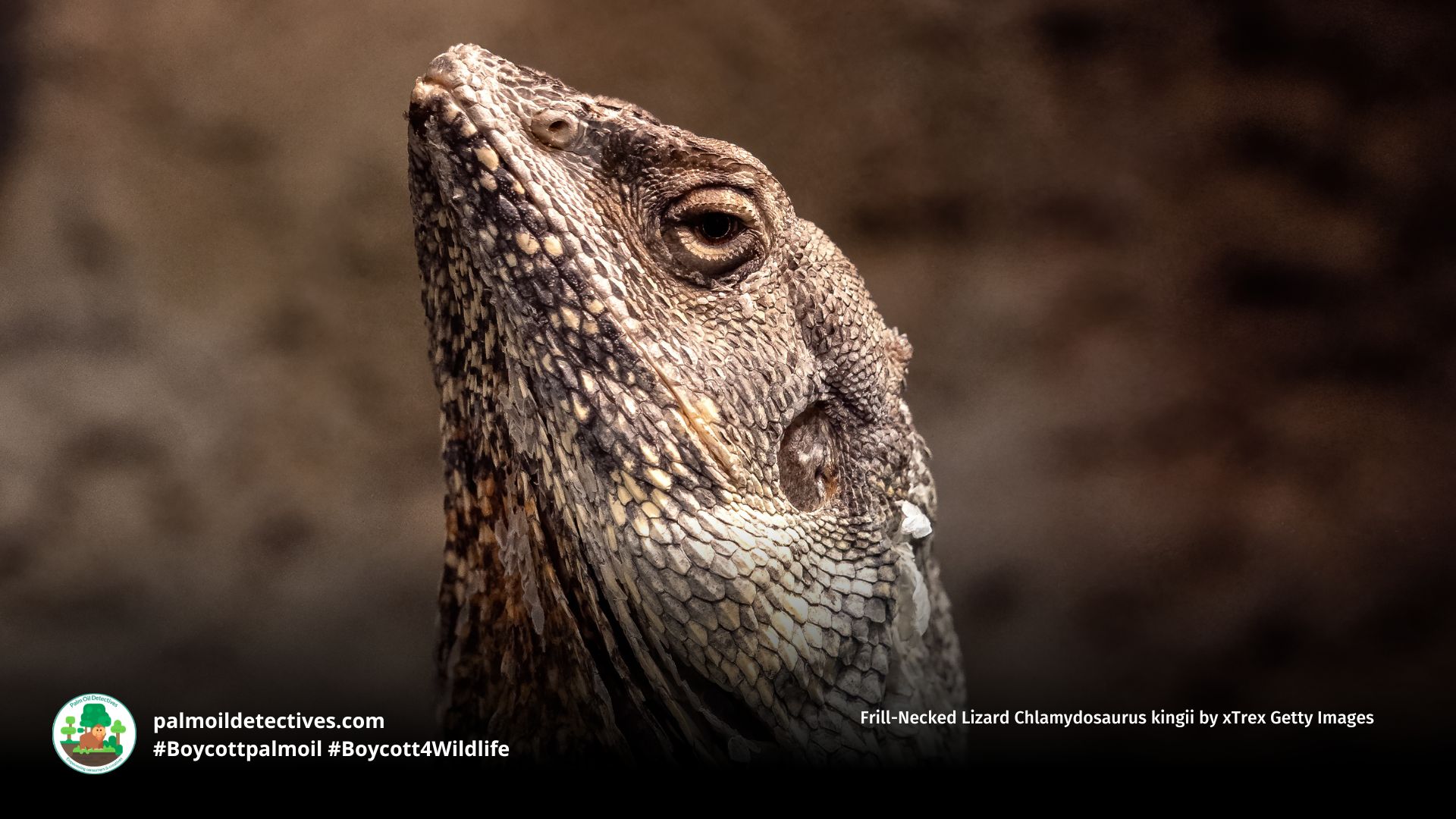
Learn about other animals endangered by palm oil and other agriculture


Learn about “sustainable” palm oil greenwashing

A 2019 World Health Organisation (WHO) report into the palm oil industry and RSPO finds extensive greenwashing of palm oil deforestation and the murder of endangered animals (i.e. biodiversity loss)

WHO Bulletin on Palm Oil: Deforestation and Extinction
WHO Bulletin on Palm Oil: Air Pollution and Health

Deforestation Devastates Tesso Nilo National Park’s Endangered Creatures


Tesso Nilo National Park in #Sumatra, #Indonesia, has lost 78% of its primary forest between 2009 and 2023, primarily due to #palmoil plantations. This #deforestation threatens the habitat of critically endangered species like the Sumatran #tiger and #elephant. Advocating for indigenous-led conservation efforts and adopting a vegan lifestyle can help protect these vital ecosystems. #Vegan #BoycottPalmOil #Boycott4Wildlife


Tesso Nilo National Park, established two decades ago to safeguard one of Sumatra’s largest remaining lowland forests, is facing severe deforestation. Recent satellite imagery from Global Forest Watch indicates that the park has lost 78% of its primary forest cover between 2009 and 2023.

Deforestation Devastates Tesso Nilo National Park's Endangered Creatures

The primary driver of this deforestation is the expansion of illegal oil palm plantations. A 2018 investigation by the World Wildlife Fund revealed that nearly 75% of the park had been converted into such plantations. The development of these plantations introduces roads, increasing accessibility for poachers and further endangering wildlife.

Tesso Nilo is a biodiversity hotspot, home to over 4,000 plant species and nearly 3% of the world’s mammal species, including critically endangered Sumatran tigers and Sumatran elephants. The ongoing deforestation poses a significant threat to these species, leading to palm oil habitat loss and ecosystem disruption.

In addition to biodiversity loss, deforestation contributes to climate change by releasing stored carbon into the atmosphere, exacerbating global warming.

Efforts to combat deforestation in Tesso Nilo include raising awareness about the consequences of palm oil deforestation and promoting indigenous-led conservation initiatives. Make sure you resist against animal and plant extinction when you shop #BoycottPalmOil #Boycott4Wildlife!

For a detailed analysis, read the full article on The Cool Down.

ENDS


Read more about deforestation and ecocide in the palm oil industry

Something went wrong. Please refresh the page and/or try again.


Take Action in Five Ways

1. Join the #Boycott4Wildlife on social media and subscribe to stay in the loop: Share posts from this website to your own network on Twitter, Mastadon, Instagram, Facebook and Youtube using the hashtags #Boycottpalmoil #Boycott4Wildlife.

Join 3,176 other subscribers

2. Contribute stories: Academics, conservationists, scientists, indigenous rights advocates and animal rights advocates working to expose the corruption of the palm oil industry or to save animals can contribute stories to the website.

3. Supermarket sleuthing: Next time you’re in the supermarket, take photos of products containing palm oil. Share these to social media along with the hashtags to call out the greenwashing and ecocide of the brands who use palm oil. You can also take photos of palm oil free products and congratulate brands when they go palm oil free.

4. Take to the streets: Get in touch with Palm Oil Detectives to find out more.

5. Donate: Make a one-off or monthly donation to Palm Oil Detectives as a way of saying thank you and to help pay for ongoing running costs of the website and social media campaigns. Donate here

Protecting India’s Tigers Saves One Million Tonnes of CO2


#India‘s fifty year long Project #Tiger has been a successful conservation project. A new research study finds that protecting tigers and their rainforest home has additional benefits to #carbonemissions, saving 1 million tonnes of CO2 from being spewed into the atmosphere. Conserving tigers as an iconic and legendary species is deeply ingrained into the world’s collective imagination. #BoycottPalmOil #Boycott4Wildlife

Cover Image: Tiger in Rajasthan, India by Craig Jones Wildlife Photography


Tiger by Dalida Innes Wildlife Photography

The year 2023 coincided with the 50th anniversary of India’s groundbreaking Project Tiger, an innovative programme designed to rescue the country’s iconic big cat from the precipice of extinction. In April, as part of these celebrations, prime minister Narendra Modi announced that tiger numbers in India have now surpassed 3,000, representing more than 70% of the wild tigers in the world.

From an initial investment in 1973 of just nine dedicated tiger reserves, India now protects 54 such areas. It adds up to an area in excess of 75,000 sq kilometres, or about 2% of the country.

Now, new research in the journal Nature Ecology and Evolution has identified a link between tiger conservation and the fight against climate change. Tigers are very adaptable and the exact same subspecies, the Bengal tiger, can be found scattered across India in jungles, mangroves and so-called “dry forests”. These habitats might seem very different, but the common link is of course lots of trees.

According to the authors of the new study, the strict protection provided within India’s network of tiger reserves has avoided huge amounts of deforestation. And by preserving forests that would have otherwise been chopped down, between 2007 and 2020, tiger protection may have contributed to over 1 million tonnes of avoided carbon emissions.

A million tonnes of carbon might sound like a lot, though it won’t put a huge dent in climate change. India alone emits about 2.7 billion tonnes each year (albeit very little per capita). But that isn’t the point.

India’s tiger reserves are spread across most of the country. India National Tiger Conservation Authority, CC BY-SA

In a monetary sense, that avoided deforestation and saved carbon can be equated to US$6.24 million (£5.06 million) in direct carbon offsets and, if wider “ecosystem services” such as watershed management and the provision of fuel and firewood are considered, this figure could rise to as much as US$92 million (£75m). The authors of the new research suggest that this could be a gamechanger for tiger protection, as it could be funded through carbon offset schemes.

There are critics who view India expanding its tiger reserves as an economic extravagance, one that brings the animals into conflict with humans and criminalises local communities (some of whom have been moved out of reserves) for living as they have always done. But in a neoliberal world where everything has a price tag, the future of vulnerable wildlife often depends on its ability to justify its own survival. And if carbon storage can be added to the list of reasons to protect tiger habitat, this in turn may provide fresh impetus for conservation.

Strolling into Tadoba reserve in central India. RealityImages / shutterstock

Still lots of habitat left

Even after centuries of deforestation and an expansion of farmland to feed a billion people, there still seems to be land available. In a recent interview in The Hindu newspaper the prominent tiger biologist Ullas Karanth made it clear that India has the potential, on paper at least, to quadruple its wild tiger numbers over the longer term. According to Karanth, there is still an estimated 380,000 sq kilometres of potential habitat available, just 20% of which is currently under strict protection and containing tigers.

Pilibhit Tiger Reserve along the border with Nepal, one of 54 reserves in India. Sourabh Bharti / shutterstock

The loss of their forests is still the main reason why tigers are threatened. But this meant there are habitats available that have been emptied of tigers by hunting, and which cannot be colonised by new populations since there are no safe “wildlife corridors” connecting one patch of forest to another.

If these vacant forests were given their proper value and managed with both (reintroduced) big cats and the climate in mind, India could further cement its position as the world leader in tiger conservation. Eventually it could start exporting surplus tigers to repopulate sites in neighbouring countries where Bengal tigers have declined (the many tigers in captivity, especially in the US, are too used to humans to be released into the wild).

This is a win-win situation. It would also help India to re-establish its green credentials during an era in which the country’s emphasis on development and business has conflicted with parallel efforts to protect its natural environment.


ENDS


Learn about other animals endangered by palm oil and other agriculture


Learn about “sustainable” palm oil greenwashing

A 2019 World Health Organisation (WHO) report into the palm oil industry and RSPO finds extensive greenwashing of palm oil deforestation and the murder of endangered animals (i.e. biodiversity loss)

WHO Bulletin on Palm Oil: Deforestation and Extinction
WHO Bulletin on Palm Oil: Air Pollution and Health


Take Action in Five Ways

1. Join the #Boycott4Wildlife on social media and subscribe to stay in the loop: Share posts from this website to your own network on Twitter, Mastadon, Instagram, Facebook and Youtube using the hashtags #Boycottpalmoil #Boycott4Wildlife.

Join 3,176 other subscribers

2. Contribute stories: Academics, conservationists, scientists, indigenous rights advocates and animal rights advocates working to expose the corruption of the palm oil industry or to save animals can contribute stories to the website.

3. Supermarket sleuthing: Next time you’re in the supermarket, take photos of products containing palm oil. Share these to social media along with the hashtags to call out the greenwashing and ecocide of the brands who use palm oil. You can also take photos of palm oil free products and congratulate brands when they go palm oil free.

4. Take to the streets: Get in touch with Palm Oil Detectives to find out more.

5. Donate: Make a one-off or monthly donation to Palm Oil Detectives as a way of saying thank you and to help pay for ongoing running costs of the website and social media campaigns. Donate here

Savage’s Glass Frog Centrolene savagei

Savage’s Glass Frog Centrolene savagei

Locations: Endemic to Colombia, found in the Cordillera Central and Cordillera Occidental mountain ranges in the departments of Quindío, Risaralda, Caldas, and Valle del Cauca, between 1,400 and 2,410 metres above sea level.

Perched on delicate leaves above rushing mountain streams, Centrolene savagei is a rare frog of wonder. The Savage’s Glass Frog, also known as the Savage’s Cochran Frog has translucent emerald skin that shimmers under moonlight, revealing a celestial map of organs and veins. These appear like a tiny universe of stars glowing beneath their skin. This remarkable adaptation serves as camouflage, allowing them to blend seamlessly into their misty rainforest habitat. Male frogs fiercely protect a clutch of around 30 eggs while females gather food. Tragically these magnificent #frogs face mounting threats from #deforestation for #palmoil #soy #meat along with #climatechange which is disrupting the delicate balance of their cloud forest home. Protecting the cloud forests of #Colombia is essential to ensuring their continued survival. #BoycottPalmOil #Boycott4Wildlife.

Appearance & Behaviour

Savage’s Glass Frog is an exquisite amphibian with skin so translucent that their inner organs are visible, glowing like a hidden constellation beneath a veil of green. Their slender limbs end in sticky, webbed toes, perfectly adapted for clinging to leaves in humid forests. Their wide, golden eyes, speckled with flecks of black, provide keen night vision, allowing them to detect predators and prey under the dim glow of the forest canopy. At night, they call softly to attract mates, their gentle trills merging with the sounds of the rainforest.

Threats

Savage’s Glass Frog (Centrolene savagei) faces numerous threats that are rapidly altering their cloud forest habitat in the Colombian Andes. A study by Prado-Sañudo et al. (2020) found that the species was absent from certain locations where they had previously been recorded, suggesting population declines may already be underway. Conservation efforts must prioritise protecting Colombia’s cloud forests from further degradation.

Palm Oil and Soy Monoculture

Large-scale agricultural expansion for palm oil and soy plantations is devastating Colombia’s biodiverse rainforests. These monocultures replace native vegetation with single-crop plantations, destroying the undergrowth and streamside vegetation that Centrolene savagei relies on for shelter and breeding. As forest cover disappears, humidity levels drop, making their microhabitats drier and less suitable for egg development. The clearance of forests also leads to soil erosion, which can result in sedimentation of the clear mountain streams where these frogs lay their eggs.

Cattle Ranching

Extensive cattle ranching in the Colombian Andes is another major driver of deforestation. Forests are slashed and burned to create pastures, reducing available habitat for Centrolene savagei. The removal of trees along waterways destroys vital breeding sites, while cattle compact the soil, disrupting the natural flow of water and increasing erosion. The destruction of riparian zones reduces the availability of suitable egg-laying sites, directly impacting the frog’s ability to reproduce.

Illegal Pet Trade

Centrolene savagei is at risk of being targeted by the illegal pet trade due to their striking appearance and rarity. Glass frogs are often smuggled and sold internationally to collectors who seek out exotic species. This illegal trade removes individuals from wild populations, reducing genetic diversity and making the species more vulnerable to extinction. Additionally, captured frogs often suffer high mortality rates due to stress, improper handling, and unsuitable captive conditions.

Climate Change and Extreme Weather

Rising global temperatures are altering the delicate climatic conditions of Colombia’s montane forests. Extreme weather events, such as prolonged droughts and intense rainfall, are becoming more frequent. Droughts can dry up the small streams where Centrolene savagei reproduces, leading to egg desiccation and failed breeding seasons. Intense storms, on the other hand, cause flash floods that wash away egg clutches and displace adult frogs. Long-term shifts in temperature and precipitation could also disrupt breeding cycles and reduce the availability of insect prey.

Pesticides and Pollution Runoff into Rivers

Agricultural chemicals, including pesticides and herbicides used in large-scale farming, often wash into nearby streams and rivers. Centrolene savagei, like many amphibians, has highly permeable skin that makes them exceptionally sensitive to toxins. Pesticide exposure can lead to developmental deformities, weakened immune systems, and increased mortality rates in both tadpoles and adults. Additionally, runoff containing fertilisers can trigger algal blooms, depleting oxygen levels in the water and further degrading their habitat.

Geographic Range

Savage’s Glass Frog is endemic to Colombia’s Andean cloud forests, occupying both the Cordillera Central and Cordillera Occidental. They are found in humid montane forests, clinging to vegetation near fast-flowing streams where they breed and shelter.

Diet

These frogs are insectivorous, feeding on a diet of small invertebrates, including flies, moths, and spiders. Their sticky tongues enable them to snatch unsuspecting prey with precision, while their nocturnal hunting habits help them avoid daytime predators.

Mating and Reproduction

Male Centrolene savagei play a vital role in protecting their offspring. They guard egg clutches laid on leaves overhanging streams, keeping them hydrated by absorbing water and transferring it to the eggs with their bodies. This parental care reduces embryo desiccation and shields them from predators. Once the eggs hatch, the tiny, transparent tadpoles drop into the water below, beginning their journey to adulthood.

FAQs

Why do Savage’s Glass Frogs have transparent skin?

Their translucent skin serves as an advanced form of camouflage. By reflecting the colour and light of their surroundings, they can evade predators more effectively. This adaptation, combined with their nocturnal habits, makes them exceptionally difficult to spot in the wild.

What are the main threats to Savage’s Glass Frog?

Deforestation for agriculture and human expansion poses the greatest risk. As forests are cleared, populations become isolated, making it harder for them to find mates and maintain genetic diversity. Additionally, climate change could alter their delicate montane ecosystems, impacting their breeding success. The illegal pet trade is a growing risk as these beautiful frogs are sought out for private collections reducing their populations in the wild.

Do Glass Frogs Make Good Pets?

No, glass frogs— including Centrolene savagei—do not make good pets. Keeping them in captivity is not only unethical but also contributes to their decline in the wild. These frogs have highly specialised habitat needs that are impossible to replicate in captivity. They require pristine, high-humidity cloud forests with access to flowing, oxygen-rich streams for breeding. Even small environmental changes can stress them, leading to illness and death.

Beyond the difficulty of caring for them, removing Centrolene savagei from the wild is a major conservation issue. Every individual taken for the pet trade weakens wild populations, reducing genetic diversity and making the species more vulnerable to extinction. Many glass frogs die in transit due to improper handling, dehydration, and stress. Others perish in captivity because of unsuitable conditions or lack of knowledge about their complex dietary and breeding requirements.

If you truly care about these remarkable amphibians, the best way to help them is to never buy wild-caught glass frogs and to actively speak out against the exotic pet trade. Instead, support habitat conservation efforts and help protect the fragile ecosystems they depend on. #BoycottWildlifeTrade #BoycottPalmOil #Boycott4Wildlife

What makes Savage’s Glass Frog unique?

Their combination of transparent skin, nocturnal behaviour, and dedicated male parental care sets them apart from many other amphibians. The ability of males to hydrate and defend their eggs is a rare adaptation that improves their offspring’s chances of survival.

Are Savage’s Glass Frogs endangered?

More research is needed to determine their current population trends. However, habitat destruction and population declines in certain areas suggest that conservation efforts are needed to ensure their long-term survival.

Take Action!

Colombia’s cloud forests are disappearing at an alarming rate, threatening the survival of Centrolene savagei and countless other species. Protect their habitat by supporting indigenous-led conservation initiatives and refusing to buy products linked to deforestation. Use your voice to demand stronger environmental protections and share awareness about the importance of preserving these fragile ecosystems. Every choice matters. Go #Vegan for the animals and #BoycottPalmOil #Boycott4Wildlife.

Support Savage’s Glass Frogs by going vegan and boycotting palm oil in the supermarket, it’s the #Boycott4Wildlife

Support the conservation of this species

This animal has no protections in place. Read about other forgotten species here. Create art to support this forgotten animal or raise awareness about them by sharing this post and using the #Boycottpalmoil #Boycott4Wildlife hashtags on social media. Also you can boycott palm oil in the supermarket.

Further Information

Escobar-Lasso, S., & Rojas-Morales, J. A. (2012). Antipredatory behaviors of the Colombian endemic glassfrog Centrolene savagei (Anura: Centrolenidae). Boletín Científico. Centro de Museos. Museo de Historia Natural, 16(1), 1–10.

IUCN SSC Amphibian Specialist Group. 2017. Centrolene savageiThe IUCN Red List of Threatened Species 2017: e.T54990A63062174. https://dx.doi.org/10.2305/IUCN.UK.2017-3.RLTS.T54990A63062174.en. Accessed on 09 February 2025.

Ospina, A. M., Navarro-Salcedo, P., Rios-Soto, J. A., Duarte-Marín, S., & Vargas-Salinas, F. (2019). Temporal patterns, benefits, and defensive behaviors associated with male parental care in the glassfrog Centrolene savagei. Herpetological Journal, 162–174.

Prado-Sañudo, M. L., Giraldo, A., & Bolívar, W. (2020). Population status of Centrolene savagei in the Western and Central Andes of Colombia. Boletín Científico Centro de Museos Museo de Historia Natural, 24(2), 116–124.


Contribute to palm oil detectives - black rhino in profile

How can I help the #Boycott4Wildlife?


Take Action in Five Ways

1. Join the #Boycott4Wildlife on social media and subscribe to stay in the loop: Share posts from this website to your own network on Twitter, Mastadon, Instagram, Facebook and Youtube using the hashtags #Boycottpalmoil #Boycott4Wildlife.

Join 3,176 other subscribers

2. Contribute stories: Academics, conservationists, scientists, indigenous rights advocates and animal rights advocates working to expose the corruption of the palm oil industry or to save animals can contribute stories to the website.

3. Supermarket sleuthing: Next time you’re in the supermarket, take photos of products containing palm oil. Share these to social media along with the hashtags to call out the greenwashing and ecocide of the brands who use palm oil. You can also take photos of palm oil free products and congratulate brands when they go palm oil free.

4. Take to the streets: Get in touch with Palm Oil Detectives to find out more.

5. Donate: Make a one-off or monthly donation to Palm Oil Detectives as a way of saying thank you and to help pay for ongoing running costs of the website and social media campaigns. Donate here
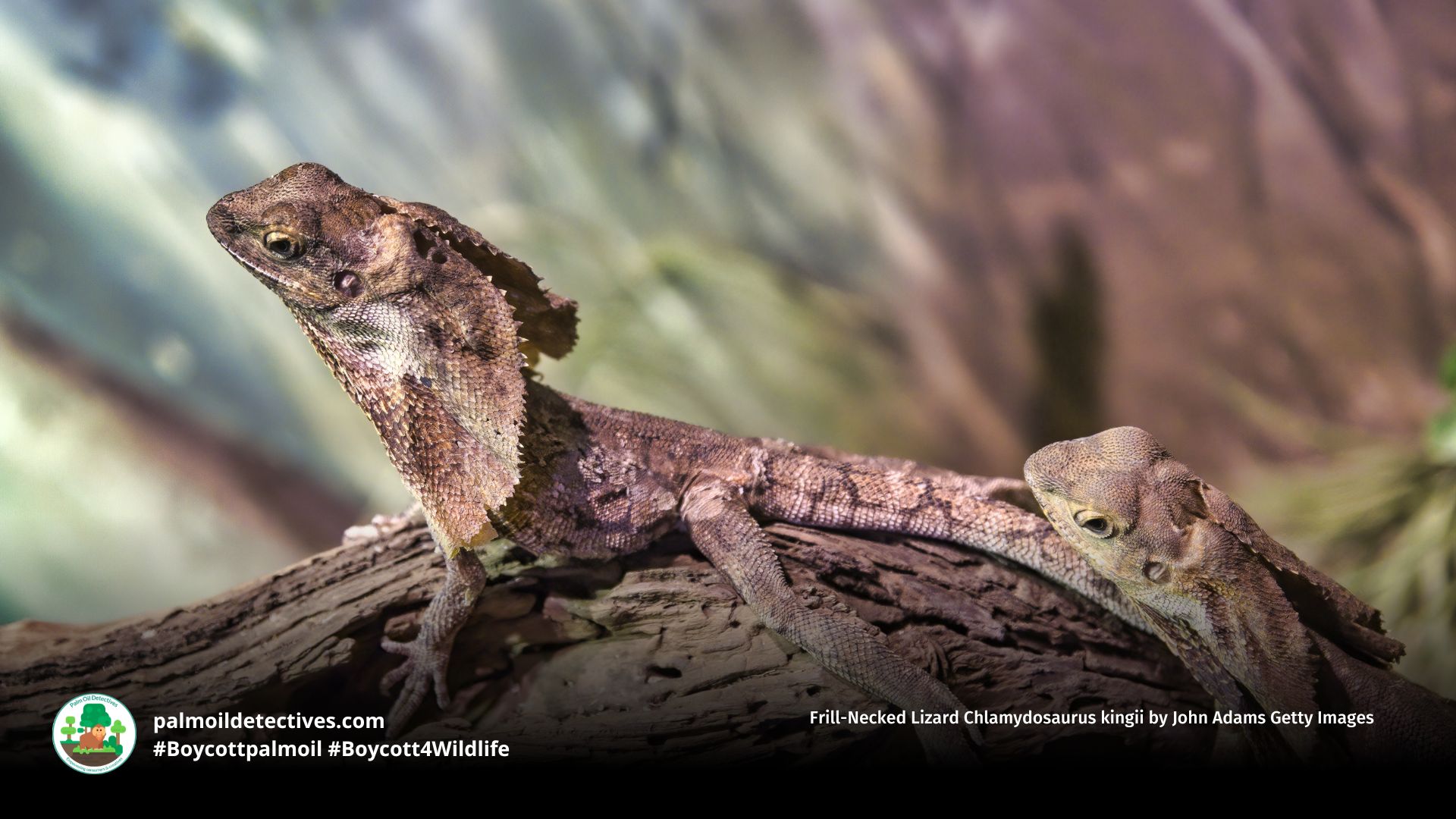

Learn about other animals endangered by palm oil and other agriculture


Learn about “sustainable” palm oil greenwashing

A 2019 World Health Organisation (WHO) report into the palm oil industry and RSPO finds extensive greenwashing of palm oil deforestation and the murder of endangered animals (i.e. biodiversity loss)

WHO Bulletin on Palm Oil: Deforestation and Extinction
WHO Bulletin on Palm Oil: Air Pollution and Health

Deforestation Shifts Tree Species in Brazilian Forests


Human Activities Shift Tree Species in Brazilian #Forests | Research by Lancaster University reveals that human-induced deforestation and degradation in Brazilian forests are causing a shift towards fast-growing, small-seeded tree species. These changes threaten biodiversity and reduce carbon storage capacity. Supporting indigenous-led conservation efforts is crucial to protect these ecosystems. #BoycottPalmOil #Boycott4Wildlife


Recent research out of Lancaster University reveals that human activities, including deforestation and forest degradation, are altering the composition of tree species in Brazilian forests. The study, published in Nature Ecology and Evolution, indicates a dominance of fast-growing, small-seeded tree species in areas with significant human disturbance.

These “winning” species, characterised by rapid growth and shorter lifespans, are replacing slow-growing, large-seeded trees with denser wood. This shift has serious implications for ecosystem services, notably reducing the forests’ ability to absorb and store carbon. Additionally, wildlife species that rely on large seeds for food and dispersal are adversely affected.

The international research team analyzed data from over 1,200 tropical tree species across more than 270 forest plots in the Brazilian Amazon and Atlantic forests. They identified that landscapes with high forest cover are dominated by dense-wooded, large-seeded trees, primarily dispersed by medium to large-bodied animals. In contrast, heavily deforested areas are increasingly populated by opportunistic species with softer wood and smaller seeds, dispersed by small, mobile birds and bats adapted to disturbed environments.

Lead author Bruno X. Pinho emphasizes the need for conservation and restoration efforts to preserve these vital ecosystems. Senior Investigator Professor Jos Barlow highlights the importance of addressing not only deforestation but also forest disturbances such as selective logging and fires.

Tropical forests are crucial reservoirs of biodiversity and play a significant role in mitigating climate change by absorbing greenhouse gases. The ongoing shifts in tree species composition due to human disruption underscore the urgent need for indigenous-led conservation initiatives to protect and restore these ecosystems.

For more detailed information, read more.

ENDS


Read more about deforestation and ecocide in the palm oil industry

Something went wrong. Please refresh the page and/or try again.


Take Action in Five Ways

1. Join the #Boycott4Wildlife on social media and subscribe to stay in the loop: Share posts from this website to your own network on Twitter, Mastadon, Instagram, Facebook and Youtube using the hashtags #Boycottpalmoil #Boycott4Wildlife.

Join 3,176 other subscribers

2. Contribute stories: Academics, conservationists, scientists, indigenous rights advocates and animal rights advocates working to expose the corruption of the palm oil industry or to save animals can contribute stories to the website.

3. Supermarket sleuthing: Next time you’re in the supermarket, take photos of products containing palm oil. Share these to social media along with the hashtags to call out the greenwashing and ecocide of the brands who use palm oil. You can also take photos of palm oil free products and congratulate brands when they go palm oil free.

4. Take to the streets: Get in touch with Palm Oil Detectives to find out more.

5. Donate: Make a one-off or monthly donation to Palm Oil Detectives as a way of saying thank you and to help pay for ongoing running costs of the website and social media campaigns. Donate here

Corporate Control of Food Harms Us All


Around 800 million people in our world go hungry each day. Yet around the globe we have enough food to go around. So why the discrepancy? Market concentration and corporate monopoly of our global food system means that corporate giants control everything from access to seeds, access to land, #workersrights, #greenwashing and wages. Mergers and acquisitions take place at all stages of the global food system – from seeds and fertilisers to machinery and manufacturing. This is what contributes to bad health outcomes and food inequality. Learn how you can boycott big brands causing the corporate crush and other solutions. #Boycott4Wildlife


Across the world, over 800 million people spend their days hungry. More than 2 billion have limited access to food. Yet today’s global food system produces enough to feed every person on the planet.

This imbalanced situation can be explained in part by the effects of things like natural disasters, war, fragile supply chains and economic inequality. These are all significant factors which highlight the problems of a truly global food system, where shocks spread quickly from one place to another with sometimes devastating results.

But they do not provide the full picture and cannot fully explain the rise of ultra-processed foods, the financial difficulties facing farmers, or why the world has failed to address the harmful environmental impacts of food production.

To account for these trends, we need to look at market concentration, and how a small number of very big companies have come to dominate the production, greenwashing and supply of the food we all eat.

For the global food system has become much more concentrated in recent years, partly through an increase in mergers and acquisitions, where large firms buy up rival companies until they completely dominate key areas.

High levels of market concentration mean less transparency, weaker competition, and more power in the hands of fewer firms. And our research reveals that a rise in the number of mergers and acquisitions is taking place at all stages of the global food system – from seeds and fertilisers to machinery and manufacturing.

This is all part of food being increasingly seen as a source not only of human sustenance, but as a profitable investment – or what is known as the “financialisation of food”.

And while people have been buying and selling food for a very long time, the global system has seen a major incursion of big finance in recent decades. Pension funds, private equity and asset management firms have invested heavily in the sector.

The logic is simple. Everybody needs food, so the sector promises safe and potentially lucrative returns.

But feeding the world while looking after the planet costs money, and unfortunately, big financial actors are all about the bottom line. They aim to maximise returns, provide value to shareholders, and meet the expectations of markets.

This makes mergers and acquisitions an attractive business proposition. Why make risky, long-term investments in sustainable food solutions, when you can buy your competitor, increase your market share, and potentially make a lot of money in the process? By boosting share prices and removing competition, buy-outs have been used widely throughout the global food system as an easier way to achieve further growth.

Food for financial thoughts. Billion Photos/Shutterstock

Hunger games

This has resulted in more concentration and fewer, more powerful firms. One report revealed that just four firms control 44% of the global farm machinery market, two companies control 40% of the global seed market, and four businesses control 62% of the global agrochemicals market. This trend is matched in food retail, with four firms – Tesco, Sainsbury’s, Asda, and Morrisons – estimated to control over 64% of the UK grocery market.

This level of concentration and power affects everyone. It means less bargaining power for farmers, who are forced to negotiate with powerful conglomerates. Workers across key stages of the global food sector face downward pressures on wages, rights, and conditions. Local communities lose autonomy over how their land is cultivated and how the rewards are distributed.

And the negative effects are not limited to those working in food.

Fewer firms and less transparency can lead to higher prices. And research on Europe has shown that places with higher food market concentration, including the UK and Germany, sell more ultra-processed food.

The global food system also plays a big part in climate change. Too much corporate power limits the opportunities for communities to tackle environmental issues, and move towards sustainable provision of healthy food for everyone by producing more food themselves.

With so much at stake, improved regulation should surely be on the menu. Our research revealed the majority of food system mergers and acquisitions take place between firms of the same nationality. This could provide an opportunity for governments to prevent further market concentration within their borders – and even to seek to dilute what already exists.

International arrangements are more complicated, and would require a coordinated, international approach. However, this may prove difficult given the first-ever UN “food systems summit” in 2021 remained “strategically silent” on the issue.

We believe market concentration must become a defining feature of food system reform. To address climate change, provide a fair deal for workers, and eradicate hunger, we need power to be less corporate – for the benefit of the entire global community.

ENDS


Read more about human health, veganism, nutrition and why you should #Boycottpalmoil, #Boycottmeat for your own and the planet’s health

Something went wrong. Please refresh the page and/or try again.


Take Action in Five Ways

1. Join the #Boycott4Wildlife on social media and subscribe to stay in the loop: Share posts from this website to your own network on Twitter, Mastadon, Instagram, Facebook and Youtube using the hashtags #Boycottpalmoil #Boycott4Wildlife.

Join 3,176 other subscribers

2. Contribute stories: Academics, conservationists, scientists, indigenous rights advocates and animal rights advocates working to expose the corruption of the palm oil industry or to save animals can contribute stories to the website.

3. Supermarket sleuthing: Next time you’re in the supermarket, take photos of products containing palm oil. Share these to social media along with the hashtags to call out the greenwashing and ecocide of the brands who use palm oil. You can also take photos of palm oil free products and congratulate brands when they go palm oil free.

4. Take to the streets: Get in touch with Palm Oil Detectives to find out more.

5. Donate: Make a one-off or monthly donation to Palm Oil Detectives as a way of saying thank you and to help pay for ongoing running costs of the website and social media campaigns. Donate here
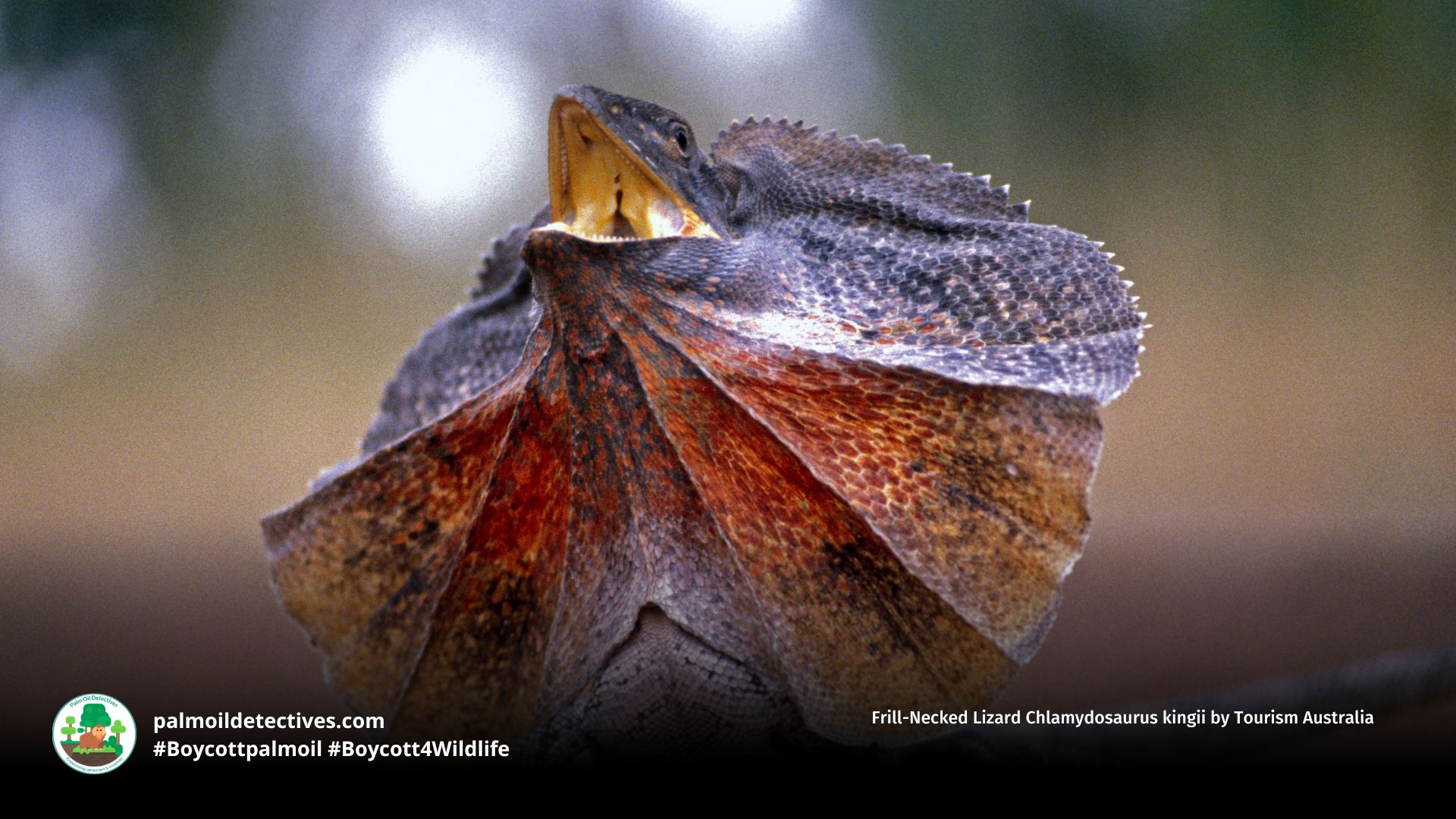
Pesquets Parrot Psittrichas fulgidus

Pesquets Parrot Psittrichas fulgidus

Red List Status: Vulnerable

Extant (resident): West Papua & Papua New Guinea

The beguiling Pesquet’s #parrots are sometimes known as ‘Dracula parrots’ due to their unique appearance. This includes black facial features, black feathers and bright red patches that reminiscent of a Dracula-like cloak. This striking combination lends them a slightly eerie and dramatic look, making them truly a sight to behold.

They inhabit the lush #rainforests of #WestPapua and #PapuaNewGuinea and make gentle gliding flights. They have a specialised diet of figs and face significant threats from #deforestation and #hunting. These magnificent birds are classified as vulnerable, and their population is decreasing. You can make a difference by choosing products that protect their rainforest habitat. Make sure you #BoycottPalmOil and #Boycott4Wildlife in the supermarket!


Introductory text

Appearance & Behaviour

One of the quirkiest features of Pesquet’s parrot is their diet—they feed almost exclusively on a few species of figs, making them highly specialised frugivores. Their bare heads help prevent sticky fruit juice from matting their feathers. These birds are strong flyers, often seen gliding gracefully between trees. They are social creatures, typically spotted in pairs or small groups of up to 20 individuals.

Threats

Pesquet’s Parrots are now listed as ‘vulnerable’ on the Red List due to a range of human-related threats:

Empower yourself to make a difference. Together, we can fight for the survival of Pesquet’s parrot by making mindful choices. #BoycottPalmOil and support indigenous sovereignty in Papua. Share this page and join the movement to protect our precious wildlife #BoycottPalmOil #Boycott4Wildlife

Appearance and Behaviour

Pesquet’s parrot, also known as the Dracula parrot, is an impressive bird with a length of about 46 cm (18 inches) and a weight of 680–800 grams (24–28 ounces). Their feathers are predominantly black with greyish scaling on the chest and vivid red patches on the belly, upper tails, and wing panels. Males have a distinctive red spot behind the eye. These parrots are known for their relatively small heads, bare black facial skin, and long, hooked bills, adaptations that help them feed on their favourite fruits.

Geographic Range

Pesquet’s parrots are native to the hill and montane rainforests of West Papua and Papua New Guinea, thriving at elevations between 100 and 1,800 metres. They favour dense, moist forests where they can find plenty of fruiting trees to feed on.

Diet

These parrots are strict frugivores, primarily feasting on figs. However, at times they also enjoy blossoms, flowers, and nectar, showcasing their diverse plant-based diet.

Mating and Reproduction

Pesquet’s parrots are known to lay two eggs in large, hollow trees. While detailed information about their breeding habits in the wild is limited, it is observed that the female incubates the eggs for about 27-31 days, with the male providing food during this period.

Support Pesquet’s Parrots by going vegan and boycotting palm oil in the supermarket, it’s the #Boycott4Wildlife

Support the conservation of this species

This animal has no protections in place. Read about other forgotten species here. Create art to support this forgotten animal or raise awareness about them by sharing this post and using the #Boycottpalmoil #Boycott4Wildlife hashtags on social media. Also you can boycott palm oil in the supermarket.

Further Information

BirdLife International. 2017. Psittrichas fulgidusThe IUCN Red List of Threatened Species 2017: e.T22685025A118772050. https://dx.doi.org/10.2305/IUCN.UK.2017-3.RLTS.T22685025A118772050.en. Accessed on 03 June 2024.

Pesquet’s Parrot. (2024). In Wikipedia. Retrieved June 3, 2024

Pesquets Parrot Psittrichas fulgidus

Contribute to palm oil detectives - black rhino in profile

How can I help the #Boycott4Wildlife?


Take Action in Five Ways

1. Join the #Boycott4Wildlife on social media and subscribe to stay in the loop: Share posts from this website to your own network on Twitter, Mastadon, Instagram, Facebook and Youtube using the hashtags #Boycottpalmoil #Boycott4Wildlife.

Join 3,176 other subscribers

2. Contribute stories: Academics, conservationists, scientists, indigenous rights advocates and animal rights advocates working to expose the corruption of the palm oil industry or to save animals can contribute stories to the website.

3. Supermarket sleuthing: Next time you’re in the supermarket, take photos of products containing palm oil. Share these to social media along with the hashtags to call out the greenwashing and ecocide of the brands who use palm oil. You can also take photos of palm oil free products and congratulate brands when they go palm oil free.

4. Take to the streets: Get in touch with Palm Oil Detectives to find out more.

5. Donate: Make a one-off or monthly donation to Palm Oil Detectives as a way of saying thank you and to help pay for ongoing running costs of the website and social media campaigns. Donate here
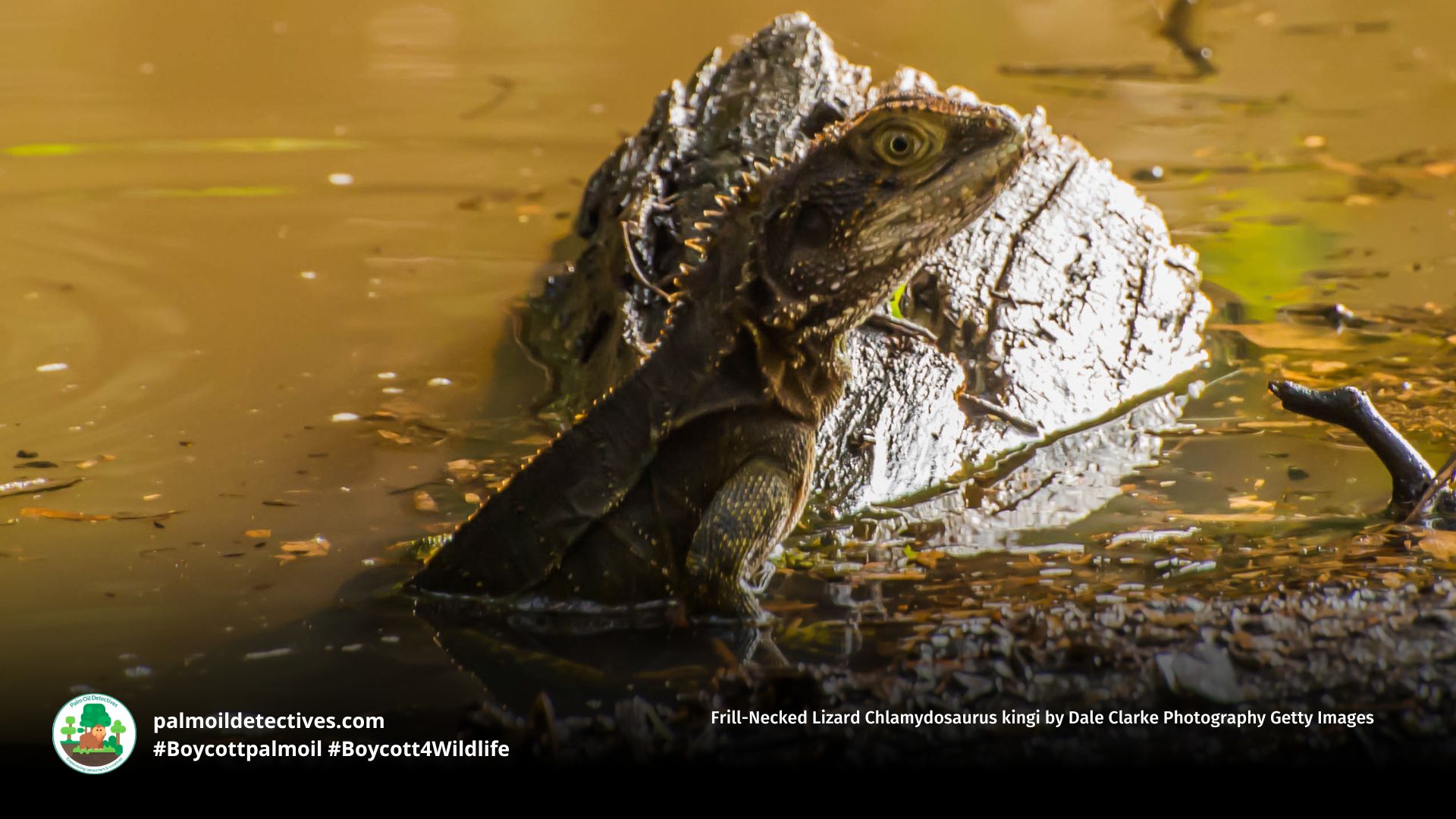

Learn about other animals endangered by palm oil and other agriculture


Learn about “sustainable” palm oil greenwashing

A 2019 World Health Organisation (WHO) report into the palm oil industry and RSPO finds extensive greenwashing of palm oil deforestation and the murder of endangered animals (i.e. biodiversity loss)

WHO Bulletin on Palm Oil: Deforestation and Extinction
WHO Bulletin on Palm Oil: Air Pollution and Health

How We Save Sumatra’s Last Living Tigers


Strict global rainforest laws like #EUDR, enforcement of anti #poaching units, and a consumer boycott of #palmoil, hold the key to protecting #Sumatra’s last living tigers.


Craig Jones Wildlife Photography - A Bengal tiger drinking at a river

A mighty tiger drinking from a river. Image: Craig Jones Wildlife Photography

The Sumatran tiger Panthera tigris sumatrae is teetering on the brink of extinction. Recent findings underscore the urgency of protecting the last remaining populations of these unique and majestic apex predators. With deforestation continuing at alarming rates to meet global demands, particularly for palm oil, these tigers face severe threats to their survival. Another serious threat to their dwindling number is poaching. This article examines the findings of recent studies and argues for stricter forest protection regulations, enforcement of the European Union Deforestation Regulation (EUDR), and consumer boycotts of palm oil will help to protect Sumatra’s rainforests and wild animals.

Sumatran Tigers in Serious Trouble

The Sumatran tiger, the most diminutive subspecies of tiger in the world, is now restricted to the Indonesian island of Sumatra. Once widespread, these tigers have lost more than 70% of their habitat due to extensive logging, the expansion of palm oil monoculture, and poaching (Figel et al., 2024). A recent study by Figel and colleagues revealed that in the Ulu Masen Ecosystem, only 11 tigers were detected during a monitoring period from 2020 to 2022, with a male-biased ratio of eight males to one female, indicating significant population stress from poaching pressures and habitat loss (Costa, 2024). Without immediate and intensive action, these tigers face the same fate as the now-extinct Javan and Balinese tigers.

Habitat Loss and Deforestation: The Palm Oil Crisis

Forests critical to tiger survival are rapidly disappearing, largely driven by deforestation for palm oil, timber and mining. According to a study published in Scientific Reports, deforestation has been particularly damaging to lowland and primary forests, essential habitats for Sumatran tigers (Smith et al., 2018).

Palm oil companies in Indonesia, the world’s top producer of the commodity, cleared 30,000 hectares (about 74,100 acres) of forest last year to make way for plantations, up from 22,000 hectares (54,400 acres) in 2022 (Mongabay, 2024).

Over decades, rainforest loss for palm oil and timber on the island of Sumatra along with poaching of tigers has resulted in severely isolated tiger populations and loss of genetic diversity, which further compounds the risk of extinction (Wibisono, 2024). Despite legal protections, these animals are often displaced as logging companies encroach upon their habitats.

Strict Global Laws Needed to Protect Tigers and Rainforests

The European Union has recognised this issue through the European Union Deforestation Regulation (EUDR), which mandates that companies importing into the EU must prove that their products containing palm oil are not linked to deforestation. Although promising, the enforcement of the EUDR will be crucial for real impact, especially in countries like Indonesia, where lax regulation and government corruption has allowed large-scale deforestation to flourish (Figel et al., 2024).

Urgent Anti-Poaching Protection Needed

Poaching has been another devastating factor for Sumatran tigers, as highlighted by Figel et al. (2024). In their recent camera-trap study, they found alarming signs of tiger limb injuries due to snares, an indication of pervasive illegal hunting. In comparison to other tiger habitats in Sumatra, the lack of female tigers and cubs in the Ulu Masen region shows a population under severe stress. This study calls for the immediate introduction of up to 600 trained rangers to combat poaching and support tiger conservation in Ulu Masen—a recommendation that reflects the success of similar efforts in Kerinci-Seblat National Park, where a 41% reduction in snares was achieved through a well-resourced ranger network (Costa, 2024).

Protecting Prey and Preserving Balance in Ulu Masen

The Figel study underscores that the survival of Sumatran tigers in Ulu Masen hinges on reducing poaching and preserving prey populations, such as sambar deer, which play a critical role in tiger sustenance. Despite Ulu Masen’s extensive forest cover, the lack of formal protection leaves tigers vulnerable to habitat loss, illegal logging, and rampant snare usage, which remains the leading threat. With only one female observed among 11 tigers, the population skew suggests severe poaching pressures, underscoring the need for robust, targeted protection. Implementing a larger ranger network, akin to successful efforts in other Indonesian parks, is essential for tackling these threats and ensuring that Ulu Masen remains a viable habitat for Sumatran tigers.

Consumer Awareness and the Call to Boycott Palm Oil

To effectively protect these remaining tigers, consumer awareness and strong consumer action is equally important. By boycotting palm oil in the supermarket and supporting alternative vegan palm oil free products, consumers can reduce demand for this resource, which remains a primary driver of deforestation in Sumatra (Luskin et al., 2017). Educating consumers about the environmental costs associated with palm oil and meat deforestation is crucial; with heightened awareness, individuals can contribute to conservation efforts by opting for palm oil free alternatives.

We May Still Have Time to Secure Their Future

The plight of the Sumatran tiger reveals the interconnectedness of conservation, international environmental laws and consumer boycotts. While regulations like the EUDR are necessary, their strict enforcement is essential to prevent further destruction of tiger habitats. Alongside this, consumer action in the form of boycotting palm oil can make a meaningful difference. Protecting Sumatra’s forests is not just about saving a single species; it is about preserving an entire ecosystem under siege from the scourge of palm oil monoculture. By taking strong collective action, we still have time to secure a future for the Sumatran tiger and countless other species that depend on rainforests.

References

Costa, J. (2024). Decline in Sumatran Tigers. Cosmos Magazine. Retrieved from https://cosmosmagazine.com/news/dramatic-decline-in-sumatran-tigers/

Figel, J. J., Safriansyah, R., Baabud, S. F., & Hambal, M. (2024). Intact, under-patrolled forests harbor widespread prey but a male-biased tiger population in the Ulu Masen Ecosystem, Sumatra, Indonesia. Scientific Reports, 14, Article 23612. https://doi.org/10.1038/s41598-024-75503-0

Jong, H. N. (2024, February 13). Palm oil deforestation makes comeback in Indonesia after decade-long slump. Mongabay. Retrieved from: https://news.mongabay.com/2024/02/palm-oil-deforestation-makes-comeback-in-indonesia-after-decade-long-slump/

Luskin, M. S., Albert, W. R., & Tobler, M. W. (2017). Sumatran tiger survival threatened by deforestation despite increasing densities in parks. Nature Communications, 8, 1783. Retrieved from https://www.nature.com/articles/s41467-017-01656-4

Smith, O., Wang, J., & Carbone, C. (2018). Evaluating the effect of forest loss and agricultural expansion on Sumatran tigers from scat surveys. Biological Conservation, 221, 270-278. https://doi.org/10.1016/j.biocon.2018.03.014

Wibisono, H. T. (2024, February 12). Species spotlight: The critically endangered Sumatran tiger — small but mighty. The Revelator. Retrieved from: https://therevelator.org/species-spotlight-sumatran-tiger/

ENDS


Learn about other animals endangered by palm oil and other agriculture


Learn about “sustainable” palm oil greenwashing

A 2019 World Health Organisation (WHO) report into the palm oil industry and RSPO finds extensive greenwashing of palm oil deforestation and the murder of endangered animals (i.e. biodiversity loss)

WHO Bulletin on Palm Oil: Deforestation and Extinction
WHO Bulletin on Palm Oil: Air Pollution and Health


Take Action in Five Ways

1. Join the #Boycott4Wildlife on social media and subscribe to stay in the loop: Share posts from this website to your own network on Twitter, Mastadon, Instagram, Facebook and Youtube using the hashtags #Boycottpalmoil #Boycott4Wildlife.

Join 3,176 other subscribers

2. Contribute stories: Academics, conservationists, scientists, indigenous rights advocates and animal rights advocates working to expose the corruption of the palm oil industry or to save animals can contribute stories to the website.

3. Supermarket sleuthing: Next time you’re in the supermarket, take photos of products containing palm oil. Share these to social media along with the hashtags to call out the greenwashing and ecocide of the brands who use palm oil. You can also take photos of palm oil free products and congratulate brands when they go palm oil free.

4. Take to the streets: Get in touch with Palm Oil Detectives to find out more.

5. Donate: Make a one-off or monthly donation to Palm Oil Detectives as a way of saying thank you and to help pay for ongoing running costs of the website and social media campaigns. Donate here

Protecting The Rare, Precious Red Colobus Will Safeguard Africa’s Forests


Very few people have heard of the rarest primate in #Africa – The Red Colobus. Featuring funky hairstyles and expressive faces they daringly leap between trees to search for food. Every species of red #colobus is under threat from hunting and rainforest clearing for #palmoil, #cocoa and #meat agriculture. Their disappearance from forests heralds the beginning of the vanishing of other animals: gorillas, chimpanzees and elephants. Another successful conservation effort for the Zanzibar red colobus led to a national park being created to protect this species. Conservationists hope that the same can be done for the Red Colobus species in the form of funding and greater protections. #BoycottPalmOil #Boycott4Wildlife


Untouched rainforest in Indonesia by wildlife photographer Craig Jones

Evidence from several sites shows that red colobus are among the first large mammals to disappear from a hunted forest. They vanish before more well-known species such as gorilla, chimpanzee, and elephant die out in forests from hunting.

Many people have never heard of a red colobus, yet they are Africa’s most imperilled group of monkeys.

There are 17 species of red colobus found in tropical forests from Senegal in west Africa to the Zanzibar archipelago in east Africa. These photogenic monkeys have aesthetically appealing hairdos, coat colours and colour patterns. They weigh, on average, between 5kg and 12kg and take daring, long-distance leaps between trees to find foods that other primates find difficult to digest, like leaves and unripe fruit.

We are primate experts who specialise in studying how to conserve red colobus and other primates. With experts from Africa, Europe and the United States, we drew up the International Union for the Conservation of Nature’s Red Colobus Conservation Action Plan. This five year plan, which runs from 2021 to 2026, aims to make the red colobus a high priority animal for conservation purposes.

In the action plan and our latest published research, we argue that conserving the red colobus will benefit African tropical forests.

This is because evidence from several sites shows that red colobus are among the first large mammals to disappear from a hunted forest. They vanish before more well-known species such as gorilla, chimpanzee, and elephant die out in forests from hunting. Therefore, the absence of red colobus, or a declining population, is an early warning indicator of emptying forests and eroding ecosystems.

Red colobus conservation will also help to train and employ the next generation of African conservationists and improve human food security and public health.

Why are red colobus in danger?

According to the IUCN Red List of Threatened Species, every species of red colobus is threatened with extinction. Hunting by humans for meat is a leading cause of their decline. Red colobus live in large, noisy social groups. They tend not to flee like other mammals do in the presence of a hunter. This makes them easy targets.

Hunting has caused the probable extinction of Miss Waldron’s red colobus from Ghana and Côte d’Ivoire. This monkey was last seen alive by scientists in 1978, making it the first primate to likely have gone extinct in the last 300-500 years. Forest loss and degradation from logging, agriculture, mining, wood fuel production and infrastructure development also threaten red colobus because they rely so heavily on the oldest and tallest trees in a forest.

Infographic: Red Colobus species in Africa. Infographic: Alana J. Hyman

Why invest in conserving red colobus monkeys?

It is important to protect the red colobus from extinction. When funds and resources are directed at conserving red colobus, this helps safeguard and restore some of Africa’s most important forest habitats that the red colobus live in. These include the largest remaining forest blocks in west Africa, the Gulf of Guinea forests and large swathes of the Congo Basin forest. These forests are key for mitigating the impacts of global climate change.

Making red colobus a high conservation priority has already proven to be a successful strategy for conserving African tropical forests. The protection of Zanzibar red colobus, for example, was a key impetus in the creation of Zanzibar’s only national park, Jozani–Chwaka Bay and the Kidikotundu–Nongwe–Vundwe Reserve. Both of these areas protect large areas of indigenous forest on the island.

The forests in which red colobus live also support the livelihoods and health of millions of indigenous and local human populations in Africa. This is why conserving the red colobus needs to happen in partnership with forest-dependent communities. In Nigeria’s Niger Delta, for example, a Memorandum of Understanding has been signed by a local community to establish a red colobus community conservation area.

In the Sambel Kunda area in The Gambia, international scientists work with communities to support red colobus monitoring, forest restoration, and conservation education. This community-led project protects one of the largest remaining populations of Temminck’s red colobus.

What needs to be done?

The IUCN Red Colobus Conservation Action Plan is the first of its kind for any group of African monkeys. It recommends these actions to conserve the red colobus and preserve Africa’s tropical forests:

  • grant proper international and national legal protections for all red colobus species
  • conduct forest surveys to improve people’s understanding of where red colobus live and what they need from the environment to survive
  • invest in and expand protected area networks
  • support local communities to move away from unsustainable forest harvesting and take up more active roles in preserving their forests and endangered species
  • improve links between conservation and public health by strengthening access to family health services and implementing measures to prevent potential zoonotic disease transmission between monkeys and humans.
  • invest in local and global education and outreach programs focused on red colobus and their habitats.

We also formed a Red Colobus Working Group to guide the plan’s implementation and promote collaboration with other conservation initiatives. We’ve founded the Red Colobus Conservation Network to connect people interested in red colobus conservation.

Since the action plan’s publication in 2021, over US$500,000 has been directed to projects aimed at conserving red colobus and their habitats. But much more is needed. We conservatively estimate that a modest US$20 million is required over a five year period for strategies to prevent red colobus extinctions and preserve African tropical forests.

We call on scientists, conservation practitioners, civil society organisations, local communities, and governments to recognise red colobus as a priority conservation target and a flagship for catalysing broader African tropical forest conservation efforts.

(This article is based on the work of those who contributed directly to the Red Colobus Conservation Action Plan and the many individuals who have contributed to the conservation of red colobus and their habitats for many years. Drew T. Cronin, associate curator of International Conservation at the North Carolina Zoo in the US, was a co-author of this article and the original research. If you are interested in learning more about red colobus conservation or are interested in getting involved, please contact one of us or the coordinator of the Red Colobus Conservation Network, Florence Aghomo, at info@redcolobusnetwork.org.)

Western Red Colobus Piliocolobus badius

The Western Red Colobus Piliocolobus badius is one of West Africa’s most #endangered #primates, facing an escalating crisis of habitat loss and overhunting. Once abundant in mature forests across the region, they have been driven to the brink of #extinction by rampant deforestation for charcoal, palm oil and mining and the increasing demand for #bushmeat.…

Keep reading

ENDS


Learn about other animals endangered by palm oil and other agriculture


Learn about “sustainable” palm oil greenwashing

A 2019 World Health Organisation (WHO) report into the palm oil industry and RSPO finds extensive greenwashing of palm oil deforestation and the murder of endangered animals (i.e. biodiversity loss)

WHO Bulletin on Palm Oil: Deforestation and Extinction
WHO Bulletin on Palm Oil: Air Pollution and Health


Take Action in Five Ways

1. Join the #Boycott4Wildlife on social media and subscribe to stay in the loop: Share posts from this website to your own network on Twitter, Mastadon, Instagram, Facebook and Youtube using the hashtags #Boycottpalmoil #Boycott4Wildlife.

Join 3,176 other subscribers

2. Contribute stories: Academics, conservationists, scientists, indigenous rights advocates and animal rights advocates working to expose the corruption of the palm oil industry or to save animals can contribute stories to the website.

3. Supermarket sleuthing: Next time you’re in the supermarket, take photos of products containing palm oil. Share these to social media along with the hashtags to call out the greenwashing and ecocide of the brands who use palm oil. You can also take photos of palm oil free products and congratulate brands when they go palm oil free.

4. Take to the streets: Get in touch with Palm Oil Detectives to find out more.

5. Donate: Make a one-off or monthly donation to Palm Oil Detectives as a way of saying thank you and to help pay for ongoing running costs of the website and social media campaigns. Donate here

Tanimbar Eclectus Parrot Eclectus riedeli

Tanimbar Eclectus Parrot Eclectus riedeli

IUCN Status: Vulnerable

Locations: Endemic to Yamdena and Larat islands, Tanimbar Archipelago, Indonesian occupied West Papua.

The Tanimbar Eclectus Parrot Eclectus riedeli also known as the Eclectus Parrot or Tanimbar Eclectus is a rare and striking #parrot found only on the #Tanimbar Islands of Indonesian occupied #WestPapua. Males display a brilliant emerald green plumage, while females are adorned in deep crimson and cobalt blue feathers, making them one of the most visually stunning #parrots in the world. These parrots face growing threats from habitat destruction, the pet trade, and climate change.

Forests are disappearing due to timber logging and #palmoil monoculture, while #poaching for the illegal #pettrade continues to remove individuals from the wild, disrupting their populations. #Climatechange also poses an increasing risk, with rising temperatures, storms, and unpredictable weather patterns affecting their habitat and food sources. The best way to protect these parrots is to keep them in the wild, not in cages. Use your wallet as a weapon in the supermarket and choose #PalmOilFree #BoycottPalmOil #Boycott4Wildlife.

Appearance & Behaviour

Tanimbar Eclectus parrots are known for their dramatic sexual dimorphism. Male birds are covered in vibrant green feathers, with a yellow-orange beak, while females are deep red with bright blue undersides and a striking black beak. Their unique colours provide camouflage in the dense tropical foliage of their island home. These parrots are highly intelligent, social, and vocal, using a range of calls to communicate with their mates and flock members. They are strong fliers and spend most of their time in the high canopy, searching for food and nesting sites.

Threats

Palm Oil and Timber Deforestation

The Tanimbar Islands still hold large areas of forest, but deforestation for timber and palm oil is rapidly increasing. Logging, agricultural expansion, and human settlement rapidly shrinking the habitat of the Tanimbar Eclectus Parrot. This bird species’ range has already experienced an estimated 8% loss over the past three generations, and this rate is expected to accelerate as pressure on the islands’ forests grows.

The Illegal Pet Trade

Although the Tanimbar Eclectus is not yet widely traded internationally, it is still caught and sold within local markets. Parrots stolen from the wild often die from stress and injury before they even reach a buyer. The pet trade not only depletes populations but also leaves chicks abandoned in nests, causing further losses.

Climate Change

Rising temperatures and unpredictable weather patterns threaten the Tanimbar Eclectus in multiple ways. Intense storms and cyclones damage the forests they rely on, destroying nesting trees and food sources. Heatwaves and prolonged droughts also impact their breeding success and reduce fruit availability, making survival even more challenging.

Geographic Range

The Tanimbar Eclectus Parrot is found exclusively on the islands of Yamdena and Larat in the Tanimbar Archipelago, of West Papua, a region illegally occupied by Indonesia. They primarily inhabit lowland and forest edges, relying on dense tropical forests for nesting and foraging.

Diet

The Tanimbar Eclectus Parrot feeds primarily on fruit, seeds, nuts, and flowers. They are particularly dependent on native fig trees and tropical fruiting plants found in their lowland forests. Their role as seed dispersers is crucial for maintaining the health of their ecosystem.

Mating and reproduction

These parrots are monogamous and form strong pair bonds. Breeding pairs nest in large tree hollows, where the female seals herself inside for protection while incubating eggs. The male is responsible for feeding his mate and chicks throughout this period. They typically lay 2–3 eggs, though only one chick often survives due to competition for food.

FAQs

Are Eclectus parrots endangered?

Yes, the Tanimbar Eclectus is listed as Vulnerable on the IUCN Red List due to habitat destruction and the pet trade. While not as heavily trafficked as some other bird species, local trapping remains a threat, and deforestation is reducing their available habitat.

How much do Eclectus parrots cost?

The real cost of buying an Eclectus parrot is far greater than any price tag. Whether wild-caught or captive-bred, keeping these intelligent, highly social birds in cages is cruel and unnatural. In the wild, they soar across vast rainforests, flying hundreds of kilometres each day, foraging, socialising, and raising their young in the towering canopy. No cage—no matter how large—can ever replace this freedom.

Parrots are not ornaments, conversation pieces, or living decorations. Confined to captivity, they suffer from boredom, frustration, and loneliness, often plucking out their own feathers, screaming incessantly, or developing neurotic behaviours. Their wings, meant for the open skies, become symbols of imprisonment.

Rather than supporting the pet trade, which fuels the demand that threatens wild populations, the best way to protect the Tanimbar Eclectus is to advocate for their conservation, protect their rainforest habitat, and reject the captivity of wild animals altogether.

How to keep an Eclectus Parrot as a pet?

Keeping a wild Tanimbar Eclectus or Eclectus Parrot as a pet is an incredibly damaging and selfish act. Many parrots captured for the pet trade are taken from their nests as chicks, leading to the destruction of their family units. Parrots stolen from the wild often die from stress and malnutrition before they even reach a buyer. Removing them from their habitat weakens their population, pushing them closer to extinction. Parrots born in a cage live in unnatural and cruel conditions all of their lives. These intelligent beings never know what its like to fly for 100’s of kilometres a day as they are meant to do. How would you feel to be born in a cage, live for around 70 years and then die in a cage?

Are Eclectus parrots aggressive?

Eclectus parrots are not naturally aggressive, but they are highly intelligent and require constant social interaction and mental stimulation. In captivity, frustration and isolation can cause behavioural issues, including biting and screaming. This is another strong reason why these birds should be left in the wild.

How does climate change affect the Tanimbar Eclectus / Eclectus Parrot?

Climate change poses a serious threat to this species. Rising temperatures, unpredictable storms, and habitat degradation are already having negative effects. More frequent cyclones destroy nesting trees and fruiting plants, while prolonged droughts limit their food supply. Changes in seasonal patterns may also disrupt their breeding cycles.

Take Action!

The Tanimbar Eclectus Parrot needs your help. The pet trade and palm oil deforestation are driving them toward extinction. Every time you shop, make ethical choices to protect their future.

  • 🐦 Do not support the illegal pet trade!
  • 🌳 Support indigenous-led conservation efforts to protect forests.
  • 🛑 Avoid products containing palm oil.
  • 🔥 Use your wallet and supermarket choices to help save them—#BoycottPalmOil #Boycott4Wildlife.

Support the Tanimbar Eclectus Parrot by going vegan and boycotting palm oil in the supermarket, it’s the #Boycott4Wildlife

Support the conservation of this species

This animal has no protections in place. Read about other forgotten species here. Create art to support this forgotten animal or raise awareness about them by sharing this post and using the #Boycottpalmoil #Boycott4Wildlife hashtags on social media. Also you can boycott palm oil in the supermarket.

Further Information

Bishop, K.D., & Brickle, N. W. (1999). The status of the Tanimbar Eclectus in Indonesia. Retrieved from https://dx.doi.org/10.2305/IUCN.UK.2019-3.RLTS.T155073764A155087808.en.

BirdLife International. 2019. Eclectus riedeliThe IUCN Red List of Threatened Species 2019: e.T155073764A155087808. https://dx.doi.org/10.2305/IUCN.UK.2019-3.RLTS.T155073764A155087808.en. Accessed on 07 February 2025.

Parrots.org. (n.d.). Tanimbar Eclectus species profile. Retrieved from https://www.parrots.org/encyclopedia/tanimbar-eclectus.

Threats to the Tanimbar Eclectus Parrot

Contribute to palm oil detectives - black rhino in profile

How can I help the #Boycott4Wildlife?


Take Action in Five Ways

1. Join the #Boycott4Wildlife on social media and subscribe to stay in the loop: Share posts from this website to your own network on Twitter, Mastadon, Instagram, Facebook and Youtube using the hashtags #Boycottpalmoil #Boycott4Wildlife.

Join 3,176 other subscribers

2. Contribute stories: Academics, conservationists, scientists, indigenous rights advocates and animal rights advocates working to expose the corruption of the palm oil industry or to save animals can contribute stories to the website.

3. Supermarket sleuthing: Next time you’re in the supermarket, take photos of products containing palm oil. Share these to social media along with the hashtags to call out the greenwashing and ecocide of the brands who use palm oil. You can also take photos of palm oil free products and congratulate brands when they go palm oil free.

4. Take to the streets: Get in touch with Palm Oil Detectives to find out more.

5. Donate: Make a one-off or monthly donation to Palm Oil Detectives as a way of saying thank you and to help pay for ongoing running costs of the website and social media campaigns. Donate here

Learn about other animals endangered by palm oil and other agriculture


Learn about “sustainable” palm oil greenwashing

A 2019 World Health Organisation (WHO) report into the palm oil industry and RSPO finds extensive greenwashing of palm oil deforestation and the murder of endangered animals (i.e. biodiversity loss)

WHO Bulletin on Palm Oil: Deforestation and Extinction
WHO Bulletin on Palm Oil: Air Pollution and Health

Leopards’ Roars Are Actually Hidden Big Cat Fingerprints

Leopards’ Roars Are Actually Hidden Big Cat Fingerprints | Researchers from the University of Exeter have discovered that each #leopard possesses a distinctive roar, allowing for individual identification with 93% accuracy. This finding opens new avenues for monitoring and conserving these elusive big cats. Leopards are #vulnerable due to #palmoil #deforestation, #poaching and other threats. Help them every time you shop and #BoycottPalmOil #Boycott4Wildlife


A recent study has revealed that leopards can be individually identified by their unique roars, achieving an accuracy rate of 93%. This breakthrough offers a novel method for monitoring these solitary and nocturnal creatures, which are often challenging to study due to their elusive nature.

Conducted across a 450 km² area in Nyerere National Park, Tanzania, researchers employed a combination of camera traps and autonomous recording devices to capture both visual and auditory data. By analysing the temporal patterns of the leopards’ “sawing” roars—a series of low-frequency sounds used for communication—the team successfully distinguished individual animals.

Lead author Jonathan Growcott, a PhD student at the University of Exeter, emphasised the significance of this discovery: “Discovering that leopards have unique roars is an important but fundamentally quite basic finding that shows how little we know about leopards, and large carnivores in general.”

This advancement in bioacoustic monitoring presents a non-invasive approach to studying leopard populations, facilitating more accurate population estimates and aiding in conservation efforts. Given that leopards are classified as ‘vulnerable’ by the IUCN Red List due to habitat loss and human-wildlife conflict, such innovative monitoring techniques are crucial for their preservation.

The study also highlights the potential of integrating multiple technologies to gather comprehensive data on wildlife, enhancing our understanding of ecosystems and informing effective conservation strategies.

Learn more on Science Daily.

ENDS


Learn about other animals endangered by palm oil and other agriculture


Learn about “sustainable” palm oil greenwashing

A 2019 World Health Organisation (WHO) report into the palm oil industry and RSPO finds extensive greenwashing of palm oil deforestation and the murder of endangered animals (i.e. biodiversity loss)

WHO Bulletin on Palm Oil: Deforestation and Extinction
WHO Bulletin on Palm Oil: Air Pollution and Health


Take Action in Five Ways

1. Join the #Boycott4Wildlife on social media and subscribe to stay in the loop: Share posts from this website to your own network on Twitter, Mastadon, Instagram, Facebook and Youtube using the hashtags #Boycottpalmoil #Boycott4Wildlife.

Join 3,176 other subscribers

2. Contribute stories: Academics, conservationists, scientists, indigenous rights advocates and animal rights advocates working to expose the corruption of the palm oil industry or to save animals can contribute stories to the website.

3. Supermarket sleuthing: Next time you’re in the supermarket, take photos of products containing palm oil. Share these to social media along with the hashtags to call out the greenwashing and ecocide of the brands who use palm oil. You can also take photos of palm oil free products and congratulate brands when they go palm oil free.

4. Take to the streets: Get in touch with Palm Oil Detectives to find out more.

5. Donate: Make a one-off or monthly donation to Palm Oil Detectives as a way of saying thank you and to help pay for ongoing running costs of the website and social media campaigns. Donate here

An Action Plan for Amazon Droughts: The Time is Now!


The fertile lungs of our planet, the Amazon jungle faces severe drought due to El Niño, climate change, and deforestation for agriculture like palm oil, soy and meat. This along with gold mining, affects biodiversity and local indigenous communities. To combat this crisis, stronger measures against deforestation and illegal mining are essential. Global and local leaders must act now to protect the Amazon. #BoycottPalmOil #BoycottGold4Yanomami #Boycott4Wildlife.


The drought plaguing the Amazon is a worrying portrait of the climate challenges facing the world. The combination of the El Niño phenomenon and anthropogenic climate change has played a significant role in accentuating this extreme weather event. The Amazon region, known for its lush rainforest and flowing rivers, is facing a critical situation due to a lack of rainfall and rising temperatures.

This phenomenon, never recorded at this intensity, has affected biodiversity and human life in eight Amazonian states. The drought has already killed more than 140 dolphins, including pink dolphins and tucuxis, also known as grey dolphins. The mortality of fish and other aquatic animals is also high. The low volume of the rivers affects the human supply, causing a lack of drinking water and food in all the small villages, even those located on the banks of the big rivers. Of the 62 municipalities in the state of Amazonas, 42 are in a state of emergency, 18 are in a state of alert and only two are in a normal situation.

The El Niño phenomenon has a direct influence on the Amazon drought. It manifests itself in the abnormal warming of the surface waters of the Pacific Ocean, affecting the rainfall regime in various parts of the world. In the case of the Amazon region, the drought is exacerbated by a decrease in humidity and a lack of rainfall, damaging the vegetation, fauna and local communities that depend on natural resources.

However, anthropogenic climate change is making the situation even worse. Rampant deforestation, driven by agricultural expansion and logging activity, reduces the Amazon rainforest’s ability to regulate the climate and retain moisture. In addition, the destruction of vast areas of vegetation contributes to rising temperatures, creating a cycle of even more accentuated droughts.

Deforestation and gold mining, major factors

Deforestation has been particularly devastating in the region of Highway BR-319, in the south of Amazonas state, driven by land grabbing which has provided cheap land to cattle ranchers from other states. In turn, this deforestation has increased the number of fires that feed back into the climate crisis. When they occur near riverbanks, deforestation also intensifies the phenomenon known as fallen land, which has drastically affected the draught of rivers and is already significantly jeopardising navigation and logistics, mainly affecting villages in the interior of the Amazon, which are already suffering from shortages.

Another factor that has played a significant role in affecting navigation is gold mining activity. Disorganised mineral extraction has created banks of land that are harmful to navigation and which, in the critical scenario of drought, have caused many vessels to run aground.

The impact of hydroelectric dams

Hydroelectric dams also play a role in contributing to the drought scenario, especially on the Madeira River. This is mainly due to the decomposition of organic matter in reservoirs created by dams, which releases methane, a potent greenhouse gas, into the atmosphere. In addition, deforestation associated with the construction of dams, as well as soil degradation and erosion resulting from the alteration of aquatic and terrestrial ecosystems, can increase emissions of carbon dioxide (CO2) and other pollutants, contributing to the impact of hydroelectric dams on climate change.

The Madeira River, now at its lowest level in almost 60 years, has been drastically affected and transformed by the Jirau and Santo Antônio hydroelectric dams. This was due to the drastic alteration of the river’s natural flow caused by the damming of water for power generation. When water is dammed, a reservoir is formed that retains part of the water that would normally flow along the river. This diversion of the flow directly affects the region’s aquatic and terrestrial ecosystems, since the basin’s hydrological cycle is interrupted. The reduction in the volume of water in the Madeira River, for example, can lead to prolonged periods of drought, affecting not only aquatic fauna and riparian habitats, but also local communities that depend on the river for their livelihoods.

In addition, the construction and operation of hydroelectric dams in the Amazon often involves the clearing of significant areas of forest for the construction of dams and associated infrastructure. Deforestation contributes to a reduction in evapotranspiration, which is a crucial process for water balance in the region. With fewer trees to release water into the atmosphere, the Amazon becomes more susceptible to drought. The combination of these factors results in a significant impact on the region, making hydroelectric dams one of the causes of drought in the Amazon, particularly on the Madeira River, with worrying environmental and social consequences.

Species under threat by hydroelectric dams

Baird’s Tapir Tapirus bairdii

Baird’s tapirs may look like they are relatives of elephants, but they’re actually closer kin to horses, donkeys, zebras, and rhinoceroses. Also known as the Central American tapir, they…

Read more

What can still be done

In order to combat the extreme drought in the Amazon and its devastating effects, it is essential to adopt strict measures to curb deforestation and illegal mining in the region, and for the federal government to review major undertakings such as hydroelectric dams and roads, such as the BR-319 motorway.

Many politicians have argued that the road, if paved, could reduce the state’s isolation, especially during droughts. However, this is a fallacious argument, because connecting the most isolated municipalities would require hundreds of kilometres of side roads, which would further increase deforestation and aggravate the climate crisis.

In addition, the BR-319 motorway has become a spearhead that cuts through one of the most conserved blocks of forest, linking the central Amazon, which is still preserved, to the “arc of Amazonian deforestation”, a region that concentrates most of the climate anomalies in the entire biome.

Ecosystem on the edge

In a recent study published in the renowned journal Conservation Biology, it was shown that deforestation in the Amazon is already impacting ecosystem services that are essential for Brazil, such as the Amazon’s flying rivers. This scientific data shows that we are already at the threshold of deforestation and environmental degradation tolerated by the Amazon, and more forceful action needs to be taken now.

Part of this responsibility lies now in the hands of President Lula, in reviewing major developments in the Amazon, such as hydroelectric dams and highways like the BR-319. In addition, it is essential to institute a zero deforestation policy that should begin this year, and not in 2030, when it will be too late. Furthermore, it is crucial that the international community and local governments work together to reduce greenhouse gas emissions and tackle climate change effectively. Only with coordinated and decisive action will we be able to mitigate the impacts of drought in the Amazon and protect this unique ecosystem that plays a vital role in regulating the global climate.

ENDS


Read more about deforestation and ecocide for gold mining

Chimpanzee Pan troglodytes

Chimpanzees (Pan troglodytes) are one of humanity’s closest living relatives and the most widespread of all great apes, with a vast historical range stretching across 21 African countries. Despite this, they are now…

Read more

Woodlark Cuscus Phalanger lullulae

The Woodlark #Cuscus is a nocturnal marsupial found nowhere else but the forests of Woodlark, Madau, and Alcester islands. By day, the Woodlark Cuscus curls into tree hollows or buries themselves in tangles…

Read more

Something went wrong. Please refresh the page and/or try again.


Take Action in Five Ways

1. Join the #Boycott4Wildlife on social media and subscribe to stay in the loop: Share posts from this website to your own network on Twitter, Mastadon, Instagram, Facebook and Youtube using the hashtags #Boycottpalmoil #Boycott4Wildlife.

Join 3,176 other subscribers

2. Contribute stories: Academics, conservationists, scientists, indigenous rights advocates and animal rights advocates working to expose the corruption of the palm oil industry or to save animals can contribute stories to the website.

3. Supermarket sleuthing: Next time you’re in the supermarket, take photos of products containing palm oil. Share these to social media along with the hashtags to call out the greenwashing and ecocide of the brands who use palm oil. You can also take photos of palm oil free products and congratulate brands when they go palm oil free.

4. Take to the streets: Get in touch with Palm Oil Detectives to find out more.

5. Donate: Make a one-off or monthly donation to Palm Oil Detectives as a way of saying thank you and to help pay for ongoing running costs of the website and social media campaigns. Donate here

Bird Song Secrets Revealed: How Habitat Shapes Their Melodies


In the vast soundscape of #nature, #birds have evolved intricate ways to make themselves heard. A groundbreaking global study by University of Madison-Wisconsin has found surprising connections between a bird’s habitat, body size, beak shape, and the frequency of their calls—offering new insight into the evolutionary forces that shape and govern their songs and the jungle symphony as a whole. This discovery sheds light on the intricate relationship between nature and bird communication. Help them every time you shop and #BoycottPalmOil #Boycott4Wildlife


This fascinating study reveals how bird habitats influence their songs, with species adapting their tunes to match environmental conditions like rushing water.

Key Insights

Rushing Water and High-Pitched Calls:

In dense forests and wetlands where waterfalls and rushing rivers create a constant backdrop of low-frequency white noise, birds have adapted by shifting their calls into a higher register. This allows their voices to cut through the environmental hum, ensuring they can still communicate with their kin and stake their territorial claims.
Latitude Dictates Melody:

Strikingly, birds living along the same latitudes tend to produce similar vocalisations, hinting at an underlying ecological pattern that influences their calls. Whether in tropical jungles or temperate woodlands, the climate, vegetation, and soundscape of a region seem to shape how birds communicate across vast distances.

Body Mass, Beak Shape, and the Science of Sound

Size matters in the avian world. Larger birds produce deep, resonant calls, while smaller birds favour higher-pitched chirps. Beak shape plays a crucial role as well—certain beak structures amplify specific frequencies, refining the way birds project their voices. This study confirms that these physical attributes are not just incidental but are deeply intertwined with how birds have evolved to communicate in their environments.

Sound as a Survival Tool:

For smaller birds, vocal versatility is key to survival. Their ability to produce a wide range of frequencies allows them to signal to their own species at high pitches while also using lower frequencies to mimic larger, more intimidating creatures. This acoustic illusion may trick predators into perceiving them as more formidable than they really are—a clever auditory camouflage in the battle for survival.
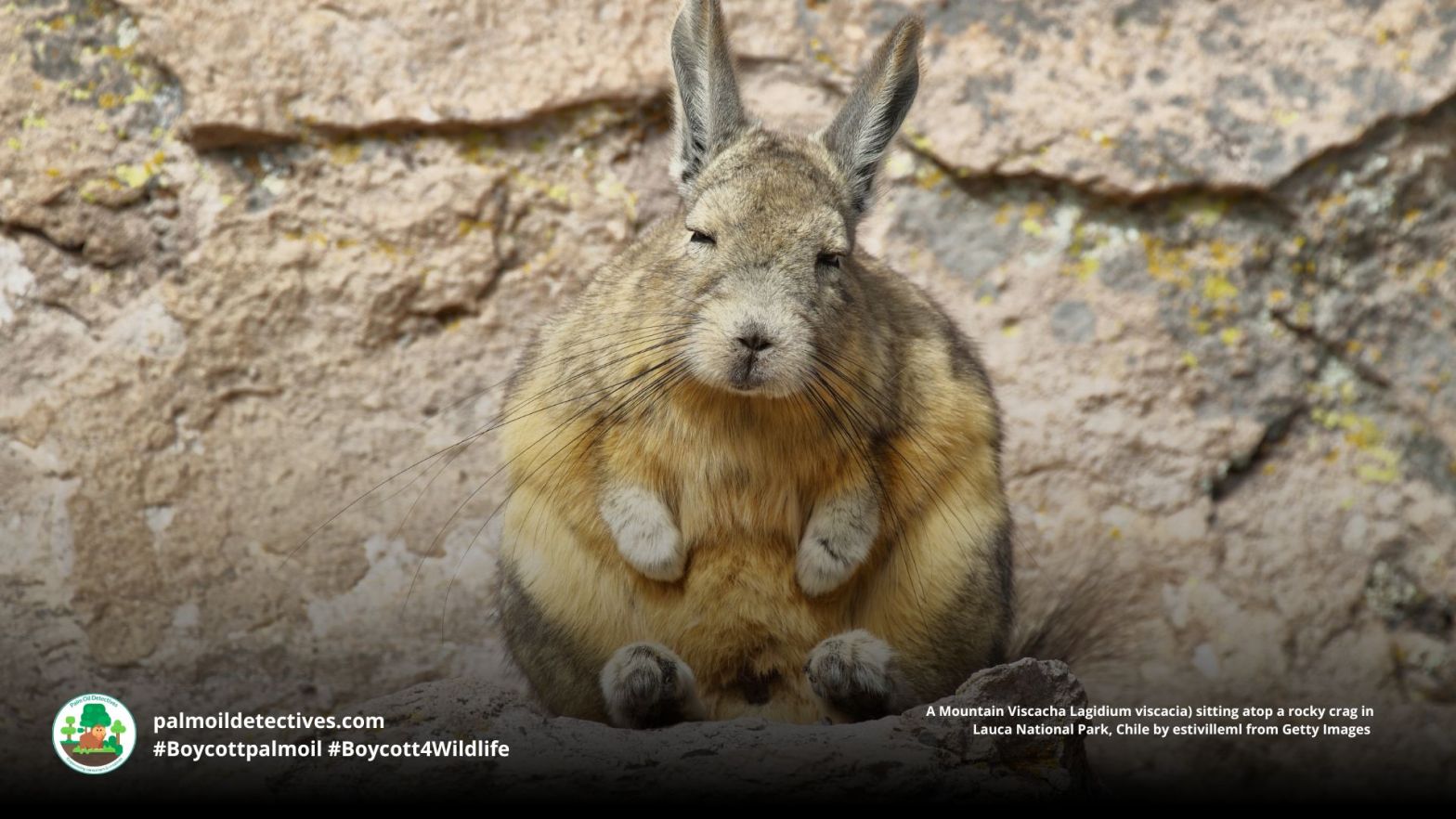
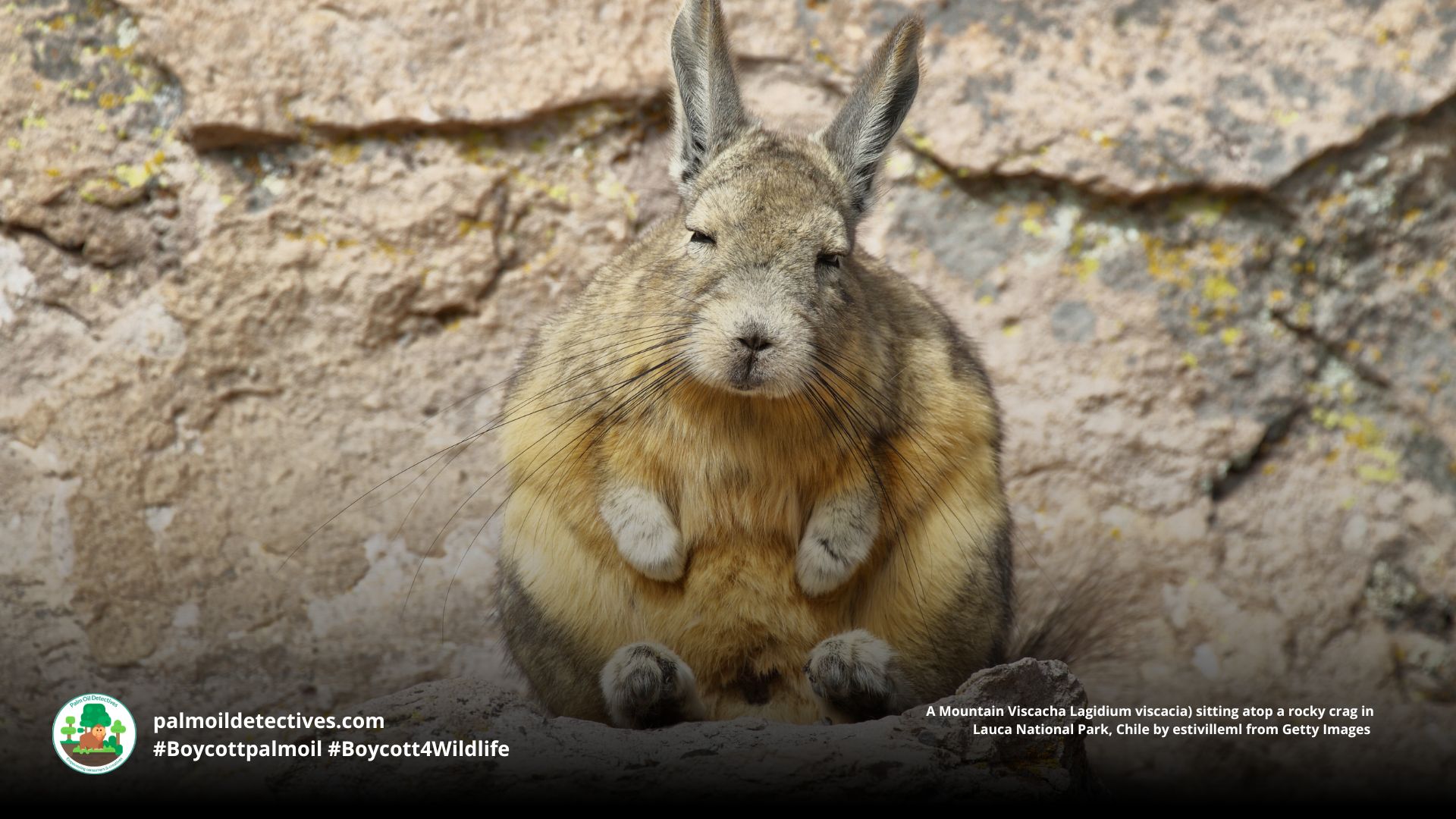
This global analysis of bird calls provides a deeper understanding of how nature fine-tunes the voices of its creatures, ensuring that they not only adapt but thrive in the ever-changing soundscape of the wild.

Implications for Wildlife Conservation

This research highlights the importance of protecting diverse ecosystems that allow birds to maintain and evolve their communication methods. Understanding how habitats influence behaviour offers valuable insights into preserving both wildlife and the natural environments they depend on.

The Bigger Picture

By exploring the interplay between habitat and communication, this study deepens our appreciation for the intricate connections within ecosystems and the resilience of bird species in adapting to environmental challenges.

Discover more about this groundbreaking study.

ENDS


Learn about other animals endangered by palm oil and other agriculture


Learn about “sustainable” palm oil greenwashing

A 2019 World Health Organisation (WHO) report into the palm oil industry and RSPO finds extensive greenwashing of palm oil deforestation and the murder of endangered animals (i.e. biodiversity loss)

WHO Bulletin on Palm Oil: Deforestation and Extinction
WHO Bulletin on Palm Oil: Air Pollution and Health


Take Action in Five Ways

1. Join the #Boycott4Wildlife on social media and subscribe to stay in the loop: Share posts from this website to your own network on Twitter, Mastadon, Instagram, Facebook and Youtube using the hashtags #Boycottpalmoil #Boycott4Wildlife.

Join 3,176 other subscribers

2. Contribute stories: Academics, conservationists, scientists, indigenous rights advocates and animal rights advocates working to expose the corruption of the palm oil industry or to save animals can contribute stories to the website.

3. Supermarket sleuthing: Next time you’re in the supermarket, take photos of products containing palm oil. Share these to social media along with the hashtags to call out the greenwashing and ecocide of the brands who use palm oil. You can also take photos of palm oil free products and congratulate brands when they go palm oil free.

4. Take to the streets: Get in touch with Palm Oil Detectives to find out more.

5. Donate: Make a one-off or monthly donation to Palm Oil Detectives as a way of saying thank you and to help pay for ongoing running costs of the website and social media campaigns. Donate here