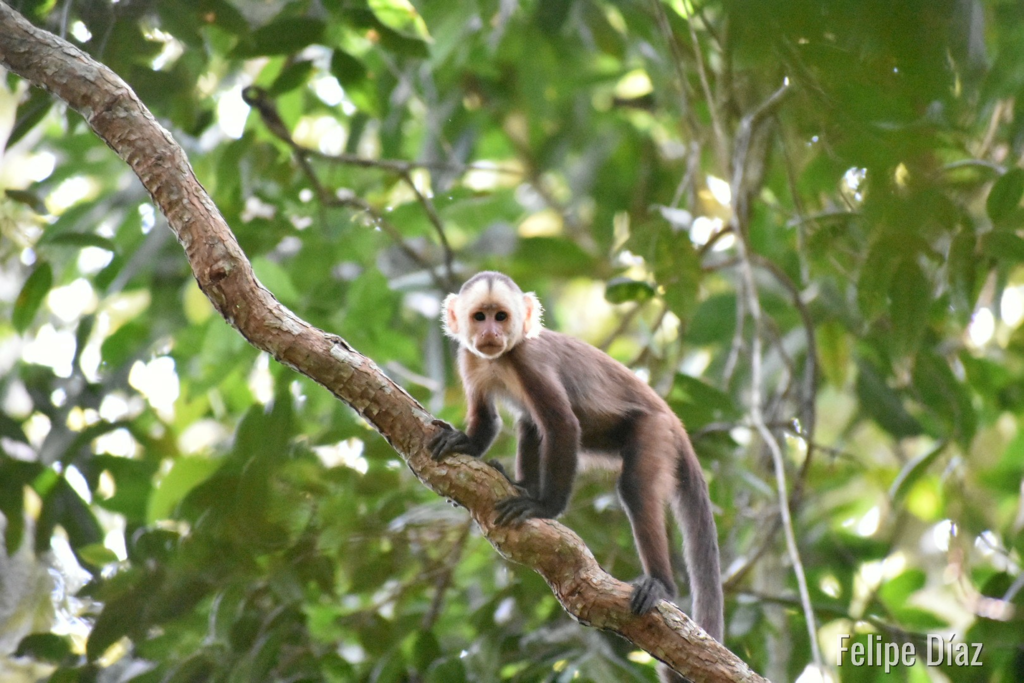
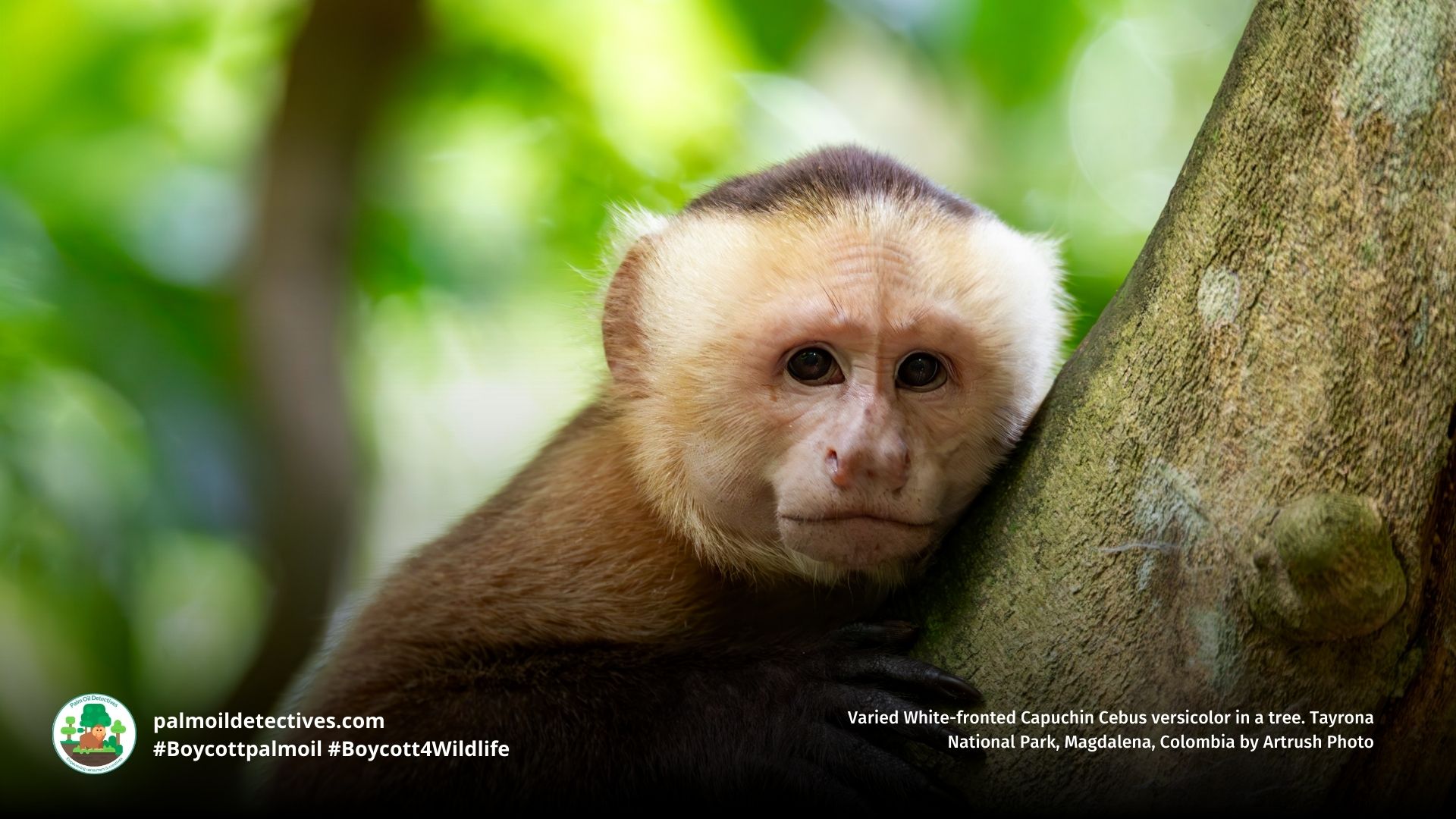
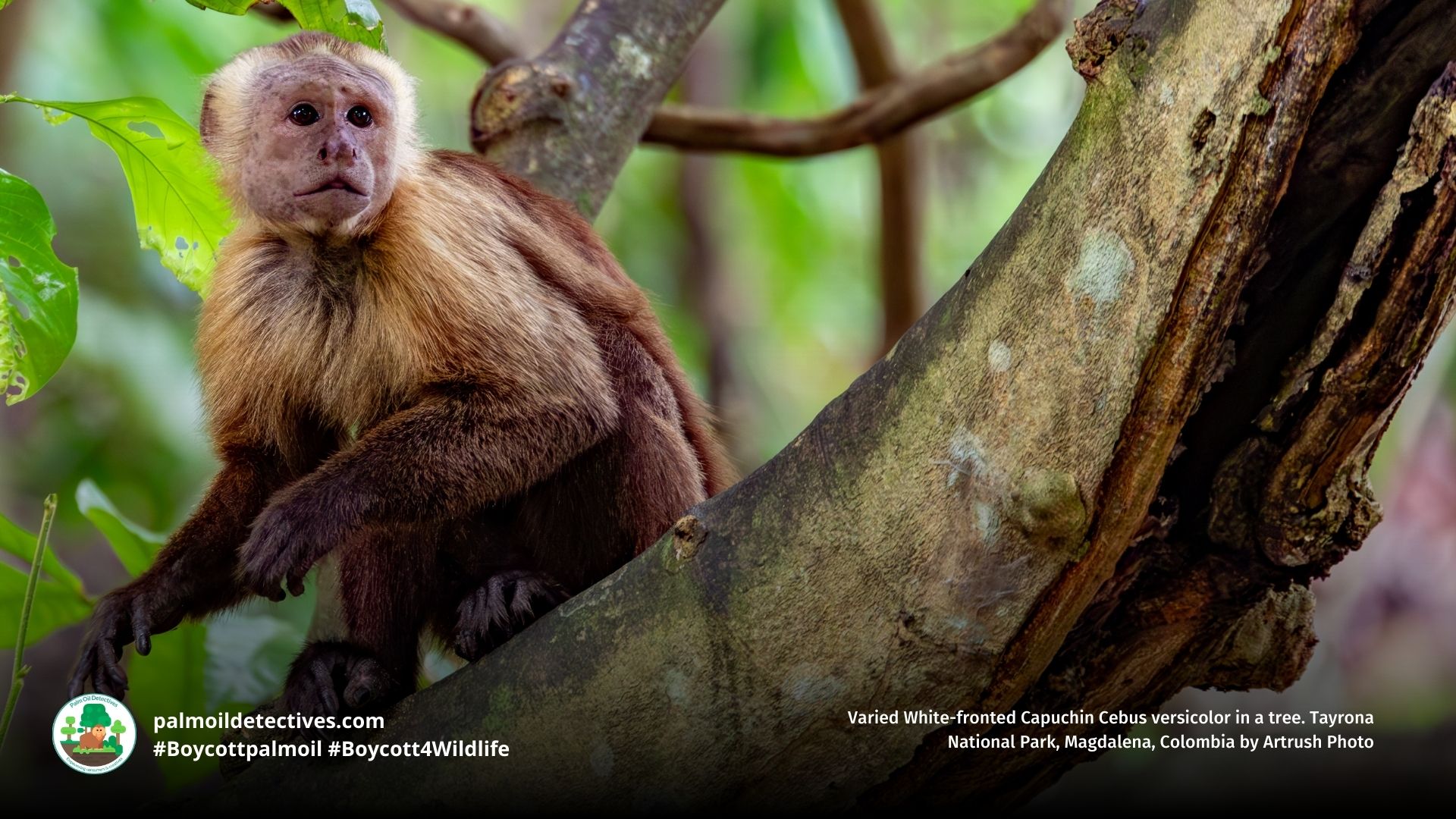
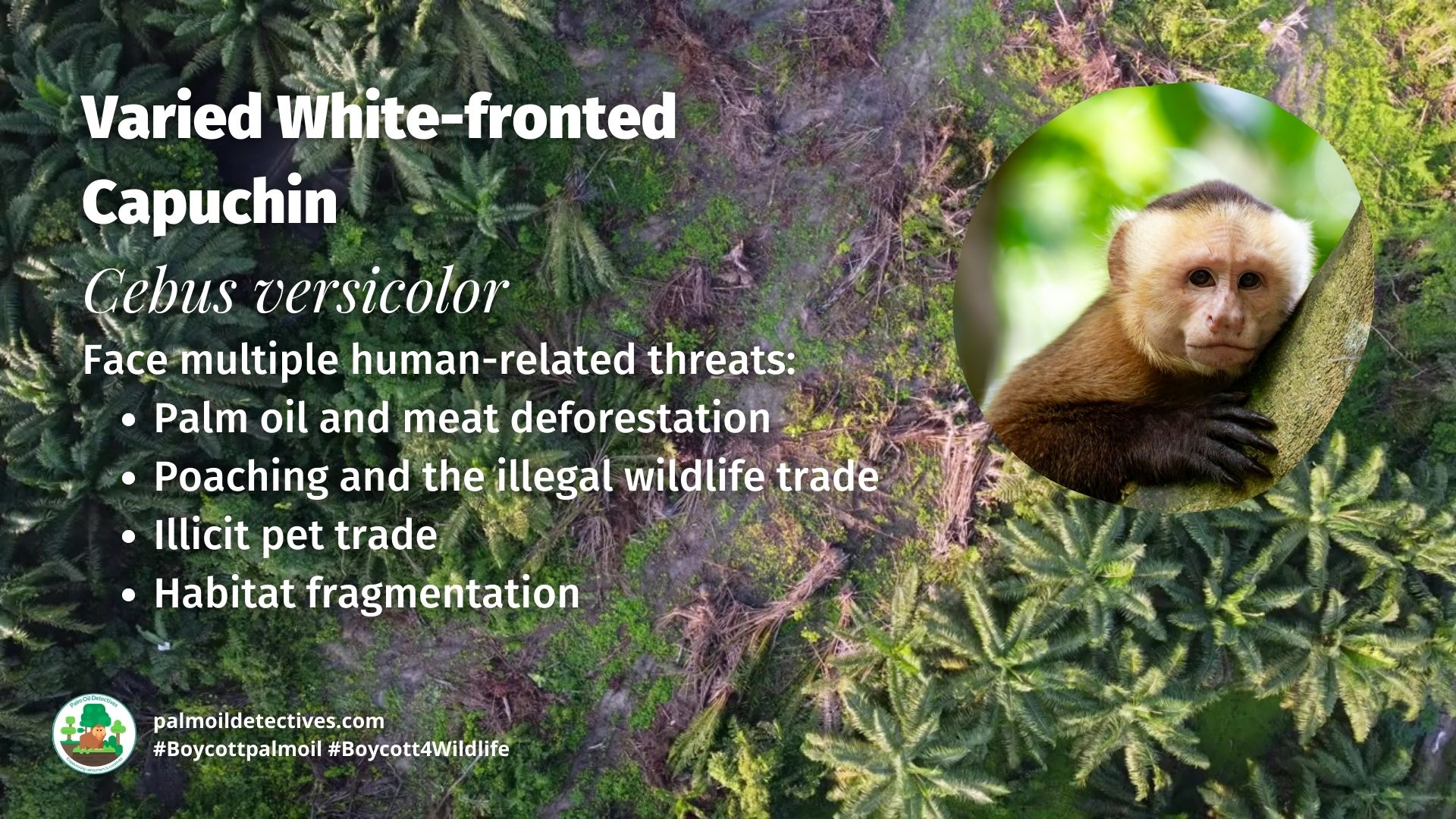
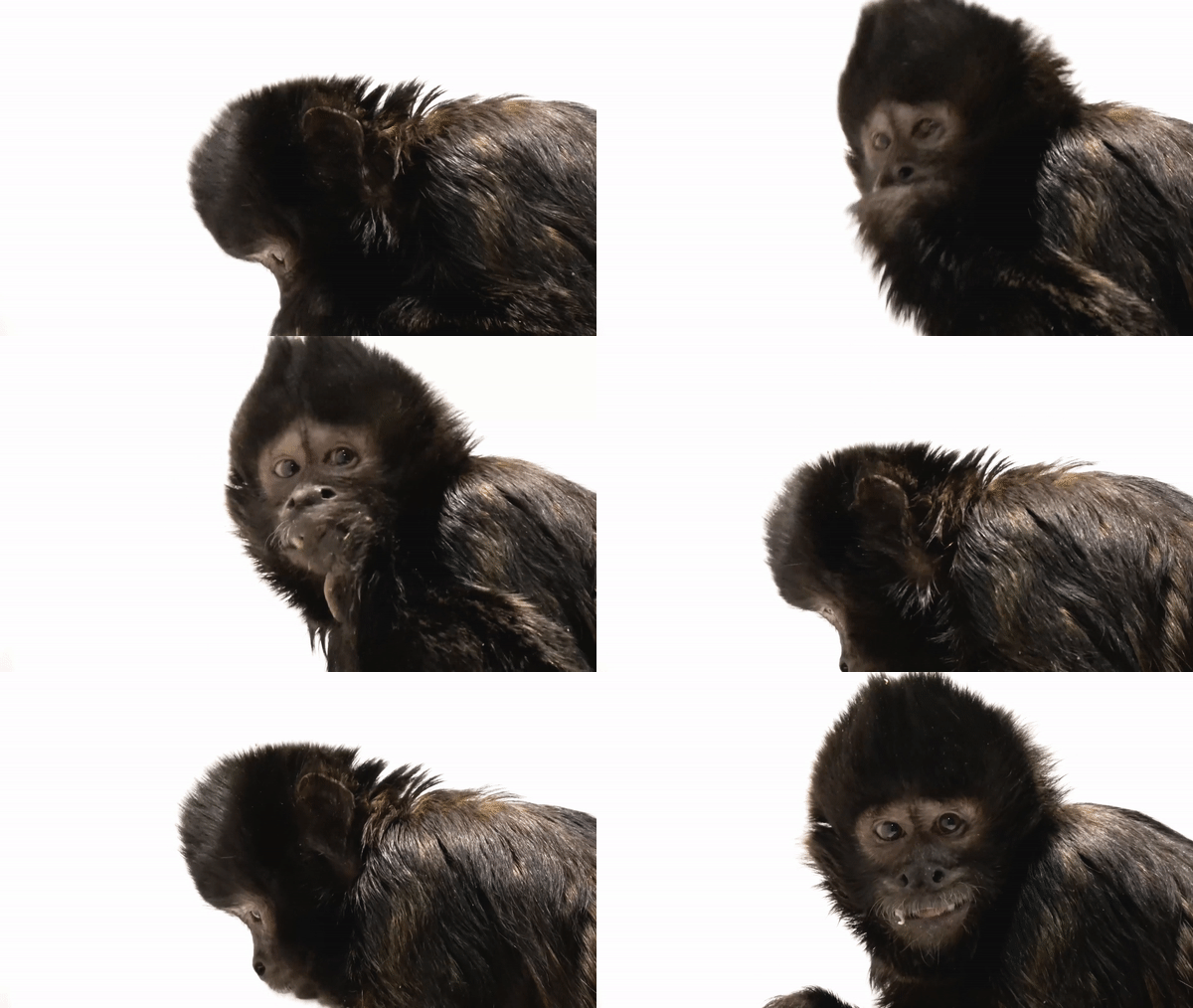
Varied White-fronted Capuchin Cebus versicolor

Varied White-fronted Capuchin Cebus versicolor

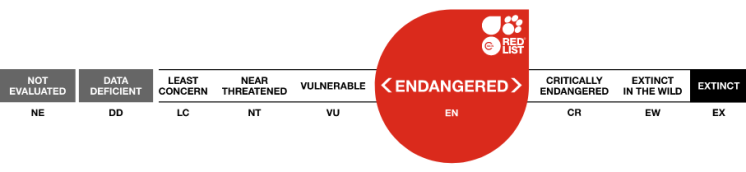
IUCN Status: Endangered

Locations: Colombia, primarily in the Magdalena Valley and Serranía de San Lucas.

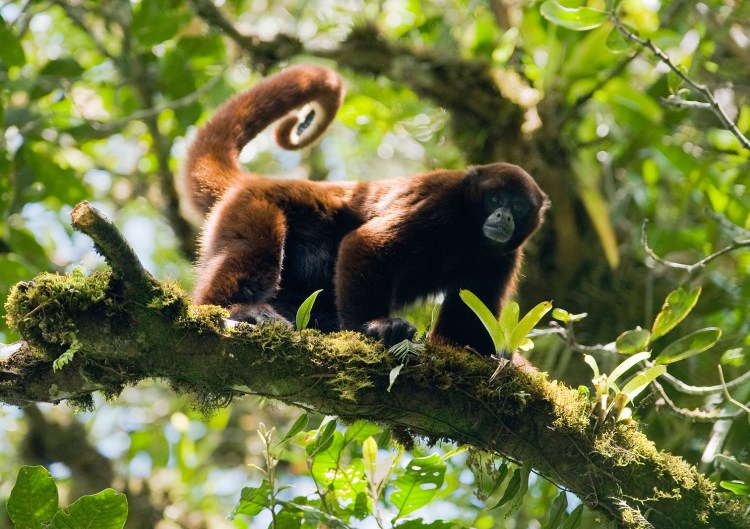
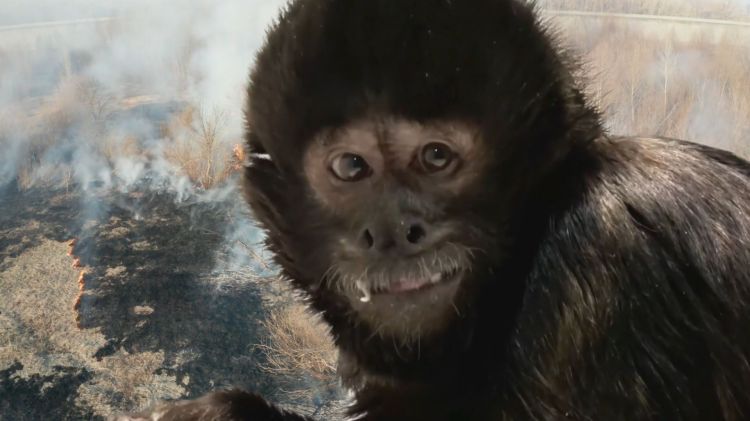
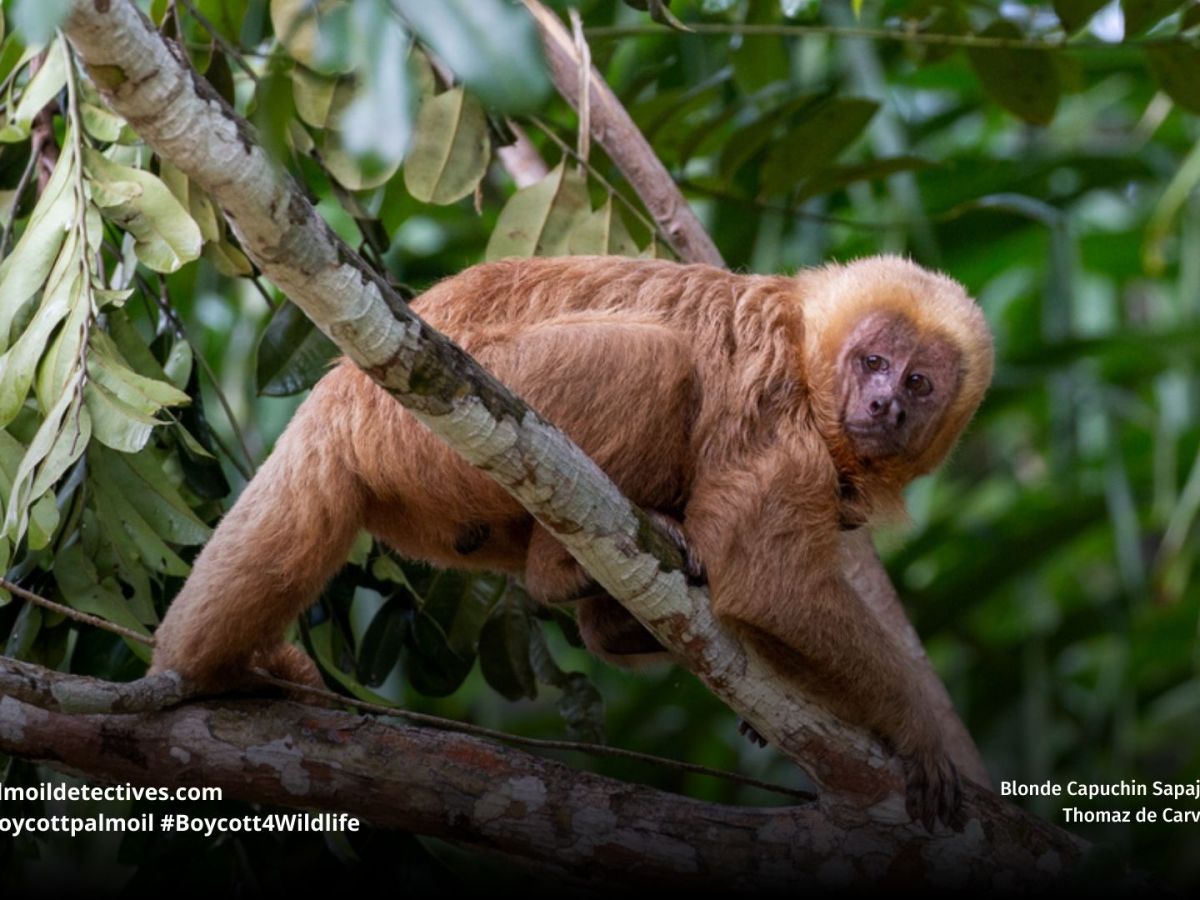
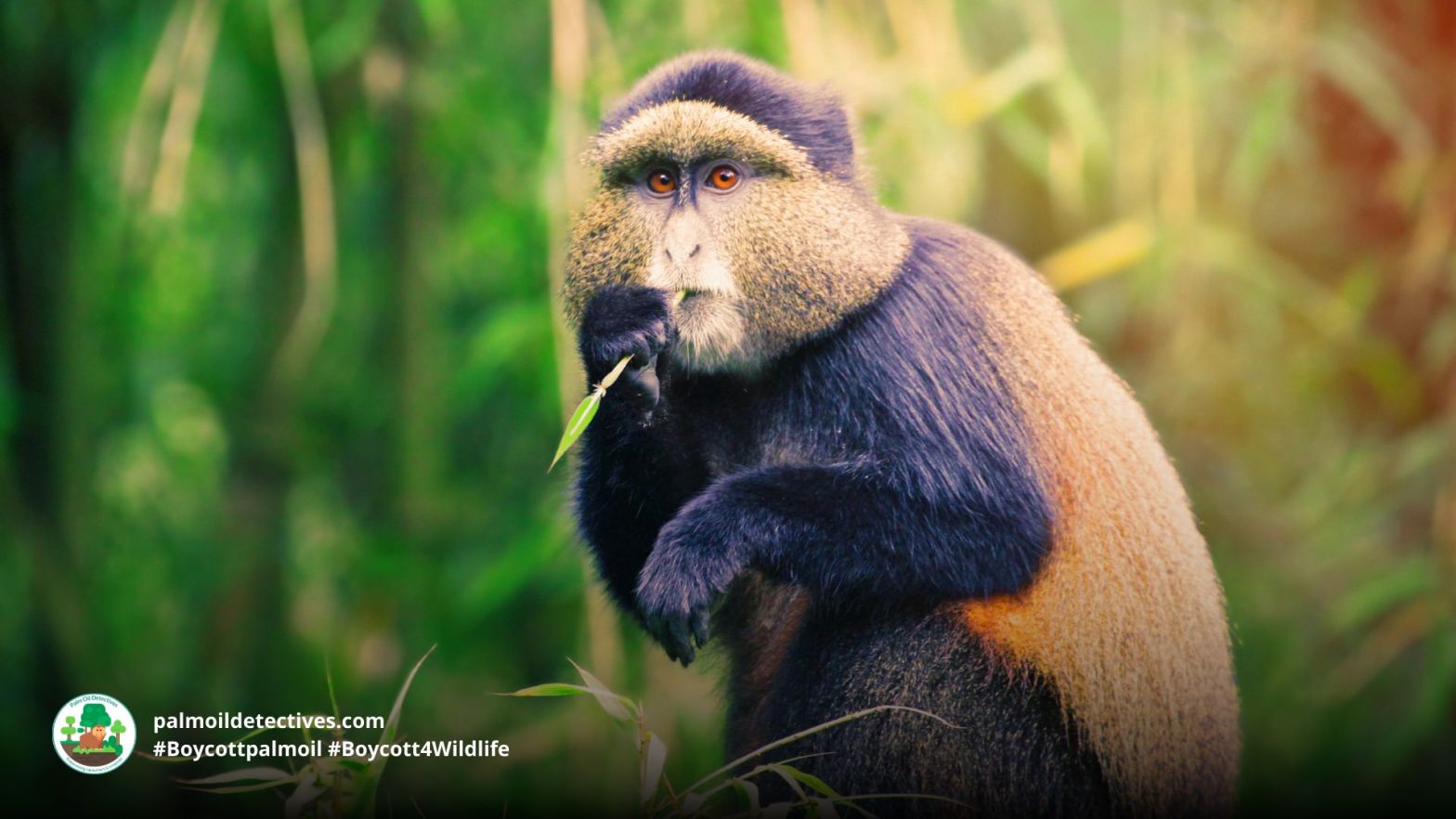
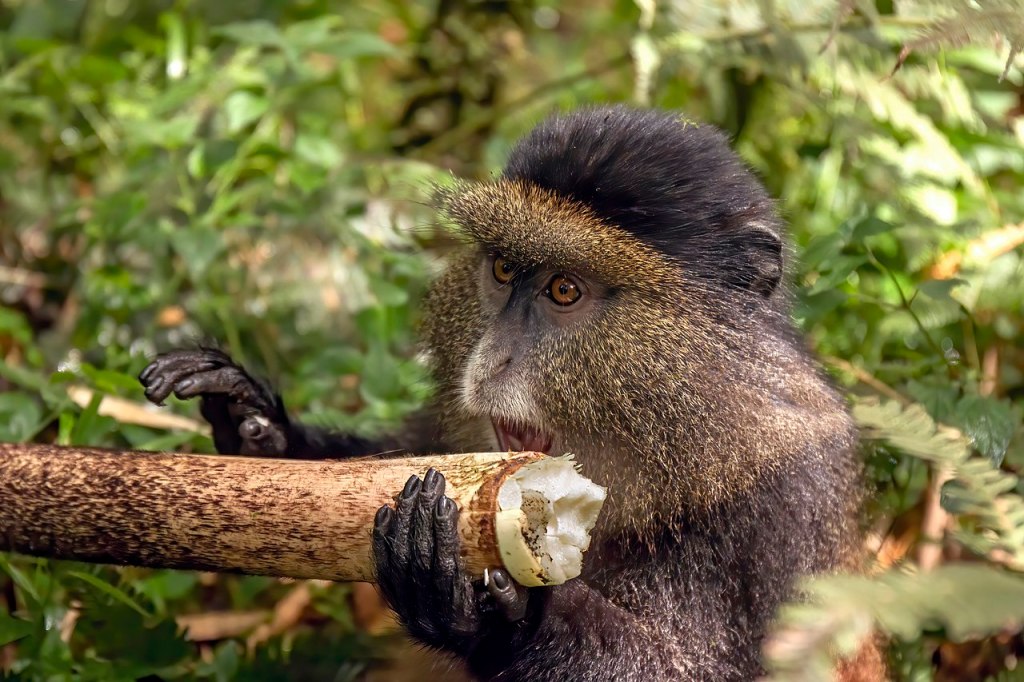
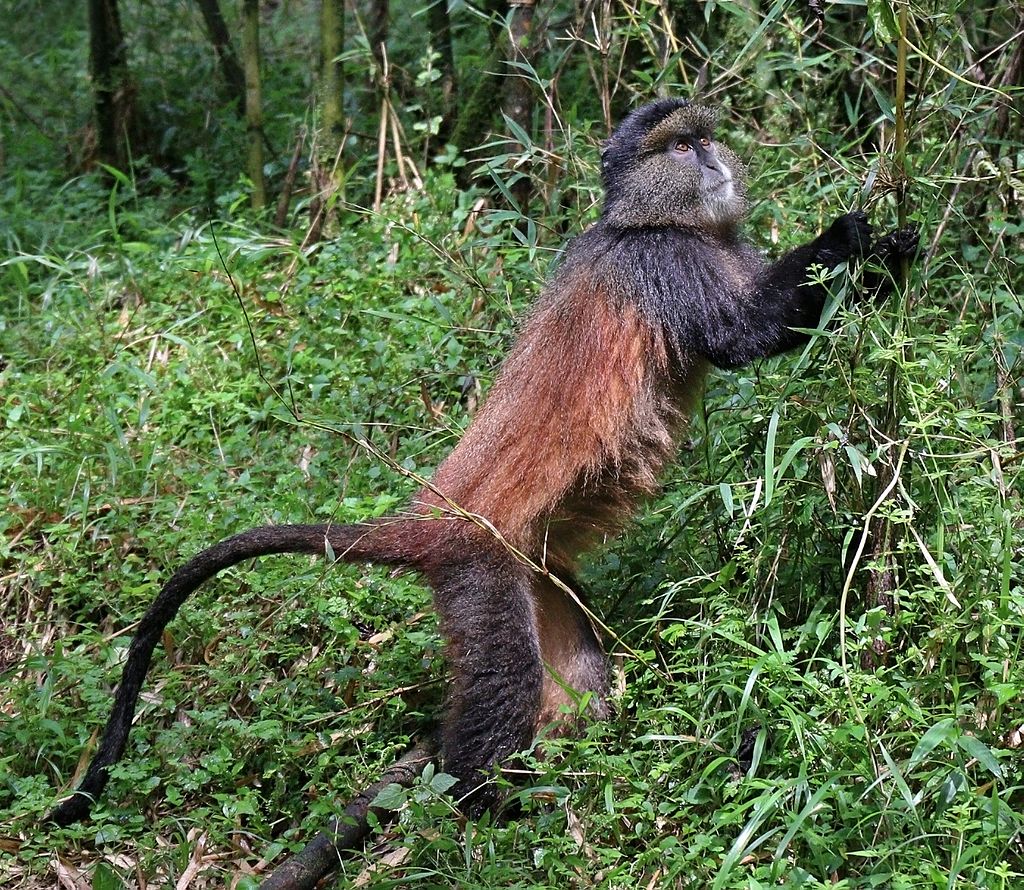
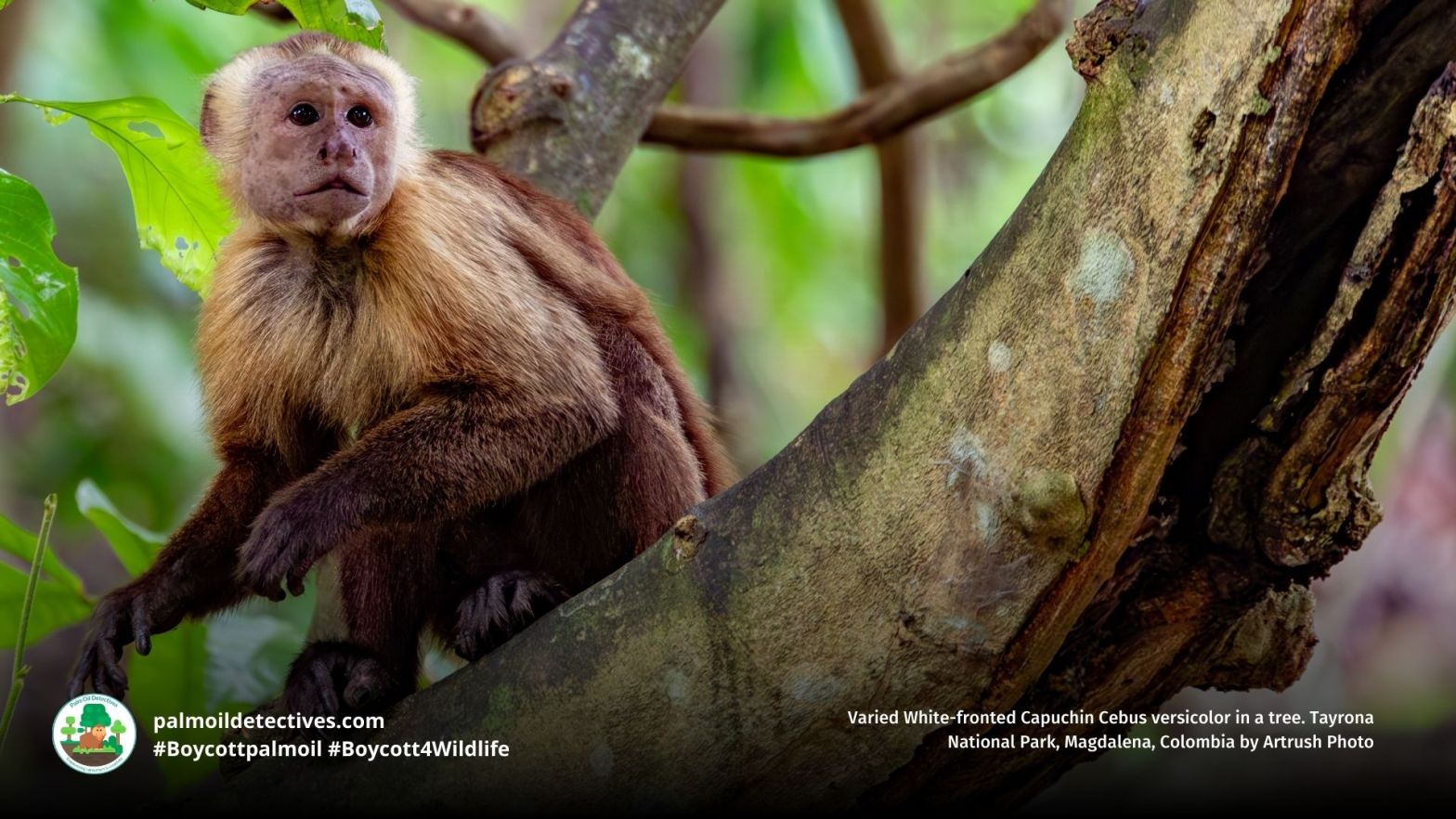
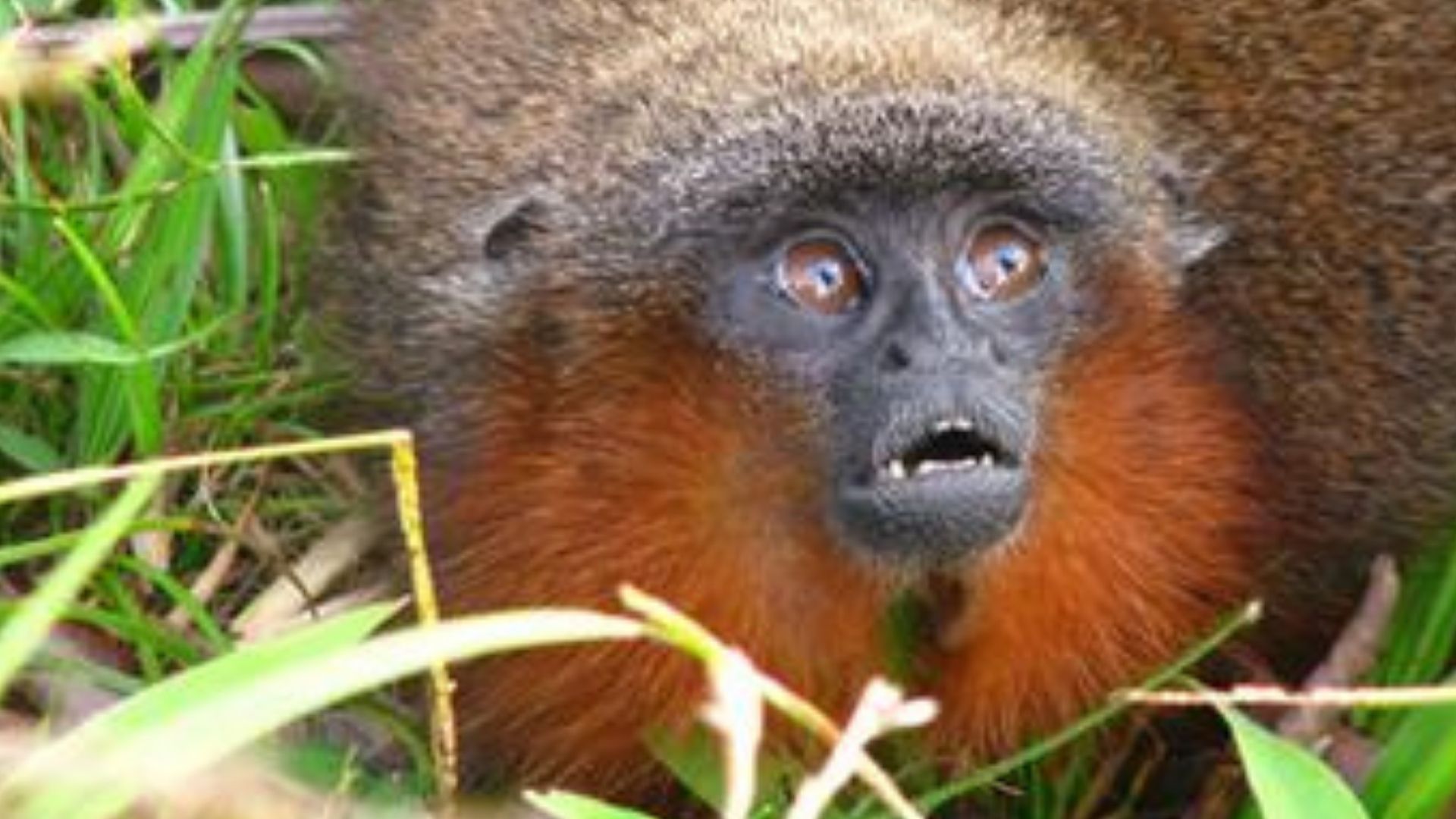
The Varied White-Fronted Capuchin Cebus versicolor is an intelligent, tenacious and resourceful small primate endemic to the forests of Colombia. With their pale white faces, reddish-gold coats, they are both striking in appearance and crucial to their ecosystems. These capuchins play an essential role in seed dispersal, ensuring the health and regeneration of their forest homes.

Tragically, their populations are declining due to deforestation, hunting, and the illegal wildlife trade. Protecting these forests is critical to their survival. Support indigenous-led conservation, adopt a vegan lifestyle and #BoycottPalmOil and #Boycott4Wildlife to take meaningful action for these incredible primates.

Tenacious and resourceful Varied White-fronted Capuchins 🐵🐒 of 🇨🇴 are due to 🥩 and , hunting and the pet trade ☠️. Help them survive, be 🥦 🌴⛔️ @palmoildetect https://palmoildetectives.com/2021/06/19/varied-white-fronted-capuchin-cebus-versicolor/

Varied White-fronted are great mums, the whole troop of also teach infants 🩷🐒🌳 Yet their great parenting doesn’t stop and expansion in 🇨🇴 be ☠️🥩🌴🪔⛔️☠️ https://palmoildetectives.com/2021/06/19/varied-white-fronted-capuchin-cebus-versicolor/

Most of the natural ecosystems within its historical distribution area have been transformed and less than 20% of its habitat remains in the lowland forests and wetlands of the Magdalena River basin (Link et al. 2013). Pet trade, human-animal conflict due to crop foraging and subsistence hunting also pose imminent threats to wild populations of varied white-fronted capuchin monkeys.

IUCN RED LIST

Appearance and Behaviour

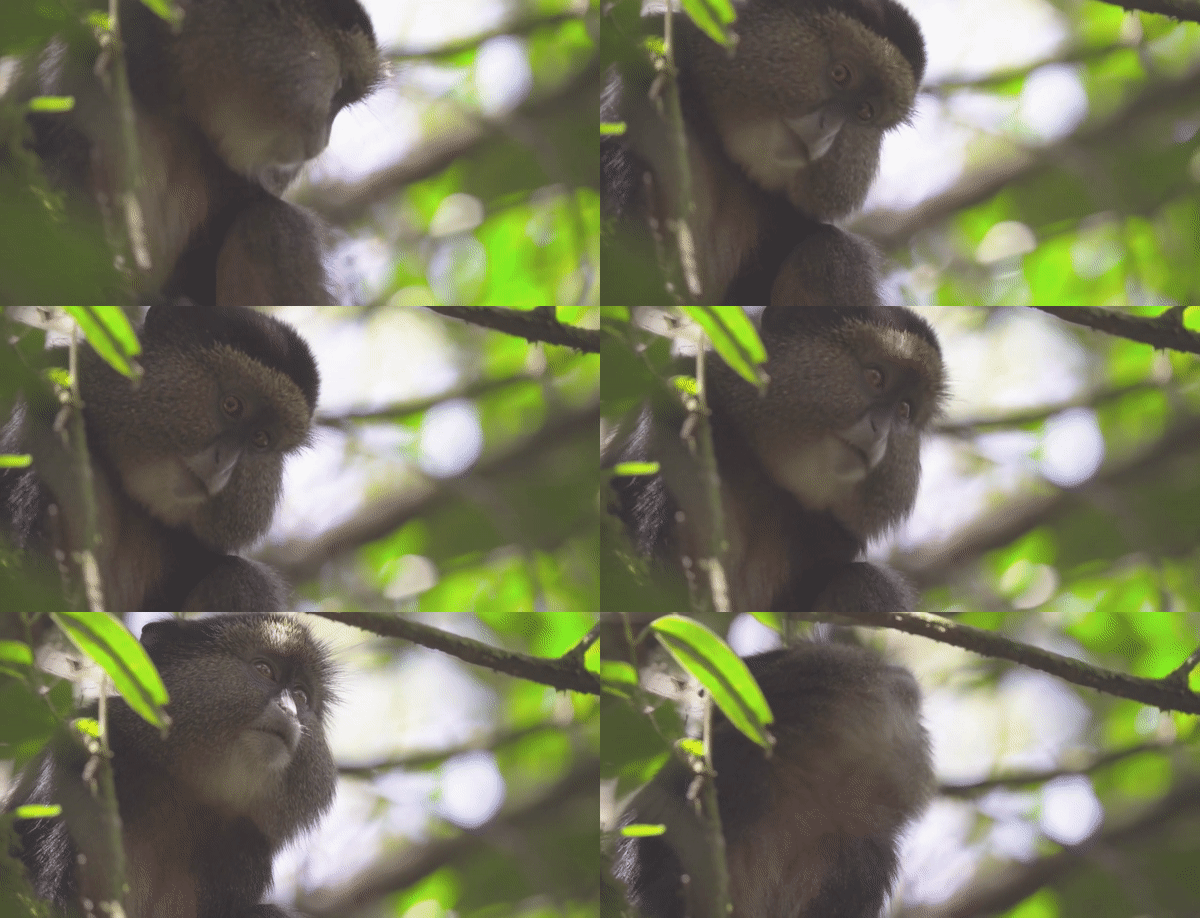
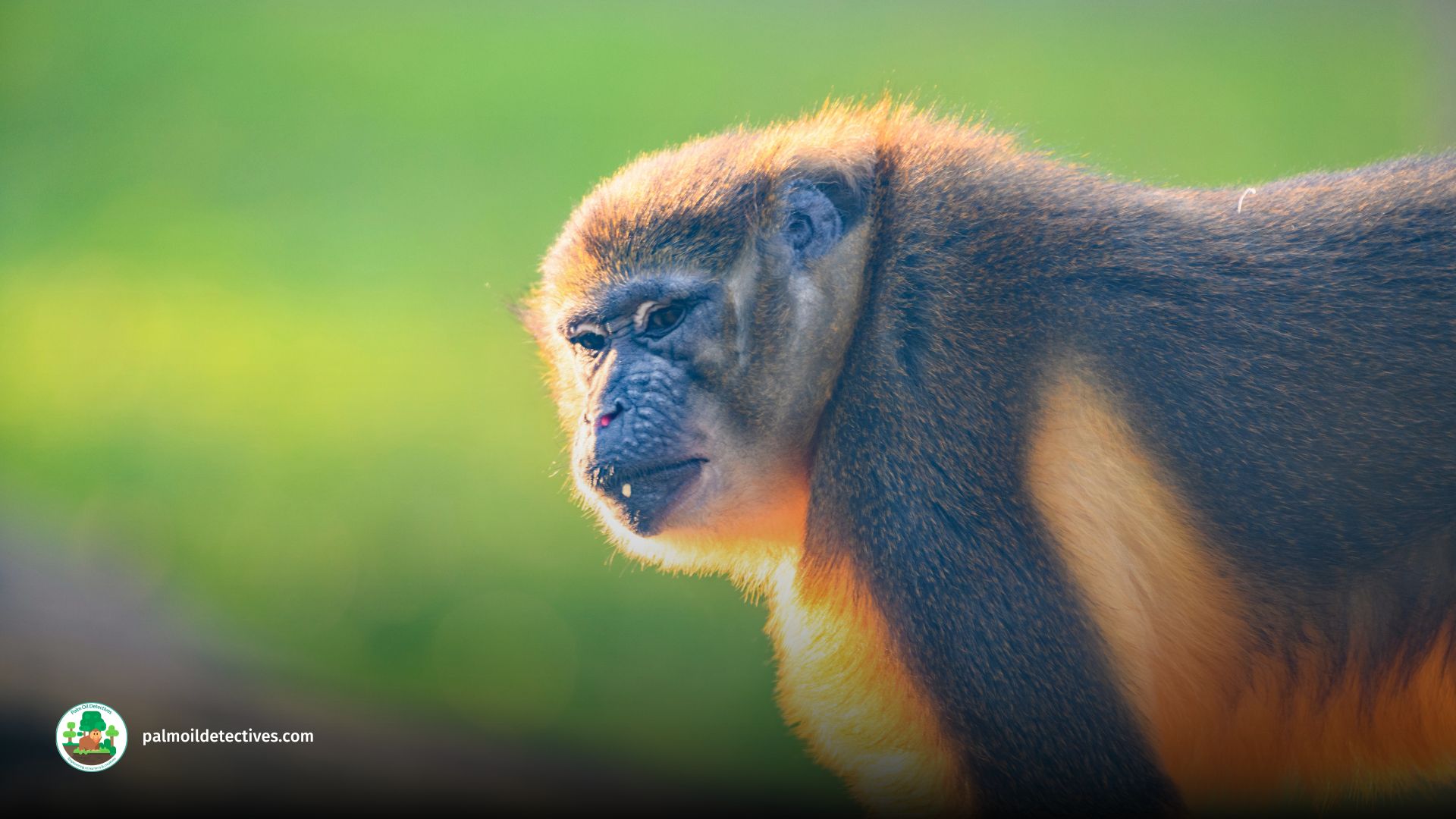
The Varied White-Fronted Capuchin is a small, agile primate, weighing between 2 and 4 kg, with a body length of 30–45 cm. Their reddish-gold coat contrasts beautifully with their pale white face, chest, and a dark crown atop their head. Their prehensile tail, often matching their body length, allows them to navigate their forested habitat with grace and precision.

These social primates live in groups of 10–30 individuals, led by a dominant alpha male member and multiple males and multiple females of varying ages. They are territorial and actively defend their territories against neighbouring troops.

They communicate using a combination of vocalisations, facial expressions, and gestures. Known for their intelligence, these capuchins have been observed using tools to access food and solve problems, showcasing their adaptability and resourcefulness.

Threats

Varied White-fronted Capuchin Cebus versicolor threats

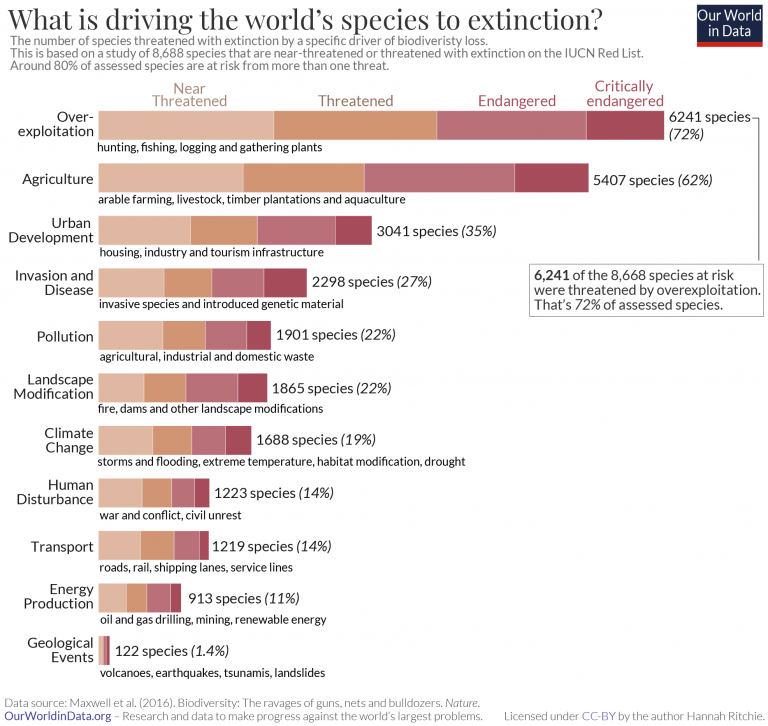
The main threats to this capuchin are agriculture, urban sprawl, deforestation, increasing energy matrix, increasing road matrix habitat fragmentation, habitat reduction, hunting, harvesting and extensive areas of monoculture eucalyptus and pine.The Varied White-fronted Capuchin is highly threatened in the middle Magdalena region in Colombia partly due to the pervasive habitat loss to large scale cattle ranching, palm oil agro-industries and mining.

IUCN red list

Habitat loss for palm oil and meat agriculture

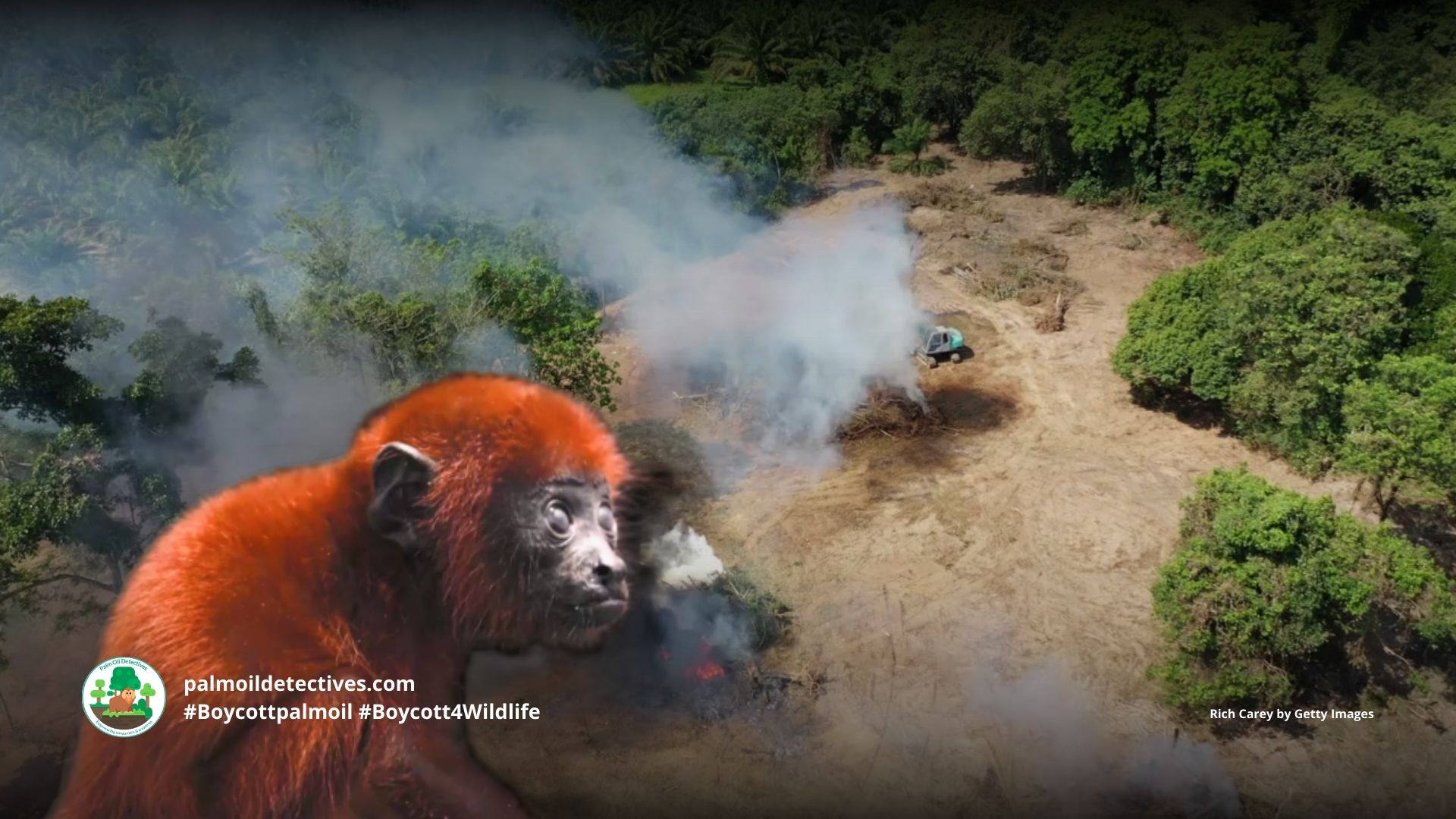
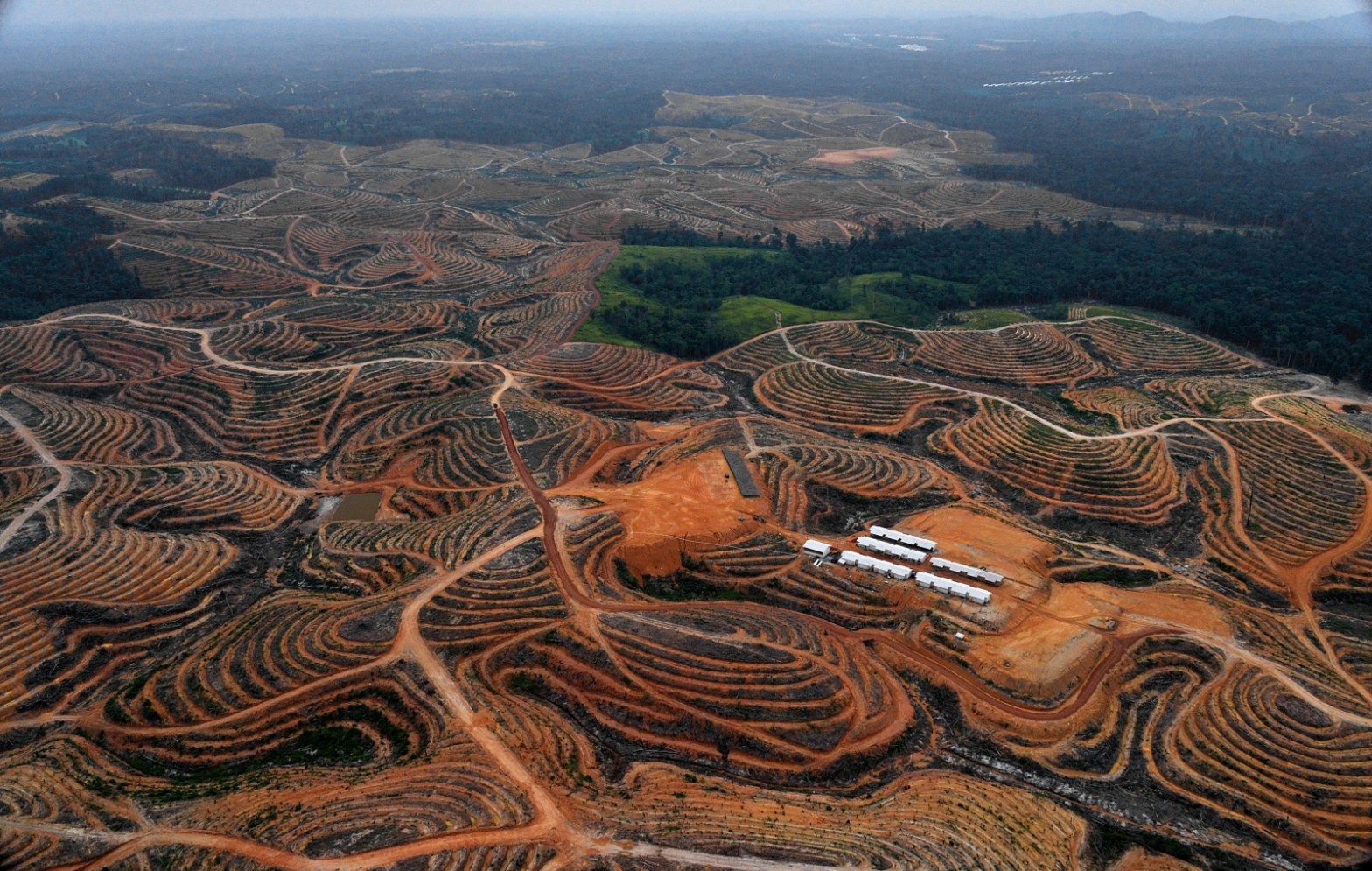
Deforestation poses the greatest threat to the Varied White-Fronted Capuchin. Over 95% of the original forest in Colombia’s Magdalena Valley has been destroyed, largely due to cattle ranching, palm oil plantations, and monoculture agriculture (IUCN, 2021). The loss of forest cover leaves capuchins with limited resources and isolates populations, reducing their ability to survive and reproduce.

Mining and Oil Extraction

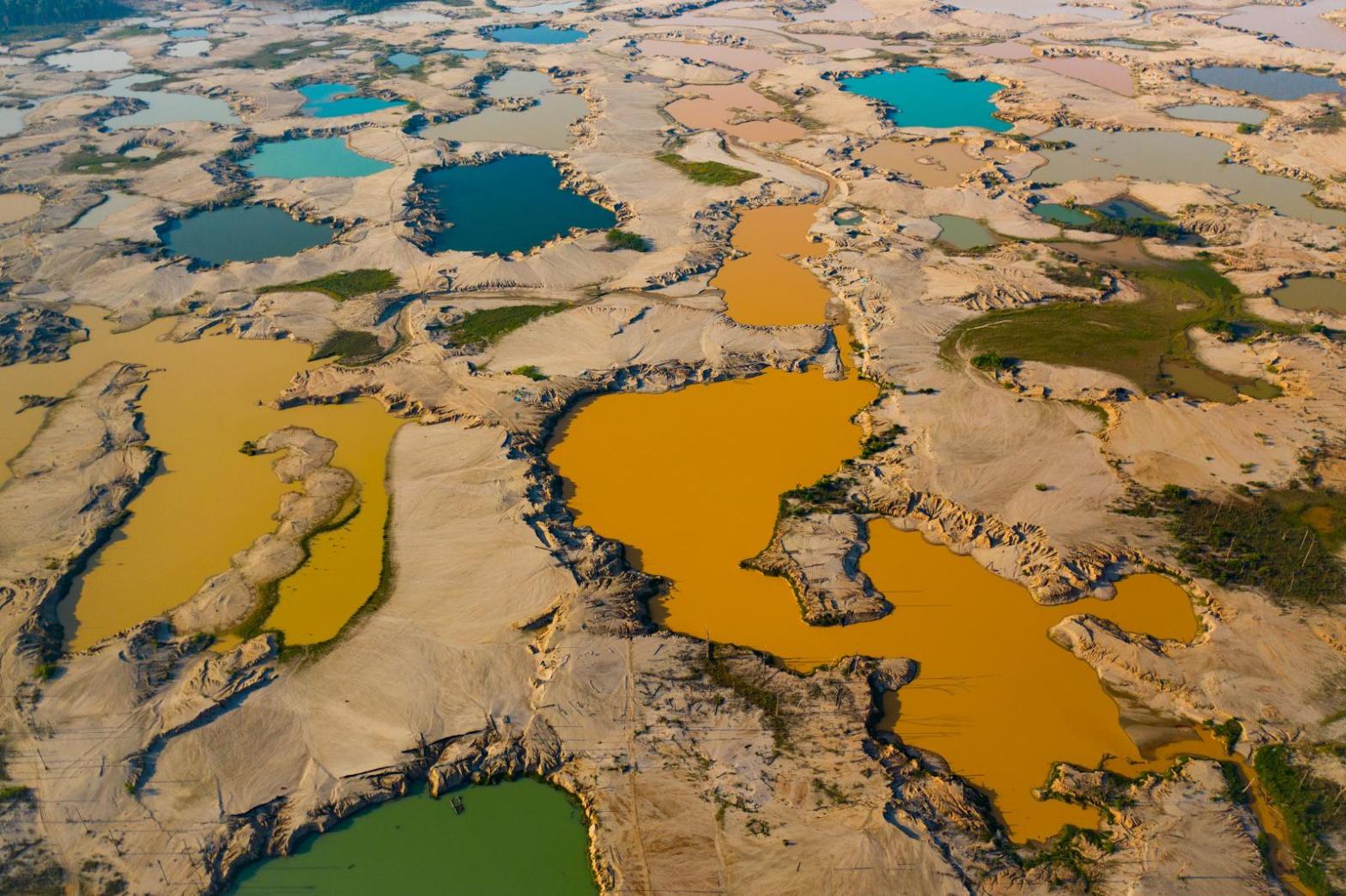
Illegal gold mining and oil exploration are degrading capuchin habitats at an alarming rate. These activities clear vast areas of forest and pollute rivers with mercury and other toxins, destroying essential food and water sources. Roads built to support mining operations bring increased human activity into previously untouched areas, amplifying threats to these primates (Link et al., 2021).

Illegal Hunting

The Varied White-Fronted Capuchin is frequently targeted by hunters, primarily for bushmeat. In many regions of Colombia, subsistence hunting is driven by local communities’ reliance on wildlife for food. However, the scale of hunting has increased with growing human populations and access to previously remote areas through deforestation and mining-related infrastructure (Link et al., 2022). Hunting adult capuchins disrupts the species’ tightly bonded social groups, as these primates depend on cooperation for survival. The loss of key individuals, particularly group leaders or mothers, has severe consequences for their population stability.

The Illegal Wildlife and Pet Trade

The illegal pet trade poses an equally devastating threat to the Varied White-Fronted Capuchin. Infants are captured and the mothers killed. Infants are sold as exotic pets internationally, often via criminal networks and alongside illicit drugs and other criminal activities.

Diet

The Varied White-Fronted Capuchin is a tenacious and highly adaptable forager with a highly varied diet, feeding on fruits, seeds, insects, small vertebrates, and bird eggs. They regularly use tools to extract and manipulate food sources. This adaptability allows them to survive in different habitats and seasons. They are vital to their ecosystems, acting as seed dispersers that promote forest regeneration. However, deforestation reduces access to fruiting trees and other food sources, making survival increasingly challenging for this species.

Reproduction and Mating

These capuchins live in complex social groups where cooperation plays a key role in raising young. Females typically give birth to a single infant after a gestation period of about 160 days. Mothers are the primary caregivers, but other group members often assist with caring for infants, a behaviour known as alloparenting. This social structure is vital to the group’s cohesion and the survival of offspring. However, hunting and habitat destruction disrupt these dynamics, making population recovery more difficult.

Geographic Range

The Varied White-Fronted Capuchin is found exclusively in Colombia, with populations concentrated in the Magdalena Valley and Serranía de San Lucas. Historically, their range extended across vast lowland and montane forests. Today, extensive deforestation and human activity have confined them to fragmented forest patches, leaving them vulnerable to extinction.

FAQ

When was the Varied White-Fronted Capuchin identified as a separate species?

The Varied White-Fronted Capuchin was identified as a distinct species in 2012 following genetic analysis. Significant differences in mitochondrial DNA separated them from the White-Fronted Capuchin (Cebus albifrons), underscoring their unique ecological role and conservation needs.

What are the threats to the Varied White-Fronted Capuchin?

The Varied White-Fronted Capuchin is threatened by habitat los, hunting, and the illegal pet trade. Deforestation for agriculture, palm oil plantations, and cattle ranching has destroyed most of their habitat. Hunting for bushmeat and capturing infants for the pet trade further endanger their populations.

What is the Varied White-Fronted Capuchin’s conservation status?

The Varied White-Fronted Capuchin is listed as Endangered by the International Union for Conservation of Nature (IUCN). This classification reflects their high risk of extinction due to habitat destruction and population fragmentation.

What is the Varied White-Fronted Capuchin’s physical appearance?

The Varied White-Fronted Capuchin has a reddish-gold coat, a light chest, and a dark crown on their head. Their expressive brown eyes and flattened nose enhance their distinct appearance. Their prehensile tail, matching their body length, is critical for navigating their arboreal habitat.

Where does the Varied White-Fronted Capuchin live?

The Varied White-Fronted Capuchin lives in Colombia, primarily in the Río Magdalena Valley and Serranía de San Lucas. They inhabit lowland moist forests and palm swamps, but habitat destruction has confined them to fragmented patches, making their survival increasingly precarious.

Take Action!

Help protect the Varied White-Fronted Capuchin by supporting indigenous-led conservation initiatives. Boycott products linked to deforestation, such as palm oil, and consider adopting a #vegan lifestyle to reduce habitat destruction. Your choices can make a difference — #BoycottPalmOil #Boycott4Wildlife.

You can support this beautiful animal

There are no known conservation activities for this animal. Share out this post to social media and join the #Boycott4Wildlife on social media to raise awareness

Further Information

Donate to help orphaned capuchins that are rescued from traffickers. At Merazonia Wildlife Sanctuary

ICUN endangered logo

Link, A., Boubli, J.P. & Lynch Alfaro, J.W. 2021. Cebus versicolor. The IUCN Red List of Threatened Species 2021: e.T39952A81282279. https://dx.doi.org/10.2305/IUCN.UK.2021-1.RLTS.T39952A81282279.en. Downloaded on 06 June 2021.

De Aquino, I., González-Santoyo, I., Link, A., & Muñoz-Delgado, J. (2022). An exploratory study of cooperation: Food-sharing behaviour in wild varied white-fronted capuchin monkeys (Cebus versicolor) in Central Colombia. Behaviour, 159(13-14), 1285–1300. https://doi.org/10.1163/1568539X-bja10180

Link, A., et al. (2022). Primate diversity and population status in the Serranía de San Lucas, Colombia: A priority area for primate conservation in northern South America. Primate Conservation, 36, 63–73. Retrieved from http://www.primate-sg.org/storage/pdf/PC36_Link_et_al_Serrania_de_San_Lucas.pdf.

Wikipedia contributors. (n.d.). Varied White-Fronted Capuchin. In Wikipedia. Retrieved from https://en.wikipedia.org/wiki/Varied_white-fronted_capuchin

World Land Trust. (n.d.). Varied White-Fronted Capuchin. Retrieved from https://www.worldlandtrust.org/species/mammals/varied-white-fronted-capuchin/.


Contribute to palm oil detectives - black rhino in profile

How can I help the ?


Take Action in Five Ways

1. Join the on social media and subscribe to stay in the loop: Share posts from this website to your own network on Twitter, Mastadon, Instagram, Facebook and Youtube using the hashtags .

Join 3,176 other subscribers

2. Contribute stories: Academics, conservationists, scientists, indigenous rights advocates and animal rights advocates working to expose the corruption of the palm oil industry or to save animals can contribute stories to the website.


3. Supermarket sleuthing: Next time you’re in the supermarket, take photos of products containing palm oil. Share these to social media along with the hashtags to call out the greenwashing and ecocide of the brands who use palm oil. You can also take photos of palm oil free products and congratulate brands when they go palm oil free.

4. Take to the streets: Get in touch with Palm Oil Detectives to find out more.

5. Donate: Make a one-off or monthly donation to Palm Oil Detectives as a way of saying thank you and to help pay for ongoing running costs of the website and social media campaigns. Donate here

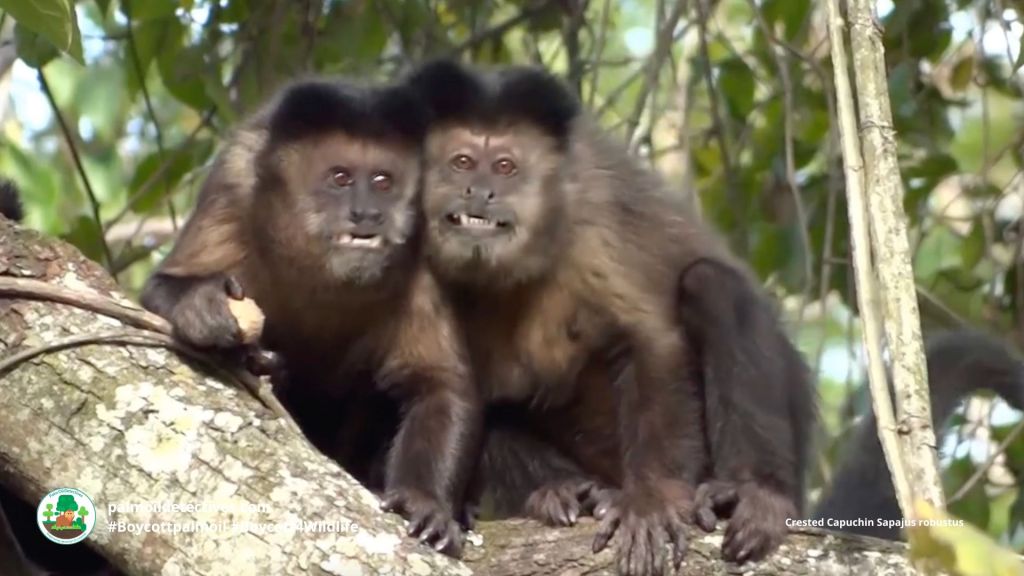
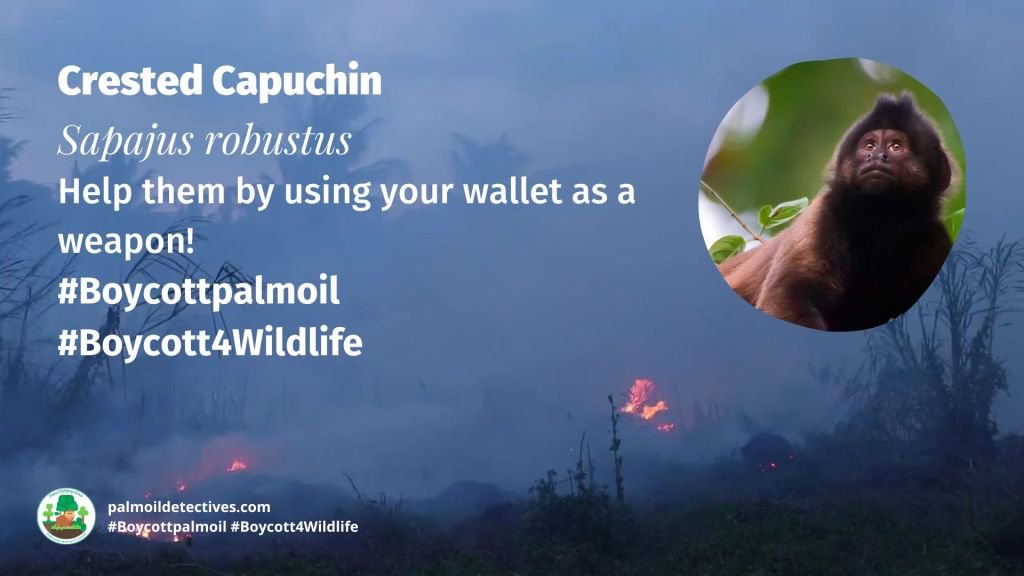
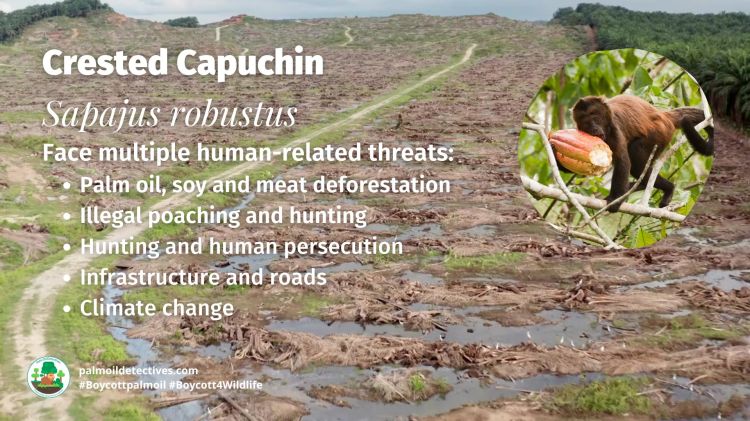
Crested Capuchin Sapajus robustus

Crested Capuchin Sapajus robustus

IUCN Status: Endangered

Location: Brazil (southern Bahia, eastern Minas Gerais, Espírito Santo). In Brazil’s Atlantic Forest, where morning mist clings to ancient trees, the crested capuchin moves through their shrinking world with quiet intelligence.

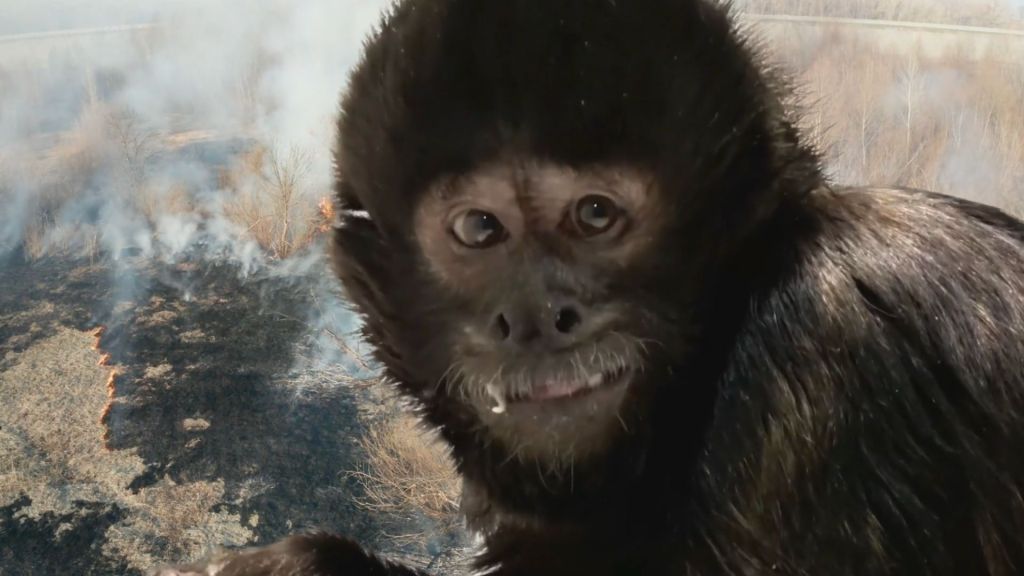
The crested capuchin stands as one of Brazil’s most endangered primates. Their distinctive scarlet crests catch filtered sunlight as they navigate forest fragments between the Jequitinhonha and Doce rivers. With only 14,400 individuals remaining, these intelligent tool-users face extinction as palm oil plantations, soy agriculture, and urban sprawl devour their ancestral homes. #BoycottPalmOil #Boycott4Wildlife every time you shop and be #Vegan to help their survival.

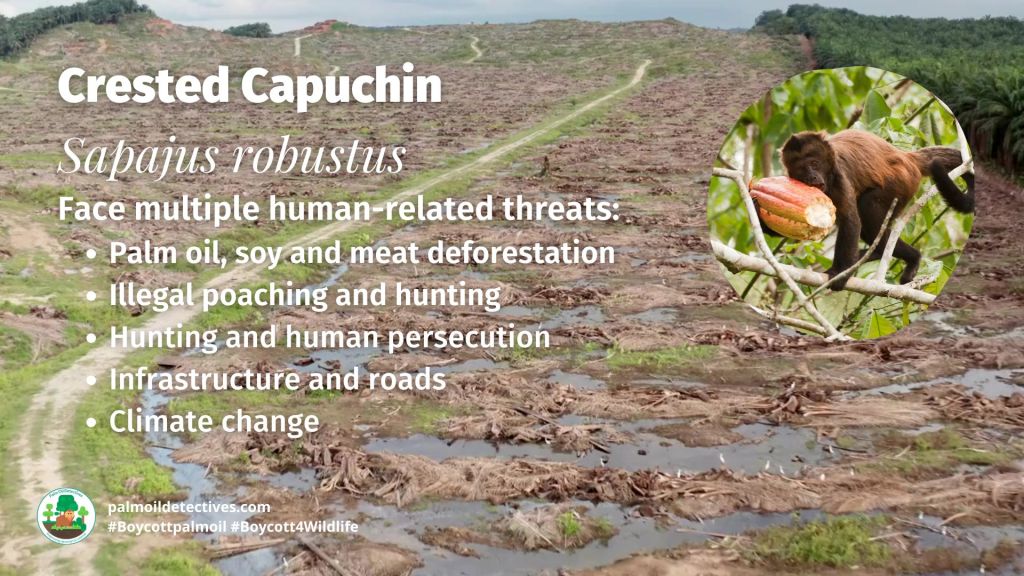
Main threats to Crested Capuchins are agriculture, urban sprawl, deforestation, increasing energy matrix, increasing road matrix habitat fragmentation, habitat reduction, hunting, harvesting and extensive areas of monoculture eucalyptus and pine.

IUCN red list

Appearance and Behaviour

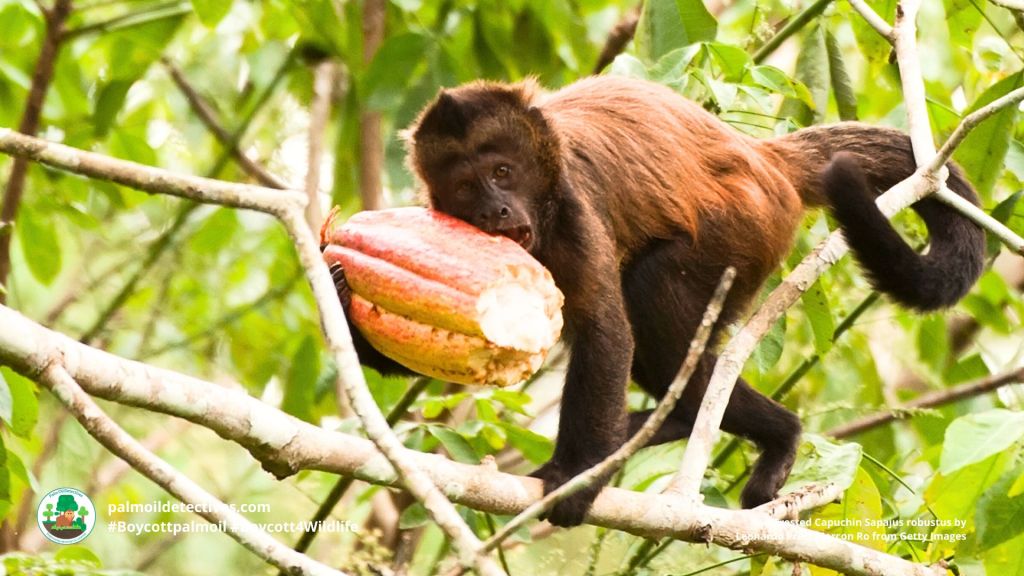
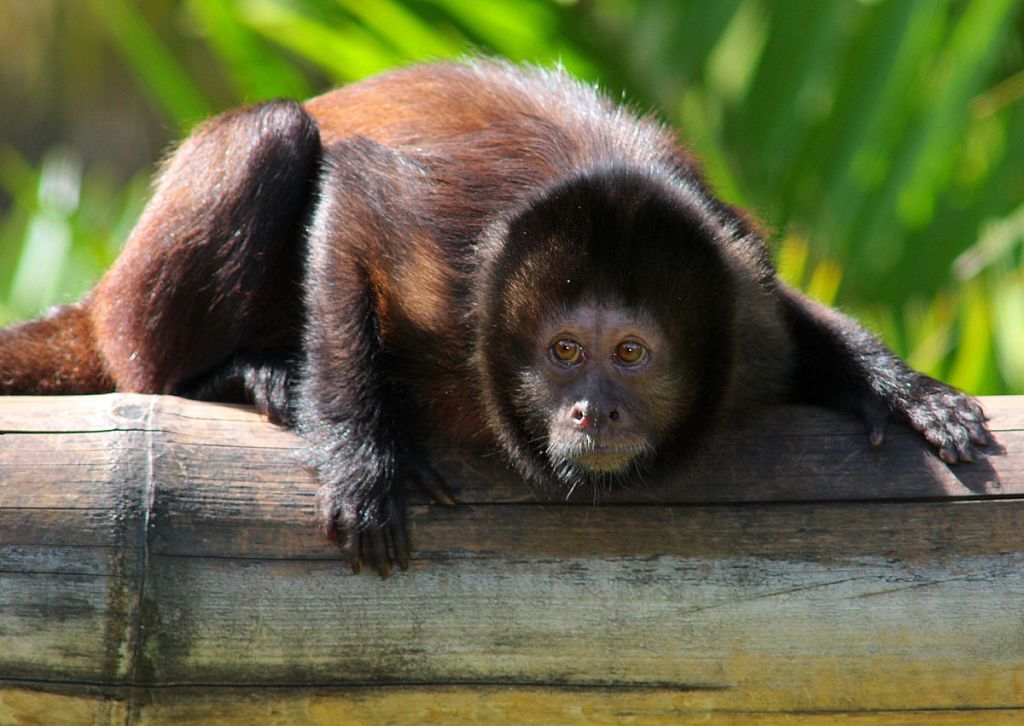
The Crested Capuchin’s most striking feature blazes against the Atlantic forest canopy —a conical crest of brilliant scarlet adorned with a black spot. Their crests may extend around their faces, creating elegant black beards. Their robust bodies measure 33-57 centimetres with tails reaching 40-47 centimetres. Males weigh up to 3.8 kilograms.

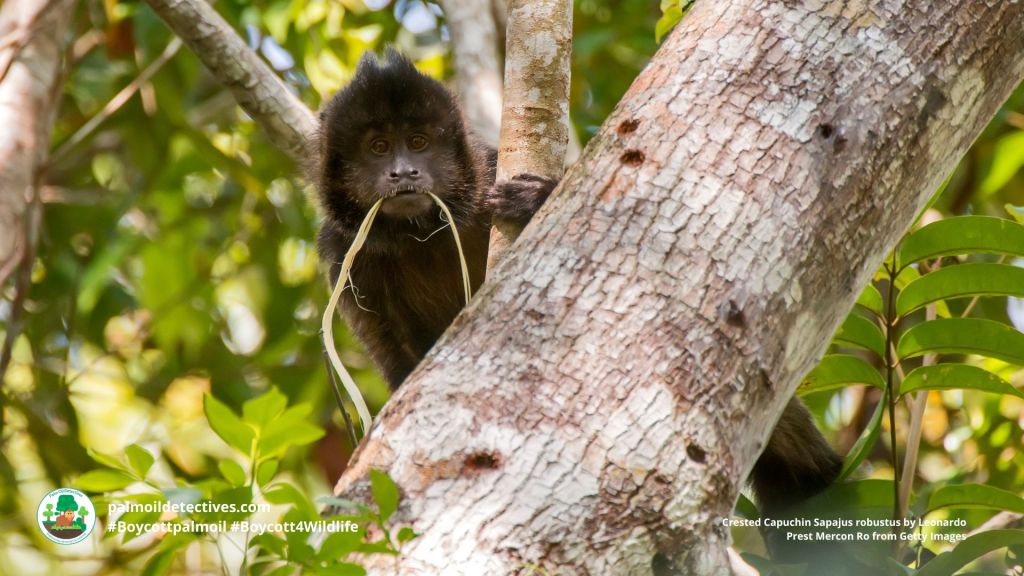
These remarkable and gregarious primates reveal intelligence through sophisticated tool use. They employ eleven distinct actions including hammering, probing, and sponging. The social structure of Crested Capuchins features linear hierarchies spanning both sexes, with dominant males commanding respect from highest-ranking females.

Diet

Crested capuchins are master foragers. As frugivore-insectivores, they feast on fruits from 56 native species, protein-rich arthropods, tender shoots and leaves, and occasionally small mammals. Their nimble little hands extract seeds from tough-shelled fruits with craftsperson precision. Crested capuchins maintain preferences for wild forest fruits even when exotic options become available, allowing them to maintain home ranges of approximately 120 hectares.

Reproduction and Mating

Groups of capuchins ranging from 12 to 27 individuals create dynamic communities. Males typically disperse from natal groups seeking new territories. Females remain within birth communities, creating matrilineal bonds spanning generations. Dominant males secure priority access to females during breeding seasons. Mothers teach essential foraging skills and social behaviours determining offspring survival prospects.

Geographic Range

Once ranging broadly between the Doce and Jequitinhonha rivers across Espírito Santo, Minas Gerais, and Bahia, crested capuchins now survive primarily in forest fragments. Climate projections predict significant habitat deterioration by 2070. Their extent of occurrence spans greater than 119,000 square kilometres, yet actual occupancy remains unknown as habitat fragments into smaller islands.

Threats

Crested Capuchin Sapajus robustus threats

Cattle ranching, timber, palm oil and soy deforestation

Palm oil plantations strip away multilayered canopy, replacing complex ecosystems with sterile monocultures. Soy cultivation and cattle ranching carve geometric scars across landscapes. Roads slice through forest fragments, creating barriers preventing genetic exchange. Energy infrastructure fragments habitat further. Urban sprawl consumes forest edges with relentless appetite. Pine and eucalyptus plantations replace native forest with fast-growing exotic trees providing neither food nor shelter.

Hunting and illegal wildlife trade

Hunters target crested capuchins for bushmeat near human settlements. The illegal pet trade tears infants from mothers’ arms, condemning them to stress, loneliness, and early death. Young capuchins suffer psychological trauma often proving fatal. Local communities facing economic hardship may turn to hunting as protein sources. Law enforcement struggles to patrol vast fragmented areas.

Climate change

Rising temperatures and shifting weather patterns disrupt seasonal rhythms. Prolonged droughts stress fruit trees, reducing food source abundance. Earlier or delayed fruiting seasons create mismatches between peak food availability and energy demand periods. Extreme weather events caused by climate change destroy habitat and force populations of crested capuchins into marginal areas.

Take Action!

Use your wallet as a weapon and every time you shop. Reject soy-fed meat and adopt a vegan lifestyle protecting wild and farmed animals. Support indigenous-led protection and agroecology. Refuse products containing palm oil and meat, which is driving Atlantic Forest deforestation. and go plant-based every time you shop.

FAQs

What is the current population of crested capuchins?

The total remaining population of Crested Capuchins is estimated at 14,400 individual monkeys based on census data in protected areas. Population densities range from 2.47 sightings per 10 kilometres in protected areas to 0.22 groups per 10 square kilometres in degraded habitats. Groups of capuchins typically consist of 12-15 individuals, though larger assemblages of up to 27 individuals show remarkable fluidity. The species faces ongoing population decline of at least 50% over three generations due to continuing habitat loss.

How long do crested capuchins live?

Related capuchin species typically live 15-25 years in the wild and potentially longer in captivity. Their longevity depends heavily on habitat quality, food availability, and human disturbance levels. Dominant individuals may enjoy better access to resources and greater longevity. However, ongoing deforestation and declining food availability may be reducing average lifespans of Crested Capuchins as individuals face increased stress and greater exposure to human-related mortality factors.

What are the main conservation challenges facing crested capuchins?

The primary challenge is relentless destruction of their Atlantic Forest habitat, with less than 12% of original forest remaining in small, isolated fragments. Palm oil plantations, soy cultivation for livestock feed, and cattle ranching continue converting forest into monocultures. Climate change compounds pressures by altering rainfall patterns, potentially making suitable habitat uninhabitable by 2070. Hunting for bushmeat and illegal pet trade further reduce numbers while disrupting social structures. Their restricted range makes them particularly vulnerable to local extinctions.

What are some interesting and unusual facts about crested capuchins?

Crested capuchins display remarkable intelligence through sophisticated tool use, employing eleven distinct actions including hammering, probing, and sponging. They modify tools for specific tasks and learn from watching companions. Their most distinctive feature is the brilliant scarlet conical crest adorned with a black spot. They show remarkable dietary flexibility, maintaining preferences for wild forest fruits even when exotic cultivated options become available. Their social groups can reach up to 27 individuals with remarkable fluidity, sometimes forming temporary subgroups.

Do crested capuchins make good pets?

Absolutely not. Crested capuchins suffer extreme stress, loneliness, and early death in captivity. These highly social primates have complex needs that cannot be met domestically. The illegal pet trade rips infants from mothers’ arms, causing severe trauma while removing breeding individuals from critically endangered populations. They require sophisticated social interactions, diverse natural foods, and extensive territories. Legal ownership is prohibited under Brazilian law, making possession illegal and unethical.

Further Information

Chiarello, A. G. (1999). Effects of fragmentation of the Atlantic forest on mammal communities in south-eastern Brazil. Biological Conservation, 89(1), 71-82. https://doi.org/10.1016/S0006-3207(98)00130-X

Fragaszy, D. M., Izar, P., Visalberghi, E., Ottoni, E. B., & de Oliveira, M. G. (2004). Wild capuchin monkeys (Cebus libidinosus) use anvils and stone pounding tools. American Journal of Primatology, 64(4), 359-366. https://doi.org/10.1002/ajp.20085

Martins, W. P., de Melo, F. R., Kierulff, M. C. M., Mittermeier, R. A., Lynch Alfaro, J. W., & Jerusalinsky, L. (2021). Sapajus robustus (amended version of 2019 assessment). The IUCN Red List of Threatened Species 2021: e.T42697A192592444. https://dx.doi.org/10.2305/IUCN.UK.2021-1.RLTS.T42697A192592444.en

Santos, P. M., Bocchiglieri, A., & Chiarello, A. G. (2023). Impacts of climate change and habitat loss on the distribution of the endangered crested capuchin monkey (Sapajus robustus). American Journal of Primatology, 85(11), e23548. https://doi.org/10.1002/ajp.23548

Steinberg, D. L., Lynch, J. W., & Cartmill, E. A. (2022). A robust tool kit: First report of tool use in captive crested capuchin monkeys (Sapajus robustus). American Journal of Primatology, 84(11), e23428. https://doi.org/10.1002/ajp.23428

Crested Capuchin Sapajus robustus boycott4wildlife

You can support this beautiful animal

There are no known conservation activities for this animal. Share out this post to social media and join the #Boycott4Wildlife on social media to raise awareness

Further Information

Donate to help orphaned capuchins that are rescued from traffickers. At Merazonia Wildlife Sanctuary

ICUN endangered logo

Martins, W.P., de Melo, F.R., Kierulff, M.C.M., Mittermeier, R.A., Lynch Alfaro, J.W. & Jerusalinsky, L. 2021. Sapajus robustus (amended version of 2019 assessment). The IUCN Red List of Threatened Species 2021: e.T42697A192592444. https://dx.doi.org/10.2305/IUCN.UK.2021-1.RLTS.T42697A192592444.en. Downloaded on 06 June 2021.

Wikipedia

Reduced range of the endangered crested capuchin monkey (Sapajus robustus) and a possible hybrid zone with Sapajus nigritus


Contribute to palm oil detectives - black rhino in profile

How can I help the ?


Take Action in Five Ways

1. Join the on social media and subscribe to stay in the loop: Share posts from this website to your own network on Twitter, Mastadon, Instagram, Facebook and Youtube using the hashtags .

Join 3,176 other subscribers

2. Contribute stories: Academics, conservationists, scientists, indigenous rights advocates and animal rights advocates working to expose the corruption of the palm oil industry or to save animals can contribute stories to the website.

3. Supermarket sleuthing: Next time you’re in the supermarket, take photos of products containing palm oil. Share these to social media along with the hashtags to call out the greenwashing and ecocide of the brands who use palm oil. You can also take photos of palm oil free products and congratulate brands when they go palm oil free.

4. Take to the streets: Get in touch with Palm Oil Detectives to find out more.

5. Donate: Make a one-off or monthly donation to Palm Oil Detectives as a way of saying thank you and to help pay for ongoing running costs of the website and social media campaigns. Donate here

Why you should stop buying new clothes

Alana James, Northumbria University, Newcastle

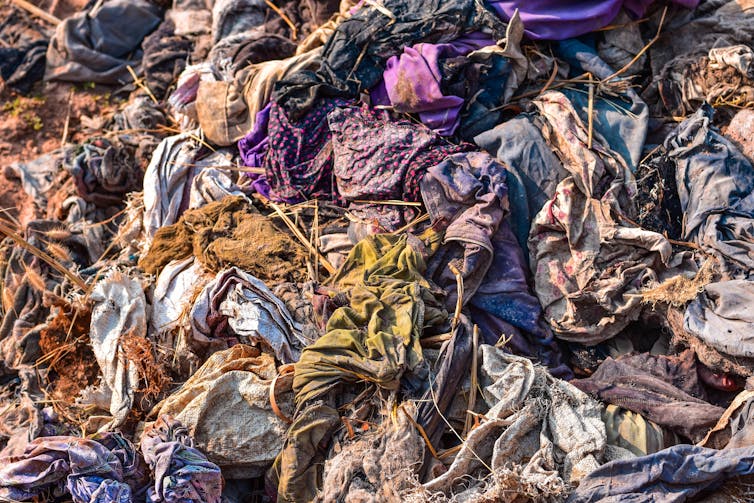
The fashion industry is one of the most polluting industries in the world, producing 20% of global wastewater and 10% of global carbon emissions – and it’s estimated that by 2050 this will have increased to 25%. A staggering 300,000 tonnes of clothes are sent to British landfills each year.

The fast fashion business model, first developed in the early 2000s is responsible for the increase in consumer demand for high quantities of low-quality clothing. Many fashion products now being designed and made specifically for short-term ownership and premature disposal. Clothing quality is decreasing along with costs, and the increased consumption levels of mass-manufactured fashion products are pushing up the consumption of natural resources.

Duy Hoang/Unsplash, FAL

The pressure to facilitate consumer hunger imposes significant social and environmental pressures on the manufacturing supply chain. The UK’s consumption levels of fashion are the highest in Europe, at 26.7kg per capita. This compares to a consumption rate of 16.7kg in Germany, 16kg in Denmark, 14.5kg in Italy, 14kg in the Netherlands and 12.6kg in Sweden.

The need for change is tentatively being acknowledged by fashion brands and manufacturers. Many different market sectors in fashion, from high street to high end, are increasingly taking action. But it’s very conservative. For example, high street retailer H&M are boycotting the use of Brazilian leather over concerns that the country’s cattle industry has contributed to the deforestation of the Amazon rainforest. Meanwhile, other brands, such as Adidas, Stella McCartney and Patagonia, are focusing their action on the use of waste products in the development of textile materials for new collections.

Of course, such policies can only be positive. But are fashion brands really doing enough to change? Recent UN reports state that we have 11 years to prevent irreversible damage from climate change. It’s doubtful that the small, incremental changes made by brands will do enough to significantly contribute towards the fight on climate change, so more pressure from consumers and campaign groups is needed.

Fashion brands are not the only ones who have the power to create change. Consumers also have leverage – and it’s key that they use it. As London Fashion Week opened earlier this month, large protests and demonstrations highlighting fashion’s contribution to climate change reinforced the impact that consumers can have on raising public awareness of environmental issues. Consumer-driven behaviour change can encourage brands to adapt their practices towards a more sustainable future for the fashion industry.

If real change is to happen, more people must begin to take a proactive approach and act in reflection of their moral values. Small lifestyle changes can create a big sustainable impact. So here are four things for you to consider before you buy any new clothes:

Think of each new item like a massive plastic bag. Karina Tess/Unsplash, FAL

1. Think before you buy

Before we just buy more new clothes and contribute to escalating pollution, we need to think about the alternative options. This might not only save us money, but is also certainly better for the environment. These options include using what we have, borrowing, swapping, thrifting and making. Buying new items should be seen as the final choice, once all other options have been considered. This approach goes very much against the principles of fast fashion, with slow and considered consumption being the priority.

2. Shop by your values

We need to think about where we shop, as each purchase effectively acts as a vote towards the practices of a brand. By doing a small amount of research into a company’s responsible values, we can begin to make informed decisions about our shopping behaviour. This will ensuring that your chosen store reflects your personal beliefs.

The road from shop to landfill is shrinking. Neenawat Khenyothaa/Shutterstock

For example, if you want to know where your fashion comes from then you need to choose a brand that is transparent and open about their supply chain. Brands like Community Clothing, owned by Sewing Bee judge Patrick Grant, tell shoppers exactly where the raw materials were sourced from, where the yarn was produced and even where the final garment was made. Likewise, if you specifically want to take action against ocean plastic waste, then a brand like Ecoalf might be for you.

3. Buy a pre-loved item

The second-hand market is having a revival. Once seen as an edgy, individual and cost-effective method of shopping, it soon fell out of favour, to be replaced by cheap, mass-market product from fast-fashion retailers. But with Oxfam opening their charity superstore and Asda launching a pre-loved fashion pop up shop, buying second-hand clothing can give fashion products a new life and prevent the purchasing of new fashion garments.

4. Dispose responsibly

As well as considering where we buy our clothes, we too must consider the end-of-life options for our fashion items. It is estimated that £140m worth of clothing goes to landfill each year. Many of these items will be made from synthetic fibres, meaning they can take anywhere between 20-200 years to decompose. Again, people should explore a range of options available here, such as donating clothing to charity, recycling, reuse, repair and passing on items to friends and family. Why not hold a clothes swap at your house one weekend?

Responsible procurement, ownership and disposal are all vital considerations when exercising your power to create sustainable change for the future of the fashion industry. Today, shoppers have more influence and ability to create change than ever before, with social media platforms allowing easier voicing of complaints and concerns. Meanwhile, the emergence of a circular economy business model is again pushing consumers to take a more active role in creating change.

We can no longer sit back and wait for brands to take action. Individual drive and willingness to change everyday behaviour will be crucial in changing the future environmental impact of fashion.

Alana James, Senior Lecturer in Fashion, Northumbria University, Newcastle

This article is republished from The Conversation under a Creative Commons license. Read the original article.


Read more tips on the Palm Oil Detectives Blog

How plywood started the destruction of Indonesia’s forests

Indonesia now has the has the fastest rate of deforestation in the world, driven largely by clearing for palm oil plantations. But the process began long ago, with one of the most common building materials: plywood.

is everywhere in and all other and #homewares. DYK: This came from in the 70’s and 80’s, 100,000’s ha of jungle and millions of animals disappeared to make way for ? by @JCU

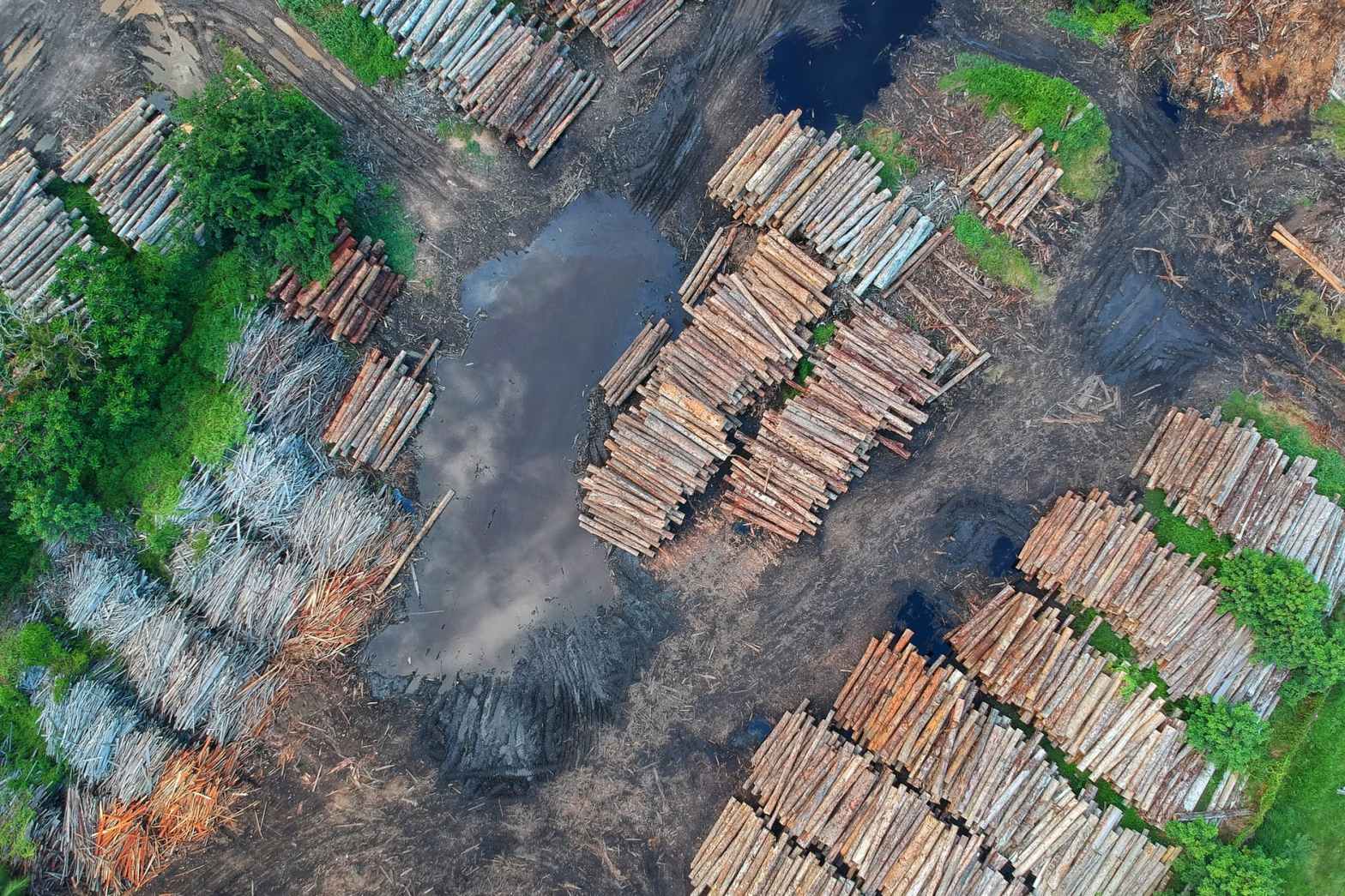
As far as commodities are concerned, it was plywood that defined the rainforests of Borneo in the 1970s and 80s, clearing the way for pulp and paper, and the booming palm oil industry.

Super forests

Endangered – thanks to plywood. Marco Abis/Flickr, CC BY-NC-ND

Indonesia was once the second-largest tropical rainforest in the world (after the Amazon), a position it has relinquished to the rainforests of the Congo.

The flora of Borneo has about 15,000 species — richer than the whole continent of Africa, which is 40-times larger.

My Yamaha guitar – not sourced from primary forest. Penny van Oosterzee, Author provided

As many as 315,000 orangutans lolled in the branches of the giant dipterocarp forests in Borneo. Now it is estimated only 27,000 orangutans are left.

Plywood is everywhere

I recently bought my very first guitar. The strong straight wood grain of the impeccably-finished instrument tells me it came from a tropical rainforest tree — a tree that may have reached 45 metres high. This tree was felled to provide the plywood that backs my guitar.

Plywood is one of the most common building materials. You will likely find it in your house, in part of your furniture and your boat.

The strings that tie us to the paradise forests of Borneo twine through our financial institutions, our law-makers and the stuff we began to buy in the 1950s.

In America — and Japan where my guitar was made — plywood fuelled the booming post-World War II building industries.

The story of plywood

In 1966, the Indonesian economy was in a bad way. General Suharto became President under dubious circumstances after inciting the bloody year of living dangerously, a massacre that killed perhaps one million communist sympathisers.

The International Monetary Fund, the World Bank, Australia and Japan together organised financial assistance through a development plan to attract private foreign investment. Development was a neat new narrative in the 1960s. But it silenced other narratives such as conservation and the rights of indigenous people.

With the help of western economic advisers, Suharto became known as the “Father of Development”. His development order crafted the basic forestry law of 1967 and associated foreign investment laws. These laws designated 143 million hectares — three-quarters of all of Indonesia’s land area — as Forest Area.

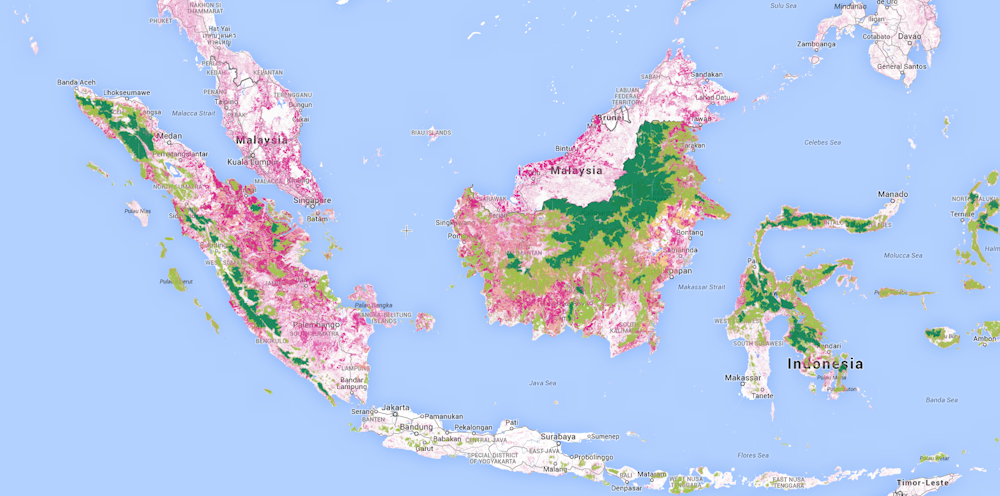
Forest loss in Indonesia between 2000 and 2013 (pink), intact forest (dark green) and degraded forest (light green), logged forest (yellow) and oil palm (light pink). Click through for interactive map. Global Forest Watch

Unambiguous exploitation rights were granted to private firms and their domestic partners for generous logging concessions, already inhabited by Indigenous Dayak groups. Despite millenia of presence, these traditional rights were subsumed to twentieth century logging firms.

Displacement of these peoples, and transmigration of seven million Javanese redistributed poverty to devastating affect. Ultimately the great fire of Borneo in 1982-83, the worst forest fire then known, was started by poor farmers clearing land for subsistence cropping.

In May 2014 Indonesia’s Human Rights Commission launched the first national inquiry into violations related to land and forests.

A tale of corruption

Indonesia’s forests were first marketed to the Philippines, a country that holds the inimical record for twentieth century deforestation.

The Philippines saw an astonishing logging spree of 30 million hectares, 80% of the country, stripped bare in three decades. In 1972, the feverish scramble resulted in more concessions offered than forest available.

A comprehensive study of logging in Indonesia showed that in three years from 1967 to 1970 logging concessions, covering over fifty three million hectares, were virtually gifted to global logging companies.

Mirroring practises honed in the Philippines, companies such as US Wyerhauser and Georgia-Pacific, and Japanese Mitsubishi were guaranteed the free repatriation of profits and tax holidays while, between 1969 and 1974, the export price of Indonesian logs rose 600%.

By 1979, Indonesia was the world’s leading producer of tropical logs, with 40% of the global market.

Plywood is one of the most commonly used building materials. Plywood image from www.shutterstock.com

One of the biggest logging companies in the world in 1970 was American Georgia Pacific. Its local partner was Bob Hasan, a close friend and business partner of President Suharto. To staunch the flow of windfall profits leaving the country (as logs) and refocus them on the central leadership Hasan re-formed the entire forestry industry by setting up a monopoly of globally lucrative plywood.

In 1981, the ban on logs leaving the country saw the exit of many big foreign investors dragging down the domestic value of logs and provided cheap raw material for plywood mills.

The Indonesian Wood Panel Association (Apkindo), controlled by Hasan, was given extraordinary powers by Suharto, including sole authority to grant export licenses to plywood makers, and the power to sanction any company that breached its rules.

Apkindo flooded the world’s plywood export market. By 1987, Apkindo’s predatory pricing strategies had captured three quarters of the American import market, and 67% of the global market for tropical plywood with immense profits channeled to Hasan and Suharto’s inner circle.

By 1994 Hasan was one of the richest men on earth.

In 1997, in an Orwellian twist, Bob Hasan was even awarded a US medal for his environmental achievements in building a giant pulp and paper mill, and an honorary professorship.

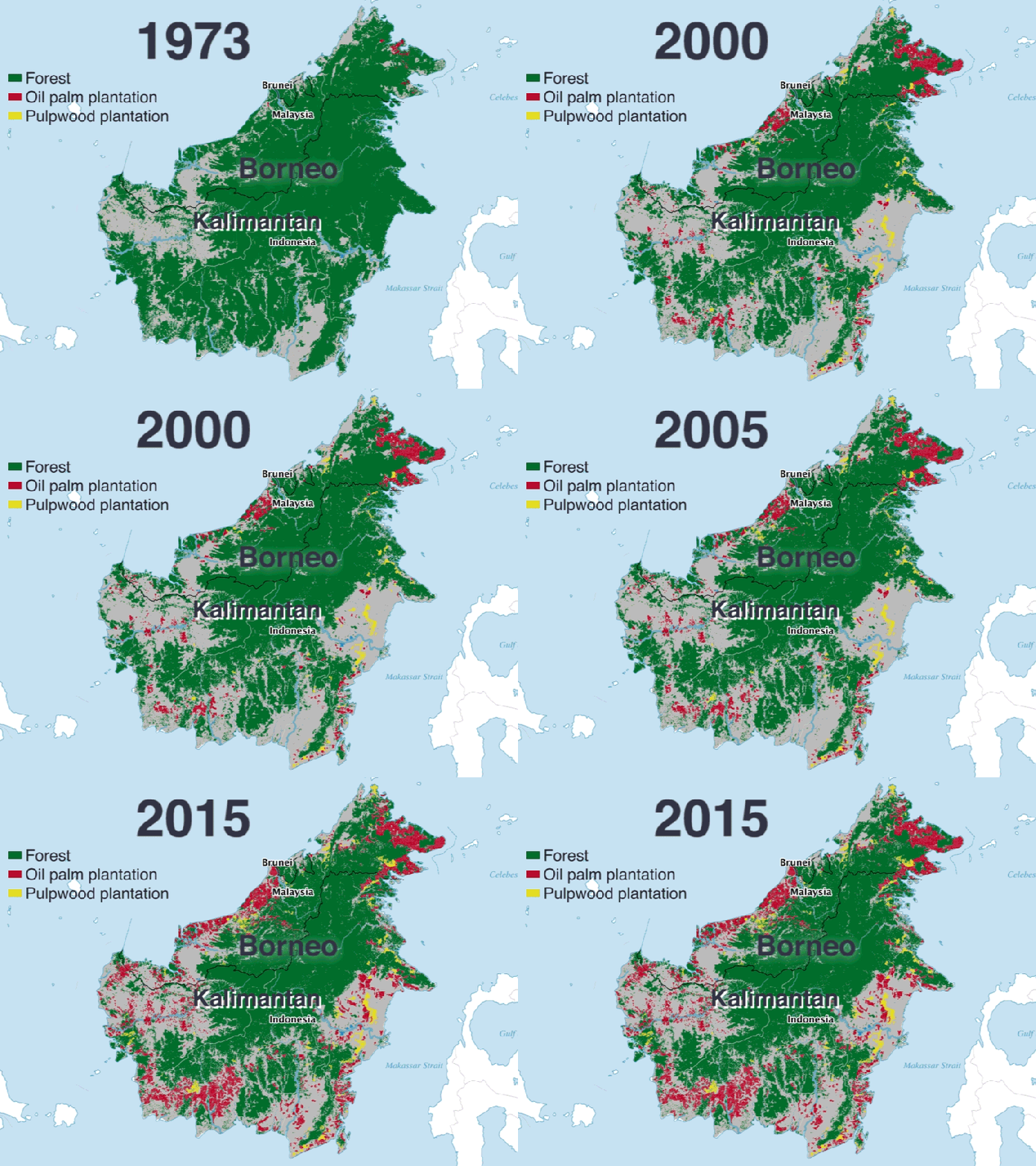
Changes and deforestation in Borneo due to palm oil plantations

Forests on fire

But by then concern at the loss of forests had began to emerge enflamed, in 1997-98, by the largest forest fire ever known that burned five million hectares of rich dipterocarp forest, and killed one third of all orangutans. If it were people, think of a fire that wipes out the population of China, the US, and Europe.

It was only at the turn of this century that someone finally looked at what was happening to Indonesia’s forest estate. The 2002 report Where have all the forests gone by Derek Holmes was shocking. It shows graphs of forest cover that slope inexorably toward zero.

Extrapolated downward, the slopes show no lowland rainforest for Kalimantan (Indonesian Borneo) by 2010, and no forests at all by 2035. In 2014 it’s not quite as bad as Holmes predicted but it’s pretty bad.

Nearly 60% of Kalimantan’s lowland forest is gone, and any rainforest that remains is being cleared faster than ever to feed consumer demand for paper and oil palm.

And as for my guitar, Yamaha has a policy that recognises unsustainable harvesting practises and procurement guidelines that focus on planted forests, ironically on plywood from plantations that now grow on land cleared of rainforest.

Penny van Oosterzee, Senior Research Adjunct James Cook University and University Fellow Charles Darwin University, James Cook University

This article is republished from The Conversation under a Creative Commons license. Read the original article.

Ecosystems could collapse in less than 50 years

We know that ecosystems under stress can reach a point where they rapidly collapse into something very different. Research published in the journal Nature Communications, shows that the size of the ecosystem is important. Once a “tipping point” is triggered, large ecosystems could collapse much faster than we had thought possible. It’s a finding that has worrying implications for the functioning of our planet. Fight back and resist for nature when you shop be and #BoycottPalmOil #Boycott4Wildlife

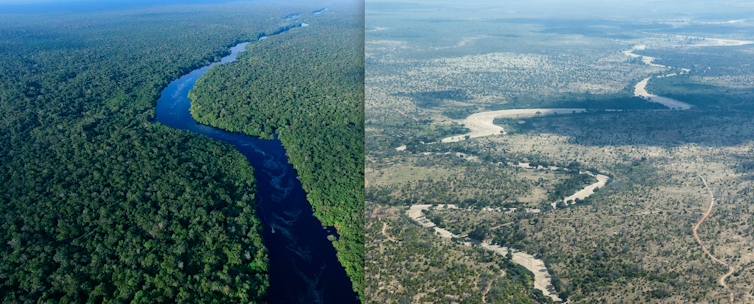
The clear water of a pristine lake can turn algae-green in a matter of months. In hot summers, a colourful coral reef can soon become bleached and virtually barren. And if a tropical forest has its canopy significantly reduced by deforestation, the loss of humidity can cause a shift to savanna grassland with few trees. We know this can happen because such changes have already been widely observed.

The Amazon (left) may one day look more like the Serengeti (right). worldclassphoto / GTS Productions / shutterstock

We started off by wondering how the size of the ecosystem might affect the time taken for these changes (ecologists call them “regime shifts”) to happen. It seems intuitive to expect large ecosystems to shift more slowly than small ones. If so, would the relationship between shift time and size be the same for lakes, corals, fisheries and forests?

We began by analysing data for about 40 regime shifts that had already been observed by scientists. These ranged in size from very small ponds in North America, through to savanna grassland in Botswana, the Newfoundland fishery and the Black Sea aquatic ecosystem.

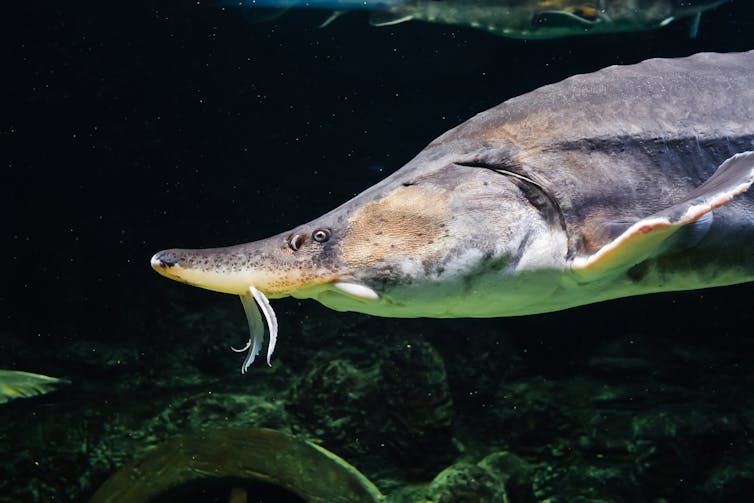
Fish like the beluga once ruled the Black Sea, but their reign ended in an ecological collapse that took just 40 years. alexkoral

We found that larger ecosystems do indeed take longer to collapse than small systems, due to the diffusion of stresses across large distances and time-lags. The relationship does seem to hold across different types of ecosystem: lakes take longer than ponds, forests take longer to collapse than a copse, and so on.

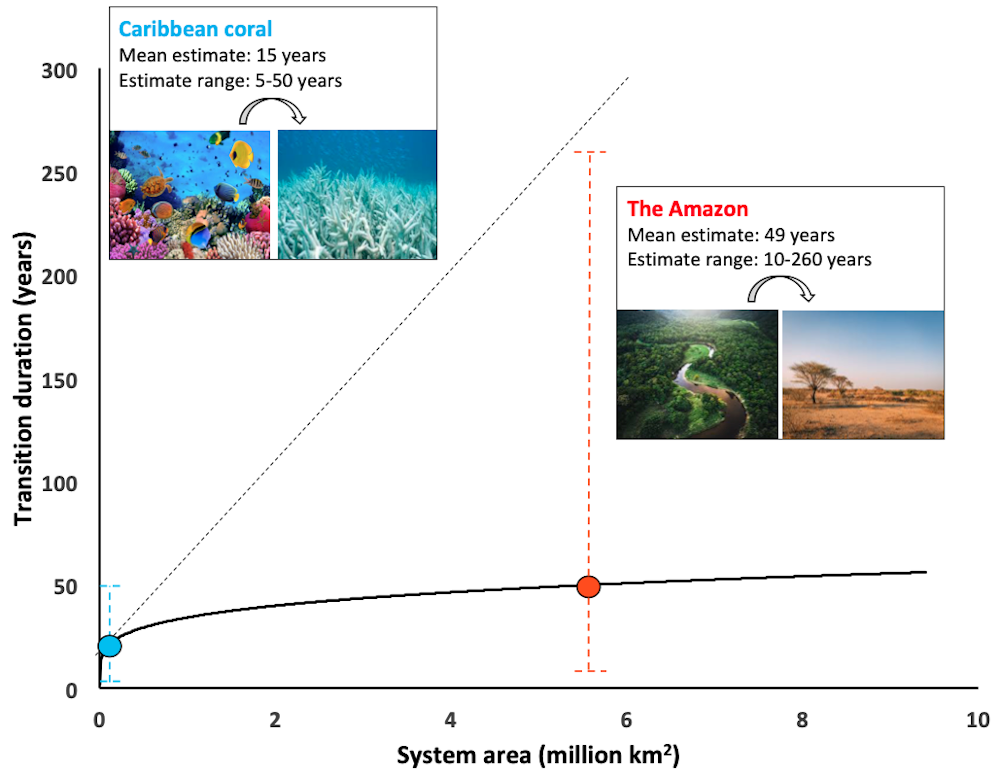
But what really stood out was that larger systems shift relatively faster. A forest that is 100 times bigger than another forest will not take 100 times longer to collapse – it actually collapses much more quickly than that. This is quite a profound finding because it means that large ecosystems that have been around for thousands of years could collapse in less than 50 years. Our mean estimates suggest the Caribbean coral reefs could collapse in only 15 years and the whole Amazon rainforest in just 49 years.

Real world observations (solid line) predict large ecosystems will collapse relatively faster than predicted by a simple linear relationship (dashed line). Dearing et al, Author provided

What explains this phenomenon? To find out, we ran five computer models that simulated things like predation and herbivory (think: wolves, sheep and grasslands) or social networks (how accents spread through society). The models support the data in that large systems collapse relatively faster than small ones.

However, the models also provide further insight. For example, large ecosystems often have relatively more species and habitats existing as connected compartments, or sub-systems. This enhanced “modularity” actually makes the system more resilient to stress and collapse, rather like the water-tight compartments in a ship prevent it from sinking if the hull is breached.

But paradoxically, the same modularity seems to allow a highly stressed system to unravel more quickly once a collapse starts. And because large systems are relatively more modular, their collapse is relatively faster.

These unravelling effects should add to concerns about the effects of fires on the long-term resilience of the Amazon to climate change, or the rapid spread of recent bush fires in Australia caused by existing fires igniting further fires. The only upside to our finding concerns ecosystems that have already been managed into alternate regimes, such as human-made agricultural landscapes. These now have much less modularity, and thus may experience relatively slow transitions in the face of climate change or other stresses.

The messages are stark. Humanity now needs to prepare for changes in ecosystems that are faster than we previously envisaged through our traditional linear view of the world. Large iconic ecosystems like the Amazon rainforest or the Caribbean coral reefs are likely to collapse over relatively short “human timescales” of years and decades once a tipping point is triggered. Our findings are yet another reason to halt the environmental damage that is pushing ecosystems to their limits.


John Dearing, Professor of Physical Geography, University of Southampton; Greg Cooper, Postdoctoral Research Fellow, Centre for Development, Environment and Policy, SOAS, University of London, and Simon Willcock, Senior Lecturer in Environmental Geography, Bangor University

This article is republished from The Conversation under a Creative Commons license. Read the original article.


Take Action in Five Ways

1. Join the on social media and subscribe to stay in the loop: Share posts from this website to your own network on Twitter, Mastadon, Instagram, Facebook and Youtube using the hashtags .

Join 3,176 other subscribers

2. Contribute stories: Academics, conservationists, scientists, indigenous rights advocates and animal rights advocates working to expose the corruption of the palm oil industry or to save animals can contribute stories to the website.

3. Supermarket sleuthing: Next time you’re in the supermarket, take photos of products containing palm oil. Share these to social media along with the hashtags to call out the greenwashing and ecocide of the brands who use palm oil. You can also take photos of palm oil free products and congratulate brands when they go palm oil free.

4. Take to the streets: Get in touch with Palm Oil Detectives to find out more.

5. Donate: Make a one-off or monthly donation to Palm Oil Detectives as a way of saying thank you and to help pay for ongoing running costs of the website and social media campaigns. Donate here

What’s my name? How wild parrots identify their young

Ground-breaking research has found that wild parrots teach their chicks unique sound signatures so that they can identify their parents. We are only just scratching the surface of knowledge about these immensely intelligent non-human beings, protect them! Be and #BoycottPalmOil #Boycott4Wildlife

Humans and dolphins create unique sounds by which individuals are identified and there was some evidence to suggest captive parrots created ‘contact calls’ – special calls used to identify family and friends. But until now, it was not clear how or if this naming process worked in nature.

To test whether contact calls were innate or learned from parents, researchers from Cornell University and the University of California in the U.S. took eggs from the nests of wild green-rumped parrotlets (Forpus passerinus) and swapped them with eggs from other wild wild green-rumped parrotlet nests. Twelve nests were used in the swapping experiment.

Eight additional nests served as controls, where the eggs were removed but then put back without swapping.

By observing the chicks’ development through video and audio rigs, the scientists saw that the young parrots used the contact calls of their adoptive parents.

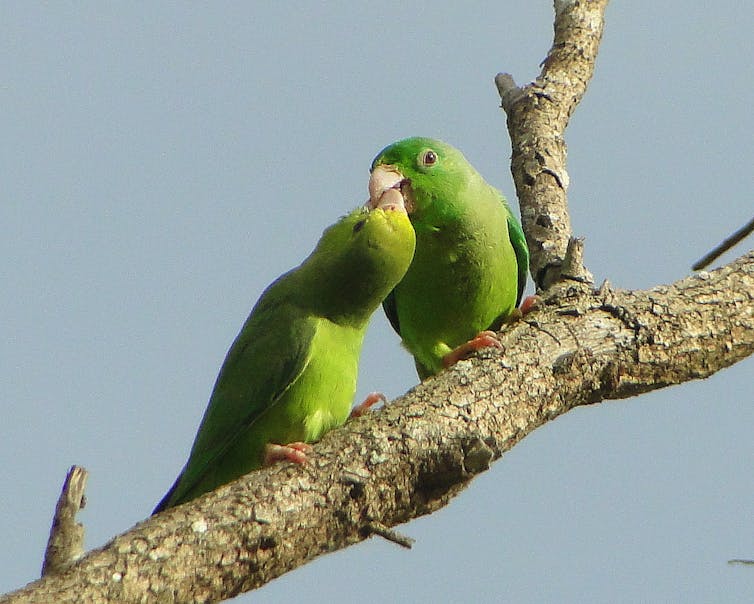
A study of green-rumped parrotlets found that adopted chicks use the names given to them by their foster parents, suggested naming is learned rather than hard-wired. Flickr/barloventomagico

This suggests that the names used to identify them were learned, rather than hard-wired by DNA from their biological parents, the authors said.

“Our results provide the first experimental evidence for learned vocal production by naive parrots in nature. Nestling contact calls were more similar to the contact calls of their primary care-givers than to adults at other nests, despite half of the nestlings being raised by foster parents,” the authors wrote in their paper, which was published by the journal Proceedings of The Royal Society B.

Sunanda Creagh, Editor, The Conversation. This article is republished from The Conversation under a Creative Commons license. Read the original article.


Take Action in Five Ways

1. Join the on social media and subscribe to stay in the loop: Share posts from this website to your own network on Twitter, Mastadon, Instagram, Facebook and Youtube using the hashtags .

Join 3,176 other subscribers

2. Contribute stories: Academics, conservationists, scientists, indigenous rights advocates and animal rights advocates working to expose the corruption of the palm oil industry or to save animals can contribute stories to the website.

3. Supermarket sleuthing: Next time you’re in the supermarket, take photos of products containing palm oil. Share these to social media along with the hashtags to call out the greenwashing and ecocide of the brands who use palm oil. You can also take photos of palm oil free products and congratulate brands when they go palm oil free.

4. Take to the streets: Get in touch with Palm Oil Detectives to find out more.

5. Donate: Make a one-off or monthly donation to Palm Oil Detectives as a way of saying thank you and to help pay for ongoing running costs of the website and social media campaigns. Donate here

We don’t know how many mountain gorillas live in the wild. Here’s why

How important are the mountain of Uganda’s Bwindi Impenetrable Forest National Park to global populations? Their importance to the health of the forest is immeasurable and irreplacable! Mountain gorillas are one of the two subspecies of eastern gorillas. They are divided into just two populations: one in the Virunga Massif that spans the borders of Uganda, Rwanda and the Democratic Republic of Congo (DRC) and one population that lives in the Bwindi Impenetrable National Park in Uganda and the adjacent Sarambwe Nature Reserve in DRC. Help them to survive, be and #BoycottPalmOil #Boycott4Wildlife

A new census – carried out by the Greater Virunga Transboundary Collaboration (a coalition of governments, non-profits and conservationists) in 2018 – shows that the population of mountain gorillas in Uganda’s Bwindi Impenetrable Forest National Park is now at 459, up from 400 in 2011. This could bring the total number count for the subspecies to 1,069 gorillas. Katerina Guschanski explains that while this is great news, these figures may still not be accurate.

The Bwindi population holds a bit less than half of all mountain gorillas in the world, thus its importance for the global survival of these great apes cannot be overstated.

Mountain gorillas receive admirable conservation attention but they’re vulnerable due to habitat encroachment, potential disease transmission from humans, poaching and civil unrest.

Mountain gorillas in Bwindi Impenetrable Forest. Shutterstock/Claire E Carter

Because there are only about 1,000 mountain gorillas left, it’s important that their population size be continuously monitored to evaluate whether, and which, conservation tactics work.

Their populations must keep growing because mountain gorillas have very low genetic diversity. This reduces their ability to adapt to future changes in the environment. For instance, if faced with new diseases, they are extremely susceptible because they don’t have genetic variants that would give them more resistance. Low genetic diversity was implicated in the extinction of some mammals, such as the mammoth.

Continued population growth is also needed to make them less vulnerable to random events, such as habitat destruction through extreme weather events, which could wipe out an entire population.

What can account for a rise in the number of gorillas?

One of the main factors that explains the higher detected number of gorillas is the change in the census technique used. During mountain gorilla censuses researchers collect faecal samples from gorilla nests (where they sleep at night) to genetically identify individuals. Gorillas that are used to human presence can be directly counted.

The teams in the latest census conducted two full systematic sweeps through the forest. They covered the entire region twice from east to west. This is a physically and logistically demanding method, but it’s very thorough.

The previous census, carried out in 2011, also covered the area twice, but only one of these attempts was a full sweep – meaning it started at one end of the forest and systematically progressed towards the other end. The other sweep was disjointed, in terms of how it covered the area and the timing, allowing gorilla groups to easily move and avoid detection.

In Bwindi, from the estimated 459 individuals, 196 are in groups that are used to people and can easily be counted. This means that population estimates are largely based on genetic profiles generated from night nests and so can’t be fully accurate because some will be missed.

Censuses of Virunga mountain gorillas are more accurate because more of their gorillas are used to human presence. In the most recent census, there’s been a rise in their population. It shows an increase from 458 individuals in 2010 to 604 in 2016. Most of these gorillas – 418 out of 604 – belong to groups that are used to human presence, they can be followed daily and easily counted.

The population increases in the Virunga gorillas is strongly attributed to active conservation. This includes continuous monitoring and veterinary attention, such as the removal of snares and treatment of respiratory diseases.

Is this rise a significant number and how accurate do you think it is?

The Bwindi census results were made publicly available in a somewhat unusual way. Scientific studies generally undergo a thorough peer-review before they are published, which has not yet happened for these findings. This means the findings haven’t yet been properly scrutinised and leaves the question about the gorilla’s population size open.

In addition, as mentioned above, the larger number of individuals detected in the 2018 census could be the result of the changed survey method. We therefore can’t make reliable comparisons to previous estimates from the 2011 and the 2006 censuses.

Consider that in the latest census, of the 33 gorilla groups – which weren’t used to the presence of people – only 14 (or 42%) were detected during both sweeps. Similarly, only one of 13 solitary individuals was detected in both sweeps. So, even with full, systematic sweeps, more than half the groups and solitary individuals were missed every time.

This shows we still do not have a good understanding of the actual population size of Bwindi mountain gorillas. The previous surveys are likely to have missed multiple groups and individuals so we can’t derive conclusions about population size changes. If another sweep were to be conducted, researchers could find more individuals, but that doesn’t necessarily mean that the population has grown.

What we can say is that there are more mountain gorillas than we thought, which is great news.

What can be done to improve census methods?

Using the results of the two census sweeps in Bwindi, researchers will estimate the likely number of gorillas. The accuracy and precision of the estimate depends strongly on how many gorilla groups and individuals were detected in both sweeps.

To make census figures more concrete, more sweeps need to be included so that more individuals are confirmed. This would make the population size estimates more accurate with less uncertainty.

Katerina Guschanski, Associate professor, Uppsala University This article is republished from The Conversation under a Creative Commons license. Read the original article.


Take Action in Five Ways

1. Join the on social media and subscribe to stay in the loop: Share posts from this website to your own network on Twitter, Mastadon, Instagram, Facebook and Youtube using the hashtags .

Join 3,176 other subscribers

2. Contribute stories: Academics, conservationists, scientists, indigenous rights advocates and animal rights advocates working to expose the corruption of the palm oil industry or to save animals can contribute stories to the website.

3. Supermarket sleuthing: Next time you’re in the supermarket, take photos of products containing palm oil. Share these to social media along with the hashtags to call out the greenwashing and ecocide of the brands who use palm oil. You can also take photos of palm oil free products and congratulate brands when they go palm oil free.

4. Take to the streets: Get in touch with Palm Oil Detectives to find out more.

5. Donate: Make a one-off or monthly donation to Palm Oil Detectives as a way of saying thank you and to help pay for ongoing running costs of the website and social media campaigns. Donate here

Video: Slowing deforestation is the key to preventing the next pandemic – but what does that cost?

Les Kaufman, Boston University

In a recent journal article, a team of biologists, medical scientists, environmental scientists and conservationists proposed a number of measures to reduce the likelihood of future pandemics, many of which originate with wild animals such as bats. They argue that spending billions of dollars per year – a fraction of the cost of pandemics – on programs that reduce deforestation would curtail wildlife trade and support the communities that live on the forests’ edge.

Research by @BU_Tweets shows that stopping is the key in preventing another global and costs a fraction of other interventions. Join the ! Read more

Les Kaufman, professor of biology at Boston University and a member of the team, spoke about what causes pandemics, and how we might prevent them.

What was this study trying to find?

I helped organize a group of researchers from a variety of related disciplines to ask the question: “Can we suppress the emergence of pandemic pathogens like what we’re experiencing now with COVID-19?”

The estimated cost of dealing with COVID-19 is that it will wind up in the tens of trillions of dollars globally. We propose spending about $22 billion to $30 billion a year on programs that will reduce the likelihood of future pandemics emerging from the edges of tropical forests.

What people may not realize is that there are at least two potentially pandemic pathogens coming into the human population every year. And about every one or two decades, one of them actually succeeds in becoming a global pandemic. We forget we are still dealing with HIV. MERS and SARS-1 never really hugely impacted the United States so we pretend they didn’t happen. But these are things that we’re constantly at risk of.

What kinds of diseases does this study focus on preventing?

We have focused on zoonoses, which are diseases that come into the human population from animals. The best example is the cluster of diseases caused by a group of viruses called coronaviruses that are harbored by bats in the wild.

For reasons we’re just beginning to understand, bats are able to tolerate an unusually high viral load. Their relationship with the virus and the function of their immune system is different than ours. Bats are critical pollinators. We want them to leave the forest and come into our crops so that they get pollinated. They’re critical for eating enormous amounts of insect pests. But none of that requires going out and grabbing the bats by hand, or cooking them or keeping them in cages near other animals that we eat or have close to us.

borneo-deforestation-palm-oil-2

What kind of practices lead to zoonoses spreading?

We have been deforesting at an accelerated rate, largely to plant crops such as oil palm or in some cases acacia. So tropical forests are leveled and roads are driven into it. Once people have access for one reason, other businesses crop up, among them hunting for bush meat, and the exotic wildlife trade for traditional medicine and pets. So people go into the forest and they catch these animals and they bring them to markets, where lots of live wild and domestic animals are in close proximity to each other. And that’s how the virus gets into us – either directly from the wildlife, or from livestock that we placed in close proximity to infected wildlife.

A lot of the novel viruses are also coming from wildlife when we destroy their habitats. So they begin to forage in our farms and agricultural areas, at which point they’re exposed to our domestic livestock which can, as in the wet markets, serve as a bridge between the wild animal harboring the virus and humans.

How can governments justify spending billions on pandemic prevention?

That may sound like a lot of money, but let’s remember, the cost of a single pandemic is in the trillions. So if every pandemic costs us $15 trillion, even if you prorate that over a bunch of years, $30 billion a year is nothing. And that doesn’t even include the cost in human suffering, which matters greatly to us but is not meaningful to represent in dollar terms.

What should the money be spent on?

In our paper, we looked at the cost of arresting deforestation, of regulating the trade in wild bushmeat, and reducing incursions into the forest. A lot of side benefits come out of it. We preserve biodiversity, which has lots of benefits down the road. We increase the amount of forest absorbing carbon dioxide, helping with climate change. And we also make available renewable forest products, especially non-timber forest products … but hopefully not bushmeat, at least beyond local, artisanal needs.

But the key to the whole thing is that people living at the forest edge should have a good life. Should have access to decent livelihoods, good health care, and that their children can be educated. And so we’re beginning to understand that the leading edge of all this is regulating deforestation, and the bushmeat trade, thus reducing contact between people and virus-laden wildlife.

How do governments deal with the first of the two major causes – deforestation?

Deforestation can be slowed down and even reversed in largely intact forests like the Amazon. These areas can be managed to reduce deforestation through governance, through laws and through monitoring from the air and from satellites. And in Brazil, this was very, very successful. Until recently, deforestation in Brazil had come way down. But with the new Bolsonaro administration, a lot of that progress was reversed and lost.

In fragmented forests that are receding rapidly, we need to do a couple of things. We need to help the forest to heal, reconnecting fragments back into a continuum so that the wildlife have a forest to stay in and they’re not wandering all over in our fields.

The other thing we need to do is address the needs of the edge of the forest. The people who live there may not even realize how much damage they’re doing to themselves in an attempt to live and survive day to day. So what do these people need? Health care, education and a way to make a living.

[Deep knowledge, daily. Sign up for The Conversation’s newsletter.]

How can the trade in bushmeat be curtailed?

We should closely regulate all other kinds of trade and wildlife that are potential pathogen vectors. It means patrols against poaching in the forest itself. It means changes in the way the markets work. And it means enforcement of international laws on the sale of threatened and endangered species. Meanwhile, we need to maintain the work of scientists who monitor wildlife and humans for novel viruses, and who seek to understand pathogens so we can nip each potential pandemic in the bud.

Whose responsibility would this be?

If we look at the countries that are able to contribute to such a fund, they’re mostly in the so-called developed world. The U.S., Europe, Japan and as a matter of fact, China. Some people say it’s unfair, the U.S. shouldn’t be spending money for other people’s benefit. We’re not spending money for other people’s benefit – the fact that other people benefit is a bonus. We’re spending money to protect ourselves. And the amount of money we’re talking about is trivial against the cost of not spending it. The more the responsibility is shared, the better.

Les Kaufman, Professor of Biology, Boston University, Boston University

This article is republished from The Conversation under a Creative Commons license. Read the original article.

Southern Patas Monkey Erythrocebus baumstarki

Southern Patas Monkey Erythrocebus baumstarki

Location: Tanzania (extinct in Kenya)

IUCN Status: Critically Endangered

The Southern Patas Monkey Erythrocebus baumstarki is an imperiled rare primate of East Africa’s savannahs. They are critically endangered due to multiple human-related threats including habitat loss from agriculture and hunting for bushmeat. These long-limbed beauties are vital seed disperser throughout their home. Take action every time you shop 🌴🐒 #BoycottPalmOil #Boycott4Wildlife 🌴🔥⛔️

Long-limbed and remarkable Southern Patas are critically endangered in 🇹🇿 and extinct in 🇰🇪due to and . The fastest in the world deserves better protection! Take action and 🧐💪👇 https://palmoildetectives.com/2021/05/01/southern-patas-monkey-erythrocebus-baumstarki/

The Southern Patas (Erythrocebus baumstarki) is an elusive, long-limbed once common across northern and parts of and now on the very edge of . With a lean, agile body built for speed, they are among the fastest-running primates in the world, capable of reaching speeds up to 55 km/h. Once ranging over approximately 66,000 km², their habitat has been decimated by agriculture, human settlements, and bushmeat hunting, reducing their known range by over 85% in recent decades. By 2021, estimates suggested fewer than 200 individuals remained in the wild, restricted to small populations in western Serengeti National Park and its surroundings (de Jong & Butynski, 2021).

Without urgent intervention, this striking species could be the next primate extinction in Africa. Help them every time you shop and campaign for these rare primates, every time you shop go and !

Appearance and Behaviour

The main threat to the Southern Patas Monkey is habitat degradation,fragmentation, and loss due primarily to agricultural expansion and intensification (both crops and livestock).

IUCN red list

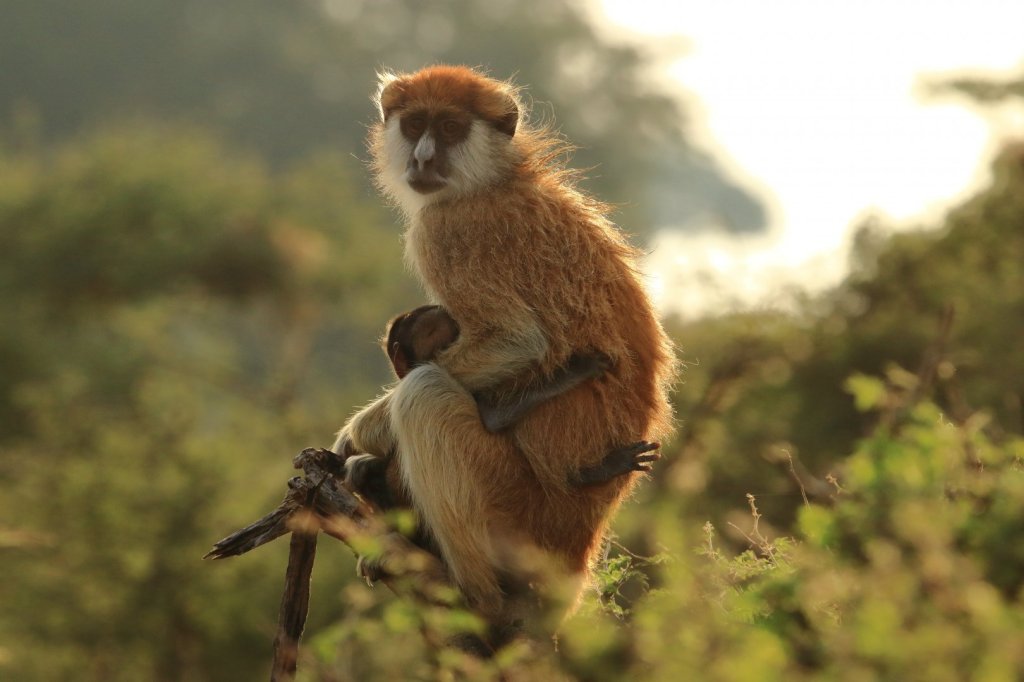
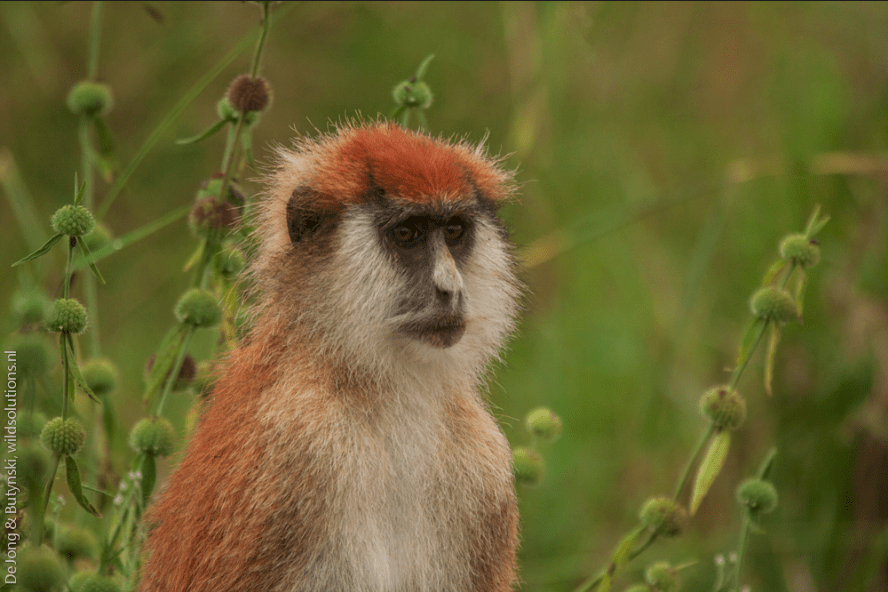
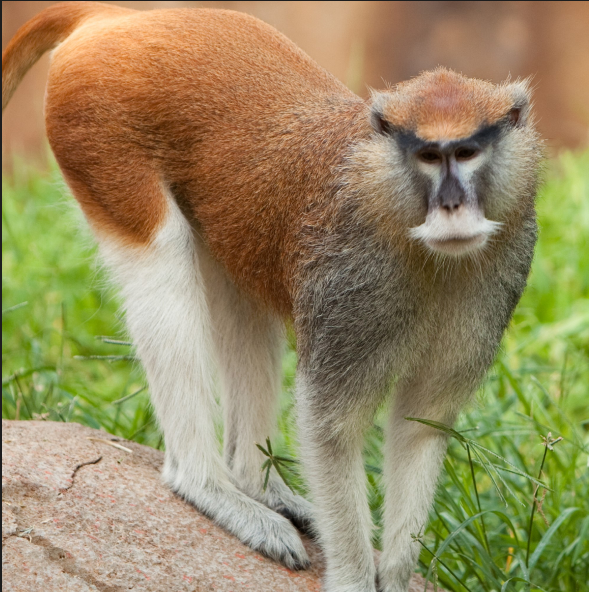
Southern Patas Monkeys have a lanky and long-limbed appearance. Juveniles possess a reddish-brown crown which may become grey in adults.

Southern Patas Monkeys are slender and long-limbed, designed for high-speed sprints across the open savannahs and dry forests of . Their fur is a striking reddish-gold, contrasting with a white underbelly and black facial markings. Their back and flanks are covered with shaggy reddish fur with their bellies are white or cream. There are sex differences and males are on average twice as larger (4-7 kilos) than females, with more pronounced facial features. Unlike many other primates, they are largely terrestrial and prefer running over climbing, using their speed to evade predators rather than seeking refuge in trees.

Highly social, they live in small, female-led groups, with a dominant male providing protection. Their diet primarily consists of gum, fruit, seeds, and insects, making them vital to their ecosystems as seed dispersers. However, habitat loss and increasing human activity have forced them into shrinking territories, leading to a sharp population decline (de Jong & Butynski, 2021).

Diet

Southern Patas Monkeys are predominantly omnivores and feed on pods, seeds, gall, gum, flowers and young leaves acacia trees. Acacia gums are defended by ants, these monkeys will continue to eat the gum while being attacked by the ants until the ant bites become too painful to bear. Acacia gum is supplemented with grasses, berries, seeds and fruits. Most of the meat portion of their diet comes from ants and crickets, however they sometimes supplement this with eggs, lizards and small birds when these foods become available.

Southern Patas Monkey Erythrocebus baumstarki

Threats

The Southern Patas Monkey faces a multitude of existential threats, primarily driven by human activity:

Habitat Destruction: Agricultural expansion, cattle grazing, charcoal production, and human settlements are rapidly eroding their already limited range. The increasing human population along the Serengeti boundary has intensified habitat fragmentation (Veldhuis et al., 2019).

Hunting and Bushmeat Trade: These monkeys are frequently killed for bushmeat, with their pelts also used in traditional ceremonies and witchcraft. Retaliatory killings occur when they raid crops in search of food (Loishooki et al., 2016).

Competition with Livestock: Grazing by livestock in protected areas like the Grumeti Game Reserve has significantly degraded their habitat, leaving little space or food for the species (G. Tolchard, pers. comm. 2019).

Human Encroachment and Water Scarcity: Rapid human expansion in the Ngorongoro Conservation Area and Serengeti region has led to a severe reduction in available water sources, forcing monkeys to compete with livestock (IUCN, 2014).

Local Extinctions: The species has already been extirpated from Kenya and from parts of Tanzania, including the Kilimanjaro region, since 2011. Only a handful of individuals remain in protected areas (de Jong & Butynski, 2021).

The main threat to the Southern Patas Monkey is habitat degradation, fragmentation, and loss due primarily to agricultural expansion and intensification (both crops and livestock), charcoal production, fire, and ‘development’ activities (e.g., settlements, roads; De Jong et al. 2009, Loishooki et al. 2016), but also hunting and loss of access to water. In Grumeti Game Reserve, western Serengeti, Whistling Thorn Acacia woodlands are disappearing due to over-stocking by livestock (G. Tolchard pers. comm. 2019).

Southern Patas Monkey Erythrocebus baumstarki

Habitat and Range

Historically, the Southern Patas Monkey ranged across open grasslands and acacia woodlands in northern Tanzania and Kenya. However, their range has been dramatically reduced, and today they are believed to exist only within the western Serengeti ecosystem, primarily in protected areas such as Serengeti National Park, Maswa Game Reserve, and Grumeti Game Reserve.

Their habitat consists of dry savannahs, acacia woodlands, and open grasslands, where they forage for gum, fruits, seeds, and insects. Unlike their close relatives, they rely less on trees and more on speed to evade predators (de Jong & Butynski, 2021).

Conservation Efforts

• Legal Protection: The species is protected under Tanzanian law, but enforcement is weak, and poaching remains a major threat.

• Habitat Conservation: Conservation efforts focus on protected areas like Serengeti National Park and Grumeti Game Reserve, where the last populations persist.

• Community Awareness: Conservation programs are working to engage local communities in protecting these monkeys by promoting alternative livelihoods and discouraging hunting (Mongabay, 2024).

Southern Patas Monkey Erythrocebus baumstarki

Take Action!

This is the most critically endangered primate in East Africa, and without urgent intervention, they could be extinct within a decade. Use your voice and your choices to fight for them! Resist and fight for their survival each time you shop! #BoycottPalmOil #Boycott4Wildlife

Support conservation organisations that protect habitats in Tanzania.

Boycott deforestation-linked products like palm oil, tobacco and meat which contributes to habitat loss.

Spread awareness—share this information and encourage sustainable travel in East Africa.

Advocate for stronger legal protection against bushmeat hunting.

You can support this beautiful animal

There are no known conservation activities for this animal. Share out this post to social media and join the #Boycott4Wildlife on social media to raise awareness

Further Information

iucn-rating-critically-endangered

de Jong, Y.A. & Butynski, T.M. 2020. Erythrocebus baumstarki. The IUCN Red List of Threatened Species 2020: e.T92252436A92252442. https://dx.doi.org/10.2305/IUCN.UK.2020-2.RLTS.T92252436A92252442.en. Downloaded on 12 March 2021.

de Jong, Y. A., & Butynski, T. M. (2021). Is the Southern Patas Monkey Africa’s Next Primate Extinction? Reassessing taxonomy, distribution, abundance, and conservation. American Journal of Primatology, 83(8), 1-15. https://doi.org/10.1002/ajp.23316

de Jong, Y. A., Butynski, T. M., Isbell, L. A., & Lewis, C. (2009). Decline in the geographical range of the southern patas monkey Erythrocebus patas baumstarki in Tanzania. Oryx, 43(2), 267–274.

Truscott, R. (2024, December 9). Gum-eating Tanzanian monkey is AWOL, fueling extinction fears. Mongabay. Retrieved from https://news.mongabay.com/2024/12/gum-eating-tanzanian-monkey-is-awol-fueling-extinction-fears/


Contribute to palm oil detectives - black rhino in profile

How can I help the ?


Take Action in Five Ways

1. Join the on social media and subscribe to stay in the loop: Share posts from this website to your own network on Twitter, Mastadon, Instagram, Facebook and Youtube using the hashtags .

Join 3,176 other subscribers

2. Contribute stories: Academics, conservationists, scientists, indigenous rights advocates and animal rights advocates working to expose the corruption of the palm oil industry or to save animals can contribute stories to the website.

3. Supermarket sleuthing: Next time you’re in the supermarket, take photos of products containing palm oil. Share these to social media along with the hashtags to call out the greenwashing and ecocide of the brands who use palm oil. You can also take photos of palm oil free products and congratulate brands when they go palm oil free.

4. Take to the streets: Get in touch with Palm Oil Detectives to find out more.

5. Donate: Make a one-off or monthly donation to Palm Oil Detectives as a way of saying thank you and to help pay for ongoing running costs of the website and social media campaigns. Donate here

Nature’s Hidden Wealth: Conservation’s Opportunity

Animals and plants constitute a very small part of our native biodiversity (roughly 5%). The vast majority – fungi, bacteria and the enormous diversity of other microscopic organisms, including invertebrates – is a massive, largely unexplored economic resource.

The best known examples of commercial uses for biodiversity are the thousands of drugs secreted by bacteria and fungi. But others are examples of what is known as “bio-inspiration” and “bio-mimicry”, where wild species provide the blueprints for products. The combination of nature and biotechnology can offer us all a tentative reason to hope for the future.

While these products are of immense commercial value, the source species are rarely harvested in the conventional sense. Rather, a few specimens provide ample material for analysis.

So for microbes, invertebrates or plants, there is little concern that these industries are threats. For vertebrates, such as sharks, samples are either non-destructive or severely limited.

Spider silk is just one of the ways nature has inspired innovation. Silk image from http://www.shutterstock.com
Robotics have taken inspiration from nature too. Biomimetics and Dexterous Manipulation Laboratory, CC BY

Products such as drugs can be sourced from single-celled animals and plants and from microbes of all kinds, even those that are currently uncultivable. Super-water-repellent materials, are sourced from the outer surfaces of organisms as different as insects and higher plants.

Why are these stories so important?

Many charismatic animals such as tigers and whales are used as icons for conservation, so can species that we use for developing products – but with the added grunt that they are central to the economy. These are very sexy stories; fascinating tales of the transformation of natural phenomena into industrial products.

Third, much of biodiversity exploration research is overseas. Some Australian scientists and engineers are involved, for example, in utilising the arrangements of plant fibres to inspire lightweight strengthening of aircraft engines. However, it is hard to find the promotion of this exciting research in any policy nation-wide; political, economic or scientific.

Scientists and engineers inside many industries are forging ahead with exploration for biodiversity products in many, non-destructive and highly imaginative ways all over the world. It’s time our governments and conservationists wised up.

Andrew Beattie, Emeritus Professor, Macquarie University This article is republished from The Conversation under a Creative Commons license. Read the original article.


Take Action in Five Ways

1. Join the on social media and subscribe to stay in the loop: Share posts from this website to your own network on Twitter, Mastadon, Instagram, Facebook and Youtube using the hashtags .

Join 3,176 other subscribers

2. Contribute stories: Academics, conservationists, scientists, indigenous rights advocates and animal rights advocates working to expose the corruption of the palm oil industry or to save animals can contribute stories to the website.

3. Supermarket sleuthing: Next time you’re in the supermarket, take photos of products containing palm oil. Share these to social media along with the hashtags to call out the greenwashing and ecocide of the brands who use palm oil. You can also take photos of palm oil free products and congratulate brands when they go palm oil free.

4. Take to the streets: Get in touch with Palm Oil Detectives to find out more.

5. Donate: Make a one-off or monthly donation to Palm Oil Detectives as a way of saying thank you and to help pay for ongoing running costs of the website and social media campaigns. Donate here

Golden-bellied Mangabey Cercocebus chrysogaster

Golden-bellied Mangabey Cercocebus chrysogaster

Endangered

Location: Democratic Republic of Congo (DRC)

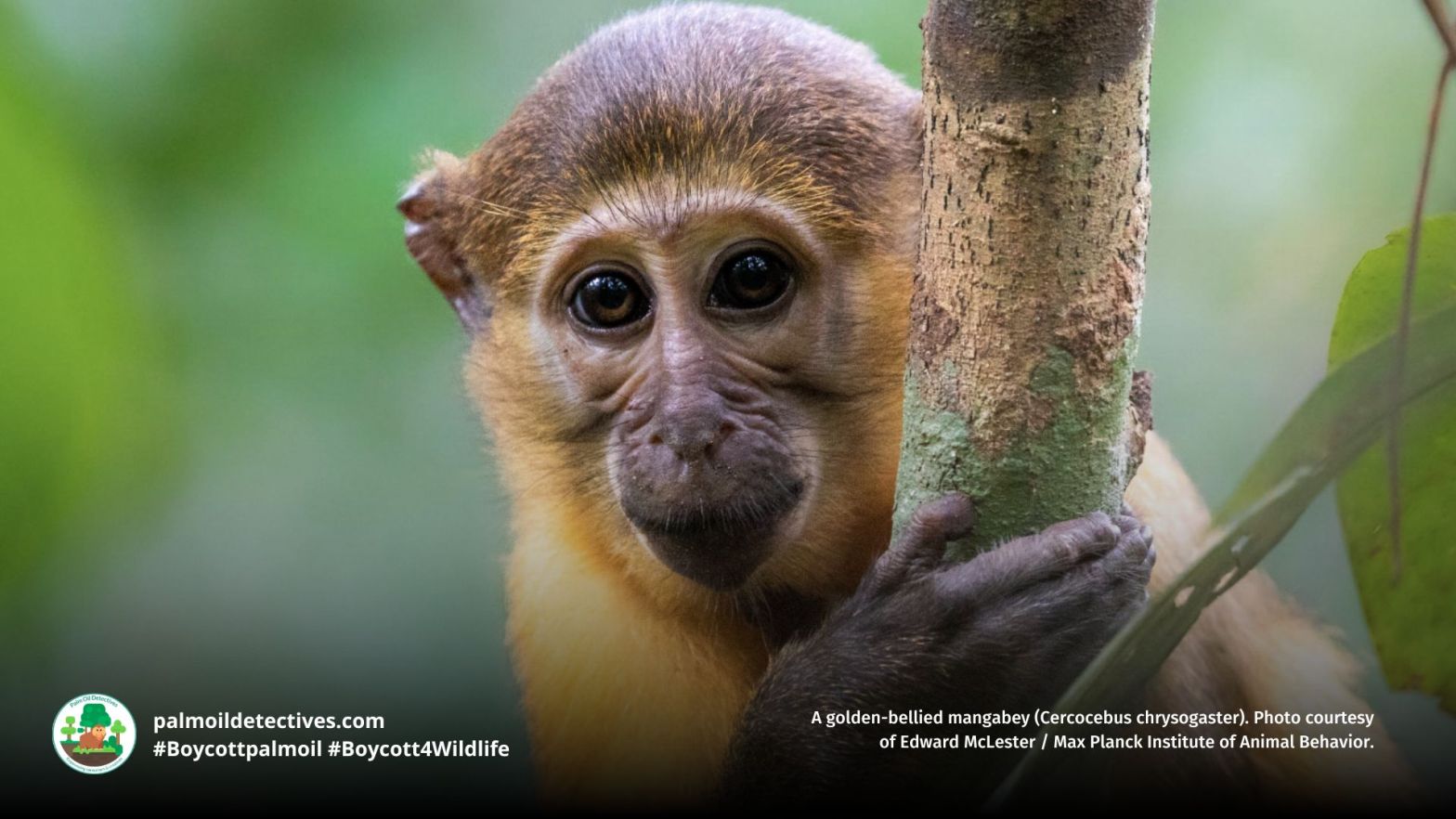
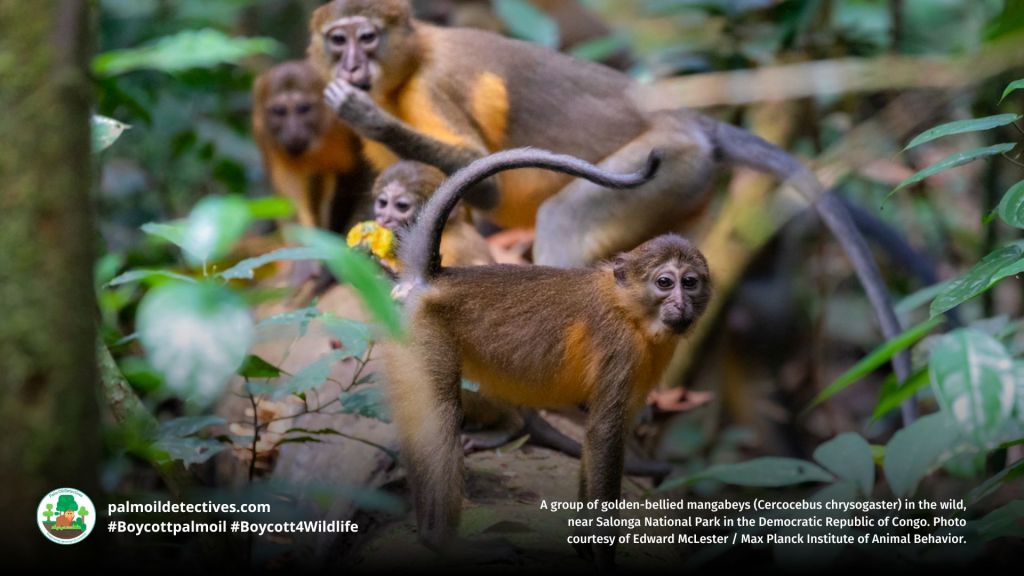
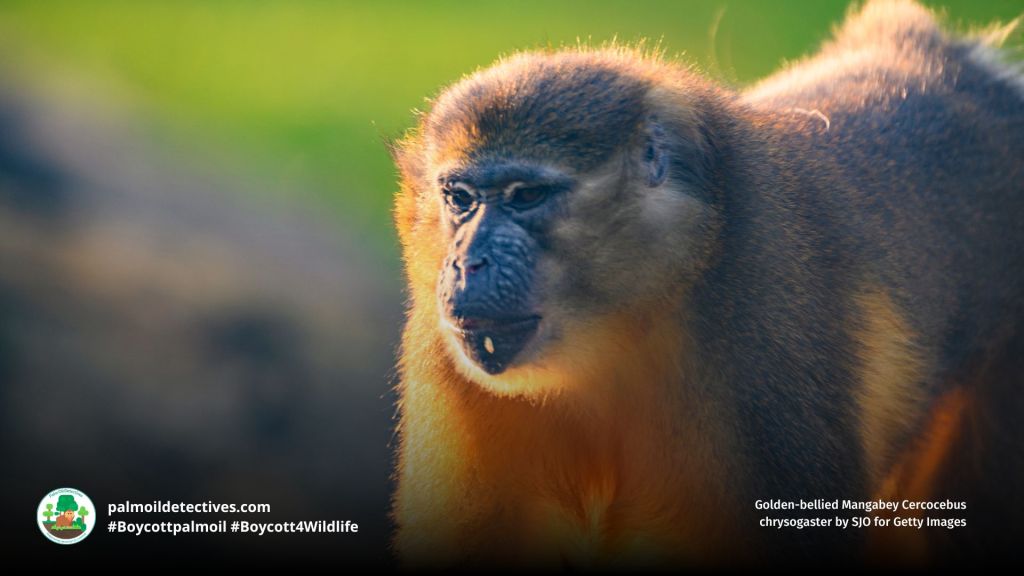
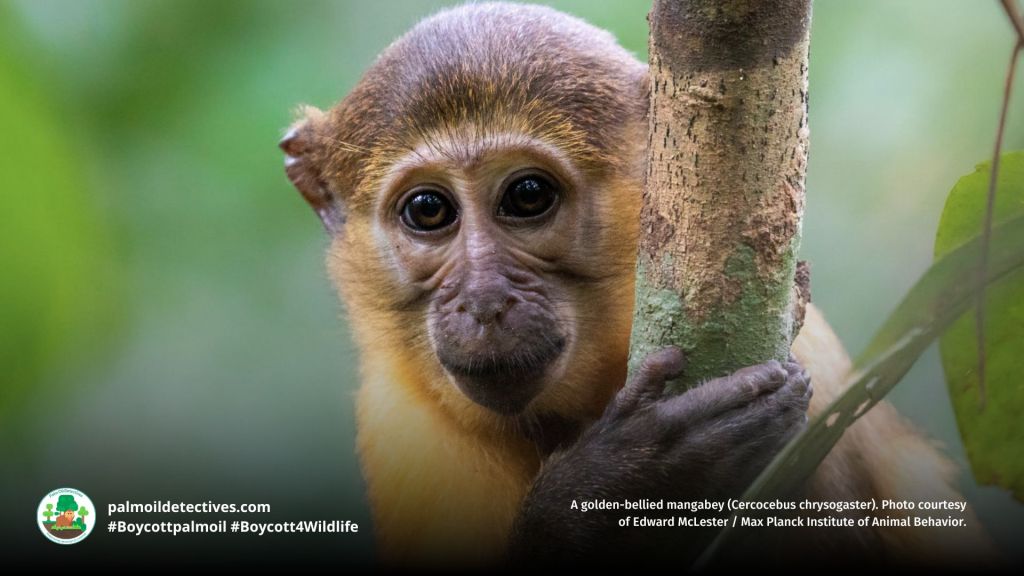
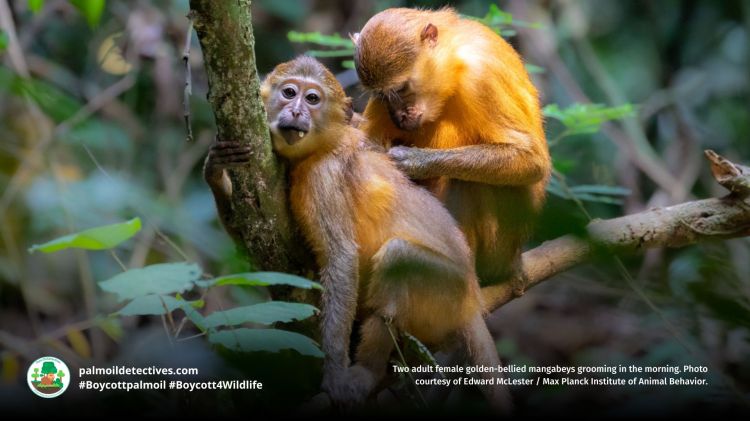
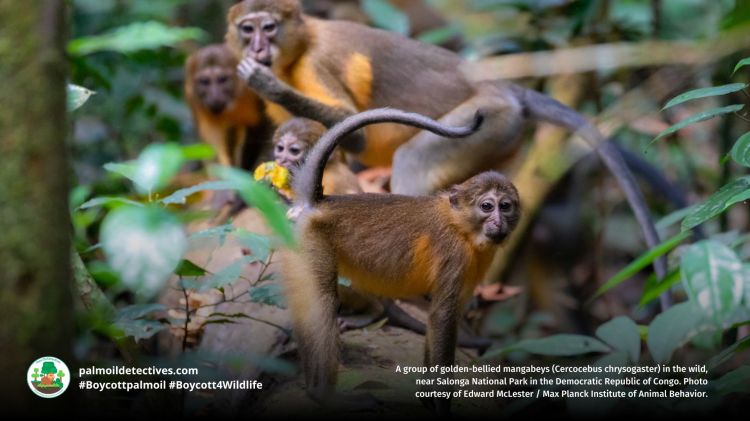
The golden-bellied mangabey (Cercocebus chrysogaster) is an intriguing and elusive monkey endemic to the Democratic Republic of Congo (DRC). Named for the vibrant golden hue of their undersides, these primates are known for their intelligence, complex social behaviours, and unique ecological role. Found in the remote tropical forests along the Congo River Basin, these monkeys remain poorly studied due to their limited range and secretive nature.

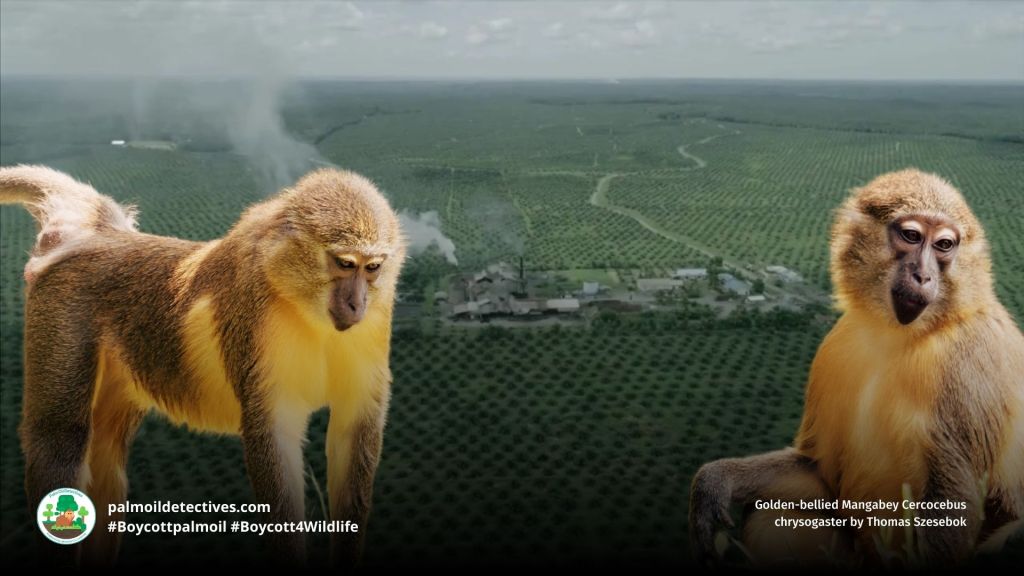
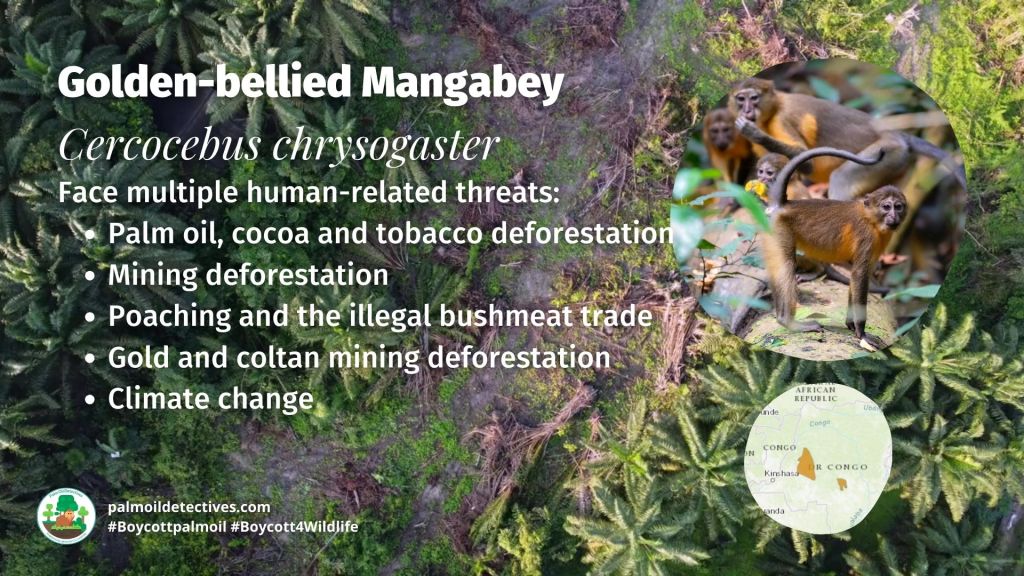
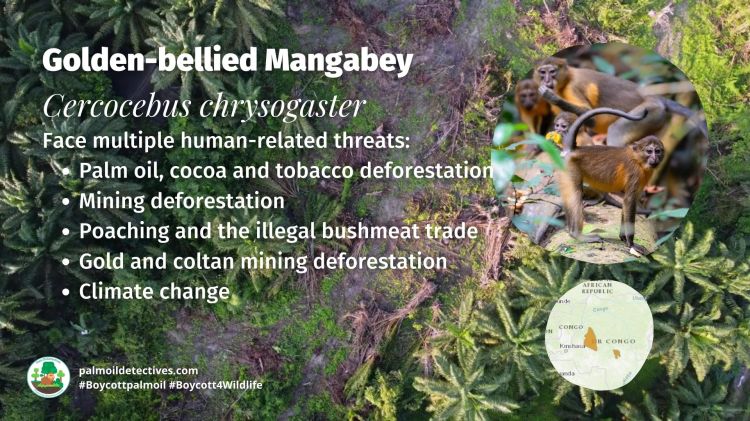
Tragically, the golden-bellied mangabey faces mounting threats from habitat destruction, driven by logging, coltan and gold mining, and agricultural expansion, including palm oil plantations. Their population continues to decline due to hunting and habitat fragmentation. Act now to protect these monkeys and their fragile habitat—boycott palm oil and stand against deforestation.

Golden-bellied Mangabeys are gregarious and social 🐒🐵🩷who are in the 🇨🇩 from the trade and for . Help them to survive 🌴🪔☠️🩸🤢⛔️ @palmoildetect https://palmoildetectives.com/2021/04/24/golden-bellied-mangabey-cercocebus-chrysogaster/

Golden-bellied have vivid golden bellies 🐵✨💛 Known for their social natures, they’re due to and , tobacco and Fight for them 🌴🪔☠️🩸🤢⛔️ @palmoildetect https://palmoildetectives.com/2021/04/24/golden-bellied-mangabey-cercocebus-chrysogaster/

The species is also threatened by habitat loss due to logging, leading to declines in range area and range occupancy. Inogwabini et al. (2013) report that west of the Lake Mai-Ndombe, where the species no longer occurs, local communities reported their disappearance over the course of two decades following the arrival of intensive logging.

IUCN red list

Appearance and Behaviour

Golden-bellied Mangabeys are only found in the Democratic Republic of Congo in tropical rainforests. They are known for their striking bright yellow and gold bellies which is easily distinguishable from their orange fur.

They medium-sized monkeys, weighing between 5–10 kg. They have sleek, dark grey fur with a striking golden-yellow underside that gives them their name. Their faces are expressive, with pale eyelids and a short muzzle that accentuates their curious and alert demeanour.

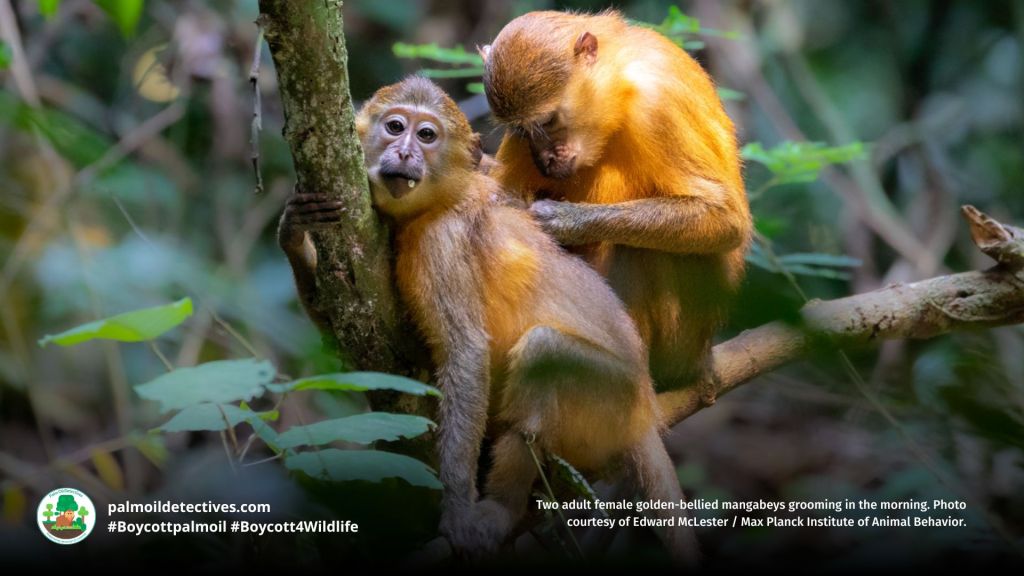
These mangabeys are highly social, living in groups of 10–30 individuals. They exhibit intricate communication through vocalisations, facial expressions, and physical gestures. A fascinating behaviour observed in these primates is their occasional consumption of mammalian prey, a rare trait among mangabeys. Research shows that golden-bellied mangabeys sometimes hunt small animals, sharing their spoils within their group—a behaviour that highlights their adaptability and complex social interactions (ResearchGate, 2024).

Geographic Range

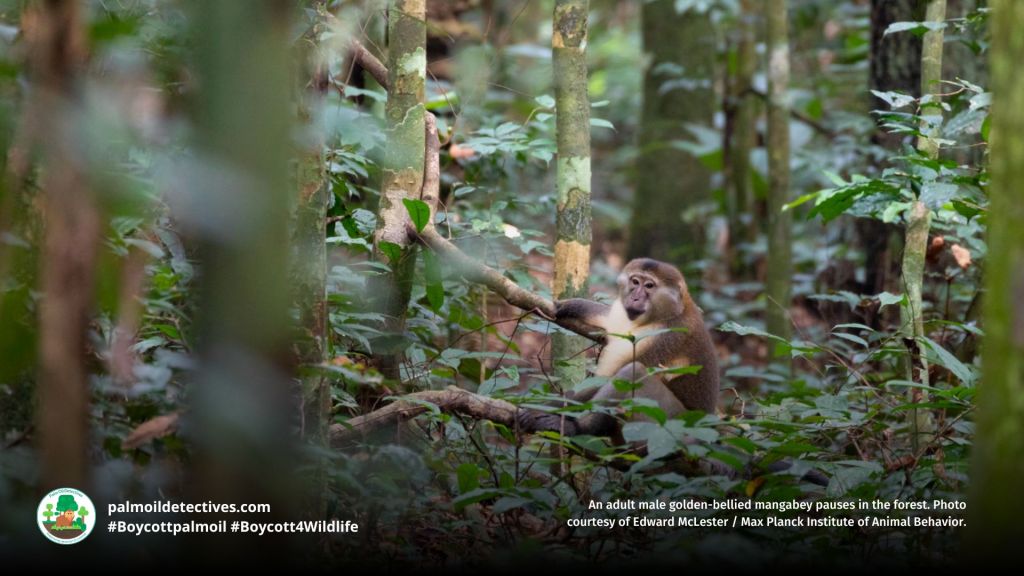
Golden-bellied mangabeys are restricted to the dense tropical forests of the Congo River Basin in the DRC. Their primary habitats include swamp forests and lowland rainforests, areas that provide a mix of canopy cover and access to fruiting trees.

Their range is limited, with populations concentrated in fragmented forest patches. This restricted distribution makes them particularly vulnerable to habitat loss and environmental changes (IUCN, 2020).

Golden-bellied Mangabey Cercocebus chrysogaster

Diet

Golden-bellied mangabeys are primarily frugivorous, with fruits comprising the majority of their diet. They also consume seeds, leaves, flowers, and insects. Their foraging habits contribute to seed dispersal, making them vital to forest regeneration.

Recent studies have highlighted their occasional consumption of small vertebrates, including mammals, showcasing a level of dietary adaptability not commonly associated with mangabeys (ResearchGate, 2024). This dietary flexibility may help them survive in degraded or fragmented habitats but also underscores the challenges they face as their traditional food sources dwindle.

Reproduction and Mating

These monkeys have a gestation period of approximately six months, with females typically giving birth to a single infant every 1–2 years. Juveniles will not be fully independent until they are 4 to 5 years old. They are a nomadic, social species that travel in groups from 8 to 30 individuals. They have pouches in their cheeks which allow them to transport food. Mothers are the primary caregivers, but infants also interact closely with other group members, learning essential survival skills through observation and play.

Golden-bellied mangabeys exhibit strong social bonds within their groups, which may help ensure the survival of young despite the environmental challenges they face.

Golden-bellied Mangabey Cercocebus chrysogaster

Threats

The golden-bellied mangabey is classified as Endangered by the IUCN. Conservation initiatives in the Congo Basin focus on protecting their habitats through anti-logging measures, wildlife corridors, and community-based conservation projects.

Despite these efforts, enforcement of wildlife protection laws remains inconsistent, and logging concessions continue to encroach on their range. Education and collaboration with local communities are essential to reducing hunting pressure and fostering coexistence.

Golden-bellied Mangabey Cercocebus chrysogaster threats

IUCN Status: Endangered

Palm oil, tobacco and cocoa deforestation:

Logging, agricultural expansion, and palm oil plantations have severely fragmented their forest habitats. Deforestation rates in the Congo Basin are among the highest globally.

The species is also threatened by habitat loss due to logging, leading to declines in range area and range occupancy. Inogwabini et al. (2013) report that west of the Lake Mai-Ndombe, where the species no longer occurs, local communities reported their disappearance over the course of two decades following the arrival of intensive logging. Industrial-scale logging concessions have been delimited in about 30% of the species’ range. Additional smaller-scale logging operations are widespread in the western range (Ministry of Environment 2013), thus the proportion of the species’ range vulnerable to habitat loss and degradation is likely higher.

Hunting and Poaching:

Golden-bellied mangabeys are hunted for bushmeat, with their small populations making them highly susceptible to overhunting.

High numbers of Golden-bellied Mangabeys are killed for the commercial bushmeat trade across their range. This has led to ongoing dramatic population declines. The species appears to be highly vulnerable to hunting.

Gold and coltan mining deforestation:

Coltan and gold mining operations disrupt their habitats, introducing pollution and human encroachment.

Climate Change:

Rising temperatures and altered rainfall patterns threaten their food sources and nesting sites.

Population Isolation:

Fragmented habitats restrict genetic exchange between groups, increasing the risk of inbreeding and reducing population resilience.

Take Action!

Help safeguard the golden-bellied mangabey by boycotting palm oil and advocating for stronger wildlife protections in the Congo Basin. Share their story to raise awareness and support organisations dedicated to protecting their habitats. #BoycottPalmOil #Boycott4Wildlife

Support the conservation of this species

This animal has no protections in place. Read about other forgotten species here. Create art to support this forgotten animal or raise awareness about them by sharing this post and using the #Boycott4Wildlife hashtags on social media. Also you can boycott palm oil in the supermarket.

Further Information

ICUN endangered logo

Britannica. (2024). Golden-bellied mangabey.

Hart, J.A. & Thompson, J. 2020. Cercocebus chrysogaster. The IUCN Red List of Threatened Species 2020: e.T4207A17956177. https://dx.doi.org/10.2305/IUCN.UK.2020-2.RLTS.T4207A17956177.en. Downloaded on 12 March 2021.

NePrimate Conservancy. (2024). Golden-bellied mangabey.

Inaturalist. (2024). Golden-bellied mangabey (Cercocebus chrysogaster).

Mongabay. (2024). DRC’s golden-bellied mangabeys: A little-known but much-threatened monkey.

ResearchGate. (2024). Golden-bellied mangabeys consume and share mammalian prey.


Contribute to palm oil detectives - black rhino in profile

How can I help the ?


Take Action in Five Ways

1. Join the on social media and subscribe to stay in the loop: Share posts from this website to your own network on Twitter, Mastadon, Instagram, Facebook and Youtube using the hashtags .

Join 3,176 other subscribers

2. Contribute stories: Academics, conservationists, scientists, indigenous rights advocates and animal rights advocates working to expose the corruption of the palm oil industry or to save animals can contribute stories to the website.

3. Supermarket sleuthing: Next time you’re in the supermarket, take photos of products containing palm oil. Share these to social media along with the hashtags to call out the greenwashing and ecocide of the brands who use palm oil. You can also take photos of palm oil free products and congratulate brands when they go palm oil free.

4. Take to the streets: Get in touch with Palm Oil Detectives to find out more.

5. Donate: Make a one-off or monthly donation to Palm Oil Detectives as a way of saying thank you and to help pay for ongoing running costs of the website and social media campaigns. Donate here

Monkey minds: what we can learn from primate personality

Did you know that our cousins – other (#chimpanzees, , , and ) and monkeys – also exhibit a similar personality profile to humans? Some are bold, others shy. Some are friendly, other aggressive. Some are curious, while others are conservative and make more reserved decisions. Here’s some fascinating evolutionary research about why.

Every human is different. Some are outgoing, while others are reserved and shy. Some are focused and diligent, while others are haphazard and unfussed. Some people are curious, others avoid novelty and enjoy their rut.

This is reflected in our personality, which is typically measured across five factors, known as the “Big Five”. These are:

  • Openness – intellectual curiosity and preference for novelty
  • Conscientiousness – the degree of organisation and self-discipline
  • Extraversion – sociability, emotional expression and tendency to seek others’ company
  • Agreeableness – degree of trust or suspicious of others and tendencies towards helpfulness and altruism, and
  • Neuroticism – emotional stability or volatility.

But primates also differ from us in some interesting ways. And it’s in teasing out these differences that we can learn a surprising amount about the way they live, and how they have evolved.

Purple-faced Langur Semnopithecus vetulus

Social influence

Comparative psychologists have long adapted personality tests to measure the personality of other species, including pets, big cats, and our “hairy” primate relatives.

Since nonhuman animals cannot fill out a questionnaire, a human who knows them well – perhaps a caregiver, zookeeper, owner, researcher or park ranger – rates their personality for them.

Chimpanzees, it turns out, are remarkably similar to us in their personality make-up. They have been found to have the same five personality factors that we have. However, they also have a sixth Dominance factor. This includes features such as: independent, confident, fearless, intelligent, bullying and persistent.

Why do chimps have a Dominance factor and we don’t? It appears to be due to the kind of society that chimps live in. Understanding the dominance hierarchy of male chimpanzees – who is powerful and who is not – is a matter of survival and well-being for every chimpanzee in a community.

Other primates also show interesting variations in personality that correspond to their social dynamics.

Do I look conscientious or neurotic? Rod Waddington/Flickr, CC BY-SA

Macaque machinations

The 22 species of macaque monkeys are the only primates that are as widespread in their distribution as we are. Along with their disparate habitats, they also have a wide variation in the structure of the societies, which appears to have influenced the evolution of their personalities.

A team of researchers, led by Mark Adams and Alexander Weiss of Edinburgh University, investigated personality and social structure in six species of macaque and found some interesting variation.

There are four main categories of social style, ranging from Grade 1 “despotic” to Grade 4 “tolerant”, depending on how strict or relaxed their female dominance hierarchies are.

Grade 1 species showed strong nepotism or favouritism towards kin and high ranking monkeys. These species include rhesus macaques, a species commonly used in laboratories and sent into space before humans, and Japanese macaques, which include the famous snow monkeys who soak in hot springs.

At the other end of the spectrum, the Grade 4 species showed more tolerance in social interactions between unrelated females. This includes Tonkean macaques, which are found in Sulawesi and the nearby Togian Islands in Indonesia, and Crested macaques, which are critically endangered.

(A wild crested macaque received international attention when he stole a wildlife photographer’s camera and then photographed himself. This could be an example of a “bold” and “curious” personality.)

Capped langur, Trachypithecus pileatus, Nameri Tiger Reserve, Assam, India by ePhotocorp (4)
Red-cheeked Gibbon Nomascus gabriellae

In the middle of the social tolerance scale are the Grade 2 and 3 species. This includes Assamese macaques, which are sometimes found at high altitudes in Nepal and Tibet, and Barbary macaques, which include the infamous “apes” of Gibraltar (actually monkeys, not apes), who are often overweight and aggressive because tourists overfeed them.

Do I look aggressive to you? Michelle Bender/Flickr, CC BY-NC-ND

Personality differences between macaque species

Interestingly, the individual species of macaques didn’t all have the same personality factors. The Japanese, Barbary, crested and Tonkean macaques had only four, while the Assamese had five, and rhesus monkeys had six factors.

All of the species exhibited the dimension of Friendliness. This seems to be a personality factor unique to macaques, and is a blend of chimpanzee Agreeableness and human Altruism.

Tonkean macaques also had a Sociability personality factor. Just like chimpanzees and humans, this species of macaque uses affiliative contacts (i.e. friendship) to reinforce bonds. Only crested macaques did not show the personality factor of Openness (i.e. curiosity), usually found in humans and other primates. The factors Dominance and Anxiety were found for rhesus and Japanese macaques.

The old and the new

The study also showed the fascinating connections between personality and social style. Grade 1 despotic species – Japanese and rhesus macaques – were rather similar, and so were Grades 2, 3 and 4, including the more tolerant species such as Assamese, Tonkean and crested macaques.

On the evolutionary scale, African primates, such as the African Barbary macaque, are “older”. Therefore, they represented the “ancestral” social behaviours for macaques.

Barbary macaque personality has a Dominance/Confidence factor, which is related to social assertiveness, an Opportunism factor, which relates to aggression and impulsivity, a Friendliness factor, relating to social affiliation, and an Openness factor, relating to curiosity and exploratory behaviour.

Rhesus and Japanese macaques, on the other hand, are “younger” on the evolutionary scale. Therefore, the Dominance and Anxiety factors seen in these species must have evolved later.

Psst. You’re disagreeable. jinterwas/Flickr, CC BY

Understanding the personality of an individual animal or species can help in animal management and welfare. Rhesus macaques, for example, display an Anxiety personality factor. These monkeys are also most commonly used in bio-medical laboratory research. Knowing that some individuals may be prone to anxiety means that researchers must make extra efforts to alleviate any potential distress.

The findings that some Barbary macaques may be especially socially assertive, aggressive, impulsive, curious and exploratory may also help us convince tourists to keep their distance from these monkeys in Gibraltar to avoid conflicts!

Such studies of animal personality also shed light on our own personality dimensions. Our lack of a Dominance factor suggests that our ancestral environment was perhaps more egalitarian and less characterised by high social stratification, which is also borne out by anthropological and palaeontological studies.

Ultimately, we can learn a lot from our primate cousins, not only about their personalities, but about personality itself – not to mention learning a thing or two about ourselves and the social environment in which we evolved.

Carla Litchfield, Lecturer, School of Psychology, Social Work and Social Policy, University of South Australia This article is republished from The Conversation under a Creative Commons license. Read the original article.

How can I help the ?

1. Join the : Share posts from this website to your own network on Twitter, Instagram and Facebook using the hashtags .

2. Contribute stories: Academics, conservationists, scientists, indigenous rights advocates and animal rights advocates working to expose the corruption of the palm oil industry or to save animals can contribute stories to the website.

3. Supermarket sleuthing: Next time you’re in the supermarket, take photos of products containing palm oil. Share these to social media along with the hashtags to call out the greenwashing and ecocide of the brands who use palm oil. You can also take photos of palm oil free products and congratulate brands when they go palm oil free.

4. Take to the streets: Get in touch with Palm Oil Detectives to find out more.

5. Donate: Make a one-off or monthly donation to Palm Oil Detectives as a way of saying thank you or to help pay for ongoing running costs.

Join 3,176 other subscribers

Share palm oil free purchases online and shame companies still using dirty palm oil!

Don’t forget to tag in to get shared

Saker Falcon Falco cherrug

Saker Falcon Falco cherrug

All of Northern Africa, the Middle East and Southern Europe

Endangered

Saker are majestic and powerful birds of prey that have a wide range throughout much of Southern Europe, the Middle East and parts of Africa. Their plumage ranges from chocolate brown in colour to a pale sandy with brown bars or streaks and can be snow white and off-white.

This species has been uplisted to Endangered because a revised population trend analysis indicates that they may be undergoing a very rapid decline. This negative trend is a result of a range of anthropogenic factors including electrocution on power lines, unsustainable capture for the falconry and , as well as habitat degradation throughout all three continents but especially in Africa. Help them every time you shop and #Boycott4Wildlife

The majestic Saker 🦅🕊️😍🩷 has a large range from , to the and , however they are due to human-wildlife conflict and . Resist for them when you 🌴🩸🧐🙊⛔️ @palmoildetect https://palmoildetectives.com/2021/04/17/saker-falcon-falco-cherrug/

This species has been uplisted to Endangered because a revised population trend analysis indicates that it may be undergoing a very rapid decline.

IUCN red list

Support the conservation of this species

Wildlife Science and Conservation Centre of Mongolia

Further Information

ICUN endangered logo

BirdLife International. 2017. Falco cherrug (amended version of 2016 assessment). The IUCN Red List of Threatened Species 2017: e.T22696495A110525916. https://dx.doi.org/10.2305/IUCN.UK.2017-1.RLTS.T22696495A110525916.en. Downloaded on 12 March 2021.


Contribute to palm oil detectives - black rhino in profile

How can I help the ?


Take Action in Five Ways

1. Join the on social media and subscribe to stay in the loop: Share posts from this website to your own network on Twitter, Mastadon, Instagram, Facebook and Youtube using the hashtags .

Join 3,176 other subscribers

2. Contribute stories: Academics, conservationists, scientists, indigenous rights advocates and animal rights advocates working to expose the corruption of the palm oil industry or to save animals can contribute stories to the website.

3. Supermarket sleuthing: Next time you’re in the supermarket, take photos of products containing palm oil. Share these to social media along with the hashtags to call out the greenwashing and ecocide of the brands who use palm oil. You can also take photos of palm oil free products and congratulate brands when they go palm oil free.

4. Take to the streets: Get in touch with Palm Oil Detectives to find out more.

5. Donate: Make a one-off or monthly donation to Palm Oil Detectives as a way of saying thank you and to help pay for ongoing running costs of the website and social media campaigns. Donate here

Humans force wild animals into tight spots, or send them far from home

The COVID pandemic has shown us that disruptions to the way we move around, complete daily activities and interact with each other can shatter our wellbeing.

What is driving species to extinction?

Disruptions such as and cascade through impacting species reproduction and survival shows study by @Sydney_Uni. Help them by joining the

This doesn’t apply only to humans. Wildlife across the globe find themselves in this situation every day, irrespective of a global pandemic.

Our latest research published today in Nature Ecology and Evolution has, for the first time, quantified the repercussions of logging, pollution, hunting, and other human disturbances, on the movements of a wide range of animal species.

Our findings were eye-opening. We found human disturbances, on average, restricted an animal’s movements by 37%, or increased it by 70%. That’s like needing to travel an extra 11 km to get to work each day (Australia’s average is 16 km).

Disruptions cascade through the ecosystem

The ability to travel is essential to animal survival because it allows animals to find mates, food and shelter, escape predators and competitors, and avoid disturbances and threats.


And because animal movement is linked to many important ecological processes — such as pollination, seed dispersal and soil turnover — disruptions to movement can cascade through ecosystems.

Our study involved analysing published data on changes in animal movement in response to different types of disturbance or habitat modification by humans. This included agriculture, logging, grazing, recreation, hunting, and pollution, amongst others.

All up, we looked at 719 records of animal movement, spanning 208 studies and 167 species of birds, mammals, reptiles, fish, insects and amphibians. The size of the species we studied ranged from the sleepy orange butterfly to the white shark.

Species included in our study, clockwise from top-left: sleepy orange butterfly, southern leopard frog, tawny owl, white shark, diademed sifaka and red-eared slider turtle. Photos adapted from Flickr under Creative Commons license CC BY 2.0. Clockwise from top-left: Anne Toal; Trish Hartmann; Les Pickstock; Elias Levy; John Crane; USFWS Midwest Region.

What we found

We found changes in movement are very common, with two-thirds of the 719 cases comprising an increase or decrease in movement of 20% or more. More than one-third of cases changed by 50% or more.

Whether an animal increases or decreases its movement in response to disturbance from humans depends on the situation.

Animals may run away from humans, or move further in search of food and nesting sites. For example, a 2020 study on koalas found their movements were longer and more directed in areas where habitats weren’t well connected, because they had to travel further to reach food patches.

Likewise, the daily movement distances of mountain brushtail possums in central Victoria were 57% higher in remnant bushland along roadsides, compared to large forest areas.

Land clearing can cause animals to move through risky areas in search of suitable habitat. Tim Doherty, Author provided

Decreases in movement can occur where animals encounter barriers (such as highways), if they need to shelter from a disturbance, or can’t move as efficiently through altered habitats. In the United States, for example, researchers played a recording of humans talking and found it caused a 34% decrease in the speed that mountain lions move.

On the other hand, some decreases in movement occur where an animal actually benefits from habitat changes. A wide range of animals — including storks, vultures, crows, foxes, mongooses, hyenas and monitor lizards — have shorter movements around garbage dumps because they don’t have to move very far to get the food they need.

Huge changes in movement make animals vulnerable

Overall, we found the average increase in animal movement was +70% and the average decrease was -37%, which are substantial changes.

Imagine having to increase the distance you travel to work, the shops and to see family and friends, by 70%. You would spend a lot more time and energy travelling and have less time to rest or do fun things. And if you live in Melbourne, you know what substantial reductions in movement are like due to COVID-related lockdowns.

Examples of what a 70% increase (bottom left) and a 37% decrease (bottom right) in your normal home range (top) might look life if you lived in Melbourne.

In addition to greater energy expenditure, increased movements can mean animals need to move through risky areas where they are more vulnerable to predation.

And decreases in movement can be harmful if animals can’t find adequate food or disperse to find mates, or if ecological processes such as seed dispersal are disrupted.


Read more: Predators, prey and moonlight singing: how phases of the Moon affect native wildlife


For example, flightless rails, birds native to New Zealand, are important for dispersing seeds. But research showed birds in areas of high human activity (campgrounds) moved 35–41% shorter distances than birds away from campgrounds. This could limit the population growth of plants if their seeds are not being dispersed as far.

When disturbances are unpredictable

We compared the effects of different disturbance types on animals by splitting them into two categories: human activities (such as hunting, military procedures and recreation like tourism) and habitat modification (such as agriculture and logging).

Both disturbance types can have severe impacts, ranging from a 90% decrease to 1,800% increase in movement for human activities, and a 97% decrease to a 3,300% increase for habitat modifications.

Changes in animal movement distances in response to different types of disturbance. Positive values mean movement was higher in disturbed compared to undisturbed areas.

But we found human activities caused much stronger increases in animal movement distances (averaging +35%) than habitat modifications (averaging +12%).

This might be because human activities are more episodic in nature. In other words, animals are more likely to run away from these unpredictable disturbances.


Read more: Be still, my beating wings: hunters kill migrating birds on their 10,000km journey to Australia


For example, military manoeuvres in Norway led to 84% increase in the home range of moose. And when moose in Sweden were exposed to back-country skiers, their movement speed increased 33-fold.

In contrast, habitat modifications like logging generally represent more persistent changes to the environment, which animals can sometimes adapt to over time.

Moose head behind green bushes
Human activities can lead to huge changes in the movement of animals, such as moose. Shutterstock

Reducing harms on wildlife

To reduce the harms we inflict on wildlife, we must protect habitats in relatively intact sea and landscapes from getting degraded or transformed. This could include establishing and managing new national parks and marine protected areas.

Where ecosystems are already modified, improving the connections between habitats and the availability of resources (food and water) can help animals move more easily and populations persist.

And with regards to human activities, which generally caused stronger increases in movement, better managing disturbances such as hunting, recreation and tourism can help to minimise or avoid impacts on animal movement. This could include, for example, establishing a no-take zone in a marine protected area, or enforcing restrictions to activities during breeding periods.


Tim Doherty, ARC DECRA Fellow, University of Sydney; Don Driscoll, Professor in Terrestrial Ecology, Deakin University, and Graeme Hays, Professor of Marine Science, Deakin University

This article is republished from The Conversation under a Creative Commons license. Read the original article.

The Coronavirus Crisis: How has Lockdown Impacted Nature?

I think we can all agree that 2020 has been a very strange year. Thanks to coronavirus, modern life as we know it has been put on hold. International borders have been shut, governments have ordered businesses to close their doors, and most families have been under lockdown.

For anyone wondering where this infectious virus probably came from, I recommend reading Part 1 of this series, where I present a brief overview. In this post, though, I’ll be looking at how nature has potentially been affected by the pandemic. After all, although people have been placed under varying degrees of lockdown the world over, such restrictions do not apply to nature. So has the natural world benefited from our sudden absence?

In the past six months or so, we’ve seen rapid and extensive international action deployed to tackle coronavirus. Why can’t we see the same action for the climate crisis? by Jason @thenaturenook

Good: More space for animals

Across the world, many creatures seem to have become emboldened by our ongoing lack of activity. In the Welsh town of Llandudno, during the height of lockdown, a herd of Kashmiri goats ventured down from the hills into the deserted town centre and started eating hedges and flowers from people’s gardens. In Barcelona, wild boar were spotted along the city’s normally bustling streets. And in Japan, sika deer began nosing their way around the deserted metro stations of Nara.

Sika deer in the Japanese city of Nara started wandering the streets during lockdown
The Japanese park that these sika deer normally inhabit became devoid of tourists during lockdown. As a result, the food handouts from visitors that they have become accustomed to relying on dried up, and the deer moved onto the streets of Nara instead.
Image Source: Dariusz Jemielniak

Here in the UK, the brief respite afforded to the nation’s wildlife certainly allowed plants and animals to take advantage of a quieter, cleaner world. Peregrine falcons nested in the ancient ruins of Corfe Castle in Dorset for the first time since the 1980s. A cuckoo was heard calling at Osterley Park in west London, having not been heard there for 20 years. Sightings of moles above ground near usually well-walked pathways have increased. Wildflowers have been blooming in much greater numbers than usual because of councils cutting back on mowing services, which is good news for bees and other pollinating insects. And the number of hedgehogs killed on Britain’s roads is believed to have halved during the lockdown.

brown wooden pathway in the middle of green grass and trees
Many people during lockdown began appreciating green spaces and reconnecting with nature, either through gardening or outdoor walks, much more than usual, which is great for our mental health.
Image Source: James Wheeler on Pexels.com

Wildlife seems to be enjoying this new breathing space. Across the world, coronavirus-related lockdowns are demonstrating just how quickly the natural world around us can adapt and thrive in our absence. But as lockdowns have eased and people have returned to the countryside in greater numbers, we must be careful to ensure that this wildlife remains as undisturbed as possible.

Bad: Conservation projects have been paused

Due to depleted funds, staff being furloughed, and the difficulty of working amid social distancing guidelines, many vital conservation and surveying projects across the globe have been put on hold. The wildlife charity People’s Trust for Endangered Species (PTES) has warned that wildlife conservation ‘is in danger of being forgotten during the Covid-19 pandemic, and that decades of conservation work could be undone through neglect’. During lockdown in the UK, wildlife shooting increased, with culprits probably reassured by a lack of witnesses and protection by conservation staff. Birds of prey, in particular, are thought to have suffered the most due to illegal persecution during this time.

Good: Less pollution

As governments around the world attempted to curtail the spread of the coronavirus pandemic, much of the world came to a halt. With people spending less time in vehicles, offices and factories, and much more time at home, pollution levels plummeted. In northern India, the citizens of Jalandhar in the state of Punjab have been able to see views of the Himalayan mountain range 200 km away, which some residents say have been hidden by pollution for the past 30 years.

It was a similar story here in the UK. According to Defra, nitrogen dioxide pollution dropped by 40% and particulate matter by 10% compared with the same period last year. In fact, it’s been estimated that the air quality here during peak lockdown was as clean as in the early 20th century. In addition, the British Geological Survey discovered that background noise generated by human activity dropped by up to 50%.

Venice’s canals, meanwhile, are said to be the clearest they have been in 60 years. With less boat traffic stirring up the canals, sediment can remain at the bottom, undisturbed. This has welcomed birds and fish back to the waterways (though not dolphins, as was reported a few months ago; they were filmed at a port in Sardinia, in the Mediterranean Sea, hundreds of miles away).

As global travel restrictions were put in place, there was also a huge drop in the number of commercial flights, with many airlines grounding most of their fleets. Fewer planes in the sky, coupled with fewer cars on the road and industry grinding to a halt, resulted in what has been hailed as the biggest carbon crash ever recorded, in just a few short months. In the first few months of lockdown, China produced approximately 200 million fewer metric tons of carbon dioxide than the same period in 2019. Analyses project that global carbon emissions this year will fall by 4 – 8%, somewhere between 2 and 3 billion tonnes.

An aeroplane
International air travel is one of the fastest-growing sources of climate change. Aviation releases carbon dioxide and other greenhouse gases into the atmosphere, contributing to the acceleration of global warming. These emissions have more than doubled in the past 20 years, simply due to more people travelling by air.

Bad: Increase in poaching

However, the same decline in air travel has caused a sharp drop in Africa’s tourism revenue. According to the World Travel and Tourism Council, tourism was worth $168 billion to the African continent in 2019. Eighty per cent of tourists’ visits are dedicated to wildlife watching, which generates over $29 billion annually. This revenue helps sustain wildlife reserves and habitats across the entire continent. When international flights were grounded earlier this year, tourism across Africa collapsed, and the fallout from this led to widespread budget cuts, salary reductions and job losses. Without money to support local rangers’ salaries and aeroplane patrols, nature reserves became vulnerable to poachers. They have effectively been given free rein to hunt, encroaching on land that is now devoid of visitors, rangers and safari guides – land that they wouldn’t normally visit.

Damaged economies as a result of tourism collapse have also had a huge negative impact on local employment, with people desperate for income pursuing poaching to make a living. Even former rangers and guides are being forced to kill animals for bushmeat, just to put food on the table, since it is cheaper than buying it.

This seems to me like a horrible vicious cycle. More poaching makes future pandemics more likely, since three out of four emerging infectious diseases, like COVID-19, come from wild animals. This, in turn, makes future lockdowns more likely, which means more poaching. And so on.

Very Bad: The long-term impact doesn’t look great

Although cleaner skies and waterways have been considered by many to be a silver lining of the pandemic, the long-term news is probably nothing to celebrate. History has taught us that when emissions have fallen sharply in the past, as they tend to do after recessions or major conflicts, there’s usually a rocketing rebound that wipes out any short-term cuts. During the 2007-08 financial crisis, for example, carbon emissions fell by around 450 million tonnes, but then bounced back rapidly, soon surpassing pre-crisis levels.

Factories emitting gases such as carbon dioxide.
Global emissions of carbon dioxide have increased from 2 billion tonnes a year in 1900 to over 36 billion tonnes a year today.
Image Source: Pixabay

If we fast-forward to the current pandemic, data suggests that air quality is quickly declining again as lockdowns are eased. In many Chinese cities, air pollution has climbed back to pre-pandemic levels as restrictions have lifted, and it has even started to exceed last year’s levels. In early April, with shutdowns widespread, daily global carbon emissions were down by 17% compared to last year. But by June 11, new data showed that emissions were only about 5% lower than the same time in 2019, even though by that point normal activity had not yet fully resumed. Some forecasters have optimistically speculated that behavioural changes brought about by the pandemic, such as teleconferencing and working from home, could translate to a reduction of emissions from transport. Others, however, predict a shift away from public transport, driven by a fear of contagion, resulting in a reliance on single-occupancy vehicles, which would significantly increase emissions.

‘A pandemic is the worst possible way to reduce emissions. […] Technological, behavioural, and structural change is the best and only way to reduce emissions.’

Constantine Samaras, Energy and Climate Expert

Lockdown was also touted by many as a chance for wildlife here in the UK to make something of a resurgence – to bounce back in our absence. And the stories and anecdotal evidence of animals reclaiming former haunts and appearing in greater numbers seemed to support that idea. But a very sad fact remains: the UK is one of the most nature depleted countries in the entire world. It will take a lot more than a few months in lockdown for our wildlife to recover. One good spring cannot reverse years of decline.

And there is another issue here. Climate change, not so long ago, was headline news, even if a startling number of our world leaders were unconcerned by it or even sceptical of its existence. But now, with the world preoccupied with a new, more visible, slightly more immediate crisis, the discussion surrounding climate change has largely fallen by the wayside. Has the momentum been lost? Will we be able to get it back again?

In the past six months or so, we’ve seen rapid and extensive international action deployed to tackle coronavirus. Why can’t we see the same deployed to tackle the climate crisis?

Drill Mandrillus leucophaeus

Drill Mandrillus leucophaeus

IUCN Red List Status: Endangered

Location: Nigeria, Cameroon, Equatorial Guinea (Bioko Island)

The Drill is one of the most visually arresting, emotionally complex, and endangered #monkeys on Earth. Endemic to a narrow slice of rainforest in , , and Bioko Island, these intelligent primates have lost over 50% of their population in just three decades. They face a terrifying gauntlet of threats: plantations, for the trade, logging, and a tidal wave of new creation. Though rarely seen, Drills are capable of extraordinary behaviour—forming multi-species foraging alliances, mourning their dead, and navigating their crumbling world with grace and resilience. Only a few thousand of these precious remain alive. Take action every time you shop, be and

are colourful and shy 🐒🤎 who are endangered directly by in 🇨🇲 and 🇳🇬 Help save them each time you 🌴🛢️🤮🔥⛔️ in the supermarket @palmoildetect https://palmoildetectives.com/2021/04/10/drill-mandrillus-leucophaeus-2/

Colourful are shy 🐒🤎 who just want to be left alone! They’re endangered directly by and hunting in 🇨🇲 and 🇳🇬 Help save them 🌴🛢️🤮🔥⛔️ @palmoildetect https://palmoildetectives.com/2021/04/10/drill-mandrillus-leucophaeus-2/

Appearance and Behaviour

The Drill is an extraordinary primate, often described as a living mosaic of colour and power. Adult males are especially striking: their dark, velvet-black faces are bordered by rippling, cobalt-blue cheek pads and a crimson midline that runs down the nose like a painted flame. These facial colours deepen with sexual maturity and dominance. Males also exhibit large, richly hued rumps in shades of lilac, mauve and indigo, which serve as visual signals in social communication. Their massive canines and robust skulls hint at their physical strength—males can weigh up to three times more than females.

Drills have muscular, barrel-chested bodies with long, sturdy limbs adapted to both terrestrial travel and arboreal sleeping. Their movements on the forest floor are purposeful and heavy-footed, but they climb gracefully at night to sleep in trees, often 10–20 metres above ground. Despite their strength and bold colouration, Drills are shy and cryptic, vanishing silently into the understorey when disturbed.

Recent research has revealed that Drills regularly form polyspecific associations with other monkeys in Cameroon’s Korup National Park. They are most often seen in loose foraging alliances with red-capped mangabeys (Cercocebus torquatus)—despite competing for similar foods. This unusual cooperation may help them reduce predation risks or navigate foraging landscapes more efficiently, with each species using different forest layers and movement strategies to avoid direct conflict while benefitting from group vigilance (Astaras et al., 2011). These associations with other monkey species suggest a level of behavioural flexibility and ecological intelligence previously underestimated in Drills.

Diet

Drills are primarily frugivores in lowland forests, where up to 90% of their diet is made up of fruit. However, on Bioko Island and in montane regions, they shift to a more folivorous diet, consuming herbaceous stems, leaves, and fungi due to lower fruit availability (Owens et al., 2015). This ability to adjust their feeding strategies to suit local conditions reveals their remarkable adaptability. They are also known to consume seeds, insects, and small vertebrates opportunistically. Their robust jaws and thick enamelled teeth are well suited to cracking hard seeds and tough vegetation.

Reproduction and Mating

Drills live in complex, fission–fusion societies comprising multi-male, multi-female groups of 15–75 individuals. Mating is dominated by intensely colourful, high-ranking males, who gain the greatest access to fertile females. Sexual dimorphism in Drills is extreme: males possess vividly pigmented faces and rumps that function both as dominance signals and sexual ornaments. These visual cues are correlated with testosterone levels and social status rather than individual attractiveness alone (Marty et al., 2009). Females give birth to a single infant after a gestation of around 5–6 months, and maternal care is extensive and sensitive.

A remarkable insight into Drill social bonds comes from a 2023 thanatology study, which documented a mother caring for her deceased infant over several days. She groomed the dead infant intensively, carried them gently, and made repeated efforts to engage their eyes—behaviours indicating profound emotional attachment. Group members also showed interest, inspecting the infant and sometimes sitting near the mother in what appeared to be mourning-like behaviour. Two days later, the mother began to eat the corpse—a phenomenon seen in some other primates as a response to extreme stress or to recover nutrients after stillbirth. The act was not shared with others and appeared deliberate and solitary (Casetta et al., 2023).

These observations reveal that Drills are not only intelligent but deeply emotional animals capable of complex grief responses. Their inner lives—once invisible to science—are now starting to emerge through careful observation. Combined with their intricate dominance hierarchies, cooperative alliances, and nuanced communication, these findings make clear that the Drill is a primate of both immense ecological importance and profound emotional depth.

Drills are threatened by deforestation, particularly in Cameroon where multiple oil palm plantation projects are already underway or proposed (Morgan et al. 2013).

IUCN red list

Geographic Range

Drills are found only in the rainforests of southeastern Nigeria (Cross River region), southwestern Cameroon (Korup and Ebo regions), and Bioko Island off the coast of Equatorial Guinea. Their total range is estimated at just over 63,000 km², with an area of occupancy below 20,000 km²—much of it fragmented by plantations and roads (Morgan et al., 2013). Cameroon is home to roughly 75% of the global population, with estimates suggesting 3,000–5,000 Drills remain there. Nigeria supports fewer than 1,200 individuals, while Bioko’s population has declined by over 70% and may now number fewer than 1,000 (Cronin, pers. comm., 2016).

Threats

Drill Mandrillus leucophaeus, threats

Habitat Loss from Palm Oil, Rubber and Tea Agriculture and Logging

Across Cameroon and Nigeria, massive tracts of rainforest have been razed to make way for oil palm, rubber, banana, and tea plantations. Logging concessions—even those supposedly regulated—continue to expand into primary Drill habitat. In the Mount Cameroon region and the Ebo corridor, these activities have erased once-continuous tracts of forest, leaving only small, isolated fragments where Drills are barely surviving (Morgan et al., 2013; Astaras, 2009).

Road, Mining and Infrastructure Projects Opening Up Poaching Opportunities

New roads—often tied to plantation and mining expansion—now dissect once-pristine Drill habitat. These roads do more than fragment forests: they act as conduits for hunters and settlers, opening up remote areas to poaching and development. Planned road networks in Cross River State, the Ebo region, and Bioko threaten to divide the last strongholds of this species permanently (Linder & Oates, 2011).

Hunting and the Bushmeat Trade

Drills are one of the most sought-after primates in the bushmeat trade. Adult males are especially prized for their fatty flesh. When a group is spotted, hunters with dogs may target the entire troop, killing multiple individuals in one hunt. Though once hunted opportunistically, Drills are now commercially targeted for sale in urban markets, further escalating population decline (Gadsby, 1990; Astaras, 2009).

Genetic Fragmentation and Isolation

The species is now fragmented into at least 10 isolated populations, with no natural corridors linking them. Bioko’s subspecies is completely cut off. Genetic isolation increases vulnerability to disease, reduces fertility, and limits the adaptability of remaining groups, accelerating the extinction spiral (Morgan et al., 2013).

Weak Law Enforcement and Corruption in the Illegal Wildlife Trade

While legal protections exist in all range countries, enforcement is virtually absent. Protected areas are rarely patrolled, corruption is rampant, and economic pressures often drive local communities to encroach on wildlife zones. Without empowered, well-funded, and community-supported conservation efforts, these laws remain words on paper (Linder & Oates, 2011).

Take Action!

The gentle and misunderstood Drill is a primate symbol of rainforest vitality, social intelligence, and emotional complexity. The extinction of these precious primates would be a moral and ecological tragedy. Take action every time you shop and Boycott palm oil. Support indigenous-led forest protection in Nigeria, Cameroon, and Bioko. Demand that roads and plantations be halted before more forest is lost. The time to act is now. , be

FAQs

How many Drills are left in the wild?

It is estimated that only 4,000–6,000 Drills remain in total: about 1,000 in Nigeria, up to 5,000 in Cameroon, and fewer than 1,000 on Bioko Island. Most populations are isolated and in decline (Morgan et al., 2013; Cronin, pers. comm., 2016).

Do Drills form alliances with other species?

Yes. In Korup National Park, Cameroon, Drills have been observed forming polyspecific foraging groups with red-capped mangabeys and other monkeys. These temporary alliances may help reduce predation risk and improve foraging efficiency by sharing lookout roles and occupying different layers of the forest (Astaras et al., 2011).

What is known about their emotional or social intelligence?

A 2023 study documented a Drill mother grooming and attempting to revive her deceased infant for several days before eventually consuming the body. Group members also engaged in quiet observation. These behaviours suggest a profound capacity for grief, emotional bonds, and possibly stress-related coping strategies (Casetta et al., 2023).

Why are Drills hunted?

Drills are highly sought in the bushmeat trade, especially large males for their meat. Hunting methods include dogs and firearms, often decimating entire groups in one raid. Most of this hunting is for commercial sale in cities rather than for subsistence (Astaras, 2009).

What do the colours of Drills signify?

Male Drills display intense facial and rump colouration that becomes more vibrant with dominance and testosterone levels. These visual traits are used in social signalling and mate competition, though studies suggest rank is more important than colour alone in determining reproductive success (Marty et al., 2009).

Do Drills grieve their dead?

A 2023 scientific study indicates that yes they do grieve their loved ones. The study documented a Drill mother gently carrying and intensively grooming her dead infant for two days, refusing to let go. Other Drills gathered around, quietly observing and touching the mother. On the third day, in an act both shocking and intimate, the mother began to eat the infant’s body in private. Researchers believe this behaviour may help the mother cope emotionally or recover nutrients after a traumatic loss. This rare observation shows that Drills, like other primates and humans, experience grief, maternal love, and perhaps even an awareness of death itself (Casetta et al., 2023). They are emotional beings—and they are vanishing. Help them to survive and .

Support the conservation of this species

The Drill Project

WCS Nigeria

Further Information

ICUN endangered logo

Gadsby, E.L., Cronin, D.T., Astaras, C. & Imong, I. 2020. Mandrillus leucophaeus. The IUCN Red List of Threatened Species 2020: e.T12753A17952490. https://dx.doi.org/10.2305/IUCN.UK.2020-2.RLTS.T12753A17952490.en. Downloaded on 12 March 2021.

Astaras, C., Krause, S., Mattner, L., Rehse, C., & Waltert, M. (2011). Associations between the Drill (Mandrillus leucophaeus) and sympatric monkeys in Korup National Park, Cameroon. American Journal of Primatology, 73(2), 127–134. https://doi.org/10.1002/ajp.20877

Casetta, G., Nolfo, A. P., & Palagi, E. (2023). Record of thanatology and cannibalism in drills (Mandrillus leucophaeus). Primates, 64, 475–481. https://doi.org/10.1007/s10329-023-01075-8

Marty, J. S., Higham, J. P., Gadsby, E. L., & Ross, C. (2009). Dominance, coloration, and sexual behaviour in male Drills. International Journal of Primatology, 30(6), 807–823. https://doi.org/10.1007/s10764-009-9382-x

Morgan, B. J., Abwe, E. E., Dixson, A. F., & Astaras, C. (2013). The distribution, status, and conservation outlook of the Drill (Mandrillus leucophaeus) in Cameroon. International Journal of Primatology, 34, 281–302. DOI https://doi.org/10.1007/s10764-013-9661-4

National Geographic – Drills

Owens, J. R., Honarvar, S., Nessel, M., & Hearn, G. W. (2015). From frugivore to folivore: Altitudinal variation in the diet of the Bioko Island Drill. American Journal of Primatology, 77(11), 1263–1275. https://doi.org/10.1002/ajp.22479


Contribute to palm oil detectives - black rhino in profile

How can I help the ?


Take Action in Five Ways

1. Join the on social media and subscribe to stay in the loop: Share posts from this website to your own network on Twitter, Mastadon, Instagram, Facebook and Youtube using the hashtags .

Join 3,176 other subscribers

2. Contribute stories: Academics, conservationists, scientists, indigenous rights advocates and animal rights advocates working to expose the corruption of the palm oil industry or to save animals can contribute stories to the website.

3. Supermarket sleuthing: Next time you’re in the supermarket, take photos of products containing palm oil. Share these to social media along with the hashtags to call out the greenwashing and ecocide of the brands who use palm oil. You can also take photos of palm oil free products and congratulate brands when they go palm oil free.

4. Take to the streets: Get in touch with Palm Oil Detectives to find out more.

5. Donate: Make a one-off or monthly donation to Palm Oil Detectives as a way of saying thank you and to help pay for ongoing running costs of the website and social media campaigns. Donate here

Explainer: What is a tipping point, and why should we care?

Lately, you may have heard someone say that we have reached a “tipping point.” Recently, we have witnessed dramatic shifts in our social and economic states of being. Our ability to understand and act thoughtfully around this single concept could determine the fate of life on Earth. Help reverse the upheavals and tipping points every time you shop

These events may even have resulted in you or someone you know reaching a personal tipping point, such as the loss of a job or a large rift in a family regarding social perspectives. Big or small, these shifts — spurred by disruptions — indicate that in some way a point between the way things were in the past and the way they’ll be in the future has been met and passed.

Ecosystems are also subject to disturbances and major shifts. A wildfire clears a forest, creating conditions for new tree species. Agricultural runoff pollutes local waters, depleting the oxygen fish need to thrive.

Sometimes the change that is taking place is relatively small and reversible. But sometimes the change is large and extremely difficult, if not impossible, to reverse. It’s as though the entire system has taken a plunge over the edge of a precipice to a new place. That, in essence, is what a tipping point is.

Greenwashing stock image - globe on fire

Being aware of when systems are headed toward this kind of change is the first step to being able to avoid undesirable plunges, encourage desirable ones or nudge systems that are in an undesirable state toward a desirable one.

Visualising Tipping Points

In Resilience Thinking: Sustaining Ecosystems and People in a Changing World, Brian Walker, a resilience researcher with Australian National University and the Commonwealth Scientific and Industrial Organisation, and science writer David Salt offer a mental picture to help visualize a tipping point: They describe a system’s state of being as a ball rolling around in a basin where the depth and diameter is constantly changing and the ball is adjusting its movements accordingly.

The basin is a regime, a set of patterns and occurrences. The edge of the basin is the tipping point — the point at which the ball can leave the basin entirely and enters an entirely new state. The deeper and wider the basin, the more likely the ball will stay in it, even though it’s in constant motion.

A basin’s width and depth are always changing due to variables such as events (such as demonstrations), levels of something (such as greenhouse gases in the atmosphere) or public sentiment (such as attitudes toward wearing masks). These variables interact with feedback loops, in which the effects of a change in a system themselves affect the system.

Feedback loops come in two types. Balancing feedback loops help temper the rate of change in a system. Reinforcing feedback loops speed up the change. If reinforcing loops outweigh balancing loops, the system may flip over the edge of the basin and into a new regime.

Planetary Points 

In 2009, Johan Rockström, executive director of the Stockholm Resilience Centre at Stockholm University, and colleagues introduced nine “planetary boundaries” — identifying what they call the “safe operating space for humanity” in areas of climate change, biogeochemical nitrogen and stratospheric ozone, among other critical ecological systems humans depend on. The team assigned specific boundaries for seven of these.

Originally they wrote that we had passed three of them (nitrogen biochemical flows, biodiversity loss and climate change) and were approaching others at an increasing pace. In a 2015 update, they included land-system change and phosphorus biochemical flows boundaries among those being passed. While they don’t say we’ve gone over any tipping points, exceeding these boundaries weakens balancing feedback loops and could indicate that the system is headed toward the edge of the basin.

Focusing on climate change, there is some temperature at which ecosystems reach tipping points. Estimates of what that is change as scientists collect more data. Last year in the scientific journal Nature, Timothy Lenton, director of the Global Systems Institute at the University of Exeter and colleagues provided evidence that myriad ecological systems will undergo regime shifts if planetary warming exceeds the tipping point of 1.5 °C (2.7 °F). This number is lower than goals set to limit warming at  2 °C and current projections of 3 °C.

“In our view, the evidence from tipping points alone suggests that we are in a state of planetary emergency: both the risk and urgency of the situation are acute,” they wrote. Although acquiescing that we already may be past the point of no return on climate-related regime changes, they observe the reinforcing feedback loops can still be slowed, reducing planetary harm. They call for international action, noting that “the rate at which damage accumulates from tipping — and hence the risk posed — could still be under our control to some extent.”

Why Think About Tipping Points?

Thinking in terms of tipping points is a worthy endeavor because it provides a clear picture of variables and risks that decision makers can use to craft policies.

To start, decision makers need to decide whether we should stay in a particular situation or flip the system into a new basin and adopt a new regime. In the case of climate change, wanting things to stay the same would involve heeding identified greenhouse gas thresholds.

Once that decision is made, the next step is to figure out how to achieve the goal set in the first step. As policy makers debate how to mitigate climate change, options include reducing reinforcing feedback loops (for example, by reducing the amount of greenhouse gas emissions produced) or increasing balancing feedback loops (for example, by reducing deforestation and actively restoring carbon sinks).

With limited resources to do both, Donella Meadows, in her landmark work Thinking in Systems,says the more effective decision is to reduce reinforcing feedback loops before increasing balancing feedback loops.

Lenton and his colleagues, for their part, suggested that it might be possible to avoid the regime shifts they describe by stabilising the concentration of greenhouse gases in the atmosphere within 30 years. At the same time, they admitted that there’s a chance we may have already gone over the edge.

One example of wanting to flip to a new regime is currently unfolding, as seen in the global protests in response to police killing unarmed black people. It could be said the killing of George Floyd was the tipping point, though his killing is one of many in a long succession.

Right now we appear to be in the cascading effects of entering a new regime, be it protests, social media discord or city council resolutions regarding police funding. Crafting law and policies that foster social justice, along with reforms to police budgeting, would keep the system in this new regime of racial equality. If not enacted, the system can flip back to the old regime.

Once we cross a tipping point, the new basin may be too large to escape. And even if we want to go back, the original basin may now be so altered that the regime we once knew, with its familiar patterns and behaviors, is no more.

In the age of Covid-19 and talk about when things will go back to “normal,” those who argue we cannot go back to what once was for various reasons — be it ecological harm, economic inequality and/or social injustice — may be right simply because what was normal may no longer exist. Time will tell what visiting restaurants, salons and movie theaters will be like a year from now — but there’s good chance it won’t be like a year ago.

Ecologically, we see this when a forest recovers after a fire. Vegetation returns, but it’s mostly new tree species better suited for damaged soil.

Similarly, as our planet warms, efforts to return to the world we knew before climate change may be beyond our capacity. To the extent this is the case, our job becomes, not avoiding change — which may be impossible — but figuring out and adapting to the new circumstances.

Editor’s note: In line with Ensia’s ethics statement, we disclose that Ensia editor in chief Mary Hoff met Andrew Bernier while she was a journalism fellow at Arizona State University.


Take Action in Five Ways

1. Join the on social media and subscribe to stay in the loop: Share posts from this website to your own network on Twitter, Mastadon, Instagram, Facebook and Youtube using the hashtags .

Join 3,176 other subscribers

2. Contribute stories: Academics, conservationists, scientists, indigenous rights advocates and animal rights advocates working to expose the corruption of the palm oil industry or to save animals can contribute stories to the website.

3. Supermarket sleuthing: Next time you’re in the supermarket, take photos of products containing palm oil. Share these to social media along with the hashtags to call out the greenwashing and ecocide of the brands who use palm oil. You can also take photos of palm oil free products and congratulate brands when they go palm oil free.

4. Take to the streets: Get in touch with Palm Oil Detectives to find out more.

5. Donate: Make a one-off or monthly donation to Palm Oil Detectives as a way of saying thank you and to help pay for ongoing running costs of the website and social media campaigns. Donate here

Rainbow Cliffs: Why Parrots in the Amazon Eat Clay

Our world holds a whole host of glorious natural spectacles, from great starling murmurations to the ethereal display of coral reef spawning. But none is more thrilling than catching a glimpse of a majestic .

Screeching their way through the rainforest, leaving scattered fruit, broken branches, and a considerable quantity of parrot poop in their wake, are simply animals like no other. But high in the treetops, flying far above the dense, dark foliage below, how can you ensure that you see their bright colours? A safe bet is to find a clay lick.

This is a cliffside or riverbank covered in natural clay that is dense in salt and other minerals. Here, the diverse species of the rainforest actually eat the clay. And here is where you will find enormous flocks of squawking beauties, from the diminutive dusky-headed parakeet to the glorious scarlet macaw

Rainbow Cliffs_ Why Parrots in the Amazon Eat Clay, macaw adult bird on a tree branch

These enormous gatherings, sometimes consisting of hundreds of birds and dozens of species, may be stunning but beyond the dazzling beauty of flapping rainbow wings, there is a scientific enigma at work. Nobody is yet entirely sure why the birds actually eat the clay. This is such a phenomenon that it’s even been given its own name: geophagy. And it isn’t just parrots that do it – David Attenborough fans may have seen in a few of his documentaries a great gathering of elephants digging through shallow river beds in forest clearings in Africa to plunder the mineral-rich clay from below the silt. But what could be so tasty that so many animals from the grand elephant to petite parakeets would all be so inexplicably drawn to it? 

The most prevalent theory is that the Amazon, sitting far away from the ocean, has a lack of sodium, in the air, in the food, and in the water. Though these parrots eat a diverse range of juicy jungle fruits and foliage, there is very little salt content to be found. The cliffs and banks found near Amazonian rivers may provide this vital dietary supplement, leading to this extraordinary and bizarre behaviour. While going from a ripe mango to a chunk of soggy clay may not sound all that appealing to you or me, those of us lucky enough to have a parrot in our home will know that they will not hesitate to turn their nose up at a sub-par meal. So it’s fair to assume their enthusiastic chomping is because this clay is far tastier than it looks. Much like a pregnant human may suddenly crave foods they previously found repulsive, your body has a natural drive to eat whatever is presently most beneficial for you. If the parrots are seriously lacking in salt, their biology may ‘trick’ them into finding the clay just as delicious as fresh fruit and veggies. 

Rainbow Cliffs_ Why Parrots in the Amazon Eat Clay baby macaw

Another reason the clay may attract parrots is its high pH level. The rainforest ecosystem is delicate and diverse, and one of its main components is fungus. Although fungi are vital for breaking down the leaf litter that sits in the darkest areas of the forest, unpenetrated by sunshine, just like every relationship in nature there is give and take. The high acidity of the fungus can affect fruiting plants, and thus the main food source of the parrots. A high level of acid can cause liver damage, weaken the immune system, and impact egg development. To counteract these problems, the high pH – or alkaline – clay can be eaten to neutralise the overall pH within the parrot’s body and mitigate some of the potential health risks. It’s possible that both of these theories are contributing factors, but what is known is that these colourful birds relish this unusual meal. So if you want to spot parades of parrots out in the open, starting with a clay lick is the way to go.

Rainbow Cliffs: Why Parrots in the Amazon Eat Clay

How can I help the ?

1. Join the : Share posts from this website to your own network on Twitter, Instagram and Facebook using the hashtags .

2. Contribute stories: Academics, conservationists, scientists, indigenous rights advocates and animal rights advocates working to expose the corruption of the palm oil industry or to save animals can contribute stories to the website.

3. Supermarket sleuthing: Next time you’re in the supermarket, take photos of products containing palm oil. Share these to social media along with the hashtags to call out the greenwashing and ecocide of the brands who use palm oil. You can also take photos of palm oil free products and congratulate brands when they go palm oil free.

4. Take to the streets: Get in touch with Palm Oil Detectives to find out more.

5. Donate: Make a one-off or monthly donation to Palm Oil Detectives as a way of saying thank you or to help pay for ongoing running costs.

Join 3,176 other subscribers

Share palm oil free purchases online and shame companies still using dirty palm oil!

Don’t forget to tag in to get shared

Four-horned Chameleon Trioceros quadricornis

Four-horned Chameleon Trioceros quadricornis

Location: Cameroon and Nigeria

IUCN Red List Status: Vulnerable

This montane species is confined to the Cameroon Highlands and southeastern Nigeria, with populations fragmented across high-altitude forests including Mount Manengouba, the Bamenda Highlands, and the Obudu Plateau.

The Four-Horned Chameleon Trioceros quadricornis, native to Cameroon’s rainforests, is an extraordinary reptile known for their distinct three facial horns and their legendary ability to blend into their environment. This  Trioceros quadricornis is now listed as #Vulnerable due to their small and fragmented range, estimated at just 13,300 km², with an area of occupancy closer to 1,000 km². Endemic to the mountain chain and neighbouring , this remarkable chameleon is under immense pressure from habitat loss, along with the illegal pet trade. Their habitat faces imminent destruction due to palm oil, mining and cocoa deforestation. Protect this unique species by avoiding products linked to rainforest destruction. 🌴🐾Take action, every time you shop #BoycottPalmOil #Boycott4Wildlife 🌴🔥⛔️

Four-horned 🦎🦎🦎 of 🇨🇲 🇳🇬 are nature’s camouflage experts. These stunning are due to 🔥🔥🔥 for and . Help them to survive! https://wp.me/pcFhgU-1iH

Appearance and Behaviour

Like something out of a fantasy novel, the Four-horned Chameleon sports a crown of dramatic horns, with males typically displaying two large forward-pointing horns above the eyes and another pair on the snout. Their colour can shift from vibrant emerald green to golden olive or dark brown, helping them blend perfectly with the montane forest foliage where they perch between one and five metres above the ground. Their prehensile tail and independently rotating eyes complete their marvellous camouflage.

Despite their alien-like appearance, they are shy and reclusive reptiles. During surveys, they are typically encountered in low densities—sometimes only one specimen per hour of walking through suitable habitat. Males tend to be more boldly ornamented and slightly larger than females, while subadult and female individuals can sometimes bear small horns. Like other chameleons, they are solitary, coming together only to mate. Each isolated population occupies a highland island of forest surrounded by inhospitable savannah or farmland, limiting their ability to disperse or recolonise lost habitats.

Diet

The Four-horned Chameleon feeds almost exclusively on arthropods, particularly insects like grasshoppers, beetles, and caterpillars. Their feeding style is typical of chameleons—relying on their lightning-fast projectile tongues to snatch prey mid-air. These ambush predators wait motionless for their target to come within range, blending into their environment with their cryptic colouration.

Reproduction and Mating

There is still limited scientific data on the breeding habits of this species, but like other chameleons, they are likely oviparous, laying eggs in moist soil or protected microhabitats in the forest understorey. Females give birth to between 10–35 live young, although the success of each reproductive event is highly dependent on habitat conditions and the absence of disturbance. With severely fragmented populations, genetic exchange is limited, and the future of these chameleons hinges on each isolated subpopulation surviving long enough to reproduce.

Geographic Range

This species is confined to the montane forests of the Cameroon Highlands, extending into southeastern Nigeria. Known locations include Mount Kupe, Mount Manengouba, the Bakossi Mountains, Mount Lefo, Mount Oku, the Mbulu Hills, and the Obudu Plateau. Each of the three subspecies—T. q. quadricornisT. q. gracilior, and T. q. eisentrauti—has an extremely limited range, some occurring only in a single mountain region. These ranges are further constrained by elevation, with populations restricted to between 1,150 and 2,700 metres above sea level.

Threats

Deforestation for cultivation and burning of nearby grasslands to renew pasture for cattle grazing threatens this species in much of their range (Gonwouo et al. 2006).

IUCN red list

Palm oil expansion

The rapid expansion of palm oil plantations in Cameroon is one of the greatest threats to the Four-horned Chameleon. Industrial-scale palm oil projects have been established or proposed in the biodiverse montane regions of western Cameroon, including in areas close to Mount Manengouba and Mount Kupe. These developments often follow the same pattern seen in Southeast Asia—deforestation, land grabbing, and long-term ecosystem collapse. With their habitat already fragmented, any additional clearance for oil palm plantations will likely tip some chameleon populations into extinction.

Illegal pet trade

This chameleon is highly sought after in the international pet trade, despite being fully protected under Cameroonian law. Between 1998 and 2011, over 7,000 individuals were exported from Equatorial Guinea—a country where the species does not even occur—indicating widespread smuggling from Cameroon. Overcollection has been directly linked to severe declines in places like Mount Manengouba, where once-common populations have almost disappeared.

Habitat fragmentation and agriculture

Forest degradation from farming, logging, and cattle grazing continues to push the Four-horned Chameleon into smaller and more isolated pockets of forest. Slash-and-burn agriculture, as well as the deliberate setting of fires to regenerate pasture, now reaches as high as 1,700 metres elevation in some parts of their range. With each forest patch that disappears, the populations become more genetically isolated and more prone to collapse.

Climate change

These chameleons are montane specialists, confined to cool, humid conditions at high elevations. As temperatures rise and climatic zones shift uphill, the chameleons and other reptiles may be forced to climb beyond the tree line—into habitats that no longer exist. Climate change, when combined with habitat fragmentation, creates a trap for species that cannot move fast enough to track shifting conditions.

Take Action!

The Four-horned Chameleon is vanishing before our eyes. To help protect this extraordinary species of reptile:

  • Boycott palm oil and reject the greenwashing lie of “sustainable” palm oil.
  • Support indigenous-led forest protection in Cameroon and Nigeria.
  • Advocate for strong enforcement of anti-poaching laws and an end to the illegal pet trade.

FAQs

How many Four-horned Chameleons are left in the wild?

There is no definitive population estimate, but data from field surveys suggest that each subspecies now persists in very low densities. In some areas, abundance has declined drastically due to overcollection and habitat loss. On Mount Manengouba, for instance, the population of T. q. quadricornis has “very much dropped” due to overharvesting.

How long do four-horned chameleons live?

Like many chameleons, they are relatively short-lived. Wild individuals likely live 3–5 years, with longevity affected by environmental pressures and predation. In captivity, they can survive slightly longer, though this is rarely ethical or sustainable.

Why are four-horned chameleons disappearing?

The species is vanishing due to rampant deforestation, logging, palm oil plantations, and illegal trade. Habitat fragmentation has left isolated subpopulations unable to recover from even minor shocks. Forests are vanishing up the slopes of Cameroon’s mountains, bringing chameleons into closer contact with farms, fire, and human settlements.

Is palm oil affecting this species?

Yes. Cameroon is rapidly expanding its palm oil industry, including in previously undisturbed montane zones. Industrial plantations are being established near the chameleon’s last remaining refuges. According to updated data from the Nusantara Atlas, Cameroon’s deforestation rates—much of it driven by agroindustry like palm oil—have risen dramatically over the past decade. These plantations destroy critical rainforest habitat that chameleons and other reptiles depend on.

Is the pet trade still a threat?

Absolutely. Despite being listed as a Class A species in Cameroon and banned from international trade, illegal exports continue. Smuggling routes often pass through Equatorial Guinea, which reports exporting thousands of individuals despite not being part of the chameleon’s natural range.

Do Four-horned Chameleons make good pets?

No. Keeping these wild chameleons as pets is unethical and fuels their extinction. Captivity cannot replicate their cool, misty montane habitat, and the trade is almost entirely supplied by wild-caught individuals. If you love chameleons, advocate against exotic pet ownership.

Further Information

IUCN Rating vulnerable

Anderson, C.V. & Gonwouo, N.L. 2015. Trioceros quadricornis. The IUCN Red List of Threatened Species 2015: e.T172571A1345774. https://dx.doi.org/10.2305/IUCN.UK.2015-4.RLTS.T172571A1345774.en. Downloaded on 12 March 2021.

Ineich, I. (2007). Biodiversity and conservation of the reptiles of the mount Cameroon area. African Journal of Herpetology. https://www.academia.edu/53633543/Biodiversity_and_conservation_of_the_reptiles_of_the_mount_Cameroon_area

Jenkins, R. K. B., et al. (2014). An overview of the trade in chameleons. Biodiversity and Conservation, 23, 1497–1511. https://doi.org/10.1016/j.biocon.2004.03.002

Wikipedia. (n.d.). Four-horned chameleon. Retrieved 19 April 2025 from https://en.wikipedia.org/wiki/Four-horned_chameleon


Contribute to palm oil detectives - black rhino in profile

How can I help the ?


Take Action in Five Ways

1. Join the on social media and subscribe to stay in the loop: Share posts from this website to your own network on Twitter, Mastadon, Instagram, Facebook and Youtube using the hashtags .

Join 3,176 other subscribers

2. Contribute stories: Academics, conservationists, scientists, indigenous rights advocates and animal rights advocates working to expose the corruption of the palm oil industry or to save animals can contribute stories to the website.

3. Supermarket sleuthing: Next time you’re in the supermarket, take photos of products containing palm oil. Share these to social media along with the hashtags to call out the greenwashing and ecocide of the brands who use palm oil. You can also take photos of palm oil free products and congratulate brands when they go palm oil free.

4. Take to the streets: Get in touch with Palm Oil Detectives to find out more.

5. Donate: Make a one-off or monthly donation to Palm Oil Detectives as a way of saying thank you and to help pay for ongoing running costs of the website and social media campaigns. Donate here

What would happen if we lost all wildlife?

Have you ever thought about what would happen if we lost all our wildlife? Thoughts on what our planet will turn into, always make my stomach hurt. Can you imagine having no wildlife anywhere?

The scary rate that extinction is taking away our wildlife

The rate is crazily high and we seem not to really understand how bad it has affected our ecosystem.

Species have been experiencing extinction and we almost started to get used to it, or even tend to think it as of little harm. Which is the very opposite. It gives us vivid reasons why we should be worried.

From the smallest species to the very huge ones. We rarely get to understand how they affect our living.

Have you ever thought about what would happen if we lost all our wildlife? Thoughts on what our planet will turn into, always make my stomach hurt A blog post by @winniecheche Comms Lead for @kean_network

But now that we have people being used to pollinating flowers in our farms since bees started disappearing. We are trying to normalize their disappearance, the same way we did when computers replace human labor.

What happens to activities that humans cannot jump into and replace? What will we do about it?

Apart from listing and qualifying species to be endangered/ threatened/ extinct, what are we doing?

I think its time IUCN also highlights how we can save our species. Parameters and responsibilities that should be taken seriously to ensure the endangered and threatened species don’t get extinct.

Animal extinction visual

Not as a suggestion to the involved parties, but more of an action plan that should be implemented.

Anybody responsible for the welfare of both wildlife and flora. Should come up with preventive measures that ensure all species are safe from extinction.

We should not wait until when we have only one or two members of a species getting extinct, is when we apply scientific methods that can be used to revival it. Such methods should be applied early enough.

Just like computers still need human touch to be effective, so our planet needs wildlife

Computers managed to reduce human labor, but never managed to completely replace humans. They do what we program them to do. Our ecosystem operates close to that. But in this case, humans don’t have an upper hand as we may assume. We need other species more than they need us.

Let us not think that we don’t need wildlife and flora. They are crucial!

Do you best to learn on how you can be able to contribute to saving our species, as oppossed to killing them.

May every activity you get involved in, be eco-friendly and respectiful to our planet.

Our developments should not take a tole on the natural resources and areas occupied by both flora and fauna.

Ariel Toucan Ramphastos ariel

Ariel Toucan Ramphastos ariel

Near Threatened

Location: South America, primarily in Brazil, with occurrences in Venezuela, Guyana, and northern Argentina

No conservation

The Ariel Toucan (Ramphastos ariel) is a vibrant and charismatic bird native to South America, celebrated for their multi-coloured bill and ecological importance as seed dispersers. Found in tropical and subtropical forests, these toucans contribute significantly to forest regeneration, ensuring the survival of diverse plant species.

However, habitat loss due to deforestation for gold mining, soy and meat agriculture, and palm oil plantations has led to population declines, resulting in their classification as Near Threatened. Protect these iconic rainforest birds by boycotting palm oil, go vegan for them and support indigenous-led agroecology. and be

The magnificent Ariel Toucan’s glossy black plumage 🌈🦜✨ contrasts with a fiery orange 🧡 throat. and in are threats. Help them to survive! Be 🌴🪔🚫#Boycott4Wildlife @palmoildetect https://palmoildetectives.com/2021/04/01/ariel-toucan-ramphastos-ariel/

An iconic 🦜💚of the the Ariel is endangered from and . Support this icon and be 🌱🍉 🌴🪔☠️🤮⛔️ @palmoildetect https://palmoildetectives.com/2021/04/01/ariel-toucan-ramphastos-ariel/

Appearance and Behaviour

Ariel Toucans are medium-sized birds, measuring 40–50 cm in length, with a strikingly large bill accounting for up to one-third of their body length. Their glossy black plumage contrasts with a fiery orange to red throat and chest. This vibrant coloration makes the Ariel Toucan visually stunning.

These toucans are highly social and live in pairs or small flocks. They communicate using a variety of croaks and yelps and are often seen hopping between branches in the forest canopy. Their large, lightweight bills are perfectly adapted for plucking fruits from hard-to-reach branches, showcasing their evolutionary specialisation for frugivory.

Geographic Range

The Ariel Toucan inhabits tropical rainforests, lowland forests, and fragmented secondary forests across South America. Their range includes regions south of the Amazon in Brazil, extending to parts of Venezuela, Guyana, and northern Argentina.

While their range remains relatively broad, habitat destruction and fragmentation, particularly in the Atlantic Forest and Amazon Basin, have isolated populations and reduced their available habitat.

Diet

Ariel Toucans are predominantly frugivorous, relying on fruits such as figs, guavas, and berries. They also consume small invertebrates, eggs, and nestlings when fruit is scarce.

Their role as seed dispersers is critical for forest regeneration. By consuming fruits and dispersing seeds over large areas, they support biodiversity and the growth of numerous tree species. However, deforestation disrupts their access to diverse food sources, threatening their ecological function.

Reproduction and Mating

During the breeding season, Ariel Toucans nest in tree cavities, often repurposing old woodpecker holes. Females lay 2–4 eggs, which are incubated by both parents over a period of 16–18 days.

The chicks remain in the nest for several weeks after hatching, with both parents actively feeding and protecting them. Juveniles develop their vibrant plumage and distinctive bills as they mature, gaining full independence after several months.

Threats

Ariel Toucan Ramphastos ariel (6)

Although the Ariel Toucan is currently classified as Near Threatened, population declines are ongoing. Conservation priorities include protecting and restoring rainforest habitats, particularly in regions like the Amazon and Atlantic Forest. Strengthening anti-deforestation measures are critical for their survival.

Efforts to combat the illegal pet trade and raise awareness of their ecological importance are also vital. Continued monitoring and research are necessary to track population trends and threats effectively.

IUCN Status: Near Threatened

Habitat Destruction:

Large-scale deforestation in the Amazon Basin and Atlantic Forest for soy and palm oil agriculture, logging, and cattle ranching significantly reduces their habitat.

Palm Oil Plantations:

The conversion of forested areas into palm oil plantations further accelerates habitat loss.

Illegal Pet Trade:

Ariel Toucans are captured for the pet trade, which disrupts local populations.

Habitat fragmentation and isolation:

Fragmented habitats restrict movement and genetic exchange, increasing the risk of local extinctions.

Climate Change:

Altered rainfall patterns and rising temperatures affect fruiting cycles and habitat suitability, adding further pressure on populations.

Take Action!

Help protect the Ariel Toucan by boycotting palm oil and supporting reforestation projects. Advocate for stricter wildlife protections and raise awareness about their plight. Together, we can ensure a future for this iconic species. #BoycottPalmOil #Boycott4Wildlife

Ariel Toucan Ramphastos ariel

The primary threat to this species is accelerating deforestation in the Amazon basin as land is cleared for cattle ranching and soy production, facilitated by expansion of the road network (Soares-Filho et al. 2006, Bird et al. 2011).

IUCN red list

Support the conservation of this species

This animal has no protections in place. Read about other forgotten species here. Create art to support this forgotten animal or raise awareness about them by sharing this post and using the #Boycott4Wildlife hashtags on social media. Also you can boycott palm oil in the supermarket.

Further Information

ICUN endangered logo

BirdLife International. 2023. Ramphastos arielThe IUCN Red List of Threatened Species 2023: e.T22726233A221624536. https://dx.doi.org/10.2305/IUCN.UK.2023-1.RLTS.T22726233A221624536.en. Accessed on 28 December 2024.

BirdLife International. (2024). Ariel Toucan (Ramphastos ariel).

Birds of the World. (2024). Ariel Toucan introduction.

Merazonia wildlife rescue and sanctuary rehabilitate parrots and toucans, some of the most trafficked animals in the world. Donate to them here


Contribute to palm oil detectives - black rhino in profile

How can I help the ?


Take Action in Five Ways

1. Join the on social media and subscribe to stay in the loop: Share posts from this website to your own network on Twitter, Mastadon, Instagram, Facebook and Youtube using the hashtags .

Join 3,176 other subscribers

2. Contribute stories: Academics, conservationists, scientists, indigenous rights advocates and animal rights advocates working to expose the corruption of the palm oil industry or to save animals can contribute stories to the website.

3. Supermarket sleuthing: Next time you’re in the supermarket, take photos of products containing palm oil. Share these to social media along with the hashtags to call out the greenwashing and ecocide of the brands who use palm oil. You can also take photos of palm oil free products and congratulate brands when they go palm oil free.

4. Take to the streets: Get in touch with Palm Oil Detectives to find out more.

5. Donate: Make a one-off or monthly donation to Palm Oil Detectives as a way of saying thank you and to help pay for ongoing running costs of the website and social media campaigns. Donate here

Can we feed the world and stop deforestation? Depends what’s for dinner

It’s a tricky thing to grow enough for a ballooning population without destroying the natural world. And when I say a tricky thing, I mean it’s one of the greatest challenges humanity has ever faced. Luckily for us, it is theoretically possible, and the easiest way to get there is by drastically cutting down on meat. We deforest an area the size of Panama every single year. Across the world, food is the number one cause of , especially our taste for meat. If we all woke up in 2050, we would need less land than in 2000. We could reforest an area the size of the Amazon. 80% of deforestation is from ” Take action every time you shop and go plant-based

But it doesn’t have to be this way. Researchers recently modelled how the world could feed itself in 2050 without converting any current forests into agriculture. They tested the outcome under 500 different scenarios that varied according to realistic assumptions on future yields, the area needed for farming, livestock feed and human diets. They found that “deforestation is not a biophysical necessity”.

“While a wide range of feasible options to feed a no-deforestation world were found, many only worked under certain circumstances,” said Karl-Heinz Erb, lead author of the study, published in Nature Communications.

For example, meat-heavy diets were not compatible with lower yields similar to those under organic farming, or under the potential negative effects of climate change. Of all the variables involved, the feasibility of feeding the world with no deforestation is more dependent on what we are eating, than on how well we farm.

“The only diet found to work with all future possible scenarios of yield and cropland area, including 100% organic agriculture, was a plant-based one,” Erb said.

Even better: if we all woke up vegan in 2050, we would require less cropland than we did in the year 2000. This could allow us to “reforest” an area around the size of the entire Amazon rainforest – somehow fitting considering 70-80% of deforestation in the Amazon is due to the livestock industry.

In second place, the vegetarian diet was compatible with 94% of future no-deforestation scenarios. Going veggie would also save on cropland, allowing for an area around the size of India to return to nature.

This land-saving makes sense when considering the conversion rate between the grain that we could have directly consumed but instead feed to livestock. For example, in the US, it takes an astounding 25kg of grain to produce 1kg of beef, pigs require a grain to meat ratio of 9:1 and chickens, relatively less wasteful, are 3:1. As renowned ecologist Hugh Possingham put it: “Just stop feeding grain to animals – don’t eat something that ate something that you could have eaten.”

Plant-based diets are particularly impressive when compared to those that are rich in meat, which would require a 50% increase in global cropland area by 2050. In order to achieve this with a chance of no-deforestation, we’d have to convert lots of pasture to cropland and substantially increase yields, likely through using chemicals. But both conversion and intensification generally degrade ecosystems and lead to less biodiversity.

Overall the new study found that a meat-eater requires at least double the resources of a vegan or vegetarian.

The study also links to the basic availability of food, one of the main pillars of food security. As people, especially in the Western world, eat less meat, the global demand for grain is reduced – for example, the US could feed 800m people with the grain currently fed to livestock. Less meat consumption would mean more food is available in poorer countries which could enjoy becoming more self-sufficient.

With other recent research showing that reducing our meat intake could result in two thirds less food-related CO2 emissions, and save millions of lives there are few excuses left to justify having meat at every meal.

Most of all, this study brings some much needed good news. In a world where environmental issues are often overwhelmingly depressing, where it seems monopolies that are out of our grasp run the show, here we have a pathway to a healthier, greener and more equitable world. And it’s quite literally handed to us on a plate. As the researchers of the study noted: “We are cutting back on meat, mainly as a result of this study.” And that’s the beauty of this approach, it doesn’t have to be all or nothing, vegan or carnivore. Eating sparse amounts of meat, the path of the “carnesparsian”, can have a huge impact – on your own health and that of the planet.


This article was updated on April 26, 2016, to include more recent data on livestock deforestation in the Amazon.

Laura Kehoe, 400trees.org founder & PhD researcher in wildlife conservation and land use , Humboldt University of Berlin

This article is republished from The Conversation under a Creative Commons license. Read the original article.

African Greys: How politics killed the parrot

The African Grey Parrot of the Congo is an understated beauty sporting ash-grey plumage, which partially conceals the red flash of their short tails – not to be confused with the smaller and darker Timneh grey parrot. This species is found, as their name suggests, in the Democratic Republic of the Congo (DRC), along with Kenya, Tanzania and parts of Angola. Already globally threatened, any self-described bird lover must understand jus how the political environment in the DRC is threatening this gorgeous parrot. One of the most pervasive threats for these rare birds is poaching for the illegal pet trade, which, in the past 40 years alone, has resulted in almost three million birds being snatched from their homes. That’s three million birds who will never reproduce in the wild and ensure continuity of this species. Help these birds every time you shop and be , #BoycottPalmOil #Boycott4Wildlife.

Conflict in the Congo

The DRC has a history riddled with colonial rule, oppression, and civil war. Sadly, the turbulence within this divided nation is far from over. It is estimated that since 1998, conflict, famine and disease have claimed the lives of around 5.4 million people. Though it is debatable as to how many of these deaths can be directly attributed to the war itself, this figure has caused many to cite the Second Congolese Civil War as the deadliest conflict since World War II. And yet the loss of life does not start or end with the troops and citizens of the DRC and its surrounding nations. War anywhere in the world is horrific, but in a nation with species as diverse as those in the DRC, the ecological effects can be profound. Many animals great and small, from the lesser-known okapi to the iconic gorilla, have suffered the devastating consequences of human politics. 

The DRC has been victim to multifaceted attacks of circumstances. While many ex-colonies struggled to unite after colonial rulers withdrew or were overthrown, the DRC has still had a journey more fraught than most. The tactic of divide and conquer is a militaristic method as old as time, and one that the DRC’s colonial rulers were not ignorant of. Politically dividing nations keeps them unstable and thus easy to control. It follows, therefore, that the first thing that must be done upon the defeat of a colonial oppressor is to mend the rifts carved in society. This, however, is far easier said than done. In the DRC, it presented an unstable climate ripe for international exploitation, which attracted many unsavoury organisations after the precious resource buried in the DRC’s very soil: coltan, a black metallic ore from which the mineral tantalum is extracted.

The conflict within the DRC is one that is far too complicated to even begin to explain in an article such as this, but I hope that the brief overview I have given will provide context as to why the plight of wildlife within the country’s borders has reached such an egregious level. Of course, war of any kind will always have an associated death toll. Landmines, after all, don’t discriminate between species, and little can survive in the devastation of a battlefield. The violence has pushed animals from their homes, scared birds from their nests, decimated habitats, and forced locals to exploit their own environment. But the extent of the damage goes even deeper. 

To see the damage done to the wildlife in this region, let’s look at the mountain gorilla. These huge apes seek refuge and valuable feeding ground in the lush forests of the DRC, but these once-safe green spaces are being carved into. Huge illegal mining operations to excavate the valuable coltan have pockmarked the animals’ homes, with explosives making light work of what precious little habitat remains. Vast areas of forest have already been cleared, going right through mountain gorilla territory, in order to create pathways for transporting coltan from the DRC to neighbouring Rwanda, where it can be laundered into international markets.

The brutal illegal mines that run on slave labour do nothing to protect the wildlife caught up in their endless pursuit of profit, but even the legal operations cause immeasurable damage to the natural world. There is simply no way to carve such enormous caverns into the soil without disrupting the species that call it home, turning peaceful habitats into busy workplaces. Miners also bring fresh diseases into untouched areas of forest, affecting the gorillas further. And to cap off the brutality of the quarries themselves, thousands of starving miners must be kept fit to work, which means food … lots of it. So what do they eat?

The gorillas.

Bushmeat is the cheapest and most reliable source of food that can be acquired without drawing attention to the illicit activities hidden in the depth of the forest. Because of this, gorillas are often shot and killed to be eaten. According to the World Wide Fund for Nature (WWF), just over 1,000 mountain gorillas now live in the wild, a staggeringly low population. Yet that is still an increase (due to extensive conservation efforts and ecotourism) from the 650 individuals recorded when comprehensive monitoring of this species began in the 1950s. 

A mountain gorilla in the rain
The mountain gorilla is a subspecies of eastern gorilla that is found only in Uganda, Rwanda and the Democratic Republic of the Congo.
Image Source: Emmanuelkwizera

While the gorilla is the perfect face for the plight of wildlife in the DRC, I have chosen to focus today on the Congo African grey parrot. This is because, even today, few people are aware of the extent of the perils that this species faces. The African grey is one of the most fascinating animals on this Earth. One famous individual known as Alex (short for Avian Learning Experiment) was the first non-human animal believed to have asked an existential question – he reportedly asked ‘What colour?’ in reference to his own reflection, a command that he was taught to ask of objects that his handler presented him with. Though the extent of Alex’s real understanding is still unknown, the fact remains that his talents at object identification and verbalisation demonstrate the mind-blowing intelligence of these parrots.

This intelligence is perhaps what makes their struggle all the more heartbreaking. The desolation of any animal species is nothing short of a tragedy, but the concept of harming an animal capable of such emotional depth presents an even more alarming sense of injustice. The physical and emotional torment faced by the Congo African grey is mirrored by the also extremely intelligent mountain gorillas, making the entire situation within the DRC one that represents a real depth of human and animal suffering – one that simply must be addressed as a matter of urgency. 

Parrots in Peril

African grey parrots unfortunate enough to nest in areas of forest obliterated by the coltan trade find themselves displaced and homeless, but this troubling issue is overshadowed by the horrors of the illegal pet trade. This is primarily an issue for the smaller, easier-to-smuggle parrots, but it would be ignorant to assert that the pet trade does not affect gorilla populations as well. Despite a gorilla’s immense size, the corruption within the DRC allows smugglers to get away with trading such large mammals. The pet trade flourishes for the very same reasons coltan mining has been allowed to wreak such immeasurable havoc upon the once-diverse fauna of the DRC – necessity.

African Grey Parrot Psittacus erithacus

With politicians distracted from conservation efforts and strapped for access to resources, international trafficking organisations are free to take full advantage of a starving population and a nation rich in resources. But it would be unfair to imply that the politicians of the DRC are powerless. Indeed, accusations of corruption in the nation are rife and wide-spreading. Nearly every prominent figure within the relevant governing bodies has been accused of turning a deliberate blind eye to the continuous persecution of the natural world within their jurisdictions. This willful ignorance on the part of those meant to defend the DRC’s wildlife is almost certainly one bought with the use of blood money. Large criminal syndicates responsible for illegal mining or animal trafficking have the funds to pay off corrupt officials or organisations.

Many charities have sought a solution by training rangers to physically protect the habitats of African grey parrots. A growing awareness of groups that are operating in the area, raiding parrot nests and taking large numbers of chicks for the pet trade, has aroused a move to defend these birds. However, simply victimising the perpetrators of animal trapping and trafficking may not be fair. More often than not, those who orchestrate the trapping operations, the individuals who risk their lives to abduct these parrots, are people with no other choice available to them. They are simply people who have been preyed upon by those with more money and power.

Towards the beginning of the Second Congolese Civil War, the growing need for coltan in the international community gave rise to children dropping out of schools to instead hunt for this precious ore, which they could then sell, leaving them able to support their families from very young ages. However, the knock-on effect has been an entire generation of uneducated workers ripe for exploitation from the powerful criminal organisations operating within the region. With no other options to feed themselves and their families, many people are forced to perform the dirty work for those who stand to make the real profit from these poaching operations.

There are huge financial gains to be made from the illegal pet trade. This is because parrots are relatively prolific breeders. Each year, parrots will have clutches of one to three eggs. However, being such social birds, the parrots will stay in large, often multigenerational flocks. This allows poachers to pursue two lucrative avenues. The first is to trap huge numbers of chicks. That process starts with the trapper waiting for the parents to leave the nest, then climbing the tree to abduct the chicks within. The second is to set out glue-based traps. Though this method will largely capture adult birds that will never fully adjust to the life of being a pet, they are still profitable for the pet trade as they are capable of being bred from to produce offspring that can be hand-reared and sold on. The birds will have their feathers chopped to prevent escape and then packed into crates.

Congo African greys are afforded the highest level of protection under CITES (the Convention on International Trade in Endangered Species), meaning any international trade of the animals is completely prohibited. However, high-level criminals are able to use a number of methods to smuggle the birds across the border.  The level of corruption within the DRC means officials can often be paid to sign off on shipments, turn a blind eye to their contents, issue faulty permits, or even allow unregistered flights to take off from international airports. It seems that the most common method used is that of acquiring a permit meant for a separate species and then simply transporting the birds via a commercial flight, banking on flight attendants being unable to differentiate between types of parrot. The adult birds are most often sent to South Africa, where they can then be laundered into legal bird breeding farms. 

This illegitimate business is so successful because the risk versus reward is heavily weighted in their favour. Even at the point where illegal shipments might arouse suspicion, many authorities have a vested interest in turning a blind eye. Parrots, especially African greys, are loud, destructive and messy. Often, any governmental body that seizes a shipment of parrots will then be responsible for it to a degree. With the birds’ origins unknown, release is not as simple as merely opening the box. Introducing new parrots to existing flocks can spread disease and disrupt breeding, making it imperative that the correct release location is chosen. Moreover, re-release permits must be acquired that involve rigorous health checks and monitoring of the birds. This may leave organisations with huge numbers of unruly birds on their hands that they struggle to get rid of. Therefore, it is easier to simply pretend you never saw them in the first place and allow them to move on.

Timneh Parrot Psittacus timneh palm oil is a threat

With nearly all risk mitigated, the traffickers are free to take the profit. A single African grey parrot can sell for around $1,000 USD, a price tag that justifies the high mortality rate associated with shipping the birds. An even larger profit stands to be made if the poacher is lucky enough to stumble upon a rare colour mutation whereby the glorious red of the tail feathers has spread to the rest of the bird. Some chicks are hatched, even in the wild, with more red feathers than expected, and, if bred, these individuals can sometimes produce entirely red offspring – rare specimens that fetch obscene prices. 

Protecting Parrots

The gruesome reality in the DRC combines a humanitarian crisis and a heartbreaking threat to some of the most spectacular species on this Earth. But it is not completely without hope. Environmental agencies have already made progress in providing greater career opportunities in the DRC, to the mutual benefit of wildlife and local communities. Poachers know the areas and tactics of animal trappers better than anyone else, and when provided with the opportunity for legitimate work, many are all too happy to get involved. This means there is a wealth of strong, experienced and hardworking individuals willing and able to be recruited as rangers to protect the wildlife they once attacked.

Timneh Parrot Psittacus timneh

This has been immensely successful in the case of the mountain gorillas. Rangers work closely with these apes, monitoring them day and night to protect them from poachers. With such an intimate knowledge of the gorillas, both individually and as a species, some rangers have been able to lead hugely successful wildlife spotting trips. Tourists from all over the world pay large sums to see wild gorillas on tours guided by these rangers. The money from this tourism is able to directly fund the rangers’ work and other conservation efforts in the area. Local communities that once hunted the gorilla for bushmeat now recognise them as the greatest source of income to their area and take great pride in learning about them.

Though it is not yet happening on the same scale, a similar tactic is being applied to parrots all over the world. There have been major successes with macaws in Bolivia, aided by the World Parrot Trust, and we can only hope that in the future a similar recovery will be seen in the numbers of African grey parrots in the wild. 

The role that the international community has played can also be tackled. Raising awareness of where our beloved parrots may have come from can promote better shopping habits and a more responsible consumer market. If the demand for African greys is diminished enough, the monetary gain will no longer justify the risk of poaching, and criminal organisations will be forced to turn their attention away from our precious wildlife. In addition, the commercial airlines flying cargo from the DRC are being increasingly pressured to provide the relevant training to their staff to recognise illegal shipments and stop them before they can cross the border, whereupon they become much harder to track down. And on top of this, charitable organisations are building facilities to take on seized African grey parrots, reducing the burden on legal authorities.

All in all, we are a long way from a perfect situation, but glimmers of hope reinforce the importance of raising awareness for the African grey, and how politics pushed it to the brink.

If you have more money and time to dedicate to this cause, eco-tourism in the area is doing massive amounts of good for the mountain gorilla. Gorilla trekking through the lush forests of the Congo basin makes for a unique and exciting holiday, while your money and time support the efforts of the rangers. While you’re in the area, ensure you go and buy arts and crafts made by local people, as well as supporting local eateries and travel services. The more your tourism supports the economy, the better local people and communities will be able to protect the natural world around them.

Tana River Mangabey Cercocebus galeritus

Tana River Mangabey Cercocebus galeritus

Red List: Critically Endangered

Location: Kenya

This species is found only along a fragmented 60 km stretch of floodplain forest near the lower Tana River in south-eastern Kenya.

The Tana River Mangabey Cercocebus galeritus is a long-faced and slender old world monkey of listed as Critically Endangered due to ongoing habitat destruction, dam construction, logging, and the degradation of floodplain forest ecosystems. Once protected by the Tana River Reserve, these despite being key seed dispersers in their ecosystem are now more vulnerable than ever after the legal de-gazetting of their habitat. With only around 1,000 individuals remaining, this highly social and adaptable primate faces a devastating future unless urgent action is taken. Use your wallet as a weapon to end the destruction of their home. #BoycottPalmOil #Boycott4Wildlife #Vegan #BoycottMeat

Tana River Mangabeys🐒 are an icon of 🇰🇪. These svelte, intelligent are critically endangered in due to dams, forest and . Help them and 🌴🔥🧐⛔️#Boycott4Wildlife at the supermarket @palmoildetect https://palmoildetectives.com/2021/03/29/tana-river-mangabey-cercocebus-galeritus/

Male Tana River perform ‘whoop-gobble’ vocalisations at dawn. They’re critically by , hunting and hydroelectric . Fight back for them and 🌴🔥🤮☠️🚜🧐🚫#Boycott4Wildlife @palmoildetect https://palmoildetectives.com/2021/03/29/tana-river-mangabey-cercocebus-galeritus/

Appearance and Behaviour

Tana River Mangabeys are medium-sized monkeys with long, light grey fur and cream-coloured underparts. Their forearms and hands are darker, and their dark grey face is framed by a prominent crest of fur parted down the centre. Their distinctive white eyelids contrast against their darker skin, playing a key role in their complex communication.

These monkeys are diurnal and semi-terrestrial, often seen foraging on the ground, though they sleep high in tree canopies for safety. Social groups are large and structured, with up to 36 individuals living together in mixed-sex groups. Males often perform territorial calls in the early morning, and loud “whoop-gobble” vocalisations can carry over a kilometre, helping to space out neighbouring groups. Their behaviour is deeply affected by food availability: in times of plenty, groups interact peacefully, while in lean months, they grow more territorial.

Diet

Tana River Mangabeys are primarily frugivorous monkeys but display great dietary flexibility. Around 46% of their annual diet consists of seeds, with another 25% made up of fruit. They also consume stems, young leaves, fungi, and insects. During the dry season, when food is scarce, they range further and diversify their diet.

They rely heavily on trees like Ficus sycomorus and Phoenix reclinata for food, both of which fruit at times when other resources are limited. Their powerful jaws and thick molar enamel allow them to crack tough seeds and nuts, and their shortened faces provide increased bite force—an adaptation that suits their opportunistic feeding strategy.

Reproduction and Mating

Tana River Mangabeys live in polygynous groups of monkeys, where one dominant male typically has access to multiple females. Females display conspicuous monthly estrous swellings to signal fertility, and many also exhibit post-conception swellings. These false signals may confuse males and encourage multiple males to invest in infant care, increasing the infant’s survival chances.

Gestation for these monkeys lasts around 180 days, with births most common between August and April. A single infant is born, and the mother is initially left undisturbed by the group. After two months, infants begin to explore and socialise with others. Females likely reach sexual maturity around age three and begin breeding between six and seven, while males mature slightly later.

Geographic Range

Tana River Mangabeys are endemic to Kenya, confined to around 27 forest fragments along a narrow corridor of floodplain forest near the lower Tana River. This range spans from Nkanjonja in the north to Hewani in the south, across an altitudinal range of just 20–40 metres above sea level.

Historically, this species may have had a broader distribution. However, fragmentation due to deforestation, dam construction, and agriculture has severely restricted their movement and isolated populations. Forest corridors are no longer structurally connected, although some functional connectivity remains through limited travel between fragments.

Threats

Tana River Mangabeys live in the flood-plain forest, riverine gallery forest, and the adjacent woodland and bushland of Kenya (Wieczkowski and Butynski 2013). Their abundance is highly correlated with the spatial characteristics of the forests. They are semi-terrestrial monkeys that can travel up to 1 km through non-forested habitat between forest patches (Wieczkowski 2010).

The rapid decline of Tana River Mangabeys has several causes including: Forest clearance for agriculture.

IUCN red list
Tana River Mangabey Cercocebus galeritus threats

Dam construction and water diversion: The building of hydroelectric dams has altered natural flood cycles and disrupted groundwater levels vital to the mangabeys’ habitat. The upcoming High Grand Falls Dam, one of Africa’s largest, threatens to irreparably damage the ecosystem.

Deforestation and agriculture: Large swathes of gallery forest have been cleared for farming, drastically reducing the species’ habitat. An estimated 50% of the original forest has been lost in the last 20 years.

Palm exploitation: Phoenix reclinata, a key food tree, is overharvested by local communities for palm wine, thatching, and mats, threatening both food security and habitat structure for the mangabeys.

Logging and wildfires: Unregulated cutting of canopy and sub-canopy trees for housing and fuelwood, alongside uncontrolled fires, further degrades the forest and isolates populations.

Human Persecution: As natural resources diminish, some mangabeys are are seen as pests and are persecuted and hunted for raiding crops—a threat expected to grow with increasing human-wildlife conflict.

The Tana river in Kenya home of the Tana River Mangabey Cercocebus galeritus
The Tana river in Kenya home of the Tana River Mangabey Cercocebus galeritus is being destroyed for agriculture

Political instability and poor law enforcement: The de-gazetting of the Tana River Primate Reserve in 2007 removed legal protections, exacerbating habitat destruction and reducing conservation oversight.

Take Action!

The Tana River Mangabey is on the brink. If their fragmented forests are lost, so too is this charismatic and intelligent monkey. Support indigenous-led conservation and agroecology efforts in East Africa. Demand the full reinstatement of protected habitat in Kenya. Boycott palm oil and refuse to support the industries driving deforestation and dam construction in critical floodplain ecosystems. #BoycottPalmOil #Boycott4Wildlife #Vegan #BoycottMeat

FAQs

Why are Tana River Mangabeys endangered?

Their biggest threats are habitat loss and fragmentation, largely due to dam construction, logging, agriculture, and palm exploitation. Political instability and poor conservation enforcement have worsened their chances of survival (Butynski & Mwangi, 1994; Wieczkowski & Butynski, 2013).

What are the predators of the Tana River Mangabey?

Natural predators include African rock pythons (Python sebae), crowned eagles (Stephanoaetus coronatus), martial eagles (Polemaetus bellicosus), and Nile crocodiles (Crocodylus niloticus) (Wikipedia, n.d.).

In which country are Tana River Mangabeys found?

They are found exclusively in Kenya.

What do Tana River Mangabeys eat?

Their diet includes fruits, seeds, leaves, insects, stems, and fungi. They rely heavily on species like Ficus sycomorus and Phoenix reclinata (Homewood, 1978; Maingi, 2019).

Do Tana River Mangabeys make good pets?

Tana River Mangabeys are highly social and intelligent primates. Keeping them as pets is cruel and contributes to their extinction. Trapping them destroys wild populations, causes immense suffering, and breaks apart family groups. If you care about these animals, never support the exotic pet trade—advocate for habitat protection instead.

Tana River Mangabey Cercocebus galeritus boycott

Support the conservation of this species

This animal has no protections in place. Read about other forgotten species here. Create art to support this forgotten animal or raise awareness about them by sharing this post and using the #Boycott4Wildlife hashtags on social media. Also you can boycott palm oil in the supermarket.

Further Information

iucn-rating-critically-endangered

Butynski, T.M., de Jong, Y.A., Wieczkowski, J. & King, J. 2020. Cercocebus galeritus. The IUCN Red List of Threatened Species 2020: e.T4200A17956330. https://dx.doi.org/10.2305/IUCN.UK.2020-2.RLTS.T4200A17956330.en. Downloaded on 26 March 2021.

Homewood, K. M. (1978). Feeding strategy of the Tana mangabey (Cercocebus galeritus galeritus) (Mammalia: Primates). Journal of Zoology, 186(3), 375–391. https://doi.org/10.1111/j.1469-7998.1978.tb03926.x

Kimuyu, D. M., Wahungu, G. M., & Otieno, D. O. (2012). Seed dispersal by Tana River mangabeys in fragmented gallery forests. Open Journal of Ecology, 2(1), 6–11. https://doi.org/10.4236/oje.2012.21002

Maingi, C. K. (2019). Forest fragmentation and anthropogenic disturbance: Implications on plant foods and behaviour of the Tana River mangabey. University of Nairobi. http://erepository.uonbi.ac.ke/handle/11295/107320

Maingi, C. K., Githaiga, J. M., Kanya, J. I., & Kivai, S. M. (2020). Anthropogenic activities and influence on behaviour of the Tana River mangabey (Cercocebus galeritus) in two forest fragments in Lower Tana River, Kenya. African Primates, 14(1), 1–16. Retrieved from https://static1.1.sqspcdn.com/static/f/1200343/28385233/1608487219480/AP+Vol+14+-+Maingi+et+al.pdf

Wieczkowski, J. (2010). Tana River mangabey use of nonforest areas: Functional connectivity in a fragmented landscape in Kenya. Biotropica, 42(5), 598–604. https://doi.org/10.1111/j.1744-7429.2010.00627.x

Wikipedia. (n.d.). Tana River Mangabey. https://en.wikipedia.org/wiki/Tana_River_mangabey


Contribute to palm oil detectives - black rhino in profile

How can I help the ?


Take Action in Five Ways

1. Join the on social media and subscribe to stay in the loop: Share posts from this website to your own network on Twitter, Mastadon, Instagram, Facebook and Youtube using the hashtags .

Join 3,176 other subscribers

2. Contribute stories: Academics, conservationists, scientists, indigenous rights advocates and animal rights advocates working to expose the corruption of the palm oil industry or to save animals can contribute stories to the website.

3. Supermarket sleuthing: Next time you’re in the supermarket, take photos of products containing palm oil. Share these to social media along with the hashtags to call out the greenwashing and ecocide of the brands who use palm oil. You can also take photos of palm oil free products and congratulate brands when they go palm oil free.

4. Take to the streets: Get in touch with Palm Oil Detectives to find out more.

5. Donate: Make a one-off or monthly donation to Palm Oil Detectives as a way of saying thank you and to help pay for ongoing running costs of the website and social media campaigns. Donate here

Wildlife Photojournalist and Animal Advocate Dalida Innes

Dalida Innes

Wildlife Photographer and Portrait Photographer

“If I could tell animal activists and conservationists something, I would say: Never give up! Once a species is gone that is a terrible loss to us all! Photographer @dainnes67

Dalida Innes @dainnes67 specialises in and . She captures rare intimate moments with animals in all of their emotional complexity. Read more about her and her incredible photos

“I am against all supermarket brands that have deforestation in their supply chain. I am a vegan for the animals and I ” Wildlife Photographer Dalida Innes @dainnes67

My name is Dalida Innes, I am from France originally and I live in Sydney, Australia. I love wildlife, landscape, travel photography and everything between. I travel as often as I can and try to make the most of it. Encounters with nature have taken me to incredible places and I have met fantastic people. 

Dalida Innes profile shot

I am self-taught with a sincere passion for all things photographic

Adventurous spirit with camera in hand, I try to capture moments of wonder and serenity. For me, capturing images is like freezing the time and I can go back to it whenever I want. Trying to get that precise moment that your eye doesn’t have time to memorise or to remember.

I love witnessing special moments between animals

You never know what’s going to happen. Everyday is a new adventure when you’re photographing wildlife. No two days are exactly the same.

We can learn so much just from watching animals

I have always worked with animals. I just love watching them, observing their behaviour is something I am fascinated by. I have learnt so much from them and I want to share all of the beauty that I have witnessed with the world.

When I was a child, I used to play with a broken camera

I dreamt that as an adult I would become a filmmaker and make animal documentaries, as I loved watching these shows as a child. Later when I started to work, initially I bought my first video camera but I quickly realised that this wasn’t for me. So instead I started doing photography and it all accelerated from there.

Never give up the fight to save wild animals!

If I could tell animal activists and conservationists something, I would say: Never give up! Once a species is gone that is a terrible loss to us all!

Always respect a wild animal’s personal space

To wildlife photographers just starting out, I would say that it’s important to respect the animals’ personal space. Don’t try and encroach on the animals too much, as they will feel uncomfortable and won’t behave naturally. Always be prepared for the unexpected, it may not happen, but if it does, be ready for it.

Morning Glory by Dalida Innes Wildlife Photography lion
Morning Glory by Dalida Innes Wildlife Photography

I am against all supermarket brands that have deforestation in their supply chain

Less trees means less habitat for wild animals. Not only this, today with so much advanced research and technology there should be other ways, other methods of producing palm oil and other commodities. They have the technology to make anything they want. So I still don’t understand why they don’t just do that instead of destroying forests!

I welcome you to connect with me on social media and visit my shop to buy prints

Eastern Gorilla Gorilla beringei

Eastern Gorilla Gorilla beringei

Critically Endangered

Location: Eastern Democratic Republic of Congo (DRC), Rwanda, and Uganda

The Eastern gorilla, the largest living primate, is a symbol of strength, intelligence, and resilience. Divided into two subspecies—the mountain gorilla (Gorilla beringei beringei) and Grauer’s gorilla (Gorilla beringei graueri)—this critically endangered great ape inhabits the montane and lowland forests of East and Central Africa. Despite their ecological significance as seed dispersers and their cultural importance, Eastern gorillas face imminent threats from habitat destruction, poaching, and disease.

Between the two subspecies, there are estimated to be fewer than 5,000 individuals remaining in the wild. According to IUCN, there are 1,063 Mountain gorillas Gorilla beringei beringei and an estimated 3,800 Grauer’s gorilla Gorilla beringei graueri.

Their survival hinges on swift and strong protections for their habitat and enforcement of the illegal wildlife trade. Join the fight for these gentle giants—boycott palm oil and support efforts to protect their habitats.

Eastern 🦍🦍 are powerful yet gentle. They’re critically endangered in 🇺🇬 🇨🇩 due to complex threats incl. and . Protect them! 🌴🪔🔥🩸🤢⛔️ @palmoildetect https://palmoildetectives.com/2021/03/27/eastern-gorilla-gorilla-beringei/

Eastern 🦍🦍 are large! Males weigh up to 200kg. They use vocalisations, facial expressions, and body language to communicate. by and . 🌴🪔🔥🩸🤢⛔️ @palmoildetect https://palmoildetectives.com/2021/03/27/eastern-gorilla-gorilla-beringei/

Appearance and Behaviour

Eastern gorillas are the largest of all gorilla species, with adult males (silverbacks) weighing up to 200 kg and standing 1.7 metres tall when upright. Females are smaller, weighing around 90–100 kg. They are characterised by their robust build, long black hair, and pronounced sagittal crests in males, which support their massive jaw muscles.

Mountain gorillas have thicker, longer fur, adapted for the cold, high-altitude climates of the Virunga Mountains, while Grauer’s gorillas have shorter fur suited to the tropical lowland and mid-altitude forests of the DRC. These gorillas are highly intelligent, with advanced tool-use capabilities and complex social structures.

They live in groups of 5–30 individuals led by a dominant silverback, who protects the group, mediates conflicts, and determines movement patterns. Eastern gorillas communicate using an extensive repertoire of vocalisations, facial expressions, and body language, including chest-beating displays to signal dominance or ward off threats.

Geographic Range

Eastern gorillas are endemic to the forests of East and Central Africa. The mountain gorilla is confined to the Virunga Massif, spanning Uganda, Rwanda, and the DRC, and Bwindi Impenetrable National Park in Uganda. Fewer than 1,100 mountain gorillas remain (IUCN, 2020).

Grauer’s gorilla, the largest gorilla subspecies, resides exclusively in the lowland and mid-altitude forests of eastern DRC. Their population has declined by 80% in recent decades, with fewer than 3,800 individuals estimated to survive in fragmented habitats (Fauna & Flora International, 2024).

Previously estimated to number around 16,900 individuals, recent surveys show that Grauer’s Gorilla numbers have dropped to only 3,800 individuals – a 77% reduction in just one generation (ibid.) This rate of population loss is almost three times above that which qualifies a species as Critically Endangered.

IUCN red list

Diet

Diets of Eastern Gorillas vary greatly with elevation and the availability of food. Mountain Gorillas are largely herbivorous and feed on stems, pith, leaves, bark, and occasionally ants. Their favouritge food items are wild celery, thistles, nettles, bedstraw, wood and roots. Both subspecies feed almost exclusively on young bamboo shoots when they are in season twice a year. Gorillas at lower elevations have a more diverse and seasonal diet. Both Grauer’s Gorillas in lowland forest and Bwindi Gorillas are frugivorous.

Eastern Gorillas are diurnal and semi-terrestrial. After waking, they feed intensively and then alternate rest, travelling and feeding until night-time. All Gorillas build nests to sleep in, some in trees, but the majority of their nests are on the ground. Gorillas are not territorial, and there is extensive overlap between the annual home ranges of different groups, which vary in size from 6–40 km².

Reproduction and Mating

Eastern gorillas have slow reproductive rates, with females reaching sexual maturity at around 10 years of age and giving birth to a single infant every 4–6 years. The gestation period lasts approximately 8.5 months. Infant mortality is high, with only about 50% surviving to adulthood.

Infants are entirely dependent on their mothers for the first three years, clinging to their fur and nursing. Male silverbacks play a protective role, guarding young gorillas from predators or rival males. However, habitat fragmentation and stress caused by human disturbances have disrupted these delicate reproductive cycles, exacerbating population decline (National Geographic, 2024).

Take Action!

Virunga National Park works tirelessly to protect gorilla habitats, combat poaching, and engage local communities in conservation. Long-term survival requires scaling these efforts and addressing habitat destruction at its root causes.

You can make a difference for Eastern gorillas. Boycott palm oil, support organisations involved in ecosystem and gorilla protection such as Virunga National Park and advocate for stricter wildlife protection laws. Share their story and help secure a future for these majestic primates.

Threats

Conservation efforts have yielded some success for mountain gorillas, whose numbers have slowly increased due to intensive monitoring, anti-poaching patrols, and ecotourism initiatives in protected areas like Volcanoes National Park and Bwindi Impenetrable Forest. However, Grauer’s gorillas remain critically endangered, with declining populations.

Eastern Gorilla Gorilla beringei
  • Poaching: Despite the fact that all killing, capture or consumption of great apes is illegal, hunting represents the greatest threat to Grauer’s Gorillas and laws against the illegal wildlife trade are poorly enforced.
  • Habitat loss and degradation: Corporate agricultural activities for tobacco, palm oil plantations, cocoa and coffee cause continuing loss and fragmentation of Gorilla habitat in DRC. Over 70% of Grauer’s gorilla habitat has been degraded or lost since the 1990s (IUCN, 2020). Illegal mining has decimated the lowlands of Kahuzi-Biega National Park, a Grauer’s Gorilla stronghold. Destruction of forest for timber, charcoal production along with palm oil, tobacco and cocoa agriculture continues to threaten the isolated Gorilla populations that persist in North Kivu and the Itombwe Massif. Eastern Gorillas as forced into smaller patches of fragmented forests.
  • Human diseases: Due to their close genetic relationship to humans and physiological similarities, Gorillas are highly susceptible to many human diseases such as respiratory infections and Ebola, which have caused significant population declines.
  • Armed conflict and civil war: For two decades, refugees, internally-displaced people and numerous armed groups have placed enormous pressure on DRC’s forests through uncontrolled habitat conversion for farmland, harvesting of firewood, timber extraction and mining. Armed conflict has exacerbated poaching and hunting for bushmeat, traditional medicine, and trophies.
  • Small Population Size: Genetic bottlenecks due to population fragmentation increase the risk of inbreeding and reduce resilience to environmental changes.

Eastern Gorillas (Gorilla beringei) live in the mountainous forests of eastern Democratic Republic of Congo, northwest Rwanda and southwest Uganda. This region was the epicentre of Africa’s “world war”, to which Gorillas have also fallen victim.

IUCN Red LIST
  • Climate change: Climate change is predicted to impact the forests of the Albertine Rift escarpment, leading to the upslope migration of species and key Gorilla habitat, notably montane forest (Ayebare et al. 2013). Increased temperatures and modified rainfall patterns are also likely to result in changes in food availability and habitat quality (McGahey et al. 2013).

The Mountain Gorilla subspecies (Gorilla beringei beringei), was listed as Critically Endangered since 1996. Although a drastic reduction of the Grauer’s Gorilla subspecies (Gorilla beringei graueri), has long been suspected, quantitative evidence of the decline has been lacking (Robbins and Williamson 2008). During the past 20 years, Grauer’s Gorillas have been severely affected by human activities, most notably poaching for bushmeat associated with artisanal mining camps and for commercial trade (Plumptre et al. 2016). This illegal hunting has been facilitated by a proliferation of firearms resulting from widespread insecurity in the region. Previously estimated to number around 16,900 individuals, recent surveys show that Grauer’s Gorilla numbers have dropped to only 3,800 individuals – a 77% reduction in just one generation (ibid.) This rate of population loss is almost three times above that which qualifies a species as Critically Endangered.

Mountain Gorillas have been faring substantially better; one of the two subpopulations is recovering from an all-time low in the 1980s, making Mountain Gorillas the only great ape taxon that has been increasing in number (Gray et al. 2013). A 2015–2016, survey of the Virunga population has confirmed that it is still growing and has now increased to over 600 individuals, bringing the total population to roughly 1,000 (Hickey et al. 2018).

Grauer’s Gorillas continue to decline at an average rate of 5% per year (Plumptre et al. 2016). Even with the growth of the Mountain Gorilla subspecies, the overall decline of the Eastern Gorilla species is expected to exceed 80% over three generations due to the high levels of poaching, loss of habitat as human populations expand, and civil unrest and lawlessness in parts of this species’ geographic range. If unabated, in 2054, only 14% of the 1994 population will remain. Therefore, Eastern Gorillas qualify as Critically Endangered under criterion A (A4bcd).


Support the conservation of this species

Uganda Wildlife Authority

Institut Congolais pour la Conservation de la Nature (ICCN)

Virunga National Park

Further Information

iucn-rating-critically-endangered

Earth.org. (2024). Eastern gorilla.

Fauna & Flora International. (2024). Grauer’s gorilla.

Jones, P. et al. (2024). Genetic diversity in Gorilla beringei populations.

International Fund for Animal Welfare. (2024). Eastern gorillas.

Photography by Dalida Innes Wildlife photography

Plumptre, A., Robbins, M.M. & Williamson, E.A. 2019. Gorilla beringei. The IUCN Red List of Threatened Species 2019: e.T39994A115576640. https://dx.doi.org/10.2305/IUCN.UK.2019-1.RLTS.T39994A115576640.en. Downloaded on 11 March 2021.

National Geographic. (2024). Mountain gorilla.

Smith, J. et al. (2024). Role of Gorilla beringei in seed dispersal in Central African forests.


Contribute to palm oil detectives - black rhino in profile

How can I help the ?


Take Action in Five Ways

1. Join the on social media and subscribe to stay in the loop: Share posts from this website to your own network on Twitter, Mastadon, Instagram, Facebook and Youtube using the hashtags .

Join 3,176 other subscribers

2. Contribute stories: Academics, conservationists, scientists, indigenous rights advocates and animal rights advocates working to expose the corruption of the palm oil industry or to save animals can contribute stories to the website.

3. Supermarket sleuthing: Next time you’re in the supermarket, take photos of products containing palm oil. Share these to social media along with the hashtags to call out the greenwashing and ecocide of the brands who use palm oil. You can also take photos of palm oil free products and congratulate brands when they go palm oil free.

4. Take to the streets: Get in touch with Palm Oil Detectives to find out more.

5. Donate: Make a one-off or monthly donation to Palm Oil Detectives as a way of saying thank you and to help pay for ongoing running costs of the website and social media campaigns. Donate here

Animal Rights Advocate and Artist Jo Frederiks

Jo Frederiks

Artist and Animal Rights Activist

Jo Frederiks is a passionate animal rights advocate, speaking through her art to create awareness and inspire change to a vegan way of life. She is a full-time practising artist, exposing the well-hidden plight of animals we enslave, exploit and needlessly use for food, clothing, entertainment and research. Working in varying mediums, Frederiks favours graphite and oil paint. She has previously studied at The Arts Academy in Brisbane, graduating with Honours.

Jo Fredriks artist profile

She has had many solo, joint, and group exhibitions throughout the years, and her work is in private collections in numerous countries across the world. Her drawings are sensitive, exquisite and beautifully detailed, portraying the unique character of each individual being.

Frederiks grew up on a million-acre cattle station in central Queensland, Australia. It was this environment that not only nurtured her connection to nonhuman animals but highlighted their immense vulnerability at the hands of humankind.

Jo Frederiks @JoFrederiks is a passionate animal rights advocate and vegan from making provocative and haunting about animals endangered by meat See more on my website

How does COVID-19 affect Wildlife Conservation?

How does COVID 19 affect Wildlife Conservation? This pandemic has affected several continents, and everyone seems to be at its mercies. It’s sad to see people lose lives, property, jobs, among others. It’s crippling the economy and results to be a pandemic pushing us to a very difficult corner.

How does COVID-19 affect Wildlife Conservation? “Don’t cancel the dates for your in but rather postpone. If you can manage to keep supporting genuine NGOs fighting for wildlife, please do so.” by @winniecheche

No Money = No Tourism

Apart from the duty to observe social distancing, not many can be able to risk what they have for a quick visit to the national parks. This is a moment where everyone is only concentrating on the basics, and how to survive this pandemic.

We have families that fully depend on funds obtained through tourism activities, from offering tour guide services, selling curios, getting help from NGOs in the conservation field, etc. With whatever is happening around the world, this is becoming almost impossible for these families.

What will happen to them? How will they support their livelihoods? Were they lucky enough not to contaminate the virus before the borders started to be closed? Is there any plan for them by any organization out there?

What about wildlife?

Most of the wildlife rescue and treatment is mainly done by these NGOs. And they have been contributing towards wildlife welfare in a great way, especially for the endangered species. Through the funds, they have been able to support both the wildlife and local communities in those areas.

I am afraid of what will happen to them once the funds stop coming through. And borders continue to be closed. Our wildlife that may need medication attention may be in a difficult place.

Okapi Okapia johnstoni

Luckily, aside from primates, most wildlife are safe from the virus

So far, only a few of the primates have been noted to be vulnerable to the coronavirus. Hence making the other wildlife safe from any infections through interactions with infected humans.

Being a zoonotic disease, this was prone to happen since the disease was from animals to humans.

The wildlife are also having a good time away from humans for once. Most tourists ain’t visiting the conservation areas as before hence human traffic has extremely reduced. Our wildlife can now enjoy reduced interference and can be wild. With this, it will not be a surprise for their population to increase, as well as for increased vegetation growth.

With everything we are currently going through, it will be healing being able to visit healthy nature parks.

Keep supporting wildlife NGOs and don’t cancel your safari!

Don’t cancel the dates for your safaris, game drives, hikes, etc, but rather postpone. If you can manage to keep supporting the genuine NGOs fighting for wildlife and local communities’ welfare, please do so.

We are in this together, and together we will get through it safely.

Wildlife and environment need you to be their voice and caretakers, please corporate.

Dispose of the gloves, masks, sanitizers’ bottles and any the packaging correctly. Let’s not create more problems for mother nature as we fight this pandemic.

Let this pandemic be our turning point when it comes to any kind of live wildlife trade, no life has a price tag on it.

Our pockets will have less cash, but we will eventually survive

Mother nature needs that even after this pandemic. Whatever that can be considered and done at a slower pace to avoid global warming lets embrace that option. We no longer have the luxury to allow us time for more developments so as to lower our emissions.

We are one, and that’s why the coronavirus only started in one place and gradually moving to other places. Showing us how deeply connected we are. We need each other in saving our only planet. and it needs our collective efforts. Stay safe and have hope.

Mass extinction: what is it and are we in one now?

For more than 3.5 billion years, living organisms have thrived, multiplied and diversified to occupy every ecosystem on Earth. The flip side to this explosion of new species is that species extinctions have also always been part of the evolutionary life cycle.

A mass extinction is usually defined as a loss of about three quarters of all species in existence across the entire Earth over a “short” geological period of time. Given the vast amount of time since life first evolved on the planet, “short” is defined as anything less than 2.8 million years. Right now loss of species on earth is being driven by a mix of direct and indirect human activities, such as the destruction and fragmentation of habitats, direct exploitation like fishing and hunting, chemical pollution, invasive species, and human-caused global warming. Help species survive #BoycottPalmOil be #Vegan and #Boycott4Wildlife

Since at least the Cambrian period that began around 540 million years ago when the diversity of life first exploded into a vast array of forms, only five extinction events have definitively met these mass-extinction criteria.

These so-called “Big Five” have become part of the scientific benchmark to determine whether human beings have today created the conditions for a sixth mass extinction.

Humans are probably causing what ice ages and asteroids caused before them. Keith Roper/Flickr, CC BY-SA
An ammonite fossil found on the Jurassic Coast in Devon. The fossil record can help us estimate prehistoric extinction rates. Corey Bradshaw, Author provided

The Big Five

These five mass extinctions have happened on average every 100 million years or so since the Cambrian, although there is no detectable pattern in their particular timing. Each event itself lasted between 50 thousand and 2.76 million years. The first mass extinction happened at the end of the Ordovician period about 443 million years ago and wiped out over 85% of all species.

The Ordovician event seems to have been the result of two climate phenomena. First, a planetary-scale period of glaciation (a global-scale “ice age”), then a rapid warming period.

The second mass extinction occurred during the Late Devonian period around 374 million years ago. This affected around 75% of all species, most of which were bottom-dwelling invertebrates in tropical seas at that time.

This period in Earth’s past was characterised by high variation in sea levels, and rapidly alternating conditions of global cooling and warming. It was also the time when plants were starting to take over dry land, and there was a drop in global CO2 concentration; all this was accompanied by soil transformation and periods of low oxygen.

To establish a ‘mass extinction’, we first need to know what a normal rate of species loss is. from http://www.shutterstock.com

The third and most devastating of the Big Five occurred at the end of the Permian period around 250 million years ago. This wiped out more than 95% of all species in existence at the time.

Animal extinction visual

Some of the suggested causes include an asteroid impact that filled the air with pulverised particle, creating unfavourable climate conditions for many species. These could have blocked the sun and generated intense acid rains. Some other possible causes are still debated, such as massive volcanic activity in what is today Siberia, increasing ocean toxicity caused by an increase in atmospheric CO₂, or the spread of oxygen-poor water in the deep ocean.

Fifty million years after the great Permian extinction, about 80% of the world’s species again went extinct during the Triassic event. This was possibly caused by some colossal geological activity in what is today the Atlantic Ocean that would have elevated atmospheric CO₂ concentrations, increased global temperatures, and acidified oceans.

The last and probably most well-known of the mass-extinction events happened during the Cretaceous period, when an estimated 76% of all species went extinct, including the non-avian dinosaurs. The demise of the dinosaur super predators gave mammals a new opportunity to diversify and occupy new habitats, from which human beings eventually evolved.

The most likely cause of the Cretaceous mass extinction was an extraterrestrial impact in the Yucatán of modern-day Mexico, a massive volcanic eruption in the Deccan Province of modern-day west-central India, or both in combination.


The Conversation, CC BY-ND

Is today’s biodiversity crisis a sixth mass extinction?

The Earth is currently experiencing an extinction crisis largely due to the exploitation of the planet by people. But whether this constitutes a sixth mass extinction depends on whether today’s extinction rate is greater than the “normal” or “background” rate that occurs between mass extinctions.

This background rate indicates how fast species would be expected to disappear in absence of human endeavour, and it’s mostly measured using the fossil record to count how many species died out between mass extinction events.

The Christmas Island Pipistrelle was announced to be extinct in 2009, years after conservationists raised concerns about its future. Lindy Lumsden

The most accepted background rate estimated from the fossil record gives an average lifespan of about one million years for a species, or one species extinction per million species-years. But this estimated rate is highly uncertain, ranging between 0.1 and 2.0 extinctions per million species-years. Whether we are now indeed in a sixth mass extinction depends to some extent on the true value of this rate. Otherwise, it’s difficult to compare Earth’s situation today with the past.

In contrast to the the Big Five, today’s species losses are driven by a mix of direct and indirect human activities, such as the destruction and fragmentation of habitats, direct exploitation like fishing and hunting, chemical pollution, invasive species, and human-caused global warming.

If we use the same approach to estimate today’s extinctions per million species-years, we come up with a rate that is between ten and 10,000 times higher than the background rate.

Even considering a conservative background rate of two extinctions per million species-years, the number of species that have gone extinct in the last century would have otherwise taken between 800 and 10,000 years to disappear if they were merely succumbing to the expected extinctions that happen at random. This alone supports the notion that the Earth is at least experiencing many more extinctions than expected from the background rate.

An endangered Indian wild dog, or Dhole. Before extinction comes a period of dwindling numbers and spread. from www.shutterstock.com

It would likely take several millions of years of normal evolutionary diversification to “restore” the Earth’s species to what they were prior to human beings rapidly changing the planet. Among land vertebrates (species with an internal skeleton), 322 species have been recorded going extinct since the year 1500, or about 1.2 species going extinction every two years.

If this doesn’t sound like much, it’s important to remember extinction is always preceded by a loss in population abundance and shrinking distributions. Based on the number of decreasing vertebrate species listed in the International Union for Conservation of Nature’s Red List of Threatened Species, 32% of all known species across all ecosystems and groups are decreasing in abundance and range. In fact, the Earth has lost about 60% of all vertebrate individuals since 1970.

Australia has one of the worst recent extinction records of any continent, with more than 100 species of vertebrates going extinct since the first people arrived over 50 thousand years ago. And more than 300 animal and 1,000 plant species are now considered threatened with imminent extinction.

Although biologists are still debating how much the current extinction rate exceeds the background rate, even the most conservative estimates reveal an exceptionally rapid loss of biodiversity typical of a mass extinction event.

In fact, some studies show that the interacting conditions experienced today, such as accelerated climate change, changing atmospheric composition caused by human industry, and abnormal ecological stresses arising from human consumption of resources, define a perfect storm for extinctions. All these conditions together indicate that a sixth mass extinction is already well under way.

Frédérik Saltré, Research Fellow in Ecology & Associate Investigator for the ARC Centre of Excellence for Australian Biodiversity and Heritage, Flinders University and Corey J. A. Bradshaw, Matthew Flinders Fellow in Global Ecology and Models Theme Leader for the ARC Centre of Excellence for Australian Biodiversity and Heritage, Flinders University This article is republished from The Conversation under a Creative Commons license. Read the original article.


Take Action in Five Ways

1. Join the on social media and subscribe to stay in the loop: Share posts from this website to your own network on Twitter, Mastadon, Instagram, Facebook and Youtube using the hashtags .

Join 3,176 other subscribers

2. Contribute stories: Academics, conservationists, scientists, indigenous rights advocates and animal rights advocates working to expose the corruption of the palm oil industry or to save animals can contribute stories to the website.

3. Supermarket sleuthing: Next time you’re in the supermarket, take photos of products containing palm oil. Share these to social media along with the hashtags to call out the greenwashing and ecocide of the brands who use palm oil. You can also take photos of palm oil free products and congratulate brands when they go palm oil free.

4. Take to the streets: Get in touch with Palm Oil Detectives to find out more.

5. Donate: Make a one-off or monthly donation to Palm Oil Detectives as a way of saying thank you and to help pay for ongoing running costs of the website and social media campaigns. Donate here

Nicole McLaren

Nicole McLaren

Artist and Animal Rights Activist

Through art you can instill a new feeling in a stranger’s heart

I never knew I wanted to be an artist, until art found me

First through dance; I performed in over 10 countries worldwide and earned a Guinness World Record in my style of dance called Whirling. I achieved 3,500 turns in 1 hour.

Then I became vegan and I felt the urge to create something meaningful in a new way, something not just for myself, but for others; the animals. ARTivism. I draw Caligrammes and I do street art in chalk.

Through art, one can strive to instill new thoughts and feelings in a stranger’s heart. There is a hope that this grows and blooms into a firm conviction and altered behaviour. This in the end may lead to a kinder world.

Nicole McLaren is a Creatives for Cool Creatures contributor, dancer, visual artist and #activist from Switzerland/USA. Join our arts collective

I hope with my art to change someone’s heart and mind. To welcome a new vegan into our community

I love the satisfaction of having created something, and the sharply contrasting feelings of doubt and dismissal that have led to it.

Moho Braccatus – or ʻōʻōʻāʻā

The bird Moho Braccatus, named by the native Hawaiians ʻōʻō ʻāʻā, went extinct through manmade causes in 1987. His species is one of many that we have lost forever. The last of his kind, a male, sang his mating song to a female who would never come. His song was recorded and it’s eerily touching. This is for you, ʻōʻō ʻāʻā

Many say that animals are like us, I disagree. We are like them!

As they have been here long before humanity joined in. They are awe-inspiring in their knowledge and abilities. That is the little we know about them.
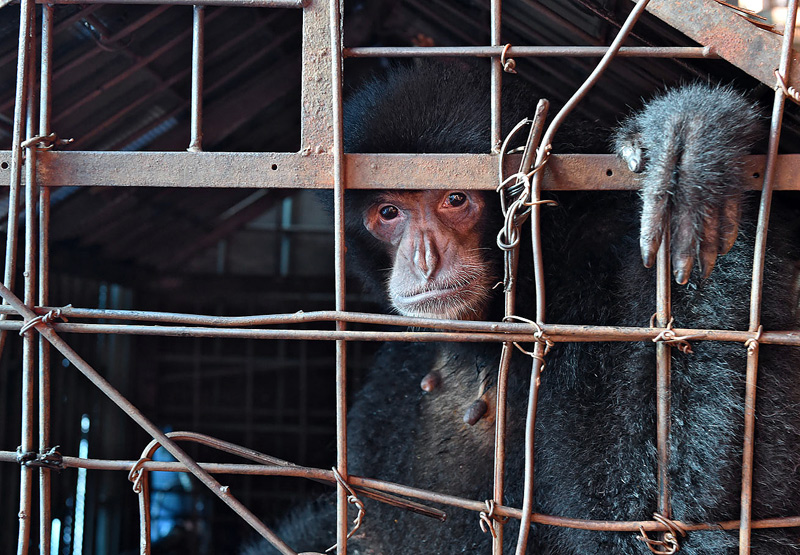
To animal activists and conservationists, I say ‘Don’t despair’

There are many of us who have woken up already… and we grow more and more numerous every day.
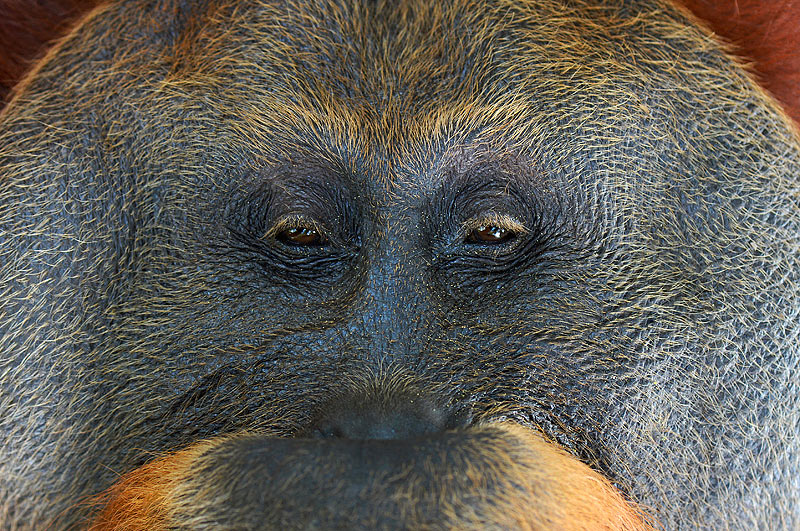
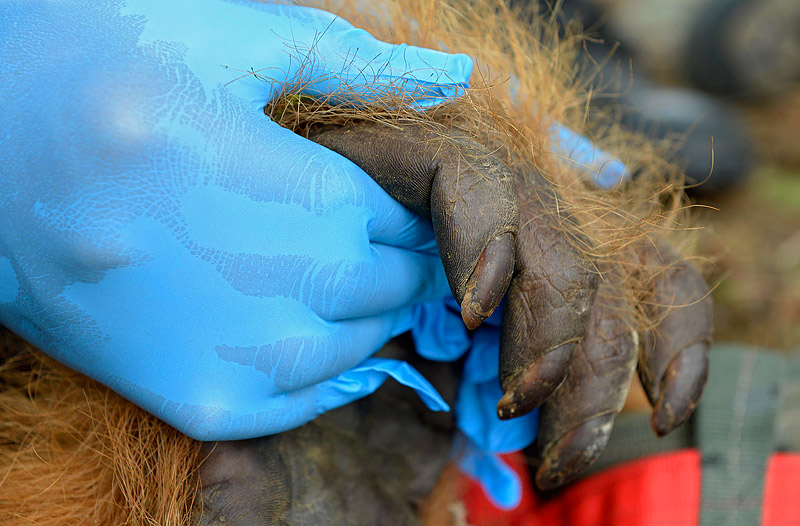

Dare to address the elephant in the room with animal cruelty. Stand up!

See something – say something. Make it a topic amongst friends. I firmly believe in a vegan world to come. But we have to work indefatigably in order to achieve it.

Baiji Yangtze River Dolphin

This depicts the story of the Baiji Yangtze River Dolphin, a large mammal that recently went extinct due to human interference. The fragmentary text highlights the 2006 expedition of a global team of marine scientists from six nations. The team searched the Yangtze river, covering 3,500km over 6 weeks – in vain. They did not find a single dolphin and, tragically, had to declare the Baiji Yangtze River Dolphin extinct. I created this piece for a fundraiser of The Creative Earth Projects. All auction funds went to The Dolphin Project.

I boycott brands with deforestation in them, as any human with humanity within should

I welcome you to join my group of Artivists on Facebook – Vegan Artivism