Reptiles Facing Extinction: How to Help

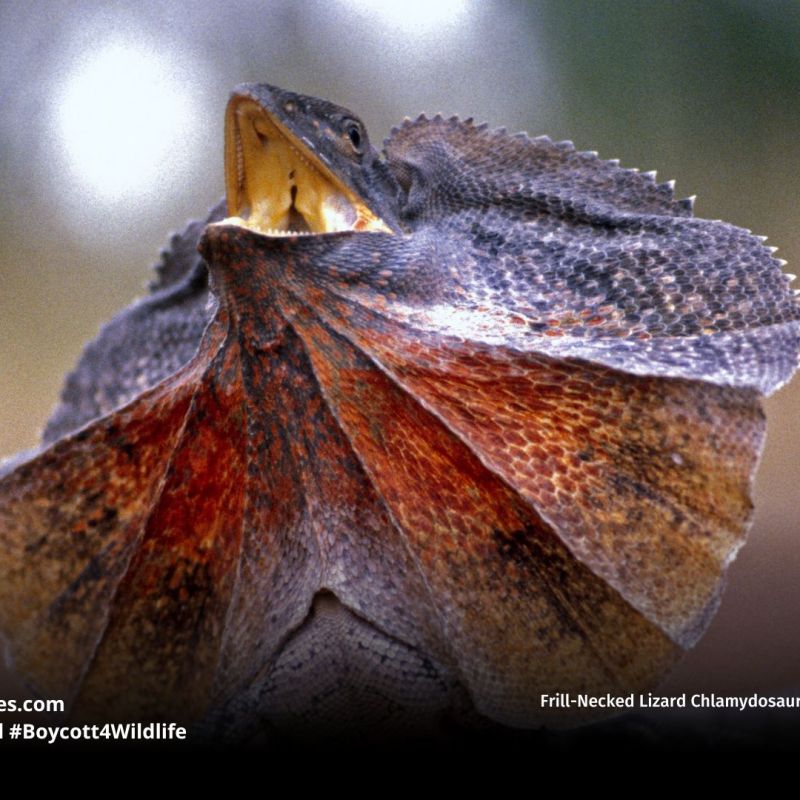
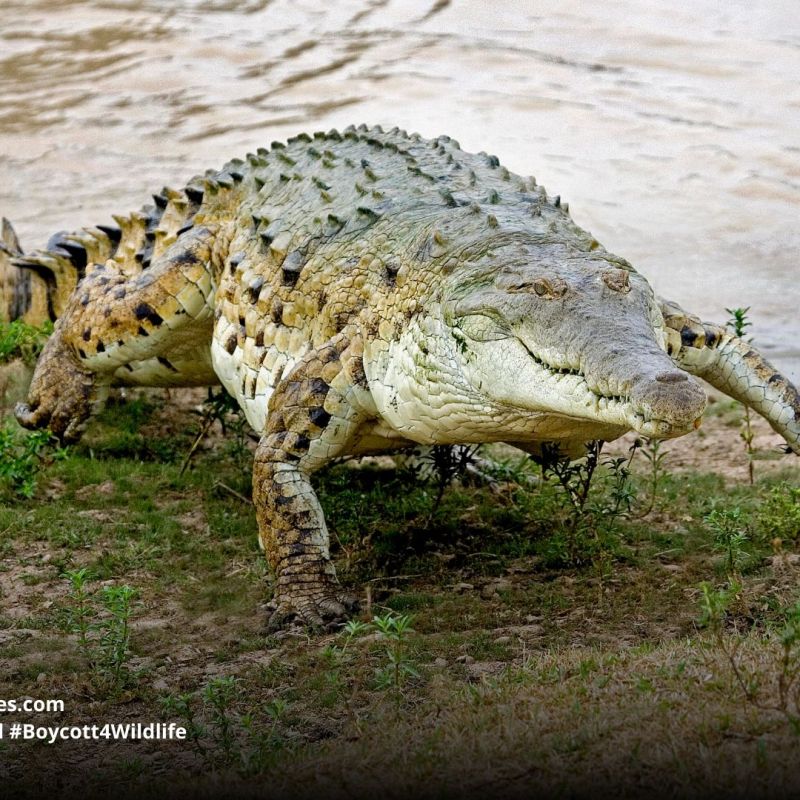
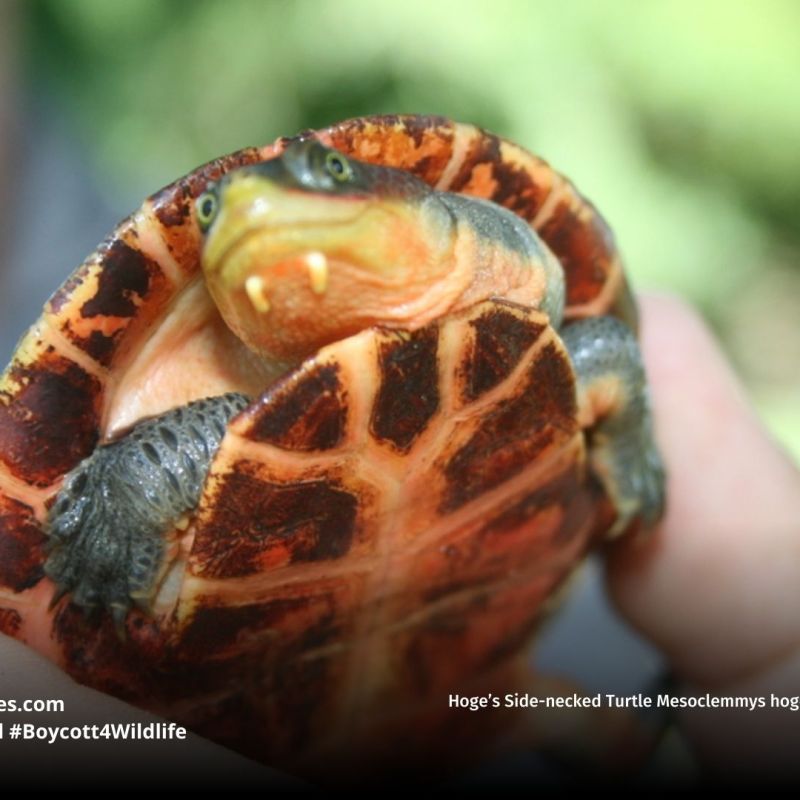
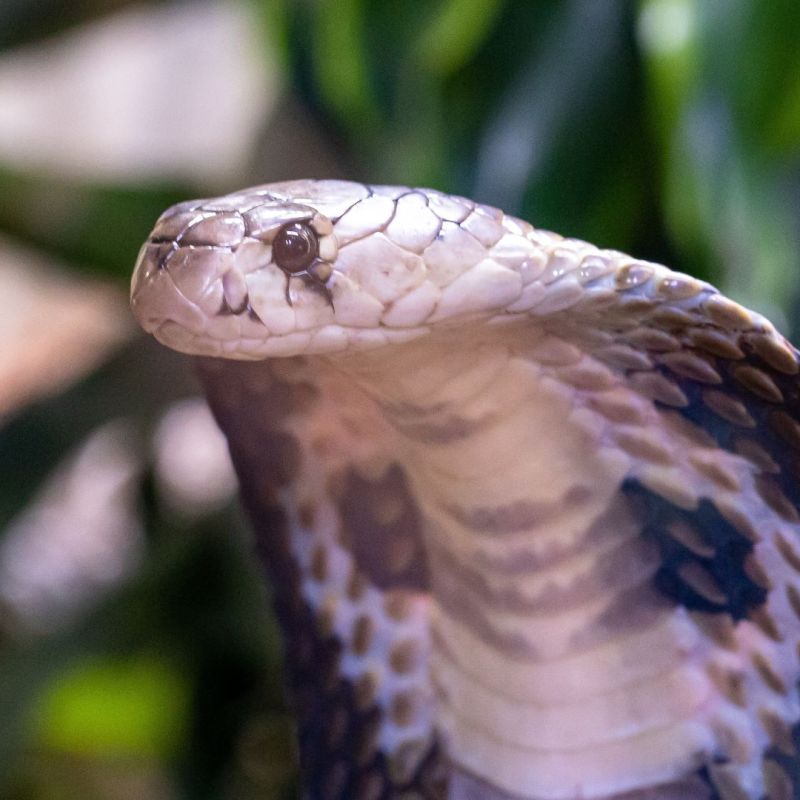
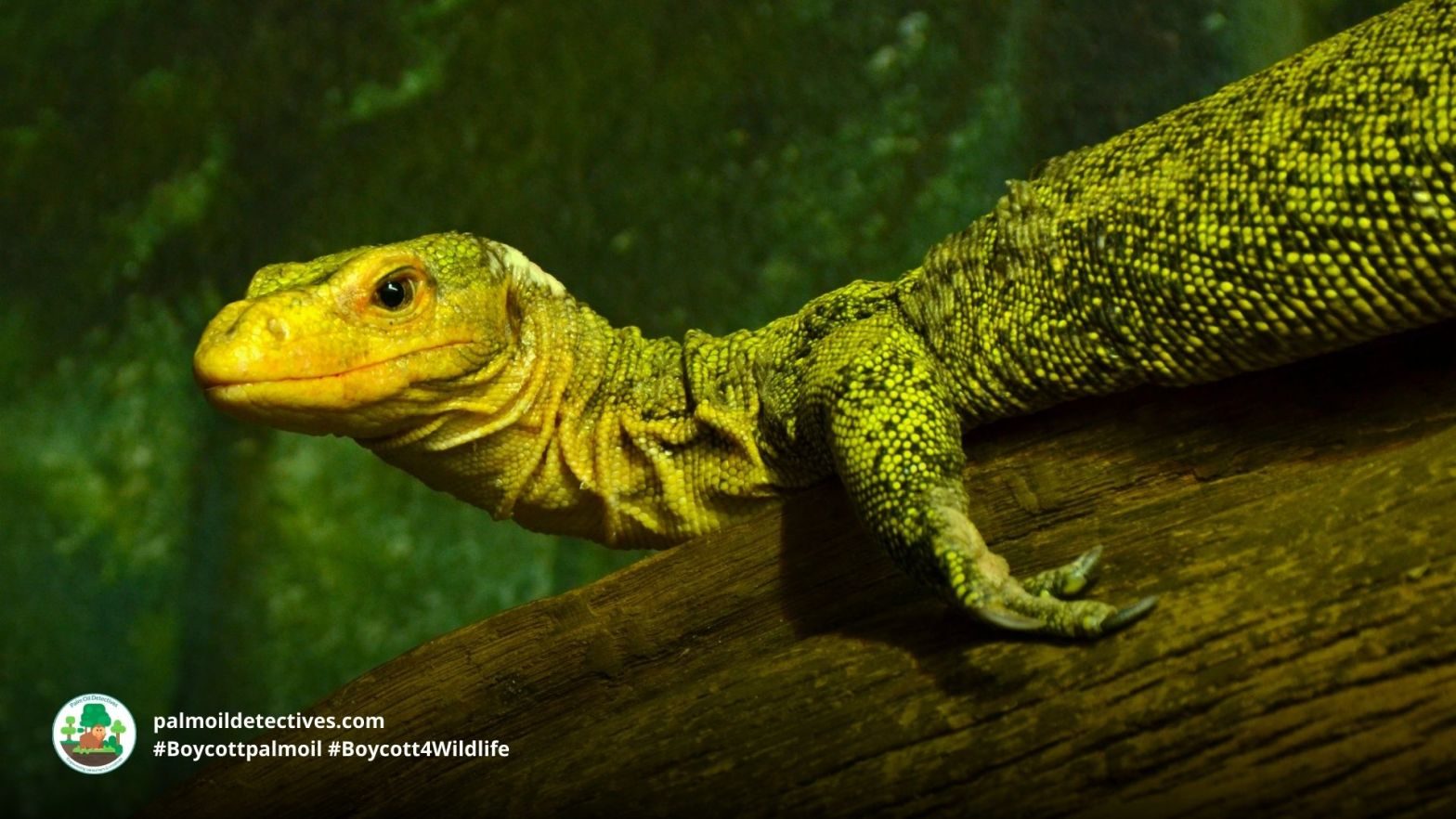
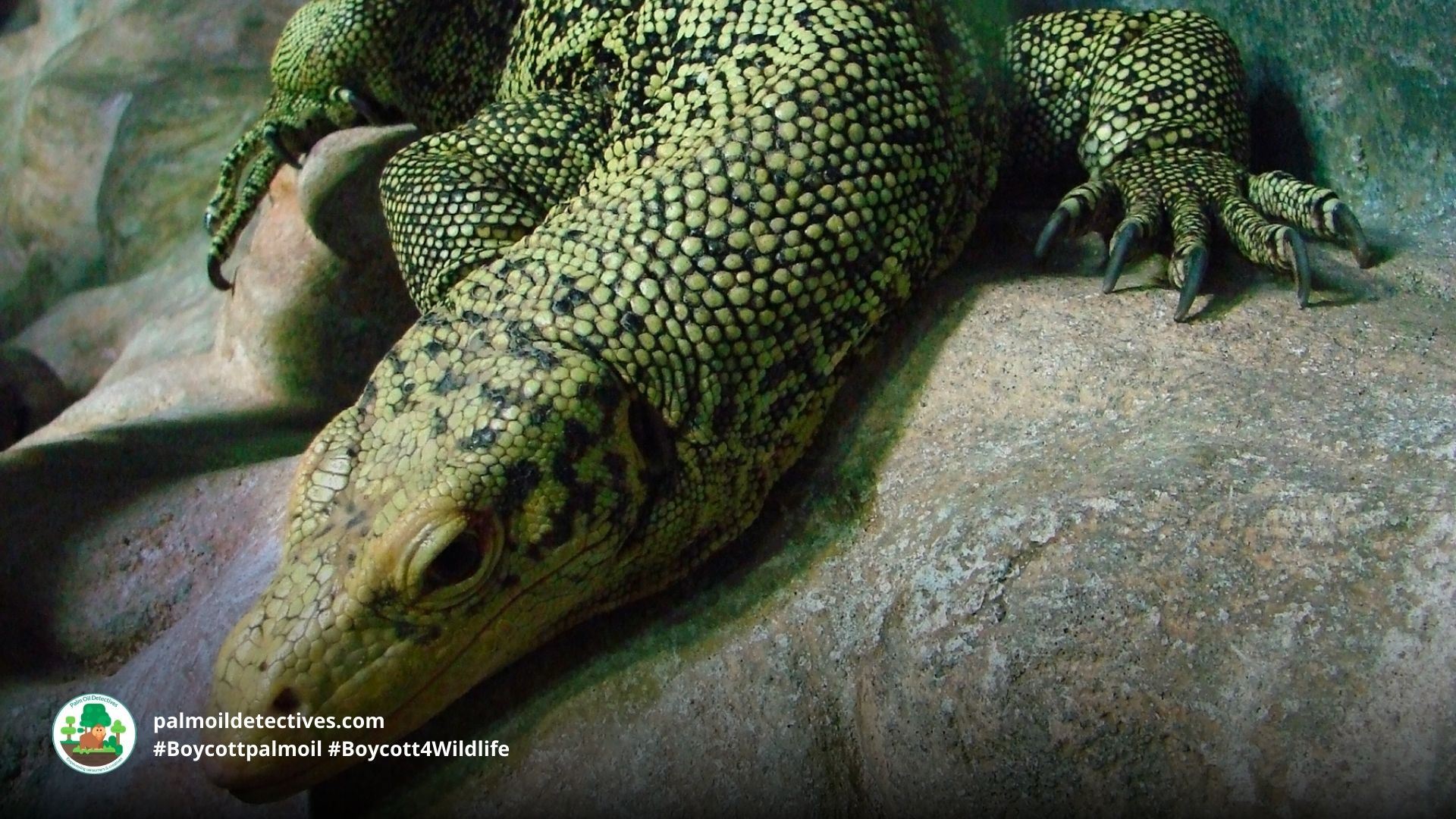
#Reptiles are fascinating creatures who are sadly feared, misunderstood and persecuted by humans. It is high time that we stand up for #lizards, #snakes, #terrapins, #crocodiles, caimans, #turtles and more.

Many of these fascinating creatures are feared by humans and inhabit hard-to-traverse places such as swamps. Compared with birds, amphibians and mammals, there is little data available on the distribution, population size and extinction risk of reptiles. This has meant that wildlife conservationists have largely helped reptiles indirectly in the past by meeting the needs of other animals (for food and habitat for example) living in similar places. Here’s how we stand up for them #Boycottpalmoil #Boycott4Wildlife

Now, a first-of-its-kind global assessment of more than 10,000 species of reptiles (around 90% of the known total) has revealed that 21% need urgent support to prevent them going extinct. But since reptiles are so diverse, ranging from lizards and snakes to turtles and crocodiles, the threats to the survival of each species are likely to be equally varied.

Here are five important findings the new study has unveiled.
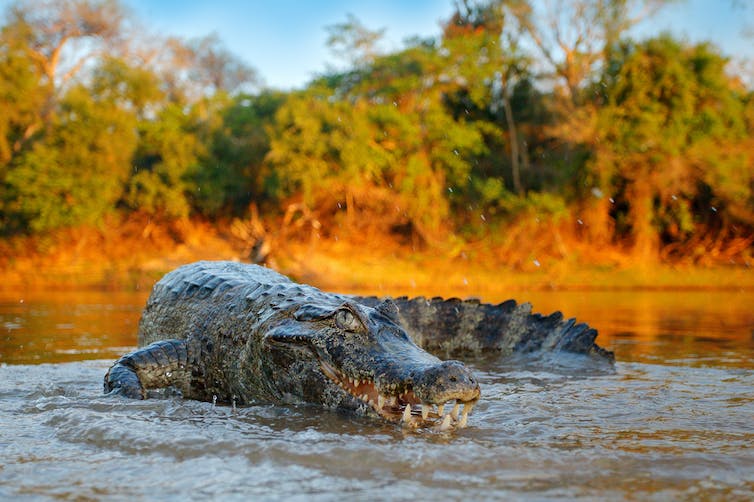
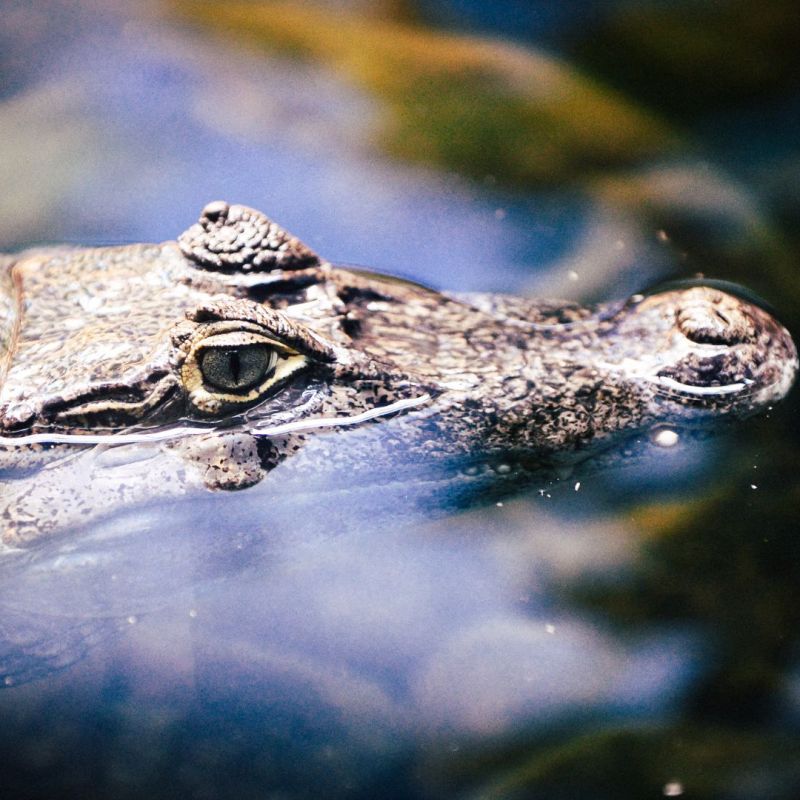
A yacare caiman (Caiman yacare) in the Pantanal wetlands of Bolivia. Ondrej Prosicky/Shutterstock

Crocodiles and turtles among most threatened

Well over half (58%) of all crocodile species and 50% of all turtles are at risk of extinction, making them the most threatened among reptiles. This is comparable to the most threatened groups of amphibians and mammals, so reptiles are not faring any better than other animals.

The biggest threats to crocodiles and turtles are hunting and the illegal wildlife trade. This trade, often to supply distant customers with pets (or luxury handbags), threatens 31% of turtles. They are also the groups of reptiles most frequently associated with wetlands, habitats which are under siege globally by the development of urban space and farmland, as well as climate change.
Conservation works

The tuatara is the only survivor of an ancient order of reptiles called the Rhynchocephalia, which roamed the Earth alongside dinosaurs 200 million years ago.

To help you understand how isolated this species is in evolutionary terms, rodents belong to a single order which makes up 40% of mammals. Thankfully, populations of this species have stabilised, largely due to the protection they have received by law since 1895, which makes it an offence to kill individuals or their eggs or to take them from the wild.

Tuataras, which are greenish brown and grey, measure up to 80cm from head to tail and have a spiny crest along their backs, were once widespread across New Zealand but became extinct on the main islands around 200 years ago – the same time that invasive rats, brought there by European colonisers, became established. Conservation efforts, such as captive breeding and targeted reintroductions, have meant that tuataras are once again breeding in the wild on New Zealand’s North Island.

Interestingly, this species has one of the longest lifespans of any reptile (more than 100 years) and a body temperature of around 10°C – more than 10°C lower than most reptiles.
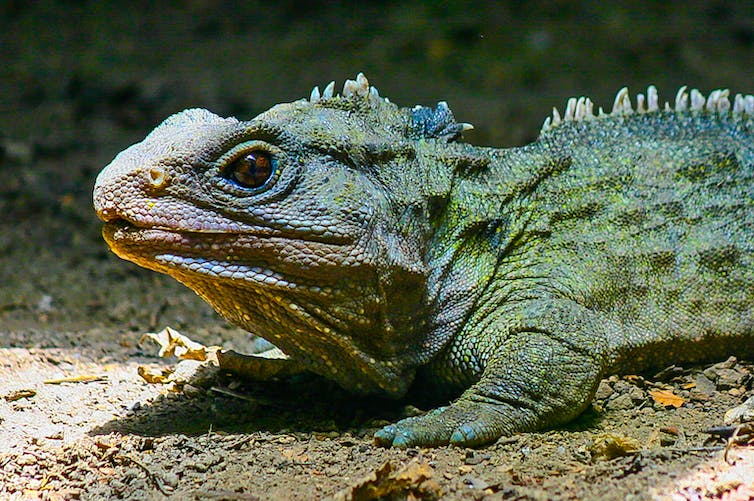
Tuataras can continue breeding well past their 100th birthday. Mark Walshe/Shutterstock

Habitat destruction the biggest threat overall

Habitat loss, caused by expanding farmlands, urbanisation and logging, contributes more to the extinction risk of most reptiles than any other factor. Other major threats include the displacement of native reptiles by invasive species and hunting. These threats are all human-induced and pose a problem for all other groups of animals.

Most threatened in the tropics

South-east Asia, west Africa, Madagascar and the Caribbean are hotspots for reptiles at risk of extinction. According to the new assessment, some of these areas contain twice as many threatened reptiles as those from other groups of animals.

More than half of threatened reptile species live in forests, where habitat destruction is a looming threat. The picture is similar for birds and mammals, so conserving forested areas for one group of species will help to protect them all.

Climate change

Cold-blooded reptiles must warm up in the sun to function properly. But if they are heated above their optimum temperature, their metabolism is less efficient and they need to move into the shade to cool down.

Increasing global temperatures reduce the windows available to reptiles for daily foraging – when it is not too cold but not too hot either – and shrink their habitable range overall. For some reptile species, ambient temperature influences the sex of offspring. Cooler temperatures cause many turtle eggs to develop into males, so climate change may see male turtles die out.
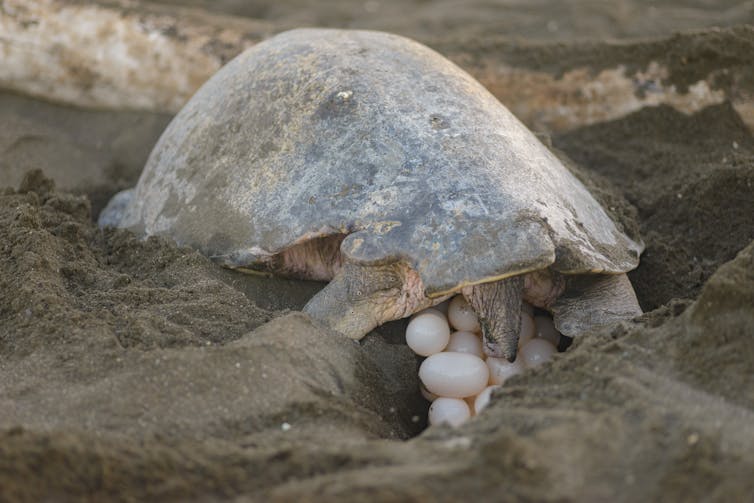
A large sea turtle depositing white eggs in the sand.
A male-female imbalance could prevent populations reproducing. Jarib/Shutterstock

What’s good for other animals is good for us too

Where reptiles are restricted to a particular range – endemic to a single small island, for example – the species is generally so specialised that a conservation effort focused on the needs of that species is prudent.

But on the whole, birds and mammals are good surrogates for the conservation of reptiles, despite being so different. This is because the threats imposed on all groups of animals are broadly the same. Conservation efforts employed for one species can benefit all.

While this new assessment casts more light than has ever been shed before on the plight of the world’s scaly masses, it nevertheless shares universal lessons for what’s needed to preserve Earth’s biodiversity: space and freedom from persecution in a stable climate.


Written by Louise Gentle, Principal Lecturer in Wildlife Conservation, Nottingham Trent University This article is republished from The Conversation under a Creative Commons license. Read the original article


Contribute to my Ko-Fi

Did you enjoy visiting this website?

Contribute to my kofi

Palm Oil Detectives is 100% self-funded

Palm Oil Detectives is completely self-funded by its creator. All hosting and website fees and investigations into brands are self-funded by the creator of this online movement. If you like what I am doing, you and would like me to help meet costs, please send Palm Oil Detectives a thanks on Ko-Fi.

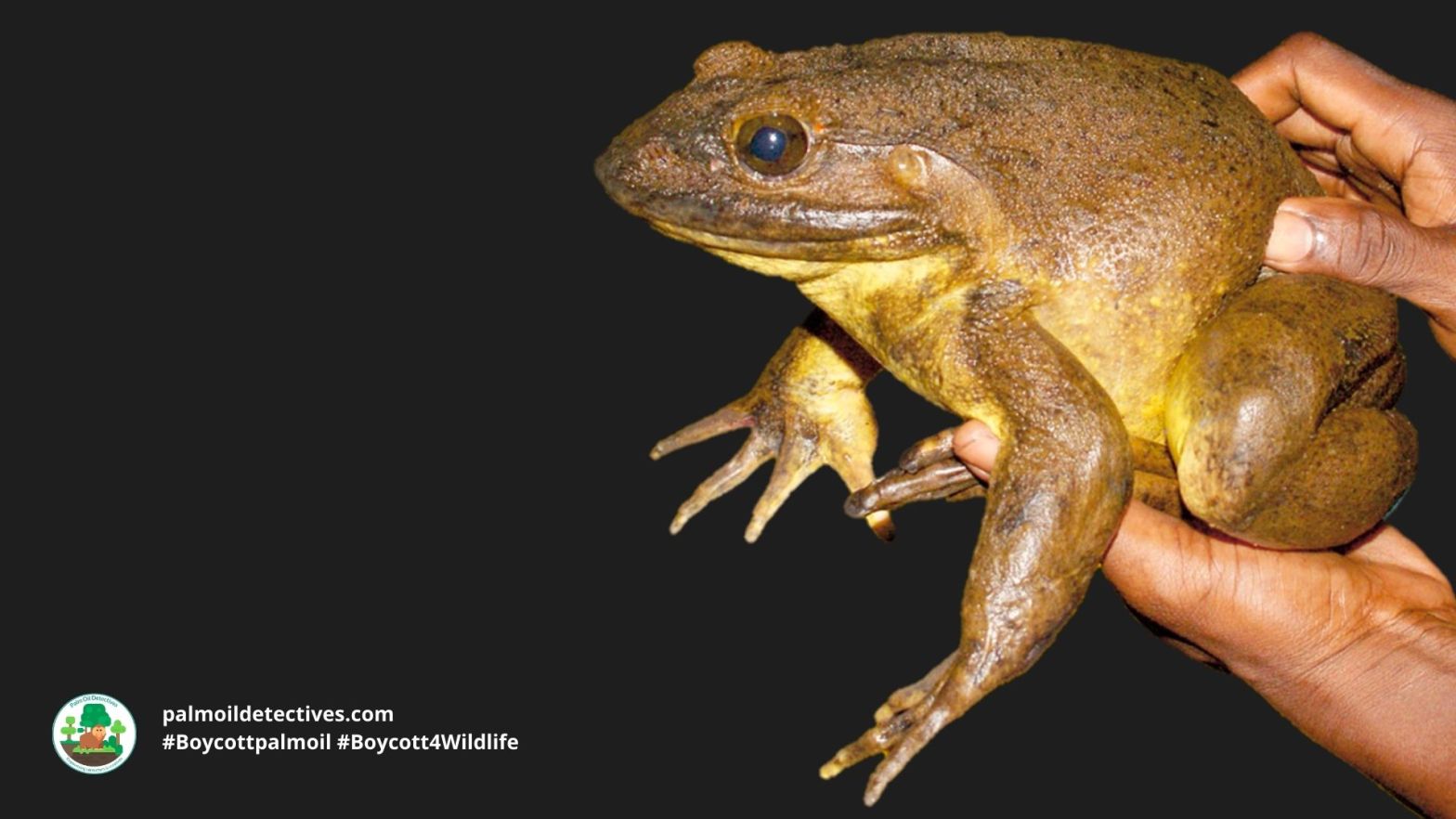
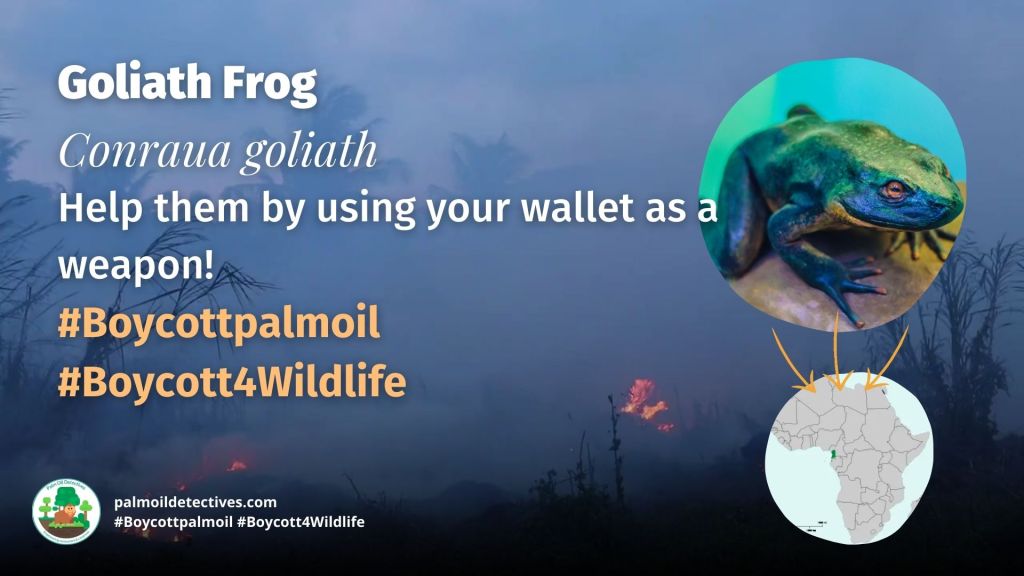
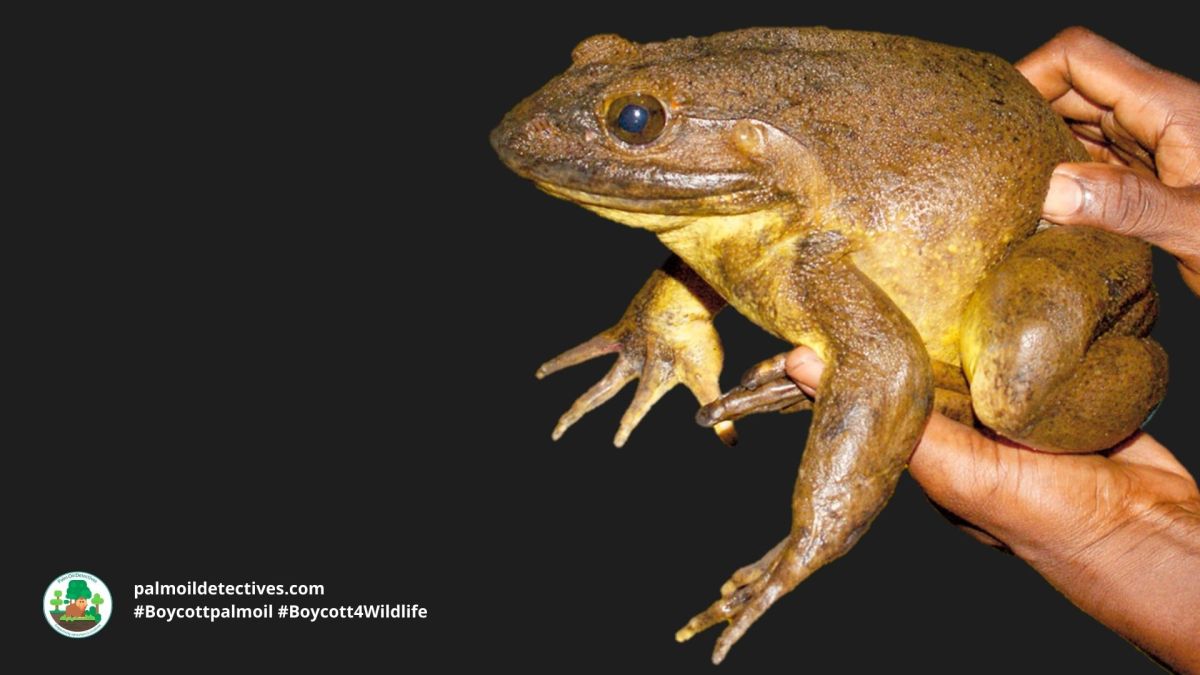
Goliath Frog Conraua goliath

Goliath Frog Conraua goliath

Red List Status: Endangered

Extant (resident): Cameroon; Equatorial Guinea

Presence Uncertain: Gabon

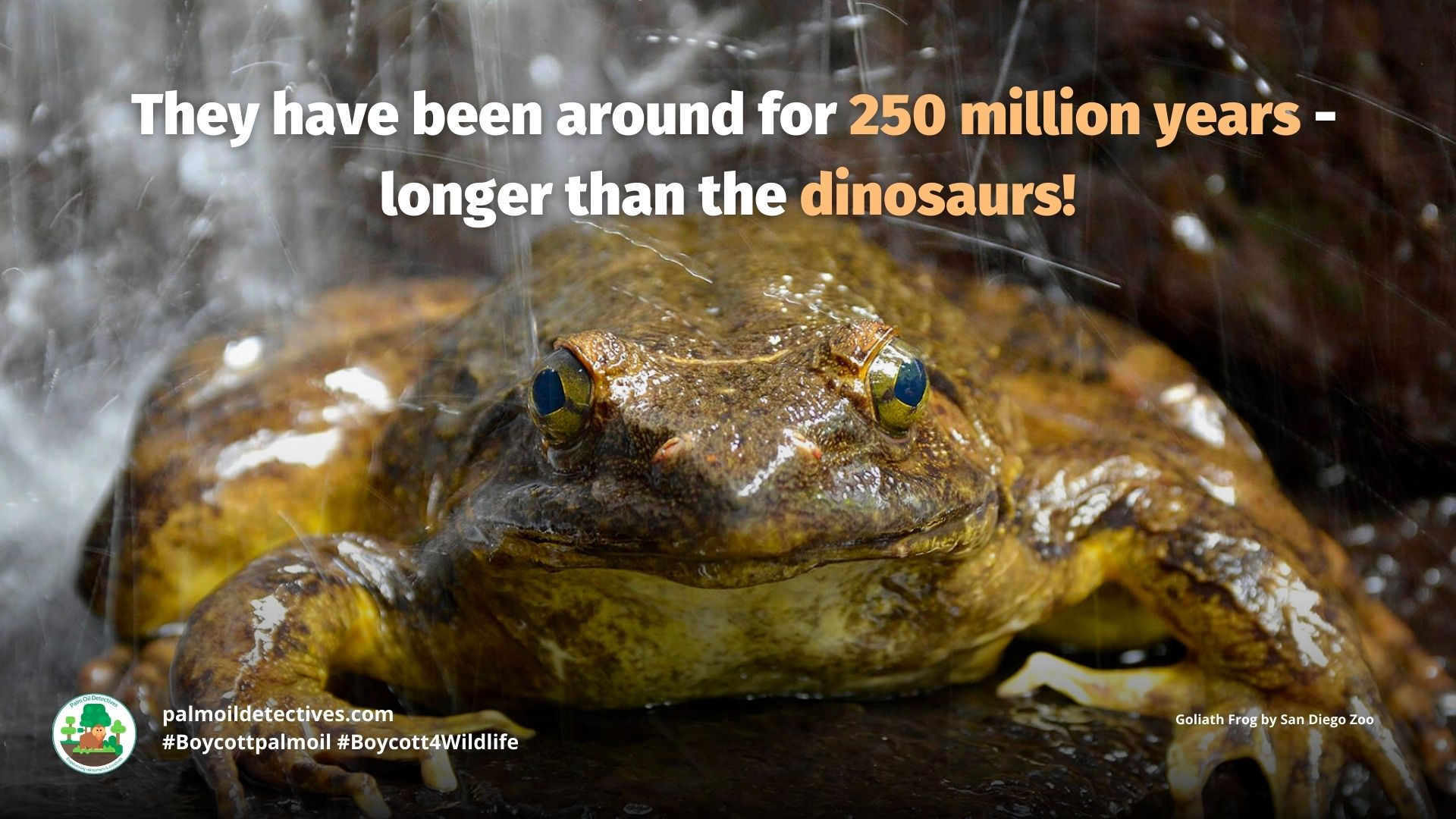
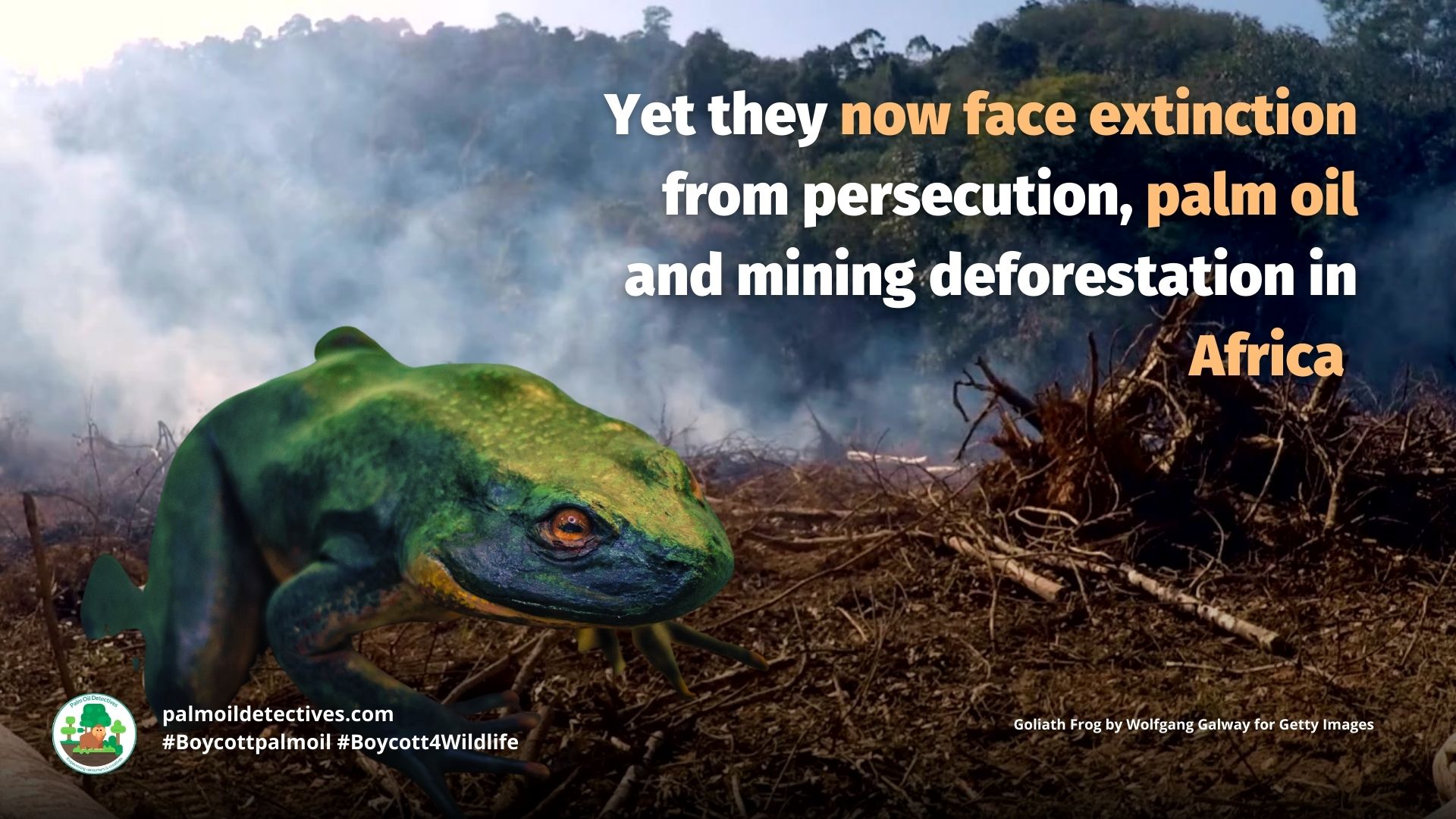
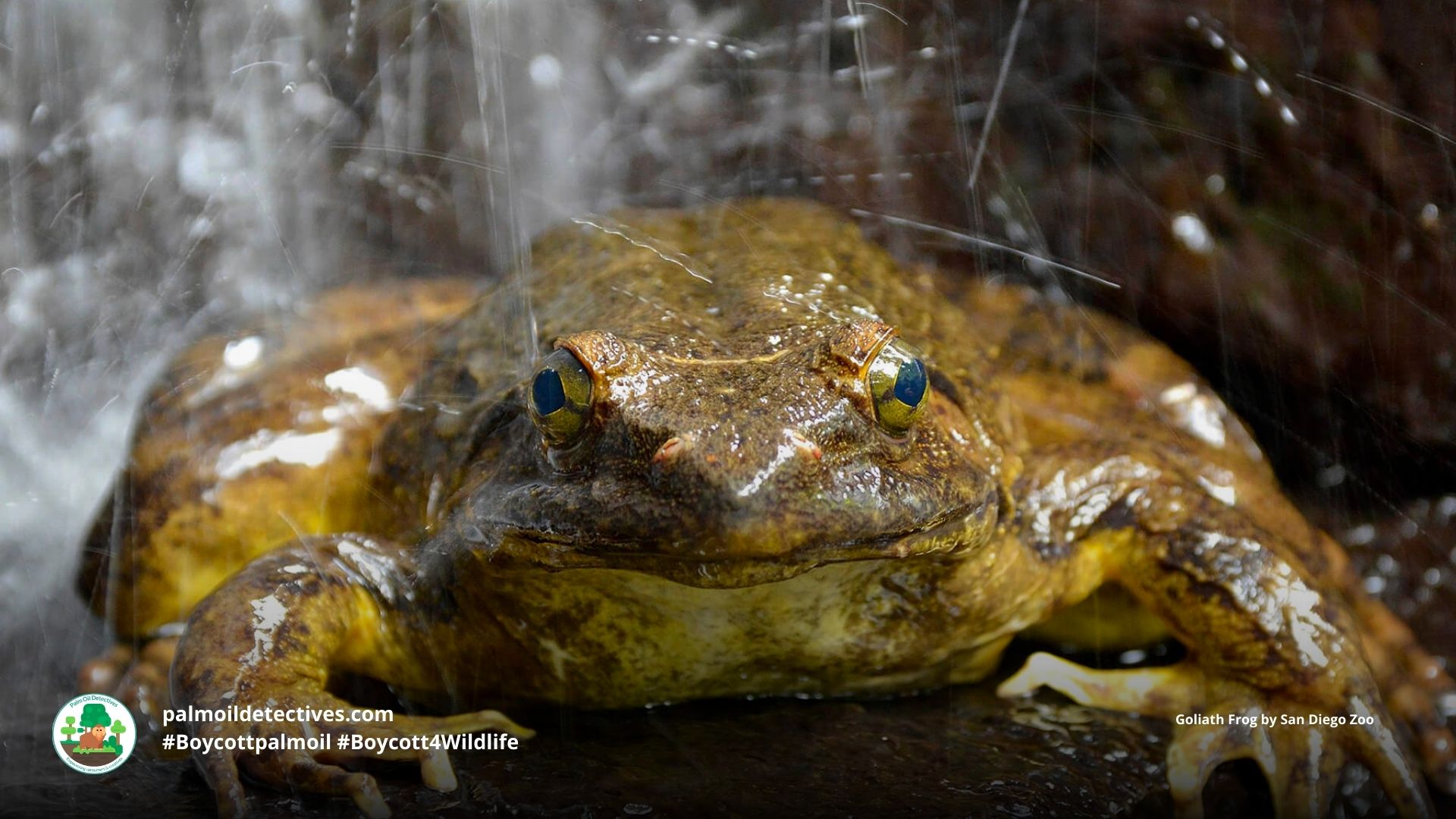
Goliath #Frogs are the largest frog in the world and can grow as large as a domestic cat. These muscle-bound #amphibians lift heavy rocks to build nests and protect their young. They face extinction from #palmoil #deforestation and human persecution including hunting.

Their nesting and reproduction is hugely dependent upon access to clean, fast-flowing rivers – for this reason the encroachment of industrial scale palm oil, cocoa and timber deforestation and p0llution and #pesticides of rivers are direct threats to the existence of the goliath #frog. Help them every time you shop in the supermarket and #Boycottpalmoil #Boycott4Wildlife

Goliath #Frogs 🐸💚 are #endangered in #Gabon 🇬🇦 #Cameroon 🇨🇲 and Equatorial Guinea 🇬🇶 by #palmoil #deforestation 🌴🔥 and #hunting. Help them every time you shop and #Boycottpalmoil 🌴🩸☠️🚜🔥⛔️ #Boycott4Wildlife @palmoildetect https://palmoildetectives.com/2023/10/29/goliath-frog-conraua-goliath/

Goliath #Frogs are the largest #frogs in the world 🐸🤯💚🫶 These muscly #amphibians 🏋️🪨 lift heavy rocks to build nests. They face #extinction from #palmoil. Fight for them when you #Boycottpalmoil 🌴🩸🤮🧐⛔️ #Boycott4Wildlife @palmoildetect https://palmoildetectives.com/2023/10/29/goliath-frog-conraua-goliath/

Appearance & Behaviour

The goliath frog gets their name from the fact that they are the largest extant frog in the world weighing between 600 grams to 3.2 kilos. Male and females appear almost the same with sexual dimorphism minimal. Despite their abnormally large size, their eggs and tadpoles are a similar size as other frogs. The skin on the back and upper side of their body is a rusty emerald green colour with limbs and underside a yellowish orange hue. They have excellent hearing but don’t possess a vocal sack, meaning that they don’t have a mating call – as do many other frog species.

The Goliath Frog is adversely affected by the loss of forest habitat for agriculture (including the creation of new cocoa plantations, banana plantations, and palm oil plantations), logging and human settlements.

Read more

Geographic range

These frogs are typically found near fast flowing rivers with sandy bottoms in Cameroon and Equatorial Guinea. They may have now gone extinct in Gabon. They prefer clear and oxygenated water from clean rivers and streams in densely forested and humid parts of the rainforest. They typically stay in rivers during the heat of the day and will emerge onto land during the night time.

Goliath frogs don’t survive well in heavily degraded and deforested areas and prefer undisturbed forest, streams and fast-flowing rivers far away from villages.

Diet

Goliath tadpoles feed on a single aquatic plant Dicraeia warmingii which is found only in areas of clean oxygenated water close to waterfalls and fast-flowing rapids. This explains their range and serious vulnerability to extinction.

Adult goliath frogs are less fussy and will feed on multiple food sources including: baby turtles, young snakes, small mammals, bats, crustaceans, mollusks, fish, dragonflies, locusts, insects, spiders and worms.

Mating & reproduction

Unlike most other frogs, goliath frogs don’t have a vocal sac and therefore don’t call to their mates.

Goliath frogs create nesting sites for offspring – this is a form of parental care. Adult males will take their cue from the environment in order to build a nest that is going to be safest for their offspring. They have three kinds of nests.

Each nest type presents advantages and disadvantages depending on whether it is the dry or the rainy season and the presence or absence of predators of the eggs at different sites.

  1. rock pools cleared of leaf litter.
  2. Washouts at riverbanks.
  3. Depressions dug into the gravel of riverbanks.

The third kind of nest is arduous to create and is typically one metre in diameter. The building of this kind of nest requires brute strength for moving large rocks. It is thought that this is why goliath frogs are so large and muscular. Other extra large frog species such as gladiator frogs, bornean giant river frogs also perform this task.

The construction of nest is used by males as a way of demonstrating their prowess and reproductive fitness as mates to females. Male frogs provide most of the parental investment in the eggs and nest building, whereas females will deposit the eggs after fertilisation and then depart afterwards. Larval development of eggs to tadpoles to frogs takes approximately 85-95 days.

Threats

The Goliath Frog is adversely affected by the loss of forest habitat for agriculture (including the creation of new cocoa plantations, banana plantations, and palm oil plantations), logging and human settlements.

Read more

Goliath frogs face multiple human-related threats, including:

  • Agricultural pollution and run-off: Pesticides and chemicals used in palm oil and cocoa plantations in this region are toxic to Goliath frogs, who require clean rivers to reproduce.
  • Industrial timber, palm oil, meat and cocoa deforestation
  • Human consumption: Both for local subsistence and sold to bushmeat markets.
  • Collection for the illegal pet trade: Animals are exported from Cameroon to Zoos in the USA and Europe. Although captive frogs live longer than their wild relatives, they are not able to breed in captivity.

Support Goliath Frogs by going vegan and boycotting palm oil in the supermarket, it’s the #Boycott4Wildlife

Support the conservation of this species

This animal has no protections in place. Read about other forgotten species here. Create art to support this forgotten animal or raise awareness about them by sharing this post and using the #Boycottpalmoil #Boycott4Wildlife hashtags on social media. Also you can boycott palm oil in the supermarket.

Further Information

IUCN SSC Amphibian Specialist Group. 2019. Conraua goliathThe IUCN Red List of Threatened Species 2019: e.T5263A96062132. https://dx.doi.org/10.2305/IUCN.UK.2019-1.RLTS.T5263A96062132.en. Accessed on 12 November 2022.

Goliath Frog on Animalia.bio

Goliath Frog on Wikipedia

Marvin Schäfer, Sedrick Junior Tsekané, F. Arnaud M. Tchassem, Sanja Drakulić, Marina Kameni, Nono L. Gonwouo & Mark-Oliver Rödel (2019) Goliath frogs build nests for spawning – the reason for their gigantism?, Journal of Natural History, 53:21-22, 1263-1276, DOI: 10.1080/00222933.2019.1642528

Contribute to palm oil detectives - black rhino in profile

How can I help the #Boycott4Wildlife?


Take Action in Five Ways

1. Join the #Boycott4Wildlife on social media and subscribe to stay in the loop: Share posts from this website to your own network on Twitter, Mastadon, Instagram, Facebook and Youtube using the hashtags #Boycottpalmoil #Boycott4Wildlife.

Join 3,176 other subscribers

2. Contribute stories: Academics, conservationists, scientists, indigenous rights advocates and animal rights advocates working to expose the corruption of the palm oil industry or to save animals can contribute stories to the website.

3. Supermarket sleuthing: Next time you’re in the supermarket, take photos of products containing palm oil. Share these to social media along with the hashtags to call out the greenwashing and ecocide of the brands who use palm oil. You can also take photos of palm oil free products and congratulate brands when they go palm oil free.

4. Take to the streets: Get in touch with Palm Oil Detectives to find out more.

5. Donate: Make a one-off or monthly donation to Palm Oil Detectives as a way of saying thank you and to help pay for ongoing running costs of the website and social media campaigns. Donate here

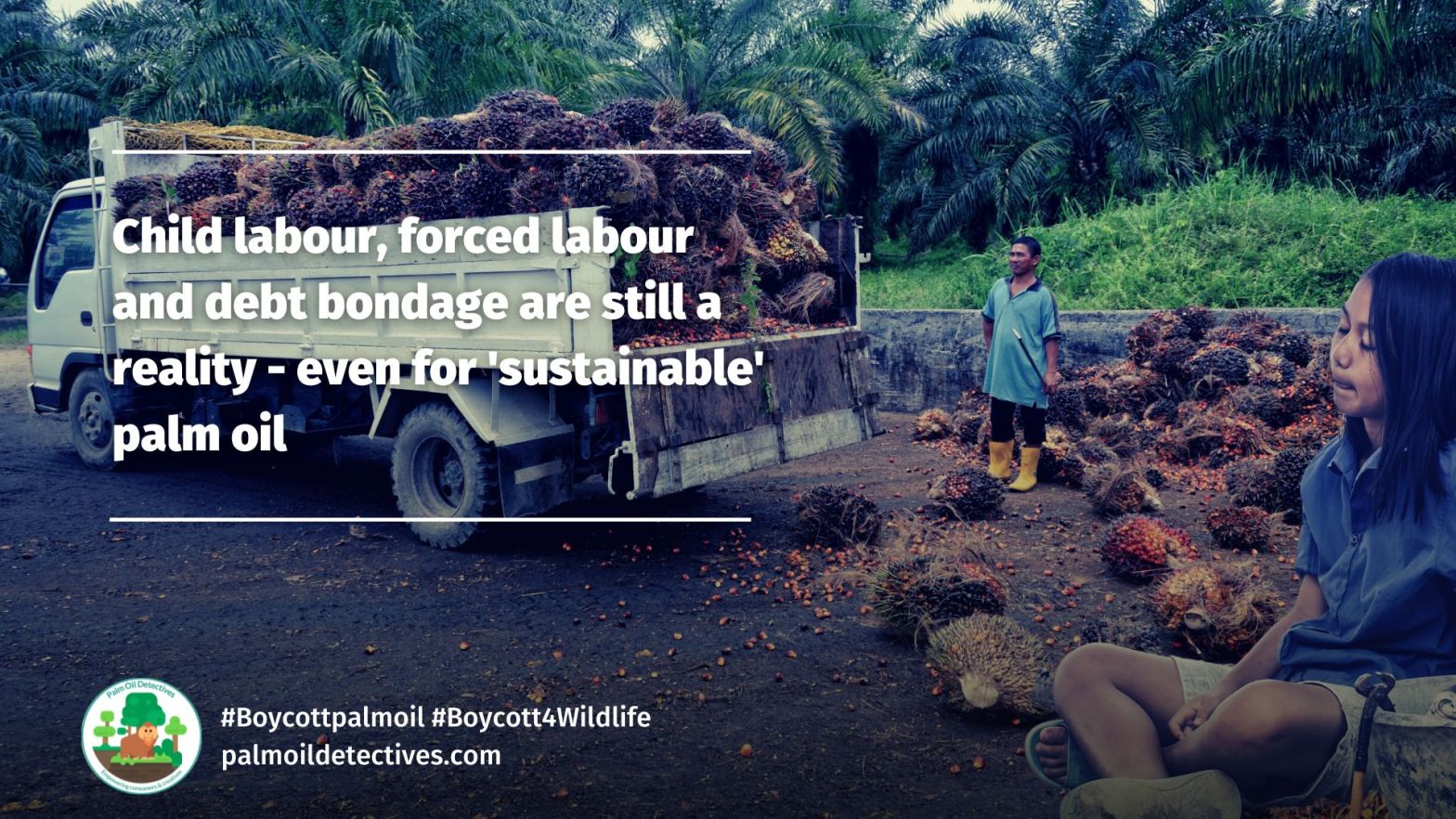
Child Labour and Debt Bondage: A Reality For ‘Sustainable’ Palm Oil


According to a new report from the Bureau for Workers’ Activities (ACTRAV) at the International Labour Organization (ILO). About 80% of the world’s poor live in rural areas where they face a myriad of human rights problems which hamper their ability to survive.

Problems include inadequate safety at work, low pay, lack of stability and security of work, and excessive working hours, with women and young workers.


Child labor, slavery, low pay and debt peonage are a part of the #palmoil industry – even so-called ‘sustainable’ palm oil. Fight back with your wallet in the supermarket and #Boycottpalmoil

New report: #humanrights abuses affect 80% of the world’s poor, here’s how we help them #Boycottpalmoil #Boycott4Wildlife


The report, Decent work deficits among rural workers  is based on 16 cases studies covering 15 countries in Africa, Asia, Central Asia, Europe and Latin America.

The report finds that:

  • Chemical exposure poses serious health and other risks to agricultural workers, in particular to children and pregnant and lactating women.
  • Women workers are disproportionately represented in the most precarious positions. Female workers also tend to be in low-paying, low skilled jobs, suffer huge gender pay gaps, and are more prone to may workplace harassment and abuse compared to male workers.
  • Child labour, forced labour and debt bondage are still a reality. Up to 95 per cent of children engaged in hazardous work are employed in agriculture, notably in the cocoa, palm oil and tobacco sectors. Force labour is also a reality in some sectors and is linked to workers’ multiple dependencies on employers.
  • Weak social dialogue and barriers to accessing worker’s organizations. In many sectors trade unions are either non-existent or face major barriers to interacting with other workers’ organizations such as farmers’ groups and cooperatives. Social dialogue and representation for female, informal, casual, seasonal, temporary and self-employed workers, are all areas of particular concern, as is the representation of smallholders.
  • Social protection remains a dream. Inadequate social protection is a particular issue for workers in precarious arrangements, including informal, casual, temporary and subcontracted workers and day labourers who form the large majority of workers on agricultural plantations.

The report makes a number of recommendations to

  • Strengthening labour administration in rural economies
  • Improving the presence and capacity in rural economies of trade unions and other grassroots workers’ organizations
  • Formalizing informal enterprises and employment arrangements
  • Ratification of and adherence to relevant ILO Conventions and other International Labour Standards
  • Integrating rural economic sectors into formal and institutionalized social dialogue processes
  • Strengthening crisis preparedness and social protection in the rural economy
  • More research and policy analysis for better understanding and response to the needs and expectations of rural workers and their organizations.

ENDS


Read more about human rights abuses and child slavery in the palm oil industry

Oil palm in Latin America: monoculture and violence

The rapid expansion of oil palm plantations across #SouthAmerica is causing significant environmental, economic and social problems. This growth is leading to #deforestation, #landgrabbing displacement of #indigenous and farming communities, and increased militarised…

Read more

Something went wrong. Please refresh the page and/or try again.


Take Action in Five Ways

1. Join the #Boycott4Wildlife on social media and subscribe to stay in the loop: Share posts from this website to your own network on Twitter, Mastadon, Instagram, Facebook and Youtube using the hashtags #Boycottpalmoil #Boycott4Wildlife.

Join 3,176 other subscribers

2. Contribute stories: Academics, conservationists, scientists, indigenous rights advocates and animal rights advocates working to expose the corruption of the palm oil industry or to save animals can contribute stories to the website.

3. Supermarket sleuthing: Next time you’re in the supermarket, take photos of products containing palm oil. Share these to social media along with the hashtags to call out the greenwashing and ecocide of the brands who use palm oil. You can also take photos of palm oil free products and congratulate brands when they go palm oil free.

4. Take to the streets: Get in touch with Palm Oil Detectives to find out more.

5. Donate: Make a one-off or monthly donation to Palm Oil Detectives as a way of saying thank you and to help pay for ongoing running costs of the website and social media campaigns. Donate here

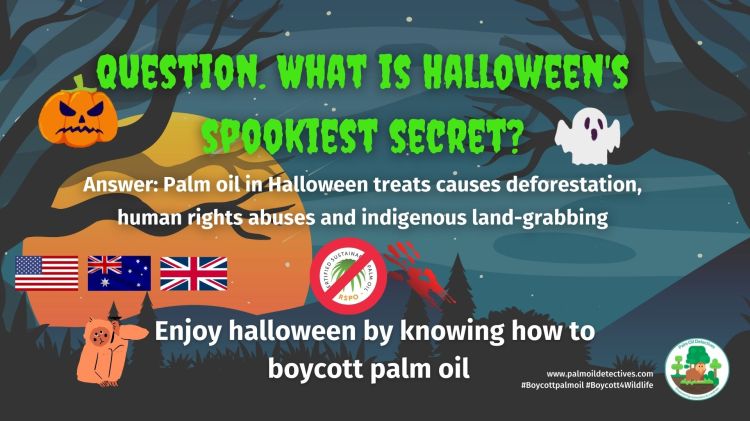
Terrifying Tale of Halloween: Palm Oil Ecocide in Your Treats!

This #Halloween, as you revel in terrifying tales and creepy costumes, remember that the most terrifying tale of all isn’t enjoyable folklore—it’s the horrifying truth about palm oil. This ingredient causes #deforestation, #ecocide, #humanrights abuses and #indigenous land-grabbing. The production of #palmoil casts a dark shadow over our planet, as it can only be grown on destroyed tropical rainforests. So-called “sustainable” palm oil used by the world’s biggest food brands like Nestle, Mondelez, Hersheys, Ferrero and Mars is a complete greenwashing lie. So don’t buy any of it! All palm oil threatens the very existence of wildlife, polluting our air and water, accelerates climate change, and tramples on the rights of indigenous communities worldwide. This Halloween, take action and use your wallet as a weapon. 🌍🌳🦍 #Boycottpalmoil #Boycott4Wildlife

Palm oil is commonly used in Halloween candies and treats for one reason only – it is cheap to manufacture.

The production of palm oil has severe environmental and social impacts. Deforestation and ecocide caused by palm oil production threatens wildlife habitats, contributes to air pollution and water pollution, is strongly linked to climate change, and infringes on the rights of indigenous peoples all over the tropical world.


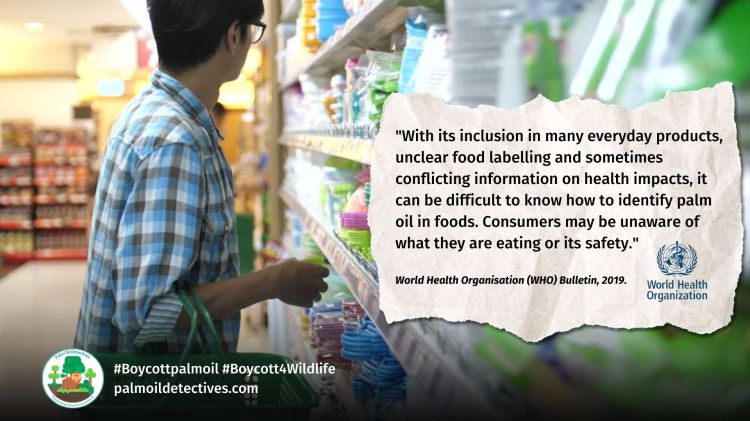
A 2019 World Health Organisation (WHO) report into the palm oil industry and RSPO finds extensive greenwashing of palm oil deforestation and the murder of endangered animals (i.e. biodiversity loss)

WHO Bulletin on Palm Oil: Deforestation and Extinction
WHO Bulletin on Palm Oil: Air Pollution and Health

Although proponents of palm oil claim that it helps farmers to earn a living wage, a 2021 report by Chain Reaction Research found that the world’s biggest brands earn the lion’s share of profit from palm oil, 66% or more of gross profit flows back to the world’s biggest FMCG companies such as Nestle, Unilever, Hersheys and Colgate-Palmolive. In contrast, almost 0% of profit flows back to farmers themselves.

The Problems with Palm Oil

Palm Oil Detectives is a website that gathers together evidence from dozens of different sources in order to clearly show the elaborate and widespread greenwashing of so-called “sustainable” palm oil. Take a look at the 10 forms of “sustainable” palm oil greenwashing to see how this works, using a network of zoos and fake NGOs in order to push the narrative of “sustainable” palm oil to consumers.

This website also provides evidence in the form of many research papers and reports from many non-profits (those organisations not partnered with the palm oil supply chain). These reports expose the immense corruption, ecocide and greenwashing in the palm oil industry along with its human rights abuses, violence, land-grabbing and animal cruelty – all associated with RSPO members supposedly using “sustainable” palm oil.

Greenwashing: Manufacturing consumer demand for palm oil

Since its inception two decades ago, the global certification for palm oil the RSPO continues to promote “sustainable” palm oil. Yet not one of its supply chain members has actually eradicated deforestation or human rights abuses from their palm oil supply chains. This constant promotion of the palm oil industry in spite of evidence of its ongoing failures is clear evidence of the RSPO’s greenwashing.

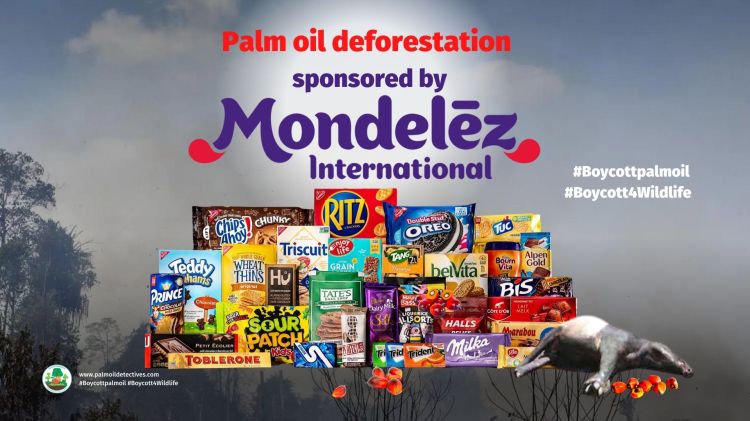
  • Boycott nestle cover image
  • Boycott mondelez cover image
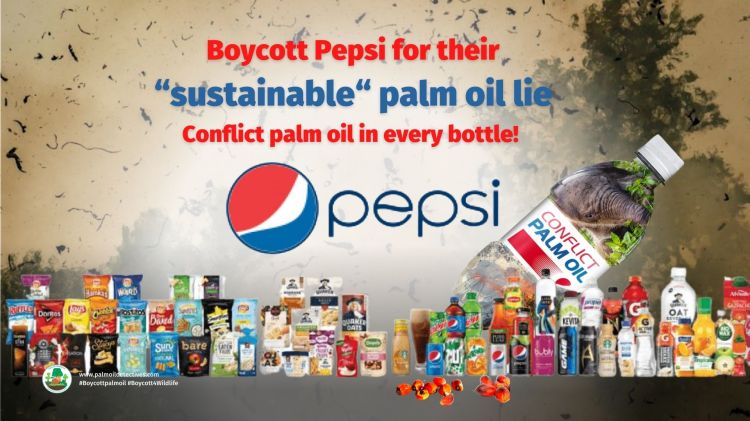
  • Boycott Pepsi cover image
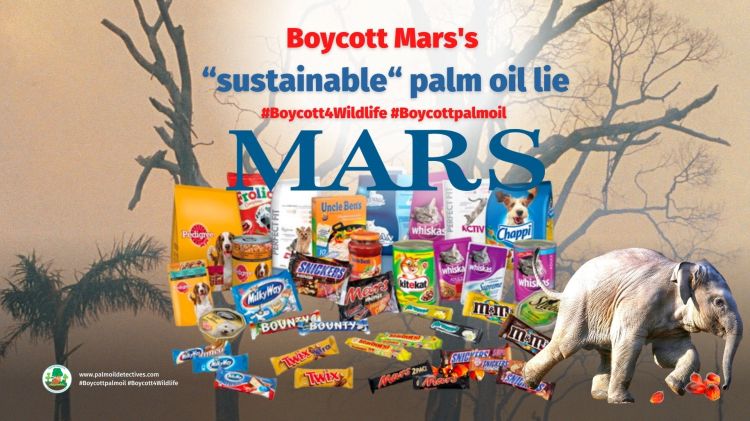
  • Boycott Mars cover image
  • Boycott danone cover image
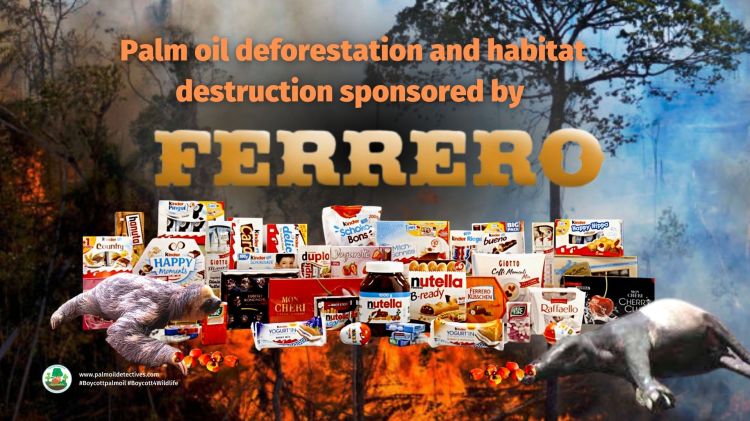
  • Boycott ferrero cover image
  • Boycott Hersheys cover image

The global demand for palm oil contributes significantly to deforestation, particularly in countries like Indonesia, Malaysia, Brazil, Colombia, Nigeria and Uganda. These regions are rich in biodiversity, and the loss of their rainforests impacts numerous species non-human beings of all shapes and sizes. This includes not only the poster child for palm oil ecocide – the three orangutan species, but also rare and endangered plants and animal species.

From the smallest insect to the most magnificent elephant, to exquisite and vibrantly coloured birds – all are under threat by palm oil’s relentless growth across all tropical regions of the world. Indigenous peoples with their unique cultures, customs and languages are also endangered by palm oil expansion as well.

The #Boycottpalmoil #Boycott4Wildlife movement starts with you

If this terrifying tale of palm oil has alarmed you, the good news is – there are actions you can take.

One powerful and effective way to help rare animals, plants and indigenous peoples is to use your wallet as a weapon and boycott palm oil. By learning how to identify palm oil in products and choosing products that are palm oil free, you can contribute to reducing demand for this destructive commodity.

A great place to start is by searching for palm oil-free alternatives on this website and also by promoting the #Boycottpalmoil and #Boycott4Wildlife on movement on social media.

Remember, every purchase you make has an impact. This Halloween, support the wildlife you love and use your wallet as a weapon.

Download your free Halloween infographic here

Learn how to boycott palm oil this Halloween in America, the UK and Australia

The reality of these chocolate and confectionery brands is the spookiest story you will ever hear this Halloween Learn how to boycott with handy lists for the US, Uk and Australia. Discover the spookiest story of #Halloween 🎃👻💀: “sustainable” #palmoil is not sustainable! Major brands continue to buy #palmoil infused with #ecocide. Make sure you…

Q. What is Halloween's Spookiest Secret A. Palm Oil - USA Edition
Q. What is Halloween's Spookiest Secret A. Palm Oil - UK Edition

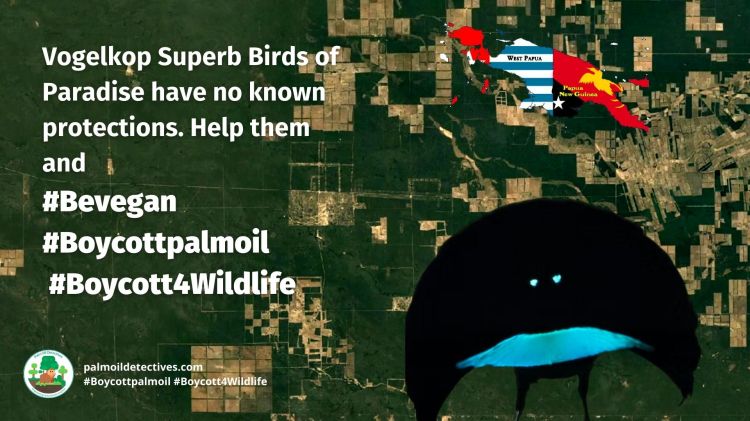
Vogelkop Superb Bird of Paradise Lophorina superba

Superb-bird-of-paradise Lophorina superba

Extant (resident): West Papua, Papua New Guinea.

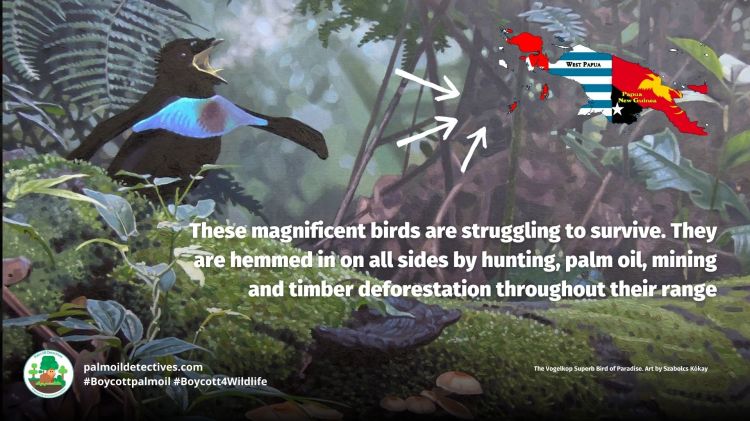
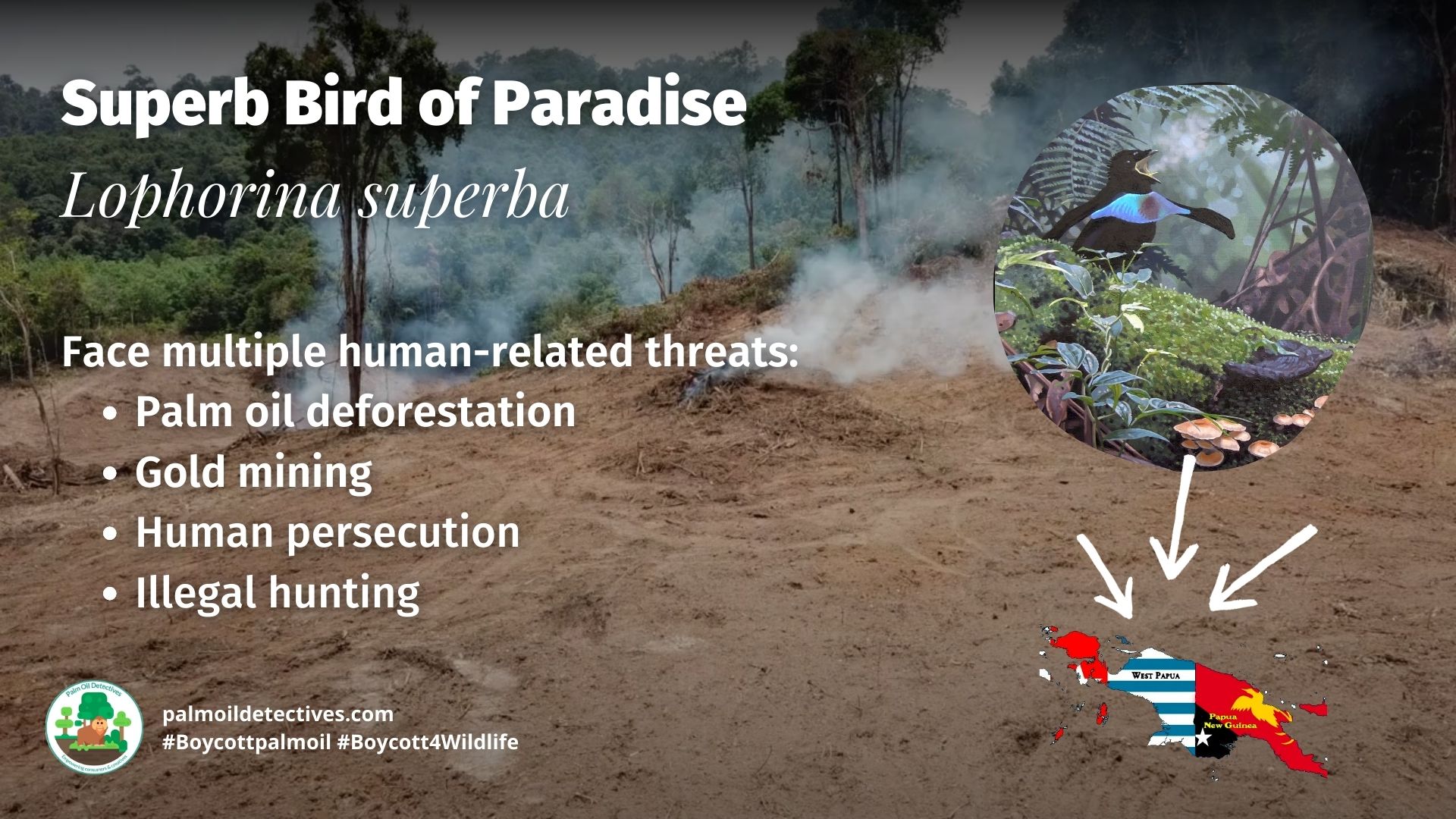
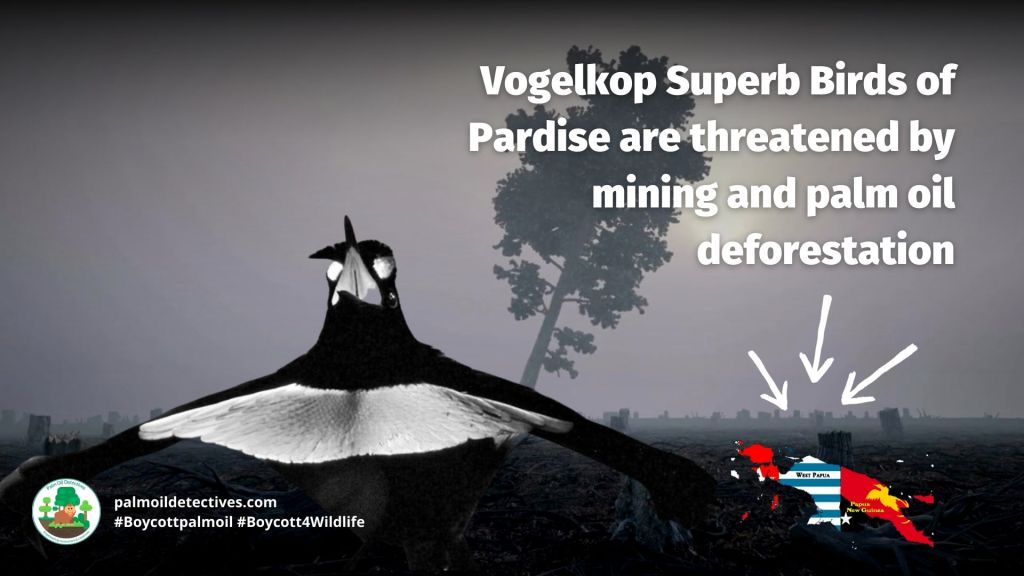
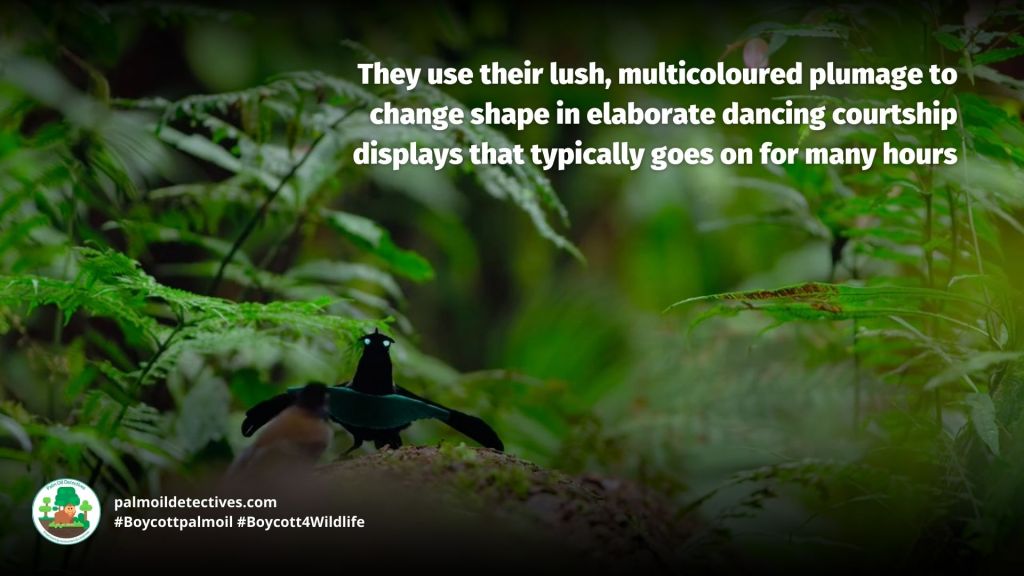
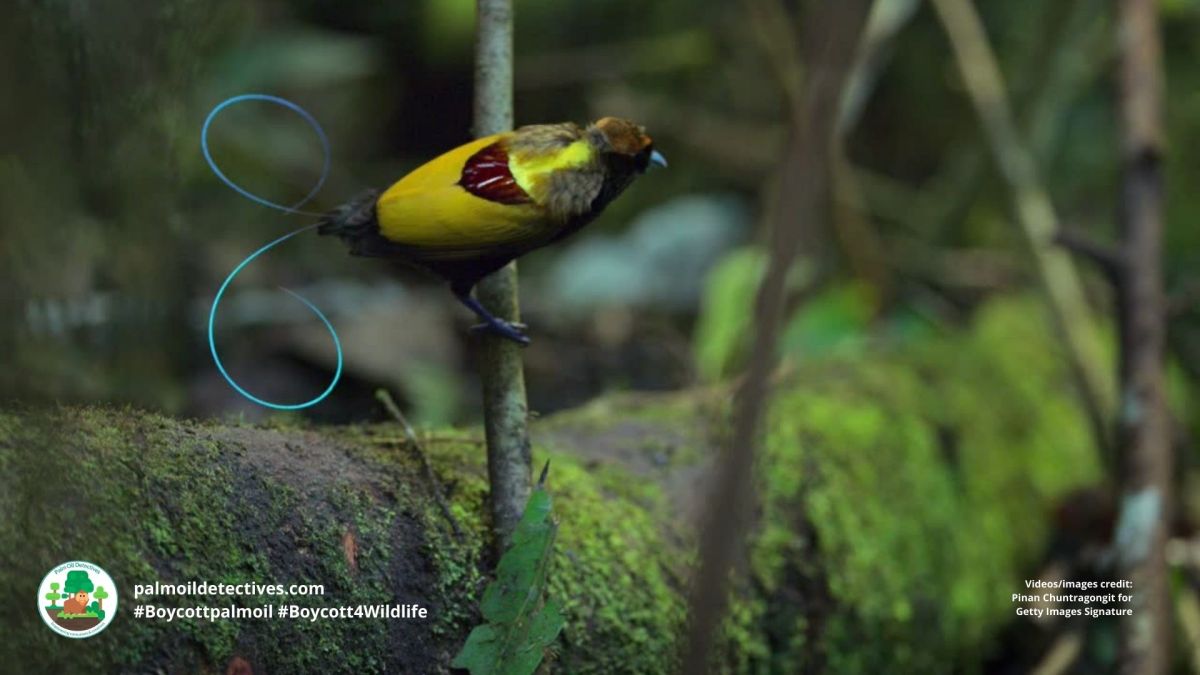
Male superb-bird’s-of-paradise are the dramatic actors of #NewGuinea’s rainforest. They use their lush, multicoloured plumage to change shape in an elaborate dancing courtship display that typically goes on for many hours for the sole benefit of a female #bird. At the end of the dancing ritual, the female will get to choose her mate between 15-20 male #birds. These magnificent birds are struggling to survive, hemmed in on all sides by #hunting, #palmoil, gold mining and timber #deforestation throughout their range. Help their survival every time you shop and #Boycottpalmoil #Boycott4Wildlife in the supermarket!

Superb #Birds 🦜💚 of Paradise live up to their namesake with awesome antics! 🎶💃🌈✨🎇. Threats include: #hunting #mining #palmoil #deforestation in #WestPapua and #PapuaNewGuinea 🇵🇬 Help them and #Boycottpalmoil #Boycott4Wildlife @palmoildetect https://palmoildetectives.com/2023/10/15/superb-bird-of-paradise-lophorina-superba/

Male Vogelkop Superb #Birds of Paradise bestow females with beautiful dancing courtships 🕺😻💝🦜🎶🪇📢 They may disappear forever from #PapuaNewGuinea due to #PalmOil! We must #Boycottpalmoil 🌴🔥⛔️ #Boycott4Wildlife @palmoildetect https://palmoildetectives.com/2023/10/15/superb-bird-of-paradise-lophorina-superba/

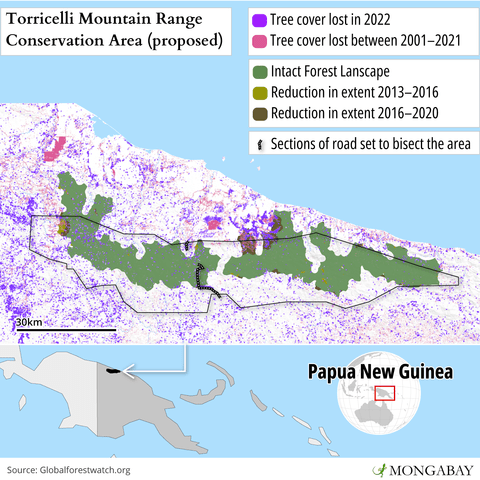
The superb-bird-of-paradise (A.K.A greater lophorina or the greater-bird-of-paradise faces the threat of rainforest loss throughout their range in West Papua and Papua New Guinea due to palm oil, mining and timber deforestation throughout their range.

gif-fire-on-a-palm-oil-plantation-west-papua-getty-images-video.gif

Although this animal was previously recorded on IUCN Red List as being ‘Least Concern’ 100,000’s of hectares of rainforest in Papua have since disappeared for palm oil, soy and meat – making this rating no longer relevant. These birds are most likely going to be upgraded to ‘vulnerable’ or ‘endangered’ due to massive deforestation throughout their range.

Appearance & Behaviour

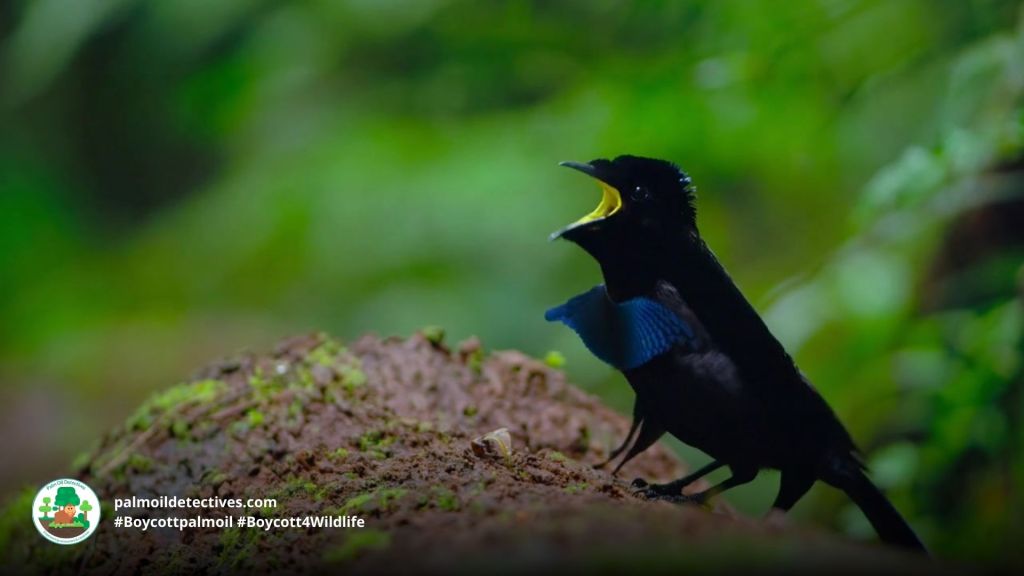
These songbirds are approximately 26 cm long and are dimorphic. Males possess a stunning iridescent green crown, blue-green breast cover and a velvety, iridescent black cape covering their backs. This plumage is used primarily for elaborate and intricate mating displays.

Female Vogelkop Superb Birds of Paradise have russet coloured feathers with brownish buff coloured breast. Juvenile birds of both sexes appear like mature females with earthy russet coloured feathers.

These magnificent birds are struggling to survive, hemmed in on all sides by hunting, palm oil, mining and timber deforestation throughout their range.

Threats

The superb-bird-of-paradise’s main threat is forest loss which has increased enormously over the past decade.

Logging threats loom over tree kangaroo refuge in Papua New Guinea by Mongabay 25 January 2023

Habitat

Superb bird-of-paradise are distributed throughout rainforests and forest edges of Papua New Guinea and West Papua. They are also found throughout the steep mountain ranges of New Guinea. Their range coincides with forest either in the process of being destroyed or earmarked for destruction for palm oil, mining and timber deforestation.

Diet

The superb bird-of-paradise is omnivorous and has been known to eat fruits, insects and larger animals such as reptiles, frogs and small birds. They forage throughout the tree canopy and the forest floor for insects and other foods depending on seasonal availability. Males of this species are territorial and will defend an area of around 1.2ha for food and mating rights.

Mating and breeding

The competition between males for mating rights with females is fierce and aggressive. The superb bird-of-paradise has one of the most intricate and elaborate courtship displays of any animal in the world.

The first part of the courtship display involves simple movements. This is followed by the ‘high intensity display’ where the male scrubs the dirt and prepares the dancefloor for his dancing ritual. After this, he calls to the female with a loud call. The curious female approaches and watches. He spirals and furls out his feathers into a riotous display and black and bright blue feathers into a semi-circular shield shape. He dances in front of the female and snaps his tail feathers, similar to clicking one’s fingers.

The dancing courtship display of males to females can take many hours each day.

The female will typically reject 15-20 suitors before consenting to mate. The males will usually mate with more than one female.

Females will nest at the top of tree canopies using soft leaves and produce between 1-3 eggs in a clutch. These eggs take 16-22 days for incubation and following hatching, chicks will become indepedent after 16-30 days.

Female superb-bird’s-of-paradise reach sexual maturity two years before the males, the latter requiring longer to develop his beautiful feathers for courtship.

Support Superb Bird of Paradises by boycotting palm oil in the supermarket, it’s the #Boycott4Wildlife

Support the conservation of this species

This animal has no protections in place. Read about other forgotten species here. Create art to support this forgotten animal or raise awareness about them by sharing this post and using the #Boycottpalmoil #Boycott4Wildlife hashtags on social media. Also you can boycott palm oil in the supermarket.

Further Information

BirdLife International. 2020. Lophorina latipennisThe IUCN Red List of Threatened Species 2020: e.T181524111A181564897. https://dx.doi.org/10.2305/IUCN.UK.2020-3.RLTS.T181524111A181564897.en. Accessed on 23 February 2023.

Greater lophorina/ Superb Bird of Paradise on Wikipedia  https://en.wikipedia.org/wiki/Greater_lophorina

Superb Bird of Paradise calling – https://xeno-canto.org/595939


Contribute to palm oil detectives - black rhino in profile

How can I help the #Boycott4Wildlife?


Take Action in Five Ways

1. Join the #Boycott4Wildlife on social media and subscribe to stay in the loop: Share posts from this website to your own network on Twitter, Mastadon, Instagram, Facebook and Youtube using the hashtags #Boycottpalmoil #Boycott4Wildlife.

Join 3,176 other subscribers

2. Contribute stories: Academics, conservationists, scientists, indigenous rights advocates and animal rights advocates working to expose the corruption of the palm oil industry or to save animals can contribute stories to the website.

3. Supermarket sleuthing: Next time you’re in the supermarket, take photos of products containing palm oil. Share these to social media along with the hashtags to call out the greenwashing and ecocide of the brands who use palm oil. You can also take photos of palm oil free products and congratulate brands when they go palm oil free.

4. Take to the streets: Get in touch with Palm Oil Detectives to find out more.

5. Donate: Make a one-off or monthly donation to Palm Oil Detectives as a way of saying thank you and to help pay for ongoing running costs of the website and social media campaigns. Donate here

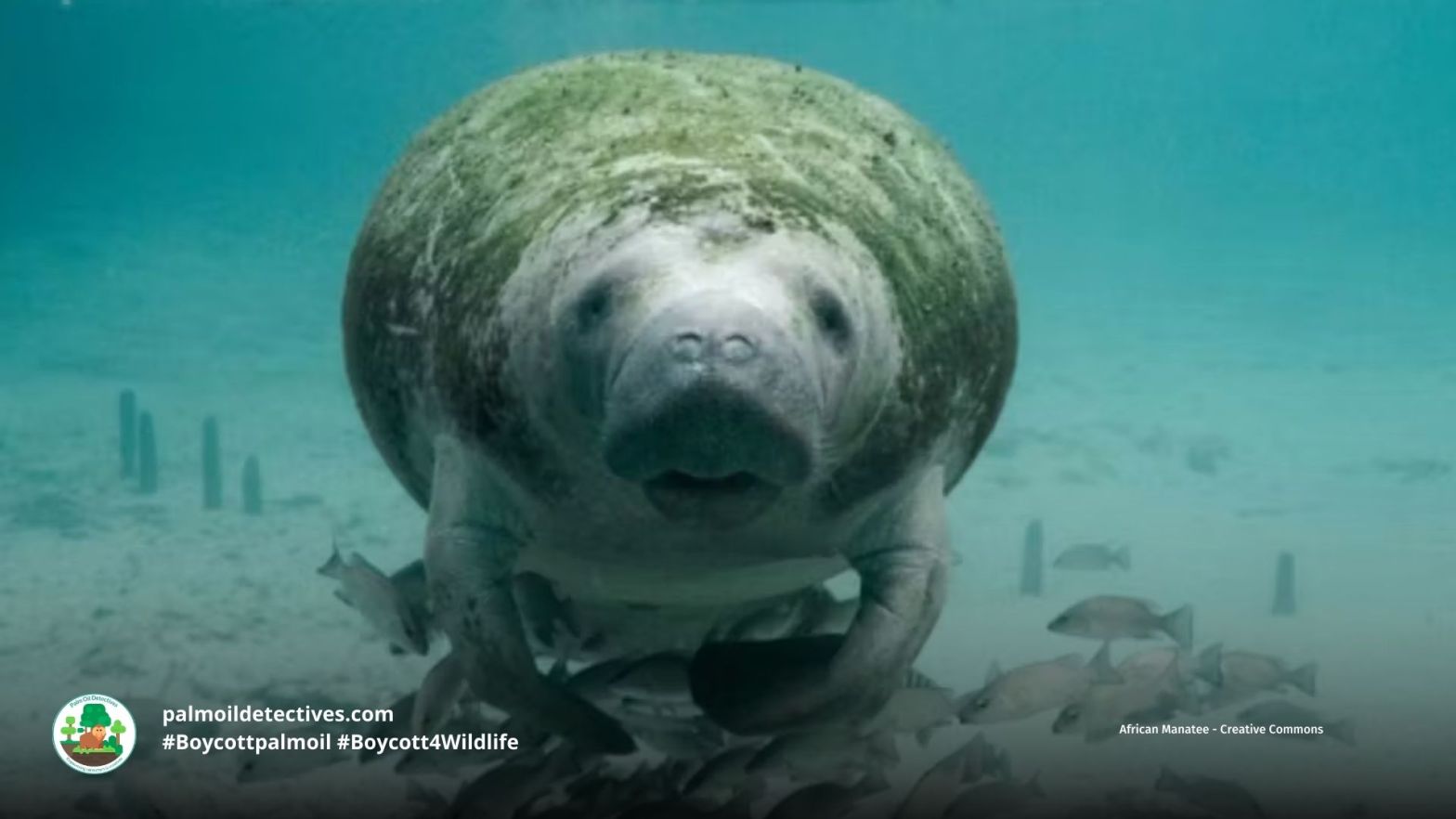
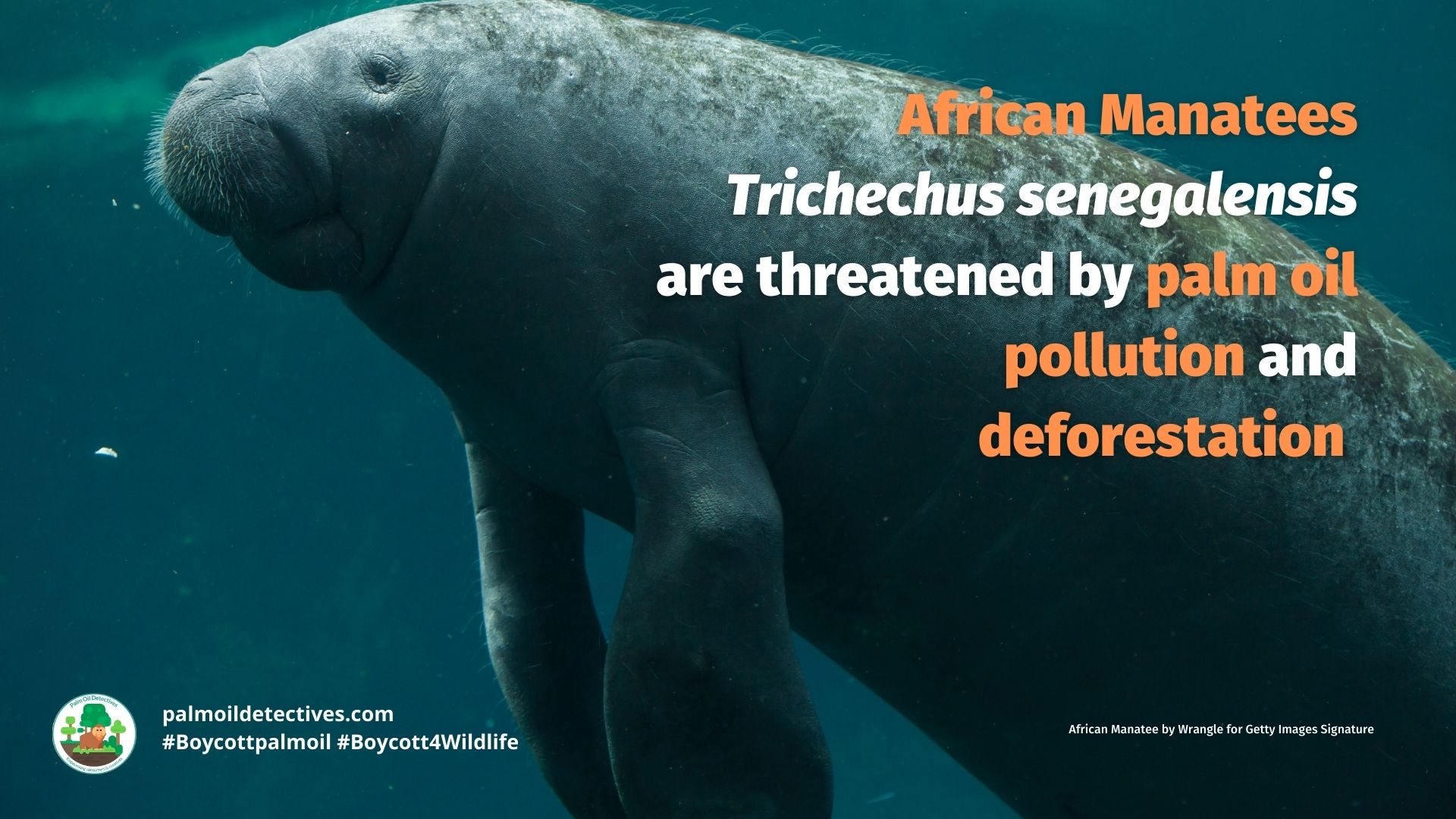
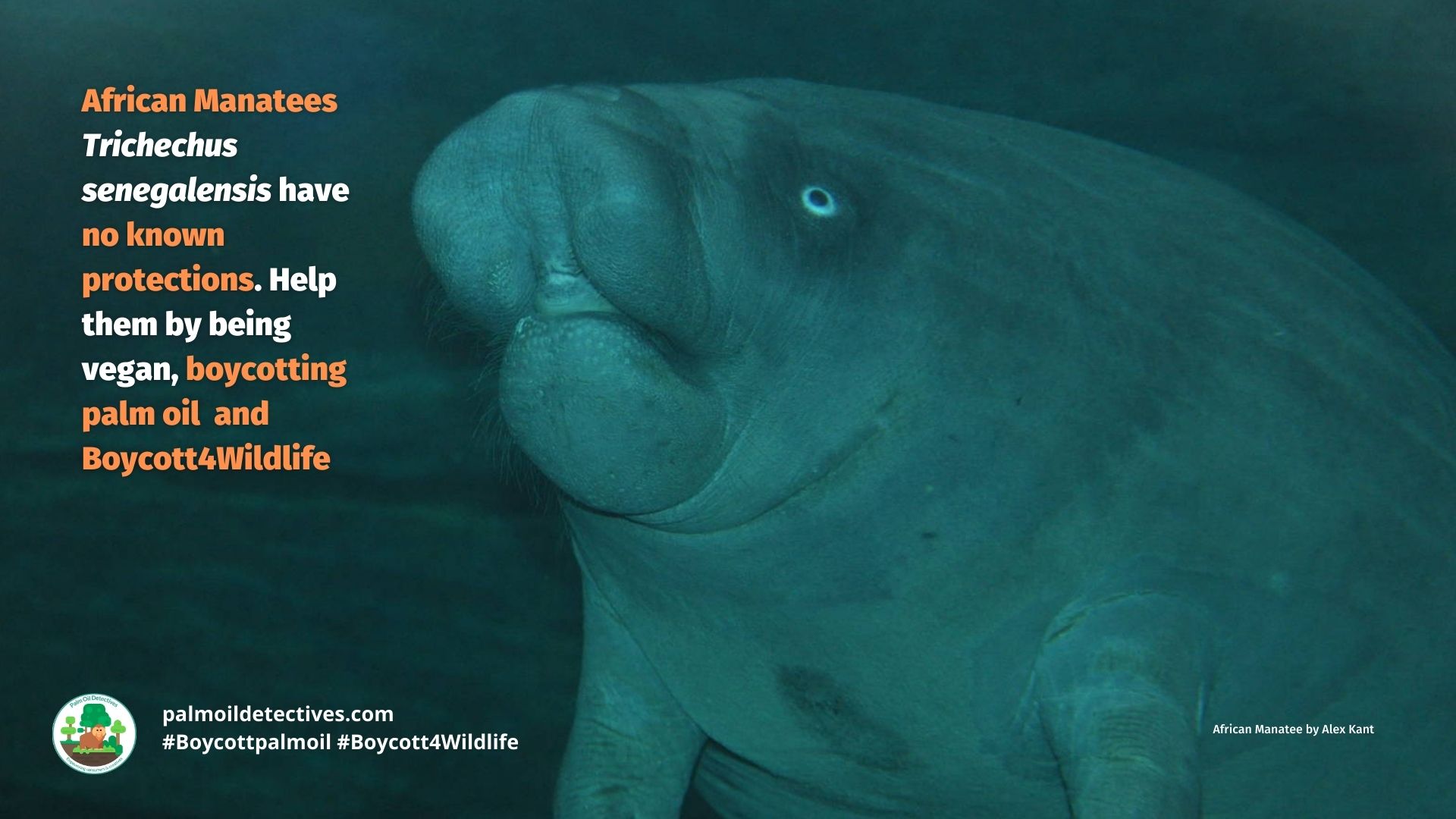
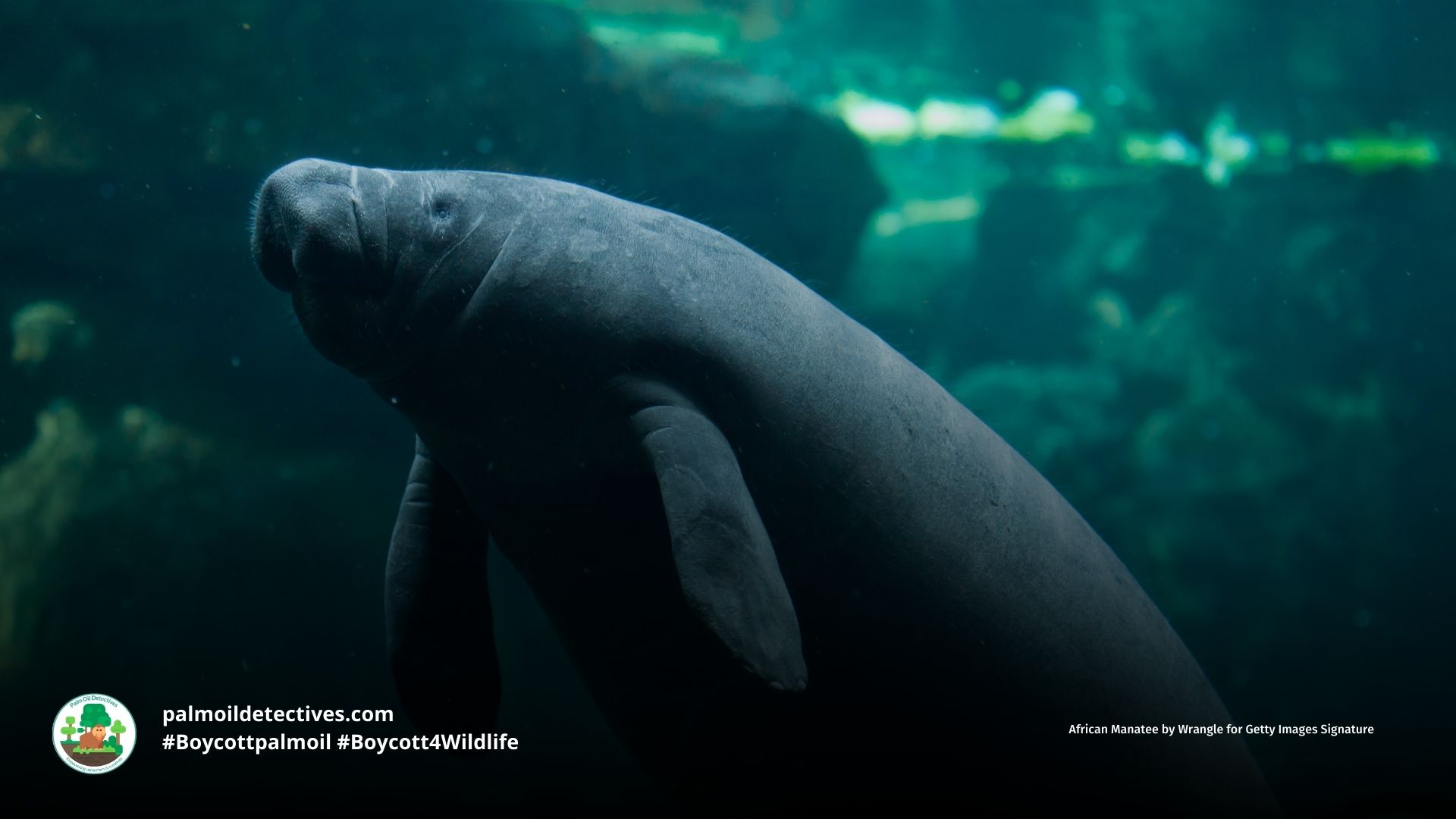
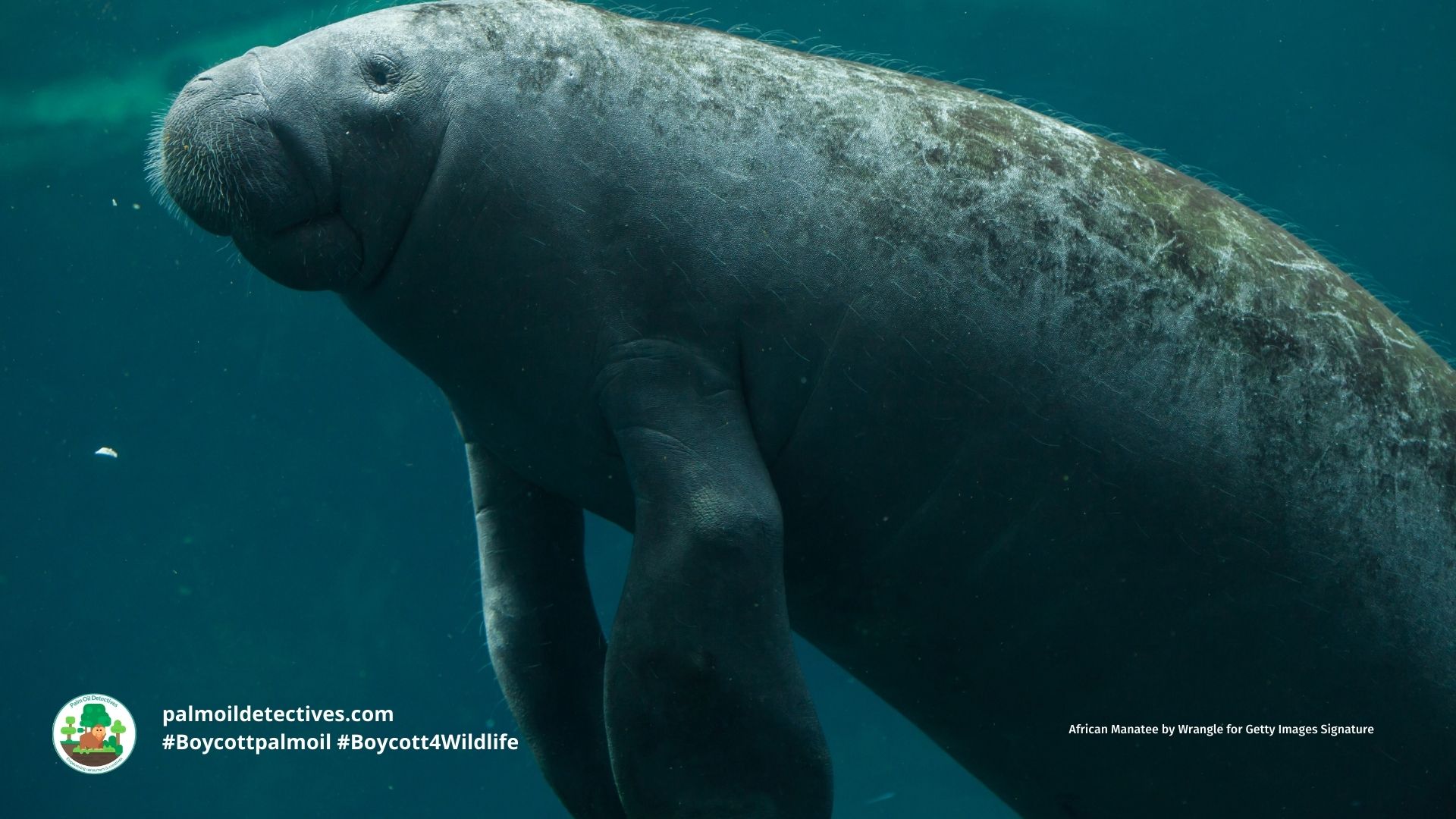
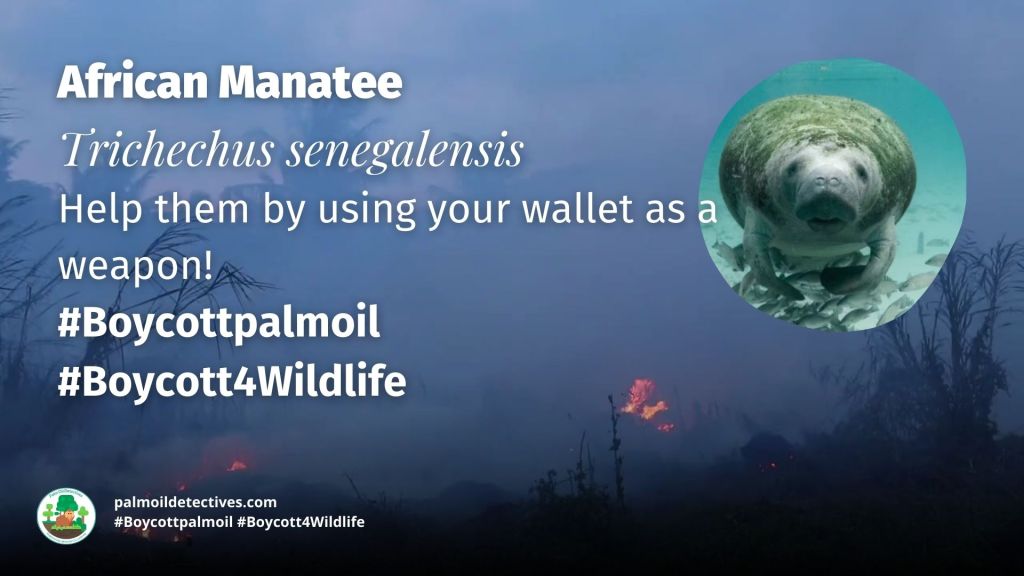
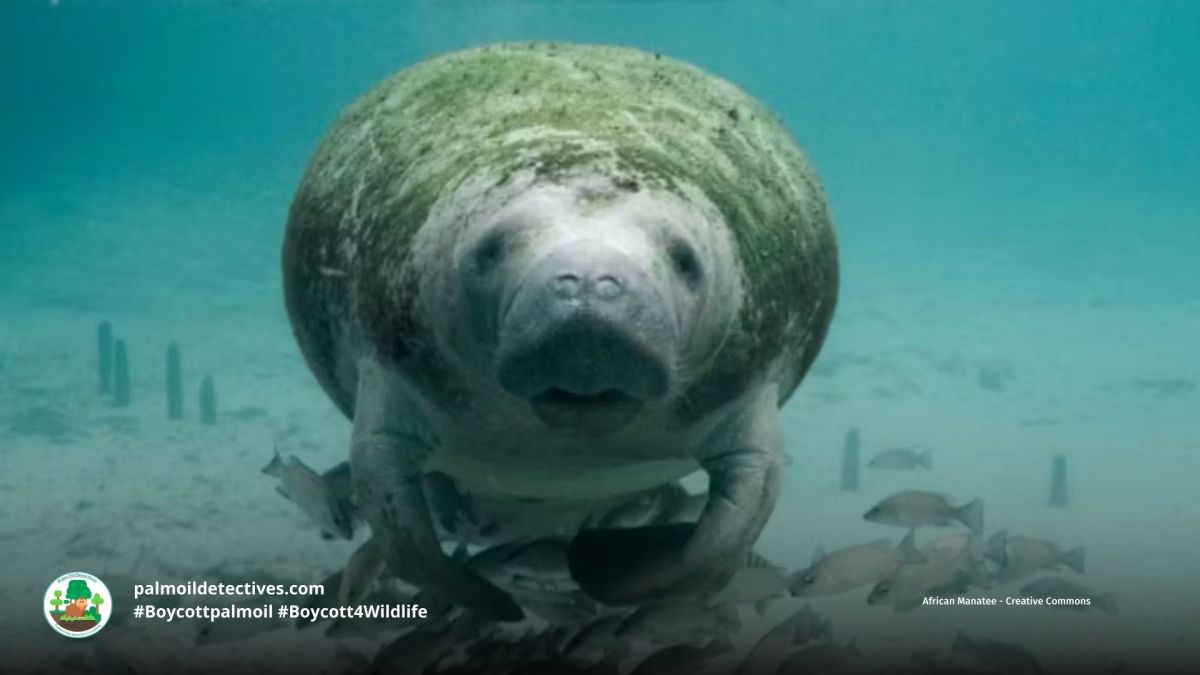
African Manatee Trichechus senegalensis

African Manatee Trichechus senegalensis

Vulnerable

Native – Extant (resident)

Angola; Benin; Cameroon; Chad; Congo; Congo, The Democratic Republic of the; Côte d’Ivoire; Equatorial Guinea; Gabon; Gambia; Ghana; Guinea; Guinea-Bissau; Liberia; Mali; Mauritania; Niger; Nigeria; Senegal; Sierra Leone; Togo


In the folklore of West Africa, there’s a fascinating character called Maame Water, believed to be a goddess of the sea, she symbolises wealth and beauty. Maame Water is none other than the African Manatee!

The Serer people of Senegal, the Gambia, and Mauritania hold the African Manatee in high regard, considering them sacred and a guardian of the secrets of the future according to their creation myth. This precious species is vulnerable from palm oil deforestation, hunting and pollution. They perform an essential service to mangrove ecosystems by keeping them healthy. Help them survive and #Boycottpalmoil #Boycott4Wildlife every time you shop!

African Manatees 🐋💙 have been a fixture in #African myths for millennia 🇨🇩🇨🇲🇬🇭🇱🇷 Now they a threatened by #palmoil 🌴🩸🔥 #hunting, #cocoa and the pet trade. Help them every time you shop and #Boycottpalmoil 🌴🪔⛔️ #Boycott4Wildlife @palmoildetect https://palmoildetectives.com/2023/10/08/african-manatee-trichechus-senegalensis/

#African #Manatees 🐋🩵 are #vulnerable from #palmoil 🌴🪔 #cocoa 🍫🫕 #deforestation and the #pet and #zoo trade. Fight for them and #Boycottpalmoil 🌴🪔☠️🔥🧐⛔️ #Boycott4Wildlife @palmoildetect https://palmoildetectives.com/2023/10/08/african-manatee-trichechus-senegalensis/

Appearance & Behaviour

African manatees are usually content with their own company, but they occasionally join forces with a few fellow manatees to rest together. They’re versatile creatures, active during both day and night, exploring their watery world. When the sun is high, you might spot them resting in the shallows, hidden away among mangrove roots or floating plants. And don’t be fooled by their peaceful appearance—they’re just avoiding the hustle and bustle of human activity.

African manatees enjoy their solitude but occasionally gather in small groups to rest together. They have a knack for finding quiet spots in shallow water, like mangrove roots or under floating plants, to take a break. You’ll hardly notice them gliding through the water as they move with grace and gentleness. Depending on the region, their activity patterns may vary, with some being active both during the day and night.

Fast Facts

  • African manatees resemble the American manatees but have distinctive white markings on their abdomens.
  • African manatees have large front flippers used for paddling and bringing food to their mouths.
  • They rely on strong molars to chew vegetation, their primary food source.
  • When born, manatees have small incisors that are eventually lost, and new molars grow in their place.
  • African manatees consume 4 to 9 percent of their body weight in wet vegetation daily.

It is crucial to protect these amazing beings and their habitats. One way you can make a difference is by boycotting palm oil, as its production often leads to deforestation and the destruction of important manatee habitats. By using your wallet as a weapon and opting for palm oil-free products, you can help them!

Threats

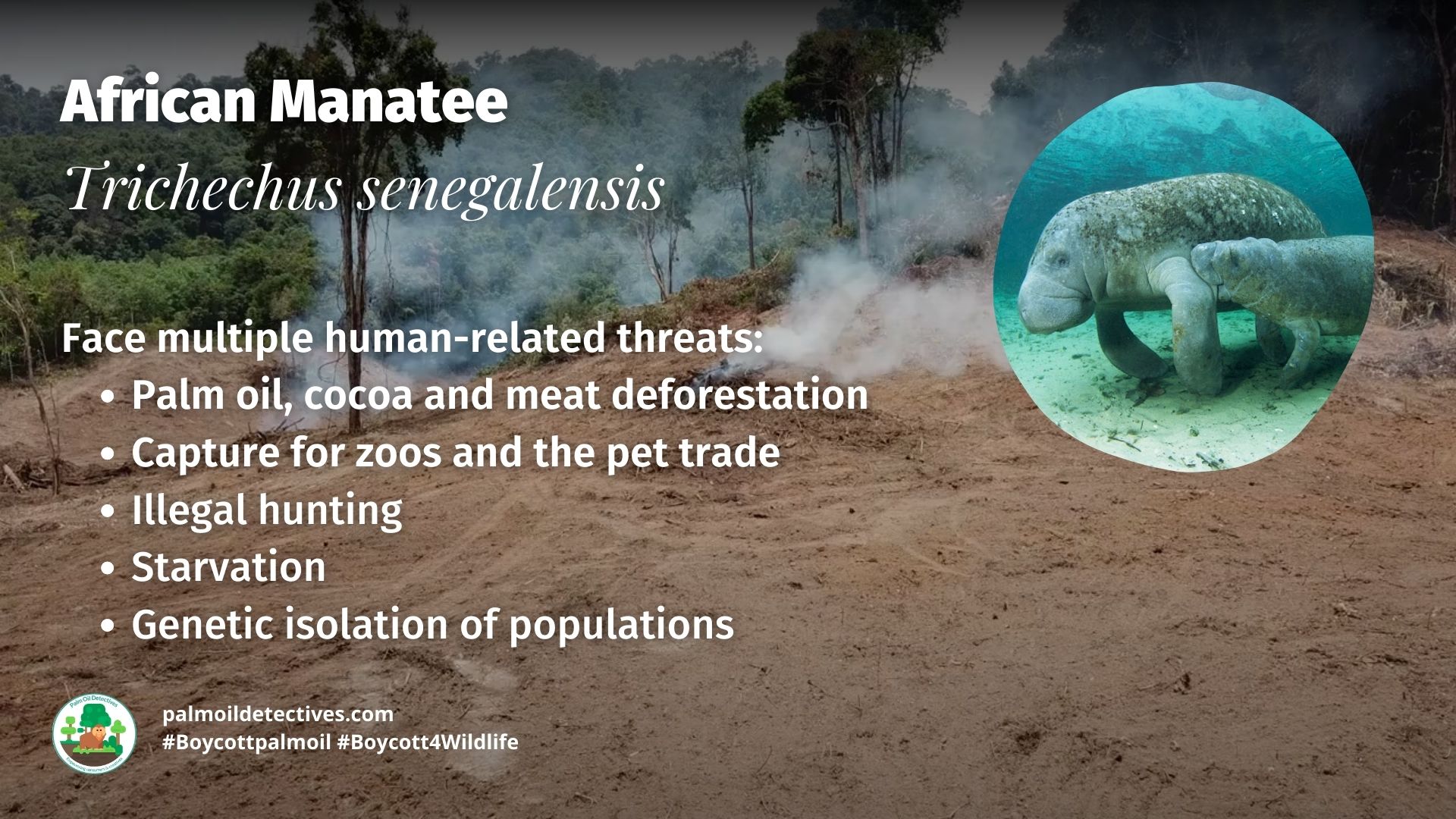
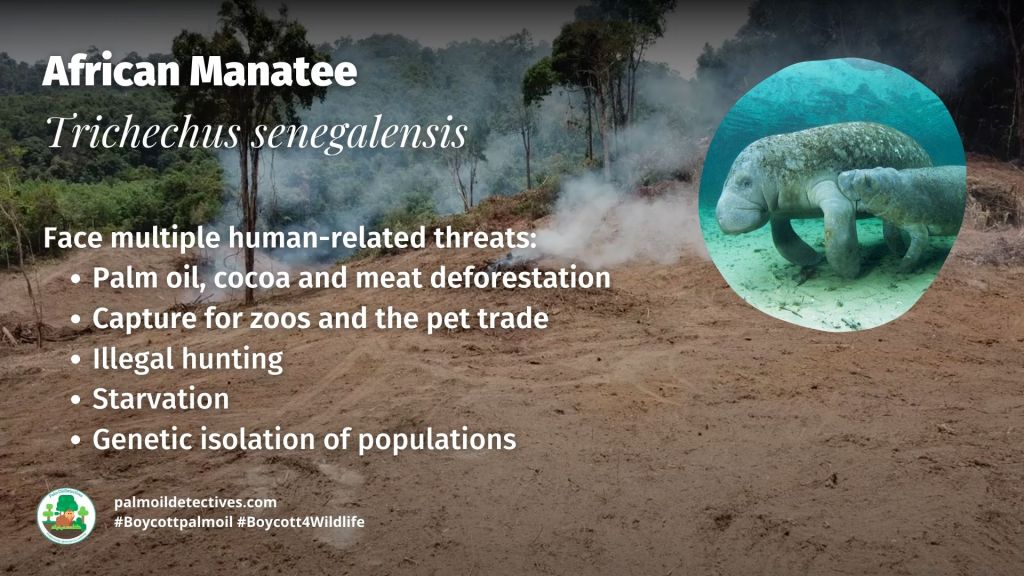
African Manatees face several major threats:

  • Deforestation for palm oil, cocoa and other commodities: pesticide run-off from these industries into rivers is devastating to populations.
  • Illegal poaching: for parts (meat, oil, bones, skin)
  • Zoo and pet trade: Capture and sale to zoos, aquariums, and as pets
  • Infrastructure growth: Increased damming and hydroelectric power use
  • Genetic isolation of populations
  • Accidents with turbines in dams: along with fishing nets
  • Climate change and extreme weather incidents: droughts, tidal changes.
  • Starvation during the dry season in the Niger River

Habitat

African manatees thrive in a variety of habitats across West and Central Africa. They can be found in rivers, estuaries, lagoons, coastal bays, lakes, and reservoirs. These gentle creatures prefer calm waters with easy access to food and freshwater.

Diet

These herbivorous beauties have a diverse palate. They munch on a variety of aquatic plants, grasses, and emergent vegetation. From Vossia to Cyperus papyrus, they savor the flavors of their leafy feasts. In certain areas, they might even surprise you by snacking on small fish or delectable mollusks. These manatees definitely know how to enjoy a well-rounded meal!

Mating and breeding

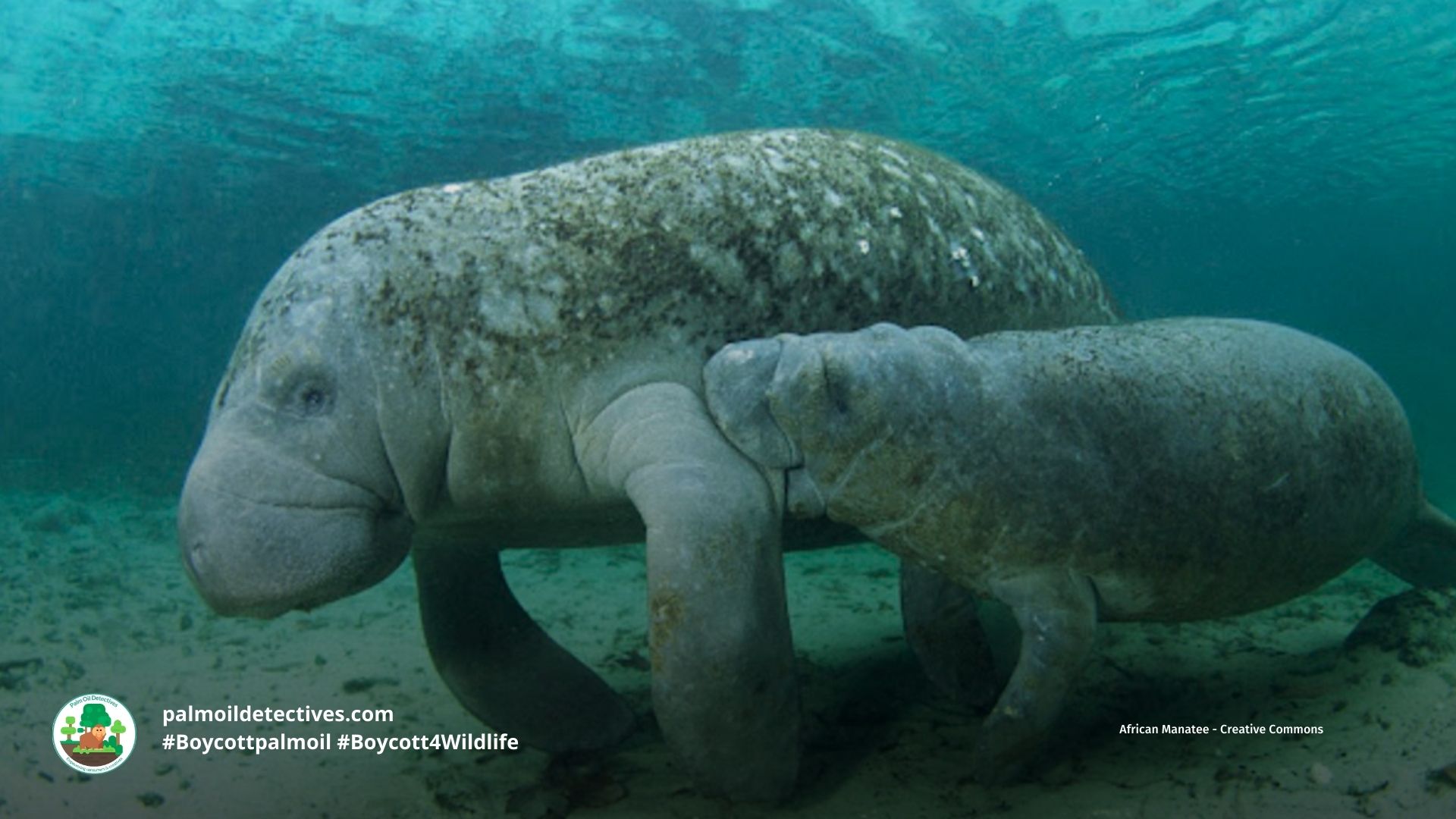
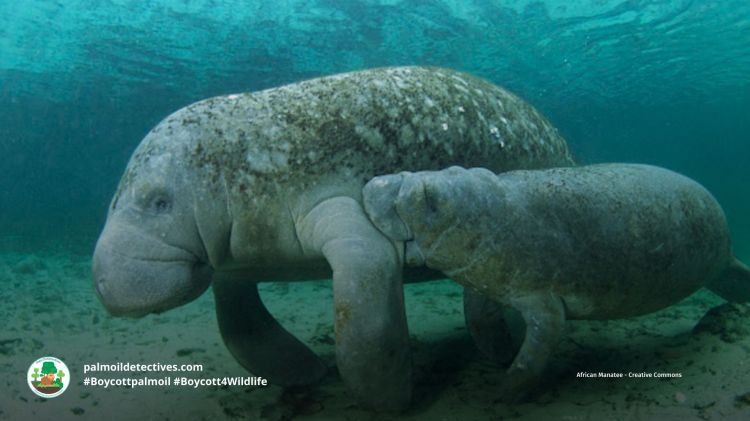
When it comes to family, African manatees keep it small and sweet. Mothers and calves form a strong bond, sticking together as a unit. While we don’t know all the details about their love lives, we have observed mating herds in various African countries. The little ones stay close to their moms for quite some time, but we’re still learning about their growth and development.

Support African Manatee by going vegan and boycotting palm oil in the supermarket, it’s the #Boycottpalmoil #Boycott4Wildlife

Support the conservation of this species

This animal has no protections in place. Read about other forgotten species here. Create art to support this forgotten animal or raise awareness about them by sharing this post and using the #Boycottpalmoil #Boycott4Wildlife hashtags on social media. Also you can boycott palm oil in the supermarket.

Further Information

Keith Diagne, L. 2015. Trichechus senegalensis (errata version published in 2016). The IUCN Red List of Threatened Species 2015: e.T22104A97168578. https://dx.doi.org/10.2305/IUCN.UK.2015-4.RLTS.T22104A81904980.en. Accessed on 02 June 2023.

1. African Manatee on Wikipedia – https://en.wikipedia.org/wiki/African_manatee

2. African Manatee on Animalia.bio – https://animalia.bio/african-manatee

3. How West African Manatees help keep mangroves healthy, One Earth.

African Manatee Trichechus senegalensis

Contribute to palm oil detectives - black rhino in profile

How can I help the #Boycott4Wildlife?


Take Action in Five Ways

1. Join the #Boycott4Wildlife on social media and subscribe to stay in the loop: Share posts from this website to your own network on Twitter, Mastadon, Instagram, Facebook and Youtube using the hashtags #Boycottpalmoil #Boycott4Wildlife.

Join 3,176 other subscribers

2. Contribute stories: Academics, conservationists, scientists, indigenous rights advocates and animal rights advocates working to expose the corruption of the palm oil industry or to save animals can contribute stories to the website.

3. Supermarket sleuthing: Next time you’re in the supermarket, take photos of products containing palm oil. Share these to social media along with the hashtags to call out the greenwashing and ecocide of the brands who use palm oil. You can also take photos of palm oil free products and congratulate brands when they go palm oil free.

4. Take to the streets: Get in touch with Palm Oil Detectives to find out more.

5. Donate: Make a one-off or monthly donation to Palm Oil Detectives as a way of saying thank you and to help pay for ongoing running costs of the website and social media campaigns. Donate here

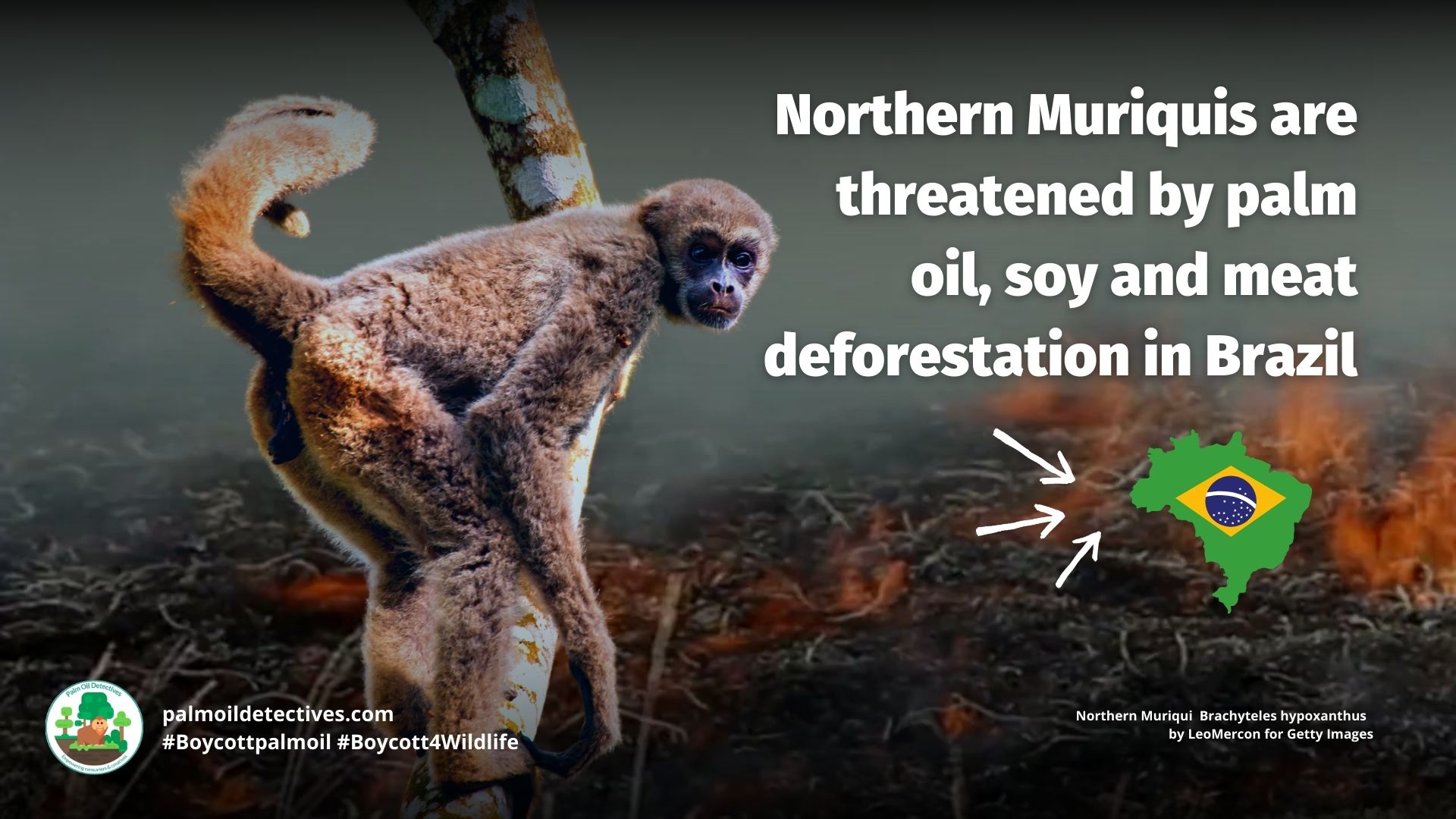
Northern Muriqui Brachyteles hypoxanthus

Northern Muriqui Brachyteles hypoxanthus

Critically Endangered

Extant (resident)

Brazil (Bahia, Espírito Santo, Minas Gerais)

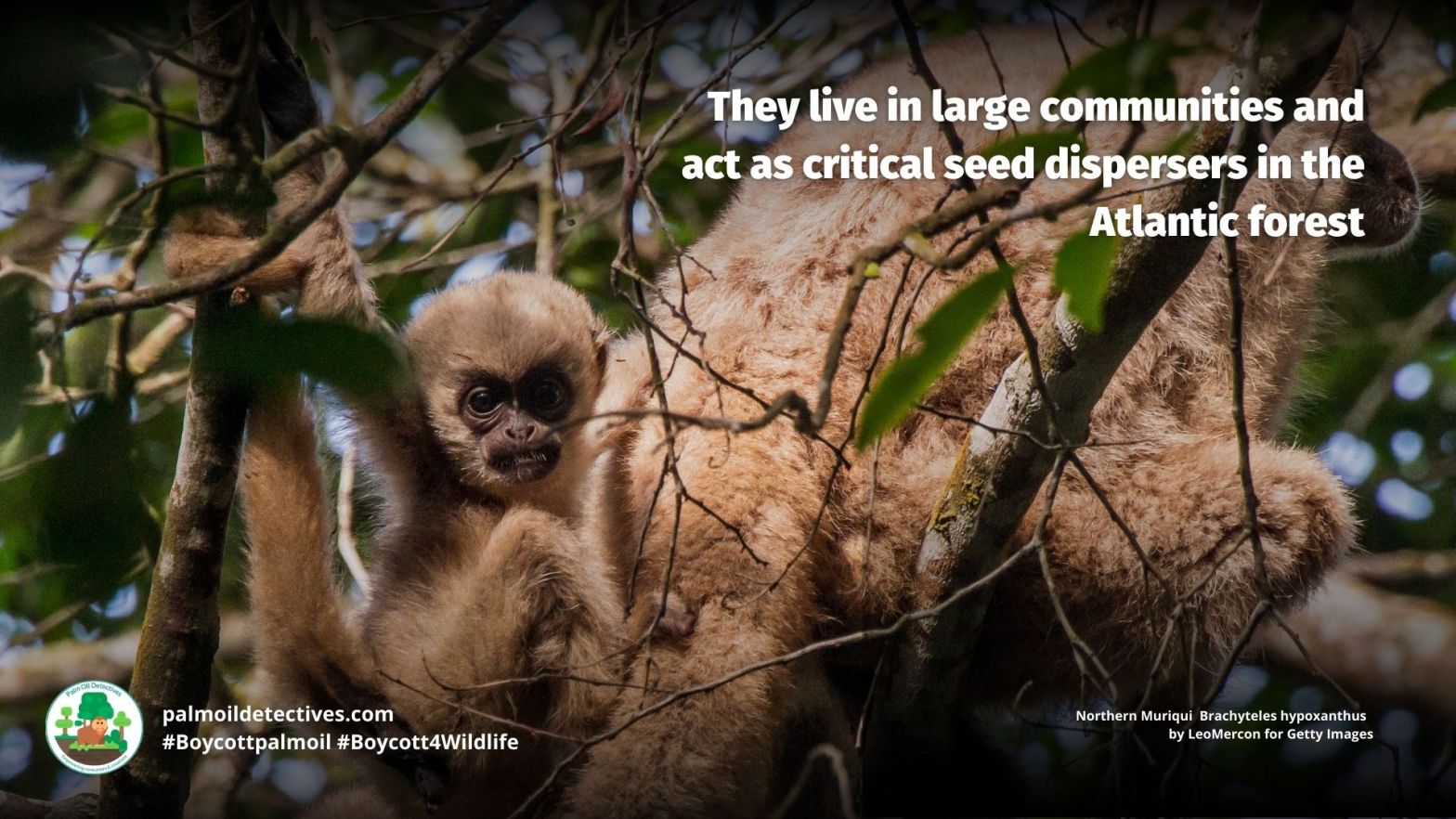
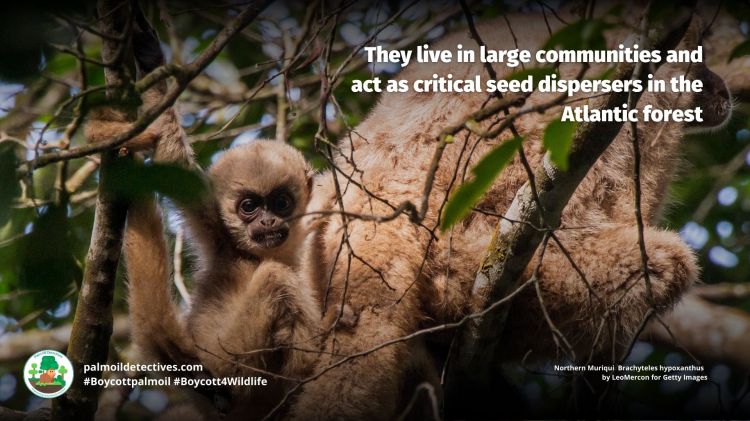
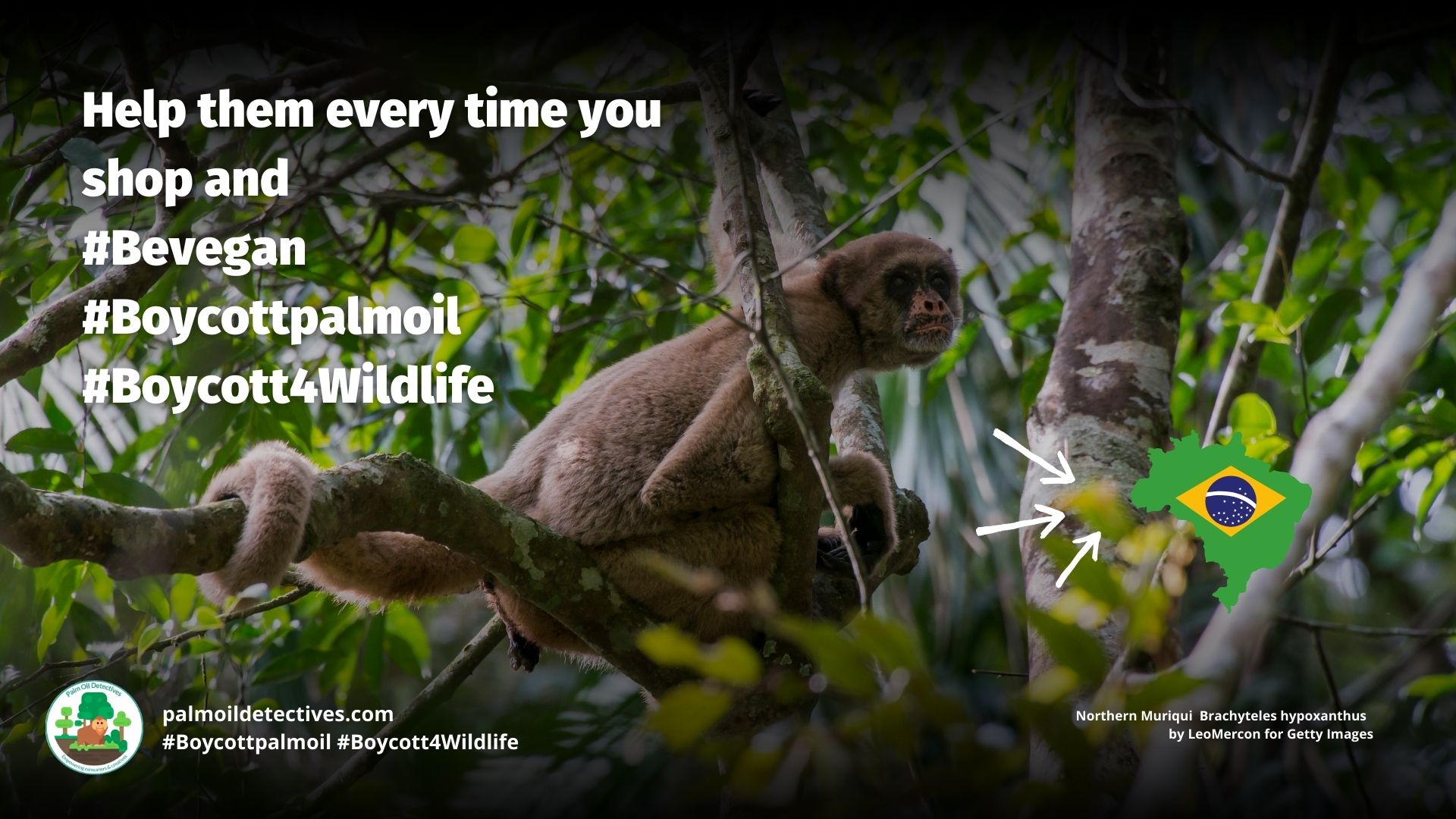
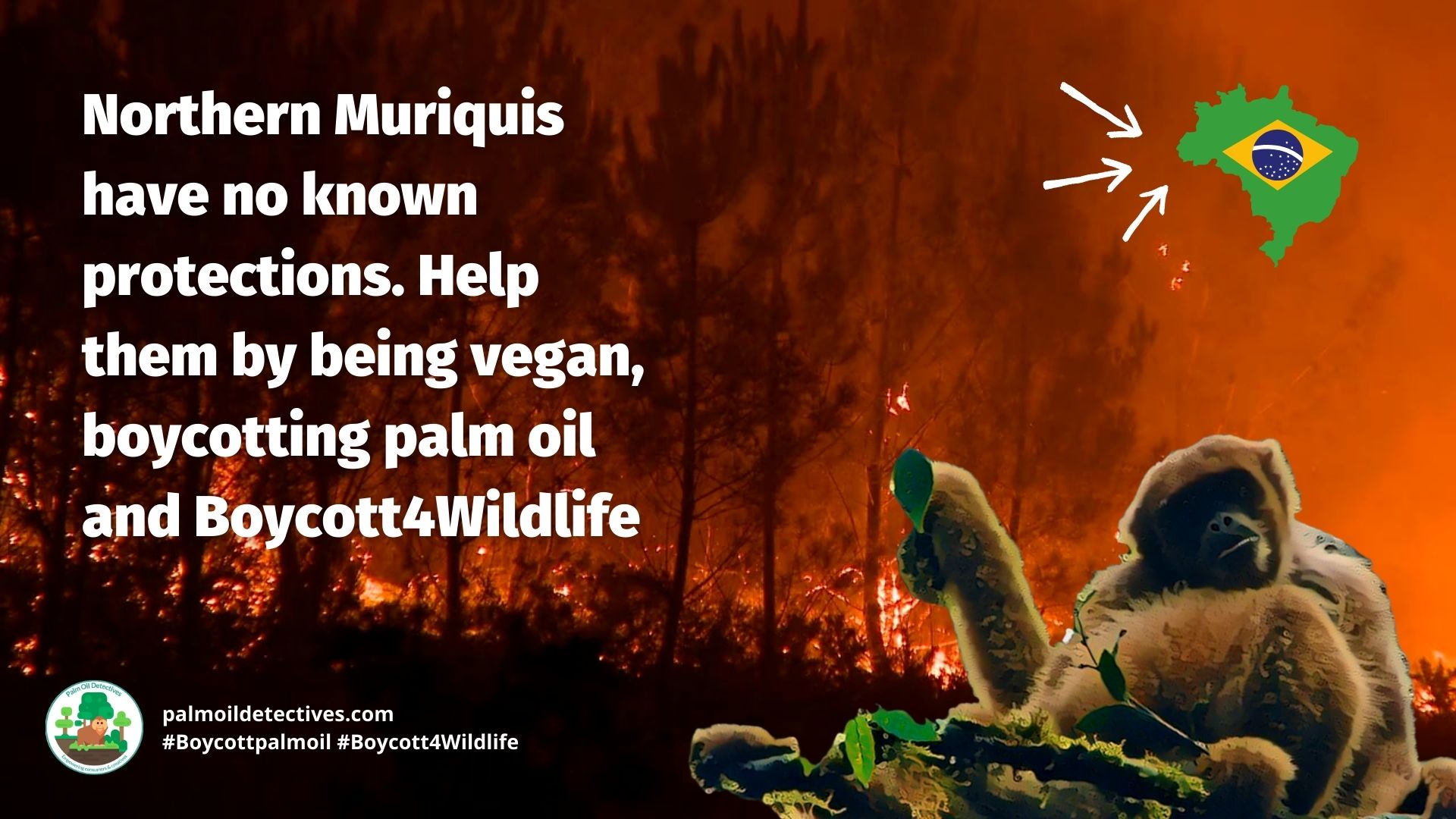
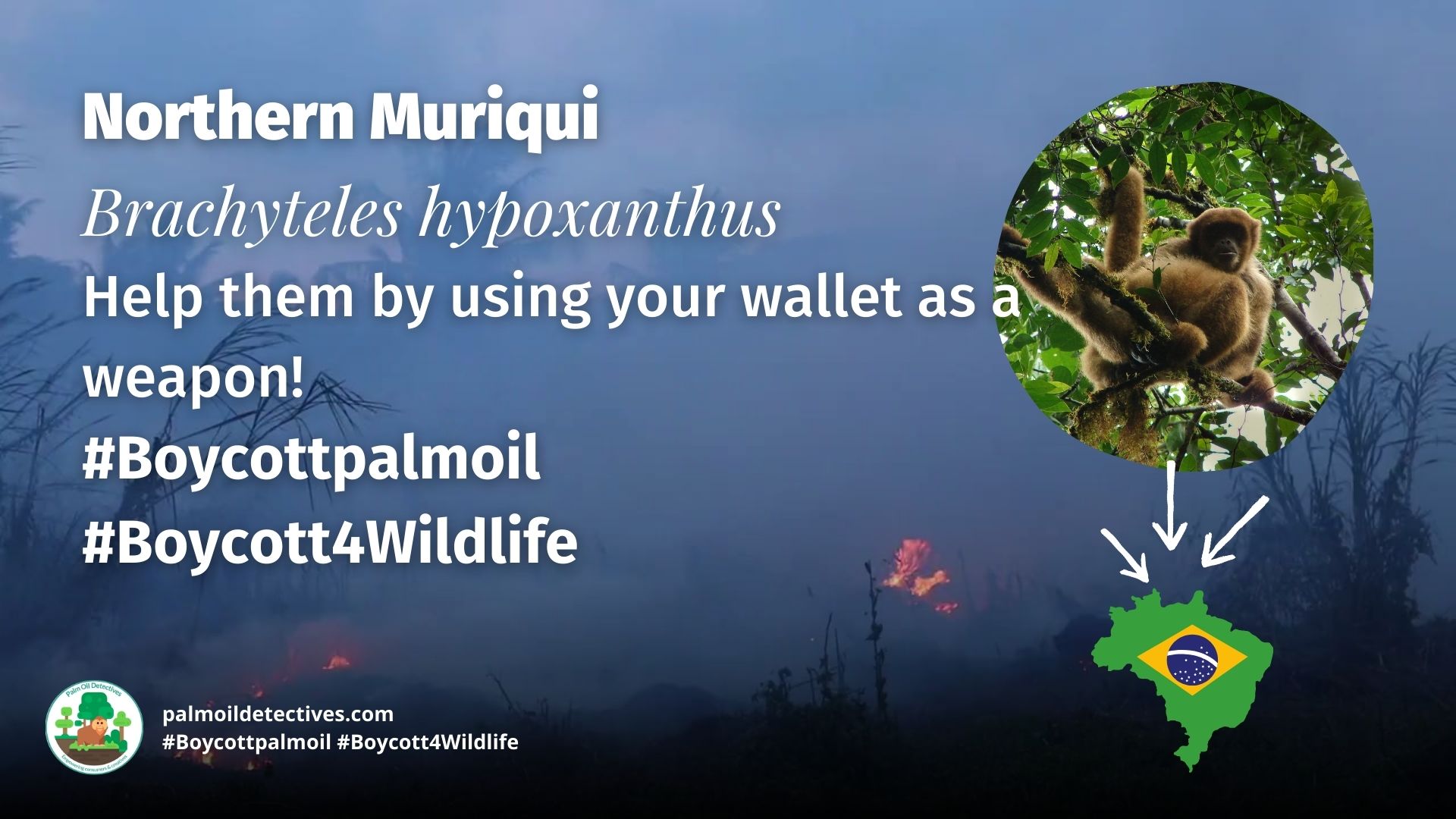
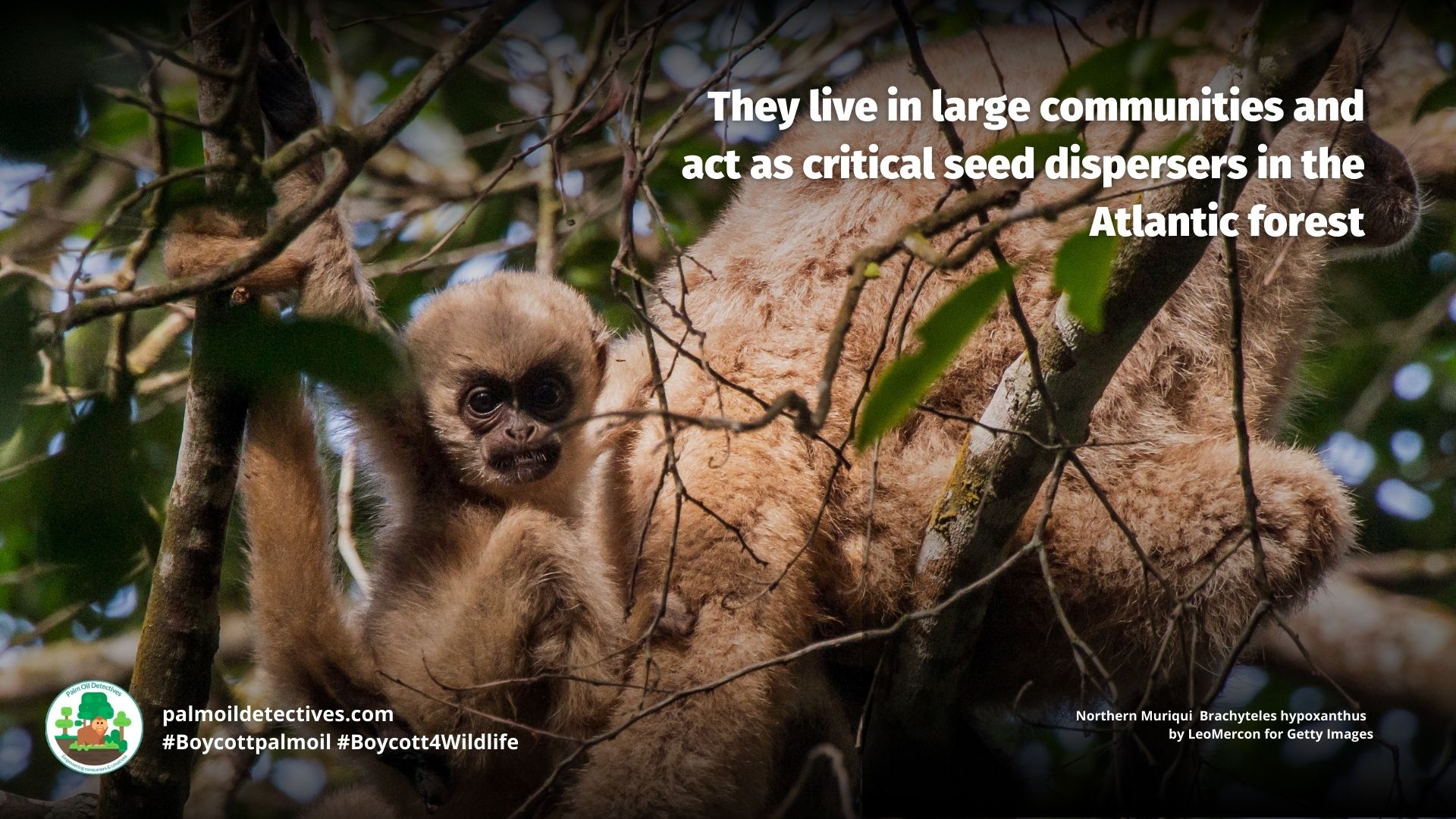
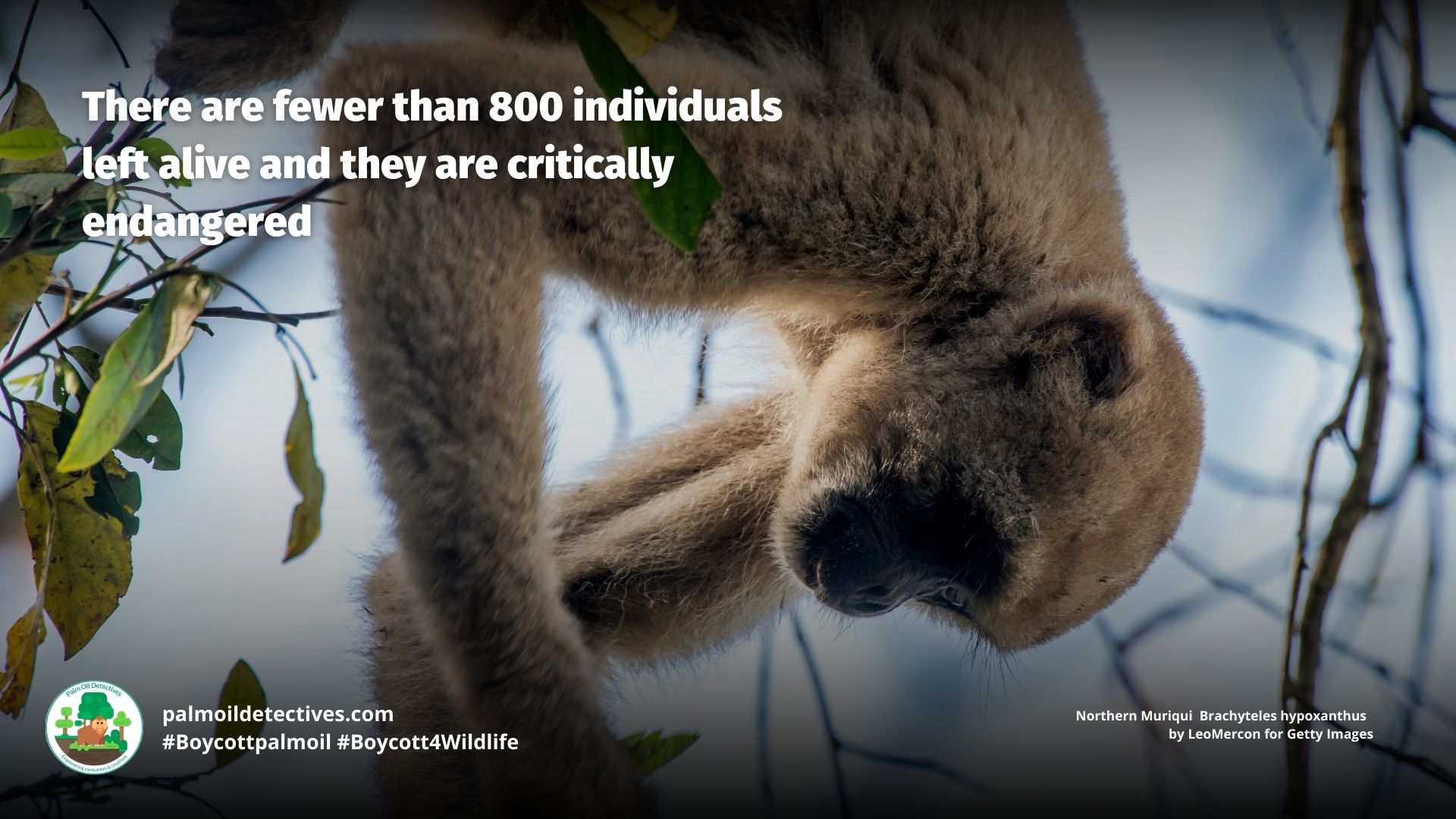
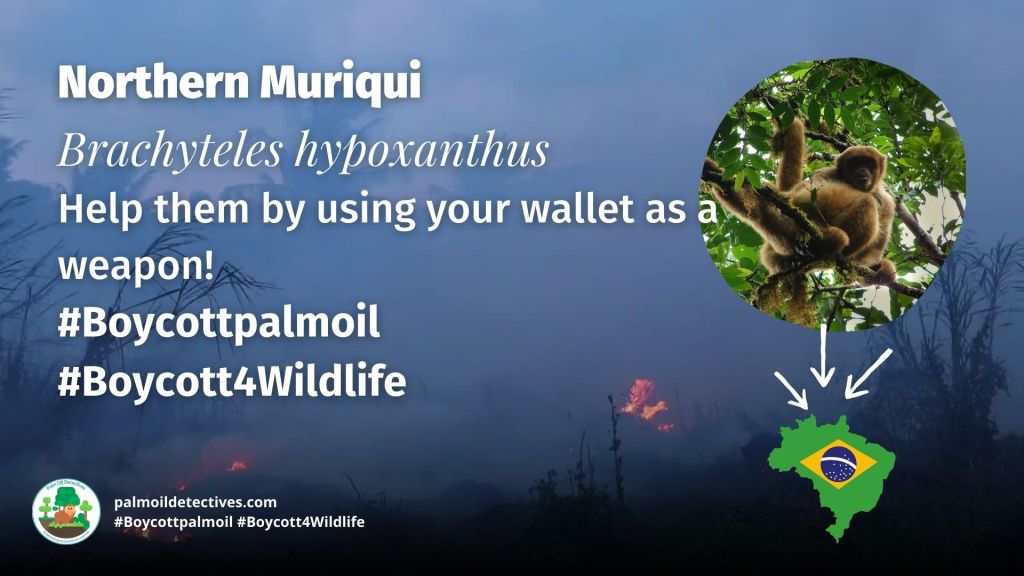
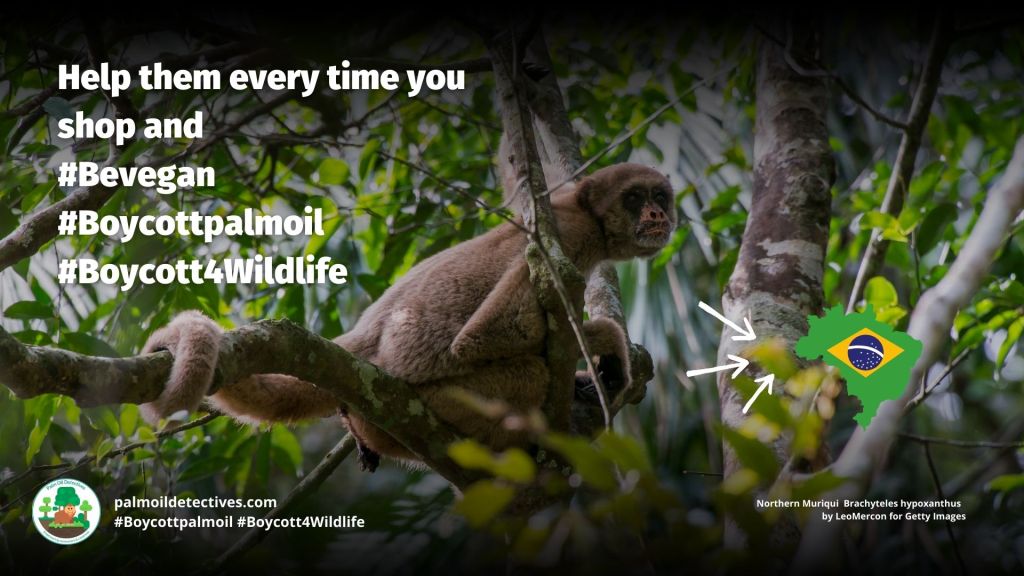
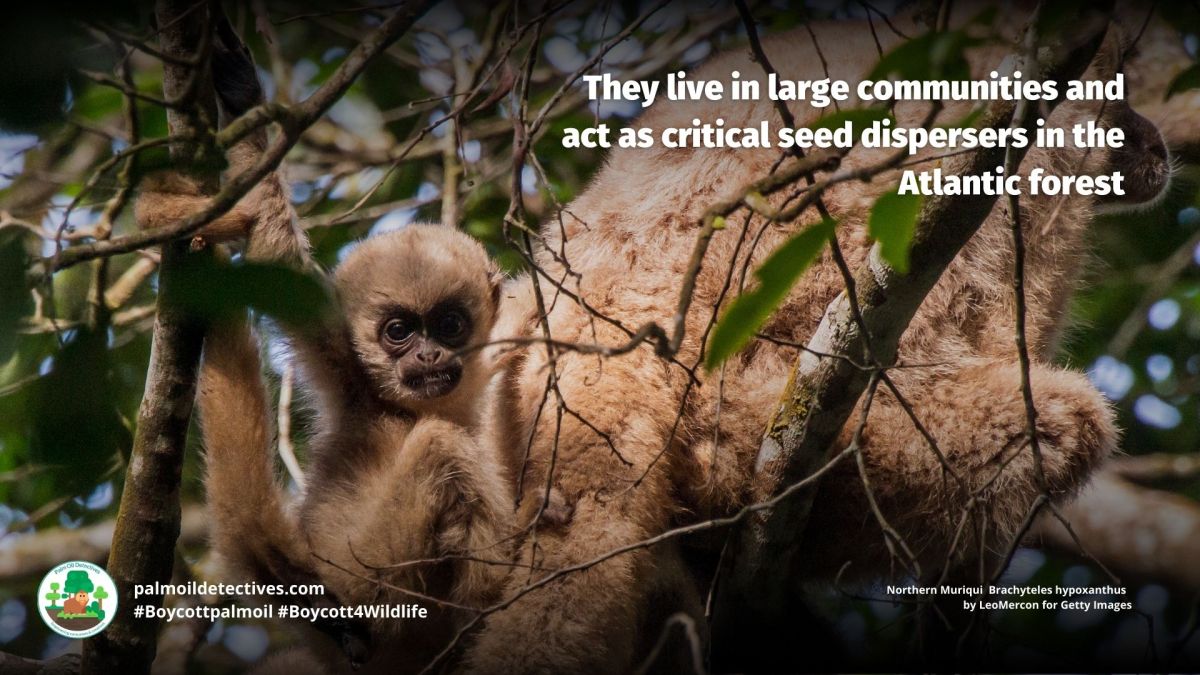
Northern Muriquis (AKA Woolly Spider Monkeys) have a striking light brown and golden fur and are known for their rattling vocalisations. They live in large communities and act as critical seed dispersers in the Atlantic forest. There are fewer than 800 individuals left alive and they are critically endangered. Their main threats are palm oil, meat and soy deforestation in Brazil, along with illegal hunting. Help them every time you shop and be #vegan, #Boycottpalmoil and #Boycott4Wildlife

Northern Muriquis are critically endangered #monkeys 🐵🙉 threatened by #hunting, #palmoil, #soy, #meat #deforestation in #Brazil 🇧🇷😿 Help them survive and be #vegan 🥕🥦 #Boycottpalmoil 🌴🪔⛔️ #Boycott4Wildlife in the supermarket! @palmoildetect https://palmoildetectives.com/2023/10/01/northern-muriqui-brachyteles-hypoxanthus/

Northern muriquis 🧠🐒 have a stunning golden coat and are crucial for seed dispersal in #Brazil 🇧🇷 – yet they are now critically endangered by #palmoil and other threats. Fight for them and #Boycottpalmoil 🌴🪔☠️💩🚫 #Boycott4Wildlife https://palmoildetectives.com/2023/10/01/northern-muriqui-brachyteles-hypoxanthus/

Muriquis are the largest species of New World monkeys coated in a striking gold and light brown fur. They use their long prehensile tails and agile arms to travel with speed and grace through the rainforest canopy. They are rapidly disappearing from our world, mainly because of palm oil, meat and soy deforestation.

Appearance & Behaviour

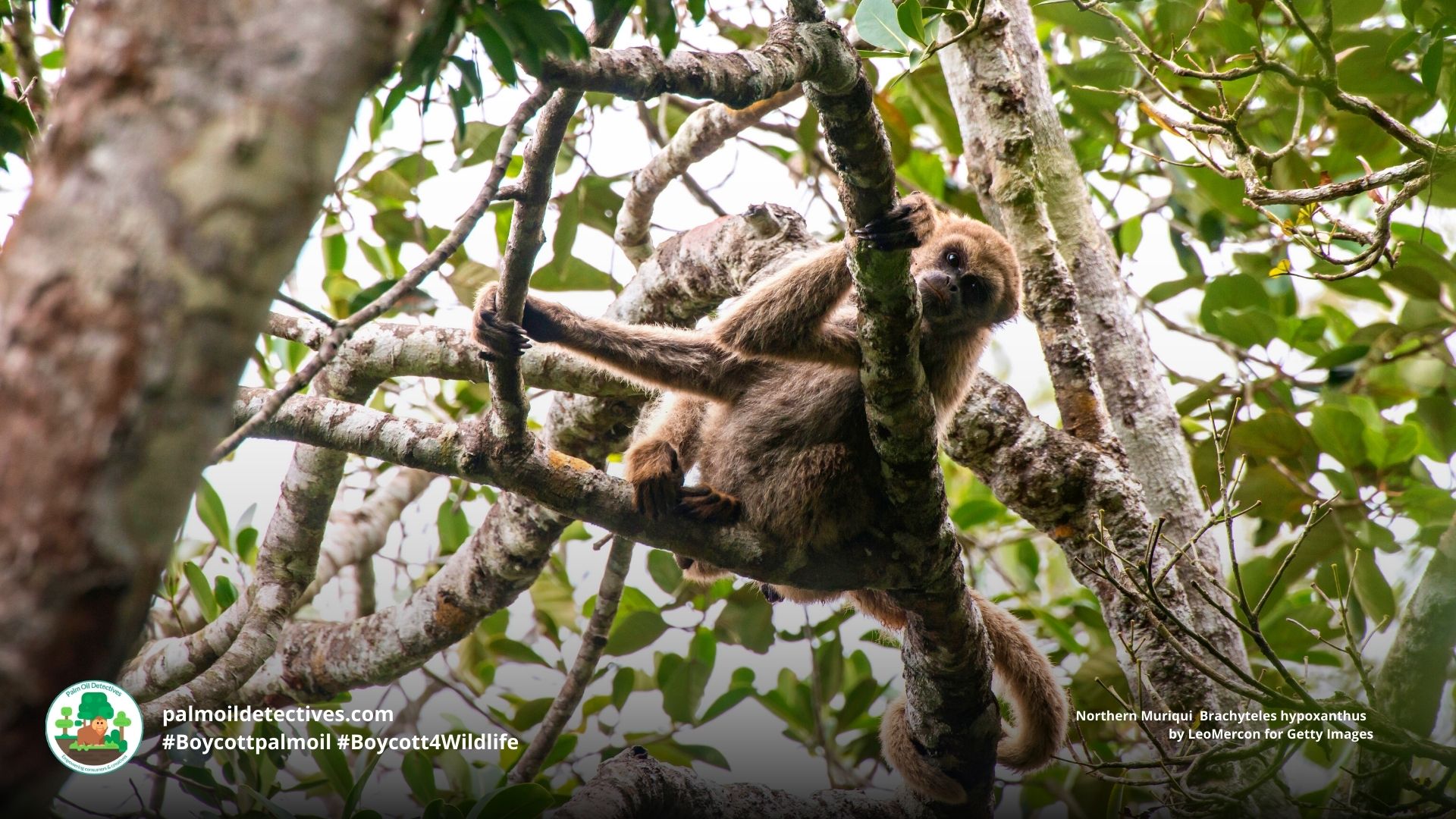
Their long prehensile tails and willowy long arms assist with swinging through the tree tops. Yet Northern Muriqui also spend a fair amount of time socialising, playing, embracing each other, feeding and resting on the ground. They are most active during daylight hours.

Northern Muriqui Brachyteles hypoxanthus - #Boycott4Wildlife

Highly social, northern muriquis live in large groups of 48-81 individuals made up of young infants, juveniles and adults of both sexes.

Smaller sub-groups will rest and feed separately with males spending time together in all-male groups and mothers with infants spending time away from other females to nurse and rest with infants, along with occasionally socialising with other females.

They use distinct vocalisations for long and short distance communications.

Threats

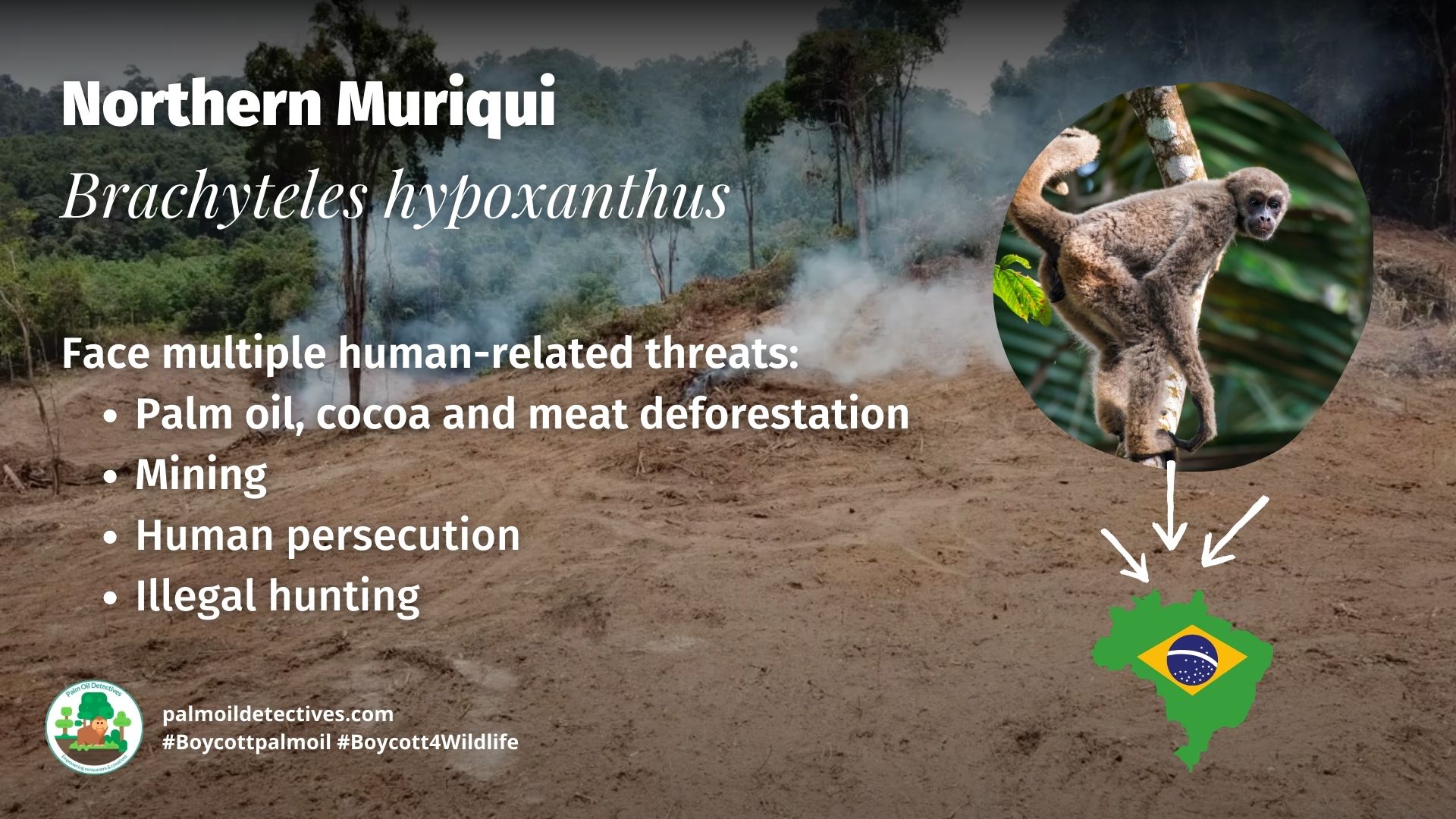
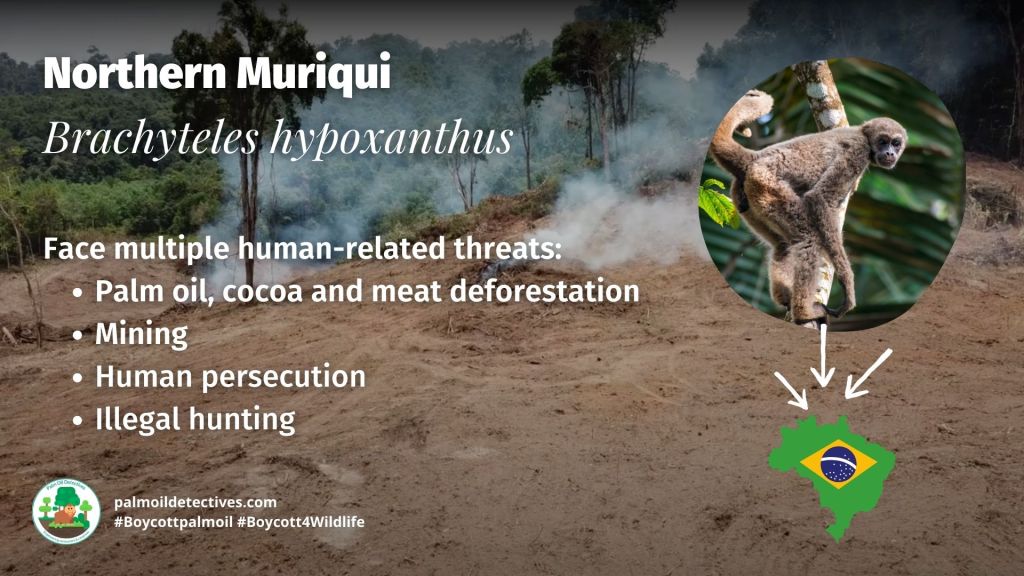
Northern muriquis have very low genetic diversity meaning that their population may not be sustainable. There are thought to be fewer than <855 individuals left. They face a range of anthropogenic threats, including:

  • Palm oil deforestation: Their Atlantic forest home is being destroyed for palm oil plantations.
  • Soy deforestation: Another threat to the rainforest is soy plantations.
  • Meat deforestation: Their forest is being destroyed to make way for cattle ranching and meat deforestation.
  • Hunting and human persecution: seen as a food source in times of scarcity and hunger for local people.

This species survives in much reduced and isolated populations – none of which alone are believed to be viable in the long term—none exceed 500 individuals, and the largest known is that in the RPPN Feliciano Miguel Abdala (about 230 individuals).

IUCN RED LIST

Habitat

These large New World monkeys are found in the Atlantic Forest region of the Brazilian states of Rio de Janeiro, Espírito Santo, Minas Gerais, and Bahia. They thrive in tropical forests.

Diet

Northern muriquis are herbivores with their fruit, leaves, flowers, vine and seed diet being critically important for the dispersal of seeds in their ecosystem, helping the forest to grow.

Mating and breeding

Female and male northern muriquis are polygynandrous (in other words promiscuous). Both males and females have multiple partners during mating season.

Mating takes place during the period of October to April with infants between May to October. After a gestation period of 7 months, the mother will give birth to one infant and care for this offspring for up to 2 years. Females reach sexual maturity aged 5-11 years old and males at 4-8 years old.

Support Northern Muriquis by going vegan and boycotting palm oil and meat in the supermarket, it’s the #Boycott4Wildlife

Support the conservation of this species

This animal has no protections in place. Read about other forgotten species here. Create art to support this forgotten animal or raise awareness about them by sharing this post and using the #Boycottpalmoil #Boycott4Wildlife hashtags on social media. Also you can boycott palm oil in the supermarket.

Further Information

Mendes, S.L., de Oliveira, M.M., Mittermeier, R.A. & Rylands, A.B. 2008. Brachyteles hypoxanthusThe IUCN Red List of Threatened Species 2008: e.T2994A9529636. https://dx.doi.org/10.2305/IUCN.UK.2008.RLTS.T2994A9529636.en. Accessed on 12 November 2022.

Northern Muriqui Brachyteles hypoxanthus on Wikipedia

Northern Muriqui Brachyteles hypoxanthus on Animalia.bio


Contribute to palm oil detectives - black rhino in profile

How can I help the #Boycott4Wildlife?


Take Action in Five Ways

1. Join the #Boycott4Wildlife on social media and subscribe to stay in the loop: Share posts from this website to your own network on Twitter, Mastadon, Instagram, Facebook and Youtube using the hashtags #Boycottpalmoil #Boycott4Wildlife.

Join 3,176 other subscribers

2. Contribute stories: Academics, conservationists, scientists, indigenous rights advocates and animal rights advocates working to expose the corruption of the palm oil industry or to save animals can contribute stories to the website.

3. Supermarket sleuthing: Next time you’re in the supermarket, take photos of products containing palm oil. Share these to social media along with the hashtags to call out the greenwashing and ecocide of the brands who use palm oil. You can also take photos of palm oil free products and congratulate brands when they go palm oil free.

4. Take to the streets: Get in touch with Palm Oil Detectives to find out more.

5. Donate: Make a one-off or monthly donation to Palm Oil Detectives as a way of saying thank you and to help pay for ongoing running costs of the website and social media campaigns. Donate here

Choose Indigenous Trees Over Palm Oil In India


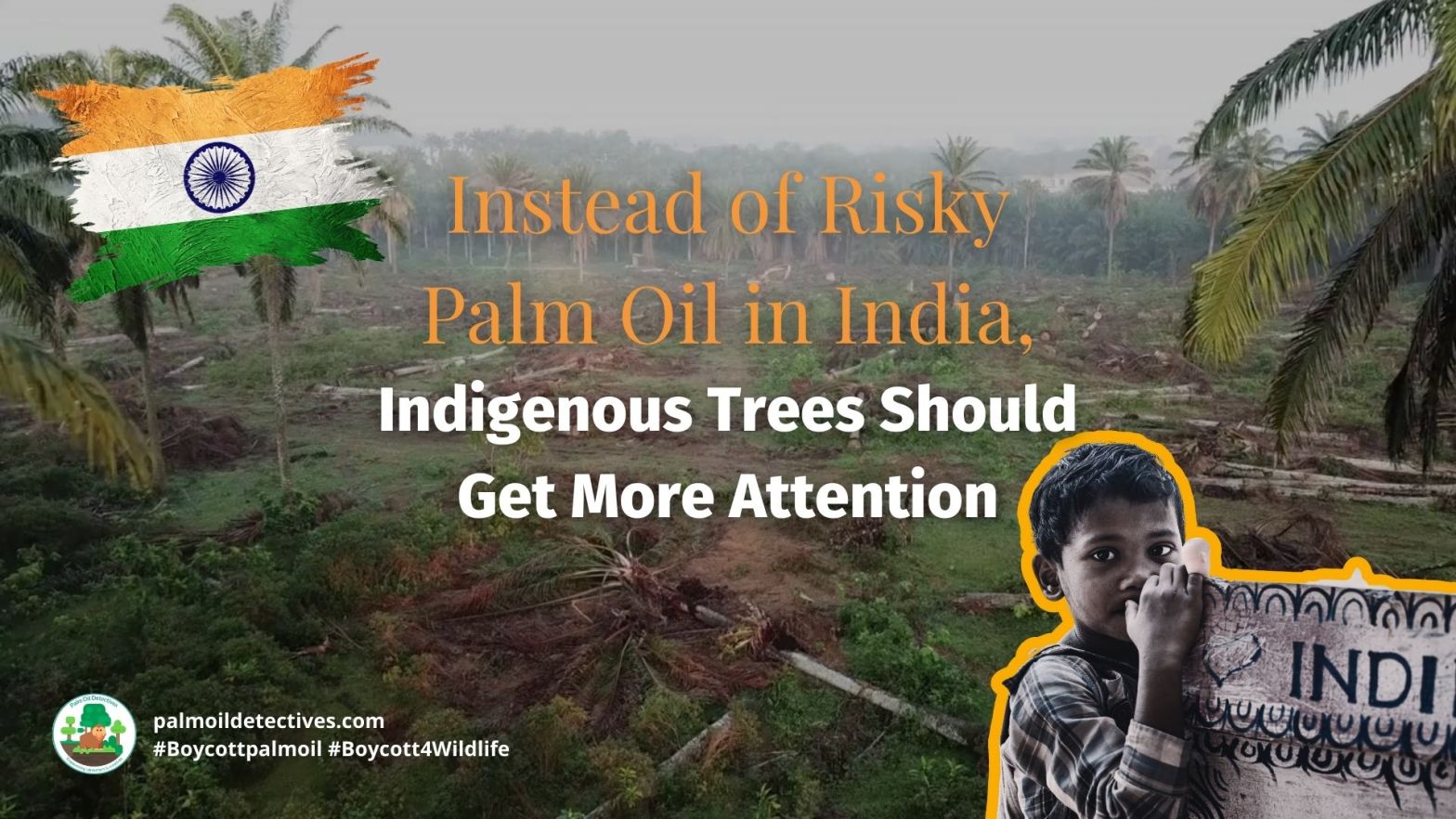
In an effort to combat #India’s edible oil shortage, the Indian government has heavily promoted the cultivation of exotic palm oil trees. This is a decision mired in controversy due to the associated severe ecological repercussions witnessed in other nations. The thirst for high rainfall, crucial for palm oil’s yield, threatens India’s already dwindling groundwater reserves. Notably, proposals to introduce palm oil in the ecologically sensitive regions of Assam and the North East have sparked significant backlash. Writer Bharat Dogra advocates for a shift in focus, suggesting that the solution may lie in harnessing the potential of indigenous trees capable of producing oilseeds for edible oil.


Recent government policy has resorted to huge promotion of exotic palm oil trees to end edible oil shortage in India. However, this is associated with highly disruptive ecological costs, as has been seen from the experience of several countries.

The kind of high rainfall conditions needed for its high yield are not readily available in India and this will lead to heavy extraction of already scarce groundwater. Plans for large-scale introduction of palm oil in India’s ecologically fragile regions of Assam and the North East have already faced much criticism.

Palm oil plantations at the foothills of Eastern Ghats near Srungavarapukota in Vizianagaram district by Adityamadhav83 on Wikipedia

A better option would be to explore the potential of several indigenous trees which yield oilseeds from which edible oil can be obtained.

There are several such indigenous trees which can provide edible oils, such as mahua, karanj, sal, kokum, kusum etc. (not to mention coconut, which is already well established as a supplier of edible oil). Some of these trees are known and some are not so well-known and need to be explored further. The edible oil contained from some of these trees is known to be very good for nutrition and to be rich in poly unsaturated fats, important for nutrition.

Availability of edible oils can increase significantly even from already existing trees. However once this importance is realised and conscious efforts are made to increase these trees, then edible oil availability for domestic use ( particularly in tribal community areas) as well as for export markets for niche uses, including medicinal value, can increase even more significantly.

It will be a mistake to grow these trees as plantation crops. This will be harmful for biodiversity, environment and food security. It will be much better for all families in a tribal community to grow two additional such trees each on their land. In this way about two to four hundred additional oilseed trees can grow in each village, and about 200,000 villages in India are likely to be suitable for growing these trees.

Bharat Dogra

A 2019 World Health Organisation (WHO) report into the palm oil industry and RSPO finds extensive greenwashing of palm oil deforestation and the murder of endangered animals (i.e. biodiversity loss)

WHO Bulletin on Palm Oil: Deforestation and Extinction
WHO Bulletin on Palm Oil: Air Pollution and Health

As almost all of these trees have multiple uses for their fruits, flowers, seeds, leaves etc., benefits for these farmers and villagers will be many. Mahua tree can provide very nutritious and filling food which is all the more useful in lean season and drought years, its fodder is also very useful while at the same time the use of its flower as an intoxicant should be minimised.

Cooperatives of farmers and villagers to collect tree oilseeds can be set up to ensure a fair price. However instead of selling these to big processors, value addition can be obtained by local processing.

Local processing units in all these villages should be set up, particularly to extract oil but also to process other produce of these trees. This local processing will generate more livelihoods, while the residue (after oil extraction) will provide nutritive feed for animals and organic fertiliser for farms.

The potential for this is the highest in tribal communities, but certainly potential exists in other villages also for various communities.

Isn’t it irrational that the authorities are ignoring this potential but instead going in for the ecologically disruptive option of palm oil plantation?

There are also trees like neem whose oil may not be used for cooking but has important medicinal uses. Then there are other trees which provide non-edible oil with several uses such as for soap making and can be used for cottage scale units of soap or other products of everyday use.

In addition there is much potential for better protection and improvement of coconut trees which have so many different uses apart from providing edible oils.

There is a strong case for giving much more attention to all indigenous trees which provide edible oils and for providing many more sustainable livelihoods on the basis of their various products including oilseeds, with the added caution that these indigenous trees should be grown not as big monoculture plantations but instead in their usual natural way co-existing with all biodiversity.

ENDS


Read more about Indian animals threatened by palm oil deforestation in India

Sloth Bear Melursus ursinus

The sloth bear (Melursus ursinus), with their distinctive “Y” or “V” shaped chest patch and shaggy fur, are unique bears native to the Indian subcontinent. Once exploited as ‘dancing bears’ by the Kalandar…

Read more

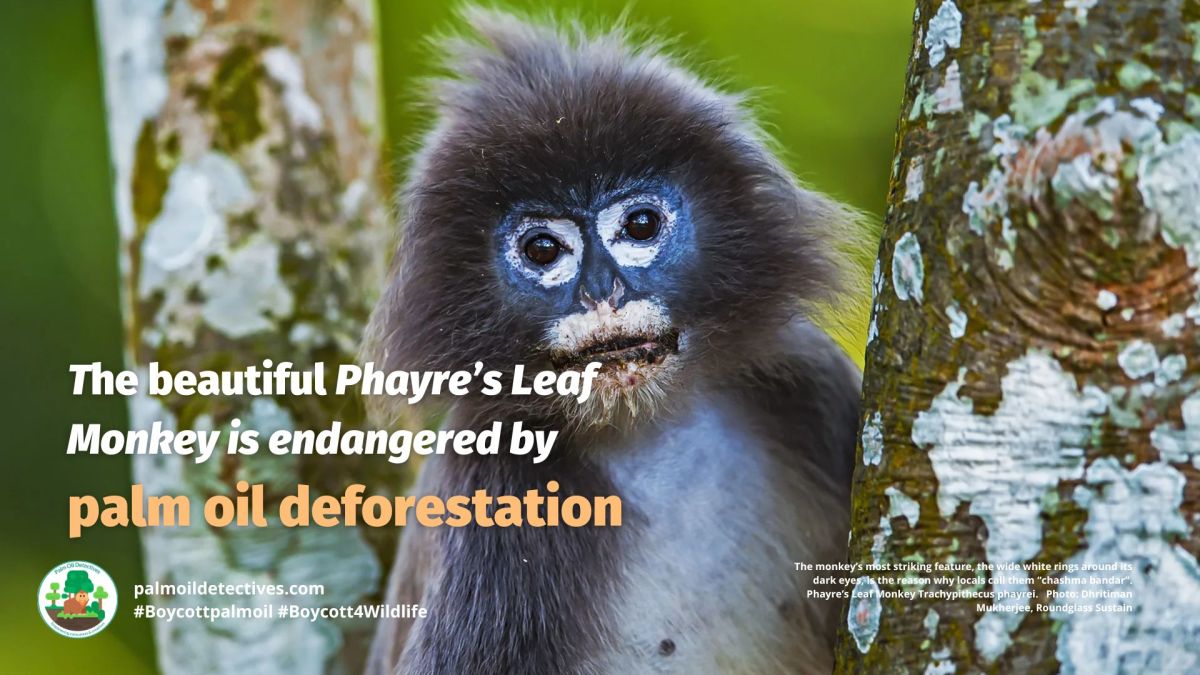
Phayre’s Leaf Monkey Trachypithecus phayrei

Phayre’s leaf monkey, also known as Phayre’s langur, are remarkable Old World monkeys distinguished by large, white-rimmed eyes that lend them a “spectacled” appearance. Known locally as ‘Chasma bandor’ they live mostly in…

Read more

Something went wrong. Please refresh the page and/or try again.


Take Action in Five Ways

1. Join the #Boycott4Wildlife on social media and subscribe to stay in the loop: Share posts from this website to your own network on Twitter, Mastadon, Instagram, Facebook and Youtube using the hashtags #Boycottpalmoil #Boycott4Wildlife.

Join 3,176 other subscribers

2. Contribute stories: Academics, conservationists, scientists, indigenous rights advocates and animal rights advocates working to expose the corruption of the palm oil industry or to save animals can contribute stories to the website.

3. Supermarket sleuthing: Next time you’re in the supermarket, take photos of products containing palm oil. Share these to social media along with the hashtags to call out the greenwashing and ecocide of the brands who use palm oil. You can also take photos of palm oil free products and congratulate brands when they go palm oil free.

4. Take to the streets: Get in touch with Palm Oil Detectives to find out more.

5. Donate: Make a one-off or monthly donation to Palm Oil Detectives as a way of saying thank you and to help pay for ongoing running costs of the website and social media campaigns. Donate here

Yellow-casqued Hornbill Ceratogymna elata

Yellow-casqued Hornbill Ceratogymna elata

Red List Status: Vulnerable

Extant (resident): Cameroon; Côte d’Ivoire; Ghana; Guinea; Guinea-Bissau; Liberia; Mali; Nigeria; Senegal; Sierra Leone

Possibly Extinct: Togo

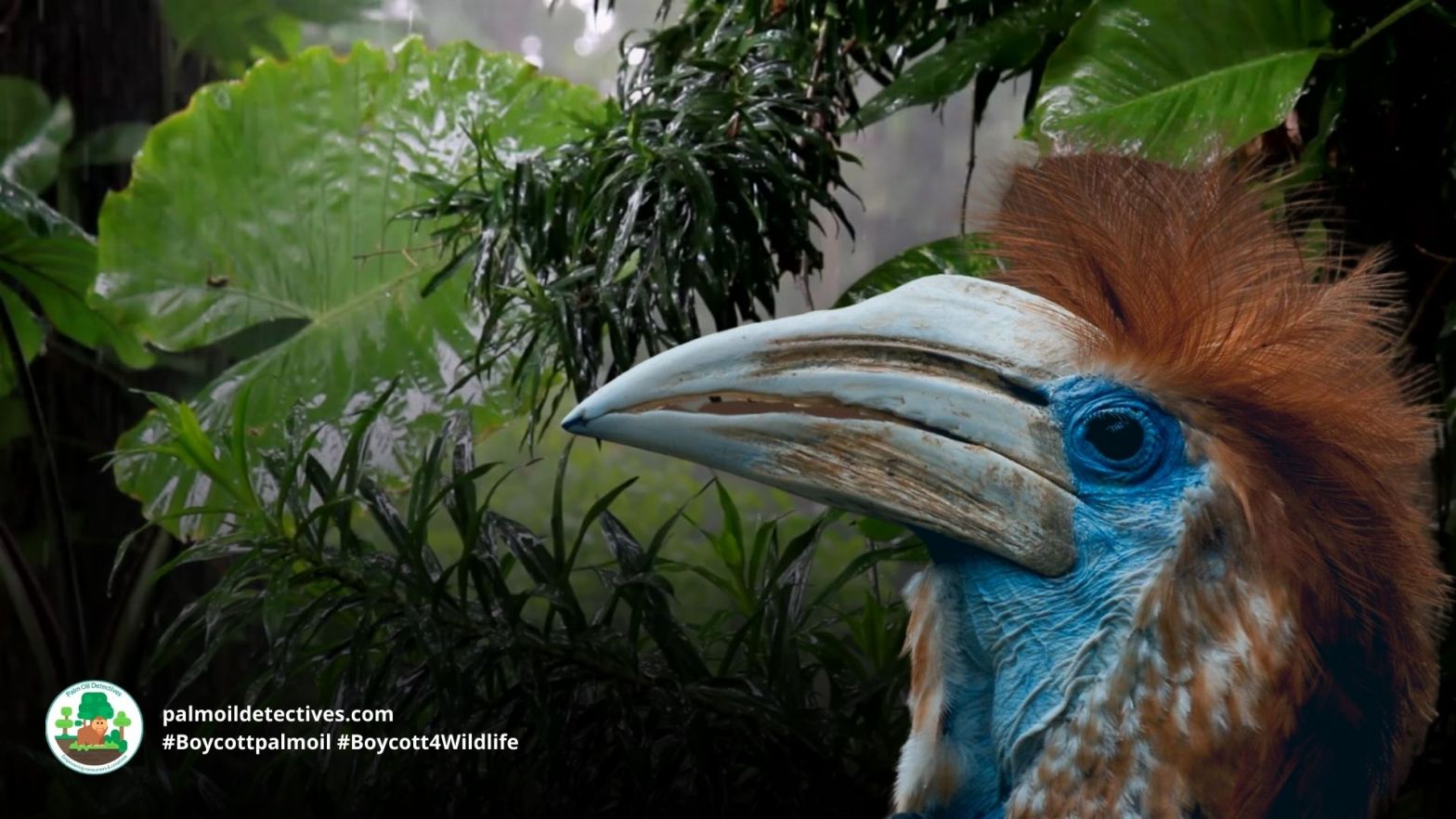
The yellow-casqued hornbill is one of the most remarkable hornbills in the world and one of the largest birds in the rainforests of West Africa weighing up to two kilos. Sporting a shock of russet coloured feathers and a striking blue coloured face, they prefer to live high up in the rainforest canopy in Côte d’Ivoire, #Ghana, #Liberia, Mali and #SierraLeone. Their main threat is hunting and human persecution and they are possibly extinction now in some countries. Recent mass deforestation for #mining, #palmoil, #cocoa and #meat is also a threat and they are now classified as #vulnerable. Help them every time you shop and be #vegan, #Boycottpalmoil, #Boycott4Wildlife

Yellow-casqued hornbills 🕊️🪽 are #vulnerable in #WestAfrica 🇱🇷🇬🇼🇳🇬 due to #hunting, #palmoil 🌴🔥#meat 🥩🔥 and #cocoa 🍫🔥 #deforestation across their range. Help save them and be #vegan 🥕🍅#Boycottpalmoil 🌴🪔⛔️ #Boycott4Wildlife @palmoildetect https://palmoildetectives.com/2023/09/17/yellow-casqued-hornbill-ceratogymna-elata/

A shock of fiery red feathers 🪶❤️💕 and blue rimmed 👁️👀😎 eyes announce the arrival of the majestic yellow-casqued #hornbill 🦜🕊️ They are vulnerable from #deforestation and #hunting in #WestAfrica. Fight for them! #Boycottpalmoil #Boycott4Wildlife https://palmoildetectives.com/2023/09/17/yellow-casqued-hornbill-ceratogymna-elata/

Appearance & Behaviour

One of the largest birds in West African the yellow-casqued hornbill has a shock of russet coloured feathers and a striking blue coloured face. They live in the forest canopy and rarely venture to the ground. Generally, they live in family groups of generally one adult female and male birds and two juveniles.

When a large ant or termite nest is discovered occasionally the birds will gather in large flocks to penetrate the nest. These hornbills are predated upon by crowned hawk eagles. Under threat from these eagles, a flock of hornbills will mob the birds as a group and call together loudly. This collective alarm call may serve to deter the eagles from hunting them.

Threats

Rapid destruction of their range across several countries in West Africa has meant that the yellow-casqued hornbill is now classified as vulnerable.

The Yellow-casqued Hornbill faces numerous anthropogenic threats including:

  • Hunting is a major threat: Humans have predated upon these birds and overhunted them causing serious decline in their numbers.
  • Deforestation for palm oil, meat and cocoa: Increasing fragmentation of rainforests in West Africa has meant the birds are restricted in food sources and their populations have reduced as a result.
  • Climate change: Is also thought to be an additional threat to these large African birds.

The species is on the way out in eastern Ghana, and it is likely extinct in Togo (F. Dowsett-Lemaire in litt. 2016). Its disappearance from Bia NP, where there have been no records since 1991 (Dowsett-Lemaire and Dowsett 2011a), is probably related to uncontrolled hunting and the logging of the southern section in the 1990s. The species’s fate in south-western Ghana is very unfavourable, with most habitat expected to be lost to timber extraction and agricultural encroachment, and habitat in reserves expected to be lost by the early 2030s (Dowsett-Lemaire and Dowsett 2014).

IUCN Red List

Habitat

Yellow-casqued hornbills prefer to live their lives high up in the tree canopy of primary forest. However they are known to also survive in logged, riverine or secondary forests. They migrate according to food availability.

Diet

These birds are primarily folivores and insectivores who consume seeds, small insects, spiders and scorpions. The birds congregate in large flocks to invade termite mounds.

Support yellow-casqued hornbills by going vegan and boycotting palm oil in the supermarket, it’s the #Boycott4Wildlife

Support the conservation of this species

This animal has no protections in place. Read about other forgotten species here. Create art to support this forgotten animal or raise awareness about them by sharing this post and using the #Boycottpalmoil #Boycott4Wildlife hashtags on social media. Also you can boycott palm oil in the supermarket.

Further Information

BirdLife International. 2016. Ceratogymna elataThe IUCN Red List of Threatened Species 2016: e.T22682627A92954374. https://dx.doi.org/10.2305/IUCN.UK.2016-3.RLTS.T22682627A92954374.en. Accessed on 31 October 2022.

Yellow-casqued hornbill Wikipedia article: https://en.wikipedia.org/wiki/Yellow-casqued_hornbill

Yellow-casqued hornbill Animalio.bio: https://animalia.bio/yellow-casqued-hornbill

Yellow-casqued Hornbill Ceratogymna elata

Contribute to palm oil detectives - black rhino in profile

How can I help the #Boycott4Wildlife?


Take Action in Five Ways

1. Join the #Boycott4Wildlife on social media and subscribe to stay in the loop: Share posts from this website to your own network on Twitter, Mastadon, Instagram, Facebook and Youtube using the hashtags #Boycottpalmoil #Boycott4Wildlife.

Join 3,176 other subscribers

2. Contribute stories: Academics, conservationists, scientists, indigenous rights advocates and animal rights advocates working to expose the corruption of the palm oil industry or to save animals can contribute stories to the website.

3. Supermarket sleuthing: Next time you’re in the supermarket, take photos of products containing palm oil. Share these to social media along with the hashtags to call out the greenwashing and ecocide of the brands who use palm oil. You can also take photos of palm oil free products and congratulate brands when they go palm oil free.

4. Take to the streets: Get in touch with Palm Oil Detectives to find out more.

5. Donate: Make a one-off or monthly donation to Palm Oil Detectives as a way of saying thank you and to help pay for ongoing running costs of the website and social media campaigns. Donate here

Shoebill Balaeniceps rex

Shoebill Balaeniceps rex

Vulnerable

Extant (resident)

Central African Republic; Democratic Republic of the Congo; Rwanda; South Sudan; Sudan; Tanzania; Uganda; Zambia


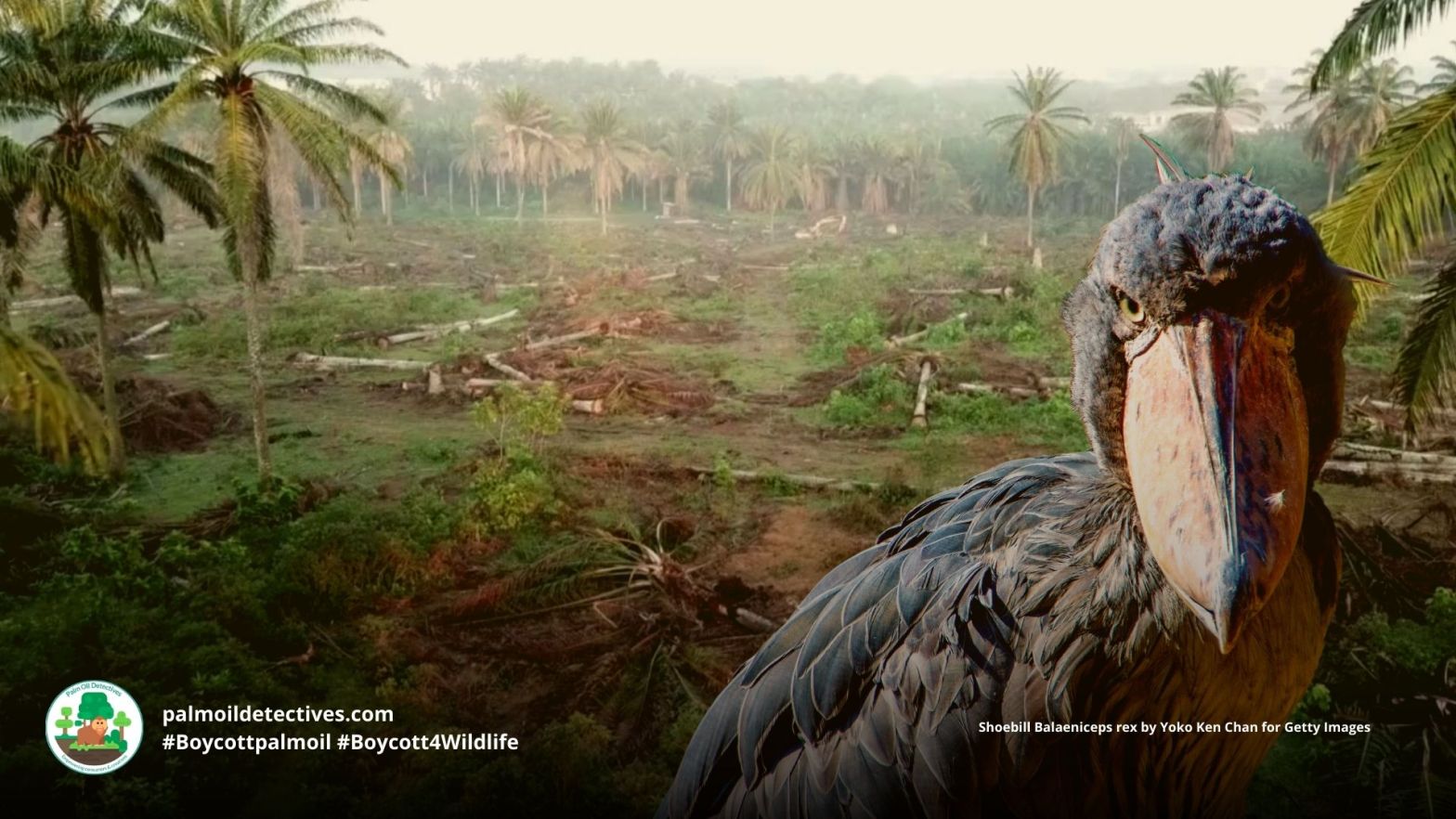
Known for their unnerving and intense stare and imposing, prehistoric appearance – shoebills are magnificent birds. There are less than 8000 individual birds left alive. They are vulnerable from #palmoil, #cocoa and #meat #deforestation, agricultural run-off, #pollution, #mining, #hunting and human persecution. Help them every time you shop and be #vegan, #Boycottpalmoil #Boycott4Wildlife


The #Shoebill is a magnificent and gentle big bird 🕊️🦤 with an unnerving stare 👀 There are only 8000 left alive in #DRC, #Uganda #Africa. Vulnerable from #palmoil #deforestation, #hunting and more. Fight for them! #Boycottpalmoil 🌴🚫 #Boycott4Wildlife https://palmoildetectives.com/2023/09/10/shoebill-balaeniceps-rex/

Known for their menacing stare 👀😸 gentle #shoebills are iconic in #Uganda 🇺🇬 #Congo 🇨🇩 #Tanzania 🇹🇿 They are vulnerable from #hunting, #palmoil #deforestation. Help them and be #vegan 🥕🍆 and #Boycottpalmoil 🌴🪔☠️🔥⛔️ #Boycott4Wildlife @palmoildetect https://palmoildetectives.com/2023/09/10/shoebill-balaeniceps-rex/

There are less than 8,000 birds left alive and they are increasingly threatened by agricultural run-off from palm oil and cocoa deforestation across their range.

The shoebill Balaeniceps rex is also known by the common names: the whale-headed stork, shoebill stork and whalehead. Their eponymous feature is their enormous bill They have the third largest bills after pelicans and large storks.

Fast Facts

  • When shoebills soar they make around 150 flaps per minute which makes them one of the slowest of any bird, with the exception of the larger stork species.
  • They stand stock-still and waiting, all alone giving them an eerie and unnerving appearance. Once they notice fish appearing on the surface of swamps they quickly snap them up into their large bills.
  • The shoebill’s chattering large bill makes a sound akin to machine gun fire. This combined with their silent creeping gait can make them seem rather menacing!
  • Shoebills are attracted to poorly oxygenated waters, as this means fish must come to the surface to breathe – where they are efficiently captured.
  • They are mostly silent except for elaborate bill-clattering communication that happens during their breeding. Chicks make a human-like hiccup sound when signalling hunger.
  • Although they have a similar appearance to storks, shoebills are more closely related to pelicans and herons in the order Pelecaniformes.

Appearance & Behaviour

They possess extraordinarily large feet with their middle toe extending up to 18.5 cm in length. This helps them with balance while standing on uneven swamps and on aquatic vegetation while they hunt.

Adults have feathers that range from blue-grey to slate-grey. Juveniles possess similar plumage but in a tawny blue-brown hue.

Shoebills have a modestly sized bill at birth, which grows much larger once chicks reach between 23-43 days old.

Their unusual beauty makes them a must-see for birdwatchers in Africa. Despite their slightly unnerving appearance, these birds are placid and will allow birdwatchers to snap their photo at a range of two metres.

Shoebills are known for staying statue-still and silent in the muddy waters while hunting. These birds stalk their prey in a solitary way, patiently lurking and hunting entirely with their vision. Once prey is spotted they launch a rapid strike. They will sometimes use their big beaks to pry deep into the pond mud and extirpate lung fish with a violent strike.

They are normally silent but will get noisy during nesting season with elaborate bill clattering displays. Adults birds will make a ‘moo’ sound and high pitched whine while clattering their bills in order to communicate with each other. Chicks call out to their mothers with a ‘hiccup’ sound.

Shoebills typically hunt for lungfish and other fish in poorly oxygenated marshlands, bogs, peatland and swamps. Fish frequently break to the surface to breathe – it is then that shoebills rapidly strike. Their large feet enable them to balance on floating vegetation. The movement of hippos can aid the hunting of shoebills, as they rustle up fish from bottom of swamps, pushing them to surface for the shoebills’ easy capture.

Threats

There is estimated to be below 8,000 individual shoebills left and they are classified as vulnerable. Shoebills face a range of anthropogenic threats:

  • Palm oil and cocoa deforestation: The mass removal of virgin rainforest for palm oil and cocoa results in mass deaths of shoebills.
  • Infrastructure building: roads, dams and powerlines pose a risk to shoebills.
  • Meat deforestation: cattle and other animals are known to trample shoebill nests.
  • Pollution run-off: from palm oil agrochemicals and mining effluent.
  • Hunting: In some cultures shoebills are thought of as a bad omen, in others they are hunted for food.
  • Capture for the pet trade: Shoebill eggs and chicks are captured for consumption or sold to zoos.
  • Armed human conflict: Armed groups moving through the rainforest has facilitated hunting of shoebills.
  • Climate change: Increased extreme weather events like fires and droughts brought on by climate change lowers their numbers.

Habitat

Shoebills are found in central tropical Africa. Including South Sudan, eastern Congo, Rwanda, Uganda, western Tanzania, and northern Zambia. They are non-migratory birds who make limited seasonal movements.

They live in dense freshwater swamps and marshes including undisturbed papyrus and reed beds. They are attracted to areas of mixed vegetation and have been seen on occasion in rice fields and flooded plantations.

Diet

Shoebills mainly consume fish but will also eat a range of wetland vertebrates. Their preferred food is marbled lungfish, tilapia and catfish. When this is not available they are known to consume frogs, nile monitors, baby crocodiles, water snakes, turtles, snails, rodents and other small waterfowl.

Mating and breeding

Shoebills form monogamous pair bonds for the breeding season. They fiercely defend their nests from other birds during their nesting period, which begins either during the monsoon season or after this ends.

Both parents build the nest on a floating and flat platform made up of swamp vegetation and around three metres wide and three metres deep.

Typically the female will lay between one to three eggs, with only one being reared and cared for until maturity. The other eggs are back-ups in case the eldest chick is weak or dies.

In the hot weather, shoebill parents will fill their bills with water to shower their nests to cool their eggs.

Chicks take about 105 days to fledge and juveniles typically fly well by 112 days. Juvenile birds will continue to feed with their mother for another month after this and reach sexual maturity at about three years old.

Support Shoebills by going vegan and boycotting palm oil in the supermarket, it’s the #Boycott4Wildlife

Support the conservation of this species

This animal has no protections in place. Read about other forgotten species here. Create art to support this forgotten animal or raise awareness about them by sharing this post and using the #Boycottpalmoil #Boycott4Wildlife hashtags on social media. Also you can boycott palm oil in the supermarket.

Further Information

BirdLife International. 2018. Balaeniceps rexThe IUCN Red List of Threatened Species 2018: e.T22697583A133840708. https://dx.doi.org/10.2305/IUCN.UK.2018-2.RLTS.T22697583A133840708.en. Accessed on 16 February 2023.

Shoebill on Wikipedia – https://en.wikipedia.org/wiki/Shoebill

Shoebill on Animalia.bio – https://animalia.bio/shoebill


Contribute to palm oil detectives - black rhino in profile

How can I help the #Boycott4Wildlife?


Take Action in Five Ways

1. Join the #Boycott4Wildlife on social media and subscribe to stay in the loop: Share posts from this website to your own network on Twitter, Mastadon, Instagram, Facebook and Youtube using the hashtags #Boycottpalmoil #Boycott4Wildlife.

Join 3,176 other subscribers

2. Contribute stories: Academics, conservationists, scientists, indigenous rights advocates and animal rights advocates working to expose the corruption of the palm oil industry or to save animals can contribute stories to the website.

3. Supermarket sleuthing: Next time you’re in the supermarket, take photos of products containing palm oil. Share these to social media along with the hashtags to call out the greenwashing and ecocide of the brands who use palm oil. You can also take photos of palm oil free products and congratulate brands when they go palm oil free.

4. Take to the streets: Get in touch with Palm Oil Detectives to find out more.

5. Donate: Make a one-off or monthly donation to Palm Oil Detectives as a way of saying thank you and to help pay for ongoing running costs of the website and social media campaigns. Donate here

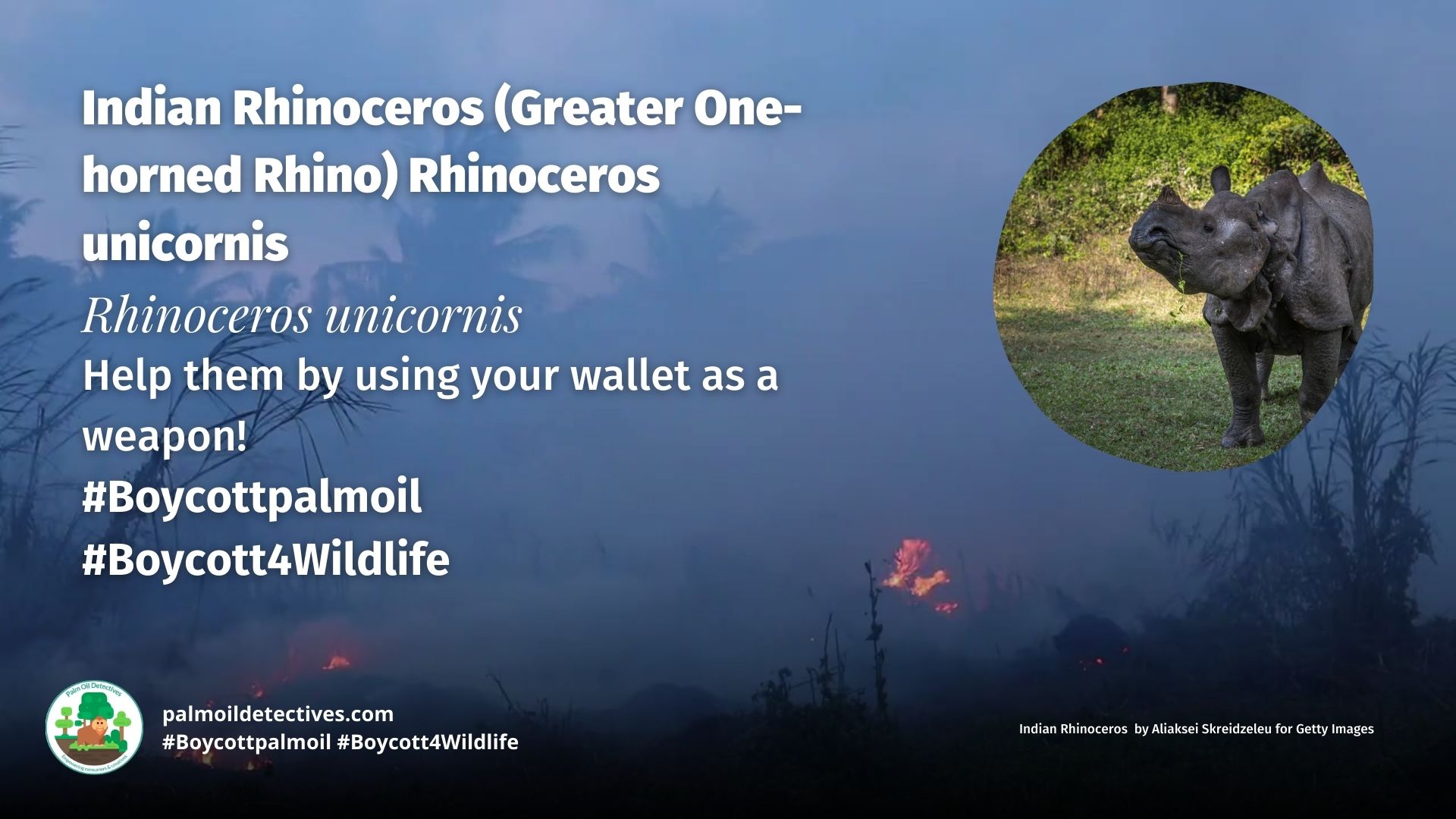
Indian Rhinoceros (Greater One-horned Rhino) Rhinoceros unicornis

Indian Rhinoceros (Greater One-horned Rhino) Rhinoceros unicornis

Red List Status: Vulnerable

Extant (resident): India; Nepal

Extinct: Bangladesh; Bhutan

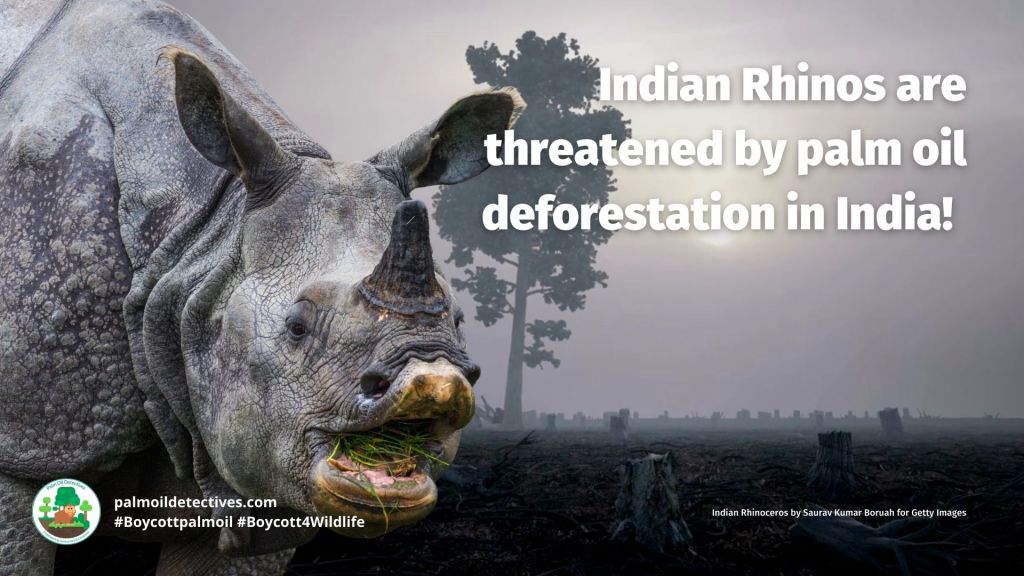
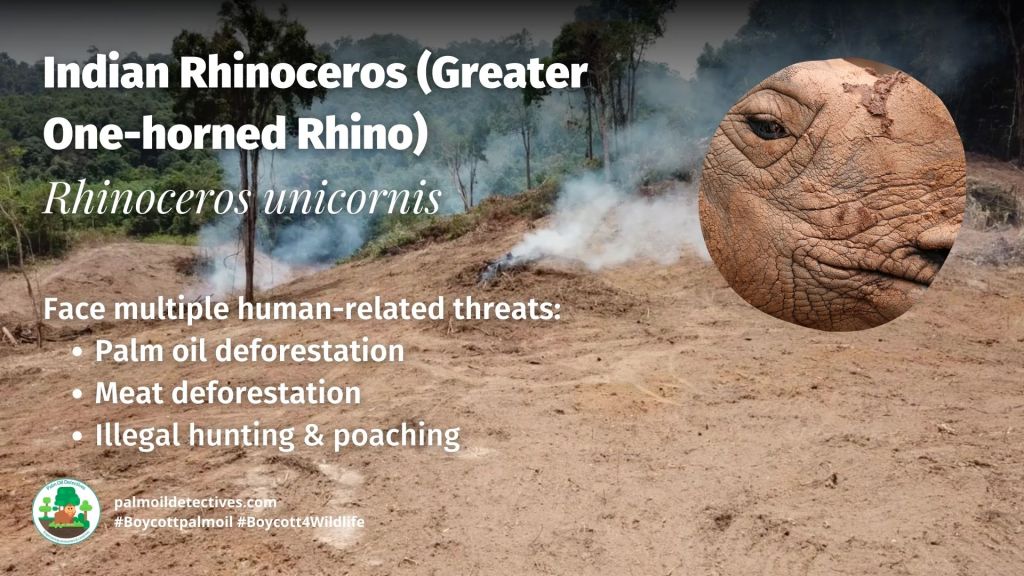
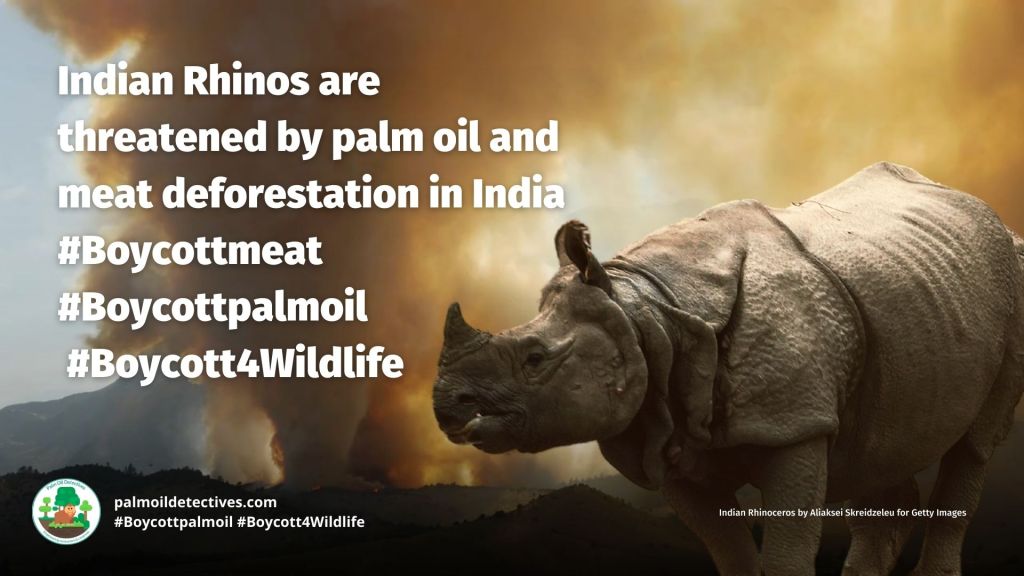
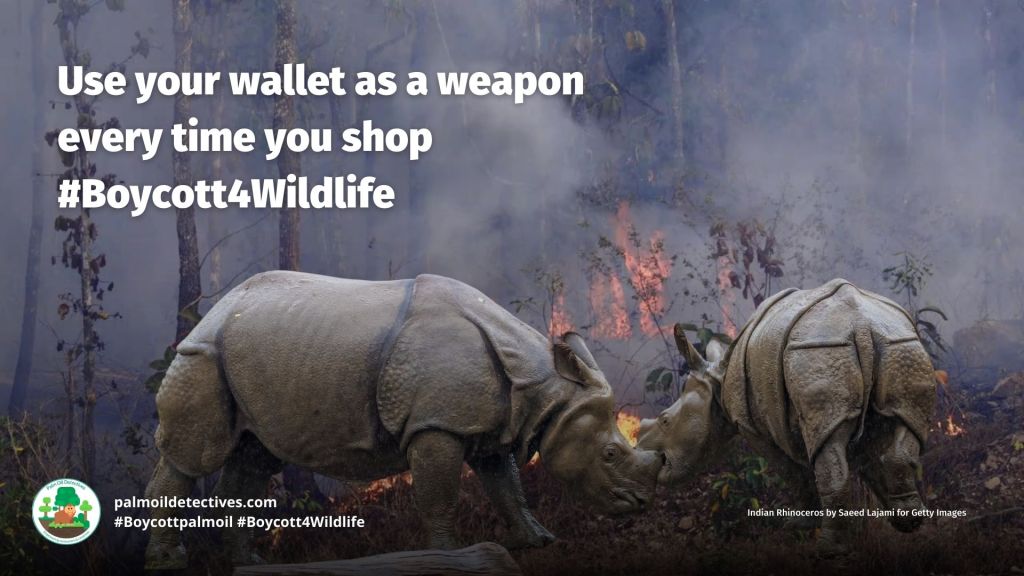
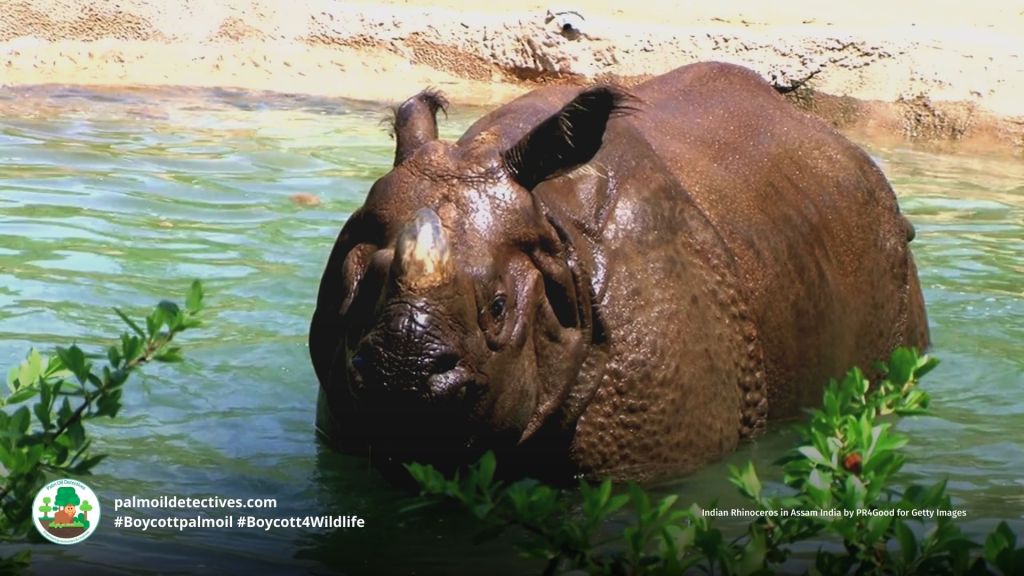
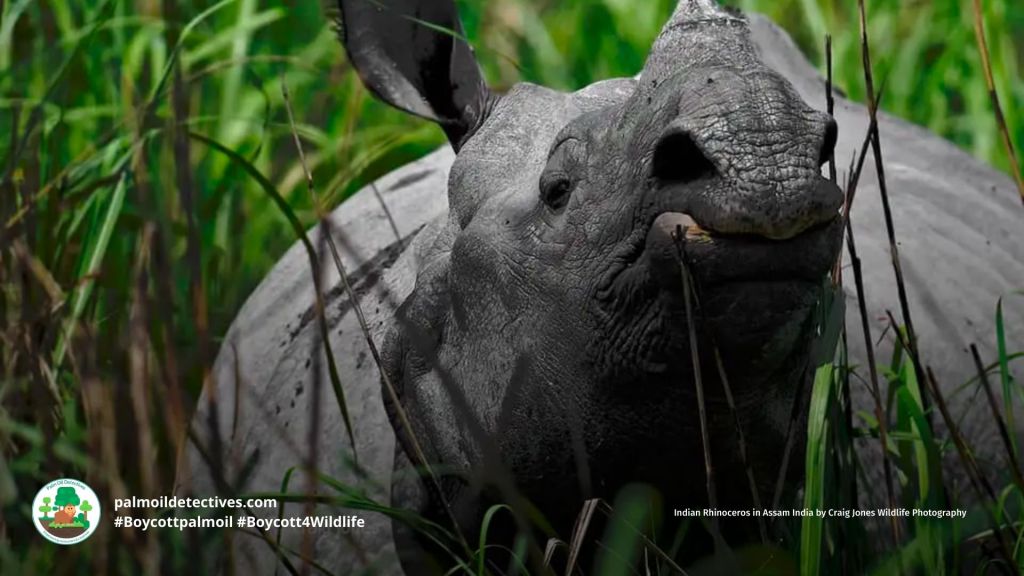
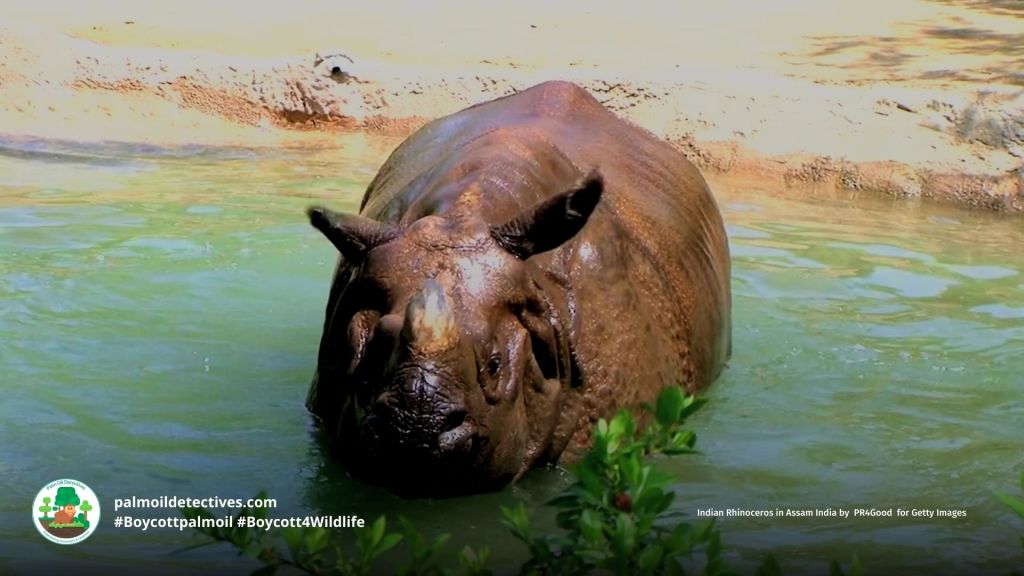
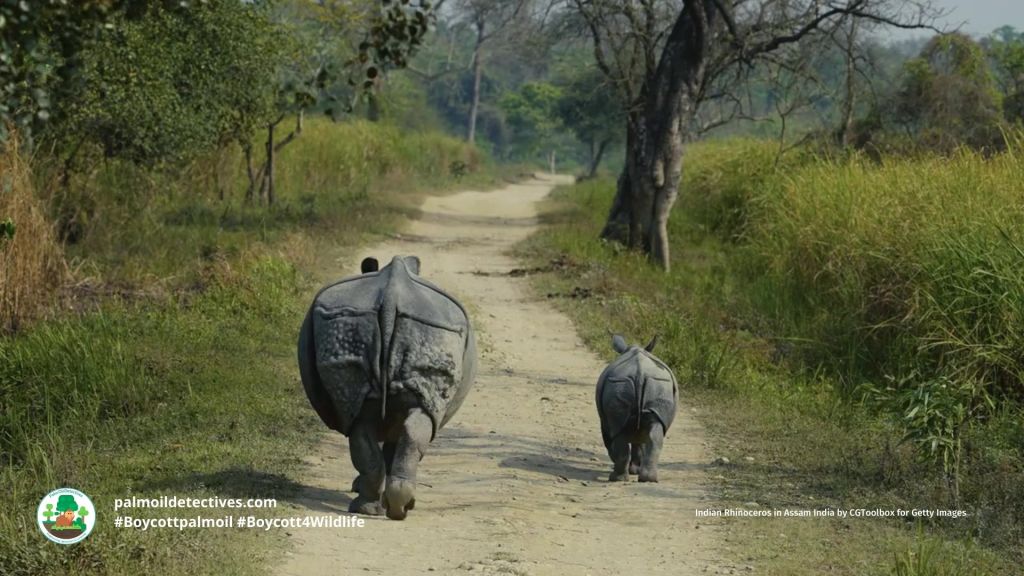
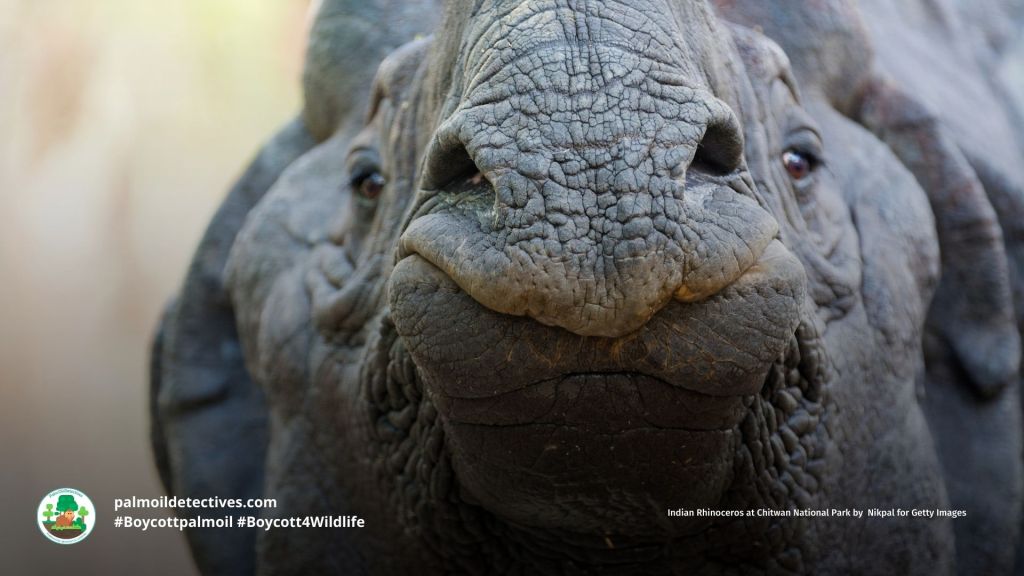
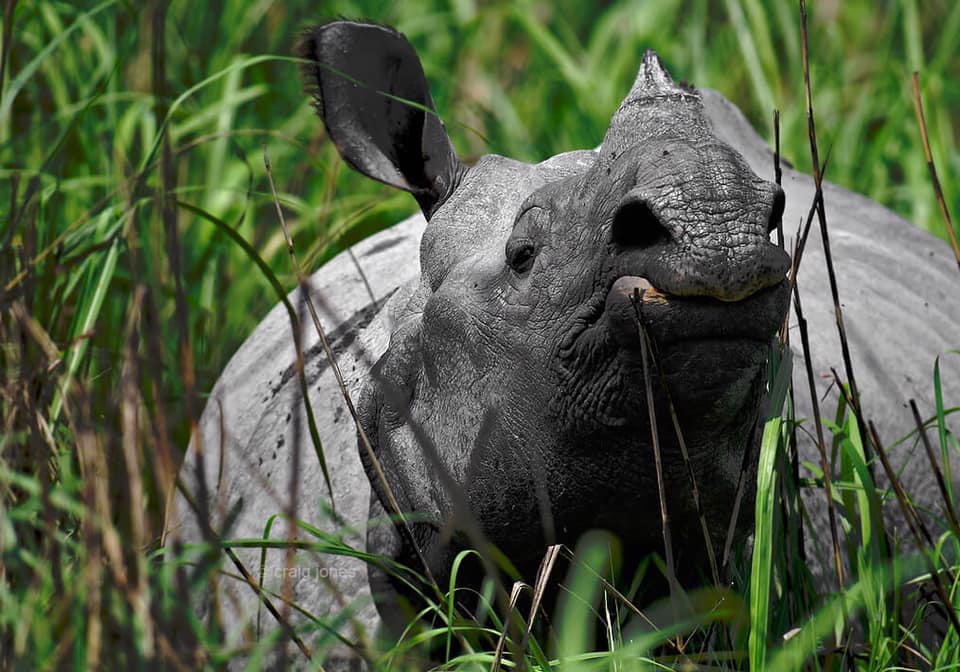
The largest of the three #rhinoceros species in #Asia, the Indian #Rhino has a distinctive and unique armour-plated look which lends them a fairytale quality that has captivated admirers for aeons. Although Indian rhino numbers have climbed over the past decades due to conservation, they are under imminent threat from the expansion of #palmoil #deforestation in the #Assam region of #India. A protected national park there is earmarked for destruction. Use your wallet as a weapon every time you shop and #Boycottpalmoil #Boycott4Wildlife

Indian #Rhinos 🇮🇳🦏🩶 are #vulnerable due to #poaching, #palmoil and #meat #deforestation in #Assam #India. Help save them each time you shop, be #vegan 🥕🥦🫶#Boycottpalmoil 🌴🪔🧐⛔️ #Boycott4Wildlife @palmoildetect https://palmoildetectives.com/2023/09/03/indian-rhinoceros-greater-one-horned-rhino-rhinoceros-unicornis/

Indian #Rhinoceros 🇮🇳🦏😿 are in trouble in #India their range in #Assam is earmarked for #palmoil #deforestation. Fight for them in the supermarket and #Boycottpalmoil 🌴🩸🚜🔥☠️🧐⛔️ #Boycott4Wildlife @palmoildetect https://palmoildetectives.com/2023/09/03/indian-rhinoceros-greater-one-horned-rhino-rhinoceros-unicornis/

Appearance & Behaviour

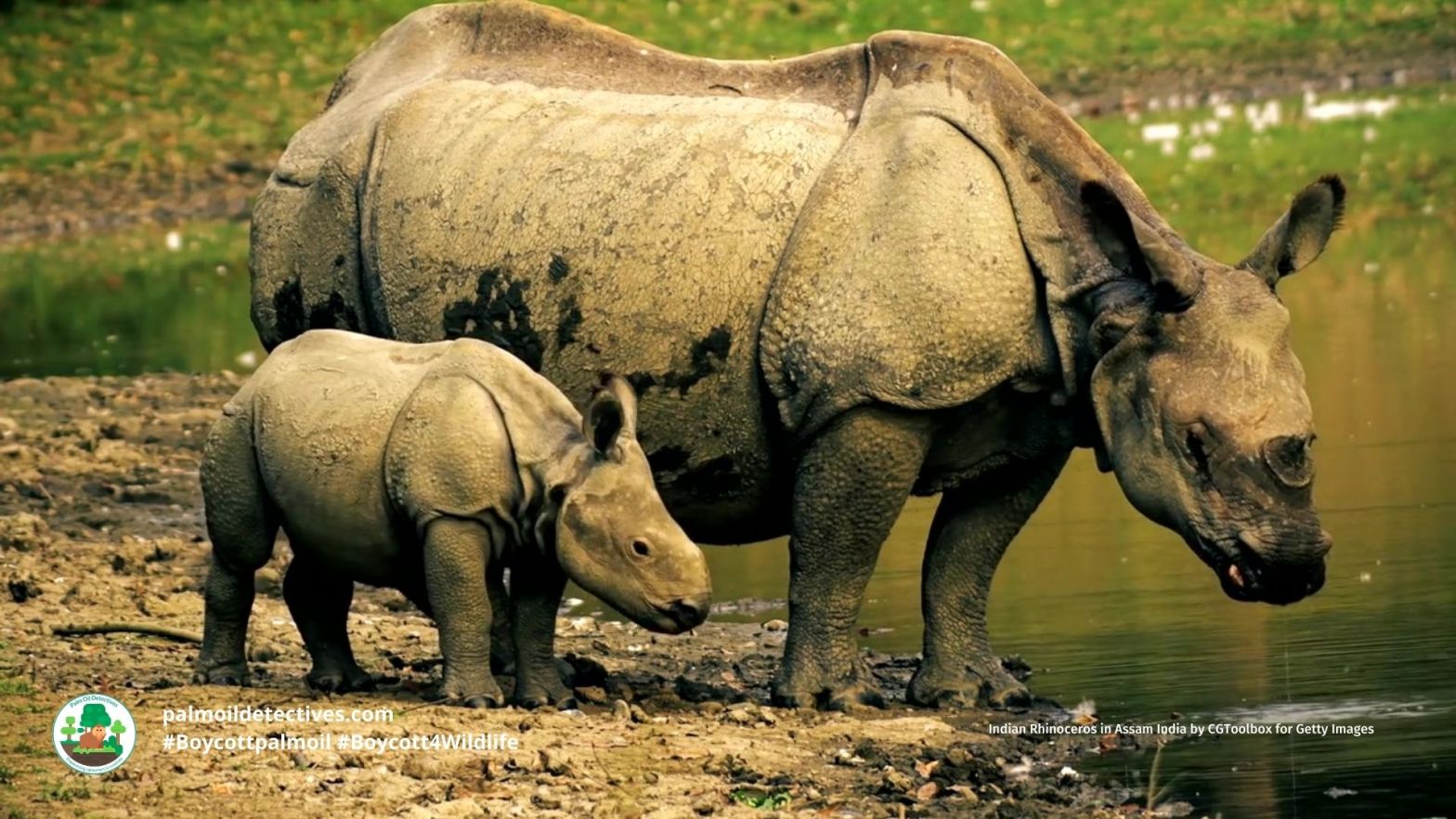
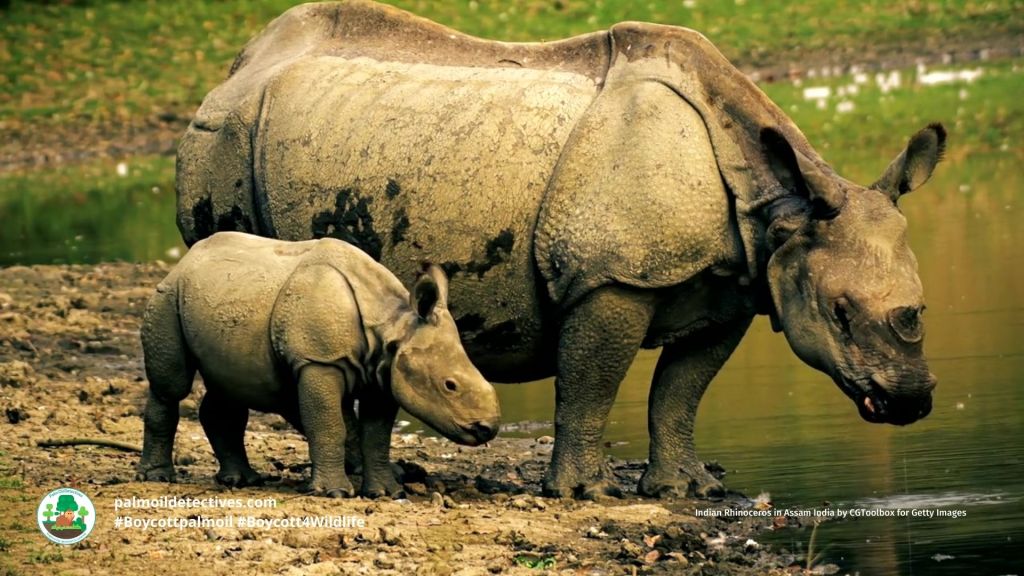
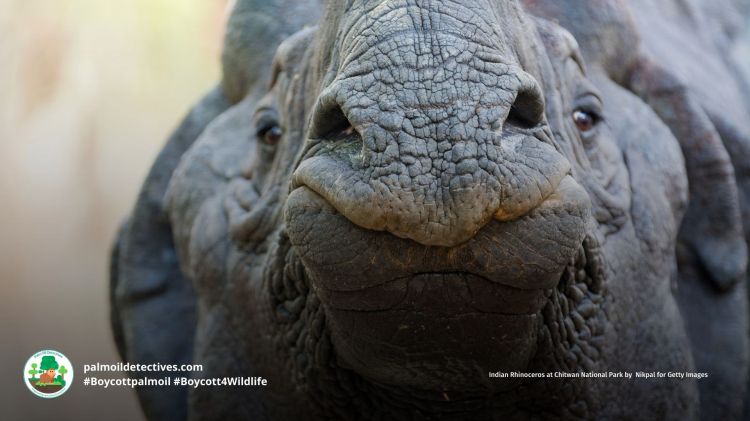
Known as the Greater One-Horned Rhinoceros or the Great Indian Rhino, the Indian Rhino is generally solitary, except when females are with their young. Loosely connected groups of a few individuals occur, especially in foraging areas or wallowing grounds. They feed mostly in the cool of the early morning, during the late afternoon, or at night. During the day, they spend a lot of time in water or wallowing in the mud in order to keep cool.

  • Indian rhinos mostly feed during the cooler parts of the day: dawn, twilight and during the night. They spend the majority of the time in water or mud as a way of cooling down their large bodies.
  • Male rhinos are prone to aggression when defending territories which can lead to a fight to the death. Fights include clashes of horns, charges and biting.
  • They communicate with each other using up to 10 sounds including honking, roaring, snorting, shrieking, groaning, rumbling and humphing.
  • Groupings of rhinos vary. Bulls are generally solitary except for when mating and fighting. Most are solitary however cows and calves remain together for up to 4 years after birth. Groupings of juvenile cows and bulls are common as well. During the monsoon season there are often groupings of up to 10 individuals.
  • Groups of rhinos are often friendly and highly social with each other. They will greet each other by mounting flanks, nuzzling, licking, waving and bobbing their heads.

Interesting Facts

  • Female cows are quite shy and generally will run away from danger in preference to attacking, although females will defend their calves. Bulls can be more aggressive especially to defend territory or during mating.
  • Rhinos often bathe and wallow in muddy swamps during peak heat of the day. This is important for them to keep cool and ward off insects.
  • Indian rhinos descend from “wooly” rhinos that were living in Tibet 3.6 million years ago. They possessed a hairy coat suitable to the cold alpine climate.
  • Male and female Indian rhinos both have a single horn, which starts to show at around 6 years and grows to about 25 cm.
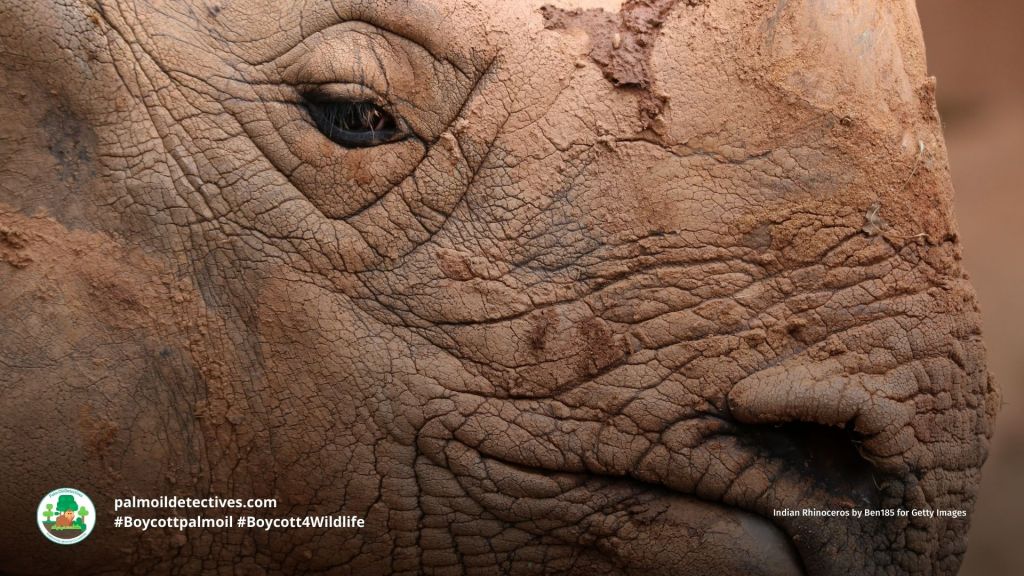
  • Rhino’s skin may be as thick as 5 cm with a typical range across the species being 1.5-5 cm thick. Their pinkish coloured skin is due to the presence of abundant blood vessels under the skin. This assists them with temperature maintenance in their bodies.
  • The word “rhinoceros” means “horn nose” and is from the Ancient Greek “ῥῑνόκερως”.

Threats

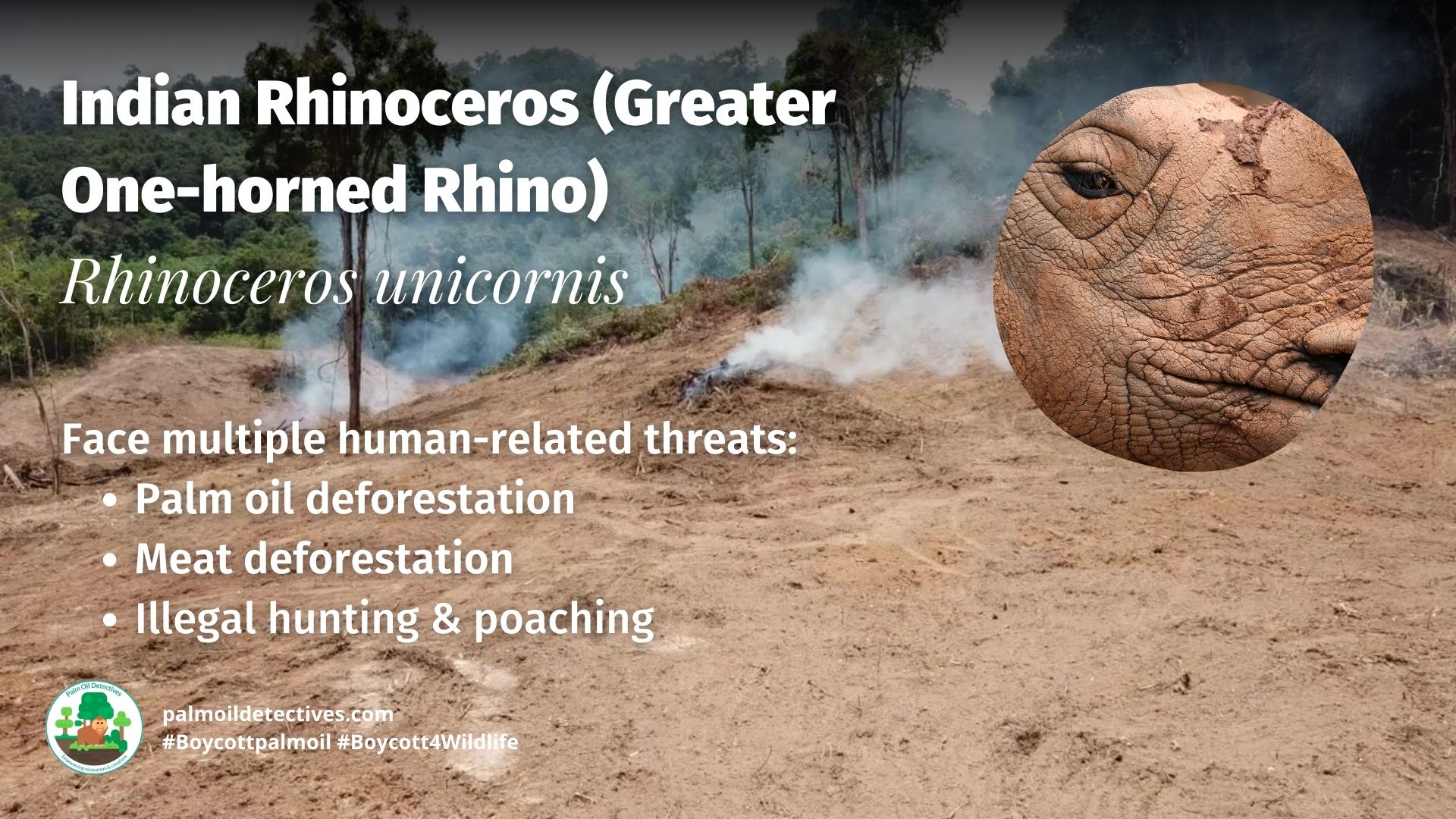
There are less than 3,500 individual Indian Rhinos left alive. The Indian Rhino faces multiple anthropogenic threats including:

Habitat

Indian rhinos prefer to live in the fertile and wet grasslands, forests and swamps of northern Asia. They once ranged across the entirety Indo-Gangetic Plain. Sadly now this has been drastically reduced to 11 sites in northern India and southern Nepal in an area spanning 20,000 km2.

85% of Indian Rhinos live in Assam, India. The small protected areas where these majestic giants roam is rapidly shrinking by palm oil and meat related deforestation.

Diet

Indian Rhinos are herbivores who eat fruit, aquatic plants, branches, grass, leaves and cultivated crops.

Mating and breeding

  • Dominant bulls are aggressive with each other for mating rights with females and often fight to the death.
  • Mating and pregnancy occurs throughout the year and gestation takes 480 days.
  • Calves are born weighing approximately 70 kg.
  • Calves are weaned after 12-18 months but will stay with their mothers for up to four years. After this time, the cow will chase away the juvenile rhino if she is preparing to give birth to another calf.

Support Indian Rhinos by going vegan and boycotting palm oil in the supermarket, it’s the #Boycott4Wildlife

Support the conservation of this species

This animal has no protections in place. Read about other forgotten species here. Create art to support this forgotten animal or raise awareness about them by sharing this post and using the #Boycottpalmoil #Boycott4Wildlife hashtags on social media. Also you can boycott palm oil in the supermarket.

Further Information

Ellis, S. & Talukdar, B. 2019. Rhinoceros unicornisThe IUCN Red List of Threatened Species 2019: e.T19496A18494149. https://dx.doi.org/10.2305/IUCN.UK.2019-3.RLTS.T19496A18494149.en. Accessed on 11 November 2022.

Indian Rhino on Animalia.bio

Indian Rhinoceros on Wikipedia: https://en.wikipedia.org/wiki/Indian_rhinoceros


Contribute to palm oil detectives - black rhino in profile

How can I help the #Boycott4Wildlife?


Take Action in Five Ways

1. Join the #Boycott4Wildlife on social media and subscribe to stay in the loop: Share posts from this website to your own network on Twitter, Mastadon, Instagram, Facebook and Youtube using the hashtags #Boycottpalmoil #Boycott4Wildlife.

Join 3,176 other subscribers

2. Contribute stories: Academics, conservationists, scientists, indigenous rights advocates and animal rights advocates working to expose the corruption of the palm oil industry or to save animals can contribute stories to the website.

3. Supermarket sleuthing: Next time you’re in the supermarket, take photos of products containing palm oil. Share these to social media along with the hashtags to call out the greenwashing and ecocide of the brands who use palm oil. You can also take photos of palm oil free products and congratulate brands when they go palm oil free.

4. Take to the streets: Get in touch with Palm Oil Detectives to find out more.

5. Donate: Make a one-off or monthly donation to Palm Oil Detectives as a way of saying thank you and to help pay for ongoing running costs of the website and social media campaigns. Donate here

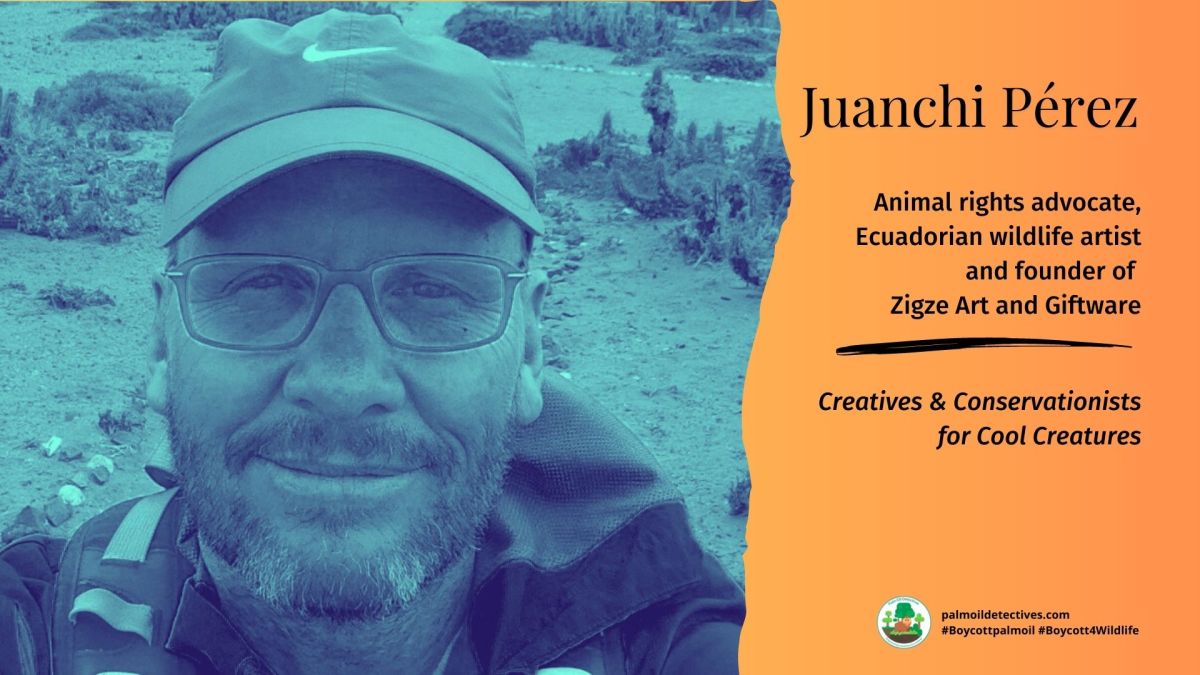
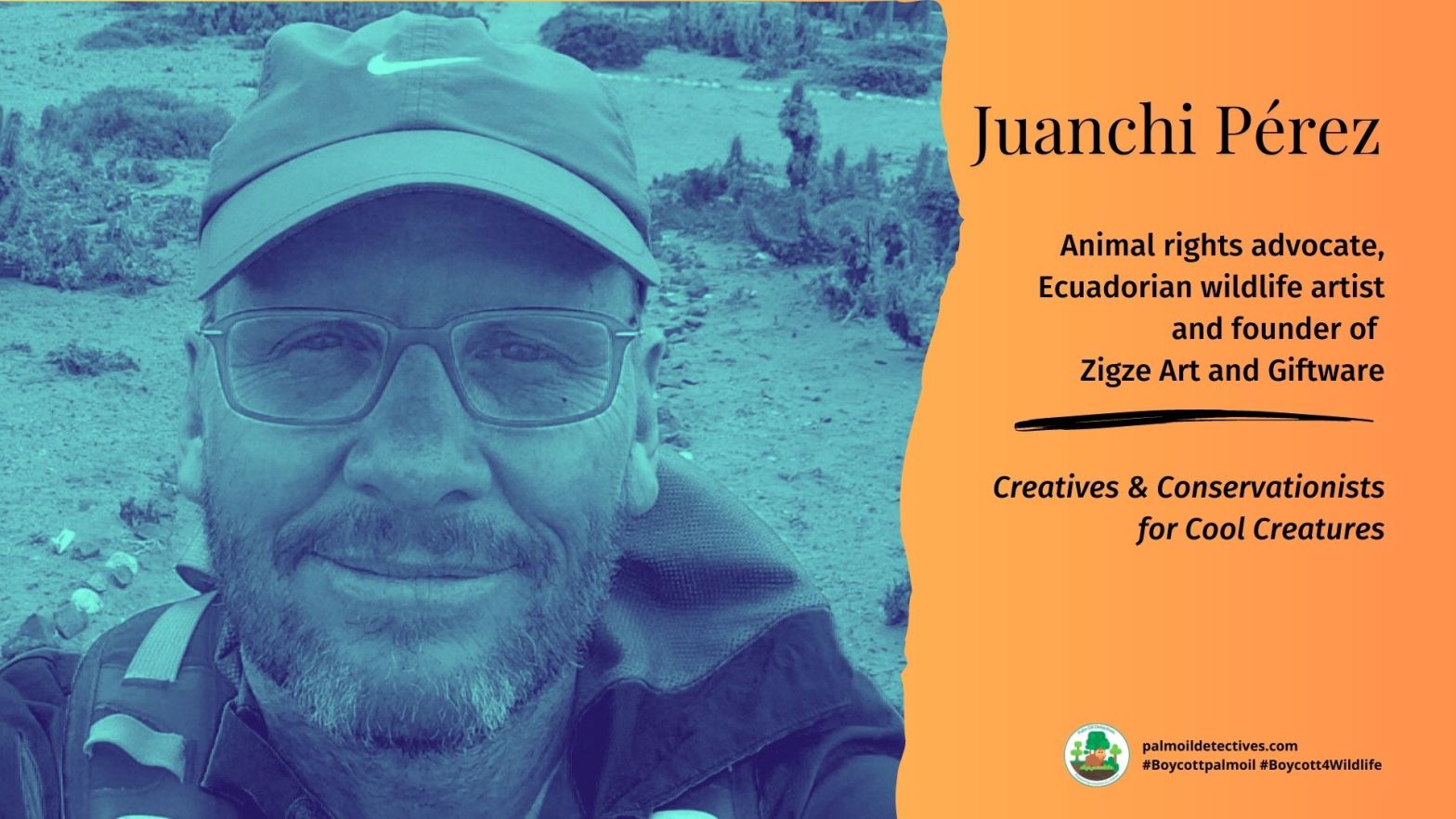
Wildlife Artist Juanchi Pérez

Juanchi Perez

Wildlife Artist, Illustrator, Animal Rights and Indigenous Rights Advocate

Juanchi Pérez is a #wildlife artist and #animalrights advocate from #Ecuador who uses his paintbrush to fight 4 #Ecuador’s animals against #palmoil and #gold mining. Here is his inspiring story @ZIGZE #Boycottpalmoil #Boycott4Wildlife

Juanchi Pérez is a #vegan #animalrights advocate and #wildlife artist who paints species of #Peru #Ecuador in his exquisite art. He discusses why #animals should matter more to us all than #greed @ZIGZE #Boycottpalmoil #Boycott4Wildlife

Bio: Juanchi Pérez


Juanchi Pérez is a talented and well-established designer, illustrator and artist from Ecuador who captures the soulful presence of rare rainforest animals near his home.

He is passionate about sharing the magnificent animals and plants of his bountiful homeland with the world. Together with his beautiful wife and daughter, he founded Zigze several years ago. They create eco-friendly homewares and clothing in Ecuador. This features Juanchi’s signature illustrations of plants and animals. In this way, Juanchi shares the emotional lives of animals and plants in one of the most biodiverse hotspots on our planet. After seeing the devastation of palm oil firsthand in his country, Juanchi is a passionate advocate for the #Boycottpalmoil #Boycott4Wildlife.

Palm Oil Detectives is honoured to interview to Juanchi Pérez about his beautiful, powerful and impactful art featuring animals on the knife-edge of survival in South America.

Juanchi Pérez

I admire the beauty in all creatures. There are fascinating worlds in all scales, from the minuscule to the enormous

It would be very hard to choose only one or a few favourites. It is mind-blowing to watch nature’s creativity, there isn’t a single creature who does not possess an inherent beauty, it depends on humans to see it, or not.

Pionus chalcopterus detalle by Juanchi Pérez

We are often so immersed in our lives that we don’t take the time to appreciate nature

It is kind of sad to see how many of us have forgotten to appreciate or just to contemplate the beauty all around us.

Diversity of the jungle by Juanchi Pérez

My principal motivation to paint is nature and the love I have for it. I love all the magnificent creatures we have in this amazing planet we live in and which is our only home.

I paint animals to make them visible

I have always been attracted to drawing and painting animals. To show them to the world and hopefully change the way we should see nature- as a part of ourselves rather than apart from it.

I believe that all species deserve the same rights to exist

Humankind has lost it’s values. Sadly money is the only driving force nowadays. 

We are destroying our own planet and the only place that we call home.

This isn’t just a problem with big companies, but also with our personal choices regarding our consumption habits – what we buy as consumers.

Science has shown that tuna and other big fish populations have decreased more than 90% in many cases

Yet many people still choose to ignore this fact and eat fish rapaciously. If we don’t intervene, in a few years everything will be lost forever.

Dead fish pollution deforestation for palm oil
Greenwashing, pollution - stock image

We should stop eating sentient beings

So yes, right now it’s every person’s responsibility and duty to critically analyse our food choices and to stop eating the sentient beings who deserve to have a life of their own and who do not have a voice.

You can purchase my art through my brand Zigze.com

My art can be found through my brand Zigze http://www.zigze.com or you can visit @zigze_arte_salvaje , or my other more  personal IG @juanchi_illustration

In Ecuador where I live, palm oil has replaced vast areas of rainforest

Just like in other parts of the world, palm oil companies exist to make money. They won’t stop with their endless expansion, because corporate greed doesn’t care for anything other than profits. 

Andean Night Monkey Andus miconax threatene by palm oil deforestation #Boycottpalmoil #Boycott4Wildlife

A recent report by Insight Crime revealed that the major driver for deforestation in Ecuador is palm oil

Most forest loss in Ecuador’s Amazon results from land being cleared for palm oil cultivation. Meanwhile, Venezuela’s, Suriname’s, and Guyana’s forests are most affected by gold mining.

Palm Oil and Land Grabs in Ecuador

As in Bolivia, deforestation in Ecuador’s Amazon is mainly driven by agroindustrial interests. Sixty-five percent of land use across Ecuador’s Amazon is designated for pasture, according to the United Nations Development Programme (UNDP). A lack of economic incentives for farmers discourages them from being sustainable and efficient in their practices, according to the UNDP. Meanwhile, the expansion of industrial agriculture has reduced possibilities for small-scale agriculture. As access to land has become scarce, the illegal grabbing of small plots has ramped up.

Agricultural interests often drive the unconstitutional eviction of communities from territories that have belonged to them for centuries. In many cases, intimidation and falsified documents are used to expel them from their homes. Otherwise, agricultural activities linked to land grabbing are fomented by judicial decisions and rulings issued by authorities.

Extracted from: ‘Insight Crime: Fueling Forest Loss: Motors of Deforestation in the Amazon’, published November 8, 2022.

Huge biodiverse parts of Ecuadorian coastal areas have been replaced by this devastating monoculture

Now huge areas of the Ecuadorian rainforest are suffering the same fate. For a cheap and crappy ingredient in supermarket products, we are losing our greatest treasure of Ecuador – our biodiversity.

It is doubtful that any palm oil company or palm oil investor can see the value of conserving this richness. Instead, they are creating a barren and dead land where no other species can thrive. They are disrupting all of the natural balancing systems that have supported humankind and animalkind for many millennia. 

Palm oil companies are blind. There is no worst kind of blind person than those who refuse to see!

There is no sustainable way to produce palm oil. When you visit a palm oil plantation, the only thing you are guaranteed to find is kilometres and kilometres stretching far beyond the horizon or palms, palms and more palms.

Recently I had the opportunity to visit a palm oil plantation in Ecuador

“It surprised me to see vast expanses of dead palms. At first I though perhaps they were in the process of being replaced. However, I later discovered that they were dying from some strange disease. The owners didn’t have a clue what was killing them.”

Alta Floresta titi monkey Plecturocebus grovesi

Inside I rejoiced because this was nature fighting back!

As the forgotten father of environmentalism Alexander von Humboldt advised us more than 200 years ago when he glimpsed nature’s vulnerability and the devastating environmental effects of colonial cash crop cultivation:

Monoculture and deforestation made the land barren, washed away soil and drained lakes and rivers.

Alexander von Humbolt as quoted in Los Angeles Times “Op-Ed: Alexander von Humboldt: The man who made nature modern“.

I support the boycott of palm oil and the #Boycott4Wildlife

I believe that our personal choices or actions regarding our consumer habits have way more effect than our words. We as consumers can drive the companies toward better habits.

Small version - Palm OIl Detectives Banner Header
Why join a Boycott - research shows it works - stock image

I support any boycott that will bring greedy companies to their senses and to help stop the devastation of rainforests in Ecuador and other parts of South America and the world.

As a conscientious person, I have become aware of my choices. As far as it is possible, I choose to refrain from purchasing things with palm oil and to buy products with as light environmental footprint as possible.

I admire environmental activists so much

If I could speak to them directly, I would encourage them to keep persevering with their work.

Insight Crime: Fueling Forest Loss: Motors of Deforestation in the Amazon’, published November 8, 2022.
Spoiled Fruit: landgrabbing, violence and slavery for "sustainable" palm oil
Spoiled Fruit: landgrabbing, violence and slavery for “sustainable” palm oil

In Ecuador and in many other parts of South America, being an activist carries the risk of being killed

More than 1700 activists have been killed over the past decade. In Ecuador we hear more and more frequently about activists being murdered.

I encourage journalists, activists and leaders to use every tool at their disposal to show what is happening

The voracious companies in Ecuador are devastating our nature and environment. If I could speak to the CEO’s of these companies I would tell them to take their blindfolds off. Their greed and stupidity is no excuse for what they are doing to all life on our planet.

Activists place washing machines in front of the Deutsche Bank headquarters to protest against greenwashing during Deutsche Bank AG Annual Shareholders Meeting in Frankfurt, Germany, May 2022. REUTERS
Greenwashing example: Activists place washing machines in front of the Deutsche Bank headquarters to protest against greenwashing during Deutsche Bank AG Annual Shareholders Meeting in Frankfurt, Germany, May 2022. REUTERS

What corporations do for industrial-scale food today will make all of us hungry tomorrow

All systems are collapsing at an alarming rate, mainly because of multi-national corporations and their reckless way of exploiting the natural world. They need to heed the science, logic and their own hearts instead of their bank balances. They need to stop pretending that their actions are not harmful.

consumer goods and deforestation - Rainforest Action Network

All of the fortunes in the world won’t serve us anymore if the earth’s support systems collapse

Money won’t serve any purpose if we can’t breathe and don’t have clean water to drink. What these people will discover is that we can’t eat and drink money and we will see them in hell!

The fight is an unfair one

Palm oil giants, allied with the governments have infinite resources, if you compare this with the resources of indigenous peoples.

It is a David and Goliath battle.

An orangutan against a bulldozer

A single person against the machinery of death

Reason against  stupidity

Love against hatred

Communities against the egos

Reason against madness

In defence of nature it will take a brave and valiant effort to resist this sort of power. We should support these activists and demand that their voices are heard throughout the entire planet.

ENDS


Learn more about animals endangered by palm oil in South America


Take Action in Five Ways

1. Join the #Boycott4Wildlife on social media and subscribe to stay in the loop: Share posts from this website to your own network on Twitter, Mastadon, Instagram, Facebook and Youtube using the hashtags #Boycottpalmoil #Boycott4Wildlife.

Join 3,176 other subscribers

2. Contribute stories: Academics, conservationists, scientists, indigenous rights advocates and animal rights advocates working to expose the corruption of the palm oil industry or to save animals can contribute stories to the website.

3. Supermarket sleuthing: Next time you’re in the supermarket, take photos of products containing palm oil. Share these to social media along with the hashtags to call out the greenwashing and ecocide of the brands who use palm oil. You can also take photos of palm oil free products and congratulate brands when they go palm oil free.

4. Take to the streets: Get in touch with Palm Oil Detectives to find out more.

5. Donate: Make a one-off or monthly donation to Palm Oil Detectives as a way of saying thank you and to help pay for ongoing running costs of the website and social media campaigns. Donate here

300,000 Trees Tracked: Are Losing Their Power to Help Us

Tropical forests matter to each and every one of us. They suck colossal quantities of carbon out of the atmosphere, providing a crucial brake on the rate of climate change. Yet a statistical model in this study has estimated that by 2030 the African forests’ capacity to remove carbon will decrease by 14%, while Amazonian forests may stop removing carbon dioxide altogether by 2035. What can you do? Demand a system change from greedy capitalism. Use our wallet as a weapon and #Boycottpalmoil #Boycottmeat #Boycott4Wildlife

The speed of change in the world’s forests is staggering. Across the 1990s intact tropical forests – those unaffected by logging or fires – removed roughly 46 billion tonnes of carbon dioxide from the atmosphere. This diminished to an estimated 25 billion tonnes in the 2010s. The lost sink capacity is 21 billion tonnes of carbon dioxide, equivalent to a decade of fossil fuel emissions from the UK, Germany, France and Canada combined.

How did we reach such an alarming conclusion, and how is it that nobody knew this before? The answer is that we – along with 181 other scientists from 36 countries – have spent years tracking individual trees deep in the world’s rainforests.

Chokniti Khongchum / shutterstock

The idea is simple enough: we go and identify the tree species and measure the diameter and height of every individual tree in an area of forest. Then a few years later we return to exactly the same forest and re-measure all the trees again. We can see which grew, which died and if any new trees have grown.

These measurements allow us to calculate how much carbon is stored in a forest, and how it changes over time. By repeating the measurements enough times and in enough places, we can reveal long-term trends in carbon uptake.

Most of the world’s primary tropical rainforests are found in the Amazon, Central Africa or Southeast Asia. Hansen/UMD/Google/USGS/NASA, CC BY-SA

This is easier said than done. Tracking trees in tropical forests is challenging, particularly in equatorial Africa, home to the second largest expanse of tropical forest in the world. As we want to monitor forests that are not logged or affected by fire, we need to travel down the last road, to the last village, and last path, before we even start our measurements.

First we need partnerships with local experts who know the trees and often have older measurements that we can build upon. Then we need permits from governments, plus agreements with local villagers to enter their forests, and their help as guides. Measuring trees, even in the most remote location, is a team task.

The work can be arduous. We have spent a week in a dugout canoe to reach the plots in Salonga National Park in central Democratic Republic of the Congo, carried everything for a month-long expedition through swamps to reach plots in Nouabalé Ndoki National Park in the Republic of Congo, and ventured into Liberia’s last forests once the civil war ended. We’ve dodged elephants, gorillas and large snakes, caught scary tropical diseases like Congo red fever and narrowly missed an Ebola outbreak.

Wading through swamps in Nouabalé Ndoki National Park. Aida Cuní Sanchez, Author provided

Days start early to make the most of a day in the field. Up at first light, out of your tent, get the coffee on the open fire. Then after a walk to the plot, we use aluminium nails that don’t hurt the trees to label them with unique numbers, paint to mark exactly where we measure a tree so we can find it next time, and a portable ladder to get above the buttresses of the big trees. Plus a tape measure to get the tree diameters and a laser to zap tree heights.

After sometimes a week of travel, it takes four to five days for a team of five people to measure all 400 to 600 trees above 10 cm diameter in the average hectare of forest (100 metres x 100 metres). For our study, this was done for 565 different patches of forest grouped in two large research networks of forest observations, the African Tropical Rainforest Observatory Network and the Amazon Rainforest Inventory Network.

This work means months away. For many years, each of us has spent several months a year in the field writing down diameter measurements on special waterproof water. In total we tracked more than 300,000 trees and made more than 1 million diameter measurements in 17 countries.

Managing the data is a major task. It all goes into a website we designed at the University of Leeds, ForestPlots.net, which allows standardisation, whether the measurements come from Cameroon or Colombia.

Many months of detailed analysis and checking of the data followed, as did time for a careful write-up our findings. We needed to focus on the detail of individual trees and plots, while not losing sight of the big picture. It’s a hard balancing act.

One of the authors in Rep. Congo with Noe Madingou of Marien Ngouabi University and other local guides and researchers. Aida Cuní Sanchez, Author provided

The declining carbon sink results provide pretty grim news and not what we would like to report. But as scientists, we have a job is to follow the data wherever it takes us. That can be far into the rainforests of Congo, or onto the TV to tell people about our work. It’s the least we can do in the climate emergency we are currently living though. We will all need to play a role in solving this crisis.

The final part of our analysis looked to the future. We used a statistical model and estimates of future environmental change to estimate that by 2030 the African forests’ capacity to remove carbon will decrease by 14%, while Amazonian forests may stop removing carbon dioxide altogether by 2035. Scientists have long feared that one of Earth’s large carbon sinks would switch to become a source. This process has, unfortunately, begun.

ENDS


Take Action in Five Ways

1. Join the #Boycott4Wildlife on social media and subscribe to stay in the loop: Share posts from this website to your own network on Twitter, Mastadon, Instagram, Facebook and Youtube using the hashtags #Boycottpalmoil #Boycott4Wildlife.

Join 3,176 other subscribers

2. Contribute stories: Academics, conservationists, scientists, indigenous rights advocates and animal rights advocates working to expose the corruption of the palm oil industry or to save animals can contribute stories to the website.

3. Supermarket sleuthing: Next time you’re in the supermarket, take photos of products containing palm oil. Share these to social media along with the hashtags to call out the greenwashing and ecocide of the brands who use palm oil. You can also take photos of palm oil free products and congratulate brands when they go palm oil free.

4. Take to the streets: Get in touch with Palm Oil Detectives to find out more.

5. Donate: Make a one-off or monthly donation to Palm Oil Detectives as a way of saying thank you and to help pay for ongoing running costs of the website and social media campaigns. Donate here

Bonobo Pan paniscus

Bonobo Pan paniscus

Endangered

Extant (resident)

Democratic Republic of the Congo

#Bonobos are one of our closest living relatives 🦍🩷 Intelligent, sensitive and complex they are endangered by #palmoil #meat #deforestation and #poaching. Help them survive, be #vegan 🥦🥕 #Boycottpalmoil #Boycott4Wildlife 🌴🪔🩸🧐🙊⛔️ @palmoildetect https://palmoildetectives.com/2023/08/13/bonobo-pan-paniscus/

Beautiful #bonobos 🦍🫶🩷💘 serve as a model of non-violent conflict resolution. Yet humans are sending them #extinct 🤯 from #palmoil 🌴🔥 #meat #deforestation 🥩🔥 and #poaching! Fight for them #Boycottpalmoil #Boycott4Wildlife @palmoildetect https://palmoildetectives.com/2023/08/13/bonobo-pan-paniscus/


Bonobos share 98% of their DNA with humans and are one of our closest extant relatives. They are complex beings with intricate social relationships, they demonstrate profound intelligence and emotional sensitivity.

It is therefore fitting that 14th of February, Valentine’s Day is also the International Day to celebrate Bonobos – Bonobos provide a potent example to humans for how we can resolve conflicts through love and non-violent conflict resolution. They are endangered in DRC/Congo from infectious diseases, illegal poaching and deforestation for palm oil, cocoa and meat and mining throughout their home range. Help their survival every time you shop – be vegan and #Boycottpalmoil #Boycott4Wildlife.


Oil palm is already being grown in what would otherwise be Bonobo habitat (Nackoney et al. 2012)

Africa is becoming the new frontier for oil-palm plantations, which offers excellent economic prospects in countries with appropriate rainfall, soil and temperature conditions (Rival and Levang 2014). A staggering 99.2% of the Bonobo’s range is suitable for oil palm (Wich et al. 2014), highlighting the enormous risk the palm-oil industry will pose unless sustainable management plans are developed and implemented to protect great apes and their habitats (IUCN SSC Primate Specialist Group 2014).

IUCN Red List

Appearance & Behaviour

Bonobos share 98% of their DNA with humans and are known as one of our closest extant relatives. They are complex beings who display profound intelligence, close social bonds and emotional sensitivity.

Matriarchal and peaceful society

Compared to the hierarchical and male-dominated culture of the chimpanzee, bonobo society is (most of the time) matriarchal, peaceful, and more egalitarian. Due to their generally compassionate and caring communities, bonobos have the capacity to inspire human cooperation and peace.

Bonobos have a more slender, longer-limbed and fine-boned in appearance compared to chimpanzees. However, similar to chimpanzees, the forearms of bonobos are longer than their legs, and they have mobile shoulder joints and long fingers. They have pink lips and dark faces, with tail tufts present until adulthood. Their long hair is parted on their heads.

Bonobo Pan paniscus are complex intelligent beings

Frans de Waal

Primatologist Frans de Waal‘s landmark research found that bonobos are capable of altruism, empathy, kindness, compassion, patience and sensitivity. In short – all of the better and higher consciousness qualities that humankind aspires towards.

Other primatologists have argued against de Waal’s findings and have found a broad range of other behaviours including aggressive behaviours. Some researchers theorise that ecological factors in the wild account for why some chimpanzee and bonobo communities are more peaceful than others. Other researchers believe that it is due to bonobos being observed in captivity that they display cooperative behaviours.

Social behavior

Unlike other ape species, Bonobos are matriarchal (there are also extensive overlaps with male and female hierarchies leading some researchers to call their societies gender-balanced).

Bonobo communities don’t have a defined territory and are nomadic. Their evenly distributed food sources mean that there is no incentive for male bonobos to form groups with other males and defend a home range, thus leading to male assertive dominance – as seen with chimpanzee groups.

Females are seen to be co-dominant with males and can even coerce reluctant males to mate. Within male and female pairs of bonobos – the male may become dominant over the female.

Bonobo Pan paniscus are threatened by palm oil and meat deforestation, poaching and mining in Congo

Dr George McGavin in Monkey Planet: Bonobo makes a fire, cooks and eats marshmallows

This charming video leads us to believe that off-camera there may be another bonobo strumming on the guitar while another plays the harmonica. Hear about Dr George McGavin’s thoughts on palm oil -hint – he wants it banned!

Matriarchal societies

Communities are frequently led by an alpha female who acts as decision maker and leader. Females gain seniority in the group through age, experience and forging alliances with other females in the group – rather than physical intimidation. Males may gain a senior ranking as well and outrank some females. Some males in the group will alert the group to predators like pythons or leopards.

Aggression is rare between males and females and males gain their rank and status from their mother. The mother-son bond remains strong throughout their lives. Females prefer to mate with males who are agreeable and non-aggressive and groups of bonobos are friendly and cooperative with each other rather than competitive.

As they age, bonobos lose their playful and social ways and often become more irritable. Female bonobos have been observed to foster infants outside of their established community.

Bonobos are not known to kill each other, and are generally less violent than chimpanzees. However, aggression still manifests itself in bonobo communities in association with the complexities of mating selection and competitiveness.

Sex as a social lubricant

Sex is used as a social glue in bonobo societies. It is used for many reasons:

  • During times of excitement or group celebration
  • Conflict resolution and post-conflict reconciliation
  • As a form of greeting or to solidify social bonds

Bonobos are promiscuous and don’t form monogamous partnerships. Instead social encounters, bonding and connections are formalised through sexual interactions.

Bonobos engaging in face-to-face sex by Rob Bixby for Wikipedia

This can be in the form of group sex, male to male, female to female or male to female sex. Adults also have sex with infants and this can be initiated by the infants. The only form of sex that isn’t (generally) engaged in is between a mother and son. They engage in face-to-face genital sex and tongue kissing – the only ape other than humans to do so.

Compared to chimpanzees, female bonobos are more sexually active and less discriminatory about whom they have sex with. They also spend longer in estrus than female chimpanzees.

Peacefulness and aggression

Although referred to as peaceful, bonobo aggression has been observed in captivity and in the wild.

Humans have also been attacked by bonobos, and suffered serious, albeit non-fatal, injuries. Frans de Waal warns against romanticising bonobos as all animals are competitive with each other and capable for aggression.

Threats

Bonobos reproduce very slowly and thus their populations are vulnerable to direct losses at the hands of humans.

Bonobos face a number of human-related threats to their survival:

  • Illegal poaching: mainly for bushmeat or folk medicine. Taboos against poaching are ineffective when poachers come to the DRC from other regions and kill bonobos.
  • Human civil warfare: warfare results in the destruction of habitat and these large apes are often caught in the crossfire.
  • Palm oil, timber, meat and cocoa deforestation: habitat loss for industrial agricultural expansion is a huge threat.
  • Illegal animal trafficking: As with other large apes in the Congo, bonobo mothers are killed and their babies sold into black market trade as exotic pets.
  • Infectious diseases: Diseases that pose a risk to Bonobos’ survival include human-borne pathogens such as respiratory viruses, and natural pathogens such as Ebolavirus

Bonobos, palm oil and Ebola virus: Research has found that previous outbreaks of ebola virus transferred from bonobos to humans coincided directly with the expansion of industrial palm oil in the Congo. Both palm oil deforestation and Ebola have decimated number of bonobos. Read the study.

Habitat

Bonobos spend most of their lives high up in the tree canopies foraging and hunting for food, sleeping, mating, socialising and constructing nests.

They are found in the forests and riverine ecosystems of the Congo Basin in a 500,000km2 area the Democratic Republic of the Congo. Their region is bordered by the Congo River in the north, the Kasai River in the south and west, and the Lualaba River in the east.

Diet

Bonobos are mainly frugivorous and consume fruits, nuts, shoots, stems, pith, leaves, roots, flowers and tubers. However, mushrooms and small invertebrates are also eaten including termites, worms and grubs. Some communities of bonobos have cultures of hunting specific animals such as flying squirrels, duikers, bats and other monkeys.

Bonobo communities of around 100 apes will split into smaller groups during the day to seek out food. Then they will come back together to sleep in their constructed tree-canopy nests. Females often have feeding privileges before males.

Bonobo Pan paniscus

Mating and breeding

Adolescent females often leave their native community and so enrich the gene pool of neighbouring communities. Males on the other hand will remain with their natal community as they reach maturity and have a much more loose hierarchical structure compared to females.

Females living in the wild will give birth for the first time aged 13-14 years of age. Females will care for their young for around 4 years post partum and give birth an average of once every 4.6 years.

Infanticide is found with chimpanzee societies, but is absent in bonobo communities. Nevertheless, there have been documented cases of bonobos kidnapping infants in captivity. Bonobo females mating with many males means that there is ambiguity over paternity – this means that the incentive for infanticide disappears.

Support Bonobos by going vegan and boycotting palm oil in the supermarket, it’s the #Boycott4Wildlife

You can support this beautiful animal

Support Virunga National Park where the courageous rangers fight to protect all of the animals including bonobos in Congo. Donate now

Further Information

Fruth, B., Hickey, J.R., André, C., Furuichi, T., Hart, J., Hart, T., Kuehl, H., Maisels, F., Nackoney, J., Reinartz, G., Sop, T., Thompson, J. & Williamson, E.A. 2016. Pan paniscus (errata version published in 2016). The IUCN Red List of Threatened Species 2016: e.T15932A102331567. https://dx.doi.org/10.2305/IUCN.UK.2016-2.RLTS.T15932A17964305.en. Accessed on 14 February 2023.

Animalia.bio: https://animalia.bio/bonobo

Wikipedia: https://en.wikipedia.org/wiki/Bonobo

Bonobo Pan Paniscus has little protection - help them and #Boycottpalmoil #Boycott4Wildlife
Bonobo Pan Paniscus has little protection – help them and #Boycottpalmoil #Boycott4Wildlife

Contribute to palm oil detectives - black rhino in profile

How can I help the #Boycott4Wildlife?


Take Action in Five Ways

1. Join the #Boycott4Wildlife on social media and subscribe to stay in the loop: Share posts from this website to your own network on Twitter, Mastadon, Instagram, Facebook and Youtube using the hashtags #Boycottpalmoil #Boycott4Wildlife.

Join 3,176 other subscribers

2. Contribute stories: Academics, conservationists, scientists, indigenous rights advocates and animal rights advocates working to expose the corruption of the palm oil industry or to save animals can contribute stories to the website.

3. Supermarket sleuthing: Next time you’re in the supermarket, take photos of products containing palm oil. Share these to social media along with the hashtags to call out the greenwashing and ecocide of the brands who use palm oil. You can also take photos of palm oil free products and congratulate brands when they go palm oil free.

4. Take to the streets: Get in touch with Palm Oil Detectives to find out more.

5. Donate: Make a one-off or monthly donation to Palm Oil Detectives as a way of saying thank you and to help pay for ongoing running costs of the website and social media campaigns. Donate here

Op-Ed: Preserving a Habitable Earth by Julian Cribb

Renowned and prolific science communicator and author Julian Cribb writes this op-ed piece for Palm Oil Detectives. He addresses the world’s most pressing needs for survival as we descend into the pointy end of the Anthropocene era.

Julian outlines a dozen direct and actionable solutions for preserving a healthy and habitable earth. These are taken from his interviews with the world’s brightest minds. For a more in-depth analysis, be sure to grab a copy of his most recent book, published this year – ‘How to Fix a Broken Planet’

Julian Cribb is author of many books including How to Fix and Broken Planet; Food and War; The Coming Famine and Poisoned Planet. He is co-founder of the Council for the Human Future which developed the Earth System Treaty


Among the world’s many pressing needs, the most urgent of all is a plan for human survival on a habitable Earth.

At present no country has one. What we currently have is a chaotic road to avoidable disaster, driven by ten vast, interconnected threats which are all the result of human activity.

This existential emergency in which all humanity now stands has been building steadily for over half a century. Our capacity to inflict mass harm on ourselves through our own actions has increased exponentially since the end of WWII.

The science is in. We’ve wiped out two thirds of the world’s large animals, we’re losing water, topsoil, fish and forests at appalling rates; we poison everyone and everything on the planet every day; we’re constructing weapons able to obliterate ourselves many times over.

We’re shaping a climate that can render the Earth largely uninhabitable within a few generations. We’re building dangerous technologies over which society has no control. We throw away half our food and wreck the planet trying to grow more. We unleash new plagues every few years and spread them worldwide. And we lie, constantly and obsessively, to ourselves about it all.

These are not the actions of a wise species. Or even, maybe, an intelligent one. Our governments and corporations seem paralysed, unable to grasp the magnitude of the overwhelming, interlinked threats that are engulfing us.

The ten mega threats are:

  1. Extinction and ecological destruction
  2. Resource scarcity
  3. Global poisoning
  4. A hothouse Earth
  5. The new nuclear arms race
  6. Pandemics and zoonotic diseases
  7. Food insecurity
  8. Overpopulation
  9. Uncontrolled technologies
  10. And the global deluge of misinformation about these threats

Because they are all connected, none of these threats can be tackled on their own. They must all be tackled together.

All are outcomes of the sheer scale of the human enterprise – overpopulation, overconsumption, over-pollution and money are the chief drivers. Mostly, they stem from the 101 billion tonnes of resources we now devour every year to support our ‘lifestyle’ – 12 tonnes for each of us – and the damage this process inflicts on the planet, its species and on ourselves.

Alta Floresta titi monkey Plecturocebus grovesi

The good news is that solutions to all these threats already exist

They can all be solved in ways that do not generate fresh perils or make other threats worse. We have the brains and we have the technology to save ourselves. The bad news is that we do not have the governments, the leadership or the will to do so.

No government on Earth has a plan for overcoming these risks and securing the human future, as the Council for the Human Future has often warned. Most are not even aware such a need exists, so poorly do they understand the message of science over the past half century – and so effectively have selfish interests managed to mislead, deceive and frustrate action.

In “How to Fix a Broken Planet” (Cambridge University Press 2023) I explain the scientific understanding of these risks but, more importantly, I list all the main solutions which governments, institutions and we, as individuals, can take in our work and our own lives to make this a safer, more sustainable world. This amounts to a first draft for a World Plan of Action for Human Survival.

It isn’t the complete answer. No short book could provide that

Yet it is an outline of what the world’s wisest minds now consider we must do in order to survive. It shows that thinking and acting our way out of the biggest crisis ever to face humanity is entirely possible. Furthermore, it is positive, encouraging hope, confidence and opportunity.

Among several hundred solutions proffered for policymakers and individual humans, here are the top dozen. They should not surprise anyone who has thought about our situation objectively.

1. An Earth System Treaty addressing all the catastrophic threats, open for all to sign

An Earth System Treaty addressing all the catastrophic threats, open for all to sign

2. A ban on all nuclear weapons

A ban on all nuclear weapons

3. A Stewards of the Earth plan for rewilding half the Earth

A Stewards of the Earth plan for rewilding half the Earth

4. An end to the use of fossil fuels, to stem both climate change and global poisoning

An end to the use of fossil fuels, to stem both climate change and global poisoning

5. A Renewable (or circular) World Economy to end waste and pollution

A Renewable (or circular) World Economy to end waste and pollution

6. New Human Rights, including a Right Not to Be Poisoned

New Human Rights, including a Right Not to Be Poisoned

7. A Global Technology Convention to oversee all powerful new technologies before they are put to dangerous misuse

A Global Technology Convention to oversee all powerful new technologies before they are put to dangerous misuse

8. A World Truth Commission, to expose the liars and their lies to public shame

A World Truth Commission, to expose the liars and their lies to public shame

9. A Human Survival Index, to inform everyone how risky is our plight and the progress we are making towards making the world safer

A Human Survival Index, to inform everyone how risky is our plight and the progress we are making towards making the world safer

10. Renewable Food for everyone, to sustain all humanity, restore the environment and reduce the threat of war

Renewable Food for everyone, to sustain all humanity, restore the environment and reduce the threat of war

11. A World Population Plan, providing voluntary family planning for all

A World Population Plan, providing voluntary family planning for all

12. A world pandemic plan to prevent and arrest the uncontrolled spread of disease by human behaviour

A world pandemic plan to prevent and arrest the uncontrolled spread of disease by human behaviour

There are many other actions that must be taken to mitigate the danger in which humans now stand, and most of them are outlined in ‘How to Fix a Broken Planet’.

The heart of all this is an Earth System Treaty, a legal agreement by the world’s people (not just its nations or governments, but all of us) which commits all those who sign it to working for a habitable Earth and a safer human future, by addressing all ten of the great threats.

An issue of great concern to Palm Oil Detectives is the wanton destruction of forests and wildlife by the gigantic machinery of the agroindustrial complex – the system that exploits the food supply for profit.

My books explain how this can be overcome, but developing a renewable food system consisting of regenerative farming, urban food production and deep ocean aquaculture. This will remove the pressures we now place on the wild world, enabling us to return half the world’s area to nature and to the creatures that naturally inhabit it.

Stewards of the Earth program led by indigenous peoples

To make this happen we need a ‘Stewards of the Earth’ program, funded from the world’s $1.8 trillion weapons budget, and run by indigenous people and ex-farmers who want to repair the damage caused by industrial food. Renewable food is totally achievable, much healthier for us, for wild animals and for their environment. Details may be found in my book Food or War.

The answers to the human emergency do not lie in business-as-usual, in government procrastination, in the corruption of public discourse, the poisoning of an entire planet or the destruction of nature.

They lie in employing the attribute which has led human survival for over a million years: wisdom – the ability to read the future and take sensible action in time to achieve a better, safer outcome.

The world’s governments, intent on the rivalries of yesterday, are not interested in this, or able to achieve it. They must be driven by the wishes and concerns of eight billion humans who their grandchildren to survive on a world that hasn’t been reduced to a charred ruin by human negligence and greed.

This is, without a doubt, the greatest and most noble undertaking in the long ascent of human aspiration and achievement. It is a task worthy of us all – and which cannot be completed without the co-operation of all.

The Earth is a lifeboat, sinking under the pressures of overcrowding and demand. We either row it together – or we go down together. The choice is stark, and it is now before us.

Julian’s recent books…

Julian Cribb is author of many books including How to Fix and Broken Planet; Food and War; The Coming Famine and Poisoned Planet. He is co-founder of the Council for the Human Future which developed the Earth System Treaty

Biography: Julian Cribb AM

Julian Cribb AM is an Australian author and science communicator.  He is a Fellow of the UK Royal Society for the Arts, the Australian Academy of Technological Science and Engineering (ATSE) and the Australian National University Emeritus Faculty.

His career includes appointments as scientific editor for The Australian newspaper, director of national awareness for CSIRO, editor of several newspapers including the National Farmer and Sunday Independent, member of numerous scientific boards and advisory panels, and president of national professional bodies for agricultural journalism and science communication.

His published work includes over 9000 articles, 3000 science media releases and 12 books. He has received 32 awards for journalism. He was nominated for ACT Senior Australian of the Year in 2019. He is a co-founder of the Council for the Human Future which developed the Earth System Treaty. He was appointed a Member of the General Division of the Order of Australia (AM) in 2021.

​Julian is principal of Julian Cribb & Associates who for twenty years have provided international consultancy in the communication of science, agriculture, food, mining, energy and the environment for over a hundred scientific, government and private organisations.

For the past two decades his main literary focus has been the self-inflicted existential emergency faced by humanity. This is dealt with in six books: The Coming Famine (UCP 2010) explored the question of how we can feed 10 billion humans this century; Poisoned Planet (A&U 2014) is his first book on global contamination by anthropogenic chemicals. Surviving the 21st Century (Springer 2017) tackles the existential crisis now facing humanity from a combination of ten megathreats – and what we can do about it. His book Food or War (Cambridge University Press 2019) explores how food can help prevent human conflict in the C21st. Earth Detox describes the vast question of human chemical emissions, their impact on us and how we can overcome it. His latest book ‘How to Fix a Broken Planet’ (Cambridge 2023) offers a plan to rescue humanity from the self-created threats that beset it.

As a grandfather, Julian is deeply concerned about the future our descendants will face unless humanity as a whole acts with urgency to overcome all the megarisks. 

Radio interview with Alex Sloan, ABC

Interview with ASC Scope

‘We need an Earth System Treaty to save civilisation. And we need it now’ by Julian Cribb

ENDS


Take Action in Five Ways

1. Join the #Boycott4Wildlife on social media and subscribe to stay in the loop: Share posts from this website to your own network on Twitter, Mastadon, Instagram, Facebook and Youtube using the hashtags #Boycottpalmoil #Boycott4Wildlife.

Join 3,176 other subscribers

2. Contribute stories: Academics, conservationists, scientists, indigenous rights advocates and animal rights advocates working to expose the corruption of the palm oil industry or to save animals can contribute stories to the website.

3. Supermarket sleuthing: Next time you’re in the supermarket, take photos of products containing palm oil. Share these to social media along with the hashtags to call out the greenwashing and ecocide of the brands who use palm oil. You can also take photos of palm oil free products and congratulate brands when they go palm oil free.

4. Take to the streets: Get in touch with Palm Oil Detectives to find out more.

5. Donate: Make a one-off or monthly donation to Palm Oil Detectives as a way of saying thank you and to help pay for ongoing running costs of the website and social media campaigns. Donate here

News

All of the news categories of Palm Oil Detectives all in one easy-to-find place


Tweet this

Want to hear the latest on #palmoil #deforestation and #corruption? Subscribe for regular #news updates from Palm Oil Detectives that help you to resist and #fightgreenwashing. #Boycottpalmoil #Boycott4Wildlife every time you shop!

Take Action


Species Endangered by Palm Oil & Other Deforestation

Papua New Guinea & West Papua

South America

Africa

Asia


Brands

Palm Oil Free

Brands causing palm oil deforestation


Problems with Palm Oil

Greenwashing and Palm Oil

Deforestation and Palm Oil

Eyewitness Stories

Human Rights and Palm Oil

10 Tactics of “Sustainable” Palm Oil Greenwashing

Animal Rights and Palm Oil

Human Health and Palm Oil


Boycott

Boycott Palm Oil

Boycott Gold

Boycott Meat & Dairy


Reasons to Hope

Creatives and Conservationists for Cool Creatures

Hopeful technology & solutions

Research: Certifying Palm Oil as “Sustainable” Is No Panacea


Newly published research led by the University of Michigan reveals that despite the Roundtable on Sustainable Palm Oil (RSPO) certification system being influential, its effectiveness in reducing deforestation has so far for decades, been an illusion. The study used remote sensing to analyse deforestation caused by oil palm plantations in Guatemala, a major palm oil supplier to global markets.

The results of the paper show that these plantations were responsible for 28% of the region’s deforestation, and RSPO-certified plantations did not significantly reduce deforestation. The study links this deforestation to the supply chains of major brands: Pepsico, Mondelēz International, and Grupo Bimbo, who rely on RSPO-certified palm oil supplies.

As a consumer you can make a difference every time you shop, use your wallet as a weapon and #Boycottpalmoil #Boycott4Wildlife


@UMich #research finds “sustainable” #RSPO #palmoil sourced in #Guatemala 🇬🇹 NOT sustainable, yet it’s sold this way to consumers, despite links to #humanrights abuses 🧺🩸 #deforestation. Fight back! #Boycottpalmoil 🌴⛔️ #Boycottpalmoil @palmoildetect https://palmoildetectives.com/2023/07/26/palm-oil-deforestation-in-guatemala-certifying-products-as-sustainable-is-no-panacea-university-of-michigan/

So-called “sustainable” #palmoil certified by #RSPO originating in #Guatemala 🇬🇹 is strongly connected to #deforestation and #ecocide finds @UMich study. Help #rainforests and fight #extinction #Boycottpalmoil #Boycott4Wildlife 🌴🪔🔥☠️🚫 @palmoildetect https://palmoildetectives.com/2023/07/26/palm-oil-deforestation-in-guatemala-certifying-products-as-sustainable-is-no-panacea-university-of-michigan/


Cheap, versatile and easy to grow, palm oil is the world’s most consumed vegetable oil and is found in roughly half of all packaged supermarket products, from bread and margarine to shampoo and toothpaste.

But producing palm oil has caused deforestation and biodiversity loss across Southeast Asia and elsewhere, including Central America. Efforts to curtail the damage have largely focused on voluntary environmental certification programs that label qualifying palm-oil sources as “sustainable.”

However, those certification programs have been criticised by environmental groups as greenwashing tools that enable multinational corporations to claim fully “sustainable” palm oil, while continuing to sell products that fall far short of the deforestation-free goal.

Findings from a new University of Michigan-led study, published online in the Journal of Environmental Management, support some of the critics’ claims—and go much further.

“Environmental certification does not effectively mitigate deforestation risk, and firms cannot rely on—or be allowed to rely on—certification to achieve deforestation-free supply chains,”

Study senior author Joshua Newell, a geographer and a professor at the School for Environment and Sustainability.

Key findings

  • RSPO-certified plantations, comprising 63% of the total cultivated area assessed, did not produce a statistically significant reduction in deforestation and appear to be ineffective at reducing encroachment into ecologically sensitive areas in Guatemala.
  • Despite their RSPO membership and pledges to source palm oil from certified plantations, several multinational corporations predominantly sourced palm oil from noncertified mills in Guatemala.
  • Even RSPO-certified palm oil plantations and mills are contributing to deforestation in Guatemala.

The U-M case study focuses on Guatemala, which is projected to become the world’s third-largest palm-oil producer by 2030 after Indonesia and Malaysia, and an influential environmental certification system called the Roundtable on Sustainable Palm Oil, or RSPO.

“Our results indicate the supply chains of transnational conglomerates drove deforestation and ecological encroachment in Guatemala to support U.S. palm oil consumption,” said study lead author Calli VanderWilde, a doctoral student at the U-M School for Environment and Sustainability who did the work for her dissertation.

“In addition, we found no evidence to suggest that RSPO certification effectively protects against deforestation or ecological encroachment. Given that oil palm expansion is predicted to increase significantly in the coming years, this pattern is likely to continue without changes to governance, both institutionally and to supply chains.”

The U-M-led research team tracked palm oil sourced from former forestland, and other ecologically critical areas in Guatemala, by several large transnational conglomerates that sell food products made from the oil in the United States. The corporations are members of the Roundtable on Sustainable Palm Oil and have RSPO commitments and sourcing policies in place to ensure the sustainability of their palm oil supplies.

The study used satellite imagery and machine learning to quantify deforestation attributable to palm oil plantation expansion in Guatemala over a decade, 2009-2019. In addition, the researchers used shipment records and other data sources to reconstruct corporate supply chains and to link transnational conglomerates to palm oil-driven deforestation.

The study found that:

  • Guatemalan palm oil plantations expanded an estimated 215,785 acres during the study period, with 28% of the new cropland replacing forests.
  • As of 2019, more than 60% of the palm oil plantations in the study area were in Key Biodiversity Areas. KBAs are sites that contribute significantly to the global persistence of biodiversity in terrestrial, freshwater and marine ecosystems.
  • RSPO-certified plantations, comprising 63% of the total cultivated area assessed, did not produce a statistically significant reduction in deforestation and appear to be ineffective at reducing encroachment into ecologically sensitive areas in Guatemala.
  • Despite their RSPO membership and pledges to source palm oil from certified plantations, several multinational corporations predominantly sourced palm oil from noncertified mills in Guatemala.
  • Even RSPO-certified palm oil plantations and mills are contributing to deforestation in Guatemala.

Guatemala is divided into 22 administrative districts called departamentos. The study focused on a 20,850-square-mile region in the three departamentos (Alta Verapaz, Izabal and the lower half of Petén) responsible for 75% of Guatemala’s palm oil production.

The researchers used high-resolution satellite imagery to assess land-use change between 2009 and 2019, and a machine learning algorithm enabled them to distinguish between forests and monoculture plantations.

They found that oil palm expansion is encroaching on, and causing deforestation in, seven Key Biodiversity Areas and 23 protected areas.

Among the areas impacted, the Key Biodiversity Areas with the largest palm extent include the Río La Pasión, Caribe de Guatemala and Sierra de las Minas Biosphere Reserve. The Río La Pasión is an especially rich area for endemic fish species, making it an important area for conservation.

Oil palm encroachment on the Sierra de las Minas Biosphere Reserve threatens animals such as the quetzal, Guatemala’s national bird. Known as the jewel of Guatemala, the reserve is an irreplaceable gene bank for tropical reforestation and agroforestry and supports the livelihoods of more than 400,000 people.

The researchers identified 119 RSPO-certified plantations and 82 non-RSPO plantations. During the study period, 9% of the RSPO-certified plantation expansion resulted in, or contributed to, forest loss, compared to 25% of the noncertified plantation expansion.

“Environmental certification does not effectively mitigate deforestation risk, and firms cannot rely on—or be allowed to rely on—certification to achieve deforestation-free supply chains,”

Study senior author Joshua Newell, a geographer and a professor at the School for Environment and Sustainability.

By reconstructing the supply chains of the three conglomerates, the researchers revealed connections to palm oil-driven deforestation. Of the 60,810 acres of palm oil-driven deforestation across the study period, more than 99% was traced to plantations supplying palm and palm-kernel oil to mills used by two multinational conglomerates. Seventy-two percent of the palm and palm-kernel oil was linked to the subset of plantations supplying a third corporation’s mills.

  • Greenwashing ecocide - Agropalma & Orangutan Land Trust
  • WHO Bulletin Report: Greenwashing and lobbying by the RSPO and RSPO members
  • 8. Certification provides opportunities for greenwashing and increases vested interests in and corporate power over natural resources.
  • 100 NGOS sign a public statement denouncing the RSPO and "sustainable" palm oil as a fake solution that does not stop deforestation
  • Spoiled Fruit: landgrabbing, violence and slavery for "sustainable" palm oil
  • 10 Tactics of Sustainable Palm Oil Greenwashing - Summary
  • WHO Bulletin on Palm Oil: Air Pollution and Health
  • WHO Bulletin on Palm Oil: Deforestation and Extinction

“Palm oil has attracted attention for its ties to widespread forest and biodiversity loss across Southeast Asia. However, the literature has paid minimal attention to newer spaces of production and issues of corporate supply-chain traceability,” VanderWilde said.

“As it stands, environmental certification makes unjustified claims of ‘sustainability’ and fails to serve as a reliable tool for fulfilling emerging zero-deforestation requirements.”

The authors recommend reforms to RSPO policies and practices, robust corporate tracking of supply chains, and the strengthening of forest governance in Guatemala.

In addition to VanderWilde and Newell, authors of the study are Dimitrios Gounaridis of the U-M School for Environment and Sustainability and Benjamin Goldstein of McGill University. Funding for the study was provided by U-M’s Rackham Predoctoral Fellowship Program.

Calli P. VanderWilde, Joshua P. Newell, Dimitrios Gounaridis, Benjamin P. Goldstein,
Deforestation, certification, and transnational palm oil supply chains: Linking Guatemala to global consumer markets, Journal of Environmental Management,
Volume 344, 2023. https://doi.org/10.1016/j.jenvman.2023.118505


Deforestation, certification, and transnational palm oil supply chains: Linking Guatemala to global consumer markets

Abstract

Although causal links between tropical deforestation and palm oil are well established, linking this land use change to where the palm oil is actually consumed remains a distinct challenge and research gap. Supply chains are notoriously difficult to track back to their origin (i.e., the ‘first-mile’). This poses a conundrum for corporations and governments alike as they commit to deforestation-free sourcing and turn to instruments like certification to increase supply chain transparency and sustainability. The Roundtable on Sustainable Palm Oil (RSPO) offers the most influential certification system in the sector, but whether it actually reduces deforestation is still unclear. This study used remote sensing and spatial analysis to assess the deforestation (2009–2019) caused by oil palm plantation expansion in Guatemala, a major palm oil source for international consumer markets. Our results reveal that plantations are responsible for 28% of deforestation in the region and that more than 60% of these plantations encroach on Key Biodiversity Areas. RSPO-certified plantations, comprising 63% of the total cultivated area assessed, did not produce a statistically significant reduction in deforestation. Using trade statistics, the study linked this deforestation to the palm oil supply chains of three transnational conglomerates – Pepsico, Mondelēz International, and Grupo Bimbo – all of whom rely on RSPO-certified supplies. Addressing this deforestation and supply chain sustainability challenge hinges on three measures: 1) reform of RSPO policies and practices; 2) robust corporate tracking of supply chains; and 3) strengthening forest governance in Guatemala. This study offers a replicable methodology for a wide-range of investigations that seek to understand the transnational linkages between environmental change (e.g. deforestation) and consumption.

ENDS


Read more about deforestation and greenwashing associated with “sustainable” palm oil

Something went wrong. Please refresh the page and/or try again.


Take Action in Five Ways

1. Join the #Boycott4Wildlife on social media and subscribe to stay in the loop: Share posts from this website to your own network on Twitter, Mastadon, Instagram, Facebook and Youtube using the hashtags #Boycottpalmoil #Boycott4Wildlife.

Join 3,176 other subscribers

2. Contribute stories: Academics, conservationists, scientists, indigenous rights advocates and animal rights advocates working to expose the corruption of the palm oil industry or to save animals can contribute stories to the website.

3. Supermarket sleuthing: Next time you’re in the supermarket, take photos of products containing palm oil. Share these to social media along with the hashtags to call out the greenwashing and ecocide of the brands who use palm oil. You can also take photos of palm oil free products and congratulate brands when they go palm oil free.

4. Take to the streets: Get in touch with Palm Oil Detectives to find out more.

5. Donate: Make a one-off or monthly donation to Palm Oil Detectives as a way of saying thank you and to help pay for ongoing running costs of the website and social media campaigns. Donate here

Brown Howler Monkey Alouatta guariba

Brown Howler Monkey Alouatta guariba

Status: Vulnerable

Extant (resident): Argentina (Misiones); Brazil (Minas Gerais, Bahia, Espírito Santo, Paraná, Rio de Janeiro, Rio Grande do Sul, Santa Catarina, São Paulo)

You will hear a Brown Howler #Monkey before you sere one. Heard from several kilometres away these monkeys have a haunting howl that penetrates and rustles the forest canopy. They live in groups between two and eleven individuals and take respite during the heat of the day in the Atlantic forests of #Brazil and #Argentina. Despite their prehensile tails and graceful gait they face enormous threats, mainly from palm oil, soy and meat deforestation, yellow fever virus and human persecution. Help them every time you shop when you #BoycottGold #BoycottPalmOil #Boycott4Wildlife.

Brown Howler #Monkeys 🤎🐵🐒 are essential seed dispersers 🌱🥜✨ helping the #Amazon rainforest to grow. Only 12% of their forest remains. They are #vulnerable from #palmoil and #mining. #Boycottpalmoil 🌴🪔☠️🔥🧐⛔️ #Boycott4Wildlife @palmoildetect https://palmoildetectives.com/2023/07/23/brown-howler-monkey-alouatta-guariba/

Brown Howlers have a loud howl 🐒🐵🔊 that can be heard 2km away. They are #vulnerable from #palmoil and other #deforestation in #Brazil 🇧🇷 Use your wallet as a weapon and #Boycottpalmoil 🌴🪔🤮⛔️#Boycott4Wildlife every time you shop @palmoildetect https://palmoildetectives.com/2023/07/23/brown-howler-monkey-alouatta-guariba/

Behaviour & appearance

These monkeys are incredibly gregarious and typically live in groups of between two to 11 individuals. They are most active throughout the day, however will rest during the heat of midday.

The larynx and chests of Howler Monkeys are enlarged. Through this resonating chamber they are able to produce loud signature howls, heard from up to 2 kilometres away.

Brown Howler Monkey Alouatta guariba - South America
Brown Howler Monkey Alouatta guariba – South America

Howling for warnings, food dominance and mate dominance

Despite their namesake, Brown Howlers come in a variety of colours from buff to reddish orange and brown-black. They are well known for their expressive and loud howling which can be heard from up to 2 kilometres away. Excellent seed dispersers, they are essential for maintaining a healthy rainforest. Only 12% of their forest habitat remains. Protect them every time you shop and #Boycottpalmoil #Boycott4Wildlife

Their famous howls or roars have a blood-curdling cadence to them which performs the group function of mate defence. Howling typically happens when both males and females are present in groups. Other reasons for howling are as gestures of dominance when food sources are scarce or to alert others in the group of imminent danger.

Male Brown Howlers are larger than females and more dominant, they will commence the howling and females seldomly howl compared to males.

When Brown Howlers are threatened by a bird of prey (the Black Hawk Eagle is their main aerial predator), they will howl once and then remain silent as a group. The Black Hawk Eagle has a penchant for young Brown Howlers, so the priority of the adult monkeys is to protect their young. The howlers will silently descend to the understory of the trees and then disperse in an organised way.

If the group are threatened by a land-based predator, they will stay in the tree canopy and remain silent together for five to fifteen minutes.

Rubbing for sexual dominance and communication

Rubbing is used as a gesture of group communication that indicates dominance and territorial signalling. Males rub females for sexual intention and males are considered to be more dominant as they rub more often than females. Dominant females tend to rub more often than less dominant females.

Geographical range

Brown Howlers live in the Atlantic forests of South America, mainly in Brazil and Argentina. They are able to live in the lowland, montane and mixed broadleaf forests and spend the majority of their lives hanging out in the tree canopies.

Threats

Widespread forest loss and fragmentation throughout their range are the main threats to Alouatta guariba. Their distributional range largely correlates with the most densely populated regions of Brazil. Only 12% of the original forest coverage is remaining in these areas, fragmented into almost 250 forest fragments, 83.4% of which are smaller than 50 ha (Ribeiro et al. 2009). 

IUCN Red List

Brown Howler Monkeys face a range of human-related threats, including:

  • The yellow fever virus: Brown Howlers are highly vulnerable to the yellow fever virus, which has a high mortality rate. When large numbers of monkeys are found dead, this is an indication that an outbreak has occurred.
  • Habitat loss for mining, palm oil, soy and meat deforestation: Large swathes of the Amazon rainforest continue to be destroyed for gold mining, palm oil, soy and meat related deforestation.
  • Human persecution: People living near to the monkeys have considered that they are responsible for outbreaks of the yellow fever virus – this has lead to them being killed for this reason. This is not the case as the virus is spread via a mosquito vector. The widespread killing of Brown Howler monkeys must be stopped.

Diet

Brown Howlers are avid consumers of wild figs, petioles, buds, seeds, moss, flowers, twigs and plant stems – they are folivores and frugivores. These monkeys are essential to eco-systems and perform an important function in dispersing seeds throughout the rainforest.

Brown Howler Monkey Alouatta guariba - South America
Brown Howler Monkey Alouatta guariba – South America

Mating & reproduction

Howler Monkeys are difficult to breed in captivity, therefore not enough is known about their mating and reproduction. They are capable of breeding all year round and a pregnancy lasts for approximately 6 months, after this one infant is born. Between pregnancies there is a break period of around 19 months. If a baby dies then the mother will typically become pregnant earlier than the 19 month break period. Young monkeys are weaned at one year old. Females come into oestrus at about 3.6 years old and males reach sexual maturity at 5 years old.

Support the conservation of this species

This animal has no protections in place. Read about other forgotten species here. Create art to support this forgotten animal or raise awareness about them by sharing this post and using the #Boycottpalmoil #Boycott4Wildlife hashtags on social media. Also you can boycott palm oil in the supermarket.

Further Information

IUCN Rating vulnerable

Jerusalinsky, L., Bicca-Marques, J.C., Neves, L.G., Alves, S.L., Ingberman, B., Buss, G., Fries, B.G., Alonso, A.C., da Cunha, R.G.T., Miranda, J.M.D., Talebi, M., de Melo, F.R., Mittermeier, R.A. & Cortes-Ortíz, L. 2021. Alouatta guariba (amended version of 2020 assessment). The IUCN Red List of Threatened Species 2021: e.T39916A190417874. https://dx.doi.org/10.2305/IUCN.UK.2021-1.RLTS.T39916A190417874.en. Accessed on 07 September 2022.

Brown Howler Monkey on Animalia.bio

Brown Howler Monkey on Wikipedia

Brown Howler Monkey Alouatta guariba - South America - Boycott4Wildlife
Brown Howler Monkey Alouatta guariba – South America – Boycott4Wildlife

Contribute to palm oil detectives - black rhino in profile

How can I help the #Boycott4Wildlife?


Take Action in Five Ways

1. Join the #Boycott4Wildlife on social media and subscribe to stay in the loop: Share posts from this website to your own network on Twitter, Mastadon, Instagram, Facebook and Youtube using the hashtags #Boycottpalmoil #Boycott4Wildlife.

Join 3,176 other subscribers

2. Contribute stories: Academics, conservationists, scientists, indigenous rights advocates and animal rights advocates working to expose the corruption of the palm oil industry or to save animals can contribute stories to the website.

3. Supermarket sleuthing: Next time you’re in the supermarket, take photos of products containing palm oil. Share these to social media along with the hashtags to call out the greenwashing and ecocide of the brands who use palm oil. You can also take photos of palm oil free products and congratulate brands when they go palm oil free.

4. Take to the streets: Get in touch with Palm Oil Detectives to find out more.

5. Donate: Make a one-off or monthly donation to Palm Oil Detectives as a way of saying thank you and to help pay for ongoing running costs of the website and social media campaigns. Donate here

Australia must not be a dumping ground for palm oil made from slavery: The Australian Greens


TL;DL version:

The recently released Global Slavery Index reveals that Australia risks importing goods amounting to US $17.4 billion, which are suspected to be produced via forced labour.

A ban of these goods from Australia was proposed by the Australian Greens, who along with several community organisations, are urging the Labor Party to prioritise this change following a report from the outgoing UN High Commissioner for Human Rights.

Despite previous support while in opposition, the Australian Labor Party has now shown signs of weakening on supporting a ban on commodities like palm oil, clothing and electrical goods made using slavery and forced labour.

Advocates of the ban, including the Greens spokesperson for Foreign Affairs, Peace & Nuclear Disarmament, Senator Jordon Steele-John, are pushing for Australia to align with the EU and the United States that have already enforced similar bans.


The Global #Slavery Index shows #Australia risks importing billions of commodities incl. #palmoil linked to #humanrights abuses. Story via @Greens. Don’t stand for it, instead #Boycottpalmoil #Boycott4Wildlife

#Australia – like the EU and America MUST ban goods coming from #ecocide and #humanrights abuses incl. #palmoil or risk turning into a global dumping ground for goods made from #slavery: The Australian @Greens #Boycottpalmoil


Despite Labor voting in support of banning products produced by forced labour when they were in opposition, today in Senate Estimates they could not confirm that they would do so again.

A wide range of community organisations are joining the Greens to call on Labor to prioritise this change.The outgoing UN High Commissioner for Human Rights Michelle Bachelet produced a report in 2022 that called on the Australian Government to block the import of goods made from forced labour from all countries.

Across our region, forced labour is occurring en masse, and many in the Australian community would be surprised to know that forced labour produces many goods that are used in Australia.

The latest Global Slavery Index found 50 million people worldwide now live in modern slavery. It also showed Australia’s at risk of importing at-risk products which amount to US $17.4 billion. In Indonesia, forced labour is seen in industries including the production of palm oil and onboard fishing vessels.

Australia must not be a dumping ground for palm oil made from slavery: The Australian Greens

In Malaysia, migrant workers have been forced to produce garments. In Turkmenistan, state-sanctioned forced labour is used in the cotton industry. Since 2017, the Chinese government has imprisoned more than one million Uyghurs and subjected those not detained to forced production of garments, electronics, home decorations and more.

As stated by Senator Jordon Steele-John, Australian Greens spokesperson for Foreign Affairs, Peace & Nuclear Disarmament:

“The Australian Government must do all it can to ensure that human rights are upheld globally.

Amending the Customs Act would enforce a global ban. It would send a clear message to all countries that Australia sees modern slavery as unacceptable and that our community will not accept goods that have been produced by forced labour.

“We are calling on the Australian Labor Party to support this change, as they did in opposition. We have the opportunity to pass the Greens amendments when the Customs Act is next before the parliament. We could see this parliament take immediate action to stop forced labour imports and no longer have Australia implicated in these horrific human rights abuses.

“It’s time for Australia to no longer fall behind, and join countries like Canada and the United States who have implemented a ban.

As stated by Carolyn Kitto, Be Slavery Free:

‘No-one wants to buy products which have been produced through another person being in slavery like conditions. The social licence to be exposed to such goods is rapidly disappearing. The Australian Government needs to catch up with the desire of the Australian people and the practices of others globally in banning the import of products made with forced and child labour.

If we truly want a level playing field for Australian business we need to make it easier for companies seeking to do the right thing for people to work freely in their supply chains.

We risk becoming a dumping ground for products made with forced labour which are banned from entering the USA, Mexico, Canada, the European Union and the UK.

We have seen the effectiveness of ‘forced labour ban legislations’ in driving change in labour rights for marginalised workers.

ENDS


A 2019 World Health Organisation (WHO) report into the palm oil industry finds extensive greenwashing of human rights abuses, deforestation, air pollution and human health impacts


Read more about human rights abuses and slavery in the palm oil industry

Something went wrong. Please refresh the page and/or try again.


Take Action in Five Ways

1. Join the #Boycott4Wildlife on social media and subscribe to stay in the loop: Share posts from this website to your own network on Twitter, Mastadon, Instagram, Facebook and Youtube using the hashtags #Boycottpalmoil #Boycott4Wildlife.

Join 3,176 other subscribers

2. Contribute stories: Academics, conservationists, scientists, indigenous rights advocates and animal rights advocates working to expose the corruption of the palm oil industry or to save animals can contribute stories to the website.

3. Supermarket sleuthing: Next time you’re in the supermarket, take photos of products containing palm oil. Share these to social media along with the hashtags to call out the greenwashing and ecocide of the brands who use palm oil. You can also take photos of palm oil free products and congratulate brands when they go palm oil free.

4. Take to the streets: Get in touch with Palm Oil Detectives to find out more.

5. Donate: Make a one-off or monthly donation to Palm Oil Detectives as a way of saying thank you and to help pay for ongoing running costs of the website and social media campaigns. Donate here

Sunda Pangolin Manis javanica

Sunda Pangolin Manis javanica

IUCN Status: Critically Endangered

Extant (resident): Brunei Darussalam; Cambodia; Indonesia; Lao People’s Democratic Republic; Malaysia; Myanmar; Singapore; Thailand; Viet Nam

Presence Uncertain: China


Sunda #pangolins, also known as the Malayan or Javan pangolins, possess quirky traits that make them truly intriguing. They are capable swimmers and have a remarkable defense mechanism of curling into a protective ball, walk in an upside-down manner, and communicate through scale vibrations. As consummate insectivores, they rely on their long, sticky tongues to extract ants and termites from mounds. These pangolins have a slow metabolism, lack teeth but have a gizzard-like structure, and feature a specialised digestive system. To protect these unique creatures and their habitat, it’s crucial to take action. Join the movement and raise awareness about their primary threat #poaching and also by boycotting palm oil, which is also contributing towards their demise and putting them at risk of extinction. Help them every time you shop and be #vegan #Boycottpalmoil and #Boycott4Wildlife in the supermarket


Sunda #Pangolins have no teeth and their scales vibrate to help them communicate. They’re critically #endangered due to #palmoil #deforestation 🌴🔥🙊🚫 and #poaching in #Indonesia and #Malaysia. Help them when you shop! #BoycottPalmOil #Boycott4Wildlife https://palmoildetectives.com/2023/07/16/tbc-sunda-pangolin-manis-javanica/

Fascinating #Sunda #Pangolins curl up like #pokemons 🏀🤯 to evade predators. They’re facing #extinction due to rampant #palmoil #deforestation and #poaching in South East Asia. Fight for them! #BoycottPalmOil 🌴🪔🩸💀⛔️ #Boycott4Wildlife @palmoildetect https://palmoildetectives.com/2023/07/16/tbc-sunda-pangolin-manis-javanica/

Sunda pangolins use a fascinating behaviour called “scale vibrations” to communicate with each other. By contracting and relaxing their muscles, they create subtle vibrations that can be sensed by other pangolins through their scales. These vibrations likely play a role in social interactions and mate selection.

Appearance & Behaviour

Here are some quirky facts about Sunda Pangolins which demonstrate their reign as one of the most fascinating creatures in the entire animal kingdom:

  • Walking on the ceiling: Sunda pangolins have an interesting way of moving about. When they are on the ground, they walk on their hind legs with their forelimbs curled upwards. This peculiar method of locomotion is commonly referred to as the “upside-down walk.”
  • Defensive and protective curl: When Sunda pangolins feel threatened, they have a unique defense mechanism. They curl up into a tight ball, using their scales as a protective armor. This posture makes it incredibly challenging for predators to attack them effectively.
  • Consummate Insectivores: Sunda pangolins have an exceptionally specialised diet. They are insectivores, primarily feeding on ants and termites. Their long, sticky tongues, which can be longer than their body length, allow them to probe deep into termite mounds and anthills to extract their prey.
  • Their scales vibrate: Sunda pangolins use a fascinating behaviour called “scale vibrations” to communicate with each other. By contracting and relaxing their muscles, they create subtle vibrations that can be sensed by other pangolins through their scales. These vibrations likely play a role in social interactions and mate selection.
  • They have no teeth: Unlike most #mammals, Sunda pangolins lack teeth. However, they possess a muscular stomach and a unique adaptation known as a gizzard-like structure. They swallow small stones or grit, which aids in grinding up their insect prey within the digestive system.
  • They have a slow Metabolism: Sunda pangolins have a relatively slow metabolism, which contributes to their low energy requirements. This metabolic trait allows them to survive on a diet consisting mainly of insects, which provide them with the necessary nutrients and energy.
  • Their unusual digestive system: The digestive system of Sunda pangolins is adapted to handle their specialised diet. It features a long and complex intestine to maximize nutrient absorption, enabling them to extract as many nutrients as possible from the insects they consume.

Threats

Sunda Pangolins are heavily threatened and are now critically endangered. Their main threat is from hunting and poaching for local and international use. Their secondary threat is habitat destruction across their range for palm oil, timber and other crops.

  • Demand comes from China and Vietnam: this drives the illegal trade in poaching, involving large quantities of live and dead animals, meat, and scales. Sophisticated trade routes exist over land and sea, contributing to the decline of Sunda Pangolin populations.
  • Palm oil deforestation in Indonesia and Malaysia: accelerates poaching with increased access to animals from deforestation activities.
  • Indonesia is a major source of illegal exports: involving live pangolins and meat, especially since 2000.
  • Pangolin meat is consumed as a luxury product: in high-end urban restaurants, and scales are used in traditional medicine.
  • Illegal trade is supported by insufficient legal protection in SE Asia.
  • Snaring, accidental mortality, and injuries pose risks due to pervasive hunting practices in South East Asia.

Take action to protect the Sunda Pangolin and their habitat and #Boycottpalmoil #Boycott4Wildlife in the supermarket.

Habitat

Sunda pangolins (Manis javanica) are found across Southeast Asia. Their range includes countries such as Myanmar, Thailand, Cambodia, Laos, Malaysia, Singapore, Vietnam, and the islands of Borneo, Java, Sumatra, and the Lesser Sunda Islands.

In terms of habitat, Sunda pangolins prefer forested environments, including primary, secondary, and scrub forests. They can also be found in plantations such as rubber and palm oil plantations. These pangolins have adapted to spend a significant portion of their lives in trees, making use of their prehensile tails for climbing.

Diet

Sunda pangolins primarily feed on ants and termites, making them insectivores. Their diet consists mainly of these small invertebrates. They use their long, sticky tongues to probe into termite mounds and ant hills, collecting the insects as their main source of sustenance. The lack of teeth in pangolins is compensated by their specialised tongues and digestive system, which are well-adapted to consuming large amounts of ants and termites. This diet of ants and termites provides the necessary nutrients and energy for Sunda pangolins to thrive in their natural habitats.

Mating and breeding


Pangolins are fascinating creatures that give birth to one or two offspring annually. Their breeding season takes place in autumn, and females carefully select winter burrows where they give birth. They prefer mature forest tree hollows for added fortification and stability during the birthing and nurturing process.

Parental care lasts for about three months, during which the mother’s range significantly decreases as she travels and forages alongside her young. Only in the weeks before the offspring becomes independent, brief bursts of diurnal activity may be observed. Pangolins are typically solitary and nocturnal, using their ability to roll into protective balls to safeguard their vulnerable underparts when feeling threatened.

They are skilled diggers, creating burrows lined with vegetation near termite mounds and ant nests for insulation. Sunda pangolins are believed to engage in polygynous breeding, with males mating with multiple females.

The gestation period lasts around 130 days, and newborn pangolins have soft scales that harden shortly after birth. Weighing between 100 to 500 grams, the young are nursed by the females for three months, who display strong protective behaviour. During their travels and foraging, the baby pangolins often ride on their mother’s tail, and when danger looms, the mother instinctively curls up into a tight ball, providing a secure haven for her young.

Support Sunda Pangolins by going vegan and boycotting palm oil in the supermarket, it’s the #Boycott4Wildlife

Support the conservation of this species

This animal has no protections in place. Read about other forgotten species here. Create art to support this forgotten animal or raise awareness about them by sharing this post and using the #Boycottpalmoil #Boycott4Wildlife hashtags on social media. Also you can boycott palm oil in the supermarket.

Further Information

Challender, D., Willcox, D.H.A., Panjang, E., Lim, N., Nash, H., Heinrich, S. & Chong, J. 2019. Manis javanicaThe IUCN Red List of Threatened Species 2019: e.T12763A123584856. https://dx.doi.org/10.2305/IUCN.UK.2019-3.RLTS.T12763A123584856.en. Accessed on 02 June 2023.

Sunda Pangolin on Wikipedia – https://en.wikipedia.org/wiki/Sunda_pangolin

Sunda Pangolin on Animalia.bio – https://animalia.bio/sunda-pangolin


Contribute to palm oil detectives - black rhino in profile

How can I help the #Boycott4Wildlife?


Take Action in Five Ways

1. Join the #Boycott4Wildlife on social media and subscribe to stay in the loop: Share posts from this website to your own network on Twitter, Mastadon, Instagram, Facebook and Youtube using the hashtags #Boycottpalmoil #Boycott4Wildlife.

Join 3,176 other subscribers

2. Contribute stories: Academics, conservationists, scientists, indigenous rights advocates and animal rights advocates working to expose the corruption of the palm oil industry or to save animals can contribute stories to the website.

3. Supermarket sleuthing: Next time you’re in the supermarket, take photos of products containing palm oil. Share these to social media along with the hashtags to call out the greenwashing and ecocide of the brands who use palm oil. You can also take photos of palm oil free products and congratulate brands when they go palm oil free.

4. Take to the streets: Get in touch with Palm Oil Detectives to find out more.

5. Donate: Make a one-off or monthly donation to Palm Oil Detectives as a way of saying thank you and to help pay for ongoing running costs of the website and social media campaigns. Donate here

Waigeo Cuscus Spilocuscus papuensis 

Waigeo Cuscus Spilocuscus papuensis 

Vulnerable

Extant

West Papua (Waigeo Island)

Cryptic and solitary marsupials, Waigeo Cuscuses cling to tree canopies on a Waigeo Island, West Papua. They are classified as vulnerable on IUCN Red List due to palm oil deforestation and mining on the tiny island where they live. Help them each time you shop and be #vegan, #Boycottpalmoil and #Boycott4Wildlife

Cryptic and solitary #marsupials, Waigeo #cuscus 🐒 cling to tree canopies on Waigeo Island #WestPapua, they are vulnerable from #palmoil 🌴🪔🩸💀⛔️ #deforestation. Help them and go #vegan and #Boycottpalmoil #Boycott4Wildlife @palmoildetect https://palmoildetectives.com/2023/07/09/waigeo-cuscus-spilocuscus-papuensis/

Pocket sized cuties 🧸😻🩷 Waigeo #Cuscus are #vulnerable due to #palmoil #deforestation on a tiny island in #WestPapua. Fight for their survival, go #vegan 🥦🍅 and #Boycottpalmoil 🌴🪔🔥🧐🏂🙈🚫 #Boycott4Wildlife each time you shop https://palmoildetectives.com/2023/07/09/waigeo-cuscus-spilocuscus-papuensis/ via @palmoildetect

Behaviour & Appearance

Waigeo Cuscus, also known as the Waigeou Spotted Cuscus are cryptic and solitary marsupials of the family Phalangeridae. Not much is known about their ecology and behaviour and more research is needed in this area.

Waigeo Cuscus like other cuscus species have a strong prehensile tail that allows them to swing and hang in tree canopies.

Different cuscus species have eyes of varying colours. Waigeo Cuscuses have amber or orange eyes with have vertical pupils, similar to a cats or reptiles. This allows cuscuses to have superior night time vision. Like other cuscus, Waigeo Cuscuses have long nails to help with grip on tree branches and for grooming.

Geographical range

They are restricted to a small islet off the coast of the West Papua province called Waigeo Island. They prefer to live in primary or secondary tropical forests.

Threats

Their isolated and small geographic location makes their existence fragile and threatened by increased palm oil deforestation and mining in Waigeo Island, which is now taking place. An increase in hunting, mining and palm oil deforestation on the island would have a disastrous impact on this species.

Waigeo Cuscuses are classified as Vulnerable on IUCN Red List as they face many human-related threats including:

  • Palm oil deforestation: Concessions for palm oil have been sold which invade into the Waigeo Cuscus’ range. They are limited to the small island and so any reduction in georgraphic range for palm oil will have disastrous consequences for them.
  • Hunting and human persecution: These cuscus are hunted for their meat and fur.
  • Mining: Mining concessions on Waigeo Island have been sold and this limits the geographic range of the Waigeo Cuscus across the small island.

Support the conservation of this species

This animal has no protections in place. Read about other forgotten species here. Create art to support this forgotten animal or raise awareness about them by sharing this post and using the #Boycottpalmoil #Boycott4Wildlife hashtags on social media. Also you can boycott palm oil in the supermarket.

Further Information

IUCN Rating vulnerable

Helgen, K., Aplin, K. & Dickman, C. 2016. Spilocuscus papuensisThe IUCN Red List of Threatened Species 2016: e.T20638A21949972. https://dx.doi.org/10.2305/IUCN.UK.2016-2.RLTS.T20638A21949972.en. Accessed on 16 November 2022.

Waigeo Cuscus on Animalia.bio

Waigeo Cuscus on Wikipedia


Contribute to palm oil detectives - black rhino in profile

How can I help the #Boycott4Wildlife?


Take Action in Five Ways

1. Join the #Boycott4Wildlife on social media and subscribe to stay in the loop: Share posts from this website to your own network on Twitter, Mastadon, Instagram, Facebook and Youtube using the hashtags #Boycottpalmoil #Boycott4Wildlife.

Join 3,176 other subscribers

2. Contribute stories: Academics, conservationists, scientists, indigenous rights advocates and animal rights advocates working to expose the corruption of the palm oil industry or to save animals can contribute stories to the website.

3. Supermarket sleuthing: Next time you’re in the supermarket, take photos of products containing palm oil. Share these to social media along with the hashtags to call out the greenwashing and ecocide of the brands who use palm oil. You can also take photos of palm oil free products and congratulate brands when they go palm oil free.

4. Take to the streets: Get in touch with Palm Oil Detectives to find out more.

5. Donate: Make a one-off or monthly donation to Palm Oil Detectives as a way of saying thank you and to help pay for ongoing running costs of the website and social media campaigns. Donate here

Andean Night Monkey Aotus miconax

Andean Night Monkey Aotus miconax

Critically Endangered

Extant (resident)

Peru


Known for their expressive big eyes, Peruvian Night Monkeys are one of the rarest and most beautiful monkeys in the world. They are critically endangered by gold mining, palm oil and meat deforestation. Help them every time you shop and be vegan, #Boycottpalmoil #Boycott4Wildlife!


Known for their big emotive eyes, Peruvian Night Monkeys are one of the most beautiful #monkeys in the world 🐵🫶💝 They are critically #endangered by #palmoil and #meat #deforestation. Help them and #Boycottpalmoil #Boycott4Wildlife @palmoildetect https://palmoildetectives.com/2023/07/02/andean-night-monkey-aotus-miconax/

Fight for Andean Night Monkeys – they are critically endangered from #mining, #palmoil #meat deforestation in their rainforest home 🥺😨 Help them by being #vegan and #Boycottpalmoil 🌴⛔️🧐 #Boycott4Wildlife every time you shop! @palmoildetect https://palmoildetectives.com/2023/07/02/andean-night-monkey-aotus-miconax/

Andean Night Monkeys (also known as Peruvian Night Monkeys) are one of the rarest and least studied of all New World monkeys. They live in the cloud forests of northern Peru and are critically endangered.

Appearance & Behaviour

Andean Night Monkeys weigh around 1 kilo and range in colour between grey and light brown with distinctive black and white markings to the face.

Their chest and upper body are an orange hue and they are thought to live in the cloud forest at altitudes of 900-2,800 metres above sea level in the AmazonasHuanuco and San Martin regions. They are known for their large expressive eyes which enable them to see well in the deeply shaded darkness of the cloud forest.

Threats

  • They are mainly threatened by deforestation for palm oil and soy monoculture, mining and meat across their range.
  • Collection for the pet trade is also an increasing threat.
  • Illegal hunting for human consumption.

Andean Night Monkeys (Aotus miconax) are endemic to Peru, where they are threatened by deforestation, habitat disturbance and hunting. Shanee et al. (2015), conducting field surveys from 2009 to 2013 and using combined GIS and ecological niche modelling, estimated the species’ original extent of suitable habitat at close to 33,000 km², the third lowest of the 11 Aotus species. Of this, approximately 17,700 km² of suitable habitat remained at the completion of those surveys, representing a loss of close to 50% (up to 2013).

Forest loss and fragmentation continue, especially within the peripheral areas of this species’ range, with an expansion of mining and large-scale monocultures reaching higher into the Andean foothills. Hunting for food follows immigration into new areas, with young night monkeys also routinely taken as pets in the process. Given that this species appears to adapt to shrinking habitats, their rate of decline may not be as precipitous, but this is still sufficiently significant to qualify them as threatened.

IUCN red list

Habitat

They are found in primary and secondary forest and small forest patches in the humid montane cloud forests, and white sand forests.

Similar to other Night Monkeys of the Aotus Genus they are mostly nocturnal and spend the majority of the night time on the move. One study found that they spend 54% travelling, 13% resting and 33% of the time feeding during the night, with activity peaking at the beginning of each night.

Diet

Little is known of the diet of this species, however it is thought that their diet is mostly frugivorous with occasional buds and insects also consumed.

Mating and breeding

Peruvian Night Monkeys are highly gregarious and social, they form monogamous partnerships and live in small family groups of 2-6 individuals made up of young infants, sub-adults and solitary individuals of both sexes. Males are responsible for carrying and caring for infants.

Support Andean Night Monkeys by going vegan and boycotting palm oil in the supermarket, it’s the #Boycott4Wildlife

You can support this beautiful animal

There are no known conservation activities for this animal. Share out this post to social media and join the #BoycottPalmOil #Boycott4Wildlife on social media to raise awareness

Further Information

Shanee, S., Cornejo, F.M. & Mittermeier, R.A. 2020. Aotus miconax (amended version of 2019 assessment). The IUCN Red List of Threatened Species 2020: e.T1802A164046186. https://dx.doi.org/10.2305/IUCN.UK.2020-1.RLTS.T1802A164046186.en. Accessed on 06 February 2023.

Peruvian night monkey Wikipedia article: https://en.wikipedia.org/wiki/Peruvian_night_monkey

Peruvian night monkey on Animalia.bio: https://animalia.bio/peruvian-night-monkey


Contribute to palm oil detectives - black rhino in profile

How can I help the #Boycott4Wildlife?


Take Action in Five Ways

1. Join the #Boycott4Wildlife on social media and subscribe to stay in the loop: Share posts from this website to your own network on Twitter, Mastadon, Instagram, Facebook and Youtube using the hashtags #Boycottpalmoil #Boycott4Wildlife.

Join 3,176 other subscribers

2. Contribute stories: Academics, conservationists, scientists, indigenous rights advocates and animal rights advocates working to expose the corruption of the palm oil industry or to save animals can contribute stories to the website.

3. Supermarket sleuthing: Next time you’re in the supermarket, take photos of products containing palm oil. Share these to social media along with the hashtags to call out the greenwashing and ecocide of the brands who use palm oil. You can also take photos of palm oil free products and congratulate brands when they go palm oil free.

4. Take to the streets: Get in touch with Palm Oil Detectives to find out more.

5. Donate: Make a one-off or monthly donation to Palm Oil Detectives as a way of saying thank you and to help pay for ongoing running costs of the website and social media campaigns. Donate here

How the humble mushroom could save forests and fight climate change

The conversion of forests to agricultural land is happening at a mind-boggling speed. Between 2015 and 2020, the rate of deforestation was estimated at around 10 million hectares every year. From a climate and carbon point of view, we know that cutting down trees at this scale is devastating. But the impacts run deeper: 75% of the world’s accessible fresh water arises from forested watersheds. Want an easy way to fight #climatechange and #deforestation? Stop #eating meat and #dairy and eat #mushrooms 🍄🥦🍅🍌 fruit and veg instead! #Boycottmeat and be #vegan #Boycott4Wildlife

And with 80% of the world’s population facing a threat to their water security, trees play a very significant role in stemming desertification and preventing soil erosion. They also protect against flooding in coastal areas as well as being home to a huge number of species, many of which are important crop pollinators.

What can you do? Stop eating meat and eat mushrooms instead!

We know that different foods have different footprints. Reducing the quantity of animal-based products will have a huge impact. In fact, eating less meat is one of the most potent changes that people in the west can make to help save the planet.

But what if we could go further? What if, instead of having farming and forestry in direct conflict, we could develop a system that allows food production and forest on the same parcel of land?

Written by Paul W Thomas, Honorary Professor Department of Biological and Environmental Sciences, University of Stirling. This article is republished from The Conversation under a Creative Commons license. Read the original article.

Replacing meat with miraculous mushrooms

This is exactly what our latest research focuses on, looking at fungi that grow in partnership with trees, in a mutually beneficial arrangement. This is a common association and some species can produce large mushroom fruiting bodies, such as the highly prized truffle. Aside from this delicacy, cultivation of these species is a new and emerging field. But progress is especially being made in one group known as milk caps, that include a beautiful and unusually bright blue species known as Lactarius indigo, or the blue milk cap.

High in dietary fibre and essential fatty acids, this edible mushroom’s blue pigmentation means they are easy to identify safely. With extracts demonstrating antibacterial properties and an ability to kill cancer cells, the blue milk cap could also be a source of pharmacological potential.

Graphic showing the process of inoculating tree saplings with the fungus of the blue milk cap mushroom.
Paul Thomas/University of Stirling, Author provided

Iin our paper, we describe how to cultivate this species, from isolation in the lab to creating young tree saplings with roots inoculated with this symbiotic fungus. These trees can then be planted at scale in suitable climate zones ranging from Costa Rica to the US. As the tree and fungus’s partnership matures, they start to produce these incredible mushrooms packed with protein.

The agriculture on cleared forested land is dominated by pastoral beef production where around 4.76-6.99kg of protein per hectare per year is produced. But, if this system was replaced with planting trees hosting the milk cap fungus, the same parcel of land could produce 7.31kg of protein every year. The mushrooms can be consumed fresh, processed or the protein content can be extracted to produce other food items.

Pictured: Mushrooms on the forest floor by Wooter Penning for Pexels

This would lead to more food production, with all the benefits forests bring and without the environmental burdens of intensive farming such as fertiliser, water use or the growing of additional feed. Beef farming contributes to climate change by emitting greenhouse gases, but as these fungus-inoculated trees grow, they draw down carbon from the atmosphere, helping in our fight against the climate crisis. So, as well as producing more food, the process can also enhance biodiversity, aid conservation, act as a carbon sink for greenhouses gases and help stimulate economic development in rural areas.

An aerial view of a burning deforested piece of land next to a strip of rainforest
Forests are still being bulldozed to make way for agricultural land for palm oil and beef production. Richard Whitcombe/Shutterstock

In Mexico, harvesting is often a family activity where fungi are traded informally or exchanged for goods and in neighbouring Guatemala, the blue milk cap is listed as one of the most popular edible mushrooms. So there is economic potential and community empowerment at a smaller local scale as well as trading opportunities for national and international corporations.

We believe this approach is cheaper – or more cost effective – than beef farming. But this is a new technology and like all new innovations, support is needed. This means further research and proper financial investment to develop the technology to a point where agribusinesses feel confident to invest at scale.

But even with support, there must also be demand for the end product. Doubtless with health and environmental concerns in mind, the proportion of meat eaters who have reduced or limited the amount of meat they consume has risen from 28% in 2017 to 39% in 2019, according to market research. And sales of meat-free foods are expected to reach £1.1 billion by 2024. Clearly there’s a market, as ordinary people endeavour to do their bit for the planet. With so much at stake we must urgently pursue the promising options that fungi provide.


Contribute to my Ko-Fi

Did you enjoy visiting this website?

Contribute to my kofi

Palm Oil Detectives is 100% self-funded

Palm Oil Detectives is completely self-funded by its creator. All hosting and website fees and investigations into brands are self-funded by the creator of this online movement. If you like what I am doing, you and would like me to help meet costs, please send Palm Oil Detectives a thanks on Ko-Fi.
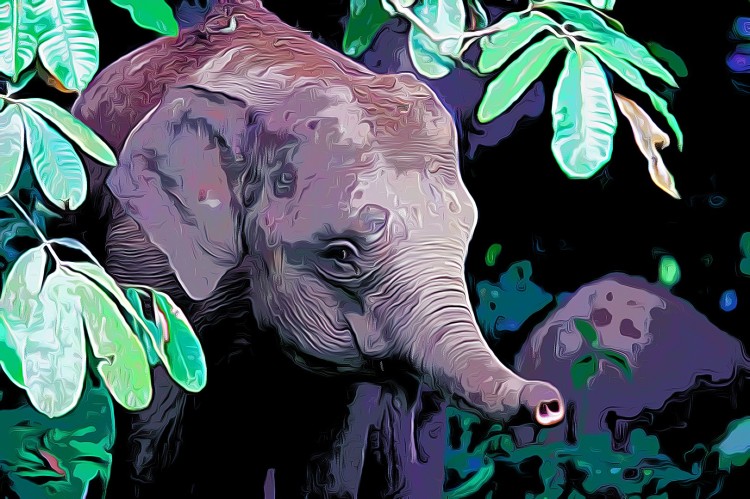
Barasingha Cervus duvauceli

Barasingha (Swamp Deer) Cervus duvauceli

Red List Status: Vulnerable

Extant (resident): India; Nepal

Extinct: Bangladesh; Pakistan

Presence Uncertain: Bhutan

Barasinghas Cervus duvauceli also known as Swamp Deers, are instantly recognisable for their enormous handsome antlers. They can have as many as 12 antlers and their namesake Barasinghas means ’12 antlered deer’ in Hindi. They are now one of the most endangered deer species in the world due to habitat fragmentation for palm oil and beef, along with human persecution and hunting. The only remaining population live in protected sanctuaries in India and Nepal. The herd will be led by a single female and then followed by other females in a procession and then the males follow along at the rear of the group. Despite this, females are not dominant over the herd. These resilient, tough and majestic deer species are classified vulnerable on IUCN Red List. If you want to help them, adopt a #Vegan lifestyle and #BoycottPalmOil #Boycott4Wildlife in the supermarket!

Handsome #Barasinghas of #India 🇮🇳 #Nepal 🇳🇵 have huge antlers 🦌😻 They are one of the most endangered #deer species in the 🌎 due to #hunting and #palmoil #deforestation. Help save them! 🌴🪔🩸🚜🔥🧐🚫 #Boycottpalmoil #Boycott4Wildlife @palmoildetect https://palmoildetectives.com/2023/06/25/barasingha-cervus-duvauceli/

#Barasingha mean “12 Antlered #Deer” in #Hindi 🦌🤎 Major threats include #meat and #palmoil #ecocide in #India 🇮🇳 and #Nepal 🇳🇵 along with #poaching 🏹 Take action for them and be #vegan 🥦🍅 #Boycottpalmoil 🌴🩸🙊⛔️ #Boycott4Wildlife @palmoildetect https://palmoildetectives.com/2023/06/25/barasingha-cervus-duvauceli/

Appearance & Behaviour

Barasinghas are a highly social and strongly matriarchal deer species. They typically gather in herds of 10-2o individual deers.

Herds are mostly made up of deer of similar age. Although herds may sometimes be mixed in age and gender. The herd will be led by a single female and then followed by other females in a procession and then the males follow along at the rear of the group. Despite this, females are not dominant over other members of the herd. Males are known to move between herds, whereas females are more loyal to their own herd. Like many other deer species, males are generally referred to as ‘bucks’ and dominant males a ‘stags’.

They are naturally diurnal and active throughout the day. They will typically rest during the heat of midday and spend the dawn and dusk grazing.

Juvenile males will sport smaller antlers that are an extension to their bones and have blood vessels inside of them. This coating of blood vessels or ‘felt’ is lost over time, as the young deers will rub the antlers against trees to toughen the antlers up.

Young male Barasinghas with fuzzy antlers by SlowmotionGli for Getty Images

Threats

There are three sub-species of Barasinghas and in total IUCN Red List estimates that there are only 3,500 to 5,100 left alive. They are classified as Vulnerable. Only a small number of Barasinghas live in protected zones, including:

  • 350-500 animals in Kaziranga National Park
  • 300-350 animals in Kanha National Park

Barasinghas face multiple human-related threats:

Habitat

The Barasingha is faces multiple anthropogenic threats which has heavily fragmented their range in north and central India and south west Nepal. They prefer riparian and riverine habitats close to floodplains, wetlands, mangroves and swamps as well as riversides. They are also fund in woodlands and deciduous forests.

Diet

Barasinghas are herbivorous mammals and they provide a vital ecosystem service by ensuring that plants are kept under control with their grazing habits. They generally stick with a diet of foliage, leaves and grass. Some Barasinghas living in wetlands will supplement this diet with algae and aquatic vegetation.

A Barasingha eating algae by CGToolbox for Getty Images

Mating and breeding

Dominant males in herds will mate with a group of females known as a harem. Males in herds will engage in bloody and violent conflicts with each other for mating rights during the rutting season. Male ‘bucks’ call for female ‘does’ using a series of bugling and barking sounds to indicate their readiness to mate. Mating season is between October and February.

Females give birth typically to only one fawn after around eight months of pregnancy. Occasionally twins occur. The fawn is weaned by six to eight months, and after two years, young females reach sexual maturity.

Support Barasinghas by going vegan and boycotting palm oil in the supermarket, it’s the #Boycott4Wildlife

Support the conservation of this species

This animal has no protections in place. Read about other forgotten species here. Create art to support this forgotten animal or raise awareness about them by sharing this post and using the #Boycottpalmoil #Boycott4Wildlife hashtags on social media. Also you can boycott palm oil in the supermarket.

Further Information

Duckworth, J.W., Kumar, N.S., Pokharel, C.P., Sagar Baral, H. & Timmins, R. 2015. Rucervus duvauceliiThe IUCN Red List of Threatened Species 2015: e.T4257A22167675. https://dx.doi.org/10.2305/IUCN.UK.2015-4.RLTS.T4257A22167675.en. Accessed on 12 November 2022.

Barasingha Cervus duvauceli on Wikipedia

Barasingha Cervus duvauceli - India - Asia - #Boycott4Wildlife
Barasingha Cervus duvauceli – India – Asia – #Boycott4Wildlife

Contribute to palm oil detectives - black rhino in profile

How can I help the #Boycott4Wildlife?


Take Action in Five Ways

1. Join the #Boycott4Wildlife on social media and subscribe to stay in the loop: Share posts from this website to your own network on Twitter, Mastadon, Instagram, Facebook and Youtube using the hashtags #Boycottpalmoil #Boycott4Wildlife.

Join 3,176 other subscribers

2. Contribute stories: Academics, conservationists, scientists, indigenous rights advocates and animal rights advocates working to expose the corruption of the palm oil industry or to save animals can contribute stories to the website.

3. Supermarket sleuthing: Next time you’re in the supermarket, take photos of products containing palm oil. Share these to social media along with the hashtags to call out the greenwashing and ecocide of the brands who use palm oil. You can also take photos of palm oil free products and congratulate brands when they go palm oil free.

4. Take to the streets: Get in touch with Palm Oil Detectives to find out more.

5. Donate: Make a one-off or monthly donation to Palm Oil Detectives as a way of saying thank you and to help pay for ongoing running costs of the website and social media campaigns. Donate here

RSPO’s Dubious “Sustainability”: 30 Years of Deceit

Ecolabels like RSPO and FSC are involved in networks of extensive greenwashing. They exist to conceal corporations’ environmental damage rather than fighting it. With three decades dubious promises from environmental certifications, World Rainforest Movement calls for a swift end to this disgraceful palm oil, soy and timber industry greenwashing. You can help resist palm oil colonialism and ecocide #Boycottpalmoil #Boycott4Wildlife every time you shop!

#Ecolabels like #RSPO and #FSC are accused of greenwashing, hiding corporations’ environmental #ecocide from consumers 💩🛒 rather than fighting #corruption. Fight back with your wallet and #Boycottpalmoil 🌴🪔🩸🧐🙊⛔️ #Boycott4Wildlife @palmoildetect https://palmoildetectives.com/2023/06/18/certification-ecolabels-dubious-sustainability-30-years-of-deceit-and-violence/

World Rainforest Movement and Palm Oil Detectives call for an end to #palmoil #greenwashing from #RSPO “sustainable” palm oil 🙊🧐⛔️ Resist the greenwash and #Boycottpalmoil #Boycott4Wildlife in the supermarket! 🌴💀🩸🚫 @palmoildetect https://palmoildetectives.com/2023/06/18/certification-ecolabels-dubious-sustainability-30-years-of-deceit-and-violence/


The shelves in supermarkets and stores are full of certified products. The packaging displays different labels indicating products were made with “sustainable” paper or wood, food or cosmetic products made with “sustainable” palm oil, “responsible” soybeans and so on and so forth.

Even when it comes to buying an airplane ticket, consumers can pay a little more
to ensure that their carbon emissions are (supposedly) “neutralised”, so as to guarantee that much touted “sustainability”.

WHO Bulletin Report: Palm Oil and Human Health Impacts

Read more: WHO Bulletin Report: Palm Oil and Human Health Impacts

So why is there this need for so many labels and forms of certification? What is actually being certified? And who is benefiting from this?

After 30 years of certification schemes with environmental and social bias, what is clear is that the only “sustainability” that they guarantee is that of corporations’ lucrative business.

The first environmental certification mechanism for a specific product (wood) and its production chain emerged in the early 1990s, with the creation of the Forest Stewardship Council (FSC). Although its origin is connected with civil society pressure on corporations, FSC has been fully incorporated into the production logic of logging companies operating in forests, of giant paper and pulp corporations using tree monoculture plantations, as well as of producers and distributors of consumer goods.

Over time, having shown that it did not constitute any threat – on the contrary: an opportunity – to the accumulation strategy of the corporations involved, other sectors started creating similar mechanisms. Hence, starting in the 2000s, initiatives and so-called roundtables for “sustainable” or “responsible” production of palm oil, soybeans, cocoa, sugarcane, among others, proliferated.

Greenwashing ecocide - Agropalma & Orangutan Land Trust
Greenwashing ecocide – Agropalma & Orangutan Land Trust

Read more: Greenwashing Ecocide: Agropalma and Orangutan Land Trust


100 NGOS signed a public statement denouncing the RSPO in late 2022


These “sustainable” initiatives have various aspects in common

1. They are dominated, compromised and funded by corporate interests

They are schemes that present themselves as non-profit associations including many apparently diverse actors and interests (companies, NGOs, governments etc.) However, in practice, the business sector participants andtheir allies, like the big conservationist NGOs, dominate these initiatives and impose their interests in a highly unequal power relation between the members.

deforestation fire palm oil

2. They promote toothless and unenforceable guidelines

They are mechanisms that establish operational guidelines and directives for companies to adhere to on a voluntary bases, leaving no possibility of legal consequences when rules are broken – rules formulated and judged by the companies themselves, it should be noted.

3. They promote an endless growth model of capitalism in spite of our limited and finite natural world

They are initiatives submitted to the logic of the market and its expansion, that is to say, certification labels have become important both to obtain funding for companies’ expansion projects and to win over consumers, mainly urban consumers and those from the global North. Read more about the limits of the Endless growth model.

4. The mechanism for conflict resolution is set and decided upon by the certification label itself – amplifying racial and gender inequities

They are mechanisms headquartered in countries of the North, and with management boards mainly composed of men and white people, leaving the rural communities of the South that have to face the certified plantations, to play the role of mere receivers of determinations imposed from outside about the use of the space where they live. And if they want to question the actions of any of the certified companies, they must submit to the protocol created by the certification system itself on how to proceed.

Child labour and human rights on palm oil plantations

5. They use greenwashing language and false promises even though this does not reflect reality

Certification schemes are used by companies as defence mechanisms whenever they are faced with criticism over the impacts of their activities:

“Our products are certified…”, “The project has certification…”, as if this has guaranteed that there is no cause for concern.

One way or another, such certification mechanisms have not stopped the destructive expansion of industrial tree plantations, oil palms, soy, etc. Read more about using Design and Words as a greenwashing tool.

6. The predatory nature of corporate land-grabbing and expansionism cannot ever work in favour of indigenous peoples

A still from the documentary: by Mama Malind su Hilang (Our Land Has Gone) Nanang Sujana Watch on Youtube: https://www.youtube.com/watch?v=RqYoRh1aApg

Certification labels have not been able to resolve the conflicts generated with traditional communities and Indigenous Peoples. Nor do they have the potential to do so, since they are designed to allow the continuity and expansion of corporate accumulation patterns that are intrinsically dependent on a predatory dynamic.

In fact, the main common denominator of such certification schemes is that they guarantee a green label to the companies involved, thus contributing to their primary objective, i.e., the maximisation of profit.

7. Certification labels like FSC and RSPO are vital to for companies gain consumer buy-in and greenwash away harms

Certifiers have hence become a key element through which companies seek to legitimize their territorial and economic expansion in the global South, deceiving consumers with the “sustainability” discourse.

In other words, these destructive corporations need certification labels to obtain some legitimacy in the eyes of consumers and investors, bearing in mind the vast number of reports, news and studies showing their harmful effects, such as:

  • Violent corporate land-grabbing aided by private enforcement or military/police intervention
  • Problematic, deceptive or non-existent community consultation processes
  • Contamination by agro-chemicals and its human health and environmental impacts
  • Soil degradation
  • Dangerous and humiliating jobs
  • Sexual abuse and other forms of violence against women
  • Child slavery and indentured slavery

among many other impacts related to extensive monoculture plantations.

This permits one to affirm without reservation that certification itself has become an underlying cause of deforestation.


10 Tactics of Sustainable Palm Oil Greenwashing


Greenwashing Tactic #1: Hidden Trade Off

When a brand makes token changes while continuing with deforestation, ecocide or human rights abuses in another part of their business – this is ‘Hidden Trade Off’

For example, Nestle talks up satellite monitoring to stop palm oil deforestation. Yet…

Read more

Greenwashing Tactic #3: Vagueness

Claiming a brand or commodity is ‘green’ or ‘sustainable’ based on broad generalisations, unclear language or vague statements Jump to section Greenwashing: Vagueness in Language Greenwashing: Vagueness in certification standards Reality: Auditing of RSPO a failure Quote: EIA: Who Watches…

Read more

Greenwashing Tactic #4: Fake Labels

Claiming a brand or commodity is green based on unreliable, ineffective endorsements or eco-labels such as the RSPO, Forest Stewardship Council (FSC) or FairTrade coffee and cocoa. Greenwashing: Fake Labels and fake certifications Ecolabels are designed to reassure consumers that…

Read more

Greenwashing Tactic #6: The Lesser of Two Evils

Claiming that a brand, commodity or industry is greener than others in the same category, in order to excuse ecocide, deforestation, human rights and animal rights abuses. Jump to section Greenwashing: Lesser of Two Evils: Palm Oil Uses Less Land…

Read more

New forms of greenwashing: Carbon Credits and Biodiversity Credits

Furthermore, it is important to mention that the idea of certification has been taking on new shapes. With the creation of offset mechanisms for carbon emissions and biodiversity loss, new commodities have emerged already linked to certification mechanisms. In this new market, carbon credits and biodiversity credits – issued by certification schemes – represent a supposed guarantee that greenhouse gas emissions or the destruction of biodiversity are being duly offset elsewhere.

Differently from wood, paper, palm oil or soybeans, where the certification is “added” to the product by means of a label, in the carbon or biodiversity markets it is the
certification itself that makes it feasible for the product to be consumed.

In other words, the commodity in itself is supposedly a guarantee – though a virtual guarantee, obtained through dubious methodologies and permeated by openly suspect interests.

This compilation of articles from the WRM Bulletin aims to underscore the damaging role played by companies and organisations involved in certification schemes. WRM considers it important to highlight that after three decades with ever more environmental certification labels on the market, it is urgent to put an end to this greenwashing.

Ultimately, instead of combating environmental devastation and the social ills linked
to corporations’ and other players’ operations, these labels cover up and
sustain their destructive logic.

Sexual Exploitation and Violence against Women at the Root of the Industrial Plantation Model

The industrial plantation model is intrinsically linked with patriarchal oppression, serving as a cornerstone for corporate profitability. Companies often exploit women, recognizing their integral role within community dynamics, as a means to augment their bottom line. The intersection of gender and economic exploitation exemplifies the profound social implications of this oppressive system.

RSPO: outsourcing environmental regulation to oil palm businesses and industry

The RSPO certification, cleverly turning the palm oil industry’s legitimacy crisis to its favor, uses it as a stepping stone to further strengthen the industry’s position. It provides certificates claiming to meet sustainability standards—a clear advantage to the industry. However, it’s important to note that these standards are largely controlled by and designed to benefit companies operating within the palm oil sector itself.

“Gender” in the palm oil industry and its RSPO label

Implementing gender policies in oil palm companies and the RSPO certification scheme is a start. But do they truly tackle the violence, patriarchy, and racism in the plantation model, or merely mask them? It’s crucial to examine how these policies are enacted and if they genuinely drive substantial change, or just scratch the surface of these systemic issues.

Colombia: Palm-Producing Company Poligrow Plans to Grab more Land under the “Small Producers” Scheme

The harsh realities of violence, mass killings, and forced relocations amid the armed conflict in Colombia have disturbingly paved the way for the expansion of industrial oil palm cultivation. The palm oil company and RSPO member Poligrow, has been significantly implicated in these issues, with credible allegations of land seizure and intimidation tactics within the region of Mapiripán.

Greenwashing Words: Language that kills forests

Language never operates in a vacuum. Historically, specific terms have been leveraged as tools for exercising control over populations and territories. This article throws light on certain terms which, while seemingly positive, often shield economic interests detrimental to forests, forest animals and forest peoples.

Africa: The RSPO certification for palm oil plantations is greenwash!

The Roundtable on Sustainable Palm Oil (RSPO) is a widely used certification system promising environmental, safety, and human rights standards in the palm oil industry. However, Friends of the Earth Africa groups contest its effectiveness, citing ongoing environmental degradation, human rights breaches, biodiversity loss, and increased poverty in Africa linked to the activities of palm oil companies.

Communities resisting the impunity and impacts of oil palm growers in Ecuador: Cases from Esmeraldas

The palm industry in Ecuador, encompassing 270,000 hectares of plantations, has been using the Roundtable on Sustainable Palm Oil (RSPO) certification to project an image of sustainability, setting itself apart from Asian palm oil. However, critics argue that this certification merely muffles community objections. Resistance from communities such as La Chiquita, Guadualito, and Barranquilla de San Javier in the Esmeraldas region continues to fuel discontent and foster international solidarity.

RSPO Certification despite land conflicts, violence and criminalisation

Nearly 1,500 members of MALOA in Sierra Leone are challenging RSPO’s certification of a SOCFIN subsidiary. They cite a string of conflicts and grievances tied to land use. This move follows controversial certifications of SOCFIN group’s operations in Nigeria, Cameroon, and Ivory Coast. Critics question if RSPO, perceived as industry-biased, can truly guarantee sustainability and human rights in the palm oil sector.

Are FSC and RSPO accomplices in crime? Agropalma’s Unresolved Land Question in the Brazilian Amazon

The Palmas del Ixcán company in Guatemala is accused of implementing systematic dispossession of land from indigenous communities for oil palm cultivation, using tactics such as deceptive RSPO certification and independent producers. The company’s strategic approach replaced the traditional collective land management by indigenous people in the Municipality of Ixcán, which had been disrupted by development plans since the 1960s. Despite filing a complaint to the RSPO and participating in consultations, the communities found their concerns disregarded, leading them to criticize the RSPO and label it a sham, asserting that its true intention is to facilitate palm planting at any cost.

Water is life – stop planting palms! reads a sign in Guatemala

"Water is life. Stop planting oil palms". Photo: Movimiento Social Intercultural del Pueblo de Ixcán, Guatemala
“Water is life. Stop planting oil palms”. Photo: Movimiento Social Intercultural del Pueblo de Ixcán, Guatemala

ENDS


Read more about human rights abuses and greenwashing associated with “sustainable” palm oil

Something went wrong. Please refresh the page and/or try again.


Take Action in Five Ways

1. Join the #Boycott4Wildlife on social media and subscribe to stay in the loop: Share posts from this website to your own network on Twitter, Mastadon, Instagram, Facebook and Youtube using the hashtags #Boycottpalmoil #Boycott4Wildlife.

Join 3,176 other subscribers

2. Contribute stories: Academics, conservationists, scientists, indigenous rights advocates and animal rights advocates working to expose the corruption of the palm oil industry or to save animals can contribute stories to the website.

3. Supermarket sleuthing: Next time you’re in the supermarket, take photos of products containing palm oil. Share these to social media along with the hashtags to call out the greenwashing and ecocide of the brands who use palm oil. You can also take photos of palm oil free products and congratulate brands when they go palm oil free.

4. Take to the streets: Get in touch with Palm Oil Detectives to find out more.

5. Donate: Make a one-off or monthly donation to Palm Oil Detectives as a way of saying thank you and to help pay for ongoing running costs of the website and social media campaigns. Donate here

Dryas Monkey Chlorocebus dryas

Dryas Monkey Chlorocebus dryas

Formerly known as Cercopithecus dryas.

Red List Status: Endangered

Extant (resident): The Democratic Republic of the Congo

Dryas #Monkeys are secretive and vividly colourful monkeys who hang on to survival in the forests of the #Congo. Tragically, there is estimated to only be 100-250 individual monkeys still alive. They are fruit-eaters and play a critical role in ensuring the dispersion of seeds and therefore the future health of the DRC’s #rainforests. They are preyed upon by leopards in the Congo basin. However, the main threat they face is the illegal poaching and hunting by humans for #bushmeat, along with #deforestation for #palmoil, #mining and other commodities. Fight for their survival every time you shop, be #vegan and #BoycottPalmOil #Boycott4Wildlife

Vividly coloured and social Dryas #Monkeys 🌈😎🐵🐒🧐 hang to survival in #Congo 🇨🇩 #DRC #Africa. There are only 100-250 of them left 😿 Help save them each time you shop @palmoildetect #Boycottpalmoil #Boycott4Wildlife 🌴🪔💩☠️🚜🔥⛔️https://palmoildetectives.com/2023/06/11/dryas-monkey-chlorocebus-dryas/

Dryas #Monkeys are secretive colourful monkeys in #Congo #Africa 🇨🇩🇨🇬🐒🐵🙉 They are endangered by #palmoil 🌴🔥 and #mining 🪔🔥 #deforestation. Fight for them and use your wallet as a weapon #Boycottpalmoil 🌴🧐⛔️ #Boycott4Wildlife @palmoildetect https://palmoildetectives.com/2023/06/11/dryas-monkey-chlorocebus-dryas/

Appearance & Behaviour

Stunning and striking colourations are the signature of the Dryas Monkey. They have black mask-like faces that are ringed with white and surrounded by a vivid orange or yellow necks and chests. Their backs are dark brown and their limbs are black. Their bellies and the inside of their arms and legs are a pale cream colour. Males have a vividly blue scrotum and anogenital region. Not all males have this and it’s thought to be related to age, health and status of the monkey in the troop. Females also have a blue rear end that is not as bright as males.

Gregarious and highly social, Dryas Monkeys live in groups of between 5 to 30 individuals of their own species and mixed multi-species groups as well, with red-tailed monkeys (C. ascanius). They communicate visually and through vocalisations with their own kind and with other species. They make chirps, murmurs, and chuckles to each other, they are considered to be quieter than other primates and their booming calls and screams.

Troops typically contain many young monkeys and females but only one male. Although occasionally groups with multiple males are found.

Staring is a form of intensive threat display that is used by Dryas Monkeys to intimidate others in a troop. During a staring contest – their eyes will stay fixed and focused while their eyebrows and forehead is retracted backwards.

They will often stare with an open-mouthed expression and bob their heads – this is also considered to be a threat and intimidation display, although more aggressive.

When females come into oestrus during the mating season, they will exhibit presenting behaviour to indicate to males that they are ready to mate.

Threats

Dryas Monkeys face several human-related threats:

Dryas Monkeys were listed as critically endangered, however their status was changed to endangered after they were found in eight locations in Lomami National Park indicating that their population is larger than once thought. Although their survival is still fragile and is threatened by increased deforestation throughout their range.

Habitat

There is much that still needs to be uncovered about the behaviour, habits and culture of the Dryas Monkey. They are also known as the Salonga monkey, ekele, inoko, Dryad monkey, Dryas guenon and Salonga guenon. They live in the heart of the Congo Basin – the second largest remaining rainforest in the world after the Amazon. They live in two regions: the Kokolopori-Wamba area and the Lomami-Lualaba area.

Dryas monkeys prefer secondary lowland forest and swampland that has been disturbed by elephants, wind or floods.

Although they prefer to remain hidden and are cautious about human contact, they nevertheless live close to the edge of villages, homes and people’s gardens.

Diet

These monkeys prefer a diet of fruit, young leaves and flowers. However, food scarcity in different seasons of the year mean that they will eat invertebrates like insects as a supplement.

Mating and breeding

Dryas monkeys are likely polygynous, with each male mating with multiple females. Pregnancy lasts for approximately five months and mothers will only birth one baby and care for them after birth. Females reach sexual maturity at age five and males take a bit longer and will reach maturity at about six years old. Their expected lifespan in the wild is 10-15 years old. It is not known how long they would live in captivity, as to date no Dryas Monkeys are kept in captivity.

Support Dryas Monkeys by going vegan and boycotting palm oil in the supermarket, it’s the #Boycott4Wildlife

You can support this beautiful animal

Support the conservation of this species

This animal has no protections in place. Read about other forgotten species here. Create art to support this forgotten animal or raise awareness about them by sharing this post and using the #Boycottpalmoil #Boycott4Wildlife hashtags on social media. Also you can boycott palm oil in the supermarket.

Further Information

Ellis, S. & Talukdar, B. 2019. Rhinoceros unicornisThe IUCN Red List of Threatened Species 2019: e.T19496A18494149. https://dx.doi.org/10.2305/IUCN.UK.2019-3.RLTS.T19496A18494149.en. Accessed on 11 November 2022.

Dryas Monkey: New England Primate Conservancy

Dryas Monkey Chlorocebus dryas: Animalia.bio

Dryas Monkey Chlorocebus dryas: Wikipedia.

‘Secretive and colorful dryas monkey isn’t as rare as once thought’, Mongabay, 2019.

Dryas Monkey Chlorocebus dryas - Threats
Dryas Monkey Chlorocebus dryas – Threats

Contribute to palm oil detectives - black rhino in profile

How can I help the #Boycott4Wildlife?


Take Action in Five Ways

1. Join the #Boycott4Wildlife on social media and subscribe to stay in the loop: Share posts from this website to your own network on Twitter, Mastadon, Instagram, Facebook and Youtube using the hashtags #Boycottpalmoil #Boycott4Wildlife.

Join 3,176 other subscribers

2. Contribute stories: Academics, conservationists, scientists, indigenous rights advocates and animal rights advocates working to expose the corruption of the palm oil industry or to save animals can contribute stories to the website.

3. Supermarket sleuthing: Next time you’re in the supermarket, take photos of products containing palm oil. Share these to social media along with the hashtags to call out the greenwashing and ecocide of the brands who use palm oil. You can also take photos of palm oil free products and congratulate brands when they go palm oil free.

4. Take to the streets: Get in touch with Palm Oil Detectives to find out more.

5. Donate: Make a one-off or monthly donation to Palm Oil Detectives as a way of saying thank you and to help pay for ongoing running costs of the website and social media campaigns. Donate here

India’s Palm Oil Push Leaves Northeast Indian Farmers, Forests and Animals at Risk

#Palmoil cultivation in #India’s northeast such as #Nagaland and #Assam is devastating natural ecology with increased human-animal conflicts and #ecocide leaving #animals, #forests and people at risk. Resist and fight back every time you shop and #Boycottpalmoil #Boycott4Wildlife


The Takeaway

Since the 1990s, India has prioritised palm oil production to reduce its import dependency and meet increasing consumer demand. Despite various initiatives to promote palm oil cultivation across the country, northeast Indian palm oil farmers face challenges forcing them to reconsider their crop choices. The dilemma also raises questions about striking a balance between India’s goals for self-sufficiency in edible oils and its climate goals for carbon neutrality, considering the ecological damage inherent to palm oil cultivation.

Leopard Panthera pardus sitting under a tree

In Brief

Since 2016, palm oil cultivation in the state of Nagaland has increased by more than 3,000 per cent, due in large part to the Indian government’s introduction of the National Mission on Oilseed and Oil Palm in 2015-16 and a renewed push with the 2021 National Mission on Edible Oils – Oil Palm (NMEO-OP) that emphasises oil palm cultivation in northeast Indian states. Despite rapid growth in cultivation since these mission statements were activated, Nagaland farmers continually face water shortages, inadequate irrigation infrastructure, a lack of state support, and, more recently, a lack of buyers and processing capacity. As a result, they have disposed of palm kernels – or used them as animal feed – as they look for other crop options.  

Implications

Over the past two decades, palm oil consumption in India has increased by approximately 230 per cent, and today India is the largest importer of palm oil globally. As palm oil is a part of almost 50 per cent of all packaged consumer products – edible and non-edible – it is not surprising to see the increasing global demand. The COVID-19 pandemic and the Russian war in Ukraine have caused significant supply-chain issues, spikes in global prices, and restrictions on edible oil exports from source countries as they seek to protect their domestic markets.

Roughly 56 per cent of India’s edible oil imports are palm oil, and over 90 per cent of the imported palm oil comes from Indonesia, Malaysia, and Thailand. Given palm oil’s versatility and economic viability, the Indian government launched its oilseed initiatives to reduce India’s reliability on imports, contribute to the nation’s food security, and help address the growing unemployment rates in the country. Incorporating aspects of previous schemes, the NMEO-OP increased available funding and support systems for palm oil farmers in 13 Indian states. Under the 2021 scheme, the total area for palm oil cultivation is projected to increase threefold — to a whopping one million hectares — and crude palm oil production to 1.125 million tonnes by 2026. Most of the cultivation will occur in seven ecologically sensitive northeastern states and the Andaman and Nicobar Islands.

Palm oil cultivation is already proving disastrous for the northeast’s natural ecology as tropical forests must be cleared to establish plantations. There have also been reports of increased human-animal conflicts in these impacted areas. Alleged misleading reporting of plantations as forest cover by state forest departments in national forest surveys has reportedly further concealed the environmental damage. Additionally, palm oil cultivation is water intensive.

As weather patterns change, uneven rainfall, flooding, and erosion in the northeast is causing damage to palm oil saplings, a situation compounded by a lack of sustainable irrigation systems suitable for the region’s hilly terrain. India also risks following in the footsteps of Indonesia and Malaysia, where 3.5 million hectares of forest were converted to palm oil plantations, resulting in a staggering biodiversity loss.  
 

Understanding palm oil-associated health risks and exploring alternatives: Studies show that palm oil contains 50 per cent triglycerides, and its regular consumption can clog arteries, increase heart disease risks, and heighten bad cholesterol levels. In terms of higher nutrient content, oil from rice bran, groundnut, sunflower, and oilseeds such as sesame, mustard, and linseed are healthier, but not as cost-effective. The less water-intensive sesame and mustard have long been cultivated by Indian farmers, and even rice can be utilised to increase oil extracts. With proper guidance and support in producing these alternative edible oils, India can decrease its reliance on palm oil altogether.

Produced by CAST’s South Asia team: Dr. Sreyoshi Dey (Program Manager); Prerana Das (Analyst); and Suyesha Dutta (Analyst).

ENDS


Big brands using “sustainable” RSPO palm oil yet still causing deforestation (there are many others)

Nestlé

Nestlé is destroying rainforests, releasing mega-tonnes of carbon into the atmosphere, and killing hundreds of endangered species. Once these animals are gone – they are gone for good. See Nestlé’s full list of…

Read more

Colgate-Palmolive

Despite global retail giant Colgate-Palmolive forming a coalition with other brands in 2020, virtue-signalling that they will stop all deforestation, they continue to do this – destroying rainforest and releasing mega-tonnes of carbon…

Read more

Mondelēz

Mondelez destroys rainforests, sending animals extinct and release mega-tonnes of carbon into air for so-called “sustainable” palm oil. Boycott them!

Read more

Unilever

In 2020, global retail giant Unilever unveiled a deforestation-free supply chain promise. By 2023 they would be deforestation free. This has been and gone and they are still causing deforestation. This brand has…

Read more

Danone

Savvy consumers have been pressuring French Dairy multinational Danone for decades to cease using deforestation palm oil. Yet they actually haven’t stopped this. From their website: ‘Danone is committed to eliminating deforestation from…

Read more

PepsiCo

Despite decades of promises to end deforestation for palm oil PepsiCo (owner of crisp brands Frito-Lay, Cheetos and Doritos along with hundreds of other snack food brands) have continued sourcing palm oil that…

Read more

Procter & Gamble

Despite decades of promises to end deforestation for palm oil Procter & Gamble or (P&G as they are also known) have continued sourcing palm oil that causes ecocide, indigenous landgrabbing, and the habitat…

Read more

Kelloggs/Kellanova

In late 2023, Kelloggs became Kellanova for their US arm. Savvy consumers have been pressuring Kelloggs for decades to cease using deforestation palm oil. Yet they actually haven’t stopped this. From their website:…

Read more

Johnson & Johnson

Global mega-brand Johnson & Johnson have issued a position statement on palm oil in 2020. ‘At Johnson & Johnson, we are committed to doing our part to address the unsustainable rate of global…

Read more

PZ Cussons

PZ Cussons is a British-owned global retail giant. They own well-known supermarket brands in personal care, cleaning, household goods and toiletries categories, such as Imperial Leather, Morning Fresh, Carex, Radiant laundry powder and…

Read more

Take Action in Five Ways

1. Join the #Boycott4Wildlife on social media and subscribe to stay in the loop: Share posts from this website to your own network on Twitter, Mastadon, Instagram, Facebook and Youtube using the hashtags #Boycottpalmoil #Boycott4Wildlife.

Join 3,176 other subscribers

2. Contribute stories: Academics, conservationists, scientists, indigenous rights advocates and animal rights advocates working to expose the corruption of the palm oil industry or to save animals can contribute stories to the website.

3. Supermarket sleuthing: Next time you’re in the supermarket, take photos of products containing palm oil. Share these to social media along with the hashtags to call out the greenwashing and ecocide of the brands who use palm oil. You can also take photos of palm oil free products and congratulate brands when they go palm oil free.

4. Take to the streets: Get in touch with Palm Oil Detectives to find out more.

5. Donate: Make a one-off or monthly donation to Palm Oil Detectives as a way of saying thank you and to help pay for ongoing running costs of the website and social media campaigns. Donate here

Preventing Pandemics: Cheaper Than Controlling Them

“It turns out prevention of #pandemics really is the best medicine. We estimate we could greatly reduce the likelihood of another pandemic occuring by investing as little as 1/20th of the losses incurred so far from COVID into [#wildlife and #rainforest] conservation measures designed to help stop the spread of these viruses from wildlife to humans in the first place.” Professor Stuart Pimm, Doris Duke Professor of Conservation Ecology at Duke University, who was co-lead author of the study. Fight against extinction every time you shop #BoycottPalmOil #Boycott4Wildlife


Tens of billions spent on habitat and surveillance would avoid trillions of annual costs

DURHAM, N.C. – We can pay now or pay far more later. That’s the takeaway of a new peer-reviewed study, published Feb. 4 in the journal Science Advances, that compares the costs of preventing a pandemic to those incurred trying to control one.   

“The bottom line is, if we don’t stop destroying the environment and selling wild species as pets, meat or medicine, these diseases are just going to keep coming. And as this current pandemic shows, controlling them is inordinately costly and difficult”.

~ Professor Stuart Pimm, Doris Duke Professor of Conservation Ecology at Duke University.

“It turns out prevention really is the best medicine,” said Stuart Pimm, Doris Duke Professor of Conservation Ecology at Duke University, who was co-lead author of the study. “We estimate we could greatly reduce the likelihood of another pandemic by investing as little as 1/20th of the losses incurred so far from COVID into conservation measures designed to help stop the spread of these viruses from wildlife to humans in the first place.”

A smart place to start, the study shows, would be investing in programs to end tropical deforestation and international wildlife trafficking, stop the wild meat trade in China, and improve disease surveillance and control in wild and domestic animals worldwide.

COVID, SARS, HIV, Ebola and many other viruses that have emerged in the last century originated in wild places and wild animals before spreading to humans, the study’s authors note. Tropical forest edges where humans have cleared more than 25% of the trees for farming or other purposes are hotbeds for these animal-to-human virus transmissions, as are markets where wild animals, dead or alive, are sold.

“Prevention is much cheaper than cures. Compared to the costs and social and economic disruptions associated with trying to control pathogens after they have already spread to humans, preventing epidemics before they break out is the ultimate economic bargain.”

~ Dr Aaron Bernstein of Boston Children’s Hospital and the Center for Climate, Health and the Global Environment at Harvard T.H. Chan School of Public Health.

Art: Pandemics and Zoonotic Disease by Jo Frederiks

“It’s been two years since COVID emerged and the cure still isn’t working. Not enough people are vaccinated in the U.S, where shots are available and we can afford them, and not enough vaccines are going to other countries that can’t afford them.”

The new study, by epidemiologists, economists, ecologists, and conservation biologists at 21 institutions, calculates that by investing an amount equal to just 5% of the estimated annual economic losses associated with human deaths from COVID into environmental protection and early-stage disease surveillance, the risks of future zoonotic pandemics could be reduced by as much as half. That could help save around 1.6 million lives a year and reduce mortality costs by around $10 trillion annually.

Eating animals causes pandemics byJo Frederiks

“We’re talking about an investment of tens of billions of dollars a year. Government have that kind of money.”

~ Professor Stuart Pimm, Doris Duke Professor of Conservation Ecology at Duke University.

Art: Eating animals causes pandemics by Jo Frederiks

One key recommendation of the new study is to use some of this money to train more veterinarians and wildlife disease biologists.

Another key recommendation is to create a global database of virus genomics that could be used to pinpoint the source of newly emerging pathogens early enough to slow or stop their spread, and, ultimately, speed the development of vaccines and diagnostic tests.

Aaron Bernstein of Boston Children’s Hospital and the Center for Climate, Health and the Global Environment at Harvard T.H. Chan School of Public Health, and Andrew Dobson of Princeton University were co-lead authors of the study with Pimm.

The need to put preventive measures in place as soon as possible is increasingly urgent, said Dobson. “Epidemics are occurring more frequently, they are getting larger, and spreading to more continents.”


JOURNAL

Science Advances

DOI

10.1126/sciadv.abl4183 

ENDS


A 2019 World Health Organisation (WHO) report into the palm oil industry and RSPO finds extensive greenwashing of palm oil deforestation and the murder of endangered animals (i.e. biodiversity loss)

WHO Bulletin on Palm Oil: Deforestation and Extinction
WHO Bulletin on Palm Oil: Air Pollution and Health

Big brands using “sustainable” RSPO palm oil yet still causing deforestation (there are many others)

Nestlé

Nestlé is destroying rainforests, releasing mega-tonnes of carbon into the atmosphere, and killing hundreds of endangered species. Once these animals are gone – they are gone for good. See Nestlé’s full list of…

Read more

Colgate-Palmolive

Despite global retail giant Colgate-Palmolive forming a coalition with other brands in 2020, virtue-signalling that they will stop all deforestation, they continue to do this – destroying rainforest and releasing mega-tonnes of carbon…

Read more

Mondelēz

Mondelez destroys rainforests, sending animals extinct and release mega-tonnes of carbon into air for so-called “sustainable” palm oil. Boycott them!

Read more

Unilever

In 2020, global retail giant Unilever unveiled a deforestation-free supply chain promise. By 2023 they would be deforestation free. This has been and gone and they are still causing deforestation. This brand has…

Read more

Danone

Savvy consumers have been pressuring French Dairy multinational Danone for decades to cease using deforestation palm oil. Yet they actually haven’t stopped this. From their website: ‘Danone is committed to eliminating deforestation from…

Read more

PepsiCo

Despite decades of promises to end deforestation for palm oil PepsiCo (owner of crisp brands Frito-Lay, Cheetos and Doritos along with hundreds of other snack food brands) have continued sourcing palm oil that…

Read more

Procter & Gamble

Despite decades of promises to end deforestation for palm oil Procter & Gamble or (P&G as they are also known) have continued sourcing palm oil that causes ecocide, indigenous landgrabbing, and the habitat…

Read more

Kelloggs/Kellanova

In late 2023, Kelloggs became Kellanova for their US arm. Savvy consumers have been pressuring Kelloggs for decades to cease using deforestation palm oil. Yet they actually haven’t stopped this. From their website:…

Read more

Johnson & Johnson

Global mega-brand Johnson & Johnson have issued a position statement on palm oil in 2020. ‘At Johnson & Johnson, we are committed to doing our part to address the unsustainable rate of global…

Read more

PZ Cussons

PZ Cussons is a British-owned global retail giant. They own well-known supermarket brands in personal care, cleaning, household goods and toiletries categories, such as Imperial Leather, Morning Fresh, Carex, Radiant laundry powder and…

Read more

Contribute to my Ko-Fi

Did you enjoy visiting this website?

Contribute to my kofi

Palm Oil Detectives is 100% self-funded

Palm Oil Detectives is completely self-funded by its creator. All hosting and website fees and investigations into brands are self-funded by the creator of this online movement. If you like what I am doing, you and would like me to help meet costs, please send Palm Oil Detectives a thanks on Ko-Fi.
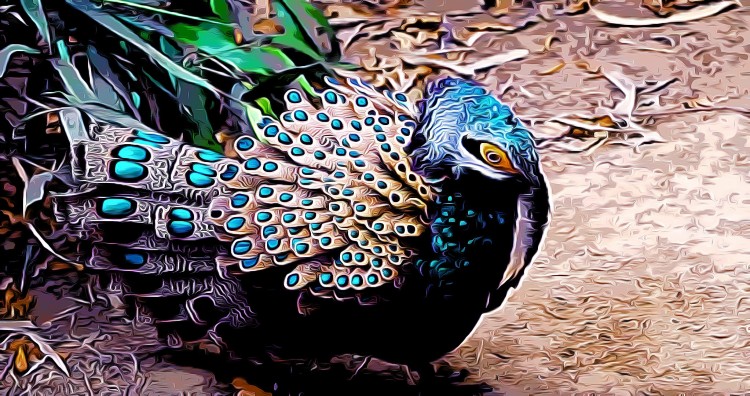
Quince Monitor (Banggai Island Monitor) Varanus melinus

Quince Monitor (Banggai Island Monitor) Varanus melinus

Red List Ranking: Endangered

Extant (resident): Indonesia (Maluku).
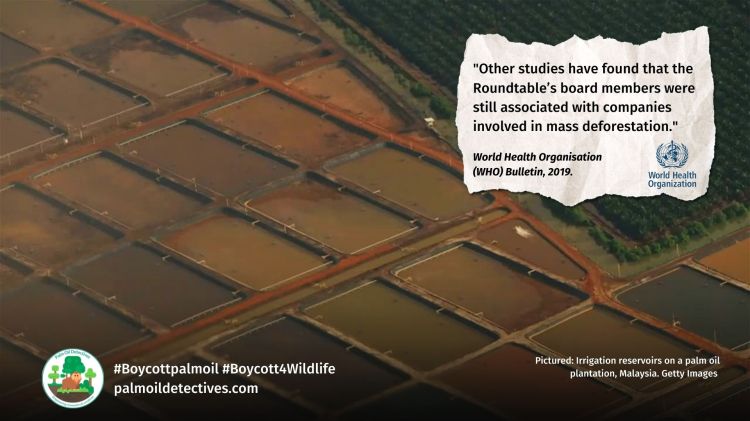
The Quince Monitor Varanus melinus get their name from the spectacular bright yellow of their skin. This is a rare and elusive species of #monitor #lizard that lives in only one location in #Indonesia – the #Maluku Islands. Their muscular, wide stance and ancient dragon-like looks make them fascinating to behold. They are endangered primarily from #palmoil #deforestation throughout their range along with collection for the illegal #pettrade. They have no known protections in place. Help them every time you shop and #BoycottPalmOil #Boycott4Wildlife in the supermarket and don’t buy these lizards as exotic pets as this is sending them extinct!
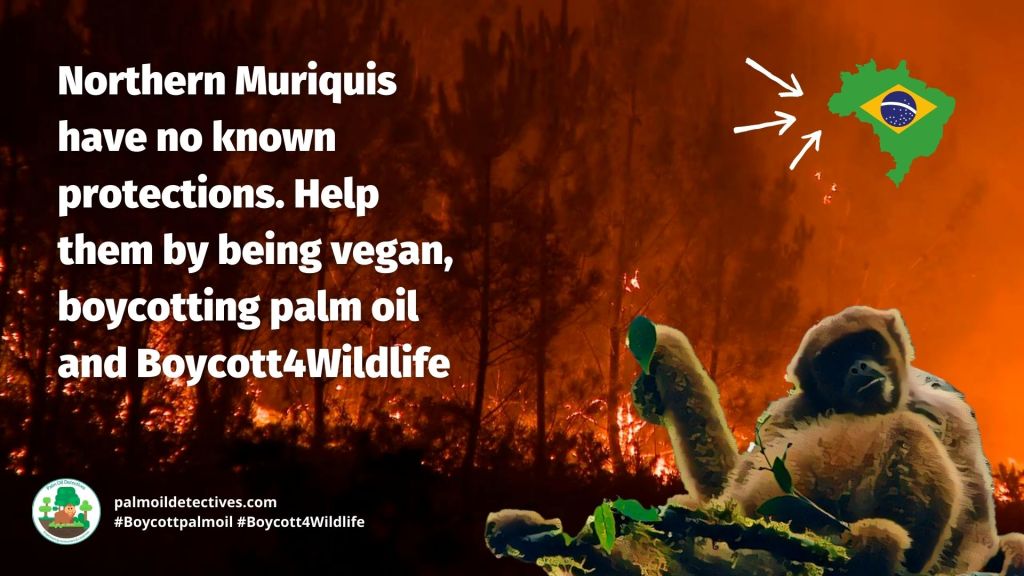
Quince Monitor #Lizards are named for their bright yellow skin and muscular bodies💛🍋🦎. They are #endangered 😿😭 by #palmoil #deforestation in #Indonesia 🇮🇩 Help them when you #Boycottpalmoil #Boycott4Wildlife @palmoildetect 🌴🩸☠️🚜🔥🧐🙊⛔️ https://palmoildetectives.com/2023/05/28/quince-monitor-banggai-island-monitor-varanus-melinus/

Help fight for the #endangered Quince #Monitor #Lizard of #Indonesia 🇮🇩, a majestic yellow #reptile. 💛🍋✨🌟🦎Major threats are #palmoil #deforestation and the pet trade. Help them and #Boycottpalmoil #Boycott4Wildlife 🌴🩸🤮☠️🚫 @palmoildetect https://palmoildetectives.com/2023/05/28/quince-monitor-banggai-island-monitor-varanus-melinus/

Appearance & Behaviour

Quince monitors gain their names from their bright colouring reminiscent of the quince fruit.

These large and impressive lizards have a yellow head, back and tail along with striking contrasting bands of yellow and black across their limbs, face and neck. Juvenile quince monitors are darker and they get brighter yellow with age. They average around 80-120cm in total body length.

Threats

This species of lizard appears to be threatened through over-collection for the international pet trade, and also degradation and clearance of forested areas within their range (for both timber and agricultural expansion for palm oil). An additional potential threat is the introduction of the non-native toad, Duttaphrynus melanostictus, which may be toxic to this predatory monitor lizard (Koch et al. 2013, Weijola and Sweet 2010).

IUCN RED LIST

The Quince Monitor faces a range of anthropogenic threats:

  • Palm oil deforestation: This is their main threat on the islands of Maluku, Indonesia.
  • Timber deforestation
  • Collection for the pet trade
  • An introduced, non-native toad, which is toxic to the lizards

Habitat

Far more research is needed to understand the ecological needs of the Quince Monitor. They seem to have a preference for swamps, wetlands and forests. These large reptiles are also found close to human settlements.

They are endemic to the Sula Islands of Indonesia, however their range has been destroyed by palm oil and reduced significantly. This along with overzealous collection for the pet trade has led them to now be classified as endangered on IUCN Red List.

Diet

In captivity, Quince monitors are known to eat crickets, mealworms, waxworms, roaches, frogs and eggs.

Mating and breeding

The generation length for this species requires further research. The reproductive age of this lizard, as revealed from captive breeding, may exceed seven years. A clutch consists of 2–12 eggs, with up to three clutches being laid per year and a minimum of 77 days between two clutches. The lizards reach reach 37–39.5 cm in length by 5.5 months and reach sexual maturity at 120 cm (male) or 90 cm (female).

Support Quince Monitors by going vegan and boycotting palm oil in the supermarket, it’s the #Boycott4Wildlife

Support the conservation of this species

This animal has no protections in place. Read about other forgotten species here. Create art to support this forgotten animal or raise awareness about them by sharing this post and using the #Boycottpalmoil #Boycott4Wildlife hashtags on social media. Also you can boycott palm oil in the supermarket.

Further Information

Shea, G., Stubbs, A. & Arida, E. 2021. Varanus melinusThe IUCN Red List of Threatened Species 2021: e.T83778224A83778231. https://dx.doi.org/10.2305/IUCN.UK.2021-2.RLTS.T83778224A83778231.en. Accessed on 14 November 2022.

Quince Monitor (Banggai Island Monitor) Varanus melinus on Wikipedia

Quince Monitor (Banggai Island Monitor) Varanus melinus - threats
Quince Monitor (Banggai Island Monitor) Varanus melinus – threats

Contribute to palm oil detectives - black rhino in profile

How can I help the #Boycott4Wildlife?


Take Action in Five Ways

1. Join the #Boycott4Wildlife on social media and subscribe to stay in the loop: Share posts from this website to your own network on Twitter, Mastadon, Instagram, Facebook and Youtube using the hashtags #Boycottpalmoil #Boycott4Wildlife.

Join 3,176 other subscribers

2. Contribute stories: Academics, conservationists, scientists, indigenous rights advocates and animal rights advocates working to expose the corruption of the palm oil industry or to save animals can contribute stories to the website.

3. Supermarket sleuthing: Next time you’re in the supermarket, take photos of products containing palm oil. Share these to social media along with the hashtags to call out the greenwashing and ecocide of the brands who use palm oil. You can also take photos of palm oil free products and congratulate brands when they go palm oil free.

4. Take to the streets: Get in touch with Palm Oil Detectives to find out more.

5. Donate: Make a one-off or monthly donation to Palm Oil Detectives as a way of saying thank you and to help pay for ongoing running costs of the website and social media campaigns. Donate here

Forgotten Species on Palm Oil Detectives

These species have no known conservation actions in place and are silently disappearing before we can save them. Do something about it by boycotting supermarket brands linked to tropical deforestation. Join the #Boycott4Wildlife


Assam Rabbit (Hispid Hare) Caprolagus hispidus

Assam Rabbit (Hispid Hare) Caprolagus hispidus

Red List Status: Endangered

Locations: Bhutan; India (West Bengal, Uttar Pradesh, Assam); Nepal. Presence Uncertain: Bangladesh; India (Madhya Pradesh, Bihar)

Shy, solitary and wary Hispid hares are most active during dawn and dusk. They often take shelter from predation in tall grasses and the burrows of other animals. They are endangered by multiple human-related threats including palm oil deforestation in the #Assam region of #India and they also hold to survival in #Bhutan and #Nepal. Help them to survive and #BoycottPalmOil #Boycott4Wildlife

Appearance & Behaviour

A medium-sized hare, they are typically 47 cm in height, with males being slightly smaller than females. Females weigh an average of 2.5kg, with pregnant females weighing an average of 3.2kg. They possess a bristly haired coat with a dark brown and black back and a creamy white abdomen. This enables them ample camouflage in a grassland environment.

Threats

The primary threat to Hispid Hare populations is habitat loss, caused by encroaching agriculture, logging, summer flooding, and human development (Bell et al. 1990). 

IUCN RED LIST

The Indian Hare faces multiple anthropogenic threats including:

Habitat

Hispid hares are found infrequently in Bangladesh, India, Nepal, and possibly Bhutan. They live in tall grasslands and during the dry season. These areas are vulnerable to extreme weather events like fires and floods which are exacerbated by climate change. When these areas are under threat, the Hispid hare retreats to marshes and areas close to riverbanks.

Diet

Hispid hares are herbivores feeding mainly on roots of grasses, shoots, bark, and occasionally crops.

Mating and breeding

More research is needed to understand the mating and reproductive behaviour of these hares. From limited research, it is understood that they have a small litter size and that they are crepuscular, preferring both dawn and twlight for hunting.

Support Assam Rabbit by going vegan and boycotting palm oil in the supermarket, it’s the #Boycott4Wildlife

You can support this beautiful animal

Support the conservation of this species

This animal has no protections in place. Read about other forgotten species here. Create art to support this forgotten animal or raise awareness about them by sharing this post and using the #Boycottpalmoil #Boycott4Wildlife hashtags on social media. Also you can boycott palm oil in the supermarket.

Further Information

Aryal, A. & Yadav, B. 2019. Caprolagus hispidusThe IUCN Red List of Threatened Species 2019: e.T3833A45176688. https://dx.doi.org/10.2305/IUCN.UK.2019-1.RLTS.T3833A45176688.en. Accessed on 11 November 2022.

Hispid Hare or Indian Hare on Animalia.bio

Hispid Hare/ Indian Hare/ Assam Rabbit on Wikipedia

Assam Rabbit (Hindi translation)

संकटग्रस्त

अस्तित्व में (स्थायी निवासी)

भूटान; भारत (पश्चिम बंगाल, उत्तर प्रदेश, असम); नेपाल

उपस्थिति अनिश्चित

बांग्लादेश; भारत (मध्य प्रदेश, बिहार)

दिखावट और व्यवहार

एक मध्यम आकार का खरगोश, जो सामान्यतः 47 सेमी ऊँचा होता है, जिसमें नर मादा से थोड़े छोटे होते हैं। मादाओं का वजन औसतन 2.5 किग्रा होता है, जबकि गर्भवती मादाओं का वजन औसतन 3.2 किग्रा होता है। इनके पास एक कड़े बालों वाला कोट होता है जिसमें पीठ गहरे भूरे और काले रंग की होती है और पेट क्रीमी सफेद रंग का होता है। यह उन्हें घास के मैदान के वातावरण में पर्याप्त छद्मावरण प्रदान करता है।

असम खरगोश (हिस्पिड हेयर) Caprolagus hispidus #Boycott4Wildlife

खतरे

हिस्पिड हेयर की आबादी के लिए प्राथमिक खतरा आवास की हानि है, जो कृषि के फैलाव, लकड़ी काटने, ग्रीष्मकालीन बाढ़ और मानव विकास (Bell et al. 1990) के कारण होती है।

IUCN रेड लिस्ट

भारतीय खरगोश कई मानवजनित खतरों का सामना कर रहे हैं, जिनमें शामिल हैं:

  • पाम तेल का विस्तार: उनके आवास का एक बड़ा हिस्सा पाम तेल के लिए नष्ट किया जा रहा है।
  • जलवायु परिवर्तन: जलवायु परिवर्तन के परिणामस्वरूप चरम मौसम, आग और बाढ़।
  • पशुधन चराई और अन्य कृषि विस्तार।
  • घटते आवास में भोजन के लिए अन्य जानवरों के साथ प्रतिस्पर्धा।
  • मानव उत्पीड़न।

आवास

हिस्पिड हेयर बांग्लादेश, भारत, नेपाल और संभवतः भूटान में कम ही पाए जाते हैं। ये लंबे घास के मैदानों में रहते हैं और शुष्क मौसम के दौरान। ये क्षेत्र आग और बाढ़ जैसी चरम मौसम की घटनाओं के लिए असुरक्षित हैं, जो जलवायु परिवर्तन से बढ़ रही हैं। जब ये क्षेत्र खतरे में होते हैं, तो हिस्पिड हेयर दलदल और नदी किनारे के क्षेत्रों में शरण लेते हैं।

आहार

हिस्पिड हेयर शाकाहारी होते हैं और मुख्यतः घास की जड़ों, अंकुर, छाल और कभी-कभी फसलों पर निर्भर रहते हैं।

प्रजनन और संतति

इन खरगोशों के प्रजनन और प्रजनन व्यवहार को समझने के लिए और अधिक शोध की आवश्यकता है। सीमित शोध से यह समझा गया है कि उनके पास छोटे कूड़े का आकार होता है और वे क्रेपसकुलर होते हैं, जो शिकार के लिए सुबह और शाम को प्राथमिकता देते हैं।

असम खरगोश का समर्थन करें

शाकाहारी बनकर और सुपरमार्केट में पाम तेल का बहिष्कार करके असम खरगोश का समर्थन करें, यह है #Boycott4Wildlife। आप इस खूबसूरत जानवर का समर्थन कर सकते हैं। इस प्रजाति के संरक्षण का समर्थन करें। इस जानवर की कोई सुरक्षा व्यवस्था नहीं है। अन्य भूले हुए प्रजातियों के बारे में यहाँ पढ़ें। इस भूले हुए जानवर का समर्थन करने के लिए कला बनाएं या इस पोस्ट को साझा करके और सोशल मीडिया पर #Boycottpalmoil #Boycott4Wildlife हैशटैग का उपयोग करके उनके बारे में जागरूकता बढ़ाएं। आप सुपरमार्केट में पाम तेल का बहिष्कार भी कर सकते हैं।

आगे की जानकारी

  • Aryal, A. & Yadav, B. 2019. Caprolagus hispidus. The IUCN Red List of Threatened Species 2019: e.T3833A45176688. https://dx.doi.org/10.2305/IUCN.UK.2019-1.RLTS.T3833A45176688.en. Accessed on 11 November 2022.
  • Animalia.bio पर हिस्पिड हेयर या भारतीय खरगोश
  • विकिपीडिया पर हिस्पिड हेयर/भारतीय खरगोश/असम खरगोश
Assam Rabbit (Hispid Hare) hispidus - threats
Assam Rabbit (Hispid Hare) hispidus – threats

Contribute to palm oil detectives - black rhino in profile

How can I help the #Boycott4Wildlife?


Take Action in Five Ways

1. Join the #Boycott4Wildlife on social media and subscribe to stay in the loop: Share posts from this website to your own network on Twitter, Mastadon, Instagram, Facebook and Youtube using the hashtags #Boycottpalmoil #Boycott4Wildlife.

Join 3,176 other subscribers

2. Contribute stories: Academics, conservationists, scientists, indigenous rights advocates and animal rights advocates working to expose the corruption of the palm oil industry or to save animals can contribute stories to the website.

3. Supermarket sleuthing: Next time you’re in the supermarket, take photos of products containing palm oil. Share these to social media along with the hashtags to call out the greenwashing and ecocide of the brands who use palm oil. You can also take photos of palm oil free products and congratulate brands when they go palm oil free.

4. Take to the streets: Get in touch with Palm Oil Detectives to find out more.

5. Donate: Make a one-off or monthly donation to Palm Oil Detectives as a way of saying thank you and to help pay for ongoing running costs of the website and social media campaigns. Donate here

Forgotten Species on Palm Oil Detectives

These species have no known conservation actions in place and are silently disappearing before we can save them. Do something about it by boycotting supermarket brands linked to tropical deforestation. Join the #Boycott4Wildlife